Test Bank for History of Public Health-From Past to Present 1st Edition
by Carney
ISBN: 9781284111774
File: chap01, Chapter 1
Multiple Choice
1. An early public health protection to improve survival in ancient times was:
A) organized beliefs about disease origins
B) food preservation using salt.
C) housing improvements to protect from the elements
D) ongoing migration of small communities.
Ans: B
Complexity: Moderate
Ahead: Public Health Concepts from the Earliest Societies
Subject: Chapter 1
Taxonomy: Recall
2. In addition to social groups’ survival and stability, which of the following was also crucial to evolution?
A) Transportation
B) Clean water
C) Nutrition
D) Hygiene
Ans: C
Complexity: Moderate
Ahead: Public Health Concepts from the Earliest Societies
Subject: Chapter 1
Taxonomy: Recall
3. Primitive beliefs about cures based on supernatural doctrines included:
A) similars, signatures, analogy, and contagion.
B) prayer, belief, hygiene, and cleanliness
C) nutrition, housing, transportation, and community.
D) social interactions, evil spirits, channels, and practitioners.
Ans: A
Complexity: Moderate
Ahead: Early Theories of Health and Disease
Subject: Chapter 1
Taxonomy: Recall
4. Advancements in science, health, and medicine attributed to ancient Greece include:
A) acceptance of disease as a supernatural phenomenon
B) a system of aqueducts for clean water.
C) development and application of the humoral theory.
D) emphasis on baths, nutrition, and hygiene.
Ans: C
Complexity: Moderate
Ahead: The Influence of Ancient Greece
Subject: Chapter 1
Taxonomy: Recall
5 Which of the following physicians was called “the Greek Physician of Rome”?
A) Aristotle
B) Hippocrates
C) Thucydides
D) Galen
Ans: D
Complexity: Easy
Ahead: Health and Sickness in the Roman Empire
Subject: Chapter 1
Taxonomy: Recall
6. In ancient Egypt, the _______, a document from 1500 BCE, provided insights into health and disease
A) five-phase theory
B) Ayurveda
C) Indus paper
D) Ebers Papyrus
Ans: D
Complexity: Moderate
Ahead: Early Theories of Health and Disease
Subject: Chapter 1
Taxonomy: Recall
7. In the evolution of scientific reasoning, the main difference between physicians described as “rationalists” versus “empiricists” was:
A) a focus on theoretical or practical matters.
B) a knowledge of human anatomy.
C) training in philosophy and ethics
D) knowledge of Hippocratic medicine.
Ans: A
Complexity: Moderate
Ahead: The Influence of Ancient Greece
Subject: Chapter 1
Taxonomy: Application
True/False
1 Erasistratus’s use of scientific consistency is demonstrated by his observation that the heart acted as a pump.
Ans: True
Complexity: Difficult
Ahead: Health and Sickness in the Roman Empire
Subject: Chapter 1
Taxonomy: Application
2. Specific and detailed descriptions of signs and symptoms of diseases provided evidence of infections in ancient times.
Ans: False
Complexity: Difficult
Ahead: Diseases of Public Health Importance in Ancient Times
Subject: Chapter 1
Taxonomy: Application
3. Lead was one of the seven metals of antiquity.
Ans: True
Complexity: Easy
Ahead: Diseases of Public Health Importance in Ancient Times
Subject: Chapter 1
Taxonomy: Recall
4 A type of gout, called “saturnine gout,” was caused by lead.
Ans: True
Complexity: Easy
Ahead: Diseases of Public Health Importance in Ancient Times
Subject: Chapter 1
Taxonomy: Recall
5. Food and wine were sometimes contaminated with lead, representing an important cause of lead poisoning in ancient times.
Ans: True
Complexity: Moderate
Ahead: Diseases of Public Health Importance in Ancient Times
Subject: Chapter 1
Taxonomy: Application
6 In antiquity, evil spirits, demons, or a general “displeasure of the gods” caused cardiovascular disorders.
Ans: False
Complexity: Moderate
Ahead: Diseases of Public Health Importance in Ancient Times
Subject: Chapter 1
Taxonomy: Recall
7. Evidence that malarial infection affected patients in ancient Egypt was supported by discovery and description of several massively enlarged spleens.
Ans: False
Complexity: Moderate
Ahead: Diseases of Public Health Importance in Ancient Times
Subject: Chapter 1
Taxonomy: Recall
8. Discovery of proteins indicative of Plasmodium falciparum (malaria) infection added to suggestions that malarial infection was common in ancient Egypt
Ans: True
Taxonomy: Recall
Ahead: Diseases of Public Health Importance in Ancient Times
Subject: Chapter 1
Complexity: Moderate
9 The list of proposed infectious causes of the Plague of Athens exceeds 30 different conditions
Ans: True
Complexity: Moderate
Ahead: Diseases of Public Health Importance in Ancient Times
Subject: Chapter 1
Taxonomy: Recall
Multiple Response
1. Which of the following are important public health concepts from the earliest societies?
A) Anthropologists provide much historical public health evidence.
B) Diseases were attributed to a single cause.
C) Meat-eating was associated with brain growth.
D) Food preservation and safety aided growth of local cultural societies.
E) Discovery of salt and brine advanced food preservation.
F) Clean air was an ancient priority.
G) Observations of food spoilage promoted food variety such as wine and cheese
Ans: A, C, D, E, G
Ahead: Early Theories of Health and Disease
Subject: Chapter 1
Complexity: Moderate
Taxonomy: Recall
2 According to the humoral theory, which of the following are examples of health and illness?
A) Yellow bile; choleric
B) Blood: sanguine
C) Pink bile: hemorrhage
D) Phlegm: phlegmatic
E) Blue bile: hypoxia
F) Black bile: melancholic
G) White bile: anemia
Ans: A, B, D, F
Complexity: Moderate
Ahead: The Influence of Ancient Greece
Subject: Chapter 1
Taxonomy: Recall
A History of Public Health: From Past to Present
Jan Kirk Carney Test Bank
3. Which of the following are included in the Hippocratic Corpus?
A) The role of the aqueducts in preventing disease
B) Causes of the plague
C) Treatment of leprosy
D) Description of diseases and theorized causes
E) Documentation of environmental conditions
F) The patient’s role in illness
G) The role of exercise and diet in health and illness
Ans: D, E, F, G,
Complexity: Moderate
Ahead: The Influence of Ancient Greece
Subject: Chapter 1
Taxonomy: Recall
4. What are the primary challenges in determining disease etiology depicted in the figure?
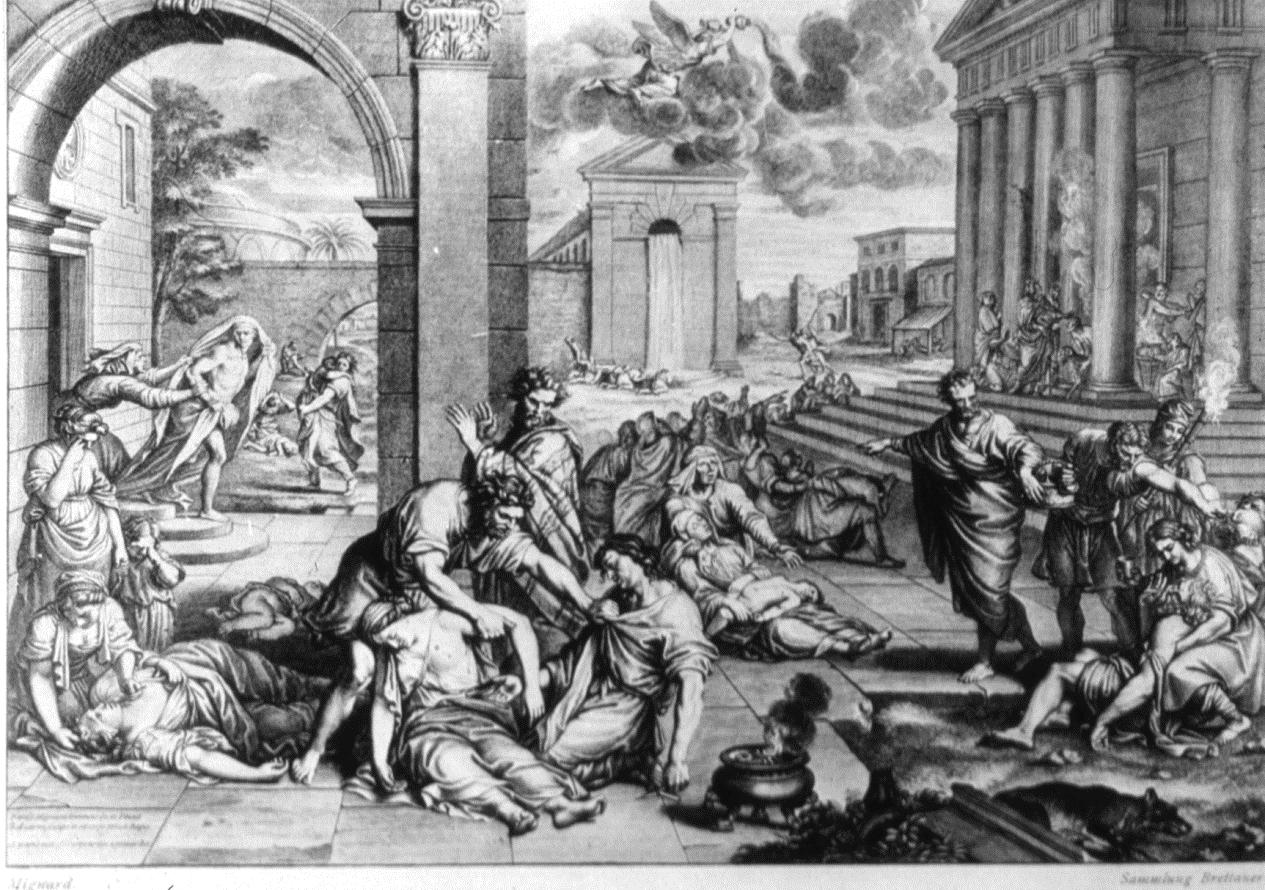
Source: Courtesy of the National Library of Medicine
A) There were too many diseases to record.
B) No molecular proof of infection has survived.
Copyright
A History of Public Health: From Past to Present
Jan Kirk Carney Test Bank
C) Diseases were described in general terms.
D) Nonmedical experts provided many accounts
E) Historical terminology may differ from today.
F) There are different meanings for descriptive terms for diseases.
G) Early epidemiologists relied on death records
Ans: B, C, D, E, F
Complexity: Difficult
Ahead: Diseases of Public Health Importance in Ancient Times
Subject: Chapter 1
Taxonomy: Application
Copyright © 2023 by
Multiple Choice
1. An early public health protection to improve survival in ancient times was:
A) organized beliefs about disease origins
B) food preservation using salt
C) housing improvements to protect from the elements
D) ongoing migration of small communities
Ans: B
Complexity: Moderate
Ahead: Public Health Concepts from the Earliest Societies
Subject: Chapter 1
2. Advancements in science, health, and medicine attributed to ancient Greece included:
A) acceptance of disease as a supernatural phenomenon
B) a system of aqueducts for clean water
C) development and application of the humoral theory
D) emphasis on baths, nutrition, and hygiene
Ans: C
Complexity: Moderate
Ahead: The Influence of Ancient Greece
Subject: Chapter 1
3. The physician who was called “the Greek Physician of Rome” was:
A) Aristotle
B) Hippocrates
C) Thucydides
D) Galen
Ans: D
Complexity: Easy
Ahead: Health and Sickness in the Roman Empire
Subject: Chapter 1
True/False
4. Erasistratus’ use of scientific consistency is demonstrated by his observation that the heart acted as a pump.
Ans: True
Complexity: Difficult
Ahead: Health and Sickness in the Roman Empire
Subject: Chapter 1
5. Specific and detailed descriptions of signs and symptoms of diseases provided evidence of infections in ancient times.
Ans: False
Complexity: Difficult
Ahead: Diseases of Public Health Importance in Ancient Times
Subject: Chapter 1