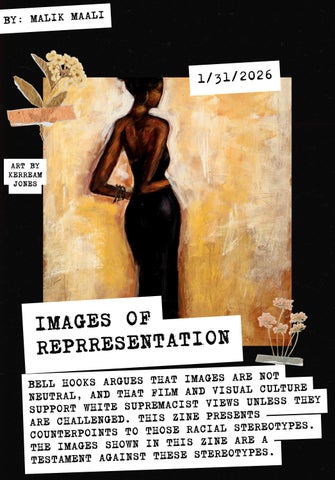
BELL HOOKS ARGUES THAT IMAGES ARE NOT NEUTRAL, AND THAT FILM AND VISUAL CULTURE SUPPORT WHITE SUPREMACIST VIEWS UNLESS THEY ARE CHALLENGED. THIS ZINE PRESENTS COUNTERPOINTS TO THOSE RACIAL STEREOTYPES.
THE IMAGES SHOWN IN THIS ZINE ARE A TESTAMENT AGAINST THESE STEREOTYPES.
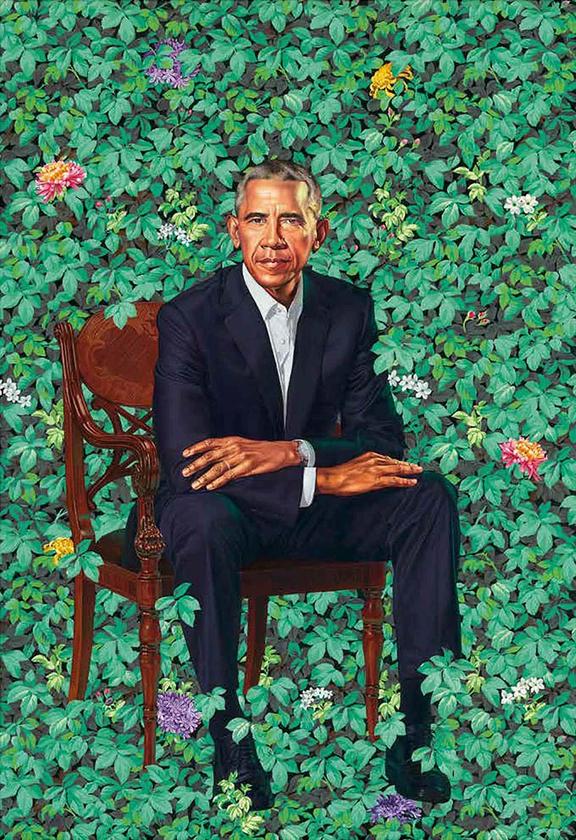
Art By Kehinde Wiley
Portrait of Barack Obama (2018)
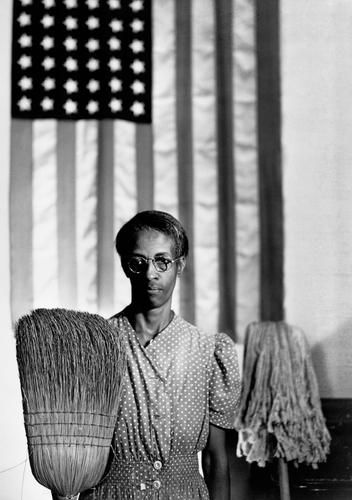
Gordon Parks, Gordon Parks Foundation (1942)
MEANING
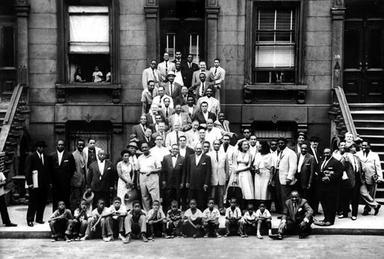
This image named “A Great Day in Harlem” depicts many Black jazz musicians gathering portraying community and Black excellence,challenging prominent stereotypes. Some of these stereotypes include viewing Black people as criminals or harmful toward society. This photo portrays them as competent artists and innovators that are beneficial to the creative space. This connects with bell hooks’ argument that representation is political, because it challenges white supremacist arguments and instead shows Black artists as central to cultural development.
Counternarrative: It gives a different view of Black culture that challenges stereotypical views. Highlighting achievement and strong cultural values.
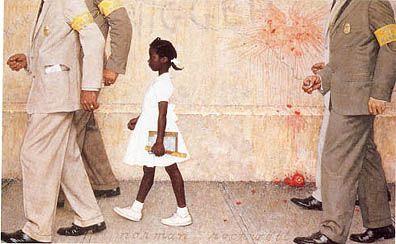
Norman Rockwell, The Problem We All Live With (1964)
MEANING
“The Problem We All Live With” is a painting by Norman Rockwell that serves to depict the Civil Rights Movement. It does so by showing a young Black girl Ruby Bridges, on her way to an all white New Orleans public school. She is being escorted by U.S. marshals for her protection. We are viewing this scene from protestors point of view who are strong believers in segregation. By witnessing this moment, the image shows how social structures reproduce racial inequality, which connects with hooks’ belief that visual depictions of inequality are powerful.
Counternarrative: This image goes against the image that racism is not “that prominent”. By making it visible, it puts viewers in an uncomfortable situation where they are forced to reconsider their views.
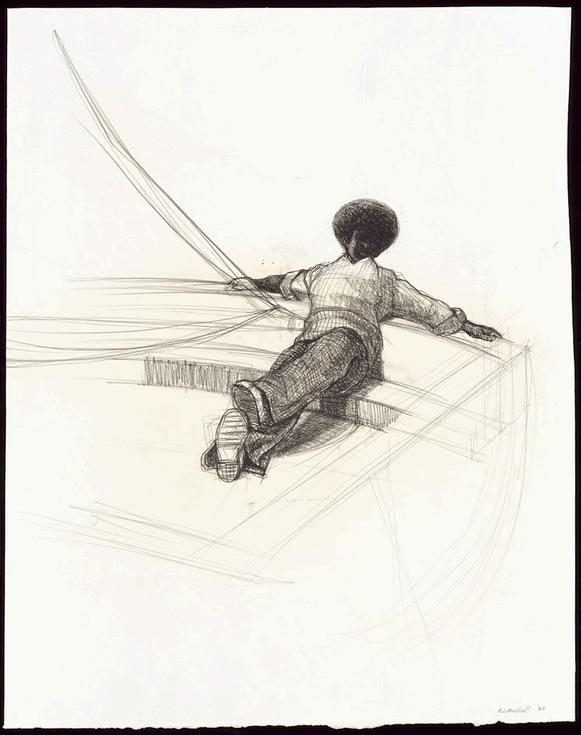
Kerry James Marshall, Untitled (2014)
MEANING
These artworks by Kerry James Marshall shows Black individuals in ordinary creative lines of work that is often not seen in mainstream media. bell hooks makes the argument that dominant visual culture attempts to erase the humanity of Black artists in everyday life. Marshall combats this by depicting them as intellectuals who are engaged in creative lines of work, and most importantly as humans. “The process by which any of us alter the way we look at images is political” (hooks, 73).
Counternarrative: It depicts Black individuals as intellectual humans with creative minds. Often portraying them in fields that are considered reserved for white individuals.
Sources:
Kerry James Marshall,Untitled (2014) https://walkerart.org/collections/artworks/untitledfigure-study-for-gulf-stream-2005-29
Norman Rockwell, The Problem We All Live With (1964) https://www.kennedy-center.org/education/resources-foreducators/classroom-resources/media-andinteractives/media/visual-arts/norman-rockwell--theproblem-we-all-live-with/
Art Kane, A Great Day in Harlem (1958) https://www.namm.org/library/blog/great-day-harlem-greatday-san-diego
Gordon Parks, Gordon Parks Foundation (1942) https://www.gordonparksfoundation.org/gordonparks/photography-archive/washington-d-c-and-ella-watson1942
Art By Kehinde Wiley, Portrait of Barack Obama (2018) https://npg.si.edu/learn/access-programs/verbaldescription-tours/barack-obama
Course Reading: bell hooks: artistic integrity race and accountability