The
Story of
Story of
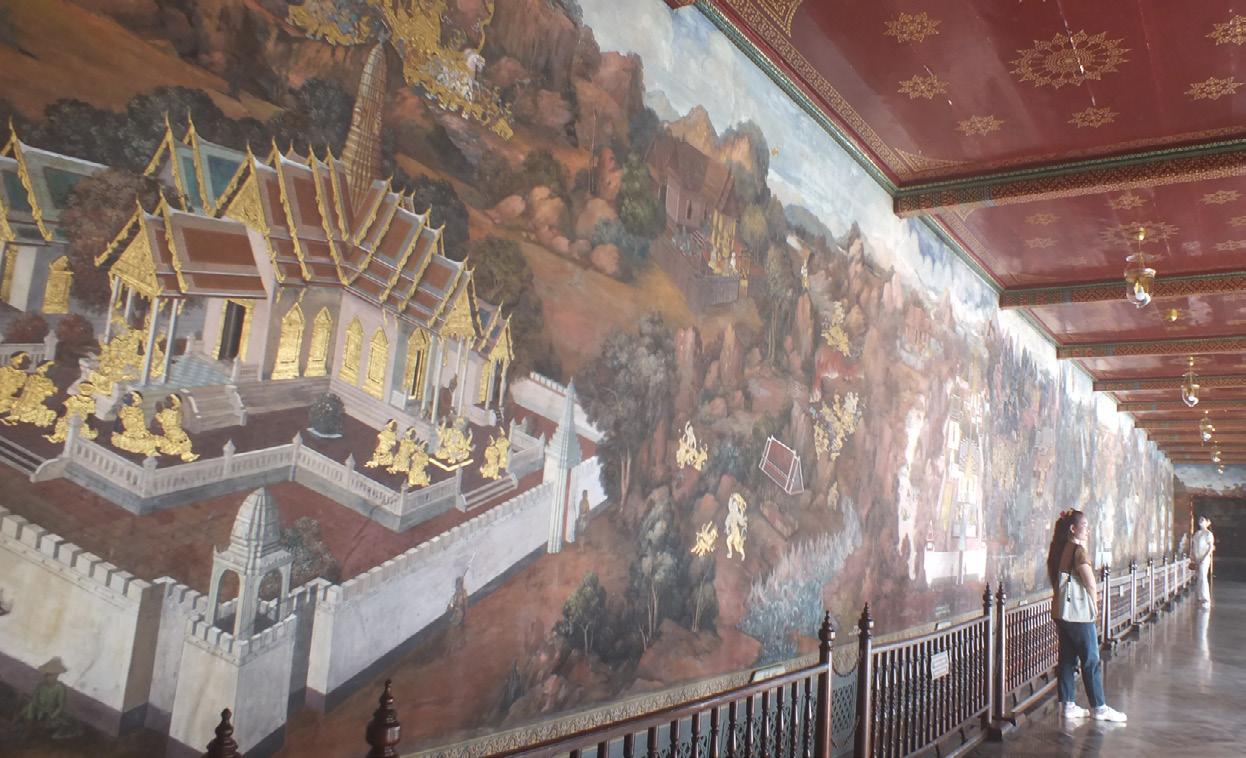
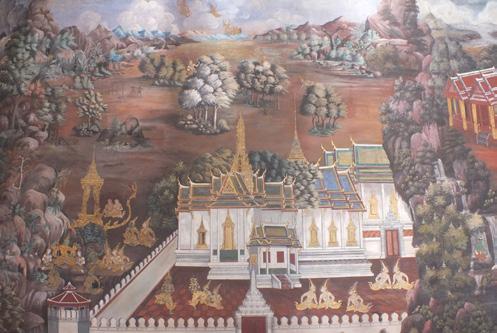
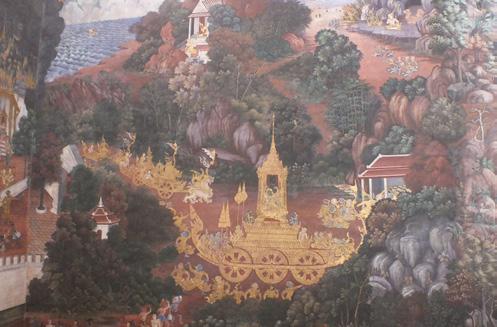
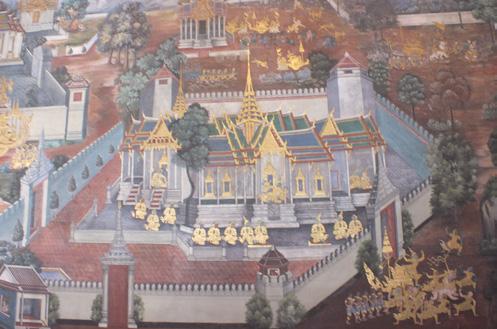
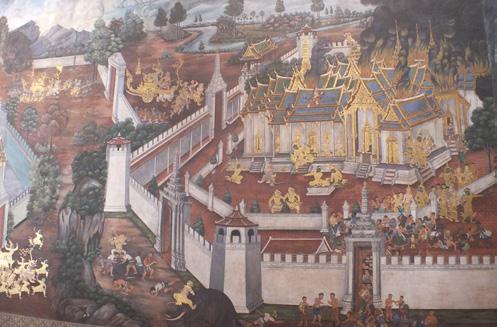
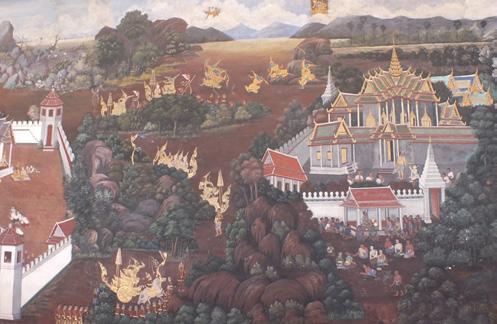
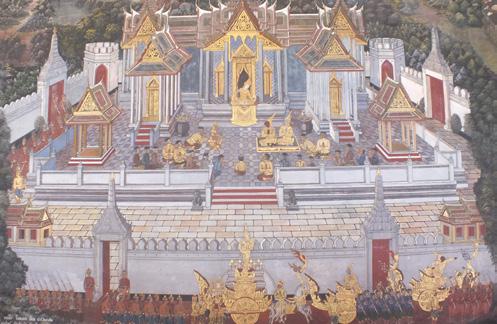
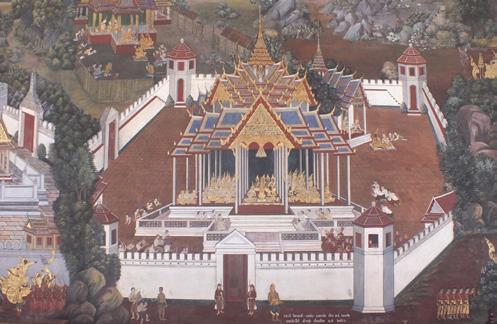
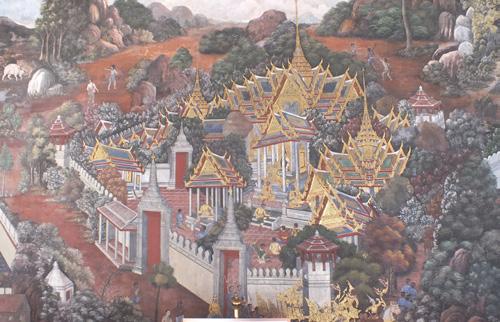
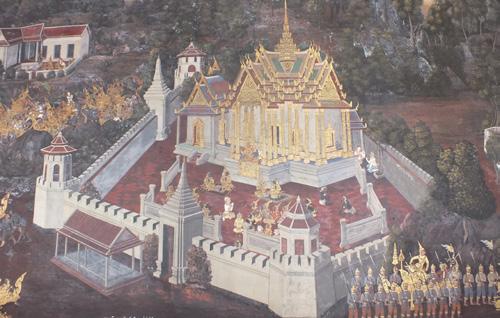
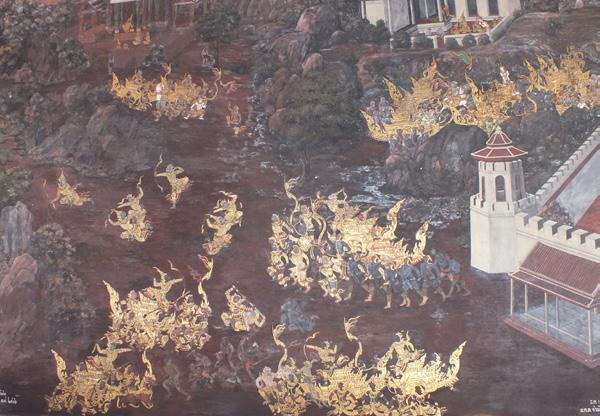
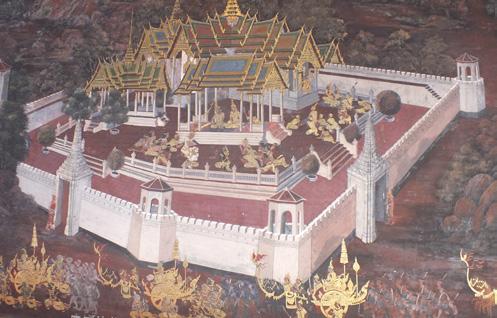
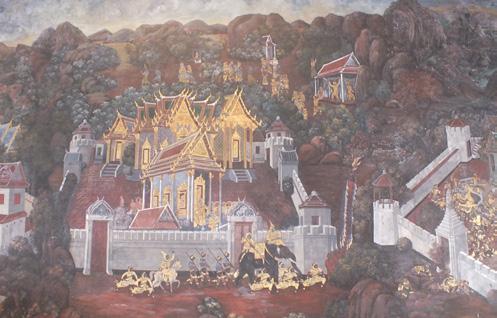
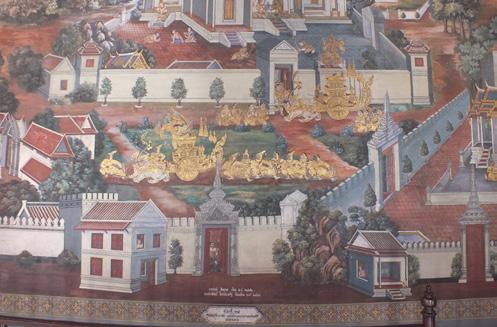
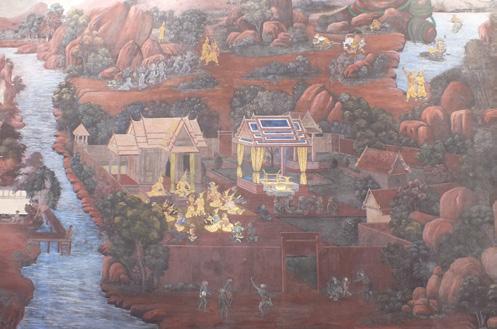
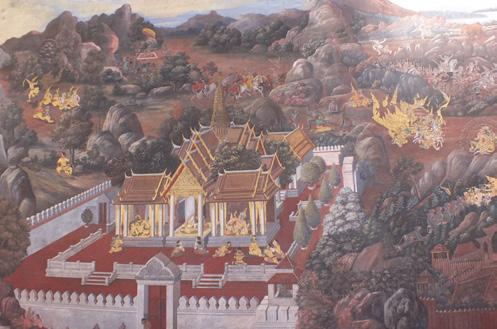
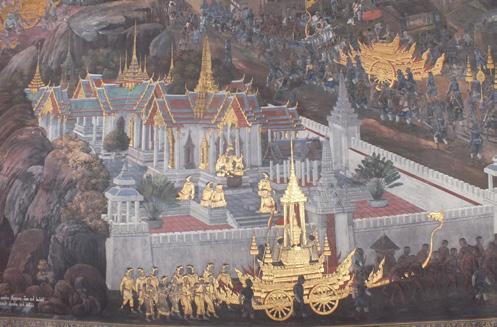
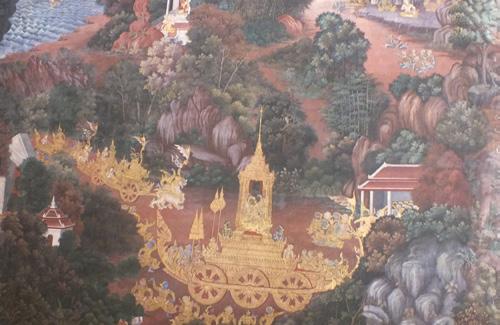
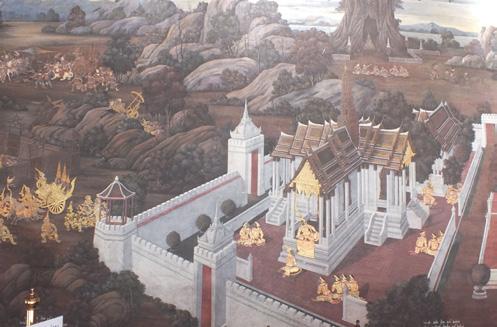
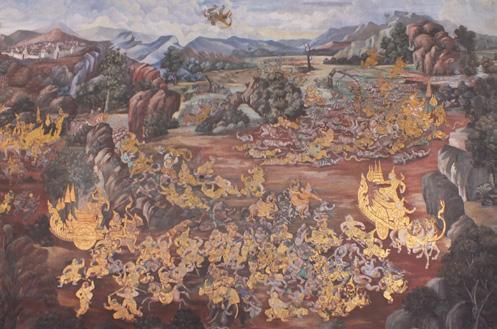
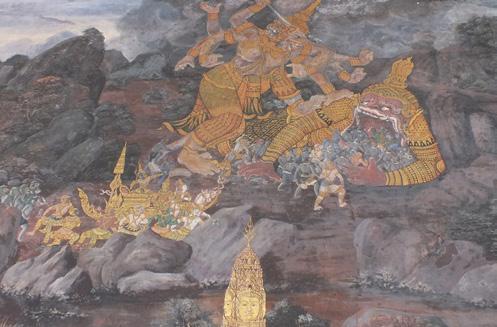
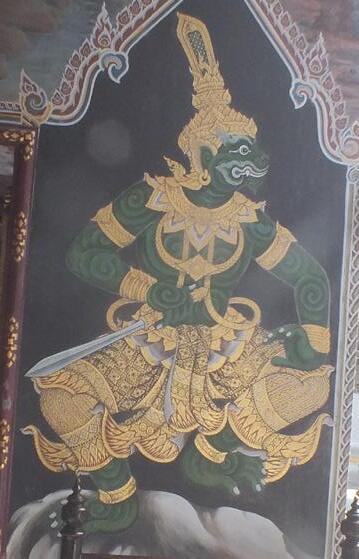
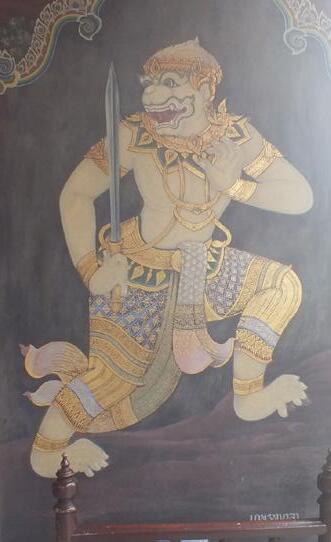
From the Mural Paintings along the Galleries of the Tample of the Emerald Buddha
At Mount Kailash, the abode of Lord Shiva (พระ
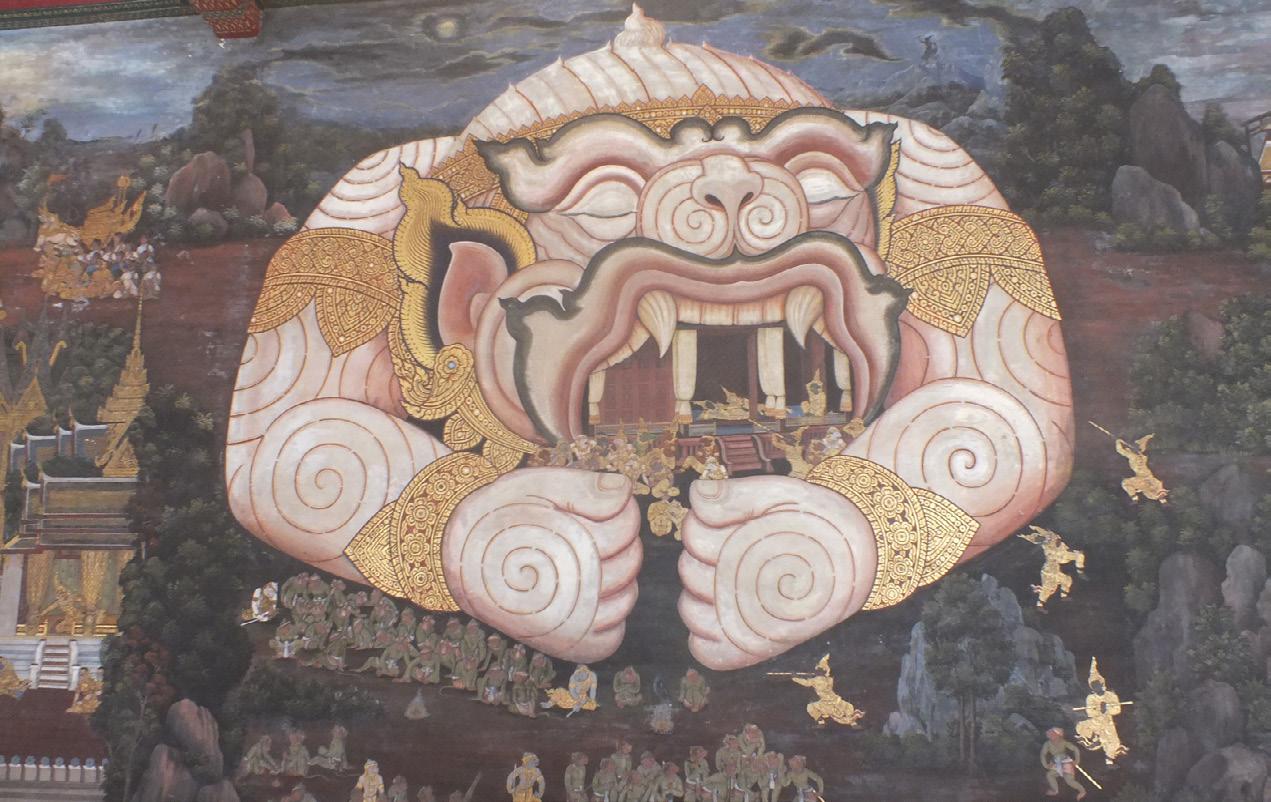
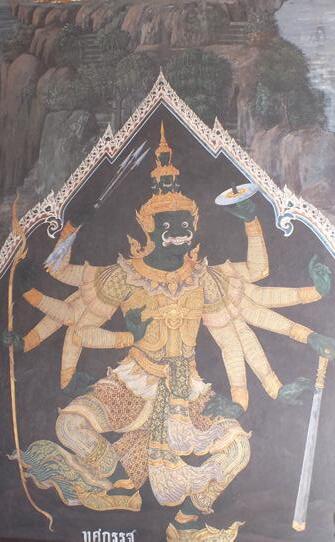
, a yaksha (demon) named Nontok stood guard at the foot of the stairway. Brave and loyal, he served Shiva by washing the feet of all divine beings who came to pay respects. For countless eons, the gods tormented Nontok endlessly — slapping his head, rubbing his face, and pulling out his hair until he was completely bald. Every time he glimpsed his reflection in the water, he wept with sorrow. Unable to endure any longer, he went before Lord Shiva,
weeping and lamenting his suffering, and begged for a diamond finger — so that anyone he pointed at would die. Shiva, recognizing his faithful service over such a long time, granted his wish. Once Nontok had the diamond finger, his heart grew bold. He returned to his duties washing feet, and the gods continued to tease him as before. Enraged, Nontok pointed his finger at the gathered deities, and they fell dead in an instant.
Lord Shiva commanded Narayana to subdue Nontok. Narayana transformed himself into a beautiful celestial dancer (apsara). Nontok was enchanted by her beauty and grace, so he approached to court her. The dancer invited him to dance with her. As Nontok followed her movements, they reached the serpent-tail-coiling pose, and he accidentally pointed his diamond finger at his own leg, breaking it. The dancer then revealed herself as Narayana and pressed his foot upon Nontok’s chest.
Nontok berated Narayana, asking why someone with four arms would not fight face to face — was he afraid of the diamond finger? Narayana challenged Nontok to be reborn with ten faces and twenty arms bearing full weapons, able to fly through the sky. Narayana himself would be born as an earthly human with only two arms, and would come to subdue him in the mortal world. With that, Narayana drew his divine sword and severed Nontok’s head.
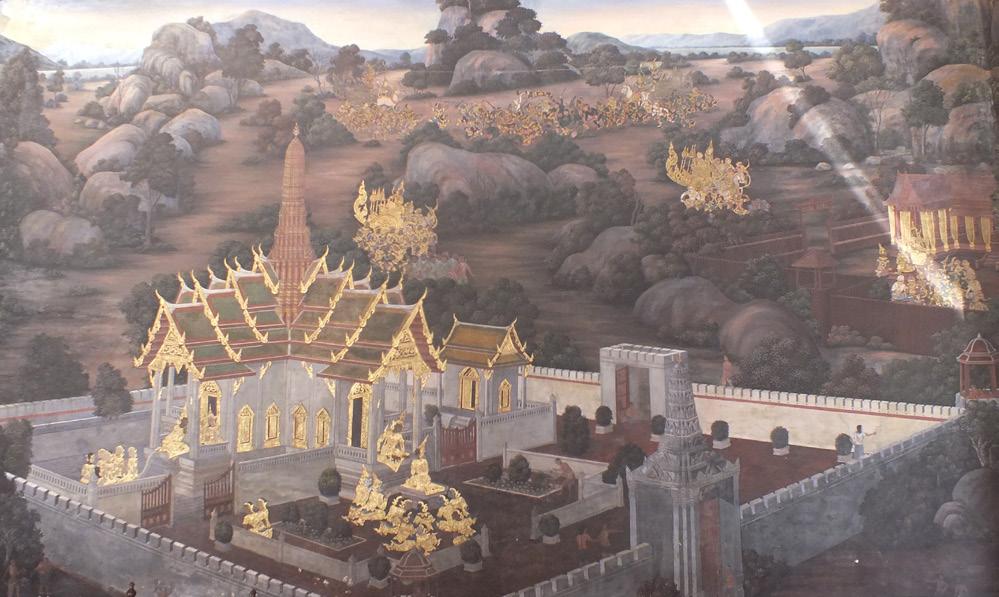
After Narayana defeated Hiranta Pakasura, he rested upon his serpent throne in the Milky Ocean. A lotus flower arose from his navel bearing a divine infant. Narayana took the child up to Lord Shiva, who declared that this child was the progenitor of a noble royal lineage, destined to relieve the world’s suffering. He named the infant Thao Anomatan and commanded the god Makhawan to build the city of Ayutthaya for him to rule.
Thao Anomatan had a son named Thao Atchaban. Meanwhile, the god Sahaphodi Brahma created
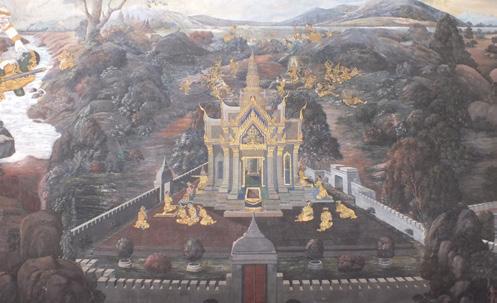
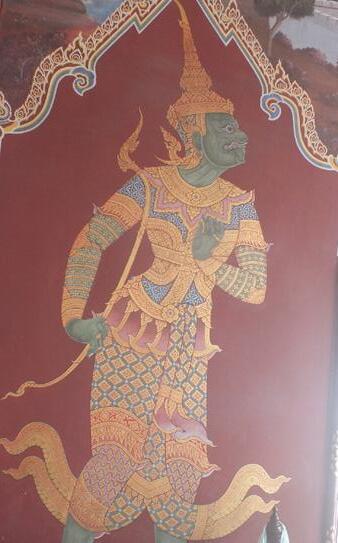
the city of Lanka and invited the god Thata Brahma to govern it. Thata Brahma had a son named Thao Latsatian, who had five consorts. The fifth consort gave birth to a son — Thotsakan (Ravana) — who was the reincarnation of Nontok, slain by Narayana’s power. Foreseeing that Thotsakan would cause great suffering to the world, Lord Shiva ordered the god Wessawan to be reborn as Phiphek (Vibhishana), Thotsakan’s own brother, to assist Narayana when he incarnated to defeat him.
Thao Atchaban had a son named Thotsarot,
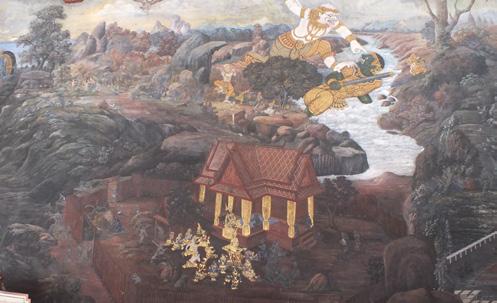
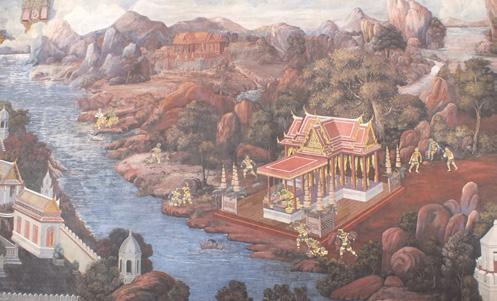
who ruled Ayutthaya but had no heir. He invited four sages — Wasit, Sawamit, Watchawakhi, and Phanthawat — to perform a ritual to obtain a powerful son capable of defeating the demons who had been terrorizing the three worlds. The sages summoned the sage Kalaikot to petition Lord Shiva to have Narayana incarnate as Phra Ram (Rama), and Narayana’s consort Lakshmi to incarnate as Nang Sida (Sita). Narayana’s divine weapons — his conch shell — became Phra Lak (Lakshmana); his discus became Phra Phrot (Bharata); his mace became Phra Sattru (Shatrugna). Countless deities volunteered to be born as the army of monkeys.
Lord Shiva gave the sage Kalaikot a sacred mantra. A ritual altar was established, and sacred fire arose. A divine golden tray bearing four portions of holy rice appeared in the midst of the flames. The fragrance drifted all the way to Lanka. Nang Monto, Thotsakan’s queen, desired to eat it. Thotsakan sent Nang Kakanasun transformed into a crow to swoop down and steal half a portion.
Thao Thotsarot gave the holy rice to Queen Kaosuriya and Queen Koikaset — one portion each — and the remainder to Queen Samutthewi. Queen Kaosuriya gave birth to Phra Ram, whose body was green; Queen Koikaset gave birth to Phra Lak, whose body was golden yellow; and Queen Samutthewi gave birth to Phra Sattru, whose body was purple.
As for Nang Monto, she gave birth to a daughter who cried out “Destroy Ravana!” three times. The royal astrologers predicted she would bring ruin upon the demon clan. Thotsakan placed her in a sealed box and cast her upon the waters. King Chanak of Mithila, living as a hermit, found the box and raised
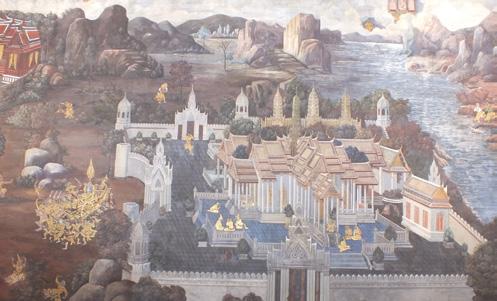
the child. Realizing he was still living as an ascetic, he buried the box in the earth and entrusted her to Mother Earth. After completing his vows, he dug up the box and found the girl had grown into a young woman. He named her Sida — meaning “furrow” — and brought her back to Mithila.
The four princes studied under the sages Wasit and Sawamit. Upon completion, their teachers held a fire ceremony, and Lord Shiva bestowed upon them the divine arrows Phrommasat, Akkhaniwat, and Phlaiwat as weapons.
Phrot and Sattru traveled to the city of Koikaset with their grandfather. Phra Ram and Phra Lak returned to Ayutthaya, defeating demons who troubled them along the way. They then entered the contest to lift the great bow Molī in Mithila. Phra Ram succeeded and married Nang Sida, after which all returned home.
King Thotsarot wished to pass the rule of Ayutthaya to Phra Ram. But Queen Koikaset claimed an old promise, demanding the kingdom be given to Phra Phrot. Thotsarot was bound by his oath. Queen Koikaset invoked the king’s command and ordered Phra Ram to live as a forest hermit for fourteen years, after which the throne would be returned. Phra Ram complied, to preserve his father’s honor. Phra Lak and Nang Sida accompanied him.
Phra Phrot was devastated and refused to take the throne. He followed Phra Ram to beg him to return, but Phra Ram refused. Phrot went back to govern the kingdom, placing Phra Ram’s sandals upon a crystal throne as a symbol of regency. Phra Ram, Phra Lak, and Nang Sida went deep into the forest to meditate, ensuring no one knew their whereabouts.
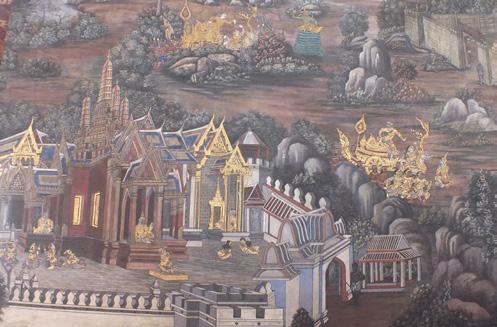
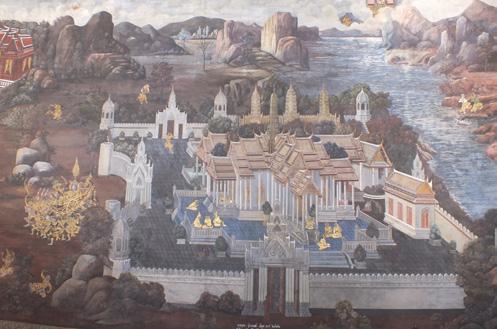
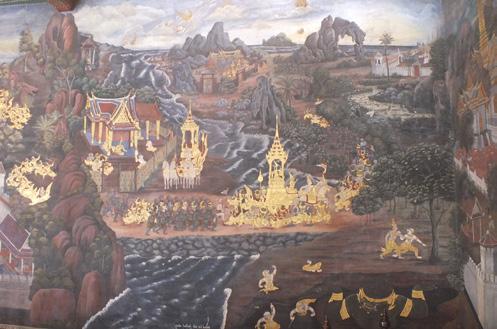
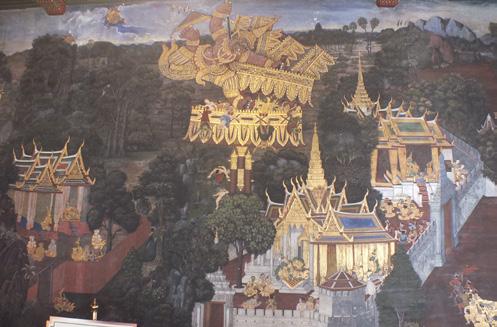
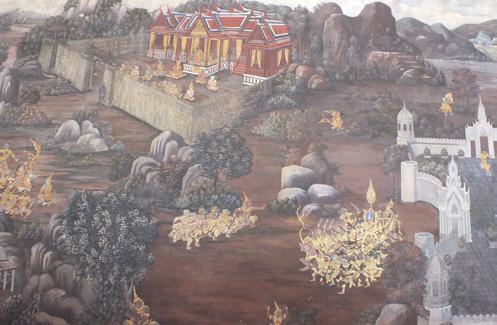
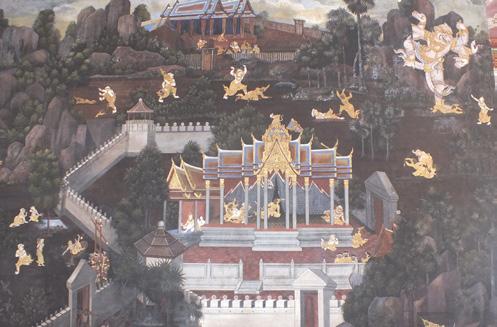
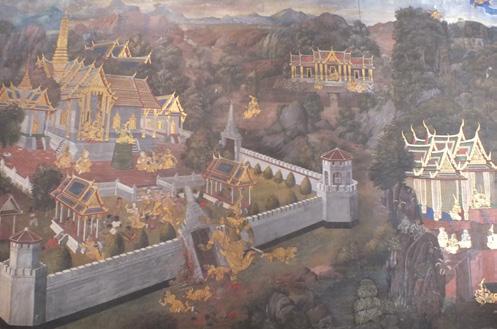
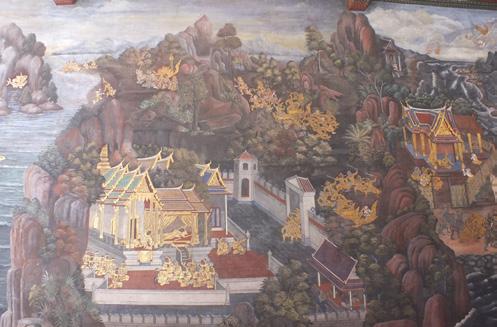
Nang Sammanakha, Thotsakan’s widowed sister — her husband Chiwaha having been killed by Thotsakan’s discus for carelessly closing Lanka’s gate while sleepily guarding it for seven continuous days — roamed the forest. She came upon Phra Ram performing his ascetic duties and desired him as a husband. She transformed into a beautiful young woman and tried to seduce him. Phra Ram rebuffed her. She followed him to the hermitage and, seeing Nang Sida, was overcome with jealousy. She reverted to her demon form and attacked Sida. Phra Ram and Phra Lak fought her off, and Phra Lak cut off her ears, nose, and legs before releasing her.
Nang Sammanakha sent her brother Phaya Khon, along with Khunthut and Thao Trisian, to fight Phra Ram. All were slain. She then crossed the great ocean to Lanka and told Thotsakan of Sida’s extraordinary beauty, making him desire her as his queen. She devised a plan: the demon Marit would transform into a golden deer to lure Phra Ram away, and when Phra Lak also left to help, Thotsakan would abduct Sida.
The golden deer (Marit) cried out in Phra Ram’s voice, calling for Phra Lak. Thotsakan seized the opportunity and carried Sida off to Lanka. Phra Ram and Phra Lak searched the forest and found the sacred bird Sadayu lying wounded with broken wings. Sadayu told them that while flying overhead, he had seen Thotsakan carrying Sida and had tried to stop him, but was struck down by a ring thrown by Thotsakan. The bird gave Phra Ram Sida’s ring and then died.
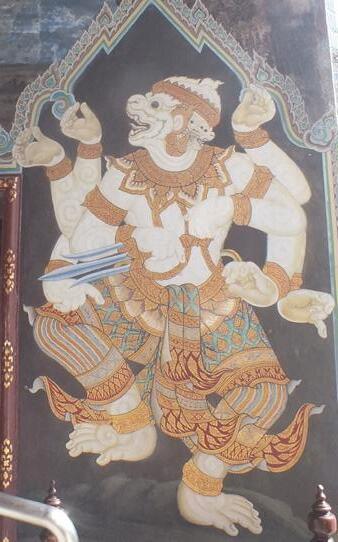
Phra Ram and Phra Lak then met Hanuman, who carried a diamond earring. Hanuman, upon seeing the marks on Phra Ram’s body, recognized him as Narayana incarnate and prostrated himself. Learning that Phra Ram intended to march on Lanka to retrieve Sida, Hanuman recommended gathering an army by seeking the help of his uncle Sukhrib (Sugriva).
Sukhrib asked Phra Ram to defeat Phali (Vali) first.
Lord Shiva had once given the celestial
nymph Nara to Sukhrib as a reward for pulling Mount Sumeru straight. But Phali had taken her without handing her over, swearing that if he was ever disloyal to his brother, he would die by Narayana’s arrow. Having broken his oath and unjustly expelled Sukhrib from the city, Phali met his fate: Phra Ram released an arrow that killed him in fulfillment of his own oath. Sukhrib then ruled the city of Khidkhin in Phali’s place, and brought Angkot (Angada) and Chompuphan (Jambavan) — Phali’s son and minister — to serve as reinforcements.
On the way to Lanka, Phra Ram arrived at Khanthomathan and encountered the golden peacock lord, who relayed a message from Sida: she would remain faithful and await him. A troop of monkeys brought Sida’s shawl and pointed the way. Phra Ram took off his ascetic robes at Mount Khanthomathan and set out to march on Lanka. The god Visukam brought royal garments, a crown, jewels, and a ring as gifts.
Phra Ram gathered his generals: Sukhrib, Hanuman, Angkot, Chompuphan, Thao Maha Chomphu, and Nilphat — along with the eighteen crowned monkey lords and vast armies from Khidkhin numbering fifty oceans of soldiers, and twenty-seven oceans from the land of Chomphu. He sent Hanuman, Angkot, and Chompuphan with the ring and shawl to inform Nang Sida in Lanka that the army was on its way.
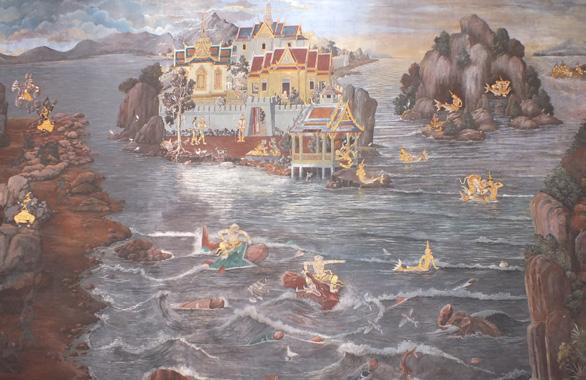
The March to Lanka
Arriving at the pool of Bokhrani in the dead of night, the entire army fell asleep. A demon named Pak Hlan rose from the pool intending to eat the monkeys. Angkot awoke and fought him. Pak Hlan was defeated. He explained that he had originally been a deity who had an affair with a celestial nymph named Kesonmala. Indra had cursed him to be a demon guarding the pool until one of Phra Ram’s warriors touched him — then the curse would be broken. Angkot lifted the curse, and Pak Hlan returned to heaven.
The army traveled on to a deserted city in the forest, inhabited only by Nang Butsamali, who had once been a celestial nymph. Indra had cursed her to guard the phantom city for thirty thousand years, as punishment for acting as matchmaker in an illicit love affair. The curse would be lifted when she encountered one of Narayana’s great warriors. Hanuman took her as his wife and sent her back to heaven.
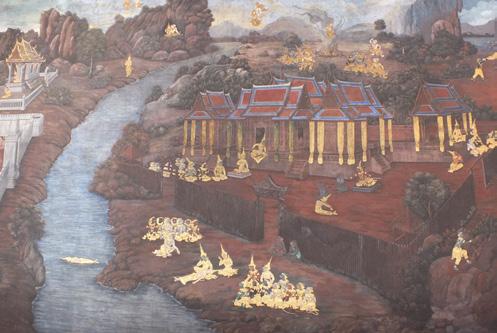
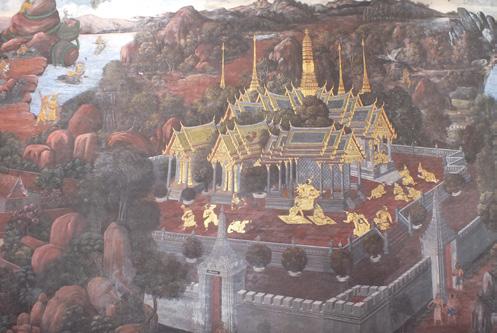
Continuing on to the great ocean, they met Nang Suwanmali, a divine daughter of Lord Shiva, who showed them the path into Lanka. Hanuman magically enlarged his body and stretched himself across the ocean so the monkey army could walk across. They met the sage Chatil, who told them that fifteen more yojanas would bring them to Hemtiran Cave on the shore, the gateway to Lanka. They also found the bird Sampathi — elder brother of Sadayu — who told the story of how, long ago, young Sadayu had seen the blazing sun and, thinking it was a fruit, flew up to peck at it. Sampathi warned him but was ignored. The sun god, enraged, unleashed scorching heat. Sampathi flew up to shield his brother and lost all his feathers. The sun god added a further curse, binding Sampathi to Hemtiran Cave until he met Narayana’s army. When the monkey army let out three cheers, Sampathi’s feathers grew back and he could fly again. He carried Hanuman on his back
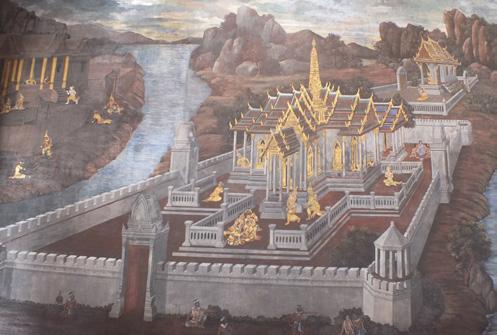
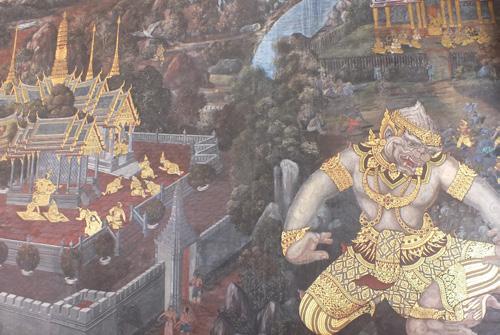
and pointed out Lanka — an island in the middle of the ocean, with the blue mountain Nilkala marking its location.
Hanuman left Angkot and Chompuphan to guard the army at Hemtiran Cave and flew alone to Lanka. Over the ocean he encountered a female butterfly-demon who tried to intercept him. He slew her and flew on to Mount Solathe beyond Lanka, reaching a hermit’s ashram. He transformed into a small monkey and asked directions. The sage told him to wash his face, then cast a spell turning his staff into a leech that latched onto Hanuman’s chin. Hanuman begged for help, and the sage freed him. Hanuman then flew into Lanka.
He found Nang Sida in the royal garden on the verge of hanging herself — devastated that Thotsakan had been courting her and infuriated by the taunts of the demon women guarding her. Hanuman saved her life. He presented the ring and shawl and told her that Phra Ram was coming with
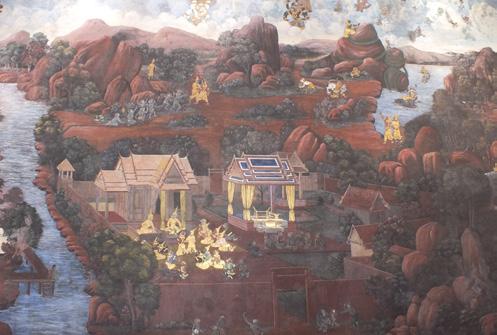
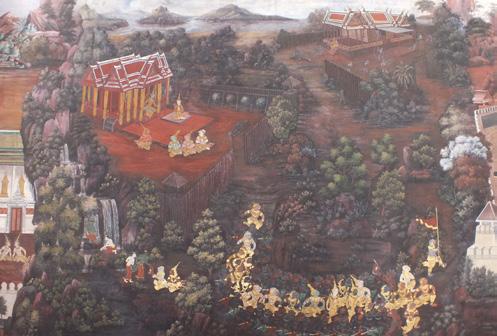
his army to defeat Thotsakan and bring her home with full honor.
Hanuman then destroyed the royal garden completely and slew Sahaskhuman — Thotsakan’s one thousand sons. Thotsakan sent his son Intrachit (Indrajit) to subdue Hanuman. Hanuman pretended to be defeated and let himself be captured. Thotsakan ordered him executed by various methods, but all failed. Finally brought before the king, Hanuman tricked him by claiming he could only be killed by fire. Thotsakan ordered him set ablaze. As the fire burned his body, Hanuman leaped through every palace and chamber, and the fire spread to engulf all of Lanka. He then shook the flames from his body — except for a little still burning at the tip of his tail. He hurried to the sage Narot and asked how to put it out. The sage gave him a riddle: extinguish it with water from a small well. Hanuman opened his mouth and swallowed his own tail, and the fire went out. Thotsakan then invited the gods to rebuild Lanka anew.
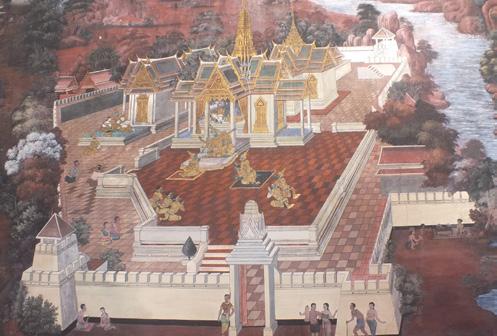
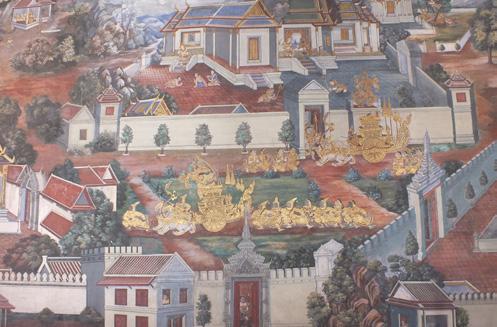
Thotsakan had a nightmare. Phiphek interpreted it as a sign of mortal danger and advised him to hold fast to righteousness and return Nang Sida to Phra Ram. Thotsakan was enraged and disowned Phiphek as his brother, banishing him from the city.
Phiphek came to pledge allegiance to Phra Ram. He took an oath of loyalty and became a war advisor. Thotsakan plotted to make Phra Ram withdraw his army by having Nang Benchakai — Phiphek’s niece — disguise herself as Nang Sida, feign death, and float past the royal camp. Phra Ram would think Sida was dead and give up the campaign. But the plan failed because Hanuman proved the body was a disguise by subjecting it to fire — and he took Nang Benchakai as his wife.
Phra Ram ordered the monkey army to build a causeway across the ocean to march to Lanka, with Hanuman and Nilphat as commanders. Hanuman and Nilphat, who had a prior grudge, came to blows. Phra Ram punished Nilphat by sending him
to govern Khidkhin, while Hanuman was ordered to complete the causeway. Thotsakan sent Nang Suphanmakcha and her attendants to carry off the stones and throw them away. Hanuman captured her and took her as his wife. Nang Suphanmakcha bore Hanuman a son — a white monkey with a fish tail — whom she left on the shore at the age of sixteen. The gods named him Matchanu. Mairaphon, king of the underworld, adopted him.
Phra Ram established his camp at the Emerald Mountain and sent Angkot as an envoy to deliver an ultimatum to Thotsakan: return Nang Sida or face war. Thotsakan challenged Phra Ram to battle and raised the crystal canopy umbrella of Thata Brahma to block the sun, plunging everything into darkness and preventing Phra Ram from seeing Lanka. Sukhrib volunteered to destroy the umbrella, using his feet to seize Thotsakan’s crown and bring it to Phra Ram.
Thotsakan called upon his dear friend Mairaphon
to help. Mairaphon cast a sleeping spell over the entire monkey army and spirited Phra Ram away to the underworld city. Hanuman pursued him, slew Mairaphon, and while there encountered his own son Matchanu.
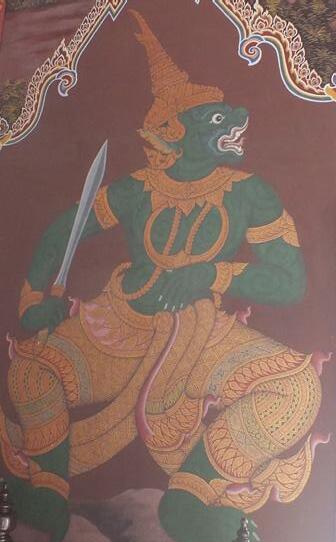
Thotsakan sent his brother Kumphakan (Kumbhakarna) to join the battle. Although virtuous, Kumphakan felt obligated to help his elder brother. Phra Ram sent Sukhrib out to fight. Kumphakan captured Sukhrib, but Hanuman came to rescue him. Kumphakan, unable to prevail, retreated to the city. He then went to obtain the divine lance Mokhasak from Lord Brahma and descended to sharpen it at the banks of the Sithantara Ocean. Hanuman and Angkot transformed into crows and a rotten dog floating in the water near the ritual site — so disgusting that Kumphakan, who valued cleanliness above all else, was forced to abandon the ceremony.
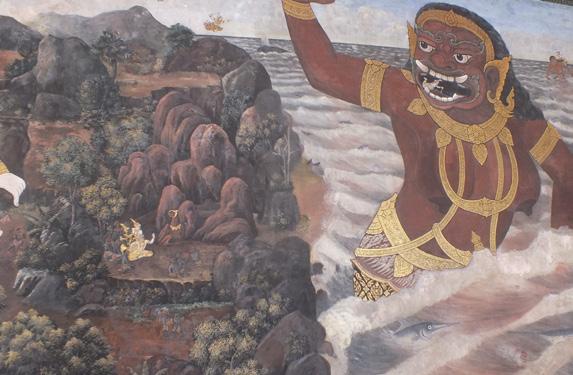
Phra Ram sent Phra Lak into battle. He was struck by the lance Mokhasak and would die if not healed before sunrise. Hanuman quickly gathered medicinal leaves from a mountaintop and obtained five sacred
prepared the medicine and Phra Lak survived. Kumphakan used sorcery to dam the water supply, and without water the army would perish within seven days. Hanuman transformed to spy and learned where Kumphakan was hiding to control the flow. He destroyed the ritual, and Kumphakan marched out to battle. This time Phra Ram himself fought and slew Kumphakan with his divine arrows.
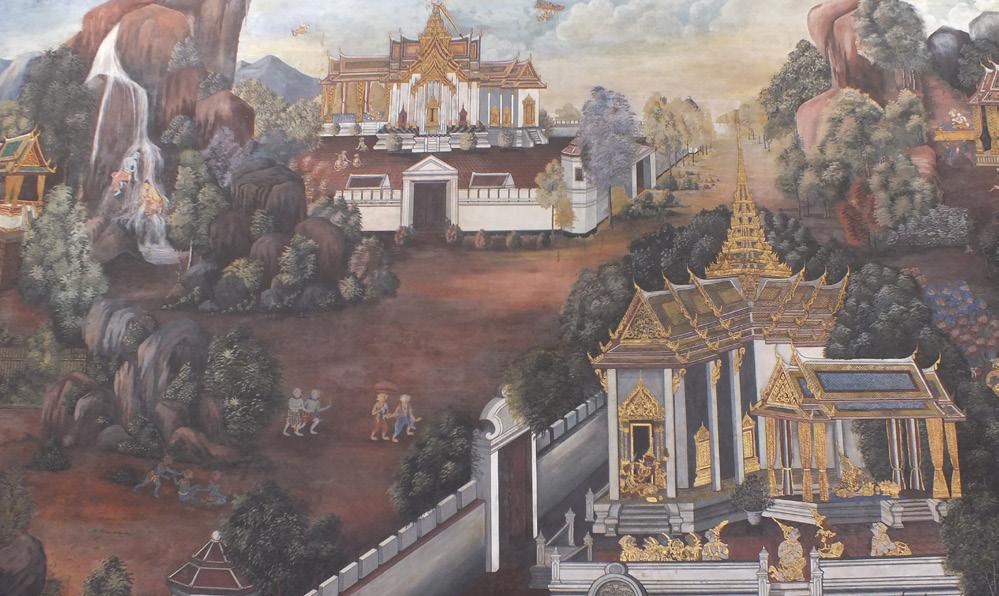
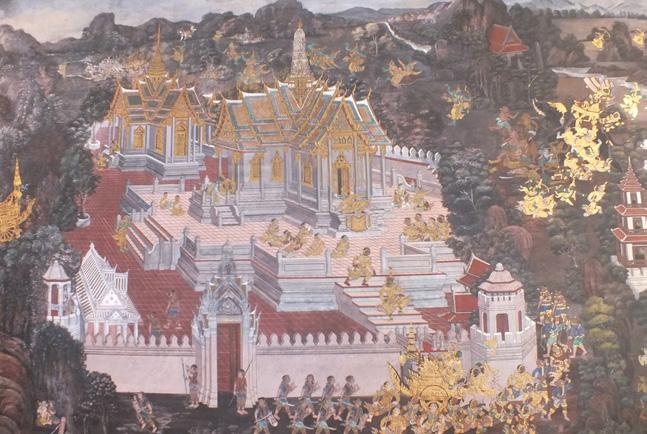
Thotsakan sent his son Intrachit out to fight. Unable to prevail, Intrachit performed a seven-day ritual atop Mount Akasakhiri to enchant the Nagas arrow (Nagabash). Thotsakan sent his nephew Mangkankantha to fight in the meantime. Phra Ram defeated him. Phiphek informed Phra Ram that Intrachit was performing his ritual inside a hollow Raithan tree — when seven nights passed and the nagas came to spit their venom on the arrow, the Nagabash would become invincible. To destroy the ritual, a bear must bite the Raithan tree, frightening the nagas away. Chompuphan volunteered to transform into a bear and disrupt the ceremony. The ritual failed. Intrachit marched out in fury and unleashed the Nagabash — serpents coiled around Phra Lak and the entire monkey army, rendering them unconscious. Phra Ram summoned the divine eagle Garuda with his Phlaiwat arrow, and all the nagas fled in terror. Phra Lak and the monkeys revived.
Intrachit then began a three-day ritual to enchant the Phrommasat (Brahmastra) arrow — forbidding all interruption. Thotsakan sent the general Kampan to fight in the meantime, but Hanuman killed him. Thotsakan sent a messenger to summon Intrachit, forgetting his own prohibition and ruining the ritual. Intrachit then disguised himself as the god Indra and marched out. Phra Lak, amazed by the false In-
dra’s appearance, was struck by his arrows and fell unconscious along with many warriors. Hanuman flew up to fight Intrachit and was lashed by arrows and knocked out. Phra Ram went to the battlefield, saw Phra Lak apparently lifeless, and fainted with grief. When Thotsakan heard the news, he brought Nang Sida and Nang Trichada (Phiphek’s wife) on the crystal flying throne to witness the scene. Sida, believing Phra Ram was dead, wept until she too fell unconscious.
Nang Trichada revived her, insisting Phra Ram was certainly not dead — for if a widow mounted this crystal throne, it would not float upward. Sida climbed aboard and prayed, and the throne rose.
Phiphek told Hanuman the antidote for the Phrommasat’s poison was at the Mount of Weapons, where a divine discus spun continuously generating healing winds. Hanuman carried the entire mountain northward, and the healing breeze drifted over Phra Ram, Phra Lak, and all the monkey soldiers, reviving them all.
Intrachit performed the Kumphaniya ritual at Mount Chakrawan for seven days to make his body indestructible. He sent the demon Sukhan transformed as Nang Sida, who was brought to Phra Ram’s camp and beheaded before his eyes, to convince Phra Ram that Sida was dead and make him withdraw. Phra Ram and Phra Lak were momentarily deceived, but Sukhrib, Hanuman, and Angkot proved it was an impersonation. Phiphek, reading the signs, told Phra Lak to go destroy the Kumphaniya ritual. After a long battle, Phra Lak slew Intrachit. Phra Lak sent Angkot to retrieve a sacred bowl from Lord Brahma to receive Intrachit’s severed head — for Brahma had granted the boon that if his head fell to the ground, cosmic fire would destroy the entire universe. Thotsakan, grief-stricken, ordered Nang Sida’s execution, but advisors interceded.
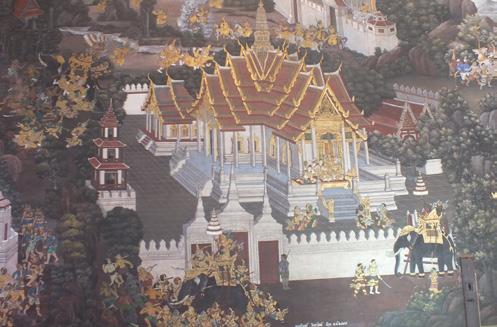
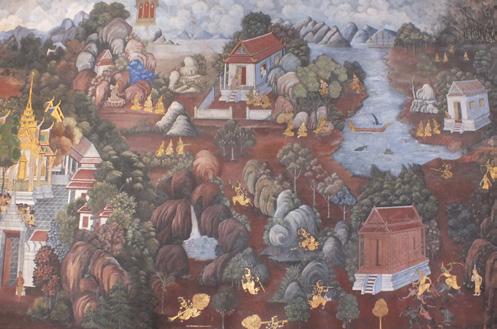
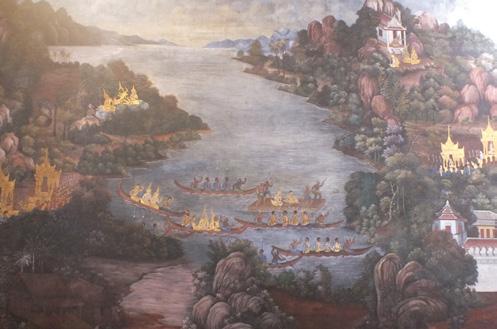
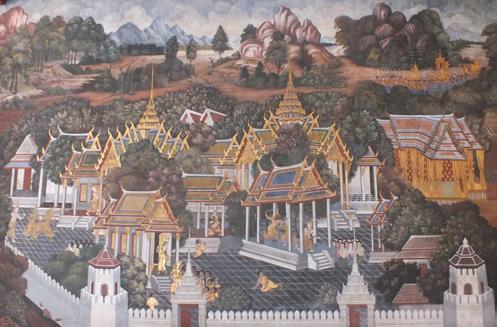
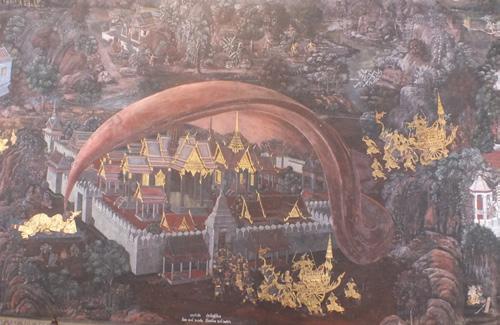
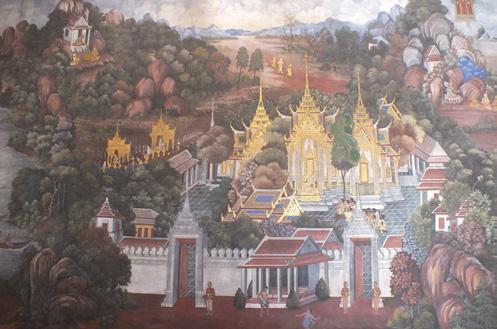
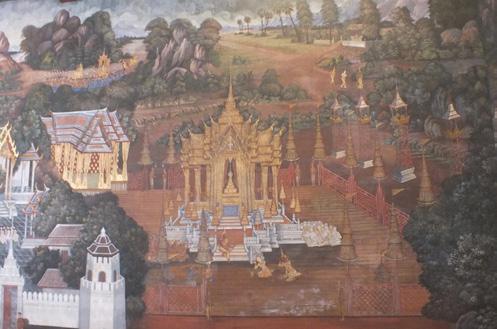
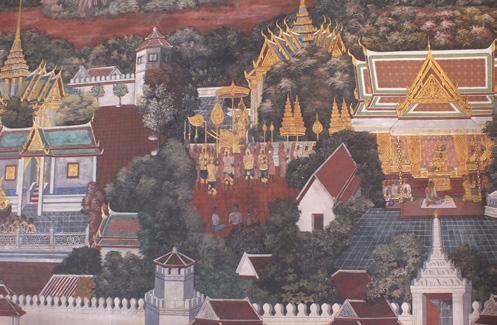
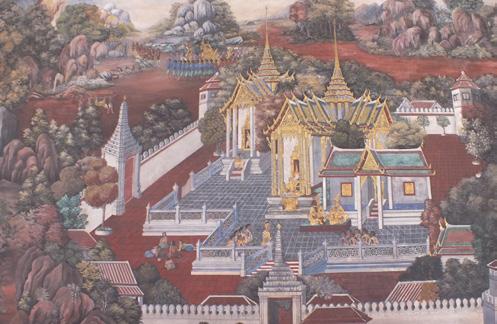
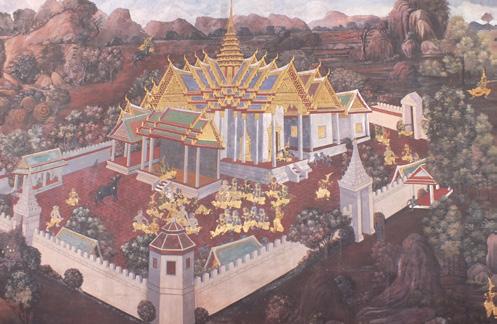
After Intrachit’s funeral, Thotsakan himself fought Phra Ram all day with neither side gaining victory, and returned to the city. Two brothers and close allies of Thotsakan — Sahasdesha and Munlaphan — came to help. Munlaphan was slain by Phra Lak. Sahasdesha had a boon from Brahma causing his enemies to flee in fear. Phiphek advised Hanuman to disguise himself as a small monkey and pledge loyalty to Sahasdesha, then trick him out of his diamond club. Hanuman captured and executed Sahasdesha.
Thotsakan called upon Saengsuriya, son of the sun god, to help. Saengsuriya had a glass shield as his weapon, which he had left with Indra. Angkot disguised himself as Saengsuriya and retrieved the shield from Indra. Saengsuriya was then slain by Phra Ram.
Thotsakan retreated after another clash with Phra Ram, and summoned Thao Satlum and Trimegh to help. Sukhrib and Hanuman could not overcome them, and many monkey soldiers perished. Phra Ram and Phra Lak released arrows to slay Thao Satlum, and the fallen monkeys were revived. Trimegh disappeared
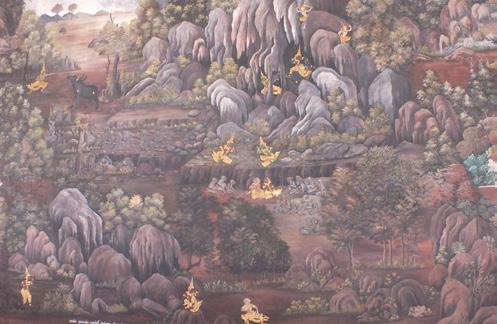
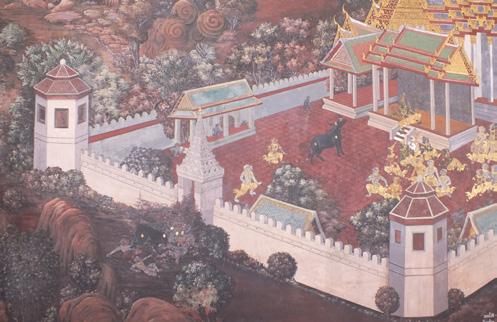
underground, and Hanuman pursued and slew him.
Thotsakan performed the underground chamber ritual to make his body indestructible. Sukhrib, Ninnon, and Hanuman destroyed the ceremony by pouring water used to wash Nang Benchakai’s feet onto the stone slab at the chamber entrance, and by bringing Nang Monto inside — causing Thotsakan to lose his concentration and the ritual to fail.
Thotsakan then called on Thao Satharun and Wirunchangbang for help. Hanuman slew Thao Satharun. Wirunchangbang enchanted a magic cloth to become a disguised demon and himself transformed into a louse, hiding in the foam of the Sithantara Ocean. Hanuman tracked him down — guided by a female monkey — and killed him.
Thotsakan invited his uncle Thao Maliwarat, who possessed the power of sacred speech, to help — for if he cursed Phra Ram and Phra Lak, they would be unable to prevail. But Thao Maliwarat was a just man. He convened both sides in the middle of the battlefield and ruled that Thotsakan must return Nang Sida. Thotsakan refused, furious that his uncle
would not take his side.
Thotsakan then performed a ritual on a sandy beach to enchant the lance Kabilphat for three days — if completed, the lance could kill any deity, including Indra and Shiva. Lord Shiva sent the divine Phali to disrupt the ceremony.
In battle, Phra Lak was struck by the Kabilphat. Phra Ram went to help. Hanuman fetched the herb Sankhanitri Chawa from Mount Sanchiep, sacred cow dung from Indra’s cave of Inkan, stone for grinding medicine from the nagas of the underworld, and the grinding stone Thotsakan used as a pillow — and combined them all into a medicine to counteract the Kabilphat and save Phra Lak’s life. While retrieving the grinding stone, Hanuman cast a spell tying Thotsakan’s hair together with Nang Monto’s. The knot would only come undone when Nang Monto struck Thotsakan’s head three times — deeply humiliating him and enraging him at Phiphek for revealing all his secrets to the enemy.
Thotsakan summoned his half-brother Thao Thapnasun to help. Thapnasun made himself as
large as Mount Chakrawan, sinking into the earth up to his head, opened his mouth and obscured the sun, then wrapped his arms around the monkey army and began to swallow them. Sukhrib cut off both arms and struck him dead, freeing the monkeys who had been swallowed. Indra sprinkled divine water to revive all the slain monkey soldiers.
Nang Monto helped her husband by performing the Sanchiep ritual, which produced divine water that could revive fallen demon soldiers. Thotsakan’s sons Thotkhirivan and Thotkhiriton — born of a she-elephant and raised by Thao Assakanmara — heard of the war and brought their army to help. Phra Lak slew both of them.
Nang Monto’s Sanchiep water was completed and brought to Thotsakan. He sprinkled it on the battlefield, reviving all his fallen relatives, friends, and demon soldiers as spirits. He ordered relentless attacks — any who fell were revived again with the divine water. Phra Ram was puzzled why Thotsakan’s army kept growing larger. Phiphek explained. Phra Ram sent Hanuman to destroy the Sanchiep ritual.
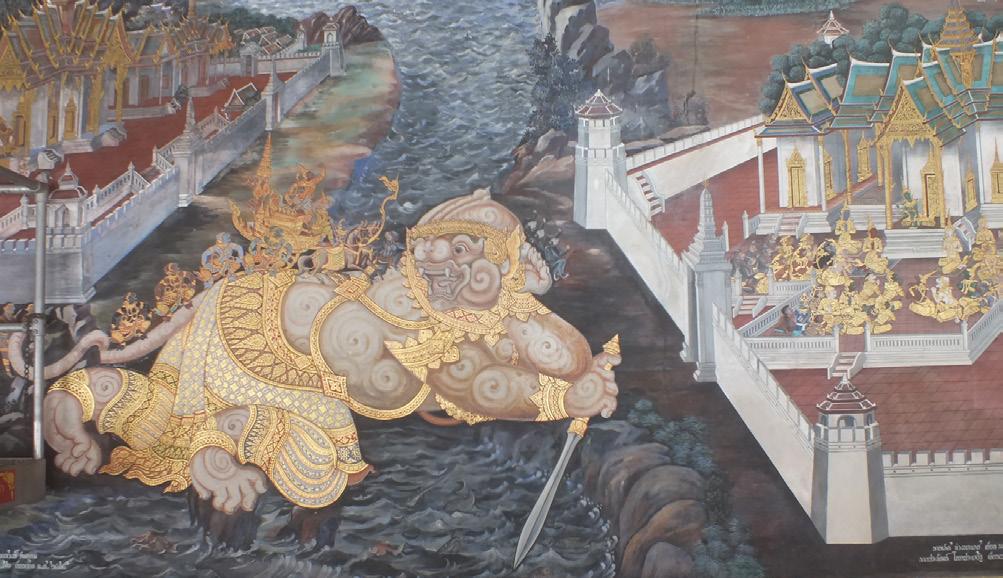
Phra Ram clashed with Thotsakan, cutting off his arms, legs, and heads — but Thotsakan would not die. They all reattached themselves. Phiphek explained that Thotsakan had performed a ritual to remove his own heart and place it inside a crystal slab, which he had entrusted to the sage Kobut for safekeeping. Hanuman and Angkot volunteered to steal the crystal containing Thotsakan’s heart. Hanuman instructed Angkot to guard the crystal while he flew up to wait in the sky.
Hanuman tricked the sage into taking him as a servant to Thotsakan. Thotsakan was completely fooled and accepted Hanuman as his son, appointing him to fight Phra Ram. Hanuman pretended to fight on Thotsakan’s side, driving the monkey warriors away and taunting Phra Lak — while secretly deepening Thotsakan’s trust.
The next day Phra Ram marched out, having learned of Hanuman’s ruse. Hanuman lured Thotsakan to the battlefield as a spectator. Once there, Hanuman flew up to Angkot, retrieved the crystal slab with Thotsakan’s heart, and brought it to Phra Ram. Phra Ram released the Phrommasat arrow to
strike down Thotsakan. Hanuman prepared to crush the heart and end his life. Thotsakan, knowing he was defeated, asked to return and bid farewell to Nang Monto and his city.
The following day Thotsakan marched out with warrior’s pride — and fell to Phra Ram’s arrow.
Lord Indra sent celestial nymphs to bring consecration waters and royal regalia for Nang Sida. She ascended the crystal flying throne and went before Phra Ram. She asked to walk through fire to prove her purity — that she had not been defiled during her captivity in Lanka. By the power of her virtue, lotus flowers bloomed beneath every step she took.
Phra Ram issued a royal decree appointing Phiphek to rule Lanka. Phiphek performed Thotsakan’s funeral rites with full honor, then received Phra Ram, Phra Lak, and Nang Sida into the city. They then returned to Ayutthaya, for fourteen years were nearly complete — and if they did not return in time, Phra Phrot and Phra Sattru would cast themselves into fire. After crossing the great ocean, Phra Ram released an arrow to destroy the causeway.
Bunlaikab was the son of Thotsakan and the goddess Kalaakhi. A naga king had taken him as a foster child since infancy. After nightmares, he parted from the naga king to find his mother, learned the news from her, and followed Phra Ram’s army. Phra Ram ordered Hanuman to intercept him. Hanuman transformed into a tiger-like creature to ambush him but could not capture him — Bunlaikab had smeared himself with magical herbs and kept slipping free.
Hanuman asked the sage Thitphai for a solution. The sage advised using dust and sand thrown against the body. Hanuman returned and captured him in this way, then slew him.
Phra Ram returned to Ayutthaya and held his royal coronation, granting titles and rewards to the monkey warriors. He appointed Hanuman as Phaya Anuchit and gifted him half of Ayutthaya as promised. But Phaya Anuchit was not happy, so Phra Ram built him the city of Lopburi instead.
Thao Maha Ban, a close ally of Thotsakan, learned that Thotsakan was dead and Phiphek — now called
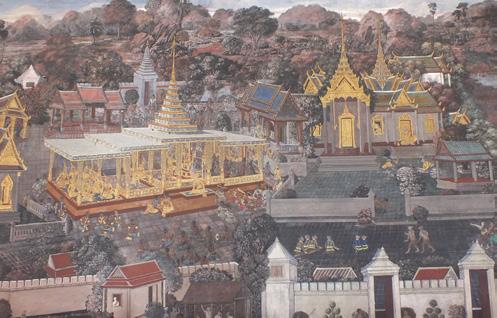
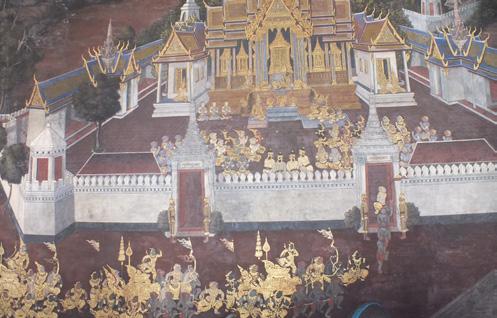
Thao Thotkhiriwong — was ruling Lanka, so he raised an army to attack. Phra Ram sent Hanuman to help. Shortly after returning to rule Lopburi, Hanuman renounced the city, performed a ritual to transform himself into a human, and set off to practice austerities.
Nang Monto gave birth to a son by Thotsakan. Thao Thotkhiriwong believed the child was his own and named him Phainasuriwong. Meanwhile, Nang Benchakai had a son by Hanuman, named Asuraphat.
When Phainasuriwong grew up and learned the truth, he fled with his nurse to petition Thao Chakrawat of the city of Maliwhan — an ally of Thotsakan — to avenge his father. Thao Chakrawat raised an army and captured Thao Thotkhiriwong. Phainasuriwong was installed as ruler under the name Thao Thothapin.
Asuraphat traveled to find his father Phaya Anuchit and inform him that Thao Chakrawat had seized Lanka. Phaya Anuchit broke from his auster-
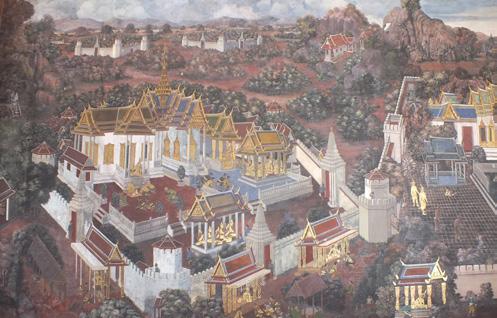
ities and informed Phra Ram. Phra Ram sent Phra Phrot and Phra Sattru to retake Lanka, then led his army against Thao Chakrawat’s city of Maliwhan. The war with Thao Chakrawat closely mirrored the war against Thotsakan in every respect. In the end, Thao Chakrawat was defeated and Phra Ram granted the monkey warriors cities to rule.
One day while Phra Ram and Phra Lak were touring the forest, a female yaksha named Adun — who had a grudge against Phra Ram — transformed into a court lady and tricked Nang Sida into drawing a portrait of Thotsakan. Adun then possessed the portrait, making it impossible to erase. When Phra Ram found the portrait of Thotsakan hidden beneath his royal bed, he was furious and ordered Phra Lak to take Nang Sida away and execute her. Phra Lak could not bring himself to kill her, so he left her in the forest and brought back a deer’s heart to present to Phra Ram as proof.
Nang Sida lived with the sage Wathamrik and gave birth in the forest to a son — Prince Mongkut (Lava). One day the sage thought Mongkut was missing and created a new image of a child. When Sida returned with Mongkut, the sage was about to destroy the image. Sida asked him to bring it to life as he had originally intended — and so he raised
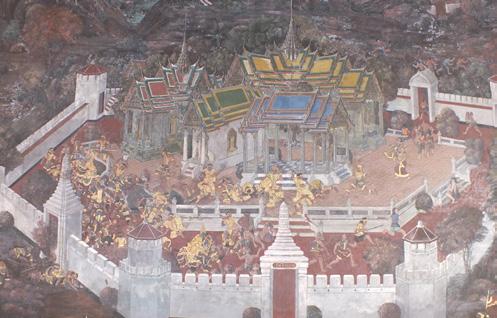
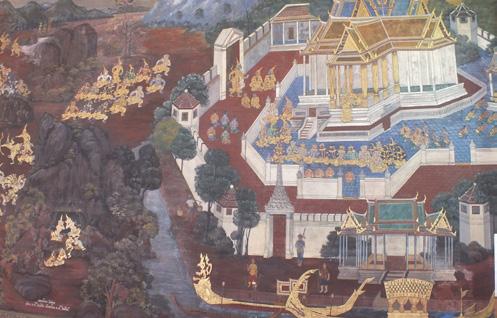
it as a son, naming him Phra Lop (Kusha). One day Mongkut and Lop tested the divine arrows the sage had given them, and the thunderous sound reached all the way to Ayutthaya.
Phra Ram sent Phra Phrot, Phra Sattru, and Hanuman to subdue them. Mongkut was captured and brought to Phra Ram. Lop followed and freed his brother. Phra Ram gave chase, and during the battle he realized these were his own sons. He went to ask Nang Sida’s forgiveness and invite her back to the city. She refused.
Phra Ram devised a trick: he feigned death. Nang Sida, upon hearing, agreed to come and perform the funeral rites. When she discovered the deception, she was furious and fled down into the underworld.
Phra Ram summoned Phiphek to advise him. Phiphek told Phra Ram to walk the forest for one year to dispel misfortune. During that time he fought numerous demon kings. When he returned to Ayutthaya, Lord Shiva mediated and convinced Nang Sida to reconcile with Phra Ram, and a royal remarriage ceremony was held.
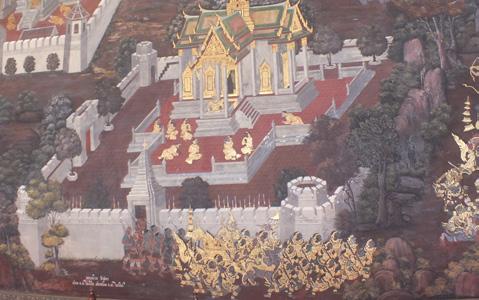
The city of Kaikaset — the kingdom of Phra Ram’s maternal grandfather — was invaded by the demon king Thao Khanthan and his son Wirunphat. Phra Ram ordered Phra Phrot, Phra Sattru, Prince Mongkut, and Prince Lop to go to battle. Lop slew Wirunphat, and Mongkut slew Thao Khanthan. They then invited Thao Kaikaset to return to his kingdom. Phra Phrot and Phra Sattru escorted Mongkut and Lop back to Ayutthaya, after which all the princes and lord-kings went their separate ways and returned to their respective cities.
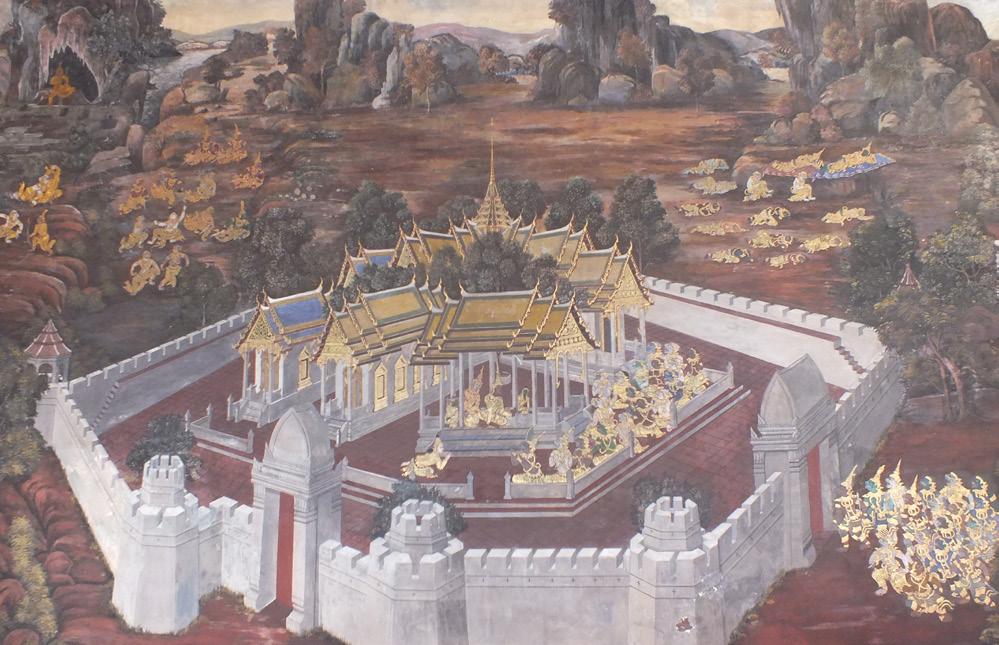
Published on December 5, 2011 by the Royal Household.
2. The Story of Ramakian
From the Mural Paintings along the galleries of the Temple of the Emerald Buddha
Compiled by Nidda Hongvivatan
First published on September 1, 2002