Karol Wyszynski
Under One Roof
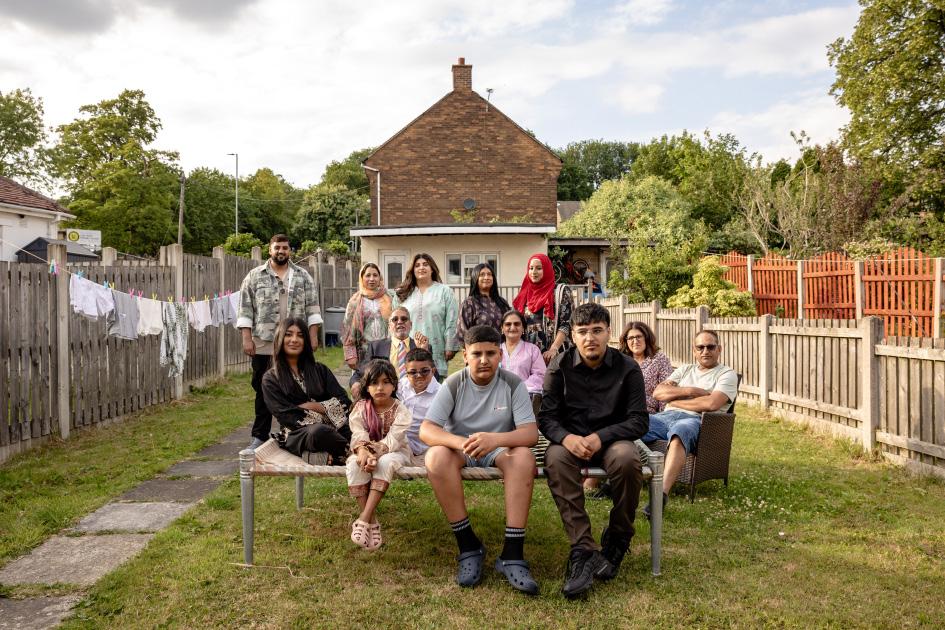
In Under One Roof, Karol Wyszynski made portraits of eight families across the Bradford District.
As part of this commission, he also worked with Bradford Young Curator Lauren Waldron to interview each family, asking questions about generational change, cultural heritage and roles and values within family life. The information across the following pages provides an insight into each family’s world based on those interviews.
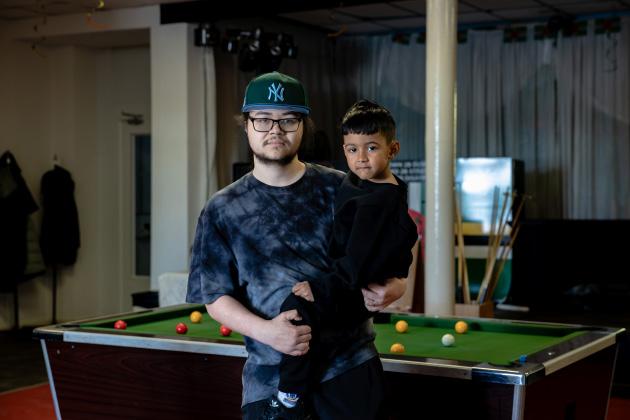
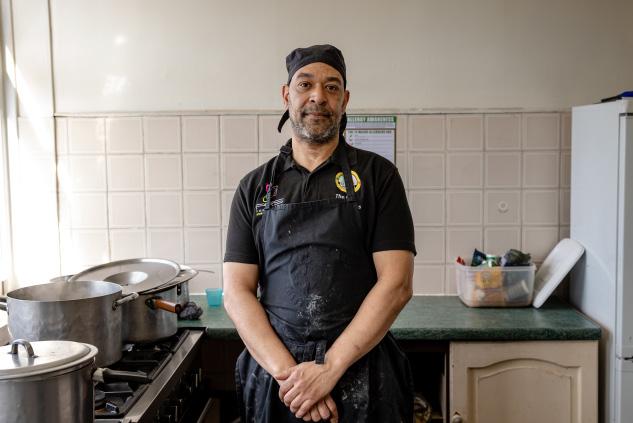
Asher, Isiah and Glen Titre, Bradford Dominica Association
‘Family is everything. It’s all you are, all you have.’
- Glen Titre
Asher is 26, and a third-generation Dominican living in Bradford. He is a poet and an active member of the Dominica Association. Asher’s grandfather helped found the Association as a place of sanctuary for Dominicans in the 1970s, at a time when there was widespread hostility towards the community, and other migrants to the district.
Asher was raised by his father, Glen, who has followed in his father’s footsteps to maintain the Dominica Association - acting as both cleaner, then cook, throughout the centre’s history. As for many families, the centre became a home from home for Glen and Asher, providing a sense of belonging and enabling new friendships and familial links to be formed.
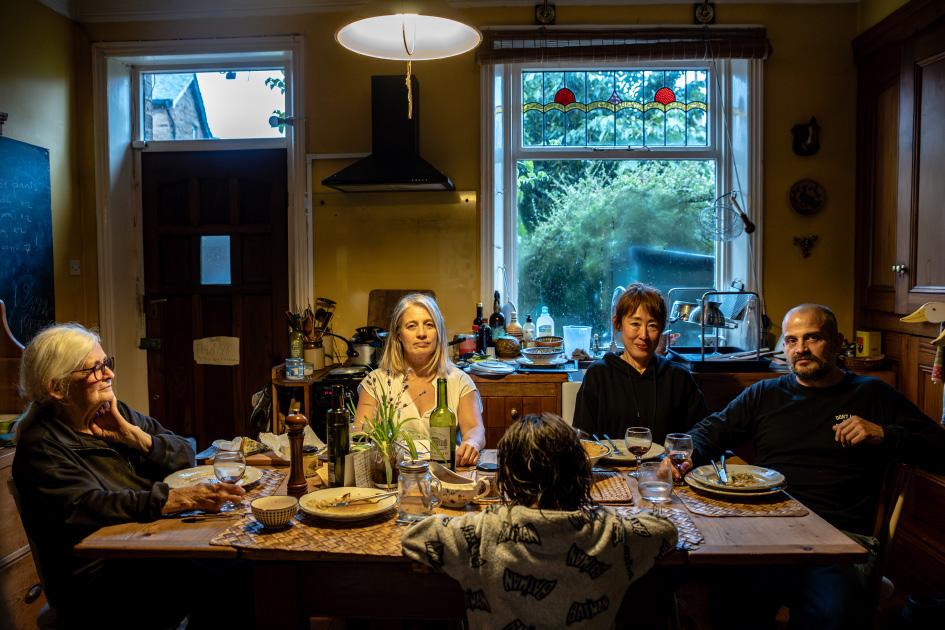
Annie, Cecile, Loîc, Ryoko and Yann, Shipley
‘You can’t choose your family, but you can choose who you build a family with.’
- Ryoko Yoshida
Yann and Ryoko live with their son Loïc, in Shipley. Yann grew up in Bradford and is half French, and Ryoko was born and raised in Japan. Ryoko and Yann met in London but settled back in Bradford to raise their son and be nearer to Yann’s mother, Annie.
Ryoko’s parents were greengrocers in Japan, and her grandfather was an amateur sumo wrestler. Ryoko is keen that her Japanese heritage is passed onto her son, who has recently taken up Judo. Both Yann and Ryoko come from cultures where food is important, and recognise that simple acts of cooking and sharing meals with family are to be cherished.
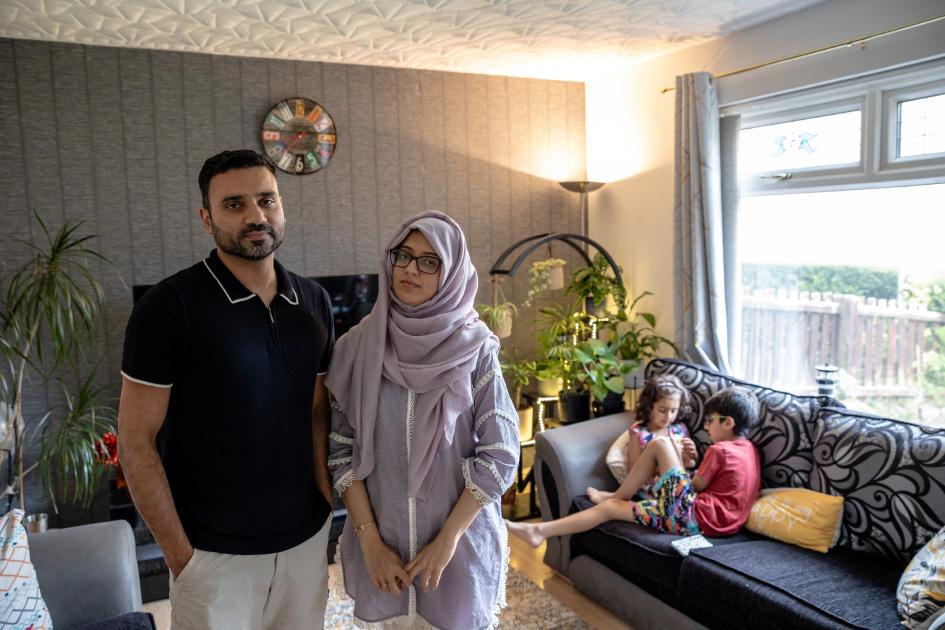
Saira, Sabeel, Shahveer and Sukaina, Four Lane Ends
‘In our community there was always a difference between daughter and son, sons are often considered superior and are seen as the ones who continue the family lineage and provide financial assistance, but we’re changing that, we’re equal.’
- Saira Sukaina
Saira and Sabeel are both first generation migrants from Pakistan who live with their two children, Shahveer and Sukaina. Sabeel studied electrical engineering at the University of Bradford, and though the couple spent the first years of their marriage in Telford, they moved back to Bradford to raise their family.
Though they are keen to maintain some cultural traditions, such as teaching their children Urdu alongside English, Saira and Sabeel are forging change from their families expectations. In a break from tradition, Saira rejected her dowry when she got married, she also has a job to provide for her family both in Bradford and in Pakistan. They are keen to instil these values of independence and care in both their son and daughter.
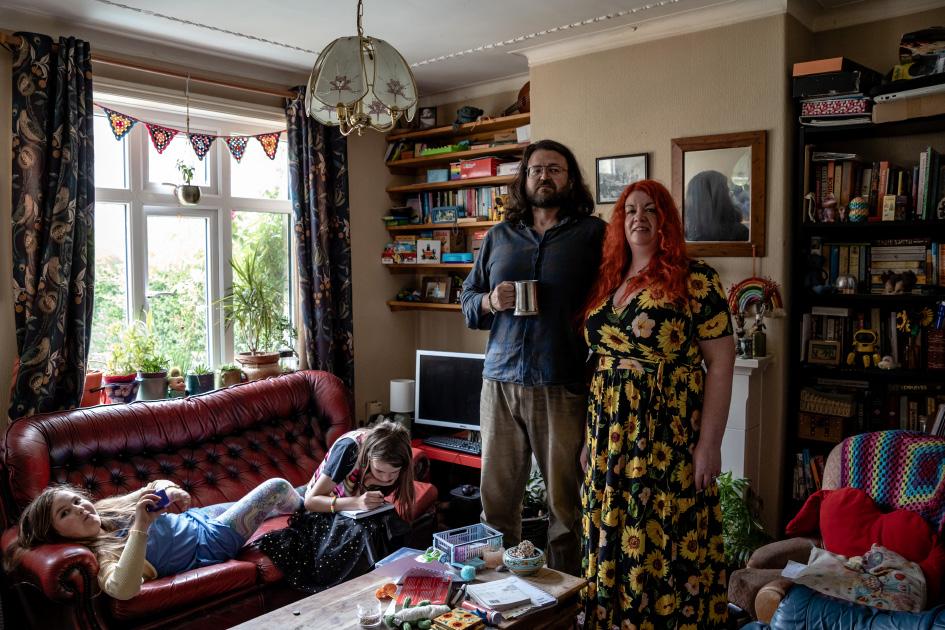
Joanna, David, Eliza, and Florence, Keighley
‘Everyone mucks in and does everything in this house, everything is split down the middle.’
- Joanna Atkinson
Joanna and David live with their daughters Eliza and Florence in Keighley. The family is very close, and both daughters are home-educated.
Joanna comes from a large family, who are known locally for their contributions to the community. Her great-grandmother moved from Ireland to escape poor living conditions, and a sense of humility has been retained in the family, with Joanna’s mother often opening her door to those in need. David had a more complicated relationship with his family, but loved and cared for his grandmother, often missing school to run errands for her - valuing social connection over academic success.
Joanna and David maintain an active social life and believe in the importance of found-families, built on shared interest and supporting those who need it most.
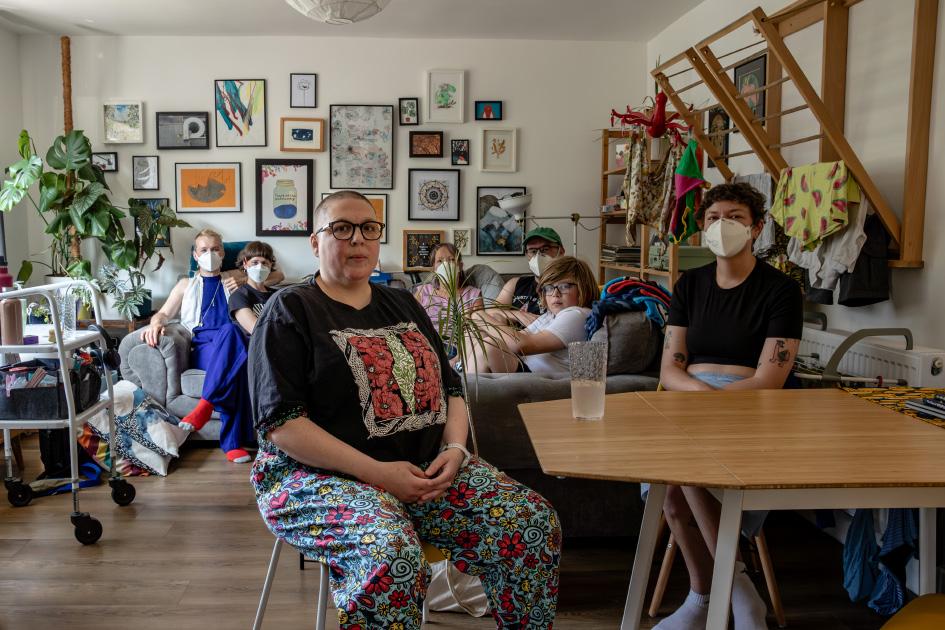
Ry, Asa and family of support workers Ben, Jen, Karen, Duncan and Merle, Shipley
‘In the UK, there’s an expectation that you’ve got an able-bodied significant other who will do as much as physically possible for you, and when you don’t, and when you have to go into the care system, it’s fraught.’
- Ry Gibson Moss
Ry lives in Shipley with their son Asa. Restricted by chronic illness, Ry relies on support from a team of carers. These carers have become family for Ry and Asa, sharing in intimate moments and providing a level of support usually found in familial environments.
Ry lost their independence to their illness in their forties, which struck a monumental change in their life. The support workers help Ry to parent in a physical capacity, taking Asa to the park, or helping them attend appointments as well as preparing meals and helping with other domestic tasks.
The team of carers are non-traditional. After a bad experience with care agencies, Ry has arranged their own support, found in part-time commitments from Ben, Jen, Karen, Duncan and Merle, who live locally. Until the day of the shoot, this found-family had never actually met up in their entirety.
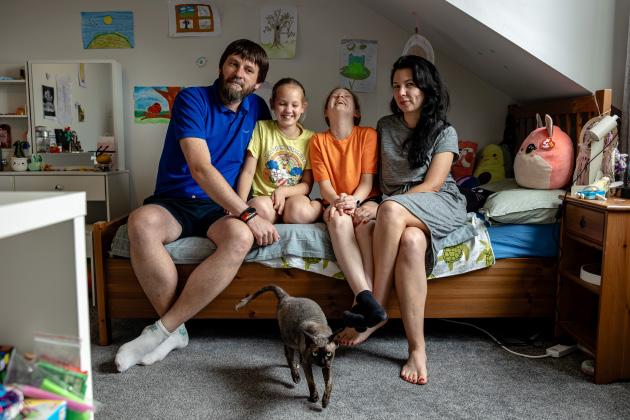
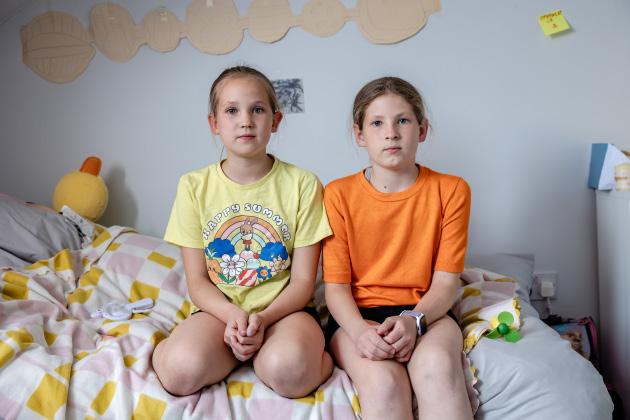
Bogdan, Kseniia, Eva-Maria and Oleksandra Venger, Shipley
‘We all have the freedom to decide what we want to do, and where we want to go.’
- Bogdan Venger
Bogdan and his wife Kseniia met in Kyiv 14 years ago, and moved to England separately. While Bogdan stayed in Ukraine at the start of the Russia-Ukraine war, Kseniia left with their twin girls Eva-Maria and Oleksandra; first to Warsaw, and then England. Whilst apart, ‘family’ took on a non-physical meaning; a calmness in knowing they are always together even when separated. Since moving to England, they place value in holding onto heritage and identity, but are also aware of how much has been left behind.
Bogdan and Kseniia had very different childhoods, Bogdan recalls quiet moments fishing with his grandfather, whilst Kseniia was part of an extended family of performers as she travelled around the country for her mother’s acting career. A sense of flexibility and freedom exists within their family life, reinforced by an enduring sense of care and support.
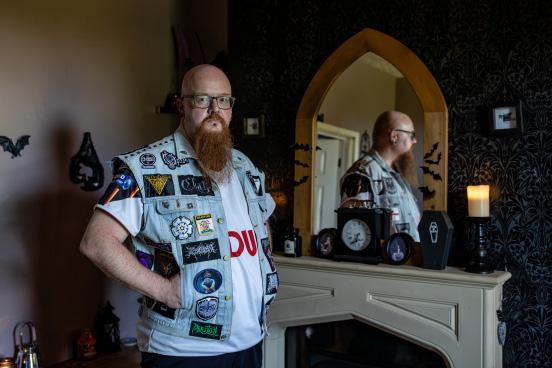
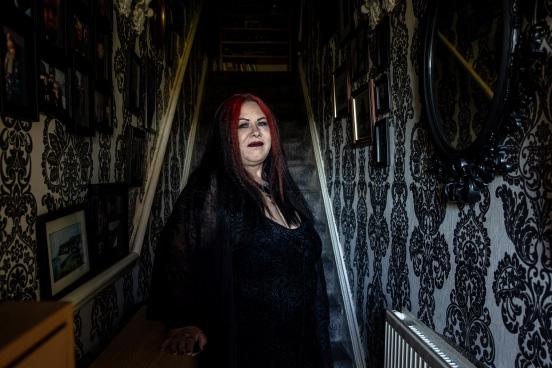
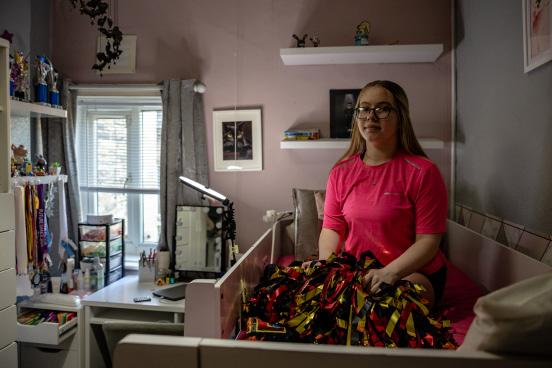
Gareth, Tracey, and Freya Wright, South Bradford
‘I see a lot of families that don’t like each other. We like each other.’
- Tracey Wright
Gareth and Tracey live with their daughter Freya in the aptly-named ‘Crypt’, in a village in South Bradford. Their home celebrates individuality and selfexpression; gothic decor spreads to every corner of their home, but stops outside their daughter’s bedroom - Freya is a pink-loving cheerleader.
Despite their differences, the family bond over a love of rugby. When not travelling the country to see Bradford Bulls play, they’re visiting new cities taking Freya to cheerleading competitions, supporting her niche passion and championing her individual interests.
Both Gareth and Tracey grew up in larger extended families, and experienced how relationships become strained in an attempt to meet everybody’s needs. Within their small family, they’re able to share collective interests, as well as celebrate and support their differences.
The Sehgal Family, Girlington
‘Family to me is like air. If you don’t have air you can’t breathe, and without family you can’t survive.’
- Jamshad Sehgal
At the centre of the Sehgal family portrait sits Jamshad and her husband Rafiq.
Jamshad and Rafiq have dedicated 40 years of their lives to voluntary work at the Khidmat Centre in Lidget Green. The centre provides a range of facilities and services for vulnerable members of the community including the elderly, people with learning disabilities, young people and more recently women leaving the criminal justice system.
The Sehgal’s have instilled the importance of sustaining community to their extended family. Their children were raised with strong morals and, rather than being sent up to their rooms as punishment, were expected to write stories about their mistakes and the consequences of their actions. Jamshad says these modern day Aesop’s fables are still in the attic.
Although everyone has busy lives and families of their own, they try to meet as often as they can. One family member compares each smaller family unit to ‘cogs in a bigger machine’.