EXECUTIVE DIRECTOR’S Corner

I must admit, I think about work often. Even when I’m not in the office. And I do my best thinking when I’m walking alone in the woods. I’m fortunate to live close to many of Walloon Lake Association and Conservancy’s finest nature preserves, including Cedar Valley Preserve and Wildwood Harbor Nature Area, which provide a superb setting for thinking. The classic quote from noted conservationist Henry David Thoreau resonates strongly with me, “the moment my legs begin to move, my thoughts begin to flow.”
Most recently, I’ve been thinking a lot about our past decision to merge the Walloon Lake Association and the Walloon Lake Trust and Conservancy back in 2019. While I don’t think we’ve fully optimized yet as an organization, I firmly believe this was the right decision to make. Though the challenges we’ve encountered since 2019 are numerous, encompassing a multi-year global pandemic and the turnover of experienced staff members, we’re finally entering a year of stability with a focus on mission delivery.
When I look to the future for our nonprofit organization, I see green shoots everywhere. We’ve restored our staffing levels to the highest they’ve been before, we have a strong work plan in place for 2026, and we have reengaged with many of you – the members who make up the fabric of our organization and support us so generously.
The value proposition for supporting Walloon Lake Association and Conservancy is simple: our superpower is that we take a holistic approach to protecting a local place: the Walloon Lake watershed. We don’t spread ourselves thin across numerous regions. We don’t prioritize work in multiple watersheds. And we don’t focus solely on stewarding our lake’s water resources, saving vulnerable land, or educating people – we do it all. We tackle important conservation issues often literally in your backyard. Simply put, your investment in our organization affects positive change locally, which preserves our special slice of Northern Michigan where we live, work, and play – something you can’t place a price tag on.
Walloon Forever,
Jon Breithaupt
EXECUTIVE DIRECTOR
Together, here’s what we accomplished in 2025:
LAND:
• 3 land acquisition projects in the final stages of negotiation
• 5 acres of invasive species treated on our nature preserves
• 18 conservation easements monitored on protected private lands
• 25 miles of trail restored after the historic spring ice storm
• 54 nature preserves maintained in the Walloon Lake watershed
• 500+ trail blazes replaced for improved wayfinding and visibility
• 2,300 acres of permanently protected land stewarded in the watershed
• 2,400 sq ft of pollinator strips prepared for planting
• $917,000 raised through the Critical Lands Campaign
WATER:
• 1 artificial loon platform created by volunteers in the North Arm
• 3 acres treated on Walloon Lake to remove aquatic invasive species
• 10 water quality monitoring outings coordinated on Walloon Lake
• 350 boats cleaned at our boat washing stations
• 4,000 feet of rivers and streams surveyed
PEOPLE:
• 1 new partnership with local government created: the Walloon Lake Watershed Collaborative
• 3 full-time employees and 1 temporary intern hired
• 5 redefined organizational standing committees
• 12 community engagement programs delivered
• $120,000 raised at the inaugural Love Walloon fundraising event
President’s Preamble
Looking Ahead to Spring 2026: A Season of Renewal and Possibility at Walloon Lake
As a snowy (roughly 100 inches this season) and cold winter loosens its grip, the ice on the lake melts, and longer days return, spring offers us a familiar and welcome reminder: renewal is not only possible, it’s already underway. For those of us who care about Walloon Lake, the arrival of Spring 2026 brings with it a renewed sense of optimism, energy, and shared purpose.
Over the past year, Walloon Lake has continued to be a place of connection— between neighbors, generations, and the remarkable natural environment that surrounds us. Whether enjoyed from a dock at sunrise or sunset, during a peaceful paddle across clear water, fishing in open water or through the ice, on a quiet walk along the
shoreline, or on a hike in a preserve, Walloon Lake is at the heart of our community.
One reason for optimism this year is that the Walloon Lake Association and Conservancy is now fully staffed under the leadership of Executive Director Jon Breithaupt for the first time in several years. An energetic and enthusiastic group of people is in place, bringing fresh ideas, renewed momentum, and a shared commitment to protecting Walloon Lake.
The year ahead presents meaningful opportunities to build on that foundation. From conservation initiatives and water quality monitoring to education, outreach, and community events, WLAC focuses on protecting what makes Walloon Lake so special.
Spring is also a time to reconnect. As seasonal residents return and year-round neighbors emerge from winter routines, Walloon Lake once again becomes a more
active gathering place (snowshoeing and cross-country skiing have been winter-long activities at sites like the WLAC Postle Farm Preserve). Volunteer projects, meetings, and events offer opportunities to strengthen both the lake environment and our community. As we look ahead to the months to come, we do so with gratitude. Every member, volunteer, donor, and advocate plays a role in safeguarding Walloon Lake for future generations.
Spring 2026 invites us to move forward with confidence and hope. Together, we can continue to protect Walloon Lake, celebrate its natural beauty, and deepen our shared responsibility for its future.
Sincerely,
Marty Makinen WLAC BOARD PRESIDENT
OVERVIEW OF 2025 FINANCIAL INFORMATION
By: Liz Meeks Director of Business Operations
The year 2025 was one of transition for the Walloon Lake Association and Conservancy, a fact that can be seen in the new faces around our office and in our financial statements. Despite the significant changes in recent years, our community and staff members came together in 2025 to advance our mission and leave the organization in a strong place as we step into the new year.
REVENUE
Because of the generosity of our community, The Carls Foundation, and the Norcross Family Foundation, we successfully secured matching grant funds and raised over $900,000 for our Land Protection Fund, which will allow us to preserve critical land to protect Walloon Lake’s waters. We were also proud to bring back our annual gala, Love Walloon, which raised nearly $120,000 and reunited our community for an elegant evening celebrating the lake. The foresight of the many donors who have contributed to our endowment over the years provided the Conservancy with nearly $150,000 in operating funds for the year.
Strong investment performance in 2025 helped to ensure these generous gifts continue to make an impact well into the future.
While revenue from membership was slightly lower than in years past, our Guardian Fund campaign exceeded our goals, raising over $208,000. This, in conjunction with remaining under budget on expenses, allowed us to end 2025 with an operating reserve of approximately $185,000.
SPENDING
Perhaps the clearest indication of a year in transition is that a smaller-than-ideal share of spending (56%) went directly to programs that support our mission. A higher share of our spending went to supportive functions (29% to mission support and 15% to fundraising) than in years past as we directed efforts at recruiting and hiring new staff members. Despite these challenges, we accomplished some great things in 2025. Foundation grants enabled us to fully pay the Mill Pond Preserve loan in July. WLAC is once again debt-free and in a good position to protect more critical land in the watershed.
The staff and volunteers restored all 25 miles of trail on our preserves by July after the devastating ice storm and collaborated with Resort Township and Little Traverse Conservancy to protect 130 acres of farmland in the watershed from future development. We secured grant funding to purchase a stewardship truck, a kayak, and to replace critical trail maintenance equipment, setting us up to more effectively steward the land and water we protect.
With the solid foundation laid in 2025, we’re poised to achieve even more in 2026.
Welcome Our New
DIRECTOR OF OUTREACH & COMMUNITY ENGAGEMENT

WLAC welcomes our newest addition, Laura Morris, as Director of Outreach and Community Engagement. Laura joins us with a background in development communications and event design from her time at the University of Michigan Office of Development. She also brings experience in corporate marketing strategy from her time at Ernst & Young. She holds a bachelor’s degree from Western Michigan University where she studied print management and communications, blending technical knowledge and creative strategy. Her love of all things outdoors and appreciation for what makes Northern Michigan unique make her a great fit for advancing the WLAC mission.
Laura and her 9-year-old son made the official move north last summer to build a life and community better aligned with their hobbies and passions and to feel more connected to the place they call home.
When not at the WLAC offices, Laura can be found with her partner Zach, and son Max skiing at Nub’s Nob, mountain biking as a Norte Youth Coach, kayaking, hiking, running, or enjoying a swim at the Petoskey break wall.
SPRING 2026 EVENTS SCHEDULE
APRIL 15, 2026 • 12PM – 8PM
Stigg’s Brewery
Give Back Night: WLAC
12 S Park St, Boyne City
APRIL 18, 2026 • 10AM – 12PM Earth Week Trash
Cleanup Workday
Wildwood Harbor Nature Area
MAY 9, 2026 • 10AM – 12PM
Wander Walloon:
Guided Wildflower Hike
Wildwood Harbor Nature Area
MAY 16, 2026 • 10AM – 12PM
Native Pollinator
Planting Workday
Wildwood Harbor Nature Area
MAY 19, 2026 • 5:30PM - 7PM
Summer Speaker Series
The Talcott
4078 M-75, Walloon Lake
MAY 20, 2026 • 7AM – 9AM
Wander Walloon:
Guided Birding Hike
Fields Preserve
MAY 29, 2026 • 9AM – 11AM
Garlic Mustard
Removal Workday
Howell-Zimmerman Preserve
MAY 30, 2026 • 10 AM - 12PM
Native Pollinator
Planting Workday
Voran Family Preserve

WINTER ON WALLOON LAKE: A Season of Connection
By Laura Morris Director of Outreach and Community Engagement
Winter at Walloon Lake is never just quiet trails and cold weather - it’s a time when stewardship continues, and community connections shine. Even in the snowy months, members and supporters came together to care for the watershed and enjoy the beauty of a Northern Michigan winter.
We welcomed the season on December 21 with a Wander Walloon: Winter Solstice Snowshoe Hike at Wildwood Harbor Nature Area, where participants explored Lake Evangeline’s shoreline, learned about the preserve’s history, and discussed future conservation opportunities. The arrival of winter also marked the arrival of new equipment for WLAC: a snow plow for our truck and a grooming drag for the snowmobile. These tools allowed us to keep preserve parking lots clear and trails freshly groomed, ensuring safe access and enhancing winter recreation opportunities for the community.
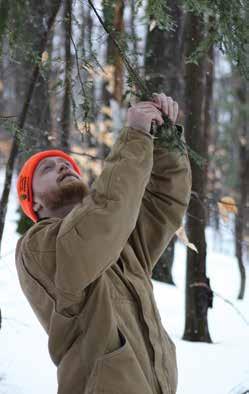
In January, we partnered with the CAKE Cooperative Invasive Species Management Area to host a free training workshop on identifying Hemlock Woolly Adelgid (HWA). This invasive insect feeds by sucking the sap from Hemlock and Spruce trees causing them to lose needles and not produce new growth. This turns the Hemlocks a grayish green instead of a healthy dark green. Winter is the best time to spot this invasive pest, and with the help of our volunteers we are now better prepared to protect Michigan’s hemlock forests.
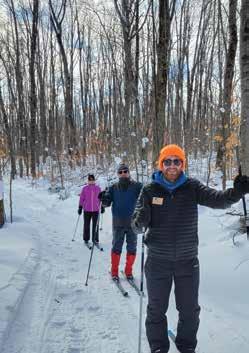
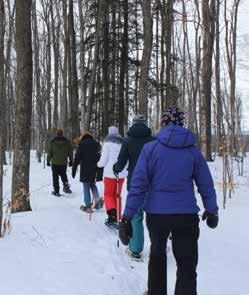
February brought sunshine and freshly groomed classic Nordic tracks at Postle Farm Preserve, where cross country skiers spotted coyote prints during our guided ski event. The prints along the trail were a good reminder of who calls these trails home and the importance of conserving the habitat for local wildlife. Later in the month, the Wander Walloon: Winter Wine Walk paired snowshoeing with community connection at Boyne Valley Vineyards, blending outdoor adventure with friendly conversation and a relaxing reset.
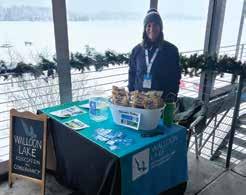
We wrapped the month with Walloon Winterfest, where pretzels, firepits, and live music transformed the village from a quiet, snowy lake town to an energetic festival. WLAC staff enjoyed mingling with neighboring businesses and local community members, while handing out snacks and sharing the message of stewardship that carries through every season.
From snowy hikes to lively gatherings, each event reflected the resilience of our watershed and its inhabitants and the joy of staying connected all winter long.
For those who joined us, it was a season to remember. For those who missed it, you’ll want to be here next year!
Wade Foster from the CAKE Cooperative Invasive Species Management Area shows participants on the Tree Identification hike how to identify signs of the invasive hemlock woolly adelgid insect.
WLAC Stewardship Coordinator, Joey, leads the guided cross country ski event at Postle Farm Preserve on a gorgeous February Saturday.
WLAC staff celebrated the winter season at the 9th annual Walloon Winterfest, passing out pretzels and connecting with the community.
Snowshoers explored Postle Farm Preserve before stopping in to enjoy a glass of wine at Boyne Valley Vineyards.
By Jon Breithaupt Executive Director
HIGHLIGHTS OF OUR 2026 Work Plan
I’m excited to provide a peak behind the curtain for what we have planned in 2026. The priorities identified below were curated based on goals in our 2023-2027 Strategic Plan, preserve management plans, and other input from our knowledgeable board and staff members. As always, our work is centered around three focus areas: land, water, and people, with the throughline connection of preserving Walloon Lake and its broader ecosystem, now and into the future.
Our mission at Walloon Lake Association and Conservancy is to deliver Walloon Lake, a place where people and nature thrive, to the next generations through the power of conservation. While much of our work is focused on direct actions taken on the water, to fulfill our mission it is imperative that we don’t stop at the lakeshore boundary. When we preserve and restore land, we minimize runoff into the lake, reduce soil erosion, protect wildlife habitat, and filter out impurities – all of which ensure a thriving Walloon Lake for generations to come. Educating people about important conservation issues affecting our watershed and giving folks places to quietly recreate, where appropriate, further connects people to our mission and leverages additional support.
Our work is integrated, multi-faceted, and comprehensive, but it will always focus on three things: the land, water, and people that make up the wonderful Walloon Lake watershed.
Back in December, I shared four themes to look for in our work for 2026 through our email newsletter:
• Increasing the scope and quality of our lake and stream monitoring efforts
• Permanently protecting high value conservation land through the acquisition of nature preserves
• Scaling our community engagement work to educate the public and landowners about the importance of preserving Walloon Lake and its watershed
• Reducing deferred maintenance of infrastructure on our protected lands
Below, you’ll find a few specific examples of how we’re implementing goals from our 2026 Work Plan, in alignment with these overarching themes.
WATER STEWARDSHIP GOALS
• Conduct a comprehensive survey of the Walloon Lake shoreline to document changes in its condition since 1998 in cooperation with our partners at Tip of the Mitt Watershed Council to support future land protection and restoration work
• Facilitate weekly lake water quality monitoring from May through September on Walloon Lake
• Implement a new outreach campaign called “Make Waves Wisely” to promote responsible wake boat activities on Walloon Lake, with new recommendations of where to engage in these activities
• Scale our stream monitoring work of Walloon Lake’s two named tributaries: Schoof’s Creek and Fineout Creek by threefold to ensure they remain healthy and vibrant
• Place safety buoys at the Eagle Island Shallows, North Arm Narrows, Randall’s Point, and West Arm Narrows to alert boaters of navigational hazards on our lake, in partnership with Walloon Central Marine
• Conduct a research project at the Camp Daggett waterfront that aims to identify options to reduce exposure to the parasite that causes Swimmer’s Itch, in partnership with Camp Daggett and Freshwater Solutions LLC
• Operate four boat wash stations at the Jones Landing, Melrose Township, Sumner Road and Townsend Road boat launches to mitigate the spread of aquatic invasive species while working with our township partners to identify other potential locations for new boat wash stations in the future
• Execute a contract with PLM Lake and Land Management to treat Eurasian Watermilfoil, a highly invasive aquatic plant that forms thick mats in the lake
LAND CONSERVATION GOALS
• Complete three high priority land acquisitions that create new or expand existing nature preserves – more details on this topic very soon!
• Remove an undersized trail culvert on a stream near the headwaters of Schoof’s Creek at Fields Preserve, and replace it with a timber foot bridge
• Replace failing sections of boardwalk at Fields Preserve and Indian Garden Nature Area with a modern style of structure
• Standardize our trailhead information kiosk and trail junction signage for consistency, prioritizing our three ambassador preserves first: Fields Preserve, Postle Farm Preserve, and Wildwood Harbor Nature Area
• Remove terrestrial invasive species at our most heavily impacted nature preserves, with a focus on Autumn Olive (Elaeagnus umbellata), Japanese Barberry (Berberis thunbergii), Scotch Pine (Pinus sylvestris), Garlic Mustard (Alliaria petiolate), and various invasive varieties of honeysuckle
• Construct a new trail segment to provide a loop hike at Howell-Zimmerman Preserve
• Develop a plan to enhance the facilities at Postle Farm Preserve
COMMUNITY ENGAGEMENT AND EDUCATION GOALS
• Host a five-part Summer Speaker Series to educate people about conservation issues impacting the Walloon Lake watershed
• Refresh the Lake Ambassadors program to foster engagement with WLAC on a neighborhood level
• Secure grant funding to pilot a Walloon Lake watershed artist-in-residence program to generate marketing material for the organization and inspire appreciation for the watershed
• Review and update our memorandum of understanding with North Central Michigan College to support our stewardship work and provide work experience for area college students
• Deliver at least six community engagement events in the spring, fall, and winter seasons, and at least twelve during the summer season, with a focus on conservation education, environmental workshops, and stewardship volunteer outings Most of this work is only possible because of YOU! Our members, donors to our Guardian Fund, business sponsors, Love Walloon event attendees, and dedicated volunteers power us. With the complement of a fully staffed organization once again, I’m challenging our team to dream big and be bold this year. With your continued support, I’m confident we can make 2026 a banner year for Walloon Lake Association and Conservancy. Onward!
WLAC ACQUIRES NEW 34-Acre Nature Preserve
By Jon Breithaupt Executive Director
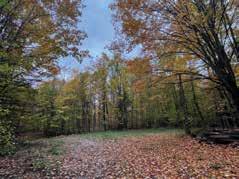
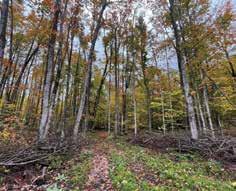
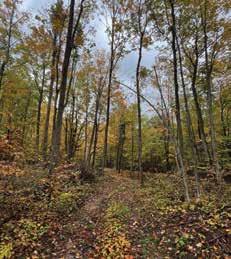
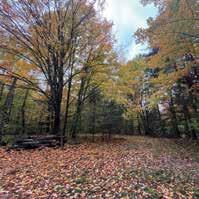
The Walloon Lake Association and Conservancy (WLAC) is pleased to announce the permanent protection of a 34-acre nature preserve generously donated through a quit claim deed from the family trust of Mr. Bill Benser. Acquisition of this nature preserve is a major milestone for our nonprofit organization: it is our 75th successful land protection project to benefit Walloon Lake and its watershed.
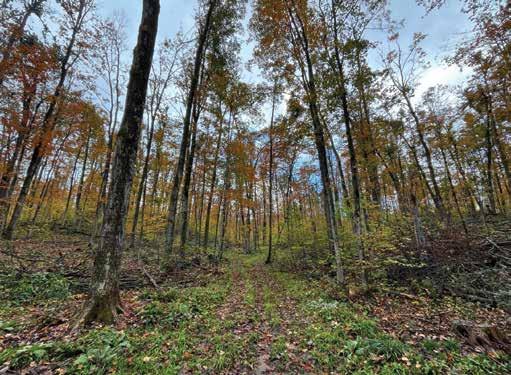
The newly protected property, to be forever known as the Benser Preserve, features rolling hills, mature beech-maple forest, and diverse native habitat characteristic of the Walloon Lake watershed. Located adjacent to the undeveloped area of Camp Michigania off Sumner Road on the west side of Walloon Lake, the preserve strengthens an important corridor of natural lands and safeguards scenic views and ecological integrity in this cherished part of northern Michigan.
Thanks to the generosity of Mr. Benser, this gift ensures that the land’s hardwood forest, wildlife habitat, and natural character will remain intact for generations to come. Beech and sugar maple dominate the canopy, supporting migratory birds, small mammals, and a rich understory of native plants, just down the road from Walloon Lake. The rolling topography adds both visual beauty and ecological diversity, contributing to watershed health and long-term forest resilience, offering seasonal views of our beloved lake.
The property will be managed as a permanent nature preserve. In the near term, we will work to secure funding to remove a few dilapidated outbuildings on the property and install a new preserve name sign. Later in 2026, WLAC will develop a management plan for the property that addresses trails and public access, invasive species management, and forest health to ensure the land remains ecologically vibrant.
We are deeply grateful for this thoughtful conservation gift. Donations like this reflect a strong commitment to preserving the natural character of Walloon Lake and protecting the lands that define our community. Land protection success stories like this can be achieved through planned gifts. Our Legacy Society is a committed group of WLAC supporters who agree to leave us a gift of land, real estate, or other financial instruments such as cash or Individual Retirement Accounts (IRAs) after their passing. Planned gifts are typically coordinated by your estate attorney through your trust or will and can leave a lasting impact. Contact us if you’re interested in learning more about the WLAC Legacy Society.
All acquisition costs for this project were supported by a generous grant from The Carls Foundation.
With this acquisition, WLAC continues its mission to protect water quality, wildlife habitat, and the scenic beauty of the Walloon Lake watershed.
THE RHYTHM OF Walloon Lake
By Tanner Yurk Conservation Programs Manager
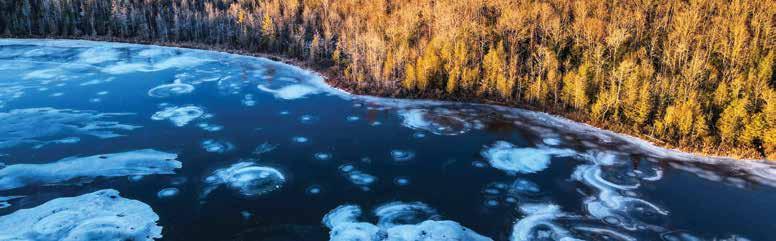
For those who call Walloon Lake home, the change of seasons isn't just a date on the calendar; it’s a series of events and cues. We watch for reports of open water, listen for the first tremolo of the loon, and wait for the week when trilliums carpet the forest floor. These moments are more than just scenery; they are part of a complex, synchronized choreography known as phenology.
Phenology is the study of nature’s timing. In a stable climate, the natural world operates in harmony: insects hatch just as migrating birds arrive, and fish spawn exactly when the spring plankton bloom provides a food source for their fry. However, as we observe shifting patterns across Northern Michigan, it is becoming clear that this choreography is getting out of step.
WEATHER VS. CLIMATE: THE LA NIÑA VARIABLE
Some may look at this past winter, which brought significant snow and sustained cold to Northern Michigan, and wonder if the warming trend has paused. In fact, this winter was a La Niña year. Driven by cooler waters in the Pacific, this climate pattern typically nudges the polar jet stream toward the Great Lakes, delivering the frequent cold-shots and lake-effect snow we recently experienced.
While a snowy winter is welcomed, it is essential to distinguish between weather (shortterm events) and climate (long-term trends). A single "old-fashioned" winter does not reverse the decades-long trend of shorter ice-cover seasons and earlier spring thaws. Rather, it highlights the increasing volatility of our seasons. In a warming world, we don't just see less winter; we see more erratic swings between extreme cold and sudden, premature thaws.
THE CHALLENGE OF "PHENOLOGICAL MISMATCH"
In her book Early Spring, ecologist Amy Seidl tracks how subtle shifts, such as flowers blooming before bees emerge or snow melting weeks early, affect the resilience of an ecosystem. We are seeing similar micro-changes here around Walloon.
When a sudden warm spell follows a heavy snow year, the resulting rapid runoff can overwhelm our shorelines. Furthermore, if the lake warms too quickly, it can lead to a phenological mismatch. The "good" bugs, the foundation of our lake’s food web, may emerge before the fish that rely on them are ready to feed. These shifts can also favor invasive species that are often more opportunistic and better at colonizing the lake during erratic weather patterns than our native flora and fauna.
FROM OBSERVATION TO RESILIENCE
The takeaway from these shifting rhythms isn't despair, but a renewed commitment to stewardship. While we cannot reset global climate cycles, we can significantly influence the resilience of Walloon Lake.
One of the most effective ways to build this resilience is through the protection of our shorelines. Native plants with deep root systems act as buffers, stabilizing the soil against heavy spring runoff and shading the shallows to keep it cool. By keeping our waters clean and our shorelines natural, we give our local plants and wildlife the breathing room they need to adapt to a changing rhythm.
BECOMING A STEWARD FOR WALLOON
As we head into another spring, we encourage you to look at the shoreline with fresh eyes. This year, your observations can move beyond appreciation and into the realm of citizen science. We are asking our members to help us track the lake's health by documenting these seasonal cues through the iNaturalist app.
We have established a dedicated project area specifically for the Walloon Lake Watershed. By simply snapping a photo on your phone, you provide us with GPS-tagged data that helps us monitor our local biodiversity in real-time. Are the spring peepers starting their chorus while the ground is still half-frozen? Which wildflowers are the first to wake up on your property?
To join the effort, download the iNaturalist app and join the "Walloon Lake Association and Conservancy (WLAC)" project. By contributing to our local database, you help us build a clearer picture of how Walloon is changing and how we can best protect it.
As stewards of Walloon Lake, we are responsible for this treasure so that it may be resilient to whatever is blown our way. By protecting the land and monitoring the water today, we ensure that the "rhythm of the lake" remains strong for generations to come.


SAVING WALLOON’S MONARCH BUTTERFLIES
By Lauren Macintyre, Member
Rising through the air in a dazzling kaleidoscope of brilliant color, there are few sights in nature more breathtaking than a flutter of monarch butterflies. Long known as America’s most beloved butterfly, the beauty of the monarch and the miracle of its astonishing cross-country migration have inspired a near mystical fascination.
Monarchs, however, are in grave danger. Loss of habitat due to development, and loss of essential milkweed and wildflowers due to the use of harsh pesticides and herbicides threaten their existence.
There is no plant more critical to the survival of monarchs than milkweed. Although monarchs feed on the nectar of a variety of flowers, they can only lay their eggs on milkweed, and milkweed is the only thing their caterpillars can eat. Milkweed, however, is rapidly disappearing from the American landscape.
In the past, milkweed was mistakenly regarded as a noxious weed, but in the WWII era, it became celebrated for its buoyancy and use in flotation devices. Unable to access tropical kapok fiber because of Japan’s occupation of the East Indies, the Navy turned to milkweed pods as a replacement, paying people to collect and dry them. In fact, Emmet County became the country’s top source of milkweed pods, with a government processing plant located on Sheridan Street in Petoskey.
Today, however, we know that milkweed is an essential pollinator plant not just for monarchs but also for native bees and wasps. It is, in essence, a lifeline for the monarch. Not all milkweeds are the same, though, and it is important to choose beneficial native milkweeds such as common (Asclepias syriaca), swamp (Asclepias incarnata), whorled (Asclepias verticillata) or butterfly milkweed (Asclepias tuberosa) to cultivate.
Fortunately there are a number of organizations and individuals in the Walloon area, including the Walloon Lake Association and Conservancy (WLAC), that are working hard to save critical habitats for monarchs and other pollinators. This work includes creating high quality pollinator habitat at some of the WLAC preserves. Tanner Yurk, WLAC Conservation Programs Manager, notes “At Voran Family Preserve, we’re improving a grassland that already exists by planting more native wildflowers and removing invasive plants. The idea is to make it a better place for monarch butterflies, pollinators, and other wildlife to live and feed.”
Over at Wildwood Harbor Nature Area, a former golf hole is being restored to a more natural state. Tanner explains “We are kickstarting the habitat with native plantings and seed while also allowing previously mowed turf to renaturalize with native grasses. We’re turning a former lawn into habitat that supports pollinators and wildlife to improve the health of the land.”
Volunteers are a key factor in monarch survival, and fortunately many people around Walloon are deeply committed, none more so than Lauri Fraley Juday, who has dedicated her life to saving monarchs. As a child in the Springvale Rd./Chandler Hill area, she learned to identify monarch eggs on milkweed, and then raise the caterpillars to adulthood indoors. Since 2014, Lauri’s work in this area has greatly intensified.
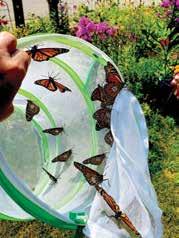
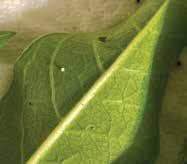
While promoting the natural growth of monarchs in the wild may be preferable, only one in 400 eggs will survive. In order to increase monarch numbers, Lauri and others collect eggs from milkweed and raise them to adulthood indoors. Lauri keeps the eggs and milkweed leaves in containers indoors, then transfers them to butterfly cages. Using a special tag that does not interfere with flight, the monarchs are tagged before releasing them outdoors, giving scientists an important tool to trace an individual monarch’s migratory path.
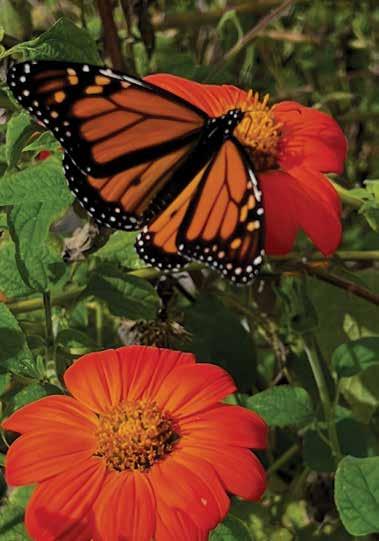
A monarch butterfly feeds on a tithonia (Mexican sunflower) blossom in a garden on Indian Garden Road.
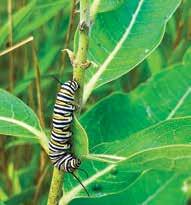
A monarch caterpillar feeds on a milkweed plant in a Walloon garden. Milkweed is critical to the survival of monarchs.
(continued from previous page)

Lauri is quick to credit others with helping the monarch project, particularly her husband Scott, her best support, as well as Art Cullman, Barb Cullman, Bunny Marquardt, Mark Pirrung in Harbor Springs and many others who are part of her “Team Monarch Butterfly.” In Boyne City Skylar MacNaughton has raised monarchs for years and founded the non-profit Michigan Butterfly Habitats, Inc.
And the good news? According to a 2025 monitoring report from Michoacan, Mexico, its monarch population has doubled. As Lauri reports, California monarchs are still in serious trouble, but our eastern population has indeed rebounded. Thanks to people like Lauri and others around the country, there is hope for the monarch.
One butterfly at a time, people can make a difference.
As in all things, education is the key to monarch survival, and Lauri excels in that area. She takes her message of monarch protection and habitat sustainability all across the area, working with schools, community organizations, local governments and North Central Michigan College. As a result of her advocacy, several local communities have demonstrated their commitment to monarch survival by becoming members of Monarch City USA. In our area, Melrose Township, Resort Township, Kalkaska, Elk Rapids and Beaver Island are all current Monarch Cities, with Emmett County expected soon. Boyne City is also a Monarch City, thanks to the efforts of its local monarch expert Skylar MacNaughton.
Monarch butterfly waystations, which are easily created in your yard, are essential to their survival. Simply choose a sunny, welldrained site and fill the area with densely planted milkweed and flowers. (See orange insert at right for a list of suggested flowers.) With Lauri’s help, large waystations have been created at the Crooked Tree Library in Walloon Village, and beside the Resort Township hall. Interestingly, the milkweed at Resort Township came from the old Michigan Maple Block site in Petoskey; a small army of volunteers, led by Lauri and her husband Scott, dug up the milkweed before the site was excavated for new apartments.
In recognition of her efforts last year Lauri was nominated for an award from “Keep Michigan Beautiful” (KMB), a statewide organization that has been promoting beautification of the state for over 60 years. Recognizing the extraordinary beauty of monarch butterflies, KMB awarded Lauri the prestigious Presidential Award at its fall 2025 conference, where she was a featured speaker.
courtesy of Lauri Juday).
WHAT YOU CAN DO TO HELP SAVE THE MONARCHS
• Stop using harmful pesticides and herbicides.
• Plant or maintain native milkweed
• Plant less grass and more flowers!
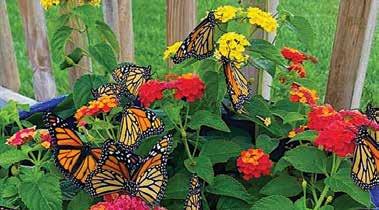
Good flower choices for monarchs include native plants like purple coneflower, Joe Pye weed, New England aster, goldenrod, wild bergamot/bee balm, dense blazing star and black-eyed Susan, as well as non-natives zinnia, lantana, tithonia (Mexican sunflower) and Walker’s low catmint. Be sure to have something blooming from late spring through early fall.
• Provide water for the butterflies in a shallow plant saucer filled with stones.
• Volunteer for habitat restoration!
(You can sign up to volunteer with WLAC at www.walloon.org/getinvolved/ volunteer/)
Questions? Feel free to email Lauri Juday at laurijuday@yahoo.com, and watch for news of the upcoming Monarch Butterfly Festival in the Walloon Village this summer!
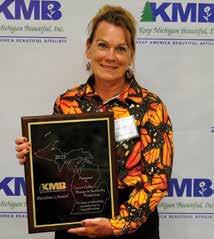
Lauri Juday speaking at the 2025 Keep Michigan Beautiful conference and receiving her Presidential Award for monarch protection.
Below, left: preparing for a butterfly release. Below, right: the tiny white monarch egg (see arrow) on a milkweed leaf (Photos on this page
Monarchs enjoying lantana flowers in Lauri’s garden.
RETHINKING SWIMMER’S ITCH
A Case for Coexistence and Smart Prevention
By: Kelsey Froelich, MSc., Ronald Reimink, Dr. Patrick Hanington
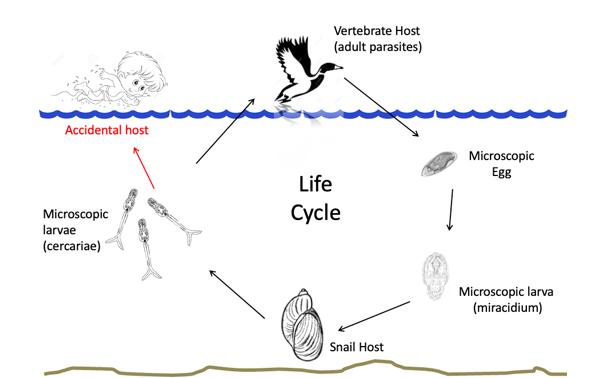
Swimmer’s itch (cercarial dermatitis) is caused by avian schistosomes (parasitic flatworms), that rely on birds or mammals and snails to complete their life cycles. Though irritating to humans, these parasites play an important role in freshwater ecosystems. Common avian hosts include ducks such as mergansers and mallards and Canada geese.
Early efforts to control swimmer’s itch used copper sulfate (CuSO4 ) to kill snails (Blankespoor & Reimink, 1991), but this method has been outlawed in many states due to its harm to aquatic life and ineffectiveness against drifting parasites (Froelich et al., 2019). Research has since explored treating waterfowl with parasite-killing medicine or removing mergansers, but these methods show minimal impact on lakes with healthy and diverse ecosystems, such as Walloon Lake (Rudko et al., 2022). Genetic studies have identified at least 8–10 schistosome species in Michigan lakes, further diminishing the effectiveness of lake-wide control methods.
Research by Freshwater Solutions, LLC and the University of Alberta found three swimmer’s itch species in Walloon Lake: Trichobilharzia stagnicolae, T. physellae, and the newly discovered Avian Schistosome C. Having such parasite diversity is a positive indicator of overall ecosystem health, since these parasites provide food for
many aquatic organisms, ultimately supporting healthy fish populations.
While swimmer’s itch can be a nuisance for lake users, new findings suggest shifting the focus from lake-wide control to individual prevention strategies. Treating these parasites as an important part of the ecosystem aligns with most lake associations’ mission to “preserve and protect.”
PREVENTION STRATEGIES TO TRY:
1 Rash guard - Tight-fitting rash guards act as a barrier against parasites and (bonus!) reduce the need for chemical sunscreens.
2 Swim later in the day - Parasites emerge each morning and swim to the top layer of water (Rudko et al., 2018) where they get eaten or die throughout the day, so swimming later in the day reduces exposure.
3 Avoid onshore winds and shallow water - Because the parasites float in the top inch(es) of the water column, they are highly influenced by wind patterns and accumulate along shorelines when onshore winds are present (Sckrabulis et al., 2020). Swimming in deeper water off a platform or ‘lilypad’ can reduce contact. Avoid the first few feet of water from shore, especially with the little ones!
A generalized life cycle of the swimmer’s itch parasites
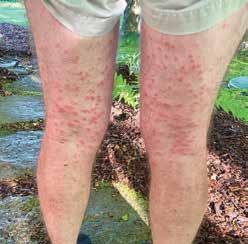
A severe case of swimmer’s itch (cercarial dermatitis)
4 Physical barriers and surface skimming
- Experiments with ways to remove or direct the floating parasites away from swim areas may be tested soon on Walloon Lake. If successful, these methods could add more effective prevention strategies to this growing list so we can all enjoy the water itch free, yet not disrupt the natural ecosystem. Your support of the Walloon Lake Association and Conservancy can help support this ongoing research to better empower lake users from getting swimmer’s itch!
An ecological approach prioritizing prevention strategies over species elimination is the best way to protect Walloon Lake while allowing people to enjoy the water without fear of swimmer’s itch. Adapting human behavior and using targeted mitigation strategies will ensure a balance between recreation and ecosystem health.
» Blankespoor, H. D., & Reimink, R. L. (1991). The Control of Swimmer’s Itch in Michigan: Past, Present, and Future. Michigan Academician, 24(1), 7–23.
» Froelich, K. L., Reimink, R. L., Rudko, S. P., VanKempen, A. P., & Hanington, P. C. (2019).
» Evaluation of targeted copper sulfate (CuSO4) application for controlling swimmer’s itch at a freshwater recreation site in Michigan. Parasitology Research, 118(5), 1673–1677.
» https://doi.org/10.1007/s00436-019-06280-3
» Rudko, S. P., McPhail, B. A., Reimink, R. L., Froelich, K., Turnbull, A., & Hanington, P. C. (2022). Non-resident definitive host presence is sufficient to sustain avian schistosome populations. International Journal for Parasitology, 52(5), 305–315.
» https://doi.org/10.1016/j.ijpara.2021.11.010
» Rudko, S. P., Reimink, R. L., Froelich, K., Gordy, M. A., Blankespoor, C. L., & Hanington, P. C.
» (2018). Use of qPCR-Based Cercariometry to Assess Swimmer’s Itch in Recreational
» Lakes. EcoHealth, 15(4), 827–839. https://doi. org/10.1007/s10393-018-1362-1
» Sckrabulis, J. P., Flory, A. R., & Raffel, T. R. (2020). Direct onshore wind predicts daily swimmer’s itch (avian schistosome) incidence at a Michigan beach. Parasitology, 147(4), 431–440. https://doi.org/10.1017/ S0031182020000074
WALLOON LAKE COMPREHENSIVE SHORELINE SURVEY PLANNED FOR 2026
By Laura Morris Director of Outreach and Community Engagement
Every five years or so, the Walloon Lake Association and Conservancy (WLAC) partners with Tip of the Mitt Watershed Council (Watershed Council) to complete a comprehensive shoreline survey of Walloon Lake. This effort is one of the most important tools we have for understanding the health of our lake and for helping every shoreline owner become an active steward of the lake we all love.
WHAT IS THE SHORELINE SURVEY?
The survey is a lake-wide assessment conducted by trained staff from WLAC and the Watershed Council who travel the entire shoreline by kayak, documenting visible indicators of lake health such as signs of nutrient pollution (algal growth), habitat loss, and shoreline erosion. This on-the-water approach allows for a close, consistent look at every property, every inlet, and every stretch of natural shoreline. So don’t worry when you see a team floating past your dock taking notes and pictures this summer – it’s just us!
Each property is evaluated for:
• Greenbelt quality (the presence and health of natural vegetation)
• Signs of erosion
• Presence of Cladophora (green algae)
• Shoreline alterations, including seawalls, boulders, or hardened structures
These observations are then compiled into a lake-wide report and paired with individual property scores, which shoreline owners can access using a randomized ID number. Individual scores will never be published or shared and are only accessible by the property owner. We don’t share these scores to point fingers, but to provide a baseline for improvement. Whether your score is “Excellent” or “High Risk,” it serves as a guide for what steps you can take next.
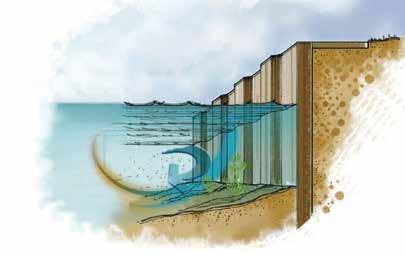
SEAWALLS: NOT LAKE-FRIENDLY EROSION CONTROL
Traditional shoreline erosion control options such as vertical or sloped concrete, wood, steel, and rock walls negatively impact the overall health of a lake. Seawalls create barriers for animals such as turtles, who need to get out of the lake to lay their eggs. In addition, seawalls cause erosion through scouring and flanking.
WHY WE DO IT
The shoreline survey gives us a clear, science-based picture of how Walloon Lake is changing over time and where our stewardship efforts are most needed.
From the 2020 survey, we learned that Walloon Lake is one of the most “High Risk” lakes in northern Michigan. The survey found:
• 89% of the shoreline is developed
• 44% of properties show signs of algae
• 81% of shorelines are altered
However, the news isn’t all bad! The 2020 survey also showed that greenbelt ratings and erosion scores have improved since 2016, showing that private stewardship efforts are making a difference. But the data also revealed that some areas of shoreline are trending in the wrong direction, with riprap seawalls increasing and natural vegetation decreasing.
The shoreline survey is not about enforcement; it’s about education, awareness, and empowerment. It helps us identify trends that guide WLAC’s conservation priorities, while also giving shoreline owners personalized information about their own property and what they can do to help keep Walloon Lake healthy. The survey shares best practices that protect water quality and allow us to celebrate progress we see!
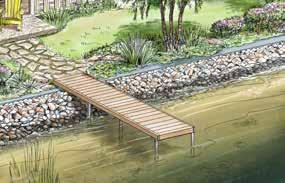
WHY IT MATTERS AND WHAT YOU CAN DO
Living on Walloon Lake is a unique privilege and responsibility. The shoreline is the lake’s most crucial line of defense, filtering runoff, preventing erosion, supporting wildlife, and maintaining the clarity and character that make Walloon so special. By understanding the condition of our shoreline, we can make informed decisions that protect the lake for generations to come.
So, when you see us out on the lake this summer, feel free to wave us down, say hello, ask questions, and learn more about what you can do to support a healthy shoreline. If your score shows room for improvement, contact us. We offer resources on transitioning from hardened shorelines to living shorelines that protect both your property and the water. Keep an eye on your mailbox later this year for the 2026 shoreline survey results, including how to access your individual property score and an overview of the lake’s overall health.
A portion of the 2026 shoreline survey was funded by a grant from our partners at the Land Trust Alliance.
SEAWALL REPLACEMENT WITH NATIVE-PLANTED BUFFER STRIP BEST MANAGEMENT PRACTICE
Seawalls do not provide habitat for fish or other aquatic life.
Excessive plant control reduces habitat, impairs water quality and is not healthy for the lake.
Sediments that are churned up from the lake bottom often contain phosphorus that can cause nuisance algae growth.
Scouring of the lake bottom reduces water clarity.
The nuisance exotic plant Eurasian milfoil often invades disturbed lake bottoms, such as areas along seawalls.
Seawalls deflect waves and cause scouring of the lake bottom.
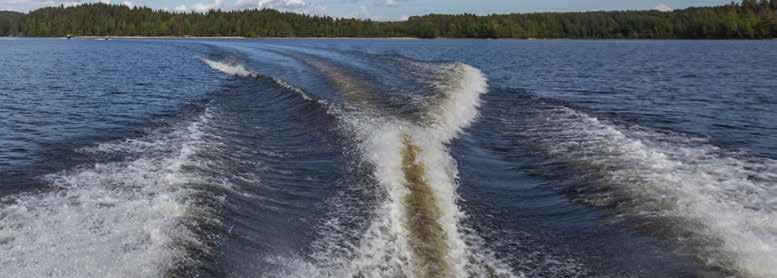
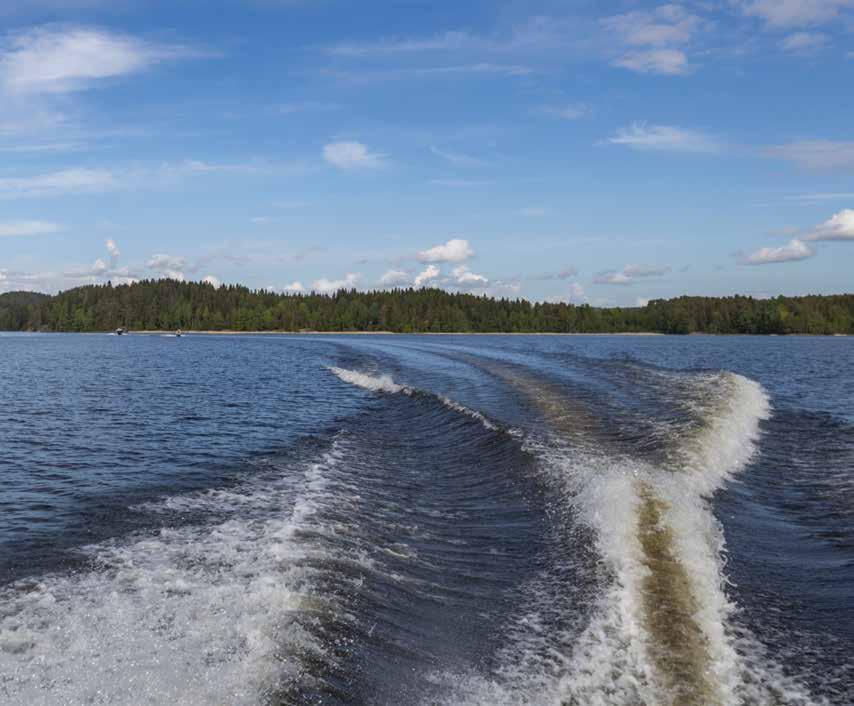
Make Waves Wisely:
RESPONSIBLE WAKE BOAT USE ON WALLOON LAKE
By Laura Morris Director of Outreach and Community Engagement
It’s a hot, sunny day in Northern Michigan. You’ve waited all winter for this moment - the blue skies and sparkling water are calling. So, what’s the plan? Take the boat out, of course! Cruising, tubing, water skiing, fishing, wake surfing - life on the lake is meant to be enjoyed. But as stewards of Walloon Lake, we also have a responsibility to understand how our boating choices affect the water beneath us and the health of the lake. When it comes to powerboats, the impact from wake boats (especially in wake surfing mode) is far greater than many people may realize.
When most of us think about the “wake effect” we picture the shoreline. It’s easy to see where waves have chewed away at natural banks, eroding soil, uprooting vegetation, and even damaging property. But the impact doesn’t stop at the water’s edge. Beneath the surface, waves can disrupt fish spawning grounds, stir up sediment, and release excess nutrients like phosphorus and nitrogen. That sediment resuspension can fuel harmful algal blooms, cloud the water, and weaken the delicate balance of the lake ecosystem.
A recent field study by the University of Minnesota (UMN) evaluated how powerboats affect inland lakes. Researchers found that every motorized boat produces three types of hydrodynamic phenomena (waves):
• Bow and stern waves: Created as the bow pushes water forward and down and then stern pushes it backward and up. These waves reach deep into the water column and initiate the movement of lakebed sediments.
• Gravity waves: Larger, rolling waves that travel alongside the boat. They are visible at the surface and can persist for minutes after a boat passes. They are strong enough to resuspend lakebed sediment below and to carry their erosive energy to the shoreline.
• Propeller wash: The turbulent jet from the rotation of the boat propeller, which can shear aquatic plants and stir up sediment depending on thrust. All boats create these forces, but wake boats amplify them dramatically.
WHY WAKE BOATS HAVE GREATER IMPACTS
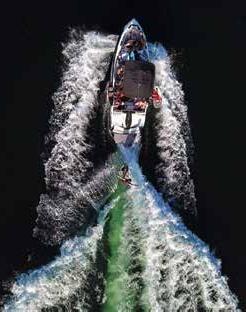
Wake boats are engineered to do something that no other powerboat is designed to do, and that’s to create the largest, most powerful surfable wave possible. Ballast
tanks, hull shape, and propulsion systems all work together to push more water deeper into the water column with far more energy. According to Michigan DNR research:
• Wake boats produce waves with 1.7 – 17 times more energy than typical speed boats.
• Their wakes can take 225 - 950 feet to fully dissipate versus the 100 -200 feet of typical speed boats.
• Their propeller wash can disturb lakebed sediment in water up to 30 feet deep, compared to 5 - 10 feet for most power boats.
This means that even when a wake boat is operated “far enough” from shore, it may still be impacting the lakebed, stirring nutrients, and sending large waves toward docks and natural shorelines.
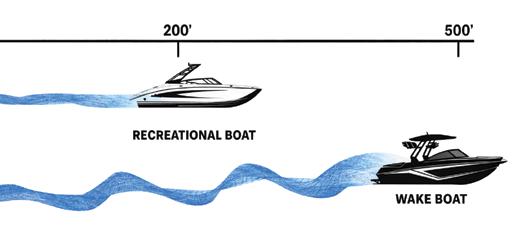
DEPTH MATTERS! Because wake boats push waves so deeply into the water column, depth is the single most important factor in reducing ecological impact.
(continued from previous page)
WHY WLAC HAS UPDATED RECOMMENDATIONS
The UMN study is the most comprehensive, physics-based evaluation of wake boat impacts on inland lakes to date. What makes this research so influential is not just that it compares wake boats to other powerboats, it measures how wake-enhancing technologies change the movement of water throughout the entire water column.
UMN researchers documented that wake boats generate significantly larger and more energetic waves than traditional boats, but the key insight is where that energy goes. Unlike typical recreational boats, which send most of their force outward across the surface, wake boats push energy downward, penetrating far deeper into the water column. This downward-directed force increases the likelihood of disturbing lakebed sediment, uprooting vegetation, and resuspending nutrients that would otherwise remain settled.
The study also found that wake-surfing waves remain large and powerful hundreds of feet behind the boat, long after the hull has passed. These waves travel farther, retain more energy, and take longer to dissipate than the wakes of traditional boats. That means a wake boat can be operating what feels like “far from shore,” and still send large waves toward the shoreline or other boaters.
For Walloon Lake, these findings are especially important. Our lake is made up of four distinct basins, including the West Arm Basin (100ft depth), Wildwood Basin (80ft depth) the Main/Foot Basin (94ft depth), and the North Arm (52ft depth), giving the impression that wake activity is safe almost anywhere. However, overall, Walloon lake is rather shallow and is considered quite narrow, with width ranges from .7 miles to 1.3 miles.
This is why WLAC’s updated recommendations emphasize both minimum depth and minimum distance, asking that wake boats operate in “surf mode” only in water deeper than 20 feet and at least 500 feet from shorelines, docks, and other boats.
The science makes clear that protecting water quality requires reducing the interaction between wake-generated forces and the lakebed, while also preventing large waves from reaching sensitive shorelines. UMN’s research gives us the hydrodynamic evi-
dence needed to set guidelines that are not only practical for boaters but genuinely protective of Walloon’s long-term health.
WHERE TO WAKE RESPONSIBLY
To help boaters make informed choices, WLAC has also created a Wake Boat Map (next page) highlighting areas of Walloon Lake where depth and distance make wake surfing more appropriate. While the map identifies areas where wake activity is safer for the lake, note the narrow area of the North arm. Even in the areas where depth and distance follow guidelines, other boats in the same zone may cause a hazard or result in wakes being less than 500 feet from other boaters.
WLAC’s 2026 Updated
Recommendations
WAKE BOATS
• Operate in “surf mode” only in water deeper than 20 feet.
• Keep wakes at least 500 feet from shorelines, docks, and other boats.
• Reference the Wake Boat Map and stay near the center of the lake as much as possible.
SPEEDBOATS:
• Operate in water deeper than 10 feet
• Keep wakes at least 200 feet from shorelines, docks, and other boats.
ALL MOTORIZED BOATS:
• No wake within 200 feet of shore and in water less than 10 feet deep.
ENJOY THE LAKE, RESPECT THE LAKE, PROTECT THE LAKE
At WLAC, we understand the joy of boating in all its forms. We also know that protecting Walloon Lake means boating responsibly. By aligning our recommendations with the best available science, we’re ensuring that wake sports can continue in ways that respect the lake’s ecology, its shorelines, and everyone who enjoys being on the water. For more information on responsible wake boating, reach out to WLAC or visit our website at www.walloon.org.
» Michigan DNR Report:
(https://michiganwaterfrontalliance.com/wp-content/ uploads/2022/09/MI-DNR-REPORT-37.pdf)
» University of Minnesota Field Study
“A Field Study of Recreational Powerboat Hydrodynamics and their Impacts on the Water Column and Lakebed.” Authors: Riesgraf, Andrew, Marr, Jeffrey, Herb, William, Lueker, Matthew, Kozarek, Jessica. Published: July, 2025. University of Minnesota, University Digital Conservancy (https://conservancy.umn.edu/items/6a47c506-6be5-4c8a9a96-dfea38f23b2f)
See the University of Minnesota Research in Action!

« Scan the QR code here to watch a video demonstrating the impact of wake boats on the lakebed.
20+ ft. deep
500+ ft. from shore KEEP WAKE
MAKE WAVES WISELY
Recommended for Wake Sports
NOT recommended for Wake Sports
A New Sanctuary FOR LOONS
By Tanner Yurk Conservation Program Manager
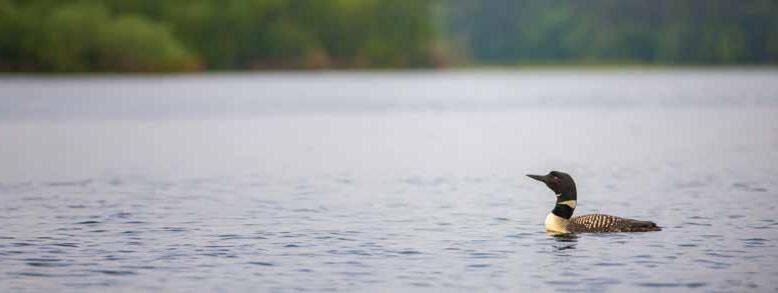
When you hear that first wail of the Common Loon this season, you know the lake is finally waking up. For many of us, it’s a welcome sign of winter’s end, but more importantly, that call is also a measurement of our success. As a sentinel species, loons are living proof that Walloon’s water remains clean and its food chain is intact. If the loons are thriving, we know we’re doing our job.
However, as boat traffic and shoreline development increase, our loons are running out of quiet, stable places to hatch the next generation. Human activity and habitat degradation have made common loons a threatened species in Michigan since 1987. This season, we’re taking a direct step to help with that.
SOLVING THE SHORELINE PROBLEM
Loons are elite divers, but they are nearly immobile on land. Their nests are traditionally built right at the water’s edge, making them incredibly vulnerable. A single heavy spring rain or a large boat wake can flood a nest in seconds, destroying an entire year’s reproductive effort.
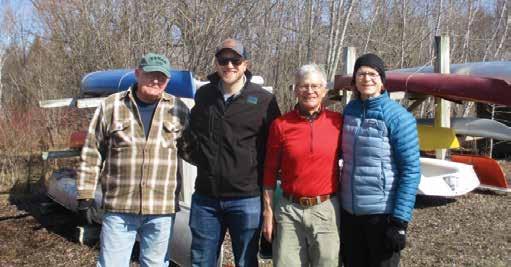
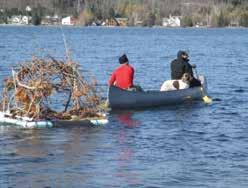
To counter this, four dedicated Walloon Lake volunteers recently constructed an artificial nesting platform. Unlike a natural shoreline nest, this platform floats. It rises and falls with fluctuating water levels, keeping the eggs dry and safe. We’ve anchored it securely and topped it with natural vegetation to mimic the marshy hummocks loons prefer, providing cover from aerial predators like eagles and gulls.
SCHOOF’S CREEK NATURE AREA
After evaluating wind exposure and high-traffic zones, we have positioned the platform just east of Schoof’s Creek directly adjacent to our Schoof’s Creek Nature Area. This area offers the necessary shelter while providing the pair with quick access to the deep, clear water they need for hunting.
To give this nesting pair the best chance of success, we have established a 300-foot protection perimeter. You will see specialized warning buoys marked "Caution Area: Loon Nesting" around the site that will be out during the breeding season (April-July).
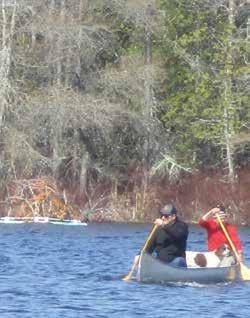
Volunteers Shown (left to right): Bob Smith, WLAC Staff Tanner Yurk, Jim Doull, and Maureen Doull. Not Shown (taking photo) is Marilyn Smith.
Tanner and Jim installed artificial loon platform.
A DIRECT REQUEST TO BOATERS
If you are on the water in this area, please treat this 300-foot buffer as a strict no-entry zone.
Loons are notoriously shy parents. When a boat or kayak gets too close, the adult’s first instinct is to flatten itself against the nest to hide. If the approach continues, they will abandon the nest for the water. This leaves the eggs exposed to the cold air and predators. Even a few minutes of human curiosity can result in a failed nest.
By giving these creatures the space they need, we aren't just protecting a bird; we are protecting the very thing that makes Walloon feel like home. If the loons are thriving, we know our lake is, too.
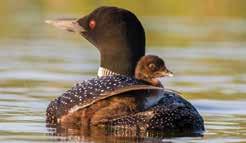
THE LOON WATCHER’S GUIDE
Red Eyes: Have you ever wondered why loons have such striking red eyes in the summer? This pigment is thought to help filter blue and green light, allowing them to see more clearly while hunting underwater. In the winter, their eyes fade to a duller grey or brown.
Bird Submarines: Unlike most birds, loons have solid bones rather than hollow ones. This extra weight acts like a diver belt, allowing them to dive up to 200 feet deep. However, this density makes taking off difficult; they require a “runway” of 30 yards and up to a quarter mile of open water to flap and run on the water for take-off.
Onboard Nursery: After the chicks hatch, you may see them hitching a ride on their parents’ backs. This isn’t just for rest; it keeps the chicks warm and protects them from underwater predators like large pike or snapping turtles.
Lead-Free Fishing: Loons often swallow small pebbles to help grind food in their gizzards. Unfortunately, they can mistake lead sinkers for these stones. A single lead jig is fatal. Please check your tackle box and switch to non-toxic alternatives like tungsten or steel.
REFERENCES AND CITATIONS
» Audubon (n.d.). Audubon, Bird Guide, Common Loon. https://www.audubon.org/field-guide/bird/common-loon
» Cornell Lab of Ornithology (n.d.). Cornel Lab of Ornithology, All About Birds, Common Loon. https://www. allaboutbirds.org/guide/common_loon
» Kenow, Kevin (2018, April 3). Factors Affecting Common Loon (Gavia immer) Productivity. Upper Midwest Environmental Sciences Center. United States Geological Survey. https://www.umesc.usgs.gov/terrestrial/migratory_birds/kkenow_5003686.html
» Michigan Department of Natural Resources (n.d.). Getting the Lead Out: Reducing Lead Poisoning in Fish and Wildlife. https://www.michigan.gov/-/media/Project/ Websites/dnr/Images/WLD/misc/getting_the_lead_out. pdf?rev=d720d5b83d904230bc50192a1a0884ee
» National Loon Center. (n.d.). Ask the scientist. https:// www.nationallooncenter.org/ask-the-scientist/
» National Wildlife Federation (n.d.). Common Loon. https://www.nwf.org/Educational-Resources/Wildlife-Guide/Birds/Common-Loon
THE WAIL A long, haunting wolf-like howl.
THE TREMOLO A rapid, wavering “laughing” sound.
THE YODEL A complex, long, and wild rhythmic song.
THE HOOT A soft, short, quiet “coo.”
“I’m over here—where are you?” Used to locate mates or social groups in the area.
“I’m nervous/alarmed!” This is a distress signal. If a loon “laughs” at your boat, you are too close!
“This is my territory!” Given only by males to warn off rivals. It is a sign of high-intensity defense.
“Stay close.” An intimate check-in used between mates or parents and their chicks.
Adult common loon with young (National Audubon Society).
CLASSIC COTTAGES of WalloonPART EIGHT
By Lauren Macintyre, Member
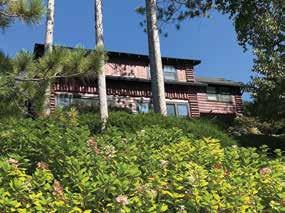
Preserving Walloon's classic cottages is more than just maintaining Walloon history and family legacy, critically important as those are. New construction often requires major excavation, which usually creates a great deal of waste, and results in loss of trees, shrubs and natural habitat. Preserving vintage cottages, instead of demolishing them and replacing them with oversized mansions, can only benefit the environment. Below are three classic cottages, each surrounded by pristine land, and lovingly preserved.
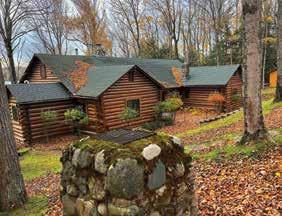
GAYWAY (LEFT) FAMILY OWNED
Lake Grove Road
Built in the 1930’s, these lovely seasonal cottages overlooking the West Arm have been the home of the Hanley family for more than 70 years. William Hanley, the first engineer and later director and vice-president at Eli Lilly, and wife Irma bought Gayway to escape the Indianapolis heat, spending their first summer there in 1952. William later added a smaller log bunkhouse to accommodate his large extended family. The two picturesque log homes, built on field stone foundations, sit on more than five acres of verdant green acreage. Meandering, stone-lined paths, marked by a “halfway” bench for resting, lead down to a pristine shoreline, protected by a grove of towering cedar trees. Five generations of William Hanley’s family have embraced the Walloon tradition, many of whom have also purchased houses nearby.
DOWNTIME (RIGHT)
JIM & JULIE KELLY, OWNERS
North Shore Drive
Rising high above the lakeshore, this beautiful log and wooden shake shingle home was built in 1940 by the O’Keefe family, who named it Arrowhead Lodge. Today owners Julie and Jim Kelly, who both came to Walloon as children, have transformed the lodge into an enchanting four-bedroom retreat they now call “Downtime,” centered around their four children and nine grandchildren. Beautifully decorated, with spectacular views, Downtime features a casual, yet elegant interior that maintains the home’s vintage character. Mature trees and a plethora of flowering plants adorn the hillside in front of the house. Over the years the house was owned by many longtime Walloon families, including that of Neil White, who still visits from Mississippi, and is delighted to see how the Kellys have enhanced his family home.
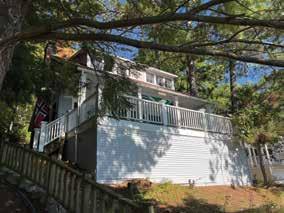
PINE TOPS (LEFT)
SCOTT MILLER, OWNER
North Shore Drive
This beloved cottage high up on North Shore was built in 1901 by Marguerite and John Hanna of Kansas City, early Wallooners known for creating a whimsical map of the lake.
In the 1930’s Pine Tops was purchased by Dr. Ewald and Erna Pabst Hermann, members of an old Walloon family from the St. Louis area, who eventually passed it on to sons Richard and Robert. Robert, who became a celebrated surgeon at Cleveland Clinic, and wife Polly enjoyed the house for many years, adding bathrooms and a new kitchen. Dr. Scott Miller of Fort Wayne bought the house from the Hermanns in 2006, and has conscientiously maintained its classic cottage feel with warm knotty pine walls, maple flooring, and cedar staircase. Pine Top’s best feature of all, as Polly notes, is undoubtedly its spectacular view.
By: John F. Rohe Lands Committee Member
Dark Skies Illuminate A CONSERVATION ETHIC
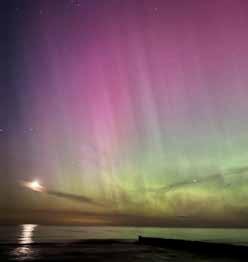
What reaction do you usually get when calling a good friend at 2:00 a.m. to report the Aurora Borealis has ignited the night sky over Walloon's northern edge?
Yeah. Me too.
Dial tone. Blocked calls.
It's not easy to learn friendships teeter on a fragile ledge between midnight and 6 am. Sadly, the Aurora doesn't consult our sleep schedule. Silence isn't always a choice when the sky catches fire. Beauty this fierce makes evangelists of us all.
But wait. There's more. On a dark night, it's not always necessary to drive up to the Headlands International Dark Sky Park near Mackinaw to behold the Milky Way. It's right here. On Walloon. The Milky Way's galactic core arches across our southern sky in summer. Allow your eyes to adjust for several minutes. Eventually the milky, textured, three-dimensional band will take shape.
The drama of the night sky can easily be eclipsed here, as it has been elsewhere. Stray lighting draws a shade on the night sky and erases the experience and the privilege of wonder. And it will not easily be
reclaimed. We can have a floodlit shore or a night sky. Choose wisely.
DarkSky International offers Five Principles for Responsible Outdoor Lighting. In short, 1. Use light only if needed. 2. Shield light to direct it downward, never upward. 3. Use the lowest essential light level. 4. Deploy timers or motion detectors to assure light meets an objective. 5. Purchase lights at the warmer end of the spectrum.
Local hardware stores are becoming increasingly helpful in guiding purchasing decisions for “warm" lights. They will acquaint you with "Kelvin units" and "lumens." Warm colored yellowish lights with lower Kelvin values (2700K-3000K), are less intrusive on the night sky than bright, cool, blue-white, shorter wavelength light bearing higher Kelvin values (5000K-6500K).
Zoning ordinances around the lake can be instrumental in defending the night sky. But nothing quite rivals our shared affinity for Walloon's natural wonders. Each additional light seems so harmless, so unobjectionable. Every snowflake in an avalanche pleads innocent.
If our children, grandchildren, nieces, and nephews can experience it here, we will have offered them something no screen can replicate. They will inherit not just a lake. But a sky.
Only we can secure Walloon's night sky. And if we can secure it here, if this fragile peace can be spared for the next generations, who knows, maybe someday they'll be calling us at 2:00 a.m.













Carole Griffin Real Estate
Charlevoix County Community Foundation
Crooked Tree Capital Advisors
Drost Landscape
Edgewater Design Group
Irish Boat Shop
KWN
Ostlund Pest Control
Rainmaker Irrigation
Robinson's Landscaping
Todd's Services
Walloon Private Dining
ADDRESS SERVICE REQUESTED