by Executive Director Kieran Fleming
By now, you have heard me repeatedly shine a spotlight on our staff here at LTC. As a group, they are not only incredibly dedicated and productive, but they make it fun to show up every day. I love that they believe in the “LTC way” of doing things, our emphasis on relationships, appreciation of our culture, and our history.
Melissa Hansen, our Director of Conservation Easements, epitomizes what we value on our team. Melissa is somewhat of an introvert, calm, very smart, contemplative, and does not seek the spotlight. In fact, she will be twisting in her chair when she reads this.
Melissa started in the stewardship department over 30 years ago when our land protection program was beginning to accelerate. Our stewardship program was a team of one, managing not just all of our nature preserves, but all of our conservation easements, too. She has always been deeply devoted to our mission. As our portfolio grew, Melissa needed a sidekick, a Robin to her Batman. Ideally, her Robin would be someone with a strong back, who could move mountains with a wheelbarrow, and was whip-smart with incredible prowess in biology and ecology. Unfortunately, Robin must have already had a job, so they hired me.
In the early days, Melissa was my supervisor; we shared a small office upstairs. Those who know me will quickly note that I have excitable tendencies. I usually jump into the river before wondering how deep it is. That I didn’t drive Melissa crazy in those early years, in that cramped little office, is testament to her calm stoicism. Lindsay Hall of our staff coined a term “crock-potter” that describes people who think before they speak, take time to contemplate their thoughts, and do not rush to judge others. Melissa is a crock-potter. She would know exactly how deep the river is before taking the leap, but she does take the leap. She has jumped out of an airplane more than once, something most people would not have guessed was in her character. There are a lot of things about her because of her understated personality, that many people wouldn’t know. She is a great mom. Her sense of humor is humble, sharp, and well-timed (especially when I am the subject of the joke). You know how sometimes the quietest person in the room is the funniest? That’s her.
In my first week as executive director Melissa dropped a “New Director’s Survival Kit” in my office. It was a mish mash of items with little notes, some of them very sweet, some of them very funny—one sticky note read “in case of emergency, break seal” and was attached to a small bottle of bourbon. But the kit was much more than a humorous gesture. It conveyed that she was ready to support me and LTC in a transition that could be a little intimidating.
Why am I rambling on so much about Melissa? Well, in addition to making her cringe, it brings me back to one of the reasons I love LTC so much.
A few years ago, the staff developed a “Culture Document” that captured what we value in each other and in the organization. To this day it stands as the one thing I hope all of your staff, along with me, are most proud of for LTC. When you read the words above, you were, essentially, reading a summary of that culture document. And Melissa, unbeknownst to many, is a leader in that regard. Our culture at LTC plays an enormous role in our success, and it expands beyond the staff to our Board, our volunteers, and to you. And that is a great place to be!
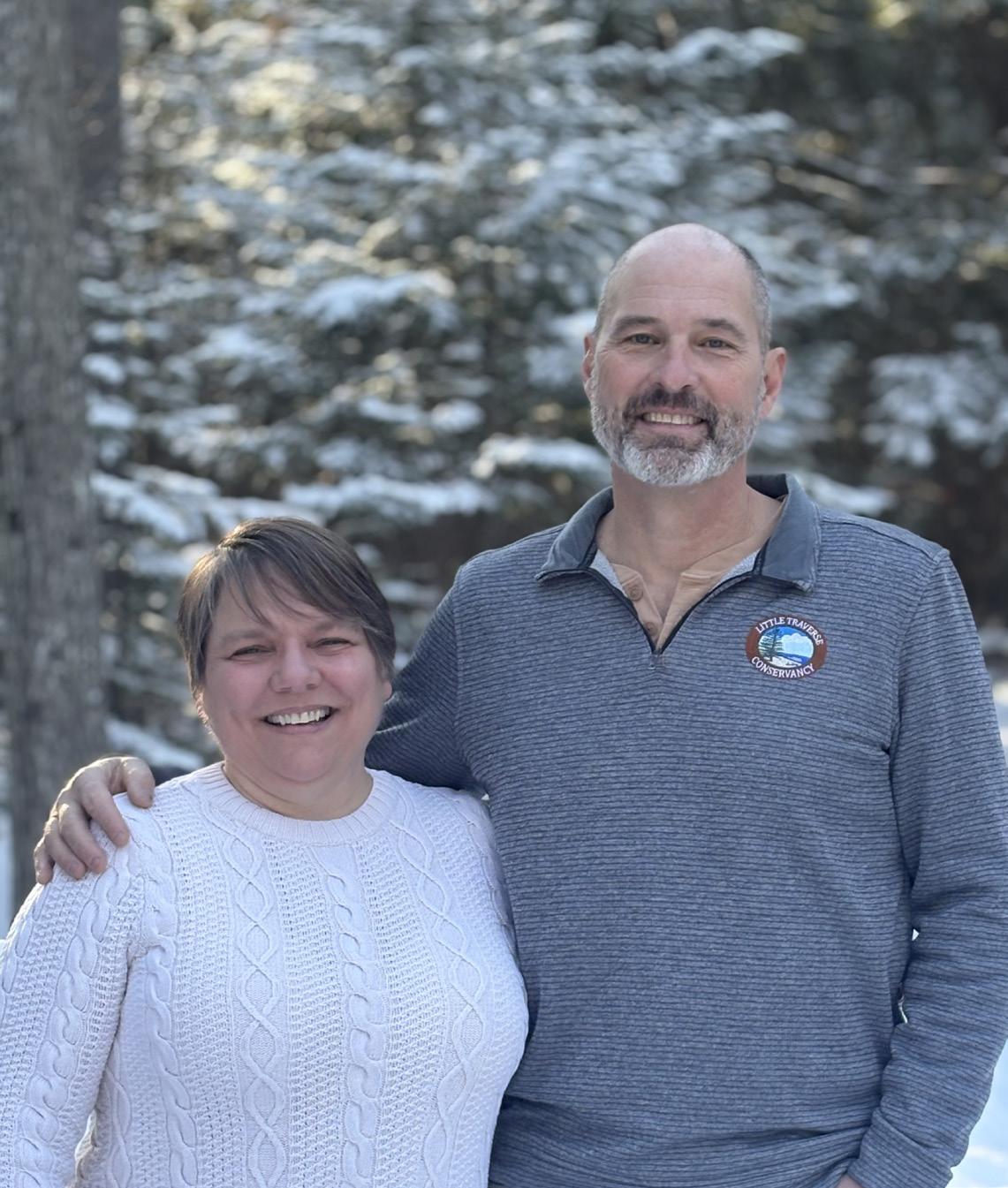
Two landowners who worked with LTC to protect their land with a conservation easement (CE) in 2002 returned in 2025 to complete additional land protection. Learn more about how significant this conservation tool is to our region (right).
Michael and Mary Jane Clayton are proud LTC conservation easement owners in Emmet County. In 2002, they protected over 45 acres of land with their first CE. In 2025, they added two acres to this easement, bringing the total to almost 48 acres.
“The process was satisfying when completed. We had to recognize that the CE plan had to satisfy future needs and conditions. Overall, very worthwhile,” Michael said. “LTC, along with Tip of the Mitt Watershed Council, cover both land and water and thus—to a large extent—air quality. Land, water, and air are the keystones for quality of life. Conservation of these qualities means that we can leave the ecosystem better than we found it, so it continues to serve us all.”
Cheboygan County
In 2002, Jim Gehrke and his family protected some of their family land through a conservation easement with LTC in honor of James and Anna Gehrke, his grandparents. This land has been in the family since the 1930s. Since then, they have completed two more CEs. The most recent one was completed in 2025 in honor of Jim’s mother, Sue Gehrke, who had recently passed. In total, Jim and his family have protected 140 acres in northern Cheboygan County and 2,500 feet of shoreline on Lake Huron.
For Jim and his family, a conservation easement on their land not only protects the land from development, but also protects memories. These are memories of being outside as a kid and loving the land together as a family. “My grandfather taught my brothers and me about nature and conserving its gift to us,” Jim said. “Protecting this land not only protects the habitat, but it also protects the memories tied to the land. It is a good feeling to know that you have preserved the land in a meaningful way.”
Did you know that LTC protects more land through conservation easements than through nature preserves and reserves? A conservation easement (CE) is a powerful land protection tool.
A CE is a voluntary legal agreement that stays with a property forever, regardless of who owns the land in the future. This agreement allows landowners to limit the type or amount of development on their property while retaining private ownership of the land. A template is used for the creation of an easement, but each one is different based on the natural features of the property, goals of the landowner, and potential planned uses. CEs are also a great way to protect scenic land, shoreline, forest habitat, farmland, and so much more without LTC owning and managing the property.
LTC is responsible for annually monitoring more than 29,000 acres of conservation easements co-created with landowners since 1986 when our CE program began. Our conservation easement team uses drone, satellite imagery, and on the ground monitoring to ensure that the terms of the easement are followed and any changes are documented. Landowners are welcome to accompany staff during site visits.
Thank you to all our conservation easement landowners for joining us in our mission. If you are interested in learning more about how to protect your land with a conservation easement, please contact Caitlin Donnelly, the Liesel Litzenburger Meijer Land Protection Director, at caitlin@landtrust.org or 231.347.0991.
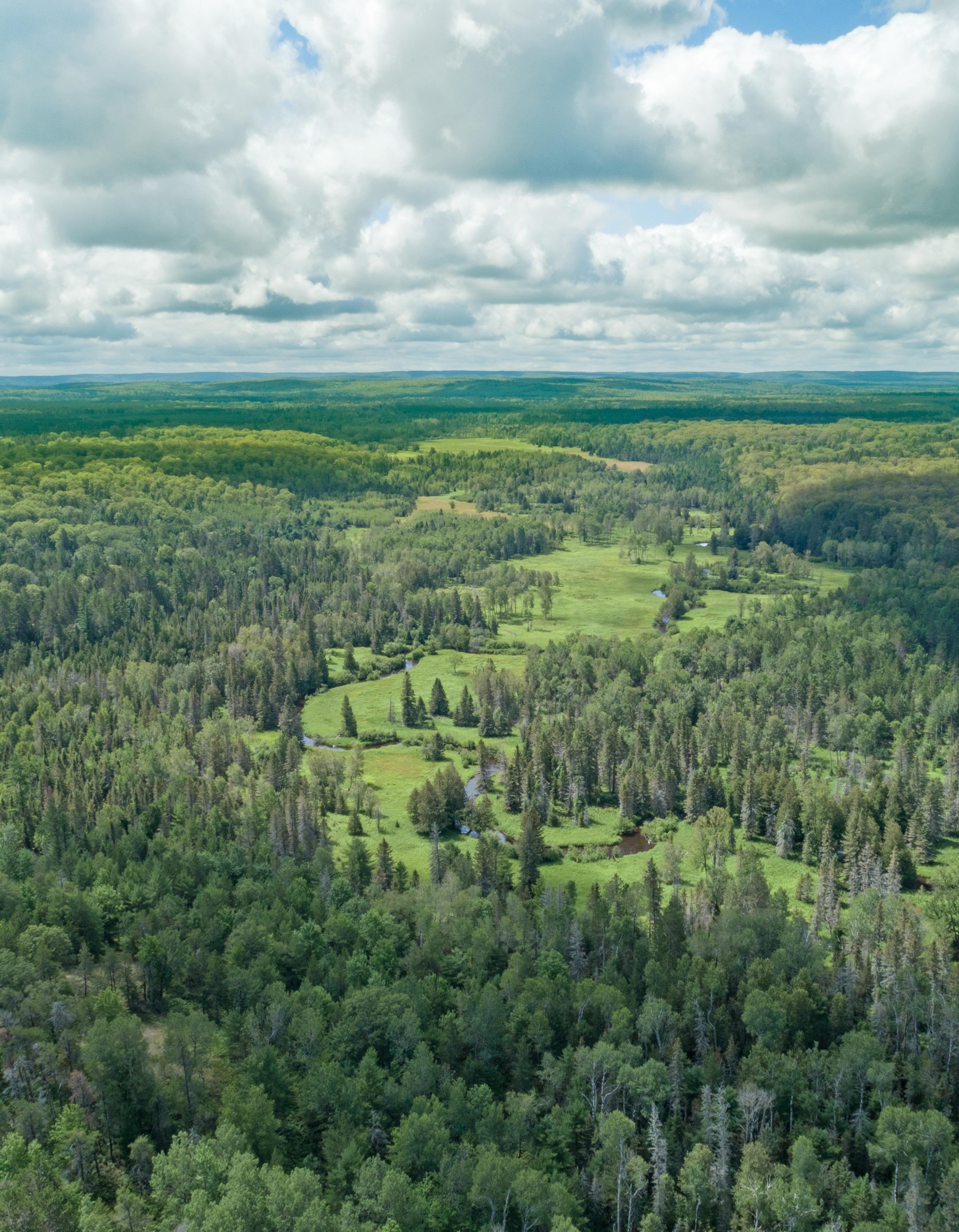
Last December, the purchase of the 8,850-acre Black River Ranch property a high priority inholding within the Pigeon River Country State Forest was finalized by the Michigan DNR. For more than eight years, Little Traverse Conservancy has been a primary partner in this effort. The land’s protection marks the single largest project ever completed in the organization’s history.
It is difficult to imagine Michigan in the early 1900s. What for millennia had been pristine forest, became a land largely stripped of trees. Michigan’s beautiful rivers were choked with silt and sand, the byproduct of erosion from logging activities. Wildlife populations suffered greatly as well; Michigan’s native elk were completely eradicated by the 1870s.
Renowned Michigan conservationist P.S. Lovejoy led the efforts beginning in the 1920s to expand the state’s holdings in what is now Pigeon River Country State Forest (PRCSF). He called this vast, undeveloped landscape the ‘Big Wild.’ As pressure mounted to develop and explore this part of the state, the Pigeon River Country Advisory Council was formed in 1984. Still active today, this 18-member citizen body advises the Michigan Department of Natural Resources on the management of the PRCSF.
Ernest Hemingway once said of the region that is now Pigeon River Country State Forest: “That Barrens Country is the greatest I’ve ever been in.”
The breathtaking variety of habitats in the PRCSF is unlike anything else in Michigan’s lower peninsula. Centrally located among the communities of Gaylord, Indian River, Onaway, and Atlanta, the forest remains remarkably secluded. Its western edge lies one mile east of I-75; its other boundaries are two miles south of M-68, two miles west of M-33, and four miles north of M-32. No major highway traverses this landscape.
When the primary landowners of Black River Ranch approached the Little Traverse Conservancy with an interest in protecting the ranch, it was a very easy “yes.” “Without a doubt our staff—and later partners—recognized what a rare land protection opportunity this was,” said LTC Executive Director Kieran Fleming.
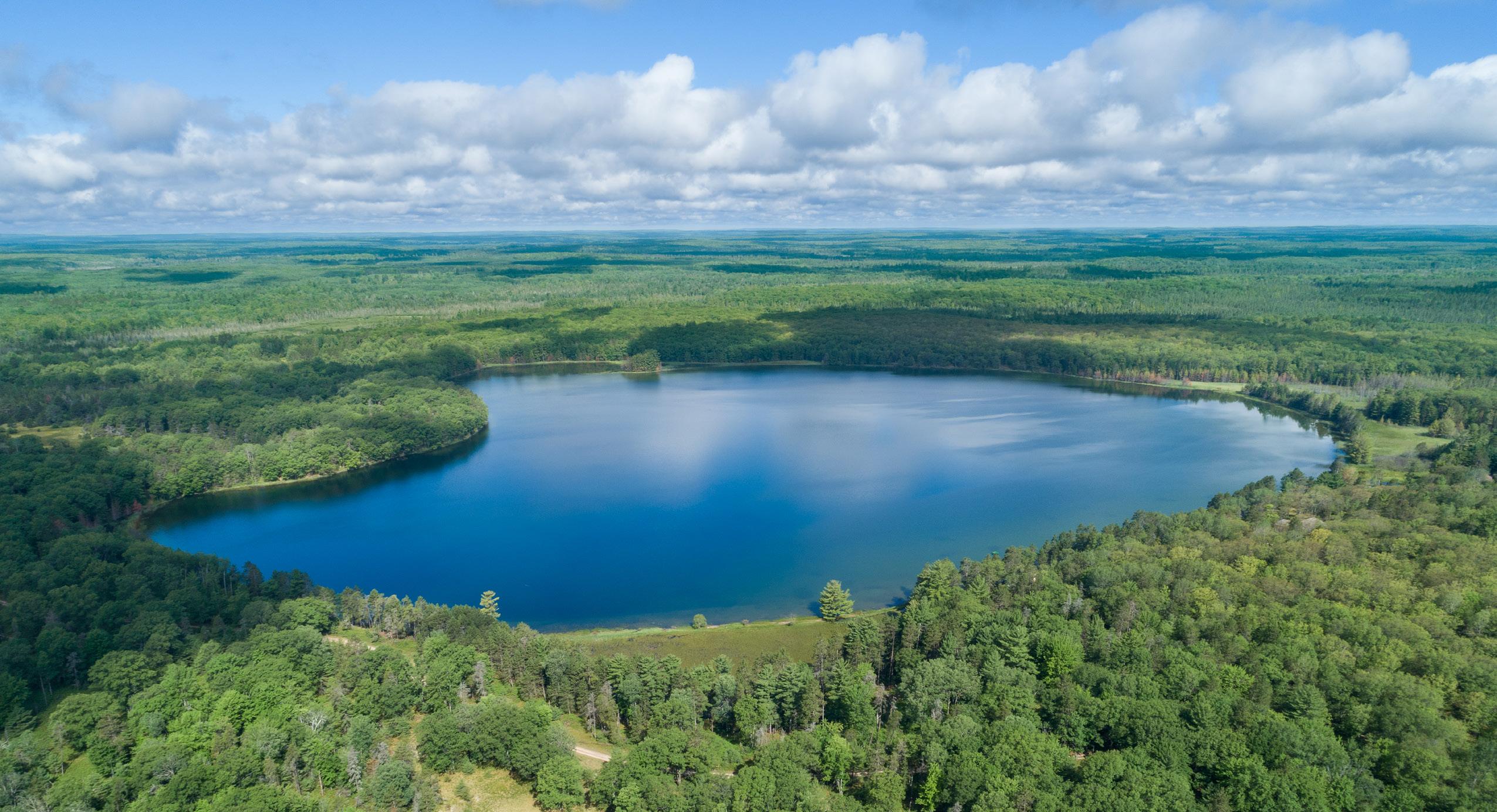
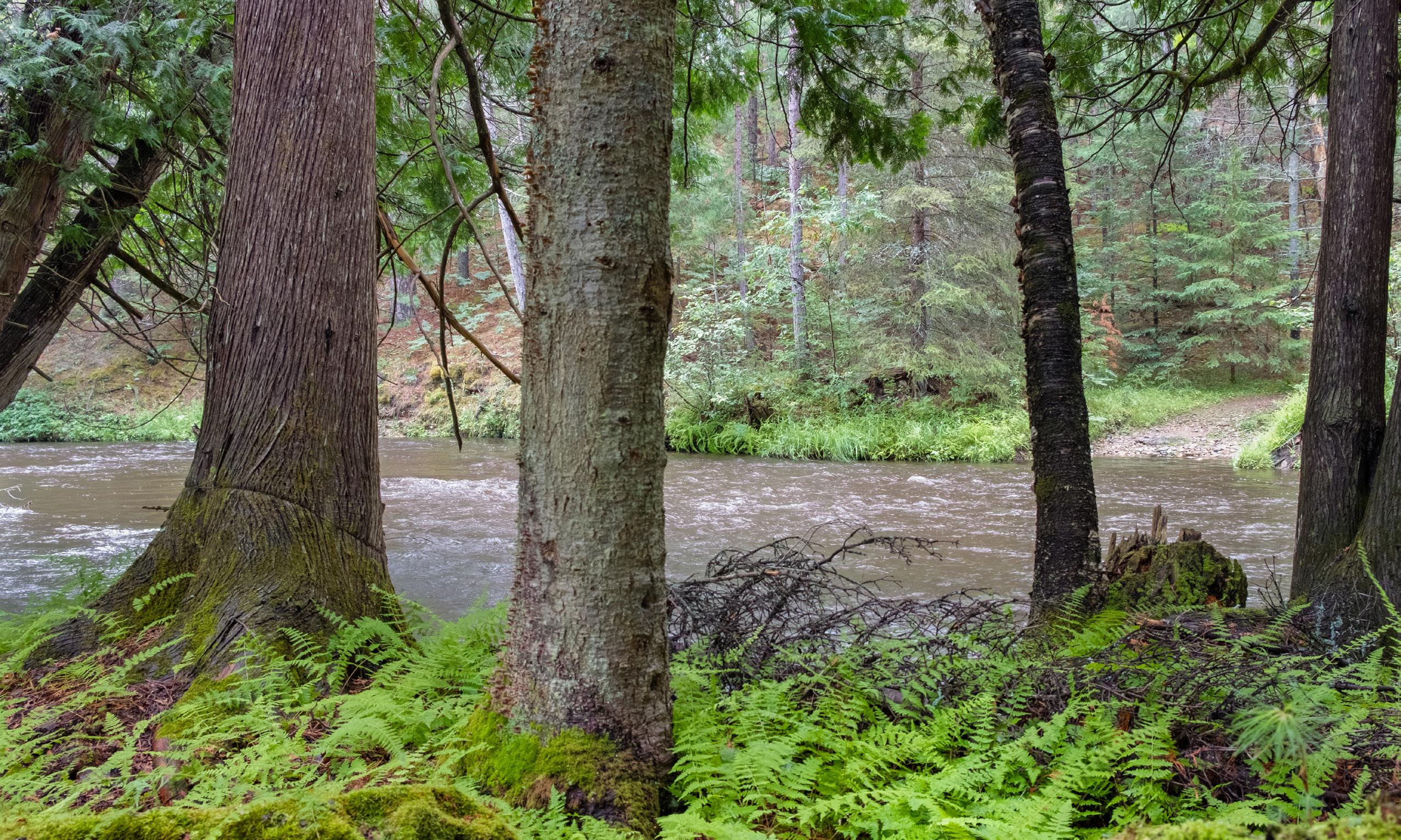
In addition to the sheer acreage, which amounts to 13.8 square miles, this spectacular property includes:
• more than eight miles of the Black River;
• nearly five miles of the East Branch of the Black River;
• almost two miles of shoreline around Silver Lake; and
• one mile along Stewart Creek.
Flanked by the PRCSF on three sides, the property is in the heart of the range for Michigan’s elk herd. “Bugle Hill, the high point on the property, is named after the call of bull elk used to establish dominance over other bull elk and attract cow elk,” said Kerry Heckman, Forest Land Administrator for the DNR.
Other significant partners in the protection of Black River Ranch included the Rocky Mountain Elk Foundation, The Nature Conservancy, the J.A. Woollam Foundation, the Forest Legacy Program, and the Michigan Natural Resources Trust Fund. The latter two programs—neither of which are taxpayer funded—contributed the bulk of the funding and added permanent protections that will carry with the land.
Black River Ranch is now open for outdoor recreation as a part of the PRCSF, although motorized access is limited until the DNR is able to inventory existing roads and develop an access plan. Updates will be posted on the Pigeon River Country State Forest section of the DNR website.
Projects like these are only possible because of the exceptional support of members like you. Thank you!
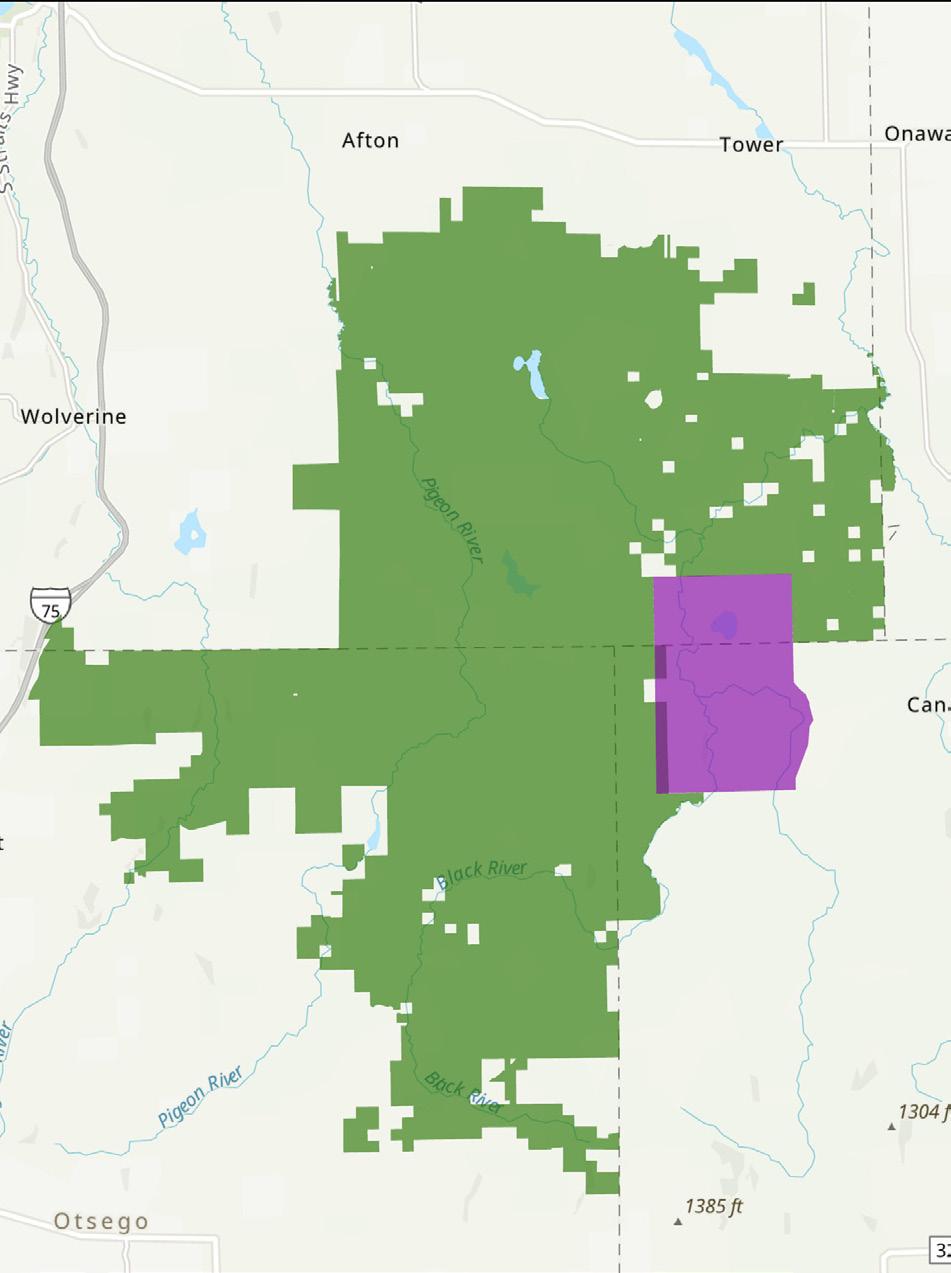
The former Black River Ranch property (purple) shown in relationship to the Pigeon River Country State Forest (green).
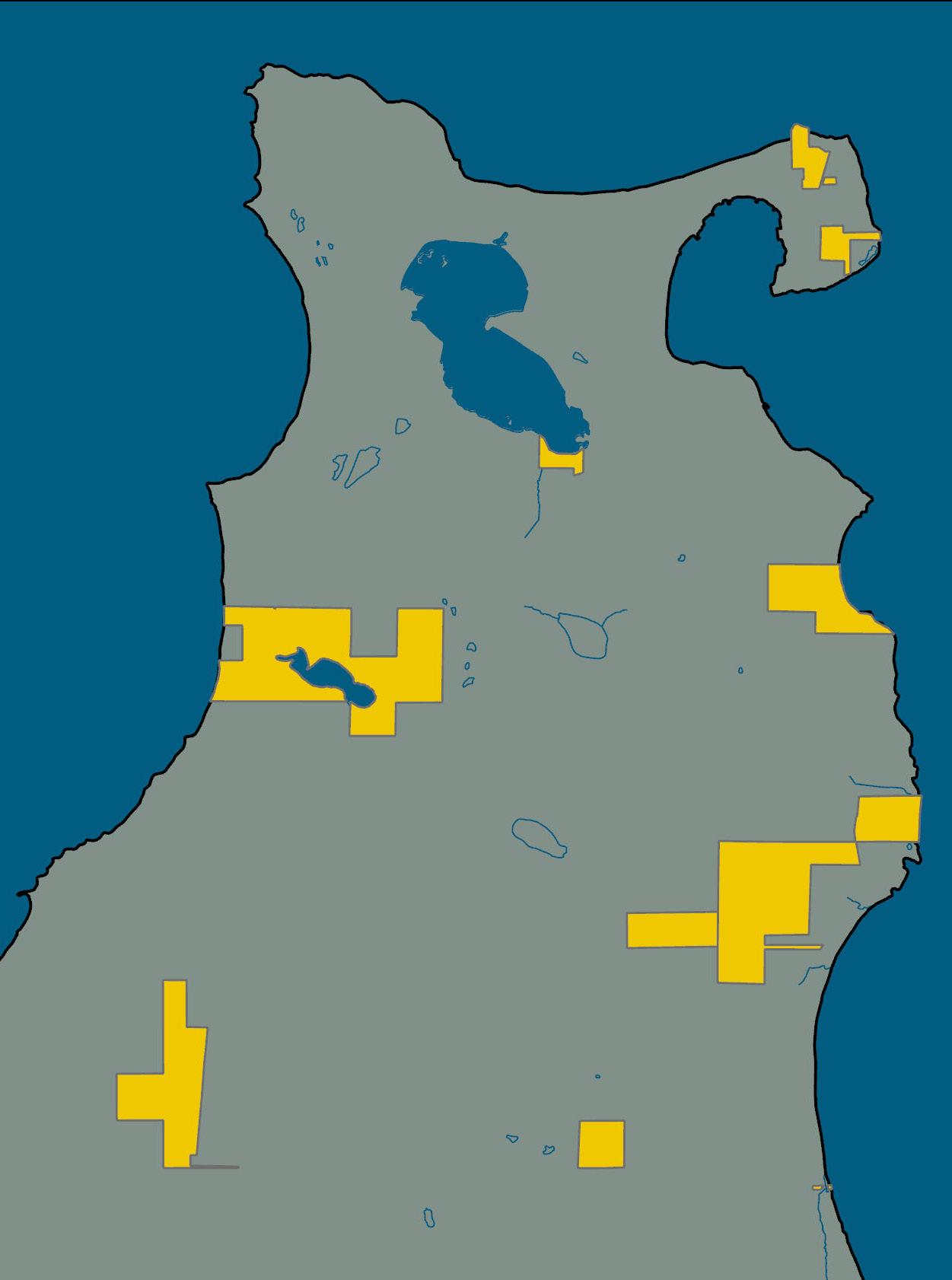
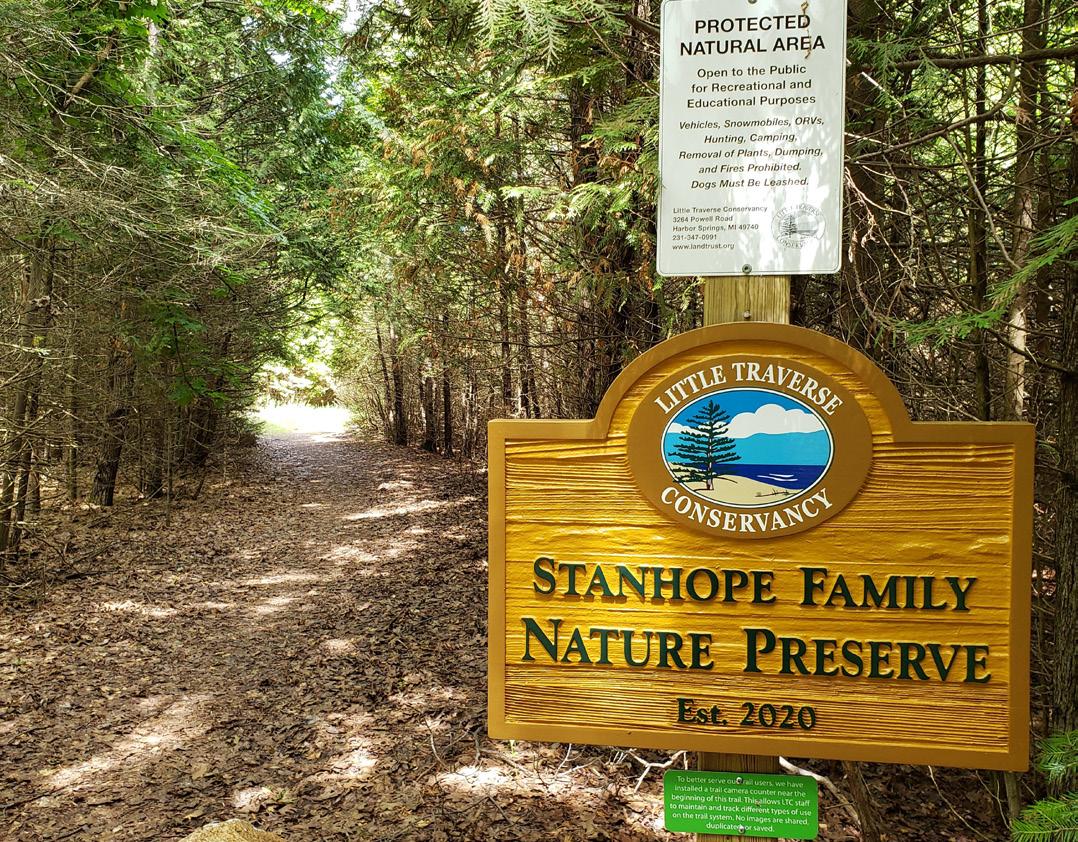
Beaver Island’s northeastern coast has gained further protection with an 11-acre donation by Ray and Ann Stanhope. This gifts brings the Stanhope Family Nature Preserve to a total of 24 acres with approximately 350 feet of frontage on Gull Harbor Drive along the edge of Lake Michigan. The Conservancy is working with the Stanhope Family, island volunteers, and Peaine Township to create a shared trail system there.
One of the most beloved places on Beaver Island is Barney’s Lake. Its quiet waters, calling loons, and the simple pleasure of drifting by small boat evoke the feeling of true wilderness.
Bernard and Margaret O’Donnell first homesteaded the land in the late 1850s, building their home across the road from the lake. Remnants of the O’Donnell homestead can still be found today, buried in the ground or visible as large lilac bushes and heirloom apple trees. The story of Barney’s Lake Nature Preserve began in 1988 when the heirs of Bernard and Margaret donated 120 acres of land and 2,200 feet of shoreline along Barney’s Lake to Little Traverse Conservancy.
In 2012, Terry and Bev Scully donated 173 acres, more than doubling the size of the preserve. This gift included more than a quarter mile on Lake Michigan and over a half mile on Barney’s Lake. Two years later, Jon and Sally Fogg sold 40 acres and 2,000 feet of Barney’s Lake frontage to LTC at a bargain sale, honoring the memory of their daughter.
The 2025 addition was made possible through generous funding from the Henry E. and Consuelo S. Wenger Foundation and the J.A. Woollam Foundation helping ensure that Barney’s Lake will remain a cherished and enduring natural legacy. This project protected another 30 acres and one of the very last stretches of unprotected shoreline, amounting to 900 feet. With this addition, 98% of the lake’s shore is now protected.
Nestled between King’s Highway and the Conn’s Cove Nature Preserve lies 60 acres of a wetland now known as the Lee Sachnoff Nature Preserve. It is a tribute to a man who deeply cherished the natural world, Beaver Island, and life itself.
Lee Sachnoff always lived near Lake Michigan. His discovery of Beaver Island came in 1999 when he and his racing partner took a detour on their return sail to Chicago after the Chicago to Mackinac sailboat race. That spontaneous visit ignited a lifelong love for the island. His wife, Cheryl, recalls her own first impression of the island as “a free-spirited, whimsical place to be.” The island was a natural draw for the couple who first met on a commune near Chicago.
At their Chicago home, Lee was well known for the outdoor train garden he had created in their yard, open for people to enjoy year-round. On Beaver Island, one of his favorite places was the Toy Museum—another reflection of his playful spirit and curiosity.
In 2012, Lee and Cheryl purchased a home on McCauley’s Bay on Beaver Island. Lee often traveled to the island alone, happily immersing himself in what Cheryl describes as his “endless projects.”
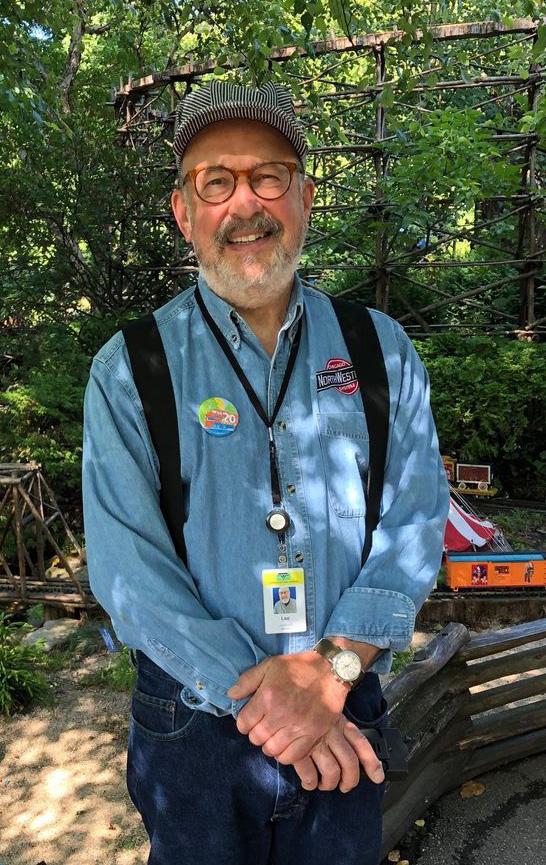
“He really loved the spirit of the people on the island—the freedom, the lack of pretense, the way the community loves and values nature,” said their daughter, Rachel. “He was especially excited about the Dark Sky project. Every time I was there with him, he would drag me out to look at the night sky because we so rarely get to experience that in the city. He would often go to the island just to be in the natural rhythms of the land.”
Land conservation had long been important to Lee, and he naturally befriended others who shared his passion for protecting the island’s plants and animals. “He had been learning about conservation easements and had purchased land adjacent to our home to be protected with an easement,” Cheryl said.
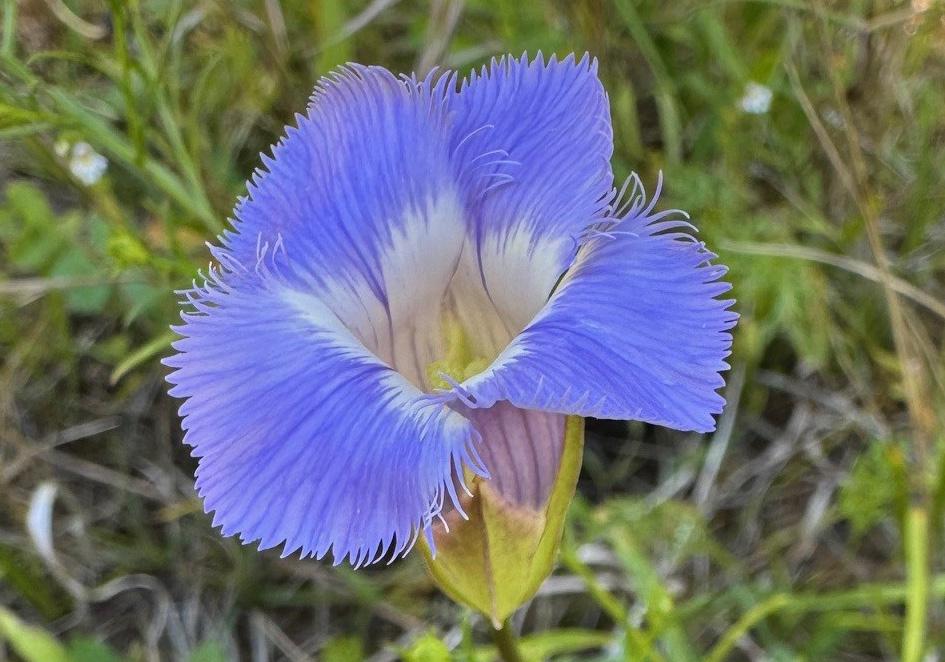
The Lee Sachnoff Nature Preserve is in a region of abundant biodiversity. This fringed gentian was photographed on a day that Rachel and Cheryl Sachnoff visited Lee’s preserve. Other species found on or near the preserve include:
Smooth Greensnake
Fairy Shrimp
Snowshoe Hare
Eastern Newt
Beaver
Skunk Cabbage
Beaked Hazelnut
Black Ash
Lungwort (lichen)
Tamarack
Sage-leaf Willow
Western Rattlesnake
Plantain
After Lee’s unexpected passing in 2023, Cheryl and Rachel began exploring meaningful ways to honor his memory. Creating a nature preserve felt deeply aligned with who he was and what he loved. Last year, the Lee Sachnoff Nature Preserve (see map on page 6) became official. The new preserve builds on the permanent protection of the Conn’s Cove Nature Preserve, 266 acres extending all the way to Lake Michigan.
Cheryl and Rachel shared this poem that was a favorite of Lee’s.
See For the Love of the Land on Beaver Island continued on page 8.
When despair for the world grows in me and I wake in the night at the least sound in fear of what my life and my children’s lives may be, I go and lie down where the wood drake rests in his beauty on the water, and the great heron feeds. I come into the peace of wild things who do not tax their lives with forethought of grief. I come into the presence of still water. And I feel above me the day-blind stars waiting with their light. For a time I rest in the grace of the world, and am free. - Wendell Berry

When the Conservancy staff has a question related to Beaver Island, one name generally comes to mind first: Pam Grassmick. For many years, Pam has been the “go-to” person on the island to answer our questions, coordinate a meeting, connect with an intern, and so much more. She has also been the force behind many conservation and protection initiatives.
Because of her deep commitment to conservation, longtime LTC supporter and partner, Charles Wilson, wanted to honor Pam for all that she does to protect her beloved island. Charles has partnered with her and the Conservancy to protect several properties on the island, including a 160-acre conservation easement he donated last year.
When a 16-acre property with 1,500 feet of shoreline on the south shore of Font Lake (see map on page 6) became available for purchase, Charles and an anonymous foundation donated the funds to turn this land into the Pam Grassmick Nature Preserve. “I don’t think Pam is the kind of person who seeks accolades in any way, but those of us who are aware of all that she has done, and continues to do, feel this is a great way to honor her,” Charles said. The land consists of forested wetlands and runs along 300 feet of Barney’s Lake Road. It is the kind of property that Pam values, fully understanding the importance of protecting wetlands.
Pam’s many island initiatives have included starting the Beaver Island Birding Trail and co-founding the Warblers on the Water Festival. She is perhaps best known for her fierce devotion to removing invasive species from the island. In 2016 she organized a symposium for invasive species managers from around the state held on Beaver Island. “That is when I realized how highly regarded she is to everyone in the state involved in invasive species management,” said Beth Leuck, island summer resident, former instructor at the Central Michigan University Biological Center, and one of Pam’s good friends and fellow island protectors.
“Pam is modeling how as a volunteer we can quietly and effectively make a lasting difference in our corners of the world that mean the most to us,” Charles added.
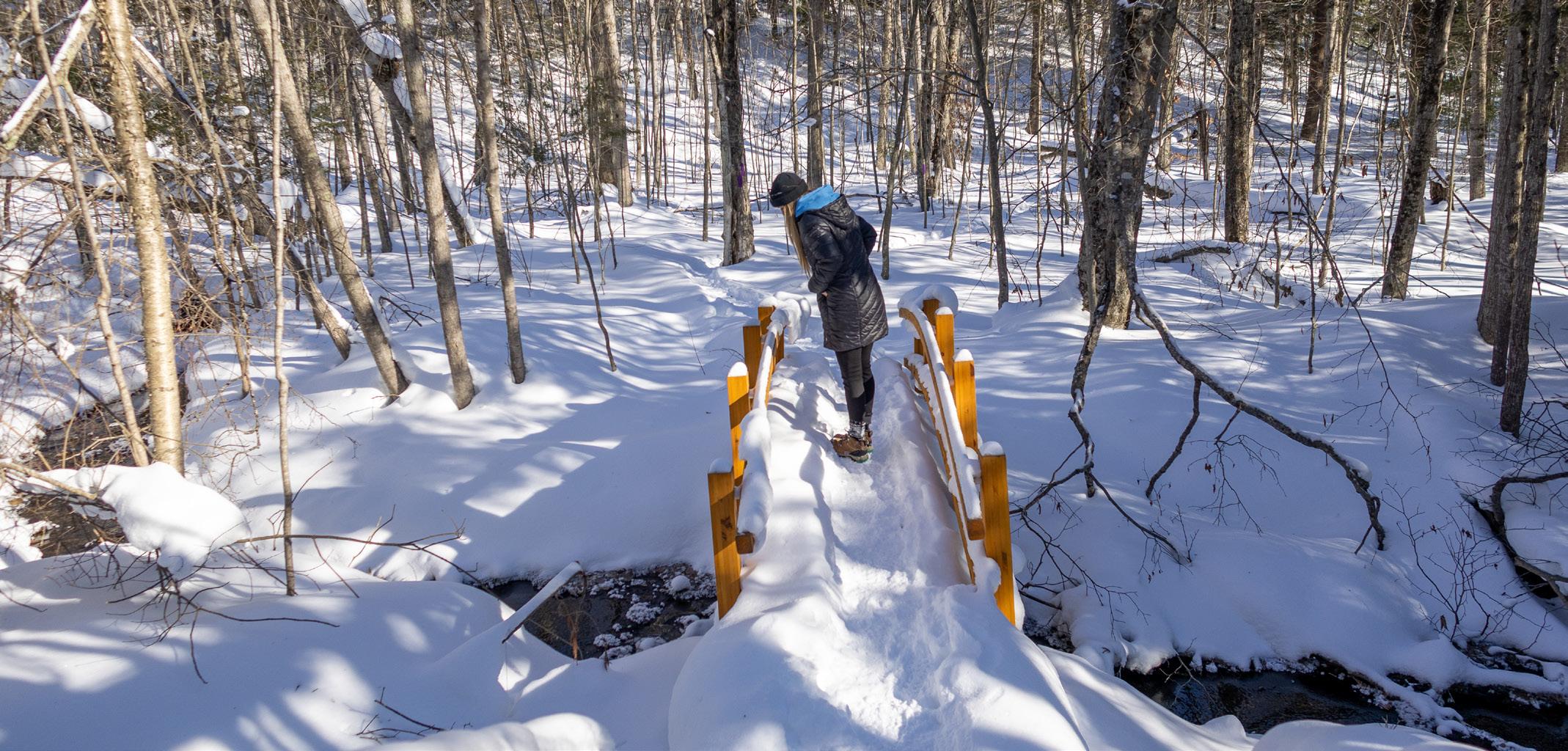
Beloved for its proximity to Petoskey and natural spring features, Bubbling Springs Nature Preserve trails continues to grow! This past year, nearly a quarter mile of new trail and boardwalk were constructed, bringing the total trail system to nearly a mile. A new arched bridge was built by volunteer Don App, who has crafted these beautiful bridges for us in the past. Construction of this trail expansion was made possible through generous funding from the Petoskey-Harbor Springs Area Community Foundation.
by Derek Shiels, Director of Land Stewardship
Little Traverse Conservancy started with a love for the beauty and diversity of nature in northern Michigan. That appreciation led our founders to take the emerging concept of a land trust (first developed on the East Coast) and create LTC’s tools of land acquisition and conservation easements for preserving the land they loved. Establishing trails and opening preserves to the public were early strategic priorities for LTC’s mission along with expanding our community of supporters.
However, conservation requires engaged stewardship. By 2010, after a rapid increase in preserved lands, LTC was a conservation leader and found itself with new opportunities and responsibilities as stewards of thousands of acres in northern Michigan. Thanks to our growing support base, we were able to take new steps toward what it means to be stewards of the land and grow our capacity to do that work. In the subsequent decade, we started the active forest management program, hired a volunteer coordinator, launched our ecostewards program, and helped found the local CISMA (Cooperative Invasive Species Management Area). In 2020, we hired our first Conservation Specialist Amy Lipson whose responsibilities are managing the habitats in our care.
This path has been the natural expansion of that initial love for nature that was there in the beginning. With the capacity to steward land from threats like invasive species or to plant trees and wildflowers to promote habitat health, we were completing the conservation equation: preservation + environmental education + stewardship = nature conservation.
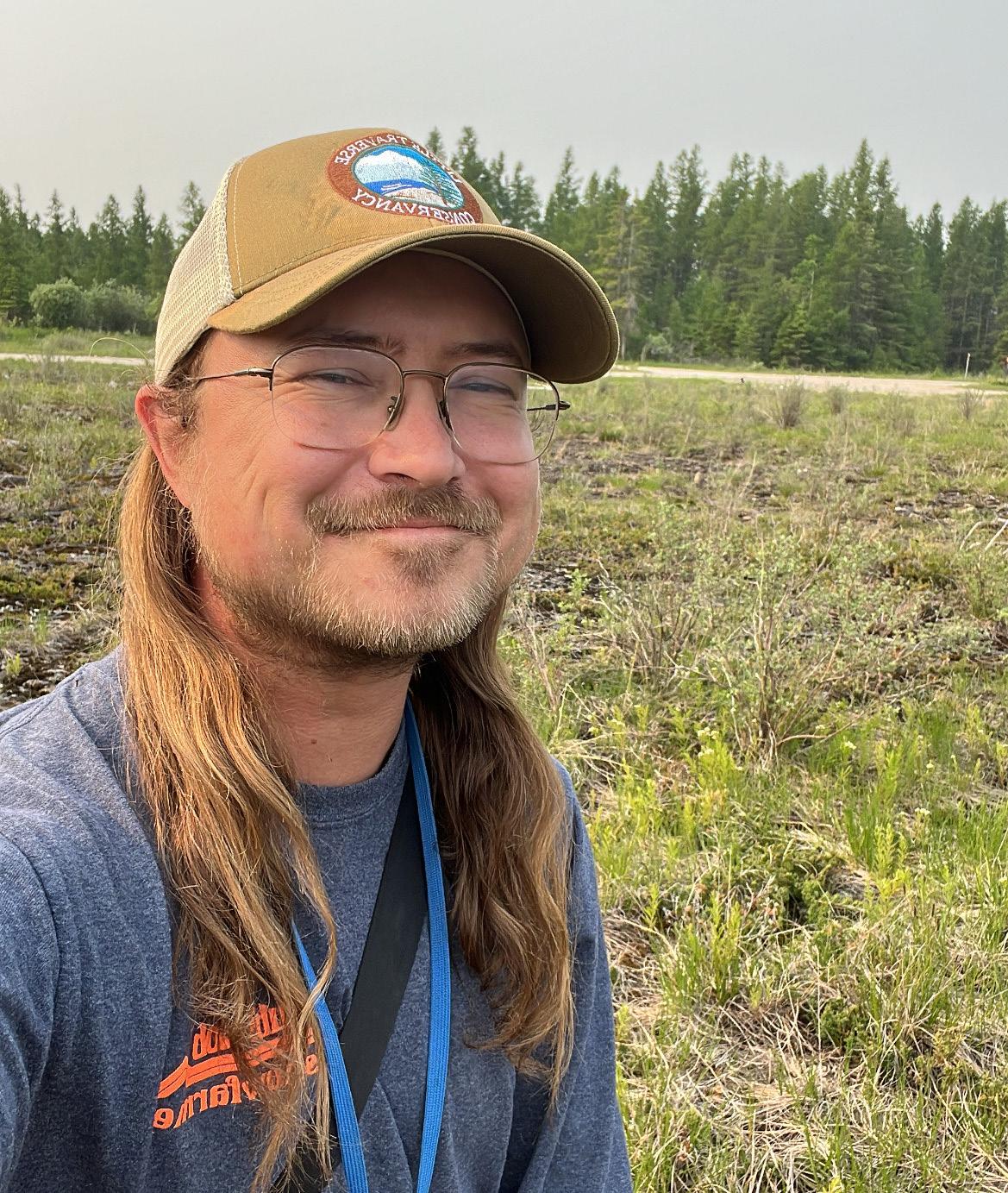
Now, in 2026, we have taken another step towards maturing into a full nature conservation organization. We have hired Brad Von Blon (below right) as a full-time Ecologist, after working as a seasonal ecology technician with LTC for seven years. We conserve what we know. And Brad’s role is to help us know what is living on and using the lands we love, to assess their health, and provide mission-critical information so our team can respond as informed and effective stewards. Brad is uniquely gifted, and his passion and abilities are a great fit for this new position. This next evolution for LTC is huge, even if it may seem rather basic or foundational.
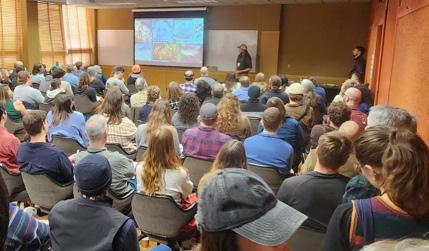
Brad and I just presented at the Stewardship Network Conference (below left), where over 100 people listened to us talk about our system for cataloging and evaluating the condition of the lands we manage. This has been challenging work and has historically not been easy to fund. For many small non-profits, it is difficult to make room for this work among all the other responsibilities. However, thanks to the deep roots that have developed from the seeds sown in LTC’s early years, our generous supporters, and a Board committed to LTC’s continual improvement, LTC is able to once again expand our positive impact on the northern Michigan we all love.
ECAR is made possible by visionary members who saw the power of this work. Learn more about ECAR on our website by scanning the QR code or visiting landtrust.org/ecar.

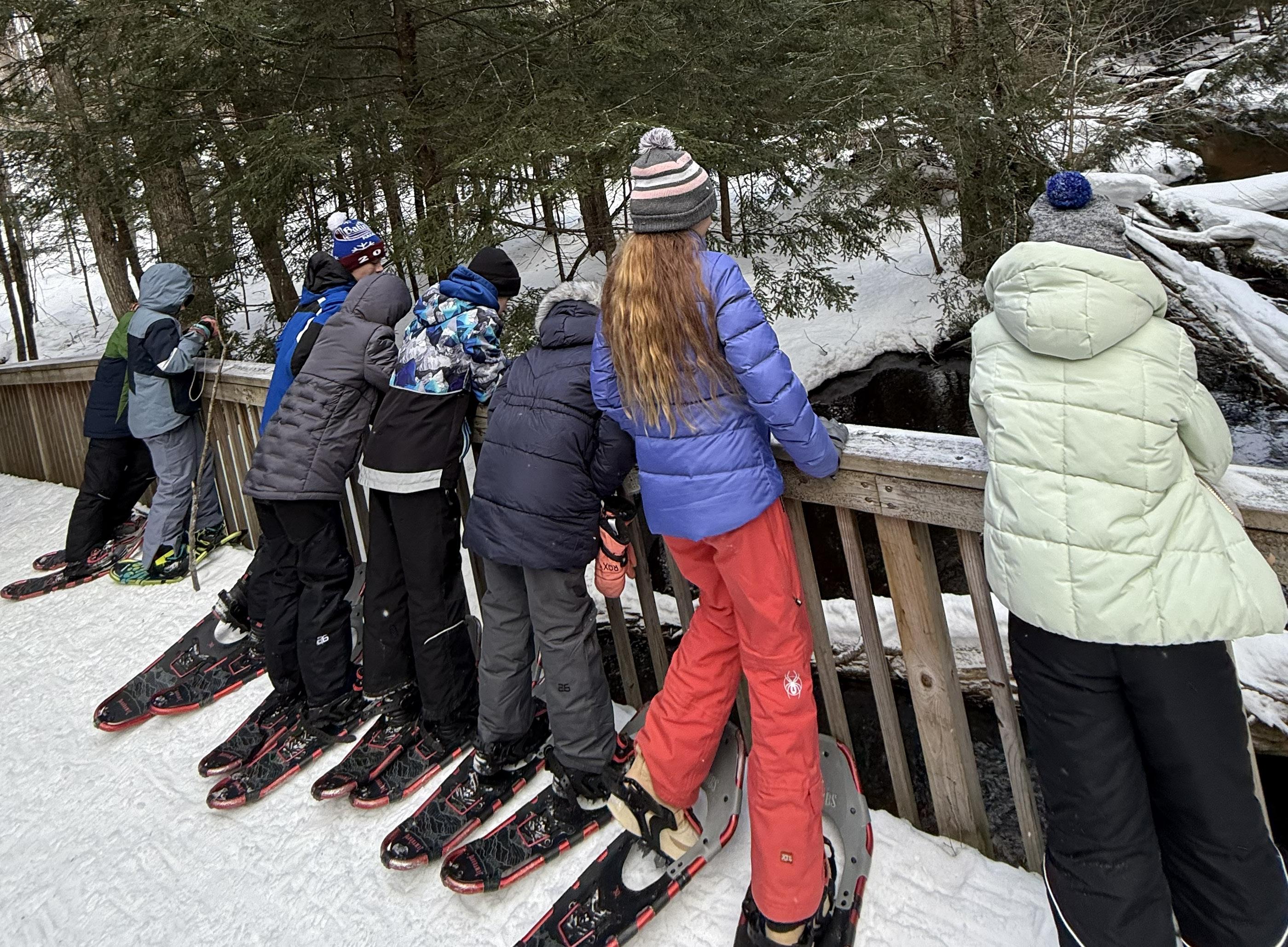
What animal leaves a track with four toes and visible claws, moving in a steady walking gait with a 15-inch stride? What about a hopping pattern with four toes on the front feet and five on the hind feet, forming a boxy or butterfly-shaped cluster of all four feet together, spaced about 20 inches between groupings? And what about 15 tracks clustered together, each eight inches wide and 20 inches long, with the occasional shuffle, hop, or trip? If you guessed fox, squirrel, and a Little Traverse Conservancy Environmental Education school group, you were correct. Throughout the winter season, LTC’s education team has the opportunity to take students out into the snow to explore tracks in the forests and fields on snowshoes.
In one week, every sixth grade student from Petoskey Middle School (roughly 230 students) boarded a bus and, about 15 minutes later, arrived at the Allan and Virginia McCune Nature Preserve. During that week, students observed animal tracks and made some of their
own, traveling on and off the groomed trail near Berger Road. They endured rain, snow, near-zero temperatures, and wind cutting through the trees. Yet through all of these challenges, the students did not complain; they leaned in. They engaged by noticing small details. They measured tracks and asked questions like scientists, seeking answers rather than guessing.
These hands-on experiences with the biodiversity of our landscape create memories that extend well beyond a test. They anchor learning to a moment in time and to a feeling, sometimes the sting of cold or the frustration of managing an awkward piece of equipment, and sometimes the calm of watching a perfect snowflake land softly on a glove. Either way, Little Traverse Conservancy Environmental Education programs will continue to offer students opportunities to step out of the ordinary and into the extraordinary northern Michigan environment.
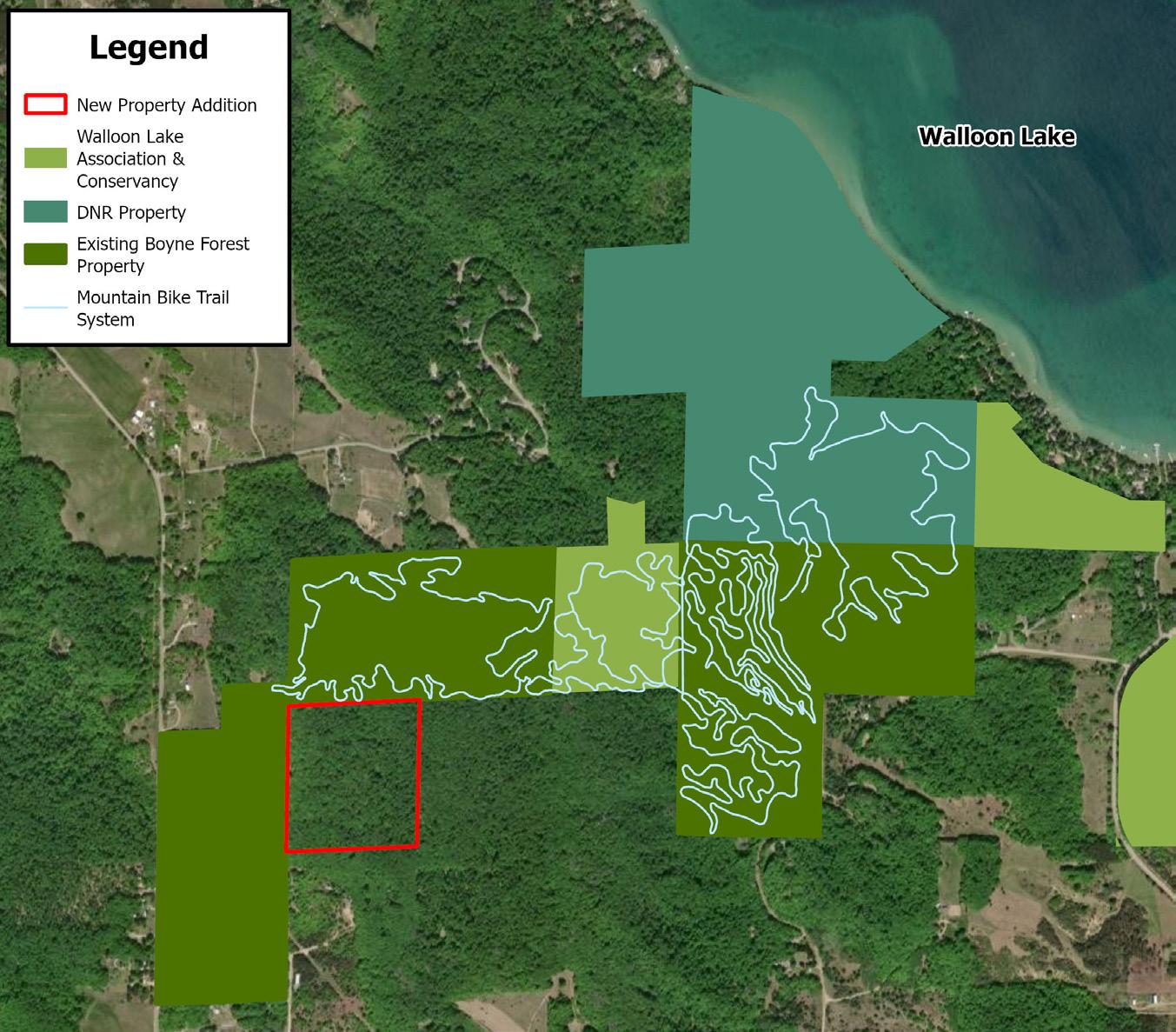
We’re thrilled to once again partner with the incredible volunteers at Top of Michigan Mountain Bike Association (TOMMBA) on an exciting new conservation and recreation project.
Together we’re working to purchase and permanently protect 36 acres of rolling hardwood forest adjacent to TOMMBA’s most popular and beloved trail system—the Boyne Forest Trails just outside Boyne City. If you’ve ever biked, walked, or explored these trails, you know how special this landscape is. This expansion will ensure that experience continues, and grows, for generations to come.
Our shared goal is to raise $300,000 to secure the property, thoughtfully consider extending the trail network, and equip TOMMBA with a muchneeded excavator for trail building— investments that will benefit the entire community.
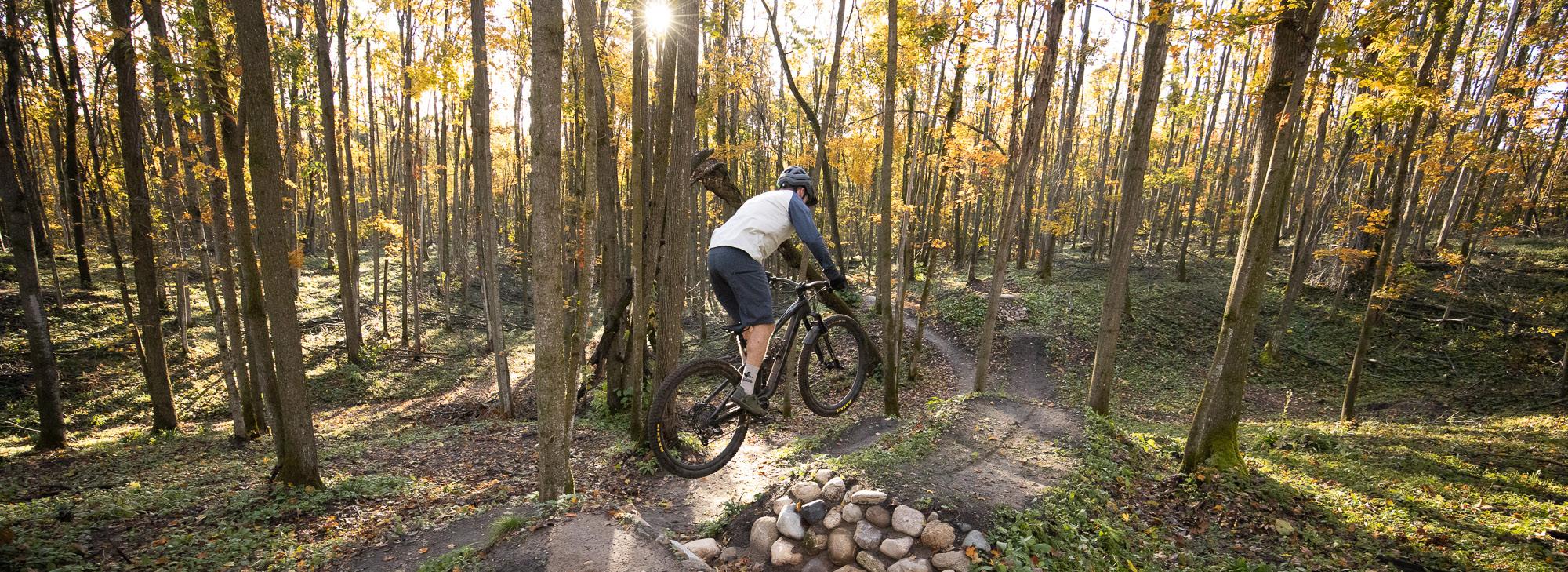
“We’ve just completed our latest strategic plan and asked our communities how they want TOMMBA to show up in the years ahead,” said Lynn Wolf, president of TOMMBA. “The answer was clear and resounding: go back to our roots and build more trails. Having an excavator that actually works is key to that!”
As with all of our land projects, stewardship comes first. Following our Ecological Conditions and Response (ECAR) protocol, we will carefully inventory the property’s natural features and ecological qualities before determining how best to integrate new trails. This ensures that recreation and conservation go hand in hand—protecting wildlife habitat, preserving forest health, and enhancing the rider experience.
If you would like to support this effort and help us reach our $300,000 goal, you can make a gift by visiting www.landtrust.org/boyneforest.
by Recreation, Access, and Maintenance Manager Nate Dionne
Do you have a favorite Little Traverse Conservancy trail? Maybe it’s the one you walk every Saturday morning, or the preserve where your family returns each summer. The places you love most help guide our work. By understanding how and when our trails are used, we can care for them in ways that reflect what matters most to you.
Data shapes many practices in today’s world, including how the Little Traverse Conservancy cares for trails. In 2015, LTC began investing time and resources in establishing a trail-use monitoring program using trail cameras to see which of our trails were most used and how many people visited specific preserves each day. What began with a single trail camera eventually expanded to more than 30. This data helped staff recognize the spike in trail visits during the pandemic, and the seasonal traffic changes we experience each summer. Having trail usage data allows LTC to make data-driven decisions such as resource allocation. It also helps us quantify the impact LTC has in specific counties/regions. While useful, trail cameras require significant time. This includes data chip and battery swaps, then returning to the office, where each chip is manually logged, counted, and analyzed.
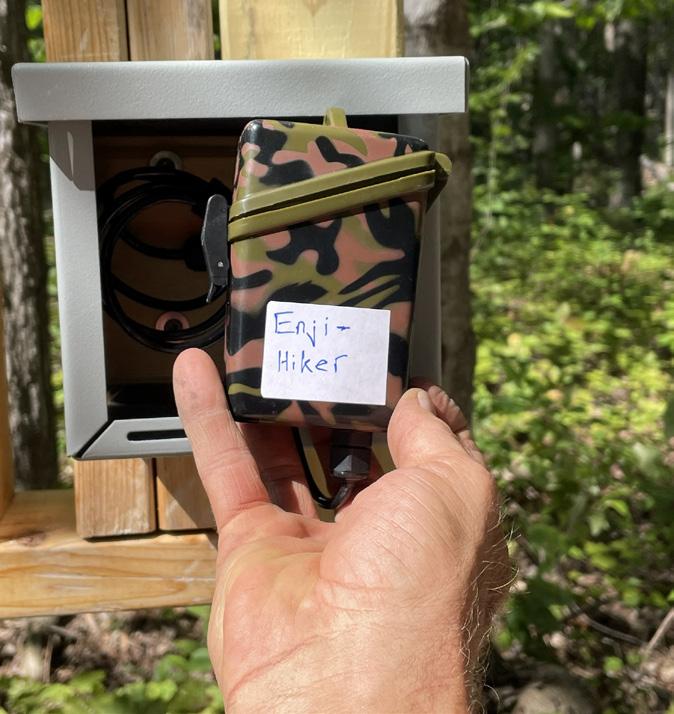

Fast forward to 2025, thanks to grant funding from Great Lakes Energy People Fund, Land Trust Alliance, and Petoskey Harbor Springs Area Community Foundation, LTC piloted a new trail counter monitoring system called TRAFx (top right). These trail counters record visits by sensing changes in infrared energy in the counter’s line of sight (right). Each time the infrared energy changes, this is counted as one person visiting the trail. LTC staff deployed 16 TRAFx counters during the spring of 2025. See the graph below for average daily use on our most popular trails from March 2025 to February 2026. Because of your support, we can continue evolving how we care for these special places—ensuring the trails you love remain healthy, welcoming, and protected for generations to come.
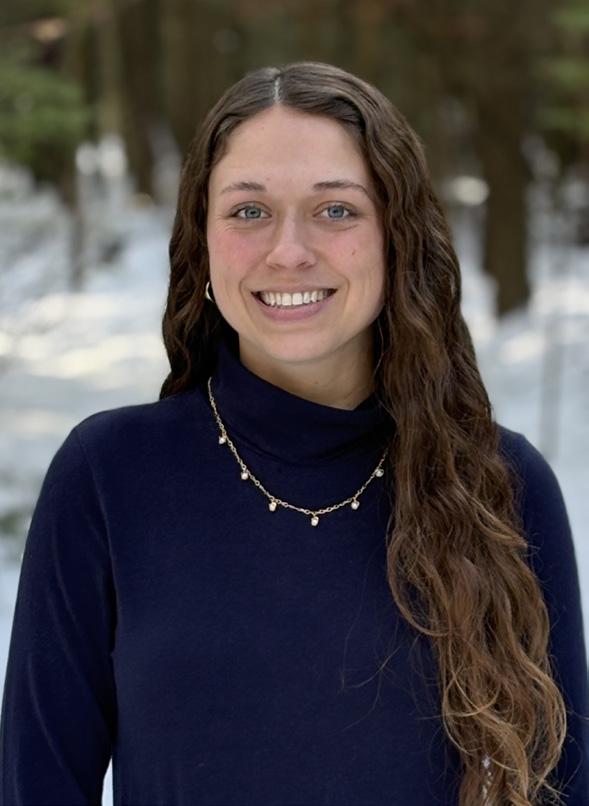
Liv Rollinger grew up in southeast Michigan, where time outside and family camping trips sparked her love for the outdoors. She graduated from the University of Michigan’s Program in the Environment, and after spending a summer at the University of Michigan Biological Station, she was inspired to head north. She worked as an Education Specialist with the Grand Traverse Conservation District, later serving in an AmeriCorps role in Petoskey. Most recently she worked at the North Central Michigan College Foundation. Drawn to mission-driven work and the power of donor support, Liv is excited to join Little Traverse Conservancy and connect with the members and supporters who make our work possible.
“When we envisioned what qualities our Donor Relations Specialist would ideally have, we didn’t think every single one was possible. Liv has them all and more,” said Emily Hughes, Chief Development Officer. “Liv is experienced in environmental education, conservation, and stewardship—the three pillars of our work. She has gained experience in development through her work at a local foundation and through her Certificate in Fundraising Management from the Lilly Family School of Philanthropy. Most importantly, she loves our mission. Like many of our members, she keeps track of each nature preserve she has visited and plans for the next one. We are honored and grateful to welcome Liv to our team.”
Thank you to the following members who joined between November 11, 2025–February 15, 2026.
Deborah and Patrick Apostol
Jacob Atkinson
Charles and Charlotte Ball
Lynette Bellinger
Kimberley Benedict
Tyler, Kaitlyn, Josie and Zoey Bublitz
Mr. Gary Burk
Leslie Chapman
Doug and Joyce Cheppo
Pamela Childs
Laura Chomiuk
Patrick and Ruth Corcoran
Frank and Kim Cosiano
Dakotah Davedowski
John Robert and Mara
Davidson
Gregg and Susan Davis
John Erickson
Mikael and Toni Eriksson
Donald Farr
Shawn Figueroa
Brad and Kelly Flowers
Brady Fluharty
Dianne Forster
Sarah Frey and Grant and Grace Rose
The Gage's of Hampton House
Debra Gallagher
Sandra and Tom George
Elizabeth and Dixon Gerber
Jonathan and Noah
Greenberg
Cary and Kathleen Groninger
Mark Guisinger
Geoff Guth
Kate Guth
Martha Guth
Ms. Lynn Hall
Dave and Alyson Halvarson
Courtney Hannibal
Donna Hanson
Ms. Jane Harrison
John Hartman and Barbara Belfore
Faith and Luke Haslebacher
Heather Heckman
Christine and Jack Hennessey
Ms. Zoe Hoster
Joseph Houston
Hughes Family Foundation
Theodore and Bette
Jeffery
Darrell and Pamela Jerden
Judy Kaplan
Rick and Rhonda Kline
Mr. and Mrs. Fritz Klingler
Jeffrey and Diane Korona
Mark and Stacee Laske
Barrett Ludlow
Harriet MacLean
Amy MaGee
Alexander and Sarah McTaggart
Andrew Mercer
Jamie Miller
Mr. and Mrs. Charles M. Moore
Jessica and Blake Morley
Bradford Muller and Carrie Harris-Muller
Dan Myers
Jordan Neumeyer
Patricia Olson
Thomas and Hayley Paholak
Janet Patterson Gay
Ms. Linda Paul
Ryan and Brenna Pelerin
Jonathan and Sara Pelukas
Tom and Jan Price
Julie Raisch
Cheryl Reese
Dave Rich and Kristin Kalush
John and Liesa Richter
James and Gail Rogers
The Rogers and Stone Family
Craig and Irene Rogerson
Edward Russell
Jesse R. and Linda Salinas
Lewis Schlanbusch and Mary Puls
Pamela K Schooley
K. C. Schute
Kastriot Shaska
Richard and Kim Shenkan
Mr. Robert Sherman
Bruce and Catherine Smith
August Srdjak
Paul and Anita Sweet
Michael and Molly Tripp
Rev. Daniel Van Beek
Barbara Venske
Robert and Mary VonGruben
Mrs. Judith Walker
Ms. Mary Lou Wickowski
Raymond and Mary Anne
Wood
Jerry and Eileen Fhaner’s connection to northern Michigan was shaped by a lifetime of outdoor adventure. Eileen’s childhood was filled with family camping trips across Michigan, exploring the Porcupine Mountains, Tahquamenon Falls, Pictured Rocks, Copper Harbor, and countless state parks in between. Jerry grew up spending summers at his family’s cottage on Houghton Lake, sailing, camping, and snowmobiling. After they married, their shared love of the outdoors carried them across the state in a small tent that eventually gave way to a fifth wheel and, in 1999, their own northern Michigan cottage. “We never tire of exploring northern Michigan’s beauty,” Eileen said. Winter finds Eileen snowshoeing and Jerry ice fishing, while warmer months are spent gardening, biking, and caring for the land around their home.
As seasonal residents, Jerry and Eileen first learned about Little Traverse Conservancy through local media, but it was a snowshoe outing where Eileen met former longtime staff member, Ty Ratliff, that truly drew them in. After that experience, she said simply, “I was hooked.” Seeing the transformation of the former golf course at Offield Family Viewlands Working Forest Reserve— land that could have become a private subdivision— strengthened their commitment to conservation. “Jerry and I prefer land to be set aside for Mother Nature rather than being acquired by people who want to ‘domesticate’ it,” Eileen explained.
Members since 2001, Jerry and Eileen chose at the start of LTC’s five-year strategic plan to invest in two core priorities: Endowment and Land Protection.
Rick and Linda Bolton’s story with Little Traverse Conservancy is rooted in a deep and enduring connection to northern Michigan. “We have a profound love for northern Michigan,” Rick shared. That love took tangible form in 1993 when Rick bought a log cabin in Good Hart and granted LTC a conservation easement on the portion along M-119, the Tunnel of Trees, ensuring it would be preserved forever in its natural, scenic state. Linda comes from a family with a long history of philanthropic support, including land conservation. Soon after buying the Good Hart cabin, Rick and Linda met, and in 1995, they married there. For more than 30 years in Good Hart, life with their Labrador retrievers has meant days on the beaches of Lake Michigan and walks through nearby LTC preserves, especially Good Hart
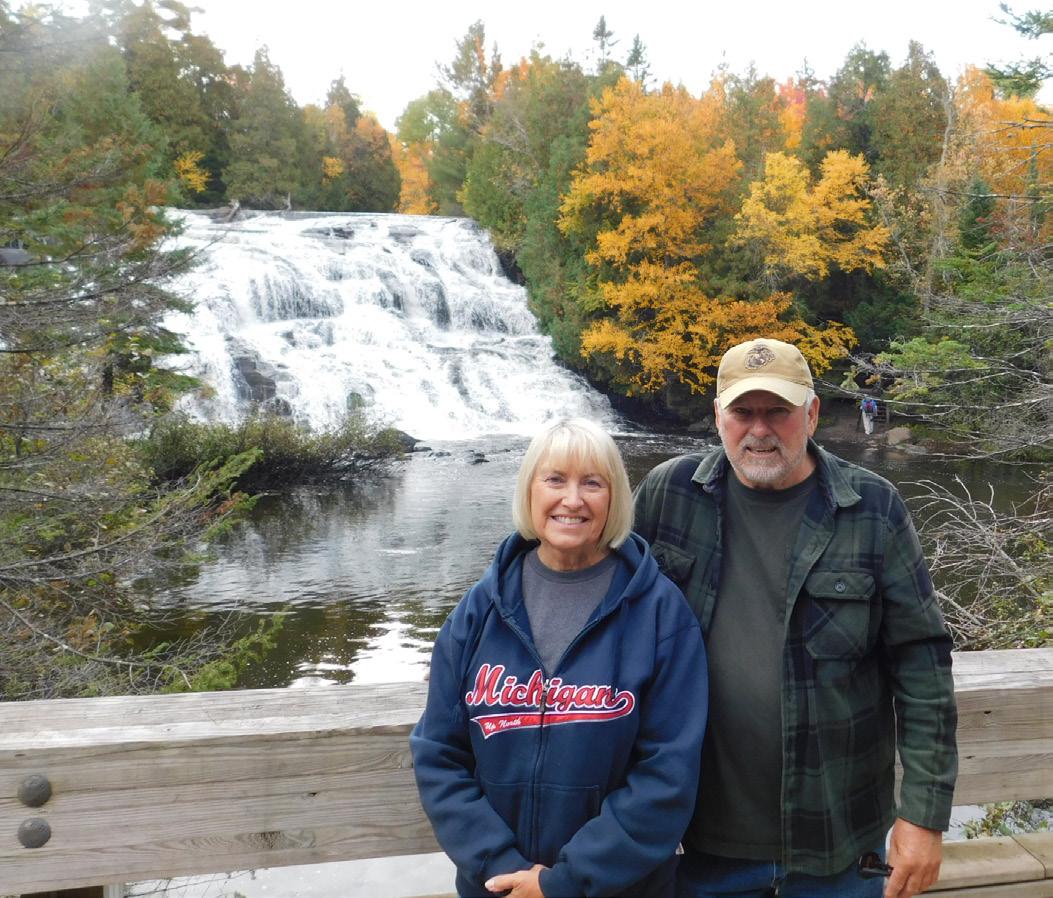
Their generosity created the Jerry and Eileen Fhaner Nature Preserve, 44 acres along the St. Mary’s River, forever safeguarding that landscape. They also established the Jerry and Eileen Fhaner Endowment, an unrestricted fund that provides ongoing support for LTC’s mission and helps fulfill the organization’s promise of permanent protection, with a portion of its annual income sustaining conservation work each year. As Legacy Members, their future estate gift will further strengthen this endowment. Inspired by the passion of the people they have met and the vision of land preserved for generations to come, Jerry and Eileen’s story is a testament to how a lifelong love of the outdoors can grow into a lasting legacy for northern Michigan.
Farms and Elmer Johnston Nature Preserves—places that have become part of their daily rhythm.
Rick first learned about LTC when they bought their property and quickly came to admire our mission and proactive approach to protecting the land and rural character of the region they cherish. His professional background in law led to service on LTC’s finance committee and later on the board and executive committee, where his skills are put to good use. As Rick explained, “I believe you should only get involved with charities whose mission you admire and for which you are willing to devote significant time, energy, and Continued on next page.
resources.” That philosophy guided the couple’s decision to focus their philanthropy where it could have the greatest long-term impact.
To create a lasting legacy, Rick and Linda established the Bolton Family Endowment Fund, a named endowment that provides enduring support for LTC’s mission. As Legacy Members, they have also included LTC in their estate plans, ensuring their commitment will continue to strengthen conservation efforts through the Bolton Family Endowment Fund for generations. Their approach is grounded in a simple but powerful belief: we each have a responsibility to improve the places we love. Through their leadership, generosity, and vision, the Boltons are helping safeguard the landscapes and character of northern Michigan so that others—two-legged and four-legged alike—can enjoy them far into the future.
Bill Roney and Joanne Kelley’s connection to northern Michigan is woven through generations of summer memories and a lifelong love of the outdoors. Bill traces that bond to childhood trips to cottages his greatgrandparents built on Higgins Lake nearly a century ago, followed by years spent on a small lake near Gaylord and, since the early 1980s, in the Harbor Springs area. Reflecting on that history, he says it has been “a combination of both nature as well as nurture.” Today, their days are filled with hiking, boating, gardening, and fly fishing—simple rhythms shaped by the landscape they cherish.
Their relationship with Little Traverse Conservancy began when they first rented, and later purchased, at L’Arbre Croche, where Bill and Jane Petzold helped place LTC “on all the owners’ giving radar.” As Bill explained, “From there our interest snowballed as we took more notice of all the preserve signs we’d encounter and considered just what that meant for future generations. We were hooked.” Aside from the Black Hole Nature Preserve near their home on Pickerel Lake, they are frequent visitors to Offield Family Viewlands Working Forest Reserve, hiking with their dog and “soaking up the views.” Bill noted that northern Michigan residents are fortunate to have so many extraordinary preserves to explore and enjoy.
In retirement, Bill knew he wanted to deepen his involvement with LTC. Connections with longtime LTC staff members helped open that door, and today he serves on LTC’s board and executive committee. “I am honored to be on the board and have the opportunity to contribute time, treasure and (hopefully) talent,” he says. Participating in LTC’s 2023 strategic planning process strengthened the couple’s commitment even further. Bill reflected that the experience “raised our conviction to an even higher level and we wanted to, as the saying goes,
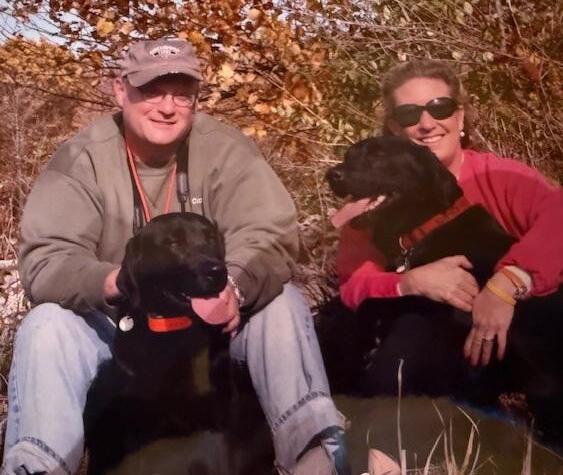
‘put our money where our mouths are.’” He added, “We are blessed to be able to support LTC and will continue to do so via our endowment fund. I have never been involved with any nonprofit where all constituencies are so singularly focused and culturally aligned. It’s truly a pleasure and a privilege to play even a small part in LTC’s future success.”
That conviction inspired Bill and Joanne to establish the Roney Family Endowment, creating a lasting source of support for LTC’s mission. Through their leadership, generosity, and vision, they are helping ensure that the landscapes they love remain protected and vibrant—a legacy that reflects both their personal history and their deep belief in the power of conservation.
Pam Grassmick and Gail Gruenwald for installing signs and helping with trail camera management on Beaver Island preserves.
Cedric Richner for his extensive and greatly helpful consulting services.
Allye Kemme with Mackinaw Straits Raptor Watch and LTC volunteer Kelly Davis for helping design a flyer for our American Kestrel Presentation.
Larry Bernhardt for protecting lingering ash trees from Emerald Ash Borer for another year.
Sue Kurtz for sharing her beautiful wildlife photography.
Dianne Litzenburger and Charlie McLravy for volunteering their skills as newsletter editors.
Josh Baker and The Outfitter for supplying discounted equipment for education programs.
John Baker for making wood ‘cookies’ for student name tags at environmental education programs.
John Baker, Dan Dueweke, Alyssa Elgart, Keith Hammond, Richard Jenkins, John and Janine McClain, Deb Pruitt, Jennifer Reynolds, and Tom and Kimberly Rowland for clearing trees that blew down in recent winter storms.
Joanne Cromley for letting us use her internet for a “Kestrel cam” and Kelly Davis for helping install the nest box.
Pat Alguire, John Baker, and Richard Jenkins for building a wall at our office and for continuing the logo sign repair efforts.
Pat Alguire, John Baker, Richard Jenkins, and Stan Royalty for preserve monitoring.
Philippe Dujardin, Richard Jenkins, and Scott Taber for assembling stewardship equipment.
Sarah Penzien for removing invasive honeysuckle on one of the coldest days in January.
Bill Bice, Jeff Harmon, Richard Jenkins, and Greg Steimel for helping make the Enji-minozhiiyaamigak: Place of Peacefulness Nature Preserve Open House a success, and Grain Train for donating yummy chili for the event.
Lisa Morris from the Five Mile Creek Schoolhouse for partnering with us on the Winter Solstice Lantern Walk and Grain Train for their bountiful donations of soup and bread for the event.
Mary Trout for bringing Valentine’s Day treats and well wishes to our staff.
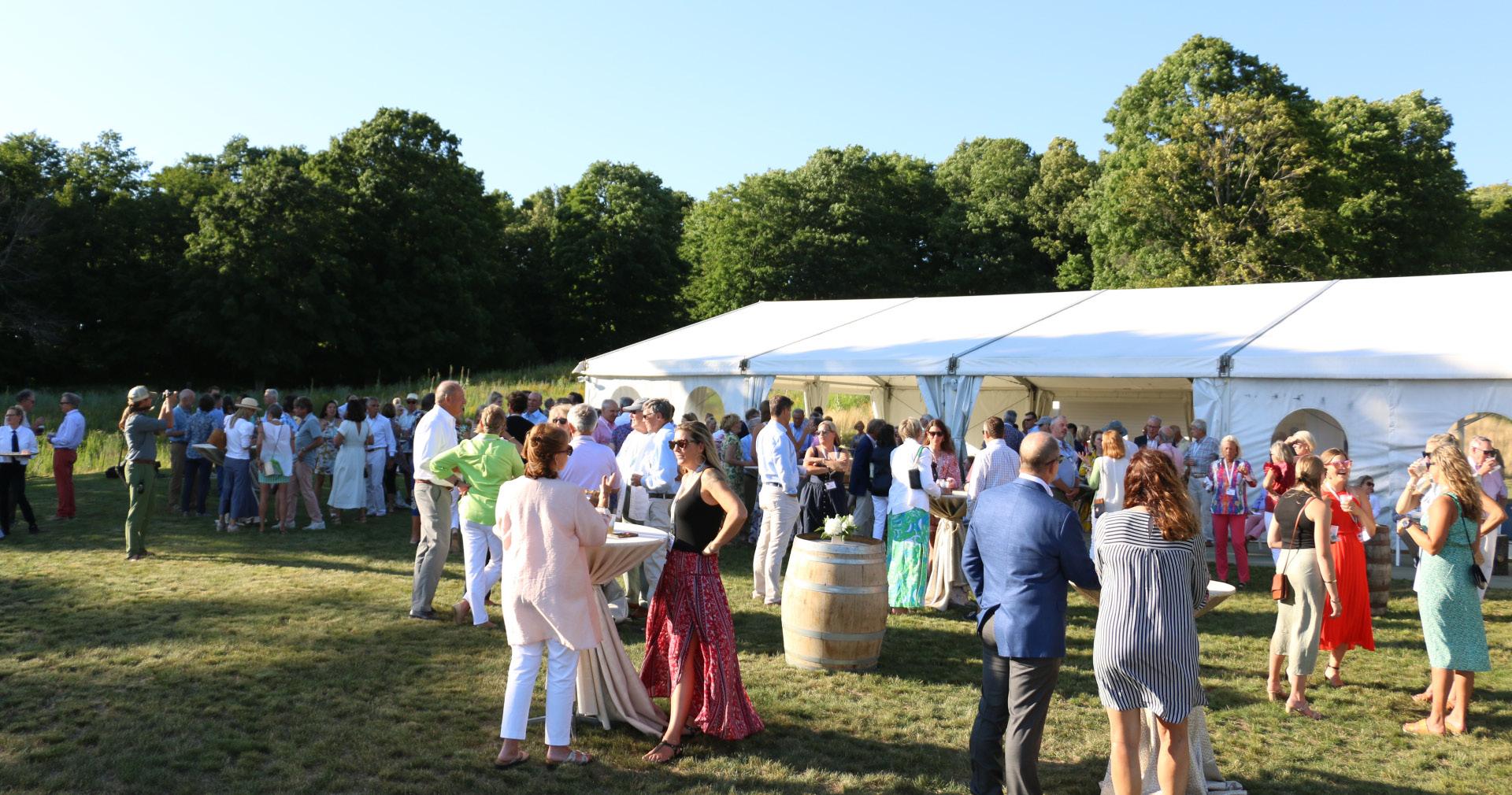
LTC’S ANNUAL FUNDRAISING EVENT Thursday, July 23, 2026
We look forward to welcoming you back to the Offield Family Viewlands for a memorable evening celebrating land protection in northern Michigan. Details to come.
gifted between November 12, 2025 and February 16, 2026
Luca Asbury
Chris Fitzgerald and Elizabeth Asbury
Darcy Ashman
Mike and Amy Miller
John Baker
Lee and Anne Davis
Fred Ball
Evening Star Joinery
Jeff and Katheryn Beemer
Steve and Margaret Beemer
Mr. and Mrs. Jarrett Cherner
Evening Star Joinery
Bill and Marilyn Crawford
Evening Star Joinery
Hans Creutz
Evening Star Joinery
Jonathan Creutz
Evening Star Joinery
Michael and Karen Donnelly
Edward and Madeliene Donnelly
The Donnelly Family
Mary Pat Donnelly
Ben Doornbos
Evening Star Joinery
Chris, Ali (Hill), Will and Nick Ford
Richard, Julie, Jasmine and Vivian Ford
Doug and Norma Gettel
Evening Star Joinery
The Holton and Wilson Families
Mr. and Mrs. John N. Failey
Dave and Sara Johnson
Donald and Janeen Smith
Michelle Kruzel
Evening Star Joinery
Nick Liebler
Evening Star Joinery
Mr. and Mrs. Richard Manoogian
Mr. Scott R. Rausch
Debora McGuiness
Maggie Doherty and Cole Schneider
Chase and Jena Offield
Evening Star Joinery
The Marta Olson Family
Mr. Scott R. Rausch
Richard Platte
Nathan and Diane Platte
Mr. and Mrs. Phil Porter
Mr. Scott R. Rausch
The Ranger Family
Mrs. Beth Ranger
Patricia Rush
Kenzie Rounds
Mydie Sant
Marye and Scott Thomlison
Kevin Serba
Evening Star Joinery
Craig and Susan Sincock
Evening Star Joinery
Alex and Greer Taylor
Evening Star Joinery
Byron and Laura West
Lisa West Alpert and Mark Alpert
David Armour
Matthew and Anneke Myers
Chris Asbury
Chris Fitzgerald and Elizabeth Asbury
Barbara Watts Asmus
Scott and Joanne Hoeft
Kristi Shaw Brown
Kevin Brown
Michael and Martha Cameron
Ken and Claire Perry
Stephen M. Conway
Conway Family Donor Advised Fund
Elizabeth and Stanley Dickinson
Amy Dickinson
Thomas and Gloria Dworman
Lou Frango
Clint Etienne
Mr. and Mrs. Charles Cleland
James and Evelyn Howell
P. Nowak
Leslie Muenchow Rubenstein and Family
Jim and JoEllen Rudolph
Helen Evenson
Mr. Alan Carpenter
John and Marilyn Carpenter
The Old Farts
William Bradford and Gloria Hecht
Martin W. Ford
Chris Ford and Ali Hill
Dannie Bea Hightower
Emily Hughes and Joe, Ada and Ember Graham
William Howell
May Plumbing and Heating
Brandon ‘Fischer’ Jex
Jody Hart
Phil Jones
Sherry and Kirk Baker and Family
The Dragoo Family
Megan Engle
Larry and Louis (Vincent) Headd
Jennifer Holland
John and Jan Mitchell
Sally and David Morrison and Family
Sandy Stephan
Marv and Elaine Vincent
Tam and Craig Yonkus
James Kanine
Dave Kring Chevrolet Cadillac
Charles and Jutta Letts
Chip and Kathleen Letts
Allene J. Stolt Long
Roger and Peggy Peterson
Julie Schmidt
Barbara Schweitzer and Martha Love
Susan and Gary Sexton
Mrs. Donna Watkins
Michael McMurray
William and Jane Petzold
Michael Phillips
The Rogers and Stone Family
Susanne Dye Rose
Martha Lancaster and Doug Fuller
Robert Schrock
Ken and Lori Wiseman
James and Darcie Witherspoon
Michael Smith
Trevor and Carla Brazell
Susan Vrondran
Janice Stewart
Brenda Tewel
Edward Terrill
Jay Beech
John and Rhoda Brooks
Benjy and Molly Diesbach
Mr. and Mrs. Thomas R. Gerdes
Mrs. Frank Harding
Jeff and Liza Leland
Frank and Ann Morgan
Mardie and Bob Off
John and Tory Parlin
Tim and Cindy Reed
Ken Tewel
Brenda Tewel
Gustav Uhlich
Charles and Barbara Lindsey
G. Sheldon Veil
Mr. and Mrs. Johnson Hightower
Mr. Anthony Huffman
Karen Ann Zawaski
Melanie Manary and Charles Huebner
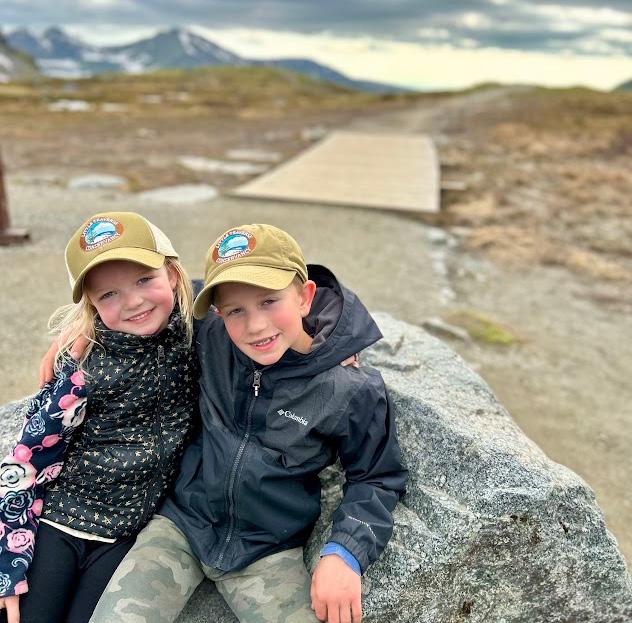
Our hats travel far and wide. Even the youngest LTC lovers travel with their LTC hats. Conservancy Volunteer Mike McNamara shared this photo of his grandchildren, Charlie (left) and Joseph (right), at Summit Lake, Hatcher Pass in Palmer, AK.

Where do you take your LTC hat?
Share a photo wearing yours to ltc@landtrust.org to be featured. Or get your hat today by scanning the QR code.
LTC MEMBER SINCE 2018, MAILING VOLUNTEER SINCE 2012
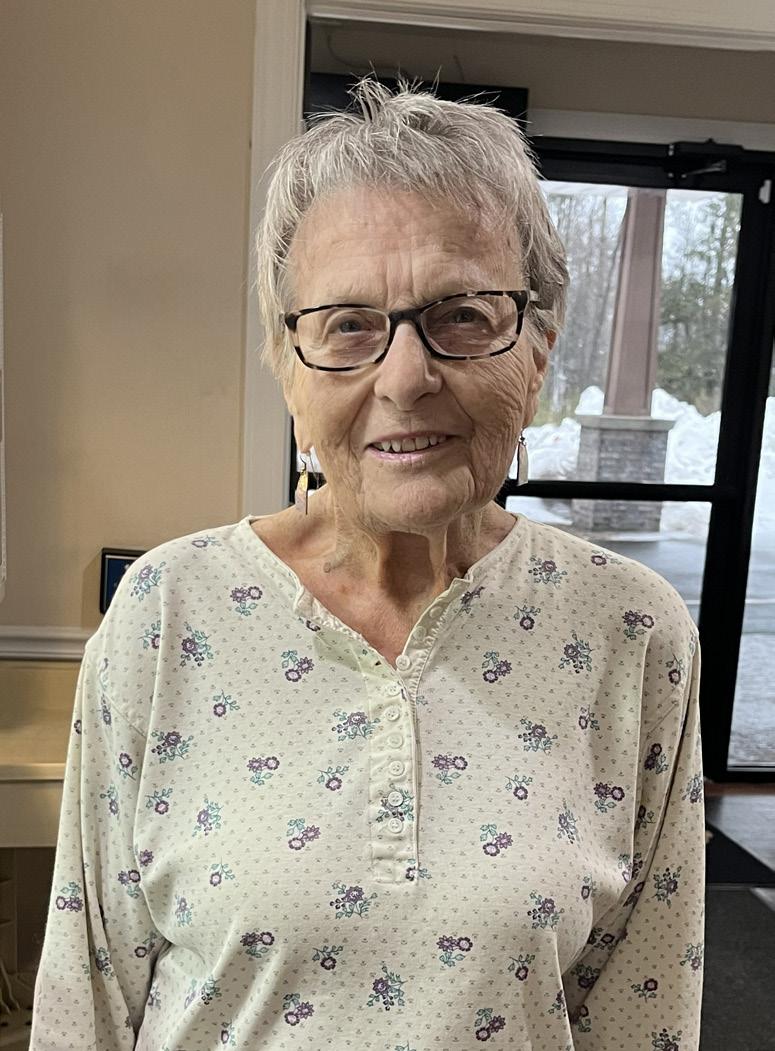
Sally Bales always arrives early for her volunteer shifts at LTC, greeting everyone with a smile—and often a bit of sass. Born in Charlevoix in the 1930s and raised during the war years, she developed the resilience that has carried her through a full and sometimes challenging life.
With both parents working as teachers, Sally spent her childhood summers exploring the forests and beaches of northern Michigan. She fished with her father, who was known locally for rehabilitating injured wildlife—an experience that sparked her lifelong love of animals and nature.
After high school, Sally’s adventurous spirit led her to Texas and Chicago before she eventually settled in Florida, where she raised her two young children as a single mother. “It’s good I was a tough Charlevoix girl,” she reflects. While raising her family, she worked for the school system, helping children receive the support they needed.
The church has remained a cornerstone of Sally’s life. It instilled in her a deep sense of belonging and community. She helped others when they needed it and, in turn, they supported her as a single mother. It has always been a place where she and her family belonged. Over the years, Sally has also been an active choir member in several churches throughout the Charlevoix and Petoskey area.
In 2010, Sally began volunteering with the Friendship Centers of Emmet County and was introduced to LTC. She quickly became one of our core volunteers, showing up for every mailing multiple times a year, and spending long days in the basement signing, stuffing, sealing, and stamping envelopes, all while keeping the room laughing and inspired with her quick wit and steady dedication. She embraces the belief that “you just help where you can, you meet new people and you learn to do things you know nothing about. LTC is a positive place to spend time with others in the community.” In addition to volunteering, she supports LTC as an annual member, valuing the preservation of open space and opportunities for children to connect with nature.
At 95 years old, Sally continues to be a bright and dedicated presence in our community. Thank you, Sally!
Unless otherwise noted, community field trips with LTC are FREE!
Visit landtrust.org/events, or scan the QR code to see full descriptions. Registration is required!
Wild Wednesday: Vernal Pools
Charlevoix Library, Charlevoix County Wednesday, April 8 | 6:30-7:30pm
Weekday Woodcock Walk
Sally and Art Hailand, Jr. Nature Preserve, Emmet County Wednesday, April 8 | 8-8:45pm
Weekend Woodcock Walk
Sally and Art Hailand, Jr. Nature Preserve, Emmet County Saturday, April 11 | 8-8:45pm
Mother’s Day Wildflower Walk
Hoogland Nature Preserve, Emmet County Sunday, May 10 | 12-1:30pm
Wild Wednesday: Wetlands
Charlevoix Library, Charlevoix County Wednesday, May 13 | 6:30-7:30pm
Wildflower Walk
Offield Family Working Forest Reserve, Quick Road parking area, Emmet County Saturday, May 16 | 1-2:30pm
Birding Waldron Fen
Waldron Fen Nature Preserve, Emmet County Thursday, May 21 | 8-10am
Aldo Leopold Festival
Mackinac County
May 27-31
Visit hesselschoolhouse.org for registration.

Wild Wednesday: Passenger Pigeon
Charlevoix Library, Charlevoix County Wednesday, June 10 | 6:30-7:30pm
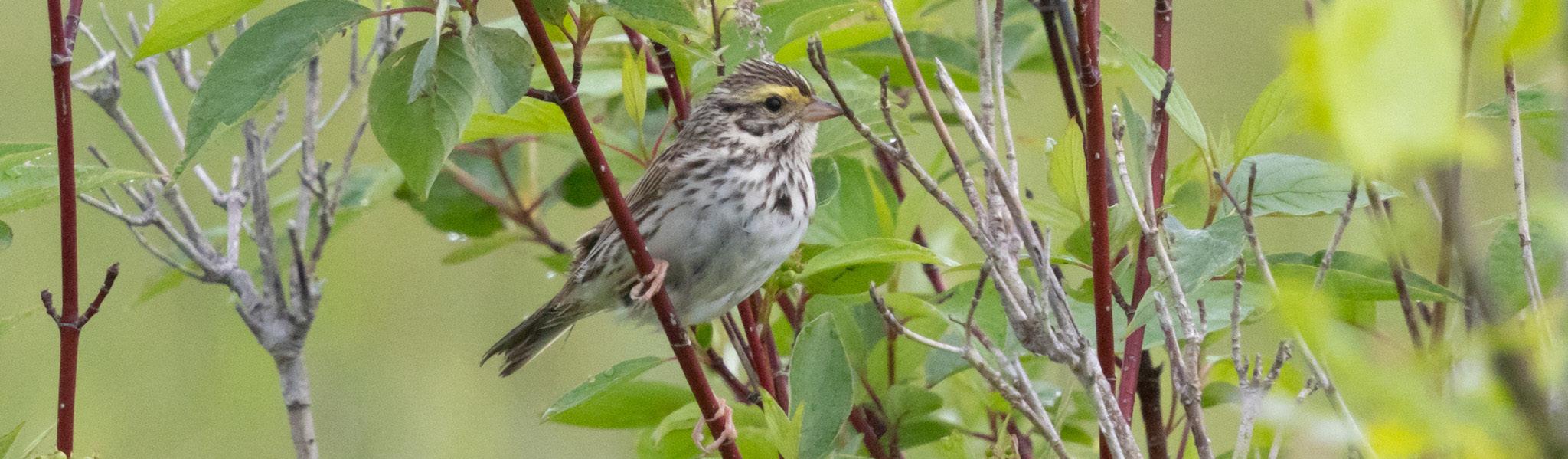
Join us at the Charlevoix Public Library for a monthly conversation on a revolving series of natural history topics. Each month will be a different, seasonally relevant topic. The evening will consist of a presentation by a Little Traverse Conservancy team member or relevant expert, some hands-on engagement when appropriate, and a time for community discussion of our relationship with the natural world around us.
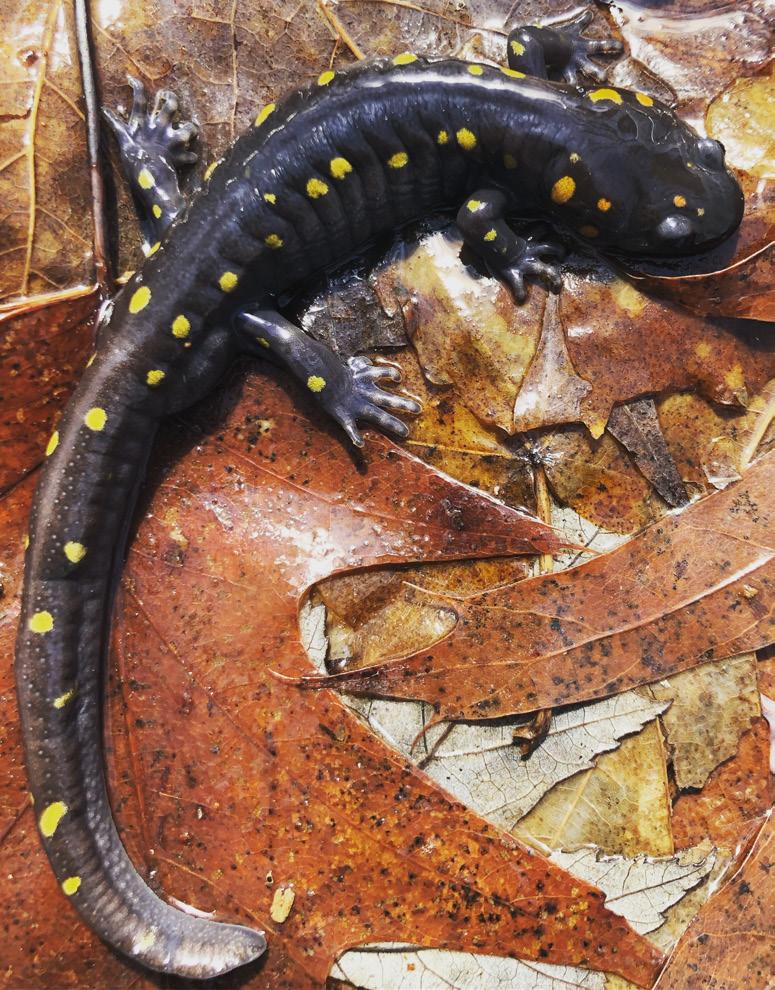
Every spring in the forests of northern Michigan, nature’s secret nursery quietly but vitally blooms with life. Small seasonal ponds, called vernal pools, often go overlooked, but their role in our ecosystems is dramatic. This month, we will explore these vernal pools and what they provide to our ecosystems for a short period each spring.
Find a trail near you: Little
Address Service Requested


BOARD
ADMINISTRATION
Kieran Fleming, Executive Director
Joe Graham, Chief Financial Officer
Sarah Gurney
Thomas Lagerstom
DEVELOPMENT
Emily Hughes, Chief Development Officer
Lindsay Hall Liv Rollinger
EDUCATION
Dylan Klinesteker, Director Izzy DeBord
ENDOWMENT FUNDS MAKE OUR MISSION POSSIBLE
Andreae-Brown Family Environmental Education Endowment Fund
Anne T. Melvin Executive Director Discretionary Endowment
Bolton Family Endowment Fund
Conservation Easement Endowment Fund
Delia Fritz Endowment for Accessibility Diane Curtis Endowment
Jerry and Eileen Fhaner Endowment
McCoy Endowment
Joan R. and Charles M. Taylor II Memorial Endowment Fund
Les Cheneaux Endowment Fund
Liesel Litzenburger Meijer Endowment
Liesel Litzenburger Meijer Land Protection
Director Endowment
Martha and Michael Cameron Endowment Fund
Marty and Jerry Richardson Endowment
Patricia and Thomas Jeffs Family Fund
Roney Family Endowment
Sowing the Seeds Education Endowment
Stewardship Endowment Fund
Stark Family Endowment
Vermilion Endowment Fund