Annual Report 2025
Tony Pitts
Chair
Jennifer Hill
Vice Chair
Meaghan Gass
Secretary
Chip Erwin
Treasurer
Greg Bator
Samuel Burckhardt
Rich Castle
Ned Caveney
Alex Code
Katherine Erwin
Joe Jarecki
Dan O’Connor
Christie Perdue
Ty Ratliff
Jerry Rucker
Donette Spiekerman
Brad Jensen Executive Director
Lisha Ramsdell Associate Director
Ken Bauer Preserve Manager
Shelby Bauer
Senior Conservation Coordinator
Bryant Eddy Habitat Project Manager
Chris Engle Communications Associate
Abigail Ertel Director of Community Engagement
Brenda Herman Development Director
Amber Hubbard Stewardship Project Manager
Daniel Judd Habitat Specialist
Maddie Khuri Community Educator
Paige Lackey Communications Manager
Josh Leisen Senior Project Manager
Abby Macek Restoration Specialist
The mission of Huron Pines is to enhance and protect land, water and wild places through community-driven conservation.
Samantha Nellis Director of Conservation Science
Amy Nowakowski Senior Project Manager
Tonya Ouillette Office & Data Manager
Nick Theisen Watershed Technician
Amanda Vanaman Community Project Manager
Jennie Zoll Director of Finance & Administration
Conservation driven by engaged, empowered communities.
Dear Friends,
As 2025 draws to a close, I’m reflecting on what we’ve accomplished together and what lies ahead for Northeast Michigan.
Over the past three years we turned our 2023-2025 strategic plan into reality because supporters like you stood behind our work. Eight new communities joined the Lake Huron Forever pledge program, 13 major road-stream crossings and dam removals reconnected 117 miles of coldwater streams, and cherished lands were permanently protected so they can be enjoyed for generations to come. Together, we enhanced over 7,300 acres of habitat, coordinated multi-partner coalitions like the Northern Pine Plains Partnership and Obtawaing Biosphere Region, and deepened our work across this remarkable landscape.
These accomplishments taught us something vital: the more we work in partnership with local communities — citizens, elected leaders, planning commissions, road commissions, civic groups, schools and churches — the more we can achieve together for this special corner of the world. Your support doesn’t just fund projects; it builds the trust and relationships that make lasting conservation possible.
Throughout 2025, we turned our attention to the future, developing an ambitious strategic plan that will guide us through 2030. This plan reflects a fundamental truth about Northeast Michigan: every community here has its own character, its own priorities, and its own connection to the land and water. Whether it’s collecting fossils near Alpena, fishing for walleye on Saginaw Bay, canoeing the Sturgeon River, birding for Kirtland’s warblers in Mio, kiteboarding in Tawas, or hunting grouse in Pigeon River Country—these experiences bind us together across the region.
What makes this region special is the people who call it home. People who love the outdoors and are willing to roll up their sleeves to protect it. People who understand that conservation isn’t something imposed from the outside, but something that grows from local values and local action.
This community-centered approach matters now more than ever. As federal and state governments pull back from traditional conservation roles, regional organizations like Huron Pines become essential to protecting what we all value. We’re ready to step forward alongside you to ensure Northeast Michigan’s wild places and vibrant communities thrive for generations to come.
You’ve been instrumental in helping us achieve these results. Now, as we turn the page to our next chapter, I hope you’ll continue shaping the story of Northeast Michigan’s conservation with us. If you’d like to learn more about our strategic plan and the goals ahead, I’d welcome the opportunity to share them with you.
Thank you for your partnership and support.
With gratitude,

Brad Jensen Executive Director

Dear Friends,
As I reflect upon the last eight years serving on the Huron Pines Board of Directors — and prepare to step down from this role — I am reminded that our greatest strength has always been the people and partnerships that sustain this organization. Your support continues to be critical in producing positive results across Northern Michigan. Thank you!
We have navigated periods of rapid change — ecological, economic and social — yet our commitment to protecting the lands and waters of Northern Michigan has remained unwavering. These years have brought remarkable achievements: the restoration of critical habitats, the removal of aging infrastructure that once impeded our rivers, the expansion of communitydriven conservation programs, and the nurturing of a new generation of environmental stewards. Each milestone has been made possible by our dedicated staff, volunteers, donors, local leaders and the countless individuals who believe in the long-term health of this region.
While reflection grounds us, it is our forward momentum that defines us. The work ahead will require the same creativity, resilience and collaboration that have carried us to this point. As natural systems face unprecedented challenges, Huron Pines will continue to lead with science-based solutions that balance ecological integrity with community well-being. We will deepen partnerships with local governments, landowners and youth; expand efforts to build vibrant forests and resilient watersheds; and champion conservation practices that strengthen both ecosystems and economic ties.
The next chapter for Huron Pines is one of intention, innovation and shared purpose. Although I am stepping away from board service, I look forward to continuing my involvement as an active supporter of this work. I am pleased to announce that Tony Pitts, who currently serves on our Board, has been elected as the new Board Chairperson. Tony is an astute entrepreneur and avid outdoorsman dedicated to the values we share.
Thank you for the trust, collaboration and shared dedication that make every achievement possible and every goal within reach. Together, we will continue to protect what matters most.
Sincerely,

Greg Bator Board Chair Emeritus
The Thunder Bay Watershed encompasses 1,250 square miles of Northern Michigan — a vast network of streams, rivers and wetlands all flowing to Lake Huron at Alpena. Thanks to strong local partnerships and your support, Huron Pines is addressing environmental threats to this region at a watershed-wide scale. From its headwaters in Montmorency County to where the river meets Thunder Bay in Alpena, we are working to reduce stormwater runoff, restore habitats for fish and wildlife, and ensure clean drinking water for the communities we serve.
A new timber bridge constructed last fall at Hossler Road marked our seventh successful road/ stream crossing restoration in this watershed since 2020. This $3 million total investment in new infrastructure has reconnected 120 miles of vital habitat for trout and other river life, reduced repair costs for road commissions, and is building a watershed that’s more resilient to a changing climate.
Watersheds with forests covering more than half their land area have better water quality than those with fewer trees and result in lower treatment costs for municipal water utilities, including Alpena’s which sources its drinking water from Lake Huron. To further benefit water quality, our staff and volunteers planted 4,000 new trees last fall to boost forest cover, and installed another thousand willow shrubs to fortify an eroding streambank, all on private lands along the Thunder Bay River. By involving landowners in this effort, we push our impact beyond property lines and empower individuals to promote clean drinking water.
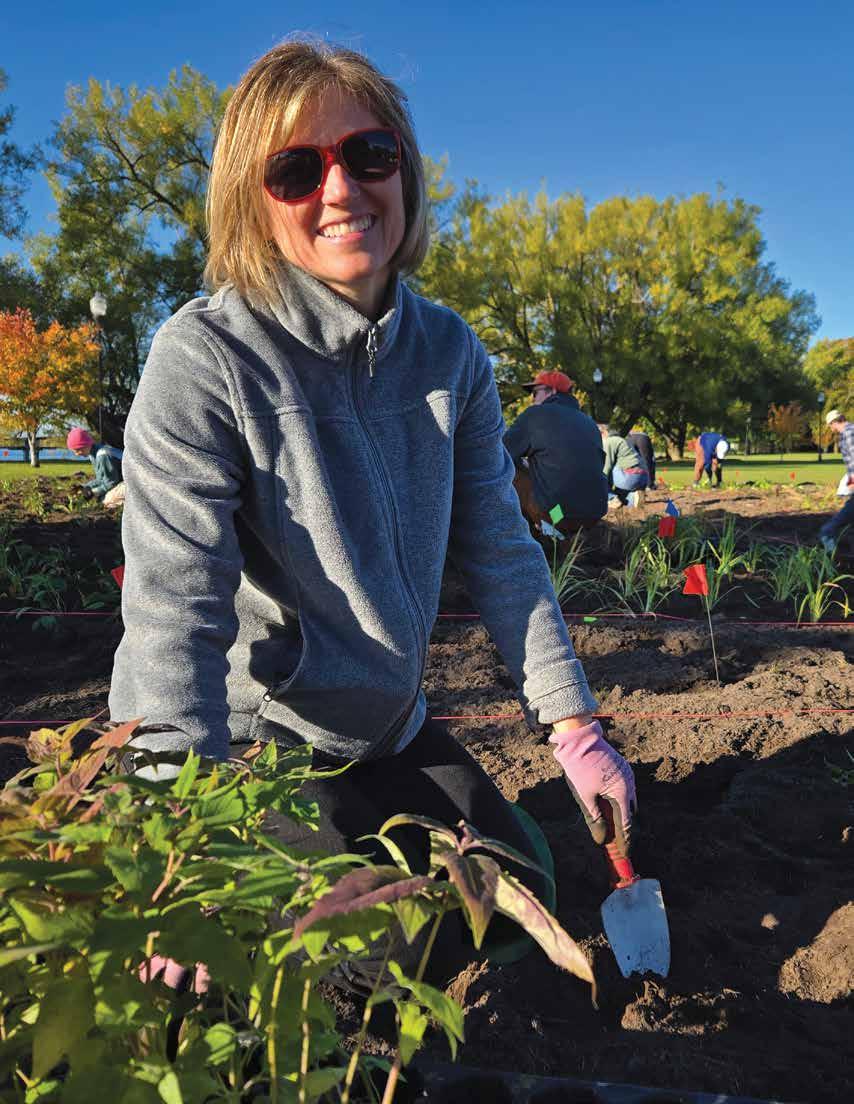
As a Lake Huron Forever Community, the City of Alpena made significant strides in 2025 in support of its pledge to protect water quality and engage its residents in conservation efforts. Working shoulder to shoulder with our team, volunteers and City staff installed a rain garden and pollinator garden at Bay View Park in October. Once established, these deep-rooted native plants will filter thousands of gallons of stormwater annually, provide habitat for birds and beneficial insects, and serve as a community showpiece of native landscaping for residents and visitors.
“These projects are highly visible, practical demonstrations of Alpena’s commitment to sustainable stormwater management and long-term protection of Lake Huron as pledged in the City’s Lake Huron Forever roadmap,” said City Manager Rachel Smolinski.
In recognition of their leadership in conservation, Huron Pines presented the city with the Community Conservation Leadership Award at a November celebration in Alpena.
“The City of Alpena has shown that effective conservation is not just about restoring habitats or building infrastructure, it’s about building community — fostering partnerships, inspiring stewardship and creating a culture of care for the natural world,” said Samantha Nellis, Director of Conservation Science at Huron Pines.
By spring 2026 we will have completed the Thunder Bay Watershed Management Plan, the product of more than two years of field work identifying ongoing threats to water quality across the watershed. Useful in leveraging state and federal grants to help tackle these issues, this guiding document will shape the next decade of high-impact work by Huron Pines and our partners to protect this region for generations to come.
From planting trees along private streambanks and restoring road crossings to reconnect miles of habitat, to municipal stormwater solutions and watershed-wide threat assessments — each project strengthens the next. This is conservation at a scale that matters: an interconnected strategy protecting clean water, healthy habitats and thriving communities from the headwaters to Lake Huron. Together, we’re building a better future for the region and all who call it home.
With its famed streams, remote lakes and vast forests where the calls of wild elk echo, the Pigeon River Country (PRC) State Forest is one of Michigan’s most iconic landscapes. Beloved as “The Big Wild” in both spirit and scale, this region represents what is possible when longterm stewardship meets community support. Your generosity sustains and strengthens a legacy of protecting and restoring this remarkable place while inspiring the next generation to carry its stewardship forward.
This commitment took a major step forward in September when we transferred ownership of the Elk Run tract — 236 acres of upland forests woven with wildlife trails in southern Cheboygan County — to the Michigan Department of Natural Resources (DNR). Your commitment to conservation has permanently protected 2,800 additional acres within the PRC this past decade; strengthening Michigan’s most expansive public forest for future generations. Every acquisition builds a protective buffer around trout streams to keep them clean and cold, provides vital habitat for wildlife, and maintains our treasured hunting, fishing and outdoor heritage.
Just four miles east of Elk Run, our collaborative partnership with the DNR is playing a major role in preserving one of the forest’s most cherished features. Cornwall Creek Flooding is a popular fishing destination and pristine wilderness experience where early-rising anglers are rewarded with loon songs in the morning fog. Critical dam renovations that began last summer will conclude this spring to enhance public safety and protect downstream habitat so families can continue making lasting memories at this special place like no other in Michigan.
Culminating in 2025, a years-long project transformed a former gravel pit on the southern edge of the PRC back into thriving prairie habitat, marked by the return of native wildflowers and grasses planted by our staff. Repeated treatments by our team, followed by seeding and planting to rebuild the soil, has resulted in a lush landscape that serves beneficial insects, birds and all kinds of wildlife which make their home in this forest.
Protecting the health of these ecosystems also means responding quickly to emerging threats like invasive species which disrupt its sensitive ecosystems. By catching infestations early, we ensure harmful species like black locust, garlic mustard, Japanese barberry, Phragmites, purple loosestrife and wild parsnip can’t gain a foothold in habitats they could otherwise overrun. Our staff treated 135 acres of the PRC for these species in 2025, effectively preventing their spread to surrounding forest and wetland habitats.
Sharing these successes and deepening public understanding of our stewardship work is another vital part of our mission. Last fall, we welcomed community members to the Pigeon River Country Discovery Center for a workshop led by Restoration Specialist Abby Macek who introduced participants to our Native Seed Program, showing how collecting and dispersing wildflower seed can support biodiversity where they live. At a second workshop, Habitat Project Manager Bryant Eddy spoke about the habits and history of ruffed grouse and how forest management — including sustainable timber harvests and prescribed fire — promote healthy populations of Michigan’s “thunder chicken.”
From restoring prairies and protecting waterways to inspiring future stewards, your impact can be seen throughout the Pigeon River Country. In 2025 alone, nearly $3 million was invested to safeguard habitat, strengthen infrastructure and expand public engagement across this extraordinary forest. Each acre protected, each stream kept cold and clean, and each community member inspired reflects your leadership. Because of you, “The Big Wild” remains wild — and will for generations to come.
A year of wins for endangered plovers, coastal habitats and the community’s natural heritage
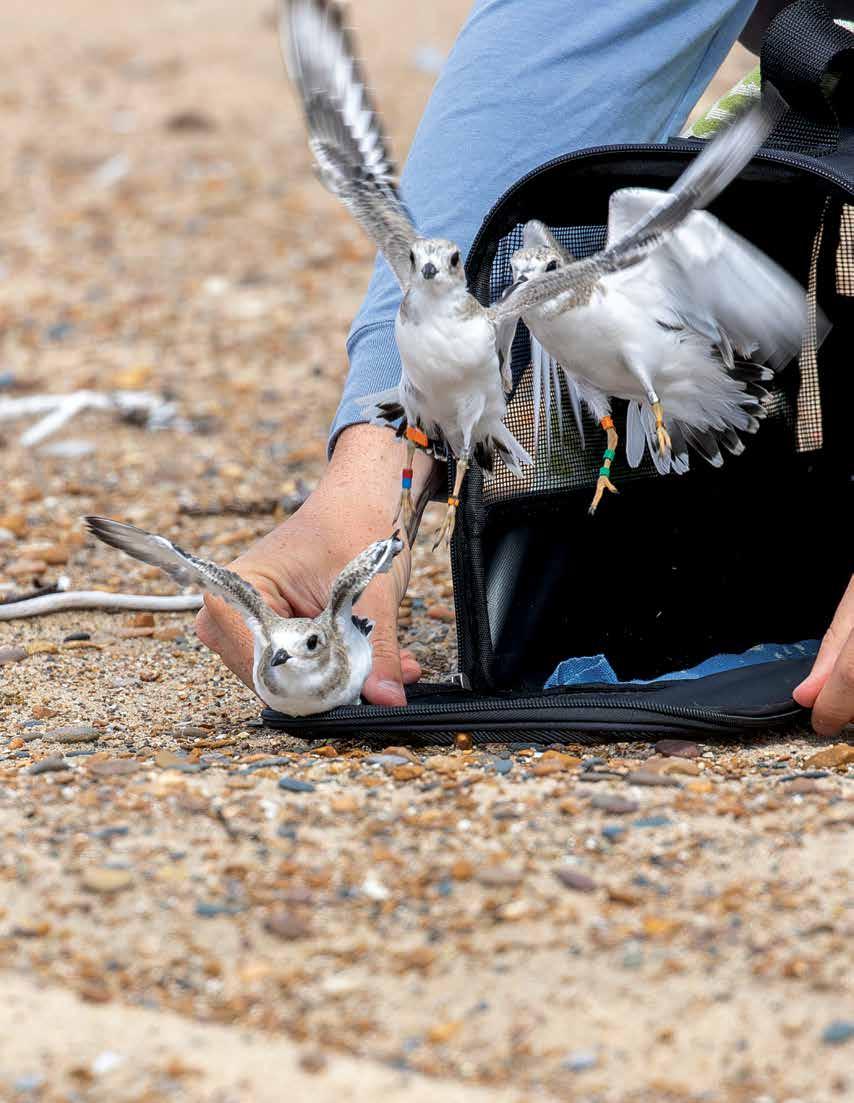
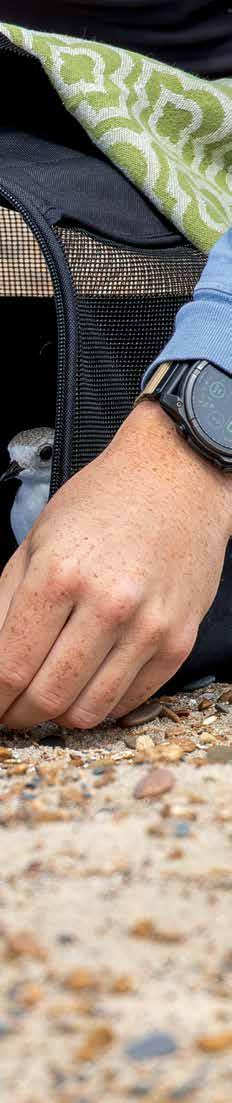
It was the moment our staff and volunteers had waited weeks to see: Four Great Lakes piping plovers — hatched from salvaged eggs, raised in captivity and chauffeured 150 miles to the Lake Huron shore that morning — were about to take their first steps as wild birds. In a flash of marbled wings, the fledgelings sprang from their carrier and made for the waves of dunegrass welcoming them back to Tawas Point, the summer home for Michigan’s rarest shorebird.
The triumphant release of these birds in July notched another conservation win in the Greater Tawas Area, a community which has rallied around the ongoing recovery of this endangered species. Volunteer monitors with Au Sable Valley Audubon logged over 600 hours this summer observing nesting plovers and informing beachgoers of their presence, and alerted the Great Lakes Piping Plover Conservation Team to an abandoned nest where four eggs were recovered. Hatched by zookeepers at the University of Michigan Biological Station and released to their home beach, we can await the return of these iconic birds this spring and see life come full circle in Tawas.
The plover may have been our mascot last season but the broad conservation work happening across the region runs much deeper. A bold initiative back in 2020 to protect nearly a mile of undeveloped shoreline as Lake Huron Coastal Preserve demonstrated the Tawas community’s ties to its natural resources and a commitment to their protection (see page 10). This year we further restored the preserve by treating 82 acres for invasive Japanese barberry and wild parsnip, a toxic plant, ensuring its woods and wetlands endure as a sanctuary for wildlife and as a destination where you can connect with nature.
We extended our stewardship work with the U.S. Forest Service to Tuttle Marsh, removing another 16 acres of invasive phragmites in an ongoing effort to restore vital habitat for migratory birds and retain unobstructed views of this wetland complex, a favorite among birdwatchers. Roadside areas we seeded in past years bloomed in abundance with native wildflowers this summer, adding color and important biodiversity to its marshlands.
Every species brings value to Northern Michigan’s native ecosystems and makes them more resilient to change. This is on full display at Tawas Lake, a shallow, sprawling waterway that’s home to more than 40 species of native water plants including wild rice and carnivorous bladderwort. In August we welcomed 32 people for an evening paddle tour of the lake during our annual Tawas Lake Day, where our staff and partners shared the important conservation happening here to benefit aquatic ecosystems and support water quality for the Tawas community.
Every aspect of Huron Pines’ conservation mission is underway in Tawas. Your support enables us to show up, year after year, helping communities turn their vision for conservation into reality. From habitat restoration to community engagement, you make this work possible. Together, we’re creating lasting, purposeful impacts for the region’s waters, wildlife and people in Tawas and across all the communities we serve in Northern Michigan.
Generous donor support of an ambitious $1 million fundraising campaign back in 2020 helped us secure nearly a mile of undeveloped Lake Huron shoreline and transfer its permanent protection to Alabaster Township as Lake Huron Coastal Preserve. Local leaders continue to see that lofty vision through, obtaining a grant from the state in 2025 for projects that improve visitor access to its spectacular emerald shores while safeguarding 145 acres of forests and wetlands that are essential for healthy water, wildlife and people.
“The foresight by Huron Pines to save this property was brilliant,” reflected Jim Witherspoon, chairman of the Alabaster Township Parks & Recreation Committee. “It’s an absolutely stunning place and we could have never done it on our own. The preserve is being used and enjoyed, and people are excited about our planned improvements to make it more accessible.”
We marked another land-protection milestone in October when we transferred ownership of 42 acres on Hull Island to Oscoda Charter Township, a community whose rich local history and tourism economy are shaped by the Au Sable River and Lake Huron. Huron Pines bought the property from a private landowner two years ago with funds from our donor-supported Land Protection Program. In turn, the township applied for and received a grant from the Michigan Natural Resources Trust Fund which they used to reimburse Huron Pines for the purchase. The newly christened Au Sable River Scenic Preserve boasts 3,300 feet of river frontage and offers abundant opportunities for recreation while helping protect the water resources that are central to its character, now and forever.
“In 2023 Huron Pines and Oscoda Township partnered to move forward on a vision to permanently protect this special place and make it available for the public,” said Abby Ertel, Director for Community Engagement at Huron Pines. “I’m excited that we’ve achieved that goal and we’re really looking forward to seeing the people of Oscoda enjoy this protected place.”
By supporting Huron Pines, you provide the essential funding which allows us to act quickly to protect lands with high conservation value and plan for their long-term care and stewardship. It’s how we were able to secure the 236-acre Elk Run tract and transfer it to the Michigan Department of Natural Resources in September as part of the Pigeon River Country State Forest (see page 6), ensuring a permanent home for Michigan’s majestic wild elk.
You also help Huron Pines grow and manage its own network of nature preserves, safeguarding critical ecosystems while expanding access to nature for the communities we serve (see page 12). We are pursuing another exciting opportunity in coastal land protection in 2026 and look forward to sharing more details in the coming months about how you can support this latest effort.
Every dollar makes a difference, and every donation is a vote of confidence in our proven approach to protecting the lands and waters which make Northern Michigan special. When you make a gift to Huron Pines, you speak loudly for the value of wild places where residents and visitors can make deeper connections to the natural world.
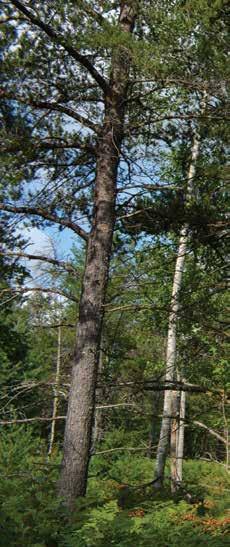
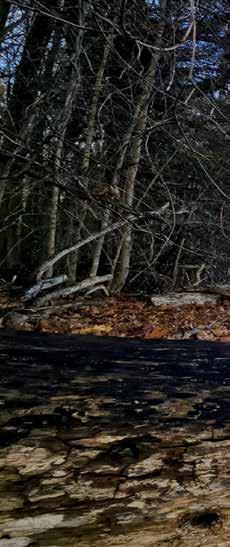
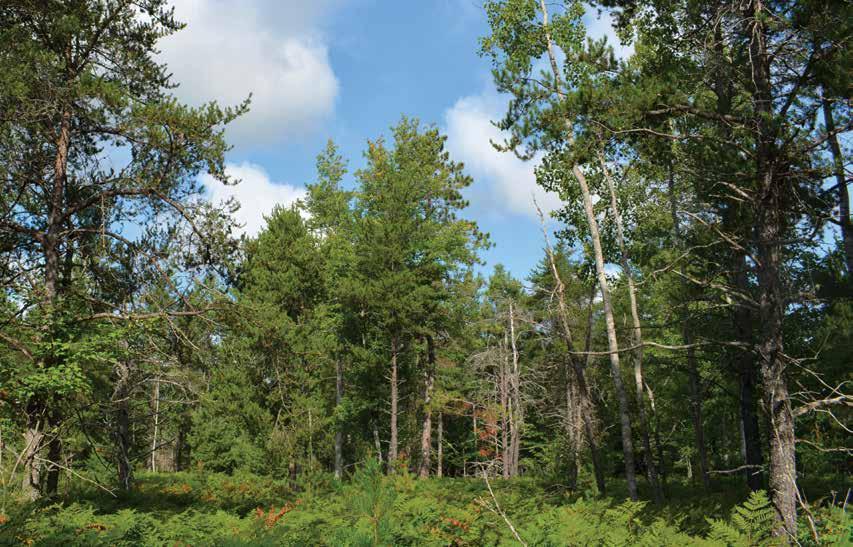
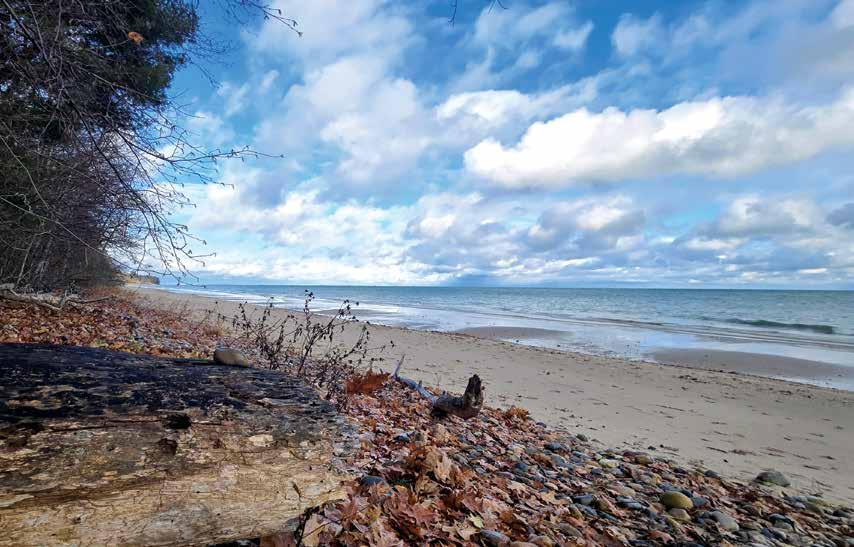
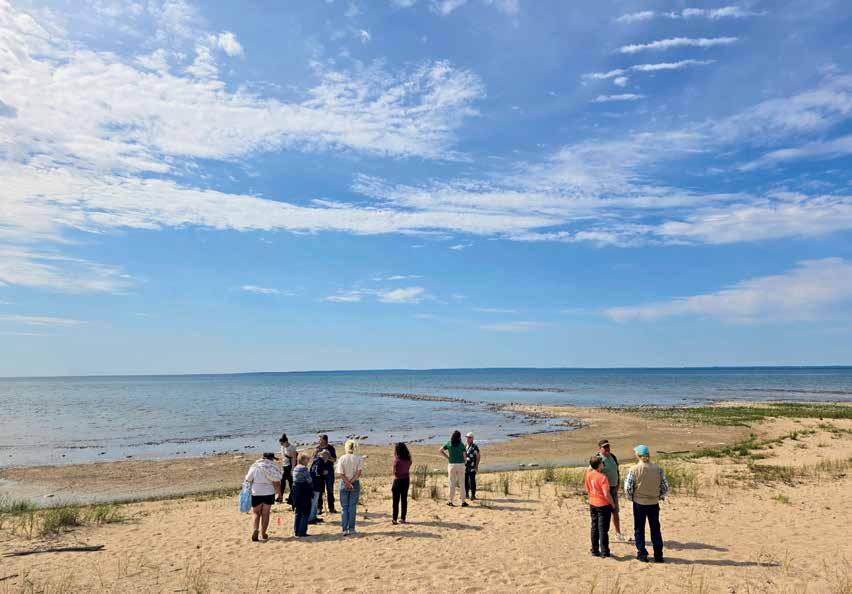
One generous gift of land in 2018 sparked a legacy of conservation for the communities we serve and established Hubbard Lake Nature Preserve as a place for quiet recreation, learning and stewardship. Huron Pines has added four more preserves since then, safeguarding a combined 2,000 acres of vital wildlife habitat and four miles of Lake Huron shoreline from development. Through ongoing care and a growing slate of public events, these places protect Northeast Michigan’s most remarkable ecosystems while ensuring lasting, meaningful access for people.
Protecting land is only the beginning. As our preserve network expands, so do opportunities for people to experience these places in ways that are personal, memorable and inspiring. From North Point Exploration Days and our annual Birding Big Sit, where visitors wander woodlands in search of carnivorous plants and migrating birds, to crisp Winter Walks with friends and neighbors at Hubbard Lake Nature Preserve, these moments transform preserves into places of connection.
Our catalog of public events grows every year, with new ways for visitors to explore at their own pace and thoughtfully curated activities where they can learn from our staff and partners about rare features found only in the Great Lakes region. We teamed up with Michigan State University Extension to bring the Conservation Stewards program to the Alpena area for the first time in 2025, utilizing our nature preserves as outdoor classrooms for 12 budding conservationists to learn and develop the skills needed to help address some of the region’s most pressing environmental challenges.
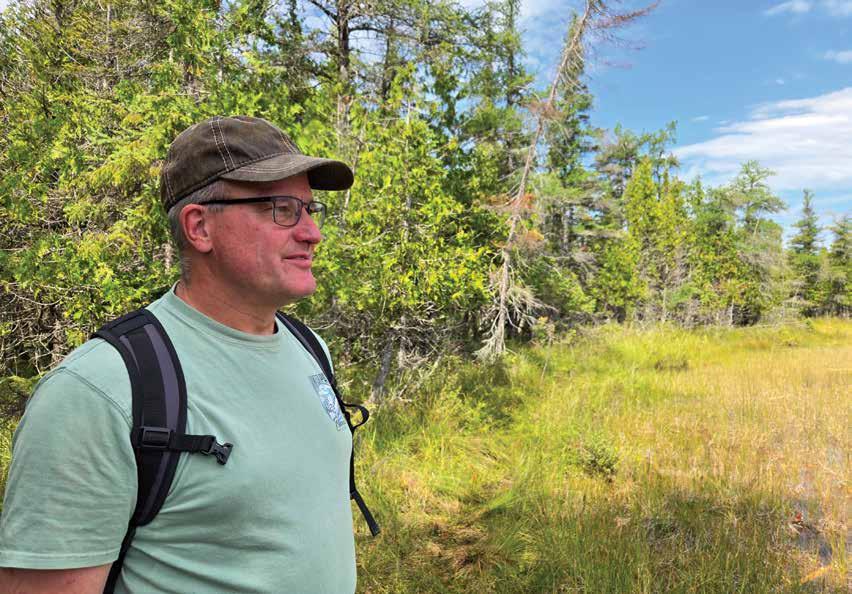
“There are so few places left like this. We need to keep them as they have been for thousands of years so we can pass them on to the next generation.”
Jim and Laura Paulson , North Point Exploration Day attendees
Providing immersive, meaningful experiences like these is how we’re fostering the next generation of conservation leaders and helping residents better understand their natural world. For a person of any age, a first encounter with a yellow-spotted salamander or the rush of a bald eagle soaring overhead at one of our preserves could be the spark that inspires them to find a lifetime of purpose and pride in conservation.
These are your places to explore, to pursue a newfound interest in bird calls, to experiment with a new camera, to exercise body and mind, to ponder nature’s wonders and learn how to become a better steward of the natural world. We work year round to care for and improve our preserves by restoring native ecosystems, removing invasive species, marking trails and adding easy to read signs that help visitors learn more about the land and wildlife around them. When you support Huron Pines, you are investing in places that strengthen your community and ensure these shared landscapes remain protected, welcoming and accessible for all.
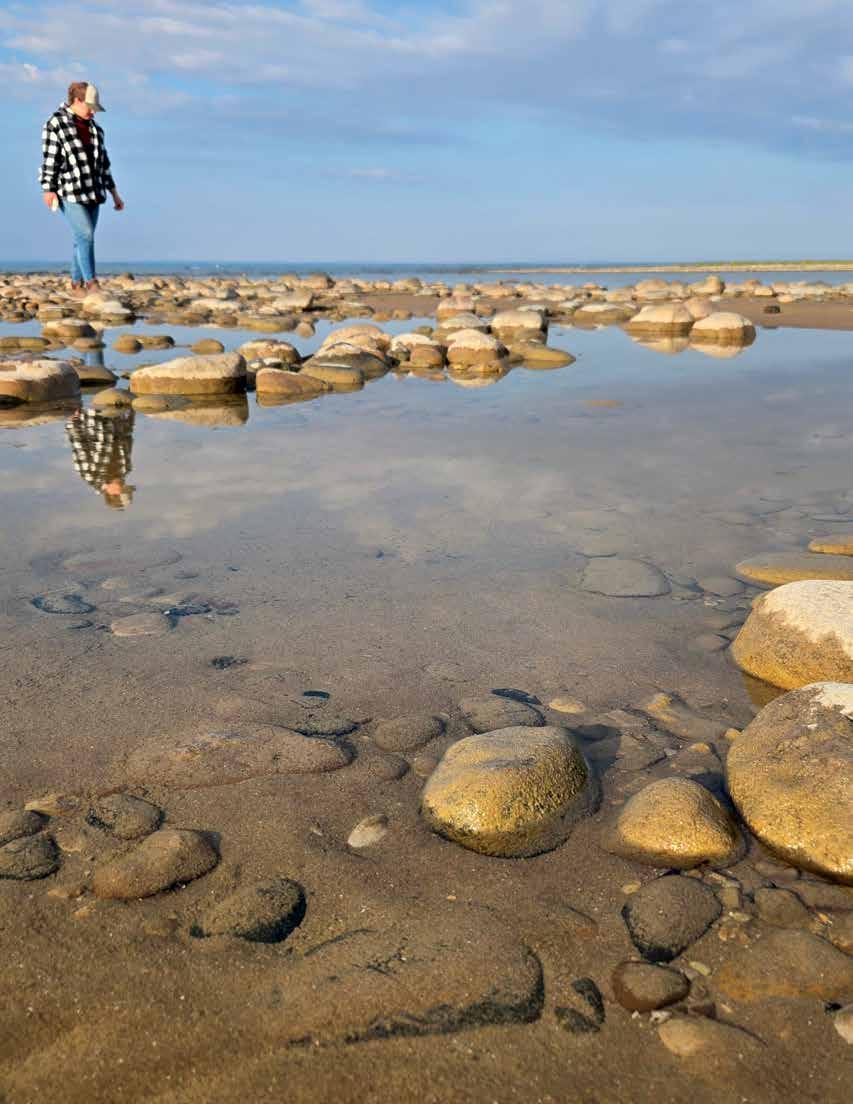
Left: Visitors explore the dune shoreline of North Point Nature Preserve.
Right: Bob Fitch looks out over a coastal fen during a North Point Exploration Day in August.
Northern Michigan’s native plants are the foundation of healthy ecosystems but finding locally adapted native seed has long been a challenge for restoration work. Our Native Plant Program is changing that. Through partnerships with landowners, volunteers and conservation organizations, we’re building a sustainable seed supply that fuels large-scale habitat restoration across the region. This work connects residents to their natural heritage — volunteers learn to identify native plants, collect seed at the right time and understand why genetic diversity matters. Every seed we collect today becomes a thriving native plant tomorrow, supporting wildlife, improving water quality and strengthening the resilience of Northern Michigan’s ecosystems for generations to come.
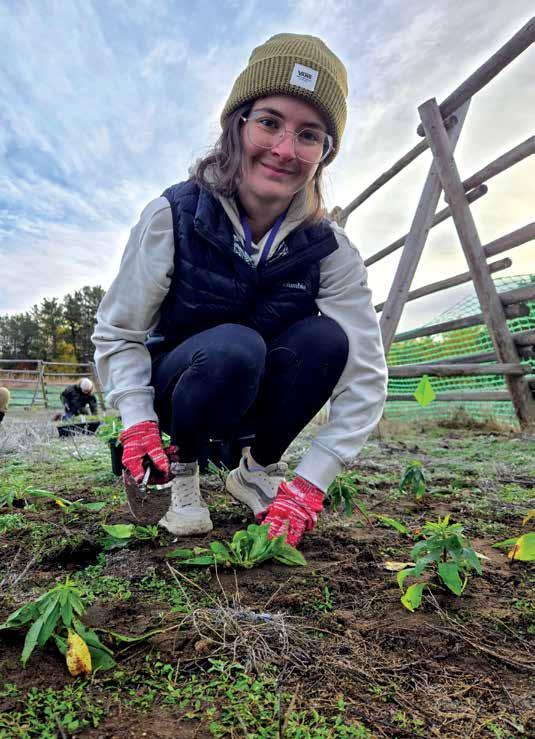
Seed “Full Circle” Life Cycle
This full-circle process turns locally collected seeds into thriving habitats
In 2025
10
native plant program volunteer events were held
10,000
Volunteer
5,000
175
25
plugs were planted (9,889 to be exact!) trees and shrubs were planted pounds of native seed was spread pounds of native seed was collected
Throughout 2025, our staff and board came together to envision the next chapter for Huron Pines. Through thoughtful planning and community input, we developed a comprehensive strategic plan that will guide our work through 2030. This roadmap reflects our commitment to ambitious conservation outcomes, meaningful community partnerships and long-term organizational sustainability. We’re excited to bring this vision to life and invite you to be part of this next chapter.
Our Five Strategic Goals
GOAL 1
Ensure upland ecosystems are healthy, protected and resilient.
Restoring forests and grasslands, protecting critical habitats and working with landowners to make conservation happen across the landscape.
GOAL 2
Rivers, lakes, wetlands and shorelines are healthy and resilient.
Removing barriers in rivers so fish can move freely, keeping stormwater pollution out of the waterways and restoring wetlands across Northeast Michigan.
GOAL 3
Conservation is community-driven and empowered.
Supporting communities in leading their own conservation work and building authentic partnerships with Tribal Nations.
GOAL 4
Funding sources are strengthened and diversified.
Growing our community of supporters and creating stable funding that ensures our work continues for years to come.
GOAL 5
Operational infrastructure stability and sustainability.
Investing in our people, strengthening governance, and building systems that support excellence in everything we do.
Be part of the next chapter. Sign up for our bi-weekly eNews for updates on how we’re bringing these goals to life and ways you can get involved.

Throughout 2025, Huron Pines demonstrated strong financial stewardship while navigating an increasingly uncertain funding environment. Thanks to careful planning, disciplined expense management and diversified revenue streams, we continued to advance our mission without interruption. Our financial position shows we are built to last and can adapt to change while continuing to protect natural resources, engage communities and achieve impactful conservation results.
Public grants remain a key foundation of our work, enabling large-scale conservation and restoration efforts across our priority areas of healthy water, protected places and vibrant communities. At the same time, private philanthropic support plays a critical and growing role in our success. Private gifts provide the flexibility needed to act quickly when new opportunities arise, strengthen organizational capacity and meet critical matching requirements needed to secure public funds. This balanced funding model allows Huron Pines to remain resilient, innovative and effective, even as funding streams fluctuate.
Our revenue, expense and net asset trends reflect a stable and sustainable organization, strengthened by permanent land protection, thoughtful long-term investments and responsible cash management. This positions us to continue serving Northern Michigan well into the future. Looking ahead, private donor support will be increasingly vital to sustaining momentum, expanding impact and ensuring we can meet the conservation challenges of tomorrow.
For additional and detailed information concerning Huron Pines’ finances, governance and program activities, we encourage those with interest to review Huron Pines’ IRS form 990, available through a link on our website at huronpines.org.
$1,232,727 $118,287 Private Funding Fundraising Protected Places $146,106 Other Other $1,797,561 $4,585,055 72% 9% 16% 3% $2,681,701 $957,345
Supporters like you have played a vital role in advancing Huron Pines’ conservation work across Northeast Michigan. A planned gift allows you to continue that impact in a way that aligns with your personal, financial and family goals. You remain in control, with flexible options such as bequests, beneficiary designations, retirement assets or other giving tools that reflect what works best for you. These gifts help provide the long-term stability needed to sustain restoration efforts, respond to emerging environmental challenges, and protect the lands and waters you value most. By thoughtfully choosing how you give, you can create a legacy that reflects your commitment to conservation while supporting future generations. We invite you to explore how a planned gift can help ensure Huron Pines’ work continues well into the future.
For information about how to join our Legacy Society, or to let us know you have included Huron Pines in your estate plans, please reach out to Development Director Brenda Herman at (989) 448-2293, ext. 32 or brenda@huronpines.org.
Gifts received between January 1, 2025 and December 31, 2025 are acknowledged below. If your name has been omitted or listed incorrectly, please contact Tonya Ouillette, at (989) 448-2293, ext. 21 or tonya@huronpines.org.
Elizabeth Abood-Carroll and David Carroll
Acorn Family Retreats
Guy and Angela Adamec
Christopher Adamo
The Adamo Family
William R. Adams
Ruth Addis and Marj Schloff
Fred and Diane Alati
Gerard and Kathleen Albanese
Bill and Debra Anderson
Robert Andrus
Anonymous (13)
Anonymous Fund at the Community Foundation for Northeast Michigan
Bob and Cathy Anthony
The Cathy and Bob Anthony Fund at the Community Foundation for Southeast Michigan
Caryl and Russ Anton
Dick and Marilyn Augustine
Richard and Marilyn Bachelor
Martin and Michelle Baker
Roderick S. Baker and Moira Corcoran
Bank of America Charitable Gift Fund
Eric Bankhead
Brenda Banwell and Conne Terova
Al Bartow
Gregory and Cecilia Bator
Joanna and Nathan Beatty
Karl Benghauser
Bennethum’s Northern Inn Restaurant
Pat and Judy Benson
Alan and Madonna Bernard
David and Elaine Billmire
Sally Binard
Mary and Timothy Blackwood
Donald and Gail Block
Barbara and Kenneth Bollin
Richard and Jeannine Boyce
Kathleen and David Boyd
George and Janet Bozynski
Richard and Marie Bracci
Carolyn Jean and Dan Braden
Carol Brand
Sally Brand
Kurt and Deborah Brauer
Norm and Valerie Brecheisen
Christopher Brierley
Joseph Brincat
Geoffrey Brousseau
Don and Patricia Brown
Michael H. and Bernice A. Brown
Michael P. Brown
Ernest Brumbaugh and Carole Mueller-Brumbaugh
Mike Bugenske
Samuel Burckhardt and Richard Wilson
Jim and Gina Burke
Don Burkley
Elaine Butts
Patrick and Laurie Byle
Katie Call
Al and Pat Cambridge
Christine Cameron
Tom and Marcia Cardelli
Don Carpenter
Richard Castle
Anne and John Cauley
Cedars for the Au Sable
Marian and Norman Charters
Colby and Tim Chilcote
Terry and Susan Childs
Bradd Chisholm
Bill Chown
Sandra S. Clark
Donna Cochrane
Lisa and David Comer
Community Foundation of St. Clair County
Tom Cook and Anna Owens
Pam and Tom Conquest
Consumers Energy
William McCabe Coolidge and Karen Day
Jay Copeland and Susan Beede
Frank and Kathy Cordray
Michelle and Eric Cornish
Robert and Judy Cosgriff
Bob and Gay Courtois
Mary M. Cox
Ann and Richard Craig
Sarah Craig
Kathy Crawford
Norma Crouch
Jim Culberson
Mary Culik and Robert Sharrar
Deirdre Curran and Roger Anderson
Michael and Terri Cwik
Tom Dale
Anne and Daniel Danosky
Mark Delaney
John Dempsey and Margo Lakin
Dan Dennis and Linda Parker
Diane Dennis
William R. and Mary Elizabeth Derwin
Janiene DeVinney
Patrice DeVinney
Nancy Dextrom
Antonio and Teresa Dorta
Katherine Duffy
Eric and Cathy Dukatz
Susan Duncan and Larry Van Wagoner
Elizabeth, Allan & Warren Shelden Fund
Rick and Sharon Engstrom
Madel Ernemann
Abigail and Patrick Ertel
The Chip and Betsy Erwin Family
Katherine Erwin and Dirk VanKoughnett
Erwin/VanKoughnett Family Fund at The Chicago Community Foundation
Marsha Fales - Wright and Doug Wright
Larry and Pat Farris
Roger and Mary Fechner
Fidelity Charitable
Larry and Vickie Fields
Charles, Katherine and Mikayla Finneran
Robert Flickinger
Christopher and Laura Fluke
Mike and Maureen Foresman
Jim and Sue Francis
Frankenmuth Community Foundation
Pattie Frasier
William and Carol Frederick
Susan Freel
John Freeman
Belinda Friis
Sarah and Dale Fritz
John and Wendy Frye
Funds for the Community of the Otsego Community Foundation
Karen Funke
Tamala Gage
Robert Gale
Paul Gambka
Jeff and Kristin Gandy
Carol and James Garlo
Meaghan Gass
Valerie Gaudette-Adair
Elizabeth Gauthier-Rabaut and Gerard Gauthier
Robert Gillenwater
Jacquelyn Girard
William Glass
Curtis Goldsborough
Good Neighbor Authority, a partnership between the Michigan DNR and the Huron-Manistee National Forests of the U.S. Forest Service, U.S. Department of Agriculture
Rusty and Elizabeth Gowland
Robert and Jennifer Grace
Chris and Elaine Graham
Christine Grant
Jim and Shirley Graves
Great Lakes Energy People Fund
Great Lakes Fishery Commission
Great Lakes Fishery Trust
Great Lakes Restoration Initiative, National Fish and Wildlife Foundation, and U.S. Fish and Wildlife Service
Tom and Joann Green
Jeff Greene
Lora Greene
Jim and Linda Gregart
Mark and Susan Griffin
Pamela Griffin
Nancy Guregian
Peter and Virginia Gustafson
Beverly and James Haas
Jan and Talbot Hack
Rick and Robin Hagopian
Beach Hall
Michael and Jo Ann Hamm
Suzanne Hartman
Betty and Paul Hartmann
Mary Haws
Blair and Sandra Marie Headrick
Michael Heath
Howard E. Hedlund
Fred Heine
Jerry Heinrich
Cathy Heller
Matthew and Katherine Heller
Sue and Eric Helsel
Dick and Judy Henry
Patrick Heraghty
Brenda and Mark Herman
Don and Joann Hester
Hiawatha National Forest of the Forest Service, Department of Agriculture
Russ and Barb Hicks
Higgins Lake Property Owners Association
Thomas and Lisa Hilberg
William and Kristin Hildebrandt
Jennifer and Jason Hill
Robert Hill
Scott and Cynthia Hill
Kurt Hines and Laura Ringlein
Hailey Hochrein
Thoralf Hoelzer and Victoria Hoelzer-Maddox
Stacy and Mark Holmén
Anne Honhart
Hougen Foundation
William Houston
Kristin Howland
Todd Howser and Nickie Palumbo
HPC Credit Union
Stan and Theresa Hubbell
Carl and Vicky Hueter
Heather Huffstutler and Shaun Ulrich
Elizabeth Hunsche
Linda Hunt
Huron-Manistee National Forests of the U.S. Forest Service, U.S. Department of Agriculture
Iosco County Community Improvement Fund and the Iosco County Lakes and Rivers Fund held at the Iosco County Community Foundation
David Irani and Laurel Moore
Mark Isken
Elizabeth Jacob
Kurt Jagoda
Jansen Family
Joe and Judi Jarecki
Brad Jensen and Rebecca Benson
Jerry Jensen
Jan Johnson
Jim and Wendy Johnson
Karen Johnson
Marty and Ellen Jones
Gail Juppenlatz
William C. and Lori Jurgens
Elizabeth Juziuk
JX Gives Back Family Foundation, Inc
Robert and Connie Kabbe
Jessica Kane and Alexander Code
Sue and Barry Keller
Brenda Kelley
Ramzi Khuri
George and Linda Killat
Mark and Nancy Kinney
Jim and Kathe Kirchner
Chris and Ellen Klebba
Mr. and Mrs. Herb and Linda Klingel
Ryan Knight
Dan Kobil and Kathy Johnston
Bruce and Tammy Kohnert
Kohnert Family Fund of the Otsego Community Foundation
Wayne and Marcia Koppa
Jennifer and Michael Koralewski
Gary Kovelle
Harry and Belinda Kubbe
Jim and Barbara Kurbel
James Kure and Karen Smith
Peggy Kusnerz
Lake Horicon Corp.
Bernie and Nancy Lamp
Allan and Betty Larsen
Jerry and Susan LaVanture
David and Joanne Lawless
Kathleen and Duncan Lawrence
Joshua Leisen
Yvonne Lentner
Kathy and Mike Lewis
Kirsten Lietz
John R. Lindsay
Elizabeth Littler
Jenny and Anton Llakmani
David and Julianne Lockwood and Family
Robin-Marie and Terence Loucks
The Love Family Cottage
Robert and Karen Luetje
Victor Lukasavitz
Carol and Michael Lund
The Frank W. Lynch and Roberta Jane Lynch
Endowed Family Fund at the Community Foundation for Southeast Michigan
Cynthia Maas
Michael and Donna Maddin
Kevin Madson and Kristin Soreiede
Dr. Robert and Michaele Malecki
Jan Manzella
John and Nancy Marshall
Laura and Bruce Maxwell
Bradley Mazzenga
McClay Family Foundation
William and Sigrid McClay
Greg and Diana McComas
Fred and Sandra McDonald
Patricia McGorman
Shaun McKeon
Tim McMannis
Deb and Mark Merrill
James and Andrea Mertz
Mary Ann and Roger Meyer
Michigan Community Service Commission
Michigan Department of Environment, Great Lakes, and Energy - Water Resources Division Dam Risk Reduction Grant Program
Michigan Department of Environment, Great Lakes, and Energy’s Nonpoint Source Program by the United States Environmental Protection Agency
Michigan Department of Natural Resources
- Fisheries Division Dam Management Grant Program
Michigan Department of Natural Resources
- Fisheries Division National Fish and Wildlife Foundation - America the Beautiful Challenge
Michigan Department of Natural Resources
- Fisheries Division Special Allocation
Michigan Department of Natural Resources
- Fisheries Division U.S. Environmental Protection AgencyGreat Lakes Restoration Initiative
Michigan Department of Natural Resources
- Fisheries Habitat Grant Program
Michigan Department of Natural Resources
- Wildlife Habitat Grant Program
Michigan Departments of Technology, Management, & Budget, Military and Veterans Affairs
Michigan Invasive Species Grant Program
Michigan Trails and Greenways Alliance
William D. Middleton
Alan and Rita Miller
Alan D. and Rita E. Miller
Family Charitable Fund
Dr. Margaret Mitchell
Allen and Jean Moberly
Mike Monroe and Candace Henig-Monroe
John and Connie Morgan
Morgan Stanley Gift
Jenny Morton
Guy C. Moulthrop
Jane Moulthrop
Thomas G. and Rosemary Mullaney
Mullett Lake Area Preservation Society
Sandra Murphy
Peter and Nancy Mutch
Melanie Myers
Phil and Lora Myers
Sharon Myers
Lawrence Nanni and Kathryn Frisby
National Fish and Wildlife FoundationSustain Our Great Lakes
National Fish and Wildlife Foundation
- Sustain Our Great Lakes Program, with support from the Great Lakes Restoration Initiative
National Fish and Wildlife Foundation
- Sustain Our Great Lakes Program, with support from the U.S. Fish and Wildlife Service
National Forest Foundation and U.S. Forest Service
National Oceanic and Atmospheric
Administration NOAA’s Community-based Restoration Program
David and Nancy Neal
Hal and Jean Neiman
Gary and Tess Nelkie
Patty and Jed Neuman
Dennis Neumann
News Corp
Leslie and Michele Nixon
Amy Nowakowski
Daniel and Ashlie O’Connor
Timothy O’Donnell and Sheri McWhirter
Mary Jo Oke
Janet Opdyke
Otsego County
Michael and Donna Parr
Jim and Laura Paulson
Donald and Dorothy Peacor
Daniel Peck
John Peppler
Christie Perdue
James and Marge Pestka
Keith Petherick
Robert and Mary Lou Petrach
Barbara and Alan Pfau
Don and Sis Pierce
John and Ruth Pilon
Ben Pinti and Kris Miller-Pinti
Ben and Kristine Pinti Giving Fund
Tony and Melanie Pitts
Joseph and Carole Plunkey
Steve and Susan Pollack
Kathleen Porter
Jeff and Tina Precup
John and Martha Pregler
Presque Isle Community Men’s Club
Floyd Prospero and Nancy Krompotich
Tami Pullen
Allan Puplis
Robert and Jean Radin
Keith Radwanski and Erin Fanning
Cathy Ragheb
Lisha and Mark Ramsdell
Robert and Jean Ramseyer
Kurt Ranka
Ty Ratliff
Raymond James Charitable Endowment Fund
Recreation Fishing Club
Gregg S. Resnick, D.D.S. and Yuko Fellows
Gregg Resnick and Yuko Fellows
Donor Advised Fund at the Community Foundation for Northeast Michigan
Laura Reynolds and John Richardson
Timothy and Teresa Rhoades
Mark Rice
Nanci Richards Tayler
Theresa Richter
Bill and Katie Robertson
Sarah and Rose Robichaud
George and Jeanette Roe
Paul Rose and Carol Moncrieff Rose
Keith Ross
William Roth
Nathaniel and Melody Rowe
Ralph and Nancy Rucinski
Jerry and Fran Rucker
Susan Ruckle
Nellie M. Sabin
Mary Sanders
Linda and David Sandvik
Neil and Joni Satovsky
Tony and Jill Scarzo
Roland Schaedig
Patrick and Kathleen Schaefer
Sandra Schmidt
Schwab Charitable/DAFgiving360
Meagen Schwartz
Greg Seaman and Heather McNamara
Robert and Marcia Seaman
Bill and Denise Semion
Pete and Kimberly Sermo
Marilyn and Mike Shade
Jim and Pat Shaffer
Jacob Shinners
Louise and Ronald Shoksnyder
Jeff Silagy and Beth Chan
Peter Simpson
Pamela and Stephen Skillman
Martha Smith and Bob Rutledge
Robb and Christine Smith
Stewart and Carol Smith
George and Elizabeth Smojver
Ronald H. and Kristin A. Sorgenfrei
Renee Soultanian
Ms. Joey Spano
Robert and Jane Sparks
Bob and Jane Spence
Lynn Sperry
Donette Spiekerman
Barbara Spuhler
Walter Stansbury
Judy and William Stark
Stephen and Anne Steep
Bill and Charity Steere
Sindy and Ray Steffner
Joe Stevens
Daniel and Jeanne Stock
Philip and Janet Straley
Bob and Debi Stuber
Melinda Study
Sunrise Gardening Club
Fred Swinehart & Family
Gregory Symons
Susan Szczukowski
Andrew C. Tarkington DDS
Robert and Mary Louise Tarkowski
Martin Tatuch
Bill Taylor and Kim Delauter-Taylor
Chuck and Karen Tetzlaff
Stephen and Jamie Tews
The Carls Foundation
The Chicago Community Trust
The Conservation Fund and the twelve foundations and corporations that make up the Funders Network of the Saginaw Bay Watershed Initiative Network (WIN)
The New York Community TrustHolmén Family Fund
Mary and Paul Thomas
Michael and Brenda Thome
William and Billie Thompson
Peter and Suzanne Thomson
Thunder Bay Audubon Society
Lisa Marie and James Tobin
Tom Trevillian
Molly Tschirhart
Kathryn Tumbarella
United Charitable
United Parcel Service
Oasis Supply Corporation
U.S. Fish and Wildlife Service
U.S. Fish and Wildlife Service - Great Lakes Restoration Initiative
U.S. Fish and Wildlife Service - National Fish Passage Program
U.S. Fish and Wildlife Service - National Fish Passage Program Great Lakes Restoration Initiative
U.S. Fish and Wildlife Service - Coastal Program
U.S. Fish and Wildlife Service’s Endangered Species Conservation - Recovery Implementation Funds
U.S. Fish and Wildlife Service’s Great Lakes Fish and Wildlife Restoration Act
U.S. Forest Service
United States Environmental Protection Agency (USEPA) under Agreement EFB21-01 to the Michigan Department of Environment, Great Lakes and Energy, Water Resources Division
United States Environmental Protection Agency (USEPA), Michigan Department of Environment, Great Lakes, and Energy’s (EGLE) - Great Lakes Management Unit Great Lakes Restoration Initiative
USDA Forest Service Landscape Scale Restoration Program through a grant from the Michigan Department of Natural Resources
Kyle Valade
Maria Van Atta
Paul and Suszanne VanSickle
Verizon Foundation
Robert and Elena Wakeman
Phillip R. and Nancy A. Walters
Walters Family Foundation
Larry and Marjorie Warner
Patricia and Mark Watkins
James and Susan Weeks
Judd and Mary Ann Wellard
Mr. & Mrs. Frederick Wenn
Dave and Stephanie Wentworth
Terry and Susan Westfall
Chuck and Janice Wheeker
Barbara White
Bonnie Willings
Peter and Lynn Wilson
Martha Withers
Mary Ann, Edward and Kevin Wojahn
Richard Wolff
Tom Wolshon
Donald Wright
Stanley and Linda Yolkiewicz
Ron and Gail Young
Gilbert Zachariah
Jennie and Mike Zoll
Gifts made in memory of the names in bold
Charlotte Adams
From William R. Adams
Gary Boushelle
From Glen and Diane Matthews
Paul Bray
From Larry and Kathy Angove
From Anonymous
From Pauline Buchner
From Harold Butler
From Wayne Christopherson
From Brian Donakowski
From Betty Eastway
From Rick and Sharon Engstrom
From Robert and Mary Hess
From Marian Prieur-Bastow
From Jim and Pat Shaffer
From Dave and Joy Shoemaker
From Chuck and Karen Tetzlaff
Jon Carter, Brother
From Mark and Lori Carter
Robert and Linda Cooper
From Judith Cooper
Phyllis Dale
From Tom Dale
Jerald and Patricia Doll
From Pamela Heintz
Roger Eriksson for his friendship, many years of service to the AuSable Dunes
HOA, and dedication to stewardship of the AuSable Dunes shoreline and endangered species.
From Au Sable Dunes
Homeowners Association
Roger Eriksson
From Dagmar Eriksson
Gifts of goods and services generously contributed to support our mission
Alcona Community Schools
Alcona County Road Commission
Alpena Montmorency Conservation District
City of Alpena
City of AuGres
City of Rogers City
Community Foundation for Northeast Michigan Community Foundation Grey Bruce
Crawford County Commission on Aging
Steve Cross
Faull Inn
Pattie Fraser
Friends of Thunder Bay
National Marine Sanctuary
Gifts made in honor of the names in bold
Will Cersovsky
From Steven Cersovsky and Heidi Gaasch Cersovsky
Alex Code and Jessica Kane
From Robert and Elizabeth Code
Nancy Guregian
From Barbara Frisk
Grand Traverse Regional Land Conservancy
Grayling Community Garden
Greenwood Foundation
Jacob Grochowski
Phil Huber
Huron Engineering and Surveying, Inc.
J.E. Tiffany and Sons, LLC
Bretton Joldersma
Don La Barre
Lake Huron Coastal Centre
Dana Meder
Cheryl Melroy
Michigan Natural Features Inventory
Michigan Sea Grant
Michigan State University Extension
Roger Frye
John and Wendy Frye
Richard Glowacki
From Anonymous
Joan and James Graw
From Dave and Donna Tinsley
Frank, Martha & Rick Grzesiak
From Robert and Ruth Sawyers
Tim Jackson, Outdoor friend who loved the
woods and grouse hunting
From Ned and Mary Caveney
Dennis (Lou) Judd
From Frank W. Korth and Family
Paul LaBarge
From Chris Engle
Charles and Elizabeth Moshier
From Jon and Elizabeth Moshier
Montmorency County Road Commision
NOAA Great Lakes
Maritime Heritage Center
Leah Noel
Northeast Michigan Council of Governments
Oscoda Charter Township
Parallel Solutions
Presque Isle Conservation District
Presque Isle District Library
Heather Rawlings
Mike Rondeau
Saginaw Chippewa Indian Tribe
Jason Shaw
Song of the Morning Ranch
Susy Richardson Murrah
From Christina Smith
Jerry Myers
From Glen and Gwen Catt
From Janet Sieting
Jack & Patricia Noel
From Jacqueline Raffler
Bill and Lenora Richards
From Nanci Richards Tayler
Leo H. Schuster
From Sylvia Schuster
Jon Stenger
From Jeramy Katchuba and Gina Miller
Thomas and Jeanette Worley
From Pat and Judy Benson
Konnie Spenceley
Donette Spiekerman
Mary Splitt
Laura Stockwell
Sunset Community Foundation
The Conservation Fund
The Nature Conservancy - Michigan
University of Michigan Biological Station
U.S. Forest Service - Mio Ranger Station
U.S. National Park Service -
Sleeping Bear Dunes National Lakeshore
Chris Witulski
Andrew Wolfgang
Amber Hubbard
From Shelby Bauer
Amber Hubbard, Granddaughter
From Janet and Jerry Stange
Daniel Judd
From Shelby Bauer
Dennis & Aileen Judd
From Daniel Judd
Annual business sponsors committed to conservation in Northeast Michigan
Cheboygan Brewing Company
Fresh Coast Accounting
Huron Engineering and Surveying, Inc.
Krenn Timber Bridge, Inc.
M&M Excavating Inc.
Mayfair Plastics
Straley Lamp & Kraenzlein PC
James & Kathe Kirchner
From Jeffrey and Christine Baker
Joan LaFleche
From Lori Werda
John LaMarre
From Joseph Buchalski
Abby Macek
From Shelby Bauer
My grandchildren Eliana & Everett
From Gary and Ruth Barnes
Marge and Jim Pestka
From Diane Fischer
Jerry & Fran Rucker
From Anonymous
Thunder Bay River
From Thomas G. and Rosemary Mullaney
The Huron Pines Legacy Society honors a special group of individuals who have committed to protecting the future of Northeast Michigan’s natural resources through the establishment of a planned gift. By including Huron Pines in their estate plans, these visionary donors will help ensure healthy water, protected places and vibrant communities for generations to come.
Contact Development Director Brenda Herman for more information about planned giving opportunities or to add your name.
Eric Bankhead
Gregory and Cecelia Bator
Shelby Bauer
McCabe Coolidge and Karen Day
Chip and Betsy Erwin
Jeff and Julie Greene
Beach Hall
Heather Huffstutler
Joe and Judi Jarecki
Brad Jensen and Rebecca Benson
Peggy Ann Kusnerz
Lawrence Lee and Nick Pavelich
Tony Pitts
Robert and Jean Radin
Lisha Ramsdell
Renee Rose
Donette Spiekerman
Gail Timm
We’re still finalizing our 2026 calendar so be sure to check huronpines.org/events for a full schedule and more details about the events listed below.
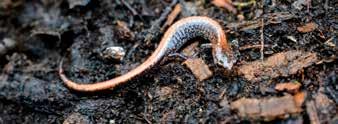
Join Huron Pines for our annual Spring Salamander Survey at Emily Min Hunt Preserve. This family-friendly event will include a short walk (.15mi) to one of the preserve’s vernal pools where participants will assist Huron Pines staff in identifying salamanders and collecting data.
This effort in community-driven science helps us gauge the health of the unique ecosystems found at the preserve by monitoring the abundance of amphibians in their native habitat.
With Thunder Bay to the south and Misery Bay to the north, North Point Nature Preserve is an optimal location for spotting birds during spring migration. This event is open to people of all levels of birding and outdoor experience, and birding guides will be on site to help fledgling birders build their skill. Attendees will be in groups and spread out to different locations around the preserve to document the birds they see and hear.
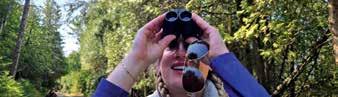
We are excited to offer two different volunteer opportunities that involve monitoring along the Lake Huron shoreline.
Coast Watchers
Coast Watchers, a community science monitoring program focused on the health of Lake Huron, will run for its fifth year at Huron Pines. Coast Watchers volunteers are part of a dedicated group that monitors sections of the Lake Huron shoreline on a weekly basis from May to October to gather data. Volunteers are trained to record atmospheric conditions, seasonal changes in water levels, occurrences of sensitive or invasive plants, fish die-offs, storm damage and pollution. This data helps Huron Pines, our partners and local leaders make decisions in managing the region’s natural resources.
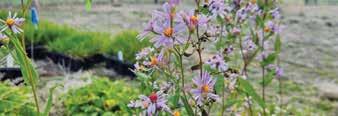
Immerse yourself in nature at the Mio Prairie, a special corner of the HuronManistee National Forest where native plant diversity is being cultivated. You’ll join a local artist who will guide you in creating painted identification markers for native species planted in fall 2025. The opportunity to observe and paint what you see allows connection to the landscape through creativity, while at the same time assisting Huron Pines’ work by creating temporary plant ID markers for the site.
Piping Plover Monitors
We are looking to expand the network of piping plover monitors during the nesting season, May through June. Volunteer piping plover monitors will learn how to identify piping plovers and report sightings to the Great Lakes Piping Plover Conservation Team. There is no prior experience or supplies needed. We are hoping to get more eyes on the ground along any part of the Lake Huron coastline to contribute to data collection.
Stay connected year-round.
Our bi-weekly eNews brings Huron Pines to your inbox with conservation updates, event announcements, volunteer opportunities and stories from across Northern Michigan. It’s the best way to stay connected to the work you support.