CONSERVATION FEDERATION
FOUNDERS CIRCLE FOUNDERS CIRCLE
Diamond Level
McGeehan Family-2025
PRESERVING OUR CONSERVATION LEGACY
For more than ninety years, the Conservation Federation of Missouri (CFM) has served as “The Voice for Missouri Outdoors.” Join in our efforts to secure our stronghold as advocates for our state’s wildlife and natural resources by becoming a dedicated member of our Founders Circle.
Your contribution will play an influential role in preserving Missouri’s rich outdoor legacy.
Each year, earnings from the endowment will be used to support CFM’s education and advocacy efforts. Special recognition will be given to those who reach each level of giving. Additionally, memberships will be recognized at our annual Convention.
Make your contribution today, to preserving our state’s conservation legacy.
Gold Level
Abe Phillips-2024
David Urich-2023
Anonymous-2025
Tanya Duvall-Haubein-2025
William R. Stork, Jr. - 2026
Bronze Level
Zach Morris-2022
Mike Schallon-2023
Liz Cook-2023
Gene Gardner-2023
Charlie Wormek-2023
Ray Wagner-2023
Bill McCully-2025
Bruce Sassmann-2025
Nicole Wood-2025
Anonymous-2025
Anonymous-2025
Randy Washburn-2025
Mossie Schallon-2025
David Young - 2025
Jennifer Urich - 2025
Jan Sassmann - 2026
For more information, contact the office at (573) 634-2322 or info@confedmo.org
Time is coming to Vote Yes on 1
Iam honored to serve as Co-Chair of the Citizens Committee working to renew Missouri’s Parks, Soils, and Water Sales Tax. During my decade-long career with Missouri State Parks, which began in 2006, I had the privilege of visiting nearly every park across the state. I saw firsthand the joy this system brings to Missourians and the lasting impact it can have. Teaching families to camp under the stars, paddlers on their first kayaking adventure, and hosting cyclists enjoying the Katy Trail Bike Ride are all great memories. I witnessed how these parks connect people with nature, strengthen communities, and create lifelong memories for visitors of all ages.
In 2026, Missouri voters will again have the opportunity to protect this remarkable legacy. Constitutional Amendment 1 asks whether the Parks, Soils, and Water Sales Tax should continue for another 10 years. This citizen-driven investment is not a new tax; it is a proven source of funding that sustains Missouri State Parks and the Soil and Water Conservation Program. These are programs that touch the lives of nearly every Missourian.
Since 1984, this modest one-tenth-of-one-percent sales and use tax has quietly delivered extraordinary benefits. It has preserved free access to a nationally ranked state park system, reversed severe soil erosion across farmland, and fueled economic growth in communities statewide. Each renewal has been a vote of confidence from Missourians, recognizing that the return far outweighs the cost.
The origins of the tax tell its story of stewardship. In the early 1980s, Missouri State Parks faced severe budget cuts, and our farmland suffered alarming soil erosion. Citizens, farmers, and outdoor enthusiasts came together to create a dedicated funding source. After narrowly passing in 1984, the tax has been renewed repeatedly, including a citizen-led initiative in 1988 and automatic ballot placement every 10 years since 2006. Today, it provides roughly 75 percent of the operating budget for Missouri State Parks, ensuring nearly 20 million visitors annually enjoy free access while generating more than $1 billion in economic impact each year.
Let’s not forget about the soil and water side of the tax. Half of the tax supports Missouri’s Soil and Water Conservation Program, delivered through 114 local districts. These programs help landowners implement voluntary conservation practices, like terraces, grassed waterways, cover crops, and nutrient management, which protect soil, improve water quality, and maintain productive farmland. Since 1984, nearly 300,000 conservation practices have been implemented, preventing an estimated 194 million tons of soil from eroding, which is enough to fill I-70 from St. Louis to Kansas City more than 50 feet deep!
Now is the time to act. The cost to each Missourian is less than $20 per person – what a bargain! Every Missourian must join this effort. Talk to friends and neighbors, volunteer, and lend a hand. Visit preservemo.com to join the coalition. Vote Yes on 1. Together, we can ensure Missouri’s natural heritage, working lands, and state park system continue to inspire and serve future generations. This is our moment to protect what we love. Missourians, we deserve nothing less.
Yours in Conservation,
Tyler Schwartze CFM Executive Director, Editor
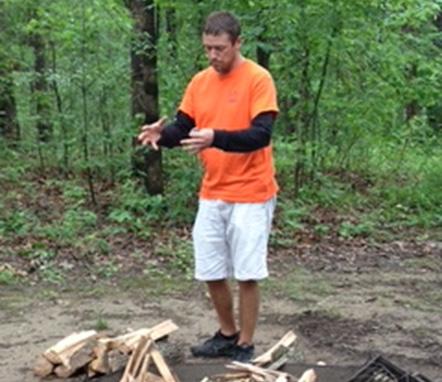
CFM Executive Director Tyler Schwartze is shown teaching firebuilding to campers back in 2013, during a Learn2 Camp Program, while he worked for Missouri State Parks. (Photo: Missouri State Parks)
STAFF
Tyler Schwartze - Executive Director, Editor
Micaela Haymaker - Director of Operations
Beth Cowgill - Membership Manager
Collected Stamps
Homage to Man's Best Friend
Thirty Years of Giving: The Chamber's Family Scholarship
Missouri's Land Trusts: Land Protection Champions
Hand Feeding Blue Bird
90th Annual Convention
How Grazing Management in Missouri Can Improve Habitat and Farm Profitability
Share with Others All the Great Outdoors Has to Offer
Spooning Docs for Table Rock Bass
The Adventures of Frank & Ed: MDC Nature Centers
Tales from the James River
Tennis Shoes
Trisha Ely - Development & Events Coordinator
Taylor Hurley - Program & Comms Coordinator
Joan VanderFeltz - Administrative Assistant
Bill White - Grasslands Coordinator
Emma Kessinger - Creative Director
BOARD OF DIRECTORS
Executive Committee:
Ginny Wallace, President
Kyle Carroll, President-Elect
Ethan Duke, Secretary
Ryan Verkamp, Treasurer
Board Members:
Richard Ash
Mossie Schallon
Gary Van De Velde
Katherine Brookshire
Leanne Tippett-Mosby
Adam Sapp
Emily Schrader
John Hickey
Cydney Mayfield
Jake Swafford
Jane Williams
Cade Schmitz
Erin Reinhart
Allan Roach
Cary Creach
Dana Ripper
Bill Kirgan
Mike Schallon
Katie Marsh
Jean Nock
Steve Jones
Zach Morris
Michael Meredith
Zack Pollock
Dr. Marion Pierson
Bill McCully
Jennifer Battson-Warren
David Urich
Rob Hunt
Ryan Coovert
April Hoffma
Eric Rahm
Jeff Meshach
Kathie Brennan
Kendra Varns Wallis
Pam Bollinger
Laurie Wilson
Renee Hahne
Lesli Moylan
Tessa Poolman
ABOUT THE MAGAZINE
Conservation Federation (ISSN 1082-8591), Copyright 1938, is published 6 times a year in January, March, May, July, September, and November by the Conservation Federation of Missouri (CFM), 728 West Main, Jefferson City, MO 65101. Of each member’s dues, $10 shall be for a year’s subscription to Conservation Federation. Call (573) 634-2322 to become a member. Periodicals Postage paid at Jefferson City, MO.
POSTMASTER:
Send address changes to:
Conservation Federation 728 West Main
Jefferson City, MO 65101
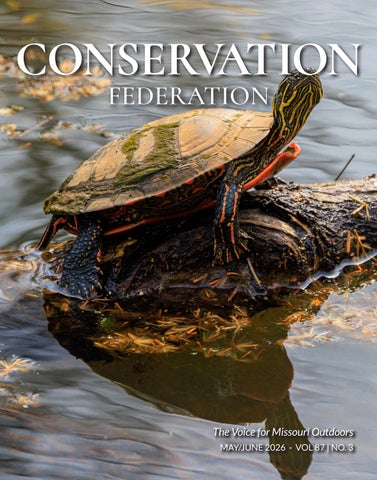
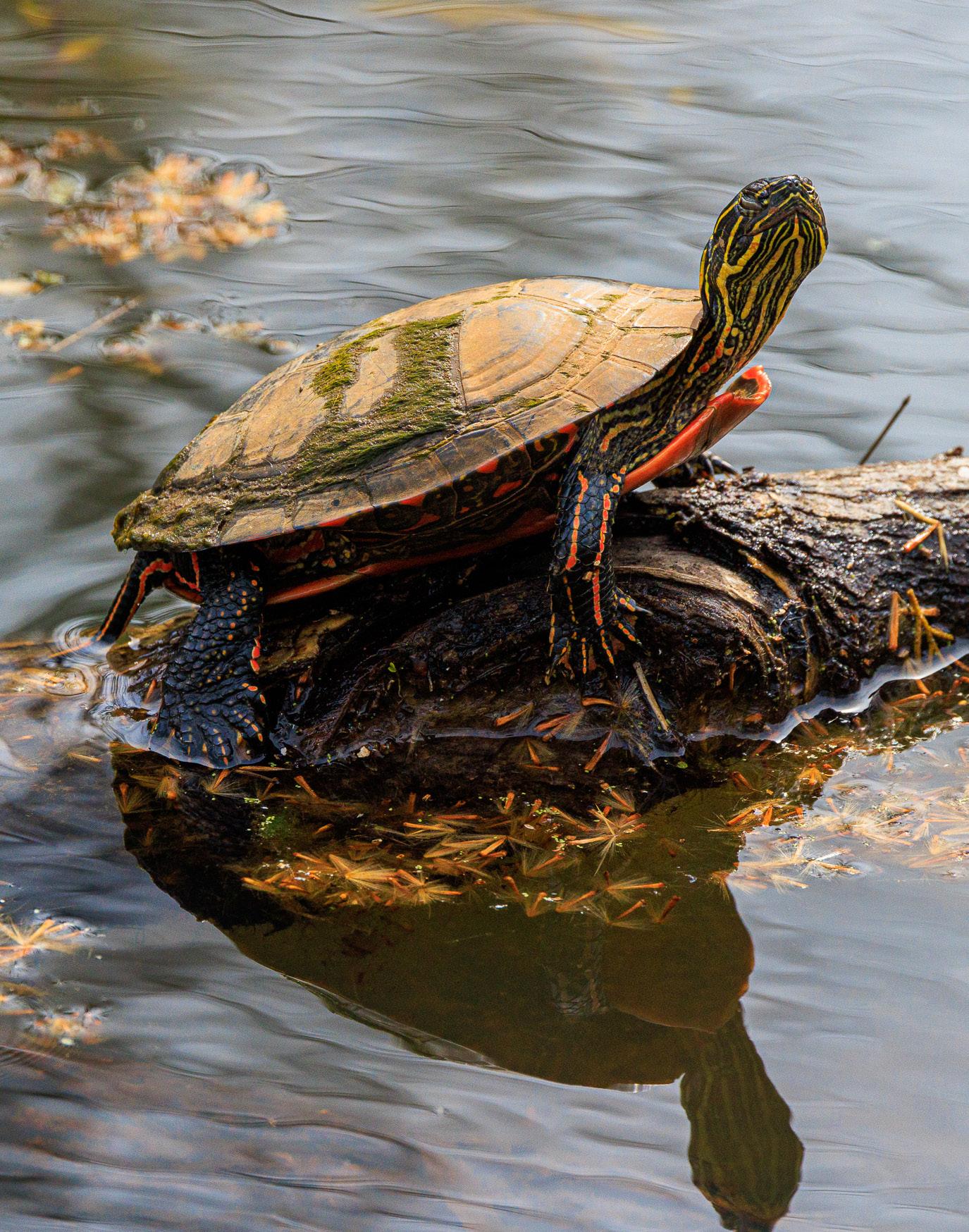
FRONT COVER
Photo captured by Dan Bernskoetter
Gold
Doolittle Trailer
G3 Boats
Thank you to all of our Business Partners.
Platinum



Pure Air Natives
Redneck Blinds
Silver
Forrest Keeling Nursery
Lilley’s Landing Resort & Marina
Missouri Wildflowers Nursery
Bronze
Association of Missouri Electric Coop.
Black Widow Custom Bows, Inc.
Brockmeier Financial Services
Burgers’ Smokehouse
Central Electric Power Cooperative
Iron
AJ's Automotive & Air Conditioning
Bass Pro Shops (Independence)
Bee Rock Outdoor Adventures
Best Shot Insurance
Big Bear Butcher Shop
Boone Electric Cooperative
Cap America
Central Bank
Custom Promotional Branding
Dickerson Park Zoo
Mitico Quaker Windows
Roeslein Alternative Energy, LLC
Starline, Inc.
St. James Winery
Drury Hotels
HMI Fireplace Shop
Hodgdon Powder Company, Inc.
MidwayUSA
Missouri Wine & Grape Board
NE Electric Power Cooperative, Inc.
NW Electric Power Cooperative, Inc.
Ozark Bait and Tackle
Woods Smoked Meats
Farmer’s Co-op Elevator Association
FCS Financial
Gascosage Electric Cooperative
General Printing Service
GREDELL Engineering Resources, Inc.
Heartland Seed of Missouri LLC
Hulett Heating & Air Conditioning
Independent Stave
Joe Machens Ford
Lewis County Rural Electric Coop.
Marble Graphics II LLC
Midwest Mailing Services
Missouri Native Stewardship Services
ModernLitho Jefferson City
Moneta Group
On Time Toner and Supplies LLC
Peapod Learning Center LLC
Truman’s Bar & Grill
United Electric Cooperative, Inc.
Your business can benefit by supporting conservation. For all sponsorship opportunities, call (573) 634-2322.
The Voice for Missouri Outdoors
Mission: To ensure conservation of Missouri’s wildlife and natural resources, and preservation of our state’s rich outdoor legacy through advocacy, education and partnerships.
In 1935, conservationists from all over Missouri came together to form the Conservation Federation of Missouri (CFM) with the purpose to take politics out of conservation. The efforts of our founders resulted in the creation of Missouri's non-partisan Conservation Commission and the Missouri Department of Conservation (MDC). Since then, CFM has been the leading advocate for the outdoors in Missouri.




Partnerships
Over 100 affiliated organizations
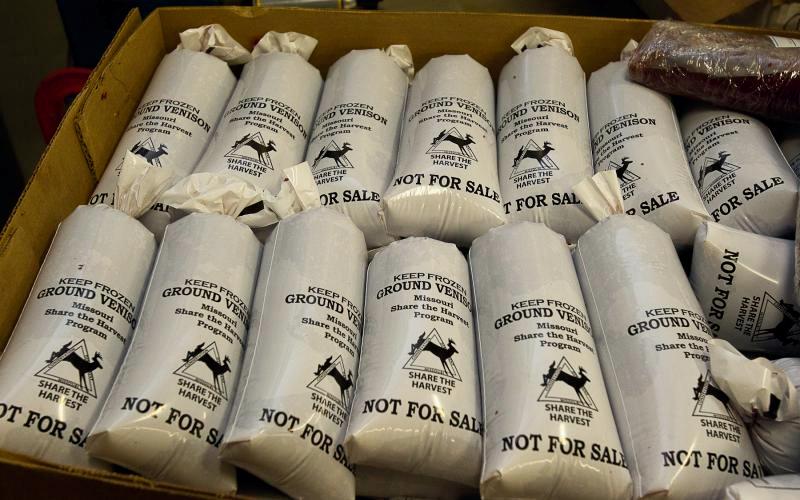
Share the Harvest Young Professionals
Corporate & Business Partnerships
State & Federal Agency Partnerships
Missouri Native Grasslands
Collaborative
National Wildlife Federation Affiliate
Operation Game Thief
Operation Forest Arson
David A. Risberg Memorial Grants
Missouri Stream Teams
Conservation Leadership Corps
Confluence of Young Conservation Leaders
Affiliate Summit
Scholarships for youth and students
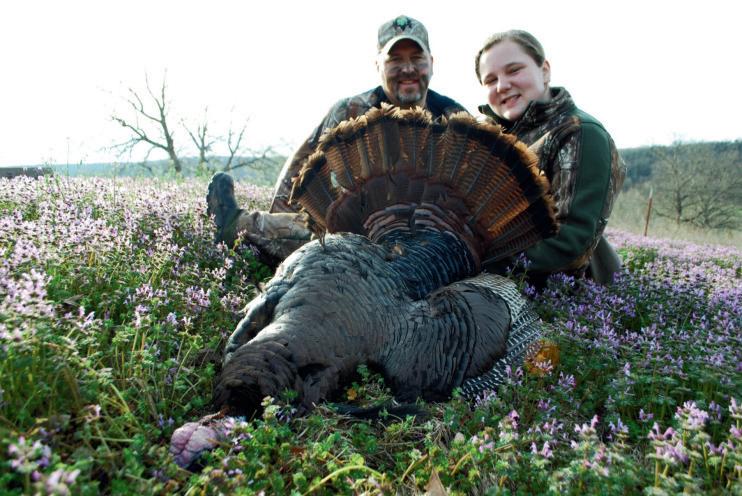
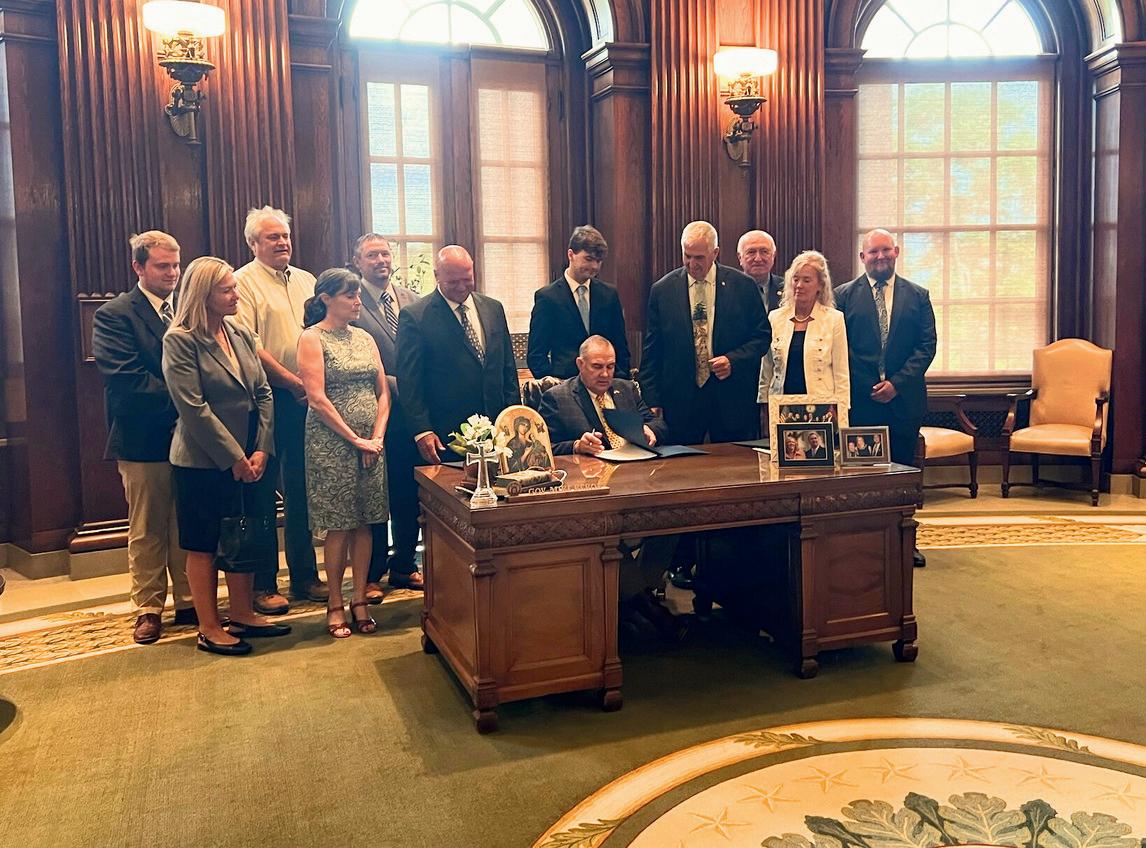
Governor’s Youth Turkey & Mentored Deer Hunts
National Archery in the Schools Program
Conservation Federation Magazine
Legislative Action Center
Resolutions to lead change
Resource Advisory Committees
Conservation Day at the Capitol Staff and members testify in hearings for conservation and natural resources














Ways You Can Support Conservation Federation of Missouri
Support efforts to promote and protect Missouri’s conservation and natural resources. Members receive our magazine six times a year, bi-weekly e-newsletters, event updates, opportunities to strengthen conservation voices statewide and and access to the Legislative Action Center.
CFM provides a platform for diverse organizations to amplify conservation voices statewide. Affiliates may apply for grants, receive educational training, collaborate with partners, and promote their mission and impact.
Scholarships and Grant Support
CFM awards scholarships to undergraduate and graduate students while providing grants for youth education and affiliate projects. Contributions help future generations launch meaningful, boots-on-the-ground conservation efforts statewide.
Make a lasting investment in Missouri’s conservation and natural resources. Life Members contribute $1,000, while Founders Circle members give $5,000, supporting an endowment fund that ensures long-term impact and strengthens conservation voices statewide.
Business partners receive recognition in each magazine issue and opportunities to connect with engaged members. Multiple partnership levels are available to support conservation goals while increasing visibility statewide.
Event Sponsorship and Product Donation
Sponsoring a CFM event supports conservation while promoting your business to engaged audiences. Event sponsorships, raffles, auctions, and product donations raise funds and showcase commitment to Missouri’s outdoors.


“Spring is sprung, the grass is ris.’ I wonder where the birdies is.”
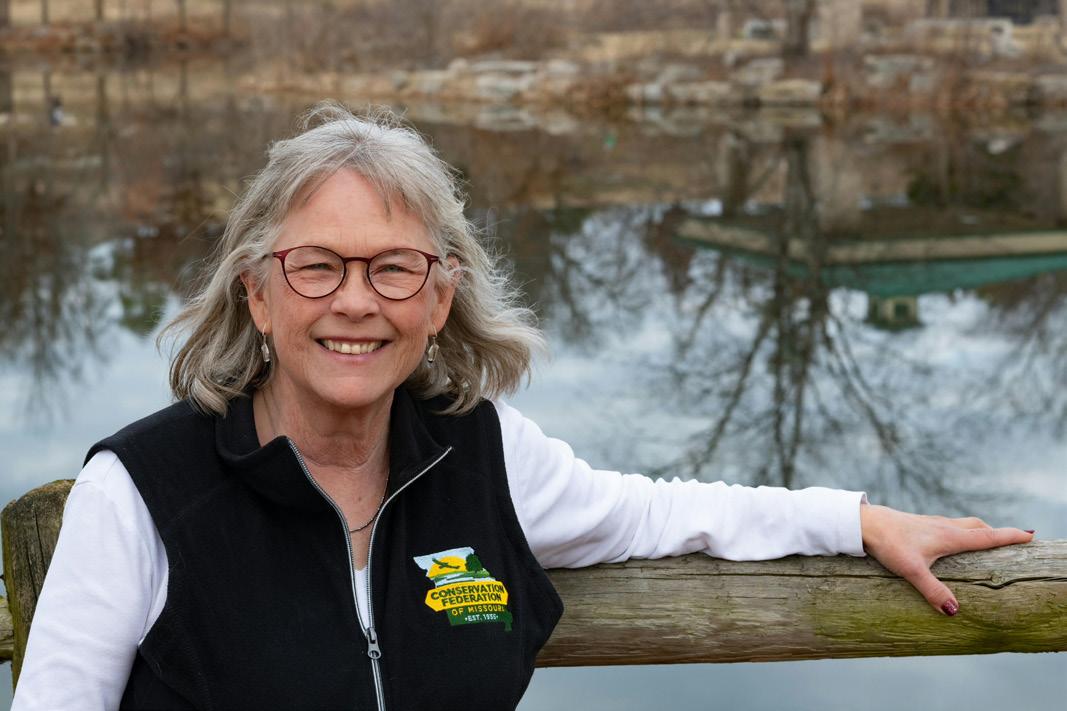
Every spring, my normally taciturn, engineer father recited this nonsense rhyme. It pops into my mind every year about this time.
Spring is a time of wonder and wondering. If you are a turkey hunter, you may be wondering where the turkeys are as you rise early to get to your blind before daylight, listening for that first gobble as the woods awaken. Nothing gets the blood pumping in the spring like hearing that beautiful sound; it’s an experience like none other, especially if you are a first-time hunter. We are fortunate in Missouri to have a youth turkey season where young people can experience the magic with a parent, grandparent, or mentor. I had the opportunity a few weeks ago to meet the youth participating in the 17th Annual Governor's Youth Turkey Hunt. This is a wonderful cooperative effort between Governor Mike Kehoe, the National Wild Turkey Federation, the Conservation Federation of Missouri, the Missouri Department of Conservation, and more. Thank you to the landowners and mentors who go out of their way to make this a positive experience.
What gets my blood pumping in the spring is finding the very first spring wildflowers: the aptly named harbinger-ofspring, the diminutive one-flowered cancer root, trout lily, bloodroot, wild ginger, and more. Most of our earliest spring wildflowers bloom in the woods before the trees leaf out. I guess it’s no surprise that as MDC’s botanist I received more “what is this flower?” calls during spring turkey season than almost the whole rest of the year combined.
Avid birdwatchers are on the lookout for the influx of warblers and other spring migrants making their way back from their wintering grounds in the south on their way to summer breeding grounds. The cacophony of early morning bird songs is another welcome sign of spring. At our house, we listen to the buzzy, humming, light-saber sound that indicates the return of the ruby-throated hummingbird. Our red buckeye trees and coral honeysuckle (a native) vines are just coming into bloom near the end of April, so I know if they aren’t here yet, the hummingbirds will be back any day now.
We don’t see or hear as many bird species on our property as we did when I moved there 43 years ago. I used to regularly hear bobwhite quail, Chuck-will’s-widow, and whip-poorwill. A few years ago, a comprehensive assessment revealed a loss of nearly 3 billion birds in North America since 1970. That represents a decline of about 29% across various species, including sparrows, warblers and finches, among many others.
Many factors contribute to this decline, including habitat loss and fragmentation, widespread use of neonicotinoids, declines in native insect populations, light pollution, window strikes, free-roaming domestic cats, and more. While we have many success stories in Missouri, the loss of this many birds in my adult lifetime, and the ecological consequences of that loss, are frightening to me.
Declining bird populations are just one of many conservation challenges we face. I am heartened that more than a dozen of CFM’s more than 100 Affiliate organizations focus on bird conservation, education, research, and habitat management.
Together, we can make a difference. I hope my dad’s little rhyme remains a cute little ditty and not a foretelling of the future.
Ginny Wallace CFM President
2026 Events Schedule
90 Annual Convention - Virtual - Feb. 24-26, March 2-4; In Person - March 6-8 th
Let your voice be heard at the Annual Convention. The event will include meetings, awards, auctions, and so much more. Held at the Lodge of Four Seasons in Lake Ozark.

Conservation Day at the Capitol - March 31
Join conservationists from across Missouri on the radio for a day of celebrating and supporting conservation and natural resources. The broadcast will air from 6 am to 10 am on 96.7 FM or KCMQ.com.
CFM with the Springfield Cardinals - May 7
Step up to the plate with CFM this May at a Springfield Cardinals game — where conservation meets America’s favorite pastime!
Share The Harvest Golf Tournament - June 22
Tee off for a great cause at our golf tournament at Oak Hills Golf Center in Jefferson City to support Share the Harvest!
CFM Life Member & Founders Circle Event - June 27
CFM will be hosting its 5th annual Life Member and Founders Circle only event.
Whiskey & Wildlife Banquet: Kansas City - July
A classic CFM banquet enhanced with whiskey tastings and wild-game appetizers from around Missouri.
Pull for Conservation: Central - August 8
Take your best shot at the 19th annual Central clay shoot at Prairie Grove Shotgun Sports.
Affiliate Summit - September 18
CFM affiliate organizations are invited to network and learn.
Miles for Missouri Outdoors - September 19
Enjoy a morning 5K run/walk and explore conservation booths from our affiliate partners at the river access.
Fall Online Auction - October
12-23
Enjoy a fun and interactive online auction with many great trips and prizes.
Event dates are subject to change. Please visit www.confedmo.org or follow us on social media for the most up to date schedule.


CFM MISSION:
To ensure conservation of Missouri's wildlife and natural resources, and preservation of our state's rich outdoor legacy through advocacy, education and partnerships.
Life Memberships Help All: Frank Kruse
My childhood on a farm in Carroll County, Missouri, came during an explosion of wildlife in north-central Missouri. Policies and practices promoted by the Missouri Department of Conservation (MDC) were bearing abundant fruit. The animals my family hunted and enjoyed were becoming common and accessible, and seeing more wildlife became part of the success story of American production agriculture.
When I left the farm for college and a career that took me to many states and countries, I quickly learned the unique characteristics that underpinned those growing wildlife populations. Among them were the profound benefits of the North American Model of Wildlife Management, which ensures the nation’s wildlife is not subject to the whims of individual self-interest, and the wisdom and commitment of Missouri citizens who ensured conservation efforts would not be subject to politicization. I also saw the power of organizations and companies working together to support our conservation heritage.
These beliefs bind the MDC and the Conservation Federation of Missouri (CFM) together. Because of CFM’s decades-long commitment, I have been able to introduce my children, friends, and acquaintances to the many benefits of Missouri’s outdoors, and it has been a pleasure to see them develop their own passion for protecting and improving it.
As a Commissioner, I recognize that many of MDC’s invaluable partners are members of CFM. The organization provides a forum to engage with groups that represent their members’ aspirations and help advance conservation across the state. Their deep knowledge of both history and current issues helps me be a better Commissioner.
I chose a life membership because I value the people. I enjoy being around those deeply rooted in conservation, united in ensuring future generations can enjoy what we have.
In Memory & Honor

William “Bill” Mocca
Ryan Casey
Harold Frazier
Mr and Mrs Mitchell Damp
Rachel Bergsieker
Bonnie Polman
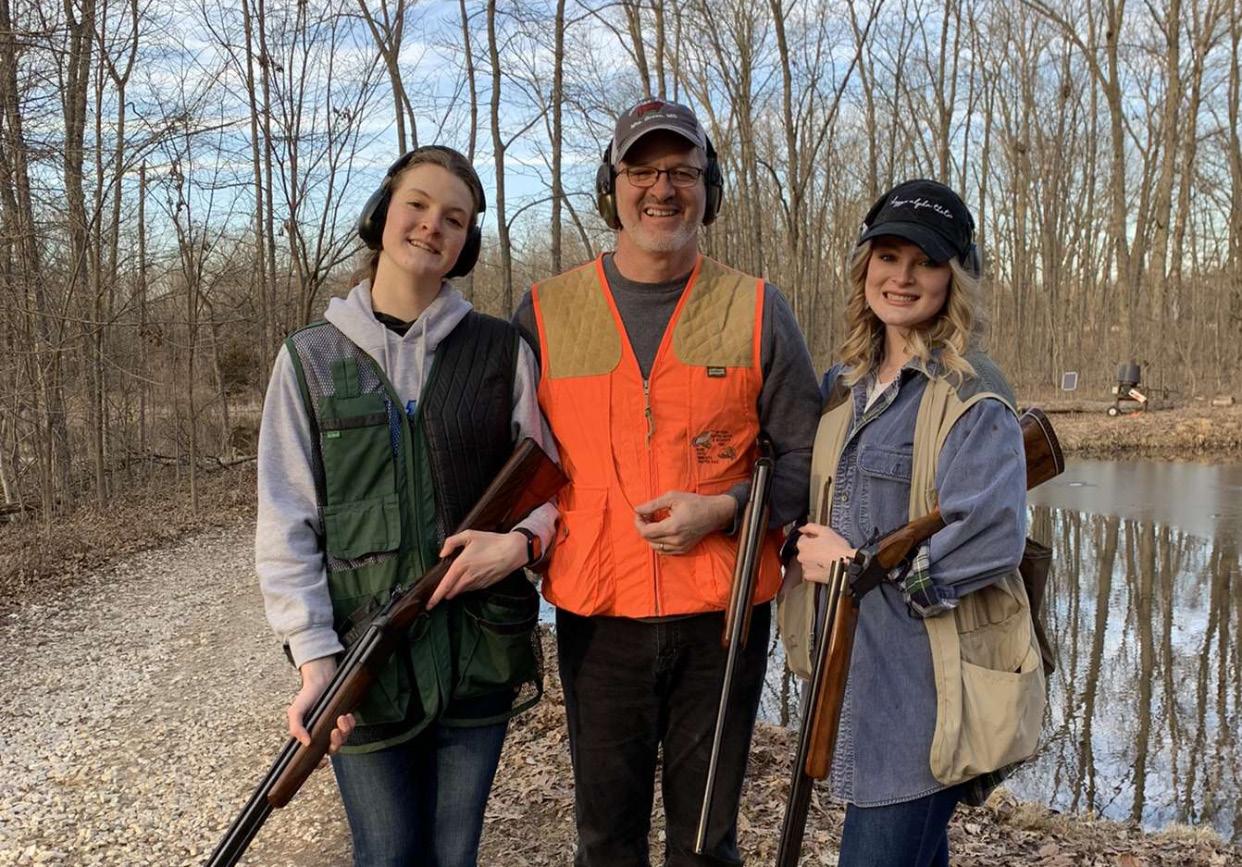
Frank with his daughters, Virginia and Elizabeth. (Photo: Courtesy of Frank Kruse)
Custom Promotional Branding
Custom Promotional Branding is a locally owned screen printing, embroidery, and promotional products company based in Jefferson City, Missouri, serving the community since 1997. From the beginning, our mission has been to help organizations strengthen their brand through high-quality decorated apparel and promotional items while prioritizing relationships over transactions. Rather than focusing solely on making the next sale, we take the time to understand each client’s goals so we can recommend products that truly support their brand.
Over the years, Custom Promotional Branding has grown to a team of more than 20 dedicated members who share a commitment to quality, service, and community involvement. While our primary focus remains serving Mid-Missouri, our reputation for reliability and results has allowed us to expand our services throughout the state and beyond.
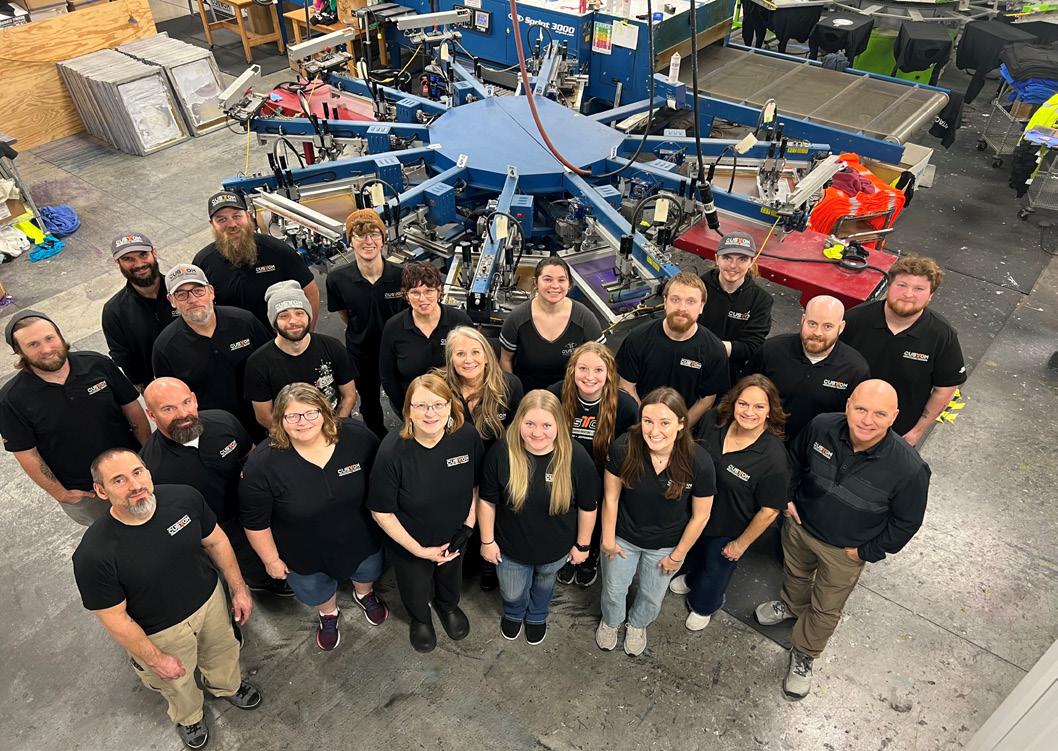

We invest heavily in state-of-the-art, industry-leading equipment to ensure our clients receive consistent, high-quality results. Our clean, organized facility and continually updated showroom reflect our commitment to professionalism and staying current with industry trends and product offerings.
At the core of our company is a genuine desire to serve—not only our customers, but also our team members and the community we call home. By taking the time to understand each customer’s needs— whether that means balancing budget, durability, or brand visibility—we are able to guide them toward the right products and solutions that will represent their organization well for years to come. For more information, visit www.custompromobrand.com.
LIFE MEMBERS OF CFM
Charles Abele
* R. Philip Acuff
* Duane Addleman
* Nancy Addleman
Tom Addleman
Nancy Addleman
* Michael Duane Addleman
James Agnew
Carol Albenesius
Craig Alderman
* Allan Appell
Victor Arnold
Bernie Arnold
Richard Ash
Judy Kay Ash
Carolyn Auckley
Debbie Audiffred
Doug Audiffred
Ken Babcock
Bernie Bahr
Michael Baker
* James Baker
Dane Balsman
Timothy Barksdale
Lynn Barnickol
Jamie Barton
Michael Bass
Robert Bass
Don Bedell
Troy Beilsmith
Cooper Bien
Thomas Bell
David F. Bender
Rodger Benson
Leonard Berkel
Barbi Berrong
Jim Blair
John Blankenbeker
Amy Bloomfield
Tom Bloomfield
Andy Blunt
Jeff Blystone
Kim Blystone
Glenn Boettcher
Arthur Booth
* Dale Linda Bourg
Stephen Bradford
Marilynn Bradford
Robin Brandenburg
Mark Brandly
Kathie Brennan
Robert Brinkmann
Kaley Brittain
Michael Brizendine
Virginia Brizendine
Lon Brockmeier
Katherine Brookshire
Donald R. Brown
* Scott Brundage
Bill Bryan
Misty Bryan
Alan Buchanan
Connie Burkhardt
Dan Burkhardt
Charles Burwick
Brandon Butler
Jackson Byrd
Randy Campbell
Brian Canaday
Dale Carpentier
Joe Cater
* Glenn Chambers
Bryan Chilcutt
Ed Clausen
* Edward Clayton
* Ron Coleman
Denny Coleman
Rhonda Coleman
Liz Cook
Bill Cooper
Elizabeth Copeland
Mark Corio
* Bill Crawford
Todd Crawford
Andy Dalton
DeeCee Darrow
Brian Davidson
Mike Dempsey
Ryan Diener
Joe Dillard
Randy Doman
Tim Donnelly
Cheryl Donnelly
Ron Douglas
Chuck Drury
* Charlie Drury
Tom Drury
Ethan Duke
Mike Dunning
William Eddleman
Karen Edison
John Enderle
Theresa Enderle
Joe Engeln
Marlin Fiola
Fred First
* Mary Louise Fisher
Howard Fisher
Andrew Fleming
Brian Fleming
* Charles Fleming
David Fleming
Howard Fleming
Kailey Fleming
Lori Fleming
Matt Fleming
Paula Fleming
Sara Fleming
X. Daniel Forte
Bob Fry
Manley Fuller
Judge Gary M. Gaertner, Jr.
David Galat
Gene Gardner
Matt Gaunt
Jason Gibbs
Timothy Gordon
Blake Gornick
David Graber
Tim Grace
Jody Graff
Richard & Sally Graham
Timothy Graven
* Joseph Gray
Tom Gredell
Tyler Green
Jason Green
Gery Gremmelsbacher
Debbie Gremmelsbacher
Jason Gremmelsbacher
Bernie Grice Jr.
Mark & Kathy Haas
Tom & Margaret Hall
Christopher Hamon
* Deanna Hamon
J. Jeff Hancock
Herman Hanley
Keith Hannaman
Elizabeth Hannaman
Lonnie Hansen
Bryan Hargiss
John Harmon
* Milt Harper
Jack Harris
David Haubein
Tanya Duvall-Haubein
Carl Hauser
Jessica Hayes
* Susan Hazelwood
William Heatherly
Mickey Heitmeyer
* Loring Helfrich
* LeRoy Heman
* Randy Herzog
Todd Higgins
Bill Hilgeman
* Jim Hill
John Hock
April Hoffman
Mike Holley
Rick Holton
CW Hook
* Allan Hoover
Amanda Horne
John Hoskins
Todd Houf
* Mike Huffman
Wilson Hughes
Larry Hummel
* Patricia Hurster
Kyna Iman
Jason Isabelle
Jim Jacobi
Aaron Jeffries
Robert Jernigan
Jerry Jerome
Roger & Debbie Johnson
* Don Johnson
* Malcolm Johnson
* Pat Jones
Steve Jones
John Karel
Thomas Karl
Jim Keeven
Gov. Mike Kehoe
* Duane Kelly
Cosette Kelly
Junior Kerns
Todd Keske
Robert Kilo
* Martin King
Bill Kirgan
* Judd Kirkham
* Ed Kissinger
Sarah Knight
TJ Kohler
Jeff Kolb
Chris Kossmeyer
Chris Koster
Dan Kreher
Frank Kruse
Carl Kurz
* Ann Kutscher
Larry Lackamp
Kyle Lairmore
* Jay Law
Michael Leach
* Gerald Lee
Debra Lee
Mark Lee
Randy Leible
Wade Leible
* Joel LeMaster
* Norman Leppo
* John Lewis
Phil Lilley
Michael Lindsay
Bill Lockwood
Leroy Logan
Christine Logan - Hollis
Bob Lorance
Ike Lovan
Wayne Lovelace
Kimberley LovelaceHainsfurther
Jim Low
Mark Loyd
Bill Lyddon
Mary Lyon
Emily Lute-Wilbers
Martin MacDonald
Michael Mansell
Steve Maritz
Katie Marsh
Danny Marshall
Brenda Martien
Larry Martien
Edward Martin
Dwight Massey
Karen Massey
John Mauzey
Cydney Mayfield
Bill McCully
Chip McGeehan
Teresa McGeehan
Justin McGuire
William McGuire
Nathan "Shags" McLeod
Jon McRoberts
Richard Mendenhall
Tom Mendenhall
Donna Menown
John "Mitch" Mertens
Jeffrey Meshach
Cynthia Metcalfe
Walter Metcalfe
Larry Meyer
Stephanie Michels
Brooks Miller
Mitchell Mills
Joshua Millspaugh
Davis Minton
Bill Moeller
Lowell Mohler
John Moore, Jr.
Gary Moreau
Johnny Morris
Mary Morris
Zachary Morris
Butch Morrissey
Keri Morrissey
John Mort
David Mosby
Leanne Mosby
Steve Mowry
Diana Mulick
David Murphy
* Dean Murphy
Richard Mygatt
* Steve Nagle
Rehan Nana
Robert Naumann
Phil Needham
J. Roger Nelson
Jeremiah (Jay) Nixon
Gary Novinger
Frank & Judy Oberle
Larry O'Reilly
Charlie & Mary O’Reilly
Beth O'Reilly
Anya O'Reilly
Jeff Owens
Austin Owens
Jeffrey Panchot
Sara Parker Pauley
Scott Pauley
Randy Persons
Edward Petersheim
Albert Phillips
Jan Phillips
Glenn & Ilayana Pickett
Jessica Plaggenberg
Becky Plattner
Zach Pollock
Tessa Poolman
* Jerry Presley
Albert Price
Nick Prough
Andrew Raedeke
Kirk Rahm
Camille Raymo
Kurtis Reeg
John Rehagen
David & Janice Reynolds
Carey Riley
Kevin Riley
Mike Riley
Dana Ripper
John Risberg
Mary Risberg
Ann Ritter
Charles Rock
Derrick Roeslein
Rudy Roeslein
Charles Rogers
Kayla Rosen
Gerald Ross
Pete Rucker
Benjamin Runge
Tyler Ruoff
William Ruppert
Tom Russell
Jacob Sampsell
Bruce Sassmann
Jan Sassmann
Frederick Saylor
Michael Schallon
Mossie Schallon
* Evelyn Schallon
Thomas Schlafly
Pamela Schnebelen
Emily Schrader
Deb Schultehenrich
Don Schultehenrich
Tyler Schwartze
* Ronald Schwartzmeyer
Timothy Schwent
Travis W. Scott
George Seek
Arlene Segal
* E. Sy Seidler
* Sara Seidler
Joshua Shadwick
Steven Sheriff
Anita Siegmund
Emily Sinnott
Douglas Smentkowski
Edward Smith
Gary & Susanna Smith
Zachary Smith
* M.W. Sorenson
Jeff Staake
* Ed Stegner
Jeff Stegner
Everett Stokes
William Stork Jr.
Robert Stout
Chris Straube
Winifred Stribling
Norm Stucky
Mary Stuppy
* Mark Sullivan
Caleb Sumners
Jacob Swafford
Jim Talbert
Norman Tanner
Stephen Taylor
Tim Taylor
Travis Taylor
Richard Thom
Don Thomas
Tim Thompson
Jim Thornburg
* Jeff Tillman
Robert Tompson
Mike Torres
Matt Tucker
Carl Turlin
David Urich
Jennifer Urich
Alex Uskokovich
Gary Van De Velde
Barbara vanBenschoten
Lee Vogel
Albert Vogt
Frank Wagner
Ray Wagner
* Julius Wall
Ginny Wallace
Mervin Wallace
Jennifer Battson Warren
Randy Washburn
Mary Waters
* Henry Waters, III.
Daniel Weinrich
Michael Weir
* Robert Werges
Evelyn Werges Bennish
Tom Westhoff
Gary Wheeler
Georganne Wheeler Nixon
Rayburn Whitener
Mark Williams
Dennis Williams
Dr. Jane Williams
Stephen Wilson
Michael Wilson
Laurie Wilson
Jonathan Wingo
Jon R. Wingo
James Winn
Michael Wiseman
Daniel Witter
Brenda Witter
* Addie Witter
Olivia McKinney Witter
Owen Witter
Shirley Wolverson
* Dick Wood
Howard Wood
Joyce Wood
Nicole Wood
Charles M. Wormek
Brad Wright
Evan Wright
Suzanne Wright
Veronika Yerina
David Young
Judy Young
Dan Zekor
Daniel Zerr
Jim Zieger
Robert Ziehmer
Emily Ziehmer
Lauren Ziehmer
Colton Zirkle
Ethan Zuck
Guy Zuck
Mark Zurbrick
*Deceased
Affiliate Highlights
Connecting Community and Conservation: ROCS and Ozark Rivers Audubon
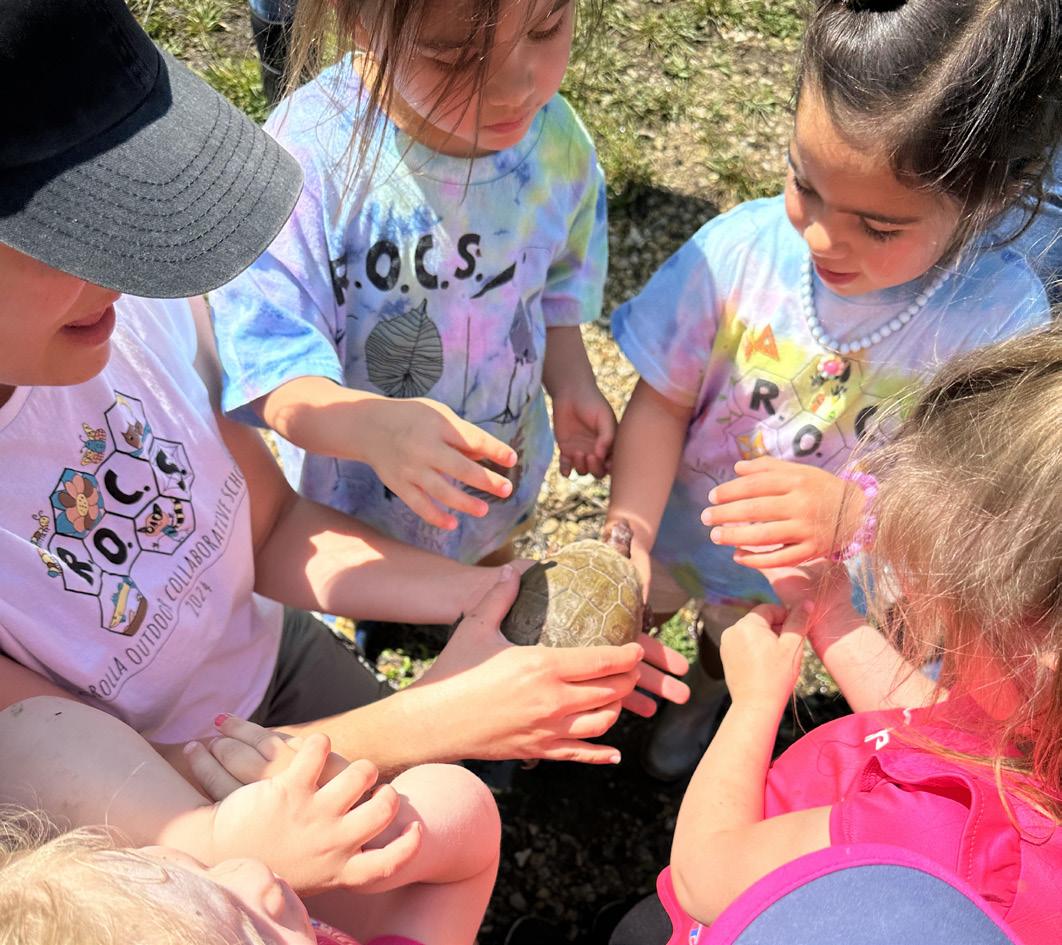
The Rolla Outdoor Collaborative School (ROCS) is a nonprofit collaborative preschool and youth enrichment program that brings outdoor education to Rolla and surrounding communities. The program is completely outdoors and takes place in the 70-acre Ozark Rivers Audubon Trails Nature Center. In the four and a half years since its creation, ROCS has expanded to include summer camps, archery, field trip hosting, and a variety of free community programs.
ROCS curriculum emerges from the children’s interests and follows the rhythms of the seasons. The program includes a balance of teacher-directed and child-directed activities, including group meetings, projects, crafts, hikes, and science experiments. The ROCS classroom features a dramatic play puppet stage, mud kitchen, gravel digging pit, climbing structures, and a large swing. All school days are spent 100% outdoors, rain or shine. As a collaborative school, parents ensure that children come to school prepared and are active participants in maintaining the classroom and nature center.
Working closely with the Ozark Rivers Audubon Chapter, another CFM affiliate that owns and manages the 70acre preserve serving as ROCS’ home base, ROCS has successfully tripled its enrollment and reached hundreds of new individuals through community programming.
In addition to the programs offered by ROCS, Ozark Rivers hosts a monthly bird hike, various bird outings throughout the year, and a wellness series including yoga and meditation. The 800-square-foot pavilion, nestled amid the lush beauty of the nature center, creates a beautiful backdrop for nature viewing and quiet reflection. The largest event of the year is the Fall Nature Festival scheduled for Saturday, September 12, 2026. This event features 20 plus exhibitors, nativeplant vendors, guided hikes, and hummingbird-banding demonstrations.
Looking Ahead: ROCS and Ozark Rivers share an exciting vision: constructing a 2,000-square-foot community center within the preserve.
This multi-use space will serve as an inclementweather shelter for ROCS students while also expanding opportunities for educational programming, community events, and private gatherings. ROCS and Ozark Rivers are currently seeking fundraising partnerships to bring this vision to life.
A Living Laboratory of Ecosystems: The Audubon Nature Center has five distinct ecosystems, including a dolomite glade, tall grass remnant prairie, oak savannah, upland oak forest, and a spring-fed riparian zone. The property's varied ecosystems provide a living laboratory and playground for students to engage in environmental education, exploration, and tranquility. ROCS families and Audubon volunteers work to increase biodiversity and habitat restoration by managing invasive species with regular workdays and annual controlled burns. These efforts protect habitat and deepen conservation education.
If you would like more information about the Rolla Outdoor Collaborative School please visit www.RollaOutdoorSchool.org or contact director@rollaoutdoorschool.org.
ROCS checks all the boxes: friends, fun and nature!
(Photo: ROCS Director Gina Root)
Affiliate Organizations
Anglers of Missouri
Association of Missouri Electric Cooperatives
Bass Slammer Tackle
Basshole Bass Club
Burroughs Audubon Society of Greater Kansas City
Capital City Fly Fishers
Chesterfield Citizens Committee for the Environment
Columbia Audubon Society
Conservation Foundation of Missouri Charitable Trust
Dark Sky Missouri
Deer Creek Sportsman Club
Duckhorn Outdoors Adventures
Endangered Wolf Center
Festus-Crystal City Conservation Club
Forest and Woodland Association of Missouri
Forest ReLeaf of Missouri
Friends of Rock Bridge Memorial State Park
Friends of Rock Island State Park
Gateway Sustainable Farmers Alliance
Greater Ozarks Audubon Society
Greenbelt Land Trust of Mid-Missouri
Greenway Network, Inc.
Heartland Conservation Alliance
James River Basin Partnership
L-A-D Foundation
Lake of the Ozarks Watershed Alliance
Land Learning Foundation
Legends of Conservation
Magnificent Missouri
Mid Mo Prescribed Burn Assn.
Mid-Missouri Outdoor Dream
Mid-Missouri Trout Unlimited
Midwest Diving Council
Missouri Association of Meat Processors
Missouri B.A.S.S. Nation
Missouri Bear Foundation
Missouri Bird Conservation Initiative
Missouri Birding Society
Missouri Bluebird Society
Missouri Bow Hunters Association
Missouri Caves & Karst Conservancy
Missouri Chapter of the American Fisheries Society
Missouri Chapter of the Wildlife Society
Missouri Conservation Agents Association
Missouri Conservation Corps
Missouri Conservation Heritage Foundation
Missouri Conservation Pioneers
Missouri Consulting Foresters Association
Missouri Disabled Sportsmen
Missouri Ducks Unlimited- State Council
Missouri Environmental Education Association
Missouri Forest Products Association
Missouri Grouse Chapter of QUWF
Missouri Hunting Heritage Federation
Missouri Master Naturalist
- Boone's Lick Chapter
Missouri Master Naturalist
- Great Rivers Chapter
Missouri Master Naturalist
- Hi Lonesome Chapter
Missouri Master Naturalist
- Osage Trails Chapter
Missouri Master Naturalist
- Springfield Plateau Chapter
Missouri National Wild Turkey Federation
Missouri Native Seed Association
Missouri Outdoor Communicators
Missouri Outdoor Communicators
Missouri Park & Recreation Association
Missouri Parks Association
Missouri Prairie Foundation
Missouri River Bird Observatory
Missouri River Relief
Missouri Rural Crisis Center
Missouri Rural Water Association
Missouri Smallmouth Alliance
Missouri Society of American Foresters
Missouri Sport Shooting Association
Missouri State Parks Foundation
Missouri Taxidermist Association
Missouri Trappers Association
Missouri Trout Fishermen's Association
Northside Conservation Federation
Open Space Council of the St. Louis Region
Outdoor Skills of America, Inc.
Ozark Chinquapin Foundation
Ozark Fly Fishers, Inc.
Ozark Land Trust
Ozark River Audubon Chapter
Ozark Riverways Foundation
Ozark Trail Association
Ozark Wilderness Waterways Club
Pomme De Terre Chapter Muskies
Quail & Upland Wildlife Federation, Inc.
Quail Forever & Pheasants Forever
Renew Missouri
River Access Coalition
River Bluffs Audubon Society
Rolla Outdoor Collaborative School
Scenic Missouri Inc.
Scenic Rivers Invasive
Species Partnership (SRISP)
South Side Division CFM
Society of Wetland Scientists
Central Chapter
Southwest Missouri Fly Fishers
Sporting Dog Association of Missouri
St. Louis Audubon Society
St. Louis Community College Meramec Horticulture Program
Stream Teams United
Student Air Rifle Program
The Conservation Fund
Tipton Farmers & Sportsman's Club

Forage for Wellness: Rose of Sharon
I'm Kat Brookshire and I'm wild over wellness. I'm also a certified foraging educator who studied with foraging authors Bo Brown and Rachael Elizabeth West. I have been an avid forager for several years and eat wild things almost daily. Not only are wild foraged plants more nutritious than grocery store produce, a lot of them are wildly abundant. Literally, EAT THE INVASIVES! It's fun. The highlight today is Rose of Sharon, an invasive, and the entire plant is edible.
The leaves are mild and versatile. Young, tender leaves are best raw and make great additions to salads, similar to spinach. Mature leaves are better cooked and work well in stir fries, soups, quiches, and smoothies; substitute anywhere you’d use kale or spinach.
The blossoms are rich in antioxidants and add color and nutrition to meals. Use them in salads, drinks, or as a garnish. Before using, simply shake the flowers to remove insects. The unopened buds are also edible and pickle well. As a bonus, harvesting flowers prevents seed pods from forming, helping limit the plant’s spread.
Fresh seed pods are another edible part. When bright green, they’re tender and make a great snack or salad addition. If they begin to lose their color, they become fibrous and less palatable. These pods are an excellent substitute for okra. The seed pods can be used to thicken soups, fry well, and are especially good pickled.
General foraging rules:
• Never forage in areas that get sprayed by herbicide or any pesticide.
• Don't forage in areas heavily trafficked by dog owners or in busy pastures.
• Make sure you identify the plant correctly. If you aren't super familiar with the plant identification, verify with two trusted sources. Even printed books sometimes use the wrong photos.
• Make sure you are using the part of the plant that is edible. In Rose of Sharon's case, the entire plant is edible, but that's not the case for every plant.
• Don't harvest more than 2/3 of a plant from the area, unless it is invasive or being eradicated anyway. Rose of Sharon is invasive, so take all of it in view.

Refrigerator Pickled Pods
Ingredients:
1 pound Rose of Sharon seed pods (whole- washed and dried)
4 small cloves garlic (optional)
1.5 cups apple cider vinegar (ACV)
2 teaspoons sugar
2 teaspoons kosher salt
Optional additions: unopened flowers, dill, mustard seed, chile peppers, jalapeno peppers, banana peppers, sweet peppers, whole peppercorns, paprika, coriander, okra, any other vegetable you like refrigerator pickled.
Directions:
1. Wash pods and trim the stems but don't open the pods. Sprinkle with kosher salt.
2. Heat to a boil ACV, sugar, and kosher salt. Simmer for 5 minutes, then remove from heat. Let cool for 10 mins.
3. Pack pods tightly into a jar.
4. Pour vinegar mix over pods, covering them.
5. Place the lid on the jar and place it in the refrigerator. Ready in 2 days; keeps for up to 2 months.
Photo: Rose of Sharon in Massachusetts, US / Oakley413 (Creative Commons Attribution- Share Alike 4.0 International license)
Feature Story
Looking Back Missouri’s Conservation History
Canceled Stamps
Sometimes you must (or should) say, “I just don’t know,” followed by a quick, “but I’ll find out and get back to you”. This happened to me at a recent coffee shop meeting of retirees when a participant asked when and why the Missouri Department of Conservation (MDC) stopped the trout and duck stamp competitions. I told him I didn’t know but would find out and get back to him. What I found out follows.
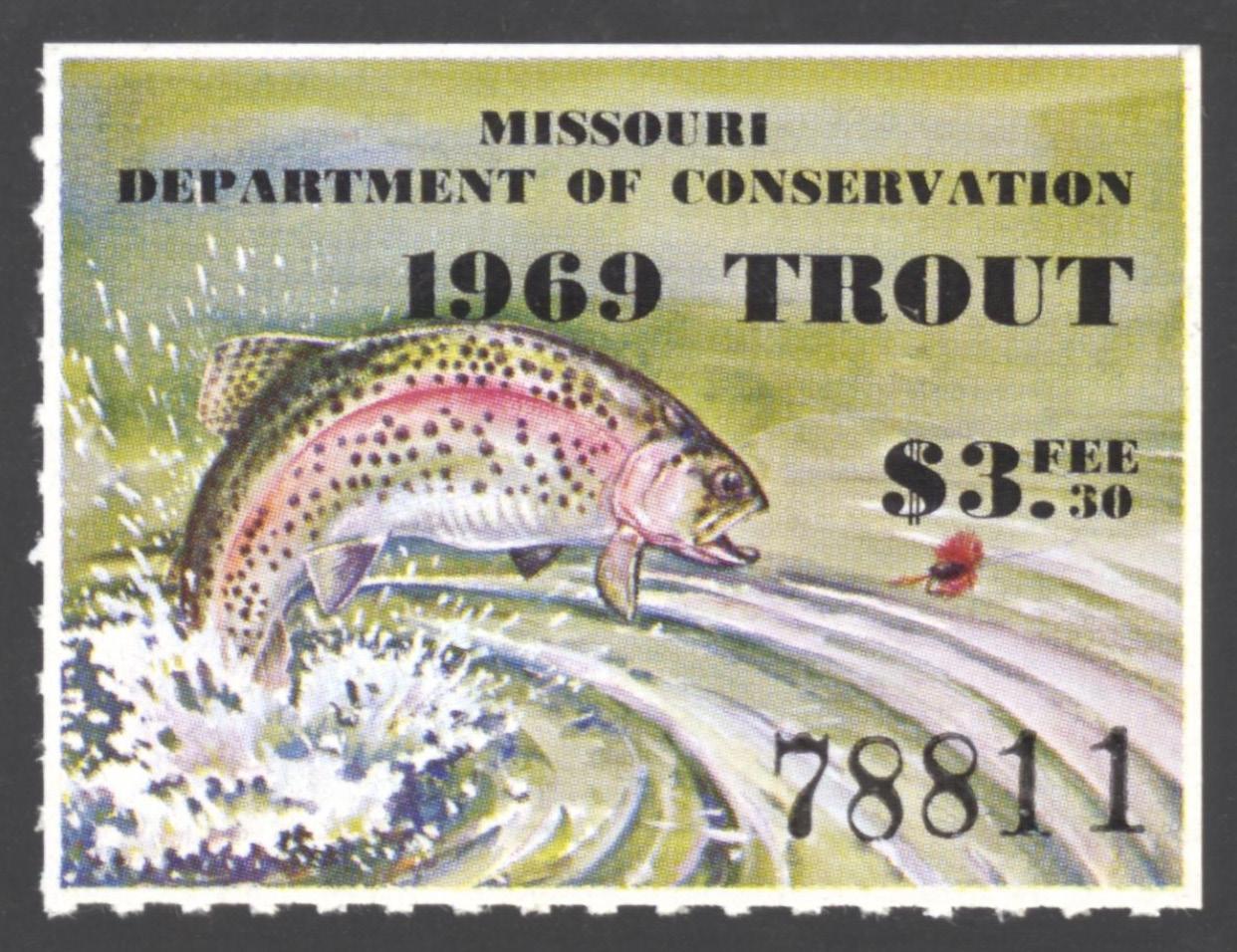
Trout Stamp
Let’s start with the history of the trout stamp, which is a little simpler and more straightforward than the duck stamp. On June 20, 1968, the Missouri Conservation Commission approved a $3 trout stamp to replace the $2 trout fishing permit (good economics!). The first trout stamp, painted by Charles W. Schwartz (former Conservation Department staff artist), went on sale in 1969 to make the Department’s trout stocking programs more self-supporting. This was after an annual trout license was initiated in 1962 to offset costs that could not be recovered at Lake Taneycomo with a daily permit (daily fees were initiated at the trout parks in 1938 to defray the costs of the put-and-take trout fishing operations).
Charlie Schwartz provided the artwork for all of the trout stamps from 1969 through 1982. When he retired, the first trout stamp design competition was held to select one for 1983. The trout stamp requirement was abandoned in 1995.
The artist and the year their stamp was used follows: Terry Martin (1983), Al Agnew (1984), Dennis Goldacker (1985), Bruce Bullman (1986), Al Agnew (1987), Ron Ferkal (1988), Eileen Melton (1989), James R. Smith (1990), Bruce Bullman (1991), Eileen Melton (1992), Phil Schroeder (1993), James R. Smith (1994), Chuck Witcher (1995), and Phil Schroeder (1996).
Duck Stamp
Now for the bit more complicated duck stamp. It all got started in 1972 when the Conservation Federation of Missouri (CFM) issued a resolution calling for MDC to create a waterfowl hunting stamp similar to the federal duck stamp, with proceeds to be used to enhance waterfowl hunting in the state. Then on November 14, 1974, representatives from Ducks Unlimited (DU) petitioned the Missouri Conservation Commission to adopt a duck stamp. The Commission turned them down. They were concerned as to how this might affect MDC’s efforts in the Design for Conservation effort that was in full stride at that time.
DU came back to the Commission in May 1975, and again in June 1978, proposing a duck stamp with proceeds to be divided between work done here and in Canada. Again, they were turned down because our legal counsel didn’t think it prudent to use the funds as proposed. Following this Commission meeting, the Wildlife Division of MDC was directed to poll attitudes of Missouri waterfowl hunters concerning the proposed stamp. A survey of waterfowl hunters responding to the small game harvest survey was used for this effort along with a separate effort to contact waterfowl hunters coming to managed waterfowl areas in the fall of 1978.
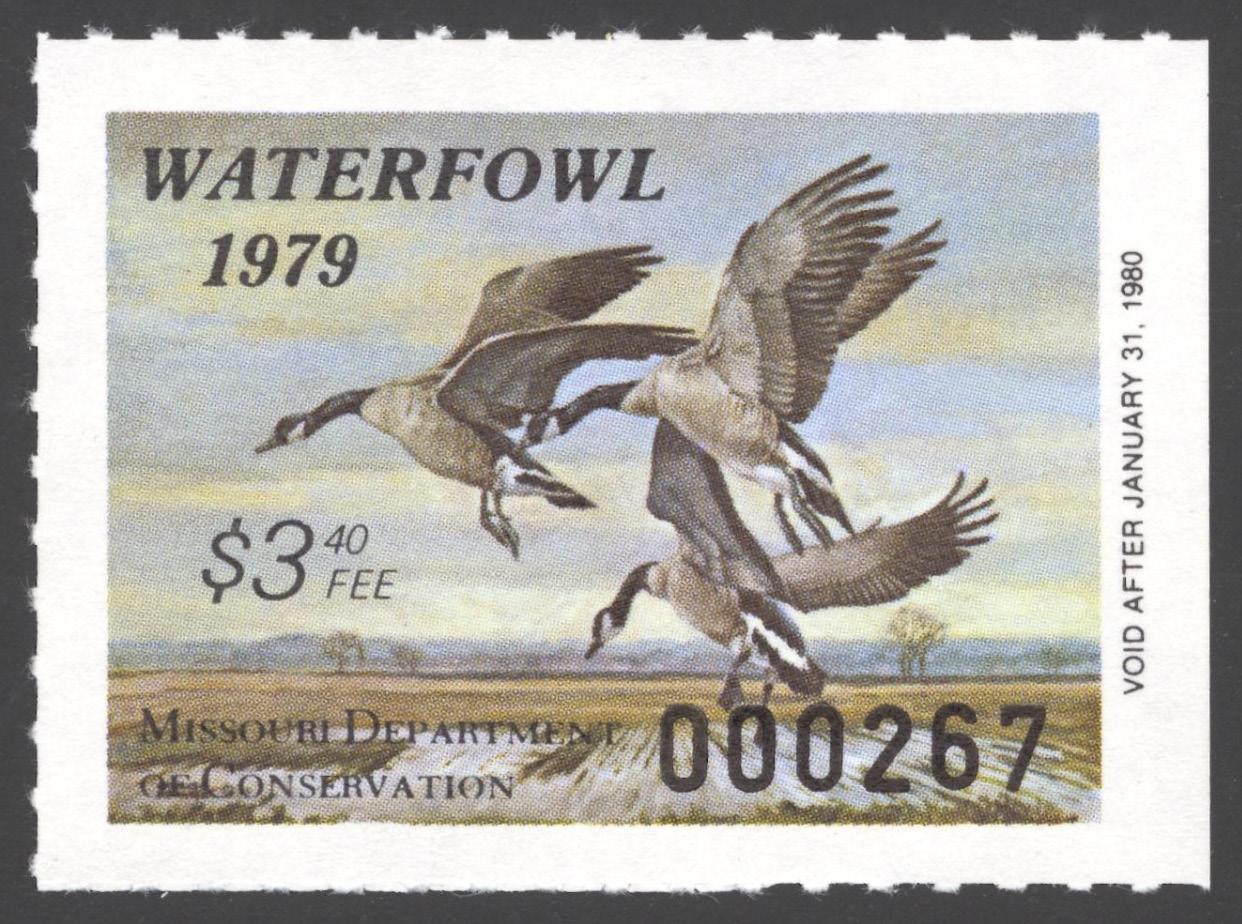
Over two-thirds of the respondents to all these survey efforts favored a state stamp. Then on February 16, 1979, the Conservation Commission approved creating a waterfowl stamp for 1979. Ten percent of the proceeds were to be used to administer the program and 45 percent each for wetland projects within and outside Missouri.
A hue and cry went up immediately against the stamp, including severe outside pressure on two Commissioners undergoing senate confirmation. Some said that since MDC had the sales tax, they didn’t need the money. Then the CFM reversed itself and came out against it. And even though an earlier survey of waterfowl hunters showed them in favor of it, the Commission ordered another survey in 1979 of waterfowl hunters and the general public. DU also joined in and surveyed their membership. In the end, all three surveys showed strong support for the waterfowl stamp and the director of MDC authorized Charles Swartz to prepare the first Missouri Duck Stamp. After that, Missouri artists were encouraged to submit possible stamp designs.
The artist and the year their stamp was used follows: Charles Schwartz (1979), David Plank (1980), Tom M. Crain (1981), Gary R. Lucy (1982), Doug Ross (1983), Glenn D. Chambers (1984), Ron Clayton (1985), Tom M. Crain (1986), Ron Ferkal (1987), Bruce Bullman (1988), Kathy Dickson (1989), Eileen Melton (1990), Ron Ferkal (1991), Kevin Guinn (1992), Thomas Bates (1993), Kathy Alexander (1994), Ryan Peterson (1995), and Ron Ferkal (1996).
Following the 1995 season, and with the advent of the “point-of-sale” permit system, the waterfowl stamp was discontinued. An attempt to continue the waterfowl stamp as a collector’s item continued the survival of the stamp during the 1996 season, but it was not required to hunt waterfowl.
Canceling the Stamps
1995 was the last year for both the trout and waterfowl stamp competition because of a move to a “point-ofsale” permit distribution where the permits were printed on site. Neither of the stamps could be printed by this process. For the 1996 season, the trout stamp was replaced by a trout permit and the waterfowl stamp was replaced by a migratory bird hunting permit. An article in the May 1994 Conservationist informed the readers that although the stamps were being eliminated, they would continue to be produced and made available for sale to those who wanted to help pay for special management programs. I don’t think that this lasted very long.
Epilogue: Currently, Missouri does not create, sell, or offer any state stamps for ducks or trout. The costs associated with maintaining an accurate inventory of a paper product and shipping them is cost-prohibitive. Paper Federal Duck Stamps are available for $25 at some U.S. Post Offices, but not at permit vendors or waterfowl hunting conservation areas. To be valid, the physical Federal Duck Stamp must be signed in ink across the face. Duck stamps are also available online. The electronic duck stamp, or e-Stamp, allows customers to purchase the Federal Duck Stamp online and use it immediately. The e-Stamp costs $32 and is valid through the entire season.
Joe G. Dillard
(Left) Missouri’s rirst state waterfow stamp. (Top) Missouri's first waterfowl stamp.
Members News
A Growing Legacy: Life and Founders Circle Memberships on the Rise
For those of you that have been around CFM longer than me, you know we serve as The Voice for Missouri Outdoors for over 90 years, championing the protection of our state’s wildlife, waters, and natural resources. Over the past two years, that voice has grown stronger than ever, fueled by an increase in individuals who have chosen to make a lasting investment in conservation— becoming a Life or Founders Circle Member. In the short time that I’ve been at CFM, I’ve seen a rise in the number of Life Members and Founders Circle Members.

This growth signals a deeper shift in how Missourians are engaging with conservation. Rather than viewing support as short-term or transactional, more CFM members are embracing long-term commitments that reflect both stewardship and legacy. Life Members, in particular, have seen steady momentum, with nearly 50 new Life Members in 2025.
Here’s what a few Life Members had to say about why they took the next step:
“Whether a citizen or working in the profession, those with an outdoor interest should consider stepping up to the plate with membership (especially lifetime).” – Bill McGuire
“Becoming a Life Member is not just an honor, it is a commitment to ensure that future generations will know, love, and benefit from Missouri’s great outdoors.” – Tessa Poolman
“We’ve got to fight in order to have the places and opportunities in Missouri, and beyond, for our kids and grandkids to explore, fish, and hunt. That’s why I became a Life Member.” – Carl Turlin
Another piece of the momentum is CFM’s Founders Circle, an endowment-based giving program designed to strengthen the organization’s future. Founders Circle Members play an influential role in preserving Missouri’s rich outdoor heritage by contributing to an endowment that provides long-term financial stability.
Each year, earnings from the endowment directly support CFM’s education and advocacy efforts, ensuring that conservation priorities remain front and center in both public awareness and public policy.
Thanks to the generosity of our members, we now have four different Founders Circle levels:
Bronze – $5,000-$9,999
Silver - $10,000-$34,999
Gold - $35,000-$74,999
Diamond - $75,000 or more
As we look toward the future, this growing base of committed supporters provides both stability and optimism. Life Members and Founders Circle Members are not only supporting today’s work—they are safeguarding tomorrow’s opportunities to hunt, fish, hike, and explore across our state.
Ready to join the legacy? By becoming a Life or Founders Circle Member, you can help ensure Missouri’s conservation story continues to be written, strong, resilient, and rooted in stewardship, for generations to come. To learn more, please contact Beth Cowgill, Membership Manager, at (573) 6342322 ext. 104 or bcowgill@confedmo.org.
Beth Cowgill




Owned by the members they serve, Missouri’s electric cooperatives do more than provide reliable and a ordable electricity. They are active in their communities, concerned for the well-being of their neighbors and devoted to the rural way of life that makes the Show-Me State a special place to live, work and play.
Missouri’s electric cooperatives are dedicated to protecting the land, air and water resources important to you and your quality of life.
Learn more at moelectriccoops.com


Homage to Man’s Best Friend
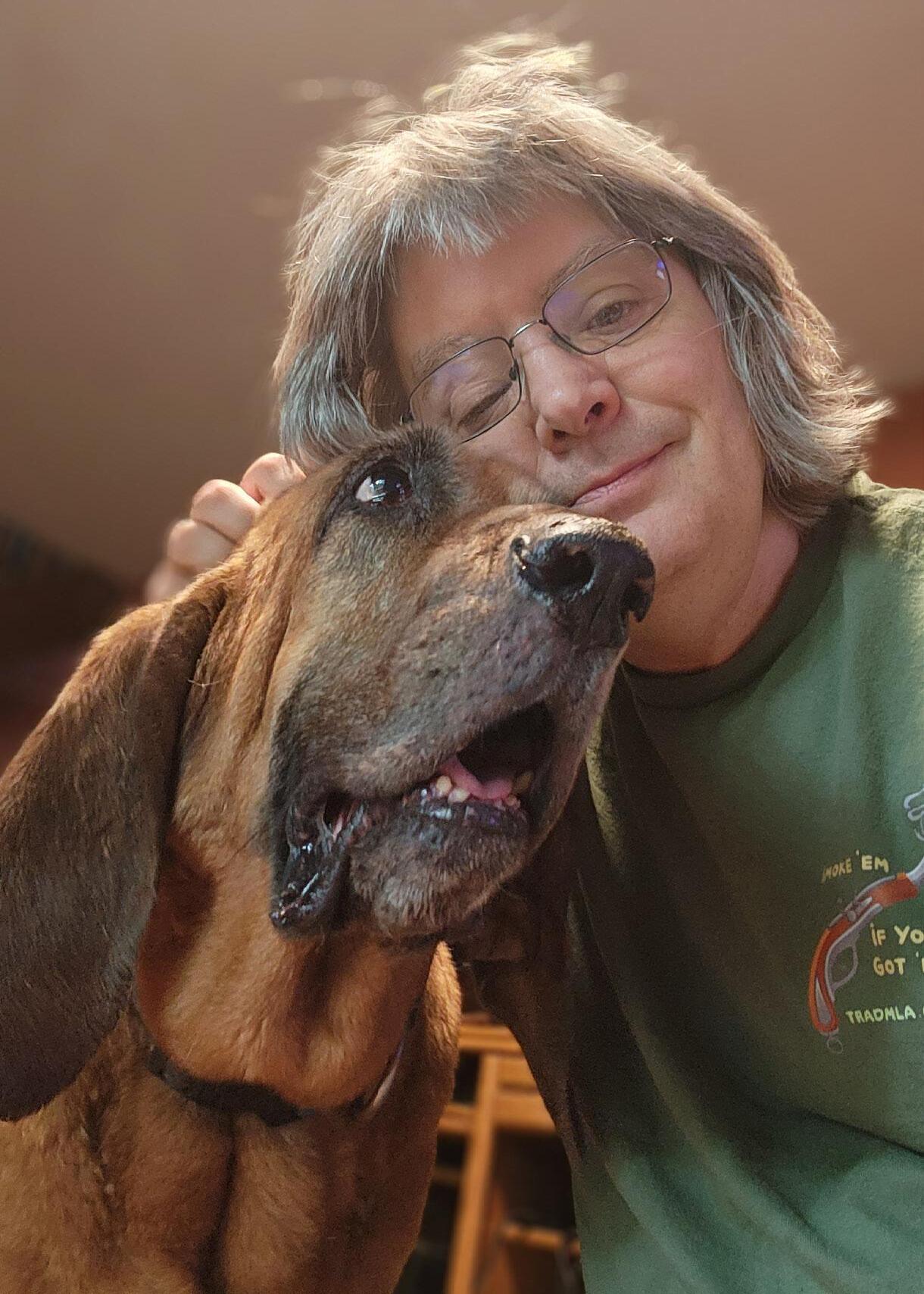
Irecently lost my best buddy, and the hole left in my heart is not one that will be filled anytime soon. Jake, my bloodhound, was 140 pounds of slobber, shedding fur, and love. I had him for almost 12 years, and even in his last days he would prance around like a puppy when I came home from an overnight stay somewhere. You cannot be exposed to that kind of unconditional devotion and not be changed. I am a better person for having been his friend.
Jake’s passing got me to thinking about all the dogs I have had in my life and the remarkable symbiosis between canines and us. Science puts the pairing of our species between 15,000 and 40,000 years ago, which makes dogs our oldest companions and the only large carnivore to be domesticated. Hunting for food was the common thread we shared, and we both correctly assumed we would be more successful doing it together. Neither species could have predicted the type of bond that would develop between us. Dogs became part of the family, our protectors, our children, and our friends.
I have had dogs in my life for as long as I can remember. I grew up in northern Shannon County where hounds have accompanied hunters for generations. Coyote hunting is a favorite pastime in the area, and the participants of this sport fall into two distinct groups: folks who hunt with July hounds and folks who hunt with running Walkers. The rivalry between these two breeds is legendary, and many a heated “discussion” has been held on the topic around a campfire or wood stove.
My father was firmly entrenched in the Walker camp, and I am convinced that my marriage would have gotten off to a very rocky start had my wife’s family owned a single July hound. Fortunately, my father-in-law was a bird hunter, so he had no dog in the fight, figuratively and literally.
Back when my dad was growing up, there were dogs on the farm, but they were usually working dogs to help with the livestock. Occasionally, one would also do double duty as a pet, and such was Sheba, a border collie mix. Sheba was as smart as she could be and faithfully followed Dad everywhere.
Electricity had not made it to the Haverstick Farm yet, so Dad would walk a mile and a quarter up to Shannondale Church every so often to watch TV with other kids in the community at the caretaker’s house. Sheba was usually by his side.
Dad told the story about him going up there one evening when “The Wolfman” was on TV that night. It was late by the time the movie was over, and Dad began the long walk home in the dark. The sky was overcast, and he had no flashlight, so he navigated the road by memory and intestinal fortitude. About a third of the way home, he thought he heard something following him, but he dismissed it as jitters from the movie. However, he stayed on guard, just in case.
After a little more walking, he was now convinced he was being trailed. He could hear it when he walked, but it would stop when he did. Fearing the worst, he took off at a dead run to make it to safety before the Wolfman had him for a snack. He was going as fast as he could, but he knew his pursuer was gaining on him. With still a quarter mile to go, Dad said he had nothing left.
He stopped with his hands on his knees, panting to catch his breath while waiting for the inevitable. He could hear death approaching him at a run, so Dad prepared to meet his maker, only to have Sheba’s wet tongue lick his hand. Never was a boy so glad to see his best friend!
When I was growing up, Dad always kept a pack of ten or so hounds, and Sunday was always “Race Day.” In the fall and winter, we gutted our deer in the same spot at the back of our upper hay field, and this chum pile was usually where the dogs were turned loose to start the coyote hunt. The actual killing of a coyote was a rare thing because the hunters were primarily there to hear the dogs run. Each hound had a distinct voice, and everyone listening could tell you which dog was doing what just by hearing them.
A hound’s voice might be “fine” or “coarse.” The dog may be “hush” or “close” mouthed. The bark may be characterized as a “chop” or a “bawl.” Everyone was fiercely proud of their dogs, and the worst insult you could lay on a person was to call their hound a “shepherd dog.” I still fondly recall listening to a dozen hounds in hot pursuit through the hills and hollers around our farm on a cold, clear January morning. A chill would go up my spine, and not from the frigid temperature.
My sister, Jodie, is seven years younger than me and, before it even became a thing, she took it upon herself to make sure that all the puppies at our house were “socially well adjusted.” If there was a litter of pups to be wallered around, she was the one doing the wallering. Once, when she was two or three, Jodie came up missing. We lived down a dead-end dirt road a mile away from our closest neighbor, so the odds of her being snatched up by the Boogey Man were pretty low.
Nevertheless, our high-strung mother was outside our house screaming Jodie’s name at the top of her lungs in an effort to locate her child. From the barn, Grandpa heard all the commotion and came over to investigate. He got Mom calmed down and, once he learned what had taken place, he asked my brother and me where Jodie had been the last time any of us had seen her. Of course, she had been playing with puppies before she vanished, so Grandpa immediately went over to the row of doghouses to start his search. Sure enough, Jodie was located in the second or third doghouse, sound asleep beside her canine companions.
When I was a teenager, I vividly remember watching a very late-night rerun of “Bonanza” on our old black-andwhite Zenith television. We got one channel, sometimes, and the reception was always better in the wee hours of the morning. It was also summertime in our non-airconditioned trailer house, so sleep was not easy to come by anyway. The episode I caught was titled “Any Friend of Walter’s” and was about Hoss being chased by bandits into the shack of a prospector and his dog, Walter.
Feature Story
I liked the episode a lot because Hoss was my favorite, and I also thought that the name “Walter” was about as good a name as a dog could have. I vowed that when I got out on my own and owned my first dog, that would be his name.
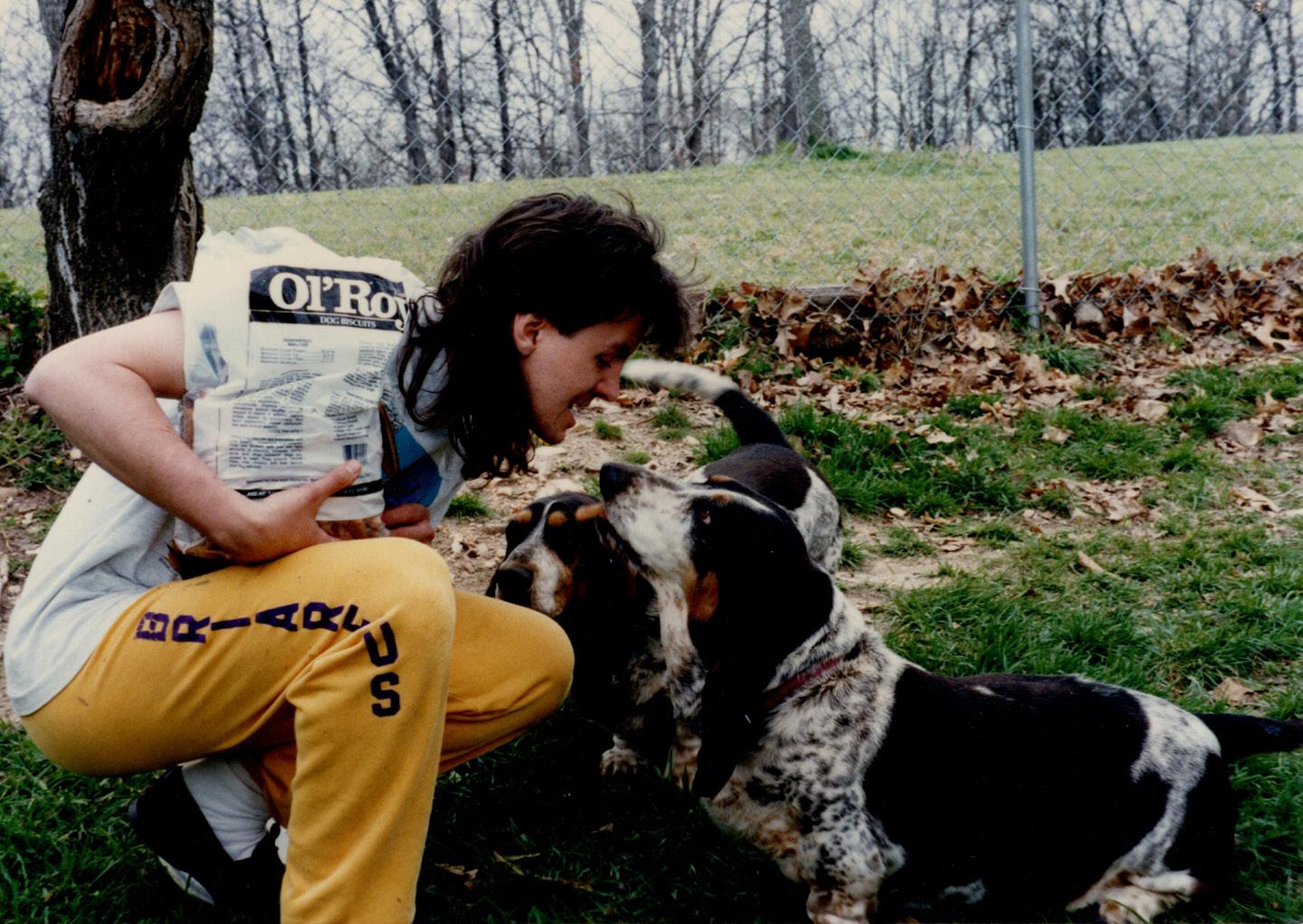
Fast forward about ten years to where my new bride and I were buying our first house. We were not ready for kids just yet, but we were ready for the next best thing, dogs. I had my heart set on a basset hound at the time, and I had located a breeder about an hour away who had puppies available. We were living in St. Charles then, and the breeder was located in rural Illinois, just across the Mississippi.
This was way before the internet and Google Maps, so Leah and I got turned around a couple of times before arriving at our destination. During the trip, we decided to get two puppies instead of one because we both worked and thought this would keep them from getting lonely when we were gone. “Walter” was an excellent name for a basset hound, but we needed another “old man” name for his brother. We decided on “Norman” for the other pup, and I remember the excitement we both felt as the breeder led us to the momma dog and her progeny.
They were being kept in a stall of an old pig barn, and the lady told us we needed to pick our pair out soon because she had another client coming in an hour to pick their pup out. What she did not tell us was that two stalls away from the puppies were a sow pig and about a dozen piglets. Now I have been around pigs since I was a boy, and I will admit that it is hard to beat a piglet for pure, unadulterated cuteness. But we had come to this place for pups, not pork, and I was focused on sorting through the eight black-and-white bassets to get the two I liked best.
Unfortunately, Leah had never seen a piglet in real life before, and she was completely enthralled with the pink bundles of joy as I kept hollering at her to leave the piglets alone and help me pick out our dogs before the competition showed up. It was like trying to herd cats. We finally left, cuddling Walter and Norman, but I had to check Leah’s coat pockets to make sure Wilbur was not making the trip home as well.
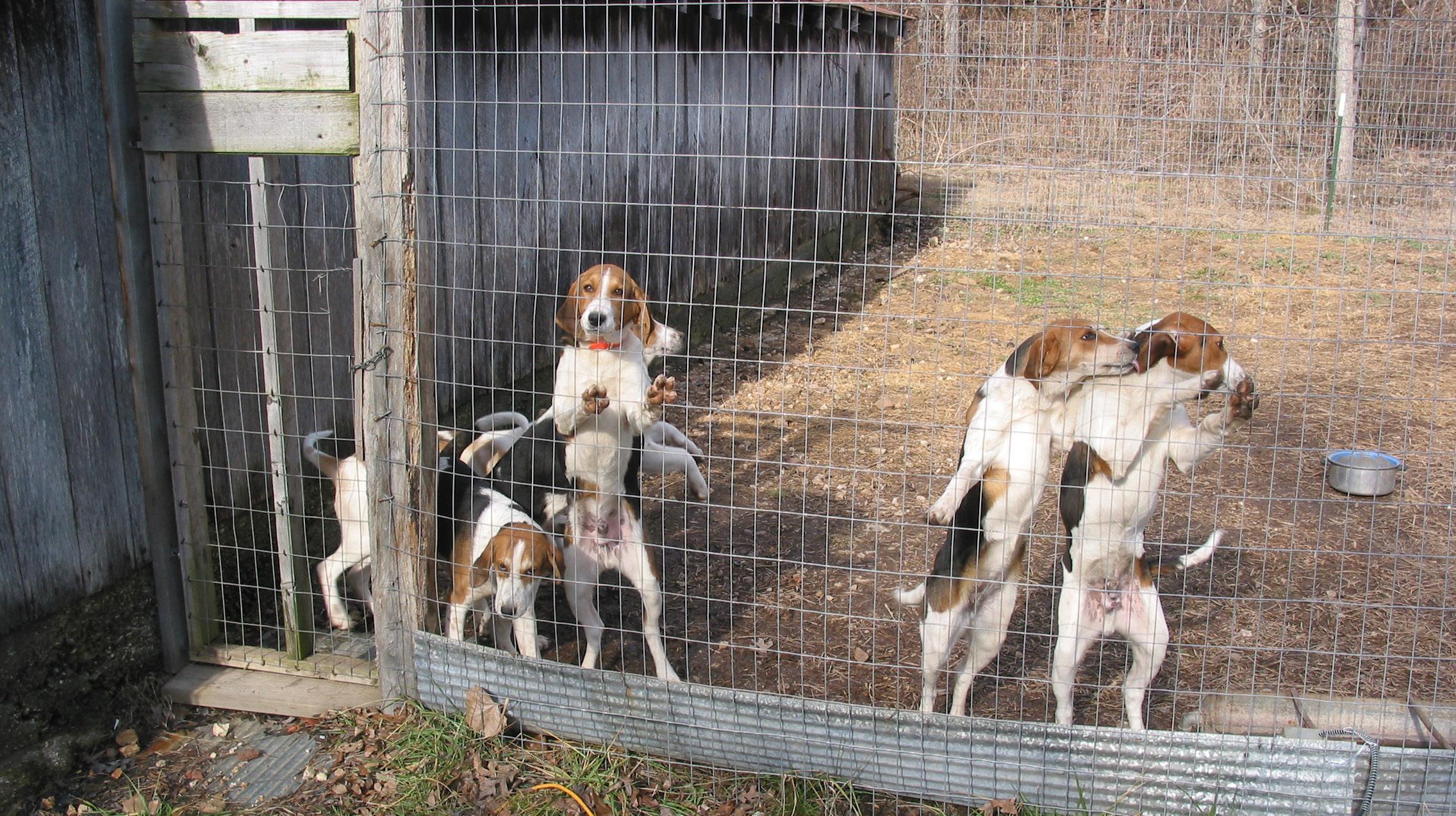
Many years ago, I was visiting at Dad’s house, and he was regaling me with stories of his recent coyote hunts. As he spoke, the pride and love Dad had for his hounds became a tangible thing.
He told me that night that since he did not get to see us kids much anymore, those dogs were his family and the only thing of value he had left in the world. That statement touched something deep inside me because I could hear the loneliness in his voice.
When I got back home, I immediately penned the song “Pearl,” which became a big hit for the bluegrass band Cedar Hill. The song is about that bond between a man and his dog, and I still get a BMI royalty check for two or three dollars every quarter because of its popularity.
I am writing these stories about me, my family, and some of the dogs we have had as a cathartic exercise to ease the pain I am feeling over the loss of my Jake. If you have continued to read this far, I am sure you can relate to what I am going through and are now fondly remembering a dog or two that you have had in your life. If you want to take a break right now and hug one, I completely understand.
The human race has accomplished many wonderful things over the thousands of years we have been around, but in my opinion the one that has had the most profound effect on our existence is when Man and Wolf decided that they would be stronger together than separate.
To send you off with a smile, I will let you know that yesterday I put a deposit down for a bloodhound pup, and I will pick up our newest family member in May. I went into this decision knowing full well that the loss I feel now will be repeated sometime in the future. To paraphrase Alfred, Lord Tennyson, “Tis better to have loved a dog and lost them than to never have loved a dog at all.”
Darren Haverstick
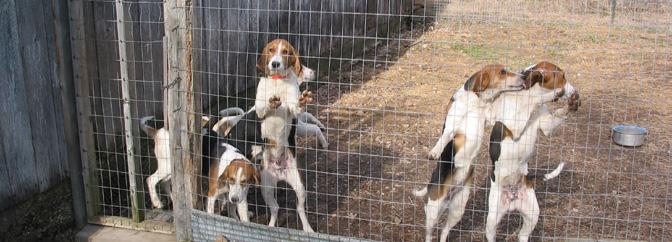
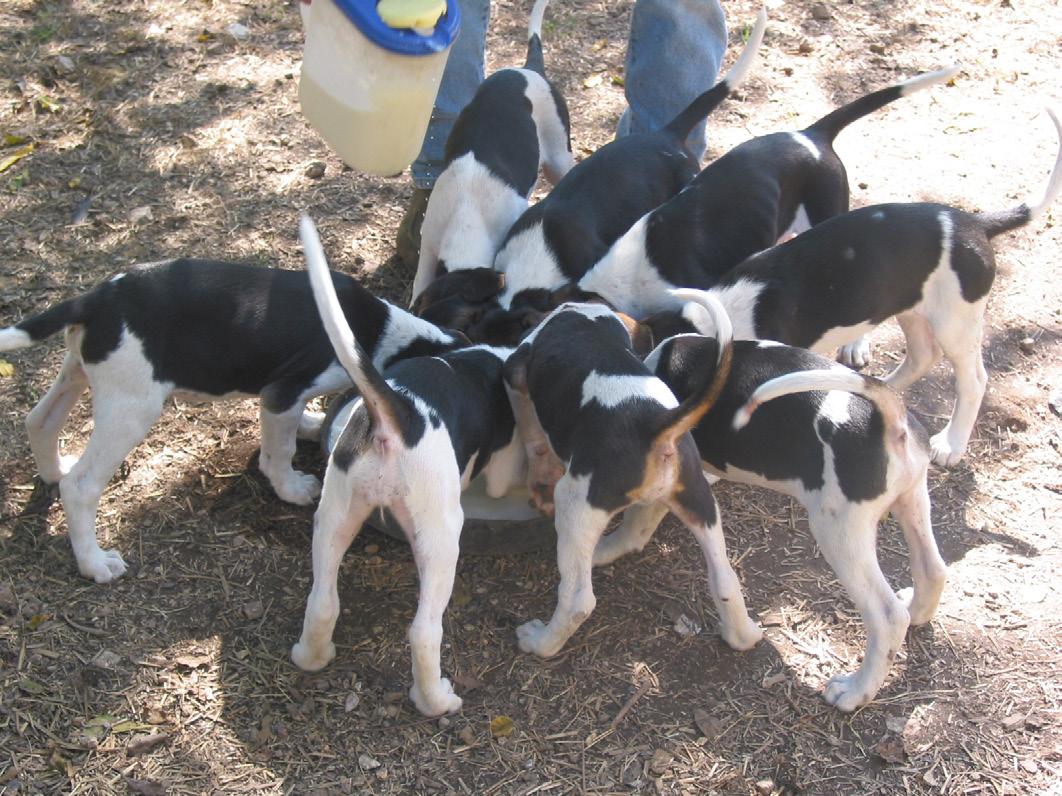
(Pg. 22) Me and my best bud, Jake. (Pg. 23) Dad’s pack of hounds, ready to go! (Pg. 24) That’s a lot of Walker pups! (Pg. 25) Me with Walter (foreground) and Norman (background). All photos: Darren Haverstick

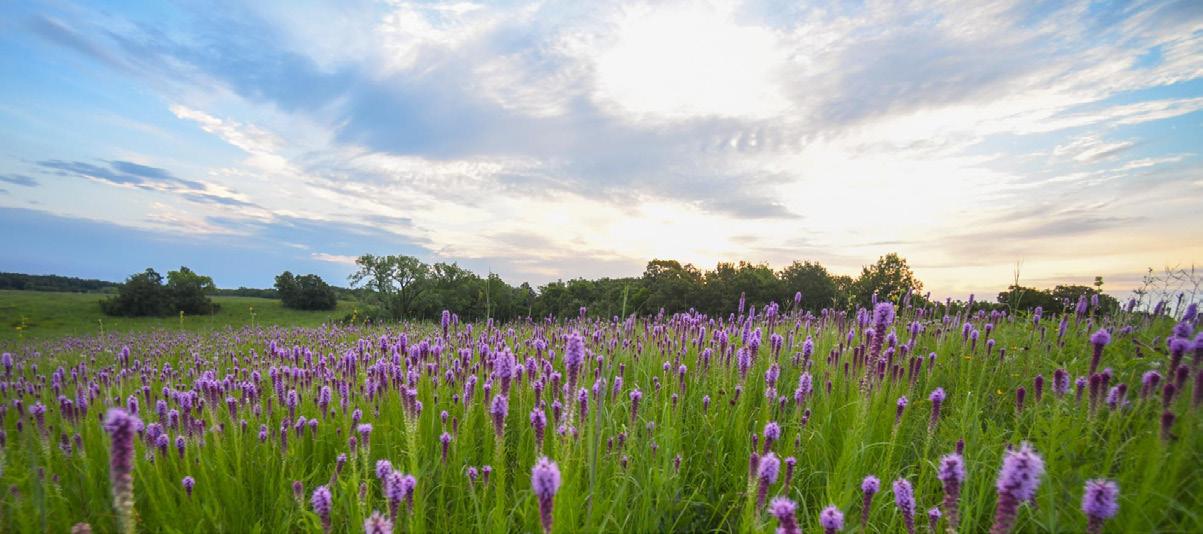
GOOD FOR LAND. GOOD FOR LIFE.

Prairie Prophets is a media platform created by Roeslein Alternative Energy to showcase the stories and objectives of the USDA Climate Smart Commodities Grant.
Everything profits from prairie. Soil, air, water - and all kinds of life! Learn how you can make the most of your land with prairie restoration, cover cropping, and prairie strips.
Explore the Prairie Prophets podcast, video series, website, and socials.
Scan the QR code to learn more.

Road trip. We didn’t choose the perfect playlist. Or program the GPS. But we did fuel the car that made you realize there are no wrong turns, only new adventures. When the energy you invest in life meets the energy we fuel it with, amazing journeys happen.


Thirty Years of Giving: The Chambers Family Scholarship
Remembrance, legacy, and dreams. Some of the words that come to mind when we think about the reasons for scholarships. And for the Chambers Family Scholarship, it’s been a minute, as they say. Thirty-two years since inception, next year will mark the 30th time an award will be handed to a young aspiring conservationist, biologist, or natural resource professional.
Not the only scholarship offered through the Conservation Federation of Missouri (CFM), by last count there were seven. And certainly not the oldest, that distinction goes to the Charles P. Bell Scholarship, started in 1989 and named after a longtime CFM treasurer and former president (1988-1989). Yet, after 30-plus years, it seems like a good time to pause and celebrate the history of the Chambers award and future aspirations.
Originally named the James D. Chambers Memorial Scholarship Fund, the scholarship was established in 1994 following the untimely passing of James (Jim) Chambers, age 34, and the son of avid conservationist Glenn Chambers of Columbia, Missouri.
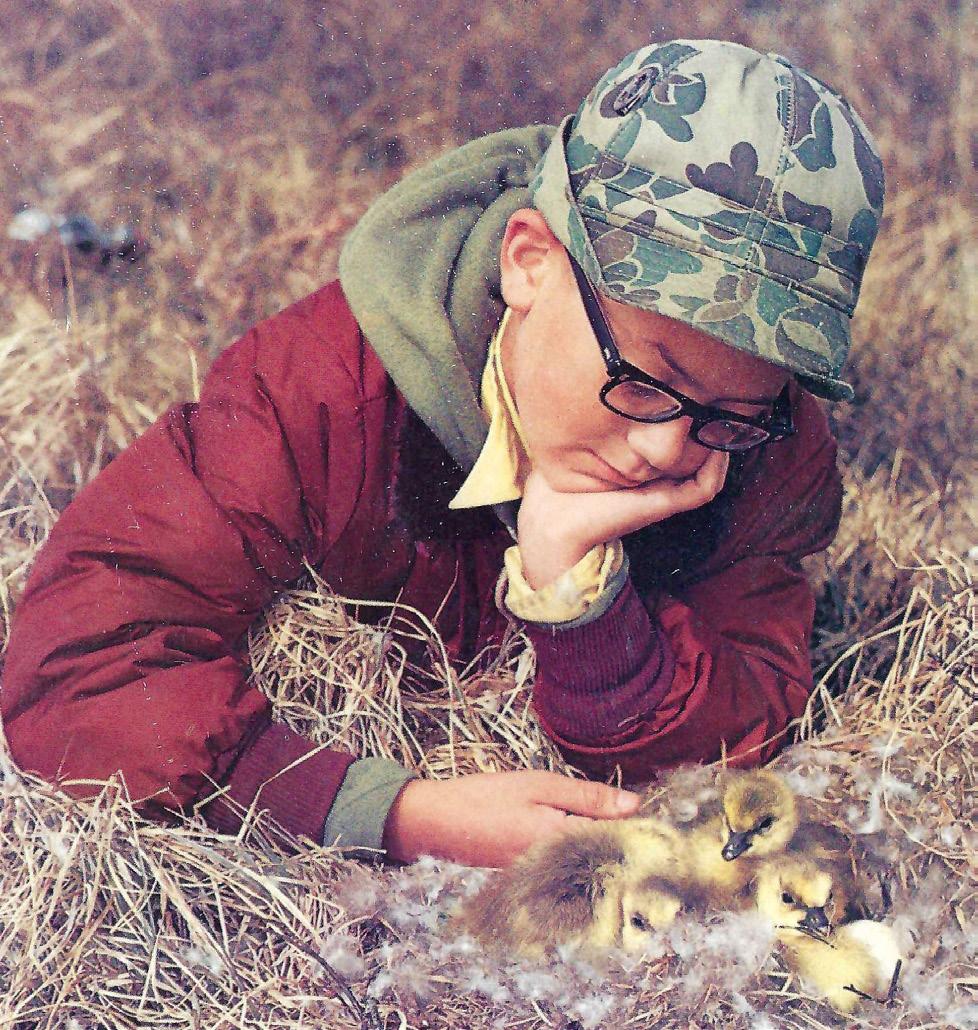
Jim was a brilliant student, a National Merit Scholarship winner, and an exceptional musician, having performed as a concert pianist at Carnegie Hall and as a solo tenor singer in the London Opera House. Jim's love for the outdoors and nature paralleled his enthusiasm for music; he loved hunting, his brother Russ will tell you he was a good shot because he waited for the good shot, and he also enjoyed fishing and camping with his family. And if that’s not enough, he also earned the Eagle Scout Award from the Boy Scouts of America with gold and silver palms.
The scholarship was initially managed by the Missouri Chapter of the Wildlife Society (MOTWS), awarded to a graduate or senior undergraduate student majoring in wildlife or natural resources conservation at a Missouri college or university. Since inception, there have been 29 recipients plus five given in partnership with the Missouri Conservation Heritage Foundation (MCHF). The very first was given to Elsa Gallagher in 1997. A student at Mizzou, Elsa has since worked for Quail/Pheasants Forever and is currently the Habitat Program Director at The Bee and Butterfly Habitat Fund.
"Receiving the first Chamber’s Memorial Scholarship was inspiring,” said Elsa. “I cried that day, and it meant a lot to me to be able to shake this man’s hand and receive this first award recognizing his wonderful son.”
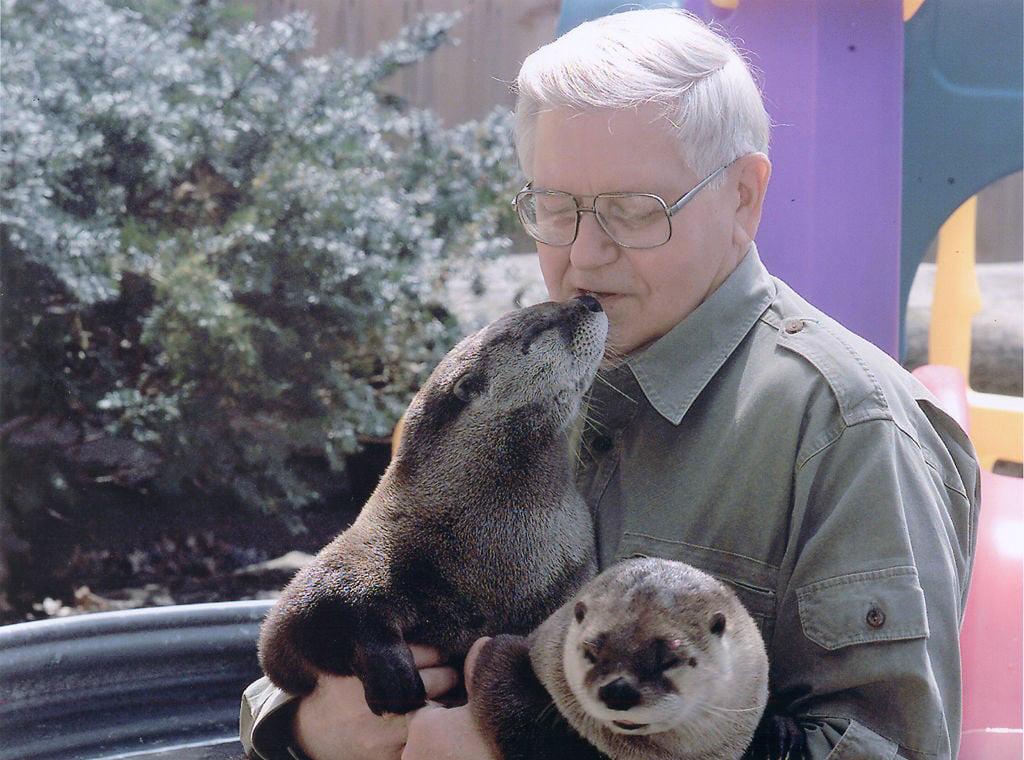
In 2017, Jim’s father, Glenn (aka Big Duck/Paddlefoot), at age 81, lost his courageous battle with cancer. A Missouri native, Glenn earned a master’s degree in wildlife management from the University of Missouri (MU) in 1960 and was employed as a wildlife biologist by the Missouri Department of Conservation (MDC) shortly after graduation. But it was his passion for photography and film that brought him the greatest joy and professional success. He worked for MDC until his retirement in 1995, after which he contracted with the Department to present educational programs about river otters to schools and other events around Missouri.
Among his many honors was the William T. Hornaday Gold Medal from the Boy Scouts of America (2013), a rare lifetime achievement award given to a small number of people historically, including Theodore Roosevelt and Aldo Leopold. He also received the Ducks Unlimited Distinguished Service Award (1993), the Lifetime Achievement Award from CFM (2002), and the Master Conservationist Award from the MDC (2016), among others. Glenn also served as CFM President (2007-2009).
In 2016, Glenn discussed moving the scholarship's sponsorship from MOTWS to CFM. The primary reason for the move was mostly about enhancing opportunities for fundraising. Glenn and Jeannie then asked CFM members Dan Zekor and DeeCee Darrow to be the scholarship coordinators going forward after Glenn’s death.
“We were honored by this request,” remembered Dan. “After some discussion with Glenn and Jeannie about fundraising and other possibilities, they approved moving the scholarship to CFM as a restricted endowment. The Executive Committee voted to accept responsibility for the scholarship and we immediately started work to grow the endowment,” said Dan. “Glenn liked the idea of increasing the award from $500 to $1,000 and we quickly raised enough money for the 2018 increase. We also changed the name to the Chambers Family Memorial Scholarship as a way to honor both father and son.”
When it comes to selecting each year’s recipient, the task can be difficult. Reading the backgrounds of Jim and Glenn, the bar is set high, and the shadow is large. The scholarship recognizes excellence in academics, leadership, and conservation education but it also includes some intangibles.
“Resumes and grade point average are important considerations, as is a student’s declared major,” said DeeCee. “But substantial weight is given to the required essay and letters of recommendation. These help us to get a feel for a student’s personality, sincerity and commitment. All of this is then measured against what we call the spirit of the scholarship. At some point we think about the Chambers family and ask ourselves whether Glenn would approve of our selection.”
In 2024, scholarship qualifications were revised to align with the Johnny Morris Institute of Fisheries, Wetlands, and Aquatic Systems at MU. The concept of the Institute was something Glenn had discussed and supported. Today, the scholarship is awarded to either a junioror senior-level undergraduate or a graduate student pursuing a degree in waterfowl, waterbirds, wetlands, or general wildlife biology or management. Preference is given to MU students and secondarily open to students attending other Missouri universities if pursuing studies described above. The related scholarship offered by MCHF was discontinued.
“As we approach the 30th year, we’d like to raise another $10,000 so we can either increase the annual award or maybe offer two scholarships instead of one,” said Dan. “It would be a nice way to celebrate 30 years of giving, and the legacy of two extraordinary individuals.”
If you’d like to contribute support to this or any of the CFM scholarships, contact Micaela Haymaker at 573-6342322 ext. 101 or mhaymaker@confedmo.org.
Past Recipients of the Chambers Family Scholarship:
1997 - Elsa Gallagher
1998 - Tim McCoy
1999 - Anna D. Chalfoun
2000 - Michael Larson
2001 - Michael L. Schummer
2002 - Nathan M. Roberts
2003 - Kimberly Suedkamp Wells
2004 - Chadwick Rittenhouse
2005 - Lucas Miller
2006 - David B. Leistmiester
2007 - Conner P. McCallahan
2008 – Brennan Kyle Swallow
2009 - Cathy Bodinof
2010 - Rebecca Mowry
2011 - Mitchell B. East
2012 - Christopher Rhodon
2013 - Kimberly Pope-Cole; Thomas Bonnot
2014 - None selected this year
2015 - Shawn Colborn
2016 - Julia Guyton
2017 - Mackenzie Marks
2018 - Molly Garrett
2019 - Sara Clements (G); Jessica Filla (UG)
2020 - David Hicks (G); Aaron Eckelkamp (UG)
2021 - Danci Lee Johnston (G); Bailey O'Brian (UG)
2022 - Nina Fogel (G); Emile Ellingsworth (UG)
2023 - Chantelle Wimms (G); Owen Stein (UG)
2024 - None selected this year
2025 - Jeffery Edwards (G)
2026 - Janice Balraj (UG)
Dan Zekor
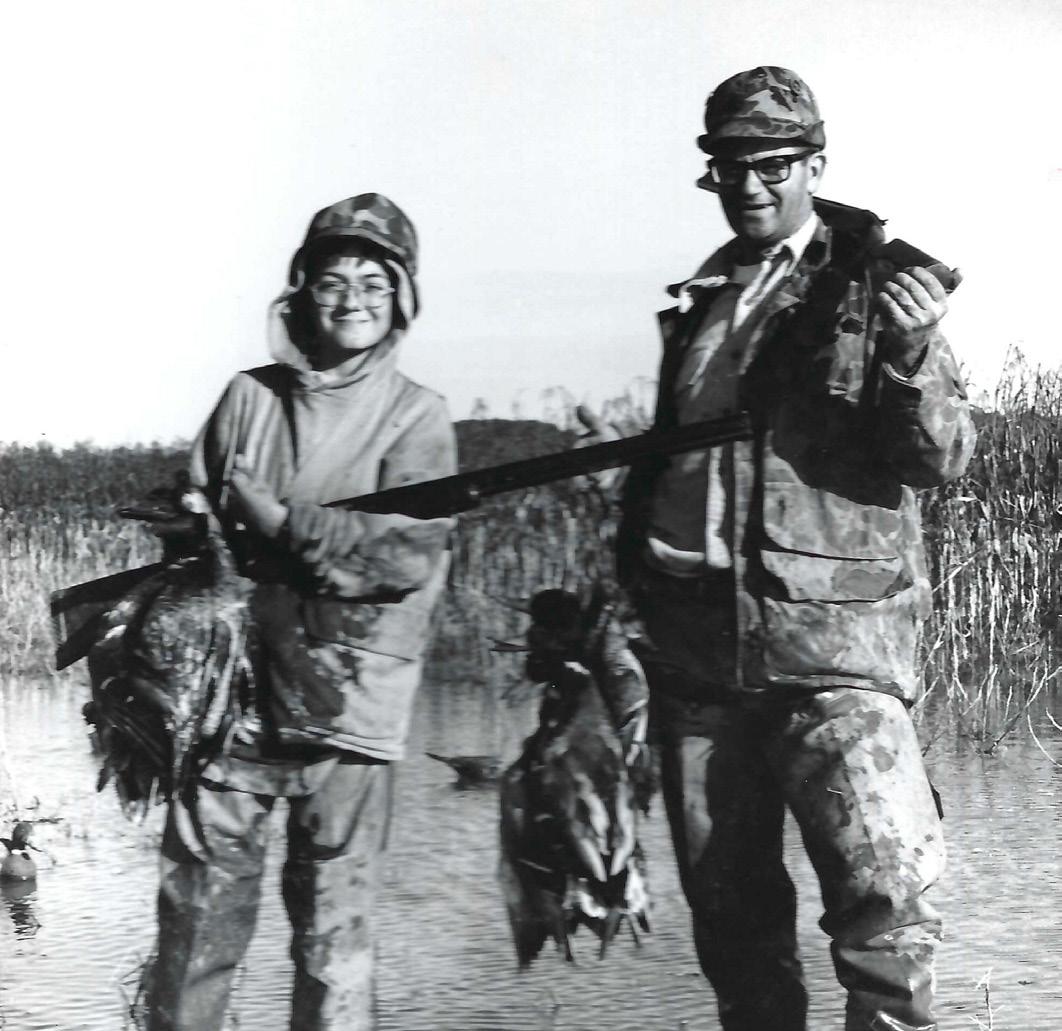
(Pg. 28) Glenn with otters used in school programs. (Pg. 29) Jim admires goose chicks during a banding trip with Glenn. (Pg. 30) Jim and Glenn after a successful father and son duck hunt. (Photos: Courtesy of Russ Chambers)
Missouri’s Land Trusts: Land Protection Champions
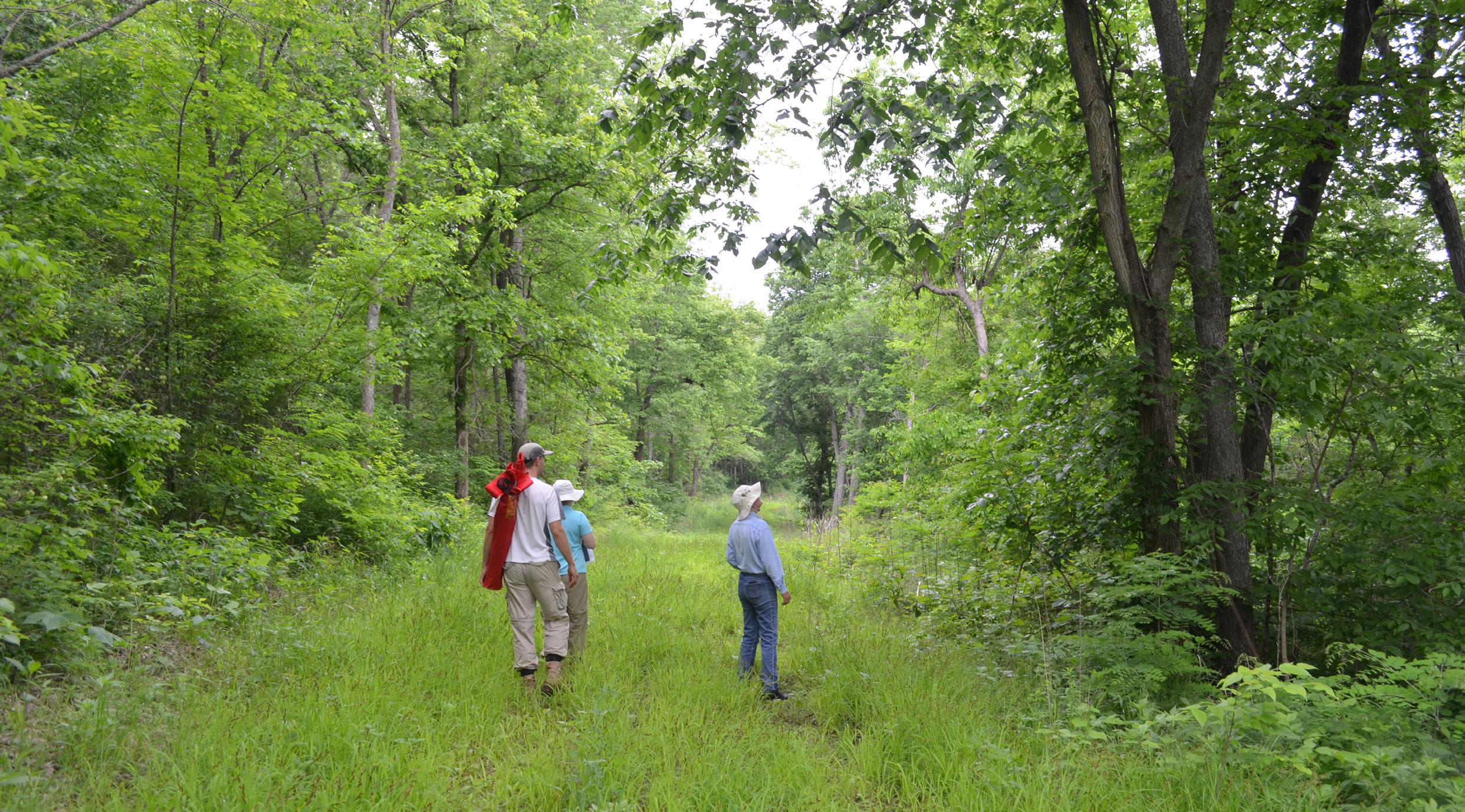
Missouri is fortunate to enjoy strong citizen support for public land in conservation ownership, such as Missouri State Parks and conservation areas. There are numerous other groups also protecting the conservation values of forests, woodlands, prairies, riparian areas, glades, caves, and wetlands. The private nonprofit organizations that protect land are called land trusts.
In other parts of the country, especially the eastern United States, land trusts have operated for much longer than in some regions of the Midwest. The nation’s oldest land trust is The Trustees of Reservations, founded in Massachusetts in 1891. In contrast, two of Missouri’s oldest state-based land trusts—Open Space STL and the Missouri Prairie Foundation—were founded in the mid1960s.
Over the past two decades, land trusts in Missouri have become especially active. Following the lead of other states, Missouri formed an umbrella organization called the Missouri Land Trust Coalition (MLTC), composed of member land trusts and conservation partners dedicated to the protection and restoration of Missouri’s key natural resources and landscapes in the land protection sector. This year, MLTC became incorporated with the State of Missouri as a nonprofit corporation.
What is a Land Trust?
A land trust is a private, nonprofit organization that protects land and water for conservation, agricultural, open space, natural, cultural, and/or community values. There are about 1,300 land trusts in the United States working at various scales—local, regional, statewide, and/ or national. Collectively, they have protected more than 60 million acres of land in the country.
Feature Story
Land trusts protect land and natural resources by acquiring and managing land or by holding conservation easements on land. In some cases, land trusts purchase land and convey it to public or other nonprofit entities to permanently protect. Land trusts actively work to conserve land and water resources through best conservation and restoration practices or by stewarding conservation easements.
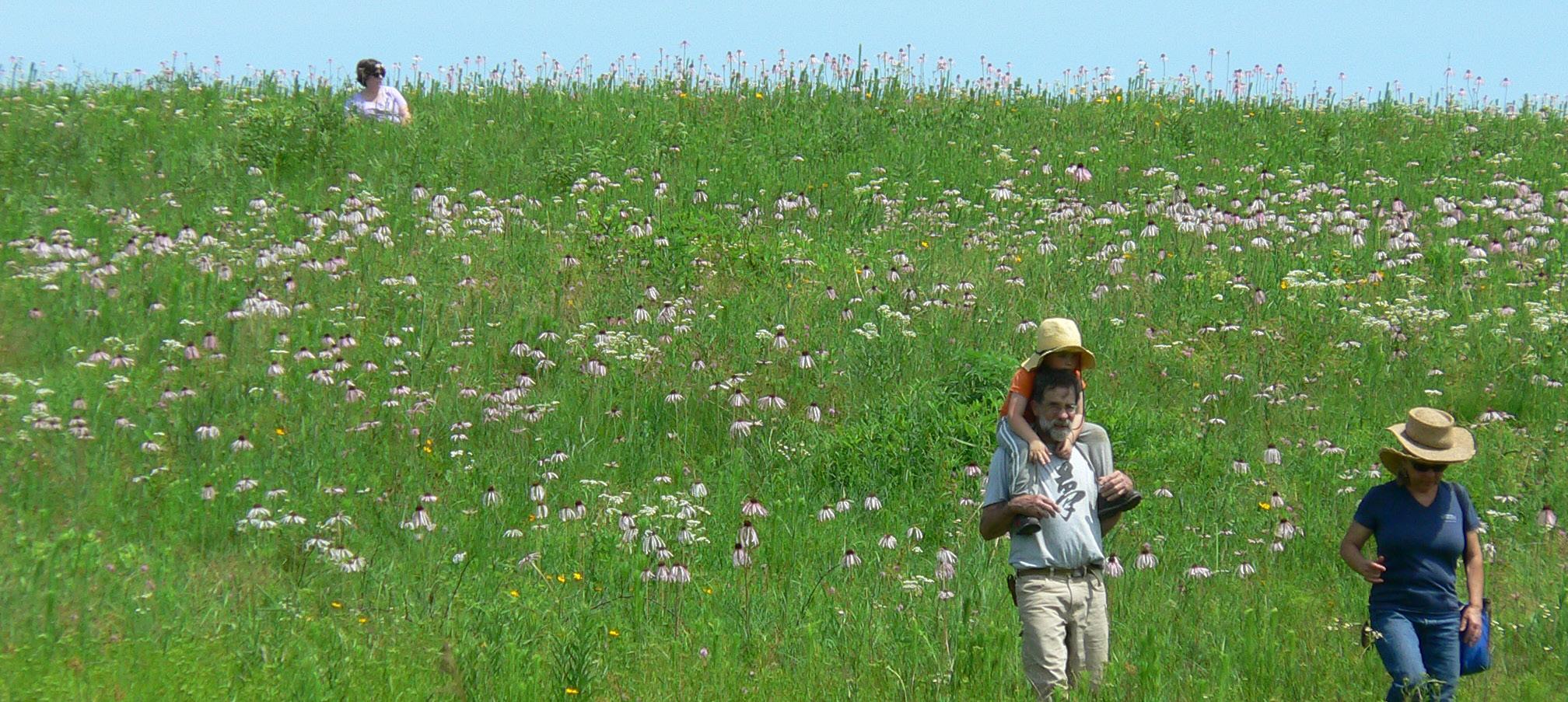
In addition, land trusts partner with other nonprofit organizations and government agencies to protect land, advocate for conservation policy, offer education and outreach programs and provide technical assistance to landowners.
How do Land Trusts Protect Land?
Land trusts partner with landowners who want to protect their land now and into the future. The landowner is in the driver’s seat, working with an appropriate land trust to find the best fit for the landowner and the land. The chief ways that land trusts protect land are as follows:
Holding Conservation Easements on Land: Conservation easements are property interests that protect land for a specified period or in perpetuity. The terms of the easement are defined in a legal document that is signed by a land trust and the landowner, and recorded in the county recorder of deeds’ office.
Conservation easements can be placed on many kinds of properties compatible with conservation values— working lands such as farms and ranches; residential and recreational property; forests, prairies, wetlands, and other habitats and open space. The land remains in the hands of the owners to continue their residences, recreation, or work, subject to the terms of the easement.
By placing land in a conservation easement, the landowner agrees with the land trust to uphold the terms of the easement document to protect the conservation values of the land. Typical restrictions include prohibiting real estate development, forest clearcutting, plowing prairie, and most commercial activity inconsistent with those values.
A landowner can reserve some locations for existing and future buildings on the property for residences, recreation, or working land uses. Conservation easements can either be donated or sold to a land trust. A landowner can also sell property placed in a conservation easement, subject to the terms of the easement. Future landowners must follow the easement terms.
The land trust becomes the “holder” of the easement, and with that status comes the responsibility to ensure the landowner complies with the restrictions in the conservation easement. This obligation requires the land trust to validate the easement with regular monitoring, which can occur both in person and remotely, through high-resolution satellite or plane imagery, or drones. It is typically expected that the land trust will monitor the land at least once a year to confirm that no damage, building violations, or other actions contrary to the terms of the easement have occurred.
Purchasing or Accepting Donations of Land: Private landowners wishing to protect their land may elect to transfer property to a land trust, either by selling the land or donating it. This option is known as fee simple ownership, meaning the land trust has full title to the land.
Whether landowners donate ownership of land or donate conservation easements to their land, they may benefit from charitable deductions and estate tax benefits under the Internal Revenue Code.
As always, a landowner should consult with their financial, tax, or legal advisor to determine the value of these benefits. Land trusts typically have knowledge of these benefits but don’t serve as the landowner's advisor regarding their applicability.
Conservation Practices: Sometimes a landowner may have no current interest in transferring any property interest to a land trust, but wants to engage in activities that help preserve and protect the natural resource value of a piece of land. Restoring stream banks, providing other forms of riparian protection, or engaging in sustainable agricultural or timbering practices may be at the top of a landowner’s priority list.
Land trusts can be very effective partners in these kinds of activities. They may engage in these activities themselves or help landowners find the partners and financial sources to accomplish protection or restoration that might otherwise be unavailable. Sometimes, such conservation practices can be an initial step that may later lead landowners to conclude they want to permanently protect their land through a conservation easement or fee simple ownership by a land trust.
What is Land Trust Accreditation?
The national Land Trust Accreditation Commission was incorporated in April 2006 to build and recognize strong land trusts, foster public confidence in land conservation, and help ensure the long-term protection of land.
To obtain accreditation, a land trust must complete a rigorous application, reviewed in detail by the Land Trust Accreditation Commission. To maintain accreditation, a land trust must re-apply every five years.
Accreditation is a mark of distinction in land conservation. It is awarded to land trusts meeting the highest national standards for excellence and conservation permanence. Of the nation’s approximately 1,300 land trusts, about 400 are accredited.
In Missouri, several land trusts are nationally accredited. Regardless of accreditation status, a land trust can hold conservation easements and own land.
Is Land Protected by Land Trusts Open to the Public? It depends. Land trusts that hold fee simple ownership of land often make that land available to the public to enjoy.
Land owned by private individuals, which they place in conservation easements, generally is not; it is up to the individual private landowners to allow public access to their land.
I’m a landowner. I want to work with a land trust to protect my land for future generations. Who can help me?
The Missouri Land Trust Coalition (MLTC) is an association of land trusts and their conservation partners dedicated to the protection and restoration of Missouri’s key natural resources and landscapes across the state. Information about individual MLTC land trust members, as well as many useful resources, is available at missourilandtrusts.org/. MLTC can provide information about the land trusts that work in a particular geographic area or on a particular type of resource.
Additional guidance on land trusts and land protection is available from the Land Trust Alliance, a nonprofit organization that supports land trusts nationwide. The Land Trust Alliance is the national leader in land trust policy, standards, education, and training. Learn more at landtrustalliance.org.
Missouri Land Trust Coalition Member Organizations
Audubon
Ducks Unlimited
Great Rivers Greenway
Greenbelt Land Trust
Heartland Conservation Alliance
James River Basin Partnership
Kansas Land Trust
L-A-D Foundation
Land Learning Foundation
Land Trust Alliance - Midwest
Magnificent Missouri
Missouri Conservation Heritage Foundation
Missouri Prairie Foundation
Open Space STL
Ozark Land Trust
Pheasants Forever/Quail Forever
Platte Land Trust
Seed St. Louis
The Conservation Fund
The Nature Conservancy
Davit is a board member of the Missouri Land Trust Coalition and Executive Director of the Missouri Prairie Foundation, a 60-year-old land trust.
(Pg. 31) Private individuals protected this riparian corridor in perpetuity with a conservation easement held by Platte Land Trust. (Photo: Carla Dods) (Pg. 32) Many land trusts own land, open to the public to enjoy, such as the Missouri Prairie Foundation’s La Petite Gemme Prairie. (Photo: Christine Chiu)
Carol Davit
Carol
Hand Feeding Blue Bird
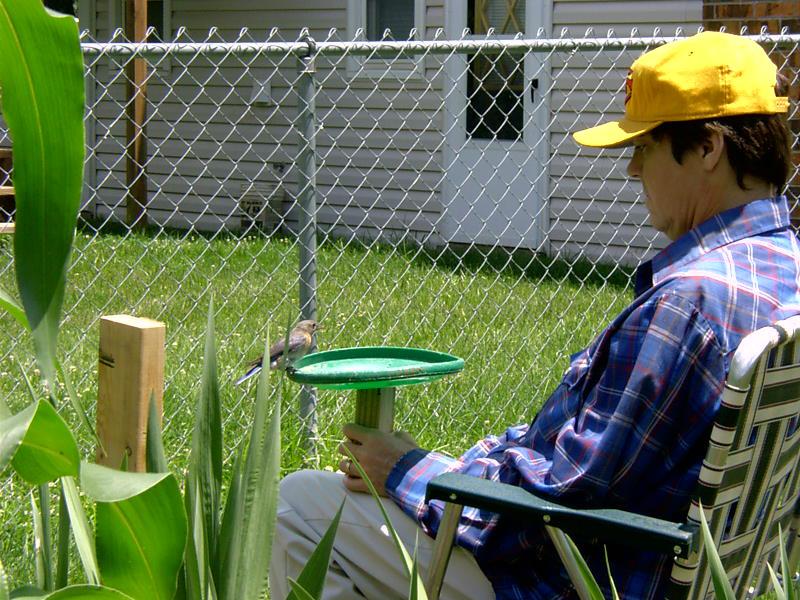
As bluebird enthusiasts, we all like to get up close and personal with the state bird of Missouri. My wife and I have always loved seeing that flash of blue and watching their day-to-day antics. We’ve also enjoyed having a bluebird box or two on our property and contributing to the cause. I built my first bluebird box back in the late 1970s, while I was in college.
We have taken the magazine “Birds and Blooms” for years and back in around 2006 my wife saw an ad for a “Bill Bird-in-Hand”. Bill Bird-in-Hand is the easy way to induce wild birds to eat from your hand. She got the wild idea that we should buy “Bill” and try to hand feed bluebirds. Well, you know the old saying “Happy WifeHappy Life”, so I told her that I was game.
Bill arrived by UPS or FedEx, and it was game on. Like most of you know, bluebirds love live mealworms, especially when they are feeding their young.
We initially followed the directions provided with Bill in attempting to feed them. Bill had a dish in his right hand that we placed the mealworms in, and we set him out near their box. They checked out Bill and the worms, but were too suspicious to land on the dish. Also, the dish was plastic, and the mealworms would crawl out of it. After trial and error, I finally devised a plan that worked.
I attached a frisbee to a 3.5’ stake. I had to place the frisbee upside down, and I used a green frisbee, the color white is preferable so that you won’t cook the mealworms. The frisbee must be upside down or the mealworms escape to their freedom or wherever mealworms go when they escape. I then placed the frisbee about 6 to 10 feet from the box in our yard where the parents were feeding the young.
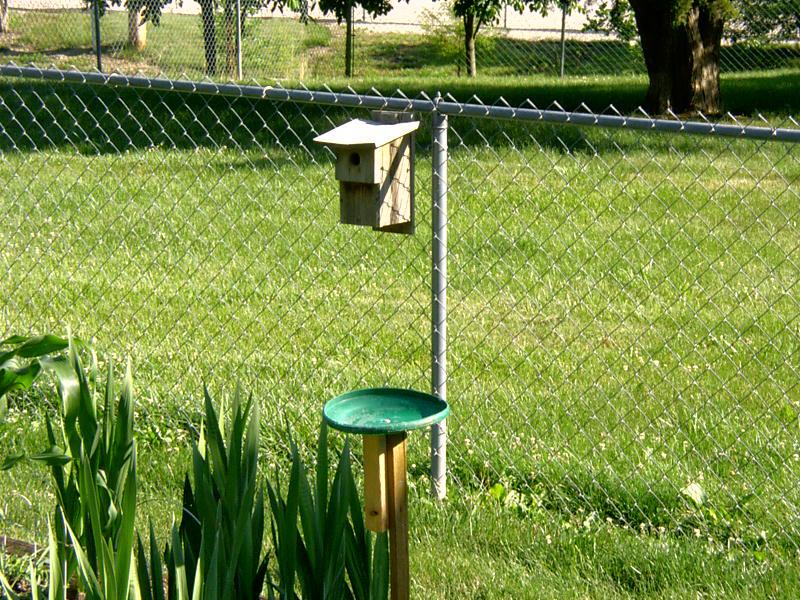
At first, I tried placing the frisbee on the ground, but for some reason it was no dice, they wouldn’t fly down to get the worms. I guess we had picky bluebirds, and as you know they all have their own personalities.
We diligently watched the frisbee to see if the bluebirds were going to start using it. When they became comfortable taking mealworms from the frisbee, I placed “Bill” in a lawn chair about 50 feet from the box. Bill was dressed in one of my old shirts and a baseball hat. We had to tie him to the chair and then weigh the chair down due to the wind. I just guessed on the distance, and I suppose it depends on what the birds are willing to accept.
Mealworms, I suppose, are like candy to bluebirds and Bill didn’t seem to be an issue. I gradually started moving Bill closer to the frisbee when I knew that he, well Bill looks like a he, wasn’t bothering their mealworm gathering.
I don’t remember how long it took but eventually Bill was sitting next to the frisbee and the bluebirds were still feeding. I unscrewed the frisbee from the stake and put it on Bill’s right hand. At first, the bluebirds were hesitant, but what the heck, they had young to feed, and Bill had not bothered them yet.
The day finally arrived when we thought we could “hand feed” or try to “hand feed” a bluebird and we were excited. We took the shirt off Bill and one of us put it on. We also put the hat on because Bill was wearing the hat. Also, the hat kept our hair from blowing around and shielded our eyes from the sun. I took the frisbee off of Bill’s hand and I made a short handle to screw it onto.
Since it was my wife’s idea she went first and was the first in the family to “hand feed” the bluebirds. The bluebirds aren’t actually in our hand since I didn’t think that I could get the mealworms to cooperate and sit still to be eaten. When my wife, Mary, got tired of feeding them, I took her place. The bluebirds always eyed us and let us know that we should probably just put out the mealworms without all of this carrying on. They would scold us, but they kept coming for the worms.
We were living in Plattsburg, MO, when we “hand-fed” the bluebirds and I have shared some pictures to prove it. We still have “Bill” and lately he sits in the apple orchard in the fall and guards the apples from the deer. You can buy books on hand-feeding bluebirds, and I think you can buy “Bill” online, although I don’t see him advertised in “Birds and Blooms” anymore.
Eldon and Mary Wulf
MISSOURI DEPARTMENT OF CONSERVATION
MDC Sets Upcoming Migratory Game Bird and Waterfowl Seasons
The Missouri Conservation Commission approved recommendations from the Missouri Department of Conservation (MDC) at its March 27 open meeting in Jefferson City for upcoming 2026 migratory-gamebird-hunting seasons and 2026-2027 waterfowl-hunting seasons, pending final federal approval.
For more information on migratorybird and waterfowl hunting, visit mdc.mo.gov/hunting-trapping/ species and select the specific species, or get MDC’s “2026-2027 Migratory Bird and Waterfowl Hunting Digest,” available beginning in July where hunting permits are sold.
2026 Migratory Game Bird Hunting
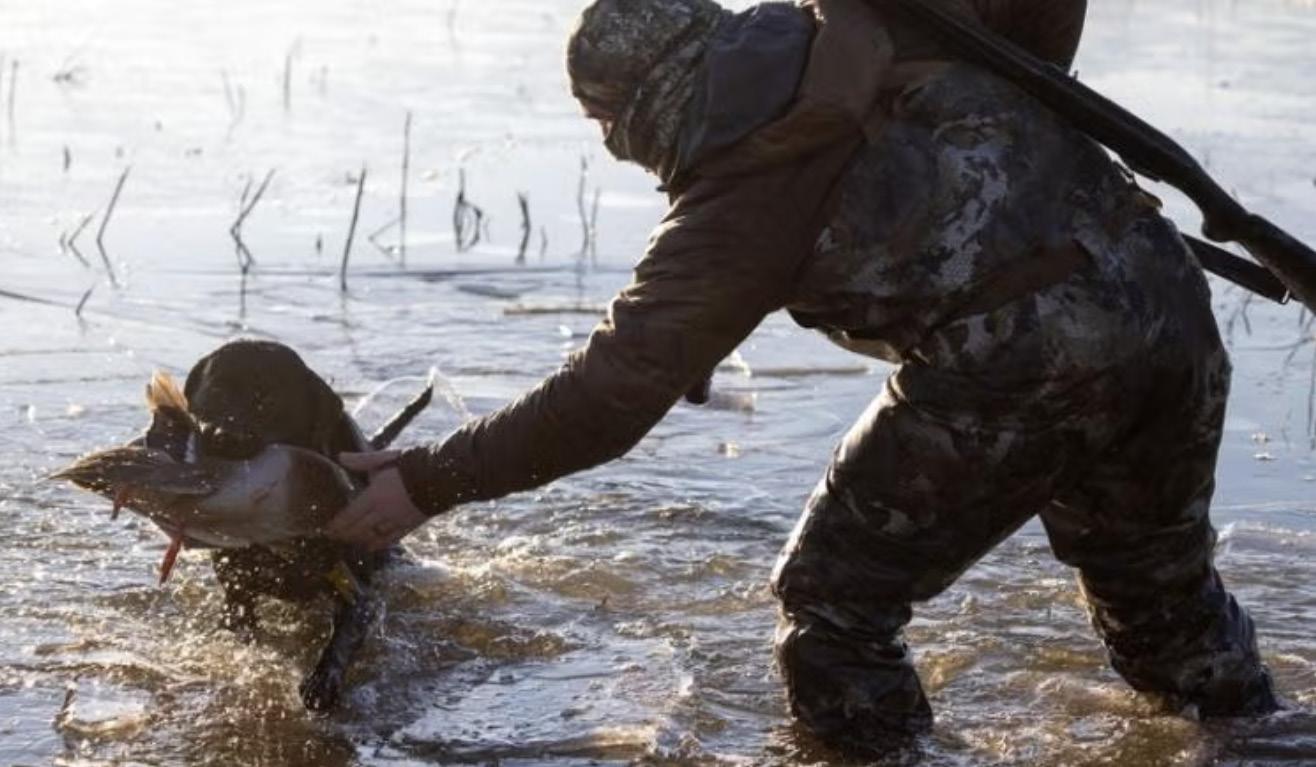
American Woodcock
Season: Oct. 18 through Dec. 1; Limits: 3 daily and 9 in possession; Hours: One-half hour before sunrise to sunset
Mourning Doves, Eurasian Collared Doves, and White-Winged Doves
Season: Sept. 1 through Nov. 29, Limits; 15 daily and 45 in possession combined total for all three species; Hours: One-half hour before sunrise to sunset
Sora and Virginia Rails
Season: Sept. 1 through Nov. 9; Limits: 25 daily and 75 in possession combined for both species; Hours: One-half hour before sunrise to sunset
Wilson's (Common) Snipe
Season: Sept. 1 through Dec. 16; Limits: 8 daily and 24 in possession; Hours: One-half hour before sunrise to sunset
Coots
Season: Same as duck season dates in the respective zones (See dates under Waterfowl Hunting for Ducks); Limits: 15 daily and 45 in possession; Hours: One-half hour before sunrise to sunset
2026-2027 Waterfowl Hunting
Teal
Season: Sept. 12 – 20; Limits: 6 daily and 18 in possession; Hours: Sunrise to sunset
Ducks
Season: North Zone: Oct. 31 through Dec. 29; Middle Zone: Nov. 7 though Dec. 13 and Dec. 19 through Jan. 10, 2027; South Zone: Nov. 26 – 29 and Dec. 7 through Jan. 31, 2027
Bag Limit: 6 ducks daily with species restrictions of:
4 mallards (no more than 2 females)
3 wood ducks
2 redheads
2 canvasbacks
2 American black ducks
3 northern pintail
2 scaup for first 45 days and 1 scaup for last 15 days
1 mottled duck
Possession Limit: Three times the daily bag or 18 total, varies by species; Hours: One-half hour before sunrise to sunset
Snow Geese (White and Blue Phases) and Ross's Geese
Season: Nov. 11 through Feb. 6, 2027; Limits: 20 blue, snow, or Ross's geese daily with no possession limit; Hours: One-half hour before sunrise to sunset
White-Fronted Geese
Season: Nov. 11 through Feb. 6, 2027; Limits: 2 daily and 6 in possession; Hours: One-half hour before sunrise to sunset
Canada Geese and Brant
Season: Oct. 3 - 10 and Nov. 11 – Feb. 6, 2027; Limits:
3 Canada geese and Brant in aggregate daily, 9 in possession; Hours: One-half hour before sunrise to sunset
Light Goose Conservation Order
Season: Feb. 7 through April 30, 2027; Limits: No daily or possession limits; Hours: One-half hour before sunrise to one-half hour after sunset
Methods: For the taking of blue, snow and Ross's geese, hunters may use shotguns capable of holding more than three shells and recorded or electronically amplified bird calls or sounds or imitations of bird calls or sounds.
Youth Hunting Days
North Zone: Oct. 24 and 25; Middle Zone: Oct. 31 and Nov. 1; South Zone: Nov. 21 and 22
Limits: Same as during regular waterfowl season; Hours: Same as during regular waterfowl season
Requirements: Any person 15 years of age or younger may participate in youth waterfowl hunting days without permit provided they are in the immediate presence of an adult 18 years of age or older. If the youth hunter is not certified in hunter education, the adult must have the required permits and have in his or her possession proof of hunter education unless exempt. The adult may not hunt ducks but may participate in other seasons that are open on youth hunting days.
Hunting Zones
Waterfowl hunting in Missouri is divided into three zones: North, Middle, and South. For a map and more information, visit MDC online at mdc.mo.gov/huntingtrapping/species/waterfowl/duck-zones or refer to MDC’s “2026-2027 Migratory Bird and Waterfowl Hunting Digest,” available beginning in July where hunting permits are sold.
Change to Federal Duck Stamp
Per the Federal Duck Stamp Modernization Act of 2023, the Federal Duck Stamp has been converted to a digital version and hunters are no longer required to carry a paper copy. Hunters must have a digital version in their possession.
Shown is a duck hunter with his hunting dog after retrieving a duck. (Photo: Courtesy Missouri Department of Conservation)
MISSOURI STATE PARKS
Sam A. Baker State Park celebrates 100 years!
Embark on a journey through time, celebrating a 100year legacy of history, resilience and discovery!
Sam A. Baker State Park is one of the oldest and most memorable state parks in the Missouri State Park system. Its resources that make it unforgettable are cultural, as well as natural and recreational.
Sam A. Baker State Park is a place of distinct natural history, beauty and value. Even before becoming a park, the area attracted people because of its grand peaks, clear streams and diverse forests. During early historic times, the Osage Indians used the St. Francois Mountains and the surrounding Ozark region for hunting. Some of the first pioneers to arrive in the area settled and built a homestead where Sam A. Baker State Park is located today.
Sam A. Baker State Park was named after Missouri’s former governor, Samuel Aaron Baker, who was born in Patterson, Missouri, located just south of the park. He taught in the rural schools of Wayne County and then served as principal and superintendent for the schools of Joplin, Piedmont, Richmond and Jefferson City. On Jan. 12, 1925, Baker was sworn into office as Missouri’s governor and soon after, encouraged the park’s development. The first 4,000 acres cost the state only $23,000, and in 1926, Sam A. Baker State Park was established.
The Civilian Conservation Corps played a vital role in the park’s development. The New Deal Era, established by President Franklin D. Roosevelt during the Depression, allowed the first major construction to begin when the park became the site of CCC camp #5, set up in June 1933. Many residents of surrounding communities were employed in the camp, Company 740, or other CCC units around the area. Both the CCC and Works Progress Administration completed several construction projects at the park, including bridges, water fountains, cabins, hiking shelters and a dining lodge. A total of 31 buildings and a fire observation tower were constructed during this period. Most of the stone buildings were constructed from the native Mudlick Dellenite, also called "blue granite."
The Visitor Center is in an old CCC building that was originally used as a horse stable, office and storage/shop area. Owing to the integrity of the preserved CCC-WPA workmanship, the entire park has been designated the Sam A. Baker State Park Historic District on the National Register of Historic Places.
Today, the park is a 5,324-acre showcase of rugged igneous bluffs, shut-in canyons, crystal clear waters, old growth forests, and diverse plant and animal life. This park is one of the few places in Missouri where the Appalachian species, the Yellowwood tree, grows in its natural habitat.
The park’s prominent feature, Mudlick Mountain, is an igneous dome covered by old growth oak-hickory forest, glades and talus slopes. Located in the St. Francois Mountains, it is one of the highest igneous domes in the state, at 1,313 feet. The park contains the Mudlick Mountain Wild Area, which makes up 4,460 acres of the park and is considered one of the largest wilderness preserves in the state park system. Several acres of the Mudlick Wild Area are designated as the Mudlick Natural Area, a pristine and natural part of the park. The 1,370 acres of igneous mountain dome, deep “shut-in” canyon, and talus slopes are quality examples of undisturbed natural landscapes. Mudlick Hollow is a favorite hideaway where the headwaters of Mudlick Creek form shut-ins, pools, and host rare plants and small waterfalls. Big Creek, which runs through the park, has been designated an Outstanding Water Resource, allowing the creek additional protection against pollution and other disturbances. Water quality is considered high and previous sampling records show that this stream segment should be recognized for its aquatic community significance. More than 30 species of fish have been recorded living in Big Creek. The threatened Big Creek crayfish and St. Francis River crayfish are known to only live in southeast Missouri.
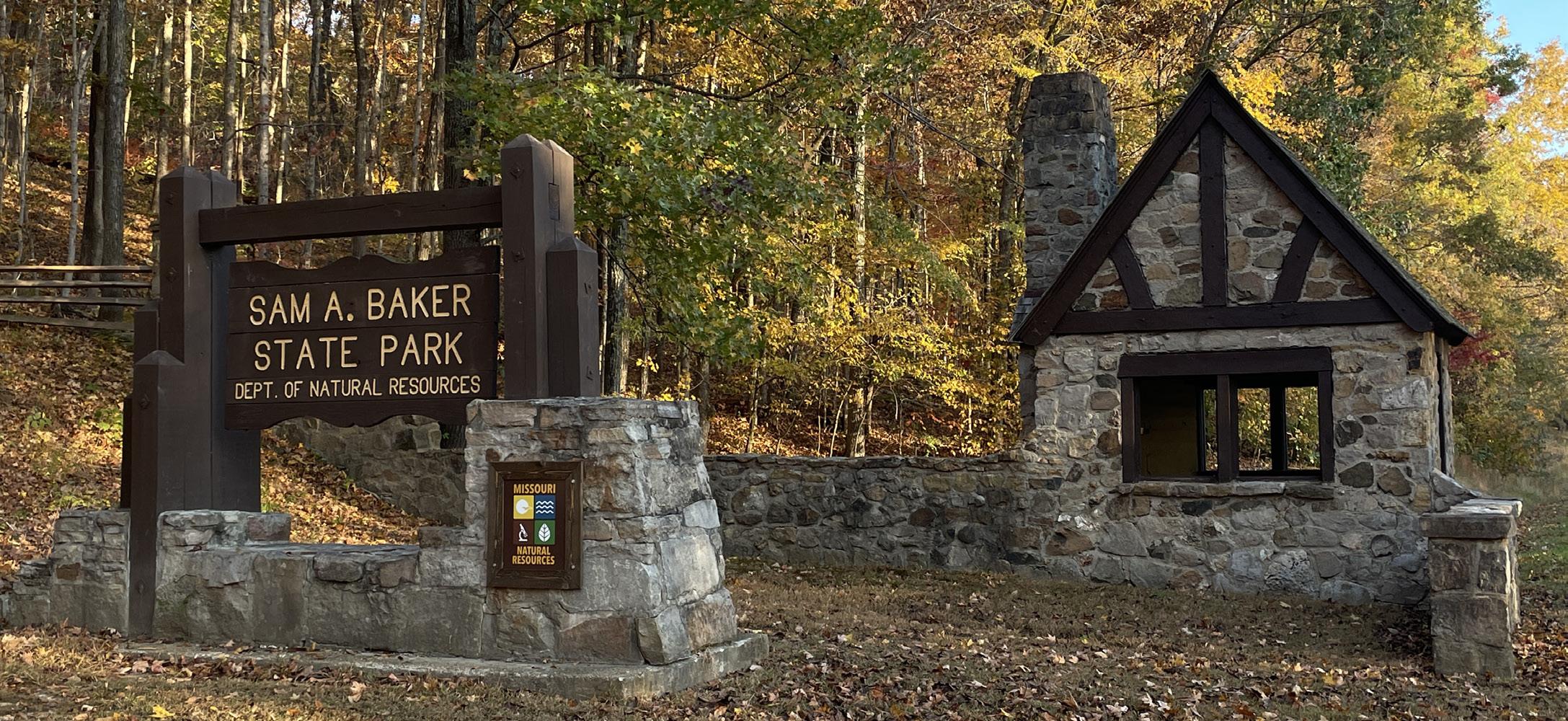
Sam A. Baker State Park has many recreational opportunities. Big Creek and the St. Francis River are two waterways that traverse through the park, providing miles of water fun. These waterways are a great place for swimming, floating and fishing for smallmouth bass, sunfish and catfish. Floats of all kinds are available through the park store.
Hiking is a great way to get out and explore the great outdoors at Sam A. Baker State Park. The Mudlick Trail is a system of more than 20 miles that has been designated a National Recreation Trail. The trail takes you on a journey into the St. Francois Mountain Region. Hikers can choose to stay overnight between October and May in one of the three hiking shelters built by the CCC or rough it throughout the year in one of the two backpack camps located on the trail. For those visitors who want to do less hiking, shorter trails are available. Trails are for hikers, backpackers and equestrian users. A 2-mile paved bike trail allows for visitors to travel between campgrounds and the Mudlick Mountain Store and Grill.
Day users can take advantage of our three picnic shelters, a playground and the visitor center, which offers information on the natural, cultural and historical aspects of the park. Interpretive programs, including hikes, explorer programs and evening programs are provided for visitors of all ages.
Overnight guests have several options, including 212 campsites with basic or electric hookups, an equestrian campground as well as 19 rustic cabins.
Because of these natural and cultural resources, as well as recreational opportunities, Sam A. Baker State Park is considered one of the most memorable parks in the Missouri State Park System. So, come join us on June 13 to celebrate 100 years of Sam A. Baker State Park!
This celebration will feature a variety of activities relating to the park's natural and cultural history. There will be old time games, historical exhibits and tours, demonstrators, activities, bluegrass music, self-guided tours of the CCC Lodge and van rides to the Mudlick Mountain Fire Tower. While you will have a good view of the fire tower, you will not be allowed to enter it. The event runs from 9 a.m. to 3 p.m. with registration for van tours beginning at 8:45 a.m.
All activities will start at shelter 1 behind the park store. Admission to the event is free and open to the public and does not require registration. Special merchandise commemorating the parks 100 years and food will be available for purchase.
More information can be found at mostateparks.com. If you have any questions, you can contact the park naturalist at 573-856-4514.






TConservation Federation of Missouri 90th Annual Convention
he Conservation Federation of Missouri (CFM) extends sincere appreciation to everyone who helped make the 90th Annual Convention a success. Celebrating nine decades of bringing conservationists together, the event highlighted the commitment of individuals and organizations working to protect Missouri’s natural resources.
The convention began with Natural Resource Breakout sessions held virtually February 24–26 and March 2–4, allowing participants to explore topics and collaborate ahead of the in person gathering. On March 6–7, attendees met at the Lodge of Four Seasons at Lake of the Ozarks for a weekend of learning, networking, and celebration.
A special session, Your Voice for Missouri Outdoors, engaged participants in discussion on future threats to natural resources and CFM’s role in addressing them, encouraging dialogue and collaboration.
Friday evening featured the Conservation Achievement Awards, emceed by Kyle Carroll and Dwight Massey, honoring conservation efforts across the state and providing an opportunity to connect with fellow conservationists.
Saturday’s seminars included topics such as The Evolving Energy Landscape, Interactive in the Backyard, Troubled Waters, and a Cell Phone Photography Workshop, offering practical knowledge and new perspectives. The Annual Banquet featured keynote speaker Dave Murphy, former CFM Executive Director who reflected on Missouri’s conservation heritage and the importance of continuing that legacy for the future ahead.
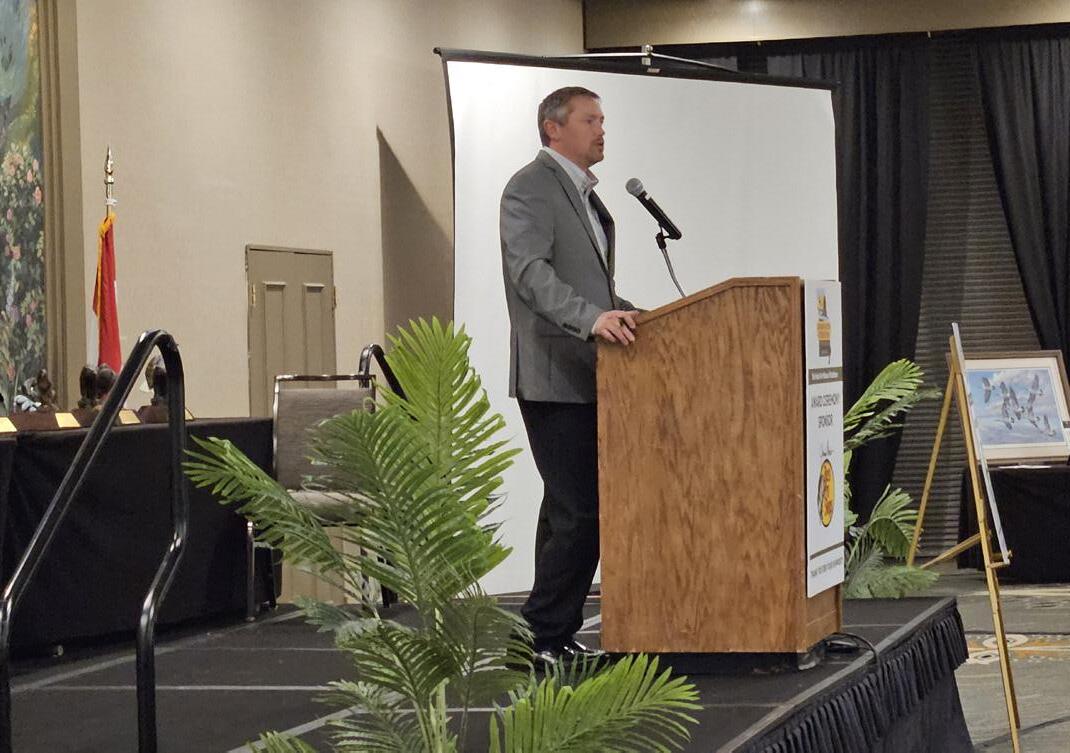
The convention also provided opportunities for networking, while 22 members of the Conservation Leadership Corps gained valuable skills as future conservation leaders. The General Assembly passed eighteen resolutions, thanks to the work of advisory committees and participating members. CFM extends appreciation to all who contributed to this process.
CFM would also like to express its sincere gratitude to the sponsors whose generous financial support helped make the event possible: Bass Pro Shops, Conservation Foundation of Missouri Charitable Trust, Forrest Keeling Nursery, HMI Fireplace Shop, Ozark Bait and Tackle, CZ USA, New Florence Wood Products Co., Mike and Mossie Schallon, Custom Promotional Branding, Fry Foundation, and the National Wildlife Federation.
A special thank you also goes to the many volunteers who worked tirelessly behind the scenes and to those who donated auction items. Their dedication played a vital role in making the convention a success.
2026 Resolutions
A key role of the Conservation Federation of Missouri (CFM) is monitoring conservation issues and developing positions based on sound science. Member and board supported resolutions are used to express support, opposition, recognition, or guidance on specific topics, serving as a powerful way to represent collective views and influence conservation policy.
Resolutions were voted upon and approved at CFM's 90th Annual Convention on March 7, 2026. These can be viewed online at https://confedmo.org/listed-resolutions-throughthe-years/
2026 – 1: Adding a Short Notice/Link about CWD on Missouri Deed Permits (Big Game, Turkey, and Furbearers)
2026 – 2: Mandating Water Treatment Facilities to Routinely Test for Per-and Polyfluoroalkyl Substances (PFAS) in Biosolids (Environment and Ecology)
2026 – 3: Increase Signage near Significant Missouri Bat Caves To Protect Endangered Bats (Environment and Ecology)
2026 – 4: Urge the Implementation of Bird-Safe Window Practices on State and Federal Buildings in Missouri (Environment and Ecology)
2026 – 5: Artificial Intelligence and Data Center Environmental Impacts (Environment and Ecology)
2026 – 6: State of Missouri Waste and Avoidance and Sustainable Procurement Policy (Environment and Ecology)
2026 – 7: Supporting the Clean Water Act and Strong StateLevel Enforcement (Environment and Ecology)
2026 – 8: Reduce Greenhouse Gas Emissions to Protect Missouri’s Fish and Wildlife, Public Health, and Natural Resources (Environment and Ecology)
2026 – 9: Restoring Local Authority to Protect Water Quality and Natural Resources (Environment and Ecology)
2026 – 10: MDC Lands Enrolled in the Sustainable Forestry Initiative (Forest Resources and Management)
2026 – 11: Continue Federal Funding for Slow the Spread of Spongy Moth (Lymantria Dispar) (Forest Resources and Management)
2026 – 12: Support the Continued Development of Rock Island Trail State Park (Public/Private Lands)
2026 – 13: Support Railbanking Under the National Trails System Act (Public/Private Lands)
2026 – 14: Halt the Planting of Non-Native Invasive Species on State-Owned Property (Public/Private Lands)
2026 – 15: Minimizing Chloride Contamination in Missouri Waterways (Rivers, Streams, and Fisheries)
2026 – 16: Support for Low-Head Dam Signage and Awareness (Rivers, Streams, and Fisheries)
2026 – 17: Support for Collaborative Restoration in the Grand River Watershed (Rivers, Streams, and Fisheries)
2026 – 18: Requirement of Non-Toxic Shot in Specified Missouri Department of Conservation Land (Upland Game)
Conservation Achievement Awards
The Conservation Federation of Missouri is proud to announce the recipients of our 2025 Conservation Achievement Awards. These individuals represent the very best of Missouri, exemplifying the values CFM stands for and making significant contributions to the betterment of Missouri's outdoors through their personal efforts in 2025 and throughout their lives. We extend our congratulations to our award winners, who were honored during the CFM Annual Convention Awards Ceremony on Friday, March 6, at the Lodge of Four Seasons at Lake of the Ozarks.
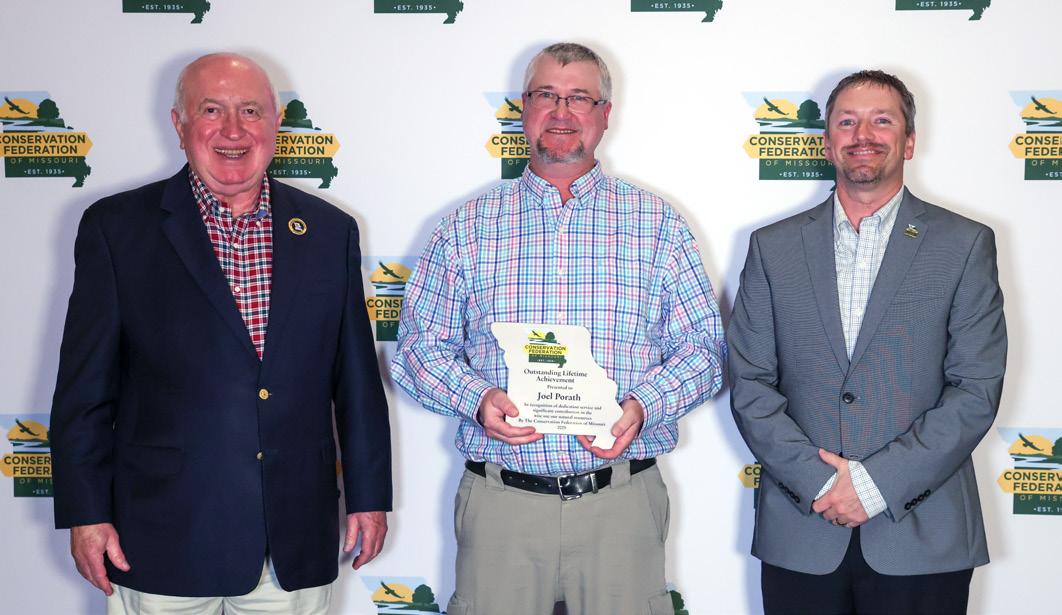
Outstanding Lifetime Achievement – Joel Porath Joel has devoted his life to conservation, building a strong ethic early by leading wildlife tours and working at Rock Bridge State Park maintaining trails and guiding cave tours. He earned a B.S. in Wildlife from the University of Missouri,
Feature Story
conducting bird studies and assisting with environmental assessments, then completed an M.S. in Zoology studying swamp rabbits while managing nuisance beavers. Joel spent four years with the Ohio Division of Wildlife addressing wildlife issues and has served more than 20 years with the Missouri Department of Conservation, now as Wildlife Section Chief. He leads major initiatives including the Missouri Feral Hog Elimination Partnership and mentors youth and adults, preserving Missouri’s outdoor heritage.
Share the Harvest – Missouri Association of Meat Processors
The Missouri Association of Meat Processors has shown strong leadership and commitment to Share the Harvest, expanding its impact in feeding Missourians and strengthening partnerships. MAMP supports small processors through education and advocacy, positioning them as key partners who accept donated venison and prepare it for food banks. Through promotion and reduced cost services, members increase donations and remove barriers for hunters. MAMP also promotes safe handling and collaborates with conservation partners and the Missouri Department of Conservation, helping connect hunters, processors, and communities while supporting wildlife management.
Corporate Conservationist – Ozark Bait and Tackle
Ozark Bait and Tackle, led by Randy Washburn, has long supported the fishing community and the Conservation Federation of Missouri. For more than 40 years, Randy has served as CFM Treasurer, providing steady leadership and commitment to conservation. The business donates fishing supplies, supports outreach, contributes to fundraising, and attends events. Randy also partners with nonprofits to provide fishing opportunities for children, reflecting his belief that fishing builds character, connection, and hope.
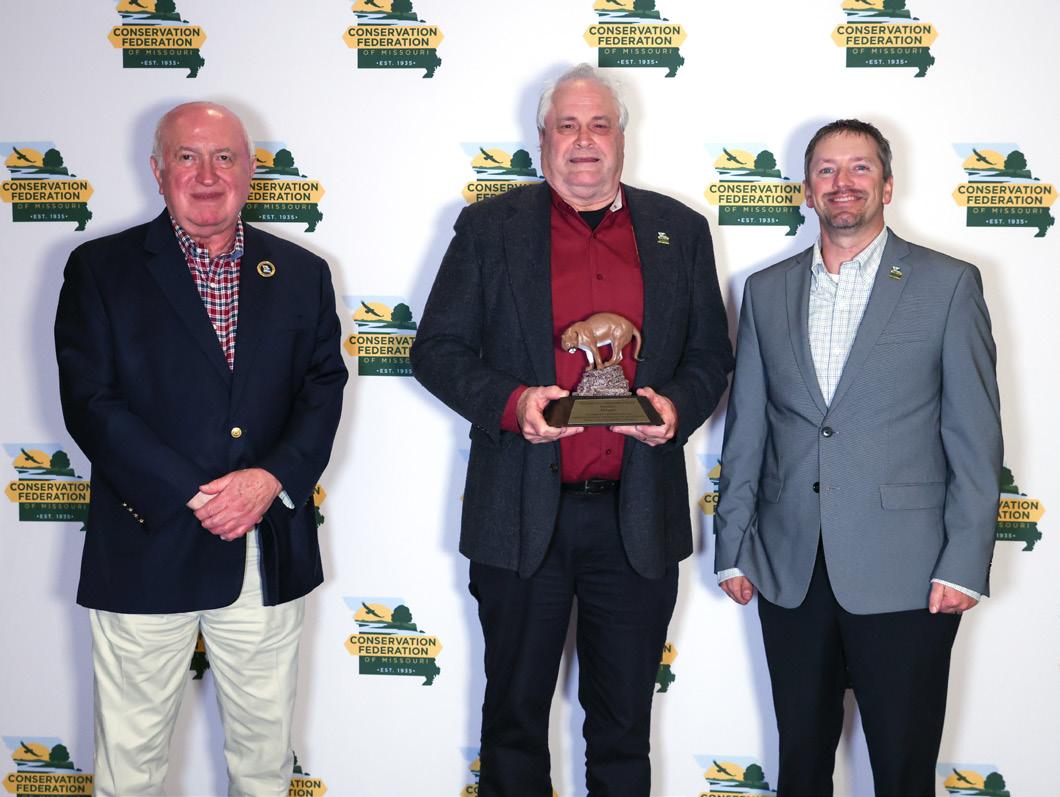
Conservation Communicator – Bill Ruppert
Bill Ruppert is a dedicated connector and educator who brings people together for conservation. During the 2025 legislative session, he helped secure passage of Missouri’s Invasive Species Bill by testifying and engaging lawmakers. Beyond the Capitol, he educates landowners and communities on native plants and habitat benefits. He serves with St. Louis Community College at Meramec on the Horticulture Advisory Board. His leadership, persistence, and ability to connect people to conservation make a lasting impact.
Conservation Educator – Chelsi Leggett
For fifteen years, Chelsi Leggett has advanced outdoor education at Carl Junction High School, teaching hunting, archery, fishing, camping, and conservation skills. She created Outdoor Pursuits, a hands on program serving over 100 students each semester and expanding to multiple sections. She also developed student mentors and helped establish a competitive archery program, earning NASP Coach of the Year honors. She founded Primitive Adventures summer camp, continuing to inspire students and strengthen Missouri’s outdoor heritage.
Conservation Organization – Pheasants Forever and Quail Forever
Pheasants Forever and Quail Forever lead conservation in Missouri through strong partnerships and habitat work. In 2025, they assisted on over 129,000 acres, completed thousands of landowner contacts, and reached over 9,000 people. Their teams increased habitat impact by 26 percent and completed prescribed fire, invasive species treatment, and native plantings. Working with state, federal, and local partners, they deliver effective conservation that improves soil, water, and wildlife habitat.
Environmental Conservationist – MO Hives KC
MO Hives KC transforms vacant urban land into thriving conservation and education spaces. Since 2020, it has grown into a site with apiaries, prairie plantings, and learning areas. Its Nature Action Crew hires youth to gain hands on experience while maintaining the site and contributing to conservation projects. Participants develop skills, travel, and engage the community. The organization creates inclusive spaces and pathways into conservation careers.
Forest Conservationist – Matt Arndt
Matt Arndt has provided forest and wildlife consulting for 20 years, holding professional certifications and serving as President of the Missouri Consulting Foresters Association. He supports conservation through program reviews and Call Before You Cut. He uses advanced tools to produce detailed reports, including work on the Roy Blunt Reservoir. As Vice
Chair of the Missouri Invasive Plant Council, he helped lead efforts resulting in the 2025 invasive plant law. His leadership and expertise have made a lasting impact.
Hunter Education Instructor – Steve Rulo
Steve Rulo has given more than 426 hours as a Hunter Education Instructor and many more through the Missouri Hunting Heritage Federation. Over 13 years on the board, he helped expand outreach and mentored youth and families. His work has helped more than 750 families earn certification and experience hunting safely. His leadership and dedication continue to strengthen Missouri’s hunting heritage.
Professional Conservationist – Laurie Wilson
Laurie Wilson has served more than seven years as Executive Director of the Forest and Woodland Association of Missouri, leading forestry programs and managing the Tree Farm Program with over 86,000 acres. She serves on key advisory committees, leads conferences, and expands partnerships and funding. Her leadership has increased the visibility of forestry and strengthened conservation efforts across Missouri.
Soil Conservationist – Paula Welter
Paula Welter serves as a Resource Conservationist, working with over 100 landowners to implement conservation practices that improve water quality, soil health, and habitat. She leads projects in the Upper James River Watershed and supports conservation partners. Despite heavy workloads, she continues to deliver strong technical assistance and education. Her dedication and professionalism make her a trusted resource.
Youth Conservationist – Veronika Yerina
Veronika Yerina has shown strong leadership in conservation from high school through Missouri State University. She leads the Bird Club, organizes projects, and partners with conservation groups. She helped secure a $10,000 grant and led initiatives including bird friendly coffee distribution and reducing bird collisions on campus. Her work inspires peers and advances conservation efforts.
Water Conservationist – Drew Holt
Drew Holt brings more than 35 years of experience in environmental management, focusing on watershed conservation since 2002. He works with landowners and partners to implement restoration, habitat improvement, and education efforts. He helped develop watershed plans and secure over $2 million in funding. His collaborative approach has improved water quality and conservation across southwest Missouri.
Wildlife Conservationist – Tom Westhoff
Tom Westhoff has been a strong advocate for responsible wildlife management through leadership roles with conservation organizations. He led efforts opposing unsafe trapping proposals, coordinating partners and ensuring clear communication. His work prevented harmful regulations and strengthened conservation partnerships across Missouri.
Conservation Legislator of the Year – Representative Michael Burton
Representative Michael Burton serves St. Louis County and is a leading voice for conservation in the Missouri House. As Ranking Minority Member of the Conservation Committee, he advocates for wildlife, water, and public lands. He works across the aisle, supports conservation priorities, and engages with the Conservation Federation of Missouri. His leadership reflects a strong commitment to natural resources.
Conservation Legislator of the Year – Senator Jamie Burger
Senator Jamie Burger represents Missouri’s 27th District and is a strong advocate for conservation. He helped advance protections for Missouri’s water by leading legislation that became law in 2025. His persistence and leadership ensured safeguards for the state’s water resources and strengthened public awareness of conservation.
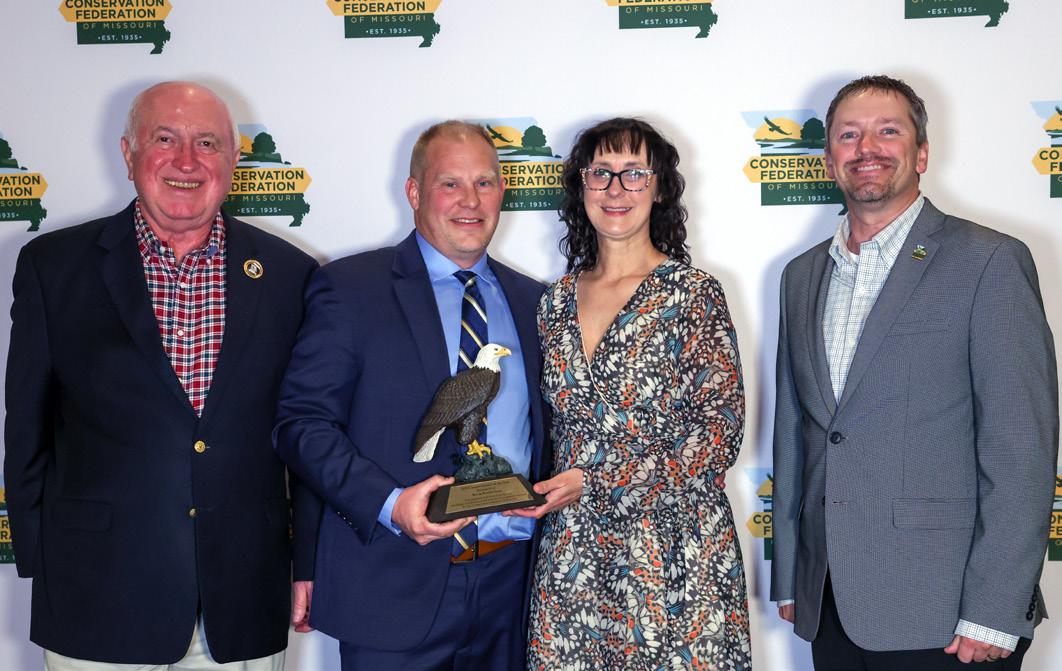
Conservationist of the Year – Wes and Kendra Swee
Wes and Kendra Swee have advanced conservation at Maramec Spring Park through habitat restoration and community programs. Their pollinator initiative is restoring native habitat, supported by partnerships and public engagement. They lead citizen science, youth hunts, forestry management, and educational programs. Their work enhances habitat and inspires stewardship across Missouri.
How Grazing Management in Missouri Can Improve Habitat and Farm Profitability
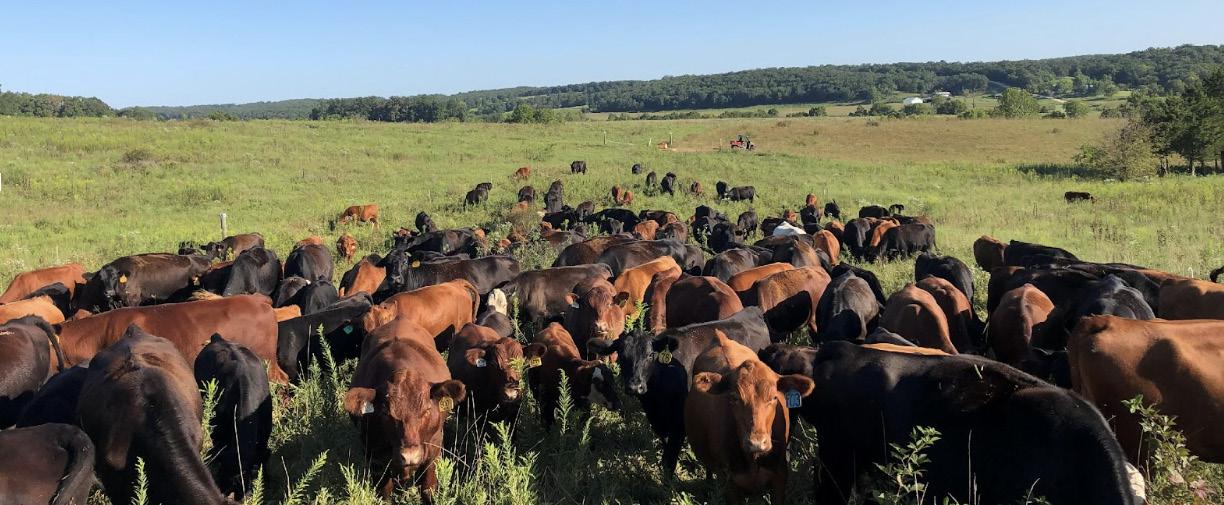
Missouri is a grazing state. We consistently rank among the top three states in the country for total beef cow inventory alongside Texas and Oklahoma. Millions of acres across Missouri are in permanent pasture, and producers across the country often envy our forage productivity, moderate rainfall, and extended growing season.
From the rocky hills of the Ozarks to the deep prairie soils of northern Missouri’s glaciated plains, pasture dominates the landscape. By default, those acres also function as habitat for wildlife.
That means grazing management is not simply a livestock decision. It is also a watershed decision, a wildlife decision, and ultimately an economic decision for the farms that depend on that land.
Learning From Missouri’s Original Landscape
Before Missouri was settled and fenced into farms and counties, much of the northern and western portion of the state was dominated by tallgrass prairie. Vast herds of bison moved across these grasslands in large, tightly grouped migrations.
Those animals did not graze a pasture continuously the way cattle often do today. They grazed intensely for a short period of time and then moved on, often not returning to the same area for weeks or months.
That movement created the ecological rhythm that prairie plants evolved with. Periods of grazing were followed by long periods of recovery.
The result was a landscape with deep-rooted perennial grasses, healthy soils rich in organic matter, and diverse wildlife habitat.
When we look at regenerative grazing today, we are not inventing something new. In many ways, we are simply trying to mimic the ecological processes that shaped Missouri’s original grassland ecosystems.
Managed livestock can play a similar role when grazing pressure is applied for a short duration and plants are given adequate time to recover. The goal is not to recreate the prairie exactly as it once existed, but to manage working landscapes in a way that aligns more closely with how those systems historically functioned.
It’s Not the Cow, It’s the How
Cattle often carry a reputation for environmental degradation. Many people picture livestock with open access to streams, hillsides grazed down to bare soil, and pastures that never have time to recover.
And to be fair, poorly managed grazing can absolutely create those outcomes.
When pastures are grazed continuously and plants are never given adequate recovery time, the system begins to decline. Root systems shrink, soil structure weakens, organic matter decreases, and drought resilience drops. Forage productivity and livestock performance usually follow the same path.
But the cow itself is not the problem. The issue is how the cow is managed. When grazing is managed intentionally through rotational grazing, adequate rest periods, and a focus on soil health, cattle can become a tool for improving land. The same animals often blamed for degradation can help strengthen soil function, improve water infiltration, and enhance wildlife habitat.
Working With Nature’s Cycles
Healthy pasture systems operate through several interconnected natural cycles: the water cycle, the carbon cycle, and the nutrient cycle.
When grazing pressure is too frequent and recovery periods are too short, those cycles begin to weaken.
Compacted soils shed rainfall rather than absorbing it, weakening the water cycle and increasing runoff. Shallow root systems reduce carbon inputs into the soil, slowing the carbon cycle. As soil biology declines, nutrient cycling becomes less efficient and plant productivity suffers.
The result is a pasture that struggles to capture and hold rainfall, grow productive forage, and maintain soil health.
Regenerative grazing aims to repair and enhance those cycles rather than disrupt them.
Regenerative Grazing: Management With Recovery in Mind
Rotational grazing is the foundation of regenerative grazing systems. Plants require adequate recovery between grazing events in order to rebuild root reserves and continue productive growth.
A common rule of thumb is to allow at least 30 days of recovery during active growing conditions, though that timeline should remain flexible. Weather conditions, soil moisture, and plant growth stage all influence how long a pasture truly needs to rest.
During dry conditions, recovery periods may need to extend much longer. In severe drought years, producers may even pause rotation and feed hay during times that historically didn’t seem necessary.
This is where regenerative grazing moves beyond simple rotation and becomes adaptive management.
Instead of following a rigid schedule, farmers observe plant growth, soil moisture, and weather patterns and adjust stocking density and grazing timing accordingly. The goal is not simply moving cattle from paddock to paddock. The goal is maximizing root growth and soil function through real time adaptive decision making.
When plants are allowed to fully recover, root systems deepen and soil aggregation improves. Organic matter begins to build, and water infiltration increases as soil structure strengthens.
Healthier soil produces more resilient grass, and resilient grass supports stronger cattle performance. The ecological benefits follow naturally from that foundation.
Integrating Native Warm-Season Grasses
Missouri’s forage base is dominated by tall fescue. While fescue performs well in spring and fall, it often slows significantly during the heat of summer.
Native warm-season grasses such as big bluestem, indiangrass, and switchgrass fill that gap by reaching peak productivity during the hottest months of the year.
From a conservation perspective, these native grasses offer significant benefits. Their deep root systems, often extending six feet or more, improve soil structure and contribute organic matter below ground. They also provide valuable nesting habitat for grassland birds and create structural diversity that supports pollinators and beneficial insects.
Those taller, bunch-forming grasses create overhead cover and undisturbed nesting areas that are often missing in continuously grazed cool-season pastures.
Feature Story
From a farm management standpoint, native warm-season grasses also help balance forage production throughout the year. Summer grazing on warm-season pastures allows fescue paddocks to rest and rebuild root reserves.
That rest strengthens fall regrowth and extends the grazing season, improving both habitat and farm profitability.
Stockpiling Fescue: Habitat Through Deferred Grazing
Stockpiling involves deferring grazing in late summer to accumulate forage for winter use. When properly managed, stockpiled fescue can maintain quality deep into winter, providing a better alternative than hay. Grazing standing forage during winter reduces reliance on stored feed and significantly lowers hay feeding costs. But deferred grazing also produces important ecological benefits.
Allowing pasture to accumulate biomass protects soil from erosion during fall rains and maintains ground cover through winter months. That standing vegetation provides cover for small mammals and upland birds while protecting soil biology from exposure and temperature swings. When spring arrives, those pastures often emerge with improved soil structure and plant vigor.
Reducing winter hay feeding by even 30 to 60 days can dramatically change the economics of a livestock operation while also improving soil health and wildlife habitat.
Conservation Cost-Share Can Help Producers Get Started
Many producers are interested in improving grazing management but hesitate because of the initial investment required for fencing, water distribution, or pasture establishment.
This is where conservation cost-share programs can help. Missouri’s Soil and Water Conservation Districts (SWCDs) and the USDA Natural Resources Conservation Service (NRCS) offer programs designed to help producers implement improved grazing systems. Through programs such as the Environmental Quality Incentives Program (EQIP), landowners and producers may receive financial assistance for practices like cross fencing, water systems, sensitive area exclusions, heavy-use protection areas, grazing plans, and native grass establishment.
These programs help reduce the financial risk of transitioning to regenerative grazing while improving soil health, water quality, and wildlife habitat. For many farms, cost-share assistance provides the infrastructure needed to begin rotational grazing.
Once that system is established, the benefits—more grazing days, improved forage productivity, and healthier soil— continue to build over time.
Local SWCD offices and NRCS field staff can help producers evaluate options and develop grazing plans that fit their operation.
Soil Health Drives Farm Profitability
Habitat improvement alone is not enough. Grazing systems must also work economically for producers. Fortunately, soil-focused grazing management more often than not improves farm profitability.
Healthier soil supports greater forage production per acre and increases the number of grazing days in a season. Improved water infiltration helps stabilize production during drought years, while stronger pasture systems reduce reliance on fertilizer, herbicides, and purchased feed.
For many operations, the largest financial benefit comes from reducing hay feeding. Every additional day cattle harvest their own forage instead of eating stored feed improves the bottom line.
A Statewide Opportunity
Across Missouri, grazing management influences watershed health, wildlife habitat, and farm profitability at the same time.
We do not need to remove cattle from the landscape to improve conservation outcomes.
We need to manage them in ways that build soil and habitat rather than deplete them.
In a state where pasture dominates the landscape, grazing management may be one of the most powerful conservation tools available.
Nick Cuchetti is a Missouri-based Certified Crop Adviser (CCA), conservation agronomist, and farmland real estate professional. He serves as a Conservation Agronomist with Mitico, where he works with landowners to implement regenerative farming practices and develop stream and wetland restoration projects across the state.
Photo: August Horstmann, Horstmann Cattle Company
Nick Cuchetti
Share With Others All the Great Outdoors Has to Offer
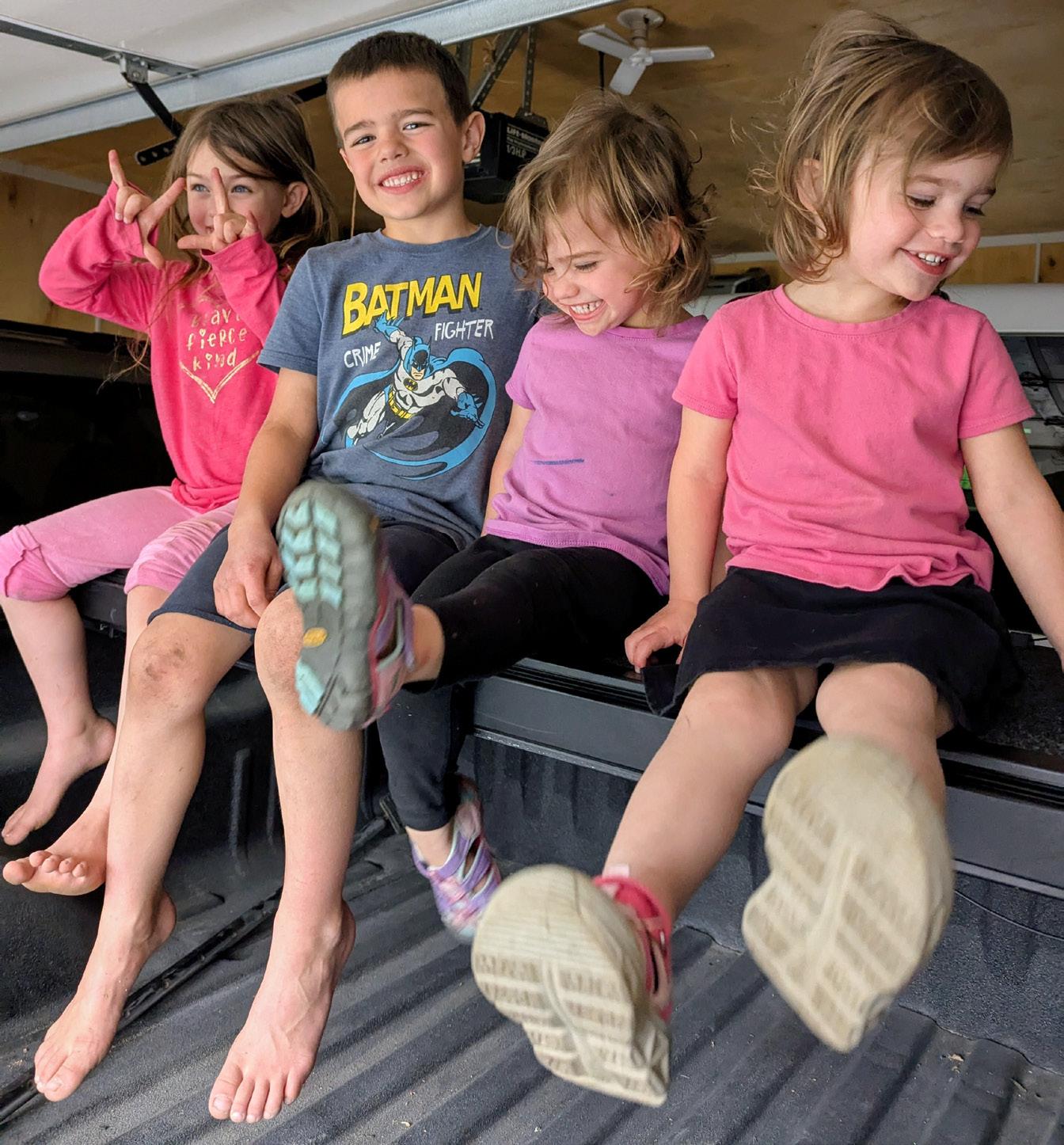
Ilove this time of year. To me, it was a long winter. We had some nice days to get outdoors in January and February which led me to think it was going to be a mild winter. However, the cold winds and snow arrived.
I was ready for any warm days we got to enjoy in March. We had our typical March winds, but at least they weren’t as cold. On the nice days of March, I enjoyed a couple of good crappie fishing trips. I also did a little hiking.
When April arrived, I was ready for the colors of tiny wildflowers bursting through decayed leaves. I was ready for the blooming of the redbud trees and the flowering dogwoods.
I was ready for the emergence of morel mushrooms on the forest floor. I enjoyed getting out and searching for them. There is nothing much better than cooking them in butter and eating them with grilled venison steaks and fried crappie.
Feature Story
When I searched for them, I found a few shed deer antlers like I always do. That is the bonus to mushroom hunting. I took them home and hung them in my barn. Most of them, I will use to make things like coat racks, lamps, and other things. Then I will give them away to family, neighbors, or friends at church.
I camped out a few times and heard the first trilling sounds of the spring peeper frog. They were followed by the haunting sound of the whippoorwill. On a distant ridge, I heard turkeys gobbling.
I made a promise to a neighbor boy, who calls me Papa Larry, that I would take him on his first turkey hunt during the youth season. His Dad is not a hunter or fisherman, but he was okay with me taking his son. God didn’t create us all to be outdoor enthusiasts.
He and his wife have their kids involved in team sports. That is important for character building. They also have them in church every Sunday, read them the Bible, and have taught them to say their prayers.
I bought him some kids’ turkey hunting clothes. I taught him how to use his very own box call I gave him. He got pretty good with it. Mom said he was driving them all crazy practicing, so he could only do that at my house.
I put up a paper turkey target, sat him between my legs, put earplugs in his ears, and let him shoot at the target. I thought when the gun went off, it might scare him, but it didn’t. The look on his face was priceless.
The morning of the hunt, I let him use the box call. A few turkeys responded. They never got close enough, but he got to see them. I told him to always enjoy the hunt, whether he got a turkey or not. We found some mushrooms later and his very own deer antler. He wants me to help him make something for Mom and Dad with it.
His sister wants to go next year. The younger twin sisters and new little brother will probably all want to go too someday. I will ask some of my hunting buddies to help me when that time comes. All kids need to discover what it is like to be outdoors in nature instead of always in front of a screen.
May is here, and native birds and migrating birds are singing their spring songs. The kids next door love watching the birds and feeding them. They can even tell me the name of some of them. I gave them binoculars to watch them, along with bird feeders and seed to feed them.
For a few weeks a year, they will all come to my barn. I teach nature classes to them. We will make more birdhouses and more bird feeders for their front and back yards. They will learn more bird songs. We will look for lizards, frogs, and turtles in the yard.
This month, the oldest brother and sister have asked me to take them fishing at a local stream. I have told them about the place where I took my grandkids fishing. I will get their Dad and Mom to go along with me to help. They also need to know how to fish and enjoy the outdoors.
They will all learn that it is not just about catching fish. It is also about sitting on the gravel bar and finding arrowheads, rocks with holes in them, and rocks with unique shapes. They will learn to find small flat rocks and how to skip them across the water.
They will see a Kingfisher that flies up and down the creek squawking as it goes. If they are lucky, they will hear a turkey gobble or see a deer coming down to the water for a drink. They might even catch a fish. That will be the bonus.
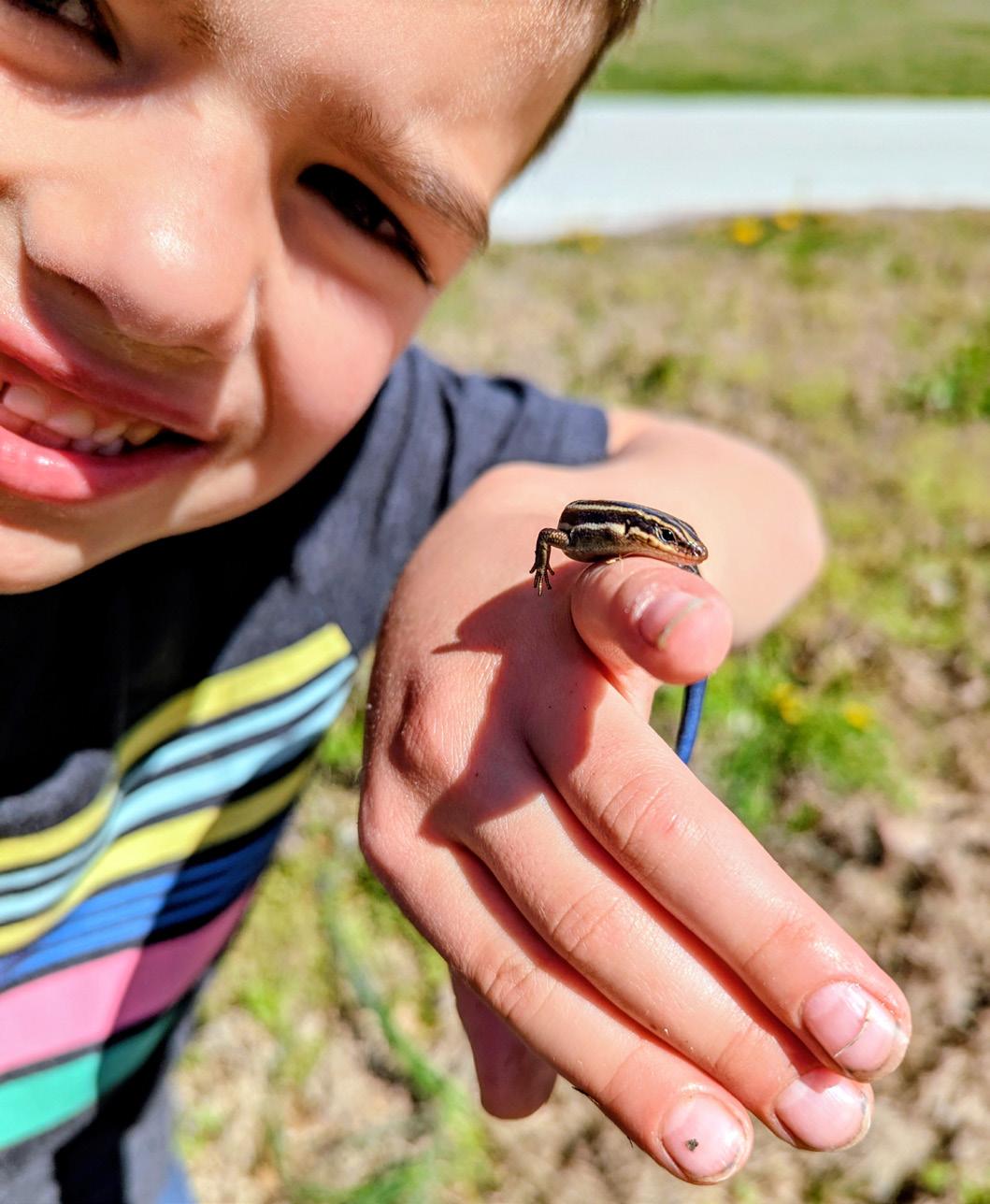
When summer comes, I will take them all back to the creek. They will swim and play. I will put a swim mask on them so they can discover the amazing underwater world where fish live.
Your kids or grandkids will never experience all that watching television, playing computer games, and being on social media. Those of us who love the outdoors should make time in our busy lives to take kids and adults to do things outdoors that will change their lives for the better.
My kids and grandkids also grew up hunting and fishing, playing sports, and going to church. The grandkids are all living in other states and either married or in college. They will always remember growing up in the outdoors. When they have kids, I am confident that they, too, will share with them the great outdoors.
With the blessings of the parents of the kids next door, I will do my best to help instill in them a love for all that God created for us to enjoy. When they grow up, they will teach their kids as I taught them. Can you imagine what could happen if we all did that? It could change lives for the better of generations to come if we all continue to share with others all the great outdoors has to offer.
Something to Think About
“I sincerely believe that for the child, and for the parent seeking to guide them, it is not half so important to know as to feel when introducing a young child to the natural world. If facts are the seeds that later produce knowledge and wisdom, then the emotions and the impressions of the senses are the fertile soul in which the seeds must grow. The years of childhood are the time to prepare the soil." - Rachel Carson
Larry Whiteley
Pg. 49 - The neighbor kids over for nature school.
Pg. 50 - This is better than all the screens in today’s world.
Pg. 51 - Sharing what he found with his sisters. (Photos: Larry Whiteley)
Spooning Docks for Table Rock Bass
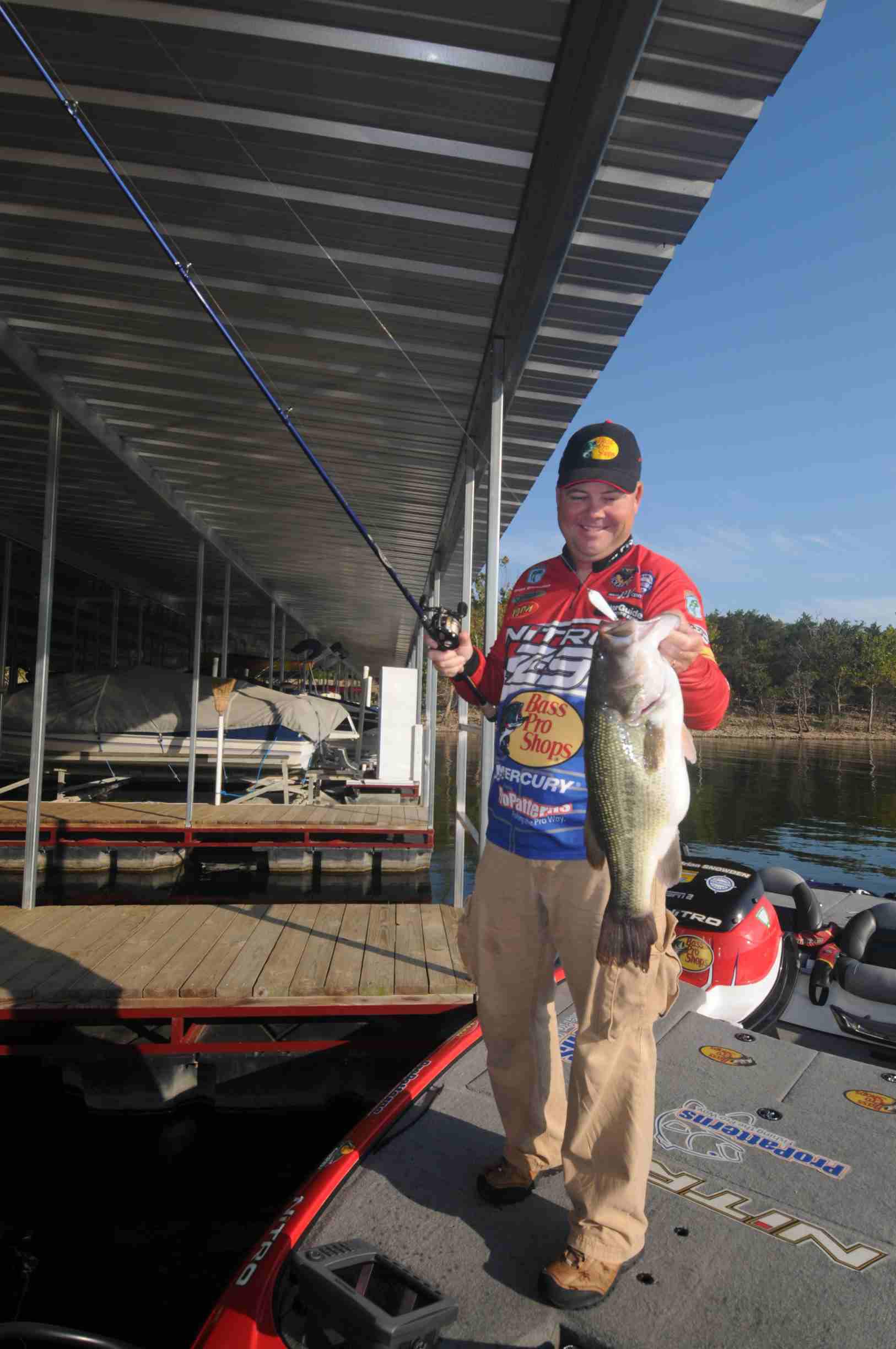
When bass hang around docks on his home waters of Table Rock Lake, Brian Snowden likes to spoon feed the fish.
The former Bassmaster Elite Series pro believes offering a steady diet of spoons to bass holding around docks is effective for a couple of reasons. “It allows you to get a reaction strike and allows you to get a bait to depths of 20 to 40 feet at a rapid speed,” Snowden says. He also notices the spoons mimic the forage (minnows, shad and bluegill) that also hang around docks.
Spooning around docks starts producing for Snowden about two to three weeks after the spawn when bass move out to deeper water to recuperate. The Missouri guide continues to catch dock bass on spoons throughout the summer and into late fall.
Checking the bottom contour is the key to finding the right deep-water docks to spoon for bass. “On highland reservoirs, you typically want the end of the dock to be over 40 feet to 80 feet,” Snowden says. “I look for docks sitting close to or next to something underneath the water such as a creek channel, the side of a point or actually on a point where there might be a deep side that falls off quick and the other side might be flatter.”
Main lake docks are Snowden’s primary targets in the dead of summer but his ideal spooning spot in the fall is a creek channel that bumps up against four or five docks in a major cove. Docks sitting next to standing timber are also prime spots to spoon for bass.
When bass start staging under docks, the fish are usually shallow (20 feet or less), so Snowden tempts them with the slower fall of a Bass Pro Shops flutter spoon. However for most of his dock spooning presentations Snowden relies on a white 3/4-ounce Bass Pro Shops Strata Spoon. He improves the action of the spoons by replacing the factory-installed split rings with Bass Pro Shops Crane Swivels with Interlock Snaps. He also upgrades the treble hooks on his spoons with Owner ST-36 hooks (number 2 for the Strata Spoon and 2/0 for the flutter version).
The weather and time of day determine where Snowden pitches his spoons to the floating docks. In early morning or overcast days, Snowden notices bass tend to roam the edges of docks, so he keys on the front ends and sides of docks and any nearby standing timber. On sunny days, bass tuck into the shade of the docks, so Snowden mainly pitches into the shady areas such as dock wells.
The Table Rock guide pitches his spoons on a 7-4 heavyaction St. Croix Legend Elite rod and Bass Pro Shops Johnny Morris Signature Series baitcast reel (6.4:1 gear ratio) filled with 17- to 20-pound fluorocarbon line. The heavy line comes in handy when Snowden has to throw over boat lifts and the cross members in the dock wells.
“I try to make pitches directly into the dock and let the bait fall and then hop it back until it gets close (to the cross member) then I reel it up,” he says. “You just can’t go too fast because if you get your boat past the stall your bait is in, a lot of times your spoon will hang in the corners of the cross member.” Then it’s usually time to tie on a new spoon.
Snowden estimates about 85 percent of the bites occur on the spoon’s initial fall. He allows the spoon to fall with a slight bow in his line to increase the action of his lure. “You want the line to come very free off of your reel, so the spoon is falling freely but you want to pay real close attention to any time that thing stops falling because usually that is a fish,” Snowden says. He recommends setting the hook during the initial fall any time you see the line twitch, stop or move faster than usual because it indicates a fish has sucked in your spoon.
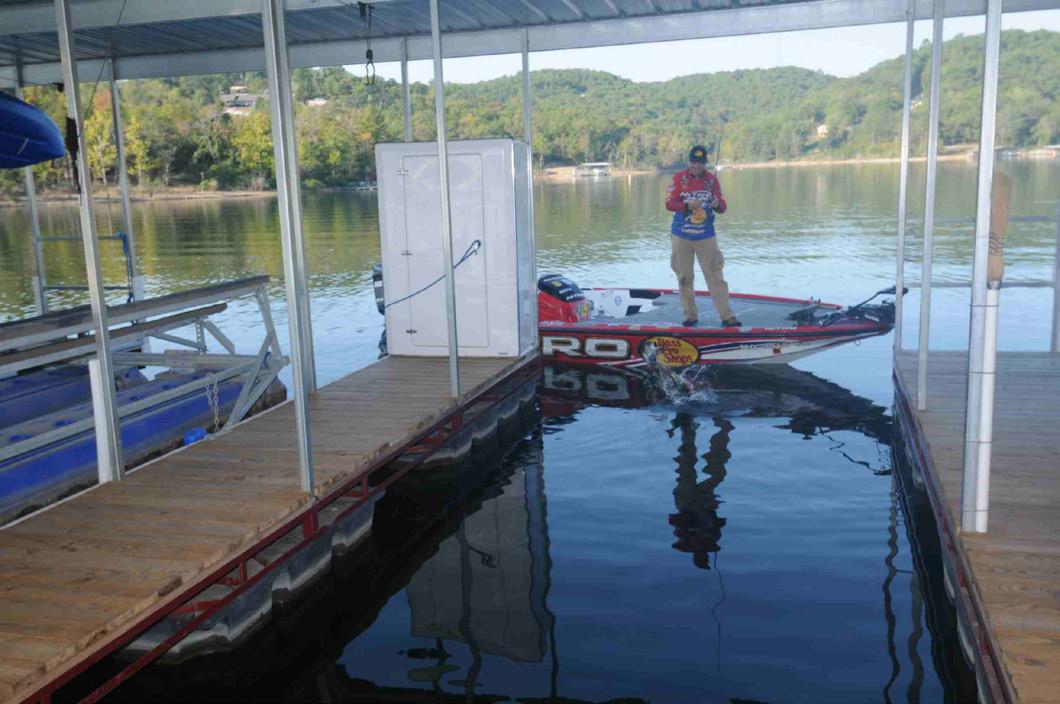
After pitching his spoon, Snowden starts counting down the lure to determine the depth of his first bite. He estimates the Strata Spoon falls at a rate of about 1 1/2 to 2 feet per second, so he counts down to 10 and then engages his reel. Next, he pops the rod “pretty hard” to cause his spoon to rise about 18 to 24 inches and then lets it fall about a foot. As the spoon pendulums back towards the boat, Snowden repeats the rod-popping motion, then reels in the spoon if he fails to trigger a strike.
Snowden finds bass either hugging the bottom or suspending around the docks. Bass are usually on the bottom if Snowden locates fish around docks sitting in the 20-foot depth range. When fishing docks in the 40- to 60-foot range, Snowden pinpoints summertime bass suspended around the thermocline, which is usually about 30 feet deep at Table Rock.
Spooning for dock bass produces both numbers of fish and quality bass for Snowden. If he finds a dock loaded with spotted bass, Snowden usually catches lots of fish in the 14- to 18-inch range. The Missouri angler also knows some docks attract strictly largemouth and he can usually catch some 4- and 5-pounders from those boat houses.
(Left) Table Rock Lake Guide Brian Snowden relies on a jigging spoon to catch bass hanging around docks. (Photo: John Neporadny Jr.)
(Top) Pitching a flutter or slab spoon into dock wells is an effective tactic to catch summertime Table Rock Lake bass. (Photo: John Neporadny Jr.)
John Neporadny Jr.
The Adventures of Frank & Ed: MDC Nature Centers
Today’s adventure is a simple one that the boys really enjoy and often learn from. We’re visiting one of the Missouri Department of Conservation Nature Centers—MDC’s Burr Oak Woods Nature Center in Blue Springs, MO. The nature center sits in the middle of a one-thousand-acre property in eastern Jackson County. It’s a nature oasis in the Kansas City suburban area and provides excellent opportunities for hiking, bird watching, picnicking, and learning about the Missouri outdoors. Today’s weather is beautiful for our adventure, and we will be joined by Frank and Ed’s little brother Bert, along with Grandma Kim and the boys’ mother, Jolie. First stop is the nature center building. Frank yells, “This place is cool!” as we all pile out of the car.
Ed and Bert are in hot pursuit of Frank, running down the sidewalk toward the front door. “Slow down boys,” I yell. “Let’s take a look at the natural gardens around the building before we go inside.” “Look, there’s a frog by this little pond,” Ed says excitedly, then immediately adds, “I’m gonna catch it.” “Let me see, let me see the frog,” Bert says. The frog is wise to this noisy group and jumps into the pool, escaping from the clutches of the curious boys. I can tell right away that we need to have a talk about nature center etiquette with these boys.
“Listen up boys,” I begin. “Before we continue with our adventure, we need to talk about what we can touch and what we cannot touch or catch while we are here. We are here to look and learn; some things are here for us to touch, but mostly we are just touching with our eyes and minds.
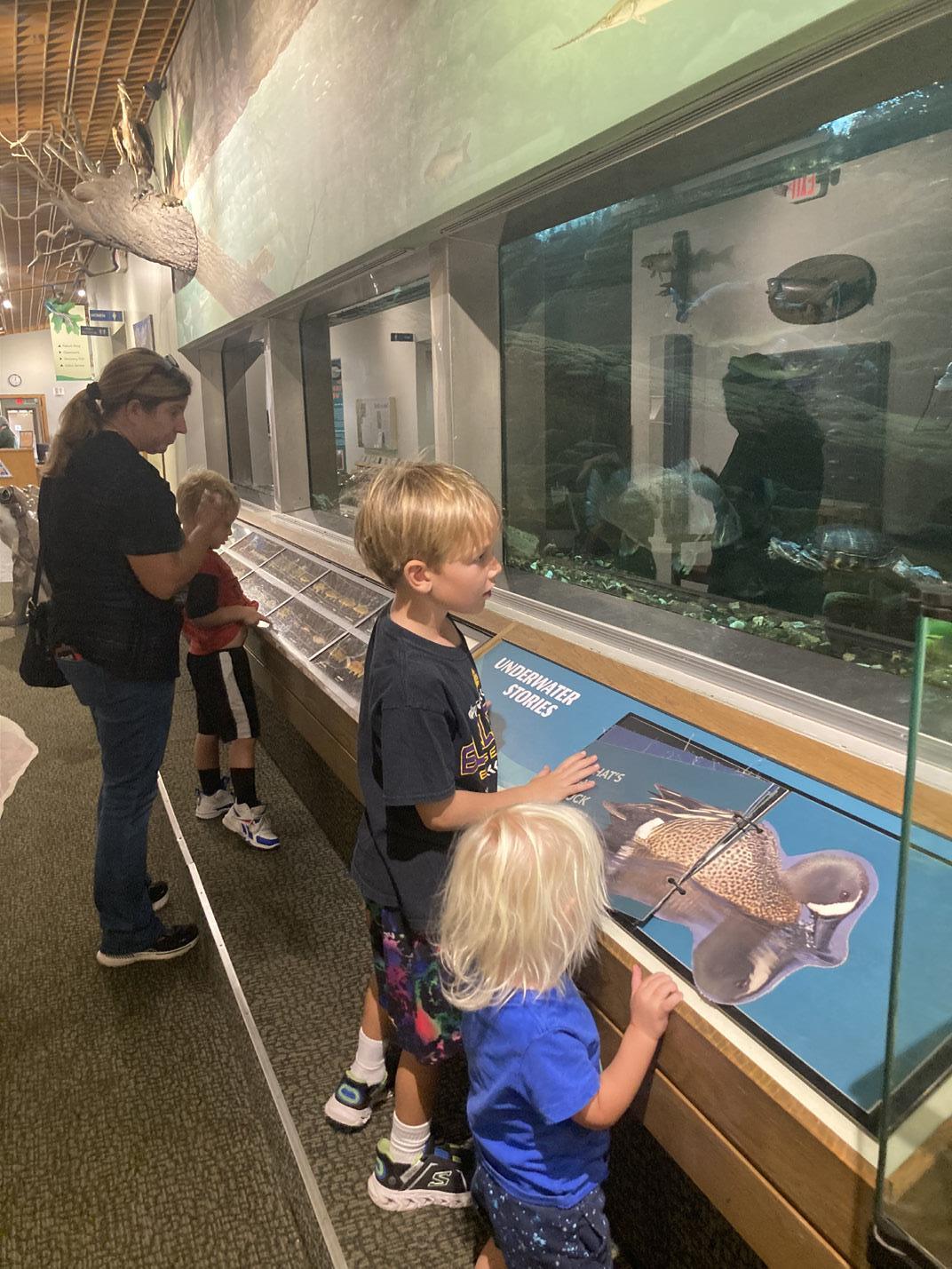
That means especially no catching anything that moves, including bugs, reptiles, amphibians, mammals, birds, or worms!” The first exhibit we come to inside is none other than Smokey Bear. Ed presses the button and Smokey tells us about forest fire prevention, ending with his famous quote, “Only you can prevent forest fires.”
Next is the aquarium filled with native Missouri fish and a couple turtles. I could spend an hour watching the aquarium. Something about watching fish swimming in the clear water is fascinating and peaceful. Bert points and shouts, “Turtle, I see a turtle!” Frank tells his little brother, “That’s a red-eared slider—see the red patch on the side of his head by the ear hole.” It suddenly becomes a contest of who can name the most fish. “There’s a catfish and a bass,” Ed exclaims. “Yeah, and I see a bluegill, a crappie, and a drum,” Frank answers. Again, Bert just points and shouts, “I see turtle, I see fish!”
We look at several exhibits showcasing Missouri wildlife, plants, and trees. Large windows around the room give excellent views of the bird feeders with birds flying in and out. There’s a small play area and a touch table filled with deer antlers, a turtle shell, snakeskin, acorns, walnuts, mammal furs, and bird feathers. Frank is especially interested in the reptile exhibits. “Wow, they’ve got a rattlesnake,” Frank blurts out. “It’s a timber rattler! Cool.”
Frank and Grandma Kim spend the next few minutes watching and discussing the black rat snake, green snake, copperhead, and bull snake exhibits, but I think Frank’s favorite is the rattlesnake. We take a few minutes to look at all the different booklets and pamphlets available for free, and the boys choose a couple to take home. Topics include Missouri snakes, turtles, birds, hawks, owls, trees, wildflowers, and butterflies, just to name a few. It takes us about an hour to look at everything inside the nature center, and now it’s time for a picnic lunch.
As we head outside to a nearby picnic table, we come across an interesting sight. One of the nature center volunteers has taken the common snapping turtle out of its exhibit for a walk outside in the sunshine. Ed immediately squats down next to the snapper, trying to get a better look. “Whoa there, Ed, that’s close enough,” Grandma cautions as she picks up Bert and keeps a watchful eye on the snapping turtle. “Yeah, Eddie, why do you think they call it a snapping turtle? That thing could snap your finger off,” Frank says.
“I’m just watching it walk. I don’t think it will snap at me. It looks like a small dinosaur with spikes on its shell and a hooked mouth,” Ed replies. “Yeah, I agree, Ed, and if there is one thing snapping turtles do best, it’s snapping their jaws shut on whatever gets too close,” I say. I can tell already that Ed is the grandson who will tempt fate when it comes to testing what may or may not happen with wild critters. Today Ed survives another encounter as we watch the snapper push up on his legs and walk away.
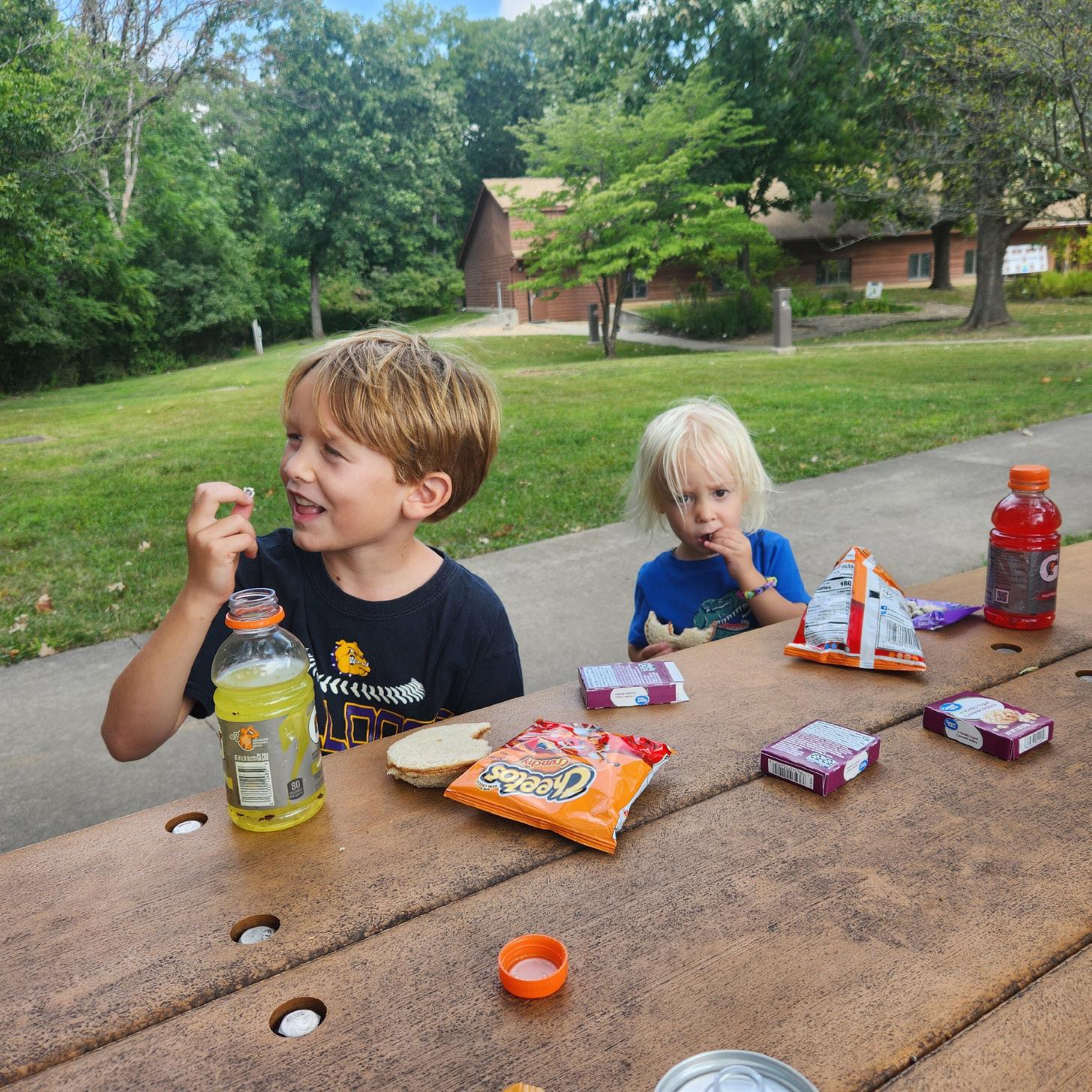
We’re all talking about the cool things we’ve seen so far while we eat our peanut butter and jelly sandwiches with Cheetos and yogurt raisins, washed down with Gatorade. Maybe not the most nutritious lunch, but special treats occasionally make special memories. Making memories outdoors with my three grandsons is truly special for me. “Okay boys, it’s time for a walk. Let’s get moving to burn off some of that energy you boys always seem to have a lot of,” Mom Jolie proclaims.
“Are we hiking today? Because I know what hiking means. I looked it up on the internet last winter when Papa, Ed, and I went.” “Yes, we are. And what does it mean?” Jolie asks. “It comes from the word hytchen, which means to move, jerk, or stir,” Frank answers as he contorts his body, jerking and moving while laughing at his answer. We have picked the Missouri Tree Trail for today’s hike.
It’s a paved, three-quarters-of-a-mile-long, fairly level trail with trees marked along the path. The boys can run and explore without worrying. The only rule we enforce is to stay on the trail.
I think to myself that I should be telling these boys about the history of Burr Oak Woods and the vision that conservation-minded folks had 50 years ago to pass a 1/8 of one percent sales tax for the Missouri Department of Conservation. That tax was used to purchase this land, build this nature center, develop the six different trails, and manage the land for the wise use of its resources, all while providing outdoor education programs to whomever wants them—and it’s all free of charge. Burr Oak Woods is the first nature center. The land was purchased in 1977, and the nature center was completed in 1982.
One penny of tax for every eight dollars you spend in Missouri has provided enough funding for seven other nature centers across the state: St. Louis, Cape Girardeau, Jefferson City, Branson, Springfield, Joplin, and Kansas City all have MDC Nature Centers. They are all free to visit and offer educational outdoor programs on wildlife, fish, and habitats, as well as opportunities to learn outdoor skills like fishing, archery, tree identification, bird watching, and even wild edibles. Not only did the Design for Conservation Sales Tax, as it was called, provide money for nature centers, it also allowed the purchase of land for conservation areas and shooting ranges.
There are over one million acres of MDC-owned and managed conservation areas for you and me to explore, hunt, hike, fish, and enjoy the outdoors on. It’s amazing what Missouri voters did in 1976 when they passed the Conservation Sales Tax. It’s a tax that I’m proud to say I voted for and one that has benefited all Missourians. Then I remember these boys are only seven, five, and two years old, which means they only care that we’re here and having fun. You can find out all about MDC Nature Centers at.
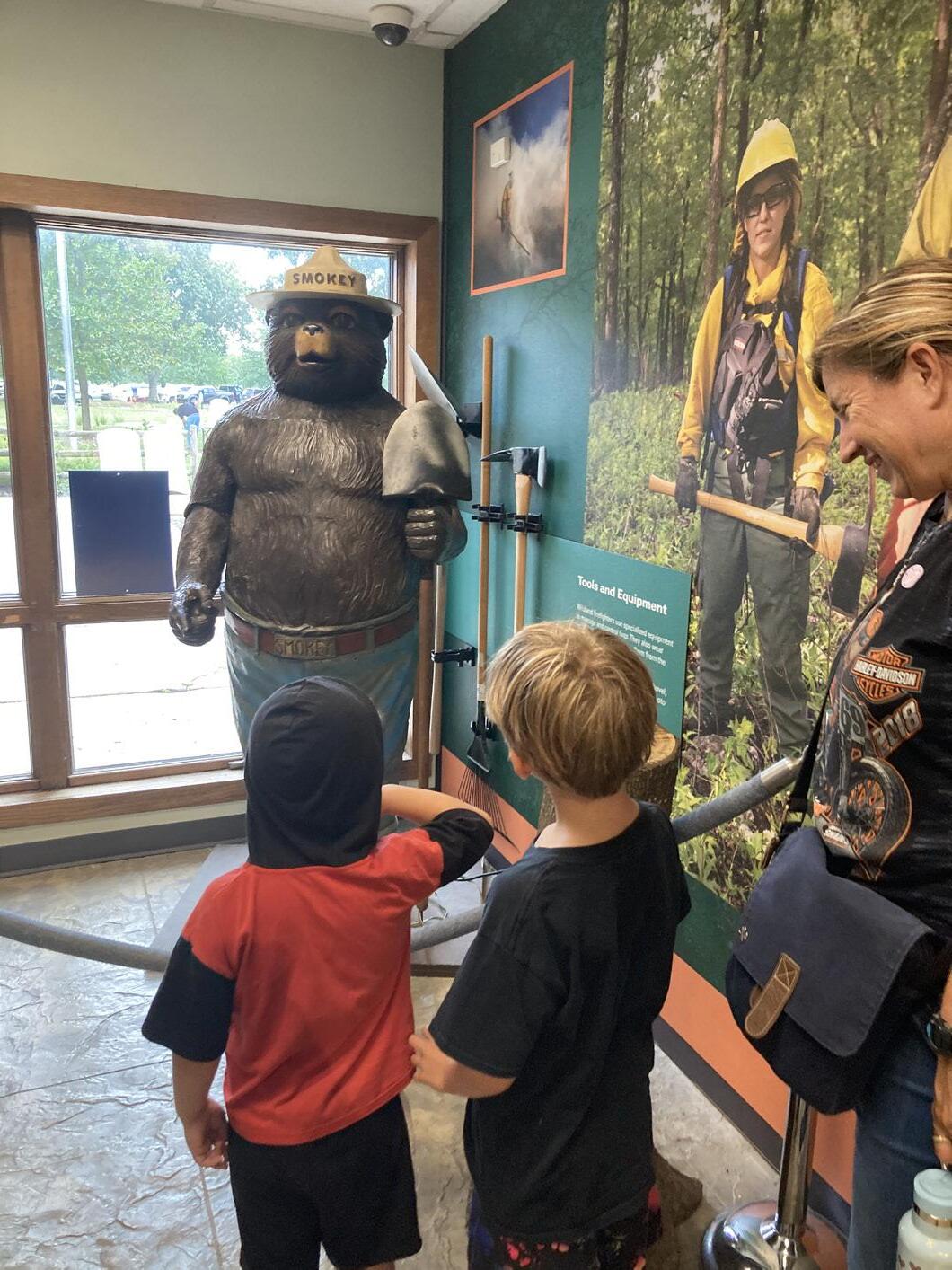
“Oh my gosh, there’s another snapping turtle!” Frank shouts as he climbs on the railing of the bridge crossing the small woodland pond. “Where, where is it, Frank?” Ed asks. “In the water right below us,” Frank points out. Sure enough, you can see the snapping turtle plowing along the muddy bottom of the shallow pond. Soon we are all watching the snapping turtle slowly moving along. Occasionally, it sticks its pointy nose above the water to breathe some air.
“What’s that snapper doing, Papa?” Bert asks. Now that’s what I love to hear, a grandson who thinks I may know something.
Pg. 54 - The 3,000-gallon aquarium. (Photo: Jolie Everett)
Pg. 55 - Frank & Bert picnicking. (Photo: Kim Blystone)
Pg. 56 - Smoky the Bear at Burr Oak Woods. (Photo: Jolie Everett) Jeff Blystone
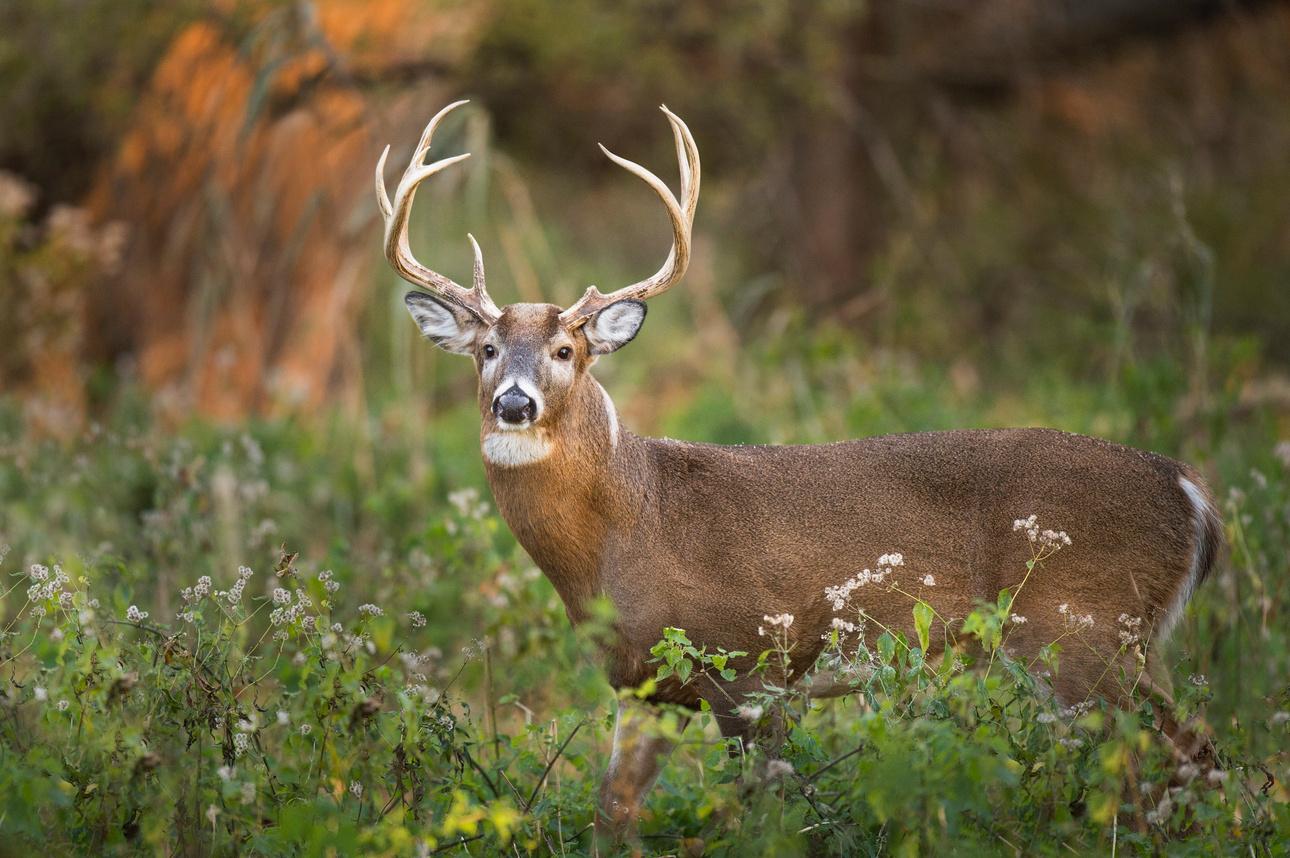

GOLF TOURNAMENT
DRIVE! PRIZES BY FLIGHTS
Flights and cash payouts determined by number of teams
Team registration will include food and drinks at the turn throughout the tournament.
Entry Fee: $400 per team of 4 golfers
OPEN TO THE PUBLIC!
Proceeds will benefit CFM’s Share the Harvest program Share the Harvest is a statewide program that helps provide nutritious, locally-sourced venison to Missouri families in need. By partnering with hunters, processors, and community
organizations, Share the Harvest works to reduce hunger while promoting wildlife conservation and responsible hunting practices. All funds raised through the golf tournament will support this impactful program, ensuring it continues to provide food security and support conservation efforts across Missouri.
The driving range will be open complimentary for 1 hour before the start of tournament.
MORE INFO OR TO




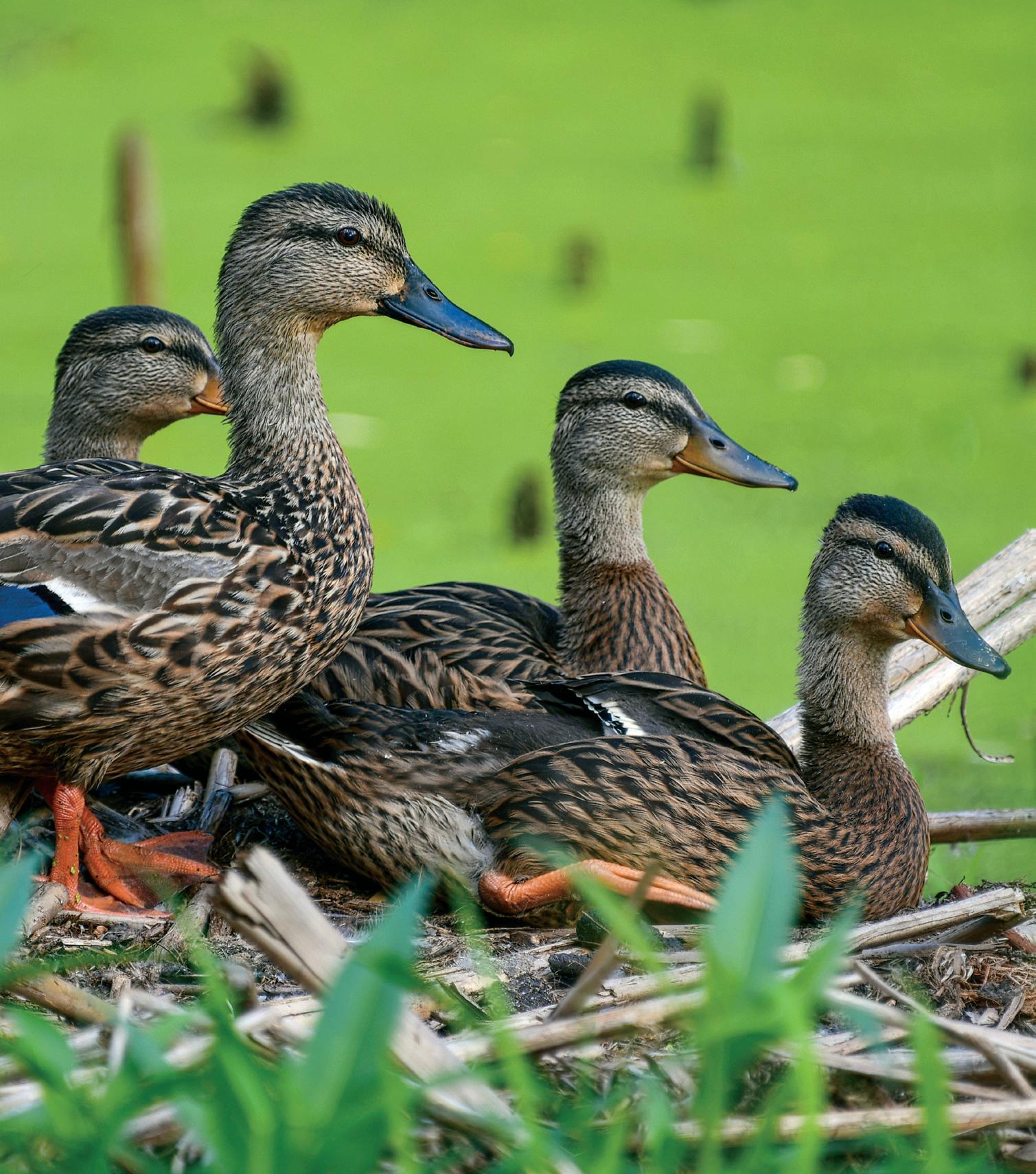
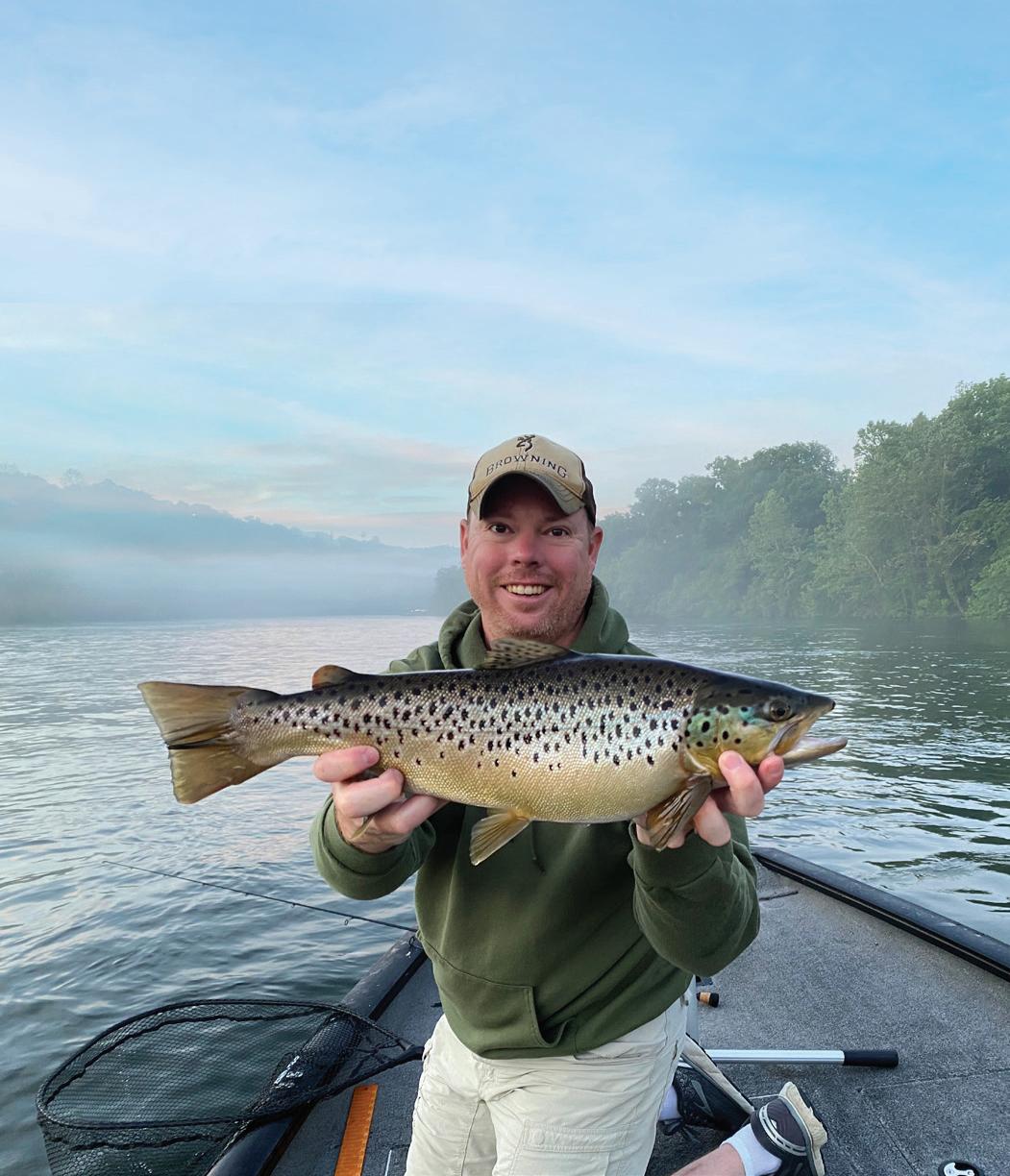


Tales from the James River
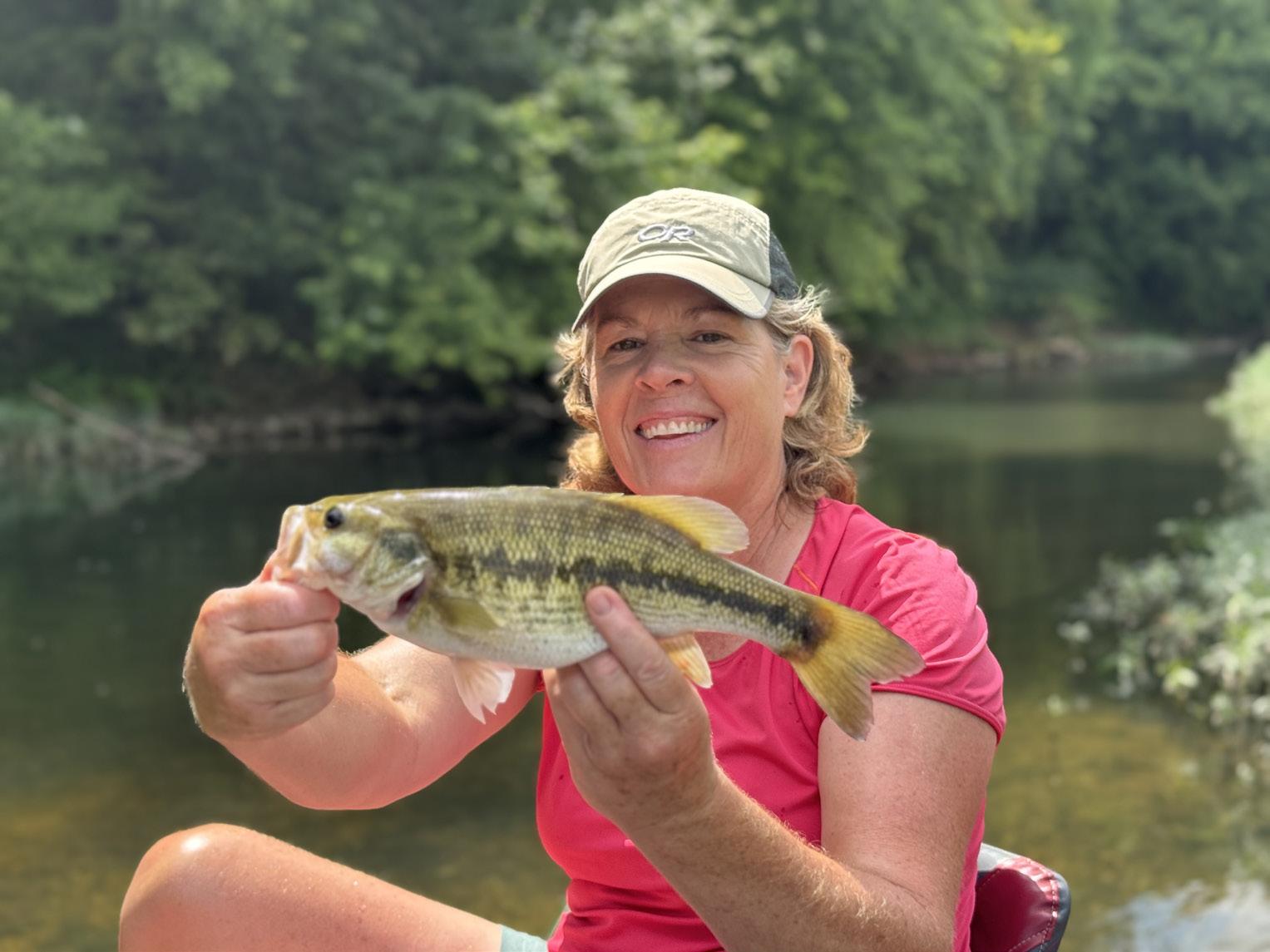
Multi-day float trips on the James and White Rivers are legendary. Tales of adventure, intrigue and giant smallmouth bass have circulated since way before Table Rock Lake ever existed. Ozark Smallmouth Fly Company owner Ryan Walker is a veteran river guide who concentrates on rivers within about a two-hour radius of Springfield, Missouri. When I saw on a silent auction that he had donated an all-inclusive full-day float trip for the Missouri Outdoor Communicators Annual Conference, I started bidding. After a successful bidding entry, I began to imagine my day on the river with Ryan, catching and releasing magic smallmouth bass.
Upon reflection, I began to think that maybe those less fortunate in counting days on the water might benefit more from such a treasure, so I offered the trip instead to my wife Sara (retired MDC) and our good friend, Amy Salveter (retired US Forest Service), as a kind of Ladies Day Out(doors). It didn’t take them long to gladly accept the offer and never look back. Ryan assured me he was up for the trip with these two hooligans, suggesting he would guide them for bass on the James River from south of Springfield to Galena.
Part of what makes fishing with an experienced river guide so valuable is that they often have access to private put-in and take-out locations that the general public does not. I can attest that having your own seemingly private Ozark River for the day is really something special.
I have learned a few tricks over the years and one in particular I gleaned was from my friend and long-time river guide Dennis Whiteside, who often fishes a red River to Sea brand Whopper-Plopper topwater lure behind me, cleaning up on the big ones I just passed over. So, I sent Sara down with a red Whopper-Plopper to start her morning. On her first three casts, she caught a sunfish, smallmouth bass, and a channel catfish (yes, catfish on a topwater). My guess was that Ryan was probably just a little stunned, but then the sun popped out and the topwater bite was over for the morning. He quickly switched the Lady Anglers to shad colored Zoom Super Flukes and Keitech swim baits, then the bite was ON. I can only imagine what Ryan’s day on the river was like, so I am going to let the Ladies speak from their perspective.
Sara: Typical for us, we ran more than a few minutes late in meeting up with Ryan at the Kerr Conservation Access, but his easy-going style and gentle demeanor had us from the beginning. A good guide keeps the conversation going, but a great guide keeps you entertained and knows how to engage in and navigate a plethora of topics without getting folks riled. A great guide also keeps their sense of humor and encourages you to keep yours, despite ill-thrown casts or lost fish while offering helpful tips to increase our chances of getting big fish in the boat. A great guide keeps an eye out for changing conditions and makes sure that we’re changing out lures and strategies to optimize our chances for success. Ryan gets 5 stars in all of these categories.
We did feel like we had the river largely to ourselves, and what a gorgeous river it is, with its majestic bluffs and mystical caves. An eagle made an appearance or two, and Amy commented on the quiet, peaceful, and sheer enjoyment of the drift-boat fishing experience. Our arms were sore by days’ end with all the repetitive casting motion, yet we never went long without a tug on the line. And it was great fun to see the variety of fish caught -- from sunfish to catfish to crappie to, of course, smallmouth and spotted bass.
Our shore lunch of fried chicken and potato salad was a big hit and then back in the boat, we jumped as we knew there were more fish to be caught – in fact I caught the biggest smallmouth of my life that afternoon and I think Ryan was as excited as I was when it was successfully landed in the boat.
Ryan may have been more than ready to dump out the two of us who likely never stopped talking for more than a few minutes the entire day…but he never showed his impatience, never stopped smiling, nor showed any sign of slowing down. We’d take another trip with Ryan anytime!
Ryan Walker and his Ozarks Smallmouth Fly Company, 417-366-3617, specializes in trips on the James, Gasconade, Niangua, Osage Fork, and Elk Rivers in Missouri and the Kings and Upper Illinois Rivers in Arkansas. Oklahoma trips are offered through affiliate guides. Ryan says: “Smallmouth don’t live in ugly places! Sharing our love for this beautiful, wild region is a passion we can’t contain.” And they fish in comfort by River Rat raft or jet boat. “We’ll provide everything! Rods, reels, flies and lunch! World-class instruction and enthusiasm are part of the trip! Educating angers isn’t just our job; it’s our calling.” Full-day trip rates for 2026 are currently $500 and accommodate two anglers. Halfday trips are $300. You are welcome to bring your own rods, reels and anticipation. Smallmouth trips are catch-and-release. Another tip we have learned is to book these outstanding fishing guides months in advance. The good guys are booked for hundreds of days a year, and while they will try their best to accommodate you at the last minute, they are usually booked way out and often with repeat customers. I assure you I (Scott) cannot articulate just how special our Ozark Rivers really are. Put it on your bucket list. It’s something you just need to experience for yourself.
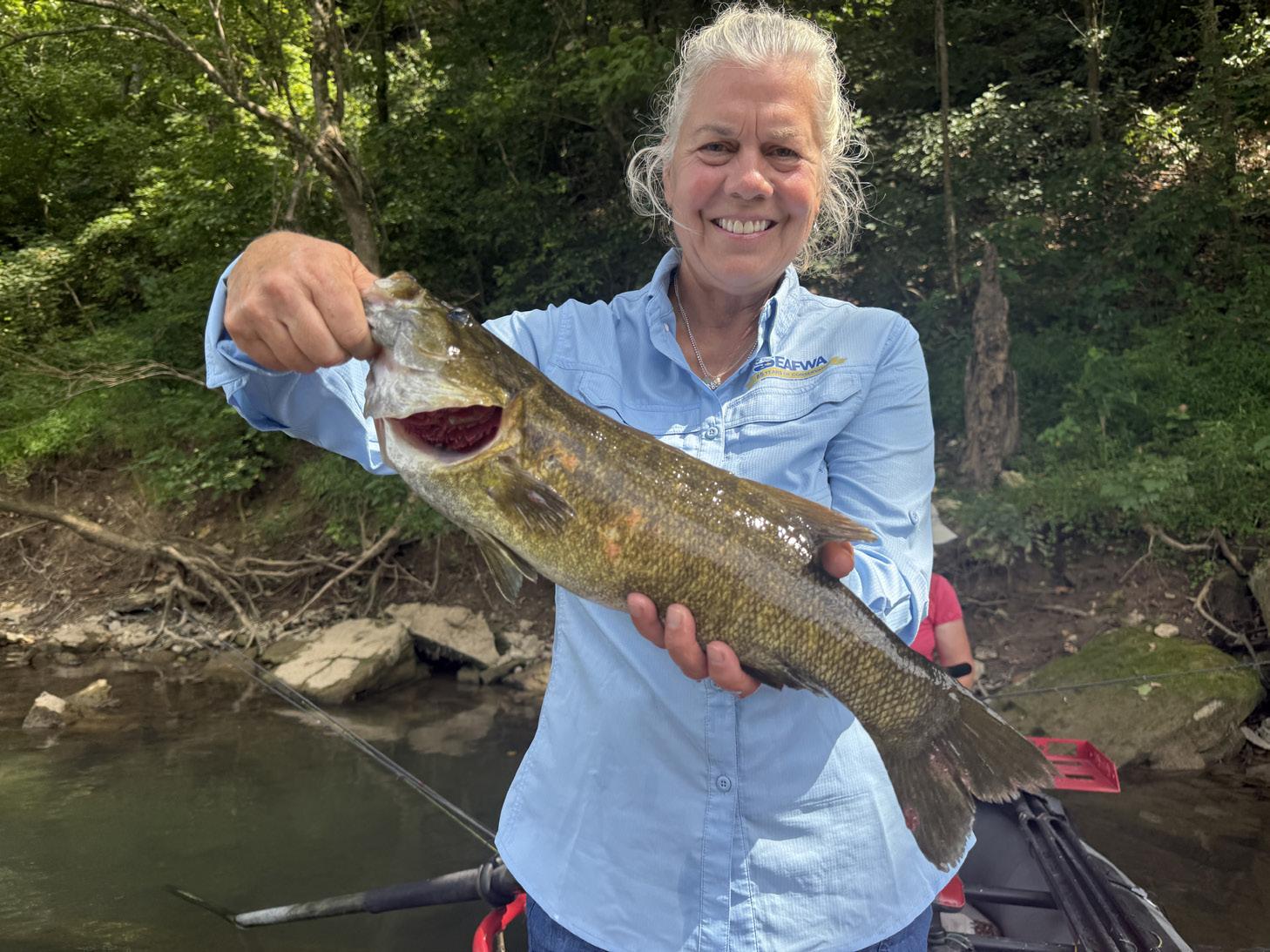
Scott and Sara Pauley
Photos: Courtesy of Scott and Sara Pauley
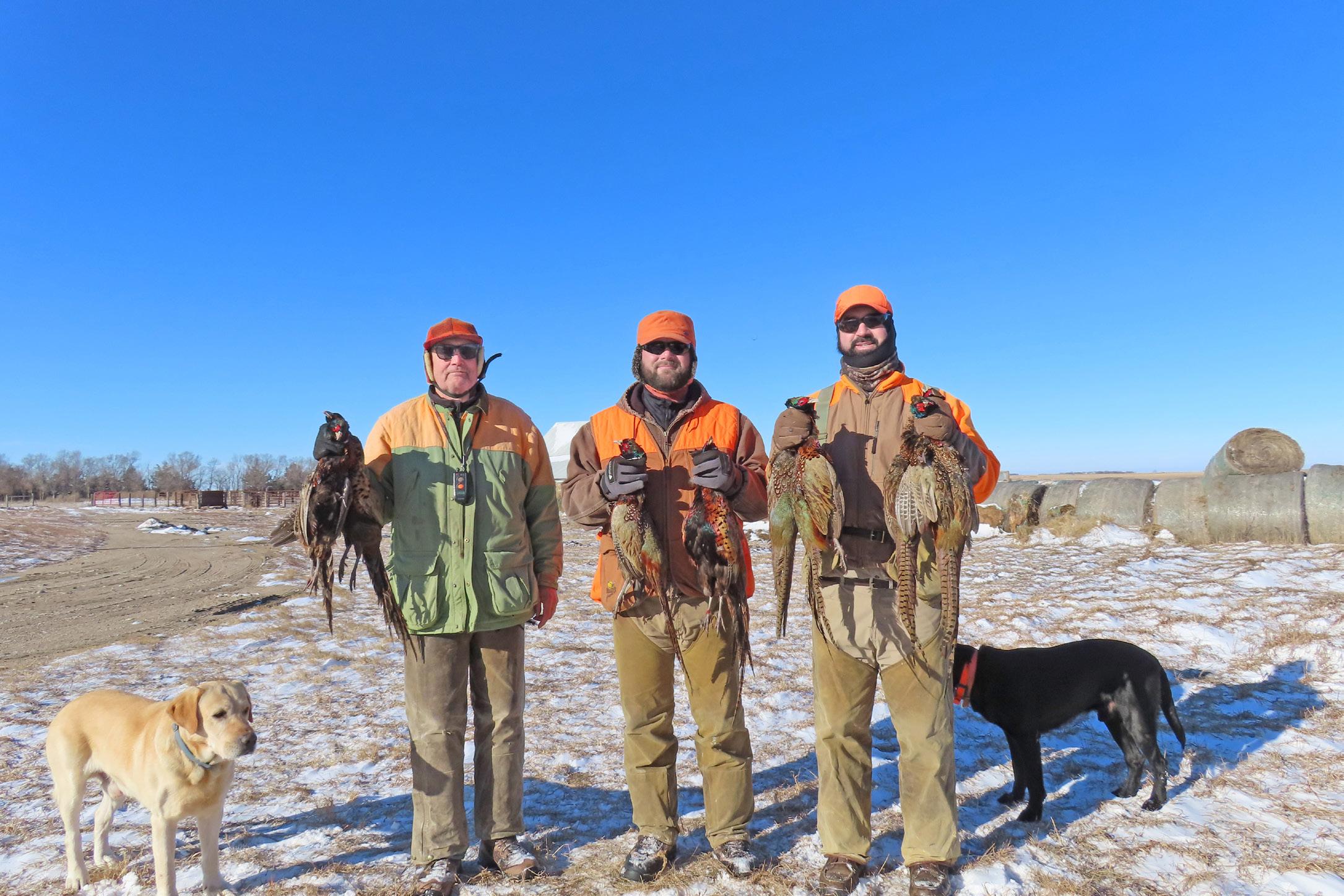
Tennis Shoes
While our three sons were growing up, it was my habit to get up early on a Sunday morning and make sourdough pancakes using a starter my mother had started in the early 1950s. After breakfast, we sat around the table and had our weekly family meeting. Attendance was required. The family meeting followed a prescribed format. We began with compliments by going around the table so everyone could say something nice about another family member or how the family operated the previous week. Next was the family schedule for the upcoming week. Our sons’ activities for the week had to be listed on an erasable board or they didn’t go.
Since I was the director of transportation, I enforced this rule brutally; consequently, there was never a problem with last-minute obligations. Then we had the financial portion of the meeting when I doled out allowances minus any earned deductions. The last portion of the family meeting was the most important and was the open forum. We went around the table, allowing everyone to speak on any topic or to raise family issues. There were two rules during this portion of the meeting including no name calling and no interrupting which I had to enforce at times.
There was a memorable family meeting when our sons were ages 14, 12 and 9. Our two oldest sons led a wellprepared discussion on why Mrs. Urich and I should buy them expensive designer tennis shoes, which were popular with teenagers and were must-have items at the time. Apparently, our sons were about the only ones in school who didn’t have these shoes, according to their narrative. I had to admit they put reasonable preparation and thought into their arguments, including how this purchase would impact family finances. We spent time periodically at family meetings discussing income, expenditures and other details of family finances so our sons could understand the advantages and importance of financial planning. Consequently, looking them in the eyes and saying no to the expensive tennis shoe request was not the best option without a practical, appropriate reason. We spent over an hour discussing alternatives before settling on a solution.
Mrs. Urich and I agreed to put our two oldest sons on a clothing allowance with the youngest son added after he got into junior high. They would get $120 a quarter for clothing, including shoes, to spend as they saw fit or on non-clothing items if they wanted. But they could not ask for any more money for clothing purchases. If they used their clothing allowance on other items and didn’t have money for clothing, they could go to school wrapped in a towel. In addition, I offered 5% more the next quarter if they produced clothing receipts. I even showed a chart on how fast their clothing allowance would grow compounded quarterly at 5%. In the years we handed out clothing allowances, we never saw a receipt.
The only clothing we agreed to buy outside of the clothing allowance was winter coats and boots because of the expense. Actually, this offer primarily benefited our oldest son because the other two sons wore handme-downs. Our youngest son asked me one year why he never got a new winter coat. I told him it was his fault for being born last, a response he found unsatisfactory. I followed up by explaining that the lastborn often has more leeway and fewer restrictions than older siblings because parents are worn out and exhausted from years of dealing with older siblings.
Accordingly, he should be pleased to be the lastborn. I don’t know what our sons spent their clothing money on, but they always seemed to have clothes and shoes. Interestingly, they didn’t buy the expensive tennis shoes. Plus, they never succumbed to other popular teenage fashion trends for overpriced jeans or sweatshirts. Apparently, these designer tennis shoes were not as critical to their self-esteem or peer group acceptance as they had led us to believe.
I don’t know where they purchased their clothing, and I never asked. I pointed out where the thrift stores were located and indicated I shopped for clothing there at times. I don’t know how they cashed the checks I gave them because they didn’t have bank accounts at first. Check cashing was not my problem.
The open forum portion of our weekly family meetings proved to be an important communication tool for Mrs. Urich and me. As our sons got older, they often used the open forum opportunity to talk with each other about school and other teenage issues sometimes for 30 to 45 minutes. We learned a great deal about how our sons handled problems and opportunities at school during the open forums. The secret to keeping this dialogue going was for Mrs. Urich and me to keep our mouths shut unless asked for input and comments. Additionally, our input had to be positive and concentrate on alternatives if our sons expressed concerns about interactions with teachers and other students. This approach was hard at times but critical.
Several years ago, I was returning with our sons from our annual late December pheasant hunting trip in South Dakota. The weather for the trip home was terrible with snow and wind making travel difficult and slow on I-90. My oldest son suddenly decided to review with me his complaints with parenting methods and approaches Mrs. Urich and I used while our sons were growing up. These comments came from a 41-year-old man who didn’t have kids. Nevertheless, he felt it would be instructive for us to know how we could have done better. It felt like an annual workplace performance appraisal.
He started with his disappointment at never visiting the big amusement parks in St. Louis or Kansas City, plus never going to a professional sporting event. Each year Pizza Hut sponsored a reading challenge. Students who read the required number of books during the school year got a free ticket to Six Flags in St. Louis. Our kids completed the reading challenge annually, got their tickets, but we never took them to Six Flags, which apparently was a huge disappointment following them into adulthood. I explained their behavior in the back seat of our Pontiac station wagon was so atrocious we didn’t like to drive them around the block. He went on to say living in the country away from school friends was difficult and socially isolating. Ironically, all three of our sons now live in the country. Our sons objected to the small black and white TV, which was often set up in the garage. There were other issues, and I listened patiently, mostly without comment.
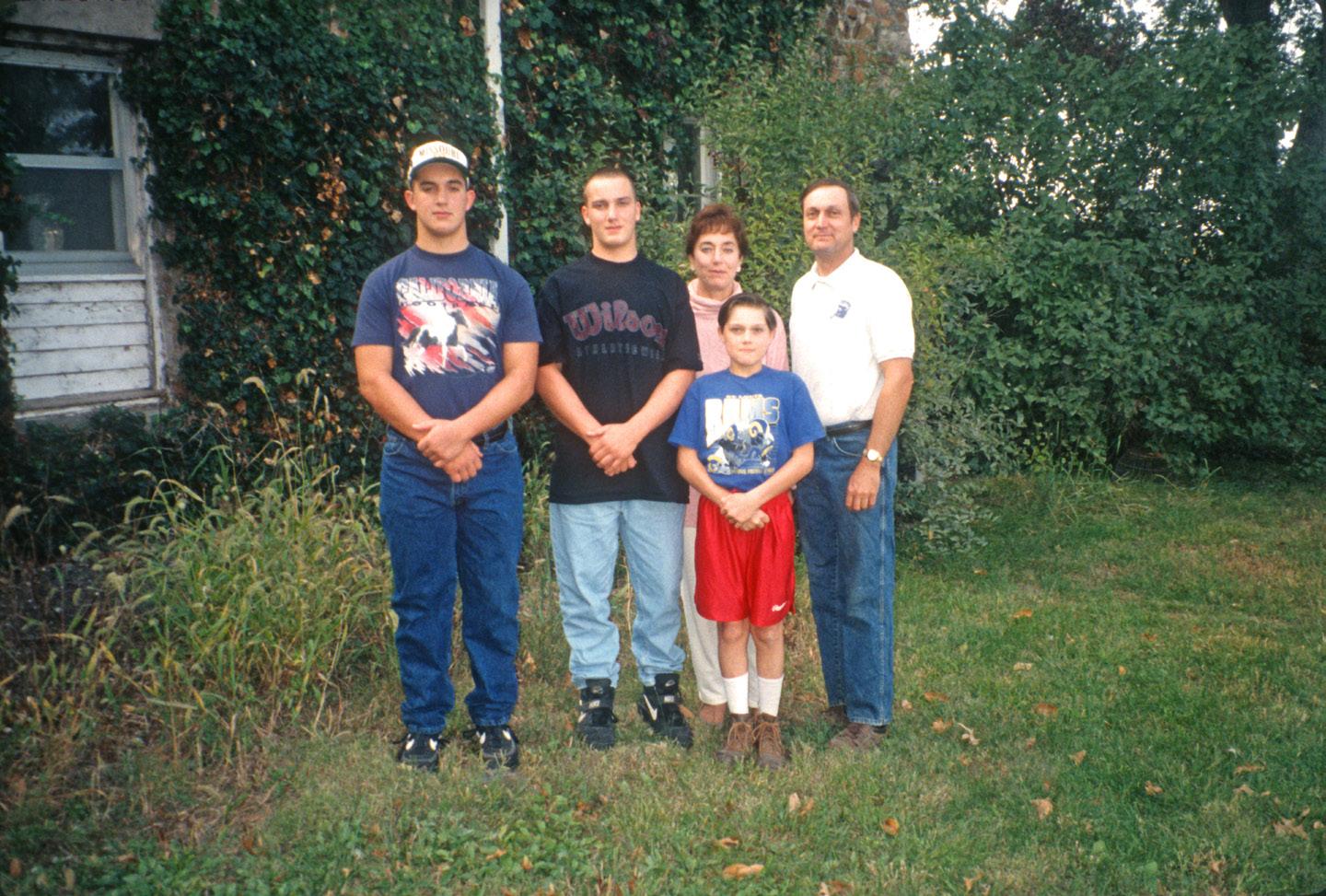
We took a couple of parenting courses as our sons became teenagers which helped. Our oldest son was partially right when he listed items we could have done better as parents. But the weekly family meeting and the clothing allowance turned out to be some of the best decisions we made as parents.
His final complaint surprised me when he said we had failed to teach our sons empathy. He explained his job as a principal at a large junior high required him to interact with students, teachers and parents. Empathy was important. My response was he must have had an introduction and exposure to empathetic behavior growing up to even know what it meant and how important it was to his current job. Finally, I asked if there were any positive features of his upbringing. After some thought he finally said, “You did alright, Dad.” He never mentioned the weekly family meetings and the clothing allowance. This allowance was critical for teaching our sons money handling skills and the consequences of frivolous spending. The family meeting fostered communication for problem-solving and, to a certain extent, empathy.
Like most parents, we were basically unprepared for raising children, which is an on-the-job training assignment requiring improvised solutions and actions as situations demanded. We had somewhat of an advantage because Mrs. Urich and I were in our 30s when our sons were born, allowing us more time to mature.
All 3 of our sons have good careers, homes and stable family relationships, indicating we were successful as parents despite our oldest son’s comments. Our middle son is our only son with kids and they are now teenagers. Ironically, he teaches high school personal finance and uses as examples many of the moneyhandling and planning skills he learned growing up. I only provided unsolicited parenting advice once and it was ignored. We watch silently from the sidelines as our son struggles with many of the same child-rearing issues we did. I know a weekly family meeting would help with family dynamics. His experiences make me realize how fortunate Mrs. Urich and I were to not deal with cell phones, social media and screen time issues, which are serious hurdles to an already complicated and semichaotic child-rearing process. Cell phone problems and social media concerns make dealing with overpriced, fad tennis shoes seem trivial by comparison.
Pg. 64 - Urich family (L-R) Tim, Aaron, Mrs. Urich, Kirk and Daivd outside our rural Moniteau County home.
Pg. 62 - Kirk, Tim and David Urich pheasant hunting in South Dakota. (Photos: David Urich) David Urich


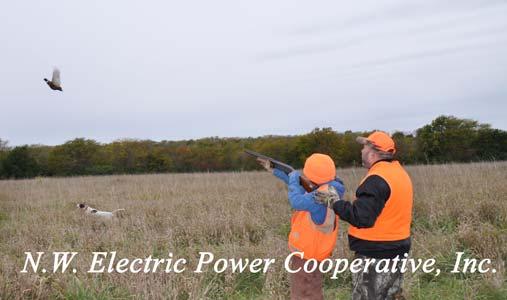








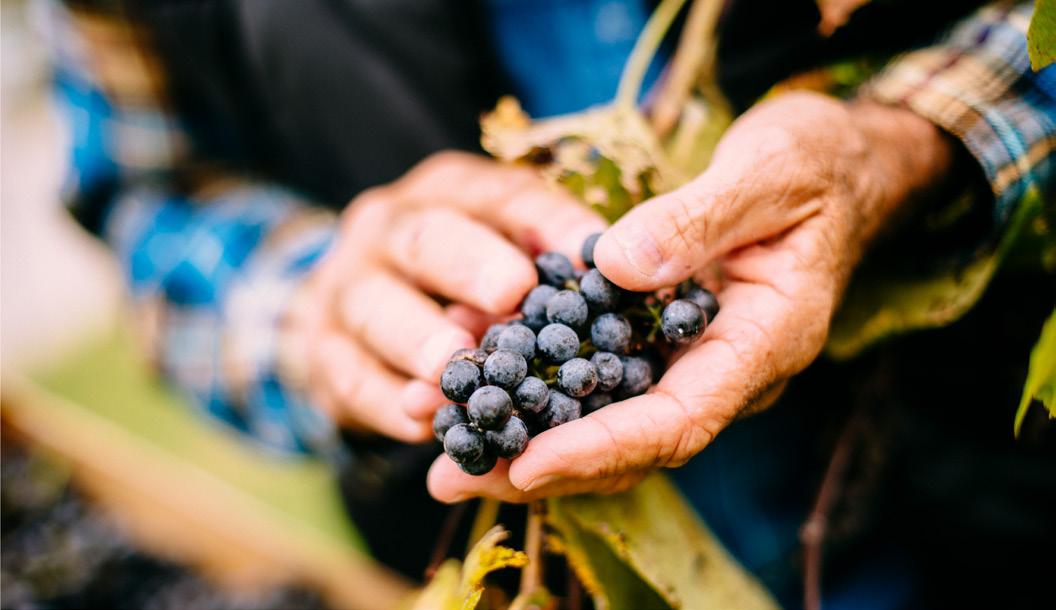

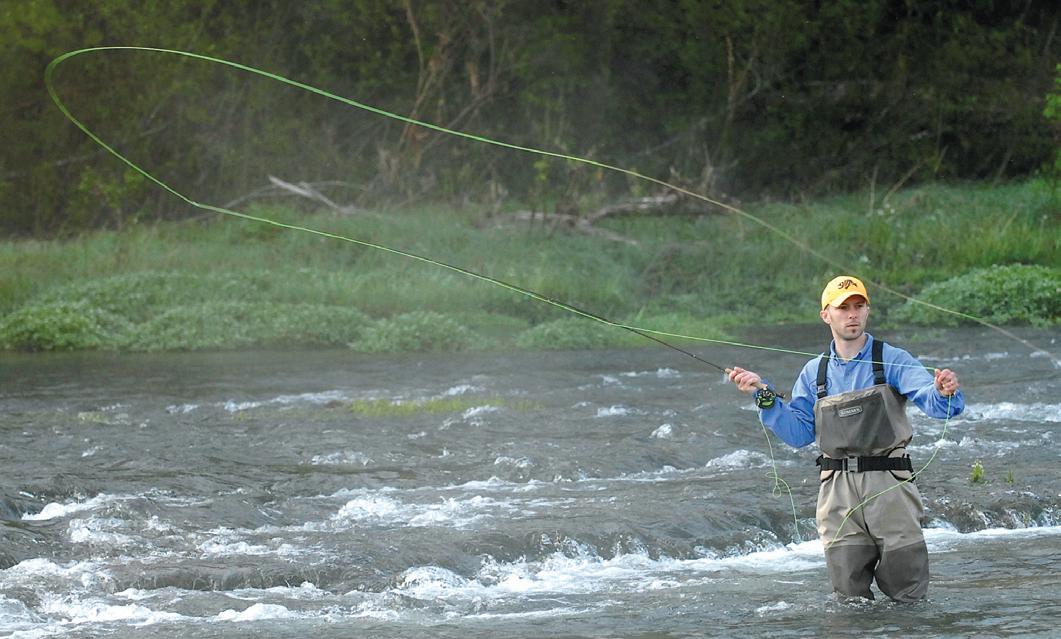

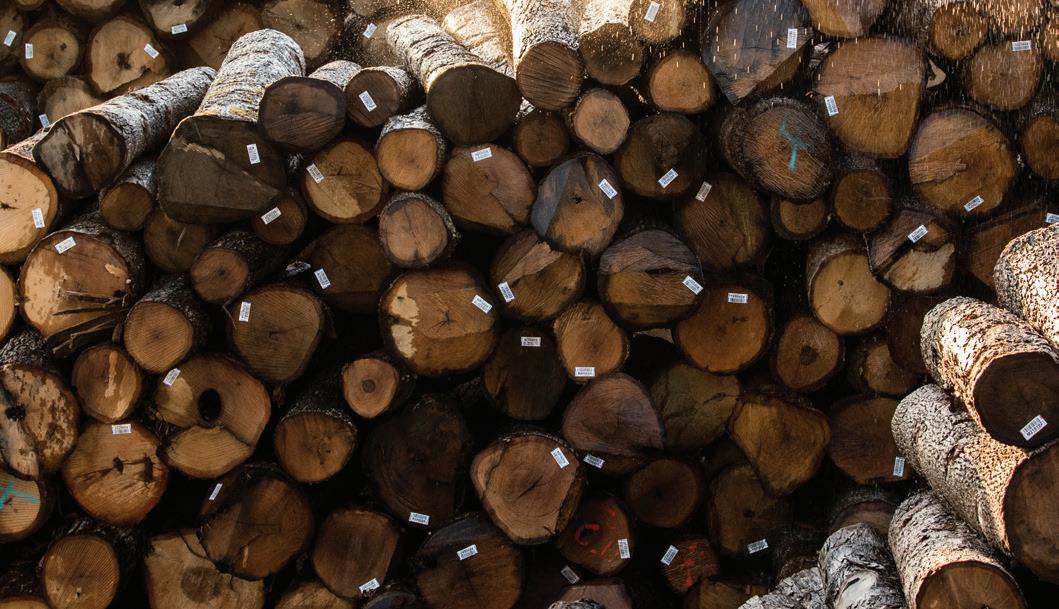









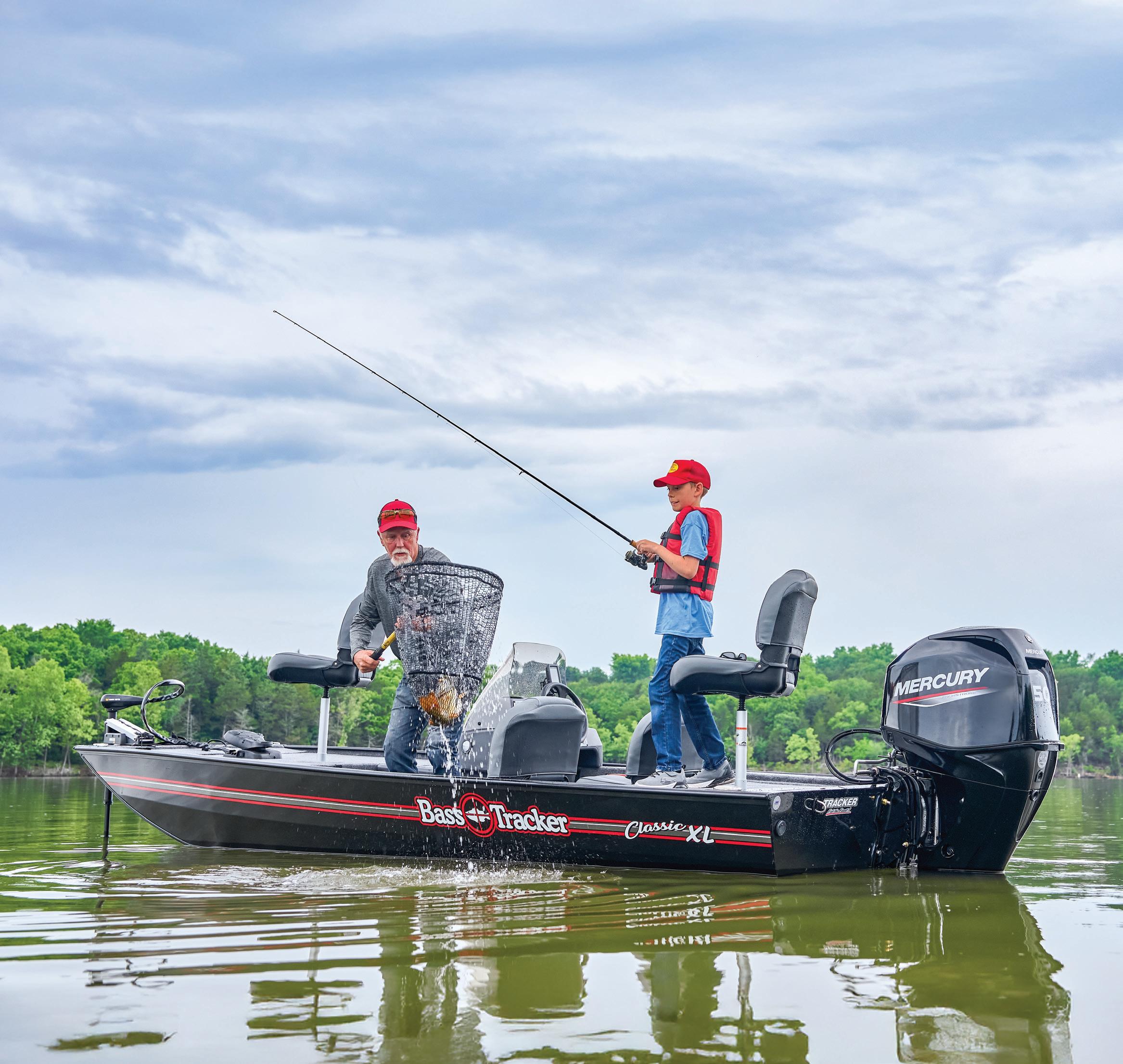

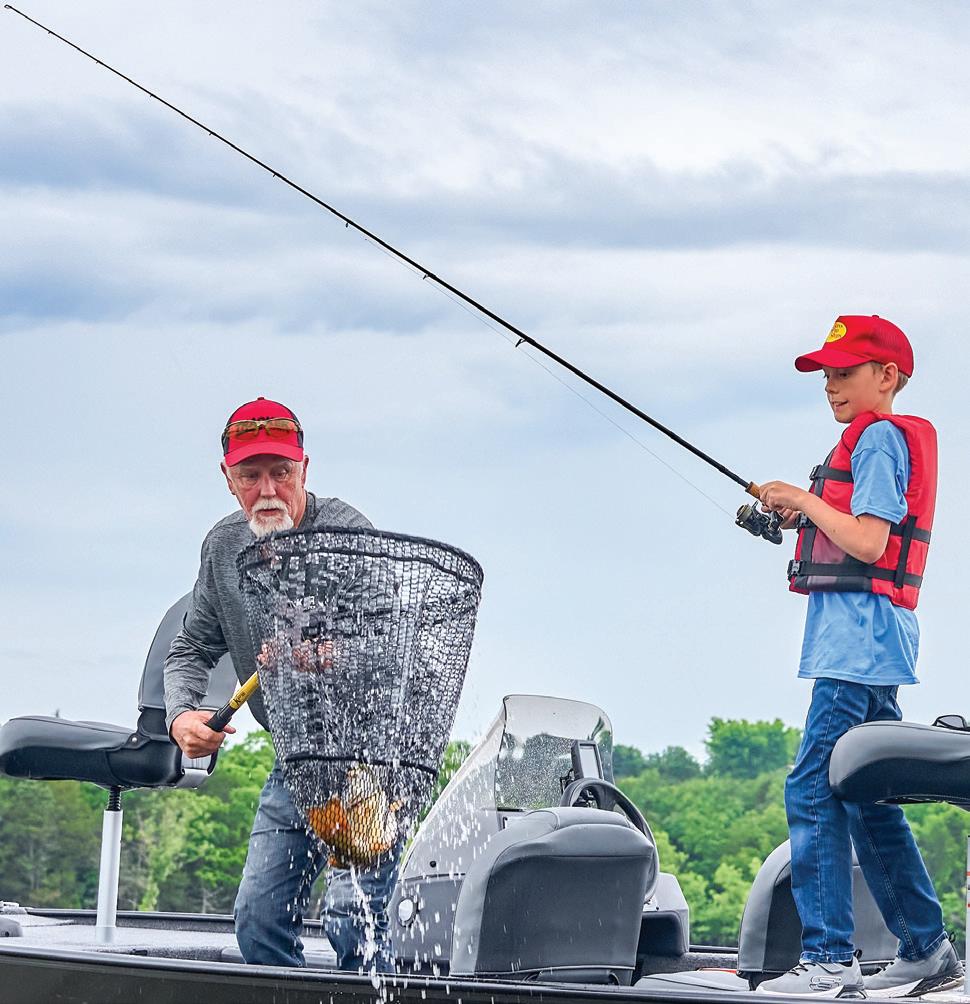
AMERICA’S FISHING BOATS
PROUD PARTNER