CONSERVATION FEDERATION
FOUNDERS CIRCLE FOUNDERS CIRCLE
PRESERVING OUR CONSERVATION LEGACY
For more than ninety years, the Conservation Federation of Missouri (CFM) has served as “The Voice for Missouri Outdoors.” Join in our efforts to secure our stronghold as advocates for our state’s wildlife and natural resources by becoming a dedicated member of our Founders Circle.
Your contribution will play an influential role in preserving Missouri’s rich outdoor legacy.
Each year, earnings from the endowment will be used to support CFM’s education and advocacy efforts. Special recognition will be given to those who reach each level of giving. Additionally, memberships will be recognized at our annual Convention.
Make your contribution today, to preserving our state’s conservation legacy.
David Urich-2023
Anonymous-2025
Tanya Duvall-Haubein-2025
William R. Stork, Jr. - 2026
Zach Morris-2022
Mike Schallon-2023
Liz Cook-2023
Gene Gardner-2023
Charlie Wormek-2023
Ray Wagner-2023
Bill McCully-2025
Bruce Sassmann-2025
Nicole Wood-2025
Anonymous-2025
Anonymous-2025
Randy Washburn-2025
Mossie Schallon-2025
David Young - 2025
Jennifer Urich - 2025
For more information, contact the office at (573) 634-2322 or info@confedmo.org
Come Home to Conservation at our 90th Annual Convention
The Conservation Federation of Missouri’s 90th Annual Convention is upon us, and we genuinely hope that you, as a vocal and supportive member, plan to participate in this fun event. Convention truly embodies our outdoor heritage's mission and what our storied organization is all about: Advocacy, Education, and Partnerships. The plan is to host the Natural Resource Breakouts in the virtual format, then gather in person for the remaining festivities. The dates are February 24-26 and March 2-4 for the virtual and March 6-8 for the for the in-person portion at The Lodge of Four Seasons.
We will start on Tuesday, February 21st, with the Natural Resource Breakouts meetings being held virtually in the evenings. This is your chance to engage in conservation topics and let your voice be heard. I am always amazed by the conservation professionals and the knowledge of our members. These meetings conclude on Thursday. CFM members can attend each of these sessions and be a part of the resolutions from these meetings.
New this year, on Friday afternoon, we will have a session to help shape the future of our outdoors. Please plan to join this important discussion. Also on Friday is our Awards Ceremony, celebrating all the excellent achievements of our conservation professionals and awarding our scholarships to many deserving conservation students. It’s a true highlight of the month for me to notify these deserving recipients.
Convention is also a time to bring together your young leaders in our Conservation Leadership Corps. We currently have XX high school- and college-age students who spend their time interacting with and networking with resource professionals while developing their talents and leadership skills. They also present the resolutions approved by the entire membership on the final day of the Convention. It is a joy to see the energy and vibrance that they exude, and they continue to develop as the next generation of conservation leaders.
On Saturday morning, we will have updates from agency leaders from the Missouri Department of Conservation and the Missouri Department of Natural Resources. We will once again have breakout sessions, and we hope there will be something entertaining and educational for each of our members to enjoy.
One of the Saturday activities is the General Assembly meeting at 11:00 a.m. This is when the resolutions are presented and voted on by the members. Another example of the many actions that make CFM such a strong voice moving forward is gaining the collective support of all our members. General Assembly is undoubtedly one of the most critical and impactful parts of the weekend, and you will not want to miss out.
Saturday evening will conclude with the fundraiser, including many auction items and trips for everyone to bid on. The Banquet is the fun part of the evening with all the auction items, networking, and fun, so you won't want to miss your chance to take home some great auction items. Former MDC Commissioner and Master Conservationist Dave Murphy will be our keynote speaker, and I cannot wait to hear his recount of 90 years of Conservation history.
The staff and volunteers who help pull this together genuinely amaze me with all they can do. We certainly could not do it without everyone's help, so thank you very much. For registration and more info, visit our webpage at confedmo.org/convention/.
We hope you have plans to join us for all or part of the weekend so you can let your voice be heard throughout Missouri's great outdoors.
Yours in Conservation,
Tyler Schwartze
CFM Executive Director, Editor
CFM President
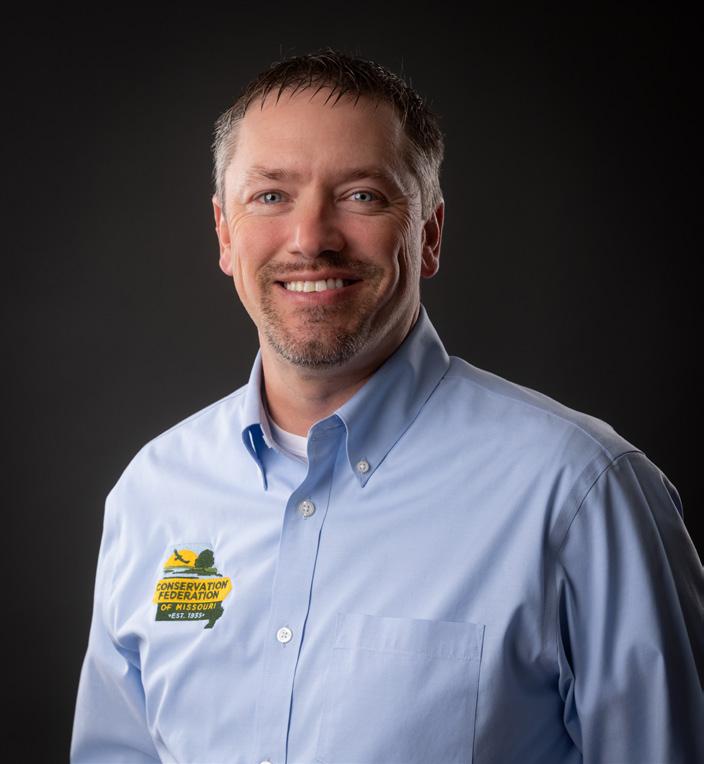
Bill Kirgan, Outstanding Lifetime Achievement Award Winner Ken McCarty, and CFM Executive Director
Tyler Schwartze take a photo at the 2025 Annual Convention. (Photo: CFM)

Missouri’s Conservation History: Sources of Information
Forage for Wellness: Balsamic Chickweed Salad
Remembering Check Stations
Missouri Ozark Fish Camp Debuts on the Meramec
Ant Hills and the Art of Being Prepared
Angels Without Wings
The Craft of Making Turkey Calls and Calling
Establishing and Enhancing Native Gardens in Spring
Go Wild or Mild with Bass Lure Colors
The Adventures of Frank & Ed: Mushroom Hunting
Mistakes in the Turkey Woods
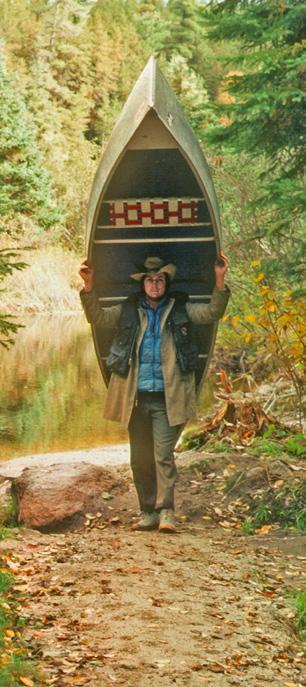
Minnesota Moose Hunt
STAFF
Tyler Schwartze - Executive Director, Editor
Micaela Haymaker - Director of Operations
Beth Cowgill - Membership Manager
Trisha Ely - Development & Events Coordinator
Taylor Hurley - Program & Comms Coordinator
Joan VanderFeltz - Administrative Assistant
Bill White - Grasslands Coordinator
Emma Kessinger - Creative Director
BOARD OF DIRECTORS
Executive Committee:
Bill Kirgan, President
Ginny Wallace, President-Elect
Steve Jones, Vice President
Benjamin Runge, Secretary
Ryan Verkamp, Treasurer
Board Members:
Richard Ash
Mossie Schallon
Gary Van De Velde
Dick Wood
Jake Swafford
Emily Tracy-Smith
Jim Low
Ralph Duren
Katherine Brookshire
Leanne Tippett-Mosby
Adam Sapp
Emily Schrader
Jennifer Battson-Warren
Bill Cooper
Governor Jay Nixon
Wes Swee
David Urich
Dana Ripper
Zach Morris
Lisa Allen
Tom Westhoff
Mike Schallon
Katie Marsh
Kyle Carroll
Jean Nock
Jeff Meshach
Kathie Brennan
Laurie Wilson
William Hall
Michael Meredith
Alexander Scott
Ryan Coovert
April Hoffman
Eric Rahm
Dave Murphy
Kaley Brittain
John Hickey
Cydney Mayfield
Dr. Jane Williams
Kendra Varns Wallis
Pam Bollinger
Bill McCully
ABOUT THE MAGAZINE
Conservation Federation (ISSN 1082-8591), Copyright 1938, is published 6 times a year in January, March, May, July, September, and November by the Conservation Federation of Missouri (CFM), 728 West Main, Jefferson City, MO 65101. Of each member’s dues, $10 shall be for a year’s subscription to Conservation Federation. Call (573) 634-2322 to become a member. Periodicals Postage paid at Jefferson City, MO.
POSTMASTER:
Send address changes to:
Conservation Federation 728 West Main Jefferson City, MO 65101
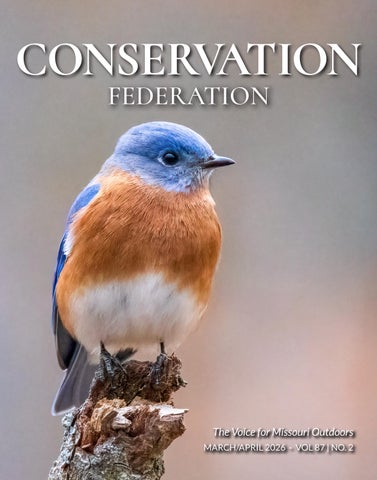
FRONT COVER
A
Gold
Doolittle Trailer
G3 Boats
Thank you to all of our Business Partners.
Platinum


Pure Air Natives
Redneck Blinds
Silver
Forrest Keeling Nursery
Lilley’s Landing Resort & Marina
Missouri Wildflowers Nursery
Bronze
Association of Missouri Electric Coop.
Black Widow Custom Bows, Inc.
Brockmeier Financial Services
Burgers’ Smokehouse
Central Electric Power Cooperative
Iron
AJ's Automotive & Air Conditioning
Bass Pro Shops (Independence)
Bee Rock Outdoor Adventures
Best Shot Insurance
Big Bear Butcher Shop
Boone Electric Cooperative
Cap America
Central Bank
Custom Promotional Branding
Dickerson Park Zoo
Mitico Quaker Windows

Rusty Drewing Chevrolet
Roeslein Alternative Energy, LLC
Starline, Inc.
St. James Winery
Drury Hotels
HMI Fireplace Shop
Hodgdon Powder Company, Inc.
MidwayUSA
Missouri Wine & Grape Board
NE Electric Power Cooperative, Inc.
NW Electric Power Cooperative, Inc.
Ozark Bait and Tackle
Woods Smoked Meats
Farmer’s Co-op Elevator Association
FCS Financial
Gascosage Electric Cooperative
General Printing Service
GREDELL Engineering Resources, Inc.
Heartland Seed of Missouri LLC
Hulett Heating & Air Conditioning
Independent Stave
Joe Machens Ford
Lewis County Rural Electric Coop.
Marble Graphics II LLC
Midwest Mailing Services
Missouri Native Stewardship Services
ModernLitho Jefferson City
Moneta Group
On Time Toner and Supplies LLC
Peapod Learning Center LLC
Remembrance Forest
Truman’s Bar & Grill
United Electric Cooperative, Inc.
Your business can benefit by supporting conservation. For all sponsorship opportunities, call (573) 634-2322.
"The Voice for Missouri Outdoors"
Mission: To ensure conservation of Missouri’s wildlife and natural resources, and preservation of our state’s rich outdoor legacy through advocacy, education and partnerships.
In 1935, conservationists from all over Missouri came together to form the Conservation Federation of Missouri (CFM) with the purpose to take politics out of conservation. The efforts of our founders resulted in the creation of Missouri's non-partisan Conservation Commission and the Missouri Department of Conservation (MDC). Since then, CFM has been the leading advocate for the outdoors in Missouri.



Partnerships
Over 100 affiliated organizations
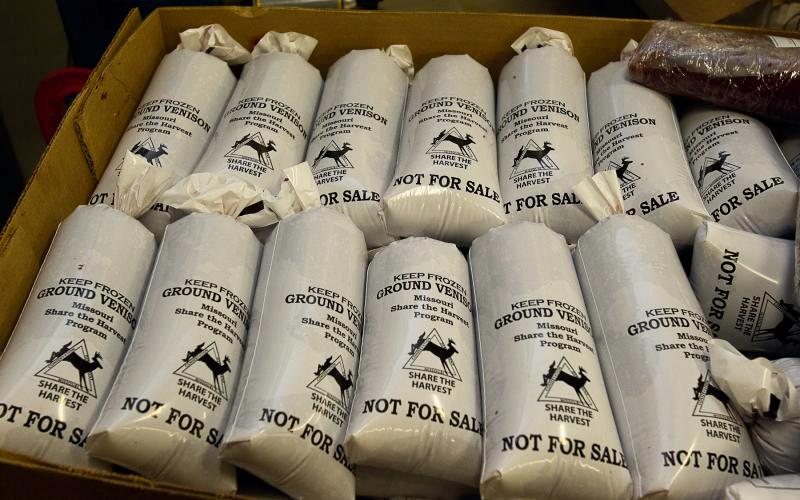
Share the Harvest
Youn Professional
Corporate & Business Partnerships
State & Federal Agency Partnerships
Missouri Native Grasslands
Collaborative
National Wildlife Federation Affiliate
Operation Game Thief
Operation Forest Arson
David A. Risberg Memorial Grants
Missouri Stream Teams
Education
Conservation Leadership Corps
Confluence of Young Conservation Leaders
Affiliate Summit
Scholarships for youth and students
Governor’s Youth Turkey & Mentored Deer Hunts
National Archery in the Schools Program
Conservation Federation Magazine
Legislative Action Center
Resolutions to lead change
Resource Advisory Committees
Conservation Day at the Capitol Staff and members testify in hearings for conservation and natural resources














Ways You Can Support Conservation Federation of Missouri
Support efforts to promote and protect Missouri’s conservation and natural resources. Members receive our magazine six times a year, bi-weekly e-newsletters, event updates, opportunities to strengthen conservation voices statewide and and access to the Legislative Action Center.
CFM provides a platform for diverse organizations to amplify conservation voices statewide. Affiliates may apply for grants, receive educational training, collaborate with partners, and promote their mission and impact.
Scholarships and Grant Support
CFM awards scholarships to undergraduate and graduate students while providing grants for youth education and affiliate projects. Contributions help future generations launch meaningful, boots-on-the-ground conservation efforts statewide.
Make a lasting investment in Missouri’s conservation and natural resources. Life Members contribute $1,000, while Founders Circle members give $5,000, supporting an endowment fund that ensures long-term impact and strengthens conservation voices statewide.
Business partners receive recognition in each magazine issue and opportunities to connect with engaged members. Multiple partnership levels are available to support conservation goals while increasing visibility statewide.
Event Sponsorship and Product Donation
Sponsoring a CFM event supports conservation while promoting your business to engaged audiences. Event sponsorships, raffles, auctions, and product donations raise funds and showcase commitment to Missouri’s outdoors.


President's Message
Building on 90 years of Conservation Leadership
Iam proud, honored, and humbled to be serving as CFM’s new President, the 49th in CFM’s 90-year history. For those who don’t know me, I was born and raised in a suburb of Chicago. My family spent a lot of time camping and fishing when I was growing up, and I learned from an early age to appreciate all aspects of the outdoors.
I went to graduate school at Utah State University to study botany and moved to Missouri in 1979 to become MDC’s first botanist. I retired in 2020 after a 41-year career in natural resources conservation with both MDC and DNR, as well as a stint with DJ Case & Associates, a natural resources communications consulting firm. I have been a CFM member for many years and have been active with the board since about 2014.

I am passionate about CFM, its origins, history, and mission. I often feel as though CFM is Missouri’s best-kept secret; so much of what we do, and have done, is behind the scenes or through our many affiliate organizations. However, conservation in Missouri would not be what it is today without us. After all, it was CFM that drafted the language of, and advocated for, Amendment 4, which created the independent Conservation Commission in 1936. It was also CFM that led the initiative petition process for the Design for Conservation, the one-eighth cent sales tax that enables MDC to manage fish, wildlife, forests, and other natural communities and to connect all Missourians with nature.
Many are familiar with Share the Harvest, but did you know that Missouri Stream Teams started at CFM? The Grow Native Program also began at CFM and now operates under the Missouri Prairie Foundation. I like to think of CFM as an incubator for ideas and actions that benefit Missouri’s natural resources and, by extension, the daily lives of Missourians.
We all, people and wildlife alike, rely on clean water, clean air, wild places, and the healing power of nature to survive. Access to these resources is essential to our existence, and it is our job to ensure that Missouri’s natural resources, and opportunities to enjoy them, are as available to future generations as they are to us today.
I have two goals for the next two years: to build relationships with organizations connecting underserved communities with conservation and the outdoors, and to increase our advocacy efforts at the state and federal levels by empowering our members and affiliates to become more engaged with their local elected representatives in support of conservation and natural resources. I am confident that together, we will continue to make a difference.
Yours in conservation,
Ginny Wallace CFM President
2026 Events Schedule
90 Annual Convention - Virtual - Feb. 24-26, March 2-4; In Person - March 6-8
Let your voice be heard at the Annual Convention. The event will include meetings, awards, auctions, and so much more. Held at the Lodge of Four Seasons in Lake Ozark.
Conservation Day at the Capitol - March 31
Join conservationists from across Missouri on the radio for a day of celebrating and supporting conservation and natural resources. The broadcast will air from 6 am to 10 am on 96.7 FM or KCMQ.com.
CFM with the Springfield Cardinals - May 7
Step up to the plate with CFM this May at a Springfield Cardinals game — where conservation meets America’s favorite pastime!
Share The Harvest Golf Tournament -
June 22
Tee off for a great cause at our golf tournament at Oak Hills Golf Center in Jefferson City to support Share the Harvest!
CFM Life Member & Founders Circle Event - June 27
CFM will be hosting its 5th annual life member only event.
Whiskey
& Wildlife Banquet: Kansas City - July
A classic CFM banquet enhanced with whiskey tastings and wild-game appetizers from around Missouri.
Pull for Conservation: Central - August 8
Take your best shot at the 19th annual Central clay shoot at Prairie Grove Shotgun Sports.
Affiliate Summit
- September 18
CFM affiliate organizations are invited to network and learn.
Miles for Missouri Outdoors - September 19
Enjoy a morning 5K run/walk and explore conservation booths from our affiliate partners at the river access.
Fall
Online Auction - October 12-23
Enjoy a fun and interactive online auction with many great trips and prizes.
Event dates are subject to change Please visit www confedmo org or follow us on social media for the most up to date schedule


CFM MISSION:
To ensure conservation of Missouri's wildlife and natural resources, and preservation of our state's rich outdoor legacy through advocacy, education and partnerships.
Life Memberships Help All: Larry and Brenda Martien
Brenda and I joined the Missouri Department of Conservation (MDC) family in 1975 when I took a job as Fisheries Specialist at Blind Pony Hatchery in Sweet Springs, Missouri. I was part of a crew navigating the process of spawning and rearing paddlefish. Coworkers urged us to go floating on Bryant Creek. We saw a beautiful clear water stream nestled in the hills of Douglas County. We fell in love with floating Ozark streams and paddled many river miles camping on gravel bars overnight. We cherished sitting around a gravel bar fire with friends, poking the fire with the perfect “fire poking stick,” and watching sparks rise into the dark skies holding nothing but stars and a moon.
At that time, MDC launched the Design for Conservation 1/8% tax. Brenda and I grabbed a petition and clipboard and headed out to get signatures to help put the initiative on the November 1976 ballot. Voters passed the initiative and we were proud to be part of that success.
I was transferred to Shepherd of the Hills Trout Hatchery raising rainbow and brown trout and then to Fisheries Management in the Southwest Region conducting fish population surveys on area lakes and rivers. I finished my career in the Private Lands Division assisting land owners in implementing conservation practices on their land.

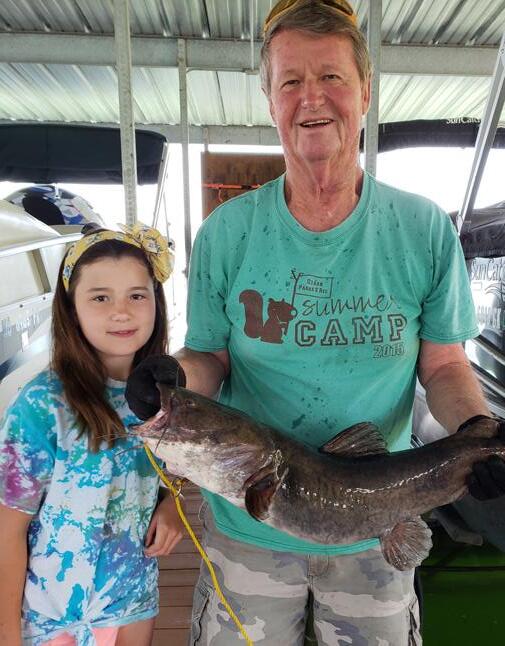
I would have never had such a rewarding career without the efforts of the Conservation Federation of Missouri. In 1935 CFM recognized the need to remove Missouri’s fish, forest, and wildlife management decisions from politicians and to use science-based management to guide the future of Missouri’s precious resources. Their success resulted in the formation of MDC. This is why Brenda and I have become life members.
If a CFM member is reading this and thinking about becoming a life member, we urge you to make that leap. CFM continues to work diligently to protect and preserve our precious resources. We need to do this for our children and our grandchildren.

In Memory & Honor
In Memory of Greg Stephens Bill Kirgan
In Honor of Marc Gottfried Vernon & Elizabeth Keune

GOLF TOURNAMENT
PRIZES FOR CLOSEST TO THE PIN AND LONGEST DRIVE!
PRIZES BY FLIGHTS
Flights and cash payouts determined by number of teams.
Team registration will include food and drinks at the turn throughout the tournament.
Entry Fee: $400 per team of 4 golfers
OPEN TO THE PUBLIC!
Proceeds will benefit CFM’s Share the Harvest program. Share the Harvest is a statewide program that helps provide nutritious, locally-sourced venison to Missouri families in need. By partnering with hunters, processors, and community
organizations, Share the Harvest works to reduce hunger while promoting wildlife conservation and responsible hunting practices. All funds raised through the golf tournament will support this impactful program, ensuring it continues to provide food security and support conservation efforts across Missouri.
The driving range will be open complimentary for 1 hour before the start of tournament.
MORE INFO OR TO REGISTER
LIFE MEMBERS OF CFM
Charles Abele
* R. Philip Acuff
* Duane Addleman
* Nancy Addleman
Tom Addleman
Nancy Addleman
* Michael Duane Addleman
James Agnew
Carol Albenesius
Craig Alderman
* Allan Appell
Victor Arnold
Bernie Arnold
Richard Ash
Judy Kay Ash
Carolyn Auckley
Debbie Audiffred
Doug Audiffred
Ken Babcock
Bernie Bahr
Michael Baker
* James Baker
Dane Balsman
Timothy Barksdale
Lynn Barnickol
Jamie Barton
Michael Bass
Robert Bass
Don Bedell
Troy Beilsmith
Cooper Bien
Thomas Bell
David F. Bender
Rodger Benson
Leonard Berkel
Barbi Berrong
Jackson Byrd
Jim Blair
John Blankenbeker
Amy Bloomfield
Tom Bloomfield
Andy Blunt
Jeff Blystone
Kim Blystone
Glenn Boettcher
Arthur Booth
* Dale Linda Bourg
Stephen Bradford
Marilynn Bradford
Robin Brandenburg
Mark Brandly
Kathie Brennan
Robert Brinkmann
Kaley Brittain
Michael Brizendine
Virginia Brizendine
Lon Brockmeier
Katherine Brookshire
Donald R. Brown
* Scott Brundage
Bill Bryan
Misty Bryan
Alan Buchanan
Connie Burkhardt
Dan Burkhardt
Charles Burwick
Brandon Butler
Randy Campbell
Brian Canaday
Dale Carpentier
Joe Cater
* Glenn Chambers
Bryan Chilcutt
Ed Clausen
* Edward Clayton
* Ron Coleman
Denny Coleman
Rhonda Coleman
Liz Cook
Bill Cooper
Elizabeth Copeland
Mark Corio
* Bill Crawford
Todd Crawford
Andy Dalton
DeeCee Darrow
Brian Davidson
Mike Dempsey
Ryan Diener
Joe Dillard
Randy Doman
Tim Donnelly
Cheryl Donnelly
Ron Douglas
Chuck Drury
* Charlie Drury
Tom Drury
Ethan Duke
Mike Dunning
William Eddleman
Karen Edison
John Enderle
Theresa Enderle
Joe Engeln
Marlin Fiola
Fred First
* Mary Louise Fisher
Howard Fisher
Andrew Fleming
Brian Fleming
* Charles Fleming
David Fleming
Howard Fleming
Kailey Fleming
Lori Fleming
Matt Fleming
Paula Fleming
Sara Fleming
X. Daniel Forte
Bob Fry
Manley Fuller
David Galat
Gene Gardner
Matt Gaunt
Jason Gibbs
Timothy Gordon
Blake Gornick
David Graber
Tim Grace
Jody Graff
Richard & Sally Graham
Timothy Graven
* Joseph Gray
Tom Gredell
Tyler Green
Jason Green
Gery Gremmelsbacher
Debbie Gremmelsbacher
Jason Gremmelsbacher
Bernie Grice Jr.
Mark & Kathy Haas
Tom & Margaret Hall
Christopher Hamon
* Deanna Hamon
J. Jeff Hancock
Herman Hanley
Keith Hannaman
Elizabeth Hannaman
Lonnie Hansen
Bryan Hargiss
John Harmon
* Milt Harper
Jack Harris
David Haubein
Tanya Duvall-Haubein
Carl Hauser
Jessica Hayes
* Susan Hazelwood
William Heatherly
Mickey Heitmeyer
* Loring Helfrich
* LeRoy Heman
* Randy Herzog
Todd Higgins
Bill Hilgeman
* Jim Hill
John Hock
April Hoffman
Mike Holley
Rick Holton
CW Hook
* Allan Hoover
Amanda Horne
John Hoskins
Todd Houf
* Mike Huffman
Wilson Hughes
Larry Hummel
* Patricia Hurster
Kyna Iman
Jason Isabelle
Jim Jacobi
Aaron Jeffries
Robert Jernigan
Jerry Jerome
Roger & Debbie Johnson
* Don Johnson
* Malcolm Johnson
* Pat Jones
Steve Jones
John Karel
Thomas Karl
Jim Keeven
* Duane Kelly
Cosette Kelly
Junior Kerns
Todd Keske
Robert Kilo
* Martin King
Bill Kirgan
* Judd Kirkham
* Ed Kissinger
Sarah Knight
TJ Kohler
Jeff Kolb
Chris Kossmeyer
Chris Koster
Dan Kreher
Carl Kurz
* Ann Kutscher
Larry Lackamp
Kyle Lairmore
* Jay Law
Michael Leach
* Gerald Lee
Debra Lee
Mark Lee
Randy Leible
Wade Leible
* Joel LeMaster
* Norman Leppo
* John Lewis
Phil Lilley
Michael Lindsay
Bill Lockwood
Leroy Logan
Christine Logan - Hollis
Bob Lorance
Ike Lovan
Wayne Lovelace
Kimberley LovelaceHainsfurther
Jim Low
Mark Loyd
Bill Lyddon
Mary Lyon
Emily Lute-Wilbers
Martin MacDonald
Michael Mansell
Steve Maritz
Katie Marsh
Danny Marshall
Brenda Martien
Larry Martien
Edward Martin
Karen Massey
John Mauzey
Cydney Mayfield
Bill McCully
Chip McGeehan
Teresa McGeehan
Justin McGuire
William McGuire
Nathan "Shags" McLeod
Jon McRoberts
Richard Mendenhall
Tom Mendenhall
Donna Menown
John "Mitch" Mertens
Cynthia Metcalfe
Walter Metcalfe
Larry Meyer
Stephanie Michels
Brooks Miller
Mitchell Mills
Joshua Millspaugh
Davis Minton
Bill Moeller
Lowell Mohler
John Moore, Jr.
Gary Moreau
Johnny Morris
Mary Morris
Zachary Morris
Butch Morrissey
Keri Morrissey
John Mort
David Mosby
Leanne Mosby
Steve Mowry
Diana Mulick
David Murphy
* Dean Murphy
Richard Mygatt
* Steve Nagle
Rehan Nana
Robert Naumann
Phil Needham
J. Roger Nelson
Jeremiah (Jay) Nixon
Gary Novinger
Frank & Judy Oberle
Larry O'Reilly
Charlie & Mary O’Reilly
Beth O'Reilly
Anya O'Reilly
Jeff Owens
Austin Owens
Jeffrey Panchot
Sara Parker Pauley
Scott Pauley
Randy Persons
Edward Petersheim
Albert Phillips
Jan Phillips
Glenn & Ilayana Pickett
Jessica Plaggenberg
Becky Plattner
Zach Pollock
Tessa Poolman
* Jerry Presley
Albert Price
Nick Prough
Andrew Raedeke
Kirk Rahm
Kurtis Reeg
John Rehagen
David & Janice Reynolds
Carey Riley
Kevin Riley
Mike Riley
Dana Ripper
John Risberg
Mary Risberg
Ann Ritter
Charles Rock
Derrick Roeslein
Rudy Roeslein
Charles Rogers
Kayla Rosen
Gerald Ross
Pete Rucker
Benjamin Runge
Tyler Ruoff
William Ruppert
Tom Russell
Jacob Sampsell
Bruce Sassmann
Jan Sassmann
Frederick Saylor
Michael Schallon
Mossie Schallon
* Evelyn Schallon
Thomas Schlafly
Pamela Schnebelen
Emily Schrader
Deb Schultehenrich
Don Schultehenrich
Tyler Schwartze
* Ronald Schwartzmeyer
Timothy Schwent
Travis W. Scott
George Seek
Arlene Segal
* E. Sy Seidler
* Sara Seidler
Joshua Shadwick
Steven Sheriff
Anita Siegmund
Emily Sinnott
Douglas Smentkowski
Edward Smith
Gary & Susanna Smith
Zachary Smith
* M.W. Sorenson
Jeff Staake
* Ed Stegner
Jeff Stegner
Everett Stokes
William Stork Jr.
Robert Stout
Winifred Stribling
Norm Stucky
Mary Stuppy
* Mark Sullivan
Jacob Swafford
Jim Talbert
Norman Tanner
Stephen Taylor
Tim Taylor
Travis Taylor
Richard Thom
Don Thomas
Tim Thompson
Jim Thornburg
* Jeff Tillman
Robert Tompson
Mike Torres
Matt Tucker
Carl Turlin
David Urich
Jennifer Urich
Alex Uskokovich
Gary Van De Velde
Barbara vanBenschoten
Lee Vogel
Albert Vogt
Frank Wagner
Ray Wagner
* Julius Wall
Ginny Wallace
Mervin Wallace
Jennifer Battson Warren
Randy Washburn
Mary Waters
* Henry Waters, III.
Daniel Weinrich
Michael Weir
* Robert Werges
Evelyn Werges Bennish
Tom Westhoff
Gary Wheeler
Georganne Wheeler Nixon
Rayburn Whitener
Mark Williams
Dennis Williams
Dr. Jane Williams
Stephen Wilson
Michael Wilson
Laurie Wilson
Jonathan Wingo
Jon R. Wingo
James Winn
Michael Wiseman
Daniel Witter
Brenda Witter
* Addie Witter
Olivia McKinney Witter
Owen Witter
Shirley Wolverson
* Dick Wood
Howard Wood
Joyce Wood
Nicole Wood
Charles M. Wormek
Brad Wright
Evan Wright
Suzanne Wright
David Young
Judy Young
Dan Zekor
Daniel Zerr
Jim Zieger
Robert Ziehmer
Emily Ziehmer
Lauren Ziehmer
Colton Zirkle
Ethan Zuck
Guy Zuck
Mark Zurbrick
*Deceased
Missouri River Relief: Connecting People to the Big Muddy
For over 20 years, Missouri River Relief has given people the opportunity to meet the Missouri River in person. From a single community cleanup in 2001, we have grown into a statewide movement of connection, education, and hands-on stewardship. At the heart of everything we do is our mission: To engage individuals and communities in the exploration, enjoyment, restoration, and care of the Missouri River.
We remove the real and perceived barriers that keep people from fully experiencing one of our region’s most valuable natural resources. The Missouri River has long been a place to cross, something to fear, or an inconvenience to ignore. We are committed to changing that. Our boat-based cleanups, immersive education programs, and river-focused recreation bring people to the water in new ways. We’re creating opportunities for people to experience the river up close and, often, for the very first time.
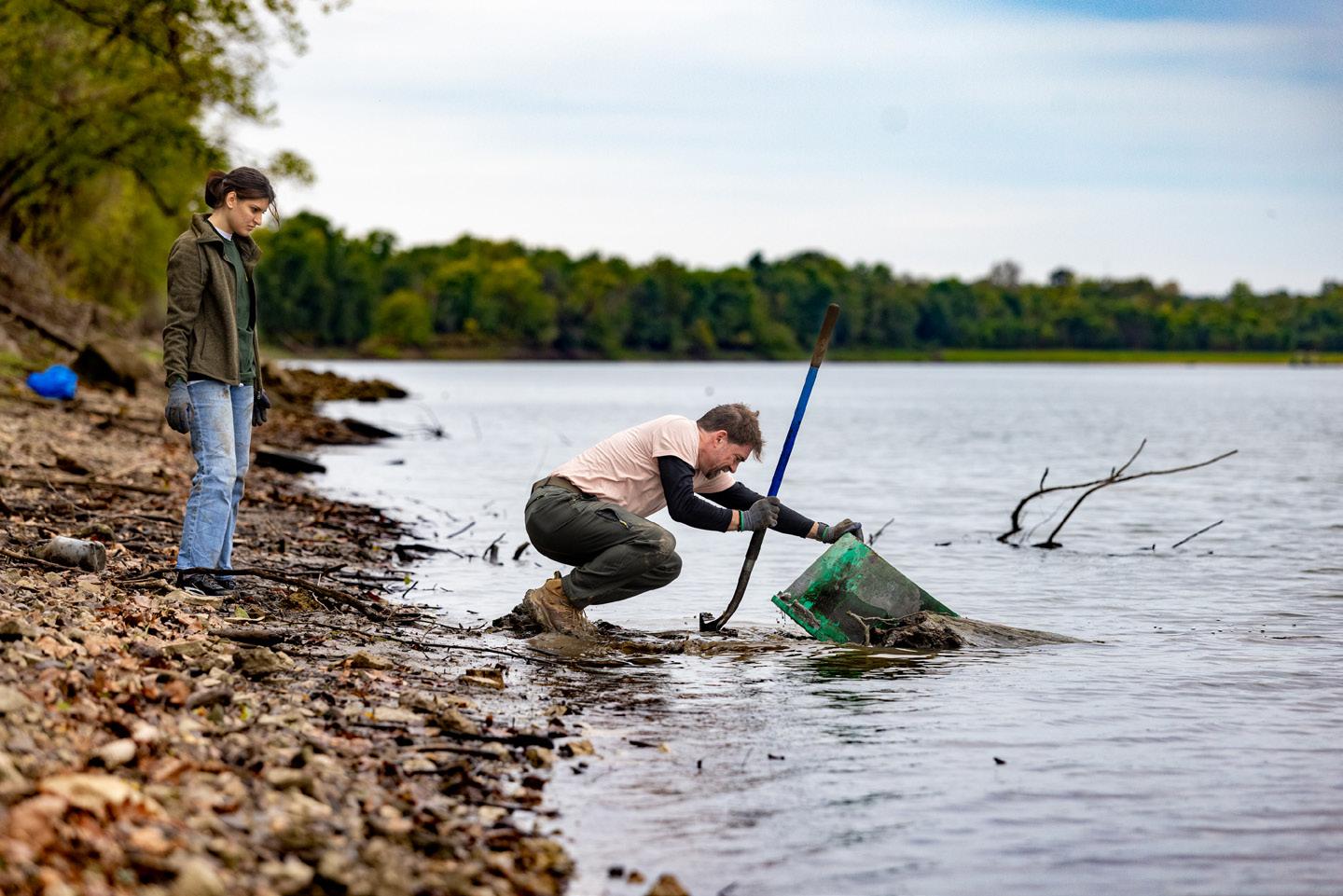
Our volunteer-powered cleanups are the cornerstone of our work. Each year, hundreds of people hit the banks of the Big Muddy with us to pull tons of illegally and improperly discarded trash out of our shared backyard. These cleanups do more than improve river health; they change people. When a volunteer steps off a boat, with mud on their boots and a smile on their face, they leave with a new sense of ownership and pride in the river.
Our education programs bring thousands of students and teachers to the water each year. From early-childhood Mornings at the River to full-grade-level immersive river science experiences, we use place-based, inquiry-driven learning to cultivate curiosity, deepen understanding, and inspire the next generation of river stewards.
Our recreation programs put people on the river in ways that give them the joy and grit they need to become the river’s biggest fans. The Missouri American Water MR340, one of the longest nonstop paddling races in the world, and our annual Race to the Dome provide participants with unforgettable, firsthand experiences with the Missouri River. These races challenge people, connect communities, and transform paddlers into advocates. Every time a river changes one of our racers, we’re reminded that when people meet the river up close, they leave changed.
At Missouri River Relief, we believe that when the river changes us, we change how we care for the river. One boat ride, one trash bag, and one wide-eyed student at a time, we’re building communities that know, value, and protect the Big Muddy.
Kevin Tosie
Mineral tub being extracted from the bank of the Osage River during the Osage and Missouri River Cleanup in October 2025. (Photo: Harry Katz)
Affiliate Organizations
Anglers of Missouri
Association of Missouri Electric Cooperatives
Basshole Bass Club
Bass Slammer Tackle
Burroughs Audubon Society of Greater Kansas City
Capital City Fly Fishers
Chesterfield Citizens Committee for the Environment
Columbia Audubon Society
Conservation Foundation of Missouri Charitable Trust
Dark Sky Missouri
Deer Creek Sportsman Club
Duckhorn Outdoors Adventures
Festus-Crystal City Conservation Club
Forest and Woodland Association of Missouri
Forest Releaf of Missouri
Friends of Rock Bridge Memorial State Park
Gateway Sustainable Farmers Alliance
Greater Ozarks Audubon Society
Greenbelt Land Trust of Mid-Missouri
Greenway Network, Inc.
Heartland Conservation Alliance
James River Basin Partnership
L-A-D Foundation
Lake of the Ozarks Watershed Alliance
Land Learning Foundation
Legends of Conservation
Magnificent Missouri
Mid Mo Prescribed Burn Assn.
Mid-Missouri Outdoor Dream
Mid-Missouri Trout Unlimited
Midwest Diving Council
Mississippi Valley Duck
Hunters Association
Missouri Association of Meat Processors
Missouri B.A.S.S. Nation
Missouri Bear Foundation
Missouri Bird Conservation Initiative
Missouri Birding Society
Missouri Bluebird Society
Missouri Bow Hunters Association
Missouri Caves & Karst Conservancy
Missouri Chapter of the American Fisheries Society
Missouri Chapter of the Wildlife Society
Missouri Coalition for the Environment
Missouri Conservation Corps
Missouri Conservation Heritage Foundation
Missouri Conservation Pioneers
Missouri Consulting Foresters Association
Missouri Disabled Sportsmen
Missouri Ducks Unlimited- State Council
Missouri Environmental Education Association
Missouri Forest Products Association
Missouri Grouse Chapter of QUWF
Missouri Hunting Heritage Federation
Missouri Master Naturalist
- Great Rivers Chapter
Missouri Master Naturalist
- Hi Lonesome Chapter
Missouri Master Naturalist
- Osage Trails Chapter
Missouri Master Naturalist
- Springfield Plateau Chapter
Missouri National Wild Turkey Federation
Missouri Native Seed Association
Missouri Outdoor Communicators
Missouri Park & Recreation Association
Missouri Parks Association
Missouri Prairie Foundation
Missouri River Bird Observatory
Missouri River Relief
Missouri Rock Island Trail, Inc.
Missouri Rural Water Association
Missouri Smallmouth Alliance
Missouri Society of American Foresters
Missouri Soil & Water Conservation Society-Show-Me Chapter
Missouri Sport Shooting Association
Missouri State Parks Foundation
Missouri Taxidermist Association
Missouri Trappers Association
Missouri Trout Fishermen's Association
Northside Conservation Federation
Open Space Council of the St. Louis Region
Outdoor Skills of America, Inc.
Ozark Chinquapin Foundation
Ozark Fly Fishers, Inc.
Ozark Land Trust
Ozark Rivers Audubon Chapter
Ozark Riverways Foundation
Ozark Trail Association
Ozark Wilderness Waterways Club
Perry County Sportsman Club
Pomme De Terre Chapter Muskies
Quail & Upland Wildlife Federation, Inc.
Quail Forever & Pheasants Forever
Renew Missouri
River Access Coalition
River Bluffs Audubon Society
Rolla Outdoor Collaborative School
Scenic Missouri, Inc
Scenic Rivers Invasive Species Partnership (SRISP)
Society of Wetland Scientists
- Central Chapter
South Side Division CFM
Southwest Missouri Fly Fishers
Sporting Dog Association of Missouri
St. Louis Audubon Society
St. Louis Community College Meramec Horticulture Program
Stream Teams United
Student Air Rifle Program
The Conservation Fund
Tipton Farmers & Sportsman's Club
Tri-Lakes Fly Fishers
Turtle Conservation Group
United Bowhunters of Missouri
Veterans Outdoor Therapy Foundation, Inc
Wild Bird Rehabilitation
Wild Souls Wildlife Rescue Rehabilitation
WildHERness
Wonders of Wildlife
World Bird Sanctuary


Young Professionals Halloween Campout
For most people, Halloween spooks come from haunted houses and costumes. For the Young Professionals who attended our Halloween weekend campout, though, it came courtesy of a far-too-friendly skunk at Echo Bluff State Park. But let’s start at the beginning.
Friday night, Halloween itself, we gathered around a campfire after setting up our sites. The late-night start didn’t matter; we all tucked in early to rest for the adventures ahead.
Saturday began drizzly, but spirits were high. Our group of eight, including two toddlers and an infant, gathered under a makeshift awning for breakfast while waiting for the rain to pass. Once it cleared, we set out for a hike along the Ozark Trail. Plans shifted, however, when we found a lost dog and returned him to its owner.
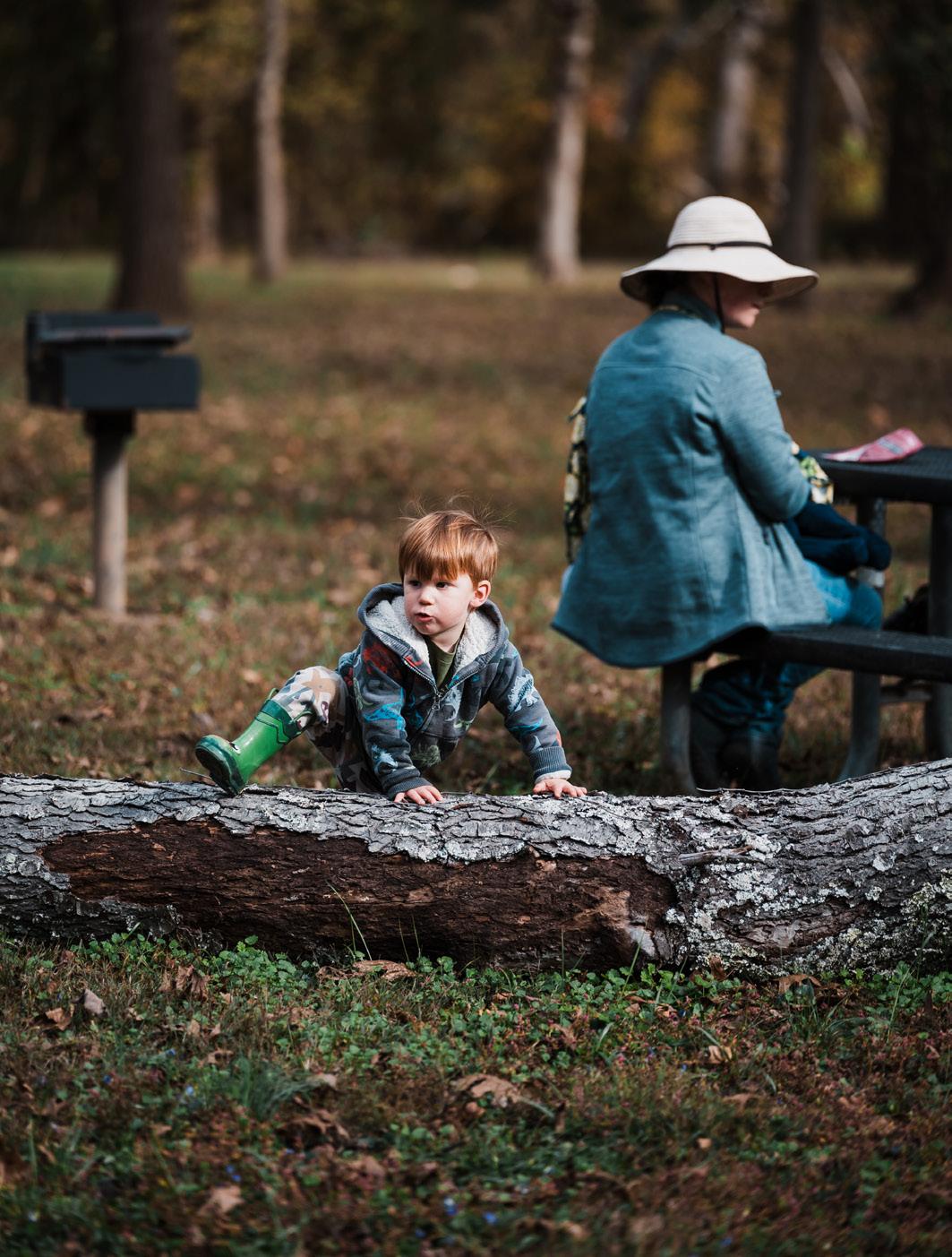
Back by the lodge and river, we decided to explore the water instead of hiking. Conversation naturally turned to stream management, human impact on the landscape, and ways to foster a love of nature in new users—a discussion that left us all reflecting on our work. Alongside the heavier topics, we enjoyed the creek, searched for crawdads, and played with echoes off the bluff, blending lighthearted fun with thoughtful stewardship.
Once creek time ended, we drove to a portion of the Ozark Trail near Round Spring. This time, no interruptions, and we admired the spring’s striking blue water before hiking a short segment of trail. Along the way, we spotted part of the Eminence wild horse herd and paused to watch them before returning to our vehicles.
Evening brought us back to the campground, where we gathered at a reserved walk-in site. We cooked around the campfire, chatted, and reflected on the day—until the skunk arrived. Our Halloween fright was a day late. Boldly snatching food and wandering beside us, the skunk made it clear it wanted to join the meal. We stood helpless, careful not to scare it off and risk being sprayed. Yet, our unexpected guest became part of the weekend’s memories rather than a disaster.
Despite our furry companion, the weekend was a success. Laughter, nature, and thoughtful conversation blended perfectly, leaving everyone with stories to share.
If this sounds like the kind of adventure you’ve been craving, Young Professionals offers the chance to network with fellow conservation-minded individuals ages 21 to 40 in an informal setting. From activities with CFM partner organizations to online workshops and family-friendly campouts like this one, there’s something for everyone. Visit https://confedmo.org/ young-professionals/ to get involved.
While relaxing at Echo Bluff State Park campsite, Jackson continues further exploration. (Photo: Marissa Forbis) Marissa Forbis
Looking Back Missouri’s Conservation History
Missouri’s Conservation History: Sources of Information
America’s conservation history is well documented through the work and writings of five influential individuals: George Perkins Marsh, John Muir, Theodore Roosevelt Jr., Gifford Pinchot, and Aldo Leopold. Collectively, their ideas helped shape a national ethic that recognized the limits of natural resources, the need for scientific management, and the responsibility of citizens and government to steward land and wildlife for future generations. Their philosophies laid the intellectual foundation for modern conservation in the United States and influenced policies that continue to guide natural resource management today.
While these figures are often associated with the national conservation movement, conservation in the United States has always been implemented most directly at the state level. Each state’s conservation story reflects its own landscapes, political realities, economic pressures, and citizen involvement. Missouri’s conservation history stands out as a particularly well-documented and influential example of how citizen-led, science-based conservation can succeed over the long term.
Missouri’s conservation history is chronicled extensively in the works of Charles Callison, Werner Nagel, Jim Keefe, and Brett Dufur, whose books provide comprehensive accounts of the people, policies, and pivotal moments that shaped the state’s approach to conservation. Their writings detail the creation of the Missouri Department of Conservation, the development of nonpolitical governance, and the establishment of stable funding mechanisms that became hallmarks of what is now widely known as the Missouri Model of Conservation.
Beyond these cornerstone publications, a wide array of reports, articles, films, and archival documents offer additional insight into the inner workings and philosophical underpinnings of Missouri’s conservation system. These sources capture not only the official decisions and legislative milestones, but also the debates, challenges, and evolving ideas that informed conservation policy across decades.
Together, they reveal how science, public support, and long-term vision converged to create a durable conservation framework.
What follows is a chronological listing of selected sources that help illuminate the development of conservation in Missouri. These documents provide valuable context for understanding how Missouri’s conservation program evolved, how it responded to changing conditions, and why it has often been cited as a national model. For researchers, conservation professionals, and interested citizens alike, these works offer a rich foundation for exploring the history and legacy of conservation in Missouri.
• Conservation Commission of Missouri, Organization, Policies, Transactions – July 1, 1937 to July 1, 1939 (Missouri Department of Conservation, 1939)
• Man and Wildlife in Missouri, the History of One State’s Treatment of its Natural Resources (Callison, Charles.,1953)
• A chronology and bibliography of wildlife in Missouri (McKinley, Daniel, The University of Missouri Bulletin, 61(13),1960)
• Missouri Conservation Program Report: An Appraisal and Some Suggestions. (Leopold, A. S., I. R. Fox and C. H. Callison, Missouri Department of Conservation, 1970)
• The MCP Report, Challenge and Response. (Missouri Department of Conservation, 1970)
• An Analysis of Present Revenue Sources and an Appraisal of New Income Sources for the Missouri Department of Conservation (Betts, A. W., 1970)
• Conservation Contrasts, Three Decades of Nonpolitical Management of Wildlife and Forests in Missouri. (Nagel, Werner O., Missouri Department of Conservation, 1970)
• Design for Conservation (Missouri Department of Conservation, 1971)
• The New Design for Conservation (Missouri Conservationist, August 1975)
• Missouri Conservationist: Special Issue – Missouri’s Wildlife Trail, 1700-1976. (Missouri Conservationist, 1976)
• Missouri’s Design for Conservation. (Brohn, A. J., 1977. In Proceedings of the 67th Convention of the International Association of Fish and Wildlife Agencies)
• Conservation Federation of Missouri: 50 Years of Service (Conservation Federation of Missouri, 1985)
• Missouri Wildlife: Special issue of commemorating the Conservation Federation of Missouri’s 50th Anniversary (The Conservation Federation of Missouri, 1986)
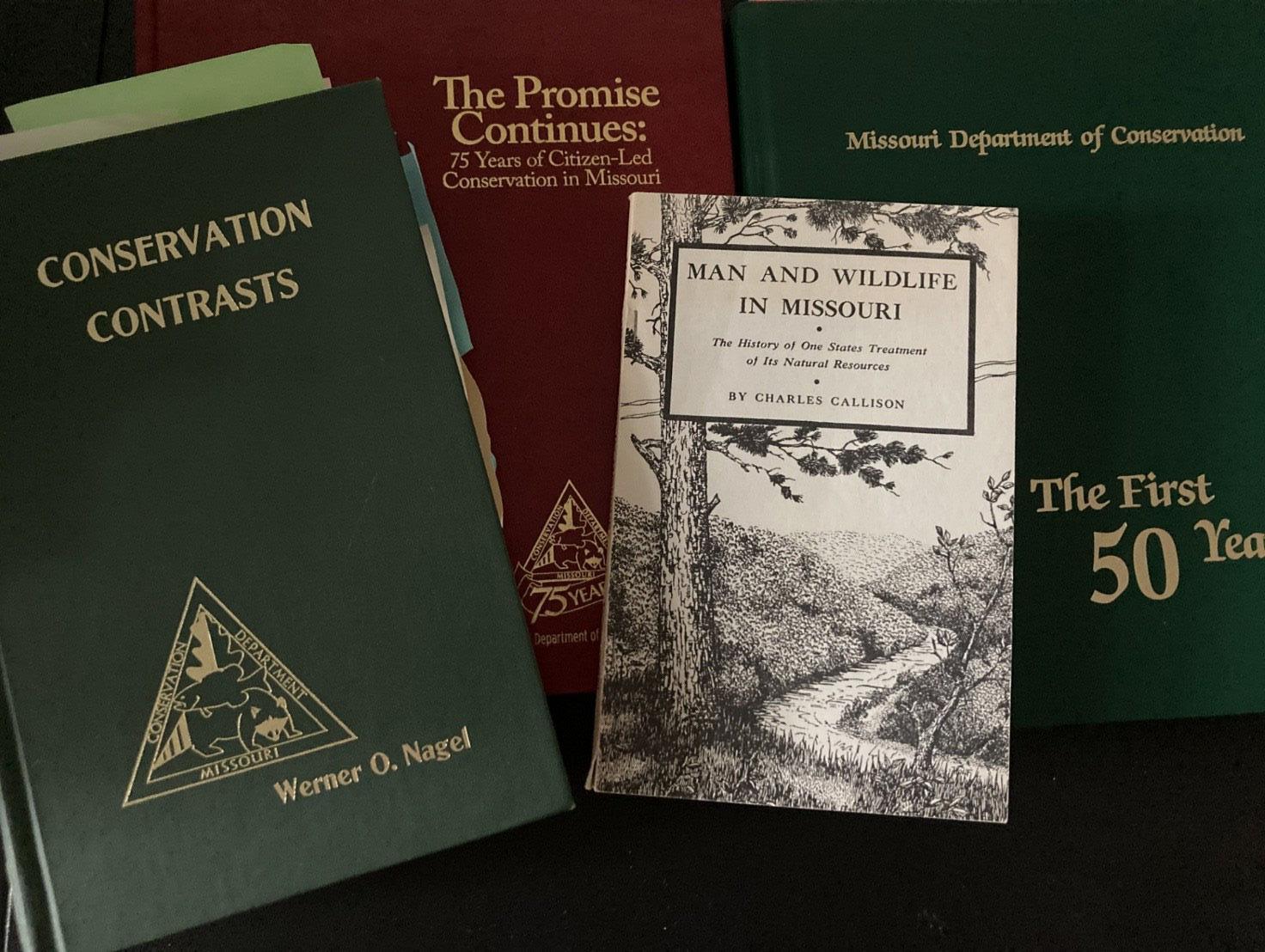
• The Missouri Department of Conservation, The First 50 Years (Keefe, James F., 1987)
• Missouri Conservationist: 50th Anniversary Edition (Missouri Conservationist, 1987)
• The History of the Conservation Movement in Missouri: Commemorative Issue. (Conservation Education Unit, Missouri Department of Conservation, 1990)
• State of Harmony: A Plan for Missouri's People and Land (Missouri Department of Conservation, 1995)
• History of Missouri Forests in the Era of Exploitation and Conservation (Benac, David and Susan Flader, 2004; U.S. Department of Agriculture, Forest Service, General Technical Report)
• For One State Agency, the Cash Flow Never Stops (Thompson, J. L., Kansas City Star, September 26, 2004)
• The Genesis of Conservation in Missouri (Low, Jim, Missouri Conservationist, 2005)
• The Spirit of Conservation (Woods, Kipp, Missouri Department of Conservation, 2006; DVD Video)
• The Next Generation of Conservation (Missouri Department of Conservation, 2006)
• Agency Transformation: Sustaining the Legacy in Missouri (Zekor, D.T., 2011; Proceedings of the Agency Transformation Workshop, North American Wildlife and Natural Resources Conference)
• The Missouri Conservation Trail: A Collection of Stories from the Missouri Department of Conservation's First 75 Years Volume I (Brunk, Eugene L., 2012)
• The Promise Continues: MDC’s 75th Anniversary (Missouri Department of Conservation, 2012; DVD Video)
• The Promise Continues: 75 Years of Citizen-Led Conservation in Missouri. (Dufur, Brett, Missouri Department of Conservation, 2013)
• The Missouri Conservation Trail: A collection of Stories from the Missouri Department of Conservation's First 75 years Volume II (Brunk, Eugene L., 2018)
• The Art of Missouri’s Conservation. (Flowers, Brian, 2021; Missouri Conservationist)
• The Early History of the Conservation Department (Fortenberry, Allen and Julie, 2024; independently published)
Joe G. Dillard
Books about Missouri’s Conservation History (Photo: Joe G. Dillard)



Support the Conservation Federation of Missouri through a sponsorship for the 2nd Annua o f ournament to he p raise mone for more processors throughout Missouri. Support the Conservation Federation of Missouri through a sponsorship for the 2nd Annual Golf Tournament to help raise money for more processors throughout Missouri.








Owned by the members they serve, Missouri’s electric cooperatives do more than provide reliable and a ordable electricity. They are active in their communities, concerned for the well-being of their neighbors and devoted to the rural way of life that makes the Show-Me State a special place to live, work and play.
Missouri’s electric cooperatives are dedicated to protecting the land, air and water resources important to you and your quality of life.
Learn more at moelectriccoops.com

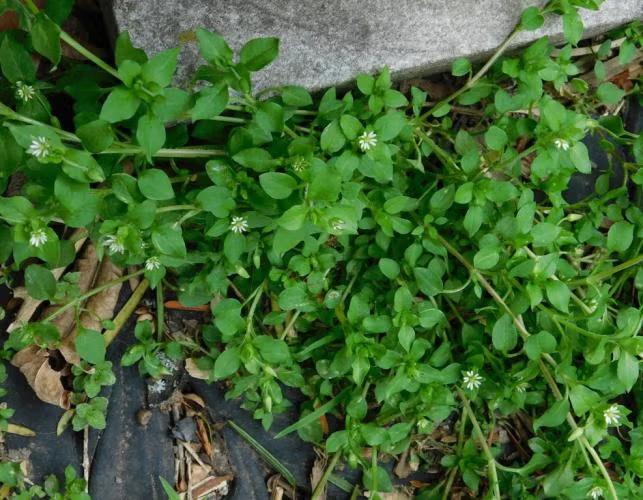
Forage for Wellness: Balsamic Chickweed Salad

I’m Kat Brookshire, and I’m wild over wellness. I’m also a certified foraging educator who studied with foraging authors Bo Brown and Rachael Elizabeth West. I have been an avid forager for several years and eat wild things almost daily. Foraging started as a way to save money while I manage a severe autoimmune issue with diet. Regularly eating foraged plants was a real game changer for my overall health. Not only do I spend a lot less money on produce than I used to, but the nutritional value of wild things is wildly better than what I could get in any produce section.
Through the spring and summer, I aim to eat two cups of foraged plants daily. Along the journey, I’ve made some incredibly tasty meals that my friends and family ask for on a regular basis, so I’m glad to share. I actually measure almost nothing that goes into my cooking, and wild things are more or less bitter depending on all kinds of variables, so treat my recipes like guidelines and adjust to taste. I plan to share on a species-by-species basis.
I’ll start with chickweed.
Balsamic Chickweed Salad
• 3–4 cups chickweed—all above-ground parts, no roots. Shaken when gathered to prevent hitchhikers, then rinsed in a colander and shaken or gently patted dry.
• 4 tablespoons olive oil
• 1 tablespoon balsamic vinegar
• 1/4 teaspoon salt
This is a great salad to eat alone or topped with chicken, almonds, sunflower seeds, roasted pumpkin seeds, shredded carrots, strawberries, blackberries, or mushrooms. It can also be used as a hamburger topper, or mixed half and half with chilled, cooked quinoa and some black beans to make a hearty cold Chickweed Quinoa Bowl. Apple cider vinegar (ACV) is also a great vinegar to use in this recipe. I add a touch of honey when I use ACV, though.
Chickweed is a superfood! It is packed with iron, vitamin C, and calcium. According to Specialty Produce, it has 83 times more iron than spinach. It doesn’t taste like it, though, as it has an incredibly mild flavor and an amazing crunch and texture. After it has gone to seed, it has a less ideal texture. Not only is it a superfood, but it is a common, non-native garden weed here in Missouri.
Chickweed salad is my go-to when I harvest, but it can be added to smoothies, made into tea, gently sautéed, or thrown into soups or curries. My second favorite thing to do with it is blend it into pesto with sorrel, wild carrot, and black walnuts. It’s so diverse and basically everywhere, making it great for a tiptoe into foraging.
Foraging chickweed is really easy from late winter through mid-spring. It thrives all over the state and loves garden lots before they’re cultivated for the season. It is a cold-loving plant that can be found in full sun early in the season. It sometimes can still be found in shaded, moist areas in June, depending on how cool and wet the Missouri springtime is.
One word of caution is to make sure you are harvesting it, and only it, before you eat it. It is easy to identify, but it can entangle with other species. It has no “look-alikes” that are dangerous, which is one reason I thought this one would be a good one to start with.
General foraging rules:
Never forage in areas that get sprayed by herbicide or any pesticide, like roadways or areas around public buildings. Don’t forage in areas heavily trafficked by dog owners or in busy pastures. Make sure you identify the plant correctly. If you aren’t super familiar with the plant identification, verify with two trusted sources. Even printed books sometimes use the wrong photos.
Make sure you are using the part of the plant that is edible. Some plants have only edible parts. In chickweed’s case, the entire plant is edible, but the roots are less palatable and hold onto dirt really well. Just leave the roots if you can.
Also, typically, don’t harvest more than two-thirds of a plant from an area unless it is invasive or being eradicated anyway. The good news is chickweed is pretty resilient, seeds heavily, and is non-native, so taking more is ideal for this one unless you want to maintain your stand.
Happy Foraging. Forage for wellness.
Katherine Brookshire
Teddy Roosevelt Is Having a Moment
With the recent release of a couple of new books and more frequent mentions in the popular press, it appears that my favorite President, Theodore “Teddy” or “TR” Roosevelt, is having a moment. Perhaps the timing is perfect for a nation that, to some, is seeking a unifying identity. He had a life that defies easy description—or short articles. This one doesn’t intend to capture the depth of his character, interests, and national impact, but, instead, to add some color to a fascinating and uniquely American product.
Born with debilitating asthma that frequently left him bedridden and plagued him mercilessly well into his 20s, TR was rather scrawny as a youth. Early photos reveal a pale, thin young man, with little muscle definition, yet showcasing an imposing set of porkchop sideburns.
(Photo: Simon & Schuster)
The scion of a wealthy and prominent New York family, Teddy was given full rein to expand his mind and satisfy his many budding interests. A voracious reader with a keen intellect and a strong recall of detail, he was required to read the classics from Homer to Herodotus but was most strongly influenced by popular dime novels filled with tales of the ongoing American westward expansion. These stories fed an irresistible sense of adventure and an ambition to be a prominent player in the discoveries seemingly behind every hill in the burgeoning American West.
From his earliest childhood, TR exhibited a profound love for birds and was, in fact, committed to becoming a naturalist, or, more precisely, an ornithologist. Although he ultimately rejected the career due to its focus on benchtop studies, which frequently involved a microscope, which he found unbearably tedious, his fascination with birds remained a singular focus throughout his life.
During his college years, he published at least two well-regarded books on birds and contributed to many other publications. Nearly two decades later, while serving as Assistant Secretary of the Navy, he contributed to and edited ornithological and related articles.
He was a self-taught, skilled taxidermist who practiced it throughout his life. By the time he entered his high school years, he had amassed an enormous number of specimens taken around New York City, New England, Western Europe, and along the Nile in Egypt. These eventually formed the core of collections held at both the American Museum of Natural History in New York and the Smithsonian Institution, where they can be seen today.
Clearly, Roosevelt’s early health burdens did not result in a retiring disposition. On the contrary, he attacked life with an intensity that bordered on the maniacal. His boundless inquisitiveness and insatiable attraction to the outdoors frequently resulted in near physical collapse and crushing asthma attacks that required him to be “sent to the countryside” for extensive convalescence. He relentlessly challenged himself. From his early teens to mid-twenties, TR was, for all intents and purposes, a vagabond. Except for college attendance requirements, he was rarely in one place for more than a few weeks. Breaks would find him hiring guides and traipsing off to the still-wild spans of the Northeast, hiking, sailing, even mountaineering for weeks-long excursions, carrying only a pack and a couple of firearms. During a 60+ day span between his junior and senior years, he traversed more than 1000 miles of the Great North Woods of Maine on foot, boat, and horseback.
Although raised in wealth, educated by private tutors, and an experienced world traveler by his early teens, Roosevelt had more than his fair share of excruciating adversity. At 19, he unexpectedly lost his father and became the head of the household. At 25, his wife and his mother both died on the very same day, his wife two days after giving birth to their only child. It was a devastating blow. He remarried about three years later and had five more children. Fortunately, one could say, he did not live to see two of them die young, one by suicide.
I think of Teddy Roosevelt as the Conservation President, father of the modern National Park System, and cofounder of the Boone and Crockett Club. Some will also recall that (at 40 years old!) he was the commanding officer of the Rough Riders, an all-volunteer cavalry that famously charged up San Juan Hill in Cuba during the Spanish-American War and helped him win— posthumously—the Medal of Honor. He remains the only US President to do so. Also worth noting is that his son, TR Jr., won the award at Normandy during WWII, making them the only President/son duo, and one of two father/ son duos along with Gen. Douglas MacArthur and his son Arthur. Oh, and we cannot forget that Teddy Roosevelt was the first US President to win the Nobel Peace Prize.
The cast of characters populating Theodore Roosevelt’s life constitutes a remarkable panorama, from brilliant forward-thinkers to the quintessential rough-hewn, prickly cowboys, all of whom fed the mind of the man who preserved nearly 250 million acres of America’s natural bounty for the sustainable use and enjoyment of future generations of hunters, hikers, and lovers of the great outdoors. There is much, much, much more to the man who embodies the modern ideal of “conservationist.” If you seek to learn more, I recommend the following: Wilderness Warrior by Douglas Brinkley; The Loves of Theodore Roosevelt: The Women Who Created a President, by Edward F. O’Keefe; and Mornings on Horseback, by David McCullough.
Frank Kruse is Commissioner of the Missouri Department of Conservation, and an active farmer, outdoorsman, and conservationist.
Frank Kruse
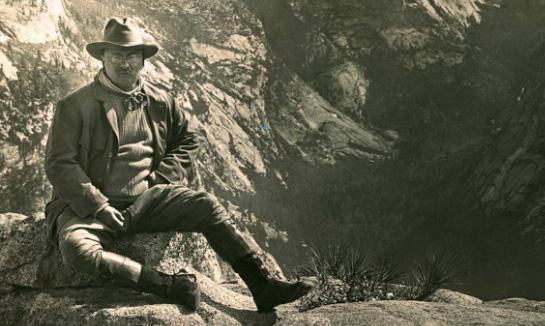
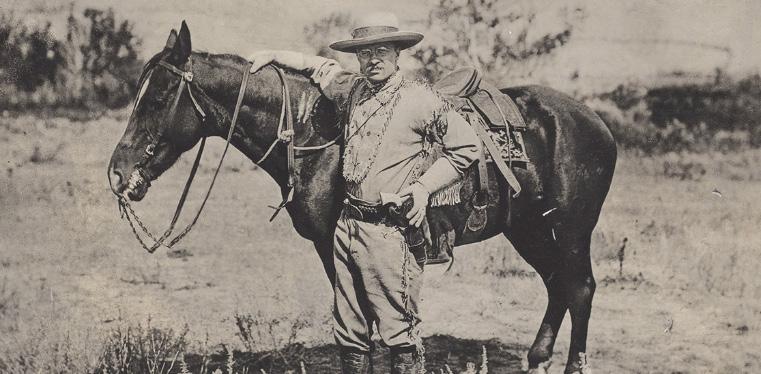
Roosevelt near Medora, Dakota Territory in 1884.
(Photo: Boone and Crockett Club)




Remembering Check Stations
Camo and blaze-orange-clad hunters huddled around the back of a pickup truck while a gray-shirted MDC biologist strained over the side of the bed, copying information off the tag on the hind leg of a sleek white-tailed buck. A young boy ran his hands over the smooth antlers, amazed at the size of the deer in the truck bed. The parking lot of the small rural convenience store was full of similar vehicles and similar clusters of hunters in from the hills; laughter and handshakes were common sights. It was opening weekend at a check station in Missouri.
Twenty years ago, this past deer season, a long-standing tradition in Missouri ended when “check stations” for deer and turkeys went out of existence. A new way of reporting your deer or turkey kill was introduced. A modern era had arrived, taking advantage of space-age technology. Well known to today’s hunters, the then-new system for reporting deer and turkey kills was called Tele-check, and it took the place of physically taking your deer to a check station to be inspected. It was more convenient and cost-effective. You could now report the kill on your phone while you were still in the field via satellite, making the information available instantly for conservation department biologists’ and agents’ use. This would become especially important in the future for managing seasons like today’s Missouri bear season, allowing biologists to close the bear season if the quota is reached before the closing date by monitoring the harvest in real time.
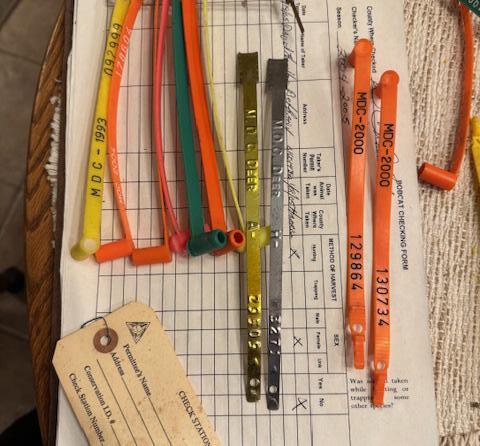
Middle-aged hunters today remember check stations. The old check station system served as the main data collection tool for deer managers and enforcement personnel from 1968 until it was replaced in 2005. Beginning with Missouri’s first modern deer season in 1944 and up to 1968, a Conservation Agent put a metal locking seal, like what you see on the locks on the back of semi-trailers, on each deer brought to a check station.
Eventually, these seals were made of durable plastic and placed on the deer by either a department employee or the business operator running the check station. At one time, there was a carcass-stamping system in place. This was similar to a USDA stamp on a livestock carcass at a locker in the early days of deer hunting, where a Conservation Agent stamped the skinned carcass. All this was done to thwart illegal harvest and account for legal kills.
For years, hunters at check stations were asked to point to a spot on a county map showing their harvest location. This spot was circled and numbered with the corresponding hunter’s checked deer number. It was normal for other hunters to match the hunter’s name to the spot on the map so they could see where so-andso killed their deer. Once recorded, the information was available to the public for the duration of the deer season. It is hard to imagine now, with identity theft so prevalent, that you could go to the check station and ask to see the sheets to check who had checked in a deer. Right there on the sheet were everyone’s names, addresses, and sometimes dates of birth. But that is what a lot of folks liked about the check stations. It was a hub of activity that even non-hunters were interested in. They were the community centers of information when the firearms deer season opened.
While deer numbers were low, there was normally just one check station per county. After deer populations expanded, more stations were added.
Check stations were run mostly by local businesses, paid by the deer, and issued a check at the end of the season by the Missouri Department of Conservation.
Locals gathered at check stations to tell stories—most of them true—and to keep up with how the season was going. When the season was nine days long, as it was for many years, half of the harvest would occur on opening weekend. Sixty percent of that half occurred on opening day, so the first evening of the season was a big event in small towns across Missouri. Traffic was heavy at the stations, and people came out just to admire the deer in the backs of the trucks.
People brought their kids to the check stations on opening weekend to see the deer hunters brought in, and “How many deer have they checked?” was a standard question for Agents at gas stations and cafés. One of my daughters asked me once, when I took them out to The Red Barn in Maysville where an impressive deer was being checked, “Dad, why don’t you ever kill a deer with horns?”
I believe lots of young hunters became enthused about deer hunting long before “youth seasons” came along by being around the contagious excitement at check stations.
Ask a deer hunter who is 35 years old or older if they remember check stations. My guess is they do, and fondly. It took effort to transport your deer to a check station and wait your turn to get your deer checked, but most hunters enjoyed seeing the other deer and exchanging stories while they ate a slice of pizza or a sandwich. There was a hunting community of sorts that came together every fall under the lights of a local business, one that has not been replicated since.
The convenience we enjoy today with reporting our deer and turkey kills comes at the price of a little nostalgia. We have traded convenience for what once was a community tradition. We are not going to go back to 2005 or to check stations, but it is fun to remember how it used to be.
Kyle Carroll
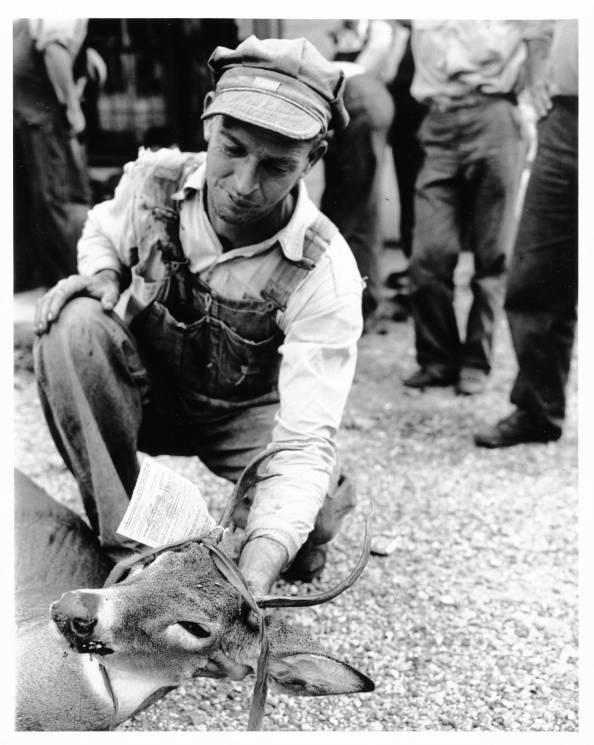
Cover - Carl Moore of Van Buren, MO poses with his white-tailed deer buck at a wildlife check station in 1945. His deer tag is tied around the deer's antler. (Photo: Kyle Carroll) Left - Deer seals, both metal and durable plastic were used to seal carcasses. (Photo: Kyle Carroll)
Where Trout, Tradition, and Storytelling Meet: Missouri Ozark Fish Camp Debuts on the Meramec
The beauty and bounty of the Missouri Ozarks, in particular the Meramec River region, was on display for the first Missouri Ozark Fish Camp event, held in September at Maramec Spring Park near St. James. Fishing, both in the park and on the river, was the primary activity, but there was also time for a fly-tying contest and competitions for biggest trout, trout cleaning, and trout cooking. The weather didn’t cooperate—gray skies and rain accompanied many of the activities—but that didn’t detract from the fun and enthusiasm shown by attendees.
The event was organized by “Big Mike” Jones of Big Mike Jones Enterprises and Catch Clean and Cook Adventures, based in Mississippi, with help from Bill Cooper, a longtime outdoor writer and resident of the Meramec River basin, who has spent more time fishing, paddling, and camping on that river than any person I know. His friends would jokingly say Bill has Meramec River water in his veins. (Bill is a regular contributor to this publication.)
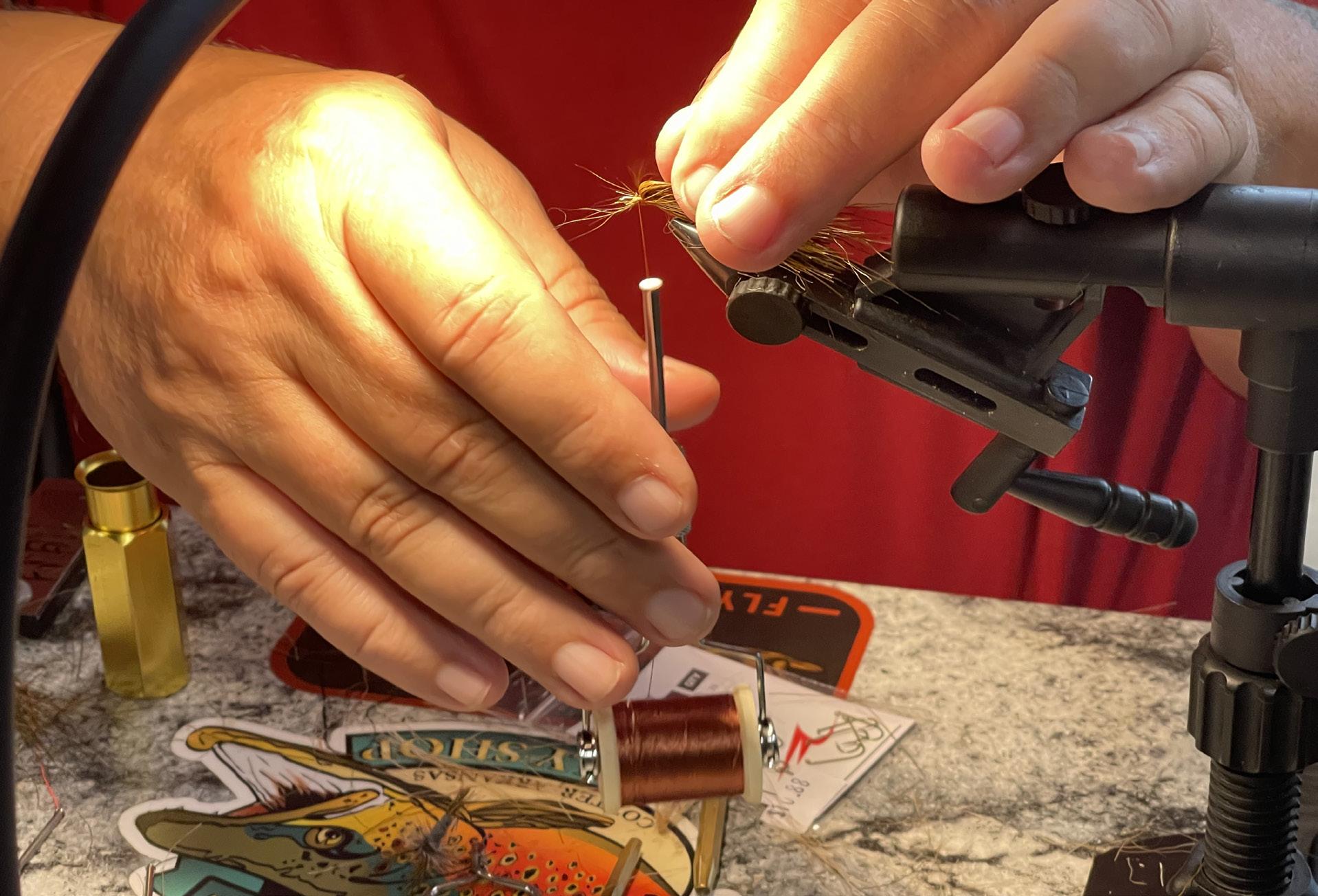
Fly tying requires steady hands, concentration and good lighting. The flytying contest at Missouri Ozark Fish Camp attracted both professionals and amateurs. (Photo: Barbara Gibbs Ostmann)
“The 2025 Missouri Ozark Fish Camp proved to be an incredible event to publicize Maramec Spring Park and the Meramec River,” said Bill. “I’ve dreamed of bringing such an event to the area for 40 years. Eleven noted outdoor writers from five states fished with knowledgeable local guides. Hundreds of thousands of people responded to the social media posts, articles, and podcasts generated from the event. No doubt, it is the best outdoor media event ever promoting the area, all made possible by the support of local businesses and agencies.”
Key local sponsors were The James Foundation, which administers Maramec Spring Park, and the Missouri Department of Conservation (MDC), which operates the trout hatchery at the park. Many local companies, including Country Bob’s Diner, Rich’s Famous Burgers, and Living the Dream Outdoor Properties, supported the event.
Although I’m not the greatest angler, I enjoy fishing and had fun wetting my line in the spring branch within the park. Watching the antics of a family of otters in the stream was a bonus. My “job” at the event was as a judge of the trout cooking competition. As the saying goes, it’s a tough job, but someone has to do it!
But if you think the only thing to do at Maramec Spring Park is to fish for trout, think again. There’s plenty to see and do to keep the entire family busy, whether they like to fish or not.
The number-one attraction is Maramec Spring itself, which gushes some 96 million gallons of water a day. Feeding the fish in the spring branch is a fun activity, as is walking the paths through the trout hatchery area and then heading into the park grounds to explore the remains of the iron ore furnace and related structures.
Picnic tables are scattered throughout the park, and there are several hiking trails. The Historic Drive takes you past scenic lookout points, the old Maramec Community Cemetery (1858–1882), and an open-pit mine.
The museums in the park are included in the park admission fee. The Maramec Museum of Natural and Cultural History tells the story of the spring, from the Native Americans who lived alongside it through its heyday in the mid-1800s as an ironworks to its current role as a 1,856-acre wildlife refuge and park.
Large dioramas show how a village of 500 people grew up around the ironworks and how the various structures functioned as part of a booming industry. Near the entrance, there’s a 21-foot bluff with a small spring that flows into a 600-gallon aquarium. Displays show the recharge area for the spring and the water cycle. There are hands-on activities for children and a gift shop.
Fans of old-time agricultural equipment will want to visit the Ozark Agriculture Museum, a barn-like structure packed with all types of farm machinery, plus an assortment of farm equipment lined up outside along the walkway. Be sure to note the in-ground rim shaper, which was used to make wagon wheels. (This museum is open by request; ask at the Maramec Museum.)
The record-setting flood of November 2024 caused severe damage to the park’s welcome center and café, as well as to MDC’s on-site office. The two agencies are collaborating on a new, larger, shared building on higher ground. Construction is underway, and completion is expected by March 2027. Meanwhile, trout tag sales and other visitor services for the 2026 trout season will be handled at a temporary Tag Shack near the old park exit, which will serve as the entrance for the 2026 season.
Old Iron Works Days, held annually on the second weekend in October, is a great time to visit the park. Live music, a fiddling contest, old-fashioned games, and demonstrations of old-time skills and crafts are part of the festivities.
Reflecting on the first edition of the Missouri Ozark Fish Camp, “Big Mike” Jones said, “We brought this great event to St. James and the Meramec region and accomplished what we set out to do: showcasing the history, great fishing, food, wineries, and scenic beauty the region has to offer those who want to come experience the great outdoor adventures in Missouri.”
For more information, visit www.maramecspringpark. com. The park is on Route 8 south of St. James. Admission to the park is $7 per car per day. For more information about the media event, search for #2025moozarkfishcamp on social media.
Barbara Gibbs Ostmann
Author’s note about spelling: The spring and its park are spelled Maramec. The river and the state park near Sullivan are spelled Meramec.
Ant Hills and the Art of Being Prepared
Ever kick an ant hill to see what happens? Hundreds of ants scramble everywhere, their perfectly organized, purpose-driven lives now in complete chaos as they work to bring order back to the colony. Just like the inside of my head the week before the opening day of waterfowl season, for example.
In the middle of the night I awaken. My head scrolling through the to-do list. Thinking about contingencies, what-ifs, reviewing every apocalyptic worst-case scenario. Even after weeks of preparation, I’m certain there are things I have forgotten, obscure details about things that will most certainly lead to delays, failure, or small-scale disasters.
"Worrying is like paying a debt you don't owe." Mark Twain.
I’m sure watching television as a child probably laid the foundation for my tendency for unnecessary worry and anxiety. Sitting on the floor in front of a grainy black and white screen, Lassie trying to tell Paul and Ruth that Timmy was in trouble again (by the way - Timmy never did fall into the well) when suddenly the on-screen mood changed. A Civil Defense logo appeared as a commanding official sounding voice announced, “This is a test. For the next sixty seconds, this station will conduct a test of the Emergency Broadcast System. This is only a test.” A 20-second blast of an unpleasant, uncomfortable twotone sound then followed.
This stark need for preparation was further reinforced at school through duck-and-cover exercises and standing shoulder to shoulder in a basement fallout shelter during a drill on how to survive the un-survivable.
“Que sera, sera,” sings Doris Day.
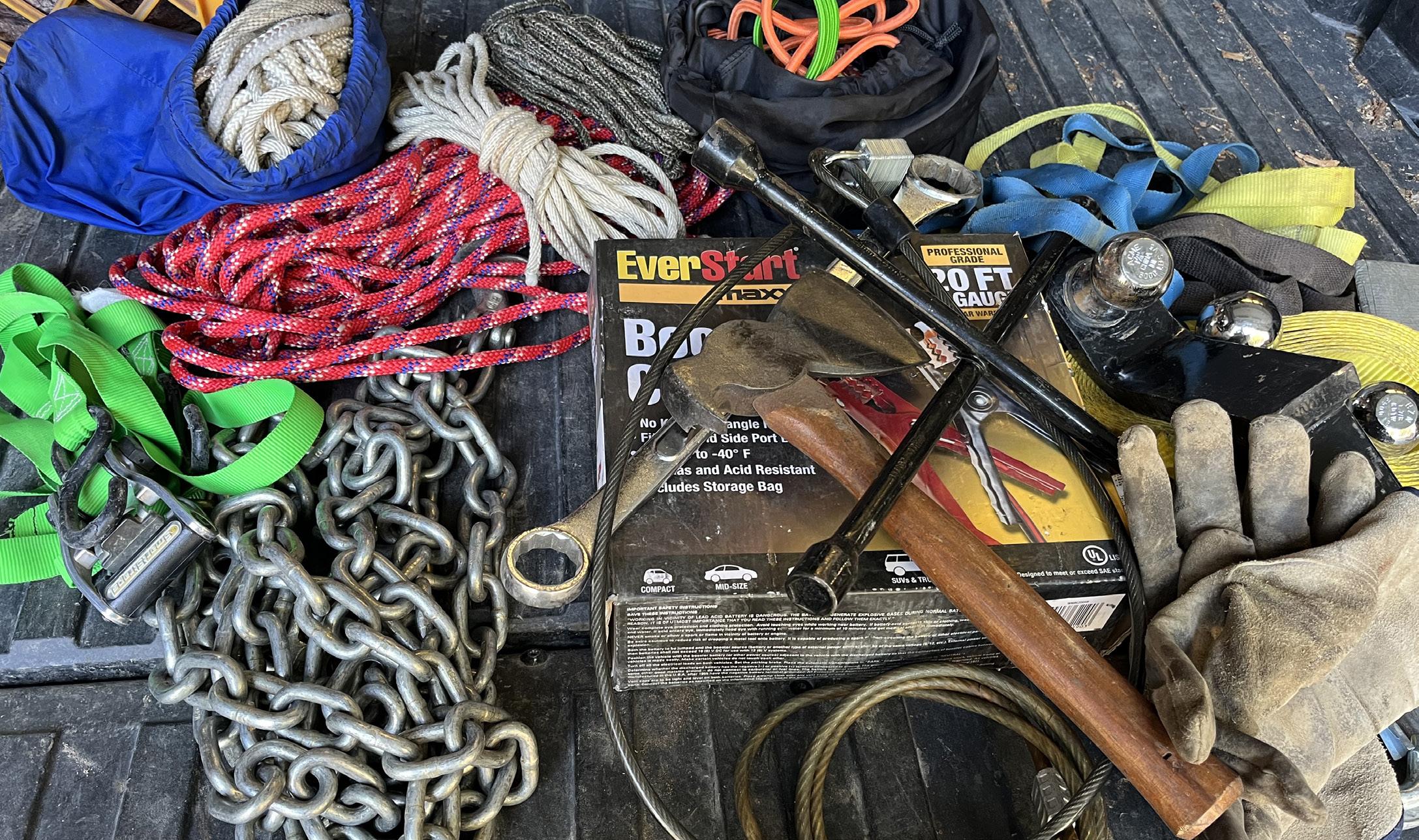
There are those who seem to have good reason for worry. I recently read a story about a fellow with reoccurring flat tire problems. His hunting and fishing road trips now include (for those of you wishing to check your own inventory), “…a small floor jack, a high lift jack, a come along, 12-volt air compressor, 2x8 and 2x10 blocking material, ax, splitting maul, 4-pound hammer, steel stakes, tire chains, tow strap, 12-foot of quarter inch chain, spanner wrench, breaker bar, cans of foam tire repair, a squirt bottle of soapy water, tire plug kit, and tool kit.”
I wonder where he puts his actual hunting and fishing gear?
I sometimes carry a floor jack because once I needed one when my boat trailer blew out on a road in Iowa, late in the day, with my wife and elderly mother-inlaw travelling with me. Fortunately 10 minutes after pulling off the highway a young man pulled up beside me and asked, “Do you need a floor jack?” In less than 30 minutes I was back on the road home and the considerate man was $25 richer. When I think back about it, I should’ve given him $50. I still have flashbacks when I pass that spot on the road near Pella, so I carry a floor jack, sometimes.
My wife probably wonders what am I doing out there in the barn all day. Oh you know, nothing really. Just a little disaster avoidance work. Then my head cranks it up like a pinball machine. My UTV tire looks a little low. Does it have a leak? Do I have any Slime? Better check the oil and fluids. Trailer hubs probably need re-packing. Trailer tires look good but they’re nine years old; better get new tires before hauling the UTV. Are the ratchet straps still good? Is three enough? How old is the battery? Can it handle the cold weather? Better replace it before winter. Bing. Bing. Bong. Ding.
"By failing to prepare, you are preparing to fail.”
Benjamin Franklin
And my wife adds a whole other dimension to the equation. I deliberately try not to look at her multiple countertop to-do lists. If I’m worried about not forgetting to take my hunting boots, she’s obsessing about the condition of shoelaces. Ugh. I forgot to pack extra boot laces for the grouse hunt, but at least I have a few preassembled wader patch kits laying around. A couple for waterfowl waders and a couple for fly-fishing waders, just in case any of my four pairs should spring a leak.
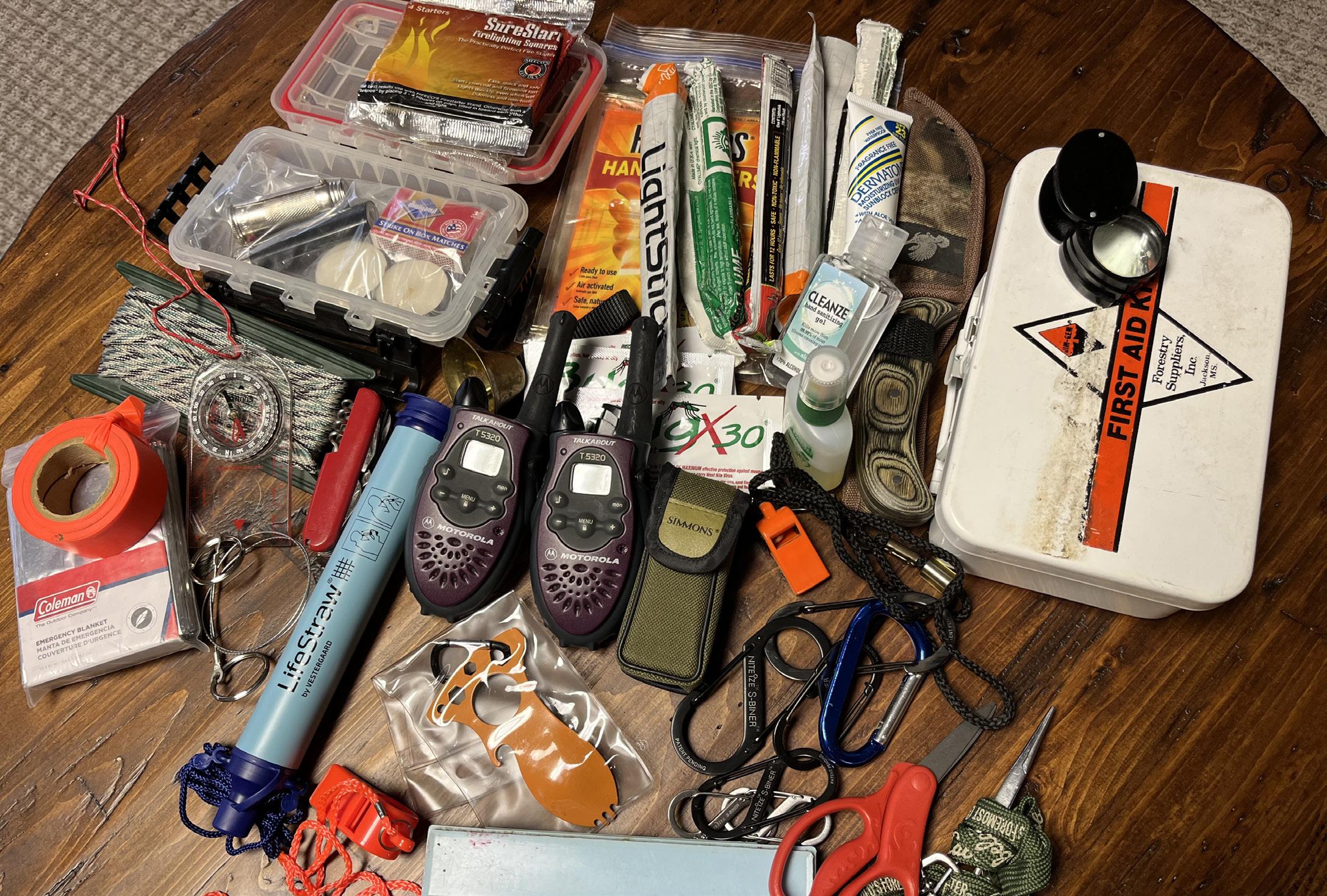
Of course it never turns out as bad as what I expect, but what if? Twice a year I inspect my travelling first aid kit and an emergency travel bag. Fire starter, matches and lighter, silva compass, bug dope, whistle, Swiss army knife, LifeStraw, monocular, headlamp, hand warmers, nitrile gloves, back country pocket saw, GPS unit, emergency glow sticks, various carabiners, duct tape, paracord, rain gear, and camp towel.
I used to carry a pair of walkie talkies and spare batteries in case I need to talk to a companion while searching for someone lost in the wilderness, or a shopping mall parking lot. Smartphones mostly eliminated that need so I carry multiple charger cords. I haven’t acquired one of those portable solar power banks yet but they look intriguing.
“Some things are up to us and some are not.” Epictetus.
I have two multi-tools in my truck and three knives including one with a window breaker tool in case my truck plunges into the Mississippi River should the bridge fail while crossing. I always wonder if I should put the windows down first as my vehicle plunges nose first into the river, or should I wait?
I also carry a reflective hunter orange vest and hat for roadside emergencies, a rechargeable LED work light, a dog leash in case I need to rescue a stray, and a large wool blanket that has been in the backseat of every truck I’ve owned for 30 years. We used it once to keep a young woman warm who had spun off the road during a winter storm; I knew I would need it someday.
And when the cold of winter comes, I still throw a dry bag filled with emergency clothes in the truck and occasionally take a sleeping bag. Growing up in Wisconsin winters taught me the wisdom of this level of preparedness.
Another friend lives by the creed, "you can never have too much rope." I agree with that sentiment, so I carry a ditty bag of various ropes in my truck, and another bag with various bungee cords. There’s also a tow strap, a heavy chain, cutting board, trash bags, zip ties, different size hitch balls, jumper cables, hitch pins, hitch locks, 4-way lug wrench, bicycle cables and lock, hatchet, and some other stuff I can’t remember.
Fortunately, vehicles don’t require carrying the suite of fuses I used to keep in the glove box. I may have to go back to the flea market and buy that breaker bar I saw for five dollars. That was a deal.
The way I see it, my preparation level is maybe fairly good, but remembering what I have when I need it might be the bigger challenge. I probably need to build a searchable checklist on my phone to help me organize better.
“Be prepared.” The Boy Scout motto.
Yet I went ice fishing not long ago and did not wear a floatation suit or carry an ice spud or spikes around my neck for pulling myself out should I break through the ice. Living on the edge that day. Several months from now I may be fishing a large lake up north. I wonder if it’ll be windy. Better check my life vests; those small inflatable ones look really handy should my boat plug fall out.
This is only a test. If this had been an actual emergency…I probably wouldn’t have what I need…This was only a test. Beeeeeeeep. Emergency Gear in waiting. (Photo: Dan Zekor)
Dan Zekor
Sunlight on Demand
An emerging threat to natural nighttime

Astronomers have been the first to notice the loss of night due to terrestrial light pollution. The increasing use of blue-rich LED lights, and the corresponding increase in light pollution at a rate of close to 10% per year in the past decade, has rightly alarmed ornithologists, entomologists, human-health experts, and all people who are concerned about the well-being and ecological health of our communities and wilderness areas. In the last few years, astronomers have kept a wary eye on the sky as Low Earth Orbit (LEO) becomes increasingly crowded thanks to the commercialization of space. Satellites reflect sunlight and appear as small star-like bright dots moving across the sky, especially just after sunset and before sunrise.
By the end of 2030, it’s projected that 50,000 satellites will be in low Earth orbit – a 2,400% increase in a single decade. The reflected light from these satellite swarms may increase the night sky’s brightness and erase 50% of all stars from view.
Astronomers are working with space companies like SpaceX to reduce the reflectivity of these satellites to make them effectively invisible, to humans, migratory birds, and other animals that need natural nighttime darkness for foraging, hunting, mating, resting, and migrating. However, a new company called Reflect Orbital has come up with an idea that will further threaten natural darkness at night.
Reflect Orbital is an “orbital illumination system” that will use large space-based mirrors mounted on satellites to reflect sunlight down to Earth at night. (Figure I). The idea is to provide this “service” to solar farms so they can generate energy even at night. In order to do so, Reflect Orbital plans to eventually launch close to 250,000 satellites, each with mirrors as large as 580-square-feet. These satellites will be stationed at about 650 km above the Earth’s surface, and about 3000 of these satellites will be able to provide about 20% of the energy provided by the midday Sun for only about 4 minutes over a threemile radius. As a given location goes out of view for one set of satellites, another set will take over in order to continue providing reflected sunlight to that particular location.
Speaking at the International Conference on Energy from Space, the company’s CEO, Ben Nowack, said, “It would be really great if we could get some solar energy before the Sun rises and after sunset, because then you could actually charge higher prices and make a lot more money.” The first such Reflect Orbital satellite-mirror will be launched in April 2026 on a SpaceX rocket.
This array of huge reflecting surfaces in orbit will result in the polluting of the night sky with a brightness close to that of the Full Moon. The consequences of this on casual stargazing and professional astronomy are self-evident. The impact of RO’s mirrors on the brightness of the night sky could disrupt the migration patterns of animals who navigate by the stars and the Moon. While it is unlikely that these bright objects will cause permanent damage to the naked eye, telescope users accidentally stumbling on one of these RO reflectors will be risking permanent damage to their eyes or cameras. These bright space-mirrors could also pose a significant threat to drivers and pilots. Add to this the risks posed by the increased potential for malfunction and likelihood of collision of such large surfaces and numbers of satellites. And since these satellites will only have a lifetime of a few months to a couple of years, the constant launch and burn-up on re-entry of hundreds of satellites on a weekly basis will introduce alarming amounts of heavy-metals into the Earth’s sensitive upper atmosphere, altering its chemistry in ways that are hard to model and predict.
Solar Energy in Missouri
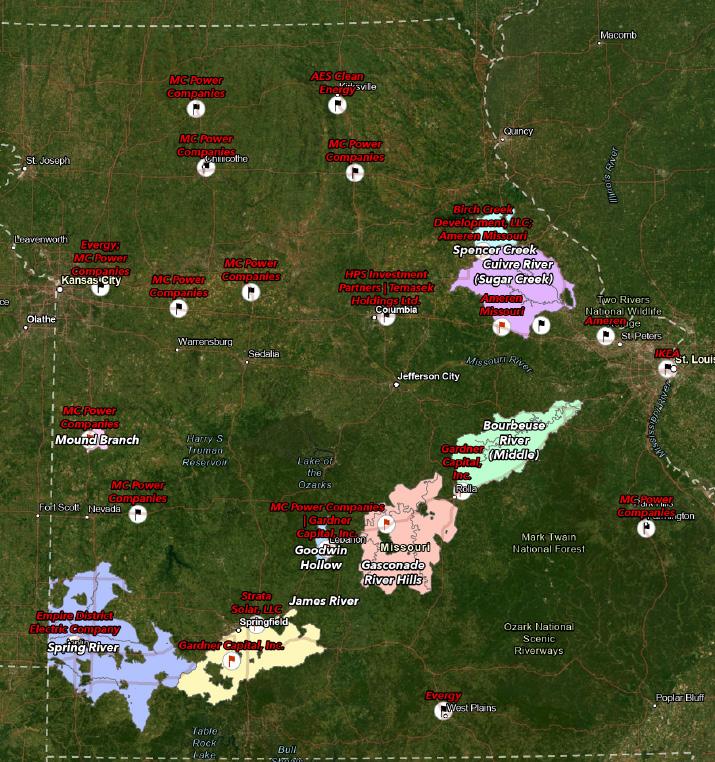
As of January 2026, there were 33 utility-scale solar farms in Missouri (Figure II). Their total operating capacity is 1,170 megawatts (MW). The largest one is in Adair County, with a capacity of about 250 MW. “Sunlight on Demand,” as proposed by RO, is only viable, to the extent that it is, for extremely large solar farms that approach 1,000 MW of production. The possibility of an increased duty-cycle will incentivize construction of ever larger and centralized solar farms, run by multinational conglomerates or companies owned by multibillionaires.
Astronomers and experts in the solar energy industry have called into question the feasibility of RO’s approach towards increasing the duty-cycle of solar farms, given the technical challenges mentioned above. Setting these critiques aside, could we imagine a (dystopian?) future in which “Sunlight on demand” might become a factor in our great state?
Cover: A simulated depiction of a solar farm illuminated at night by reflected sunlight from RO’s satellite-mounted mirrors (Photo: Reflect Orbital).
Map: Missouri Department of Conservation uses a tiered approach for habitat management, prioritizing landscapes and areas based on ecological significance. At least nine of these areas are adjacent to significant solar farms (Photo: Ethan Duke, MRBO).
Indeed, according to Cleanview’s tracker, as of January 2026, there are 59 solar power projects in development in Missouri, with a total planned capacity of 11,517 MW expected to come online in the next five years. This is a 10-fold increase in capacity in 5 years! Indeed, Ameren is currently finalizing the plans for a 250 MW solar facility at the Reform Conservation Area in consultation with the Missouri Department of Conservation.
This farm will result in the shrinking of the Reform Conservation Area and will shutter hiking, hunting, and fishing spots in the affected areas. Similarly, the Beavertail Solar Project in Henry County, north of Kansas City, is a 400 MW solar farm, constructed to provide electricity to a Google data center in the area. Note that solar farms require large expanses of land, and increasingly these farms are showing up in rural areas and taking over farmland and other open spaces in the countryside. Given the planned tenfold increase in solar energy production, it is reasonable to expect increasing numbers of conflicts between folks residing in tranquil, picturesque rural areas with ready access to wilderness and nature, and having to deal with “ugly” solar farms that offend their aesthetic sensibilities.
In principle, the idea of generating “clean” solar energy is appealing to a large swath of folks that transcends traditional political and cultural divides. In practice, akin to wind farms, no one really wants one of these mega-farms in their own backyard, and for good reason. Some folks find it particularly jarring when the electricity generated is not helping reduce costs for regular folks but is instead transmitted to far-off cities or to electricity-guzzling data centers that are increasingly popping up across rural Missouri. It is in this overall context that we want to view developments and ideas such as “Sunlight on Demand” using large mirrors in space.
Let there be Night
Commercial space-based activities are polluting the space around our planet, and with it, changing the nature of the night sky and the night itself. Statistically speaking, ostensibly well-intentioned projects such as RO are unlikely to succeed in the long run, but what they do leave behind is a trail of pollutants and bad ideas, the cost of which the public eventually has to bear. As such, RO will not really be an option for small-scale local or roof-top type solar installations.
Despite its stated intent of being “Sustainable and Efficient by lowering reliance on fossil fuels, while minimizing land and material requirements”, RO has a different business model for small-scale customers. They intend to provide the “Sunlight on Demand” service to anyone who can afford it, as novelty projects and gimmicks at rock concerts, sporting events, and more. For whatever it is worth, some astronomers and DarkSky have drawn a line in the sand: The incidental pollution caused by the increasing numbers of artificial satellites is one thing, but the intentional use of satellites to artificially illuminate our night is a bridge too far.
Our insatiable need for “cheap” energy knows no bounds. The advent of data centers and the simultaneous commercialization of space are significant paradigm shifts. The ethical, financial, and environmental implications of the potential degradation of the local landscape (including the night sky) need to be addressed in a holistic and balanced manner before communities find themselves in a “no-win” situation. Examples abound of similar situations regarding the degradation of air, water, and soil quality in communities across Missouri.
And now, “final frontier” is also under assault. Who owns space and the night sky? Does an individual or a community have the right to simply enjoy the most basic natural circumstances on Earth: the day-night cycle? Or is this negotiable and up-for-sale as well? What are the consequences of these measures on plants, animals, birds, and insects? What is an acceptable trade-off to forever lose our deep personal and cultural connections to the night sky and its many mysteries?
Aldo Leopold’s wise counsel is instructive in helping us decide how to address these questions: “Conservation, at the bottom, rests on conviction that there are things in this world more important than dollar signs and ciphers…Cease being intimidated by the argument that a right action is impossible because it does not yield maximum profits, or that a wrong action is to be condoned because it pays...”
The views and opinions expressed here are those of the authors, and do not necessarily reflect the views of DarkSky Missouri or any other organizations and entities the authors represent.
Jean Nock and Vayujeet Gokhale, DarkSky Missouri
MDC Announces Regulation Changes for Spring Turkey Hunting MISSOURI DEPARTMENT OF CONSERVATION
The Missouri Department of Conservation (MDC) announces regulation changes to spring turkey hunting that will reduce the nonresident harvest limit from two bearded turkeys to one. Nonresident landowners will maintain a harvest limit of two bearded birds with only one allowed to be harvested during the first seven days of the season.
Regulation changes will also now allow youth hunters who are successful during the youth season to harvest their second bird during the first week of the regular season. Currently youth turkey hunters who are successful during the youth season may not harvest a second bird until the second week of the regular season.
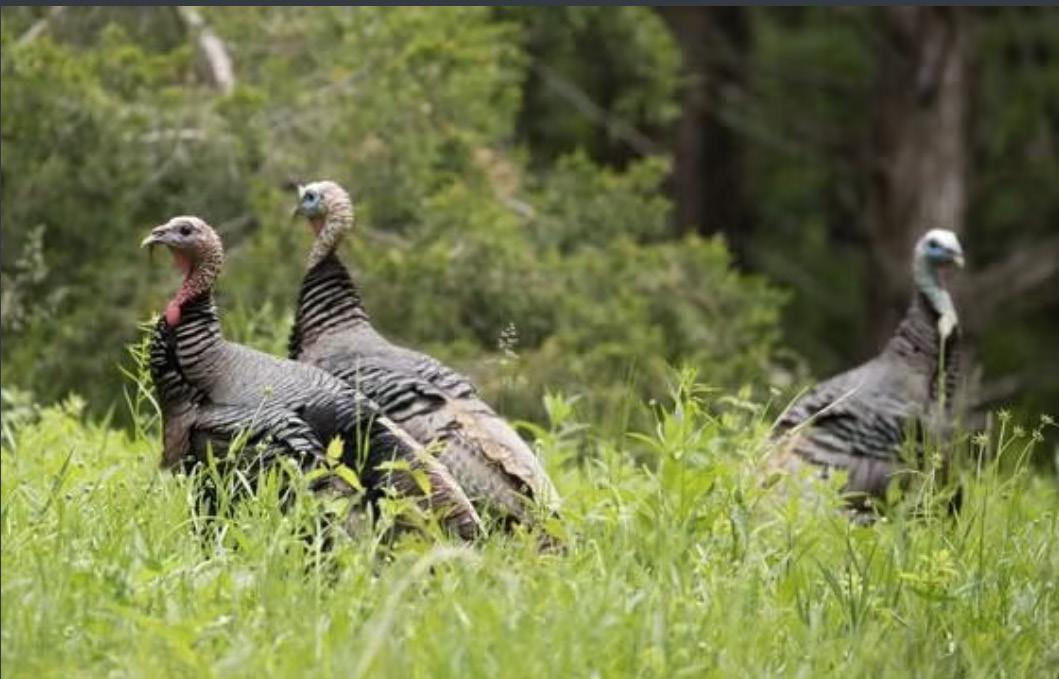
The regulation changes were approved by the Missouri Conservation Commission at its Dec. 12 open meeting in Jefferson City and will be effective for the 2026 spring turkey season.
Public comments and other feedback to MDC on the topic showed that many resident turkey hunters value uncrowded places to hunt and have expressed concern over nonresident participation and overcrowding on some public areas.
MDC announces regulation changes to spring turkey hunting. Nonresident hunters will only be allowed one bird, nonresident landowners will still have a harvest limit of two bearded birds, and youth hunters can harvest a second bird earlier. (Photo: Courtesy of Missouri Department of Conservation)
According to MDC, reducing the nonresident spring harvest limit should reduce the number of days that nonresident hunters spend hunting, thereby alleviating some of the crowding or pressure that resident hunters encounter. MDC will also be assessing non-resident participation in Missouri’s deer hunting season.
The 2026 Spring Youth Portion will be April 11-12. The 2026 Regular Spring Turkey Season will be April 20 through May 10. Get more information on spring turkey hunting from the MDC 2026 Spring Turkey Hunting Regulations and Information booklet available closer to the season and online at mdc.mo.gov/hunting-trapping/ species/turkey.
MDC Sets Deer and Turkey Hunting Dates for 2026-2027 Seasons
The Missouri Department of Conservation (MDC) recently set turkey and deer hunting dates for the 2026-2027 seasons. The hunting dates were approved by the Missouri Conservation Commission at its Dec. 12 open meeting at MDC headquarters in Jefferson City.
The Commission also gave final approval to regulation changes that will reduce the nonresident harvest limit from two bearded turkeys in the spring to a single bearded bird in the spring. Non-resident landowners will maintain a harvest limit of two bearded birds with only one allowed to be harvested during the first seven days of the season.
2026 Spring and Fall Turkey Hunting Dates
• Spring Youth Portion: April 11-12
• Regular Spring Turkey Season: April 20 through May 10
• Fall Archery Turkey Portion: Sept. 15 through Nov. 13 and Nov. 25 through Jan. 15, 2027
• Fall Firearms Turkey Portion: Oct. 1-31 (in open counties)
2026-2027 Archery Deer Hunting Dates
• Sept. 15 through Nov. 13 and Nov. 25 through Jan. 15, 2027
2026-2027 Firearms Deer Hunting Dates
• Firearms Early Antlerless Portion: Oct. 9-11 (in open counties)
• Firearms Early Youth Portion: Oct. 24-25*
• Firearms November Portion: Nov. 14-24
• Firearms Late Youth Portion: Nov. 27-29
• Firearms Late Antlerless Portion: Dec. 5-13 (in open counties)
• Firearms Alternative Methods Portion: Dec. 26, 2026-Jan. 5, 2027

*The Commission approved changes to allow the early youth portion to be moved one week earlier in years when it overlaps with Halloween.
Detailed information on the upcoming seasons and portions, managed hunts, and conservation area regulations will be included in the MDC 2026 Spring Turkey Hunting Regulations and Information booklet and the MDC 2026 Fall Deer & Turkey Hunting Regulations and Information booklet, available closer to the seasons. The booklets will be available where permits are sold and online at mdc.mo.gov.

Interested in exploring the outdoors, but unsure where to start? It’s as easy as stepping out your door!
Join host Jill Pritchard from the Missouri Department of Conservation as she explores everything nature has to offer – from health benefits and wildlife viewing, to outdoor recreation and unbelievable conservation stories. Subscribe and get your own Nature Boost!

Download the podcast at mdc.mo.gov/natureboost
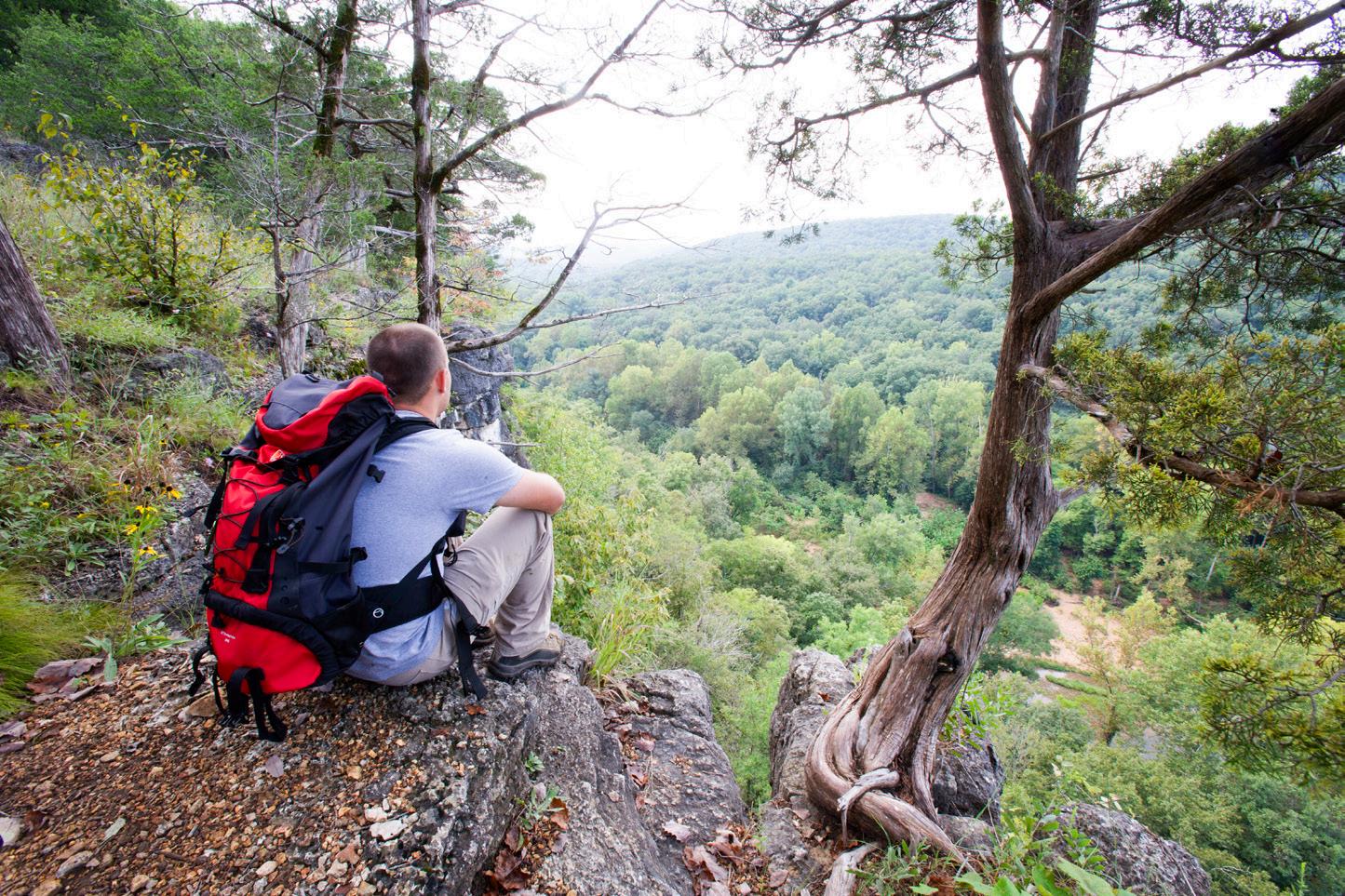

DON’T GET LOST!
This FREE app will help you:
Discover conservation areas, accesses, and nature centers
Easily navigate to locations
Explore available features and activities
Download maps for offline use
Stay informed about area regulations and seasonal information
• Access hours, images, area closings, and boundary maps
Download the MO Outdoors app to your Android or Apple device by scanning the QR code.


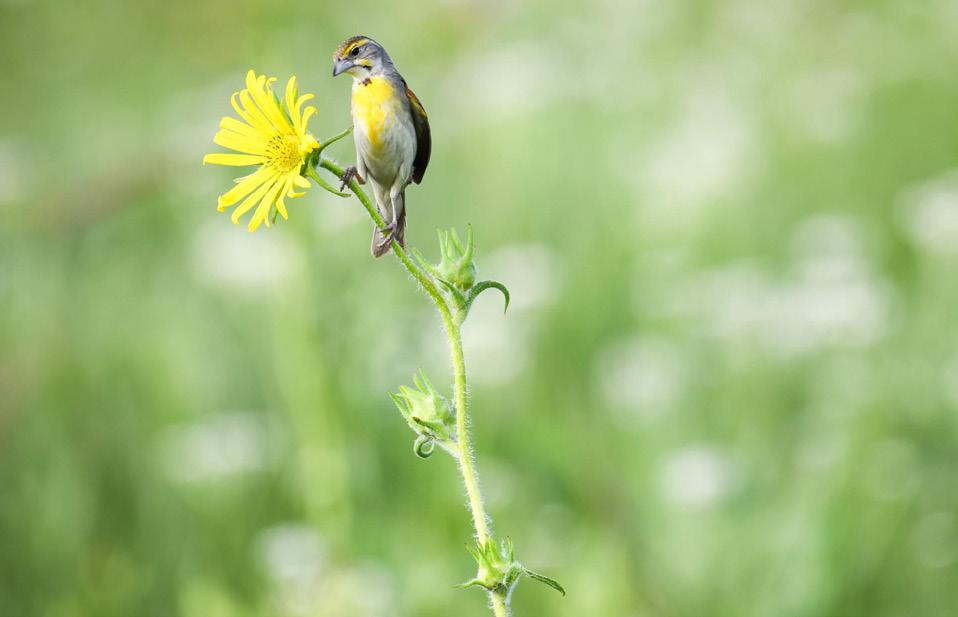
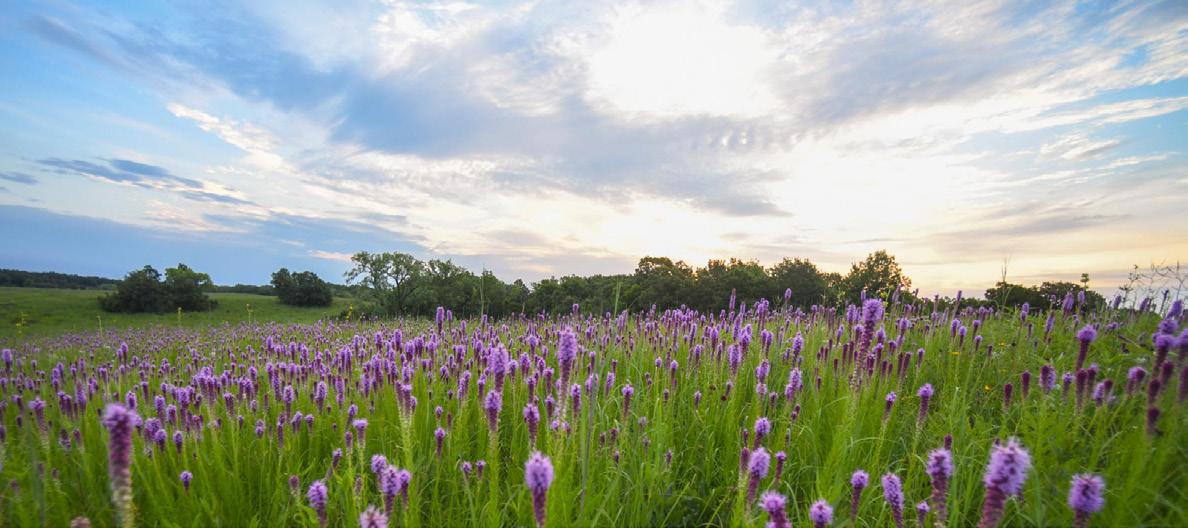
GOOD FOR LAND. GOOD FOR LIFE.

Prairie Prophets is a media platform created by Roeslein Alternative Energy to showcase the stories and objectives of the USDA Climate Smart Commodities Grant.
Everything profits from prairie. Soil, air, water - and all kinds of life! Learn how you can make the most of your land with prairie restoration, cover cropping, and prairie strips.
Explore the Prairie Prophets podcast, video series, website, and socials.
Scan the QR code to learn more.

Angels Without Wings
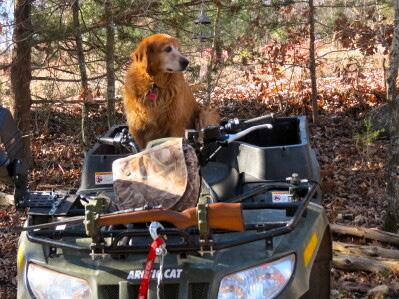
Isaw a sign the other day that said - And God said, I will send them without wings so no one suspects they are angels. It also had a big paw print on it. Our family and most of you would agree that dogs are angels without wings. They are loyal, protective, and pure-hearted. They show us humans what unconditional love is.
When commanded, they sit, then stay, then roll over. Their owners sometimes dress them up in costumes. They chase tails, fetch sticks, and lift spirits. They hunt, fish, camp, boat, and hike with you. They help you around the farm. They are your companion and love you without judgment.
With supportive eyes, they can lift the spirits of a broken heart and even lick the tears away. They remain patient and loyal. They do not care how rich or poor you are.
They care and cuddle, snuggle and nuzzle. They cheer and charm, snore and slobber. They eat the trash and chase the squirrels or the neighborhood cat.
They bring us together as a family. A dog does not see your flaws. They do see their favorite person in the world. They bark, pant, and wag their tail when someone says something about going for a ride in the car. A dog will do all of that and much more. A dog will never break your heart until it is time for them to say goodbye.
I have said goodbye to many dogs in my life. Trixie and Blackie were both mixed breed dogs on Grandpa and Grandma’s farm where I was born. One of their jobs was to protect Grandma’s chickens from hawks and coyotes. They also ran off any other unwelcomed critters, or humans, that came around.
As a kid, I explored around the farm. They were always there with me. Watching over me and showing me love and companionship only a dog can give.
I remember crying when a rabid skunk bit Trixie. Grandpa had to shoot her. Blackie remained my buddy and was constantly with me around the farm. He died of old age. I cried again.
After Grandpa passed away, Grandma moved to town. Mom and Dad took over the farm. They were not dog lovers. I had no dog buddies except for my neighbor’s dog, Bo. He was a cross between a Cocker Spaniel and a Beagle with a snub tail.
He loved to go squirrel hunting with me. He was getting old and had a lot of gray around his muzzle. On our last hunt together, he took off barking after a squirrel I had shot and wounded. The barking suddenly stopped. I found Bo lying motionless in some bushes. The squirrel was in his mouth. I buried him that way.
When my parents divorced, I had to leave the farm and move to town with Mom. I had no more dogs until I married, and we had kids. A German Shepherd named Buster was the first of many dogs in our family. What I remember most about Buster was how protective he was with our boys when they were little. When we walked along the road in front of our house, Buster always walked beside them to put himself between them and cars that came by.
He would sometimes wander around the neighborhood. One day, he never came home. Buster was a goodlooking German Shepherd. My wife figured someone had stolen him. He finally did come home, but he looked like someone had mistreated him. We loved on him and nursed him back to health. Later, he would disappear again and never returned. If he could have, he would have. We were his family.
Our oldest son came home one day with two Beagle puppies in the pockets of his coveralls. We called them Bo Bo and Junior. Our middle son became especially attached to them. He went looking for Junior one day and found him in a trap. Somebody had shot him. He cried. Months later, Bo Bo went exploring and never came home. We all have great memories of both of them.
Our youngest son also had a dog that was his buddy when he was still living at home. Hershey was a Chocolate Labrador and would be the first of many dogs in his life. We all loved that dog.
One day, a friend up the road gave us a blond-haired Poodle that became special to my wife. He was not afraid to fight any dog around. Buffy took on the oldest son’s Blue Tick Hound and several neighbor dogs. It did not matter to him how big they were. We broke up several fights he started.
A dog has a life expectancy of 10 to 13 years. Buffy was part of our family for 13 years. We buried him among the trees on the hill behind our house. A flat rock with his name carved in it marks his grave. It is a tribute to how much Buffy meant to us.
Then, there was our beautiful white German Shepherd named Jed. I love to read books and watch movies about the era of life when Mountain Men roamed the Rocky Mountains hunting and trapping. His name came from Mountain Man Jedediah Smith. One day, he left and never came home. We think a neighbor shot him because he thought he was chasing cattle. I still miss Jed.
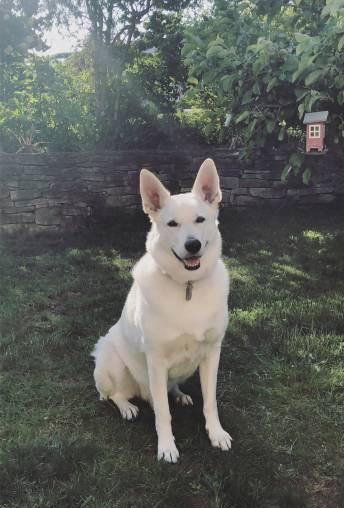
The oldest son remained a dog lover after he moved away from home. At one time, he had seven different breeds of dogs of all sizes all at one time. His favorite dog was a mixed breed named Dingo. He had Dingo for eight years before he died of old age. He now has his buddy Stormy, another mixed breed.
Feature Story
When our middle son moved out and married, he had a mutt of a dog named Saspy that was special to him and us. He eventually died of old age. Then came Memphis, a Golden Retriever their two kids grew up with. We all loved Memphis.
He enjoyed our cabin with his family and riding around on our ATV. If we were in the cabin and looked out the window, Memphis would be sitting on the ATV, waiting for someone to take him for a ride.
Memphis developed a congenital heart disease. I went over to check on him when they were at work. I remember lying on the floor, petting and talking to him. He could not lift his head to drink out of his bowl. I would put water in my hand and hold it where he could lick it out.
I told him we all loved him and his family would be alright. I told him he could close his eyes and go to dog heaven. A few days later, our son took him to the veterinarian to have him put to sleep so he would not suffer. Pictures of him are still on display around their house and our house. He was a special dog to all of us.
It took our son a while to get over the loss of Memphis and get another dog. Partly because they now had granddogs to enjoy. His kids kept encouraging him to get a dog. They now have another Golden Retriever named Murphy. He says he is a goofball. He loves that dog like all the rest he has had.
Their son married a dog lover, too. His wife also grew up in a dog-loving family. Maverick is their Golden Retriever. Our grandson was into hunting ducks, so his wife got Maverick for him. Then, a little black bundle of energy named Willie joined their family. He is a Cavapoo, a cross between a Spaniel and a Poodle.
Both dogs love to go out on the boat fishing or play in the water. Of course, they have their life jackets on. Our granddaughter-in-law even dresses them up in outfits for the holidays. Both are pretty special to all of us.
Our middle son’s daughter and her husband have two dogs, Max and Dak. Max is a rescue dog nobody wanted. She got him when she was still living at home. She says Max is her cuddle buddy and can turn anyone into a dog person.
Max is my buddy. I have fallen asleep with my arm around him while dog-sitting. He likes it when I or anyone else scratches his belly. We have also been on many walks together.
Dak is the newest member of their family. He is a German Shepherd/Malamute mix. She says he keeps them entertained. They never know when he will be a crazy man or a cuddle bug like Max. Dak always gives her a hug when she gets home from work. He is up for any adventure with his family.
Our youngest son, his wife, and our grandsons live in Wisconsin. The oldest is in college. The youngest is a Senior in high school. They are dog lovers like the rest of us. When the boys were young, they had Alex or Al Pal, as they called him. Our son called him a mutt. He was some special breed. They never found out what. At the same time, they also had Taylor, a Golden Retriever we all called Tatoes.
Later, they had two big English Mastiffs named Belle and Boulder. Then, a Golden Retriever named Harley. They are now gone. But, there is now another English Mastiff named Apollo. He loves sleeping with Mom and Dad. He is a big goof and slobbers a lot. He is loved anyway.
Then there is the little yapper Rodger, aka Rodger Dodger, who likes to bark at anything. What he is doing is protecting his home and his family. Over the years, Rodger has become my buddy. I know he misses me when I am not there.
Dogs have all been a special part of generations of our family. If you and your family are dog lovers, you can relate to a lot of this story because you also have dog stories of your own. Memories of them make you laugh or make you cry. If you do not have dogs, I hope this story encourages you to become a dog family. You will be glad you did. It can change the lives of you, your family and your dog or dogs for the better. We have great memories of all of our dogs that are no longer here. We are thankful for those we still have who bring so much joy to our lives. They are family. They touch our hearts and our souls. They are blessings from God. To us, they are, or were, angels without wings. Cover - Memphis is on "his" ATV waiting for a ride. Pg 43: Jed was a special dog. (Photos: Whiteley family) Larry Whiteley
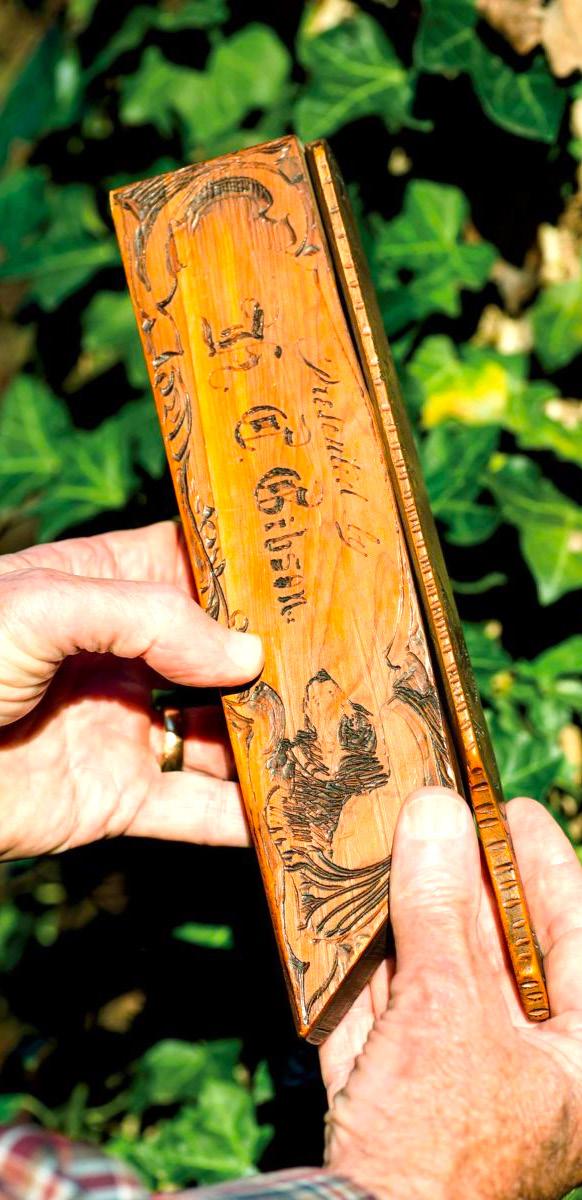
The Craft of Making Turkey Calls and Calling
Wampanoag Indians, of first Thanksgiving with Pilgrims fame, hunted eastern wild turkeys with bows and arrows while imitating the sounds the big birds made. Tribe members became so adept at calling the wild birds in close that they began hand-grabbing them. Mankind's fascination with wild turkeys has spanned the ages, birthing a movement of artists, call crafters, collectors, and calling aficionados. The ancients could have never imagined a wing bone call worth $100,000.
Archeologists discovered wing bone calls, made from the three wing bones of a wild turkey, at the Eva Archaic site in Benton County, Tennessee, in 1940. The bones had been scraped, cut, and fitted together much like the wing bone calls made today. The Eva site wing-bone calls were carbon-dated to 6,500 BC.
The modern-day turkey call-making era is said to have begun in the 1880s, when Charles Jordan began production of wing bone yelpers very similar to those found at the Eva site. Following close behind, Henry Gibson was awarded the patent for the box call in 1897. Jordan and Gibson became the first generation of modern-day turkey call makers. Both Jordan’s productions and articles in Forest and Stream magazine about wing bone yelpers spanned the centuries between the early American Indians and today’s modern turkey hunters, placing both calls and ancient history in their hands.
One of the greatest names in turkey call-making history, Tom Turpin, was born a generation later. Turpin produced both yelpers and box calls. When he died in 1957, another great name in the up-and-coming turkey call industry, Roger Latham, bought Turpin’s business.
Feature Story
Meanwhile, another pioneer of the modern callmaking circle, Mike Lynch, had been producing calls in Birmingham, Alabama, since 1939. The Birmingham calls have remained the higher-valued calls from the Lynch line, often bringing hundreds of dollars at public auctions.
By the early 1900s, turkey populations had plummeted due to overharvest and habitat destruction. Fewer than 30,000 turkeys remained nationwide. Fortunately, farsighted individuals like Theodore Roosevelt and George Bird Grinnell rallied conservation-minded supporters to start a movement to pass game laws and set aside protected areas for fish and game. Today, seven million wild turkeys exist in available habitat across the nation.
The rebirth of wild turkey populations spurred new generations of turkey hunters. As a result, interest in collectible turkey calls, turkey call art, and turkey calling contests grew at a phenomenal rate.
While turkey calls have not yet matched the astronomical values of duck decoys and calls, interest continues to grow. A set of mallard decoys carved by the legendary Caines brothers of Georgetown, South Carolina, brought an astounding $1,144,600 in 2017 at a Guyette and Deeter Auction House.
Danny Ellis, a Charlotte, North Carolina, real estate developer, became the envy of turkey call collectors in 2016 when he purchased the Holy Grail of turkey calls: an 8-inch wing-bone-and-cane yelper made in 1888 by the famous Louisiana turkey hunter and writer Charles L. Jordan. Ellis dropped $50,000 on the famous call, making it the largest figure ever spent on a single turkey call. Rumors in the world of turkey call collectors insinuate, however, that Ellis may have later bought a Henry Davis scratch box call for $100,000.
Turkey calling contests became a social phenomenon during the mid-to-late 20th century, as turkey hunters became enamored with the vocabulary of wild turkeys. Speculation about where the first turkey calling contest was held ranges from bars to barns. No doubt, the contest involved a bunch of guys arguing about who could yelp the best. We’ll never know for sure.
Contests sprang up almost simultaneously across the country, as interest in everything turkey grew by yelps and gobbles. Sportsmen’s clubs and Chambers of Commerce hosted hundreds of small-town events, while others attracted thousands of spectators. The World Contest began in 1940 in Mobile, Alabama, followed by the Yellville, Arkansas, Nationals in 1946. By the 1970s, turkey calling contests had become a nationwide mania, with the National Wild Turkey Federation’s Annual Grand Nationals becoming the Super Bowl of turkey calling contests.
Turkey calling contests spurred overnight turkey hunting heroes. Contest winners found themselves catapulted into the limelight as they founded call companies, became spokespersons and pro staffers for outdoor equipment companies, presented seminars, and eventually broke into radio, TV, and video productions. Early successes included Ernie Callandrelli, Dick Kirby, Preston Pittman, and Ray Eye. Their services fanned the flames of thousands of turkey hunters across the country.
Men dominated the turkey calling circuit until then18-year-old Emily Oliver of Crossett, Arkansas, made history by becoming the first female to win a world championship when she won the amateur division at the World Championship Turkey Calling Contest in Mobile, Alabama, in 2012.
Perhaps no one has a clearer handle on the history of turkey calls and calling than South Carolinian Rob Keck. A former high school art teacher, he joined the staff of the National Wild Turkey Federation in 1978 and soon rose to the CEO position of the fledgling organization. A natural-born leader, Keck led the NWTF to notoriety as one of the most successful single-species conservation organizations of all time over his 27-year tenure.
A student of turkey hunting and call history, Keck says that art is all in the mind of the beholder. “You can look at the oldest and crudest of turkey calls and appreciate them as works of art,” Keck said. “However, it was in the mid-to-late 1980s that turkey calls came to be better crafted. You could see the pride of the carvers as they explored using a variety of exotic woods and materials and created something that was not only functional, but beautiful—works of art that someone would want to display.”
The Ozarks developed its own brand of turkey call art form. Call makers from Eminence, Missouri, popularized the fence post box call. Dan Searcy, a well-known musician, politician, and barber, was also held in high regard for his artistic box calls. “I relived the past by going to old homesteads and retrieving fence posts made of cedar and locust and turning them into fence post box calls,” he said.
Keck’s artistic background led the NWTF to begin a decorative turkey call competition. “Those competitions spawned the artistic culture of turkey calls that we see today,” Keck said. “Few would consider taking these works of art to the woods. Nonetheless, these astounding pieces of craftsmanship exhibit the beauty, mystique, and greatest features of turkey hunting.”
“Neil ‘Gobbler’ Cost became a great source of inspiration to other carvers when he introduced checkering to the lids and sides of his signature box calls in the early 1960s,” Keck said. “Later, he began putting inlays into the lids of his calls, and many carvers followed suit. Additionally, he gave turkey hunters something they could carry in their turkey hunting vests with a sense of pride.”
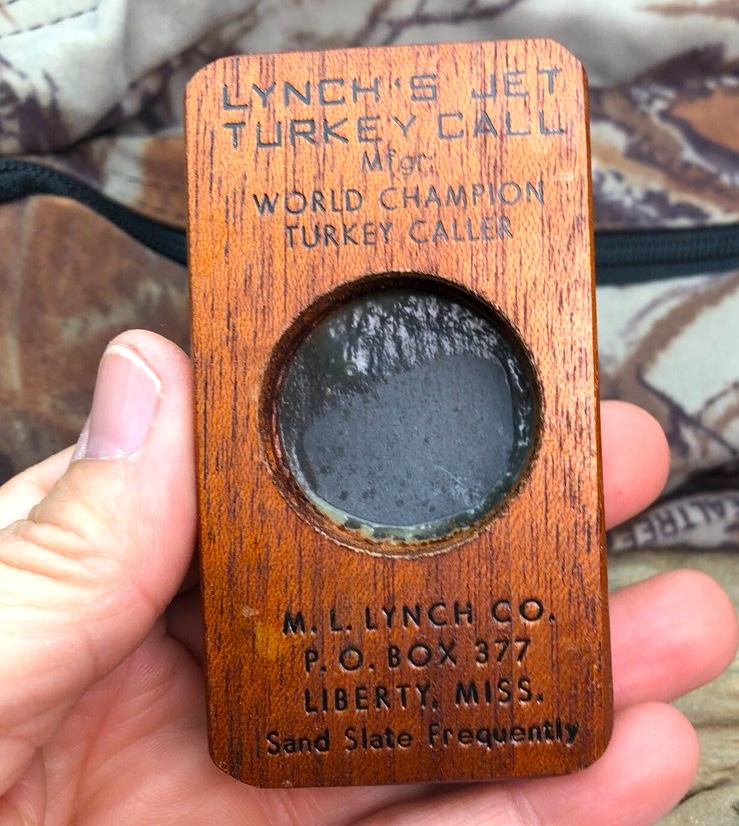
It was Earl Mickel, with the introduction of his three books on turkey callmakers, who brought turkey call collecting into the limelight. “In his last book, Turkey Callmakers Past and Present: The Rest of the Best, Mickel established values of calls,” Keck said. “With those established values, from a highly recognized authority, came a new sense of collectability.”
Turkey hunters and collectors began searching for calls in earnest. Thousands of turkey calls sat on the mantels of private homes, in hunting rooms, and in garages. Those who dug the deepest discovered early calls made by Gibson, Jordan, and Turpin. “When Earl Mickel’s private call collection was purchased by Bill Jones of Sea Island for an estimated two million dollars, collectors began to realize that turkey calls might someday approach the values associated with duck decoys and shorebird collectibles,” Keck said.
Regardless of the growing values of turkey calls and the mania surrounding the whole turkey art culture, turkey hunters still cling to the core values of turkey hunting, including the art of calling. “I still go back to the basics of listening to real turkeys,” Keck said.
“You don’t have to be a great caller to harvest turkeys,” said Keck. “Delivering calls with the same rhythm as a wild turkey is key. I’ve listened to hundreds of people calling turkeys who weren’t very good at calling. However, with a little distance in the woods from the birds and the correct rhythm, those hunters killed turkeys. That's the art and beauty of turkey calling.”
Having been a key figure in the world of all things turkey hunting for nearly half a century, Keck is often asked by turkey hunters what he carries in his turkey hunting vest. “What they are really asking is what calls do I use,” Keck said. “My personal favorite is a long box call. Materials make the call, and I originally favored a cedar-on-cedar long box call. Then a friend in Pennsylvania designed a box call with an aluminum, curved lid. It produces a high-pitched sound that makes turkeys gobble when nothing else will. It is about as turkey as turkey can get. However, I will forever search for the call that trips their trigger!”
Cover - Henry Gibson was awarded the patent for the box call in 1897. Left - The Birmingham calls have remained as the higher valued calls from the Lynch line, often bringing hundreds of dollar at public auctions. (iStock photo) Bill Cooper
Establishing and Enhancing Native Gardens in Spring
The Missouri Prairie Foundation’s Grow Native! program has ample resources to help native landscaping experts and beginners alike.

March is February’s gift. The grays and browns of winter give way to glimmers of green, and just when you didn’t think you could stand another day of the cold-weather blahs, spring is in the offing.
If you are like me, at this point in the year, you are itching to garden. Whether you are a native landscaping pro or are just beginning, now is the time to prepare for spring native landscaping to beautify your surroundings and support nature’s web of life. The Missouri Prairie Foundation’s Grow Native! program has abundant, free resources available at grownative.org to help you establish your first native plant bed or enhance your long-established ones with additional plants and stewardship tips:
• Labeled Plant Gardens, launched in 2025, show how native plants look and grow in designed spaces. Commercial and home landscaping in various seasons, and in sunny and shady situations, are featured, including the examples illustrated in this article.
• The Grow Native! Weed ID Guide, also established last year, helps gardeners identify common weeds, especially when small, that may pop up in native plantings and native garden beds.
• If you are planning rain gardens or bioswales for your property, understanding the inundation tolerance of various plants is essential—some are ideal for the base of rain gardens, while others are best suited for mid-slope or along berms. Grow Native! published Native Plants for Stormwater Management Practices in February 2025 as a comprehensive plant selection guide. This free e-book profiles 160 native plants, each with photos, a written description, and a chart indicating the plant’s inundation depth and duration tolerance.
In addition to the resources listed above, Grow Native! has many tried-and-true offerings to help you select, design with, and steward native plants for your home or business landscaping:
• A searchable Native Plant Database of more than 380 native wildflowers, grasses, sedges, vines, shrubs, and trees to create lists of plants for your particular growing conditions. Want plants with white flowers that grow in dry, sunny areas? Or small trees with red fall color for shade? Search for those and dozens of other criteria.
• Fourteen Native Landscape Plans provide templates for formal native gardens for sun or for shade, for a native planting around a mailbox, for a frog pond, rain garden, or to specifically attract butterflies or birds.
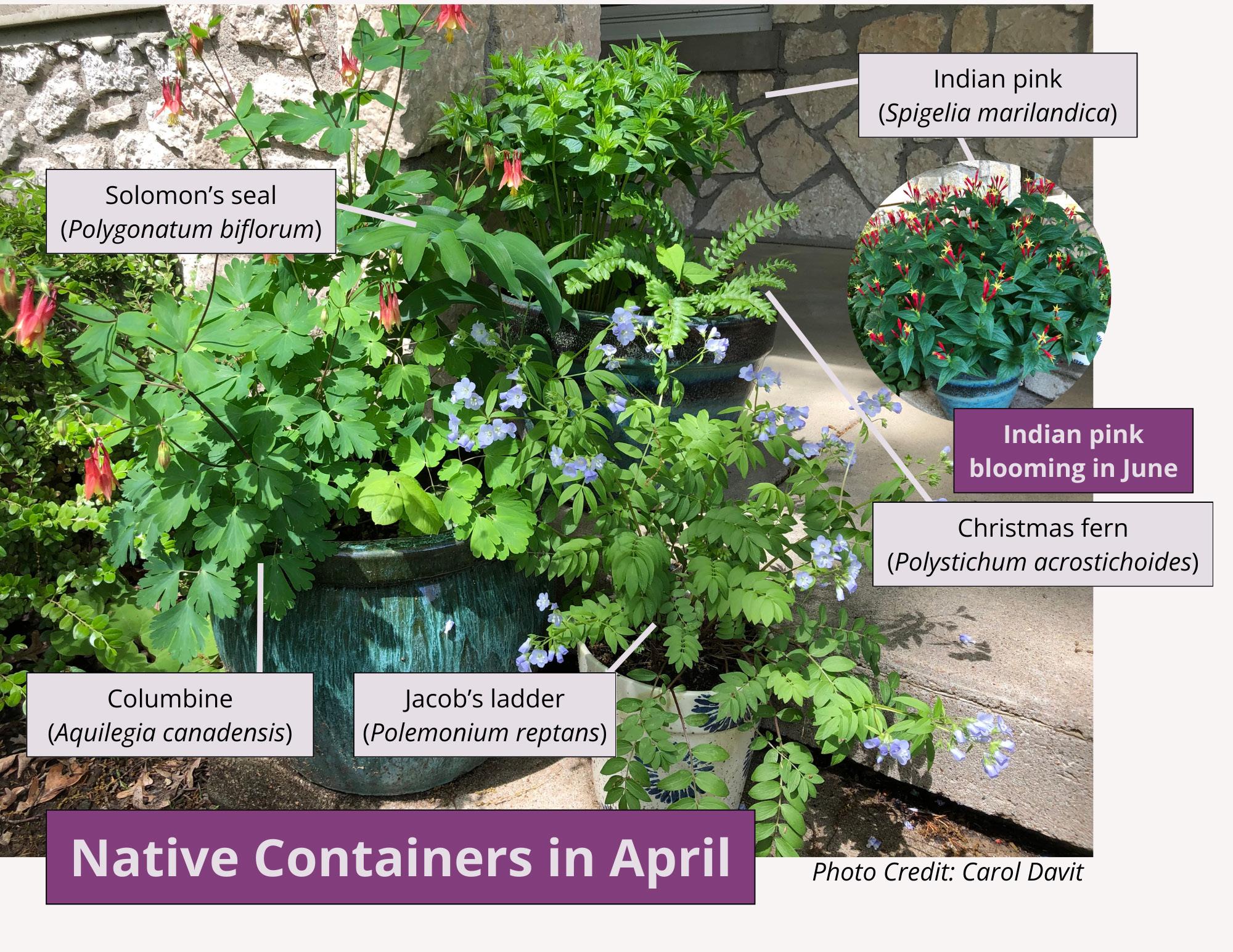
Visit moprairie.org and grownative.org for details on sale vendors, sale hours, and pre-order information. Also, additional sales may be added during spring 2026.
Find these and many additional resources, including more than 30 Top Ten Native Plant lists, a year-round Native Landscape Care Calendar, articles, and much more at grownative.org. In addition, save the dates for MPF/ Grow Native! native plant sales in spring 2026:
• Saturday, March 28, 2026 - Runge Conservation Nature Center, 330 Commerce Dr., Jefferson City, Missouri
• Saturday, April 11, 2026 - MU Bradford Research Center, 4968 S. Rangeline Rd., Columbia, Missouri
• Saturday, April 18, 2026 - Anita B. Gorman
Conservation Discovery Center, 4750 Troost Ave., Kansas City, Missouri
• Saturday, May 9, 2026 - Remington Nature Center, 1502 McArthur Drive, St. Joseph, Missouri
• Saturday, May 16, 2026 - Anita B. Gorman
Conservation Discovery Center, 4750 Troost Ave., Kansas City, Missouri
• Saturday, May 16, 2026 - The Nature Institute, 2213 S. Levis Lane, Godfrey, Illinois
• Saturday, May 23, 2026 - Mother’s Brewing Company, 215 S. Grant Ave., Springfield, Missouri
Carol Davit Executive Director of the Missouri Prairie Foundation and its Grow Native! program
Cover - Many gardeners can recognize full-size bush honeysuckle and burning bush, but identifying them when young can be a challenge. Grow Native!’s Weed ID resource features photos, such as those pictured here, of numerous weeds and other undesirable plants, when small, that can pop up in native plantings and garden beds. (Photo: Grow Native) Top - Check out the 2026 Grow Native! plant sales to purchase your native plants this year.
Go Wild or Mild with Bass Lure Colors
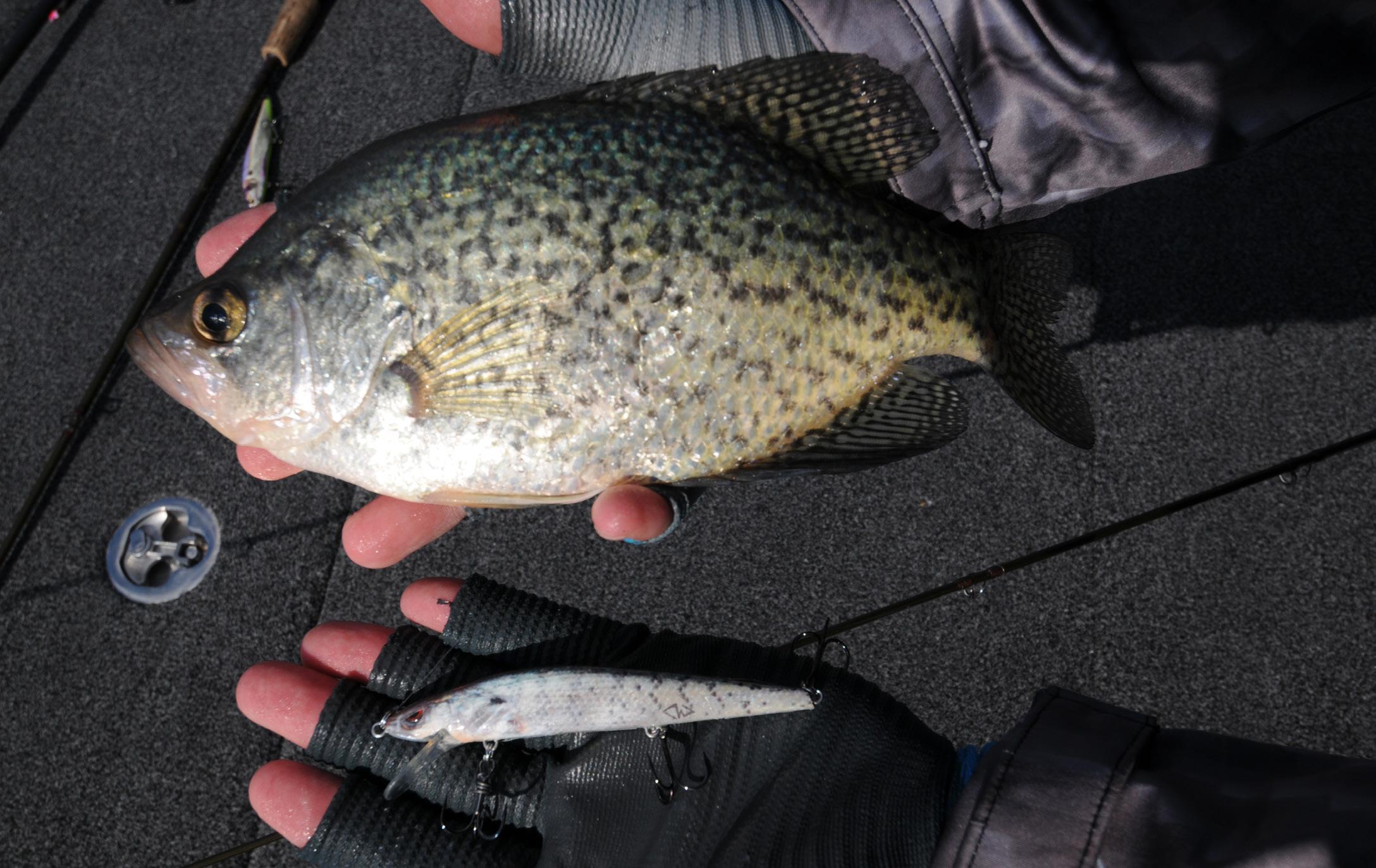
Sometimes Rick Fishback goes wild with lure colors, and other times he takes a milder approach in selecting hues for his bass baits.
Parking lots at ramps full of trucks and trailers, and more boats all over Missouri lakes—even during the middle of the week—have convinced Fishback that choosing the right lure colors has become more important than ever.
“With all the pressure going on now in fishing, color is a big thing because the bass are seeing it all—especially the generic stuff,” Fishback says. “So, I think the more realistic colors get you a few more bites. It also helps to match the hatch as far as color goes.”
“I follow some of the old simple rules (for choosing colors), but I also have kind of a new spin on it for what I like to do,” Fishback says. “The clearer the water and the brighter the day, the more realistic I like to keep my colors. I want something that looks like a crappie or looks like a shad, but I want it to really look like one.”
The Springfield, Mo., angler makes color choices for hard baits his business as the co-owner of CrankWraps (www. crankwraps.com), a realistic adhesive skin that can be applied to various hard plastic lures. “Our colors are real photo images,” Fishback says. “It is not a paint job. It is a picture of a baitfish or crawfish. It is a vinyl application already cut and templated to fit whatever bait you might have.”
CrankWraps can be applied to any new or old hard plastic baits and can even be used as a seal for cracked lures. Fishback notes the wraps are available in 20 basic colors and 190 different lure sizes, ranging from glide baits to jerkbaits to crankbaits. The wrap can be applied in about 10 seconds by peeling it out of its packaging, lining up the wrap with the eye and tail of the lure, and then smoothing out the skin onto the lure.
Water clarity mainly determines which lure colors Fishback selects for his hard plastic lures. In cold, clear water on a sunny day, Fishback prefers throwing jerkbaits adorned with the CrankWraps White Crappie pattern because he is fishing the lure slowly, which gives bass a chance to take a longer and closer look at the realisticlooking bait.
Fishback does opt for a jerkbait in a wild color during the winter when the water temperature is around 39 degrees and just starts to nudge into the 40s. “Those first fish of the year seem to really want the wilder colors more,” he says. His color choice then is the CrankWraps Ozark Ruiner, a bright purple back, chartreuse sides, and orange belly pattern, which he notes bass can see from a long distance in clear water.
Bolder and solid colors work best for Fishback in dirty water and cloudy or low-light conditions. “You will notice that your bigger fish will come on your bolder or more solid colors,” Fishback says. “A translucent bait like those that come from the factory gets bites, and sometimes they get a lot of bites. But it seems like those bigger fish like those older non-translucent colors.” When fishing stained water on a cloudy day, the regional tournament competitor opts for the CrankWraps Fishback Attack hue, a color pattern consisting of a bold, solid white body with a blue head.
He prefers bright yellow or green-chartreuse hues for fishing dirty water on cloudy days. “I want something really bright that is going to cut that water so the fish can see a little bit farther and get to the lure,” Fishback says. He selects a squarebill crankbait in bold yellow or white colors when fishing murky or muddy water.
Matching the hatch is another factor determining Fishback’s color choice for his hard baits. In the Missouri lakes he fishes, gizzard shad and crappie are the common bass forage, so his top choices are the CrankWraps Gizz Shad and White Crappie patterns. “Everything will get a bite, no doubt,” Fishback says. “We all have had plenty of bites on wild colors, but to be consistent, I think matching the hatch is a big deal. I fish the Gizz Shad pattern when I'm fishing close to the bank or fishing toward the back of a creek arm. Now, when I am brush pile fishing or around docks, I throw the White Crappie pattern because that's where the crappie hang out. I really believe in throwing what the bass are feeding on.”
When water temperatures climb into the 45- to 55-degree range, Fishback notices bass start eating crawfish. Fishback selects Storm Lures Wiggle Wart and Spro RK Crawler crankbaits to serve the fish a mudbug imitator. His favorite crawfish color pattern is the CrankWraps Fire Green, consisting of a mixture of green, reddish-brown, and orange hues.
Fishback observes some lure color choices are determined by the lakes he is fishing. “When we go up north toward the Iowa border, there isn’t as much of a shad population up there, and the bass will focus more on a bluegill or a sunfish,” he says. “I have played that game up in that region, and the bass won’t hardly eat a shad-colored bait up there. You have to throw a bluegillor sunfish-colored bait to get bit up that way.”
The Missouri angler has also noticed lure color choices vary from one lake to the next. His White Crappie pattern produces well on Lake of the Ozarks and Pomme de Terre Lake but is much less effective on nearby Stockton Lake, where Fishback thinks bass prefer different forage there.
John Neporadny Jr.
Cover - Bass feed on small crappie at the lakes Rick Fishback frequently fishes so he matches the hatch with his lure color choices.
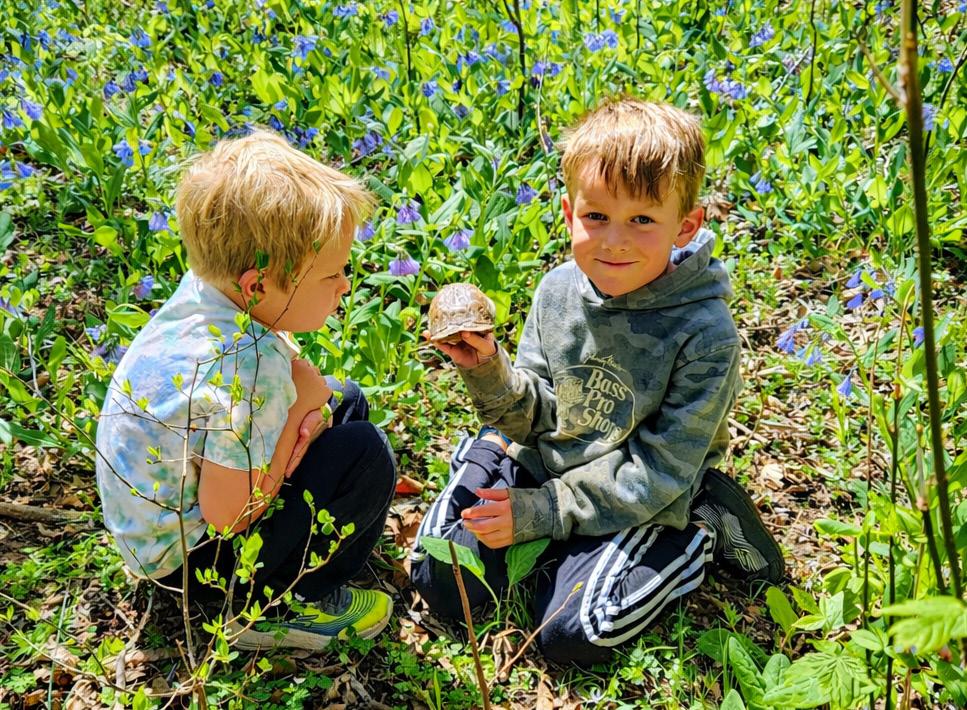
The Adventures of Frank & Ed: Mushroom Hunting
Ahh, springtime in Missouri is great. There’s so much to do outdoors, it’s hard to fit it all in. The month of April is especially great. Crappie fishing, turkey hunting, planting the garden, and of course, mushroom hunting!
It’s April 10th, and we’re back at the Hickory County Farm property along the Pomme de Terre River.
“Today’s adventure is Mushroom Hunting,” I announce to the boys at breakfast.
“Great, I really like those stuffed mushrooms you get at restaurants,” Frank says.
“Me too,” Ed replies, “except I like them fried better. Where do we find mushrooms, Papa?”
“In the woods,” I say, “but the ones we’re looking for don’t look anything like the kind you get in restaurants. We want to find Morel Mushrooms.”
“What do morel mushrooms look like?” Frank asks.
“They kinda look like a sponge or a honeycomb on a stem, and they are gray, tan, or a little yellow in color. Let me show you a picture,” I answer.
The Missouri Department of Conservation (MDC) has a free pamphlet called A Guide to Missouri's Edible and Poisonous Mushrooms on the MDC website. You can download it or order a free copy. You can also usually find it at your local MDC office or nature center. It’s a great guide with lots of pictures and descriptions of mushrooms, both edible and poisonous, in Missouri.
“Wow, those are weird looking!” the boys exclaim.
Today Grandma Kim will be joining us on our adventure to find morel mushrooms. Grandma Kim has packed lunch for the crew, and it’s a beautiful sunny springtime day. We all prepare for our day in the woods by wearing long pants, shirts, socks, and tennis shoes or boots that I sprayed the evening before with a repellent containing permethrin.
The best repellent I’ve used is Sawyer Permethrin spray. The 0.5% in the spray will repel ticks and kill those pesky creepy crawlers. You only apply it to your clothing, as some people may have an allergic reaction to permethrin if it gets on bare skin. Just follow the label instructions, and believe me, it will prevent almost all tick bites.
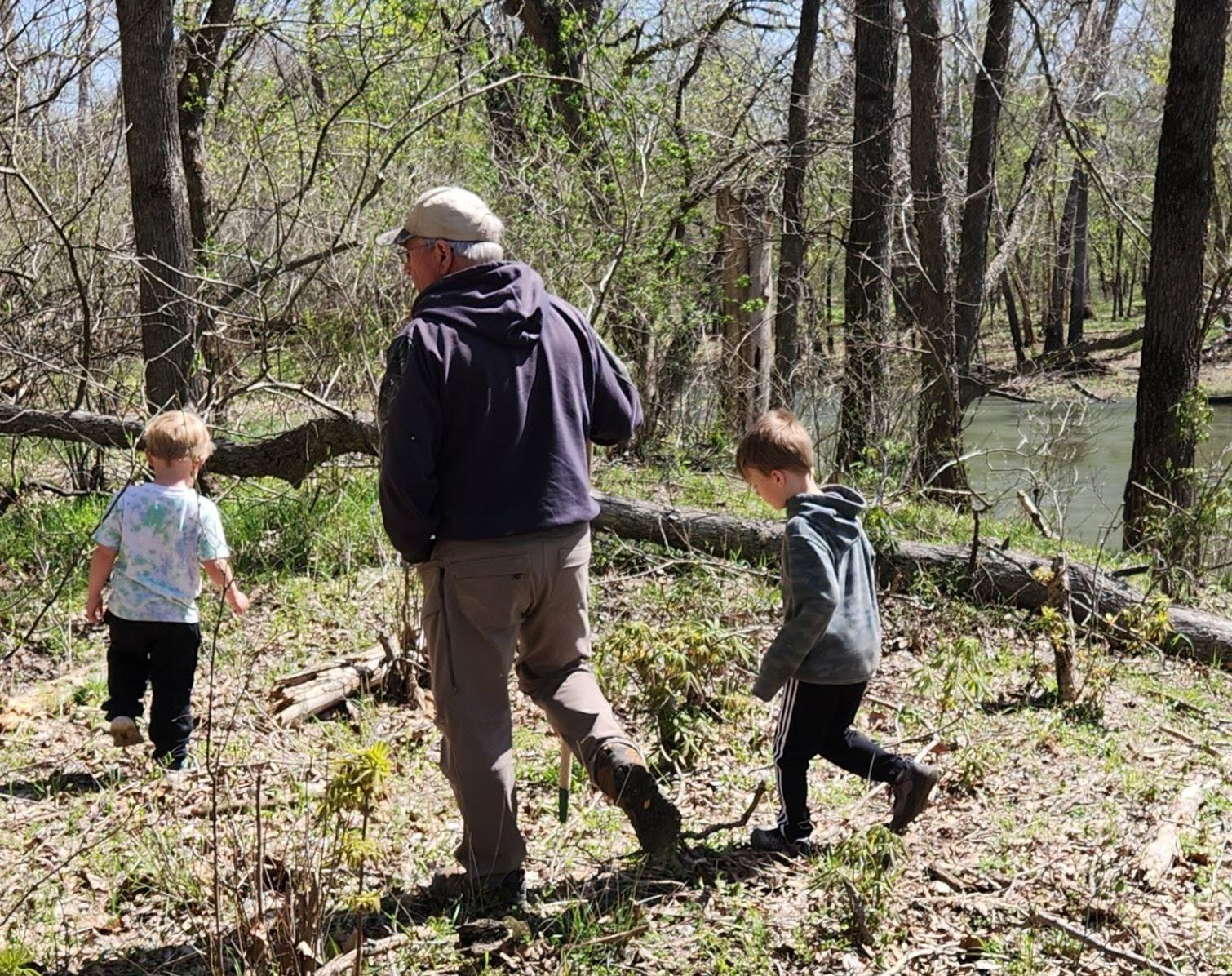
We also usually spray a repellent containing DEET on our bare skin around the ankles, arms, and waist as a secondary line of defense. Ticks are a real problem in the springtime Missouri woods and can cause serious disease concerns, so be prepared and thoroughly check everyone for attached ticks after each outing.
“Where do we look in the woods to find mushrooms, Papa?” Frank asks.
“Well, they could be anywhere, but I usually find them around trees that are dying with the bark falling off. Just walk slowly, scanning the ground all around you,” I reply.
We’ve been walking about 10 minutes when Ed suddenly yells, “I found one! I found a mushroom!”
“Well, by golly, Ed, you did find a morel mushroom, but that’s a False Morel Mushroom. We won’t eat that one, but it’s a cool find,” I tell him.
The False Morel Mushroom does look somewhat like a true morel, but it’s bigger and reddish in color. Some folks do eat them and say they are good to eat, but some people get sick if they eat one, so to be on the safe side, I don’t eat them.
Over the next hour or so, we found more false morels, some shelf mushrooms called Pheasant Backs, and some half-free morels, but not the common morel mushrooms we’re looking for. But we have seen and identified some other cool stuff—springtime flowers like spring beauties, trout lilies, phlox, and lots of bluebells in the river bottom. The boys also saw a couple of reptiles, a box turtle, and a fence lizard. We saw lots of squirrels and woodland birds we identified, but so far, no morel mushrooms.
It’s time for lunch, so we find a neat spot next to the bluebells, and Grandma Kim spreads a blanket for our picnic lunch. We have probably walked a mile or so up and down the Ozark ridges along the Pomme de Terre River bottom, so the lunchtime break is welcome.
“Why aren’t we finding any of the right kind of mushrooms, Papa?” Ed asks.
“Well, Ed, I’m not sure. We are in a good area at the right time of the year, so they should be growing, but maybe it’s too wet or too dry or too cold or too warm or too cloudy or too sunny. Everything must be perfect for morels to grow, so we just have to keep looking until we find that perfect spot,” I answer.
“I don’t think we’re gonna find any, Papa. We’ve looked a lot already,” Frank says as he’s finishing his lunch. “Maybe not, but we have had a great adventure and saw lots of other stuff today,” Grandma Kim says.
We pack up and head back up the hill out of the river bottom, still looking—at least I’m still looking for mushrooms. Frank and Ed are running around chasing each other, jumping off logs, and throwing rocks. Grandma Kim is watching the boys and trying to keep them from hurting themselves or each other, because that’s what grandmas do.
As we head along a small creek toward the house, suddenly I spy the object of our search. There, popping out of the ground next to a sycamore stump along the creek bank, is a tan-colored morel mushroom—only a couple of inches tall and about the size of a lollipop.
I didn’t say a word about finding the mushroom, but I did tell the boys that I had found what I thought was the perfect spot to look. Frank and Ed came running over toward the creek bank, and I yelled, “Whoa, whoa there, boys. Slow down and look carefully, or you won’t find anything.”
After a few seconds of scanning the perfect spot, Frank yells, “I found one right here!” Ed and I look over, and yes, Frank has found his first morel mushroom. Then Ed screams, “There’s another one!”
Frank yells, “And another one!”
In a few minutes, we found ten morel mushrooms in the so-called perfect spot along the creek bank. Not a big patch, but enough to claim success for the day.
“Pull or pinch them shrooms outta the ground and put them in this mesh bag, boys,” I say.
Frank looks at me with a puzzled face and says, “What the heck are shrooms, Papa?”
“Just my way of describing these little mushrooms that taste so good when you fry them up it will make you want to slap your mama!”
“I’m not slapping my mama because I’d be in big trouble, and so would you, Papa, if you slapped GG Bly!”
We all laughed, and I said, “Don’t worry, Ed, I’m not really gonna slap my momma.”
Back at the house, the first thing we did was check each other over for any ticks that may have hitched a ride. If you find a tick attached, carefully pull it straight away from the bite and clean it with an antiseptic. Check the bite area over the next few days for any rash, swelling, or infection. Note the date you were bitten by the tick, and remember to tell your doctor about the tick bite if you get ill.
Next, we cleaned and split the mushrooms, then put them in the fridge soaking in salt water for a few hours to kill any bugs that may be trapped in the mushroom. For dinner that night, we simply rolled them in a little seasoned flour and fried them until brown.
“Well, how do you like fried morel mushrooms, boys?” I ask. “I like them,” Ed says, “but I’m still not going to slap my mama.”
Frank says, “These are great. I wish we had found more to eat.” “I agree, but sometimes what makes them taste so good is you don’t get too many of them, and that makes you wish you had more.”
If you would like to give mushroom hunting a try, all you have to do is get the free mushroom publication from the Missouri Department of Conservation, use that tick repellent and dress properly, then head out to a conservation area or Corps of Engineers lake and start looking. You may get lucky and find some tasty morels, but even if you don’t find morel mushrooms, it will be an adventure you’ll remember.
"Papa" Blystone
Cover - Frank & Ed found a Box Turtle. Pg 53 - Papa, Frank, & Ed Mushroom Hunting in the river bottom. (Photos: Jeff and Kim Blystone)
Jeff
Mistakes in the Turkey Woods
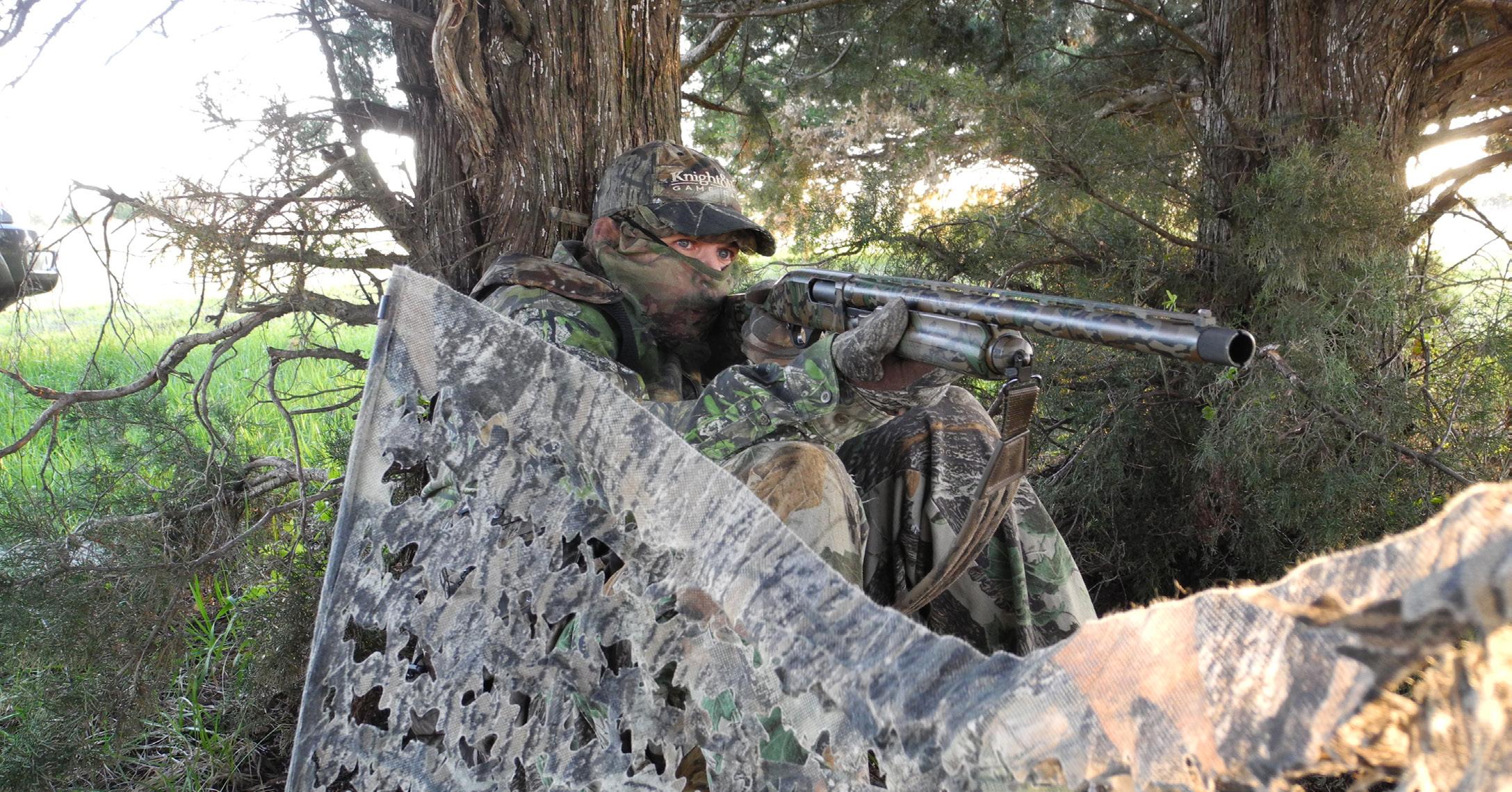
Ihave made plenty of mistakes during my fifty-year turkey hunting career, a fact many of my hunting and outdoor writing buddies will agree on. I, too, have witnessed equally dumb mistakes by other hunters.
Wild turkeys have the sharpest eyesight and hearing in the woods. Someone once said that if gobblers had the smelling abilities of a whitetail deer, you would never see one. Add human error, and you can see why turkey hunting is challenging. Dumb mistakes quickly make turkey hunters songbird and squirrel watchers.
Gobblers are challenging when a hunt is done correctly, with no movement, good calling, and adequate camouflage. Hunters often have their hearts broken, even when perfect hunting technique is executed—there is no margin for error.
Many years ago, we scouted out two mature gobblers. We had carefully watched these birds through binoculars, especially early in the morning and late evenings, to pattern their daily habits. Then came opening morning, and we were set up where the gobblers would likely appear.
I brought my daughter, Holly, who was about ten years old then, to watch the hunt. She had practiced clucks and yelps on a slate call and made that slab sound good. I decided to let her call with me while my brother sat about 10 yards to our left with his bow.
Just before daylight, the toms started gobbling off their roost; they were closer than expected. I used a mouth call to produce some hen tree yelps and then stopped. Those birds knew there was a hen nearby, and I hoped they would fly down in front of us.
Feature Story
That was the last sound they made, except for the flydown thumping sound made by strong wings. Then nothing but our occasional calling—for two hours.
Finally, I stood up and said, “Let’s move to another area.”
My brother stood up and gave me the same look as a mountain lion about to attack.
“They were 20 yards from me and slowly walking in,” he said in a sick voice. “You stood up and talked just as I was drawing back my bow, and they ran the opposite direction.”
Thankfully, we later called in another gobbler in a different area that my brother cleanly missed. Few words were spoken driving home that day.
Shooting a gobbler can bring out the worst mistakes imaginable. I once had an eastern gobbler in Arkansas walk up a small rise and look down the barrel of my blackpowder shotgun at ten yards. I squeezed off the load of lead pellets, shooting over its head. A few feathers floated gently to earth as the big bird flew to a different time zone. I had not accounted for the elevation, which meant lowering my sights at least to its throat.
On another hunt, we could see gobblers on a nearby ridge, pacing back and forth. My cousin and I decided to crawl through a grass field to get closer before calling. We had on boonie, military-style hats that were rounded in the front. The gobblers apparently saw our hats moving in the grass and ran down the hill to investigate.
I quietly told my cousin to wait for a clear shot. The birds ran within a few feet and stopped, heads red and fans expanded. The gobblers were definitely fired up, and one let off a thunderous gobble in our faces, unnerving my cousin. He pulled up his gun and shot—straight over the head of his huge bird. The birds wasted no time disappearing down a long wood strip.
The trick is to take a deep breath and steady yourself for a close or unexpected shot. However, this is not always easy when adrenaline takes over and your heart is beating like a bass drum. Be patient and make sure of your shot before squeezing the trigger.
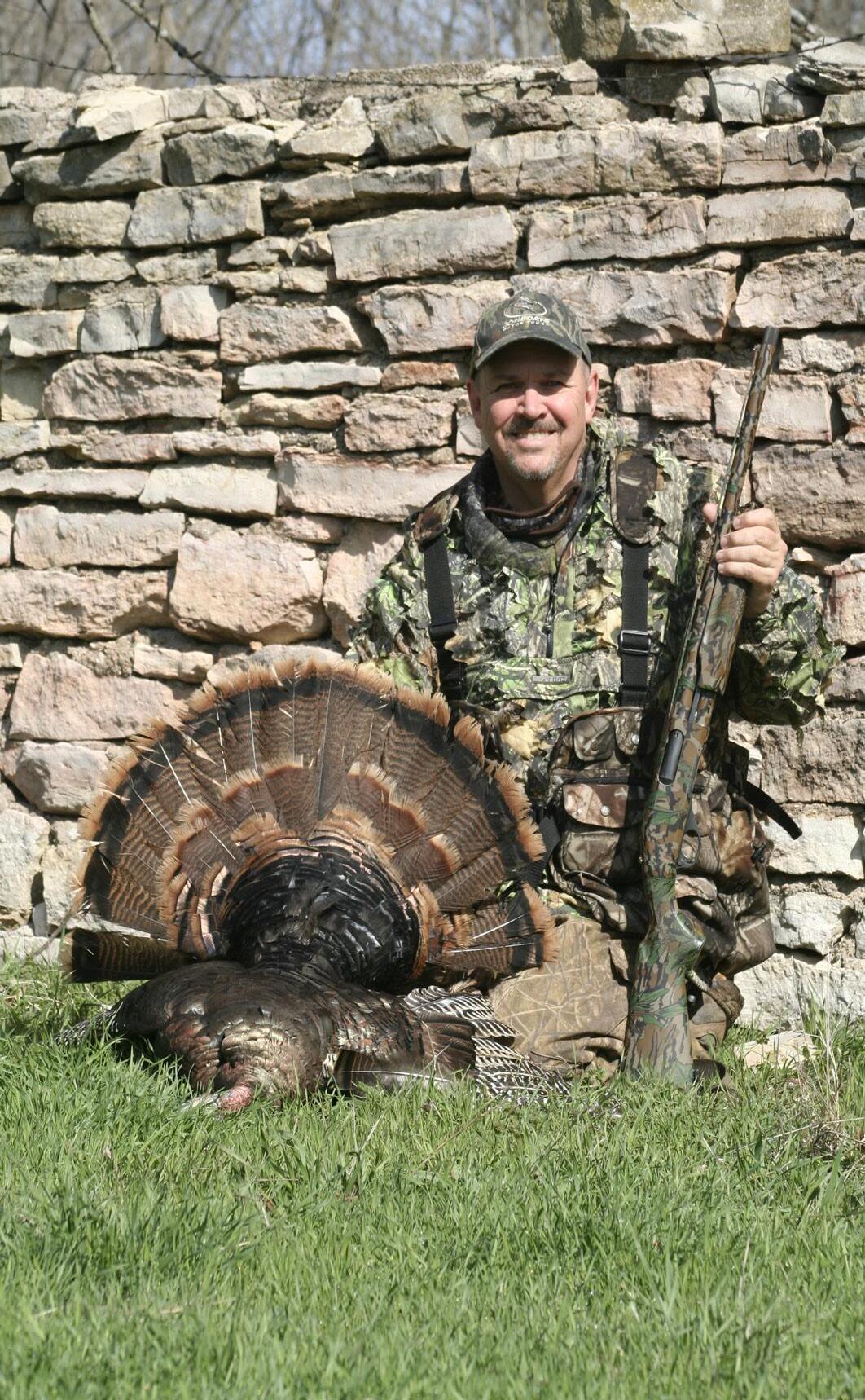
Bad calling ruins hunts. I joined a close friend on a Georgia hunt, and we sat on a hill glassing long, cleared strips. He pointed out three gobblers about 600 yards away, probably too far to entice with a call. Suddenly, we heard another hunter in the distance, closer to the gobblers. The tone made us think he was using a mouth call. He called and called and constantly called.
I watched the three gobblers through binoculars, and they all laid down to hide. He continued blasting away with yelps and clucks that sounded good—just too much and too loud.
The key is to match how the turkeys call. You will hear fewer gobblers doing a lot of calling these days because of numerous fur-bearing predators and other dangers.
I continued watching the gobblers, which finally jumped up and ran off as the caller continued to make too many sounds. He eventually stepped out in the clear-cut, never knowing that three big birds were standing almost in his shooting range just minutes before. I think that often happens.
The art of roosting a gobbler is being close to their nighttime perch without disturbing them. I accomplished this years ago by sneaking in quietly and sitting almost in sight of the roost tree that we had scouted the evening before by hearing the wings make loud “whooshing” sounds when the birds flew up.
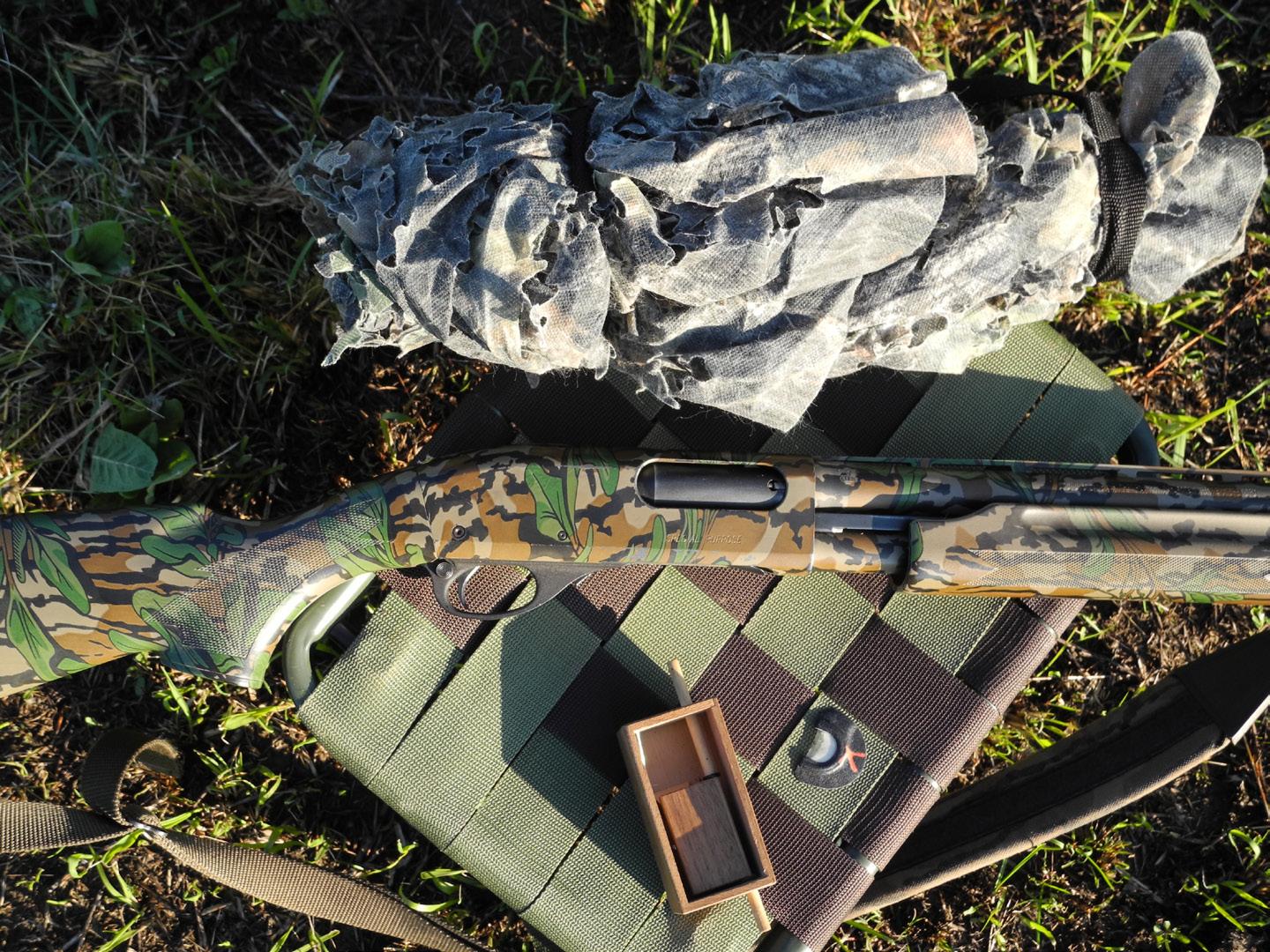
Just at the first hint of morning light, another car pulled in across the road for a hunt on another property. Someone got out of their car and said in a loud voice, “What a beautiful morning. I’ll bet the gobblers will be moving today.” My birds flushed off the roost and flew away, spooked and no longer possible to hunt that day.
Finally, and most importantly, know your firearm. A buddy I teach Hunter’s Education with recalled a man asking him how to load the shotgun he had just purchased the day before. Those words will make every experienced turkey hunter cringe.
Practice shooting that shotgun at paper turkey targets before going on a hunt. Most shotguns pattern differently with different loads, so it’s important to discover what size shotgun shell, powder load, and shot size will make your pattern most effective.
To be more precise, determine what will place the most pellets in the turkey’s head and neck area for a definite kill. You may determine this by sitting against a tree, imitating a hunt, and shooting at different ranges. The more you shoot, the better your odds are of a one-shot kill without injuring a gobbler that escapes to die a terrible death later.
Turkey hunters make mistakes that end hunts, making successful harvests of big gobblers even sweeter. The key to future success is not to get discouraged and to learn from your mistakes.
Cover - The author on a hunt that actually did work out. (Photo: Cecil Carder) Pg 56 - Great camouflage and very little movement are important for a successful turkey hunt. (Photo: Cecil Carder) Pg 57 - Learning to use turkey calls is important, but limit your calling. (Photo: Kenneth L. Kieser)
Kenneth L. Kieser
AND YOU...
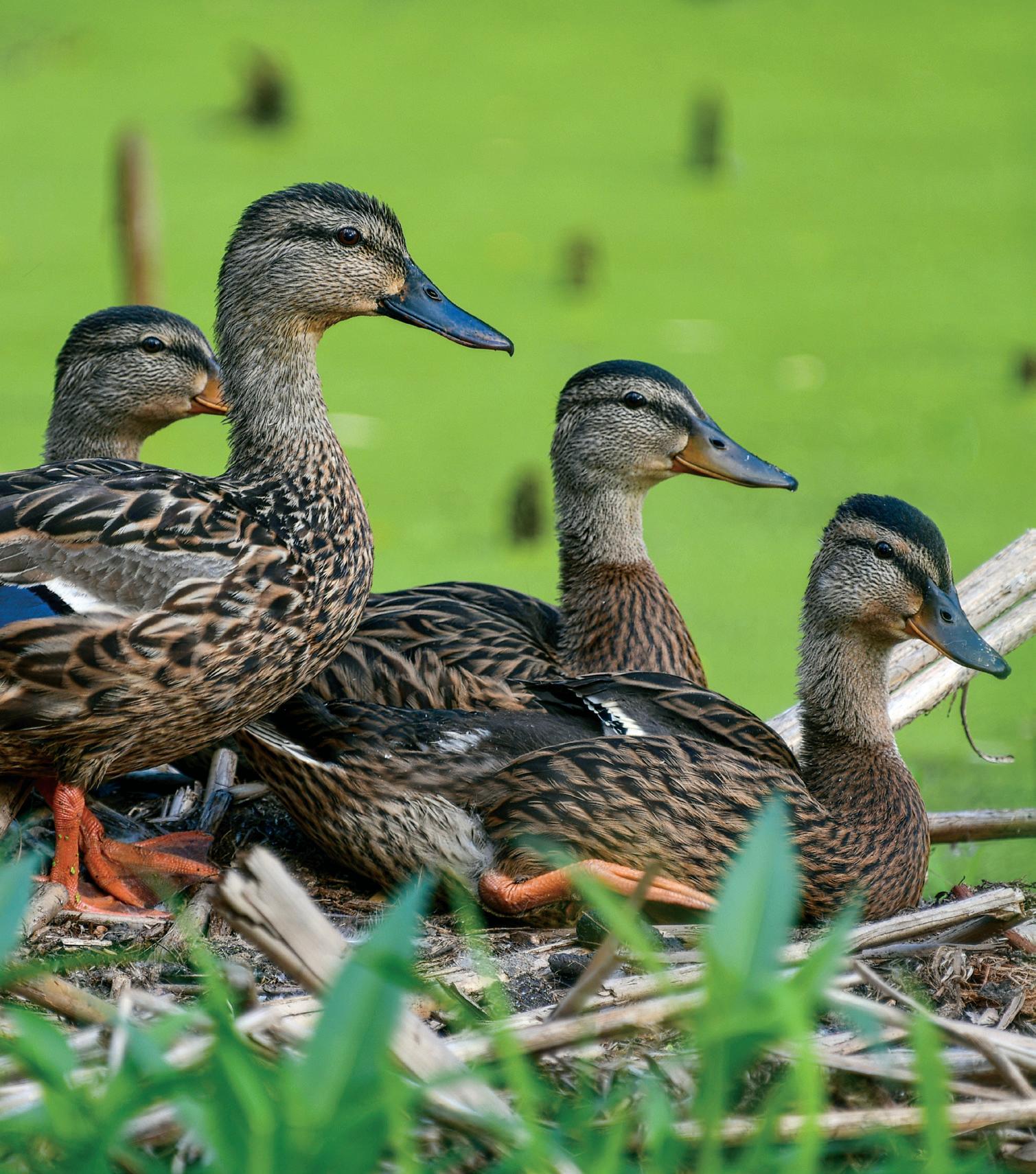
RESTORING CLEAN AIR, PURE WATER AND RENEWED EARTH.
THE FABRIC OF MISSOURI


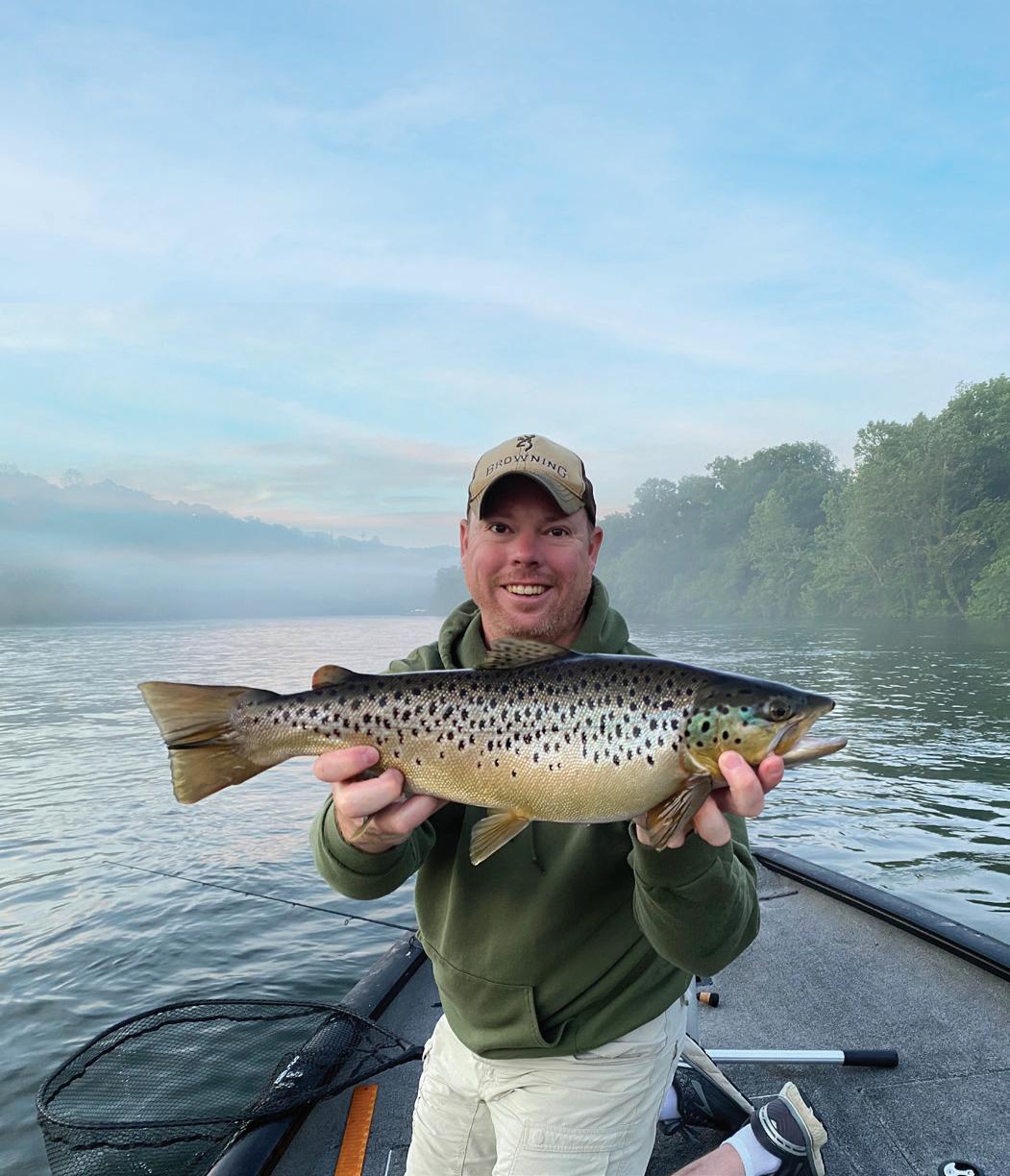
www.mowildflowers.net
mowldflrs@socket.net 573-496-3492
The original seed source of our plants is from wild populations found growing in Missouri. Our plants are as “wild” as we can possibly keep them.
3 Flowers, Grasses, Trees, Shrubs, Vines, sedges, pond plants.
3 Plants for full sun, full shade and anywhere in between..
3 Seed, seed mixes, and custom blends.
3 Expert advice.





Minnesota Moose Hunt
Several years ago, I was sitting in a lawn chair in the woods on our forty acres in Monteau County deer hunting. I have two nice elevated deer stands, but since I was grinding through my seventies, I felt more comfortable sitting on the ground. Plus, I have a tendency to periodically fall asleep while deer hunting, making hunting from the ground safer. I was reading the newspaper on my tablet. I much preferred the printed version, but the only way to get the printed version in recent years was by mail. I hated reading the Sunday paper on Wednesday and was forced to adapt to the electronic version, which had two significant advantages. I could enlarge the type when I couldn’t find my reading glasses, and I could read while deer hunting.
My morning deer hunting routine with the newspaper was interrupted by a racket in front of me. When I looked up, there was the largest buck I’d ever seen on our place, pawing the ground and snorting at me. This deer was about twenty feet away. A strong wind was blowing from the deer toward me. I slowly raised my 30-06 rifle, but the deer was so close I couldn’t find it in the scope. I had never hunted deer with this rifle, preferring a muzzleloader since I had never shot a Missouri deer over twenty-five yards. I didn’t use the 30-06 for deer hunting because it had a scope, which I installed decades ago after I broke about half of the rear metal sight off hunting moose in Minnesota in 1977. While I was waiting for the deer to move away before I could shoot, the memories of the moose hunt flooded across my mind.
The modern moose hunting season in Minnesota began in 1971 as the moose population increased to an estimated 10,000 animals. Hunters applied for permits in groups of four hunters per permit for the harvest of one moose. Typically, there were between 37,000 and 39,000 applications for 400 permits, making the chances of getting a permit almost zero.
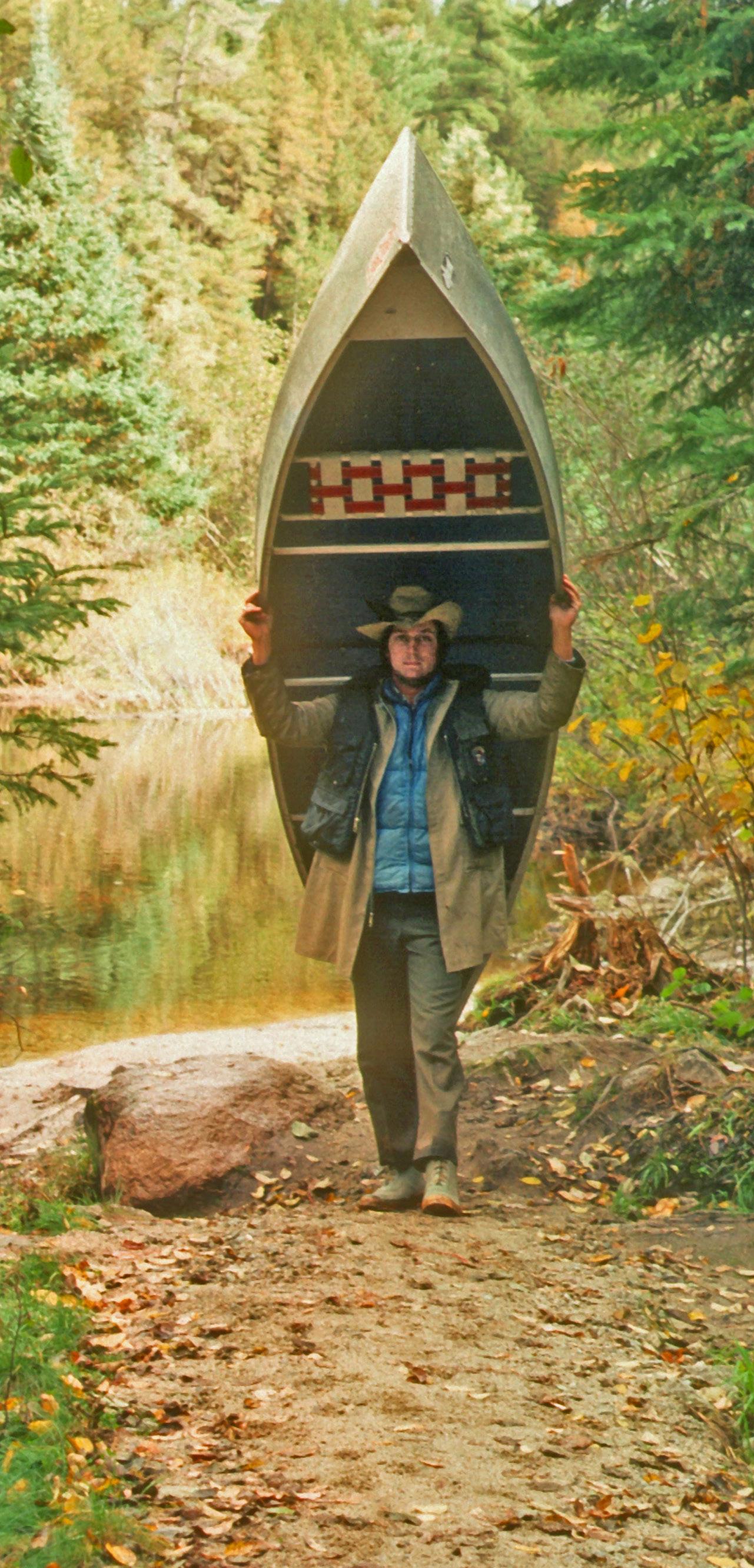
I was a newly hired biologist in the Minnesota Department of Natural Resources (DNR) in 1977, but my moose hunting actually began in 1971 as a graduate student in wildlife management at the University of Minnesota. For my thesis, I collected plants eaten by moose north of Ely, Minnesota, and in the Boundary Waters Canoe Area (BWCA) for nutrient analysis. I documented the obvious; moose selected habitats with the most nutritious forage.
After graduation, I couldn’t get a job in the natural resources field because jobs were very scarce. I worked on a temporary basis for the U.S. Forest Service studying the impact on moose of a large forest fire in the BWCA. For this study, I had to tranquilize and attach radio collars to moose. The technology for both the radio collars and the drugs used to anesthetize animals was much less developed than today. Our first attempt to capture moose was with huge wooden traps about fifteen feet long and six feet wide, placed on moose trails. The doors, attached by wire to metal buckets filled with rocks, were released with a trip wire when the moose entered the trap. The moose were not wary of the trap and readily walked in, but once the doors closed, they destroyed the traps.
The next idea was to use a helicopter provided by the Minnesota Air National Guard. This was a Marlin Perkins, Wild Kingdom approach, but there were several flaws. The biggest problem was the noise from the helicopter frightened the moose, and they ran into the forest where they were difficult to shoot with the dart gun. The second problem was there was almost no place close to the moose to land the helicopter. The third problem was the lack of helicopter gas stations in northern Minnesota, reducing air time.
Finally, a second Forest Service employee and I sat on moose trails with a dart gun, waiting for moose to pass by. Actually, this approach worked well, and we managed to fit several moose with radio collars. Tracking the moose was more difficult because we could only walk or use a canoe in the BWCA to get close enough to locate them. But this was a great gig for an unemployed biologist because I tracked moose in the morning and hunted ruffed grouse or walleye-fished in the afternoon. Sometimes I did both.
Years later, I finally ended up with a job as a DNR planner in St. Paul, Minnesota. It was time to apply for a 1977 moose hunting permit. To increase the chances of getting a permit, I decided to apply for the zone in the BWCA where I had spent years working. I knew where the moose hung out. Because access to this zone was only by canoe or hiking, the number of applicants was much less than in other zones. I could only find one other person for the permit willing to canoe into the BWCA in midOctober, so we added our wives to the permit application. Much to my surprise, we were selected.
The Wildlife Section Chief called my hunting partner, Jon, and me into his office before the hunt. He explained we were the first DNR employees to get a moose hunting permit since the season started in 1971. We were not to return without a moose.
We loaded camping gear, rations, and my 30-06 rifle into a canoe and headed into the BWCA on the Little Indian Sioux River. It rained almost continuously for the next eight days. We never saw a moose. I fashioned a moose call out of birch bark, but to no avail. It was so wet there were days we couldn’t even start a fire to cook. We ran out of food and were eating spruce grouse cooked over a fire. It was terrible, but fortunately hunger makes the best sauce.
We decided to hunt one more day since we were long overdue and were afraid our wives would initiate a big search. I was sitting on a low hill overlooking a logged area cut several years ago. Companies that purchased timber before the BWCA was established could complete the harvest.
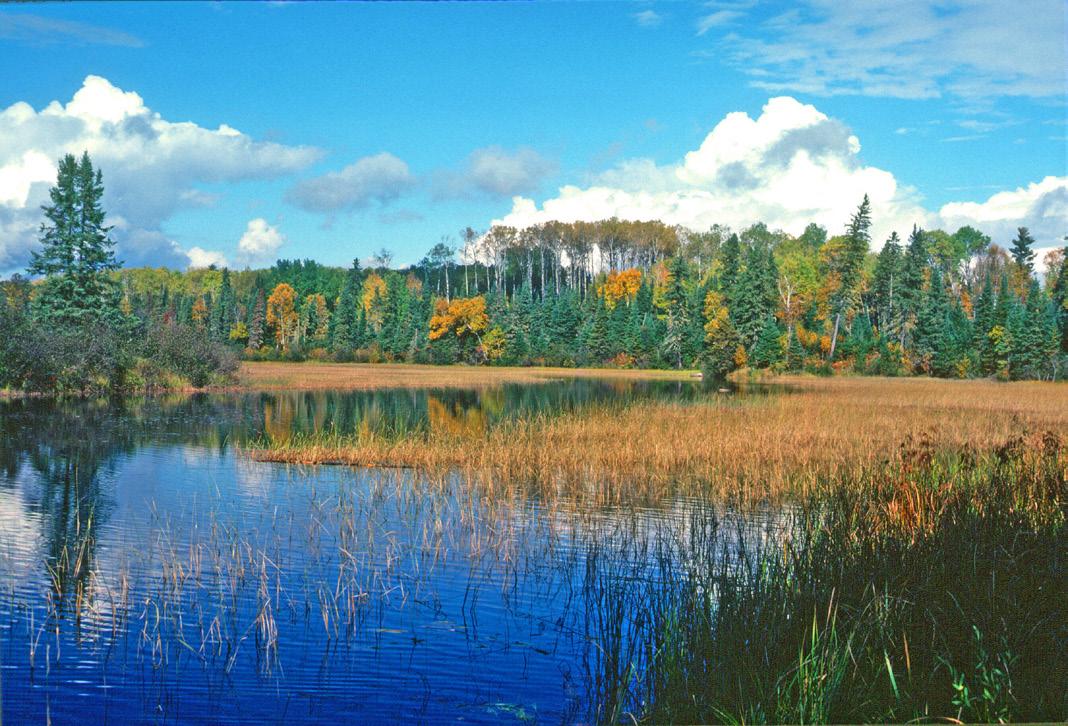
Feature Story
I was wallowing in self-pity at not being able to find a moose. My friend, Jon, was upset with me because I was the moose expert, and this was supposed to be a quick in-and-out surgical hunt. The only good, positive feature of the day was it had stopped raining.
My misery was interrupted by a sloshing noise at the base of the hill. I looked up, and there was a bull moose slowly moving in a shallow wetland about one hundred yards away, which I failed to notice earlier because I was absorbed in self-pity. It was an easy shot with my 30-06, but the day before I had broken part of the rear metal sight off on a tree branch, which added more gloom to the hunt.
I decided to move closer. I learned during my previous moose-trapping efforts that I could sneak up on a moose by remaining motionless when the moose lifted its head after biting off plants. Picking my way through the tangle of branches and resprouting trees was difficult, but I made less noise than a snake slithering across a concrete patio.
I got to about fifty yards and was thinking of taking a shot when a white-tailed buck jumped up four feet in front of me and bounded off, making a terrible racket. Ironically, I was in a portion of the state with the deer population close to zero. The moose was alarmed, so I raised my rifle, estimated where the top half of the rear sight was, and fired. No response from the moose. I fired two more times, and the moose turned and moved off into the trees. I had one more bullet left in my jacket pocket, but my pocket had a hole and the bullet was in the lining of the jacket. I had to take the jacket off, fish out the shell, and hurry after the moose.
I found the moose standing in a shallow wetland on the other side of the trees, looking at me. It turned and walked away, which offered me the opportunity for a last shot to the back of the head. I fired. The moose turned around, looked at me, and fell over into the water. It took about forty-five minutes for Jon to join me.
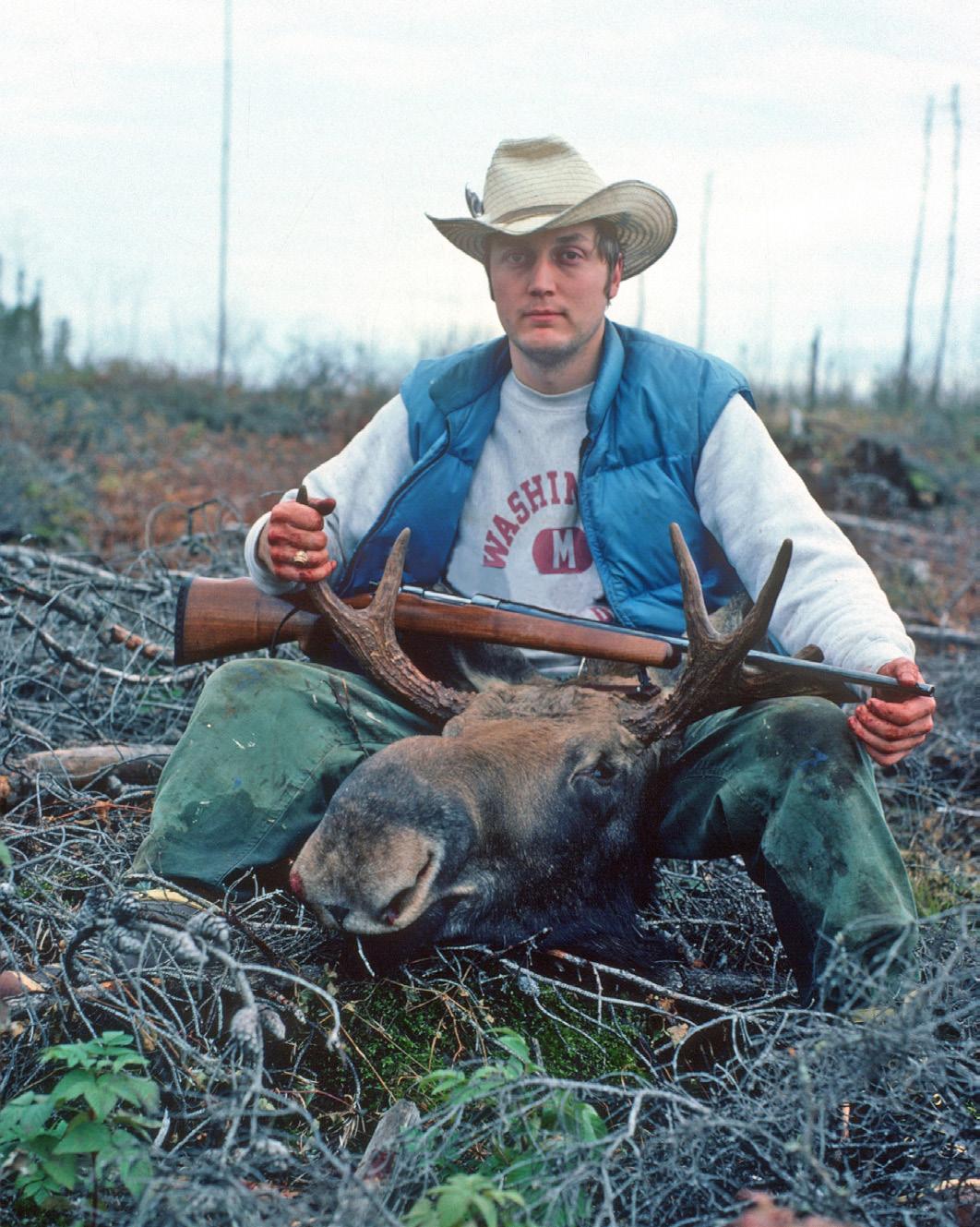
We began the process of cleaning the moose, a significant task because half of the moose was in the water over our boots. It was too heavy to move. I hit the moose with the first three shots but not the fourth. We got the moose cleaned as it was getting dark. We would never find our way back to the canoe or campsite in the dark. We had to leave, taking some of the tenderloin for dinner and breakfast. There were lots of critters that would love to eat fresh moose at night, but we hoped they would dine elsewhere.
The next morning, we were able to locate the moose by the eagles and ravens flying over the site. We cut all the meat off the bones and put it into plastic bags to carry in decoy bags suspended on a pole between us. Jon wanted the hide, which took hours to get off and weighed over one hundred pounds. We had two portages to cover but only got over one before dark. We had to camp another night. Bears were a significant concern. We put all the moose meat in the canoe, tied with a long rope. The wind blew the canoe out into the lake.
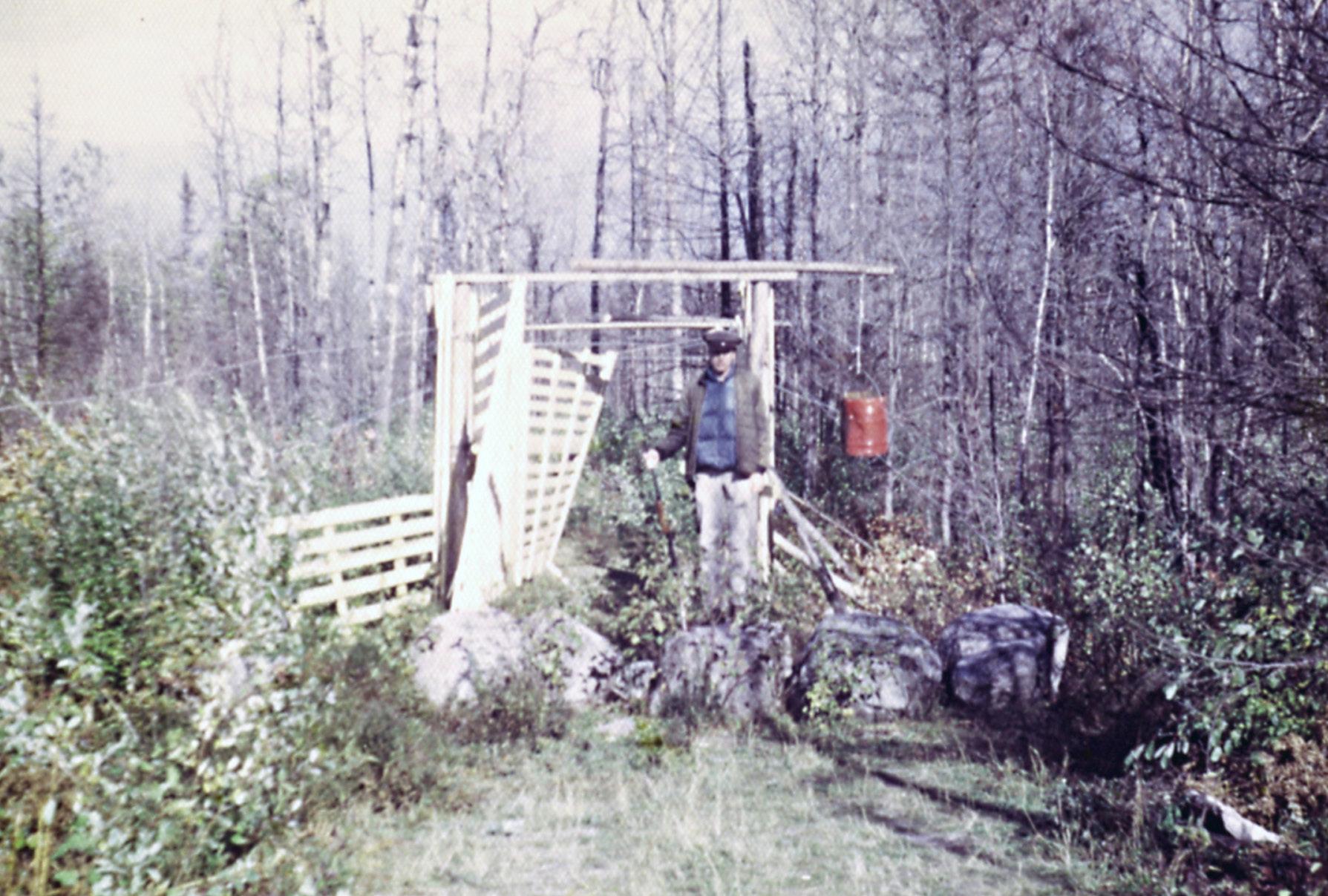
Fortunately, we didn’t have a problem with bears. Two days later, we were sitting in the Wildlife Section Chief’s office recounting the hunt’s events. He was impressed enough with our saga that he tore up our leave applications.
I gave my 30-06 rifle with the scope to my oldest son for deer hunting in Kansas. He purchased an AR-15 for deer hunting despite my warnings about its inaccuracy at distances, which he learned the hard way. I used this gun twice for hunting, once on a deer so close I could almost feel its hot breath on me and once on a brutal Minnesota moose hunt. The last Minnesota moose hunting season was 2001 because of a significant decline in the moose population, probably the result of a fatal brain nematode passed from white-tailed deer to moose and maturing north woods forests.
I still have the antlers unmounted in the garage. I’m not eligible to display any items in the house without the approval of the house interior decorating committee. I don’t sit on this committee, and Mrs. Urich has never approved anything of mine for display. I’m free to use my imagination and display whatever I want in the detached garage. This system works just fine for me.
David Urich
Cover - David Urich carrying the canoe out of the Boundary Waters Canoe Area after a 10-day moose hunting trip.
Pg 61 - Boundary Waters Canoe Area near the Little Indian Sioux River.
Photo e2. October fall colors in the Boundary Waters Canoe Area near the Little Indian Sioux River.
Pg 62 - David Urich with bull moose harvested in 1977 near the Little Indian Sioux River in the Boundary Waters Canoe Area.
Top - David Urich standing in front of a moose trap in the Boundary Waters Canoe Area in 1973. (All photos: David Urich)










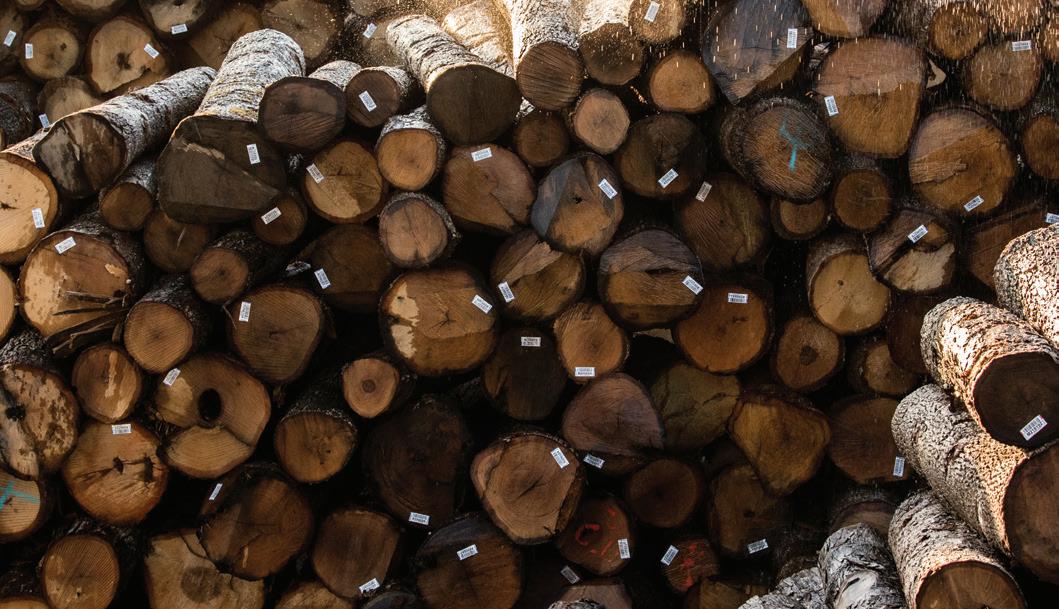

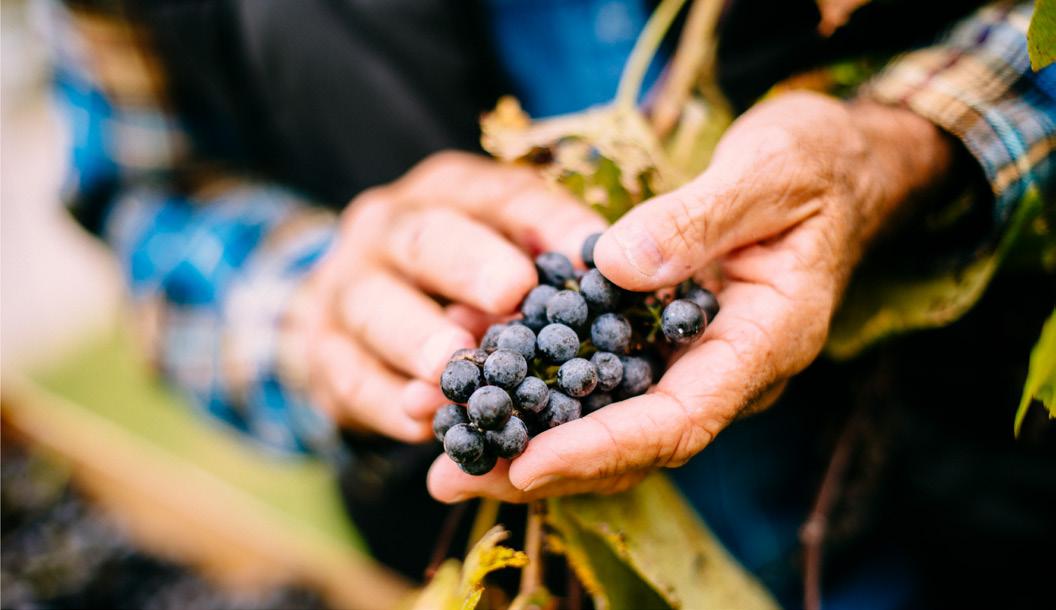



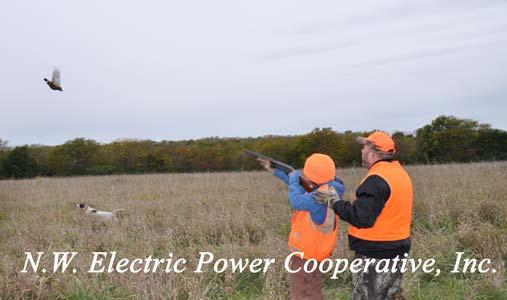





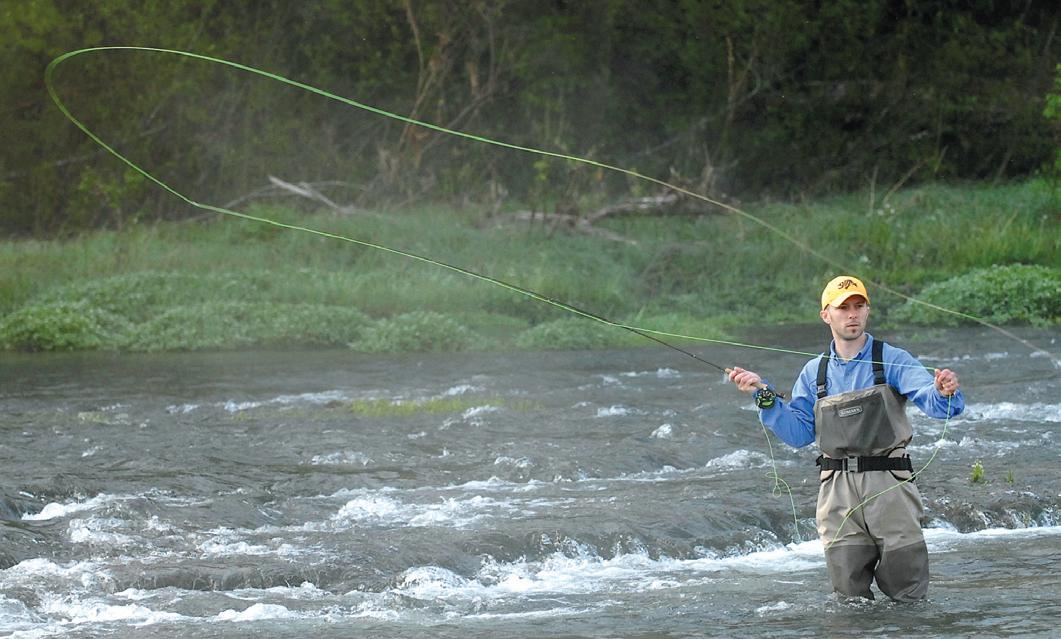














Include the Conservation Federation of Missouri in your estate plans.
Leave a legacy for the natural resources and traditions you have valued throughout your life. Make CFM a beneficiary of your will, trust, life insurance policy, or retirement plan. Any amount helps preserve Missouri’s resources and natural history for generations to come. What will your legacy be? Call 573-634-2322 to find out more information.

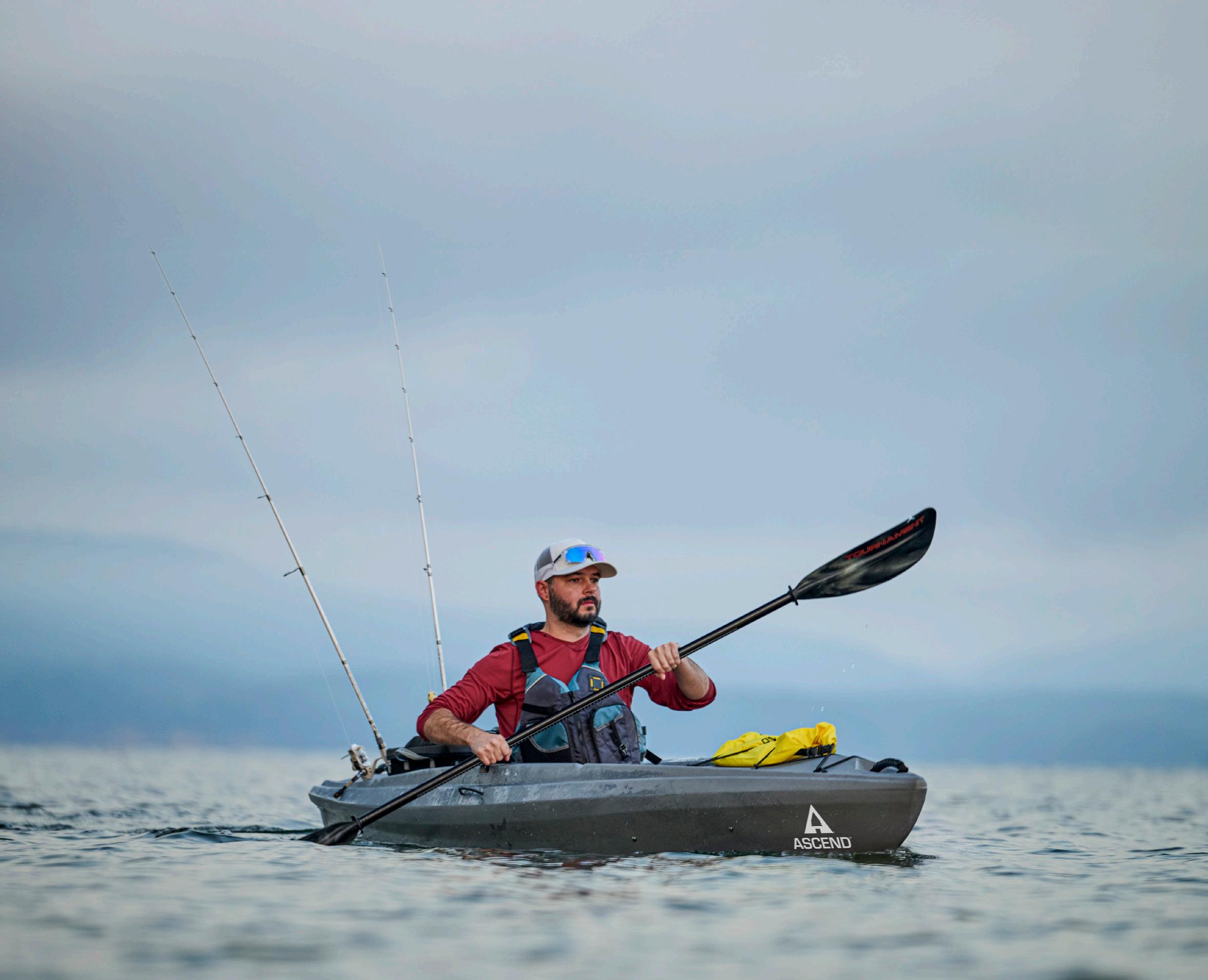



Bass Pro Shops® and Cabela’s® are proud to stand alongside our customers in support of the Conservation Federation of Missouri. Our partnership has made significant strides in protecting our rich outdoor heritage for future generations. Together, we are supporting the conservation of Missouri’s abundant wildlife and natural resources. Learn more at basspro.com/conservation