miss uri 30th
the anniversary
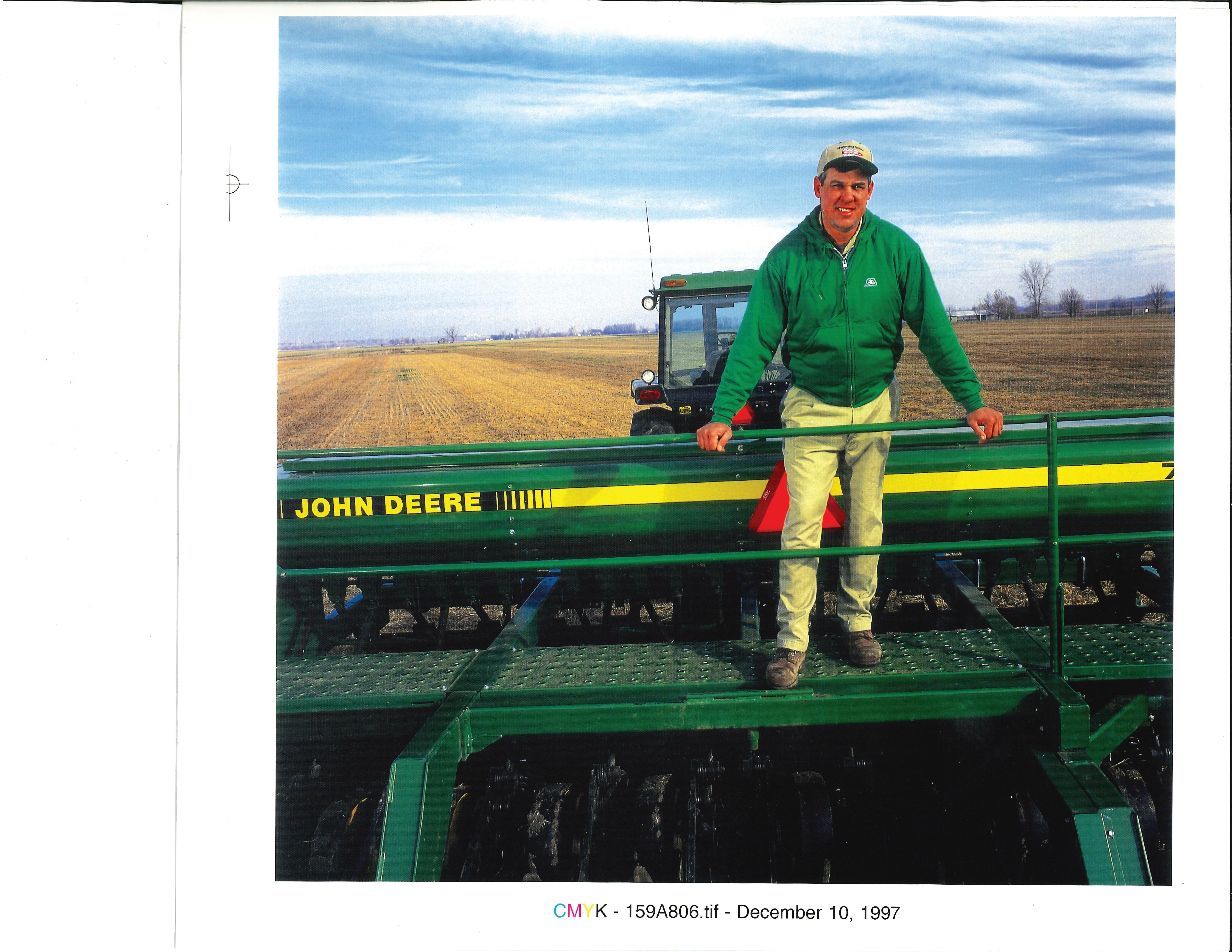
Honoring 60 Years of MSA p. 16
Bushel By Bushel p. 42
February 2026



CRISIS IS AT OUR
DOORSTEP
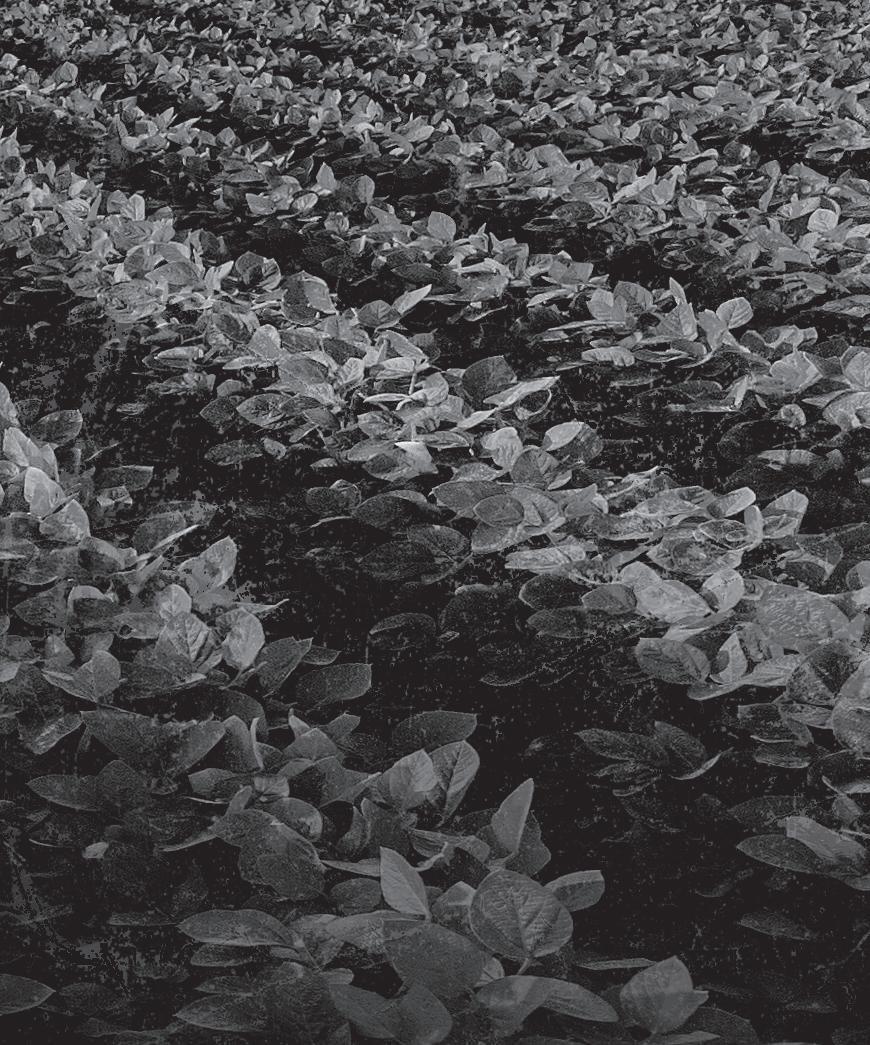
Thriving, competitive farms run on the hard work of Missouri farmers.
For half a century, they’ve relied on essential crop protection tools to conserve soil and ensure healthy harvests of soybeans, corn, and wheat.




But now, a lack of legislative certainty around pesticide labeling requirements is threatening farmers’ access to proven products. Without them, Missouri farmers could lose up to 85% of their yields.





Sta Contacts
CEO/Executive Director
Casey Wasser cwasser@mosoy.org
Chief Financial & Information Officer
Kim Hill khill@mosoy.org
Director of Communications & Marketing
Samantha Turner sturner@mosoy.org
Marketing Communications Manager
Ryan Siegel rsiegel@mosoy.org
Comms & Outreach Coordinator
Devyn Keller dkeller@mosoy.org
Director of Market Development
Matt Amick mamick@mosoy.org
Director of Research & Agronomy
Blake Barlow bbarlow@mosoy.org
Director of Licensing & Commercialization
Bryan Stobaugh bstobaugh@mosoy.org
Director of Conservation Ag & Farm Operations
Clayton Light clight@mosoy.org
Assoc. Director of Conservation Agronomy Brady Lichtenberg blichtenberg@mosoy.org
Director of Operations & Engagement Baylee Asbury basbury@mosoy.org
Field Services Manager
Dylan Anderson danderson@mosoy.org
Director of Policy Ben Travlos btravlos@mosoy.org
SOYBEAN FARMER

Accounting Manager Jeff Bruemmer jbruemmer@mosoy.org
Finance Manager
Stephanie Rackers srackers@mosoy.org
Senior Executive Specialist
Mary Kever mkever@mosoy.org
Office Manager
Amber Meyer ameyer@mosoy.org
Portfolio and Project Lifecycle Manager
Faith Smith fsmith@mosoy.org
A look back at six decades of farmer-led advocacy, policy wins and the unified voice that shaped Missouri’s soybean industry.
Markets shift, prices move and emotions run high. Learn how intentional pre-harvest marketing brings structure and flexibility to an unpredictable process.

The Missouri Soybean Association Yield Contest has provided 30 years of innovation and record-setting yields.
On The Cover...

From The Field
Notes from Missouri Soybeans’ Leadership Team

Renee Fordyce Mark Lehenbauer

President's Letter Chairman's Letter
For30 years, the Missouri Soybean Farmer has been a trusted voice for soybean growers and the agricultural community across the Show-Me State. What began as a simple four-page newsletter in the early 1980s has grown into a full-color, multi-issue magazine that reflects the evolution of Missouri’s soybean industry — from challenges in the field to breakthroughs in research, policy and markets.
Originally created as a communication tool for the Missouri Soybean Merchandising Council (MSMC) and the Missouri Soybean Association (MSA), the publication focused on timely issues facing growers, including pests, resistance and production concerns. Over time, it expanded to provide insight on legislative priorities, renewable fuels, infrastructure investments and other policies that shape how soybeans are grown and moved to market.
At its core, the Missouri Soybean Farmer magazine is about the people of our industry. Through profiles of growers, leaders and longtime staff, the magazine highlights the relationships and dedication that power MIssouri's soybean success while strengthening a collective voice across the industry.
As the magazine enters its next decade, its mission remains clear: honor tradition, spotlight innovation and continue serving as a vital connector for Missouri soybean farmers and stakeholders statewide.
“Trust in the Lord with all your heart and He will make your paths straight this New Year.” Proverbs 3:5-6
God bless,
Renee Fordyce
Missouri Soybean Association President
Timemoves quickly for all of us. Thirty years can feel like a lifetime, yet with anything worthwhile, progress takes time. I hope this issue encourages reflection on the challenges our industry has faced — and the resilience that carried us through them — to ensure Missouri soybeans not only endured but also continued to grow.
As farmers, conversations often center on commodity prices. While those discussions are important, it’s easy to forget that strong prices are rooted in strong demand. Decades ago, industry leaders recognized this truth and saw the need for a unified voice to advocate, invest and build markets for Missouri soybeans. I firmly believe our industry would not be where it is today without the foresight and leadership of those who came before us.
As you flip through these pages and plan for the upcoming planting season, remember that generations before us faced uncertainty, overcame obstacles and pressed forward. Just as they did, we will continue to do the same. The farmer-leaders representing Missouri’s soybean industry today are making decisions that — 30 years from now — the next generation will look back on with gratitude, knowing someone was willing to lead.
Here's to the next 30 years,
Mark Lehenbaeur Missouri Soybean Merchandising Council Chairman
Letter from the CEO

As this issue of Missouri Soybean Farmer reaches mailboxes across the state, we are marking a truly special moment for Missouri Soybeans. This year, we celebrate two significant milestones: 30 years of this magazine and 60 years of the Missouri Soybean Association. Together, they reflect decades of farmer leadership, advocacy and commitment to strengthening Missouri agriculture.
For 30 years, Missouri Soybean Farmer has served as a trusted connection between our organization and the growers we represent. Its pages have documented the evolution of our industry, shared research and innovation, and highlighted the voices of farmers who shape agriculture across the state. This anniversary is a testament to the trust that farmers have placed in this publication and the people behind it.
That history mirrors the legacy of the Missouri Soybean Association, which for six decades has worked to ensure farmers have a strong, unified voice in policy and the marketplace. As we begin a new year, these anniversaries offer both a moment of reflection and a renewed sense of purpose. Missouri Soybeans remains aligned with a clear strategic plan focused on advocacy, market development, innovation and protecting farmers’ freedom to operate. Those priorities guide our work so that every decision we make is grounded in what matters most to Missouri soybean farmers.
Legislative session is now underway, and farmer priorities are front and center as we engage with policymakers in Jefferson City and beyond. From defending access to critical crop-protection tools to supporting infrastructure investments and expanding markets for Missouri soybeans, our team is actively working to represent your interests and deliver results.
I am proud to be at the helm of this organization at such a meaningful time. The Missouri Soybean Association’s 60-year legacy is built on farmer leadership, thoughtful support and a willingness to adapt and lead through change. That same spirit continues today, and it gives me great confidence in our path forward.
Thank you for your trust, your involvement and your commitment to Missouri Soybeans. We are honored to serve you and to continue telling your story through Missouri Soybean Farmer for years to come.
Sincerely,
Casey Wasser
CEO & Executive Director Missouri Soybeans
Our Boards
MSA Board Members:
Andrew Lance, Barnard
C. Brooks Hurst, Tarkio
Robert Williams, Richmond
Renee Fordyce, Bethany
Cody Brock, Norborne
Daniel Carpenter, Norborne
Clint Prange, Shelbyville
Matt Wright, Emden
Dane Diehl, Butler
Garrett Riekhof, Higginsville
Russell Wolf, Tipton
Terry Schwoeppe, Labadie
Jason Mayer, Dexter
Wesley Hodges, New Madrid
Tory Meyr, Jackson
Ryan Wilson, Portageville
MSMC Board Members:
Darrell Aldrich, Excelsior Springs
Nathan White, Norborne
Marc Zell, Meadville
Kyle Durham, Norborne
Mark Lehenbauer, Palmyra
Chris Mallett, Memphis
Brad Arnold, Drexel
Robert Alpers, Prairie Home
Denny Mertz, Chesterfield
Aaron Porter, Dexter
Trent Haggard, Kennett
Justin Rone, Portageville
Kevin Mainord, East Prairie
USB Board Members:
Meagan Kaiser, Bowling Green
Neal Bredehoeft, Alma
Kyle Durham, Norborne
Robert Alpers, Prairie Home
ASA Board Members:
Renee Fordyce, Bethany
Andrew Lance, Barnard
Matt McCrate, Cape Girardeau
Russell Wolf, Tipton
SOYBEAN POLICY UPDATE

As the sun rises, light begins to shine across the landscape. We begin to be able to see the terrain, but it is still difficult to perceive specific details of the objects before us. A similar feeling comes over me at the time of writing this. The state legislative session began a week ago, Gov. Kehoe delivered his second State of the State Address, and Congress works to sort out political differences and keep the government from shutting down again. Will the legislature be efficacious and pass much needed policy changes, or will tensions rule the day and serve as a roadblock for all? Will the governor be successful in leading the state to gradually shift away from an income tax structure and toward a consumption-based model? Time will tell.
As 2025 concluded, the United States Department of Agriculture (USDA) announced economic assistance to farmers across the nation with the Farmer Bridge Assistance program. Approximately $12 billion is allocated to support the hemorrhaging farm economy, with soybeans specifically receiving a payment rate of $30.88 per acre. While this was certainly helpful and appreciated, it simply was not enough when considering the significant trade losses. As farmers prepare for the upcoming planting season, family operations are looking at how to stay financially solvent. Our plea to Congress is to find a way to bolster this economic “bridge assistance” until we can resecure more reliable markets and ensure the long-term viability of soybean farmers.
As we consider ways to resecure more reliable markets, top of mind would be the federal administration focusing on immediate and achievable actions to support domestic soybean crush. Finalizing the 2026-2027 Renewable Volume Obligations (RVOs) to create preference for soy-based biofuel feedstocks and robust biomass-based diesel volumes would be a terrific start. Completing guidance for the 45Z Clean Fuel Production Credit would also be a way to create market certainty for the soybean industry. Reli-
able markets for family farmers depend upon policies focused on growing demand, and that starts here in the U.S.
Looking beyond our borders, continuing to advocate for positive trade agreements is imperative. Historically, China has consumed more than 60% of the world’s traded soybeans. There is no true substitute with a consumption rate like that, although we continue to try to shore up trade agreements with other countries as well.
Moving away from demand-driven discussions, farmers’ freedom to operate is ever-present on our minds here at Missouri Soybeans. A critical component to this equation is having access to critical pesticide technologies. This is currently under threat, as a legal loophole exists that trial attorneys continue to exploit.
Front and center to this conversation is glyphosate. To sell this product, manufacturers must register it through the Environmental Protection Agency (EPA). If the product is deemed to be safe for use through the registration process, the agency issues a federal label to be placed on the product that gives direct instruction on its use. Manufacturers are not legally allowed to deviate from the EPA-approved label. What is occurring is companies are following federal law appropriately and are being sued for doing so. Plaintiffs are claiming they were harmed by their use of glyphosate. Some courts and juries — be it a minority as more cases have been won by product manufacturers than lost — are awarding major payouts since the product manufacturer “failed to warn” the product might cause cancer. Again, EPA will not approve a label with unscientific claims like this, thus companies cannot proactively place an arbitrary label on products. This legal loophole needs to be directly addressed by our state legislature, Congress and the Supreme Court, to reaffirm that federal law preempts these egregious lawsuits that threaten farmers’ ac-
Our work ultimately comes down to one goal: ensuring Missouri soybean farmers can continue doing what they do best — farm.

Ben Travlos, Director of Policy

cess to essential tools. Because the reality is manufacturers are considering pulling glyphosate from the shelf while pressing the pause button on research and development for new products due to litigation costs.
Shifting to tax-based discussions, Gov. Kehoe is asking the legislature and voters across the state to consider moving away from an income tax structure and toward a consumption-based model. This fall, a ballot measure will be before Missouri voters asking if the legislature should phase out individual income taxes. If approved, the General Assembly will work to bring that to fruition in the 2027 state legislature. A potential way to replace the lost revenue would be to expand that which is subject to sales tax. Our top priority at Missouri Soybeans is ensuring existing agricultural exemptions for sales taxes remain in effect. The governor has made it clear he would not support any measure that would expand tax burden upon agriculture, and our conversations with his team, the Department of Revenue, legislators and other stakeholders have reiterated this point. While we feel confident farmers will not be harmed in this way, over the next couple of years we will continue to fight to ensure that outcome.
In addition to protecting agricultural exemptions for sales taxes, we look at the existing income tax deduction passed by the legislature a few years ago that incentivizes existing landowners to sell, lease or enter a crop-share arrangement with beginning farmers. At the heart of many farmers is the desire to pass the farm onto the next generation. However, landowners often retain tracts of land, even when they have heirs to pass the farm down to, because of the crippling impact of federal capital gains tax. Considering this, the legislature passed this income tax deduction in attempt to lessen the financial hurdle. Unfortunately, the 2023 passed legislation has been interpreted to only apply to individuals and not LLC’s, trusts, partnerships, etc. Many family farm operations are structured in these various ways, which is why we have been striving to pass legislation clarifying eligibility for family operations not structured solely as individuals. If individual income taxes are effectively eliminated, but corporate taxes remain intact, these


technical corrections will matter even more to better enable family operations looking to pass the farm onto the next generation.
The Missouri Soybean Association secured a significant win for Missouri farmers by successfully advocating for federal agricultural disaster assistance payments to be tax exempt by the Missouri Department of Revenue. This outcome ensures relief funds intended to help farmers recover from economic hardship and weather-related losses remain fully available for their intended purpose. In working with the Missouri Department of Revenue, certain federal disaster assistance payments will be tax exempt for Missouri income tax purposes, ensuring critical relief dollars stay in farmers’ hands where they belong. The Farmer Bridge Assistance (FBA) program, the Supplemental Disaster Relief Program (SDRP), and the Emergency Livestock Relief Program (ELRP) will now qualify for a subtraction from federal adjusted gross income in calculating Missouri taxable income. These relief programs provide meaningful financial relief for family farms across the state. This action reflects MSA’s ongoing commitment to practical, farmer focused advocacy and delivering real world results.
We continue to advocate for the agriculture tax credit programs. Having viable incentives programs in place to encourage rural prosperity and rural investment is imperative. With a sunset of 2028 on these various programs, we are working with the legislature to ensure they continue for years to come.
As the state legislative session moves forward, and as Congress continues to work, so will our team here at Missouri Soybeans. With topics such as 45Z, RVO’s, international trade, access to pesticide technologies, favorable tax policies and more, there is a lot that still needs to be illuminated. We will continue to work on these various fronts, ultimately with the goal of ensuring soybean farmers across the state can continue doing what they do best — farm.
WANT TO KNOW MORE?
MSA federal and state PAC contributors gain access to an exclusive newsletter for updates during the state legislative session on policy and regulatory movement in Jefferson City and anywhere Missouri soybean farmers stand to be affected. The newsletter also provides more details on Missouri elections and the role MSA and you can play to impact the outcomes. Visit MoSoy.org or scan our QR code for more details.





CELEBRATING 30 YEARS OF THE MISSOURI SOYBEAN FARMER
FROM NEWSLETTER TO STATEWIDE VOICE FOR MISSOURI AGRICULTURE
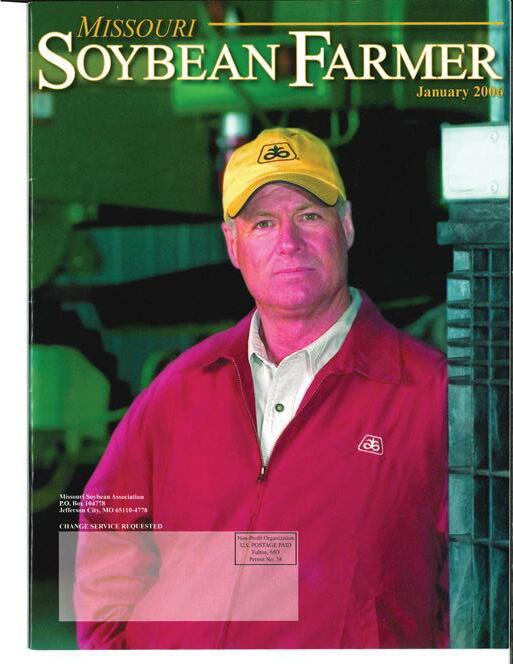
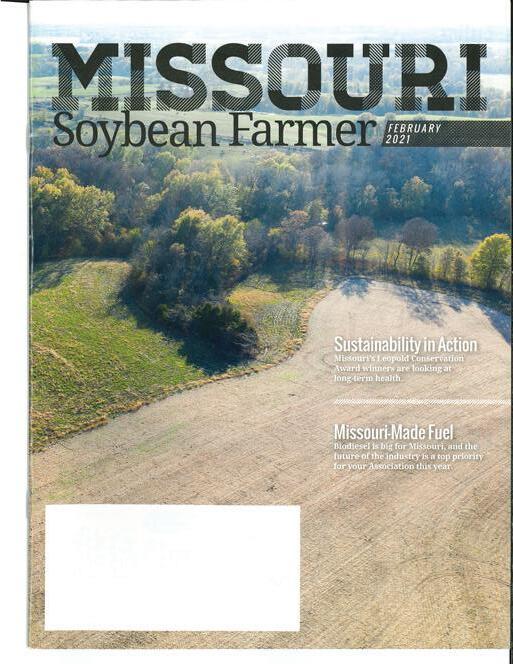
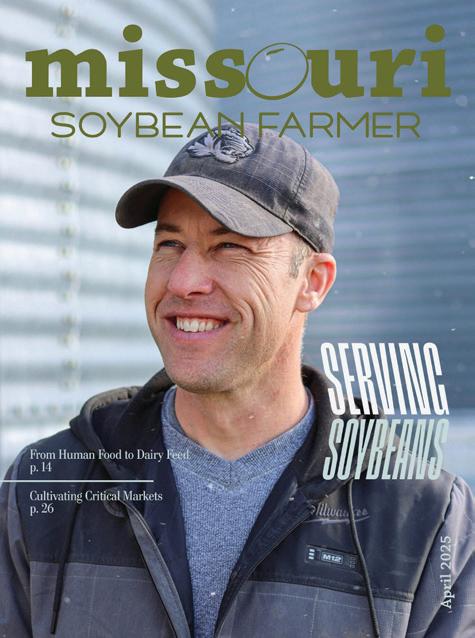
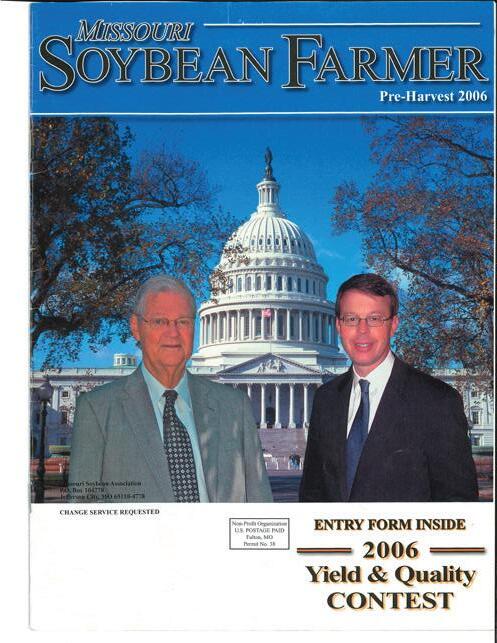
Thisyear marks a significant milestone for Missouri Soybeans as we celebrate the 30th anniversary of the Missouri Soybean Farmer magazine. What began in the mid-1990s as a simple quarterly newsletter has grown into a polished and widely recognized publication that highlights the people, research and progress behind Missouri’s soybean industry.
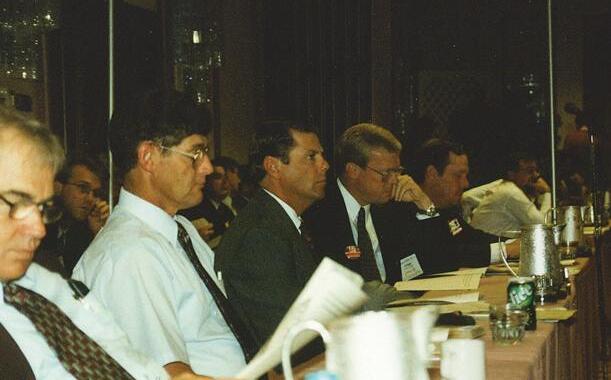
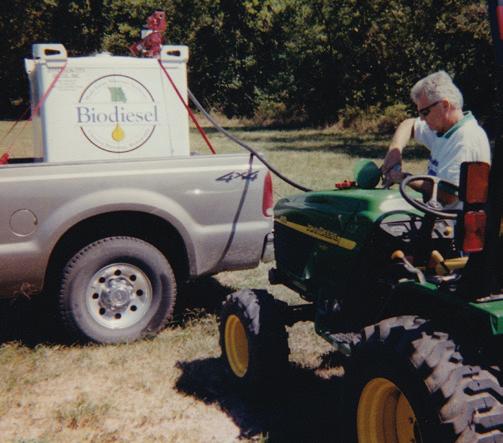
Owned by the Missouri Soybean Association (MSA), each issue of Missouri Soybean Farmer reaches tens of thousands of farmers, government officials and industry partners. The original MSA newsletter consisted of only a few folded pages that was mailed to growers. The goal was straightforward: to provide timely updates on policy, markets and checkoff investments. Headlines reflected the priorities of the time, including “Soybean Referendum Passes,” “Soybean Cyst Nematode a Serious Threat” and “Biodiesel Begins in Missouri.”
As the industry expanded and farmers sought more in-depth information, the publication evolved. By the early 2000s, the newsletter had transitioned into a quarterly magazine with full-length stories, high-quality photography and feature reporting.
“We knew farmers wanted real stories and reliable information they could use in their operations,” recalls former MSA President Neal Bredehoeft. “That shift set the foundation for what the magazine has become.”
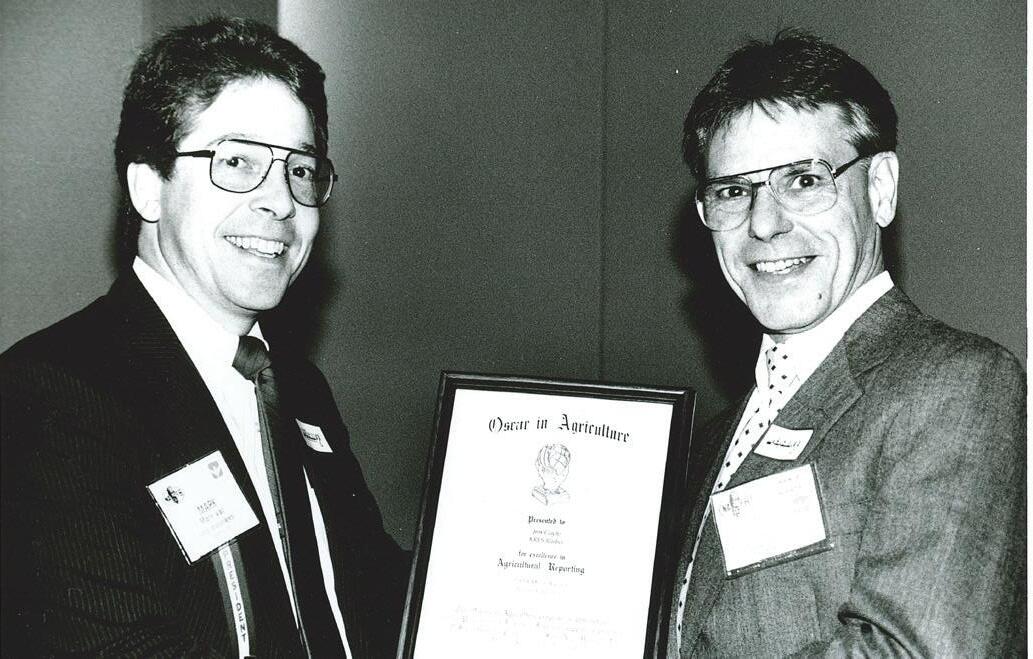
Today, the Missouri Soybean Farmer produces six issues each year. Each edition is available in both print and digital formats and reaches up to 52 pages of informative content. This expanded format allows the magazine to highlight research breakthroughs, on-farm innovation, biodiesel advancements and global market development while still prioritizing farmer stories and experiences. The Missouri Soybean Farmer is also nationally recognized by the National Agri-Marketing Association as an award-winning publication.
Although the magazine has changed in size, frequency and design, its mission has remained consistent. It continues to inform, connect and celebrate the Missouri soybean community.
“If you look at our first issues and compare them with the latest editions, you will see tremendous growth,” Bredehoeft says. “What has not changed is our commitment to telling the stories of Missouri farm families.”
Current MSA President Renee Fordyce shares a similar sentiment.
“Our growers rely on this publication. It’s a statewide-known magazine that we proudly hang our hat on,” she says. “It shows where checkoff dollars are invested, how innovation is shaping the future of soybean farming in Missouri and how policy is impacting each producer. Reaching 30 years is a testament to the value of this magazine.”
During the past three decades, the Missouri Soybean Farmer has documented the voices, leadership and progress of the industry. What began as a modest communication tool has become a trusted source of information and a meaningful record of Missouri agriculture.
As we look ahead, the publication remains committed to elevating farmer perspectives, celebrating agricultural progress and continuing the legacy that started with a small newsletter in 1995. The next chapter is already underway.




























VOICES THAT SHAPED US

SAMANTHA TURNER
For 30 years, Missouri Soybean Farmer has been more than a magazine. It is a record of where we have been, the challenges we have faced and the progress farmers have fought to achieve together. What makes this anniversary especially meaningful is that the magazine is created entirely in house by a team that deeply cares about telling these stories the right way. Every page is shaped with intention, pride and a genuine love for Missouri agriculture, and that commitment shows in the trust our readers place in us year after year.
LUELLA GREGORY
As the Missouri Soybean Farmer marks 30 years, I’m proud to have contributed to a publication that champions Missouri’s growers. Growing up on a soybean and corn farm makes this work personal, and storytelling has always been my "why." For three decades, this magazine has given farmers a clear, authentic voice. Cheers to many more issues and stories that matter so much.


ADAM BUCKALLEW
Missouri Soybean Farmer magazine plays a crucial role in keeping producers informed about checkoff investments and advocacy efforts carried out on their behalf. I served as the magazine’s editor for nearly four years and later as a freelance contributor. I appreciated the opportunity to work directly with Missouri’s soybean farmers, learn about their family operations and share their stories. For three decades, the magazine has served as a trusted source of news and a strong voice for farmers’ interests across the state. I’m proud to have played a part in its continued success.
JASON JENKINS
During my 25-year career, I’ve had opportunity to work on many publications, but few have been as laser-focused on their organization’s mission or committed to serving their members’ interests as the Missouri Soybean Farmer. Even in our digital age, this printed magazine remains the cornerstone of Missouri Soybeans’ communication efforts. It’s been a pleasure and privilege to have played a role in its rich history.

CHRISTINE TEW

It’s a joy to celebrate Missouri Soybean Farmer magazine’s continued place in our mailboxes. Decades of innovation, challenge and opportunity have spread across its pages, extending and amplifying our awareness of new technologies, trading partners and leaders. Congratulations to all involved in reaching this milestone!







The Board That Started It All
As published in the first issue of Missouri Soybean Farmer.

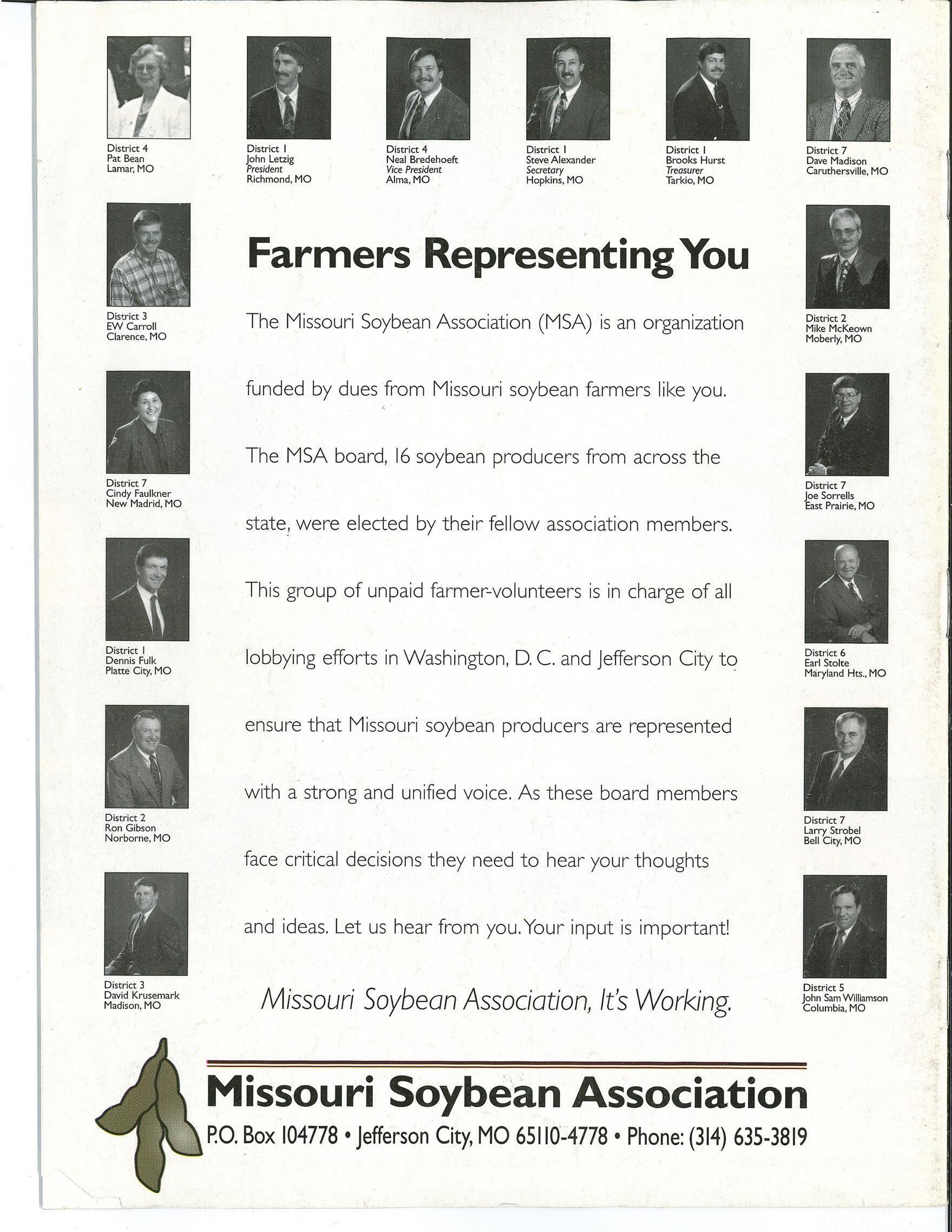


This board listing appeared in the inaugural issue of Missouri Soybean Farmer and reflects the farmer-leaders representing Missouri soybean growers at the time..




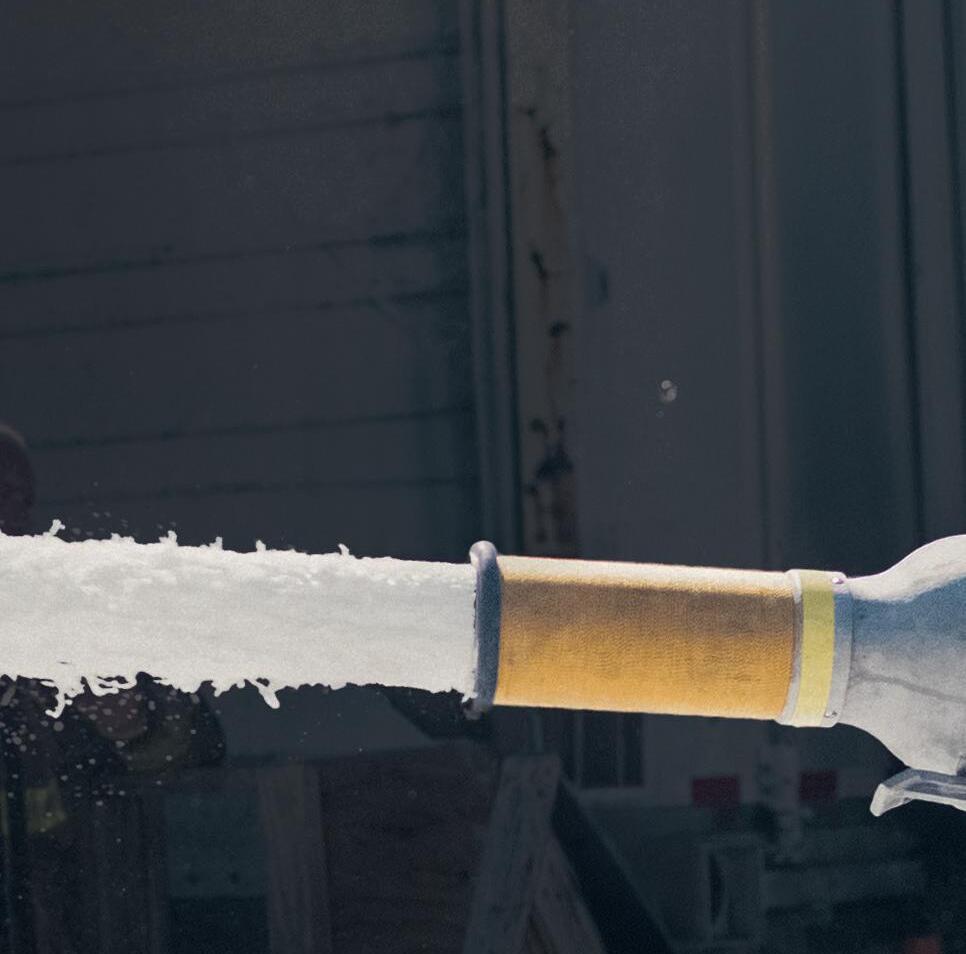





The more we discover about soybeans, the more valuable they become. One innovative product, SoyFoam™, creates a new, sustainable use for your crop that protects firefighters and the planet.
See how your Soy Checkoff is unlocking new markets for soybeans at unitedsoybean.org








MISSOURI SOYBEAN FARMER: THROUGH THE YEARS
entries are a collection of news and articles from throughout the years
Soybean Referendum Passes, January 1986
Director Charles Kruse, Missouri Department of Agriculture, announced Thursday, Dec. 19, 1985, that the referendum to increase the soybean checkoff passed with a 52% majority. The Missouri Soybean Merchandising Council now has the option to increase the current one-half cent checkoff to one cent July 1, 1986. MSA leadership worked long and hard to achieve this goal. Numerous programs to expand soybean markets have been put on hold the past several years due to a lack of funds. Missourians should be proud of the fact that they rose and met the challenge.
Taking Our Future in Our Own Hands,
December 1995
When Missouri famers decided to begin the soybean checkoff program in 1979, they were taking the future into their own hands. Each year, the Missouri Soybean Merchandising Council (MSMC) invests checkoff dollars in areas such as market development, education and research to bring a brighter future to the 30,000 farmers who make up the soybean industry in our state. One of the most fruitful investments has been MSMC’s cooperation with the University of Missouri’s College of Agriculture, Food and Natural Resources.
Recently, the MSMC announced it will begin an unprecedented partnership with the University. At MU’s 1995 Salute to Agri-Missouri luncheon, Missouri soybean farmers David Durham of Hardin and John Schaffer of LaGrange presented a check for $550,000 to University of Missouri-Columbia Chancellor Charles Kiesler. The funds, originating from the state’s soybean producers, will finance a soybean biotechnology research professorship.
The $550,000 from the Merchandising Council has been matched with funds from the State of Missouri. The interest from this $1.1 million will be used to fund the professorship.
State Princess Soya Selected, March 1975
Ambassadress for the Missouri soybean industry for 1975 is Gale Seymour, daughter of Mr. and Mrs. Dale Seymour, Fairfax. She was selected Missouri Princess Soya on Feb. 5 in the first statewide contest, which attracted seven finalists. The runnerup was Renee Bruton, daughter of Mr. and Mrs. James Bruton, Caruthersville.
Miss Seymour is a student at the University of MissouriColumbia with a major in fashion merchandising. She is knowledgeable in the field of marketing and is eager to participate in programs, festivals and meetings. If an activity is planned for your locality that might be appropriate for her to attend, please contact the MSA office in Columbia.
Is It Time to Add a Home Office?
December 1999
It wasn’t many years ago that some farmers looked at a tractor cab as a luxury they could do without, considering the extra cost. But times and farming have changed. Farmers have come to realize that a comfortable cab, equipped with well-designed monitors and controls, can greatly improve efficiency.
The same holds true with a home office.
There is nothing like having it all together in one location, though, as Terry Ecker, a soybean, corn and livestock producer from Elmo. can attest. He says he has seen a benefit from having both a home office and a separate telephone line for his computer and fax machine. For as little as $13.97 a month plus tax for a second line, Ecker says he can be working on the Internet while conducting business with someone on the telephone.
Ecker says he has already found the need for faster Internet service, installing a 56K external modem to take the place of a 28.8K internal modem that came with the computer.
Always Do It Right … Weather or Not, By
Bill
Wiebold, December 2005
For the second year in a row, we have witnessed the power Mother Nature has over soybean yields in Missouri. Using October estimates from the Missouri Agricultural Statistics Service, the average soybean yield in Missouri declined from 46 bushels per acre in 2004 to 35 bushels per acre in 2005. This translates into nearly 50 million bushels of “missed” Missouri soybeans.
The comparison with 2004 may not be fair because 2004 was a record yield for soybeans in Missouri, shattering the previous high by nearly 8 bushels per acre. In fact, the 2005 soybean crop will be about normal. But it doesn’t feel normal coming right after 2004. Both of these years illustrate that the weather often trumps all other factors including management in determining yields.
Exceptional yields occurred in 2004 because the weather was nearly perfect for producing crops. Adequate precipitation spaced well and few hot days were textbook examples of perfect soybean growing weather.
Another unusual occurrence in 2004 was that all regions of the state shared in the great weather. In most years, at least one part of Missouri experiences moderate stress. In 2005, nearly all of Missouri experienced drought stress, although the drought intensity varied across the state.
Soybean cyst nematode a serious threat,
March 1985
The soybean cyst nematode is serious and spreading, according to a University of Missouri agronomy professor.
SCN has been a serious problem in southeast Missouri for almost 30 years. It has been isolated in all counties along the Mississippi River in northeast Missouri and in recent years has been reported in Barton, Atchison, Holt, Livingston, Carroll and Boone counties.
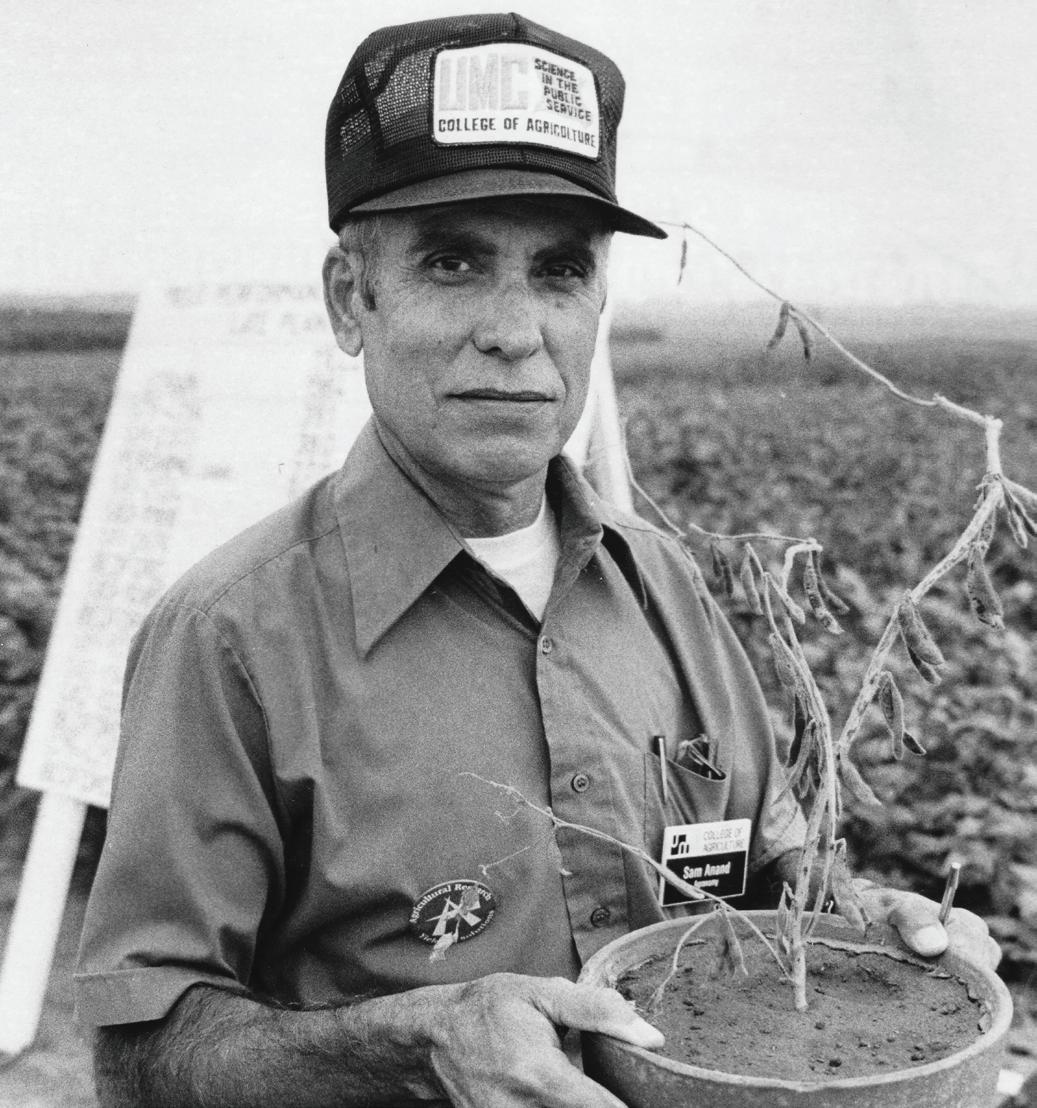
“This disease has the potential to reach damaging levels all over the state if we don’t take adequate steps to stop its spread,” says Sam Anand. “Once established in a field, the disease is hard to control because the nematode can survive in the soil for up to 10 years.”
Anand, who works at the MU Delta Center in Portageville, says chemical treatments with nematicides are ineffective against SCN eggs and larvae, which are protected by the thick outer shell of the cyst.
Soon after the disease was recognized in North Carolina in 1954, and in Missouri in 1956, extension researchers identified sources of resistance. Peking, a black-seeded soybean line obtained from China in 1906, was found resistant.
Using the resistant genes from Peking, several SCN-resistant varieties were developed and release. They included Custer, Dyer, Pickett, Forrest and Centennial.
A few years after the first set of resistant varieties was under cultivation, researchers observed another race (classified as race 4) of SCN.
“The genes from Peking no longer provided adequate protection against race 4,” Anand says. This led to the screening of the entire soybean germplasm, which consisted of 3,000 PI lines.
What’s Really
Driving High Food Prices, Pre-Harvest 2008
The Value of the Dollar and Speculators
As the American economy sags, the value of the dollar has dropped in comparison to foreign currency. This has prompted a growing interest from investors in commodity-focused funds.
“Commodity funds, in particular, have helped drive up prices and made prices more volatile – with frequent and large movements up and down the price scale – as investors move in and out of the markets, especially the futures market,” said agricultural economist Terry Francl.
According to a report from Bloomberg, commodity-index funds controlled a record 4.51 billion bushels of corn, wheat and soybeans through Chicago Borad of Trade futures, equal to half the amount held in U.S. storage on March 1, 2008. The holdings jumped 29% in the past year as investors bought grain contracts seeking better returns than stocks or bonds. The buying sent crop prices and volatility to record highs.
Investments in grain and livestock futures have more than doubled to about $65 billion from $25 billion in November, according to consultant AgResource Co. in Chicago. The buying of crop futures alone is about half the combined value of the corn, soybeans and wheat grown in the United Staes, the world’s largest exporter of all three commodities. The USDA valued the 2007 harvest at a record $92.5 billion.
Some articles are abbreviated for simplicity and space
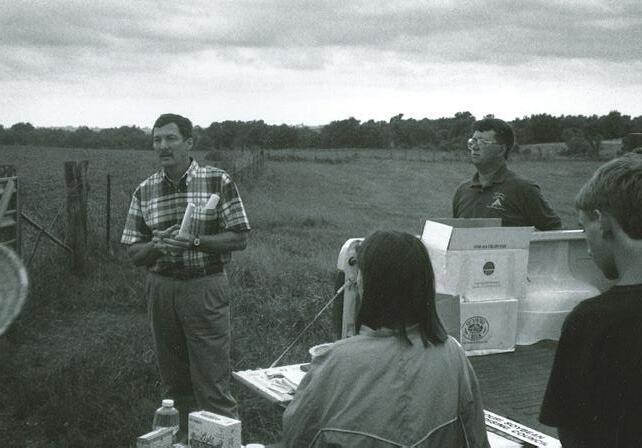
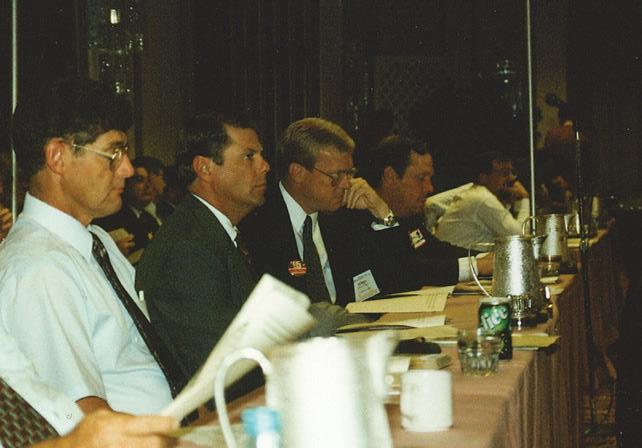
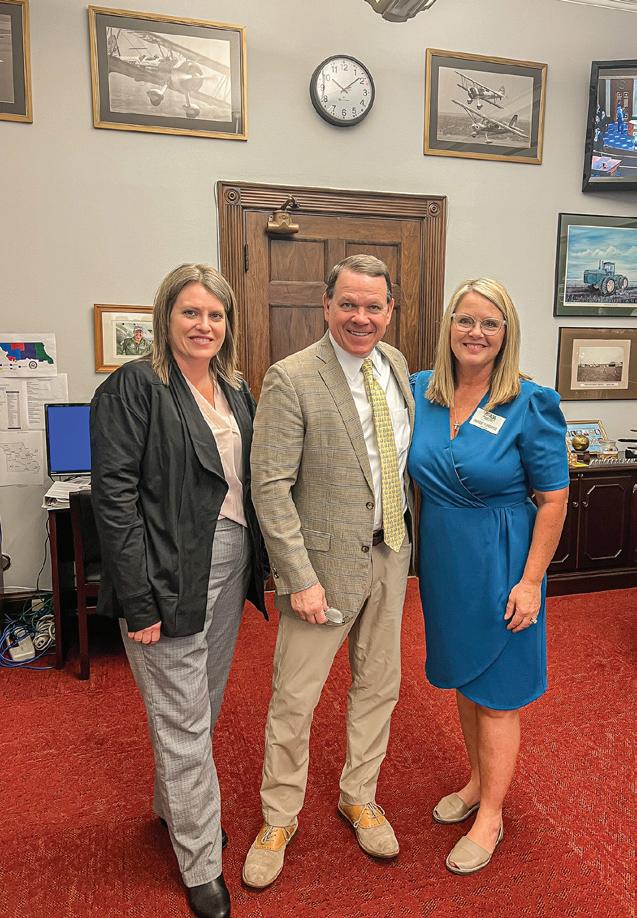
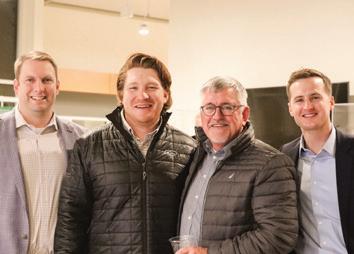
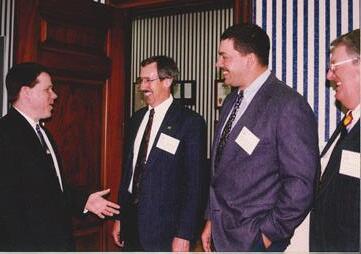
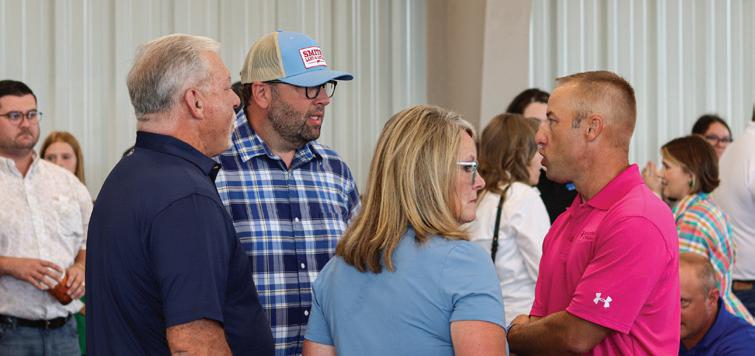
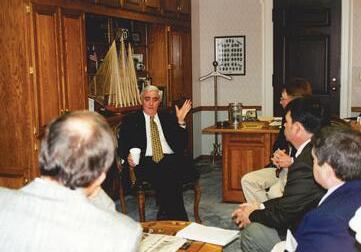

HONORING 60 YEARS OF THE MISSOURI SOYBEAN ASSOCIATION
SIX DECADES OF FARMER LEADERSHIP, POLICY VICTORIES AND A RELENTLESS COMMITMENT TO MISSOURI AGRICULTURE
BY SAMANTHA TURNER
The Missouri Soybean Association (MSA) marks 60 years of representing soybean farmers at the state and national level. These six decades have been defined by moments of challenge, hard-won progress and the steady belief that farmers are strongest when they speak with a unified voice.
The association was founded in 1966 during a pivotal period for American agriculture. Soybeans were gaining prominence as a major crop, global markets were expanding and public policy was beginning to shape the future of farming in ways that individual producers could no longer influence alone. Missouri farmers recognized that success would not come from working in isolation. Instead, it would come from standing together: organized, informed and prepared to engage policymakers on behalf of their livelihoods.
What began as a grassroots effort has grown into one of the most respected commodity organizations in the state, built on the conviction that farmers deserve representation grounded in firsthand experience and guided by long-term vision.
A VOICE FORGED THROUGH CHANGE
Over the decades, Missouri Soybeans has navigated cycles of volatility, from shifting farm bills and trade disputes to technological disruption and environmental scrutiny. Throughout it all, the association has remained focused on its core mission, empowering
Missouri soybean farmers through legislative advocacy, outreach and innovation to achieve prosperity and freedom to operate.
The pages of the Missouri Soybean Farmer magazine have chronicled that evolution, capturing milestones that reshaped the industry. Behind those stories was the consistent work of the association, advocating for sound policy, expanding market opportunities and ensuring that farmer voices were present in rooms where decisions were made.
POLICY THAT PROTECTS AND ADVANCES
For more than 60 years, the Missouri Soybean Association has delivered policy victories that continue to shape the agricultural landscape and strengthen farm operations across the state. Few efforts have been more impactful than the association’s leadership in biodiesel policy, including support for the $1 per gallon biodiesel tax credit and the establishment and growth of the Renewable Fuel Standard through increased Renewable Volume Obligations. More recently, MSA advocacy has helped advance improvements to the 45Z clean fuel incentive, ensuring recognition of domestic feedstocks, removal of indirect land use change penalties and favorable economic treatment for farmers.
At the state level, the association has supported biodiesel tax credit programs, advanced the Water Preservation Act and worked
to enact favorable tax measures for farmers. MSA’s advocacy has also contributed to economic assistance for growers during times of hardship, establishment of reliable safety nets through the farm bill, protection of animal agriculture and continued access to critical crop-protection tools.
Beyond production policy, MSA prioritized investments that keep agriculture moving forward, including rural road systems, river infrastructure and port development that connect Missouri farmers to global markets. These accomplishments reflect a broader commitment to practical solutions that balance productivity, stewardship and profitability.
These achievements did not happen by chance. They were earned through years of testimony, relationship building and collaboration, led by farmers who understood the stakes and were willing to dedicate their time beyond the field.
LEADERSHIP ROOTED IN SERVICE
Current MSA President Renee Fordyce reflected on the significance of the milestone and the people behind the progress.
“This anniversary is a celebration of farmer leadership,” Fordyce said. “Every success in our history was made possible by growers who gave their time, their voice and their vision to this organization. The association has always been rooted in service to farm families, and that commitment continues with our board today.”

Casey Wasser, Missouri Soybeans’ CEO and executive director, echoed that sentiment and emphasized the continued importance of strong advocacy.
“Missouri farmers deserve representation that understands their needs and fights for their future,” said Wasser. “The association has built a respected reputation over 60 years, and we continue to build on that foundation every day. The dedication of our board and staff ensures that growers remain at the center of every decision.”
LOOKING FORWARD WHILE HONORING THE PAST
From its beginnings as a small group of determined producers to its role today as a trusted leader in agricultural policy, MSA’s legacy is one of resilience, collaboration and forward-thinking. Its impact can be seen in stronger markets, expanded opportunity and a commitment to advocacy that spans generations.
As MSA celebrates, it honors the visionaries who laid the groundwork, the leaders who carried the torch through times of change and the future generations of growers who will continue shaping Missouri agriculture.
The challenges ahead will be different, but the principle remains the same. When farmers lead, the industry moves forward.



ASK ABOUT BIODIESEL THIS PLANTING SEASON



I BELIEVE AGRICULTURE SHOULD STAND BEHIND THE PRODUCTS IT CREATES. BIODIESEL LETS ME DO THAT, WITHOUT SACRIFICING PERFORMANCE IN THE FIELD. EVEN WITH CHALLENGES, IT’S A FUEL CHOICE I’M PROUD TO USE EVERY PLANTING SEASON.



GARRETT RIEKHOF, MISSOURI SOYBEAN FARMER
MISSOURI SOYBEANS
60 YEARS OF GROWER LEADERSHIP
1966–2026
1966
The Missouri Soybean Association (MSA) is founded as Missouri soybean growers formally organize to advocate for farmers, support research and strengthen the soybean industry statewide. The association holds its first organizational meeting in Columbia, Missouri, and affiliates with the American Soybean Association, connecting Missouri growers to national policy and research efforts.
1970s
Soybeans become an increasingly important crop in Missouri. Expanding acreage, improved varieties and growing domestic and export demand help soybeans establish themselves as a cornerstone of Missouri agriculture. During this decade, MSA continues to build its role as a trusted grower advocate at the state level.
1990s
Soybean producers vote in a national referendum to continue the federal soybean checkoff, reaffirming grower support for continued investment in soybean research and promotion.
The Missouri Soybean Association launches the Missouri Soybean Yield Contest to recognize topperforming soybean growers and highlight advances in agronomy, management and genetics.
Missouri soybean farmers establish the Missouri Soybean Merchandising Council (MSMC) to manage soybean checkoff investments in research, promotion and market development, working alongside MSA’s advocacy efforts.
MSA launches a member newsletter to inform growers about association news, research updates and policy issues affecting Missouri soybean farmers. This publication would later evolve into Missouri Soybean Farmer magazine.
Missouri soybean growers establish a state soybean checkoff through farmer petitions and enabling statutes, creating a funding mechanism to support soybean research, education and promotion.
1980s 1990s
The federal soybean checkoff begins, funded by farmer contributions of 0.5% of the market price per bushel sold each season. The program expands grower-funded research, promotion and market development nationwide.
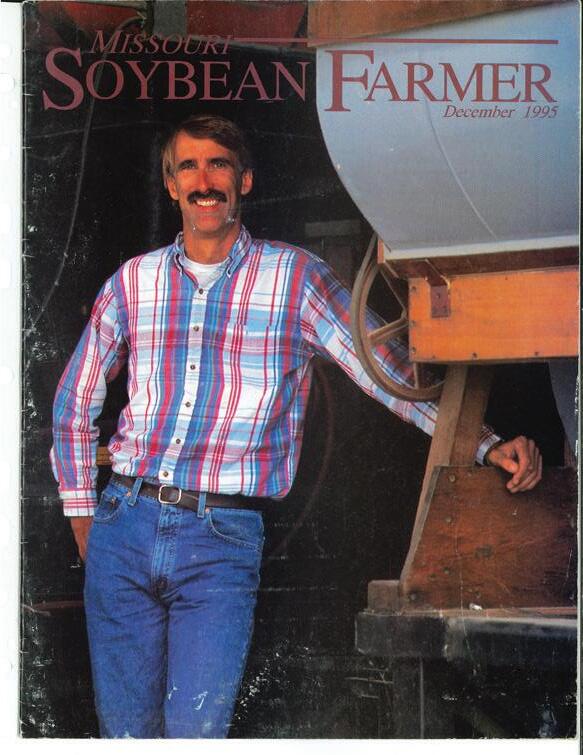
The association’s member newsletter transitions into a full-color magazine format, officially becoming Missouri Soybean Farmer, a primary communications platform for Missouri soybean growers.
MSA establishes a permanent presence in Jefferson City, strengthening relationships with policymakers and enhancing legislative engagement on behalf of Missouri soybean farmers.
2000s
Missouri soybean farmers and checkoff leaders expand advocacy and investment in soy biodiesel research, infrastructure development and policy initiatives, helping grow demand for soybean oil and renewable fuels.
2010s
Purdy, Missouri, farmer Kip Cullers harvests 160.6 bushels per acre, setting the highest soybean yield ever recorded in Missouri. The achievement demonstrates the yield potential of soybeans through advanced management, irrigation and genetics.
The Bay Farm Research Facility opens, expanding on-farm research, demonstration and education opportunities for Missouri soybean farmers.
Checkoff-supported research and partnerships advance the development of SOYLEIC high-oleic soybeans, opening new food, feed and fuel market opportunities for Missouri growers.





2020s
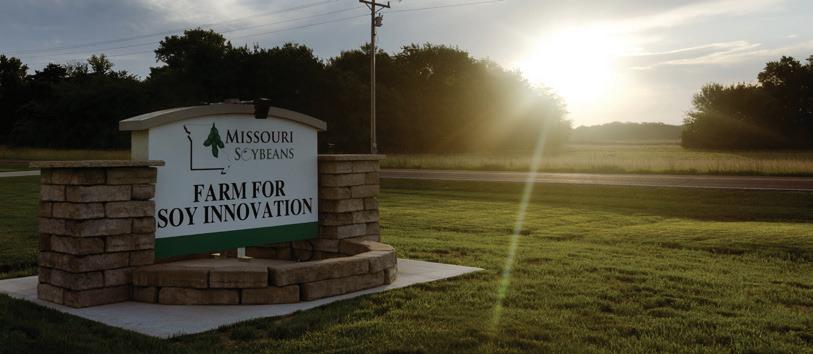
The Center for Soy Innovation opens in Jefferson City, serving as a hub for collaboration, research and industry engagement focused on adding value to Missouri-grown soybeans.
Missouri enacts major biodiesel-focused agricultural legislation that includes incentives supporting biodiesel production and infrastructure, reflecting long-term advocacy by Missouri soybean growers and MSA.
The Missouri Water Preservation Act is signed into law, protecting water resources while safeguarding agricultural water use, a key priority supported by Missouri soybean growers and MSA.
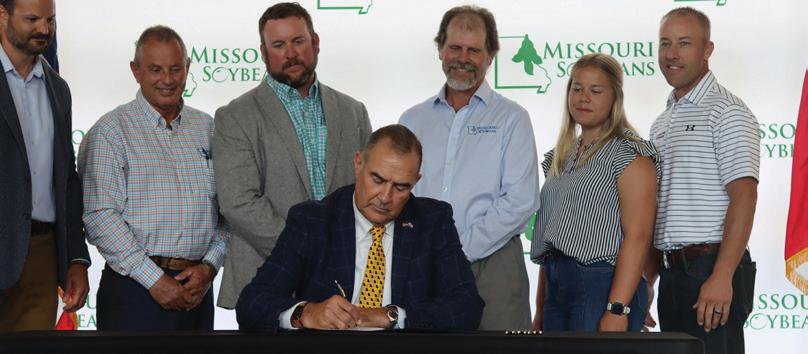
Additional state policy wins support Missouri soybean farmers, including funding for soybean cyst nematode diagnostics at the University of Missouri, expanded access to health plans for farm families and farmfriendly regulatory and tax provisions.
The Missouri Soybean Association celebrates 60 years of grower leadership, research investment, market development and policy advocacy that continue to shape the future of Missouri’s soybean industry.





UNDERSTANDING BIOLOGICAL EVALUATION VS. BIOLOGICAL OPINION IN PESTICIDE REVIEW FOR ENDANGERED SPECIES COMPLIANCE
By Kaitlin Flick-Dinsmore, Technical Conservation Agronomist
When reviewing pesticides for compliance with regulations protecting endangered species, two critical terms often arise: Biological Evaluation and Biological Opinion. While both terms sound similar, they serve distinct roles and are conducted by different agencies within federal environmental law. This article clarifies the differences between these two assessments, their importance in the regulatory process and the impact they have on mitigation points and spray drift buffers on pesticide labels.
Biological Evaluation: The Initial Assessment
A Biological Evaluation (BE) is an early-stage analysis conducted by the Environmental Protection Agency (EPA) when considering the registration or re-registration of a pesticide. The primary goal of a BE is to determine whether the proposed pesticide action "may affect" any listed endangered or threatened species or their critical habitats.
• Purpose: To screen for potential risks to protected species from pesticide use.
• Process: The agency reviews scientific data, pesticide use patterns and species location maps to assess possible impacts.
• Outcome: The BE concludes whether the action is "not likely to adversely affect" or "may affect" listed species or habitats.
• Tools used by EPA in BE are the Plant Assessment Tool (PAT) & Pesticide in Water Calculator (PWC), which work collaboratively to predict pesticide concentration in water bodies.
If the BE finds that a pesticide "may affect" protected species, the process moves to the next stage: formal consultation with the appropriate wildlife agency, such as the U.S. Fish and Wildlife Service (FWS) or the National Marine Fisheries Service (NMFS). For Missouri and the purpose of this article, we will use FWS.
Biological Opinion: The Formal Agency Determination
A Biological Opinion (BO) is a formal document prepared by FWS, after receiving a BE that indicates possible adverse effects. The BO is the result of a more detailed and comprehensive consultation process mandated by the Endangered Species Act (ESA).
BIOLOGICAL EVALUATION IS THE INITIAL RISK ASSESSMENT PERFORMED BY THE EPA PROPOSING PESTICIDE USE, WHILE THE BIOLOGICAL OPINION IS THE FORMAL DETERMINATION BY FWS EXPERTS ON WHETHER THE PESTICIDE WILL HARM ENDANGERED SPECIES OR THEIR HABITATS.
• Purpose: To determine whether the proposed pesticide action will jeopardize the continued existence of protected species or destroy or adversely modify their critical habitats.
• Process: The agency reviews the BE, considers additional scientific evidence and may request further information or mitigation measures.
• Outcome: The BO provides a final determination, which may include "reasonable and prudent alternatives" or "reasonable and prudent measures" to avoid or minimize harm to endangered species.
If the BO concludes that the pesticide is not likely to jeopardize endangered species, the action may proceed. If jeopardy is found, the BO may propose alternatives, modifications or mitigation requirements to ensure compliance with the ESA.
The Biological Evaluation is the initial risk assessment performed by the EPA proposing pesticide use, while the Biological Opinion is the formal determination by FWS experts on whether the pesticide will harm endangered species or their habitats. Both steps are essential in ensuring that pesticide approvals comply with the ESA and help protect species.
This may all feel a bit like alphabet soup, but these acronyms will remain important as farmers and regulatory arms continue to navigate the complexities of ESA. Although BE and BO are similar in name and can easily be confused, understanding the differences will be helpful to know what stage specific products are at in the pesticide registration process.
To feel assured in the difference between BE and BO, feel free to reach out to the Missouri Soybeans’ team or navigate their resources at mosoy.org.


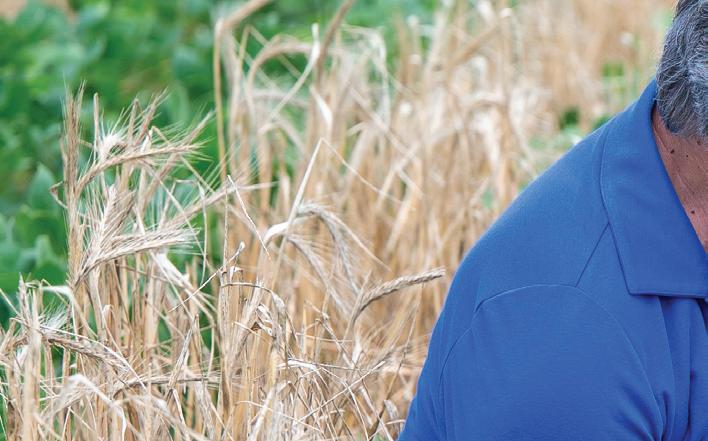
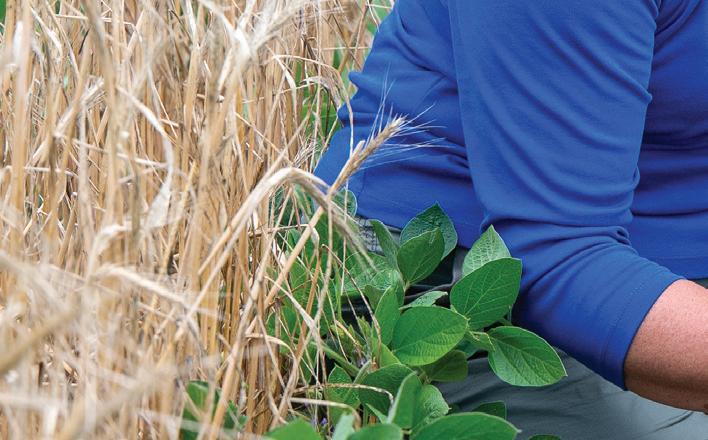
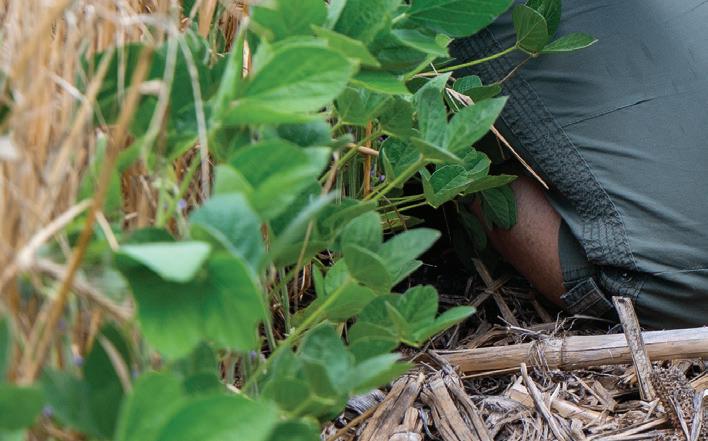

Your Land, Covered
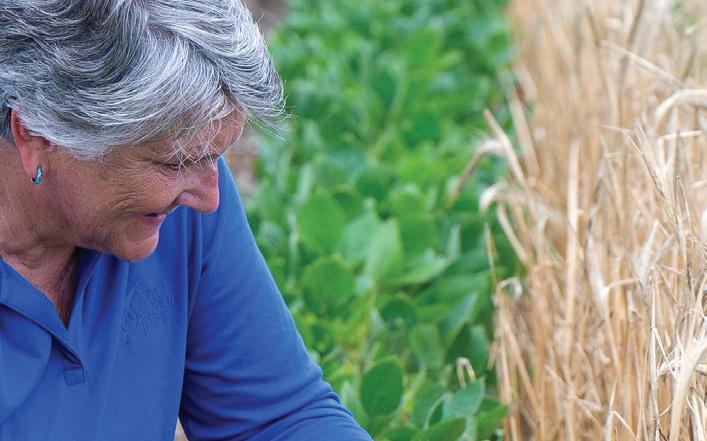
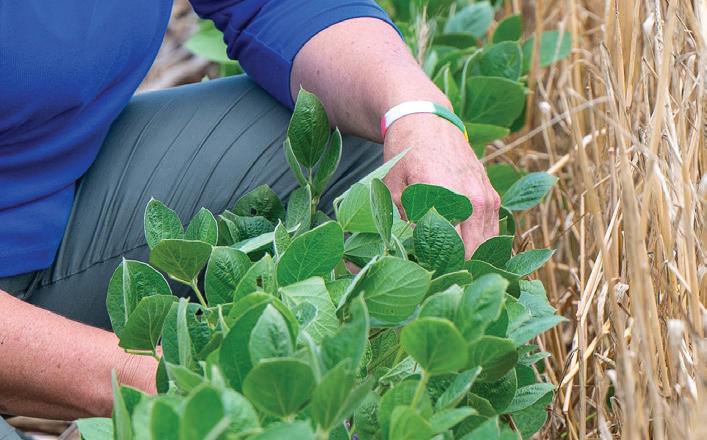
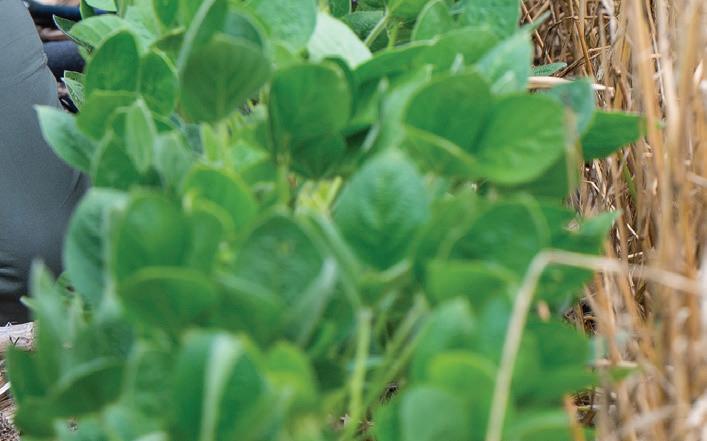
Cover crops have many benefits, including water retention—even in drought years. But, knowing when to terminate the cover crop is key in responding to overly dry or wet seasons.
When you enroll in Farmers for Soil Health, you gain access to individualized support through a technical advisor who can help you navigate a wide range of cover crop questions. From seed selection through termination—we’ve got you covered

Letters from
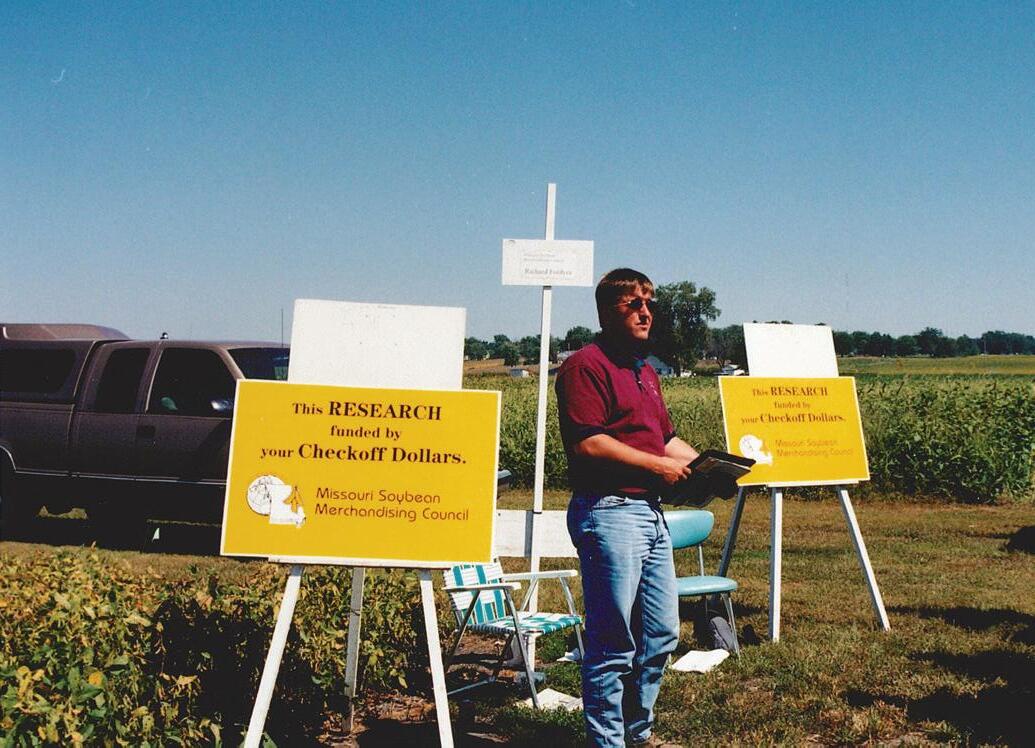
Producing What Consumers Demand
From Taco Bell scares to Frankenstein Foods, the biotechnology issue has been splashed across TV screens, radio airwaves and the front pages of newspapers in the last few years. The colorful picture being painted leaves many consumers with questions about their food’s safety, government officials with concerns on international relations and farmers with uncertainty about what to plant next spring. Some scientists are positioning biotechnology as a way to feed the world while others are crying about the dangers of tampering with genes. Meanwhile, lawyers are studying the issue of biotechnology and genetic manipulation with new intensity.
And with an issue this big, there’s no way that you and me as farmers can make a difference. Right? Wrong! Individually, we can’t compete against environmental activist groups, but by joining forces we can get the facts heard and move the issue from emotion to science-based. Through effective and efficient checkoff-funded efforts at the state and national levels, soybean farmers are banding together to stay on top of this ever-changing issue of biotechnology. Not only are we closely monitoring the situation on the home front, we’re also keeping a watchful eye on the environment overseas.
By being up to date on the issue, soybean farmers can be better prepared to make vital production decisions each spring. That may mean biotech crop acres increase again next year. However, but we’re also conducting studies with foreign buyers to determine what products they want, whether they’re biotech or nonbiotech. When the day’s over, we need to provide ourselves with factual information for producing what customers demand.
Richard Fordyce MSMC Chair
January 2001
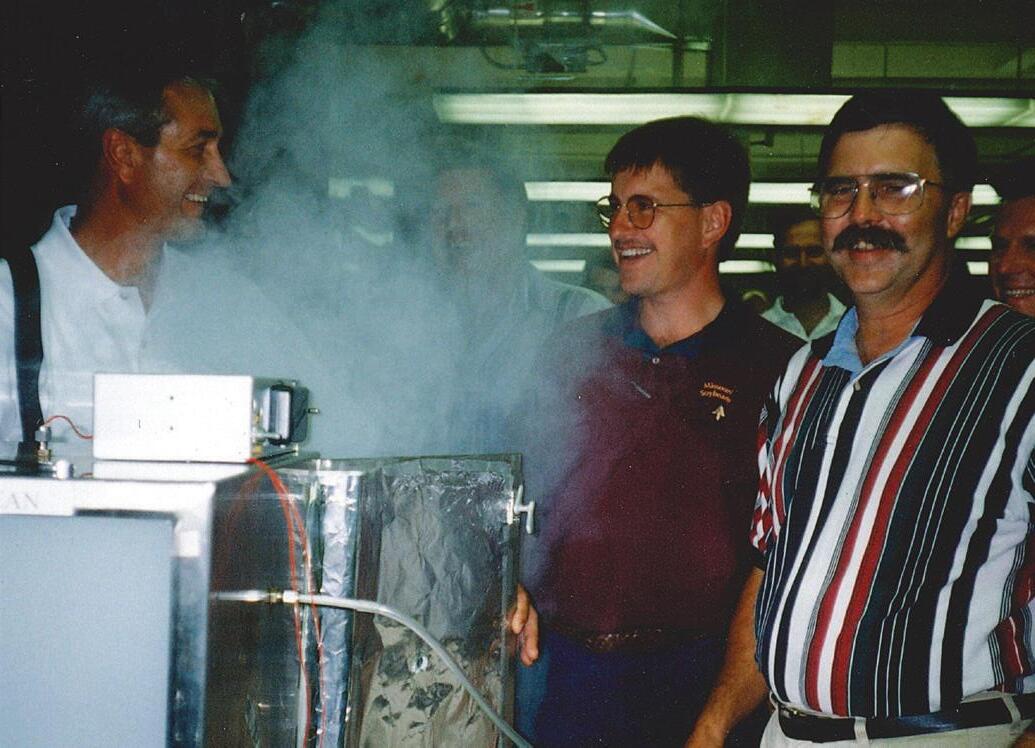
Giving Direction to Ourselves
Harvest is when farmers actually see the fruits of their labor. For many soybean producers, this year’s harvest started long ago with decisions as to what direction the farm would take. The Missouri Soybean Merchandising Council (MSMC), collectively, is like an individual farmer. We also have to try to “read” the future, make decisions that will affect many years of operation, and try to do what we can to improve profitability.
The MSMC’s mission statement is “to improve the profitability of soybean farmer.” You may think this is a very board statement and it is. That’s why the MSMC defines and fine-tunes its strategic plan on regular basis as we did at our summer board meeting. Along with council members, other individual farmers also participated in the process.
The strategic plan enables the council to operate with direction. The MSMC receives numerous requests for funding as well as ideas for programs every year. In order to focus our efforts, projects that do not fulfill or work toward a goal or objective contained in the strategic plan do not receive funding. This does not mean that the council is close-minded, but we realize that we can’t do it all. Therefore, we strive to do what we can – very well.
As chairman of the MSMC, I’m proud to say this process has worked well for us, and because we are a group dedicated to improving profitability for all Missouri producers, we welcome your input to help us plan for the future.
David Durham MSMC Chairman
Harvest 1996
from Leaders
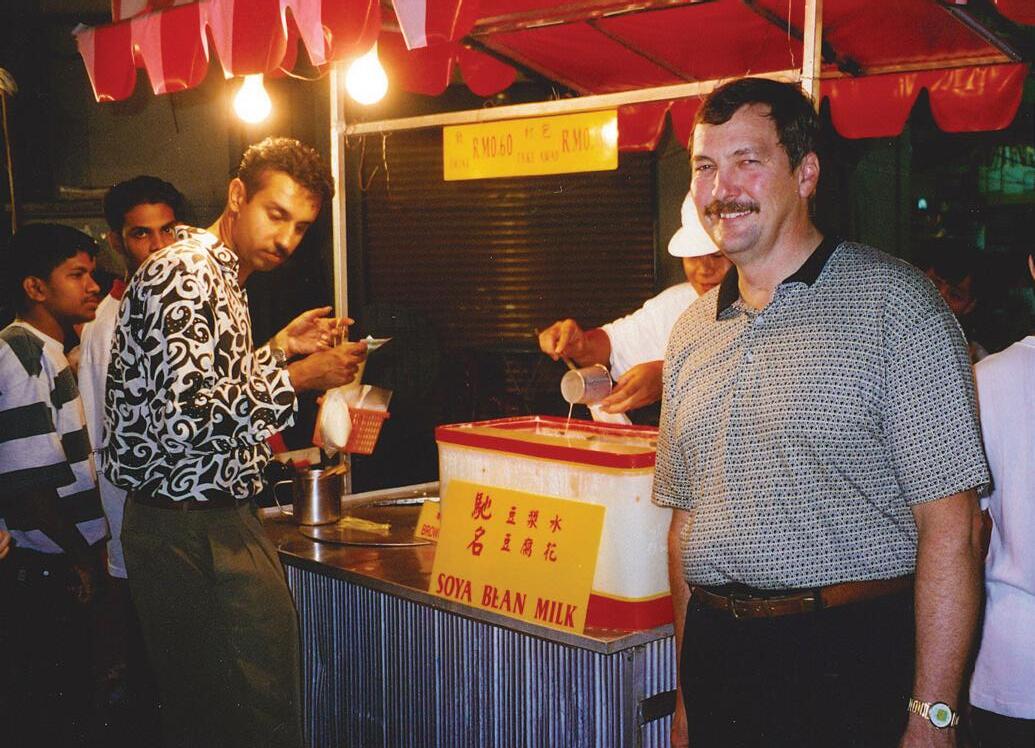
Establishing Relationships
With planting season behind us for another year, we now have to focus on marketing our crop. Every other row of soybeans in this country is exported, so creating demand with our foreign customers and maintaining their business are very important to the U.S. soybean industry.
This past March, a group of soybean farmers had just that opportunity to visit our customers in the Philippines. I was part of that group. We spoke to the very people who buy our soybeans and soybean meal. We found the purchasers of our soybeans are pleased with the quality we provide. The buyers in the Philippines are willing to pay more for U.S. soybean because they know they are getting better quality.
This trade mission was very important not only for the Missouri soybean farmer but also our end user in the Philippines. We could put a face on our customers, and they could do the same with us. Relationships were built that will strengthen the exporting capability of the U.S. soybean industry. It’s important for your farm product suppliers to keep in contact with you. It’s equally important that we, the American soybean farmer, keep in contact with our customers so we can better service them. By keeping in contact with the buyers of our soybeans, we can create more demand and improve our profitability as Missouri soybean farmers.
Neal Bredehoeft
MSA President
Pre-Harvest 1998
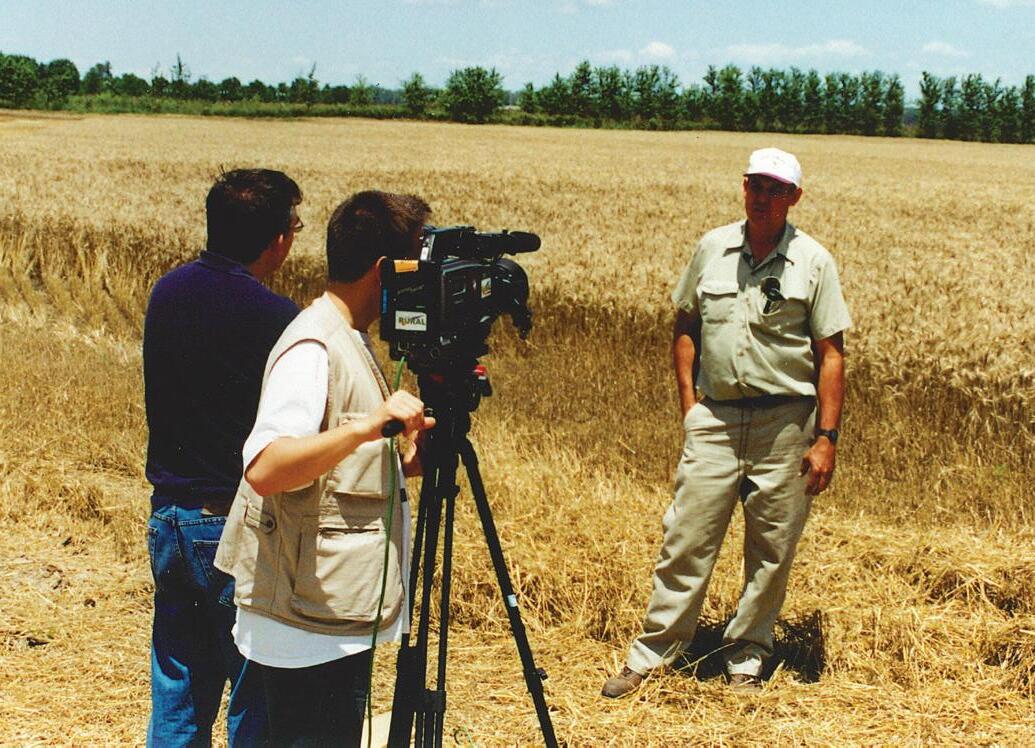
MSA Leads the Way
The summer of 2005 will go down as one of the driest on record for Missouri crops but also as the best for biodiesel.
The Energy Bill was signed into law by President Bush on Aug. 8. This legislation contained three important parts for biodiesel. The Renewable Fuels Standard was set at 7.5 billion gallons; it included the Small Producer Tax Credit; and most importantly, it extended the tax credit on biodiesel through 2008. This is critical for the successes of biodiesel production plants like the one Mid-America Biofuels is building in Mexico, Missouri.
U.S. Sen. Jim Talnet led the fight for biodiesel in the Senate and Rep. Kenny Hulshof took the lead in the House. We are proud of the efforts of these two Missouri leaders on behalf of biodiesel. Please remember to thank them for all of their hard work.
On Aug. 10, President Bush signed the Transportation Bill, which included $8 million in funding for biodiesel testing in new diesel engine technology. A longtime Missouri champion of biodiesel, U.S. Sen. Kit Bond, chairman of the Senate Transportation and Infrastructure Subcommittee, made sure biodiesel was included in the Transportation Bill.
Finally, I would like to send a huge thank you to Neal Bredehoedt, Missouri Soybean Association board member from Alma, Missouri. He completed his term as president of the American Soybean Association (ASA) in July and continues as its chairman. We couldn’t be more proud of the leadership he has demonstrated. Thanks, Neal, for everything you do for the soybean industry!
Warren Stemme
MSA President
Harvest 2005
SOYBEAN DISEASE TO WATCH FOR IN 2026
By Kaitlin
Flick-Dinsmore, Technical Conservation Agronomist
Thiswinter, coffee shop conversations centered around anticipated snowfall, weather predictions for this spring, commodity prices, and of course, the Kansas City Chiefs. What I haven’t heard about is soybean diseases. This time of year, the 2026 growing season can feel like a problem for another day, and it is easy to assume that soybean diseases take a break during the winter months. However, many diseases overwinter in crop residue, soil or in an alternative host and are positioning themselves for a comeback this year.
As the state’s leading agricultural commodity, soybeans are a vital crop that contributes significantly to the state’s economy. Protecting yield potential means understanding the pathogens we face each year and recognizing that many of those challenges begin long before symptoms show up in the field.
This article explores the most common and impactful soybean diseases found in Missouri, their symptoms, causes and general management considerations.
RED CROWN ROT
Red crown rot is one of the newer soybean diseases in Missouri and is considered the “new kid on the block.” Caused by the soilborne fungus Calonectria ilicicola, red crown rot often goes unnoticed early in the season and is easily confused with other root and stem diseases. Symptoms typically appear later in the summer and closely resemble sudden death syndrome (SDS) but include yellowing, stunting, premature death and a distinctive reddish discoloration at the base of the stem and crown. Management options are limited, but include crop rotation, selecting tolerant varieties when available, improving drainage and reducing plant stress. Because this disease is still emerging, continued scouting and awareness will be critical as we learn more about its impact on Missouri soybean production.
SOYBEAN CYST NEMATODE
The soybean cyst nematode (Heterodera glycines) is considered the most yield-limiting pest in Missouri fields. SCN is a microscopic roundworm that infects the roots, often reducing yields long before symptoms are noticed above ground. As the nematode feeds, it creates open wounds on the root system that can serve as an entry point for other soilborne pathogens, further compounding yield losses. When the symptoms do arise, they may include stunted plant growth, chlorosis/yellowing of the leaves and uneven plant development. Symptoms may be subtle and can be confused with nutrient deficiencies or drought stress. Effective management includes rotating crops with non-host plants, planting SCN-resistant soybean varieties, rotating sources of SCN resistance within those varieties, utilizing a seed treatment that is labeled for SCN and routinely soil testing to monitor nematode populations.
SUDDEN DEATH SYNDROME
Sudden death syndrome is caused by the soilborne fungus Fusarium virguliforme. SDS typically appears as yellowing and browning of leaves between the veins while the veins remain green, followed by premature leaf death and drop. The disease is often associated with the presence of SCN and is favored by cool, wet soil conditions early in the season. Management involves planting resistant varieties,
utilizing a seed treatment that is labeled for SDS, improving field drainage and minimizing soil compaction.
FROGEYE LEAF SPOT
Frogeye leaf spot, caused by the fungus Cercospora sojina, is a foliar disease that leads to the development of circular, gray lesions with reddish-brown borders on the leaves. Severe infections can cause premature defoliation and yield loss. The disease thrives in warm, humid weather. Management strategies include crop rotation, tillage to reduce residue, planting resistant varieties and utilizing a foliar fungicide that is labeled for frogeye leaf spot.
PHYTOPHTHORA ROOT AND STEM ROT
This disease is caused by the oomycete Phytophthora sojae. It can infect soybeans at any growth stage, causing seedling damping-off, root rot and stem cankers. Symptoms include wilting, yellowing and brown lesions on stems near the soil line. The disease is most severe in poorly drained, saturated soils. Management includes using resistant varieties, improving drainage and applying appropriate seed treatments.
CHARCOAL ROT
Charcoal rot, caused by the fungus Macrophomina phaseolina, is prevalent in hot, dry conditions, especially during late summer. It causes the lower stems and roots to turn gray to black, with small black microsclerotia visible inside the tissue. Infected plants wilt and die prematurely. Management relies on crop rotation and irrigation where feasible, as resistant varieties are limited.
STEM CANKER
Stem canker is caused by the fungi Diaporthe phaseolorum var. caulivora (northern stem canker) and Diaporthe phaseolorum var. meridionalis (southern stem canker). The disease causes reddishbrown lesions on soybean stems, often girdling the stem and causing plant death. It typically appears later in the growing season and can be managed by rotating crops, planting resistant varieties and managing crop residue.
BACTERIAL BLIGHT
Bacterial blight, caused by Pseudomonas syringae pv. glycinea, produces small, angular, water-soaked spots on the leaves that enlarge and turn brown with yellow halos. The disease spreads rapidly in wet, cool conditions. Management includes crop rotation and avoiding field work when plants are wet to prevent spread.
Missouri soybean producers face a variety of disease threats each growing season. Effective disease management involves a combination of resistant varieties, crop rotation to non-host crops, good field sanitation and timely fungicide or seed treatment applications with products used is labeled for the pathogen present. Regular scouting and early diagnosis are crucial to minimizing yield losses and ensuring disease pressure is not the limiting factor in soybean production.
For more resources, contact Missouri Soybeans’ field staff or your local agronomist.

BOSS Performance Diesel is built to go the distance, just like you. With advanced detergents that clean your engine as you drive, it helps maximize performance and extend engine life. Don’t let anything slow you down. Keep your engine running stronger, longer—like a BOSS.
✓ Increases performance and fuel economy over untreated #2 diesel fuel.*
✓ Keeps engines cleaner by preventing fuel-filter plugging and deposits on nozzles and internal diesel injectors.
✓ Protects against corrosion throughout the entire fuel system.
WEATHER VARIABILITY IS REDEFINING SOYBEAN PRODUCTION IN MISSOURI
A once-predictable growing rhythm is giving way to wider swings in rainfall, temperature and timing, reshaping how Missouri soybean farmers manage risk from planting through harvest.
Missouri soybean farmers have always managed weather risk. What’s changing is not that variability exists, but how frequently it shows up and how tightly it intersects with planting windows, crop development and harvest timing.
Missouri sits in a climatic transition zone influenced by both northern and southern weather systems. According to the Missouri Climate Center, average annual precipitation ranges from the mid30-inch range in northwest Missouri to nearly 50 inches in the southeast. Spring is typically the wettest season, summer brings sustained heat and winter provides a cold period that helps regulate pests and diseases.
That seasonal rhythm has historically allowed soybean growers to plan planting dates, variety maturity and harvest timing with some confidence. Soybeans depend on that predictability. Planting date influences stand establishment, canopy development and whether reproductive stages align with peak summer stress.
University of Missouri Extension research shows delayed planting increases yield risk, particularly when soybeans are pushed into flowering and pod fill during hotter or drier conditions later in the season. When spring field access is delayed, the effects can cascade through the remainder of the growing season.
MORE EXTREMES, FEWER NORMAL SEASONS
Across Missouri, extreme weather events are becoming more frequent. The National Oceanic and Atmospheric Administration (NOAA) tracks billion-dollar weather and climate disasters nationwide and shows a sharp increase in high-impact events affecting Missouri since 1980, with the pace accelerating in recent years.
One of the most significant shifts documented by the Missouri Climate Center and NOAA is the rise in heavy rainfall events. Storms delivering several inches of rain in a short period are occurring more often than they did historically. That change matters more than total rainfall alone.
Heavy spring rains increase the likelihood of saturated soils, delayed planting and compaction. They also increase erosion risk. According to the U.S. Department of Agriculture Natural Resources Conservation Service (USDA-NRCS), intense rainfall accelerates runoff and nutrient loss before crops are fully established, particularly on sloped fields or ground with limited residue cover.
The Intergovernmental Panel on Climate Change (IPCC) identifies rainfall intensity as a major driver of soil erosion globally, reinforcing what many Missouri farmers already observe following large storm events.
SHIFTING SEASONS, SHIFTING DECISIONS
At the same time Missouri is experiencing wetter springs, climate assessments consistently project hotter summers and longer dry
stretches. The Environmental Protection Agency (EPA) reports the Midwest is warming, with warmer winters and increased heat stress during summer months. The U.S. Global Change Research Program notes drought risk during the growing season is expected to increase even as spring precipitation rises.
For soybeans, that combination can be especially challenging. Adequate early-season moisture may support vegetative growth, but stress during flowering and pod fill can sharply limit yield potential. University of Missouri Extension crop-monitoring reports regularly document yield losses associated with short periods of drought or heat during reproductive stages.
Recent seasons show how uneven conditions have become. Missouri soybean yields have fluctuated year to year, reflecting localized weather rather than uniform statewide trends. During the 2012 drought, soybean yields dropped well below long-term trend levels, according to estimates from the USDA National Agricultural Statistics Service (NASS). More recent seasons have delivered stronger statewide averages but with wide variability between regions and even neighboring farms depending on rainfall timing and intensity.
BEYOND BUSHELS PER ACRE
Weather variability affects more than yield. Unpredictable fall conditions can complicate harvest planning, increasing lodging and disease pressure or delaying fieldwork. Rapid dry-down shortens harvest windows, while prolonged wet periods can leave crops standing longer than intended.
Economically, soybeans represent a major component of Missouri agriculture. USDA NASS data show Missouri typically plants close to 6 million acres of soybeans, with annual production valued in the billions of dollars. Yield swings driven by weather variability influence not only revenue but also input efficiency, marketing decisions and long-term soil management strategies.
The USDA Midwest Climate Hub notes Missouri agriculture is increasingly exposed to both excess moisture and drought risk within the same growing season. That dual pressure underscores why resilience, timing and soil condition are becoming central considerations rather than secondary ones.
Climate projections suggest Missouri will continue to experience warmer winters, heavier spring precipitation and hotter summers. The Missouri Climate Center emphasizes winter and early-spring warming as among the most pronounced trends observed to date.
For soybean growers, the challenge is no longer adapting to an occasional abnormal year. It is managing production systems in an environment where variability itself is becoming more common, and where timing, soil protection and water management increasingly shape productivity from one season to the next.
Unlock the Power of Missouri Soybean Association Membership
Grow your voice. Expand your impact. Support the next generation.
Whether you’re a first-generation producer, a seasoned farmer or part of a family legacy, Missouri Soybean Association membership provides influence, insight and access.
MEMBERSHIP LEVELS
Exclusive Missouri Soybean Association communications Missouri policy updates
Invitations to Missouri Soybean Association events
5% discount on new and existing CFM policies
Commodity Classic registration discount Eligibility for ASA Soy Scholarship programs Federal


BUILDING A PRE-HARVEST MARKETING PLAN
WHY INTENTIONALITY REDUCES STRESS AND IMPROVES PROFITABILITY
BY BEN BROWN, STATE EXTENSION ROW CROP ECONOMICS SPECIALIST
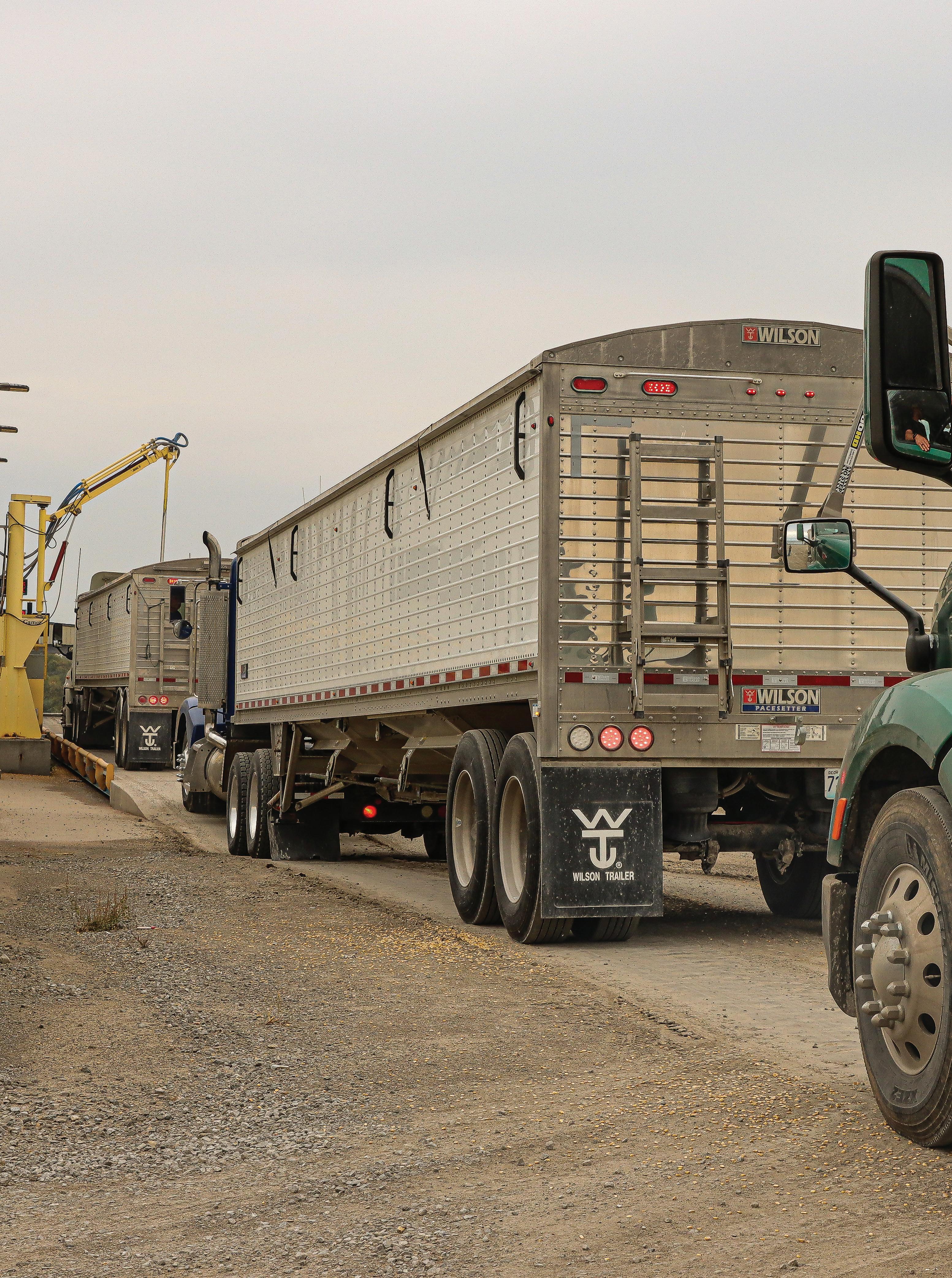
For many Missouri soybean producers, marketing can feel like the most unpredictable part of the operation. Weather, global demand shifts, transportation bottlenecks and policy changes all influence prices — often in ways that feel out of their control. But one thing is firmly within control: having a clear, intentional pre-harvest marketing plan.
A well-designed marketing plan doesn’t eliminate uncertainty, but it does create structure. It helps one make decisions based on strategy rather than emotion, and it reduces the stress that comes from reacting to markets instead of preparing for them. At the end of the day, there are only two true windows to market grain: pre-harvest and post-harvest. That’s it. Once harvest passes, a marketer is down to a single option with no going back. That reality alone makes pre-harvest marketing worth consideration.
WHY PRE-HARVEST PLANNING MATTERS
Soybean markets tend to follow seasonal patterns. Historically, futures prices often peak during spring and early summer when risk is highest, and they tend to soften as harvest approaches and supplies grow. Table 1 illustrates how arbitrary harvest (Oct. 15) and pre-harvest (May 15) futures values for new crop soybeans have reacted to this weather premium. During the past 20 years, the new crop soybean futures price has been higher in May than October 13 times (65%) for an average price deterioration of $1.95 per bushel. Conversely, the new crop soybean price increased from May to October seven times (35%) during that same 20year stretch with an average appreciation of $1.27 per bushel. Weighing the two results and multiplying by their average price change equals an expected price change of an additional $0.83 per bushel just by marketing every year on May 15 compared to Oct 15. The value increases when one adds a rule not to market in May if the price is below cost of production. There have been recent years when a post-harvest rally has matched these early levels. However, one must pay storage sometimes, eroding profits, and the COVID year 2020 sticks out as a sharp rally after the shock of the spring market scare passed. While every year is different, these tendencies create opportunities for disciplined pre-harvest sales. A pre-harvest plan allows a marketer to:
• Take advantage of seasonal price strength.
• Spread price risk across multiple decision points.
• Avoid panic selling during harvest when basis is typically weakest.
• Match sales with the operation's cash-flow needs.
• Reduce the emotional burden of “guessing” the market.
Instead of trying to hit the high, a good plan focuses on capturing profitable prices when they are available.
FLEXIBILITY: THE MOST UNDERRATED MARKETING TOOL
Markets change and so should marketing plans. The goal isn’t to get locked into a rigid decision — it’s to create a framework that guides actions while still allowing for adjustments. A flexible plan:
• Sets price targets but allows for updates as conditions shift.
• Uses a mix of tools — forward contracts, futures, options and storage — to manage risk.
• Considers crop insurance coverage and yield expectations.
• Builds in decision dates to reassess markets throughout the year.
Intentionality is key. When you know why a decision is made, one is far less likely to second-guess themselves later.
A FEW DO’S AND DON’TS FOR MISSOURI SOYBEAN PRODUCERS
Don’t:
• Don’t market based on fear or headlines. Emotional decisions often lead to missed opportunities and low flexibility.
• Don’t wait for the “perfect” price. Consistent, incremental sales usually outperform all-or-nothing strategies. A market rally followed by deterioration has historically caused marketing paralysis because, “the price got that high once, it surely can again.”
MU EXTENSION’S UPCOMING BASICS OF GRAIN MARKETING WORKSHOP
To help producers strengthen these skills, University of Missouri Extension is offering its Basics of Grain Marketing Workshop on Feb. 18-19, 2026, at the Boone County Electric Cooperative in Columbia.
This two-day, in-person workshop is designed for corn and soybean growers who want to build a more confident, disciplined approach to marketing. Participants will learn the essential components of a successful grain marketing plan, including:
• Basis, market carry and margins.
• Cash market dynamics.
• How to evaluate and use forward contracts, futures, hedge-to-arrive, basis contracts and deferred pricing.
• Hedging fundamentals and storage considerations.
• The role of crop insurance in marketing decisions.
This workshop blends instruction with hands-on exercises, farmer-tofarmer discussions and panels featuring industry professionals — all tailored to the realities of Missouri grain markets. Attendance is limited to 50 producers and landowners. Attendees will also receive access to quarterly follow-up Zoom sessions throughout the year to reinforce key concepts and support ongoing decision-making.
Producers and landowners with questions can contact Ben Brown at bpbown@missouri.edu or 660-492-7574. Registration is available at: https://muext.us/GrainMarketBasics
Do:
• Start early. Begin evaluating price opportunities even before planting when South American weather risk is impacting the markets.
• Have multiple tools in the toolbox. No single contract type fits every situation.
• Know your breakeven levels. Profitability — not price — is the real target.
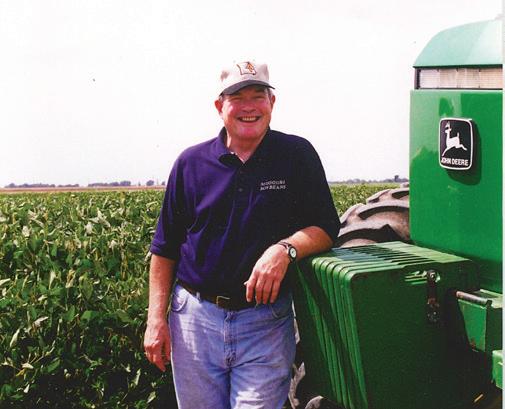
Calcium Clarified: Why Calcium is Vital for Your Soybeans
As growers continue to push the envelope to increase yields and improve ROI on soybean acres, a shift is underway in how the crop is managed, particularly with crop nutrition. The quest for higher yields is no longer just about nitrogen, phosphorus and potassium. It’s about a balanced crop nutrition program that includes often-overlooked secondary nutrients like calcium. While calcium often gets overlooked as a primary contributor to yield, it is necessary for developing a healthy and productive soybean crop.
The Role of Calcium in Soybeans
Calcium is an important player in numerous physiological processes within the soybean plant. Calcium helps soybeans form healthy nodules on their roots, which are needed to turn atmospheric nitrogen into a form the plants can use. It helps facilitate cell division and elongation to ensure proper growth from the root to the top of the plant. Calcium also contributes to cell wall strength, which is essential for the plant’s structural integrity and its ability to withstand environmental stress. Beyond its structural contributions, adequate calcium levels help the plant manage abiotic stress and improve disease resistance. In addition, calcium helps promote better soil structure, which drives nutrient availability and uptake, and increased microbial activity to foster an environment for vigorous plant growth.
Addressing the Calcium Needs of Soybeans
Today’s high-yielding soybeans require more calcium than ever before. However, even when soil tests indicate high calcium levels, it does not guarantee optimal plant availability of the essential nutrient. Therefore, it is often necessary to provide soybeans with a supplemental calcium source to meet the crop’s nutrient needs. Supplemental calcium sources can also vary in plant availability. Choosing a plant-available calcium source helps ensure nutrient uptake is maximized during crucial periods of growth and development, in turn delivering a stronger ROI on the fertilizer application.
Get More from Every Acre with SUL4R-PLUS
Modern high-yielding soybean varieties demand more calcium than ever before. However, even when soil tests indicate high calcium levels, the nutrient isn’t always readily available to plants. In many cases, less than five percent of the calcium measured in a standard soil test is plant available. This knowledge is important because soluble (plant-available) calcium is often a very small percentage of the overall total calcium reported on a soil test. Field test results illustrated in Figure 1 show soluble calcium only ranged between 1% and 2%.
1
With a controlled-release, water-soluble formulation, SUL4R-PLUS provides immediate availability and season-long uptake of calcium and sulfur to help crops maximize yield potential. Recent trial data demonstrates SUL4R-PLUS can increase soybean yields up to 12.2 bu/ac, depending on application rate, compared to the untreated check (Figure 2).
Grain Yield
Secure SUL4R-PLUS from HELM
HELM, a trusted leader in agricultural logistics and distribution, is the exclusive distribution partner of SUL4R-PLUS to ensure efficient delivery to growers across North America. Together, HELM and SUL4R-PLUS are committed to offering innovative solutions that boost productivity and contribute to soil health and sustainability.
To secure your SUL4R-PLUS for the upcoming growing season, contact your local retailer.
Discover more about SUL4R-PLUS at sul4r-plus.com.
Figure
Figure 2



















KEY FACTS



YES ON 1 - BENEFITS TO MISSOURI AGRICULTURE


The Parks, Soils & Water Sales Tax has:



PRESERVING MISSOURI FARMS AND RANCHES





The Parks, Soils & Water Sales Tax renewal is critical for the continued health and productivity of Missouri's agricultural lands.







▪ Funded more than 288,000 soil and water conservation practices on Missouri farms and ranches.
▪ Impacted over 8 million acres through cost share programs in every county.
▪ Sheet, rill and gully erosion


▪ Woodland erosion
▪ Prevented over 194 million tons of soil from eroding – enough to fill I-70 between St. Louis and Kansas City 52 feet high.


▪ Fostered responsible land management practices in every county, overseen by locally elected board members

▪ Sensitive area preservation











WHAT DOES THE TAX SUPPORT? WHAT CAN YOU DO?
The tax supports a variety of voluntary, incentive-driven programs to improve the long term viability of farmland:
▪ Grazing, irrigation, animal waste, and nutrient pest management































These practices protect local drinking water, reduce sediment loss and promote water quality in streams and reservoirs. Soil & Water Conservation Districts are local people solving local problems. The programs are locally led, ensuring that on-farm practices are tailored to the specific needs of each community.













The average Missourian pays just $10 per year to support these soil and water conservation practices that protect our natural resources for years to come.
























PROTECT MISSOURI AGRICULTURE.








Join Our Coalition of farmers, ranchers, ag groups and more. Donate To Our Campaign to help share our message and win the election. Visit www.PreserveMO.com to get more information and share with your friends.
VOTE YES ON 1 - PRESERVE STATE PARKS, SOILS & WATER





Amendment 1 does not create a new tax. It simply renews the existing state parks, soils and water conservation program that was created in 1984.



The Perfect Dessert
Chocolate Silk Dessert
Ingredients:
Crust
1/4 cup soy margarine, melted
1 1/4 cups graham cracker crumbs
3 tablespoons honey or corn syrup
Filling
1 1/2 cups semisweet chocolate morsels
2 1/2 cups extra-firm silken tofu
3 tablespoons honey or corn syrup
Instructions:
Crust
Combine melted margarine, graham cracker crumbs and honey in a bowl. Stir to mix well. Using a 9-inch springform pan, press mixture into bottom and up 1 inch of pan sides. Bake in a preheated 350 F. oven for 8 minutes. Let cool, then refrigerate.
Filling
Warm chocolate morsels over low heat, stirring often, until melted and smooth. Set aside to cool. In food processor, blender or mixer, smooth tofu. Add honey. Blend until mixed. Add melted chocolate and blend until smooth and creamy.
Pour filling into chilled crust. (If desired, decorate top with chocolate curls.) Refrigerate until firm. Serve chilled. Yields 10 servings.

Amaretto Cheesecake
Ingredients:
Chocolate Cookie Crust
1 1/2 cups chocolate cookie crumbs
3 tablespoons chopped almonds
2 tablespoons soyoil
(Or, substitute two 9-inch prepared chocolate cookie crumb crusts from the supermarket.)
Amaretto Filling
1 package light soft or silken tofu (10.5 ounces)
2 packages cream cheese, softened (16 ounces)
1 1/2 cups granulated sugar
6 egg whites
4 eggs
1/4 cup almond-flavored liqueur (Amaretto)
2 tablespoons vanilla extract
Glazed Almond Topping
2 tablespoons granulated sugar
3/4 cup sliced almonds
Instructions: Crust
In small bowl, combine cookie crumbs, chopped almonds and soyoil. Mix well. Press evenly into bottom of a 9-inch springform pan.
Filling
Combine tofu and cream cheese in large bowl. Mix on medium speed until smooth. Add sugar substitute (or sugar). Mix thoroughly. Add egg whites and eggs. Mix until well blended. Add liqueur and vanilla. Mix well. Pour filling into the 9-inch springform crust or divide filling between the two prepared crumb crusts.
Bake in a preheated 300 F. oven 1 hour for the springform pan or 40 minutes for prepared crusts. Let cool in pan(s) while preparing almond topping.
Topping
Warm sugar in a nonstick pan over medium heat until golden brown; be careful not to burn sugar. Add almonds to sugar and toss to coat. Remove almonds from pan and let cool on wax paper. Break apart when cool. Arrange almonds around edge of cheesecake. Store cheesecake in refrigerator. Serve chilled. Yields 16 servings.
Note: You can omit the almond topping and sprinkle ½ cup chocolate cookie crumbs around the edge of the cheesecake.
A Baked Bounty
Soy Bread Carrot Muffins
Ingredients:
2 teaspoons salt
1/2 cup sugar
2 pkgs. quick rise yeast
1 1/3 cups powdered milk
2 eggs
1/4 cup soy oil
2 2/3 cups very warm water
7 1/2 cups flour
1 2/3 cups soy flour
Instructions:
In large bowl, mix first four ingredients, set aside. In second bowl, beat eggs and soy oil together and add to mixture. Add water and mix well. Combine flour and soy flour and add one cup at a time to mixture. Keep adding, using dough hook, until no longer sticky. If necessary, turn onto counter and knead in flour until it makes a nice ball.
Rub clean bowl with soy oil. Put dough ball in oiled side up. Cover with cloth and let rise until doubled.
Punch down and divide into 3 balls. Form into loaves and place smooth side up in soy-oiled loaf pans. Let rise until dough is above the rim of pan. Bake at 350 F. for about an hour. Remove from pans onto cooling rack. While warm, brush tops with a stick of soy margarine.
Note: Soy flour makes a very golden loaf. Do not judge doneness of loaf by color.
Ingredients:
2 cups all-purpose flour
1/2 cup soy flour
2 teaspoons baking soda
1 1/2 teaspoons cinnamon
1 teaspoon salt
2 cups sugar
1 1/2 cups soy oil
4 eggs
2 teaspoons vanilla
3 cups grated carrots
1 1/2 cups toasted crushed soybeans, divided soy oil pan spray
Instructions:
In a bowl, combine flour, soy flour, soda, cinnamon and salt; set aside. In a large mixing bowl, combine sugar, oil, eggs and vanilla. Beat with electric mixer or whisk until well blended. Add dry ingredients, mixing well. Add carrots and 1 cup toasted soybeans. Spray muffin pans with soy pan spray. Fill muffin pans to within 1/4 inch of top. Sprinkle remaining 1/2 cup soybeans on top of muffins. Bake at 325 F for 25 to 30 minutes or until muffins test done. Makes 24 muffins.
Pumpkin Bread
Ingredients:
2/3 cup sifted soy flour
1 cup sifted all-purpose flour
1/4 teaspoon baking powder
3/4 teaspoon baking soda
1 1/2 teaspoons cinnamon
1/2 teaspoon ground cloves
1/4 teaspoon nutmeg
3/4 teaspoon salt
1/4 cup vegetable shortening
1 cup sugar
2 eggs, well beaten
3/4 cup pumpkin, canned
2 tablespoons water
Instructions:
Sift and measure soy flour and all-purpose flour. Measure other dry ingredients except sugar, and sift together with flours. Set aside. Cream shortening and add sugar gradually, creaming well. Add eggs and beat until light. Blend in pumpkin and water. Add dry ingredients in two portions, blending well after each addition. Pour batter into a greased 9 x 5 x 3 inch loaf pan. Bake at 350 F. for 65 to 70 minutes. Remove loaf from pan immediately and cool on a wire rake. Makes 12 servings (3/4 inch slices).

Rooted in the River Bottoms
Meet longtime Missouri grower Dave Durham as he reflects on a family legacy of service, stewardship and leadership.
Q: Tell us a little about yourself.
A: Started farming out of college (Mizzou) in 1974 with my father-in-law, Don Heil. Took over the operation in 1995 and plan on passing it on down to family, if they want it. I love this occupation because it combines business, science and personal relationships with other farmers.
Q: Who is your biggest influence?
A: My family.
Q: What would you tell your kids or next generations to encourage them to be involved in agriculture?
A: It is a great lifestyle to raise a family and run a business that uses all your abilities to prosper. Plus, you deal with the best people and communities.
Q: What are you listening to while working?
A: Talk radio. I miss Rush Limbaugh.
Q: Who is your favorite farm influencer to follow?
A: Anyone who thinks outside the box for agriculture’s future.
Q: Tell us about your involvement in agriculture.
A: Have served on multiple local ag boards, plus 12 years on MSMC and 9 years on USB for soybean checkoffs. Currently serve on boards of Show Me Ethanol and Paseo/Cargill Biofuels.
Q: Tell us about your favorite memory on the farm.
A: Have always loved harvest when fields are completed and in the bin.
Q: What is your favorite planting or harvest snack?
A: Apples.
Q: Tell us about your farm.
A: We farm 2,500 acres of row crops in Carroll and Ray counties in the Missouri River bottom.
Q: How do you take your coffee?
A: Black. Why drink it if you want it to taste like something else?
Q: Does your family implement any sustainable practices?
A: Began land grading in 1960s and irrigation in 1970s. Constructed wetlands in 2020s plus continue to evaluate different practices for future.
Q: Should tractors be red or green?
A: We have green.
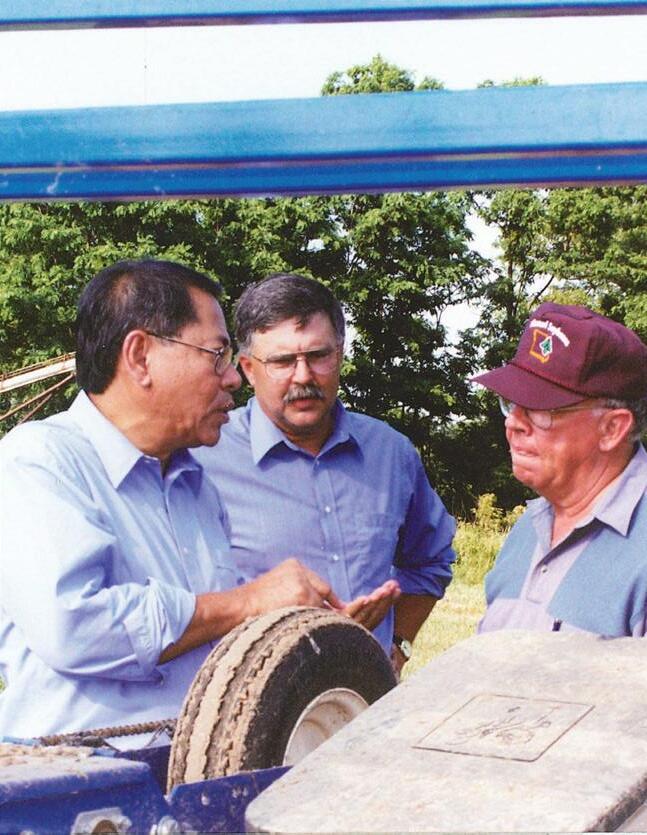
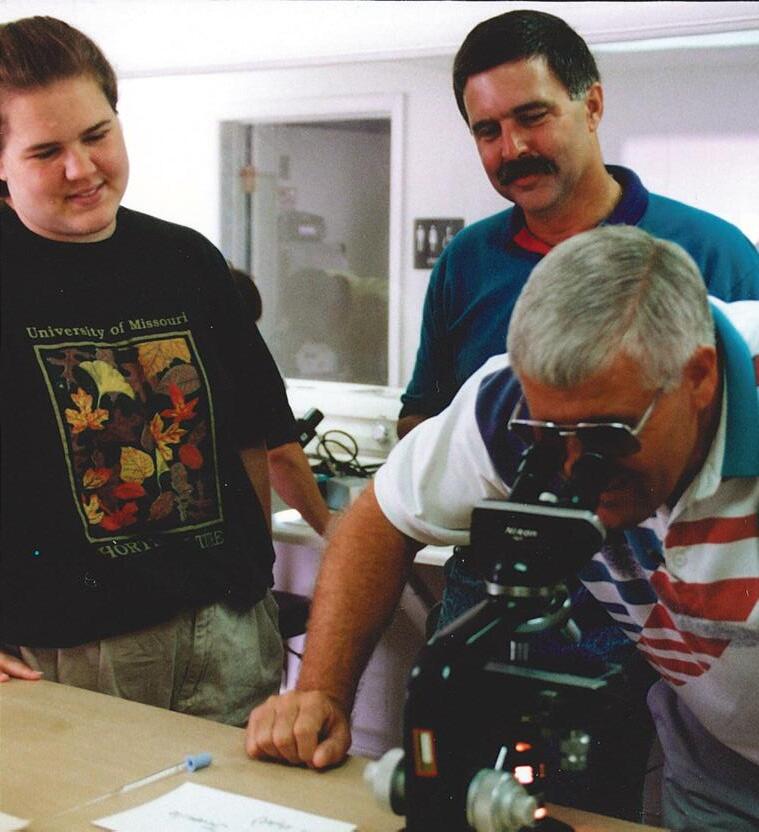
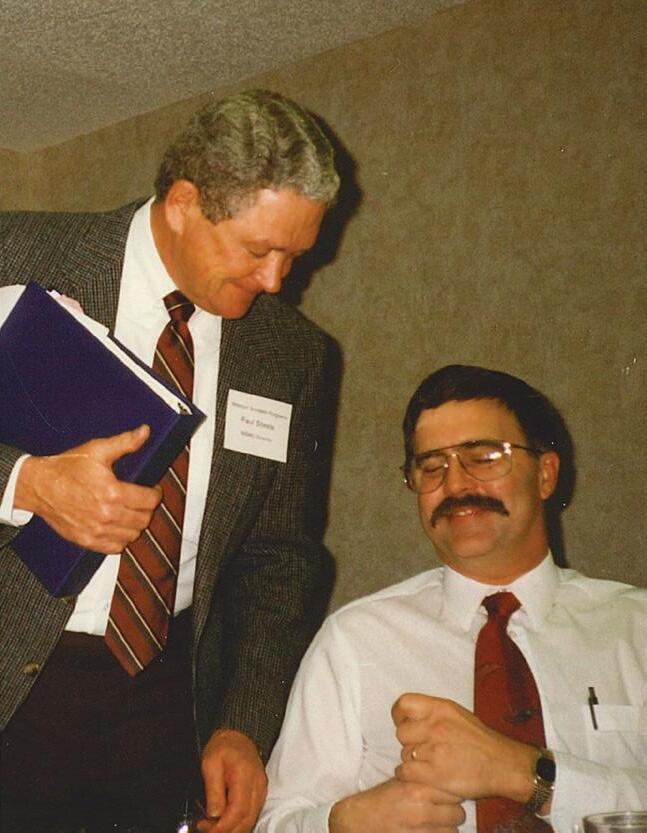
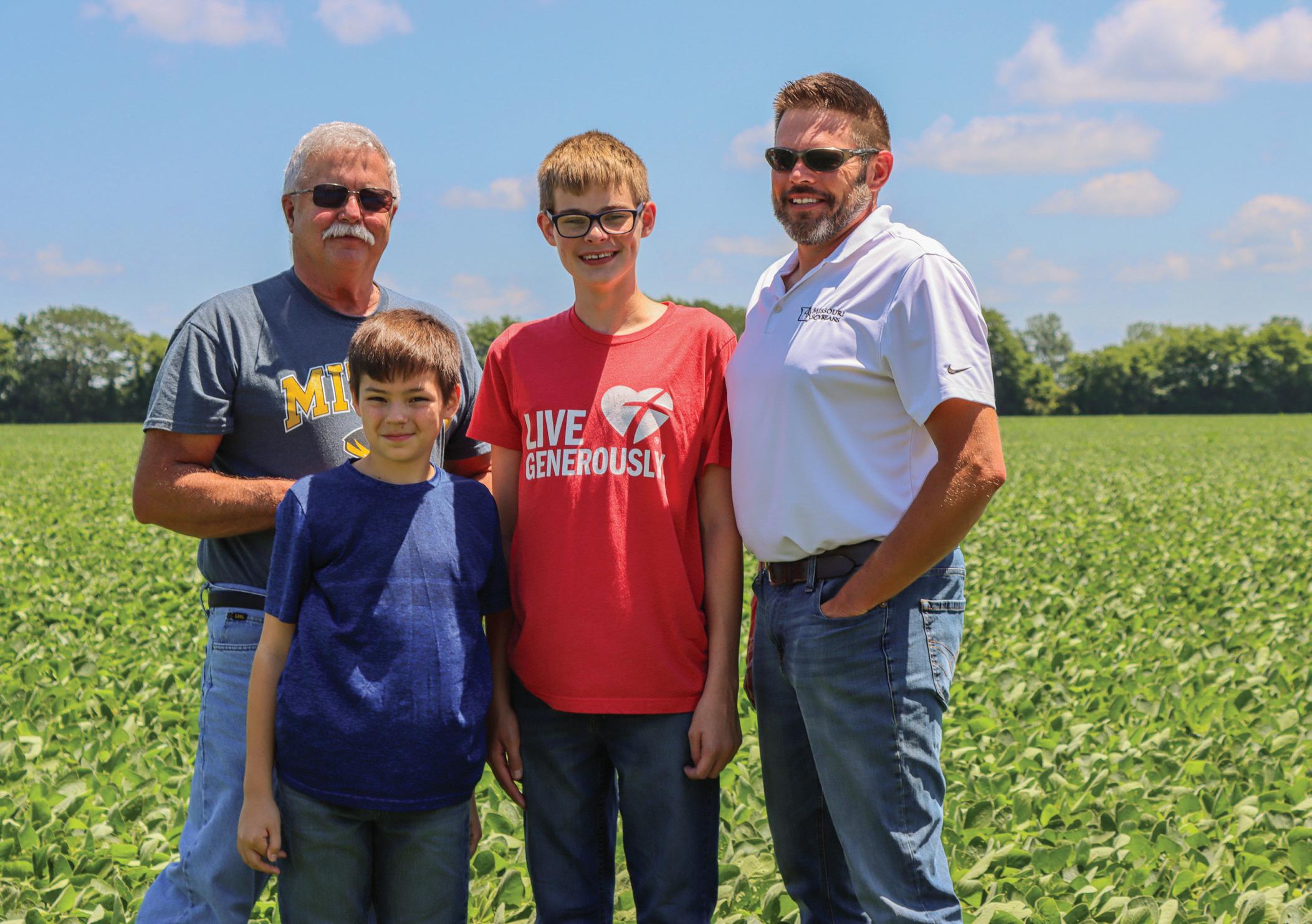
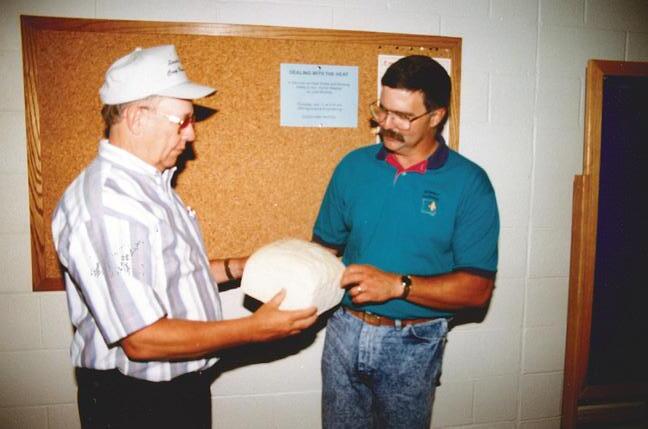
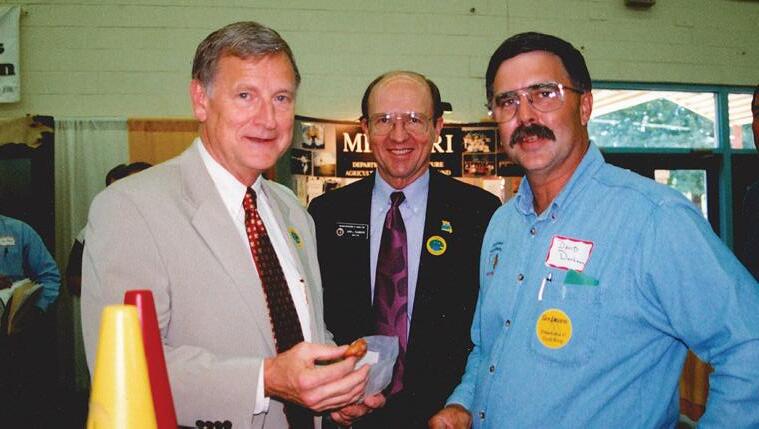
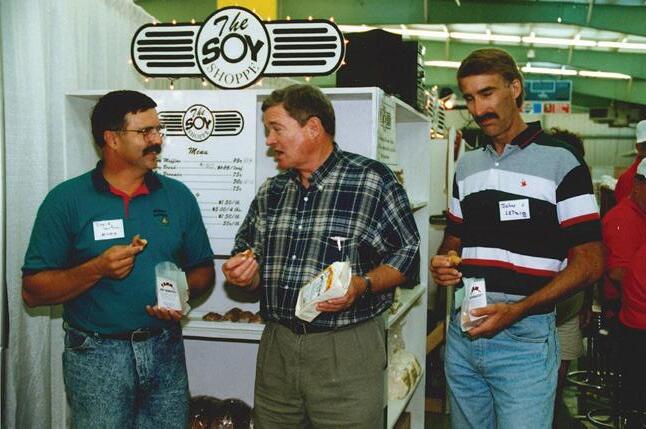
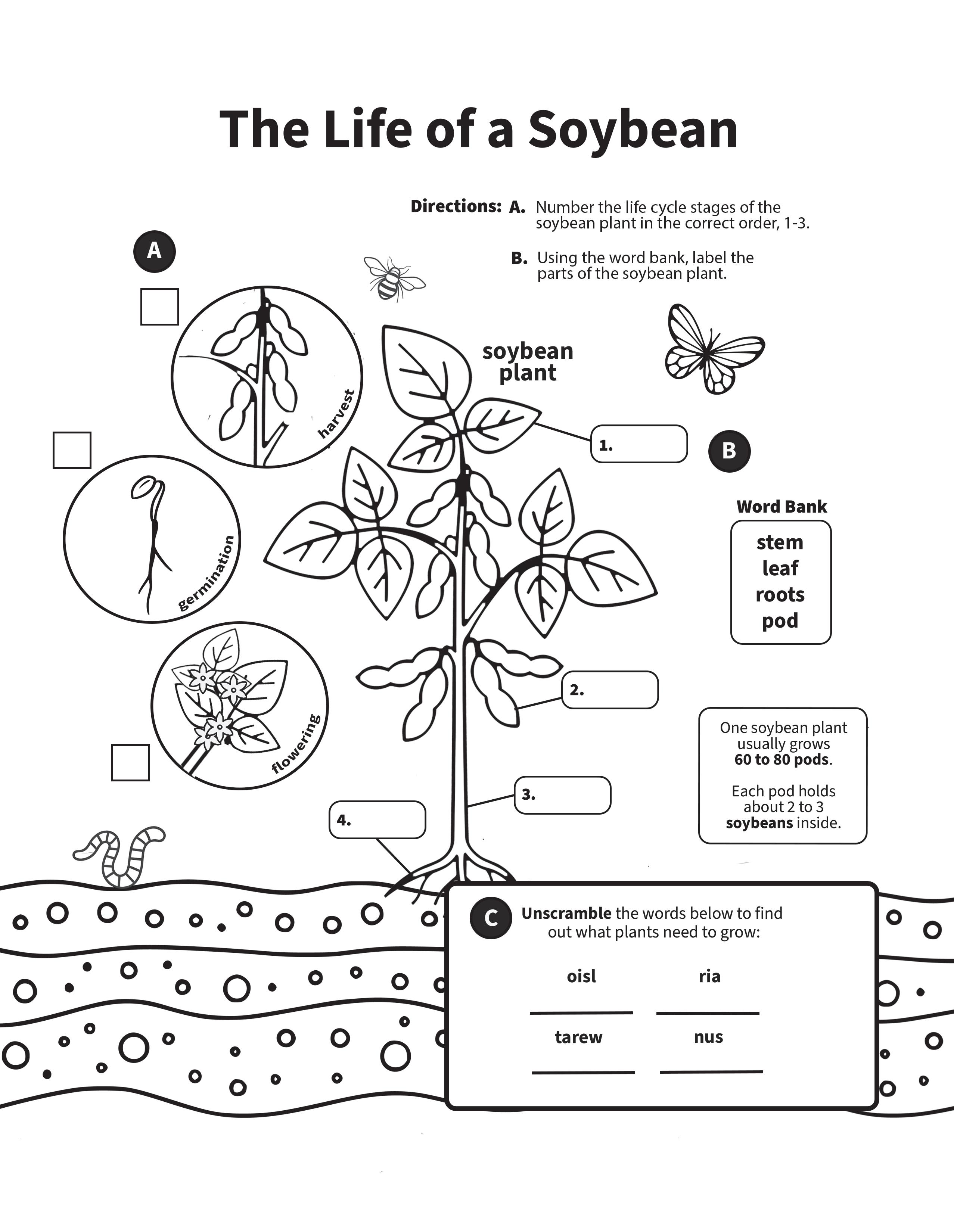
Key:
a) 3, 1, 2; b) leaf, pods, stem, roots; c) soil, air, water, sun








Generators pose electrical risks, especially when used during inclement weather. Missouri Electric Cooperatives reminds farmers to:
• READ AND FOLLOW all manufacturer operating instructions to properly ground the generator.
• NEVER use a generator in a puddle or standing water and never touch with wet hands.
• TURN OFF portable generators and let them cool down before refueling. Never refuel a generator while it is running.

• STORE FUEL for your portable generator in a container that is intended for the purpose and is correctly labeled as such.
• KEEP CHILDREN AND PETS away from the generator, as it could burn them.
• OPERATE your generator once a month for 10 minutes to ensure it is running properly.

Learn more at moelectriccoops.com

IndustryIntern to from Devyn Keller
A Career Rooted in Agriculture
Communications as a Career Foundation
"Every person in agriculture has a story to tell.”
For Brandelyn Twellman, strong communication has remained a constant as her career has evolved.
A Missouri Soybeans communications intern in 2018, Twellman gained hands-on experience that helped shape her professional path. She took on a wide range of responsibilities — including writing stories for the magazine, social media management and on-farm interviews — which continue to influence her work today.
“My internship with Missouri Soybeans taught me how to connect with farmers in a way that helps me share their story,” Twellman said.
Twellman now works as a freelance content creator, developing social and magazine content across the agriculture industry. In addition to her professional work, she and her husband farm while raising their two children, giving her a personal and professional connection to the stories that she tells.
One of the most impactful aspects of her internship was the shift in perspective toward farmer-facing communications.
“Before this experience, I saw agricultural communications as consumer-focused,” she said. “Spending time creating farmer-facing communications taught me the value of knowing your audience and not forgetting the boots on the ground.”
Twellman views storytelling as an opportunity to share the heart behind the agriculture industry, both within the industry and beyond. As part of a farm family herself, she is proud of the work being done each day, and she knows that others are, too. That pride is her motivation to continue sharing farming perspectives.
Twellman’s journey reflects how Missouri Soybeans’ internship program builds communicators who continue to tell agriculture’s story long after their internship ends.
“The importance of telling agriculture’s story has not changed.”
Kyle Durham has spent more than two decades farming, but the importance of communication has remained a constant throughout his career.
As a Missouri Soybeans communications intern in 2000, Durham created and presented a Missouri Soybeans program to educate students about the organization, planned farm broadcasting events and developed content for the Missouri Soybean Farmer magazine. One professional expectation from that time has stayed with him ever since: brevity.
“One of the professional expectations that stuck with me was being precise and concise with language, especially in a written format,” Durham said.
Today, that lesson continues to guide his work. While farming full time for more than 20 years, Durham has found it increasingly important for consumers to hear directly from the farmers.
“Production agriculture continues to enjoy high marks from the public when it comes to authenticity and trustworthiness,” he said.
Through his service on the Missouri Soybean Merchandising Council and the United Soybean Board, Durham represents the soybean industry not as organizational staff, but as a farmer. He brings firsthand knowledge and experience to public-facing engagements.
As fewer people have connections to working farms, it’s more important than ever that farmers share not just what they do but also why they do it.
“What motivates me to keep working is the great story agriculture, specifically soybeans, has to share,” he said.
For Durham, telling agriculture’s story is as essential as the work in the field itself. Farmers must tell their own stories, and he credits Missouri Soybeans for his early foundation in communication.
The Power of Storytelling in Agriculture
“Strong communication is vital in connecting farmers”
For Lindsey Robinson-Johnson, storytelling has become the way she connects new innovations back to the field they first began at.
Robinson-Johnson currently serves as the digital content manager for PTx – PTx Trimble | Precision Planting, where storytelling plays a critical role in how new technology is understood and adopted. Through digital content, she helps connect innovation with real-world application by highlighting the growers, teams, and use cases behind precision solutions.
“Storytelling helps bridge the gap between innovation and everyday use in the field,” she said. “By sharing real-world examples, we help growers see how technology can support better decision-making.”
A Missouri Soybeans communications intern during the summer of 2015, she gained hands-on experience crafting stories that connected farmers, industry leaders, and the public. During her internship, she worked on feature stories for the magazine, supported social media efforts, and traveled to events representing the Missouri Soybeans’ - experiences that helped shape her approach to storytelling early on.
“The internship taught me how important it is to be adaptable and communicate clearly with a wide range of audiences,” said Robinson-Johnson.
Robinson-Johnson's career is a reminder that effective storytelling begins with understanding the audience it serves. The foundation built during her Missouri Soybeans internship continues to influence how she connects innovation to the field, long after her internship came to an end.
“Being on the other side of the mic changed my perspective.”
Strong communication skills have shaped Carah Hart’s approach to agricultural communications from the beginning of her career.
Hart entered the communications internship with Missouri Soybeans in 2011 with a strong background in journalism but very little experience in public relations. Her internship experience introduced her to a different side of the microphone – preparing farmers for interviews, pitching stories to the media and shaping messages before they reached the public.
The shift in perspective proved to be valuable. Seeing how stories are built behind the scenes helped her better understand the preparation and clarity required for effective communication. That experience strengthens her work as a journalist today.
“No matter which side of the microphone you’re on, being clear and consistent makes a big difference, and always be available to provide more information,” says Hart.
Hart now serves as an anchor/reporter for Brownfield Ag News, where she covers Missouri, South Dakota and the Delta. Understanding both sides of the process allows her to approach stories with greater context and accuracy so that agriculture’s story is shared clearly and responsibly.
“Storytelling is a powerful way to help people understand what farmers do and why it matters,” she says. “Telling stories about farming can teach others, build trust and impact decisions affecting agriculture.”
For Hart, the most important part of communication isn’t just telling a story – it’s making sure it’s told well. Her internship experience didn’t just teach her the mechanics of public relations; it gave her a deeper appreciation for the importance of accuracy, preparation and transparency.

Bushel by Bushel
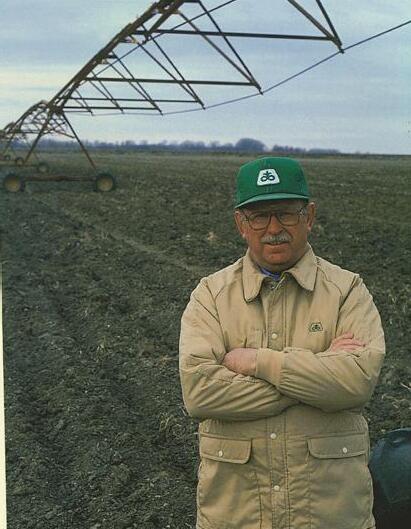
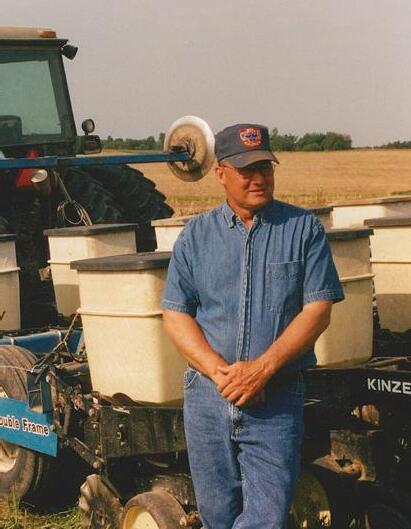
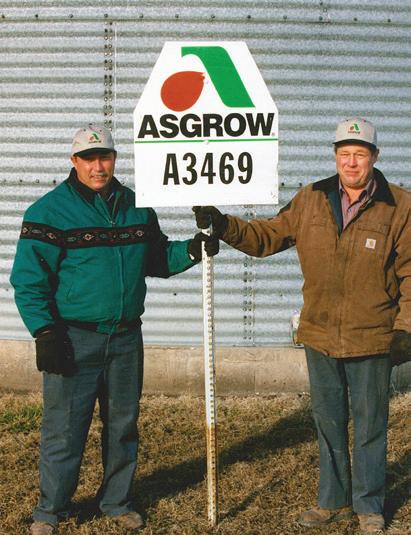
By Ryan Siegel
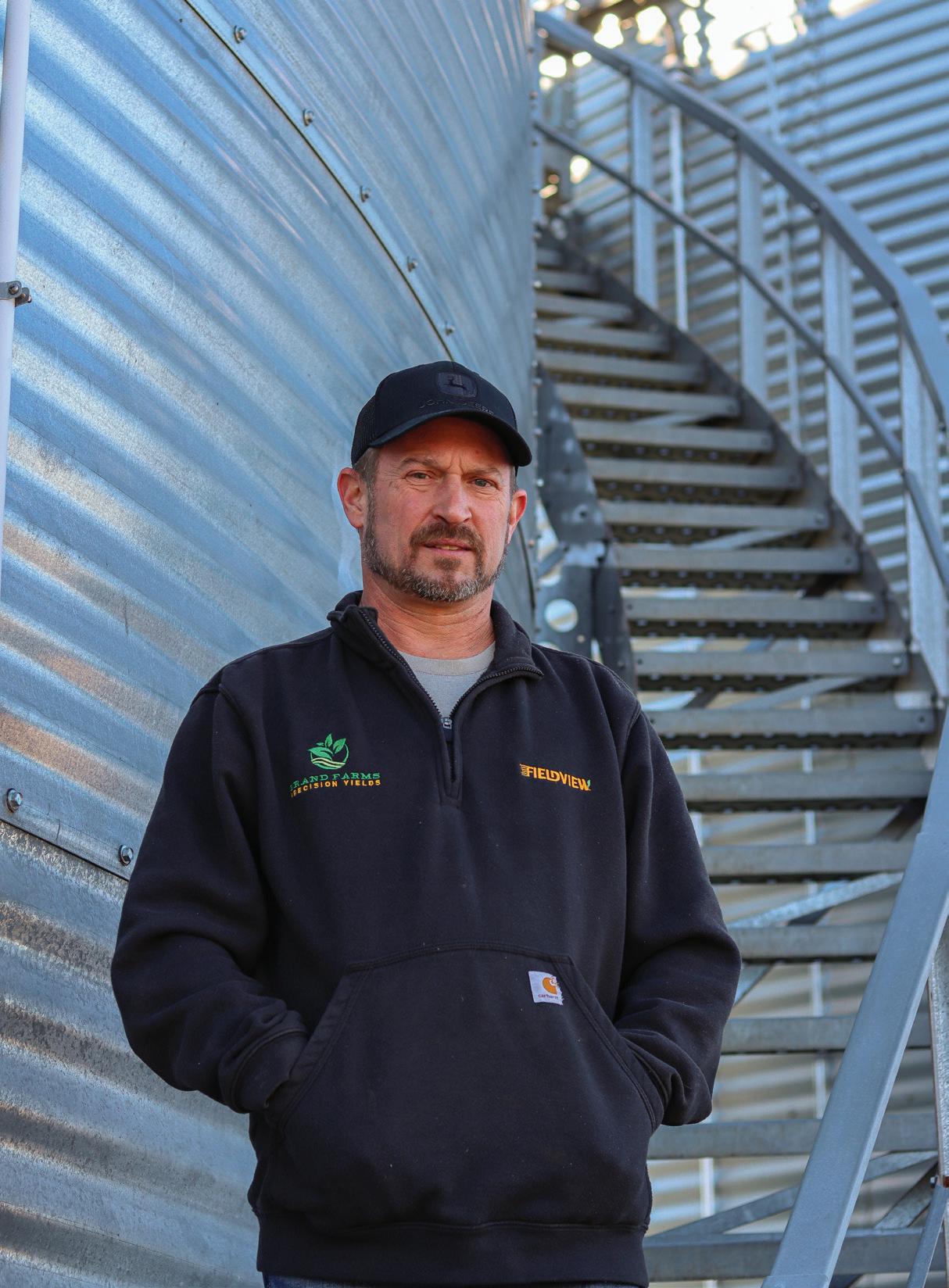
The Missouri Soybean Association Yield Contest has provided 30 years of innovation and record-setting yields.
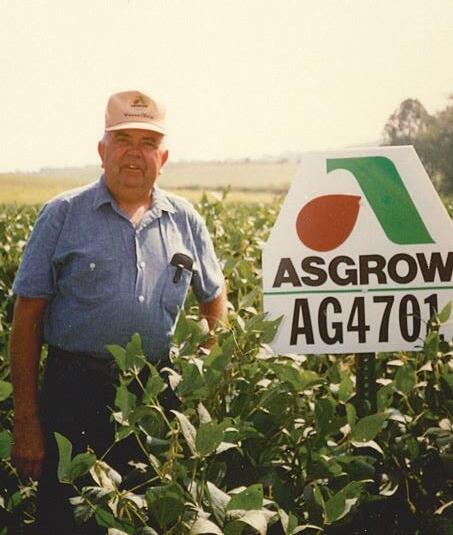
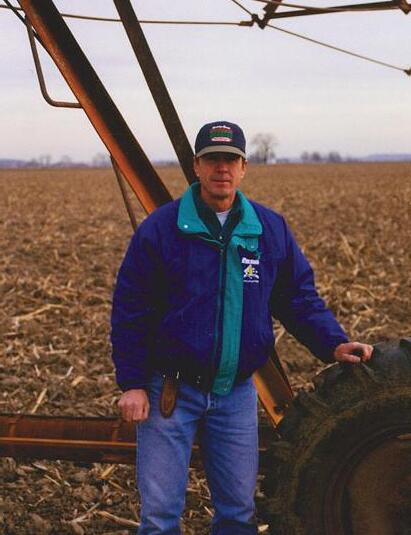
For30 years, the Missouri Soybean Association Yield Contest has been a staple of harvest season. Year over year, farmers have pushed yields higher and sharpened production efficiency to help feed a growing population.
Across the contest’s three decades, the numbers tell a clear story. Kip Cullers of Purdy still holds the record of 160.6 bushels per acre, set in 2010. Compare that to the contest’s first champion, the Weber brothers of St. Charles, who won in 1995 with 68.5 bushels per acre, and the progress is unmistakable. In less than a generation, Missouri growers have nearly doubled what once set the bar.
It’s a testament to curiosity, management and a willingness to try something new — qualities that were built into the contest from the very beginning.
A Legacy of Yields
The Missouri Soybean Association Yield Contest grew out of an idea sparked during a visit to Commodity Classic. Tom Verry, then director of field services for Missouri Soybeans and now director of outreach and development for Clean Fuels Alliance America, said he was struck by the attention given to the National Corn Growers Association Yield Contest and believed a similar program could benefit Missouri soybean growers.
“I’d go to Commodity Classic and see the corn guys with all their trophies and think, ‘Why don’t we have one?’” Verry asked. “It became a way to highlight Missouri’s good farmers, recruit members and make the contest fun and interesting.”
Turning the idea into reality took collaboration. Verry said organizers borrowed an outline from Minnesota Soybean, worked with the Missouri Corn Growers, county extension offices and the state soybean specialist to develop the rules.
“Verifying yields was the hardest part,” he said. “But extension officers were incredibly supportive.”
Thirty years later, the contest stands as a marker of both innovation and competitiveness — and nowhere is that clearer than in the tactics farmers have tried along the way.
“When you look back at the early years and compare them to today, the top yields have basically doubled,” Verry said. “That’s a testament to Missouri soybean farmers and agricultural innovation.”
When
you look back at the early years and compare them to today, the top yields have basically doubled. That’s a testament to Missouri soybean farmers and agricultural innovation.
Tom Verry
Talking Tactics
From Coca-Cola to homemade foliar mixes and everything in between, the tactics of Missouri’s yield contest winners have never stayed the same for long. Each era of the contest reflects what farmers were learning, questioning and willing to risk at the time.
In 1995, the Weber brothers relied on a fundamentals-first approach centered on soil fertility. They soil-tested every two years, applied nutrients as needed and planted Asgrow 3935 at 48 pounds per acre in 7.5-inch rows, crediting their success to good ground and good management — a view shared by other early winners.
By 2000, approaches were beginning to diversify. Gregory Wommack of Silex won with 84.44 bushels per acre, planting MorSoy RT 3928 SCN in late April on 15-inch rows at 215,000 plants per acre. He was also an early believer in deep soil testing, down to 16 inches, and tailored fertility to match.
Some years, conditions mattered most. In 2005, Fairfax farmer Richard Oswald topped the no-till category with 82.71 bushels per acre, pointing to ideal weather as the deciding factor.
Then came 2010. Cullers shattered records with 160.6 bushels per acre using Pioneer 94Y71, crediting early planting and the use of Cobra herbicide to shorten internodes and promote more blooms. That same year, Norborne farmer Frank Raasch drew attention by mixing Coca-Cola with a reduced rate of Cobra, a tactic he said helped shorten internodes and reduce disease pressure in no-till fields.
By the mid-2010s, collaboration played a larger role. The Hinkebein family of Chaffee, longtime competitors and 2015 winners, pointed to effort and information-sharing as key advantages. By 2020, growers like Gary Porter emphasized improved inputs and fertilizer decisions driven by soil testing.
Thirty years in, the tools may have changed, but the mindset hasn’t. Missouri farmers are still experimenting, still comparing notes and still pushing what’s possible.
Those same traits — experimentation, adaptation and attention to detail — continue to shape the contest today.
Beans by ‘Brand’
Tim Brand, a farmer from Chariton County, won the 2025 Missouri Soybean Association Yield Contest with a yield of 105.43 bushels per acre. He planted Asgrow 40XF1, a Group 4 XtendFlex soybean variety known for strong performance across a range of soil types and reliable early growth.
But Brand said the variety alone didn’t drive the result. His success came from a season-long, hands-on approach that emphasized being in the field and responding to the crop as conditions changed.
Continued on page 44...
“It was boots on the ground all year,” Brand said. “I focused on every growth stage, from R1 through R6, and made decisions based on what the crop needed, not just what the calendar said.”
That attention mattered in a year that tested many growers. While the growing season began with optimism, dry conditions in August affected crops during the final stages of development. Even so, the 2025 contest drew 55 entries and averaged 82.75 bushels per acre.
“The season challenged growers late, but they still showed up for the 2025 yield contest,” said Dylan Anderson, field services manager for Missouri Soybeans. “While August dryness limited yields, the quality of entries and overall participation speak to the commitment of Missouri soybean farmers.”
Brand encountered those challenges firsthand, but early planting helped protect his crop from the worst of the late-season stress.
“Those beans were planted March 28, so we were almost done by August,” Brand said. “The dry spell probably cost me 5 to 10 bushels, but being planted early helped us avoid the worst of it.”
For Brand, the win represents more than a single season. It’s part of a longer process of learning, setting goals and pushing past assumptions about what soybean yields can be.
“I was always told a bean is a bean, and 60 bushels was about all you were going to get,” Brand said. “The yield contest showed me that wasn’t true. It gave me a way to measure progress, set goals and see what was possible year over year.”
Brand’s approach reflects how the contest has evolved over time — and offers a glimpse of how Missouri soybean farmers will continue to push yields forward in the years ahead.
The Next 30 Years
What the next 30 years of the Missouri Soybean Association Yield Contest will look like remains to be seen. What’s clear is that the contest has become more than a competition. It’s a place where ideas are tested, lessons are shared and farmers are recognized for the work they put in year after year.
At its core, the contest reflects the grit, innovation and persistence of Missouri soybean growers — farmers who keep pushing forward, even when the season doesn’t go as planned.
Verry reflected on the mindset that has carried it forward.
“We can only grow our industry as much as American soybean farmers can grow soybeans, so anything that helps them do more with less matters,” Verry said. “Farmers think long term. They think in generations, not quarters, and that mindset is what drives progress. It can’t be one-size-fits-all. Farmers need the freedom to figure out what works on their own farms, just like they do in the yield contest.
“If it’s done right and the market is allowed to work, this effort will make soybean farmers even more productive and efficient,” he said. “Soybeans are a tough crop that find a way to win, and farmers do the same.”
For more information visit mosoy.org.
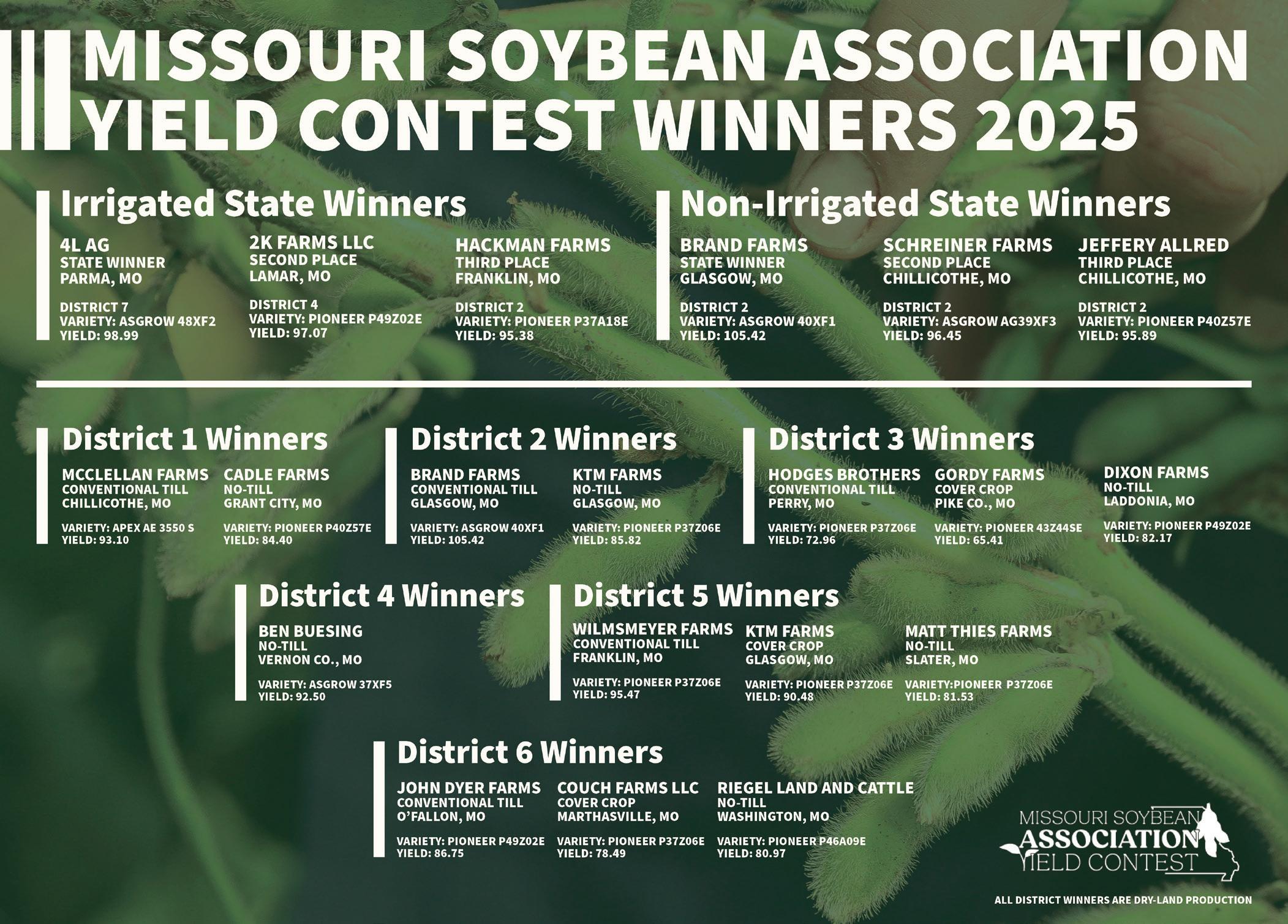
LOCK IN WEATHERPROOF NITROGEN WITH THREE MODES OF ACTION.


FEED MORE N

BOOST NUTRIENT UPTAKE

AMPLIFY YIELD POTENTIAL
Introducing new Pivot Bio PROVEN® G3, featuring the only gene-edited microbe that continuously fixes nitrogen in the presence of synthetic N. PROVEN G3 attaches directly to the roots and keeps working across soil types and weather conditions with three modes of action that deliver steady nutrition when and where your crops need it most.
LOCK N AND LEARN MORE.
PLANTING THE NEXT from BIOSTL 30 YEARS
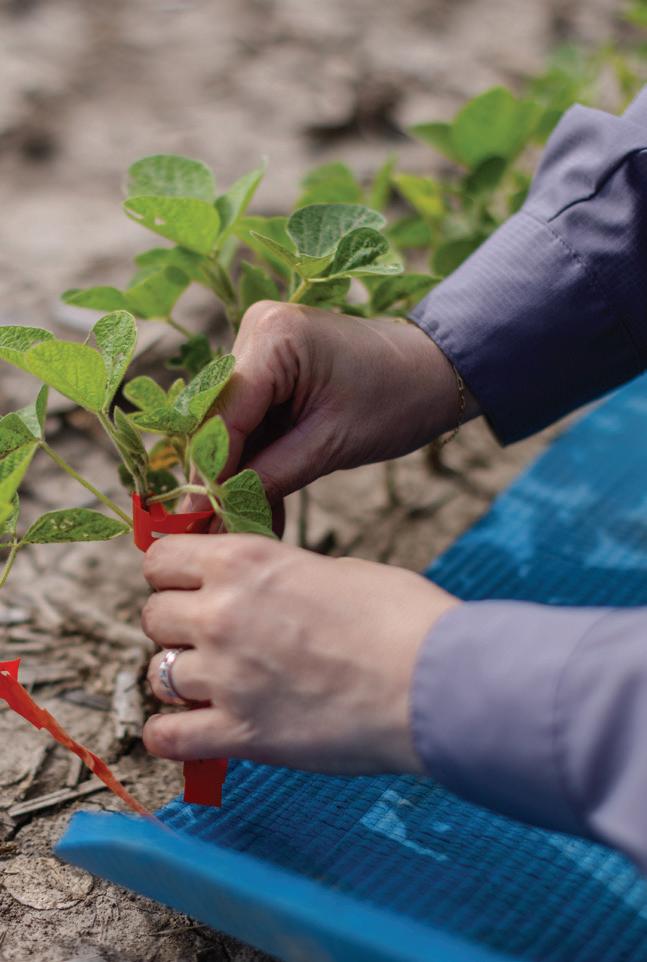
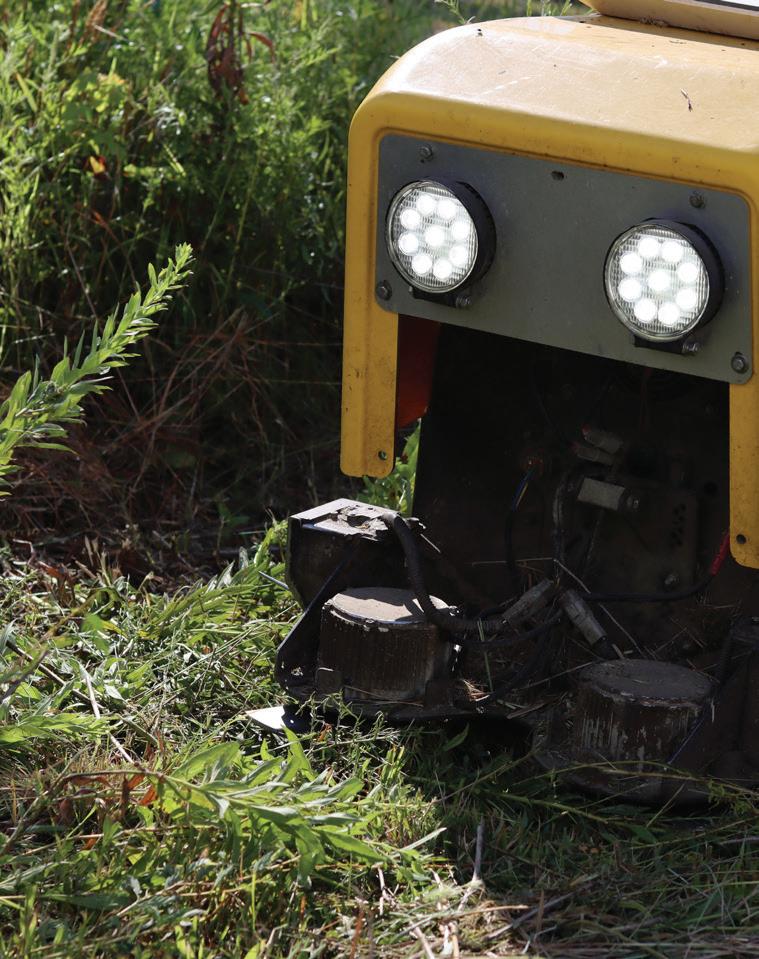
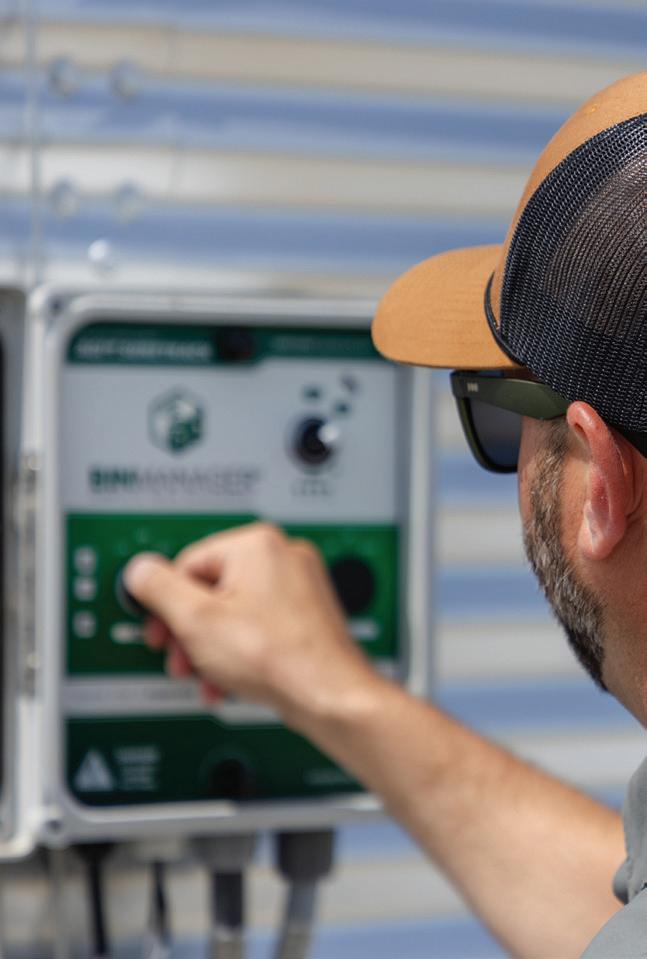
We have seen tremendous advancements to soybean production in the past 30 years, but we should expect to see innovations at an accelerated pace and with greater impact to our favorite crop during the next 30 years. Innovation and improvements are not just “nice-to-have;” they are essential to maintain and improve outcomes — profitability for farmers, competitiveness against other soybean-producing countries, feeding animals that nourish us and fulfilling demand for both domestic and export markets for a growing list of industrial uses.
Soybean innovations during the next 30 years will likely follow a common theme – precision through AI (artificial intelligence).
Precision-breeding methodologies will prove successful through the continued release of superior varieties with more resilient traits. Breeders are utilizing AI and advanced data analytics to guide breeding programs through incorporating more genotypic and phenotypic data than ever before. Precision planters tracking
placement of individual seeds allow for overlaying data collection through drones or even satellites along with numerous environmental features, and AI models have the capacity to make sense of mind-boggling amounts of data to efficiently drive breeding advancements and variety product placement. The past 30 years have shown genetics are a critical component to seed, whereas traits are just as important. Trait development will look significantly different from the past. Gene-editing technologies will enable precise modifications to turn specific genes on and off, to over-express pathways or to silence unfavorable functions. The regulatory burden for gene editing will be significantly lower than transgenic/GMO traits in recent decades, supporting the rapid development and commercial launch of various types of gene-edited traits. Examples of traits will include improved crop resiliency, improved/healthier compositional value, tolerance to pests and, most importantly, increased yield potential. The combination of AI in breeding and trait discovery will unlock new varieties to provide farmers more choices and tools to combat ever growing challenges in their fields.
Continued on page
































Missouri delivers real advantages for growing food and beverage companies— advantages that strengthen the entire state. A thriving food and beverage industry means more jobs, stronger supply chains, and vibrant communities that benefit from shared growth.
By helping companies find their perfect fit in the Show-Me State, Missouri Partnership works to ensure that industry growth lifts everyone—from producers and processors to distributors and consumers.
Visit missouripartnership.com to learn more.

Every year brings obstacles to soybean farmers. Weather has been and will become even more problematic as climate patterns continue to shift and become increasingly uncertain. Though we should not expect to dictate or change the weather, we should expect to have improved weather forecasting to give additional insights for planning for challenges ahead of the season. Expect to see major innovations in crop resiliency to fight against weather and environmental challenges. Varieties developed through precision breeding coupled with gene-edited traits targeting heat and drought stress will find their way onto farms and will provide for higher yields and better returns than varieties lacking these traits. Resiliency traits may include optimizing photosynthesis pathways even through stress, reduced transpiration and larger or deeper root systems to find and make better use of water and nutrients. Changes to the climate will also introduce completely novel diseases and/or diseases our state is not accustomed to seeing. Though we may not stop these pests from showing up in the first place, advancements in risk assessment and disease monitoring will provide precise projections into when specific pests will show up along with the proper recommendation of specific crop inputs to fight against them.
Crop inputs will undoubtedly be a critical category to follow in future years. While traditional chemical inputs may see additional scrutiny and fewer new ingredients introduced, biological inputs will try to fill gaps. Biological products will not be a black box. These types of biological products will gain market traction through precise product understanding leading to optimal product placement. A product will be known to alleviate a certain type of stress, to aid in nutrient uptake or to activate the native soil microbiome. Consistency issues will be overcome as AI enables biological developers to target specific environmental and agronomic conditions where the product’s function will significantly increase their win rates and lead to the necessary return on investment for the farmer. Biocontrol products including biofungicides and bioherbicides will become significant players in optimal application rotations to prolong efficacy of both the chemical and biological products. Other traditional inputs will receive upgrades, from both modifications to the inputs themselves as well as prescriptions on management applications through AI.
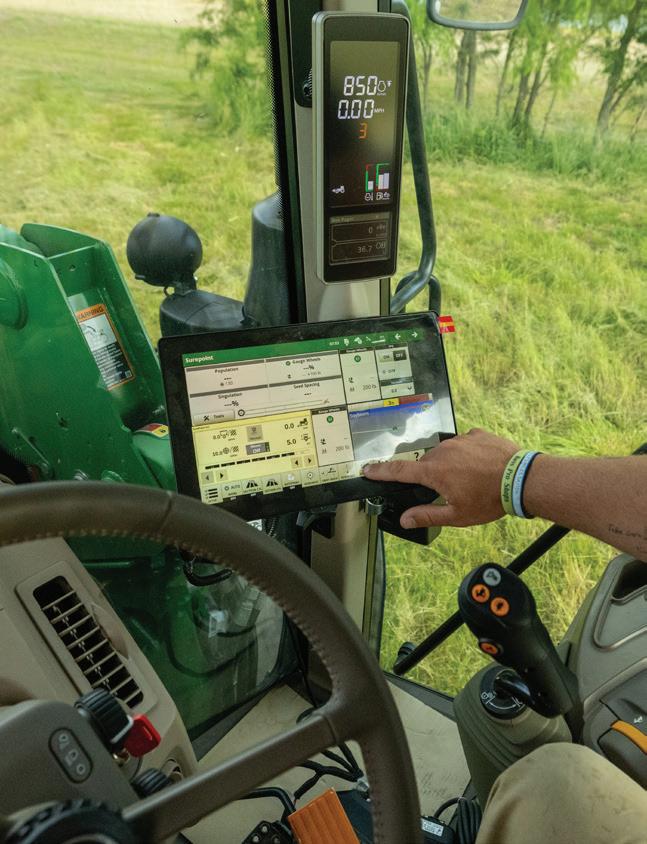
We will see innovations developing forms of fertilizers and nutrients that are more plant-ready with higher use efficiencies through environmental stability and activated by the plant with precise cues. While nanotechnology for crop inputs is not a new area of research, advancements to production cost of goods may bring it to market to enable significant reductions in nutrients or active ingredients. Crop inputs will be an exciting area to watch as traditional inputs must be modernized or risk being overtaken by new categories.
Farmer data will reign supreme. Precision data collection and rapid analysis through AI models will drive more recommendations than in the past. Platforms will enable data from farms to be ingested, combined with similar geographies, environmental features, agronomic practices or other data layers to provide precise recommendations to the challenging decisions that need made in real time to optimize farm results. Farmer data and privacy must be protected along the way. Input data will come from every piece of equipment traveling through the field by adding cameras and sensors to see overall crop and field health. Drones will continue to capture observations, but advancements will enable additional precision to accompany the abundance of satellite imagery. Outputs already enable selective spraying herbicides, but this vast data will also improve real-time variable rate nutrition or biological product applications based on field and soil conditions as well as crop health. Each and every decision point will have AI-guided insights to support a robust management recommendation.
It may be hard to think the past 30 years could be beat, but innovation in soybeans is strong. With the pace of innovation and opportunities through artificial intelligence, the next 30 years will undoubtedly deliver more and higher impact improvements to soybean production in our state and across the country. Many of the concepts currently under development will become commonplace. Although, perhaps the most exciting innovations are those that are yet to be discovered. With the current pace of innovation, we are likely to see a few of them become foundational for the future of soybean production.

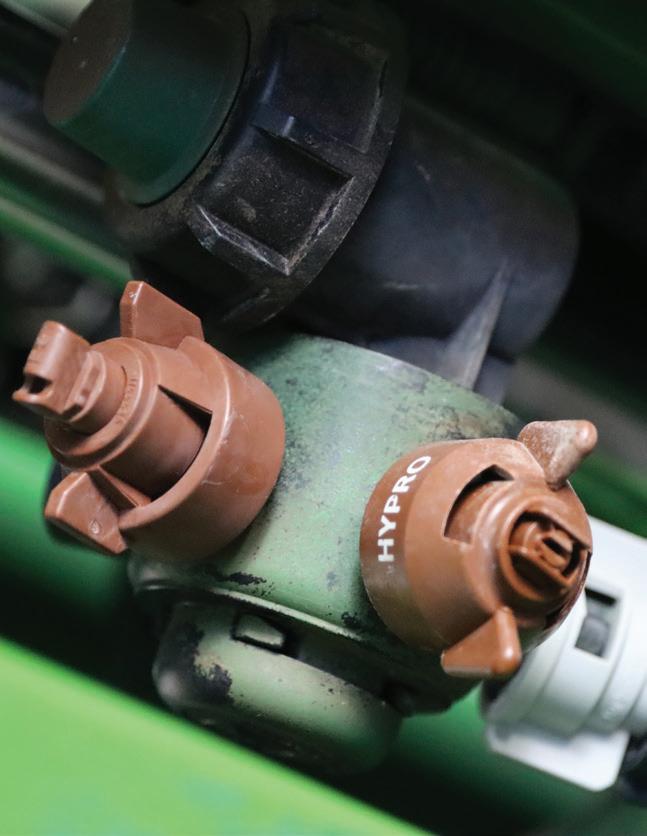

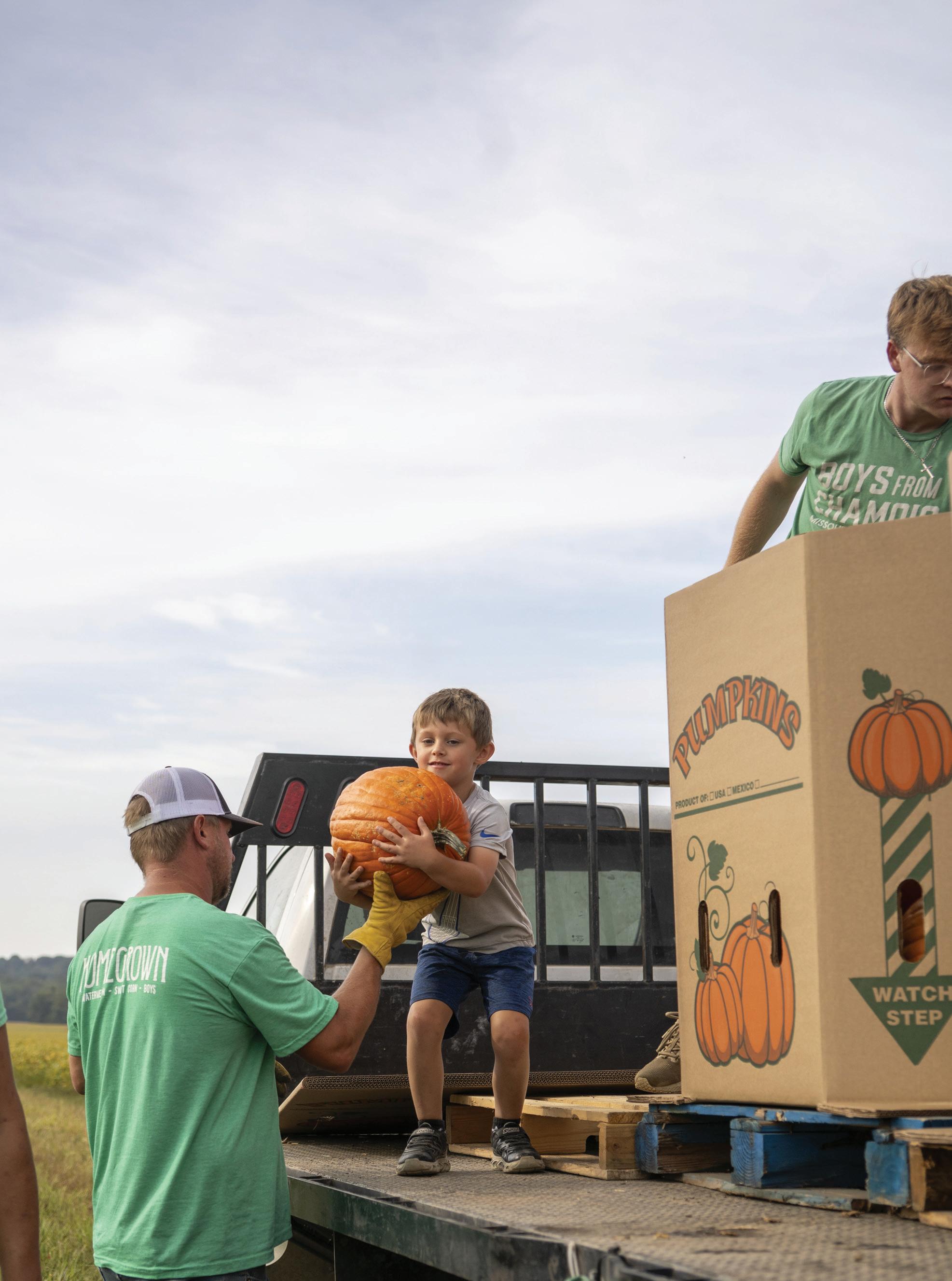
Stewardship Across
Generations
By Emma Alexander | Missouri Farmers Care
For nearly two centuries, the Paulsmeyer family has farmed the Missouri River bottoms with one guiding principle: care for the land today so it thrives tomorrow. That commitment to stewardship across generations earned Paulsmeyer Farms the 2026 Missouri Agriculture Stewardship Award.
The rich alluvial soil of the Missouri River bottoms near Chamois in Agri-Ready Osage County holds the legacy of Missouri River bottom farmer Arthur Paulsmeyer Sr.’s stewardship of the natural resources entrusted to him. His stories are whispered among the timber stands and meander with the river’s curves that mark the end of one field from the beginning of the next. Generations of experience are reflected in how the land is managed, shaped by the river’s curves, timber stands and changing field conditions. Over the generations, Arthur’s farm has evolved, but the legacy remains the same: Each generation prioritizes leaving the land better for the generations to come.
Paulsmeyer Farms was honored as the 2026 Missouri Agriculture Stewardship Award recipient, presented by the Missouri Farmers Care Foundation. The award recognizes the high bar set by farmers and ranchers for careful and responsible management of the land, natural resources and animals entrusted to their care.
“In agriculture, our greatest resource is the land, and as farmers, it is our duty to be good stewards of that land for future generations,” said Mark Lehenbauer, chairman of the Missouri Soybean Merchandising Council. “Sustainability is one of the top priorities for our organization, and it’s outstanding to see the spotlight on farm families who are truly living the example of stewardship.”
River Bottom Roots
Paulsmeyer’s ancestors planted their first crop in the Missouri River bottoms in 1837 and put down roots near Chamois in the 1880s. Arthur Paulsmeyer Sr.’s farm included crops, livestock and poultry in the early 1900s.
Today, Paulsmeyer Farms Inc. encompasses 3,500 acres under the care of Arthur Sr.’s grandsons, Roger and Duane; great-grandsons Matt, Alex, Ben, Eli and Marty; and great-great-grandson, Grayson. The family grows corn and soybeans and maintains a herd of commercial cattle. A legacy of work ethic and stewardship guide the family as they use modern technology to strengthen and sustain the operation.
“Generations of Paulsmeyers have exemplified the best of Missouri agriculture — deep respect for the land, commitment to innovation and dedication to family and community,” said Ashley McCarty, executive director of the Missouri Farmers Care Foundation. “Their stewardship honors those who came before them and invests in the generations who follow.”
Learning from the Land
“The best part of growing up on the family farm is experiencing firsthand how food gets to the table,” said 16-year-old Grayson. “The modern technology we use makes work on the farm more efficient.”
The best part of growing up on the family farm is experiencing firsthand how food gets to the table. The modern technology we use makes work on the farm more efficient.
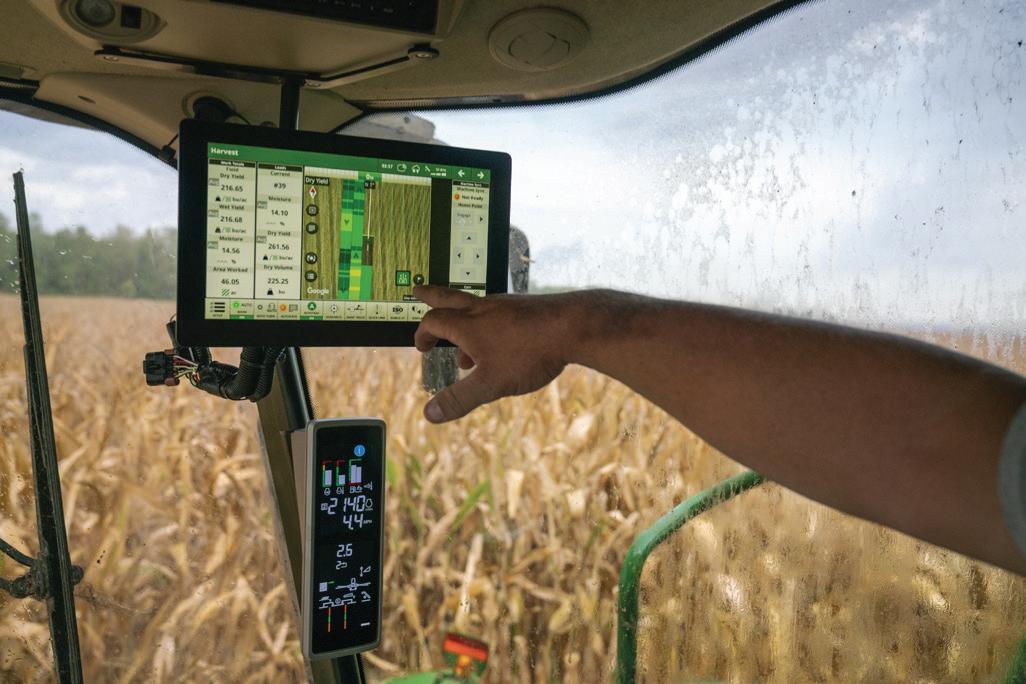
Paulsmeyer Farms uses drones to reduce water consumption and soil compaction while allowing for precise applications. Track implements are used to protect soil, while autosteer and AutoPath technologies improve accuracy and reduce fuel use. Rotational grazing supports forage recovery, biodiversity and environmental health.
River bottom farming is dynamic, and the family leverages generational knowledge of land management, flooding and conservation practices. Landforms and land use, such as timber stands, affect growing conditions from one end of a field to the other. The Paulsmeyers use data-driven decision-making to guide seeding, fertilizer and pesticide applications. These prescriptions reduce overdependence on inputs while focusing time and resources on practices best suited to their bottomland fields.
Small Town. Big Farm. Bigger Plans.
“Our uncles wanted us to come back to the family farm, but there wasn’t room to support us,” said Ben. To create opportunity for the next generation, the family knew change would be required.
When Ben returned to the farm after college, acres were dedicated to a produce enterprise. Ben partnered with his brothers, Alex and Eli, to start Boys From Chamois, a roadside farm stand that has become a destination in Chamois for fresh, locally grown produce.
Looking to the Future
“The 2026 Missouri Agriculture Stewardship Award recognizes the hard work and dedication of our family through the generations,” said Grayson, who plans to become an eighth-generation Missouri River bottom farmer.
Arthur Paulsmeyer Sr.’s work ethic, innovation and values continue to guide the sixth, seventh and eighth generations as they manage land stewardship, leadership and farm succession along the Missouri River.
Is Your Farm the Next Missouri Agriculture Stewardship Award Recipient?
-Grayson Paulsmeyer
Missouri Farmers Care, in partnership with the Missouri Soybean Merchandising Council, Missouri Corn Merchandising Council, The Poultry Federation, USDA NRCS and additional partners, annually presents the Missouri Agriculture Stewardship Award. Nominations for the 2027 award are now being accepted at mofarmerscare.com/ agstewardshipaward.


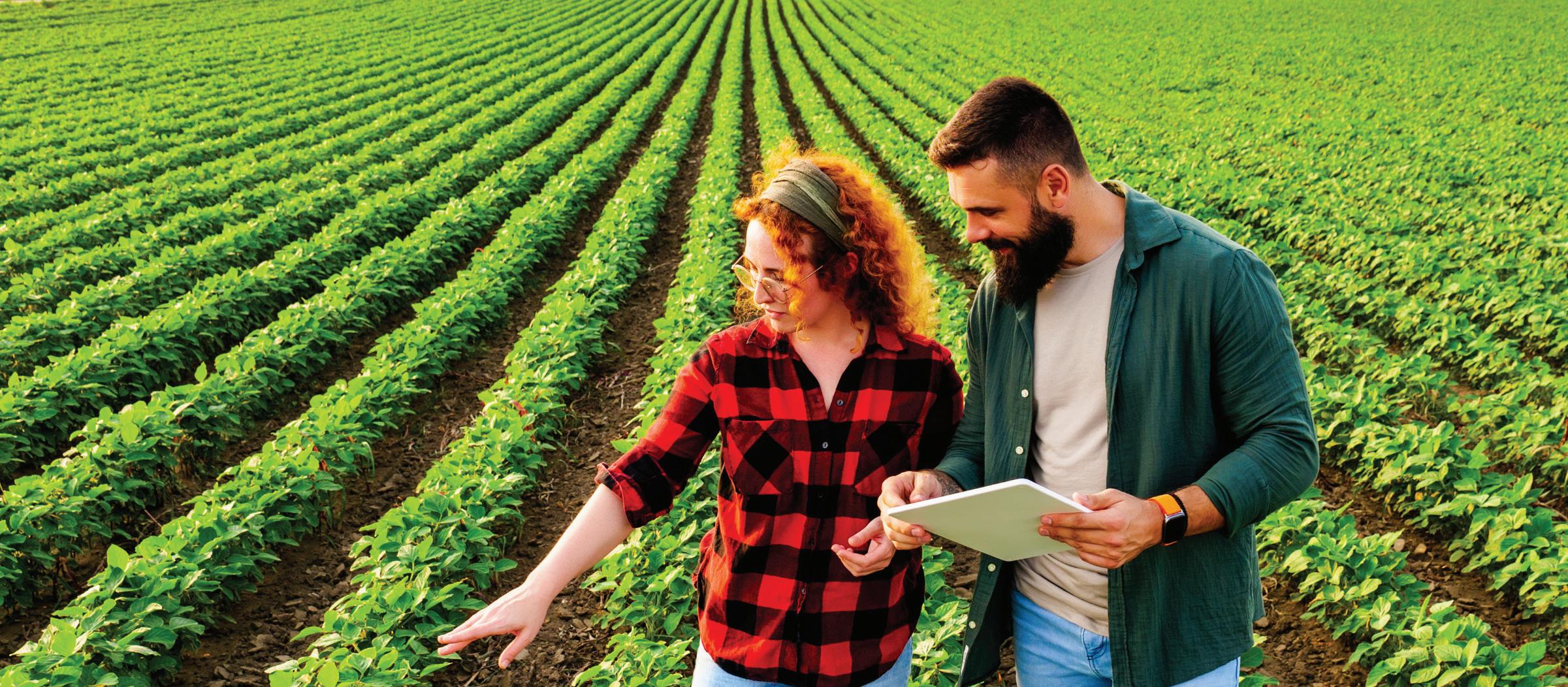


We have built deeply rooted rela�onships with farmers and an unmatched opera�ons footprint that connects them to consumers around the world. We celebrate those connec�ons as we create meaningful possibili�es and develop innova�ve solu�ons for food, feed and fuel which foster a be�er and more sustainable world for everyone. Learn more about Bunge at bunge.com