TWO WINTER STORMS, TWO DIFFERENT OUTCOMES
Late on the night of Jan. 23 and into the early morning hours of Jan. 24, 2026, Winter Storm Fern began tightening its grip across much of the country. What started as forecasted cold temperatures quickly expanded into a widespread system of ice, snow and subzero air stretching from the Midwest into the Southeast and eventually pushing demand higher in the Northeast. As conditions worsened, power systems across multiple regions were placed under strain. For Missouri River Energy Services (MRES), the storm became a real-time test of generation availability and coordination.
“Early on, we weren’t getting any major escalation notices from MISO (Midcontinent Independent System Operator) and SPP (Southwest Power Pool),” Austin Hoekman, MRES director of energy supply and operations said. “We knew it was going to be cold, but nothing suggested it would turn into a significant event.”
That changed late that night. Around 11:30 p.m., market alerts escalated, and by 3:30 a.m., MISO had declared a higher-level energy emergency. Municipal generation units in MISO were called upon to start at 6 a.m., giving operators only a few hours to coordinate.
At the same time, MRES was managing an unexpected outage at its 280-megawatt share of the Laramie River Station in Wyoming. A mechanical issue had sidelined the unit just days before the storm.
“It was really unlucky timing that it happened the week we needed it most,” Hoekman said.
For all the units called to run, fuel supply was not a concern, thanks to preparation following earlier winter events. “We were prepared and our operators worked really well with suppliers to ensure we had enough to run,” he said. “Fuel never became the issue for us. We learned from Winter Storm Uri in 2021 and made sure we were proactive.”
Continued on Page 2.
“We were prepared and our operators worked really well with suppliers to ensure we had enough to run. Fuel never became the issue for us. We learned from Winter Storm Uri in 2021 and made sure we were proactive.”
- Austin Hoekman
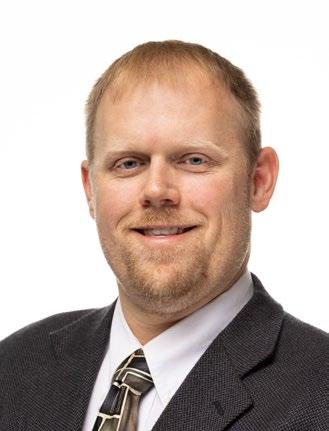
Austin Hoekman, director of energy supply and operations
Even so, additional mechanical challenges at other units added pressure. Market prices rose during Fern, but not to historic levels. “It was a storm we were well equipped to handle,” he said.
The contrast with Winter Storm Uri in February 2021 is significant. Uri was largely centered in the Southwest Power Pool (SPP), where extreme cold settled over southern SPP and Texas for several days. Natural gas production froze, wind generation dropped sharply and many gas-dependent plants were forced offline.
“The biggest factor during Uri was that it hit squarely in SPP,” Hoekman said. “And because of how our portfolio has evolved over the last 40 to 50 years, we had surplus generation in that region.”
Even in the colder winter months, MRES had more generation available in SPP than it needed to serve its own load, including its share of Laramie River Station, along with Exira, Watertown and behind-the-meter generation and the units performed reliably during the event.
WINTER STORM URI
WINTER STORM FERN
The maps show the widespread reach of two major winter storms that tested the power grid in different ways. Winter Storm Uri in February 2021 centered on the Southwest Power Pool region, where extreme cold disrupted natural gas production and forced many power plants offline. Winter Storm Fern in January 2026 spread into the Southeast and Northeast, increasing energy demand and placing strain on multiple power systems. Together, the storms highlight how different weather patterns and system conditions can create unique challenges.
Fuel supply was not a constraint during Fern, reflecting proactive planning and lessons learned from prior winter events, like Uri. Even so, additional mechanical challenges at other aging facilities added operational pressure. While market prices increased during Fern, they did not reach the extraordinary levels seen in Uri. As a result, the financial outcome was less favorable than in past events, though reliability was maintained and no negative rate impact is projected for members.
Together, Fern and Uri show how two winter storms can have different impacts. Uri demonstrated the financial benefit of surplus generation during a southern states market crisis. Fern highlighted how the unexpected loss of a major resource during a MISOdriven event can shift the outcome, even with strong preparation and fuel planning.
“Our hedging program performed as expected,” Hoekman added. “It’s not projected to have a negative rate impact for members.”
In both storms, reliability remained the priority. “These winter events are serious,” he said. “We plan for them every year. The goal is always to keep the lights on and protect our members.”
LINEWORKERS ANSWER CALL DURING WINTER STORM FERN
When Winter Storm Fern swept across more than half the country, lineworkers from MRES member communities in Minnesota answered the call. Crews from ALP Utilities, Hutchinson Public Utilities Commission, Marshall Municipal Utilities, Moorhead Public Service and Detroit Lakes Public Utilities were among those dispatched to North Carolina to support public power communities following widespread outages. Their rapid deployment highlights the strength of mutual aid and the shared commitment of public power utilities to step up when communities near or far need assistance.
COLD AIRMASS
TRANSMISSION
FROM THE EXECUTIVE TEAM: THE WHAT, WHY AND WHEN OF THE MEMBER POWER SALE AGREEMENT EXTENSIONS
The mission of Missouri River Energy Services (MRES) is to enhance the value of member utilities to their communities by supplying reliable, cost-effective, long-term energy and energy services in a fiscally responsible and environmentally sensitive manner.
The primary way we fulfill this mission is through the long-term power sale agreements we have with our 61 member communities. Fifty-eight of these agreements are often referred to as the “S-1 Agreements” because they are the means by which MRES provides members with supplemental power, or the additional power needed to serve our members’ loads beyond what is provided by the Western Area Power Administration, their primary power supplier. The other three agreements are either full requirements agreements or other long-term power sale agreements.
The first S-1 Agreements were signed back in 1976. They had an initial term of 40 years. Since then, the S-1 Agreements have been amended five times, approximately every 8 to 10 years. The primary purpose of each amendment has been to ensure the term of the agreement is 40 years beyond the current year, while also making any other updates required by developments within the electric industry. Why 40 years? It has to do with bond ratings and financing projects. More on this shortly.
The last amendment to the S-1 Agreements was in 2016, which means an amendment is necessary. If you attended one of the MRES area meetings in October, you received a preview of the upcoming amendment that will be offered to members.
The S-1 Agreements are generally in good shape despite their age, so the changes being proposed are relatively few. As in the past, the primary change will be to extend the term of the agreement 10 years, so that it expires in 2067 rather
than 2057, as is the case under the current agreement. The other intended changes will be to make associated revisions to other time-related terms of the agreement, to update terminology to reflect current industry usage, and to help protect the benefits of tax-exempt financing.
As noted, the S-1 Agreements are at the core of MRES. The agreements give members the assurance they will have all the power they need to effectively serve their communities. And the agreements ensure MRES the financial resources needed to faithfully serve our members with the power and related services they depend on.
The S-1 Agreements play a vital financial role. They serve as security for all bonds issued by Western Minnesota Municipal Power Agency (WMMPA) to finance the generation and transmission resources used by MRES to serve our members. By extending the term of the S-1 Agreements again to 40 years, WMMPA will be able to continue to issue bonds on favorable terms, which is an important factor in enabling MRES to retain some of the lowest wholesale power rates in the region.
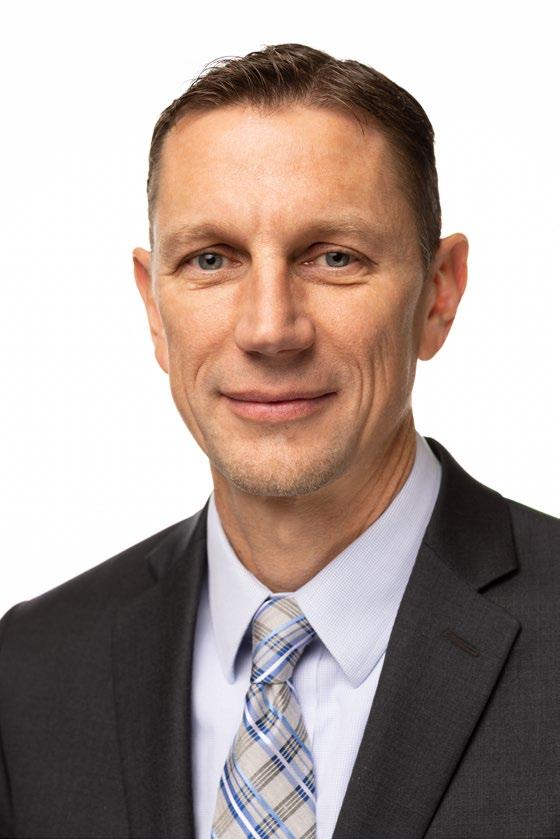
Dan Harmelink, general counsel and vice president, Legal “The S-1 Agreements are at the core of MRES. The agreements give members the assurance they will have all the power they need to effectively serve their communities.”
You will be hearing much more about the extension of our member power sale agreements at the MRES Annual Meeting in May. At that time, we will also be providing to each member a draft of the updated agreement, a detailed description of all revisions to the agreement, and draft resolutions and related information for reviewing and approving the agreement.
In the months that follow May, the MRES team will be all-hands-on-deck to answer any questions that you may have regarding the updated agreement. The deadline for approval and execution of the updated agreements is Nov. 1, 2026.
We look forward to talking with you about the opportunity to extend and strengthen our relationship!
DORDT UNIVERSITY SHOWS STEWARDSHIP IN ACTION WITH BES REBATES
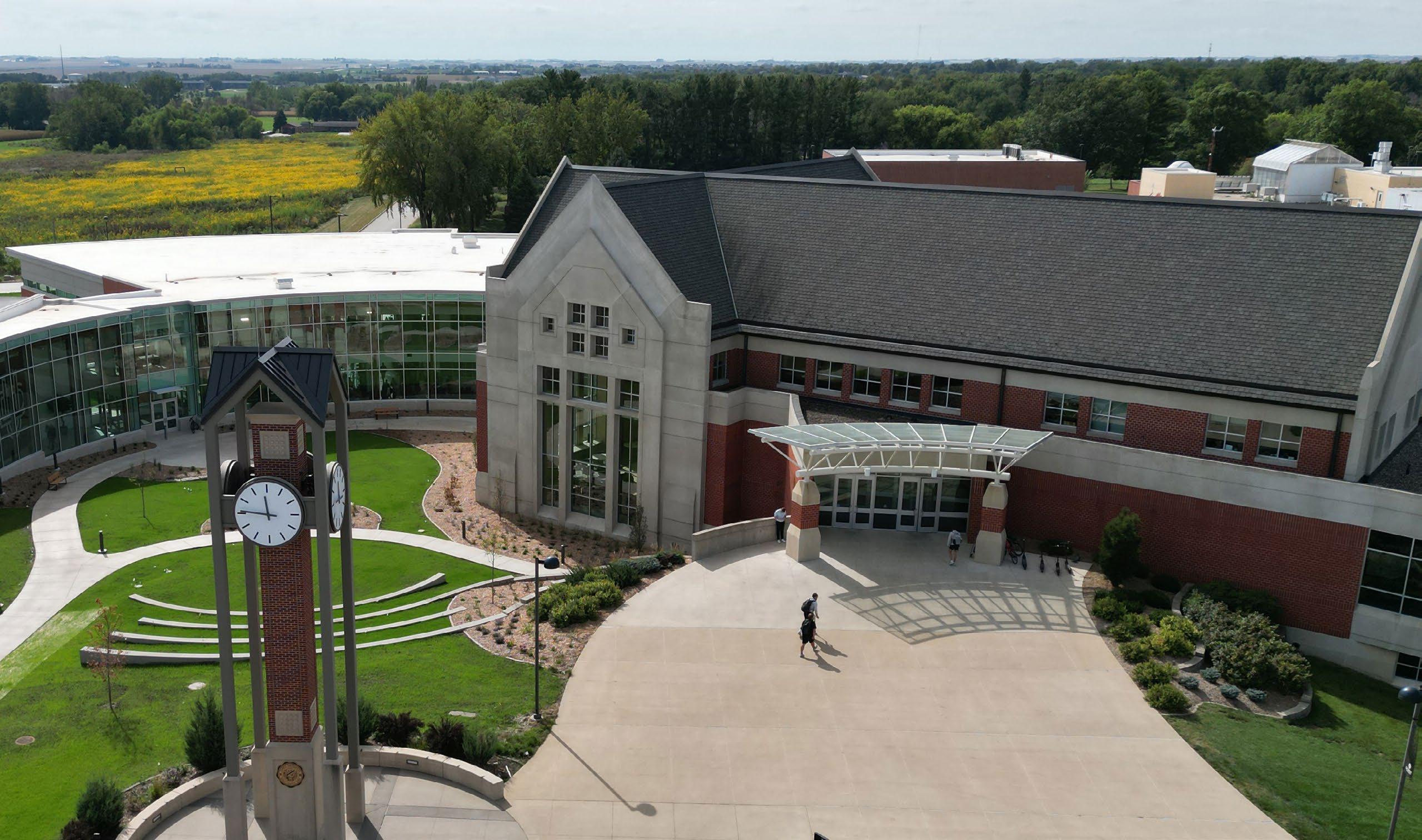
When Dordt University leaders plan upgrades across their Sioux Center, Iowa, campus, energy efficiency is part of the strategy.
For more than a decade, the university has taken a practical approach to improving how its buildings use energy, investing in upgrades that reduce consumption and reflect the institution’s commitment to stewardship.
That approach recently delivered results through the Bright Energy Solutions (BES) rebate program offered locally through Sioux Center Municipal Utilities and powered by Missouri River Energy Services (MRES). After completing a series of efficiency upgrades, Dordt received a $38,135 rebate, recognizing improvements that will lower overall electrical demand on campus.
The project included high-efficiency LED lighting upgrades as well as improvements to the heating and cooling system within the Dordt Commons remodel and addition. A major component of the project was the installation of ice storage technology, which produces ice overnight when electricity demand is lower and uses it during peak hours to cool buildings. By shifting energy use away from high-demand periods, the system helps reduce strain on the electric grid while lowering operating costs.
For Dordt, those kinds of improvements reflect a long-standing philosophy.
“We’ve been purposeful in our building design, planning of equipment and maintenance,” said Josh Dorhout,
Dordt’s director of Facilities and Services. “We pursue logical and practical energy-efficient solutions rather than chasing ideas that aren’t proven. It’s about maintaining a balanced approach.”
That mindset is closely connected to the university’s mission. As a Christian institution, Dordt emphasizes stewardship of resources as part of its broader commitment to serving its students and community.
“It’s in our DNA as Christians to be stewards of all things, including energy and other resources,” Dorhout said. “If we can demonstrate the importance of making sensible choices that reduce our consumption, those actions can spread throughout the community.”
Rather than setting rigid targets for renewable or carbon-free energy, Dordt focuses on practical improvements whenever opportunities arise. Some projects involve replacing individual fixtures or equipment, while others, like the ice storage system, require larger investments that deliver long-term efficiency gains.
That practical, project-by-project approach has also made Dordt a valuable partner for Sioux Center Municipal Utilities.
“BES rebates encourage energy efficiency and help reduce peak demand for our whole community,” said Kris Pieper, building official for Sioux Center. “Ultimately, that reduces the need to build new electric generation and helps keep rates lower for everyone in Sioux Center.”
“BES rebates encourage energy efficiency and help reduce peak demand for our whole community. Ultimately, that reduces the need to build new electric generation and helps keep rates lower for everyone in Sioux Center.”
- Kris Pieper, Sioux Center Municipal Utilities

The collaboration between the university and the municipal utility has grown over time. Dordt regularly works with Sioux Center’s building officials and BES representatives when planning campus additions and remodels, ensuring that efficiency opportunities are considered early in the design process.
The results add up. Since 2010, Sioux Center Municipal Utilities has returned more than $300,000 in BES rebates to Dordt for projects that have collectively saved more than 1,000 kilowatts of demand and more than 2.8 million kilowatt-hours of electricity.
Those savings benefit more than just the campus. Energy efficiency reduces peak demand on the overall system, helping stabilize costs and maintain reliable service for all customers served by MRES member utilities.
As Sioux Center continues promoting BES locally, Dordt University’s ongoing investments show how collaboration between community institutions and municipal utilities can create meaningful benefits, and not just for the campus, but for the entire community.

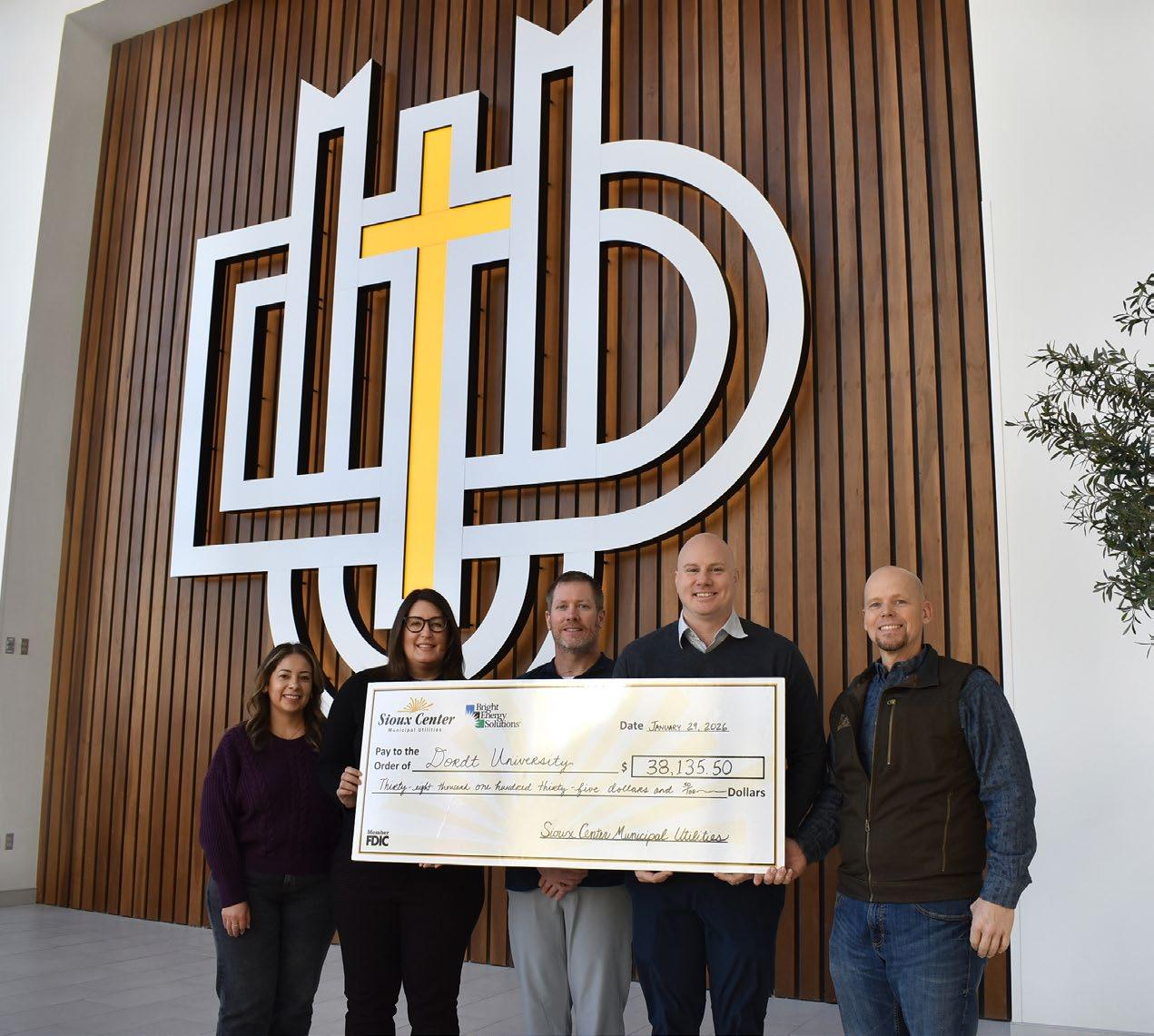
Sioux Center Municipal Utilities presented Dordt University with a $38,135 rebate for choosing energy-efficient technology in campus additions in Sioux Center. From left: Ofelia Gonzalez, City of Sioux Center; Beth Omanson, Missouri River Energy Services; Kris Pieper, City of Sioux Center; Josh Dorhout, Dordt University; and Adam Fedders, City of Sioux Center.
To learn more about how your business or organization can benefit from energy efficiency rebates, visit brightenergysolutions.com . Share your Bright Energy Solutions stories at info@mrenergy.com.
PUBLIC POWER LEADERS ADVOCATE ON CAPITOL HILL

More than 700 public power advocates converged on Capitol Hill in Washington, D.C. February 23-25, and 35 of them were from Missouri River Energy Services (MRES) and its member utilities. They gathered for the American Public Power Association (APPA) Legislative Rally. During the three-day event, municipal electric utility representatives met with members of Congress and their staff to discuss federal policies that affect community-owned electric utilities and the customers they serve.
MRES members advocated for policy positions that ensure public power utilities continue to deliver reliable and affordable electricity. Meetings with federal legislators and staff focused on the need for permitting reform, the protection of taxexempt financing and elective pay, protection of the federal hydropower program, urging FEMA reform and keeping local control over pole attachments intact.
Delegations from Iowa, Minnesota, North Dakota and South Dakota shared local perspectives and explained how national policy decisions impact municipal electric utilities and the communities they serve. In addition to congressional meetings, participants attended educational sessions hosted by APPA that provided updates on federal energy policy and emerging industry challenges.
The rally offered an important opportunity for public power leaders to advocate for the unique needs of locally-owned utilities and to continue to be an integral part of the national energy conversation.
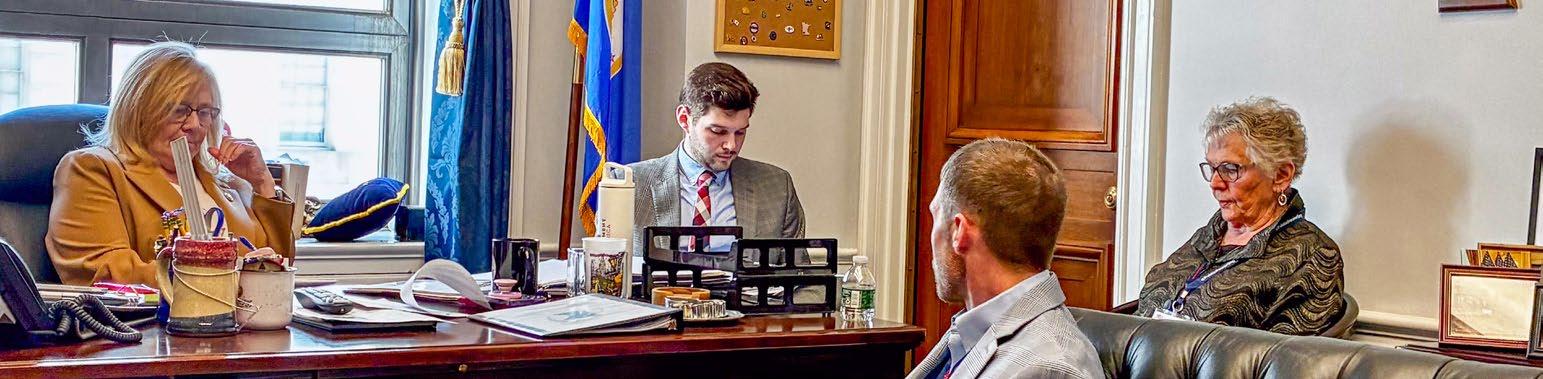
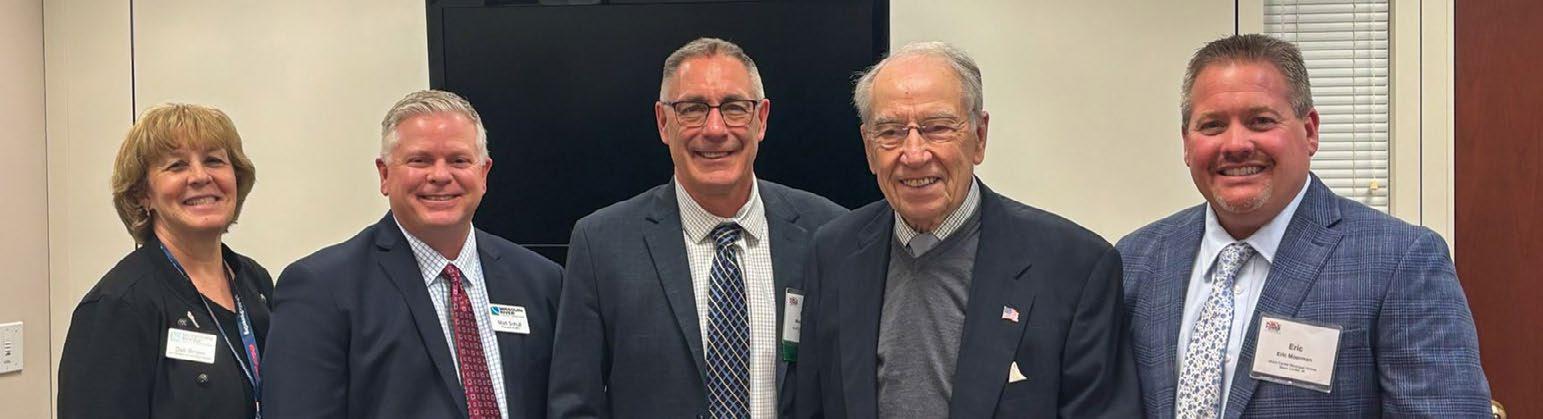
(From left) Deb Birgen, MRES vice president of government relations; Matt Schull, MRES president and CEO; Murray Hulstein, Sioux Center Municipal Utilities utility manager and MRES board member; Sen. Chuck Grassley; and Eric Moerman, Sioux Center council member, discussed federal energy priorities affecting public power utilities.
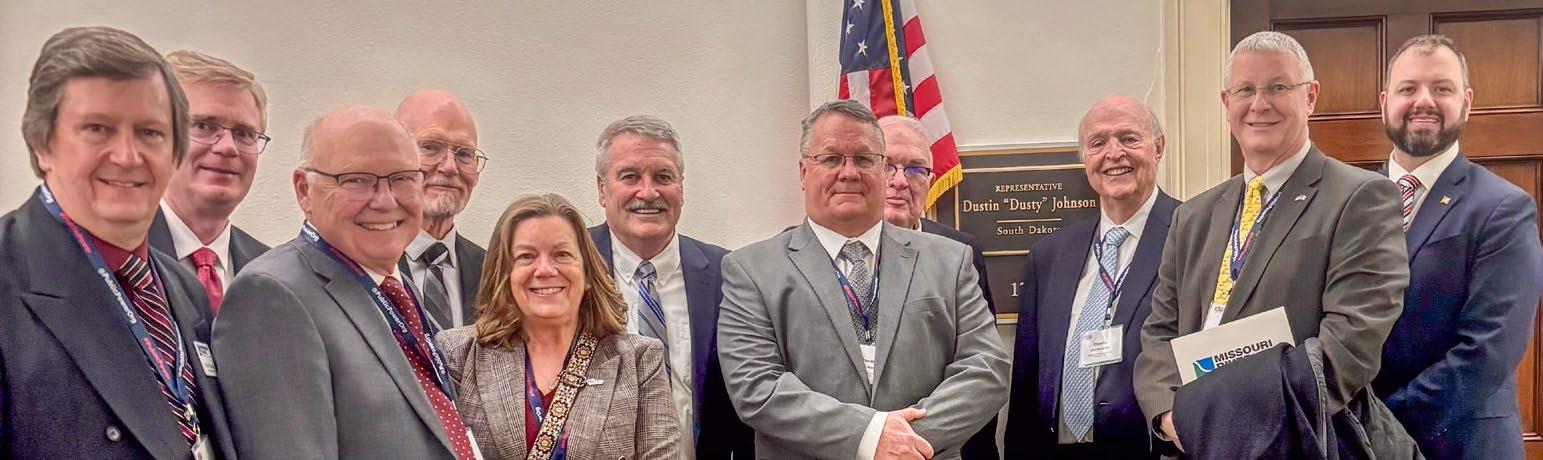
Representatives from South Dakota had the opportunity to discuss issues with Rep. Dusty Johnson. Those attending included Brad Palmer, City of Pierre utilities director and MRES board member; John Prescott, Vermillion city manager and MRES board member; Spence Hawley, Brookings utility board member; Rich Holland, Vermillion city council member; Kristi Honeywell; Pierre city administrator; Steve Meyer, Brookings Municipal Utilities executive vice president and general manager and MRES board member; Devin Harris, Pierre Municipal Utilities electric superintendent; Mike Luken, Watertown municipal utilities board member; Charlie Larkin, Watertown municipal utilities board member; Seth Hansen, Brookings municipal utilities board member; and Jon Cole, City of Vermillion mayor.
MRES staff and Minnesota member utility representatives met with Rep. Michelle Fischbach during the APPA Legislative Rally. Meetings like this give public power leaders the opportunity to share firsthand how federal policy decisions impact local communities and the utilities that serve them.
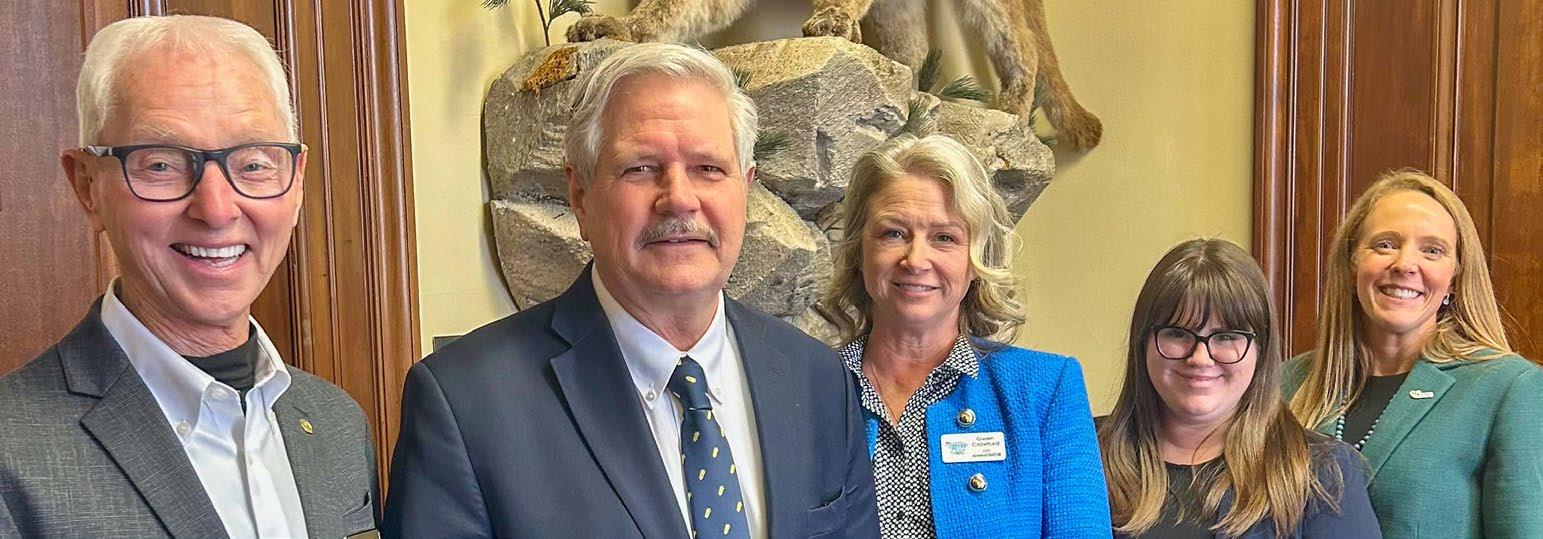
MRES representatives and leaders from North Dakota member utilities met with Sen. John Hoeven to discuss transmission permit reform and maintaining tax-exempt financing tools that support communities in the state. Those attending the meeting were (from left) Dave Carlsrud, Valley City mayor and MRES board member; Sen. John Hoeven; Gwen Crawford, city administrator for Valley City; Alex Abplanalp, MRES vice president and chief strategy officer; and Sam McDonald, federal lobbyist for MRES with Kanner & Associates.
DETROIT LAKES BRINGS COLORING CONTEST TO POLAR FEST


For two weeks each winter, the Lakes Country comes alive as Detroit Lakes, Minnesota, celebrates Polar Fest — a community tradition filled with kites, a fishing contest, fireworks and the ever-popular Polar Plunge. This year, Detroit Lakes Public Utilities (DLPU) found a new way to be part of the fun, launching its first Polar Fest coloring contest.
DLPU has long supported Polar Fest, sponsoring the fireworks show and maintaining staff involvement on the Polar Fest committee. When planning began for 2026, organizers were looking for new event ideas. That sparked an opportunity.
“As a past event planner, I knew we didn’t have the funds or manpower to host an in-person event,” said LaJeanna Eckhoff, energy services coordinator. “So, we started thinking creatively. That’s where the coloring contest was born.”
Eckhoff created the coloring contest drawing using online artificial
“It was a low-cost event with a lot of ‘Value of Public Power’ impact. We’re part of this community and showing up builds trust. This was a hands-on, feel-good event and created so much enthusiasm.”
- LaJeanna Eckhoff
Before moving forward, DLPU connected with local elementary schools, both public and private, to ensure participation. With support secured, the team developed an 11x17 coloring page featuring Polar Pete, the ice castle, kites and the Polar Plunge. Entries were collected ahead of the festival so winners could be announced at the start of Polar Fest.
The contest quickly grew beyond expectations. After seeing the social media announcement, an assisted living activities director asked if residents could participate.
“We immediately said ‘yes’ and added a senior category,” Eckhoff shared. “It ended up being the highlight of the contest.”
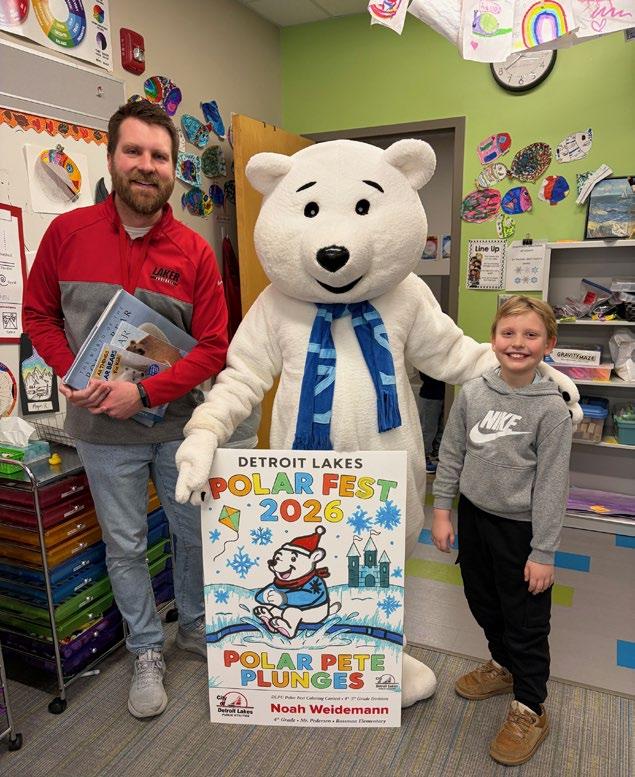
Prizes for the contest winners included Chamber Bucks, which the winners could use at local retailers; a Polar Fest hat; and books for the schools. Upon awarding the prizes to the winners, Detroit Lakes representatives brought candy, polar bear erasers and polar bear stretchy toys for the kids.
More than 300 entries were submitted across four age groups: K–1st, 2nd–3rd, 4th–5th and senior. Finalists were selected anonymously, with commission members and staff voting on their favorites.
Winners were featured in the local newspaper story and received Chamber Bucks to support local businesses, along with Polar Fest hats and polar bear-themed prizes. Classrooms received donated polar bear books, complete with a Detroit Lakes Public Utilities sticker inside.






The Becker County Museum displayed winning artwork and additional entries during Polar Fest events, giving students and seniors a chance to see their creativity celebrated publicly.
“It was a low-cost event with a lot of ‘Value of Public Power’ impact,” Eckhoff said. “We’re part of this community and showing up builds trust. This was a hands-on, feel-good event and created so much enthusiasm.”
The 2nd Annual DLPU Coloring Contest is already in the works. Learn more about the Polar Fest at https://polarfestdl.com/.
LaJeanna
Photos provided by Detroit Lakes Public Utilities.
BIG THINGS HAPPENING IN VERMILLION
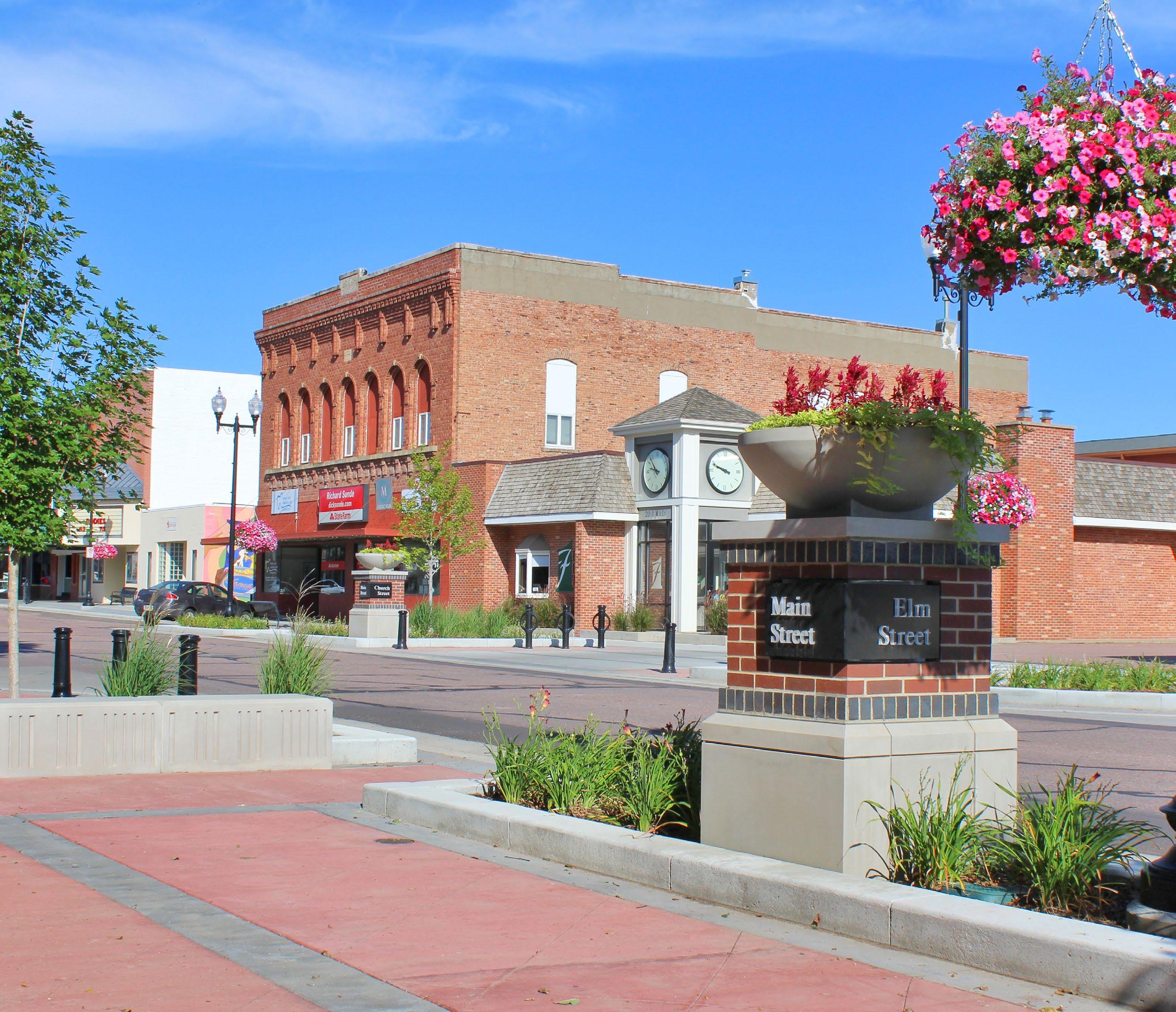
Vermillion, South Dakota, was recently named the state’s Community of the Year at the 2026 Governor’s Conference on Economic Development. The recognition highlights the city’s strong partnerships, steady growth and commitment to quality of life. For local leaders and residents, the recognition reflects years of collaboration and investment across the community.
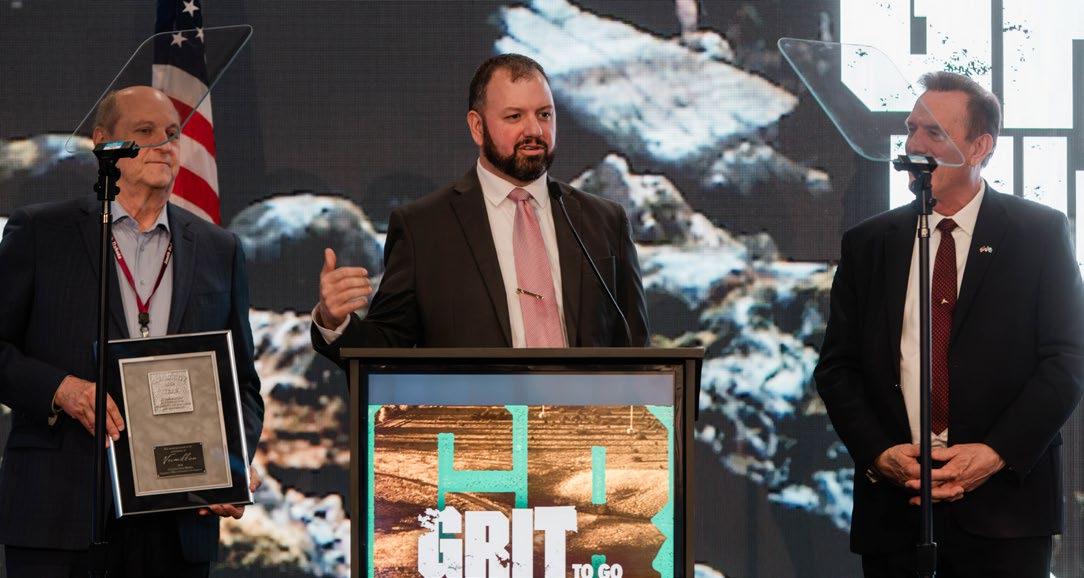
Vermillion Mayor Jon Cole said the honor belongs to the people who make Vermillion what it is. “Being named South Dakota Community of the Year is a reflection of the pride, resilience and shared commitment of the people who call Vermillion home,” he said. The recognition celebrates the work of residents, educators, businesses, volunteers and community partners who continue to invest in the city. According to Cole, it also reinforces confidence among residents while raising awareness across the state about the opportunities and momentum taking place in Vermillion.
Recent projects have played an important role in strengthening the community. Expanded child care options are helping working families while making it easier for employers to recruit and retain employees. Nearly $2.1 million was raised through a capital campaign to support these efforts. At the same time, business growth continues to drive economic development. Companies such as Cypress Rail and Masaba have expanded operations, bringing new jobs and investment to the area. Housing development and workforce initiatives are also helping Vermillion plan for long-term sustainability.
That momentum has been built through strong partnerships. Collaboration between the City of Vermillion, the University of South Dakota, the Vermillion Area Chamber and Development Company, Clay County and the Governor’s Office of Economic Development has helped align priorities and move projects forward quickly. “When local leadership, state partners and the private sector work together, the results are meaningful and lasting,” Cole said.
State leaders say the community’s collaborative approach is helping drive economic opportunity. “South Dakota has some excellent leaders and communities who help keep us ‘Open for Opportunity,’” said Governor Larry Rhoden. “Vermillion’s commitment to growth and collaboration reflects the innovation and dedication that keep South Dakota strong.” Commissioner Bill Even echoed that sentiment, noting that strong communities and dedicated leaders are essential to the state’s economic success.
For Vermillion, the recognition is not an endpoint. Cole said the award provides an opportunity to continue building momentum by sharing the community’s story and strengthening partnerships. “Community of the Year is not a finish line,” he said. “It’s encouragement to keep doing the work that makes Vermillion strong today and positioned for continued success tomorrow.”
LEADERSHIP TRANSITION FOR ORANGE CITY
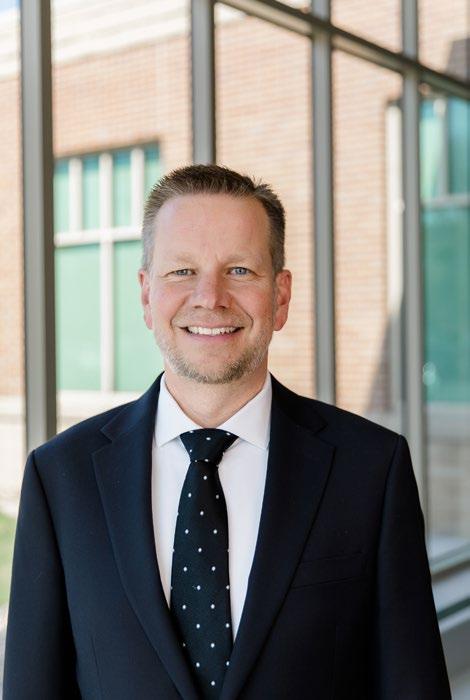
has had two leadership transitions over the last few months.
Matt Van Schouwen, who serves as a director on the Missouri River Energy Services board, began serving as Orange City’s city administrator in November 2025. He previously led the city’s Public Works Department, overseeing major infrastructure improvements, community projects and public service initiatives. His knowledge of city operations and strong relationships within the community have provided continuity and leadership as he stepped into the administrator role.
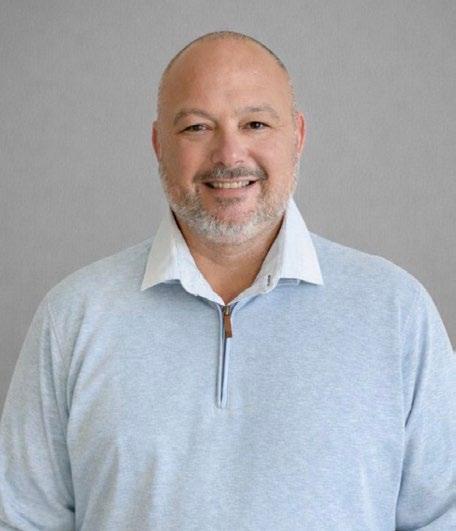
Following Van Schouwen’s transition, Jason Budden joined Orange City as public works director in late January 2026. Budden brings more than 20 years of experience in engineering, maintenance, reliability and technical leadership. Most recently, he served as director of engineering design & support at Wells Dairy, managing facility infrastructure and complex manufacturing systems.
Jon Cole (center), mayor of Vermillion, accepted the South Dakota Community of the Year award at 2026 Governor’s Conference on Economic Development in late February in Pierre.
LUVERNE’S CHILD CARE CENTER EARNS INNOVATION AWARD
Luverne, Minnesota, has been recognized for turning a community challenge into an opportunity for growth. Kids Rock! Child Care Center recently earned the 2026 Innovation Award from the Economic Development Association of Minnesota (EDAM), honoring the city’s creative and collaborative approach to addressing one of the most pressing issues, access to reliable child care.
Just a few years ago, Rock County faced a severe child care shortage. The number of licensed in-home providers had dropped from 56 to just 30, leaving a gap of approximately 120 child care slots. With no commercial child care centers operating in the county, working families struggled to find dependable care and local businesses increasingly felt the impact as employee recruitment and retention became more difficult.
To address it, the City of Luverne brought together community leaders, county officials, school representatives, local businesses, child care providers and residents to discuss possible solutions. According to Holly Sammons, Luverne economic development director, those conversations led to the formation of a local task force and, ultimately, the creation of Kids Rock! Child Care Center.
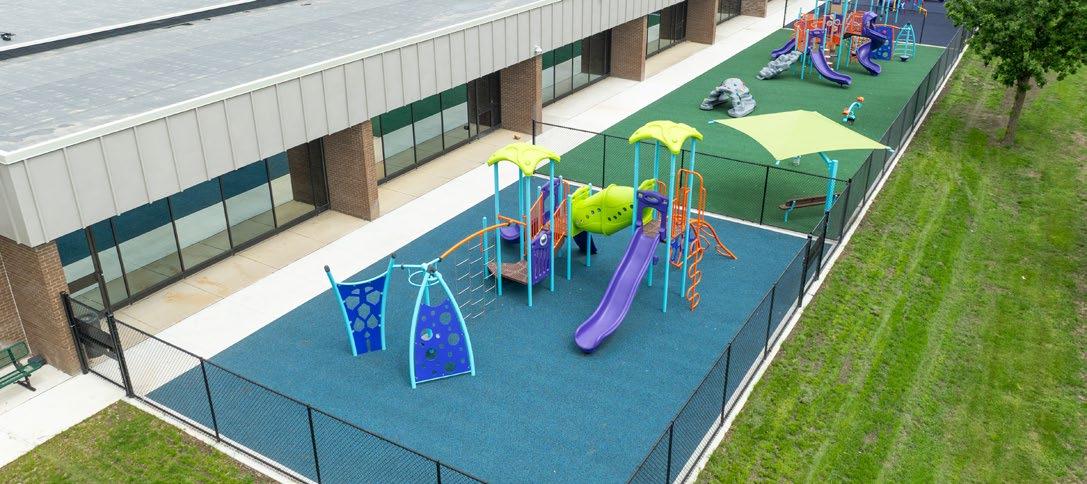
Luverne played a central role in making the project possible having purchased a vacant 31,000-square-foot office building for $515,000 and committing $4.2 million toward renovations. “City leaders and the Luverne Economic Development Authority also secured additional funding through a $2.6 million United States Department of Agriculture grant and $250,000 from the Minnesota Department of Employment and Economic Development,” Sammons said. The project was further strengthened by strong community support, including more than $1 million raised locally.
Today, Kids Rock! operates as a nonprofit child care center serving infants through school-age children and providing space for up to 186 children. Luverne continues to support the center by maintaining ownership of the building and leasing
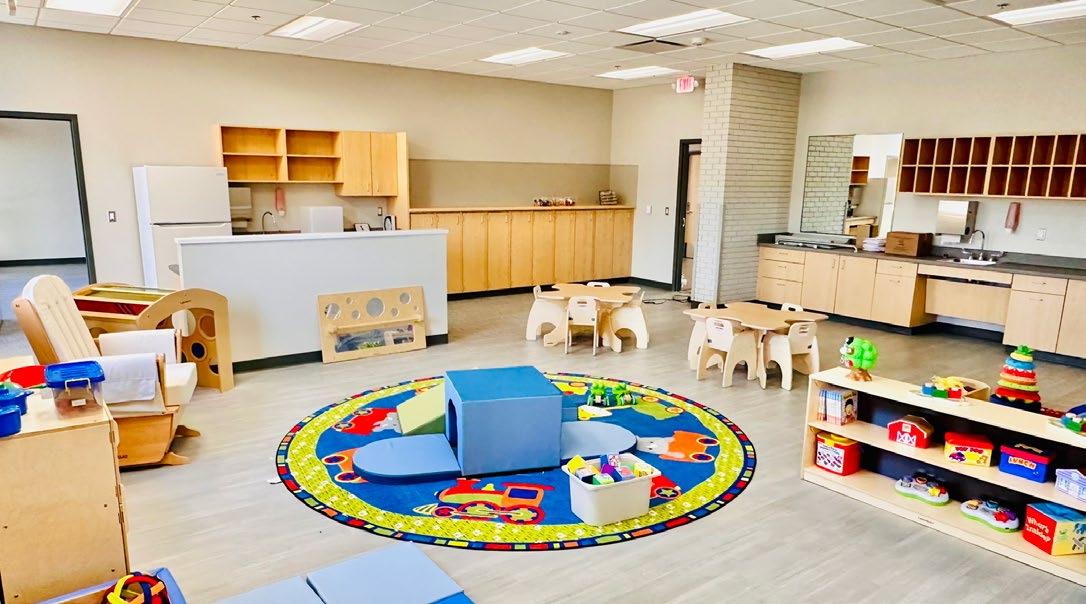
it to the nonprofit for $1 per year, along with providing in-kind services such as utilities, maintenance, lawn care and snow removal.
The impact is measurable. According to a recent Family Impact Survey, 89% of parents report reduced stress related to child care, and 81% say they now have more reliable and consistent care. And for local businesses? Thirty-seven percent of surveyed families said the availability of child care influenced their decision to accept or remain in a job in Luverne.
Kids Rock! has also created 27 new jobs, further strengthening the community’s workforce and local economy. By treating child care as essential infrastructure, Luverne has created a model that demonstrates how rural communities can solve workforce challenges in innovative ways.
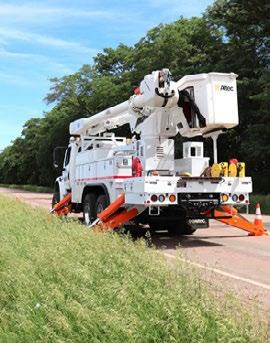
Download the Q2 VPP Marketing Materials for National Lineworker Appreciation Day and help us say thank you to the lineworkers who keep our communities connected.

of Public Power
Photo provided by City of Luverne.
Photo provided by City of Luverne.
The 61st MRES Annual Meeting is fast approaching, and we invite you to join us May 6-7 for two days of connection, learning and collaboration.
This year’s theme, “Connected by Purpose,” highlights the shared mission that unites MRES and its members in delivering reliable, community-focused public power. The annual meeting provides an opportunity to come together to reflect on the past year, discuss important issues facing the industry, and strengthen the partnerships that keep communities powered.
In addition to the formal meeting sessions, the event will offer opportunities for networking and fellowship as members gather to share ideas and celebrate accomplishments from the past year.
The registration deadline is April 10.
Don’t miss this opportunity to connect with fellow members and celebrate the work that keeps public power strong. We look forward to seeing you there.

REGISTER TODAY!
For more information and to register, scan the QR code or go to www.mrenergy.com, under the EVENTS tab.
Registration deadline is Friday, April 10.
DEMAND-SIDE MANAGEMENT SHAVES NEARLY 4 MW OF PEAK LOAD IN 2025
The Bright Energy Solutions (BES) program cut about 3.9 megawatts (MW) of peak load in 2025 with a total program cost of $758 per kilowatt (kW). Since 2008, BES has reduced peak demand by almost 100 MW, averaging about $574 per kW.
Similar to previous years, commercial and industrial (C&I) programs accounted for 92% of peak demand savings and 84% of total incentives. The impact of lighting projects continued to decline due to near-saturation of LED lighting in existing buildings. Lighting projects made up about 41% of total demand savings in 2025, down from about 73% in 2017.
The C&I HVAC, Custom, and Compressed Air programs each accounted for about 13% of 2025 demand reductions.
Residential HVAC (8.5%) and ENERGY STAR® products (1.5%) combined to make up 10% of total demand savings in 2025, while accounting for 17% of incentive dollars and 69% of total projects.
Since the inception of the BES program in 2008, MRES has processed about 59,000 rebate applications and paid nearly $30 million in rebates to members’ retail customers.
Beneficial electrification incentives totaled $72,156 in 2025, adding nearly 20,000 megawatthours (MWh) of load over the lifetime of the equipment. About 54% of electrification incentives went toward air-source heat pumps, while 36% was for electric forklifts and infrared heaters in industrial applications. BES rebated 49 home electric vehicle chargers in 2025, bringing the total number of home chargers rebated to 173 since rolling out that program in 2020.
MEMBER MILESTONE ANNIVERSARIES
Each municipal member forms the foundation of Missouri River Energy Services and each membership milestone anniversary reflects decades of working together to provide reliable, communityowned energy that strengthens both individual communities and public power.

RETAIL SURVEY PROVIDES INSIGHT FOR MEMBER UTILITIES
Understanding what matters most to electric customers is essential for utilities that strive to provide reliable service and strong community connections. To support that goal, Missouri River Energy Services (MRES) partnered with GreatBlue Research to conduct a Residential Customer Satisfaction Study during the fall of 2025.
Nine MRES member utilities participated in the study: Detroit Lakes, Moorhead, Hillsboro, Brookings, Denison, Sioux Center, Pella, Luverne and Willmar. Customers were invited to complete the survey either through email or paper, making it easy for communities of all sizes to participate.
“This study gives our members the chance to hear directly from the people they serve,” said Valerie Larson-Holmes, MRES director of communications. “Understanding what customers value helps utilities continue improving service and strengthening relationships within their communities.”
“Understanding what customers value helps utilities continue improving service and strengthening relationships within their communities.”
- Valerie Larson-Holmes
Who is GreatBlue Research?
A full-service market research firm specializing in custom, in-house quantitative and qualitative research heavily focused on public power utilities and healthcare sector industries providing actionable, data-driven insights for strategic decision-making.
The survey asked customers about several key areas, including satisfaction with electric rates, customer service, reliability and interest in programs such as electric vehicles or energy efficiency rebates. It also explored how customers prefer utilities communicate with them during both routine updates and emergency situations.
Through the partnership, MRES coordinated closely with GreatBlue to develop the survey, create marketing materials and support member utilities throughout the process. GreatBlue handled the survey fielding, data collection and analysis, providing professional third-party research while keeping participation simple for utilities.
The goal is to provide actionable information utilities can use. The results help identify what customers appreciate most, where expectations are changing and how utilities can continue building trust.
Now that the surveys are complete, MRES and GreatBlue are meeting with each participating utility through individual meetings to review their results and answer questions. These conversations allow members to better understand their community’s responses and explore ways to use the insights moving forward.
GreatBlue CEO Michael Vigeant also shared an overview of the findings with the MRES board of directors during their March meeting and will present additional insights at the upcoming MRES Annual Meeting in May.
“Customer feedback like this helps utilities see both the big picture and the details within their own communities,” said Larson-Holmes. “It gives our members meaningful information they can use to continue delivering the reliable service their customers expect.”
Sioux Falls, SD 57109-8920
