






Empowering Partnerships
Empowering the Next Generation
Empowering Growth
Together, Empowering Possibilities


MRES Members

Message from the Chair of the Board and President & CEO
MRES and WMMPA Boards of Directors
Senior Management
MRES Fast Facts
Generation Facilities
Comparative Highlights
Luverne Loves the Life And They Love LEAD Training, Too
Staples Sees Unprecedented Growth MRES Ambassador Shares His Journey
Marshall Partners with MRES Tackling the Challenge of Solar
Woodbine Makes Major Upgrades And Holds True to Community Values

To enhance the value of member utilities to their communities by supplying reliable, cost-effective, long-term energy and energy services in a fiscally responsible and environmentally sensitive manner.
Our Vision
To be the preferred provider of energy and energy services that adds value to member communities.


Missouri River Energy Services (MRES) is an organization where excellence of work and integrity of character are daily expectations for all employees, board members and others associated with MRES on a professional basis. The following Core Values describe those expectations in greater detail:
We are there when you need us.
We can be counted on to do what we say we will.
We will give our members the whole story — good news or bad.
Excellence in product and performance will be the objective of every MRES employee, with the end result being the achievement of the MRES corporate goals that are consistent with member expectations.
We will recognize problems that limit the success of our members and strive to solve them. Creative solutions are encouraged, and failure will be viewed as a temporary setback to be learned from for future problem-solving efforts.
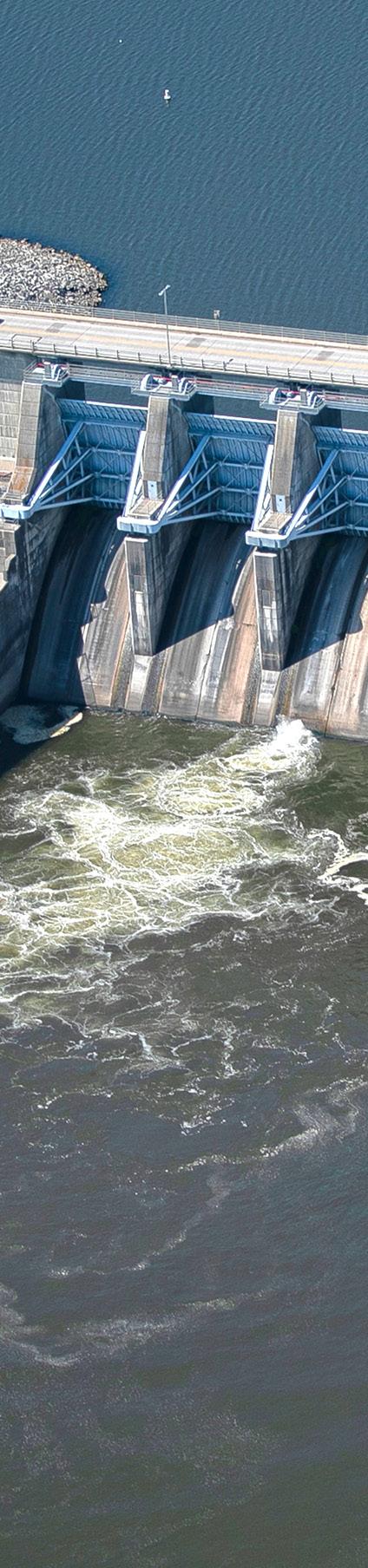

MRES provides wholesale electricity and energy-related services to 61-member municipal utilities across Iowa, Minnesota, North Dakota and South Dakota. Each member utility owns and operates its local electric distribution system, serving customers in their own communities.
Together, MRES members provide power to approximately 175,000 customers, supporting a combined population of about 333,000 people. Our membership includes 18 utilities in Iowa, 25 in Minnesota, six in North Dakota and 12 in South Dakota.
For six decades, MRES has partnered with its members to meet the evolving needs of their customers — helping hometown utilities power their communities and drive local growth. In 2024, MRES supplied nearly 56% of our members’ total energy needs, with the balance primarily coming from hydropower provided by Western Area Power Administration (WAPA) and other sources.
MRES is governed by a 13-member board of directors elected by and from its member utilities. Western Minnesota Municipal Power Agency (WMMPA), a separate but related organization, finances the generation and transmission resources used by MRES. Under an administrative services agreement, MRES provides all management and operational services for WMMPA, which is governed by a seven-member board representing its 24 Minnesota members.






municipal electric utilities
Owned by serving approximately
333,000 people

Cavalier • Hillsboro • Lakota • Northwood• Riverdale • Valley City
Beresford • Big Stone City • Brookings • Burke • Faith • Flandreau
Fort Pierre • Pickstown • Pierre • Vermillion • Watertown • Winner
Adrian • Alexandria • Barnesville • Benson • Breckenridge • Detroit Lakes
Elbow Lake • Henning • Hutchinson • Jackson • Lake Park • Lakefield
Luverne • Madison • Marshall • Melrose • Moorhead • Ortonville
Sauk Centre • St. James • Staples • Wadena • Westbrook
Willmar • Worthington

Alton • Atlantic • Denison • Hartley
Hawarden • Kimballton • Lake Park
Manilla • Orange City • Paullina
Pella • Primghar • Remsen
Rock Rapids • Sanborn • Shelby
Sioux Center • Woodbine


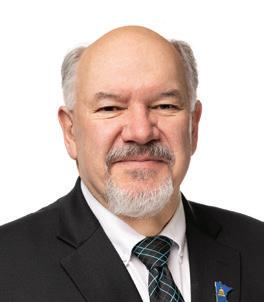
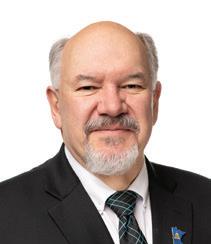
Vernell Roberts Chair of the Board

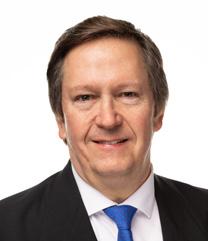
Matt Schull President & CEO
Dear Members and Stakeholders,
For MRES and its 61 member communities, 2024 was a year driven by a shared purpose: Together, Empowering Possibilities. More than just a slogan, these words reflect the work we’ve accomplished, the partnerships we’ve strengthened, and the opportunities we’re building for the future.
Throughout 2024, we upheld our mission of providing reliable, cost-effective electricity to our members. MRES supplied nearly 56% of our members’ total energy needs, supported by a diverse power supply portfolio and complemented by power from WAPA. These efforts support our long-range power sales agreements and reinforce our ability to confidently plan for the future.

MRES maintained strong financial health, closing the year with a net surplus of nearly $27 million — $15 million above budget. Our debt service coverage ratio reached 172% for the year, and over the past five years, it has averaged 186%, exceeding our Board policy target. Our long-range rate planning and disciplined reserves strategy have kept our wholesale rates 15% below the regional average, while positioning us to make beneficial investments in new transmission and future resources.
We conducted 16 cost-of-service studies for members, helping utilities align rates with actual costs and maintain affordability. We also filed federal transmission cost-recovery documents on behalf of 17 members, resulting in approximately $15 million in revenue.
We made major strides on infrastructure investments that will serve our members for decades to come. The Big Stone South to Alexandria (BSSA) transmission project stayed on track with permit filings submitted in both Minnesota and South Dakota.
In 2024, we also broke ground on the Brookings Solar Project, reinforcing our commitment to a cleaner, more resilient energy future shaped by member needs. The Marshall Solar Plus Project began commercial operation in December 2024, delivered under budget, and further expanding our renewable portfolio and member-driven project development.
These efforts are part of a long-term strategy to ensure system reliability and flexibility in an ever-changing energy landscape.
At MRES, our commitment to members goes far beyond power generation and transmission. In 2024, we expanded Bright Energy Solutions® incentives and launched a Key Accounts Toolkit, giving members new tools to promote energy efficiency. We also continued to elevate the Value of Public Power through customized marketing and communications campaigns, and assisted members with interconnection requests and beneficial electrification planning, among other things.
We also enhanced our cybersecurity services, including hosting member training and earning a $50,000 cybersecurity prize. Together, these efforts reflect our ongoing focus on ensuring our members have the tools and technologies needed to support operational excellence.
The strength of our organization lies in its people — within MRES and across our member communities. We invested in leadership development, scholarships and school energy education through programs like the Smart Energy Squad. We also continued to support strategic planning and workforce development, along with legislative engagement opportunities, reinforcing our collective public power voice.
The electric utility landscape is rapidly evolving. New technologies, evolving customer expectations and increasing regulatory demands redefine how we plan, operate and serve. At MRES, we don’t see these changes as challenges — we see them as opportunities to lead. With a strong financial foundation, a reliable and resilient power supply and transmission strategy, and a deep commitment to our members, we are prepared not only to keep pace with this transformation but also to help shape it.
As we look to the future, our focus remains steady: providing reliable power, enhancing the value of joint action and supporting our members as they grow, adapt and thrive. In the spirit of Together, Empowering Possibilities, we will continue building on the trust, collaboration and shared purpose that define public power.
Thank you for your partnership and your commitment to the success of our shared mission.





















Tammie Krumm

Rich


7
Total generation capacity 1,174 MW

Reduced carbon intensity by over 61% since 2005
Western Area Power Administration’s
Hydroelectric Facilities
348 MW
Laramie River Station
280 MW
Coal-fired
Exira Station
140 MW
Natural gas/Fuel oil
Reserved Capacity Agreements with various members
Fuel oil
157.3 MW
Wind Projects
82.4 MW
• Rugby (ND) - 40 MW
• Odin (MN) - 20 MW
• Marshall (MN) - 18.7 MW
• Worthington (MN) - 3.7 MW
Watertown Power Plant
65 MW
Fuel oil
Red Rock
Hydroelectric Project
43.1 MW
Point Beach Nuclear Plant
33.8 MW
Nuclear
Solar Projects
16 MW
• Pierre (SD) - 1 MW
• Marshall (MN) - 10 MW + 5 MW battery storage
Solar Under Development 5 MW
• Brookings


We turn shared ideas into solutions that reach far beyond the grid.

Because when we empower the next generation, we power a better future for us all.


We invest in people, technology and ideas that move us — and our communities — forward.



The LEAD program has been a great asset — not just for each participating employee’s personal growth, but for the growth of our entire organization.
Jill Wolf, City Administrator City of Luverne

Curious how participating in the LEAD course created better employees and empowered the community of Luverne and how it can do the same for your community? Just scan the QR code here.


qrco.de/AR25_Luverne


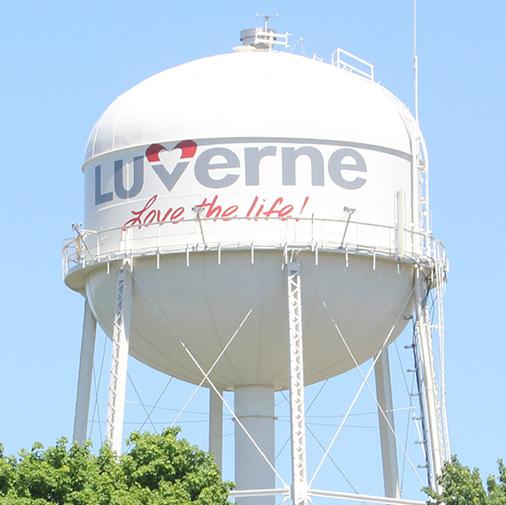
Luverne, Minnesota, has long embraced their community slogan “Love the Life.” Now, they’re working to ensure future leaders love it just as much.
The City of Luverne is actively involved in the strategic planning service offered by MRES and the Leadership, Excellence and Development (LEAD) training as part of its ongoing workforce improvement, and frankly, as part of its character and culture of continuous learning from the inside out.
City Clerk Jessica Mead explained, “I personally and professionally believe in continuous learning. And I felt it was important to go through the LEAD program myself before referring others.”
Mead completed the training in 2021 and found her experience invaluable. Today, she identifies and encourages others around their team to participate.
“You get unfiltered feedback to improve. It’s a powerful reset — one that brings you back to reality and helps you reflect.”
The reality for the City of Luverne is that it is looking ahead to the future with improved skills in communication, decision-making and conflict resolution. Beyond improving day-to-day performance, Luverne sees LEAD as a cornerstone of succession planning and a vital piece of its long-term strategy.
City Administrator Jill Wolf, who also manages the city’s electric utility, sees the results firsthand in her team.
“The LEAD program has been a great asset — not just for each participating employee’s personal growth, but for the growth of our entire organization.,” Wolf said. “As our leadership retires, we’re seeing employees develop those same leadership skills to step in and take the reins.”
Mayor Pat Baustian, a retired member of the Air National Guard, echoed that sentiment and praised the direction, guidance and planning MRES provides.
“LEAD training has really helped our staff of young professionals ‘build the bench’ to be ready to take over for that next supervisor or director when needed,” Baustian said.
“We have also trusted MRES for our strategic planning on various projects and for help to facilitate those,” said Baustian. “It’s like herding cats sometimes. But it’s been helpful knowing we have a growth strategy for what needs to be done first, second and third, from the ground up.”
And it shows.
One example of Luverne’s forward momentum is its nearly completed city-owned childcare center, Kids Rock. While the city buried its electrical distribution lines years ago, crews are now finishing infrastructure upgrades to support the new facility and its many functions.

But the improvements go beyond early childhood care — or the power that keeps the lights on. It’s about investing in people, developing leaders and building a stronger Luverne — one step, one class, one future-ready leader at a time.



John Jewison wears a lot of hats — and laces up a lot of shoes.
As Sales/Project Manager/Estimator for Stern Rubber Company in the rural community of Staples, Minnesota, he stays busy. Add in his service on more than 15 local boards and committees — from the Central Minnesota Boys Choir to City Council, Parks and Recreation, and the Airport Board — and it’s no wonder he jokes:
“You know the old adage,” said Jewison, smiling. “If you want something done, ask a busy person because they can’t say no.”

In many ways Jewison was already serving as a community ambassador of sorts. So when he joined the MRES Ambassador Program, it was a natural fit.
The MRES Ambassador Program is one of several MRES initiatives designed to help its members share the value and benefits of their local public power utility, as well as the strength of belonging to a larger, joint-action organization of 61 utilities working for the common good.
“I’m not sure I even fully knew what it meant when I first got into the program,” says Jewison. “But now I know it means being feet on the ground in communities, being that voice of reason.”

I think it was very smart of MRES to put people like me out there in the communities, representing them in a positive light.
John Jewison, MRES Ambassador Staples, Minnesota
He sees that role as increasingly important in an age where misinformation spreads fast, especially when comparing public power to for-profit utilities.
“I think it was very smart of MRES to put people like me out there in the communities, representing them in a positive light – a factual light,” says Jewison. “I could sit down and sing MRES’s praises all day long. But first and foremost, I represent my community.”
Jewison notes that a town the size of Staples, around 3,000 people, only has so much ‘pull power’. “When you combine that power with 60 other communities, you become a force.”
That force has taken him places he never imagined. A decade ago, he wouldn’t have believed he’d be sitting in meetings on Capitol Hill, advocating for locally owned utilities alongside other policymakers. Today, it’s part of the job — and part of the mission.
When he’s not representing Staples or MRES, you can usually find Jewison out walking the streets and trails of his town — up to five miles a day.
It’s his time to think, recharge and stay in touch with what’s happening in every alley, sidewalk and construction zone. And lately, there’s been a lot to see: in 2024, Staples recorded the second-highest number of building permits in the state, trailing only Minneapolis — with over $20 million in new development.
That kind of growth takes power. It also takes advocacy — and the right relationships.
“I’ve reached out to MRES with over a thousand questions,” said Jewison. “And they’re always gracious. That matters to me. Because it’s how I try to treat people, too.”
His early days on city council may have sparked his interest in public service — but it’s clear: Jewison’s journey as a leader, advocate and ambassador is still gaining ground.

Want to hear more from John about how being an MRES member has benefited his community?
Just scan the QR code.


Dave Schelkoph may be an engineer by trade, but as general manager of Marshall Municipal Utilities, he doesn’t just see a utility grid made of circuits, inverters and transformers. He sees people — neighbors, business owners, families — whose lives depend on power that’s reliable, resilient and ready when they need it most.
He sees the senior citizen who needs reliable transmission for their oxygen device, the local ADM plant and its substantial energy load, and friends and neighbors who entrust their most basic life needs to the reliability of the grid.
“When our Board of Directors meets, we worry about each and every customer,” says Schelkoph. “We react according to that.”
This deep-rooted sense of responsibility drives Marshall’s commitment to innovation. As the economic engine of southwest Minnesota, the city constantly balances immediate energy needs with a vision for the future—and solar energy is a key part of that plan.
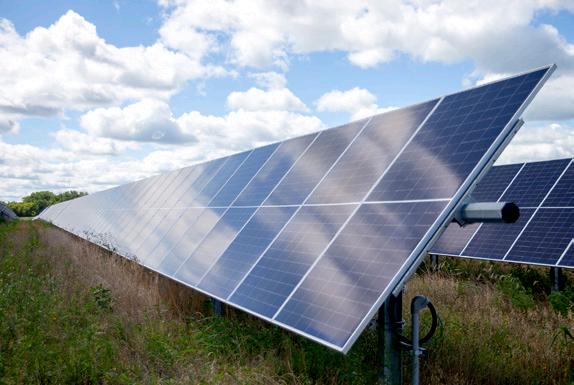
In December 2024, the Marshall Solar Plus (MSP) project began commercial operation. The 10-megawatt solar farm, paired with a 5-megawatt battery storage facility, is owned by Marshall Solar Plus LLC (a subsidiary of WMMPA) and operated by MRES.

Schelkoph beams with enthusiasm as he discusses the advanced design of the solar panels — the need for them to fully rotate, deflect snow, dirt and the elements, generate energy, store it efficiently, and deliver it effectively.
“We’ve combed through every detail of this facility,” he said. “MRES is operating and monitoring it, and we’re learning every step of the way.”
Schelkoph knows solar is only one piece of the puzzle in the future of energy and renewables. But he is proud of the unique collaboration that allows MRES and its member communities to work on the viability of solar distribution as an energy source, share in that learning — and literally, share the power generated.

If we’re not learning and adapting now, we won’t be ready to serve the 61 members and their communities as best we can. “ ”
Dave Schelkoph, General Manager Marshall Municipal Utilities
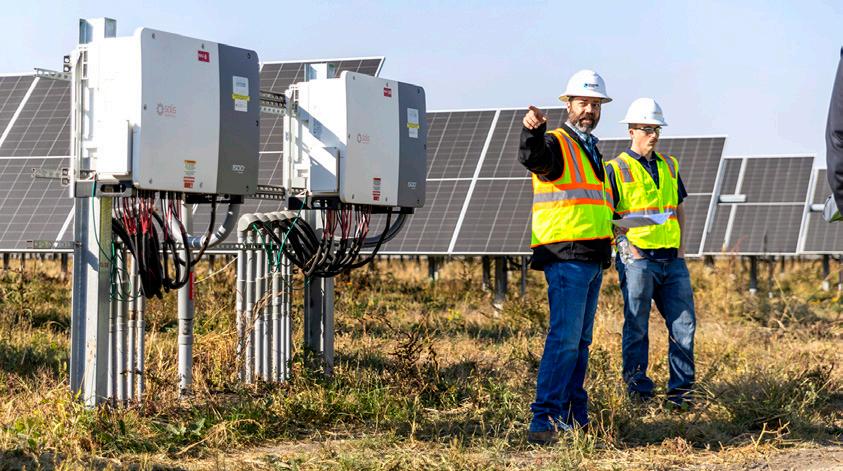
“This is about becoming the experts,” says Schelkoph. “Our energy landscape is changing, and we have to be ready for that. If we’re not learning and adapting now, we won’t be ready to serve the 61 members and their communities as best we can.”
That learning curve includes focused attention on battery storage — understanding how to best capture, store, and distribute solar power efficiently, reliably, and securely.
“You’ll hear it a lot at MRES,” Schelkoph added. “One of our top priorities — especially in conversations with policymakers — is ensuring the security and reliability of our electric grid. That’s what keeps our communities strong.”
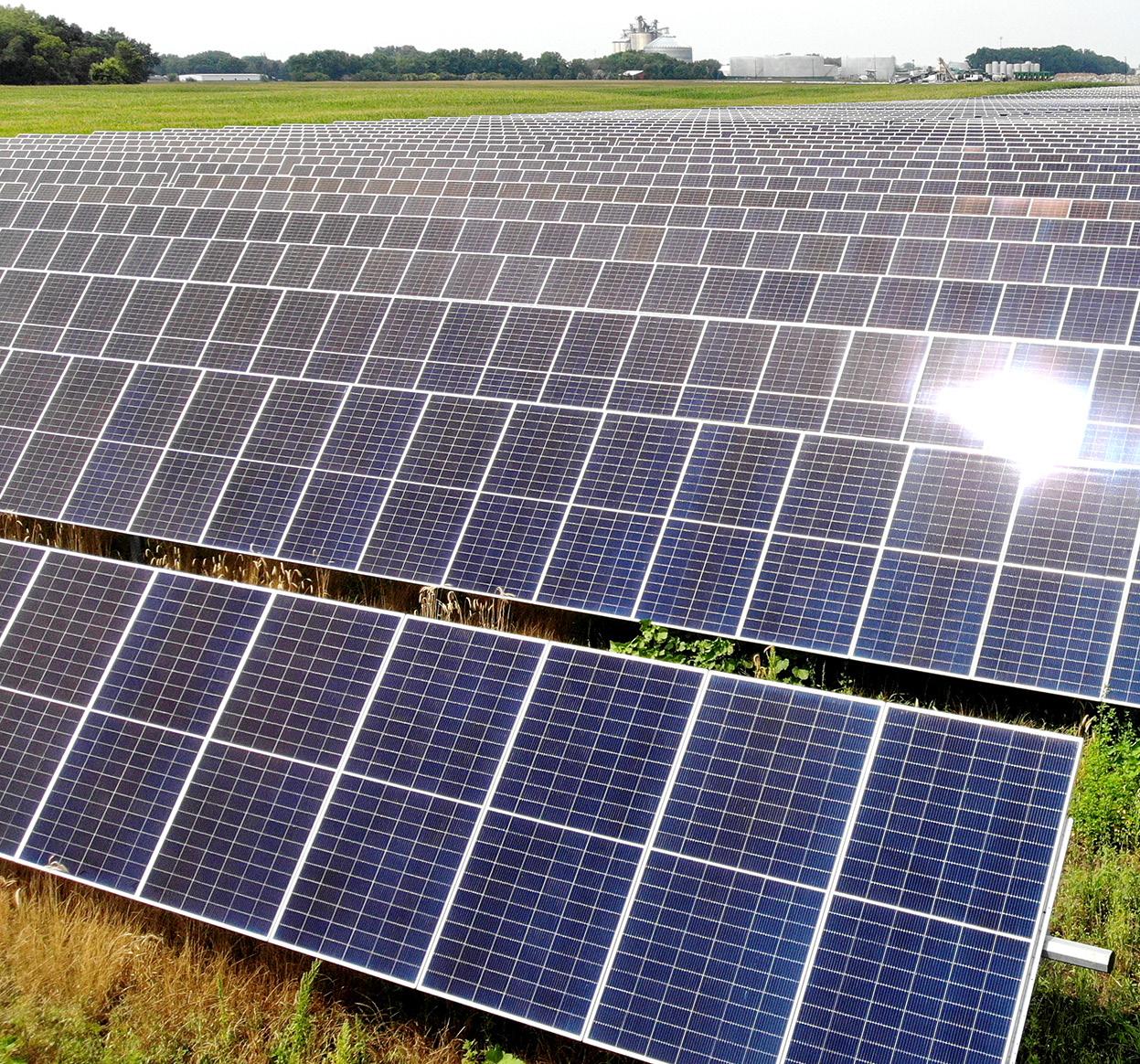
With that focus in mind, Marshall and MRES aren’t just maintaining today’s needs; they’re building the tools, growing the expertise and strengthening the partnerships it takes to thrive for many years to come.
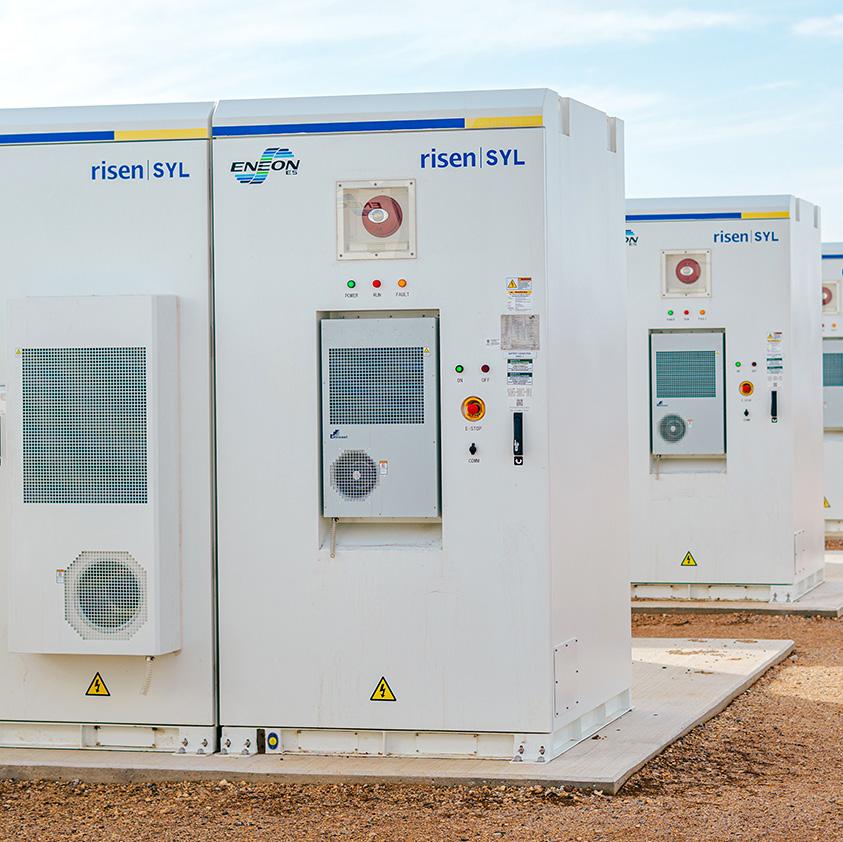


MRES works in communities like Marshall to integrate renewable energy in an effective way and bring value back to each of the 61 member communities. Learn how by scanning the QR code.
Tucked amid the Loess Hills of Iowa, the small town of Woodbine is big on charm and character. Red brick paves the charming main street in its National Historic District. Visitors can take in the annual Applefest or stroll along the renovated shops and art sculptures that line the way.
But perhaps it’s what visitors don’t see that is most impressive.
Nine years ago, Jim Reisz, electric/water superintendent at Woodbine Municipal Light & Power, and his team took on a major task: burying the city’s electric distribution lines to better serve the area and further enhance the beauty of their cherished community.
“When I came into this position, I knew this was something we had to get done,” said Reisz.
Like many Midwestern towns, Woodbine was no stranger to the ravages of weather, wind and time that threatened their aging utility grid. “We needed to get an update to minimize our downtime, our maintenance time, our outage time – all the things associated with having a small electric utility.”
“This job requires you to wear many different hats,” said Reisz. “From customer service to board communications to budget to legal to working in the field. It requires us all to do it together.”
In addition to burying lines at a record pace with minimal disruption, they went to work taking down transformers, clearing out poles and building new substations to better serve their growing community.


As a city-owned utility, they’ve managed to do so through mostly cash investments – largely keeping electric rates down and minimizing the number of times crews have to go out.
“Because we upgraded the infrastructure in phases with a plan,” said Reisz. “I’m pretty proud we did it without raising our rates.”
We needed to get an update to minimize our downtime, our maintenance time, our outage time – all the things associated with having a small electric utility.
Jim Reisz, Electric/Water Superintendent Woodbine Municipal Light & Power

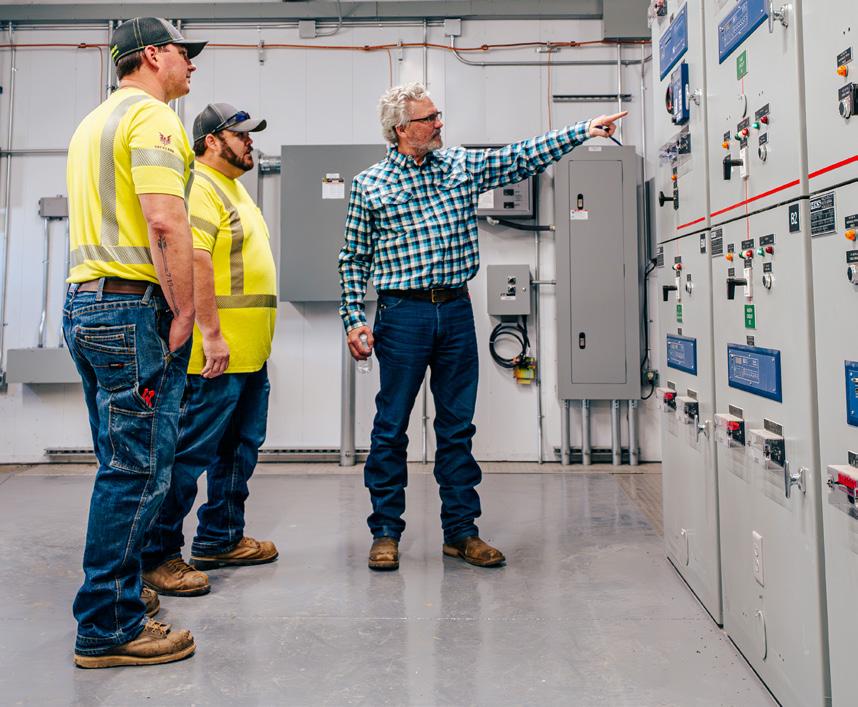
And they haven’t stopped there. Working with Woodbine Main Street, Inc., they continue to support city improvements such as erecting beautiful historic light poles, installing an elaborate downtown sound system for music and events, and upgrading electrical access to better equip vendors and events that flock to the city yearly.
“When our team goes to a conference or function, I always tell them ‘Don’t talk to me. Go talk to other people and network’,” said Reisz. “There’s so much we can learn from other communities and other experiences that we can put to work here.”
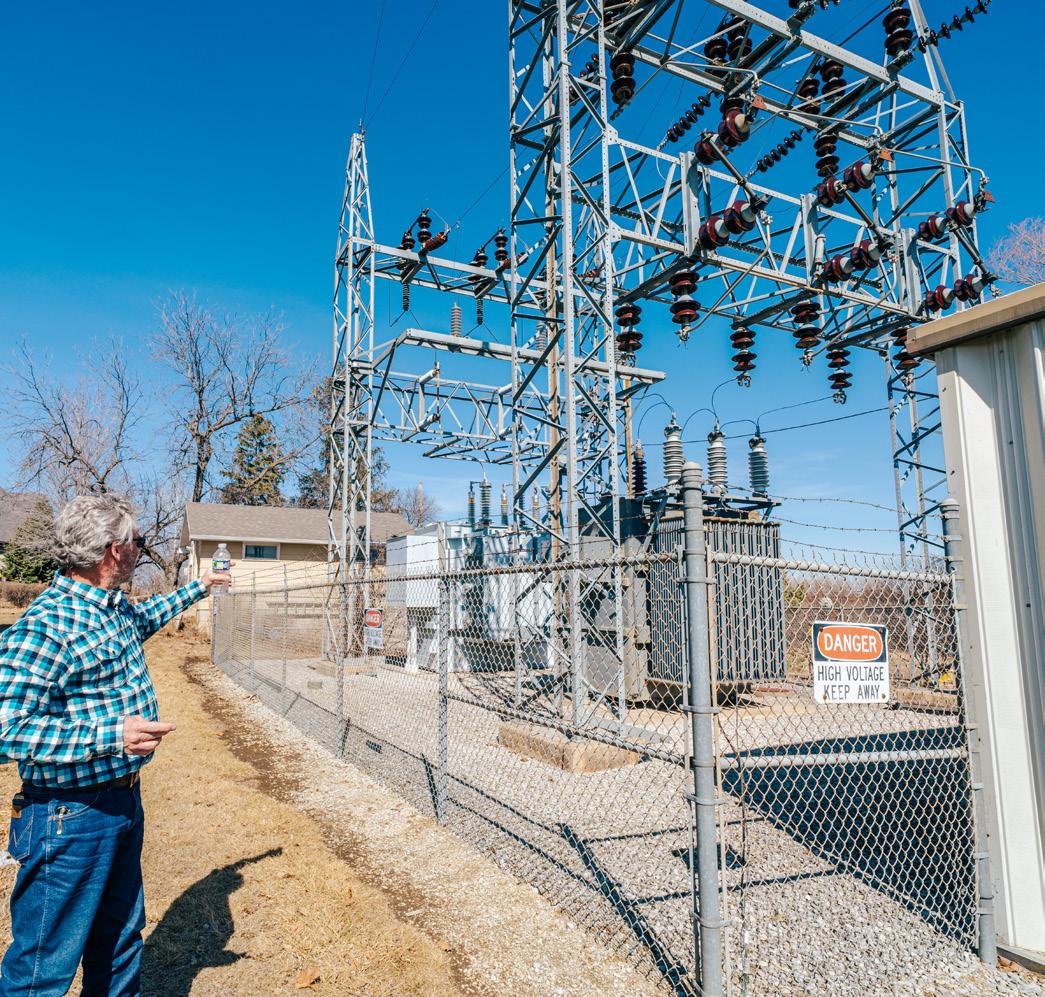

And that work hasn’t ended. The city accepted a food pod, donated by MRES, where local high school students at the career and technical IGNITE Pathways center work with instructors in a modular, hydroponic farm that grows food yearround in a controlled environment. The goal? Educating youth and eventual yearround, local, and sustainable food production.
“As you get a little bit older, you start to appreciate things more,” said Reisz. “And I’m very appreciative to my new board – and my old one – for allowing us to start these projects and finish them.”
But make no mistake, Reisz and the city of Woodbine are just getting started.
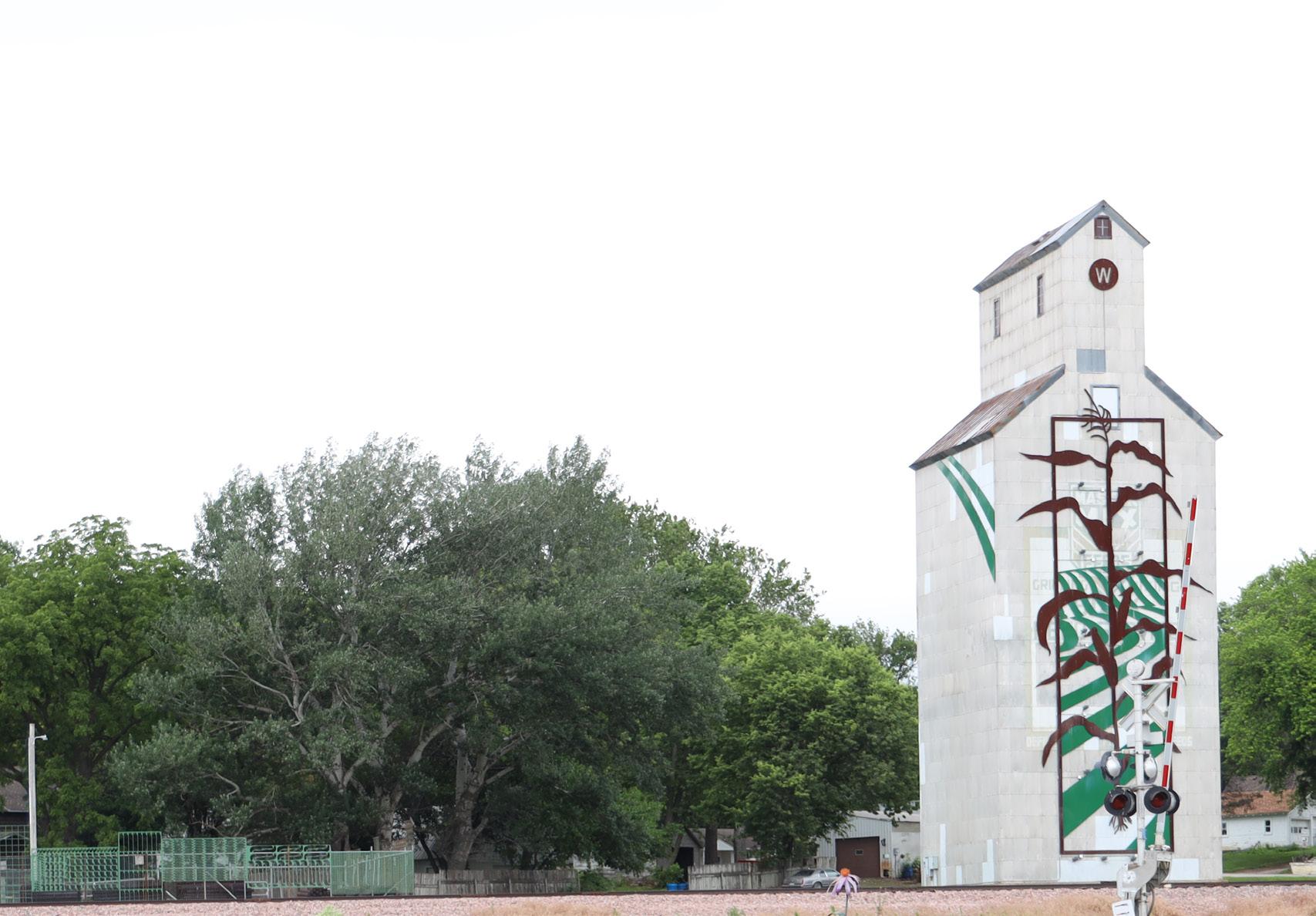

To hear more about how system updates in Woodbine help to serve their growing community, just scan the QR code.
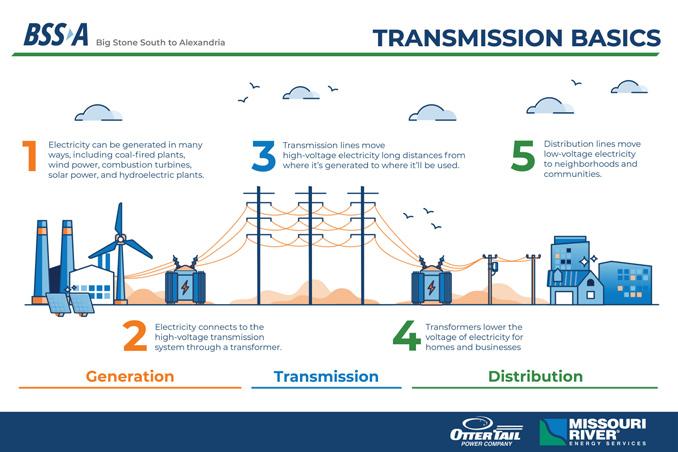
Negotiated a project development agreement with Otter Tail Power for the BSSA transmission line.
MRES and Otter Tail Power are working together on a proposed transmission line that will connect the Big Stone South Substation in South Dakota to the Alexandria Substation in Minnesota. This project will help deliver more electricity to the region and meet future energy needs.
The South Dakota Public Utilities Commission approved the facility permit in early 2025, and a route permit is expected from the Minnesota Public Utilities Commission in 2026. MRES is also expanding the Alexandria Substation to accommodate this important investment in regional reliability and growth.
Transferred ownership of Marshall Solar Plus to WMMPA on Nov. 26 and the solar farm began operations in mid-December. The project came in under budget and saved MRES and its members about $8 million.
Completed a system assessment refresh for Lakota, North Dakota, that was used to support a grant request and ultimate award with the State of North Dakota.
Represented MRES in MN PUC proceedings to develop criteria and standards that measure a utility’s efforts to meet Minnesota’s Renewable Energy and Carbon-Free standards. The rulemaking process began in 2024 and is expected to continue into 2026.
Successfully worked in multiple states to ensure that eminent domain protections allow electric utilities to obtain voluntary easements or land options.
Increased our visibility at the federal level by involving MRES Ambassadors in the APPA Legislative Fly-in and key federal meetings. We also actively engaged our 20 Ambassadors by encouraging attendance at MRES meetings and webinars.
Engaged and monitored an interim storage study in Minnesota that would have been used to pass a storage mandate. The MRES Government Relations team worked with lawmakers to spotlight flaws in the study as well as its biased conclusions. The storage mandate bill was not heard during the

cybersecurity training sessions to enhance member utility resilience to cyberattacks.
Completed a full technology infrastructure refresh at the MRES headquarters, replacing core datacenter equipment. The upgrade improved performance and reliability that allows teams to work more efficiently and minimize disruptions to business operations.
Implemented advanced technology systems for the Marshall Solar Plus project that will increase the overall efficiency and reliability of the project’s solar energy production. The new technology also will demonstrate quantifiable progress toward our sustainability targets.

Provided leadership and supervisory training to 145 employees from MRES and member utilities during 2024.
Facilitated Tyler Technologies demonstrations and provided ongoing support to 22 members using InCode software, helping improve operational efficiency, streamline utility billing, and strengthen financial management.
Held four regional Energy Services roundtable meetings to roll out an online Key Accounts toolkit that helps members build strong, strategic partnerships with larger businesses in their communities.
Reviewed our renewable energy certificates (RECs) strategy and updated the Bright Energy Choices program, including developing new and customized Environmental Footprint and Power Supply charts for each member. Members and customers now have an even easier, more affordable way to support clean energy and reduce carbon footprints by purchasing RECs.
Crafted strategic messaging for key initiatives, including BSSA, Toronto Power Plant, Marshall Solar Plus, Brookings Solar, Public Power Week and the Value of Public Power.

Strengthened digital engagement by doubling its total social media followers – a 104% increase. New followers rose by 218%, and content output grew by 72%, with more than 1,200 posts across platforms. The average engagement rate hit 7.87%, well above the utility standard of 2 to 3%.
Earned the APPA’s Safety Award of Excellence for safe operating practices for the third year in a row. In 2024, MRES had zero work-related fatalities and no lost-time accidents.

Recognized with the 2024 Turbine Inlet Cooling Excellence Award.
Exira Station — owned by WMMPA and operated by MRES — has utilized turbine inlet cooling for over 20 years to boost power generation capacity and efficiency during hot weather.
Offered compressed-air program as a proactive maintenance service for member utilities. The verified savings through completed assessments are:
• Cubic feet per minute saved: 40,338
• Dollars saved: $304,128
• kWh saved: 2,525,776
• kW saved: 399.71
At MRES, safety isn’t just a policy. It’s central to who we are. We are dedicated to making sure everyone gets home safely at the end of each day.
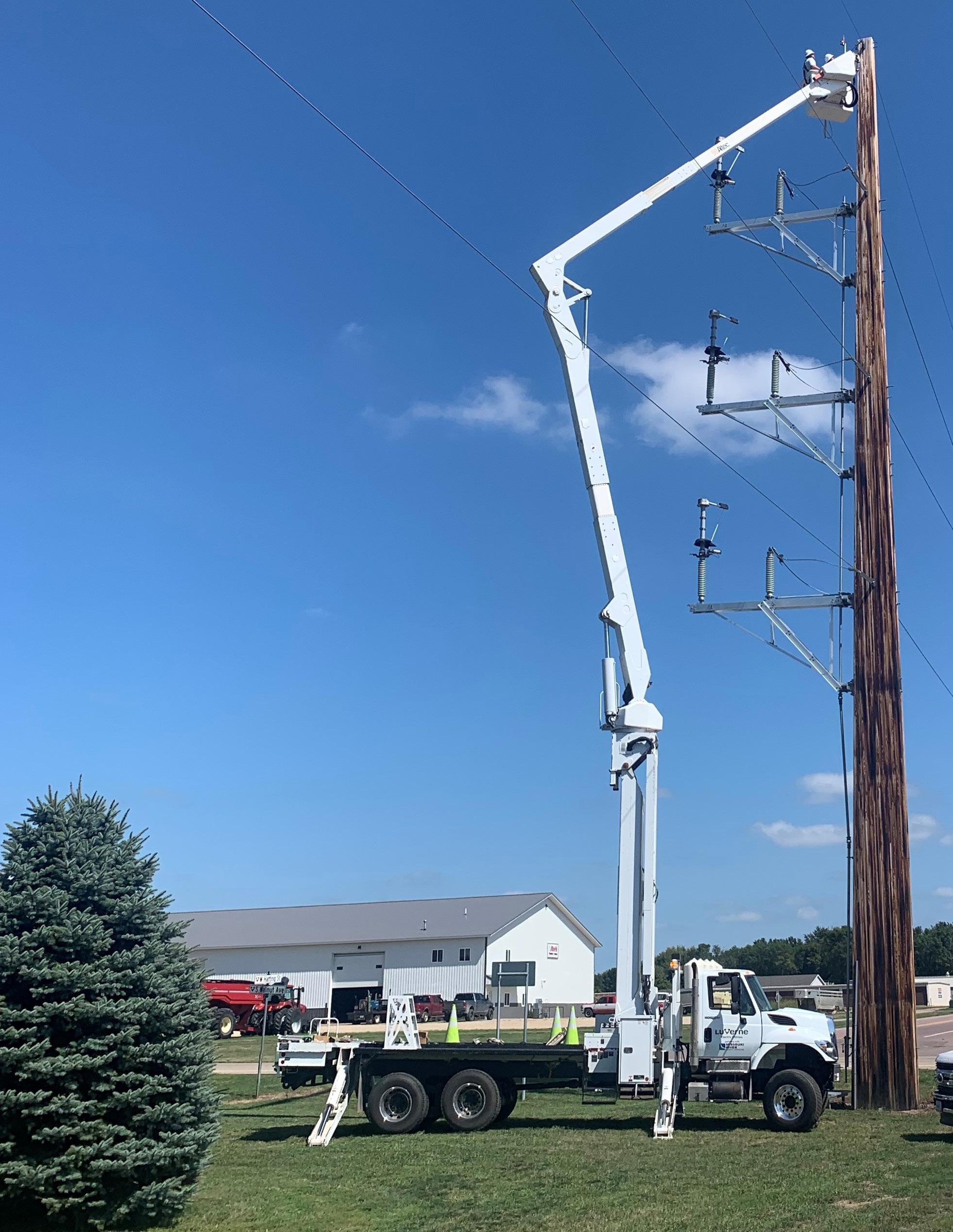
Our distribution maintenance crews are an integral part of that goal. They handle all the details of system maintenance along with working on projects like local generation maintenance, directional boring and new line construction.
And they do that really well. In 2024, MRES earned the Diamond Award from American Public Power Association for the 3rd year in a row. It’s the highest safety honor APPA gives out. That’s thanks to our crews’ relentless commitment to working smart and staying safe.
“This recognition is a testament to the unwavering commitment the MRES team shows every day to putting safety first. It reflects the culture we’ve built, one where we all ensure everyone gets home safely. I am so proud of our people and their dedication to safety in everything we do,” said Matt Schull, MRES president and CEO.
Municipal utilities can choose from three flexible service options: Regular Operations and Maintenance, Supplemental Maintenance, or Special Projects. No matter the path, communities only pay for the time our crew is on your system.
Minnesota: Barnesville, Benson, Jackson, Lakefield, Luverne, Olivia and Ortonville
Iowa: Kimballton, Rock Rapids, Paullina and Primghar
Minnesota: Adrian, Grove City, Henning, Lake Park and St. James
North Dakota: Hillsboro, Lakota and Northwood
South Dakota: Big Stone City and Pickstown
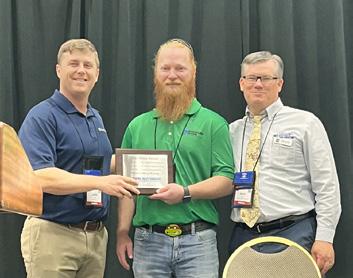
Nine employees were recognized with POWER Awards. Given once a year, the POWER Award is Missouri River’s highest form of employee recognition.



Senior Economist Eric Carl was recognized for his work to implement resource planning improvements, including the addition of multi-draw modeling runs and comprehensive documentation on the resource planning process.
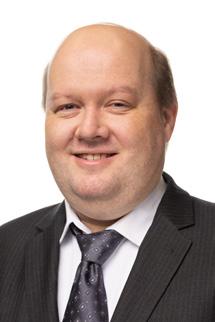

Resource Engineer Supervisor Nick Fanning was awarded for his leadership of the designing, bidding, building and commissioning of the Marshall Solar Plus project.
Leadership Development and Strategic Planning
Plant Supervisor Vern Cochran was honored for coordinating tours for 150 people at the Red Rock Hydroelectric Project. The tours were part of the National Hydropower Association’s Midwest Regional Meeting held in Des Moines, Iowa, last spring.
Director of Transmission Services Richard Dahl, Senior Transmission Engineer – Facilities Brian Zavesky and Senior Regulatory and Contracts
Manager Marcy Douglas and Member Programs
Coordinator Amy Collins were recognized for their exceptional work in coordinating, managing and handling a majority of the tasks involved in developing and submitting numerous state and federal grant applications.

Counsel Derek Bertsch were awarded for the leadership and dedication they showed during the submission process for the Big Stone Substation to Alexandria Substation route permit.

Director of Rates Tim Miller was recognized for discovering an error in a rate increase proposal from WAPA and bringing it to WAPA’s attention. Correcting the error resulted in a lower proposed rate increase.
MRES and WMMPA achieved debt service coverage (DSC) of 172% in 2024, exceeding the Board-approved policy of a five-year average of 170%. DSC for the five years ended Dec. 31, 2024, has averaged 186%. DSC is an important factor in determining favorable bond ratings, which can lead to better interest rates and, ultimately, lower costs for future capital projects.
The WMMPA power supply revenue bonds have maintained a rating of AA- from Fitch since 2003 and were upgraded to a rating of Aa2 from Moody’s in 2022.
MRES closed out 2024 with a net surplus of nearly $27 million – $15 million higher than budgeted.
At Dec. 31, 2024, MRES and WMMPA had unrestricted cash and investments of $277 million, approximately $91 million higher than the discretionary funds minimum target level. The unrestricted cash and investments of MRES and WMMPA represent approximately 17 months of the 2024 operating expenses, excluding depreciation.
Strong cash reserves are another factor in achieving favorable bond ratings. Reserves could also help stabilize rates and fund a portion of future capital projects, reducing the need for debt issuances.
At Dec. 31, 2024, the MRES and WMMPA capitalization was approximately 54% debt and 46% equity, slightly better than the board-targeted 60% debt and 40% equity structure. WMMPA’s debt as a percent of total capitalization is low compared to other joint action agencies.
The average rate for long-term power sales to members increased to 5.7 cents per kWh in 2024, compared to 5.6 cents per kWh in 2023. The average 2024 wholesale power and transmission rate was 15% below the median rate of 12 comparable regional providers.
Every year, MRES files Attachments O and H on behalf of the organization and members. The attachments are a cost-recovery mechanism that provides payments from the regional transmission organizations for MRES- and member-owned transmission in those areas. In 2024, we completed filings for 17 members in the Midcontinent Independent System Operator (MISO) and Southwest Power Pool (SPP) markets. In 2024, these filings led to approximately $15 million in cost recovery for these members.

MRES received approximately $24 million in cost recovery on its transmission assets in MISO and SPP.
MRES offers rate studies that review members’ historical costs and potential opportunities to ensure their rates are aligned with the cost to serve customers. Our rate studies have found that members have competitive retail rates. On average, MRES member retail rates are around 16% lower than the rates of regional investor-owned utilities.
We completed 16 cost-of-service studies in 2024, bringing the total to 346 studies since the program began in 1998.


To the Board of Directors of Missouri Basin Municipal Power Agency d/b/a Missouri River Energy Services and Western Minnesota Municipal Power Agency
Report on the Audit of the Financial Statements
Opinion
We have audited the accompanying combined financial statements of Missouri Basin Municipal Power Agency d/b/a Missouri River Energy Services and Western Minnesota Municipal Power Agency (MRES and WMMPA), as of and for the years ended December 31, 2024 and 2023, which collectively comprise MRES and WMMPA’s combined statements of net position, statements of revenues, expenses, and changes in net position and statements of cash flow, and the related notes to the combined financial statements.
In our opinion, the combined financial statements referred to above present fairly, in all material respects, the financial position of MRES and WMMPA as of December 31, 2024 and 2023, and the changes in financial position and, where applicable, cash flows for the years then ended in accordance with accounting principles generally accepted in the United States of America.
We conducted our audits in accordance with auditing standards generally accepted in the United States of America (GAAS) and the standards applicable to financial audits contained in Government Auditing Standards issued by the Comptroller General of the United States (Government Auditing Standards). Our responsibilities under those standards are further described in the Auditors' Responsibilities for the Audit of the Financial Statements section of our report. We are required to be independent of MRES and WMMPA and to meet our other ethical responsibilities, in accordance with the relevant ethical requirements relating to our audits. We believe that the audit evidence we have obtained is sufficient and appropriate to provide a basis for our audit opinion.
Responsibilities of Management for the Financial Statements
Management is responsible for the preparation and fair presentation of the financial statements in accordance with accounting principles generally accepted in the United States of America; and for the design, implementation and maintenance of internal control relevant to the preparation and fair presentation of financial statements that are free from material misstatement, whether due to fraud or error.
In preparing the combined financial statements, management is required to evaluate whether there are conditions or events, considered in the aggregate, that raise substantial doubt about MRES and WMMPA's ability to continue as a going concern for twelve months beyond the financial statement date, including any currently known information that may raise substantial doubt shortly thereafter.
Auditors' Responsibilities for the Audit of the Financial Statements
Our objectives are to obtain reasonable assurance about whether the financial statements as a whole are free from material misstatement, whether due to fraud or error, and to issue an auditors' report that includes our opinion. Reasonable assurance is a high level of assurance but is not absolute assurance and therefore is not a guarantee that an audit conducted in accordance with GAAS and Government Auditing Standards will always detect a material misstatement when it exists. The risk of not detecting a material misstatement resulting from fraud is higher than for one resulting from error, as fraud may involve collusion, forgery, intentional omissions, misrepresentations or the override of internal control. Misstatements are considered material if there is a substantial likelihood that, individually or in the aggregate, they would influence the judgment made by a reasonable user based on the financial statements.
Baker Tilly Advisory Group, LP and Baker Tilly US, LLP, trading as Baker Tilly, are members of the global network of Baker Tilly International Ltd., the members of which are separate and independent legal entities. Baker Tilly US, LLP is a licensed CPA firm that provides assurance services to its clients. Baker Tilly Advisory Group, LP and its subsidiary entities provide tax and consulting services to their clients and are not licensed CPA firms.
In performing an audit in accordance with GAAS and Government Auditing Standards, we:
Exercise professional judgment and maintain professional skepticism throughout the audit.
Identify and assess the risks of material misstatement of the financial statements, whether due to fraud or error, and design and perform audit procedures responsive to those risks. Such procedures include examining, on a test basis, evidence regarding the amounts and disclosures in the financial statements.
Obtain an understanding of internal control relevant to the audit in order to design audit procedures that are appropriate in the circumstances, but not for the purpose of expressing an opinion on the effectiveness of MRES and WMMPA's internal control. Accordingly, no such opinion is expressed.
Evaluate the appropriateness of accounting policies used and the reasonableness of significant accounting estimates made by management, as well as evaluate the overall presentation of the financial statements.
Conclude whether, in our judgment, there are conditions or events, considered in the aggregate, that raise substantial doubt about MRES and WMMPA's ability to continue as a going concern for a reasonable period of time.
We are required to communicate with those charged with governance regarding, among other matters, the planned scope and timing of the audit, significant audit findings and certain internal control-related matters that we identified during the audit.
Accounting principles generally accepted in the United States of America require that the Management’s Discussion and Analysis be presented to supplement the financial statements. Such information is the responsibility of management and, although not a part of the financial statements, is required by the Governmental Accounting Standards Board who considers it to be an essential part of financial reporting for placing the financial statements in an appropriate operational, economic or historical context. We have applied certain limited procedures to the required supplementary information in accordance with auditing standards generally accepted in the United States of America, which consisted of inquiries of management about the methods of preparing the information and comparing the information for consistency with management's responses to our inquiries, the financial statements, and other knowledge we obtained during our audit of the financial statements. We do not express an opinion or provide any assurance on the information because the limited procedures do not provide us with sufficient evidence to express an opinion or provide any assurance.
Our audit was conducted for the purpose of forming opinions on the financial statements as a whole. The WMMPA Statements of Net Position, and WMMPA Statements of Revenues, Expenses, and Changes in Net Position schedules, included as supplementary information, are presented for purposes of additional analysis and are not a required part of the financial statements. Such information is the responsibility of management and was derived from and relates directly to the underlying accounting and other records used to prepare the financial statements. The information has been subjected to the auditing procedures applied in the audit of the financial statements and certain additional procedures, including comparing and reconciling such information directly to the underlying accounting and other records used to prepare the financial statements or to the financial statements themselves, and other additional procedures in accordance with auditing standards generally accepted in the United States of America. In our opinion, the supplementary information are fairly stated in all material respects, in relation to the financial statements as a whole.
In accordance with Government Auditing Standards, we have also issued our report dated April 3, 2025 on our consideration of MRES and WMMPA's internal control over financial reporting and on our tests of its compliance with certain provisions of laws, regulations, contracts and grant agreements and other matters. The purpose of that report is solely to describe the scope of our testing, of internal control over financial reporting and compliance and the results of that testing and not to provide an opinion on the effectiveness of MRES and WMMPA's internal control over financial reporting or on compliance. That report is an integral part of an audit performed in accordance with Government Auditing Standards in considering MRES and WMMPA's internal control over financial reporting and compliance.

Madison, Wisconsin April 3, 2025
(Unaudited – See Independent Auditors’ Report)
The discussion and analysis on the following pages summarize the financial highlights and focuses on factors that had a material effect on the financial condition of Missouri River Energy Services (MRES) and Western Minnesota Municipal Power Agency (WMMPA) and the results of operations during 2024 and 2023. This discussion should be read in conjunction with the accompanying financial statements and notes thereto.
The financial portion of this annual report consists of the following:
Management’s Discussion and Analysis, which provides an objective and easily readable analysis of the financial activities of MRES and WMMPA based on currently known facts, decisions, and conditions.
The Combined Statements of Net Position, which prov ide a summary of the assets, deferred outflows of resources, liabilities, and deferred inflows of resources, as well as further analysis on changes in current and long-term assets and liabilities.
The Combined Statements of Revenues, Expenses, and Changes in Net Position, which provide the operating results of MRES and WMMPA in various categories of operating revenues and expenses and non-operating revenues and expenses.
The Combined Statements of Cash Flow, which report the cash provided by and used for operating activities as well as other cash sources such as i nvestment income and cash payments for repayment of bonds and capital additions.
The Notes to the Combined Financial Statements, which provide additional information that is essential to a full understanding of the data provided in the financial statements.
Financial Position
Condensed Statement of Net Position as of December 31 (Million
report.
The total assets and deferred outflows of resources of MRES and WMMPA at December 31, 2024, increased by 11 million or 1 percent compared to December 31, 2023. The largest variance was a $18 million increase in net capital assets, from $716 million to $734 million. The deferred outflows of resources were $12 million at both December 31, 2024 and 2023.
The total assets and deferred outflows of resources of MRES and WMMPA at December 31, 2023, increased by 26 million or 2 percent compared to December 31, 2022. The largest variance was a $94 million increase in other current assets, from $191 million to $285 million. The deferred outflows of resources were $12 million at both December 31, 2023 and 2022.
The largest assets of MRES and WMMPA at December 31, 2024, were net capital assets. Net capital assets totaled $734 million or 61 percent of total assets and deferred outflows of resources at December 31, 2024, an increase of $18 million compared to December 31, 2023. The $18 million increase in net capital assets during 2024 was primarily due to an increase in total utility plant in service offset by an increase in accumulated depreciation and a decrease in construction work in progress (CWIP). The increase in tota l utility plant and decrease in CWIP is due to the addition of Marshall Solar Plus.
Net capital assets totaled $716 million or 60 percent of tota l assets and deferred outflows of resources at December 31, 2023, an increase of $17 million compared to December 31, 2022. The $17 million increase in net capital assets during 2023 was primarily due to an increase in CWIP and total utility plant in service offset by an increase in accumulated depreciation.
Cash and investments were the second largest assets and deferred outflows of resour ces for MRES and WMMPA at December 31, 2024. Cash and investments totaled $377 million or 31 percent of total assets and deferred outflows of resources at December 31, 2024, a decrease of $11 millio n compared to December 31, 2023. Of the $377 million, approximately $100 million was restricted for debt service, capital projects, and other Bond Resolution-related requirements an increase by $7 million compared to December 31, 2023. The remaining $277 million of total cash and investments are unrestricted and decreased by $17 million compared to December 31, 2023. The $277 million of unrestricted cash and investments represent approxim ately 17 months of the 2024 cash operating expenses.
Cash and investments were the second largest assets and deferred outflows of resour ces for MRES and WMMPA at December 31, 2023. Cash and investments totaled $388 million or 33 percent of total assets and deferred outflows of resources at December 31, 2023, an increase of $7 million compared to December 31, 2022. Of the $388 million, approximately $94 million was restricted for debt service, capital projects, and other Bond Resolution-related requirements and decreased by $1 million compared to December 31, 2022. The remaining $294 million of total cash and investments are unrestricted and increased by $8 million compared to December 31, 2022. The $294 million of unrestricted cash and investments represent 17 months of the 2023 cash operating expenses.
All other assets and deferred outflows of resources of MRES and WMMPA totaled $89 million at December 31, 2024, $4 million higher than at December 31, 2023. The fuel stoc k increased by $4 million, prepayments and other current assets increased by $3 million, other non-current assets increased by $2 million, the increases were offset by a $1 million decrease in accounts receivable and a $2 million decrease in advances to Missouri Basin Power Project (MBPP).
All other assets and deferred outflows of resources of MRES and WMMPA totaled $85 million at December 31, 2023, $3 million higher than at December 31, 2022. The advances to MBPP increased by $2 million, the fuel stock increased by $4 million, and unamortized loss on reacquired debt and prepayment and other current assets both increased by $1 million, the increases were offset by a $1 million decrease in accounts receivable and a $3 million decrease in other non-current assets.
The total liabilities, deferred inflows of resources, and net position of MRES and WMMPA at December 31, 2024, increased by $11 million or 1 percent compared to December 31, 2023. Significant variances included a $27 million increase in net position, $4 million increase in accounts payable, offset by a $16 million decrease in long-term debt.
The total liabilities, deferred inflows of resources, and net position of MRES and WMMPA at December 31, 2023, increased by $26 million or 2 percent compared to December 31, 2022. Significant variances included a $31 million increase in net position, $5 million increase in accounts payable, offset by a $16 million decrease in long-term debt.
See accompanying independent auditors’ report.
The larg est liability of MRES and WMMPA is long-term debt including current maturities, which totaled $580 million or 48 percent of total liabilities, deferred inflows of resour ces, and net position at December 31, 2024. Long-term debt decreased by approximately $16 million during 2024. The decrease in 2024 was due to the scheduled principal payment and amortization of debt premium.
Long-term debt, including current maturities at December 31, 2023, totaled $596 million or 50 percent of total liabilities, deferred inflows of resources, and net positi on at December 31, 2023. Long-term debt decreased by approximately $16 million during 2023. The decrease in 2023 was due to the scheduled principal payment and amortization of debt premium.
Net position totaled $487 million at December 31, 2024, or 41 percent of the total liabilities, deferred inflows of resources, and net position compared to $460 million or 39 percent of total liabilities, defe rred inflows of resources, and net position at December 31, 2023. During 2024 and 2023, the net position increased by $27 million and $31 million, respectively.
Revenues collected for future costs totaled $73 million (6 pe rcent) of total liabilities, deferred inflows of resources, and net position at both December 31, 2024 and 2023. Revenues collected for future costs totaled $73 million (6 percent) and $68 million (6 percent) of total liabilities, deferred inflows of resources, and net position at December 31, 2023 and 2022, respectively. The increase is due to unrealized loss on investments being lower.
Current liabilities, excluding the current portion of long-term debt, totaled $47 million (4 percent) and $44 million (4 percent) of total liabilities, deferred inflows of res ources, and net position at December 31, 2024 and 2023, respectively. During 2024, current liabilities increased by $4 million, primarily due to higher accounts payable.
During 2024 and 2023, WMMPA made scheduled principal payments of $14 million. WMMPA did not issue any additional debt during 2024 or 2023.
Following are the current underlying ratings for outstanding WMMPA revenue bonds:
FitchRatings (Fitch)
AA- (stable outlook)
Moody’s Investors Services (Moody’s) Aa2 (stable outlook)
The WMMPA revenue bonds have maintained a rating of AA- from Fitch since 2003 and were upgraded to a rating of Aa2 from Moody’s in 2022.
See accompanying independent auditors’ report.
Condensed Statement of Revenues, Expenses, and Changes in Net Position (Million $)
Totals may not foot due to rounding.
Oper ating Revenues
Long-term power sales revenue for 2024 was $174 million compared to $178 million and $182 million in 2023 and 2022, respectively. The 2024 long-term power sales revenue was approximately less than 3 percent lower than in 2023, due to decrease in demand and energy sales, offset by an increase in rates. The 2023 long-term power sales revenue was less than 2 percent lower than in 2022, due to decrease in energy sales. In 2023, MRES did implement time of use rates. The average rate for long-term power sales to members was approximately 5.6 cents per kilowatt-hour (kWh) in 2024, 2023 and 2022.
The 2024 short-term power sales revenue was $12 million compared to $21 million and $43 million in 2023 and 2022. The decrease in revenue in 2024 was due to a decrease in megawatt hours (MWh) sold and lower market prices. The decrease in revenue in 2023 was due to $6 million of deferred revenue being recognized in 2022 along with a decrease in MWh sold and lower market prices.
The revenue received for transmission services was $64 million in 2024 compared to $61 million in both 2023 and 2022.
Other operating income in 2024 was $1.8 million compared to $1.3 million in 2023 and $0.1 million in 2022. The increase in other operating revenue in 2024 and 2023 was due to an increase in capacity sales.
Fuel expense for 2024 was $22 million compared to $23 million and $31 million in 2023 and 2022, respectively. The lower fuel expense in 2024 compared to 2023 was due to a decrease in generation at Laramie River Station (LRS), offset by an increase in generation at Exira Station (Exira). The decrease in generation at LRS was due to an outage at the beginning of the year. The lower fuel expense in 2023 compared to 2022 was largely due to decreased generation at LRS, offset by the increased generation at Exira. The decrease in generation at LRS was due to an outage at the end of the year. The average fuel cost for LRS was approximately 10 percent higher in 2024 compared to 2023 and 4 percent higher than 2022. The 2024 and 2023 generation at LRS was approximately 1.0 million Megawatt hours (MWh) compared to 1.2 million in 2022. The average cost of fuel for Exira decreased by approximately 25 percent in 2024 compared to 2023, the decrease is due to the decrease in natural gas costs. The generation at Exira was approximately 314,000 MWh, 231,000 MWh, and 157,000 MWh in 2024, 2023, and 2022, respectively.
Purchased power expense was $85 million in 2024 compared to $93 million for both 2023 and 2022. The decrease in 2024 purchased power expense compared to 2023 and 2022 was due to lower market prices.
The other power supply operation and maintenance (O&M) expense was $22 million in 2024 compared to the 2023 expense of $21 million and the 2022 expense of $26 million. The increase in the 2024 other power supply O&M expense was an increase in fixed O&M expenses for Marshall Wind Farm (MWF), offset by a slight decrease in fixed O&M expenses for LRS. The decrease in 2023 other power supply O&M expense was due to lower fixed O&M expenses for MWF and a
See accompanying independent auditors’ report.
decrease in natural gas cost, offset by a decrease in socialization received from MBPP and increase in fixed O&M expenses for LRS.
All other operating expenses totaled $92 million in 2024 compared to $85 million and $86 million in 2023 and 2022, respectively. The increase in 2024 was due an increase in transmission O&M expenses and administrative and general expense. The increase in administrative and general expenses is largely due to the administration fees for MBPP.
Net operating income was $32 million in 2024 compared to $39 million and $52 million in 2023 and 2022, respectively.
For the year ended December 31, 2024, non-operating expenses exceeded non-operating revenues by $5 million, compared to $10 million and $19 million in 2023 and 2022. The lower net non-operating expense for 2024 compared to 2023 was due to an increase in investment income and a decrease in other expense. The lower net non-operating expense for 2023 compared to 2022 was due to an increase in investment income and a decrease in other expense.
Other income totaled $7 million in 2024 compared to $6 million in both 2023 and 2022.
Investment income totaled $13 million in 2024 compared to $10 million in 2023 and $4 million in 2022. The increase in investment income for 2024 compared to 2023 was an increase in investment yields, offset by a slight decrease in cash and investments.
Other expense totaled $5 million in 2024 compared to $7 million in 2023 and $9 million in 2022. The decrease in 2024 is due to the recognition of project development costs for the abandoned Gregory County Pumped Storage Project (GCPS) in 2023. The decrease in other expense for 2023 compared to 2022 was due to a refund to the Northern Cities Group (NCG) members of $4.2 million in 2022, offset by the recognition of project development costs for the abandoned GCPS.
Interest expenses was $24 million in 2024, $25 million in 2023 and $26 million 2022. The decrease in 2024 compared to 2023 was due to scheduled principal payments and no additional debt being issued. During 2024 and 2023, depreciation and amortization expense exceeded debt principal requirements plus amortization of debt-related costs and premium for related assets by approximately $3 million. During 2022, depreciation and amortization expense exceeded debt principal requirements plus amortization of debt-related costs and premium for related assets by $4 million. The difference between debt principal requirements plus amortization of debtrelated costs and premium, and depreciation and amortization, and the deferral of unrealized gain or loss on investments reflects MRES and WMMPA utilizing the accrual basis of accounting and following the provisions of Government Accounting Standards Board (GASB) No. 62 Regulated Operations. In general, GASB 62 relates to the deferral of revenues and expenses to or from future periods to the period that revenues are expected to be earned or expenses are expected to be recovered through the rates charged to its members. The unrealized gain on investments totaled $3 million in 2024, compared to the unrealized gain on investments of $8 million in 2023 and an unrealized loss on investments of $14 million in 2022. The unrealized gains in 2024 and 2023 were due to the favorable market conditions compared to the volatile market conditions in 2022, which saw a high unrealized loss.
Capital contribution totaled $3,000 in 2024 compared to $1 million in 2023. There was not capital contributions in 2022. The total is due to the FEMA grant money received for storm damage done to Elbow Lake Substation.
The change in net position was $27 million, $31 million, and $32 million in 2024, 2023, and 2022, respectively. The 2024 change in net position was approximately $15 million higher than budget. The favorable variance compared to budget is due to lower purchase power expenses, lower transmission expenses, higher investment income, offset by lower power sales, lower surplus sales, and lower transmission revenues.
This financial report is designed to provide members, investors, and creditors with a general overview of the finances of MRES and WMMPA. Questions concerning any of the information provided in this report or requests for additional financial information, should be addressed to: Missouri River Energy Services, 3724 West Avera Drive, Sioux Falls, SD 57108-5750.
See accompanying independent auditors’ report.
Combined Statements of Net Position
Combined Statements of Net Position
DEFERRED INFLOWS OF RESOURCES AND NET POSITION: 2024 2023 (thousands
The accompanying notes to the combined financial statements are an integral part of these statements.
(Notes 3 and 13):
Statements of Revenues, Expenses and Changes in Net Position The accompanying notes to the combined financial statements are an integral part of these statements.
YEARS ENDED DECEMBER 31
Combined Statements of Cash Flow
The accompanying notes to the combined financial statements are an integral part of these statements.
of Operating Income to Net Cash Flows From Operating
Reconciliation of Cash and Cash Equivalents to Statement of Net Position:
disclosure of non-cash capital and related financing activities
Statements of Cash Flow The accompanying notes to the combined financial statements are an integral part of these statements. YEARS
YEARS ENDED DECEMBER 31
Missouri Basin Municipal Power Agency dba Missouri River Energy Services and Western Minnesota Municipal Power Agency Notes to Combined Financial Statements
Missouri Basin Municipal Power Agency dba Missouri River Energy Services (MRES) is a body corporate and politic, organized under the laws of the State of Iowa. Membership consists of 61 municipalities in the states of Iowa, Minnesota, North Dakota, and South Dakota that own and operate utilities for the local distribution of electricity. Western Minnesota Municipal Power Agency (WMMPA) is a municipal corporation and political subdivision of the State of Minnesota. The WMMPA membership consists of 24 municipalities in the state of Minnesota. All WMMPA members are also members of MRES. WMMPA owns various coal-fired, natural gas-fired, oil-fired, hydroelectric, wind and solar generating facilities. WMMPA also owns varying interests in transmission facilities and a headquarters building. Pursuant to a power supply contract, MRES purchases and WMMPA sells the WMMPA entitlement in its generation and transmission facilities. MRES in turn utilizes the output and capacity of these facilities and other resources to provide power supply and transmission services to members under terms of separate Long-term Power Sale Agreements (Notes 3 and 4). MRES and WMMPA are not rate-regulated by any federal or state authority or subject to federal or state income taxes. MRES performs all requested administrative services on behalf of WMMPA, which has no employees of its own, under an administrative services agreement. The administrative services agreement expires January 1, 2057, to coincide with 59 of the 61 Power Sale Agreements. The agreement may be terminated thereafter by either party upon two years written notice. MRES and WMMPA are two separate entities reported as a combined enterprise. The entities coexist on an equal basis with both entities together providing holistic services to their members. WMMPA owns the assets and provides financing, while MRES operates the assets and provides services. Neither entity is subordinate to the other. Therefore, the financial statements of MRES and WMMPA are combined to provide fair and accurate representation of the entities.
A.Accounting Method
The combined financial statements of MRES and WMMPA follow authoritative sources of United States (U.S.) generally accepted accounting principles under the provisions of the Governmental Accounting Standards Board (GASB) 76, The Hierarchy of Generally Accepted Accounting Principles for State and Local Governments. MRES and WMMPA comply with all applicable GASB pronouncements, including the application of GASB 62, Codification of Accounting and Financial Reporting Guidance Contained in Pre-November 30, 1989 FASB and AICPA Pronouncements (GASB 62). Under GASB 62, MRES and WMMPA defer revenues and expenses for future recognition as they are recovered or returned through the rate-making process. MRES and WMMPA utilize the Federal Energy Regulatory Commission’s Uniform System of Accounts.
Net Position is classified into three components:
Net investment in capital assets – This component consists of net capital assets reduced by the outstanding balances of revenue bonds attributable to the acquisition, construction, or improvement of capital assets. If there are significant unspent related debt proceeds at year-end, the portion of the debt attributable to the unspent proceeds are not included in the calculation of net investment in capital assets. Rather, that portion of the debt is included in the same net position component as the unspent proceeds.
Restricted – This component of net position consists of constraints imposed by the WMMPA Power Supply Revenue Bond Resolution (Bond Resolution) or other contract require ments, which include investments restricted by Board policies.
Unrestricted – This component consists of the portion of the net position of MRES and WMMPA that does not meet the definition of “restricted” or “net investments in capital assets.”
When both restricted and unrestricted resources are available for use, it is the policy of MRES and WMMPA to use restricted resources first, then unrestricted resources as they are needed.
B.Revenue Recognition Revenue is accrued through the end of each month.
C. Operating Revenues and Expenses
MRES and WMMPA distinguish operating revenues and expenses from non-operating revenues and expenses. Operating revenues and expenses generally result from generating, purchasing, and transmitting electric power and energy. The principal operating revenues of MRES are revenues from members and others for the generation, purchase, and transmission of electric power and energy.
Operating expenses for MRES and WMMPA include the cost of generating, purchasing, and transmitting electric power and energy, administrative expenses, and depreciation on capital assets. All revenues and expenses not meeting this definition are reported as non-operating revenues and expenses. The other non-operating revenues include income from providing full-time distribution maintenance services for six MRES, member communities and one associate, and income received from the U.S. Treasury for the Build America Bonds.
D.Capital Contributions
Capital contributions are federal grant money received from Federal Emergency Management Agency.
E.Utility Plant
Utility plant is stated at cost. MRES and WMMPA capitalize assets with a cost in excess of $1,000 and life of more than one year, with the exception of Missouri Basin Power Project (MBPP) assets, which are capitalized in excess of $10,000. The cost of utility plant retired plus the cost of removal less salvage is charged to accumulated depreciation. Repairs and maintenance of units of property are charged to operations. Construction work in progress (CWIP) mainly consists of transmission plant being constructed along with construction of a solar generation project.
F. Asset Retirement and Environmental Obligation
WMMPA adopted GASB 83, Certain Asset Retirement Obligations (GASB 83) effective January 1, 2019, for the retirement of all generating facilities except for MBPP. As a minority owner of MBPP, WMMPA had previously adopted Accounting Standards Codification (ASC) Section 410 Asset Retirement and Environmental Obligations (ASC 410)for MBPP. WMMPA recorded an Asset Retirement Obligations liability (ARO) for MBPP prior to January 1, 2019.
The ARO under GASB 83 is for the closure of the Worthington Wind Project (WWP), Watertown Power Plant (WPP), and Marshall Wind Farm (MWF), to comply with contractual obligations, and are based on internal estimates. The estimated remaining useful lives for WWP, WPP, and MWF at December 31, 2024, were 3, 11, and 14 years, respectively. There is no required funding for the AROs for any of these assets.
The ARO under ASC 410 for MBPP includes the estimated cost for the reclamation of wells, landfills, and coal ash ponds at Laramie River Station (LRS). The estimated cost was provided by the Operating Agent for MBPP, Basin Electric Power Cooperative (BEPC). The ARO for all owners of LRS was $27 million and $47 million at December 31, 2024 and 2023, respectively. WMMPA’s portion of the total was approximately $4 million and $8 million at December 31, 2024 and 2023, respectively.
WMMPA’s asset retirement obligations activities as of and for the respective years ended December 31 are summarized below:
2024 2023
Asset Retirement obligations:
G.Depreciation
MRES and WMMPA utilize straight-line dep reciation for all depreciable assets. The estimated service lives for capital assets are 25 to 52 years for generation plants, 40 to 60 years for transmission plants, 52 years for intangible plants, and 5 to 50 years for general plants. Depreciation expense, expressed as a percent of depreciable utility plant in service, was 1.9 percent and 2.0 percent in 2024 and 2023, respectively.
H.Materials and Supplies and Fuel Stock
Fuel stock inventory, materials, and supplies are stated at weighted average cost.
I. Accounts Receivable
Accounts receivable are stated at the amount management expects to collect from outstanding balances. Based on the validity of contracts and collection history, an allowance for doubtful accounts is not considered necessary. Should these circumstances change, an allowance for doubtful accounts would be provided for those accounts receivable considered to be uncollectible at the end of the year, and the bad debts would be written off against the allowance when id entified.
J. Prepayments and Other Current Assets
Prepayments and other current assets include unamortized costs of expenses paid in advance for which the future benefits have yet to be realized. MRES and WMMPA recognize an expense or asset when such benefit is realized. Prepayments and other current assets consist of:
2024 2023
of
K. Investments
Investment securities are stated at fair value based on quoted market prices or other observable inputs. Gains or losses on the sale of investment securities are recognized using the specific identification method. Unrealized gains or losses are deferred pursuant to GASB 62.
L.Derivative Instrument
Under GASB 53, Accounting and Financial Reporting for Derivative Instruments, the fair value of derivative instruments is to be reported in the financial statements. The derivative instruments recorded on WMMPA financial statements in other non-current assets are for interest rate swaps executed by WMMPA in 2020 and amended in 2021, to hedge the interest rate risk for future refunding of outstanding bonds. See note 12 for further information.
M. Restricted Assets
Restricted assets consist of cash and investments required to be maintained or restricted by the Bond Resolution; the Assignment and Pledge Agreement among MRES, WMMPA, and the Agent Bank (Assignment and Pledge Agreement); and advances from others for specific projects. Current liabilities payable from these restricted assets are also classified as restricted. WMMPA is in compliance with all Bond Resolution funding requirements.
N. Deferred Outflow of Resources
A deferred outflow of resources represents a consumption of net position that applies to a future period and will not be recognized as an outflow of resources (expense) until that future time. The deferred outflows of resources include (1) AROs, and (2) the unamortized gain or loss on reacquired debt, which includes the unamortized gain on the interest rate swap.
O. Amortization
WMMPA unamortized debt-issuance costs and premiums are amortized over the term of the bonds. A regulatory asset is established under GASB 62 to recognize unamortized bond issuance costs for rate-making purposes. Additionally, gains and losses resulting from the defeasance or early redemption of bonds are recorded as deferred outflow and amortized over the term of the new debt. WMMPA amortizes these amounts based on the straight-line method on each maturity, which approximates the effective interest rate method.
P. Compensated Absences
Employees are granted and accrue paid time-off in varying amounts in accordance with the MRES Human Resources Policies. Compensated absences of $2.2 million and $2.1 million were recorded in accounts payable at the end of December 31, 2024 and 2023, respectively. Management implemented GASB 101, Compensated Absences, the impacts were immaterial.
Q. Deferred Inflow of Resources
A deferred inflow of resources represents an acquisition of net position that applies to a future period and therefore will not be recognized as an inflow of resources (revenue) until that future time. The deferred inflow of resources includes (1) the difference between debt principal collected in rates and depreciation expense; (2) unrealized gain or loss on investments; (3) amortization of financing-related costs and premium; (4) deferred revenue (which are all considered a regulatory credit under GASB 62) and (5) the estimated fair value of hedge derivative financial instruments.
R. Statements of Cash Flows
All highly liquid investments with an original maturity of three months or less are considered cash equivalents.
S. Use of Estimates
Management has made a number of estimates and assumptions relating to the reporting of assets, liabilities, revenues, and expenses to prepare these combined financial statements in conformity with accounting principles generally accepted in the U.S. Actual results could differ from the estimates. MRES participates in the Midcontinent Independ ent System Operator, Inc. (MISO) and the Southwest Power Pool (SPP) energy markets. MISO and SPP may true-up revenues and expenses from prior years. MRES accrues revenue and expenses that are known or estimated at the time of closing, but since there is such a long window for true-ups, actual results may differ from estimates.
T. Subsequent Events
MRES and WMMPA considered events for recognition or disclosure in the financial statements that occurred subsequent to December 31, 2024, through April 3, 2025, the date the financial statements were available for issuance.
U.Recently Issued Accounting Pronouncements
GASB has issued Statement No. 102, Certain Risk Disclosures, Statement No. 103, Financial Reporting Model Improvements and No. 104, Disclosure of Certain Capital Assets Management is in the process of evaluating the GASB statements and their impact. When they become effective, application of these standards may require restatement of portions of these financial statements.
V. Reclassifications
Certain prior year amounts have been reclassified to conform to current year presentation.
3.SALE AGREEMENTS Power Sale Agreements
MRES and WMMPA have Long-term Power Sale Agreements with 61 members (Power Supply Members). Fifty-eight of the members (S-1 Members) have executed S-1 Power Sale Agreements (S-1 Agreements), and three members have executed Non S-1 Power Sales Agreements. The members must take and pay for all electric power and energy made available under these agreements. Fifty-seven of the 58 S-1 Agreements provide for MRES to supply, to the extent it has power and energy available, to such MRES S-1 Members their respective Supplemental Power requirements above that supplied by Western Area Power Administration (WAPA). The electric power and energy sold to the other MRES S-1 Member is supplemental to WAPA and certain existing power supply agreements. These power supply agreements expire at various times between December 2026 and March 2033. As the power supply agreements expire, MRES will provide the electric power and energy previously provided by these agreements. Effective March 2033, the power and energy sold to this S-1 Member will be all power and energy supplemental to WAPA.
The term of the S-1 Agreements currently extends to January 1, 2057. MRES S-1 Members have an option every five years to cap their purchases from MRES at the level of service provided by MRES on the first day of the summer season following the second year following exercise of the option. No S-1 Member has ever elected to cap its purchases from MRES. The next option date for capping purchases from MRES is 2027.
MRES provides 100 percent of the demand and energy requirements to one MRES member under a Non S-1 Power Sale Agreement. This agreement expires January 1, 2057. The sale of power and energy under one of the other Non S-1 Agreements expires January 1, 2046, and is based on a 100 percent load factor, i.e., the same level of power and energy every hour. The remaining agreement extends to January 1, 2040, and requires the member to purchase all of its electric power requirements over and above purchases from WAPA and generation owned by the member from MRES. Sales revenue associated with all Long-term Power Sale Agreements is classified in the accompanying statements as “Long-term power sales.” Under terms of the Long-term Power Sale Agreements, MRES is required to establish and maintain rates that will provide sufficient revenues to cover the payments under the Power Supply Contract and all other revenue requirements. MRES has contracted to collect payments for WAPA power and energy purchased by the members with WAPA allocations and to remit these payments to WAPA. Since MRES is only acting as agent for these members, these amounts are not reflected as revenue or expense in the Combined Statements of Revenues, Expenses, and Changes in Net Position. The power and energy purchased by these members that MRES was responsible for collecting and remitting to WAPA totaled approximately $53 million for both the 12 months ended December 31, 2024 and December 31, 2023. The revenue requirements of the Long-term Power Sale Agreements expiring January 1, 2057 and January 1, 2040, include all expenses for the transmission of electric power and energy to these members. These expenses totaled $41 million and $39 million during 2024 and 2023, respectively.
In addition to sales under the Long-term Power Sale Agreements, MRES has arrangements to sell generating capacity to other wholesale customers on a long-term basis and wholesale power and energy in MISO and SPP on short-term firm and non-firm bases. Revenues associated with the sale of generating capacity on a long-term basis is classified in the accompanying statements as “Long-term power sales.” Revenues associated with the sale of wholesale power and energy in MISO and SPP on short-term firm and non-firm bases are classified in the accompanying statements as “Short-term power sales.”
A. Power Supply Contract
Under the Power Supply Contract, WMMPA is obligated to sell to MRES, and MRES is obligated to buy from WMMPA, on a take-and-pay basis, entitlement in the generation, approximately 532 megawatts (MW), transmission, and general plant facilities owned by WMMPA and all replacement power and energy required by the Power Supply Members. The Power Supply Contract expires January 1, 2057, to coincide with the term of 59 of the 61 Long-term Power Sale Agreements.
B. Power Purchase Agreements
MRES has long-term power purchase agreements (PPA) with various third parties to receive the output of approximately 79 MW of wind generation, 33 MW of nuclear generation, and 1 MW of solar generation. The wind generation PPAs expire at various times between 2024 and 2029; the nuclear generation PPA expires in 2033, and the solar generation PPA expires in 2041. WMMPA acquired the Marshall Wind Farm, LLC (MWF, LLC) assets in March 2020. MWF represents 19 of the 79 MW of wind generation PPAs. See note 6 for additional details.
The investments for MRES and WMMPA are in accordance with the Bond Resolution, the Assignment and Pledge Agreement, the MRES Investment Policy, the WMMPA Investment Policy (which conforms to the Bond Resolution), and applicable state law. These documents allow investment in securities issued by the U.S. Government, its agencies and instrumentalities, certain state and local government securities, specified corporate obligations, and certain bank instruments
Deposits
Deposit custodial credit risk is the risk that in the event of a financial institution failure, the entity’s deposits may not be returned to MRES or WMMPA. Deposits in each bank were insured by the Federal Deposit Insurance Corporation (FDIC) in the aggregate amount of $250,000 for interest-bearing and noninterest-bearing accounts in 2024 and 2023. State law and MRES and WMMPA Investment Policies require collateralization of all deposits above the FDIC limit. On December 31, 2024 and 2023, all MRES and WMMPA deposits were entirely insured or collateralized. MRES holds a collateral account with MISO, which totaled $6.3 million at both December 31, 2024 and December 31, 2023. MRES also holds a collateral account with SPP, which totaled $2.1 million at December 31, 2024 and $1.2 million at December 31, 2023.
Investments
Investment custodial credit risk is the risk that in the event of the failure of the counterparty, MRES and WMMPA will not be able to recover the value of their investment or collateral securities that are in the possession of an outside party. WMMPA investments are held by Computershare Trust Company, N.A., National Association, as Trustee for WMMPA. MRES investments are held in the book entry system of the Fifth Third Bank in the name of the MRES custodian, First Premier Bank. MRES is identified as the owner of these investments in the records of First Premier Bank.
MRES and WMMPA funds at December 31, 2024 and 2023, are summarized as follows:
Investments are stated at fair value, which is the amount at which an investment could be exchanged in a current transaction between willing parties. Fair values are based on quoted market prices. The estimated fair value of cash and cash equivalents and investment securities, by contractual maturity, is shown under Fair Value Measurement. Expected maturities may differ from the contractual maturity, because borrowers may have the right to call or prepay obligations with or without call or prepayment penalties. Investment values may have changed significantly after year end.
Fair value is the price that would be received to sell an asset or paid to transfer a liability in an orderly transaction between market participants at the measurement date. Fair value measurements must maximize the use of observable inputs and minimize the use of unobservable inputs. There is a hierarchy of three levels of inputs that may be used to measure fair value:
Level 1 – Quoted prices in active markets for identical assets or liabilities.
Level 2 – Observable inputs other than Level 1 prices, such as quoted prices for similar assets or liabilities, quoted prices in markets that are not active, or other inputs that are observable or can be corroborated by observable market data for substantially the full term of the assets or liabilities.
Level 3 – Unobservable inputs supported by little or no market activity that are significant to the fair value of the assets or liabilities.
The tables displayed below present the fair value measurements of MRES and WMMPA assets recognized in the accompanying financial statements measured at fair value on a recurring basis and the level within the fair value hierarchy in which the fair value measurements fall at year-end. Securities issued by the U.S. Government are classified in Level 1 of the fair value hierarchy and valued using prices quoted in active markets for those securities. Securities issued by U.S. Government Agencies and Instrumentalities as well as securities issued by state and local governments were valued on institutional bond quotes and/or evaluations based on various market and industry inputs and are classified in Level 2. Certain cash and cash equivalents are valued at their outstanding balance, and thus, are not included within the fair value hierarchy.
At December 31, 2024, the MRES and WMMPA investments were as follows:
(Years)
At December 31, 2023, the MRES and WMMPA investments were as follows:
C REDIT R ISK
Credit risk is the risk that an issuer or other counterparty to an investment will not fulfill its obligations. The securities issued by the U.S. Government and its Agencies and Instrumentalities had AA+ ratings from Standard & Poor’s (S&P) and Fitch Ratings (Fitch) and Aaa ratings from Moody’s Investors Service (Moody’s). The securities issued by State Governments had ratings of AA- to AAA from S&P, AA to AAA from Fitch, and Aa2 or Aa1 from Moody’s. The money market mutual funds included in cash and cash investments had ratings of AAAm from S&P and Aaa-mf ratings from Moody’s. The MRES and WMMPA Investment Policies limit investments to certain issuers, types of institutions, and ratings, of which all outstanding investments are in compliance.
C ONCENTRATIONS OF C REDIT R ISK
Concentration of credit risk is the risk of loss attributed to the magnitude of the investment in a single issuer by MRES or WMMPA. Investments held with issuers totaling 5 percent or more of the total portfolio were concentrated as follows:
Issuer
The MRES and WMMPA Investment Policies do not limit the amount of the portfolio that can be invested in securities issued by the U.S. Government or agencies of the U.S. Government. The MRES Investment Policy and state law restrict investments of commercial paper by percentage of portfolio as well as by the amount of a single issuer. Both the MRES and WMMPA Investment Policies address diversification of investments to eliminate the risk of loss resulting from over concentration of assets in a specific maturity, issuer, or class of security.
Interest rate risk is the risk that changes in interest rates will adversely affect the estimated fair value of an investment. The maximum maturity under the MRES Investment Policy for operating funds is 397 days. All other MRES funds may have longer maturities consistent with liquidity needs. The maximum maturity under the WMMPA Investment Policy for operating funds is 12 months. All other WMMPA funds have varying maturity limits depending on the anticipated need to make payments from the various funds.
WMMPA purchased MWF, LLC in March 2020. MWF, LLC owns nine wind turbines located near Marshall, Minnesota, and is capable of generating 19 MW of power. WMMPA provides financing for the operations of MWF, and it is accounted for as a blended component unit of WMMPA. The revenues and expenses of MWF, LLC were eliminated upon consolidation with WMMPA. MWF, LLC’s summary financial information as of December 31, 2024 and 2023, and for the years then ended is as follows:
Statements of Cash Flow
7. INVESTMENT IN MARSHALL SOLAR PLUS LLC (MSP LLC)
WMMPA purchased MSP LLC in December 2024. MSP LLC owns a solar farm with battery storage located near Marshall, Minnesota, and can generate 10 MW of power with 5 MW of storage. WMMPA provides financing for the operations of MSP, and it is accounted for as a blended component unit of WMMPA. MSP LLC’s summary financial information as of December 31, 2024 and for the year then ended is as follows:
A.Utility Plant
WMMPA has a 16.47 percent undivided ownership in MBPP that includes LRS, which consists of three 570 MW coalfired, steam, electric-generating units, associated transmission facilities, intangible plant, and the Grayrocks Dam and Reservoir.
B. Coal Supply Contracts
MBPP has an agreement with Western Fuels Association, Inc. (Western Fuels) to purchase sub-bituminous coal for LRS through the year 2034. The price of this coal is fixed at an amount that will produce revenues sufficient, together with all other Western Fuels’ revenues, to cover the costs of producing or acquiring and delivering the coal. MBPP is obligated to pay for a minimum amount of coal each year. The average prices of MBPP coal purchases were approximately $22.00 and $20.39 per ton in 2024 and 2023, respectively. MBPP purchased approximately 5 million and 7 million tons of coal during 2024 and 2023, respectively. Minimum coal purchase requirements over the next five years of the contracts for all MBPP participants are as follows:
2027 2,950,000
2028 2,200,000
2029 1,700,000
Western Fuels entered into various agreements that provide for development and ownership of the Dry Fork Mine. In connection with the development and acquisition of the Dry Fork Mine, the MBPP participants provided financing to Western Fuels. On December 31, 2024 and 2023, the balance of advances owed to WMMPA approximated $0.8 million and $0.7 million, respectively. These advances are expected to be fully repaid by 2030.
C. Operating Expenses
Costs of MBPP are allocated to WMMPA based on its 16.47 percent undivided ownership interest, except for energyrelated costs, which are allocated based on scheduled generation and adjusted for the relative effects of the LRS heat rate and plant efficiency at the time generation is scheduled. Such costs are included in operating expenses in the Combined Statements of Revenues, Expenses, and Changes in Net Position.
D. Advances to MBPP
WMMPA advances to the MBPP operating agent for working capital purposes totaled approximately $4 million and $7 million at December 31, 2024 and 2023, respectively.
Utility plant at December 31, 2024 and 2023, consisted of:
of dollars)
Utility plant activity for the years ended December 31, 2024 and 2023, was:
of
Power Supply Revenue Bonds
The Power Supply Revenue Bonds (Revenue Bonds) were issued to finance the ownership interest of WMMPA in generation, transmission, and general plant facilities.
Revenue Bond activity for the years ended December 31, 2024 and 2023, was as follows:
The original issue amount and the outstanding amount of the Revenue Bonds, net of unamortized debt premium, at December 31, 2024 and 2023, are as follows:
2010 Series C Bonds: Term Bonds (Build America Bonds): 6.77% with
annual sinking fund requirements beginning in 2031, due 2046
2014 Series A Bonds: Serial Bonds: 5.00% due 2021 through 2046
2015 Series A Bonds: Serial Bonds: 5.00% due 2031 through 2036
2018 Series A Bonds: Serial Bonds: 5.00% due 2025 through 2029
2018 Series A Bonds: Term Bonds: 5.00% due 2047 through 2049
2019 Series A Bonds: Serial Bonds: 1.988%-2.795% due 2021 through 2034
2019 Series A Bonds: Term Bonds: 3.156%-3.226% due 2039 through 2046
2022 Series A Bonds: Serial Bonds: 5.00% due 2024 through 2030
Bonds, including unamortized debt premium and excluding current maturities
2015 Series A Bonds and 2018 Series A Bonds are subject to redemption at par beginning in 2026 and 2029, respectively, at the option of WMMPA. The 2010 Series C Bonds and 2019 Series A Bonds are subject to redemption prior to their stated maturity at the option of WMMPA, in whole or in part, on any date. The redemption price for the 2010 Series C Bonds and 2019 Series A Bonds is the greater of 100 percent of the principal or the sum of present value of the remaining scheduled payments of principal and interest to the maturity date of the 2010 Series C Bonds and 2019 Series A Bonds. The 2022 Series A Bonds are not subject to redemption prior to maturity.
The outstanding bonds are secured by a pledge and assignment of and security interest in (1) the proceeds of the Revenue Bonds; (2) all funds established under the Bond Resolution; (3) all revenues received by MRES under the Power Sale Agreements; and (4) all revenues received from regional transmission organizations, except for revenues received by MRES for member-owned transmission assets. Principal and interest for the current year and total revenue pledged were approximately $38 million and $266 million, respectively.
The outstanding bonds contain a provision that in an event of default which has not been remedied, WMMPA will, upon demand of the Trustee, pay over or cause to be paid over to the Trustee all funds held by WMMPA in any fund other than funds in the Debt Service Reserve Account and all revenues when received. The Trustee will apply all funds received during the continuance of the event of default in the following order: (1) for payment of the reasonable and proper charges, expenses, and liabilities of the Trustee, (2) for payment of operating expenses, and (3) for payment of interest and principal or the redemption Bonds and the interest and principal components of Parity Hedging Contract Obligations. Parity Reimbursement Obligations shall not include any payments related to Subordinated Reimbursement Obligations. Escrowed Bonds outstanding and considered defeased total $0 and $286 million at December 31, 2024 and 2023, respectively.
On March 11, 2021, WMMPA executed two interest rate swap amendments related to the executed interest rates swaps. The two swaps were 1) a $51 million swap for the 2012 Series A Bonds in which payments were expected to commence January
25, 2023, and 2) a $35 million swap for the 2015 Series A Bonds in which payments will commence on January 21, 2026. The amendments replaced the taxable interest rate approved in the two rate swaps executed in March 2020 with a tax-exempt rate, which should more closely mirror the rate that WMMPA would expect to pay on refunding bonds when issued.
WMMPA executed the interest rate swap agreements with Citibank, N.A. (Citi) to manage various risks associated with WMMPA’s debt programs.
On October 19, 2022, WMMPA terminated the interest rate swap associated with the 2012 Series A Bonds. A gain of $4 million was realized upon the termination of the interest rate swap. The gain is included in the unamortized loss on refunding and is being amortized over the remaining maturity of the 2022 Series bonds.
The interest rate swaps are a contractual agreement entered into between WMMPA and Citi under which each party agrees to exchange periodic fixed or variable payments, based upon a stated notional amount, over the stated life of the agreement. The net differential paid or received is recognized over the life of the agreement as an adjustment to interest expense. Interest rate swaps determined to be hedging derivatives are designated as cash flow hedges. The specific objectives for each category of effective hedges are summarized as:
Pay-Fixed, Receive-Variable Interest Rate Swaps – WMMPA will pay a fixed rate and receive a variable rate on these swaps. On or about the effective date of the swap, WMMPA plans to issue fixed rate debt and either make or receive a termination payment, which would hedge the change in interest rates between the trade date of the swaps and the effective date of the swaps.
The significant terms and credit ratings of WMMPA’s hedging derivatives as of December 31, 2024 and 2023, are shown in the following tables. The variable rates are quoted in terms of the Securities Industry and Financial Markets Association (SIMFA) Swap Index. S&P, Moody’s, and Fitch ratings are disclosed for each swap and forward contract.
(in thousands) Pay-Fixed, Receive-Variable Interest Rate Swaps
Pay-Fixed, Receive-Variable Interest Rate Swaps
Fair Value Measurements: Level 1 – Quoted Prices in Active Markets for Identical Assets
Level 2 – Significant Observable Inputs
Level 3 – Significant Unobservable Inputs
WMMPA classified its derivative instruments in Level 2 of the fair value hierarchy as they are valued using a market approach that considers benchmark interest rates and forward curves.
Current debt service requirements on the 2015 Series A Bonds are as follows (in thousands): Year Ending December 31, Debt
The above debt service table does not include the impact of the swap payments, because the effective date of the swap is in 2026. The amounts that any swap payment would increase or decrease these totals would be based on the interest rates during the term of the swaps.
Credit Risk – WMMPA is exposed to credit risk if the counterparty to an interest rate swap fails to meet the terms and obligations of its contracts.
WMMPA mitigates the credit risk associated with its swaps by entering into transactions with highly rated counterparties. The interest rate swap agreements also contain varying collateral requirements in the event of a credit rating downgrade. Swap contracts with a negative fair value do not expose WMMPA to credit risk. As of December 31, 2024 and 2023, WMMPA was not exposed to credit risk due to the swaps being recorded in the positive position. The aggregate fair value of hedging derivative instruments in asset (positive) positions was $4.9 million and $3.5 million as of December 31, 2024 and 2023, respectively.
Interest Rate Risk – WMMPA is not exposed to interest rate risk on its interest rate swaps. The pay-fixed, receivevariable interest rate swaps, WMMPA’s net payment on the swap, increases as SIFMA swap index decreases.
Basis Risk – WMMPA is not exposed to basis risk due to participating in the pay-fixed, receive-variable interest rate swaps.
Termination Risk –
Termination risk is the risk that the swap may be terminated prior to its scheduled maturity date as a result of certain specified events. The swaps associated with the 2015 Series A Bonds provide Citi and WMMPA with the option to terminate either swap under certain conditions at any time. WMMPA or Citi may terminate any of the swaps if the other party fails to perform under the terms of the respective swap agreements. If any of the swaps are terminated, the associated variable-rate bonds would no longer have a synthetic fixed rate, and WMMPA would be subject to interest rate risk to the extent that the variable-rate bonds were not hedged with another swap or with variable-rate assets. Unless there is a termination option exercised by Citi, WMMPA would owe Citi a termination payment equal to the swap’s negative fair value.
The swap agreements include optional early termination provisions granting WMMPA the right, but not an obligation, to terminate the interest rate swaps at par without a termination payment after an effective date or after the breach of certain counterparty credit ratings.
Rollover Risk – Rollover risk is the risk caused by a mismatch between the amortization of a derivative contract and the underlying hedged bonds.
None of WMMPA’s effective interest rate swaps are subject to rollover risk, because the maturity dates of the swaps extend to the maturity dates of the related bonds.
Market-access Risk – Each swap associated with underlying variable rate debt subject to tender at the option of the bondholder is subject to market access risk.
If an early termination event occurs, WMMPA could be required to pay or to receive a substantial termination payment.
As part of a plan to stabilize the cost of electrical energy to its members, the MRES Board of Directors (Board) has a policy to approve rates under the Long-term Power Sale Agreements that may include the use of the prior year’s Net Position to fund a portion of subsequent years' operating expenses. Funds accumulated from prior years were not utilized in establishing the rates for 2023 and 2024. In 2021, the MRES Board approved deferring $42 million of short-term power sales revenue that will be available to be utilized in subsequent years to stabilize rates. In 2022, the MRES Board approved recognizing $6 million of the deferred revenue to stabilize rates.
MRES has a 401(k) defined contribution retirement plan covering substantially all of its employees that have more than one year of service. MRES contributes 10 percent of eligible payroll after one year of service, to the plan. Three percent of the MRES contribution is immediately vested, and the remaining 7 percent vests at the rate of 20 percent per year with full vesting after six years of service. Employer contributions totaled approximately $1.5 million and $1.4 million for 2024 and 2023, respectively, or approximately 10 and 9 percent of covered payroll. Covered payroll was 97 and 94 percent of total payroll for 2024 and 2023, respectively. Upon an employee’s date of hire, the employee may contribute, on a voluntary basis, to the maximum allowed by law. Employee contributions to the plan totaled approximately $1.4 million and $1.3 million in 2024 and 2023, respectively, or approximately 10 and 9 percent of covered payroll for 2024 and 2023, respectively. MRES has established a 457(b) defined contribution retirement plan covering substantially all of its employees. All contributions to the plan are voluntary employee contributions. MRES does not make any contributions to the plan. Employee contribution to the plan totaled approximately $0.5 million in both 2024 and 2023, or approximately 3 percent of covered payroll for both 2024 and 2023.
MRES acts as plan administrator for both plans, and all plan changes are approved by the MRES Board. Employees are responsible for directing in which funds offered in the plans their balance is invested.
MRES and WMMPA are exposed to various risks of loss related to torts; theft of, damage to, or destruction of assets; natural disasters; errors and omissions; injuries to employees and others; and healthcare of MRES employees. MRES and WMMPA carry commercial insurance, subject to certain limits and deductibles, to reduce the financial impact if claims for these risks are asserted or judgments awarded. In May 2022, a tornado caused damage to the Elbow Lake Substation and transmission lines. The transmission lines that were damaged qualified to receive funds from the Federal Emergency Management Agency (FEMA). WMMPA received approximately $1.4 million from FEMA on February 23, 2024. In May 2023, there was damage that incurred to Unit 3 at Exira. There was a property insurance claim filed for the damage at Exira, the repair work has been completed, the estimated amount of the claim to be received is $2.2 million. The coverages in effect were substantially the same for both 2024 and 2023. The deductibles increased $350,000 for gas turbines and $150,000 in the base deductible in 2024.
Effective January 1, 2021, MRES switched from a fully insured health insurance plan to a self-funded health insurance plan. MRES mitigated some of the risk of higher than normal claims with stop loss coverage. During 2023 and 2024, the health costs incurred under the self-insured plan were less than the premiums that would have been paid under a fully funded plan. MRES and WMMPA are subject to continually changing federal, state, and regional environmental, health, and safety standards, laws, and regulations. These changes may arise from legislative, regulatory, and judicial action taken in response to public safety and environmental concerns. Compliance with such laws and regulations could result in increased operating costs and reduced operation levels. An inability to comply with certain laws and regulations could result in the complete shutdown of generating units and transmission facilities. At December 31, 2024, MRES and WMMPA believe they are in material compliance with all environmental, health, and safety regulations.
WMMPA has entered into various contracts for the construction of generation and transmission projects along with an addition to the office building. As of December 31, 2024, the remaining obligation on these contract commitments totaled approximately $44.9 million.
On May 9, 2024, the Environmental Protection Agency (EPA) published final emission guidelines for states to use in establishing performance standards for regulating carbon dioxide (CO2) emissions from existing power plants under Section 111(d) of the Clean Air Act (commonly referred to as the “GHG Rule”). The GHG Rule establishes emission guidelines for two categories of coal-fired electric generating units (EGUs): medium-term and long-term. EGUs that permanently cease operation before January 1, 2032, are exempt. The emission guidelines for medium-term facilities – operating on or after January 1, 2032, and ceasing operating by January 1, 2039 – are based on co-firing 40% natural gas. The compliance date for medium-term facilities is January 1, 2030. The emission guidelines for long-term facilities – operating on or after January 1, 2039 – are based on 90% capture of CO2. The compliance date for long-term facilities is January 1, 2032. States must submit plans setting standards for existing sources using these emission guidelines and incorporating other factors.
Industry and several states have filed petitions for review in the D.C. Circuit Court of Appeals, and the GHG Rule is likely to be reconsidered by the EPA and could be rescinded or revised. The ultimate nature of CO2 regulation for the power industry is unknown, and this issue is likely to remain unsettled for many years. Thus, it is not possible to predict the estimated financial or operational impact of any future regulations. It is clear that utilities will continue to face significant regulatory uncertainty in this area and could be subject to CO2 regulations imposed by states seeking to enact their own CO2 reduction plans.
CCR Rule: The 2015 Coal Combustion Residuals (CCR) Rule (CCR Rule) mandated closure of unlined surface impoundments upon a specified triggering event. In December 2019, EPA published proposed amendments to the CCR Rule that included new deadlines to cease waste receipt and initiate closure for unlined surface impoundments. The proposed amendments indicated all five unlined surface impoundments at LRS would be required to cease accepting CCR waste streams. On July 29, 2020, EPA released a final rule, which established April 11, 2021, as the cease waste receipt deadline for unlined surface impoundments.
BEPC, as Operating Agent for MBPP, is in the process of implementing a long-term compliance plan for the surface impoundments to meet the CCR Rule. Four surface impoundments have been retrofitted and are in compliance with the CCR Rule. The remaining surface impoundments stopped receiving waste by the April 2021 deadline and are in the process of retrofit or closure activities. The cost to close and retrofit the five surface impoundments at LRS is estimated at $66.6 million (with $51.9 million spent to date), which would result in costs of $11.0 million to WMMPA.
MATS Rule: On May 7, 2024, EPA published a final rule to strengthen and update the Mercury and Air Toxics Standards (MATS) for coal- and oil-fired power plants (commonly referred to as the “MATS Revision Rule”). The MATS Revision Rule eliminates the lignite subcategory for mercury emission limits, lowers the filterable particulate matter limits, and requires all units to install a particulate matter continuous emissions monitoring system. BEPC, as Operating Agent for MBPP, is in the process of determining a compliance plan for LRS to meet the MATS Revision Rule. However, BEPC, other industry, and several states have filed petitions for review in the D.C. Circuit Court of Appeals, and the MATS Revision Rule is likely to be reconsidered by the EPA and could be rescinded or revised.
Ozone Transport Rule: On March 15, 2023, EPA issued a final rule known as the Ozone Transport Rule to address the interstate transport of air pollution from several states pursuant to the “Good Neighbor” provision of the 2015 Ozone National Ambient Air Quality Standard (NAAQS). The Ozone Transport Rule imposes new requirements for reducing Nitrogen Oxide (NOx) emissions from power plants located in 23 upwind states. The reductions in NOx emissions are intended to prevent power plants in the covered states from significantly contributing to nonattainment or interfering with maintenance of the 2015 ozone NAAQS in other states. The Ozone Transport Rule increases the stringency of EPA’s current ozone-season NOx trading program. On February 16, 2024, EPA issued a proposed supplemental rule that would pull power plants in five other states, including Iowa, into the Ozone Transport Rule. If the supplemental rule is finalized as proposed, Exira Station Units 1, 2, and 3 would be required to maintain adequate allowances to cover their NOx emissions. It is difficult to estimate the cost to acquire additional allowances in future years due to uncertainty surrounding the continued liquidity of the NOx allowance market. However, the Ozone Transport Rule and proposed supplemental rule are likely to be reconsidered by the EPA and could be rescinded or revised.
See accompanying independent auditors’ report.