







WELCOME once again to MIPIM, the destination for global urban actors moving the real estate industry forward. As a meeting point for heads of state, investors, developers and sector experts, MIPIM remains the place where you can obtain both essential insights and investment capital to advance your business.
This year’s billing reflects the concerns of our time, with Philippe Aghion — winner of the 2025 Nobel Prize in Economics — delivering a keynote speech today addressing critical implications for the sector. Themes from innovation and technology to the role of public and private capital remain central to real estate’s success. In a time of global volatility, MIPIM is also a space for direct debate and face-to-face connection, to enable you to cut through the noise. As we bring the world to you, right here in Cannes, expect to meet representatives from around 90 countries in the Palais. There will be more industry experts than ever before and more opportunities to interact directly with them, including networking breaks after sessions. We will be reinforcing the investor dialogue with the launch of the RE-Family Summit, a closed-door forum for global family capital and institutional investors, to flank our successful flagship, the REInvest Summit. Housing Matters! returns to MIPIM 2026 to rethink the basics of housing, exploring supply and demand trends, collaborative solutions for affordable homes, new models and innovative thinking. We have assembled an expert line-up of speakers once again, from the world of investment, development and urban practice, alongside local authorities and housing associations.
Tackling the topics that matter to you, we are also launching a data centres summit and will once again deliver a series of expert talks on the practical application of artificial intelligence (AI) in real estate. We have expanded the hospitality pavilion to shine a light on the lively hotels sector, while diving into the big sectors at top of mind, from living to industrial, offices to retail.
MIPIM will also reinforce its commitment to showcasing a diversity of voices, making space for associations including The Crew Network and Preach Inclusion. Our MIPIM Challengers programme, creating opportunities for the next generation of real estate professionals, has been expanded this year to make sure that even more young people can access the industry.
Our Road to Zero Stage will once again platform thought leadership on one of real estate’s most pressing issues. And as we focus on making real estate more resilient in the face of climate challenges and carbon reduction targets, we have a unique opportunity to offer the next generation a more sustainable future.
Finally, as we look forward to welcoming the global real estate community to Cannes, our thoughts are with our friends and colleagues across the Middle East. We are closely monitoring the evolving situation in the region and remain in dialogue with our clients and partners.
On a personal note, I want to express my sincere empathy for those experiencing hardship during these challenging times. I value the relationships we have built and am committed to supporting you as we navigate these uncertainties together.

Azerbaijan, Ireland, investment trends, housing, adaptive reuse, offices, UK, Sweden, public-private partnerships
All the session details, expert speakers, conferences and events to help you plan your time at MIPIM and make the most of the latest intelligence, insights and debate




Exploring one of the world’s most exciting real estate opportunities, where rapid urbanisation and development funding are driving growth
Philippe Aghion — winner of the 2025 Nobel Prize in Economics — delivers today’s keynote address, touching on critical themes from public policy to technology and innovation.
One of today’s most influential economists, Aghion continues to guide the next generation of leaders as a professor at the Collège de France and INSEAD, and as a visiting professor at the London School of Economics. Together with Peter Howitt, he developed a groundbreaking theory showing that economies grow when new innovations replace outdated ones, a process known as creative destruction. Their research explains how technological progress and competition prevent stagnation, and why governments play a vital role in fostering innovation. In October 2025, Aghion and Howitt were awarded the Nobel Prize in Economics for this transformative work. He was previously deputy chief economist and research co-ordinator at the European Bank for Reconstruction and Development (EBRD), helping to shape its transition from centrally planned to market economies. Aghion also served as co-chair of the French Artificial Intelligence Commission, recommending that AI become a national priority for investment, research and training.
Today’s keynote will explore critical implications for the sector: how innovation and technology can drive sustainable and resilient urban development, the role of public and private capital in accelerating green and digital transitions, and how public policy can boost productivity, strengthen competitiveness and support balanced regional growth.

DIRECTOR OF PUBLICATIONS Michel Filzi EDITORIAL DEPARTMENT Editor in Chief, Isobel Lee; News Editor, Julian Newby; Sub Editors, Neil Churchman, Joanna Stephens; Proof Reader, Debbie Lincoln; Reporters, Adam Branson, Clive Bull, Ben Cooper, Mark Faithful, Andy Fry, Liz Morrell, Nigel Willmott; Editorial Management, Boutique Media International; Graphic Studio, studioA Design; Layout Designers, Harriet Palmer, Sunnie Newby; Head of Photographers, Yann Coatsaliou/360 Medias; Photographers, Cyril Chateau, Patrick Frega, Phyrass Haidar, Sebastien Nogier, Claire Sagny-LeBeau PRODUCTION DEPARTMENT Publishing Director, Martin Screpel; Publishing Manager, Amrane Lamiri; Printer CREAMANIA (France).
Advertising contact in Cannes Aswad Regent aswad.regent@rxglobal.com RX France, a French joint stock company with a capital of 90,000,000 euros, having its registered offices at 52 Quai de Dion Bouton 92800 Puteaux, France, registered with the Nanterre Trade and Companies Register under n°410 219 364 - VAT number: FR92 410 219 364. Contents © 2025, RX France Market Publications. Printed on PEFC certified paper

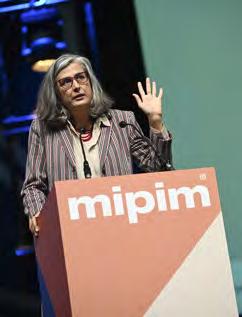
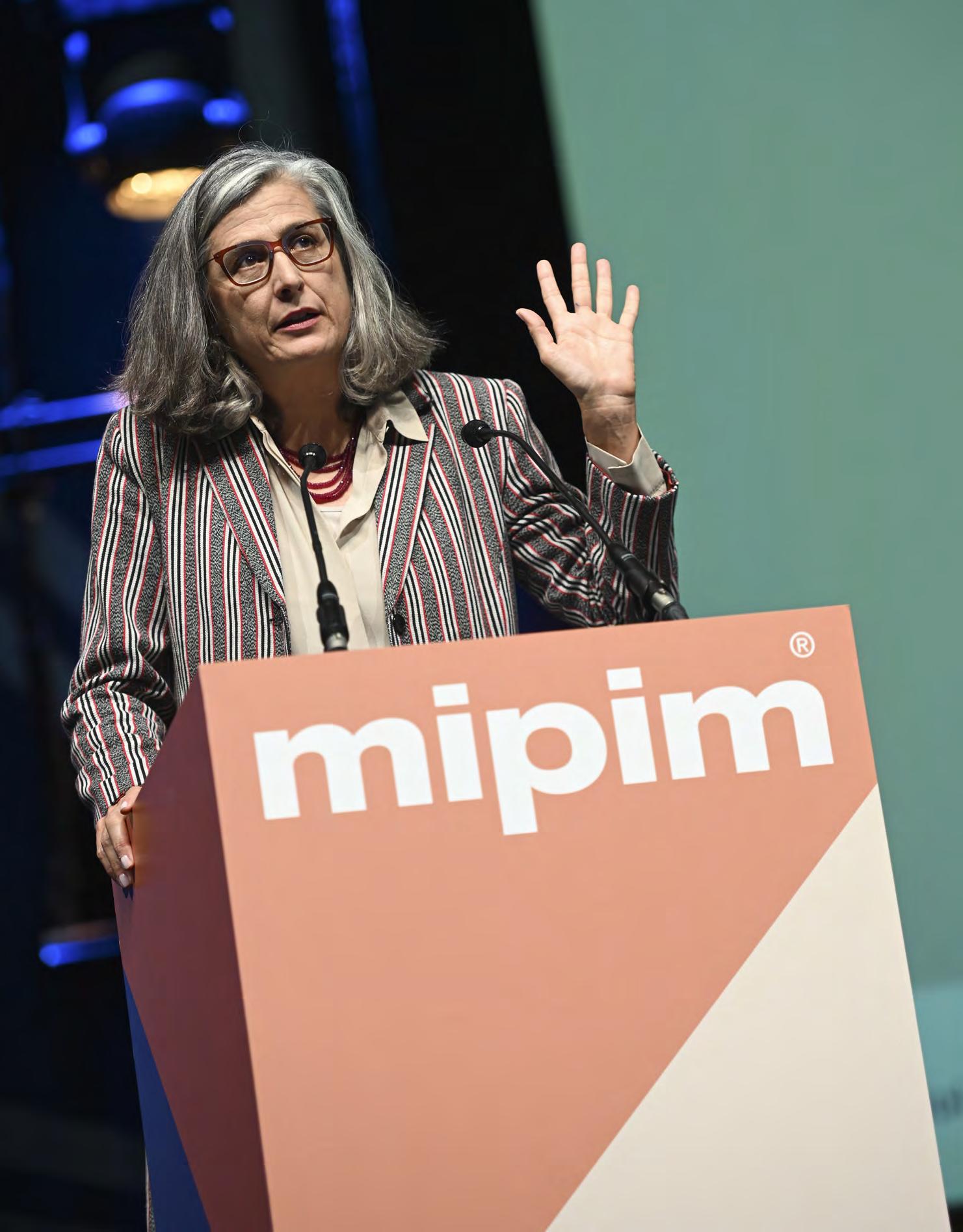
“THE LONG road to address the global affordable housing crisis can be shortened through public and private dialogue,” said Anacláudia Rossbach, United Nations Under-Secretary-General and Executive Director, United Nations Human Settlements Programme (UN-Habitat).
Speaking to MIPIM News ahead of her keynote address at the Housing Matters! summit yesterday, Rossbach said that the urbanisation of the world’s population meant that enabling the conditions for affordable, adequate and sustainable housing delivery for all — and at scale — had never been more pressing.
Currently around half the global population live in cities, but by 2050 that figure is expected to rise to 70%. As a result, solutions around densification, mixed-use and diverse housing models are needed urgently, she explained.
“What we have on one side of the coin is the 2.8 billion people in inadequate housing and the over 300 million who are homeless; on the other is the real estate industry that is here at MIPIM, and it is about bringing them together,” she said. Rossbach said that she was encouraged by worldwide political recognition of the issue and the fact that delivering affordable housing had become a central political issue, but she acknowledged the complexity of finding solutions.
“The city is key but we need to develop housing that recognises climate
change, heat, flooding, the health and wellness of the people living there, their efficiency and productivity, and the need to densify housing and to create compact cities,” she said.
“While the issue affects almost every country, it will be especially acute in Africa and South East Asia and our job is to find ways forward that use the infrastructure of cities and existing sites to ensure that what unfolds are competitive, efficient places and to encourage local government to deliver the right environment for development, because after all cities are created by their buildings,” she added.
Rossbach said that she viewed MIPIM as a key platform to address these themes — “to achieve change we need to talk” — and had seen for herself that major transformation could be achieved, pointing to success with the World Bank, where she oversaw the development and implementation of informal housing and slum-upgrading policies in her native Brazil.
Stakeholders will also come together at the World Urban Forum 13, being held in May in Baku, where Rossbach said that the issues of how to deliver change with political, local government and grass-root involvement will be one of the central themes.


2:OO pm
3:30 pm
INVIMIT
Presentation of the Sustainable Development Project for the Piazza D’Armi Area in Milan
ITA - Italian Trade Agency
From ESG to Value Creation: Building Climate Resilient Assets
5:OO pm OICE
Italian engineering and architecture. Presentation of the OICE Agenda for urban regeneration
Scan to discover our selection


‘Now
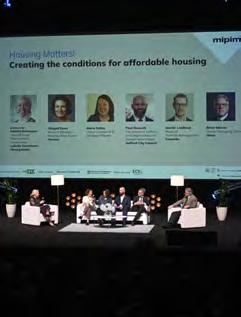
AN ENTHUSIASTIC audience greeted the return of MIPIM’s Housing Matters! forum in the Grand Auditorium yesterday. Comprising a series of high-powered keynotes, expert panels and networking opportunities, the critical issue that dominated discussion was how to address the lack of affordable housing across Europe.
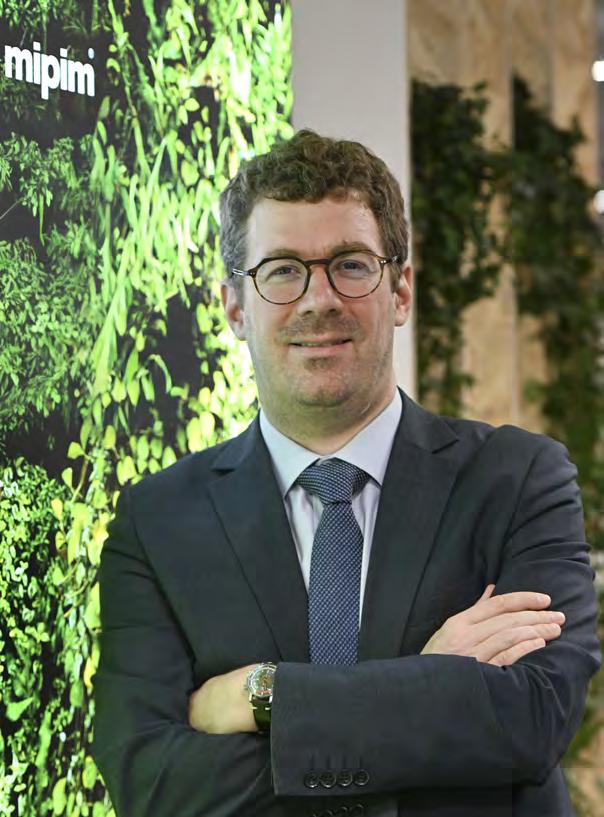
The five-hour event was introduced by MIPIM director Nicolas Boffi, who said: “Housing Matters! is a reminder that the purpose of this event is not only to build assets, but to create cities that work. Housing is politics with a human face. It’s the difference between social peace and social anger, and now is the time for solutions.”
Boffi’s comments were followed by a keynote from UN Habitat executive director Anacláudia Rossbach, who talked of the importance of building global coalitions involving public and private stakeholders — a key theme of the afternoon.
Rossbach then handed the baton to urban economist and strategic planner Marie Defay who dissected the difficulties of defining affordable housing and explored the publication of the EU’s first-ever affordable housing plan. “The plan shone a much sharper light on the nature, the scale, and the housing crisis across Europe, and also on its drivers and the different policies being implemented at a local level.” Defay’s comments set the scene for an in-depth session in which experts from across Europe brought a range of perspectives to the con -

tinent’s affordable housing crisis.
Abigail Dean, head of strategic insights, real assets, Nuveen, said one of the “fundamental difficulties is delivering affordable housing while also delivering returns for investors, so the private sector needs to work with the public sector on this. Another significant barrier is variability in regulations and subsidies across countries, which leads to uncertainty and means investors have to cost-in extra risk.”
Brian Moran, senior managing director at Hines, said that many European countries had “sleepwalked into a housing crisis” with middle income families the hardest hit. He agreed that the answer was for “public and private partners to work together, to bring down those costs to allow middle-income people to access quality new housing”.
Paul Dennett, city mayor of Salford and deputy mayor of Greater Manchester, said a key problem in the UK has been a disconnect in policy terms between the housing market and other key economic indicators such as wages. “For me, it is important for the state to have skin in the game, to be an active participant in the housing market. In Salford, we’ve created a housing company, and we’re using landholdings that the local authority controls to deliver truly affordable housing.”
Later sessions explored collaborative solutions for affordable housing and smart housing. The day ended with a dynamic session where architects, startups, and other key players introduced innovative future-facing initiatives.
Join Philippe Aghion, one of today’s most influential economists, Professor at the Collège de France and INSEAD, and Visiting Professor at the London School of Economics, as he explores how innovation and technology are shaping sustainable, resilient cities.

Discover how public and private capital accelerate green and digital transitions, how policy boosts productivity and competitiveness, and how real estate leaders can turn technological change into strategic advantage.
Join us on Tuesday 10 March at 15.00 in the Grand Auditorium
OPPORTUNITY London is back at MIPIM with its largest delegation to date. The capital investment partnership for London brings more than 150 public and private-sector partners together to showcase London’s £22bn (€19m) pipeline of investible opportunities.
“For London, global capital has a choice right now,” Jace Tyrrell, chief executive, Opportunity London told MIPIM News. “Which asset class? Which country? Which city? Which partner? And in a world that feels more volatile, perhaps than in many decades, London still offers incredible liquidity and returns. I think if investors are looking for scalability, liquidity and opportunity, then, obviously, London has a raft of those, both public and private-sector schemes ready to talk to the market about.”
A key moment will be the launch of the London Investment Showcase which highlights 10 places and six projects
drawn from Opportunity London’s wider prospectus pipeline.
“We’re calling it our ‘Super 16’,” Tyrrell said, “and what’s great in here is you’ve got a mix, from Camden Film Quarters, the big regeneration projects, from stuff happening in the offices to experiential, and some very interesting platform investment opportunities above our rail and tube stations.”
While the residential market remains hugely important, he said, there is plenty of activity in other areas: “We want the homes, but there seems to be a lot of interest now in our data centres, in the experience economy, in immersive, in AI and tech, and what’s happening around the knowledge quarters.”
Summarised in Opportnunity London’s Little Red Book of London, the showcase features a broad range of asset classes and investment opportunities, from £100m to £1.5bn. “The beauty of the London market is that diversity of offer,
and that ability for different investors, of different scale and risk profile, to come into the London market.”
Opportunity London works with JLL to track performance and investment volumes and serves about 800 global
investors, he added. “London is still the most traded global real estate city in the world; £16.8bn last year, up 16% on the previous year. Investors want to allocate into London. There’s only a few global cities of that significance. So, yes, we play to the strength of London. We have been trading for 2,000 years but we are the most traded global real estate city for a reason. That liquidity in scale, and the stability that London offers for global investors, is really important.”

CARDIFF Capital Region (CCR)
— the regional body that comprises 10 county borough councils in South East Wales — is showcasing a pipeline of transformational projects at MIPIM, spanning clean energy, advanced manufacturing, life sciences, logistics, residential, leisure and mixed-use development.
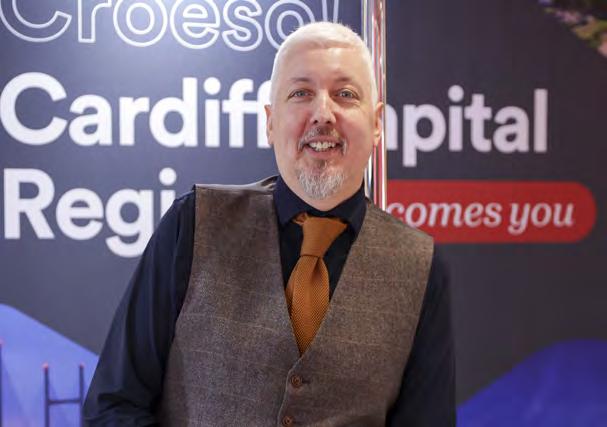
“We’re the closest capital city to London, only about an hour-and-a-half on the train. And we’re trying to show people the breadth of what we’ve got here,” said Mike Brough, director of regional growth, CCR, pointing to opportunities in housing, commercial, leisure and green energy.
“We’ve got two former coal-fire power stations — one is under our ownership and we’re redeveloping, which could be a green-energy park. We’ve got another ex coal-fired power station in Newport, one of the UK’s largest battery-energy storage systems. We’ve directly invested in it through our impact funds that we
can bring to bear alongside all these opportunities,” he said.
Opportunities include joint ventures, direct investment and co-investment structures, strategic funds and development partnerships, with £377m (€326m) of CCR funding already committed.
“We’re looking to form partnerships,
we’re looking to make relationships,” he said. “If you look at our region, it’s one of the fastest growing in the UK at the moment, and it’s probably one of the most untapped as well. So I think for us it’s about getting that on people’s radar, getting those relationships started.”
Brough also highlighted the region’s
public-sector backing: “We’ve got our City Deal, which is half a billion pounds that we’re investing. And alongside that, there’s 800 million pounds going into the transport infrastructure.” CCR has also just been awarded a £30m pounds local innovation partnership fund, and £160m is now coming through for the region’s compound semiconductor cluster. “So we’ve got lots of public-sector-backed funding, and this is driving private-sector financing and private-sector growth. So a lot of these things that we’re investing in, we see the private sector coming in alongside us very comfortably,” he said.
CCR will be highlighting major mixed-use destinations, including Atlantic Wharf and the new Cardiff Indoor Arena. Other projects include housing unlocked via the Housing Viability Gap Fund, which is “delivering thousands of new homes”.
Strategic employment sites including Cardiff Parkway, Cardiff Edge, ABP Newport and Caerphilly 2035, “offer high-value space for life sciences, creative production and next-generation industry, supported by exceptional connectivity”.

Geballtes Immobilienwissen in digital und print
Finanzierung und Investment, Nachhaltigkeit und Digitalisierung, Standorte und Märkte –Halten Sie Ihr Wissen mit dem imPlus-Abo auf dem neuesten Stand und erhalten Sie Zugang zu exklusiven Inhalten und Themen!
Jährlich wird den Besten der Branche der renommierte imAward verliehen. Seien Sie dabei – als Bewerber, Partner oder Gast auf dem exklusiven Gala-Abend!
Branchenthemen und Meinungen für die Ohren
Im immobilienmanager Podcast unterhalten sich Fachleute aus Wissenschaft und Praxis zu aktuellen Themen und Lösungen in der Immobilienbranche. Hören Sie doch mal rein!
INVESTORS and developers can make significant returns by focusing on environmental sustainability, according to Emma Harvey-Smith, managing director for partnerships at the Green Finance Institute.
“At MIPIM, I’m focused on the market opportunity for real estate investors and developers to future-proof the built environment,” she said. “This includes upgrading existing assets and embedding resilience and sustainability into new developments. With climate resilience now a priority for protecting asset value and managing longterm risk, investors are seeking scalable solutions to accelerate energy efficiency and resilience across portfolios.”
Harvey-Smith said a key area of discussion at MIPIM will be the role that the Global Property Linked Finance Initiative (GPLFI), co-chaired by the Green Finance Institute and Climate Bonds Initiative, can play in scaling up a new financial asset class
for building renovations. Property linked finance (PLF) enables long-term, property-tied finance for sustainable building upgrades, offering certainty for borrowers and attractive returns for lenders.
“With repayment tied to the property rather than the owner, PLF is an attractive solution for borrowers, who only pay while they benefit from the upgrade, and for lenders, who gain stable, risk-adjusted returns,” Harvey-Smith said.
“While PLF is well established in the US, Australia and Canada, global adoption remains fragmented. The GPLFI is addressing this by supporting market development with shared resources and expertise, aiming to unlock significant private investment in both residential and commercial sectors.”
She added: “For UK investors alone, a nationwide PLF rollout could mobilise up to £147bn [€169bn] between resi-
dential and commercial properties, highlighting the scale of this opportunity.”
Harvey-Smith said that MIPIM provides the perfect platform for sharing information about GPLFI with the industry worldwide. “MIPIM presents a valuable opportunity to connect with stakeholders who share our ambition to future-proof the built environment through innovative financial mechanisms, such as green mortgages, sustainability-linked loans and PLF,” she added. “We aim to engage with developers, investors and sector leaders who are committed to embedding resilience and sustainability in both new and existing assets, opening dialogue around the practical steps required.”
Harvey-Smith added that this year the real estate sector will be shaped by ongoing high energy costs, increasing tenant expectation and escalating climate risks,
LOCATED in Maricá, 45 km from Rio de Janeiro, Maraey is one of the most transformative tourism-residential developments in the world, according to Maraey CEO Emilio Izquierdo.
Recognised by UN Tourism as a benchmark for sustainable economic growth, the scheme has $1bn (€0.8bn) allocated to its first phase and the support of leading multilateral development banks IFC, IDB and CAF. The 840 ha masterplan covers 12 km of lagoon coastline and 8.5 km of pristine beach.
“By preserving 81% of its territory and limiting built occupation to just 6.6%, Maraey establishes a new benchmark
for large-scale development aligned with environmental stewardship,” Izquierdo said. “Built upon a strong ecosystem of global brands, Maraey will host three Marriott International hotels totalling 1,100 keys — JW Marriott, Rock in Rio Autograph Collection and The Ritz-Carlton Reserve, the first of its kind in South America.”
These will be set within Maraey’s private natural-heritage reserve, the fifth-largest protected area in Brazil, and there will also be 436 branded residences, 8,000 residential units, an international school, a hospital and an integrated commercial and business centre.


driving a pronounced shift towards energy-efficient future-ready buildings.
“With policymakers increasingly motivated to increase energy security and strengthen the resiliency of the built environment, we expect a surge in public/private collaboration,” she said. “In this landscape, policy emerges as the enabler for action and finance as the facilitator of that action.”
The project is also expanding green areas by over 32% and will promote social transformation through urban upgrading and land titling for a traditional fishing community of 200 families. Professional training programmes in construction and hospitality will benefit 2,300 residents, reinforcing Maraey’s long-term social impact agenda.
“Education is a strategic pillar, with Brazil’s first hospitality university to be established with the support of the Lausanne Hospitality Business School. Complemented by sports, cultural, ecotourism and leisure infrastructure, Maraey is emerging as a global destination where preservation, innovation and measurable social impact progress together,” Izquierdo said. Maraey is a finalist for the Best New Mega Development in the MIPIM Awards. MIPIM offers a unique global platform to engage directly with institutional investors, sovereign funds and strategic partners aligned with developments driven by ESG principles, Izquierdo said. He added: “At MIPIM, we look forward to discuss -

ing how large-scale developments can evolve beyond traditional real estate models to become platforms for regenerative growth, in which nature-based tourism, biodiversity preservation, social inclusion and education act as key drivers of value creation, rather than secondary elements. We are particularly interested in addressing how ESG principles can be incorporated from the early stages of urban planning, ensuring that environmental protection, economic viability and community development advance in an integrated manner.”

Developed together by Tikehau Capital and ALMOND Real Estate, ALMOND Core Centre (ACC) demonstrates how institutional capital can regenerate the heart of Europe’s cities.
ACC acquires individual residential units, executes deep refurbishments, and consolidates them into an institutional-grade rental portfolio.
Rather than expanding cities outward, ACC upgrades existing housing stock, improving efficiency, reducing emissions and delivering high-quality homes within established neighbourhoods.
Urban regeneration is no longer a one-off intervention. It is a repeatable, scalable investment model.
















THE CHALLENGE is not simply to build more, “but to build better and faster”, said Hugo Santos Ferreira, president of APPII (the Portuguese Association of Real Estate Developers and Investors). He added: “At MIPIM we expect to address, first and foremost, the structural issue of housing in Europe — not only from a supply perspective but, above all, in terms of creating the regulatory and financial conditions required to sustainably increase production.”
Ferreira said APPII will also be closely monitoring opportunities within the living sector, namely build-to-rent, urban regeneration and mixed-use projects. Another central theme will be sustainability as a driver of competitiveness, asset value enhancement and access to financing.
“MIPIM is particularly valuable because it brings together public decision-makers, institutional investors, developers and advisors from around the world. For an association such as ours, it represents a platform to enhance Portugal’s visibility as a stable investment des-
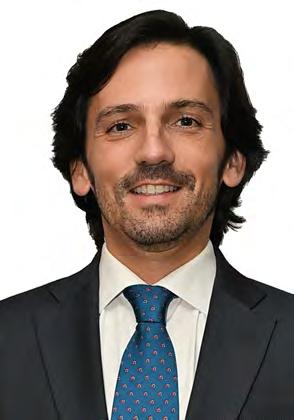
tination with highly attractive growth potential,” Ferreira said. He added: “It also enables us to share updates on the Portuguese legislative framework with international investors, clarify market perceptions and identify new strategic partnerships. This is essential to put the Portuguese market on the radar of major capital flows and to reinforce confi-
dence in the sector.”
APPII anticipates that 2026 will be a year of greater stability and the Portuguese market is expected to benefit from a more predictable financial environment, supporting a gradual recovery in institutional investment.
“We believe housing will remain the priority sector, while also seeing increasing diversification into alternative asset classes and innovative rental solutions. Our association, together with other key market players, is fostering a constructive dialogue with the government to ensure that the sector is provided with the conditions to double or even triple the number of new homes delivered over the medium term. The key challenge will therefore be to balance political ambition with economic viability. Only through regulatory predictability, fiscal stability and more efficient licensing processes will it be possible to meet demand and ensure a sustainable and attractive market for investment.”
ACROSS the UK and Europe, there is sustained demand for adaptive re-use, with offices, former retail developments, listed buildings and complex urban sites being re-imagined as high-performing hotels and branded residential, according to Ed Murray, associate architect at Studio Moren.

“The opportunity is no longer speculative; it’s strategic,” he said. “Owners are looking for design teams who understand not just planning and heritage, but operational performance, brand alignment and long-term asset value.” With that in mind, Murray is expecting MIPIM conversations to centre on the repositioning of underperforming assets, the opportunity presented by conversion-led hospitality and the growing convergence between the hotel and living sectors.
Murray is also expecting strong discussion about Mediterranean repositioning — particularly Italy and Greece — where lifestyle hospitality continues to evolve beyond seasonal luxury into more resilient, year-round destinations. Looking ahead to 2026, he predicted three defining shifts in the sector. First, performance will trump novelty, he said, adding: “Design should increasingly be measured against rate growth, dwell time, energy performance and opera-

‘HUMAN-CENTRIC’ WORK SPACES
GODREJ Ventures is promoting several of its key projects in India.
“Godrej Ventures has an exceptional portfolio of commercial assets that we are expecting to unveil in the coming years,” said Karan Bolaria, managing director and chief executive officer.
“Our upcoming project in Pune, India — a 800,000 sq ft [74,322 sq m] development — stands at the cusp of industrial and commercial development in a prime micro-market in the neighbourhood of Yerawada, setting a benchmark for luxury workplaces in the region.
tional efficiency, not just aesthetics.”
Second, sustainability will move from narrative to necessity: “Clients are becoming more rigorous in demanding measurable carbon reduction, intelligent retrofit strategies and long-term resilience rather than surface-level ESG statements.”
Third, the boundary between hotel, serviced apartment and premium student living will continue to blur: “The fundamentals remain the same: strong placemaking, operational clarity and a guest-centric experience that supports commercial return.”
Murray concluded: “For us, MIPIM is less about transactional meetings and more about long-term relationship building. MIPIM provides rare face-toface time with investors, operators, asset managers and brands in one place, allowing relationships to deepen over time. Many of the most significant commissions don’t emerge from a single meeting — they evolve over multiple conversations across years.”
“With organic waterbodies acting as a binding sensorial element at the public ground plane and a collaborative pent-office overlooking the low-rise urban landscape, this project offers an experience that transcends that of a conventional office,” Bolaria added. Also showcased is Hudson Circle project, in India’s IT capital, Bengaluru. “Hudson boasts an architecture that is robust, yet understatedly elegant. Our projects are human-centric and inclusive, providing spaces that support high-performance work environments.”
Tuesday 10 March 2026 from 19.30 to 22.00
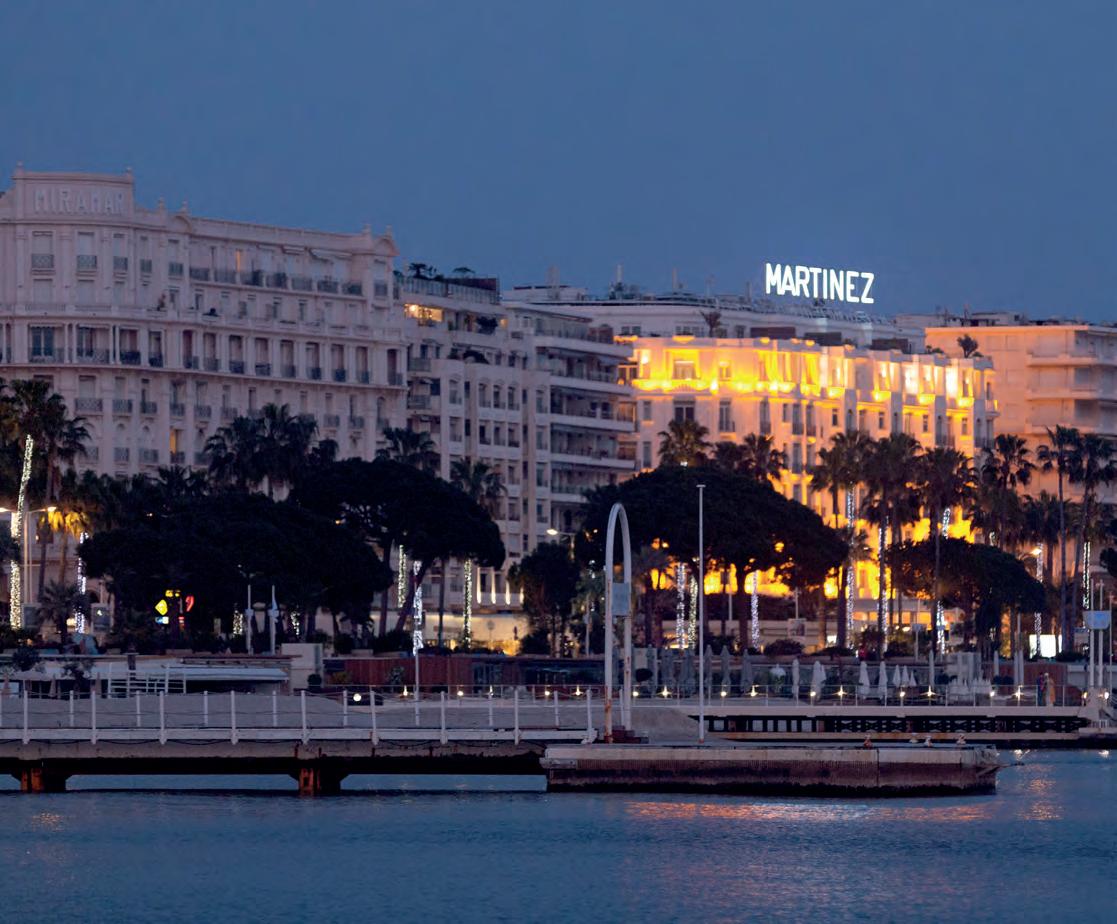
Join the international buzz for a vibrant opening night at the Martinez Hotel, with live music and cocktails.
Open to all registered participants.
THE MAYOR of the English East Midlands region is at MIPIM to promote a raft of real estate investment and development opportunities in the tech, engineering, data and fusion energy sectors. Claire Ward, mayor of the East Midlands Combined County Authority
(EMCCA), is heading a delegation that is seeking partners to realise the “untapped” potential within the region, which she said has the power to be “one of the UK’s most resilient, high-return investment destinations”. Ward, who is EMCCA’s first mayor,
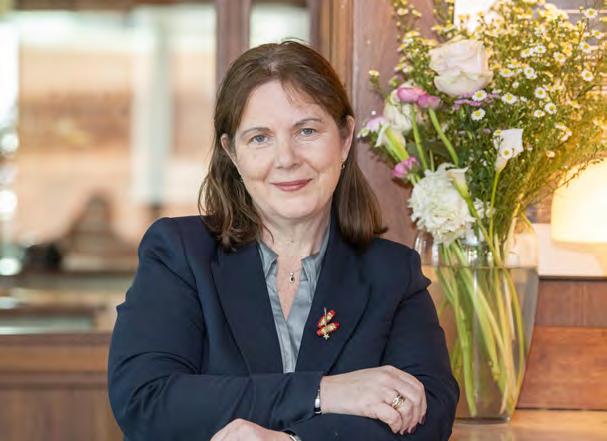
and chief executive Amy Harhoff are leading talks with potential investors and development partners, highlighting projects within the high-tech Trent Supercluster — named after the river Trent running through the region — and the Trent Arc area.
Paramount to the Supercluster programme is the development of STEP Fusion energy. Backed by major investment from the UK government, the area has also been allocated as a site for a future R&D innovation campus to attract engineering and technology businesses.
The Trent Arc area, site of the East Midlands Freeport, will see the development of 30,000 new homes and more than 40,000 full-time jobs in the corridor between the central cities of Nottingham and Derby. “These aren’t just projects on a map,” Ward said. “This is something that the UK has already committed to with £2.5bn [€2.89bn] investment. These
KCAP is showcasing a series of urban transformation projects that demonstrate the Dutch architect and planning company’s cross-scale approach, which ranges from strategic urban planning to architectural delivery.
“This includes innovation campuses, logistics hubs, urban manufacturing clusters and mixed industrial districts — areas traditionally driven by efficiency and technical performance,” Anouk Kuitenbrouwer, KCAP partner, told MIPIM News. “Long treated as mono-functional zones, they now form a growing part of metropolitan regions and must also deliver urban quality, identity and environmental performance.”
Also high on the agenda for KCAP are the issues of housing shortage, affordable housing, and inclusive and socially sustainable neighbourhoods. “We are passionate about the design of inclusive neighbourhoods with strong community building,” said Jeroen Dirckx, KCAP partner. “As architects, urban designers and landscape architects, we balance ambitions of quality
with the challenges of affordability. We work for commercial developers as well as social-housing companies, thinking together about optimal solutions, like the re-use of structures, modular and bio-based building and innovative types of co-living.
We foster community by adding communal roof gardens, kitchen and workshops.”
Another key issue for KCAP is strategic planning, integrated socio-economic and spatial development, and how the company’s work supports cities and regions in steering long-term transformation through coherent and implementable frameworks.
“We operate at the intersection of spatial planning, urban design and economic strategy,” Kuitenbrouwer said.
“By aligning [everything] from strategic planning to architectural delivery, infrastructure investment and governance structures, we provide robust foundations for sustainable growth.”
She added: “Our approach pairs rigorous analysis with clear spatial design. We translate demographic trends, mobility systems,
are global opportunities for development and support the rollout of fusion energy.”
EMCCA, which was formed in 2024 as part of the wider UK devolution agenda, contains the counties of Nottinghamshire and Derbyshire in the centre of England, home to globally renowned businesses including Rolls Royce, Toyota, Boots and Experian.
Among EMCCA’s strategic objectives is to grow the economy of the region by attracting outside investment.
“This is an undiscovered region,” Ward added. “We’re at MIPIM to put us on the map. Development opportunities are significant across the area because it’s so untapped. I’m particularly keen to work with the private sector and developers to make the most out of getting investment into this region.”
The region offers a freeport and other tax-incentive sites, brownfield fund-investment opportunities and swathes of land primed for development in housing and Grade A office space. Located centrally in England’s ‘Golden Logistics Triangle’ and with the M1 motorway running through it, the East Midlands is within four hours’ travel of 90% of the UK population.
economic positioning and environmental goals into structured spatial concepts that guide phased implementation. The result is a framework that enables prioritised and intentional decision-making and investment.”
Looking at the year ahead, KCAP expects the urban development sector to be defined by measurable decarbonisation and a much stronger focus on the re-use and transformation of existing buildings and infrastructure.
“Rather than demolition-led growth, projects will increasingly begin with a detailed assessment of what can be retained, adapted and intensified,” said KCAP partner Xavier Blaringhem. “Digital design technologies will play a central role in this shift. Advanced spatial modelling, environmental simulation and real-time performance analysis will allow cities and developers to test re-use potential, evaluate carbon impact and compare transformation scenarios from the earliest project stages.”
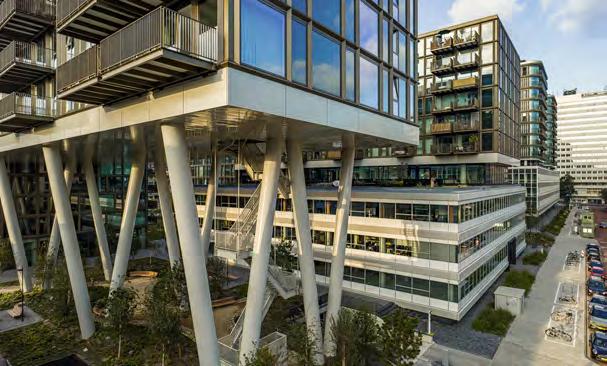
THE REAL estate industry is facing a series of megatrends — and MIPIM is the ideal place to tackle them head on, according to Manfredi Catella, founder and CEO of leading Italian developer COIMA.
“MIPIM’s focus on sustainable urban transformation is aligned with COIMA’s own priorities,” he said. “We are always interested in the impact of key global megatrends — such as demographic pressures, the climate emergency, technological change and ever-increasing urbanisation — on cities.”
He added: “We will look forward to discussing how the industry can rise to the challenge posed by these megatrends and create the sustainable cities of the future. Our strategy is anchored in an impact approach, delivering measurable financial, environmental and social returns, with a focus on driving forward our large-scale urban regeneration programmes.” Those programmes include the final
phases of Porta Nuova, the large-scale regeneration of Porta Romana and Milano Sesto in Milan, as well as the transformation of the Guido Reni barracks in Rome. “Through these transformational projects, we aim to shape cities for the future, creating sustainable communities while delivering strong performance for our investors,” Catella said. He added that 2026 represents a moment of opportunity for investors for a series of important reasons: “First, current pricing conditions present an advantageous entry window. Second, the persistent mismatch between supply and demand creates opportunities for investors able to deliver the high-quality assets the market is missing.
“And third, our focus remains firmly on strategic sectors, such as living — spanning student accommodation, residential and hospitality — as well as AI- and energy-driven infrastructure
platforms, where demand fundamentals are robust and ESG continues to shape decision-making. For investors, this is a moment to move with intent: to develop assets aligned to evolving needs and capture value in a market on the cusp of major transformation.”
Catella said that MIPIM remains the key forum for discussing the key trends in the real estate industry. “MIPIM is an invaluable opportunity to both forge new relationships and reconnect with long-standing partners from around the world,” he added. “It gives us space to exchange ideas, gain insight into broader industry sentiment and engage with the exceptional range of organisations we’ve collaborated with or hope to in the future. While the event is rich in discussion and perspective, it’s also a critical moment for business: a chance to sit down with global investors and progress conversations around our strategic priorities.”

CENTRAL and Eastern European shopping-centre giant NEPI Rockcastle is eyeing further retail acquisition opportunities as part of an accelerated future growth strategy.
NEPI Rockcastle is seeking additional shopping-centre sites while pursuing an ongoing agenda of investment in its existing portfolio. The company is currently overseeing an €840m investment programme with developments and extensions either under way or scheduled in Romania, Poland, Hungary and Bulgaria.
From the beginning of April, NEPI Rockcastle, which has a total retail portfolio valued at €8.2bn, will be led by incoming chief executive Marek Noetzel. Speaking to MIPIM News, Noetzel said his approach to the role will not be to alter course but to press ahead with expansion and value growth.
He added: “When I take the helm of NEPI Rockcastle in April, it will not signal a change of direction for Europe’s third
largest listed retail real estate company, but more an acceleration of our growth strategy. Rising disposable incomes and rates of economic growth in CEE that comfortably outpace Western European markets, coupled with a lower supply of retail space
per capita, have created an attractive and profitable trading environment for international and regional retailers alike.
“Our ambition is disciplined, value-accretive expansion.”
At MIPIM, Noetzel will lead discussions
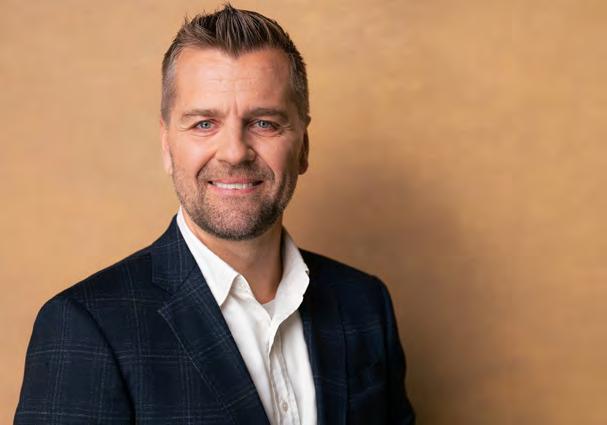
with investors and potential partners from around the world. He said: “As I’ll be attending MIPIM together with my colleagues from the investment and finance department, most discussions will focus on NEPI Rockcastle’s growth plans and what my priorities will be as CEO. Stakeholders, whether investors or potential partners, will want to get a sense of how I see our company and the retail markets evolving. I expect a lot of interest in our development pipeline, especially the Promenada Bucharest and Plovdiv projects, our financial strength and capital allocation for future investments and how we’re managing costs, as well as the outlook for retail demand in the current geopolitical environment.”
The €300m Promenada Bucharest extension project will add 55,400 sq m of GLA to the existing centre, which Noetzel said will “transform the city’s central business district”.
NEPI Rockcastle was established in 2007 with the acquisition of a portfolio of four assets in Romania, since when it has grown into a multinational company with 57 retail properties and a pipeline of development projects.

















Cross border capital didn’t behave the way many expected in 2025. Find out why and what’s next for investment.
Download your copy:


THE CITY of Leipzig and its surrounding region has been on a steady journey of transformation to develop clusters of industry in recent years, according to the city’s inward investment agency.
“Innovation sectors such as life sciences, green tech and the digital economy, including AI, are benefiting from this conglomeration of growth and investment, as well as key industries like automotive, logistics, and the media and creative industries,” said Michael Körner, managing director at Invest Region Leipzig.
“We are looking forward to discussing this approach with peers from around the world and showcasing its strength to global investors.”
In addition, Körner said that his organisation would be “demonstrating the transformational economic impact of FDI through specific projects in our region, and the role of organisations like ours in
enabling that type of inward investment”.
As an example, he pointed to the German-Estonian green tech company Skeleton Technologies’ €220m investment last year to open the world’s largest factory for the production of specialised energy storage systems, known as supercapacitors, which created hundreds of jobs.
Invest Region Leipzig is showcasing five major projects this year. These include the 100-hectare industrial park at Leipzig/Halle Airport, which sits at a unique trimodal transport hub for rail, road and air, making it a premium location for large-scale industrial developments.
The BioCity campus in the heart of the city, meanwhile, offers a total of 100,000 sq m of state-of-the-art office and lab space, bringing together more than 50 biotech and medical companies, alongside six neighbouring research institutes. In addition, TechPark Leipzig in the city’s
northeast is an innovation park spanning 13 hectares, aimed at companies in energy, environmental technology and chemistry and offering floor space up to 180,000 sq m for growing businesses.
There are also new opportunities within the established Dow ValuePark Böhlen, with around 85 hectares available for industrial chemical production. “It benefits from excellent infrastructure connection with roads, rail, raw materials pipelines and the German hydrogen core network,” Körner said.
Nearby, the 40-hectare Green Industrial Park in Zwenkau focusses on renewable energy and other sustainable sectors. The development plan will be finalised by the end of 2026 which allows planning security.
“Leipzig is a hidden champion and still growing, not a renowned metropolis like Berlin, so MIPIM gives us an invaluable opportunity to showcase it to the

world,” Körner said.
“Leipzig continues to go from strength to strength and is seeing increasing demand from businesses and institutions looking to locate, invest or expand their presence. This week will allow us to show peers, potential partners, investors and occupiers why this is such an exciting time for our region.”
CAPE SMOKEY will use this year’s MIPIM to present one of Atlantic Canada’s most ambitious resort developments: a master-planned, four-season destination on Nova Scotia’s Cabot Trail, where a ski mountain meets the Atlantic Ocean.
The long-term plan targets approximately 4,000 beds across hotels, resort accommodations, and lifestyle real estate. Development is being executed largely on
greenfield land, enabling comprehensive master planning. The project’s first major infrastructure milestone was the construction of a new gondola, designed to anchor year-round operations.
A key near-term delivery is the opening of 270 beds for summer 2026, representing the first significant hospitality inventory to come online under the new ownership and development programme.
Cape Smokey’s location on the Cabot Trail places it in the centre of one of Canada’s most visited scenic routes. For roughly five months of the year, the Cabot Trail sees approximately 2,500 cars per day, yet accommodation supply remains limited. As a result, an estimated 80% of visitors currently drive through the region rather than stay overnight, due to a lack of available lodging directly on the route. Cape Smokey is posi-

tioned to address this structural gap by creating a true destination base for multi-day stays.
The flagship real estate project, Cormorant Rock, is being introduced as a collection of modern ocean-view chalets offering a rare “ski-to-door” lifestyle directly beside the Atlantic. The resort’s positioning is built around contrast: winter skiing with panoramic ocean views, and in the warmer months, access to hiking, biking and coastal activities, including paddle boarding and surfing.
Unlike many North American mountain resorts that are heavily seasonal, Cape Smokey is designed for realistic year-round tourism, with only approximately two months of downtime annually. This supports a more stable operating model and a stronger foundation for long-term destination growth.
At Cannes, the company is seeking strategic partners — including hotel developers and hospitality operators — to collaborate on the next phase. Cape Smokey is also open to discussions regarding the sale of select Cormorant Rock units, alongside broader opportunities tied to the resort’s phased expansion plan.





















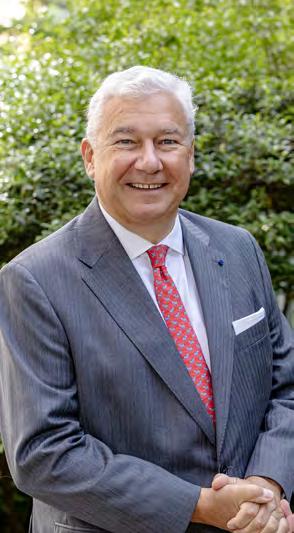
AT MIPIM this year discussions will “largely revolve around how the real estate industry adapts to a more de manding, post‑crisis environment and what this means in practical terms”, according to Serge Fautré, CEO, AG Real Estate.
“After several years of volatility, the market is gradually returning to fun damentals. This does not imply a re turn to simplicity. On the contrary, it requires more expertise,” he said. “It is crucial to respond to real end‑user demand, not to extrapolate strategies from one or two exceptional occu piers or standout transactions. Real estate must be analysed across the full spectrum of users, not based on isolat ed success stories.”
In this context, value creation increas ingly relies on less leverage and more
judgement, Fautré said. “We clearly favour quality over quantity, choosing the right asset rather than chasing a particular asset class. Almost any asset can be relevant, provided it is well lo cated, well designed and meets a gen uine need.”
He added: “The post‑crisis environ ment leaves little room for improvi sation. ESG performance, regulatory pressure and operational excellence are no longer optional — they are structural conditions for long‑term vi ability. Discipline must apply through out the entire life cycle of buildings: from design and financing to opera tion and maintenance. The focus is on durability, cost control and resilience, not short‑term optimisation.”
He said that cities remain central to discussions, with a particular focus on
“urban regeneration, public real estate and affordable housing”, adding: “Af fordable housing has moved from a secondary topic to a structural societal issue across Europe. It directly affects social cohesion, labour mobility and the attractiveness of cities. The real estate sector has a responsibility to contribute to solutions — provided projects remain economically viable.”
Public real estate and social infrastruc ture also play a stabilising role in cities and tend to behave more defensively throughout economic cycles, he said. At MIPIM AG Real Estate will show case its internal pool of experts, high light its proven public private partner ship (PPP) expertise and display its growing ambitions in affordable hous ing. “One of the most promising levers remains public‑private partnerships,” he said. “PPPs allow capital, risk and exper tise to be combined more intelligently and make it possible to deliver housing and public infrastructure that would otherwise remain stalled due to budget constraints.”
REGULATORY changes and a relaxa tion in ownership rules are set to boost Saudi Arabia’s real estate market this year, while more international investors are targeting Dubai, according to PwC company Strategy&.
“Saudi Arabia continues to pursue ambi tious real estate development objectives, with a clear shift in budget allocation and execution focus on major urban centres,
particularly Riyadh. This strategic refo cusing is supported by regulatory and policy enablers on both the supply and demand sides,” Strategy& Middle East partner Sami Khawaja said.
Initiatives such as the White Land Tax in Riyadh are expected to unlock new development activity, while relaxed for eign ownership regulations are broad ening demand.
“Together, these dynamics are expected to accelerate project delivery, with a particu lar emphasis on the residential segment. In parallel, Riyadh’s growing role as a region al business and tourism hub will continue to drive demand for office, hospitality and mixed use assets,” Strategy& Middle East partner Zahi Awad added.
This phase of growth is expected to be delivered primarily through increased

private sector participation, with partner ships and co development models form ing a central pillar of the government’s real estate strategy.
While Dubai’s real estate market has undergone multiple growth cycles, the most recent one has been particularly pronounced, Samer Moubarak, partner at Strategy& Middle East added.
Since 2021, annual transaction volumes have been breaking record highs, and prices have grown consistently at around 8–12% year on year, characterised by sus tained population and tourism growth and regulatory mechanisms.
“Moreover, Dubai real estate has a par ticular appeal for global investors given relative yields, tickets and product qual ity combined with the attractive regu latory landscape still collectively offer a relatively higher proposition than what they would see in their home countries and beyond. Other GCC markets are increasingly following suit by increas ingly adapting these levers to attract and retain global capital to fuel the growth in their real estate sector,” Moubarak said.
Housing Matters! 9 March 9-13 March 2026
Palais des Festivals, Cannes, France
New at MIPIM!
AI, cloud, 5G, and digitalisation are fueling interest for Data Centers, recognized for both their profit potential and the inherent complexity they bring. A must-attend forum for investors, developers, operators, and public authorities navigating power, planning, and AI-driven demand, with interactive sessions connecting capital, real estate, and technology



THE SAUDI Investment Promotion Authority (SIPA) has endorsed the launch of MIPIM Middle East, set to be held from October 20-21, 2026, at the Ritz Carlton, Riyadh.
MIPIM Middle East, launched by RX, will bring together international investors, policymakers, developers and project owners from across the region, creating a new global hub for investment and deal making. The event will promote the Kingdom’s commitment to opening new pathways for global investment and accelerating its real estate and infrastructure ambitions. Nicolas Boffi, MIPIM director, said: “Saudi Arabia and the Middle East are at the very forefront of urban transformation through innovative real estate delivery.”
The launch comes as Invest Saudi — Saudi Arabia’s nation-wide investment

brand — returns to Cannes, showcasing billions of dollars’ worth of opportunities and highlighting the Kingdom’s landmark foreign-ownership law, which now allows non-Saudi companies and individuals to purchase residential, commercial, industrial and agricultural assets in designated zones.
Saudi Arabia’s role as host of Riyadh
Expo 2030 and the FIFA World Cup 2034 is further accelerating demand for investment across real estate, infrastructure, tourism and smart cities.
The Middle East’s presence at MIPIM has expanded rapidly in recent years, with delegations from Saudi Arabia, Egypt, Oman, Qatar, Kuwait, Bahrain and the UAE presenting some of the world’s most
OMAN has returned to MIPIM 2026 with one of the largest co-ordinated urban investment programmes in the region, presenting a multi-billion dollar pipeline shaped by the Greater Muscat Structure Plan and the Sultanate’s long -term national development strategy.
Jamal Al Hadi, spokesperson for the Ministery of Housing and Urban Planning (MoHUP), said: “Oman is entering a decisive phase of delivery. The Greater Muscat Structure Plan gives investors a clear, long term framework for how the capital will grow, where infrastructure is committed and where value can be sustained.”
Led by His Excellency Dr. Khalfan bin
Saeed Al Shueili, Minister, MoHUP, the delegation brings together government, national developers and private sector partners for Oman’s most ambitious global programme to date. With sovereign-backed projects already progressing through early delivery, the delegation signals a step change in Oman’s global investment presence as the country is ranked fourth in the Numbeo Global Best Place to Live Rankings.
Two national projects have been shortlisted for the 2026 MIPIM Awards: A’Thuraya City in the Best New Mega Development
category and Harat Al Aqr in Urban Regeneration. This is the first time Oman has secured simultaneous nominations across two categories, building on last year’s success at the Awards. Both form part of the Future Cities portfolio, with a combined value exceeding $15bn (€13bn).
At the heart of Oman’s presence this year is the Greater Muscat Structure Plan, the most advanced expression of the Oman National Spatial Strategy and the long-term framework guiding population growth, land use, infrastructure investment and economic diversification across the capital region. The plan

ambitious real estate and infrastructure projects. The launch of MIPIM Middle East reflects this momentum and the region’s growing prominence as a global investment destination.
Vasyl Zhygalo, managing director, Middle East and Emerging Markets, RX, said: “The endorsement from the Saudi Investment Promotion Authority is a significant milestone for MIPIM Middle East and reflects the region’s growing influence on the global investment stage. Saudi Arabia and the wider GCC are entering a period of unprecedented development, and MIPIM Middle East will serve as a vital platform for international investors, developers and policymakers to collaborate and drive urban transformation.”
“We are looking forward to working with SIPA to launch MIPIM Middle East. Alongside MIPIM in Cannes and MIPIM Asia in Hong Kong, it is another important step in our mission to connect public and private sector leaders to power projects that will make the future of cities,” Boffi said.
provides the strategic context for every major opportunity being presented, creating a coherent, city scale investment framework that gives institutional investors clarity and confidence.
Oman is also presenting the full Future Cities portfolio, including Sultan Haitham City, A’Thuraya City, Al Khuwair Downtown, Al Jabal Al Aali and Harat Al Aqr. Architectural models, masterplans and technical briefings will be delivered by MoHUP and its international design partners, demonstrating how national policy is being translated into execution-ready opportunities.
Oman’s 2026 pavilion brings together its most comprehensive public and private delegation, with senior representation from Al Mouj Muscat, OMRAN Group, Oman Airports Group, Muscat Bay, Maysan Properties, Tathmeer Properties, The Sustainable City Yiti, and leading professional bodies including the Oman Society of Engineers and the Oman Chamber of Commerce and Industry.
Across four days, Oman will engage with global planning, design and investment institutions, including the Royal Institute of British Architects (RIBA), the Royal Town Planning Institute (RTPI), the Global Business Districts Innovation Club, and UK city partnerships with London, Liverpool and Newcastle.
AZERBAIJAN is putting itself on the map with Sea Breeze, the largest private development project in the country, according to the scheme’s owner and founder, Emin Agalarov.
“From the very beginning, over 20 years ago, my vision was to create not just a residential complex, but a full lifestyle destination combining premium real estate, resort infrastructure and a vibrant community environment,” he told MIPIM News.
“I grew up on this coast when there was no infrastructure, only summer cottages. Perhaps it was a deep dream to return to my childhood home, but to transform this place into one of the most recognisable destinations in the world. Who could have imagined that, after so many years, we would be creating artificial islands, building the tallest tower in the country and signing world-renowned brands like Cipriani and Nobu?” he added.

Today, Sea Breeze offers a diverse portfolio of residential and commercial real estate, including luxury villas, townhouses, low- and mid-rise apartment buildings, branded residences and serviced apartments. “Buyers can choose from sea-view apartments, private beachfront villas, family-oriented residences surrounded by landscaped areas and investment-oriented units with strong rental potential,” he said, noting that the average annual asset value growth and sale price of real estate in Sea Breeze range from 15% to 35%. “In addition to residential properties, Sea Breeze features retail spaces, hospitality assets and mixed-use components, creating a self-sustained urban environment.”
For Agalarov, MIPIM will be about meeting like-minded partners. “Our primary goal at MIPIM is to strengthen international partnerships, attract strategic investors and showcase Sea Breeze as a benchmark development in the region,” he said. “We see MIPIM as a key platform to present our longterm vision, highlight new phases of the project and explore opportunities for collaboration with partners.”
MIPIM delegates this year will have the chance to learn more about the ION project, a prestigious residential and lifestyle development by Kalyon Cities, designed to offer a sustainable living experience in harmony with nature. Located in the northern part of Istanbul, surrounded by forests and the sea, the project features high-quality villas, expansive green spaces, organic farming opportunities, and a range of social and sports facilities. ION will seek to give a “new identity” to Istanbul’s northern quarter, according to its founder, Mehmet Kalyoncu. “Istanbul has largely been growing in an east and westerly direction over the last decade,” he said, “with plenty of infrastructure additions, including a new airport, high-speed rail and a third bridge”. Offering residences for sale and for rent, the project will also harness shared ownership mechanisms for the first time in Türkiye. Beyond supplying the district with homes, the scheme will feature retail, a school, a hotel and a longevity centre. Developed with the contributions
of experts from various fields including architecture, infrastructure, transportation, culture, education, gastronomy and lifestyle, the project is envisioned not merely as a residential complex, but as a vibrant living space where people can engage, interact and co-create.
With the project enjoying beach access to the Black Sea coast, Kalyoncu expects the properties to be in high demand. “We are developing the scheme out in phases to June 2028, offering 850 residential units in total,” he said.
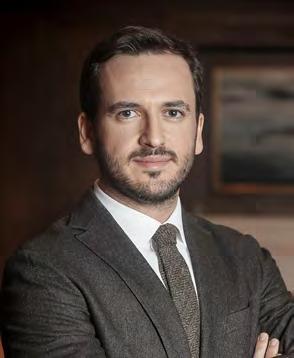

EMERGING opportunities will be at the heart of MIPIM discussions for Vincent Nobel, head of asset-based lending, Federated Hermes. “The market has been characterised by very cautious investor sentiment over the past few years,” he said. “We are beginning to see signs of renewed optimism, supported by an increase in transaction volumes.”
Nobel expects conversations to centre around several themes and asset classes, including whether momentum around “beds and sheds” is fading, and “whether offices are back in favour as values appear to have stabilised and rents continue to rise”.
“Cyclical and structural changes in real estate are another area of risk and opportunity worth highlighting for the coming year. While capital values have undergone a sharp correction, occupier markets have remained surprisingly resilient,” he added. “For property owners, the past few years have been challenging. However, this was not a crisis, but a cyclical adjustment in asset pricing. Changing market conditions led to a period of illiquidity in real assets, and valuations will ultimately adjust to reflect this.”












AFEX, the association of French Architects for Export, will celebrate its 30th anniversary at MIPIM this year with a focus on past, present and future. The non-profit includes more than 200 member organisations, including 120 architectural firms, as well as engineers, planners, landscapers, interior architects and other professionals involved in the field of construction. “AFEX was founded to help French architects perform better beyond the borders of France and to help reinforce France’s cultural reputation around the world,” said AFEX secretary general Madeleine Houbart. Profile-raising initiatives include the AFEX Grand Prix, which rewards 10 buildings delivered overseas by French architects every two years at the Venice Biennale for Architecture. The association has also built important connections over the past
decade with businesses in China, according to Houbart, welcoming young Chinese architects to French

‘Discipline and trust’ are essential to real estate
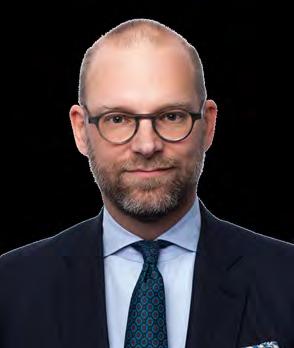
INVESTMENT selectivity, governance and long-term value creation are likely to be central to this year’s MIPIM, according to Claudia van Haeften, founder of real estate network Sociëteit Vastgoed & International. “Key themes will include residential transformation, senior living and care-related real estate, mixed-use urban redevelopment and the growing role of data and AI in asset and portfolio decision-making,” van Haeften said.
She added: “Equally important is the integration of ESG, not only as a reporting obligation, but as an operational reality with particular attention to the social dimension: affordability, liveability and demographic resilience. Capital structures, risk-sharing models and cross-border partnerships will underpin many of these discussions, especially as investors reassess where scale, stability and relevance truly intersect.”

companies as part of an exchange. “We are looking for other regions where our knowledge is needed and where they have the funds to bring projects forward,” she said. “We are presently partnering more and more with the Gulf countries, including Saudi Arabia, where we have the opportunity to bring French architectural know-how to development initiatives.” During MIPIM 2026, AFEX will celebrate its30th anniversary with an event on Wednesday, March 11, taking place from 18.30 in Gare Maritime. “We will reflect on what we have learned over the last 30 years, and look at the evolving themes in our industry,” she added. “French architecture came under the spotlight during the Olympics last year, and we also benefit from specialists in areas such as hotels, hospitals and data centres.”
She suggested that 2026 will also see real estate “reward discipline and trust over speed”. She added: “Liquidity is returning, but it is patient and highly selective. The sector will continue to move away from speculative development toward repositioning, transformation and active asset management.”
According to van Haeften, residential demand will remain structurally strong, particularly where affordability, care and long-term demographics converge. “Complexity — in regulatory, societa, and geopolitical matters — will not disappear. The winners will be those who can navigate it with clarity, collaboration and conviction.”
She added: “For Sociëteit Vastgoed International, MIPIM is not about volume or visibility alone. For us it is a place of alignment. Alignment between international capital and local expertise, between institutional investors and experienced operators, and between ambition and execution.
“Our value lies in curating meaningful connections and translating global perspectives into actionable insight for our members. MIPIM allows us to deepen trusted relationships, test strategic assumptions and connect Dutch real estate expertise with international ecosystems. Not to chase trends, but to understand them at their source.”

CHRISTOPHER Mertlitz, head of European investments at WP Carey, expects to engage in several meetings “discussing opportunities within the manufacturing, logistics and retail sectors” at MIPIM. “We are seeing strong tailwinds for these sectors across the continent, especially in Germany, Italy, Spain, as well as in select Central and Eastern European markets such as Poland,” he said, where “structural demand remains resilient and occupiers face growing capital needs. As these demands continue, the relative advantages of alternative financing will grow as traditional lending remains difficult to access.” He added: “MIPIM remains highly valuable to our business because it allows us to gauge market sentiment in real time. Amidst a backdrop where pricing expectations and capital availability are still adjusting, the ability to speak directly with brokers, occupiers and other investors, all in one place, is critical. MIPIM provides a platform to articulate our long-term approach, focused on mission-critical assets, disciplined pricing, durable cash flows, and partnership-driven transactions with our tenants.”
Canadian business publications read by decision-makers shaping real estate, construction and property management.
Des publications d’affaires canadiennes lues par les décideurs qui façonnent l’immobilier, la construction et la gestion immobilière.

IRELAND is back at MIPIM with a new stand and a slate of events to encourage capital to invest in a raft of exciting opportunities.
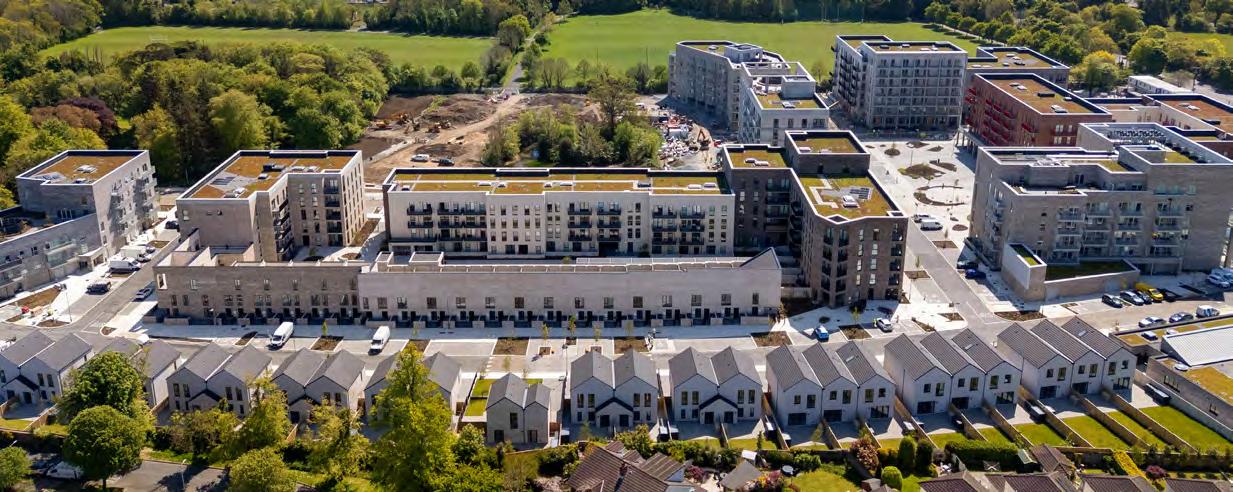
“We have a really ambitious homebuilding plan over the next five years,” said Graham Doyle, secretary general at Ireland’s department of housing, local government & heritage. “We are keen as a government to create the environment for capital to be deployed at scale in Ireland as we achieve our ambitions,” he added. “We have a target to deliver 300,000 new homes by 2030 and we are putting our shoulders to the wheel to make that happen. International investment is critical to achieving that.”
Ireland wants to build on a positive
MIPIM 2025, when the country’s delegation experienced “really good engagement with stakeholders and funds” around the future of its built environment, Doyle added. He noted that Ireland has established a reputation for strong and sustained growth, becoming “a really important base for international blue-chip companies and reaching record levels of employment”. He said: “All of that has led to an extraordinary level of demand for housing; we haven’t seen sufficient supply in line with population growth”.
Now, as the country seeks to drive housing delivery alongside private partners, the government has pledged to do its own part, such as releasing

land, boosting infrastructure and addressing planning reform to help firms hit the ground running. “The key to achieving the volume of homes we are targeting will be apartment building,” he said. “We are reforming our rental system to make it more attractive to invest in build-to-rent; we have changed our design standards significantly to assist with viability and we have introduced some taxation incentives around VAT. We believe that these measures will bridge that gap and make it easier to invest in the very capital-intensive world that is apartment building.”
The Irish government has also made important commitments to both social housing and affordable housing in addressing affordability gaps. “Significant government subsidies, affordable purchase and the Cost Rental schemes have helped underpin a reasonably significant supply of apartment construction in recent years,” he said. “We are doing lots of work in partnership with approved housing bodies, and their construction and funding partners, to enable government funding to bridge viability gaps across a range of schemes.”
In further support of Ireland’s housing ambitions, the government’s National Development Plan has pledged public capital investment of over €275bn out to 2035, which includes sectoral cap -

ital allocations of more than €102bn from 2026 to 2030. And an additional €100bn which will be deployed from 2030 to 2035, to unlock housing, upgrade water and energy infrastructure, deliver more roads and provide better public transport.
Finally, Ireland is also welcoming developers and investors across a range of other asset classes, including student housing. “The development of purpose-built student accommodation takes pressure off the supply of rental housing and also supports our world class universities,” Doyle said. “Our department of higher education is very focused on developing campus and student accommodation at scale and it will remain an investible opportunity over the next few years.” He concluded: “Ireland is open for business and really wants to build at pace and at scale.”
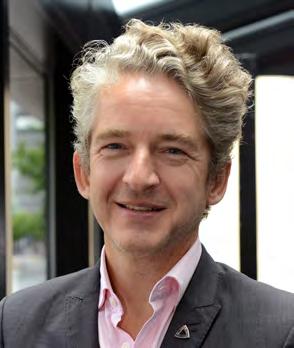
THE RAPID development of AI and its growing influence on workflows, decision making and productivity is a key theme at MIPIM 2026 for Stuart Syddell, partner at construction and property consultancy, Stace. The ongoing challenges of the UK’s Building Safety Act are also front of mind — particularly the need for clearer, more efficient Gateway 2 and 3 processes, he told MIPIM News. Viability remains a major concern Syddell said, especially for residential projects, where recent shifts in affordable housing requirements may help unlock stalled schemes. “I’m also keen to understand the dynamics of the contractor market - pipeline strength, attitudes to risk and whether new entrants are emerging.” Growth markets such as data centres and retrofit work driven by evolving energy standards will also be high on the agenda, alongside emerging opportunities in distressed assets and local authority joint ventures.
Looking ahead to 2026, Syddell said that while making predictions is chal -
lenging given Stace covers multiple sectors, several trends are clear: “Our PBSA pipeline remains robust, and I’m hopeful that new government measures will help reinvigorate the

wider residential sector. I’m cautiously optimistic that the office sector will maintain its resilience,” he said. “More broadly, even a modest improvement in underlying economic metrics would help restore investor confidence and, ultimately, drive increased activity across the board.”
MIPIM plays a uniquely valuable role for Stace and provides rare access to senior decision makers in a setting far less pressurised than the day-to-day environment in London, he said. “It allows us to deepen relationships with existing clients, engage with prospective clients already in dialogue with us, while opening the door to serendipitous encounters with new contacts who may not yet be on our radar.” Beyond clients, Syddell said MIPIM is an efficient forum for exchanging ideas with architects, engineers and other collaborators who influence the same projects. “In just three days, I can meet as many people as it might otherwise take six months to see amid everyone’s normal workloads.”
A GLASGOW-based architect firm is attending MIPIM for the first time with a view to meet potential partners and “champion” the wealth of opportunity Scottish real estate offers to international investors.

Collective Architecture, whose approach is based around “socially driven, climate just and nature-led design”, is in Cannes as part of a delegation of Scottish real estate professionals and experts.
Director and conservation architect Gerry Hogan said that the strategy to promote domestic real estate and highlight the great talent in the industry has already “generated a renewed sense of energy across the Scottish construction industry”.
He said that his firm is “cautiously optimistic” in Scotland, and sees great potential in the nation’s ability to attract inward investment through its strong real estate offering.
Hogan said: “We are a safe and agile democracy with close and transparent connections between culture, industry and government.
“Our ‘Scotland at MIPIM’ presence is testament to this, with spontaneous collaboration between businesses, and local and central government helping
A SENTIMENT report published this week by the Society of Industrial and Office Realtors (SIOR) Europe and the University of the Built Environment finds cautious optimism among commercial real estate professionals, but warns of a growing divide between prime assets and secondary stock.
The report highlights that ESG compliance is becoming a crucial factor in attracting finance, tenants and investment across Europe. It warns that the industry has yet to develop consistent ways to price or act on it with confidence.
to create the significant and co-ordinated delegation that Collective Architecture is proud to be part of.
“It has strengthened connections between public and private sectors, and brought agile, creative architectural practices into closer dialogue with political decision makers — a dynamic we expect to build on throughout the event.”
Collective Architecture has offices in Glasgow, Edinburgh and Dundee, and is engaged in a significant number of mixed-use, community-led and masterplanning projects throughout Scotland.
Hogan also said that his firm is “increasingly aligned with national political and cultural priorities” identified by the Scottish government.
“This positions us to speak confidently about how socially driven, climate-just and nature-led design in these sectors can unlock development, support policy ambitions and deliver places that genuinely serve communities,” he added.
The research finds that ESG considerations are now essential to access finance, occupier demand and long-term asset viability. Almost half of the respondents report that ESG issues come up regularly in their day-to-day work.
Matthew Leguen de Lacroix, head of business development, EMEA, at SIOR, said: “European real estate markets are entering a quality reset, where asset performance depends on ESG compliance, data transparency and professional capability.
“The insights call for more more clarity, consistency and parity in how ESG is applied in the commercial real estate market.”







Gare Martime - Harbor Room
Audi K
14.00 - 15.00
16.30 - 18.30 By invitation only
Salon Croisette
BeNeLux FocusSector Divergence, Capital Flows, and Investment Strategy
16.00 - 17.00
REAL BELGIUM TALKS “Building in a World of Permanent Crisis: From Stability to Strategic Agility”
Organised by Palais 3
11.00 - 12.00
Saudi Arabia: Opening Up for Private Investments
Organised by
14.00 - 15.00
The Architecture of Foresight: Designing Expo 2030 Riyad
Organised by

16.30 - 18.00
Table ronde Horizon Léman « Villes en tension, bâtir sans terrain »
Organised by
Grand Auditorium ESG Awards Hotel Martinez Opening Night 17.15 - 18.15 19.30 - 00.00
Organised by

Open to all registered attendees and included in your MIPIM pass
C21 - Plage J. Macé HTL Connection stage
Madrid Creates The Future 11.00 - 12.00
Organised by
13.00 - 14.00
Norway Investor Summit: Norwaya safe haven in a troubled world
Organised by


14.00 - 15.00
Turn Carbon Reduction into Tangible Value: How to Win with Decarbonization
Organised by

11.00 - 11.45
Consumer brands, and the durability of brand-identity. How do you manage for long-term brand standards
15.00 - 15.30 Organised by
Les nouveaux codes de l’hôtellerie de luxe : de Bendor à Cannes en passant par Courchevel et Paris
17.00 - 18.30
STR Performance Presentation ”A year in review” + TE Keynote
Followed by a cocktail reception
Organised by STR STR STR

8.30 - 10.00
Investor Breakfast
Organised by


14.00 - 15.00 – Harbour Room / Gare Maritime Sponsored by
Invest in France, why?
Manchester’s Dynamic Decade: A New £1bn Model for Good Growth
10.15 - 11.00 Organised by
Capital, cities and connectivity: unlocking the UK’s investment map
11.15 - 12.00 Organised by In partnership with
14.00 - 15.00
From Pitch to Place: How the UK is Attracting Global Investment Through Sport-Led Regeneration
16.15 - 17.00
Meet Scotland
Organised by
17.00 - 19.00
Scotland at MIPIM Reception
Organised by

1 C14 C12B
10.00 - 10.45
The politics of place: what London’s next chapter means for the built environment
11.00 - 11.45
Transport as an engine for growth
16.10 - 18.10 – Asset Class Stage (P3)
Data Centers Summit: From Bits to Bricks - Part 1 Table francophone pendant le networking dirigé (workshop)
17.30 - 18.30 – Leaders’ Perspective Stage (P5)
Conférence de presse France
14.00 - 15.00
Le Grand Paris peut-il redevenir un marché d’investisseurs ?
16.30 - 17.30
Grand Paris Express : les projets qui redessinent la carte des investissements
Reimagining use: alternative housing models for London
12.00 - 12.45 Sponsored by
13.00 - 13.30
Partnerships in Tower Hamlets
Sponsored by
14.00 - 14.45
Innovative housing delivery: unlocking planning and viability through public–private partnerships
Sponsored by
15.00 - 15.45 Sponsored by
Innovation hubs: connecting people, places and ideas through infrastructure

16.00 - 16.45
Building the World: Skills for London’s global built environment
Sponsored by

Terrace Event | Sundowners 16.00
17.00 - 19.00
London Stand Opening Reception
In partnership with Sponsored by
TÜRKIYE’s real estate market has diversified and the country is now seeing a more integrated approach, with multiple segments reinforcing one another, said Avi Alkaş, chairman of Alkaş & HAN Spaces.
Overall, he believes investors are no
longer focused on single asset classes and the momentum is instead towards integrated urban concepts that combine residential, retail, logistics and tourism to achieve long-term value.
“Logistics is one of the standout sectors. Türkiye’s location, combined

with the continued growth of e-commerce, is sustaining strong demand for modern warehousing and distribution space. The country’s manufacturing and export capacity further supports this,” Alkaş said.
“In retail, the narrative has shifted to transformation. Physical retail is being repositioned through experience-led concepts and mixed-use developments and shopping centres are increasingly becoming social and public gathering destinations,” he added.
Alkaş also pointed to Türkiye’s young demographic, which has expanded student housing and professionally managed rental residential models, while the country’s strong destination appeal continues to support hotel and resort investments. Meanwhile, urban regeneration remains a critical investment theme, he said, both for renewing supply and for creating more resilient cities.
“This year at MIPIM my expectation is that discussions will continue to shift towards holistic urban ecosystems,” he said. “On the investor side, the mind -
REAL ESTATE is at an inflection point, according to industry experts. Over the past three years, the sector has lagged both private and public market peers in a cycle that feels markedly different from previous downturns. Despite asset repricing, liquidity has remained constrained, with recovery slower than after the Global Financial Crisis and investors acting cautiously. McKinsey & Company’s latest limited partners (LP) survey highlights delayed exits and geopolitical tensions as dominant macro concerns. Capital has not left the system; competition within real assets has intensified. Infrastructure has delivered stronger risk-adjusted returns, while real estate growth expectations have moderated. “Real estate has to compete harder for capital,” said Ben Dimson, partner and co-head of Real Estate Europe at McKinsey. Performance patterns are shifting. While residential has performed
strongly, differences between major asset classes have narrowed and dispersion within sectors has widened. In Europe, residential returns exceeded average office returns by 7.8%, while top-quartile residential assets outperformed bottom-quartile peers by 11.6%. “Asset selection and operational intensity now matter more than sector allocation,” Dimson said. “Value creation has shifted from financial engineering to growth in net operating income, driven by operations.”
Geopolitical fragmentation is reshaping demand and capital flows, and Europe’s relative attractiveness has strengthened. In 2024, LPs viewed Europe as less favourable than the US; today, that gap has largely closed in residential and industrial, and Europe is globally preferred for hospitality. Alternative, infrastructure-adjacent sectors, including data centres, represented roughly 19% of

set has also changed from ‘What will I earn?’ to ‘How resilient is this investment and how much long-term value can it generate?’. For this reason, I see MIPIM as one of the most powerful platforms where capital and urban vision meet at the same table.”
He feels that from Türkiye’s perspective, this is particularly important, with the goal not only to present urban projects to “heal the wounds of the recent devastating earthquake” but also to showcase a country with a meaningful voice on the urban agenda, positioned as a strategic bridge between Europe and the Middle East. To that end, Türkiye is also preparing to host the global COP31 event in November 2026 in Antalya.
On technology innovation, Alkaş said that in Türkiye AI is redefining the relationship between data, energy and space, reshaping the framework of real estate.
“From Türkiye’s perspective, there is significant potential in data-centre investments. Our strategic position, combined with strong energy and transportation infrastructure and a young, digitally native population, creates a compelling foundation. This is likely to become one of the key investment themes in the coming period,” he said.
European transaction volume in 2025. “Compelling opportunity exists,” he said, “particularly where structural demand aligns with long-term capital”. AI adds another dimension of opportunity. Alongside direct investment in data centres and powered land, AI is beginning to reshape how assets are managed. Owners must better understand activity within their buildings and redesign operating models accordingly. “This isn’t about adding AI tools at the margins,” Dimson said. “It’s about rethinking how work gets done end-to-end.” As agentic AI automates increasingly complex processes across leasing, asset management and capital deployment, competitive advantage will come from embedding these systems at the heart of the organisation. Assets will need to be managed as products, with performance driven through operational precision.
For Dimson, the message at MIPIM is clear: among the volatility, opportunities exist, especially in Europe, but only for investors prepared to embrace the change.






















NORTH OF ENGLAND INVESTOR BREAKFAST
08:30-10:00, UK Stage • Meet and mingle with top-drawer public and private sector leaders, invitation-only

CIRC_IT AT MIPIM: THE EDGE EDITION BY LAYER.STUDIO, CIVIC, AND STUDIOHOODLESS
11:00-12:30, North of England Suite • What does good growth look like in practice? We’ll ask city leaders, developers, and investors
11:30, Scotland stand, UK Hub
UK LEADERS SUMMIT
14:45-15:45, North of England Suite • Hear from those shaping the UK agenda and delivering on its regeneration ambitions
VISION: HOW THE UK AND SAUDI ARABIA ARE DELIVERING ON BIG AMBITIONS
16:00-17:00, North of England Suite • Leading figures from both countries discuss how to work together to deliver sustainable growth
MEET SCOTLAND
16:15-17:00, UK Stage • An exploration of Scottish cities and the investment opportunities within them
SCOTLAND AT MIPIM RECEPTION
17:00-19:00, UK Stage • Invitation-only networking get-together


















THE CONVERSATION around housebuilding in the UK will be centred firmly on delivery at this year’s MIPIM after the British government set out clear ambitions to deliver 1.5 million homes during this parliament. But the challenge now is translating that ambition into genuine delivery, according to Phil Mayall, managing director of UK developer Muse.
And he believes viability will be key against a backdrop of rising construction costs, infrastructure requirements and land remediation, which continue to present real barriers on complex sites.
“The question is how we unlock those schemes at pace, particularly in city centres and brownfield locations where regeneration can drive wider economic growth,” Mayall said.
“Alongside this, Homes England’s new regional structure and the continued momentum behind devolution present a significant opportunity. If harnessed properly, it can align funding, infrastructure and local ambition more effectively than ever before,” he added.
Mayall also pointed to the need for new talent to help drive regeneration and to sustain delivery, stressing: “We must continue attracting young and diverse people into the industry. The future of our towns and cities depends on the next generation.”
He said that attending MIPIM is valuable because it brings decision-makers,
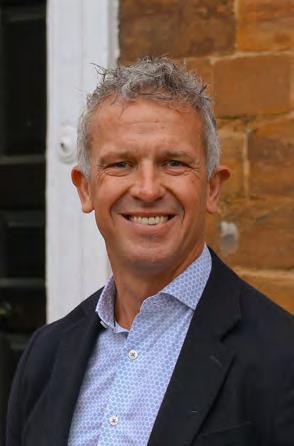
developers, investors and innovators together in one place, while the focus and quality of meeting is especially important for long-term regeneration that spans 10 or 15 years.
“For Muse, and through our partnerships such as ECF — our placemaking partnership with L&G and Homes England — and Habiko, with Pension Insurance Corporation and Homes England, MIPIM provides an opportunity to reinforce the importance of public-private collaboration,” Mayall added.
Habiko launched last year and has over 800 homes in the pipeline and Mayall expects 2026 to bring greater urgency across the industry around housing-led regeneration. “The policy framework is clearer. Funding structures are evolving. The tools are increasingly in place. The focus will shift from consultation and vision-setting toward progress and delivery,” he said. “In the second half of the year I anticipate more schemes moving from planning into construction, particularly where strong public-private partnerships are already established.”
DAMIEN Sharkey, managing director of build-to-rent (BTR) specialist HUB believes that there is a renewed energy in the private rental sector and the company’s urban co-living strategy has seen its pipeline in central London expand.
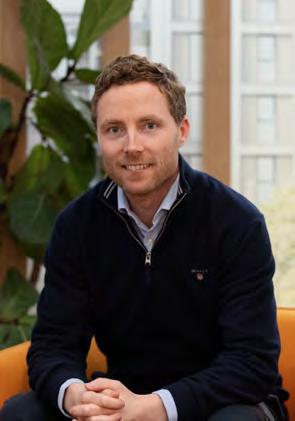
Mid-market BTR schemes are increasingly becoming a cornerstone of urban regeneration across the UK, helping to drive investment and regeneration into town and city centres, while adaptive reuse projects, specifically office-to-living conversions, are increasing availability, he said.
“While many of the pressures from 2025 remain, including high borrowing costs, construction inflation and a challenging regulatory system in the UK, there is hope that things will begin to shift — thanks in part to interventions at both government and city levels,” Sharkey said. “We expect viability and effective delivery will dominate many conversations at MIPIM: what is working in the current market, what is not and what changes different players are expecting to see.”
He said that HUB was seeing evidence of growing demand for amenity-light, mid-market schemes that prioritise location, connectivity and foster a genuine sense of community.

occupiers and investors are showing increasing interest in repurposing, reusing, and adapting existing buildings rather than going straight to new builds.
Oskar Norelius, Stockholm office director at White Arkitekter, believes that three key themes of this year’s MIPIM will be “transformation and circularity, the growing role of bio-based and timber construction, and the increasing emphasis on social sustainability”.
Norelius said that with these principles gaining traction in Europe, the sustainable reuse of buildings is a natural future trend.
“This is something HUB has championed, and we’re seeing a shift back to this as the BTR market evolves. Co-living is also maturing, demonstrating its longevity as a model that meets shifting demands,” he added.
This year’s MIPIM comes at a time when there is growing appetite for investment in the UK living sector from overseas, in part because the fundamentals of city living remain strong, which he believes will prompt innovation at all levels to navigate challenges with viability, including new partnership structures and funding models.
“The UK continues to focus on the delivery of new homes. However, while changes from the government and Greater London Authority are helping after a year of viability challenges slowing the sector down, they need to go further to ensure we can overcome the remaining hurdles,” he said.
“We are excited about the opportunities to drive urban regeneration, for example within existing commercial or retail sites and on former industrial land.”
“There is a shift toward adapting and reusing existing buildings: repurposing obsolete offices and industrial sites for cultural or mixed-use purposes, while applying circular principles at both urban and building scales,” he said.
“This mirrors long-standing Scandinavian practice, seen in our work on the relocation of the Arctic city Kiruna and regeneration initiatives in Stockholm, where city-making begins with improving what already exists.”
Norelius said MIPIM offers a “unique view on how Europe is aligning around long-term challenges”.


Property Week is the UK property industry’s leading news and insight source, delivering essential analysis and intelligence to senior decision-makers across investment, development, planning and finance.

LIMITED TIME: OFFER ENDS 15 MARCH 2026
With a Premium subscription, you get:
• Unlimited access to all Premium-only news, analysis and investigations
• Exclusive in-depth interviews with industry leaders
Subscribe to Property Week Premium and get full access to the insight, intelligence and tools shaping the UK property market.
30%

With more than 13 members of our editorial, commercial and marketing teams on the ground, this is your opportunity to connect, collaborate and elevate your presence at the industry’s most important global real estate event.
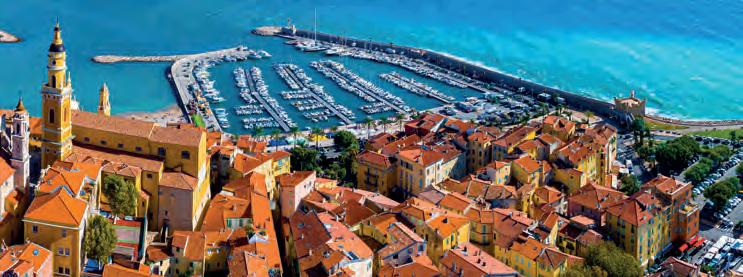
• Full access to the Property Week digital archive
• Access to our Planning Dashboard
• Access to our Residential Dashboard
• £200 off all Property Week conferences
• 50% off a ticket to AJ Retrofit Live
From Pitch to Place: Sport-Led Regeneration and Global Investment
Tuesday 10 March 2026 I 14:00 – 15:00 I UK Hub stage
This panel session, moderated by Lem Bingley, Editor of Property Week, examines how sport is acting as a catalyst for urban regeneration and attracting global investment into towns and cities across the UK. The discussion will explore how stakeholders can balance inward investment opportunities with delivering long-term economic and community benefits.
Knight Frank Cycle to MIPIM 2026: Cannes arrival
Tuesday 10 March 2026 I 15:30 - 17:30 I Pantiero
Head to the Pantiero on Tuesday 10th March to celebrate the arrival of 60 cyclists into Cannes – including Property Week’s Andy Hillier – after completing Club Peloton’s gruelling 1,400kms fundraising relay challenge from London. Keep an eye on Club Peloton’s LinkedIn or Instagram for exact arrival time.


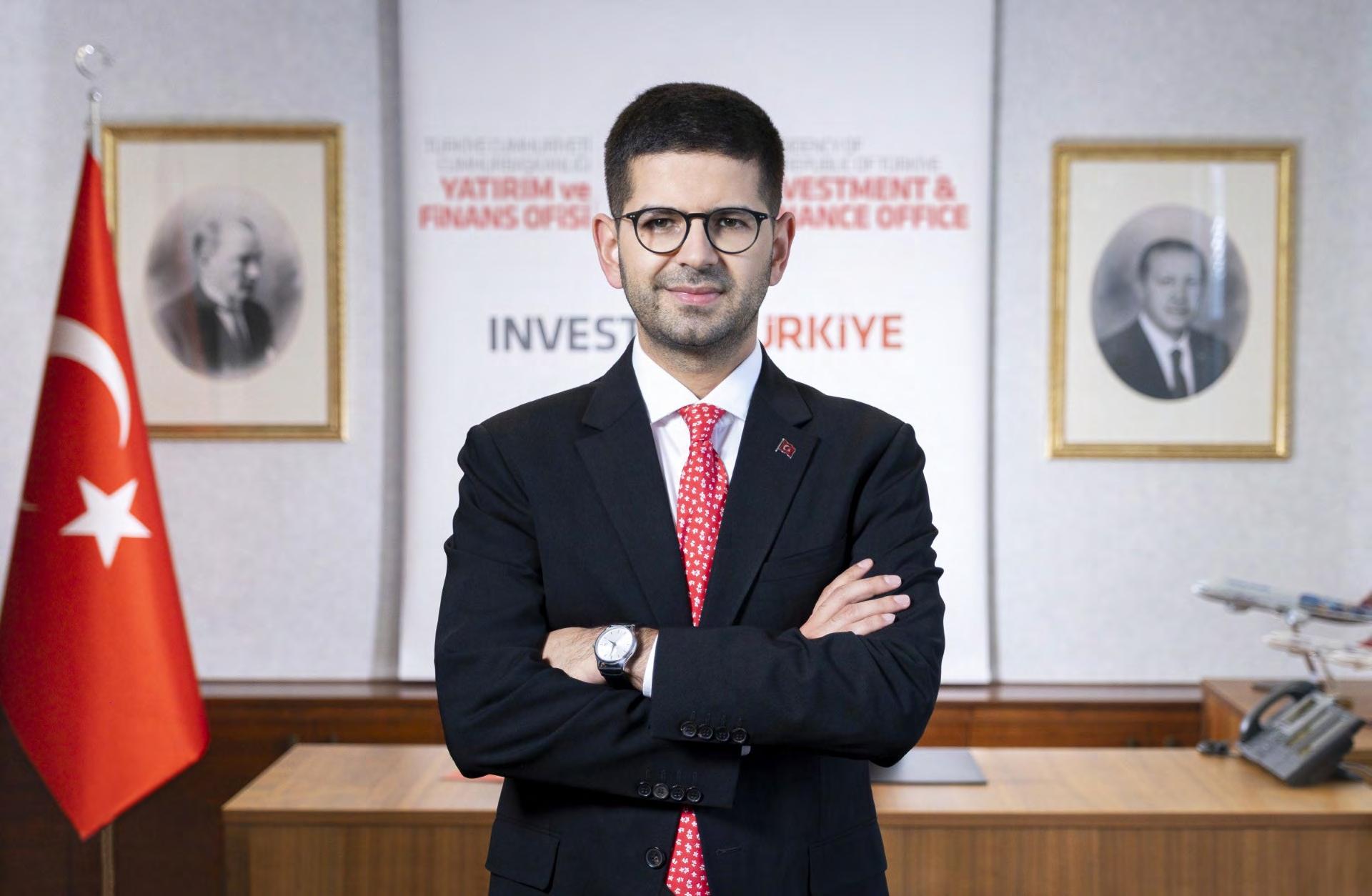
TÜRKIYE is attending this year’s MIPIM to sell itself as one of the best real estate investment opportunities in Europe, according to Burak Dağlıoğlu, president of the Investment and Finance Office of the Presidency of the Republic of Türkiye.
“MIPIM provides a strategic platform to engage with global investors who are increasingly prioritising resilient, well-located and fundamentally strong markets,” he said.
“In this context, Türkiye stands out as one of the most promising real estate markets in Europe. Positioned at the nexus of Europe, the Middle East and Central Asia, and supported by a dynamic population of 85 million, Türkiye serves as a natural hub for trade, investment and capital flows.”
Dağlıoğlu said that the country continues to attract solid investor interest. In 2025, total FDI inflows reached $13.1bn (€11.27bn), of which $2.3bn—around 17% —was directed to real estate.
In the same year, the real estate market demonstrated strong momentum, with nationwide housing sales reaching approximately 1.7 million units, marking year-on-year growth of around 14%.
Türkiye’s commercial real estate market also demonstrated strong fundamentals. At the end of 2024, grade A office stock in Istanbul exceeded 6.7m sq m, with more than 700,000 sq m under construction, including landmark projects within the Istanbul Financial Center. Total grade A supply is expected to approach 7.4 million sq m by 2026.
In addition, retail performance remains robust, with 461 operational shopping centres nationwide totaling 14.3 million sq m of gross leasable area (GLA). Logistics is another fast-growing segment, particularly in the Marmara Region, where total supply has reached 11.3 million sq m.
Over the past two decades, Türkiye has invested more than $300bn in transport infrastructure, strengthening its position as a Eurasian hub.
“With 58 airports, significant port capacity, expanding railways aligned with the 2050 Net Zero target and a strong highway network supported by public-private partnerships, the country continues to enhance global connectivity,” Dağlıoğlu said.
“Transportation and logistics account for approximately 9% of GDP, rein-
forcing Türkiye’s strategic role in global supply chains.”
At MIPIM, Dağlıoğlu said that he expected discussions to focus on resilient office assets, retail performance supported by domestic consumption and tourism flows, logistics growth in strategic corridors, sustainable mixed-use developments and “the competitive investment environment offered by Türkiye through tax advantages, competitive utility costs and ongoing administrative reforms aimed at minimising bureaucratic barriers”.
Dağlıoğlu added that the purpose of his organisation is to streamline the inward investment process on behalf of global investors. “As the official investment promotion agency of Türkiye, we provide end-to-end support throughout the entire investment lifecycle,” he said.
“Our services include tailored market intelligence, regulatory guidance, incentive advisory and direct co-ordination with relevant public institutions and local stakeholders. We adopt a holistic perspective across the entire value chain, focusing on sustainable value creation. Our scope spans a broad spectrum — from manufacturing to technology, from R&D to logistics — with real estate forming an integral part of this ecosystem.”
He added: “In close co-operation with the ministries of culture and tourism, and of transport and infrastructure, we introduce tourism, mixed-use, data centres, logistics and large-scale infrastructure projects to global investors, highlighting the strong potential Türkiye offers in these high-value sectors.”
In addition, Dağlıoğlu said that Türkiye’s increasing urbanisation dynamics and demographic profile make it ripe for investment. “The country’s population continues to grow, while urban centres are becoming increasingly critical in economic and social terms,” he said.
“The sustained growth in both population and urbanisation has significantly strengthened the real estate sector and will continue to support the broader ecosystem. The government-led urban transformation programme is progressing at a strong pace, particularly in Istanbul.
“The city remains the primary investment hub due to its role as a regional financial and business centre, its strong grade A office pipeline and high market liquidity. The expansion of modern office stock continues to attract institutional interest.”

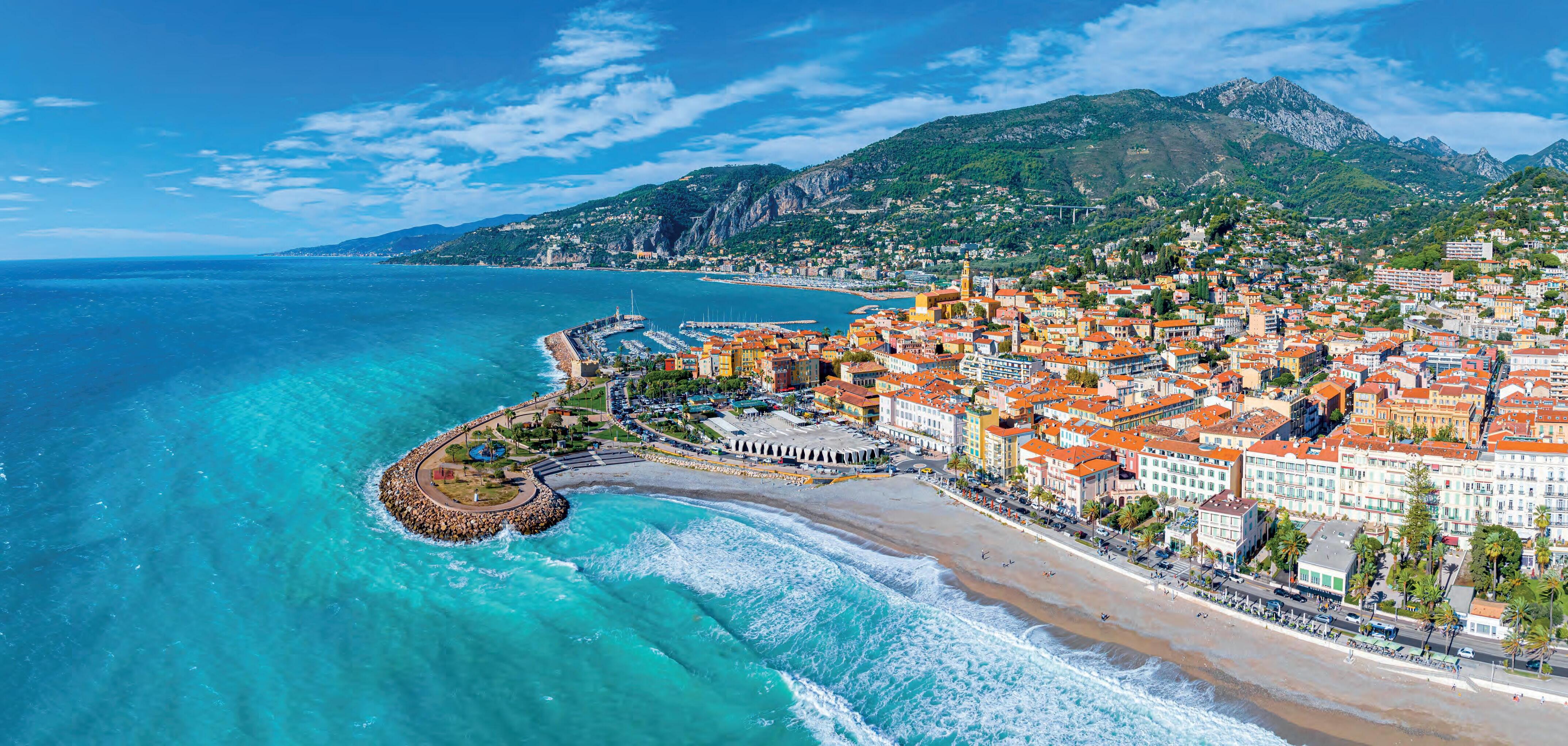
NESECAN Çekici, president of the Real Estate Investors Association of Türkiye (GYODER), is in Cannes with some 20 companies, including Emlak Konut REIT, occupying the prominent Türkiye Pavilion to help enable talks and potential partnerships between domestic firms and international investors.
Çekici said that Türkiye has a great wealth of experience and knowledge to offer international partnerships, as well as inward investment opportunities.
She said that the GYODER mission was to champion “urban development expertise, urban regeneration capacity and investment strength to international investors through a unified and strategic narrative”.
GYODER is at MIPIM working alongside the Presidency of the Republic of Türkiye Investment and Finance Office, and the Republic of Türkiye Ministry of Environment, Ur-
banization and Climate Change.
Çekici identified a number of growth sectors in the economy of special interest to real estate investors.
As well as housing, which nationally requires the addition of some 800,000 to 900,000 homes per year, she said that emerging technologies and associated asset classes, combined with Türkiye’s geographical location, offered a huge opportunity to investors both domestically and internationally.
Çekici said: “Türkiye is strategically positioned at the intersection of Europe, Asia and the Middle East, making it a natural digital hub. With increasing data consumption, cloud adoption, and AI-driven infrastructure demand, the country is actively positioning itself within the global data-centre ecosystem.
“We are observing growing investor interest in large-scale data centre developments, particularly in Istanbul and
Ankara, driven by expanding connectivity, fibre investments, a young and tech-savvy population, and strengthening regional integration.
“At GYODER, we view digital transformation not only as a technological upgrade, but as a structural shift that will define the next generation of cities. MIPIM provides an important platform to connect this vision with global capital and expertise.”
Working with national governmental bodies, Çekici said that GYODER is also embracing the potential of new tech as a means of making the domestic real estate market smarter and more streamlined.
“From a broader real estate perspective, artificial intelligence and digital technologies are reshaping the industry,” she said. She added that the country’s residential market requires a reset in “housing production economics”, which GYODER is hoping will be encouraged in part by a reduction in development costs for housebuilders.
FROM a 75-year legacy to a forward-looking agenda, FIABCI’s world president Antonio Campagnoli says that the international real estate federation will be bringing a forward-looking vision to MIPIM in its anniversary year.
“FIABCI was built on the idea that real estate performs best when professionalism, ethics and international co-operation are placed at the centre of industry growth,” he said, as the organisation prepares to set out its vision 2035 agenda.
“FIABCI is entering its next phase with renewed focus, shaped by members and the evolving realities of our built environment: housing affordability, resilience, sustainability, demographic shifts and the transformation of cities through technology and investment,” Narek Arakelyan, FIABCI secretary-general, said.
“FIABCI has been working to develop ‘FIABCI Vision 2035’ and a refreshed strategic plan. Our priorities include strengthening chapter performance and
governance, expanding member services and international programmes, enhancing global partnerships and institutional engagement, and building stronger business-oriented platforms,” he added. This roadmap will be formally presented during the 76th FIABCI congress in Vienna in June, which will set the tone for the decade ahead, according to Matthias Gass, president of FIABCI-Austria and chair of the congress, “coming at a time when our sector is being reshaped by


fundamental questions about how we finance and deliver housing, how we plan resilient cities, and how we create places that perform economically while serving people and communities.”
Lily Chang, FIABCI world president-elect, adds that FIABCI is also organising a trade mission to Taichung in September as part of expansion in the APAC region.
“Taichung represents a dynamic model of urban development and investment potential and the trade mission will be designed to provide both strategic insight and practical connections across the broader region. It will also serve as a platform to showcase Taiwan’s expertise and innovation in the built environment — reinforcing FIABCI’s role as a bridge between markets and a catalyst for international co-operation,” she said.
The body is also expanding in the GCC and Africa, adds Abdullah Al Harbi, president of FIABCI-Saudi Arabia and first vice-president, Africa & Near East regional committee, who points to the “remarkable pace” of real estate development.
“FIABCI’s role is to ensure that this momentum is matched by professional standards, meaningful knowledge exchange and stronger public–private co-operation platforms that connect local priorities with international expertise,” he said.
GERMAN bank pbb has identified four key areas where it wants to expand its lending portfolio: senior living, serviced living, hotels and data centres.
These sectors specifically benefit from favourable underlying societal megatrends and thus showcase above-average growth and potential, according to Pamela Hoerr, member of the executive board of pbb Pfandbriefbank.
“We want to provide financing both via our traditional banking services as well as via our new real estate debt fund. We launched this fund in order to address diverse funding requirements in the market and sustained investor interest in real estate debt,” Hoerr said.
“Our Originate & Cooperate team, in particular, has been growing steadily.
Financing needs are evolving, becoming more complex and requiring larger volumes, so our role evolves as we remain a central point of contact and co-ordination, linking our borrowers to our broad network of international partners,” she added.

Hoerr said that pbb is at MIPIM to meet its pan-European industry partners in what she described as a “unique opportunity to gauge market sentiment, source potential deals and cultivate personal relationships”.
The bank also expects to discuss refinancing needs, repositioning strategies and financing solutions across
asset classes, topics which are becoming increasingly relevant in the current market phase.
“Neither transactions nor consequently lending will return to the record levels seen in 2019-2020 any time soon — and that is okay,” she said. “Instead, 2026 will be another year of gradual development, stabilisation and selective recovery for most sectors, from office to living, and other, more specialised segments, with a slightly more active transaction market than in 2025.
“At the same time, the market will remain highly selective, particularly given that the secondary office quality and locations are continuing to reprice and reposition. In many cases, activity will be driven less by traditional acquisitions and more by refinancing and business plans focused on refurbishment,” she added.
“Lenders will have to take a very close look at any proposal. Clearly, there are many interesting projects out there to be financed, both new developments and increasingly refurbishments.”

GERMANY’s residential sector will continue to recover this year and, although the overall environment remains demanding, the market is moving clearly in the right direction again, according to Kruno Crepulja, CEO of Instone Real Estate Group.
He said that the company is seeing renewed momentum and added that transparency has returned to the market while land prices have adjusted to realistic levels, conditions which have provided developers with a reliable basis for new investment decisions.
“Demand is strong, particularly from private investors, supported by attractive depreciation schemes and improved financing conditions. Institutional interest is gradually strengthening as well, reflecting renewed confidence in the asset class,” Crepulja said of increasing capital flows.
At the same time, he believes that 2026 will remain a year of transition. He ex-

A RANGE of key projects are being highlighted at MIPIM by Invest Seoul. Among the schemes are the Yongsan International Business District — a mixed-use development featuring a super-tall tower and targeting global regional headquarters, real estate developers, anchor companies and financial institutions; and Seoul Digital Bio City, a bio-cluster supported by a strong R&D ecosystem, leading hospitals and top universities, aimed at attracting biotechnology and pharmaceutical companies, as well as R&D firms.
pects transaction volumes to increase but a full return to pre-crisis levels of investment is likely to take more time.
Nevertheless, German new-build residential real estate stands out as a stable and forward-looking asset class with solid long-term prospects, he insisted.
“As every year, we look forward to our dialogue with cities, landowners and institutional investors. We are also witnessing significant interest from international investors in partnering on larger portfolio investments and major projects, which we are keen to discuss together,” he said of coming to Cannes.
“MIPIM is an accurate barometer of market sentiment for our industry. The underlying conditions remain challenging, while market momentum is clearly picking up. Cannes is essential to put this development into context, strengthen partnerships, establish new contacts and reinforce Germany’s position as a reliable residential market with long-term prospects.”
“Seoul hosts rapidly expanding sectors such as AI, biotechnology, and quantum technology, offering compelling opportunities for joint R&D and strategic partnerships, underpinned by a robust pipeline of top-tier talent from leading universities,”
Jihyeong Lee, president and CEO, Invest Seoul, told MIPIM News.
Later this year, Invest Seoul will host ‘Next Seoul’, a real estate investment promotion event inviting global investors to experience Seoul’s key development projects at first hand.
On the 16th of September, at Business Arena Stockholm, we are proud to present the Transaction Stage. A dedicated stage focused entirely on the Nordic real estate transaction market.
Bringing together international investors, decision makers from real estate companies, advisors, and capital partners, the stage explores where opportunities are emerging and how capital is being deployed across the region. All sessions are held in English and features a mix of Nordic and international speakers, creating a global dialogue around Nordic assets. The Transaction Stage also hosts our International Investor Lunch, designed to foster meaningful connections and high level conversations.
Join us at Business Arena Stockholm to take part of the Transaction Stage and engage directly with the people shaping Nordic real estate transactions.


For more information, contact: Jimmy B Lehtinen jimmy.b.lehtinen@bonniernews.se +46 702-589 07 02
Business Arena Stockholm, 16 september, Stockholm Waterfront Congress Centre
A MAJOR theme for CTP Group at MIPIM this year is the sustained momentum of Europe’s industrial

and logistics sector — a market that, according to chief investment officer Maarten Otte, has not only demon strated remarkable resilience but has evolved into one of the most dynamic asset classes on the continent.
“Following years of volatility — from pandemic‑driven disruption to in flationary pressures and geopolitical uncertainty — the sector has entered a more mature and opportunity‑rich phase,” he told MIPIM News. Cru cially, he added, it continues to trans form in ways that reward investors and developers with the scale, flexi bility and long‑term focus required to support modern occupier needs. “At CTP, this shift is visible across both our standing portfolio and our devel opment pipeline, as we continue to increase our market share.”
Otte said demand for premium, en ergy‑efficient and well‑located space
remains robust. Occupiers are up grading facilities, optimising supply chains and positioning themselves closer to customers. Even as e‑com merce growth normalises from the early‑2020s surge, domestic consump tion in CEE remains a fundamental driver. “Meanwhile, manufacturing and advanced production are rapid ly returning to Europe, propelled by nearshoring trends, efforts to manage geopolitical exposure and the push for more resilient, diversified supply chains. Our ready‑built factories are specifically designed to meet this ac celerating demand,” he said.
As well as valuable conversations and insights, MIPIM is also “an oppor tunity to meet directly with inter national investors and advance the discussions that underpin our strate gic priorities” he said. These include CTP Group’s entry into the Italian
market, where the company plans to deliver 200,000 sq m of space this year alone, ramping up to 250,000 –300,000 sq m over the coming years. “We believe Italy represents one of Europe’s most compelling industrial and logistics growth markets. We are also exploring opportunities to ex pand into new global markets, where our clients need us, such as Vietnam,” he said.
Across Europe, 2026 is shaping up to be a year driven by powerful struc tural forces, he said, as nearshoring, e‑commerce, and supply‑chain re silience become embedded features of corporate strategy. “These are no longer temporary market trends; they are the foundations of long‑term demand,” he said. “We’re seeing ac celerating interest from high‑tech manufacturers and Asian companies building or scaling their European production footprints. These oper ations require sophisticated, ener gy‑efficient, fully serviced facilities, which are exactly the kind of environ ment our CTParks platform is pur pose‑built to provide.”
THE PROPERTY market is enter ing a new cycle but unlocking oppor tunities will require careful thought, according to Alistair Calvert, CEO at Clarion Partners Europe.
“A central theme at MIPIM will be how to unlock opportunities and capture relative value as we enter what we be lieve is a new investment cycle for Eu ropean logistics,” he said.
“Following the repricing that began in 2022, entry yields have reset to compel ling levels, while occupational funda mentals have remained resilient. At the same time, the development pipeline has contracted sharply across core mar kets, setting the stage for the next phase of rental growth.
Calvert noted that capital growth in logistics has been positive for seven consecutive quarters, historically sig nalling the early stage of a sustained recovery. “We forecast high single digit returns across core Europe, supported
by attractive going in yields and infla tion beating NOI growth — without relying on yield compression,” he said.
“In our experience, the most compel ling returns are generated by deploying early in the cycle.”
On the occupier side, 2025 appears to have marked a turning point, Cal vert added. “Net absorption improved year on year for the first time since 2020, e commerce demand is return ing to trend and manufacturing and defence related activity — particularly in Germany — is strengthening,” he said. “Vacancy in Europe looks to have peaked at around 5.5%, while specula tive supply has fallen to just 0.5–1.5% of stock in core markets.”
In addition, Calvert said that the widen ing gap between prime and secondary assets will remain front of mind in 2026 and will be the subject of discussion at MIPIM this year: “In an increasingly electrified and automated economy,

access to power and technical specifica tion are decisive differentiators.
“Modern, well located assets with strong grid connectivity are com manding rental and liquidity premia, while secondary stock faces growing obsolescence risk. Selectivity is be coming critical.”
Looking further ahead, Calvert said he expected to see a meaningful increase in core capital allocations to European logistics. “There remains a window to deploy at attractive levels before re newed inflows create stronger pricing tension,” he said.
“Global allocations to Europe should also rise. Around 25% of the €40 bil lion invested in European logistics in 2025 originated from outside Europe and we expect international capital to increase further, supported by Eu rope’s relative value and stable macro outlook. However, 2026 will be de fined by selectivity.”
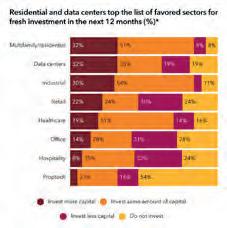
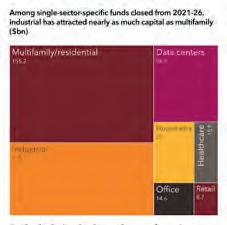


10-13 March 2026
La Croisette, Cannes, France
Explore top hospitality projects, gain expert insights, and network with the most influential players in the industry. Learn and participate in discussions on branded residences, Hotel developments within the Luxury & Resort segments and more.







FLASHEZ POUR VOUS ABONNER !

Lisez l’Opinion sur tous vos écrans et retrouvez nos contenus

1
Explorez toute la richesse de l’Opinion
Par le biais de notre site web ou de notre application mobile, profitez d’un accès illimité à tous les articles réservés aux abonnés.
Accédez aux meilleurs articles de The Wall Street Journal sélectionnés et traduits en français par notre rédaction. 2
Accédez à votre journal numérique dès 20h, la veille de sa parution. 3
Feuilletez l’Opinion en avant-première
IN THE current phase of the cycle, Principal Asset Management expects investment returns to be driven primarily by income growth rather than falling interest rates and yield compression, senior fund manager Seb Dooley told MIPIM News.
“As a result, our conversations will be increasingly focused on identifying projects and strategies capable of delivering reliable, risk-adjusted returns,” he said. “Careful sector selection, asset quality and location, underpinned by strong supply-demand fundamentals, will be firmly at the forefront of investors’ minds.”
He said that Principal is starting to see bifurcation in terms of investments that are going to be successful longerterm. Selectivity and robust underwriting are becoming even more paramount to ensure success over the next few years, he added. Additionally, the capital stack is continuing to evolve and become more sophisticated, leading to an increased opportunity set for institutional investors.
“Another major trend is the new Euro-
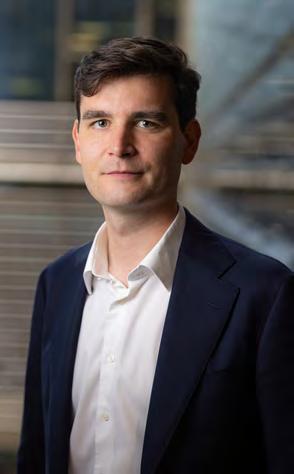
pean strategic imperative to strengthen security and modernise infrastructure networks. Indeed, the current geopolitical environment, marked by the war in Ukraine and the prospect of reduced US engagement abroad, has fundamentally altered Europe’s priorities and fiscal stance. This policy shift could serve as a powerful new catalyst for both the econ-
EUROPEAN living opportunities are high on the MIPIM agenda for asset and investment manager Prop.com.
“We are particularly focused on discussing European micro-living strategies, especially in Germany, where we see significant growth potential due to the ongoing supply demand imbalance,” CIO Paul Hohenstatt told MIPIM News.
“We are very interested in looking at European living opportunities closely as this sector continues to be one of the most dynamic and fastest growing on the continent.” The company is also interested in any brown to green value add residential refurbishments projects as there is a large housing stock that will need to be futureproofed, he said.
Hohenstatt said that real estate is at a genuine inflection point: “For the last decade, residential real estate was won on relation-
ships and gut feel. The next decade will be won on data,” he said. “Digitising the full value chain — from acquisition due diligence through asset management to exit — isn’t a nice-to-have anymore, it’s a competitive necessity.” According to Hohenstatt, the platforms that embed real-time performance data into every decision layer will compress risk and expand returns in ways that traditional operators simply can’t match. “For us at Prop.com that’s not a future ambition — it’s what we’re building right now.”
As for the MIPIM experience, he said there is no substitute for faceto-face events: “It’s an invaluable way of taking the temperature on current and future real estate trends, getting a feel from others on how they see the market, sharing innovative ideas and catching up with trusted contacts and of course, expanding the network.”
omy and real estate markets,” he said. Principal’s approach remains focused on sector-specific strategies underpinned by structural tailwinds, with data centres particularly attractive as structural demand far outweighs supply and at MIPIM the company will be assessing market sentiment and examining how capital and debt markets are continuing to evolve in the space. “It will be interesting to discuss where the market sees opportunities as constraints around power availability, land scarcity and permit hurdles in established hubs continue to reshape the competitive landscape,” Dooley said. “Despite rising risks, the sector still offers outsized risk-adjusted returns for disciplined investors and MIPIM provides an opportunity to assess how real estate investors and lenders are viewing the data centre sector. In our view, network-dense facilities and flexibly designed assets in key availability zones will remain critical for cloud and connectivity demand, while poor site selection increasingly risks creating stranded assets,” he added.


HENLEY Investment Management brings a full agenda to MIPIM as the company explores European investment opportunities, co-GP and partnerships, and discusses progress on its developments.
Jay Squier, managing director – development, said: “We’ll be having discussions across the variety of our activities, including our recently launched super-prime development The Halcyon Residences & Marina, in Naples, Florida; and AquaSonic, the high-tech, lifestyle and sustainable car-wash concept, where we’ll soon be opening our second site. We’re also exploring potential acquisitions in the US, driven by Henley US, with a focus on residential.”
Henley’s portfolio of largescale projects includes major placemaking schemes, and is current delivering 5,500 units across the UK — either in planning, approved or in construction. “We’re partnering with Birmingham City Council at MIPIM to draw attention to the investment opportunities around the new HS2 station, nearing completion at the end of the decade,” Squier said. “We’ll also be having conservations around our plans for the redevelopment of Regent Park, Salford.”
14-15 October 2026
Athens Explore
MERRIK Baggallay, managing director at the real estate investment firm BGO, is at MIPIM with a focus firmly on how prime, best-in-class offices are evolving across London and the role they play in creating destinations that are genuinely mixed-use.
“A significant part of the discussion will centre on how schemes such as 105 Victoria Street respond to evolving occupier requirements, namely exceptional quality, strong environmental performance, and workplaces that form part of a broader experience rather than standalone buildings,” Baggallay told MIPIM News.
He will also be engaging with capital partners on BGO London’s development pipeline, which totals around 185,800 sq m either in development or planning. “As always, timing is critical — and in this case, one of our core projects in Whitechapel happens to be well aligned with the upcoming market cycle,” he said. “More broadly, we will be discussing the performance of London’s core and adjoining markets. While core locations have performed strongly and are expected to continue to do so, we hold a clear view that the next phase of relative outperformance will increasingly come from adjoining markets to the core, where well-located, high-quality product remains in short supply.” He cites assets such as Regent’s
Wharf, The Waterman and 105 Victoria Street as tangible evidence of this trend. Across these assets, approximately 23,000 sq m are already leased.
“For us, MIPIM is not about forming views but about testing firmly held convictions against the perspectives of global capital, occupiers and industry peers. It provides a highly efficient forum to validate strategy, challenge assumptions and ensure our thinking remains aligned with market conditions,” he said, adding that it also enables meaningful progress in discussions around capital deployment, partnerships and London’s positioning within global real estate portfolios, benefiting from direct engagement with key decision-makers. Looking forward, Baggallay predicted
that quality will remain the principal driver of performance, with best-in-class buildings in core and well-connected adjoining locations expected to outperform. However, given the sustained lack of new supply, lower-quality assets are also likely to find a role in the market, particularly where affordability becomes a determining factor for occupiers, he said.
“In periods of geopolitical and economic uncertainty, international capital continues to gravitate toward London due to its liquidity, transparency and depth of occupier demand. As confidence returns and transactional activity increases, this safe-haven status will continue to underpin London’s long-term investment appeal,” he said.
DEMAND for space in London’s office market continues to outstrip supply as firms compete to attract talent to their ranks, the head of a sector-specialist developer has said.
Bradley Baker, chief executive of London firm CO-RE, said the fact that companies remain “on the constant look-out for talent” and “know they need to offer high-quality space with amenity if they want to attract and retain the best staff” is driving continued demand for the best offices, and new office developments.
Baker added: “Companies also recognise the role that their offices can play in building and reinforcing their brands, thereby underpinning the demand for premium space across London.”
CO-RE is engaged in a number of signif-
icant office projects in London, from a 38,000 sq ft [3,530 sq m] building near Hanover Square for Old Park Lane Management, to a mixed-use development at 130 Fenchurch Street for Aviva Investors, due for completion in 2032.
The firm is at MIPIM and will be an active presence at the London Stand, as well as taking part in a number of panel discussions.
Baker said: “Each year at MIPIM is different and its full value often only becomes clear as the week concludes.
“Across the years, however, the core benefit of the conference remains: providing a uniquely high concentration of senior decision-makers in one place, enabling us to meet a lot of influential people in a relatively short period of time.”
THE OFFICE market in the UK will continue to strengthen in 2026, from both the occupation and investment perspectives, according to Ned Williams, managing director at Evans Randall Investors.
“We anticipate continued occupational strength across our office and R&D portfolio, supporting sustained and improving rental performance,” he said. “We also expect the gap between occupational reality and investment sentiment to narrow, particularly among global capital, where perceptions can easily diverge from underlying fundamentals.”
However, Williams added that there were still issues facing the sector. “The main area of uncertainty is the timing and extent of liquidity returning to the investment market, which will be the critical factor shaping overall conditions in the year ahead,” he said.
“We also hope that a calmer political and macro economic backdrop will emerge. Our industry is inherently capital intensive and illiquid, and stability is essential to foster the conviction required for long term investment.
“For us, MIPIM consistently provides a blend of the structured and the serendipitous,” he added.


WITH A UK government demonstrating a renewed commitment to housing delivery and economic growth but significant headwinds remaining, stability and certainty plus strategies to unlocking delivery at both scale and pace are crucial for the market, according to Mike De’Ath, partner at HTA Design.
“While I would like to say that 2026 marks the beginning of a return to market normality, it still feels premature. Even with a strongly pro development government, the combination of regulatory complexity, rising delivery costs and deepening affordability challenges continues to make UK housing one of the most difficult sectors to bring forward,” he said. Although he believes the government is making progress, particularly around planning reform and addressing the burdens of wider regulatory controls, he added that the core issues of cost, viability and affordability will likely keep the sector in a slow recovery phase for at least the rest of the year.

“However, several exciting and major HTA Design projects are due to complete this year, showing that well designed schemes can undoubtedly progress even in difficult conditions. Focus now needs to be on working with clients and partners to navigate an uncertain market and find viable routes to delivery,” De’Ath said.
HTA Design has attended MIPIM for nearly 30 years to engage with global investors and senior sector and political leaders from the UK. “MIPIM remains the prime global forum and in recent years discussions have been dominated by a series of unexpected financial and political challenges,” De’Ath said. “It has also become an important stage for showcasing our internationally relevant work, such as our landscape design at Eden Dock, Canary Wharf, and in modular housing, delivering some of the world’s tallest residential towers such as College Road co-living tower, shortlisted in this year’s MIPIM Awards,” he said.
“With our new office in Sydney we are increasingly finding that our expertise in housing and placemaking aligns closely with the needs of global cities facing similar pressures.
“MIPIM’s international audience supports this growth by connecting us with partners who share our ambition to deliver sustainable, high quality housing at scale.”

THE CHRONIC need for more housing will require the public and private sectors to work more collaboratively in the future, according to James Agar, head of real estate origination at Pension Insurance Corporation (PIC).
“I foresee a strong emphasis on expanding public and private partnerships to address the ongoing need for housing investment across the UK,” he said. “Affordable housing and single-family housing will be significant growth sectors, with large scale transactions likely.

THE OFFICE sector is poised to make a comeback following years of speculation about working patterns in the wake of the COVID-19 pandemic, according to Frances Brown, partner, building services, at multi-disciplinary consultancy Cundall and chair of the British Council for Offices Research Committee.
“We are starting to hear positive signals for the workplace sector and for investment in London,” she said. “I expect to be talking to people about their vision for the future of the workplace, how leisure and placemaking enhance workplace environments, and how sustainability and designing for people can add value to office developments.”
She added: “I also hope to discuss how the office development is evolving in different UK regions, across Europe and in the Middle East. I like to have a holistic understanding of the workplace sector
so that I can align my business to better serve our clients. MIPIM provides a good opportunity to have conversations with a broad range of people to help inform this perspective.”
Brown said that the office sector has a bright future provided that buildings are integrated with other uses and have strong sustainability credentials. “I think in 2026 we will see the office sector moving forward with confidence in what creates value and entices people to come into the office to work together,” she said.
“This will go beyond buildings that provide high-quality workspaces and will encompass the value of the surrounding environment and the overall experience. There will also be a stronger emphasis on how the environmental impact of development is assessed and how well-informed sustainability choices are made.”
“Additionally, private capital will continue playing a vital role in supporting traditional housing associations, assisting them in strengthening their balance sheets and increasing delivery.”
Agar added that his company continued to keep a close eye on the macroeconomic situation.
“We’re especially focused on how ongoing economic and political uncertainties, as well as interest-rate pressures, are shaping decision-making,” he said.
“How we navigate these challenges to continue to make the long-term investments needed to match the pension liabilities remains our focus.”
Sur tous les fronts, nous enquêtons pour vous raconter notre époque en encourageant le doute et la curiosité. Rejoignez les esprits libres.
la première année (sans engagement)
RENDEZ-VOUS SUR LE SITE OU directabo.lepoint.fr/partenariats

SCANNEZ CE QR CODE



Des contenus variés L’accès à tous les contenus du Point, les palmarès, des newsletters thématiques…
Des chroniqueurs et invités inédits à retrouver uniquement sur nos supports.

En exclusivité
Le journal numérique en avant-première dès le mercredi soir.
Monday 9 March : Housing Matters! 9-13 March 2026
Palais des Festivals, Cannes
Destination France unites public and private French leaders at MIPIM. From a dedicated pavilion on the Croisette to conferences and high-level networking events, and a strong presence across the Palais, discover a coordinated ecosystem of regions, projects and companies shaping France’s investment opportunities.
Key Figures
Among our exhibitors


















ANYTHING related to existing built stock will be front of mind at this year’s MIPIM for Marion Baeli, partner, sustainability and transformation, 10 Design. In particular, the global archiecture practice will focus on how to reposition stranded assets, decarbonise their operation and adapt them to a changing climate. “These challenges are deeply interconnected rather than separate issues, and that is exactly where the opportunity lies,” Baeli told the MIPIM News. “For architects, this complexity is not a constraint but a strength. It plays to our ability to navigate multiple demands simultaneously and develop integrated, future-facing solutions.”
The property sector is facing significant challenges, according to Baeli. When viewed through an environmental lens, the built environment reveals the fragility of the urban fabric, she said. “From power outages during severe storms to increasingly frequent flooding, tornadoes and more intense wildfires, buildings across the world are being tested like never before.”
Baeli added that we are entering a period where adapting our built environment is no longer optional but urgent, and it is happening faster than many anticipated. “This

shift is already evident in client briefs, which now prioritise grid independence; low operational energy demand; and resilience to overheating, considerations that were far less prominent only a few years ago.” In response, Baeli said there needs to be a rapid evolution embracing new ways of building, while also finding effective strategies to adapt what already exists. “At the same time, commercial viability remains challenging in a volatile economic climate. However, I am still confident that work on existing building stock will continue to grow at pace as we move into 2026.”
Of the week ahead, Baeli said that MIPIM is a rare chance to meet and interact with an extraordinary concentration of decision-makers, all in one place. “There is a real buzz to it — part networking, part dealmaking and part idea exchange. It is a bit like a supercharged hive, where everyone is moving fast, cross-pollinating ideas and hoping to come away with something valuable.”
STOCKHOLM’s real estate boom is moving beyond the historic core. Once-overlooked districts near the inner city — well connected by transit and perched along the water — are drawing international investors, eager to turn underused office and industrial zones into mixed-use neighbourhoods. But in Sweden, spotting an opportunity on a map is easier than delivering it. Value creation rarely rests on a single bold move. It comes through careful planning, municipal approvals and stake-
holder negotiations, which weigh public benefit, urban quality and feasibility.
That complexity has made local expertise crucial. At MIPIM this week, Equator, a Stockholm-based firm combining architecture with development analysis, has positioned itself as a go-to partner.
“We’re often brought in when clients want to understand what is realistically possible — how quickly it can move, what will be required in the planning dialogue and what concept can create lasting value,” said managing director Annica Carlsson.
Equator works on repositioning “tired” assets, unlocking development rights and assessing acquisition risks, with an eye not just on buildings but the spaces between them. Projects in Marievik and Alvik, near the inner city, illustrate the approach.
“International actors are often surprised by how much value is created through the planning journey itself,” Carlsson added. “If you align concept, process and municipal dialogue early, you don’t just avoid risk, you improve the outcome.”
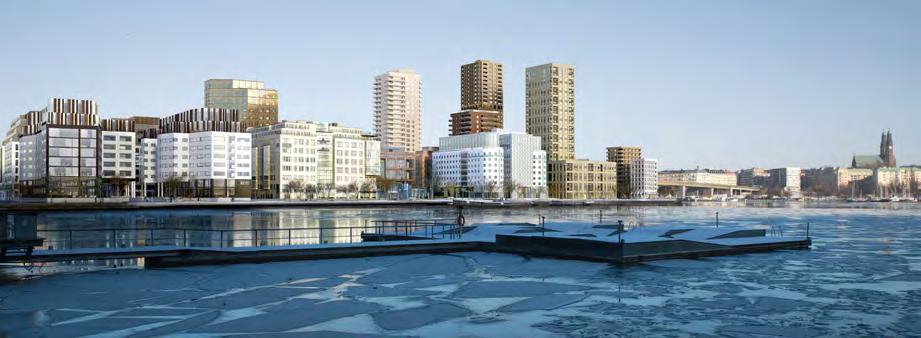

ALREADY the most densely populated city in the Netherlands, The Hague expects to add around 100,000 residents by 2050 — without expanding beyond its borders. According to Klaas Verschuure, Alderman for Urban Development, Libraries and European Affairs for the City of The Hague, the response is an ambitious programme of inner-city transformation centred on the Central Innovation District (CID) and the redevelopment of the Binckhorst district. Located between the city’s three main railway stations, the CID is set to become the modern economic heart of the city. By 2040 it is expected to deliver roughly 20,500 homes, 640,000 sq m of workspace and extensive public facilities.
Nearby, the former industrial area of Binckhorst is being reshaped into a mixed-use urban district.
Around 5,000 homes are already built or under way, with plans for another 7,000-8,000 — a “breakthrough location”, according to the Hague’s ministry of housing. Elsewhere, renewal extends to the coast in Scheveningen, where the boulevard and the iconic Pier van Scheveningen are undergoing revitalisation.

DEMANDEZ UNE DÉMO


Visualisez et explorez les données de marché en temps réel*
avec un niveau de détail inégalé (chaque transaction est détaillée)
*Source CFNEWS DATA, données compilées et structurées par nos analystes, vérifiées par nos journalistes experts du Real Estate
Filtrage des données par stratégie, régions, typologie d’actifs, investisseur, valorisation métrique...
Suivi jour après jour des grandes tendances de l’investissement immobilier
LOCALISER
Cartographie complète des transactions en France avec géolocalisation
Graphiques et transactions exportables & exploitables immédiatement (Excel, PDF, PNG, JPEG)
Contactez-nous : abo@cfnewsimmo.net







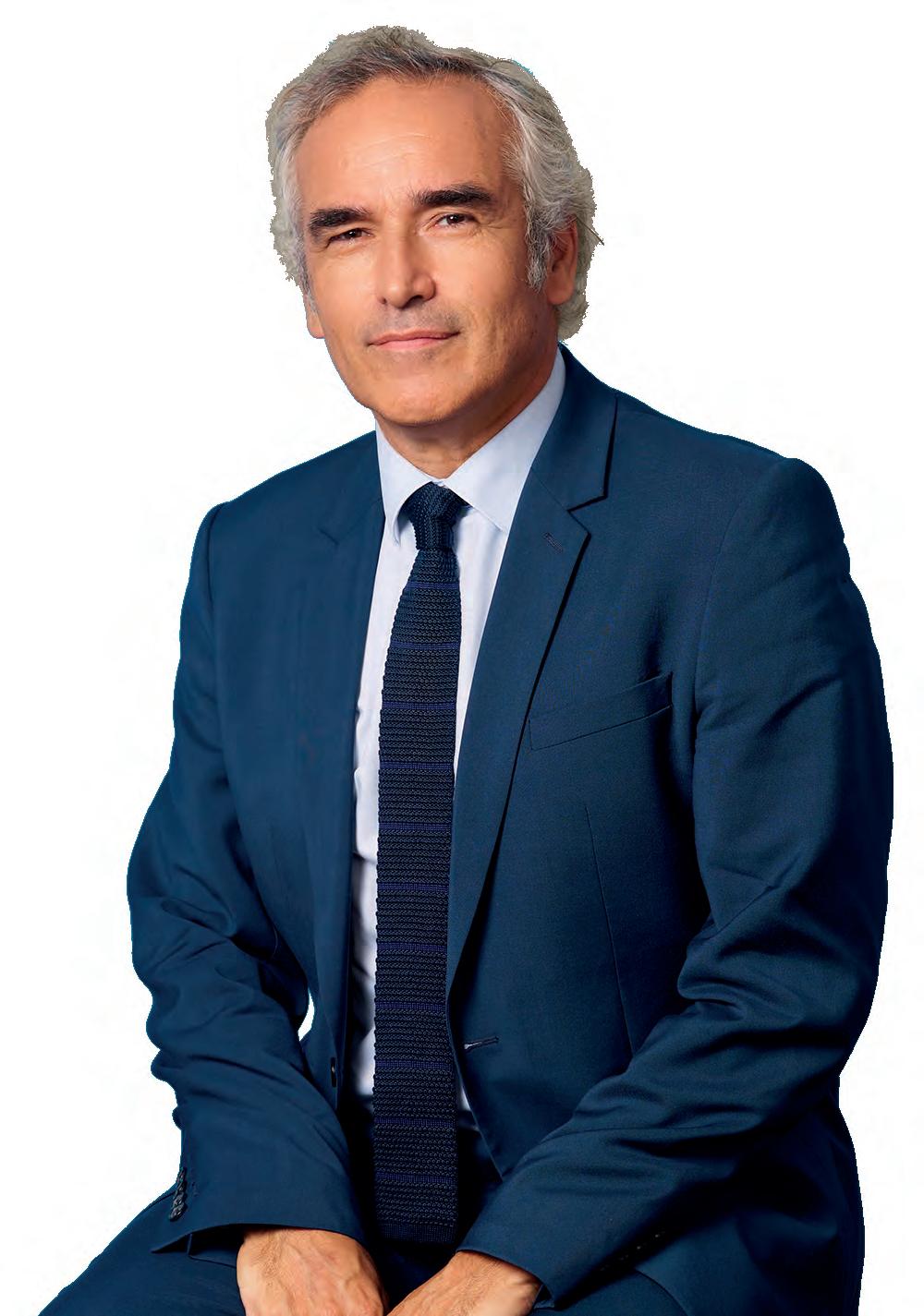


Africa is one of the world’s most exciting real estate opportunities, with rapid urbanisation and growing development funds driving the industry forward
WITH Africa’s urban populations growing at an average annual rate of 3.5%, the fastest globally, over 360 million people have moved into cities across the continent over the past five decades, according to Knight Frank data. “By 2050, 60% of Africa’s population is expected to live in urban centres, a shift that is reshaping the very fabric of our cities and igniting demand for new housing models, infrastructure and industrial growth,” says James Lewis, managing director Knight Frank, Middle East and Africa.
In Africa, headwinds and tailwinds converge. Dramatic housing shortages, a supply gap in manufacturing and logistics facilities and the need for better infrastructure are all inspiring new projects. Meanwhile, as
the continent gets to grips with the sustainability challenge, stakeholders are demanding climate financing to support their growing ambitions.
Africa’s housing challenge
Africa’s housing challenge is significant, with Knight Frank data estimating that the continent is facing a shortage of some 51-million homes, with the deficit most acute in Nigeria, Egypt, the Democratic Republic of Congo and Tanzania. The International Finance Corporation predicts that some US$ 1.4trn in financing will be required to address this. Meanwhile, the desire of young Africans to move into cities is exacerbating the situation. Uganda, which has a population of nearly 46 million people, according

to the 2024 national population and housing census from the Uganda Bureau of Statistics, also has a housing challenge to address. The country’s housing deficit stands at around 2.4 million units across urban and rural areas, according to Habitat for Humanity Uganda. Uganda’s expected population growth will require an additional three million housing units or even more, the non-profit says. Many pipeline schemes increasingly focus on urban areas, including Kampala, a city of 1.8 million people, where Ministry of Lands, Housing and Urban Development research shows an ongoing need for affordable, high quality rental housing. Uganda is also navigating high numbers of asylum seekers, with the


































































United Nations World Food Programme estimating that it has the largest refugee population in Africa, at some 1.9 million individuals. Uganda’s neighbour, Kenya, is exploring similar challenges, with the World Bank estimating the country needs two million more low-income homes. Here, Mi Vida is a leading institutional homebuilder dedicated to addressing the shortage of quality middle-income and affordable housing in Sub-Saharan Africa. The firm is currently delivering well-planned, high-quality homes that offer long-term value for both homeowners and investors. Innovation, sustainability and timely project execution are some of the hallmarks of Mi Vida’s work.
For example, Mi Vida’s Keza Riruta scheme in Nairobi is a distinctive residential development designed around space, greenery and long-term value. Anchored by its signature Mugumo Park, the development offers expansive landscaped grounds that create a rare sense of openness within Nairobi’s urban setting to offer a balance between city convenience and nature-led living. Housing needs are also driving the emergence of innovative schemes. For instance, in Nigeria, co-living spaces are becoming popular among young professionals and students seeking affordable, flexible housing options while wanting to feel part of a community. Mixed-use developments are also increasingly on the slate in countries including Egypt, where homes are combined with diverse amenities, such as medical facilities, schools and retail spaces. Some upscale schemes are even mirroring the kinds of ambitious projects that are taking shape in Middle Eastern markets, including Dubai and Riyadh.
Africa’s industrial real estate sector is in rapid evolution, as trends including urbanisation, shifting economic priorities and private-sector investments shape its development. According to Knight Frank, key economies, including Kenya, Nigeria, Ghana, Egypt and South Africa are creating large-scale industrial zones to attract manufacturers, logistics providers, and exporters. The Government of Kenya, for example, recently designated the Olkaria area in Naivasha as a Special Economic Zone through the Ministry of Investments, Trade, and Industry. This zone, which benefits from tax exemptions and dedicated infrastructure support, has been designed to capitalise on the country’s plentiful geothermal
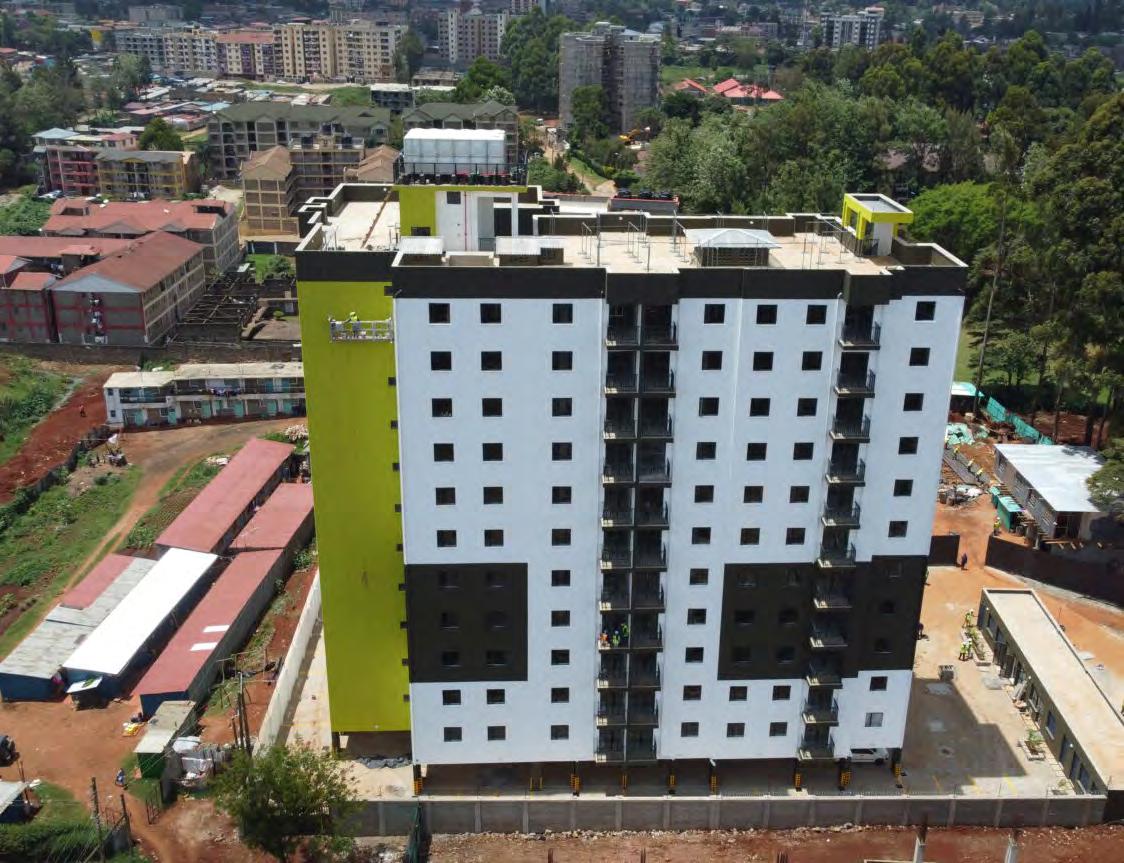
energy resources.
The growth of logistics facilities is being further shaped by the African Continental Free Trade Agreement (AfCFTA), which is projected to increase intra-African trade by over 50% by 2030, according to the United Nations Economic Commission for Africa (UNECA). Trade surges are underpinning greater demand for logistics hubs and warehousing facilities, with investors making strategic moves into areas backed by strong transport connections. Meanwhile, McKinsey research shows that the market for data centres in Africa is entering a phase of accelerated growth, with demand for capacity expected to rise from about 0.4 gigawatts (GW) today to 1.5 to 2.2 GW by 2030. The research shows that between $10-20bn in new investment will be required, unlocking an estimated revenue pool of $20-30bn across the value chain by 2030. However, growth is likely to be uneven in nature, with factors such as reliable power, regulatory drives and infrastructure readiness all having an outsized influence.
Other important themes facing the continent will be welcoming increasing numbers of tourists, while also paying attention to the growing sustainability challenge.
On the tourism front, Africa is benefitting
Geo Focus Stage (P-1) Tuesday, March 10 16:10 - 17:10
Africa Focus - Digital, Urban, and Hospitality Infrastructure
from key hospitality trends, including the growth of branded residential developments. Savills data shows that The Middle East and Africa region exhibits the strongest activity globally in branded residences, with more than 270% growth expected over the forecast period until 2031. Hotels flanked by residences remain a popular iteration of this, particularly in the resort segment. Savills notes that in some markets — including Morocco, Seychelles and Mauritius —100% of hotel-branded residences feature a hotel component. In urban destinations, however, there is far greater activity around standalone branded-residence developments.
In terms of sustainability, meanwhile, Knight Frank concludes that Africa possesses immense potential for renewable-energy development, particularly in solar and wind power. The continent benefits from some of the world’s highest solar irradiance levels, with regions in North Africa receiving over 2,000 hours of sunlight annually. According to the International Finance Corporation (IFC), Africa’s onshore wind capacity is estimated at nearly 180,000 terawatt-hours (TWh) per year, sufficient to meet the continent’s energy needs 250 times over. In fact, strategic investments could significantly reduce Africa’s dependence on fossil fuels while advancing economic development, employment creation and poverty alleviation.
Real Asset Media is delighted to welcome visitors to MIPIM 2026 with a focused INSIGHT Stage programme bringing together investors, developers and policymakers to discuss the forces shaping global real estate investment.
Our sessions will explore themes including the rapid growth of data centres, Germany’s evolving investment outlook, wider capital market trends and the continued strength of logistics across Europe.
Real Asset INSIGHT and its sister publications, IMPACT and REAL FDI are official media partners of the event.
Real Asset Media will also host several sessions in collaboration with the Social Housing and Healthcare Alliance (SHHA).
We look forward to welcoming you at the INSIGHT STAGE, International Investors Loung in partnership with the Home of Holland, R7.C42, Riviera Hall 7.

JASON.MITCHELL @realassetmedia.com Editor, INSIGHT

COURTNEY.FINGAR @realassetmedia.com Editor, REALFDI

IRINA.GASSON @realassetmedia.com Head, Business Development

FRANK.BEINBORN @realassetmedia.com Director, Client Relations


RICHARD.BETTS @realassetmedia.com Founder, Head of Content
RON.VANBLOOIS @realassetmedia.com Chair, SHHA
SYLWIA.ZIEMACKA @shha-international.com COO, SHHA

THORSTEN.HERBERT @realassetmedia.com Founder, Managing Partner
Don’t miss your copy



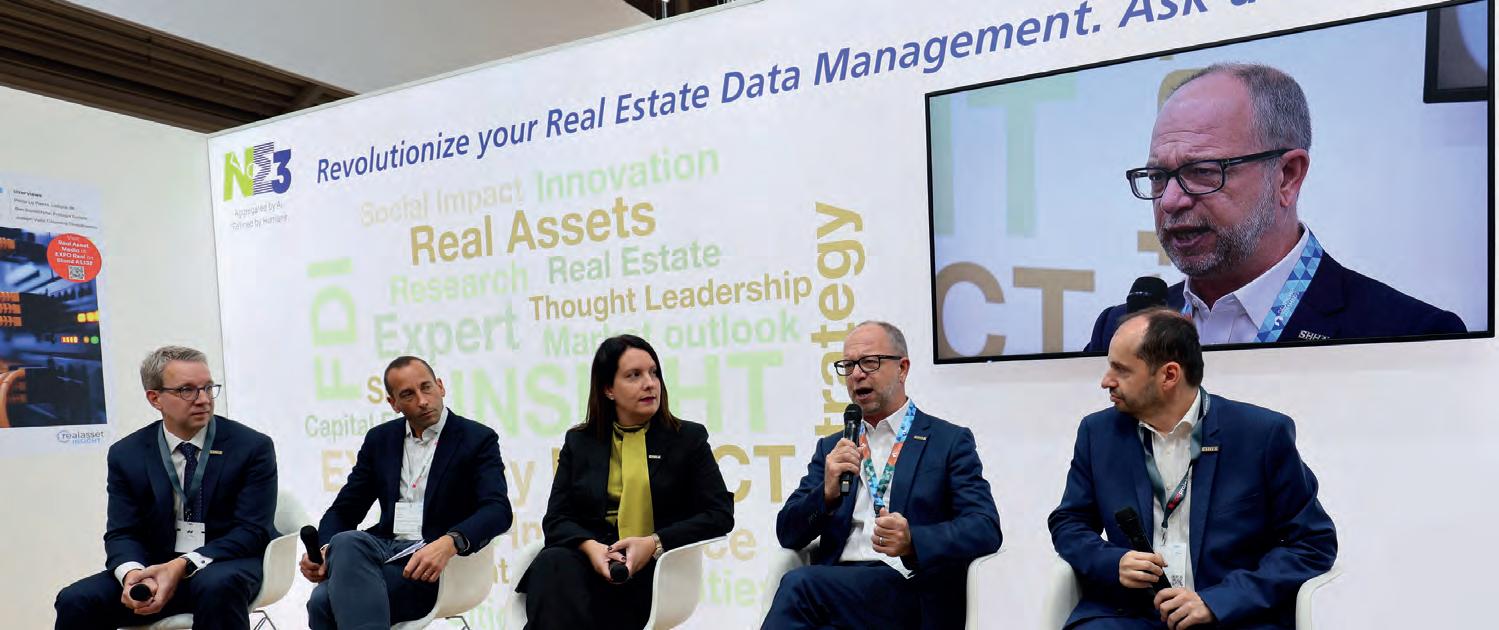
The International Investors Lounge comes to Mipim for the first time in 2026 bringing you a programme of events focused on the key investment topics, challenges, investment strategies, market insight and opportunities.
Benefit from the latest research, the views of leading experts in the market and network with senior leaders in real estate and real assets.
Tuesday, 10 March 2026
Data Centres: Capital & Opportunity in Europe
14:30–15:00 INSIGHT Stage, Riviera Hall, R7.C42
Speakers

Stephan Segbers, Chief Sales Officer, RheinEnergie
Lottie Tollman, Head of Data Centres Advisory, EMEA, Colliers
Rennie Dalrymple, Partner, Ridge and Partners
Germany: Real Estate Investment Outlook
15:30–16:00 INSIGHT Stage, Riviera Hall, R7.C42
Speakers
Dr. Wulf Meinel, Founding Partner, StoneVest
Johannes Lichtenthaler, Head of (Service) Development and Investment, Drees & Sommer
Tobias Schultheiß, Managing Partner, Blackbird Real Estate
Wednesday, 11 March 2026
Real Estate Trends: Driving Capital & Investment
14:00–14:30 INSIGHT Stage, Riviera Hall, R7.C42
Speakers
Alexandre Grellier, CEO, DROOMS
Petra Blazkova, Head of Research & Strategy, Catella
David Inskip, EMEA Head of Research, CBRE Investment Management
European Logistics: Outlook & Investment Opportunities
15:30–16:30 Audi A, Palais des Festivals, P3
Speakers
Ingo Steves, Managing Partner, Logistics, Swiss Life Asset Managers
Dr Kilian Mahler, Managing Partner, Periskop Logistics
Dominique Kouwenhoven - Schillings, Co-Head
Transactions & Head of Asset Management, Aberdeen Investments
Patrick Frank, Managing Director, Country DirectorGermany, Marq Logistics
Sebastian Hrib, FDI Coordinator, North-East Regional Development Agency, Romania
Joost Leendertse, Founder & CEO, VerusSol
Thursday, 12 March 2026
European Living: sectors, Investment and Returns
10:30–11:00 INSIGHT Stage, Riviera Hall, R7.C42
Speakers
Rainer Nonnengässer, Managing Director, Omniliv
Jill Xiaozhou Ju, Founder and CEO, True North Management
Paul Hohenstatt, Chief Investment Officer, Prop.com

MIPIM is delighted to offer to its participants free shuttle from hotels located outside Cannes to the Palais des Festivals.
6 routes & 31 hotels served from early morning to late night
• Cannes la Bocca
• Le Cannet / Cannes Carnot
• Juan-les-Pins
• Mandelieu - La Napoule
• Nice
• Sophia Antipolis


Cologne & partners: Riviera 8, R8.D13