Dave Anderson, Henry Brannan, Scott Haugen, David Johnson, MD Johnson, Randy King, Buzz Ramsey, Bob Rees, Troy Rodakowski, Trevor Torppa, Dave Workman, Mark Yuasa
GENERAL MANAGER
John Rusnak
SALES MANAGER
Paul Yarnold
ACCOUNT EXECUTIVE
Janene Mukai
DESIGNER
Kha Miner
PRODUCTION ASSISTANT
Emily Baker
OFFICE MANAGER/COPY EDITOR
Katie Aumann
INFORMATION SYSTEMS MANAGER
Lois Sanborn
WEBMASTER/DIGITAL STRATEGIST
Jon Hines
ADVERTISING INQUIRIES ads@nwsportsmanmag.com
CORRESPONDENCE
Email letters, articles/queries, photos, etc., to awalgamott@media-inc.com.
ON THE COVER
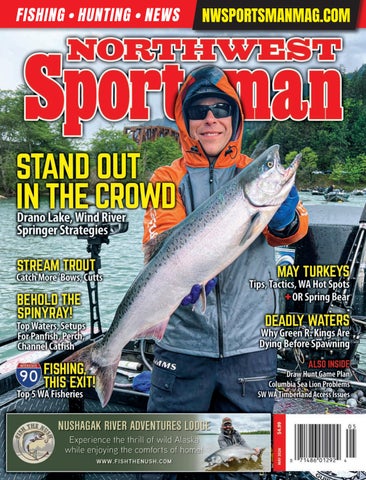
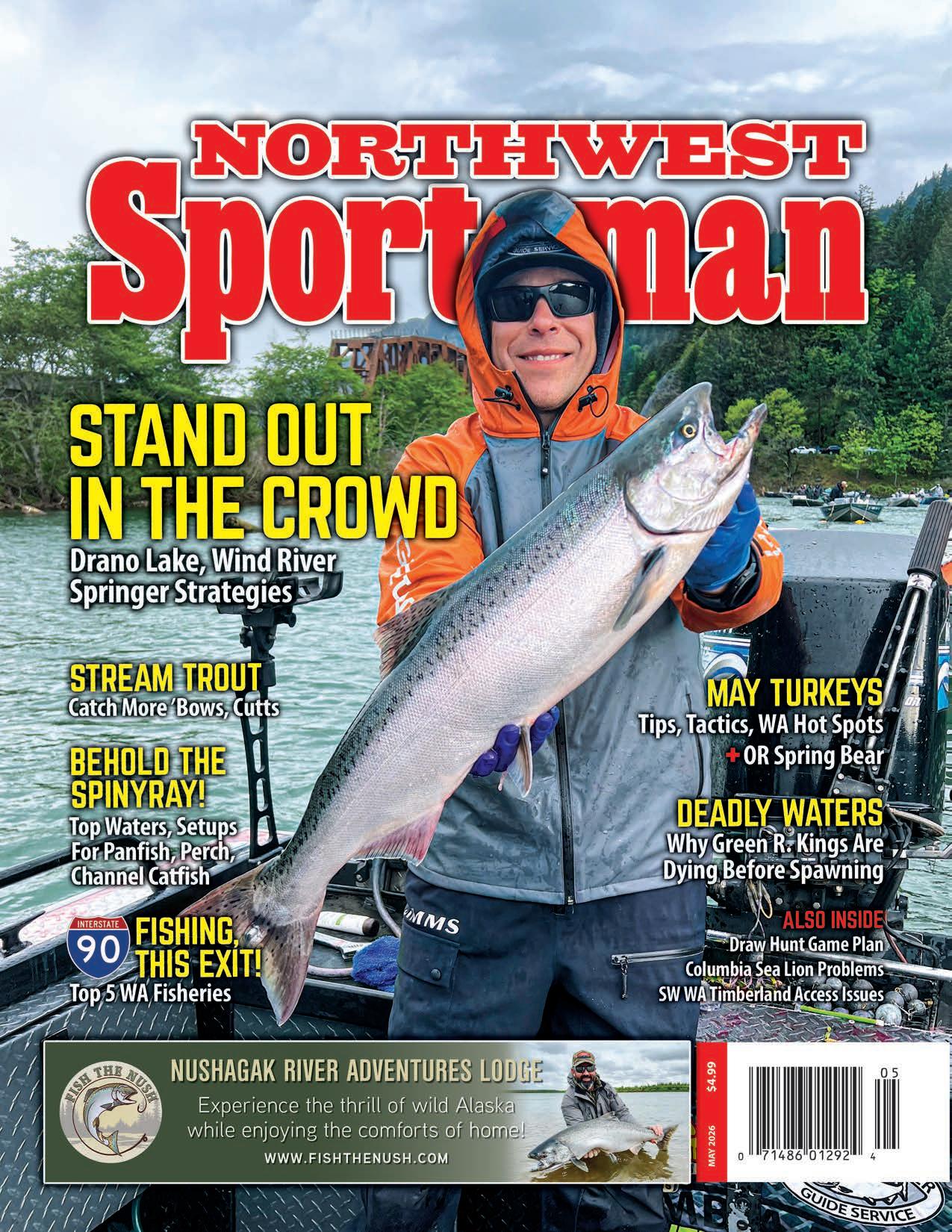
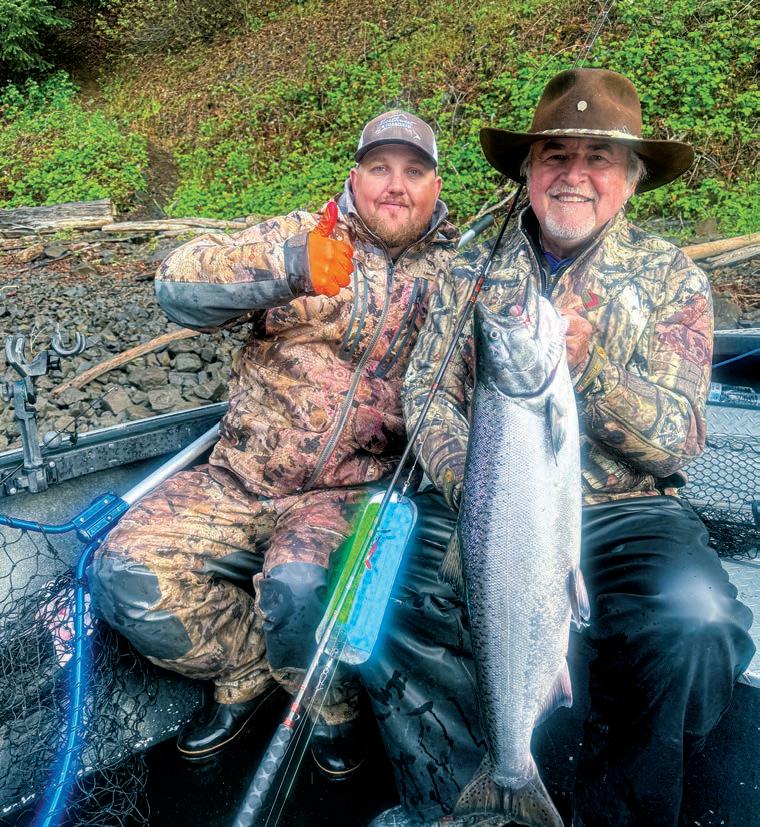
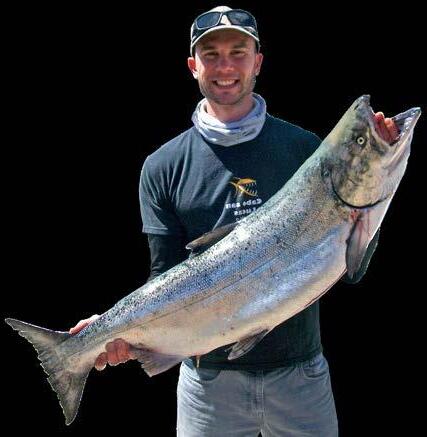
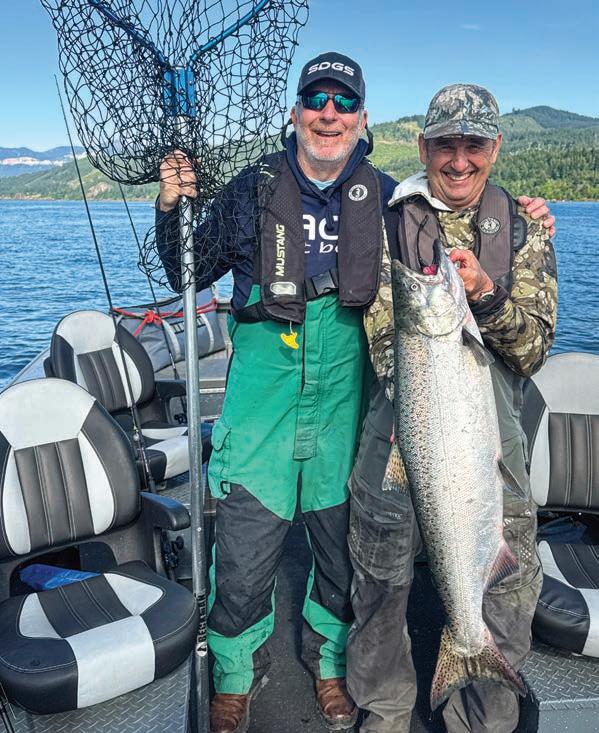
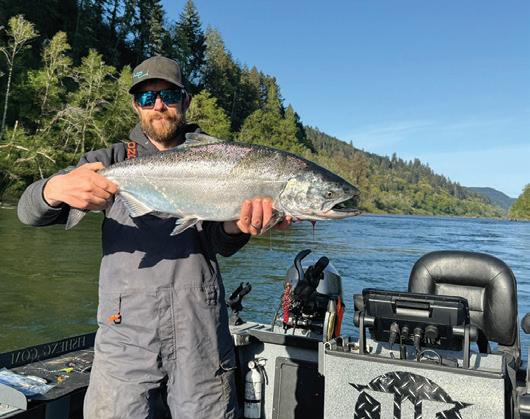
Guide Chris Turvey shows off a Drano Lake spring Chinook caught during a May 2023 trip with Buzz Ramsey, who this issue shares how to make your setup stand out in the crowds that gather here and downstream at Wind River. (BUZZ RAMSEY )
DEPARTMENT
Like us on Facebook, follow us on X and get dailyish updates at nwsportsmanmag.com.
67 OREGON ANGLING OPS BLOOM, BOOM IN MAY
Haven’t laid a finger on a fishing rod since the rains returned to Oregon last fall? No worries, May is all you, all day! So says guide Bob Rees as he lays out some great saltwater, river, lake and reservoir fisheries to hit as the weather turns fair.
89 CATCH WESTSIDE CUTTS
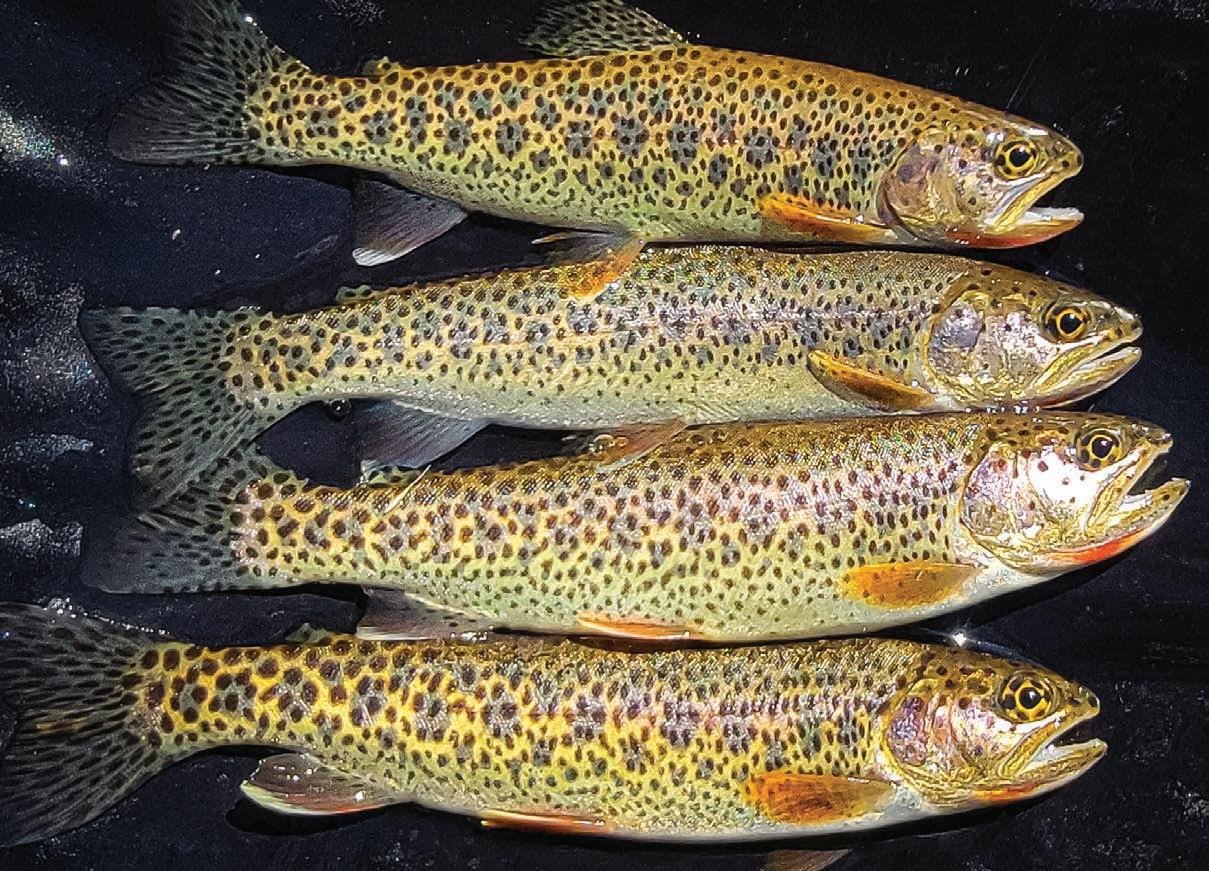
If rainbows are the king of our trout world, coastal cutthroat are the queens. These gorgeous slashjawed battlers represent a great angling op west of the Cascades, and Trevor Torppa knows that better than most. He lines out some interesting gear to use for cutts, as well as best water to work.
100 I-90: FAST LANE TO PLENTIFUL FISHERIES
Mark Yuasa has his own kind of interstate love song, a long-term relationship with Washington’s longest – and some may say fishiest – freeway, I-90. Whether you’re looking for close-to-home waters or splurging on gas and a road trip, he details top stops alongside or just off the state’s main east-west vein.
111 NORTHWEST SPINYRAYS EMERGE FROM THE SHADOW IN SPRING
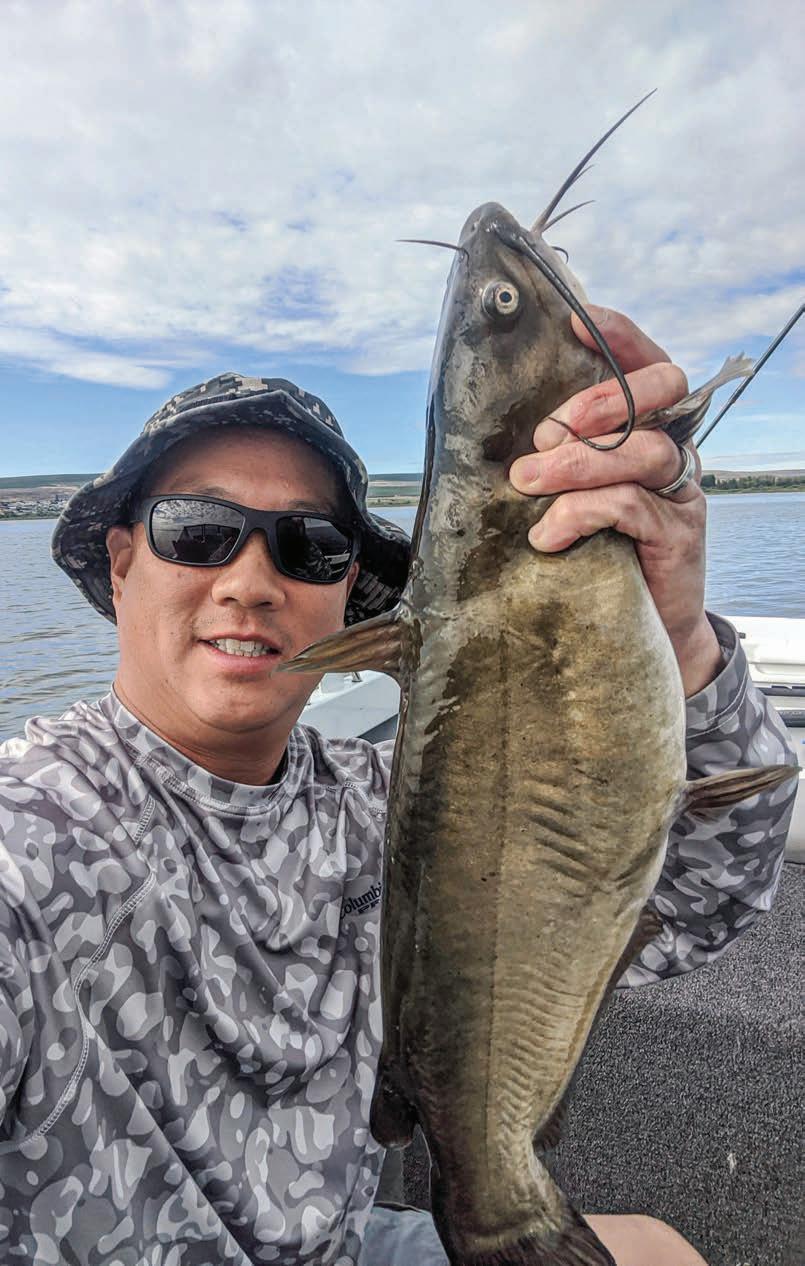
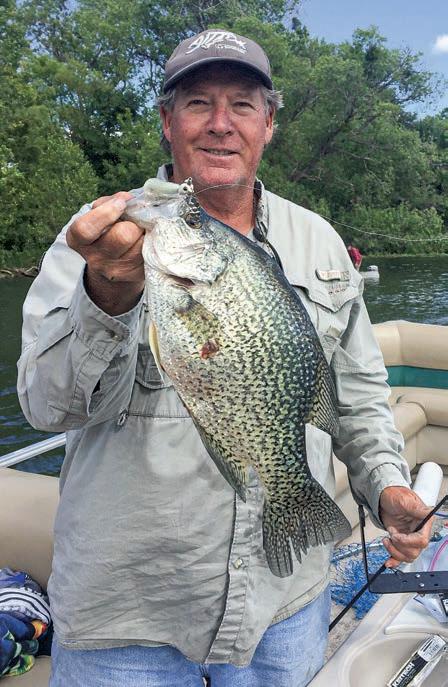
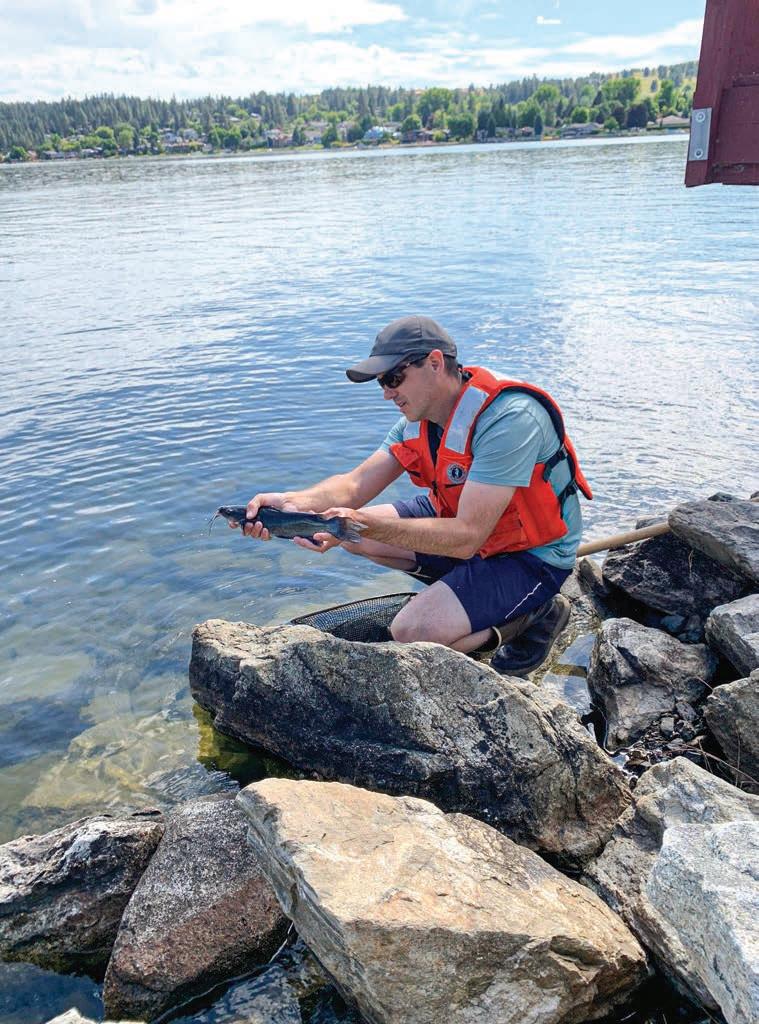
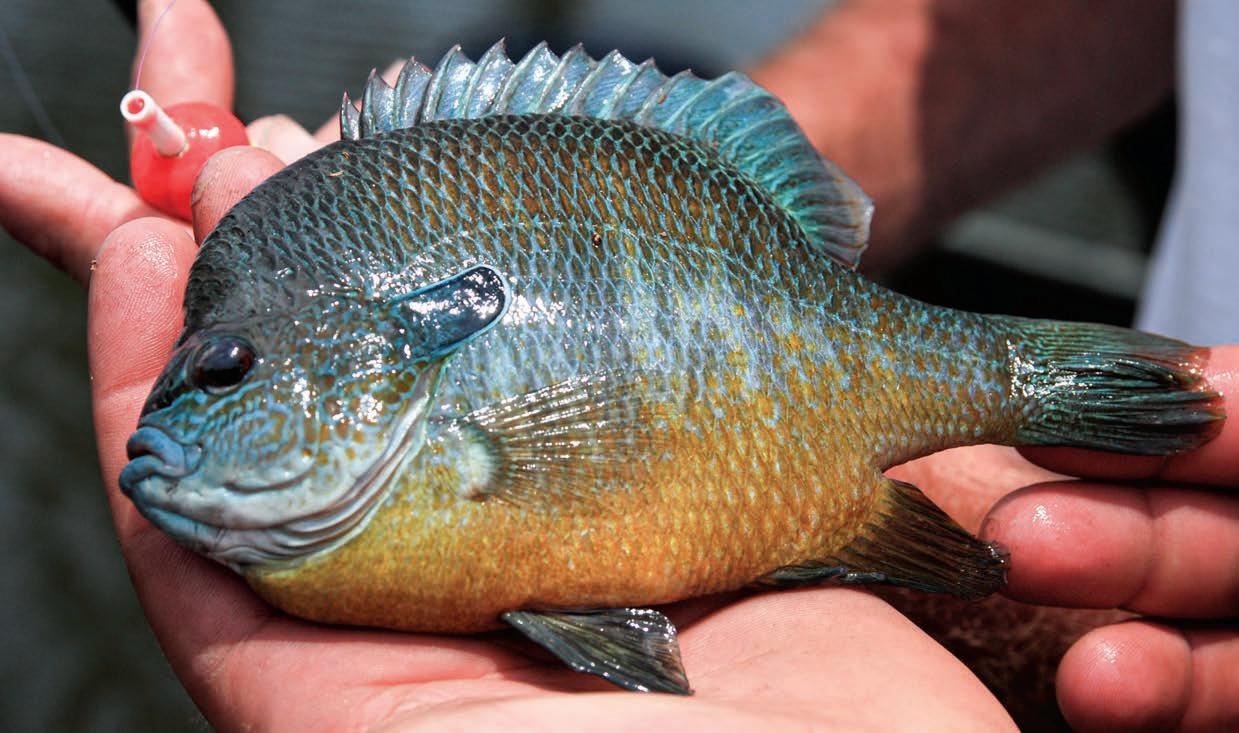
Often pooh-poohed in favor of certain silver-sided glamour fish, channel catfish, panfish and perch provide good angling across the tri-state area. MD Johnson sings the praises of warmwater species and sets you up with top waters to hit and best setups to fish.
THE ART OF FISHING TROUT STREAMS
With Northwest snowpack runoff set to be lighter than usual this spring, stream fishing season will be on tap earlier than normal. In the first of a series, David Johnson has a primer on finding trout while enjoying one of our region’s most pleasurable fisheries.
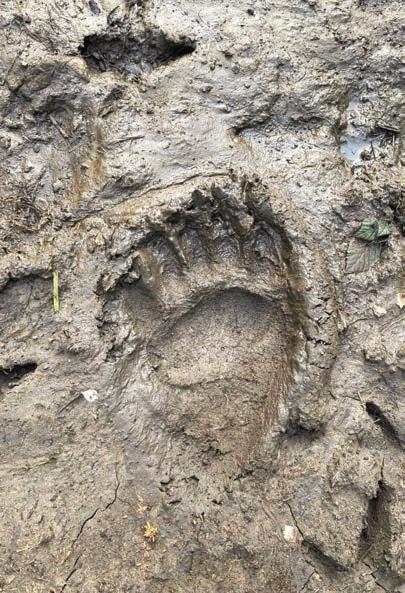
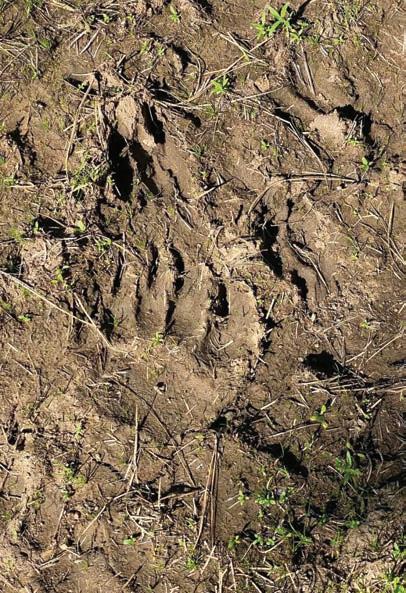
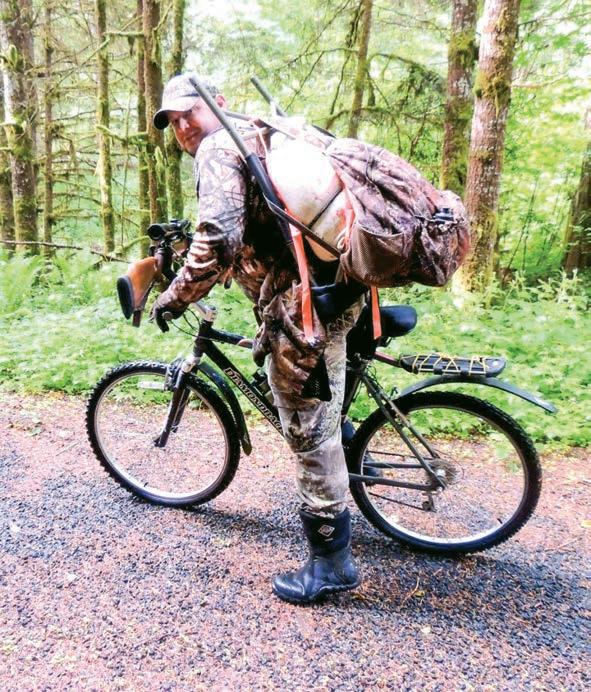
137 WARM WEATHER IS A-BRUIN Oregonian Troy Rodakowski has two spring hunting obsessions, turkeys and black bears, and luckily for the birds he’s focusing on bruins this month! He shares tips and tactics on glassing, calling, access and more.
(STEVEN JOHNSON)
BUZZ RAMSEY Stand Out In The Crowd For Springers
Yes, the Wind River and Drano Lake see a lot of boat traffic, and why not when these Columbia Gorge fisheries can see off-thecharts May action. Buzz hits up guides Cody Luft, Shane Magnuson and Chris Turvey for tips that’ll make your setup shine next to all the other gear in the water.
COLUMNS 58
95 CHEF IN THE WILD Fun With A Finn
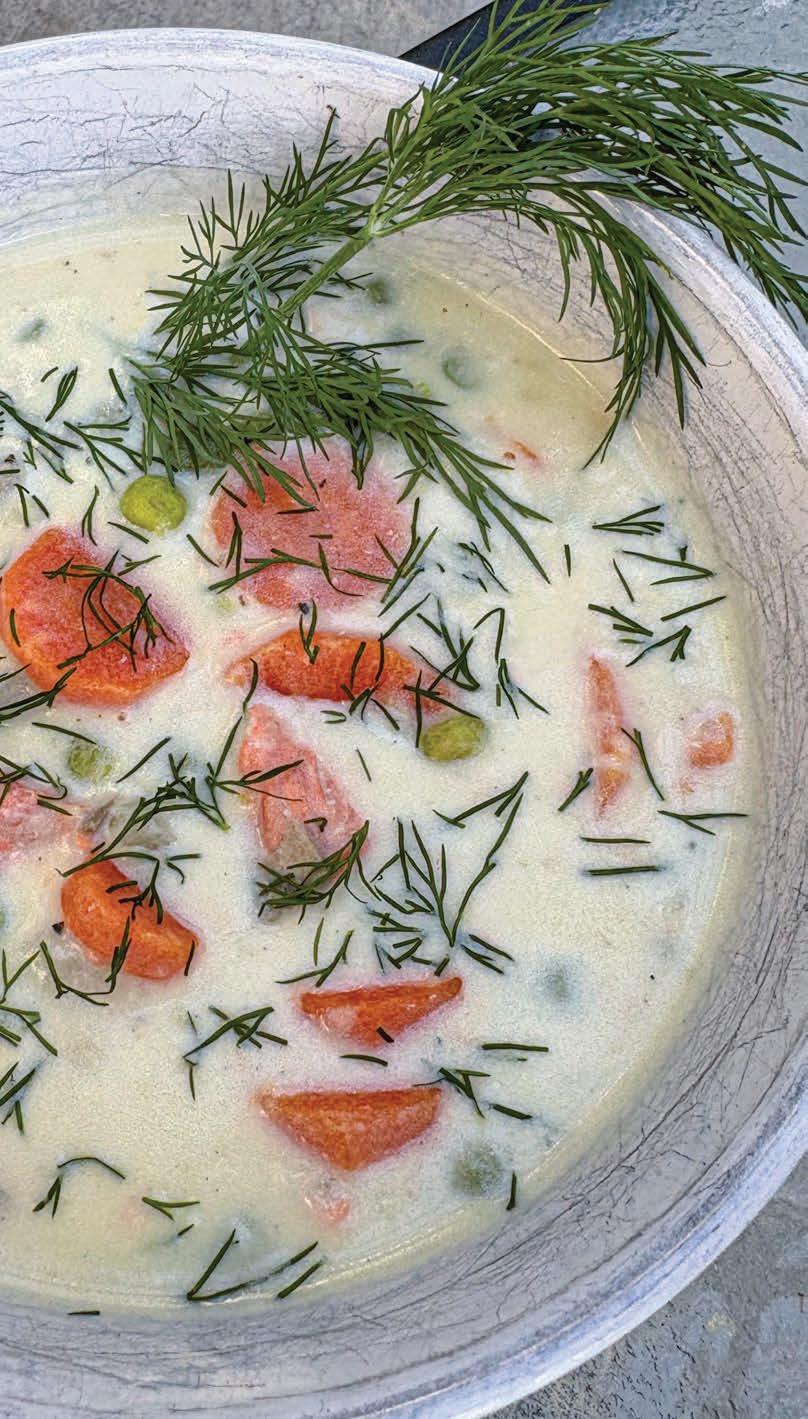
Chef Randy likes it when his middle son’s partner flies in from Finland – he learns more about old King family recipes with Finnish roots. This issue Edi teaches him about lohikeitto, which might be hard to pronounce – scratch that, it is! – but is made with salmon, and damn are we suddenly hungry!
143 OUTDOORS MD Late-season Turkey Tips And Tactics
“What you need now is some good advice.” That’s the premise from MD as turkey hunters this month face far fewer gobblers on the landscape, sexsapped toms, hotter temperatures and leafier vegetation. He shares hard-won “words o’ wild turkey wisdom.”
151 ON TARGET May Is The Month For Tagging Toms
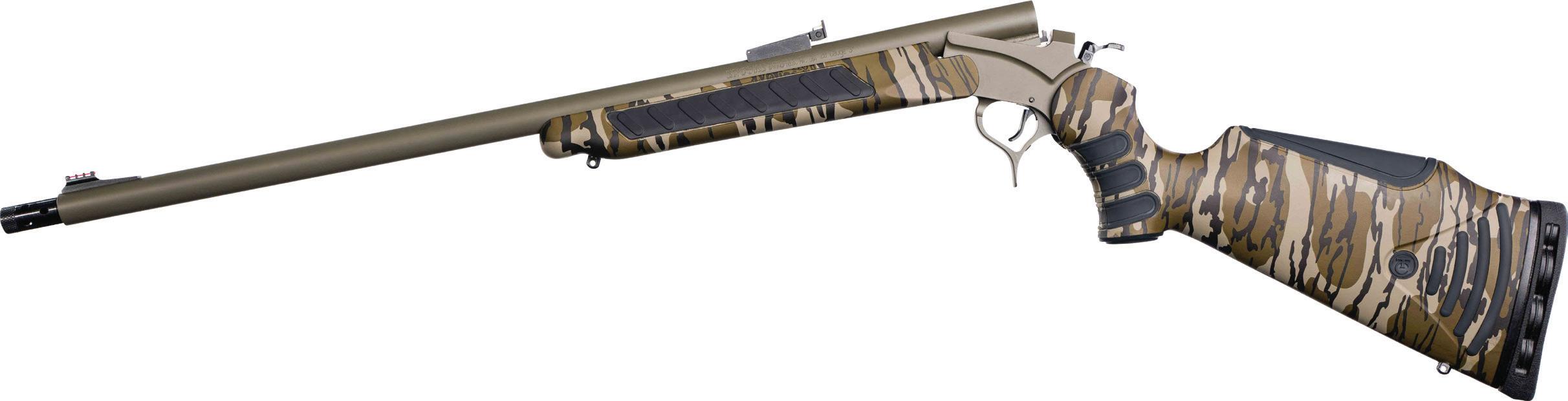
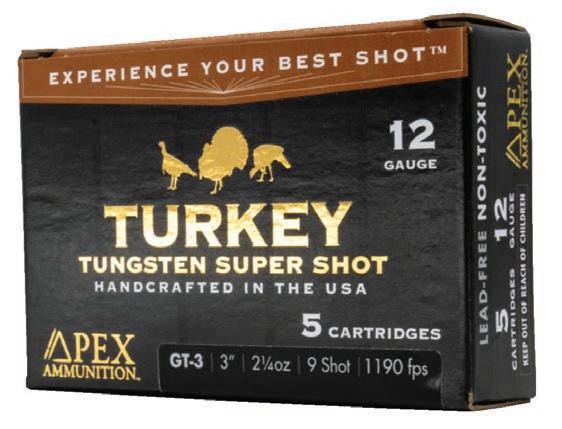
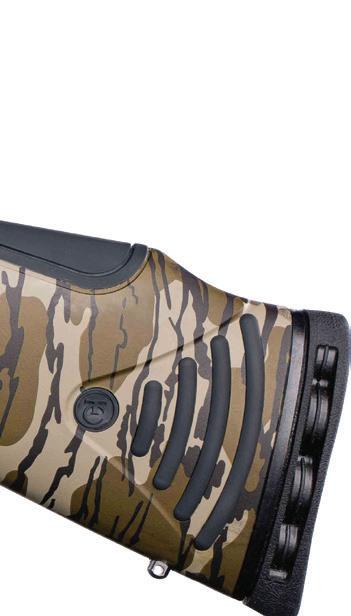
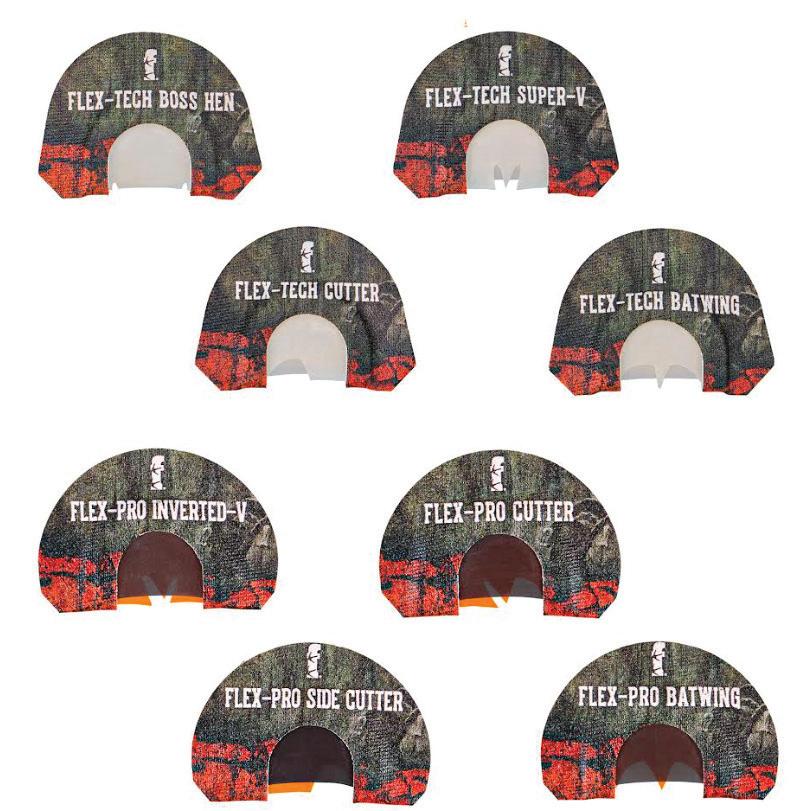
With the bulk of season occurring in May, Dave W. lays out some Eastern Washington spots he’d poke around for a longbeard, and he also has details on new turkey hunting products, including a shotgun from Thompson/Center, tungsten super shot from Apex Ammunition and mouth calls from Flextone.
157 GUN DOG What They Don’t Tell You About Gun Dog Ownership Costs
No doubt, owning a gun dog will fetch you lots of rewards – and hopefully a few roosters – but it also represents a very serious investment. Scott has a sobering checklist outlining all the things you’ll be on the hook for over your pup’s life.
161 BECOMING A BETTER HUNTER If You Don’t Apply, You Will Never Draw
May is the application deadline in Washington and Oregon, and there’s a special permit out there with your name on it! That’s the affirmative thinking Dave A. employs as he puts in for controlled tags, even as they get harder to draw. He shares his short- and long-term strategies for pulling worthy hunts.
(BUZZ RAMSEY)
24 THE BIG PIC Deadly Waters
(ANDY WALGAMOTT)
Green River fall Chinook are not only struggling in odd years in terms of decreased individual productivity, but alarming percentages are also dying before they can even spawn. Why?
DEPARTMENTS
21 THE EDITOR’S NOTE
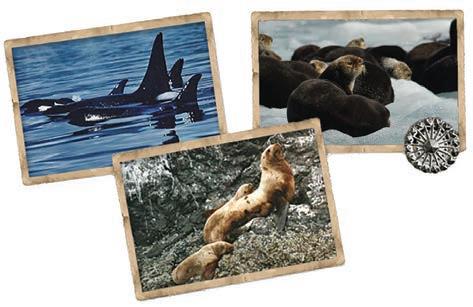
“That’s a problem”: Sea lion predation on Columbia and Willamette sturgeon needs a stronger answer
38 NEWS: Tree Stand
With private timberland owners making access tougher for hunters in Southwest Washington, counties consider taxes in response
45 READER PHOTOS
When the “sockeye godfather” switches up species, first-pass 21-pound springer, grandkids ready for next outing, a “dam” fine stringer, and Mackay’s great day!
47 THE DISHONOR ROLL
Idaho Fish and Game commissioner accused of involvement in unlawful elk hunt; Wyoming man gets 18 months probation for abusing wolf; Judge brings hammer down on spree elk poacher; Jackass of the Month
51 OUTDOOR CALENDAR
Upcoming fishing and hunting openers, events, deadlines, more
THE EDITOR’SNOTE
“That’s a problem.”
It was an understatement from the wise old retired fisheries biologist as we watched a sea lion rip apart a large sturgeon in the western Columbia Gorge after a long day of spring Chinook fishing on last month’s carefully managed one-day reopener.
A couple miles closer to the ramp he had the unfortunate occasion to repeat his grim words as we watched a second sea lion maul another big sturgeon. “That’s a problem.” It put a damper on what was a stellar day with great company, and it had me thinking back to a blog I did earlier this year.
FOR THE FIRST time in their annual report on Columbia sturgeon, the Washington and Oregon Departments of Fish and Wildlife used the phrase “severe recruitment concern” to describe the increasingly perilous situation for the big river’s population here in 2026. Sturgeon numbers have been turned on their head, with more adults and subadults than juveniles. And fry monitoring “detected no recruitment” in both the Lower Columbia and lower Willamette Rivers last year, “raising concerns about further declines in population productivity.” Imagine a deer or elk herd dominated by three- or six-pointers, some forkies or spikes, but no fawns or calves. Great hunting in the short term, but long term, that’s a problem.
The two sturgeon we saw attacked that day and one I saw being taken apart by a sea lion on the Willamette in late March may have been preparing to spawn in the rivers’ sanctuaries, waters off limits to fishing this time of year. But for sea lions, not so much.
California sea lions and especially the larger Stellers represent “a substantial threat” to Lower Columbia sturgeon, and the states and tribes do have continued authority to lethally remove them to create “safe zones” for fish. But in reality, they only do so at the dam and by Willamette Falls. Since 2008, managers have euthanized 341 CSLs and 111 SSLs at the dam, 48 CSLs and five SSLs at the falls.
AS SHE CAMPAIGNS for reelection this fall, Representative Marie Gluesenkamp Perez (D-WA03) last month called for the US Department of Commerce “to examine what strategies yield the best results for pinniped removals – including direct, lethal removal.” Last winter she estimated the overall process – capture, transport, vet, drug cocktail, etc., etc. – costs an average of $38,000 per sea lion.
After that springer trip, I was talking to my wife about those two sturgeon-eating sea lions, and I was surprised when Amy said she also thought removals were too onerous and could be done far cheaper. It was notable given that her default mode is to defend critters. Amy wasn’t in favor of a special permit auction for sea lion tags, like MGP brought up, but she thought managers should have far more latitude from the Marine Mammal Protection Act to reduce predation.
Sturgeon fisheries are a shadow of a shadow of their old selves as angling pressure has been taken off the long-lived species, but something else has changed to make their spawn far less successful. Sea lions aren’t the only issue – river flows, lag effect from past harvest, and pollution may be playing roles – but they are a very clear problem. Federal, state and tribal managers need to get more proactive ASAP or we won’t have sturgeon soon if trends continue. –Andy Walgamott
A sea lion feasts on a Columbia River sturgeon below Bonneville Dam last month. (ANDY WALGAMOTT)
125 RIVER GLEN TERRACE, KALAMA
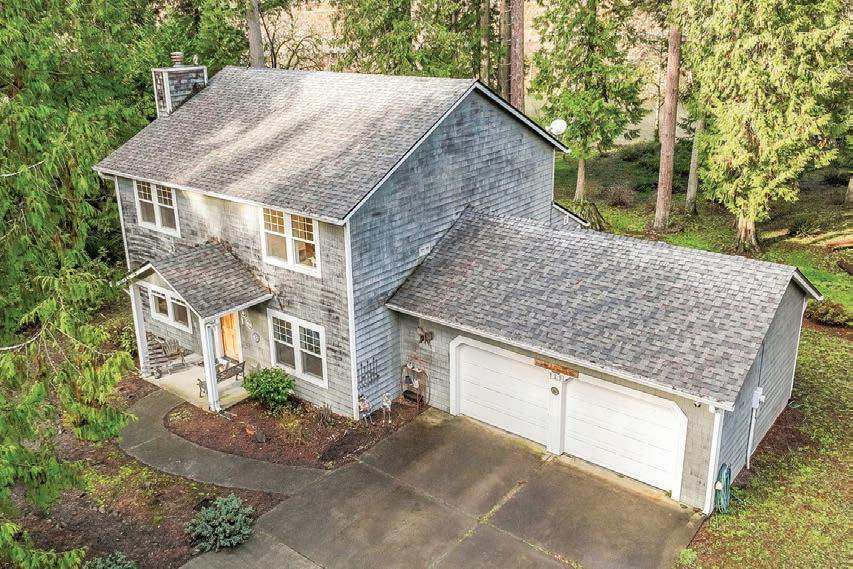
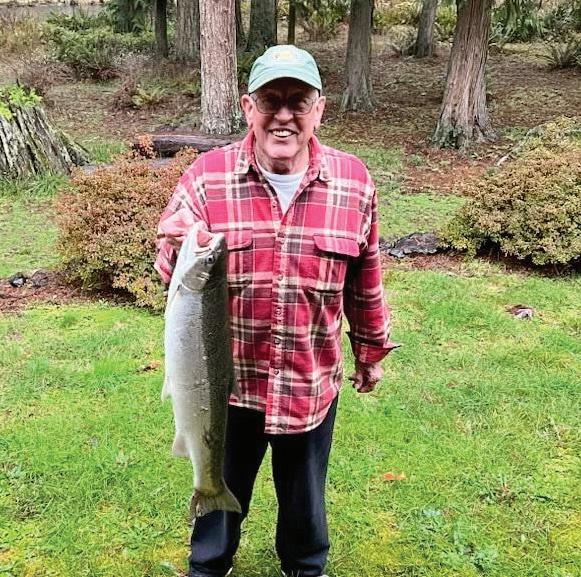
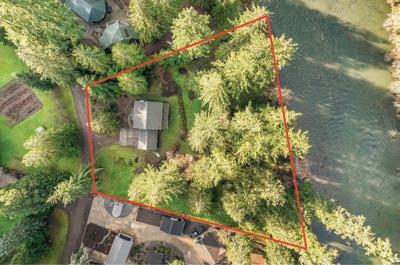
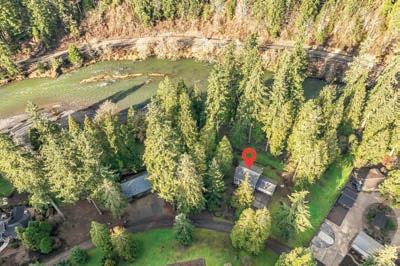
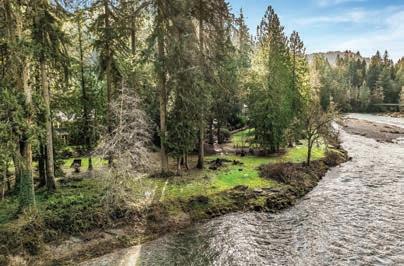
We have an incredible property for sale on the Kalama River, perfect for fishing enthusiasts. It’s located on Beginner’s Hole, and our client has caught hundreds of steelhead right from his backyard over the 30 years he has lived here!
• 2.27 nearly flat acres, with mature evergreen trees
• On ‘Beginner’s Hole’ on the Kalama River
• Photos of steelhead he’s caught
• Peaceful neighborhood, mostly retirees
• Only 10 min from town
• New roof in 2021
• Fiber internet connection may be available
• Home being sold by original owner - immaculately cared for!
• $875,000
Photos, videos, flooplans, and more are all here: www.kalamariverhouse.com
Please text or call me at 360-776-9599 for a private showing. We would love to show the property to any fellow fishermen!
A high percentage of Chinook died before spawning in Puget Sound’s Green River in 2023 and 2025, and here’s what appears to have caused it and why that’s a problem.
By Andy Walgamott
Every other year, large numbers of fall Chinook are dying before spawning in King County’s Green River, and 2023 and 2025 saw the worst dieoffs yet.
An “exceptionally high” number of hens died last fall before they could lay all their eggs in the gravel of this river that flows out of Western Washington’s Central Cascades, spills across the industrialized Kent Valley and becomes the Duwamish River before entering Puget Sound at Seattle.
Washington Department of Fish and Wildlife stream surveyors report that 46 percent of hatchery-origin Chinook hens spawning in the wild suffered prespawn mortality, or PSM, in 2025, while 33 percent of wild-origin Chinook females perished before they could deposit their eggs in redds.
Deaths were highest in what’s known as the “Headworks” – the 5 miles from the Tacoma Headworks Diversion Dam at river mile 61 down to WDFW’s Palmer Ponds facility. There, 71 percent of hatchery-origin Chinook and 46 percent of wild-origin Chinook died before spawning. Hatchery fish spawning in the wild is less of a concern in the Green River than with other systems.
Until earlier this year, if you were talking about PSM in Puget Sound salmon, the odds were very high it was related to coho dying in urban streams because of 6PPD-quinone, a toxin produced when a tire preservative reacts with ozone and is washed into streams. This unusual new mortality signal in Chinook was first reported in a March Seattle Times article about how Pugetropolis pink salmon populations have boomed since the turn of the millennium due in part to climate change. Pinks return in odd-numbered years, and a graph accompanying the story shows Green River Chinook PSM in the last three even years ranged from just 5 to 12 percent. What was not so well fleshed out by the newspaper was exactly what is causing Chinook to die too early in odd years. That’s because, well, it is hard to say with absolute certainty, but state managers do have a strong suspect in mind.
Green River fall Chinook like this one caught and released near the offices of Northwest Sportsman and our parent company a few seasons back are not only struggling in odd years in terms of decreased individual productivity, but alarming percentages are also dying before they can even spawn. (ANDY WALGAMOTT)
THE RISE OF pinks, also lovingly known as humpies for the prominent dorsal lump that develops on spawning males, runs counter to the narrative for most native Northwest salmon runs these days. Sure, here and there some stocks are doing well – Baker, Okanogan/Okanagan and Wenatchee sockeye; Willamette and Clackamas coho – but as a species, pinks are collectively knocking it out of the park here at the southern end of their range. They appear to be benefiting from a
combination of A) warmer ocean conditions in the North Pacific that produce the right kind of forage for them, and B) their shortest salt- and freshwater life history of all salmon. After spawning in early fall, the eggs hatch in winter and as soon as they can swim, the young fish immediately go to the estuary, spend 18 months in the ocean and then return to their home river to spawn.
That fixed two-year cycle essentially shelters them from the heavy habitat alterations negatively impacting most sea-going fish with extended freshwater rearing phases. Chinook, coho, sockeye and steelhead all generally spend a year or more in their natal streams, lakes and estuaries, waterscapes that have been and continue to be impacted by mountaintop-to-seashore development in the form of logging, dams, highways, settlement, stormwater runoff, river straightening, dredging, diking – you name it. Over the course of nearly two centuries, everything we’ve done here has degraded the rearing and spawning habitat for our favorite fish, which is why we’re now so heavily dependent on hatcheries, may the good Lord bless their pumps.
In that way, pinks are the you-can-haveyour-megalopolis-and-eat-it-too fish that Washington and its decades upon decades
of salmon-unfriendly policies thoroughly deserve, and not just global warming winners, as The Seattle Times has it.
THEIR BOOM HAS been an absolute boon to anglers such as myself. If I’m recalling my increasingly ancient history correctly, it must have been in 1989 when me and my buddies first scampered down to what was then called Humpy Rock on the Skykomish River. There we’d cast our lines amongst the horde drifting Corkies and yarn.
In full disclosure, I believe I did in fact take home one of these waaaaaay-pastits-prime hunchbacked salmon. That’s a mistake you only make once, and last fall I was happy to see a friend’s young son get that one out of the way pretty much first thing in his own salmon fishing career.
Washington pink runs exploded in the early 2000s, set a record return of 15 million in 2009 and yielded an all-fisher harvest of an incredible 2.7 million in 2013, per WDFW records. That year saw anglers put 514,681 pinks on our cards, nearly as many as the sport Chinook and coho harvest combined and 45 percent of all Washington salmon bonked by us that year.
Some of my fondest angling memories are of fishing for my darling pinks
in
Fall Chinook that succumbed to prespawn mortality, or PSM, in fall 2025 in the “Headworks” stretch of the Green, 55-plus miles above Puget Sound. Typically, hens found dead with 50 percent or more of their eggs intact are considered PSM losses. (WDFW)
Pink salmon, or humpies, were literally not a thing in the Green until 1999 when they began to colonize the river, state records show. Today they return in the hundreds of thousands to as many as 2.8 million in 2009 and 1.6 million in 2023, overlapping with Chinook and swamping the spawning gravel. (ANDY WALGAMOTT)
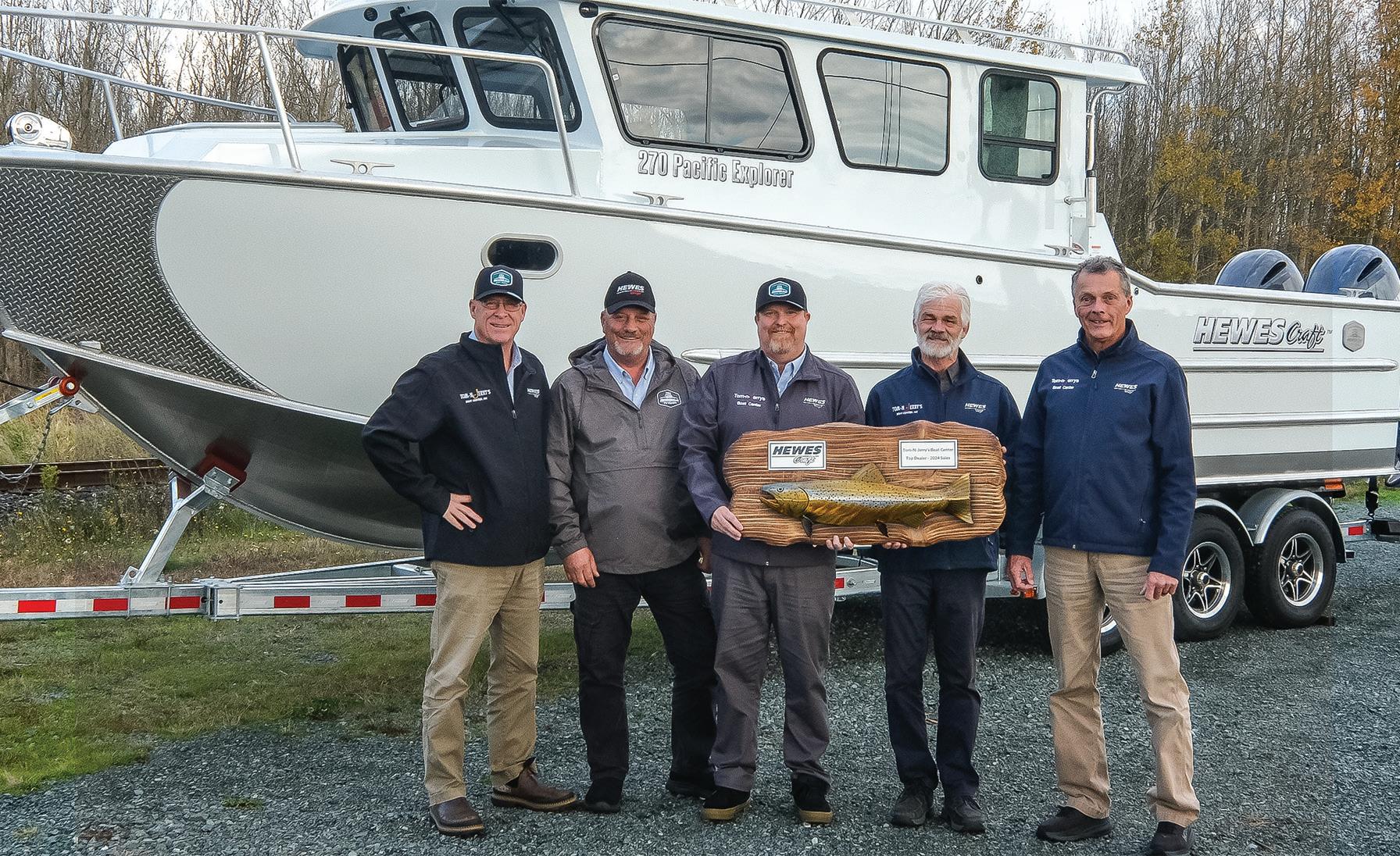
Recently, we accepted the award from the Hewes family for being the 2025 Top Sales Dealer — an honor we don’t take lightly. I’m thankful for the support from Hewescraft and especially our sales, parts, and service teams at Tom-n-Jerry’s. Great job, team!!!
— Kelly Hawley, President.
Tom-N-Jerry’s Boat Center 11071 Josh Green Ln Mount Vernon, WA 98273 360-466-9955 Sales Hours
Humpy Hollow and the lower Snohomish, Skykomish and Duwamish Rivers. If there’s one fishery yours truly would be almost competent enough to guide, pinks are it.
Then the 2015 run was hit by a double whammy: The Blob – that huge, long-lasting marine heatwave in the North Pacific – sent them home on the skinny side and then four fairly big floods that fall scoured their redds, knocking returns down for a few cycles.
But pinks recovered, as they always do.
Just as important as their fishery aspects, pinks represent a living stream of an untold amount of marine nutrients that swims into Puget Sound every other year and mostly continues into its myriad rivers to spawn, die, stink to high heaven, and enrich the waters and lands. To tweak the book title, salmon in the trees and the blackberries, reed canary grass, Japanese knotweed and everything else growing along the banks these days. Pinks are a priceless, irreplaceable gift.
YET EVEN AS fishing magazine, Buzz Bomb and WDFW license sales spike in gleeful anticipation of odd-numbered summers, and giddy hillbillies drain old boats that have been wintering out back since the last run, the sheer quantity of pinks nowadays has been raising fishery biologists’ anxiety levels, initially on the marine side.
Alaska and other North Pacific entities have been flooding the ocean with literally gazillions of hatchery pinks, and those fish plus Washington and British Columbia’s largely native ones compete at some level for forage with other salmon species as well as steelhead. It’s created a very clear up-down, up-down signal in annual
Columbia River summer steelhead returns to Inland Northwest streams. Scale growth rates of Skagit Chinook, Olympic Peninsula winter-run returns and southern resident killer whale pregnancies exhibit similar.
And now, biologists are starting to see a battle playing out in freshwater too.
Last year, I blogged about a study that not only found 36 percent fewer Chinook in the Sultan River, a tributary of the Sky, in odd years compared to even ones, but sharply lower reproductive success too. In odd years, Chinook are pushed up into the Sultan’s higher-gradient, rocky canyon, while pinks swamp the lower-gradient, gravelly lower river. Chinook redds suffer for it. Production plummets from 1,819 fry per nest (plus or minus 230 fry) in even years to 395 (plus or minus 149) in odd years, according to the study’s authors, three Snohomish County Public Utility District biologists and longtime pink salmon researcher Greg Ruggerone of Natural Resources Consultants of Seattle.
They also found a 36 percent dropoff in Chinook spawner abundances in the Green River between even and odd years once pinks colonized it around the turn of the millennium. Before then, there was no such biennial pattern.
“(We) also analyzed Chinook returns to Pacific Salmon Commission indicator watersheds, and found 39 percent fewer Chinook returning to spawning grounds in odd years since the late 1990s and 34 percent fewer returning to Puget Sound prior to harvest,” Ruggerone told me in March. “The biennial pattern in Chinook is expressed because most Chinook here are 4-year-olds, so odd-year parents mostly produce progeny returning on odd years.”
Why or how humpies are bullying larger Chinook off of the Sultan’s and other rivers’ best spawning grounds is unclear, as there has been no published research on the two species’ interactions in North America. But observations from Scandinavian rivers recently invaded by pinks are suggestive.
“Pinks can be aggressive, which probably hinders spawning activity,” stated Ruggerone. “Colleagues in Norway conduct snorkel surveys for Atlantic salmon in rivers and have told me that pinks are very aggressive towards Atlantic salmon and chase them higher into the watershed just like in the Sultan.”
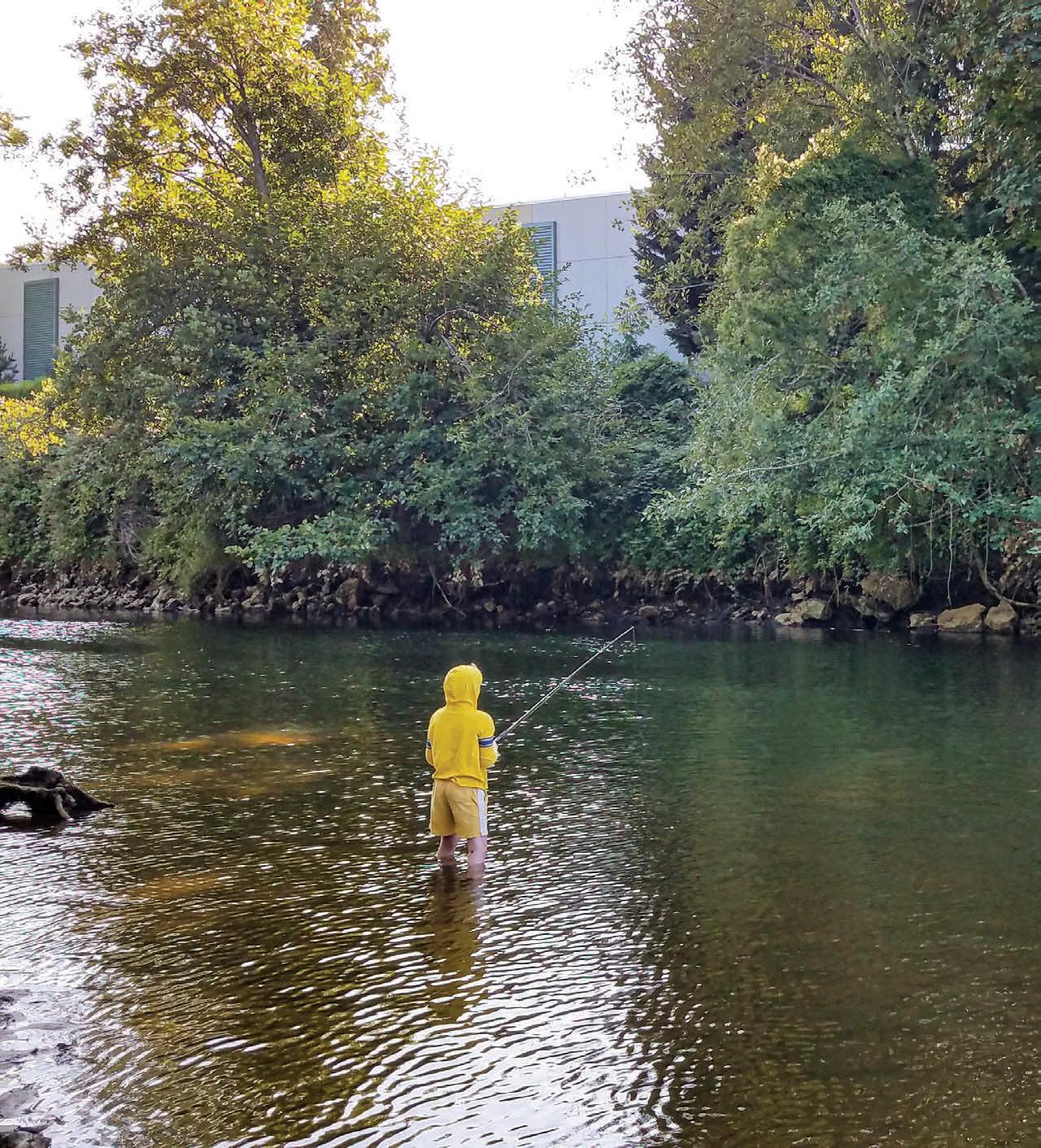
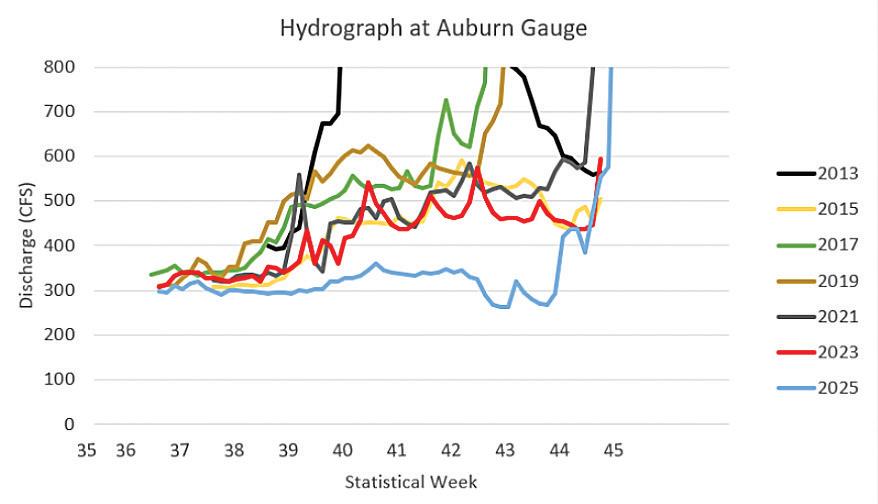
A young angler tries their luck on the tidal Green in September 2021. Flows between early September and early November that fall were on the low side, but not as bad as 2025 (inset; bottom blue line), when an “exceptionally high” number of female Chinook suffered PSM. The condition is driven by extreme low water levels, but high numbers of pinks in the constricted stream also stresses hens. (ANDY WALGAMOTT; WDFW)
Chase Gunnell, a WDFW spokesman for Region 4, which includes several major pink salmon rivers, including the Green, Sky and Sultan, said pink-Chinook interactions likely go something like this:
• The more humpies that return to the river, the more overall competition there is for available spawning gravel;
• The more humpies, the more likely it is Chinook use poorer spawning habitat;
• The more humpies, the higher the odds that Chinook will be pressed to defend their nests;
• The bigger the pinks, the more likely they are to challenge Chinook, and;
• The bigger the pinks, the more likely
they are to also make use of the river bottom that Chinook prefer to make their nests.
There’s also good evidence high numbers of pinks are directly correlated with heightened Green River Chinook PSM, which in recent odd years has spiked.
“Chinook prespawn mortality in the Green River was exceptionally high in 2025,” wrote Nathanael Overman, WDFW’s Green River biologist, in a message to tribal comanagers as the North of Falcon salmonseason-setting process began earlier this year. “Although years with pink salmon have always been associated with higher PSM, the last two pink cycles appear to have shifted the issue to new extremes.”
BUT SOMETHING MORE is going on in the water – or paucity of it, to be more precise.
“In years with low flow, these factors,” said Gunnell about the two species’ aforementioned probable interactions, “are all likely to be intensified.”
And there’s your prime PSM suspect right there. The volume as well as temperature of the Green itself appears to be the tipping point for why Chinook hens are dying early.
Fall 2025 saw exceptionally low water levels on the Green – “the least amount of flow” of any salmon spawning survey season of the last seven pink years going back to 2013, according to Overman, and
even worse than 2015, the year The Blob led to a snow drought in the Cascades.
“For a comparison, Chinook experienced less than half the PSM in 2019 compared to 2025 despite basically the same number of pink salmon,” Overman told comanagers. “The obvious difference was flow, with 2019 being one of the higher flow years.”
Fall 2023’s high prespawn mortality occurred during a run of 1.6 million pinks, but 2025’s even higher PSM happened with nearly 900,000 fewer pinks returning to the river, according to Overman.
“Pink salmon were noticeably larger in 2025 and overlap between spawning habitats used by the two species was likely
greater. These larger pink salmon were also very aggressive in defending the areas they wanted to use for spawning,” he said.
Gunnell put a finer point on it: “Lower river levels create higher densities, increased temperatures, increased vulnerability to predators, reduce the percentage of the bankfull width providing available spawning habitat, and lower spawning habitat diversity by reducing the contrast between areas with higher and lower flows.”
So here’s the theory of a keyboard fisheries biologist/detective, moi: The cumulative stresses of those very low flows on top of Chinook hens putting so much of their last energy reserves into egg
production during their migration to the spawning grounds fatally increases their risk of dying before they fulfill their destiny.
Again, that’s all speculative, but I do know that at the very least, last December’s massive floods on the Green likely deleted a whole lot of pink (as well as Chinook) redds, so Chinook that are at sea now and returning in 2027 should see much lower PSM than the high levels the 2025 and 2023 year-classes did ... assuming, of course, better river flows come two falls from now.
“However, trends in PSM relating to both pink abundance and size, paired with patterns in flow will be something we’ll want to keep a close eye on moving forward,” Overman said.
FOR A LONG while I’ve been fretting about late summer’s low flows. As fall Chinook and pinks mingle on the spawning grounds in September and October, rivers are running at their absolute lowest point of the year. Winter’s snows are long gone, glacial reserves tapped out, increasingly hot summers have heated up the water and sucked the moisture out of the ground and plants, and as summer also seems to have become longer of late (October 2022 and 2024’s rifle deer openers saw me down to my T-shirt early on), those river-relieving fall rains are typically still weeks to a month off.
Longtime readers will recall a story I did in this space in summer 2015, when The Blob left the Skykomish running at just half of its all-time minimum low – an astonishing destruction of a historical benchmark in records that go back to 1928. Since then the Northwest has seen hotter summers, 2020’s apocalyptic Labor Day fires, June 2021’s extraordinary heat dome, and a warm winter that just served up another snow drought. Climate varies; these are bad trends.
September 2021 provided something of a harbinger for what happened on the Green in 2023 and 2025. Then, an estimated 2,400 Chinook died on the South Fork Nooksack after succumbing to bacterial infections due to low flows and warm waters, problems themselves linked to degraded habitat. PSM struck several hundred Chinook the next year as well. British Columbia and Alaska streams have also seen pink dieoffs recently due to low flows and low oxygen levels caused by too many fish and rotting carcasses.
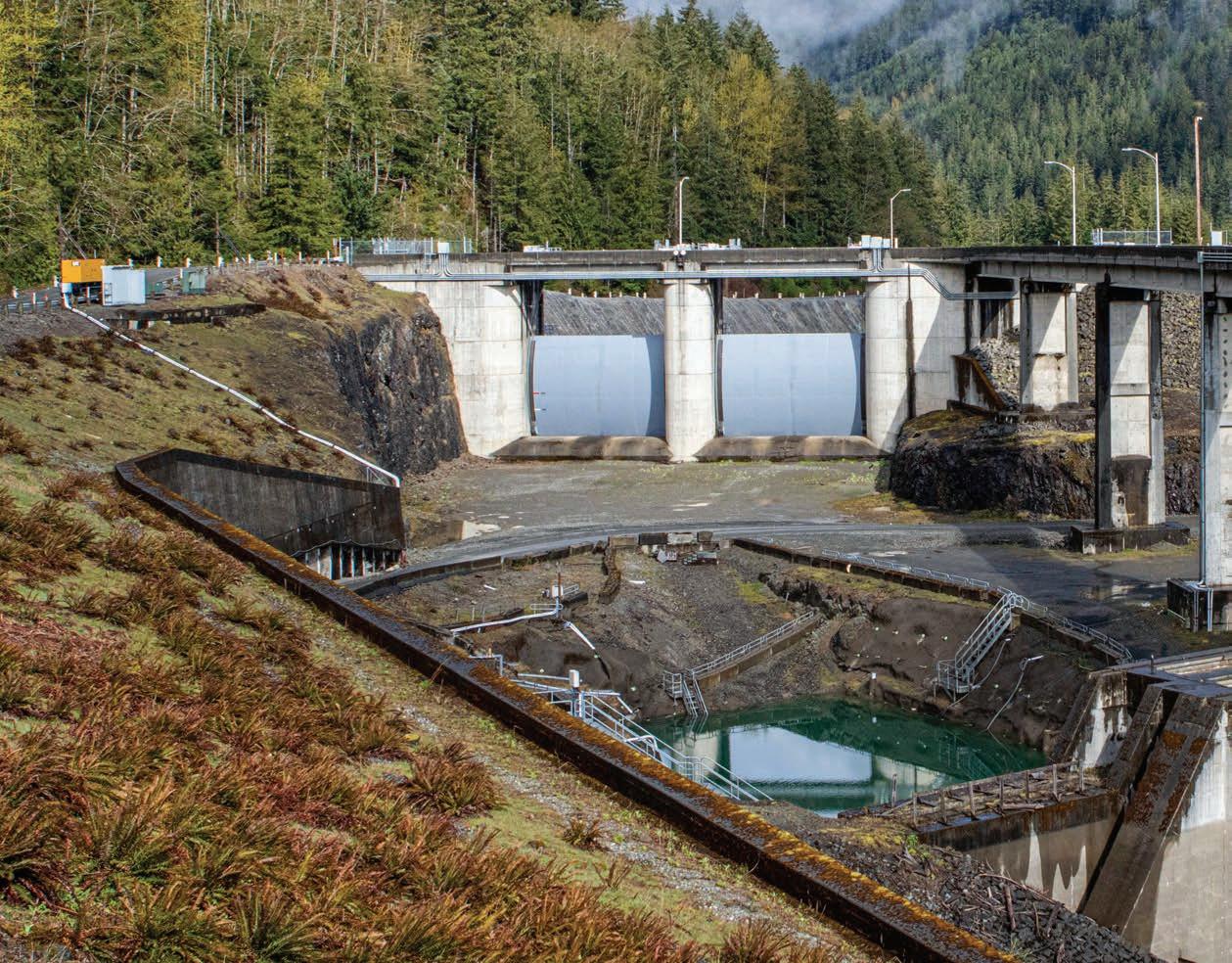
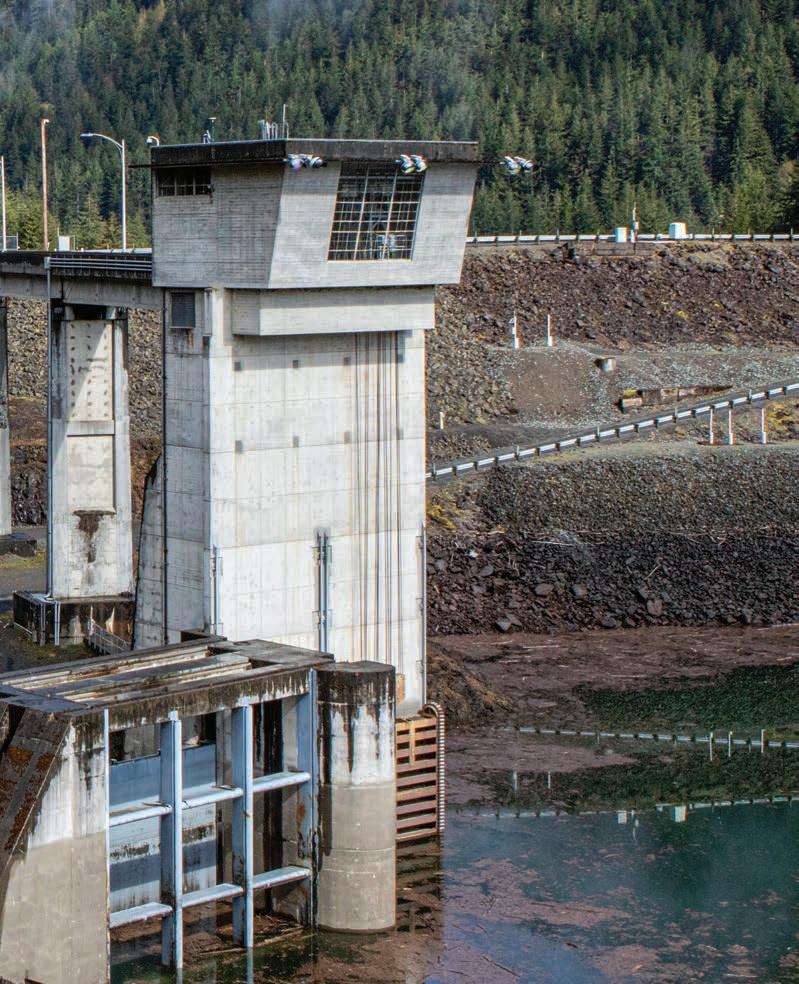
Funded plans for Howard Hanson Dam on the upper Green, a flood control facility that also provides water for Tacoma, include raising the reservoir and building multiport surface collectors for downstream-migrating salmon and steelhead smolts. (STACY SMENOS, US ARMY)
PSM is also a concern on the Snohomish and particularly the Skykomish, I’m told. From my keyboard fishery manager’s perspective, that one gives me a bad headache. Recent years have seen how low forecasted wild Chinook returns, guidelines in the new Puget Sound Chinook management plan and northern ocean interceptions combine to severely impact hatchery summer king as well as fall coho and pink fisheries in the system – and will again this year. The Sky is tentatively set to close for salmon May 23-October 31, and it’s unclear if the summer steelhead fishery for the new integrated hatchery broodstock program championed in these pages will even open.
SO WHAT CAN be done about Chinook PSM? Or is this just the new world we live in?
WDFW stressed to me its confidence that booming pink salmon numbers are but one of the smaller cuts that are slowly
bleeding Chinook in comparison to nearly two centuries of altering the holy hell out of Pugetropolis, which continues to take a toll on the waters’ ability to produce salmon in the first place. And despite high PSM among hatchery and natural-origin Chinook spawning in the Green River, WDFW does appear to be making broodstock goals at its Soos Creek Hatchery on the system.
That said, these high odd-year mortalities are also working against managers’ plan for Chinook to fully seed the river. Don’t worry, my saying this probably won’t trigger a Wild Fish Conservancy lawsuit, but 2019’s federally approved hatchery genetic management plan acknowledges that excess naturalorigin collected for hatchery broodstock “will be released into the mainstem Green River or Soos Creek.” The overall program is meant to supply fish for tribal and state fisheries, southern resident forage, and mitigate development and climate change.
While the Green is one of the lowest Cascades Crest-connected basins, meaning it may not catch the snow and rain higherelevation basins do, it does have a dam.
Some $190 million was resecured earlier this year by Washington US Senator Patty Murray (D) for an Army Corps of Engineers project to provide more water storage behind Howard Hanson Dam to mitigate downstream flooding. That could theoretically also be used to provide more water in the river during the fall Chinook spawning season.
There’s also money to build a downstream smolt collector on the reservoir, closing the loop with an existing adult collection facility below the dam to eventually give fish access to 100 miles of critical habitat otherwise blocked by Howard Hanson. Once in place, managers presumably will use the upstream collector to select against pinks and create a highland spawning refuge for Chinook.
But as for how to combat Chinook PSM in the Green in the here and now, several proactive approaches spring to mind. For starters, an eight-pink daily limit in Elliott Bay and the section of the Green known as the Duwamish to encourage harvest while the fish are still smokable might be a good idea. Tying it to conserving and recovering Chinook would make it a noble pursuit and
spread the word about the base problem – too-low flows.
Really, Green River Chinook PSM is very clearly revealing a broader problem ahead for our salmon streams. Ruggerone and the other authors of that Sultan River study said theirs and others’ work “highlights the need for an ecosystem approach to manage the large and increasing abundances of pink salmon in the Salish Sea.”
“Live harvest techniques, such as fish traps, fish wheels, weirs, and reef nets, could be deployed to harvest pink salmon in excess of what is needed to sustain the population while simultaneously livereleasing non-target salmonids,” they suggested.
Fish wheels and fish traps are currently illegal in Washington, but the Lummi Nation does use reef nets in North Puget Sound, and WFC is experimenting with a trap on the Lower Columbia.
I’m not going to advocate for increased commercial fishing – I’d become a pariah in the sportfishing world if I did – but I am saying that as we pour big money into increasing wild and natural-origin Chinook returns, we need to be cognizant of the likelihood that PSM is going to continue to be an issue in odd years when and where flows are lower than usual and pinks thicker. It’s not just going to happen on the Green either. The Skykomish and Nooksack are at risk, and when they have poor wild Chinook runs, it hurts our fisheries.
Meanwhile on the Green, in the absence of timely fall rains, the most likely solution would be to monitor river gauges and Howard Hanson levels and urge dam operators to release more water to provide higher flows and more space for Chinook and pinks to do their thing and mitigate PSM loss due to this new Green River killer. NS
Lakeside Lodge Life at Odell Lake Resort
Whether you’re working the water, playing a round of disc golf, or basking in the perfect sunset, Odell Lake Resort is your place to unwind and explore.
• Lakeside Sauna - a private, relaxing extraordinary experience
• Revitalized Outdoor Patio - a great time any day of the week
Come experience Odell Lake Lodge Life! Book your stay today!
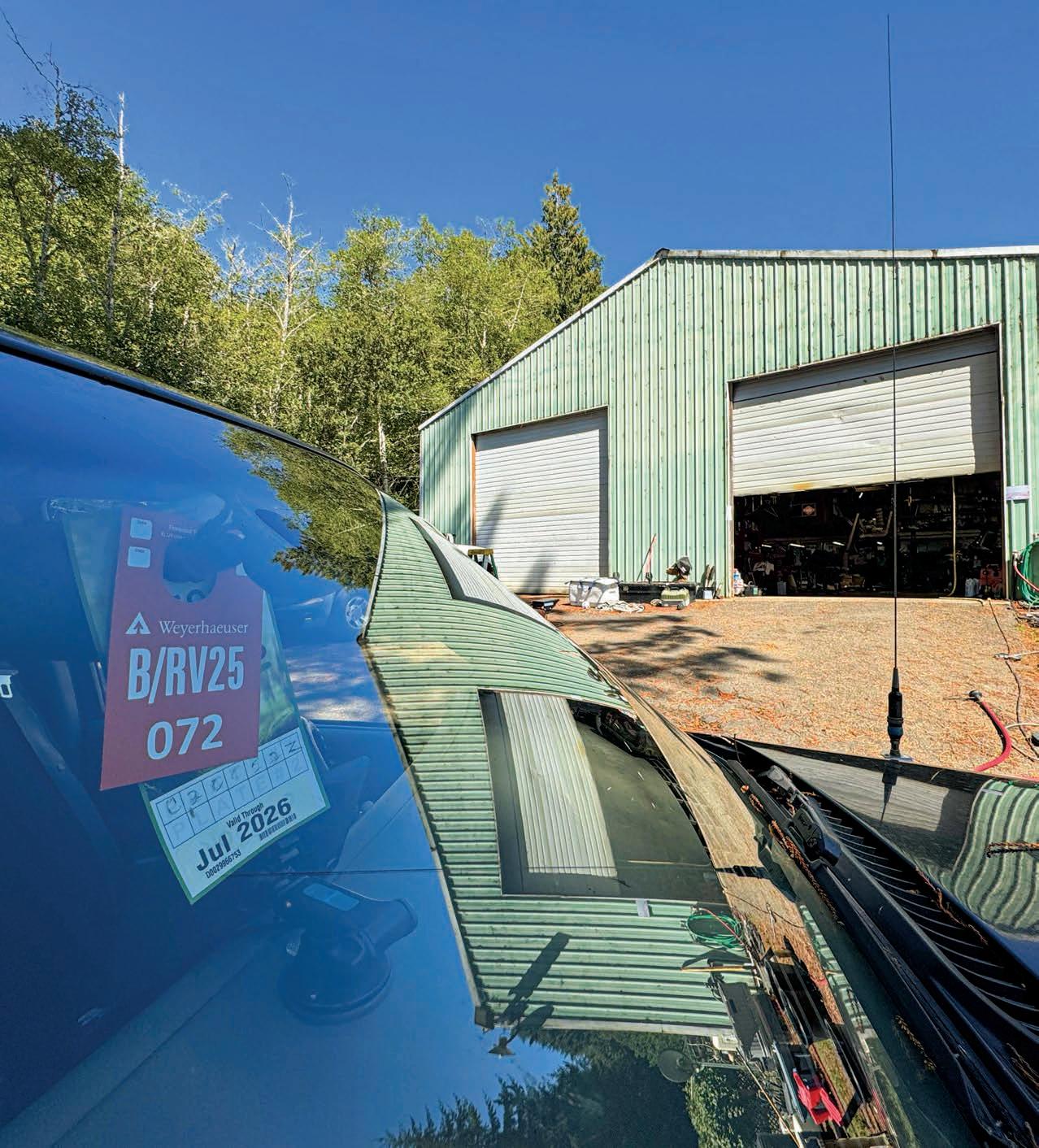
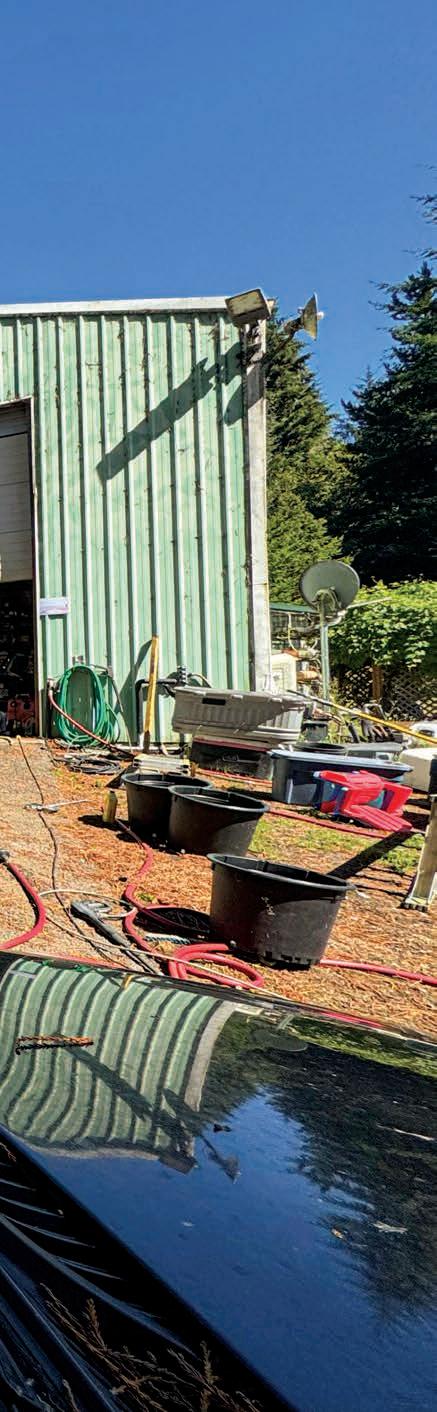
Some of Wahkiakum County hunter Shawn Jacob’s access permits are visible on his rearview mirror. He funds his hunting by running a locally esteemed boat repair business, which is seen in the background. (HENRY BRANNAN)
Tree Stand
As access to private timberlands becomes tougher for hunters and heartache mounts, Southwest Washington county commissioners consider taxes in response.
By Henry Brannan, Murrow News
Hunters across Wahkiakum and Pacific Counties say they have reached a breaking point as global investment companies make their way of life increasingly expensive and dangerous – and county commissioners are taking notice.
A new generation of restrictive timberland access policies on much of the counties’ prized longtime hunting grounds have pushed pro-timber county commissioners to consider the previously unthinkable: increase the tax burden for the timber industry.
Commissioners say they are running out of options as nearly unreachable global timberland investment giants have moved in and blocked off access to tens of thousands of acres of forest land – including state and private lands where hunting is still allowed.
Local leaders said companies were “greedy” to cut off land access and charge high fees to hunt while receiving tax breaks – and the leaders say it is time for that to change.
THE TAX BREAKS
Lisa Olsen, a Pacific County commissioner, said she finds it frustrating that timberland owners are getting large tax breaks from the state as they cut off access and profit from selling hunting leases.
“They’re getting huge fees for people to do this,” she said, referring to hunting, “and I don’t think they should be getting their exemptions if that’s what they’re going to do.”
For half a century, timber has been exempted from yearly property tax in Washington because of the forest excise tax. The law makes it so companies don’t pay
taxes on the trees until they’re harvested.
While they do pay property taxes on the land on which timber is grown, the assessed value of the lands is reduced thanks to the state’s designated forestland program.
What does that look like in practice?
In 2024, a pair of limited liability companies – set up by two companies affiliated with German nobility facilitating land purchases for European megainvestors (see last issue for more) – spent about $114 million on about 12,000 acres in Wahkiakum County across two purchases.
Last year, the companies paid $1.64 per acre in taxes for those properties, The Columbian found in an analysis of county tax records.
On top of that, much of the profits from the sale and exchange of timberland and timber also are exempt from Washington’s 2021 capital gains tax.
Olsen said the tax breaks unfairly shift the burden of supporting the counties onto residents and other businesses.
She and Wahkiakum County Commissioner Dan Cothren said that especially hurts counties like Pacific and Wahkiakum, which have a disproportionate population of older adults. That’s because some retirees can get exemptions from property taxes because they’re surviving on a fixed income, meaning the county already has less tax revenue to work with.
RISING COSTS
“You see all these permits I got? It’s money,” Shawn Jacob said, gesturing to hunting tags hanging on his truck’s rearview mirror last August. “That one was almost $600; that one was $300.”
Jacob moved to Wahkiakum County from Longview in 2006, partly looking for a space to operate a boat-repair company to
tap into the local fishing economy. While work brought him, it was hunting that kept him there.
But Jacob has grown increasingly frustrated in recent years as he’s seen free public access hunting grounds shrinking, hunting leases becoming more prevalent and the price of those leases increasing.
Still, locals are interested in paying to hunt, Cothren said.
“My constituents, my folks, are calling and asking, ‘Well, what can we do? This is our heritage, this is our history, and we can’t get access to these lands – we’re willing to pay,’” he said.
With the decline of logging and commercial fishing, Wahkiakum County has sunk to Washington’s secondpoorest county and has the highest unemployment rate.
Gabe Bergman, a Wahkiakum County gunsmith who works for out-of-state clients, has seen access and costs to hunt rise. His family has hunted in the region since the late 1940s.
He said timberland owners’ policies have compounded problems for struggling households, reducing access to healthy, affordable food and pricing families out of intergenerational traditions.
“When you’re raising kids, and the kids can’t hunt off of your permit,” he said, “now you got to buy multiple permits for the kids, and you’re spending $2,000 to $3,000 by the time you’re done, just in fuel costs, permits – just to get out.”
Bergman, Cothren and other hunters also said the small area hunters can now affordably access increases the likelihood of potentially deadly hunting accidents on what accessible land remains.
“Something’s going to happen. Just too many people on one spot,” Cothren said.
With shrinking access as a backdrop, both the number of hunters and the number of bagged elk have fallen in the last few decades, data from the Washington Department of Fish and Wildlife shows.
INDUSTRY PERSPECTIVE
Rayonier and Weyerhaeuser are the main timberland owners selling increasingly expensive hunting leases in Wahkiakum and Pacific Counties.
In individual statements, the companies emphasized they also offer some free hunting lands.
Weyerhaeuser said it offers nearly 20,000 acres of free-to-hunt land across Clark, Cowlitz, Pacific and Wahkiakum Counties through a couple of programs.
“Our system is intended to balance local access,” Rayonier spokesperson Jane Wilder said, “with the rising operational costs necessary to maintain healthy, accessible forestlands, and the vital wildlife habitat within them.”
She added that the company complies with all tax laws, and hunting lease fees support its forest-management expenses.
THE TAX PUSH
Cothren and Olsen have fought to ensure that the timber industry can stay in the region. But the two also said logging takes a costly toll on county roads and other infrastructure.
Pacific County has imposed a tax on truckers known as “road haul fees.” The policy is primarily aimed at logging to
address the damage logging trucks cause.
“We don’t charge enough, because we don’t get very much, and it’s all on the honor system, so we get hosed,” Olsen said. “It’s maintenance that maybe we wouldn’t have to have done for another 10 years if we didn’t have all that weight on our county roads.”
Dave Tobin, another Pacific County commissioner, echoed Olsen. Jerry Doyle, the third Pacific County commissioner, said it’s time for the county to revisit the rates.
While Pacific County commissioners are looking to raise the tax, Cothren said Wahkiakum is considering instituting its own version.
“We’re looking to do a tax on the trucking here in the county,” he said. “We haven’t done it. Pacific County has.”
Lee Tischer, another Wahkiakum County commissioner, agreed with Cothren’s stance, adding that he’d also like to see Washington ban foreign entities from owning US timberland in the hopes of allowing more public access.
At least nine states have bans on
Jacob scrolls through a satellite map of land he could once hunt on but is now blocked by American Forest Management gates. AFM manages private timberlands for investment companies. (HENRY BRANNAN)
foreign companies owning farmland. Indiana banned foreign entities from owning both farmland and timberland.
Cothren and all three Pacific County commissioners agree with Tischer.
But even local efforts to regain hunting access in the past have come up against the powerful timber lobby.
“The timber lobby has been really good at making sure that any legislation that’s coming up that is going to impact them – they’re really good at making sure they try and curtail that,” Olsen said, adding that these companies also benefit Pacific County.
CONSEQUENCES
Despite the opposing points of view, timber companies and small timber-dependent counties need each other. And leaders of
both expressed a desire to work out the issue without aggressive new tax policies.
“I don’t want the rich doctor from an hour away to come to my land,” Bolko Graf von der Schulenburg said. “I prefer to have the local guys for also a very selfish reason: because if I have friction with a local community, I don’t want that anguish. It only leads to problems.”
Schulenburg leads US operations for Salm Schulenburg, which brokers wealthy European investors’ land purchases, including in Wahkiakum County, then manages the land for them. He said his company is open to working with counties.
“As a landowner, we carry all the cost,” Schulenburg said. “So if we make things available to someone else, there needs to be a benefit in there for the landowner as
well. It cannot just be a cost.”
Cothren said the counties also are saddled with costs from the timber industry such as repairing roads and battling fires on the companies’ lands. But he would prefer to sit down with Schulenburg and hammer out a deal that’s mutually beneficial rather than play hardball.
“Let’s make it to where it’s profitable for you, but it’s also profitable for us,” he said, “because it isn’t right the way it is.” NS
Editor’s note: This article was first published by The Columbian of Vancouver through the Murrow News Fellowship, a state-funded program managed by Washington State University. Henry Brannan was a Murrow News Fellow with The Columbian and other local newspapers until earlier this year.
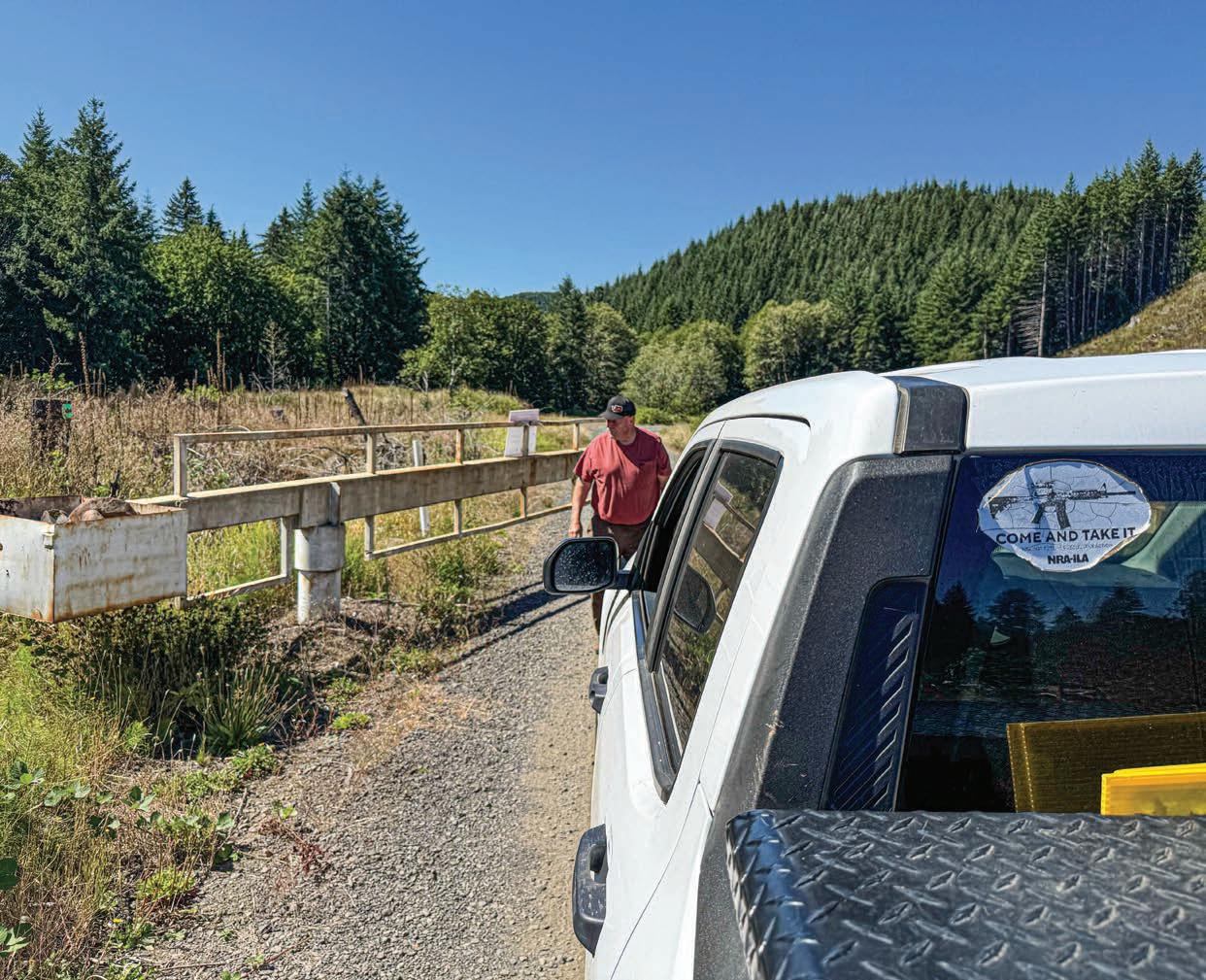
Dan Cothren returns to his truck after unlocking an AFM gate blocking access to prime hunting grounds. As a security contractor, he patrols these lands for the company; as a county commissioner, he’d like to see more lands open again for hunting as a safety measure against crowding on what’s still available. (HENRY BRANNAN)
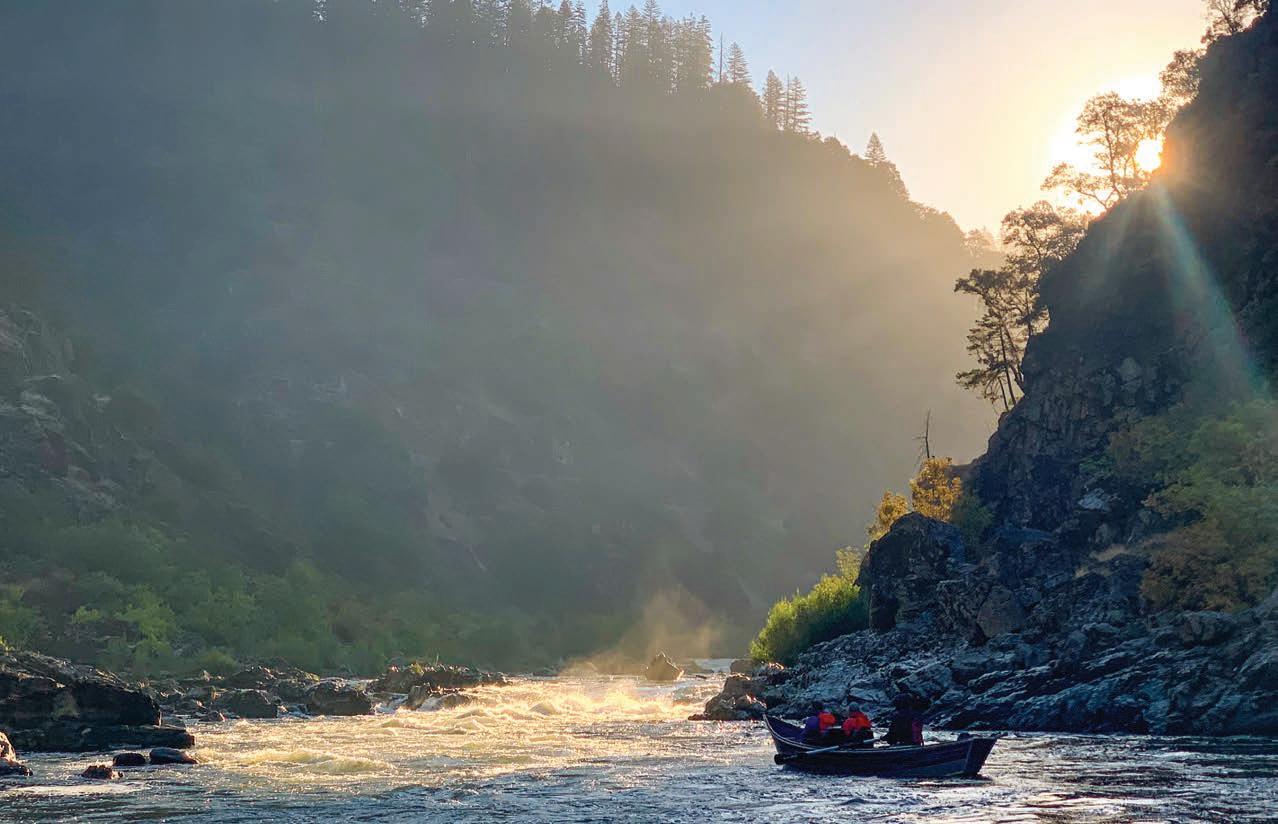
A 4-Day Lodge-to-Lodge Drift Boat Fishing Experience on Oregon’s Wild & Scenic Rogue River!
The Rogue River is the granddaddy of salmon and steelhead, plain and simple. This 4-day Rogue River drift boat trip is about good fishing and doing it right. You’ll float classic stretches of the Wild & Scenic Rogue with seasoned guides who know the river and know the fish.
Fish it how you like—fly, lure, spinner, whatever works. There’s no single “right” way here. At the end of the day, you’ll pull into a private riverside lodge with hot showers, real beds, and solid meals. It’s not camping. It’s a comfortable, no-nonsense fishing trip on one of the West’s great rivers.
THREE ALL-INCLUSIVE LODGES
• Lucas Lodge
• Black Bar Lodge
• Paradise Lodge
Each lodge is accessible only by river and reserved exclusively for our guests,—offering privacy, comfort, and a true escape into Rogue River country.
WHAT’S INCLUDED
• Fully guided drift boat fishing
• Private riverside lodges each night
• All meals, gear, and logistics provided
• Lodge-to-lodge travel by drift boat
• Small groups with hands-on guiding You just show up ready to fish.
They call him the “sockeye godfather” for his work to bring back Lake Washington’s beloved fish and fishery, but Frank Urabeck also happens to like Cowlitz River winter steelhead. He limited out with this one and two others in late March while working the Blue Creek stretch with guide Dylan Houfek. (KNIFE PHOTO CONTEST)
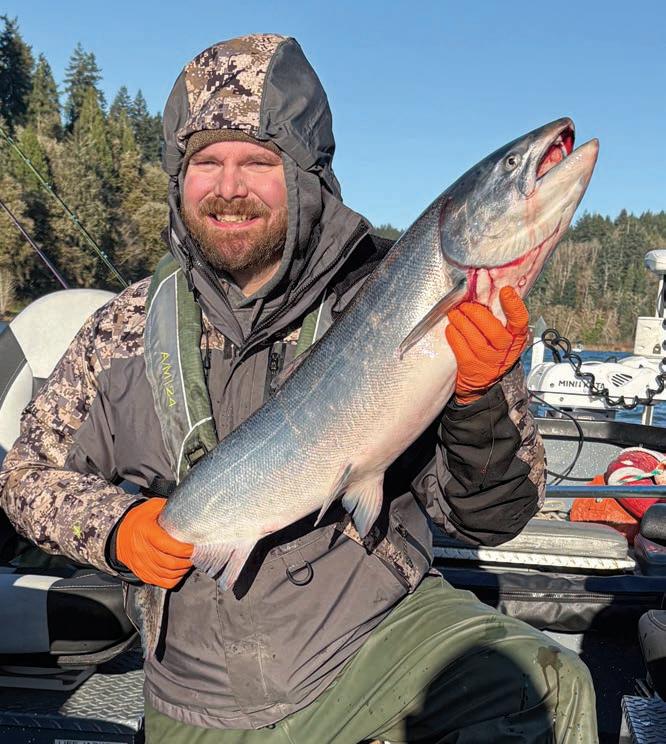
It does not get any better than landing a 21-pound, firstpass spring Chinook, and Justin Leech was living his best life after doing just that on the Lower Columbia back in late March. Buddy Jeff Flatt sent the pic. (KNIFE PHOTO CONTEST)
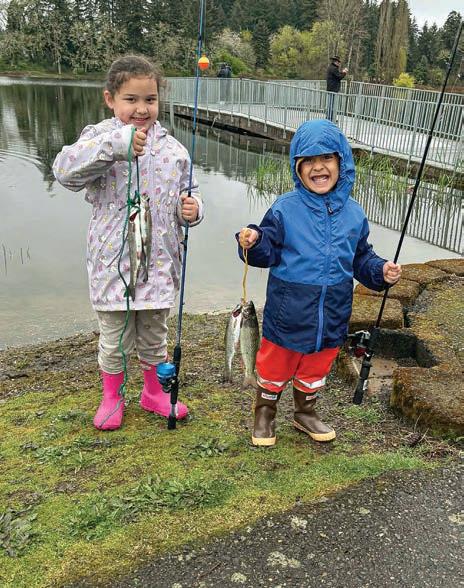
“Smiles were contagious and they are already talking about our next adventure.” That’s the report from Kelly Corcoran after grandkids Mila, 6, and Mateo, 4, hit a kids fishing event early last month. It was put on by the city of Lacey and the South Sound Chapter of Puget Sound Anglers. (KNIFE PHOTO CONTEST)
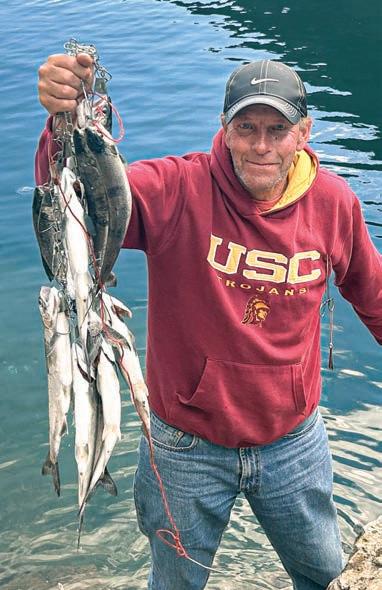
Orange and yellow Power Eggs helped load up Bob Searl and crew’s stringer with landlocked coho from a wellknown Southwest Washington reservoir. “Add your favorite scent to give the bait a little kick,” tips pal Marvin Holder as this fishery approaches. (KNIFE PHOTO CONTEST)
PHOTO CONTEST MONTHLY Winner!
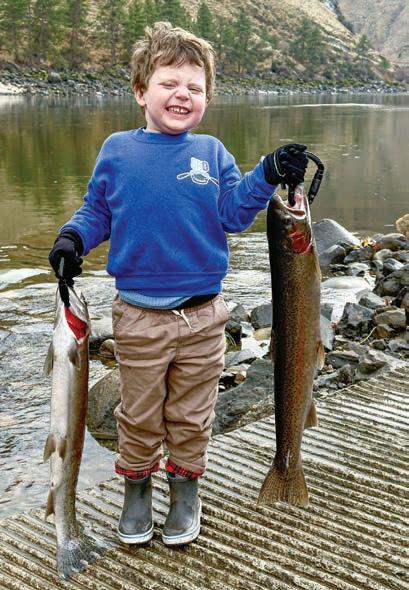
Mackay had himself a day! He landed not just one but two hatchery steelhead on Idaho’s Salmon River while fishing with his folks, Fred and Lisa Taylor, who operate Salmon River Drifters. They were running Mag Lip 3.5s tipped with coon shrimp that November day. (KNIFE PHOTO CONTEST)
For your shot at winning a knife in our Knife Photo Contest, send your full-resolution, original images with all the pertinent details – who’s in the pic; when and where they were; what they caught their fish on/weapon they used to bag the game; and any other details you’d like to reveal (the more, the merrier!) – to awalgamott@media-inc.com or Northwest
Renton, WA 98057. By sending us photos, you affirm you have the right to distribute them for use in our print and Internet publications.
IDFG Commissioner Accused Of Involvement In Unlawful Elk Hunt
An Idaho Fish and Game Commission member has stepped away from board business for the time being after he was accused of seven big game hunting-related violations, including allegedly being party to the taking of a large bull elk out of season just before last Christmas.
from reports who may have pulled the trigger or triggers. For example, in listing the charges against Harshbarger, the Idaho Capital Sun said he “allegedly shot a 6-point bull elk out of season and/or aided or abetted another in doing so.” The Statesman reported Harshbarger “advised” Murphy on where to shoot.
By Andy Walgamott
Wyoming Man Gets 18 Months Probation For Abusing Wolf
NBrody Harshbarger, who represents the Idaho Department of Fish and Game’s Upper Snake Region, pled not guilty to the misdemeanor charges in early March, and he had a pretrial court hearing just after the press deadline for this issue. If convicted, the penalties could include loss of his hunting license for three years, along with fines and jail time.
The case against Harshbarger attracted wide attention, which is understandable given that part of his commission job is to set hunting seasons and regulations. A letter from Idaho Governor Brad Little’s office said it appreciated Harshbarger “informing us of your willingness to voluntarily postpone the performance of your commission duties until the charges recently filed against you are resolved,” according to reporter Nicole Blanchard of the Idaho Statesman.
PRESS ACCOUNTS DESCRIBE the incident as occurring on December 20 near an old boat ramp on the Teton River east of Rexburg, in far eastern Idaho, and it came in to conservation officers via a poaching hotline tip as “a group of individuals” firing at elk. A local landowner reported a sixpoint bull was dead on their land near where the shooting was occurring, while an antlerless elk was also found dead on nearby federal ground.
As Harshbarger and the man he was with, Eric Murphy, stand accused of the same charges, it wasn’t immediately clear
What is more clear is that deep hoofprints and blood found near the bull suggest that it was hit while on private property, for which neither man had permission to hunt, nor did they seek to retrieve the animal, as required by state law, per reports.
Court docs say Harshbarger had filled his elk tag the weekend before, while Murphy’s tag was not good on Bureau of Reclamation land. Citing state law passed due to harrassment of wolf hunters, IDFG couldn’t comment on the men’s tags. But based on a review of 2025 hunting pamphlets, the season closest matching the incident is hunt number 2632 in controlled hunt area 62-2X, a Landowner Permission Hunt extra antlerless elk hunt open on private land only in Game Management Unit 62 and running November 1-December 31. In this program operated outside of the more well known draw process, IDFG grants depredation vouchers to landowners, who distribute them to hunters who trade them for tags.
THE CHARGES AGAINST Harshbarger and Murphy include two counts of unlawful hunting/attempting to take a big game animal, hunting without a tag, shooting across a public road, hunting from a vehicle, failure to retrieve game, and trespassing.
Harshbarger was appointed to the commission by Governor Little in January 2024 and is slated to serve through June 2027. IDFG’s commissioner page states he is an Ashton, Idaho, farmer and hunter. “I love our wildlife and the community we live in. We have a lot of challenges, and I am excited to help continue to solve them,” he said upon appointment.
Right now he has a challenge explaining how he ended up in such a mess.
o doubt, wolves inflame a lot of heated feelings in these parts, but the fate of a yearling Wyoming female wolf was beyond the pale, and the man responsible for its cruel extended death in February 2024 has now been punished for it.
Early last month, Cody Roberts was sentenced to 18 months probation and fined $1,000, among other penalties, after pleading guilty to felony animal cruelty related to the running over of the wolf with his snowmobile, taking it first to his home, where he restrained it with tape around the muzzle, then to a local bar where he thought it would be funny to ask if anyone had lost a dog. After posing for pictures and a video with the wolf, Roberts let it lie in a daze in a corner before finally shooting it out back.
Per Cowboy State Daily, if Roberts violates the terms of his probation, which includes bans on hunting, shed hunting, fishing, drinking and going to bars, an 18- to 24-month prison sentence and $4,000 fine await. He was ordered to get counseling too.
The case sparked widespread outrage and led Wyoming’s legislature to change state laws by adding torturing wildlife to its animal cruelty statutes. Roberts initially was fined just $250 for misdemeanor possession of wildlife, but county prosecutors eventually convened a grand jury, which indicted him last summer. As a convicted felon, Roberts also lost his right to own firearms and vote. Roberts did express regret in court. Judge Richard Lavery said that while it was legal for him to capture the wolf, keeping it alive so long was “cruel,” according to the Daily. Harkening back to our hunter education lessons, regardless of whether we’re hunting wolves or deer, whether the animal is classified as a predator, game, unclassified or nongame species, it’s our duty as hunters and humans to give it an ethical, humane death without undue pain and suffering.
Commissioner Brody Harshbarger. (IDFG)
Judge Brings Hammer Down On Spree Elk Poacher
“Called it.”
That’s what Washington Department of Fish and Wildlife officers might be saying after they pointedly stated last November that while Richard Loren Pratt, 45, of Cosmopolis had initially evaded prison for his 2023 elk-killing spree and unlawful weapons possession conviction, he could ultimately still be jailed for nine-plus years if he violated the terms of his sentencing.
FOLLOWUP FILE
Four months later, and you guessed it: Pratt failed to comply with provisions in his mental health sentencing alternative – word on the street is that he was consuming illegal substances, among other court no-nos – and Grays Harbor Superior Court Judge Katherine Svoboda quickly lowered the boom, resentencing him to serve those 116 months in prison.
“We would like to thank Superior Court Judge Svoboda for taking swift action after Pratt violated his conditions of release,” said WDFW Region 6 Captain Dan Chadwick. “This sentencing highlights the importance of our big game natural resources not only in Grays Harbor but for all of Washington state.”
We told you about the case against
Pratt in our January Dishonor Roll, but as a refresher, it began in early 2023 with a report of a dead elk found on private timberland south of Cosmopolis. Investigating officers found four more cows that had also been shot by a highpowered rifle in a closed unit and with no meat taken from the carcasses. Ten months later, Officer Lanny McOmber found Pratt nearby with two guns, which as a convicted felon he was barred from having. A field interview and follow-up investigation determined Pratt had killed the elk earlier that year.
In November 2025, Pratt pled guilty to spree killing of wildlife, unlawful possession of a firearm in the first degree (a class B felony) and gross misdemeanor wastage of wildlife, and he received a mental health sentencing alternative with community custody for 36 months, $10,000 wildlife penalty and lost his hunting privileges for a decade.
At the time, WDFW warned, “If Pratt violates his mental health sentencing alternative, he could face up to 116 months in prison based on his charges.” With Judge Svoboda’s resentencing, Pratt received just that, which also happens to be the “longest big game jail sentence in the last 10 years,” according to wardens.
JACKASS OF THE MONTH I
t’s not often the dragnet that is Jackass of the Month hauls in such a big, fat juicy fish as the head of a state fish and wildlife department, but that’s just who we’re highlighting this issue!
In late March, Jack Montoucet, 78, who headed up Louisiana’s Department of Wildlife and Fisheries for six and a half years, pled guilty to soliciting kickbacks as part of a bribery scheme to steer “lucrative” agency hunter and boater education contracts to a private company in exchange for 33 percent of the profits from the arrangement. It also reportedly involved contracts for the online courses people take to clear their record after being cited for low-level fish and wildlife violations.
According to federal officials, Montoucet used his position to award a no-bid contract in 2021 to DGL1, LLC for the courses, and then after concerns were raised about the deal and it was put out to public bid, he influenced the awarding of the contract to the company in the end. When it was signed, Montoucet knew he was going to receive kickbacks but met with the company and a member of his state’s fish and wildlife commission a month later to figure out how to hide the payouts, per the feds. Ultimately, it was decided the money would come to him after state retirement as a “signing bonus” for providing consulting work to DGL1.
He never got to retire. Montoucet, a former representative in the state legislature, abruptly resigned his LDWF position in April 2023 after being implicated in the scheme.
A Coeur d’Alene man who unlawfully killed three whitetails and an elk in 2024 was sentenced earlier this year to pay $6,750 in restitution, spend 60 days in county jail, perform 200 hours of community service and had his hunting license revoked for 17 years. He was also ordered to take in-person hunter ed. According to the Idaho Department of Fish and Game, the case involved spotlighting and was aided in part by a citizen who reported the elk poaching. The man was initially charged last year with two felonies and four misdemeanors. State conservation officers thanked the Kootenai County Prosecutor’s Office for taking on the case. (IDFG)
The US Attorney’s Office for the Western District of Louisiana said Montoucet now faces up to a half decade in prison, a fine of as much as $250,000 and three years of supervised release. Previously, the LDWF commissioner involved in the scheme received four years for his part in it.
“The citizens of Louisiana deserve and demand honesty and integrity from those entrusted with public office, including when they contract for services on behalf of our Louisiana communities,” said US Attorney Zachary A. Keller in a press release. “Officeholders like Mr. Montoucet who abuse that trust undermine confidence in government and the public contracting process.”
Soon, Montoucet will be taking a page out of those hunter ed courses that got him in so much trouble and donning a whole lot of blaze, er, prison orange.
OUTDOOR CALENDAR
MAY
1
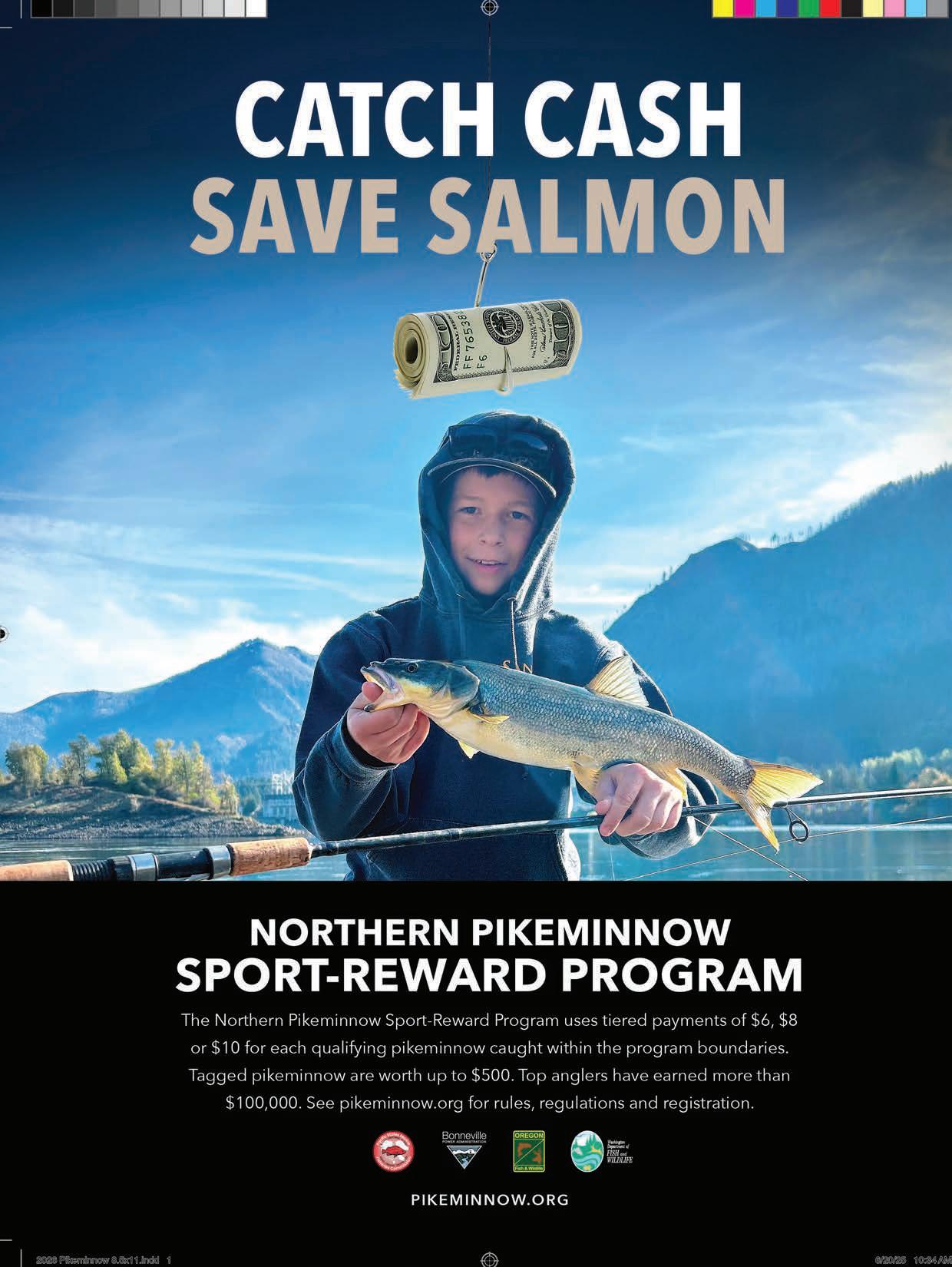
WA Marine Areas 5-11 and 13 lingcod opener; 2026 Northern Pikeminnow Sport-Reward Program fishery begins at balance of Columbia and Snake Rivers stations – info: pikeminnow.org; ODFW staff-recommended halibut opener on Central Coast and Southern Subareas – info: dfw.state.or.us/ mrp/finfish/halibut/management.asp
1-6 Tentative razor clam digs scheduled on select WA Coast beaches, dependent on marine toxin levels – info: wdfw.wa.gov
2
Scheduled one-day mainstem Columbia Gorge spring Chinook reopener (see e-regs for updates); Auburn Kids Fishing Derby, Auburn Mill Pond, Auburn, WA – info: saveourfish.org; Jennings Pond Kids Fish-In, Everett, WA – info: bnmartin71@hotmail.com; Kids Fishing Derby, Thompson Pond, SedroWoolley, WA – info: bob.nielsen@hotmail.com; ODFW Family Fishing Event, Vernonia Lake, Vernonia – info: myodfw.com/workshops-and-events
9 Algona Kids Fishing Derby, Algona, WA – info: algonawa.gov; Clear Lake Kids Fishing Event, Fairchild AFB, Spokane – info: wdfw.wa.gov/fishing/contests/ youth; 73rd Annual Kids Fishing Derby, Whatcom Falls Park, WA – info: douglas. huddle@gmail.com; CAST For Kids fishing event, Salem, OR – info: castforkids.org
14-16 Anacortes Boat & Yacht Show, Cap Sante Marina, Anacortes, WA – info: anacortesboatandyachtshow.com
15 OR fall big game controlled tag application deadline
15-17 2026 Detroit Lake Fishing Derby, Detroit, OR – info: detroitlakefoundation.org
16 Tentative Skagit River hatchery spring Chinook opener between Rockport and Cascade River Road Bridges (open Wednesdays-Saturdays only); Columbia Springs Kids Fishing Festival (registration), Vancouver, WA – info: columbiasprings.org; Fishing Experience 2026, Old Fishing Hole Park Pond, Kent, WA – info: dhobbs@kentwa.gov; Silver Lake Kids Fish-In, Everett, WA – info: bnmartin71@hotmail.com; ODFW Family Fishing Events at Eckman and Timber Linn Lakes, Waldport and Albany – info above; ODFW Fly-Fishing Workshop, Camp Sherman (registration, $100 fee) – info above
20 WA fall big game special hunting permit application deadline
22 OR fishing or harvest opener on numerous streams
22-26 Initial tentative Cascade River hatchery spring Chinook season dates
25 WA fishing opener on select streams; Last day of ID spring turkey season
30 ODFW Family Fishing Event, West Salish Pond, Fairview, OR – info above; CAST For Kids fishing event, Winston Pond, Winston, OR – info above
31 Last day of OR and WA spring turkey season; Last day of OR spring bear season
JUNE
1 Tentative Area 10 resident coho opener; Tentative Area 11 hatchery Chinook opener
3 Tentative Cascade River hatchery spring Chinook reopener (WednesdaysSaturdays only)
6 OR Central Coast (Cape Falcon to Humbug Mountain) hatchery coho opener; Cops and Bobbers Fishing Event, Gissberg Twin Lakes Park, Smokey Point, WA – info: eric.fagan@snoco.org; Annual Sumas Youth Fishing Derby, Howard Bowen Park, Sumas, WA – info: americanlegionsumas@gmail.com; CAST For Kids fishing event, Lake Charles, Jefferson, OR – info above
6-7 OR and WA Free Fishing Weekend; ODFW Free Fishing Weekend Events at Twin Ponds, Silverton Reservoir, Cleawox and Henry Hagg Lakes, and Alton Baker Park – info above
13 ID Free Fishing Day
16 Tentative sockeye opener on Columbia’s Hanford Reach
20 Areas 1-4 and OR North Coast tentative early salmon opener (open daily, limit varies by area)
23-July 5 Tentative sockeye season on Columbia below Highway 395 bridge in Pasco, WA
27 CAST For Kids fishing event, Emigrant Lake, Ashland, OR – info above
DESTINATION BIG SKY MONTANA
MONTANA RIVER OUTFITTERS
Stand Out In The Crowd
As of early this month, the Lower Columbia is likely closed to spring Chinook fishing with the possibility of a reopener after the runsize update, which will occur in the middle of May. By that time over half of the upriverbound run will have passed Bonneville Dam on its way to Idaho, Northeast Oregon and Upper Columbia tributaries, where they will eventually spawn. That
means for now, anglers are restricted to fishing the Willamette River, its Multnomah Slough and the many tributaries entering the Lower and Mid-Columbia River.
If we do see the Lower Columbia (the river west of Bonneville Dam) reopen in the coming weeks, realize that while you could still catch a fat salmon anywhere in those 146 miles above Buoy 10, it’s likely that your best chance will be within 10 miles of the dam.
For boaters, the upstream fishing deadline is Beacon Rock and a north/south line extending from it. Anywhere near
and west of the Beacon Rock deadline can produce limits, with the area near Multnomah Falls a good bet. If you are a bank-bound angler, you should realize that the angling deadline extends above Beacon Rock up to the normal cutoff closer to the dam.
THE GOOD NEWS is that the total spring Chinook run entering the Columbia this year is forecast to be above the 10-year average with 228,700 fish expected to navigate the big river. However, this is down some from 2025’s actual return of
Crowd For Springers
252,502 fish. Last year’s surprise was that there were 35,000 more salmon that came back compared to the original preseason forecast of 217,500 fish, providing more late-season mainstem opportunities. Here is a breakdown of 2026’s forecast:
Above Bonneville total: 147,300
Below Bonneville total: 81,400
SAFE (Youngs Bay, Tongue Point, Blind/ Knappa Sloughs, Gnat Creek): 13,700
Willamette River: 43,700
Clackamas River: 9,600
Sandy River: 6,400
Cowlitz River: 9,300
Kalama River: 3,300
Lewis River: 5,000
Wind River: 6,100
Drano Lake/Little White Salmon River: 11,300
Klickitat River: 1,700
Given the popularity of catching and
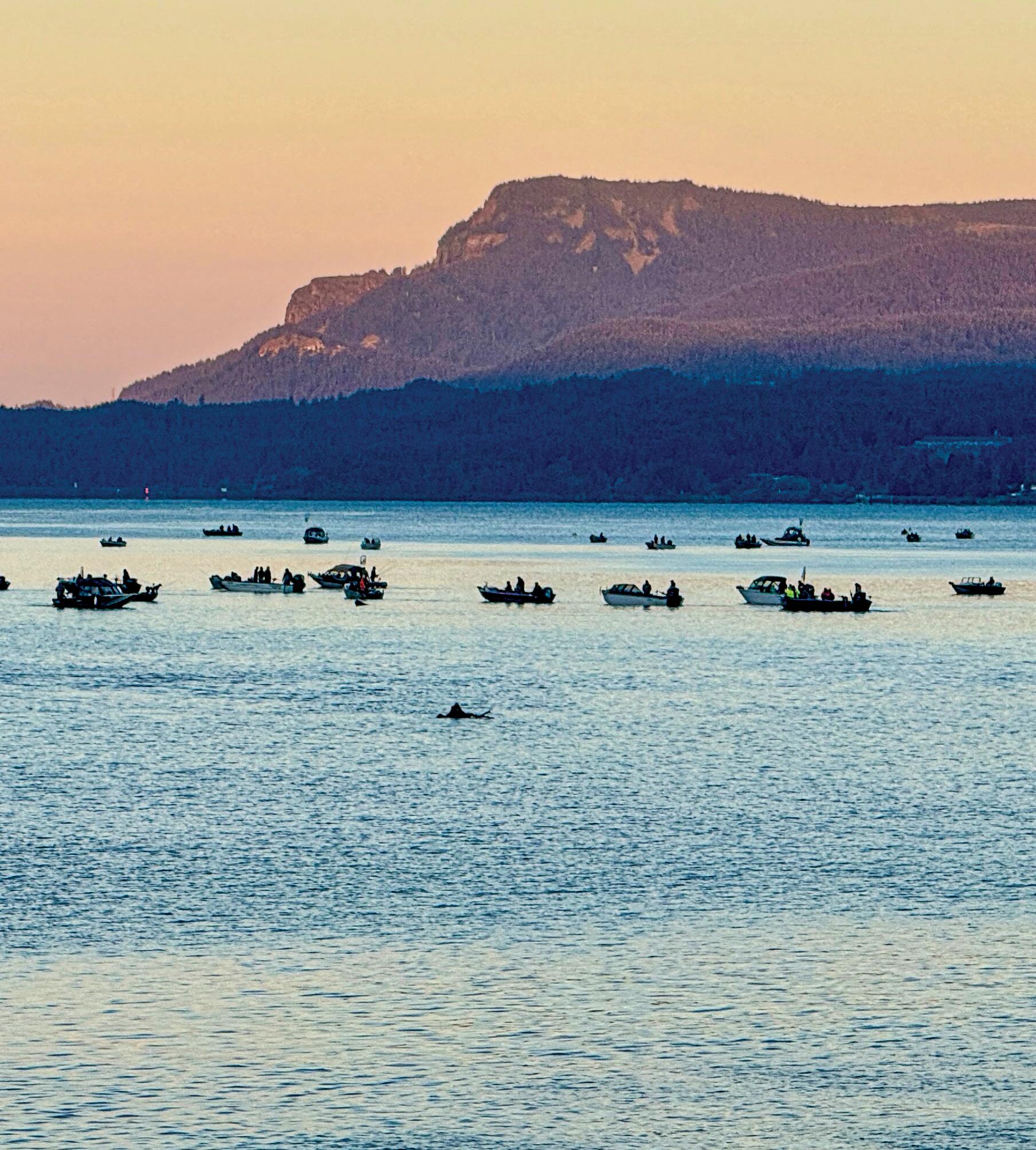
No two ways about it, terminal spring Chinook fisheries in the Columbia Gorge get crowded, but you’ll have a little more breathing room, generally speaking, when trolling off the Wind River mouth than at Drano Lake. (BUZZ RAMSEY)
The reason for the hordes? What can sometimes be off-the-charts fishing. Shane Harper, Adam Hess, author Buzz Ramsey, Kohl Baxter and Ray Kawabata show off springers caught while fishing with guide Cody Luft (509-853-5338) last season. (BUZZ RAMSEY)
COLUMN
eating what many, including me, regard as the best eating of the Chinook species, it’s fair to say that there is more demand than salmon available to support the spring season. This fishery is so popular, in fact, that many of the best areas are crowded with anglers and boats. This is especially true this month as the return to the Willamette and many lower river tributaries is peaking. For tributaries entering the Lower Columbia, the exception might be the Sandy, Clackamas, Santiam and upper Willamette Rivers, where peak migration extends into the May/June time frame.
May is also when the fisheries at the Wind and Drano are best and when the pressure there defines the word “crowded.”
Anglers and guides in hundreds of boats will all be jockeying for a chance to catch the fin-clipped Chinook heading back to the federal hatcheries located on these systems.
To me, these two fisheries, and especially the area near where Drano Lake empties into the Columbia River (described by many as the “Toilet Bowl”), also define how the mitigation hatcheries have worked out in regard to replacing the public’s once abundant wild salmon returns. Don’t get me wrong, but given the low numbers of wild, Endangered Species Act-listed salmon, it is hatchery-produced
fish that sustain the spring Chinook fishery on the Columbia and its tribs. The spring run would be off limits to anglers if it wasn’t for federal, state and tribal hatcheries.
THIS TIME OF year, with the Lower Columbia and the majority of the Bonneville Pool typically closed to boat fishing for spring salmon, and given the location of our Eastside home, I don’t have much of a choice (unless I want to travel) but to participate in the fisheries at the Wind River and Drano Lake.
Given what one might call extreme
fishing pressure, you should know that there are strategies that can make things much more tolerable at these and other locations. For example, to avoid the predawn pileup at the boat ramp, just launch later in the morning or try your luck during a late afternoon/evening trip. This has worked out for me many times at both Drano and the Wind.
At Drano Lake, for example, you can avoid the Toilet Bowl and fish the much less crowded lake itself, which can produce catches as good as near the bridge at times, such as first thing in the morning. You should also know that a surge of fresh salmon can move from the Bonneville Pool into Drano Lake after a rain event.
Keep in mind that the Wind River fishery is especially crowded on Wednesdays, as Drano is closed to sport angling on that day. In addition, that one-day closure of the lake can make for some hot fishing there on Thursday mornings. The sometimes hot bite then is likely related to the “opening day effect,” as the fish bite a lot better after not seeing a barrage of lures for a day.
At the time of this writing, the salmon limit at the Wind River is one hatchery fin-clipped salmon per day. The daily limit at Drano Lake is more generous at two hatchery fin-clipped Chinook a day.
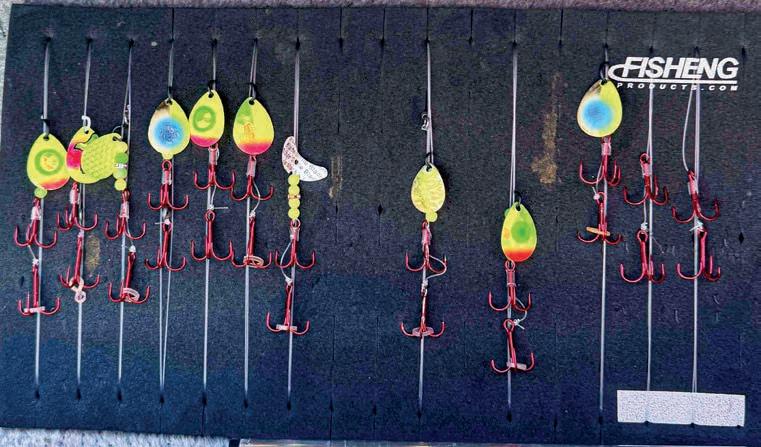
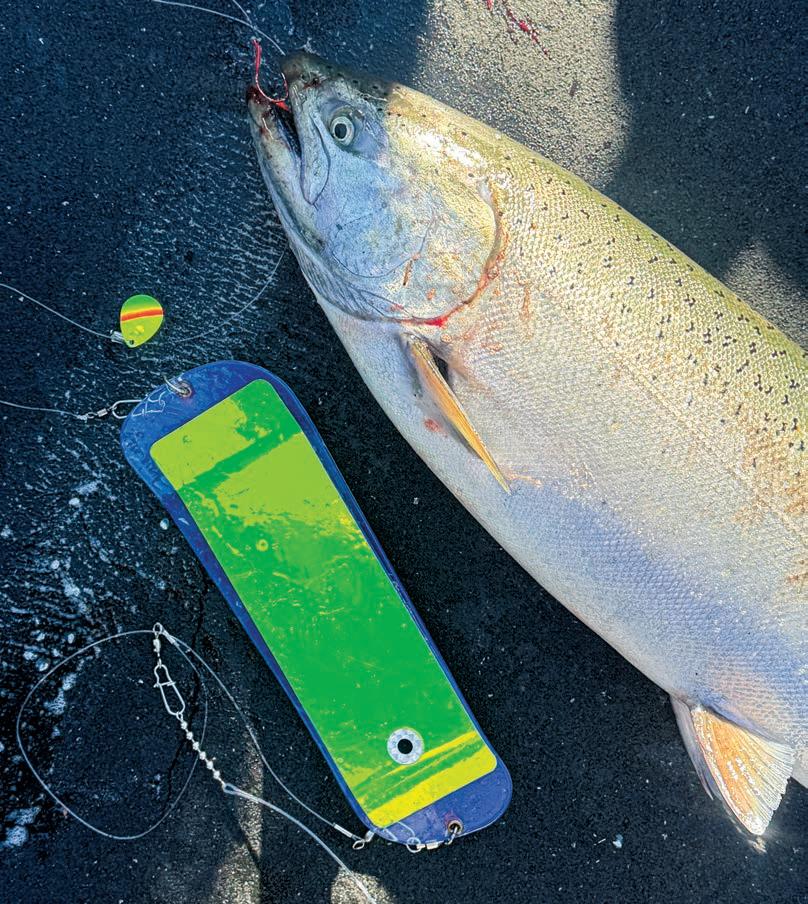
IT’S NO SECRET, a Pro-Troll rotating flasher equipped with a slow-troll fin rigged in combination with a small 3.5-size spinner blade tipped with a coon shrimp is what most anglers use for spring salmon at
Chartreuse is a popular spinner color at both the Wind and Drano. (BUZZ RAMSEY)
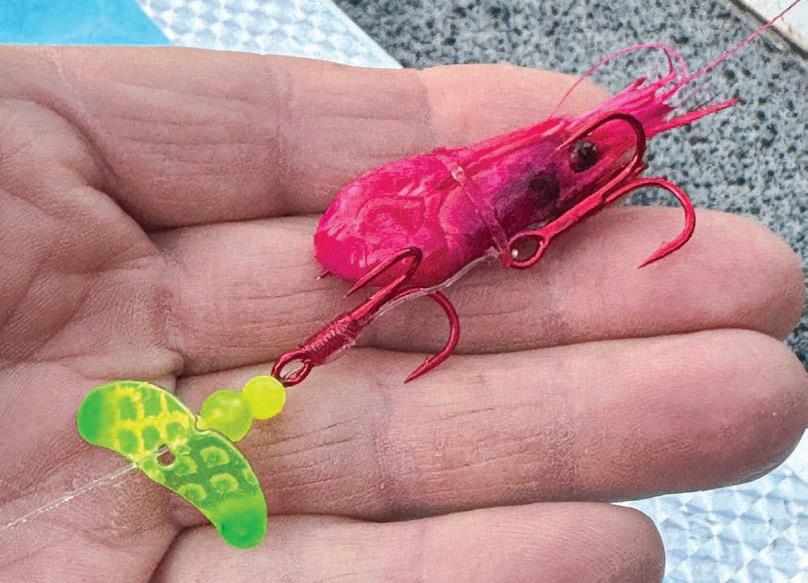
A Smile Blade pulls easily compared to a spinner blade, enabling your flasher to impart more fish-attracting pulsating action into your bait. (BUZZ RAMSEY)
COLUMN
Drano and the Wind. Spring leader lengths from flasher to lure should be in the 26to 32-inch range. Of course, to allow your flasher the room to rotate, you will need to space your flasher 18 to 30 inches behind your weight via a bumper.
The amount of weight you use might vary depending on where you fish. For example, due to the crowded conditions at Drano (especially when trying your luck trolling the circle at the Toilet Bowl, where keeping your gear tight to the boat can result in fewer tangles with nearby boats), you want to use more weight than you might employ when trolling the main lake or at the Wind.
For example, you might use 16-ounce cannonball-style sinkers on your front rods and 12s on the back rods at Drano but go
A 3.5 spinner blade rigged in combination with a coon shrimp rigged 29 inches behind a ProTroll flasher is what this spring
with 12s and 8s or similar combos when fishing the Wind. Some anglers and guides will use the same amount of weight on all rods, such as 12s all the way around at Drano and 8s at the Wind.
Guide Shane Magnuson (509-6305433) tips that you should shorten the distance from weight to Pro-Troll flasher to 18 inches when trolling the Toilet Bowl, where it’s difficult to maintain the desired trolling speed due to congestion.
“Shortening the distance from weight to flasher will cause the flasher to rotate more at slow speeds,” Magnuson advises.
Fishing guide Chris Turvey (509-5716198) says when choosing what to troll in combination with a Pro-Troll or Evolution rotating flasher, don’t overlook going with a smaller spinner blade (as in size 3 rather
than 3.5), shrimp and hook (size 4 trebles). Sometimes switching from a spinner blade to a couple of beads and a size 1.1 Smile Blade in chartreuse with a small shrimp is the ticket to success, as less drag means your flasher can impart more action into trailing lures and bait.
“Switching to a small presentation can be all it takes to find success when the bite is tough,” Turvey shares.
Cody Luft, Shane Magnuson and Chris Turvey are three of the many guides on Drano Lake in spring. Ramsey calls Luft “one fishy guy” and Magnuson “a master at his craft,” and adds that he’s fished annually with Turvey “and seen his boat hook triples on spring Chinook more than a few times.” (BUZZ RAMSEY)
IF YOU INTEND to fish at the mouth of the Wind River or Drano Lake this year, realize you will need to buy a $10 daily boat launch pass from Skamania County to do so. An annual boat launch pass is available for nonresidents (including outof-county residents) for $40. Passes cannot be obtained at the launch site but are instead available in advance from several local retailers, Skamania County offices or online. In addition, fishing guides cannot launch or park at the Wind River boat ramp. Guides can fish the Wind bubble fishery but will need to launch at the Stevenson, Cascade Locks, Drano, Bingen or Hood River ramps. For guides and anglers wanting to launch from other locations before navigating to the Wind, make sure and check the wind forecast prior to your trip, as the Columbia River can get very rough when the wind comes up.
As for Drano Lake, realize that there remains room for boats to park near the Social Security/handicap access point across the lake from the boat ramp but not directly in front of the handicap access
Chinook fell for. (BUZZ RAMSEY)
point. There are signs pointing out the no-boat-parking area.
In an effort to expand the available boat parking, fishing guides got together earlier this year and removed the blackberry bushes and cleaned up the area near the Social Security/handicap access point.
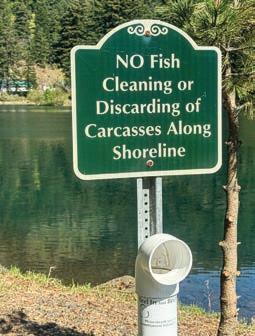
The other change is that no fish carcasses can be dumped near the handicap access point. The county is advising anglers and guides to take carcasses out into the lake or, better yet, the Columbia for disposal.
Parking is limited at both locations, so anglers are advised to carpool if possible. In addition, realize that additional no parking signs have been installed on the road leading to the Little White Salmon National Fish Hatchery/Social Security access site, meaning there will be less room to park at Drano this season. NS
Editor’s note: Buzz Ramsey is regarded as a sportfishing authority (as related to trout, steelhead and salmon), outdoor writer and proficient lure and fishing rod designer. Buzz built a successful 45-year career promoting gear related to Northwest and Great Lakes fisheries during his tenure with Luhr Jensen, Pure Fishing and Yakima Bait. Now retired, he writes for Northwest Sportsman and The Guide’s Forecast
Tom Hoogkamer hoists a spring Chinook he landed last season while trolling a 3.5 spinner blade tipped with a small shrimp in combination with a Pro-Troll flasher off the Wind River mouth. Friend Tim Reilly netted the fat salmon for Tom. (BUZZ RAMSEY)
Guides cleaned up an area at Drano where new signs also address carcass disposal. (BUZZ RAMSEY)
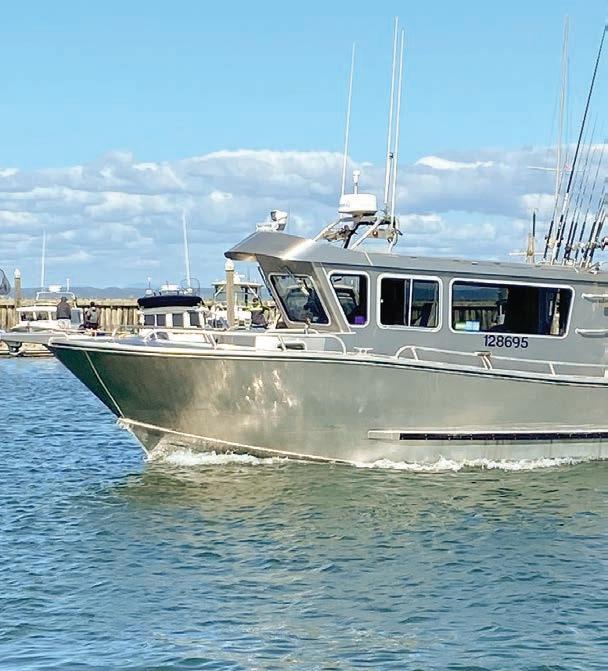
What makes Westport Charter Boats so special?
We offer world class fishing with expert crews, right on the edge of the Pacific ‒ where you’ll reel in big catches, meet new friends and make unforgettable memories.
We’re a new office in Westport, with familiar boats, dedicated skippers and great deckhands. A variety of boats to choose from to suit any size party, or individual anglers on mixed trips. We strive to offer fishing for any budget with a little planning.
Mutineer Charters opened in 2024 with six boats from 38 to 55 feet and capacities of 6 to 18 anglers.
Our skippers have over 180 years of combined experience and are known to be some of the best in the business. Whether you prefer a large comfortable boat that can accommodate large groups or private parties, or a smaller “express trip” boat that still has all the safety equipment and a stand up head like our big boats, we’ve got you covered.”
Meet the Mutineers
Mike – Fury
Ben – Gold Rush
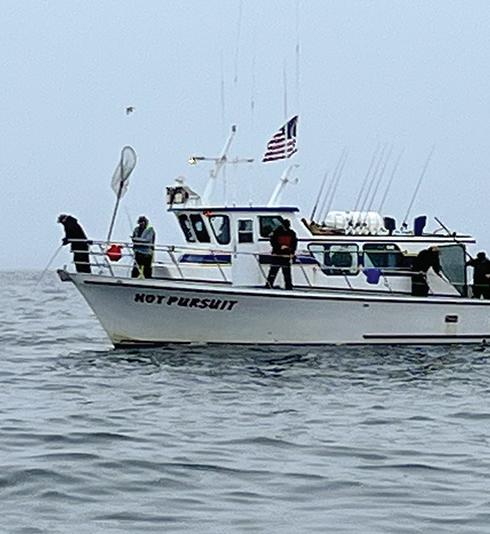
Dave – Hot Pursuit
Karl – Reel Electric
Rhett – Slammer
Johnny – Stardust
Oregon Angling Ops Bloom, Boom In May
Your monthly Beaver State fishing outlook provided by The Guide’s Forecast.
By Bob Rees
May is when the fair-weather crowd begins to stir and a bevy of species becomes more available for saltwater, river and stream, and lake and reservoir fishers to take advantage of. From ocean halibut to high lakes trout and kokanee, anglers won’t know whether to zig or zag to pursue their quarry this month.
THE OCEAN CAN often be friendly for those who wish to target halibut and bottomfish. Ocean Chinook is a good option again this year for those fishing south of Cape Falcon. There’s a robust forecast for California Chinook, the stock that fuels most of Oregon’s saltwater fisheries for the species this time of year.
The “trade winds” often stymie late morning and certainly afternoon effort, but with a strong El Niño in the making, we may miss this critical nautical feature, which is good for anglers targeting larger species, but terrible for juvenile salmon and steelhead entering saltwater. They’re dependent on the lipid-rich “northern” copepods to jumpstart their saltwater lifecycle; we’ll pay the price in about four years from now.
Newport is by far the best option for halibut, typically responsible for about 75 percent of Oregon’s sport halibut harvest. It happens to be a great port for Chinook and bottomfish as well. Anglers would be wise to target the softer tide exchanges, as bar crossings are less treacherous and drifts more manageable when
Your eyes “May” explode with all of the options to choose from across Oregon this month, from springers in the rivers to halibut in the ocean to trout and kokanee in the mountains. (BOB REES)
FISHING
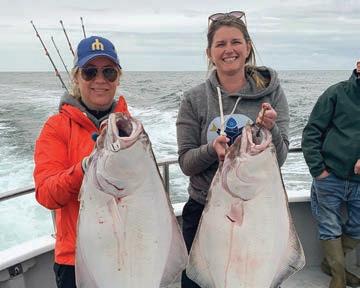
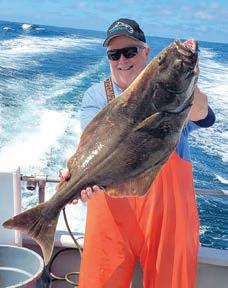
it comes to targeting halibut. Unlike years past, it’s a wide-open season in 2026, with fishing open seven days a week and a two-fish daily bag limit and six for the season. The quota consistently goes unmet.
Ocean crabbing can be good this time of year as well, although commercial-sized keepers are hard to come by.
INLAND, THE BULK of the spring Chinook run is now in freshwater, making this highly prized sportfish a prime target in the Willamette Valley as well as the Umpqua and Rogue River regions of Southern Oregon. Tillamook Bay is home to a good run of spring Chinook, too, but in recent years, the fish have been showing up in June and July, avoiding prolonged periods of time in their warming freshwater ecosystems.
For bigger bodies of water such as the Willamette, anglers are running 360 flashers and spinners to target
the biters, as hardware, including wobblers, seem to be more effective when temperatures exceed 57 degrees, which will certainly be the case for the remainder of the season.
Spring Chinook anglers targeting these fish in smaller waters will be drifting eggs and shrimp under a bobber or back-bouncing through holding water on the Clackamas, Sandy, Santiam systems, McKenzie, Umpqua and Rogue Rivers.
For the first time since 2018, the Deschutes River will open for springers, May 5-20, which should produce some fair results for those knowledgeable about this complex fishery. Water temps dictate success, and it’s likely to be challenging in the rapidly warming spring flows we now see.
continued on page 74
All-depth and nearshore halibut are open daily off the Central Coast, allowing anglers to pick their days. Target those on either side of midmonth’s series of huge tidal exchanges for better bar crossings and more manageable drifts. (BOB REES)
charters & Guides
charters & Guides
continued from page 68
Oregon anglers often migrate to the heavy-handed Wind River and Drano Lake fisheries adjacent to the Columbia River through the gorge. If you can tolerate tight spaces and a high-tension atmosphere, the results are often rewarding. Trolling flashers and a spinner/coon shrimp combination is a staple for anglers participating in this fishery.
FINALLY, WITH LOW snowpack and unseasonably warm temperatures, high lakes and reservoirs will be prime this month for both trout and kokanee. The list of options for both species is too lengthy for this space, but some of the top options for trout include Diamond, Crane Prairie, Detroit, Olallie, Paulina, Lost and Trillium Lakes.
Kokanee are often trolled or jigged up at Wallowa Lake, where the world record was taken from, as well as Odell, Detroit, Crescent and Paulina Lakes, Lake Billy Chinook and Wickiup Reservoir. Downriggers are often necessary to find the schooled-up freshwater sockeye salmon, but small jigs can be effective some years. Trolling gear is always tipped with white shoe-peg corn to ensure the highest success rates, and limits are often generous.
May is a great time to be fishing in Oregon; your biggest problem will be deciding where to go, and what to fish for. NS
Editor’s note: For more information, visit TheGuidesForecast.com.
The Art Of Fishing Trout Streams
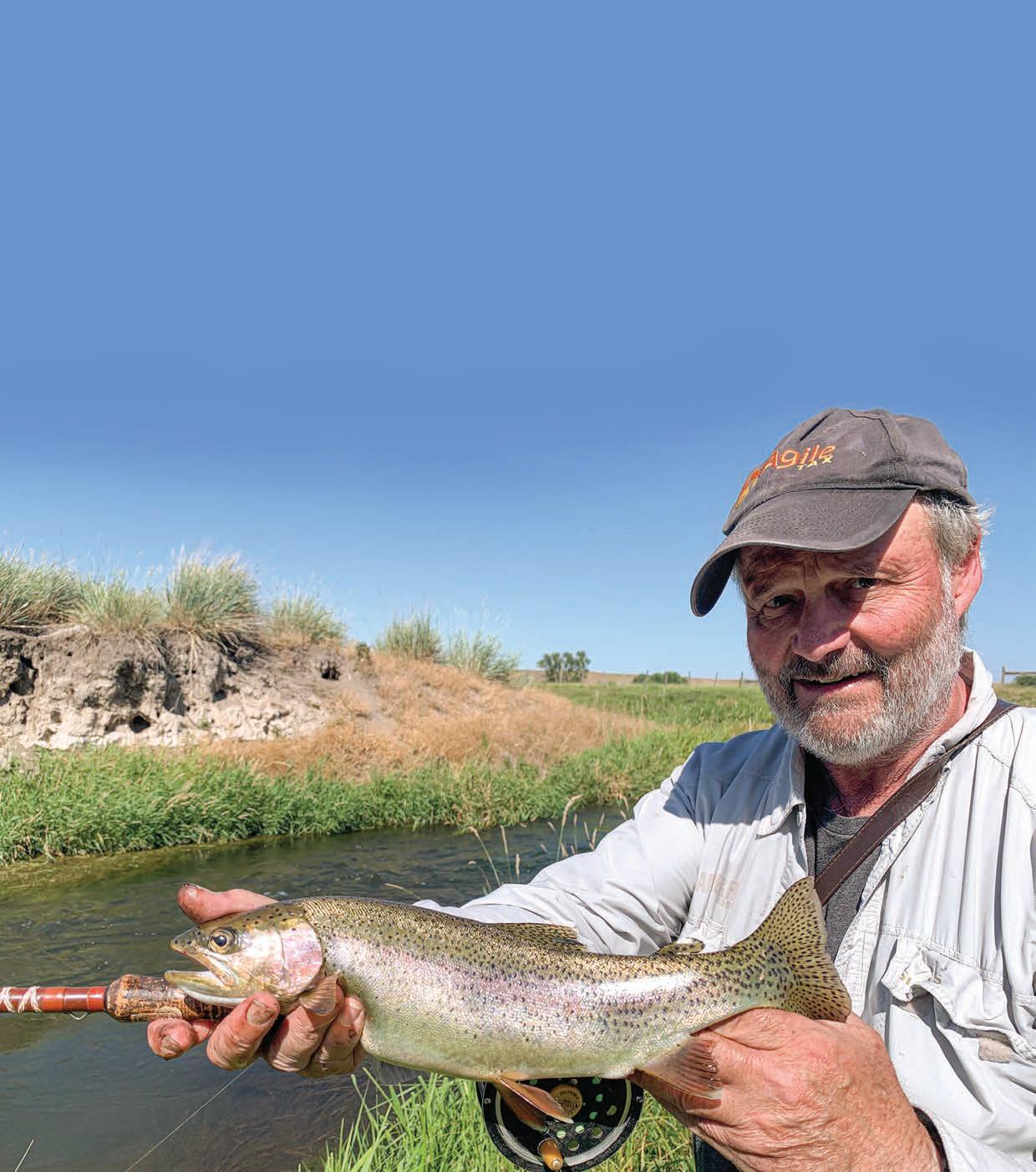
Lower-elevation creeks that flow through grassland, meadows and pastureland in the greater Columbia Basin typically offer some of the best early-season trout fishing in the Pacific Northwest. (STEVEN JOHNSON)
Creeks can be a great place to start your season before mainstem rivers are fishable, but there are a few tricks of the trade to know.
By David Johnson
Northwest trout anglers have good reasons to plan some small-stream trout fishing this spring. Creeks at lower elevations or in smaller watersheds become fishable early in the season, while some mountain waters stay cold all summer. There’s always somewhere good to fish from the middle of May through October.
But fishing for trout in creeks is also just plain fun. Aside from the chance that you’ll be in beautiful country and might not even have to deal with many other anglers if you get away from roads, small streams represent trout fishing stripped down to its core fundamentals.
All the essential problems of trout fishing are there: Where are fish holding? Why there? What are they eating? What should you use to catch them? How do you present your bait, lure or fly? How does the food base, water flow, cover and stream bed influence the fish and thus how to catch them?
Many anglers think fishing small creeks is a relatively simple form of trout fishing. But as in most fishing, some anglers consistently catch more fish than others. They catch more fish because they spend more time doing things that work.
Small creeks are different than rivers. In my experience, there are three factors that differentiate anglers who catch a lot of fish on a small stream versus those who don’t: You catch more fish if you fish tight to the best cover, fish efficiently and fish fast.
FISHING
FISH TIGHT TO GOOD COVER
First, if you fish where the fish are, you catch more fish. This sounds obvious, but it’s the main difference between anglers who fish a stretch of creek and catch three trout and the anglers who fish the same stretch and catch 12 trout.
Even in small creeks trout are not randomly distributed in the water. Both food and good cover are almost always in short supply (from the trout’s point of view) in small streams. That’s because food and cover are factors that limit the trout population.
Much of the water in small streams is not good cover, usually because it’s too shallow, or so swift it takes too much energy for fish to hold there. So if you want to catch more fish, stop spending time fishing in places where there are no fish. Some parts of trout fishing are complicated, but this isn’t one of them.
Trout in creeks spend most of their lives orienting themselves to cover and current breaks next to where food is. Most of the time they hold in places where they can use as little energy as possible yet still see and strike any food washed down the creek. Trout also favor some depth of water, because they feel safer.
In big rivers there are a lot of places for trout to hold and see enough food to make a living. In small streams, such places are prime real estate for trout.
Some anglers think that drifting through any part of a hole on a small creek will draw strikes because trout will know the offering is there. But many of the small aquatic insects that make up the diet of small-stream trout aren’t worth the swim over. Don’t make the fish work for it. In small streams fish can be reluctant to leave cover like undercut banks or logs to chase food being swept downstream on the other side of the creek.
The best cover in small streams usually has a combination of characteristics. The first is depth of water. As a general rule, even in very
small creeks I’m more interested in cover where the water is at least knee-deep, and deeper is better.
Second, there has to be some hard cover – a rock, a ledge in the stream bed, cutbanks, logs or wood debris are the most common – that slows the stream flow and thus provides the fish with a place to hold easily. Downed trees or logs near main current flows are my favorite cover,
because they are complex, providing relief from the current as well as overhead cover – and they can even generate food in the form of ants and grubs that fall into the water conveniently close to the fish.
Finally, ideal cover is next to current that is likely to carry most of the food washing down a creek. When all three elements are in the same place, you’ll catch fish.
In freestone creeks, the first holding water downstream of a long stretch of riffles typically holds actively feeding trout that wait for aquatic insects to wash down to them. (DAVID JOHNSON)
FISHING
LOW SNOWPACK WILL IMPACT STREAMS
Lack of snow and a warm spring could make choosing trout streams tricky in 2026. Across the region, snowpack going into spring was shockingly low.
From coastal streams coming off of the Olympics to high desert streams in Southeast Oregon, most trout waters depend on a gradual release of cold snowmelt during the spring to stay high and cool. But in many drainages, especially below 5,000 feet, there was simply little or no snow to melt by the end of March. All snow monitoring stations along the I-90 corridor east of Seattle had less than 50 percent of normal snow levels. Sasse Ridge, at the headwaters of the Teanaway, was at 38 percent. Blewett Pass was at zero.
Every single station in Oregon’s Cascades was below 50 percent, and the situation is more dire in the south and east: nowhere around Klamath Lake had more than 3 percent of normal snow. On Steens Mountain, the Silvies station at 7,000 feet had no snow. There was effectively no snow in the Blue Mountains west of Baker City.
Parts of the Wallowas were slightly better –Aneroid Lake was at 48 percent; it’s also at 7,430 feet, much higher than most locations.
Some parts of the Idaho Rockies fared a bit better, at least stations higher than 6,000 feet. Bogus Basin (6,340 feet) north of Boise was at 31 percent, but Camus Creek Divide (5,730) to the southeast was at 0 percent.
For trout anglers, such extreme low snow levels mean your favorite small stream is likely to reach its best fishing much earlier than most years, notably Central and Eastern Oregon streams like Deep Creek, Crooked River, the upper John Day and the Blitzen (though some roads accessing the Blitzen open later in the year).
Most streams in Northeast Oregon don’t open until May 22. The Wallowa River is open all year, but will peak after that. The Wenaha River in the Blue Mountains near the Washington border mostly drains lower elevations than the Eagle Cap and might be fishable earlier than usual. The middle Wenaha is a fine trout stream for backpacking anglers who
INLAND BOATS & MOTORS
don’t mind walking down into (and back out of) an isolated canyon and do not find rattlesnakes alarming.
It’s harder to tell about streams like the Teanaway in Central Washington, which opens the Saturday before Memorial Day. There’s some snow in the drainage, and a warm rain event could make it high when you happen to be there. A section of the river did experience a recent forest fire, which might influence runoff and water clarity. But it’s a good bet that early is better than late on this stream.
Some drainages in Idaho may have close to normal springs, including the Pend Oreille/Clark Fork drainage and parts of the Salmon River. But many excellent small cutthroat streams in Southeast Idaho start in mountains with very low snow levels this year. Idaho generally allows catchand-release fishing early on most streams. You’ll have to scout drainage by drainage to determine ice-out and water levels (and road conditions), but it’s a safe bet many of these streams will peak very early. –DJ
THE LEELOCK MAGNUM SKEG
The LeeLock magnum Skeg #LMS-04 is made for Minnkota Instinct Quest motors. It will drastically improve the steering performance and straight line travel of your bow-mounted motor. Not only does this Skeg improve your motor’s performance, it also makes it much more efficient. Your batteries will run longer on a charge. A LeeLock Skeg is a vital part of your trolling motor system.
This oversized skeg is made of 5052 aluminum. The size is 8 3/4 inches high by 10 inches wide and it’s 3/16 inches thick. It comes with clear PVC coated stainless steel hose clamps. The magnum skeg is available for other motors as well.
HEAVY
DUTY QUICK CHANGE BASE
The Heavy-Duty Quick Change Base #QB-03 is like the standard Quick Change Base, but beefed up to provide a wider footprint. This provides a more secure mount. Like the standard Quick Change Base, the Heavy-Duty base allows you to easily and quickly switch between the #CRN-01 Columbia River Anchor Nest, any of the 3 Bow Mount Trolling Motor Mounts or the #BL-01 LeeLock Ladder. Simply remove the pin and slide an accessory out and slide another accessory in and replace the pin.
The Heavy-Duty Quick Change base mounts to almost any power boat as long as the footprint fits on the bow area of the boat. It has 7 5/16 inch mounting holes. The Heavy-Duty Quick Change Base is handmade of aluminum. Go to LeeLock.com to order the Base alone or to add the CRN-01 Columbia River Quick Change Anchor Nest, the three Bow Mount Trolling Motor Mounts, or the LeeLock Ladder to your order.
LEELOCK #SP-04 1/2 INCH SIDE PULL LOCK UNIT
Our LeeLock #SP-04 1/2 Inch Side Pull Lock Unit bolts on top of the frame of most rafts, and catarafts. This patented unit gives you a much easier and safer way to secure your anchor line and eliminates the need for a traditional jam cleat. Best of all it prevents accidental anchor release!
It is constructed of 1/4” aluminum. This lock is designed to be used with most 3/8” to 1/2” anchor lines. It does not have mounting holes so it can be drilled to an individuals specific boat. 1/4” fasteners recomended (stainless steel recommended, not included) to mount.
Hassle free, reliable and easy!
LEELOCK CRAB CRACKER
This new tool from Leelock will allow you to measure your Dungeness crabs to determine which ones are legal to keep. Then use the Crab Cracker to crack them in half, separating the two clusters from the shell and guts.
The Crab Cracker has been designed so that it sits nicely on top of a 5-gallon bucket, perfect for when you clean crabs. The bucket gives you a stable base, which makes it easier to clean – the guts and shell go into the bucket, making cleanup a snap. Crabs cleaned this way take up half as much space as whole crabs, so you can cook twice as many in your kettle.
The Crab Cracker is a unique tool made from solid aluminum, and comes in handy for cleaning Dungeness crabs. US Patent 12564195-B2.
FISHING
FISH EFFICIENTLY
Being able to look at a section of creek and tell where the fish are likely to be holding is the first step in fishing efficiently: Spend as much time with your offering in the best drift as possible, and as little time fishing waste water.
And no matter how good your gear or technique, you’ll never ever catch any fish when your bait or fly is completely out of the water.
Good anglers finish a drift and quickly get their offering back in productive water. They know before the end of one drift where they will
cast next. Less successful anglers spend orders of magnitude more time with their bait or fly completely out of the water.
Most anglers fishing nymphs, dry flies or bait know that dragfree drifts tend to produce more strikes, because most food trout eat in small streams don’t swim against the current. The same current tends to wash food into certain places in holes and not others.
If you consistently put your bait or fly in places that are nowhere near where the current should naturally put it, your offering will look wrong
to fish and they are less likely to strike it. So don’t do that.
You should get more efficient through the day as the fish in the creek tell you what kind of cover they prefer. When you get a strike, note not just what fly the fish hit, but also water depth, flow speed, type of cover, presence of shade –any variable you can think of that might have caused a feeding fish to choose to hold there.
As the day goes on, build a mental profile of what the fish in this particular creek want, and then give it to them.
Small streams in the greater Columbia River watershed are home to native redband rainbow trout. You might also encounter westslope cutthroat, brown, brook and bull trout, even smallmouth bass, while coastal and sea-run cutts and resident rainbows inhabit Westside streams. (STEVEN JOHNSON)
Smokercraft Sunchaser Pontoon
Smokercraft Sunchaser Pontoon
Weldcraft 200 Rebel
Weldcraft 210 Revolution
Southbay
FISHING
FISH FAST
The most effective way of catching more fish in small streams is to fish more of the stream in less time. Especially in very small freestone creeks, there might only be one to three adult trout in a good hole, and not all of them feed all the time.
If a hole looks like it should hold a couple of fish, and you catch one, but then make three good drifts without a strike, you have a choice to make. You can spend 20 minutes trying to figure out how to get that second fish to hit – and if you do, catching that stubborn trout can be really rewarding. But you could also just move to the next hole 15 yards upstream and catch the dumbest fish there right away in one-third the time.
Efficiently presenting drag-free offerings to the best holding areas, so you give any hungry trout a good look or two, needs to be balanced by
a sense of when you are “done” with a spot and need to move on.
One characteristic that defines most small creeks is that typically there are lots of places to easily wade across the stream. Making good decisions about where to cross and which side to most effectively fish each hole can also allow you to cover more water.
LOOK UP ONCE IN A WHILE
Also keep in mind that the quality of a piece of cover in small streams is strongly influenced by what’s going on in the rest of the stream, especially upstream of the cover.
For instance, a long stretch of shallow, swift riffles probably doesn’t hold many trout. But it can be the breeding ground for a lot of aquatic insects – caddis nymphs can be thick in such places. The first good hole downstream of such riffle sections –the first place any insect would get
washed into – is prime real estate for small-stream trout. It has more food coming in than other holes.
Often, the landscape around a creek gives you clues about how to fish. One well-known factor is that hayfields, meadows and dry canyons with lots of cheatgrass or Johnson grass produce grasshoppers, which form an important part of the diet of trout. If you are fly fishing and like dropper setups, hopper patterns make a good choice for the floating fly.
There are dozens of environmental factors that can influence the fishing on a small creek, from cold spring inflows to food-rich tributaries to dead pine stands along the creek (dead wood is home to a lot of ants that trout will eat if the ants fall into the water).
Being aware of the larger creek habitat helps you fish more effectively and appreciate the experience of stream fishing more. NS
Try Your Luck On Cutts
By Trevor Torppa
Many of you who tune into these monthly articles may already recognize the name cutthroat trout, and most of you have heard of trout in general. Generally, trout reside in both lakes and rivers where they spend their entire lives. Some cutthroat trout are just like
our steelhead because they travel to the ocean and later return to the rivers and streams they were born in to spawn. These trout often grow to a greater size than our resident trout such as rainbows and brook trout. Techniques for catching cutthroat vary, so I will break down how similar they are to steelhead based on feeding habits, spawning habitat and behavior.
Westside rivers and streams can be good for these slash-jawed
battlers.
WHERE WE FISH FOR CUTTHROAT
Cutthroat trout reside in most of the streams and rivers we have all up and down the Washington and Oregon Coasts. Fishing for these fish usually is done with bobber techniques as well as spinners and small twitching jigs. Ideally, some river experience is helpful when targeting these fish because they will be in the areas where you catch
Coastal cutthroat represent a good spring stream fishery from the Cascades west. This beautiful quartet was collected during sampling following Oregon’s devastating Labor Day 2020 wildfires. Trout densities were highest in low to moderate burn areas. (ALLISON SWARTZ, OSU COLLEGE OF FORESTRY, FLICKR, CC BY-SA 4.0.)
FISHING
all of the other salmonid species that we have here in the Pacific Northwest. Targeting long, evenly proportioned gravel bars where these fish typically spawn is a great spot to start. Fish of this size can sit in very shallow water, and can be often seen before you cast at them. It is important to stay away from the area you are fishing and sneak into your introductory casts. This can be crucial in small streams because they can be very low and clear, making it just as easy for the fish to see you and spook. These fish will also sit in big, deep holes, as they provide all sorts of cover. The more debris and trees surrounding your fishing spot, the better.
For the most part these fish are wild, meaning they weren’t raised in any sort of hatchery. This can be good to know because they are usually very aggressive and “bitey” fish. Throwing big presentations should not scare you just because cutts are smaller than the average fish we catch using our techniques for both salmon and steelhead. The only reason I know that is because there is a time during late winter steelhead season when cutthroat typically migrate into the rivers and they don’t shy away from our big beads and worms that we
use. Be sure to fish everything as you would for any other species, as well as break down every hole as if you are covering every square inch of it.
TECHNIQUES FOR CUTTS
Techniques vary when fishing for cutthroat trout. Typically when you start fishing, spinners are a great place to start. When fishing a spinner, size down to a size 2 or even smaller depending on how far you have to cast and how deep the hole is. The deeper the hole, the bigger the spinner, but for shallow riffles, size back down to drift your lure right through the rocks.
Spinners give you the advantage of covering water very quickly whether you are fishing from a boat or from the bank.
Bobbers and bait are also a great option when targeting these fish. Where bait is allowed, salmon eggs or a nightcrawler is unbeatable. I used to love this fishing as a kid; it is very action-packed and very easy to get into.
Where bait is not allowed, try to use small jigs and pink worms. Set your bobber stop to where you are just above the bottom of the river and keep adjusting until you find where they are at.
Fly fishing is also a great option while targeting cutthroat trout. Cutts are always feeding, and they can be a great introduction to fly fishing for someone who may have hopes and dreams of getting a steelhead on the fly. These very plentiful and bitey fish give you great practice on fighting fish with a fly rod, as well as help you learn about varying your sink tips and fly selection while fishing in a river setting.
Drift fishing is not generally talked about anymore, as most of us have switched to a more visual setup, bobbers. Bobbers are great, but ultimately give you the same presentation as a properly weighted bait bouncing along the river bottom.
A drift fishing setup consists of your mainline connected to a threeway swivel. Off of that swivel you will have your desired weight based on the specific fishing hole; you want the weight to barely tick the bottom as you feed it naturally into the hole. This is often the hardest thing that comes with drift fishing, but altering your weight selection will lead to more fish landed. Leader length is generally anywhere from 20 to 40 inches. On this leader you can fish bait with a Corky, a pink worm, even small beads.
Cutts obviously can be found in the region’s larger rivers, but there are few greater joys than wet wading down a creek for them. (GREG SHINE, BLM)
FISHING
SPAWNING HABITAT
As you begin to see more rivers and how they work, you will find that most of the fish we have within our streams tend to spawn in similar areas. These areas usually consist of shallow tailouts where the fish don’t have to work as hard after their long journey upstream.
Spawning trout are no different than our salmon and steelhead. Pairs of fish will group together as the female kicks up rocks, creating the “redd” that the eggs will be placed into. When she is ready to lay the eggs, the male will come along and fertilize them. Watching this process is what nature is all about, survival of the fittest. While thousands of eggs are placed into the gravel in hopes that all will survive, it turns out that just a very small percentage make it all the way from egg form to an adult that returns and spawns again. Knowing all this will allow you to recognize cutthroat habits and have a
better idea on where to target them. Spawning congregates these fish into very specific areas, allowing you to understand the movements and feeding habits while watching what they do from afar. Although this may help you figure out where these fish live and spawn, it is just as important to let them be and allow them to continue to produce more fish for us to have fun with. Oftentimes, the upper stretches of the rivers where these fish spawn are closed to fishing for this very reason. Be sure to check the regulations for what is open for retention, where
you can fish and what techniques are allowed. For instance, most Oregon Coast streams above tidewater are open only for artificial lures and flies –no bait allowed – beginning May 22. Washington streams typically open the Saturday before Memorial Day and usually only for selective gear. NS
Editor’s note: Trevor Torppa owns and operates Chrome City Guide Service (360751-8748; chromecityguideservicellc.com) in Southwest Washington and Soldotna Fishing Guides - Kenai River LLC (soldotnafishingguides.com) in Alaska.
ID’ING CUTTHROAT
During their spawning run, cutthroat colors change. They will often look like a little steelhead or rainbow. The main characteristic that allows you to tell them apart from other species is the red line just below their gill plate. It is important you know this, especially when wanting to retain these fish where allowed. They are often mistaken for half-pounders, the young steelhead that make a quick trip to the ocean and back instead of spending a year and a half or more in the Pacific like most Northwest steelhead. –TT
Fun With A Finn
The bowl of soup in front of me is amazing. Simple flavors – potatoes, onions, carrots, peas, salmon, cream and dill. Combined, they’re way more than the sum of their parts.
“What is this dish called?” I ask.
The reply is something completely foreign to my ears, a string of consonants, syllables and vowels that I have no reference point for.
CHEF IN THE WILD
By Randy King
“One more time?” I say, cocking my head like a Lab puppy, hoping the new angle of my ears will clue me in to what was just said. I strain to listen and try to repeat the single word slowly. It sounds like a spell being cast in some Hollywood movie.
“Lo-hi-keit-to?” I stammer out to Edi, my son’s partner.
“Close,” they say, giving me that sweet smile you get when you are not close, but Edi is trying to be nice.
Edi is a Finn and is staying at my house for a few months this spring. They met my son Cameron on foreign exchange three years ago in Germany. And they have both been navigating a 5,500-mile longdistance relationship ever since.
While Edi is in Idaho, we do as many American things as we can. We shoot guns. We camp. We fish. We take road trips. But we always try to eat Finnish food.
My family has a tangential connection to Finland – vague family memories of currant jelly being served over mashed potatoes, chipped elk and mushrooms, what was known as SOS around my house. The dish is actually called Poronkäristys in Finland, and we made it last time Edi came to town (see the September 2024 issue for the story and recipe). I cannot pronounce that dish either.
AFTER A QUICK fishing trip on Wilson Creek in Nampa, Idaho, Edi catches their very first fish. It’s a nice hatchery rainbow trout. We are now in the mood for seafood. That is
Catching a rainbow trout from a Boise-area stream inspired Edi Repo to share a Finnish salmon soup recipe with their partner’s family during an extended stay with them this year. (RANDY KING)
IT’S DILLICIOUS
I would like to thank Edi Repo for this recipe and guidance on the dish. They inspire me with food every time I see them.
1/4 cup butter
1 large yellow onion, diced
4 cups fish stock (no lie, I use cubes)
1 pound potatoes, peeled and cubed (about 1-inch cubes)
1 large carrot, coined, about 11/2 cups
1 cup frozen peas
1 pound salmon, cut into large pieces
1 cup heavy cream
Kosher salt
Freshly ground black pepper
Chopped fresh dill, for serving
Put a large pot over medium heat. Add the butter and let it melt. Add the onion and cook, stirring often, until the onion softens and turns translucent, about five to six minutes.
Add the fish stock, potatoes and carrots. Bring the pot up to a boil, then keep it at a steady simmer until the vegetables are tender, 10 to 15 minutes, depending on how big you cut the potatoes.
Add the salmon and pour in the cream. Bring the soup back to a gentle simmer and cook just until the salmon is cooked through, about five to six minutes. Season with salt and pepper. Taste the broth before you add too much salt, as stocks vary a lot.
Ladle the soup into bowls and finish with chopped dill. Serve hot. Bread on the side makes sense here, especially if you are the type who does not like to leave any broth behind. –RK
Lohikeitto, Finnish salmon soup with potatoes, carrots, onion, peas and dill swimming in cream and fish stock. (RANDY KING)
COLUMN
when Edi brings up lohikeitto. As we hit the grocery store, I know this simple dish will be amazing, not only for its clean flavors, but for the story it will tell.
Back home, the house smells like butter before it smells like fish. Edi and Cameron like to cook together. I find it sweet. They set the pot on the burner and let it warm up while they line up the ingredients on the counter. The onion goes first, sliced thin, and it hits the melted butter with that soft hiss that always feels like the beginning of something good.
Potatoes next, then carrots. I watch close by, trying not to hover, just pretending I do not want to help. Every now and then I just smile and watch them
cook. Ah, youth. I try to say the dish’s name again. I still cannot pronounce it. The salmon waits on a plate, and the dill too. Soon, it will be soup.
Lohikeitto is Finnish for salmon soup. The name is almost hysterically literal; lohi means salmon and keitto means soup. Finland does not waste words when the food speaks for itself.
For a chef like me, just calling something “salmon soup” is too easy, probably to my detriment. My brain wants to complicate things: What kind of salmon soup? But that is also what I like about the dish. It is such a staple that it does not need extra words to describe it. Like they say in the newspaper business, do not bury the lede.
AT ITS CORE,
lohikeitto is a simple stew of salmon and vegetables, usually potatoes, carrots and onions or leeks, finished with cream or whole milk and a big handful of dill. It is common home cooking in Finland, the kind of everyday meal you find in homes and cafes.
Geographically, the soup tracks when you look at the map. Finland is a country built around water, with roughly 188,000 lakes, plus a long Baltic Sea coastline and a culture that stays close to fish. When you have that many lakes and that much shoreline, salmon is not a luxury item in the way it can be elsewhere. It is food you plan around, work around and come home with. Yet another reason why the Finns are basically European Northwesterners.
From my time fishing along our shared coast, I know why lohikeitto exists. When you live near water, fish is not exotic. It is just part of the year. It is in your freezer. It is in your cooler. It is in the stories you tell. A good trout does not need much. A good salmon does not either. That is what this soup feels like to me. It is a bowl built for people who come home cold, hungry and happy.
Early versions of the soup were just chunks of fish simmered with whatever root vegetables were on hand, in water or a light broth, meant to be filling and practical. Like all poor people’s food. Over time, a splash of milk or cream softened the edges and turned the broth silky without making it heavy. That creamy finish and simple flavor is a big part of what I noticed first – it reads like chowder, but the Finnish version stays restrained. The seasoning is usually gentle: salt, black pepper and dill.
My chowder has bacon, celery, handfuls of herbs, roux, clams – so much is going on, and it is delicious. But this Finnish dish is simplicity itself. The fish shines.
The prep is easy. Inside Finland there is variation; some cooks go heavier on cream, some keep it lighter with milk, and some older versions stay closer to a clear broth. That is to be expected with any recipe, but the simplicity remains no matter what.
It is a soup built by people who live near water, who bring something home, and who know how to make it stretch without burying the main ingredient. Perfection. NS
Repo and Cameron King take in Idaho’s Shoshone Falls, the historical upstream migration barrier to all Snake River salmon, steelhead and sturgeon before the Hells Canyon complex of dams were built in the 1950s and ’60s. (RANDY KING)
SEATTLE
I-90: Fast Plentiful
YAKIMA
WENATCHEE
ELLENSBURG
Hanford Reach
YakimaRiver
Upper Columbia Lake Washington
Lane To Fisheries
Seattle-to-Spokane interstate a gateway to trout, bass, perch, salmon and more!
Part I of III
By Mark Yuasa
Our highways and byways crisscross and zigzag all across Washington with many hidden fishing gems found along every turn of the road!
SPOKANE
In the first of this three-part series, we’ll take the five-hour drive across Interstate 90 – the longest stretch of freeway in our state, spanning nearly 298 miles – from the shorelines of Puget Sound all the way to the Washington-Idaho border.
This journey bookends the state’s two largest cities, Seattle and Spokane, crosses one of the busiest Cascade mountain passes through lush green forests, arid desert and canyon-like landscapes, and rises into the high plains and farmlands of the Columbia Plateau. What you’ll find in between is a myriad of fishing choices to suit the needs of just about every angler. While fishing is high on the travel memo, we’re also adding in plenty of exciting non-angling stops along the way too!
LAKE WASHINGTON
Fishing dates: Open year-round.
Fish species: Cutthroat and rainbow trout, brown bullhead, smallmouth and largemouth bass, black crappie and yellow perch. You can also find many other fish species that inhabit the lake.
Where to fish: Separating Seattle and Bellevue, the lake covers more than 22,000 acres, offering a diverse selection of fish to catch with ample public shoreline access to piers and boat launch facilities.
“Lake Washington is home to a wide variety of fish species,” said Aaron Bosworth, a Washington Department of Fish and Wildlife
Sprague Lake
Liber ty Lake Newman Lake
Clear Lake
Columbia River
FISHING
biologist. “Yellow perch are abundant and can be caught from one of the many public docks and shoreline parks around the lake. Other fish species caught in the summer months include black crappie, bass (smallmouth, largemouth and rock bass), cutthroat trout, brown bullhead, peamouth chub, largescale sucker, common carp, American shad and the northern pikeminnow.”
The shorelines on both sides of Mercer Island and from Enatai/ Newport Shores south to Renton are a smallmouth haven where you’ll often see sleek bass boats staged up. The shores around Seward Park and north to Mount Baker, Leschi, Madison Park and the Magnuson Park areas are yellow perch hot spots. Luther Burbank Park on Mercer Island and Gene Coulon Park in Renton have ample docks to cast for fish. Marsh Island and Foster Island along the Arboretum Waterfront Trail is a decent area for warmwater species including bullhead, bass and crappie.
The lake has around 29 public fishing piers. For a detailed list, search wdfw.wa.gov for the PDF titled “Public Fishing Piers of Lake Washington.”
The I-90 and Highway 520 Bridges are the best places to troll for cutthroat trout. Later in the fall, anglers can fish for coho north of 520 by trolling the deeper areas (Webster Point, Hunts Point, Evergreen Point and Arrowhead Point); make sure to check the regulations for season dates.
Boat anglers have better access to some of the larger smallmouth, perch, crappie and bullhead inhabiting deeper areas of Lake Washington that are further from shore. Finally, large numbers of American shad inhabit the depths of the lake, although few (if any) anglers have succeeded at
catching this new species of fish.
Fishing is best for cutthroat from April through October; smallmouth from May through September; and perch from April through October.
YAKIMA RIVER
Fishing dates: Open year-round. Fish species: Rainbow trout.
Where to fish: The Yakima River is a famed blue-ribbon catch-and-release trout fly fishery and can be seen within sight of vehicles zipping along I-90 between Easton and Ellensburg. While the majority of anglers will float in pontoons, rafts or drift boats,
Right out of the gate when traveling from west to east, Lake Washington, bisected by both I-90 and Highway 520, is a multi-species multiverse. Cutthroat trout and smallmouth bass are among the faves here, but the lake is chock-full of yellow perch too. (MARK YUASA; CALVIN TSAI)
FISHING
there are numerous public access points for bank anglers.
A popular fishing section known by locals as the “Farmland Stretch” twists and turns from Thorp downstream to the Yakima River Canyon south of Ellensburg. The upper canyon stretch is best in spring and fall, while the Ellensburg area is more accessible with the prime fishing occurring from July through September.
Bigger fish can be found in the lower canyon and opportunities
are good in spring and fall. Trout measuring up to 20 inches or more feed on grasshoppers as well as stoneflies that reside on the surface, and flyrodders do well using gaudy imitations of those insects. During low flows in the summer, anglers will switch it up and cast dry flies.
UPPER COLUMBIA RIVER
Fishing dates: July through mid-August. Where to fish: I-90 bisects this salmon fishery stretching from
BONUS FISHING STOPS
In Elliott Bay – located within a bird’s-eye view of downtown Seattle – the Seacrest Pier in West Seattle usually picks up for salmon by midsummer and fall, while the front end of the squid migration begins to show up by early September, commencing the jigging festivities. The pier is open year-round to fishing. The inner-Elliott Bay salmon fishery could open in early August with dates to be determined, so check wdfw.wa.gov for in-season updates.
In the area around Issaquah and North Bend are Lakes Sammamish, Pine and Rattlesnake, which can provide good fishing at times for a mix of species. East of the Cascade Mountains, look for a mixed bag at the Potholes Reservoir and Moses, Banks and Medical Lakes. There are many other lakes open to fishing both seasonally and year-round; see wdfw.wa.gov/fishing/locations/ lowland-lakes for details. –MY
About midway between Seattle and Spokane, the interstate crosses the Upper Columbia, and the tailrace of Wanapum Dam below Vantage serves up salmon in the form of sockeye and hatchery summer Chinook. Check the regs for this year’s rules. (JAROD HIGGINBOTHAM)
LIGHTWEIGHT.
The lightest 200-hp four stroke on the market
2.8L displacement and Variable Camshaft Timing give it the best power-to-weight ratio of any 200-hp four stroke
Nearly 120 pounds lighter than our four-stroke V6 F200
Show the water who’s boss with the F200 In-Line Four. Incredibly light, responsive and fuel efficient, it serves up plenty of muscle to handily propel a variety of boats. On top of that, its 50-amp alternator offers the power to add a range of electronics, and its 26-inch mounting centers and compatibility with either mechanical or digital controls give you the flexibility to easily upgrade your outboard or rigging. Experience legendary Yamaha reliability and the freedom of forward thinking, with the F200 In-Line Four.
COOS BAY Y Marina (541) 888-5501 www.ymarinaboats.com
CHINOOK
Chinook Marine Repair, Inc. (800) 457-9459 www.chinookmarinerepair.com
Master Marine Boat Center, Inc. (360) 336-2176 www.mastermarine.com
MOUNT VERNON
Tom-n-Jerry’s Boat Center, Inc. (360) 466-9955 www.tomnjerrys.net
OLYMPIA
Us Marine Sales & Service (800) 455-0818 www.usmarinesales.com
FISHING
Priest Rapids Dam below Wenatchee upriver to Brewster Pool. Sockeye are the bread and butter of summer fisheries on the mainstem Upper Columbia. Water levels, flows and temperatures between each dam affect how the fish bite and their movement patterns. The summer Chinook fishery will be managed inseason – keep tabs on the WDFW emergency fishing rules webpage for updates in July – and if it opens, some good locations are off the mouth of the Entiat River, Rocky Reach area, Chelan Falls/Beebe Bridge area and below Wells Dam. The best salmon fishing usually occurs right before daybreak and through the morning hours. Action dips as the sun rises
DESTINATIONS ALONG THE WAY
Washington State Parks: Make it a combo outing by spending some time camping, hiking, sightseeing or simply strolling in the Mount Baker-Snoqualmie National Forest and Alpine Lakes Wilderness or nearby state parks and campgrounds. Options include Iron Horse State Park/John Wayne Pioneer Trail; Lake Easton State Park; Steamboat Rock State Park; Riverside State Park; and Gingko Petrified Forest State Park.
WDFW-managed lands: More than 1 million acres of wildlife area lands can be found throughout the state. To find them, go to wdfw.wa.gov/places-to-go/wildlifeareas. WDFW also manages hundreds of water access sites throughout Washington, providing recreational access to the state’s lakes, rivers and marine waters. Some
WDFW-owned properties are managed for water access by other agencies and are subject to those agencies’ rules. To find water access areas, go to wdfw.wa.gov/ places-to-go/water-access-sites.
Places to eat: Scott’s Dairy Freeze and Twede’s Café in North Bend; Cottage Café in Cle Elum; The Red Pickle and Campus U-Tote-Em Burgers in Ellensburg; Blueberry Hills Farm in Manson; McGlinn’s Public House in Wenatchee; Dick’s Hamburgers, Frank’s Diner and The Flying Goat in Spokane. Yelp is your best friend when it comes to seeing what is best and suits your appetite!
Fun family stops: Snoqualmie Falls; Bob’s Espresso at Snoqualmie Pass for a giant corn dog; Gingko Gem Shop in Vantage; Bavarian town of Leavenworth; Fourth of
July celebration with largest cherry pie in world in George; Palouse Falls State Park to view 198-foot massive waterfall; Surf’n Slide Water Park in Moses Lake; and Riverfront Park, Big Red Wagon, Spokane Falls and Numerica SkyRide in Spokane. Additional stops: Small cities, towns and other destinations along the way worth a stop include Issaquah, North Bend, Snoqualmie, Cle Elum and Ellensburg; The Gorge Amphitheatre; Suncadia Resort near Cle Elum; Thorpe Fruit & Antique Mall near Ellensburg; Icicle Brewing Company in Leavenworth; Wild Horse Renewable Energy Center east of Ellensburg; Two Mountain Winery and Bonair Winery in Zillah; and the 40-mile stretch of the Centennial Trail stretching from downtown Spokane to Nine Mile Falls. –MY
Managed as a mixed-stock fishery, Sprague Lake fronts I-90 in the upper Channelled Scablands and is home to fast-growing stocked rainbow trout and black crappie. (BOBBIE STALLINGS VIA WDFW; WDFW)
FISHING
and the temperatures soar by late morning, but then picks up later in the evenings just before sunset.
The 2026 forecast for sockeye destined for the Okanogan River is 184,000, which is up from 2025’s actual return of 101,511 and down from the forecast of 248,000. The 2026 summer Chinook forecast is 41,000, up from last year’s forecast of 38,000 and down from an actual return of 43,642.
Salmon fishing seasons for the Upper Columbia should be announced sometime in early to mid-June, but they usually begin in early July depending on the river section. A list of 2026-27 proposed salmon fisheries can be found on WDFW’s North of Falcon webpage, wdfw.wa.gov/ fishing/management/north-falcon.
SPRAGUE LAKE
Fish species: Rainbow trout, Lahontan cutthroat trout, largemouth bass and a broad range of other fish species.
Fishing dates: Open year-round.
Where to fish: This 1,860-acre lake is located 2 miles west of the city of Sprague and borders the south side of I-90 off Exit 245 between Adams and Lincoln Counties.
“Sprague Lake is a good mixedstock species fishery,” said Michael Schmuck, a WDFW biologist. “Bluegill
fishing is often good throughout spring and summer. Largemouth bass (in the 2- to 5-pound range) and black crappie can be found from April through June, and year-round for channel catfish.”
It is not uncommon to catch rainbows up to 22 inches. The 2026 stocking plan shows 14,000 rainbow trout categorized as “put, grow and take” – reared in hatcheries and 2.6 to 10 fish per pound in size – stocked in 2025. The fish that survived through the winter should now average 8 to 12 inches. Sprague also received 181,358 rainbow fry/fingerling in March and May 2025 and which should now be in the catchable-size range (8 to 12 inches). And the lake has been planted with channel catfish several times in recent years.
CLEAR, NEWMAN AND LIBERTY LAKES
Fishing dates: Clear Lake, at 375 acres and located just north of I-90 and west of Cheney, is a seasonal fishery open from late April through October 31; Newman Lake, 1,099 acres and located north of I-90 and about a mile west of the Washington/Idaho border, is open year-round; and Liberty Lake, 711 acres and located south of I-90, also by the state line, is a seasonal water open from late April through October 31.
Fish species: Depending on the lake,
BEFORE YOU CAST …
Washington anglers will need a valid 2026-27 recreational fishing license. WDFW offers two mobile apps, both designed to make your outdoor experience easier and more efficient. MyWDFW ser ves both hunters and anglers, offering electronic tagging, harvest reporting and access to licenses and permits. Fish Washington is tailored to anglers and provides fishing regulations, digital catch cards and license management. Licenses may be purchased online or from hundreds of license dealers across the state.
Before heading out the door to any fishing spot, remember to check WDFW’s fishing regulations webpage, wdfw.wa.gov/fishing/regulations, for permanent regulations and the emergency fishing rules webpage at wdfw.wa.gov/fishing/ regulations/emergency-rules for rule updates affecting fisheries.
Anglers parking at WDFW vehicle water access areas are required to display the WDFW Vehicle Access Pass – provided when you buy eligible annual fishing licenses –or a Discover Pass. Anglers visiting Washington State Parks or Department of Natural Resources lands need a Discover Pass. Information on parking passes can be found at WDFW’s parking and access passes webpage, wdfw.wa.gov/licenses/parking. –MY
each hosts an array of fish species including rainbow, brown, brook and tiger trout; largemouth and smallmouth bass; black crappie, bluegill, yellow perch and pumpkinseed sunfish; and tiger muskie.
Where to fish: “Clear has a fairly robust trout population (rainbow, brown and tiger trout), as well as largemouth bass and some black crappie,” said state fish biologist Randy Osborne. “Liberty Lake fishes fairly well, has a population of rainbow, brown and some brook trout, and a good fishery for largemouth and smallmouth bass, bluegill, yellow perch and a few black crappie.”
Clear was stocked in 2026 with 11,000 catchable-size rainbows; 16,000 put, grow and take rainbows; 950 jumbo-size rainbows measuring 14 inches or longer; and 46,000 fingerling rainbows. Liberty was stocked in 2026 with 4,000 catchablesize rainbows; 350 jumbo rainbows; and 40,000 fingerling rainbows.
Newman is one of the top Eastside lakes managed for warmwater fish (no trout are stocked), and it has a healthy population of largemouth and a few smallmouth. The lake has a decent tiger muskie population and is an excellent trophy fishery for these elusive fish. There’s also a smattering of black crappie, yellow perch, bluegill and pumpkinseed sunfish.
IN PART TWO of this series in the June issue, we’ll look at fishing trips and roadside stops up and down Interstate 5 from Vancouver, Washington, to the US/Canada border. In part three, coming in July, we’ll follow Highway 101 from Olympia north to Port Angeles, west to Neah Bay and then south along the coast to the AstoriaMegler Bridge at the mouth of the mighty Columbia River. NS
Editor’s note: Mark Yuasa is a Washington Department of Fish and Wildlife communications manager. He also was the outdoor reporter at The Seattle Times for 28 years.
UNION GAP Demo Rides Always Available!
2026 North River 228 Pursuit
Spinyrays Emerge From The Shadow In Spring
Often pooh-poohed in favor of Northwest glamour fish, channel cats, panfish and perch provide good opportunities and catches.
By MD Johnson
Even after being back in Washington for over a decade, I guess I should be used to hearing it. “Spinyrays.”
Not “crappie” or “bluegill” or “yellow perch,” but “spinyrays.” It’s an understandable visual description of those Pacific Northwest freshwater game fish that aren’t salmon or trout or steelhead, but it still throws me off a bit whenever I hear it.
But names aside, it’s still something of a secret to many anglers throughout the upper lefthand portion of the nation that the Northwest and the whole of the West Coast, in fact, are home to some excellent fishing for something other than soft-rayed, ocean-going, adipose-fin-bearing species.
California’s Clear Lake is, without question, a blue-ribbon crappie fishery. Idaho’s Lake Cascade is both on my personal bucket list and has produced the state-record yellow perch, a 16¼inch, 3.22-pound behemoth caught through the ice in March 2021, interestingly, by a native of Wisconsin, who I’m assuming is accustomed to long hours on the ice, but perhaps not to 3-pound yellow perch.
Then you have Brownlee Reservoir in far Eastern Oregon, home to crappie, bluegill and channel catfish. And sprawling urban Lake Washington
Whether you call ’em warmwater species or spinyrays for the spiky dorsal fin like the one on this channel catfish, these game fish are a popular option for many anglers in our region. (KNIFE PHOTO CONTEST)
FISHING
along the shores of Seattle, with its healthy population of smallmouth, crappie and more yellow perch.
My point? If a six-minute-long spring Chinook season has you singing the blues and you’re struggling with early summer steelhead, give some thought to shifting gears and setting your sights on – yes, sir – spinyrays. Where and how? Here’s where and how.
CHANNEL CATFISH
Best bets: Me and given it’s May, I’d go to Brownlee Reservoir east of Richland, Oregon. I’d find me some gobblers to chase outside of town at first light, toss a 1/16- or 1/32-ounce jig for crappie and bluegills midmorning, and light the lantern for channel cats after sunset. Sleep? Optional. The lower ends of the Yakima and Palouse Rivers also hold excellent numbers; so, too, does the John Day River. The Willamette River can also be good.
Tips and tricks: Unless you’re chasing monstrous channel cats, the gear needn’t be ultraheavy. An
While you could argue that Northwest fishery managers are less enthused about spinyrays than they used to be, by carefully considering release locations and controlling stocking numbers, they can provide long-lasting fisheries with the various species. Biologist Danny Garrett released this channel
8-foot-6 or 9-foot medium rod with a 5500- or 6500-series Ambassadeur reel spooled with 20- or 30-pound braid works just fine. Partial to spinning tackle? A similar spinning rod matched to a 35-Series Pflueger President would be the ticket. As for riggings, keep it simple.
An egg sinker of a weight suitable for the conditions – i.e., water depth and current, if any – 5mm bead, and snap swivel to start followed by a 30to 50-pound monofilament leader and a 4/0 to 6/0 circle hook is a good
setup. Bait can be nightcrawlers, shad filets (portions thereof), chicken livers, Mormon crickets – google that one; I did – or any of 101 so-called “stink baits” available commercially.
CRAPPIE
Best bets: If I had the time, I’d call up Ed Legan, owner of Clear Lake Guide Service (fishingwithed.com; 702-497-8938) down in Clearlake, California, and spend a couple days fishing crappie with him. This is crappie fishing at its absolute finest,
cat at Spokane’s Liberty Lake, one of 12,400 stocked at 12 lakes across Washington in 2024. (WDFW)
Slabs like this Clear Lake crappie are the dream for panfishermen. Lake Washington and Brownlee Reservoir are two top Northwest bets for specks. (ED LEGAN)
KICK ASS BOAT DEAL!
$89,950.00 plus Tax, Title, and Neg Document Service Fee 2026 Fish Rite 22’ Sportsman HT
This one FISHES HUGE!! 2026 Fish Rite River Master 20’. Perfect for Puget Sound saltwater and all the river systems that feed it. Equipped with locking rod lockers, two Elite helm seats on slider boxes, bow fish box, bow anchor box, 40-gallon fuel tank, and much more! We have packaged this boat with a Honda 115 HP tiller handle jet pump. Price includes boat, motor, and trailer. You will not find a better quality-built boat at this exceptional price.
$53,950.00 plus Tax, Title, and Neg Document Service Fee
2026 Fish Rite 18’ Angler
Brand new model for the 2026 season. Fish Rite 22’ Sportsman HT. This one has it all: offshore bracket with walk-through transom, huge fish box, full Alaskan cabin, bow fish box/anchor locker, 24” seats with tons of storage, powered by a Honda 200 HP, and a Yacht Club tandem-axle galvanized trailer with swing tongue. These amazing boats are made locally in Grants Pass, Oregon, with some of the finest fit and finish in the industry. Pricing is for the boat, motor, and trailer. This package is thousands of dollars less than most competitors and offers every bit of the quality. Kicker motor and electronics packages available. The absolute perfect all-season boat for the PNW. Don’t miss out on this one!
2026 Fish Rite 20’ River Master
New center console T-top design for 2026. Fish Rite 18’ Angler powered with a 90 HP Honda outboard, fold-down windshield, front bow box, diamond plate bow guards, rod holders, and so much more. Fish Rite is one of the finest hand-welded, heavy-gauge boat manufacturers around. The design of this Angler, with its reverse chine, makes it nimble on open water and an incredibly stable fishing platform. Several motor options available.
$39,950.00 plus Tax, Title, and Neg Document Service Fee
FISHING
and Legan is the man to go with.
But given high gas prices, DIY trips here in the Northwest offer up some good options too. I’d go to Lake Washington or Cowlitz County’s Silver Lake; the aforementioned Brownlee; or Henry Hagg Lake in Oregon’s Washington County. Central Oregon’s Prineville Reservoir offers good crappie fishing too.
Tips and tricks: Legan’s two favorite crappie weapons are, he told me, “a Keitech 2.5-inch (Swing Impact) swimbait in white,” with his second and third choices being “from Bobby Garland, those (plastics) in monkey milk and purple monkey patterns.”
Who said crappie anglers weren’t original?
On Cowlitz County’s Silver Lake, the go-to is a 2.5-inch Freaky Worm from Freaky Frank’s (ffcustomtackle .com) fished on a 1/16- or 1/32-ounce jighead, often under a slip bobber. Other tried-and-true crappie lures include small inline Rooster Tail or Mepps spinners, light marabou jigs, again under a bobber, or lipped crankbaits like Berkley’s Flicker Shad. All these offerings can be fished with a 6-foot-6 to 7-foot-6 light or ultralight spinning rod and matching reel spooled with 6-pound monofilament.
BLUEGILLS
Best bets: In Washington, the Grant County trio of Moses and Banks Lakes and Potholes Reservoir all hold good numbers of bluegill, while to the south, Klickitat County’s Rowland Lake offers not only ’gills but pumpkinseed sunfish and a handful of crappie. I’ve heard good things about Lake Fazon, a tiny 31-acre lake/pond northeast of Bellingham, from scientific folks I trust, but can’t substantiate that personally. If you’re looking for lots of fish and a few eaters, but nothing the size of a Frisbee, there are, according to the Oregon Department of Fish and Wildlife, 50 places to fish within 60 minutes of Portland (myodfw.com), many of which hold a surprising number of bluegills.
CHEHALIS
RIVER BASS SUPPRESSION STUDY TO BEGIN
There’s a place for spinyray species in the Northwest, but rain-dependent coastal Chinook rivers apparently ain’t it. As state and tribal managers in Oregon continue to cull smallmouth from the Coquille River near Bandon to help Chinook, the Washington Department of Fish and Wildlife will run a pilot suppression study on three species of bass in Grays Harbor’s Chehalis River this spring to see if it can help reduce smolt predation there. They’ll be focusing on 10 miles of the river around Centralia and Chehalis, where summer water temperatures present a persistent core of optimal habitat for smallmouth, largemouth and rock bass. The three nonnative species now represent greater than 80 percent of the predators in the river system, having replaced native northern pikeminnow in that role since 2007, and managers are particularly concerned about their consumption of young salmon.
This new study follows on past WDFW Chehalis River sampling, tagging and tracking work. According to preliminary estimates, Chinook represented 15 percent of smallie diets, and 41 percent of sampled fish contained Chinook. The average ate six, but one ate a kingsized 17. Chinook were also found in 34 percent of largemouth bellies, 19 percent of rock bass. Predation was highest in years of low, warm flows and high Chinook smolt abundance.
WDFW plans to use electroshocking to remove bass and then estimate what reductions in their abundance would translate to in terms of Chinook consumption. A story in The Chronicle of Centralia reported that a back-of-the-napkin estimate found that 1,000 smallmouth in the Chehalis River around the Twin Cities would eat 35,000 to 75,000 Chinook smolts over a twomonth period, reducing adult returns several years later by 750 to 1,500 kings.
“The impact is especially significant” for spring Chinook, the paper added. There hasn’t been a springer season in the Chehalis since 2018, and game fishing seasons have also been curtailed in some years to reduce incidental angling encounters with the run. –NWS
A Chinook smolt in the gullet of an invasive rock bass is emblematic of the problem managers are discovering on the Chehalis River. They plan to study how suppressing bass populations impacts smolt predation. (WDFW)
FISHING
Tips and tricks: I’m partial to using fly tackle for bluegill. A nice 9-foot 5-weight trout outfit finished with a light tapered leader and 4X or 5X tippet is my choice. In the fly box, you’ll want a small selection of poppers, ’hoppers, minnow- or hellgrammite-imitating streamers, and nymphs, e.g., Hare’s Ear or Elk Hair Caddis. Live bait aficionado? Garden worms, aka redworms or wigglers, are a hot commodity, along with crickets, grasshoppers and mealworms. But let’s not forget downsized artificials like 1/16- or 1/32-ounce twist-tailed grubs, Beetle Spins and size 0 (1/12-ounce) Mepps Aglia spinners.
Shakespeare’s Ugly Stik Elite Series 6-foot-6 ultralight rod and an Abu Garcia Max X reel filled with 4-pound monofilament works. Note that there’s a flat ton of inexpensive ultralight reels on the market today ranging from $8 to $15, so unless you’re a professional bluegill angler, spending a pile of money on a reel isn’t necessary.
YELLOW PERCH
Best bets: True, I’ve not fished it personally – yet – but it’s definitely on my bucket list. If it’s yellow perch ye seek, particularly if you’re chasing trophy-class fish over 14 to 15 inches, then a trip to Idaho’s Lake Cascade is in order. The biggest fish, typically, are caught through the ice; however, they don’t go overland in the summer and disappear.
Fuel prices keeping you close to home? Seattle’s Lake Washington and the smaller Lake Sammamish east of Interstate 405 currently have excellent yellow perch fisheries. (Note that managers have been gillnetting chokepoints on the system in recent years to clear outmigration paths for salmon smolts, so take that into consideration when figuring out where to fish.) In Western Oregon, Henry Hagg and Fern Ridge Reservoir offer perch, while on the Eastside, there’s Owyhee and Brownlee Reservoirs. Tips and tricks: Like bluegills, yellow
Bluegills present something of a crossover option. They’ll bite worms under a bobber, plastics such as twist-tailed grubs, small spinners and spinnerbaits, as well as minnow-imitating flies and trout-world faves like wet and dry caddisfly patterns. (JULIE
perch can often be caught using nothing more than your traditional garden/redworm on a long shank (Aberdeen-style) size 6 or 8 hook fished under a light fixed or slip bobber. If they weren’t illegal in Northwest states, live minnows would be choice number one, again fished under a light bobber, but instead go with a perch filet (if permissible by regulation), perch eyes, mealworms, waxworms and cocktail shrimp. Perch can also be quite aggressive predators, so artificial lures like Beetle Spins, tube jigs, twister tails, Freaky Frank’s, Triple Teasers and size 0 inline spinners, i.e., a Mepps Black Fury, can all produce well.
Tackle combinations should be light to ultralight with rods in the 6- to 7-foot range, and reels spooled with 4- to 6-pound monofilament or fluorocarbon. Fly flicker? Inch-long Woolly Buggers or minnow imitations on a 4-weight or cast with a clear bubble will throw some excitement into the mix. NS
JOHNSON)
December 12 - Start of Tubing Season (Weather Permitting)
December 13 - Snow Dance and Penguin Plunge
December 25 - Christmas Day Buffet (Reservations suggested)
December 31 - New Years Eve Grand Buffet & adult party with live music (Dinner reservations suggested)
January 3 - High School Cross Country Ski Races
January 10 - High School Cross Country Ski Races
January 19 - MLK Day Bonus Tubing Day
February 14 - Rogue Snowmobile Mt. Bailey $5K Poker Run
February 16 - Presidents Day Bonus Tubing Day
February 21, 22 - Dog Sled Races
March 21-29 - Spring Break Bonus Tubing Days
March 29 - Last Tubing Day for the Season
DESTINATION ALASKA
DESTINATION ALASKA
DESTINATION ALASKA
DESTINATION ALASKA
DESTINATION ALASKA
Come fish with us at southwest Alaska’s most remote full-service flyout fishing lodge. Giant char, leopard rainbows, salmon, grayling, pike… there’s something for everyone. Call or email today! www.tikchiklodge.com
Experience the thrill of big game hunting in Alaska’s untamed wilderness with Deltana Outfitters—Alaska’s premier guide service. Whether you’re after Brown Bear, Grizzly, or Moose, our expert guides lead unforgettable Spring and Fall hunts in the remote, pristine Alaska Peninsula andWestern Alaska. Adventure. Expertise. Results. That’s what we do—and Deltana does it best.
90% Success Rate!
Average Moose: 64”
Grizzlies: 7’6” - 8’6”
Black Bears: 6’ - 7’
Brown Bears: 9’ - 10’
DESTINATION ALASKA
We are a rafting and fly fishing guide service based in Willow, Alaska, with more than 20 years of experience on the rivers of Southcentral Alaska. We offer road-accessible day trips as well as fly-out, multi-day adventures for those seeking a more remote fishing experience. Our team is made up of highly skilled, experienced guides who are passionate about Alaska’s rivers and dedicated to providing a safe, professional, and enjoyable trip on the water.
DESTINATION ALASKA
THE EXPERIENCE
THE BEST WAY TO FISH ALASKA,
IS FROM THE WATER
Wild Alaska offers an unmatched mothership sportfishing adventure in Southeast Alaska. With over 25 years of experience, we provide exclusive access to vast, untouched marine wilderness—far beyond the reach of traditional charter operations.
Immerse yourself completely in Southeast Alaska’s marine wilderness. Fish calm, sheltered waters of Frederick Sound, Stephens Passage, and Chatham Strait, surrounded by glaciers, wildlife, and breathtaking scenery. Our mobility ensures new waters and fresh opportunities every day—keeping you where the fish are.
LIFE ONBOARD
• Hot breakfast each morning
• Soup and sandwich lunch
• Fresh seafood dinners
• Relaxed evenings—or continue fishing and exploring
• Comfortable cruising in 50–70° temperatures
WHAT YOU’LL ENJOY
• World-class sportfishing
• Up-close wildlife viewing
• Photography opportunities found nowhere else
• Safe, warm, and welcoming onboard environment
• Exceptional crew and personalized service
Join Wild Alaska for the adventure of a lifetime! Pack a smile—and get ready for
DESTINATION ALASKA
Warm Weather Is A-Bruin
By Troy Rodakowski
Oregon is home to an estimated 25,000 to 30,000 black bears as the bruin population continues to expand throughout the state. Bear sightings are becoming more common in and around towns and places frequented by humans, a testament to their growing numbers.
Meanwhile, the timing of greenup this year is most likely ahead of schedule across the state, and with our limited snowpack and warm weather, bears have emerged from hibernation earlier than normal and will be found at higher elevations than usual for this time of year as they look for fresh food to fill their empty stomachs. This weather pattern change may also trigger earlier breeding, which
will likely help most spring hunters during the month of May.
CHECKING THE STATISTICS, 831 of the 1,937 bears harvested in 2025 were taken during the April 1-May 31 controlled spring season. A total of 539 of those were taken in Western Oregon, 292 in Eastern Oregon.
The best Westside units last spring were the Siuslaw with a harvest of 95; Tioga with 58; Applegate, 55; Indigo, 43; and Chetco, 39. Over on the Eastside, the Snake River unit had the top spring harvest of 67, followed by Mount Emily, 35; Wenaha, 27; Pine Creek, 25; and Chesnimnus, 17.
If you are lucky enough to be a spring 2026 tag holder for any of these top 10 units, then you likely have a pretty good chance at harvesting a
Tips for hunting spring black bears across Oregon.
bear, or at least seeing a good number while in the field.
But regardless of where you go, bears will be very active, especially with the approaching breeding season. Boars will become very territorial and active while pursuing sows and defending their territories.
GLASS LARGE EXPANSES of hillsides, creek drainages and openings with fresh forage, broadleaf plants, ferns, grasses, balsamroot, wild onions and rotted logs and you will eventually see bears moving, especially in the early morning and late afternoon. In general, it’s good to start the season by glassing open hillsides during sunny mornings and evenings, since bears will most likely be out at this time feeding on grasses and anything else that can fill their
Fresh tracks in mud are good signs for spring bear hunters. Bruins will be foraging on greens, but won’t turn down an easy meaty meal, which is why author Troy Rodakowski likes to pack fawn and calf distress calls. (TROY RODAKOWSKI)
HUNTING
hungry bellies. From time to time, I have even caught bears napping in the sun on the warm hillsides.
I have also found that the animals prefer to use old grassy logging roads and trails to travel, scent and feed during the spring when vegetation becomes thick. Just know that there may be a good number of downed trees from winter and spring storms that might limit access in the Coast Range. However, access will likely
improve as the season progresses and trees and other debris are removed from trails and roadways.
Also on the access front, Oregon Department of Fish and Wildlife biologists have pointed out that hunters with the Mount Emily tag should be pleased this year with how accessible the unit could possibly be in comparison to years past, when driving on the Summit Road was not possible until mid-May.
WE’VE USED MOUNTAIN bikes and other nonmotorized transportation to get into Bureau of Land Management and Forest Service ground, leading to excellent backcountry hunting opportunities. Indeed, if you are willing to work and sweat a little, you likely can expect to be packing a bear out of the woods this season – or be on call for a buddy who got one. I’ve received numerous calls right at dusk over the years and been asked to help pack out a bear. We’d usually head in by headlamp at about 3 a.m. so we could be to the animal by sunrise and start breaking it down, cutting it up and securing it to our packs. That’s some tough work in usually steep country, but all worth it in the end.
Similarly, hunting the dense jungles of the Coast Range isn’t easy. I have come to realize that there are portions that are nearly impossible to access. These places often are so difficult to navigate that even the most in-shape and experienced hunters dare not visit. For this reason, I like to stress the importance of finding areas like this in order to be successful. Some of the biggest and smartest bruins will take up residency here or travel near these places in search of food and other bears as breeding season approaches.
I LIKE TO use fawn and calf distress calls during the month of May and have had several bears over the years come charging in looking for an easy meal. Sitting and waiting for a few hours will tip the odds in your favor, but always be mindful of the wind direction, since bears rely heavily on smell as opposed to sight.
Speaking of the wind, remember that the weather can change in an instant. One spring we were hunting Northeast Oregon and it was 75 degrees, but dark clouds on the horizon were billowing and building. As the morning turned into early afternoon, we were soon engulfed in a hail and snow squall that iced and soaked the surrounding countryside. In a matter of a couple hours the temperature
With last winter’s poor snowpack, finding good water sources late in spring will be more important than usual. Bears need to drink water, of course, but they also gravitate to moist areas to eat skunk cabbage. (TROY RODAKOWSKI)
HUNTING
plummeted to a brisk 34 degrees. Luckily, we were prepared and waited out the passing cell of chilly moisture.
Mother Nature’s bipolar attitude in the springtime is nothing to take lightly, especially in the high country, as hunters and nature lovers alike can become stranded in just a very short amount of time.
THE BEAVER STATE offers some of the best bear hunting in the country, with various climates and hunting options available to hunters lucky enough to draw a spring permit. From spot-and-stalk, open-country hunting in Northeast Oregon’s Snake River divide, Eagle Cap Wilderness and Blue Mountains to glassing clearcuts west of the Cascades and in the Coast Range, hunters can find options that suit their abilities and preferred hunting style.
And despite the fact baiting and the use of hounds has not been allowed since 1994, hunters still manage to find decent success, with success in most units ranging from 5 to 12 percent on average.
ODFW reminds successful hunters they must check in their bear skull at an agency office within 10 days of the kill so biologists can extract a tooth and collect other biological information from the animal. Call the office in advance to make an appointment and ensure a biologist is available, and remember, skulls must be unfrozen for check-in. NS
CUMBERLAND’S NORTHWEST TRAPPERS SUPPLY
Bears often seek isolated pockets in road closure areas to spend the majority of their time. Nonmotorized options can help get you to where you need to be – and make the pack out easier as well.
Hide Tan Formula has been used successfully by thousands of hunters and trappers across the U.S. and Canada. No more waiting several months for tanning. Now, you can tan your own hides and furs at home in less than a week, at a fraction of the normal cost. Our Hide Formula tans deer hides either hair-on for a rug or mount, or hair-off for buckskin leather. Tans all fur skins – muskrat, mink, beaver, fox, coyote, raccoon, squirrel, rabbit, etc. It also applies to bear, elk, moose, cowhide, sheep and even snakeskin. Hide Tan Formula is premixed and ready to use and produces a soft, supple Indian-style tan in five to seven days.
One 8-ounce bottle will tan one deer hide in two medium-sized fur skins. Bear, elk, moose and caribou require three to six bottles. Complete instructions are included. You’ll be amazed how easy it is!
Tanned hides and furs are great to decorate your home or camp and also to sell for extra income. Tanned hides and furs are in demand by black powder enthusiasts, American Indian traders, fly tyers, country trading posts and many crafters. Our products are proudly produced and bottled in the U.S. for over 20 years.
Available at Cumberland’s Northwest Trappers Supply in Owatonna, Minnesota.
Call (507) 451-7607 or email trapper@nwtrappers.com. nwtrappers.com
(TROY RODAKOWSKI)
Blade Outfitters LLC offers premier access to Oregon big game, specializing in guide-allocated deer and elk hunts for nonresident hunters. Services include full-service guiding, western big game consulting, and scouting packages—delivering the expertise and access needed for a successful, high-quality hunt.
Late-season Turkey Tips And Tactics
IOUTDOORS MD
killed my first gobbler in Athens County, Ohio, in 1990. Since then, there have been quite a few more and in places from southern Florida to Washington’s Blue Mountains. My wife, a tremendous turkey hunter in her own right, and I tagged the coveted Grand Slam together in 2005. And for a time, she was the only woman in the country to have done so in two states, By MD Johnson
Washington and Florida. (She also has two slams under her belt, something she reminds me of often!) It’s been quite the adventure, these 36 turkey seasons.
And like most turkey hunters, I get all giggly about the prospect of opening day. New birds. New ground. New people. And a chance, once again, to hear the sound. The gobble. To watch ’em strut. To see that faint wisp of smoke curl from the muzzle after the hammer falls. Yes, sir. Opening day is, as a gentleman once told me, all that and a bag of chips.
But what about the days and weeks following opening day? If you’ve notched your tag or tags, then I reckon it’s on to fishing. If you haven’t, now’s not the time to give up. True, there are – unless every turkey hunter in the Pacific Northwest stayed home for the first 30 days of the season due to high gas prices – fewer birds. Most years come May, the temperatures have risen and quite a few gobblers, many of which have been breeding every hen they can find since late February, are just flat tired. Thirty days in, and the hunting’s tough – often,
Decoys can still be a good option for May turkeys, but deploying them is often a judgment call based on the lay of the land. (JULIE JOHNSON)
COLUMN
ridiculously tough. Still, the birds are out there. Sooner or later, you’ll find one willing to play the game, but, as the cliché reads, you’re not going to tag one from the La-ZBoy reclining chair.
What you need now is some good advice. And while it’s true I’ve been beaten up by more than one stubborn longbeard over the years, I’ve been taught and learned the following words o’ wild turkey wisdom truly can spell the difference between a gobbler hanging in the shed and no gobbler at all.
CARRY WITH YOU A POSITIVE ATTITUDE
Years ago when Julie and I still lived in Iowa, I said this to a turkey hunting friend of mine. The friend, whom I’ll call Ron, struggled with turkeys. He had no patience. His calling was, to be kind, none too realistic. In a nutshell, he didn’t perform well in the field. And what I told him one morning was this: “Every time I hit a call,” I said, “I expect to get a gobble in response. Every. Time.”
Now did that happen? Of course not, but that was and is my mindset, especially during the late season. The birds are tired. I’m tired. But if I don’t believe it’s always going to happen – the answering gobble, that is – then I’m better off at him. Attitude is 95 percent of the equation that is success.
WORK THE SUNRISE-TO-SUNSET SHIFT
Hunt every day you can, and of those, hunt all day. Have a plan. Pack a lunch. Always carry plenty of water. Let someone know where you’re going to be. And then hunt. Hard.
It’s not calling. It’s not in-the-field perfection. It’s not camouflaging yourself to the point of invisibility, though that certainly can help. It’s commitment. It’s dedicating the time afield. Daylight to dusk, if necessary.
When you’re not hunting, you’re scouting. Or, better yet, you’re hunting and scouting. Developing a strategy for the next morning. All day. Every day.
Luck can indeed provide you a turkey. Dedication, commitment, patience and self-discipline will make you a turkey hunter.
PATTERN A GOBBLER
Yes, Virginia. Turkeys can be patterned, just like deer. Day after day, until he meets his demise or the urge to procreate subsides, a gobbler will more or less do the same thing.
Be prepared to hunt all day, and that means a good pack filled with all the gear, food and water that will allow you to stay afield and make the most of the opportunity. (JULIE JOHNSON)
True, these Western subspecies –Merriam’s and Rio Grandes – may not roost in the same spot night after night after night, but they might. So watch. Observe. He starts here. He goes there. Uses this twotrack road. Ducks under the fence where it’s missing the lower strand. He spends time in this particular back corner of the field. Travels north on that narrow ridgetop. Quality optics, by the way, are your friend. Use them to observe from a distance, and then develop a plan to intercept.
DUST BOWLS, STRUT ZONES AND WATER
Dust bowls are small depressions, often
in areas of fine, light, dry soil or sand, wallowed out as wild turkeys bathe or dust to rid themselves of mites. Think of them as turkey showers, minus the water.
Hens are particularly fond of dust baths, and several may use the same general area to perform their avian personal hygiene. And, as all good turkey hunters know, where there are hens, the gobblers aren’t far away. Strut zones, too, like dusting areas, are often traditional; that is, bowls and zones are used year after year. Strut zones are often hidden away – a living-roomsized meadow in the timber; a bend in an old logging road; a dry creek bottom;
COLUMN
a portion of a sandbar along a river; or a short grass point of land sticking out into an impoundment. Typically, a gobbler will visit several strut zones throughout the course of a morning, often without making a sound aside from the low sympathetic spit and drum while he struts. No hen, and he moves on.
What denotes a strut zone? Tracks, for starters, and strut marks, the parallel lines, often three, made in the dirt or dust by
the gobbler’s primary flight feathers as he parades around.
And finally, water. Come May it begins to dry out here in the Northwest, and while wild turkeys can forgo nutrition for a spell, they need water each and every day. No different than most creatures. Finding, then, a source of water, no matter how small, can prove a hot ticket, especially as we work toward the end of May and the close of the season.
GET COMFORTABLE AND PRACTICE PATIENCE
This actually goes hand in hand with all aspects of successful turkey hunting, but in particular if you’re looking to hunt the aforementioned dusting areas, strut zones and water sources. Once you’ve found a likely candidate, get yourself hidden, get yourself comfortable, and pull from your vest that big bucket of patience I know you’ve been packing around.
Personally, I’m not fond of hunting turkeys from one of the larger ground blinds – too claustrophobic for me!
However, if you’re of a fidgety nature like my Iowa buddy Ron, then setting a ground blind within effective shotgun range of any of the above to include fence crossings and daily travel routes might make life easier. I’m partial to a lightweight folding portable blind, e.g., Hunter’s Specialties 8-foot-long-by-27-inch-high model, that I can carry in my vest and set up at a moment’s notice.
Regardless, remember you might be there for a while, so get comfortable and stand pat. Hell, take a nap. I’ve done that more than once and awakened to find a gobbler staring at me.
BACK OFF ON THE CALLS
Short and sweet now. Sure, you may find a gobbler on, say, Mount St. Helens Day that wants you to run a diaphragm call until you turn blue in the face and feel faint. Or stroke a pot call until you get carpal tunnel and cramp all up. Most of the time, however, during this latter part of the season, it’s best to live by the mantra “less
Hens and toms will flock to dusty areas to bathe and gobblers to strut, but even when spring rains temporarily swamp them, the sites can reveal telltale signs of recent turkey usage. (ERIC BRAATEN)
COLUMN
is more.” Once you call and he gobbles, he’s heard you. And he knows exactly to the square foot where you (his new girlfriend) are. Now’s the time to practice moderation. I know. It’s tough. But let him gobble two or three times, searching, before you respond. And when you do, answer him with soft, subtle low-key yelps. Play hard to get. That’s the ticket.
DECOY? NO DECOY?
I’m truthfully torn on turkey decoys. Have I
used them successfully? Absolutely. Have I had them work against me by causing a tom to stop, strut and gobble at 100 yards but come no closer, waiting instead for the little plastic hen to, as she should, go to him? Yes, I have. Have I had mature 2-year-old gobblers run, terrified, at the first sight of a hen decoy simply, I’m guessing, because they don’t want to fraternize with her and risk getting flogged, again, by the bigger, badder neighborhood bully? Yes, sir. So here it’s up to you. Case-by-case
situation. In the timber or other close quarters, I may hunt over a single hen. Open field where that longbeard can see a decoy at 100 yards, I’ll keep the plastic in my vest. It’s a tough call, this decoy/no decoy play at this time of year. Strutting gobbler decoys? No. Remember, he’s been breeding and fighting for 60 days; he may not want to rumble any more. The halfstrut jake decoy? I’m a huge fan early in the season; not so much during the winding down of season, and for the same reason.
My apologies here, but it’s your call.
SAFETY FIRST
Finally, remember that safety is priority one. Period. Keep your head in the game. Do not become so obsessed with filling your tag before May 31 in Washington and Oregon, May 25 in Idaho, that you do something stupid. And trust me, there are a lot of stupid options out there in the spring.
Make doubly sure of your target. Don’t stalk turkeys or sneak up on wild turkey sounds. As for the technique known as “reaping,” where one puts a spread gobbler fan in front of his face and attempts to crawl up on a longbeard? I wouldn’t. No, sir. If you’re interested, google the 10 Commandments of Turkey Hunting Safety. Read them. Read them again. And then practice them. It all comes back to using your noggin and being smart. Think, and be safe out there. Doctor’s orders. NS
Eastern Washington hunter Eric Braaten shows off the reward for putting in the effort during the spring hunt. It’s a long season, relatively speaking, and a challenging one, but it’s doable throughout May. (ERIC BRAATEN)
Blinding up is a great bet this time of year, whether that be a full-scale ground blind or a low screen you can quickly set up and partially hunker behind. (ERIC BRAATEN)
The majority of Northwest spring turkey season actually occurs in May, and while there are now fewer toms around than when hunting opened last month, there are still some. Mike Bolt put extended family members David and Danny into this 2025 pair.
(KNIFE PHOTO CONTEST)
May Is The Month For Tagging Toms
Right, spring turkey hunting kicked off in mid-April, but let’s be honest. The real game is played in May, when temperatures climb and you’ve got more cover into which you
ON TARGET
By Dave Workman
can disappear with all your camo garb and coax a tom into range.
Across Washington, there are all kinds of opportunities, including even Douglas and Grant Counties where Rio Grande turkeys are beginning to take hold, plus down in the Tucannon region.
Long story short: Break out a map. No.
Break out several maps!
For Merriam’s, the traditional best area is Northeast Washington, where 71 percent of the statewide harvest occurred in spring 2024. You’ll find both Merriam’s and Rio Grande turkeys, and anywhere from Chewelah north toward Kettle Falls could produce for you, and east of Highway 395
Thompson/Center’s new Encore ProHunter turkey shotgun comes in 410-, 20- and 12-gauge models. (THOMPSON/CENTER)
up into the hills could produce a tom. Don’t overlook the Little Pend Oreille region.
Every other turkey management region in the state trails the Northeast, with second place being the Southeast. It produced 10 percent of 2024’s harvest, according to the Washington Department of Fish and Wildlife.
Other possible bets are South Cle Elum Ridge, the national forest lands around Liberty east of Highway 97 northeast of Cle Elum, and up and over Blewett Pass and down toward the Wenatchee Valley. WDFW’s North Central turkey region (all 200-series game management units) produced 7 percent of 2024’s birds, all Merriam’s.
Don’t overlook Klickitat County, which delivered 8 percent of that year’s statewide harvest. And while eastern turkeys have taken hold in Western Washington (how’s that for confusion?), they might be a little harder to find in the state’s southern and southwest counties.
Yakima County along the south slopes of Bethel Ridge might be worth a visit, but you’ll have to work hard based on 2024’s harvest (3 percent of the statewide kill) in the South Central turkey region.
We can all thank former WDFW wildlife biologist Dan Blatt for having set the wild turkey hunt in motion by swapping for turkeys from other states.
It makes me almost crazy every September when I head over to hunt grouse along South Cle Elum Ridge, and along the Westside Road I constantly see large groups of turkeys anywhere from the Golf Course Road junction to the junction with USFS Road 3350. In the spring, those flocks will be higher up the ridge. I’ve seen them all the way to the top, from Five Corners out along the roads heading east.
SHOTGUNS STOKED WITH size 4, 5 or 6 shotshells, with full or extra-full turkey chokes are the choice in 12- or 20-gauge, and if you haven’t patterned your smoothbore yet, you’re a little late. Every ammunition manufacturer produces turkey loads, and if you do your part, the shells will do theirs.
To that end, check out a new turkey load in 28-gauge from Apex Ammunition. This shotshell was announced only a couple of weeks before turkey hunting cranked up and here are the specs: It’s a 2¾-inch shell featuring a 1½-ounce duplex load combining size 7½ tungsten super shot, or TSS, with size 9 TSS. They call this the SmallTown Hunting Blend. Shells feature Apex’s Tungsten Propulsion Wad System. This stuff is pricey and it comes in five-round boxes.
Also just as I was putting material together for this month’s column, I got
notice from Thompson/Center about their new Encore ProHunter turkey shotgun. The company describes this single-shot model as “a purpose-built modern turkey platform engineered for hunters who demand uncompromising precision, adaptability, and performance when it matters most.” Look at the features of this shotgun. Measuring just 39¾ inches overall length, the Encore ProHunter hits the scale at 6¼ pounds. The barrel comes fitted with an extra-full choke tube, and the gun is finished in Mossy Oak Original Bottomland camouflage. The receiver and barrel are protected with moss green Cerakote, so even if it’s wet during your hunt, this new gun appears up to the challenge of a Northwest spring.
According to Thompson/Center, the new shotgun is available in .410-, 20- and 12-gauge models, each with an MSRP of $1,000. Hunters can also expand their Encore system with barrels in the same gauges. These 24-inch matte blued barrels feature 3-inch chambers, fiber optic adjustable sights with an extended turkey choke, and are drilled and tapped for a scope base. MSRP for the barrels is $450 per.
MEANWHILE, A FEW weeks ago, Flextone introduced a pair of mouth calls, just in
Apex Ammunition’s
SmallTown Hunting
Blend turkey shells featuring tungsten super shot is on the spendy side, but is also now available in 28-gauge. (APEX AMMUNITION)
time for spring turkey hunting. According to company literature, the all-new FlexTech and Flex-Pro mouth call lines “offer the versatility, realism, and ease of use today’s turkey hunters demand when every setup counts.”
Flextone says these diaphragm calls, including Flex-Tech Cutter, Flex-Tech Batwing, Flex-Tech Super V and Flex-Tech Boss Hen, feature double-reed designs built over durable plastic frames. These new calls are capable of “producing everything from simple, two-note yelps to high front-end calls with raspy, realistic low-end yelps.”
There are also so many new calls from traditional makers including Hunters Specialties, Knight & Hale, FoxPro, Power Calls and Quaker Boy that it’s impossible to list them all. Look for them online or at your local sporting goods store.
Avoid wearing blue or red in the turkey woods, but do have a fluorescent orange vest to wear while packing a bird out. And be sure to share success photos with Northwest Sportsman editor Andy Walgamott (awalgamott@media-inc.com). NS
Flextone’s Flex-Tech and Flex-Pro turkey mouth call lines produce “everything from simple, two-note yelps to high front-end calls with raspy, realistic low-end yelps,” according to the company. (FLEXTONE)
What They Don’t Tell You About Gun Dog Ownership Costs
Shortly after bird season ended this year, Kona got sick. Physically, he experienced stomach pains only when going to the bathroom. Mentally, you wouldn’t know anything was wrong. After two days of diarrhea, I thought it would pass based on his positive demeanor, which was totally normal.
The next day Echo, my 12-year-old female, got the same thing. That spurred a visit to the vet. Blood and stool sample tests ensued. Two days later we were back. The diarrhea hadn’t improved. Immediately, both dogs received large doses of fluid therapy and anti-nausea meds, one by injection, some to be used orally over the course of the next two weeks. They were also prescribed a special blend of probiotics.
The vet figured it was either salmonella or E. coli. By this point we were more than $800 into treatment. We could have spent another $300 to find out which of the two ailments the dogs had, but since they’d be treated the same way, we passed.
LAST SUMMER KONA experienced bladder stones. That emergency surgery lasted nearly four hours. It was touch-and-go for him surviving at one point due to excessive loss of body heat. That bill and treatment came to almost $5,000.
When Kona was 5 he suffered stomach twist, which required an emergency surgery that cost $5,000. A buddy’s dog experienced stomach twist at the same time and his bill would have been $7,000, but he opted to put his dog down since it was old. Sometimes that’s the sensible thing to do.
Kona and Echo have also had a few
Having a gun dog –heck, any pet – is not an inexpensive proposition. Establishing a slush fund for emergencies is a must. (SCOTT HAUGEN)
scares with grass seeds during the summer training months, and that adds up fast. Emergency surgeries can and do happen – not to every gun dog, but the possibility is real. At times you’ll have to make tough decisions as to what’s right, or what’s best, for both your dog and your family.
When we got our dogs we set aside a slush fund for emergencies. In other words, we were prepared. But that’s not the case for a lot of gun dog owners. Vets and feed store owners are seeing more problems with dogs and pet owners than ever, thanks largely to impulse buys during Covid. As dogs age, they can cost more money.
IF YOU’RE LOOKING to make the investment in a gun dog, here are some general dollar
figures to consider.
Gun dog breeds run the gamut in terms of cost. Let’s hit the middle with, say, $2,000 for a dog with a good bloodline. The lifespan of a hunting dog is around 12 years.
During that 12-year timeframe the dog is going to consume food every day. If you spend $65 on a bag of quality food that lasts a month, that’s $780 a year, or $9,360 over the dog’s lifespan.
Figure another $50 a month for treats and chews. That comes to $600 a year, or $7,200 over 12 years.
Many gun dog owners give their dogs food supplements. Let’s go with $25 a month for that, or $3,600 over its life.
Then comes dog gear. I have two crates for each dog, one inside the house, one for
GUN DOG
By Scott Haugen
travel. That’s about $600 per dog. I went through a lot of dog beds until I found what I liked and the dogs loved. High-end beds can change a dog’s life, offering relief and quicker recovery following long, hard days afield. Figure $1,200 for dog beds during the course of your dog’s life, and another $250 for sleeping pads in the kennels.
We like having rugs in the house that trap dirt, hair and mud. Let’s go $200 for those.
Truck seat covers are a must, and the more you hunt and travel, the more you go through. That’s an easy $600 spend if you hunt a lot, especially for waterfowl, where dogs regularly get muddy and wet. A lot of hunters let their dog ride in the backseat, choosing not to kennel it all the time.
Electronic tracking collars are a musthave tool. These can vary greatly in price, but let’s go with $550. A quality one should last the life of your dog, but in case it fails, keep that slush fund handy.
For dog food and water bowls, along with water jugs for the road, $200 should do it. Collars and leashes will be around another $150.
If you hunt both upland and waterfowl, figure $800 on dog vests over 12 years. Depending on where you live and how
often you hunt, one vest can last a few seasons or only a year. If you’re a duck hunter, you’ll need a dog blind or two, and a stand to keep them out of the water, so $500 for a couple of those.
The cost of training gear can add up fast and keep accruing over the life of your dog. Cost also depends on what kind of dogs you have and what hunting you do. Versatile gun dogs, for instance, require upland and waterfowl training gear, along with shed hunting tools and a range of general training tools. This figure can vary, depending on things like dummy launchers, bumpers, etc. Let’s say $2,500.
As for vet care and routine meds for fleas, ticks and heartworm, we’ll keep that at an even $700 a year, or $8,400 during the dog’s life.
So, not counting the options of a professional dog trainer, boarding a dog should you choose to go on a family vacation, play toys, personalized items like dog bowls, beds and collars, a dog first aid kit and non-essential accessories, what does it cost to own a gun dog for 12 years? About $38,110. Toss in another $10,000 for emergency vet bills but hope you never have to dip into it.
They’re not cheap, but the joy gun dogs
bring to your life makes it worth every penny – as long as you’re prepared. NS
Editor’s note: Scott Haugen is a full-time writer. See his basic puppy training videos and learn more about his many books at scotthaugen.com. Follow his adventures on Instagram and Facebook.
Author Scott Haugen and pudelpointers Echo, 12, and Kona, 9, enjoy over 150 days afield every year. “They’re not cheap,” he acknowledges, “but the joy gun dogs bring to your life makes it worth every penny – as long as you’re prepared.” (SCOTT HAUGEN)
May is application deadline in Washington and Oregon, and there’s a special permit out there with your name on it. That’s the affirmative thinking Dave Anderson employs as he puts in for tags. He took this trophy bull on a draw hunt. (DAVE ANDERSON)
If You Don’t Apply, You Will Never Draw
Over the years, I have been lucky. Not just in life, but especially when it comes to drawing hunting tags.
I will be the first to admit it. I have had stretches where it felt like my name kept getting drawn. Elk tags, deer tags – opportunities that I know a lot of guys wait years, some-
BECOMING A BETTER HUNTER
By Dave Anderson
times decades for. But along with that success came something else: comments from friends and other hunters on social media that always sounded the same:
“I never draw.”
“It’s rigged.”
“I don’t even bother applying anymore.”
I have heard it all.
Fast forward to today. I live in Idaho with my family, and like a lot of places across the West, things have changed. More people
are moving in. More hunters are entering the draw systems and applying. The odds? They are getting tougher every single year.
And guess what? We are not nearly as successful in drawing tags as we once were.
But I will tell you something: There are three things you will never hear coming out of my mouth:
“I’ll never draw.”
“It’s rigged.”
“I’m done applying.”
COLUMN
Because at the end of the day, it is simple: If you do not apply, you will never draw.
PLAYING THE ODDS (NOT JUST HOPING FOR LUCK)
Back when I was having a lot of success, it was not just luck. I was playing the odds in my favor.
And I will be honest, I applied for a lot – probably more than most people would. But there was a purpose and method behind it all. I was not just chasing that one dream tag and calling it good.
I made sure I was applying for second deer permits whenever I could. I looked for additional doe and cow tags and pursued opportunities that gave me more than just a long-shot dream hunt. By doing so I was building layers into my season.
I also looked outside my home state. Wyoming, for example, gave me a solid backup plan. The cost of a nonresident cow tag was reasonable, and it became my “insurance policy.”
If everything else fell through, I still had a hunt with a strong chance to put meat in the freezer. And honestly, that mattered just as much as chasing a once-in-a-lifetime tag.
That approach has paid off over the years. For me, hunting has never been about one perfect tag or opportunity. Rather, it is about consistency, experience and making sure my time in the mountains counts every single year.
THE REALITY OF IDAHO
Living in Idaho brings its own unique set of challenges. Here, we have a true lottery system with no points involved. Ninety percent of the tags go to residents, leaving only 10 percent for nonresidents.
You also have to make a significant choice when it comes to applying for tags in Idaho. You can apply for deer, elk and antelope all at once. Or you can throw your hat in the ring for one of the following: moose, sheep or goat. But you cannot do both.
And those moose, sheep and goat tags? Those are once-in-a-lifetime opportunities, forcing you to reflect and think strategically on what truly matters to you and your family.
For the Andersons, we have made the
decision to apply for moose until we draw. Why? Because we see the writing on the wall. Idaho is growing fast. More people equals more applicants, meaning tougher odds overall. If we are going to have a chance at a once-in-a-lifetime tag, we would rather be in the game now than sitting on the sidelines wishing we had started earlier.
WASHINGTON: OPPORTUNITY (IF YOU ARE WILLING TO PAY)
If it is an opportunity you want, Washington is the place to consider. State hunting managers allow you to apply for virtually everything, from deer and elk to moose, sheep, goats and turkeys, all in the same year. And within those, there are multiple subcategories per species.
Anderson looks at antlerless elk and second deer tags as insurance policies, relatively easy-to-draw hunts likely to pay off in terms of meat in the freezer for he, wife Kristina and sons Ryland and Barrett. (DAVE ANDERSON)
Cumberland’s Northwest Trappers Supply is your onestop trapping supply headquarters, featuring one of the largest inventories in the U.S. We are factory direct distributors on all brands of traps and equipment which allows us to offer competitive prices. Give us a try. Our fast, friendly service will keep you coming back.
We are the new home of “Trappers Hide Tanning Formula” in the bright orange bottle.
Retail & dealer inquiries are welcome.
If you are in the area, visit our store!
Place an order by phone, mail or on our website.
COLUMN
You name it, you can apply for it in Washington, as long as you are willing to reach into your wallet.
While I say that with a touch of humor, there is a dose of truth to it. Washington offers a ton of opportunities because they allow you to be in the running for multiple hunts across multiple species. However, there is a flip side to this: There are also a lot of people applying in Washington, which means more competition and tougher odds across the board.
The one thing Washington does offer that some hunters like is a point system.
Over time, those points build up and can help improve your chances – but even then, nothing is guaranteed. It is still a game of patience, consistency and staying in it year after year.
THE ‘PAY TO PLAY’ REALITY
Let’s be honest, this system is not cheap. Between application fees, licenses and point systems across different states, it adds up in a hurry. In a lot of ways, hunting these days has become a “pay to play” game. You are not paying for a tag; you are paying for a chance at a tag. And that chance
can take years, sometimes even decades. I understand why that frustrates people. It is a tricky game, but given our circumstances, we have two choices: sit on the sidelines and guarantee you never draw, or stay in the game and give yourself a fighting chance.
THE POINT GAME AND CHANGING ODDS
Point creep is another hurdle hunters face today. Years ago, you could build a few points up and have a decent shot at drawing a quality tag. Now, in a lot of states, it feels like the finish line keeps moving further away every year.
While some hunters might be putting in and saving up for years for that one big hunt, the author says not to overlook over-the-counter opportunities either. Father-in-law Maury Kincannon bagged this nice mule deer buck during the general season. (DAVE ANDERSON)
COLUMN
More hunters are applying. More people are playing the game. And with the amount of information available online today, it is easier for newcomers to jump in and navigate the system strategically right from the start.
There are also some companies that will do the leg work for you, charging you a fee in exchange for applying and submitting your applications on your behalf. Some of those companies include Huntin’ Fool, GoHunt and The Draw. This is great for the hunting community as a whole and helps take away some of the guesswork when it comes to applying for tags, but it also means more competition.
Social media has played a role in that too. When people see big bulls, giant bucks and once-in-a-lifetime tags all over their feed, it drives demand. Everyone wants that hunt.
I do not blame them. Yet the reality is this: Those premium tags are becoming harder to draw and secure. So if you are focusing solely on applying for the top-tier
hunts, be prepared for a long wait.
DON’T FORGET TO HUNT NOW
One of the biggest mistakes I see guys make is putting all their focus on drawing a tag someday – and forgetting to hunt today. They build points, apply year after year, and wait. And in the meantime they are not getting into the field nearly as much as they could be. Do not fall into that trap.
Some of the best hunts I have ever had did not come from a special draw. They came from general season, over-thecounter tags or opportunities I created by simply getting out there and putting in the work and effort.
Hunting is not just about what tag you have – it is about making the most of every opportunity presented to you. Because your time in the field matters. Your experiences matter. And ultimately, that is what transforms you into a better hunter.
STAY IN THE GAME
I have had some incredible hunts over
the years, tags that meant something and experiences I will never forget. Every one of those experiences began the same way: I applied.
No guarantees. No shortcuts. Just a commitment to stay in the game.
So when I hear someone say, “I don’t apply because I never draw,” I already know their fate and outcome. They are right. They will not draw.
Because if you do not apply, you will never draw.
FINAL THOUGHTS
Hunting is not getting easier. Draw odds are not improving, the competition is not slowing down, and various predator populations are on the rise in many Western states. Opportunities are dwindling.
But opportunity still exists – for the hunters willing to commit, stay patient and keep applying year after year.
Because somewhere out there is a tag with your name on it and the only way you will ever find it is if you are in the draw! NS