Dave Anderson, Jillian Garrett, Scott Haugen, Richy Harrod, MD Johnson, Randy King, Chris Marcolin, Buzz Ramsey, David M. Serpa, Trevor Torppa, Dave Workman, Mark Yuasa
GENERAL MANAGER
John Rusnak
SALES MANAGER
Paul Yarnold
ACCOUNT EXECUTIVE
Janene Mukai
DESIGNER
Kha Miner
PRODUCTION ASSISTANT
Emily Baker
OFFICE MANAGER/COPY EDITOR
Katie Aumann
INFORMATION SYSTEMS MANAGER
Lois Sanborn
WEBMASTER/DIGITAL STRATEGIST
Jon Hines
ADVERTISING INQUIRIES ads@nwsportsmanmag.com
CORRESPONDENCE
Email letters, articles/queries, photos, etc., to awalgamott@media-inc.com.
ON THE COVER
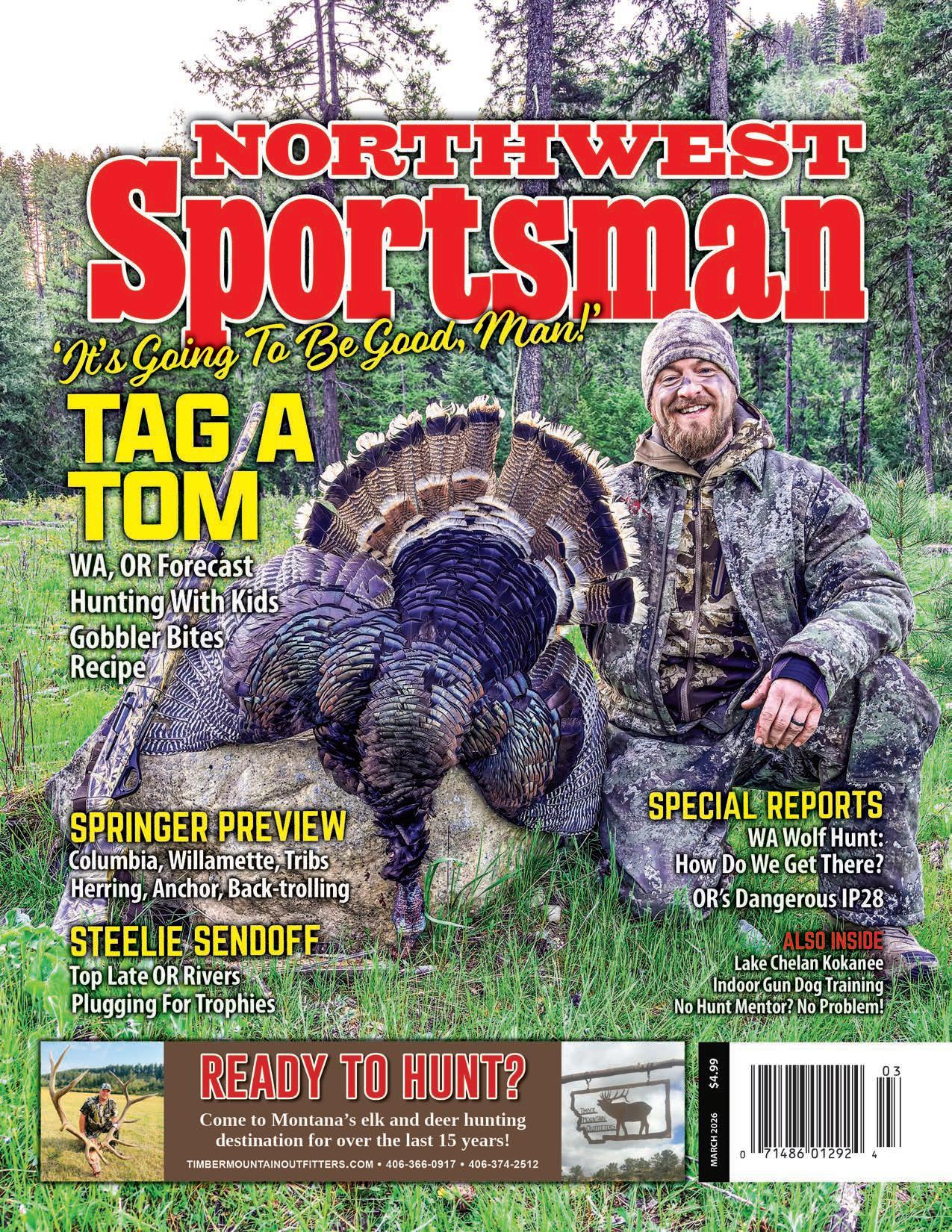
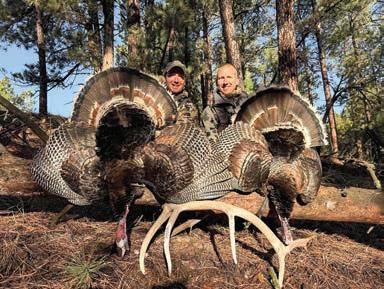
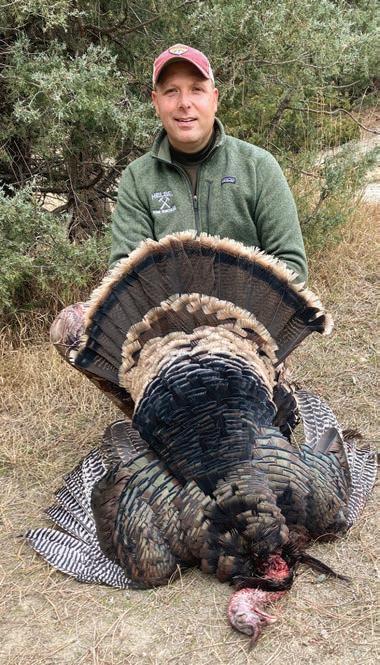
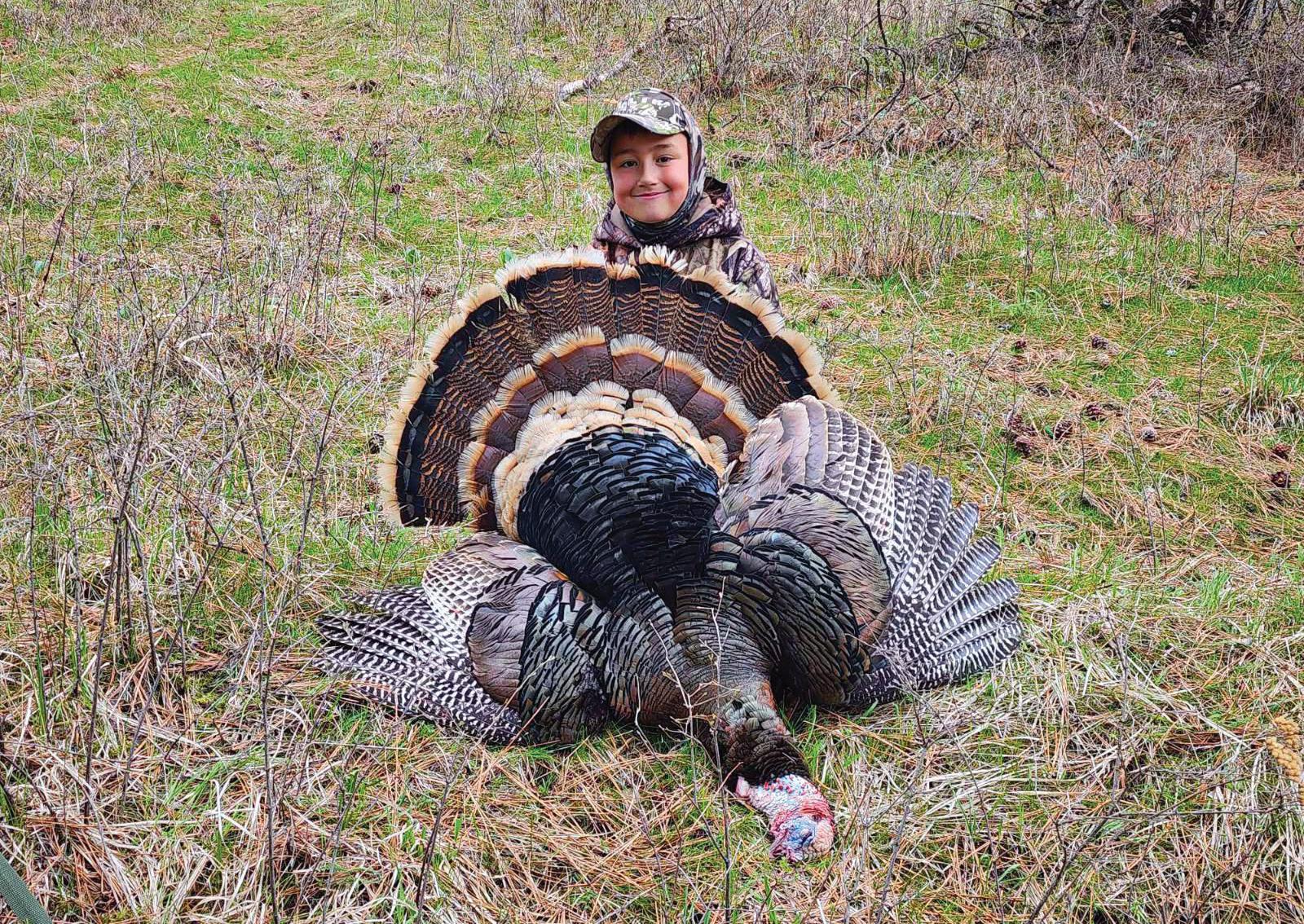
Steve Quinlan smiles over a beautiful gobbler taken during 2024’s spring season. He was hunting with buddy Brandon Jewett, who called in this bird and another for him. (KNIFE PHOTO CONTEST )
DEPARTMENT
Like us on Facebook, follow us on X and get dailyish updates at nwsportsmanmag.com.
INSIDE
63 HOOK MORE BIG RIVER CHINOOK
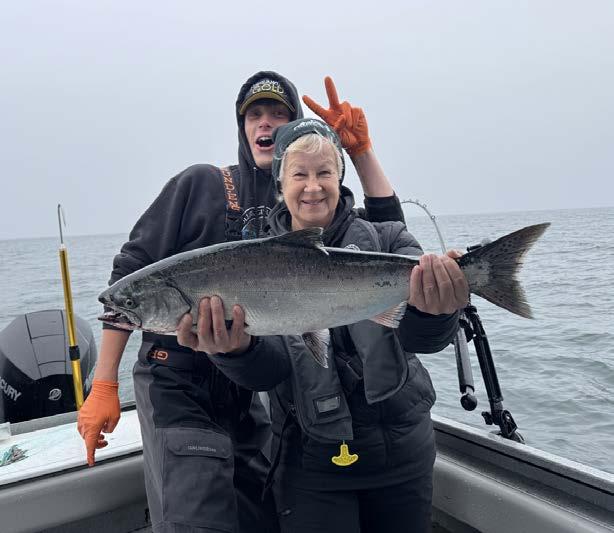
Buzz Ramsey has spent more than a few seasons chasing springers on the Lower Columbia and Willamette, and he offers up advice on how to work the tides, what depths to target when and great herring setups from longtime guides Eric Linde, Jack Glass and Terry Mulkey.
73 T WO TACTICS FOR TRIBUTARY SPRINGERS
No doubt about it, the primary focus for spring Chinook is on the big creeks, but as 2026’s first king in the North Fork Lewis proved, it’s never too early to start prospecting the tributaries for salmon. Guide Trevor Torppa shares anchor fishing and back-trolling tips.
COLUMBIA SPRING KING PREVIEW
Time to gather your spring Chinook gear from the garage! Over 220,000 of the tasty fish are heading into the Lower Columbia this year, and many of them are keepers. Mark Yuasa breaks down the forecast, how last year’s fishery performed, top areas to troll and good lures, and even a plunking setup or two!
79 LAST HURRAH FOR WINTERS, START CHASING SNOW BELLIES
It’s that point of the Western Oregon fishing calendar when late-returning steelhead overlap with early-running spring Chinook, so how’s an angler supposed to choose? Dunno, but in the meanwhile Bob Rees sets you up for success on both fronts!
92 KOKES AND JOKES ON CHELAN
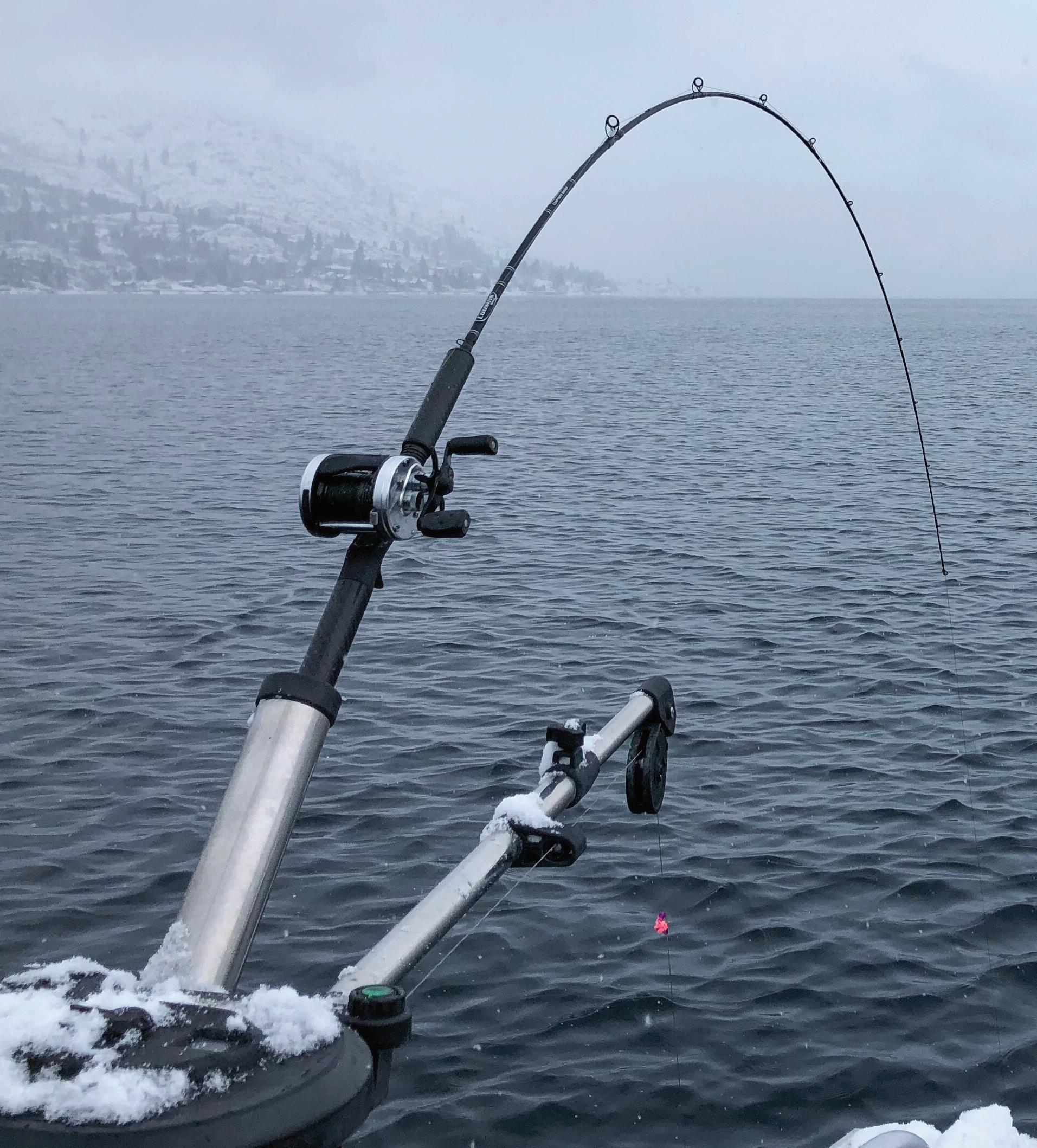
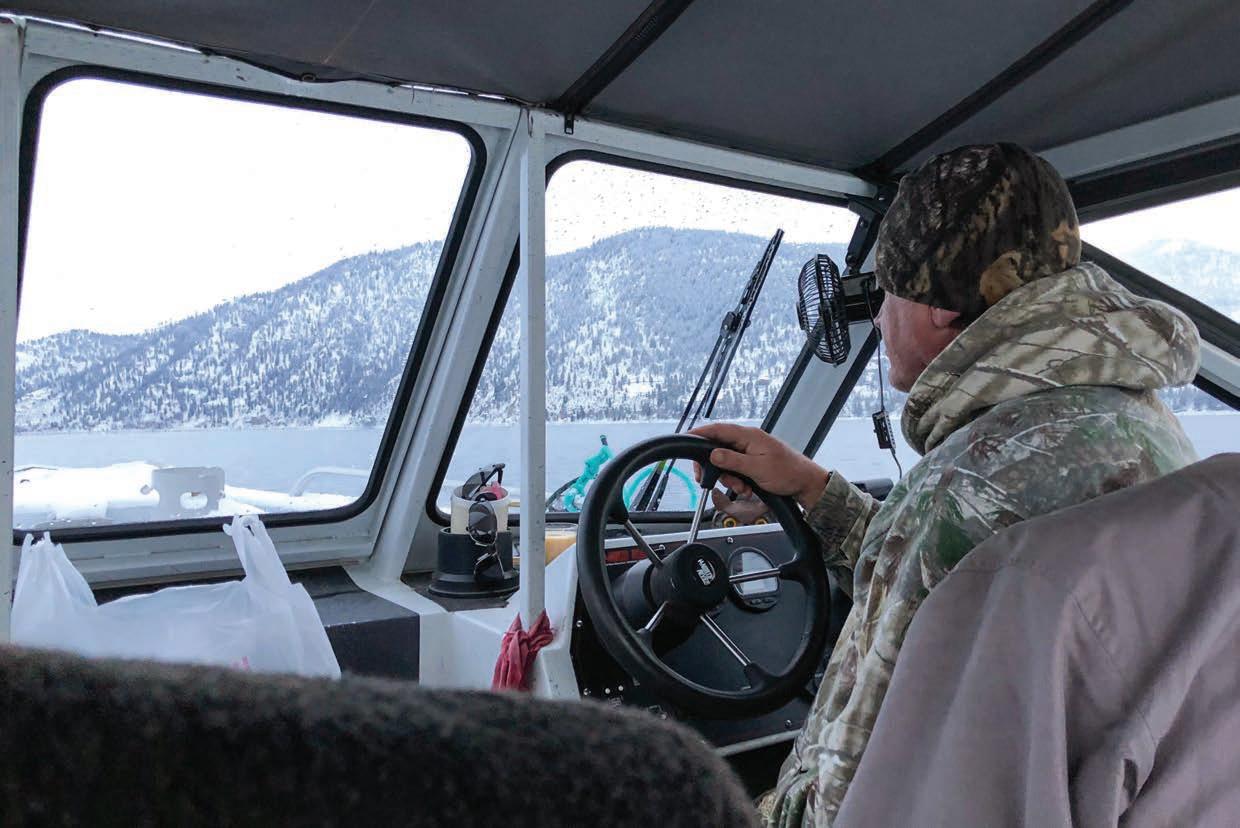
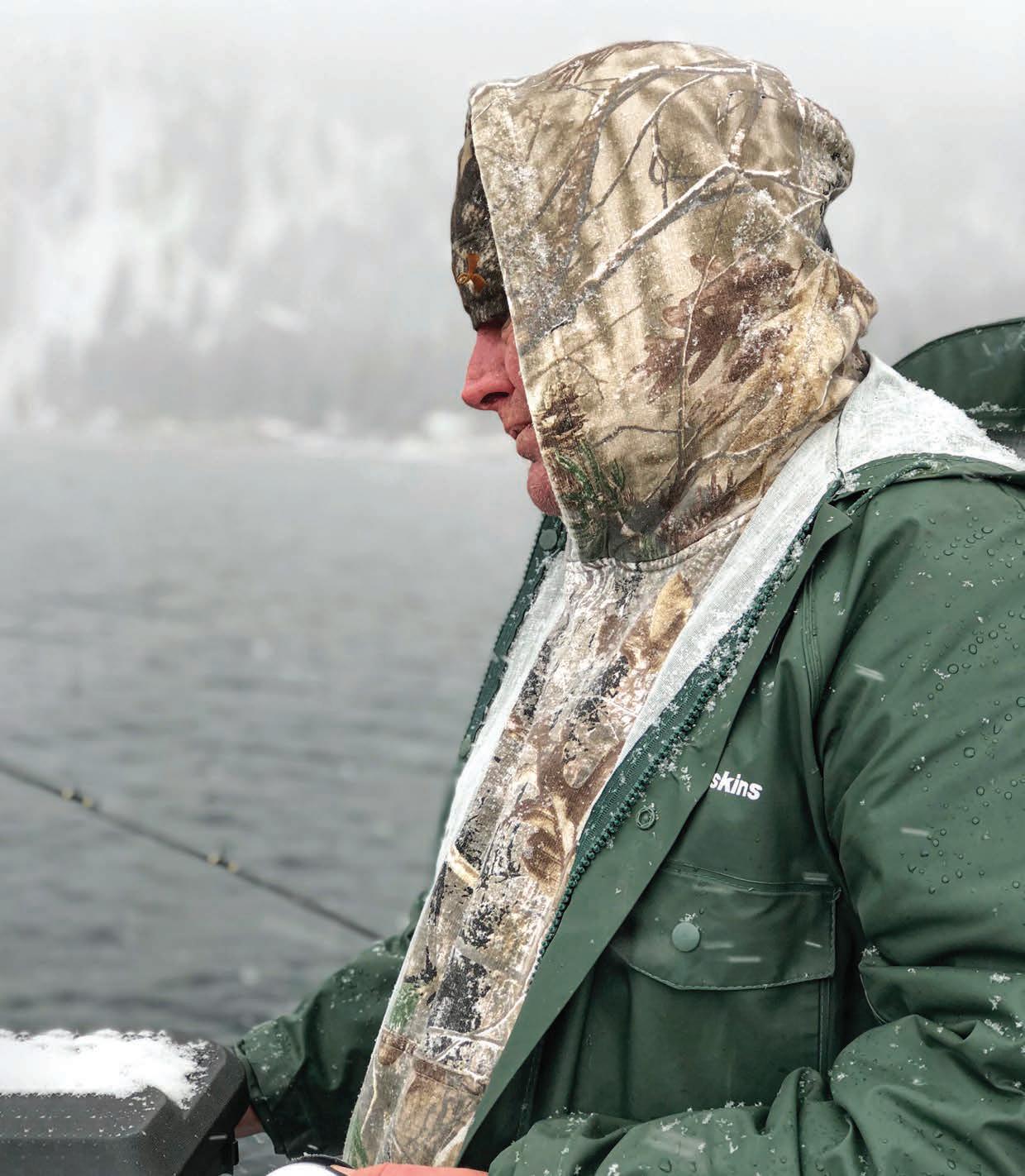
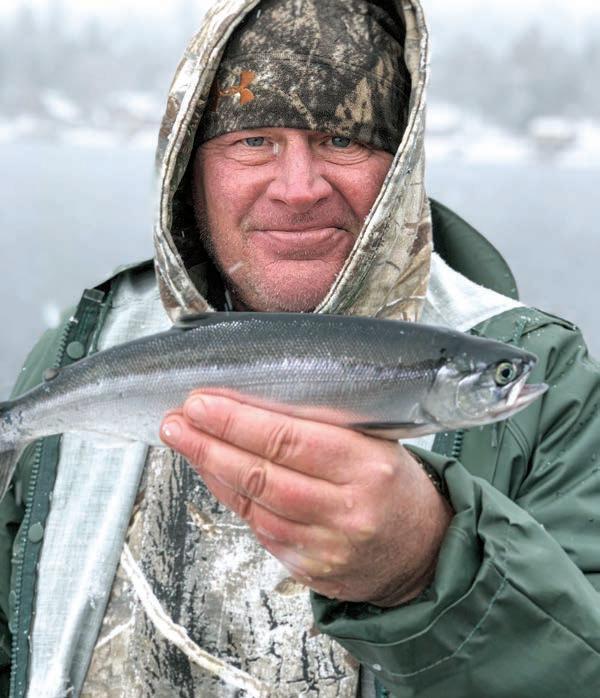
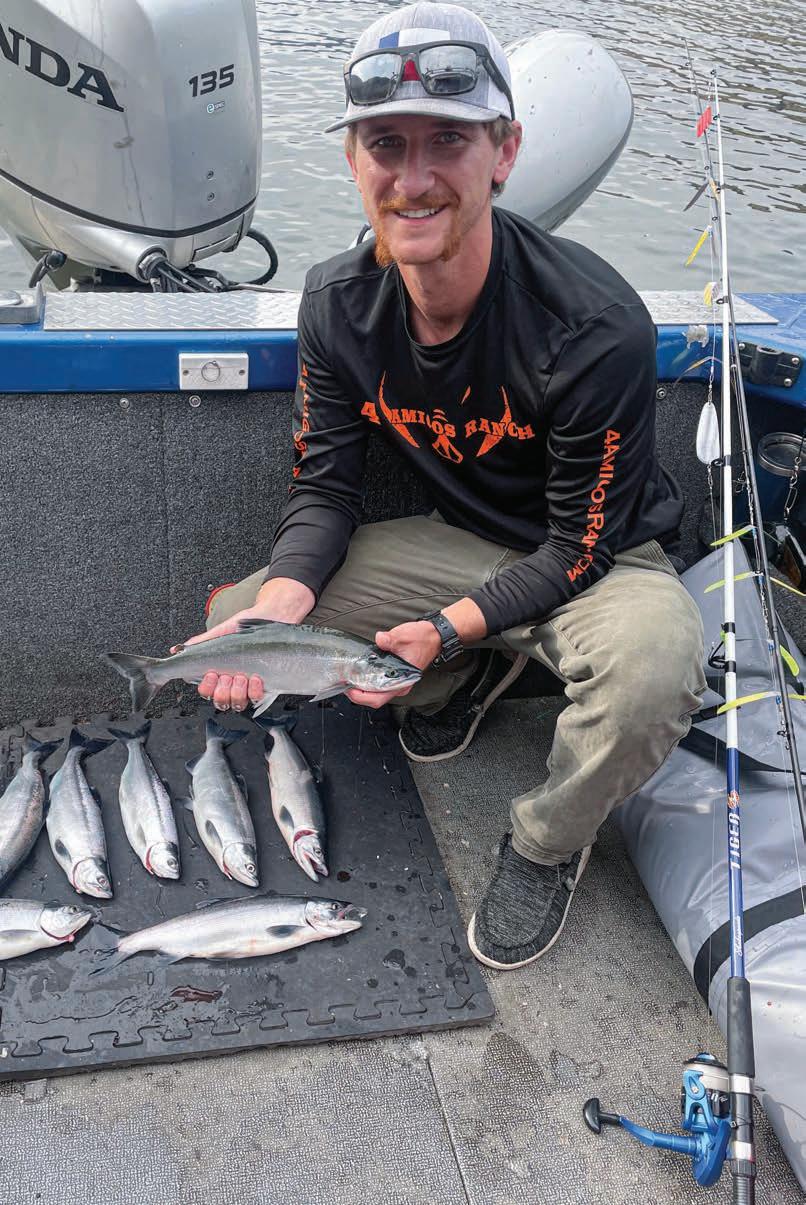
A wintery day on Northcentral Washington’s Lake Chelan blunted the hardcore kokanee angling instincts of two longtime fishing buddies, former guide Jeff Witkowski and local angler Richy Harrod, but it made for a warm –and productive – outing in the end. Richy recalls a day on the water in a story rich with useful fishing tips.
103 TRIGGERING KOKANEE, WALLEYE BITES
True, kokanee and walleye are about as different as it gets, but Chris Marcolin knows there’s a piece of trolling gear key to attracting both species. He shares setups that will incite bites on the troll.
135 GET THAT KIDDO READY TO HUNT SPRING TURKEYS
The Northwest’s early April youth hunting opportunities are a great chance for kids to bag a gobbler, as is the long general season afterwards, but they also need a good grounding in tactics, gear, firearms safety and taking that first shot. That’s where David M. Serpa comes in with proven pointers to get ’em going!
(ANDY WALGAMOTT )
COLUMNS 83
BUZZ RAMSEY Plug Away For Trophy Steelhead
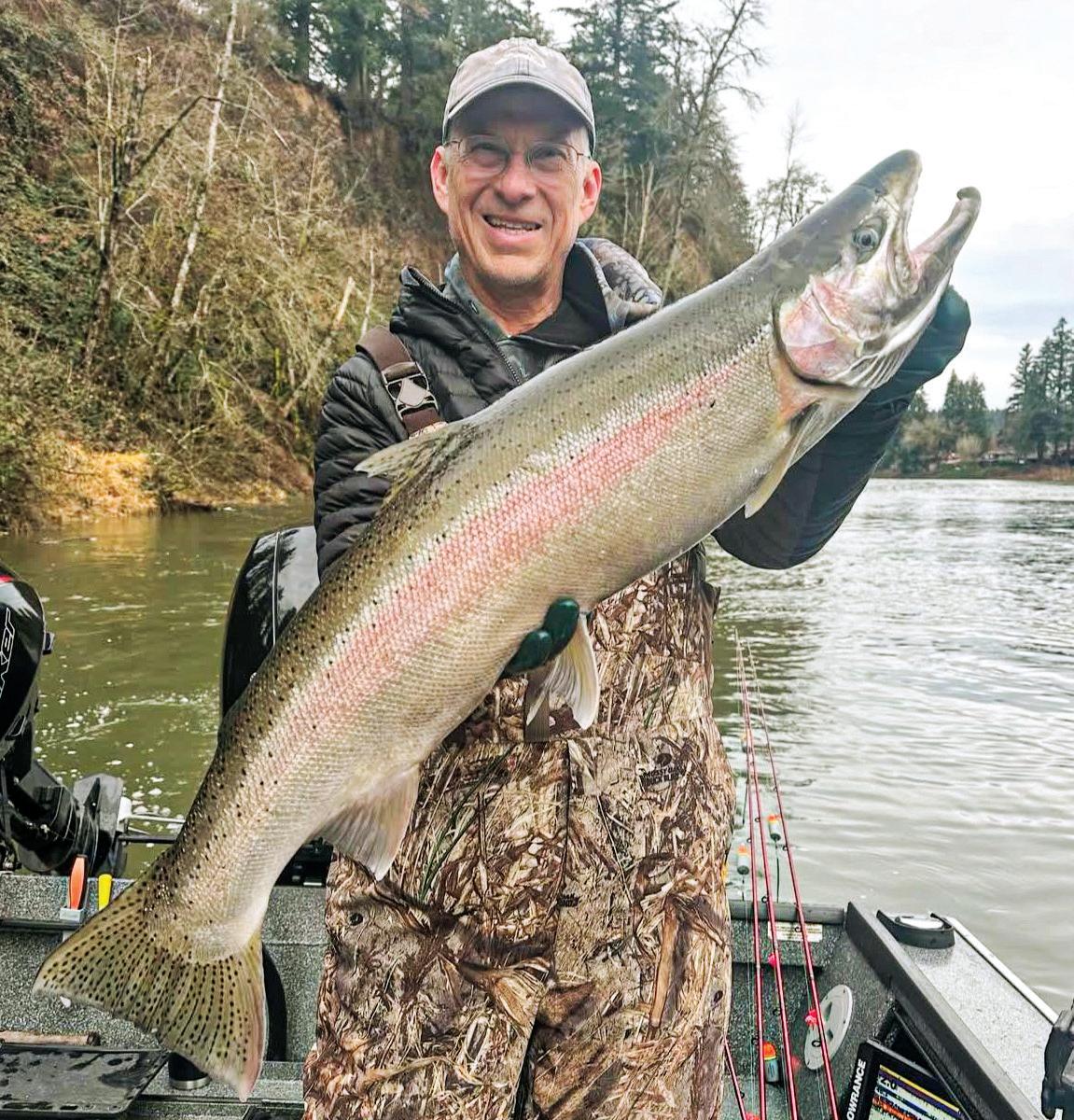
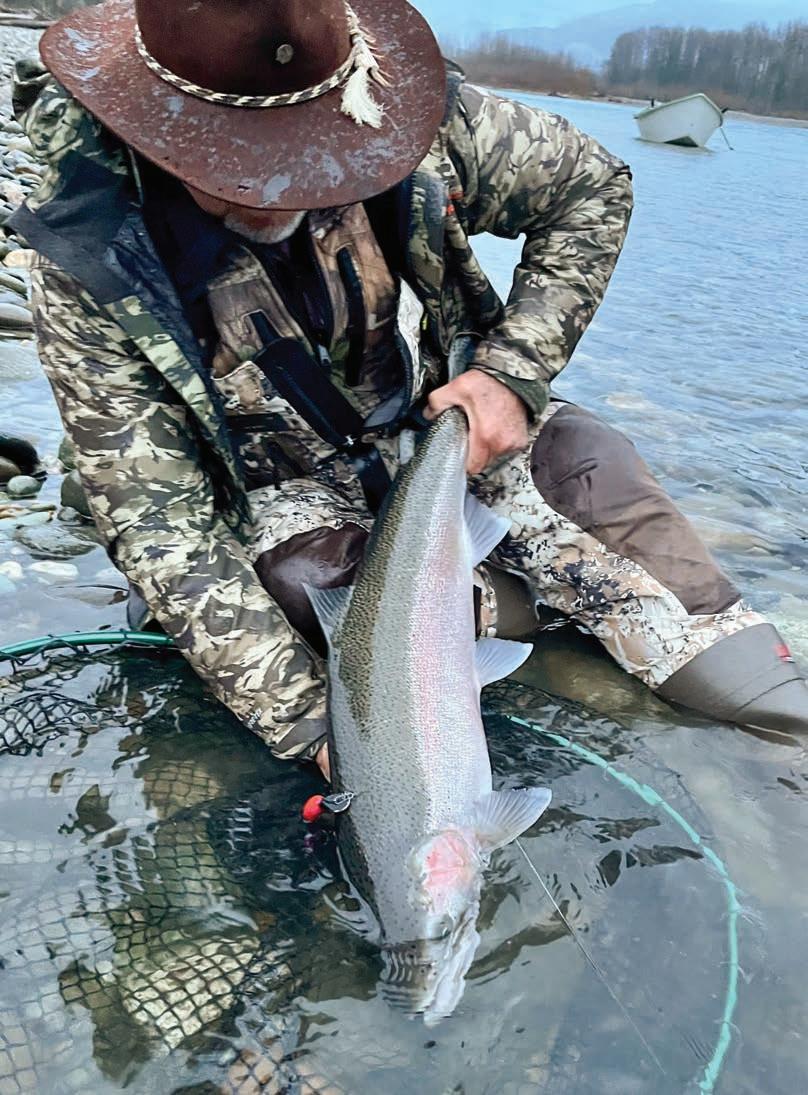
March is when Buzz really likes to get after winter steelhead, a time of year with fair odds of hooking a surly 20-plus-pound buck. He offers up plug styles and colors that have gotten the job done for him, as well as tips for determining if a late steelie is a keeper for the table and best photo practices for trophies.
126 OUTDOORS MD Spring Gobbler Forecast: ‘It’s Going To Be Good, Man!’ Turkey season is just around the corner, and to help you get ready, MD interviewed Richard Mann of the Washington State Chapter of the National Wild Turkey Federation and Mikal Cline of the Oregon Department of Fish and Wildlife for their prospects. Find out how the birds are doing and top spots!
147 CHEF IN THE WILD Nuggets Versus Noble Intentions: Getting Kids To Eat Wild Game
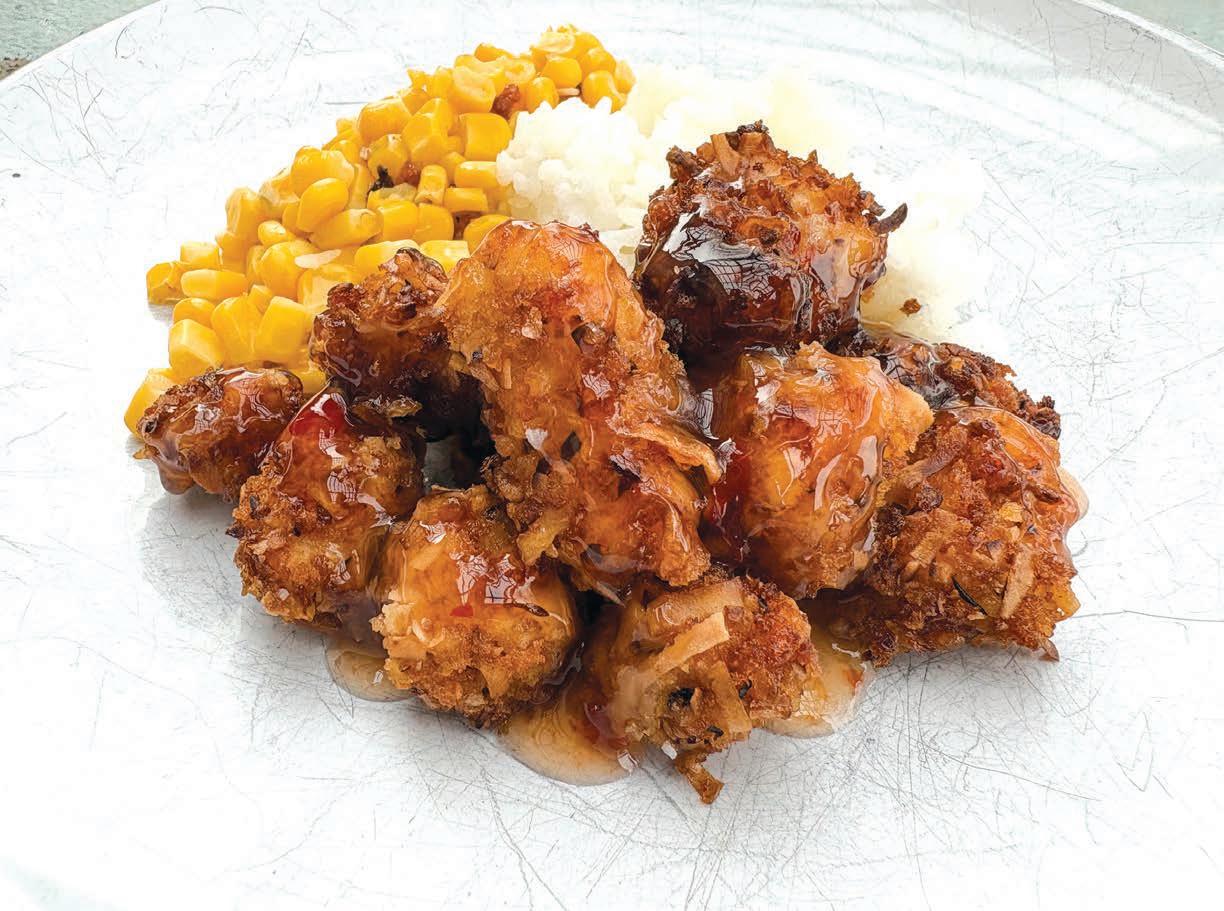
Transforming a gobbler – or any wild game – into gobbled food can be tricky with picky young palates. Chef Randy knows that better than most, but he also has the game plan for getting kiddos to love what comes home from the field, starting with a crispy coconut wild turkey bites recipe. Get out the dipping sauce!
153 ON TARGET S.H.O.T. Show Postmortem: Is This The Year Of The Shotgun?
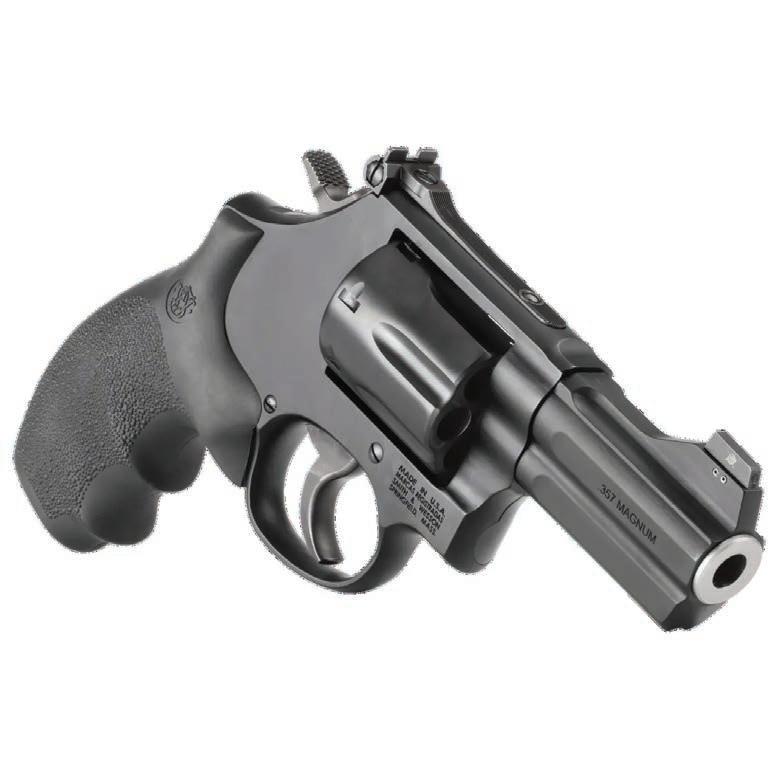
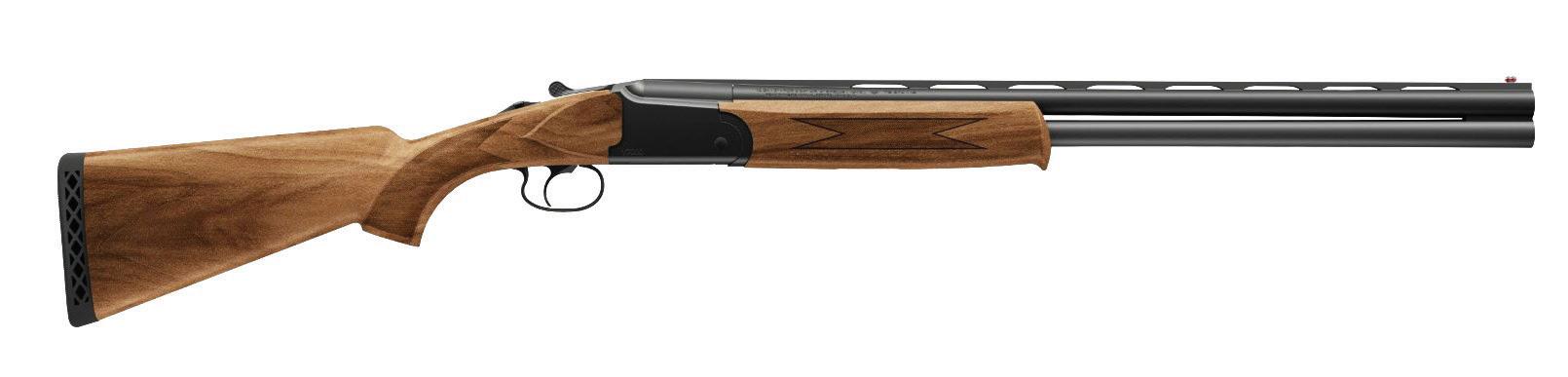
It’s all shotguns, all the time for Dave W.! He follows up on the Ruger Red Label over-and-under’s return last month with new offerings from Benelli, Franchi, Stoeger, Winchester, Spandau and Browning. And Dave also has details on the S&W Night Guard, now back on duty in .357 and .44.
159 GUN DOG Indoor Dog Training Tips
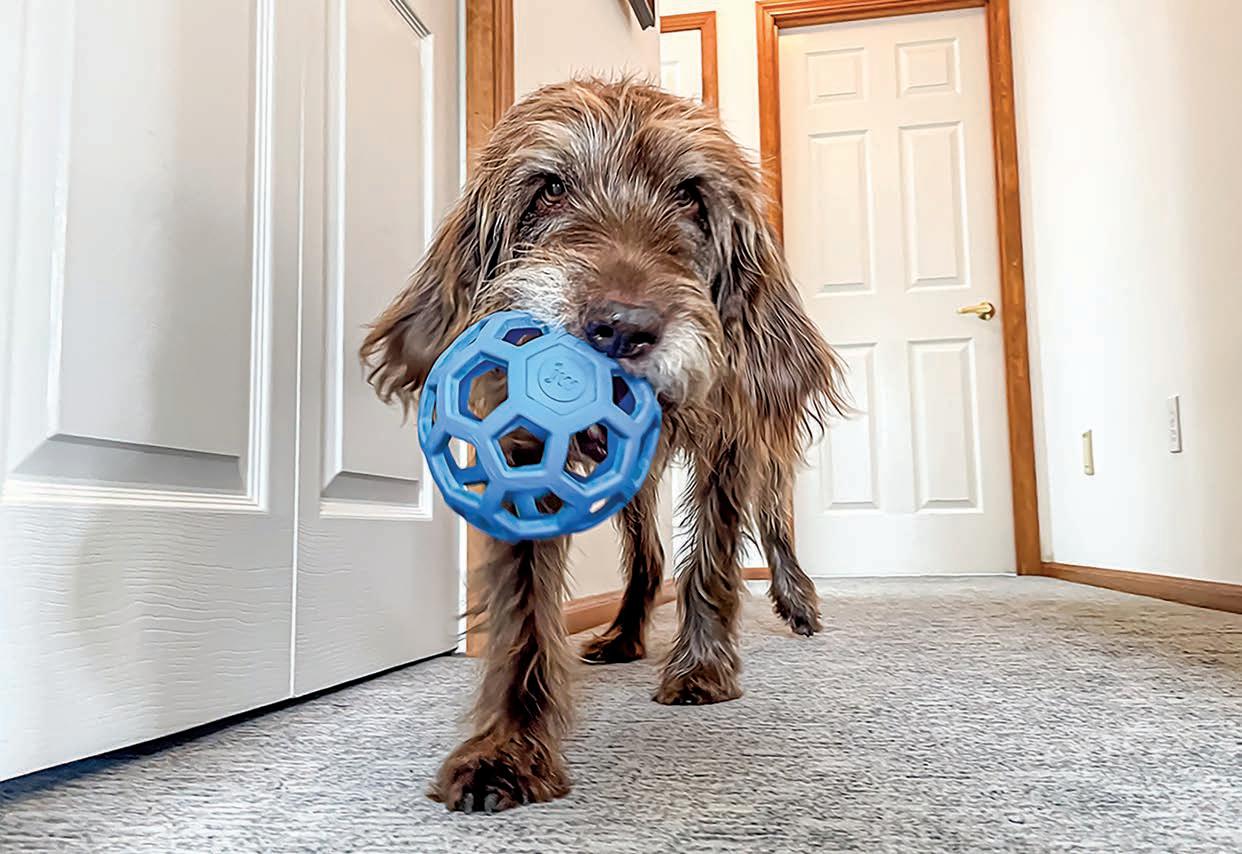
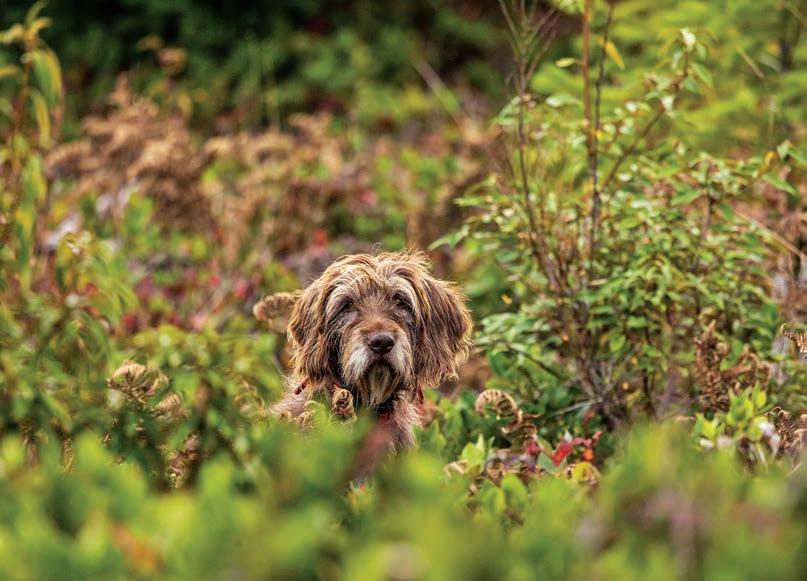
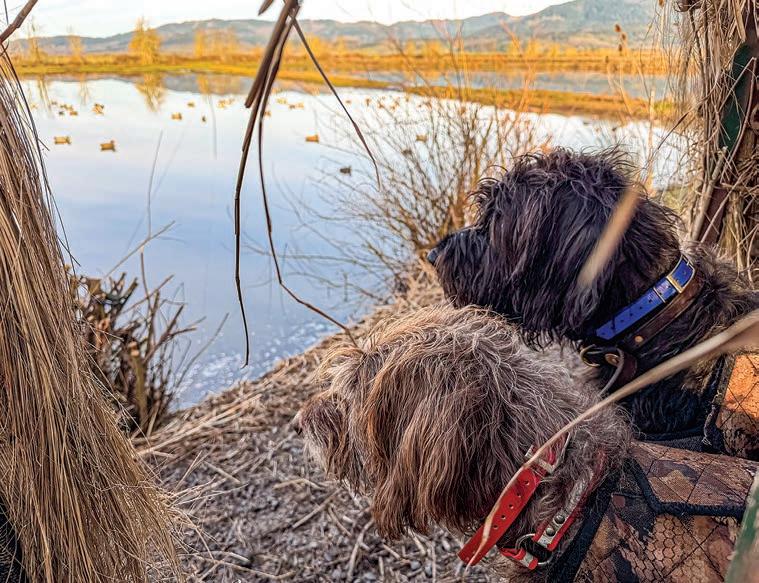
Back surgery laid Scott up for months last year, but his bird dogs still needed to be worked. What to do? He shares how he turned his home’s hallways, stairwell and downstairs into a fun training ground for focused, distraction-free sessions that helped keep pudelpointers Kona and Echo sharp in the offseason.
162 BECOMING A BETTER HUNTER Mentorship Isn’t Guaranteed – Blazing Your Own Path In The Hunting World
We’re not all so lucky to have a parent, relative or other mentor to help us get into hunting, but that doesn’t mean you’re out of luck if you don’t have one. Dave A. shares a story of personal agency that led him from Midwest fields to the heights of the Northern Rockies and beyond as a deer and elk hunter.
(BUZZ RAMSEY)
Trail cam leads to jail time for king poacher; Kudos; Guide apologizes for violations; Jackass Of The Month
Upcoming fishing and hunting openers, events, deadlines, more
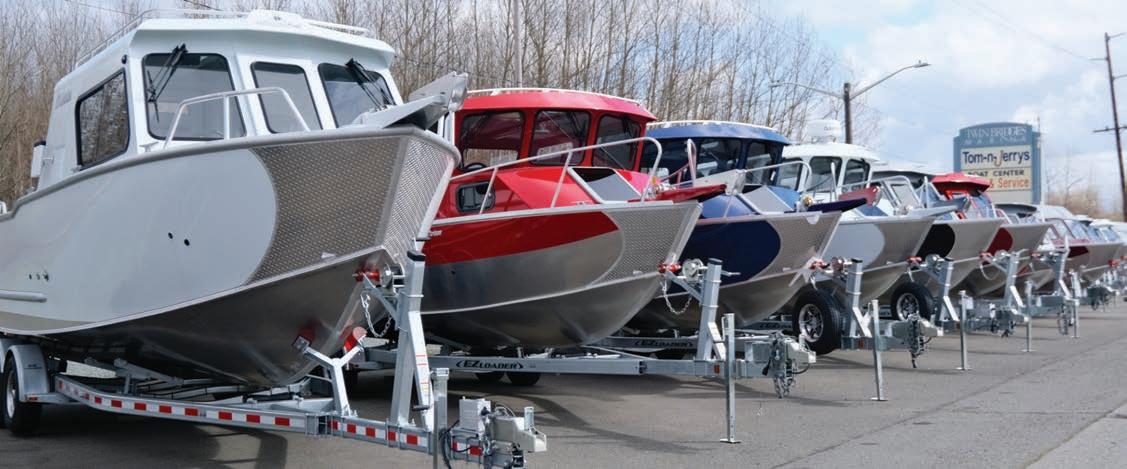
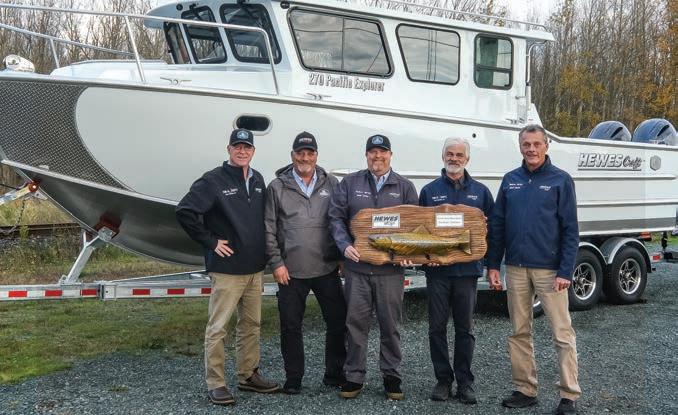
Recently, we accepted the award from the Hewes family for being the 2025 Top Sales Dealer — an honor we don’t take lightly. I’m thankful for the support from Hewescraft and especially our sales, parts, and service teams at Tom-n-Jerry’s. Great job, team!!!
— Kelly Hawley, President.
Tom-N-Jerry’s
THE EDITOR’SNOTE
Last year, we rediscovered a great truth: When a bad idea that could affect fish, wildlife and our access to the Great Outdoors pops up, people of all stripes will unite to defeat it.
I’m of course talking about how a few extremists on the right attempted to sell off our public lands and just about everyone with a stake in that ground – whether for hunting, fishing, hiking, camping or just keeping it whole for the critters and whatnot that depend on those landscapes – rose up to say No dice.
That’s because public land and all that goes with it are not ideas beholden to one party or one ideology; they’re a common love and cause that transcends political, social, economic, cultural and other boundaries.
That same energy is now needed again.
OREGONIANS ARE FACED with a similarly bad idea but from the opposite fringe – one I’m worried could be a closer vote if it makes the ballot this fall. More on that aspect in a moment.
Initiative Petition 28 cloaks itself as an anti-animal cruelty campaign, but in reality it would essentially criminalize hunting, fishing and trapping in the Beaver State, put ranchers out of business, and prevent you from even raising your own chickens for the table or trapping rodents damaging your home or business.
IP28 represents an existential threat to our shared way of life, not to mention all Oregon-based fishing and hunting businesses such as guide and outfitter services, gear and tackle makers, magazines, sporting goods stores, sportsmen’s shows, fishing boat dealers and even an entire state agency, the Department of Fish and Wildlife, which is funded in no small part by our license revenues. Tribal fishing and hunting wouldn’t be exempted either, even for critical ceremonial purposes, say state Senators David Brock Smith (R-Port Orford) and Anthony Broadman (D-Bend), co-chairs of the Oregon Sportsmen’s Legislative Caucus.
It would also affect commercial fishing and crabbing up and down the coast, shoppers would lose access to locally grown lamb, pork and beef at Saturday markets in the Willamette Valley and Portland, artificial insemination of livestock and other domestic animals would be deemed “sexual assault” – the mind-boggling list goes on and on.
IP28 CAMPAIGN ORGANIZER David Michelson downplays his odds of success. He says he’s playing the long game, hoping to gradually bend societal views in his favor. He envisions himself as some sort of modern suffragist trying to extend human rights to animals.
The Oregon Hunters Association has been doing yeoman’s work to educate people about the dangers of IP28. They’ve been at it ever since the idea first raised its head earlier this decade as IP13 and then IP3. While at press time this latest iteration still needs around 7,000
continued on page 26
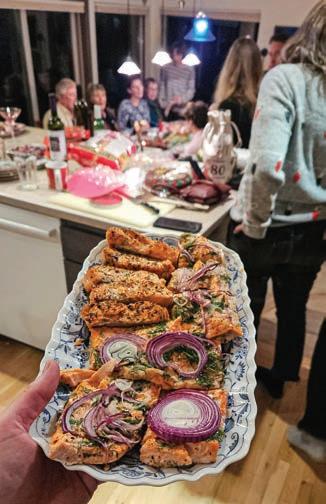
Fresh Oregon Coast wild coho served at a family gathering in Newport. If Initiative Petition 28 succeeds, it would criminalize catching or hunting your own dinner in the state. (ANDY WALGAMOTT)
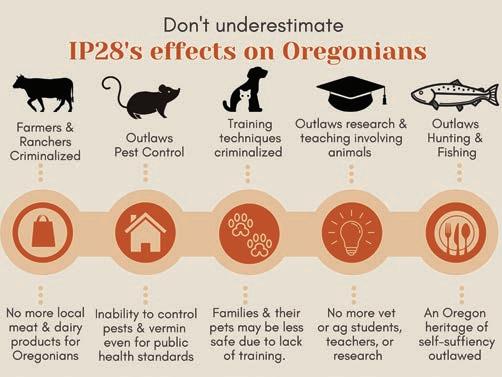
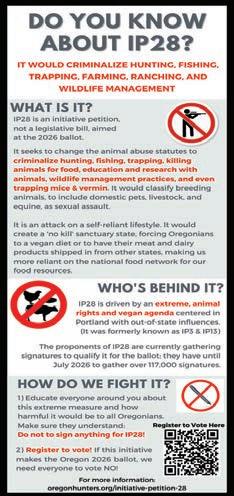
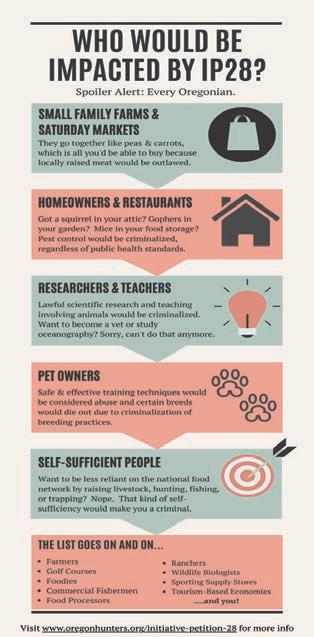
In warning about the widespread threat from IP28, the Oregon Hunters Association has created downloadable and shareable infographics. See oregonhunters.org/ initiative-petition-28 for PDFs and more information on the campaign against it.
(OREGON HUNTERS ASSOCIATION)
Editor’s Note, continued from page 25
signatures to meet the minimum threshold of 117,000 required by the Oregon Secretary of State to qualify for the ballot (an estimated 140,000 is needed to account for likely invalid ones), if it gets there come November, OHA policy rep Amy Patrick aims to help deliver the “largest defeat in Oregon’s history.” She’s scored some high-profile coverage in the Portland market and nationally of late, and is urging sportsmen and trappers to register to vote. If you aren’t already and are eligible to vote in Oregon, you can do so via the “Voting & Elections” tab at sos.oregon.gov.
political, social, economic, cultural and other boundaries; they are noble practices harkening back through time immemorial. And our traditions as well as the fish, wildlife and lands that support them are far stronger because of that wide base.
– his crusade’s strategic mistake of not “compromising my convictions.” In trying to eat the whole thing in one bite, he and his supporters have created a far wider front than they otherwise would have had to fight on. And they’ve lost the element of surprise a more targeted campaign could have led off with.
Banning just fishing and/or hunting and/or trapping might have been more doable and allowed for progressively larger next bites, but going after us as well as important rural, coastal and valley industries – all of us together generating billions of dollars in economic activity, tens of thousands of jobs and untold meals on the plate – is a whole other matter. Throw in no exemption for tribal harvest in a state as progressive as Oregon, as well as outlawing pest control whether that be at home, places you go out to eat at or elsewhere, and congratulations on uniting almost the widest possible spectrum of opposition.
That said, our messaging to the general public must be careful not to describe IP28 as a “libs” or Democrat plot. It’s not, the campaign appears to be self-funded with some help from PETA and a guy in Russia, and we need the left to help give it that huge defeat OHA’s Patrick wants, meaning don’t give folks like my wonderful motherin-law and her lovely friends reason to vote against us out of spite.
That could be really critical because if IP28 does make the ballot, it could have more legs than you might think. That’s because the midterm elections are typically tough on the party in power, and given the past year, 2026 may be a particularly rough one for the GOP. Turnout of Republican hunters and anglers and disaffected Trump voters – all who likely would vote against IP28 in a heartbeat in a normal election year – may be very significantly depressed, and for those same reasons a higher than usual percentage of hardcore animal rightsoriented voters will likely be motivated to mail in their ballots, perhaps making the result closer than it otherwise might be. In that same vein, however, Democrat hunter and angler turnout may increase and help offset the dropoff from the other side of our shared campfire on this particular item.
I know, I know, I’m as much of a political expert as I am a rocket scientist, but I do know that fishing and hunting is not unique to one party or ideology; the pursuit transcends
I’M PREACHING TO the choir here, I realize, brothers and sisters. I don’t believe you would vote for IP28. The battle is really going to come down to helping the vast majority of Oregon voters who don’t hunt or fish, aren’t tribal members, don’t have ranches or farms or Saturday market stalls, aren’t tied to the commercial fishing industry, etc., etc., etc., understand what’s at stake for us, themselves and wildlife as a whole.
I really do believe that a majority of people in Oregon, the Northwest, the West Coast, America, the world, are OK with fishing and hunting, or at worst are merely neutral, especially as it pertains to feeding ourselves, our families and friends, and on occasion, say, the office Christmas party with smoked fish from last season. And while some of us might scoff at the whole locally sourced, sustainable, free-range fad, it has always tied in well with what we’re doing and, crucially, helped bridge it with modern palates and urban and suburban audiences.
Our work to defeat IP28 has been made easier by Michelson’s absolutism
TO BE ABUNDANTLY clear, absolutely nobody is for animal cruelty. I also wholeheartedly reject the notion that what we do can even remotely be considered that.
We pride ourselves on bringing meat from animals that have lived good, wild lives to the table. Even more importantly, we advocate for and help fund habitat, landscapes and clean environments that deer, elk, salmon, steelhead and all other fish and wildlife need. And a state without ranches is one that is subdivided into ranchettes, breaking up even more habitat. We do it because we love animals and want to see them thrive forever, for all of us, for their own sake, for all reasons. And our intense interest, as well as tribal treaty rights, ensures government stays focused on funding fish recovery, habitat restoration, wildlife corridors and conservation efforts. IP28 comes from the same place as the bid to sell off our public lands: way outside the mainstream. And if it goes to a vote this fall, just as wide a coalition will have a chance to firmly and emphatically say No dice and nip this idea in the bud for good. Meanwhile, please help spread the word about this misguided measure. –Andy Walgamott
Washington’s Wolves And A Hunt For Social Tolerance
With wolf numbers reaching a point where statewide protections don’t make sense anymore, here’s a look at what a hunt might look like and how it could help advocates, ranchers and hunters get what they want.
By Jillian Garrett
When it comes to wolves, there isn’t a single aspect of the conversation that isn’t contentious. It doesn’t matter what side of the aisle you’re on; wolves seem to bring out strong emotions. There is just something about these iconic predators that causes people to lose their logic and allow that to color their perception. Some of that might be due to the fact that wolves are often viewed through the narrow focus of location and lifestyle, with few ever understanding the need to widen their lens and comprehend the animal from a landscape-wide scale.
The topic of wolves becomes even more thorny in a state like Washington, where Westside urban population centers – located well outside of current wolf territories – can have an outsized impact on the management decisions affecting the more rural Eastside regions where wolf density is high. Even the Washington Fish and Wildlife Commission has repeatedly come under criticism for rarely venturing out into these impacted rural regions,
making their subsequent policy decisions seem, at least to the communities most affected by them, completely out of touch with reality. Meanwhile, wildlife biologists frequently find themselves caught in the crossfire, up against a sort of “damned if you do and damned if you don’t” brick wall, trying to balance intrinsic and cultural values with boots-on-the-ground reality.
In short, our relationship with wolves can best be summed up in a single sentence: “It’s complicated,” a phrase repeatedly uttered by just about everyone involved in wolf management.
There is no denying the fact that any subject pertaining to wolves is a messy one. Humanity’s relationship with them has always been complicated, and it will continue to be so for the foreseeable future. Regardless of how people feel, wolves are back on the landscape and they are here to stay. The question becomes how do we navigate the resultingly complex management issues and walk that fine line between balancing what is best for the wolves and what is best for the people? As Jim Williams, a retired Montana Fish, Wildlife and Parks wildlife biologist and regional
There are many steps to getting to a wolf hunt in Washington – delisting, reclassification, season structure – but with the strong success of the state’s packs over nearly two decades now, it’s worth taking a look at how to get there now. (JILLIAN GARRETT)
manager, so succinctly put it in his book, Path of the Puma, “… managing wildlife is easy work compared to managing the people who care about that wildlife in a bewildering variety of ways.”
HOW DID WE GET HERE (AND WHERE ARE WE GOING)?
Washington’s wolves are in the unique position of being under both state and federal management depending on what region you are looking at. While the western two-thirds of the state are under federal management via the Endangered Species Act, the eastern third – once part of the Northern Rocky Mountain Wolf Recovery Plan – has been federally delisted and management of those wolves turned over to the state and tribes. Yet prior to that, Washington had already declared gray wolves to be endangered, meaning that –even after federal delisting – Eastside wolves outside of reservations are still classified as an endangered species by the state.
Under Washington’s 2011 Wolf Conservation and Management Plan, to qualify for delisting, the state’s wolf population must have at least 15 breeding pairs present for a minimum of three years. Four of those breeding pairs need to be in
the Eastern Washington Recovery Region, four in the Northern Cascades Recovery Region, four in the Southern Cascades and Northwest Coast Recovery Region, and three anywhere else in the state. The plan also allows for the Washington Department of Fish and Wildlife to consider initiating the delisting process if 18 breeding pairs are documented during a single year and the distribution objectives are met.
As of the end of 2024, there was a minimum count of 230 wolves in the state, consisting of 43 packs, with 18 successful breeding pairs, which naturally led to the question of whether to finally downgrade them from the state’s endangered species classification. While wolves as a whole have consistently met the state’s recovery criteria – including having at least 18 breeding pairs for a year or more – there was one important exception: no breeding pairs were in the region designated as the Southern Cascades and Northwest Coast.
As expected, the debate over downlisting or delisting the state’s wolf population generated a lot of heat. Political pressure was high on both sides, with then-governor Jay Inslee notoriously putting pressure on the Fish and Wildlife Commission to make sure wolves stayed on the state’s endangered
species list. Ultimately, the commission decided in favor of maintaining the endangered status because the wolves had not yet recolonized that final management zone. This decision came despite WDFW’s own recommendations to downlist and reclassify wolves as “sensitive,” as well as strenuous objections from the hunting, ranching and rural communities. To be clear, a “sensitive” status classification would still not have allowed any hunting, but it would have given the state more flexibility in its wolf management and conflict mitigation.
The irony was that wolves had already been dispersing into the Southern Cascades region, but several cases of presumed poaching had eliminated them before they could get a toehold. It was a seemingly classic example of push-pull wolf politics, with wolves once again caught squarely in the middle as the ultimate losers of the game. By successfully claiming the continued need for complete protection, despite average annual population increases of at least 20 percent, supporters demonstrated their absolute lack of understanding about the incredibly nuanced management approach needed for the rural communities living amongst these animals. It’s not simply about ranchers being upset over
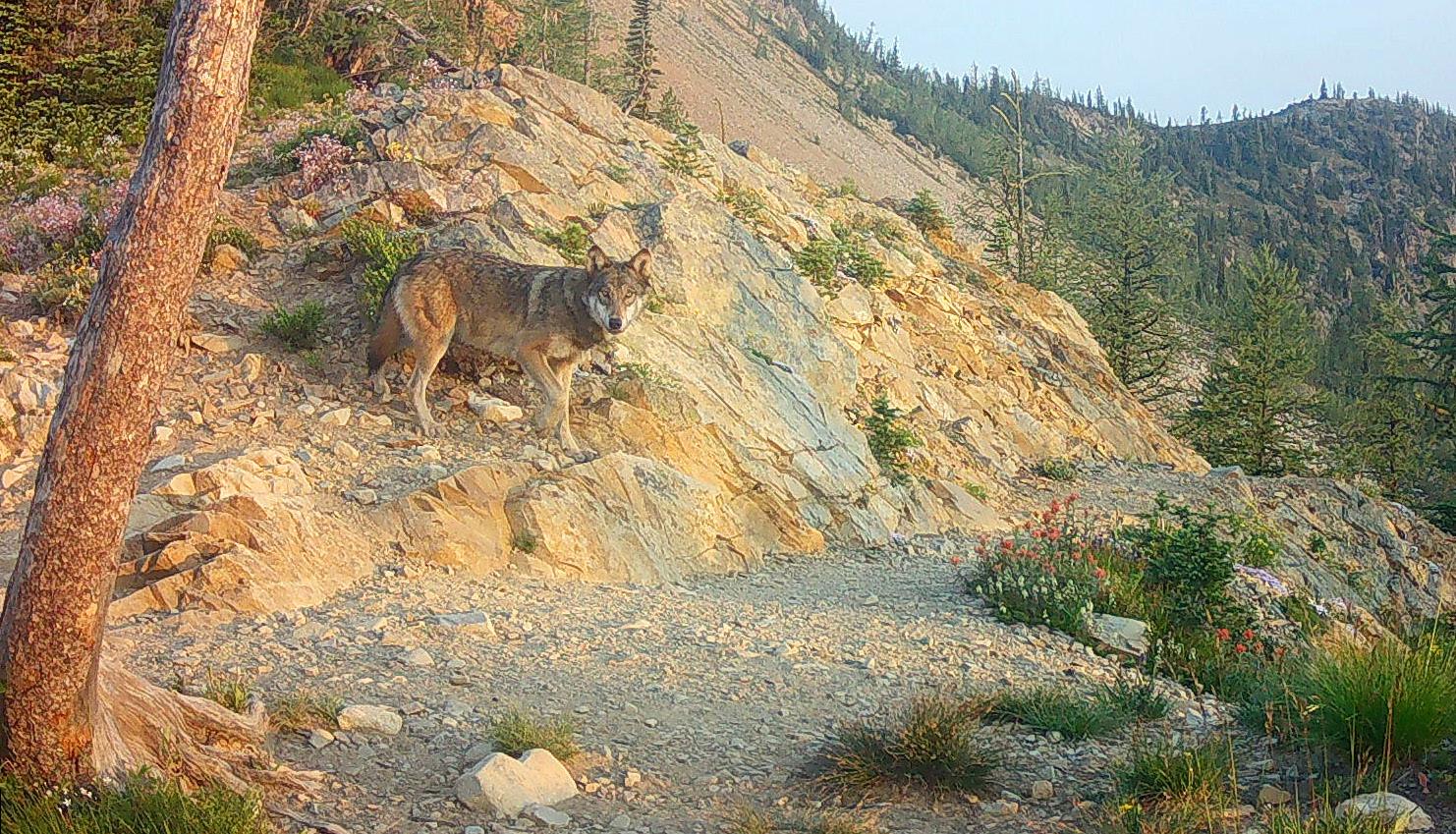
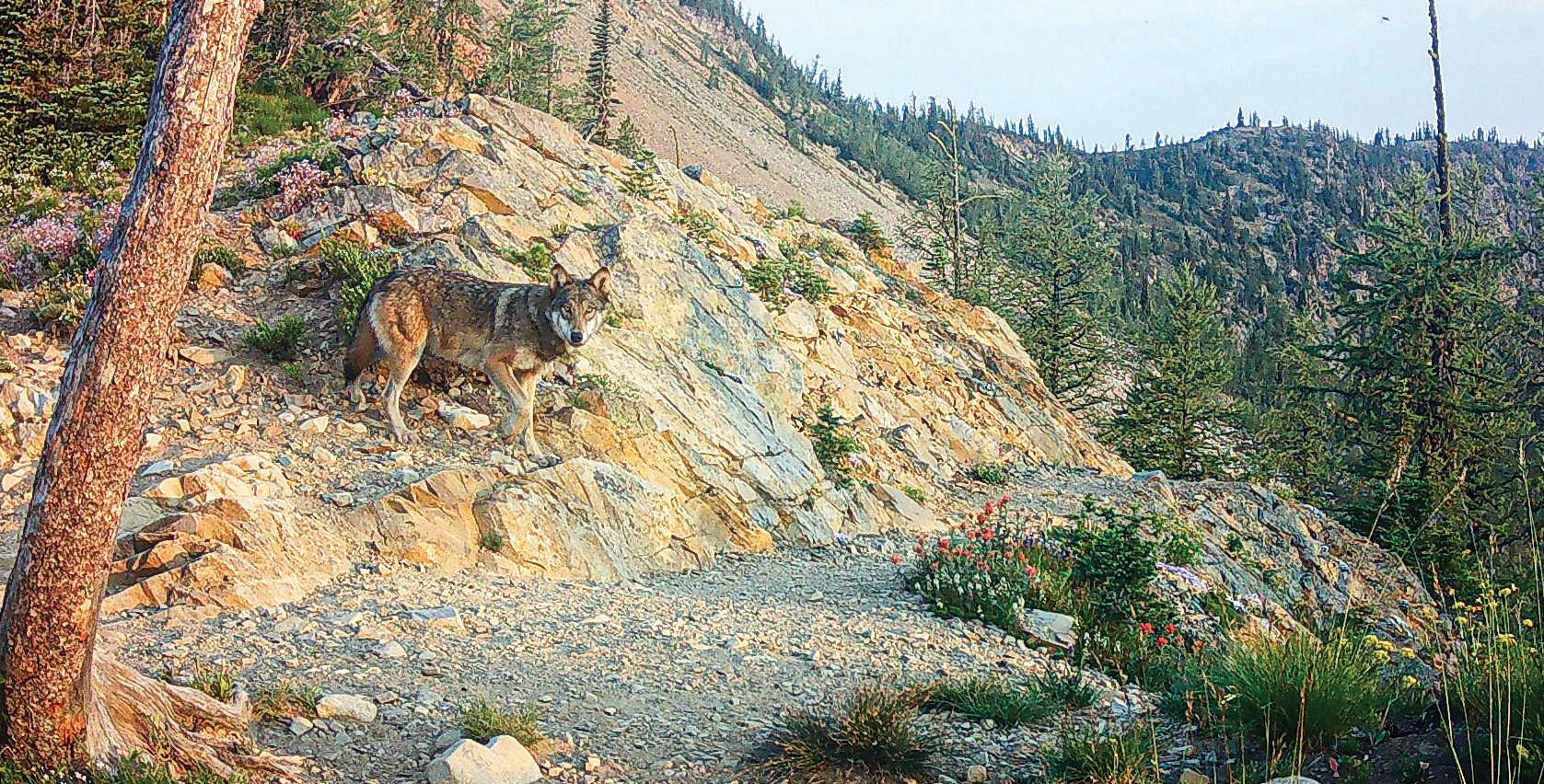
Wolves are doing best in the state’s federally delisted eastern third, where both the Colville and Spokane Tribes hunt them, but their numbers are also growing in the North and Central Cascades, where this one was captured on a trail camera. (WDFW)
conflicts or hunters braying for blood –the story is much more complicated than that. It has its background in a portion of the populace being forced to deal with the decisions made by another, one completely disconnected from the results; it’s about communities trying to figure out how to coexist in a landscape where humans and wolves have not lived together for a generation or more; all of which is exacerbated by a lack of education on each side about the behavior and impacts of those wolves as part of the ecosystem.
In short, it’s a dangerous powder keg of problems – one likely to blow up in everybody’s face, wolves included – and has been brought about by the shortsidedness of a well-meaning but frightfully disconnected segment of the population. To continue promoting total protection, even in the face of steadily increasing wolf numbers, and to make the further claim that keeping wolves on the endangered species list protects them from being harassed or killed, is to be woefully ignorant of the actual situation. It also denigrates the progress of wolf recolonization in Washington.
Instances of wolf poaching seem to be on the rise, and while a lack of social tolerance does not always result in poaching, it can be one of the many catalysts. While poaching is never excusable, the reasons behind why it happens are vital to understand, as they expose core issues that need to be addressed before long-term progress can be made. Ignoring those issues in favor of blanket protection is a bit like trying to apply a panacea for the pain: It might feel good at the time, but it doesn’t treat the underlying problems of an illness borne of misinformation, mistrust and a deep lack of social tolerance.
A HUNT FOR SOCIAL TOLERANCE
Putting emotions and political agendas temporarily on the backburner, how exactly do Washington’s wolves make the leap from endangered species to huntable game animal? The first step is to acknowledge that the road to get there is long and complex, most of which is unfortunately outside the
scope of this article. While state delisting and an eventual hunting season are not anything that will happen overnight, with WDFW’s estimated average population increase of around 20 percent per year, it’s becoming visible on the horizon. At some point, state decision-makers are going to have to come to terms with the fact that wolf management and wolf recolonization are not mutually exclusive.
The question Washington should be asking itself is how to simultaneously protect wolves trying to recolonize that final zone while also providing residents in wolf-dense regions with a better way to mitigate the real issues of coexistence. Not to mention offering rural communities something that boosts the overall acceptance and value of wolves in those areas.
At first glance, it may seem easy to scoff at the idea of using hunting as a tool in the kit for social tolerance, but that viewpoint fails to understand the importance of it as a key for the long-term survival of wolves overall. If we
want wolves to recolonize the land, then we need to change their perceived value from a net negative to a net positive in those regions. In looking at other Western states that already have wolf seasons, social tolerance tends to be much higher – and incidents of poaching far lower – because of instituting a hunt season, and wolf populations are still thriving in those states.
So what would the structure of a wolf hunt in Washington look like? To answer that question depends on your management objectives: Do you want to provide for greater hunter opportunity, or better quality of hunts?
Whatever the hunt structure, it would make the most sense to divide the state up into smaller wolf management units, or WMUs, much as Washington already does for cougars. This would make it easier to examine specific areas that deal with higher livestock conflict and/or low ungulate population numbers and thus have larger harvest caps specific to those units. Instead
While wolves elicit a lot of big talk, hunting them is far from easy. Author Jillian Garrett reports that success is typically pretty low outside of the first season when the already super wary animals have yet to be pursued. (JILLIAN GARRETT)
of slapping a blanket quota on the entire state, using a management-unit approach allows wildlife managers to better address specific areas of concern. It also makes for a much more palatable and better justified hunt in the eyes of the non-hunting public, because it looks less like hunters simply gunning for wolf blood. On that note, given that baiting and the use of dogs are already illegal for bears and cougars, it would be safe to say the same would apply to wolves. Another important factor to take into account is that wolves are incredibly difficult to hunt and success is generally quite low. The exception to that rule tends to be during the initial implementation of a hunting season, which often has an abnormally high level of success. This is because the wolves have not yet been taught to be wary. However, wolves are
fast learners, and hunting success often drops off after that. From a hunt structure standpoint, it would be prudent to consider starting off with a smaller harvest cap for the first year or two of a hunting season before increasing the cap as needed. State wildlife managers would also need to work closely with the Colville and Spokane Tribes so that any tribal harvest objectives are taken into account when calculating regional caps.
With all of these factors in mind, the actual hunt structure would fall into one of two generalized categories: an over-thecounter, or OTC, tag, or what’s known as a lottery draw/special permit hunt. Figuring out which one would work best depends on what type of hunt you want to provide.
An OTC-style hunt provides maximum opportunity (and generally a longer season) for people to get outside and attempt to harvest an animal, but it has the downside of creating a landscape with highly pressured and wary game pursued by a whole lot of trigger-happy people. In the case of wolves,
which quickly learn how to be cagey around hunters, this could translate into individual success rates being very low. However, with so many hunters out on the landscape at one time, overall harvest success for the general season could still be relatively high compared to other management structures.
An OTC hunt would be incredibly difficult to justify without a tightly managed quota to ensure that there was no remote possibility of an overharvest, unlikely as that might be. Since Washington has a long way to go before it deals with the same burgeoning wolf population issues in places like Idaho, it must be careful to maintain strict oversight of harvest numbers, meaning that any wolf hunt would be quite conservative in nature for the time being.
A better option would be to utilize a system whereby wolf tags are available as OTC tags but are under a strict quota system similar to Washington’s cougars. Like cougar tags, they could be purchased as an individual tag or as part of the Get Outdoors combo package and would come with the same set of stringent singleanimal-harvest and reporting requirements. Washington could even follow Montana’s lead and require hunters to report a wolf harvest within 24 hours, updating game unit closures in a similar time frame. While more of a logistics headache for both hunters and WDFW staff, it would help prevent concerns of an accidental overharvest in any given unit and would also strengthen the case that wolf hunting is a targeted management tool and not a vengeful bloodbath.
At the other end of the hunt structure spectrum is a lottery draw. This style of hunt translates into prospective hunters applying for a chance at obtaining one of a limited number of annual wolf hunting tags. In many ways, this hunt structure would highlight the uniqueness of the resource while adding greater value to the small number of tags allocated to hunters. It would mean fewer people in the woods during the hunting season and potentially less wary animals, possibly ensuring a higher quality and less pressured hunting experience.
A wolf hunt in Washington would face howls of protest and savage attacks from advocates, and yet it would represent the very thing they claim to covet the most: a recovered population. Why can’t it be a win-win? (JILLIAN GARRETT)
Unfortunately, this style of hunt comes with the tradeoff of fewer overall opportunities for participation, which might not actually alleviate any of the issues surrounding social tolerance, and
could potentially adversely impact it. The lesson shown by other Western states has been that the more people who feel they have a chance to take part in a hunt – whether they harvest an animal or not – the higher likelihood of social tolerance increasing for that animal.
The real downside of a lottery draw is how much trickier it can be to implement, especially concerning the possibility of anti-hunters snapping up tags (as was aptly demonstrated by Florida’s recent and highly controversial bear hunt). One way to mitigate this could be by, at least initially, limiting the hunt to in-state residents only and requiring every purchaser to possess a “certified” WDFW account, which would verify that the person applying for or purchasing the tag had already completed a mandatory Washington state hunter education course – no deferrals or substitutions allowed. While Florida also had a hunter ed requirement for their bear season, purchasers could easily request a deferral and still apply for a tag, as under Florida’s program, someone who has not completed hunter ed was still allowed to hunt with someone who already had. By refusing to allow deferrals and requiring an in-state hunter education class, Washington could theoretically close the loophole that upset Florida’s hunt. It would also reinforce the point that the purpose of instituting this wolf hunt is to help local residents navigate the complex maze of wolf coexistence.
This also brings up another important point: when it comes to new hunter recruitment, Washington deals with a lot of problems surrounding availability of and access to mandatory hunter education/ safety classes. Frequently, there are seemingly too few instructors and classes for as many new hunters as are interested. This is a frustrating roadblock that deserves further attention outside of this article. In the meantime, when it comes to a potential wolf tag lottery draw, it might be nice if the anti-hunting community had to deal with some of the same vexing barriers currently presented to state hunters. After all, being a hunter isn’t easy these days, and there’s a
lot more to it than picking up a weapon and loping off into the woods.
FINAL THOUGHTS AND LESSONS LEARNED
Hunt or no hunt, as Washington continues to navigate the angry waters of wolf management and the eventual delisting process, there are some actions it can implement to help grease the wheels of forward progress and promote better social tolerance.
One of the biggest hurdles for ranchers and residents currently dealing with wolf conflict is that they can be reluctant to officially report issues due to being “doxed,” a process by which their personal information becomes public. This makes it far too easy for them to be located and harassed by animal rights activists, which exacerbates the bad feelings they may already associate with wolves. In contrast, states such as Wyoming provide statutory protection for any legal take of wolves, including ranchers using depredation permits, meaning there is no concern about being doxed and winding up in the crosshairs of extremists. To help promote better collaboration between wildlife managers and those impacted by wolves, Washington should consider following suit.
Trust is difficult to build and easy to break, and there’s not a lot of it to go around between the various groups involved in wolf management. A lack of trust is one of many impediments to the long-term success of wolves, and while there are numerous avenues the state could use to improve relationships amongst these various groups, streamlining efficiency of conflict response might be a big one. While hunting is a tool that can be used to help decrease wolf numbers in specific conflict areas, any hunting season would most likely occur in the fall and winter months, outside of the most active depredation window: calving and grazing seasons.
Figuring out a way to help ranchers and local conflict officers move quickly and efficiently to address depredations involving specific wolves would be an enormous step forward in building trust, but just like implementing a wolf hunting season, the process to get there would be tricky. It may require collaring more wolves to allow for better monitoring (as Wyoming does with
its wolf packs) and therefore a speedier way to accurately assess which wolf/pack is at fault, thus helping to prevent lawsuits by preservationist groups claiming the wolves are being blindly killed (one of the reasons state biologists currently proceed with extreme caution). Even so, more collars on more wolves may not fully allow for depredations made by newly formed packs or uncollared dispersers from other areas. Again, there is not a single aspect about wolf management that isn’t complicated, but these days it often feels as though Washington has reached a stalemate, and something needs to change.
A love of wolves does not necessarily preclude a desire to hunt them. The reasons that people hunt are extremely complex, even more so when it comes to hunting predators. Even people who might otherwise have an admiration for wolves may only feel antagonistic when that animal’s presence is being forced on them by outsiders with no real investment in the consequences. As biologists and conflict specialists are apt to point out, providing rural populations with a tool to help them feel they have better control over the situation is a huge step forward. It helps build trust for state wildlife managers as well as social tolerance for an animal that might otherwise have only a negatively perceived value on the landscape.
Washington is quickly reaching a tipping point where blanket protections don’t realistically make sense anymore because they fail to address the sticky management issues that many areas are already experiencing. While a wolf hunt isn’t a magical fix-it, the hope is that it’s a step forward in the right direction toward better coexistence. To steal one more quote from wildlife biologist Jim Williams, “What’s best for the [wolf], ultimately, may be to hunt a few – in order to secure public support for the rest. That’s not science. That’s people and politics. And it’s real.” NS
Editor’s note: Jillian Garrett is a hunter, member of First Hunt Foundation, farmer and conservationist living in Northeast Washington. Her writing and photography have also appeared in Sports Afield, Bear Hunting Magazine and Blue Ridge Farmer Magazine.
PHOTO CONTEST)
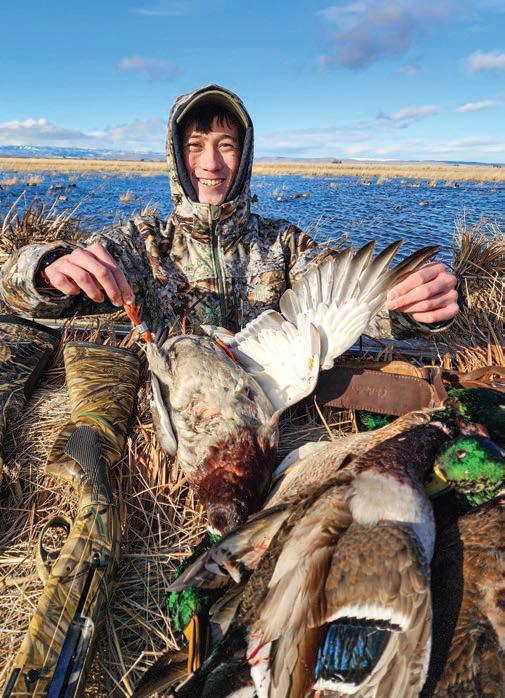
Corbin Han displays a banded greenhead taken on a windy day in the marsh this past waterfowl season. (KNIFE PHOTO CONTEST)
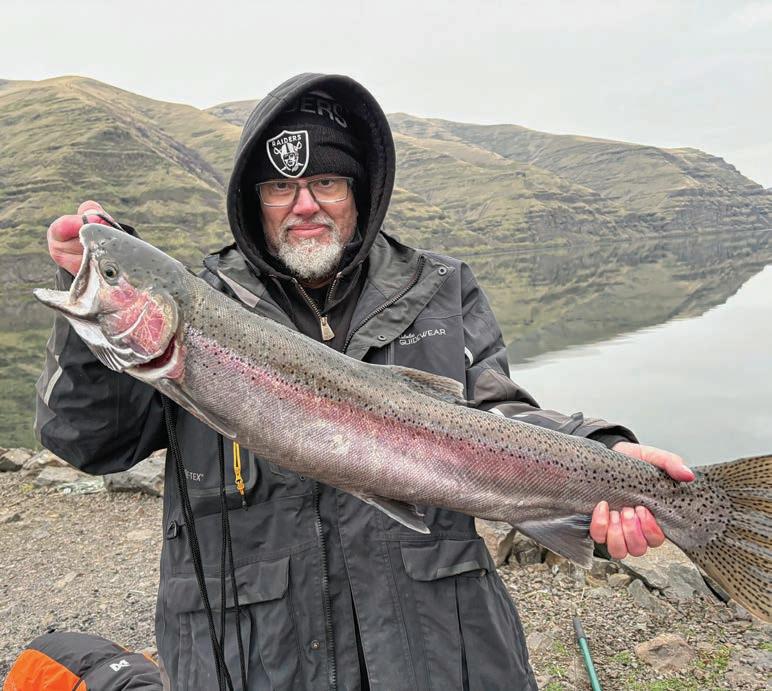
Cory Hovanec hefts a 35-inch steelhead caught on a very still Snake River. (KNIFE PHOTO CONTEST)
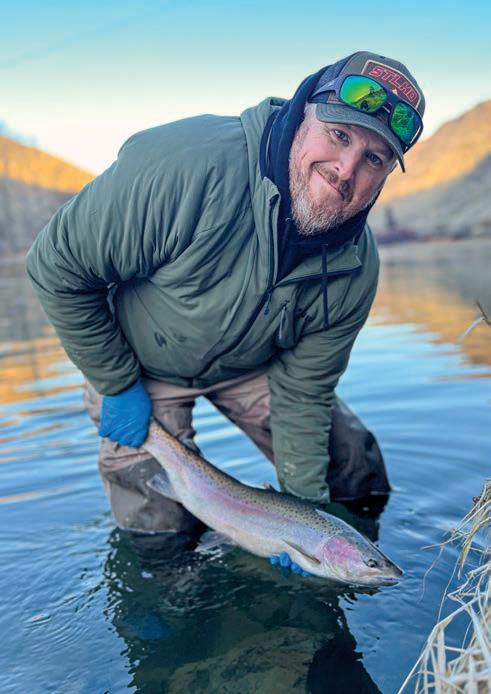
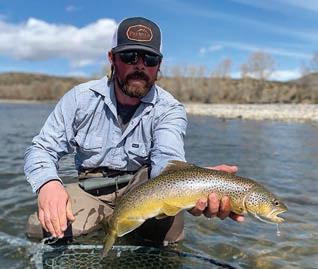
The Yakima River is the happy place for Chris Morales, especially in winter. “He knew it was a nice fish as soon as he set the hook with his 5-weight,” reports buddy Brandon Jewett. “She swam away unscathed and left him with a smile.” (KNIFE PHOTO CONTEST)
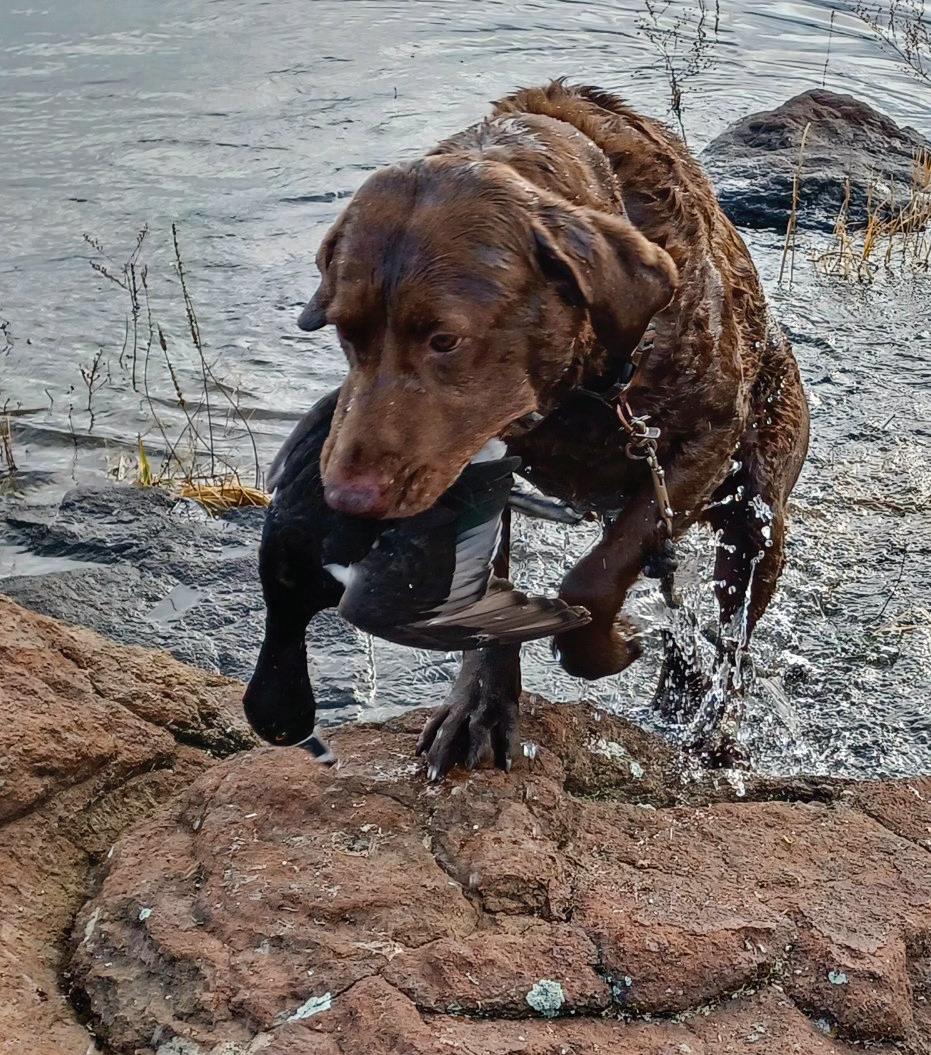
Duke, a 10-year-old Chesapeake-Labrador mix, brings a ring-necked duck to hand near Vantage on Washington’s Mid-Columbia River this past season. “Duke is a great hunting dog and a great family dog,” says owner Brent Johnsen’s daughter Madelyn Elliott, who sent in the photo. “He is so patient and kind with all of the grandchildren running around and they are obsessed with him, too, constantly giving him hugs and climbing all over him.” (KNIFE PHOTO CONTEST)
December’s big atmospheric rivers messed with Dennis Schwartz’s kokanee fishing on North Fork Lewis River impoundments, but a few fish were still able to lock onto his gear. While describing turbidity as “kokanee kryptonite,” he advised that they could still be found, just outside their usual haunts at the time. (KNIFE PHOTO CONTEST)
Jay Golden long ago found his sea legs, but the Westport angler has been working on his river legs of late with mentor-buddy Darrel Smith. He caught this handsome Olympic Peninsula buck on a chilly late January morning. “He’s hooked!” says Smith. (KNIFE PHOTO CONTEST)
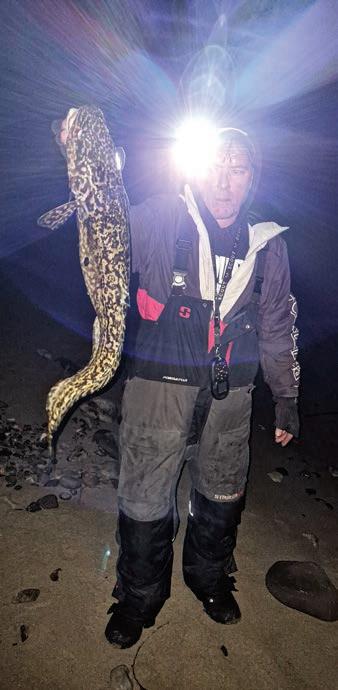
Bill Stanley set a new personal, er, bur-best. This 30-inch burbot bit for him on a late January night on the Columbia that also yielded a 10-pound walleye, which he released. The latter fish bit a pikeminnow bait in 10 feet of water. (KNIFE PHOTO CONTEST)
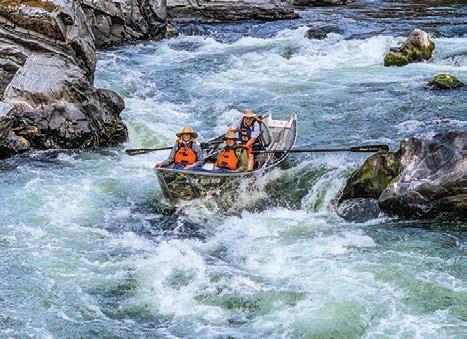
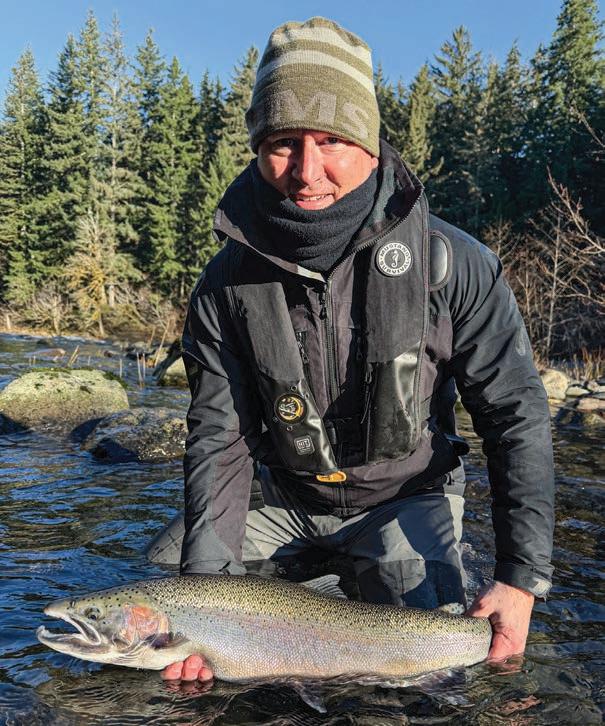
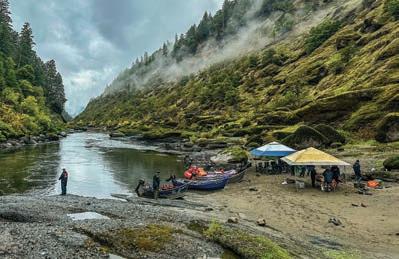
A 4-Day Lodge-to-Lodge Drift Boat Fishing Experience on Oregon’s Wild & Scenic Rogue River!
The Rogue River is the granddaddy of salmon and steelhead, plain and simple. This 4-day Rogue River drift boat trip is about good fishing and doing it right. You’ll float classic stretches of the Wild & Scenic Rogue with seasoned guides who know the river and know the fish.
Fish it how you like—fly, lure, spinner, whatever works. There’s no single “right” way here. At the end of the day, you’ll pull into a private riverside lodge with hot showers, real beds, and solid meals. It’s not camping. It’s a comfortable, no-nonsense fishing trip on one of the West’s great rivers.
THREE ALL-INCLUSIVE LODGES
• Lucas Lodge
• Black Bar Lodge
• Paradise Lodge
Each lodge is accessible only by river and reserved exclusively for our guests,—offering privacy, comfort, and a true escape into Rogue River country.
WHAT’S INCLUDED
• Fully guided drift boat fishing
• Private riverside lodges each night
• All meals, gear, and logistics provided
• Lodge-to-lodge travel by drift boat
• Small groups with hands-on guiding You just show up ready to fish.
Trail Cam Leads To Jail Time For King Poacher
Alandowner’s sharp eyes led to hard time for a northern Olympic Peninsula man caught attempting to poach salmon from closed waters.
Gregory Gallauher, 32, of Clallam County was sentenced in late January to 15 days in jail for the September 2022 incident on the Dungeness River.
The case began when Washington Department of Fish and Wildlife Officer Owen Barabasz heard from the local resident about “finding suspected evidence of fish poaching and trespassing” on the river, which was closed to all angling to protect Endangered Species Act-listed Chinook during their spawning run.
Barabasz set up a trail camera that provided a live feed from where the apparent poaching took place, then he and Officer Tyler Izatt hung out nearby to respond quickly to the scene.
According to WDFW Police, sometime after sunset the officers saw headlamp-wearing people move past the camera, then observed Gallauher “repeatedly cast and reel his line while fishing in a section of closed river where ESA-listed Chinook were known to be.” The other individual found at the scene was apparently not fishing.
Upon contact, Gallauher was cited for second-degree criminal trespass and unlawful second-degree recreational fishing. In a
By Andy Walgamott
deal, he pled guilty to the latter violation and was sentenced to 90 days in jail, with 75 of those suspended.
“We would like to express our thanks to the Clallam County Prosecuting Attorney’s Office for their work on this case,” said WDFW Police Lieutenant Kit Rosenberger. “Dungeness River Chinook has a long recovery to go after returns in the 1990s of just a few dozen adults. The state, Jamestown S’Klallam Tribe and many invested NGOs have all recently made significant investments in habitat restoration projects to the Dungeness River. This case is an example of the critical role WDFW Police also plays in protecting these iconic fish from illegal harvest.”
KUDOS
In a heartwarming ending to the story about the first poached salmon in Southern Oregon’s Klamath River watershed post dam removal, the two eyewitnesses who reported the incident to the state tip line received cash for their vigilance. As we reported in the December 2025 Dishonor Roll, the duo took photos of a Chinook illegally caught on Spencer Creek as well as the license plate of a vehicle associated with it, and then passed them along. An Oregon State Patrol Fish and Wildlife Division trooper spotted the vehicle, stopped it and found two salmon inside. As a result, the suspect received “the first criminal citation for an unlawfully taken salmon in the history of Klamath County,” according to OSP. In December the two tipsters received their reward. The standing amount for reporting game fish, shellfish or snagging violations is $400; tips can be reported to (800) 4527888, *OSP (*677) and TIP@osp.oregon .gov. “Their vigilance helped ensure that the hard-won return of salmon to the basin remains protected for future generations,” said troopers. Kudos!
Guide Apologizes For Violations
ASouthwest Washington guide has issued a formal apology for violating the federal Migratory Bird Treaty Act and Lacey Act, as required by a court sentence that also includes $175,000 in fines for he and his business, 180 hours of community service and three years of probation.
FOLLOWUP FILE
Branden Trager of Brush Prairie outside Vancouver posted the two-paragraph apology on his Adventures with Mayhem Outfitters website and its Facebook and Instagram pages, and he wrote that the Lacey Act is a “vital tool for the protection of ecosystems, the promotion of biodiversity,
and the support of conservations (sic) efforts in the United States and beyond.” He noted that the MBTA “is similarly critical.”
As a reminder from our story on the case in the September 2025 issue, Trager admitted to violating the latter act during a January 2023 waterfowl hunt in Western Washington and then transporting birds in violation of the former act. He also acknowledged bringing three parties of hunters to British Columbia in late 2022 to hunt Harlequin ducks (they weren’t open in Washington at the time) despite not being licensed to guide under Canadian laws. According to the US Attorney’s Office, he “conspired with a Canadian taxidermist to illegally shoot the Harlequin (ducks) and
JACKASS OF THE MONTH
So, it’s been at most a day since you were visited by the game warden about a mysterious cardboard box with your address on it and various bloody deer parts inside, and after some duplicity you eventually admitted to killing the animal well before the start of deer season and without a valid license or tag, and thus had the venison and antlers seized – what’s on your to-do list today?
Well, if you’re Carl Van Loon, a 68-yearold man who lives on a remote plateau between Idaho’s lower Salmon River and Hells Canyon, you draw attention to yourself with a high-caliber gunshot, receive another visit from the same officer, and things proceed to go very badly for you.
Our story begins in early October 2024 on a backcountry road southeast of Lewiston, where a local rancher found the blood-covered box and reported it to the Idaho Department of Fish and Game.
Using the mailing label on the box, local Senior Conservation Officer Morgan Deards took it to the stated address, where Van Loon initially denied it was his, then said somebody must’ve fished it out
of a dumpster nearly 30 miles away in the town of Cottonwood, put the deer hide, legs and hooves inside, and then dropped it off alongside said road.
Deards wasn’t buying that dubious delivery story, and said he suspected that if he looked inside Van Loon’s freezer, he would find meat from the same deer. That led to a confession and citations for unlawful possession of a closed-season whitetail buck and littering.
The next day, Deards was again in the vicinity of the Van Loon place – part of his regular patrol area – when he heard a gunshot come from that direction. Neighbors told him they also heard it, so Deards headed over to Van Loon’s property line, where he observed a hunting blind, salt block, water trough, hay feeder, and a feed bin with some oats and grains.
While cattle ranching does occur in these parts, Deards was suspicious he was actually looking at an illegal deer and elk baiting site, so he got a search warrant and served it on Van Loon.
Investigators found evidence of baiting with intent to take deer out of season, images and texts of multiple deer and a closed-season moose, as well as a mes-
then export the mounts” to the US.
Trager’s apology states that guides such as himself “are on the frontline of responsibility for upholding those federal laws … I failed to follow those laws as I should have. I recognize now that certain guiding practices I was previously involved in did not comply with the Acts, and that I should have known as much.”
Trager also appears to have been removed as president of The Fallen Outdoors, a nonprofit org connecting veterans to one another in the outdoors.
“I deeply regret those actions and have redoubled my own efforts to understand and uphold the laws and regulations bearing on U.S. fishing and hunting,” his apology also stated.
sage on Van Loon’s phone that warned “not speak of these animals to anyone.”
Initially charged with six felonies, nine misdemeanors and one infraction, Van Loon took a plea deal in which he copped to the closed-season bull moose in exchange for dropping the deer charges.
During Deards’s first contact with him, Van Loon asked, “What do you care what I do on my own property? … I’m not hurting nobody by grabbing deer and putting them in my freezer,” according to IDFG.
“I think he really thought he could do whatever he wanted,” Deards told the Lewiston Tribune, according to outdoor reporter Eric Barker. “He didn’t think there was going to be an issue with it.”
In a press release, IDFG said that Van Loon was in fact “stealing wildlife” from both lawful deer hunters to harvest and his neighbors to view.
“There is not a lot of moose up there,” Deards also told Barker, “and I think people liked watching that one little moose.”
There are no moose permits issued for this particular unit either.
In the end, that mailing label, day-after gunshot and poached bull hurt Van Loon to the tune of lost hunting, fishing and trapping privileges for life, 10 days in jail and a $10,000 fine.
The Lacey Act is a vital tool for the protection of ecosystems, the promotion of biodiversity, and the support of conservations efforts in the United States and beyond. The Migratory Bird Treaty Act is similarly critical – that Act protects over 1,000 bird species and – along with responsible outdoorsmanship – plays a key role in conserving those bird populations, preserving ecosystems, and honoring the United States’ international commitments to the maintenance of ecological balance across North America.
Wildlife guides – myself included – are on the frontline of responsibility for upholding those federal laws. Guides have a particular duty to understand and uphold the many regulations that flow from each of these Acts. I failed to follow those laws as I should have. I recognize now that certain guiding practices I was previously involved in did not comply with the Acts, and that I should have known as much. I deeply regret those actions and have redoubled my own efforts to understand and uphold the laws and regulations bearing on U.S. fishing and hunting.
Branden Trager
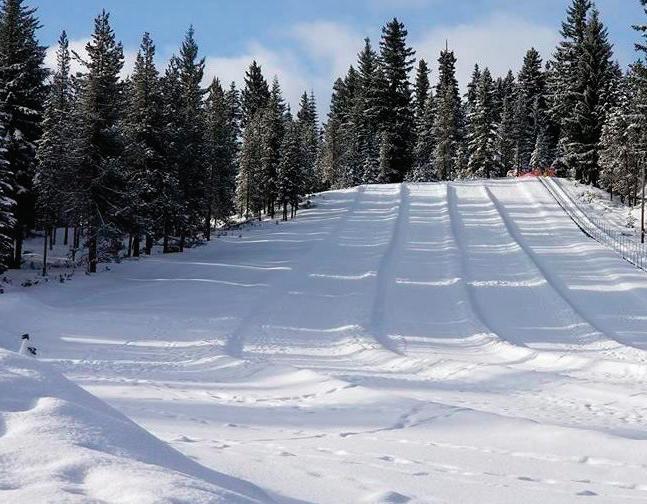
December 12 - Start of Tubing Season (Weather Permitting)
December 13 - Snow Dance and Penguin Plunge
December 25 - Christmas Day Buffet (Reservations suggested)
December 31 - New Years Eve Grand Buffet & adult party with live music (Dinner reservations suggested)
January 3 - High School Cross Country Ski Races
January 10 - High School Cross Country Ski Races
January 19 - MLK Day Bonus Tubing Day
February 14 - Rogue Snowmobile Mt. Bailey $5K Poker Run
February 16 - Presidents Day Bonus Tubing Day
February 21, 22 - Dog Sled Races
March 21-29 - Spring Break Bonus Tubing Days
March 29 - Last Tubing Day for the Season
Lake Resort is located at the summit of the Southern Oregon Cascade Mountains. On Hwy 138 just 5 miles North of Crater Lake National Park. We are the hub of 300 miles of groomed Snowmobile trails and the only snowmobile access to Crater Lake National Park
OUTDOOR CALENDAR
1 Fishing opens on Metolius Arm of Lake Billy Chinook, OR (tribal angling permit required); Numerous Eastern WA lakes open for fishing
1-4 Razor clam digs open on select WA Coast beaches – info: wdfw.wa.gov
4 First of six tentative March smelt dipping openers on Cowlitz River, WA (others: March 7, 11, 14, 18 and 21) – info: wdfw.wa.gov/fishing/regulations/smelt
5-8 ODFW Hunter Safety Field Days, Redmond (register by March 2 or 3, depending on field date; $10) – info: vem.myodfw.com
7 Seattle Sportsmen’s Convention fundraiser and auction, Lynnwood Event Center – info: sscf.schoolauction.net/ssc2026
10 Last day of OR South Coast and High Desert and Blue Mtns. Zones goose hunts
12 ODFW Hunter Safety Conventional Course, Pendleton (register by March 12; $10) – info above
14 WA bottomfish, lingcod, rockfish, cabezon and flatfish (sanddabs, flounder, etc.) season openers on Marine Areas 1-3 and 4 west of Bonilla-Tatoosh line
15 Last day of WA bobcat, fox, raccoon, rabbit and hare seasons; Leftover OR spring black bear tags go on sale at 10 a.m.
16 ODFW Hunter Safety Conventional Course, Baker City (register by March 13; $10) – info above
17-24 Tentative razor clam digs scheduled on select WA Coast beaches, dependent on marine toxin levels – info above
19 ODFW Intro To Hunting In Oregon, Tualatin Cabela’s (register by March 17; $10) – info above
20 Deadline to file WA Goose Management Area 1 snow goose and GMA 2 Canada goose reports
20-22 Ocean Shores Razor Clam and Seafood Festival – info: tourismoceanshores.com
22 ODFW Hunter Safety Conventional Course, Shedd (register by March 20; $10) – info above
27-28 Quincy Valley Tourism Association Trout Fishing Derby, Burke and Quincy Lakes – info: quincyvalley.org
28 Youth Outdoors Unlimited Western Washington fundraiser and auction, Hotel Murano, Tacoma – info: youthoutdoorsu.org
28-29 ODFW Turkey Hunting Workshops, Salem (register by March 27; $50) –info above
31 Last day 2025-26 WA fishing and hunting licenses valid; Deadline to purchase WA 2026 multiseason deer and elk applications; Last scheduled day of steelhead season on WA North Coast and Willapa Bay rivers
1 Start of new WA fishing and hunting license year; OR spring bear hunt opener; ID spring bear hunt opener in select units; Scheduled WA Marine Areas 10-11 blackmouth opener (open Wednesdays-Saturdays only)
1-7 WA youth spring turkey hunting week; Tentative razor clam digs scheduled on select WA Coast beaches, dependent on marine toxin levels – info above
4 ODFW Youth Turkey Hunting Clinics, White River and Denman Wildlife Areas (register by April 2; $10) – info above
10-12 49th Annual Oregon Knife Show, Lane Events Center, Eugene – info: oregonknifecollectors.com
11 ODFW Hunter Safety Conventional Course, Creswell (register by April 1; $10) – info above; ODFW Turkey Hunting Workshop, Bend (register by April 8; $50) – info above
11-12 OR youth spring turkey hunting weekend; ODFW Turkey Hunting Workshops, Salem (register by April 10; $50) – info above
15 ID, OR and WA general spring turkey season opener; ID spring bear hunt opener in remaining units
17-18 Long Beach Razor Clam Festival – info: longbeachmerchants.com
Your Outdoor Adventures start here
LIVE “WILD EAGLE ENCOUNTER” HIGH-FLYING ACTION!
WIN THE “GREAT MAINE LOBSTER HUNT” BOARD A LOBSTER BOAT TO HAUL IN YOUR CATCH!
WIN OHA’s “GUIDED MAINE BEAR HUNT” STAY IN AN AUTHENTIC MAINE HUNTING CAMP!
ENTER THE “CAPTURE THE WILD” PHOTOGRAPHY CONTEST
INCLUDING A NEW TRAIL CAMERA CATEGORY!
SEVEN FEATHERS BIG GAME ROOM
• LEGENDS OF THE OREGON RECORD BOOK
• 2026 TOUR OF NORTHWEST BIG GAME
• 2026 HEAD & HORNS COMPETITION
Presented by Busch Light, 10 Barrel Brewing Co., Black Gold Premium Dog Food, and Northwest Big Game
100s OF EXHIBITS
TO GET YOU OUTDOORS HUNTING, FISHING, BOATING, OFF-ROADING, CAMPING, FORAGING AND MORE!
Presented by Bi-Mart Presented by Bi-Mart Presented by Bi-Mart
A look at 2026’s Columbia forecast, 2025’s fishery peformance, and early-season tactics.
By Mark Yuasa
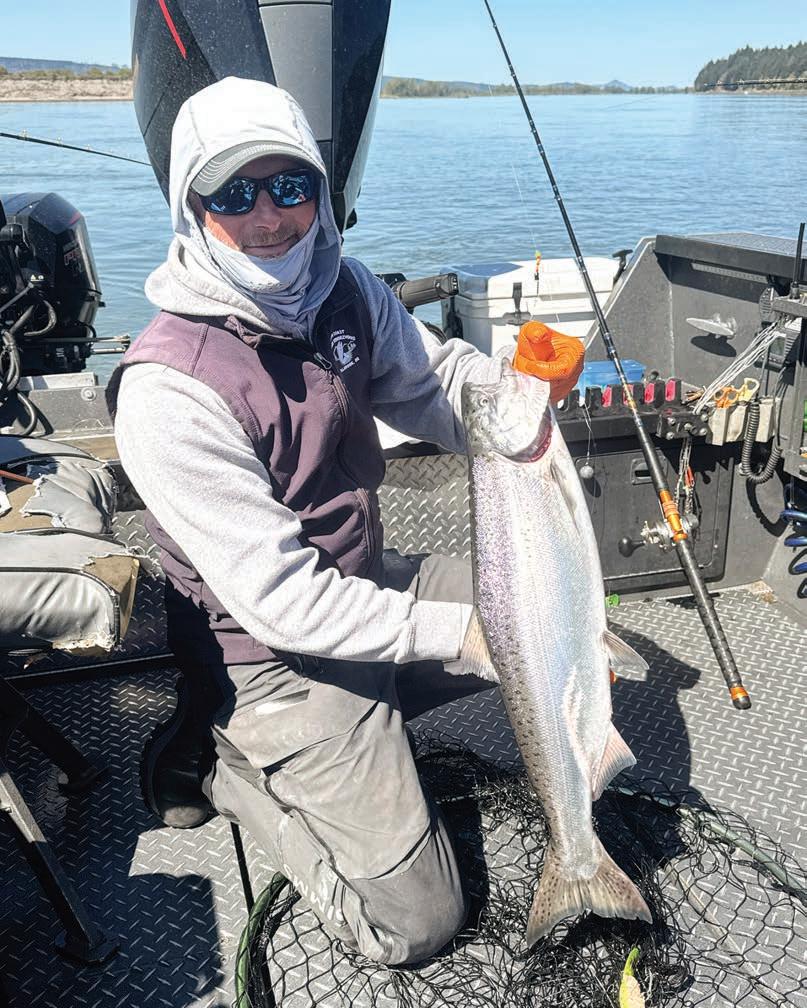
Catching a coveted spring Chinook in the Lower Columbia is a feat of dedication peppered with a lot of luck.
By the time this column is published, the front end of a forecasted 228,700 spring Chinook will be making their way up the river. At the same time, a mass of dedicated anglers will be plying the water in hopes that a little bit of good karma is on their side.
Spring Chinook are the first migrating salmon to arrive in Washington waters and they are known for their Omega-3laced, red-orange-colored meat, which
is very comparable to Alaska’s vaunted Copper River salmon stocks.
They enter the Columbia from February through June, peaking from April through mid-May, and then spawn in tributaries from August through October.
These are one of the most soughtafter salmon as anglers come out of the winter doldrums, but the “if” factor always comes into play for spring Chinook fisheries along the lower river. Factors to fishing success include water conditions (temperature, flow and clarity, just to name a few); the unpredictable releases of water from upriver dams; fish run timing;
location; gear types; and, most of all, whether the fish return as forecasted.
Recreational rules for the river below and above Bonneville Dam were set on February 19. Season is scheduled to be open March 1-April 8 downstream of the dam to Buoy 10, daily limit two adult hatchery salmonids but only one Chinook. Boat fishing is again allowed upstream to Beacon Rock, while it is bank fishing only from Beacon Rock to Bonneville. In the Columbia Gorge, fishing is open April 1-26 plus May 2 from the Tower Island powerlines 6 miles below The Dalles Dam up to the Washington-Oregon border, and bank only from Bonneville to the Tower
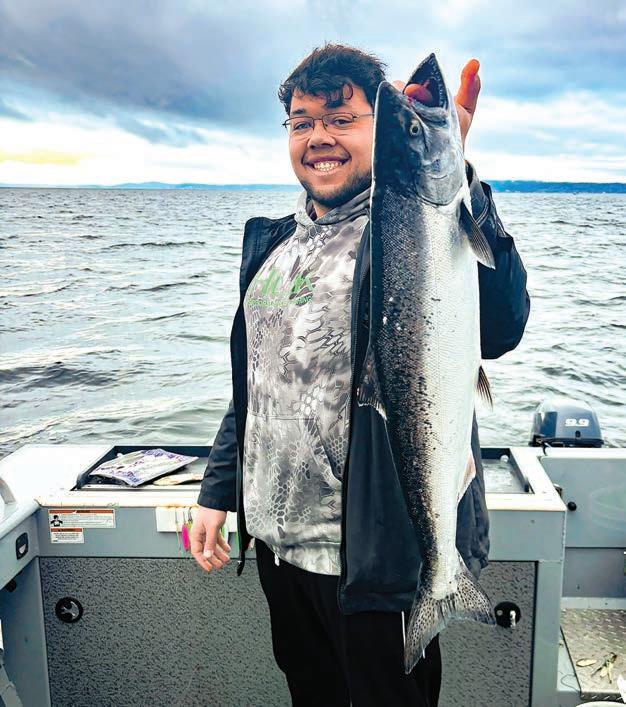
Time to retrieve your spring Chinook gear out of the garage! Over 220,000 of the tasty fish are heading into the Lower Columbia this year, and many of them will be keepers. (ANDY WALGAMOTTT)
FISHING
Island powerlines, with the same limit. For updates, go to the news release at wdfw.wa.gov.
THIS YEAR’S OVERALL
Columbia River spring Chinook forecast is up compared to the 2025 preseason prediction of 217,500; last year’s actual return was 252,502.
Breaking things down further, preseason forecasting for 2026 anticipates 147,300 adult upriverorigin spring Chinook, a figure that is 117 percent of the 10-year (201625) average return of 126,247.
Approximately 154,703 adult-aged upriver-origin spring Chinook returned to the Columbia River in 2025, which was above the preseason forecast of 122,500.
Speaking of last year, the spring Chinook season was open daily from Buoy 10 to the Interstate 5 Bridge from January 1 through February 28 under the permanent regulations and then extended up to Bonneville Dam under temporary regulations from March 1 through April 6. The fishery was reopened April 11-13, April 15-17 and May 9-June 15.
According to the Washington and Oregon 2026 joint state report on spring Chinook, the total season catch in 2025 in the fishery downstream of Bonneville, including released catch in the summer steelhead fishery, was 11,662 adult spring Chinook (10,086 kept and 1,576 released), 1,023 spring
Chinook jacks (852 kept and 171 released) and 984 steelhead (651 kept and 333 released) from 90,201 angler trips, which was the highest angler trip total for spring Chinook since 2016.
Catch and effort was low in February 2025 with two spring Chinook kept and seven winter steelhead released from 1,334 angler trips. That was followed in March by high and muddy water conditions. The total March 1-31 catch was 286 adult spring Chinook (212 kept and 74 released) and 256 winter steelhead (124 kept and 132 released) from 17,509 angler trips.
Angler effort increased in April, but catch rates remained low as water conditions were challenging with high flows and marginal water clarity. From April 1-6, anglers made 8,378 trips and caught 361 adult Chinook (329 kept and 32 released) and 89 winter steelhead (71 kept and 18 released).
During the additional windows of opportunities later in April, the fishery gradually improved in certain pockets of the mainstem Columbia, but the overall effort and catch of upriver spring Chinook remained well below expectations. Fish passage began to increase in late April and early May, and another phase of fishing was allowed from May 9-22 in sections of the Columbia mainstem, followed by another extension through June 15, which is the official end of the management period for spring Chinook fisheries.
WHATEVER TIME YOU choose to fish the Lower Columbia and its tributaries, expect a crowd of boats at popular locations, especially the several miles downriver from the Willamette River mouth near Kelley Point Park on the Oregon side; Westport on the Oregon side; the Cathlamet area; Clifton Channel on the Oregon side of Tenasillahe Island; and the Washington side of Tenasillahe, located across from the Julia Butler Hansen Refuge for the Columbian White-tailed Deer.
Other well-known spots include outside of the mouth of the Cowlitz, Lewis and Kalama Rivers, and on the Oregon side in the St. Helens area, Frenchman’s Bar downstream of Vancouver, just downstream of the Multnomah Channel, Caterpillar Island, and Willow, Woodland and Kalama Bars.
Some of these locations also offer bank anglers access to the fishery. And with the river opening March 1 above the I-5 Bridge, the bank fishery extends up to Bonneville Dam on both sides of the river.
AS FOR GEAR, a fishing rod length of 9½ to 10½ feet in a 15- to 25-pound weight, and a lot of flex with a soft tip is best. Spring Chinook can be finicky biters and will grab the bait and turn away, so a flexible rod tip is key to a proper hookup. One pro tip is to let the salmon take the bait/lure and pull your rod tip down a few times before gently lifting
the fishing rod out of the holder.
A linecounter reel enables you to find the correct depth by aligning what you see on the fishfinder to how deep your gear is running. Many anglers prefer braided line, but monofilament with a bit of stretch works well and provides some give when the fish takes your bait or lure.
The standard setup for trolling is a three-way swivel – sliding swivel is optional – with 10 to 18 inches of 15-pound monofilament to an 8- to 15-ounce dropper weight. The weight size depends on current and flow of the water. On the other end of the swivel is 24 inches of 30-pound monofilament line to your Fish Flash and then another 40 to 50 inches of 30-pound monofilament line with a barrel swivel halfway down the leader to allow the bait or lure to spin freely and prevent the line from twisting and tangling. Often, going “bare” without a Fish Flash can create less drag.
Use a green label-size whole or cutplug herring. Many will soak their bait in a brine mixture to toughen them up. After bouncing off the bottom or running into debris, herring tend to get blown out or will lose their quality tight spin, so check your bait often.
To get the right spin on a whole herring, insert a toothpick in its lower vent and bend the fish to a 45-degree angle. Then take the top hook and insert it under the lower jaw and out through the hard spot between the
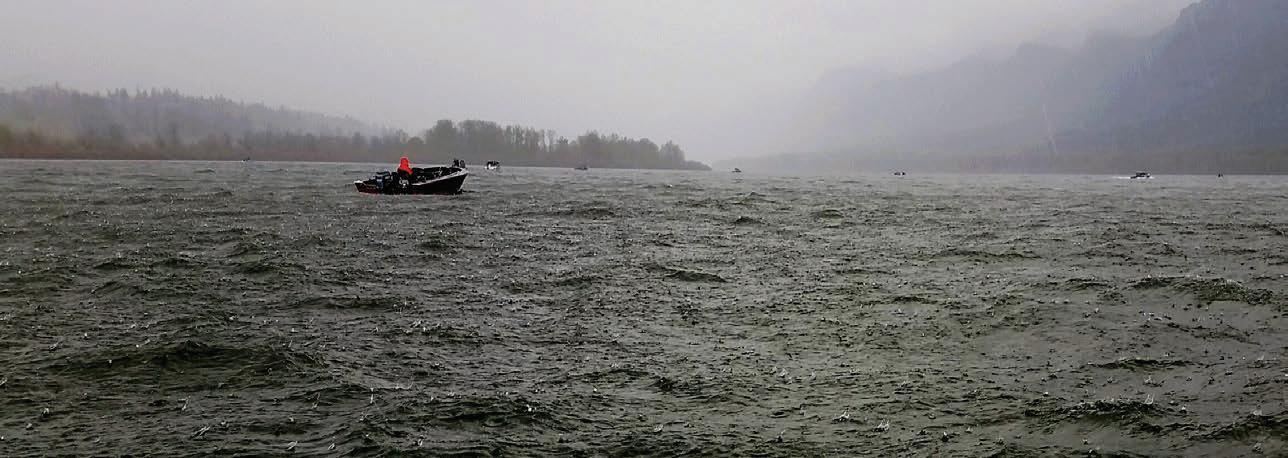
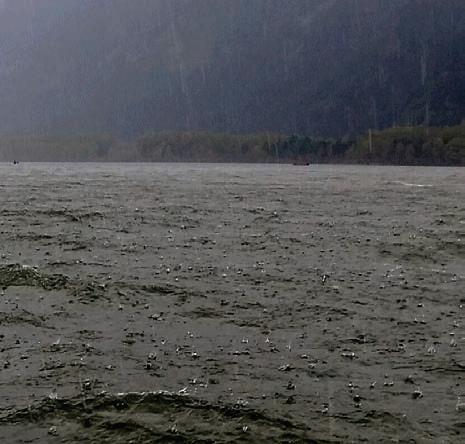
March and April weather can be brutal on the big river, with rain, hail, wind, even snow strafing anglers and the fishing grounds … (ANDY WALGAMOTT)
FISHING
eyes. About halfway down the side of the body, insert and pull out the trailing hook so it dangles freely.
You can also pin a plastic bait helmet – Krippled Herring or Rhys Davis – to avoid wear and tear on the herring. Before dropping it down, add some scent and make sure it has the right spin.
Other top choices include a size 3.5 spinner blade, beads and a prawn; FlatFish wrapped with a sardine; and a Brad’s Super Bait. Downsizing to smaller Kokanee Cut Plugs or a 2.5 or 3.0 Spinfish filled with tuna to tandem trailing hooks is effective in warmer water conditions.
Colors are also key to catching fish, so be sure to carry a wide variety, but usually chartreuse, silver, orange and red work well depending on the clarity of the water.
The scent of bare hands can be a deterrent to fish, so having some environmentally safe liquid soap, clean hand towels and elastic nitrile
gloves on hand will enable you to stay in the game of catching fish. Have a small bucket to wash down your lures and be sure to keep your rod handles and cranks on the reel clean.
If you don’t like to troll, anchor up in a hogline, back-troll downhill with the current or back-bounce. You can also flat line a Kwikfish or Mag Lip wrapped with sardine and no weight out the back of your boat and let out about 40 to 50 feet of line.
THOSE FISHING FROM shore often are referred to as “plunkers” (the term is defined as a stationary fishing technique used by anglers who cast bait from shore and allow it to rest just off the bottom), and they will cast out using longer stout rods of 10 to 12 feet that can handle a heavier weight of 12 to 15 ounces. Add a spreader bar or three-way swivel for a 20- to 30-inch dropper and a 35- to 50inch leader. Go-tos on the end of the leader are a Spin-N-Glo or winged bobber with bait – herring, cluster of
salmon eggs, shrimp – or a salmon plug wrapped with bait.
At daybreak and during outgoing tides look for fish hugging the shoreline at depths of 10 to 20 feet. On sunny days or during softer currents the fish will tend to move out into the channel in 30 to 50 feet of water. When the water is low and clear, stretch out your leader length and downsize your lure or bait. On a stronger outgoing tide or swifter water, many switch to anchoring and then will troll downstream on an incoming or slack tide.
Lastly, before you head out the door, be sure to check the WDFW website for specific fishing regulations, as well as any of the emergency closures or openings or rule changes that tend to occur during the spring Chinook fisheries. NS
Editor’s note: Mark Yuasa is a Washington Department of Fish and Wildlife communications manager. He also was the outdoor reporter at The Seattle Times for 28 years.
... But when you get that one bite and land a clipped king, it’s all sunshine and rainbows. (ANDY SCHNEIDER)
Hook More Big River Chinook
Lower Columbia, Willamette experts talk tides, depths and top herring setups.
By Buzz Ramsey
Itook time out from chasing winter steelhead to write this article about the basics of chasing spring Chinook on the Columbia west of Bonneville Dam and Willamette downstream from the falls at Oregon City. I’ll be honest, given the timing of the run, combined with what can be slow early-season catch rates, I don’t get too excited about hitting this fishery until at least mid-March, with April and May being my go time.
This year’s runsize forecast is expected to be similar to last year, with 228,700 spring Chinook entering the mouth of the Columbia River. The portion of the run bound for tributaries above Bonneville is predicted to be 147,300 fish, which is higher than the 10-year average and almost as many as actually returned in 2025. Some of the upriver-bound salmon, along with those headed to the Willamette and Lower Columbia tributaries, will be caught in the mainstem before the season on the big river closes, which is scheduled to be Sunday, April 8, though short reopeners afterwards are possible depending on quota balance.
Like myself, many anglers focus their efforts on the Columbia west of Bonneville Dam the last week or two of the season, just as the run is beginning to ramp up. Interest in catching upriver-bound springers is high because they have the richest omega oils and taste due to the long distance they must travel to reach their spawning destination, the majority of which is in Idaho.
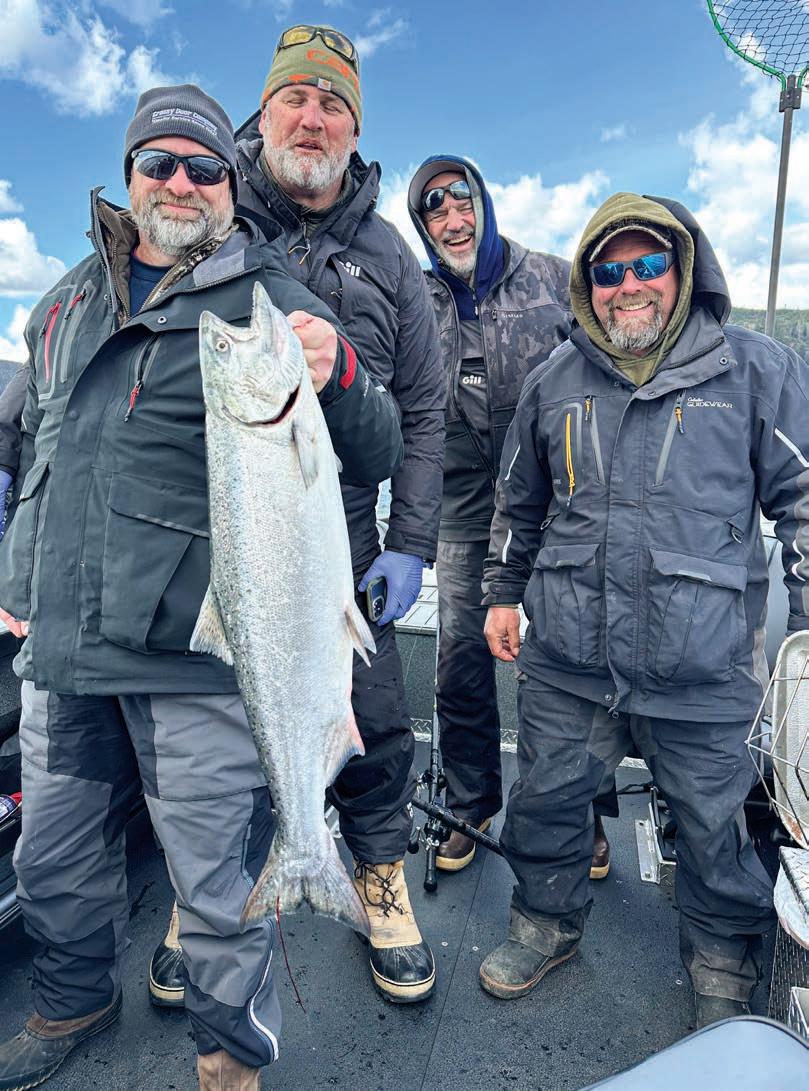
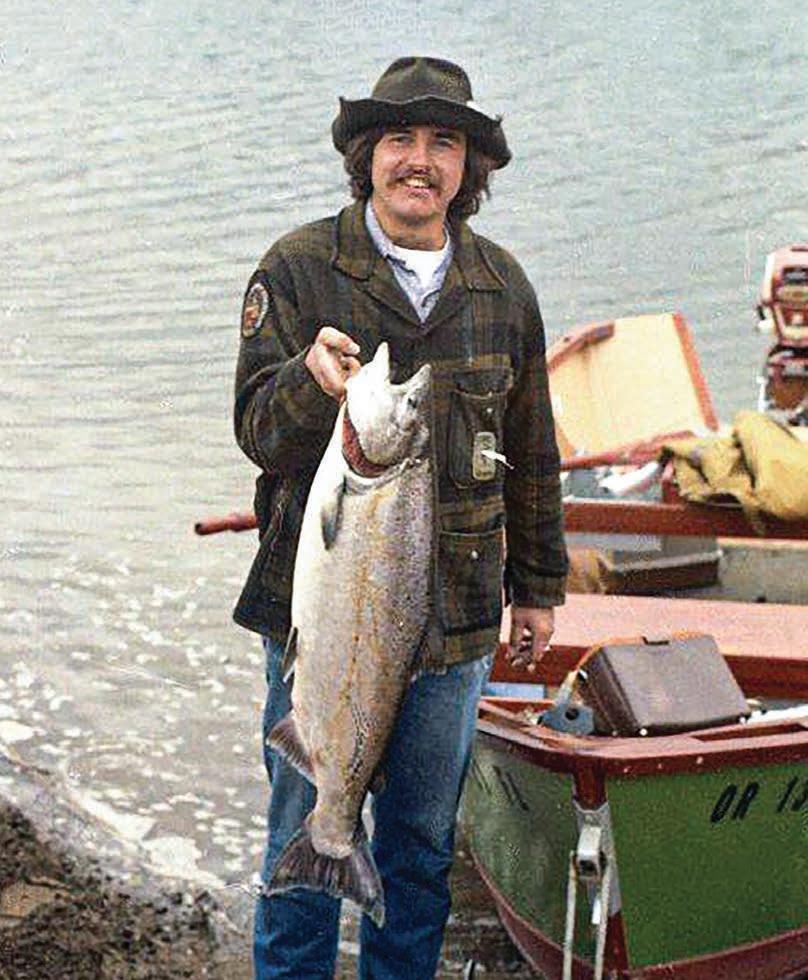
With late March and early April being the best time to hit the Lower Columbia for spring Chinook during the early portion of the fishery, it pays to be ready to hit the water. Mike Pitzer hit this nice king in early April 2024 on a trip with (from second left to right) Kevin Gogan, Tom Nelson and Jason Rochasender. (BUZZ RAMSEY)
FISHING
UNLESS YOU’RE FAMILIAR with the subject, you may not understand why the sport season on the Columbia is cut short every year as opposed to the Willamette and its slough being open all season. Both rivers’ stocks are listed under the Endangered Species Act, but Columbia upriver springers – those returning to tributaries above Bonneville Dam – are managed more intensively, including with a 30-percent runsize buffer on the early portion of the run. That makes for an allowable sport harvest of 5,313 upriver fish (retained hatchery fish plus wild release mortalities) on
Some things never change! Author Buzz Ramsey caught this springer while trolling a herring in the Columbia off the Kalama River mouth in 1973. “The bite had been slow that day, but I hung in there until late afternoon when a tide change prompted this salmon to bite,” he recalls. (BUZZ RAMSEY)
Between the ESA listing, runsize buffer and – the primary constraining factor – catch balancing between treaty and nontreaty fisheries, state managers are forced to restrict the sport catch by having a short early season that occurs before the main run shows up. This is why the fishing on the Columbia during the last week of the early season and any short reopeners right afterwards represents your best chance at catching a spring Chinook that might include one bound for Idaho.
Once the season on the Lower Columbia closes until May’s runsize update, anglers who haven’t had enough switch to fishing the lower Willamette, Lower Columbia tribs and Columbia Gorge waters that host springer runs. Keep in mind that only those with a missing adipose fin can be kept anywhere they’re open.
IF YOU HAVEN’T chased springers on the Columbia or Willamette, you should realize that ocean tides have a huge influence on when and where the catching will be best. After all, (did you know?) although subtle, tides affect the Willamette up to the falls at Oregon City and the Columbia all the way to Bonneville Dam.
Spring Chinook respond to the change in river currents caused by tides and almost always bite best before and after a tide change, similar to the way they do in the Pacific Ocean or Puget Sound.
the mainstem before the run update. With 70 percent of the remaining available springer habitat in the Columbia watershed in Idaho, the outmigrating juvenile salmon have to pass eight federal dams on their way to the ocean. According to the federal government’s own statistics, 55 percent of spring Chinook smolts leaving Idaho were killed before reaching the Columbia west of Bonneville Dam in 2023. Add to that losses from birds and sea lions and you can see why there isn’t enough salmon for a wide-open sportfishing season on the Lower Columbia.
Since the best bite will likely occur before and after each high and low tide adjustment, it’s a good idea to make sure you’re on the water and fishing during these time periods.
Perhaps this is obvious, but it takes longer for a flooding ocean tide to alter the flow of the Columbia and Willamette the farther upriver you go. That means it takes longer for flooding water to slow or stop the river’s current at Longview compared to Astoria’s Tongue Point. Most anglers I know rely on a smartphone app to chart the timing of the tide at different locations
FISHING
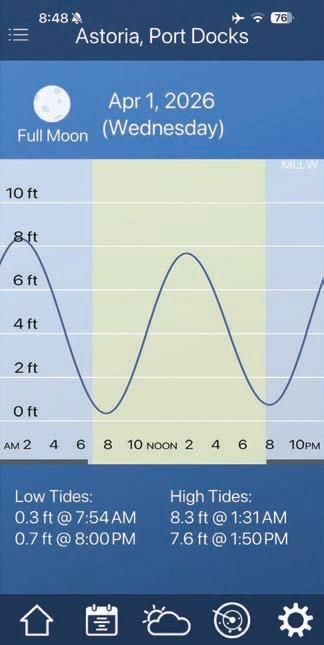
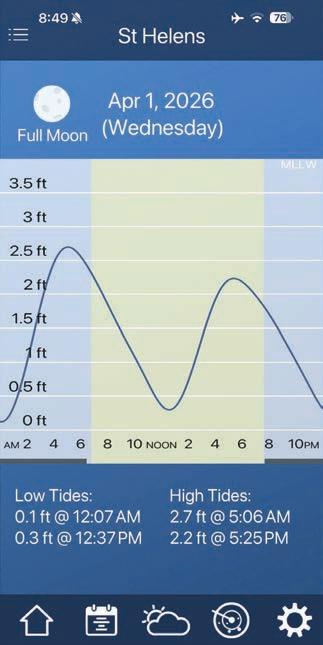
along the Columbia and Willamette Rivers. The app I’m currently using is called Tides.
Depending where you fish, a big flood tide can slow, stop or sometimes (given a really big tide combined with low river flows) reverse the river’s current and can make a difference in which technique you choose, the area of the river you select, and when salmon will bite best. It’s in the Lower Columbia and Multnomah Channel where tidal fluctuations can be most dramatic.
TROLLING IS GENERALLY most productive when a flooding tide has slowed the river current or caused the current to stop altogether. Plunking/still fishing is best when tides are outgoing, creating the current needed to work stationary lures.
If you have a boat and wish to troll, plan to be on the water at least an hour before low tide and fish through the flood and during the first part of the outgo. By planning your trip this way, you will be taking advantage of two tide changes. Keep in mind that the best trolling bite of the day will likely occur during the first hour or so of the outgo (ebb), a time when a downriver trolling direction will likely produce best.
Once the initial hour or two of the outgoing tide has passed –especially if a big tide is causing the current to become fast moving – you can either anchor up, hold into the current, back-troll or call it a day. If you intend to troll, there is no need to start at daylight in an area where the tide will be running out fast all morning because of a big tide swing. Knowing this, you may choose another area where the tide will be right for trolling or simply start your trip later in the day when the tide is right for the troll.
All-day trolling might be possible when a small tide exchange only slows the river current a little and results in the water not running out too fast.
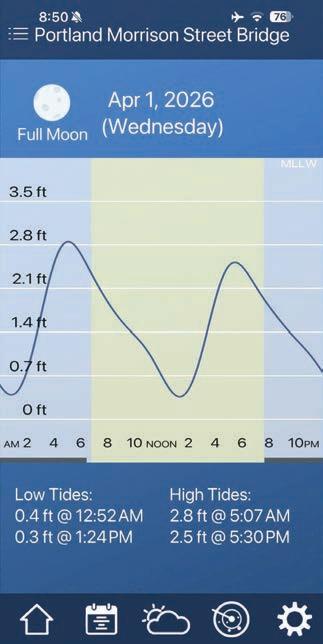
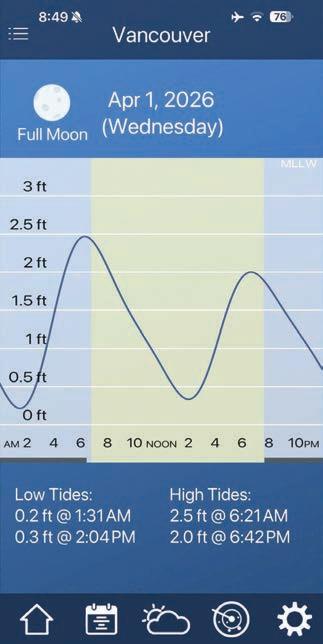
The Tides smartphone app provides accurate tide information for various places along the Lower Columbia and Willamette Rivers, Puget Sound and coastal bays and tidewater. For April 1 of this year, notice the daytime high tide time difference for the Astoria Port Docks (1:50 p.m.), St. Helens (5:25 p.m.) and Vancouver (6:42 p.m.) as compared to Portland’s Morrison Street Bridge at (5:30 p.m.). (TIDES)
The lightest 200-hp four stroke on the market
2.8L displacement and Variable Camshaft Timing give it the best power-to-weight ratio of any 200-hp four stroke
Nearly 120 pounds lighter than our four-stroke V6 F200
Show the water who’s boss with the F200 In-Line Four. Incredibly light, responsive and fuel efficient, it serves up plenty of muscle to handily propel a variety of boats. On top of that, its 50-amp alternator offers the power to add a range of electronics, and its 26-inch mounting centers and compatibility with either mechanical or digital controls give you the flexibility to easily upgrade your outboard or rigging. Experience legendary Yamaha reliability and the freedom of forward thinking, with the F200 In-Line Four.
COOS BAY Y Marina (541) 888-5501 www.ymarinaboats.com CHINOOK
Chinook Marine Repair, Inc. (800) 457-9459 www.chinookmarinerepair.com
Master Marine Boat Center, Inc. (360) 336-2176 www.mastermarine.com
MOUNT VERNON
Tom-n-Jerry’s Boat Center, Inc. (360) 466-9955 www.tomnjerrys.net
OLYMPIA
Us Marine Sales & Service (800) 455-0818 www.usmarinesales.com
FISHING
DEPTH IS ONE of the most important factors to consider when trolling, and water depths vary a lot in the Willamette, its slough and in the Columbia. If the water is 25 feet deep or less, the basic rule is to work your outfit just off the bottom, because the salmon will likely be found there. If the water is deeper, and especially when tides are soft or flooding, they will often suspend at middepth.
Most anglers find success in deep water (over 25 feet) by trolling their outfits 9 to 20 feet down. There are
When currents are right, meaning the tide is outgoing, anchor fishing a salmon-sized Kwikfish or FlatFish with a sardine or other bait wrapped on its belly can produce results. Guide Bill Monroe Jr. shows off one of three spring Chinook boated one day while anchor fishing on the Lower Columbia last season. (BUZZ RAMSEY)
downstream from the falls at Oregon City, where salmon can hold in deep water before migrating through the fish ladders.
And while the best early-season fishing will likely be had in the Lower Columbia, Willamette Slough, Sellwood Bridge area or at Oregon City, success rates will increase in all areas open to fishing as the season progresses.
WHILE STUFFER BAITS like those made by Brad’s and Yakima Bait (often trolled in combination with a Fish Flash or Pro-Troll) work, I thought it would be good to find out how some anglers rig their herring up for earlyseason springers. What varies among guides and anglers are the different ways in which they rig their herring, and what size and number of hooks they employ – all of which affect how the herring spins.
Here’s what fishing guide Eric Linde (360-607-6421) uses when trolling herring in combination with a Fish Flash for spring Chinook.
exceptions to this basic rule. For example, in early morning or when the river is turbid, the fish might be found even closer to the surface, say, 6 to 8 feet down. If the river is clear and the midday sun bright, they may go deeper or be found near or under a log raft or other overhead obstruction where their lidless eyes are protected from the midday sun.
The other exceptions to the water depth guidelines are when heavy boat pressure has pushed fish off the flats and into the deeper river channel, or when fishing
“I use green label herring in combination with a 3/0-2/0 red hook setup tied on a 25-poundtest monofilament leader. I get a lot higher hook-toland ratio for my clients by using smaller hooks than the standard 4/0 size many anglers rely on,” Linde told me.
“What may surprise some is I position the 3/0 hook in front of the bait and the smaller 2/0 hook so it’s positioned even with or just past the tail of the bait,” he added. “And while my 3/0 hook is a standard octopus style, I use a 2/0-size Big River Gamakatsu as my trailer – especially when fishing the Columbia, where the barbless hook rule applies.”
“Due to the speed associated with rebaiting, I always use plug-cut herring. I never use a hook twice, as I change leaders after every fish caught, and I rebait all lines with a
Eric Linde
FISHING
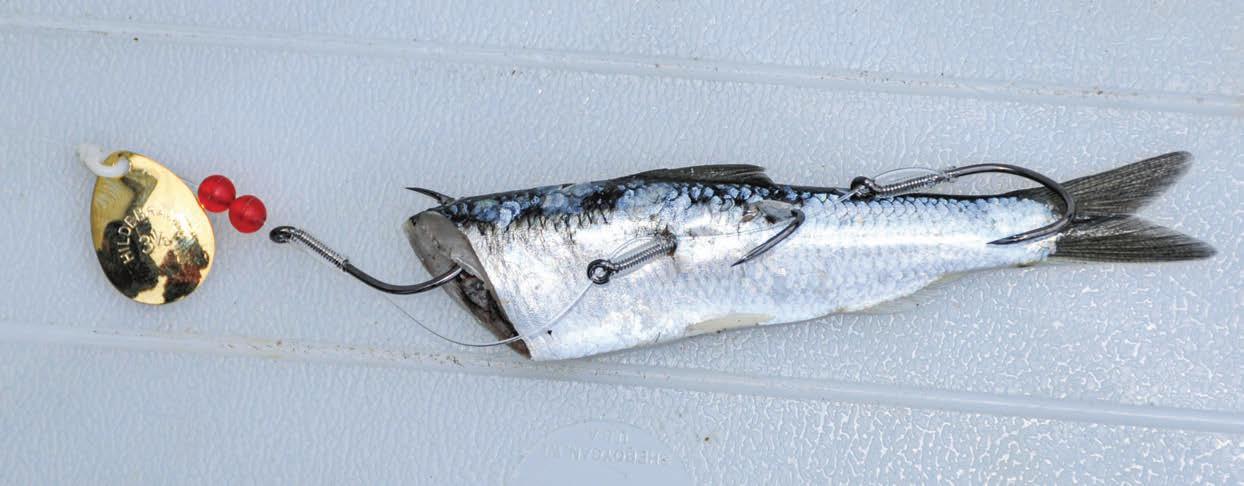
Green label herring, a great early-season springer bait, is identifiable by the color of the ink used on the packaging. Retired fishing guide Terry Mulkey rigs his setup with a size 3½ Hildebrant spinner, two or three beads and three 4/0 Owner single hooks. (BUZZ RAMSEY)
fresh herring before making my next downstream pass,” Linde said.
Guide Jack Glass (503-260-2315) agrees with Linde that small hooks seem to attract more bites and hold onto the fish better, except that his mooching leaders are tied up with three size 2/0 singles. Glass is a big believer in the three-hook setup and its ability to hook and hold fish, and says he’d use four single hooks if it were legal.
When snelling his three-hook setup, Glass spaces his hooks such that the trailing hook is positioned beyond the tail of the herring by half a hook length or more. He clips the tail of the herring off, which combined with the light weight of the smaller hooks, results in a better and more consistent spin even at slow trolling speeds. Like Linde, Glass uses green label herring and plug cuts them due to the fact that they’re quicker to rig than a whole herring.
Glass went on to share that, especially when the water is clear, he has also had good luck trailing a size 4.0 or 4.5 Mag Lip 40 to 80 feet behind his boat while using Fish Flash and herring setups close to his boat. In fact, when fishing over deep
water in the Portland Harbor, he has had luck trailing a deep-diving Mag Lip plug up to 100 feet behind his guide boat.
Now retired from guiding, Terry Mulkey has been using three hooks in combination with green label herring for many years and normally doesn’t talk too much about how he does it; I must have caught him at a weak moment. Although Mulkey uses both whole and plug-cut herring, when plug cutting them he inserts the second (middle) hook through the side of the herring with the trailing hook dangling back where the bend of the hook is positioned just past the tail fin of the baitfish.
What made Mulkey switch to three hooks in the first place was noticing all of his fish were being hooked on the back hook.
“Even with a three-hook setup, I notice all my fish coming on the bottom or bottom two hooks,” he confirmed.
believes is the action that spring Chinook like best.
As for hook size, Mulkey seemingly goes bigger compared to Glass and Linde, as he uses size 4/0 Owner brand singles in the black nickel finish. But according to Mulkey, these hooks run a little smaller in size than most other brands. He also has heard of other guides and anglers having success using a red hook as the trailer (bottom hook) on their mooching leaders.
What has given Mulkey the edge on more than a few occasions and is something he believes in a lot, is to place a size 3½ Hildebrandt or Mulkey spinner blade just above his herring. He connects this blade to a plastic clevis and runs it on his leader with only two or three small beads between it and the top hook of his three-hook mooching leader.
He adds spinner blades above his herring on at least two of his four rods when guiding and says there are times when it makes a big difference in his success.
And while Mulkey rigs his herring to spin tightly, he feels that having the second hook embedded in the side of the bait keeps the tail end (tail wag) of the herring from rolling in too wide an arc, which he
“Adding the vibration of a small spinner blade to my herring can make a slow day turn into limits, at least some of the time. Keep in mind that the 3½ blade is the best size, as using too large a spinner blade can interrupt the spinning action of the blade and herring,” Mulkey advised. NS
Jack Glass
Terry Mulkey
Two Trib Tactics
Anchor fishing and back-trolling for spring Chinook in smaller rivers.
By Trevor Torppa
Tributary spring Chinook are well known for their high fat content because of their late spawn cycle and early entrance into their home watershed. This makes them a prized catch for most Northwest anglers and a great main course for the dinner table. Not only are these fish tasty but they are an exceptionally fun battle. The average size for these fish varies between different river systems. Targeting springers may be difficult at times, as they are not particularly coming into the river with the mindset of feeding. Just like any other salmon, they enter the river to spawn and feed the ecosystem. Two main types of fishing that we see often in the rivers are back-trolling either bait or plugs, and using the same techniques while sitting on anchor in one spot. Both techniques work under certain circumstances including water flow, water clarity, temperature and time of day. Here’s more on each.
ANCHOR FISHING USUALLY consists of placing the boat in a position where you think the fish are or will be moving through. The two main offerings to use during anchor fishing are bait and plugs.
Fishing a plug is beneficial while on anchor both midday and during the first hour of daylight. The flash, action and sound of the plug is often referred to as creating an aggression bite. When fishing plugs in smaller streams it is best to flat line them. Flat lining refers to not using a diver or a weight with the plug. Flat lining allows for the preferred action depending on current speed. A hole with steady current and fairly even depth from the inside to outside rod
of your spread is a perfect place to flat line plugs while on anchor.
When you start getting into deeper and more turbulent holes, a diver placed where your leader connects to your mainline can help keep the plug running straight and in the right part of the water column. Plugs can be wrapped with bait such as sardine filets, tuna in oil and shrimp to add flavor and scent. Wrapping them on is a simple process and with adequate practice can be mastered very quickly.
The main concept to keep in mind while wrapping a plug with bait is to keep the bait centered throughout the plug. Wrap loosely to start and adjust the bait to the desired location as you wrap tighter.
While fishing plugs on anchor can be effective, adding a diver where your connection knot from mainline to leader is allows you to run bait with some sort of floatant to hover it above the bottom of the river. When using a diver on anchor, it goes back
Between dropping the anchor or slowly backing downstream, you’ve got two deadly techniques for catching spring Chinook with plugs or bait. (TREVOR TORPPA)
FISHING
to knowing the river, the flow and how each size and preferred brand varies where your bait will be fishing within the water column. This is very important, as you want to be hovering on the bottom while your bait is being lifted just slightly above the river bed. With time and experimentation with baits and diver size, diver and bait fishing while on anchor has become my favorite technique.
Placing yourself in a travel lane throughout the river, as well as in the middle of a great hole where fish hang out, optimizes your success while fishing on anchor.
I like to be on the water as early as possible with this technique. On the lower reaches of systems west of the Cascades, spring Chinook move in with the tides and eventually make their way upstream, but the majority
SPRINGER STREAMS
No doubt the Lower Columbia, Willamette River and Multnomah Channel will be the focus of most attention for spring Chinook this season, but these big waterways aren’t the only ones with the tasty salmon. From relatively tiny and bank-only streams to midsized rivers ideal for drift boats or sleds, here’s a list of hatchery-based fisheries throughout the Northwest (note that some of these waters only open by inseason rule change based on a large enough forecasted runsize):
Idaho: Clearwater, Middle, North and South Fork Clearwater, Little Salmon, Lochsa, Rapid, Salmon. –NWS
of fish move throughout the night to their desired location. Positioning yourself where fish hold or run, and with good bait, can produce killer fishing. Definitely experiment with each technique while both on anchor and back-trolling and you will find success, as these spring Chinook usually bite very well.
AS FOR BACK-TROLLING,
whether it’s in the early morning, midday or afternoon, I find this method to be very effective. I think that moving your bait around within a hole and ultimately moving the springers around with it is going to agitate more fish and trigger more strikes. Anchor fishing, in my opinion, is best when fish are moving (low water early mornings, high water travel lanes or within the incoming tide). Back-trolling is good in all conditions as long as you are in the zone where the fish swim, have the correct gear to reach the proper depth and you can keep a good speed and line.
The correct speed varies from hole to hole; some move quicker
The primary focus for springers this time of year is on the big creeks – the Columbia and Willamette – but as 2026’s first king in the North Fork Lewis showed, it’s never too early to start prospecting the tributaries for early-arriving salmon. (TREVOR TORPPA)
FISHING
and ultimately only allow you to slow down to a certain point, which can make it tough. Using an electric trolling motor is almost always allowed in a nonnavigable watershed, making this process way easier.
Back-trolling the holes one by one as you float downstream as well as making multiple passes through each are both beneficial. When you know fish may be located within a certain hole, keep making passes through it rather than sitting in one spot. Once these fish start to see the sunlight and the day gets warmer, they will begin to settle into the specific hole they want to be in on that particular day.
That said, while a presentation sitting in one spot may be putting off action and scent, it won’t be moving anywhere unless you move the boat. When backtrolling I like to run up to five rods in my drift boat. The proper spread within your gear varies from angler to angler as far as preference. A good rule of thumb
is to imagine creating a cone shape with your offering. Run the middle rod out the furthest distance, with the front two side rods trailing just below that number and the back side rods closest in.
Rod angle also plays a key part in getting a good spread. The front rods are usually positioned more straight out the front with the side rods facing outwards. This creates a wall of baits that eventually will run into the fish. The goal is to either make these fish bite right as they see the wall or continue to push your lures and the fish down through the run until there is no room for them to go anywhere and they are forced to bite.
The worst things to do while backtrolling are to pull the plugs in too early or not make another pass if you think or know that there are fish in that hole. Leaving zero room for error is key, as springers are often overfished, worn out and stubborn by midday.
I believe that fishing with the rod
in the rod holder, either on anchor or back-trolling, is the trick when dealing with what we call stale fish. Fish that are stale are those that you have to make bite, and there are ways to do it properly such as back-trolling and anchor fishing.
Other springer techniques to use throughout the day include bobber fishing and twitching jigs.
The right setup, river conditions, place within the stream you are fishing, tidal influence as well as baits/scents and colors all affect the outcome of a day fishing for spring Chinook in a tributary setting. Have all the right tools and change things up throughout the day and you will have success. NS
Editor’s note: Trevor Torppa operates Chrome City Guide Service (360-7518748; chromecityguideservicellc.com) in Southwest Washington and is a fishing guide in Alaska.
Last Hurrah For Winters, Start Chasing Springers
Your monthly Oregon fishing outlook provided by The Guide’s Forecast.
By Bob Rees
Although wintery weather finally hit Western Oregon in late February, the “winter” steelhead fishery has performed more like a “spring” steelhead fishery so far this season. Regardless, there’s more winter steelhead to be had, and more serious anglers almost prefer this time of year, as it is often when larger broodstock steelhead test their skills and savvy, not to mention patience.
In Northwest Oregon, the Wilson, Nestucca, Siletz, Alsea, North Fork Nehalem, Sandy and Clackamas Rivers all offer good opportunities for robust, more aggressive hatchery steelhead, while the Kilchis, Necanicum, Trask and mainstem Nehalem have good returns of wild steelhead. These wild-only systems offer anglers a less crowded option, which many still enjoy, often experiencing better success rates with the reduced pressure.
Further south, the Chetco, Millicoma, Rogue and especially the Umpqua offer fair to good steelhead opportunities well into March for those who seek a mostly wild fish experience with a few exceptions.
As the winter season progresses, anglers still have a bevy of options to pursue willing biters, but late-season steelhead often respond better to plugs,
as these later fish become a bit more territorial than earlier-returning ones. Steelheaders will often come across lower and clearer water conditions this time of year, too, forcing a more stealthy approach to rivers and streams. When flows are low, go small and
subtle. Single beads, jigs and pink worms or small clusters of eggs all perform well under these conditions. But these water conditions are also what makes plugs so effective. Larger, deeper-diving plugs will effectively cover deep, bouldery water where big
Craig Mostul shows off a nice hatchery winter steelhead from the Clackamas River. (CRAIG MOSTUL)
FISHING
bucks often lie. Those experienced in targeting trophy steelhead know not to overlook water that looks more like where Chinook may lie in wait.
Finally, cast spoons and spinners as a secondary strategy, sweeping the drifts and holes for any aggressive biters that aren’t responding to other methods.
SPRINGTIME IS SYNONYMOUS with spring Chinook, of course, and no other fish gets anglers more excited than the prospect of an early-season springer for dinner. There is no other salmon that tastes better, and catching one in March and early April to start the season off right is sheer delight.
Spring Chinook anglers have two fair options. The Willamette gets the most robust early-season returnees, many on the larger side, as 5-year-olds are often the first to return to freshwater as they begin the final stages of their life cycle. Anymore, a large spring Chinook is one close to 30 pounds, but 16- to
19-pounders are more common. March springers seem to prefer herring for bait, trolled from a boat in the Portland Harbor and Multnomah Channel. The latter is often the route Willamette-bound spring Chinook take to get into the system in higher flows; later on it’ll be Kelley Point Park where more focused efforts will take place.
There aren’t many places for bank anglers who seek spring Chinook on the Willamette (primarily right above and below the Clackamas), but the Lower Columbia and its beaches are open throughout March and the mainstem fishery could last past the first week of April. A strong minus tide series will often produce the best results for beach plunkers, who typically use Spin-N-Glos in greens, purple and flame orange. Be sure to liberally apply scent to your lures, as plunking is the only technique that fish come to you.
Boaters working the mainstem Columbia will anchor in higher flows,
and troll in lower flows or during incoming tide. Both are effective, with anchor anglers using plugs to entice biters. The river downstream of St. Helens offers the best chance for success before Willamette-bound springers take a hard right up the Multnomah Channel.
The Columbia’s upriver run doesn’t peak until the second week in May at Bonneville Dam, so play the odds and fish over Willamette springers too.
AND FINALLY,
WITH spring break right around the corner, the agencies will stock gobs of trout in area lakes and reservoirs. Be sure to check the stocking schedule on the Oregon Department of Fish and Wildlife’s Fishing page (myodfw.com/fishing), as this is a great fishery to start new anglers out on. NS
Editor’s note: For more information, visit TheGuidesForecast.com.
What makes Mutineer Charter Boats so special?
We offer world class fishing with expert crews, right on the edge of the Pacific ‒ where you’ll reel in big catches, meet new friends and make unforgettable memories.
We’re a new office in Westport, with familiar boats, dedicated skippers and great deckhands. A variety of boats to choose from to suit any size party, or individual anglers on mixed trips. We strive to offer fishing for any budget with a little planning.
Mutineer Charters opened in 2024 with six boats from 38 to 55 feet and capacities of 6 to 18 anglers.
Our skippers have over 180 years of combined experience and are known to be some of the best in the business. Whether you prefer a large comfortable boat that can accommodate large groups or private parties, or a smaller “express trip” boat that still has all the safety equipment and a stand up head like our big boats, we’ve got you covered.”
Meet the Mutineers
Mike – Fury
Ben – Gold Rush
Dave – Hot Pursuit
Karl – Reel Electric
Rhett – Slammer
Johnny – Stardust
Plug Away For Trophy Steelhead
March is one of my favorite times of the year to chase winter steelhead, as the late season can offer hot action for a mixed bag of fish fresh from the ocean and earlier migrants that now look more like giant rainbow trout. In addition, it’s during the late season when your odds of landing a fish weighing 20 pounds or more increases, as it’s the wild run (including first-generation broodstock steelhead derived from wild parents) that produces the majority of trophy-size fish. It’s also when fishing pressure eases up due to anglers switching their focus away from steelhead and toward spring Chinook.
Many open rivers west of the Cascades have decent numbers of steelhead returning during this month and, given decent rainfall, into April as well. If you’re looking to harvest a fin-clipped keeper, you will need to target rivers that have been planted with hatchery broodstock fish. Those are systems where the finclipped hatchery component is made up of direct descendants of wild fish; as such, their timing of migration will mirror that of the wild run.
Take the Cowlitz River, for example, where the peak month for wild and hatchery fin-clipped winter steelhead is now. You see, more than a decade ago the hatchery component on the Cowlitz was switched from early-returning but out-of-basin Chambers Creek stock fish to those derived from Cowlitz-origin steelhead. (Note that state managers are working to expand the early-returning portion of that integrated broodstock program, and the 829 back through January 28 is the most so far.)
BUZZ RAMSEY
Big winter steelhead don’t like plugs, making back-trolling the wobbling lures a great bet for hooking a trophy. Author Buzz Ramsey caught this estimated 18 7-pounder last year in Washington’s North Cascades. (BUZZ RAMSEY)
COLUMN
And while all fishing methods can and do work during this time of year, if you are after a trophy-size fish (who isn’t?), you might up your odds of success by spending most of your time back-trolling plugs. You see, most large steelhead are males, and they show off their territorial aggression more than females. As such, they strike plugs backtrolled into their territory in an aggressive and very savage way. Every big steelhead I’ve caught, meaning fish 18 pounds all the way up to 30 pounds, has been a male.
BACK-TROLLING PLUGS
IS mostly done from a drift or jet boat maneuvered to slowly back trailing lures down the river while moving slower than the river current. Begin by positioning your boat upstream from the area you wish to fish by holding your craft steady in the current by rowing or with the aid of an electric or gas trolling motor. Then, free spool your diving plug out so it runs downstream behind your boat 30 to 70 feet, depending on water speed and river depth.
When you stop letting out line, the current passing the boat will cause your plug to dive near the bottom. Now, while
holding your craft back in the current, allow it to slowly slip downstream such that your plug(s) will work along the bottom while marching downriver at a steady but slow pace. This is the basic premise of backtrolling plugs for steelhead.
Textbook steelhead water is 4 to 8 feet deep and runs at near walking speed. Of course, this isn’t the only place you’ll find steelhead. Riffles, tailouts, pools and rapids all hold steelhead at one time or another. In the winter, water clarity can range from crystal clear to muddy, with “steelhead green,” a light shade of emerald, being the optimum condition for catching steelhead. Plugging works best when the water is medium to clear in color.
Winter steelhead have a penchant for holding in the tailouts, the lower third or downstream end of a hole or drift. It’s the first resting water located above fast-water rapids. They will often hug the deep-water side of a tailout where a steep bank might extend into the river. Other places worth trying are just downstream of large boulders or root wads, immediately downstream from an underwater dropoff and along current
edges.
When rivers are low and clear, fish can move into areas that afford some kind of protection. For example, they may be found in the center or top end of holes, in well-defined deep-water slots, and in fastwater sections where the current is broken up by bottom ledges or strewn with large boulders. And although steelhead will respond to plugs anywhere they’re found, it’s the tailouts where the majority of steelhead are taken while fishing plugs.
WHAT SURPRISES
MANY anglers is how many fish don’t get hooked given how ferociously steelhead strike. There are several things you can do to up your hookto-land ratio. First, it’s important to wait until the rod tip bottoms out before setting the hook and to have your thumb firmly planted on the reel spool when doing so. It’s only after the hookset that you take your thumb off the reel spool and let the drag work. You don’t want to set with a quick snap; rather, pull the hooks into the fish with a strong yet firm upward motion. While it’s not mandatory, many guides
These plug colors, sizes and styles have produced especially well for Ramsey. They include Hot Shot, Mag Lip and Kwikfish models. (BUZZ RAMSEY)
COLUMN KEEP FOR THE TABLE OR LET GO?
This time of year, while you will encounter chrome-bright fish that just arrived back to home rivers from their saltwater journey, complete with sea lice still attached, you will also likely catch a fair number of dark fish or those that have already spawned. For seasoned anglers, it’s no big deal determining what the eating quality of a fish might be based on their body shape, sex and color. However, those new to the sport might be caught between wanting to harvest a fin-clipped keeper but not know beforehand what kind of eating quality the fish represents, so I will explain.
First, realize that fish that have already spawned are not considered good table fare. Second, buck/male steelhead show off their spawning colors more vividly than females. For example, some boy steelhead will exhibit a rainbow trout look while still having sea lice attached to their bodies.
It’s generally true that buck steelhead are of superior eating quality compared to hens, likely due to females devoting much of their nutrients to egg development. A male steelhead that displays coloration similar to that of a rainbow trout likely represents good table fare. Realize, however, that the
This hatchery broodstock steelhead is showing a little color but still is in fine eating quality.
(BUZZ RAMSEY)
flesh is likely not as nutritious and may be strong-tasting if the fish displays a vivid red stripe down its side and has a black belly. Generally speaking, female steelhead don’t develop coloration much darker than that of a rainbow trout, even after spawning. What does happen is that their nickel-bright coloration deteriorates the
One good way to tell the difference between male and female steelhead is the length of their maxillary, or jaw, bone. Males have a longer, deeper jaw than females, and they tend to taste better and hold their flavor longer.
(BUZZ RAMSEY)
longer they stay in fresh water to more of a white or white/gray look, sometimes even after spawning.
Female fish you might consider keeping should appear either chrome-bright or be dull-bright with a pink cheek and/or narrow pink stripe down their sides. It’s when they turn darker than this, look tattered or their color turns gray/white with a dark gray or black belly, that you should release hen steelhead. Another sign of a female being not worth keeping is if her eggs are loose. If you press on her stomach and single eggs stream from her vent, release her.
And lastly, whether male or female, take a long look at the condition and shape of their bodies before removing them from the water. This can go a long way in identifying a fish of decent eating quality as compared to one having spent too much time in freshwater or having spawned. Fish that have already spawned will look thin, their bodies tapering from the head back, and have worn tail fins.
If you land that once-in-a-lifetime trophy steelhead of 20 pounds or more, there is no problem keeping it, provided it’s fairly bright and is missing its adipose fin, denoting a hatchery fish. However, if it’s a wild steelhead, you will likely have to release it on all but a few Northwest rivers, so check the regulations in advance of your trip. –BR
COLUMN
and anglers who focus on this fishing method employ magnum-taper rods –those having a heavy butt section that will yield strong hooksets combined with a light enough tip so you can see the plug work. You should also realize that a rod having a light tip will allow the plug to wiggle and vibrate more violently than a
rod having a stiff tip.
Another factor worth thinking about is rod angle and how far you let the rod tip dip before coming up tight when fish strike. Limiting how far the rod can bend by bracing the midsection against the boat gunnel goes a long way in ensuring the hook points get initially started. This is the reason I don’t have
PHOTO TIPS
Getting a decent photo of what might represent a lifetime catch can be a little tricky and something you should prepare for in advance. For example, I often wear waders so I can get in the water with the fish I intend to photograph prior to release.
I also keep two items at the ready. The first is a pair of needlenose pliers. These –along with wearing waders – make it a lot easier to remove the hook and keep the steelhead in or mostly in the water. Second is to keep your cell phone camera handy. If you fish in Washington, realize that state regulations require that you not totally remove fish intended for release from the water. If fishing in Oregon, you can momentarily remove a fish from the water for a quick photo, which is often done. Many anglers keep the head or lower body of the fish partially submerged while taking a photo.
A tape measure can give you an idea of a fish’s weight. Most 30-inch steelhead weigh 10 pounds, and you can add a pound for every inch above that. That works pretty well until your fish nears the 40-inch mark, at which time a steelhead’s exact weight depends on its girth as compared to length. In this way steelhead are similar to the anglers chasing them. -BR
rod holders mounted in the front of my drift boat. This forces my friends to hold the rod and therefore land more fish.
What I do is have my passenger friends hold their rods with the reels positioned in their lap with their thumb on the reel spool. Holding the rods steady and braced against the gunnel makes it a lot easier for the person maneuvering the boat to see the rod tip and know the plug(s) are working properly. Sure, I sometimes pull hard on the oars or increase the speed of the motor to help set the hook, and you should too. Doing these things while back-trolling can make a big difference in improving your hook-to-land ratio when steelhead attack.
There is just nothing like the armwrenching strike produced when a steelhead hits a plug. The rod-bending hits, most anglers believe, are due to the fish treating plugs as invaders to their territory. What lends credit to the territorial-reaction theory is that most plug-caught steelhead tend to be male; just like rutting deer and elk, steelhead can be mean-tempered when making their spawning run. One thing is for sure: No other offering makes steelhead as bad-tempered.
If your lifelong ambition is to catch a 20-plus-pound steelhead, you should consider making a trip to Washington’s Olympic Peninsula each and every year. Nowhere, other than perhaps British Columbia, offers the number of giant fish as this area of the Pacific Northwest. Just be aware that this month now represents the last hurrah for chasing winter steelhead on the OP, as the season is scheduled to close at the end of March. Check the regulations carefully, including emergency rules crafted by the Washington Department of Fish and Wildlife, as fishing rules can and do change during the season. NS
Editor’s note: Buzz Ramsey is regarded as a sportfishing authority (as related to trout, steelhead and salmon), outdoor writer and proficient lure and fishing rod designer. Buzz built a successful 45-year career promoting gear related to Northwest and Great Lakes fisheries during his tenure with Luhr Jensen, Pure Fishing and Yakima Bait. Now retired, he writes for Northwest Sportsman and The Guide’s Forecast.
This native winter steelhead was corralled with a net to remove the hook and then photographed without removal from the water as required by Washington regulations. Anglers Ryan Reed and Bill Meyer wore waders to help minimize stress on the fish during handling. (BUZZ RAMSEY)
FISHING
Kokes And Jokes
By Richy J. Harrod
We shuffled our boots down the fresh snow-covered dock trying not to fall. Our arms were loaded with fishing rods, bait, lunch and coffee, the necessities for a day of fishing on Lake Chelan. My fishing buddy, Jeff Witkowski, had his 21-foot North River fishing boat, affectionately named Daisy (Jeff says it’s the first-rate quality definition), moored in a slip near the town of Manson. Jeff guided kokanee and Mackinaw fishing trips on Chelan for 20 years and has fished the lake for most of his entire life. Guiding trips were few and far between this time of year, so it was an opportunity for a friends’ day on the water to chase kokanee.
Lake Chelan was glacially carved more than 10,000 years ago. At 50 miles long and nearly 1,500 feet deep, it’s the largest, longest and deepest natural lake in Washington and the sixth deepest in North America. The crystal blue waters snake out of the Cascade Range with fjord-like topography in the middle and upper portions. The beauty of the lake’s setting is matched by few other lakes in the world, and as such, people travel far and wide to enjoy the scenery and fish its clear waters.
A wide range of fish species inhabit the lake including rainbow trout, burbot, westslope cutthroat trout, mountain whitefish and even landlocked Chinook. In modern times, Chelan Falls at the outlet of the lake forms a barrier to fish migration from the Columbia River. It’s likely that fish arrived in Lake Chelan during the glacial period when ice dams from the continental ice sheet and alpine glaciers
Two old friends give it a go on a snowy Lake Chelan day.
raised the water of the lake, connecting it to the also swollen Columbia. Many species of fish were likely trapped in the lake as the glaciers melted, but fish stocking has been common in the 20th and 21st centuries. Two of the most popular species targeted by fishermen are lake trout and kokanee.
WITH THE BOAT swept of powdery snow, we settled into our seats inside the canvas cabin as Jeff idled Daisy out of the slip. Our breaths were clearly visible in the dead air space of the cabin like two steam engines chugging up a steep slope. “Once we get up by the narrows I’ll get the heater going, but don’t tell anybody that we had to turn on the heat,” Jeff said in his Marlboro Man voice with a big smile and a bit of sarcasm. I laughed out loud, “Don’t worry, I won’t rat on our lack of toughness; it’s damn cold!” And with our manly contract made, Jeff brought the boat up on plane for a short boat ride a couple miles uplake.
In warmer parts of the year, kokanee can be found in large schools easily spotted on the fishfinder. Spring and summer fish follow plankton and mysis shrimp, which move near the water surface overnight and sink deeper as the sun hits the water. In the winter, kokanee tend to be more scattered and are on the move, looking for preferred water temperatures and food, which is also less concentrated. Lake Chelan is an immense body of water and, although the temperature varies little throughout the year, a thermocline (the boundary between cold and warm water) often develops around about 100 feet. Targeting fish at this depth is a good bet.
A wintery day on Northcentral Washington’s great fjord, Lake Chelan, blunted the hardcore kokanee angling instincts of a former guide and local angler, but made for a warm – and productive –outing in the end. (RICHY HARROD)
FISHING
Experience the
Jeff navigated to where he’d recently caught fish and we set about preparing four rods. When I say “we,” I really mean Jeff. Self-described as OCD, he has a specific routine for how rods are rigged, where bait is kept, how downriggers are set, the specific depth to set lures off the downriggers (no numbers ending in 0 or 5, ever!), and even how the reel sits in the rod holder.
There are special boat rules too. Jeff says, “No pooping on Daisy, ever, not even off the swim step. If an emergency, I will radio mayday for air lift”; “men may not drink out of a straw, ever. It just looks wrong”; “no flat bill hats onboard. I’ll throw it overboard”; and finally, “the clicker on the reel must be off. Even one turn of the reel with clicker on, I will take the rod from you and give it to someone else.”
Some of our mutual friends know
any deviation from the routine on Jeff’s boat will drive him nuts! Of course, they will turn the reel sideways in the rod holder just to mess with him, laughing aloud when Jeff reaches unconsciously to right the reel. Jeff and I enjoyed a good laugh as he told stories of customers and their blank looks when he spouted a rule, trying to decide if he was serious, joking around or crazy! I enjoy the organization, so Jeff and I make a pretty good fishing team.
THE RODS WERE set with our favorite Mack’s Lure Sling Blade UV dodgers and either orange Cha Cha Kokanee squidders or Double Whammy Kokanee Pros, each tipped with shoepeg corn cured with Pro-Cure Super Gel. These lure setups and scented bait have consistently put
kokanee in our boats for years. So, with great anticipation, Jeff pointed Daisy uplake, engaged the auto pilot on his kicker motor to get us slowly trolling at 1 mile per hour, and we huddled inside to enjoy the clandestine heater. We landed our first fish within five minutes of trolling. Leaving the comfort of the heater, we worked as a team to land the fish and make necessary depth adjustments to the other rods in hopes of another bite. My fishing buddies and I are typically hyperfocused when it comes to catching fish, particularly kokanee. Normally we stand by our assigned fishing rods intently watching the fishfinder, adjusting downriggers to match lure depth with fish depth, ready to ensure a hookup with a bite, or become the net man. The boat is often turned to return to biting fish,
Jeff Witkowski steers uplake from Manson. Kokanee location varies by season, with winter finding the fish more scattered but spring and summer concentrating them around mysis and plankton. (RICHY HARROD)
Come fish with us at southwest Alaska’s most remote full-service flyout fishing lodge. Giant char, leopard rainbows, salmon, grayling, pike… there’s something for everyone. Call or email today!
FISHING
which requires diligence in managing rods, so lines don’t tangle on the turn.
On this day, however, Jeff and I attended our assigned rods in the beginning because we were getting bites and landing several fish. Having fished together many times before, we worked as a well-oiled machine playing fish, netting fish, rebaiting lures and setting downriggers. We turned on fish a couple of times, but ultimately kept trolling uplake, loosely attending rods from inside. Our conversations were focused on the task at hand, but then the weather changed.
A lull in the bite kept us in the warm cabin for quite some time. We could see a white wall of snowfall coming downlake. In minutes we were enveloped in a snowstorm emanating from the wispy, white cloud layer hovering just about the water surface. At times, it was like being lost in fog on Puget Sound. Fortunately, the storm wasn’t accompanied by wind, or our trip may have concluded, as Lake Chelan is known for dangerous, rough water. The temperature dropped a few degrees, and we leaned closer to the heater.
THE KOKANEE BIT infrequently but steadily. We would argue about whose turn it was to brave the elements and land the fish solo, then reset the gear. “It’s your turn, Jeff.” “No, I landed the last one; remember, it was the biggest fish yet!” Most all our fish were carbon copies of the last. “Oh, for crying out loud,” I’d say while pulling my hood up to keep the snow off my neck.
The hours passed unnoticed while we caught most fish during the storm. Snow began to accumulate on the gunwales, back deck and on top of the cabin. The
Witkowski sets line for kokanee. Known for his exacting ways, he guided Chelan for two decades before shoulder issues caught up with him. (RICHY HARROD)
FISHING
heater melted the snow on top of the canvas cabin and icicles grew on the side windows. The reels gathered snow and the depth indicator on the downriggers blurred. Our fingers ached and lacked dexterity from the cold, wet conditions. Thank God for the heater! But the harsh conditions didn’t deter our enthusiasm for catching fish or enjoying conversation. Mostly, we told
each other stories like only two old fishing buddies can tell.
Jeff is a master storyteller. I don’t know if he remembers details of experiences better than most, or if he embellishes stories of past adventures for the desired belly laugh. Perhaps it’s a bit of both. “Did I ever tell you why I can’t ever go back to the Kentucky Fried Chicken in Othello?” Jeff said
with a modest laugh. “No, but I’ll bet this will be good!” I said, chuckling. He proceeded to tell me about a waterfowl hunting trip from his younger days on the Columbia River near Hanford.
He’d hunted for three days, slept in the back of his pickup and ate nothing. The hunting was fantastic but the wind blew hard most days, stirring up dust storms. After the third day, he headed to town to finally get some food and return home. The KFC was the first place he found. Still in his hunting clothes and having never looked in a mirror, he noticed people would look at him aghast. “I just thought they never had seen such a handsome, strapping young man before,” he said with confidence.
After devouring fried chicken, bones and all (remember that embellishment?), he walked into the bathroom to wash the chicken grease from his fingers. “I looked in the mirror and was aghast! My face was covered with dirt and goose blood. The only clean place was around my mouth from wiping the chicken grease. And I had a feather sticking out of my ear! I was mortified!” We were both laughing hard at the story, and then Jeff said calmly, “I can never go back, I’m too embarrassed.”
LOSING OUR BREATH from multiple stories like this, we were quiet for a moment and realized none of the fishing rods had been bitten for a long time. “Bite must be over.” “Probably so,” Jeff said, and we kept telling stories for another 20 minutes.
The snow continued to come down and clearly neither of us really cared if we got another bite. “Maybe we should check the bait,” I finally quipped. Heading out to the snowy deck, we systematically checked each rod, finding none of them had any bait, which meant they all had been bitten! We were so busy trying to one up each other with entertaining stories, the rods had been completely ignored for at least an hour. Realizing we were just three fish short of our
Even as the cold day turned into more of a bull session inside the heated cabin of the boat, the duo managed to catch more than a few kokanee. The winning formula? A Mack’s Lure Sling Blade, Double Whammy Kokanee Pro and Pro-Cure Carp Spit Super Gel. (RICHY HARROD)
The LeeLock magnum Skeg #LMS-04 is made for Minnkota Instinct Quest motors. It will drastically improve the steering performance and straight line travel of your bow-mounted motor. Not only does this Skeg improve your motor’s performance, it also makes it much more efficient. Your batteries will run longer on a charge. A LeeLock Skeg is a vital part of your trolling motor system. This oversized skeg is made of 5052 aluminum. The size is 8 3/4 inches high by 10 inches wide and it’s 3/16 inches thick. It comes with clear PVC coated stainless steel hose clamps.
The Heavy-Duty Quick Change Base #QB-03 is like the standard Quick Change Base, but beefed up to provide a wider footprint. This provides a more secure mount. Like the standard Quick Change Base, the Heavy-Duty base allows you to easily and quickly switch between the #CRN-01 Columbia River Anchor Nest, any of the 3 Bow Mount Trolling Motor Mounts or the #BL-01 LeeLock Ladder. Simply remove the pin and slide an accessory out and slide another accessory in and replace the pin. The Heavy-Duty Quick Change base mounts to almost any power boat as long as the footprint fits on the bow area of the boat. It has 7 5/16 inch mounting holes. The Heavy-Duty Quick Change Base is handmade of aluminum. Go to LeeLock.com to order the Base alone or to add the CRN-01 Columbia River Quick Change Anchor Nest, the three Bow Mount Trolling Motor Mounts, or the LeeLock Ladder to your order.
FISHING
It’s
20-fish, two-man limit, it was decided enough fish were landed on a cold day.
No good fishing trip ends without the obligatory grip-andgrin photos. Jeff has a metal rod used to hang fish for pictures of his customers and their catch. There are rules about the rod too. All fish must be turned in the same direction. They should be ordered with the biggest fish in the center and progressively smaller towards the ends of the rod, forming a chevron.
“You arrange them the way you want, Jeff, and we’ll get pictures of both of us,” I said, knowing that if they weren’t just perfect, I’d never hear the end of it. The fish we caught were all an inch or so within 15 inches, so ordering them wasn’t easy. With cold hands, Jeff completed the job quicker than usual, which turned out in my favor. Days later, when I finally downloaded the photos, I noticed some shorter fish near the center. Oh my god, they weren’t perfect! Now every time we look at those photos, I’ll subtly say, “Those were some nice fish except those shorter ones towards the center.”
Days like these aren’t often repeated. Lake Chelan was beautiful despite the cold, we had the lake all to ourselves, caught fish without our normal hardcore diligence and enjoyed time together recounting past outdoor adventures. I’ll never hesitate to catch kokanee in a snowstorm with a good friend. NS
Editor’s note: Richy Harrod is the former host of The Northwest Outdoorsmen and runs Harrod Outdoors (harrodoutdoors.com).
a short list of Northwest sportsmen who’ve been pictured in more magazines than Witkowski has, a legacy that goes back to his parents, brothers and Fishing & Hunting News days and often featuring far larger fish than this koke. But for one snowy day on Lake Chelan, it was good enough. (RICHY HARROD)
2024 FishRite 23’ Outfitter
-$10,000 PRICE DROP
Blow out sale on the last 2023 fish boat in stock. This boat needs a home. Priced with a Honda 150hp EFI outboard and a Karavan galvanized trailer with led lights and disc surge brakes. This boat has a deck washdown system, hydraulic steering, welded bow rails, full canvas enclosure with drop curtain, bow anchor box, metallic paint upgrade, 36’ bench seats and dual wipers. Priced to sell!
2024 Custom Weld Deep and Wide 22’ Bush
If you are looking for the perfect Puget Sound and Ocean machine. You have found it. This boat has an overall length of over 25’. With an 8.5’ beam and huge deep sides, it can take what ever you are looking to do. Powered by the awesome Honda 250hp with fully remote 15hp Honda controlled by the rear steering station. You also have a rear steering station that can be set up for a kicker or for another set of controls for the big motor. This also comes with the 48” bench seats, bulkhead door with lock, metallic red paint upgrade, stern rails with downrigger mounts, huge bow fish box, floor fish box, transom fish box, trim tabs, hydraulic steering and dual wipers. The boat is supported by a Karavan I-beam trailer with electric over hydraulic brakes. Get out on the water.
2026 FishRite 20’ Sportsman
PRICE-$5,000 DROP
$96,995 $64,995 $47,995
Talk about a huge boat. This thing is massive for its size. Super deep and super wide. This boat has a 7’ bottom. Massively stable. Priced with a 200hp V-6 Honda, this boat can get with the picture. Karavan trailer gets you to the water with led lights and hydraulic surge disc brakes. It also has a nice boarding ladder on the offshore bracket, bow and stern rails, 3 battery trays in the bow for group 31 batteries, auto bilge pump, dual batteries with a switch for main motor, huge fish box in transom, washdown system, hydraulic steering system and dual wipers.
Triggering The Bite
Trolling with flashers will incite predatory behavior in kokanee and walleye.
By Chris Marcolin
They’re two species with very different diets and yet they both respond very well to offerings trolled behind attractors. How can this be since one fish is considered a super predator while the other’s diet is plankton? As we look at both species, we can identify reasons why some of the larger fish of each kind become more enticed to bite when we troll setups that make use of flashers and dodgers.
KOKANEE ARE PRIMARILY zooplankton eaters most of their life and follow the forage wherever it is most plentiful in a lake. While you might normally find kokanee in deeper sections of a lake, this can change with water temperatures and food availability throughout the entire year. Winter ice conditions can even drive kokanee into shallow sections of lakes, say, less than 10 feet deep when feeding areas change.
One myth about the kokanee diet is that it changes with size and shifts to minnows rather than plankton. However, the reason these fish strike at lures that look like minnows is likely due to instinct or an angry response to the scent and presentation.
Kokanee are considered to be landlocked salmon that complete
When targeting schooling fish like kokanee, using flashers while trolling can spark a competitive response from the fish. (CHRIS MARCOLIN)
FISHING
their life cycle after spawning once. There can be some variability in what age they complete their life cycle. While some 3-year-old fish spawn, others from the same age class may hold until they are 4 years old.
For kokanee to reach larger sizes is dependent on lakes with rich plankton production and their own population density. A kokanee reaching 14 to 15 inches at the spawning age of 4 would have had less food available to it individually compared to a sameaged spawner that reached 22 to 25 inches in length.
SOME CONSIDER WALLEYE to be a freshwater super predator. If you have caught walleye, you know of their unique head and tooth structure. In addition to fins with spiked spines for defense and gill plates sharp like knife blades, this fish has a remarkable colored skin pattern that mimics the environment where they spend most of their life cycle.
At a young age, walleye diets
include insects and invertebrates, and when they reach their adult phase, it shifts to eating fish such as perch, bass and other minnows. Walleye have been known to reach ages of 25 years or more and can exceed lengths well over 30 inches under ideal fishery conditions. Although there seem to be fewer larger fish of that length, most avid sportsmen support the benefits of releasing larger female fish for future spawning recruitment.
TRIGGER THE BITE
Visibility seems to be the biggest factor in bringing fish into a consistent and instinctive biting pattern where they are enticed by a combination of colors, scent and vibrations, as well as the visibility of the flasher that draws them to a presentation.
Flashers are effective for enticing walleye and kokanee when used in tandem with other terminal gear. They enhance the presentation as though a school of baitfish or competition from
other fish appears to have sparked a feeding frenzy. That spurs a fish to become aggressive towards a lure, and they commit to it at the strike. Flashers also produce vibrations along with the primary effect of increasing visibility throughout the water column. This added attraction makes a big difference when fish are scattered and/or when the bite’s slow.
HERE ARE EXAMPLES of terminal gear combinations used to troll for kokanee and walleye and which include attractors:
Kokanee: Twenty-pound monofilament mainline; swivel; two- or four-bladed flasher; swivel; Sling Blade; Smile Blade hoochie with number 2 hooks tipped with shoepeg scented corn or maggot.
Speed and depth will vary with thermoclines, but in general, troll between 1 and 1.3 miles per hour while changing boat direction and varying speeds.
When jigging under the ice for
Adding a multi-bladed attractor to terminal trolling gear will help land more walleye. (CHRIS MARCOLIN)
FISHING
kokanee, a large spoon or dodger in combination with a trailing hook or jig will have a similar effect.
Walleye: Twenty-pound mono mainline; bead; swivel; two-bladed Flash Lite Troll; 3-ounce bottom bouncer; 3-foot leader with Smile
Blade, double-hook worm harness and nightcrawler. Keep your gear on bottom or within 5 feet of bottom when fish appear suspended. Generally speaking, troll at .9 to 1.2 mph. With so many different techniques
for trolling, I encourage kokanee and walleye fishermen to look for ways to add attraction to your gear during your next trip. Best of catch to you! NS
Editor’s note: Chris Marcolin is a pro staffer for Mack’s Lure.
A large spoon above a jig can mimic the attraction of a flasher when ice fishing for kokanee. (CHRIS MARCOLIN)
DESTINATION ALASKA
DESTINATION ALASKA
DESTINATION ALASKA
Experience the thrill of big game hunting in Alaska’s untamed wilderness with Deltana Outfitters—Alaska’s premier guide service. Whether you’re after Brown Bear, Grizzly, or Moose, our expert guides lead unforgettable Spring and Fall hunts in the remote, pristine Alaska Peninsula andWestern Alaska. Adventure. Expertise. Results. That’s what we do—and Deltana does it best.
90% Success Rate!
Average Moose: 64”
Grizzlies: 7’6” - 8’6”
Black Bears: 6’ - 7’
Brown Bears: 9’ - 10’
DESTINATION ALASKA
Indigenous Adventure offers:
Full/Half Day Trips
• Flyfishing
• Saltwater fishing
• Glacier tours
• Whalewatching
Fish Camps
• Guided all-inclusive camps
• Remote cabin locations on world class rivers
• All inclusive
DESTINATION ALASKA
THE EXPERIENCE
THE BEST WAY TO FISH ALASKA,
IS FROM THE WATER
Immerse yourself completely in Southeast Alaska’s marine wilderness. Fish calm, sheltered waters of Frederick Sound, Stephens Passage, and Chatham Strait, surrounded by glaciers, wildlife, and breathtaking scenery. Our mobility ensures new waters and fresh opportunities every day—keeping you where the fish are. LIFE ONBOARD
• Hot breakfast each morning
• Soup and sandwich lunch
• Fresh seafood dinners
• Relaxed evenings—or continue fishing and exploring
• Comfortable cruising in 50–70° temperatures
Wild Alaska offers an unmatched mothership sportfishing adventure in Southeast Alaska. With over 25 years of experience, we provide exclusive access to vast, untouched marine wilderness—far beyond the reach of traditional charter operations. Join Wild Alaska
• Up-close wildlife viewing
• Photography opportunities found nowhere else
• Safe, warm, and welcoming onboard environment
• Exceptional crew and personalized service
DESTINATION ALASKA
Spring Gobbler Forecast: ‘It’s Going To Be Good, Man!’
If there’s a Northwest fish and wildlife story that bucks the trend, it’s turkeys, which are now widespread and doing pretty well. Amanda Jones brings in a gobbler harvested amidst the croplands of the Willamette Valley last spring. (MIKE CALLIAN)
An overabundance of big predators. Too many sea lions. Short seasons. No seasons. European green crabs. Avian influenza. Everywhere hunters and anglers look, it’s bad news. Or is it?
There’s no denying the fact this century’s outdoors arena is wrought with the less-than-positive. Invasive species are very much a concern. So, too, are matters such as bird flu, increasingly poor sturgeon recruitment, steelhead stocks, and the “myth” of climate change. That’s sarcasm in case you missed it.
By MD Johnson
But there are positives for those who hunt and fish. The Columbia has earned herself the reputation as being one of the premier walleye and smallmouth waters in the nation. Three pintails in the daily bag during the 2025-26 season. More white geese. Excellent razor clam harvest opportunities on most Washington South Coast and Oregon North Coast beaches. And wild turkeys. With very few exceptions, wild turkey populations throughout the Northwest have expanded, both numerically as well as geographically, some to the point of having become problematic, e.g., wintering flocks with hundreds of birds roosting in Farmer Jones’ barnyard and pooping on Farmer Jones’ valuable livestock fodder. For the turkey hunter, this increase is good news; for Farmer Jones, not so much.
From the far northeast corner of Washington and its Pend Oreille Valley to Southern Oregon and its Rogue Valley and almost everywhere in between, the gobble of the wild turkey, unheard throughout the
OUTDOORS MD
Northwest until the latter part of the 20th century, now summons spring mornings and quickens the heartbeat of the young and not-so-young alike. And as we here at Northwest Sportsman do this time each year, we ask those “in the know” to look deep into their omniscient crystalline orb and give a glimpse of what turkey hunting fanatics might hope to find once the block on the calendar reads April 15, 2026.
WASHINGTON
I introduced you to Richard Mann about this time in ’25, focusing primarily on his background as a turkey hunter and, perhaps more so, on his role as current president of the Washington State Chapter of the National Wild Turkey Federation. Now in his second year at the helm, Mann continues to further the federation’s message of information, education and conservation, not only as they apply to the wild turkey but all wild things in Washington.
A busy man, as he prepared to make
the trip back to Nashville for the NWTF’s annual convention last month, Mann made a few minutes to talk with me about the upcoming season’s prospects.
MD Johnson Let’s start, sir, with Washington and Westside easterns, the “ghost” as they’re often called. Are easterns doing all right west of the Cascades?
Richard Mann My experience with (easterns here) goes way back. They’re small populations. They’re not usually close to the road, so they’re not easily accessible. And a lot of them are on private timberlands now that require a permit, and that really cuts back on the ability of the average hunter to find them and then get access.
MDJ Overall and by all accounts, is the eastern population stable? No huge ups and downs?
RM I would say it’s stable based on what I’m hearing and talking with the biologists at NWTF. Remember, this is a ground-nesting
bird in Western Washington that has to deal with wet springs and limited habitat. I don’t see these populations ever taking a giant bump. We do have birds showing up in “new” places. It’s a mix of birds. Not every bird in Western Washington is going to be a (pure) eastern subspecies anymore, and haven’t been for years.
Some of this is migration. We’ve seen birds in Snoqualmie Pass, North Bend and Cle Elum areas. And there have been sightings on the Chinook Pass side of birds that look an awful lot like Merriam’s and not like Easterns.
MDJ East of the Cascades, are Merriam’s turkeys doing well?
RM Merriam’s are doing well, and I see their populations expanding outside our traditional Northeastern Washington areas. My personal experiences in 2025, both spring and fall, is that there are plenty of birds. We’ve had two mild winters in that country, and that bodes well for turkey
Winter was unseasonably warm until about mid-February, and it might lead to an earlier breeding season for turkeys, behooving hunters to jump at early-season chances, which include youth opportunities in early April and the general opener on Tax Day. (MIKE CALLIAN)
COLUMN
populations. Spring (2025) hunting was a little tougher, it seemed, with some birds taking well over an hour to work, but persistence pays off. There should be a ton of toms out there this spring.
MDJ Rio Grandes on the Eastside – they, too, are doing well?
RM I don’t hunt in Southeast Washington a whole lot anymore, but access in the Blue Mountains is still an issue. A lot of those birds down there are on private property, and they always have been, so it’s a matter of doing your homework early and getting permission ahead of time. The (Department of Fish and Wildlife) has a lot of Hunt By Written Permission opportunities down there (see privatelands.wdfw.wa.gov), but now would be the time to be researching those instead of waiting another month. But I was down in the Blues a couple years back doing a mentoring camp for WDFW employees, and we saw plenty of birds.
MDJ Crystal ball time, Richard. Thoughts on the 2026 spring season in the Evergreen State?
RM I’ll predict a good season on par with or slightly better than 2025. Again, we’ve had two mild winters now, so we should have a few more 2-year-olds, i.e., mature gobblers, out there. The birds just didn’t have to struggle a lot this past winter. For the person who’s willing to hunt, invest the time, and walk in a little ways … well, the birds are there. It just depends on the willingness of the individual to get out and do a little more work. It should be a good season.
OREGON
From across the Columbia and her digs in Salem at the Oregon Department of Fish and Wildlife’s headquarters, Mikal Cline serves as the agency’s upland game bird coordinator. Like Mann’s, Cline’s views on the Beaver State’s wild turkey population
is quite positive, as is her prediction via the magical orb for the ’26 spring season.
MDJ Across the board, Mikal, how are turkeys faring across the whole of Oregon? Mikal Cline The big conversation for us right now is the climate and weather, and how those affect the birds and their behavior. You know, we’ve had such a nonwinter (this year), and we think about how that nonwinter has the potential to affect our birds. An early spring can mean early breeding effort, which means early nesting. And as a hunter, the earlier you can get out this season may well be to your benefit. My crystal ball shows excellent overwinter survival; it’s hard to imagine anything out there (right now) causing any degree of turkey mortality. We’re not seeing avian influenza in our turkey flocks. We haven’t seen any die-offs.
MDJ Is there, Mikal, anything that might be
Between a hunt that runs a month and a half and is productive throughout, and birds on public lands and some accessible private lands, there’s a lot to like about the spring turkey season, especially this year. (JULIE JOHNSON)
COLUMN
considered not-so-good news in terms of Oregon’s turkeys?
MC If this nonwinter translates into drought, that (could mean) wildfires, which in turn could impact both our rangelands and our forestlands. Not that all fire is bad; I don’t want to say that, but what we don’t need is a mega-wildfire that burns really hot and eliminates huge tracts of habitat. I don’t see drought affecting our spring hunt at all, but we are concerned about drought for this summer. Drought, obviously, can mean a scarcity of water, which can concentrate birds at water sources and make them more susceptible to harvest, predation and disease transference.
MDJ The outlook for the ’26 spring season, Mikal? It’s been exceptional the past two years. Do you see this positive trend continuing in terms of turkey hunting opportunities?
MC I think it’s going to be good, man! I’m trying to think here. Is there a place that’s growing? An untapped area that folks may
want to try? I will say that it seems like the Ochoco has been filling up with hunters. It’s no longer a secret. So I’d encourage folks to try some new spots, like the Fossil Unit. We’re also seeing flocks building in the Burns area, as well as in Lake County. So there are some new opportunities that might be fun for folks to explore.
We haven’t been moving a whole lot of birds around lately, what with avian influenza, but there’s always the triedand-true Rogue and Umpqua Valleys. And the Willamette Valley, which is primarily private but the ODFW does have some Hunt By Reservation (myodfw .com/articles/hunt-reservation-program) offerings in the Willamette.
I’LL END ON this note. In a recent conversation with a friend of mine, Michael Callian, who currently serves as what I’ll define as the marketing/media guru for Dave Smith Decoys based out of Lebanon, Oregon, we gradually shifted the talk from a waterfowl season wrap-up to what to expect this
spring in terms of turkeys.
Callian, as fanatical a turkey hunter as he is a waterfowler, jumped all over my comment, I having mentioned I’m partial to the last two weeks of the spring season; that is, the final 14 days of May. The California poppies are blooming. Most tags have been filled or hunters have been magically transformed into anglers. Me, I told Callian, I like to wait; however, it’s what he said in response that should be the mantra of every turkey hunter in the Pacific Northwest.
“Yeah, but here’s the thing, MD,” Callian said without hesitation. “It’s always good. I mean from start to finish, you’ll be able to find a bird somewhere that’s fired up. And there’s a good chance he’s not with hens.”
It’s March now. Time to dust off that vest and gear. Check the decoys. Take a sunny afternoon and pattern that gobbler getter. Maybe run a lick or two on that favorite call, just to make sure you haven’t lost your touch in the offseason. Get it done now because April 15 ain’t that far off. And dem’s your Outdoors MD’s orders. NS
Prepping Youths To Hunt Turkeys
Tips, tactics and gear that will make for a spring season they – and you –will never forget.
By David M. Serpa
Spring turkey season is one of the best opportunities to introduce young hunters to the outdoors. The weather is mild, birds are vocal and the action can be fast-paced. These are ideal conditions for keeping a new hunter excited and engaged.
Hunting with kids, however, adds an important layer of responsibility. Success is measured not just in punched tags but also in building confidence, teaching ethics and creating lasting memories. Remember, the most important takeaway is that youth hunting should focus on positive experiences and foundational skills.
Whether you’re helping your own child, a friend’s kid or a youth in a local program, the right strategies can boost their chances of success. Below are field-tested tips and tactics. These include using tripods, ground blinds and spot-and-stalk approaches. Use them to help create a positive and productive spring hunt. Ensure tactics match the youth’s abilities and that the hunt is enjoyable and memorable.
PREPARING A FIRST-TIME YOUTH HUNTER
Before we dive into tactics, know that preparation and expectation management are key. Youth hunters bring enthusiasm but often need help
The Northwest’s early April youth turkey opportunities are a great chance for kids to bag a gobbler, but they need a good grounding in hunting tactics, firearms safety and taking that shot, which is where you come in. (DAVID M. SERPA)
HUNTING
with fundamentals and patience. Preparation and realistic expectations go a long way – set from the beginning that not tagging out is OK, and highlight building confidence, learning ethics and making memories as central goals.
Choosing appropriate equipment matters. Camouflage should match the terrain, but budget accordingly since kids outgrow gear quickly. For blind hunts, black clothing is enough. Scale gear and expectations to each child’s ability. More gun range time builds skill. Lightweight 20-gauge shotguns with size 4 or 5 shot, or .410s with tungsten super shot, or TSS, loads, are best, provided the gun fits properly. A red dot optic can help with sight alignment and confidence.
To prepare your youth partner for the moment a turkey arrives, practice realistic scenarios that they may encounter, if possible, while familiarizing themselves with the firearm they will carry. Set up decoys and allow them to practice shouldering the gun, aiming, manipulating the safety and staying still for extended periods. Kids often think they’re still even when they’re not. Teach them to look with their eyes, not with their heads, as much as possible. Movement can bust a wary tom well before it gets into range. Teaching proper shot placement is very important; knowing where to shoot the bird in different scenarios can increase confidence and success.
During preparation, talk about
Two good tools to bring along on a spring turkey hunt are a tripod and portable blind. The former will help hold and steady the young hunter’s shotgun – a 20-gauge is recommended – while the latter will help to shield some movement. Even better is a popup ground blind that conceals all motion. (DAVID M. SERPA)
Binoculars can help spot turkeys from afar, but the birds’ eyes are just as sharp, so remember to be in a ready position before they arrive. (DAVID M. SERPA)
HUNTING
safety in practical terms. Kids learn best when safety connects to real scenarios: what to do if a bird comes from behind or in a specific direction to your setup; shoot/no-shoot situations; identifying safe backdrops; and keeping fingers away from the trigger until ready. A youth hunter who understands why safety rules exist becomes more confident and controlled when a gobbler appears.
HUNTING WITH A TRIPOD: STABILITY FOR SMALL SHOULDERS
One of the most overlooked tools for youth turkey hunters is a sturdy shooting tripod or trigger stick. Even older kids often struggle to shoulder the weight of granddad’s old shotgun and hold steady through long sits or sudden opportunities while on a forest stalk.
Tripods increase accuracy. They can be used while sitting still or for quick shots during a spot-and-stalk. The turkey’s vital zone is small, so stability is everything. Tripods also boost confidence – kids are calmer and more patient when they know they can make a good shot. They reduce fatigue during long sits in a blind or at an ambush site. On the move, a
child’s arms can tire quickly. Lastly, a tripod helps teach proper shooting form. Instead of struggling with the gun’s weight, the shooter can focus on breathing, trigger control and making an ethical shot.
Setting up the tripod is key to success. Level it to the youth hunter’s height when sitting or kneeling, align it with the widest shooting window if in a blind or thick cover, and practice with it before the hunt so the shooter can track a moving bird without lifting the barrel off the rest.
Teach them when and how to move slowly. Even with a tripod in a blind, quick movement can blow the setup. The tripod not only aids marksmanship in a controlled setting
but also lets smaller hunters use larger shotguns when youth models aren’t available.
SPOT-AND-STALK TURKEY HUNTING: EXCITING BUT STRATEGIC
Spot-and-stalk might not be the first method people think of for turkey hunting, but in the right terrain it’s a thrilling way to keep youth engaged, especially active kids who struggle to sit still for long periods. As an avid elk hunter, I have observed many parallels between chasing bugles in the fall and responding to earlymorning spring gobbles. Many of the same tactics can be applied.
Spot-and-stalk can work in various environments, including forests, open
Author David M. Serpa gives last-minute instructions to his son, also named David. Use a whisper to convey important information such as where and when to shoot, and the status of the gun. (DAVID M. SERPA)
Not every youth turkey hunt will result in a notched tag, and that’s perfectly fine and just as successful as bagging a bird. “Create moments to smile, laugh and bond, understanding that the joy of the experience outweighs the pressure of the outcome,” Serpa writes. (DAVID M. SERPA)
HUNTING
fields and hills. It’s useful when birds ignore calls during midday hunts, are on the move from point A to point B, or are “henned up” and won’t come in to calls. This approach lets kids join the chase and stay interested. Give them binoculars so they can help spot turkeys and scan the landscape.
The basics of youth-friendly spotand-stalk are to use terrain to your advantage. Teach them how to read the landscape: “We’ll use this ridge to stay hidden.” “We’ll crawl behind this brush line.” “We’ll wait for him to go behind that rise before we move again.” Turning the landscape into a teaching moment is something most kids will remember.
There is a learning opportunity on every logging road and during
every move up a fence line to get into position. Show them how to move without silhouetting themselves. Kids naturally want to stand upright to look. Teach them how animals see and why staying low and hidden matters. Make it fun: practice army crawls or “snake crawling” to a decoy or dummy target. Show them why moving from shadow to shadow and avoiding standing in the open is important. A tom’s main defense is his eyesight, so being able to get into a proper position undetected is crucial for success. While stalking, use simple, soft yelps, clucks or purrs. Overcalling can alert a gobbler. Use calls sparingly and focus on positioning. Once you call, they know where you are, and your movement becomes
your biggest enemy. Be patient; they may come in silently.
Once in range, set up quickly. If you’ve closed the distance to a bird, set up smoothly. Seat the youth hunter if terrain allows, set up the tripod if needed, and check their left and right shooting limits for the widest coverage, as the gobbler may appear unexpectedly. A gobbler committed to a call may come in cautiously or quickly, so the young hunter must be ready for a quick shot or patient while a tom moves into position.
I’ll always remember my son’s pounding heart and quick breaths as he watched his first tom approach after a long spot-and-stalk at age 9. Spot-andstalk makes the hunt an adventure, gives kids something to do, sparks their
David Serpa smiles over a Merriam’s turkey taken in Eastern Washington. Taking the time to prepare a young hunter the right way helps pass the spring hunt from generation to generation and promotes conservation of the birds and their habitats. (DAVID M. SERPA)
HUNTING
curiosity, and teaches woodsmanship beyond just sitting still. Even without tagging out, the lessons and excitement last. Be ready to manage your young hunter’s emotions, as birds can arrive and vanish quickly, sometimes leaving disappointment. The core lesson is that the journey, excitement and skills learned are more lasting than the result.
GROUND BLINDS: A YOUTH HUNTER’S BEST FRIEND
For many young hunters, a ground blind is the ideal setup. It maximizes comfort and minimizes the risk of being spotted through fidgeting, because even the most disciplined youth will wiggle, shift or whisper at some point.
Kids can move more freely without busting birds, shot angles are more predictable and controlled, and they can allow you to hunt longer, especially on a colder or rainy spring day. Pair a blind with a tripod and a couple of good decoys, and you’ve
created the perfect environment for a young hunter to succeed.
Setting up a ground blind for a long, comfortable sit is important. Don’t crowd the blind – kids need space to sit, shift and aim. Too many adults inside can cause chaos when a bird approaches. If possible, brush it in or set it up early. Birds adapt quickly, but young hunters need every edge. Use a height-appropriate chair; if a child is too low or high relative to the shooting window, getting on target is tough. Adjustable folding chairs are lifesavers, and the more comfortable, the less trouble you’ll have keeping kids still.
Decoys can also be a huge benefit while hunting with a child. Use a simple but effective setup. A single jake decoy or feeding upright hen can do the job and not break the bank. This draws the bird’s focus away from the blind and toward the decoy(s), giving the young shooter more time to aim.
Use time in the blind to teach
CUMBERLAND’S NORTHWEST TRAPPERS SUPPLY
Hide Tan Formula has been used successfully by thousands of hunters and trappers across the U.S. and Canada. No more waiting several months for tanning. Now, you can tan your own hides and furs at home in less than a week, at a fraction of the normal cost. Our Hide Formula tans deer hides either hair-on for a rug or mount, or hair-off for buckskin leather. Tans all fur skins – muskrat, mink, beaver, fox, coyote, raccoon, squirrel, rabbit, etc. It also applies to bear, elk, moose, cowhide, sheep and even snakeskin. Hide Tan Formula is premixed and ready to use and produces a soft, supple Indian-style tan in five to seven days.
One 8-ounce bottle will tan one deer hide in two medium-sized fur skins. Bear, elk, moose and caribou require three to six bottles. Complete instructions are included. You’ll be amazed how easy it is!
Tanned hides and furs are great to decorate your home or camp and also to sell for extra income. Tanned hides and furs are in demand by black powder enthusiasts, American Indian traders, fly tyers, country trading posts and many crafters. Our products are proudly produced and bottled in the U.S. for over 20 years.
Available at Cumberland’s Northwest Trappers Supply in Owatonna, Minnesota.
Call (507) 451-7607 or email trapper@nwtrappers.com. nwtrappers.com
why turkeys circle, how silence isn’t failure, how to read behavior, and the importance of staying still, even when birds aren’t visible. A blind is as much a classroom as it is a hunting tool.
CALLING WITH YOUNG HUNTERS
Calling is one of the most fun and rewarding parts of turkey hunting, but youths can easily get too excited and call too much. Demonstrate restraint; kids learn more by watching than by instruction. I give my sons their own calls and let them practice during car rides or while we watch hunting videos online at home. It’s a great way to practice and share some laughs while learning, especially if they can manage using a mouth call; these can also be trimmed down to fit the mouths of smaller hunters.
While scouting preseason, you can have your young hunter practice calling to turkeys in open fields so that they can see the tom’s response and
HUNTING
gather excitement for the upcoming hunt. Simple hen yelps are often all they will need at first. Teach them to call less when the bird is close. Inexperienced hunters often want to “talk” excessively to the turkey. If they cannot utilize a mouth reed, use friction calls for teaching (slate or box). They’re easier for kids to learn if they want to try calling themselves on the hunt. The goal is to bring a gobbler into comfortable range without overcalling or excessive movement.
THE MOMENT OF TRUTH: MANAGING THE SHOT
Few experiences spike adrenaline like a big strutting tom approaching. For kids, this moment can be overwhelming, especially if they have had to watch it over an extended period as the bird slowly closed the distance.
Your job is to ground them. Whisper calm instructions: “Wait until he clears the decoy … breathe … take your time.” Confirm the range and
remind them where to aim – “right at the base of the neck” – and reiterate to them that “the safety is on.”
Prepare them for movement; turkeys might circle, come in fast or suddenly stop just outside range. Teach them that patience creates good shot opportunities and can help to reduce anxiety in the moment of truth.
Celebrating the experience and not just the kill is important. Whether they tag out or never get the chance to shoot, youth hunters thrive when the experience, not just the harvest, is celebrated. Discuss what they learned, what they saw, how they improved and what you’ll try next time. Emphasize storytelling as a powerful way to manage disappointment, sharing your own tales of past hunts where things didn’t go as planned. Encourage them to focus on growth, highlighting how each outing contributes to their experience. A child who feels successful, bird or no bird, will want to return next year.
Create moments to smile, laugh and bond, understanding that the joy of the experience outweighs the pressure of the outcome. Too much pressure to kill a bird can ruin an experience. Offer reassurance that every hunt is a step toward becoming a seasoned hunter.
FINAL THOUGHTS
Introducing young hunters to spring turkey hunting is one of the most rewarding experiences in the outdoors. Using tools like tripods and ground blinds can set them up for safe, ethical success, while spotand-stalk tactics add excitement and teach woodsmanship. The real trophy, though, is the time spent together, the lessons shared and the stories created.
Take the time to prepare, stay patient and focus on fun, and you’ll help build the next generation of ethical hunters who respect the land, wildlife and the tradition of going afield chasing turkeys. NS
Nuggets Versus Noble Intentions: Getting Kids To Eat Wild Game
CHEF IN THE WILD
By Randy King
If you’ve ever slid a carefully cooked plate of wild game across the table to a kid and watched their face scrunch up in disgust before the first bite, you’re not alone. It doesn’t matter how ethical the harvest was, how clean the shot or how proud you are to fill the freezer for your family, you’re still up against a 6-year-old who would rather eat something shaped like a dinosaur.
Case in point: I took elk tenderloins to my cousins’ house in Texas. It’s a big family, and they are used to well-done steaks and mac and cheese. When I served the medium-rare tenderloin to the children, they would not even touch it. I was embarrassed; I had one job, and that was to make a family dinner. This “chef” could not even get the kids to eat a bite. I gave up and bought the little turd burglars Whataburger.
And that’s OK; I learned a lesson.
ONE OF THE biggest mistakes we make when feeding kids wild game is pretending they should eat like adults. They won’t. Not yet. They have different taste buds than you and I. Things taste profoundly different to a kid. They have not killed all their taste buds with black coffee and nicotine just yet.
Also, kids like junk food. They like salt, crunch, sweetness and familiarity. They like food they recognize, food they’ve already learned to trust. If we want them to eat wild game, the trick isn’t to convince them it’s “better” or “healthier.”
Transforming that gobbler into gobbled food can be tricky when it comes to picky young palates. The key is to cook kids something familiar, not French frou frou. (BUZZ RAMSEY)
GOBBLE, GOBBLE!
Little crunchy turkey nuggets that kids absolutely devour. Sweet, crunchy, dunkable. Nobody asks questions.
TURKEY BITES
1 to 1½ pounds wild turkey breast or tenderloin, cut into 1-inch nuggets
2 large eggs
2 tablespoons cornstarch
1 cup panko breadcrumbs
1 cup sweetened shredded coconut
1 teaspoon salt
½ teaspoon garlic powder
Oil for frying (canola, peanut or vegetable)
KID-FRIENDLY DIPPING SAUCE
½ cup mild sweet chili sauce
¼ cup pineapple juice
Toast the coconut: Add the shredded
coconut to a dry skillet over medium-low heat. Stir often and keep an eye on it –coconut goes from perfect to burnt fast. You’re looking for light golden color and a nutty smell, about two to three minutes. Pull off the heat and let cool completely. Once cooled, mix the toasted coconut with the panko, salt and garlic powder in a shallow dish. This step matters. Toasting the coconut adds flavor and lets you control the browning before frying, reducing the risk of scorching (aka black coconut coating).
Prep the turkey: Pat the turkey pieces dry with paper towels. Wild turkey is lean and doesn’t like excess moisture. Beat the eggs in a bowl and toss in the cornstarch. This helps the coating stick and adds a little insurance against drying out. Dip each piece of turkey into the egg mixture, then press firmly into the coconut-panko
mix. Don’t be gentle – this is nugget food.
Fry: Heat ½ to 1 inch of oil in a skillet or Dutch oven to about 350 degrees Fahrenheit. Fry the turkey in batches so you don’t crowd the pan. Cook two to three minutes per side, just until golden brown and cooked through. Transfer to a rack or paper-towel-lined plate to drain.
Make the sauce: Stir together the sweet chili sauce and pineapple juice. Add crushed pineapple if you want a little texture. Serve chilled or at room temperature. No need to complicate this; the nuggets are the star.
Final notes: This recipe works just as well with grouse or pheasant. If you’re cooking for picky eaters, don’t mention “coconut” until after the first bite. These also air-fry well at 400 degrees for 10 to 12 minutes if lightly sprayed with oil. –RK
Crispy coconut wild turkey bites with rice and corn. (RANDY KING)
COLUMN
They do not care about that. The trick is to make it feel familiar.
THE GAME: MAKING THE UNFAMILIAR FAMILIAR
Think about what kids already love: chicken nuggets, corn dogs, orange chicken, meatballs, tacos, sliders. None of these foods are elegant. None of them are subtle. They’re engineered to be comforting, predictable and easy to eat. So instead of fighting that instinct, lean into it.
Wild turkey doesn’t need to announce itself as wild turkey. It can just be a nugget. Bread it. Fry it. Dip it in something sweet. Call it dinner. You have already won at this point! It might not be a pounded cutlet with capers and a wine sauce, but they have at least eaten what you shot! You have to build up to the fancy stuff.
The crispy coconut turkey recipe with this article is a perfect example. On paper, it’s wild game. In practice, it’s crunchy, lightly sweet and dunkable. Toasted coconut, panko and a mild sweet chili sauce hit all the right notes: texture first, flavor second and zero “this tastes weird” moments. Kids don’t need to know it’s different. They just need to know they like it.
This same principle shows up again and again in successful wild game cooking for kids. Orange turkey like Panda Express works because the sauce does the heavy lifting. Sausage works because it’s already a format kids understand. Stirfries, meatballs, sloppy joes – these are all Trojan horses. The wild meat is inside, but the experience feels familiar.
DON’T GET FANCY TOO SOON
Another common trap is overcooking – or overthinking – wild game for kids. We want to show respect for the animal, so we reach for complicated techniques, bold flavors and chef-level presentations. That’s great for adults. Kids don’t care.
In fact, getting fancy is often the fastest way to lose them.
Kids don’t want a juniper-rubbed venison loin with a red wine reduction. They want something they can eat without asking questions. Keep it basic.
Simple seasoning. Clear flavors. Clean textures.
That doesn’t mean you ignore what makes wild meat different. It just means you respect those differences without making them the star of the show.
UNDERSTAND YOUR MEATS
Wild meat is not grocery store meat. It’s leaner. It’s not injected with saltwater (most poultry at the store is “plumped” with saltwater, increasing its weight –good thing we buy it by the pound, I guess!). Store meat has been bred for tenderness and consistency. Wild game will absolutely dry out faster if you treat it like chicken breast from the store. That matters – especially for kids. Dry meat can be a deal-breaker. One bad experience and you’ve lost them for years. Because wild meat is lean, you need to add back what it doesn’t have: moisture, fat and forgiveness. Marinades matter. Breadings matter. Cooking methods matter. This is why frying works so well for kids. Oil adds fat. Breading traps moisture. High heat cooks quickly, reducing the chance of drying the meat out. Sausage works for the same reason – fat is added intentionally. Ground meat mixed with pork fat, salt and seasoning is far more forgiving than a whole muscle cooked incorrectly.
Understanding this distinction is key. You’re not “hiding” wild game by breading it or grinding it. You’re setting it up to succeed. Once kids trust the format, you can start nudging the flavor.
USE SAUCE AS A BRIDGE
Sauce is your best friend, sweet sauces especially. Honey, barbecue, orange glaze, teriyaki, sweet chili – these flavors act as a bridge between what kids already like and what you’re trying to introduce. Sauce smooths over differences in texture and flavor and gives kids something to focus on besides “this tastes different.”
This doesn’t mean drowning everything. It means being intentional. A little sweetness goes a long way in making wild meat approachable. Over time, you can pull back, but early on, sauce buys you trust.
GRIND IS NOT A FAILURE
There’s a weird pride thing around whole cuts of meat, as if grinding is somehow giving up. For feeding kids, grinding is often the smartest move you can make.
Ground wild game mixed with fat can become tacos, spaghetti sauce, burgers, meatloaf, breakfast sausage. These are foods kids already eat without thinking. They don’t scrutinize them. They don’t overanalyze them.
Grinding also solves a lot of texture issues. No silver skin. No weird chew. No surprises. And if you’re honest, most of us grew up eating wild game this way too. The SOS that was a staple at my house growing up was just a great way to get us kids to chow down on some ground-up elk.
The goal with kids isn’t to turn them into food critics. It’s to build confidence. Confidence that wild game tastes good. Confidence that dinner won’t be a battle. Confidence that this food belongs on their plate.
Once that confidence is there, curiosity follows.
That’s when you can say, “This is wild turkey,” and get a shrug instead of resistance. That’s when they’ll try a less breaded version, or a new spice, or a different cut. Trust me on this: If you start with lectures, or expectations or disappointment, you lose momentum fast. Kids will dig their heels in on food. All of my boys had this phase.
KEEP THE LONG VIEW
Feeding kids wild game isn’t about winning every meal. It’s about stacking small wins over time. One nugget. One sausage. One plate cleaned without complaint.
Years from now, they won’t remember the argument about the tenderloin in Texas. They’ll remember the crunchy turkey bites, the stir-fry eaten straight out of the pan, the sausage sizzling on the grill. They’ll remember wild game as normal food, not a challenge, not a lesson, not a chore. That is how you win the war.
Wild game doesn’t need to be elevated for kids or even picky adults. Normalize eating it! Can you honestly say you don’t enjoy some of the foods kids love? I love me a good chicken, I mean turkey strip. NS
SHOT Postmortem: Is This The Year Of The Shotgun?
WON TARGET
By Dave Workman
ith rabbit season in Washington wrapping up March 15, and people looking ahead to spring turkey hunting, one thing about the new product announcements during January’s Shooting, Hunting and Outdoor Trade Show that gradually got my gray matter working was the number of shotguns unveiled for 2026. Last month, this column announced the return of the legendary Ruger Red Label over-and-under smoothbore, but there is much more in the shotgun world for 2026. Here are some announcements
WE’LL START WITH a quick look at Benelli, which this year has expanded the Super Black Eagle 3 A.I. line with new models chambered in 28-gauge. Also there are new camouflage offerings, and operational enhancements. The latest SBE 3 A.I. updates reinforce Benelli’s leadership in the waterfowl arena.
Benelli’s first-ever 28-gauge Super Black Eagle 3 models are all equipped with what the company calls Advanced Impact, or A.I., barrels. Chambered for 2¾- and 3-inch shotshells, the 28s feature 28-inch A.I. barrels and are offered in Gore Optifade Marsh camo paired with midnight bronze Cerakote (model 12316) or Gore Optifade Timber accented with cobalt Cerakote (model 12336), Realtree Max-7 with FDE
Cerakote (model 12366), and Mossy Oak Bottomland with a patriot brown Cerakote finish (12386).
Benelli says the A.I. barrel technology “has established a new benchmark in shotgun performance, maintaining higher pellet density while delivering increased velocity and penetration compared to conventional barrel designs … (delivering) decisive results – on both clays and birds alike.”
OK, I’ll take their word for it, since I’ve watched Benelli shotguns evolve over the past few decades, and it’s been an interesting process.
Benelli refined the SBE 3 A.I. operational controls to handle harsh environments. Updates include a larger cylinder-style bolt handle and a complete set of extended
New offerings from Benelli include expansions in the Super Black Eagle
Impact, or A.I., line (top), a “foundational upgrade” to the M2 (middle), here in camo finish, and (bottom) new Montefeltro Silver semiautos. (BENELLI)
COLUMN
choke tubes, allowing for fast, confident manipulation even with gloved hands.
MSRP for the 2026 Super Black Eagle 3 A.I. shotguns ranges from $2,849 to $3,099.
Also from Benelli was the announcement that the rugged M2 semiauto has a “foundational upgrade” that will ostensibly improve shooter comfort and control.
According to Benelli, “All M2 Field shotguns now feature a more technical stock design engineered to enhance ergonomics during high-volume shooting days.” This new stock integrates Benelli’s Progressive Comfort recoil-reduction
system alongside the Combtech Recoil Cheek Pad. This Progressive Comfort stock works in harmony with Benelli’s Inertia Driven system to – in layman’s terms – suck up recoil, which progressively increases as different loads get stiffer.
The Combtech recoil pad is designed to reduce facial impact and vibration under recoil. The M2 Field series is chambered in 3-inch 12- or 20-gauge and offered with 26- or 28-inch barrels.
Benelli also announced an update in the Montefeltro Silver semiauto line with the introduction of the 10931 and 10935
the company’s reliable Inertia Driven system for shooters devoted to traditional upland sporting arms.
Both the 12- and 20-gauge Montefeltro Silver models feature “newly engraved brushed nickel alloy receivers with gold accents.” The 12-gauge, 28-inch configuration features an upland motif, while the 20-gauge, 26-inch features a quail scene. Each shotgun is stocked in AAgrade satin walnut. MSRP for the upgraded Montefeltro Silver in either 12- or 20-gauge chambers is $2,299.
Last but not least, Benelli’s Model 828U
NIGHT GUARD BACK ON DUTY
Just when I thought I might get away with never again buying another handgun, Smith & Wesson dangled the newly resurrected Night Guard revolver within eyesight, and my salivary glands automatically kicked in!
The Night Guard for 2026 is built on S&W’s “L” Frame, and there are two versions available. One is a seven-shot chambered for .357 Magnum (Model 386) – so it also handles .38 Special +P and standard loads – while the other is a five-shooter chambered for the venerable .44 Special (Model 396). You get two guesses which one has the handgunning community buzzing, and the first guess may be wrong.
The Night Guard is yet another collaboration between S&W and Lipsey’s, the Louisiana-based distributor. It features a lightweight Scandium frame and barrel shroud, 3-inch stainless steel barrel and stainless cylinder with a PVD coating.
Weighing 23.4 ounces, the .44 Special version immediately raised eyebrows when it was announced just days before the SHOT Show opened in Las Vegas. Most of the guys I know rushed to get in line for one of the .44s.
The newly resurrected Night Guard, a collaboration between Smith & Wesson and Lipsey’s, and chambered for .357 Magnum or .44 Special. (LIPSEY’S)
So let’s talk about the .44 Special cartridge for a minute. It’s well known that my favorite big-bore handgun caliber is the .41 Magnum, but my experiences with guns in .44 Special have been very pleasant. As a fight-stopping round, the .44 has a proven
history dating back well over 100 years. And let’s be bluntly honest, by the time you’ve fired five .44 Specials at something, you’ve got undivided attention!
It can be reliably reloaded with a variety of bullet types and propellants, for anything from light recreational and target work to seriously bear-stopping, full-house muzzle blasters. Check any reloading manual.
Pretty much every ammo manufacturer offers one or more loads in .44 Special, and my guess is they’re already cranking out more ammunition in this caliber because of the Night Guard’s return.
Other companies offer guns in .44
Special – Ruger, Taurus, Charter, for example – but the Night Guard with its 3-inch barrel lands well within the realm of what the late John Taffin – a .44 aficionado – called a “Perfect Packin’ Pistol.”
The resurrected Night Guard wears finger-groove Hogue grips with that company’s trademark “cobblestone” surface. The new version has an adjustable rear sight, ball detent lockup and a thicker forcing cone above which one will spot a heat shield in the frame.
What it doesn’t have is the internal locking device, which has drawn smiles from handgunners. –DW
COLUMN
all-new SuperSport A.I. models. These shotguns are aimed at clays shooters, with features they should find appealing, including a brushed nickel-plated steel receiver, carbon-fiber wrapped stock and forend, gloss blue barrel finish and nickelaccented trigger. They boast Benelli’s ComforTech 3 and Combtech recoilreduction systems.
The 828U SuperSport A.I. series includes two 12-gauge models with 3-inch chambers, available in 30-inch or 32-inch barrel lengths, as well as a 20-gauge 3-inch model featuring 30-inch A.I. barrels. MSRP for the Benelli 828U SuperSport A.I. is $4,599.
SWITCHING TO WINCHESTER, their SXP
Hybrid Defender features a durable matte black finish on the barrel and receiver and Woodland camo hydrodipped stock.
The Winchester SXP has a unique rotary bolt-action design that allows the action to be pumped with virtually no hesitation after each shot for fast followups. The chrome-plated bore and chamber resist corrosion and make cleaning easier. Built to use interchangeable Invector-Plus chokes, this gun is versatile and can be used for small game and birds from grouse to turkey, and can do double duty with buckshot or slugs for hogs or deer.
SXP Hybrid Defender Woodland features:
• Aluminum alloy receiver with a matte black finish;
• Drilled and tapped for an optics base;
• Woodland camo hydrodipped composite stock and cylinder forearm;
• 18-inch barrel with matte black finish;
• Removable fiber-optic sight and brass bead;
• One Invector-Plus choke tube (cylinder) included;
• Sling swivel studs;
• 12-gauge, 3-inch chamber.
FRANCHI SHOTGUNS HAVE a special place in my heart, as my O/U 20-gauge has proven itself to be a grouse killer extraordinaire! This year, Franchi is building on the momentum of last year’s Affinity 3 and Affinity 3.5 with the introduction of over a dozen new models across both lineups.
The Affinity is an Inertia Driven semiauto and this year’s new models feature an allnew stock design that highlights Italian artistry “while delivering meaningful ergonomic improvements.” A slimmer forend with enhanced checkering provides a more secure grip and faster swings.
Functional upgrades include a twopiece shell latch for faster loading, a new length-of-pull adjustable recoil pad, a redesigned magazine cap and an enlarged, higher-traction bolt release.
There are 14 new models, a mix of 12and 20-gauge guns. MSRP for the new 2026 Affinity 3 and Affinity 3.5 models ranges from $999 to $1,579 depending on configuration.
BROWNING’S LONG-AWAITED 20-GAUGE A5
Camo is designed with a smaller frame than the 12-gauge models, weighing in at under 6 pounds. It has a composite stock and full camo finish, and features what Browning calls “Total Barrel Dynamics,” defined as a combination of a Vector Pro lengthened forcing cone, back-bored barrel and the Invector-DS choke tube system.
The 20-gauge also boasts a Kinematic Drive System, which uses recoil-generated
kinetic energy to cycle the action. They come with three Invector-DS choke tubes.
SPANDAU ARMS HAS added a 20-gauge model to its S2 family. This inertia-driven shotgun features a fiber-optic front sight, oversize controls, and a Benelli/Mobil compatible choke system. The stock features Turkish walnut furniture (28-inch barrel) or a full Mossy Oak Bottomland finish with a 24- or 28-inch barrel.
AND FINALLY, STOEGER has introduced an all-new O/U shotgun series dubbed the V7000. I own a couple of Stoeger side-byside shotguns (20-gauge and .410-bore), so I expect some good things from this stack-barrel entry.
According to Stoeger, the V7000 comes in 2¾- and 3-inch 12-gauge or 20-gauge. Both V7000 models are offered with either black or silver aluminum alloy receivers and blued 28-inch barrels topped with a red-bar fiber-optic sight. They come from the factory with IC, M and F chokes. They have an MSRP of $949 to $999 depending on model.
Also from Stoeger comes a new M3500 self-loader finished in Mossy Oak Original Bottomland camo, paired with a patriot brown Cerakote receiver and barrel. A color-matched paracord sling is included. The M3500 Waterfowl Special features an Inertia Driven system, engineered to cycle 2¾- to 3.5-inch loads. Chambered in 3.5inch 12-gauge, the shotgun features a 4+1 capacity and a 28-inch barrel topped with a red-bar fiber-optic front sight. The gun comes with IC, M, XFT, close-range and midrange chokes. The gun has an MSRP of $999. NS
Franchi has 14 new models in its Affinity 3 and Affinity 3.5 lineup, a mix of 12- and 20-gauge semiauto shotguns. (FRANCHI)
Stoeger’s new V7000 over-and-under series comes in 2¾- and 3-inch chambers for 12-gauge or 20-gauge. (STOEGER)
Indoor Training Tips
Last March I went in for an MRI. Three days later I had an emergency fusion in my lower back. The unexpected surgery put me down for five months. Not only did I need help doing just about everything, but so did my dogs.
Trying to keep Echo and Kona in good physical shape was my biggest challenge.
I could take them for walks – off leash –and let them play in fields, but I couldn’t push them or run them in the hills. My wife Tiffany did that just about every day.
But what I could do was train indoors with them. I had three goals: retain their high level of discipline; challenge their mind while teaching them new skills and reinforcing old ones; and have fun.
Just about every day Echo and Kona would bring me a bone or chew toy to play with them. I didn’t engage them with those things because they were independent pacifiers. But the fact they wanted to play meant I didn’t want to ignore them, either. Kona loves fetching things and Echo loves hide-and-seek with toys.
I COULDN’T BEND over for several weeks, which meant tailoring drills that worked for
both me and my dogs. For Echo, I simply pulled her favorite ball from the counter, had her sit, then I went and hid it somewhere in the house. I’d return to her side, give her the search command, and she’d be on her way.
Echo would deliver it to hand while maintaining eye contact, then sit on my left side. Then we’d repeat the drill. She’d do this every day for hours if she could, but I kept each session focused and only five to 10 minutes long. It was not only fun for Echo but offered mental stimulation. She’s 12 years old now, and the more brain games she can engage in, the better.
Kona is easier-going than Echo. He doesn’t need to constantly be engaged, but
GUN DOG By Scott Haugen
After back surgery laid him up for months last year, author Scott Haugen switched to training his dogs indoors to keep them sharp. The focused sessions in confined spaces led to efficient outcomes. (SCOTT HAUGEN)
COLUMN
he does thrive on human interaction. Kona jumps when he hears the recliner move, or snaps out of a deep sleep when there’s a noise. He wants to know where his humans are at all times.
Kona thrives on pleasing people. Tiffany set up an upstairs table for me to fold clothes on. I didn’t have to bend over and risk injury to my back – just fold them, hand them to Kona and send him downstairs. Kona would take kitchen and bath towels, rags and more downstairs to Tiffany, delivering them to her hand, then sprint back up to my side. There, he sat and stared into my eyes, waiting for the next command. Twenty or more trips up and down the stairs was nothing for Kona, and he loved it.
The purpose of this drill for Kona was as much about maintaining discipline and restraint as it was performing a task. Sometimes I waited two or three minutes before handing him a towel to run downstairs with; it wasn’t always a race, and when Tiffany was cooking in the kitchen, we were in no hurry. It was good practice for sitting in the duck blind all day, several days in a row.
FORTUNATELY, BOTH OF my pudelpointers are very calm when inside the house. But once they go into hunting mode, their drive can overtake their trained behaviors. For Kona, he often tries to move ahead
of me rather than heel. To work on this I shut all the doors in a long hallway, then put him on a leash; Kona never pulls when leashed, so I knew my back would be fine. What I wanted to do was walk him close to a wall while telling him to heel. The wall restricted his movement. Once he did that, I took the leash off and repeated the drill. We did this three times a week, and come hunting
season, Kona heeled better than ever. Another drill we spent a lot of indoor time on was hand signals. I did this with each dog, individually, and with both dogs at the same time. I hunt both dogs together a lot, and often send them different directions at the same time. In the field, this is achieved by hand signals. Indoors, we practiced with verbal commands and hand signals, casting them left, right, backward and forward, even at angles. This can be done in a family room, even a larger bedroom, as it’s not about the distance the dog covers but the timeliness in their response to my command and the efficiency with which they move.
WHETHER YOU’RE TRYING to escape spring rains, summer heat, winter cold snaps or, like me, coming off back surgery, very solid dog training can be accomplished indoors. The distraction-free setting allows for focused sessions that will expedite the learning process, and your pup will relish in the undivided attention. Come hunting season, you’ll be impressed with the results. NS
Editor’s note: Scott Haugen is a full-time writer. See his basic puppy training videos and learn more about his many books at scotthaugen.com. Follow his adventures on Instagram and Facebook.
In the field, dogs often look to their owner for direction. Teaching them eye contact and hand signals indoors will have direct applications on the hunt outdoors. (SCOTT HAUGEN)
Haugen’s dogs hunt a lot of ducks where they often sit for nine hours a day. The focus for this type of hunting can be taught at home, along with a range of other training objectives. (SCOTT HAUGEN)
Cumberland’s Northwest Trappers Supply is your onestop trapping supply headquarters, featuring one of the largest inventories in the U.S. We are factory direct distributors on all brands of traps and equipment which allows us to offer competitive prices. Give us a try. Our fast, friendly service will keep you coming back.
We are the new home of “Trappers Hide Tanning Formula” in the bright orange bottle.
Retail & dealer inquiries are welcome.
If you are in the area, visit our store!
Place an order by phone, mail or on our website.
Mentorship Isn’t Guaranteed –Blazing Your Own Path In The Hunting World
We often romanticize hunting –a father or grandfather passes down a family rifle, and a mentor patiently teaches you everything you need to know as the seasons roll by, passing knowledge like a treasured heirloom.
set hunters come from backgrounds where hunting simply wasn’t woven into daily life or a part of their culture; others grew up just on the tradition’s outskirts, watching from a distance but never quite stepping fully into the circle of hunting.
BECOMING A BETTER HUNTER
By Dave Anderson
For some, this narrative rings true. But for countless others like me, it doesn’t unfold that way at all. Relying on fate to find a mentor can be the very reason many aspiring hunters ultimately never take on the sport of hunting.
March is the quietest month in the big game hunting calendar, and because of that, it’s also the most honest. No seasons to chase, no tags to fill, no social media pressure hanging overhead – just a moment with yourself, your intentions, and the difficult question many new hunters don’t want to admit they are asking: How am I supposed to learn this if no one is teaching me?!?
THE MENTORSHIP MYTH
Sure, mentorship is real, and it has the ability to light up a future in ways we can’t even imagine. When it happens naturally, it can change everything. But let’s be honest: Mentorship is not guaranteed, and it’s increasingly rare.
Families move on, traditions fade and access to land can vanish. Many adult-on-
The problem isn’t that mentorship isn’t valuable; it’s the misguided belief that it’s essential. That belief and mindset creates hesitation. It keeps people stuck on the sidelines, convinced they are “not ready yet.” Seasons come and go, and confidence remains elusive, never given the chance to build.
The most successful hunters didn’t wait for a mentor to come along; they pieced together their knowledge themselves.
MY JOURNEY: A WINDING PATH
I grew up with some exposure to firearms as a kid. I did some shooting with my family and took a gun for walks with my dad, but we never actually harvested anything. My dad was an amazing fisherman. Fishing was our family tradition, while hunting took the backseat.
Everything changed when I entered ninth grade. That’s when I befriended a kid whose dad was an avid hunter. Instead of keeping the world of hunting a secret, he welcomed me in. His dad took me under his wing, immersing me in pheasant, duck and goose hunting. I wasn’t just tagging along as a spectator; I was learning the ins and outs of what it takes to be a good hunter.
Why wait for someone to take you under their wing and teach you how to hunt? It may never happen. Take the initiative yourself.
(DAVE ANDERSON)
Befriending a kid whose dad hunted in the Midwest led author Dave Anderson on a journey from local pheasant fields to guide school in Montana and helping clients hunt big game in the Northern Rockies. (DAVE ANDERSON)
My friend’s father educated me about preparation, ethics and hunting responsibilities each and every outing, and the repetition worked. I was very blessed to have access to thousands of acres of private land where I grew up. I was spoiled, which made the transition to moving and hunting out West – where most of the land is public –quite the challenge.
Later, I was invited into their long-standing deer camp. That was my baptism into big game hunting. Expectations were higher and commitment mattered more.
That same group of friends took me on fishing trips to Canada and across Iowa and Minnesota. They showed me what it
meant to weave a life around the outdoors instead of merely dabbling in it.
Without them, my journey would have looked entirely different. I might never have ended up in Philipsburg, Montana, or attended the month-and-a-half-long guide school at Royal Tine. I probably would have never started working in the outdoor industry as a backcountry packer or even worked my way into a full-time guiding position in Idaho, Montana and Wyoming.
That mentorship changed my life.
But here’s the part that matters most for new hunters reading this: I had no clue it was coming. If I had waited for it to materialize rather than putting in the effort and
showing interest on my own in the first place, it may never have come at all.
EMBRACING NOW, THE BEST TIME TO LEARN
This time of year unveils the core elements of hunting by stripping it down to its foundation. No rush, no pressures, no expectations, just the ideal time to build yourself as a hunter – especially if you don’t have a mentor guiding you every step of the way.
It’s a time for experimentation – mistakes are cheap, curiosity takes precedence over results, quiet learning becomes the norm.
This is when you stop asking, “What tag should I put in for and draw?” and start asking, “What kind of hunter do I want to be?”
AVOIDING THE ‘THAT GUY’ TRAP
One of the biggest fears new hunters have is becoming “that guy” – the one who asks too much, expects too much, and doesn’t pull their weight or put in the work.
The solution? Engage with respect. Here are some ways to do that:
• Listen more than you speak;
• Ask specific questions rather than broad ones;
• Seek understanding rather than asking for specific spots and locations;
• Acknowledge that experience is earned, not given.
People are far more eager to help those who are making an effort on their own. Also, remember, if someone shares a spot with you and asks you to keep it quiet,
We’re not all so lucky as Anderson’s young sons to have a dad, grandfather or other mentor to help us on our way, but it shouldn’t stop you. “Becoming a hunter isn’t about access or permission. It’s about commitment – especially during these quiet months,” he writes. (DAVE ANDERSON)
honor that request. Do not take anyone to a specific spot that you were told to keep to yourself. Trust is hard to build and easily lost; breaking it can cost you future opportunities.
BUILD A LEARNING SYSTEM, NOT A SAVIOR
Mentorship doesn’t have to come from one person. In reality, it rarely does.
Instead of waiting for a single mentor or guide, construct a learning system made up of various resources:
• Books and articles that explain the fundamentals;
• Maps and e-scouting tools to understand terrain and animal movement;
• Consider “YouTube University” your classroom;
• Dive into podcasts and deep discussions with knowledgeable people;
• Observe in the field – even when you are not hunting;
• Embrace failures – they will teach you faster than any success ever could.
Every piece you gather contributes to your understanding. Confidence doesn’t come from being told what to do – it comes from understanding why you’re doing it. Grasping the “why” behind your actions, not just the “how,” is important.
LEARN THROUGH ACTION, NOT PERMISSION
You don’t need permission to walk winter trails. You don’t need a mentor to study animal signs and behavior. You don’t need a group to work on your fitness or practice your shooting.
Some of the most important learning happens alone – far from the eyes of others and free from external pressures.
Time spent learning alone helps build self-trust, and it’s this trust that separates confident hunters from hesitant ones.
HUMILITY: THE PRICE OF ENTRY
Every new hunter pays the same price: ego. You are going to feel unprepared. You will second-guess yourself. Mistakes will happen – embrace them! One of the best ways to learn is through failure. After a failed stalk, there will be lessons that inevitably stick with you. You will know what went well and what didn’t. Anything you did wrong, you will certainly not do again. Think of failure as tuition.
Those hunters who progress more rapidly aren’t necessarily the most skilled; they are simply the most humble.
YOU DON’T NEED AN INVITATION
If you are waiting for an invitation to step into the hunting world, it’s time to stop. Becoming a hunter isn’t about access or permission. It’s about commitment – especially during these quiet months.
Now is when and where that commitment begins. Not loudly, not publicly – but deliberately and with intention. And when hunting season finally arrives, the confidence you feel? It will not be borrowed; it will be earned. Put in the work and reap the rewards. NS