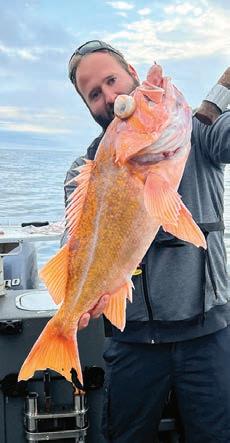
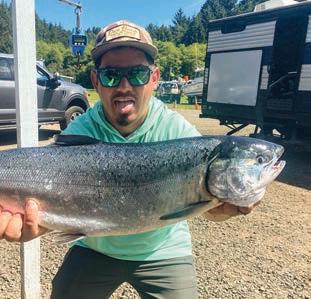
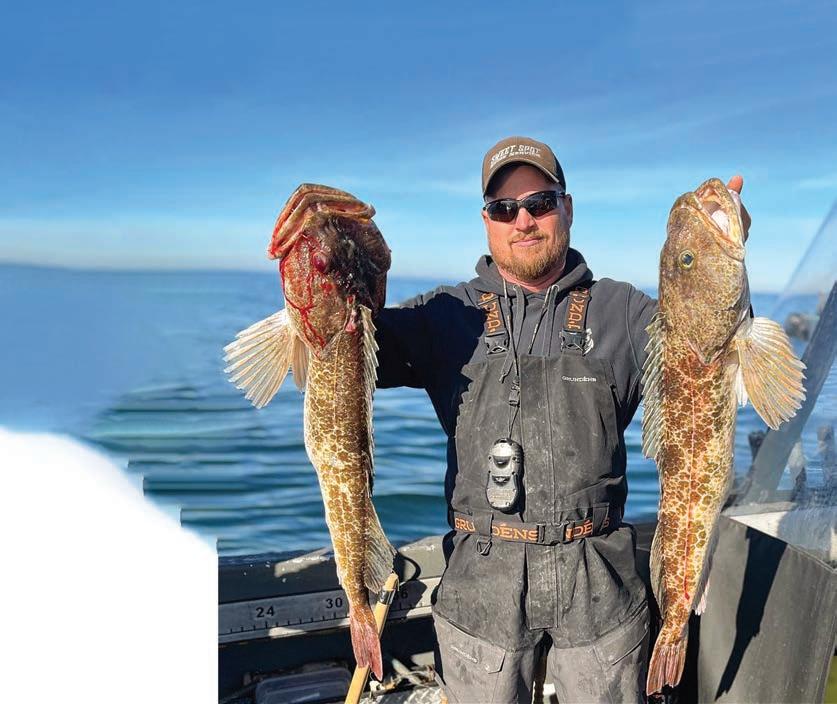
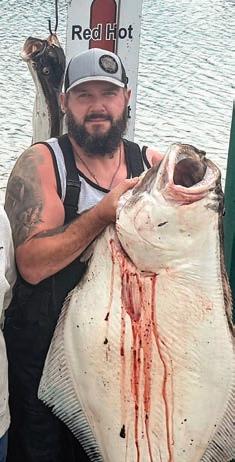
Dennis Dauble, Scott Haugen, David Johnson, MD Johnson, Randy King, Chris Marcolin, Buzz Ramsey, Bob Rees, Troy Rodakowski, Trevor Torppa, Dave Workman, Mark Yuasa
GENERAL MANAGER
John Rusnak
SALES MANAGER
Paul Yarnold
ACCOUNT EXECUTIVE
Janene Mukai
DESIGNER
Kha Miner
PRODUCTION ASSISTANT
Emily Baker
OFFICE MANAGER/COPY EDITOR
Katie Aumann
INFORMATION SYSTEMS MANAGER
Lois Sanborn
WEBMASTER/DIGITAL STRATEGIST
Jon Hines
ADVERTISING INQUIRIES ads@nwsportsmanmag.com
CORRESPONDENCE
Email letters, articles/queries, photos, etc., to awalgamott@media-inc.com.
ON THE COVER
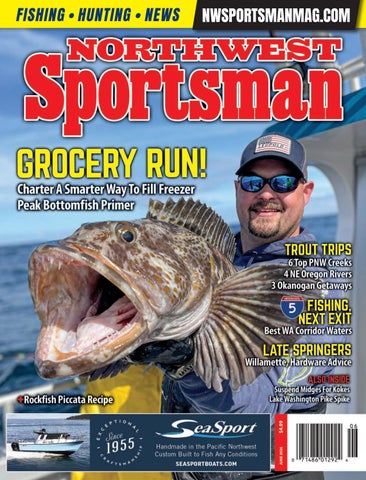
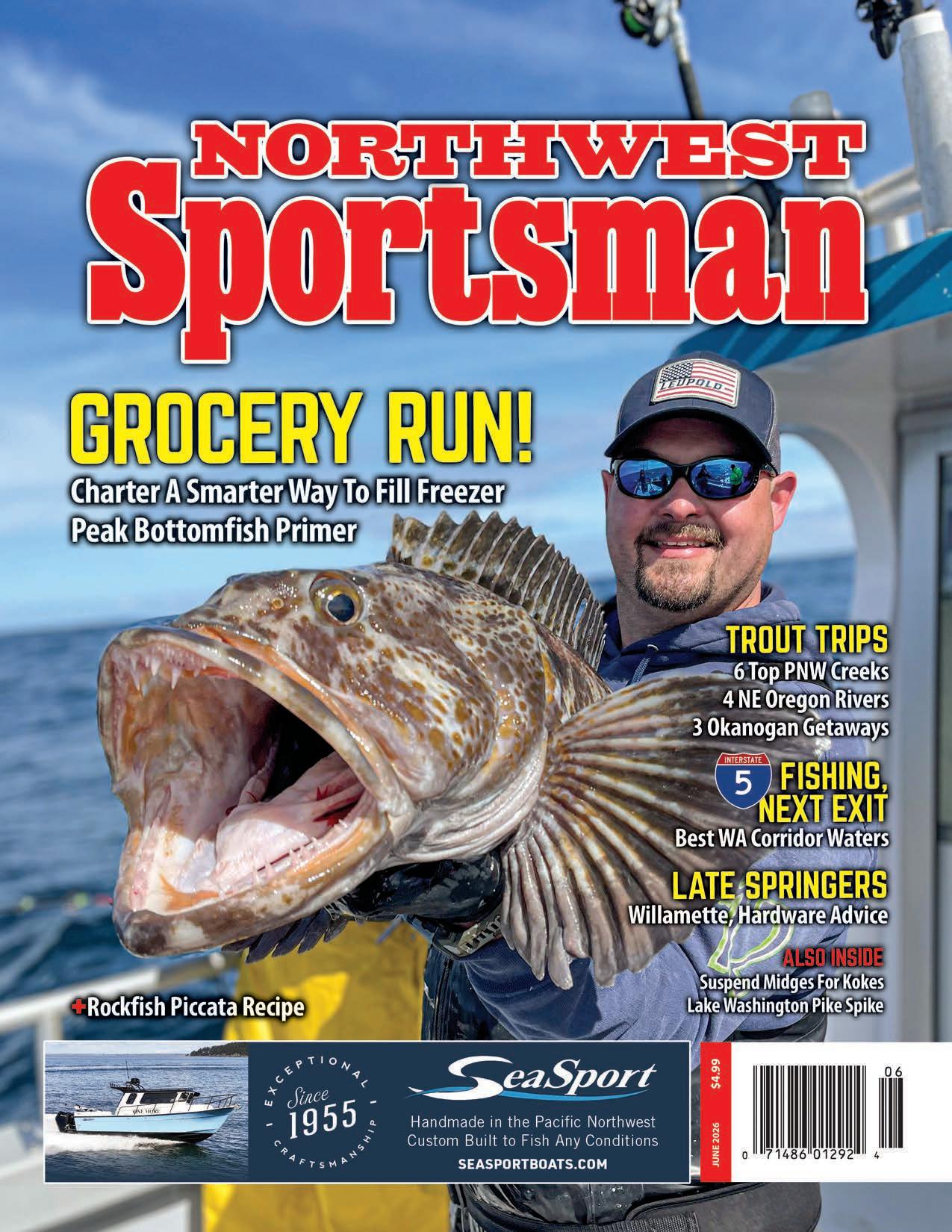
The call of the Pacific Ocean and its bounty is strong for Northwest sportsmen. North Idahobased columnist Dave Anderson put up some white-meated bottomfish filets on a grocery run off Westport. (DAVE ANDERSON)
DEPARTMENT OF
Like us on Facebook, follow us on X and get dailyish updates at nwsportsmanmag.com.
TROUT PARADISE TIMES 4
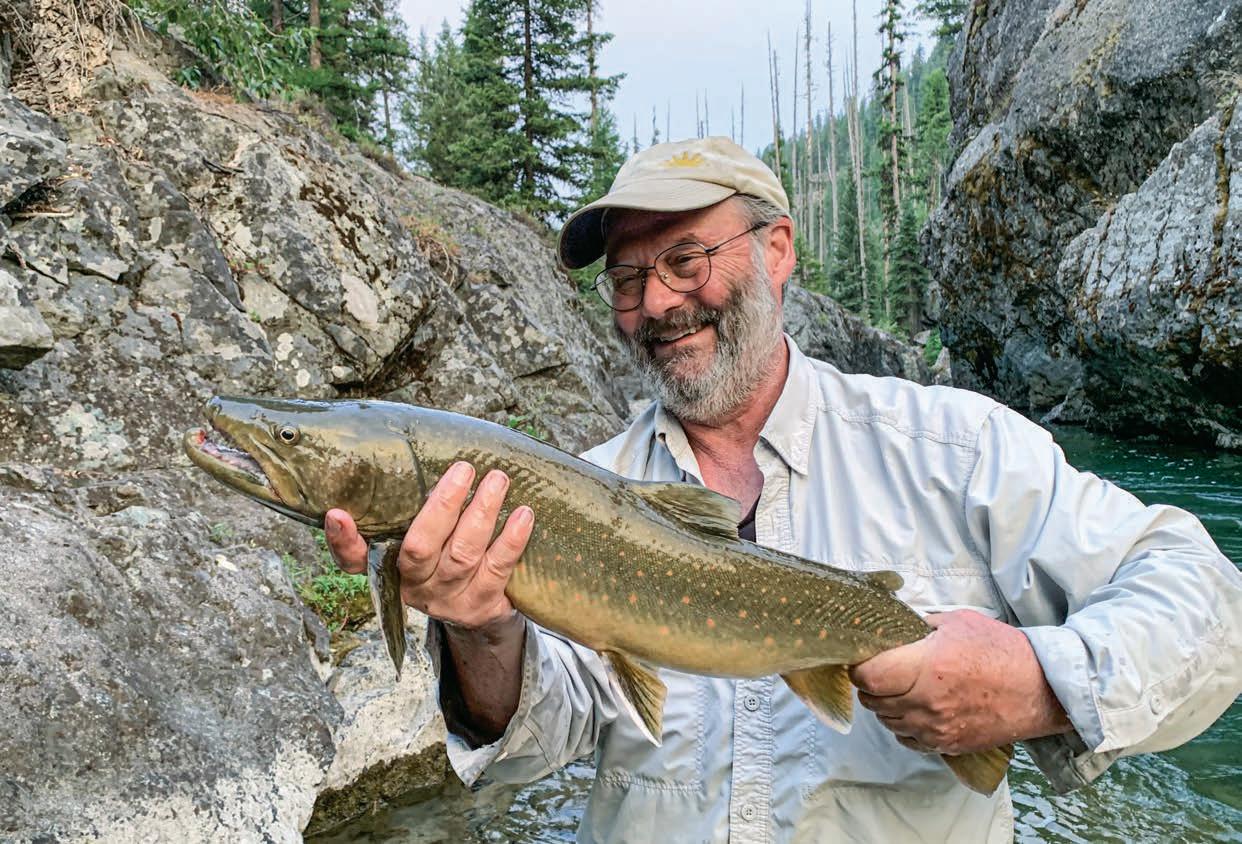
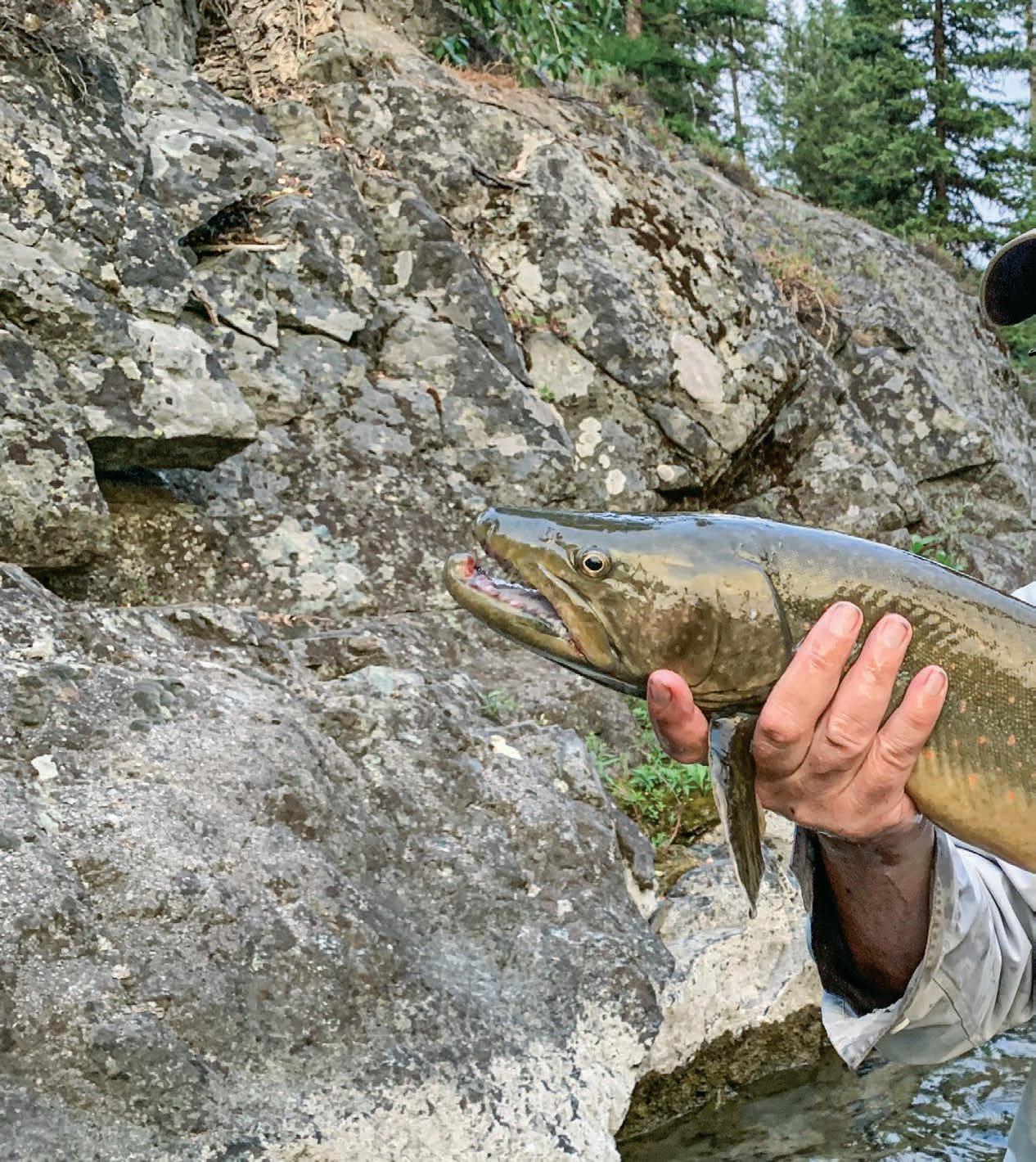
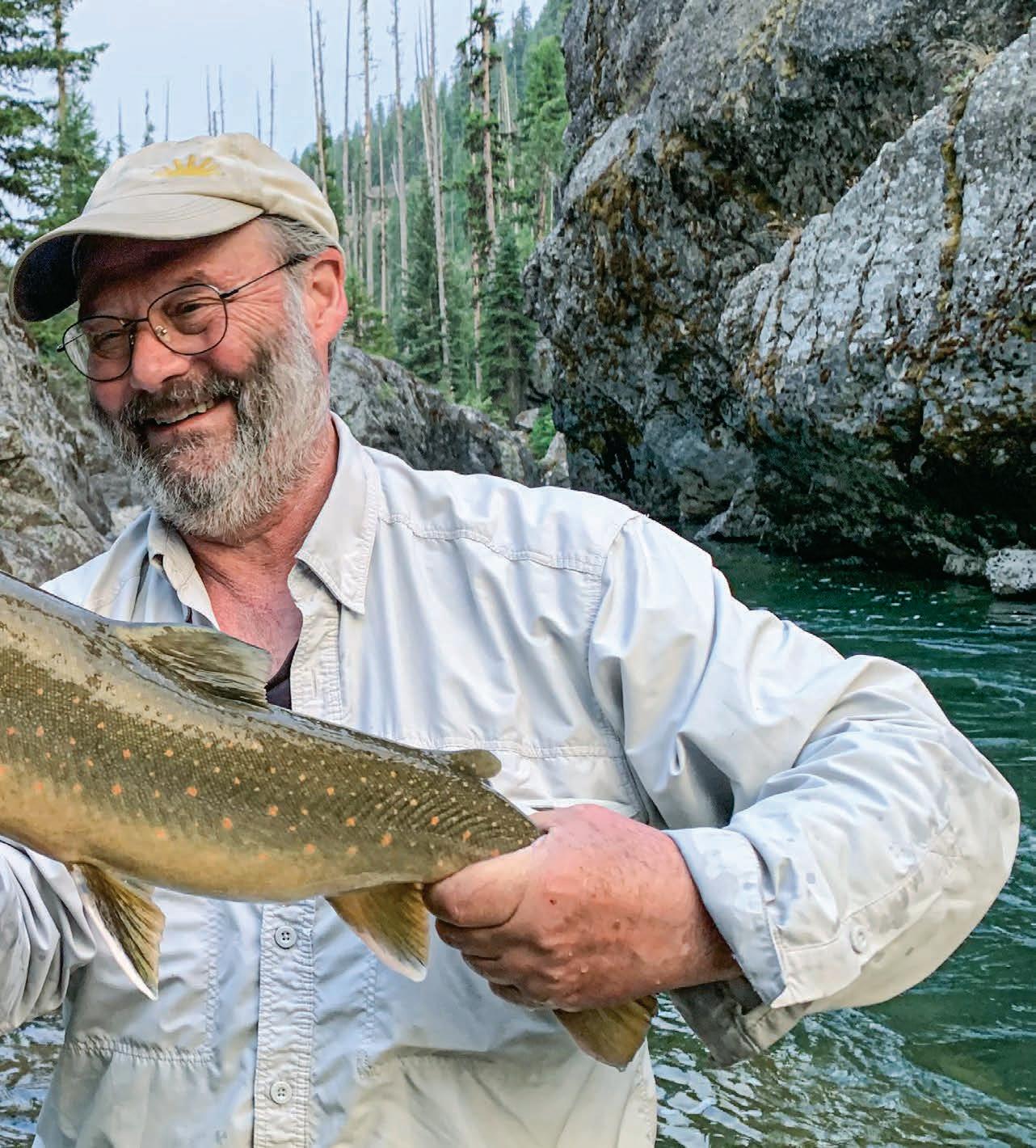
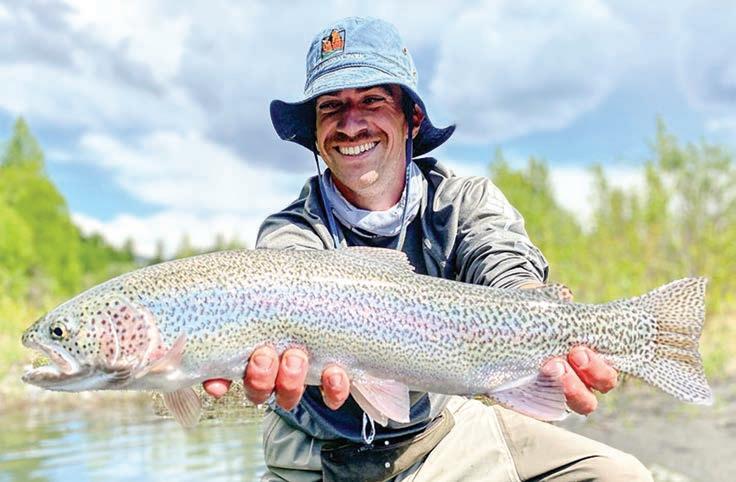
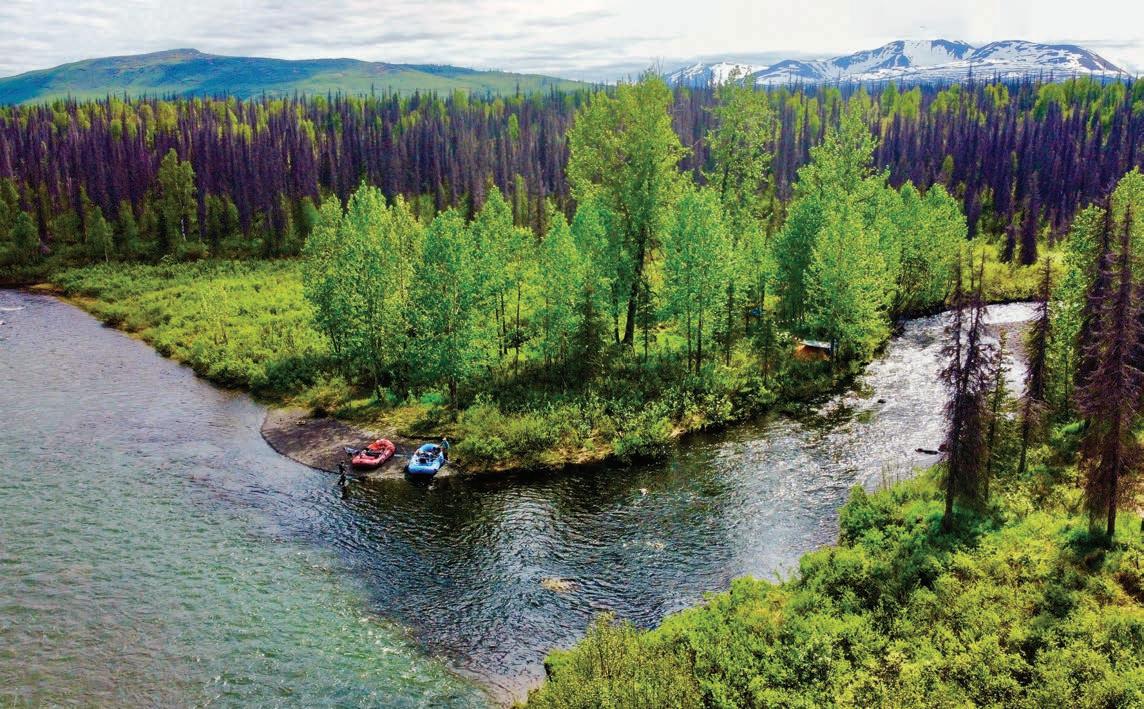
David Johnson has been fishing Northeast Oregon streams for nigh on 60 years, and he knows they hide some fantastic angling for redband rainbows and bull trout. He details four of his favorites.
ALSO INSIDE
46 A TALE OF TWO BOTTOMFISH TRIPS
Charter boat fishing off the Northwest Coast just might be the most cost-effective grocery run to be had in anglerdom, and veteran Dennis Dauble is a fan – for the most part. He preps you for a lucrative day on the ocean.
85 BEAVER STATE FISHERIES TO HIT BEFORE SUMMER’S HEAT Guide Bob Rees highlights Cascades lakes, Willamette Valley rivers and coastal waters to try this month, as well as an all-but-forgotten June opportunity.
90 I-5 A FISHY CORRIDOR
North to south, Western Washington’s main vein offers access to a wide variety of fisheries. Hop in with Mark Yuasa for a gridlock-busting look at top waters from one Vancouver to the other – just don’t call it “the 5” whatever you do!
101 SPRINGER HARDWARE
With Chinook now almost entirely up in the tributaries, Trevor Torppa offers up a treatise on how to hook ’em with spinners, spoons and jigs, as well as advice on color selection.
107 HEAD WELL UPRIVER FOR WILLAMETTE CHINOOK
It’s not just all about Kelly Point and the head of the channel for Willamette springers this time of year! The upper river can put out some nice-sized fish through early July too. Troy Rodakowski shares insights from a lifetime in the valley.
112 3 OKANOGAN FISHING DESTINATIONS
Northcentral Washington correspondent Chris Marcolin has been keeping tabs on his local lakes, and if your summer plans have an opening, he details a trio of getaway bases seeing good catches this season.
138 6 SMALL TROUT STREAMS WITH BIG REWARDS
Low snowpack means your favorite streams will be in fishing shape early. David Johnson has the lowdown on Oregon’s Blitzen and Fall Rivers, Idaho’s Kelly and Silver Creeks, and a Washington pair as well.
(STEVEN JOHNSON)
OUTDOORS MD Primer For Peak Bottomfish Season
True, bottomfish seasons have been humming for a couple months now off the Northwest Coast, but they really roar to life come June and summer. MD checks in with Washington and Oregon offshore managers for what’s new in 2026, as well as dory fleet skipper Mark Lytle about how the season’s going in Pacific City.
COLUMNS 67
75 CHEF IN THE WILD An Idahoan Heads To Sea
On a family roadtrip up the Oregon Coast last month, Chef Randy snuck out on a Newport-based charter boat for a half-day fishing adventure on the briny blue, a rare treat for this Idaho-based sportsman. He serves up an ode to deckhands, charters and bottomfish fishery managers – as well as a rockfish piccata recipe!
121 BUZZ RAMSEY Suspending Midges For Kokanee
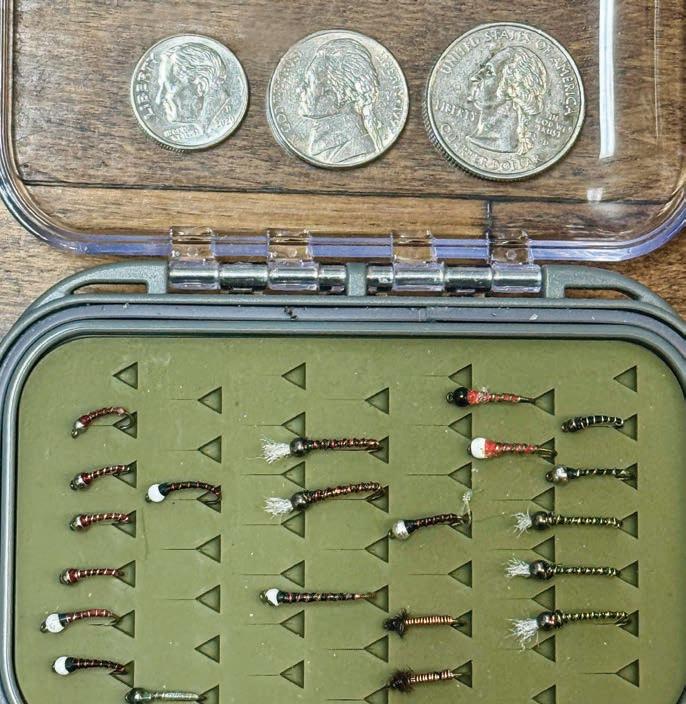
There’s the kokanee bug you know, and then there’s a totally different kind –chironomids, or midges. Most Northwest koke addicts troll or jig for their catch, but there are a few who suspend these teensy tiny fly fishing patterns for their limits. Buzz shares tips and tricks from one such angler.
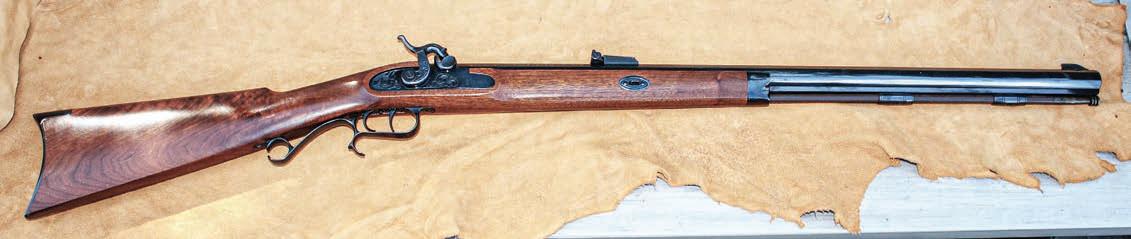
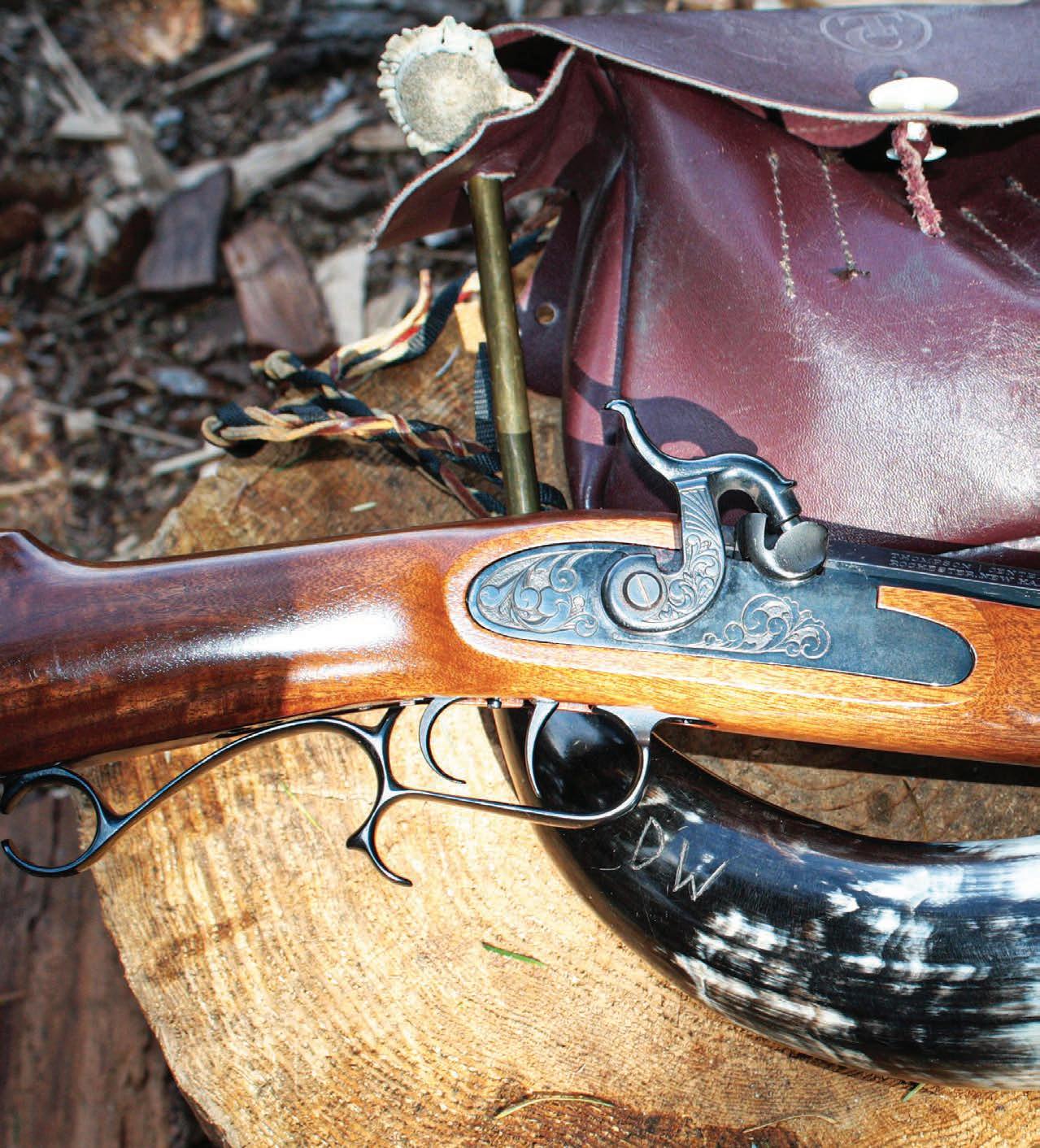
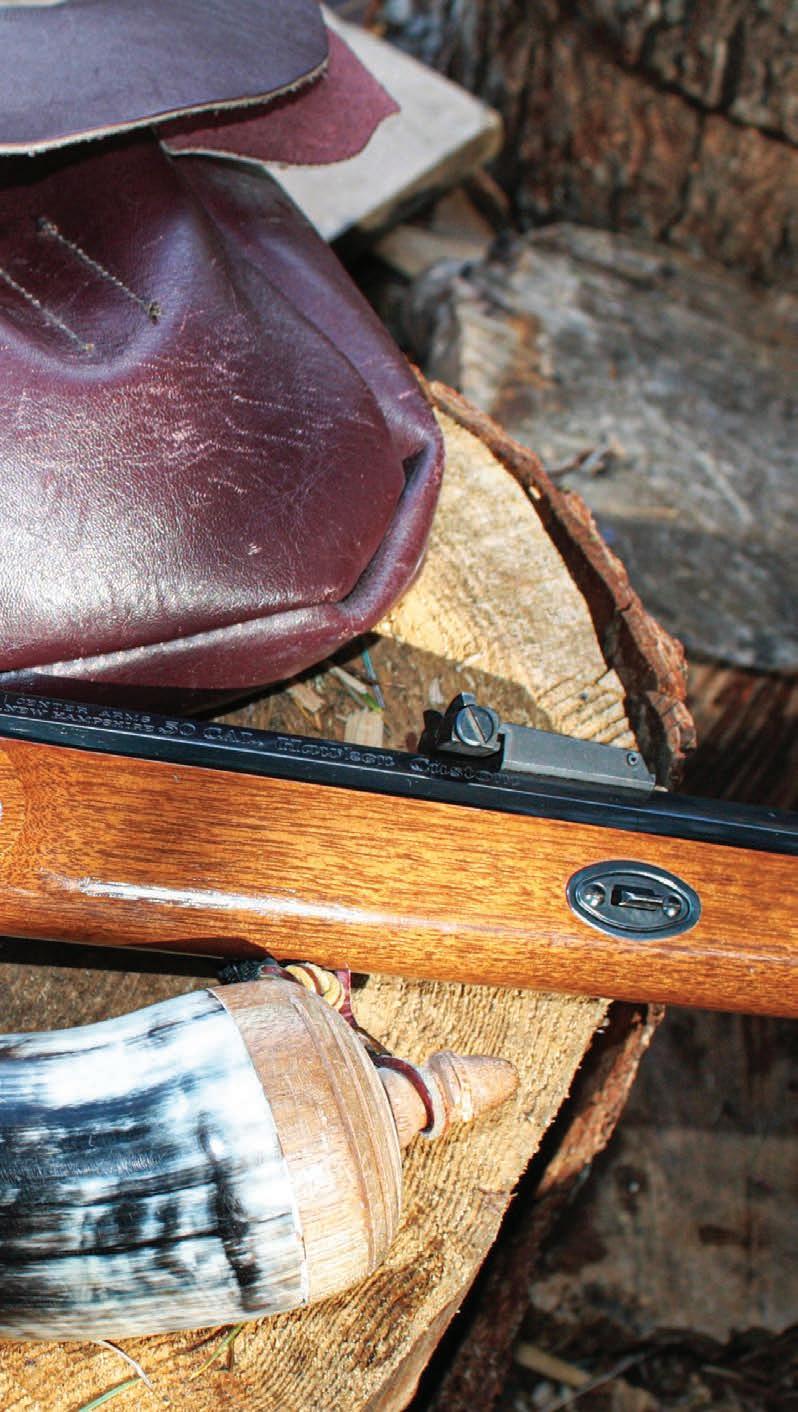
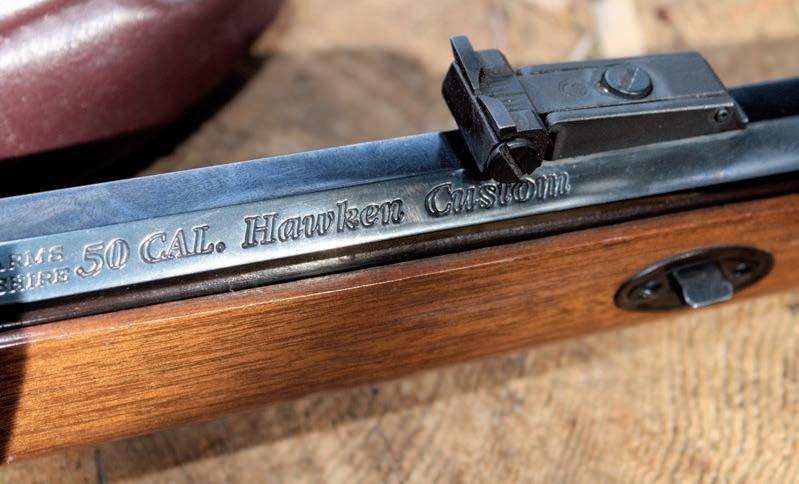
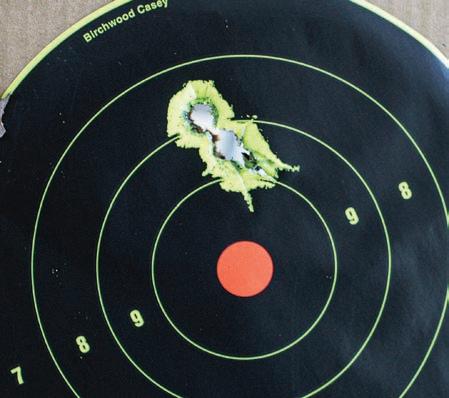
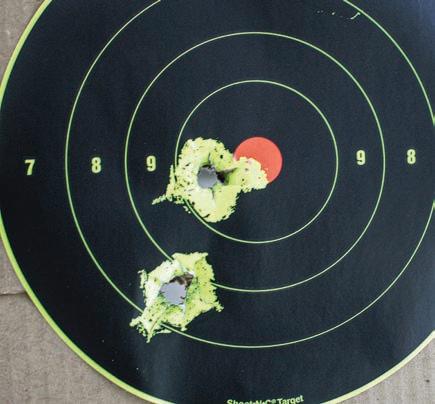
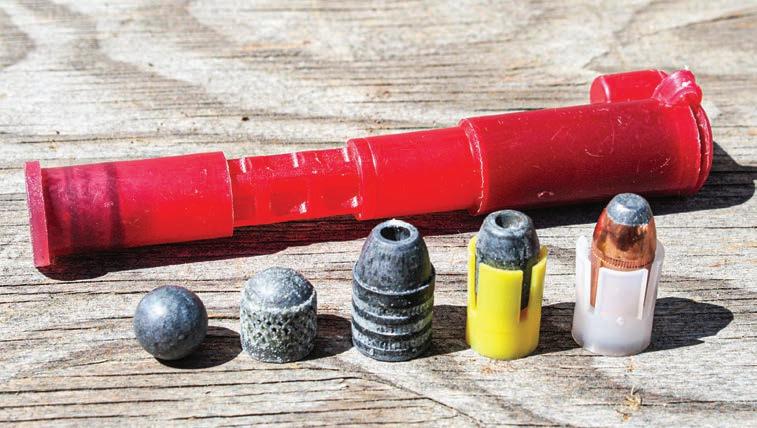
162 ON TARGET Planning To Hunt With A Muzzleloader? Start Prepping Now! Front-stuffers have come a long way, but Dave W. still considers himself a “traditionalist.” He breaks out his .50-caliber Thompson/Center Hawken Custom and .54-caliber Lyman Trade Rifle as he considers a black powder elk hunt this fall.
171 GUN DOG Gun Gear That’s Worth Grabbing
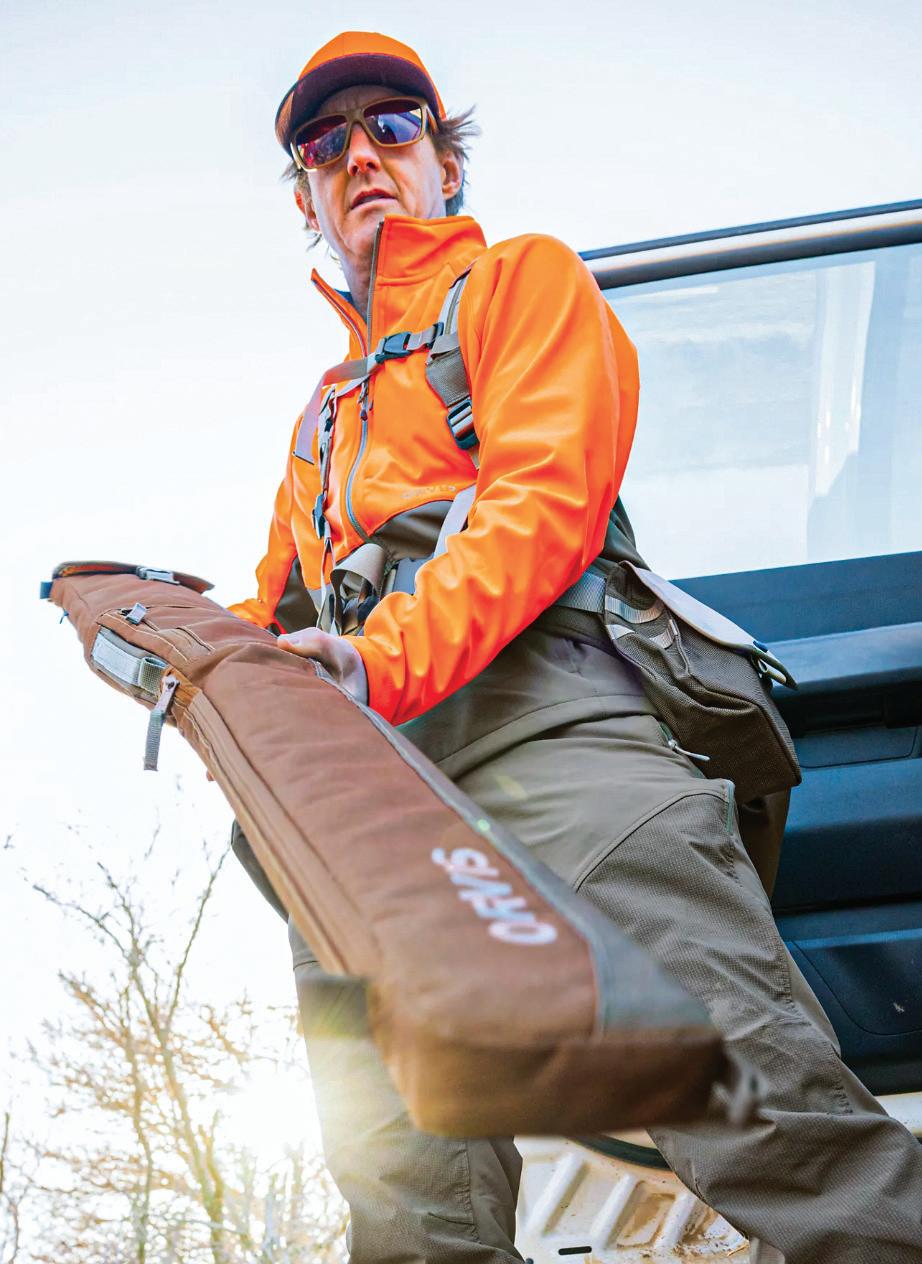
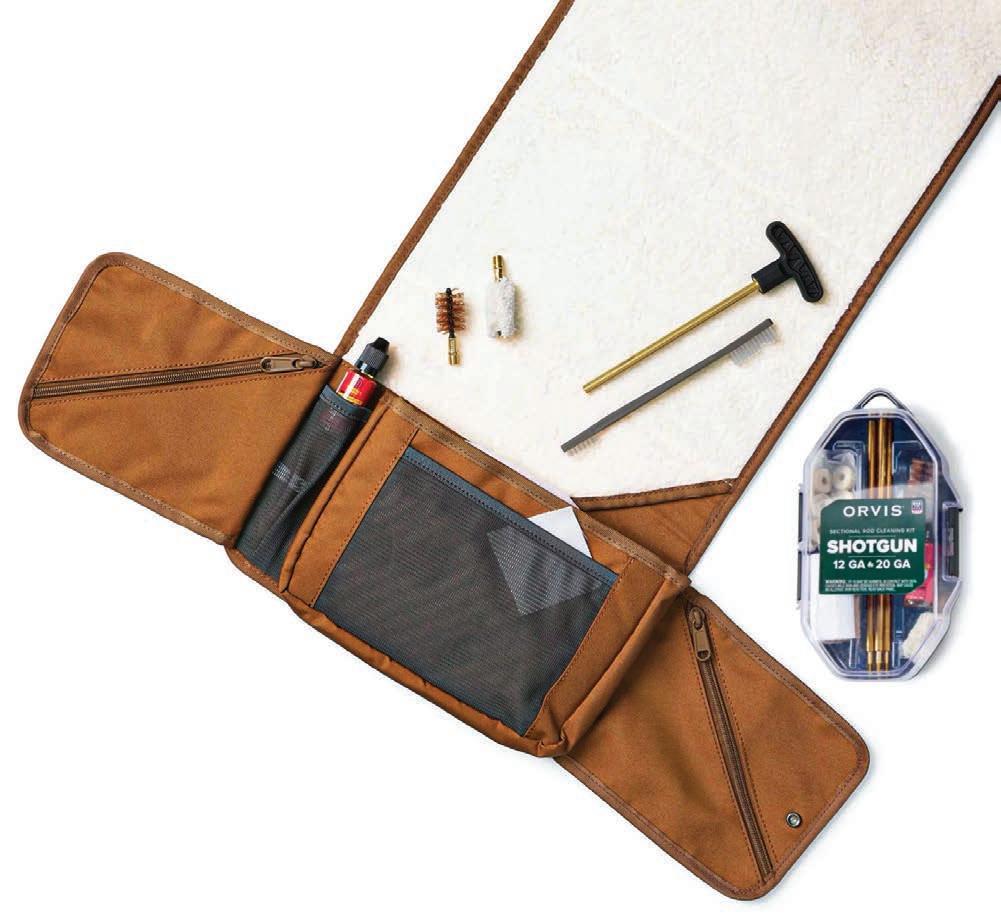
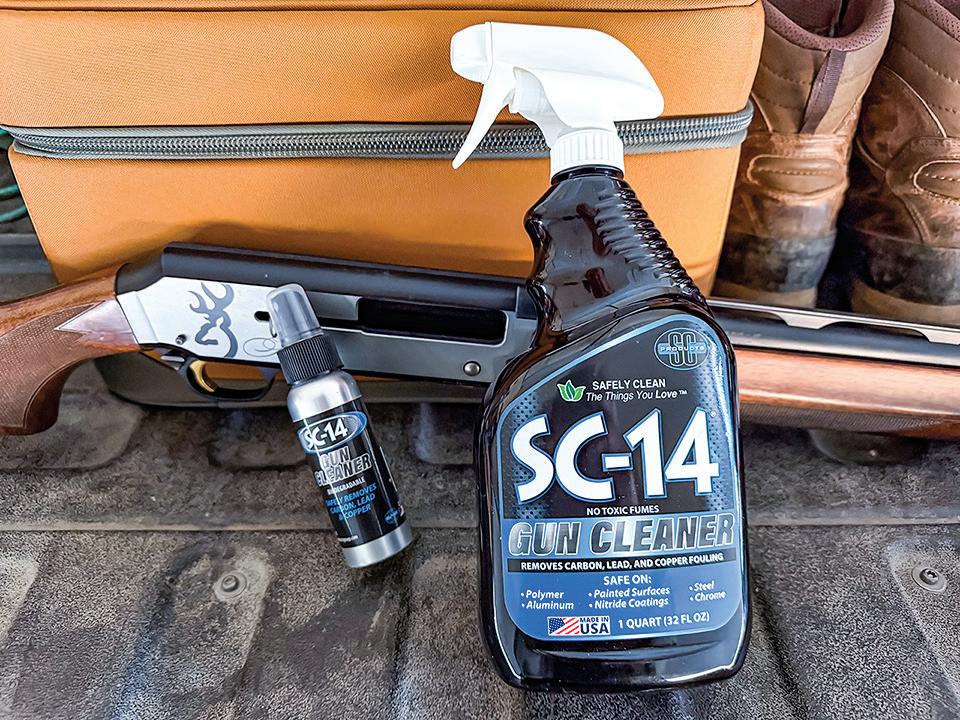
The pups get the month off – Scott takes a look at some of the gear around hunting with bird dogs that makes his life afield so much easier: gun cleaning and storage equipment he’s been using, likes and will continue to bring with him.
(RANDY KING)
Willamette springers suck, or, Why I love Willamette springers
Methuselah bull elk, fishermen go bananas for walleye, first responders’ dueling turkeys, and more!
DISHONOR ROLL
Seattle-area crew goes uber-overlimits on Hood Canal oysters; Fallen Oregon game warden’s name added to national memorial; Cousins convicted in drone deer hunting case; Jackass of the Month
and
Ongoing and upcoming fishing contests and events around the area A sharp increase in Lake Washington northern pike catches this spring will raise fears of a breeding population that threatens salmon and habitat restoration work.
THE EDITOR’SNOTE
I’ll give fishing for Willamette River spring Chinook this: It allows me to practice one of my other all-time favorite passions, photography, and I am thankful for that.
Which is also to say that, yes, bites have been few and far between so far for me this season while fishing solo.
Well, technically, that’s not exactly true. There were the five grabs across three consecutive short outings one week. But the times before and since then have yielded not much besides a whole lot of happy nature pictures – birds; bridges; clouds; reflections; other anglers’ boats; other anglers netting fish; plunkers in the rain; the GPS track on my fishfinder showing that I’m doing a really good job of coloring inside the lines on the map of my trolling grounds!
It only adds to my appreciation for springer guides Bob Rees and Bill Monroe Jr., and sharpies Liz Hamilton and Art Martin, who all invited me aboard their boats for productive outings on the Lower Columbia’s estuary and gorge, and lower Willamette this season.
PART OF MY problem this year is that I decided to give a new-to-me technique a real go. For ages I’ve eschewed using bait, apparently because I don’t actually want to catch fish. Ahem, in my defense, I fish out of a kayak and have found that simplifying my whole schtick just goes a long way to faster launching, easier rigging and cleaner and less cluttered fishing. I’ve got narrow before- and after-work windows to troll for springers, and I want to make the most of them.
But after spending the last two seasons dialing in-ish 3.5 soft spinners – you may recall my adventures from a May 2025 column – I bit on Liz and Art’s advice to try coon shrimp. A shrimp spinner ties up like a 3.5, and with the egg loop knot on top as an additional way to secure the bait, the shrimp stays on the hook far better than I imagined and I don’t have to spend time putting a new one on after every pass. The only problem? Springers weren’t cooperative during my initial trial and (mostly) error period.
Exactly 61 minutes after texting Liz I was giving up on her stupid shrimp forever, I had to swallow my words because in the meanwhile I had inexplicably switched back to one behind a chartreuse green dot blade and had two grabs, losing one fish at the bow. Between that and the other bites that week, it was a breakthrough in what to try with certain water temperatures and weather conditions, adding to my (very slowly) growing bag of Willamette springer tricks.
No doubt there will be many more fruity nature pics from the river among those of occasional keepers, like last Friday’s fish. As a fellow Willamette angler commiserated, these springers are “rare and hard,” but that allows me to enjoy the best of both worlds. –Andy Walgamott
Bob Rees, I’m not, but when spring Chinook fishing is slow, it can bring out the Bob Ross in me. (ANDY WALGAMOTT)
They’re Spawning
A
sharp increase in Lake Washington northern pike catches this spring will raise fears of a breeding population
that threatens salmon and habitat restoration work.
By Andy Walgamott
There was some very grim news last month for Lake Washington salmon and those working hard to revive and protect its fish and fisheries.
Tribal fishermen netted 37 northern pike out of the big metro lake in the first full week of May, a massive jump from just one to three of the unwanted nonnative invasive fish that have turned up annually since the first one was caught in 2017.
And that’s not even the worst of it.
“Unfortunately, this appears to be the first sign of a reproducing population,” said
Analysis of pike otoliths, or ear bones, will help confirm that, but Schaffler described the fish as 18 to 20 inches long, which the species typically reaches after several years of growth.
It’s believed that these particular pike were still sexually immature and likely didn’t spawn this year, but it also means that other northerns in Lake Washington have been getting it on – and for some time now.
Spring 2025 saw crews capture a nearly 3-foot-long postspawn female pike and, a week later and within 100 yards of where it was found, a male northern was caught. Hens can lay from tens to hundreds of thousands of eggs a year, based on their age and body size. Assuming a successful
spawn last year, 2025’s year-class of pike could be around a foot long by now.
Schaffler said the “significant increase” in catches this spring is not likely due to increased netting. He describes efforts as “fairly consistent across (the) years.” All of this year’s pike were captured near I-90, which splits the southern half of the lake.
THE MUCKLESHOOTS ARE targeting Lake Washington’s introduced spinyray species with an aim to reduce their densities and someday establish a commercial fishery, while the Washington Department of Fish and Wildlife is netting to reduce predation by perch, bass, crappie and northern pikeminnow – a different, native species from northern pike – on salmon smolts at key chokepoints during their outmigration.
The joint goal is to rebuild the lake’s longsuffering sockeye run, as well as bulk up its Chinook and coho returns. WDFW’s efforts have been hampered by state budget cuts in recent years, but King County stepped up with “significant funding” for 2026. This past winter, state crews fishing near the mouth of the Cedar River were able to test a deepwater live-trap, which showed “promise.”
Back in January during a legislative work session on predators, MIT’s Schaffler warned lawmakers that if Lake Washington pike establish a reproducing population, “we’re going to see the exact same problems we are seeing in Lake Roosevelt.”
There, it’s been all hands on deck as WDFW and the Colville and Spokane Tribes have been working to suppress pike numbers after the fish came downstream from British Columbia. The goal is to keep them out of the so-called anadromous zone below Grand Coulee and Chief Joseph Dams. WDFW and the Kalispel Tribe have also been suppressing northerns in Lake Spokane and the Pend Oreille River, both of which feed into Lake Roosevelt, and last year WDFW rotenoned a San Juan Island lake to get rid of a population there.
Outside of draining a lake or rotenoning
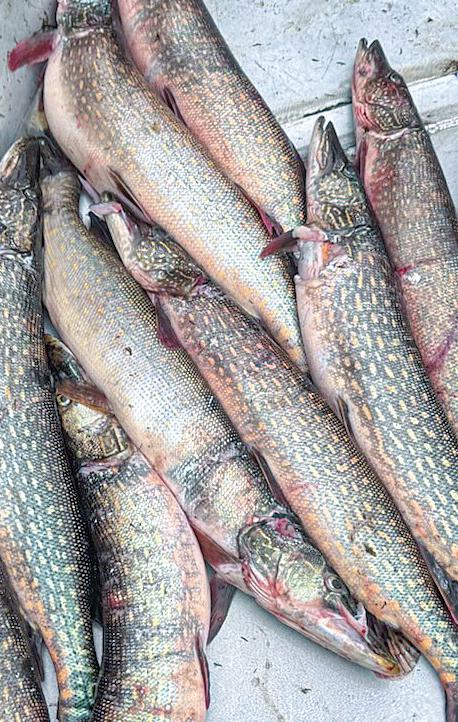
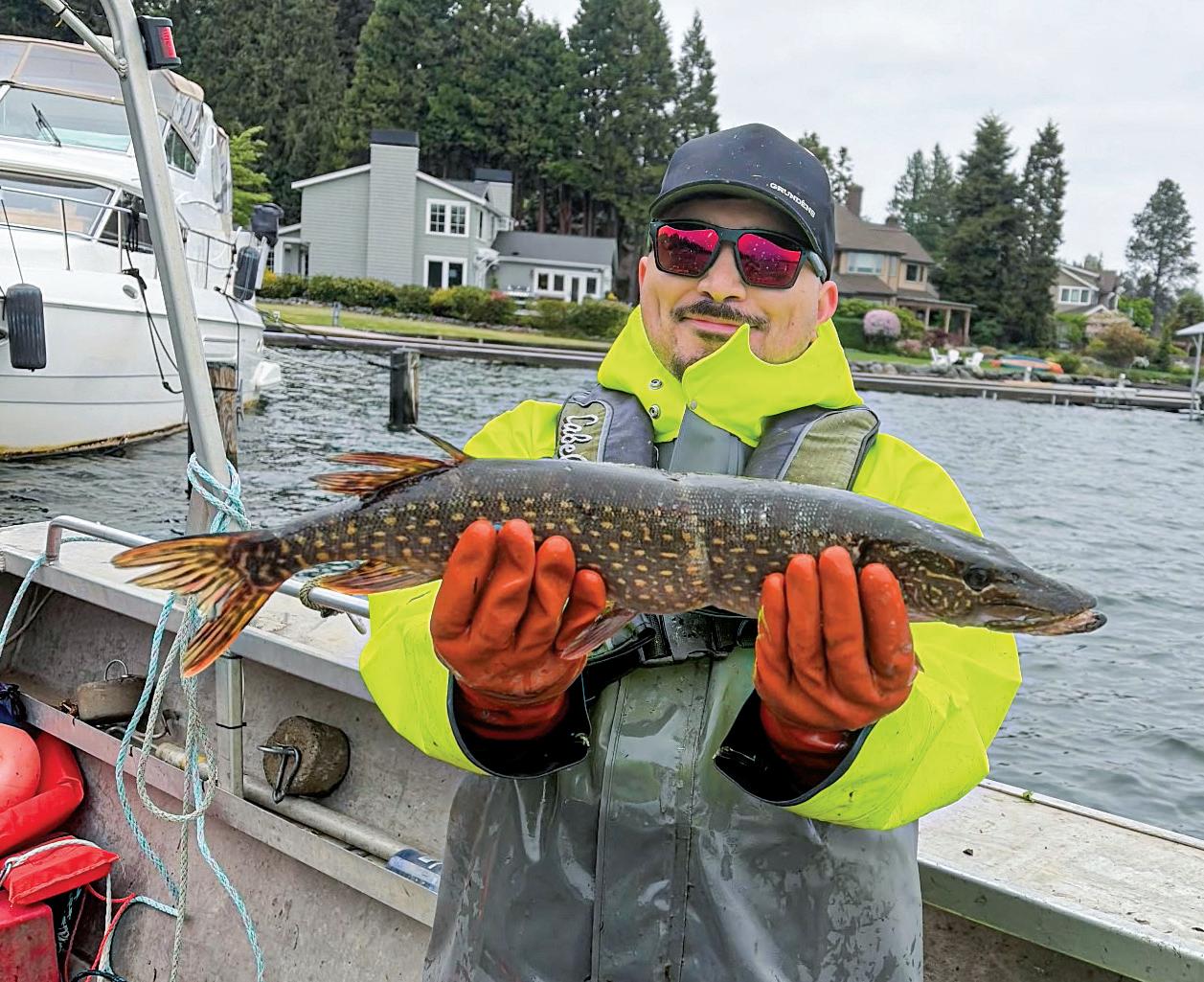
LJ LaClair holds one of 37 pike netted out of the lake in one week early last month. (MIT)
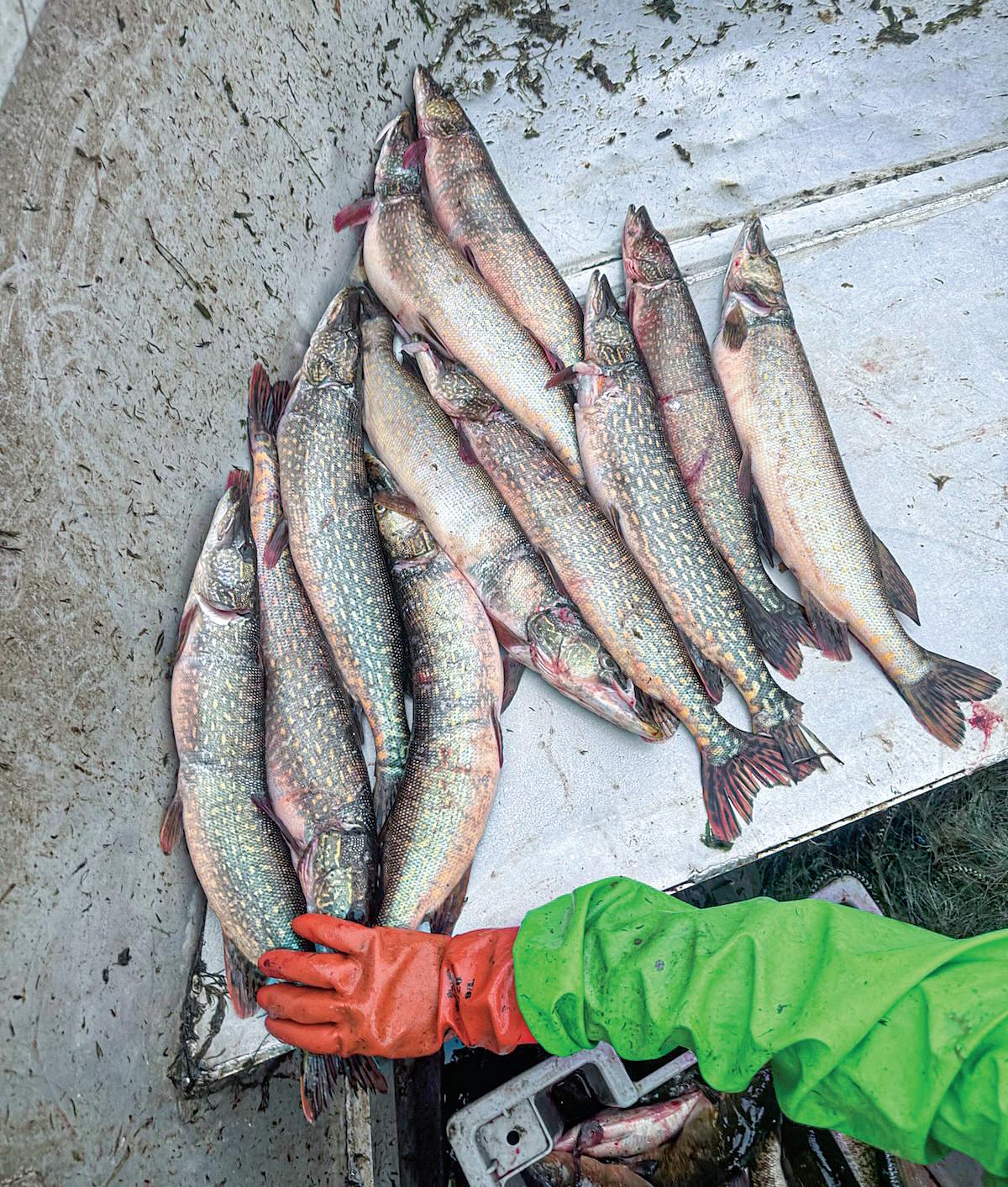
A Muckleshoot Tribe gillnet captured these 11 northern pike on Lake Washington near I-90 on May 6, 2026. (MIT)
it – which kills all other fish species, and neither is feasible at 22,000-acre Lake Washington anyway – pike are very hard to completely eliminate because of their preference for habitats where nets don’t work so well: weedy nearshore shallows.
Northerns represent an existential threat for fish species that have not evolved to coexist with them. Their rise also risks all the money spent on salmon habitat restoration projects in Lake Washington’s Cedar River, Sammamish Slough and Issaquah Creek.
“Their voracious appetite for other fish and prolific spawning habits represent a potential for great ecological and economic damage, not just in Northeast Washington but throughout the region,” WDFW states on its pike webpage. “Northern pike can live over 20 years, can grow to more than 45 pounds, produce a large number of young, and can consume substantial quantities
of native and Endangered Species Act (ESA)-listed salmonids that are particularly vulnerable to predation.”
Lake Washington sockeye advocate Frank Urabeck, who has spent much of the past two decades since the last fishery on the lake trying to figure out ways to build the severely diminished run back, said the presence of a breeding population of pike makes restoring sockeye “even more difficult.” In words that suggested he might be ready to throw in his towel on that project, Urabeck added, “However, we need to seriously act on this threat now to the important Chinook and coho runs produced by Issaquah Hatchery and from the Cedar River.”
LAKE WASHINGTON’S PIKE could have only arrived via a**h*le bucket biologist, probably from the Upper Columbia, Pend Oreille River, Lake Spokane, Lake Coeur d’Alene or Idaho and Montana’s Clark Fork River. A WDFW 2024 report to the legislature said that one pike caught in Lake Washington
that year indicated “illegal introductions of this species are on-going.” That person or persons might fancy themselves a better fishery manager than WDFW or MIT, or have some axe to grind, but pike represent an enormous unnecessary cost and drag for everyone, and illicit releases also give everyday anglers a black eye.
Several years ago now, in offering a $50 bounty for any caught in the lake, yours truly advised anglers to do this with pike: “Slash its gills, slit its belly, hack it in half, singe the carcass over high heat.” I still stand by those words. WDFW spokesman Chase Gunnell said that signs identifying what pike look like have been posted at boat ramps on Lake Washington and its ship canal and that any pike caught in the lake, slough or Lake Union should be immediately killed.
Photos should also be taken and reports filed by calling (888) WDFW-AIS, emailing ais@dfw.wa.gov or using the Washington Invasive Species Council’s reporting form or mobile app, available at invasivespecies .wa.gov/report-a-sighting. NS
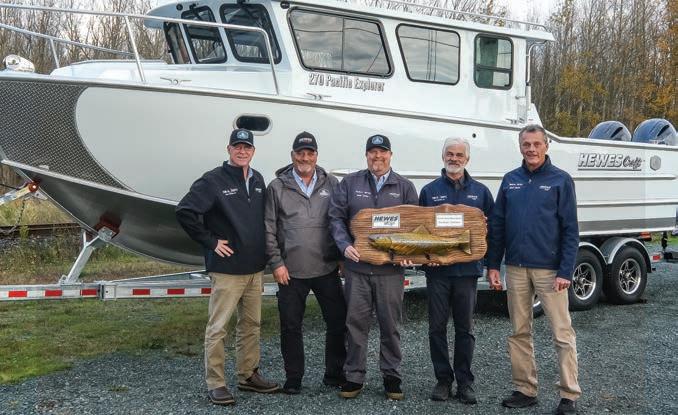
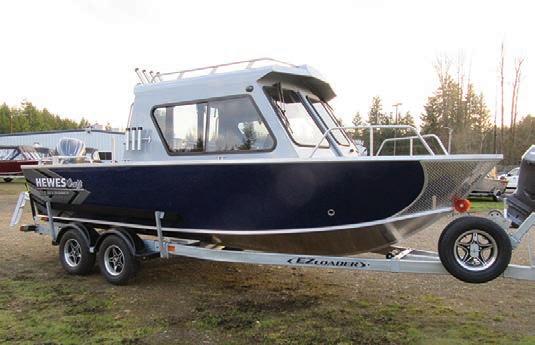
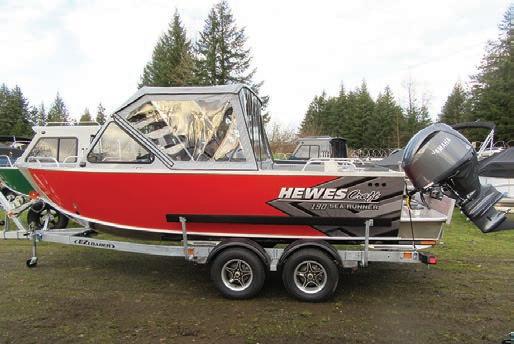
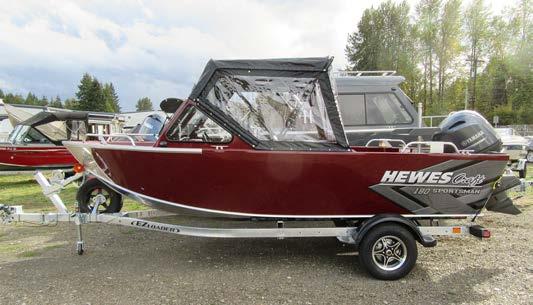
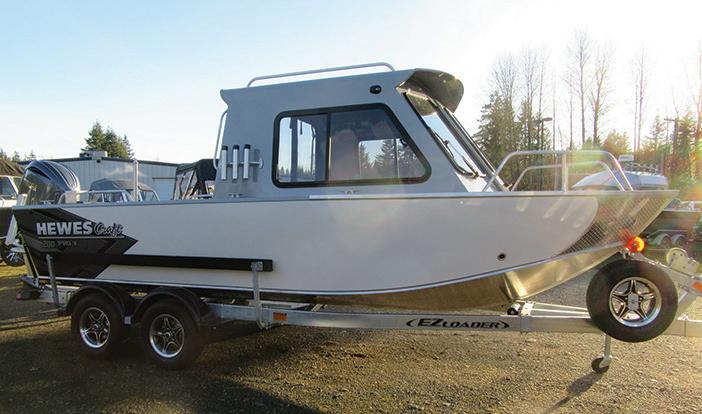
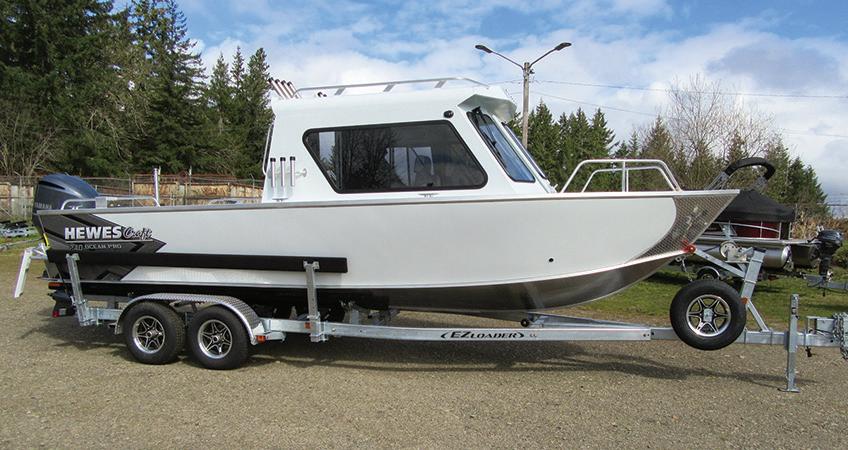
Recently, we accepted the award from the Hewes family for being the 2025 Top Sales Dealer — an honor we don’t take lightly. I’m thankful for the support from Hewescraft and especially our sales, parts, and service teams at Tom-n-Jerry’s. Great job, team!!!
— Kelly Hawley, President.
Tom-N-Jerry’s
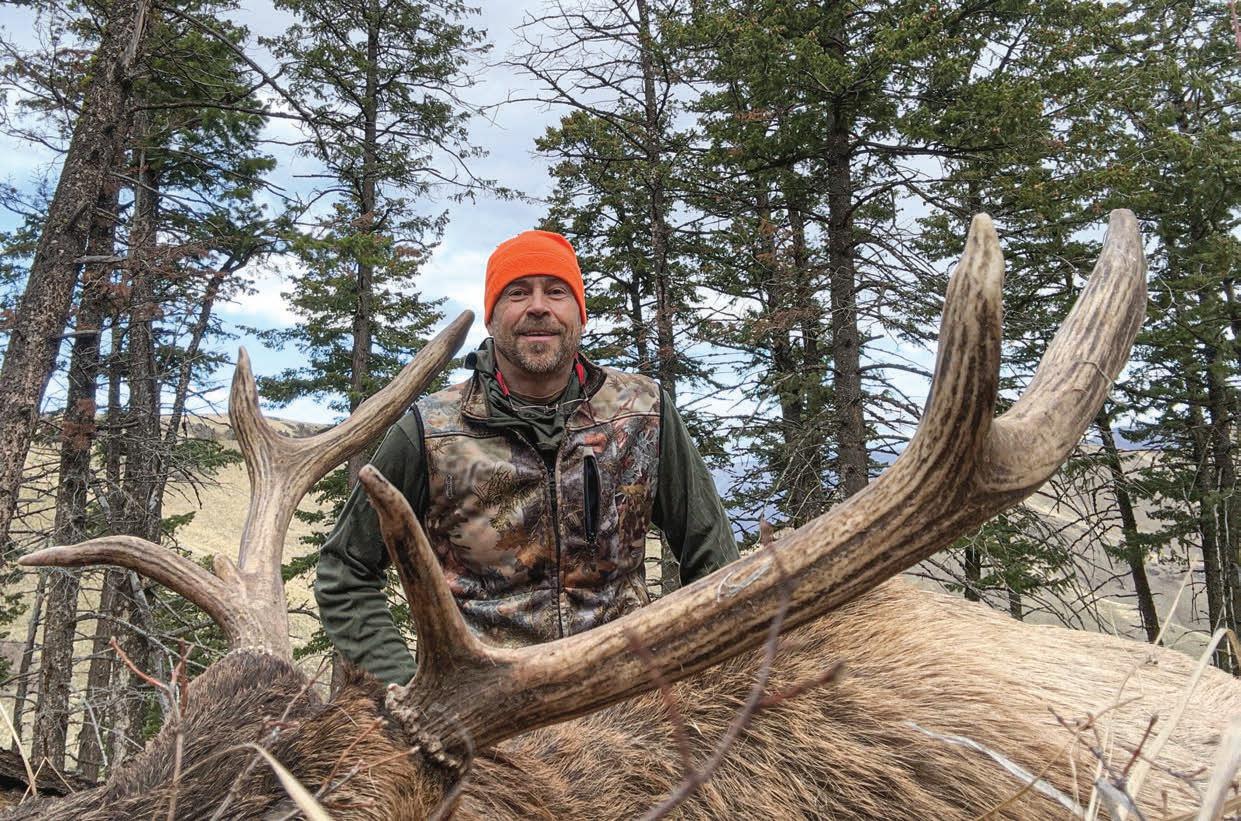
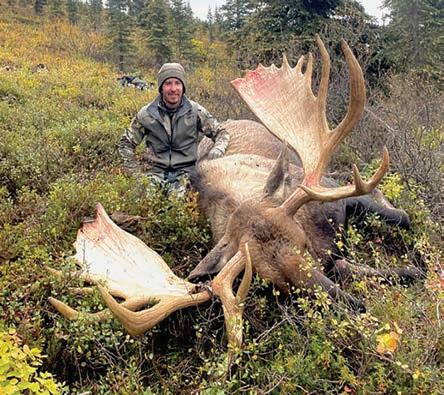
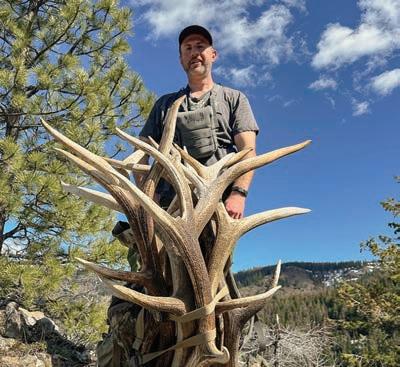
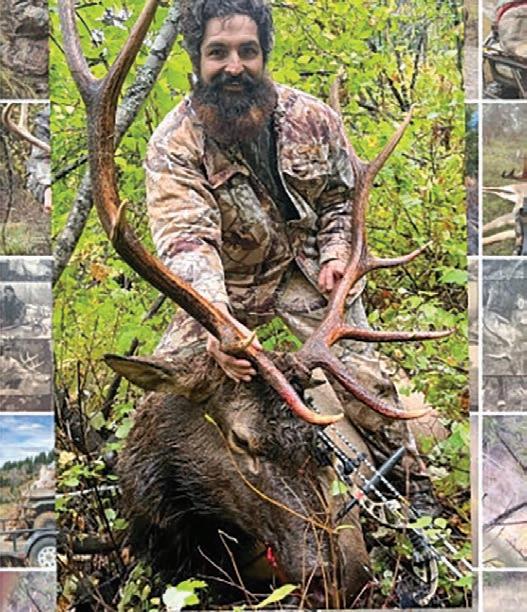
“An old giant.” That’s what Matt Little learned he’d taken during a backcountry elk hunt in Northeast Oregon’s Wallowas. The “regressed” bull’s clubbed antlers weren’t its only unusual trait. “His hooves were like a horse!” said Little. (KNIFE PHOTO CONTEST)
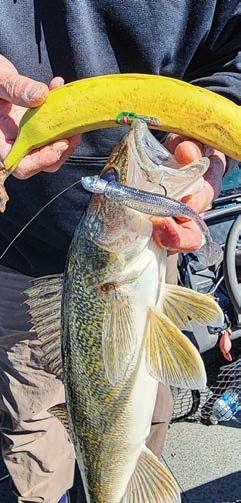
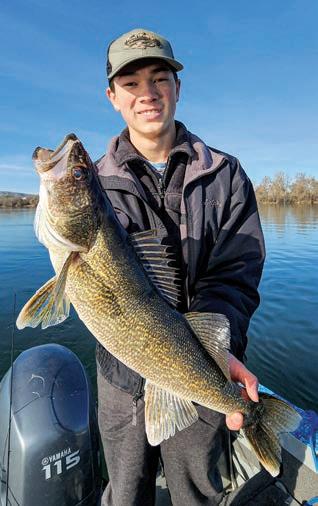
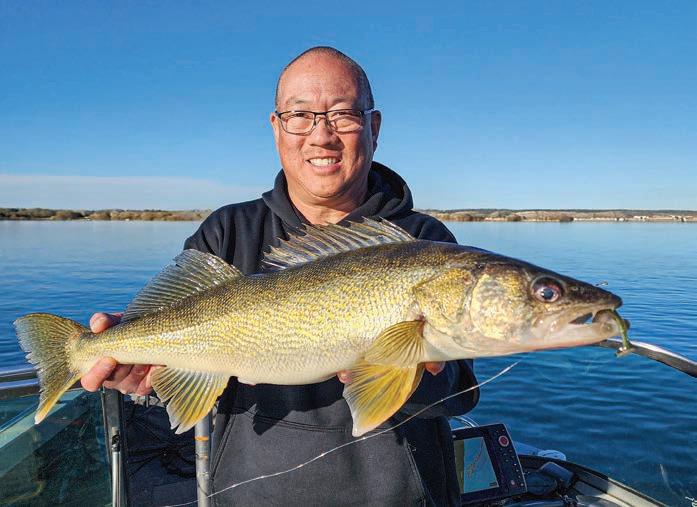
Like father, like son! Jerry and Austin Han tied into some nice-sized MidColumbia walleye back in late winter. They also discovered that these fish have not heard that bananas are bad luck. The superstitious fruit came from a local gas station on the way to the water, and the Hans figured why not bring them along for the ride. “We ended up doing really well catching walleye that day,” recalls Jerry. (KNIFE PHOTO CONTEST)
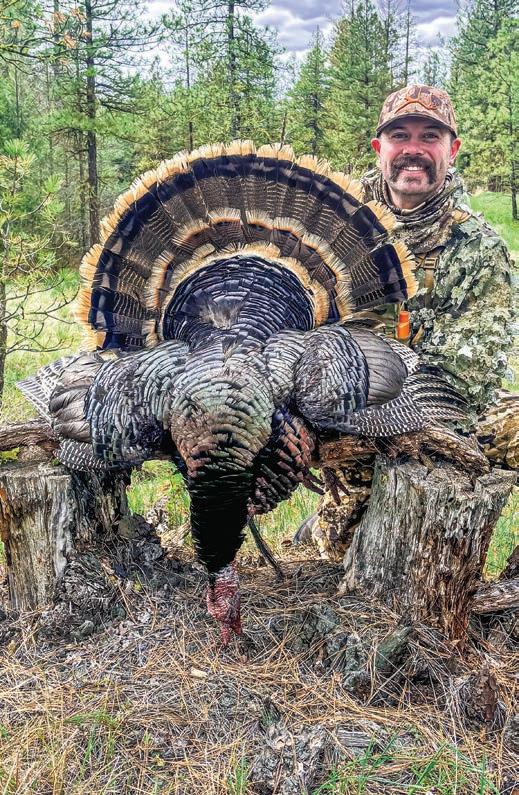
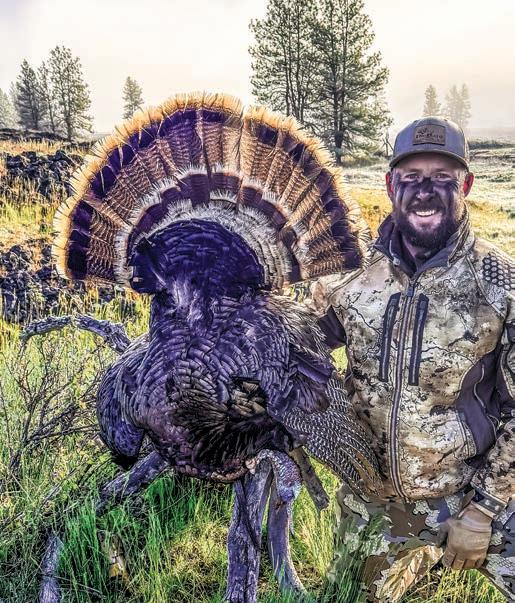
There was just a little bit of friendly police versus firefighter rivalry that day in the turkey woods. Brandon Jewett’s bird (below) froze him in place for 45 minutes before a hen distracted it long enough for the Yakima Valley officer to find cover and send out a couple raspy yelps. Meanwhile down the road, Tri-Cities fireman Jake Walker coaxed in his gobbler (above) in the afternoon. “Police took the win when I put the first bird on the ground, but he claims his was the better bird,” says Jewett. We’ll call it a tie! (KNIFE PHOTO CONTEST)
(KNIFE PHOTO CONTEST)
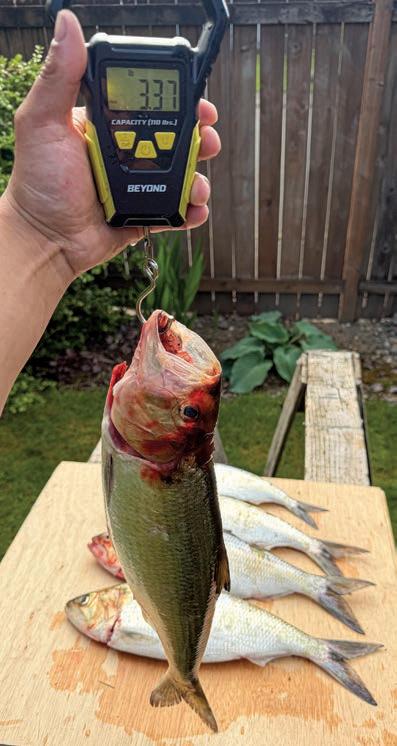
As you can see, this Sammamish Slough shad went 3.37 pounds for Kayden Dechant, who this spring was catching this new run of Lake Washington fish a month earlier than in recent years. He reported hooking as many as 10 a day in mid-May, with others also pushing 3 pounds.
(KNIFE PHOTO CONTEST)
Wylder Wilkinson shows off a winning smile after landing this rainbow trout in late April. “Thank you to the Eatonville Lions Club for holding the annual kids derby at the Mill Pond,” said the 4-year-old’s grandpa, Randy Hart Jr. (KNIFE PHOTO CONTEST)
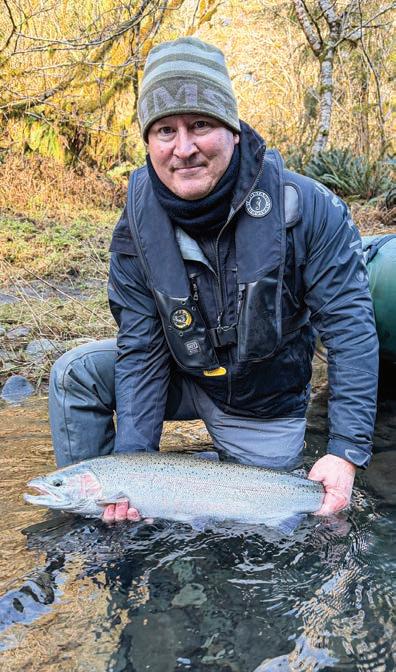
Jay Golden shows off another wild winter-run from this past season. He caught it on a cold day on the Olympic Peninsula while out with steelhead sensei Darrel Smith.
Dennis Schwartz was feeding his springer fever during April’s first Lower Columbia reopener, putting Chinook in the bucket on back to back days. He was sitting on anchor in the Caterpillar Island area. (KNIFE PHOTO CONTEST)
Seattle-area Crew Goes Uber-overlimits On Oysters
Extreme low tides somehow seem to bring out the extreme lowest of the low.
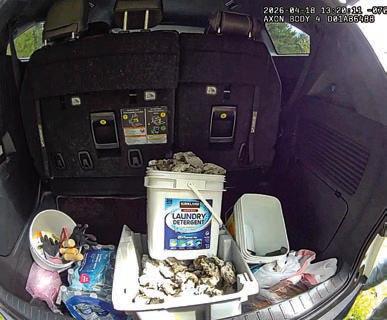
Take, for example, the quartet who in mid-April hired a rideshare driver to take them from King County to a Hood Canal beach where they unlawfully harvested around 500 oysters – seven times their combined daily limit.
Details come from the Washington Department of Fish and Wildlife Police’s Facebook page and a KING 5 news story.
The case began when Sergeant Matt Jewett spotted the shellfish scofflaws moving fast and loading buckets of oysters into a minivan parked along Highway 101 near Potlatch State Park during a roughly minus-2-foot midday low tide. When Jewett contacted the driver at a nearby parking lot, he spotted a large amount of unshucked oysters inside the vehicle.
A still from a Washington Department to Fish and Wildlife officer’s body-worn camera shows Hood Canal oysters seized from some serious shellfish swine earlier this spring. (WDFW)
By Andy Walgamott
FALLEN GAME WARDEN’S NAME ADDED TO MEMORIAL
TOyster shells are required to be left on the beach at the same level as the shellfish are harvested at; per WDFW, the shells provide habitat for baby oysters and other organisms.
Asked about all the oysters in the vehicle, the driver told the sergeant they weren’t his and that he’d been hired by the crew to drive them over from the Seattle area at the cost of several hundred dollars and that the people were still on the beach.
The four soon showed up in the parking lot and allegedly confessed to the overharvest.
“They actually admitted it,” Jewett told reporter Drew Mickelson. “They apologized over and over again about the quantity they got, which tells me they knew what they were doing.”
Each person was cited for four violations: no shellfish license and possession of unshucked, undersized and overlimit oysters, citations that amount to $635 per person.
Did they hire an Uber, Lyft or whatever driver because they didn’t want to risk their own vehicle being seized, like WDFW officers could have done but chose not to under these particular circumstances? We may never know, but this attempt to extract a commercial quantity of oysters as well as other shellfish overlimits cases highlighted in these pages and elsewhere over the years continues to suggest that the word is out that Northwest beaches are ripe for plundering by folks who don’t care about the regulations, licensing or the resource and think they’re really clever.
Yes, these four were caught, but how many others slip past the very thin green line protecting public shellfish? It’s yet another reminder that game warden ranks are understaffed.
JACKASS OF THE MONTH
Yhe name of Oregon Fish and Game Commission warden Arthur S. Hubbard, shot and killed in late 1914 serving a search warrant in Jackson County for an alleged game violation, is now inscribed in the National Law Enforcement Officers Memorial Wall in Washington, DC.
At that time, Oregon game wardens were independent of other state law enforcement agencies, which were then consolidated under the Oregon State Police in 1931. OSP Captain Kyle Kennedy, who wrote the application for Hubbard’s name to be placed on the wall, said officers had always honored Hubbard as one of their own, and they are thankful his name is now on the wall.
“Every peace officer knows they may pay the ultimate price. For those who do, we are obligated to the fallen and their family to remember their legacy,” Kennedy said.
According to OSP, suspect Loris Martin claimed he shot Hubbard in self-defense and was acquitted of his murder. Oregon statewide game warden William Finley, the famed birder, “called the verdict a travesty and refused to appoint another game warden to Jackson County,” wrote troopers.
ou can fight fire with fire, but you can’t fire on a firefighting plane. Or play with guns in general. That’s the lesson a northern Minnesota curmudgeon will hopefully learn after his arrest in mid-May on charges of second-degree assault with a dangerous weapon and endangering others with the intentional discharge of a firearm.
According to various news reports, Daniel Christian Pettit, 48, is suspected of repeatedly firing on two tanker planes as they dipped water at a backwoods lake while battling a nearby wildfire. A hole in one plane’s rudder and trim tab was discovered after it landed.
A deputy investigating the case recalled Pettit’s 2024 annoyance at float planes, so he stopped by his house, where Pettit claimed that he had been “crow hunting” at the time of last month’s incident. “If I accidentally hit him crow hunting, too bad,” he reportedly said. “He endangered my life. I decided to go outside and crow hunt. Did I aim and try and shoot the plane? Nope, no I didn’t.” News reports said a highway cleanup crew came to suspect Pettit had shot at them last year, and he is also alleged to have pointed a gun-mounted laser at UTV riders. The thing about living in the woods and having the right to own guns is that gun safety rules and common sense still apply, jackass.
COUSINS CONVICTED IN DRONE DEER HUNTING CASE
The side effects of “technology creep” in the whitetail woods were on display in a recent case out of Indiana. Two years ago, state wildlife managers allowed hunters to use drones to recover downed deer, but last fall saw two cousins use one to pattern what was known as the Nucor Monarch to kill it.
After tips came in from a group of young hunters that a drone was following the deer every day in the leadup to crossbow season, wardens were able to identify the operators and seize the device and its data. Forensic evidence included “hundreds of photos and videos” as well as GPS points that allowed them to track the buck’s moves.
The men also reportedly baited the animal, which is illegal in Indiana. Snarked MeatEater, “Apparently, pinpointing the exact location of the buck didn’t provide enough of an advantage.”
At the time it was approved, Indiana’s
rule change allowing drones for downed game recovery was considered a “win” for hunters, and it reportedly came with “strict guardrails” barring scouting or locating deer with one in the two weeks before season opens or using them during the actual hunt.
In this case, however, the drone’s flight log helped establish that the device was used for scouting the buck.
“They showed everywhere that the drone had been, which was pretty damning for the suspects,” Indiana Conservation Officer Josh Thomas told the website DroneLife.com.
It was reported that drone operator and deer killer Rodney Pettit was sentenced to two months of probation and revocation of his hunting license for a year, while Eric Pettit went into a diversion program that could ultimately lead to charges against him being dropped.
Using drones to recover game is allowed
in several states in the eastern half of the country, and the website dronedeerrecovery .com lists “pilots” available for hire and their customer ratings.
For the record, Washington and Oregon do not appear to allow that, let alone hunting or locating live critters with drones. Washington did recently begin allowing hunters to use “one blood-trailing dog controlled by leash during lawful hunting hours within 72 hours of shooting a big game animal, except bear and cougar … to track wounded big game and aid in recovery.” Indiana also allows the use of dogs to find downed animals.
Out here, illegal use of thermal devices is a bigger issue. The Oregon State Police Fish and Wildlife Division’s March newsletter reports that a Roseburg man allegedly admitted to using thermal imaging for deer hunting last year west of the Cascades and that he’d been using one for the previous three seasons as well. While a device was not found, troopers did seize his rifle and cited him for using one for hunting, locating or scouting.
OUTDOOR CALENDAR
JUNE
1 Marine Area 10 resident coho opener; Area 11 hatchery Chinook opener
3 ODFW Introduction To Hunting In Oregon workshop (registration, $10), Newport, OR – info: myodfw.com/workshops-and-events; Cascade River hatchery spring Chinook reopener (Wednesdays-Saturdays only)
6 OR Central Coast (Cape Falcon to Humbug Mountain) hatchery coho opener; Cops and Bobbers Fishing Event, Gissberg Twin Lakes Park, Smokey Point, WA – info: eric.fagan@snoco.org; Annual Sumas Youth Fishing Derby, Howard Bowen Park, Sumas, WA – info: americanlegionsumas@gmail.com; CAST For Kids fishing event, Lake Charles, Jefferson, OR – info: castforkids.org
6-7 OR and WA Free Fishing Weekend; ODFW Free Fishing Weekend Events at Twin Ponds, Silverton Reservoir, Cleawox and Henry Hagg Lakes, and Alton Baker Park – info above; ODFW Observation & Glassing Courses, EE Wilson Wildlife Area (registration, $40) – info above
7 Scheduled spot shrimp open day on Area 12
7-8 Scheduled spot shrimp open days on Areas 6 (excluding Discovery Bay Shrimp District) and 7 East, South and West
12 Date OR controlled hunt draw results expected by
13 ID Free Fishing Day; ODFW Bowhunter Safety Education (registration, $10), Elmira, OR – info above
16 Sockeye opener on Columbia’s Hanford Reach
20 Areas 1-4 and OR North Coast early salmon opener (open daily, limit varies by area)
21 Scheduled spot shrimp open day on Area 12
21-22 Scheduled spot shrimp open days on Areas 6 (excluding Discovery Bay Shrimp District) and 7 West
23-July 5 Sockeye open days on Columbia below Highway 395 Bridge in Pasco, WA
27 CAST For Kids fishing event, Emigrant Lake, Ashland, OR – info above
29 Area 2 switches to two-salmon daily limit
JULY
1 Leftover OR big game tags go on sale at 10 a.m.; Start of OR Youth First Time hunt application period; 2026-27 WA sportfishing regulations pamphlet takes effect; Areas 3 and 4 switch to two-salmon daily limit; Areas 5 and 6 hatchery Chinook opener; Sockeye opener on Upper Columbia below Wells Dam; Steelhead closures begin on WA-side Columbia Gorge tributary mouths
11 Baker Lake sockeye opener; CAST For Kids fishing event, Prineville Reservoir, Prineville, OR – info above
12 Merwin Day of Fishing for Kids (free, for youths with disabilities, registration), Merwin Fish Hatchery, Ariel, WA – info: pacificpower.net
15 Steelhead closures begin on OR-side Columbia Gorge tributary mouths; Deadline to purchase WA raffle hunt tickets
16 Sockeye opener on Upper Columbia between Wells Dam and Brewster Bridge
16-18 Hatchery Chinook open days in Areas 7, 9 and 11
18 Oregon Zoo Lead-free Ammunition Testing Day, Redmond Rod & Gun Club, Redmond, OR (free) – info: hannah.dinell@oregonzoo.org
23-25 Hatchery Chinook open days on Area 10
27 CAST For Kids fishing event, Yaquina Bay, Newport, OR – info above
AUGUST
1 Columbia River fall salmon fishery opener (regulations vary by area; OR fall black bear opener; WA fall black bear opener in most bear management units; Steelhead retention closes on mainstem Columbia River from Buoy 10 to The Dalles Dam
1-9 Buoy 10 any-Chinook open days (hatchery coho also open)
10-24 Buoy 10 hatchery-Chinook-only open days (hatchery coho also open)
15 Fall bear opener in WA Okanogan and Willapa Hills units; CAST For Kids fishing event, Black Canyon Reservoir, Emmett, ID – info above
By Andy Walgamott
Now through end of fishing seasons: Westport Charterboat Association Derbies; charterwestport.com/fishing.html
Now through October 31: Washington Department of Fish and Wildlife 2026 Trout Derby, select lakes across state; wdfw.wa.gov/ fishing/contests/trout-derby
May 30-31: 2026 Annual Mackinaw Derby, Odell Lake; odelllakeresort.com
June 6: 2026 Nehalem Bay Crab Derby; jettyfishery.com
June 6-7: 5th Annual Walleye Willie Shootout Memorial Benefit tournament, Columbia Gorge’s Bonneville and The Dalles Pools; give.adventisthealth.org/walleye-willie
June 13: Columbia River Walleye Anglers Association Moses Lake Walleye Classic; crwaa.profishingtournaments.com
June 14, 20-21, 28: 34th Annual Pikeminnow Derby, Upper Columbia’s Rock Island and Rocky Reach Pools; ewrotary.org
June 19-20: 5th Annual Kokanee Derby, Wallowa Lake; crossthedivide.us/fishing-derby-2
June 26-27: Lake Roosevelt Walleye Club Washington State Governor’s Cup, Lake Roosevelt; lakerooseveltwalleyeclub.com
June 27: Black Bird Fishing Derby, Diamond Lake; theblackbird.com
June 27: Crescent Lake kokanee derby; kokaneepoweroregon.com
July 4-5: 2026 Salmon Enhancement Derby, Nootka Sound, Vancouver Island; nootkamarineadventures.com
July 12-August 31: 2026 Baker Lake Sockeye Derby; ccawashington.org/bakerlake
July 22-26: Lake Coeur d’Alene Big One Fishing Derby; lcaaidaho.com
July 24-25: Washington Tuna Classic, Pacific off Westport; missionoutdoors.org
July 25: Washington Salmon Classic, Pacific off Westport; missionoutdoors.org
July 31: Roofing Contractors Association of Washington 13th Annual Salmon Derby, South Puget Sound; rcaw.com/events
August 15: Lipstick Salmon Slayers, Buoy 10 and Pacific off Astoria; lipsticksalmonslayer.com
August 15: Salmon for Soldiers Seiku Summer Slam, Strait of Juan de Fuca; salmonforsoldiers.org
August 19-22: Curry Anadromous Fishermen Rogue River Salmon Derby; indiancreekhatchery.org
August 21-22: Columbia River Salmon Derby 2026, Lower Columbia below Tongue Point; DebTessier@aol.com
August 29-30: The Resurrection Derby, Bellingham Bay; resurrectionderby.com
September 5-7: 33rd Annual Gardiner Reedsport Winchester Bay Salmon Trout Enhancement Program Salmon Derby, Umpqua River estuary; umpquastephatchery.org
Editor’s note: To list your event here, email awalgamott@media-inc.com.
A Tale Of Two Rockfish Trips
Charter boat fishing off the Northwest Coast.
By Dennis Dauble
How often do you read a true account of an offshore fishing trip for rockfish and lingcod? One not shortened for the sake of brevity or embellished to support a five-star review on a partisan website? Whether a salty dog or seeing the ocean for the first time, this maritime tale is for you.
MARCH 20, 2025
“The Sea Pirate called,” Nancy
announces as I walk in the door to our spring vacation rental. I’d been casting off the rocks since low tide without success. “They said to check in tomorrow morning at 7:30.”
Two days prior, I’d put my name down for a charter boat trip out of Newport. Lacking a cooler full of surfperch to take home, I figured I’d try for rockfish and lingcod. Be careful what you wish for, I tell myself, as I flash back to previous offshore trips that led to a maelstrom in my gut. The worst case of flu did
not approach how I felt after a long day of rocking and reeling with big waves. A greasy breakfast to cure a hangover, followed by inhaling diesel fumes from a leaky boat engine led to me feeding the fishes.
I eventually regained the bravado and joined friends for rockfish out of Westport. This time I came prepared with motion sickness drugs that took the edge off seafaring loop-de-loop carnival rides but left me brain dead when the trip was over.
There are moments of pure bliss
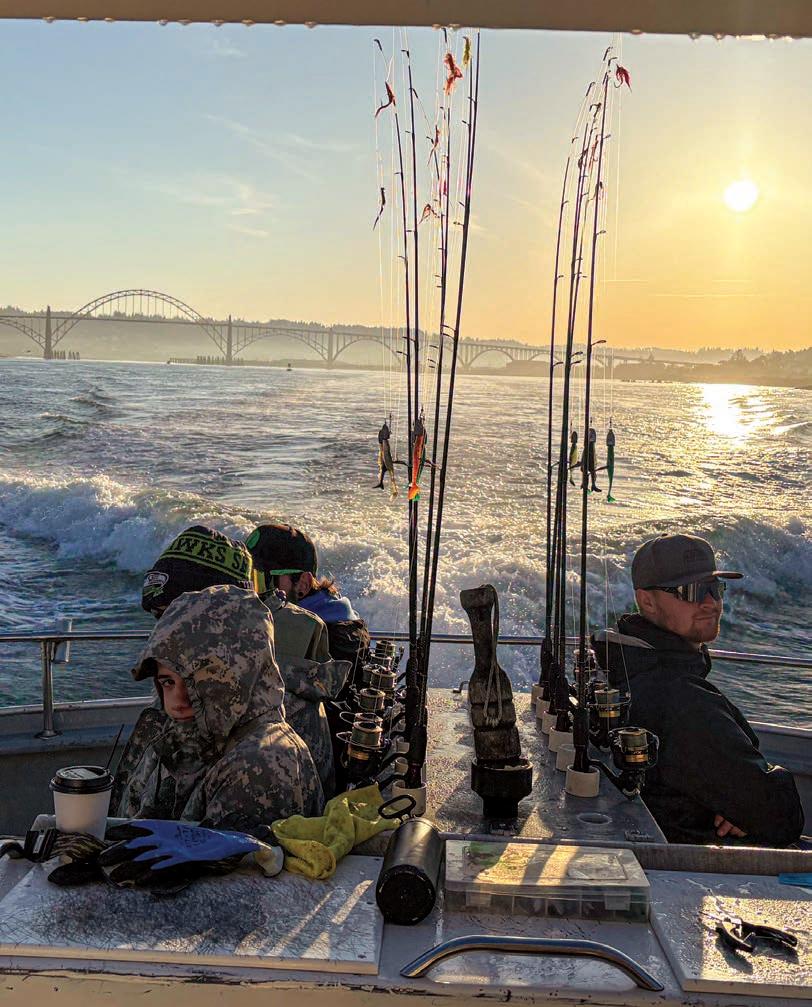
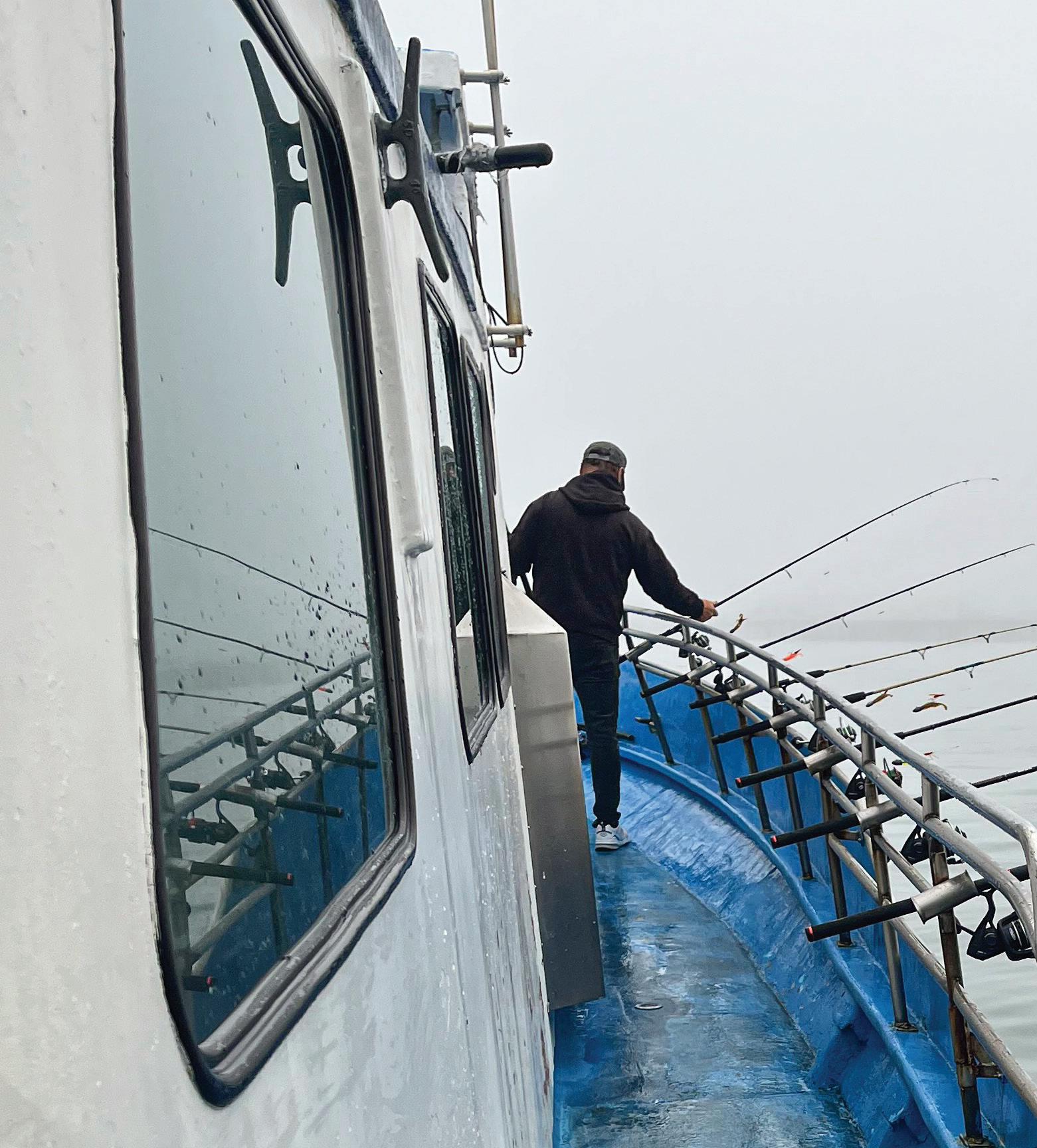
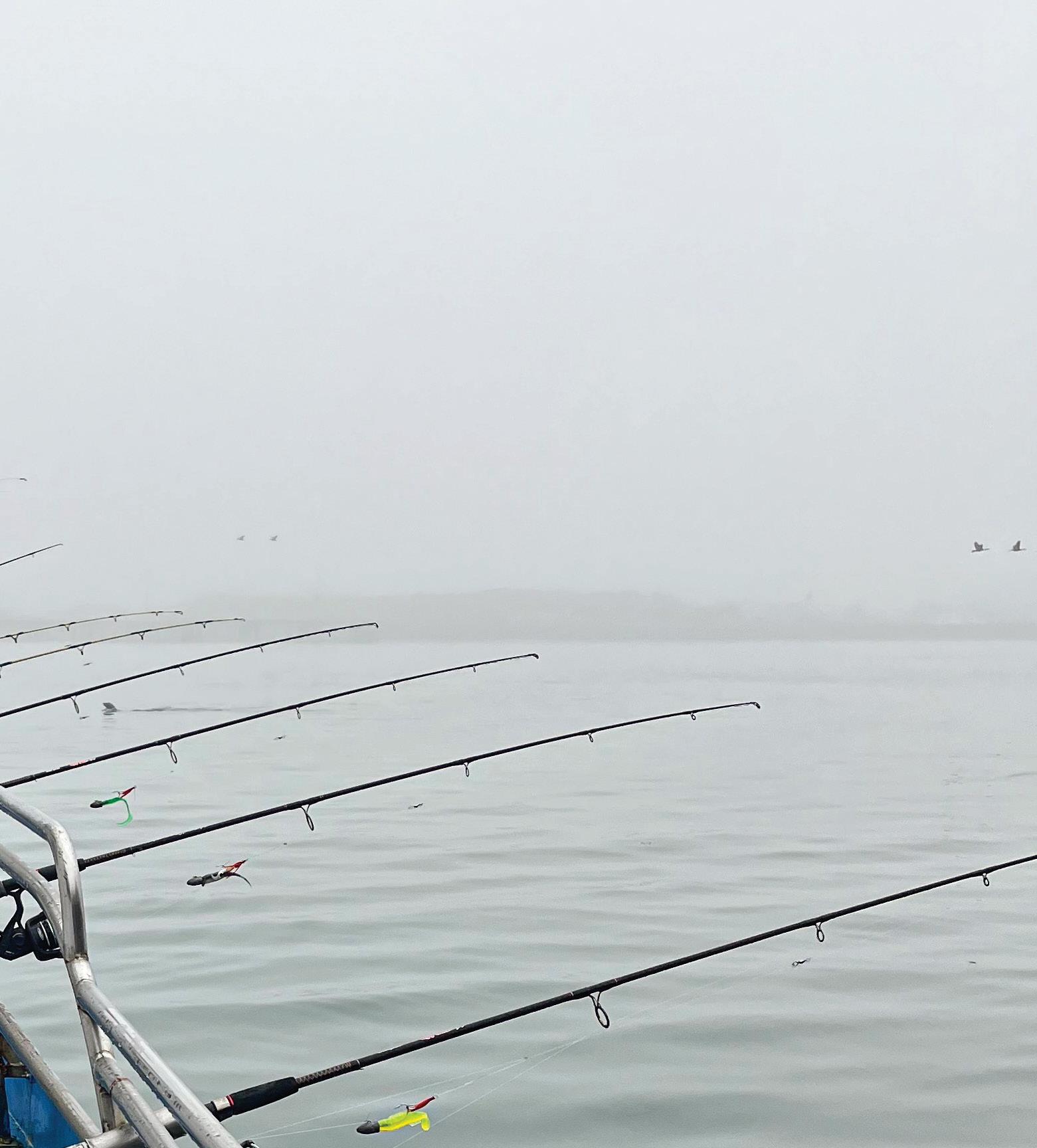
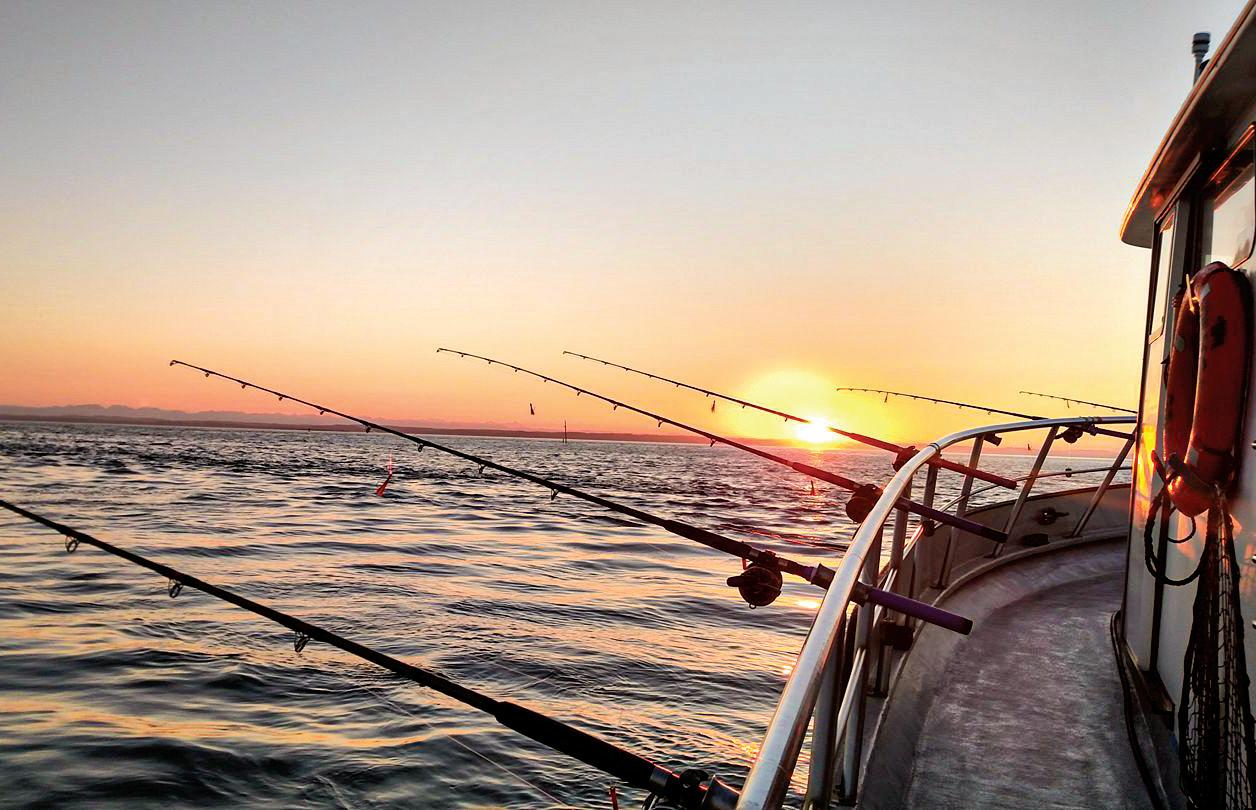
Rods readied for bottomfish anglers line the rail of a Northwest charter boat. Services that operate big boats might deploy gear from only the port or starboard to limit clients’ line tangles. (DENNIS DAUBLE)
FISHING
when you venture onto the deep blue sea. Like when salt air clears your sinuses, gray whales breach, seabirds circle, pulsating jellyfish parade past, sunlight glints off the surface of a flat sea, and your rod bows to the tension of a big fish. But during those other moments – the ones I try to avoid – an addled mind and confused soma join forces to warn that something is not quite right.
I’ve tried ear patches, scopolamine, Dramamine, various combinations of antihistamines, aspirin and Ibuprofen, – you name it. There’s no perfect drug; as one well-seasoned angler even bemoaned on a previous trip, “Marijuana works to reduce my nausea but does not enhance the experience.”
It may be cliché, but no pain, no gain. After dreaming of fish and chips, I struggle out of bed before the alarm on my cell phone goes off. A large plastic bag I hope to fill with rockfish filets is packed with a two-day-old donut, a fruit punch Powerade and enough salty snacks to divert attention from anticipated challenges to my
equilibrium. I’m dressed in insulated waterproof bibs over felt-lined jeans, wool shirt, hooded sweatshirt, rainproof jacket, 8-inch-high LL Bean Duck boots and a fleece beanie.
All 16 clients accounted for by 7:30 a.m., Captain Liz gathers us around for a brief safety talk and informs us that seas of “9 feet at 9 seconds is predicted for the afternoon,” an ocean condition that translates in sailor talk to big waves. The lineup of anglers includes preteens, thirtysomethings, retirees, young couples dressed in Patagonia and two locals dudded up in bright orange Grunden foulweather attire. I can’t help but notice the latter two guys brought their own rods and reels.
I secure a position at the aft end of the boat after recalling a trip out of Depoe Bay where I stood at the bow to get away from other anglers. Big mistake. An hour of rolling and tipping in rhythm to cresting waves led to dizziness and a burning in the gut – neither symptom of which is easily remedied by deep breathing continued on page 52
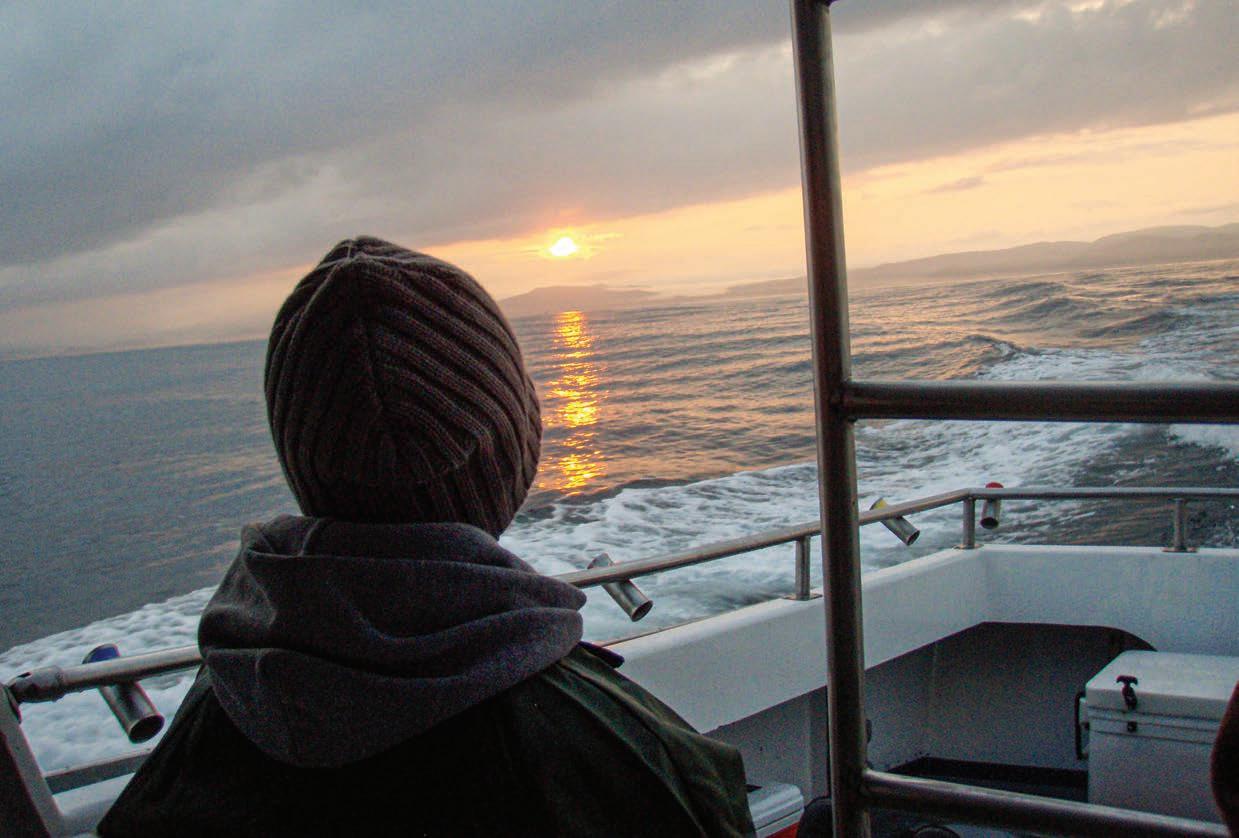
A lone angler looks to the horizon at sunrise while heading out on her offshore fishing adventure. Half- and full-day trips are available. (DENNIS DAUBLE)
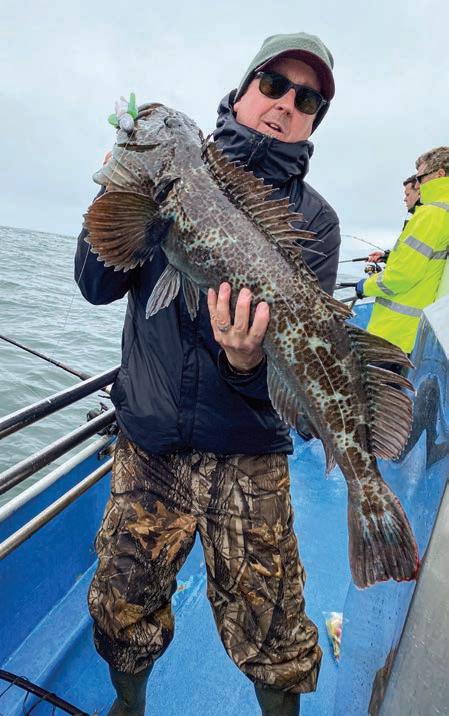
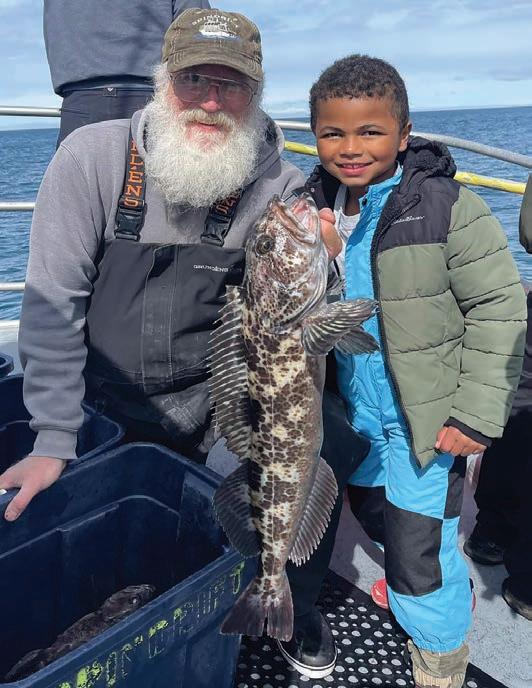
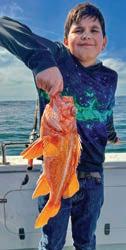
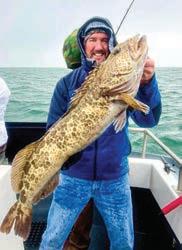
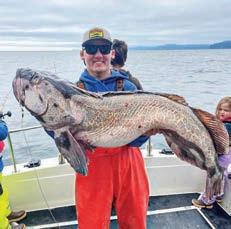
Lingcod are voracious predators and one of the tastiest fish in the Pacific Ocean. Dan Burrell proudly shows off one he caught aboard a charter. (DENNIS DAUBLE)
WASHINGTON charters & Guides
WASHINGTON charters & Guides
What makes Westport Charter Boats so special?
We offer world class fishing with expert crews, right on the edge of the Pacific ‒ where you’ll reel in big catches, meet new friends and make unforgettable memories.
We’re a new office in Westport, with familiar boats, dedicated skippers and great deckhands. A variety of boats to choose from to suit any size party, or individual anglers on mixed trips. We strive to offer fishing for any budget with a little planning.
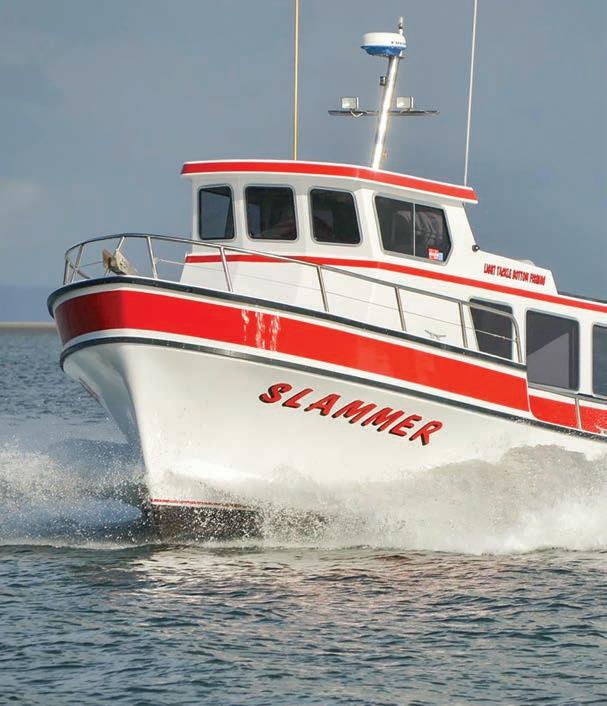
Mutineer Charters opened in 2024 with six boats from 38 to 55 feet and capacities of 6 to 18 anglers.
Our skippers have over 180 years of combined experience and are known to be some of the best in the business. Whether you prefer a large comfortable boat that can accommodate large groups or private parties, or a smaller “express trip” boat that still has all the safety equipment and a stand up head like our big boats, we’ve got you covered.”
Join the Mutineers and reel in a story of your own! The allure of ocean fishing draws anglers of all ages. In a time when making friendly connections can feel like work, sharing a boat full of excited, hopeful strangers often sparks instant camaraderie. Most of us in the industry will agree—there’s nothing like witnessing the joy of someone’s first fish, the awe of whales feeding nearby, or the laughter that erupts when someone reels up a
Meet the Mutineers
Mike – Fury
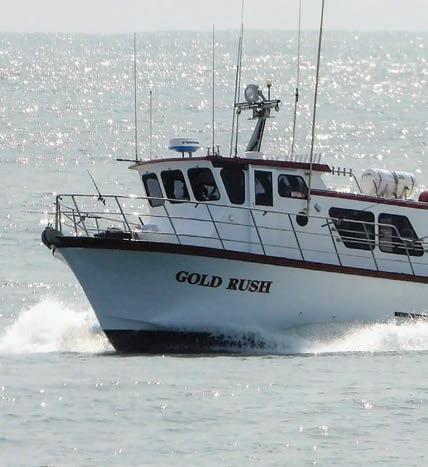
Ben – Gold Rush
Dave – Hot Pursuit
Karl – Reel Electric
Rhett – Slammer
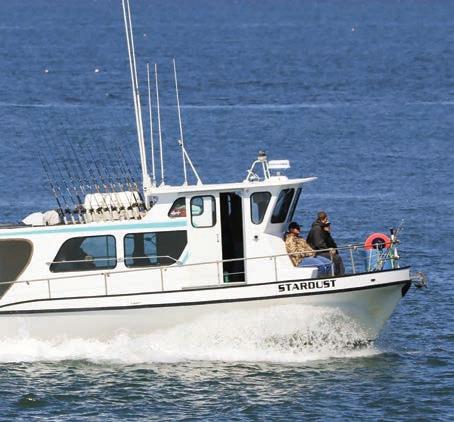
Johnny – Stardust
waters
FISHING
continued from page 48
and looking at the horizon.
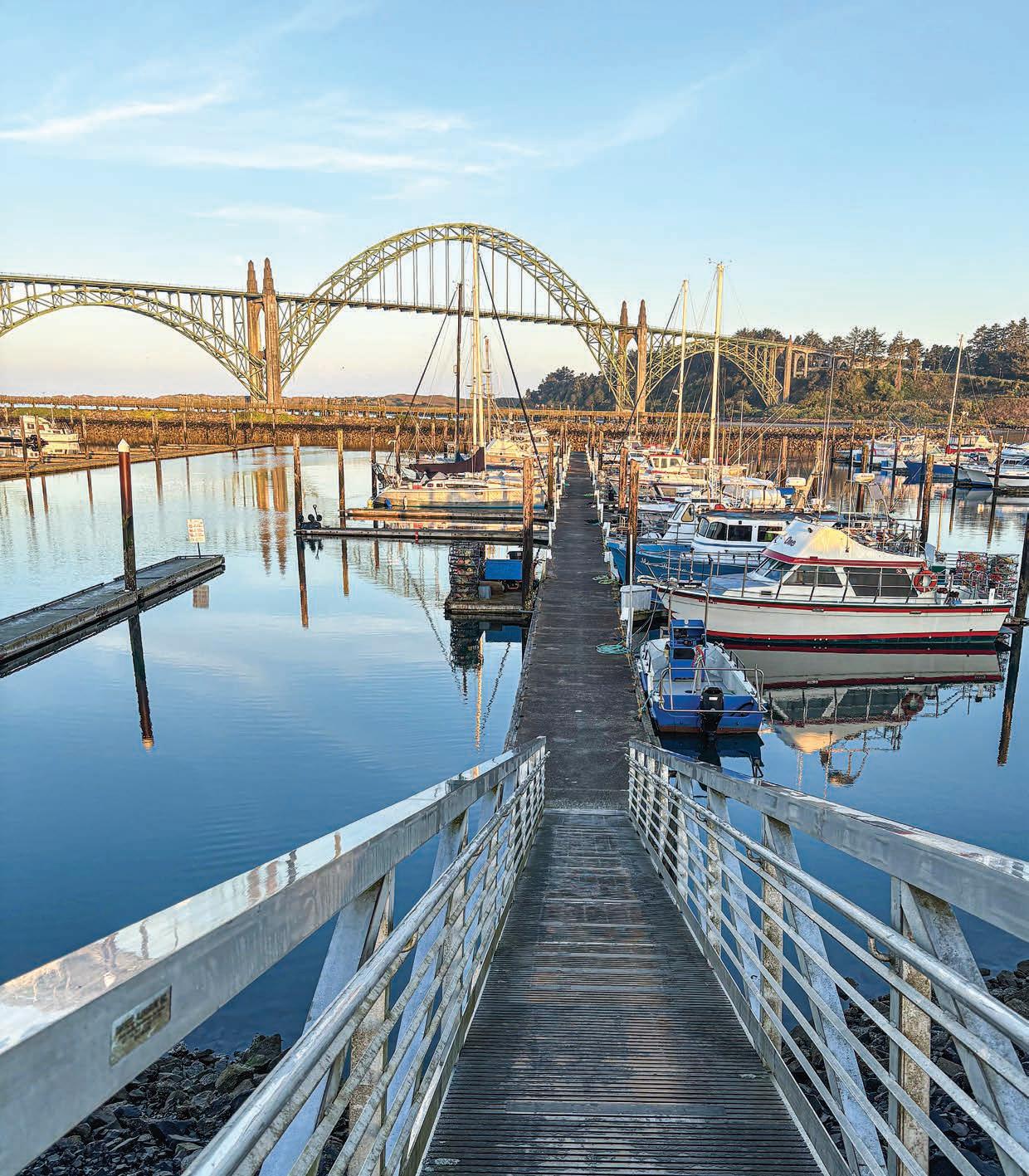
The 44-foot-long Sea Pirate cruises under the tall arch of the Highway 101 Bridge and crosses the Yaquina Bar without issue. It is two hours before a minus tide. The sky shows mixed clouds and a chilling spring breeze blows at 15 knots from the north. Anglers who showed up in tennis shoes and windbreakers huddle up in the cabin. No more than a mile offshore, Captain Liz throttles down, stares at targets on her sonar, and barks over the loudspeaker, “We’re fishing!”
Spooling line from the spinning rod and reel in the nearest rod holder, I let a 2-ounce leadhead jig tipped with a 5-inch soft plastic bait sink to
the bottom, and reel up two cranks. I also check the drag after once losing a double to a bad knot and too-tight drag.
Shouts of “fish on!” are soon followed by the deckhand handlining placid black seabass onto the deck. Any feeling of pride vanishes when my first two fish are deemed “too small” and unceremoniously tossed back. My advanced degree in fisheries science provides no insight to why a first-timer next to me reels in twice as many rockfish, except for his 3-ounce jighead. When I ask the deckhand for more weight to keep my lure on the bottom, he says, “We don’t give those out because they lead to losing gear.”
Meanwhile, one local angler lands a huge copper rockfish his buddy deems “the best eating.” He quickly follows the catch with a pair of 6-pound lingcod. I take note of his gear: a two-hook mooching rig
WHAT TO BRING
Something to drink (water is best; alcohol is not always allowed), salty snacks, comfortable boots or shoes (no flip-flops), waterproof jacket, a hat that won’t blow off in the wind and a small cooler for your catch. –DD
Author Dennis Dauble finds a comfortable place to rest his woozy head. He’s tried all kinds of remedies to ward off seasickness, but it comes down to “no pain, no gain” for him. (DENNIS DAUBLE)
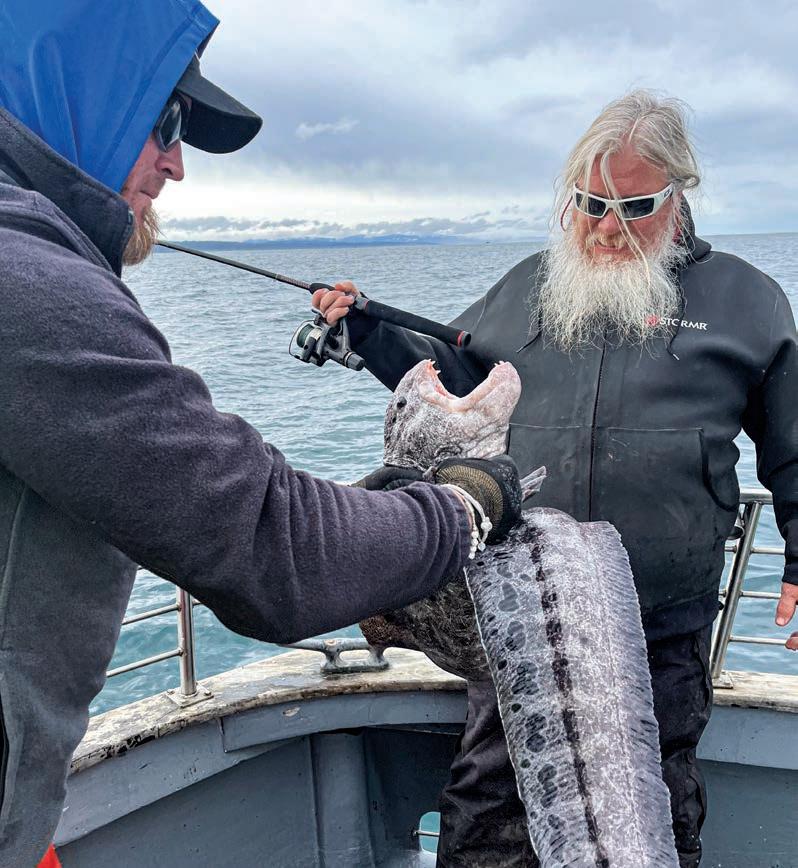
There’s all sorts of life out in the Pacific, including wolf eels. This one was released. (DENNIS DAUBLE)
FISHING
baited with a herring fished behind a 5-ounce lead ball dropper.
Once the savvy angler catches his limit of rockfish and lingcod, he generously hands off his rod to anyone who wants to give it a try.
I check the time. Only three hours of fishing, but I have had enough. My
inner ear hints of agitation, a limit of rockfish has been achieved and I’m ready to put my feet down on good ol’ terra firma. One thing not blanked out from previous bottomfishing trips, however, was to get to the back of the boat when the captain sets a course for the dock. This strategy puts
me number two over the rail and gets me in line at the fish cleaning station before those who dawdle.
“I’m glad you caught some fish,” Nancy remarks when she sees my bag of filets. Rather than regale her with tales of unrealized expectation, I head
continued on page 60
KEY QUESTIONS TO ASK BEFORE BOOKING A TRIP
Check-in time? Almost always early morning, usually 6 to 7 a.m. unless departure is delayed because of weather or because another boat took all the crab bait and you have to wait until more bait is thawed and loaded before you
leave the dock, as once happened to me.
Do they sell daily or seasonal fishing licenses? Some do. If not, don’t show up without one. They’re available online.
Recent catch rates? Daily harvest is often posted on a charter service website.
If not, give them a call and ask about their recent catch log. My friend Ernie always checks before he drives 300 miles to fish for lingcod with his favorite charter service.
How large a boat and how many anglers? Many ports rely on guide services that operate 26- to 32-foot vessels with a maximum of six anglers. You can buy the boat if you don’t wish to fish with strangers. A selected number of ports have “50-footers” that fish up to 18 anglers. Larger boats are a better option if you are prone to sickness or for first-timers. How much does it cost? Offered yearround (weather permitting) in Oregon and mid-March to mid-October in Washington, nearshore trips for rockfish and lingcod of five-hour duration range from $100 to $300 per person for trips in larger “party” boats and up to $500 per person for smaller guide service boats. Deepwater, long-line and live bait trips of eight-hour duration are offered seasonally for bottomfish at $250 to $500 per person. Rockfish and salmon combo trips booked when salmon are running can range up to $300 per person. A guide service out of La Push offers a four-hour trip for flounder at $298 per person and an evening trip for squid at $390. Many services offer a Dungeness crab option for an additional $25 to $100 per person. (The former price is a bargain.) With the current cost of fuel, some services add a premium for longer trips.
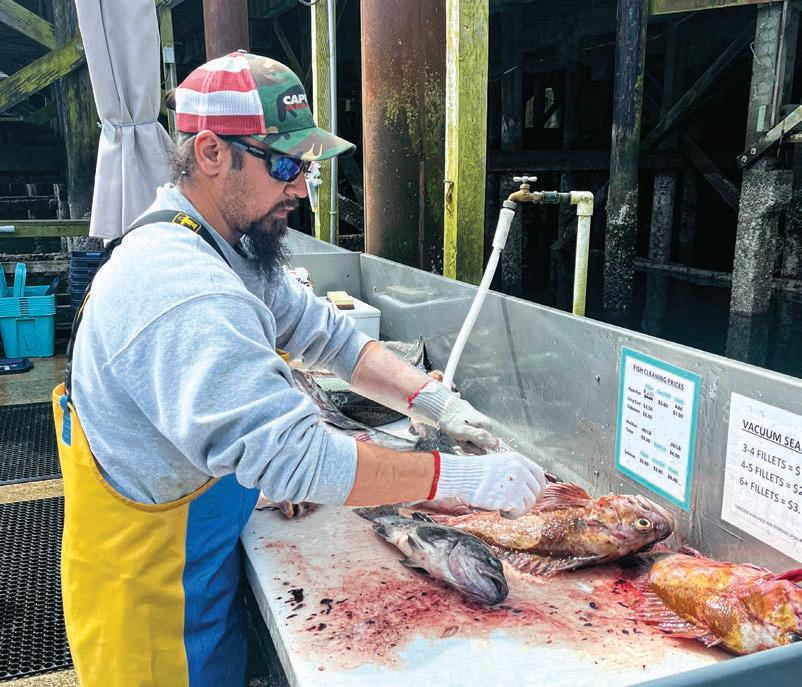
Does the boat have a head or toilet? This could be your most important question. Will they process the catch and if so, for how much? Most larger charters offer standby fileting and vacuum-packing of your catch. Expect to pay $2 to $3 per fish if you want to walk out with a bag of filets. It’s about the same rate for vacuumpacking, which I highly recommend unless you plan to eat your entire catch before returning home. Guide services will often filet your catch for a tip. –DD
Crabbing is an option on many trips. Considering the price of fresh Dungeness crab at $10 to $15 a pound, and it makes sense economically to tack it onto the bill. (DENNIS DAUBLE)
OREGON charters & Guides
FISHING
continued from page 54
to the couch for a welcome nap and mumble, “Next time – if there is one – I will bring my own gear.”
SEPTEMBER 15, 2025
I arrive at the dock with my baitcasting rod and reel, tackle bag, pickled squid for tipping jigs and a dozen bluelabel herring. I’ll use a boat rod for rockfish but hope to target lingcod with personal gear. The boat captain delivers a short seminar on fishing
Many charter boats have a station where your catch can be processed for the trip back home. Prices are generally reasonable and worth the money. (DENNIS
technique and line management while crab pots are loaded. A young couple from Idaho brag about catching their limit of halibut, a contractor from Oklahoma asks where he can catch a sturgeon, and three guys dressed in lookalike foulweather gear share, “Today is our annual trip.”
Harbor lights glow through the early-morning fog. I’m comfortable in a hooded sweatshirt and ball cap. The report is for calm seas, “4 feet at 17 seconds,” according to the
WHERE CAN I JUMP ON A BOAT?
Charter and guide services for nearshore rockfish and lingcod operate out of the larger ocean ports in Oregon and Washington, and while Ilwaco and Astoria primarily focus on salmon and halibut, Parsons Fishing Adventures, Astoria Fishing Charters and Pacific Salmon Charters run bottomfish trips off the Columbia.
To the north, over a dozen charters operate out of Westport, including All Rivers and Saltwater Charters, Deep Sea Sportfishing and Mutineer Charters, among others.
On the Oregon Coast there’s Garibaldi Charters, Pacific Offshore Charters, Reel Em Up Fishing Adventures and Izzi’s Big Mouth Guide Service in Garibaldi; Tradewinds Charters and Dockside Charters in Depoe Bay; Five Star Charters in Gold Beach; Yaquina Bay Charters and Newport Tradewinds in Newport; Betty Kay Fishing Charters in Coos Bay/Charleston; and Northwest Oregon Outfitters, Mark LaDuke Guide Service, All American Guide Service and Sweet Spot Guide Service in Winchester Bay, among many others. See these pages and online for more. –DD
National Weather Service’s marine forecast. Seals bark, gulls squawk and the boat’s diesel engine builds to a throaty roar while the 57-foot Misty cruises to open ocean. Following a half-hour run to deep water, the boat slows, circles and reverses to hold position atop a patch of rockfish. The captain yells from the wheelhouse, “Drop down 30 seconds.”
I count to 30 in my head and thump my fingers on the gunnel to help track time, but end up spooling out extra line from my reel when I lose count. Raising my rod tip when the jig hits the bottom, I reel up two cranks. Peering down the rail, no action. From the loudspeaker on the next pass, “Drop it down 40 seconds. They’re hugging the bottom.”
All 16 of us rubes dutifully repeat the drill, drop down then reel up when the captain motors to another waypoint on his GPS log. We’ve been at it for two hours and designated fish baskets are only half full. Dry mouth is followed by yawning, swallowing, burping. Watching the horizon helps remedy the situation, as does laying down on an inside bench seat with my eyes closed. No such diversion is required if you are catching fish.
Finally, a welcome flurry of bites. Black rockfish are hauled up from depth with air bladders distended and everyone’s limit is filled with four apiece. I have no explanation how one woman reeled in eight, me five and the guy fishing next to me (who did exactly the same thing) ended up skunked, but it doesn’t matter because limits are almost always shared on bottomfishing trips.
Finally, the time I’ve been waiting for. We move to a lingcod reef and I drop my bait herring to the bottom. “Fish on!” I yell, but then reel in a huge rockfish. Before I can drop down a second offering, the captain yells, “That’s all the fishing for today. We have to pick up crab pots.”
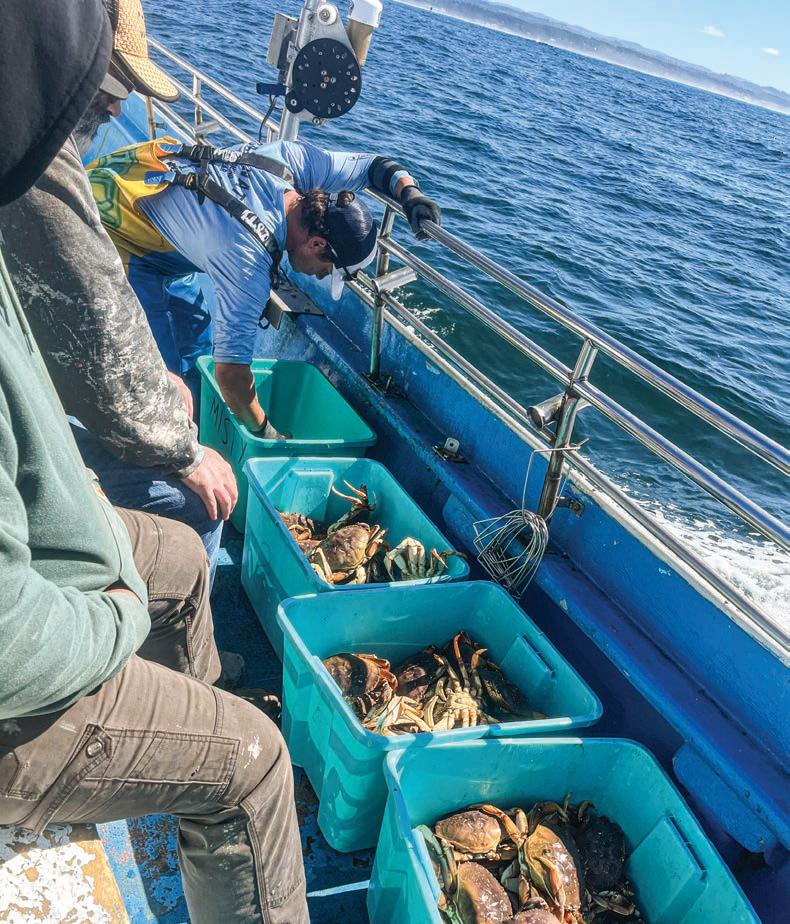
Next time I’ll pay extra for a crab pot, I tell myself after watching 11 anglers divide up a catch of 83 clacking (and sweet-tasting) Dungeness crabs. NS
DAUBLE)
OREGON charters & Guides
We fish for salmon, trout and steelhead throughout southern Oregon during all seasons. We can accommodate conventional anglers as well as fly fisherman.
Multiple boats available if needed.
541-891-5461
Email: colemca21@gmail.com
Visit: www.chrometalesguideservice.com
Follow us on: Facebook and Instagram
OREGON charters & Guides
Primer For Peak Bottomfish Season
I’ll admit it. I’m a creature of routine. Up in the morning. Coffee by the woodstove with one or more cats. Feed the dog. Let the girl chickens out. Same cup. Same coffee. Same program. It’s nice. Sure, maybe it’s a little too … well … routine, but I like it.
Wildlife saying that their positions within their respective agencies had changed.
“I’m still involved,” Mattes wrote, “but not directly.” Likewise Hall, who explained she also “was in a new position.” These fishery management professionals, whom you’ve met via my pen previously, were my go-to coastal recreational bottomfish sources of information. Not just any biologists, but my biologists!
OUTDOORS MD
By MD Johnson
So that’s why I started to get just a little twitterpated – note: By Iowa definition, which is where we first heard the term, “twitterpated” is an elevated level of anxiety – when I got emails from both Lynn Mattes of the Oregon Department of Fish and Wildlife and Heather Hall of the Washington Department of Fish and
Deep breaths, MD. Relax. It’s going to be OK.
AND IT WAS. And it is. While it’s indeed true that both Mattes and Hall have changed their work-related hats, they both remain with their respective fish and game outfits. In their place are two highly skilled individuals whom you’ll meet shortly and to whom is entrusted in part the management and oversight of the West Coast’s coastal bottomfish aquatic community; that is, halibut and lingcod, greenling and a long list of rockfish species.
This year, as I’ve done with Mattes and Hall, I asked these biologists to peer deep into that omnipotent orb atop their desk – the crystal ball that each biologist is given, along with their name badge and old-school pink pearl eraser, on their day one with the agency – and provide us, we lovers o’ lingcod and sultans o’ seabass,
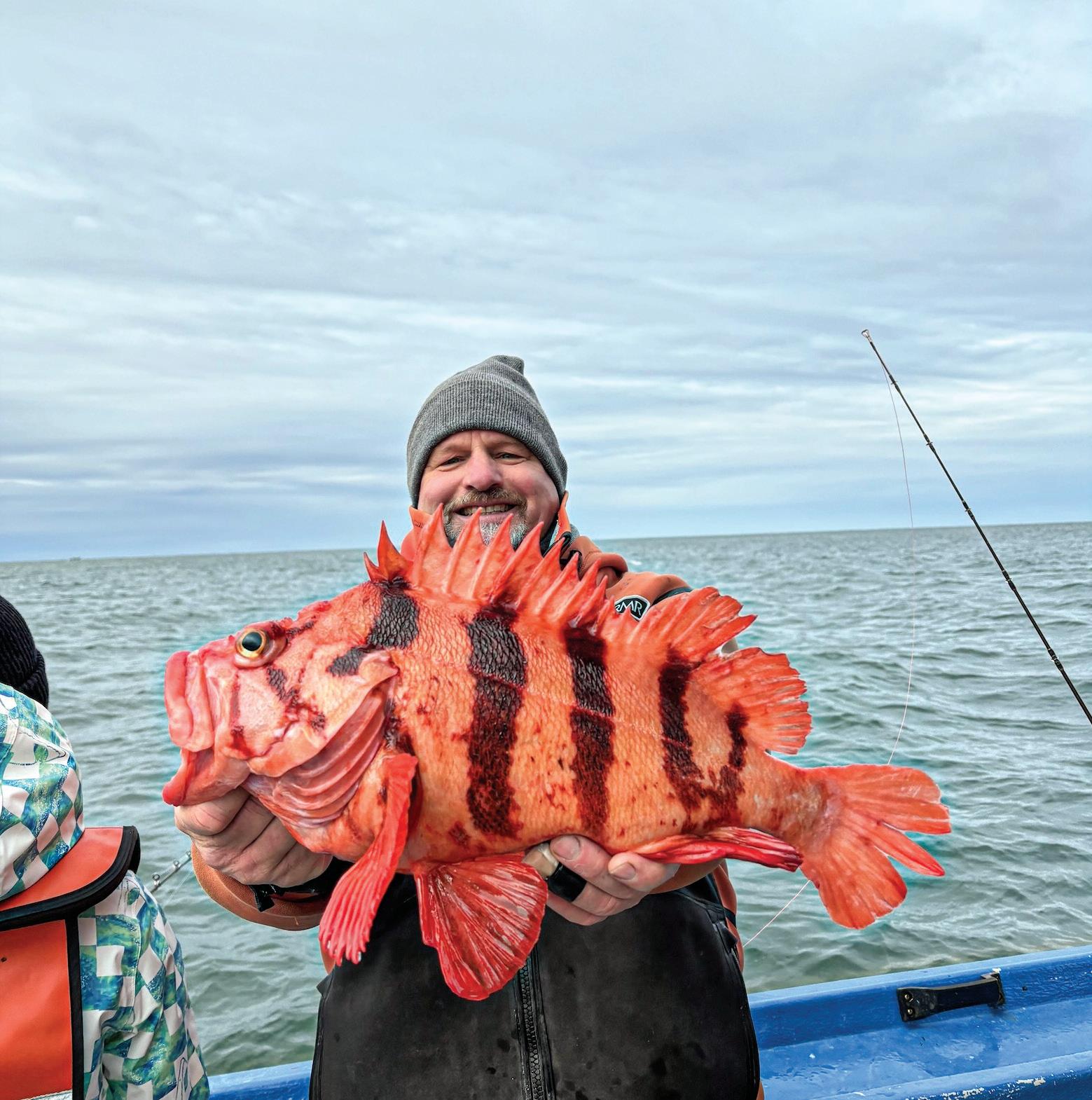
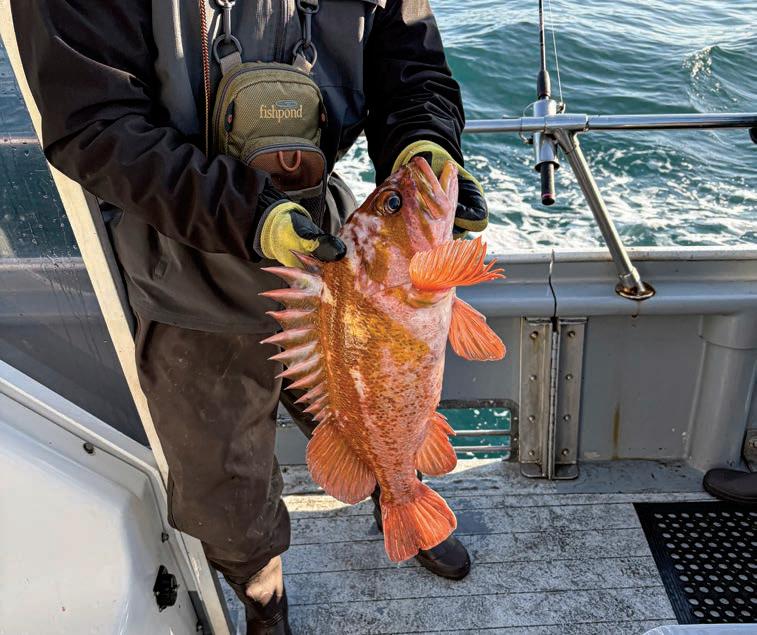
True, bottomfish seasons have been humming for a couple months now off the Northwest Coast, but they really roar to life come June and summer. Captain Mark Lytle shows off a tiger rockfish caught off his Pacific City-based dory boat. (PACIFIC CITY FISHING)
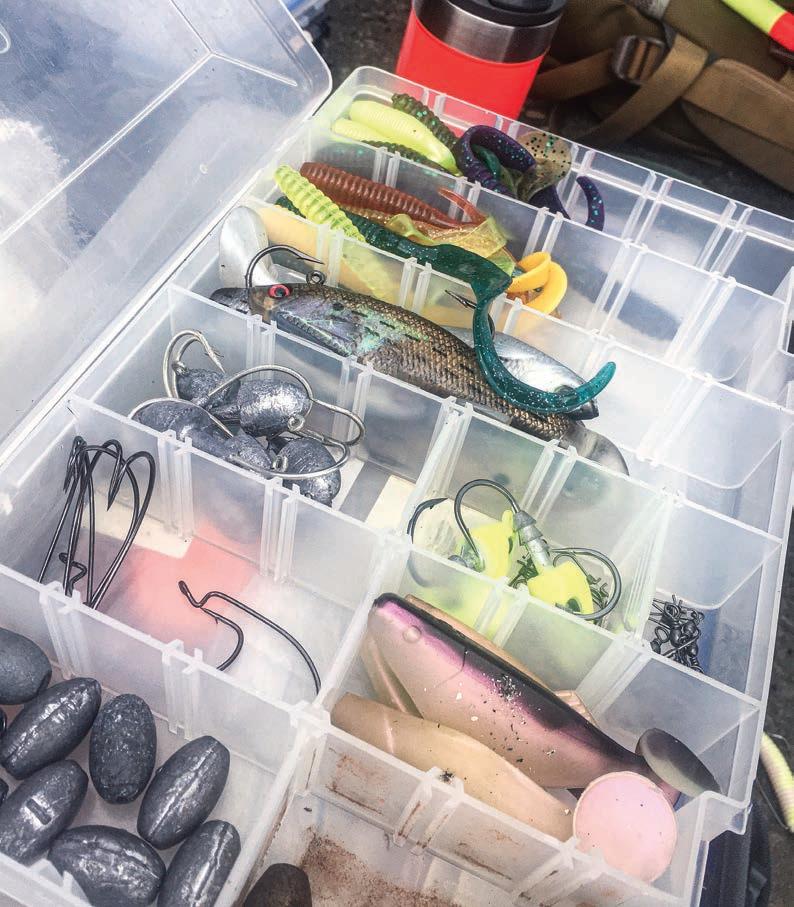
Big plastic grubs and swimbaits matched with weighty leadheads are favorites for rockfish and lingcod. (JULIE JOHNSON)
some insight as to any new regulatory changes for the bulk of the 2026 season, along with what we might expect to see, not to mention catch, once we get out onto the water, if, that is, we haven’t been already. Just sayin’.
FROM THE WASHINGTON SIDE: CLAUDIA FRIESS
First rattle out of the box when the phone line clicked open, I detected a bit of an accent. European, perhaps. Not historically shy, I asked. “You do,” said Claudia Friess. “I’m originally from Germany.”
New to the West Coast, Friess is also a newcomer to WDFW, having served as the agency’s fisheries management and conservation specialist since November 2025. Prior to her stint with WDFW, Friess
worked “almost exclusively in the Gulf of Mexico working with snappers and groupers,” as well as spent several years with the Florida Fish and Wildlife Conservation Commission in a research role.
Late spring and early summer are incredibly busy times for fisheries biologists, so Northwest Sportsman was fortunate to slow Friess down for precisely eight minutes and 54 seconds, and ask both about the 2025 bottomfish season, as well as what anglers might expect as Washington’s 2026 season begins to ramp up for the summer.
Northwest Sportsman In terms of bottomfish, Claudia, how did the 2025 season wrap up? Big changes? Routine? Claudia Friess My understanding is that
(the season) went well. We always track whether or not the recreational bottomfish fishery stays below harvest guidelines, and for all species that we track, we did stay below those guidelines. The only exception to that is canary rockfish, which have been an issue. And we did go over our harvest guidelines by roughly 5 metric tons (note: For us imperial system folks, that’s 11,023 pounds).
NWS That being said then, will recreational bottomfish anglers see any changes, whether major or minor in nature, for the 2026 season?
CF So that is the big question [laughs]. We don’t know the answer to that yet. Even though Washington is exceeding the harvest guidelines on canary rockfish, the overall annual catch limit (note: The ACL is defined as a level of catch intended to ensure overfishing does not occur) is not anywhere near being exceeded, so there are over 150 metric tons of canary rockfish unharvested. We feel there’s no conservation concern if Washington goes over by a little bit; it’s just a matter of coordinating with our neighbors, seeing what they’re doing and making sure everyone feels that the situation is fair. So we’re coordinating all that now, and we’re not sure at this point if we’re going to be taking any in-season action this year. But Washington is (in June) going to make the case for staying at the current five-fish daily bag limit for canary rockfish.
Sidenote: Friess said that WDFW is considering some “limited retention of yelloweye (rockfish) beginning in 2027.” That population, she continued, has been rebuilt and the Pacific Fishery Management Council is discussing allowing limited retention. “We just want to make sure,” she said, “we don’t open it up too fast. We don’t want to encourage targeting yelloweye, but we do want to allow anglers to convert some potential discards into retention.”
NWS Has the agency noticed an uptick in terms of participation over the past three or four years in the recreational bottomfish fishery off the Washington coast? Given all of the salmon “unknowns,” steelhead uncertainty and no sturgeon retention in several years, are anglers focusing more on
bottomfish now?
CF That’s an excellent question, and you’ve hit on several good points there. Salmon are a priority here, but if there aren’t as many salmon opportunities, people are still going to go fishing. The overall (bottomfish) participation has been surprisingly consistent for the past decade.
Now, where that effort occurs has shifted a little bit. We’re seeing more effort in the private sector than in the charter sector, and that’s been a consistent trend. The “angler trips” for charter boats has gone down, while the total number of trips for private vessels has gone up.
FROM THE OREGON SIDE: CHRISTIAN HEATH
Across the Columbia, Christian Heath has been the project lead for both sport bottomfish and halibut for ODFW for the past three years, plus an additional seven in the project as an assistant lead and another five with the agency in what he refers to as “various odds and ends,
NWS To start, Christian, any anomalies, per se, you saw during 2025 in terms of bottomfish?
Christian Heath We knew harvest limits/ catch limits were going to be lower in 2025, so we had to reduce bag limits, which was, I guess, the big theme for the year.
We began the year with a four-fish bag limit, which is our regular marine rockfish limit – your greenling, cabezon (and so forth). That was January 1, 2025, through the end of June. We had a preseason planned increase to a five-fish daily bag limit beginning July 1.
In July, we had great fishing. The weather was great. The ocean was flat. And I’ve never seen effort that high. It was a beautiful summer. Catch rates were high, so we had to reduce the limit back down to four in mid-August, and then reduce them even further to three beginning September 18.
NWS Any major regulatory changes for bottomfish anglers off the Oregon coast for the 2026 season?
CH We went to a two-fish subbag limit for canary rockfish last year, and we’ll have that again this year.
The big change for this year is we’re now allowing retention of three lingcod; that’s new for 2026, and we’re planning to maintain that for 2027. The catch rates for lingcod have just been lower over the years. They’re found in the same areas as yelloweye rockfish, and with yelloweye rockfish being very near that rebuilt (population) state after being overfished for more than 20 years – we’re on the cusp; perhaps not allowing retention, but certainly eliminating some of the restrictions formerly put into place to avoid yelloweye. And lingcod has been one of those species that have benefited greatly from the restrictions put on yelloweye.
Speaking of yelloweye, it’s possible – but I don’t want to put this out there too much – but it’s possible we’ll look at
including albacore tuna, port sampling, and (a smidge) of salmon work, as well.”
There are plenty of ways to tap into the Pacific’s bounty – off the jetties and shoreline rockfaces; spearfishing; and by kayak, jet ski, express boat, charter service and, at very select locations, dory. (PACIFIC CITY FISHING)
COLUMN
what minimal retention might be, as that species is indeed a success story.
A GUIDE’S PERSPECTIVE: MARK LYTLE
Meet Mark Lytle, 59, who, along with wife and business partner Linda, owns and operates the one-skiff fishing venture, Pacific City Fishing. Take a wild guess where in Oregon they’re based. Lytle’s mantra –“Every single day on the ocean is a gift” – is appropriate, many would say, for a charter boat captain. However, Lytle, who began his guiding career with waterfowl before changing horses and plying the waters at the mouth of the Columbia, the Willamette River and Tillamook Bay – and that’s the short list – for silver and king salmon and white sturgeon, is no ordinary guide or captain. He’s a doryman.
“Who is Mark Lytle? I’m just someone who’s passionate about fishing and dory fishing in general,” he said.
“Dory fishing is unique. You can get married, and that’s certainly exciting. You
have the birth of your children. And then the third most exciting thing in your life,” he added matter-of-factly, “is dory fishing.”
NWS You’ve been fishing off the beach there in Pacific City for several weeks already, Mark. How’s the fishing been so far this season?
Mark Lytle It’s been lights out. So far, so good.
Sidenote: How good is good? For visual proof of Lytle’s prowess as a skipper and bottomfish hunter, check out the Reports section of his website, pacificcityfishing.com.
There’s plenty of black rockfish, blue rockfish and deacon rockfish. That’s the easy part of the day. Getting everybody trained up and learning how to use the rod and reel – we’ll go catching and then we’ll go fishing.
NWS Three lingcod off the Oregon coast this season. How’s that working for folks?
ML You know, we’re (advocating) two lingcod for our clients this year ’cause
that’s plenty of lingcod for everybody, along with their rockfish and their Dungeness crabs.
OF NOTE AND new as of January 1, 2026, Oregon anglers fishing in the ocean, including from boats, beaches and jetties, or while spearfishing, are required to purchase and possess what’s known as an Ocean Endorsement. The annual endorsement is $9, or $4/daily, and is required by, per regulation, anyone 1) fishing in the Pacific Ocean beyond the visible end of the jetties, 2) fishing outside the mouth of the Columbia or seaward of Buoy 10, and 3) retaining any marine finfish, e.g., rockfish, lingcod, halibut or tuna.
Note that it is not required to fish for salmon or shellfish such as crabs, or in bays.
Until next month, toss a line in the water. Watch a bobber. Introduce a young person to the magic that is fishing. The grass can wait; fishing should be a priority. Get outside. Doctor’s orders. NS
Irolled into Yaquina Bay Charters a little before the 6:30 a.m. call time, backpack in hand and motion sickness medicine already in my belly. The coffee at the counter was hot, and I made my way down to the dock and boarded Captain Jack’s boat, the Gracie K, on slip G. It was bright out, and I had high hopes.
CHEF IN THE WILD
By Randy King
The place smelled like diesel, old bait and optimism as I introduced myself to the deckhand, Colton Ramos. I hate to say it, but an experience like this is not made or broken by the captain. Sure, the captain keeps you safe, puts you on fish and holds the licensing. But the trip itself belongs in the tough and calloused hands of the deckhand. That is the person shaping the vibe, netting fish, baiting hooks, rerigging lines and getting your setup unstuck from the bottom. They are doing work. And it is their story that I almost always want to hear.
Colton, the deckhand for the Gracie K, is from Central Oregon but had spent the last several years in Florida working as a marine biologist and educator, snorkeling, scuba diving and teaching kids in the Florida Keys. (I mean, come on!) He came back to Oregon to work toward his captain’s license.
“After about 200 more days on the boat, I will have enough hours to qualify,” he told me while tying on a jig as we headed to the fishing grounds just outside Yaquina Bay.
He explained that the Coast Guard requires a certain amount of time on the ocean before someone can be licensed as a captain. Being from landlocked Idaho, I had no idea, but I was glad to hear it.
Before long, Colton scampered off to help the rest of the boat, and I was left next to Cade, a childhood friend of his who was “in the neighborhood this weekend and wanted to just hang with my friend.”
As we dropped lines, Cade proceeded to absolutely smoke me. Honestly, it was about five to one all day. The kid was on fire. He landed the first fish, the most fish, and the biggest fish on our side of the boat. At one point he was apologizing to Colton for catching so many while the paying customers were still mostly dangling lines
An Idahoan Heads To Sea
An early May family trip to Northern California and the Oregon Coast for the Boise area’s King bunch saw Chef Randy head down the gangway for a quick and successful ocean adventure out of Newport. (RANDY KING)
MAKE FISH PICCATA POP JUST RIGHT
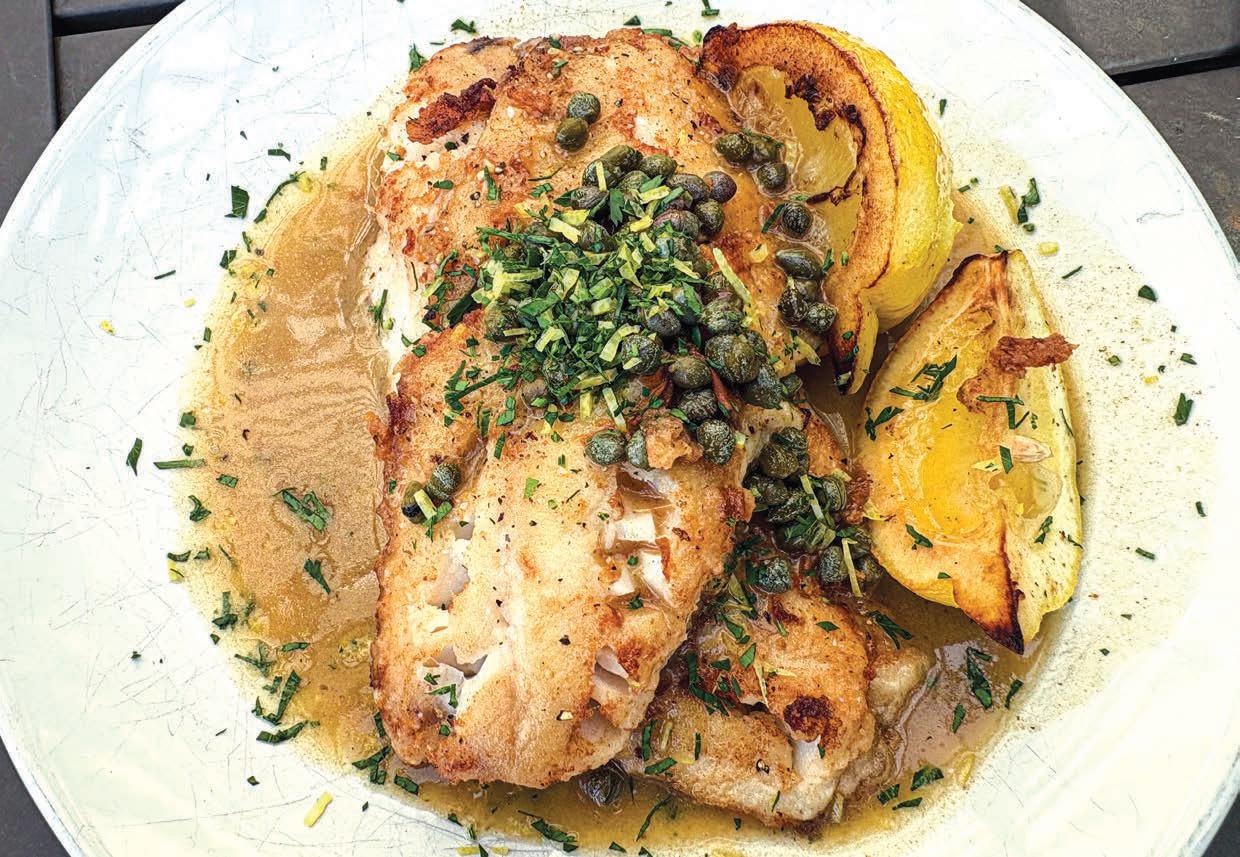
We ate a rockfish piccata dish at a seafood place on the Oregon Coast during our May trip. It was OK, but it was too bright for my son and me. This was the result of cheap white wine and too much lemon. This is an easy fix, especially for fish dishes. Below is how I made the piccata for my family when we got home.
ROCKFISH PICCATA
11/2 to 2 pounds rockfish filets (I used one larger fish)
Kosher salt
Fresh black pepper
1/2 cup flour, for a light dusting
2 tablespoons olive oil
1/2 cup butter, divided
1 lemon, zested and sliced into thick wedges
1 shallot, finely minced (optional)
3/4 cup chicken broth
2 tablespoons capers, drained and rinsed
1 teaspoon lemon zest (see above)
2 tablespoons chopped flat-leaf parsley
Pat the rockfish dry and season both sides with salt and pepper. Dust the filets lightly with flour, then shake off the excess. Heat a large skillet over medium high heat. Add the olive oil and 1 tablespoon of butter. When the pan is hot, lay in the lemon slices and let them cook until they take on some real color. You want them caramelized, not just warmed through. This sweetens the lemon and keeps the finished dish from getting too sharp. Move the lemon slices to the side and add the fish. Sear until lightly golden and just cooked through, about two to three
minutes per side, depending on thickness. Work in batches if need be. Remove the fish and lemons to a warm plate.
Lower the heat to medium. Add the shallot and cook briefly until softened. Pour in the chicken broth and scrape up any browned bits from the pan. Stir in the capers and let the broth reduce for one to two minutes.
Swirl in the remaining 2 tablespoons of butter until the sauce turns glossy. Return the fish and caramelized lemon slices to the pan and spoon the sauce over the top. Finish with the lemon zest and chopped parsley just before serving. That last nip of zest and herbs gives the dish a fresh pop without overwhelming the fish.
Serve with roasted potatoes, simple pasta or just a piece of good bread to catch the sauce. The fish is the point. –RK
Rockfish piccata with capers, parsley and fried lemon wedges. (RANDY KING)
COLUMN
in the water. How did he catch so many? I have no idea.
ROCKFISH FISHING ISN’T exactly rocket surgery, and technically rockfish are not all that hard to catch. They just have to want what you are selling. Here is what you do … all day: Drop. Lift. Reel. Reset. Drop. Lift. Reel.
Eventually I caught my limit of four, letting several smallmouth bass-sized fish go along the way. I even caught an undersized lingcod. The limit is three on those guys, but only if they are over 22 inches, and I caught exactly none of those. Regardless, it all felt normal, settled and awesome, like a wellworn pair of underwear – I mean, shoes.
And that, really, is why trips like this matter. Not because they are epic, and not because every day on the ocean turns into a story worth bragging about. They matter because they are repeatable.
A half-day trip like this one early last month is one of those pleasures that can still
Bottomfish are a hugely popular and economically important fishery off the Northwest Coast, and Newport and nearby Depoe Bay are two of the top harbors in terms of effort for rockfish, lingcod, cabezon, greenling and other species. (RANDY KING)
TAP INTO BOUNTY OFF NEWPORT
Spend any time along Newport’s bayfront, fishing pier or jetties and you’re sure to see the boats of the Yaquina Bay Charters fleet heading to and coming back from the Pacific’s fishing grounds. And the Gracie K, Crackerjack, etc., will only get busier this month with the addition of hatchery coho on their trip calendar starting June 16 (season opens June 6).
The charter service’s most popular offering is the $110 (as of mid-May) daily halfday rockfish and lingcod trip that works nearshore reefs, but there are also full-day long leader rockfish outings, offshore halibut runs, afternoon ocean crabbing and other opportunities to catch dinner out on the briny blue.
Check out yaquinabaycharters.com for a full list of the types of charters, a trip calendar with availabilities, fishing updates, and more, while the service’s Facebook page provides a steady diet of catch reports and pics from the sea and back at the dock.
Yaquina Bay Charters and its store are based at the Port of Newport Marina & RV Park, on the South Beach side of Yaquina Bay near the NOAA dock and Hatfield Marine Science Center. –NWS
fit into an ordinary life. You can book a boat, get up early, run out of Newport on a bright Sunday, catch enough fish for dinner and be back on land by afternoon with salt on your lips and something to cook up. It becomes part of the rhythm of life. Not because of any one heroic moment, but because the whole thing feels so alive. I come from the sagebrush sea portion of the Northwest; any time on the big water is a gift. Add a limit of rockfish and, man, my day is made.
Rockfish do not carry the glamour of salmon or halibut, I freely admit. They are not the fish that usually make the billboard, the freezer brag or the hero shot at the dock. But rockfish are what a lot of ocean anglers actually catch, actually eat and actually build a day around. For about $150 you can take home a cooler of fish and an adventure story.
WHAT I DIDN’T realize was that rockfish are part of a much bigger world. Washington, Oregon and California collectively oversee more than 60 species of rockfish, about 25 of which are commonly caught in Oregon. This fishery is vital to the economies of the Northwest Coast. The National Marine Fisheries Service estimates that commercial and recreational rockfish contribute more
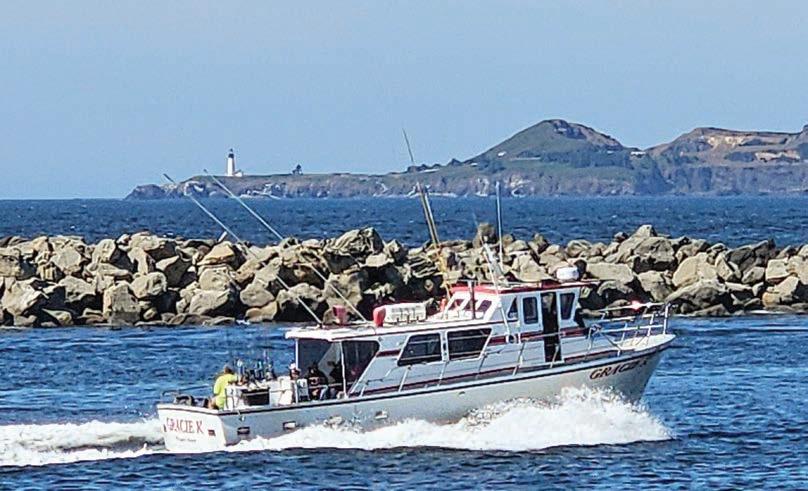
The Gracie K returns to port last summer as Yaquina Head Lighthouse stands sentinel over Newport's fishing grounds. (ANDY WALGAMOTT)
COLUMN
than $300 million to coastal economies. The split is actually fairly even too – with recreational rockfish angling being slightly more important economically.
For a long time, rockfish mattered because they were dependable. By the 1980s and early 1990s, overfishing and weak recruitment pushed a number of West Coast rockfish stocks into trouble.
Managers answered with conservation areas, tighter harvest rules and the broader structure of the Pacific Coast Groundfish Fishery Management Plan. And, to their credit, that discipline worked. Recently they have even reopened some longclosed areas. It’s a good recovery story.
In doing my research for this, one fact that floored me is how long a rockfish can live. Some species can clear 100 years in age. Basically, they can outlive the boats that are catching them. A fish like that needs protection and respect.
I made a bit of a fool of myself on the boat when I asked what the “halibut pole”
was for. It was not a halibut pole at all, but a setup with a descender, a tool used to send released rockfish back to depth so they have a better chance of surviving barotrauma (baro = pressure; trauma = well, trauma) after being brought to the surface. It was a good reminder that this fishery is more managed, and more careful, than a casual angler might realize. In Oregon, retention of yelloweye and quillback rockfish is still prohibited, and descending devices are required when releasing rockfish outside the 30-fathom line.
AS WE CAME back to port that day I stared at Newport’s harbor. From this angle it is easy to tell the town is for working and not just some postcard stop along Highway 101. Commercial and charter boats sit tied tight against the dock. Fish boxes thump onto planks. Sea lions bask on the docks barking up a storm. Gulls circle and complain overhead.
What I like about it is how naturally
charter fishing brings two worlds together. Visitors get access to the Pacific in a way most could never manage on their own. Locals get something more familiar and more useful: part recreation, part food gathering, part coastal economy.
By the time the boat docked, two astonishingly fast fish cutters were waiting for us. In what felt like no time at all, the fish and crabs in my tote were processed for two bucks apiece, and I was handed a bag of clean filets and boiled crab to take home. Victory! I wished Colton, Captain Jack and Cade a good rest of their day, then stood there waiting for my ride with a why-is-theworld-so-still feeling in my legs.
Rockfish do not need much. The filets are firm and should be clean smelling. This is a fish that asks for restraint – lemon, butter, capers and enough good sense to leave it mostly alone. Calling rockfish the chicken of the sea feels both wrong and already taken. Maybe they are the potato of the sea?
Is my Idaho showing? NS
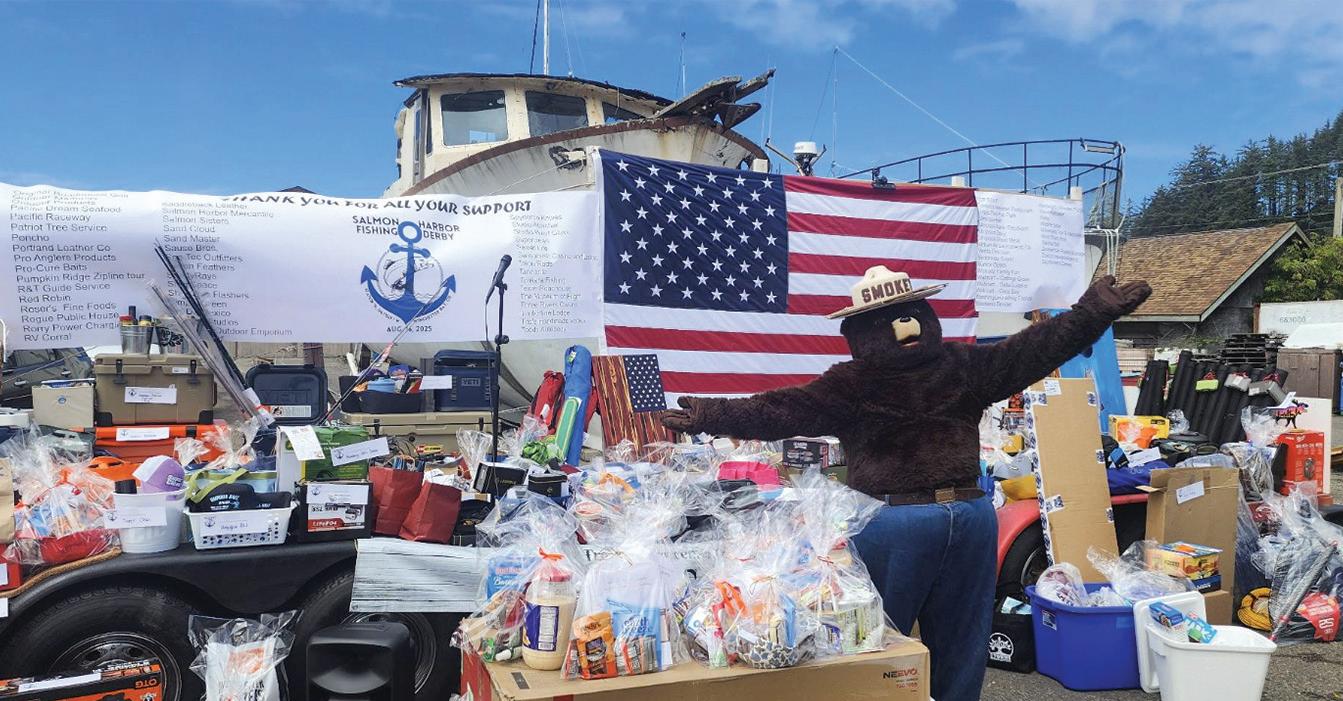
$60 ENTRYFEE
Over $5,000 in cash prizes for winning fish categories!
Cash prizes for kids!
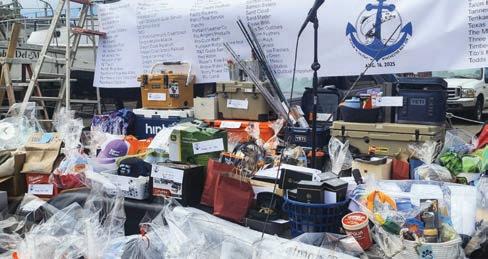
Over $20,000 in raffle prizes!
AUGUST 15 WINCHESTER BAY, OR
Join us at Sportsman’s Cannery for a delicious banquet featuring crab, tri-tip, chicken, and all the fixings, while supporting a great cause.
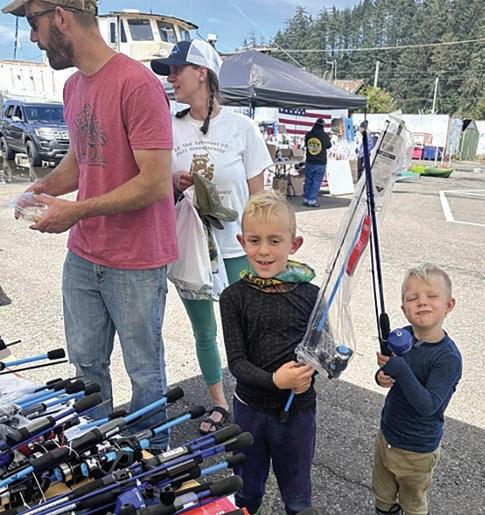
Each year, we give free fishing gear to kids and provide donated fishing and crabbing trips to veterans, helping grow our community on and off the water.
We’re currently seeking “winning fish” sponsorships and raffle donations (items, gift cards, stays, and more). Proceeds benefit the Gardiner Reedsport Winchester Bay S.T.E.P. Program and Oregon Anglers Alliance.
Fisheries To Hit Before Summer’s Heat
Your monthly Oregon fishing outlook provided by The Guide’s Forecast.
By Bob Rees
Although summer doesn’t officially start until June 21, given the mild weather we’re experiencing and what appears to be peak-season activity several weeks ahead of normal schedule, anglers should count on this trend continuing into the fall.
Fish and wildlife agency heads are worried about another intensive wildfire season, which could thwart summer plans to more remote places in Oregon, especially central and eastern destinations, where trout fishing is likely already peaking.
Trout will be the main focus for many Oregonians and the Century Drive lakes outside of Bend should
be offering up a multitude of opportunities. East, Paulina and Diamond Lakes aren’t too far away either. The Oregon Department of Fish and Wildlife website (myodfw .com) has an article titled “50 places to go fishing within 90 minutes of Bend,” which would be of good use for beginners exploring this region. Several of Oregon’s wilderness
Summer steelhead present a decent opportunity for Western Oregon anglers. This one was caught with a jig on the Clackamas a couple Junes ago. (THE GUIDE’S FORECAST)
FISHING
areas also offer hike-in lakes, with some being stocked and some simply harboring native populations of brook trout, which can be very wary of visible anglers. Fires will be prohibited in most areas, so prepare for alternative means to cook meals if you plan to camp overnight.
DOWNHILL, LOW, CLEAR and warm waters will dominate Willamette Valley fisheries, where spring Chinook and summer steelhead will be headed to several tributaries and June is peak month for anglers.
The Santiam systems, along with the McKenzie should have fairat-best returns of spring Chinook, while summer steelhead returns this season look promising. Fishing light line and small offerings should continue to take fish well into June, but targeting first light will be key for most of these locations.
The Clackamas and Sandy systems should have fair returns of both spring Chinook and summer steelhead, but with low, clear water they will be challenging to catch. Spring Chinook in particular seem to return later each year, making July more of a peak month than June, when flows and temperatures are otherwise more conducive to success.
ON THE COAST, coho seasons south of Cape Falcon near Manzanita open on June 6 for hatchery-marked fish, while north-of-Falcon trollers will have to wait until June 20. The overall Columbia River coho prediction is very similar to last year, which provided good summer opportunity for anglers, particularly in the northof-Falcon fishery, mostly prosecuted out of Astoria, Hammond and other ports at the mouth of the big river. Columbia system hatcheries produce over 90 percent of the hatchery coho caught along the entire Oregon Coast.
Ocean Chinook catches, while improved from 2025, will remain challenging for anglers fishing north of Newport. The majority of these ocean-
caught Chinook come from California river systems and can be found in better numbers closer to Brookings.
Spring Chinook in the Tillamook district are also coming back later in the year, with late June often producing the best catches on Tillamook Bay for those trolling 360 flashers and small-sized spinners. Anglers occasionally catch these quality fish on herring, but more so in the lower estuary on smaller tide exchanges while fishing along the jetty, the Coast Guard Station in Garibaldi and along the jetty on the last half of outgoing tide.
The Trask and Nestucca can witness good catches of late-running spring Chinook as well, but with
rivers at summer lows, the bulk of the action takes place in tidewater of these rivers. Summer steelhead are available in the Wilson, Nestucca and Siletz systems, but stealthy strategies are necessary for success.
Finally, a world-class catch-andrelease fishery still takes place in the Columbia River estuary, where anglers can wrestle aerobatic sturgeon to 8 feet with some regularity. These fish can be found in shallow water, enhancing the catching experience. Use as little as 3 ounces of lead to keep your bait properly positioned on the bay bottom. Ten- to 20-fish days are common. NS
Editor’s note: For more information, visit TheGuidesForecast.com.
Best bet for ocean Chinook so far this season off the Oregon Coast has been the southern waters around Brookings. Northern ports will begin to perk later in summer, but in the meanwhile, hatchery coho open this month. (THE GUIDE’S FORECAST)
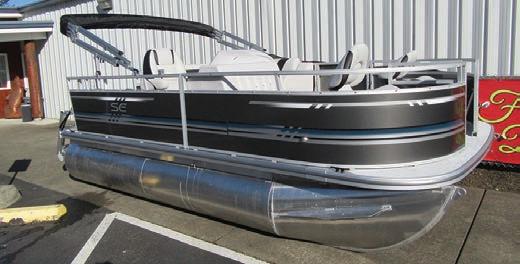
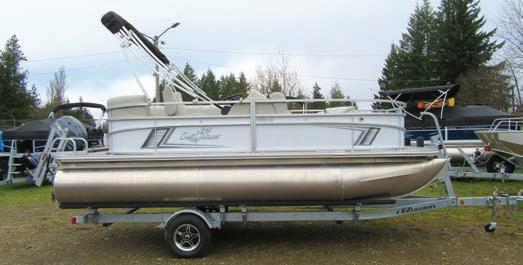
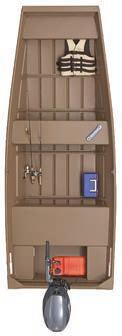
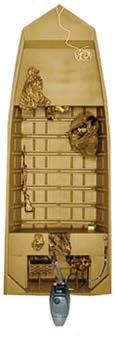
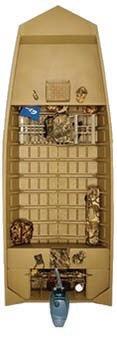
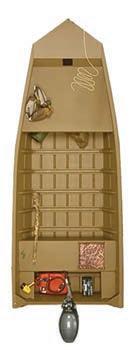
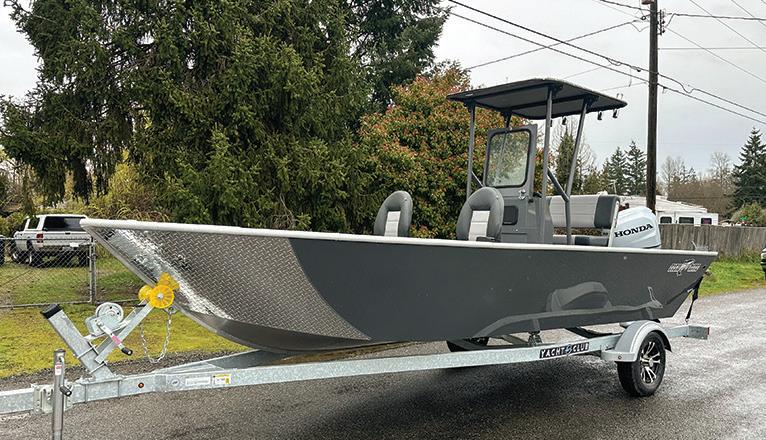
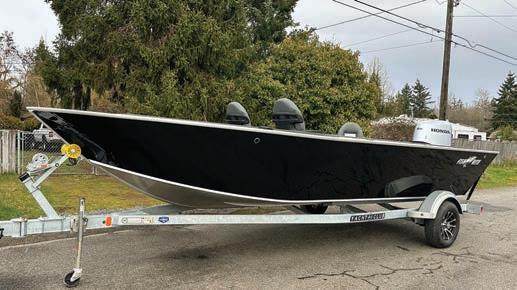
Smokercraft Sunchaser Pontoon
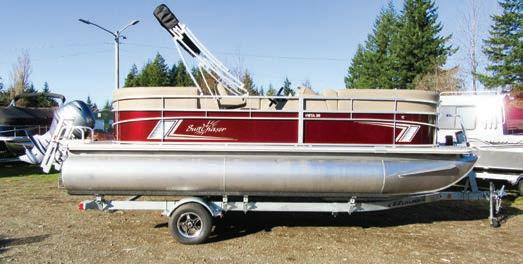
Smokercraft Sunchaser Pontoon
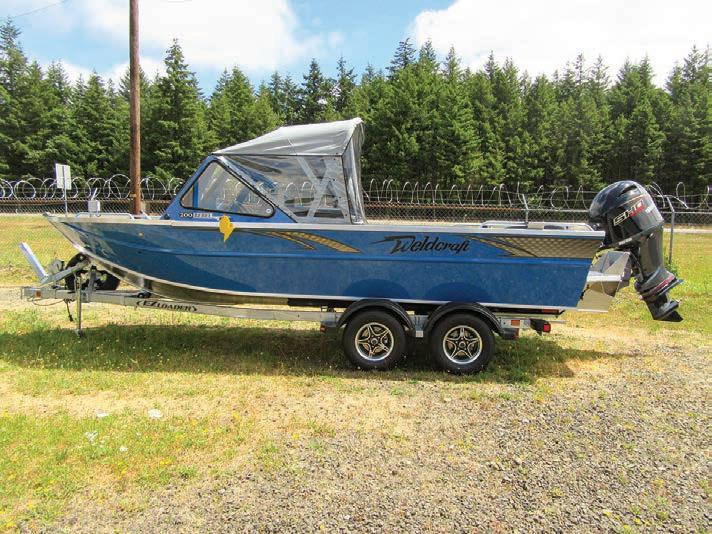
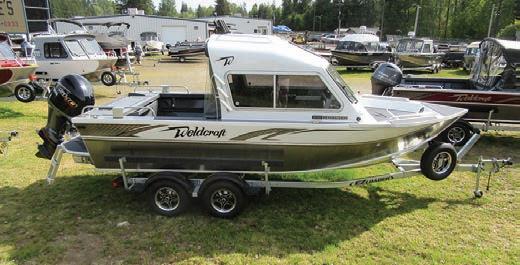
Weldcraft 200 Rebel
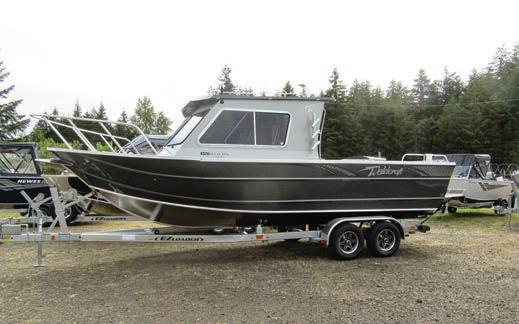
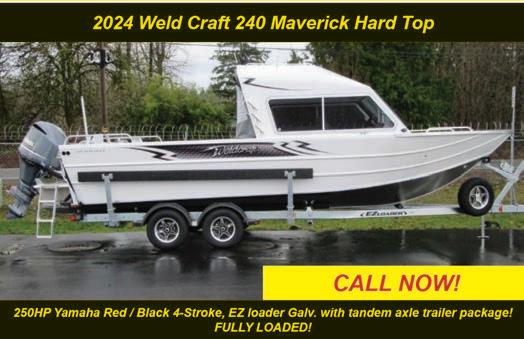
Weldcraft 200 Revolution
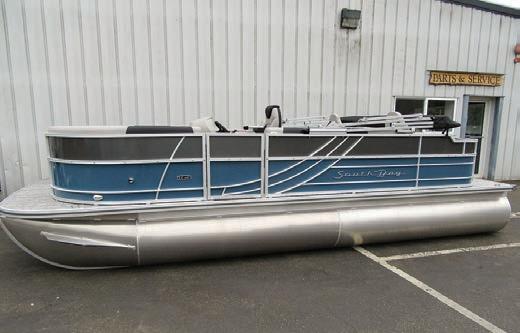
Southbay
I-5 A CorridorFishy
The sun rises over Cowlitz County’s Silver Lake, just a hop, skip and a jump east of I-5 at Exit 49 and home to good crappie and largemouth bass fishing. (KNIFE PHOTO CONTEST)
BELLINGHAM
FISHING
Washington’s main north-south vein serves up plenty of opportunity. Part II
of III
EVERETT
By Mark Yuasa
Planning summer trips? You’re in luck. The highways and byways that crisscross and zigzag across Washington feature many hidden fishing gems found along every turn of the road!
In the second of a three-part series, we’ll look at fishing trips and roadside stops along the Interstate 5 corridor from the US-Canada border to the Washington-Oregon line. This journey spans 277 miles connecting key cities including Bellingham, Everett, Seattle, Tacoma, Olympia and Vancouver.
You might just find that your next road trip is packed full of fishing choices to suit the needs of just about every angler. While fishing is high on the travel memo, we’re also adding some exciting nonfishing stops along the way too!
LAKE SAMISH
Fishing dates: Lake Samish is open year-round.
Fish species: Kokanee, cutthroat trout, yellow perch, largemouth and smallmouth bass and brown bullhead.
Where to fish: Lake Samish (809 acres) is located about 6.5 miles southeast of Bellingham and annually receives a plant of nearly 100,000 kokanee fry and fingerlings in October (70,000 in 2026). The kokanee fishery is productive from May through October.
The deepest holes in the lake are located west of the Lake Samish Drive Bridge and on the northwest end of the main lake. Anglers will slowly troll using downriggers with small dodgers and blades trailed with a short leader to a spinner, Wedding Ring, micro shrimp and plastic squid (hoochie) or a SpinN-Glo. To the hook add a single white
FISHING
corn kernel or maggot with fish scent attractant. A fishfinder is essential to locating schools of kokanee hovering at certain depths.
For cutthroat, cast lures, flies matching the hatch or bait; best fishing is in the spring and fall. The prime fishing time for bass (early morning and dusk are the best periods) and yellow perch is usually from May through September, but fish can be found in the winter in deeper water. Brown bullhead angling is good in spring and then picks up in the fall.
BAKER LAKE
Fishing dates: Baker Lake is planned to be open from July 11 through August 31.
Fish species: Sockeye salmon.
Where to fish: The Baker Lake (6 miles northeast of Concrete and covering 4,755 acres) sockeye fishery opens July 11 regardless of how many fish are in the lake. The daily limit is four sockeye. Each angler aboard the vessel may deploy salmon angling gear until the daily limit for all anglers has been achieved. The 2026 Baker sockeye forecast is 70,861 – another strong return that should generate great fishing. Last year’s forecast was 60,214 and the in-season return was around 92,000, which was a new record. The 2026 sockeye forecast is 67 percent of the recent 10-year average.
Downrigger trolling is effective using a medium-action 81/2-foot rod and a levelwind reel with a 6- to 8-inch
dodger paired with a short leader (6 to 14 inches long) and a 1/0 hook setup. Troll very slowly from 0.7 to 1.1 miles per hour at depths of 25 to 50 feet. A fishfinder will help you locate where the sockeye schools are located; best fishing usually occurs in the north end of the lake. Refer to the Washington Department of Fish and Wildlife’s online daily fish counts (wdfw.wa.gov/ fishing/reports/counts/baker-river) for when to go fishing.
The increasing popularity of the Baker Lake sockeye fishery means anglers must recreate responsibly and be good stewards of water access areas and campgrounds to help preserve this fishing opportunity for the future. WDFW, the US Forest Service, Puget Sound Energy and comanager tribes have discussed challenges this growing fishery can present for the limited boat ramps, campgrounds, restrooms and trash removal available around this relatively remote lake, particularly following reductions in national forest staffing and maintenance budgets.
Anglers should also be prepared for mandatory aquatic invasive species inspections (more details at wdfw .wa.gov/species-habitats/invasive/ prevention) before launching watercraft, expect limited restrooms and other facilities, and pack out their trash if bins are full or not available at campgrounds and water access areas. Tips for recreating responsibly outdoors are available by going to the Recreate Responsibly website (recreateresponsibly.org).
The final salmon seasons will be announced in mid-June. Before making fishing plans to fish for sockeye at Baker Lake, anglers should check the WDFW emergency regulation webpage for updates (wdfw.wa.gov/ fishing/regulations/emergency-rules).
MARINE AREAS 10 AND 11
Fishing dates: The Marine Area 10 coho fishery is tentatively set to open on June 1, and the proposed hatchery Chinook fishery is July 2325. Additional openings may occur based on in-season assessments.
Tacoma might be best known by Western Washington’s masses for its traffic, but anglers also know that the Clay Banks off Point Defiance – that skinny finger sticking out into Puget Sound like somebody flipping off an aggressive driver on the interstate – is a great spot for Chinook too. (MARK YUASA)
FISHING
Area 11 is planned to be open daily beginning June 1 through June 30 with a harvest quota of 1,423. It then reopens July 23-25, and open daily if quota allows beginning August 1 with a late-summer harvest quota of 3,379. The early June fishery could be open seven days per week but is dependent on further WDFW fishery manager review. Area 11 is open daily for coho beginning August 1 through November 15.
Final salmon seasons will be announced in mid-June. Each marine area summer Chinook fishery will be evaluated and if sufficient harvest quota
and/or guidelines remain, it could reopen for additional days of fishing. Before making fishing plans, anglers should check WDFW’s emergency regulation webpage.
Fish species: Coho and Chinook salmon.
Where to fish: Most coho in Area 10 are resident fish averaging 2 to 4 pounds. While the best places are usually in the deepwater shipping lanes off Jefferson Head, anglers can find action in the tidal rip currents from the Edmonds oil docks to Richmond Beach, and President Point to Kingston.
In Area 11, most anglers will jig
BONUS FISHING STOPS OFF I-5
The Skagit River sockeye fishery from the Highway 536 Bridge at Mount Vernon (Memorial Highway Bridge) upstream to the Dalles Bridge at Concrete opens from June 16 through July 31. The daily limit is four sockeye, release all other salmon and bull trout. There is a night closure in effect.
The Cascade River from its mouth to the Rockport-Cascade River Bridge is open Wednesdays to Saturdays only from June 3 through July 15 for hatchery Chinook. The daily limit is four hatchery Chinook, and only two may be adult fish. Night closure and anti-snagging rules are in effect. Note: The boundary at the hatchery may need to change due to sediment deposition blocking the fish passage to the hatchery. This section was dramatically altered by the December 2025 flooding event.
Crappie fishing should be good at Silver Lake (1,424 acres) in Cowlitz County. Yellow perch can be caught at many Southwest Region lakes including Lacamas Lake in Clark County. Smallmouth bass anglers will be able to find success in Riffe Lake in Lewis County, with Kress Lake in Cowlitz County producing largemouth bass bites. Those in pursuit of tiger muskie can find action at Mayfield Lake in Lewis County.
Right in the heart of Seattle is Green Lake (255 acres), known to be a productive yearround trout fishery that is regularly stocked, including with some tagged fish for the WDFW Trout Derby. This lake is surrounded by excellent shore and dock access on the south, east and northeast sides. Nonmotorized boats can be launched from the shoreline. The lake was stocked with 10,500 trout this spring, and another 15,000 fry/fingerling are planted annually, along with 4,500 jumbo-size trout in November. Anglers can also catch largemouth bass, pumpkinseed sunfish, channel catfish and brown bullhead.
Lake Padden (152 acres), located in Bellingham off I-5 in Lake Padden Park, has some of the best shore access in Western Washington. The lake is open through October 31 and ahead of 2026’s opening day (April 25) it was stocked with 16,750 rainbow trout from April 14-24. The lake is also stocked annually with cutthroat trout and will receive 40,000 fry and fingerling cutthroat trout in October. Other fishing opportunities include kokanee and largemouth bass. Spring catch rates for trout are highest early in the season and decline as fish are harvested and as warmer water temperatures force trout to seek areas of colder refuge. Fall is often overlooked by anglers but can be an ideal time, as fish that have been growing all summer become more active around the lake with cooler temperatures. There is a boat launch, but gasoline motors are not allowed.
Hundreds of other statewide seasonal lowland lakes have been stocked since opening day, and fishing should remain good through this month. To view what lakes have been or will be stocked in 2026, go to WDFW’s stocking plan webpage (wdfw. wa.gov/fishing/reports/stocking/statewide). To read more about the lowland lakes trout opener, go to wdfw.medium.com/beautiful-weather-and-fairly-decent-fishinggreeted-thousands-of-anglers-on-saturdays-statewide-7d9c46c9a3de. –MY
or troll with downriggers using plugs, spoons or a plastic hoochie squid. You can use a whole or cut-plug herring, although dogfish feed heavily on baitfish schools and can fray fishing leaders. Try for Chinook off Tacoma at the Clay Banks at Point Defiance Park or from Owen Beach to the Slag Pile off the Tacoma Yacht Club; the “Flats” outside of Gig Harbor; outside of Quartermaster Harbor; and Point Dalco on the south side of Vashon Island.
The northern section of Area 11 is another choice. Try places like Dolphin Point and the Fauntleroy Ferry area near the northeast side of Vashon Island; south of the Southworth Ferry Landing; Colvos Passage; Apple Tree Cove to Redondo Beach; and Point Robinson.
MINERAL LAKE
Fishing dates: Mineral Lake is open now through September 30, but season may end up going through October 31 if special rule-making finishes in time for this year.
Fish species: Rainbow, brown and cutthroat trout and largemouth bass.
Where to fish: The awesome view of Mount Rainier is equally as good as the fishing at Mineral (277 acres and 3 miles southeast of Elbe), but keep your eyes on the fishing pole, as you could end up hooking a bragging-size trout up to 10 pounds. Mineral was stocked with 32,850 catchable-size rainbow trout and 5,800 brown trout planted in April. Another 100,000-plus fingerling rainbow trout are annually planted each fall. Best fishing occurs in spring and remains good through June, then picks up as the water cools before the seasonal closure date.
Most shore fishing is from public fishing docks at the west end of the lake and docks at Mineral Lake Resort. The state boat launch is small, so patience is needed, especially on weekends.
LAKE MERWIN
Fishing dates: Lake Merwin – also known as Merwin Reservoir – is open year-round for all game fish and
The lightest 200-hp four stroke on the market
2.8L displacement and Variable Camshaft Timing give it the best power-to-weight ratio of any 200-hp four stroke
Nearly 120 pounds lighter than our four-stroke V6 F200
Show the water who’s boss with the F200 In-Line Four. Incredibly light, responsive and fuel efficient, it serves up plenty of muscle to handily propel a variety of boats. On top of that, its 50-amp alternator offers the power to add a range of electronics, and its 26-inch mounting centers and compatibility with either mechanical or digital controls give you the flexibility to easily upgrade your outboard or rigging. Experience legendary Yamaha reliability and the freedom of forward thinking, with the F200 In-Line Four.
COOS BAY Y Marina (541) 888-5501 www.ymarinaboats.com
CHINOOK
Chinook Marine Repair, Inc. (800) 457-9459 www.chinookmarinerepair.com
Master Marine Boat Center, Inc. (360) 336-2176 www.mastermarine.com
MOUNT VERNON
Tom-n-Jerry’s Boat Center, Inc. (360) 466-9955 www.tomnjerrys.net
OLYMPIA
Us Marine Sales & Service (800) 455-0818 www.usmarinesales.com
FISHING
landlocked salmon.
Fish species: Mainly kokanee and some tiger muskie. Other fish species include Chinook and coho salmon and northern pikeminnow. All bull trout and Dolly Varden must be released.
Where to fish: The best fishing for kokanee at this 3,385-acre impoundment on the North Fork Lewis River 22 miles east of Woodland occurs from the surface down to 50 feet in the central part of the lake, also known as the “Main Basin” and as much as 190 feet deep. WDFW hatchery stocked 5,710 kokanee averaging 2.42 fish per pound on February 23.
Slowly troll with a small flasher/ dodger with a short 8- to 10-inch leader tied to a mini hoochie, spinner or Wedding Ring. To the hook add a single white corn kernel or maggot or scented grub with fish scent attractant.
Tiger muskies are usually found near submerged timber and structure found along the vast shorelines. Statewide minimum fish size and daily catch limit regulations apply at Lake Merwin. For tiger muskies, the daily limit is one with a 50-inch minimum
size limit. On April 29, Merwin was stocked by WDFW with 2,000 tiger muskies averaging 10 to 12 inches.
The reservoir fluctuates depending on the amount of runoff, making boat access difficult at times. PacifiCorp operates boat launches at Speelyai Bay and Cresap Bay. There is a fee to launch on weekends. Call (800) 5471501 for updated reservoir levels. The lake has limited shoreline access.
COLUMBIA RIVER AND TRIBUTARIES
Fishing dates: Sockeye fishing on the Columbia River downstream of the Highway 395 Bridge in Pasco is planned to be open June 23 through July 5 with a daily limit of two sockeye (or one sockeye and one hatchery steelhead). Steelhead fishing on the Columbia River from the Astoria-Megler Bridge upstream to the Highway 395 Bridge opens June 16 through July 31 with a daily limit of one hatchery steelhead, and the stretch of river from Buoy 10 upstream to The Dalles Dam closes for steelhead after July 31.
Fish species: Chinook, coho, sockeye, steelhead and rainbow and cutthroat trout.
Where to fish: Drano Lake and the Wind and White Salmon Rivers will be open June 16-30 to summer steelhead retention with a daily limit of two hatchery fish. The Klickitat River will be open for the same dates with a limit of three hatchery steelhead.
The Cowlitz, Kalama and Lewis Rivers will fish well for hatchery spring Chinook into June, with the Cowlitz and Lewis picking up for summer steelhead in June and into July. Anglers should find most success fishing early in the morning with bobbers or plunking.
Later in the summer, the Columbia River fall Chinook and coho fisheries open August 1 from Buoy 10 to the Highway 395 Bridge. Season timing above and below Bonneville Dam is generally aligned across areas to improve fishery stability and remain within strict conservation limits.
Buoy 10 is open August 1 through September 2, with alternating block periods of non-mark-selective (wild or hatchery) and mark-selective (hatchery only) Chinook and hatchery coho retention, similar to last year. From west Puget Island upstream to Warrior Rock, retention of any Chinook is allowed August 1 through September 2. Any Chinook may be retained from Warrior Rock upstream to the Highway 395 Bridge in Pasco August 1 through September 15.
SIDE TRIPS
Make it a combo outing by spending some time camping, hiking, sightseeing, wildlife watching or simply strolling in the many state and national parks and other local parks off I-5. They include Beacon Rock State Park located off Exit 3 near Vancouver; Ridgefield National Wildlife Refuge off Exit 14; Saltwater State Park off Exit 147 in Des Moines; Mount BakerSnoqualmie National Forest off Exit 193 near Everett; Gissberg Twin Lakes Park off Exit 206 in Marysville; Deception Pass State Park off Exit 230 near Oak Harbor; Whatcom Falls Park off Exit 254 in Bellingham; and Birch Bay State Park off Exit 266 near Blaine. –MY
Kokanee are the prize at Lake Merwin. Dennis Schwartz (middle) and pals show off the rewards of trolling the reservoir. (KNIFE PHOTO CONTEST)
FISHING
For a list of tentative fisheries, go to wdfw.wa.gov/fishing/management/ north-falcon/summaries. WDFW will announce the 2026-27 salmon fishing season package in mid-June.
While water levels may be low in spots, trout fishing in many Southwest Washington rivers, streams and beaver ponds is typically solid in June and July. Many streams hold surprisingly large rainbow and cutthroat trout that can be caught using small spinners, spoons, jigs or fly fishing gear.
IN PART THREE of this series in the July issue of the magazine, we’ll follow Highway 101 from Olympia north to Port Angeles, west towards Neah Bay and then south along the coast to the Astoria-Megler Bridge at the mouth of the Columbia River.
BEFORE YOU CAST …
Washington anglers will need a valid 2026-27 recreational fishing license. WDFW offers two mobile apps, both designed to make your outdoor experience easier and more efficient. MyWDFW ser ves both hunters and anglers, offering electronic tagging, harvest reporting and access to licenses and permits. Fish Washington is tailored to anglers and provides fishing regulations, digital catch cards and license management. Licenses may be purchased online or from hundreds of license dealers across the state.
Before heading out the door to any fishing spot, remember to check WDFW’s fishing regulations webpage (wdfw.wa.gov/fishing/regulations) for permanent regulations and the emergency fishing rules webpage (wdfw.wa.gov/fishing/regulations/ emergency-rules) for rule updates affecting fisheries.
Anglers parking at WDFW vehicle water access areas are required to display the WDFW Vehicle Access Pass – provided when you buy eligible annual fishing licenses – or a Discover Pass. Anglers visiting Washington State Parks or Department of Natural Resources lands need a Discover Pass. Information on parking passes can be found at WDFW’s parking and access passes webpage (wdfw.wa.gov/licenses/parking). –MY
Part one focused on fisheries along Interstate 90 from downtown Seattle all the way east to the WashingtonIdaho border. NS
Editor’s note: Mark Yuasa is a WDFW communications manager. He was the outdoor reporter for The Seattle Times for 28 years.
Largemouth represent one of the most widespread and abundant fisheries off I-5, as these bass occupy many of the lakes, glacial kettles and oxbows from British Columbia to Oregon. (KNIFE PHOTO CONTEST)
KICK ASS BOAT DEAL!
2026 Fish Rite 22’ Sportsman HT
This one FISHES HUGE!! 2026 Fish Rite River Master 20’. Perfect for Puget Sound saltwater and all the river systems that feed it. Equipped with locking rod lockers, two Elite helm seats on slider boxes, bow fish box, bow anchor box, 40-gallon fuel tank, and much more! We have packaged this boat with a Honda 115 HP tiller handle jet pump. Price includes boat, motor, and trailer. You will not find a better quality-built boat at this exceptional price.
$53,950.00 plus Tax, Title, and Neg Document Service Fee
2026 Fish Rite 18’ Angler
Brand new model for the 2026 season. Fish Rite 22’ Sportsman HT. This one has it all: offshore bracket with walk-through transom, huge fish box, full Alaskan cabin, bow fish box/anchor locker, 24” seats with tons of storage, powered by a Honda 200 HP, and a Yacht Club tandem-axle galvanized trailer with swing tongue. These amazing boats are made locally in Grants Pass, Oregon, with some of the finest fit and finish in the industry. Pricing is for the boat, motor, and trailer. This package is thousands of dollars less than most competitors and offers every bit of the quality. Kicker motor and electronics packages available. The absolute perfect all-season boat for the PNW. Don’t miss out on this one!
$89,950.00 plus Tax, Title, and Neg Document Service Fee
2026 Fish Rite 20’ River Master
New center console T-top design for 2026. Fish Rite 18’ Angler powered with a 90 HP Honda outboard, fold-down windshield, front bow box, diamond plate bow guards, rod holders, and so much more. Fish Rite is one of the finest hand-welded, heavy-gauge boat manufacturers around. The design of this Angler, with its reverse chine, makes it nimble on open water and an incredibly stable fishing platform. Several motor options available.
$39,950.00 plus Tax, Title, and Neg Document Service Fee
Springer Hardware
Open the tackle box up when fishing for Chinook in the tributaries.
By Trevor Torppa
Spring Chinook are often considered picky eaters, and when fishing at first light, most of the time it is frowned upon to use flashy lures. Starting out with bait, or something more subtle, allows you to ease your way into their living room rather than starting with hardware first. Hardware is generally considered to be the casting and retrieving lures that we may use in order to coerce these fish into biting on our local rivers and streams in the Pacific Northwest. Types of hardware that are used for tributary spring
Chinook usually include twitching jigs, spoons, spinners and plugs.
All of these presentations work well for spring Chinook in all types of water conditions, times of day and types of water, but it’s the speed of your retrieve that often determines success. Let’s take a look at lures and tactics for each style of bait.
SPINNERS
You will want to vary the size of your spinner based on the depth and current speed of a hole. Lower and faster riffles allow for smaller, bell-bodied spinners that hover in the water column and keep from snagging along the bottom.
Larger and deeper holes with slower water allow for a bigger spinner. I like anywhere from 5/8 ounce all the way up to 7/8 ounce.
With the bigger spinners I like to use the bullet-bodied style. Unlike with a bell-bodied spinner, the bullet body is more dense, allowing it to sink to the desired depth in those deeper holes.
Counterintuitive to the weight and style of the spinner itself, the speed of retrieval usually shocks people when they first learn what works best in a given fishing scenario. When fishing shallow, faster-moving water with lighter spinners, cast straight out in front of you or slightly below you and
Cody Young used a Blue Fox to catch and release this big wild spring Chinook deep in the woods of the Olympic Peninsula. (KNIFE PHOTO CONTEST)
FISHING
allow that spinner to flutter through the run with little to no reeling at all. The goal is to allow the current to catch the blades of that spinner and basically drift it through the hole.
Casting upriver in this scenario also works; a spinner zooming past springers entices them to bite. Reel in faster than you would after casting straight across, and make sure to occasionally feel the bottom without dragging it through the water you’re working. With a deeper hole and denser-bodied spinner, you can cast wherever you desire, as the
fish usually sit all throughout it.
Once your spinner lands, try to develop a feel for how fast you want to retrieve. Don’t reel too fast, but go fast enough to keep the lure in the strike zone, i.e., 2 to 3 feet above the bottom. You want that spinner fluttering down there, putting off that wounded-prey feel. A spinner blade that is spinning perfectly is often the most effective way to fish for any salmonid in our rivers. Not only will you catch the preferred species but you can use this technique almost any day of the
year and catch fish whether it be resident trout, steelhead or species like whitefish and suckerfish.
SPOONS
Swinging spoons is often thought of as a common technique used for steelhead, specifically in the winter. Rivers are usually running much higher then, creating big long stretches of boulder gardens that have sufficient flow to swing your lure with very little retrieval speed. But with spring Chinook, spoons can often be used the same exact way you would fish a spinner, in both faster-moving low water and slow-moving, deeper water. Adjusting your weight is crucial while fishing spoons. I like to fish anything from a 2/5- to 3/4-ounce spoon. Spoons are meant to flutter in the water column while being “drifted,” creating a skip-beat action that fish have a hard time resisting. Casting and retrieving will work, but spinning that spoon on top of itself isn’t preferred; if you are in a deeper and slower hole, I would look in your box for a spinner instead.
Higher and faster water with lots of structure is where spoons fish best. My preferred way to fish them is to cast slightly below my position and across the river, starting in tight and working my way to the other side. When your spoon hits the water, be sure to allow it to drift and tick along the bottom. This usually forms a drift that most fish species can’t resist. Adjust the size of spoon that you’re fishing according to the action you are getting from it; you should feel a constant thump from your rod tip as you drift through the run.
PLUGS
Casting and retrieving plugs is very easy and is mostly done in the deeper holes that these Chinook will lay along the bottom of. Plugs provide a more aggressive action and casting them is usually the last technique I will try before leaving the hole.
Bomb it wherever you please within the hole and start retrieving instantly. You will be able to tell whether or not you are going too fast. The action of
One thing to keep in mind when it comes to lure color selection is to toss “bright lures on bright days and dark lures on dark days,” tips author Trevor Torppa. But if the water’s high and dirty, go big and bright. (TREVOR TORPPA)
FISHING
the plug will be almost annoying to the feel if you are running it too quickly; be sure to retrieve at a rate of about one crank a second on your handle.
I like to use either 3.5- or 4.0-size plugs depending on the depth of the hole; the bigger the plug, the more it can handle.
TWITCHING JIGS
Twitching jigs is an art form that only certain anglers can perfect. It is the epitome of finesse while also adding aggression and violence to the mix.
Allowing the jig to sink to the bottom is the most important thing to do while twitching. Make sure you use a big enough jig to get down; I like the ¾-ounce size for most conditions. You can fish these in shallower areas as well; be aware of the flow of the run and basically skip that jig along the bottom with very little reeling.
The most preferred water for fishing these heavy jigs is the bigger,
slower sections. After your lure hits the bottom, develop a popping motion with your rod while reeling up the slack in the line as you retrieve. This provides a squid-like action to the jig, and it is usually eaten on the fall. I encourage using jigs made with lots of materials. A tail comprised of rabbit fur/marabou is what gives all the action to these lures.
COLOR SELECTION
I have talked on color selection in the past, and it stays the same with whatever technique you use while targeting spring Chinook and other species. A good rule of thumb is bright lures on bright days and dark lures on dark days. The only stipulation is if the water is high and dirty. If the water is high and dirty, throw something big and bright, as the fish still need to see what they are looking for!
The reason behind this is the art of not being too bold while also letting them know you are there. As stated
above about starting too early in the morning, these fish will spook a lot faster if you throw something big and flashy in their bedroom rather than fishing what is preferred based on the color of the sky. A lot of people like to look in their box the day of their trip and see what the light tells them to do. Certain lures will pop. There are other things you can do such as using glow-in-the-dark or even lighted lures while fishing just before dark, but that is a totally different experiment you will have to try for yourself.
Bottom line when using hardware for springers: Always be sure to switch things up and try everything you have, whether that is color or technique. NS
Editor’s note: Trevor Torppa owns and operates Chrome City Guide Service (360751-8748; chromecityguideservicellc.com) in Southwest Washington and Soldotna Fishing Guides - Kenai River LLC (soldotnafishingguides.com) in Alaska.
A 4-Day Lodge-to-Lodge Drift Boat Fishing Experience on Oregon’s Wild & Scenic Rogue River!
The Rogue River is the granddaddy of salmon and steelhead, plain and simple. This 4-day Rogue River drift boat trip is about good fishing and doing it right. You’ll float classic stretches of the Wild & Scenic Rogue with seasoned guides who know the river and know the fish.
Fish it how you like—fly, lure, spinner, whatever works. There’s no single “right” way here. At the end of the day, you’ll pull into a private riverside lodge with hot showers, real beds, and solid meals. It’s not camping. It’s a comfortable, no-nonsense fishing trip on one of the West’s great rivers.
THREE ALL-INCLUSIVE LODGES
• Lucas Lodge
• Black Bar Lodge
• Paradise Lodge
Each lodge is accessible only by river and reserved exclusively for our guests,—offering privacy, comfort, and a true escape into Rogue River country.
WHAT’S INCLUDED
• Fully guided drift boat fishing
• Private riverside lodges each night
• All meals, gear, and logistics provided
• Lodge-to-lodge travel by drift boat
• Small groups with hands-on guiding You just show up ready to fish.
Head Well Upriver For Willamette Chinook
June a good month to work Western Oregon river's tributaries for hatchery fish.
By Troy Rodakowski
By early May, spring Chinook first begin to show up in the upper Willamette and lower McKenzie River, a migration that continues through June and even into July. These fish travel a few hundred miles from the Pacific up through the lower reaches of the Columbia. The weather is warming, spring rains are all but gone from the Willamette Valley and soon enough we will be battling the heat and cranking up the air conditioning, but right now it’s time to get outside and hit the water.
I was lucky and blessed to grow up close to exceptional fishing waters where the McKenzie and Willamette converge. Salmon and steelhead fishing was always pretty amazing with Oregon Department of Fish and Wildlife hatchery programs in full swing providing generations of great returns. Since then both salmon and steelhead have struggled due to hatchery cuts and less than favorable ocean conditions. However, like the fish, we return each season to the rivers and remain optimistic we’ll be able to land a few through early summer.
Fish numbers are projected to be fair this year based on early counts at Willamette Falls. As of May 13, 12,651 spring Chinook had gone through the ladder; the 10-year average through the same day is 7,625. The McKenzie and Middle and Coast Forks of the Willamette River provide some decent runs thanks to hatchery programs that produce some of the best opportunities for anglers in the central Willamette Valley from May to July.
It’s not just all about the head of the channel and falls at Oregon City for Willamette River spring Chinook. The upper end of the Western Oregon watershed can put out some nicesized fish through early July, as author Troy Rodakowski can attest. (TROY RODAKOWSKI)
FISHING
WHAT WORKS
Every angler has their secrets to success and it is very appropriate to say that each year is somewhat different based on flows and river levels as to what the majority of fish will prefer. Depth and presentation are extremely important when fishing from a watercraft, as a few feet can make a huge difference. You want to put the bait, plug or lure right in front of their noses. This is why experienced guides seem to find the best success. Most importantly, you need really good eggs and fresh sand shrimp;
anything less and you will struggle. Most folks have their own secret brine and “special secret sauce” that they swear by and are very specific with what they wrap their plugs with.
The upper Willamette and McKenzie are typically clear and cold through early July. Being able to read the water and learn from experienced anglers really pays off. Most anglers like to back-bounce, run divers and bait, or flat line with a Mag Lip in some of the deeper waters.
Drifting Corkies and running bobbers with fresh roe work well for
both salmon and the few summer-run steelhead still found here as well. Also, herring cuts fished just off the bottom can be quite productive. Many anglers swear by sand shrimp and will not fish unless they are able to use them on a regular basis. Make sure not to forget your float rod, as diversification is a must on these rivers.
Back-bouncing can be done with great success in the deeper, slowermoving holes, as well as some of the faster-moving waters near seams. However, the water speed has to be just right to make this work properly.
WHERE TO FISH
The mainstem Willamette from Corvallis upstream to Eugene becomes fishable for springers and steelhead beginning in late April through early July. By the middle part of June most fish are already moving up the McKenzie and upper reaches of the Willamette, so hitting the river at the right time is important. Keeping tabs on catch reports from Portland up through Salem can help optimize your window of potential success.
Watching water levels and temperatures is also recommended, as early-, middle- and late-run fish will migrate at different rates depending upon conditions. Fish will migrate anywhere from 18 to 25 miles per day depending upon the river levels and have been known to hold or fall back downstream when water levels cool or flows change. Typically, once the fish are past the falls in Oregon City it takes approximately 10 to 14 days for them to reach the upper Willamette and McKenzie Rivers.
The lower reaches of the McKenzie provide some good opportunities, with the 6 to 8 miles below Leaburg Dam all the way to Holden Creek Lane being fished the heaviest. From the I-5 bridge and the north end of the city of Springfield to below Deerhorn, Hayden and Hendricks are where most folks find their fish.
The river between the Mohawk River and Cedar Creek provides
The McKenzie was last year’s most productive fork of the upper Willamette, though the Santiams were better in 2024. (TROY RODAKOWSKI)
FISHING
fish with some good habitat, and there are several stretches that hold resting fish. Boats will oftentimes float and anchor near these holes. Bank anglers can find access through private property with permission or near public launches or parks.
MY THOUGHTS ON THE FIGHT FOR FISH
Fishermen in the lower McKenzie and upper Willamette systems remain vigilant and for the most part support local hatchery programs. Naturalists looking to revive or maintain “native” runs remain somewhat disconnected from the reality of modern fishing and hatchery management objectives regulated by ODFW. In order to maintain a healthy fishery in this region, groups will need to realize the long-term need for hatchery salmon and steelhead programs.
Unfortunately, the native runs here are for the most part incapable of maintaining themselves over time. Despite several obstacles facing
the fishery, the McKenzie watershed is one of the only areas in the upper Willamette Basin where significant natural production of spring Chinook still occurs. Actions that restore fish passage and improve habitat along with hatchery programs will only aid in the long-term survival of these magnificent salmon.
To say that hatchery salmon compete with “wild” fish cannot be proven to a very large extent. However, it is obvious that there are many factors contributing to the struggles of spring Chinook here – habitat alteration, recent wildfires, climate change, disease and overfishing are the biggest.
Despite these struggles, anglers seem to consistently find decent numbers of fish. Last year saw 1,460 kept in the McKenzie below Leaburg Dam, 1,177 in the North Santiam, 375 in the South Santiam and 324 in the mainstem Willamette above the falls. Most were caught in June and July. NS
Fresh salmon from the grill is what’s for dinner at the author’s house in the Willamette Valley this month. (TROY RODAKOWSKI)
3 Okanogan Fishing Destinations
A quick look at top areas for fishing, long stays in Northcentral Washington.
The sun sets over Conconully Reservoir, the lower of the twin lakes at the Okanogan County town of Conconully that play host to good trout and kokanee fishing. (CHRIS MARCOLIN)
FISHING
By Chris Marcolin
The general fishing season for lowland lakes in Eastern Washington has been very interesting so far, to say the least, and for those who have ventured into the Okanogan there were some surprising finds.
Some lakes here are kicking out not just larger fish but the quality of catch has been extraordinary too. This makes for an exciting season at these waters managed and stocked with catchable rainbow trout and other desirable species such as kokanee and tiger trout.
For hatchery managers and fisheries biologists it’s a balancing act to manage each body of water for ideal growing conditions and numbers. When there is an overabundance of fish and a low food supply, the fish may not have the same growth rates compared to a lake with balanced stocking levels. But abundant and ideal growing conditions for forage and mild winter conditions seem to be this year’s twin gifts. Larger fish are being caught than during the past two years thanks to warmer winter conditions and good food sources.
And now with summer upon us, I would like to detail three weekend or weeklong Okanogan County getaway destinations and provide some insights
for what to expect on the water. Most lakes here have boating and shoreline fishing access, perfect for someone learning a new area. Rather than list each lake because of how many there are, I will focus on some of the popular areas with good catches so far this year.
STARTING OFF THE list is one of my favorite locations, Bonaparte Lake, located east of Tonasket and a few miles north of Highway 20. Bonaparte offers mountainous scenery and 14 smaller waters in the general vicinity to also explore.
On the south side of Bonaparte is an Okanogan-Wenatchee National Forest campground managed by the
FISHING
Tonasket Ranger District with a boat launch for small craft. There is also a resort at Bonaparte Lake that has cabins and camping for guests, as well as a restaurant known for its weekend barbecues and homemade desserts. I would advise reservations for weekend dining due to its popularity.
Bonaparte Lake is a multispecies lake where trout – rainbow, tiger, brook, lake – are most abundant to catch, while smallmouth bass frequent the shallows during the summer months. Fly fishing is a good way to get a fish to rise just before darkness sets in on the mirrored water.
Fishing regulations require lead-free gear for the protection of loons, the calls of which can be heard echoing on the lake at sunset. Bonaparte should be on a fisherman’s to-do list.
NEXT UP IS the community of Loomis. Once a historic mining district, Loomis is now an oasis for summer recreation. Here the valleys of the
Bonaparte Lake is just one of several quality fisheries tucked away in the Okanogan Highlands, and it plays host to multiple species of trout, a Forest Service campground and a resort known for its food. Nearby is Beaver Lake and its rope swing. (CHRIS MARCOLIN; ANDY WALGAMOTT)
UNION GAP Demo Rides
Biggest Lund Dealer in the Pacific Northwest!
2026 1775 Lund Adventure Sport
Equipped with Mercury 90 ELPT, 1 Additional ProRide Seat w/solid Pedestal, Graphics Upgrade, Sport Top w/walkway curtain, Garmin 73CV w/Navionics Mapping, Minnkota 70lb I Pilot 24 volt bow mount, 2 bank charger, and more. Ready to fish!!!
a
2026 Lund 1875 Impact XS Sport
This
2026 Lund Predator CC Jet
Equipped with
Mercury 150/105 OB Jet, Hydraulic Steering, Driver Leaning Post/Seat, 3 Bank Charger, 2 Pedestal Seats, Fixed front seat in front of console, .125” bottom upgrade (jet mod), and more.
2026 Thunder Jet 209 Rush OT
Includes the all new Yamaha F150XHA (Power Tiller Steering), Yamaha T9.9 Kicker, Top Loading Rod Lockers, 2 Additional Passenger Seats on Boxes, Washdown, Livewell, and more.
FISHING
There’s a reason the foothills west of the Okanogan Valley are called the Many Lakes Recreation Area – there’s just a ton of lakes to fish and stay at, including Spectacle, where Chelsea Schaefer (right) caught this rainbow. Jarvis and Becky Morrill operate Loomis Kwik Stop,a local source for supplies. (CHRIS MARCOLIN)
ANGLER OUTCRY HELPS KEEP STATE CAMPGROUND OPEN
Apopular Washington Department of Natural Resources campground at a destination Okanogan County trout lake stayed open after all, a relief for flyrodders who strongly urged the agency to keep it open in the face of continued recreation budget cuts.
“Chopaka Lake will remain open for the year,” confirmed DNR spokeswoman Courtney James in midspring. “DNR heard a lot of feedback – including from the angler community – and worked internally to prioritize resources when making the final decisions about service reductions. The campground will remain open; however, members of the public will likely see reduced levels of maintenance across the board.”
Indeed, while Chopaka was spared, DNR sites around the state will see a range of impacts up to full closures as the agency deals with the loss of $580,000 in recreational lands maintenance funding coming out of this year’s legislative session. It follows on a 20 percent reduction last year, and added together they amount to an $8-plus million hit inside of two years’ time, according to DNR.
Campgrounds fully closed in 2026 include Anderson Lake near Elbe, Rock Lakes near Conconully and Upper Clearwater near Forks, while 29 Pines near Cle Elum, Bear Creek near Forks, Dougan Creek near Washougal, Island near Glenwood, Lyre River near Port Angeles and Winston Creek near Mossyrock will see reduced camping seasons or other service cuts. –NWS
Cascade foothills give way to geologic depressions that have been filled with snowmelt from the mountains, providing diverse lake fisheries.
Spectacle Lake has become one of the highlights of this area. Families frequent the shorelines to get in on the rainbow trout bounty and the experience of limiting out on a good day, and there is also a public boat ramp on the north side at about midlake.
Along with Spectacle Lake Resort, there are several other lakes in the area with resorts for cabin rentals and camping. In addition there are rustic campgrounds on public lands within the valley.
At the center of Loomis and the Many Lakes Recreation Area is the Loomis Kwik Stop. This little fuel and convenience store is known for
FISHING
its chicken strips and friendly service, and it can be a source for information about lodging and camping in this area. Don’t forget the single scoop of ice cream for the kids.
Wildlife such as whitetail and mule deer frequent Loomis in their daily travels, and if you’re lucky, you can spot a group of bighorn sheep from the main street in town.
THE LAST AREA of mention goes out to the resort town of Conconully. A short drive north from the town of Okanogan takes you through agriculture-filled valleys until you
find the confluence of drainages with Conconully centered in the scenery. This town is known for its retirees and locals with a passion for promoting outdoor fun and enjoyment.
The Upper and Lower Conconully Reservoirs provide excellent fishing with great camping opportunities in view of the lake. Two resorts along with the Conconully State Park provide camping opportunities close to town, which comes alive every weekend with lake users and allterrain vehicle enthusiasts.
Both lakes are filled with large rainbow trout and kokanee of exceptional size, and fishing from a boat is very effective. But shore fishing and fishing from docks has been great as well. Fair weather and rain downpours are common due to local mountain influences. Mornings are usually filled with short family walks to the coffee stand and snacks for the kids.
WHEREVER YOU FISH in the Okanogan this season, I hope you find that special place along the lake to share memories with your family and friends. NS
Editor’s note: Chris Marcolin is a pro staffer for Mack’s Lure.
Both of the Conconully reservoirs are home to nice-sized rainbows like this one author Chris Marcolin’s son Calvin landed, and Conconully State Park is among the lodging options as well. (CHRIS MARCOLIN)
THE LEELOCK MAGNUM SKEG
The LeeLock magnum Skeg #LMS-04 is made for Minnkota Instinct Quest motors. It will drastically improve the steering performance and straight line travel of your bow-mounted motor. Not only does this Skeg improve your motor’s performance, it also makes it much more efficient. Your batteries will run longer on a charge. A LeeLock Skeg is a vital part of your trolling motor system.
This oversized skeg is made of 5052 aluminum. The size is 8 3/4 inches high by 10 inches wide and it’s 3/16 inches thick. It comes with clear PVC coated stainless steel hose clamps. The magnum skeg is available for other motors as well.
HEAVY DUTY QUICK CHANGE
BASE
The Heavy-Duty Quick Change Base #QB-03 is like the standard Quick Change Base, but beefed up to provide a wider footprint. This provides a more secure mount. Like the standard Quick Change Base, the Heavy-Duty base allows you to easily and quickly switch between the #CRN-01 Columbia River Anchor Nest, any of the 3 Bow Mount Trolling Motor Mounts or the #BL-01 LeeLock Ladder. Simply remove the pin and slide an accessory out and slide another accessory in and replace the pin.
The Heavy-Duty Quick Change base mounts to almost any power boat as long as the footprint fits on the bow area of the boat. It has 7 5/16 inch mounting holes. The Heavy-Duty Quick Change Base is handmade of aluminum. Go to LeeLock.com to order the Base alone or to add the CRN-01 Columbia River Quick Change Anchor Nest, the three Bow Mount Trolling Motor Mounts, or the LeeLock Ladder to your order.
LEELOCK #SP-04 1/2 INCH SIDE PULL LOCK UNIT
Our LeeLock #SP-04 1/2 Inch Side Pull Lock Unit bolts on top of the frame of most rafts, and catarafts. This patented unit gives you a much easier and safer way to secure your anchor line and eliminates the need for a traditional jam cleat. Best of all it prevents accidental anchor release!
It is constructed of 1/4” aluminum. This lock is designed to be used with most 3/8” to 1/2” anchor lines. It does not have mounting holes so it can be drilled to an individuals specific boat. 1/4” fasteners recomended (stainless steel recommended, not included) to mount.
Hassle free, reliable and easy!
LEELOCK CRAB CRACKER
This new tool from Leelock will allow you to measure your Dungeness crabs to determine which ones are legal to keep. Then use the Crab Cracker to crack them in half, separating the two clusters from the shell and guts.
The Crab Cracker has been designed so that it sits nicely on top of a 5-gallon bucket, perfect for when you clean crabs. The bucket gives you a stable base, which makes it easier to clean – the guts and shell go into the bucket, making cleanup a snap. Crabs cleaned this way take up half as much space as whole crabs, so you can cook twice as many in your kettle.
The Crab Cracker is a unique tool made from solid aluminum, and comes in handy for cleaning Dungeness crabs. US Patent 12564195-B2.
Suspending Midges For Kokanee
Perhaps like you, most of the kokanee I’ve caught have been while trolling or jigging. But several years ago while fishing the high lakes of Central Oregon, a good friend introduced me to the method of suspending small chironomid fly fishing patterns directly under our boat to catch kokanee. I was surprised how fast we caught limits of these fine-eating fish while using this new-to-me fishing method.
In case you don’t know, chironomids, which sometimes are referred to as midges, are a family of nematoceran flies with global distribution. It’s thought that there are over 10,000 varieties worldwide and although their size can be similar to that of a mosquito, after emerging from their larvae stage and taking flight, they do not bite.
Chironomids start out as larvae living in lake-bottom silt before transitioning into pupae, which is when they slowly ascend to the surface of the water before taking to the air. Kokanee and other fish feed on the pupae as they slowly rise up from the bottom. You can duplicate this by suspending a lookalike midge fly directly under your boat.
A FISHFINDER CAN go a long way in helping you locate what can sometimes be massive schools of kokanee. Once you find them, drop your gear to the depth where the fish are holding. Keep in mind that, just like when jigging for kokanee, you want your fishing line to ride vertical in the water column, which means you will have the best success anchoring over kokanee schooling under your boat.
One tip that BG Eilertson shared with me was that while you definitely want to drop your offering down to the level where you
BUZZ RAMSEY
It’s not the kokanee bug you might be thinking of, but suspending a chironomid, or midge, pattern over a school of kokanee can be an effective way to catch these fish. This one was hooked at Central Oregon’s Paulina Lake. (BUZZ RAMSEY)
see a school on your finder, it always pays to send at least one outfit to the bottom of the lake before reeling up a few turns of the reel.
“It’s like actively feeding fish, which may not show up on your fishfinder, are sometimes holding near bottom where they can be the first in line to nab the chironomids as they begin their slow rise to the surface of the lake,” Eilertson said.
Depending on water temperature, June is the month kokanee typically head away from the shallows for deep water where conditions are more to their liking. For this reason, you may find most fish running 30 feet or more from the surface. And while you can anchor in deep water, what we have often done, to make anchoring easier and the anchor rope away from our lines, is to anchor in 20 to 30 feet of water next to a dropoff and allow the wind to push us toward the deep water where schools of kokanee are holding.
OVER THE PAST few years, I’ve chased trout and kokanee around Central Oregon using my one-person pontoon boat. I’ve had success catching kokanee using this method
and just employed my portable fishfinder to locate them. I can see, however, how having my sled along and using the Spot-Lock feature on my electric trolling motor would be a big advantage. It would eliminate the need to anchor and also allow me to quickly move when searching for a fresh school of fish. It’s either that or wait for a windless day when anchoring is not needed.
Given the many different varieties and colors of chironomids, it’s hard to say what the fish will respond to at any given time. What you should do is try and match the pupae by trying different midge patterns, as the kokanee can be selective about what they will and won’t bite. You can use up to three hooks on one line, so it’s best to try different midge sizes and colors until you hit on what the fish want.
Having a two-rod endorsement can also go a long way in helping figure out what pupae the fish will or won’t respond to. For example, during last year’s trip, I had one rod rigged with three size 12 and 14 midge imitations, and my second rod rigged with size 16 and 18 midges in various colors. I only caught one kokanee on the rod rigged
It’s a good idea to bring a variety of midge patterns. Author Buzz Ramsey also carries several extra three-hook leader setups rigged with a swivel on one end and a snap on the other where he attaches his sinker. (BUZZ RAMSEY)
True, most anglers run downriggers, troll with leaded line or jig for their kokes, but this stuffed kill bag shows the midge method shouldn’t be overlooked either. (BUZZ RAMSEY)
COLUMN
BG Eilertson, a retired fishing tackle buyer for Fisherman’s Marine and Outdoor and friend of Ramsey, shows off a Paulina kokanee he caught while suspending midges under his boat. (BUZZ RAMSEY)
with the 12s and 14s, with the balance of my 10-fish limit coming on the rod rigged with the 16s and 18s. Realize, though, that what size fly pattern and color works might be different on the lake or reservoir you fish or at different times of the year.
CHIRONOMID FLIES ARE sold in many sizes and colors by fishing tackle stores carrying a selection of fly fishing gear. In advance of our trip, we rigged three dropper-loop hook leaders (where I attached the midge flies) about a foot apart with a 1-ounce sinker extending 12 to 15 inches below the bottom fly. I free spooled the outfit down to the level the kokanee were holding. Using a linecounter reel is important in getting to the depth where you are marking kokanee on your finder. Although you can hang onto your rod, you can also just place it into a holder until a fish yanks on it. They pretty much set the hook themselves as they swim against your sinker.
If you’re unfamiliar with how to tie a dropper loop, check out “How To Tie A Dropper Rig For Sheepshead With A ‘T-Knot’ (Step By Step)” on YouTube.
While you can half-hitch larger flies directly onto the dropper loop, attaching small flies may require you to tie a longer dropper loop so you can cut one side and use the then single free end to attach tiny midges via a clinch knot. Using side cutter or needle-nose pliers to cut the end of your leader will likely leave a squished/blunt end that won’t easily thread through the eyelet of a size 16 or 18 hook. Better to make an angled cut with a knife, which will give you a pointed end to thread with.
Give this fishing method a try next time you visit your favorite kokanee lake. All you will need is a 7- to 8-foot fishing rod with a linecounter reel spooled with 10- to 15-pound-test mono (or 20-pound braid), a few swivels and snaps, 1-ounce sinkers, 4- or 6-pound leader and a selection of midge flies in sizes ranging from 12 to 18. NS
Editor’s note: Buzz Ramsey is regarded as a sportfishing authority (as related to trout, steelhead and salmon), outdoor writer and proficient lure and fishing rod designer. Buzz built a successful 45-year career promoting gear related to Northwest and Great Lakes fisheries during his tenure with Luhr Jensen, Pure Fishing and Yakima Bait. Now retired, he writes for Northwest Sportsman and The Guide’s Forecast.
While Ramsey and Eilertson were using this technique at Paulina Lake, it should be applicable at other kokanee lakes with strong chironomid populations. (USFS)
Lakeside Lodge Life at Odell Lake Resort
Whether you’re working the water, playing a round of disc golf, or basking in the perfect sunset, Odell Lake Resort is your place to unwind and explore.
• Lakeside Sauna - a private, relaxing extraordinary experience
Come experience Odell Lake Lodge Life! Book your stay today!
Trout Paradise Times 4
The mountains of Northeast Oregon hide some fantastic redband, bull trout streams.
By David Johnson
For trout anglers who want to plan a vacation that includes a few days of fishing over solid populations of wild trout in relatively uncrowded small- and medium-sized streams, Wallowa County should be on your radar.
In the northeastern corner of Oregon, four streams – the Wallowa, Wenaha and Imnaha Rivers, along with Bear Creek –offer excellent wild trout fishing and miles of public access.
In particular, for the wading angler, the sections of these four streams I’ll discuss all offer many miles of water ranging from “pull over, step out of your car and start fishing” opportunities to wilderness backpacking in remote country where you may not see other anglers for days on end.
Here’s what you can expect from select public areas of each of these streams.
FISHING
Author David Johnson with an Imnaha River bull trout hooked upstream of Indian Crossing Campground. Find big resting pools and use big streamers and lots of patience to catch fish like this. (STEVE JOHNSON)
FISHING
THE WALLOWA’S ROADSIDE RAINBOWS
At the first fishable levels after snowmelt, the Wallowa is a mediumsized stream, and in fact in the early season can be fished by kayak.
The easiest public access is in the canyon the river takes as it leaves the Wallowa Valley. Here Highway 82 follows the river for several miles until the Wallowa joins the Minam River at the tiny community of Minam.
There are several informal pulloffs along the road, as well as some state-run access areas. The Minam State Recreational Area, which has 22 primitive first-come, first-serve campsites, is nearby, downstream of Minam.
The Wallowa is the most fertile of the rivers covered here, supporting varied populations of mayflies, a very large population of caddisflies and some
stoneflies. And even in the canyon there are a lot of grasshoppers in the summer.
The Wallowa is open year-round, but because the river drains much of the High Wallowa mountains, it normally gets “blown out” at some point during the spring when largescale snowmelt runs off the slopes.
The mountains in the Eagle Cap Wilderness, like most of the Pacific Northwest, had a very poor snow year, and at the end of winter the snowpack was less than 50 percent of normal. The spring also started off warm, so it’s likely that the river will be in fishable shape by late June.
The Wallowa supports a strong population of native redband rainbows, but this section of the river also gets some planted rainbows. Native fish must be released, but the use of bait is allowed. Because access
is so easy, this section of the river does get some pressure, but you should be able to find stretches all to yourself.
Fish here rely heavily on insects for food, but it is difficult for rainbows to grow larger than 16 inches by feeding on insects alone. There is a good number of 9- to 14-inch fish, but in my experience, there are few fish over 16 inches. By law here, fish 20 inches or larger are considered steelhead.
Early in the season, you’re more likely to get strikes with weighted nymphs, though on warm afternoons hatches can come off. Bring a wide selection of beadhead nymphs, emergers, caddis nymph imitations, mayfly and mosquito imitations and Woolly Buggers. Common terrestrial patterns include hoppers and ants.
The redbands of the Wallowa have been happily striking attractor patterns
The Wallowa River alongside Highway 82 is the most accessible of the four Northeast Oregon streams detailed here. (ANDY WALGAMOTT)
FISHING
for at least 100 years, and sometimes something as simple as a size 14 Wulff will outfish other dry fly patterns. If simple is what they want, give it to ’em.
BEAR CREEK’S CLASSIC FREESTONE FISHING
The lower section of Bear Creek flows through private land, joining the Wallowa River just outside the town of Wallowa. But upstream, at the end of the road that follows the creek is Forest Service land and Boundary Campground just before the Bear Creek trailhead. The campground has fire rings, picnic tables and a vault toilet, but no potable water.
The trail follows the creek into the national forest and Eagle Cap Wilderness for at least 15 miles until it
reaches Bear Lake, the stream’s source.
I first fished Bear Creek 59 years ago and have since fished it a couple hundred times. Every time I’ve fished it, I’ve caught fish. Partly that’s because I’ve gone during peak season – a period usually between mid-June and very early July.
After ice-out, Bear Creek is a small freestone mountain stream and you can wade across it in many places. While you can fish near the campground, if you’re willing to backpack in you will find miles of stream to yourself.
A bit more than 4 miles upstream of the campground, just upstream of a footbridge that crosses Goat Creek, is an old Forest Service cabin.
You can’t stay in the cabin, but it
is a landmark for locals because the creek’s valley widens upstream of it, providing both productive fishing and miles of places to make camp. Bear Creek has the best food base of any high-elevation stream in the Eagle Cap Wilderness.
You won’t catch huge fish, but they are pretty and fight hard. There’s also the remnants of a native bull trout population, but it is not legal to target them specifically here.
Above and below the stretch of stream flowing through this wide section of drainage, the creek flows through canyons, creating deep plunge pools that will provide trout with thermal refuge later in the summer. The canyon sections are fishable, but
Wallowa redband rainbows have a lot of menu options, from mayflies, caddisflies and stoneflies to grasshoppers come summertime. The author’s brother, Steve Johnson, holds a nice trout. (DAVID JOHNSON)
FISHING
harder to physically move up and down than wider valley sections.
Of course, this section of the stream is still 10 miles below the Bear Lake headwaters. If you’re camping for several days, you can fish a couple of days in one section and then move upstream and have miles more river to yourself.
Near Bear Lake, the creek is very small – a typical outlet stream of a high mountain lake. The lake itself has a self-sustaining population of small brook trout, and very early in the season many of them find their way into the headwaters of the creek and they are very hungry after winter.
A standard array of flies fit for western freestone streams will work here. These are wild trout, and except right around the campground, they are not highly pressured.
THE IMNAHA’S ICE AGE TROPHIES
The remote Imnaha River, a tributary of the Snake River, is about 73 miles long. Most of it runs through public land, and it is designated over its entire course as a wild and scenic river. Bring what you need and head out with a full gas tank.
Because it’s such a long river (and sections of it are paralleled by Forest Service roads), you could explore the Imnaha for years without learning all of it. But we’ll focus on the upper river around Indian Crossing Campground, a Forest Service-maintained area with vault toilets, campsites and picnic tables – and, conveniently, potable water.
Using this campground as a base, you can fish up- or downstream for miles. The road comes into the campground by following the river; you can drive back down the road, pick a likely spot with no other anglers, and fish away. Upstream of the campground is the Indian Crossing Trailhead, providing backpacking access deeper into the wilderness.
The Imnaha here is a cold, clear, medium-small stream; in summer you can find places to wade across, and most holes can be covered without wading.
Here’s an important part of fishing the Imnaha: When I go here, technically I’m not fishing for trout. There are some trout around, but the star of the show is a char: big bull trout.
Though many Idaho streams allow catch-and-release bull trout fishing, and you can even retain them in some Washington rivers, the Imnaha is one of only three rivers in all of Oregon where angling for them is legal (the Wenaha and Metolius are the others).
A portion of the bull trout population migrates downstream after spawning in the fall, and will spend months feeding in the lower reaches of tributaries, or even the Snake River
The Imnaha River about 5 miles upstream of the Indian Crossing Campground is a wadable piece of water. Any point with a plunge-pool semibarrier at the upstream end is a good place to try for trout. (STEVE JOHNSON)
If you see something like this in the Wenaha or Imnaha Rivers, you’re looking at bull trout anywhere from 18 to 28 inches long. With bull trout listed under the federal Endangered Species Act, these are two of just three Oregon streams where catch and release fishing for them is allowed. Get a picture of your trophy and release them promptly. (DAVID JOHNSON)
FISHING
itself (see sidebar, next page).
Migrating allows these fish to feed for much of the year in big water, where forage fish live. This diet of forage fish allows the bull trout to grow to trophy size. In early summer, the fish then begin to migrate back upstream in the tributaries.
In the Imnaha, in July, some of these fish are over 2 feet long. They tend to congregate or rest in deep holes. They will attack big streamers – think beadhead leech patterns a couple inches long. I’ve found success with darker flies (black, purple) with some flash or red or green. But Clousers also work.
Gear anglers use inline spinners for the same effect: The flash and
movement mimic struggling baitfish.
Bull trout do often favor one fly over others, but I don’t think exactly matching available food is necessary. Much of the time bull trout appear to be attacking small fish just out of irritation.
Big bull trout are sometimes stubbornly uncooperative, but they are not dainty. Bring a variety of flies and extras of each kind. These fish have needle-sharp teeth, and wear out flies, so extras are good. Also, keep your fingers out of the toothy mouths of these fish, and release them unharmed and quickly.
WENAHA’S ISOLATED WILD FISH
You won’t stumble across the upper
HOW TO GET THERE
These directions will get you to the campgrounds and trailheads mentioned in this story.
Minam State Recreational Campground (Wallowa River): From La Grande, follow Highway 82 north and east toward Wallowa Lake for 33.2 miles, then take Minam State Park Road 1.6 miles to the campground.
Boundary Campground (Bear Creek): From the town of Wallowa, turn east on First Street and go 0.4 mile; turn left on North Bear Creek Road and go 1.2 miles (the road makes several turns); turn left onto Forest Service Road 8250 and go 6 miles; and turn right onto FS Road 040 and go 0.7 mile to the campground.
Indian Crossing Campground (Imnaha River): From Joseph, take Oregon State Route 350 for about 8 miles; turn right on the Wallowa Loop Road (also known as the Hells Canyon Scenic Byway or Wallowa Mountain Loop Road); travel on this road, which eventually becomes FS Road 39, for 30 miles; before the Imnaha River bridge turn right on FS Road 3960 and go 9 miles along the Imnaha River to the end of the road to the campground; the entrance to the campground is across the Imnaha River bridge.
Cross Canyon Trailhead (Wenaha River): Take Troy Road south for 0.5 mile and then continue on Eden Lane for 2.2 miles; turn right on Jubilee Road and follow for 2 miles; continue on FS Road 62 to the west; 5 miles past Long Meadows Guard Station, turn right on FS Road 6217 and follow for 3 miles to trailhead.
Elk Flats Trailhead (Wenaha River): From Tollgate, Oregon, follow FS Road 64 for about 13 miles. Take FS Road 6413 for about 15 miles to where it intersects with FS Road 62. Turn left along FS Road 62 for 4.25 miles to Elk Flats. Turn left on FS Road 290 and follow to the end. –DJ
sections of the Wenaha River by accident. It’s not on the way to somewhere. It is the somewhere.
The Wenaha drains the Blue Mountains along the Northeast Oregon-Southeast Washington state line, running for about 21 miles and eventually joining the Grande Ronde River at Troy. Though there are many places to fish, we’ll focus on two trails that lead to upper sections of the river: Cross Canyon Trail and the Elk Flats Trail.
In these upper sections, after iceout, the Wenaha is a small river. You can wade across it easily if you pick your spots. It has a strong population of wild rainbows and, in the summer,
This section of map shows Boundary Campground and the trail heading up Bear Creek to the old guard station. (SEAN BURKE)
FISHING
big bull trout. The same general fly box that works in the Wallowa and Bear Creek will work here for trout, and for the bull trout, the same outlandishly large streamers that catch them in the Imnaha will work here.
The river in these sections is at the bottom of a canyon. The trailheads are at the rim of the canyon. The isolation of the river and need to hike in make it a backpacking destination.
The Cross Canyon trail is a bit less than 3.5 miles long, with the usual switchbacks of a trail heading into a canyon. It shares a mysterious quality
of many Northeast Oregon wilderness trails in that it is only a moderately difficult hike down into the canyon, yet the trail becomes much steeper and more difficult when you hike out on a hot afternoon. I’ve alerted Forest Service personnel to this problem, which is much worse in my 60s than it was 40 years ago when I was in my 20s, but they seem unmoved.
The bottom of the canyon at Cross Creek is rattlesnake country. Rattlesnakes in my experience are no more interested in being near me than I am in being near them, but as
spring warms, they can be numerous here. Watch where you walk.
The Elk Flats portion of the Wenaha upstream seems to have fewer snakes, perhaps because it’s at higher elevation. The trail in is a little longer, but part of it crosses a flat, so this trail is not continuous switchbacks.
The river here, just below the confluence of the North and South Forks of the Wenaha, is smaller and probably has fewer fish per mile than the Cross Canyon area. But the same mix of fish applies, and the fishing can be good. NS
CHAR-TING BULL TROUT MIGRATION
It’s not just Snake River spring Chinook, coho and summer steelhead that make long journeys. Bull trout do too!
In early 2018, Idaho Power Corporation biologists PIT-tagged a bull trout in Hells Canyon. By mid-2019 the fish turned up in Northeast Oregon’s Imnaha River, and a
couple months later it was 186 miles away in a small tributary of Idaho’s Salmon River to spawn. In winter 2020 it was caught in Hells Canyon where it was first captured, and then again detected in the Imnaha that spring and was expected to return to that same Salmon spawning trib.
According to the Idaho Department of Fish and Game, migratory bull trout like this one are classified as fluvial – they are born in headwater streams and use the mainstem Snake as a feeding grounds to bulk up for eventually spawning. Their journey illustrates the need for connected habitats. –NWS
The Northwest’s big rivers get a whole lot of ink for their salmon, steelhead, sturgeon, shad, smallmouth and walleye angling, but not to be left out are the feeder streams that make those waters so great. While the Donner und Blitzen River flows into a closed basin, it is emblematic of the good fishing to be had looking outside the usual box. (GREG SHINE, BLM)
6 Small Streams With Big Rewards
Low snowpacks mean your favorite creek will peak sooner than you think, and here are six across the Northwest to fish before high summer hits.
By David Johnson
Low late-winter snowpack across almost all of the Pacific Northwest means anglers should keep tabs on their favorite small trout streams, as those dependent on mountain snows for their flows are likely to reach peak fishing earlier this year than usual.
If you like to catch larger-thanusual trout in small streams, early summer fishing, from late June to early July, is for you.
STREAMS TO CONSIDER
Sometimes, bad news is also good news, and so it is with small-stream trout fishing in the Northwest. For most anglers, fishing small streams will require a road trip. That’s bad news if you can’t get your fishing buddy to buy all the gas, but it’s good news because isolated streams are often uncrowded and usually occur
in areas that are wild and striking. Some anglers would be happy fishing a new stream every time they head out. I’ve found that there is a lot of satisfaction in fishing a creek many times over the years. You come to know its character by season and weather over time. Trout streams are in constant change, some years significant, sometimes subtle. You get better (hopefully) at catching trout out of it, and it becomes a deeper part of your outdoor life.
Let’s look at a few streams to consider this time of year.
WASHINGTON
Crab Creek: The Bureau of Land Management’s Crab Creek/Rocky Ford Area, about 49 miles west of Spokane (Exit 231 off I-90), provides access to 9 miles of Crab Creek, a decent trout stream that finds itself in a scabland and shrub-steppe environment.
There is a 3-acre primitive area on
FISHING
the west side of Harrington-Tokio Road where the road crosses the creek. The BLM describes the primitive area as having “two joined 16’ x 16’ horse corrals, two stock watering troughs fed by a perennial stream, and open ground suitable for tent and/or RV camping.”
What more could an angler in the West want, you might ask yourself. Possible answers include bug spray, sunscreen, jugs of drinking water (none is provided here) and a trout rod. Also, from May to September, keep an eye out for rattlesnakes.
This creek runs through brush and grass, so fly anglers should bring a good selection of terrestrials, along with favorite small-stream nymphs and dry flies.
North Fork Teanaway River: The Teanaway system was a better trout fishery 12 years ago, low-water years having had an impact at various times since.
However, the North Fork is still a classic Cascade Range small stream. Its beauty and the fact that it is only a couple-hour drive from Seattle make it a possible day trip destination for Emerald City anglers who like fishing
don’t have the
time for a longer trip.
You’ll likely have to work for your fish and they will be small mountain trout.
If you want to make an overnight trip, the Forest Service maintains Beverly Campground on the North Fork, as well as hiking trails. Beverly has 14 tent sites, but no potable water and you’ll need to haul out your own trash.
To get there from Cle Elum, travel east/northeast on Highway 970 for about 8.5 miles. Turn left on Teanaway Road and travel 13 miles to the end of the pavement. Veer right onto Forest Service Road 9737 and follow it for 4 miles. The campground is on the left.
OREGON
Fall River: The Deschutes River drainage has an embarrassment of excellent trout streams – the Deschutes itself, of course, the Metolius and the Crooked Rivers being heavyweights, while the Fall River and Wychus Creek are no slouches.
Since we’re looking at small streams, and Wychus Creek typically reaches peak fishing later than the Fall River, we’ll focus on the Fall.
The Fall has a lot of trout in its 10mile trip to the Deschutes, and much of the stream is on public land. Another interesting thing about the river is that it is a spring creek, while the vast majority of trout streams in the West are freestone. Spring-fed creeks are typically clear, low gradient and have a better nutrient load than freestone streams that rely on surface water that runs across basalt or granite rock.
Caddis imitations, like a size 16 olive Elk Hair Caddis or Henryville dries in the same size, work well on top. Ant imitations, including parachute versions, are another good bet. Judging by the thriving mosquito population around riverside campgrounds, flies imitating them or gnats could produce, especially late in the day.
Pale morning duns also produce fish. For nymphs, a variety of beadheads, small mayfly imitations as well as your favorite confidence patterns will catch fish. Olive and dark streamers should be in your fly box too.
Most of the river from its headwaters through the campground and to the fish hatchery is open to the public. From the hatchery to the bridge at FS Road 4360, there are private holdings, but downstream of the bridge down to the falls is water open to the public.
small streams in the woods for trout but
vacation
The caddis is the backbone of the aquatic insect food base for trout in most Pacific Northwest mountain streams. Patterns ranging from larvae imitations to adults are a must-have for fly anglers. (STEVE JOHNSON)
Standard freestone creek trout flies include bug-imitating streamers for larger fish, small beadhead nymphs, terrestrials such as ants and hoppers, and general attractor flies. (DAVID JOHNSON)
FISHING
The Fall River Campground can be reached by following Highway 97 for 17.3 miles south from Bend, then 12.2 miles southwest on County Road 42. The Fall River Trail, which follows the river, leaves from the campground.
Blitzen River: The Donner und Blitzen River, commonly called the Blitzen, is a premier wild trout stream, especially for its size. If you’ve ever wondered what fishing a pristine trout stream in the West must have been like 200 years ago, the more isolated sections of the Blitzen are about as close as it gets.
The native trout here is the redband rainbow, but they are isolated from the redbands in the rest of the Columbia drainage because the river flows into Malheur Lake in a basin that has no outlet to the sea. This is desert country, and the reason the river supports trout is its elevation. It rises from the Steens Mountain at an elevation of around 6,500 feet, flowing through desert and canyons for miles before emptying into the lake at 4,100 feet.
The mainstem is perhaps 78 miles long and the vast majority of it is
on roadless public land. The river is relatively small, cold and clear. The fish here are typically 9 to 14 inches long, though 18-inchers are possible. I don’t know of any trout their size that fight harder.
The Blitzen is under artificial-only regulations. The insect forage base is solid: Bring fly boxes with an array of golden and yellow stoneflies, green sedge caddis imitations, pale morning duns, mosquitos, various beadhead nymphs, Woolly Buggers, sculpin imitations, small leeches, terrestrials like hoppers and ants, and attractor patterns.
The most popular campsite along the river is Page Springs Campground off Steens Mountain Loop Road just southeast of Frenchglen. Frenchglen is 60 miles south of Burns on Highway 205. Though the Frenchglen Mercantile sells gas and diesel, do not leave Burns without filling your tank.
From the campground, a trail follows the river upstream for 4 miles. But the entire river is open above Bridge Creek (downstream of Page Dam).
Another campground, the Blitzen
Crossing Camp, is located far upstream where the Steens Mountain road crosses the river.
Generally speaking, areas around the campgrounds get fished harder, sometimes by anglers who know what they’re doing. If you are in good enough shape to hike rough country, it’s much easier to outwalk the other anglers than catch trout they’ve educated.
This is tough country. Bring everything you’ll need with you, and carry out everything when you leave. You are in a desert. Bring a good water purifier. This is snake and tick country. Watch where you walk. Do ticks check nightly. Cell phone service is not everywhere. Bring a good map. Go with at least one buddy.
IDAHO
Kelly Creek: This 26-mile-long creek in the North Fork Clearwater River drainage is not necessarily a small stream, but it’s included here for two reasons. First, it’s a true world-class fishery for hefty westslope cutthroat trout. And secondly, above the Kelly
The Blitzen carries a strong population of thick redband rainbow trout in a stream that runs through high desert country on the west side of Southeast Oregon’s Steens Mountain. (DAVID JOHNSON)
FISHING WHAT TO TAKE WITH YOU
If you’re going to hike in or camp in remote sections of trout streams, you’ll obviously want to bring your usual array of camp gear, food and fishing gear. But there are some things that are more than usually important to bring on these trips.
First, bring a good water purifier system. All of these streams are cold, and often crystal clear. But you should still filter your water. I prefer the MSR purifier pumps. They work to guard against pathogens like giardia (likely your chief concern with stream water). They are easy to maintain, last a long time and they can purify water at decent volumes. Get multiple water bottles for it, both for camp storage and for long hikes in and out on hot days.
Second, bring a good backpacking stove and extra fuel for it. It’s extremely likely that after last winter’s record-low snowpack, you will not be allowed an open campfire in many of these drainages.
A good water purifier, such as MSR pump filters, is a critical piece of gear for anglers who pack in to reach good fishing.
(DAVID JOHNSON)
Third, I’m a fan of paper topo maps produced by the US Geological Survey. They’re made by people who know how to make very good maps with readable details important to anglers and hikers. They aren’t heavy, don’t need electricity or cell signal and they last for years.
Fourth, bring a fishing buddy, ideally one who can carry more weight than you can, doesn’t mind doing camp chores and catches not quite as many fish as you do. For example, I often bring my brother. –DJ
Forks Campground, fishing it on foot is entirely rational, as careful wading and good casting allows anglers to cover excellent holding water without crossing the creek. The fact that the road follows the creek, allowing anglers to pick their spots, is an added bonus.
This year, the snowpack in much of the Clearwater drainage is not as low as in most places to the west of Idaho, so you’ll want to avoid traveling here before you are sure ice-out has occurred. That can happen in July rather than June. If you can’t plan a trip here right away, no worries; fish if anything improves into the fall.
Bring all your trout flies. A full array of terrestrials, from beetles to
ants, can work. Stimulators, Humpies and Wulffs are good bets. Bring a variety of pale morning dun, bluewinged olive, green drake, golden stonefly and caddis imitations, as well as appropriate weighted or beadhead nymphs and weighted stoneflies. But seriously consider starting with green leech patterns – you might not ever need to switch to anything else if you’re gunning for bigger fish.
The “forks” in Kelly Forks Campground refers to the fact that the creek joins the North Fork of the Clearwater here, and the North Fork is also an excellent trout stream. You won’t get here by accident. From Pierce, Idaho, turn left on French Mountain Road, also known as FS
Road 250. Remain on FSR 250 for 48 miles. FSR 250 is a dirt/gravel road. It runs along the North Fork. Rather than taking the Ferrari, you might want to use your pickup. Or at least your 2004 Corolla with a good spare tire.
Silver Creek: A world-class spring creek trout fishery that was one of Ernest Hemingway’s favorites, Silver Creek can be an exacting, technical stream to fish.
But the insect forage base that this stream between Boise and Pocatello supports is extremely rich; when heavy hatches come off, the big trout feast. In many streams, sporadic hatches do not present large fish with enough food to match the energy the fish have to expend to reach each fly. But in nutrient-rich spring creeks like Silver, largescale hatches turn the energy equation in the fish’s favor.
Match your fly to the hatch and you have a ticket to fishing heaven. Hatches here vary, but bring pale morning dun, blue-wing olive and callibaetis imitations.
A word of warning: Though there are a lot of fish in this creek, as is usual with spring-branch trout that see a lot of pressure, they can be very picky. This is technical fishing on a slow-moving, clear stream with a low gradient. Fish have a lot of choices about what to eat and a lot of time to look over your fly and decide it’s not right.
Some days in the middle of a hatch you’ll feel like an infallible master of all things trout. On other days you might wonder what possible sin you’ve committed to cause the fates to punish you with a desire to trout fish in the first place.
Silver Creek is near Picabo at the southern end of Sun Valley country. The most famous access is through The Nature Conservancy holdings northwest of Picabo (Highway 20, then south on Kilpatrick Bridge Road); there is also a BLM access southeast of Picabo on the PicaboSilver Creek Road.
Idaho Fish and Game’s fishing regulations for Silver Creek are exacting; read them before you go. NS
Cumberland’s Northwest Trappers Supply is your onestop trapping supply headquarters, featuring one of the largest inventories in the U.S. We are factory direct distributors on all brands of traps and equipment which allows us to offer competitive prices. Give us a try. Our fast, friendly service will keep you coming back.
We are the new home of “Trappers Hide Tanning Formula” in the bright orange bottle.
Retail & dealer inquiries are welcome.
If you are in the area, visit our store!
Place an order by phone, mail or on our website.
DESTINATION ALASKA
DESTINATION ALASKA Arctic Wolf Tannery
Experience the thrill of big game hunting in Alaska’s untamed wilderness with Deltana Outfitters—Alaska’s premier guide service. Whether you’re after Brown Bear, Grizzly, or Moose, our expert guides lead unforgettable Spring and Fall hunts in the remote, pristine Alaska Peninsula andWestern Alaska. Adventure. Expertise. Results. That’s what we do—and Deltana does it best.
90% Success Rate!
Average Moose: 64”
Grizzlies: 7’6” - 8’6”
Black Bears: 6’ - 7’
Brown Bears: 9’ - 10’
DESTINATION ALASKA
DESTINATION ALASKA
Come fish with us at southwest Alaska’s most remote full-service flyout fishing lodge. Giant char, leopard rainbows, salmon, grayling, pike… there’s something for everyone. Call or email today! www.tikchiklodge.com
DESTINATION ALASKA
DESTINATION ALASKA
We are a rafting and fly fishing guide service based in Willow, Alaska, with more than 20 years of experience on the rivers of Southcentral Alaska. We offer road-accessible day trips as well as fly-out, multi-day adventures for those seeking a more remote fishing experience. Our team is made up of highly skilled, experienced guides who are passionate about Alaska’s rivers and dedicated to providing a safe, professional, and enjoyable trip on the water.
DESTINATION ALASKA
Alaska’s Premier Mothership Sportfishing Experience
THE EXPERIENCE
THE BEST WAY TO FISH ALASKA,
IS FROM THE WATER
Wild Alaska offers an unmatched mothership sportfishing adventure in Southeast Alaska. With over 25 years of experience, we provide exclusive access to vast, untouched marine wilderness—far beyond the reach of traditional charter operations.
Immerse yourself completely in Southeast Alaska’s marine wilderness. Fish calm, sheltered waters of Frederick Sound, Stephens Passage, and Chatham Strait, surrounded by glaciers, wildlife, and breathtaking scenery. Our mobility ensures new waters and fresh opportunities every day—keeping you where the fish are.
LIFE ONBOARD
• Hot breakfast each morning
• Soup and sandwich lunch
• Fresh seafood dinners
• Relaxed evenings—or continue fishing and exploring
• Comfortable cruising in 50–70° temperatures
WHAT YOU’LL ENJOY
• World-class sportfishing
• Up-close wildlife viewing
• Photography opportunities found nowhere else
• Safe, warm, and welcoming onboard environment
• Exceptional crew and personalized service
Join Wild Alaska for the adventure of a lifetime! Pack a smile—and get ready for the best fishing in Alaska. www.wildalaskacruises.com
Planning To Hunt With A Muzzleloader? Start Prepping Now!
Years ago, when I first tried muzzleloader hunting for elk, I learned a few things about opportunity (or lack of it), and about black powder, Pyrodex, Triple Seven and “effective range.”
ON TARGET
By Dave Workman
Muzzleloaders have made leaps and bounds since then. The inline design and technology have vastly improved, with many front-stuffers capable of 150-yard shots, using black powder substitutes such as Pyrodex and Triple Seven (also spelled Triple Se7en). My guess is that the inline guys vastly outnumber those who consider themselves “traditionalists” with their caplocks and flintlocks.
I fall into the latter category. I’ve got nothing against modern muzzleloaders. I just happen to prefer my two caplocks, a .50-caliber Thompson/Center Hawken Custom – a beautiful rifle with deep polished blue furniture including the curved butt plate – and a .54-caliber Lyman Trade Rifle, which I’ve tricked out a bit with a blued trigger guard and a white dot front sight. I refinished the stock, removing the original stain, swapped out the original wood ramrods and installed synthetic ramrods, and never looked back. Other guys use aluminum or steel ramrods rather than original hickory, and my ramrods are both tipped with jags.
For bullets, there are all kinds of choices, including Mini- and Maxi-bullets, Hornady Great Plains bullets, sabots and the good old patched round ball. I still have a supply of Buffalo Bullets Ball-ets made from lead that are prelubed, and they shoot fairly well out of either of my guns.
Author Dave Workman’s Thompson/Center
.50-caliber Hawken Custom with its deep blue steel is ready for action. It’s a muzzleloader he acquired some 30 years ago. After hauling it out of mothballs, he is seriously considering a black powder elk hunt with it in the fall. (DAVE WORKMAN)
SO, WHY START working on your shooting now? After all, Washington muzzleloader deer seasons don’t kick off until September 26 (early) and November 25 (late) in several units. See page 25 of the 2026-27 edition of the Big Game Hunting Regulations pamphlet for more. And the early elk hunt isn’t until October 3-9 in most units, while the late season begins October 31 in several Eastside units where hunter orange must be worn. Elsewhere it’s November 25 in nearly
all Westside units and some Eastside units mainly involving private land. See page 46 of the pamphlet.
The answer to “why” is simple. Muzzleloaders are limited-range weapons, and even if you have a gun which is capable of reaching out to 150 yards with the right bullet-powder combination, one should not press his/her luck. You have exactly one shot to make good, unless you can reload darned fast for a follow-up (more about that in a minute), and now is the time to start honing your marksmanship.
I mentioned “effective range” up front. That’s not the distance which your gun will allegedly shoot with a specified powder charge. It’s the range at which you can competently hit a target, using metallic sights or a 1x scope (legal in Washington),
and that may be a lot closer than, say, 150 yards. You have to shoot repeatedly, study your trajectory and determine your effective range.
In my case, a recent visit to the shooting range confirmed both of my Hawken-style front-stuffers shoot pretty much where they did the last time I poured powder down the bore, with the .50-caliber a couple of inches high at 50 yards, so it will be pretty much dead on at 100.
SPEAKING OF POWDER, there is genuine black powder, Pyrodex and Triple Seven, the latter two being black powder substitutes. In my experience, black powder ignites just a hair better in a damp climate, while Pyrodex burns a bit cleaner and some folks say it’s slightly less powerful than black powder using comparable charges.
Triple Seven is another black powder substitute which, like Pyrodex, is produced by Hodgdon. It does not contain sulfur and it cleans up better than black powder. Triple Seven and Pyrodex are both available in premeasured pellets.
Whether you’re shooting a modern inline rifle, or want to try your luck with a caplock or even a flintlock (some guys do!), the basics remain the same. Powder goes down the bore, followed by the projectile, rammed home and ignited by a percussion cap, modern primer in some models, or with a spark from a sharp flint scraping against the face of the frizzen, igniting powder in the flash pan.
Boom!
The .50-caliber shoots about 2 inches high at 50 yards, so it should strike at point of aim at about 100 yards. (DAVE WORKMAN)
Meanwhile, Workman’s .54-caliber Lyman Trade Rifle is ready for action, as this target reveals. (DAVE WORKMAN)
Workman’s T/C features an adjustable rear sight. (DAVE WORKMAN)
Various muzzleloading bullets and one of the author’s vintage speed loaders. It holds a premeasured powder charge, bullet and percussion caps. (DAVE WORKMAN)
COLUMN
For a complete look at the regulations for hunting with a muzzleloader, turn to page 76 in the regulations pamphlet. At the range, shooting with FFg black powder, my .54-caliber gun surprised me a bit, perhaps because I tried a heavier bullet instead of a patched round ball, so it hit the target a bit low with one shot and dead in the bull’s-eye with the second shot. I’ll be back at the range again shortly just to make sure, in case I decide to drag out the muzzleloaders this fall, leaving my ’06 and .308 in the safe.
NOW, JUST BECAUSE I’m a black powder traditionalist doesn’t mean you have to pretend you’re Jeremiah Johnson. There are some superb modern muzzleloaders available. They are well-built, accurate and they have the “feel” of a modern centerfire rifle. Thompson/Center, CVA, Traditions and others build quality modern muzzleloaders. Earlier I mentioned quick reloading. Years ago, I invested in some “speed loaders” for black powder rifles. Made from plastic, these things hold a premeasured powder charge in one end, a bullet in the other and they carry either one or two percussion caps. If you’re quick and steady, it’s possible to reload in under a minute.
I have speed loaders for both my .50- and .54-caliber rifles, and they take only a bit of practice in order to use effectively. Still, I carry powder in a genuine horn, and in my possibles bag, along with my capper, I carry a powder measure, lubricated patches, round balls, a nipple wrench and even a patch knife!
THOMPSON/CENTER
RECENTLY ANNOUNCED the launch of a new muzzleloader dubbed the Encore ProHunter FireStick. It’s a .50-caliber which utilizes the new FireStick ignition
system in the Encore’s break action. The Federal FireStick features an encapsulated premeasured powder charge, so reloads are a bit faster, and the Encore ProHunter features a counterbored muzzle for quicker bullet seating. The rifle is bored with a 1-in24-inch twist, which is designed for modern muzzleloader projectiles. (For the sake of comparison, my Hawken-style guns are bored at 1-in-48-inch twist, so I can use bullets or patched round balls reliably.)
This gun is designed on the Encore platform, a break-action firearm.
Traditions is touting an upgraded Buckstalker front-stuffer, now calling it the Buckstalker XT. It features a premium-grade 24-inch Chromoly steel barrel with a 1-in28-inch rifling twist. It takes a number 209 primer. The finish is done with Cerakote, and this rifle is fitted with the Elite XT Trigger system, a rebounding hammer, cross-block safety and an Accelerator breech plug. The rifle comes with a Quick-T Ramrod handle.
Another Traditions entry for the modern muzzleloader hunter is the Vortek StrikerFire with a VAPR twist barrel cut with a 1-in-24inch rifling twist. Traditions says the faster twist rate will provide more stability to bullets, resulting in increased accuracy.
The Vortek StrikerFire does not have an exposed hammer, but it does have recessed decocking buttons. The design features the TAC2 Trigger System, a two-stage competition-style trigger and a one-piece Accelerator Breech Plug.
You might also take a glance at the 290-grain Traditions .50-caliber Smackdown MZX bullet featuring a copper alloy jacket. NS
Smackdown copper alloy jacketed bullets from Traditions take muzzleloader projectiles to a new level. (TRADITIONS)
Meanwhile, the Thompson/Center FireStick is a modern muzzleloader capable of operating with the new FireStick system. And from Traditions comes the redesigned Buckstalker XT with a 24-inch barrel, number 209 primer ignition and a handsome camo finish. (THOMPSON/CENTER; TRADITIONS)
Blade Outfitters LLC offers premier access to Oregon big game, specializing in guide-allocated deer and elk hunts for nonresident hunters. Services include full-service guiding, western big game consulting, and scouting packages—delivering the expertise and access needed for a successful, high-quality hunt.
Gun Gear That’s Worth Grabbing
Usually we address everything gun dogs in this column, but this month we’re switching gears. I get to test a lot of bird hunting gear over the course of a year, and fellow wingshooters should know about the good stuff.
ORVIS HAS BEEN synonymous with quality gear since its inception. I’ve highlighted some of the company’s items in this column over the years, and I still use every one of those pieces of gear. Last season I learned of four more Orvis items.
The Loaded Upland Gun Cleaning Station combines an Orvis Gun Cleaning Station with their Gun Cleaning Kit. The Gun Cleaning Kit includes all the tools you need to remove carbon, fouling and other debris in both 12- and 20-gauge shotguns. It features solid brass rod sections, bronze bore brushes, wool mops, patches and lubricant. These items can be stored in the hard case they come in or pieced out into the pouches of the Cleaning Station.
The Upland Gun Cleaning Station can be used at home or on the road. Ninety percent of the time I unrolled it on my tailgate. The exterior is tough while the soft inside makes for easy handling of your gun. It’s quick and easy to roll out and then snap closed when done, and is simple to travel with. Gone are the old towels I used to line the tailgate with to clean my guns in the field. With this station, the process is quick, efficient and dirt-free.
I love a good field bag. I especially like versatile ones I can use year-round, and not just to stow hunting gear. The Orvis Upland Field Bag is lightweight and durable, and the Cordura Eco polyester is super tough and coated with Durable Water Repellent. It has
GUN DOG
By Scott Haugen
The pups get the month off, as Scott Haugen takes a look at some of the gear around hunting with bird dogs that makes things easier, including the Orvis Upland Gun Slip he uses to ensure his shotgun is protected. (ORVIS)
COLUMN
a 210-denier polyester liner.
The customizable internal storage system of the Field Bag features sturdy dividers that hold in place. Not only did I use this field bag on multiple upland hunts but dozens of waterfowl hunts. It was also my go-to bag to house over $10,000 worth of camera gear on multiple wildlife shoots; that’s how much I like and trust this bag. The internal zipper pockets are well designed. I’ve also used this bag for dog training, even carrying trail camera gear afield. It’s easy to customize the compartments to fit day-to-day needs.
The Orvis Upland Gun Slip is constructed from the same materials as the Field Bag. This tough, durable, low-profile gun slip is one I can stow anywhere in my truck that’s convenient at the time, or toss into any ATV and know my gun will be protected. The removable shoulder strap is convenient, as is the grab handle and storage hang loop. The long zippered vent is perfect for
Compact and classy, Orvis’s Loaded Upland Gun Cleaning Station has all the tools for swabbing out a 12- or 20-gauge after a long day of wingshooting, plus a soft surface to lay the gun on while working. (ORVIS)
allowing moisture to
escape.
WHILE ON THE topic of shotguns, this is my second year of using SC-14 Gun Cleaner. I first tried it on a gummed-up shotgun during a high-volume spring goose hunt. I now have big spray bottles of it in my shop and truck and a small bottle in my field bag.
There are many such products on the market, but Haugen has gone all in on SC-14 Gun Cleaner, which not only removes barrel fouling but acts as a lubricant for moving parts. (SCOTT HAUGEN)
The first thing you’ll notice is the citrus scent, which confirms the SC-14 Gun Cleaner is free of chemicals and harsh toxins common among gun solvents. It’s safe and won’t harm surfaces it comes in contact with.
SC-14 Gun Cleaner removes carbon, lead and copper fouling. Simply spray and let sit for a few minutes, then wipe clean. For difficult deposits, a brush will be needed. Once the gun is dry, apply a light coating of your favorite lubricant. On a recent hunt I actually relied on the SC-14 as a lubricant to keep the action of my inertia gun working. Back at camp that night I gave it a thorough cleaning and resumed shooting geese the next two days.
There you have it, bird hunting gear I used, like and will keep using. NS
Editor’s note: Scott Haugen is a full-time writer. See his basic puppy training videos and learn more about his many books at scotthaugen.com. Follow his adventures on Instagram and Facebook.
CUMBERLAND’S NORTHWEST TRAPPERS SUPPLY
Hide Tan Formula has been used successfully by thousands of hunters and trappers across the U.S. and Canada. No more waiting several months for tanning. Now, you can tan your own hides and furs at home in less than a week, at a fraction of the normal cost. Our Hide Formula tans deer hides either hair-on for a rug or mount, or hair-off for buckskin leather. Tans all fur skins – muskrat, mink, beaver, fox, coyote, raccoon, squirrel, rabbit, etc. It also applies to bear, elk, moose, cowhide, sheep and even snakeskin. Hide Tan Formula is premixed and ready to use and produces a soft, supple Indian-style tan in five to seven days.
One 8-ounce bottle will tan one deer hide in two medium-sized fur skins. Bear, elk, moose and caribou require three to six bottles. Complete instructions are included. You’ll be amazed how easy it is!
Tanned hides and furs are great to decorate your home or camp and also to sell for extra income. Tanned hides and furs are in demand by black powder enthusiasts, American Indian traders, fly tyers, country trading posts and many crafters. Our products are proudly produced and bottled in the U.S. for over 20 years.
Available at Cumberland’s Northwest Trappers Supply in Owatonna, Minnesota.
Call (507) 451-7607 or email trapper@nwtrappers.com. nwtrappers.com