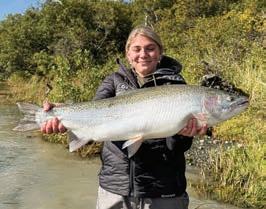
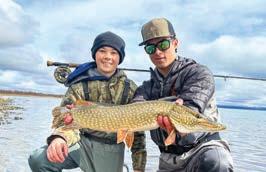
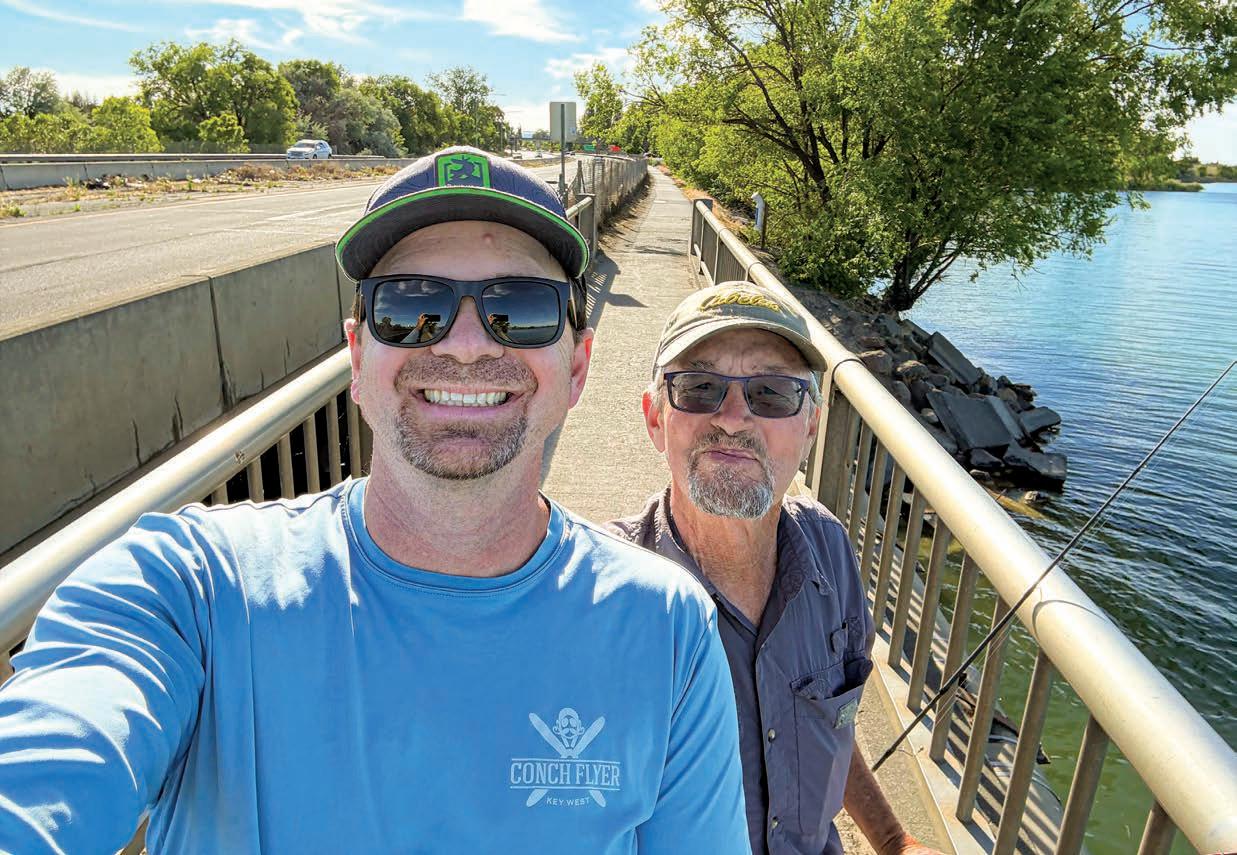
Andy “If it takes a few more words in the headlines, it’s well worth it” Walgamott
THIS ISSUE’S CONTRIBUTORS
Dave Anderson, Scott Haugen, Tim E. Hovey, MD Johnson, Randy King, Buzz Ramsey, Bob Rees, Trevor Torppa, Dave Workman, Mark Yuasa
GENERAL MANAGER
John Rusnak
SALES MANAGER
Paul Yarnold
ACCOUNT EXECUTIVE
Janene Mukai
DESIGNER
Katrina Ngor
PRODUCTION ASSISTANT
Emily Baker
OFFICE MANAGER/COPY EDITOR
Katie Aumann
INFORMATION SYSTEMS MANAGER
Lois Sanborn
WEBMASTER/DIGITAL STRATEGIST
Jon Hines
ADVERTISING INQUIRIES ads@nwsportsmanmag.com
CORRESPONDENCE
Email letters, articles/queries, photos, etc., to awalgamott@media-inc.com.
ON THE COVER
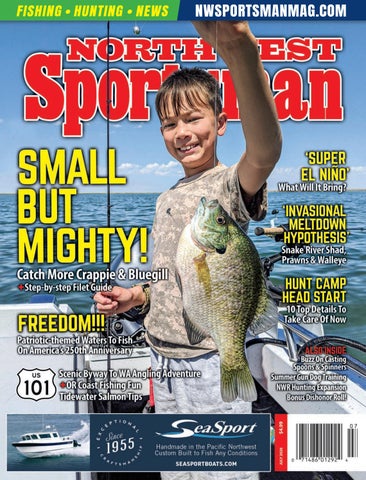
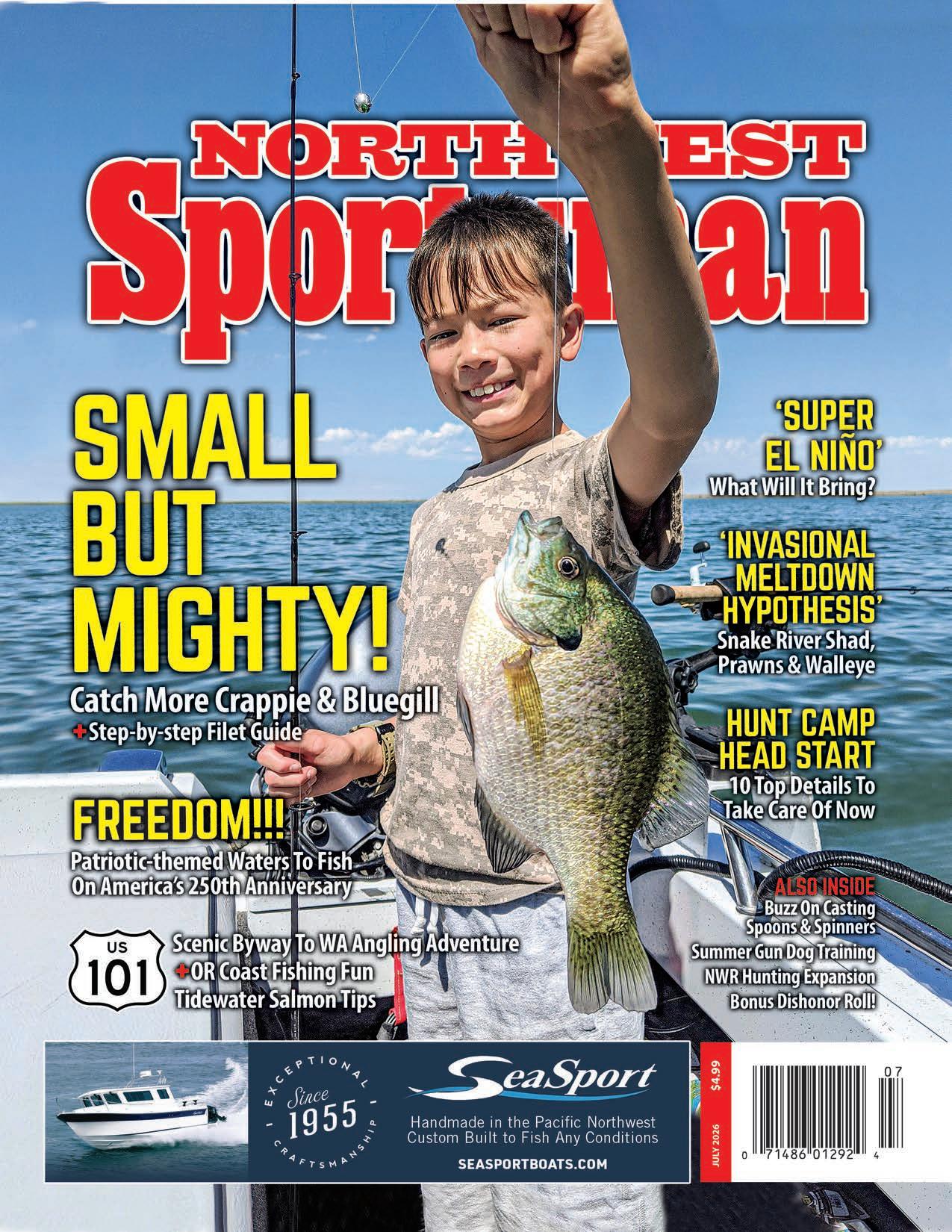
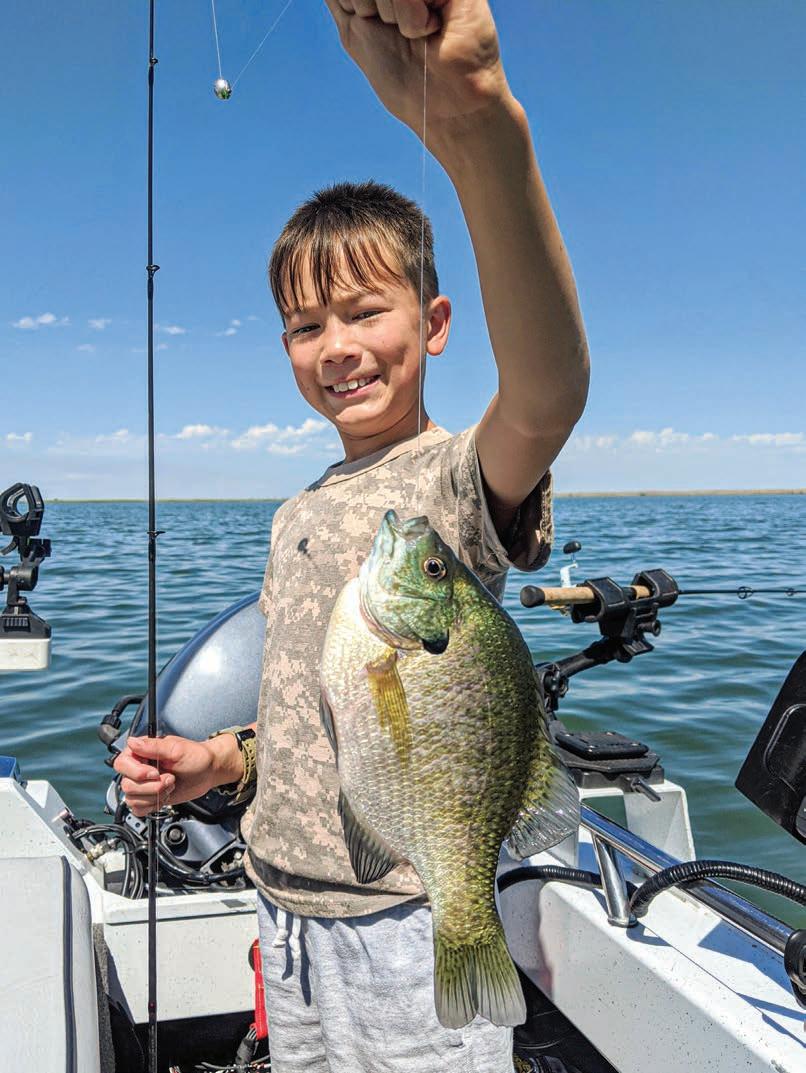
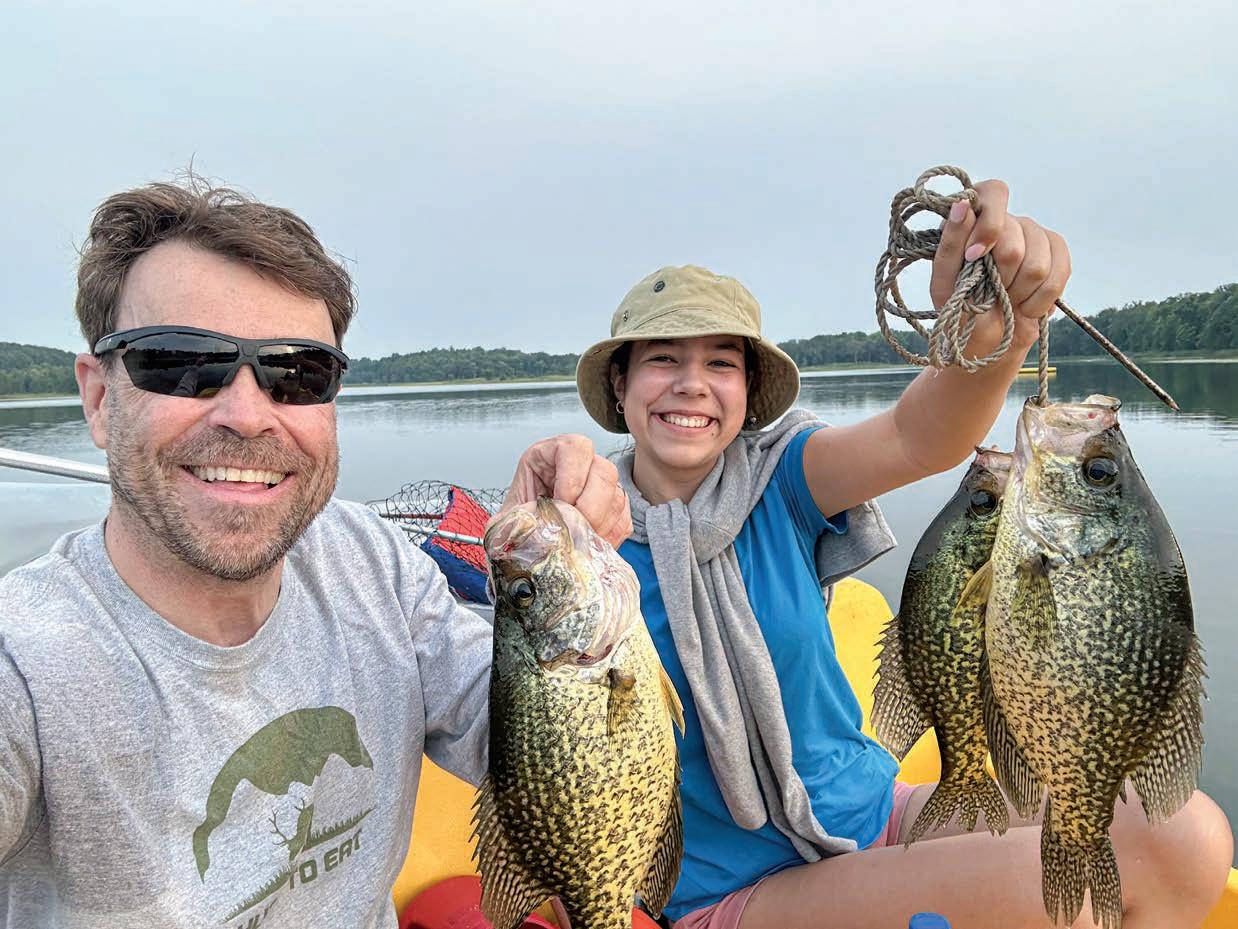
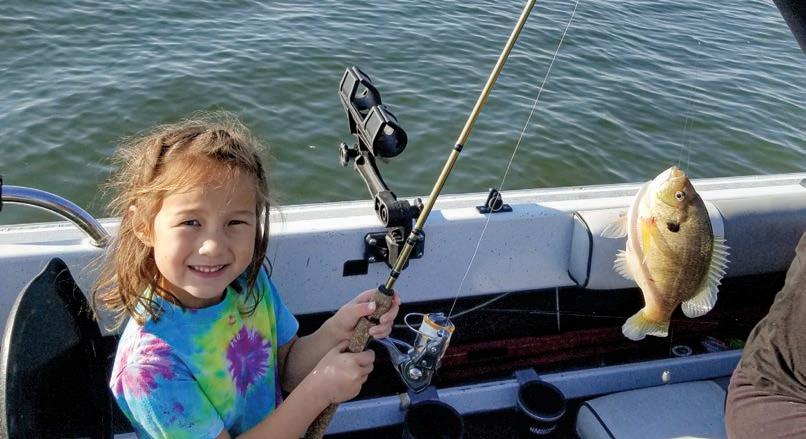
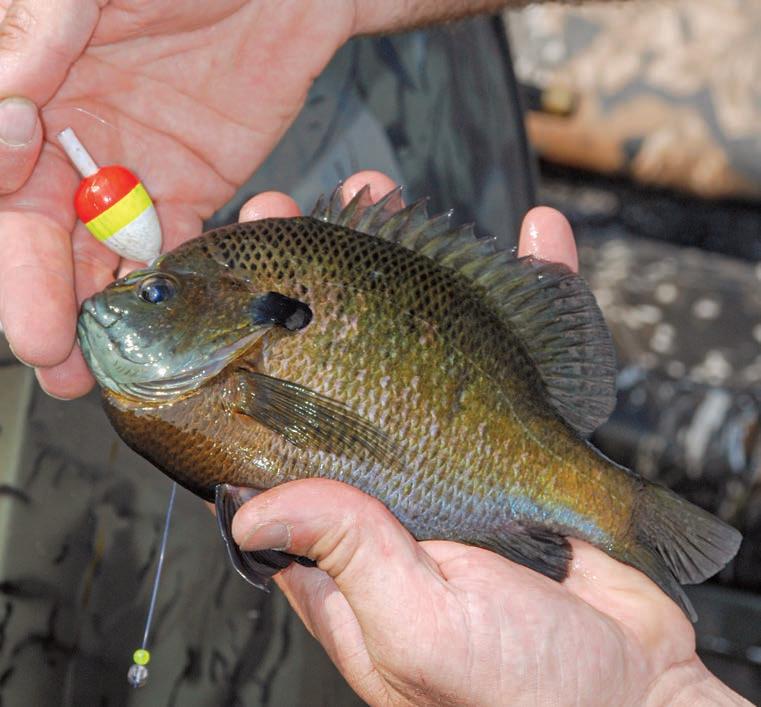
Austin Han shows off a pretty nice Potholes Reservoir bluegill he caught in a past season. Panfish like bluegills and crappie are great alternatives during the heat of summer, when warm waters put salmon, steelhead and trout off the bite but anglers still want to wet a line. (JERRY
HAN)
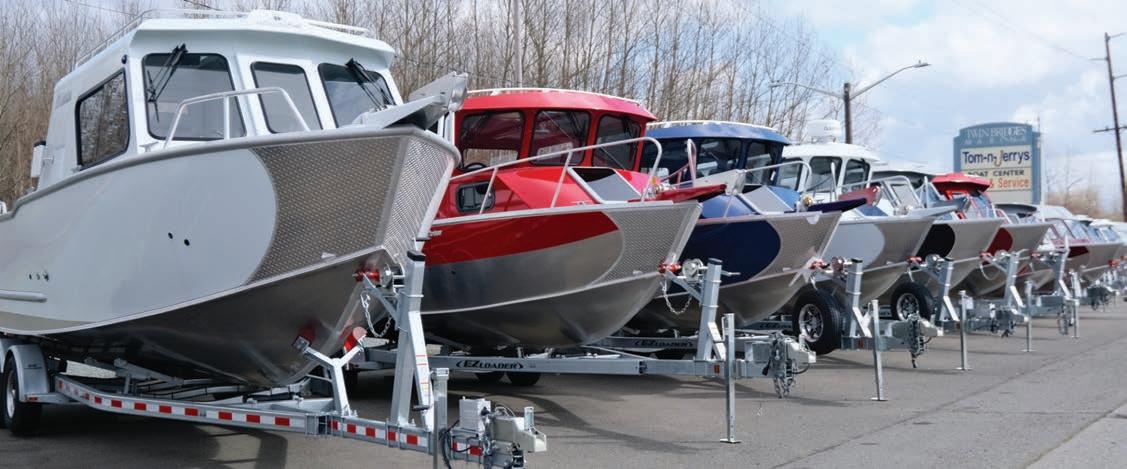
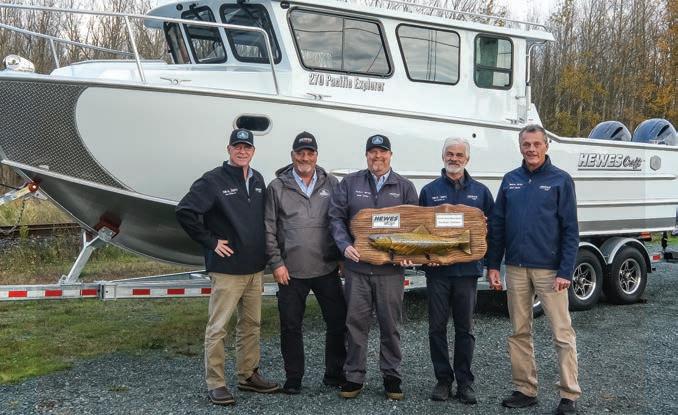
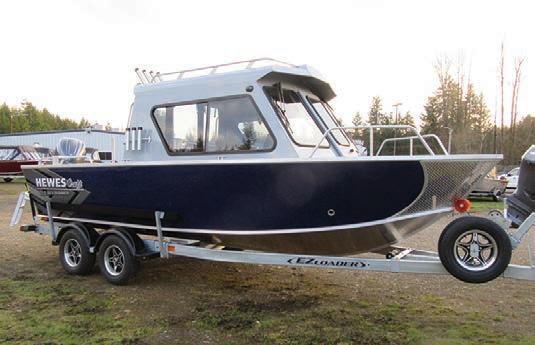
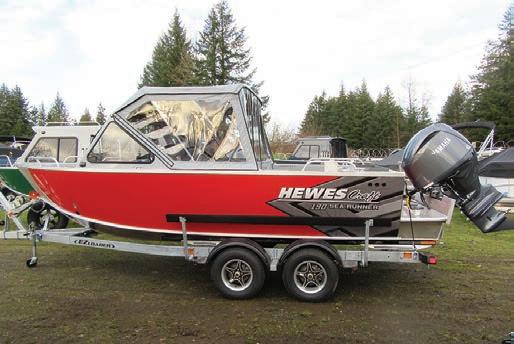
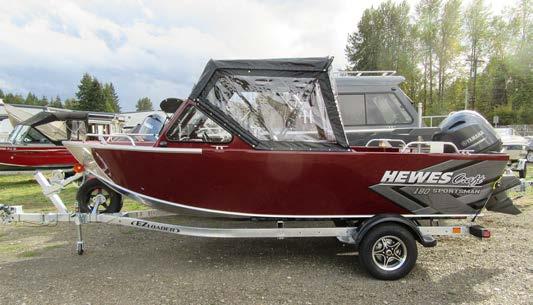
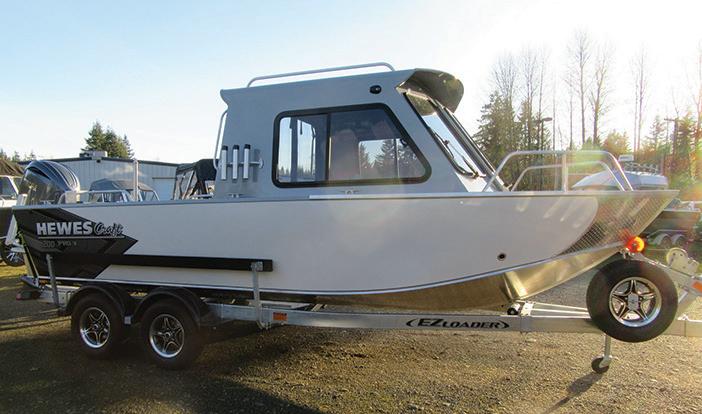
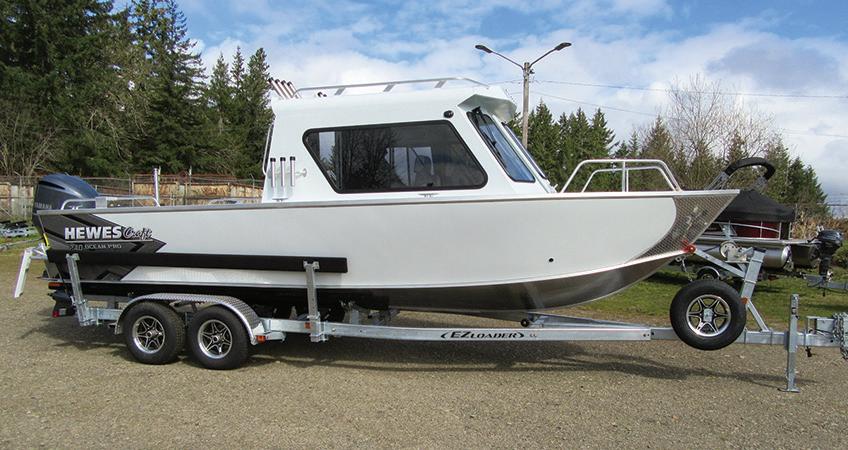
Recently, we accepted the award from the Hewes family for being the 2025 Top Sales Dealer — an honor we don’t take lightly. I’m thankful for the support from Hewescraft and especially our sales, parts, and service teams at Tom-n-Jerry’s. Great job, team!!!
— Kelly Hawley, President.
SEASON WITH SALT
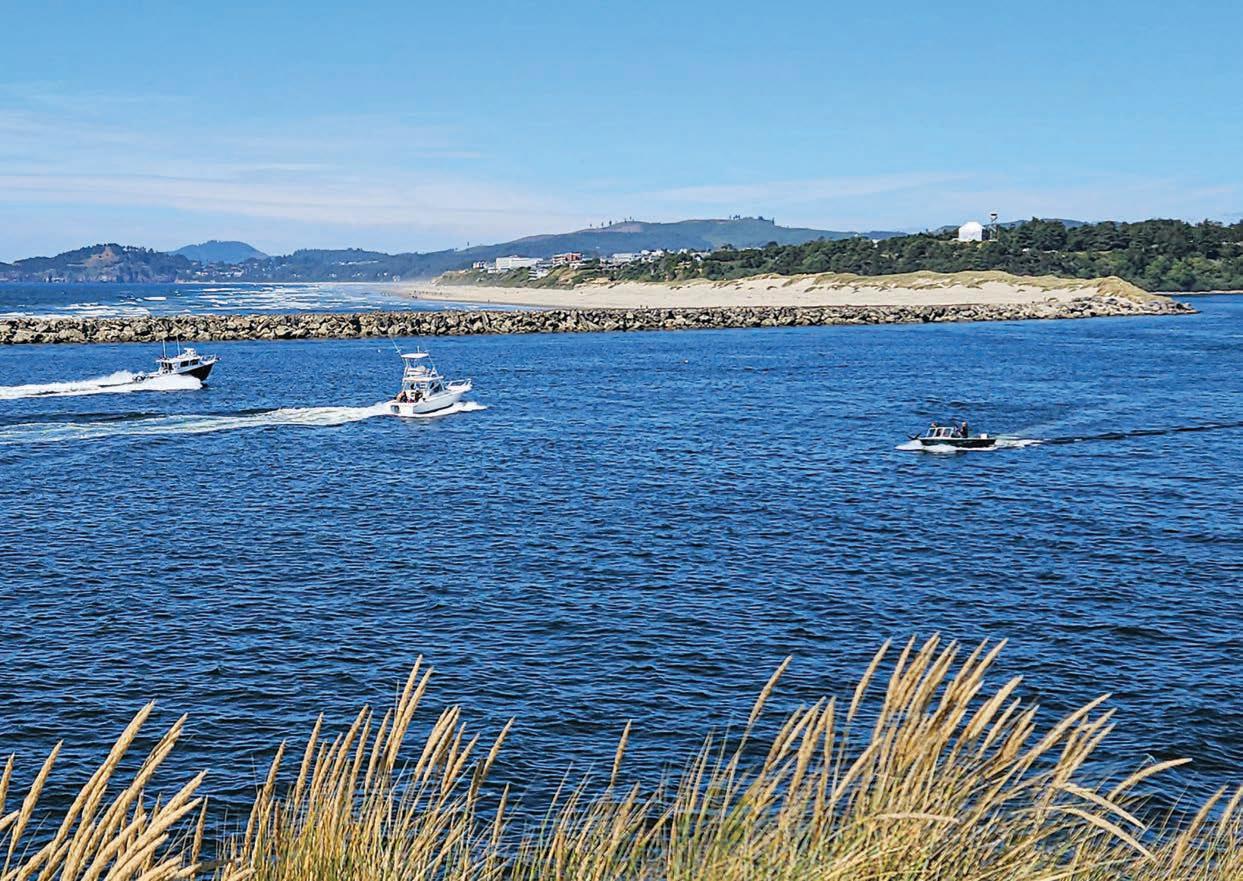
Oregon Coastal ports will be hopping with activity as anglers begin chasing tuna, hatchery coho fatten up and halibut season continues, but streams coursing through the Coast Range offer options for smallmouth bass, summer steelhead and cutthroat trout too. Guide Bob Rees spies out some great bets.
ALSO INSIDE
48 FREEDOM! FISH!! FISHING!!!
We’re celebrating the 250th anniversary of that day in 1776 when the Founding Fathers declared the king’s woods permanently open for fishing and hunting (as well as some other stuff). Editor Andy Walgamott details patriotic-themed waters across the Northwest to hit this semiquincentennial year.
65 THE DYNAMIC DUO OF BITES
Fresh off reminding us in the May issue that there’s actually much more to chase in the Northwest than shiny silver fish, MD Johnson dials in exactly how to catch two warmwater species – crappie and bluegills – at our region’s reservoirs, lakes, sloughs and just about every other stillwater venue.
80 HIGHWAY 101, SCENIC BYWAY TO ANGLING ADVENTURE
Mark Yuasa wraps up his three-part series on the angling opportunities along Washington’s major byways, this issue highlighting all that’s to be had along and just off Highway 101 as it hooks around the Olympic Peninsula and heads south down the coast. Jump in, we’re going fishing!
109 EMPTY NEST, FULL TACKLE BOXES
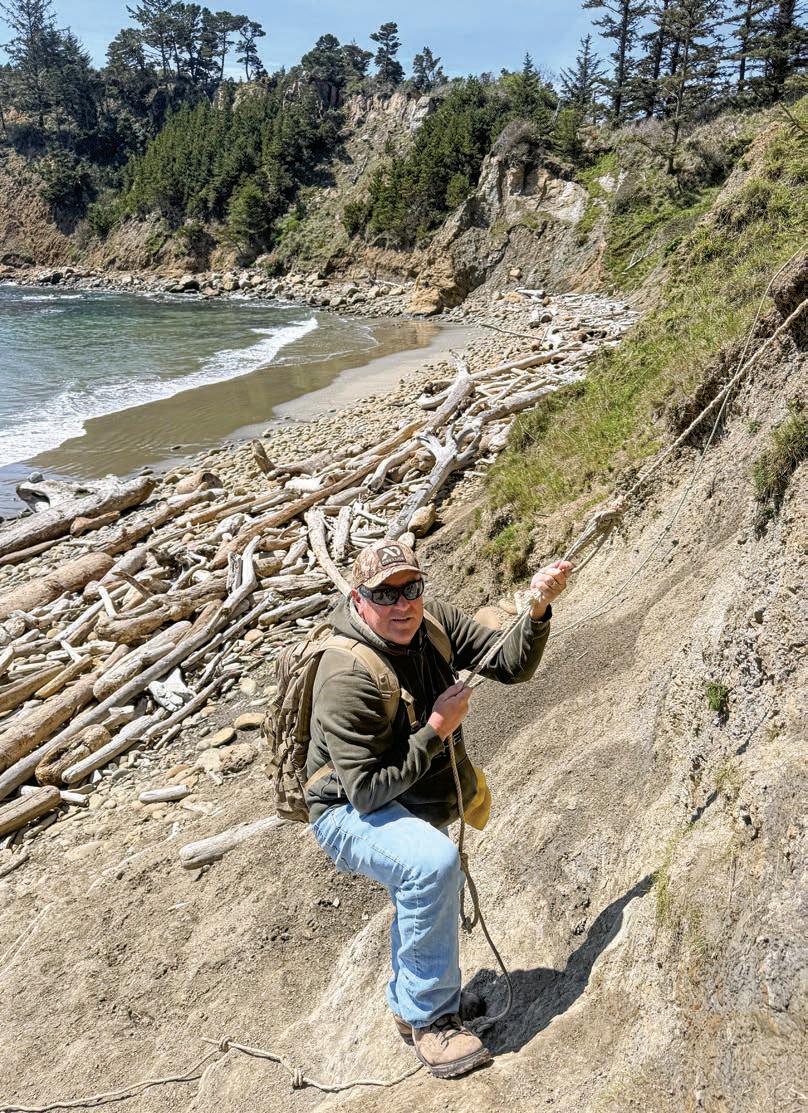
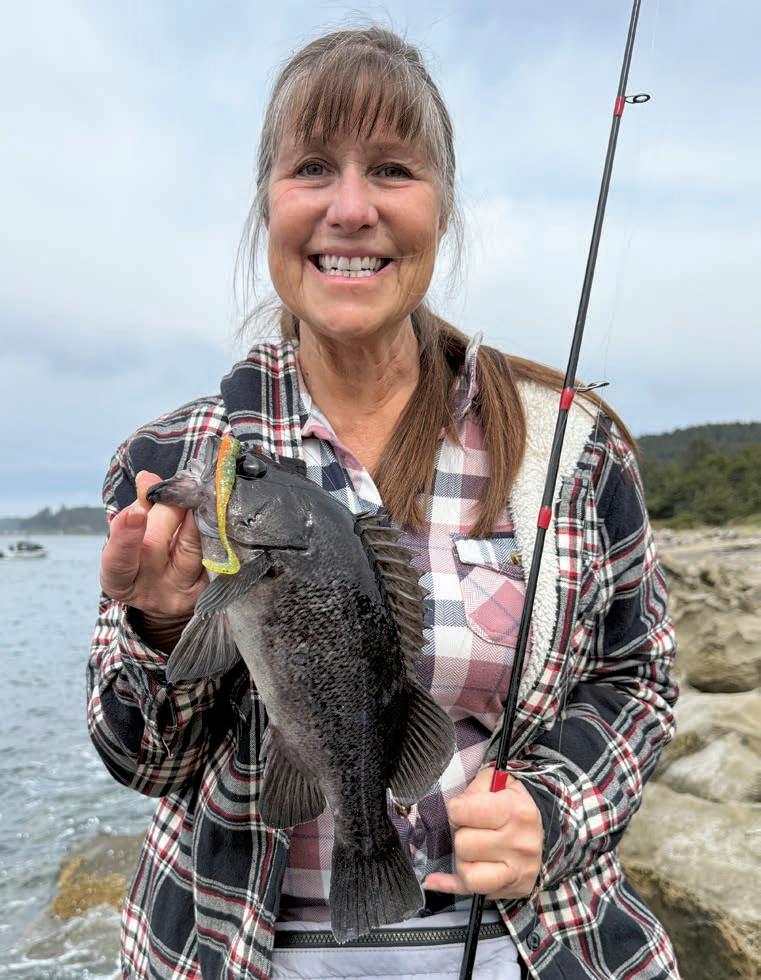
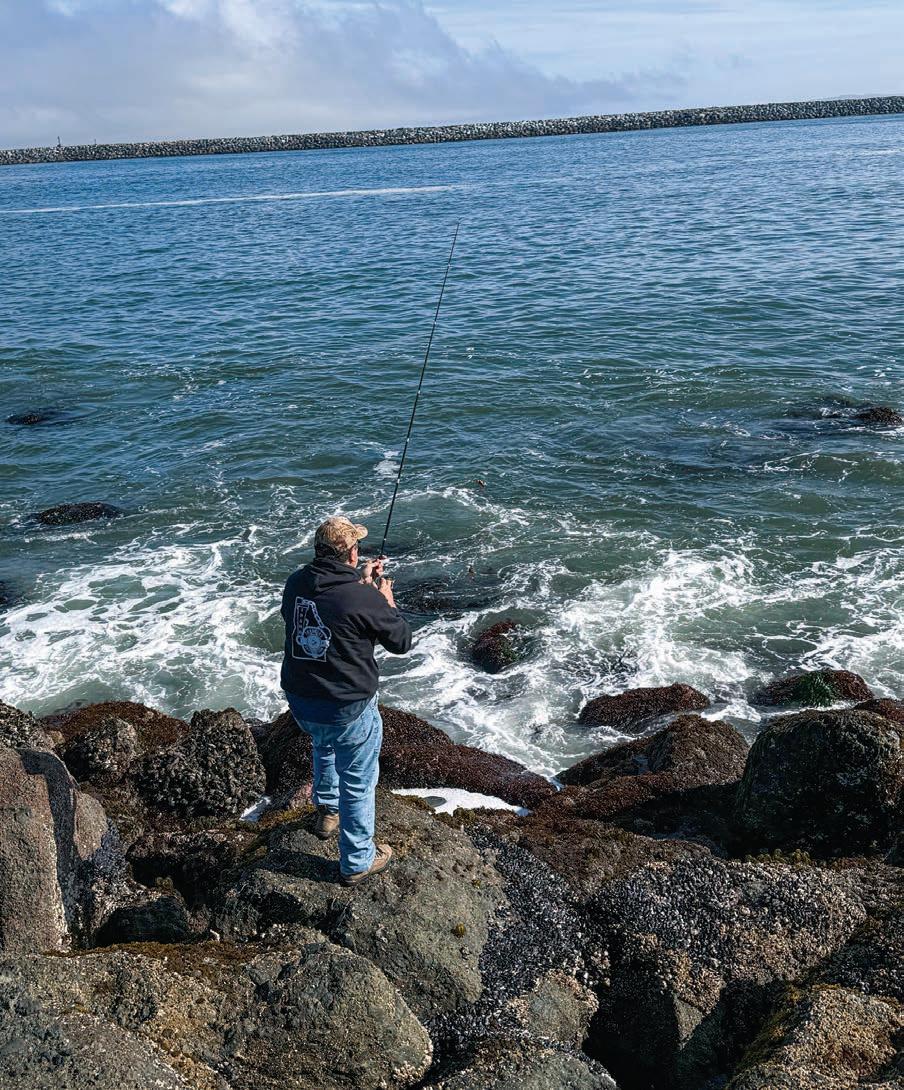
Angler Tim Hovey claims he is no longer the “adventurous youth” of yore, but somehow he and wife Cheryl still found themselves clambering down cliffs – shh, don’t tell their grown-up daughters! – and across jetties on the Oregon Coast. He shares how they planned and executed a brief getaway that yielded fun and a few fish!
115 TIDEWATER SALMON
Estuary fishing can be tough to figure out for new salmon anglers, but learning the ways coho and Chinook use the flood and ebb and high and low tide will go a long way to fish dinners. With coastal summer and fall fisheries nearing, guide Trevor Torppa offers up another handy tutorial.
(ANDY WALGAMOTT)
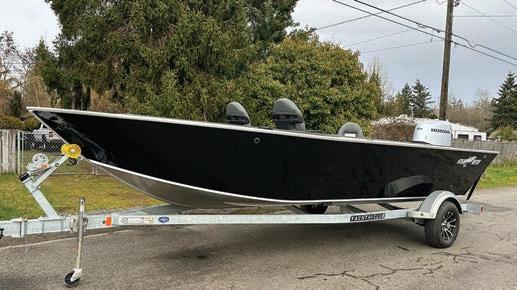
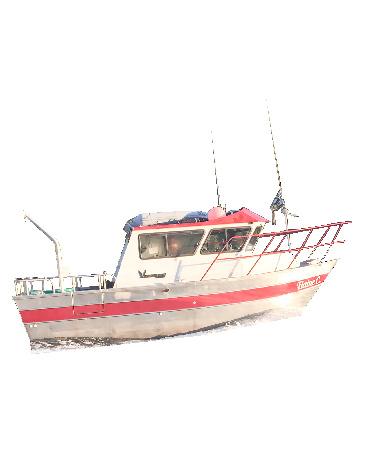
ALASKAN
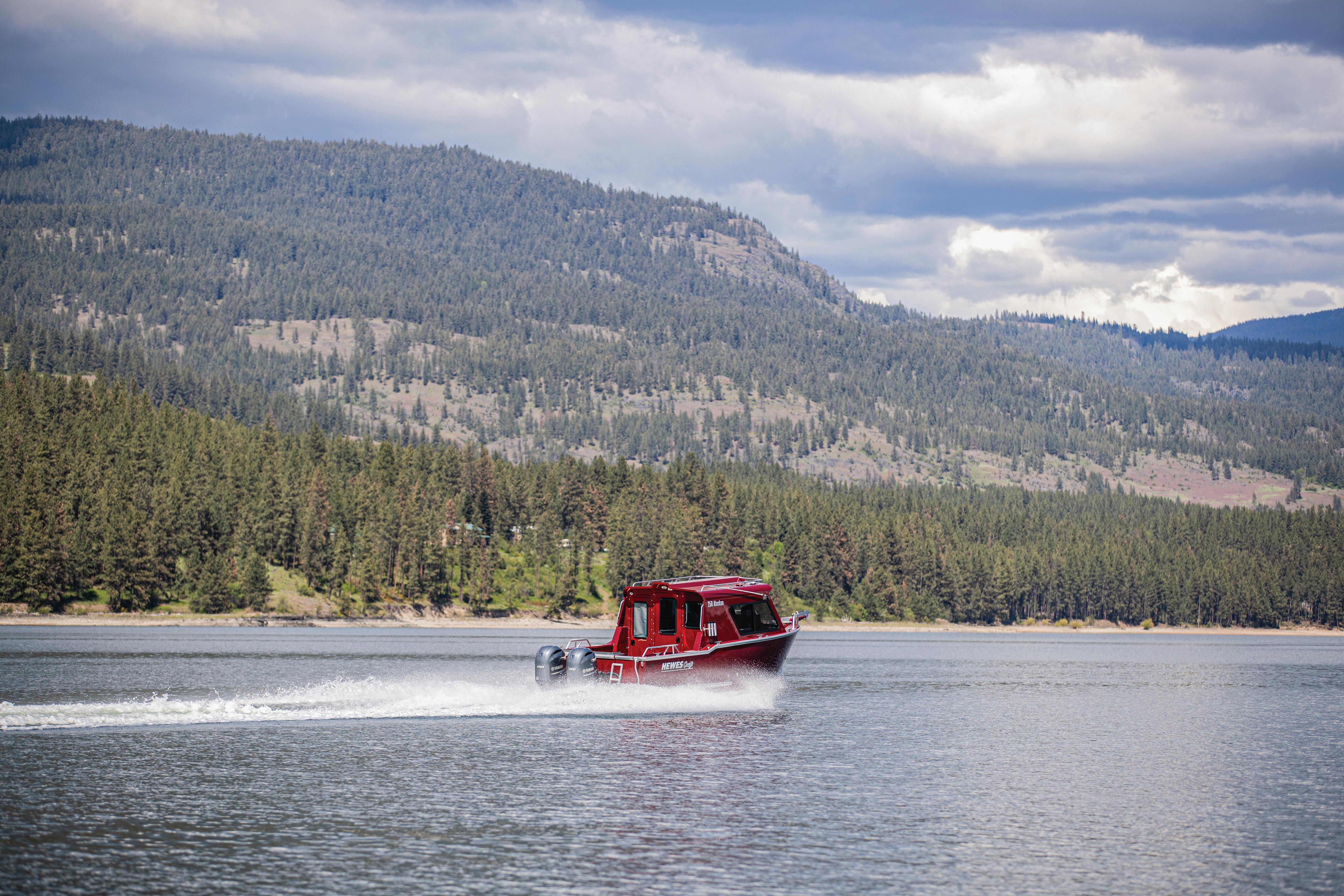
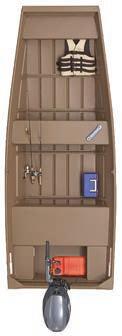
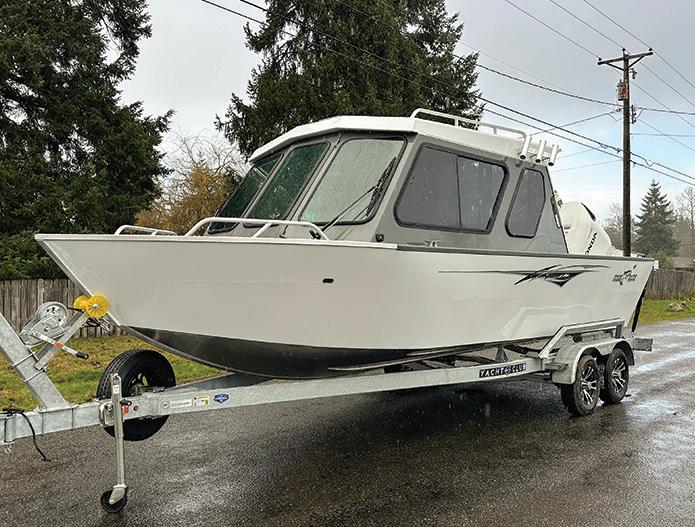
When safety is your bottom line, the Alaskan delivers. Used by guides and pros in some of the toughest waters in North America, this boat is built with an 8’-wide, quarter-inch-thick bottom, massive fuel capacity, self-bailing deck, and convenient head closet. It’s what confidence looks like in aluminum.
It’s time to chart your own course in a boat that’s proven where it matters.
THE BIG PIC
Snake River Shad, Prawns And Walleye, And The ‘Invasional Meltdown Hypothesis’
23 THE EDITOR’S NOTE We are in hot water
35 READER PHOTOS
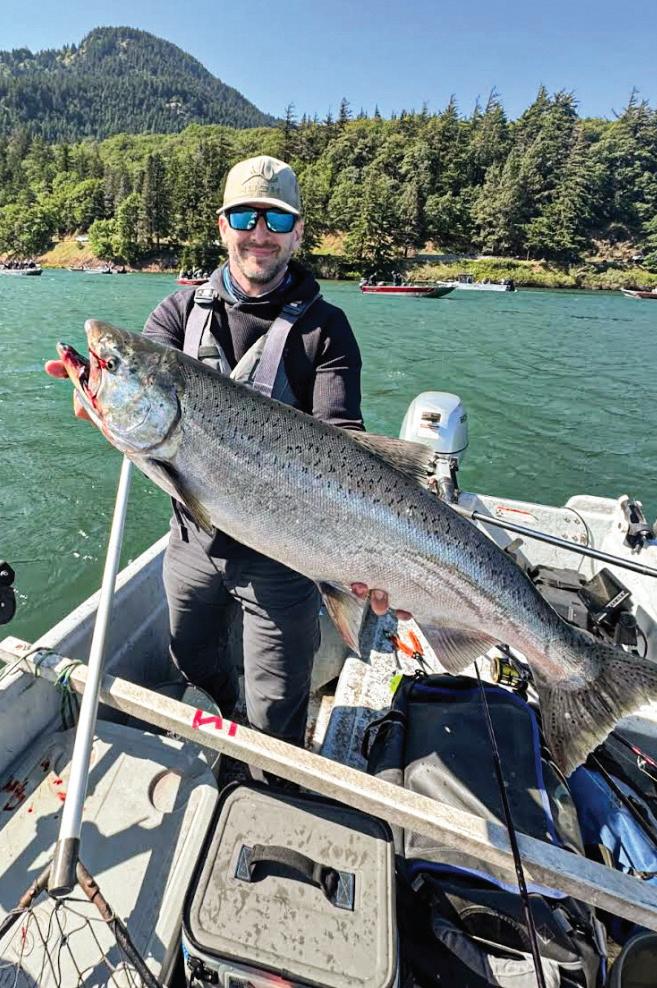
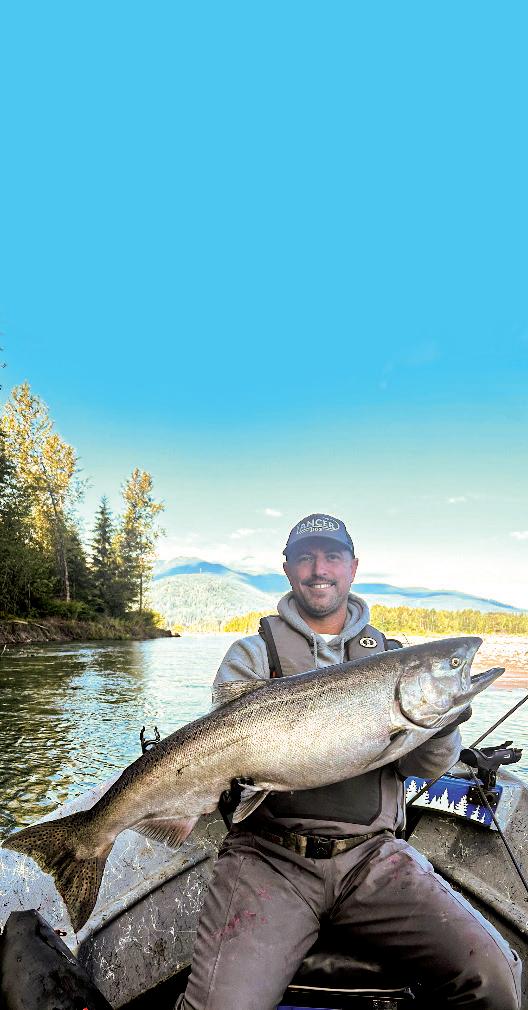
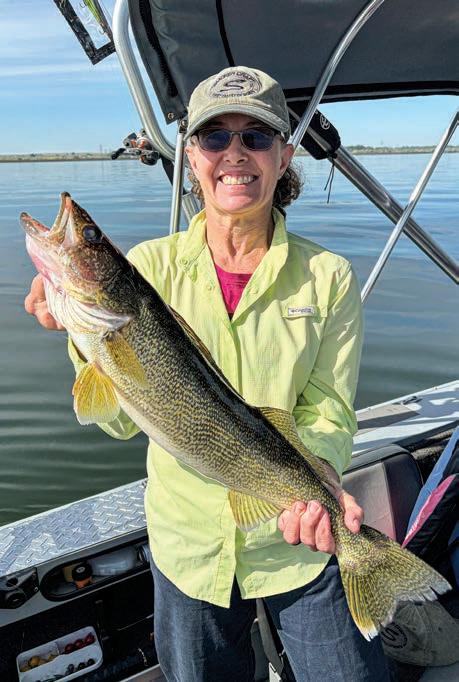
The kings and queens of spring – readers’ Chinook, gobbler and walleye catches
37 THE DISHONOR ROLL
All in a month’s work (and then some) for OSP fish and wildlife troopers; Game warden K-9 in training needs name; Shellfish swine go way over spot shrimp limit; Jackass of the Month
43 OUTDOOR CALENDAR
Upcoming fishing and hunting openers, events, deadlines, more
45 DERBY WATCH
Ongoing and upcoming fishing contents and events around the region
(PSMFC VIA IDFG)
An all-new food web is emerging in Southeast Washington and it’s not great news for young salmon, steelhead and lamprey.
THE EDITOR’SNOTE
The dead spring Chinook drifted slowly downstream on the river’s surface, its clouded right eye fixed toward the sun overhead in the clear blue sky. Turkey vultures rode the wind.
It was my first day back on the water after a heat wave that had raised air temperatures to mid-June daily records of 97 in Portland and 90 in Seattle. Though things had cooled down since then, my fishfinder told me the Willamette was now running at 70.7 degrees. While below the temps that are fatal to salmon and steelhead, prolonged exposure to 68-plus-degree water can also be a problem.
I don’t know what killed the king, nor could I tell if it was hatchery or wild as I trolled past twice (the pics I was overly focused on taking weren’t helpful). Had it slipped someone’s hook after a lengthy battle (like the big one I’d lost at the net the week before) or couldn’t recover after being released back into the warm river? Had it succumbed to columnaris, a highly infectious fish respiratory disease supercharged by low flows of 65 degrees and up? Dunno, but it was sobering.
WITH LAST WINTER’S record-low snowpack in parts of the Northwest and an expected hot summer throughout the region, fishery managers have been preparing anglers for what we might see among coldwater species as drought takes hold, as well as reminding us of alternative opportunities such as warmwater fish.
The Oregon Department of Fish and Wildlife said it most likely won’t implement “hoot owl” restrictions, which bar fishing on salmonid streams through the hottest part of the day. “Studies have generally shown these restrictions to be ineffective at reducing fish mortality, as angler’s (sic) participation in fishing and ability to catch fish already declines with warmer temperatures,” the agency stated. But ODFW did point out that the Nehalem River is likely to get quite warm and that in the past it had been closed because of that, and that a columnaris outbreak was expected in the Rogue system.
The Idaho Department of Fish and Game echoed ODFW’s reasoning that angling pressure is self-regulating in the heat of summer and thus it only “rarely” has to put the brakes on fishing. That said, Gem State managers pointed out sturgeon are more vulnerable to low, warm waters than other fish, and that has required closures to protect this slow-growing species. IDFG also said to expect die-offs but that fish and streams are resilient, cyclical and bounce back.
Meanwhile, the Washington Department of Fish and Wildlife said it will be watching environmental conditions that “could impact fisheries and salmon migration in late summer and early fall” and advised checking its rule change page for any in-season tweaks.
I EVENTUALLY LOST sight of that dead Willamette springer, but not before it took a lot of wind out of my sails just as I’d started to figure out the fishery. Should I keep at it? The river’s even warmer today ...
As our stories this issue show, there’s still a good number of relatively safe summer options to take advantage of: mountain trout; crappie and panfish in lower elevation lakes; tuna, salmon, halibut and bottomfish on the coast; the waters along Washington’s Highway 101, which are often insulated under the protective marine layer. And although it’s decidedly a double-edged sword, we also take a look at what unusual ocean species a super El Niño might bring our way.
Things may seem grim, but there’s usually a silver lining if you look hard enough. Indeed, I try to be a glass-half-full kind of guy, even if at times that water’s on the warm side. –Andy Walgamott
Snake River Shad, Prawns And Walleye, And The ‘Invasional Meltdown Hypothesis’
An all-new food web is emerging in Southeast Washington and it’s not great news for young salmon, steelhead and lamprey.
By Andy Walgamott
Up until recently, nobody could really say for sure whether the gazillions of American shad annually running up the Columbia River were having any impact on salmon and steelhead, either directly or indirectly.
It absolutely makes sense that shad are, and yet a panel of scientists who did a deep dive into that question a few years ago essentially threw up their collective hands and said, who the hell knows.
“Their sheer numbers suggest there should be interactions with other fishes and with the birds and mammals that prey on them. However, the limited studies available do not identify clear interactions
between shad and salmon or the role of shad in major ecosystem processes,” wrote the 11-member Independent Scientific Advisory Board back in 2021.
Fast forward five years, and that may be changing.
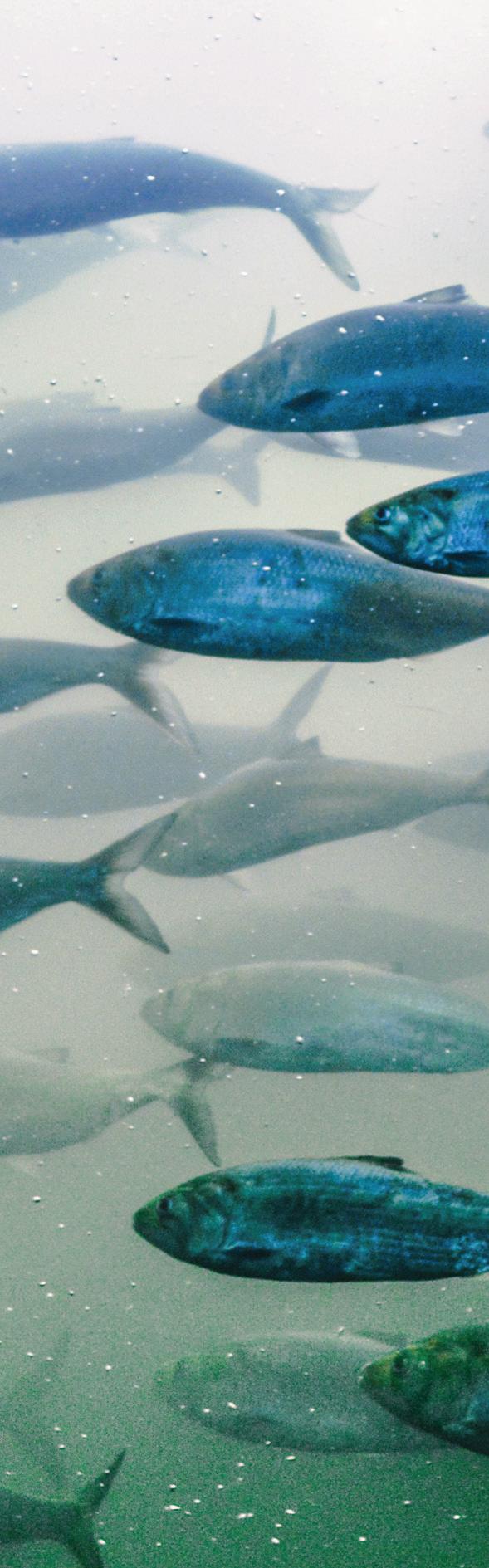
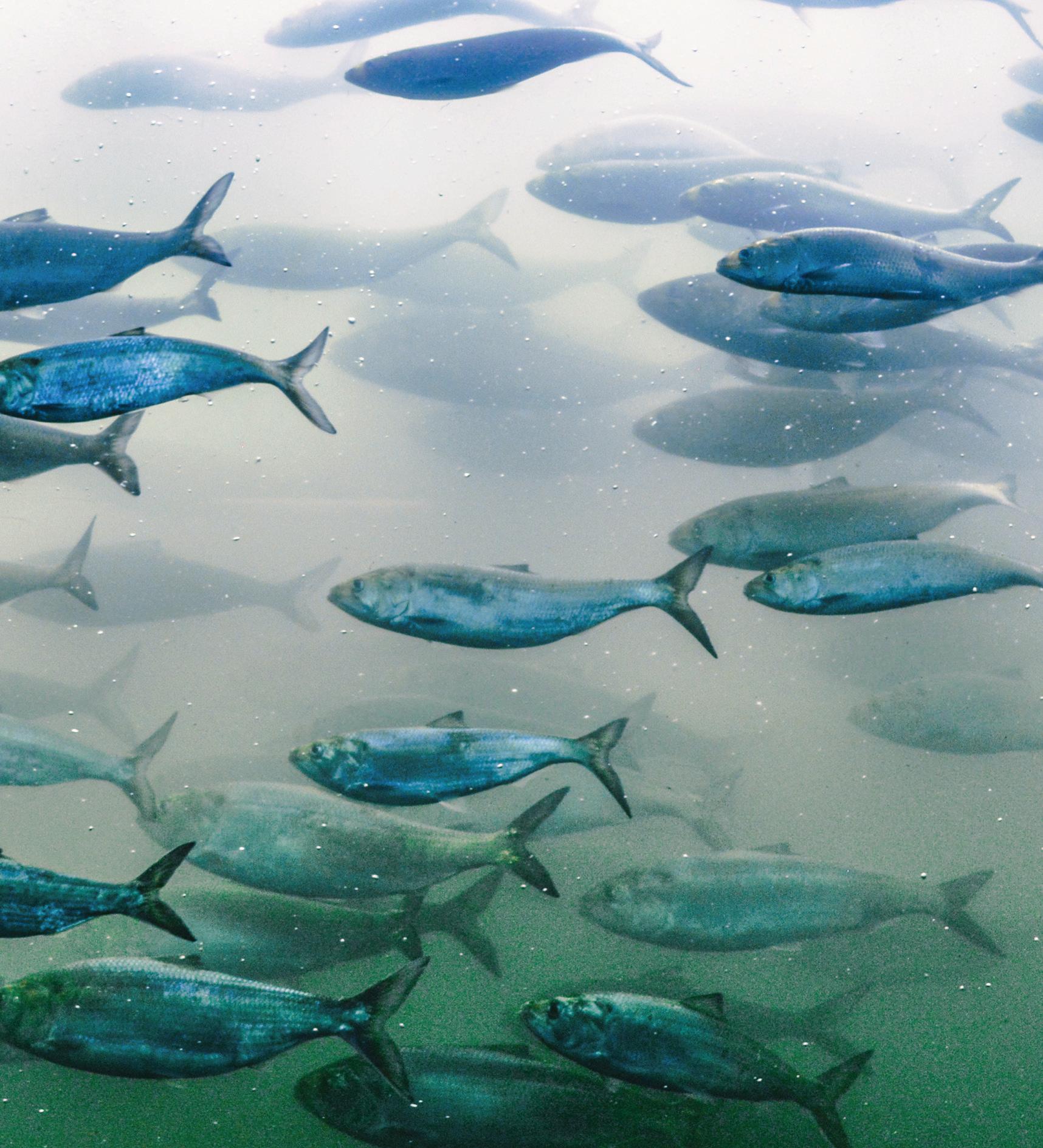
A new research paper says that young shad along with swarms of another invasive species are key parts of a new food web in a portion of the lower Snake River that is benefiting walleye and their ongoing colonization of the system to the detriment of Chinook, lamprey and other native ocean-goers.
“We find that American shad, in combination with Siberian prawn, support introduced walleye and almost certainly magnify their annual predation on salmon
American shad stream past the viewing window at Bonneville Dam during 2017’s run up the Columbia River. On average, over 330,000 make it into the Snake River, where they spawn and their progeny provide a fall bridge diet for an expanding walleye population. (CORPS OF ENGINEERS)
smolts,” write a quartet of Washington Department of Fish and Wildlife and Oregon State University scientists in the journal Biological Invasions
THEIR CONCLUSION STEMS from a yearlong study of the diet of walleye, a popular game fish that arrived via unknown source to Washington’s upper Columbia River system in the 1940s, ’50s or ’60s and have since spread from there into the Snake.
Crews fished for walleye from Little Goose Dam downstream past the mouths of the Tucannon and Palouse Rivers four times a month and caught a total of 524 of the fish, took a portion of each one’s pelvic fin for isotope analysis and pumped all of their stomachs, 318 of which contained food.
Labwork found the walleye had a varied diet – pikeminnows, suckers, smallmouth,
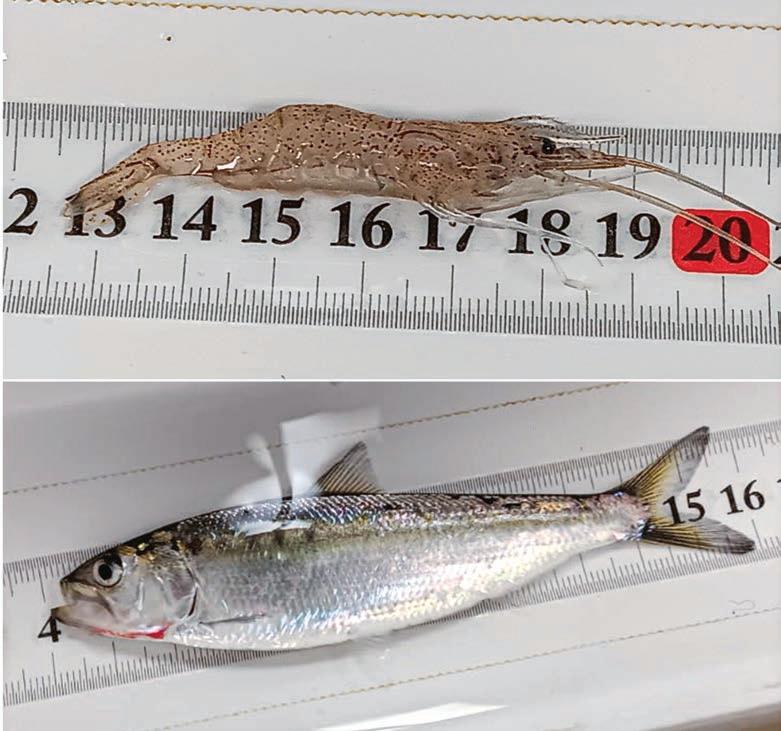
crappie, crayfish, mollusks, zooplankton and seven kinds of insects – but Siberian prawns, which are a kind of freshwater shrimp that grow up to 3 inches, along with shad, salmonids and lamprey represented the top four items on the menu.
By percentage, prawns were the most frequently found item in walleye stomachs nearly year-round, ranging from 28 percent in midsummer to nearly 80 percent during the winter months. They likely arrived in the Snake via barge ballast in the early 2000s.
Only in late fall was another fish found more frequently than prawns, and that was young shad, representing 40-plus percent of occurrences in October and November. Shad are an East Coast fish that were transplanted to the Sacramento River in 1871 by a federal fish culturist and then reached the Columbia half a decade later.
The stilling of Celilo Falls under The Dalles Pool in the late 1950s aided their penetration of the Columbia Basin immensely.
Salmon and steelhead smolts were found in as many as 40 percent of walleye stomachs in April, coinciding with their downstream migration, while lamprey represented 35 percent that same month.
Isotope samples, which provide the unique chemical traces of each walleye prey species, corroborated the forage analysis.
The work is an example of what’s known as the “invasional meltdown hypothesis,” which a WDFW blog on the paper summarizes as “how the introduction of one or more non-native species make it easier for other non-native species to establish and thrive, leading to a cascade of invasions and a decline in native biodiversity.”
Think about a backyard overgrown with blackberries, which then allows
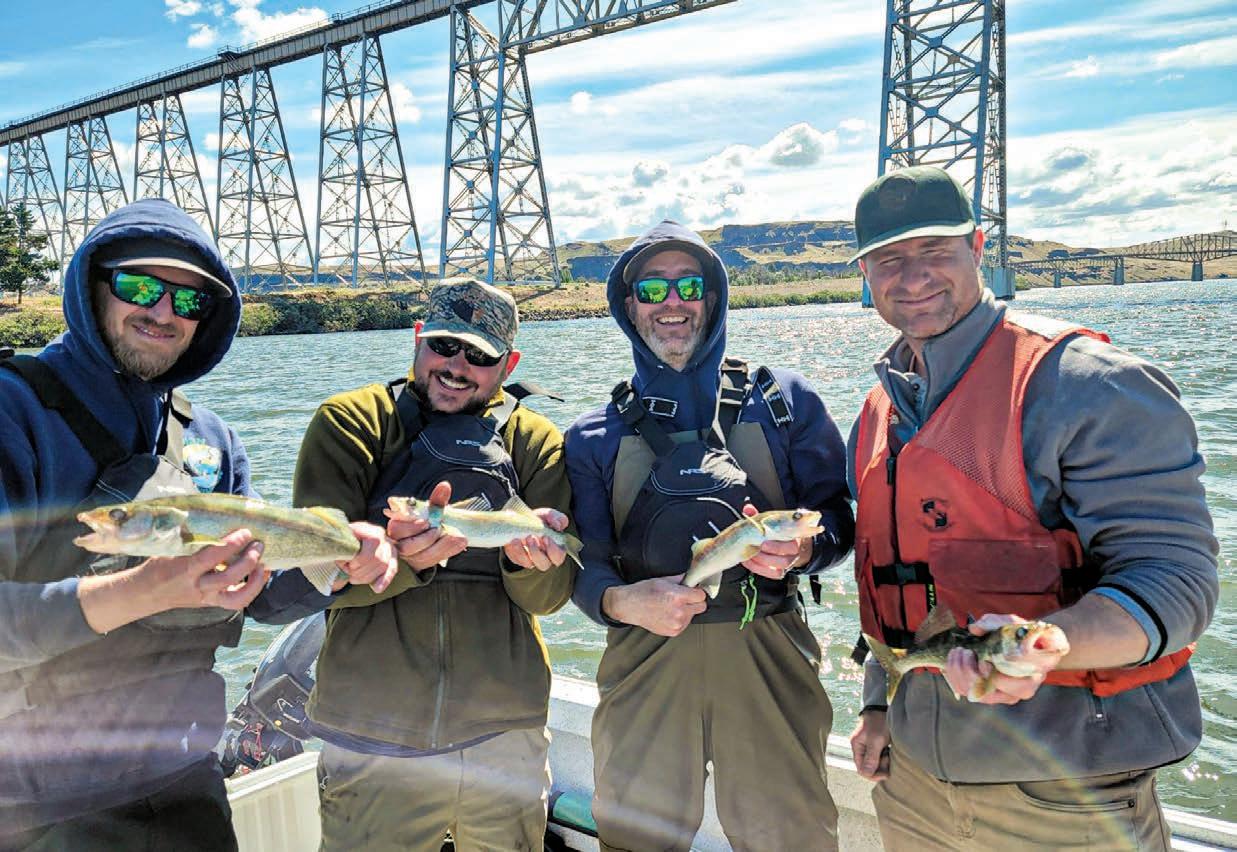
A Washington Department of Fish and Wildlife crew shows off their catch of walleye from the Snake near Lyons Ferry Hatchery. Researchers sampled 524 walleye over one year for a recent diet study. (WDFW)
lesser celandine, yellow archangel, shiny geranium, morning glory, common pussywort, herb Robert, shotweed, etc., etc., etc., to take hold and thrive – and that’s just the disaster that was our back 40 when we bought this place and have had to work like hell to weed out the invasives.
In the case of the Snake, the natives include spring, summer and fall Chinook, coho, A- and B-run steelhead, lamprey, etc.
THESE NEW FINDINGS “challenge current perspectives on the relationship between American shad and salmonids in the Columbia River,” write WDFW staffers Andrew Murdoch, Matt Polacek and Rochelle Polacek, and Dr. Jonathan Armstrong at OSU’s Department of Fisheries, Wildlife, and Conservation Sciences.
“There has long been concern that shad could have negative effects on salmon, especially through indirect effects via a shared predator. However, multiple syntheses have found no evidence implying
American shad are negatively affecting salmon. This is likely because prior studies on salmon predation were designed to detect direct effects and studied predator diets in spring and summer, when juvenile salmon migrate downstream,” they posit. “By considering empirical data across the full annual cycle, we arrive at a very different conclusion regarding the effects of American shad on salmon.”
The Idaho Department of Fish and Game says the prawn diet “allows juvenile walleye to better survive and grow to the size at
SNAKE STURGEON STRUGGLING TOO
The situation with lower Snake River walleye, shad and Siberian prawns is not unlike the story with sturgeon further upstream.
Diamondside numbers are declining above Lower Granite Dam, and before he retired last year, a longtime Idaho fisheries biologist and regional manager aired his suspicions that rising prawn, opossum shrimp and sand roller numbers are the cause of reduced recruitment among these long-lived fish.
Opossum shrimp, which are native to the Columbia River estuary, first showed up at Lower Granite in 1994 and now represent 90 percent of the epibenthic biomass in the reservoir. They’re fed on by Siberian prawns, which in turn probably feed on just-hatched sturgeon, according to Joe DuPont.
He also points out an “uncanny” relationship between baby sturgeon and sand rollers – a small fish native to the Columbia. It shows that as the latter increase, the former decline, a pattern only ever reversed during high-water years.
Big spring snowpack runoff years now also appear to produce the only “meaningful sturgeon recruitment” opportunity for the species, a paradigm shift from pre-shrimp, -prawn and -sand roller times. Entrainment due to increased spill to aid outmigrating salmon and steelhead smolts is probably also an issue, though has likely been since the dams went in, DuPont said.
This radically altered Snake food web isn’t all bad news for sturgeon, however.
“These very species, then, that are a detriment to this population can then turn around and be a benefit. And so do we think that sturgeon are eating these, especially these smallest sturgeon? Absolutely. There are so many Siberian prawns now that not only do I think the sturgeon are taking advantage of it, we see smallmouth bass are just gorged with them, walleye are just gorged with them. They’re probably providing a food source for a whole lot of things,” DuPont told the Northwest Power and Conservation Council at a meeting last October.
All of it had DuPont advising future Snake River sturgeon managers that “some sort of hatchery program may be the only way to sustain the population” if high-flow events continue to be as few and far between as they’ve become. –AW
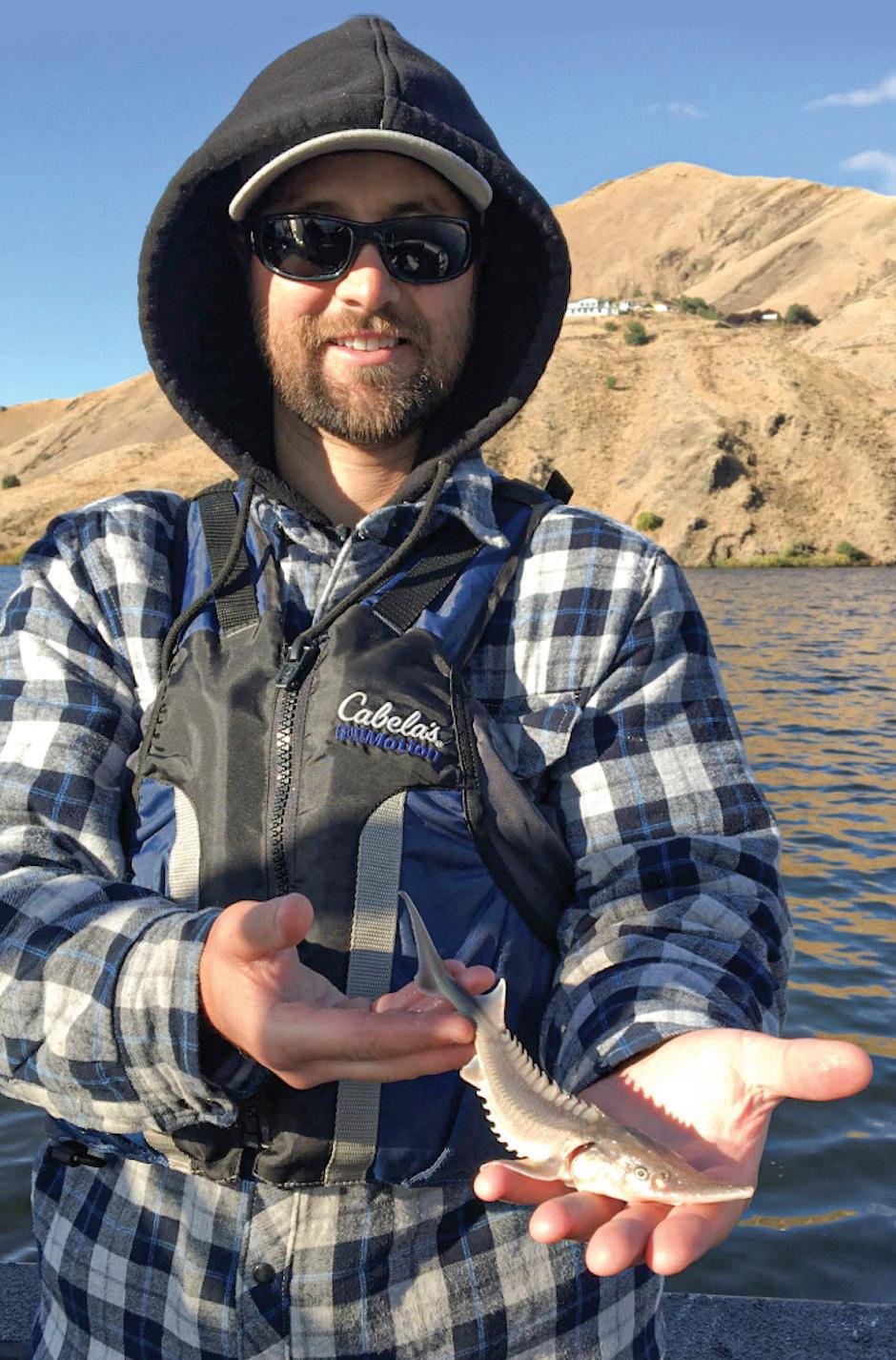
A researcher holds a young sturgeon sampled in the Lower Granite Pool of the Snake River. (IDFG)
which they convert to eating fish.”
The researchers say the “indirect effect” of young shad and prawns subsidizing walleye diets until the buffet of salmonid smolts arrives “is of serious concern given that American shad now comprise > 90% of the anadromous fish returning to the Columbia River Basin (a recent run exceeded 7-million fish) and they are expanding in both abundance and geographic extent.”
How to fight back and protect Endangered Species Act-listed Snake salmon and steelhead? File this under “no duh,” but the researchers suggest reducing shad and prawn numbers.
“Shad are the most actionable target because they contribute heavily to walleye diets and migrating adults can be removed at dam fish ladders,” they write, quickly adding, “However, suppression of invasive fishes in the western United States has rarely produced positive outcomes.”
Currently, there’s little to no commercial market for shad, so no incentive for someone to go in with nets. Agency budgets aren’t exactly bursting at the seams for that sort of
work either. That said, a federal-tribal-stateNGO workgroup that includes Washington Fish and Wildlife Commission member Steve Parker has been formed to explore ideas. Meanwhile, that leaves it to anglers running shad darts and Dick Nites below Bonneville Dam to try and stem the tide. Try harder, all you Hans Brinkers!
The authors do add that walleye in the Columbia and Snake aren’t well studied, so it’s unclear how many would have to be removed to move the needle on salmon and steelhead recovery. And of course, if young shad can somehow be kept out of their diet, what prey item would walleye then move on to to tide them over in fall, and what new headache might that create? “Developing a comprehensive monitoring program is therefore essential, both to assess management effectiveness and to detect compensatory responses by other piscine predators,” the researchers advise.
OTHER INTERESTING FINDINGS from their paper include a graph that shows walleye passage at Little Goose Dam spiking in
recent years, including 1,500 last year. This magazine and blog has reported on surging walleye numbers upstream at Lower Granite Dam, leading Idaho fish managers to sound the alarm about their increasing overlap with salmon and steelhead spawning and rearing waters.
IDFG continues to urge anglers to catch and remove walleye. Data shows most are being caught between the town of Asotin on the Washington side above Lewiston upstream to Heller Bar at the mouth of the Grande Ronde River.
“Most walleye were caught by people fishing smallmouth bass with swimbaits, jigs, and crankbaits,” IDFG walleye researcher Marika Dobos tips. “People that are targeting walleye do very well bouncing or trolling worms on the bottom or dragging big crankbaits near the bottom. If you want to help with the cause of removing walleye and having some tasty fillets, fish around the rocky islands or point bars that drop off into slower, deeper water. Walleye have been caught at a variety of depths, so just work your way down until you find them.”
The expansion of walleye up the Snake has also occurred despite WDFW’s commission lifting daily walleye catch and size limits in the river in 2013, the WDFW and OSU authors of the paper also note.
And they compared what’s being seen on the Snake with the Upper Columbia. There, Priest Rapids Dam is difficult for shad to ascend because of how the fish ladders were built, while the lack of locks for barges to go through has kept Siberian prawns out.
“Though more data are needed to robustly evaluate this pattern, it appears that walleye populations are not increasing in areas of the Columbia River Basin where American shad and Siberian prawn are not abundant, lending additional support to the Invasional Meltdown Hypothesis,” they write.
The natural world is pretty complex, and when you alter it like we have, all sorts of weird things happen. Here, it looks like the surfeit of American shad and Siberian prawns are providing the rocket fuel for walleye to expand their grip in the Snake system, at the ultimate expense of salmon and steelhead and potentially the billions of dollars being spent on their recovery. NS
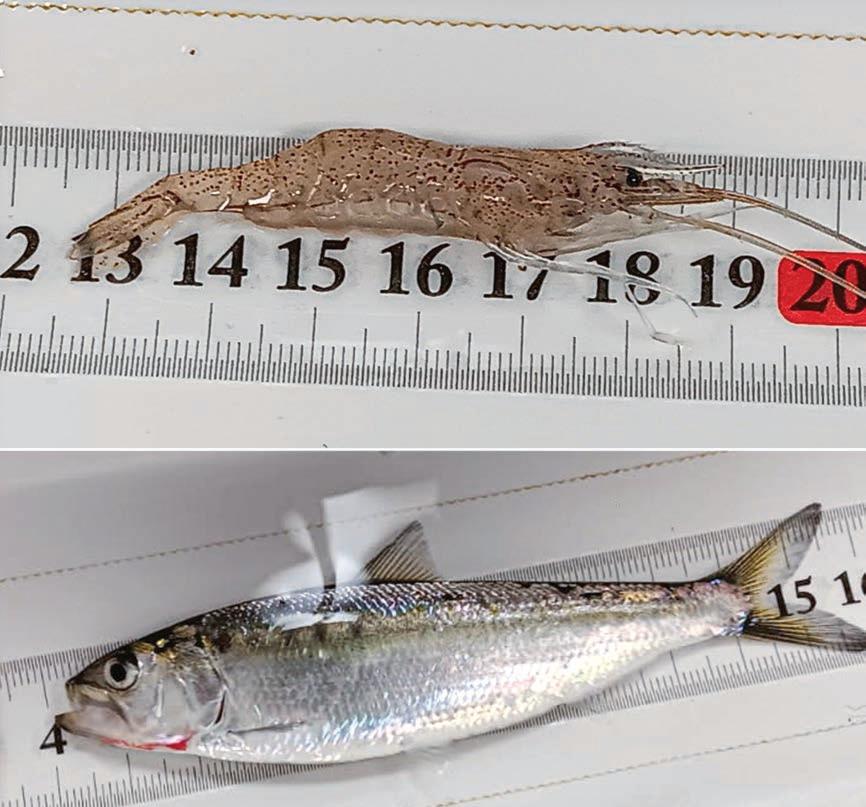
These are the nom noms fueling walleye colonization of the Snake, Siberian prawns and juvenile shad. The synergy of all three species is what’s known as the “invasional meltdown hypothesis.” State researcher Matt Polacek says the work could be applied to other pools of the Snake and Columbia below there. (PSMFC VIA IDFG)
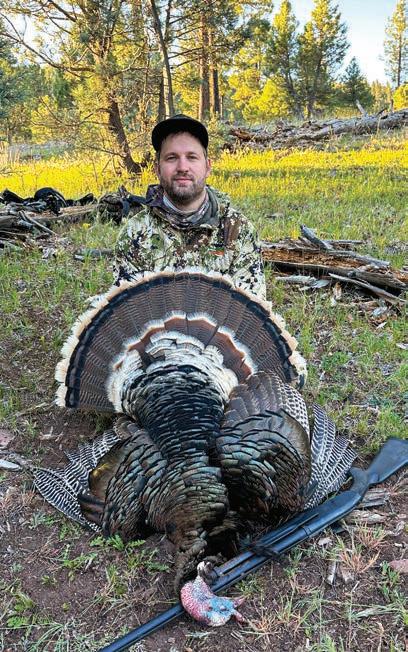
Arizona’s Tonto National Forest was the scene of a memorable spring turkey hunt for Jeff Crawford. He nailed his second tom ever – and first on public land – while hunting there with his dad, Jon, who had flown down from Tri-Cities to take part. (KNIFE PHOTO CONTEST)
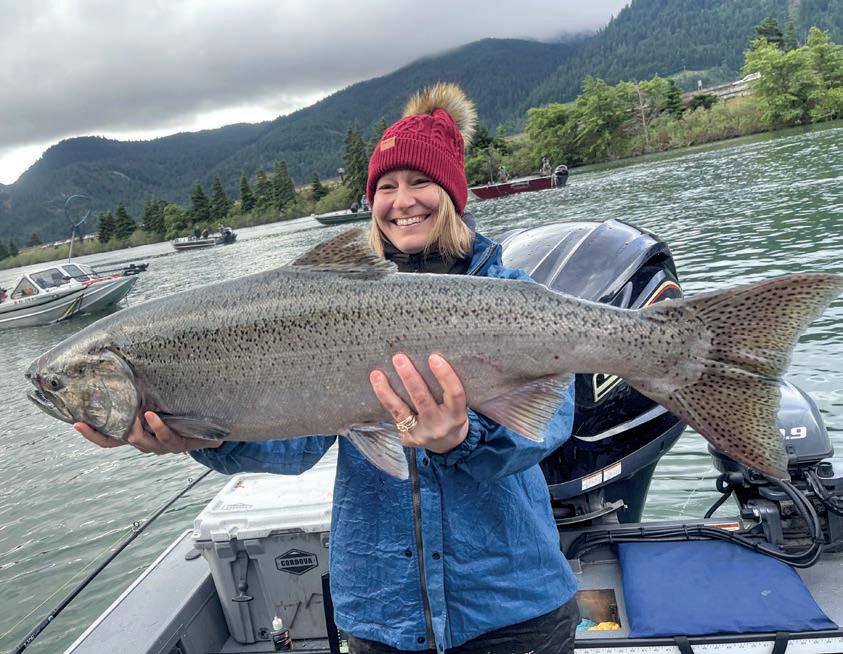
Heather Ireton outfished all the guys aboard the guide sled that mid-May day on Drano Lake. She had her limit of two spring Chinook before any of ’em managed to hook a single one, an impressed boatmate Rick Itami reported. (KNIFE PHOTO CONTEST)
Spencer Ewing and a friend tested the weight capacity of Ewing’s grandpa Frank Urabeck’s 14-foot Livingston, loading it up with this 18-pound Drano Lake springer as well as 9- and 12-pounders caught earlier that May day. (KNIFE PHOTO CONTEST)
shot at
knife
Knife
The North Fork Nooksack River closed earlier than everyone hoped due to a very small sport wild spring Chinook impact limit, but Marcus Reaves got a go out of this nice hatchery fish beforehand. He was fishing with a buddy’s retired dad. (KNIFE PHOTO CONTEST)
A worm harness rigged with a Dutch Fork Custom Lure blade and Poulsen Cascade Tackle beads did the trick on this 4 3-pound Columbia River walleye for Rhonna Schnell early last month. (KNIFE PHOTO CONTEST)
All In A Month’s Work (And Then Some)
By Andy Walgamott
Maybe it was the start of spring turkey, trout and bear seasons in the hills, or the arrival of better spring Chinook fishing on the Columbia, or good clamming tides at the coast, but April was busier than usual for Oregon State Police Fish and Wildlife Division troopers.
Their newsletter for that month was chock-full of items from across the Beaver State, from the heart-warming – kiddos and their catches; troopers helping rescue people – to the angering, galling and exasperating, sometimes all of those, all at once. Overall, the compendium provides a look into the daily activities of the folks dedicated to protecting Oregon’s natural resources and what they’re up against.
TAKE THE FELON who, during the evening of the last day of a North Coast controlled cow elk hunt, blasted away at an animal located by two houses. A sergeant came to investigate the next day and obtained pictures, video and a license plate from five witnesses. From the evidence, he came up with a subject – who just happened to be a twice-convicted felon.
The sergeant and another trooper contacted the man, who claimed his shot angle had been “safe” because he “had a gap between buildings that he was shooting into.”
“Additionally, he claimed he thought he could use someone else’s gun as a felon, just not own one himself,” troopers reported.
The rifle was seized and the man was cited for reckless endangerment and felon
in possession of a firearm.
In the same general area, troopers following up on a report of two people using thermal imagers to hunt bears near Tillamook performed a search warrant that turned up two of the devices and Sig Sauer stabilizing binoculars. Charges were sent to the county prosecutor.
Speaking of boys and their high-tech
JACKASS OF THE MONTH
Turkeys look nothing like skunks, but one man this past spring season tried to claim they did.
Details come from the April newsletter of OSP’s Fish and Wildlife Division, which reports that a La Grande-based trooper received a report of someone blasting a bird with a .44-caliber black powder pistol
and then posting it on Facebook. For the record, while muzzleloading shotguns 10 gauge or smaller are among the weapons allowed for turkeys, Remington New Army or Colt pistols of that era – replicas or otherwise – are not.
Turns out Wild Bill Hickok possessed neither a hunting license nor a turkey tag, but soon after the trooper began inquiries in his direction, he gamboled over to Bi-
toys, a trooper checking spring Chinook anglers on the Lower Columbia spotted a remote-controlled boat heading out on the big river while carrying a weight and bait attached to an angler’s line on the bank. After the boat was made to deposit the gear, the trooper went over and had a chat with the man, who said he’d just bought the boat and hadn’t known RC
Mart to purchase the proper paperwork.
“He was eventually contacted and stated he thought he was shooting at a skunk, then after he shot it, he saw feathers fly,” troopers state.
With an excuse that stinky, the man absolutely deserved the citations for take of a game bird by prohibited method and hunting without a turkey tag, as well as a warning about hunting without a license and the seizure of the bird.
Get glasses, Wild Bill.
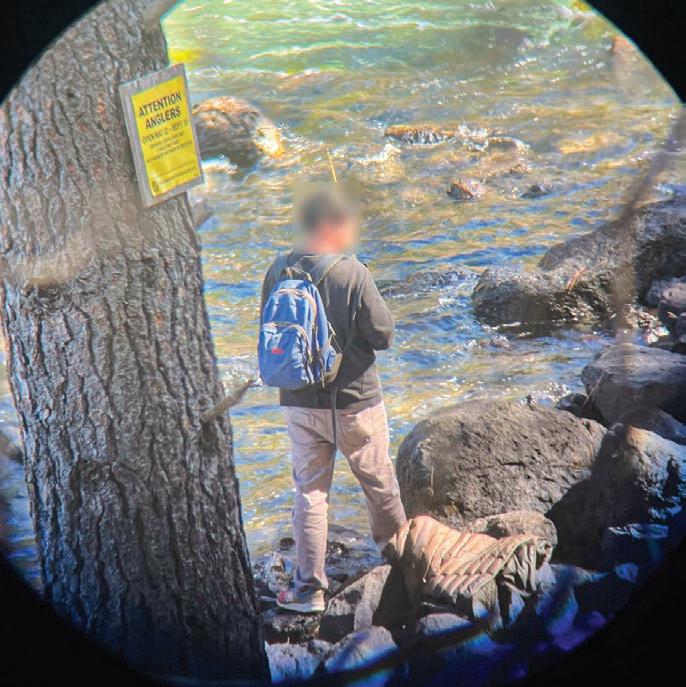
A man fishes directly behind a sign stating fishing season dates on the Deschutes River. Spoiler alert: It was several weeks before May 22. (OSP)
MIXED BAG
boats were banned for fishing, just like drones are. He received a warning.
On the subject of springers, saturation patrols on the Columbia turned up numerous barbed hook violations, among other offenses, with one angler running barbs on all three lines off his boat. That earned him a citation for angling by prohibited method and, for extra credit, a boat safety examination, which he failed. While the overall number of tickets was low compared to the number of springer anglers checked, one fisherman was also hauled in on a felony assault warrant along with a felony charge of meth possession and, naturally, fishing without a license.
With some pretty good minus tides, Oregon’s ocean beaches also saw a lot of traffic. During a two-day operation on Clatsop Beach, the state’s best for razor clams, troopers made 209 contacts with diggers and issued 43 citations, 40 warnings and seized 413 clams that were donated to Astoria charity organizations. Two campers on a Garibaldi beach were among those cited for exceeding their daily bay clam limits after initially collecting 42 –two more than allowed – and then going back to the flats to dig more.
WILLFUL VIOLATIONS
LIKE that make you feel truly bad for others who end up coming in contact with troopers on perhaps their first hunt. As his dad called for him at sunrise, a youth hunter took aim and fired, killing a Northcentral Oregon turkey that had come in – but also another with the same shot.
They tagged one of the birds with the son’s tag, then Dad immediately went online and bought a second tag. Only problem? Oregon’s daily spring turkey limit is just one, which the father told a trooper he hadn’t known. He reportedly acknowledged he should have self-reported the second bird instead and was cited, with turkey two also taken for evidence. How rough for the kid, a bummer ending to what should have been a bright day, while also serving as a good lesson to grow from.
That was an outlier, however. Two cases from the La Grande area involved turkeys shot from the road. Who knew road hunting for gobblers was a thing, but troopers reported it was the most common violation in OSP’s East Region this April.
In the same general vicinity but on the trout front, a man contacted while fishing at Morgan Lake on a Sunday early in the month was quick to ask if he’d be ticketed. That
turned out to be a yes, given that 1) the lake was closed; 2) the guy knew it; and 3) he’d already caught four and was going to book it out of there as soon as number five bit.
The kicker? “The subject was extremely surprised to see a Trooper on patrol since the lake was closed and it was Easter,” OSP reported.
Since poachers never take holidays, neither can fish and wildlife troopers. The man was cited for unlawful take of trout during a closed season, and the fish were donated locally to help feed the multitudes.
Over on the John Day, an angler who’d spoken to troopers about the steelheading rules a couple weeks beforehand saw an adult male retain a wild fish and called it in. A patrol officer swung by and the man admitted to the catch, and it turned out he had neither a combined angling tag or Columbia River endorsement, plus he was also on probation for felony assault. He received three citations, and no doubt his probation officer will be speaking to him about his steelhead shenanigans.
Indeed, troopers wrote a lot of field tickets in April, but they also saw two cases resolved at a higher level. One involved four deer and an elk shot out of season in 2024; it
CONSERVATION K-9 IN TRAINING NEEDS NAME
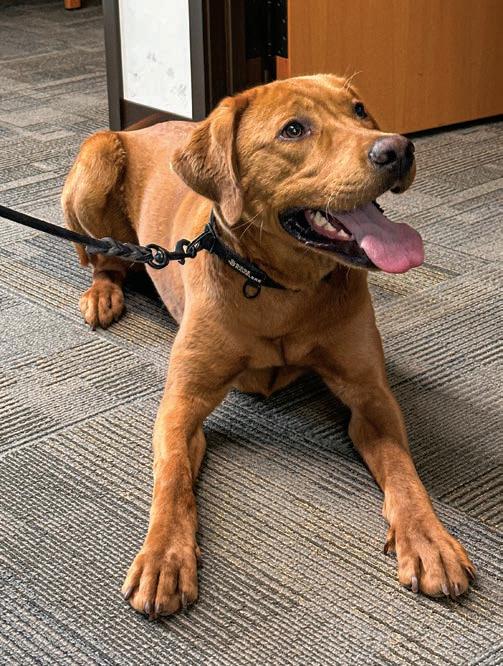
Meet the Oregon State Police Fish and Wildlife Division’s newest K-9, ____.
Er, we still don’t know the 1-year-old red Labrador retriever’s name – till then he’s Good Dog, of course – but we do know he’s in training to join fellow K-9s Scout and Drake and will be stationed out of OSP’s La Grande office.
Troopers last month asked Oregon youths to help name the pup based on the themes of wildlife, fish or the outdoors, and the best suggestions were going up for a statewide vote afterwards. The kiddo whose name is chosen will have a chance to meet the Lab as well as receive gifts from OSP for their efforts.
There’s just something cool about a hunting dog breed helping to protect Oregon’s natural world, and the naming contest is a fun way to spread the word about OSP’s Conservation K-9 program, which began back in 2018 with Buck, a yellow Lab who was recently retired, according to the agency.
“Fish and wildlife K-9s receive specialized training in wildlife detection, human tracking, and area searches to support investigations into the illegal take of birds, wildlife, and fish around the state,” troopers explain. “Dogs are trained to detect deer, elk, bear, turkey, waterfowl, salmon, and sturgeon, as well as firearms, shell casings, and other items containing gunpowder residue. Conservation K-9 teams have been instrumental during investigations into poaching, missing persons, and other criminal activity.”
Scout and Drake, both of which are black Labs, are based out of OSP’s Bend and Springfield offices, respectively.
The doggo warden program is an OSP-Oregon Wildlife Foundation collab, with the latter partner’s Wildlife Conservation K-9 Fund helping to keep the growing pack fed, happy and housed. Donations are accepted at myowf.org/osp-conservation-k9-team.
Oregon’s newest Conservation K-9 Program pup is eager to learn his name. Kids across the state were invited to submit fish-, wildlife- or outdoors-related ideas. (OSP)
led to a sentence of two days in jail, five-year hunting license suspension, three years of probation and $2,000 restitution fine for one man. In the other case, a defendant pled no contest to poaching an elk calf last November and received a three-year hunting license suspension, 40 hours of community service, $5,000 fine and forfeiture of the gun used to kill the young animal.
BUT THE MONTH wasn’t all citations and court. Troopers attended a youth turkey hunting clinic and “heard many positive comments” about their participation from the 50 kids and 30 adults in attendance.
They gave out a Junior Trooper sticker to a youngster who bagged his first longbeard, in the Northside Unit. They attended career days at schools in Central Point, Lincoln City and Sisters, gave away fishing rods to kids in Newport, assisted in a hunter education field day in Grants Pass, happened across a lost hiker near Mount Hood, rescued a hen mallard with a broken wing in Redmond and rendered first aid for a driver after a onevehicle rollover in Douglas County.
Troopers cleared a tree blocking a boat launch near Klamath Falls, repainted a fly fishing deadline on the Umpqua, arrested a felon trespassing near Elmira, ticketed somebody cutting salal without a permit, worked the reopening of Phillip Schneider Wildlife Area as shed hunters took to the hills and got no less than two drunk drivers off Oregon’s highways and byways.
They also served search warrants on an east Multnomah County home that led to the discovery of more wildlife crimes, including poaching and unlawful sale of salmon, bear baiting and killing deer at night, in an investigation that ultimately spread to three other residences in the county and near Klamath Falls.
And of course there were also commercial cases – a falsified report, four instances of leaving gear out for longer than 14 days as gas prices spiked, and funny business by a crab captain with Dungies around the California-Oregon border.
I could go on, but you get the idea (to see for yourself, go to oregon.gov/osp/ programs/fw/Pages/Newsletter.aspx).
Between the bad actors, guys who just goof up and general public calls for service, a lot goes into the beat of an Oregon fish and wildlife trooper. Thanks for putting up with us and helping protect the outdoors.
SHELLFISH SWINE GO WAY OVER SPOT LIMIT
Raise your hand if you can’t wait to see Mr. “I think you can tell I’m not a ‘put them back’ kind of guy” on Arrest Cam Fish and Wildlife.
That’s the YouTube channel that posts body-worn camera footage from Washington Department of Fish and Wildlife Police and other agencies without blurring out the folks being filmed, like officers do with cases they post to Facebook.
If this case goes straight to video, it will fill in details from a four-hour May Hood Canal spot shrimp opener that saw a boat with three people in it make a midmorning pull, empty their pots and run to a waterfront home in Seabeck.
“Two of the three men got off the boat with two large and apparently very full buckets of shrimp,” loaded them in a golf cart and disappeared, WDFW reported on social media.
Around 11, the trio were joined by a fourth man for another pull, and they again hit the jackpot. No shrimp were thrown back (the daily limit is 80 per person), per WDFW.
Boat-borne officers contacted the quartet as they were removing shrimp heads on their way back to shore, and a quick look suggested they would be over the limit for spotties with just this one pull, never mind the shrimp already back on dry land.
“One of the subjects started the contact out by claiming that the first pull of the day was not very good but that they had done much better this time,” officers stated.
After counting the shrimp aboard the WDFW boat, the officers told the crew they’d actually seen their first pull, and as they went over it in some detail, “three of the four subjects understood that they had been caught,” though the fourth claimed there were no shrimp back at the house.
In fact, a search there turned up 424 shrimp from the first pull hidden away in a car trunk, while the second haul had yielded 486, for a total of 910. That means they harvested 590 more shrimp than allowed.
“I think you can tell I’m not a ‘put them back’ kind of guy,” one of the crew said.
The shrimp were seized and shared with shellfishers struggling to fill their own limits that day, and charges were headed to Mason County prosecutors.
Whether the hammer of justice actually comes down remains to be seen, but footage on YouTube might help mete out a different kind of punishment: public shaming.
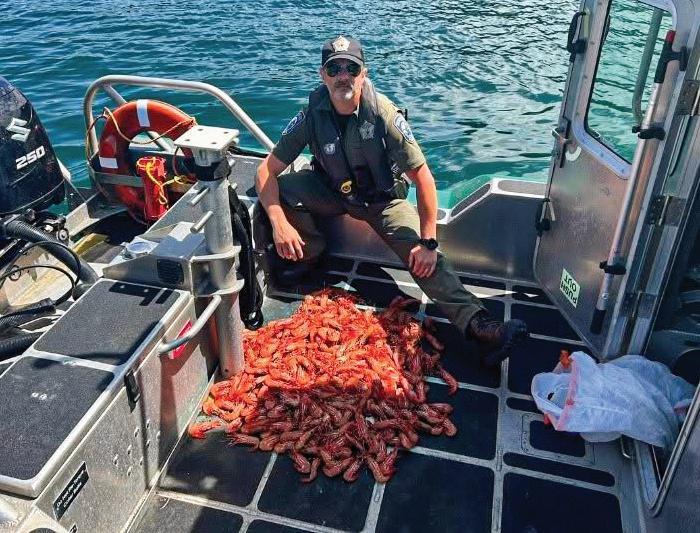
A Washington Department of Fish and Wildlife officer poses with some of the 910 Hood Canal spot shrimp seized from four people on a May opener. Their combined daily limit would have been just 320. (WDFW)
OUTDOOR CALENDAR
1
JULY
Leftover OR big game tags go on sale at 10 a.m.; Start of OR Youth First Time hunt application period; 2026-27 WA sportfishing regulations pamphlet takes effect; WA Marine Areas 3 and 4 switch to two-salmon daily limit; Areas 5 and 6 hatchery Chinook opener (fishing open odd-numbered days only in Area 5); Steelhead closures begin on WA-side Columbia Gorge tributary mouths
2 Crab opener on Areas 4-6, 8-9 and 12 (open Thursdays-Mondays only)
5 Last scheduled day of sockeye fishery on Columbia below Highway 395 Bridge in Pasco, WA; Crab opener on Areas 10-11 (open Sundays-Mondays only)
7 Scheduled four-hour spot shrimp opener on Area 12
12 Merwin Day of Fishing for Kids (free, for youths with disabilities, registration), Merwin Fish Hatchery, Ariel, WA – info: pacificpower.net; ODFW Shotgun Skills Course (registration, $40), Mid-Valley Clays, Gervais – info above
15 Steelhead closures begin on OR-side Columbia Gorge tributary mouths; Deadline to purchase WA raffle hunt tickets
16 Crab opener on Area 7 South (open Thursdays-Mondays only); ODFW Intro to Hunting in Oregon (registration, $10), Tualatin Bass Pro Shops – info above
16-18 Hatchery Chinook open days on Areas 7, 9 and 11
18 Oregon Zoo Lead-free Ammunition Testing Day (free), Redmond Rod & Gun Club, Redmond, OR – info: hannah.dinell@oregonzoo.org
23-25 Hatchery Chinook open days on Area 10
27 CAST For Kids fishing event, Yaquina Bay, Newport, OR – info above
AUGUST
1 Columbia River fall salmon fishery opener (regulations vary by area); OR fall black bear opener; WA fall black bear opener in most bear management units; Steelhead retention closes on mainstem Columbia River from Buoy 10 to The Dalles Dam; OR Central Coast all-depth halibut summer season opens (open seven days a week)
1-9 Buoy 10 any-Chinook open days (hatchery coho also open)
10-24 Buoy 10 hatchery-Chinook-only open days (hatchery coho also open)
15 Fall bear opener in WA Okanogan and Willapa Hills units; OR any legal weapon controlled pronghorn season begins in many units; Oregon Zoo Lead-free Ammunition Testing Day (free), Klamath Sportsman’s Park, Keno, OR – info above; CAST For Kids fishing event, Black Canyon Reservoir, Emmett, ID – info above
16 CAST For Kids fishing event, Snake River, Lewiston, ID – info above
20 ODFW Intro to Hunting In Oregon (registration, $10), Tualatin Bass Pro Shops – info above
23 Last scheduled day of OR Central Coast hatchery coho season
25-Sept. 2 Buoy 10 any-Chinook open days (hatchery coho also open)
29 OR bow deer and elk openers in many units; CAST For Kids fishing event, Clear Lake, Cheney, WA – info above
30 ID bow deer and elk openers in many units
SEPTEMBER
1 WA cougar and bow deer openers; Hatchery steelhead retention closure begins on mainstem Columbia from The Dalles Dam to Highway 395 Bridge in Pasco
1 Tentative OR Central Coast ocean any-coho opener (27,500-fish quota)
3 Buoy 10 season switches to hatchery coho only (Chinook retention closed)
3 Salmon fishing closure begins on Lower Columbia between west Puget Island and Warrior Rock-Bachelor Island line
By Andy Walgamott
Now through end of fishing seasons: Westport Charterboat Association Derbies; charterwestport.com/fishing.html
Now through October 31: Washington Department of Fish and Wildlife 2026 Trout Derby, select lakes across state; wdfw.wa.gov/ fishing/contests/trout-derby
July 4-5: 2026 Salmon Enhancement Derby, Nootka Sound, Vancouver Island; nootkamarineadventures.com
July 12-August 31: 2026 Baker Lake Sockeye Derby; ccawashington.org/bakerlake
July 22-26: Lake Coeur d’Alene Big One Fishing Derby; lcaaidaho.com
July 24-25: Washington Tuna Classic, Pacific off Westport; missionoutdoors.org
July 25: Washington Salmon Classic, Pacific off Westport; missionoutdoors.org
July 31: Roofing Contractors Association of Washington 13th Annual Salmon Derby, South Puget Sound; rcaw.com/events
August 8: 30th Annual Gig Harbor Puget Sound Anglers Salmon Derby, South Puget Sound; gigharborpsa.org
August 8: Odell Lake kokanee derby; kokaneepoweroregon.com
August 14-15: 19th Annual Oregon Tuna Classic, Pacific off Garibaldi; oregontunaclassic.org
August 14-15: Battle of the Bay Derby, Rogue Bay; battleofthebayderby.com
September 5-7: 33rd Annual Gardiner Reedsport Winchester Bay Salmon Trout Enhancement Program Salmon Derby, Umpqua River estuary; umpquastephatchery.org
September 8-15: Nootka Sound Tuna Showdown, Pacific off Vancouver Island; nootkamarineadventures.com
September 12: Edmonds Coho Derby, Marine Areas 8-10; edmondscohoderby.com
September 12-13: 25th Coos Basin Salmon Derby; facebook .com/profile.php?id=100063510016235
September 14-October 31: Boat Basin Salmon Derby, Westport; westportgrayland-chamber.org
September 19: Kingston Coho Derby, Areas 9-10; kingstoncohoderby.com
September 19-20: 4th Annual Whidbey Island Coho Derby, all marine areas; whidbeypsa.org
September 20: Salmon for Soldiers Day of Honor, North Puget Sound; salmonforsoldiers.org
September 25-26: King of the Confluence Chinook and steelhead derby, Snake-Clearwater River confluence; extremefishingevents.com/king-of-the-confluence/derby
Editor’s note: To list your event here, email awalgamott@media-inc.com.
Freedom! Fish!! Fishing!!!
Celebrate the country’s 250th anniversary at waters that are red, white and blue through and through.
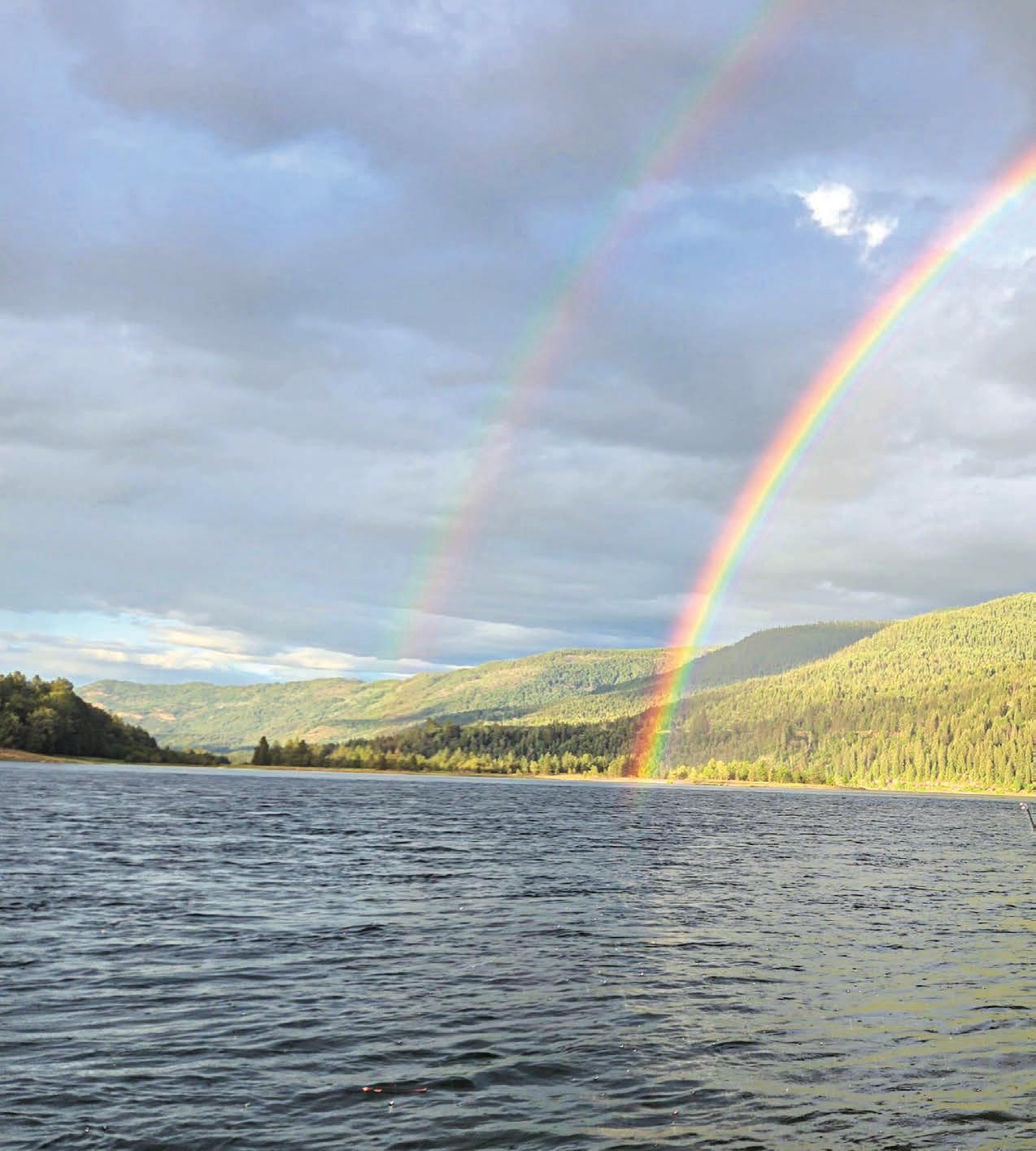
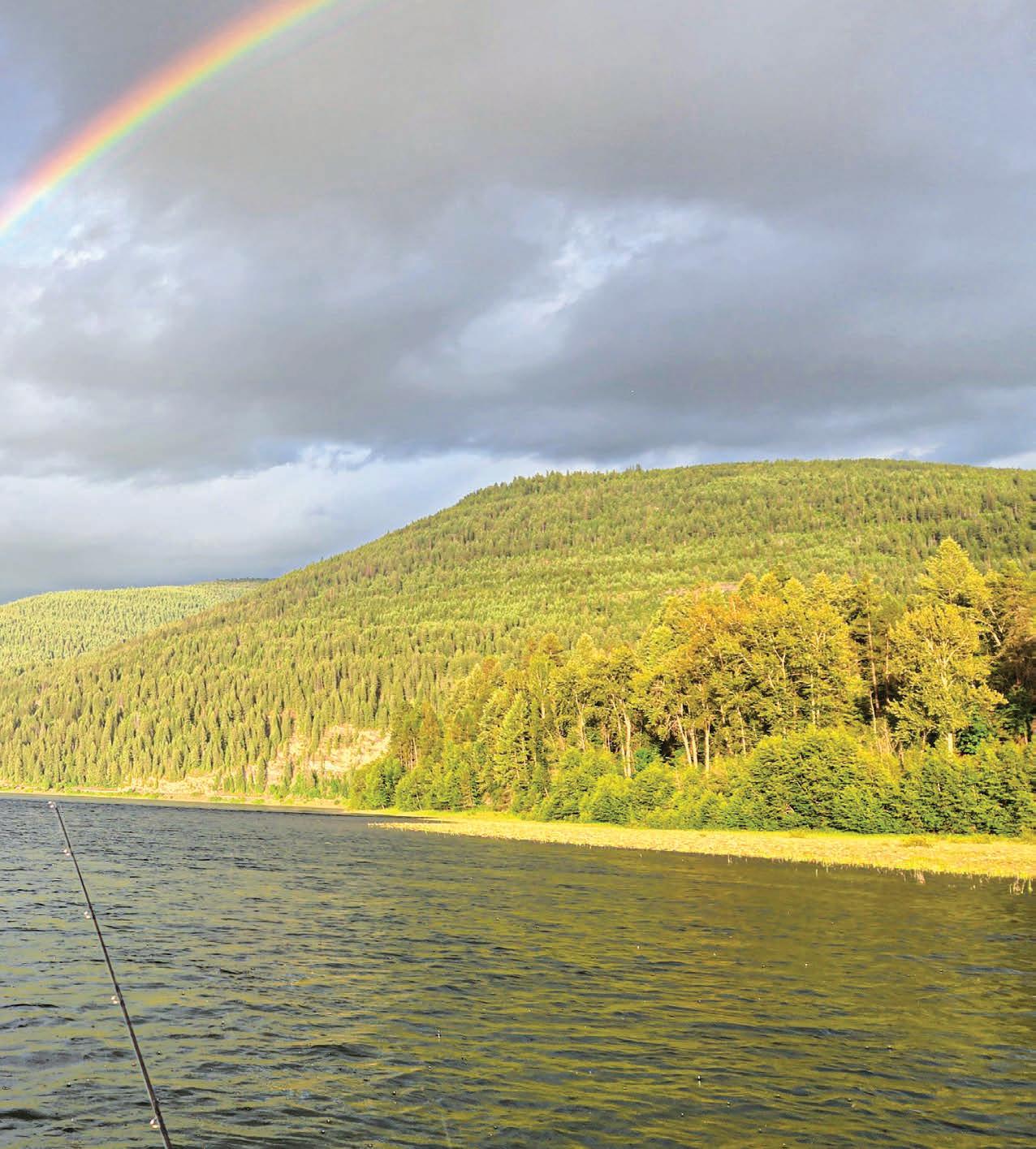
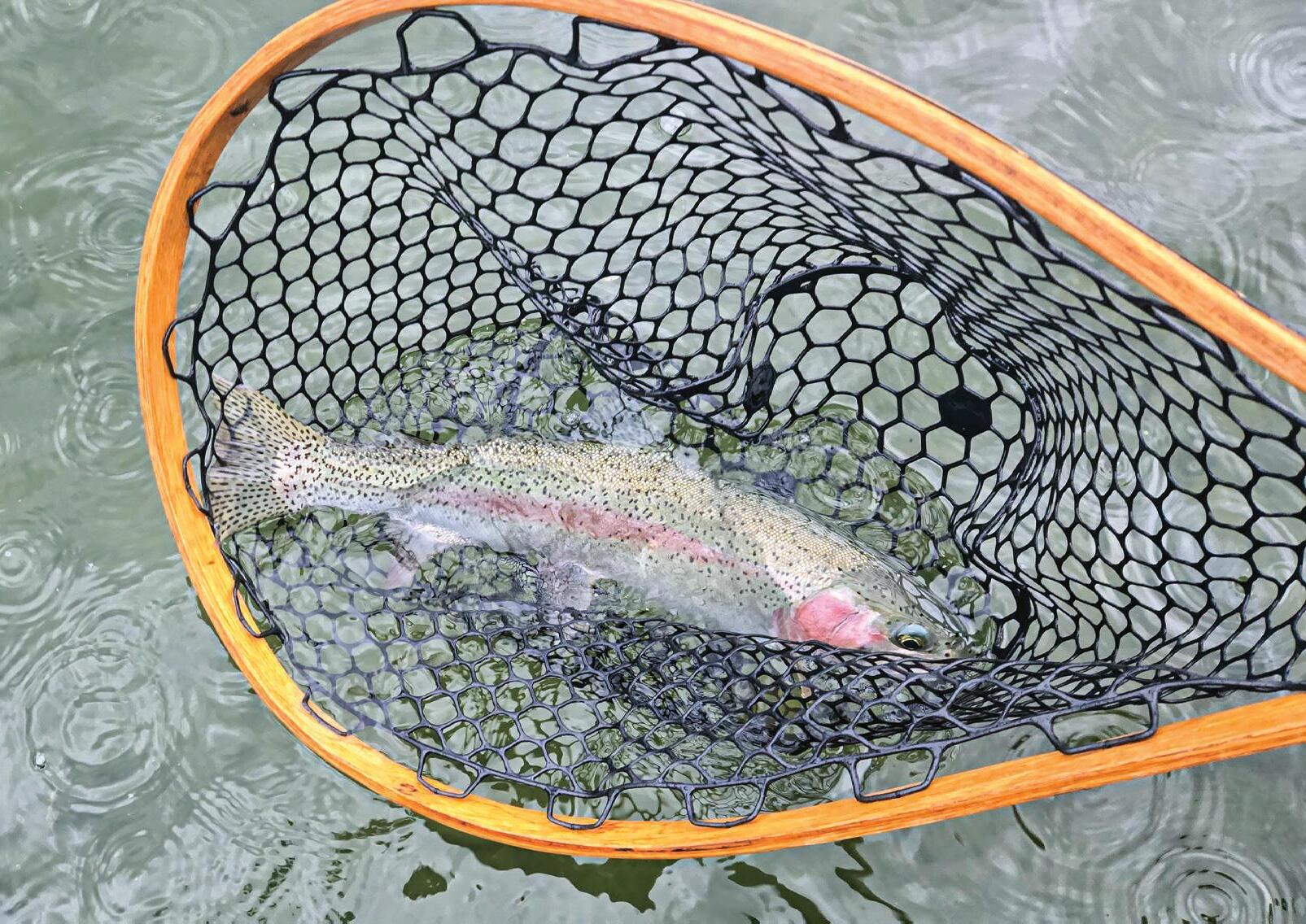
The American Reach of the Upper Columbia served up about a dozen rainbows – here, two ephemeral ones in the sky and a real trout in the net – last month for reader Brian McLachlan and a pal. Like the Hanford Reach well downstream, these free-flowing waters of the big river near Northport, Washington, are home to very hard-fighting fish, they can attest. (BRIAN MCLACHLAN)
By Andy Walgamott
America turns 250 years old this month, and what better way to celebrate the signing of the Declaration of Independence back in July 1776 than fishing at patrioticthemed waters across the Northwest?
From the far Upper Columbia to the heart of the Basin, and from tarns speckling Northeast Oregon and the Washington Cascades to suburban lakes, there are myriad places to wet a line this semiquincentennial year.
Fish one, fish ’em all while considering what two and a half centuries of freedom means to you and for the country in this day and age.
AMERICAN REACH
OK, this isn’t an official name you’ll find on a topo map, but the freeflowing Columbia River just below the United States-Canada border is sometimes referred to as the American Reach. And it just might be the biggest little trout crick in the world, a place where native redband rainbows with the fighting instincts of their seagoing relatives lurk along monster gravel bars and eddies, safe from the depredations of the Leadpoint, Onion Creek and Wedge Packs.
It’s most well known by flyrodders. While fishable from early spring through midfall, with the possible exception of snowpack runoff season,
high summer fishing is often done in the evening after the heat of the day begins to dissipate, when anglers haul out Parachute Black Drakes, a fly described as “large, dark, and Wulffish” by famed author John Gierach in a book excerpt about the fishery we published in the June 2020 issue:
“It was going on midnight; the shoreline was only a little blacker than the water and the sky was full of stars. Our big johnboat was fitted with a 60-horse outboard and we were flying downriver faster than I’d have gone in the dark. I could tell the Drakes were still hatching because they kept hitting me in the face, but by then it was impossible to see a dry fly and you couldn’t
FISHING
fish by sound because the river was too loud to hear the rises. It would still have been possible to swing a big wet fly downstream on a tight line so you could feel the takes, but it was late and Vince and I had been into our backing more times in the last five hours than in the whole previous season, so we were happy enough to call it a night and it was somehow comforting to know that this would all go on without us for a few more hours.” –John Gierach, Dumb Luck and the Kindness of Strangers
MORE AMERICAN WATERS
While geogeeks will quibble about the American Reach nomenclature, not so with two other Washington waters – American Lake near Tacoma and the American River, a tributary of a tributary of a trib of a trib. The former is known for its “beloved” kokanee fishery (as well as a walleye spotted here in 2022, though none have been caught since then by state netting crews), while the latter is … well, OK, maybe not everything American rocks.
“Fishing reports describe the American River as ‘sterile’ with anglers not encountering many fish or bugs,” reports the Yakima Basin Fish and Wildlife Funding Board. So maybe skip that one, unless you enjoy dud firework shows.
LIBERTY LAKE
Just as America offers a little something for everyone, so too with 706-acre Liberty Lake just east of Spokane.
Trout? Rainbows, browns and brookies.
Bass? Smallmouth and largemouth. Panfish? Crappie, bluegill and pumpkinseed.
Species with two names? Signal crayfish and brown bullhead.
Spinyrays? Walleye, perch and catfish.
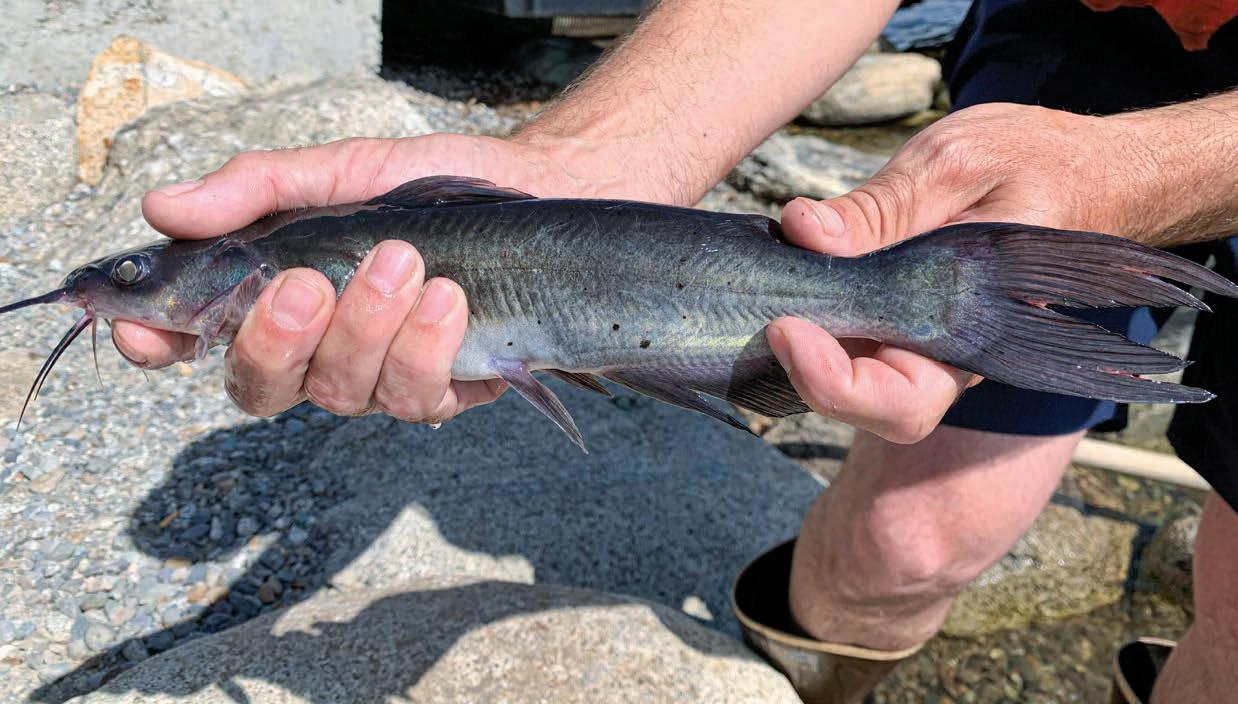
Indeed, Liberty is one of very few lakes in Washington lucky enough to receive channel cats, including 2,000 half-pounders this May and another 2,000 1-pounders in June 2024 that should be fair-sized by now. The latter
release was the first for the species in a decade, and at the time it had Washington Department of Fish and Wildlife warmwater manager Kenny Behen “extremely excited to get this ball rolling again.” Their numbers can be controlled better than other nonnatives due to the fact that water temperatures typically don’t reach the level needed for catfish to spawn.
Liberty is also part of WDFW’s statewide trout derby, and at press time four tagged ’bows had yet to be caught and prizes claimed. While trout fishing slows in summer, it picks back up in early fall.
INDEPENDENCE LAKE
The Declaration of Independence was huge; Independence Lake, not so much. Yet it’s big enough to be part of the Evergreen State’s high lakes stocking program, and every July for the past five years, some 250 rainbow fry have been hauled to the 6.10-acre pothole set at 3,700 feet north of Silverton up the South Fork
Give me liberty or give me catfish! How about both?! Washington fisheries biologist Danny Garrett stocked this and 1,999 other channels at Liberty Lake near Spokane in 2024, providing anglers with a rare stillwater fishing opportunity. (WDFW)
FISHING
Stillaguamish River.
The Washington Trails Association calls Independence “a great first backpack for kids,” and truth be told, Coal Creek Road/Forest Service Road 4060/4062 does almost all of the legwork, depositing hikers less than a mile away from the lake for a nice, easy sidehill stroll. Declare your independence from the tyranny of switchbacks! (Just don’t forget a Northwest Forest Pass for parking at the trailhead.)
GEORGE, WASHINGTON
The only town in the entire 3.8 million square miles of the United States fully named after a president is most well known for a certain stunning summer music venue, but a nearby lake can be just as bumpin’
during a much cooler time of year.
Upper Caliche Lake is described as “extremely popular” when it opens in March for stocked rainbows. The banks of the 7.3-acre lake are fishable, and there’s a rough ramp for carrying a boat down to the water.
Other great planted lakes in the immediate vicinity include the Quincy complex – which is actually closer to George than Quincy, but go ahead and have your day, town named after the middle name of the sixth or seventh or whatever number president John Q. Adams Jr. was – while the windy Wanapum Pool has walleye and bass.
FOURTH OF JULY LAKE
You’ll want to skip this Channeled Scablands lake on its namesake day because 1) it’ll be hot as a firecracker;
and 2) it’s closed to fishing now. But come Black Friday – that other great patriotic American holiday – it lights up like a Roman candle.
Speaking of, you might need one to melt a hole to ice fish through if late fall’s cold enough, but it will be worthwhile, thanks to good fishing for rainbows stocked as fry and “decent” carryover from year to year.
OREGON’S RED, WHITE AND BLUE WATERS
Betsy Ross could never have imagined that someday a hook-and-bullet magazine would riff off her famed flag, but here we are – specifically, in the verdant Oregon Cascades, home to Red Lake, White River and Blue River Reservoir.
Red, perched on a severely singed plateau above Breitenbush, is reported
We hold these truths, er, trout to be self-evident. Fourth of July Lake’s fireworks show begins the day after Thanksgiving for rainbows like this one caught by state bio Randall Osborne while test fishing. It's a winter-only fishery. (WDFW)
Lakeside Lodge Life at Odell Lake Resort
Whether you’re working the water, playing a round of disc golf, or basking in the perfect sunset, Odell Lake Resort is your place to unwind and explore.
• Lakeside Sauna - a private, relaxing extraordinary experience
Come experience Odell Lake Lodge Life! Book your stay today!
FISHING
as stocked every other year with brookies and on a trail described as the “main east-west thoroughfare” in the Ollalie Butte area, making it a good jumpoff point to more backwoods angling adventures.
The White, a federally designated wild and scenic river flowing off the southeast face of Mount Hood, is host to a “genetically distinct” strain of redband rainbows above White River Falls, which even legendary leapers like summer steelhead and coho can’t crest.
And Blue River Reservoir sees near-weekly late spring visits from the Oregon Department of Fish and Wildlife’s trout stocking truck that this year has delivered 20,400 legalsize rainbows to the impoundment east of Leaburg. “Lots of great trout fishing to be had there” and in the Blue River, reported Willamette
Valley-based contributor Troy Rodakowski, who alerted me to a pretty patriotic triad of Oregon waters. He says there’s also kokanee, bass and panfish in the system.
EAGLE CAP WILDERNESS
The national bird – no, not that one; the one that tries to look all noble in pictures but we know actually lives in a van down by the river where it scavenges dead things – lends its name to the 555-square-mile wilderness that forms the towering roof of Northeast Oregon. Underneath, a wealth of streams and lakes rife with native and introduced trout courses through this lofty landscape.
Last issue, David Johnson shared wisdom from 59 years of fishing Bear Creek, a lesser known stream that cuts into the core of the Eagle Cap
Wilderness and Wallowa Mountains (which in early days of settlement were known as the Eagle Mountains). He reported that Bear “has the best food base of any high-elevation stream” in the wilderness, and while the trout aren’t huge, they’re great fighters and bite flies you’d use in any freestone stream in the West.
Meanwhile, ODFW stocks eight Eagle Cap lakes – Crater, Hawk, Hobo, Legore, Mellard, Prospect, Swamp and Unit – every other year with rainbows, and Crater and Unit also boast natural production. None are easy to get to, and Legore, situated at an eye-watering 8,954 feet, also has the distinction of being the highest lake in Oregon.
All the better perch to ponder 250 years of American history, progress and what’s still to come.
USA! USA! USA! NS
It’s been said that the national park system is America’s best idea, but not far behind is 1964’s Wilderness Act, which officially set aside Crater Lake, Eagle Cap and the rest of the High Wallowas as a place that would remain forever wild for anglers,
hunters and the public to enjoy. (RICK SWART, ODFW)
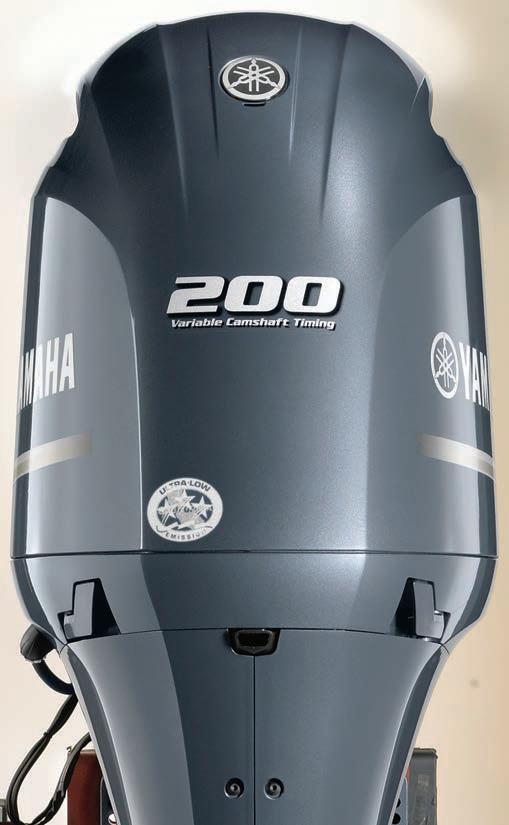
The lightest 200-hp four stroke on the market
2.8L displacement and Variable Camshaft Timing give it the best power-to-weight ratio of any 200-hp four stroke
Nearly 120 pounds lighter than our four-stroke V6 F200
Show the water who’s boss with the F200 In-Line Four. Incredibly light, responsive and fuel efficient, it serves up plenty of muscle to handily propel a variety of boats. On top of that, its 50-amp alternator offers the power to add a range of electronics, and its 26-inch mounting centers and compatibility with either mechanical or digital controls give you the flexibility to easily upgrade your outboard or rigging. Experience legendary Yamaha reliability and the freedom of forward thinking, with the F200 In-Line Four.
COOS BAY Y Marina (541) 888-5501 www.ymarinaboats.com CHINOOK Chinook Marine Repair, Inc. (800) 457-9459 www.chinookmarinerepair.com EVERETT Everett Bayside Marine (425) 252-3088 www.baysidemarine.com
Verle’s Sport Center (360) 426-0933 www.verles.com
MOUNT VERNON
Tom-n-Jerry’s Boat Center, Inc. (360) 466-9955 www.tomnjerrys.net
OLYMPIA Us Marine Sales & Service (800) 455-0818 www.usmarinesales.com
Casting Spoons And Spinners
Casting and retrieving spoons and spinners is a proven method for catching fish. In the Pacific Northwest, it’s mostly about trout, steelhead and salmon, but all fish – big, small and in between – will strike these lures if presented properly and of a size, color and style that sparks their interest.
For trout, this might mean matching the color and size of the available forage. And while the same can apply to steelhead and salmon, success can sometimes be determined by choosing a spoon or spinner size that will get the lure near the river bottom while maintaining the action needed to trigger strikes.
TROUT
Without a doubt, the most popular way to fish a spoon or spinner is to employ the cast-and-retrieve method. It’s so easy; just tie a lure on the end of your line, cast into a nearby body of water and reel/retrieve your lure back to you.
It pays to constantly work new water by making 10 casts in each spot before moving 20 or so yards along a river bank or shoreline of a lake until you find fish. This can be done from the bank or a boat. What’s appealing about this strategy is that it allows you to cover a lot of water in a short amount of time.
When it comes to fishing lakes and reservoirs, what I’ve noticed is that trout are likely to be found cruising near the surface or shoreline when water temperatures are cool, early or late in the day, or when the light is low due to cloudy conditions. As the light intensifies they will often move away from the shallows to deeper water. For this reason, they are more likely to be found
BUZZ RAMSEY
This cutthroat trout hit a copper-colored Thomas Buoyant spoon for author Buzz Ramsey while casting and retrieving it near the bottom of a high mountain lake. (BUZZ RAMSEY)
near bottom (or at some level above it) during the middle of the day. Warm surface temperatures can also drive coldwater fish like trout to more comfortable levels deeper in the lake.
To determine the depth your spinner is running, and be able to return to it, may require you to practice what’s known as the “count down” method, which is based on the idea that casting spoons and spinners will sink at a rate of 1 foot per second.
Here’s how to employ it: Cast out and allow your spinner to fall freely to the bottom, counting one-one thousand, twoone thousand, etc., until it hits bottom, signified by your line going slack. Now that you know the bottom depth based on counting, you can begin subsequent retrieves at various depths above bottom, which will help you avoid hanging bottom or bottom-growing weeds or moss on subsequent casts. Using this simple procedure will allow you to search for fish at different depths and reliably return to the fish-producing level once fish are located.
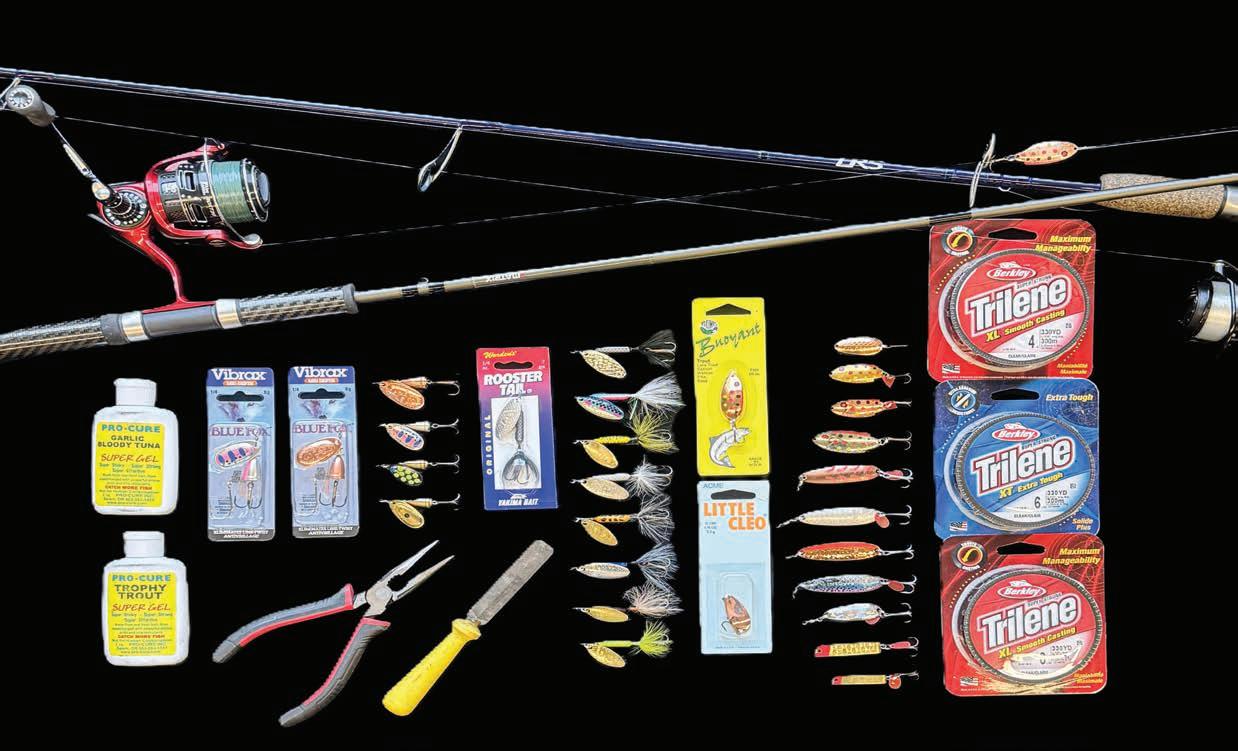
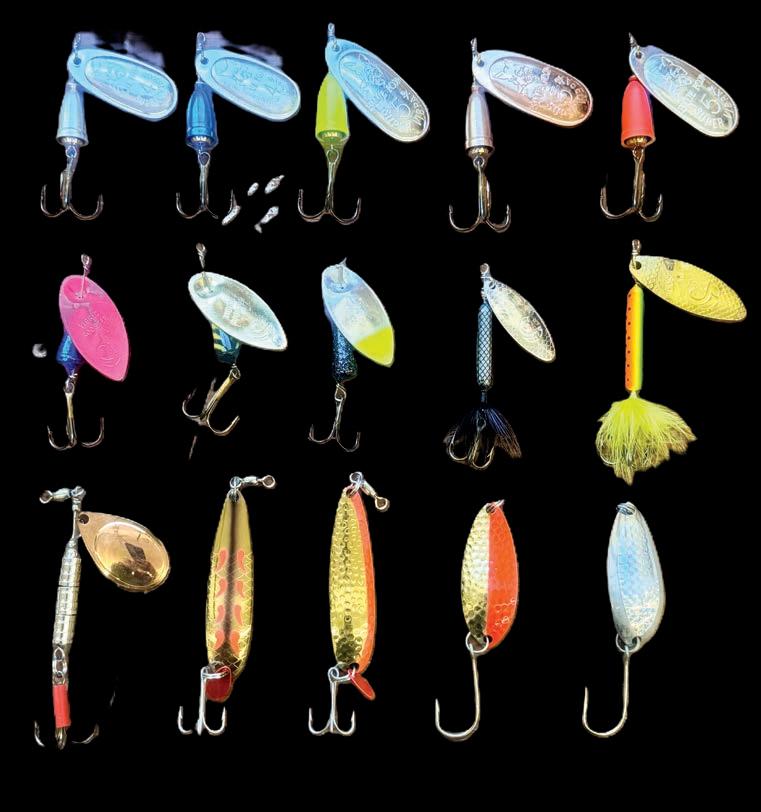
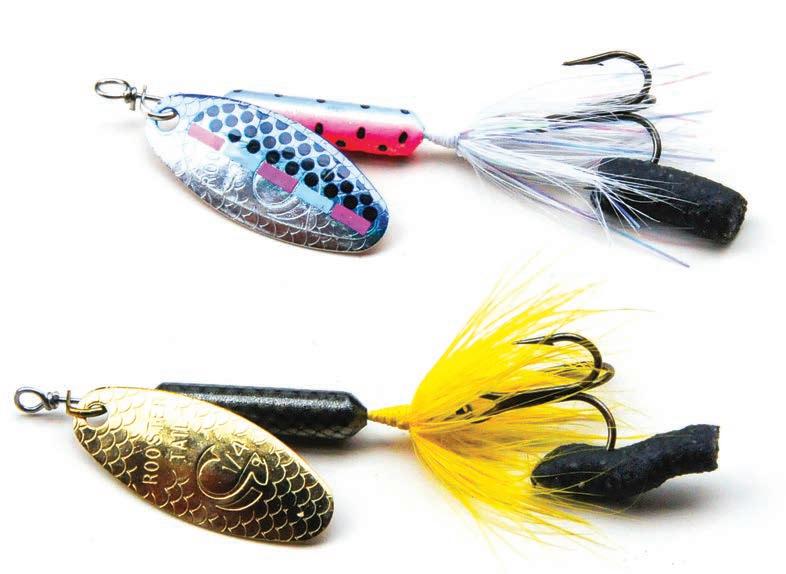
Most trout anglers employ spinning outfits with rods measuring 5 to 7 feet in length. Keep in mind that longer rods will provide you with increased casting leverage and hook-setting power. Shown are some of Ramsey’s most productive spoon and spinner styles and colors. (BUZZ RAMSEY)
A ¼-ounce Krocodile spoon is what this 22-inch brown trout attacked while the lure was cast and retrieved along the shoreline of a high mountain lake struck by wind and waves one afternoon. (BUZZ RAMSEY)
COLUMN
Working your lure near bottom, especially on a deep lake, may require you to step up to a larger/heavier lure size. For example, you might switch from a fairly light spinner or spoon (1/6- to 1/8-ounce Rooster Tail or Thomas Buoyant) when working it near the surface to one weighing 1/4 ounce or more when scouring the depths.
Of course, spinners with a casting weight built into their design come in a variety of different blade shapes, which affect the tone of their fish-calling/sonic vibration and influence pulling resistance. For example, a Rooster Tail spinner features a semi-wide blade shape that will allow you to work it fast when searching for fish but then slow down your retrieve speed once fish are located.
Spinners with wider blade shapes, like those offered by Mepps or Blue Fox, produce more fish-calling vibration than narrower blade shapes and facilitate the slowest of retrieve speeds – a feature that can be very appealing to finicky trout.
Keep in mind that spinners are often the most effective when retrieved slowly –just fast enough to keep the blade turning. Strikes are usually definite, but some fish will just stop the spinning blade, so when in doubt, set the hook.
Some lures come with no components added to the front end of the lure to tie your line to. One option is to add a split ring and swivel to the lure. The other is to add a small snap to the lure and place a barrel swivel 20 to 24 inches up the line. Whatever you decide, it’s best to keep these components small so they don’t
detract from the action of the lure.
What I often do is add a small snap to the front end for my line tie, and when I notice linetwist building up in the line, I just hold my rod tip high and lure just off the water and let the line untwist. I then
make a short cast and repeat until all the twist is gone. Doing this several times in succession after 10 to 20 casts will help keep linetwist from becoming an issue.
SALMON AND STEELHEAD
The most common way to fish a spoon or spinner in a river is to cast out, across and slightly upstream, and reel it back to you with a retrieve speed that keeps it working near bottom. Fished this way, the river current will swing your lure downstream as it’s retrieved cross current through the fish-holding water. Once your lure swings in near shore downstream from you, it’s time to reel in and cast again.
Another productive technique is downstream casting, which works best with wide holes or tailouts. Cast your spoon or weighted spinner out across and at a slight downstream angle. Since the current is moving mostly away from you, it requires a slow or no retrieve, as your lure
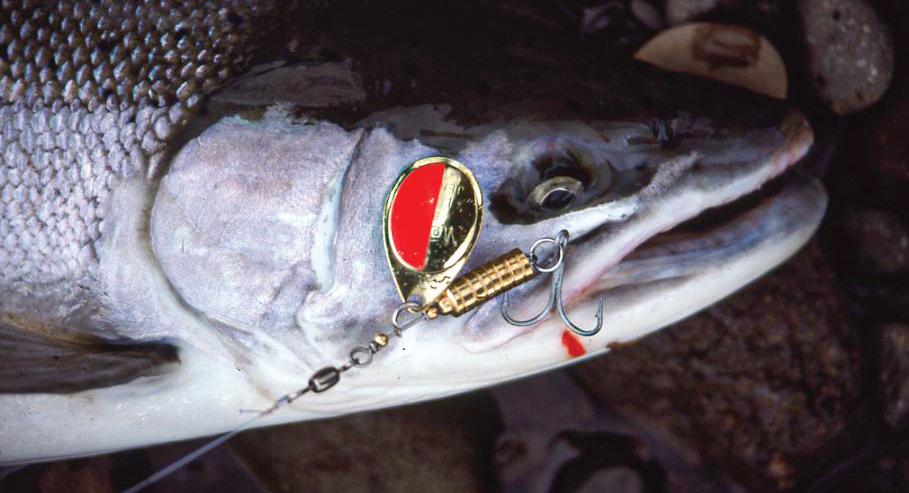
The Blue Fox Vibrax is the most popular casting spinner for steelhead, but other products like the Rooster Tail spinner and Little Cleo spoon work too. (BUZZ RAMSEY)
Overall, salmon spinners with a wide blade shape are more popular than narrow ones, especially for casting upstream or downstream. The wide shape fans out more when pulled through the water, and its drag increases the amount of fish-attracting sonic vibration. (BUZZ RAMSEY)
swings through the tailout, a favorite place for fish to hold, especially steelhead.
In extreme clear water, where upstreamlooking fish might spook when seeing your approach, try casting your spinner at an upstream angle. Depending on water depth, you may need to begin your retrieve as or just before your lure hits the water and immediately start reeling fast until all slack line is taken up and you feel your lure start to work.
It’s important to then slow down your retrieve speed some and work your lure just above bottom where fish often hold. It’s water resistance combined with the right retrieve speed that will keep your lure working just above bottom. A high-speed spinning reel can go a long way in helping you maintain control.
Spoons work for upstream casting, too, but depending on their thickness or weight, they might hang bottom more often, at least when upstream casting. However, they can be the ticket to success when fish are holding in deep water where getting near bottom is important.
Lure finish and color can go a long way in finding success. When it comes to metal finishes, nickel is usually the most productive during bright, sunny conditions, while brass or copper are often best during times of low light (meaning early morning or evening time periods) or when overcast.
Of course, colored spoons and spinners are popular and productive choices, too, and that includes metal finished blades with colored bodies and/or paint added to all or a portion of the blade. Much of this is about appealing to the sometimes finicky fish, which may allow some presentations to pass them by while savagely striking others. Success can sometimes just be a matter of trying a different color.
GEAR FOR FISHING HARDWARE
When it comes to fishing line for salmon and steelhead, my favorite for this method is 10-pound-test monofilament. The reason is that it casts far with little effort and its thin diameter allows lures to work more freely in the water column. However, mono does wear and can weaken with use over time. For this reason, I remove 10 feet or so and retie when I notice excessive wear. It’s also
true that I sometimes just spool up with 12-pound mono. Even though it is a little more difficult to cast, it does add strength, which might be a needed benefit when big fish like salmon are lurking.
Although any rod and reel outfit will work, many anglers (including me) prefer high-speed spinning reels combined with fishing rods measuring 8-foot-6 in length when casting spoons and/or spinners. It’s this combination that works best, as trying to cast longer rods can feel awkward.
One thing that is more important than most people realize is to not get caught up in a steady, rigid retrieve mode, regardless of what the river current is doing. It’s important to be in harmony with the speed of the water as it relates to what your lure is doing. For example, if you feel a burst of current hit your lure, slow down or stop reeling and let your lure work and vibrate in the current. Doing this will make your lure look and feel more lifelike to the fish you’re after, which will result in more strikes. It’s the same with casting spoons.
No matter the species, you can increase your rate of success by adding scent to your lure. One way to do that is to tip the hook of your lure with a live or artificial bait. What we often do is add a 1/2-inch section pinched from a Gulp! Worm onto one prong of the hook; just let it hang straight back.
Note that while tipping the hook of a
spinner can be done without interrupting the action of the lure, too large a section of worm can spoil the action of spoons, so keep those tips small. Tipping lures with a scent-filled product works better than you might think, as it can turn slow fishing into hot action and is something you should try. In addition to tipping lures with scentfilled products, you can add alluring smells to your lures via all kinds of prepared scents. Bottled scents added to lures and bait is all the rage these days, because they work. Pro-Cure and other players offer numerous flavors in both oil and gel consistencies. The oil scents are generally used to further enhance the smell of natural baits. It can be applied directly to the bait by soaking or via injection. Because they don’t wash off as easily as oil, the gel flavors are the ones most anglers employ when adding attractants to their spoons or spinners, or plugs, for that matter. NS
Editor’s note: Buzz Ramsey is regarded as a sportfishing authority (as related to trout, steelhead and salmon), outdoor writer and proficient lure and fishing rod designer. Buzz built a successful 45-year career promoting gear related to Northwest and Great Lakes fisheries during his tenure with Luhr Jensen, Pure Fishing and Yakima Bait. Now retired, he writes for Northwest Sportsman and The Guide’s Forecast.
A short section pinched from a scent-filled Gulp! Worm is good for tipping a spinner. (BUZZ RAMSEY)
The Dynamic Duo Of Bites
Dialing in how to catch crappie and bluegills.
By MD Johnson
True. You read it from me in the May issue, yet I’m going to say it once again. I’m a panfish angler at heart. Raised a panfish angler by a dedicated springtime Ohio panfish angler. The Old Man was, I reckon to be specific, a crappie fisherman. Minnows in a traditional Old Pal metal two-piece minnow bucket. Cane poles or repurposed fly rods, as we would have never thought in the proverbial million years of flicking a fly at some denizen of the deep. Thin packs of number 4 snelled Eagle Claw hooks. And the quintessential round red-and-white bobbers. Ah, those were the days.
Now, don’t get me wrong. I love walleye. Love to fish for them. Love to catch them. And especially love to roll them in Pride of the West and deep fat fry them to a wonderfully attractive golden brown. Channel ’cats fall into the same category. I love them. But give me a chunky black or white crappie or fat bluegill, and I’m all kinds of giggly. Salmon? They’re fine. Steelhead? Feisty things. But I’ll take panfish day in and day out.
Panfish, it’s true (IMHO), lend themselves to a “whatever’s biting” sort of outing. A bluegill here. Crappie next. But now that we find ourselves wrapped in July, let’s build upon the foundation laid in May and talk tackle
Bluegill and crappie represent a good, widespread Northwest fishery with low entry costs and tasty filets. (KNIFE PHOTO CONTEST)
FISHING
and tips, specifically focusing on a pair of said panfish. A rifle approach rather than the proverbial shotgun. Panfish with a purpose.
CRAPPIE
Where you find crappie throughout the Pacific Northwest, you’re going to find both black and white varieties. True, a body of water may see the crappie population skewed to one shade or the other; however, get into a school of hungry specks, and the color truly doesn’t matter. Black or white, it’s all fun. And on the table? Second to none, my friends. Second to none. Tackle: I’m not bragging, but I’ve caught hundreds upon hundreds of crappies on nothing more than a traditional cane pole, braided nylon line, the aforementioned number 4
snelled hook, split shot and a small round bobber. The bait? Without fail, what my Old Man used to call a crappie minnow; 2, perhaps 3 inches long at best. This was basic panfishing at its finest. Nothing fancy. Nothing expensive. No graphite or Kevlar; no socalled multi-rod “spider rigs” consisting of a dozen poles. To be honest, I never could multitask like that.
Crappie tackle can be high tech, but it need not be. Let’s say you find me paddling my Old Town Sportsman 119 on Cowlitz County’s Silver Lake. The rod in my hand is a 5-foot Shakespeare Intrepid two-piece ultralight spinning rod. The reel – actually, I’ll have two or even three identical rods in the canoe – will be either a South Bend 900A Elite UL, or a Zebco Legacy 11T Micro, a unique little spincasting reel that
uses a forward-mounted trigger bail release as opposed to the traditional rear-mounted push-button. Both are spooled with something light, 2- or perhaps 4-pound test at the heaviest. What make and model line? Doesn’t matter; cheap is fine.
Continuing with basic crappie tackle, the soft-sided bag at my feet will contain a selection of spring clipstyle, round red-and-white bobbers, as well as a handful of slip bobbers, beads and bobber stops. Chances are there’s a clear casting bubble in there too. Some number 6 Aberdeen hooks and a Select-A-Sinker variety pack of pinch-on split shot. Sure, you can get more creative, not to mention much more expensive than this, but why?
Crappie plastics: Unless you’re making the trip to Northern
On a trip back to his parents’ northern Minnesota cabin, Matt Little and daughter Sabrina of Vancouver got into a few nice crappie. (KNIFE PHOTO CONTEST)
THE LEELOCK MAGNUM SKEG
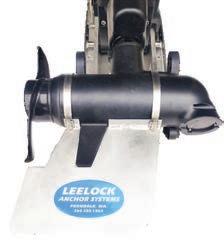
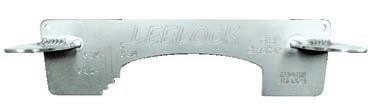
The LeeLock magnum Skeg #LMS-04 is made for Minnkota Instinct Quest motors. It will drastically improve the steering performance and straight line travel of your bow-mounted motor. Not only does this Skeg improve your motor’s performance, it also makes it much more efficient. Your batteries will run longer on a charge. A LeeLock Skeg is a vital part of your trolling motor system.
This oversized skeg is made of 5052 aluminum. The size is 8 3/4 inches high by 10 inches wide and it’s 3/16 inches thick. It comes with clear PVC coated stainless steel hose clamps. The magnum skeg is available for other motors as well.
HEAVY DUTY QUICK CHANGE
BASE
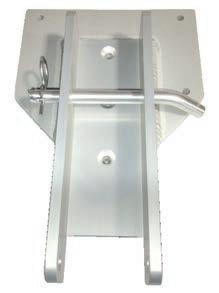
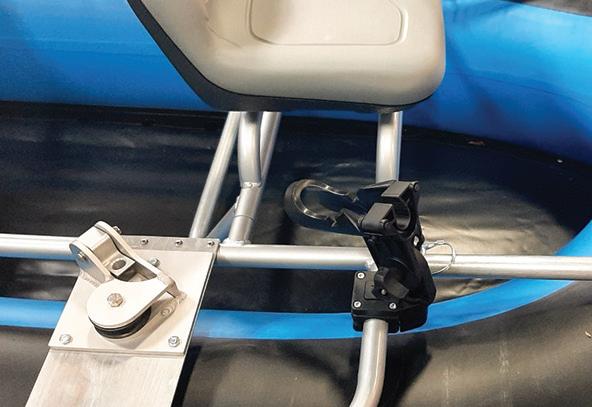
The Heavy-Duty Quick Change Base #QB-03 is like the standard Quick Change Base, but beefed up to provide a wider footprint. This provides a more secure mount. Like the standard Quick Change Base, the Heavy-Duty base allows you to easily and quickly switch between the #CRN-01 Columbia River Anchor Nest, any of the 3 Bow Mount Trolling Motor Mounts or the #BL-01 LeeLock Ladder. Simply remove the pin and slide an accessory out and slide another accessory in and replace the pin.
The Heavy-Duty Quick Change base mounts to almost any power boat as long as the footprint fits on the bow area of the boat. It has 7 5/16 inch mounting holes. The Heavy-Duty Quick Change Base is handmade of aluminum. Go to LeeLock.com to order the Base alone or to add the CRN-01 Columbia River Quick Change Anchor Nest, the three Bow Mount Trolling Motor Mounts, or the LeeLock Ladder to your order.
LEELOCK #SP-04 1/2 INCH SIDE PULL LOCK UNIT
Our LeeLock #SP-04 1/2 Inch Side Pull Lock Unit bolts on top of the frame of most rafts, and catarafts. This patented unit gives you a much easier and safer way to secure your anchor line and eliminates the need for a traditional jam cleat. Best of all it prevents accidental anchor release!
It is constructed of 1/4” aluminum. This lock is designed to be used with most 3/8” to 1/2” anchor lines. It does not have mounting holes so it can be drilled to an individuals specific boat. 1/4” fasteners recomended (stainless steel recommended, not included) to mount.
Hassle free, reliable and easy!
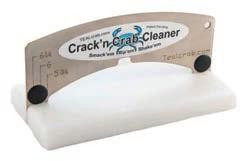
LEELOCK CRAB CRACKER
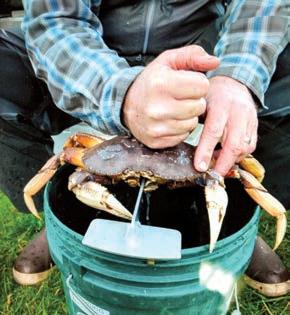
This new tool from Leelock will allow you to measure your Dungeness crabs to determine which ones are legal to keep. Then use the Crab Cracker to crack them in half, separating the two clusters from the shell and guts.
The Crab Cracker has been designed so that it sits nicely on top of a 5-gallon bucket, perfect for when you clean crabs. The bucket gives you a stable base, which makes it easier to clean – the guts and shell go into the bucket, making cleanup a snap. Crabs cleaned this way take up half as much space as whole crabs, so you can cook twice as many in your kettle.
The Crab Cracker is a unique tool made from solid aluminum, and comes in handy for cleaning Dungeness crabs. US Patent 12564195-B2.
FISHING
California’s Clear Lake, a pilgrimage all crappie anglers should make at least once, then minnows, the most traditional of speck baits, are off the board. No need to despair. According to Clear Lake guide Ed Legan, who weaned himself away from live bait years ago, plastics – but the right plastics – are the way to go for crappie. They’re more effective, he told me. There’s no wasted time rebaiting. Plastics last longer fish after fish. And plastics – again, the right plastics –can be fished in a variety of ways, e.g., under a bobber, cast/retrieved, slow-rolled or vertically jigged.
So what are these “right” plastics? On Silver Lake, the go-to would be Freaky Frank’s Lil Freaky or Freaky Worm fished under, my preference,
Mick Thill’s Pro Series Slip Float; however, the name on the bobber really doesn’t matter, as long as the float’s sensitive enough to register a crappie’s oft-faint strike.
But depending on the day and the aggressiveness – or lack thereof – of the schools, crappie will respond to a wide variety of artificials including Beetle Spins, tube jigs, marabou jigs, Rooster Tail spinners, small crankbaits (e.g., Berkley’s Flicker Shad) and twister-tail grubs. Bobby Garland’s Slab Slayer and Baby Shad are top-notch choices; so, too, might be Mister Twister’s 2 1/2” Sassy Shad.
The final word: Color can and often does make a difference in the crappie world, so don’t hesitate to switch up if what’s at the end of your string isn’t
THERE’S A NEW CHEF IN TOWN!
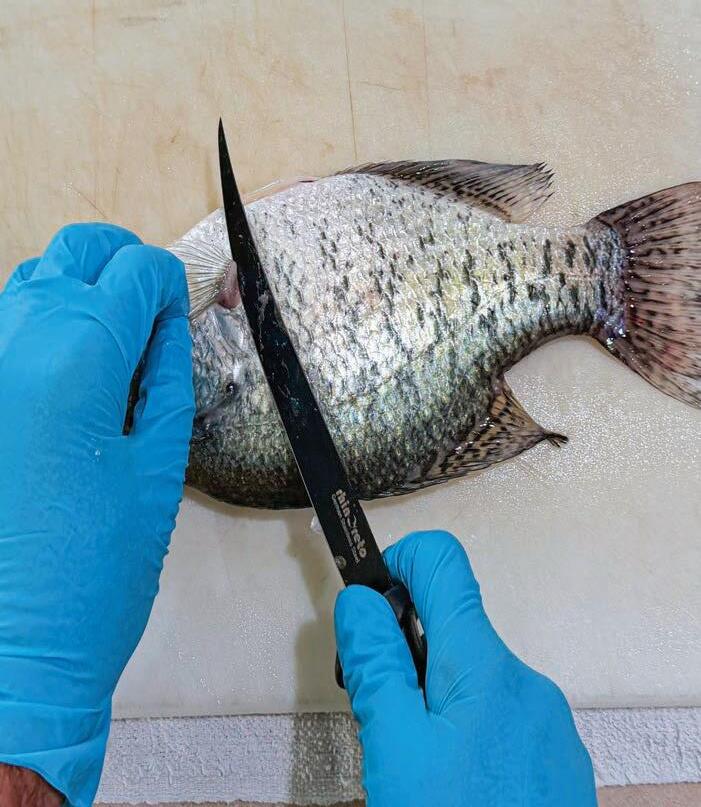
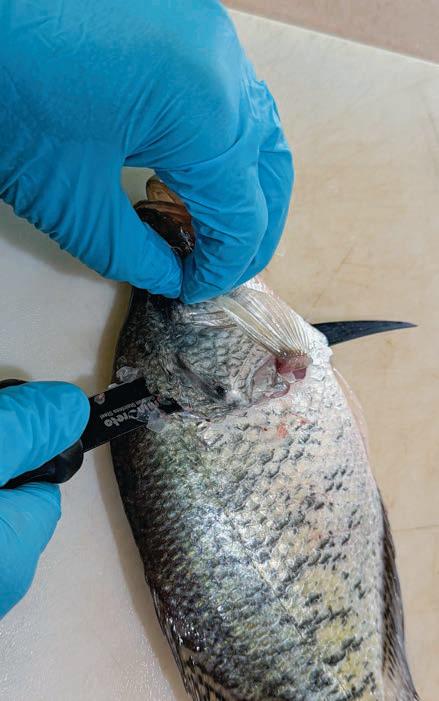
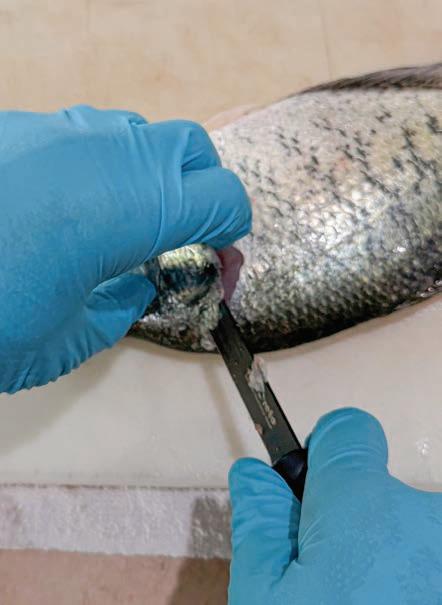
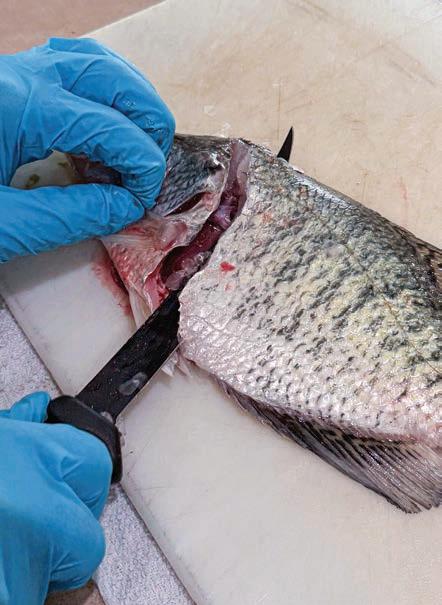
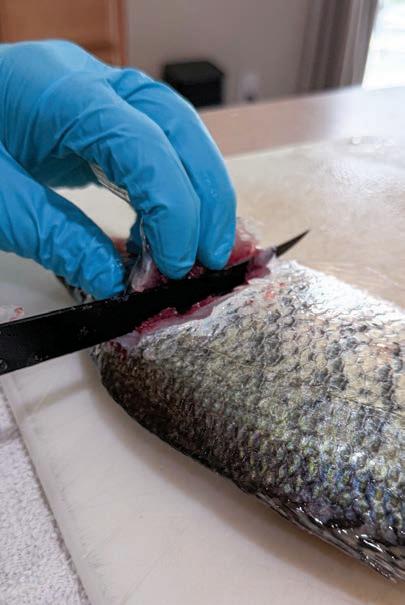
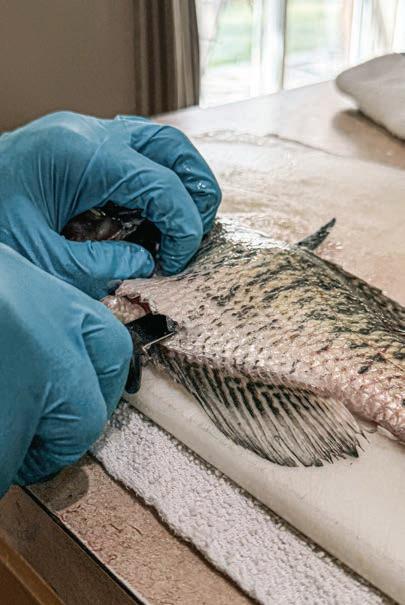
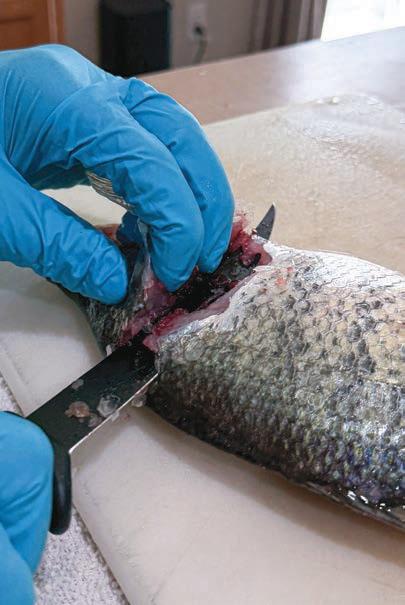
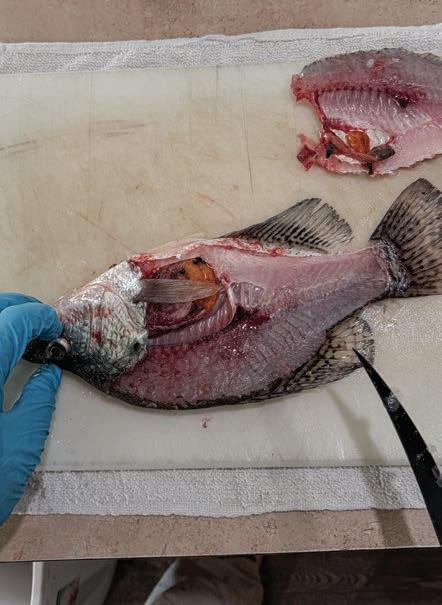
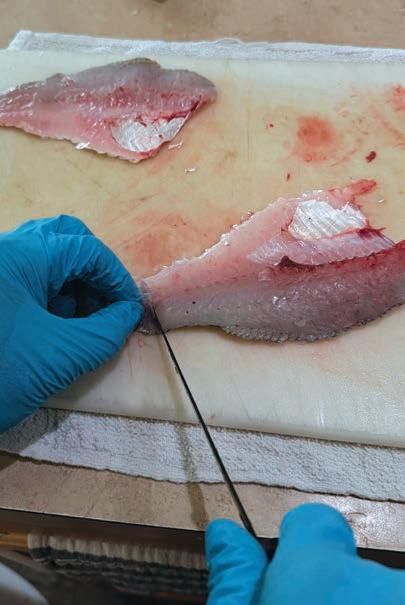
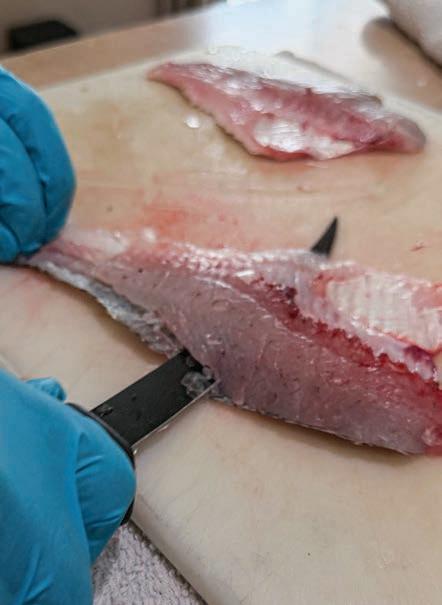
Boneless filets are nice; however, I’d strongly suggest trying this with your next crappie. Remove the head. Cut the belly away from throat to vent and do away with the innards (for more fileting tips, see Chef in the Wild, page 73). Scale, but leave the dorsal and pectoral fins. Wash inside and out.
Dip in an egg/milk mixture, toss in Pride of the West until completely coated, and deep fry in 375-degree peanut oil until golden brown. Pull the fins off, and pick away starting above the lateral line with a fork. Damn straight! –MDJ
working. Start with the standards –chartreuse; red-and-white; black-andred; white; or yellow – and, if that’s not working, try something with an interesting but true-to-life name like watermelon spice, monkey milk or, my favorite, bayou booger. For real!
BLUEGILLS
The absolute, without-a-doubt finest bluegill fishing I’ve ever done was with Billy Blakely at The Bluebank Resort on Reelfoot Lake in western Tennessee. It was early May and the ’gills were in 3 to 4 feet of murky water spawning. The tools? Cane poles, tiny bobbers and live crickets. It was, to quote the modern age, lights-out.
Closer to home, California’s Clear sports a fine population of dandy bluegills. Oregon’s I-84 ponds hold ’gills; so, too, do Rowland and Horsethief Lakes along Washington’s Highway 14. Smaller overlooked waters can harbor plenty of opportunity, e.g., boat basins, dock-heavy marinas, weed-filled backwater sloughs and wasteways. (Speaking of, a recent Washington Department of Fish and Wildlife study estimated nearly 4 million bluegills, mainly fry, had been entrained via Columbia Basin Irrigation Project returns into the big river over a five-year period, likely just a fraction of the true total, which originates ... somewhere.) That borrow pit you pass on the way to work every day, the one filled with lily pads and invasive wild iris? Yes, sir. I bet there are bluegills there.
Tackle: I’ll save you the pain of rereading what I’ve said about crappie rods and reels, and say the same ultralight spinning and/or spincasting gear I’m using for crappie I’m also using for bluegills; however, there are few things as enjoyable as a 10-inch ’gill on fly tackle.
“Temple Fork Outfitters, Echo or Reddington rods and reels for middle-of-the-road and affordable,” said Oregon’s Mike Callian, my fly fishing advisor and guru. “A 3-weight rod or smaller is fun for panfish. Just something that will flick a little dry bug. You start getting lighter than a
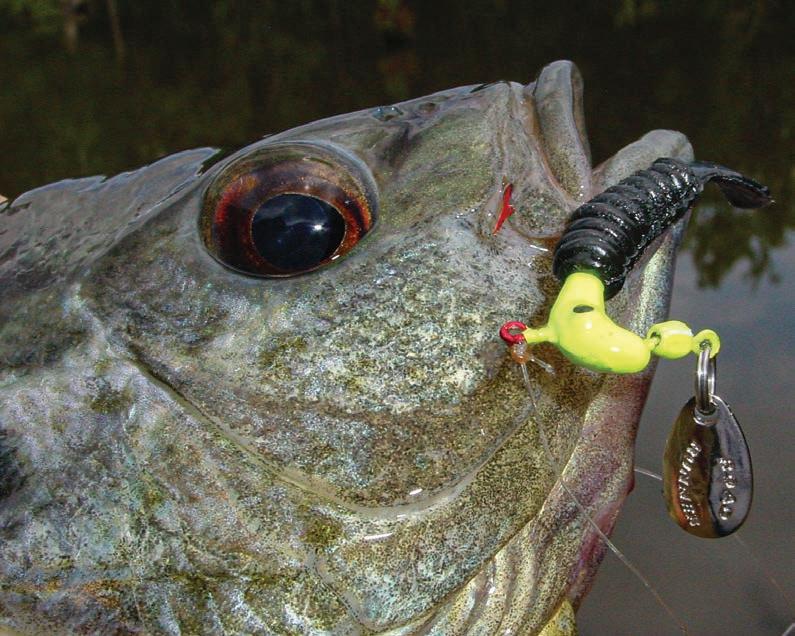
Small underspin lures like this Road Runner are among the good bets for drawing a bite from bluegills and crappie. (JULIE JOHNSON)
BIGGEST Lund Dealer in the Pacific Northwest!
Demo rides always available www.yvmarine.com 509.453.6302
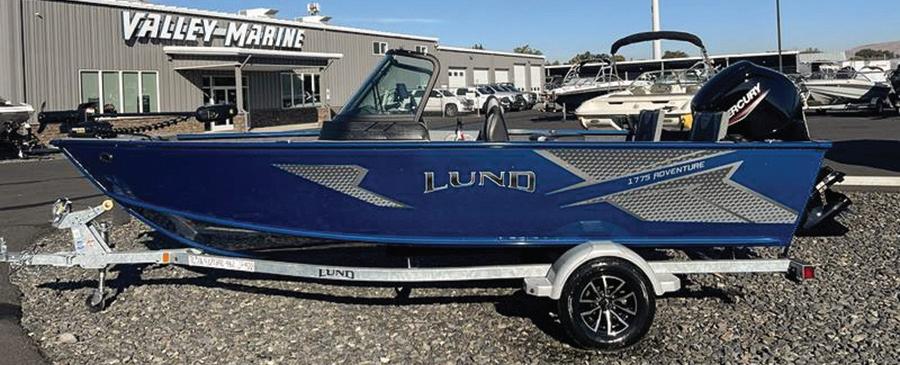
2026 Lund Adventure Sport
Equipped with Mercruy 90 ELPT, 1 Additional ProRide Seat w/ solid Pedestal, Graphics Upgrade, Sport Top w/ walkway curtain, Garmin 73CV w/ Navionics Mapping, Minnkoa 70lb | Pilot 24 volt bow mount, 2 bank changer, and more. Ready to fish!
5 in stock to choose from startng at $38,950
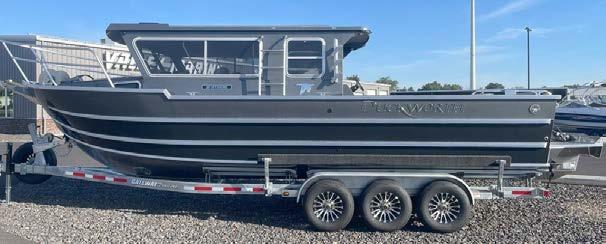
2026 Duckworth 28' Offshore
Well equipped with Twin Yamaha 250HP Outboards, Yamaha T25 Kicker Motor, Heavy-Duty Offshore Deep-V Hull, Upswept Bow Design, Full Hardtop for All-Weather Protection, Spacious Offshore Fishing Deck, Premium Interior Comfort Layout, Extended Range Fuel Efficiency & Performance, Triple Axle Trailer Included, Built for Offshore, Coastal & Long-Range Fishing
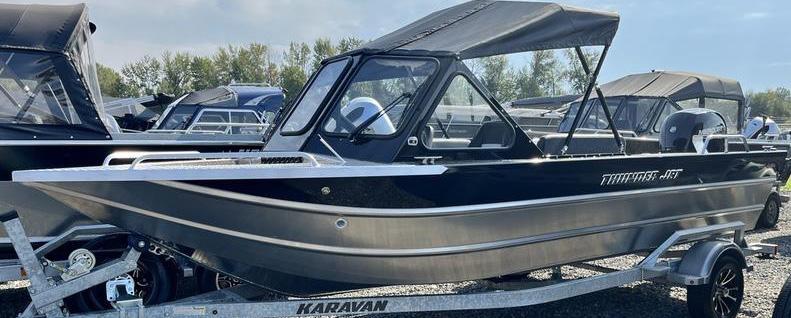
2026 Thunder Jet Rush
1 Only at this price! Equipped with Mercury 150/105hp JET, Full Canvas Enclosure, Bench Seats, Vinyl Floors, Boarding Ladder, Galvanized Trailer w/ Mag Wheels and MORE!
$56,950
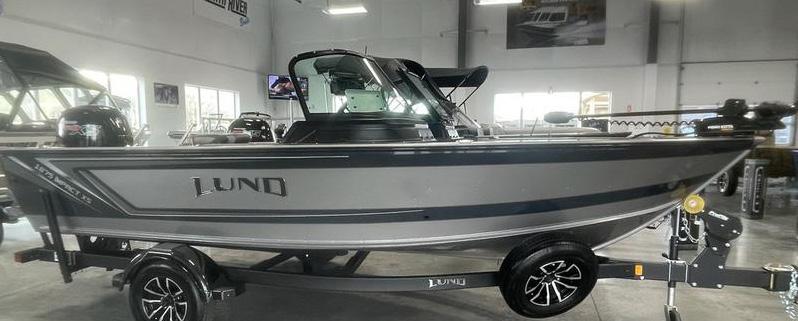
2026 Lund 1875 Impact
5 in Stock! Comes with the following options: Mercury 115 EXLPT PRO XS, Garmin Echomap 93sv w/transducer, Minnkota Terrova 60”, Sport Top w/walkway Curtain, Mercury Smartcraft Gauges, Air ride pedestal Upgrade, and so much more!!!
5 in stock starting at $51,959
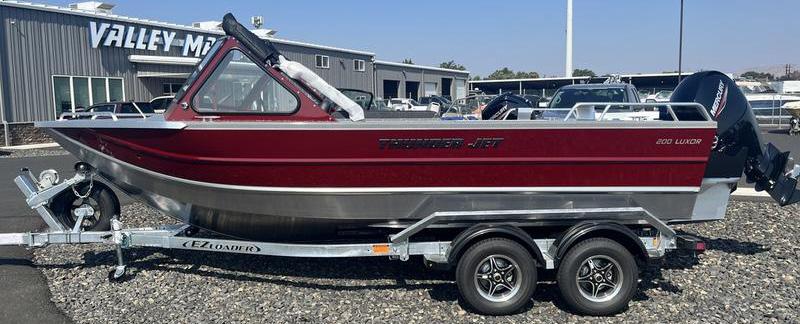
2026 Thunder Jet 200 Luxor
Last one in Stock! Equipped with Mercury 150hp, stainless prop, full canvas enclosure, in-floor rod lockers, bench seats Heavy-Gauge Welded Aluminum Hull, Spacious Fishing Cockpit, Walk-Through Windshield, Reverse Chine Hull Design, Premium Fishing Layout, Tandem Axle Trailer
$66,950
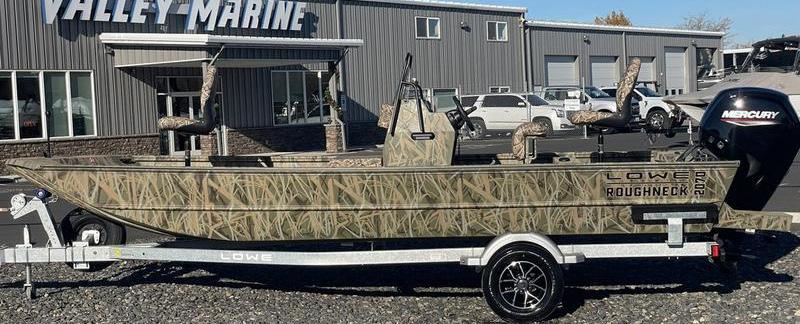
2026 Lowe 20 Roughneck
Last one in Stock! HEAVY DUTY EDITION!!! (.125 Hull) Equipped with a Mercury 115hp ELPT, painted in Shadow Grass Mossy Oak, on a Galvanized trailer with spare tire and swing tongue this boat is ready for fishing or feathers fly'n!!
$38,950
We also offer Parts, Sales, and Service for Lund, Duckworth, Weldcraft welded aluminum boats as well as Yamaha and Mercury outboards.
FISHING
3-weight, and gear is a little harder to find.”
My fly gear consists of a White River (Bass Pro Shops) Riseform 4-weight rod-and-reel combo. It comes complete and ready to fish, save for the little specks of thread and feathers I’ll try to attach to the end of the leader. It’s nothing fancy, but for bluegills, fancy doesn’t put fish in the bucket.
Bluegill baits: Here, let’s continue in the fly-flicking realm.
“Bluegills aren’t picky,” Callian said. “A size 12 to 16 Adams or Mosquito can usually make them eat off the top. Panfish poppers, too, are fun and never sink, regardless of how many times they get eaten. If it looks like subsurface is the way to go, then I’d try Prince Nymphs, Pheasant Tails, Perdigons or San Juan Worms under a small indicator.”
“A little action, too,” he added, “on your flies never hurts. Just jig ’em a bit and a couple strips will usually make them bite if they’re being boring.”
But fly rods – sorry, Mike C – aren’t only for flies when it comes to bluegills. Callian’s 3-weight or my 4-weight armed with a 1/32- or 1/64-ounce jig, especially one tied with marabou and tinsel or resembles, even remotely, a bumblebee, hellgrammite or tiny crawdad, often works incredibly well.
The final word: Which brings me to two of the best selling points in favor of bluegills. One, there’s always at least a
’Gills are pretty cooperative and a good species to hook kiddos on fishing. A trip to Potholes Reservoir for walleye and perch turned up this “bullgill,” as her dad called it, for Lexi Han. (KNIFE PHOTO CONTEST)
bits of crawdad tail and cocktail shrimp; all are on the menu, and most are as entertaining to catch as the fish themselves.
PRAISE FOR PINT-SIZED FISH
When I think panfish in the Pacific Northwest, I’m reminded of comedian Rodney Dangerfield, who, at least according to him, “got no respect. No respect at all.”
few in each school that are ravenous, and two, they’re often, as Callian said, not very choosy when it comes to their next meal. Flies, spinners, spoons, crankbaits, tube jigs, grubs, leadheads, swimbaits and “anything minnow” will take ’gills. Live-bait aficionado? Well, there’s small ’crawlers, pieces of ’crawler, redworms, mealworms, crickets, grasshoppers, tiny crawdads,
Overshadowed, perhaps, by big silver fish, albacore, sturgeon, trout –hell, even walleye and smallmouth –panfish like crappie and bluegills have taken a backseat to most species and for most anglers, which is unfortunate because there’s plenty of opportunity up and down the West Coast, liberal daily bags – if there’s a limit at all –and year-round seasons. The gear can, if wished, be inexpensive, the bait and lure selection almost infinite and the tactics so simple, “even a caveman can do it.”
“Hello, 2004? It’s MD.”
’Nough said. NS
Picky, they’re not – bluegill will bite a surprisingly wide array of offerings, from fly patterns to hardware, plastics to good old worms under a bobber. (JULIE JOHNSON)
Cutting The Chase
Iwas traveling for work this past spring, out to the gloriousness that is Central Washington. Home of sagebrush, the Dave Matthews Band weekend at The Gorge and an iconic fishing spot right off I-90 in Moses Lake.
While I was there, I knew I had to fish.
CHEF IN THE WILD
By Randy King
In town, there are really three “known” spots: the I-90 bridge; behind Walmart; and Blue Heron Park. All jokes aside, every time I have ever driven over that bridge, someone is fishing off it.
Sunny and hot? Families lined up along the rail. Snowy and wet? Some hardcore guy in not enough rain gear and blue jeans. Rain or shine, that bridge has fishermen on it. It must be for a reason.
Why? I can only take my best guess, but I’d say it comes down to three things. First, access. You can get off the bank a bit and change your casting angle and location. Second, structure. The bridge pillars and all the concrete slag along the shoreline make great cover for ambush predators. I would assume that the same junk pile holds plenty of crawfish too. Third, moving water. The sections of the lake connect
under the bridge, and while the current is not ripping, it is enough to move food from one place to another. Put all that together and it adds up clean. It is just a good place to fish.
So I did, and, well, it was.
Over the course of about an hour, I landed eight smallmouth bass ranging from about 5 inches to a solid 11- or 12inch fish, and just about everything in between. That smallest one, honestly, I was impressed it even went after my lure. That fish had some moxie.
MY UNCLE-IN-LAW RICHARD provided all
Fishing a bridge over traveled waters: A business trip to Moses Lake was all the impetus Chef Randy King needed to join his uncle-inlaw Richard along I-90 for a brief session that yielded a number of smallmouth bass. (RANDY KING)
COLUMN
the gear for the session, so we ended up standing there with cars blowing by 15 feet away on I-90, just talking. We talked about family, the history of the area and a little bit of everything else. It was one of those conversations where you actually get to know someone, not just the usual graduation, reunion or funeral small talk. I had no idea the spot was even famous until Richard mentioned it.
I asked if he wanted to keep any fish, and he passed. I was in a rental car and still had a few days of work ahead of me, so keeping fish on ice in my hotel was not really in the cards anyway. So we let them all go and eventually packed it up. We headed into town and grabbed burgers at Sporty’s. It was a good Thursday night.
Fast forward a few weeks and my father and I were fishing north of Boise on Paddock Reservoir out of kayaks and doing well for ourselves. We ended up
catching around 50 crappie and keeping 27. We figured about three hand-sized panfish per person per meal, so call it nine meals of fish depending on how you do the math. Dad got a few dinners, I got a few dinners, and it was just enough that we couldn’t realistically eat it all fresh.
And that’s where crappie starts to show its hand. It’s one of those fish that tattles on you if you don’t treat it right. Fresh, it’s light, clean and flakes just right. Freeze it, and things start to fall apart (literally). The meat is delicate to begin with, so once you lose that moisture, you’re left with something softer, a little damp, sometimes even a little off (it can smell like cat food). It’s still edible, sure, but it’s not the same fish. Crappie doesn’t have much to hide behind, so when it goes, it goes quick.
The best move is simple. Eat what you can fresh, share the rest and don’t pretend it’s going to be better later. Start planning the
fish fry if you plan on keeping a whole bunch of these fish. You have four or five days of freshness; you can make it happen without freezing them, and you should.
But before you can fry them, you need to filet them.
CUTTING UP A mess of panfish is never a great time. You feel amazing catching 100 crappies out of the lake. But then you have to clean them all. Gulp.
I am never going to say the following trick will save you all the work – it won’t –but I can show you how to cut up a fish to maintain as much meat as possible while also making as little work as you can.
In the end there’s nothing fancy about turning a panfish into clean filets, but there is a rhythm to it. A sharp knife, a little patience and a few clean cuts will get you there. The following photos walk through the process, from start to fin-less.
STEP 1 Set the fish on a flat surface and get a firm grip just behind the head. This first cut is the anchor for everything that follows, so slow down and line it up clean.
STEP 2 Start your knife just behind the gill plate and angle down toward the backbone. Let the blade do the work and keep your off hand clear.
COLUMN
STEP 3 Finish that cut until you feel the spine. You want to stop there and not cut all the way through.
STEP 6 As the filet opens up, keep freeing it along the rib cage. You can see the meat start to separate clean from the frame.
STEP 4 Turn the blade flat and start running it along the backbone toward the tail. Keep the knife tight to the bones to save meat.
STEP 7 Stay tight along the bones as you reach the tail. A little pressure forward helps keep the blade flat.
STEP 5 Work the blade down the length of the fish in smooth strokes. Don’t rush it. Let the knife continue to be guided by the spine.
STEP 8 Lift the filet slightly and finish separating it from the body. At this point you’ve got your first full side off.
COLUMN
STEPS 12 AND 13 Slide the knife forward between the meat and skin while holding the tail end. Keep steady pressure and a shallow angle. Continue that motion until the filet separates completely from the skin. A slow, even push works better than force.
Once you do a couple panfish, the steps will start to blend together and your hands remember what to do. Just turn on the classic rock and get going. These fish ain’t gonna filet themselves! Clean cuts, a sharp knife and staying close to the bones will get you better filets every time. After that, it’s just a matter of deciding how you want to cook them. NS
STEP 10 Follow the rib bones with the tip of your knife and lift them out in one piece. Take your time here so you don’t leave bones behind.
STEP 11 Now position the knife at the tail end to remove the skin. Angle the blade slightly down.
STEP 14 A good clean filet will not have any meat left on the skin. (RANDY KING, ALL IMAGES)
STEP 9 No need to gut the fish. The slab of meat will come off smoothly, as evidenced here.
Highway 101, Scenic Byway To Angling Adventure
As it orbits the Olympic Peninsula and then slingshots south, the famed West Coast route accesses many fisheries and other activities.
A flock of seagulls wings at dawn over Sekiu, a quiet fishing village along the Strait of Juan de Fuca accessible via US 101 and State Routes 112 and 113. (TY KAUFMAN VIA WDFW)
FISHING
By Mark Yuasa
Planning summer and early fall trips? You’re in luck. The highways and byways crisscrossing and zigzagging across Washington have many hidden fishing gems along every turn of the road!
In this third of a three-part series, we’ll look at fishing trips and roadside stops along Highway 101, which encompasses the towering snowcapped peaks of the Olympic Peninsula and makes its way south along the rugged coastline to the Astoria-Megler Bridge on the Washington-Oregon border.
This journey spans about 366 miles as it passes counterclockwise through the towns of Olympia, Shelton, Hoodsport, Quilcene, Sequim, Port Angeles, Forks, Amanda Park, Hoquiam, Aberdeen, Raymond, South Bend, Ilwaco and Chinook.
You might just find that your next road trip is packed full of fishing choices to suit the needs of just about every angler. While fishing is high on the travel memo, we’re also adding some exciting nonfishing stops along the way too!
HOOD CANAL
Fishing dates: Hood Canal (Marine Area 12) opens south of Ayock Point for hatchery Chinook and all coho beginning July 1, and it opens north of Ayock Point for coho beginning August 1. Refer to the Washington Department of Fish and Wildlife 202627 sportfishing regulation pamphlet or the agency website (wdfw.wa.gov) for additional Hood Canal salmon opportunities in late summer and fall.
Fish species: Chinook and coho (salmon retention depends on fishing season dates).
Where to fish: Chinook typically migrate into Hood Canal by mid-July and numbers peak in August. Coho arrive in August and September. Early mornings or just prior to sunset are the best periods to fish. Try for
Columbia River
Olympic Na tional Park
Hoh River
Elwha River
Chehalis River
OLYMPIA
SHELTON
HOODSPORT QUILCENE
RAYMOND
FISHING
Chinook in lower Hood Canal off Ayock Point, Hoodsport, Eagle Creek, Lilliwaup, Potlatch, Annas Bay and Long Point. When open for coho, head to Dabob Bay, Quilcene Bay, Scenic Beach, Misery Point near Seabeck, and Hazel Point.
CUSHMAN LAKE
Fishing dates: Open year-round.
Fish species: Kokanee, cutthroat trout. Where to fish: Lake Cushman in Mason County is located 5 miles west of Hoodsport. No rainbow trout are stocked, but the reservoir offers kokanee fishing from April through October. Anglers will slowly troll using downriggers with small dodgers and blades trailed with a short leader to a spinner, Wedding Ring, micro shrimp and plastic squid (hoochie) or a Spin-N-Glo. Add a single white corn kernel or maggot to the hook with fish scent attractant. A fishfinder is essential to locate schools of kokanee hovering at certain depths.
There’s good late-season cutthroat
fishing using flies or a small spinner or spoon. The lake has ample shoreline access along the west side but is best fished in a boat. Cushman Lake State Park, located on the south end, and Skokomish Park, on the north side, have boat launches and numerous campsites.
STRAIT OF JUAN DE FUCA
Fishing dates: Area 5 (Sekiu and Pillar Point) is open (except the Kydaka Point area) for salmon during oddnumbered days only from July 1-31 (closed to all salmon fishing on evennumbered days) and could close sooner if the harvest quota is met.
Area 6 (East Strait of Juan de Fuca west of a true north/south line through the number 2 Buoy immediately east of Ediz Hook) opens for hatchery Chinook beginning July 1 and could close sooner if the harvest quota is met.
Refer to WDFW’s pamphlet or website for additional Area 5 and 6 salmon opportunities in late summer and fall, as well as any potential emergency closures.
Fish species: Chinook and coho (salmon retention depends on fishing season dates). There are also select bottomfishing opportunities to check the regs for.
Where to fish: In Area 5, try for salmon at the Caves, located a couple hundred yards around the corner from the Sekiu marina breakwater. Other locations to fish include Slip Point, Mussolini Rock, the Coal Mine and Slide Area, Cod Fish Bay and Pillar Point. There are a number of resorts in Sekiu that provide amenities, charter services, moorage, fuel and accommodations with an awesome view of the Strait.
In Area 6, start your troll or drift west of the Ediz Hook number 2 Buoy, then head along the massive sand spit/breakwater jetty to just past the old Port Angeles Pulp Mill. Other options are Winter Hole, an exposed area out in the Strait of Juan de Fuca, where many will drop jigs; and near Port Angeles at the “Humps,” an underwater shelf starting at Buoy 4
A salmon fishing boat runs past the tidepools at Salt Creek Recreation Area, just over the ridge from Crescent Lake and Highway 101. Anglers work the edge of the kelp for tide-riding Chinook during the summer. (ANDY WALGAMOTT)
Smokercraft Sunchaser Pontoon
Smokercraft Sunchaser Pontoon
Weldcraft 200 Rebel
Weldcraft 200 Revolution
Southbay
FISHING
– head from there in a northwesterly pattern to the second and third humps.
WASHINGTON COAST
Fishing dates: Open daily for salmon through September 30 at Ilwaco, Westport-Ocean Shores, La Push and Neah Bay (Areas 1, 2, 3 and 4, respectively). Each port could close
earlier if the guideline or quota is met. The recreational coastwide Chinook catch quota of 54,000 is up slightly from 53,750 in 2025, and the hatchery-marked coho quota of 102,900 is up from 99,720 in 2025.
Fish species: Chinook and coho. See the regs for select bottomfishing opportunities.
EXTRA FISHING STOPS ALONG THE WAY
Located within Olympic National Park is Lake Crescent, which covers more than 5,000 acres and is regulated by the National Park Service. The lake has a unique population of Beardslee rainbow trout, as well as cutthroat trout and kokanee. Catch and release fishing only is open through October 31, and artificial lures with a barbless single-point hook are allowed with a 2-ounce weight restriction. For fishing rules, go to nps.gov/olym/planyourvisit/fishing.htm.
The Olympic Peninsula’s coastal rivers and those to the south that feed into Gray Harbor and Willapa Bay – the Hoh, Salmon, Quillayute, Bogachiel, Sol Duc, Chehalis, Humptulips, Black, Satsop, Naselle, Smith Creek and Willapa – are options to catch salmon in late summer and fall, but much of that will depend on water conditions. WDFW will monitor this year’s low mountain snowpack, which brings the potential for drought conditions, high water temperatures and low river levels. These conditions, along with extended hot weather, could impact fisheries and salmon migration in late summer and early fall. Anglers should check the WDFW regulation pamphlet for opening dates, and WDFW emergency regulations webpage for any in-season changes.
Beginning August 1, head to Willapa Bay for a hatchery king fishery, which is something not to overlook, thanks to the two-adult-salmon daily limit (release wild Chinook). A forecast of 28,120 Chinook should create some good times for anglers inside the bay’s deep channel along the red and green channel markers numbered from 2 to 27 (markers 7 to 13 are the popular areas). The markers start in the middle of the bay and run all the way to the Willapa River mouth. Target a flood tide to avoid fouling up your gear with eel grass and seaweed.
Grays Harbor east of the Buoy 13 line opens on September 16 and can be decent for coho well into October. Depending on which way the tide is moving, start at the Goal Post (a set of rotting wood pilings) near the entrance to the Johns River and troll along the south channel. This is a trough that runs east and west toward the Chehalis River mouth. Use Stearns Bluff, a landmark hillside east of the Johns River, as the end or start spot.
A good setup consists of a 6- to 8-ounce drop sinker attached to a three-way slip swivel with a flasher to a 6-foot leader and cut-plug herring. Let out 12 to 16 pulls of line over depths of 15 to 25 feet so your bait is spinning a foot off the sandy bottom. The best time is during the flood tide, but there can be a brief bite on the ebb tide. Unlike other salmon fisheries you don’t have to be out right before daylight, and it’s all about the tides.
Hundreds of other statewide seasonal lowland lakes have been stocked since opening day on April 25, and fishing should remain productive through this month. On the coast, try Duck Lake near Ocean Shores (4,650 catchable trout planted in spring and 950 jumbos in May); Aberdeen Lake (7,050 catchable trout planted in spring and 1,850 jumbos from April to June); and Black Lake in Pacific County near Ilwaco (12,000 catchable trout planted in spring and October and 500 jumbos in April). To view what other lakes have been or will be stocked in 2026, go to the WDFW’s stocking plan webpage at wdfw.wa.gov/fishing/reports/stocking/statewide. –MY
Where to fish: Ilwaco offers some nearby options off the surf line from Cape Disappointment to Long Beach at depths of 25 to 50 feet for salmon staging before they migrate into the Columbia River. The ocean fishing grounds are located about 7 to 10 miles west of the CR Buoy at depths of 50 to 125 feet. Ilwaco charter boats and larger private boats will venture even further out to the 200- to 300foot depth line.
At Westport, cross the bar and head north from Ocean Shores to Copalis and fish depths of 30 to 80 feet, but watch your lines closely as you troll, since there’s usually a maze of commercial crab pots. The key for nearshore fishing is locating schools of baitfish. Anglers can also head in a southwesterly direction out into the ocean by following the buoy line from 100 to 250 feet and as far out as 20 to 25 miles offshore. Others will push even further south off the mouth of Willapa Bay at depths of 150 to 180 feet, but keep in mind that it’s a long haul from Westport.
At La Push, one of the better spots is a short boat ride from the marina outside of the mouth of the Quillayute River at James Island, and north along the shoreline from Rialto Beach to the Hole in the Wall. Further away from port is an area known as the Rock Pile.
Neah Bay is one of the most fishy spots along the coast for salmon. The green buoy off Waadah Island and from the Garbage Dump west to Tatoosh Island offers a relatively protected area for smaller-sized boats. Many will motor mooch a herring in the shallow water (25 to 50 feet) near the kelp beds. Just around the northwesternmost tip of the state is Slant Rock, and further south is Cape Alava, both of which are popular fishing areas.
BUOY 10, COLUMBIA RIVER MOUTH
Fishing dates: Opens August 1, with alternating block periods of nonmark-selective (wild or hatchery)
FISHING
DESTINATIONS ALONG THE WAY
Make it a combo outing along Highway 101 by spending some time camping, hiking, sightseeing, wildlife watching or simply strolling in the many state, national and local parks. Coastal stops also include beach exploration, seaside camping and boating.
Park it: A list of parks along or just off the highway includes Olympic National Park; Hoh Rain Forest; Cape Disappointment State Park near Ilwaco (Lewis & Clark Interpretive Center and North Head Lighthouse); Grayland Beach State Park; Leadbetter Point State Park; Pacific Beach State Park; Tolmie State Park; Ocean City State Park; Dosewallips State Park; Hope Island State Park; Lilliwaup Tidelands State Park; Triton Cove State Park; and Potlatch State Park near Shelton.
Have a beachin’ day: There’s also beautiful coastal beaches. Hit Ruby Beach, located within Olympic National Park; Rialto Beach’s Hole in the Wall rock formation; La Push’s First, Second and Third Beaches located 12 miles west of Forks; Deadman’s Cove and Waikiki Beach in Cape Disappointment State Park (see park website for construction status); Kalaloch Beach; Shi Shi Beach, a remote beach on the Makah Reservation; Westport beaches at Half Moon Bay and Westhaven State Park; Moclips to Copalis Beach; and Ocean Shores, which offers 7 miles of sandy shoreline and easy access. Long Beach is the longest drivable beach in the state and covers 28 miles.
Lace ’em up: Hike to Hamma Hamma Falls, a 75-foot waterfall; Mount Walker Viewpoint, a moderate 4-mile hike with a 2,000-foot elevation gain near Quilcene; Rocky Brook Falls, a 229foot waterfall near Brinnon and a fiveminute drive off Highway 101; and Staircase Rapids Trail, a 2-mile, 500-footelevation-gain stroll, located about 30 minutes from Hoodsport.
WDFW-managed lands: More than 1 million acres of wildlife area lands can be found throughout the state. To find them go to wdfw.wa.gov/ places-to-go/wildlife-areas. WDFW also manages hundreds of water access sites throughout Washington, providing recreational access to the state’s lakes, rivers, and marine waters. To find water access areas, go to wdfw.wa.gov/placesto-go/water-access-sites. –MY
and mark-selective (hatchery only) Chinook and hatchery coho retention, similar to 2025. Check the pamphlet for specific dates and what salmon species may be retained.
Fish species: Chinook and coho.
Where to fish: Timing, locating baitfish and knowing what part of the tides to fish are the three keys to success here. Typically, you can find fish on the opener, but mid- to late August is best for Chinook.
In the early mornings on a flood tide, make your first few passes just outside the Port of Ilwaco Marina along the Wing Walls, a row of rotting wooden pilings known to grab a lot
of fishing gear. It is also a place where hungry salmon will stage and grab your bait as well.
The Desdemona Sands area – a flat, sandy bar from the Astoria-Megler Bridge downstream that is exposed at low tides – is a middle to late flood tide show as salmon pass along the dropoffs on both sides of the channel. Be careful when crossing this area because it can be very shallow along the sandy flats.
The buoy line off the town of Astoria where huge ocean-bound freightliners anchor above the AstoriaMegler Bridge is a decent spot on a flood tide change. Below the bridge try outside of the Astoria Marina to Fort
Highway 101 leads to far more than just fishing. Ruby Beach on the western edge of the Olympic Penisula is just one of many stunning landscapes a drive down this scenic route will take you to. (SIMON ARNOLD VIA WDFW)
Stevens State Park and west toward Hammond in a series of deepwater channels. On the Washington side, just above the bridge are three underwater channels that are passageways for migratory salmon. Just downstream from the bridge is the Church Hole off Fort Columbia State Park, and it can be fruitful too.
Gear consists of a weighted diver or cannonball sinker of 8 to 10 ounces with a flasher tied to a leader with a green-label whole or cut-plug herring or anchovy. Preferred depth to drop your bait is 25 to 30 feet. Any deeper
FISHING BEFORE YOU CAST …
Washington anglers will need a valid 2026-27 recreational fishing license. WDFW offers two mobile apps, both designed to make your outdoor experience easier and more efficient. MyWDFW serves both hunters and anglers, offering electronic tagging, harvest reporting and access to licenses and permits. Fish Washington is tailored to anglers and provides fishing regulations, digital catch cards and license management. Licenses may be purchased online or from hundreds of license dealers across the state.
Before heading out the door to any fishing spot, remember to check WDFW’s fishing regulations webpage (wdfw.wa.gov/fishing/regulations) for permanent regulations and the emergency fishing rules webpage (wdfw.wa.gov/fishing/regulations/ emergency-rules) for rule updates affecting fisheries.
Anglers parking at WDFW vehicle water access areas are required to display the WDFW Vehicle Access Pass – provided when you buy eligible annual fishing licenses – or a Discover Pass. Anglers visiting Washington State Parks or Department of Natural Resources lands need a Discover Pass. Information on parking passes can be found at WDFW’s parking and access passes webpage (wdfw.wa.gov/licenses/parking). –MY
Before it exits Washington for parts south, the highway checks in at the Buoy 10 fall salmon fishery, which will be hopping starting next month. Tegan Yuasa caught this Chinook in a past season just below the Astoria-Megler Bridge. (MARK YUASA)
and you’re out of the fishing zone. Check your bait often, as it will get worn after being dragged along the sandy bottom or from the very strong tides. A plastic bait holder will protect the bait. Spinners with a plastic squid or an artificial cut-plug herring-type lure are also effective.
WE'VE REACHED THE final destination in this series that began back in the May issue, where we looked at fisheries along the five-hour drive across Interstate 90 from downtown Seattle
all the way to the Washington-Idaho border east of Spokane.
And in part two last issue, we covered fishing trips and roadside stops up and down Interstate 5 from the Washington-Oregon border and the Columbia River to the US-Canada border. Good luck and safe travels! NS
Editor’s note: Mark Yuasa is a Washington Department of Fish and Wildlife communications manager. He also was the outdoor reporter at The Seattle Times for 28 years.
What makes Westport Charter Boats so special?
We offer world class fishing with expert crews, right on the edge of the Pacific ‒ where you’ll reel in big catches, meet new friends and make unforgettable memories.
We’re a new office in Westport, with familiar boats, dedicated skippers and great deckhands. A variety of boats to choose from to suit any size party, or individual anglers on mixed trips. We strive to offer fishing for any budget with a little planning.
Mutineer Charters opened in 2024 with six boats from 38 to 55 feet and capacities of 6 to 18 anglers.
Our skippers have over 180 years of combined experience and are known to be some of the best in the business. Whether you prefer a large comfortable boat that can accommodate large groups or private parties, or a smaller “express trip” boat that still has all the safety equipment and a stand up head like our big boats, we’ve got you covered.”
JOIN THE MUTINEERS AND REEL IN A STORY OF YOUR OWN!
Meet the Mutineers
Most of us in the industry will agree—there’s nothing like witnessing the joy
fish, the awe
WASHINGTON charters & Guides
WASHINGTON charters & Guides
WASHINGTON charters & Guides
Season With Salt
Your monthly Oregon fishing outlook provided by The Guide’s Forecast.
By Bob Rees
With an early summer happening throughout the region, local freshwater fisheries will remain challenging for salmon, steelhead and trout anglers. Even sturgeon anglers in the Lower Columbia will see the effects of warming water, as fish in the estuary become more lethargic in their fight and their bite, as well as move into deeper waters where favored baits such as sand shrimp don’t stand a chance against less desirable species before a 6-footer finds it.
Keeping all this in mind, most anglers will shift over to saltwater species, but be prepared, as a likely El Niño event will keep us on our toes there as well.
WITH A STRONGER focus on saltwater opportunities, boaters need to exercise extreme caution when navigating the coastal bars, where the ocean meets freshwater. Outgoing tide strength, coupled with swell height determine the hazard here. Lives are lost nearly every year at these points of entry/ exit for saltwater anglers. Watch our free bar and ocean safety webinar, available from the webinar section of our website (TheGuidesForecast.com).
July 4 often marks the date when Oregon’s first sport-caught albacore hit the docks. Tuna fishers are fanatical about their sport – and justifiably so. These fish are incredible fighters and their dense flesh offers so many ways to prepare them for summer and the rest of the year if you’re a canner.
The bite often starts off Charleston and makes its way north with the best action taking place in August and September. Boaters often expect to go 30-plus miles offshore to get into
productive numbers, but if an El Niño event happens, they could come very close to shore in rare instances.
Meanwhile, ocean salmon season will be in full bloom, with Newport and Astoria likely to produce some of the more consistent hatchery coho catches. Coho season is likely to close around mid-August if the fish remain within reach of most boaters, and they’ll start putting on real weight by the end of July. Chinook will remain an option, but this species is harder to target this time of year, unless you go
further offshore.
Halibut are also available, and with the volatile spring weather pattern we’ve seen, plenty of flattie fishers won’t have their annual six just yet. Newport is the clear choice for consistency, but nearshore halibut can be found out of several other ports, mostly to the north, well into September.
Bottomfishing for mostly sea bass should remain productive, but even this species suffers the summer blues over the course of the liberal season. Lingcod will become more challenging
Chinook are an option off the Oregon Coast all summer long, though you may have to go further offshore to find these fish. (BOB REES)
FISHING
Summer steelheaders, don’t overlook the fishery along the banks of the Lower Columbia, where hatchery chromers are open through the month of July. Guide Chris Vertopoulos shows off one from last season. (CHRISVSGUIDESERVICE.COM)
to find until later in the fall. Meanwhile, coming fresh off a molt, Dungeness in the ocean this time of year are commonly in poor shape. It’ll be hard to find a hardshelled one. Also note that razor clam season north of Tillamook Head, the most productive reach of the Oregon Coast, closes on July 15 for the annual summer conservation period.
WESTERN OREGON STREAMS are low, clear and warm, so anglers will have to adopt the “early bird gets the worm” strategy, as salmonids are likely to shut off shortly after sunrise. Spring Chinook will remain an option on the Trask, Nestucca, Umpqua and Rogue
Rivers, but anglers would be wise to target them on favorable tides near bay entrances or in the estuary, where low water doesn’t have the same impact.
As a general rule, soft tide exchanges produce better catches near the mouth, while stronger tides promote upper bay and lower tidewater success on these river systems. Use bait closer to the salt and artificials such as spinners or stuffer baits the farther you fish up into the estuary and tidewater reach.
Summer steelhead returns look good on the coast this season, with the Wilson, Nestucca, Siletz, Umpqua and Rogue providing some of the best opportunities. Fish for them as if you
were out for stream trout – with small offerings using long, light leaders.
The Umpqua will also provide excellent fishing for smallmouth bass this time of year. Scores of readymade biters are at your hands in this fishery, offering a great introduction for the next generation of anglers.
Cutthroat trout fishing is open in most streams, but check the regulations carefully. These voracious feeders will be foraging on smaller fish in estuaries and tidewater reaches, providing an excellent opportunity for trollers and bank anglers to take advantage of. NS
Editor’s note: For more information, visit TheGuidesForecast.com.
OREGON charters & Guides
OREGON charters & Guides
OREGON charters & Guides
A 4-Day Lodge-to-Lodge Drift Boat Fishing Experience on Oregon’s Wild & Scenic Rogue River!
The Rogue River is the granddaddy of salmon and steelhead, plain and simple. This 4-day Rogue River drift boat trip is about good fishing and doing it right. You’ll float classic stretches of the Wild & Scenic Rogue with seasoned guides who know the river and know the fish.
Fish it how you like—fly, lure, spinner, whatever works. There’s no single “right” way here. At the end of the day, you’ll pull into a private riverside lodge with hot showers, real beds, and solid meals. It’s not camping. It’s a comfortable, no-nonsense fishing trip on one of the West’s great rivers.
THREE ALL-INCLUSIVE LODGES
• Lucas Lodge
• Black Bar Lodge
• Paradise Lodge
Each lodge is accessible only by river and reserved exclusively for our guests,—offering privacy, comfort, and a true escape into Rogue River country.
WHAT’S INCLUDED
• Fully guided drift boat fishing
• Private riverside lodges each night
• All meals, gear, and logistics provided
• Lodge-to-lodge travel by drift boat
• Small groups with hands-on guiding You just show up ready to fish.
Empty Nest, Full Tackle Boxes
A couple enjoys fishing the rocks and jetties of the Oregon Coast.
By Tim E. Hovey
For my entire adult life, our vacations have always involved fishing of some sort. My family has always known that if I’m planning a getaway, it’s going to be around water, and thus require rods and reels.
Whether we were traveling to Mexico, Hawaii, Yosemite, Baja or the Bahamas, our family trips have always had a fish component. And that will never change.
I’ve never been picky about the type of angling we’ve experienced on trips. I’ve soaked chunks of mackerel for channel catfish at lakes, and I’ve dragged bluewater lures in the salt waiting for whatever will strike. Big fish or small, I’ve enjoyed it all. My daughters have grown up fishing at my side, and I’m proud to say that now as adults they are good at it. We are, and will always be, a family of sportsmen and -women. It’s in our blood.
AS MY LIFE moves forward and our daughters carve out lives of their own, my wife Cheryl and I find ourselves going on some adventures where it’s now just the two of us. In April, I decided we needed a mini getaway.
The stresses and demands of retirement were getting to me. I left the destination up to her. After some thought, she decided on the Oregon Coast. Neither of us had ever been
When author Tim Hovey and his wife Cheryl decided to explore the Oregon Coast’s fishing opportunities, they literally went all in. Tim clambers down a rope to fish a South Coast cove. (TIM E. HOVEY)
FISHING
there, and it seemed it was time to check that location off our list.
Within minutes of us settling on a location, I was investigating the fishing opportunities on the coast. We weren’t planning to rent a boat or go offshore; we just wanted to explore areas where we could fish near our rented cottage. As it turned out, Oregon’s jetties hold a variety of coldwater fish we could target during our vacation.
During the spring, female lingcod move into the shallows to spawn, putting them within easy reach of the jetty crowd. After viewing several online videos and seeing the success anglers were having, I headed over to the Oregon Department of Fish and Wildlife’s website (myodfw.com) to check on the size and take limit regulations for the species. If the lingcod weren’t biting, black rockfish, cabezon and greenling were abundant within casting distance of the large rocks.
My next stop was my immense tackle collection. And make no mistake: The sheer quantity of what I’ve accumulated over a lifetime of angling places me very close to the hoarding level. Again referencing the videos and my own rockfish experience, I gathered jigs, swimbaits, leadheads and assorted tackle for the trip. I didn’t want to overpack, but I wanted to make sure we had everything we’d need. After several evenings of gathering, I was satisfied with the selection and loaded it all in a large backpack.
FURTHER INVESTIGATION REVEALED that one of the best coastal jetties for fishing was located only 20 minutes from where we were staying. I jumped on Google Earth and found a long line of rocks jutting out from the beach. The road to the jetty was long and it looked to be unpaved. That meant a long drive over beach sand, something our Pathfinder might struggle with.
We arrived on the foggy coast around midday and decided to explore a bit before checking in at our cottage. We found beach access and drove into a large parking area. At the edge was
a different jetty built with immense rocks. We carefully maneuvered around the huge stones and found the calm ocean. After speaking with a local fishing the jetty, we grabbed our rods and pack of tackle, but spent an hour casting the coast without luck.
Over the next few days, we explored and fished in areas that looked promising, but we didn’t catch anything. A quick stop off at a local tackle shop confirmed that the road out to the magic lingcod jetty would require sand tires and four-wheel drive. To avoid getting stuck and dimming our moods, we decided to pass on driving
the lengthy sand road.
Following some advice from the tackle shop owner, we found ourselves at a beautiful spot at the end of a beach road. Unfortunately, access there, too, was questionable at best. We ended up on a beach trail that terminated about 20 feet above the sand. Dangling from an unseen anchor was a climbing rope that dropped down to the beach. Despite no longer being in the spring chicken category, Cheryl and I decided we could handle it.
On the beach, we spent almost an hour casting in the calm cove without a bite. As an angler, I was getting
It took a few days for the Hoveys to dial in the fishery, but Cheryl broke the ice off a jetty with this nice black rockfish. (TIM E. HOVEY)
FISHING
frustrated, but we were still having a good time. After the session, we navigated the rope to get back on the trail and headed into town for lunch.
The following day, we decided to drive up the coast and explore some of the other small towns. We had lunch in Bandon, an amazing little crabbing town complete with trap rentals to try your luck fishing for Dungeness crab. We also stopped off in Winchester Bay and Florence to investigate the fishing there. But no matter what we tried, the fish had lockjaw.
ON OUR LAST day, we grabbed lunch and decided to head back to the first jetty we’d fished. It was close to where we were staying and had somewhat easy access. Rigged with curl-tail grubs that had been sitting in the Hovey Tackle Museum for over 30 years, we started casting into the calm nearshore waters.
Cheryl hooked up first, excitement on my right told me. Looking over, I saw Cheryl was excited and her fishing rod bent. As I often do, I dropped everything and navigated
the large rocks to help her land her fish. She guided the prize into the shallows, and I was able to get my hands on the first fish of the trip, a chunky black rockfish. After days of struggling, it was my absolute pleasure to take photos of a beaming Cheryl holding her catch.
We used two different colors of curl-tail grubs and continued to catch black rockfish over the next hour. Casting out, letting the lure sink and then slow retrieving seemed to be the method of choice. I set the hook on a bumped lure and felt angry pressure at the other end. In seconds, I was holding a gray fish. I looked at it, the lure still hanging from its mouth. I knew I had caught this species before, but it was back in my early college days in Southern California working for a coastal nonprofit. Indeed, it had been a very long time since I had tangled with the mighty black rockfish.
With a turning tide, the bite shut off and we decided we were done. The coastal fog had never really burned off during the entire trip, and the cold of the early evening started moving in. For dinner we found a great little spot that served some of the best clam chowder I have ever eaten. The dinner conversation was about, you guessed it, fishing.
I REALIZE THAT the adventurous youth who used to toss a tent and sleeping bag in his truck and drive 18 hours into Baja California just to fish is still a part of me. However, my priorities have most certainly changed.
I now prioritize safety and comfort first, with fishing opportunities a distant second. I don’t believe it’s because we are all getting older. For me, it’s because I realized that I could get just as much joy out of short trips with the people who matter the most to me.
And honestly, it doesn’t matter what we catch. Like I said, it’s in our blood. NS
Editor’s note: Tim E. Hovey is a retired California Department of Fish and Wildlife biologist who now lives near Boise.
Hovey works the waters of a jetty. The big rocks aren’t meant to be fishing perches, the Army Corps of Engineers says, but they do provide good access to myriad species for landlubbers. (TIM E. HOVEY)
Tidewater Salmon
Understanding coastal streams’ up-and-down cycles will help you catch more Chinook and coho this season.
By Trevor Torppa
What is tidewater? Tidewater refers to the lower sections of a river that have little to no current depending on what the tide is doing. Tidewater can be a tough place to figure out where and how to fish for certain species; it also depends on your water’s regulations.
The tide essentially comes up twice a day, making for two high tides and two low tides within each 24-hour window. During the summer months, the water in our rivers and creeks can be very low, so timing and fishing the
high tides can be a crucial part to our success while fishing for both Chinook and coho.
These salmon can always be caught within the very lower end of the Columbia, but they never seem to pick up for guys fishing other rivers until we get that first rain after summer. This opens up a lot of opportunities because most people do not bother fishing lower down, and therefore do not know the possibilities of a good tide with lots of fish pushing through. Fish push in when a river rises with each tide. The salmon that push up too high will get stuck in some of the holes
until the next high tide lifts them out, while most of the fish flush in and back out with the flood and outgoing. The exact time of a given high or low tide varies but always happens 50 minutes later than the day before. You can catch fish at either tide state if you’re fishing correctly.
HOW TO FISH HIGH TIDE
Learning to fish high tide takes time, as you will first need to figure out how high the river is lifted by the tide and judge how far upstream high water will reach based on that day’s tide forecast. For this article I
Tidewater fisheries can be tough to figure out for new salmon anglers, but learning how coho and Chinook use the flood and ebb as well as high and low tide will go a long way toward more fish dinners. (TREVOR TORPPA)
FISHING
provided an example of a tide chart, and this is what they will look like when you search them out online or find them listed in a tide book.
Understanding the tide cycle is the first step of the puzzle. Publishers will provide you with a high and a low for both the morning and evening tides, as well as a measurement in feet for how much above or below mean sea level each tide is.
As for fishing the high tide, it all depends on what species you are after. In this instance, we are targeting Chinook and coho, which can be seen in our rivers from late July through fall.
Many techniques work, but two main types of fishing done in tidewater are throwing hardware (spinners, plugs, twitching jigs, etc.) and floating a bobber and eggs (tuna, sardine, sand shrimp and anchovy are all good additives). The fish will often
bunch up in schools and you will see them jumping; when that happens, be sure to fish there.
Fishing tidewater at high tide can be overwhelming to many, as there is just a whole lot of water and the fish could be anywhere. Think of it like
OREGON
COAST SALMON SEASONS
Most Oregon Coast fall salmon anglers should see similar to more opportunity compared to 2025 under proposals set for final approval by the Fish and Wildlife Commission after this issue went to press.
Annual Chinook bag limits, while still conservative, were expected to rise from two to five in the Necanicum, Nehalem, Tillamook and Siuslaw systems, and go from one to five on the Umpqua. A full season without a quota was also proposed on the Umpqua, an improvement on last year’s 500-wild-Chinook allotment that saw fishing closed after it was filled by mid-August. The Coquille was also expected to again open for hatchery Chinook, this season September 19-October 18.
The only down Chinook note is that the Nestucca fall bag limit was expected to decrease from five to two.
On the wild coho side, open days will increase on all North Coast systems, decrease or stay the same on Central Coast waters, change slightly on the Coos and Coquille, and more than double on Floras Creek and New River. However, it looks like the Alsea and Umpqua will be closed for the season.
Wild coho limits remain one a day and three for the season on each system, with a coastwide aggregate limit of five. Final federal approval of the state proposals for this Endangered Species Act-listed stock typically comes in summer. –NWS
hunting. Hunting allows you to slow down and get a lay of the land while also learning where the animals tend to hang out when they come around.
Same goes for fishing tidewater: Take your time the first few times and find out where fish tend to bunch up when entering the river. A lot of times there will be a few biters within the first few casts because the fish are still technically in feeding mode, having just exited the ocean and come in with the fresh tide. These fish won’t spawn for awhile yet, making them still very active and usually easy to catch with good bait.
HOW TO FISH LOW TIDE
Low tide is the toughest time to get these fish to bite, but can also be the easiest to find where they are at. That’s because as the tide goes back out, the river will drop down and get real small again, making it almost impossible in some areas for the fish to go back down to the bay/river they came up from.
This allows you to spot and stalk them, and a lot of the time you will be able to see the fish within these holes. When this situation arises, be sure to be very stealthy; don’t make too much movement with your casts, wear anything too bright or cast right on top of the salmon. All of these things can make these fish disappear within seconds and not want to bite.
Low tide can also be a good time
A screenshot of a NOAA tide forecast illustrates the twice-daily up-and-down cycle for an Oregon Coast stream. Rising water is called the flood, dropping the ebb; the difference is the exchange, which varies. (NOAA)
Fall salmon seasons for Oregon Coast systems were set to be approved after press time. (ANDY WALGAMOTT)
FISHING
to learn where these fish may hide out when the water comes back up. Seeing the river when it is low always gives you an advantage because once it comes up with the tide, you may have no clue where they could be. Mapping out in your mind where it is deepest can help you succeed when the tide comes back up.
THE TIDE FLIP
The tide flip is always a good time to go fishing, whether it is low going to high or vice versa. When tide change starts moving water back in or out of the river, the fish will usually become more active, as they know it is now time to get up and move around. Little things like this can improve your success rates when fishing within the tide cycle, and ultimately allow you to target salmon in a given river.
The incoming tide is a great time to start at the mouth of the river and fish
your way upstream. This tide allows fish to enter the river and continue their trek toward their spawning grounds. In low water conditions, or at the “beginning” of a new season, this is where you will find a lot of success while others aren’t.
The outgoing can also be good, as it moves fish around and gets them active, meaning more bites. Lures that trigger aggressive responses are great when the water is dropping because the fish are fighting for their survival. Many will get trapped in these holes when the water fully drops and will take out their anger on things that shouldn’t be in the water with them. NS
Editor’s note: Trevor Torppa owns and operates Chrome City Guide Service (360751-8748; chromecityguideservicellc.com) in Southwest Washington and Soldotna Fishing Guides - Kenai River LLC (soldotnafishingguides.com) in Alaska.
ANTI-SNAGGING RULES
Most waters in Washington and Oregon have antisnagging rules, which benefit the fish and fishermen. Make sure to know your regulations of the section of river you are on. These rules are enforced because of constant abuse of these fish, which disrupts their biting patterns and ultimately ruins it for everybody. Not only that, but it is very unethical to try and catch fish that are intentionally not hooked in the mouth. Most rules often include mandatory use of a bobber with your offering to reduce the chance of snagging, require a hook gap of ¾ inch or less for drifted or other fished gear, or bar weights below the hook or within 12 inches above the bait.
See your state’s rules for more.
Let’s try to make our rivers a fun and productive place by not beating up on these fish and instead allow them to bite for everybody. –TT
What Will ‘Super El Niño’ Bring?
Speculation is, according to Google or artificial intelligence or a backwoods roll of the chicken bones, the “act of forming a theory or judgment about something without having all the facts.” If you ask me, which you didn’t but it’s my column, there’s a couple different degrees, per se, of speculation. One is what’s known in the vernacular as the scientific wild-ass guess, or SWAG. And that’s what it is – a guess.
By MD Johnson OUTDOORS MD
And then there’s the hypothesis. The educated guess. Here, the speculation –the guess – makes sense. It can be proven on some level or levels with fact. With evidence. It’s a six out of 10 in terms of “Yeah … that could be possible.”
What’s this leading up to? Allow me, albeit briefly, to explain. A week or so ago, I got a note from my editor. “Insane speculation about what a super El Niño will bring to the Northwest Coast for anglers to catch,” he subject-lined his email. “This just occurred to me as I proofed an El Niño story for another one of our magazines, and I said to myself, ‘Self, MD is always looking for early ideas, so why not send him this one, see what he does with it, see how much he (complains) about it, and see if it actually sticks.’”
And he is correct. I am always looking for early story ideas, and I did complain about this one. Initially, that was, and then I thought this could be interesting.
Will the forecasted super El Niño bring strange pelagics like California yellowtail to the Northwest Coast? It’s possible, but species that also were once considered odd have become more commonplace as the fleet begins to dial in fishing for them. (ALLWASHINGTONFISHING.COM)
COLUMN
SO HERE WE are. It’s July now, and the West Coast is on the brink of what the forecasters are calling a super El Niño. But before we get into the speculative portion of this equation, let’s talk, again briefly, about the differences between El Niño and La Niña, and what a so-called super El Niño might bring. Why the explanation? If you’re anything like me, you can’t keep ’em straight. Rain? No rain? Warmer? Colder? Where did I put my keys?
From the National Oceanic and Atmospheric Administration:
“During El Niño, trade winds weaken. Warm water is pushed back east, toward the west coast of the Americas. El Niño means Little Boy in Spanish. South American fishermen first noticed periods of unusually warm water in the Pacific Ocean in the 1600s. The full name they used was El Niño de Navidad, because El Niño typically peaks around December.
“El Niño can affect the weather significantly. The warmer waters cause the Pacific jet stream to move south of its neutral
position. With this shift, areas in the northern US and Canada are dryer and warmer than usual. But in the US Gulf Coast and Southeast, these periods are wetter than usual and have increased flooding.
“El Niño also has a strong effect on marine life off the Pacific coast. During normal conditions, upwelling brings water from the depths to the surface; this water is cold and nutrient rich. During El Niño, upwelling weakens or stops altogether. Without the nutrients from the deep, there are fewer phytoplankton off the coast. This affects fish that eat phytoplankton and, in turn, affects everything that eats fish. The warmer waters can also bring tropical species, like yellowtail and albacore tuna, into areas that are normally too cold.
“La Niña means Little Girl in Spanish. La Niña is also sometimes called El Viejo, antiEl Niño, or simply ‘a cold event.’ La Niña has the opposite effect of El Niño. During La Niña events, trade winds are even stronger than usual, pushing more warm water toward Asia. Off the west coast of the Americas,
upwelling increases, bringing cold, nutrientrich water to the surface.
“These cold waters in the Pacific push the jet stream northward. This tends to lead to drought in the southern US and heavy rains and flooding in the Pacific Northwest and Canada. During a La Niña year, winter temperatures are warmer than normal in the South and cooler than normal in the North. La Niña can also lead to a more severe hurricane season.
“During La Niña, waters off the Pacific coast are colder and contain more nutrients than usual. This environment supports more marine life and attracts more coldwater species, like squid and salmon, to places like the California coast.”
SO WHAT THEN is this super El Niño predicted for 2026? Essentially, it’s an El Niño on steroids. Warmer surface water temps block, per se, the typical upwelling of colder water from the ocean depths. This has a domino effect beginning with the possible decrease in phytoplankton, which is the nutritional foundation of most, if not all marine life. The foundation crumbles, and the structure itself, i.e., those species common in a so-called normal year, struggle to find food. Meaning? They either migrate to areas of better nutrition, or portions of the population die off.
Julie and I were witness to the last super El Niño that occurred in 2015-16, which, according to NOAA, was “among the strongest such events since 1950.” So expansive was this event that the mass of warm water associated with it earned itself a sinister nickname, The Blob.
August’s annual run of silver salmon into the Columbia largely pooled just outside the mouth of the river taking advantage, it was thought, of the cooler riverine water temperatures and abundant schools of anchovies. The result was the craziest, most exciting jetty fishing we’ve ever experienced. At one point one morning, looking down from high overhead at the Lewis & Clark Interpretive Center, it appeared every angler on the North Jetty – of which there were hundreds, it seemed – was fast into a coho. Netmen were scooping two at a time. Fish were lost and another hooked up before
The 245-plus-pound bluefin tuna that turned up on an Orcas Island beach in 2023 got a lot of attention, but most members of this recovering stock are smaller juveniles like this one, and their numbers will likely continue to grow. (ALLWASHINGTONFISHING.COM)
$10,000 PRICE REDUCTION
$79,950.00 plus Tax, Title, and Neg Document Service Fee 2026 Fish Rite 22’ Sportsman HT
This one FISHES HUGE!! 2026 Fish Rite River Master 20’. Perfect for Puget Sound saltwater and all the river systems that feed it. Equipped with locking rod lockers, two Elite helm seats on slider boxes, bow fish box, bow anchor box, 40-gallon fuel tank, and much more! We have packaged this boat with a Honda 115 HP tiller handle jet pump. Price includes boat, motor, and trailer. You will not find a better quality-built boat at this exceptional price.
$53,950.00 plus Tax, Title, and Neg Document Service Fee
2026 Fish Rite 18’ Angler
Brand new model for the 2026 season. Fish Rite 22’ Sportsman HT. This one has it all: offshore bracket with walk-through transom, huge fish box, full Alaskan cabin, bow fish box/anchor locker, 24” seats with tons of storage, powered by a Honda 200 HP, and a Yacht Club tandem-axle galvanized trailer with swing tongue. These amazing boats are made locally in Grants Pass, Oregon, with some of the finest fit and finish in the industry. Pricing is for the boat, motor, and trailer. This package is thousands of dollars less than most competitors and offers every bit of the quality. Kicker motor and electronics packages available. The absolute perfect all-season boat for the PNW. Don’t miss out on this one!
2026 Fish Rite 20’ River Master
New center console T-top design for 2026. Fish Rite 18’ Angler powered with a 90 HP Honda outboard, fold-down windshield, front bow box, diamond plate bow guards, rod holders, and so much more. Fish Rite is one of the finest hand-welded, heavy-gauge boat manufacturers around. The design of this Angler, with its reverse chine, makes it nimble on open water and an incredibly stable fishing platform. Several motor options available.
$39,950.00 plus Tax, Title, and Neg Document Service Fee
COLUMN
the hot pink Mepps Flying C went 6 feet.
Another day, we counted not one or two but 11 humpback whales between the mouth and Buoy 10, all feeding on clouds of anchovies. It was both amazing and alarming, as the entire ecosystem responded to what amounted to radical changes in oceanic conditions.
AND WITH THESE El Niño-caused changes come visitors to our portion of the West Coast, species not typically encountered or, as is the case with albacore tuna, swim in much closer to angler-heavy ports.
“It is always tricky to predict what might show up along the North Coast during an El Niño year,” wrote Christian Heath, halibut/ recreational groundfish project lead for the Oregon Department of Fish and Wildlife’s Marine Resources program, when I inquired. “In prior years we’ve seen anything from pelagic red crabs to pyrosomes.”
Pyrosomes, also known as sea pickles due to their pickle-esque appearance, are free-floating colonies of multicelled
State managers and skippers say it’s hard to predict what the coming oceanic conditions will bring, but warmer waters than usual are a precursor for neotropical fish like dorado to show up in larger numbers – as well as (inset) pyrosomes.
filter-feeding animals called zooids, which can be up to 30 feet long. Think a 30-foot marine gummy worm that sucks planktonrich water in and shoots “empty” water out, and you’re close.
“A broader range of what is classified as highly migratory species can be seen or caught off our shore during an El Niño year,” added Heath. “Species from this group seen on occasion up this way during an El Niño year include bluefin tuna, marlin, swordfish, mahi-mahi and opah.”
Heath went on to say “none of the species listed above are guaranteed, though any or all could show if the waters are warm enough. Off our shore, we also have the phenomena of upwelling events, (which is) cold water from the deeper depths pushed up the shelf into shallower depths and mixing with surface waters. Any upwelling could keep the ocean temps cool, limiting the arrival of some of the species listed above. Like I said, hard to predict!”
And as Lynn Mattes, who formerly held Heath’s position but now serves as ODFW’s
marine fisheries management section lead, noted, “There will also be impacts several years down the road.”
“The different ocean conditions will have different impacts on the reproductive success and growth of species, and it will vary by species. There is some evidence that the 2015 marine heat wave produced favorable conditions for some rockfish species’ reproduction, but not great for others,” she said.
MARK
COLEMAN, THE captain at the helm of All Rivers & Saltwater Charters (allwashingtonfishing.com; 425-736-8920), keeps close tabs on catches off Westport and the Washington Coast.
“We’ve seen the gamut of species already without El Niño,” he told me. “A short-billed spearfish. Numerous dorado (mahi-mahi) in the past five years. Striped marlin. Swordfish. Small bluefin tuna. They all straggle up north.”
“But,” Coleman continued, “larger bluefin tuna up to 100 pounds are being seen. And more California yellowtails.”
He did note that as of June 10, sea surface temperatures weren’t “any further along than” usual.
“What I’m seeing,” he said, “is right on time. It’s normal. It’s so hard to predict. There really isn’t a prediction. We get dorado two or three years in a row, but we just haven’t been able to pattern anything.”
OCCASIONALLY, JUST OCCASIONALLY, I’ll write a story perhaps more so for my benefit than the benefit of others. As the son of a retired high school biology teacher, this sort of environmental “thing” fascinates me, what with the cause-and-effect, shortterm and long-term impacts, and, needless to say, the mystery. The unknowns.
What oddities, if any, might coastal Pacific Northwest anglers encounter during this super El Niño year? Dolphinfish? Swordfish? Mackerel? Leopard sharks? Or maybe the strangest-looking of all, the mola mola or ocean sunfish?
Am I going to be able to catch albacore in the surf off the Long Beach Peninsula?!? OK, that one’s a stretch, but who knows. After all, it’s just speculative, right?
Until next month, spend some time outdoors. Doctor’s orders. NS
DESTINATION ALASKA
DESTINATION ALASKA
DESTINATION ALASKA
Experience the thrill of big game hunting in Alaska’s untamed wilderness with Deltana Outfitters—Alaska’s premier guide service. Whether you’re after Brown Bear, Grizzly, or Moose, our expert guides lead unforgettable Spring and Fall hunts in the remote, pristine Alaska Peninsula andWestern Alaska. Adventure. Expertise. Results. That’s what we do—and Deltana does it best.
90% Success Rate!
Average Moose: 64”
Grizzlies: 7’6” - 8’6”
Black Bears: 6’ - 7’
Brown Bears: 9’ - 10’
Come fish with us at southwest Alaska’s most remote full-service flyout fishing lodge. Giant char, leopard rainbows, salmon, grayling, pike… there’s something for everyone. Call or email today! www.tikchiklodge.com
DESTINATION ALASKA
DESTINATION ALASKA
DESTINATION ALASKA
We are a rafting and fly fishing guide service based in Willow, Alaska, with more than 20 years of experience on the rivers of Southcentral Alaska. We offer road-accessible day trips as well as fly-out, multi-day adventures for those seeking a more remote fishing experience. Our team is made up of highly skilled, experienced guides who are passionate about Alaska’s rivers and dedicated to providing a safe, professional, and enjoyable trip on the water.
As Feds Move to Open More Hunting Lands, Oregon Measure Would Shut You Down Forever
BON TARGET
By Dave Workman
uried in the recent announcement by the Trump Administration about a grand plan to expand hunting and fishing opportunities across 111 national wildlife refuges or national fish hatcheries in 32 states (see page 144) are some remarkable financial disclosures that should have significant bearing on a crazy Oregon initiative campaign.
Back in late May, the extremist animal rights people behind Initiative Petition 28 announced they had gathered more than 120,700 signatures for this measure, surpassing the threshold of 117,173 signatures subject to verification to get it on the November 3 ballot.
Northwest Sportsman editor Andy Walgamott has noted how IP 28 “cloaks itself as an anti-animal cruelty campaign, but in reality it would essentially criminalize hunting, fishing and trapping in the Beaver State, put ranchers out of business, and prevent you from even raising your own chickens for the table or trapping rodents damaging your home or business.”
Walgamott has it nailed.
Now here’s the rub. Oregon is probably the test tube, which is why people on both sides of the issue, all over the country, are watching this story closely. What happens in Oregon could easily determine whether similar nonsense erupts elsewhere, as in north of the Columbia River.
LET’S GET DOWN to the nitty gritty. In 2024,
Oregon hunting is on the line with Initiative Petition 28, which at this writing appeared to have garnered enough signatures subject to verification to put it on the November ballot. (ANDY WALGAMOTT)
COLUMN
the Oregon Department of Fish and Wildlife reportedly received more than $55 million in hunting and fishing license revenue.
Oregon also annually receives an apportionment of federal monies from the Pittman-Robertson (hunting/guns/ ammunition) and Dingell-Johnson (fishing tackle) Acts, all of it generated by outdoorsmen and -women to support fish and wildlife restoration and conservation.
If the Oregon ballot initiative passes, two questions will immediately be in the spotlight:
1) Where is the Beaver State going to get the necessary funding to support wildlife and fisheries management? According to the US Fish & Wildlife Service,
Oregon’s apportionment for wildlife programs topped $20 million this year.
2) How long does anyone think it will take for a similar initiative effort to be mounted in Washington? One thing Oregon and Washington share an abundance of is looney-left zealots who want to force their agenda and lifestyle on all of us.
The Pacific Northwest is part of the “big picture” of wildlife restoration and enhancement; you know, game management. According to USFWS’s most recent National Survey of Fishing, Hunting and Wildlife-Associated Recreation, “nearly 40 million Americans fish and more than 14 million hunt, contributing more than $144 billion [that’s with a “B”] annually to
the US economy.”
According to Safari Club International, “Hunting, fishing, and outdoor recreation generated more than $394 billion in economic activity in 2022.”
And the National Shooting Sports Foundation, in its reaction to the Trump Administration’s announcement about expanding hunting and fishing opportunities on refuge lands, noted that the firearms industry “has invested over $30 billion, when adjusted for inflation, since 1937 toward wildlife conservation.”
Are the people pushing IP 28 going to replace the funding for Oregon? Have they even thought about this? Do they even care? When you outlaw hunting, there are no license sales. Same with fishing. Oregon’s apportionments of federal funding are linked to hunting and fishing activity and participation.
As the saying goes, “Money talks and …” Well, you know the rest.
Hunting in Oregon and neighboring Washington isn’t just a hobby, it’s a tradition, a way of life. According to the Oregon Hunters Association, there are 330,000 hunters and their families in the Beaver State. They’re in the bull’s-eye of IP 28.
Washington hunters can help fight this nonsense if it gets on the ballot by donating to the OHA victory fund. Just go to oregonhunters.org/donate. The petition’s signature deadline is July 2. By the time you read this, we should know whether a brutal political battle is on the horizon, and it’s not going to be a spectator sport. We’re all on the playing field.
SPEAKING OF THE playing field, I’m a devoted upland wingshooter, with a penchant for pursuing grouse, especially big, stupid blue grouse (“dusky” or “sooty” to you purists), but I’ve also been known to chase pheasants.
So, when Winchester recently announced its all-new Magnum Pheasant shotgun shell series, I felt my eyebrows lift as my brain cranked into high gear.
Offered in 12-, 20- and 28-gauge loadings, Winchester says Magnum Pheasant consists of “blended #5 and #6 shot, purposefully designed to deliver versatile performance in the field.”
According to Winchester, key features
Winchester recently released its all-new Magnum Pheasant shotgun shell series, offered in 12-, 20- and 28-gauge loads and consisting of a blend of size 5 and 6 shot. (WINCHESTER)
HUNTING COULD INCREASE AT PNW NWRs
Public comment just closed on the latest round of proposals to increase hunting on federal lands, part of an ongoing effort over the last decade and courtesy of presidents on both sides of the political aisle, but here’s a closer look at opportunities that could be coming to a national wildlife refuge near you:
OREGON
At Bandon Marsh NWR, managers propose to allow snipe hunting on the 218-acre Niles’tun Unit, along the Coquille River just above Highway 101. Waterfowl hunting is currently allowed on the boat-in-only unit, and adding snipe hunting almost doubles the amount of land available to pursue these marsh birds at the coastal refuge.
At Hart Mountain NWR, dove and snipe hunting would be open concurrent with other Oregon bird and big game seasons, with mourning dove and collared dove open during the regular state dove seasons.
At Julia Butler Hansen Refuge for the Columbian White-tailed Deer on the Lower Columbia near Clatskanie, 1,415 feet of shoreline along a newly acquired Crims Island parcel would be opened for migratory bird and waterfowl hunting. The stretch borders areas already open for shoreline hunting.
At Lower and Upper Klamath NWR, quail would be added to the bag during state pheasant seasons at the former, while 2,599 acres of newly restored wetlands at the latter’s Barnes and Agency Lake Units would be opened for waterfowl hunting.
At Malheur NWR, rabbit and hare hunting would be opened on the 36,244-acre Buena Vista and 22,582-acre North Malheur Lake Units during the state upland bird season, though only with shotguns. Dove hunting would also be allowed on the Buena Vista, while the waterfowl, coot and snipe hunting area on the South Malheur Unit would be expanded by about 1,750 acres “to improve clarity and practical access for hunters.”
At Tualatin NWR, snipe and dove hunting would be opened, which in most years would amount to nine days for the former species and a total of five for the latter for youth hunters who draw waterfowl blinds. Eurasian collared doves
would also be opened on refuge hunt days within the state mourning dove season.
At Umatilla NWR, dove hunting would be allowed on the 4,026-acre McCormack Unit, on the Oregon portion of the refuge, while migratory and upland bird hunting would be expanded on the 4,704-acre Paterson Unit in Washington from three days a week and holidays to seven days a week during state waterfowl seasons.
And at Wapato Lake NWR, light geese, snipe and dove would be opened for the first time, with hunting of those species allowed on a 270-acre segment of the refuge in December and January. Hunters would need to draw a blind on the three days a week the refuge is open that time of year.
WASHINGTON
At Billy Frank Jr. Nisqually NWR, snipe hunting would be allowed in areas already open for waterfowl hunting – the 192-acre Nisqually River Delta and the 572-acre Nisqually River Delta NW Units.
At Columbia NWR, dove hunting would open for the first time on the Marsh Unit VI, Open All Unit and Farm Unit 226-227, some 12,811 acres, during Washington dove
season, while pheasant, quail and partridge hunting would be allowed on the 184-acre Farm Unit. On the Marsh and Farm Units, hunting would only be open Wednesdays, Saturdays, Sundays and federal holidays.
At Little Pend Oreille NWR, hunting would be opened on 80 acres of recently acquired land on the west end of the refuge, bringing the huntable ground total to 38,839 acres. The hunting calendar would also be expanded to August 1-March 31 plus WDFW’s spring turkey season, which will “expand hunting opportunities for bear by about 1 month, to include the August archery hunt; for bobcat, coyote, fox, rabbit, and hare, by 10 weeks; for forest grouse by 2 weeks; for raccoon by 3 months; and for porcupine and skunk by 4 months.”
At Ridgefield NWR north of Vancouver, dove and snipe hunting would be open on the select days the refuge is open for waterfowl hunting (i.e., Tuesdays, Thursdays and Saturdays) during state seasons. Hunters would still need to draw a waterfowl blind to hunt the other species, and could only hunt from their assigned station.
At Turnbull NWR, 950 acres would be opened for elk hunting – which would add
Proposed hunting increases at Northwest national wildlife refuges ranges from the meaty – more land to pursue elk on at Turnbull outside Spokane – to the meh – opening bandtail pigeon season at Ridgefield in October despite the state hunt only ever occurring in September. (GABRIEL WILLIAMS, USFWS)
to the 5,343 acres already open there for wapiti – in the Northwest Unit. Hunting is draw only via state-issued special permits and meant to help limit the impact of elk on refuge habitat. Managers are also proposing to add snipe to the youth waterfowl hunt on 231 acres in the Upper
Turnbull Slough Unit, the only place on the 19,000-acre refuge where migratory bird/waterfowl hunting is allowed. (Turkey hunting is also allowed during the fall season, thanks to a 2023 rule change.)
And at Willapa NWR, grouse hunting with firearms would be allowed during
elk and blacktail seasons on four units (East Hills, Nemah South, Nemah North and Greenhead Hills) totaling 2,345 acres. Elk and deer seasons would also switch from archery-only to any weapon on the Greenhead Hills and Nemah North Units, or 708 acres. –NWS
of Magnum Pheasant include:
• Premium, batch-blended lead shot –clean, precision-sized shot for consistent performance every time;
• High brass magnum – high-velocity, hard-hitting blended payload with size 5 and 6 lead shot;
• Loaded with best-in-class primers and powder;
• Made exclusively in the US.
And the company provides impressive ballistic information, as well.
The 12-gauge, 2¾-inch load delivers a 1¼-ounce payload traveling 1,450 feet per second at the muzzle, while the 20-gauge, 2¾-inch shell carries a 1-ounce payload at 1,250 fps. The 28-gauge entry is a 3-inch shell delivering a 11/8-ounce shot charge leaving the muzzle at 1,200 fps.
As noted above, all of these rounds combine size 5 and 6 lead shot. They come in boxes of 25, and I have been known to burn through one or two boxes of shells during a season.
Will there be a box or two of 12- and 20-gauge Magnum Pheasant loads on my fall shopping list? Oh, ya think?!
EVER SINCE RUGER acquired and breathed new life into the Marlin brand, I’ve watched as this lever-action legend regained prominence, and now comes the Marlin Mad Pig Customs Model 1894, one of the most eye-catching leverguns to hit the market in a long while.
The Mad Pig Customs model combines a Model 1894 Marlin barreled action with a Cerakote finish, combined with custom components from Mad Pig Customs and Midwest Industries.
Chambered for the .357 Magnum cartridge, the announcement of this new gun says it “represents Ruger’s continued commitment to offering shooters distinctive, high-end Marlin firearms that feature custom-grade, modern enhancements to suit every shooter.”
Let’s skip to the essentials: This new Marlin entry features a Midwest Industries stock and Mad Pig Customs grip panels, for a most unusual appearance. It’s got a 16.1inch barrel, cut with six lands and grooves on a 1-in-16-inch right-hand twist. The barrel is fitted with a Midwest Industries elevation-adjustable steel post front sight
and adjustable ghost ring rear sight, and the tubular magazine holds eight rounds. The length of pull is 13.75 inches.
The MSRP is $2,999.
AND OVER IN Montana, Proof Research recently launched a new short-barreled bolt-action version of the Proof Elevation 2.0 and Elevation MTR 2.0.
Depending upon the model, there are several caliber choices, including .223 Rem. and .338 ARC, .22 Creedmoor, 6.5 Creedmoor and .300 PRC.
The Proof Elevation 2.0 and Elevation MTR are offered with barrel lengths of 16.5, 18, 20 or 22 inches, depending on the chosen caliber. All barrel lengths feature a threaded 5/8-24 muzzle with thread protector.
Designed for the backcountry, Elevation 2.0 features a Proof carbon fiber barrel and stock and a Zermatt Arms Origin action. The Elevation MTR 2.0 features a Proof Sendero contour carbon fiber barrel, carbon fiber stock and Zermatt Arms Origin action.
They’re pricey, ranging upwards from $3,199, depending upon the model. NS
The Proof Research Elevation 2.0 and Elevation MTR 2.0 come in barrel lengths of 16.5, 18, 20 or 22 inches and, depending on the model, multiple calibers. (PROOF RESEARCH)
The eye-catching Marlin “Mad Pig Customs” Model 1894 is chambered for the .357 Magnum cartridge. (MARLIN)
Versatile Gun Dog Summer Training Tips
Editor’s note: In this first of a two-part series, Scott Haugen shares what it takes to successfully raise and train a versatile gun dog.
Versatile gun dogs are the ultimate overachievers. Some more so than others. And if you live in the Pacific Northwest, there’s no shortage of hunting options.
meet their needs, and these needs vary.
respect, then teach them.
By Scott Haugen
My buddy owns a German shorthaired pointer that rocks the upland world and is also a great waterfowl dog. I’ve seen it sit all day in freezing temperatures, break ice to get ducks and not hesitate tackling big honkers on land or water. My friend’s desires and expectations were high, he trained his dog accordingly, and prevailed.
Some Labrador retrievers triumph in everything waterfowl, point pheasants and hunt well for shed antlers. I’ve also seen Labs specialize in one thing. Hunters seek dogs to
I own two pudelpointers, Echo, a 12-yearold female, and Kona, a 10-year-old male. I got both dogs at eight weeks of age and trained them on my own. Initially, I sought help from various trainers, but every time I went back to doing my own thing. I quickly learned that training an intelligent, highenergy versatile gun dog with an uncanny desire to please was not like training a dog that hunts for just one or two things.
BEFORE I BECAME a full-time outdoor writer I was a high school science teacher. My wife and I also raised two wonderful boys, both now in their 20s. When in education, I never wanted to hear from other teachers about the students I was getting. I wanted to observe them, work with them and develop a relationship with each one. Adapting my approach to motivate each student and get info to them in a favorable way was essential.
The same is true with raising children, just as it is with training a versatile gun dog. Get to know each one, earn their trust and
More than anyone over the years, I’ve picked the brain of Jess Spradley, owner of Cabin Creek Gun Dogs (cabincreekgundogs .com) in Lakeview, Oregon. This is where I got my dogs. Cabin Creek is well known in pudelpointer circles for importing quality bloodlines and offering serious hunters the best dogs possible. They brought Lon, the Michael Jordan of pudelpointers, to the US, and he is the sire to my dogs.
“These are some of the smartest dogs I’ve ever worked with,” Spradley told me early in our relationship. “Pudelpointers need a lot of mental stimulation and because they can do so much, there’s never an offseason for this breed, especially in the summer.”
That was the best advice I ever received. Spradley is also a renowned field trial specialist with GSPs and has trained numerous breeds over the years.
MY HUNTING SEASON starts on September 1 with a range of upland birds and doesn’t end until early spring, when late goose
GUN DOG
With all there is to hunt for in the Northwest, training dogs to perform at peak levels requires time and commitment, which is why summer sessions are so important. (SCOTT HAUGEN)
closes. We hunt deer and elk sheds from February through May, and go on over 75 waterfowl hunts a season. While there are brief training sessions throughout the fall, winter and spring months, June, July and August are times of focused training.
I train twice a day, every day. The first session starts early in the morning, before it gets too hot. It begins with a run in the fields out our back door. Fortunately, we have access to many acres of prime fields, with endless hills and mountains extending up to 2,500 feet in elevation. There’s a big pond we can walk to and a river that’s nearly as close; water is essential for summer training.
The first few minutes are spent letting the dogs explore. They’ll quickly cover the 20 acres as they inspect it to see what visitors passed in the night. I don’t let them linger, just get a feel for what’s out there so they’re not distracted when the teaching begins.
Another piece of advice Spradley offered was to never take off the dog’s e-collars when afield.
“This isn’t to shock them, but to use the beep feature to keep the dogs from doing things you don’t want them to do, like digging for mice, tracking deer or ignoring your commands. It’s a simple but valuable form of communication,” he told me.
I’ve found his suggestion to be spot-on. Once content with their field exploration, it’s time for my dogs to focus. Both verbal and visual commands are the center point. I want both dogs to know I’m in charge and that it’s time to pay attention. Consistent voice inflections, facial expressions and eye contact are key. Various bumper drills help achieve this, from simply tossing one bumper, to throwing multiple bumpers, running ladder, baseball and bucket drills, and having them sit and respond to hand signals.
I switch up drills, using one at a time, with the focus being on consistency and communication. Use different size and color bumpers, including pheasant, duck and goose. Incorporate a dummy launcher too.
I don’t use treats when training or hunting. The only treats my dogs get are when they come back into the house from going to the bathroom before bedtime. I want their desire to please me to be the driving force, not a superficial treat.
FOLLOWING A TWO- to three-minute bumper warm-up in the morning, we focus on one aspect of training. It’s the same for each dog. If there’s a good breeze, I’ll hide a half dozen pheasant and chukar wings in the field for the dogs to find. I’ll work one dog at a time, kenneling the other, usually ending with both dogs working together.
On a different day we’ll do the same with duck and goose wings. If the dogs perform as desired, the training might only last for 10 minutes, most of which is spent on setting things up. I freeze and refreeze wings, as they hold more scent than when dried.
For now, focus on these morning training tips. Next month we’ll look at conditioning in the hills, swimming workouts and evening training tips. NS
Editor’s note: Scott Haugen is a full-time writer. See his basic puppy training videos and learn more about his many books at scotthaugen.com. Follow his adventures on Instagram and Facebook.
Noted trainer Jess Spradley works two pudelpointers on a summer day. Versatile dog breeds greatly benefit from diverse training options. (SCOTT HAUGEN)
There are many bumper drills, and the more you use with a versatile gun dog, the better. Challenging their mental aptitude is just as vital as building their physical attributes. (SCOTT HAUGEN)
CUMBERLAND’S NORTHWEST TRAPPERS SUPPLY
Hide Tan Formula has been used successfully by thousands of hunters and trappers across the U.S. and Canada. No more waiting several months for tanning. Now, you can tan your own hides and furs at home in less than a week, at a fraction of the normal cost. Our Hide Formula tans deer hides either hair-on for a rug or mount, or hair-off for buckskin leather. Tans all fur skins – muskrat, mink, beaver, fox, coyote, raccoon, squirrel, rabbit, etc. It also applies to bear, elk, moose, cowhide, sheep and even snakeskin. Hide Tan Formula is premixed and ready to use and produces a soft, supple Indian-style tan in five to seven days.
One 8-ounce bottle will tan one deer hide in two medium-sized fur skins. Bear, elk, moose and caribou require three to six bottles. Complete instructions are included. You’ll be amazed how easy it is!
Tanned hides and furs are great to decorate your home or camp and also to sell for extra income. Tanned hides and furs are in demand by black powder enthusiasts, American Indian traders, fly tyers, country trading posts and many crafters. Our products are proudly produced and bottled in the U.S. for over 20 years.
Available at Cumberland’s Northwest Trappers Supply in Owatonna, Minnesota.
Call (507) 451-7607 or email trapper@nwtrappers.com. nwtrappers.com
Blade Outfitters LLC offers premier access to Oregon big game, specializing in guide-allocated deer and elk hunts for nonresident hunters. Services include full-service guiding, western big game consulting, and scouting packages—delivering the expertise and access needed for a successful, high-quality hunt.
10 Things To Handle Now, Not The Night Before Hunting Camp
I’ve been hunting long enough to know that most hunting disasters don’t happen during hunting season. They happen in July.
Or, more accurately, they happen because of what didn’t happen in July.
After more than 30 years of hunting and guiding across Idaho, Montana, Wyoming, Washington and the Midwest, I’ve learned that the difference between a smooth hunt
By Dave Anderson
and a frustrating one is usually preparation. It’s rarely the weather, the animals or bad luck. More often than not, it’s the stuff we told ourselves we’d take care of later.
Trust me, I’ve been on both sides of it.
I’ve been the guy who had everything organized weeks before opening day. I’ve also been the guy standing in the garage at 10:30 the night before camp digging through gear tubs looking for a headlamp, extra batteries or that one piece of equipment I know I put somewhere “safe.”
The older I get, the more I appreciate doing the little things early. Not because
it’s exciting, but because it makes the actual hunt a whole lot more enjoyable.
If fall hunts are on your calendar, here are 10 things I’d be looking at right now.
1) YOUR BOOTS
Nothing humbles a hunter faster than bad hiking boots.
You can have a rifle that shoots lightsout and enough high-end gear to fill a sporting goods store, but if your feet are torn up on the first day, the hunt gets miserable in a hurry.
Every summer I pull my boots out and
BECOMING A BETTER HUNTER
Want everything to be under control here come fall? Start your hunting camp preparations now, while you still have plenty of time to square everything away. The editor’s dad’s preseason work made for a great camp this year. (ANDY WALGAMOTT)
COLUMN
give them an honest inspection. Soles wear out. Leather cracks. Laces break. Sometimes a pair that fit great a year ago suddenly doesn’t feel quite right anymore.
If you’re thinking about buying new boots, now is the time. Not August – and definitely not the week before the season starts. A good boot needs miles of use before it ever sees a mountain.
2) YOUR PHYSICAL CONDITION
Every year I hear somebody say they’re going to hunt themselves into shape. I’ve never seen that plan work very well.
You don’t need to become a marathon runner, but a little effort in July pays huge dividends in September, October and beyond. Walk more. Climb hills. Throw some weight in a pack and go hit the trails. The better shape you’re in, the farther you can go, the longer you can glass and the more
enjoyable the hunt becomes.
The mountain doesn’t care how old you are, and, unfortunately, it doesn’t care about excuses either.
3) YOUR RIFLE
I still shake my head at the number of hunters who show up to camp carrying a rifle they haven’t fired since last season or, better yet, a brand-new rifle they have never shot before. That’s a level of confidence I don’t have.
Scopes get bumped. Rifles get knocked around. Mounts loosen. Things happen.
Every summer I verify zero and spend time shooting from positions I’ll actually use in the field. Prone. Sitting. Off a backpack. Using shooting sticks.
Very few animals are harvested from a shooting bench, but the confidence that comes from knowing exactly where your
bullet is going is worth every round you burn at the range.
4) YOUR OPTICS
I’ve seen more hunts complicated by dead batteries than by bad weather.
Rangefinders quit. Headlamps die. GPS units decide they’re done for the day. And somehow, it always seems to happen at exactly the wrong time.
Even if you rely on mapping apps on your phone, batteries still matter, and it pays to carry a backup power bank in your pack.
I’ve learned to make battery checks part of my summer routine. Every July I go through my rangefinder, headlamp, inReach and everything else that runs on batteries. If they’re questionable, they get replaced. It’s cheap insurance.
The same goes for binoculars and spotting scopes. Clean the lenses, check every-
(DAVE ANDERSON)
COLUMN
thing over and make sure it’s ready to go.
If hunting has taught me anything, it’s that the bull of a lifetime has a sixth sense for showing up when your rangefinder decides to give up.
5) YOUR MAPPING AND NAVIGATION
We carry more technology in our pockets today than most hunters could have imagined even just 20 years ago. The problem is that technology only works when we remember to use it correctly.
I can’t tell you how many times I’ve heard somebody say, “I thought the map would work,” only to discover they forgot to download it before leaving cell service.
July is a great time to spend a few evenings e-scouting. Study the unit. Mark trailheads, glassing points, water sources, parking areas and possible backup plans.
The more familiar a place feels before you
get there, the less time you’ll spend wandering around wondering what to do next.
6) YOUR CAMP EQUIPMENT
Nothing tests your patience quite like setting up camp after dark. That’s usually
when you discover a tent pole is broken, the rainfly has a tear in it or your sleeping pad now has the air-holding capabilities of a screen door.
I’ve learned it’s worth setting camp up in the yard sometime during the summer, even if it feels unnecessary. It’s a whole lot easier to find missing stakes in July than it is while setting up elk camp at 11 p.m.
Check your stove, lanterns, sleeping bag, coolers, cots and anything else you’ll depend on.
I don’t care much about having the fanciest camp. I just want one that works when I get there.
7) YOUR VEHICLE
Every hunting camp seems to have one guy dealing with vehicle problems. Usually it’s the one who said, “It’ll probably be fine.”
The hunt starts far away from where you actually are on opening morning – for most of us, it starts with a long drive and a few miles of dusty backroads, and that requires dependable transportation.
Take some time to check tires, fluids, trailer lights, wheel bearings, your spare tire, recovery gear. None of it is particularly exciting, but neither is sitting on the side of the road with a preventable problem. The vehicle that gets you to camp deserves a little attention before hunting season shows up.
8) YOUR MEAT CARE PLAN
Most hunters spend months thinking about how they’re going to fill a tag and about five minutes thinking about what happens afterward.
I’ve always thought that was backwards.
We put blind faith in our vehicles’ ability to get us to hunting camp. Newsflash: Rigs and trailers sometimes break down, usually far from help. That makes now the time for preventative maintenance. (ANDY WALGAMOTT)
Planning things out with your hunting partners and figuring out how you’re going to take care of all that meat are two crucial items to consider now. (DAVE ANDERSON)
COLUMN
If you’re fortunate enough to put an elk, deer or bear on the ground, the real work is just getting started. Do you have enough cooler space? Good game bags? Ice? A processor lined up if you need one? These aren’t decisions you want to make while standing over an animal wondering what your next move is.
Taking care of the meat is part of the responsibility that comes with hunting. A little planning beforehand makes that job a whole lot easier when the time comes.
9) YOUR HUNTING PARTNERS
One thing I’ve learned over the years is that assumptions create a lot of camp problems. Everybody assumes somebody else packed the stove fuel. Somebody else bought the ice. Somebody else brought the camp coffee. Then camp starts and suddenly nobody knows where anything is.
A few phone calls in July can prevent most of that.
Figure out who’s bringing what, who’s
As the old saying goes, happy wife, happy life. Author Dave Anderson has found that handling things on the home front with the family goes a long way to a better experience afield. (DAVE ANDERSON)
driving, who’s buying which supplies and who’s responsible for the things everybody tends to forget.
It’s not the most exciting part of hunting, but it sure makes camp run smoother.
10) YOUR FAMILY
This one probably matters more than anything else on the list. As hunters, we spend months looking forward to fall. Meanwhile, our spouses and kids have their own plans, schedules and priorities.
Over the years, I’ve learned that hunting trips are a lot more enjoyable when things at home are squared away before I leave. Finish the projects you’ve been putting off. Handle your responsibilities. Communicate your plans clearly. Nobody likes being surprised by hunting season except the hunters.
The older I get, the more I realize hunting isn’t just about filling tags. It’s about balancing the things we love with the people we love. When your family supports your time in the mountains, everybody wins.
FINAL THOUGHTS
Every hunter reading this has forgotten something. I’ve forgotten gear, food, batteries, chargers and other things that seemed impossible to forget. One of my all-time favorites was forgetting my wife’s hunting boots before an Idaho backcountry mule deer hunt. Thankfully, we remembered her backup pair before it turned into a much bigger problem.
The funny thing is, most hunting mistakes aren’t surprises. We usually see them coming. We just convince ourselves we’ll handle them later. And then later becomes the night before camp.
The best hunters I’ve been around aren’t always the best callers, shooters or outdoorsmen. More often than not, they’re simply prepared. They understand that successful hunts start long before opening morning.
They start in the summer.
So if you’re reading this in July, do yourself a favor. Walk out to the garage. Open the gear room and gear bins. Start making a list. Your future self – the one loading the truck the night before camp – will be glad you did. NS
Cumberland’s Northwest Trappers Supply is your onestop trapping supply headquarters, featuring one of the largest inventories in the U.S. We are factory direct distributors on all brands of traps and equipment which allows us to offer competitive prices. Give us a try. Our fast, friendly service will keep you coming back.
We are the new home of “Trappers Hide Tanning Formula” in the bright orange bottle.