LOCAL Hunting & Fishing Resource Volume 18 • Issue 5
PUBLISHER
James R. Baker
GENERAL MANAGER
John Rusnak
EXECUTIVE EDITOR
Andy Walgamott
EDITOR
Chris Cocoles
CONTRIBUTORS
Scott Haugen, Tiffany Haugen, Tim E. Hovey, Cal Kellogg
SALES MANAGER
Paul Yarnold
ACCOUNT EXECUTIVES
Janene Mukai
DESIGNER
Kha Miner
WEB DEVELOPMENT/INBOUND
MARKETING
Jon Hines
ADMINISTRATIVE ASSISTANT
Katie Aumann
INFORMATION SERVICES MANAGER
Lois Sanborn
ADVERTISING INQUIRIES
media@media-inc.com
CORRESPONDENCE
Email ccocoles@media-inc.com
X @CalSportsMan
Facebook.com/californiasportsmanmagazine
ON THE COVER
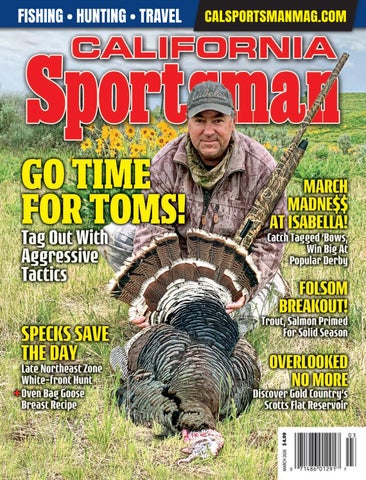
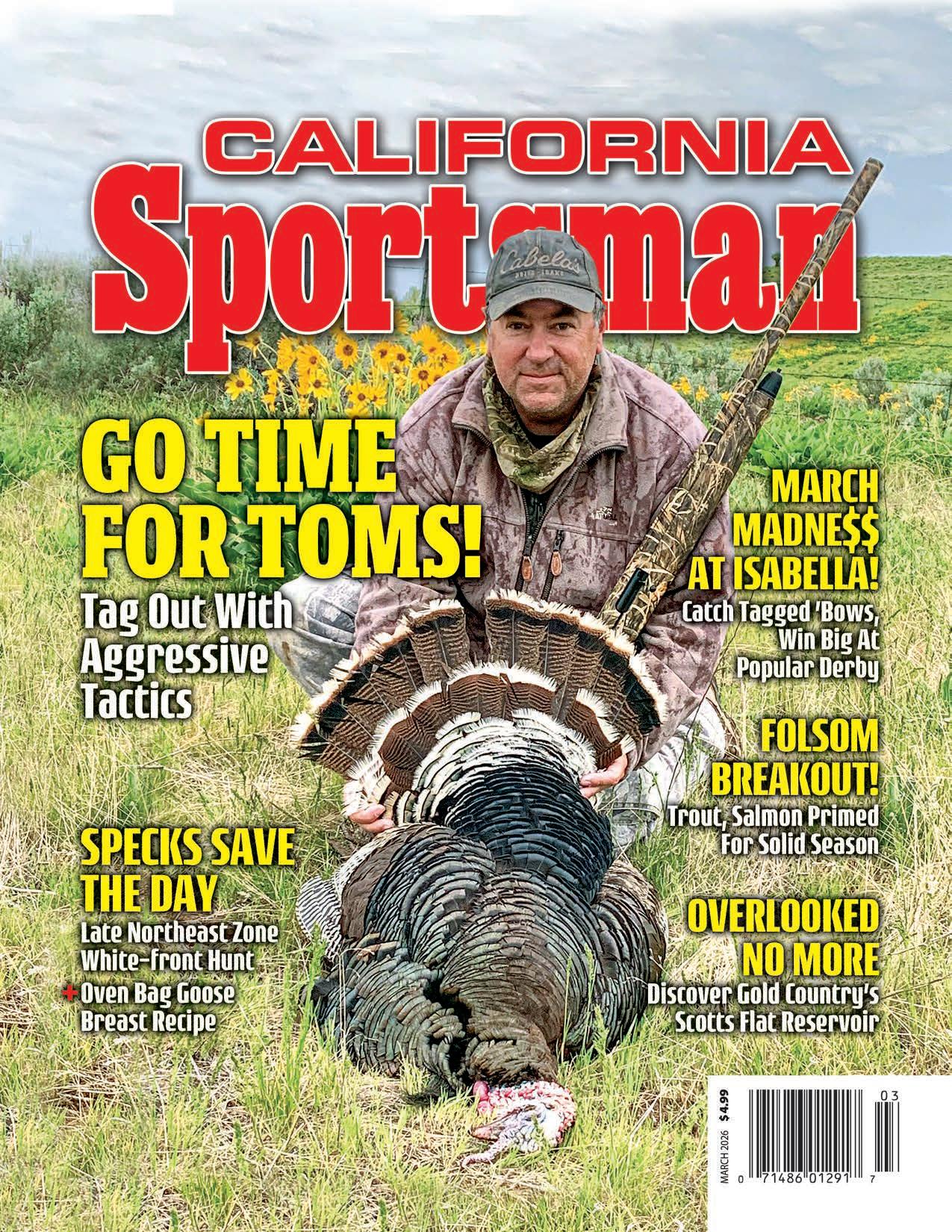
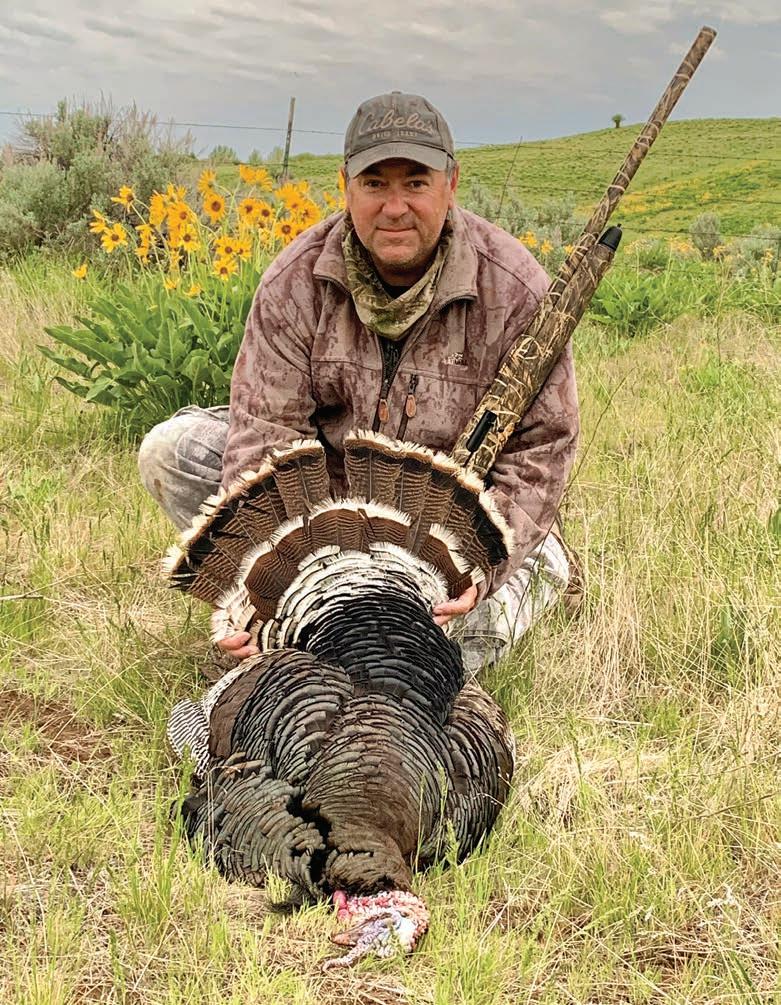
Around the end of winter, Tim Hovey eagerly looks forward to a chance to get back outside and hunt. So he circles the spring turkey opener, the first new hunting opportunity of the year. With California’s season opening on March 28, Hovey shares aggressive tactics for tagging a tom. (TIM E. HOVEY)
MEDIA INC PUBLISHING GROUP 941 Powell Ave SW, Suite 120 Renton, WA 98057
(800) 332-1736 • Fax (206) 382-9437
media@media-inc.com www.mediaindexpublishing.com
29 NO BLUES, JUST ’BOWS AND KINGS
Johnny Cash famously sang about and performed at Folsom Prison, and the lake of the same name is one of Cal Kellogg’s favorite fisheries. Conveniently close to Sacramento, Folsom isn’t an easy code for anglers to crack because of its size, but the rewards can be spectacular. Kellogg breaks down how to target its rainbow trout and landlocked king salmon.
13 DERBY DAYS IN KERN COUNTY
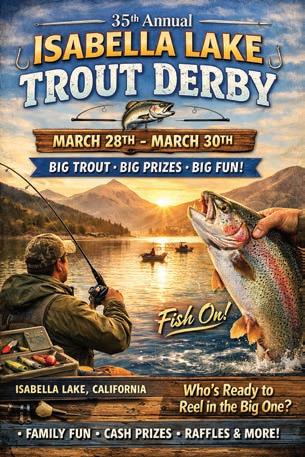
Every year, rain or shine, sun or snow, the communities around Kern County in the southern Sierra welcome anglers looking to catch some very valuable tagged trout at the Isabella Lake Fishing Derby, including rainbows worth as much as $10,000. As tourney chair Fred Clark tells us, “Theoretically, roughly 300 of the 500 (tagged) fish pay for your entry.” Clark provides a preview of the March 28-30 event.
35 SPRING GOBBLER TACTICS
Old man winter is running out of time, and that’s just fine with Tim Hovey, who fights off cabin fever around this time to get outside and explore. California’s spring turkey opener, this year scheduled for March 28, has always been one of Hovey’s benchmark dates on the calendar as a chance to get back to hunting. Hovey explains how to take advantage of toms’ natural aggression to fill that tag.
41 A SPECK OF SUCCESS
Scott Haugen and his buddies faced a challenging late-season waterfowl hunt in Northern California. Snow geese were what the guys really wanted, but while these birds didn’t seem onboard with the plan, the white-fronted geese – or specks – would become a very nice consolation prize. Haugen recaps the action in his and wife Tiffany’s From Field to Fire column, which also includes the latter’s oven bag goose breast recipe.
(CAL KELLOGG)
TROPHY MOOSE & BEAR HUNTING
River
MORE THAN A HUNT
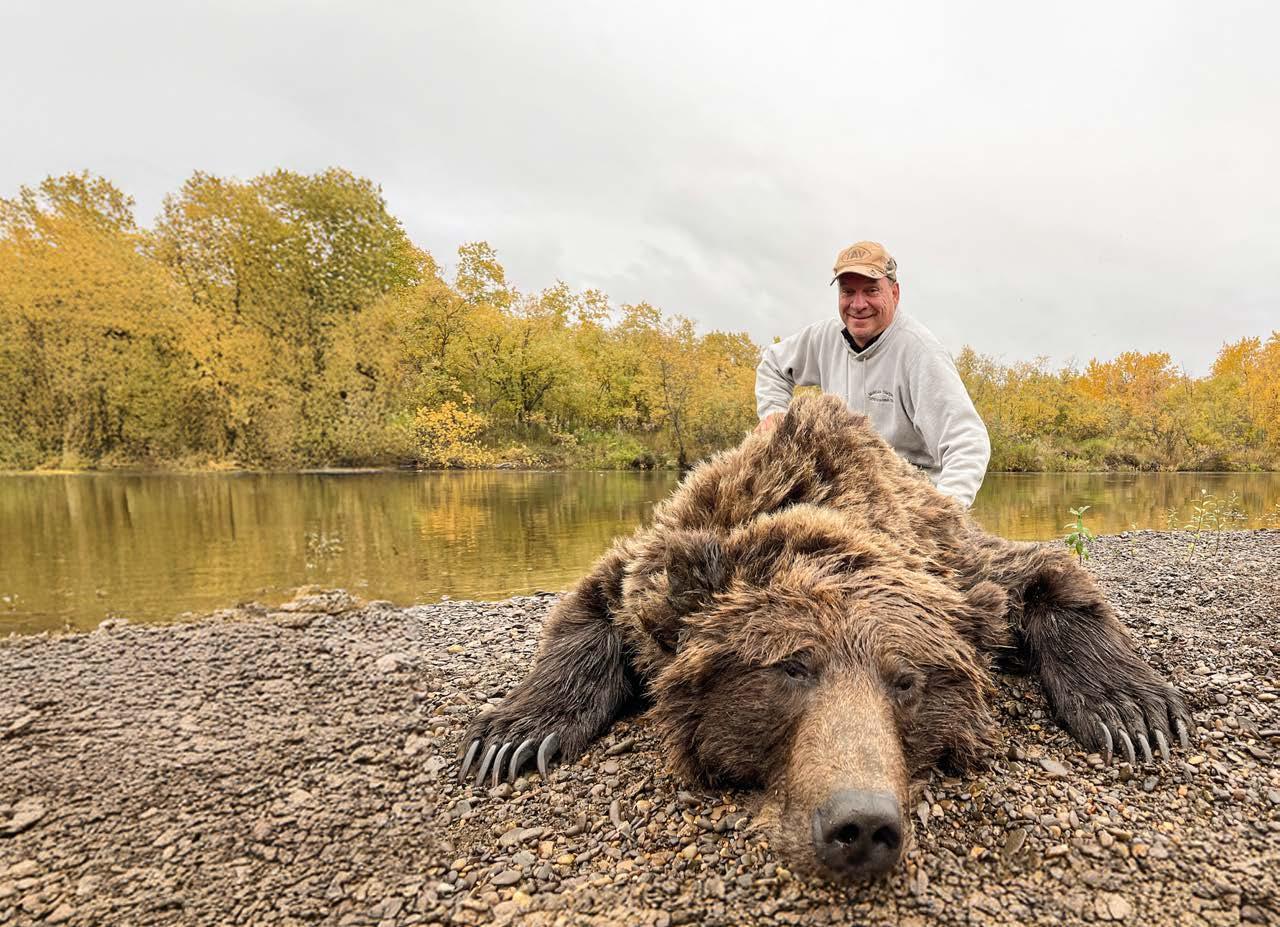
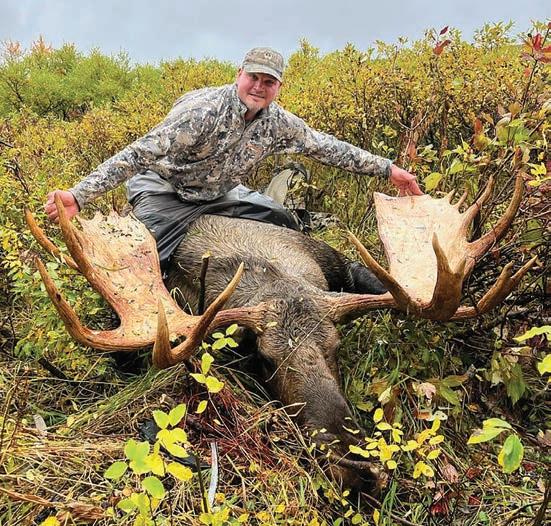
This is an unforgettable Alaskan adventure that blends raw wilderness, world-class game, and the thrill of pursuing some of North America’s most iconic animals in their natural environment. Long days on the river. Close encounters. The kind of moments you’ll talk about for the rest of your life.
WHY HUNT WITH US
• Trophy moose & bear hunts in prime river systems
• Regular 60”+ bull moose opportunities
• Near-100% opportunity rate on legal bulls
• High success on large Alaskan bears
• Fully guided & all-inclusive hunts
• Expert guides with deep local knowledge
• Carefully selected locations for consistent results
• 11–15 day hunts with 15-day combo moose & bear hunt available
Every hunt is carefully planned and professionally guided from start to finish. From scouting and calling to field care and logistics, your guide handles every detail so you can stay focused on the hunt.
Contact us today to secure your hunt and discuss available dates.
In a lengthy conversation with Fred Clark, chair of this month’s Isabella Lake Fishing Derby (page 13), we covered a lot of topics, but one that intrigued me was about how many kids usually participate in this iconic Kern County trout contest.
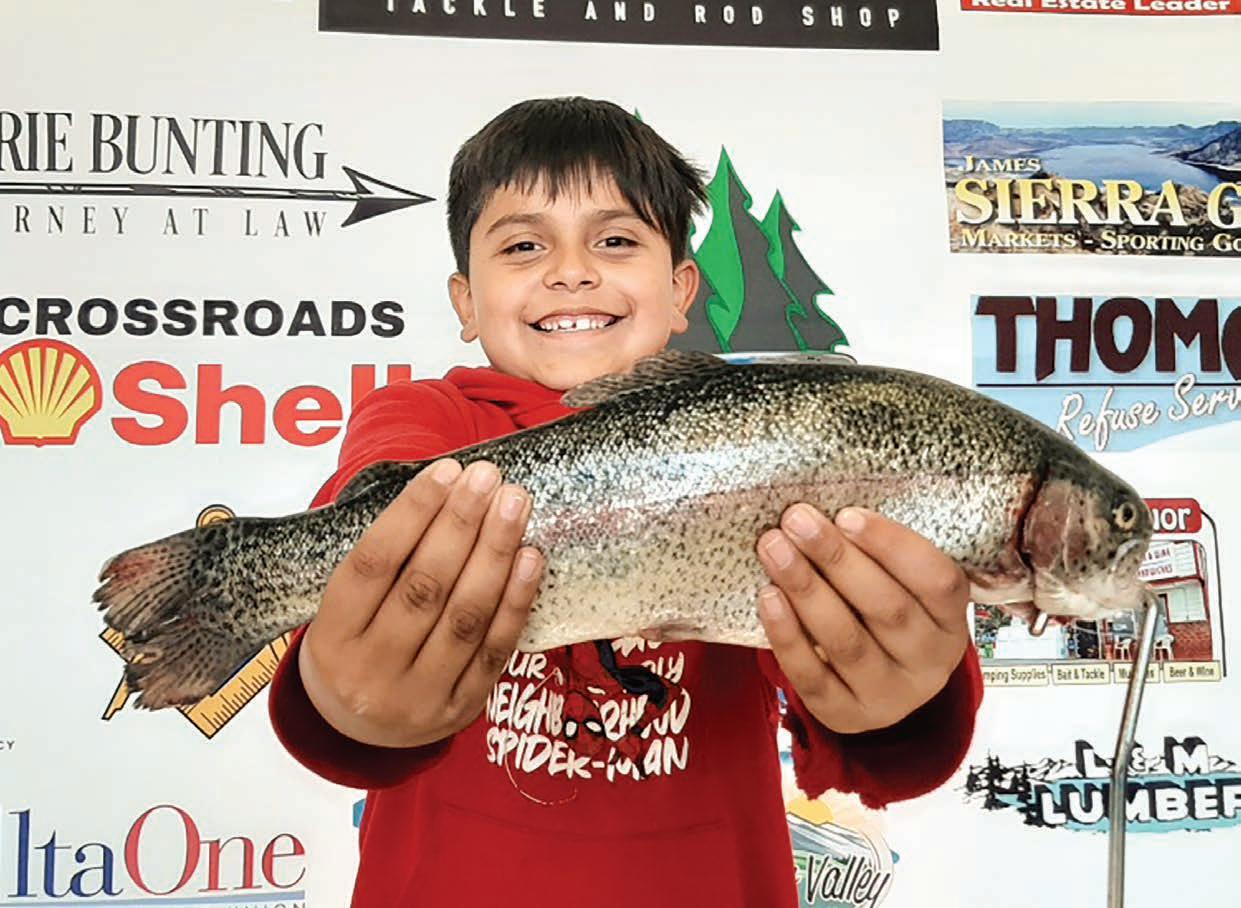
“We had 1,760 anglers total with roughly 400 being youth anglers” last year, Clark told me in February.
And that’s a promising trend for me. You want to believe that the next generation of anglers will be as obsessed with wetting a line as I was as a kid. I used to pester – borderline harass – my dad to take me and sometimes a good friend to our local Bay Area lakes on weekends. And on our Lake Tahoe family trips, I begged and pleaded to fish every day, then suggested that we find a fishery to stop at on our drive home.
Of course, the only social media I can remember from my days back in the stone ages was the paper route that I had and stopping to chat with friends as I chucked local free publications onto porches whether homeowners wanted them or not. Smartphones? IPads? Laptops? Playing Pong on my TV screen was as interactive as it got.
Kids today definitely have more intriguing forms of excitement than we did in our era. Take Clark’s word for it.
“Getting the whole family involved in the outdoors is critical. So many kids today live on the computer, live on their phones, live on their electronic devices,” he said. “And the quicker you can detach them from that to let them know that there’s something else out there to have a great time is critical. When you get Mom, Dad and the kids involved, that’s when it gets important.”
Clark and I shared tales about our own parents and connecting with the outdoors. While my dad wasn’t much of a fishing fan, he’d find time to get out on the lake with me, including renting boats.
My dad’s passion was vintage preWorld War II cars, something that I can really appreciate now and that we’d eventually share together on tours with his fellow gearheads. Of course I’m
THE EDITOR’SNOTE
sure I tried to pack the fishing rod and tackle box in the back seat of his 1929 Lincoln sedan hoping there’d be a lake somewhere in the vicinity.
As for Clark, “My father loved to take me fishing, but when it came time to go hunting, I wanted to go, but his comment was, ‘No; your butt’s staying home; that’s my time.’ And I’m just the opposite.”
“My son, who’s now 21, I take him hunting and take him fishing and drag him along everywhere. He just loves going. But you just gotta get the kids out,” Clark added.
I couldn’t agree more. Parents out
there: If you can, make a trip to the mountains of Kern County the weekend of March 28-30, buy a contest ticket for you and your son or daughter, pick up a jar of Power Bait and try your luck with your own or even rented gear. You may even catch a big-money tagged rainbow for the kiddo’s college fund. That would make Clark’s hard work putting on this derby so worthwhile.
“The kids are the primary reason I took over as derby chairman,” he said. “When I see how we cater to the youth anglers, that’s when it piques my interest even more than just running an event.” -Chris Cocoles
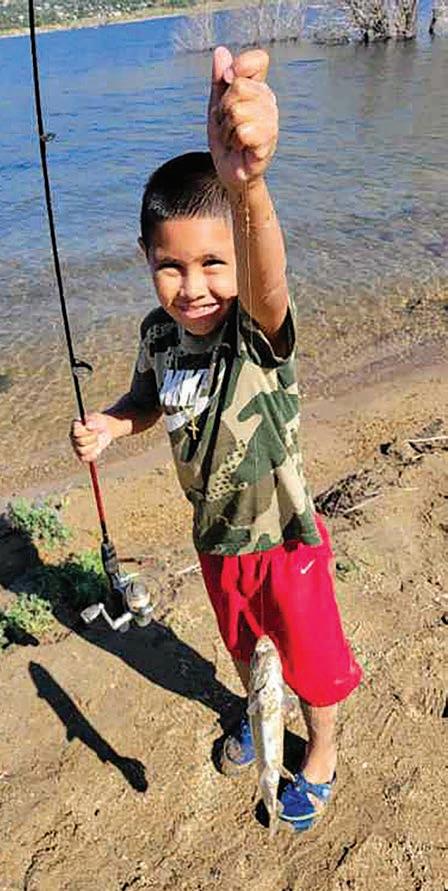
The next generation of anglers enjoying the fun of reeling in trout at the Isabella Lake Fishing Derby brings a smile to derby chair Fred Clark. “When I see how we cater to the youth anglers, that’s when it piques my interest even more than just running an event,” he tells the editor. (ISABELLA LAKE FISHING DERBY)
OUTDOOR CALENDAR
MARCH
1 NorCal Boat, Sport & RV Show, Shasta District Fair and Event Center, Anderson (exposureshows.com)
1 Fly Fishing Show, Alameda County Fairgrounds, Pleasanton (flyfishingshow.com/pleasanton-ca)
7 Kokanee Power Crab Feed Fundraiser, Ione (kokaneepower.org)
10 Last day of North Coast Special Management Area Canada geese and Northeastern Zone late white and white-fronted geese seasons
13-15 Central Valley Sportsman’s Show, Kern County Fairgrounds, Bakersfield (calshows.com)
15 Last day of falconry rabbit and varying hare season
21 NorCal Trout Angler’s Challenge, San Pablo Reservoir (anglerspress.com/events/norcal-trout-anglers-challenge)
21 Blake Jones Trout Derby, Owens River and Pleasant Valley Reservoir, Bishop (bishopvisitor.com/ event/blake-jones-trout-derby)
21 Rec 4 Vets Fishing Event and BBQ, Collins Lake (rec4vets.com/events)
21-22 Junior wild turkey hunting weekend dates
28 Spring general turkey season opens
28-30 Isabella Lake Fishing Derby (kernrivervalley.com)
APRIL
3-4 Blue Lakes Trout Derby, Lake County (707-477-8360)
4 Bullards Bar Team Kokanee Derby, Bullards Bar Reservoir (kokaneepower.org/derbies.php)
11 Get Out and Fish Junior GOAFER Derby, Collins Lake (goafgear.com/event-details/4th-annualjunior-goafer-trout-derby)
18 NorCal Trout Angler’s Challenge, Collins Lake (anglerspress.com/events/norcaltrout-anglers-challenge)
18-19 NorCal Guides and Sportsmen’s Association Striped Bass Derby, Colusa Public Ramp (ncgasa.org/ category/events-derby)
24 Fishmas Eve Party, Twin Lakes Resort, Bridgeport (twinlakeresort.com)
25 Statewide trout opener
25 Fishmas Day Derby, Tom’s Place, Crowley Lake (tomsplaceresort.com; 760- 935-4239)
25 Monster Trout Contest, June Lake (760-648-7756; monocounty.org/event/ ernies-monster-fish-contest/8390)
25 Central Valley Anglers Striper Derby, B&W Marina, Isleton (centralvalley anglerslodi.org/content/striperderby-april-25-2026)
26-June 12 Round-Up at the Lake Spring Fishing Derby, Convict Lake (800-992-2260; monocounty.org/event/ round-up-at-the-lake-fishing-derby/7343)
For a list of upcoming bass tournaments, go to nrm.dfg.ca.gov/FishingContests/default.aspx.
The popular Isabella Lake Fishing Derby will see large numbers of trout anglers heading to Kern County for the March 28-30 event. (ISABELLA
LAKE FISHING DERBY)
By Chris Cocoles
This will be the moment for the Kern River Valley when everyone comes together to put on a spectacular trout fishing show. The Isabella Lake Fishing Derby
DERBY DAYS ARE HERE AGAIN
POPULAR ISABELLA LAKE CONTEST RETURNS WITH PLENTY OF VALUABLE TAGGED ’BOWS
has become one of the calendar’s biggest weekends in this corner of Kern County in the southern Sierra. Usually held the weekend before Easter, this year’s 35th edition of the derby is set for March 28-30.
“The whole community itself
gets involved, the businesses get involved. It’s more than just a revenue stream. It’s just what we do. It’s who we are,” says Fred Clark, a local insurance agency owner who has been involved with the derby since 2017 and its chairman the last
Kern County’s Isabella Lake Fishing Derby will again include tagged rainbows worth as much as $10,000. This year’s event will take place March 28-30 (ISABELLA LAKE FISHING DERBY)
FISHING
six years. “It’s fun to be a part of this event and the businesses just try to stay positive. It’s critical to the whole infrastructure of what we do.”
Clark, who runs his insurance agency out of the community of Lake Isabella, about an hour’s drive northeast of Bakersfield, is proud of the legacy his area has created with this annual trout derby. He says two of his right-hand men, Jim Wyly and Tom McKinney, have been involved with this event since the very beginning more than three decades ago.
“I use them like a sponge for some of the old-school stuff and try to bring some of that history back,” Clark says.
A TEAM EFFORT
Every year, the Isabella Lake Fishing Derby hosts a booth at area sportsmen’s shows leading into the spring. At this month’s Central Valley Sportsman’s Show at Bakersfield’s Kern County Fairgrounds (March 13-15; calshows.com), their booth will be adjacent to that of Cope’s Tackle and Rod Shop, a longtime friend to the derby.
“When we sign up for the sportsman shows, we are usually very close, if not directly next to, the Cope’s Tackle and Rod Shop booth because everyone is going to Cope’s booth looking for lake gear or ocean gear,” Clark says. “They’re doing the local stuff, and we’re local, so
we promote, promote, promote. It’s just what we are and what we do, especially being part of (the Kern Valley Chamber of Commerce).”
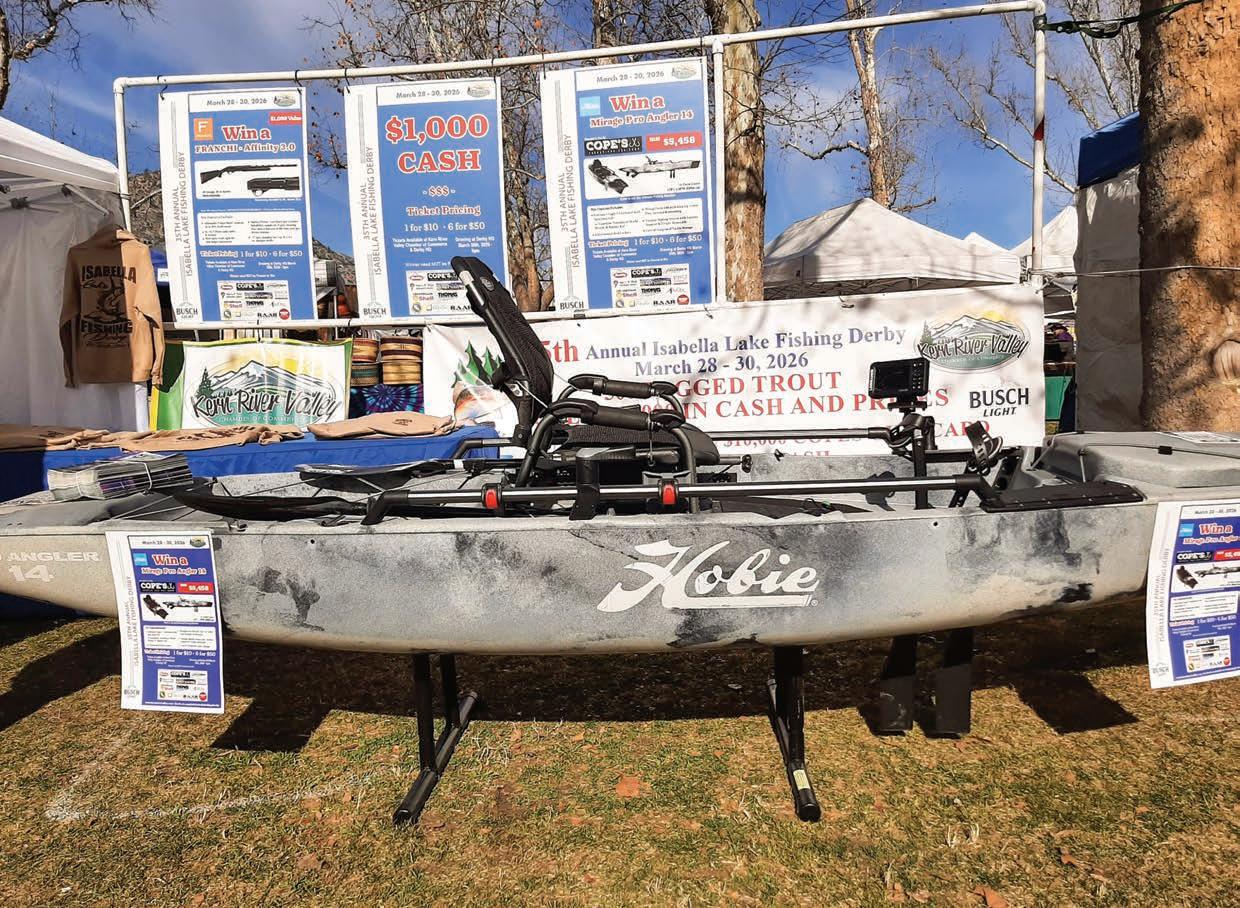
Cope’s has partnered with fishing brands like Berkley, Pflueger and Shakespeare, and will offer plenty of quality gear as part of the various derby prizes handed out for fish caught, draws and “VIP Bags” available for entrants.
At derby headquarters during the fishing weekend, Cope’s will have its own booth, featuring demo gear with pro staff members on hand. Gear giveaways are also in play for select derby youth entrants aged 12 and under (while supplies last).
“This year I’m super grateful to
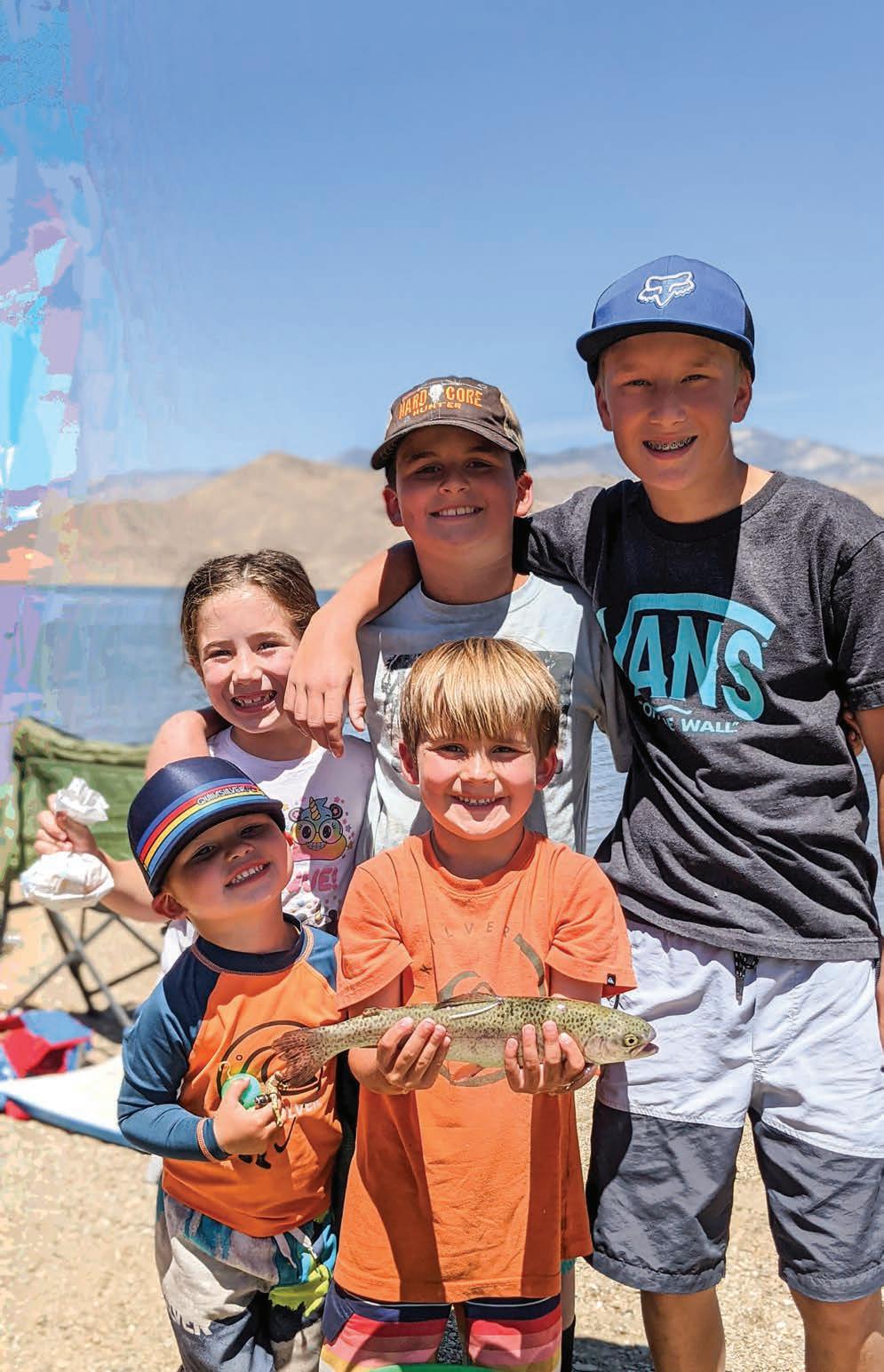
Kids also get into the derby spirit. And most entrants can have plenty of success fishing around the lake’s shoreline. (ISABELLA LAKE FISHING DERBY)
Cope’s Tackle and Rod Shop because they were able to get a major supplier to come back … and there’s going to be some pretty neat stuff,” Clark says.
PLENTY OF FISH IN THE LAKE
In recent years, the derby has partnered with a third-party trout farm, which is in charge of releasing the tagged trout and making sure most of the tags don’t fall off during the stocking process.
As in the past, there will be some valuable rainbows on tap for those who purchase a Isabella Lake Fishing Derby ticket ($50 for adults, $15 for kids 15 and under).
Besides the popular Bobber Bowl (select $100 tagged fish caught will be eligible for a mystery bobber draw featuring additional prize money), there’s also the Blind Bogey draw (anyone who catches a trout, tagged or not, will gain entry into a contest for more cash prizes).
“We’re still giving away a minimum of over $1,000 every afternoon at 5 p.m. with Blind Bogey,” Clark adds.
The tagged fish can be valuable catches.
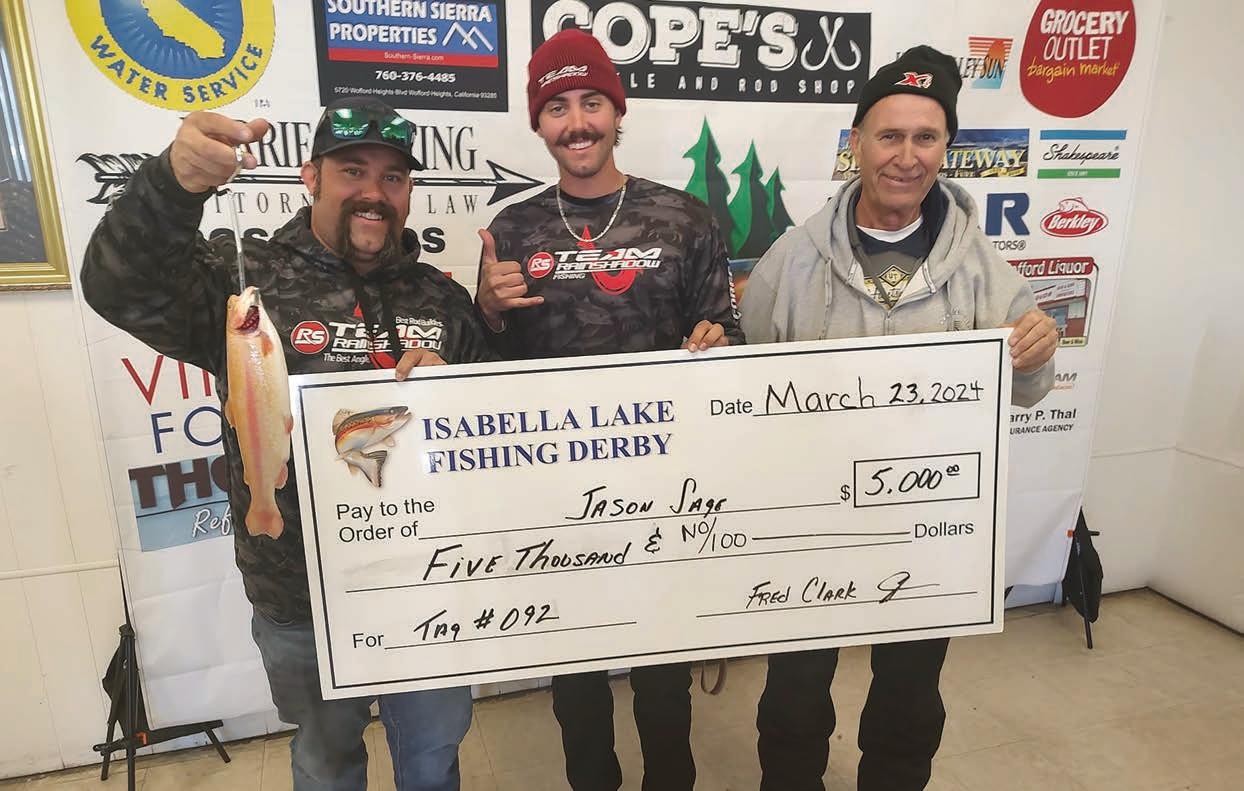
“The thing that I like about what we do currently, there are 500 tagged fish in the lake; three of them are going to be worth $10,000, two
$5,000 fish; 10 $500s, 10 $250s, 100 $100 fish and then the balance is split up between $20 and $50,” Clark explains. “So theoretically, roughly 300 of the 500 fish pay for your entry.”
And entrants should have reasonably good prospects of making some money. Last year’s derby featured a $10,000 tagged trout reported; the year before included a $5,000 rainbow, with the $10,000 fish and a $5,000 catch the year before that.
“So it happens when there are enough lines in the water like we have,” Clark says.
CROWDED SHORELINES
Last year, the Isabella Lake Fishing Derby saw 1,760 tickets purchased – “every year we get a few handfuls that don’t show up and just pay,” Clark reports – and he says “95 percent of the anglers are fishing from the shore.”
So just how should entrants,
While past derby weekends have seen great conditions, Isabella’s location around 2,500 feet in the Sierra is as unpredictable as it can be. But the derby will proceed whether sunny and windless or cold and snowy. “I just hope for the best and say we’re gonna get what we get,” derby chairman Fred Clark says. (ISABELLA LAKE FISHING DERBY)
DON’T SWEAT THE RAIN, WIND OR SNOW
Isabella Lake Fishing Derby chairman Fred Clark doesn’t check the weather forecast the week of his big trout contest event that begins on Saturday, March 28.
“I don’t even care because the derby weekend is going on regardless of whether there’s a blizzard or it’s beautiful,” Clark says. “I just hope for the best and say we’re gonna get what we get.”
Take the 2025 event that was held in mid-April.
“Last year, the first day was great and the last two were horrible,” Clark says. “On that Sunday and Monday the wind blew so bad there was nobody on the water (in boats). Half the people on the shore said they couldn’t keep their lines straight. It just makes it a miserable nightmare when it gets like that.”
Old-timers can recall derby weekends with snow falling as well (at an elevation of just about 2,500 feet).
“The people that have been here for years, they love to talk about things like, ‘You remember that time when it was snowing
during the derby?’ ‘Yeah, I remember it well,’” he says.
But one thing’s for sure: With a late March weekend, the water temperature should be ideal with the holdovers and stocked tagged rainbows likely cruising the shallows around the lake’s shoreline, where bank anglers should be omnipresent.
“The colder the water, the happier they are,” says Clark, who will be fired up for this latest event no matter if the weather is epic or it sucks.
“At Isabella, I have a standing joke now that we have what’s called ‘Derby Weather.’ The week before the derby it can be beautiful, sunny, calm, without an ounce of wind. And then the three days of the derby come and it’s blowing 60 miles per hour, sleet, snow and it goes to (hell). And the day after the sun comes back out and it’s beautiful again.”
“It’s the nature of the beast,” he adds.
And most of those on hand to catch trout worth as much $10,000 will be just as excited to try their luck. -CC
FISHING
especially new Isabella Lake fishers, approach the tagged trout just waiting to be caught? Many entrants will soak Power Bait in various colors and variations.
“The biggest thing is to fish with light line – we get a lot of people out there who don’t truly know how to fish for trout. Use any of the baits that have garlic in them, because for some reason they work really well,” says Clark.
He is particularly bullish on garlicscented Mice Tails.
“And be ready to have a little bit of fun; have your basic fishing gear that you need and have a little bit of patience; and don’t try to cast in the middle of the lake,” he tips. “All
of these fish are raised in 10 feet of water and it’s going to take them a while to go deep. So kind of fish shallow. I’m not saying to fish 5 feet from shore, but to get to 8 to 10 feet of water.”
STILL A RUSH
The tradition of this event is a big part of the Kern River Valley’s social calendar. Mid-February’s Whiskey Flat Days was another popular gathering for locals and visitors alike, but this year wasn’t as busy as past events.
Clark does worry about the economy and whether it is strong enough to draw visitors to signature events like this month’s derby. But
he’s still expecting a big turnout, even if the weather is bad (see sidebar on page 15). And he is just as excited as ever to showcase the lake, its trout and those who call this area home.
“Every year as we get closer, I keep going, ‘Dear God; why do I keep doing this?’” Clark jokes. “I’m really looking forward to being at derby headquarters.”
CS
Editor’s note: To register for the Isabella Lake Fishing Derby, go to kernrivervalley .com/isabellalakefishingderby. Earlybird registration ends on March 11 at 5 p.m. You can also call the Kern River Valley Chamber of Commerce (760369-5236) or send an email to office@ kernrivervalley.com.
Between the Bobber Bowl and Blind Bogey drawings, there will be plenty of prizes available over the weekend. And it’s very possible you’ll catch a big-money rainbow. “Theoretically, roughly 300 of the 500 fish pay for your entry,” Clark says. (ISABELLA LAKE FISHING DERBY)
’BOWS IN THE BASS IN THE
PINES, SHADOWS
HEAD TO UNDERRATED SCOTTS FLAT RESERVOIR FOR SPRING, SUMMER FISHING FUN
By Cal Kellogg
There are trout lakes you fish because they’re famous, and there are trout lakes you fish because they’re dependable. Scotts Flat Reservoir falls squarely into the second category, and that’s not an insult; it’s a compliment.
Dependable means you can show up with a game plan, fish hard, make smart adjustments, and have a
real shot at bending a rod whether you’re launching a boat or walking the bank with a small tackle box and a folding chair.
Scotts Flat also has something else going for it that a lot of foothill reservoirs can’t claim: It’s a beautiful place to spend a day. Ponderosa pines, granite, clean air, and water that feels like it belongs in the high country, even though you’re not that far from the Sacramento Valley.
Scotts Flat sits just a few miles northeast of Nevada City, tucked into the Sierra foothills at roughly 3,000 feet in elevation. Nevada City itself is one of those classic Gold Country towns that still wears its history on its sleeve – old brick buildings, narrow streets, and a feeling that if you scratched the surface hard enough, you’d find gold dust in the cracks.
That Gold Rush legacy is part of what makes a trip to Scotts Flat feel
Nevada County’s Scotts Flat Reservoir, located at 3,000 feet up in the Sierra foothills, somehow feels like both a high country lake and a closeto-home water. Its trout and bass should be on Central Valley anglers’ radar. (CAL KELLOGG)
FISHING
like more than just fishing. You’re in the same country that helped shape California, and the lake you’re fishing is tied to that story through the long arc of water development in the foothills.
Scotts Flat Reservoir is managed by the Nevada Irrigation District, and it was created when Scotts Flat Dam was built in the late 1940s and later raised in the early 1960s. Today, the reservoir covers roughly 850 acres at full pool and can hold around 48,500
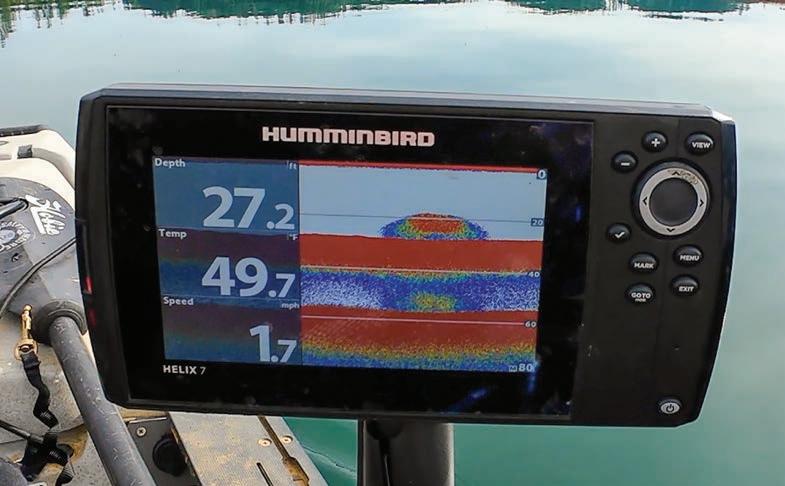
Scotts Flat is rich in forage. Here a fishfinder shows a huge school of pond smelt holding tight to the bottom. (CAL KELLOGG)
acre-feet of water, which puts it in the “big enough to explore, small enough to learn” sweet spot.
It’s large enough that fish can spread out and patterns matter, but not so massive that you feel lost without a guide and a pile of electronics. If you fish it a few times across the seasons, you start to recognize its personality.
BIG-TIME ’BOWS
For trout anglers, Scotts Flat is primarily a rainbow lake. Browns
and even kokanee show up in the conversation, too, but rainbows provide the bread-and-butter action, which can be surprisingly consistent when the lake is fishing right.
A lot of folks assume foothill reservoirs slow down as the weather warms, and that can happen here. But Scotts Flat holds enough cool water and has enough structure that you can stay in the game longer than you might expect. The biggest key is fishing the season and the water column instead of forcing one approach year-round.
SCORE FROM SHORE
Let’s start with bank fishing, because Scotts Flat is one of those lakes where shore anglers can absolutely compete, especially during the cooler months and into spring.
In late winter and early spring, rainbows cruise the edges looking for easy meals. This is when you can catch trout shallow with classic offerings like small spoons, spinners, mini plugs, and floating baits if you’re bait fishing.
BE WISE, GO DEEP
The difference between getting bit and getting skunked often comes down
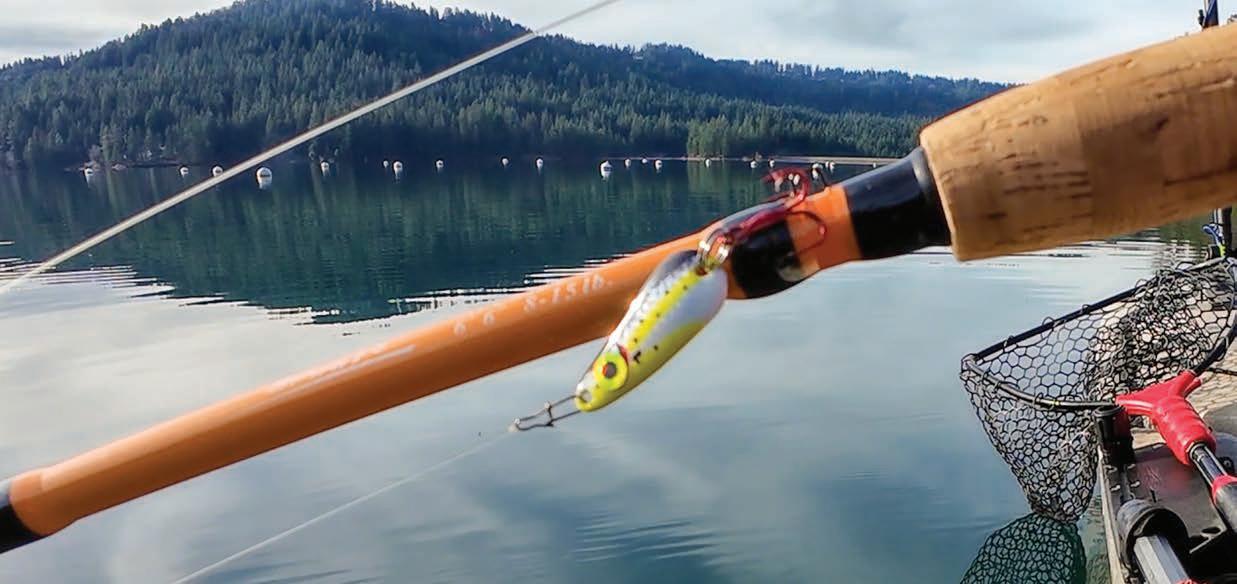
Small spoons in pond smelt colors often work well at Scotts Flat. (CAL KELLOGG)
FISHING
MANAGING AN INVASIVE THREAT
We need to talk about an issue that has reshaped boating on a lot of California waters: invasive mussels – specifically, the golden mussel threat that has agencies tightening policies statewide.
The reality is simple. Water managers are trying to keep these invasive species out, because once mussels establish, they’re a long-term, expensive nightmare that can clog infrastructure and damage fisheries.
The Nevada Irrigation District (NID) has implemented prevention measures that directly affect boat anglers at Scotts Flat, and if you show up unprepared you may not be able to launch. In plain terms, the district’s protocols require motorized watercraft be part of an inspection and tagging program and, depending on the situation, a quarantine period or decontamination may be required before launching.
There are also sealing procedures upon exit that help determine whether a boat can return and launch again without restarting the entire process.
Rules can evolve, so the smartest move is to check NID’s current requirements (nidwater.com/nevada-irrigation-district-mussel-prevention-program) before you tow up the hill. Do that, and the process is manageable. Ignore it, and you can end up burning a day in the parking lot.
The big picture is that these restrictions are inconvenient, but they’re aimed at protecting the lake, and Scotts Flat is the kind of place worth protecting. CK
to two details: stealth and depth. Scotts Flat trout can be surprisingly willing, but they can also get moody, especially on bright, calm days.
Light line, long leaders and natural presentations matter. On those tougher days, I’d rather fish 6-poundtest leaders and a smaller offering than throw the kitchen sink at them and hope.
If you’re a lure guy like me, this is a great time to cover water with a 1/8to ¼-ounce spoon, a small spinner or a compact minnow plug. Work parallel to the bank when possible instead of just over deep water. Trout often travel the shoreline, and a lure that stays in the strike zone longer will outproduce one that spends most of its time in open water.
If the wind is pushing into a bank, pay attention. Wind stacks plankton, bait and bugs, and trout follow the groceries. A windy bank isn’t always pleasant to fish, but it’s often where the fish are.
As spring moves along, Scotts Flat can offer excellent action for families and casual anglers because the rainbows remain active and accessible. This is also when you’ll see more people around – campers, kayakers and day-use traffic – and the trout respond by sliding off the most obvious water.
That doesn’t mean the fishing dies. It just means you need to be a little more deliberate. Fish early and late if you want solitude, but don’t get stuck in the “dawn or nothing” mindset.
On many lakes and reservoirs, the late-morning to midafternoon window can be outstanding because that’s when the food chain really kicks in. As the sun gets up, plankton activity increases, baitfish get more active and predators follow.
TROLLING TIME
Early in the season, you can flat line troll small spoons, plugs or trolling flies behind dodgers and do very well. Later, as surface temperatures rise, you’ll need to get down. That can mean leadcore, snap weights, trolling sinkers or downriggers, depending on how serious you want to get.
The good news is you don’t need a complicated program to catch Scotts Flat rainbows. What you do need is the willingness to adjust depth until you’re running your offering at the level the fish are actually using.
A simple starting plan for boat anglers is to troll the first major breakline off the shoreline, especially where points and coves create natural travel lanes. Rainbows often roam edges and transition zones. If you’re marking fish suspended at 20 to 30 feet, don’t waste your day dragging lures 20 feet above them. Get in the zone. Run a small spoon or a trolling fly with a subtle kick behind a dodger, keep your speed steady and make
Scotts Flat has easy launching for kayaks and other watercraft, but there are new mussel restrictions, so be prepared before you go. (CAL KELLOGG)
FISHING
long turns so your inside rod slows down and your outside rod speeds up. Those speed changes trigger strikes –especially from fish that are following.
SUMMER SURPRISES
Summer is where Scotts Flat can surprise people. Many anglers switch gears completely once the weather heats up, but you can still catch rainbows if you fish deeper and smarter.
Look for cooler water, look for structure and keep an eye on your electronics if you have them. The trout won’t be everywhere, but when you find them, they’ll bite.
Early and late can be productive, but again, don’t ignore the midday window. If the light level is high, fish can actually feel secure deeper in the water column, and that can sharpen the bite, so try trolling deep under these conditions.
BONUS BASSIN’
Now, while trout are the main story at Scotts Flat for California Sportsman readers, the lake also offers real bass fishing, and it deserves mention because it adds value to the destination.
Scotts Flat holds both largemouth and smallmouth bass, and when the water warms, those fish become a big part of the lake’s identity.
Smallmouth relate to rock, points and harder structure, while largemouth lean toward cover, shade and the kind of edges where a baitfish can hide.
In spring and early summer, you can catch bass on jerkbaits, crankbaits and soft plastics, and later in summer the topwater bite can be excellent early and late.
The beauty of Scotts Flat is you can do a two-species day without feeling like you’re forcing it. Troll for rainbows in the morning, then switch to bass tactics when the sun gets up and the lake gets busy. That’s a full day of fishing that makes a trip worthwhile.
FULL-SERVICE FUN
Camping and recreation are part of Scotts Flat’s appeal, and if you’re doing a family run, it’s one of the better foothill setups. Scotts Flat Lake Campground and the Cascade Shores area make it easy to turn a fishing trip into a weekend.
You’ve got day-use facilities, places to launch and the kind of environment that makes nonanglers happy too. When you can fish a solid trout bite in the morning, then have lunch in the pines while the kids swim or paddle, you’re doing something right.
PUTTING A PLAN TOGETHER
So how do you put all of this together into a practical trout setup? For bank anglers, keep it simple and mobile. Start with small hardware in the morning, work wind-blown banks when conditions allow, and don’t hesitate to downsize if you see follows without commits.
If you use bait, focus on clean rigs, light line and getting your offfering slightly off bottom. Pay attention to depth, light and water movement. For trollers, use the advantage you’ve paid for: cover water and search.
Start shallow early in the season, then follow the fish deeper as the months progress. Trolling flies, small spoons and compact plugs will all produce, but only if you’re running them at the right depth and speed.
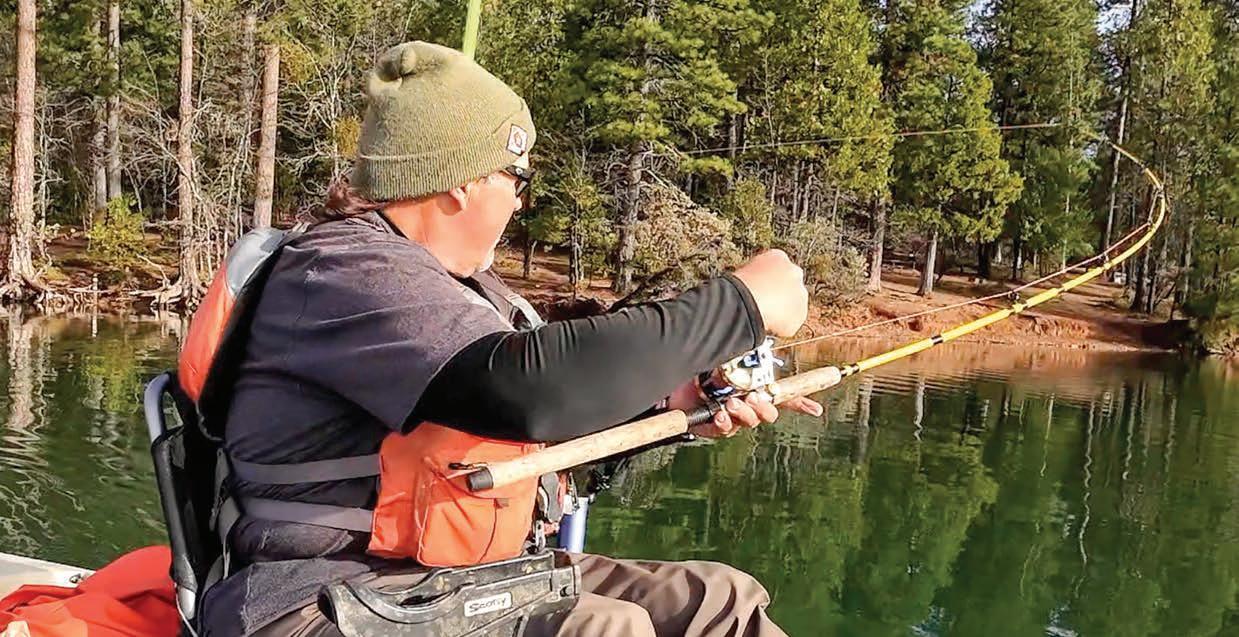
Author Cal Kellogg hooks up on a Scotts Flat fish. “Early in the season, you can flatline-troll small spoons, plugs or trolling flies behind dodgers and do very well,” he writes. “Later, as surface temperatures rise, you’ll need to get down. (CAL KELLOGG)
FISHING
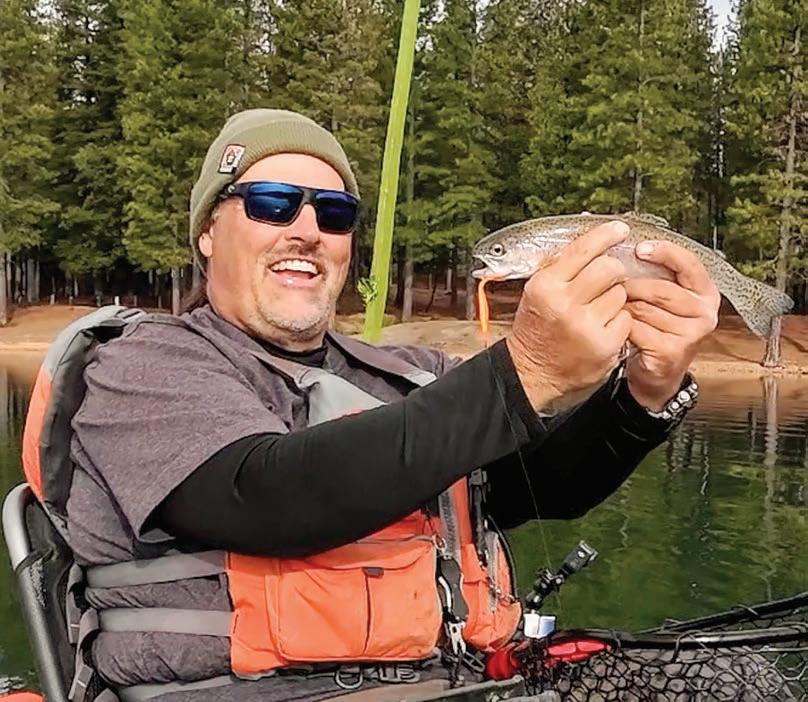
“If you want a lake where a bank angler can catch trout, a boat angler can troll into steady action and a bass rod can save your afternoon, Scotts Flat deserves a spot on your short list,” writes Kellogg, who caught this rainbow that jumped all over an orange Trout Trix Minnow trolled 10 feet deep at 2 mph.
GETS THE JOB DONE
Scotts Flat Reservoir isn’t flashy in the way some trophy waters are flashy. It doesn’t need to be. It’s a solid foothill lake with a real rainbow program, a legitimate bass fishery and the kind of setting that reminds you why we fish in the first place.
It’s close to Nevada City, which is steeped in Gold Country history, easy to access and versatile enough to keep you busy all year if you’re willing to fish with the seasons.
If you want a lake where a bank angler can catch trout, a boat angler can troll into steady action and a bass rod can save your afternoon, Scotts Flat deserves a spot on your short list –especially now, while the water is cool and those rainbows are feeling their oats in shallow water. CS
Editor’s note: Cal Kellogg is a longtime Northern California outdoors writer. Subscribe to his YouTube channel Catch America at youtube.com/user/ KelloggOutdoors.
(CAL KELLOGG)
at marine.honda.com or visit your Authorized Honda Marine Dealer.
A LAKE ON THE RISE
TARGET TROUT, LANDLOCKED KINGS AT SACRAMENTO AREA’S FOLSOM RESERVOIR
By Cal Kellogg
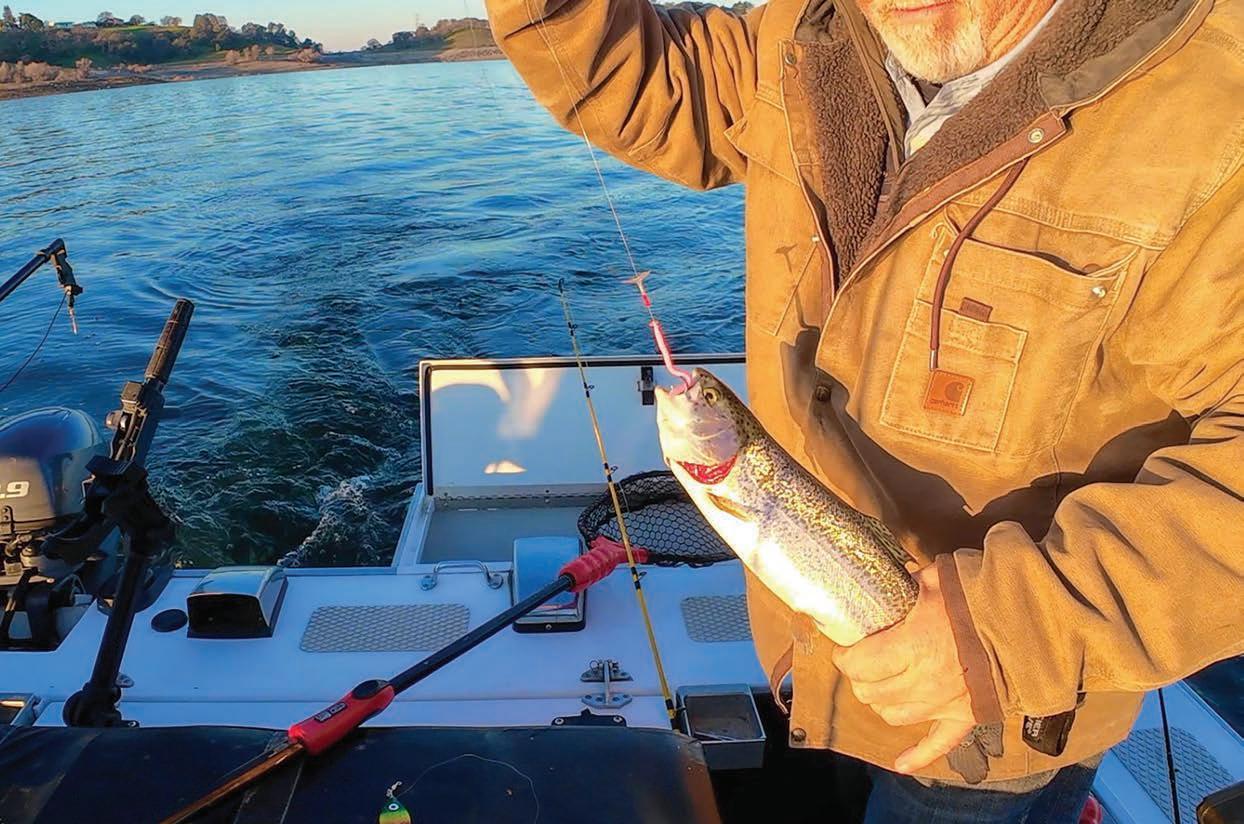
The first rod loaded just minutes after we settled into our troll off Folsom Point. It wasn’t a violent, drag-screaming takedown, but a steady pull that telegraphed through the rod and into my hands. I eased the rod free, felt the fish surge and grinned. “We’re on,” I said, more to myself than to Jerry Lampkin, who was already glancing back from the helm with that calm guide’s look that says he expected this.
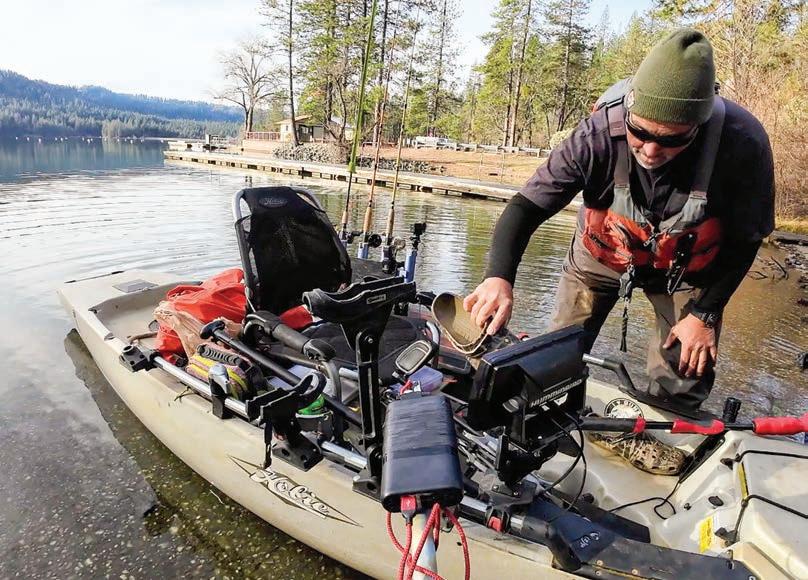
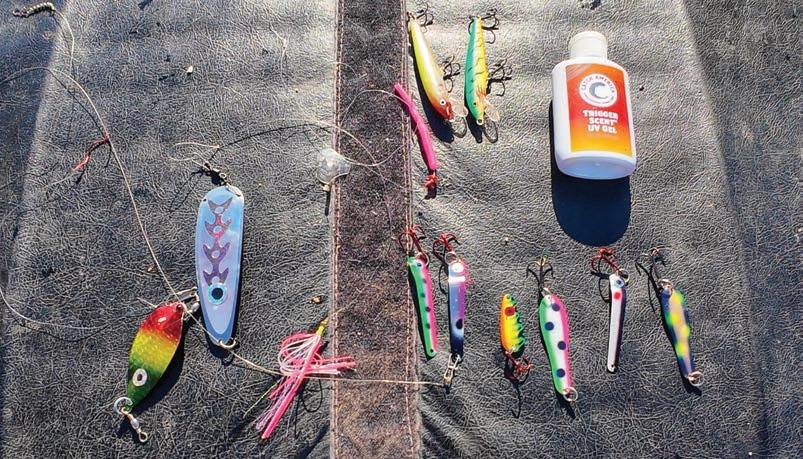
I’d met up with Jerry of TNG Guide Service (tngguideservice .com) and his buddy Steve Burgess of the Rooster Tails Fishing Club (roostertailsfishingclub.org) for a morning run at Folsom Reservoir. We set up in the main body off Folsom Point and began trolling the top 15 feet of the water column. It didn’t take long to realize the lake was ready to cooperate. Rapalas, pink Trout Trix Worms, Trigger Spoon Juniors and full-size Trigger Spoons all took turns getting hammered.
The fish weren’t giants, but they were plentiful and willing. In that first stretch we landed a dozen rainbows to 16 inches, most of them bright planted fish, but mixed in were a few hard-fighting holdovers that had clearly been in the system long enough to toughen up.
When the bite tapered, Jerry didn’t hesitate. We pulled lines and ran up the North Fork, sliding into position near Anderson Creek. It didn’t take long to confirm the move. Over the next stretch we put another 10 fish in the boat. Most were rainbows that crushed Trigger Spoon Juniors and Popped-Eyed spoons that we ran high in the water
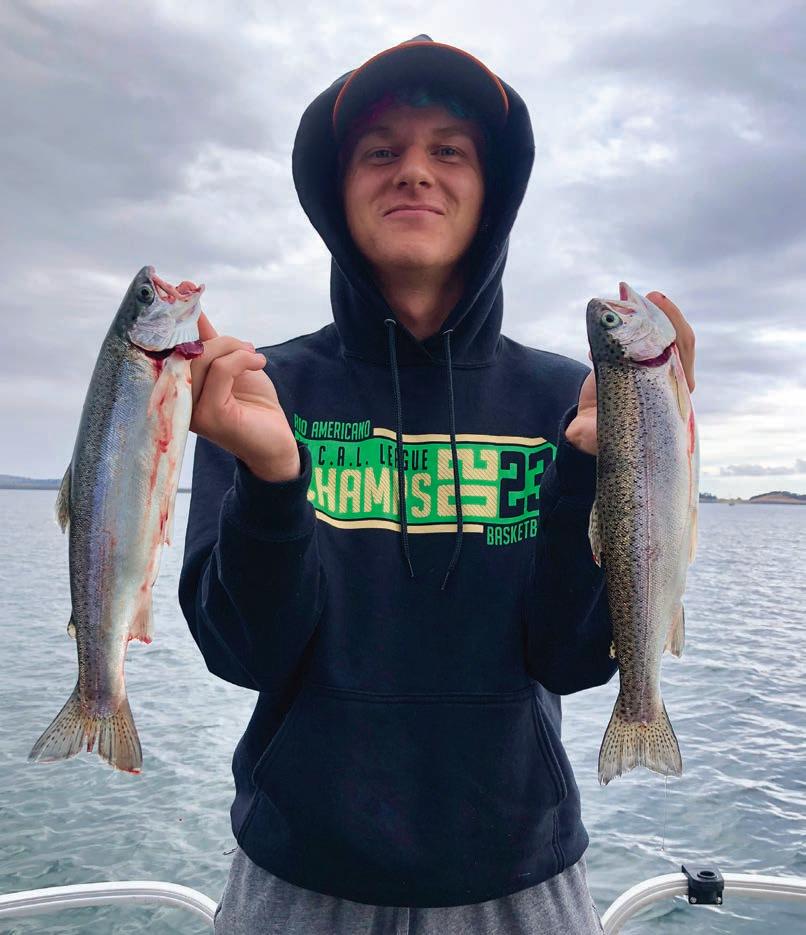
An angler shows off a pair of typical Folsom Reservoir rainbows. This massive lake isn’t easy to read when targeting trout and landlocked salmon, but its close proximity to Sacramento and the potential success make it worth the visit. (CAL KELLOGG)
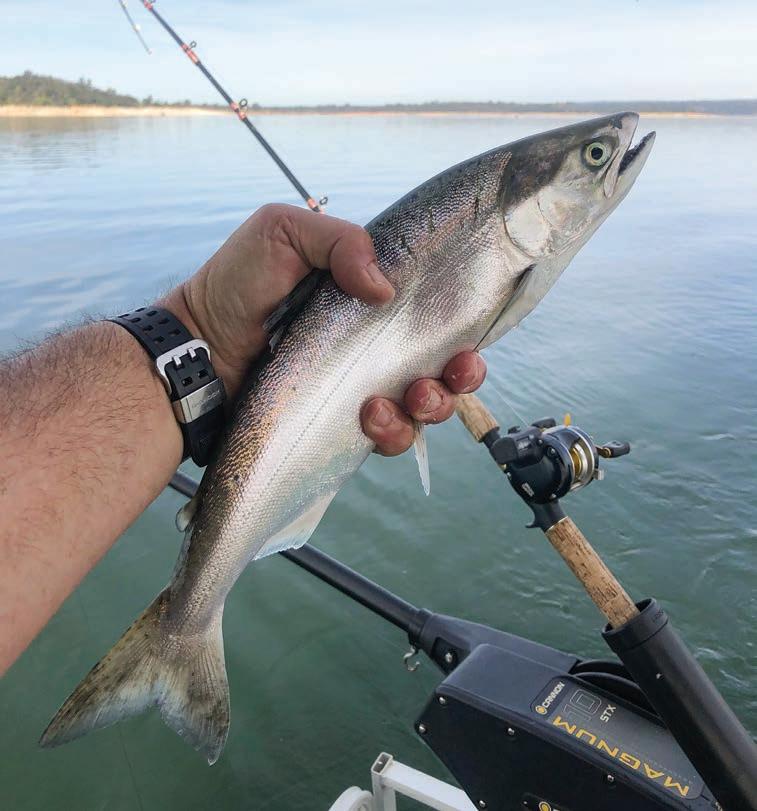
column, but two fish stood out. They were 16-inch landlocked kings that nailed trolling flies fished 30 feet deep behind a 6-inch dodger. They weren’t huge, but they were pure muscle and fought like fish with somewhere to go.
That day was more than just a solid trip. It was a confirmation.
Folsom is already fishing well, and if the current trajectory holds, this reservoir is poised to be something special as winter gives way to spring.
WATER LEVEL ON THE UPSWING
The lake is rising, and by the time you read this there’s a very good chance Folsom will be pushing
FISHING
toward full pool. That matters. High water changes everything. It floods fresh shoreline habitat, stimulates forage production and spreads fish out across newly available structure. It also tends to stabilize water temperatures in late winter and early spring, which keeps trout active longer in the shallows and gives salmon more room to roam.
The encouraging part is that the trout fishing is already strong before the reservoir even tops off. When you’re catching a couple dozen rainbows in a short morning session in midwinter conditions, that’s a sign the system is healthy. And as the lake fills and the food chain ramps up, there’s every reason to expect the action to intensify.
Folsom has always been a challenging lake. It’s big, it’s dynamic and it can humble you in a hurry. The water level fluctuates dramatically year to year, and those swings reposition fish constantly. Add in heavy recreational pressure and proximity to Sacramento, and you’ve got a fishery that demands effort. But here’s the payoff: When you dial it in, Folsom gives you big, hard-fighting rainbows and aggressive landlocked kings that punch far above their weight.
KINGS HOLDING COURT
Let’s talk about those kings for a minute. There hasn’t been any recent
Here is the full array of offerings that hooked fish for author Cal Kellogg and his buddies Steve and Jerry this February. (CAL KELLOGG)
salmon planting in Folsom, so the fish we encountered have to be the result of natural production. That’s significant. It means the system is supporting successful spawning runs
up the tributaries, the North and South Forks of the American River, and that young salmon are recruiting back into the reservoir, their “ocean,” if you will. The two 16-inch kings we landed are likely just the tip of the iceberg. If this natural production trend continues to strengthen, we could be looking at very good landlocked king seasons to come.
Folsom kings aren’t easy fish, but they’re worth the effort. They roam, they suspend and they feed with authority when you put something in front of them at the right depth. Early in the year, you’ll often find them mixed with rainbows in the top 20 to 40 feet, especially over deeper water in the main body or along channel edges.
As spring progresses, they’ll shift and follow bait, sometimes sliding deeper as surface temperatures climb.
While rainbows are the mainstay at Folsom during the winter, landlocked kings are in the mix too. Many of the kings hit 2 to 3 pounds, but big fish up to and beyond 10 pounds show up every year. (CAL
KELLOGG)
FISHING
TWO FOR ONE FISHING
The beauty of Folsom is that you can target trout and salmon simultaneously. On our trip, we were running shallow lines for rainbows and a deeper presentation for kings. That layered approach paid off.
Spoons and plugs on high lines in the top 15 feet took the bulk of our rainbows, while the deeper trolling fly behind a 6-inch dodger found the salmon 30 feet down. It’s a reminder that depth control is everything on this lake.
Folsom’s rainbows are a mix of recently planted fish and holdovers that have grown strong feeding on shad and other forage. The planted fish provide steady action and are great for families or anglers looking to put fish in the boat consistently. The holdovers are a different animal. They’re thicker, stronger and much more likely to rip line and test your drag. Those are the fish that keep seasoned anglers coming back.
FISH NEAR THE TOP
As we move toward spring, expect the rainbows to remain accessible in the upper layers of the water column, especially during the late morning and early afternoon when the lake’s food chain kicks into gear. There’s a persistent myth that the crack-ofdawn bite is always best for the lake’s trout, but that’s not universally true.
On Folsom, I’ve seen countless days where the fishing improves after 10 a.m. As the sun rises, plankton activity increases. Baitfish respond and predators like trout and salmon follow. The hours between 10 a.m. and 3 p.m. often provide some of the most consistent action of the day, particularly in late winter and spring.
VERSATILITY HELPS
Tactically, Folsom rewards versatility. If you’re trolling, start by identifying the depth where fish are holding. In the cooler months, that may be the top 10 to 20 feet. As conditions change, don’t hesitate to probe
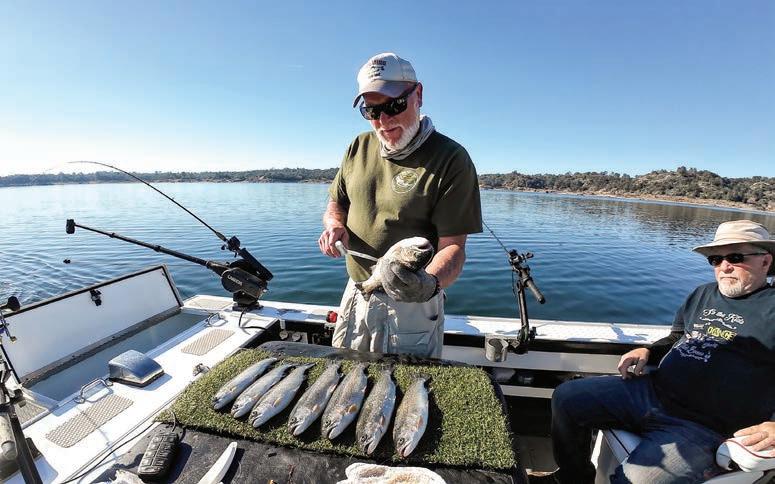
Jerry, Cal and Steve released most of the trout and salmon they landed, but on this trip eight fat rainbow were harvested for the table. (CAL KELLOGG)
deeper. Leadcore, snap weights or downriggers can all come into play.
Lures like Trigger Spoon Juniors and Popped-Eyed spoons are excellent search tools because they provide flash and vibration without overpowering the presentation. Rapalas remain staples for covering water and triggering reaction strikes, especially when trout are chasing bait.
Trolling flies shouldn’t be overlooked either, particularly for kings. Run them behind a quality dodger and pay attention to leader length and speed. Sometimes a subtle kick and slower troll is the ticket; other days, speeding up will provoke a more aggressive response.
TAKE SHORE LEAVE
For bank anglers, Folsom offers opportunity but demands mobility. Think points, wind-blown banks and areas where deep water swings close to shore. Early in the year, casting spoons and small plugs can produce rainbows cruising the edges. As the lake fills, newly inundated shoreline can hold fish that are exploring fresh territory. Keep moving until you find active water.
Location-wise, the main body off Folsom Point, the North Fork near Anderson Creek and other tributary arms all deserve attention. Pay attention to current, wind and
bait presence. Folsom fish are rarely random. They position according to food and conditions.
A BUSY FISHERY
Of course, being the closest major trout and salmon reservoir to Sacramento comes with both benefits and challenges. The convenience is undeniable. You can leave downtown and be on the water after a short drive.
That accessibility makes Folsom a prime destination for anglers who want quality trout and salmon fishing without committing to a long haul. It also means pressure. Weekends can be busy, especially during warm weather. If you want the best experience, fish weekdays when possible and start with a clear plan.
Like many California waters, Folsom is now operating under golden mussel prevention protocols. These invasive mussels pose a serious threat to infrastructure and fisheries, and the Bureau of Reclamation has implemented inspection and quarantine requirements for boats launching at the reservoir.
If you’re planning to fish Folsom by boat, check the current regulations before you go. Be prepared for inspections and follow all procedures. It’s an inconvenience, but it’s necessary to protect the lake. Once
FISHING
mussels establish, the damage is longterm and expensive. The restrictions are there to prevent that outcome.
FRUITS OF HARD WORK
Folsom Reservoir has always been a lake that rewards effort. It’s not a small, intimate water where you can see everything at a glance. It’s a sprawling, dynamic fishery that changes with water levels, seasons and forage cycles. But when you dial it in, the payoff is memorable: big, chrome rainbows ripping across open water; young kings hammering a trolling fly and digging for depth; the kind of fish that make you lean into the rod and smile.
Our recent trip with Jerry and Steve was a snapshot of what’s possible: a couple dozen fish, steady action and signs of a healthy, naturally reproducing salmon population. And that was before the lake hit its spring stride. If the water continues to rise and the forage base
responds as expected, this could shape up to be one of Folsom’s better seasons in recent memory.
For anglers in Sacramento and the surrounding region, that’s good news. You don’t have to drive hours into the mountains to find quality trout and salmon fishing. It’s sitting right there, on the edge of the state’s capital and waiting for those willing to adapt,
experiment and put in the time.
REWARDING THE BOLD
Folsom can be tough. It can be frustrating. But when it lines up, it’s a fishery that delivers. And with the lake level on the rise and the trout and kings already showing up, there’s every reason to believe the best is yet to come this spring. CS
“Folsom can be tough. It can be frustrating. But when it lines up, it’s a fishery that delivers,” Kellogg writes. “And with the lake level on the rise and the trout and kings already showing up, there’s every reason to believe the best is yet to come this spring.” (CAL KELLOGG)
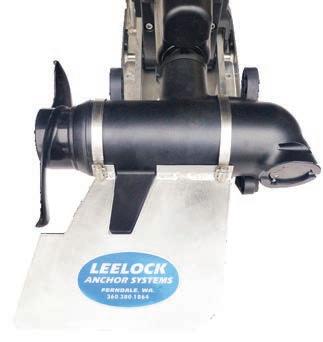
The LeeLock magnum Skeg #LMS-04 is made for Minnkota Instinct Quest motors. It will drastically improve the steering performance and straight line travel of your bow-mounted motor. Not only does this Skeg improve your motor’s performance, it also makes it much more efficient. Your batteries will run longer on a charge. A LeeLock Skeg is a vital part of your trolling motor system. This oversized skeg is made of 5052 aluminum. The size is 8 3/4 inches high by 10 inches wide and it’s 3/16 inches thick. It comes with clear PVC coated stainless steel hose clamps.
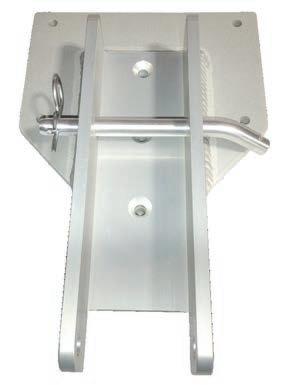
The Heavy-Duty Quick Change Base #QB-03 is like the standard Quick Change Base, but beefed up to provide a wider footprint. This provides a more secure mount. Like the standard Quick Change Base, the Heavy-Duty base allows you to easily and quickly switch between the #CRN-01 Columbia River Anchor Nest, any of the 3 Bow Mount Trolling Motor Mounts or the #BL-01 LeeLock Ladder. Simply remove the pin and slide an accessory out and slide another accessory in and replace the pin. The Heavy-Duty Quick Change base mounts to almost any power boat as long as the footprint fits on the bow area of the boat. It has 7 5/16 inch mounting holes. The Heavy-Duty Quick Change Base is handmade of aluminum. Go to LeeLock.com to order the Base alone or to add the CRN-01 Columbia River Quick Change Anchor Nest, the three Bow Mount Trolling Motor Mounts, or the LeeLock Ladder to your order.
NEW SEASON, NEW HOPE
START OUT 2026 RIGHT BY TAGGING A TOM, AND HERE’S A GAME PLAN TO DO JUST THAT
By Tim E. Hovey
I’ll be the first to admit that as a sportsman, I’m not a fan of the months of January and February. Most hunting seasons are closed or nearly done, and as hunters, we reluctantly enter that period we refer to as the doldrums of chasing game.
In short, not much is happening. Even having a diverse bag of interests doesn’t help much. It’s usually too cold to go fishing, and despite being curious about ice fishing, I don’t have
any of the gear or knowledge to pull myself away from a cozy fire to fish through a frozen patch of snow. If I had to describe the first two months of the year for an outdoorsman in one word, it would be “blah!”
About the middle of March, as spring starts to peak through, I start getting that old familiar itch to head outside and explore. I should preface that: When I head outside during the spring, I’m not looking for the beauty of blossoming wildflowers or a picturesque canyon bathed in
the sunshine of a spring morning. I’m looking for the signs of animals I can hunt. And first on that list is the spring turkey.
MARCHING INTO SPRING
California’s general turkey season starts March 28 and runs through May 3. You’ll need a valid California hunting license and an upland game stamp to chase these giant game birds. And as always, being a leadfree state, you’ll need the appropriate shotgun shells. The bag limit is one
As winter draws to a close, author Tim Hovey is eager to get out and pursue turkeys. When California’s spring season starts on March 28, toms will be actively seeking hens to mate with, and Hovey will join other hunters for the first bash of the year. (TIM E. HOVEY)
HUNTING
bearded bird per day and three per season. Additional special hunts, like youth and archery, are also available, with those dates differing from the general season.
MATING SEASON
During the spring, male turkeys, or toms, are searching for females to breed with. They travel in small, very aggressive bachelor groups looking for hens; they are not shy about approaching. Once the group sees female turkeys, the race is on to get to them first. I have seen small groups of male turkeys racing across a field faster than you would think a 20-pound bird could move.
Once they reach the females, the toms begin to drum and strut in full breeding display, hoping their presentation will win the hearts of the very plain-looking hens. And
their breeding dominance does not only rely on their dance. Pulsing with breeding hormones, these aggressive bachelors will fight other toms for the right to breed.
Despite this sometimes violent courtship ritual, it pales in comparison to how springtime toms treat jakes if they happen to encounter them in the breeding circle. Jakes are first-year male turkeys that haven’t yet achieved the size or status to breed hens. If mature toms encounter these firstyear birds during their courtship, they will violently attack them for being in the wrong place at the wrong time.
WHEN LOVE HURTS
Years ago, during a late-season spring hunt, I watched three tom turkeys beat a jake nearly to death. They caught him in an open field, surrounded him and stomped on him for several minutes. The beating
was so brutal that I was convinced the jake died during the attack. Once the toms left, the wounded bird limped away despite missing an eye and dragging a wing.
As hunters, this springtime behavior can benefit us in the pursuit of bagging a tom. Understanding the lovesick tom’s complete hatred of jakes and their ability to shelve caution in pursuit of breeding during this time of year, I’ve always used the same decoy setup when pursuing springtime turkeys. Placing a jake decoy in proximity with a hen decoy has been successful for me multiple times.
Toms set on breeding view this scenario as hostile and will arrive on the scene angry, with the sole purpose of taking out the jake. This blind hatred, combined with a tom’s reckless behavior, can tip the odds towards the hunter.
Hen decoys can be very effective at bringing a male turkey within shooting distance. Place a jake nearby, and a tom is even more likely to charge in. (TIM E. HOVEY)
HUNTING
PRESEASON INTEL
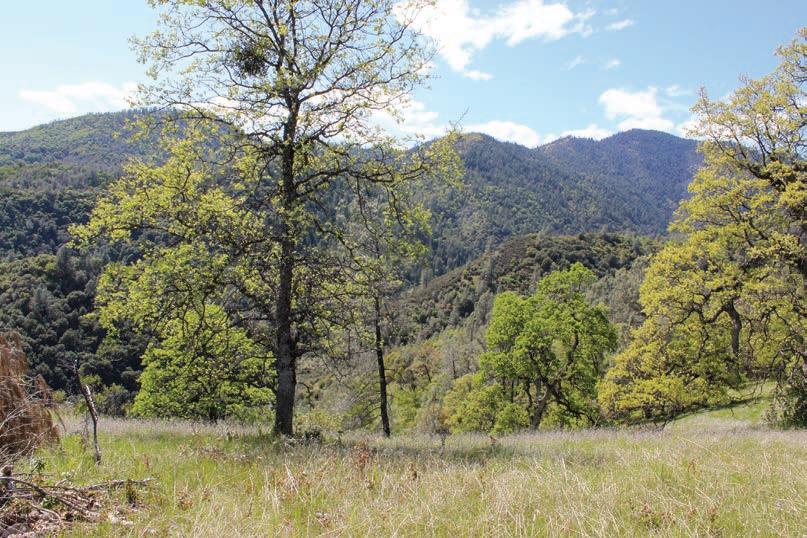
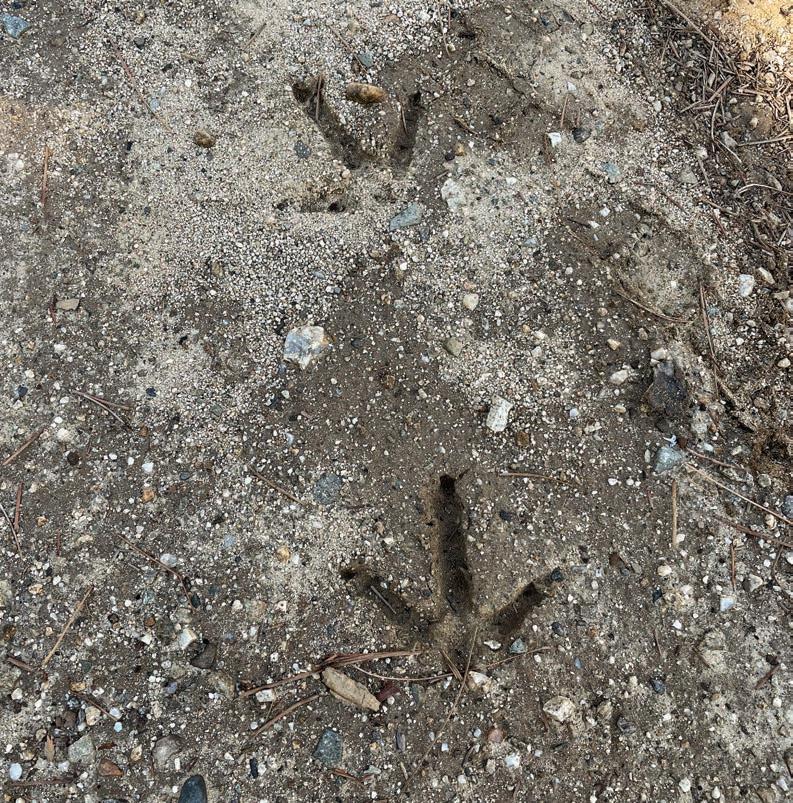
Prior to the season opener, I’ll set aside some time to scout for turkey spots. My first objective during these trips is to locate the birds. Identifying tracks, droppings and feathers, plus determining the freshness of that sign will drive where I set up on opening day. If I can go a step further and get lucky enough to find a roost tree, a place where turkeys regularly rest overnight, this area will move to the top of my hunt list.
Once you find your spot, it’s time to get started. It’s well known that turkey hunters need to conceal themselves during the hunt. Dressed in camo and comfortably sitting in the shadows a short distance from a decoy setup, many turkey hunters rely on calling to get the attention of birds in the area. Subtle hen clucks and purrs will pique the interest of toms looking for love.
It’s important, however, to not overcall. I’ve tagged along with other turkey hunters who tended to wear out their slate calls. I tend to err on the other end of the calling spectrum. In my opinion, less is better.
THE ROOST BOOST
A couple of years ago, a buddy invited me out on a spring turkey hunt. He had access to a huge parcel and wanted us to split up to see if we could increase our odds of filling our turkey tags. A few days before the opener, he texted me: “I found the roost tree!”
We met up 90 minutes before sunrise. Since I had never been to the property before, my buddy gave me the lay of the land. In the pitchblack he described the terrain and mentioned where he was going to set up. Just before we parted ways, he pointed east. “The roost tree is over there about 150 yards,” he said. I switched on my red headlamp and started hiking north. Since my buddy was going to be set up on the right side of the turkey tree, near an open field, I planned to set up on a small hill to the left of the birds.
“Identifying tracks, droppings and feathers, plus determining the freshness of that sign will drive where I set up on opening day,” Hovey writes. “If I can go a step further and get lucky enough to find a roost tree, a place where turkeys regularly rest overnight, this area will move to the top of my hunt list.” (TIM E. HOVEY)
HUNTING
At my spot, I set up a low camo fence between me and the turkeys. Out front, I placed my hen decoy directly in view of the tree. About 10 feet away, I placed my jake decoy. In the low light, I could see the roost tree in the distance and saw a few dozen black blobs sitting on branches. As soon as the sun was up, they’d have a clear view of my setup.
About 20 minutes before shooting time, I heard my buddy calling from the meadow to my right. At first it was subtle. As the sun began to rise, his calling got way more aggressive.
Spring season is a feast for the eyes – and mouth. “To me, spring turkey signals the beginning of the outdoor season,” Hovey writes. “The weather starts to warm, the days are getting longer and the animals, just like me, grow tired of being cooped up and begin to move.” (TIM E. HOVEY)
bead on his head and squeezed the trigger. The male turkey fell out at about 35 yards, with the rest of the group taking flight and scattering behind me. My buddy never even saw the birds from his side of the field.
MAKING THE RIGHT CALLS
I owe a big thanks to my friend for scouting the property and especially for locating the roost tree. However, I firmly believe the reason I dropped an opening-day tom and he didn’t was the calling. Despite imitating the hens’ breeding calls perfectly, I think the overcalling tipped the odds my way.
He’d send out hen clucks and purrs, calling for half a minute, and after a short break, start up again. With all the racket coming from his side, I decided to stay quiet and let my cheap decoys pull the birds close.
Minutes before sunrise, a single tom flew from the roost tree and landed 30 feet from where I was set up. Less than a minute later, the entire group left the tree and completely surrounded my decoys. As they bristled and drummed near the plastic, imitation birds, I picked out the largest tom, put the shotgun
To me, spring turkey signals the beginning of the outdoor season. The weather starts to warm, the days are getting longer and the animals, just like me, grow tired of being cooped up and begin to move. It’s the time to get out, chase some birds and do some scouting for other critters.
Just be aware that despite their reckless behavior, male turkeys are still a challenge to kill. Years ago, a friend described hunting spring gobblers to me perfectly.
“They are the dumbest, smartest birds you’ll ever hunt!” I couldn’t agree more. CS
FROM FIELD...
SPECKS SAVE THE DAY
By Scott Haugen
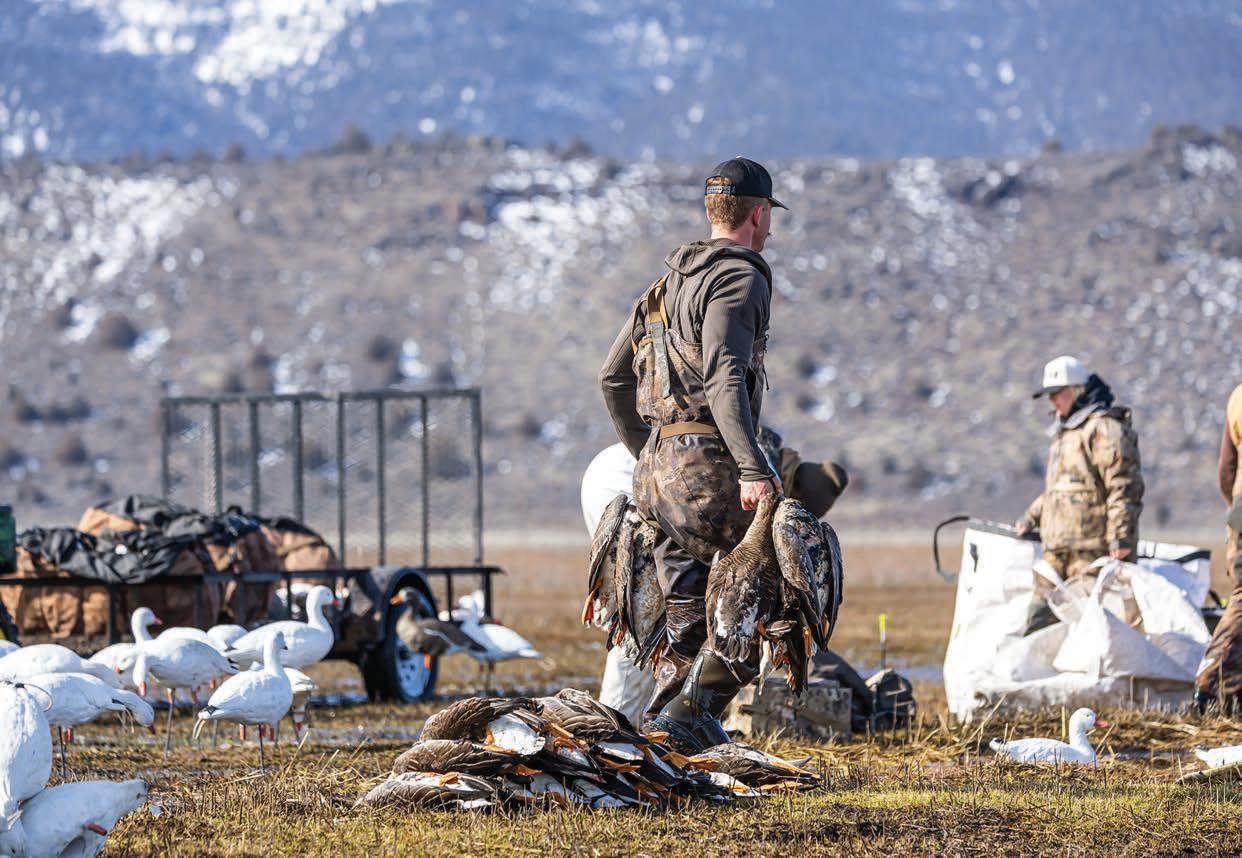
“Grab ’em quick; here come more geese,” hollered Jake. We’d barely hopped back into our layout blinds when the next wave of white-fronted geese coasted toward the decoys. More birds fell from the sky.
“Whatchya think?” my buddy Austin Crowson said with a smile. I shot him a wink. It was late in
THE TARGET WAS SNOW GEESE, BUT WHITE-FRONTS ENDED UP FILLING THE BILL
the afternoon of early March. Temperatures were warm in the northern part of California that day. Eight specks fell from the next volley. Another string of dark geese was right behind them. I was on the far right, with four hunters to my left. I went two for three on the next flock. Specks decoyed with aggression. It was a good start to three days of spring goose hunting. By the time we picked up decoys,
cleaned and packaged five limits of specklebellies, it was late. “Before you guys got here we scouted some other spots,” shared Jake as we packed the last of the birds into coolers. “We’re going to hunt another place in the morning that’s been loaded with snow geese.” I loved his enthusiasm.
THE PLAN WAS TO get up at 4 a.m., hopefully allowing us time to set out 2,000 decoys. Three trucks pulled
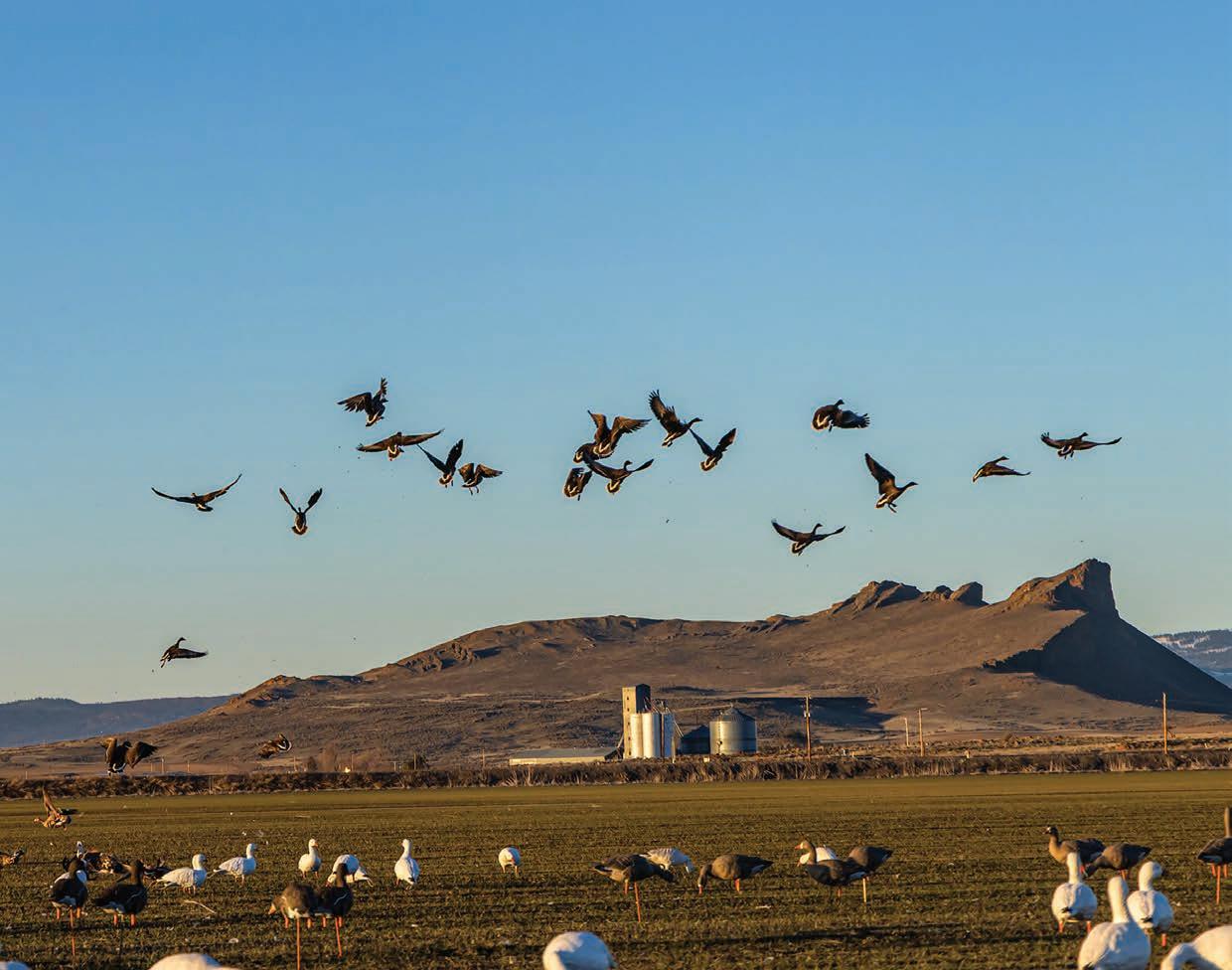
Setting out the thousands of decoys that it can take to pull snow and white-fronted geese to a given Northeastern Zone field often calls for an o’dark hundred start, but can be well worth it. This year’s season runs through March 10. (SCOTT HAUGEN)
HUNTING ... TO FIRE BRINED AND BAGGED GOOSE BREAST
By Tiffany Haugen
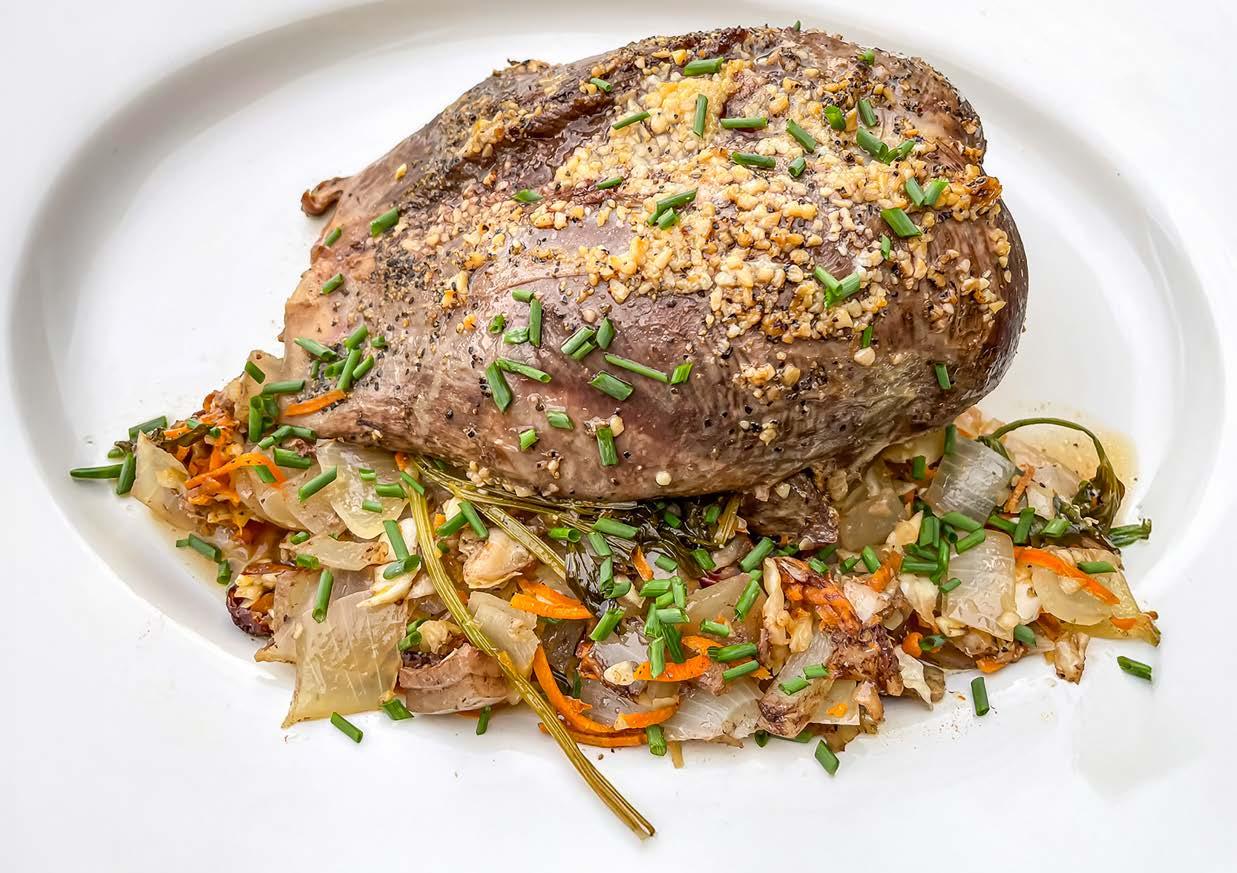
Bring out the best in goose breast meat by brining it first, then cooking it in an oven bag. It’ll make your bird even more moist and delicious. (TIFFANY HAUGEN)
Many hunters agree that white-fronted geese are among the best-eating waterfowl out there.
When Scott brought home a possession limit of these birds from his hunt in Northern California last year, I wanted to come up with tasty recipes that wouldn’t mask their flavor. Turning to an oven bag not only accentuated their flavor, but optimized the moisture content throughout the meat, a key to cooking fowl.
Two goose breasts, bone-in, skin optional
One onion, chopped
One carrot, chopped
Two stalks celery, chopped
One bell pepper, chopped
3 tablespoons minced garlic
2 sprigs fresh rosemary
1 cup chicken broth Fresh chives for garnish
BRINE
2 cups cold water
½ cup apple cider vinegar
1/3 cup brown sugar
2 tablespoons salt
1 tablespoon black pepper
1 teaspoon poultry seasoning
In a large bowl, mix brine ingredients until thoroughly combined. Make sure the goose is completely submerged. Let sit refrigerated for eight to 12 hours. Place vegetables in the bottom of an oven bag. Place the bag into an ovenproof casserole dish. Drain goose breasts from brine and discard brine. Place goose breasts on top of vegetable mixture, bone side down. Slather minced
garlic on the top of the goose breasts and place rosemary sprigs inside the bag. Add chicken broth to the bottom of the bag. Seal the bag and make several slits on the top for steam to escape. Bake in a preheated, 350-degree oven for 45 minutes or until internal temperature reaches 140 to 160 degrees.
To brown birds, carefully slice open the bag down the center, tucking into the sides of the pan during the last 10 minutes of cooking. Remove from the oven and let sit for five to 10 minutes. Serve over the roasted vegetables and garnish with chives if desired.
Editor’s note: For signed copies of Tiffany Haugen’s popular cookbook, Cooking Game Birds, visit scotthaugen.com.
Create dry aged steak and cured meats from home!
Whether you’re preserving whole muscle for charcuterie or grinding coarse for fermented salumi, our time-honored spice blends, easy starter kits, and UMAi Dry® technology make it safe and simple to cure like a pro!
HUNTING
trailers; another hauled a John Deere ATV and flatbed trailer to move decoys. The haul from trucks to the X was over half a mile. The going was wet and muddy, but our shuffle was fast and furious.
Minutes before shooting light the last of the decoys were in place. We hid in layout blinds engulfed in white decoys. Full bodies, socks, shells and silhouettes – you name it, and the kids had it. The first geese to arrive were seven specks. They cupped straight into the decoys. We shot them all.
Forty-five minutes and over 30 dead tar bellies later, the first flock of snow geese came our way. As with the specks, they approached on a string. But they didn’t finish. Instead, they veered to the right at the last moment.
The next two strings of snow geese peeled off at the same place. They didn’t flare; they just casually drifted to the side and kept flying. That’s when someone broke the silence.
“Look behind us!” they shouted. Unbeknownst to us, snow geese were leaving a roost pond beyond the hills behind us and heading to a field to graze. They were landing a mile from us. We couldn’t hear them with the wind. Every snow goose that left the roost in front of us funneled into that field.
“That’s all right,” piped Kaden. “The specks are flying and working good. Let’s finish up on these, get outta here and go scout for tomorrow’s hunt.”
By late morning six of us were done and picking up decoys. It was the best speck hunt I can remember.
“Set your alarms for 2:30; tomorrow’s going to be an early one,” Kaden said matter of factly. “We’re throwing the kitchen sink at ’em.”
WITH A 20-SNOW GOOSE and 10-speckper-person daily limit, the potential to burn a lot of shells was real. Soon we were in the field, trying to organize the chaos. Determined to set out 6,000 decoys, the crew was on
a mission.
Mixed in with the thousands of snow goose decoys were about 100 full-body speck decoys, and another 10 dozen Big Al’s white-front silhouettes. The flat, dark decoys were set on the fringes of the snow goose decoys, optimizing visibility and contrast, just in case specks became our primary target.
As the horizon began to glow, we had to call it quits. “We’re only going to get about 4,500 decoys set,” a huffing and puffing Kaden told me.
When the first flock of snow geese took to the air from their distant roosting pond, calls blared and flags waved. It took them a while to buck the wind, but the white geese made progress. Then, 200 yards out, they banked to the west, skirted around a big pivot line and landed in a field behind us. Every flock of snow geese followed.
“Looks like we have another speck shoot this morning,” someone blared. Everyone laughed.
The specks decoyed with aggression for author Scott Haugen and his buddies. (SCOTT HAUGEN)
HUNTING
The first flock of white-fronts hit the X. I dropped a pair. The group killed several more. We took limits of specks in short order. It was a glorious morning.
Austin and I decided to head for home. “Sure you guys don’t want to stick around and try for snows this afternoon?” Jake asked as we milled around the decoy spread, kicking sticky mud from our boots. “The wind is supposed to change this afternoon and birds should hit this spot.”
With our possession limits of specks in hand, Austin and I appreciated the offer but decided to hit the road.
ABOUT THE TIME WE made it home, Austin got a text from Jake. “You didn’t miss anything; the wind didn’t change and we didn’t fire a shot,” he said. “We’re leaving the decoys out and trying it again in the morning.”
The next morning Austin got another text from Jake. “The wind changed!” was all it said.
A few minutes later a picture came through of five happy hunters with 100 snow geese. No specks. Their efforts were rewarded. CS
Editor’s note: Scott Haugen is a full-time freelance writer and photographer of 25 years. Follow his adventures on Instagram and learn more at scotthaugen.com.
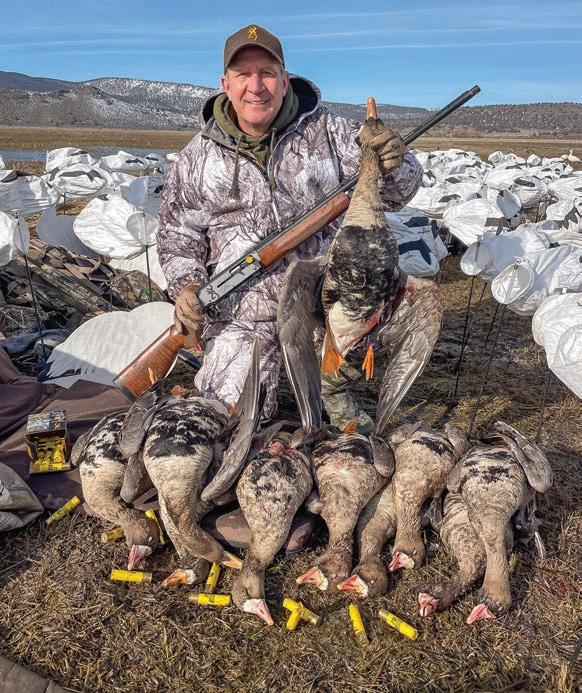
Haugen with a morning limit of great-eating white-fronted geese. It was a challenging but rewarding hunt. (SCOTT HAUGEN)
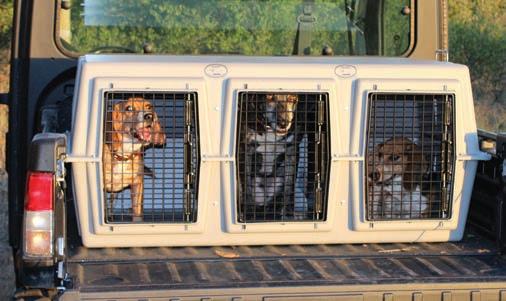
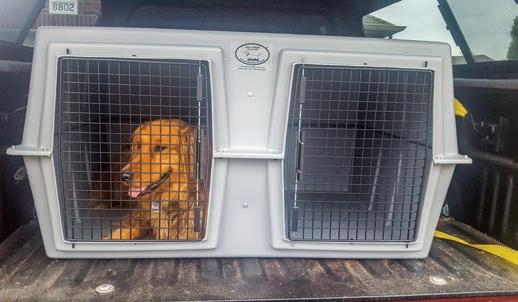
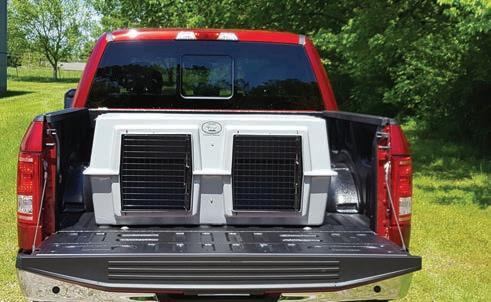
• Easy Loader & Deuce accommodate 2 dogs up to 65 lbs each
• EZ-XL accommodates 2 dogs over 65 lbs each
• Made from High Density Polyethylene with UV protection
• Easy Loader fits most full size pickups, SUVs & large UTVs
• Deuce fits smaller pickups, SUVs & UTVs
• EZ-XL is for larger breed dogs & full size vehicles
• Vents, cold weather door covers, insulated covers & custom kennel pads available
INDOOR TRAINING TIPS
By Scott Haugen
Last March I went in for an MRI. Three days later I had an emergency fusion in my lower back. The unexpected surgery put me down for five months. Not only did I need help doing just about everything, but so did my dogs.
Trying to keep Echo and Kona in good physical shape was my biggest challenge. I could take them for walks – off leash – and let them play
in fields, but I couldn’t push them or run them in the hills. My wife Tiffany did that just about every day.
But what I could do was train indoors with them. I had three goals: retain their high level of discipline; challenge their mind while teaching them new skills and reinforcing old ones; and have fun.
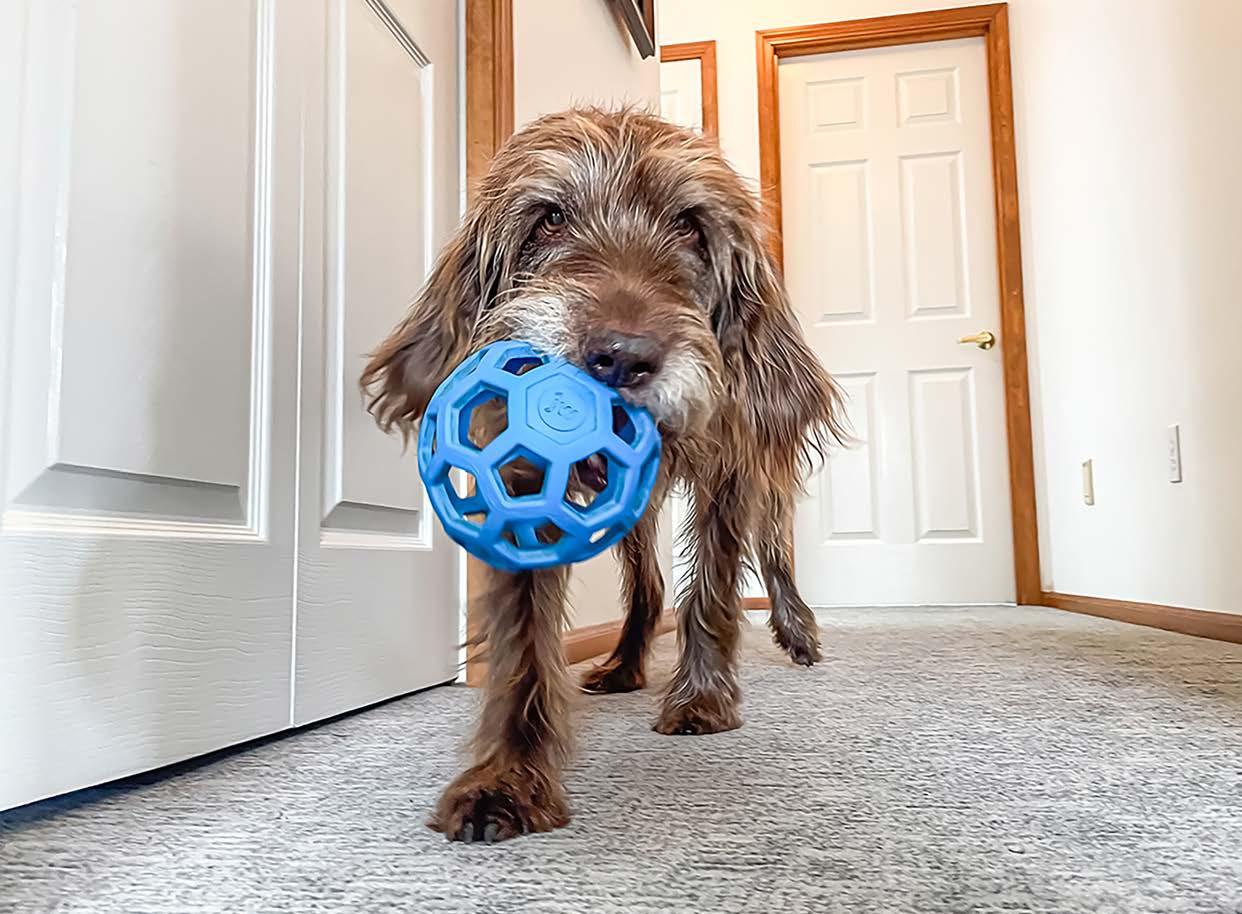
Just about every day Echo and Kona would bring me a bone or chew toy to play with them. I didn’t engage them with those things because they
were independent pacifiers. But the fact they wanted to play meant I didn’t want to ignore them either. Kona loves fetching things and Echo loves hide-and-seek with toys.
I COULDN’T BEND OVER for several weeks, and that meant tailoring drills that worked for both me and my dogs. For Echo, I simply pulled her favorite ball from the counter, had her sit, then I went and hid it somewhere in the house. I’d return
After back surgery laid him up for months last year, author Scott Haugen switched to training his dogs indoors to keep them sharp. The focused sessions in confined spaces led to efficient outcomes. (SCOTT HAUGEN)
HUNTING
to her side, give her the search command, and she’d be on her way.
Echo would deliver it to hand while maintaining eye contact, then sit on my left side. Then we’d repeat the drill. She’d do this every day for hours if she could, but I kept each session focused and only five to 10 minutes long. It was not only fun for Echo but offered mental stimulation. She’s 12 years old now, and the more brain games she can engage in, the better.
Kona is easier-going than Echo. He doesn’t need to constantly be engaged, but he does thrive on human interaction. Kona jumps when he hears the recliner move, or snaps out of a deep sleep when there’s a noise. He wants to know where his humans are at all times.
Kona thrives on pleasing people. Tiffany set up an upstairs table for me to fold clothes on. I didn’t have to bend over and risk injury to my back – just fold them, hand them to Kona and send him downstairs. Kona would take kitchen and bath towels, rags and more downstairs to Tiffany, delivering them to her hand, then sprint back up to my side. There, he sat and stared into my eyes, waiting for the next command. Twenty or more trips up and down the stairs was nothing for Kona, and he loved it.
The purpose of this drill for Kona was as much about maintaining discipline and restraint as it was
performing a task. Sometimes I waited two or three minutes before handing him a towel to run downstairs with; it wasn’t always a race, and when Tiffany was cooking in the kitchen, we were in no hurry. It was good practice for sitting in the duck blind all day, several days in a row.
FORTUNATELY, BOTH OF MY pudelpointers are very calm when indoors. But once they go into hunting mode, their drive can overtake their trained behaviors. For Kona, he often tries to move ahead of me rather than heel. To work on this I shut all the doors in a long hallway, then put him on a leash; Kona never pulls when leashed, so I
knew my back would be fine. What I wanted to do was walk him close to a wall while telling him to heel. The wall restricted his movement. Once he did that, I took the leash off and repeated the drill. We did this three times a week, and come hunting season, Kona heeled better than ever. Another drill we spent a lot of indoor time on was hand signals. I did this with each dog, individually, and with both dogs at the same time. I hunt both dogs together a lot, and often send them different directions at the same time. In the field, this is achieved by hand signals. Indoors, we practiced with verbal commands and hand signals, casting them left, right, backward and forward, even at angles. This can be done in a family room, even a larger bedroom, as it’s not about the distance the dog covers but the timeliness in their response to my command and the efficiency with which they move.
WHETHER TO ESCAPE SPRING rains, summer heat, winter cold snaps or, like me, coming off back surgery, very solid dog training can be accomplished indoors. The distraction-free setting allows for focused sessions that will expedite the learning process, and your pup will relish in the undivided attention. Come hunting season, you’ll be impressed with the results. CS
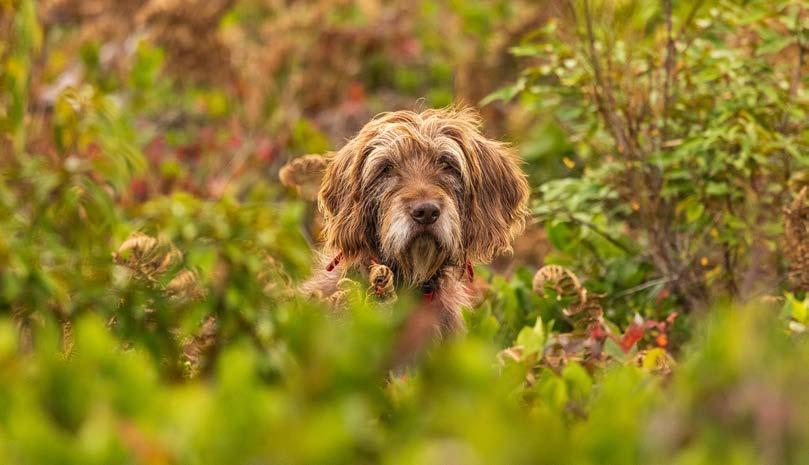
In the field, dogs often look to their owner for direction. Teaching them eye contact and hand signals indoors will have direct applications on the hunt outdoors. (SCOTT HAUGEN)
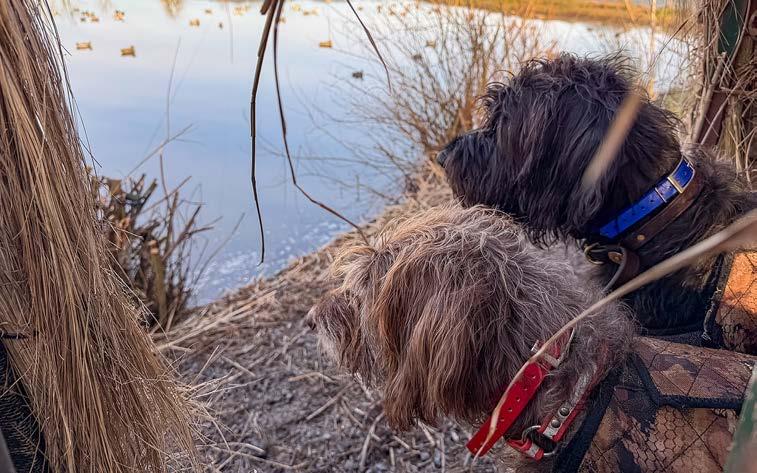
Haugen’s dogs hunt a lot of ducks and often sit for nine hours a day in the blind. The focus for this type of hunting can be taught at home, along with a range of other training objectives. (SCOTT HAUGEN)