








PUBLISHER
James R. Baker
GENERAL MANAGER
John Rusnak
EXECUTIVE EDITOR
Andy Walgamott
EDITOR
Chris Cocoles
WRITERS
Mark Fong, Scott Haugen, Tiffany Haugen, Tim E. Hovey, Cal Kellogg, Joseph Ogilvy
SALES MANAGER
Paul Yarnold
ACCOUNT EXECUTIVE
Janene Mukai
DESIGNER
Katrina Ngor
WEB DEVELOPMENT/INBOUND
MARKETING
Jon Hines
ADMINISTRATIVE ASSISTANT
Katie Aumann
INFORMATION SERVICES MANAGER
Lois Sanborn
ADVERTISING INQUIRIES media@media-inc.com
CORRESPONDENCE
Email ccocoles@media-inc.com X @CalSportsMan Facebook.com/ californiasportsmanmagazine
ON THE COVER
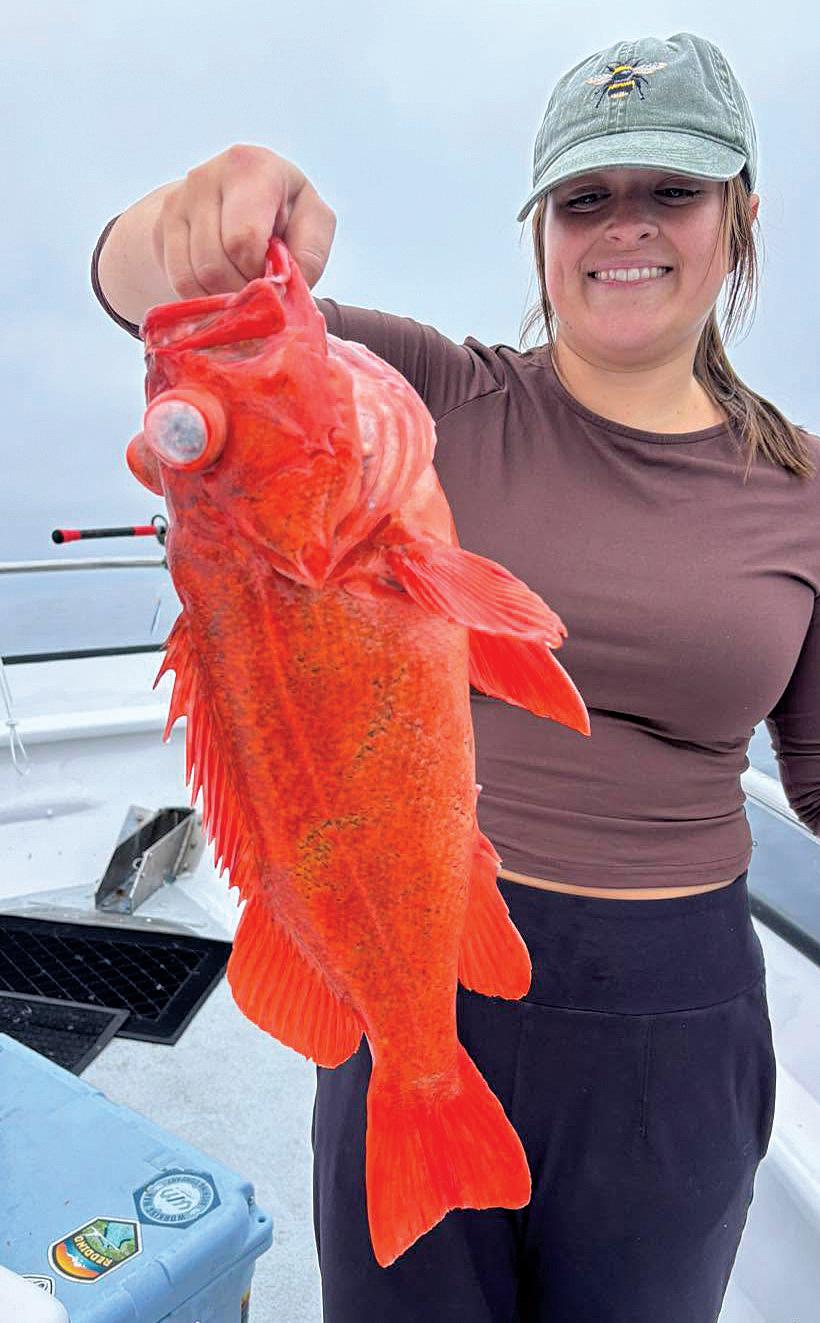
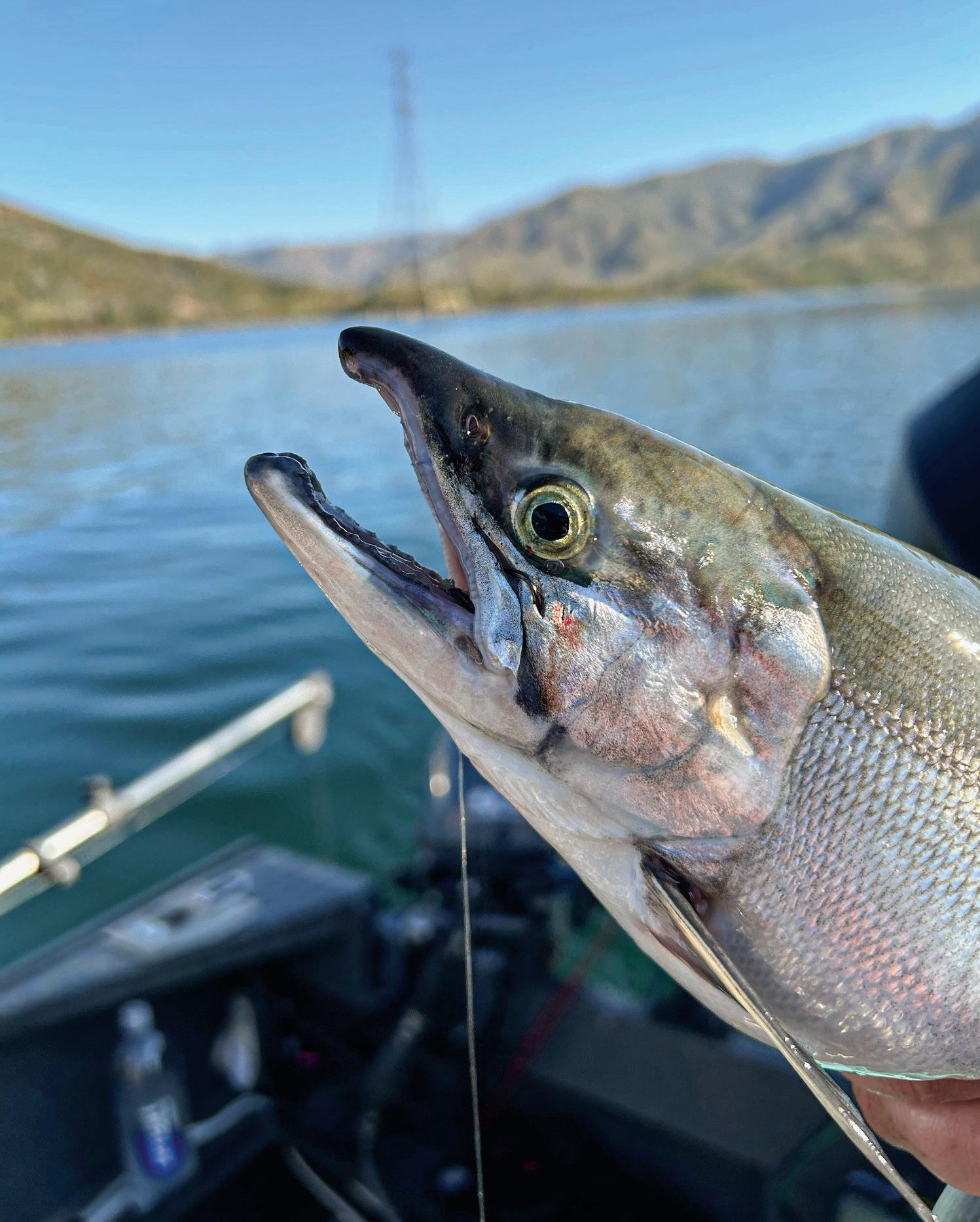
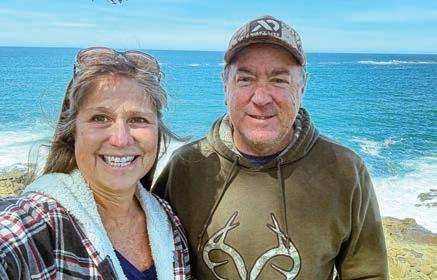
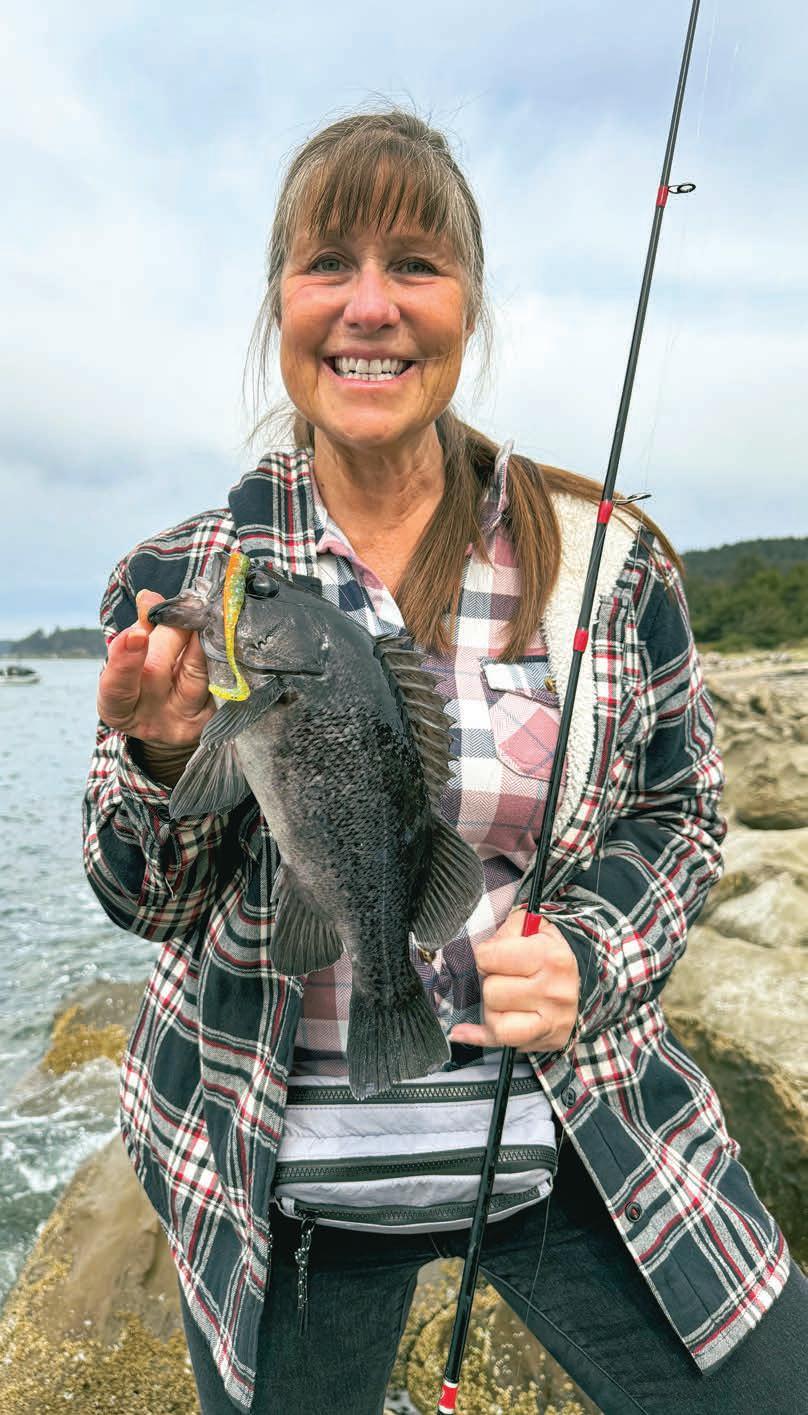
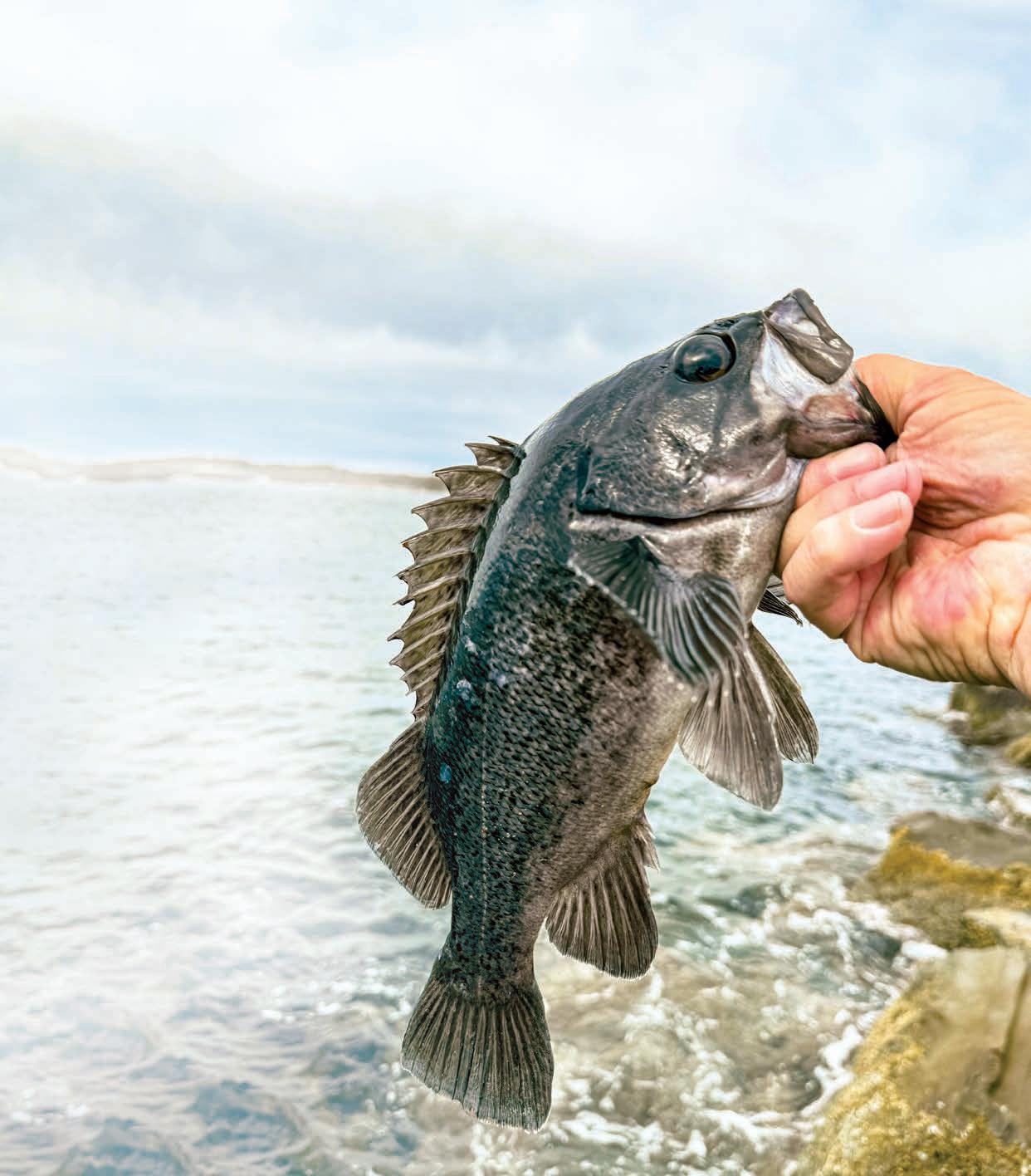
Cheryl Hovey shows off a pretty black rockfish she caught on a coastal Oregon fishing getaway with her husband, author Tim Hovey, who recaps the action on page 42. (TIM E. HOVEY)
MEDIA INC
PUBLISHING GROUP
941 Powell Ave SW, Suite 120 Renton, WA 98057 (800) 332-1736 • Fax (206) 382-9437 media@media-inc.com
















Englishman Joseph Ogilvy’s career as a gourmet chef – specifically the seafood he prepared – inspired him to travel to coastal California while researching his first book, Tin Can Coast, a deep dive into the state’s fishing industry of the late 19th and early 20th centuries, a period marred by overfishing and racism and which also led to a push for conservation measures. Ogilvy shares an excerpt from his book, and we also chat with him about the project.
Looking for some underrated summer fishing fun? Try targeting American shad on light tackle, which can lead to some spirited angler-fish sparring. Mark Fong recently took a late afternoon/ early evening trip with guide Austin Wilson on the American River, where the guys got off to a slow start but ended on a bang. Fong recaps the adventure.
53
Bird hunting season is just around the corner, and Scott Haugen has hunted with plenty of shotguns over the years. Recuperating from two torn rotator cuffs, he stumbled onto the TriStar Viper G2 Pro, a .410-bore semiauto that suits him just fine when it comes to turkeys, waterfowl, doves and more. He shares its specs in our monthly From Field to Fire feature, and Chef Tiffany Haugen throws in an upland bird Taco Tuesday recipe to boot!
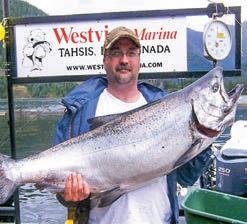
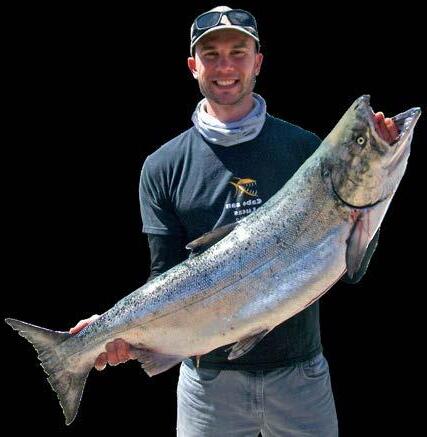
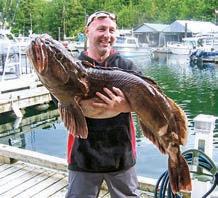
From Monterey to Bodega Bay and beyond, saltwater anglers can look forward to some epic action for ubiquitous and colorful rockfish species and massive, hard-fighting lingcod. Cal Kellogg has the scoop on how
DAWN SPORTFISHING)
9 The Editor’s Note: Consider free fishing on the Fourth of July 11 Outdoor Calendar 32 Ocean trolling tips for salmon 42 A husband-and-wife Oregon Coast fishing getaway 59 Summer gun dog training tips

Happy 250th birthday, America!
worth camping out or finding a quiet motel.
While a big deal for the country, this Fourth of July won’t be much different for my dog, Olive. She’s always hated the banging sounds of fireworks –they’re illegal in my neighborhood, but that’s hardly stopped the noises from scaring the hell out of the pup.
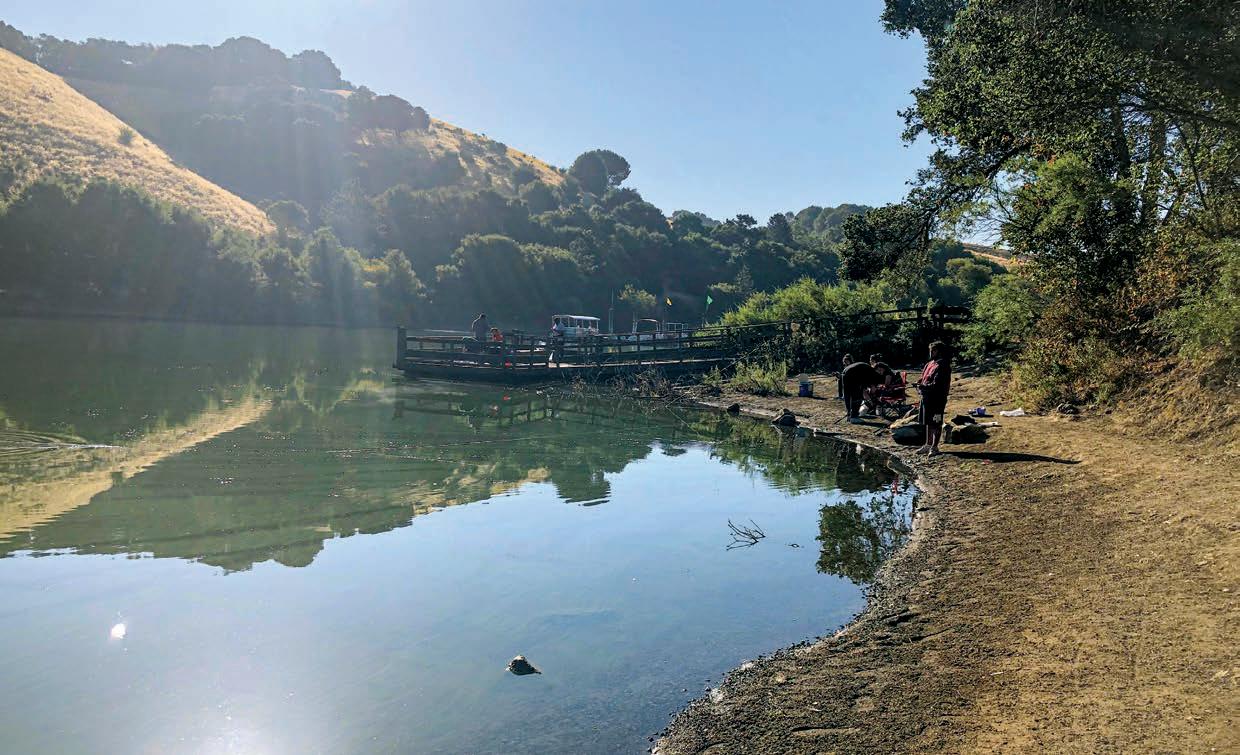
But there could be an alternative for both Olive, myself and all of you dog owners and your pets to get away from the chaos of Piccolo Petes, firecrackers and bottle rockets. July 4 is California’s latest Free Fishing Day, when general licenses won’t be required for anglers to wet a line at your local lake or river. It might even be

I remember the last time I took advantage of the Fourth of July falling on the state’s Free Fishing Day, when I joined my sister Charlene, brother-inlaw Alan and our dogs (my then pup’s name was Emma) at Lake Chabot in the East Bay. That just happened to be in the middle of the Covid pandemic, which meant facemasks were just as important of an accessory as the nightcrawlers we used to unsuccessfully entice a bite from the lake’s catfish (California Sportsman, August 2020).
I’ll be in Northern California again this July 4 weekend, and I hope to get some
fishing in. But a recent solo trip to France ensures that I’ll also take some time to reflect on the importance of the holiday.
I spent most of my trip in Paris, but I did a two-day excursion to Normandy, where a tour of D-Day sites offered a lot of sobering emotional reactions but also inspiration about the heroics performed that day.
So whether you’re fishing, trying to keep your dog calm like I will be or reflecting on the reasons we’re celebrating this country’s milestone anniversary, make the most out of this Fourth of July party.
Just try to limit lighting off too many fireworks. Olive would appreciate a few more quieter moments of revelry. -Chris Cocoles


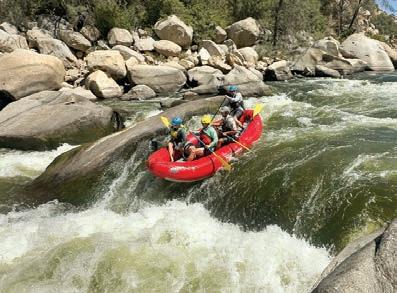
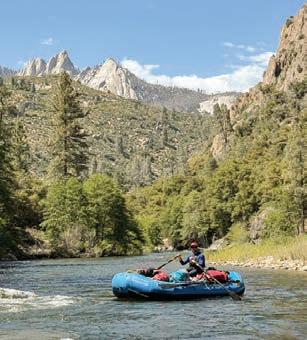

Since 1975, Whitewater Voyages has been rafting the Kern River offering whitewater rafting trips from “Mild to Wild”
1/2 Day Class 3 trips, 2-day Camping and Class 4, all the way to 3-Day Wilderness Class 5 trips to satisfy all ages and thrill-seeking appetites.
Whether you’re a first-time paddler or seasoned adventurer, our group friendly Kern River trips are designed to make every participant feel confident, supported, and part of something extraordinary.
1 Klamath River Basin late spring-run king salmon season opens
1 Rabbit and varying hare hunting season opens
1-8 Mono Village Summer Fishing Derby, upper Twin Lake (760-932-7071)
1-31 How Big Is Big Fishing Derby, West Walker River (northernmonochambercom/events)
4 Fishing Expo, June Lake (monocounty .org/event/june-lake-4th-of-julyfishing-expo/8430)
4 Free Fishing Day in California, no general license required in state waters (wildlife.ca.gov/Licensing/ Fishing/Free-FishingDays)
11 Don Pedro Team Kokanee Derby (kokaneepower.org/ derbies.php)
11 Zone A archery deer hunting season opens
16 Central Valley inland fall-run king salmon season opens
25 Kids Fishing Festival, Mammoth Lakes (monocounty.org/event/kids-fishing-festivalmammoth/7050)
25 Zone B-4 archery deer hunting season opens
25-26 Ultimate Frog Challenge, Russo’s Marina, Bethel Island (anglerspress.com/events/ultimate-frog-challenge)
31-Aug. 1 Bridgeport Fish Fest, Twin Lakes Resort (twinlakeresort.com/fish-stocking-%26-fish-fest)
AUGUST
1 Stampede Reservoir Team Kokanee Derby (kokaneepower.org/derbies.php)
1-9 Fort Hunter Liggett archery either-sex tule elk hunt dates
8 Zone A general deer hunting season opens
8-16 Owens Valley multiple zone archery tule bull elk hunt dates
11-14 Grizzly Island period 1 apprentice antlerless general tule elk hunt dates
13-16 Grizzly Island period 2 apprentice spike bull tule elk hunt dates
15 Zones B-1, B-2, B-3, B-5 and B-6 archery deer hunting seasons open
15 Zones D-3 through D-10 archery deer hunting seasons open
22 Zone B-4 general deer hunting season opens
22 Start of Ambush at the Lake fall fishing derby, Convict Lake (convictlake.com; 800-992-2260)
26-Sept. 8 Siskiyou archery Roosevelt bull elk hunt dates
29-Sept. 4 Lake Pillsbury Period 1 antlerless elk hunt dates
For a list of upcoming bass tournaments, go to nrm.dfg.ca.gov/FishingContests/default.aspx.
take center stage at Lake Don
on July 11 for the latest Kokanee Power
tournament event. Go to kokaneepower.org for details. (CAL
From overfishing concerns to racism directed at many of Asian descent, California’s late 19th and early 20th century fishing scene is tragic, fascinating and full of stories, which author Joseph Ogilvy pursued in Tin Can Coast, the Englishman’s first book. (KODANI FAMILY/COURTESY OF TIM THOMAS)
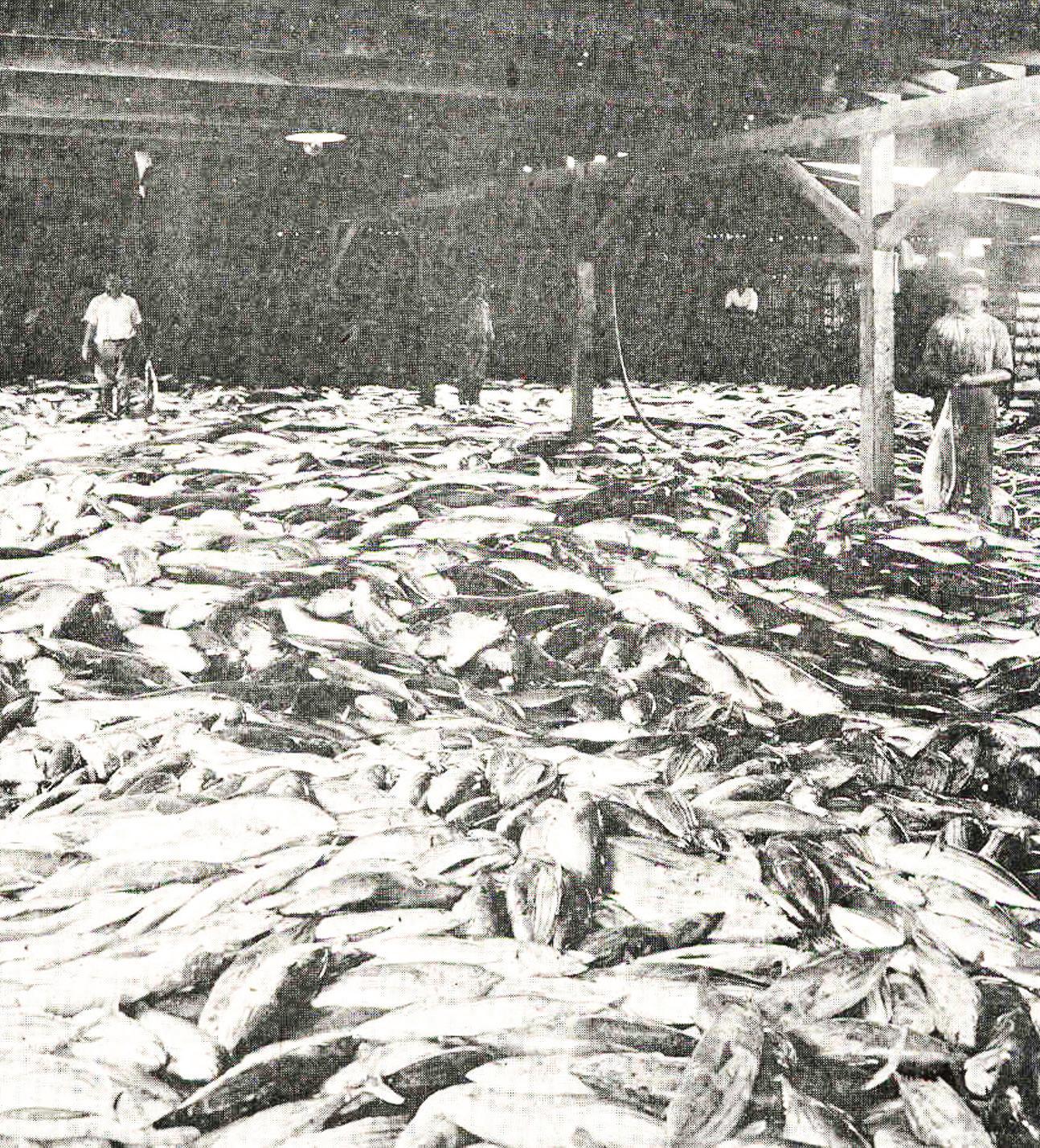
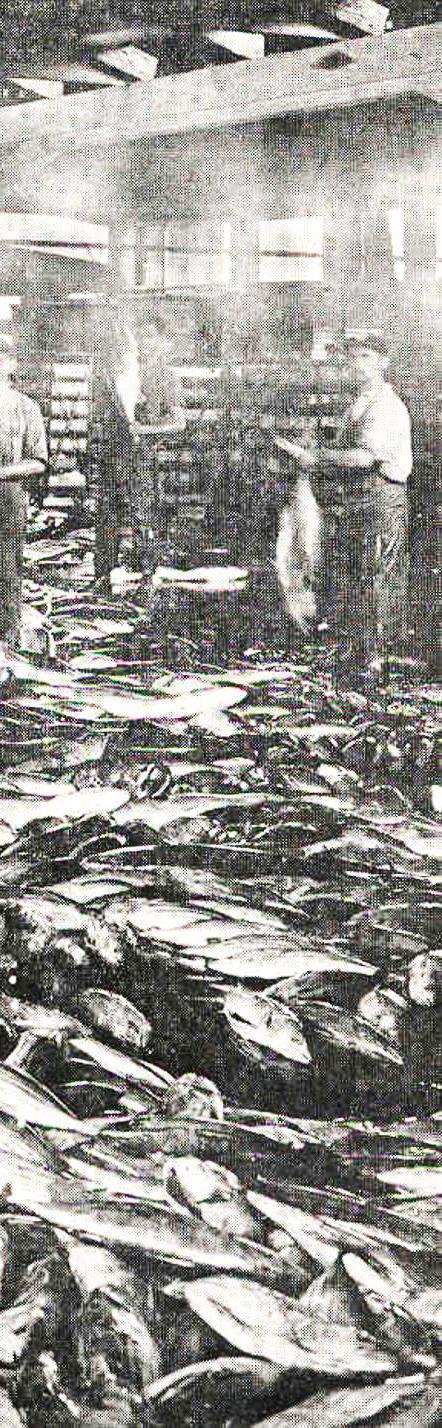
Editor’s note: In the late 19th and early 20th centuries, the Golden State’s once booming fishing industry started teetering.
Before then, the waters west of Monterey Bay in what’s known as the California Current were home to countless and valuable sea creatures.
“It was here that 18th century locals encountered frisbee-sized abalone mollusks, sardine schools the size of buses, and yellowfin tuna, each the size of a man. But it was not to last,” states a press release for the debut book of British chef turned fishing historian Joseph Ogilvy, who was fascinated by the region’s backstory.
From political posturing to shameless racism disguised as conservation measures targeting the many Chinese and Japanese immigrants who made the commercial fishing industry the cash cow it became, Ogivily takes a deep dive into a world that also provided fodder for some of the most storied writers of their time.
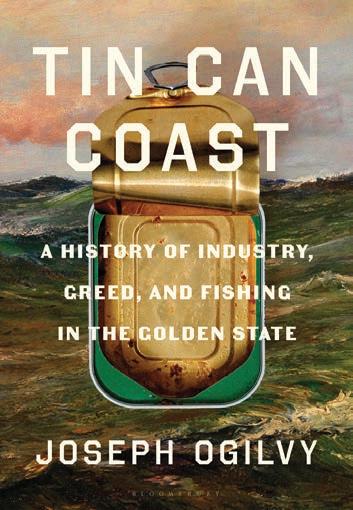
“Along the way, they became drivers of geopolitical competition, catalysts for the dramatic rise and fall of Cannery Row aristocracy, and even surly muses for John Steinbeck and Fritz Lang,” the press release continues.
The following is excerpted from Tin Can Coast: A History of Industry, Greed and Fishing in the Golden State, published by Bloomsbury Publishing.
By Joseph Ogilvy
At the same time that Congress was closing the United States’ borders to China, a new offensive was opened against the Golden State’s Chinese fishers, its battleground the inlets and rock pools of the California Current.
In throwing out the anti-Chinese fishing ban in 1880, Judge Sawyer wrote that the act was clearly “not passed in pursuance of any public policy relating to the fisheries of the state ... but simply as a means of carrying out its policy of excluding the Chinese from the state.” Future legislation against the Chinese fishers would have to find a fig leaf with which to disguise its efforts.
That fig leaf was conservation. A raft of so-called conservation laws, among the first the state ever passed, directly targeted Chinese fishers. The Chinese had long since become the default explanation for anything awry in California’s promised land, and now the Italian shrimpers, beaten out on price by Chinese competitors, and the European-American salmon industry, facing declining catches, were particularly vociferous in their calls for environmental regulation.
In the mid-19th century, say, to a 49er pitchforking salmon from the banks of a Sierra stream or a homesteader passing great rivers of buffalo on the Great Plains, the idea of conservation would have made little sense in the face of America’s
apparently endless frontier. But over the last third of the 19th century, it had become clear that the New World’s bounty was indeed being squeezed dry. Salmon runs in California and New England were visibly failing, as were the passenger pigeon flocks and the bison herds and the big game animals pursued by gentleman hunters. The California redwood groves and New England hardwood forests were being felled and thinned.
Slowly, stirrings of AngloAmerican elite environmentalism began to be felt. In 1875, Yellowstone had been declared a national park, then Sequoia and Yosemite in
1890. In 1889, Theodore Roosevelt founded the Boone and Crockett Club, an association of avid big game hunters that agitated against the unconstrained slaughter of their preferred prey (at least by the commercial hunters they considered unsporting). The Sierra Club followed a few years later.
The disappearance of abundant American species like the buffalo was in various nebulous ways tied to fears over the national character. Sometimes the fear was that America’s white men would have nothing to test themselves against, no wild nature to strengthen their spirits;
sometimes, that a proud and noble American race like the redwood was being supplanted by “invasive species” or exploited to extinction by undesirables.
YEARS EARLIER, IN 1870, the same movement had inspired creation of the California State Board of Fish Commissioners (later the California Fish and Game Commission). It was one of the first state conservation agencies in the country, founded at the behest of wealthy white anglers who simultaneously feared depletion of California’s sporting species and
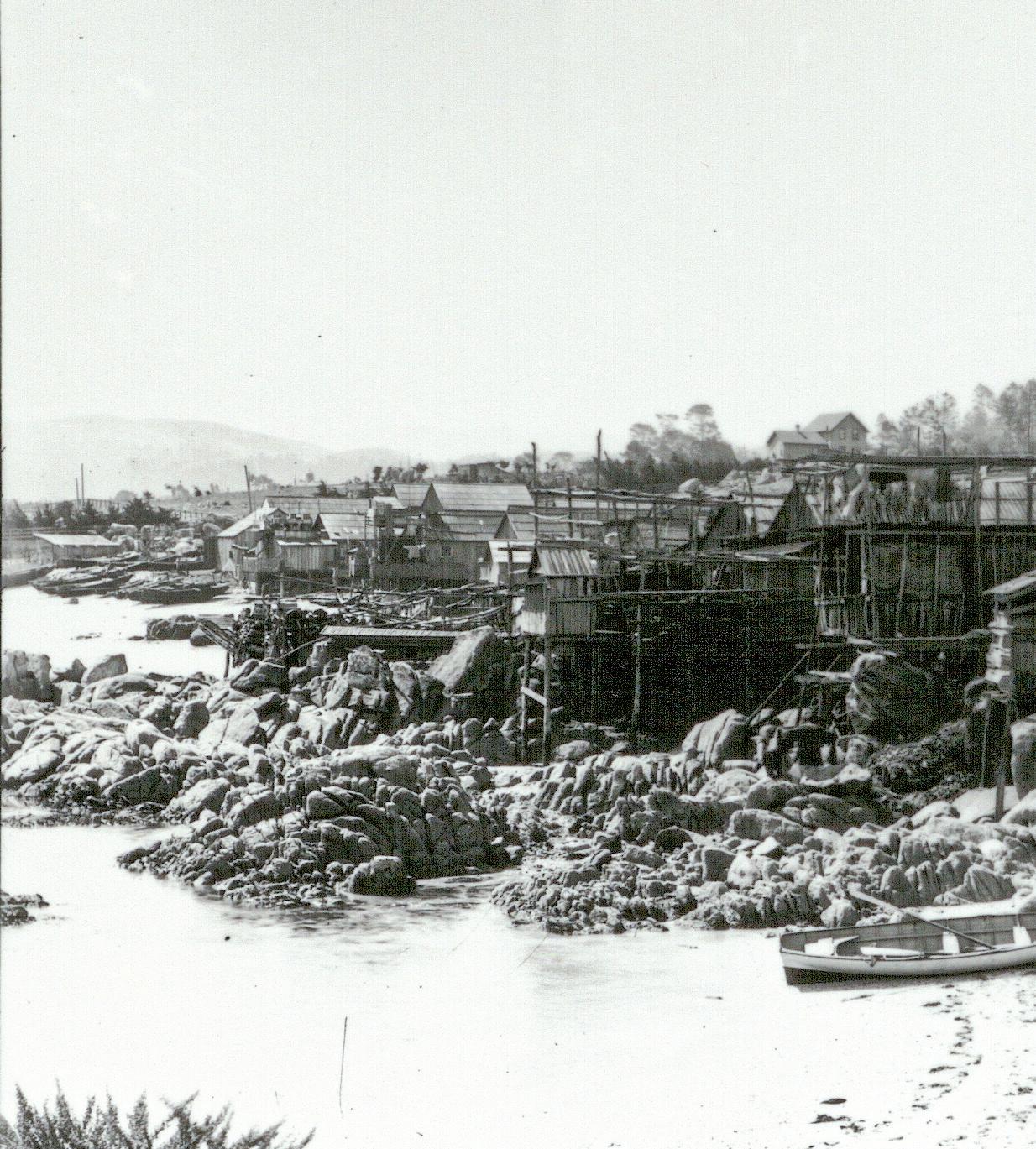
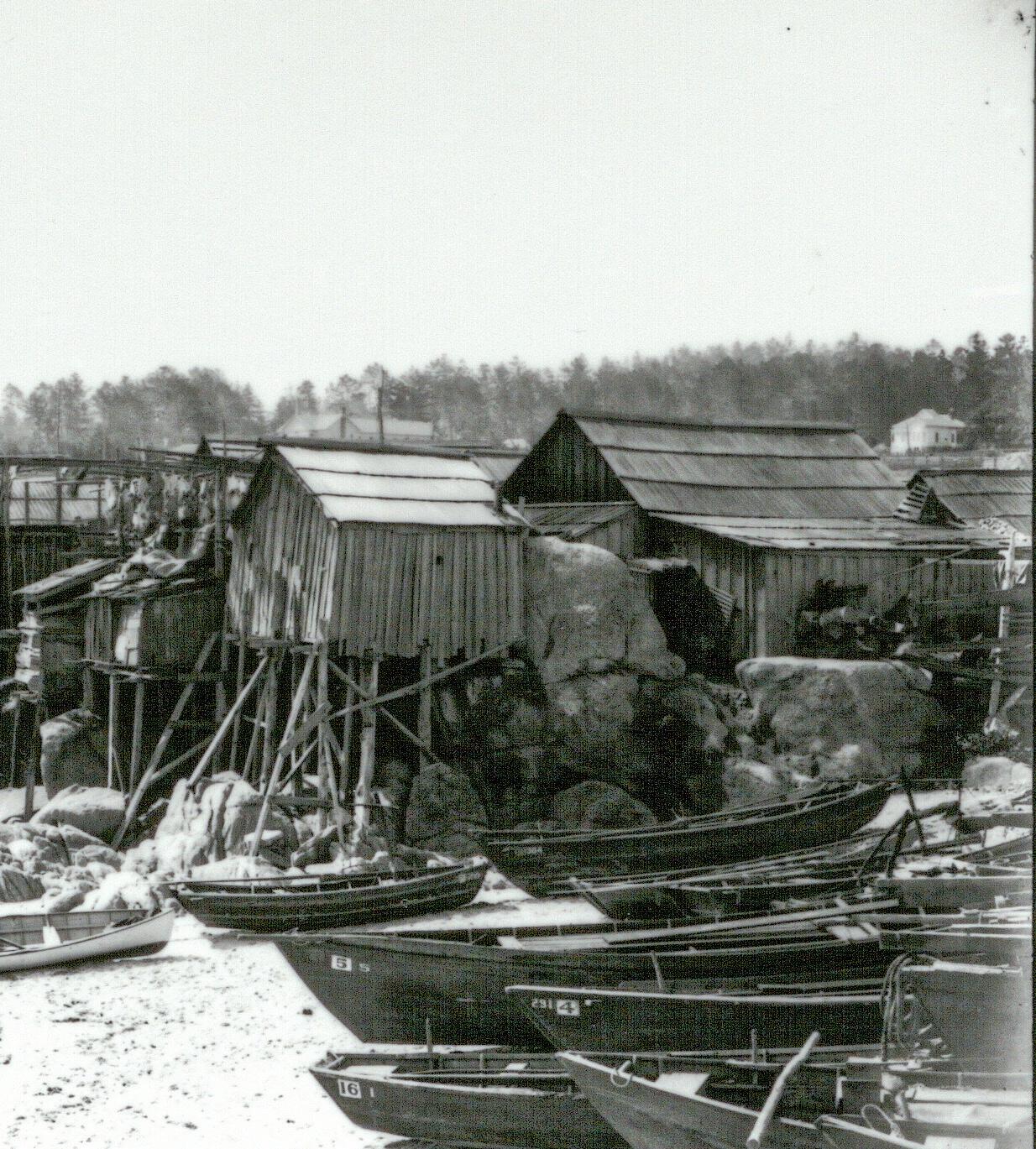
This Chinese fishing village at Point Cabrillo in the Monterey area was home to a group that suffered through constant oppression and blame for issues affecting the state’s fishing industry. “As Italian shrimpers and salmon packers began to make noise about so-called Chinese depredations, the (California State Board of Fish Commissioners) expanded its purview,” Ogilvy writes. “They launched a campaign to regulate Chinese fishers in the state, proposing and enforcing a series of laws and regulations to control their harvest.” (C.K. TUTTLE/COURTESY OF THE PACIFIC GROVE MUSEUM OF NATURAL HISTORY.)
wished to challenge themselves against classic angler’s prey from back East.
At the start, the commission mainly concerned itself with artificially hatching salmon and deliberately introducing foreign species to California’s rivers. As Italian shrimpers and salmon packers began to make noise about so-called Chinese depredations, the commission expanded its purview. They launched a campaign to regulate Chinese fishers in the state, proposing and enforcing a series of
laws and regulations to control their harvest. It was the first, and for a long time the only, attempt to seriously limit an active fishery in California. The campaign was motivated by racial resentment, but the attack helped secure more funding for the commission and more public support for the conservation movement, at least among European-Americans.
Of course, the commission’s logic had holes. According to its 1883 report on California’s fisheries, “The
oft-repeated and serious complaint that fish food is becoming scarce in California furnishes a powerful reason why the Chinese exhaustion should cease and the cause of the complaint be removed.” Yet the commissioners seemed unsure of how much of an impact the Chinese fishers were having. In the bad years, when catches were low, the commission ascertained that “the diminution was largely owing to the violation of
We chatted with Tin Can Coast author Joseph Ogilvy about what inspired his adventure from the kitchens of Great Britain to a deep dive into California fishing history.
Chris Cocoles Congratulations on a great book, Joseph. What prompted you to pursue this project?
Joseph Ogilvy Honestly, I found the story so interesting and dramatic that it just dragged me in. It began when I came across a brief mention of the California sardine fishery while reading that piqued my interest, so I started reading more about the state’s fisheries, and then it really just snowballed from there. The more I read about it, the more I thought someone should bring all of this together into a book and eventually I figured, why not me?
CC This was your first book. What kind of challenges did that entail?
JO Where to start!? I didn’t go to school for writing or work in journalism before I began the book, so I was really learning how to do everything for the first time. It was exciting, but the learning curve was pretty much vertical. I was working as a chef in restaurants the whole time I was working on the book, so the other big challenge was finding time to research and write.
CC What was your early introduction to fishing?
JO My dad is from Scotland, on the edge of the Highlands, so he used to take me and my brothers fly fishing on a little river that flowed down from the glens [Scottish valleys] near our family home. It was fairly slapdash and almost completely unsuccessful, but great fun.
CC After your graduation from Oxford University, you spent a lot of your career as a chef in the United Kingdom at top-notch restaurants, and it sounds like all the fish you
prepared back then influenced your fascination with the industry. What was that epiphany like for you?
JO Part of my job, especially earlier in my career as a chef, was prepping all the fish that came in each day. We’d get 15 pounds of squid, 20 John Dory and a crate full of sardines, and I had to get them all cleaned and ready for service. And then the same the next day, and the same the day after that, and so on. After gutting 500 mackerel or 1,000 sardines, it’s hard not to wonder, “What’s going on with all these fish? Where do they come from?” I think that really set me up to start thinking about what an industrial-scale fishery actually means.
CC Did you have any California connections prior to this book? And what was it like to take such a deep dive into the state’s fishing culture?
JO Not too many. I’d spent some time out there before starting the book. Seeing the Pacific for the first time at Moss Landing was very important for me, and I had loved Cannery Row ever since my mum gave it to me as a kid. But beyond that it was really the drama and appeal of the subject that got me hooked. One of the great things about writing about Californian fishing culture in particular is that so many smart people have been studying and thinking about fishing in the state, so there’s a huge amount of knowledge and analysis to work with.
CC The basis of the book is to explore what’s known as the “California Current.” Can you explain a little about its importance, the fish that swim in it and the commercial and sportfishing industries that rely on it?
JO The California Current is one of the most productive stretches of water on the planet. It’s one of a few eastern boundary currents in the world, all of which are marked by these enormously rich, very unique ecosystems, and California’s full of species that you really
can’t find anywhere else. Until very recently, the Current’s been at the heart of California’s story; it seems the first inhabitants of the Americas followed the Current into the new land, the native Californians built complex and fascinating cultures on it, and coming into more recent history, many of the communities that shaped the state were founded on fishing – from the Portuguese in San Diego, to Italians in Monterey, to Japanese in Los Angeles and the Chinese in the Bay. My favorite example is that the Seal of L.A. County, like its coat of arms, which you see on official buildings and so on, still includes a tuna, a little throwback to the city’s mostly forgotten canning past.
CC Can you sum up the complicated California fishing industry history this book tackles?
JO It’s a big story to sum up, but I think the thing that jumps out to me is the missed chances to keep the industry sustainable. So often a group or an industry had a chance to build a fishery that could last, and so often that chance was missed, often through bad luck or ignorance more than anything else.
CC You spent a lot of time in your research for the book with California sportfishing boat crews. What was that experience like and what did you learn from those folks?
JO It was really great. Everyone I spoke to was hugely knowledgeable and helpful. I’d particularly like to thank Frank Ursitti from H&M Landing (hmlanding.com), who was an incredible source of knowledge on San Diego sportfishing.
CC Tell me about what you learned about the racist overtones of the eras you wrote about, especially with the issues that Chinese and Japanese fishers faced back then.
JO The first thing I learned was the shocking breadth and depth of anti-Chinese and -Japanese racism on the West Coast. Coming from the UK, a lot of that history was
“I
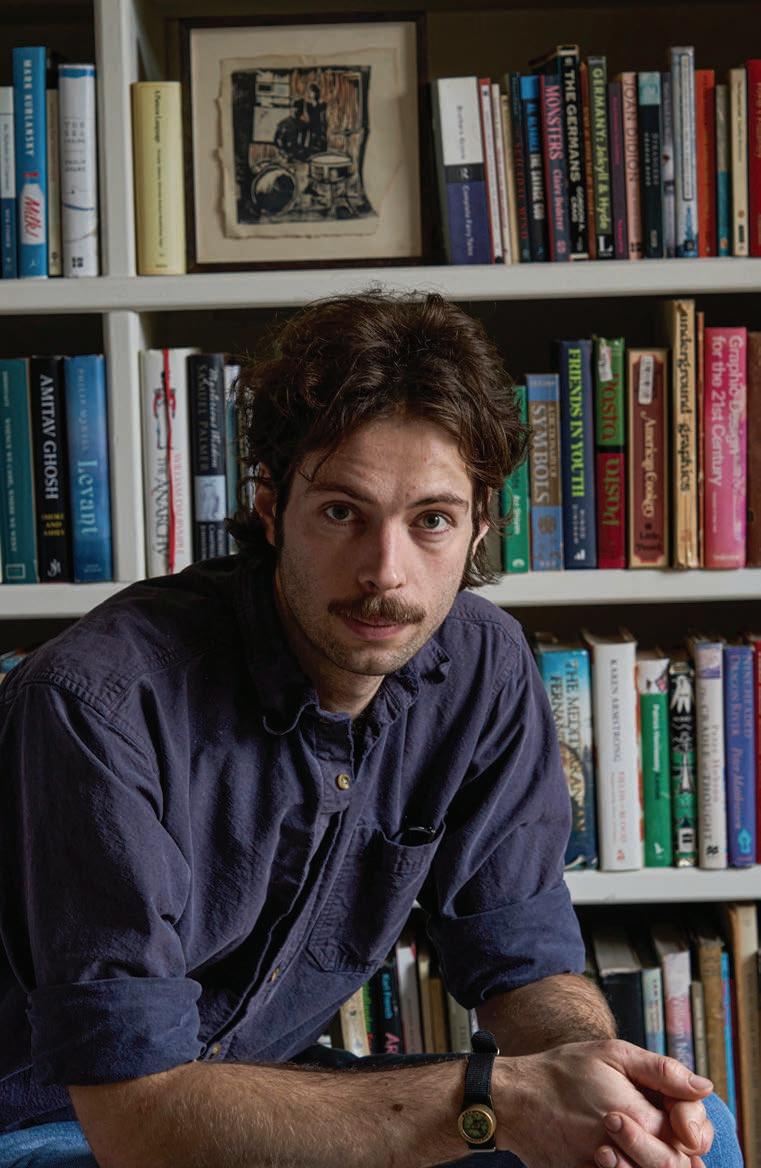
found the story so interesting and dramatic that it just dragged me in,” says British former chef Joseph Ogilvy, who wrote Tin Can
about the
and
new to me. Beyond that it was very interesting to me to see how much that racism had shaped the history of conservation and fisheries management in the state and beyond – a lot of California’s early fishing regulations were veiled ways of excluding Chinese and Japanese communities from the fisheries, and a lot of public acceptance (to the forerunner of today’s California Department of Fish and Wildlife) came as a result of that campaign. The other surprising lesson was how impressively resilient those communities were in the face of the hatred – how they continued to flourish despite it – often depending on the ocean as a refuge from the discrimination.
CC The book really focused on three specific fish species: abalone, sardines and tuna. How did those fish shape the state’s fishing industry over time?
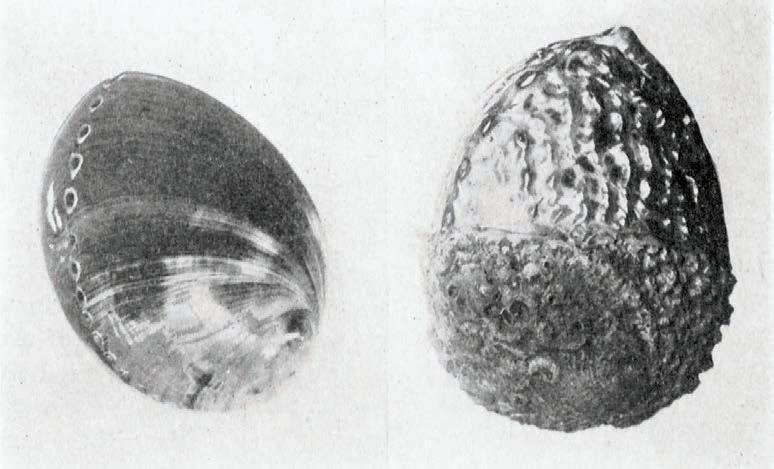
JO Each one played a very unique role in California’s fishing history. The abalone fishery began as a kind of refuge for the Chinese and then Japanese immigrants in the state, but as time went on and racism squeezed the original fishers, it became a kind of emblem of California beach culture, a bridge between the world of surfing and the state’s commercial fisheries. Sardines really epitomized the true industrialization of fishing on the West Coast, and their disappearance marked the beginning of its end – whereas the story of the commercial tuna fishery really is the move out of Californian waters, which indirectly but inevitably brought about the end of large-scale industrial fishing in the state.
CC You also get into salmon fishing a little bit in the book. How frustrating was it from your perspective to see so many salmon runs crashing in California, which cost a couple fishing seasons in recent years and a lot of anger from the fishing community?
JO It’s a real shame; I didn’t get into the salmon fishery so much, but one of the big
themes of the book is how often the same mistakes get made with fisheries and also how so often ecological problems rebound onto the human communities onshore.
CC Do you have a favorite tidbit that you learned over the course of writing this book?
JO My favorite (probably apocryphal) story is one told by Max Miller, who wrote a brilliant book about his time reporting on the San Diego Harbor in the 1930s called I Cover the Waterfront. He writes in reverential, almost awestruck tones about a fisherman who claims he can hear and locate sardines through the vibrations in the boat’s deck.
CC You focused a lot of attention on Monterey Bay. How much were you inspired/ influenced by some of John Steinbeck’s work in that region, and did you channel a little bit of Steinbeck in your research?
JO Hugely. On a simple level he’s a great

Famed author John Steinbeck, whose novel Cannery Row is set among the sardine canning industry in Monterey, inspired Ogilvy’s project. “On a simple level he’s a great source for descriptions of the region,” he says of Steinbeck. “But also the influence of his actual writing style was definitely very present in my mind as I wrote.” (WIKIMEDIA)
source for descriptions of the region, from the fishing boats to the inhabitants of the rockpools. But also the influence of his actual writing style was definitely very present in my mind as I wrote, and I think his perspective on society – the way he observes the strange behavior of his characters in this kind of open, honest way – was very inspiring. CS
the fish laws by [the] Chinese and others,” but after one good period the commission reported that “during the last two years – notwithstanding the heavy drain made upon our waters by hordes of alien fishermen, using criminal methods and for foreign deportation – the catch of most of the food fishes has been measurably satisfactory.”
Regardless, the agency’s claim that it was the only thing protecting California’s natural bounty from being ravished paid dividends. Its frequent petitions to the state legislature for more funds and more power to put a stop to “the Chinese exhaustion” were consistently successful. In 1883, the agency won the power to make arrests. One hundred and fifty were made in the first two years, and more than 60 in the next. Then in 1885, it was afforded $4,000 to buy a patrol steamer. In 1891, it requested at least $20,000 to protect the state’s waters; it received $27,500.
AS THE COMMISSIONERS REQUESTED and received more money and more influence, they moved to provide more scientific justification for their activities. Assistance was
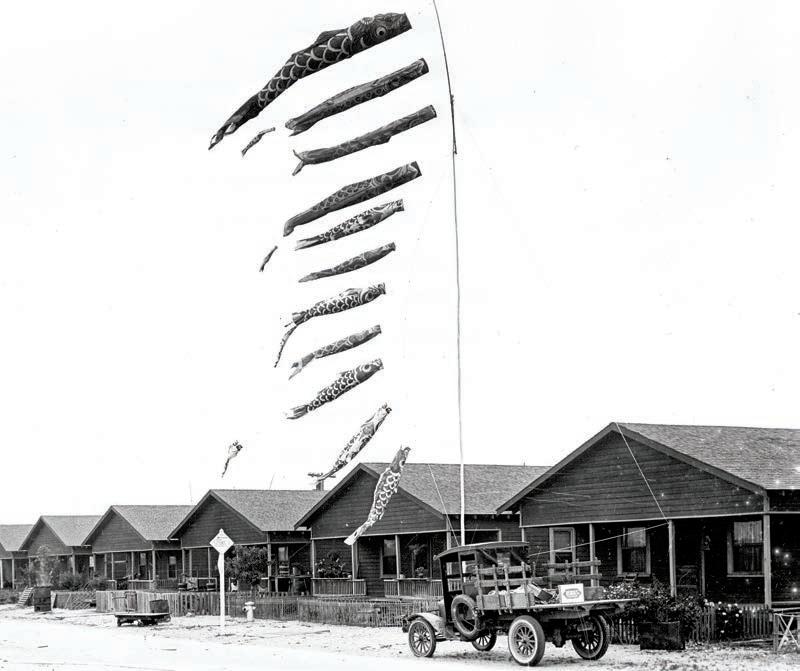
Terminal Island, between San Pedro and Long Beach, was home to fishers of Japanese descent who also suffered through a period of bigotry and blame. “It was very interesting to me to see how much that racism had shaped the history of conservation and fisheries management in the state and beyond – a lot of California’s early fishing regulations were veiled ways of excluding Chinese and Japanese communities from the fisheries,” Ogilvy says. (PHOTOGRAPHER UNKNOWN/COURTESY OF THE SECURITY PACIFIC NATIONAL BANK COLLECTION, LOS ANGELES PUBLIC LIBRARY)
readily forthcoming. David Starr Jordan, the first president of Stanford University, was California’s foremost ichthyologist, its foremost education administrator, and among its foremost public intellectuals. He was energetic and confident, with bulging eyes and a passion for football and race science. His study of Darwin’s theory of natural selection and the evolution of fish led smoothly into social Darwinism and the apparent evolution of different human races, while social Darwinism led smoothly into his work as a university administrator, shaping the future of the American race through the education of its youth. The titles of his many books traced the connections in his thinking, from The Fish Fauna of the California Tertiary, to The Blood of the Nation: A study in the Decay of Races by the Survival of the Unfit, to College and the Man: An Address to American Youth Before he came to Stanford, Jordan had been dispatched by the US government to prepare the first survey of California’s fish and fisheries. In his 1880 report Jordan explained in an oxymoron that “there are no authentic accounts of the productiveness of the past fisheries of this county.
There is no doubt that the number of fishes in San Diego Bay has been greatly reduced by the constant use of fine-meshed seines by the Chinamen.”
Later he explained that the “Chinese methods of fishing are undoubtedly extremely
destructive,” but rather than studying their apparent effects, he simply reprinted a letter from the Italian Fishermen’s Union complaining to their state senator about the “wanton destruction” committed by their competition. Jordan was an ardent conservationist,
a founding member of the Sierra Club and a true believer in the uplifting power of California’s great outdoors to refine the body, mind, and soul – at least those of the “strong races” who “know the meaning of freedom.” Preserving the beauty and abundance of the Golden State,
for him, was closely tied up in the control and exclusion of hereditary unfitness from its shores. Only a few years after the fish survey, while he was living in the Midwest and serving as president of Indiana University, Jordan had become an early and fervent proponent
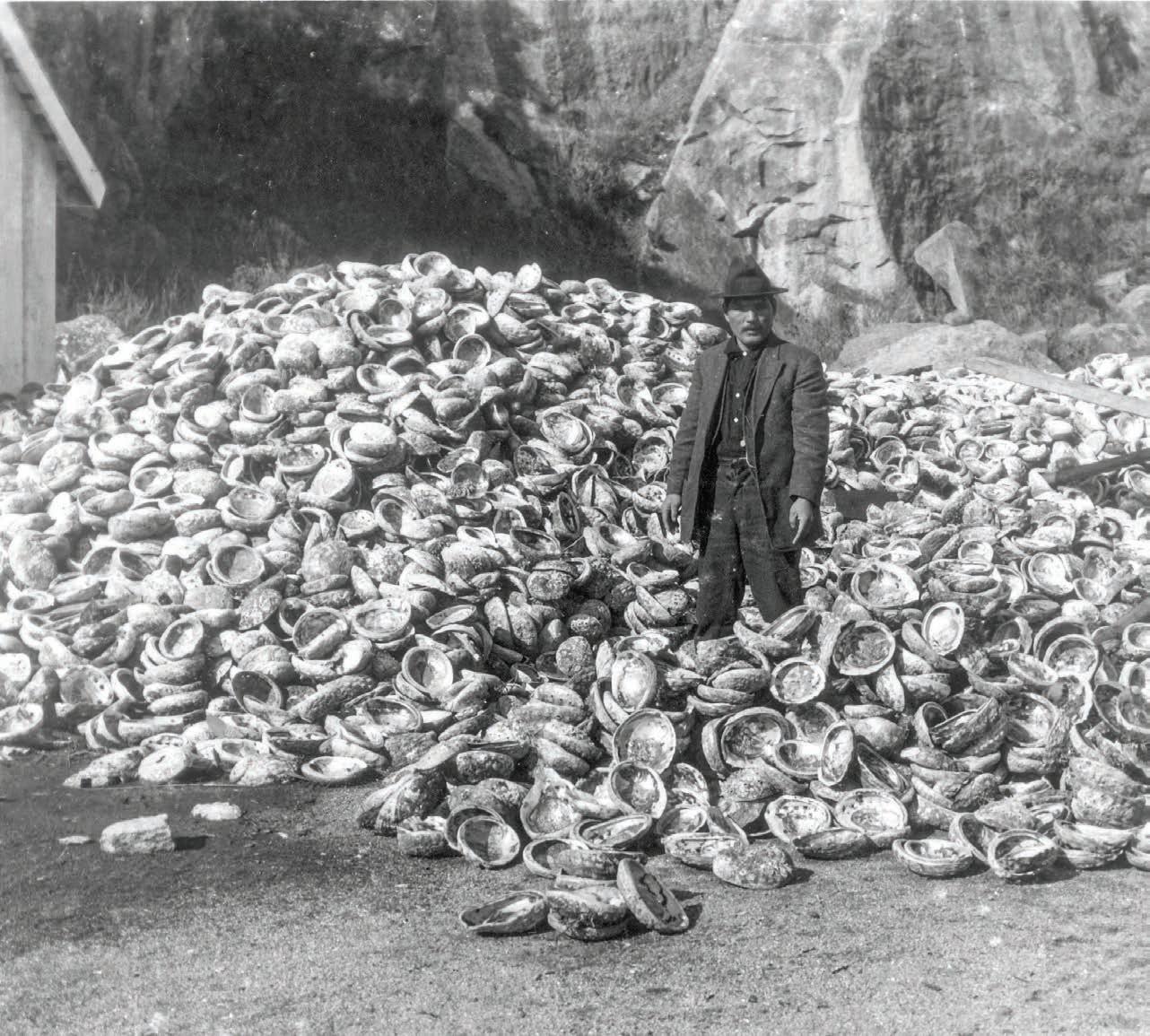
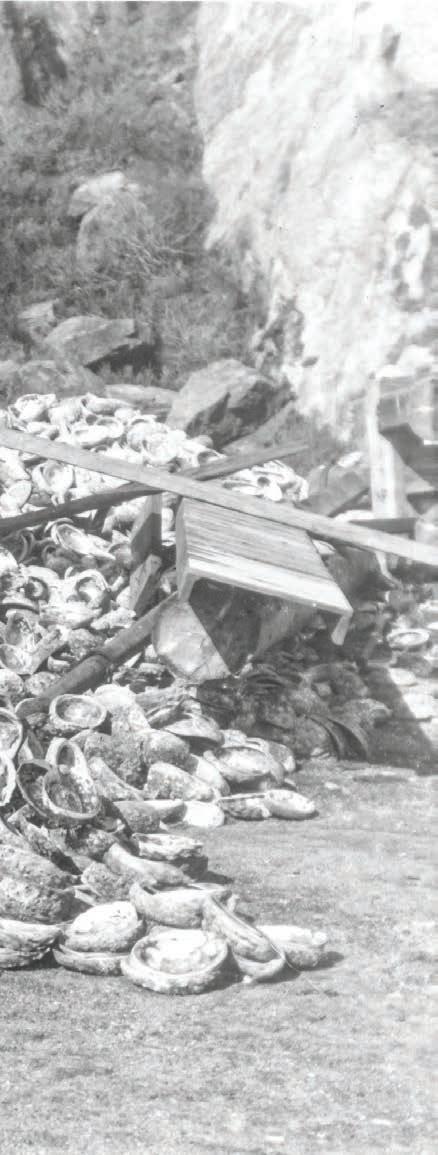
“Pop” Doelter, a pioneering chef nicknamed the “Abalone King,” stands amid shells at Monterey. “The abalone fishery began as a kind of refuge for the Chinese and then Japanese immigrants in the state,” says Ogilvy. “But as time went on and racism squeezed the original fishers, it became a kind of emblem of California beach culture, a bridge between the world of surfing and the state’s commercial fisheries.” (PHOTOGRAPHER UNKNOWN/ COURTESY OF THE PAT SANDS COLLECTION)
of the new “science” of eugenics. The transmission of desirable or undesirable traits as an organizing principle for society and history satisfied his taxonomist’s brain, while the attempt to improve upon nature, to improve upon the wasteful slowness of natural selection, meshed with his vision of himself as an educator, shaping and improving the youth of the “American race.” Jordan did indeed mold California’s youth for years to come.
Once he became Stanford’s first president in 1885, he worked to build the university into a center of marine science on the West Coast, founding the Hopkins Marine Station, where he personally trained many of the scientists who would go on to shape ocean conservation science in the coming decades. Among them was N.B. Scofield, a member of Stanford’s very first graduating class of 1895. Jordan recommended his former student to the Fish and Game Commission, where in the words of Arthur F. McEvoy, author of The Fisherman’s Problem, a seminal book on the law and history of California’s fisheries, Scofield continued his mentor’s attacks on the Chinese fishers in “a series of reports laced with the virulent anti-Chinese rhetoric that was common currency in late 19th
century California,” insisting that “up to half of the shrimper’s catch consisted of smelt and other small fish which were fodder and fry for other fisheries, rather than shrimp.” The reports were reprinted in biennial report after biennial report, providing scientific justification and encouragement for the anti-Chinese conservation laws.
Yet Scofield’s interest in conserving California’s natural resources was genuine too. In later years he would correctly predict the sardine’s collapse and fight to prevent it. But his vision was clouded, as was Jordan’s. For both men, as McEvoy describes, “the nearly universal frustration with the shrimp and abalone fisheries ... substituted for observation and reasoned analysis of fishery problems.” That it dovetailed with Jordan’s theories of eugenics and racial purity likely didn’t hurt. The state of fisheries knowledge, as scientists would occasionally admit, was incredibly sparse. That didn’t stop them from confidently blaming the Chinese shrimp fishers. The drop in catches was real. It just had little to do with Chinese shrimp nets and a lot to do with environmental conditions, including the pollution of the Sacramento and San Joaquin Rivers from mining in the hills, as some less hate-blinded observers at the time recognized.
THE GROWING ROLES OF both Jordan and Scofield in the commission reflected a broader shift in the Progressive Era conservation movement, from gentleman outdoorsmen worried about their disappearing game to technocratic conservationists seeking to optimize the nation’s renewable resources through efficiency. Theodore Roosevelt went from founding a hunting club that carefully logged its kills to founding the National Forest Service, dedicated to managing and improving the nation’s woodlands, including for commercial use.
The new conservationism was focused on rational use, for current and future generations, as directed by scientifically trained government experts. These new technocrats followed the doctrine of what would later be called “maximum sustainable yield” (MSY): harvesting as much as possible without depleting the base stock of the resource. It encouraged a utilitarian approach to ecological management that broke the natural world down into what it hoped were manageable, analyzable steps with simple fixes that could be easily enacted. Ecology as engineering.
Waste was the great enemy. Waste of future opportunity as well as current resources. Profit-blinded monopolies were wasteful, as were ignorant immigrant fishers. Clearcutting forests was foolish; so was overharvesting fish fry, apparently. Even nature itself was wasteful: The Board of Fish Commissioners was obsessed with “the destruction of fish by seals and sea lions” who “sit at the entrance of the Golden Gate as royal toll gatherers, and take the lion’s share of the finny tribe, as they pass from the broad Pacific to the Bay of San Francisco.” The overwhelming mortality rate of salmon eggs was wasteful; artificial hatcheries were seen, incorrectly, as far more efficient. Even natural selection was inefficient, too slow to remove “undesirable traits,” at least to Jordan. His theories on eugenics were taken up by the
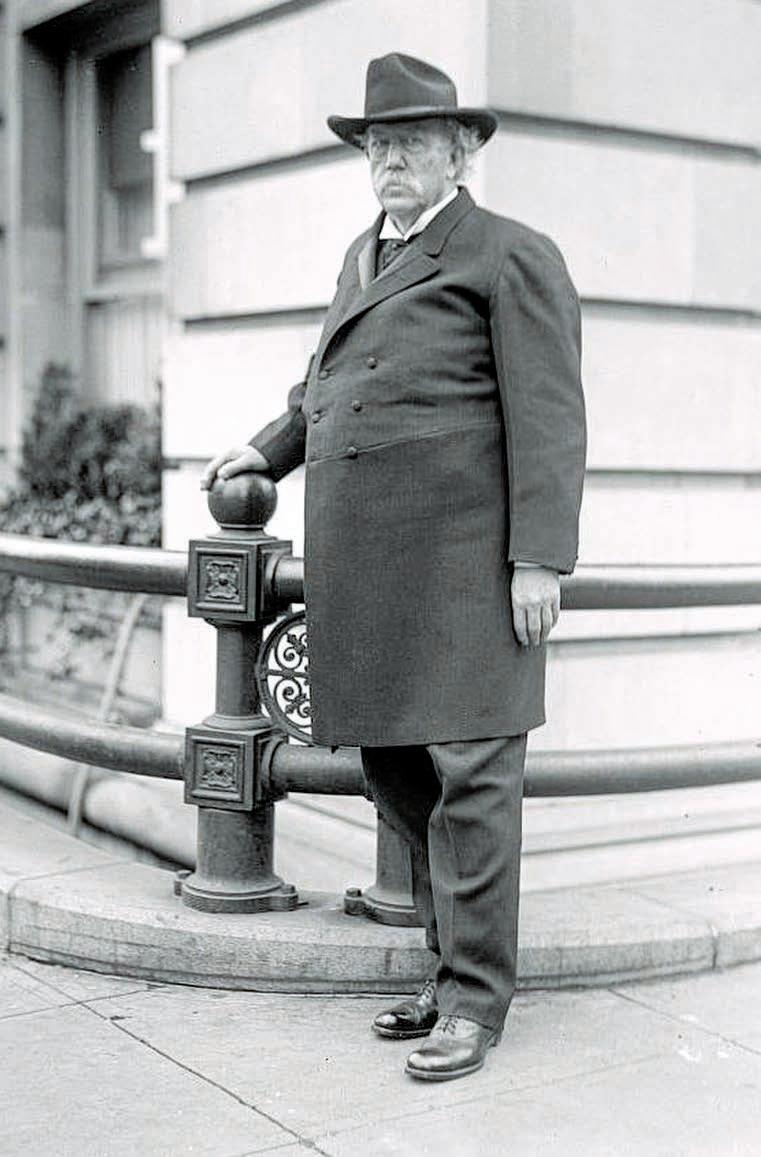
The first president of Stanford University and a founding member of the Sierra Club, David Starr Jordan also was a champion of early conservation efforts, but at the same time promoted some of the same anti-Chinese racist rhetoric of the era. Researching his book, Ogilvy discovered a “shocking breadth and depth of anti-Chinese and -Japanese racism on the West Coast.” (HARRIS & EWING/WIKIMEDIA)
California legislature, which in 1909 passed a law allowing enforced sterilization of the “unfit.”
At the heart of the movement was a confidence in the human capacity to control and improve upon nature, a confidence recently won that would soon be found unwarranted. Far too many simplifications and assumptions
were built on it. Meanwhile this kind of condensed, simplified use of power, of government technocrats finding and enacting solutions, made for a perfect weapon. CS
Editor’s note: Order Joseph Ogilvy’s Tin Can Coast at bloomsbury.com/us/tincan-coast-9781639736812.

By Cal Kellogg
For many California saltwater anglers, the opening of rockfish and lingcod season signals the true beginning of summer.
After months of anticipation, the offshore reefs, rocky pinnacles and underwater ledges once again come alive with opportunity, offering anglers the chance to fill coolers with delicious table fare, all while enjoying some of the most exciting action found
anywhere along the Pacific Coast.
This year, the timing couldn’t be better. Along much of the Central and Northern California coasts, bait receivers are once again carrying lively anchovies, providing private boaters and charter passengers with one of the most effective natural baits available. While shrimp flies, swimbaits and metal jigs all account for impressive catches, live anchovies remain one of the deadliest presentations for both rockfish and trophy lingcod.
FROM MONTEREY NORTH TO Bodega Bay, anglers have every reason to celebrate.
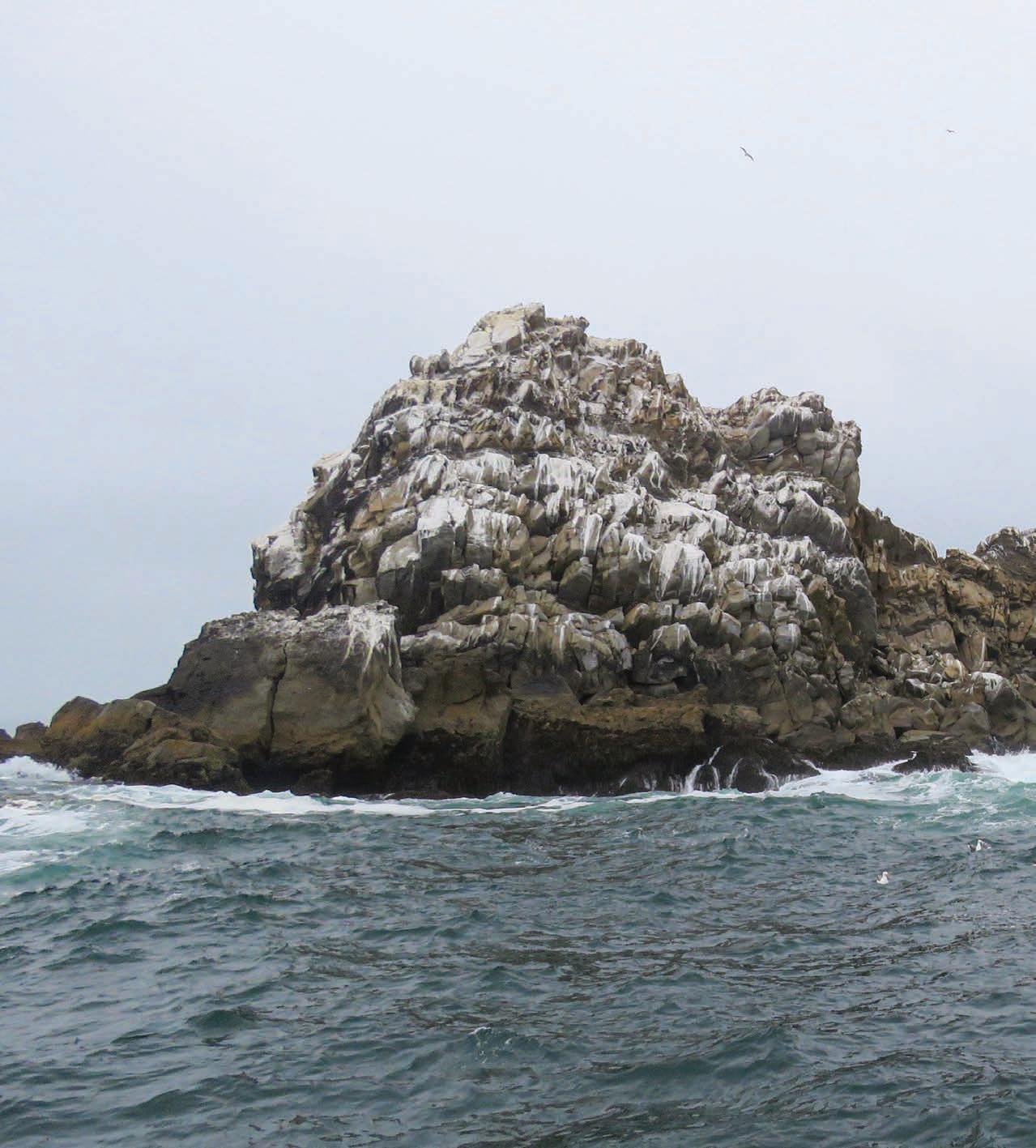
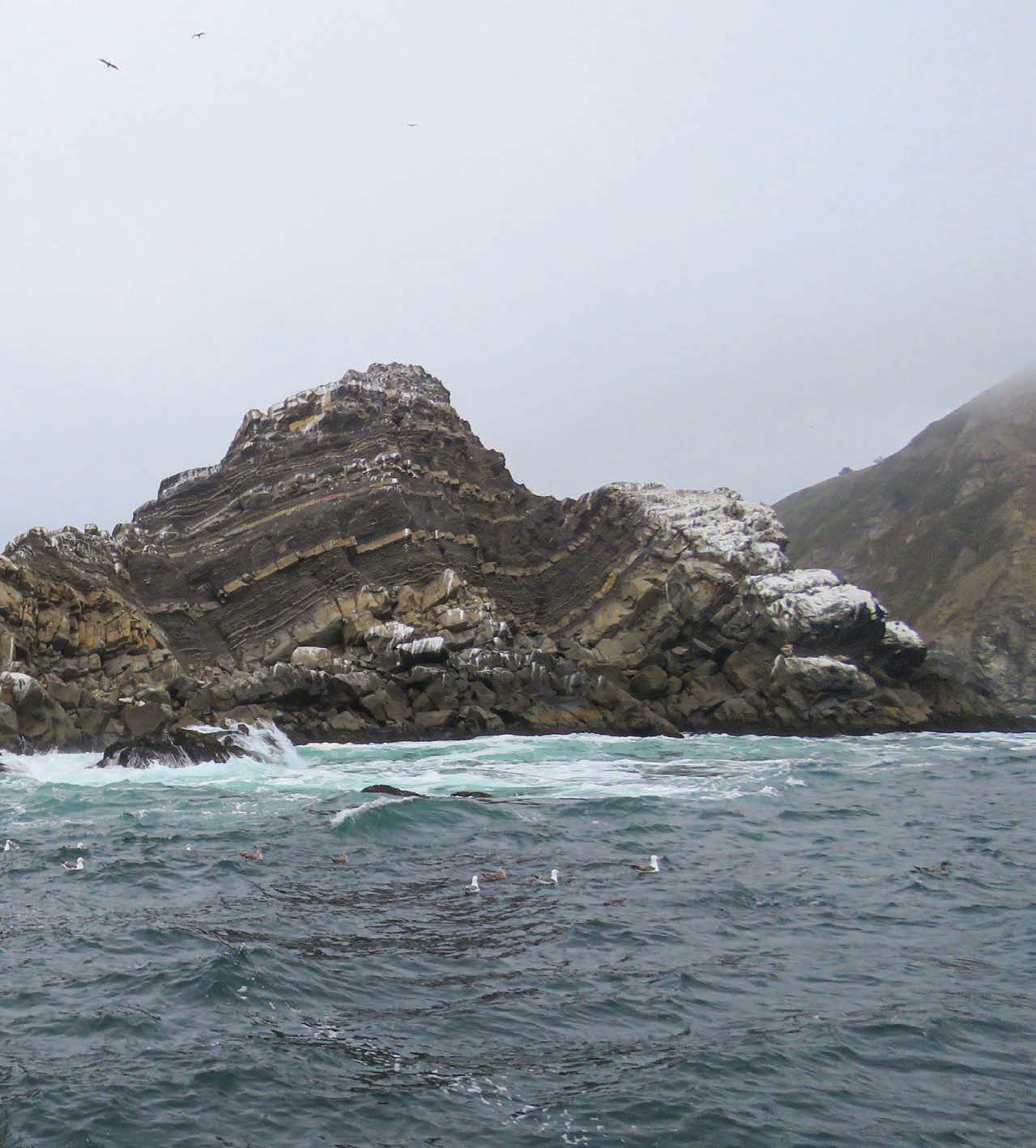
The Monterey Bay region has long been one of California’s premier bottomfishing destinations. Monterey’s nearby reefs, rockpiles and deepwater structure consistently produce limits of colorful rockfish, while the area’s rocky, kelp-lined reefs provide ideal habitat for hard-fighting lingcod.
Just up the coast, Santa Cruz offers similar opportunities, with numerous charter boats making quick runs to
productive angling grounds that often produce fast limits of quality fish.
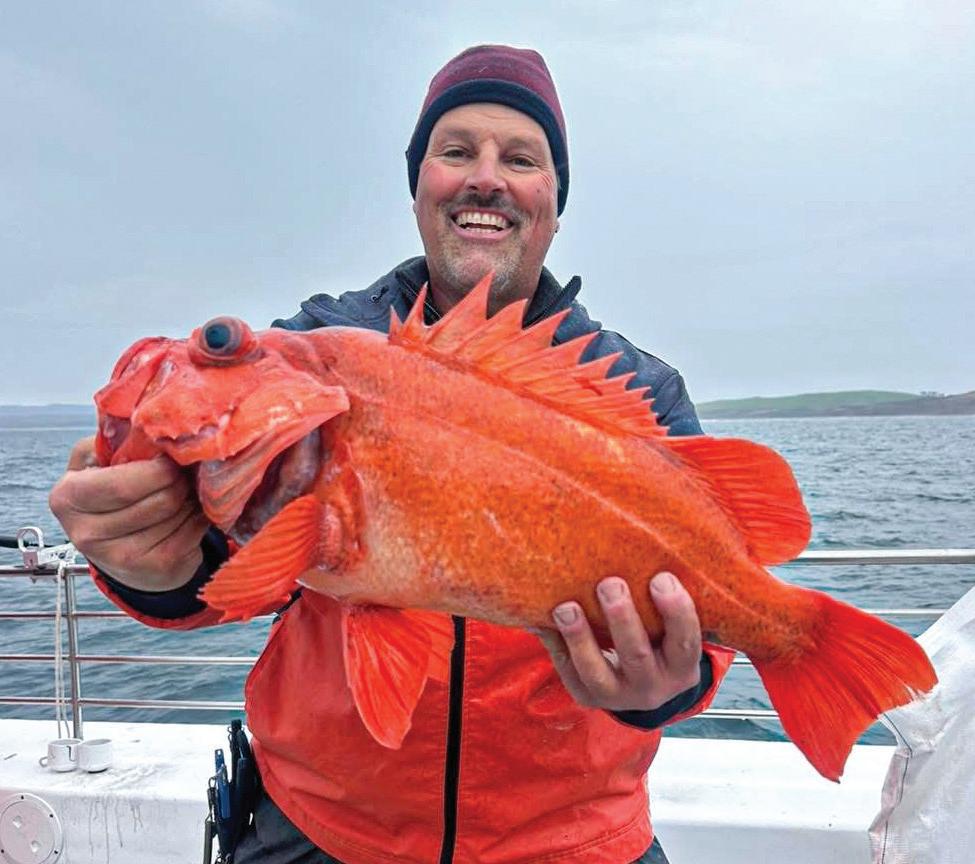
Continuing towards the Bay Area coast, Half Moon Bay and the ports surrounding San Francisco Bay provide anglers with access to extensive offshore reefs, rocky ledges and submerged pinnacles that hold impressive populations of vermilion, copper, canary and olive rockfish, plus numerous other species. Add in the chance of hooking a double-digit lingcod, and it’s easy to understand why so many anglers eagerly await the season opener each year.
Bodega Bay has earned a reputation as one of California’s premier destinations for both quantity and quality. The combination of shallow reefs, offshore structure and nutrient-
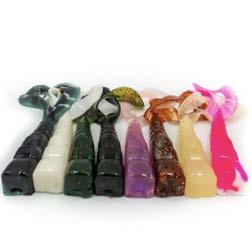
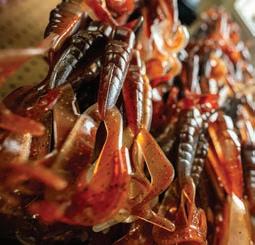
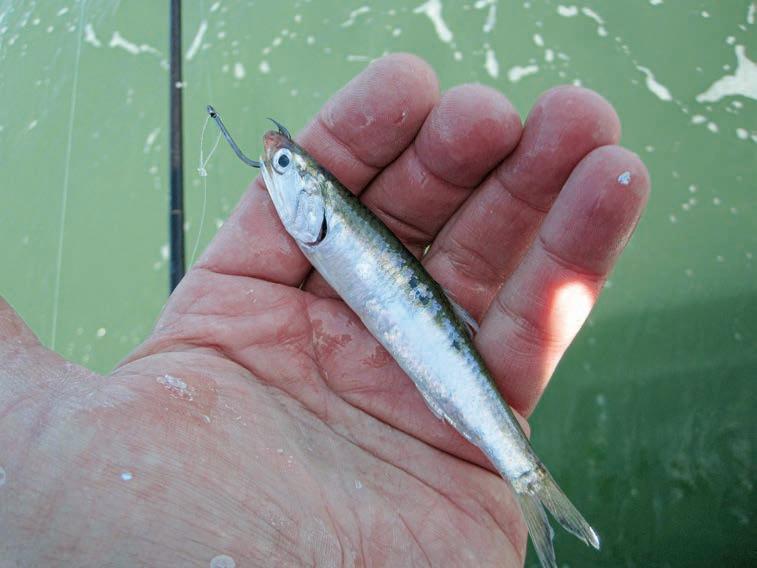
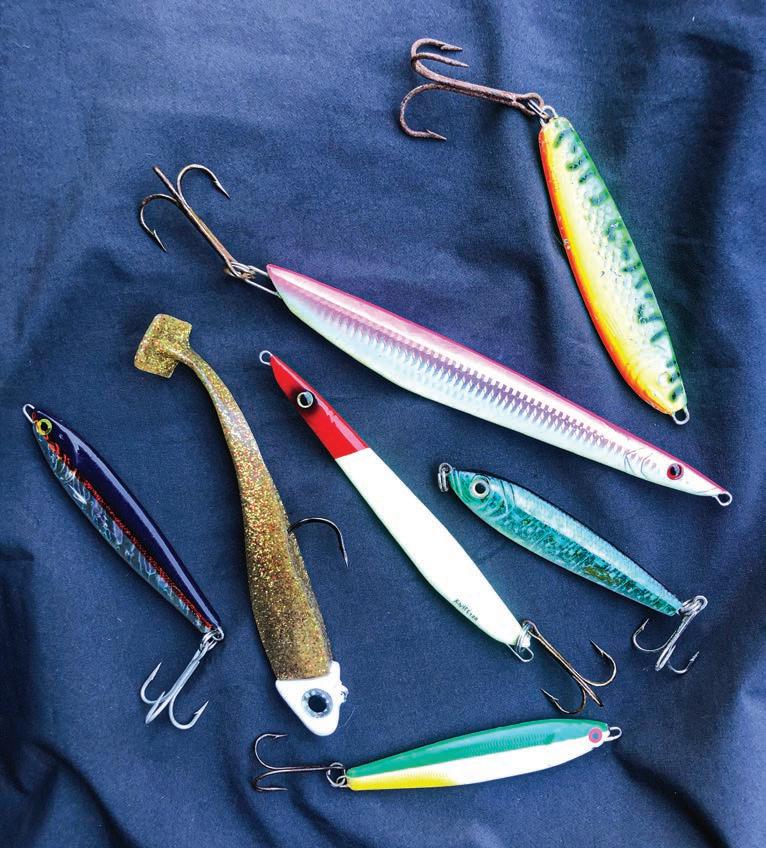
… But when live bait isn’t as readily available, various types of jigs and swimbaits are handy tools of the trade for bottomfish anglers. “Artificial presentations remain just as effective and often allow anglers to cover more water,” Kellogg writes. (CAL KELLOGG)
rich water creates outstanding habitat for bottomfish. On favorable weather days, anglers often enjoy wide-open action while surrounded by spectacular Sonoma Coast scenery.
Further north, Fort Bragg also offers outstanding opportunities, particularly for anglers willing to make longer runs to less-pressured offshore reefs that hold quality rockfish, with trophy lingcod always a possibility.
ONE OF THE BIGGEST developments for private boaters has been the return of live anchovies to many coastal bait receivers. Having access to lively baitfish opens another highly productive option whenever fish become selective or fishing pressure makes artificials less effective.
Fishing live anchovies is most effective with a traditional three-way live bait rig. The main line connects to a three-way swivel with a short dropper carrying enough weight to maintain bottom contact, while a longer leader extends from the third eye of the swivel to a live bait hook. This arrangement keeps the sinker bouncing along the bottom while allowing the anchovy to swim naturally just above the rocks where both rockfish and lingcod
spend much of their lives. Once the rig reaches bottom, anglers should periodically lift it a foot or so before allowing it to settle back, maintaining contact without constantly dragging the weight through the rocks.
Rockfish generally strike with a sharp tap followed by steady pressure. Once hooked, maintain constant pressure and retrieve the fish smoothly to the surface. Because many species possess air bladders that expand rapidly during the ascent, fighting the fish aggressively serves little purpose. A smooth, steady retrieve is usually all that’s required.
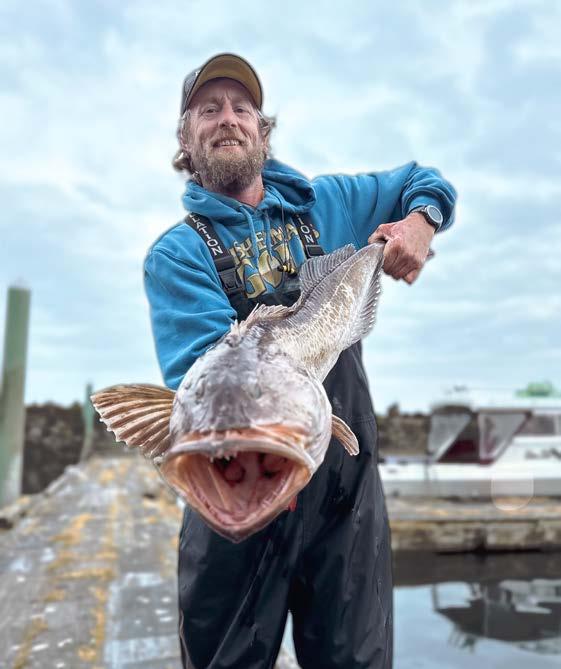
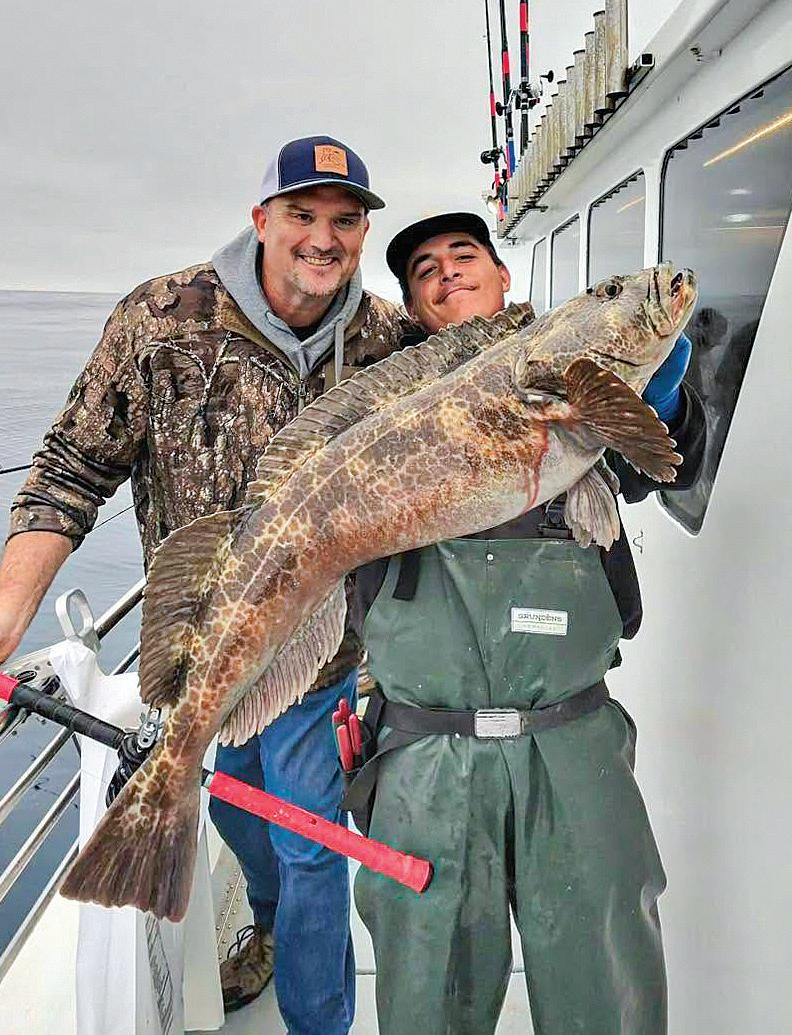
Lingcod are an entirely different proposition. If rockfish are enthusiastic feeders, lingcod are apex predators. Ambush hunters by nature, they spend much of their lives lying motionless among the rocks before exploding upward to engulf unsuspecting prey. A 20-pound lingcod can accelerate with startling speed, inhaling a baitfish almost before the angler realizes what happened.
When using live anchovies specifically for lingcod, patience becomes an important virtue. Many experienced anglers resist the urge to set the hook immediately after the first strike. Instead, they allow the fish a few moments to fully engulf the bait before driving the hook home. Once hooked, large lingcod fight with bulldog determination, repeatedly diving for the rocks in an effort to break free.
just as effective and often allow anglers to cover more water. Large leadhead jigs tipped with soft plastic swimbaits consistently account for impressive numbers of lingcod. White, chartreuse, sardine, glow and motor oil patterns all produce fish season after season. Heavy knife jigs and traditional metal irons also shine whenever current conditions allow for vertical fishing.
Another longtime California favorite is the shrimp fly. These colorful, feathered flies have accounted for untold numbers of rockfish over the
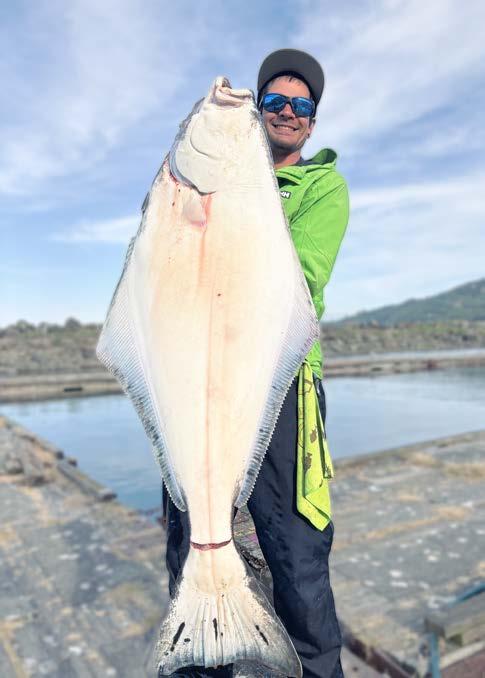
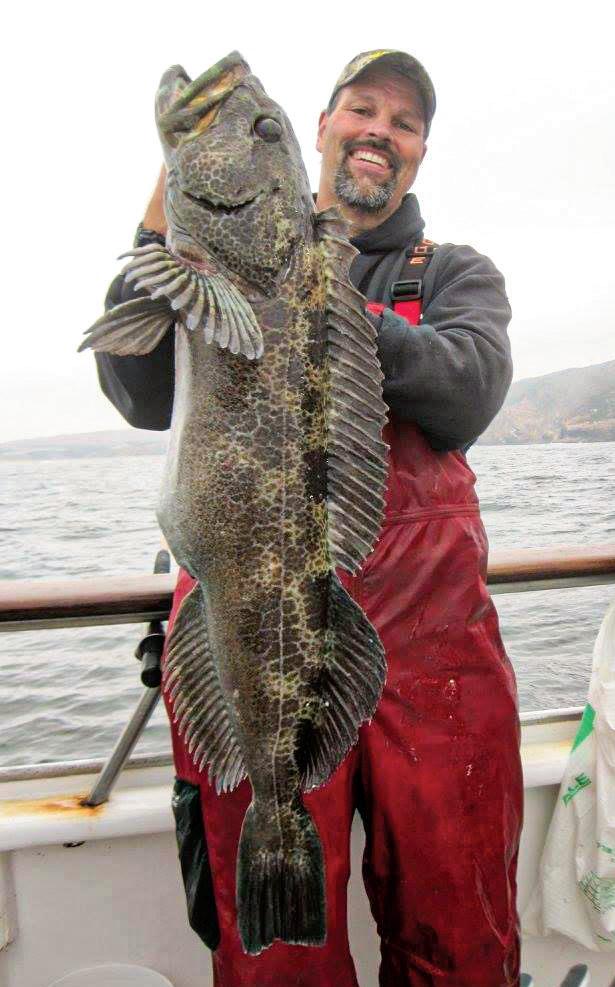
Big lingcod can put up quite a fight, one that will make for sore arms but also satisfaction with the kind of filets such a monster can put on the dinner table. (CALIFORNIA DAWN SPORTFISHING)
years and remain a staple aboard both private and charter boats. While they’ll catch fish straight out of the package, many experienced anglers like to sweeten the presentation with a small Gulp! grub threaded onto the hook. The scented grub adds both action and attraction, often turning lookers into biters. Other anglers prefer tipping shrimp flies with narrow strips of squid or even a lively anchovy when bait is available. Regardless of how they’re dressed, shrimp flies remain one of
the most productive lures for putting together quick limits of mixed rockfish. Anglers seeking a true trophy lingcod often employ an entirely different tactic. Rather than fishing small live baits or jigs, they drift large frozen baits such as Spanish mackerel or whole sardines over rocky reefs and pinnacles. Big lingcod regularly consume surprisingly large prey, and presenting an oversized bait often appeals to the biggest fish on the reef. Bites may be less frequent, but every
drift carries the possibility of hooking a fish weighing 20 pounds or more.
REGARDLESS OF WHETHER LIVE bait or artificials are used, boat positioning often determines success. Productive reefs can be surprisingly small, and drifting only a few yards off target may dramatically reduce catches. Modern sonar and GPS mapping have become invaluable tools for locating isolated rockpiles, submerged pinnacles and hard-bottom structure that consistently attract fish.
Successful anglers also pay close attention to drift speed. Wind and current combine to determine how quickly a boat moves across productive structure. When conditions become too windy, deploying a drift sock can slow the boat enough to keep baits in the strike zone longer. Some anglers also utilize modern GPS-enabled trolling motors to hold directly over productive structure, making repeated presentations to the same fish school.
AS FOR ROD AND reel, serious bottomfishing anglers often arrive at the dock carrying two or three outfits rigged for different presentations. One rod may be dedicated to fishing live anchovies on a three-way rig, with another set up with a shrimp fly or swimbait and a third reserved for drifting oversized baits in hopes of tangling with a trophy lingcod. Having multiple outfits rigged and ready allows anglers to quickly adapt to changing conditions without wasting valuable fishing time retying rigs.
For those just getting started, there’s no need to overcomplicate things. A medium-heavy conventional saltwater rod matched with a quality levelwind reel spooled with 50- to 65-pound braided line is capable of handling virtually every rockfish and lingcod situation encountered along the California coast.
The thin diameter of braided line allows anglers to fish more vertically while maintaining excellent sensitivity for detecting subtle bites in deep water.
Depending on current and depth, sinkers commonly range from 8 to 20 ounces, with anglers using just enough weight to maintain consistent contact with the bottom.
If you don’t own saltwater tackle, don’t let that keep you off the water. Nearly every charter boat along the coast offers quality rental gear that’s perfectly suited for local conditions. The rods may show a few battle scars from years of hard service, but don’t mistake cosmetic wear for poor performance. Charter captains know exactly what equipment stands up to the daily abuse of bottomfishing,
and their rental outfits are proven fish catchers that have helped put countless limits of rockfish and lingcod on the deck.
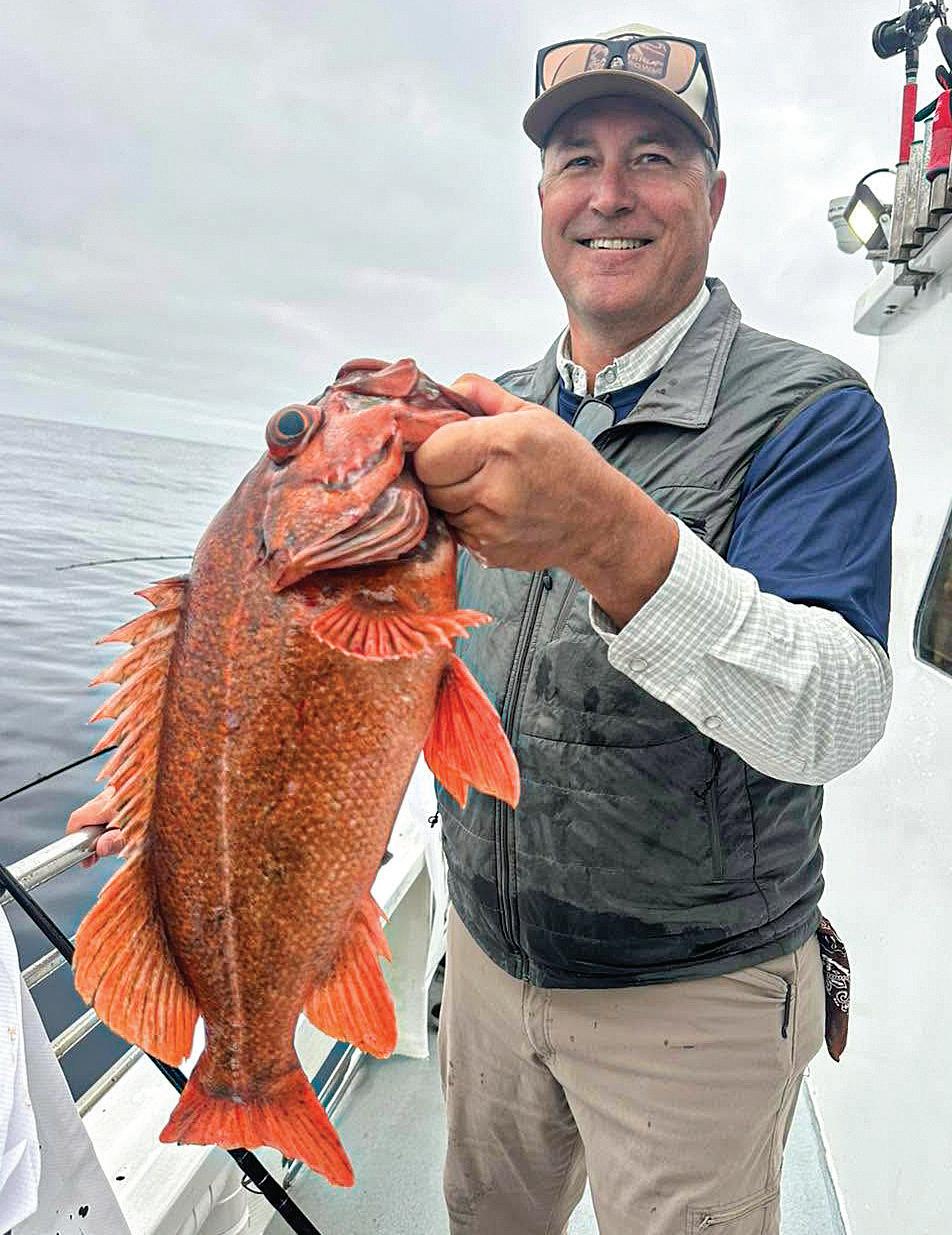
Another pleasant surprise for many anglers is the incredible variety of fish encountered during a typical bottomfishing trip. It’s common to catch half a dozen or more species of rockfish in a single morning. Brilliant orange vermilions, colorful coppers, olive rockfish, yellowtail rockfish, blacks and canaries all contribute to the action, creating one of the most visually striking fisheries found anywhere on the West Coast.
OF COURSE, NO DISCUSSION of California bottomfishing would be complete without mentioning table quality. Rockfish produce mild and flaky white filets that rank among the finest-eating fish available. Whether grilled, pan fried, baked, transformed into tacos or simmered into cioppino, fresh rockfish rarely disappoints. Lingcod, despite its somewhat intimidating appearance, offers equally outstanding table fare. Its firm white filets have earned a loyal following among anglers who appreciate exceptional seafood.
As always, anglers should check current regulations before launching. Rockfish management has become increasingly complex, with seasons, depth restrictions and bag limits varying by region and changing over time. Reviewing the regs before leaving the dock ensures a safe, enjoyable and legal day on the water.
The return of rockfish and lingcod season is more than just another date on the calendar. It marks the renewal
of one of California’s richest fishing traditions. Families, friends and charter crews once again head offshore before sunrise, rods rigged, bait tanks full of lively anchovies and coolers waiting for the day’s catch.
Whether launching from Monterey, Fort Bragg or somewhere in between, anglers have every reason to be optimistic. Productive reefs, hungry fish and the return of live anchovies have combined to create outstanding opportunities up and down the coast.
Summer has arrived, the weather windows are improving and California’s legendary bottomfish are once again ready to bite. There’s no better time to head offshore and experience one of the state’s finest saltwater fisheries. CS
Editor’s note: Cal Kellogg is a longtime Northern California outdoors writer. Subscribe to his YouTube channel Fish Hunt Shoot Productions at youtube.com/ user/KelloggOutdoors.

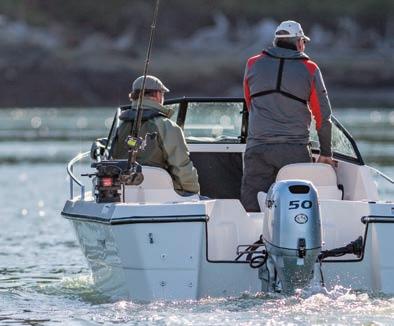
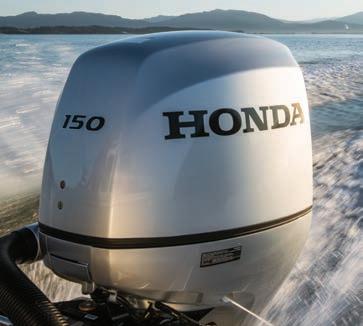
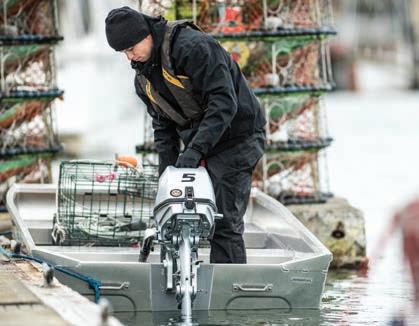
at marine.honda.com or visit your Authorized Honda Marine Dealer.

By Cal Kellogg
For the first time in several years, California ocean anglers have something they’ve been waiting a long time to hear: Salmon season is back!
Following multiple years of full closures and abbreviated opportunities – like last year – that left charter boats tied to the dock and thousands of anglers wondering when they’d once again hear the scream of a reel as a king salmon peeled line from the spool, Chinook fishing has returned in a meaningful way. Marinas are bustling before daylight, charters are filling quickly, tackle shops are stocking herring and anchovies and salmon fever is once again sweeping the California coast.
Perhaps best of all, anglers finally have something they haven’t enjoyed in years: a real season. Rather than scrambling to squeeze a trip into a handful of open dates, fishermen once again have had the luxury of planning trips around weather, tides and family schedules.
For anyone who’s dreamed of battling a bright Pacific Chinook, there’s never been a better time to climb aboard a charter boat.
No fish has captured the imagination of California saltwater anglers quite like the Chinook. Powerful, beautiful and among the finest-eating fish that swims, kings have been the undisputed stars of the state’s ocean
fishery for generations.
And every summer, anglers make the pilgrimage to ports such as Monterey, Santa Cruz, Half Moon Bay, San Francisco and Bodega Bay, hoping to experience one of fishing’s greatest thrills.
While mooching remains an effective technique under the right conditions, trolling continues to account for the overwhelming majority of salmon landed by California’s charter fleet. During the early season, when fish are widely scattered, trolling allows captains to cover water efficiently while searching for schools of feeding kings.
California’s approach to salmon trolling is unlike anything practiced elsewhere on the West Coast. While anglers in the Pacific Northwest rely heavily on downriggers, most California charter boats continue to employ a system that has changed very little over the past 40 years: Heavy round sinkers weighing anywhere from 1 to 4 pounds are attached to the line using spring-loaded sinker releases, often called “dog whistles.” When a salmon strikes, the release opens and the sinker falls away, allowing the angler to fight the fish without dragging several pounds of lead through the water.
It may look old-fashioned, but generations of successful charter skippers have proven the system’s effectiveness. It is simple, reliable and perfectly suited to fishing a crowded charter boat with 20 or more anglers trolling side by side.
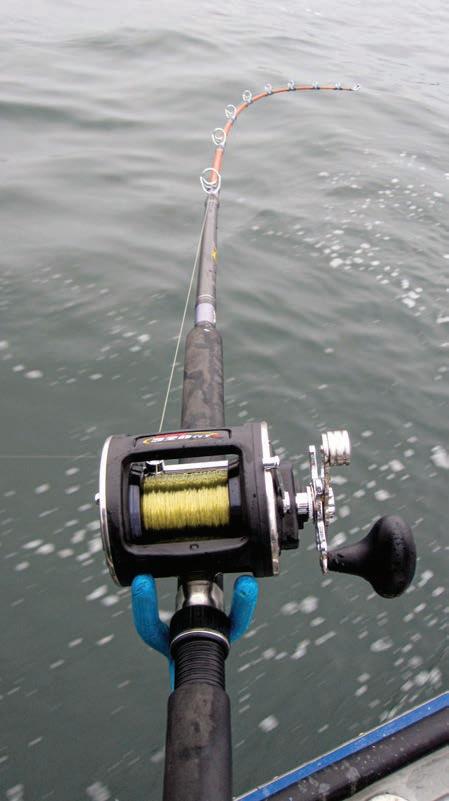
A successful day begins with the proper tackle. Salmon trolling rods represent a study in contrast. They must possess enough backbone to comfortably fish heavy trolling sinkers while remaining limber enough to absorb the blistering runs and violent head shakes of a mature Chinook. Too stiff, and hooks can tear free from the salmon’s soft mouth; too limber, and controlling heavy sinkers becomes difficult.
Modern graphite and composite rods have made selecting tackle easier than ever. Any quality conventional rod measuring between 7 and 8 feet and rated for 15- to 40-pound line will perform well. The rod should be matched with a smooth conventional reel capable of holding at least 200 yards of 25- or 30-pound line. While braid has become increasingly popular in many fisheries, monofilament still enjoys a loyal following among experienced charter anglers, as its built-in stretch cushions sudden surges and helps keep hooks firmly
planted during long battles.
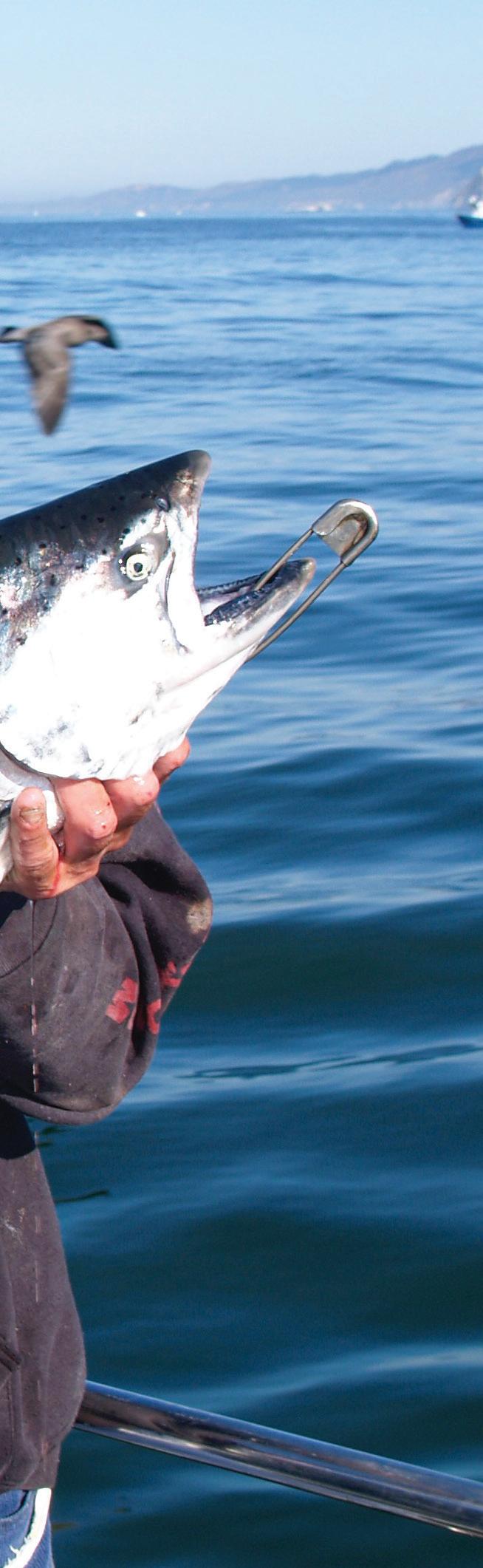
At the heart of the California trolling system sits the sinker release. Although several styles are available today, the traditional copper dog whistle remains a favorite among many charter skippers. The release securely holds the heavy trolling sinker during deployment, yet instantly releases it when a salmon
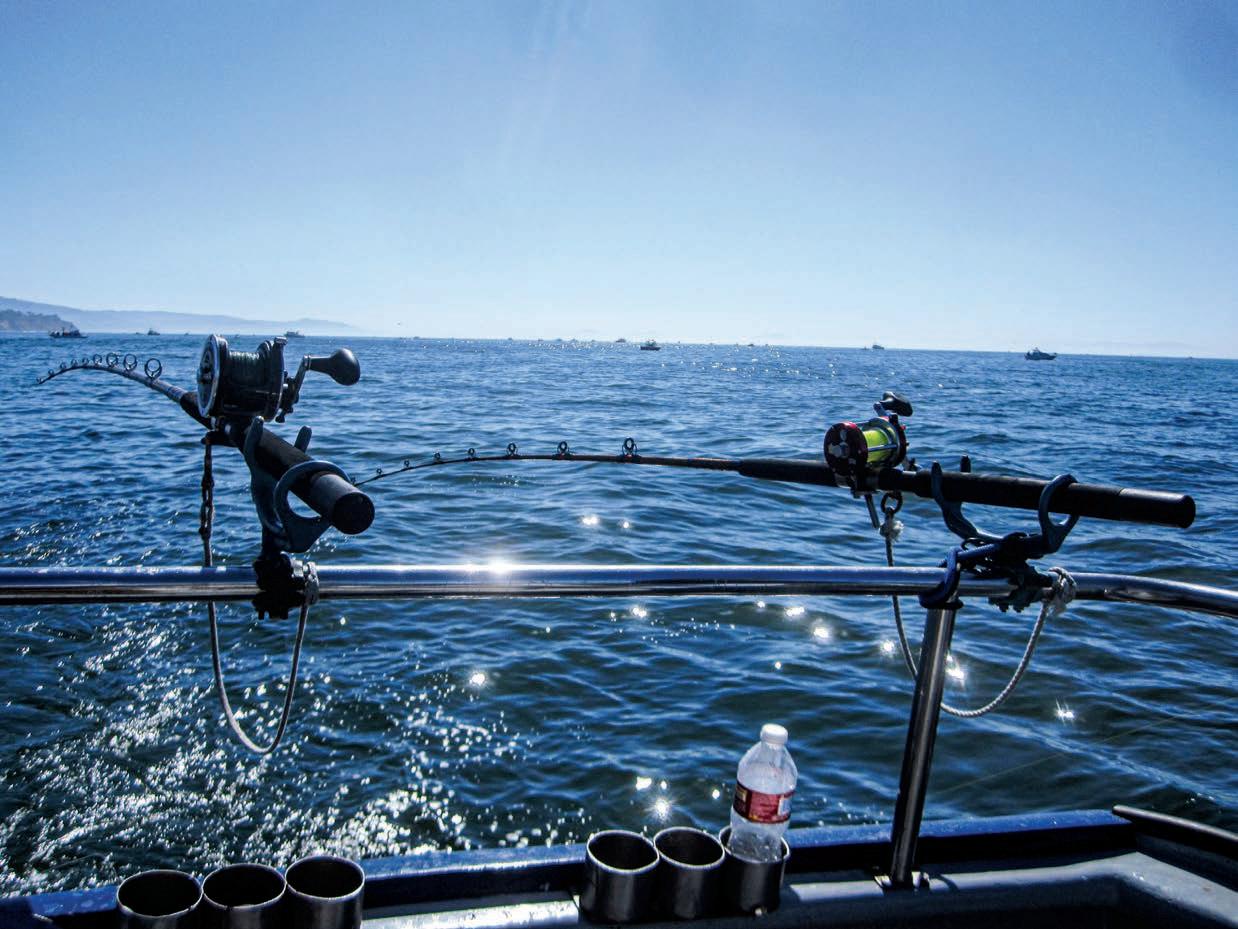
strikes. Once the sinker drops free, the fight becomes dramatically easier for both the angler and the fish.
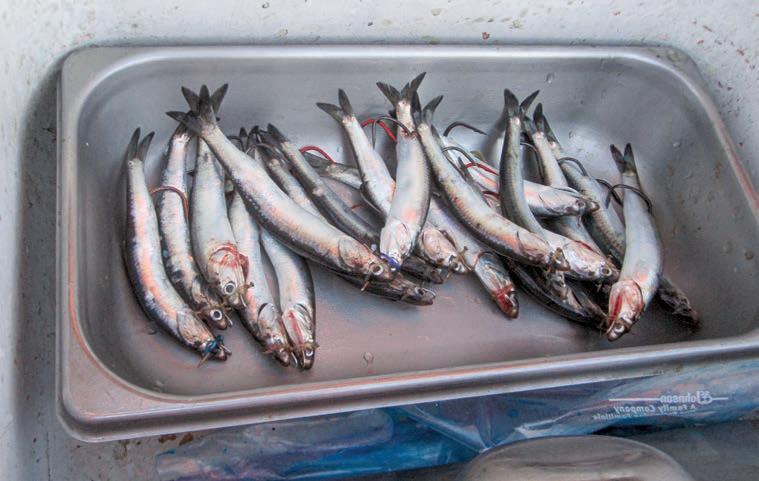
When it comes to terminal tackle, California charter boats remain firmly rooted in tradition. Over the years, a variety of plastic bait heads have appeared on the market with


a promise to simplify bait rigging, but step aboard most charter boats and you’ll quickly discover that the overwhelming majority of deckhands continue to rig anchovies and herring using the traditional crowbar method. Like many aspects of California salmon fishing, it’s a technique passed down from one generation of skippers and deckhands to the next because it consistently produces fish.
The crowbar rig utilizes a longshanked hook that is carefully inserted through the baitfish after being given a slight bend. That subtle bend causes the anchovy or herring to rotate slowly as it’s trolled through the water. Achieving the perfect roll requires both experience and a practiced hand, and few people become more proficient than charter boat deckhands. Watching
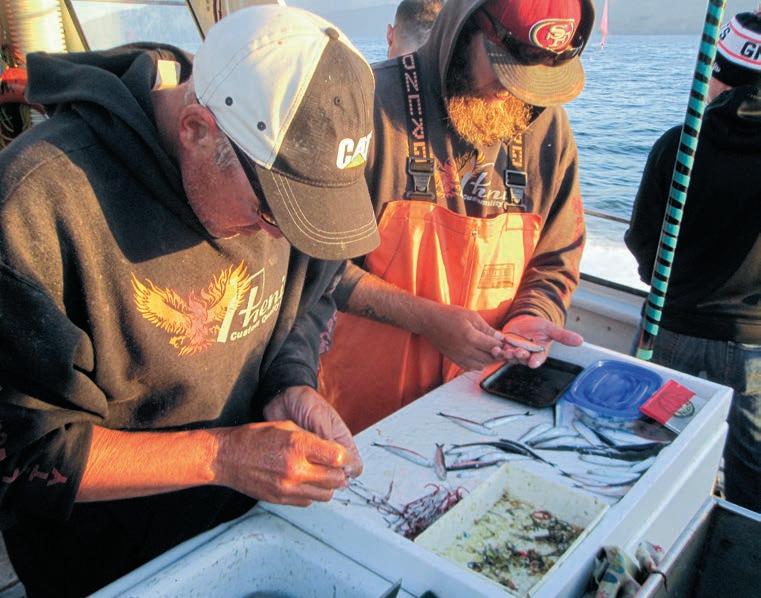
an experienced deckhand prepare a dozen anchovies in just a few minutes is almost an art form. Every bait comes off the rigging table spinning with the same smooth, deliberate roll that has tempted California salmon for decades.
Natural bait remains the standard because Chinook spend much of their lives feeding on anchovies, herring, sardines and other baitfish. When salmon are actively feeding, it’s difficult to improve upon the real thing. Still, experienced skippers know salmon can become surprisingly selective.
On days when natural bait isn’t producing, spoons, Apex lures and hoochies often find their way into the spread. Successful salmon fishermen have always been willing to experiment, and sometimes a simple lure change is all that’s needed to trigger a bite.
Once the captain announces the target depth, resist the temptation to simply free-spool your rig overboard.
Instead, lower the sinker using controlled 1-foot pulls of line. This traditional method keeps anglers fishing at the correct depth while dramatically reducing tangles among the many lines trailing behind the boat. Once the desired depth has been reached, engage the reel’s clicker and place the rod securely in the holder.
Now comes the hardest part of salmon fishing: waiting patiently. When a salmon strikes, the rod tip buries violently and the reel begins clicking as the line disappears from the spool. The instinctive reaction is to grab the rod immediately, but that’s usually a mistake. Experienced charter anglers allow the fish several seconds to fight against the rod. Those few moments allow the hooks to penetrate securely while also giving the sinker release time to drop the heavy lead away from the line.
Once the sinker has fallen free, remove the rod smoothly from the holder, keep the tip high and simply reel. Resist the urge to pump the rod dramatically, thumb the spool or tighten the drag. Those actions frequently result in lost fish. Instead, maintain steady pressure and listen
carefully to the instructions coming from the deckhand. He has likely coached hundreds of anglers through successful salmon battles and knows exactly how to keep a fish buttoned all the way to the landing net.
One aspect of charter fishing that’s rarely discussed involves where you stand along the rail. Many first-time anglers assume every position offers the same opportunity, but years of observation have convinced me otherwise.
Anglers fishing from the bow often enjoy the first opportunity to intercept approaching salmon before the fish pass beneath the boat. Meanwhile, those working the stern – particularly the rear corners – enjoy the advantage of fishing deeper than everyone else because they don’t have anglers positioned behind them. Those extra few feet can make a surprising difference when salmon are traveling close to the bottom.
Veteran charter anglers understand these subtle advantages, which explains why many arrive at the dock long before boarding begins. While everyone else is searching for coffee and breakfast burritos, the regulars are quietly claiming their favorite positions along the rail.
A charter boat is much more than a means of reaching the fishing grounds. It is a finely tuned operation built around teamwork. The captain searches for bait, birds and schools of salmon while positioning the boat over productive water. Deckhands rig baits, untangle lines, coach anglers and keep the operation running smoothly. Success comes when everyone works together.
After several difficult years, California salmon anglers once again have the opportunity to experience one of the state’s greatest sporting traditions.
There are few sounds in fishing that compare to the sudden eruption

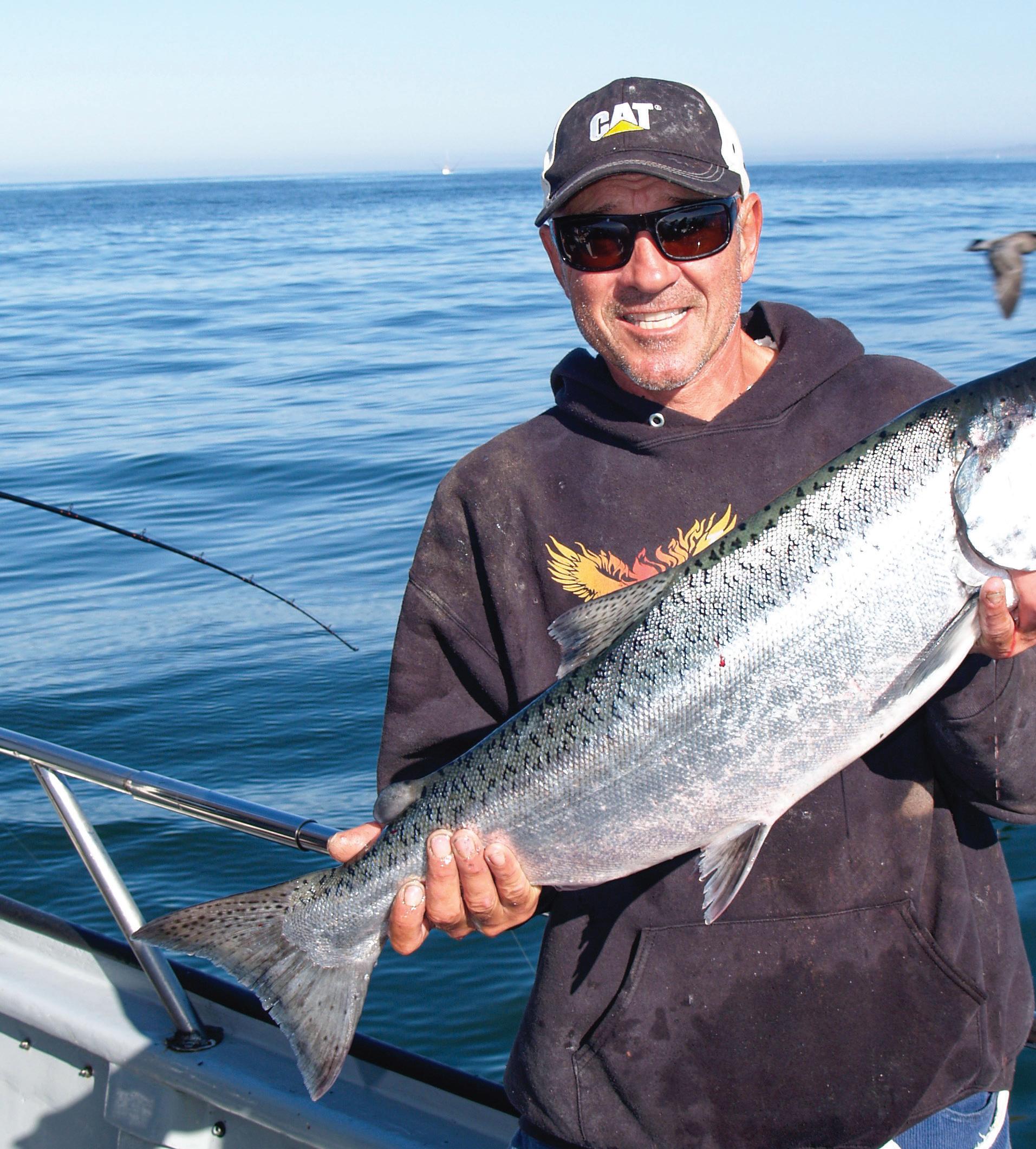
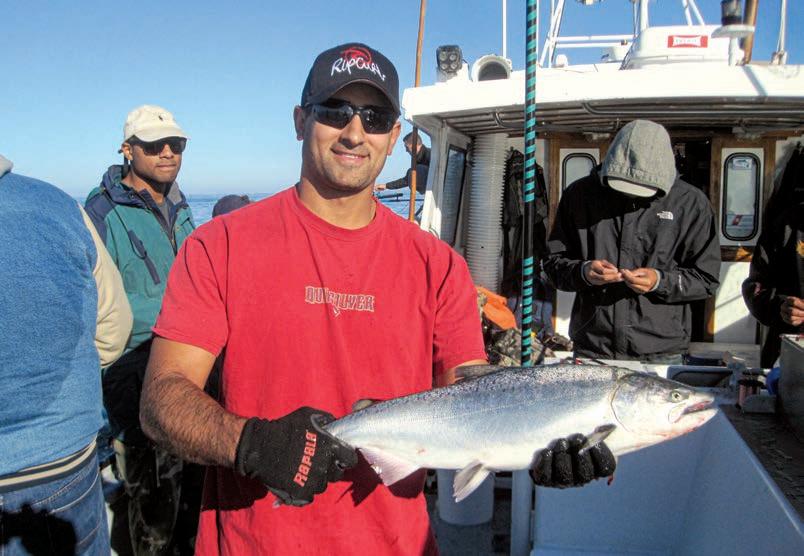
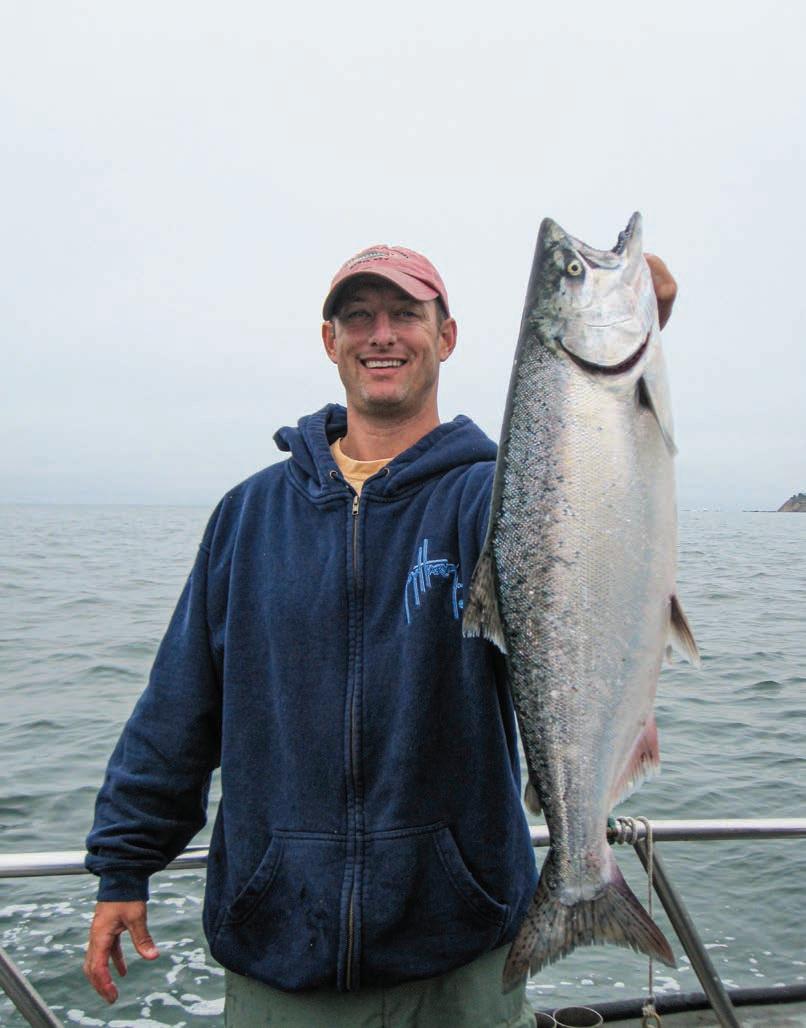
“The excitement that sweeps across the deck, the shouted instructions from the crew, the silver flash of a king rolling on the surface and the anticipation of fresh salmon sizzling on the grill later that evening are experiences every angler should enjoy at least once,” the author writes. (CAL KELLOGG)
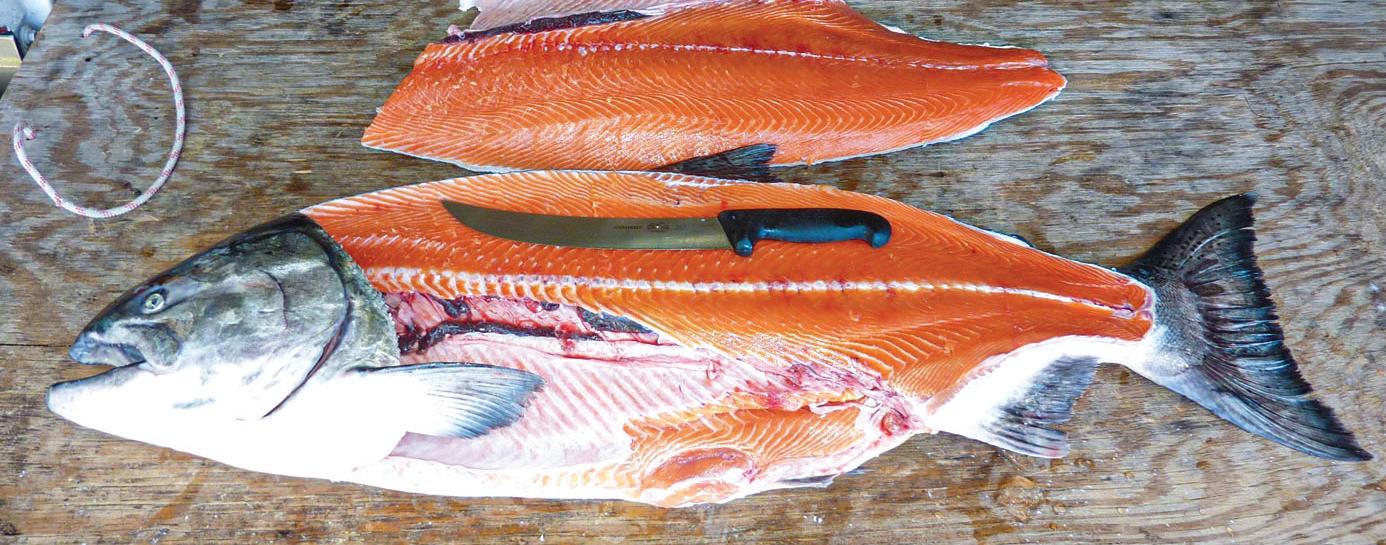
of several clickers as multiple salmon charge through the spread. The excitement that sweeps across the deck, the shouted instructions from the crew, the silver flash of a king rolling on the surface and the anticipation of fresh salmon sizzling
on the grill later that evening are experiences every angler should enjoy at least once.
And for the first time in years, those opportunities are back in full swing. The kings have returned, the charter fleet is ready and California
anglers once again have every reason to look toward the horizon before dawn with optimism. CS
Editor’s note: California’s ocean salmon seasons will run through August 31 or when the harvest quotas are met.



Four.

By Tim E. Hovey
For my entire adult life, our vacations have always involved fishing of some sort. My family has always known that if I’m planning a getaway, it’s going to be around water, thus requiring rods and reels.
Whether traveling to Mexico, Hawaii, Yosemite, Baja or the Bahamas, our family trips have always had a fish component. And that will never change.
I’ve never been picky about the type of angling we’ve experienced on trips. I’ve soaked chunks of mackerel for channel cats at lakes, and I’ve dragged blue-water lures in the salt waiting for whatever will strike. Big fish or small, I’ve enjoyed it all. My daughters have grown up fishing at my side, and I’m proud to say, now as adults they are good at it. We
are, and will always be, a family of sportsmen and -women. It’s in our blood.
AS MY LIFE MOVES forward and my daughters carve out lives of their own, my wife Cheryl and I find ourselves going on some adventures – just the two of us. This spring I decided we needed a mini getaway.
The stresses and demands of retirement were getting to me. I left the destination up to her. After some thought, she decided on the Oregon Coast. Neither of us had ever been there and it seemed it was time to check that location off our list.
Within minutes of us settling on a destination, I was investigating the fishing opportunities on the coast. We weren’t planning to rent a boat or go offshore; we just wanted to explore areas where we could fish near our rented cottage. As it turned out, the Oregon
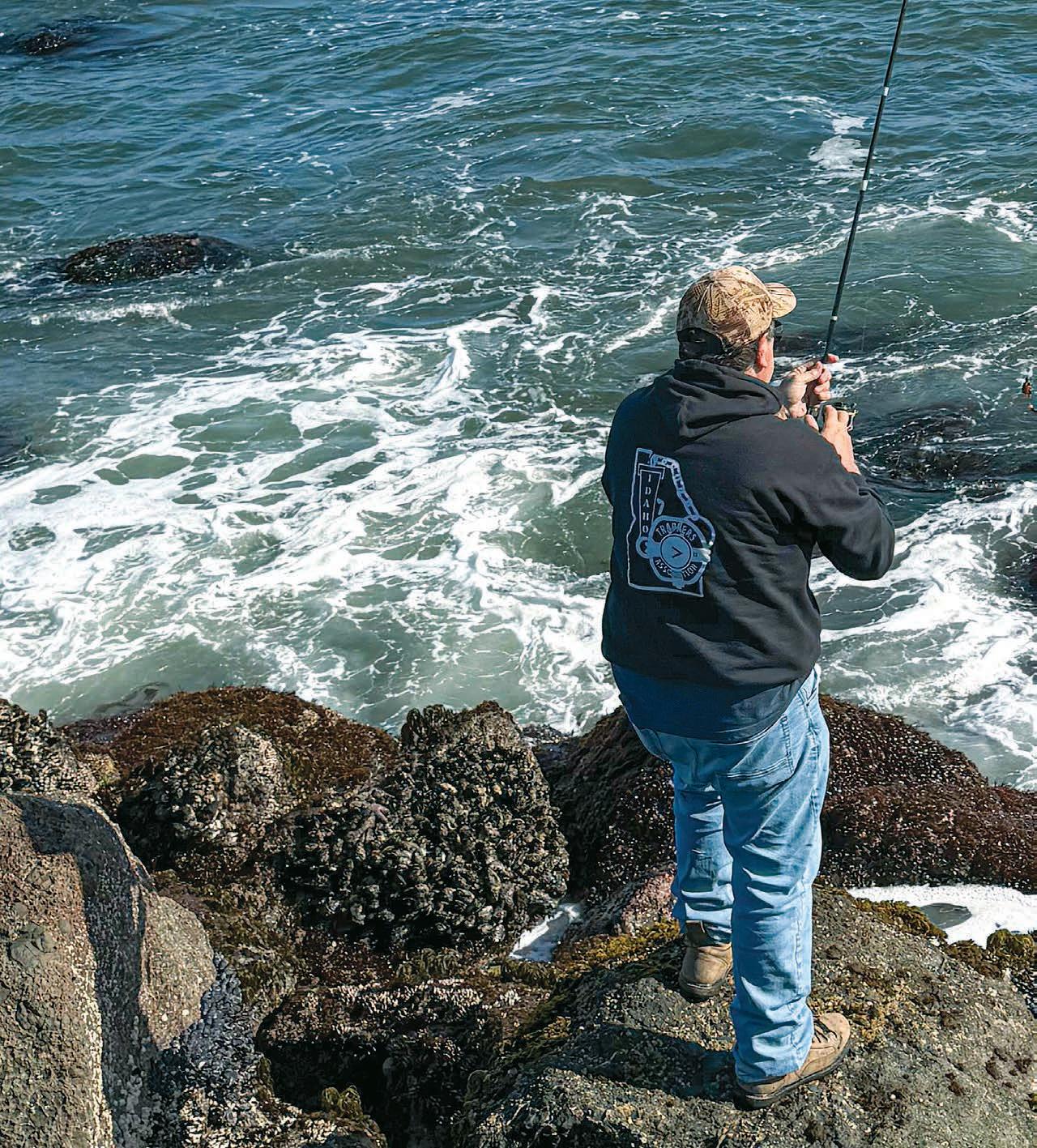
jetties held a variety of coldwater fish we could target during our vacation. During the spring, female lingcod move into the shallows to spawn, putting them within easy reach of the jetty crowd. After viewing several online videos and seeing the success they were having, I dropped into the Oregon Department of Fish and Wildlife website to check on the size and take limit regulations for the species. And if the lingcod weren’t
biting, the black rockfish, cabezon and greenling were abundant within casting distance of the large rocks. My next stop was my immense tackle collection. And make no mistake: The sheer quantity of what I’ve accumulated over a lifetime of angling places me very close to the hoarding level. Again, referencing the videos and my own rockfish experience, I gathered jigs, swimbaits, leadheads and assorted tackle for the
trip. I didn’t want to overpack, but I wanted to make sure we would have everything we’d need. After several evenings of gathering, I was satisfied with the selection and loaded it all in a large backpack.
FURTHER INVESTIGATION REVEALED THAT one of the best coastal jetties for fishing was located only 20 minutes from where we were staying. I jumped on Google Earth and found a long line
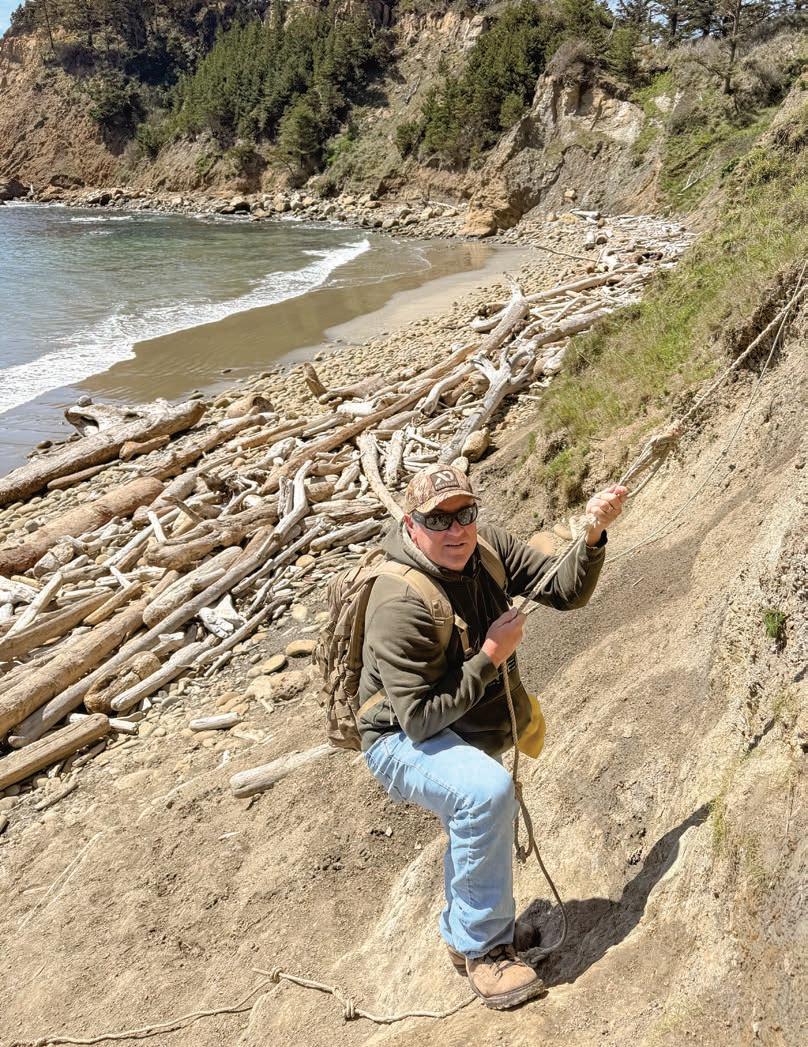
Sometimes, getting to fishing spots isn’t easy. “Dangling from an unseen anchor was a climbing rope that dropped down to the beach,” the author writes. “Despite no longer being in the spring chicken category, Cheryl and I decided we could handle it.” (TIM
of rocks jutting out from the beach. The road to the jetty was long and it looked to be unpaved. That meant a long drive in beach sand, something our Pathfinder might struggle with.
We arrived on the foggy coast around midday and decided to explore a bit before checking in at our cottage. We found beach access and drove into a large parking area. At the edge was a different jetty built with immense rocks. We carefully maneuvered around the huge stones and found the calm ocean. After speaking with a local fishing the jetty, we grabbed our rods and pack of tackle, but spent an hour casting the coast without luck.
Over the next few days, we explored and fished in areas that looked promising, but we had yet to catch anything. A quick stop at a local tackle shop confirmed that the road out to the magic lingcod jetty would require sand tires and four-wheel drive. To avoid getting stuck and dimming our moods, we decided to pass on driving the lengthy sand road.
Following some advice from the tackle shop owner, we found ourselves at a beautiful spot at the end of a beach road. Unfortunately, access was questionable at best. We ended up on a beach trail that terminated about 20 feet above the sand. Dangling from an unseen anchor was a climbing rope that dropped down to the beach. Despite no longer being in the spring chicken category, Cheryl and I decided we could handle it.
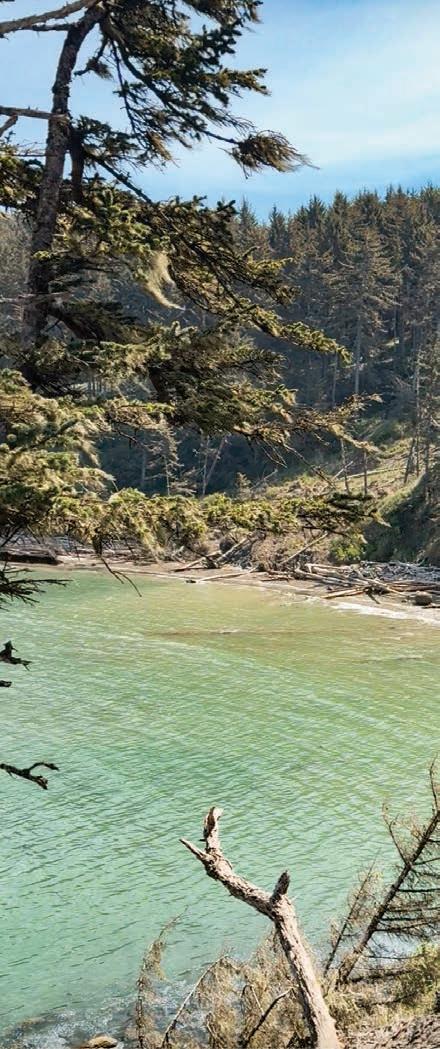
On the beach, we spent almost an hour casting in the calm cove without a bite. As an angler, I was getting frustrated, but we were still having a good time. After the session, we navigated the rope to get back on the trail and headed into town for lunch.
The following day, we decided to drive up the coast and explore some of the other small towns. We had lunch in Bandon, an amazing little crabbing town, complete with trap rentals to try your luck fishing for Dungeness crab. We stopped off in Winchester
Bay and Florence to investigate bait fishing on the coast. No matter what we tried, the fish had lockjaw.
ON THE LAST DAY of our trip, we grabbed lunch and decided to head back to the very first jetty we’d fished. It was close to where we were staying and had somewhat easy access. Rigged up with curl-tail grubs that had been sitting in the Hovey Tackle Museum for over 30 years, we started casting the calm coastal waters of Oregon.
Cheryl hooked up first, excitement on my right told me. I saw Cheryl, excited, her fishing rod bending. As I often do, I dropped everything and navigated the large rocks to help her land her fish. She guided the prize into the shallows, and I was able to get my hands on the first fish of the trip, a chunky black rockfish. After days of struggling, it was my absolute pleasure to take photos of a beaming Cheryl holding her catch.
We used two different colors of curltail grubs and continued to catch black rockfish over the next hour. Casting out, letting the lure sink and then slowly retrieving it seemed to be the method of choice. I set the hook on a bumped lure and felt angry pressure at the other end. In seconds, I was holding a gray fish. I looked at it, the lure still hanging from its mouth. I knew I had caught this species before, but it was back in my early college days working for a coastal
nonprofit. Indeed, it had been a very long time since I had tangled with the mighty black rockfish.
With a turning tide, the bite shut off and we decided we were done. The coastal fog had never really burned off during the entire trip and the cold of the early evening started moving in. For dinner we found a great little spot that served some of the best clam chowder I have ever eaten. Conversation was about, you guessed it, fishing.
I REALIZE THAT THE adventurous youth who used to toss a tent and sleeping bag in his truck and drive 18 hours into Baja just to
fish is still a part of me. However, my priorities have most certainly changed.
I now prioritize safety and comfort first, with fishing opportunities a distant second. I don’t believe it’s because we are all getting older. For me, it’s because I realized that I could get just as much joy out of short trips with the people who matter the most to me.
And honestly, it doesn’t matter what we catch. Like I said, it’s in our blood. CS

Whether you’re working the water, playing a round of disc golf, or basking in the perfect sunset, Odell Lake Resort is your place to unwind and explore.
• Lakeside Sauna - a private, relaxing extraordinary experience
• 18-hole Disc Golf Course - fun, challenging & rewarding
• Boat Rentals - an escape on the water
• Guided Fishing Trips - we offer the best
• Restaurant - a delicious and good time
Come experience Odell Lake Lodge Life! Book your stay today!


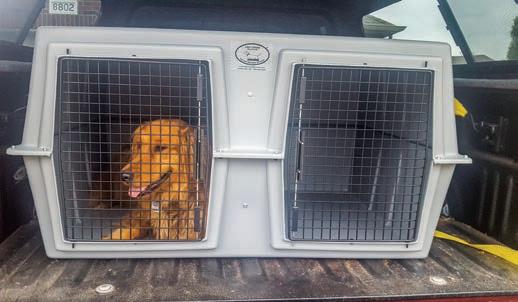
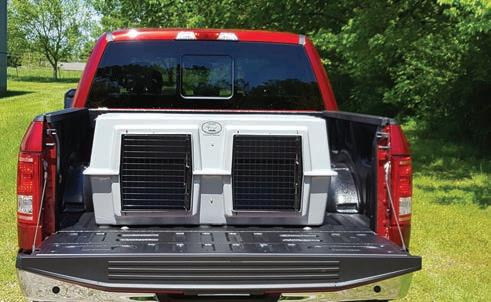
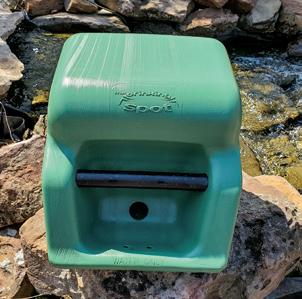
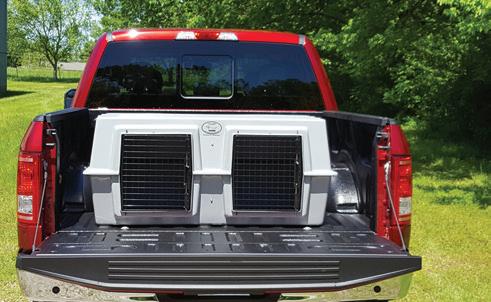
• EZ-XL accommodates 2 dogs over 65 lbs each
• Made from High Density Polyethylene with UV protection
• Easy Loader fits most full size pickups, SUVs & large UTVs

• Deuce fits smaller pickups, SUVs & UTVs
• EZ-XL is for larger breed dogs & full size vehicles
• Vents, cold weather door covers, insulated covers & custom kennel pads available
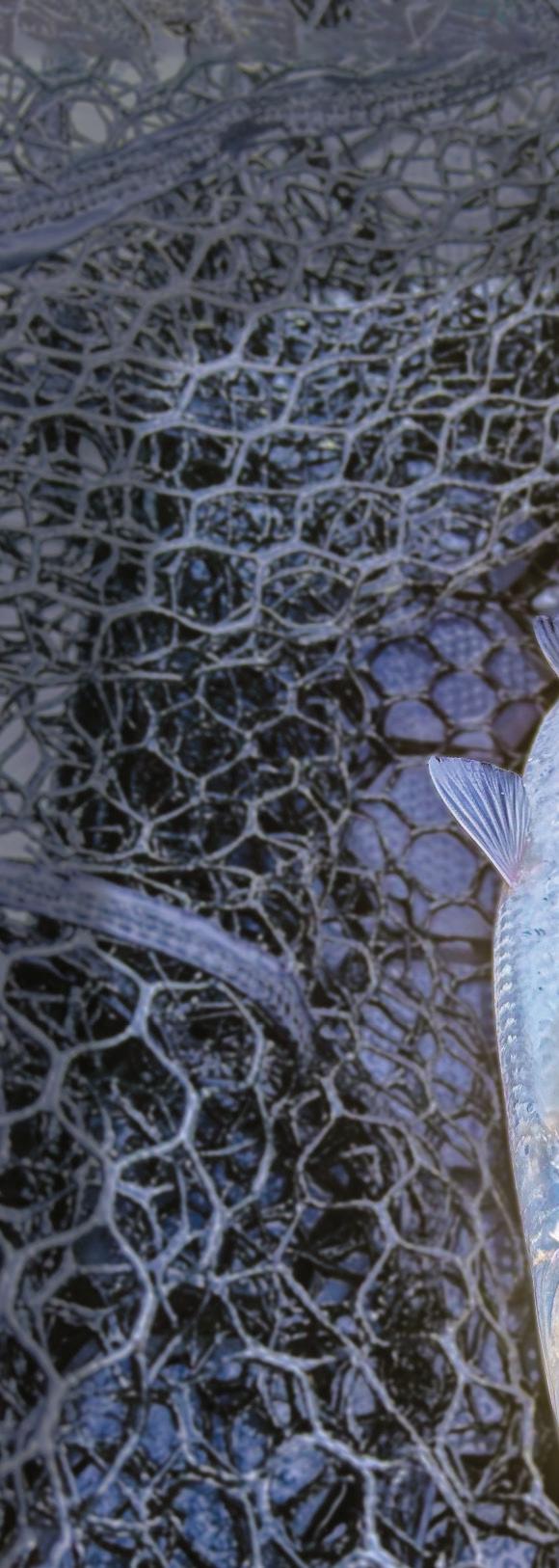
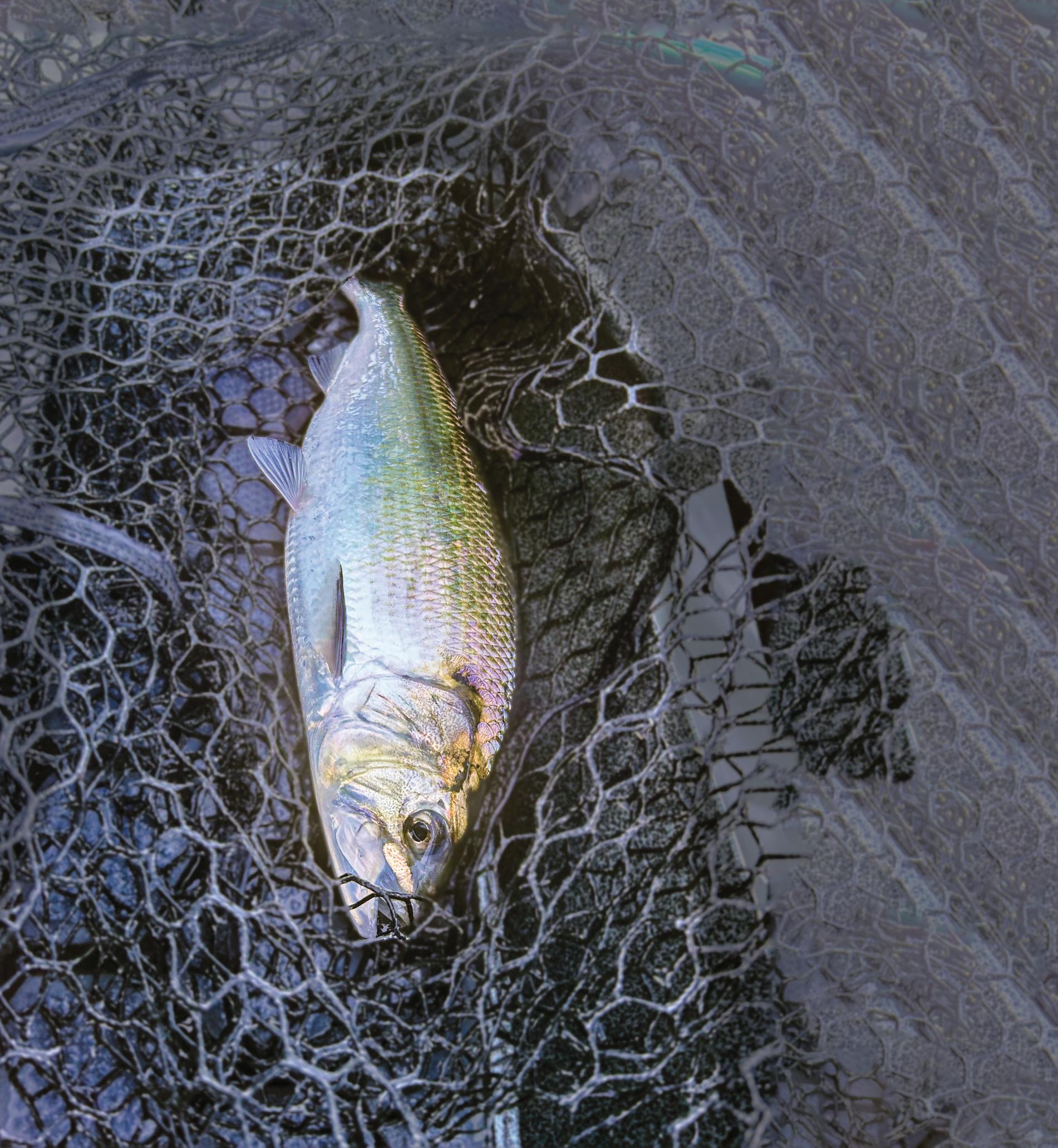
American shad offer anglers quite a challenge on light tackle, as author Mark Fong discovered on an earlyevening trip on the American River. You can still get in on the action this month, which is towards the end of the shad run on Central Valley rivers. (MARK FONG)
By Mark Fong
Late spring can be a hot time in the Sacramento Valley. Yes, of course, the weather can be sweltering, but I am talking about fishing – and shad fishing in particular.
The American shad is a member of the herring family. After spending the bulk of their adult lives in the ocean, shad return to the rivers in spring to spawn. In the Sacramento Valley, the Sacramento, Feather, Yuba and American have good runs each season.
The length of the runs are highly dependent on water flows, but typically start in April and peak in mid-May. During strong water flow years, the runs can last all the way into July.
I am lucky if I get the opportunity to get out a few times during the season to fish for shad. Unfortunately, most of the time it’s one and done for me. By chance, I decided to check in with Austin Wilson of Fisherman Wilson’s Guide Service.
I knew of Wilson through mutual friends in the bass fishing world. He is an accomplished tournament angler, having won the
2018 The Bass Federation National Championship. In addition, Wilson made quite a name for himself fishing
pro tournaments across the West. I had spoken with Wilson a few times over the years, but never had the opportunity to fish with him. Wilson grew up fishing locally and is an expert on the American River, and he told me that he was on a strong shad bite. It had been a while since I fished the American, so I was excited to find out that he had time available.
Shad bite best during low light conditions, making the mornings and evenings prime time. I prefer to fish from late afternoon through early evening, as I really enjoy being on the river then. So I met up with Wilson at the Rossmoor Bar River Access on a late May afternoon. After exchanging pleasantries,
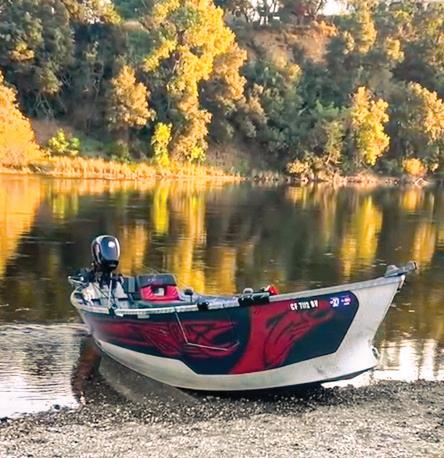
we jumped aboard Wilson’s Pavati drift boat and headed downriver. Not far from the access point, Wilson anchored the boat adjacent to an area that featured a deepwater dropoff. Deep in this case was relative, but the shad were clearly using this area as a travel lane. Rather than spreading out across the river, shad schools travel in narrow, almost single-file lines, so it is easy to miss them if your offering doesn’t land close enough to them.
Wilson had a number of lightaction spinning rods rigged and ready to go. Shad are strong fighters, and when they get into current, they can put your gear to the test with long runs and airborne acrobatics. I love a good fight, so I brought along my favorite ultralight combo, and Wilson
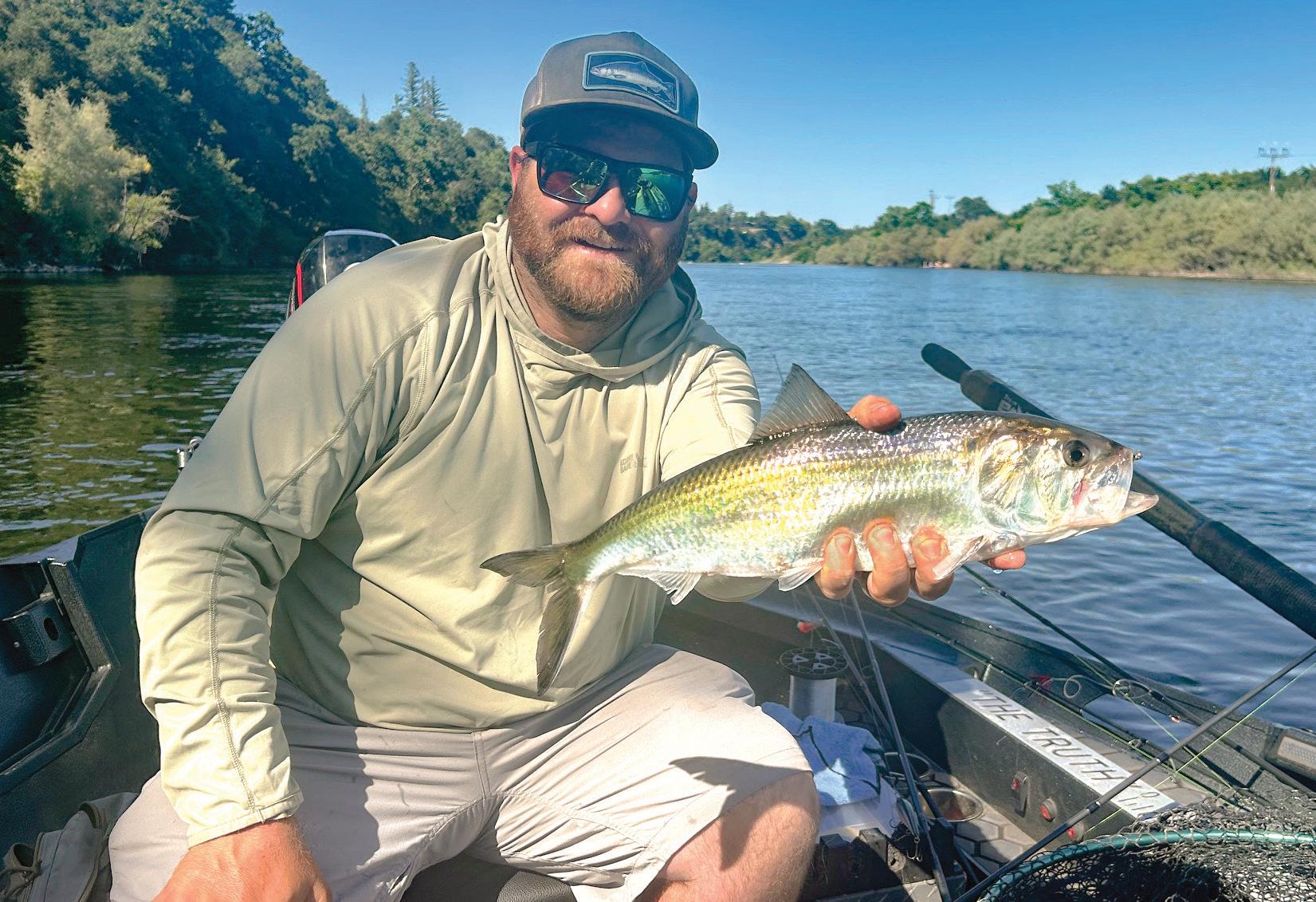
Wilson caught and released this hard-fighting shad. The fish provided a delightful experience on the ultralight setups the guys fished with. (MARK FONG)
got me set up with a slip bobber rig featuring two small barbless flies.
I began by casting my rig slightly upstream and letting the bobber drift naturally with the current. As the bobber made its way downriver, I mended my line to remove the slack and to maintain a natural presentation. Once my gear reached the end of the run, I would reel in and cast again. Wilson and I established a cadence with our casts so that we would not tangle each other’s lines.
The bite started out kind of slow. The shad were finicky and seemed to be just mouthing the flies. Our floats would indicate that the fish were interested, but the bites were very noncommittal, which translated into
a number of missed opportunities.
Wilson connected with our first shad of the afternoon after about 30 minutes of fishing. The fish pulled the bobber down, Wilson set the hook and the fight was on. After a few spirited runs, he worked the fish to the side of the boat, and with a scoop of the net the fish was on board. Wilson carefully unhooked the shad while I took a few quick pictures before he released it back into the water.
Wilson went on to catch several more shad before I had my first hookup. The fish took off on a dragpeeling run; I was having a great time with my ultralight gear. To cap it off, the fish went airborne several times before making one final blistering, long run. This is exactly the action
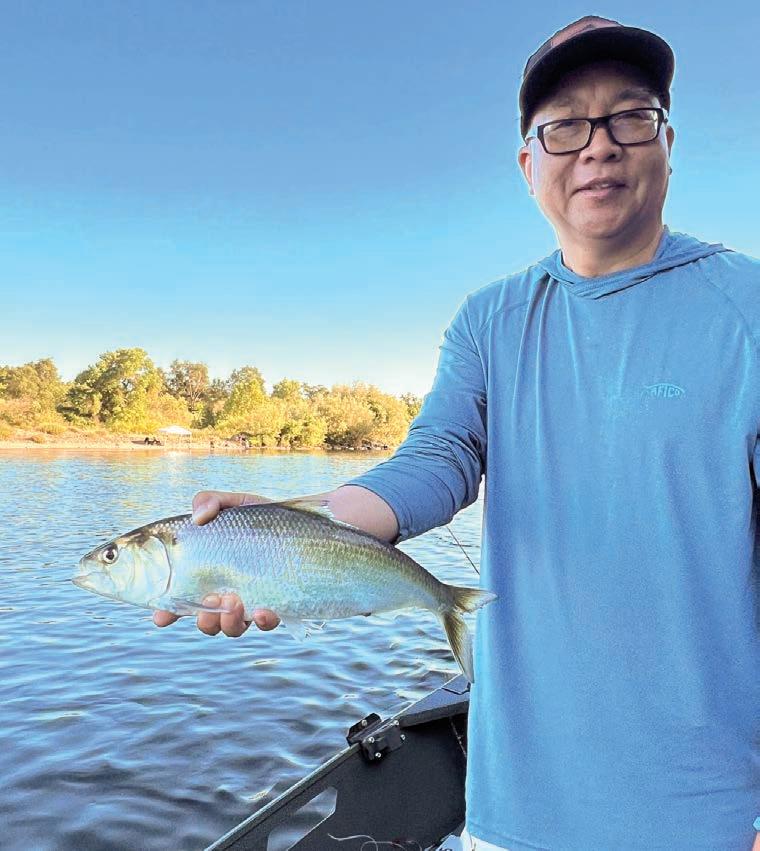
Eventually, the bite heated up and double hookups of shad became a more frequent occurrence. (MARK FONG)
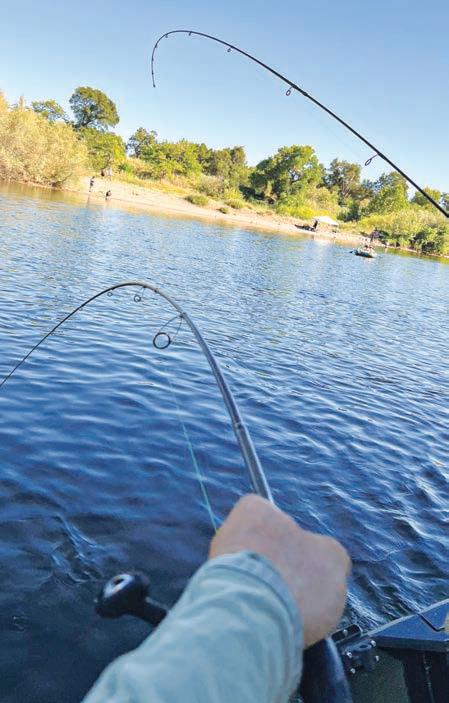
I was hoping to experience, and this fish did not disappoint. As shad are excellent fighters, I was happy to finally get my first one to the boat. A quick picture later, we carefully released another shad.
What happened over the next several hours was nothing short of awesome. The fishing was steady and consistent, with a few flurries mixed in for good measure. It’s evenings like this that make me remember why I love shad fishing – good times with a great guide.
Wilson is not only super fishy, but he is also a top-of-the-line professional who I can’t wait to fish with again soon. CS
“The fishing was steady and consistent, with a few flurries mixed in for good measure,” the author writes. “It’s evenings like this that make me remember why I love shad fishing – good times with a great guide.” (MARK FONG)
Editor’s note: In addition to shad, Austin Wilson guides for striped bass, steelhead and salmon on the American River. If you would like to fish with him, he can be reached at (916) 410-4900 or follow him on Facebook (@austinwilsonfishing).

«
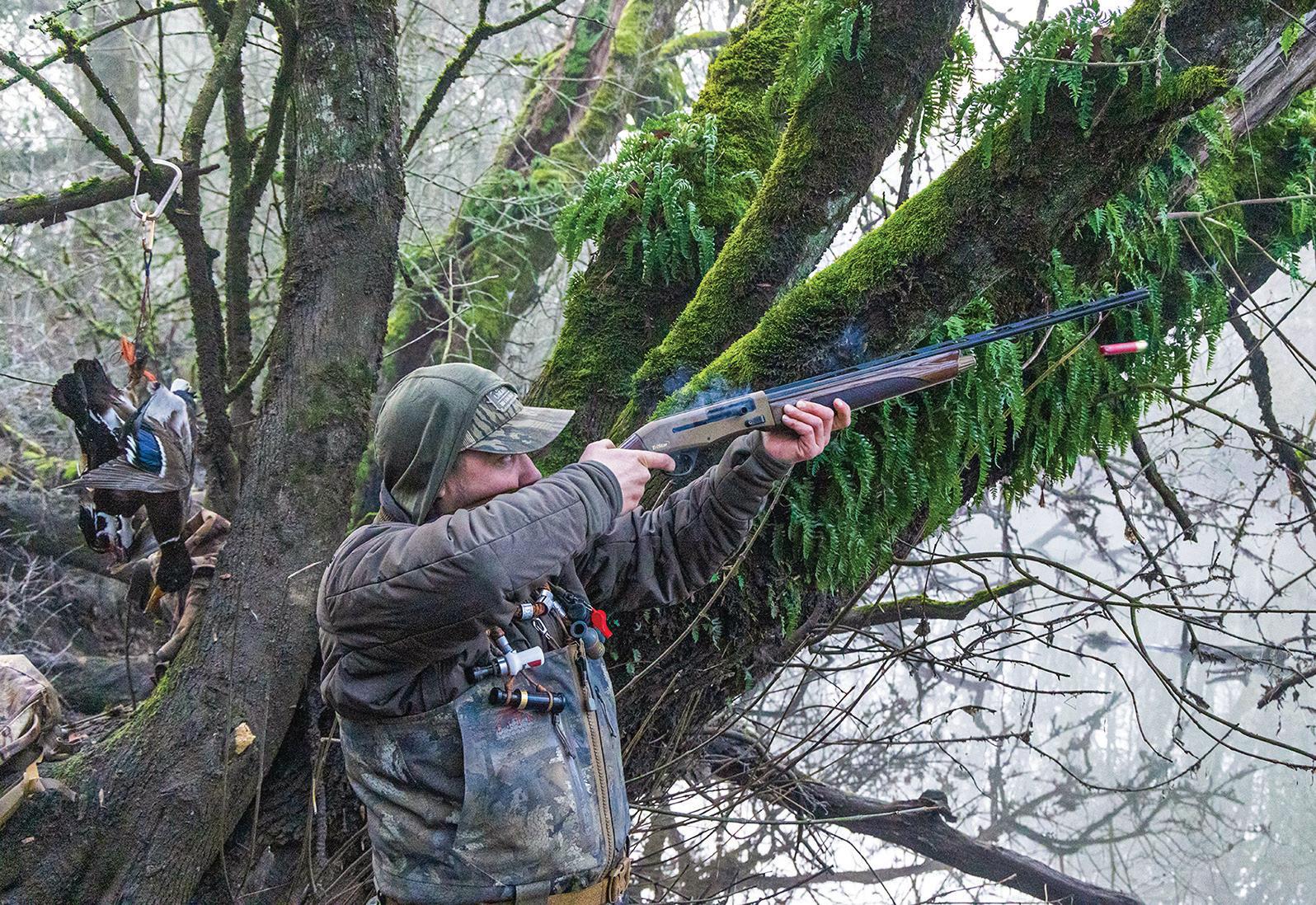
» SMALL-BORE SHOTGUNS MAKE YOU A BETTER HUNTER, AND THE VIPER G2 PRO SEMIAUTO IS A PLEASURE TO SHOOT.
By Scott Haugen
If you were to grab the very first photo album I created commemorating the many hunts I’ve enjoyed over the decades and open to the first page, you’d see a picture of my dad and I with a pile of
mourning doves. I was holding a .410. I was 12 years old. The year was 1976. It was the first bird hunt of my life.
Like most everything in the hunting industry, the technology of .410s has greatly advanced. Not only have .410 designs changed, so too have chokes and loads. Everyone who
picks up a .410 seems to like shooting them. Who wouldn’t? They’re light, quiet and have virtually no recoil. But hunting with them is a different story.
It’s the challenge of consistently killing birds that has me most intrigued with shooting the smallbore .410. First, birds have to be closer
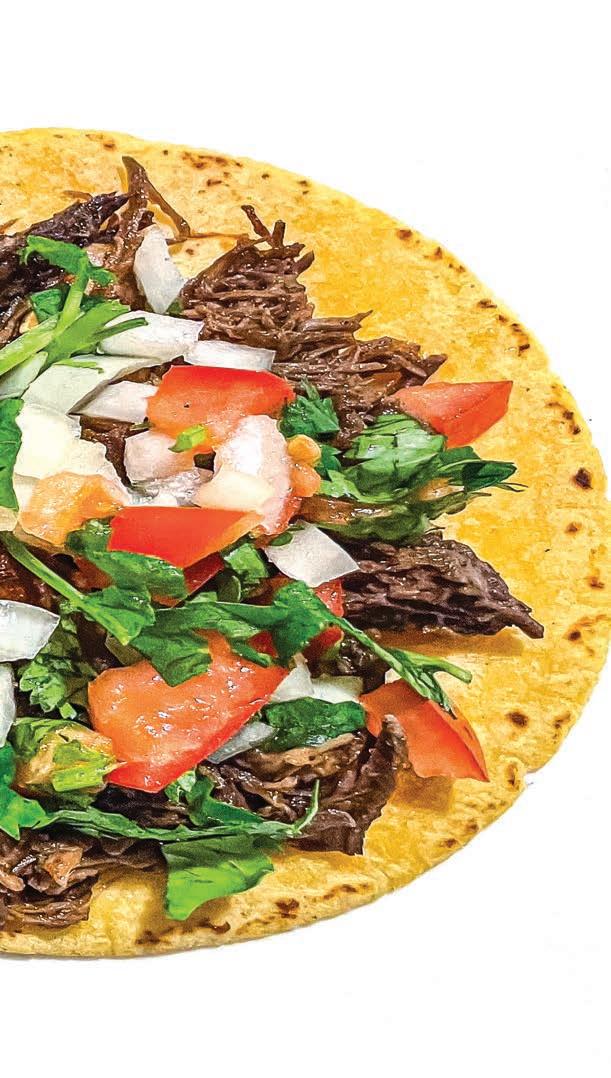
Waterfowl and upland birds can make for some fantastic taco meat for your summer party menu.
By Tiffany Haugen
T¼ teaspoon black pepper
¼ teaspoon salt
for 30 minutes.
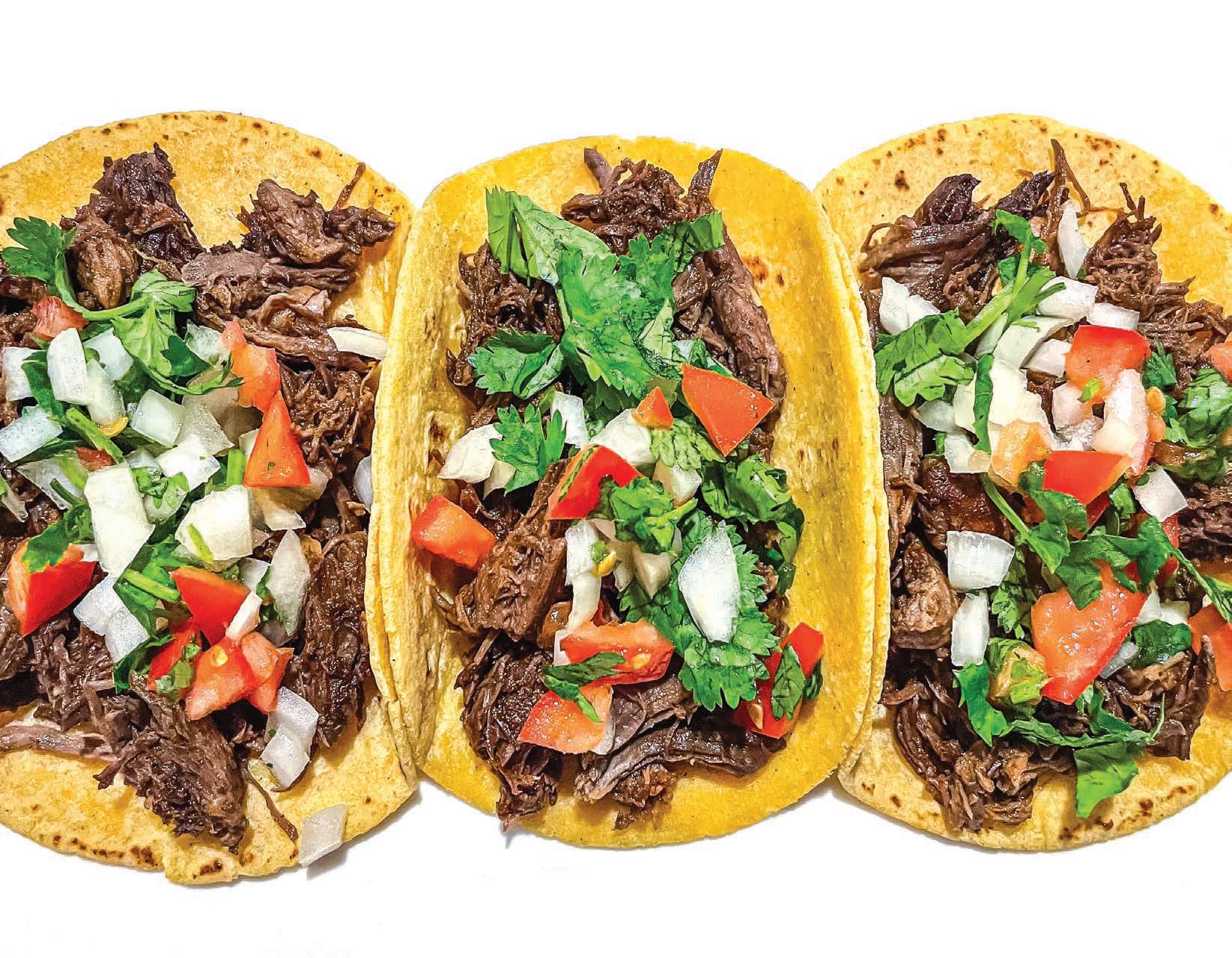
acos are a sure win with any game bird, be they fresh or frozen. The key is to slice the meat thinly, across the grain, and cook it hot and fast.
I first tried this recipe with forest grouse. We liked it so much, ducks were next, followed by snow geese, then Canada geese. It even works great with venison, which speaks to the versatility of this recipe.
1 pound bird breasts
1 tablespoon olive oil
½ teaspoon granulated onion
½ teaspoon granulated garlic
½ teaspoon chili powder
½ teaspoon smoked paprika
½ teaspoon cumin

One medium tomato, chopped
Half onion, chopped
½ cup fresh cilantro, chopped
2 tablespoons lime juice
1 tablespoon honey
Salt and pepper to taste
1 tablespoon olive or coconut oil for frying
Corn or flour tortillas
Slice bird breasts into thin strips. In a medium bowl mix olive oil, granulated onion and garlic, chili powder, paprika, cumin, salt and pepper until thoroughly combined. Add sliced bird meat and marinate at room temperature
In a medium bowl combine tomato, onion, cilantro, lime juice, honey, salt and pepper. Keep refrigerated until ready to serve.
Heat olive or coconut oil in a large skillet on mediumhigh heat. Add all meat and marinade to the pan. Pan fry for five to seven minutes, stirring constantly. Serve on a warmed tortilla with the tomato, onion and cilantro mixture, or your favorite taco toppings.
Editor’s note: For signed copies of Tiffany Haugen’s popular cookbook, Cooking Game Birds, visit scotthaugen.com.
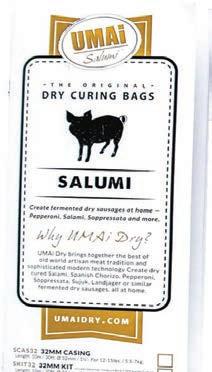
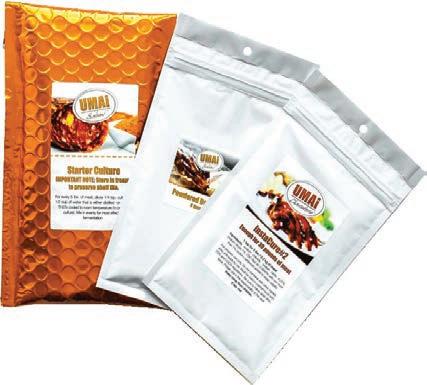
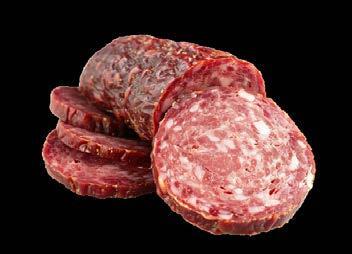
Create dry aged steak and cured meats from home!
Whether you’re preserving whole muscle for charcuterie or grinding coarse for fermented salumi, our time-honored spice blends, easy starter kits, and UMAi Dry® technology make it safe and simple to cure like a pro!



to kill than if you’re shooting a largegauge shotgun. Second, your shooting has to be more accurate. Each of these variables force you to become a better hunter if you’re truly set on achieving consistent success with a .410.
I’ve shot a number of .410s over the years and also own a few models. For the past five years I’ve primarily shot a pump. I liked it but wanted a semiautomatic, something that would allow me to stay more solid in the gun. I’d torn both rotator cuffs – six months apart – and even working the pump action on the tiny .410 hurt badly.
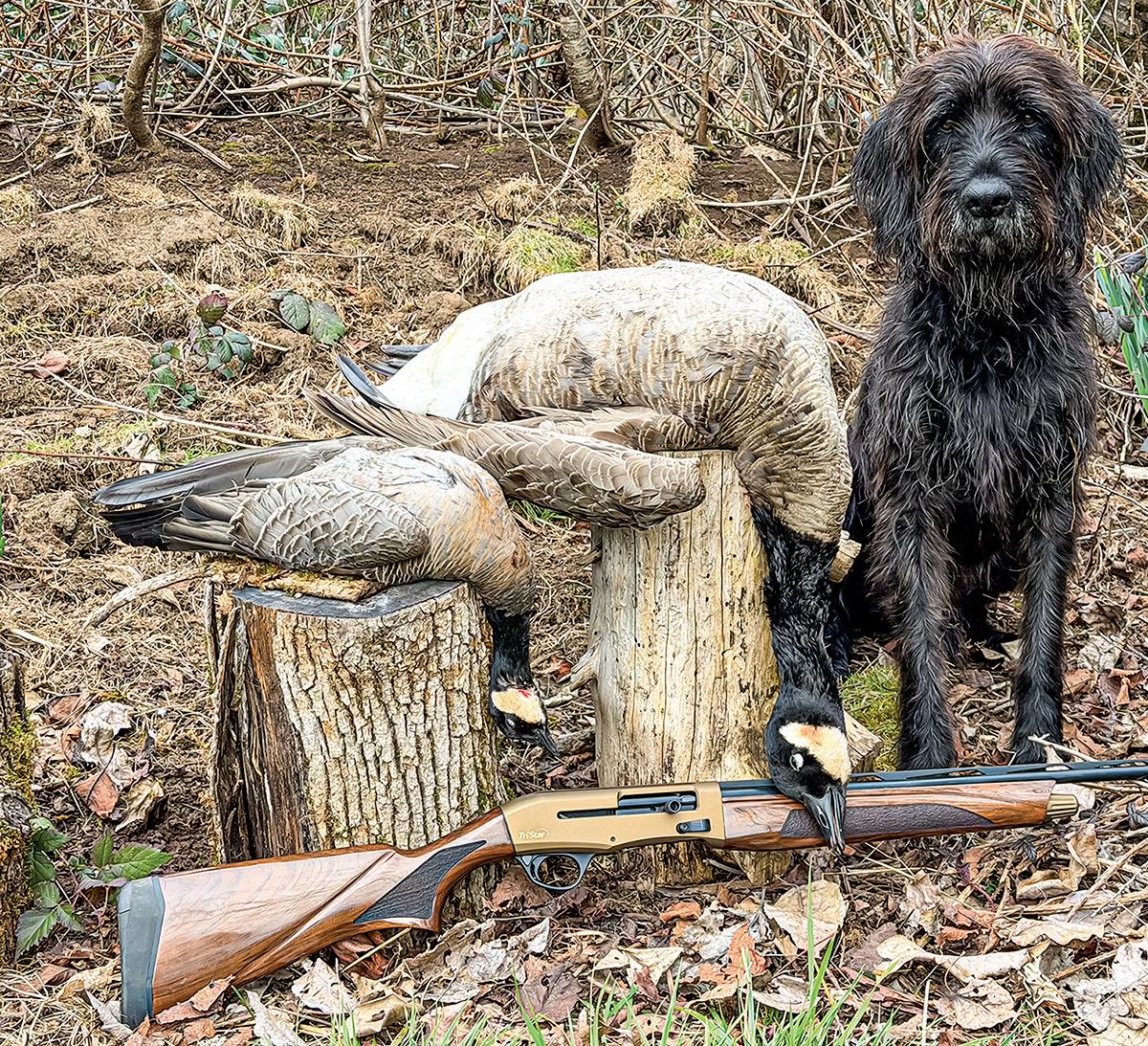
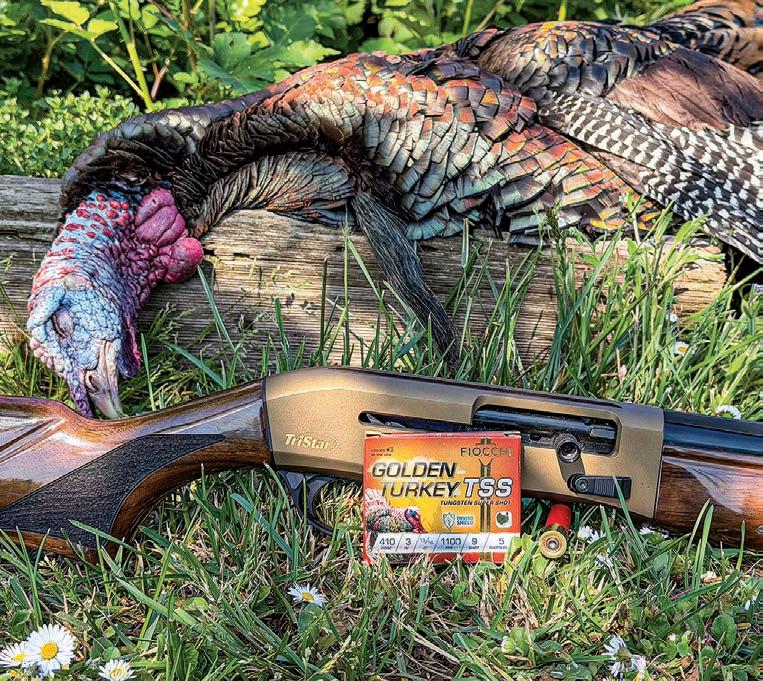
I purchased a TriStar Viper G2 Pro model with a sleek, bronze finish. The moment I pulled it from the box, it screamed turkeys … then ducks, grouse, bandtail pigeons, quail, gray squirrels, doves and more.
A local farmer was having issues with
starlings in his barnyard, so I grabbed two boxes of 7½-shot, 2½-inch loads. At the manufacturer’s suggestion, before shooting the light loads, I ran a box of 3-inch magnums through it. In an hour I burned through three boxes of shells. Every shell cycled perfectly –even the light loads – and I managed to knock down some of the invasive birds.
Instantly the feel, swing and followthrough of shooting the Viper G2 was smooth and consistent. Right away, the 5.8-pound, 28-inch-barreled .410 felt like an extension of my body. The safety was stiff, which I prefer. Feeding shells into the magazine was crisp and precise – no matter their length.
Since purchasing the .410 Viper G2 last fall, I’ve shot a range of shells through it. From 2½-inch lead to 3-inch lead, steel, bismuth and tungsten super shot, or TSS, all patterned well on paper and all cycled well in the gun. Never has it jammed on me. I’ve shot all three chokes, but settled on the full choke for almost every hunting
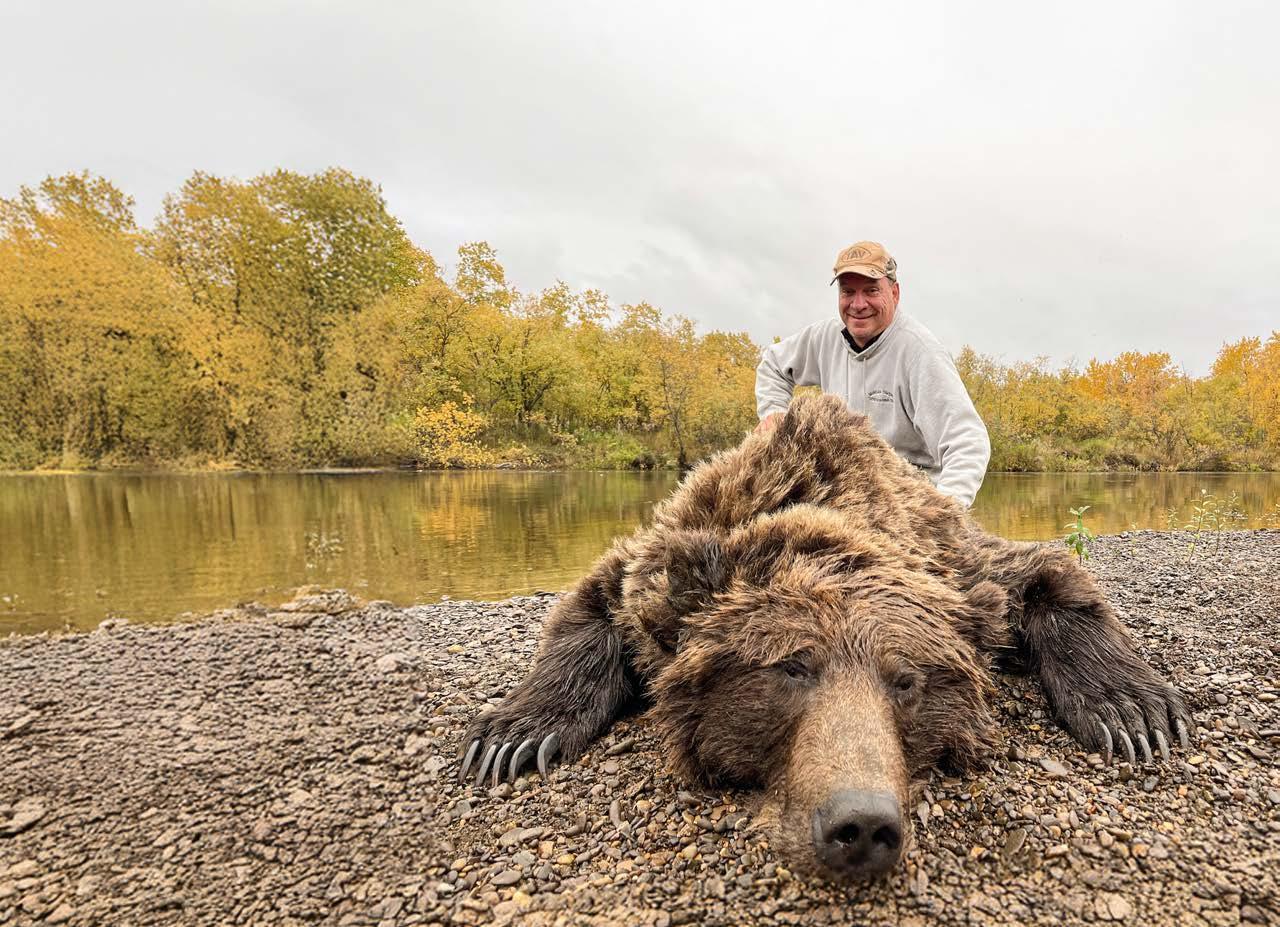
This is an unforgettable Alaskan adventure that blends raw wilderness, world-class game, and the thrill of pursuing some of North America’s most iconic animals in their natural environment. Long days on the river. Close encounters. The kind of moments you’ll talk about for the rest of your life.
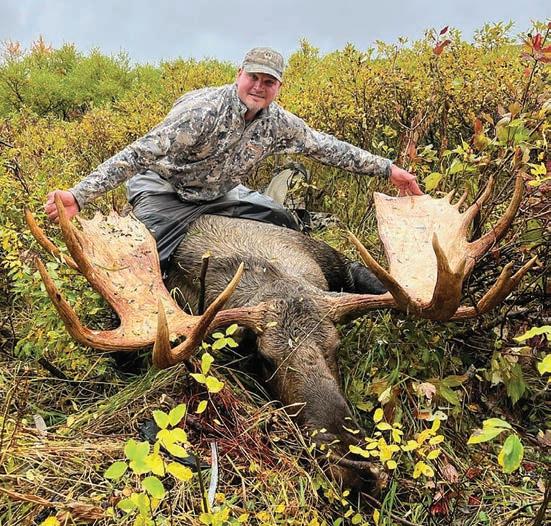
• Trophy moose & bear hunts in prime river systems
• Regular 60”+ bull moose opportunities
• Near-100% opportunity rate on legal bulls
• High success on large Alaskan bears
• Fully guided & all-inclusive hunts
• Expert guides with deep local knowledge
• Carefully selected locations for consistent results
• 11–15 day hunts with 15-day combo moose & bear hunt available
Every hunt is carefully planned and professionally guided from start to finish. From scouting and calling to field care and logistics, your guide handles every detail so you can stay focused on the hunt.
Contact us today to secure your hunt and discuss available dates.
www.alaskaeliteoutfitters.com 218-434-0068 • 907-464-6165
mike@alaskaelieteoutfitters.com


situation. Last fall I shot two turkeys with it, a jake at 22 yards and a hen at 27 yards. A buddy shot a big tom with it last spring at 48 yards. It’s all-around accurate and powerful.
The first duck hunt I shot the Viper G2 on, few ducks worked the creek, but I did come away with three fat mallards. I shot Kent Bismuth No. 4 shot. The shots were inside 20 yards.
A few weeks later, I took the .410 out for cackling Canada geese. About 20,000 minimas – the smallest of our cacklers – were grazing in a ryegrass field. They were feeding next to a creek that flowed through a green field. Shots were inside 25 yards. Winchester’s Last Call TSS No. 9 did well, quickly dropping a two-bird limit. Both were head/neck shots, a conscious choice when shooting such small pellets. Two days later, the little Viper G2 dropped a big honker and
a cackler. The more I shoot this little beauty of a .410, the more I like it.
One thing that’s helped me gain consistency in shooting is offseason practice. Spring and summer sees invasive starlings and Eurasian doves flourishing, and the more birds there are, the more shooting practice I get. My dogs love it too.
A few farmers in the area know to call me when barnyards get loaded with these obnoxious birds. The same is true with California ground squirrels; when the rodents dig on farms, their holes are potential anklebreakers for livestock. These squirrels are fast and have great eyesight, putting quick-reaction shooting skills to the test.
Such practical practice – shooting live targets rather than clays – quickly builds your familiarity with a gun. And it’s helpful and often humbling,
especially with a .410. Shooting fat mallards as they backpedal into the decoys inside 20 yards is one thing; trying to consistently hit small, fastmoving targets is another. Patterning loads on paper is a starting point. Shooting birds with those loads is when you truly discover what you like.
The TriStar Viper G2 .410 is easy to clean and reassemble. I’ve run eight brands of shells through it. With the same full choke and shim, the gun has shot every load with impressive accuracy and consistency, something that’s not always the case.
I let a friend try my TriStar last duck season. He shot a limit of mallards with the .410, then bought one. CS
Editor’s note: For signed copies of Scott Haugen’s popular books, visit scotthaugen .com. Follow Scott on Instagram and Facebook.
With
Editor’s note: In this first of a two-part series, Scott Haugen shares what it takes to successfully raise and train a versatile gun dog.
By Scott Haugen
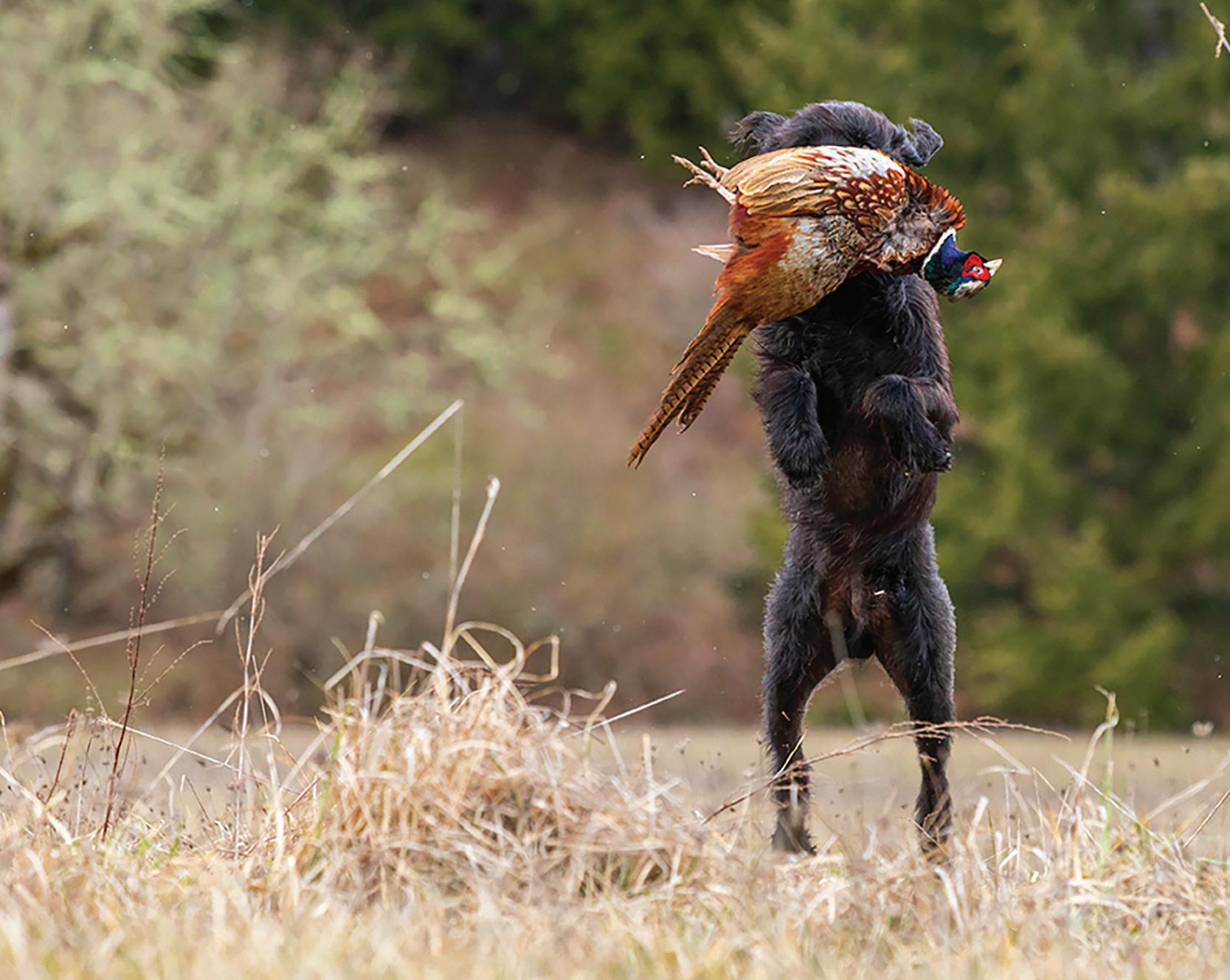
Versatile gun dogs are the ultimate overachievers. Some more so than others. And if you live in California, there’s no shortage of hunting options. My buddy owns a German
shorthaired pointer that rocks the upland world and is also a great waterfowl dog. I’ve seen it sit all day in freezing temperatures, break ice to get ducks and not hesitate tackling big honkers on land or water. My friend’s desires and expectations were high, he trained his dog accordingly, and prevailed.
Some Labrador retrievers triumph in everything waterfowl, point pheasants and hunt well for shed antlers. I’ve also seen Labs specialize
in one thing. Hunters seek dogs to meet their needs, and these needs vary from person to person.
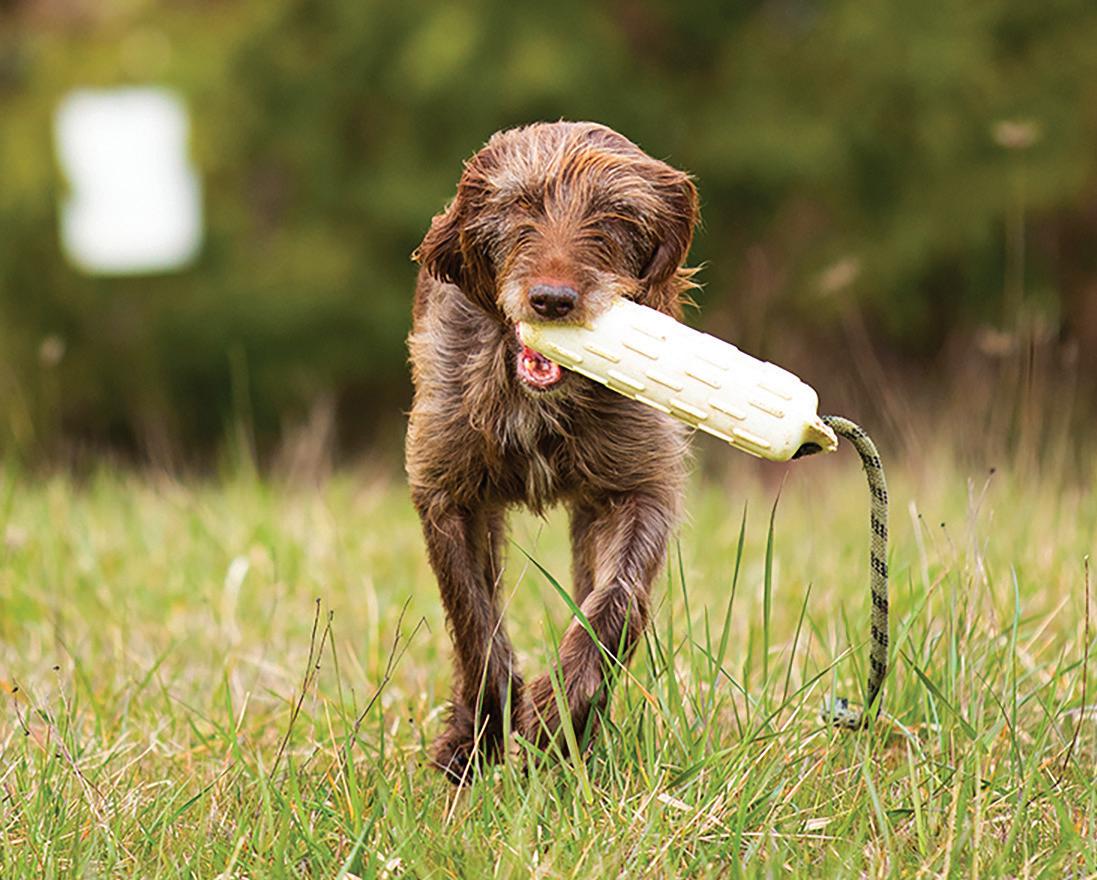
I own two pudelpointers, Echo, a 12-year-old female, and Kona, a 10-year-old male. I got both dogs at eight weeks of age and trained them on my own.
Initially, I sought help from various trainers, but every time I went back to doing my own thing. I quickly learned that training an intelligent, high-energy versatile
gun dog with an uncanny desire to please was not like training a dog that hunts for just one or two things.
BEFORE I BECAME A full-time outdoor writer I was a high school science teacher. My wife and I also raised two wonderful boys, both now in their 20s. When in education, I never wanted to hear from other teachers about the students I was getting. I wanted to observe them, work with them and develop a relationship with each one. Adapting my approach to motivate each student and get info to them in a favorable way was essential.
The same is true with raising children, just as it is with training a versatile gun dog. Get to know each one, earn their trust and respect, then teach them.
More than anyone over the years, I’ve picked the brain of Jess Spradley, the owner of Cabin Creek Gun Dogs (cabincreekgundogs.com), located not far from the OregonCalifornia border. This is where I
There
got my dogs. Cabin Creek is well known in pudelpointer circles for importing quality bloodlines and offering serious hunters the best dogs possible. They brought Lon, the
Michael Jordan of pudelpointers, to the US, and he is the sire to my dogs.
“These are some of the smartest dogs I’ve ever worked with,” Spradley told me early in our relationship. “Pudelpointers need a lot of mental stimulation and because they can do so much, there’s never an offseason for this breed, especially in the summer.”
That was the best advice I ever received. Spradley is also a renowned field trial specialist with GSPs and has trained numerous breeds over the years.
MY HUNTING
on September 1 with a range of upland birds and doesn’t end until early spring, when late goose closes. We hunt deer and elk sheds from February through May, and go on over 75 waterfowl hunts a season. While there are brief training sessions throughout the fall, winter and spring months, June, July and August are times of focused training.
I train twice a day, every day. The first session starts early in the morning, before it gets too hot. It begins with a run in the fields out our back door.

Fortunately, we have access to many acres of prime fields, with endless hills and mountains extending up to 2,500 feet in elevation. There’s a big pond we can walk to and a river that’s nearly as close; water is essential for summer training.
The first few minutes are spent letting the dogs explore. They’ll quickly cover the 20 acres as they inspect it to see what visitors passed in the night. I don’t let them linger, just get a feel for what’s out there so they’re not distracted when the teaching begins.
Another piece of advice Spradley offered was to never take off the dog’s e-collars when afield.
“This isn’t to shock them, but to use the beep feature to keep the dogs from doing things you don’t want them to do, like digging for mice, tracking deer or ignoring your commands. It’s a simple but valuable form of communication,” he told me.
I’ve found his tip to be spot-on. Once content with their field exploration, it’s time for my dogs to focus. Both verbal and visual commands are the center point. I want both dogs to know I’m in charge and that it’s time to pay attention. Consistent voice inflections, facial expressions and eye contact are key. Various bumper drills help achieve this, from simply tossing one bumper, to throwing multiple bumpers, running ladder, baseball and bucket drills, and having them sit and respond to hand signals.
I switch up drills, using one at a time, with the focus being on consistency and communication. Use different size and color bumpers, including pheasant, duck and goose. Incorporate a dummy launcher too.
I don’t use treats when training or hunting. The only treats my dogs get are when they come back into the house from going to the bathroom

before bedtime. I want their desire to please me to be the driving force, not a superficial treat.
FOLLOWING A TWO- TO three-minute bumper warm-up in the morning, we focus on one aspect of training. It’s the same for each dog.
If there’s a good breeze, I’ll hide a half dozen pheasant and chukar wings in the field for the dogs to find. I’ll work one dog at a time, kenneling the other, usually ending with both dogs working together. On a different day we’ll do the same with duck and goose wings. If the dogs perform as desired, the training might only last for 10 minutes, most of which is spent on setting things up. I freeze and refreeze wings, as they hold more scent than when dried.
For now, focus on these morning training tips. Next month we’ll look at conditioning in the hills, swimming workouts and evening training tips. CS