



PUBLISHER
James R. Baker
GENERAL MANAGER
John Rusnak
EXECUTIVE EDITOR
Andy Walgamott
EDITOR
Chris Cocoles
WRITERS
Mark Fong, Scott Haugen, Tiffany Haugen, Tiffany Herrington, Tim E. Hovey, Cal Kellogg
SALES MANAGER
Paul Yarnold
ACCOUNT EXECUTIVE
Janene Mukai
DESIGNER
Kha Miner
WEB DEVELOPMENT/INBOUND
MARKETING
Jon Hines
ADMINISTRATIVE ASSISTANT
Katie Aumann
INFORMATION SERVICES MANAGER
Lois Sanborn
ADVERTISING INQUIRIES media@media-inc.com
CORRESPONDENCE
Email ccocoles@media-inc.com X @CalSportsMan
Facebook.com/ californiasportsmanmagazine
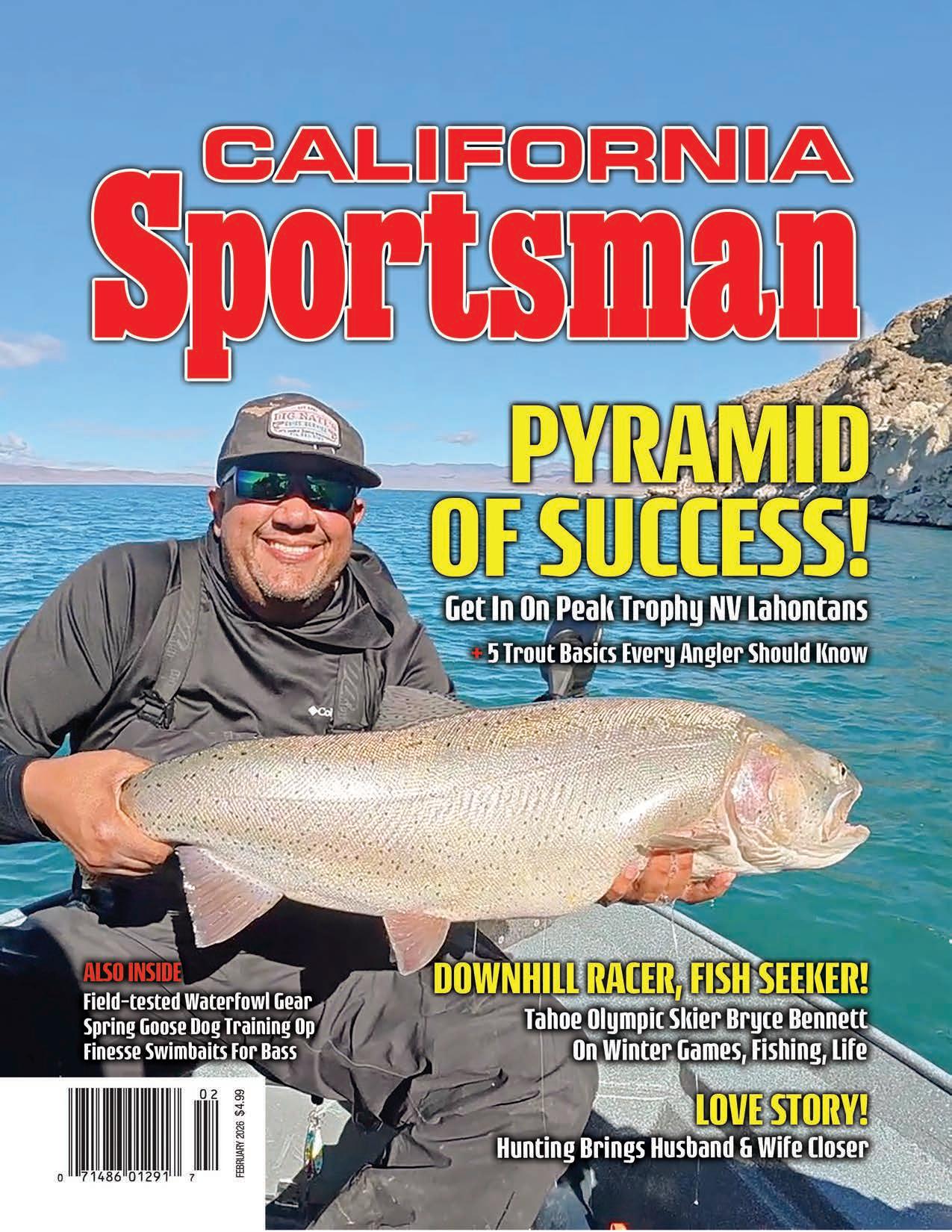
ON THE COVER
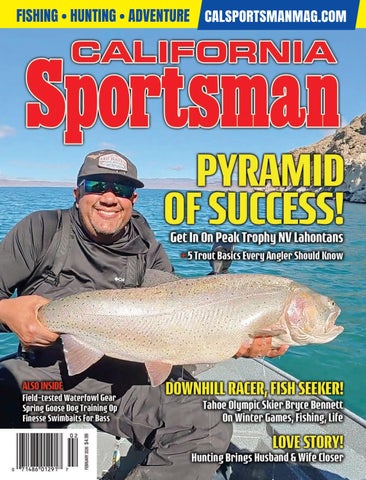
Looking for a late winter and early spring trophy trout opportunity? Head across the border to northern Nevada, where Pyramid Lake churns out some massive Lahontan cutthroat trout. February marks the start of the three-month peak season, as Cal Kellogg explains on page 28. (CAL KELLOGG)
MEDIA INC PUBLISHING GROUP 941 Powell Ave SW, Suite 120 Renton, WA 98057 (800) 332-1736 • Fax (206) 382-9437
media@media-inc.com


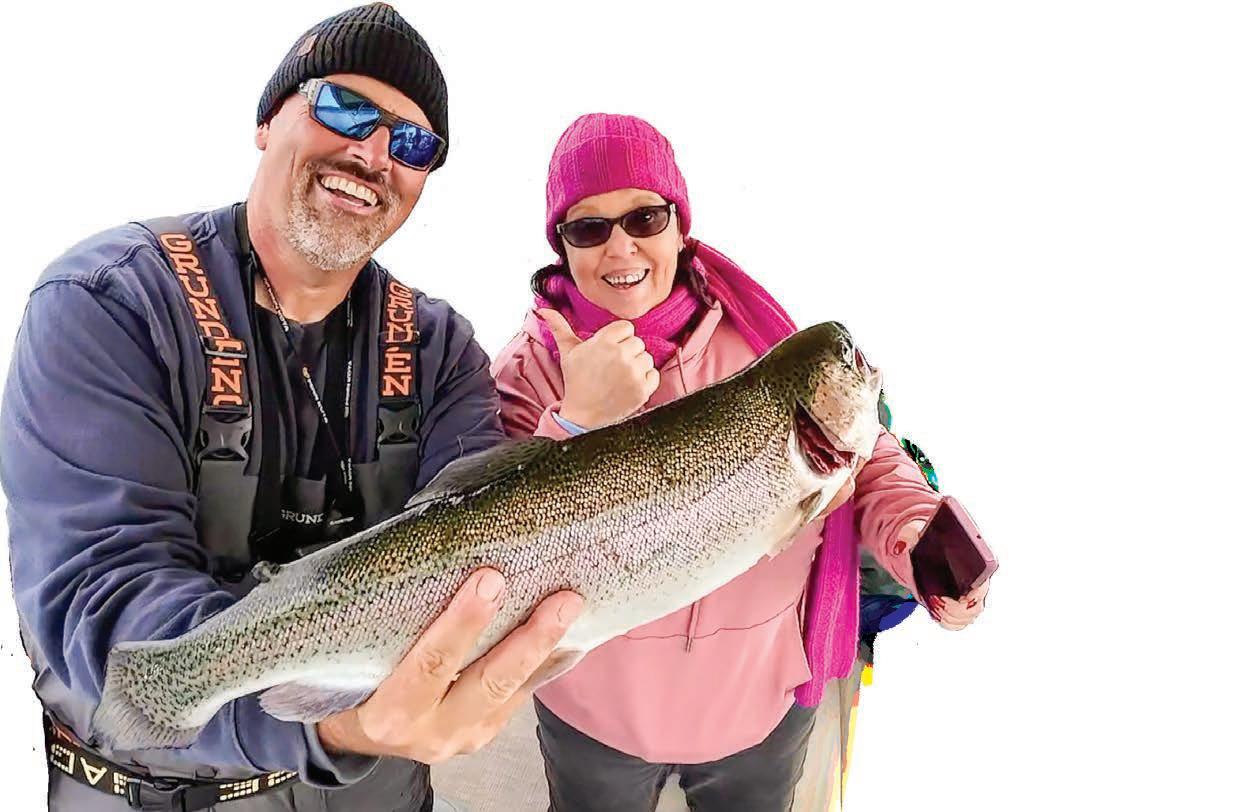
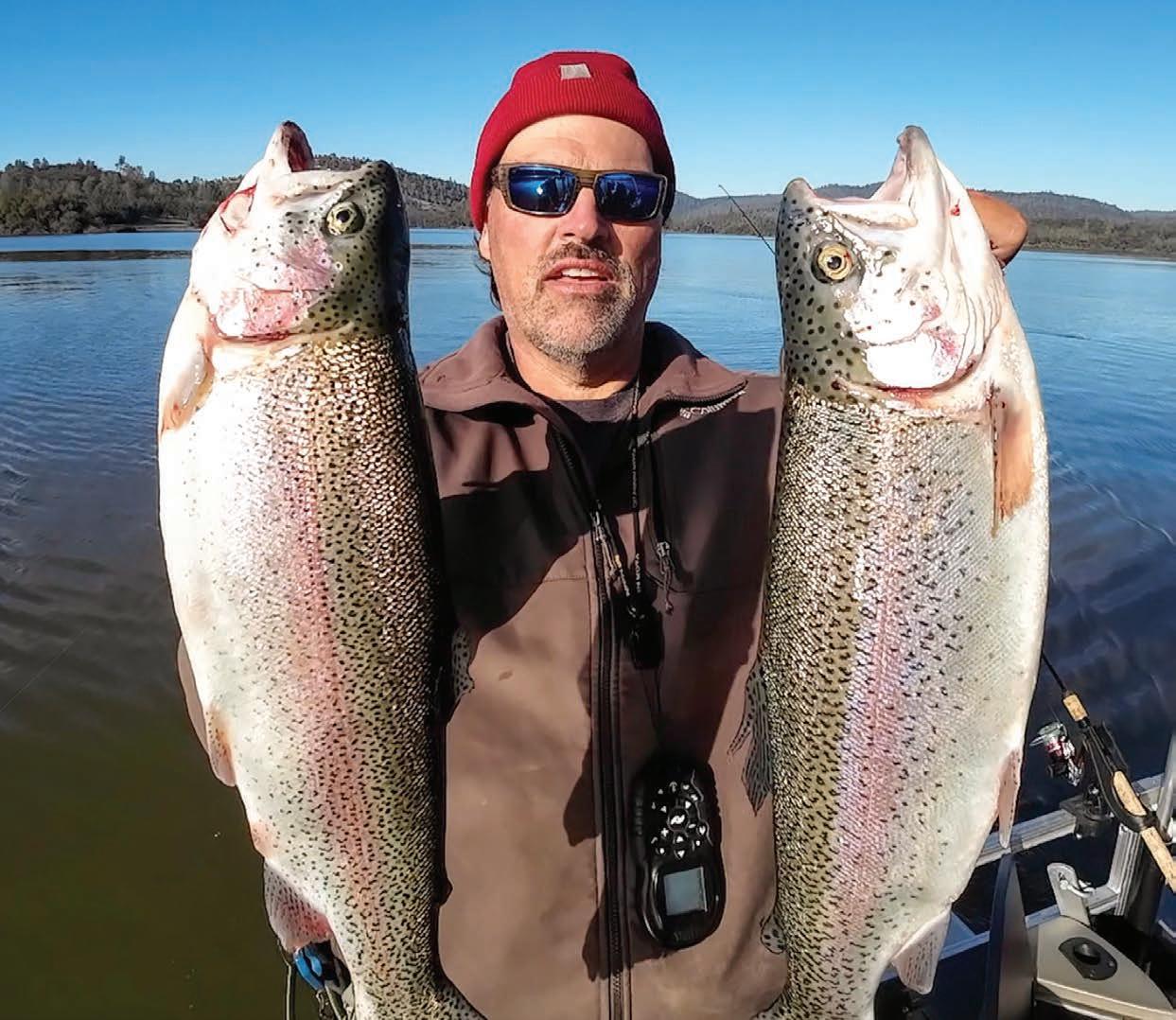
No matter how often you’ve been out on the water figuring out how to trick a rainbow or brown, you should never be too proud or stubborn to keep learning on the job. Even a veteran trout-a-holic like guide/angler Cal Kellogg (left) is humble enough to always be in sponge mode. “I’ve picked up on some little details that often make a big difference,” writes Cal, who provides five tips to help you score trout limits. (CAL KELLOGG)
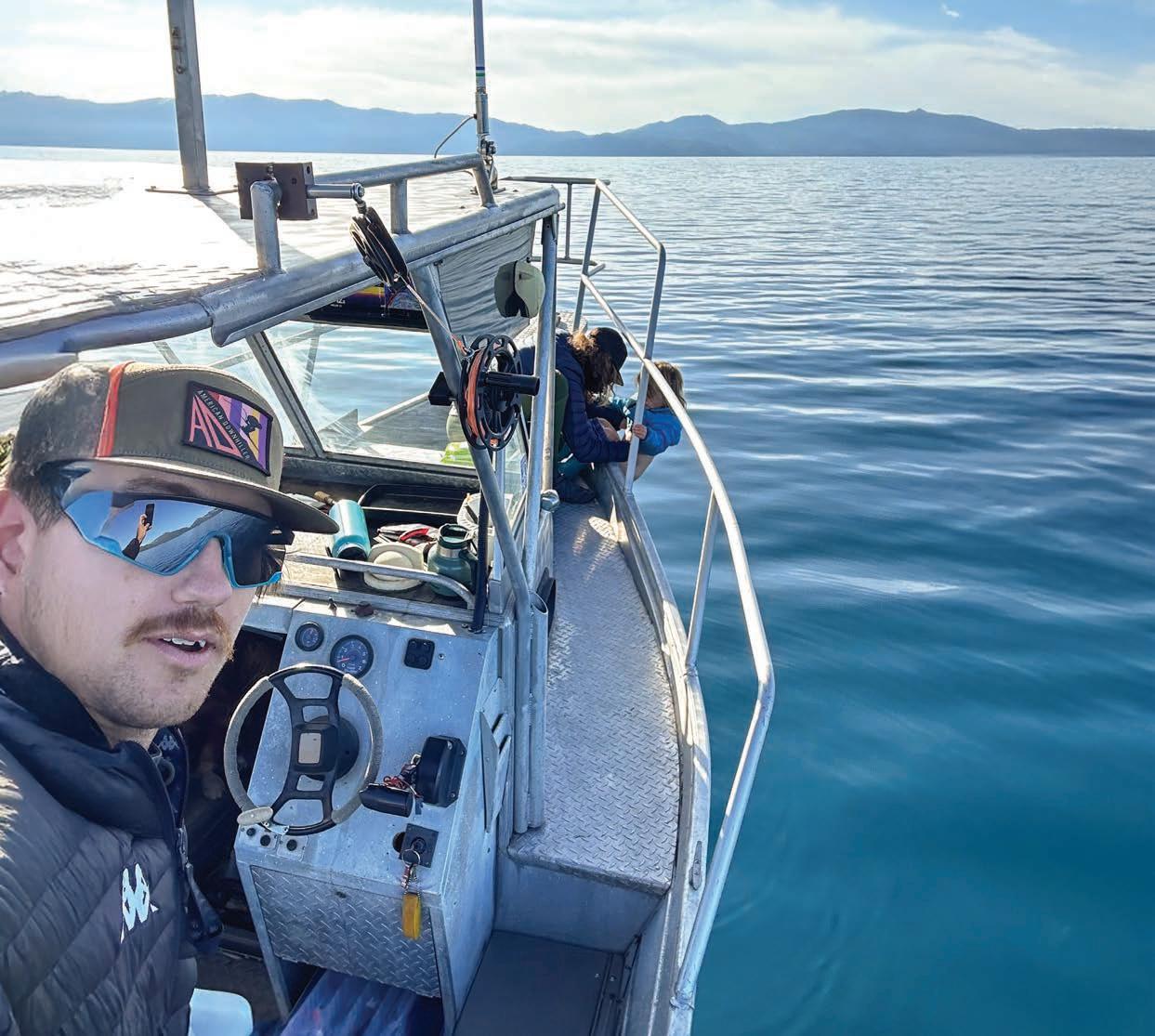
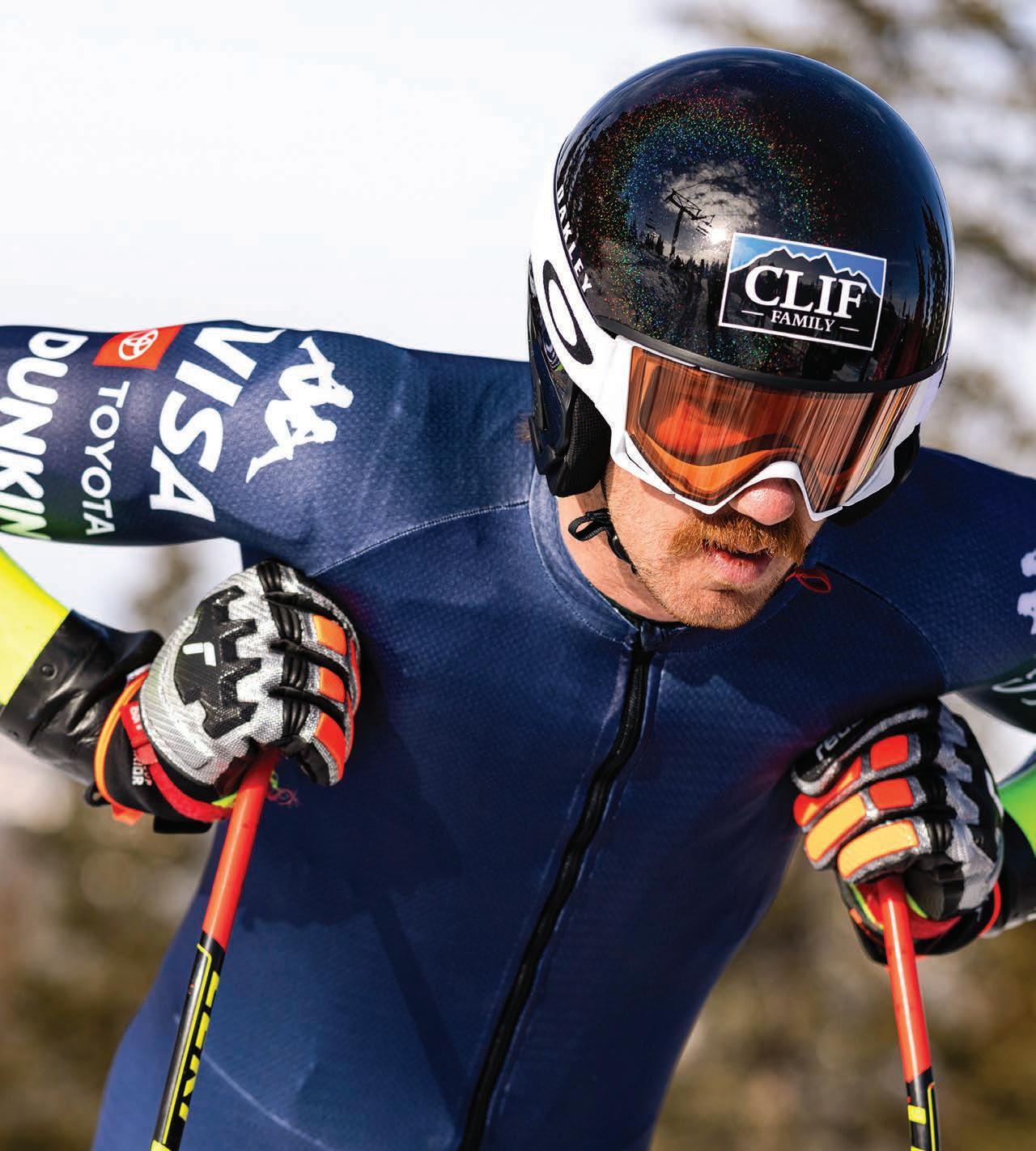
Between the snow-covered slopes of the high Sierra mountains to their trails, backcountry camping spots and hungry fish in the big lake and nearby streams, Bryce Bennett can truly say the Tahoe area shaped who he’s become today. And the 33-year-old will get his third chance to showcase his world-class skiing skills at this month’s Winter Olympics. Before heading to Cortina, Italy, Bennett chatted with Tiffany Herrington about his work-hard, play-hard backstory.
Spring goose hunts perfect for gun dog training
Imagine a trout fishery where 10-pounders are common and fish over 20 pounds are practically a weekly occurrence. That’s late winter and early spring at Pyramid Lake in a nutshell. The northwest Nevada lake is renowned for its monster Lahontan cutthroat, and with February marking the start of the three-month-long trophy season for bank and boat anglers, Cal Kellogg sets you up for success!
With Valentine’s Day approaching, Tim Hovey readily admits he’s been lucky in life and love. What began as a chat with a gal fishing off the back of a research boat in the Channel Islands blossomed into a romance with lifelong fishing companion and wife Cheryl, and it’s hit new highs as this happy couple has started hunting together. Love – plus flying doves – is in the air!

We hope you enjoy Tiffany Herrington’s profile of Olympic skier Bryce Bennett in this month’s issue (page 12). The Winter Olympics are such a unique and special event, and it allows us football-, baseball- and basketballobsessed fans to pay homage to Americans excelling in other sports our country mostly ignores – except every four years.
I know I’ll be just as excited to watch some bobsledding, curling and speed skating as the return of National Hockey League players to the Olympics ice hockey tournament in Milan, Italy. And alpine skier Bennett will be on my radar after Herrington got to know the Lake Tahoe native and two-time Olympian. Bennett being from Tahoe, a place that has so much meaning for me and my family for our annual trips there, makes him that much more intriguing.
In terms of Bennett’s Lake Tahoe background, I only have one moment that can relate to his skiing roots. For our family, winter and Tahoe weren’t synomous most years. We were part of the Bay Area’s summer crowds that flocked to the high Sierra for swimming, hiking, fishing and boating. I do share Bennett’s love of the fishing spots in and around Lake Tahoe and its outlet, the Truckee River. So many wonderful memories of wetting a line in those waters ...
I only made it to the lake’s snowy season once, when I was in college with a couple of buddies during Christmas break for a two-night trip. I knew I wasn’t a skier before the trip – my snow days were usually spent further south around the Sonora area and limited to riding inner tubes down modest hills – but I did agree to rent ski gear along with my friends.
We only made it to the slopes one day, at famed Tahoe ski playground Heavenly Mountain Resort. As a big guy I knew I’d be in trouble once I got my bindings on and attempted to ski down a bunny slope. Needless to say, I spent more time in the comfort of the lodge bar than I did on the skis. But it was a fun experience I wouldn’t trade for the world.
On the north side of the lake, Squaw Valley –now known as Palisades Tahoe – was Bennett’s home mountain where he learned his trade as a world-class alpine racer. It also happens to be the site of a previous Winter Olympics in 1960. My only visit there was, of course, in summer. One year my dad’s annual car club show and swap meet was held on the grounds of the ski resort.
I was too young to appreciate the sports history that happened at Squaw Valley, which had its own “Miracle on Ice” when an unheralded Team USA ice hockey club won an unexpected gold medal. It was less storied than the now iconic group that stunned the mighty Soviet Union and won gold in 1980 in Lake Placid, New York, but it was no less remarkable. I do remember how gorgeous that corner of Lake Tahoe was, even in the summer heat with snow not covering every inch of ground.
Now it’s time to savor another Winter Olympics, and I’ll pull for the Tahoe kid to make his country proud in Italy. -Chris Cocoles
skier Bryce Bennett will head to his third Winter Olympics this month in Milan-
Italy. The Lake

1-4
Falconry take of waterfowl (ducks only) season dates in Colorado River Zone
1-6, 12-20 Late white geese season dates in Imperial County
5 Late white and white-fronted geese season opens in Northeastern Zone
7 NorCal Trout Challenge, San Pablo Reservoir (anglerspress.com/events/ norcal-trout-anglers-challenge)
7-8
Falconry take of waterfowl season dates in Balance of State, Southern San Joaquin Valley (ducks only) and Southern California Zones
7-8 Colorado River, Balance of State, Southern San Joaquin Valley and Southern California Zones Youth Waterfowl Hunting Days
14 Golden State Salmon Association Crab Feed Fundraiser, Marin Rod and Gun Club, San Rafael; (goldenstatesalmon.salsalabs .org/2026CrabFeed/index.html)
14-15 Late Canada geese season dates in Balance of State Zone
14-18 Late white-fronted and white geese season dates in Balance of State Zone
21 NorCal Trout Challenge, Rancho Seco Reservoir (anglerspress.com/ events/norcal-trout-anglers-challenge)
27-March 1 NorCal Boat, Sport & RV Show, Shasta District Fair and Event Center, Anderson (exposureshows.com)
27-March 1 Fly Fishing Show, Alameda County Fairgrounds, Pleasanton (flyfishingshow.com/pleasanton-ca)
7 Kokanee Power Crab Feed Fundraiser, Ione (kokaneepower.org)
10 Last day of North Coast Special Management Area Canada geese and Northeastern Zone late white and white-fronted geese seasons
15 Last day of falconry rabbit and varying hare season
21 NorCal Trout Angler’s Challenge, San Pablo Reservoir (anglerspress.com/ events/norcal-trout-anglers-challenge)
21 Blake Jones Trout Derby, Owens River and Pleasant Valley Reservoir, Bishop (bishopvisitor.com/event/blake-jones-trout-derby)
21-22 Junior wild turkey hunting weekend dates
28 Spring general turkey season opens
For a list of upcoming bass tournaments, go to nrm.dfg.ca.gov/FishingContests/ default.aspx.
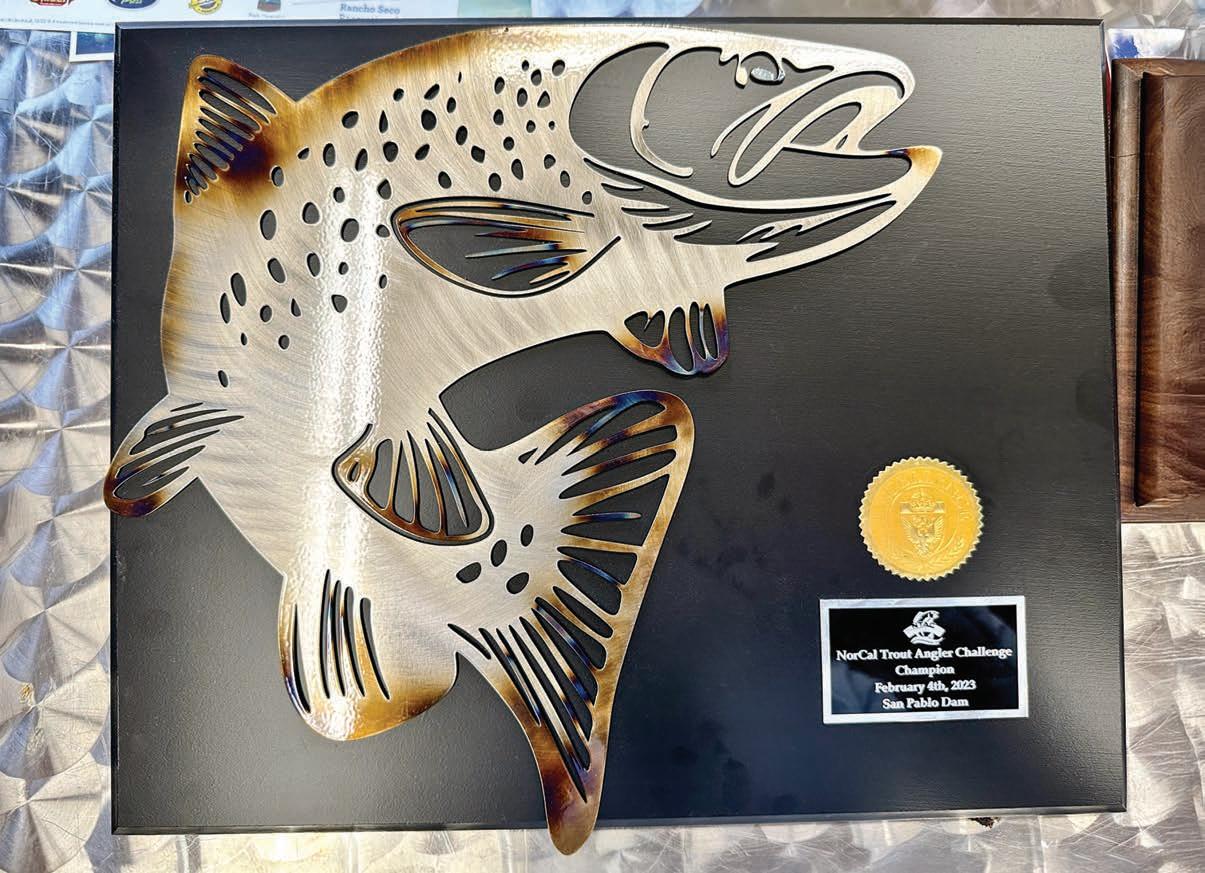
San Pablo Reservoir hosts the latest stop on the NorCal Trout Angler Challenge tour on February 7. Go to anglerspress.com for more information. (CHRIS COCOLES)
By Tiffany Herrington
Bryce Bennett grew up the way many outdoor-minded parents once hoped their kids would: loose in the mountains, trusted to roam and free to learn the terrain on his own terms.
In the Lake Tahoe region of
Northern California, that kind of upbringing was still possible. Long summer days meant disappearing into the woods with friends. Winters meant skiing hard until the lifts closed and then finding a way to squeeze in one more run.
“My parents let me roam and explore the outdoors unsupervised
starting when I was pretty young,” Bennett says. “Tahoe was the perfect playground to explore.”
That freedom shaped more than his childhood. It built the foundation for a life defined by movement through wild places, whether at 80 miles per hour down a World Cup downhill course or waist-deep in cold water on a Sierra stream.
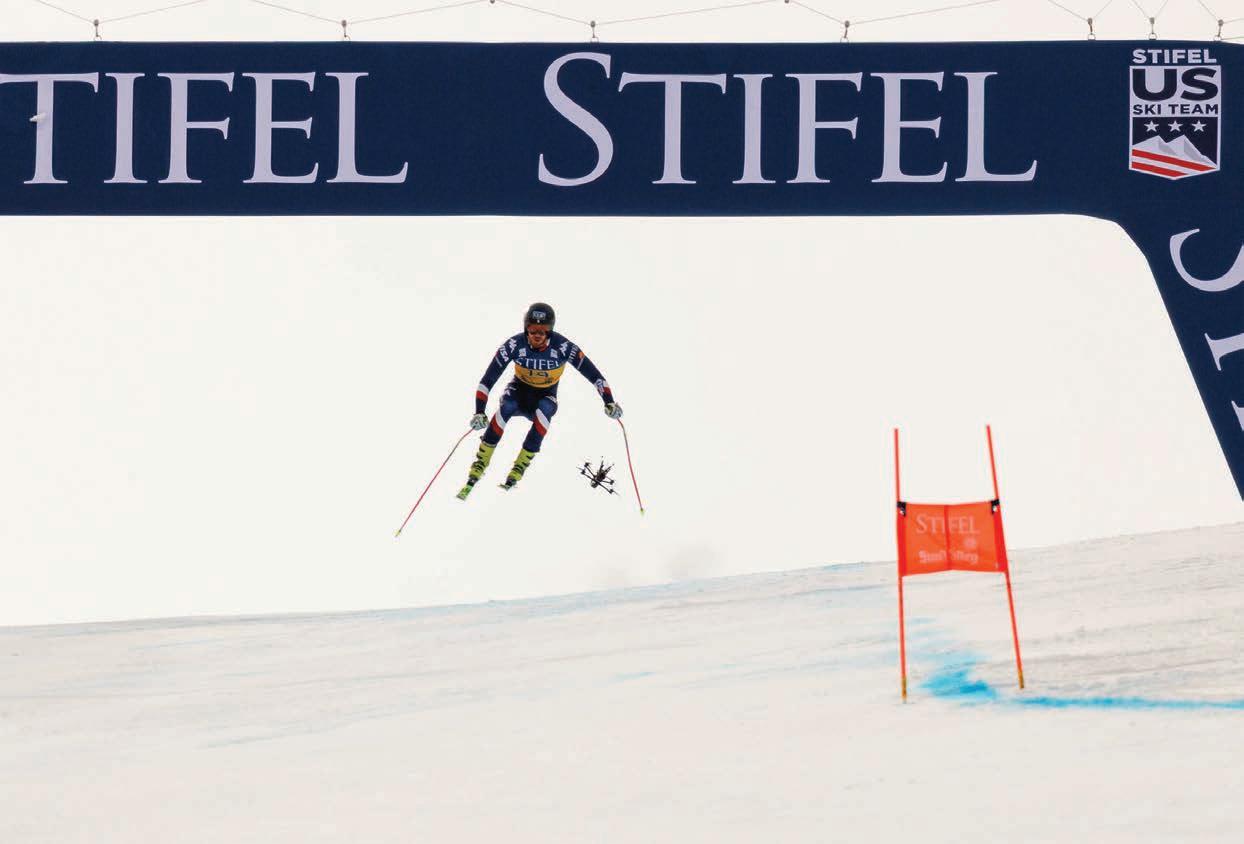
Today, Bennett is one of the most recognizable figures on the U.S. men’s alpine speed team and is known for his towering frame (6 feet, 7 inches), powerful skiing and hard-earned success at the highest level of the sport. But away from the podiums and start gates, he is equally defined by fishing rods, remote campsites and a deep desire to understand the landscapes he moves through.
The peaks around Tahoe are not
gentle terrain. The mountains rise steeply from the lake, the snow can be heavy and unpredictable, and the backcountry demands respect. For Bennett, that environment became a classroom.
“My friends and I were always running around the mountains in the summer and skiing hard in the winter,” he says. “That type of terrain shaped my love for the mountains.”
That early immersion fostered a comfort with exposure and consequence that would later become essential in downhill ski racing, where speeds, conditions and terrain leave no room for hesitation. It also sparked a lifelong curiosity about what exists beyond the trailhead.
“I enjoy getting to places that very few people get to,” Bennett says.
If skiing defined Bennett’s winters,
fishing shaped his summers. He was, by his own account, raised with a fishing rod in hand. While many Tahoe families gravitated toward waterskiing and wakeboarding on the lake, his mornings often started hours before sunrise.
“My family was on the lake at 4 a.m. catching lake trout,” he says.
As he grew older, that passion deepened. Driving opened access to rivers and creeks throughout the Eastern Sierra. Fly fishing became an obsession, and then boats expanded his range even further. Today, Bennett owns two vessels: a 22-foot Valco Bayrunner cuddy cabin and a rugged 12-foot Klamath, each suited to different waters and seasons.
“Fishing is a lifelong adventure,” he says. “It gives me the opportunity to check out of skiing and plug into another passion with the same commitment.” That commitment mirrors his
approach to racing. Fishing, like downhill skiing, rewards preparation, adaptability and an intimate understanding of the environment.
When Bennett talks about the outdoors, one word comes up repeatedly: competence.
Bennett and his wife Kelley share a love of fishing. The couple has added a baby girl to their family. “I’d like my daughter to find a passion for the outdoors,” he says. (BRYCE BENNETT)
He approaches remote lakes and backcountry zones with the mindset of a craftsman.
“When I backpack into a remote lake, I don’t want to just catch a fish,” he says. “I want to be able to catch every fish and give them a name.”
That depth of engagement is familiar to anyone who spends serious time hunting or fishing. Success comes not from luck, but from attention to detail and respect for the system you are moving through.
Downhill ski racing is often misunderstood as reckless speed. In reality, it is a discipline rooted in adaptation. Conditions change by the hour. Light shifts. Snow texture evolves. Wind alters line choices.
Bennett sees a direct parallel between racing and time spent outdoors.
“If you’re fishing or hunting, you can’t be afraid to try new approaches or techniques,” he says. “It’s the same with skiing.”
Adaptability, more than patience, is the skill he values most. While patience is required to endure long days in tough conditions, adaptation determines success.
“There are no excuses for not adapting to what the conditions are offering you that day,” Bennett says.
That mindset has served him well throughout a career marked by persistence and gradual progress rather than overnight stardom.
“I enjoy the feeling of being competent in the outdoors and going outside with a purpose, whether that’s to harvest an animal or catch a fish,” he says.
It is not enough for him to simply arrive in a wild place. He wants to learn it fully: fish behavior, habitat patterns, movement through terrain.
Bennett credits much of his skiing foundation to growing up at Squaw Valley, now Palisades Tahoe, where coaches encouraged young racers to free ski and fall in love with the sport beyond structured training.
“We of course trained (with) gates,” he says, “but really learned to ski on all the terrain that Palisades has.”
That freedom produced skiers who could move confidently through variable snow, steep faces and natural features. It also reinforced skiing as something more than competition.
Those lessons remain with him today, especially during long stretches on the road, where skiing can begin to feel transactional rather than joyful.
Bennett’s idea of a perfect day outdoors has evolved. Early in his career, success was measured in size and numbers: a heavy lake trout, a deer on the ground. Now, fulfillment comes from shared experience.
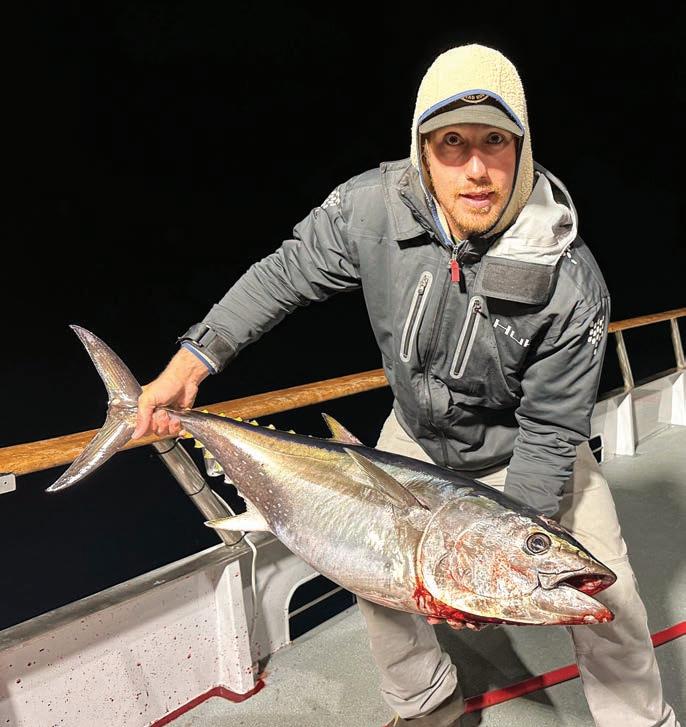
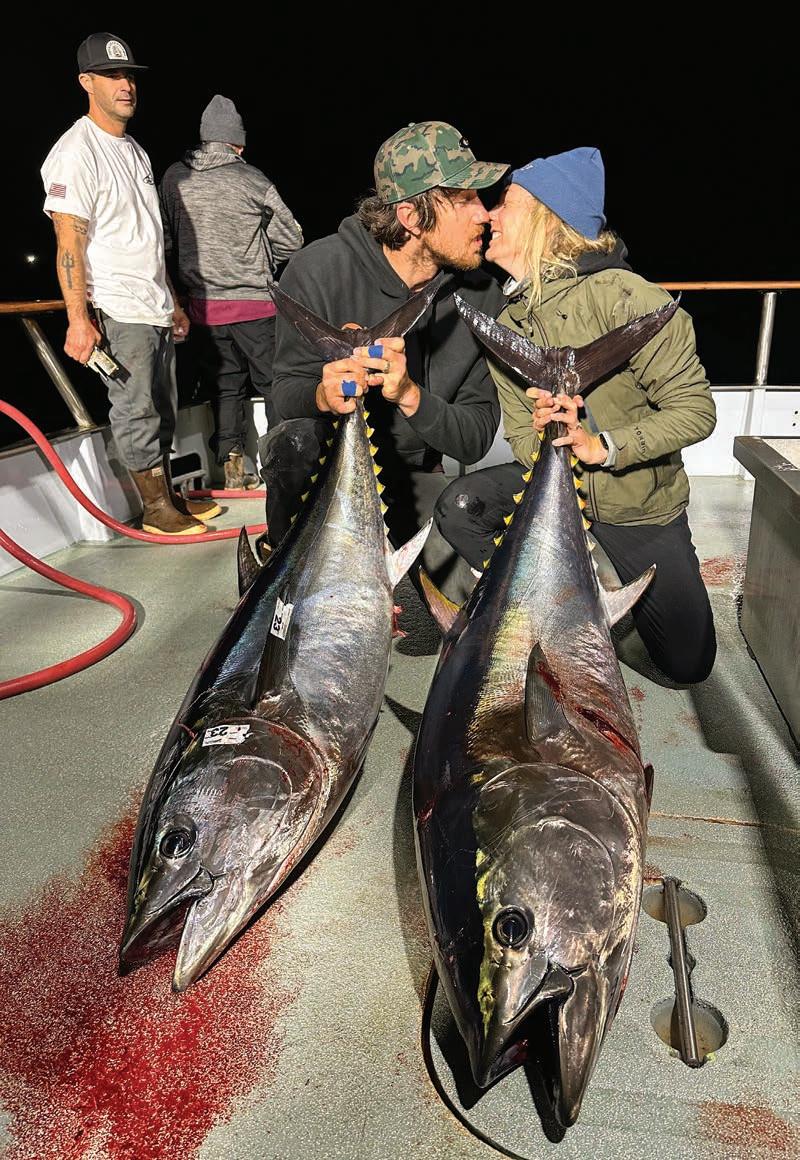
“One of my favorite days was a four-day long-range fishing charter out of San Diego,” he recalls.
On a late-night stop for bluefin
tuna, both he and his wife Kelley hooked fish at the same time, the only two on the boat to do so.
“I couldn’t stop thinking about how cool it was to see my wife find that kind of success and share that experience together,” he says.
That shift reflects a broader change in perspective brought on by marriage, fatherhood and time.
As the season builds toward the Milan Cortina Winter Olympic Games that begin on February 6, Bennett’s approach remains steady as he
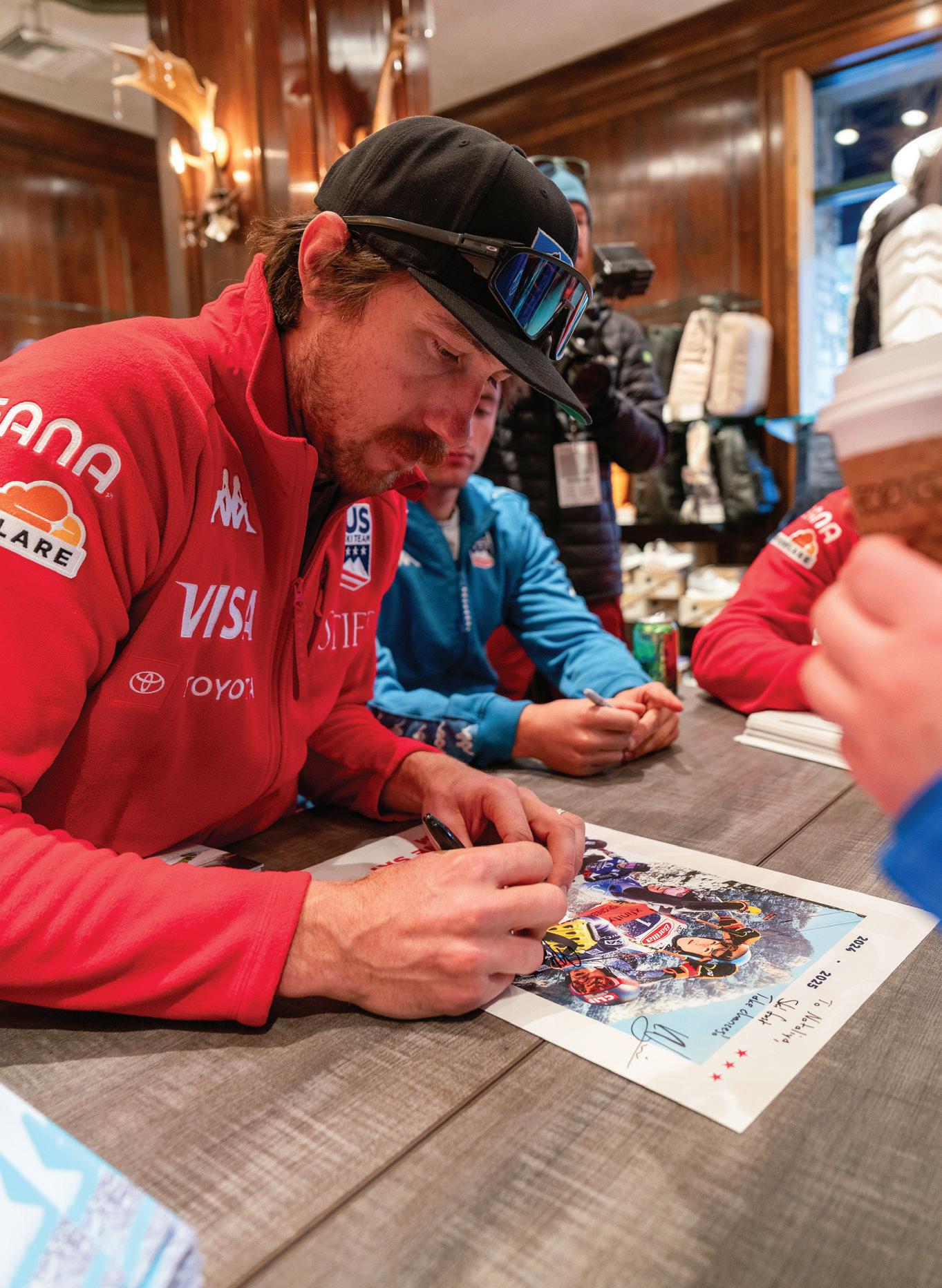
prepares for his third Olympics. Bennett competed in the downhill and super-combined at 2018’s Winter Games in Pyeongchang, South Korea, then returned for 2022’s Olympics in Beijing, China, racing in the downhill and the super-G. He finished 10th in the 2025 World Championships in the downhill, his top placing in that event since 2019. Bennett also has two wins and reached three medal podiums in World Cup races, but it’s just one chapter in his story.
“Ski racing is what I do. It is not who I am,” he says.
He does not treat Olympic years differently. His goal is simple: to be faster than the season before. That consistency is grounded in balance.
Spending roughly 200 days a year on the road makes summers at home in Tahoe essential. Those months allow him to fish, hunt, camp, and reconnect with the places that anchor him.
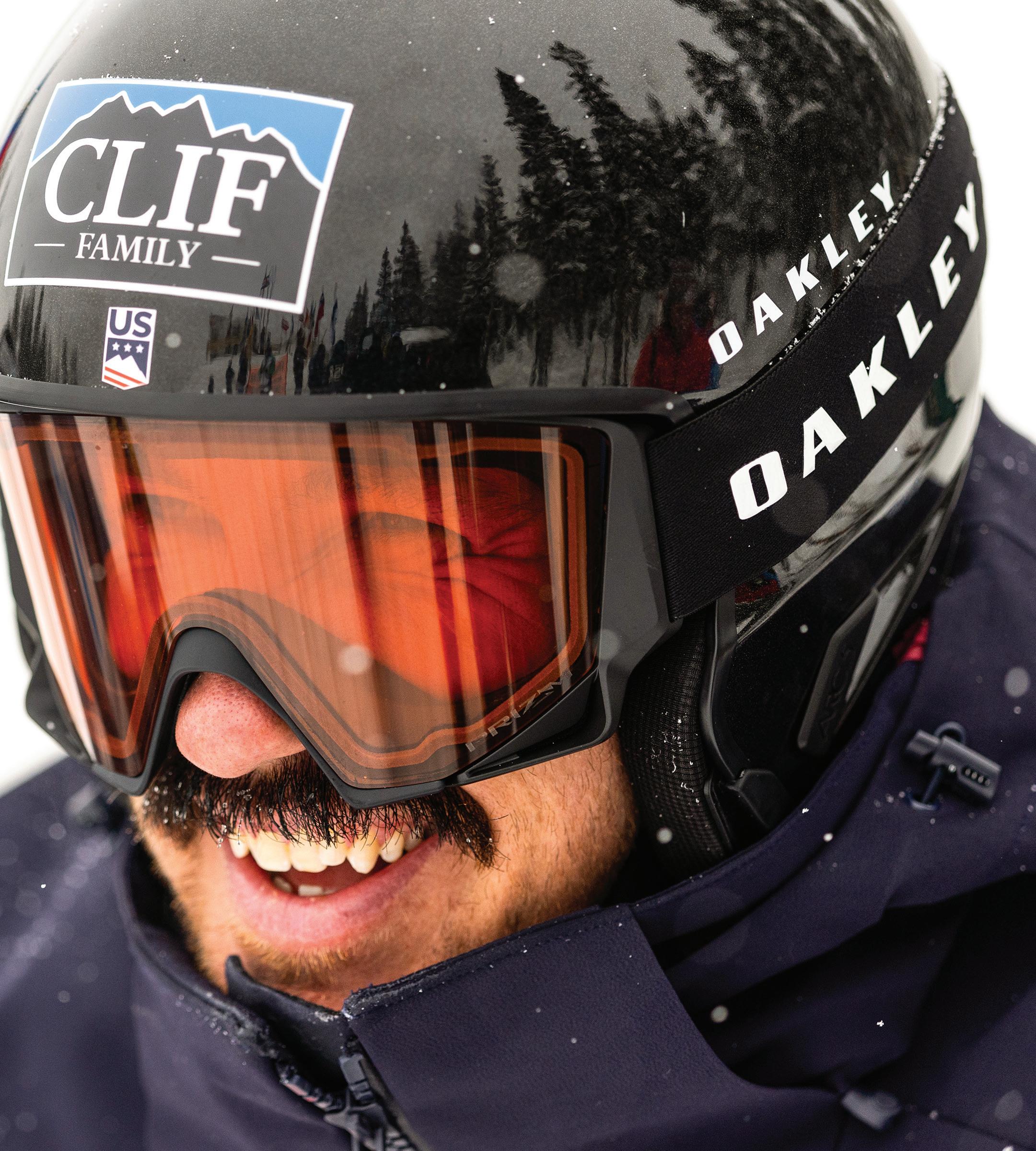
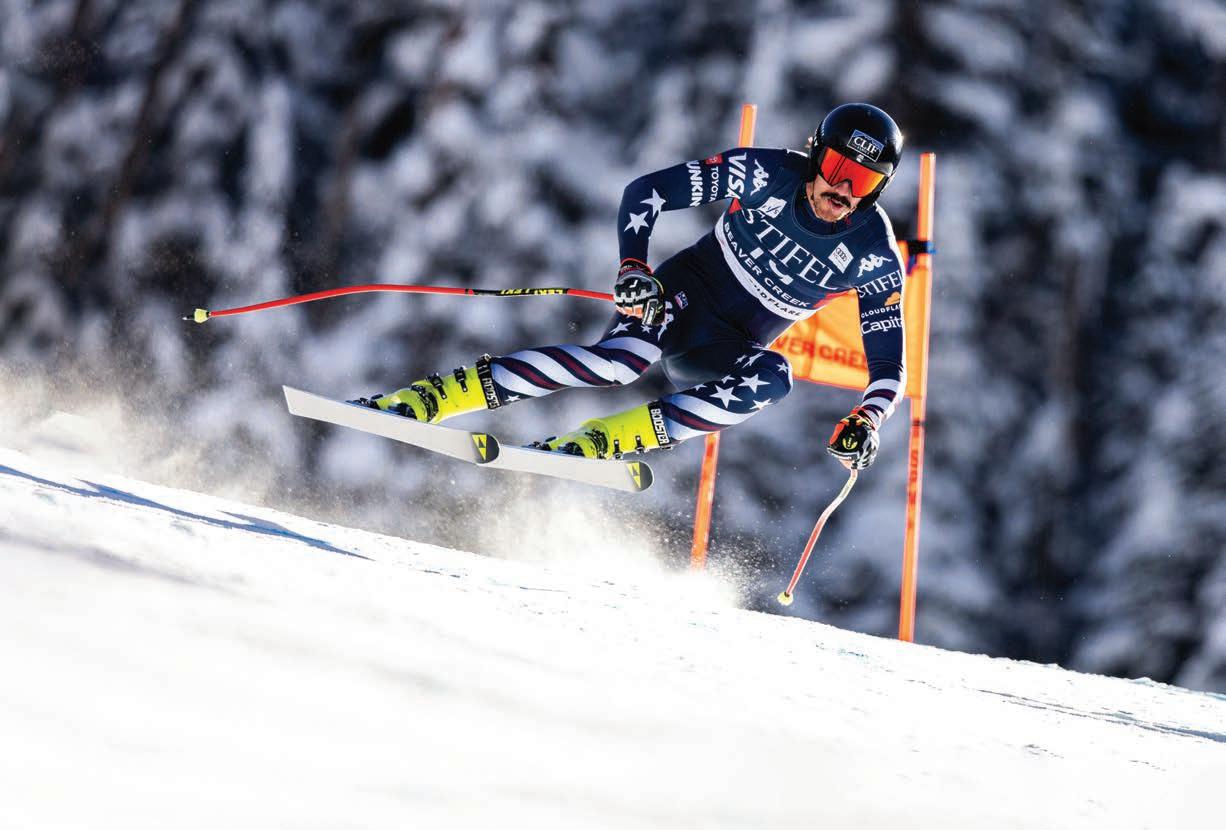
Now a veteran of some of the most thrilling and dangerous runs around the world, it was at his home ski resort of Palisades (formerly known as Squaw Valley) where Bennett honed his craft. “We of course trained (with) gates,” he says, “but really learned to ski on all the terrain that Palisades has.” (US SKI & SNOWBOARD)
“That time at home gives me a break from thinking about skiing all the time,” he says.
Success, for Bennett, is not defined by medals or rankings alone. It is found in the care given to preparation and the honesty applied to self-assessment.
“Results are great,” he says, “but the attention to detail you give your work is what really matters.”
As a father, that philosophy extends beyond sport.
“I’d like my daughter to find a passion for the outdoors and to develop a willingness to be honest with herself. Developing strong personal character and a solid moral compass is more important than any gold medal, big deer or personal-best fish,” he says.
When asked to name a place in the
outdoors that holds special meaning for him, Bennett points to one region he returns to again and again.
“Most of my memories are on the water or in the mountains,” Bennett says. “I really enjoy camping in the Eastern Sierra. That, to me, is my special place.”
It is a fitting answer for someone whose life has been shaped by terrain, weather and the pursuit of competence in wild spaces. Whether racing downhill at the highest level or quietly studying a remote lake, Bryce Bennett remains grounded in the same values that guided him as a kid roaming Tahoe’s mountains. CS
Editor’s note: Alpine skiing at the Milan Cortina Winter Olympics begins on February 7. For more on Team USA’s alpine skiing team, go to usskiandsnowboard .org/alpine. Follow Bryce Bennett on Instagram (@BryceBennett).


By Cal Kellogg
When I look back on my fishing career, a huge percentage of my memories revolve around trout. I’ve been chasing them for decades, designed and marketed a number of trout lures over the years and spent a big chunk of my professional life
guiding anglers specifically for trout. Does that make me some sort of trout expert? Not even close.
No matter how many fish you’ve caught or how much time you’ve logged on the water, there’s always more to learn. That’s one of the things I love most about trout fishing; it’s endlessly humbling.
That said, like anyone who’s
spent a serious amount of time pursuing a single species, I’ve picked up on some little details that often make a big difference. These are the kinds of things you don’t always find in instruction manuals or tackle catalogs. Some of them I learned the hard way through trial and error, and others came from fishing alongside great anglers and
professional guides.
With reservoir trout fishing in full swing and the spring stream opener right around the corner, it feels like a good time to share a few of the tactical edges that consistently help me catch more trout.
Let’s start with line, because it’s one of the most overlooked and most important components in trout
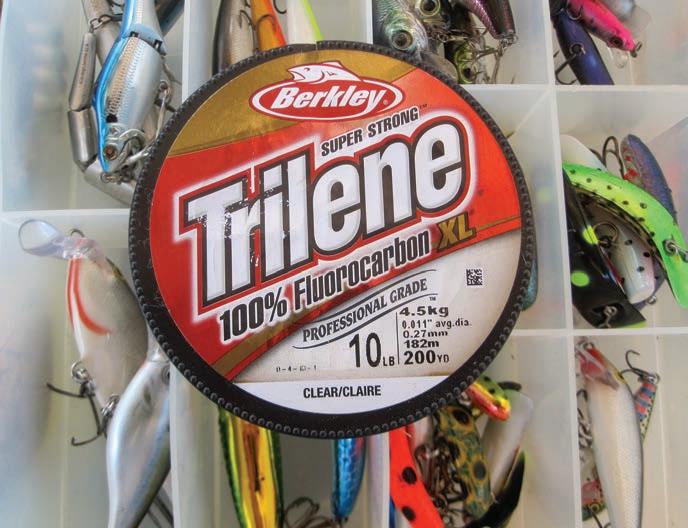
fishing. There are times when trout are not line-shy at all. You could fish 30- or 40-pound monofilament and probably still get bit. But there are other days – and anyone who fishes long enough has experienced this – when trout become unbelievably selective. On those days, they’ll ignore everything unless it’s presented on ultralight, nearly invisible line.
For years, the only solution was dropping down to finer and finer
monofilament. These days we’ve got a much better option: fluorocarbon. Fluorocarbon is expensive, but in many situations it’s worth every penny. The reason is simple: Fluorocarbon lines reflect light at nearly the same rate as water, which makes it extremely difficult for fish to see. In practical terms, that means you can fish 6- or 8-pound test and enjoy a level of stealth that mono just can’t match.
Sometimes I’ll spool an entire reel with fluorocarbon, especially for finesse applications. Other times I’ll run a mono mainline and add a fluorocarbon leader to save money. Either way, I almost always incorporate fluorocarbon somewhere in the system. You can’t predict when trout will suddenly become line-shy, so it makes sense to stack the odds in your favor on every trip.
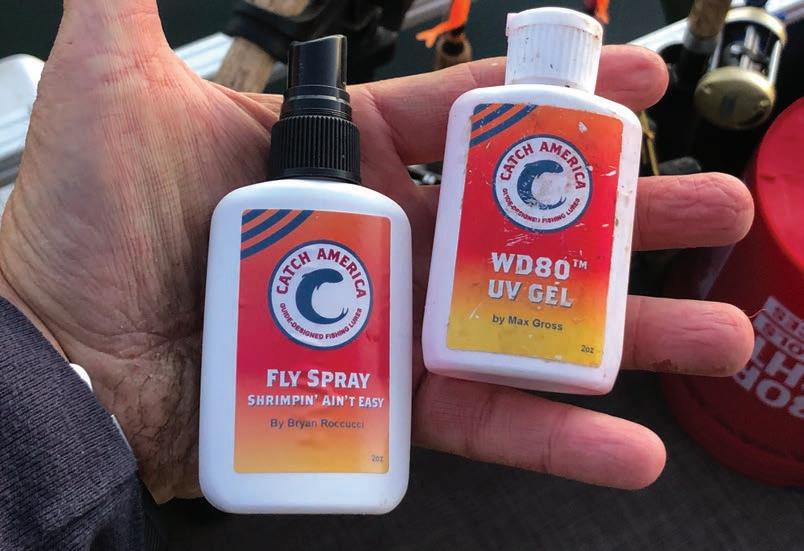
Another topic that generates endless debate is scent. Some trout anglers swear by it; others insist it’s useless. From my experience, both camps are partially right. There are days when scent doesn’t seem to matter at all, and there are days when it makes a dramatic difference. What I’ve never seen, however, is a situation


where using scent actually reduced the number of trout being caught. Because of that, I almost never fish for trout without it.
Modern fish scents generally fall into three categories: oils, gels and pastes. Gels and pastes are my go-to for artificial lures like plugs, spoons, spinners, flies and soft plastics. They cling well, last a long time and continue to release scent whether I’m trolling, casting, drifting or still
fishing. When I’m trying to imitate a specific forage base, I’ll match the scent accordingly. If trout are feeding on shad or pond smelt, I’ll use a corresponding baitfish scent.
Oils work a little differently. If you coat a lure with oil, it washes off fairly quickly, but oils really shine when used internally. When I’m slow-trolling or rolling dead bait like anchovies or shad, I’ll soak them in oil and often inject them as well. When
I’m bank fishing, especially in cold water when trout are lethargic, I like to inject nightcrawlers with bait oil. Most bank anglers inflate worms with air to float them off the bottom, but oil is lighter than water, too, and it creates a slow, steady scent trail as it seeps out. That little trick has saved more winter days for me than I can count.
Hooks are another piece of the puzzle
that deserve more thought than they usually get. No hooks, no hookups, no fish – simple as that. But the style of hook you use can dramatically affect how many fish you actually land. Personally, I’m not a big fan of treble hooks. I use them when necessary, but whenever I have the option, I switch to single hooks.
A lot of bank anglers believe trebles are mandatory for dough baits, but I’ve had better success using small octopus hooks in sizes 8, 10 or 12. A treble looks intimidating, but in reality it’s just three tiny hooks. Trout have soft mouths, so hooks with tiny points will tear out much more easily than a single, slightly larger hook that penetrates deeper. When I hook a trout on an octopus hook, they almost never come unbuttoned.
The same logic applies to spoons and spinners. Most come factoryrigged with trebles, but if I had more patience, I’d replace every one of them with needle-sharp single hooks. Trout that hit a lure with a treble often get hooked near the outside of the mouth. Trout that hit a single-hook lure tend to inhale it, which results in better hook placement and far fewer lost fish.
Like most anglers, I enjoy throwing big baits because big baits often produce big fish. Most of the time that logic holds up, but not always. When the fishing gets tough and strikes are scarce, downsizing can completely change the game.
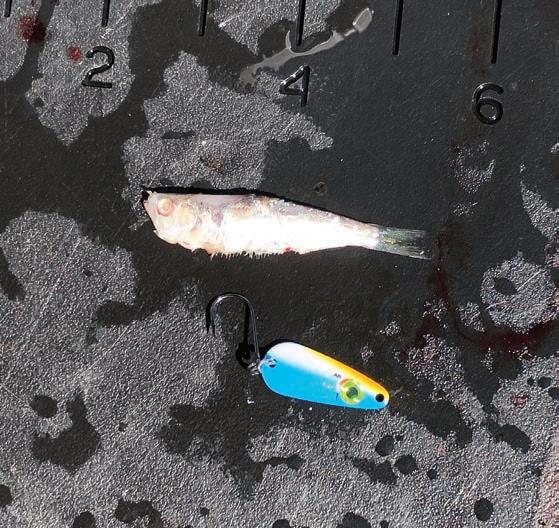
If you’re swinging a size 10 Woolly Bugger in a stream with no success, try a size 16 or 18 nymph. If trout won’t touch a whole worm, switch to a single egg or a small insect. In lakes and reservoirs, if 3-inch minnow plugs and 2-inch spoons aren’t working, dropping down to a 1-inch grub or a lightly dressed marabou trolling fly can suddenly make you relevant again.
One of the most interesting things
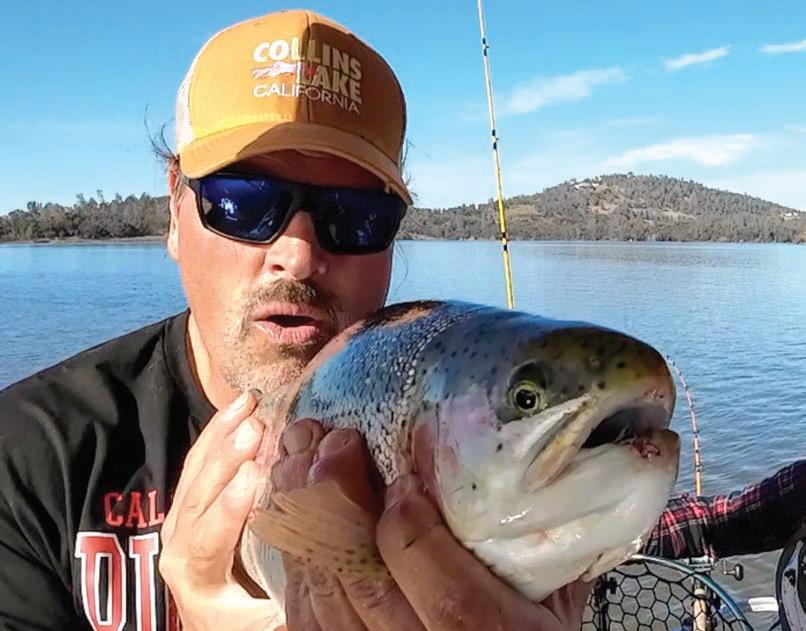
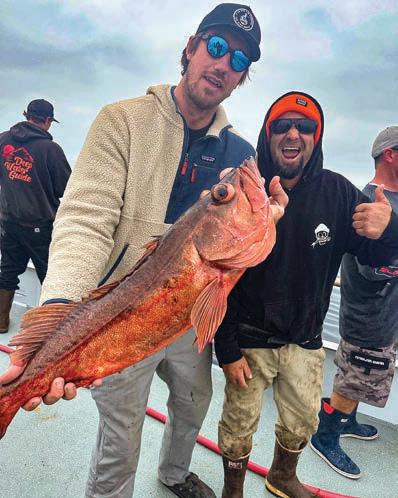
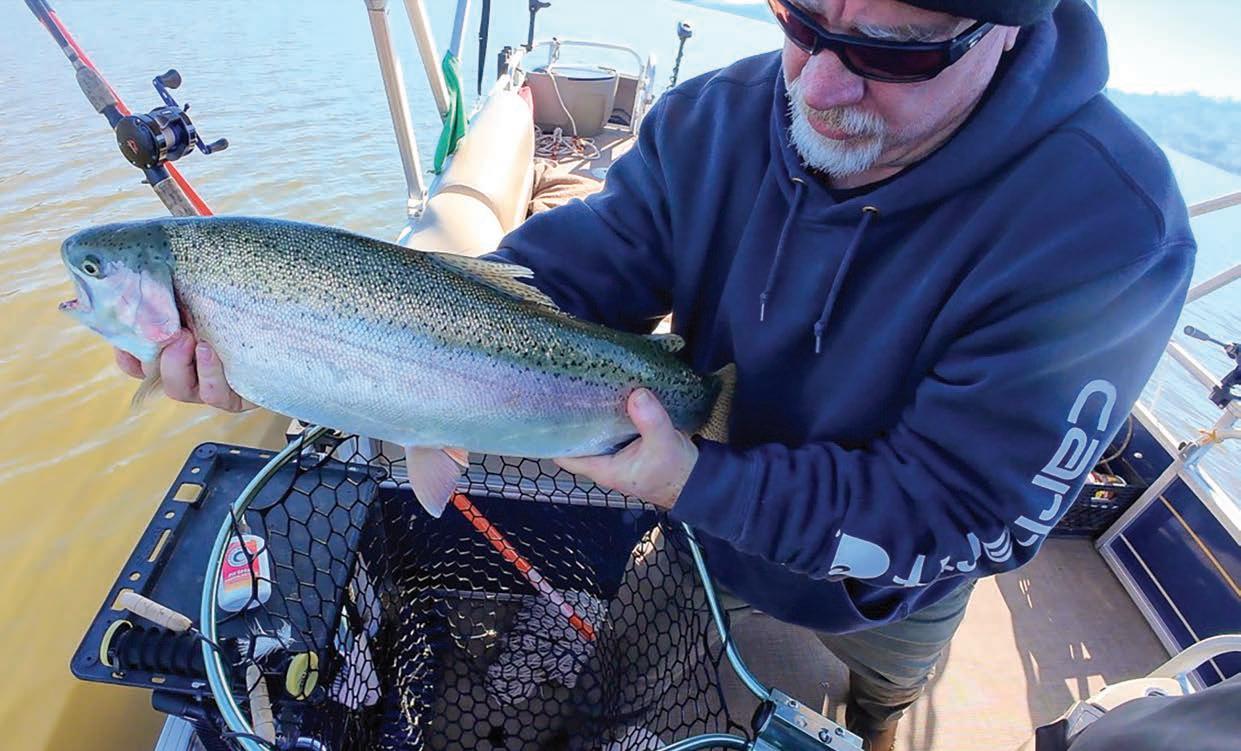
“No matter how many fish you’ve caught or how much time you’ve logged on the water, there’s always more to learn,” Kellogg writes of becoming more trout-savvy. “That’s one of the things I love most about trout fishing; it’s endlessly humbling.” (CAL KELLOGG)
about trout is that they learn. Fish absolutely get conditioned. When they see the same lures day after day, especially in heavily pressured waters, they begin to associate those shapes, colors and actions with danger. That’s when the “herd mentality” of anglers starts to hurt everyone. If all the trout are being caught on 2-inch orange spoons, guess what everyone throws? Two-inch orange spoons. It works for a while, until the fish wise up.
The trick is to separate yourself from the herd. Show the fish something different. If everyone is trolling Rapalas, pull a Needlefish. If everyone is fishing slow, speed it up. If everyone is throwing metal, try plastic or flies. New stimuli are hard for fish to ignore, even experienced ones. The goal isn’t just to fish well; it’s to fish differently.
I learned that lesson a long time ago at Hell Hole Reservoir near Lake Tahoe. The bite had been slow all day and everyone was trolling the same familiar lineup of large plugs and spoons. Then one guy – a casual angler with a tiny drugstore tackle box – tied on a frog-pattern Hula Popper.
Not exactly a classic Mackinaw lure. He clipped it to his downrigger, sent it down and promptly hooked an 18-pound lake trout. None of the socalled experts caught anything close to that fish all day.
Was the Hula Popper some magical new trophy lure? Of course not. But it was different. And to a big, old, heavily pressured fish, different can be irresistible. That one moment perfectly summed up what trout fishing is really about. It’s not just about having the right gear or knowing the right techniques. It’s about thinking, adapting, experimenting, and staying just one step ahead of the fish.
That’s what keeps trout fishing endlessly interesting to me. No matter how long you’ve been doing it, there’s always another lesson waiting out there – usually delivered by a trout that refuses to read the same rulebook you’re using. CS
Editor’s note: Cal Kellogg is a longtime Northern California outdoors writer. Subscribe to his YouTube channel Fish Hunt Shoot Productions at youtube.com/ user/KelloggOutdoors.
By Cal Kellogg
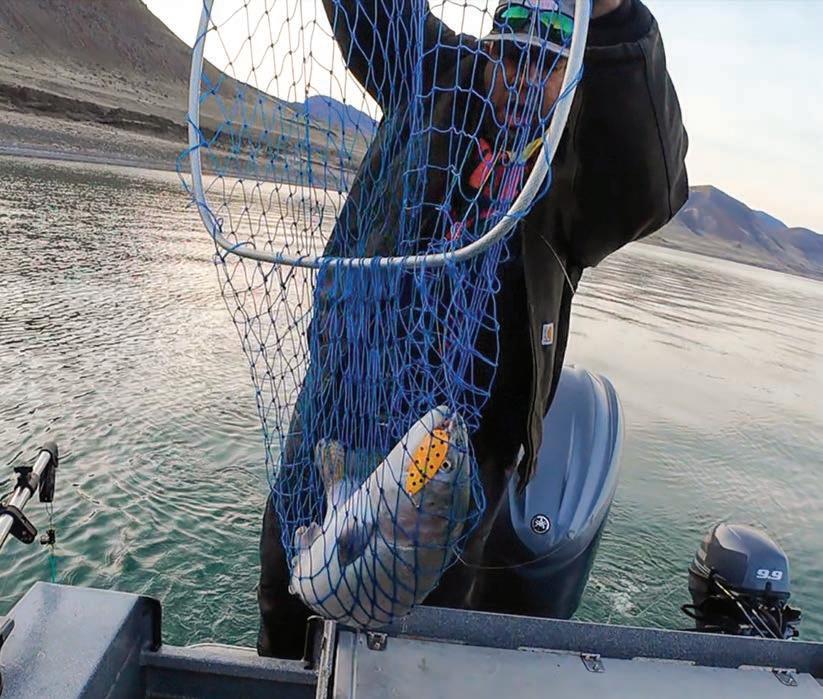
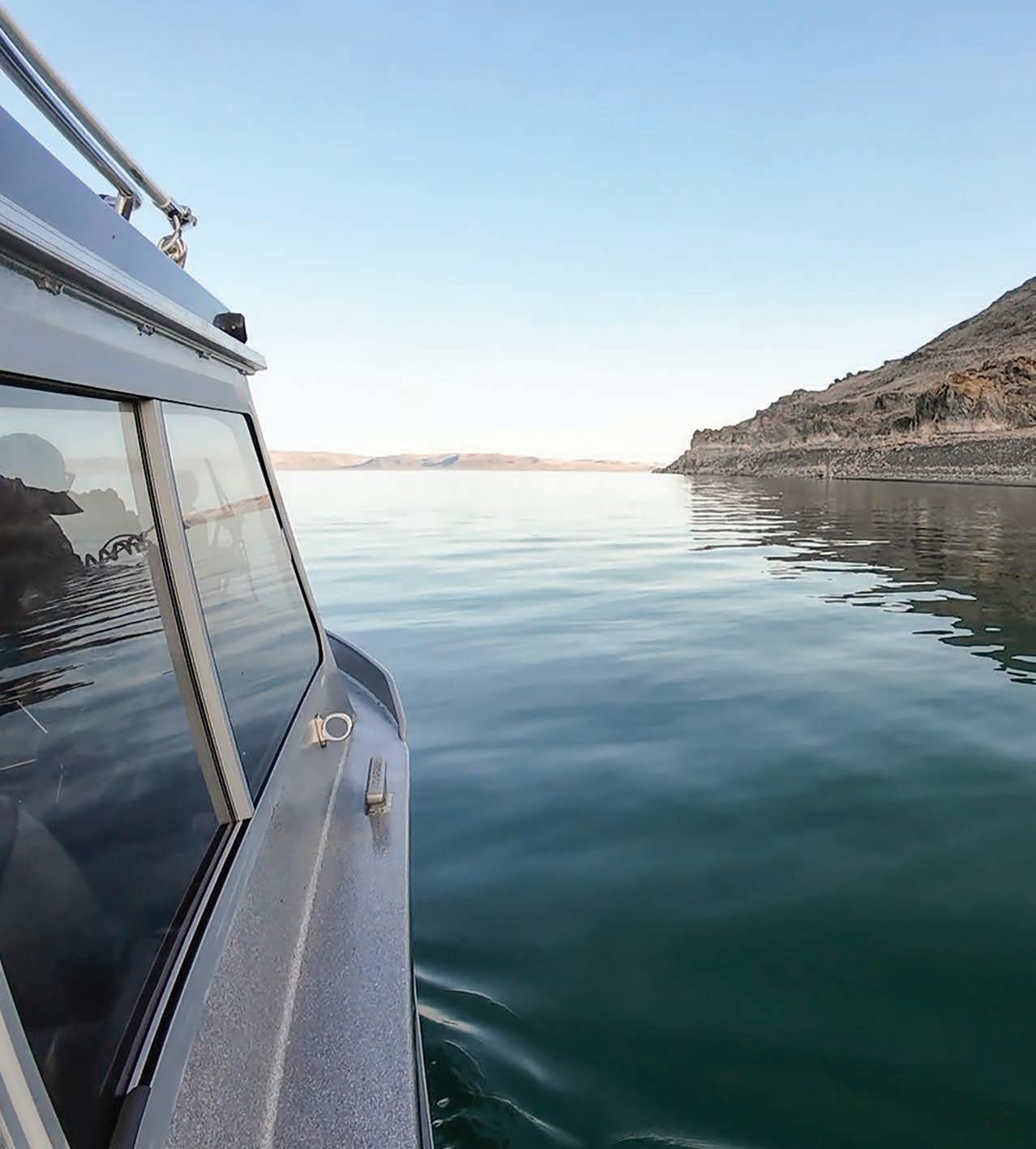
If you’re the kind of trout angler who’s bored by “good” fishing, Pyramid Lake will ruin you – in the best possible way.
This Nevada gem is a lake that turns grown men into ladder-hauling beach nomads, scanning wind lines like bird dogs and watching the horizon for that one rolling fish that signals everything is about to happen. And if you’re reading this in late winter, you’re right on time. February through April is the heart of Pyramid’s best season, when cold
water, heavy baitfish and prespawn instincts collide and those famous Lahontan cutthroat trout show up shallow and aggressive.
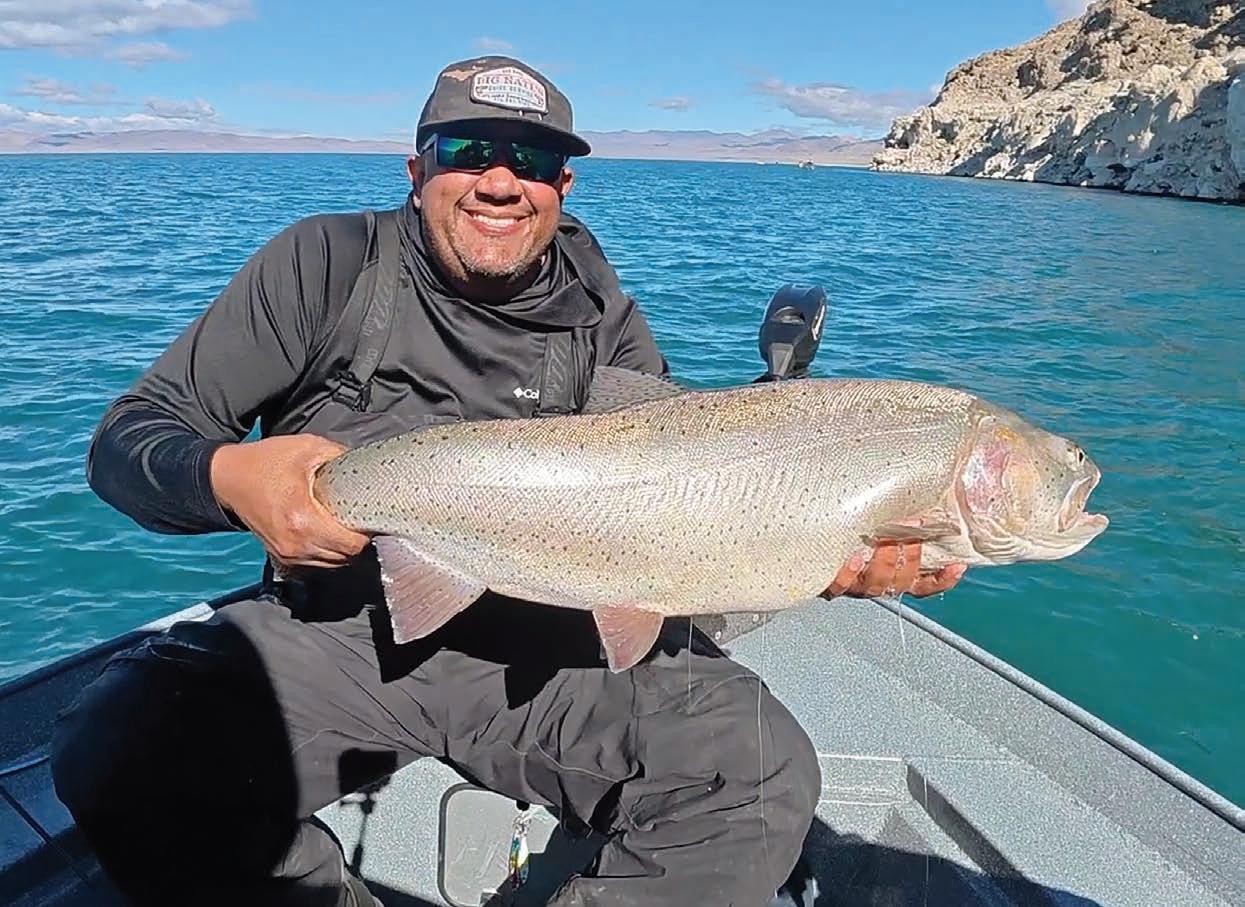
Pyramid, a short drive across the California-Nevada border near Reno, is not a numbers lake. It’s a next-bitecould-change-your-life lake. The fish are big, the weather is bigger and the learning curve is real. But if you want a legitimate shot at the best accessible trophy trout fishery in the West, this is your window. There are very few places where a 10-pound trout isn’t remarkable, and even fewer where a 15- or 20-pound fish is something you
can realistically plan for. Pyramid is one of those rare places.
HIGH-DESERT GEM
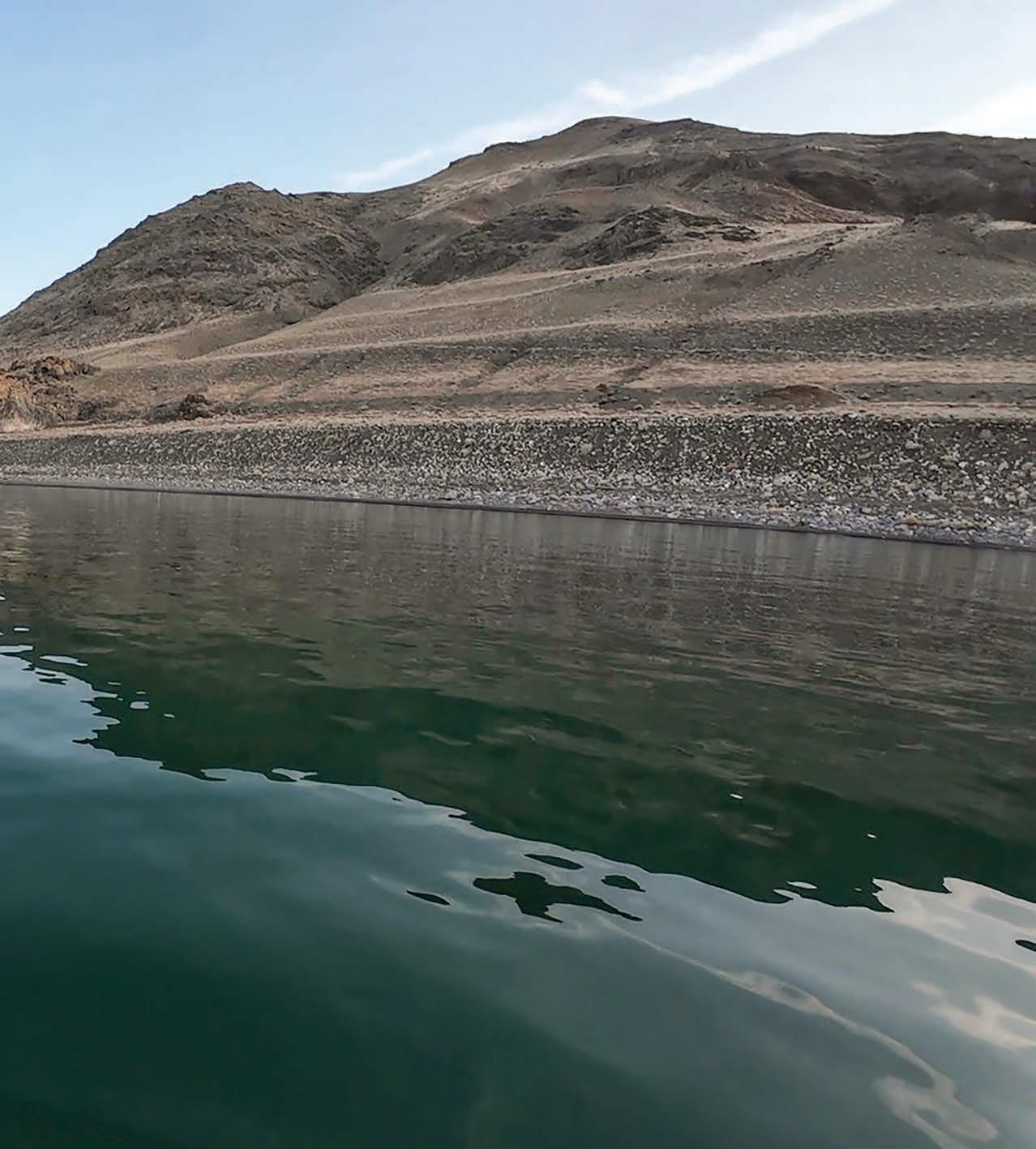
Pyramid Lake sits at the end of the Truckee River system and is a massive high-desert bowl of deep blue water located on the reservation of the Pyramid Lake Paiute Tribe northeast of Reno. Historically, Pyramid supported a unique lake-run strain of Lahontan cutthroat trout that migrated up the Truckee River toward Lake Tahoe to spawn. Those fish were legendary, but overfishing, water diversions
and dams eventually cut off their spawning access and helped drive the original Pyramid population to extinction by the early 1940s.
What followed is one of the great comeback stories in Western fisheries. Through hatchery programs and reintroduction efforts, Lahontan cutthroat were brought back to Pyramid Lake using fish associated with the Summit Lake strain and supported by continued
stocking and management. The modern result is the fishery we enjoy today, a trophy-driven destination where a 10-pound trout is not rare and where fish pushing well beyond that mark show up every season.
Pyramid is different from most trout lakes because everything about the system favors growth. It’s a large, nutrient-rich desert lake with abundant forage, especially tui chub, and long stretches of a cold-
water season. The fish have room, convenient food sources and time. And when Lahontan cutthroat get all three, they turn into footballs with fins. Add in the fact that many of these fish are caught in shallow water, where you can see the takes, feel the headshakes and watch the chaos unfold, and you’ve got a fishery that hits you square in the chest. This is not dainty, sipping-risers fishing. This is big trout hunting.
Access to Pyramid is straightforward, but the rules matter. You don’t need a Nevada state fishing license; you do need a tribal fishing permit, as well as a boating permit if you plan to launch. The lake is governed by tribal regulations, and two rules shape everything about how you fish there: All hooks must be barbless, and no bait or scent of any kind is allowed. That means no worms, no eggs, no PowerBaitstyle products and no added scent. Pyramid is an artificial-lure and flyonly game, and it rewards anglers who embrace that reality.
Seasonally, the cutthroat fishery typically runs from October through the end of June, but the prime window for many anglers is late winter into early spring. February through April is when the puzzle
Fly fishing is an entire subculture at Pyramid Lake, and for good reason. When those Lahontan cutts move shallow, fly fishing becomes a visual chess match: part patience, part timing, part confidence.
Late winter into early spring can be outstanding for indicator fishing when midge activity ramps up. Pyramid trout eat midges heavily, and an indicator rig lets you hold flies in the strike zone without dragging them out of position. Long leaders and Balanced Leeches, midge imitations or subtle attractors fished under an indicator can be incredibly effective, especially when
wave action adds natural movement.
Stripping streamers is the high-octane side of Pyramid fly fishing and one of the most exciting ways to connect with a giant. Big baitfish patterns, leeches and flashy streamers all have a place. Long pulls mixed with short, frantic bursts and well-timed pauses often trigger savage eats. Big Lahontans are famous for following and then eating right on the stop. Keeping the rod low and using strip sets instead of trout-style lift sets is critical with barbless hooks.
If you’ve got a boat, trolling a fly opens another dimension and is one of the best
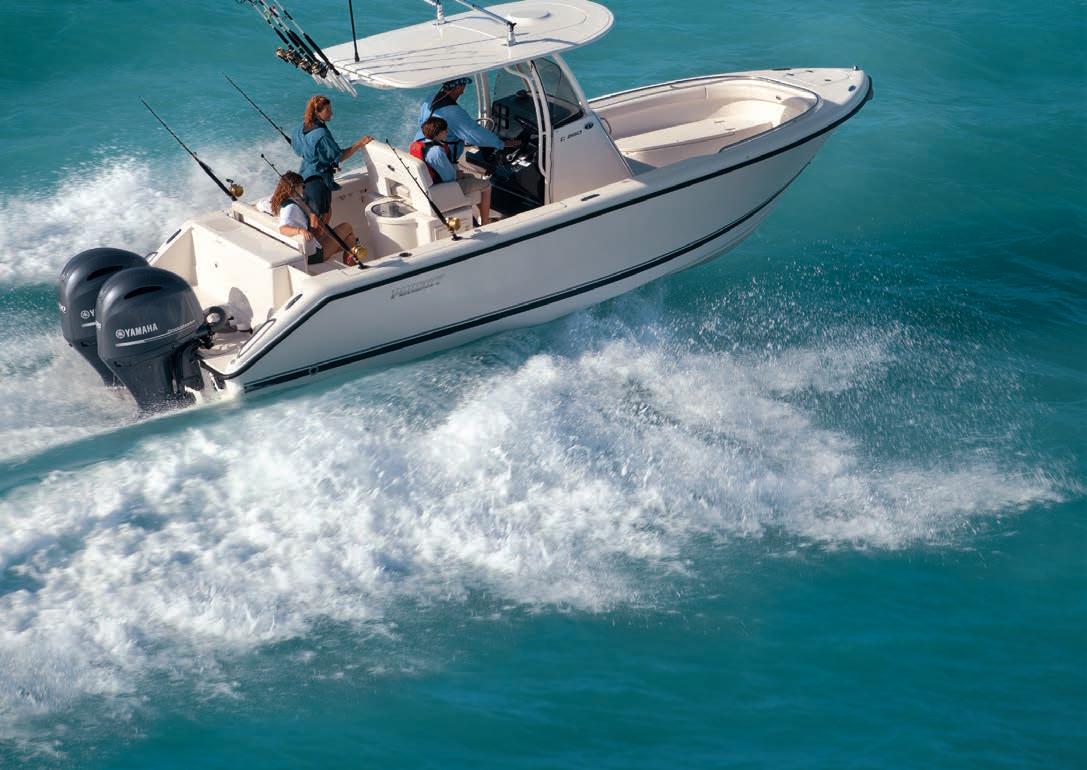
ways to locate roaming giants. Trolling flies, paired with the right attractor and tuned for the day’s light level, can be deadly and are often overlooked by boat anglers. Late winter and spring trolling allows you to cover water, find schools and intercept fish that may not yet be committed to the shoreline. Cold water favors slower, steadier speeds early in the season, with faster presentations coming into play as spring progresses.
The biggest mistake I see is running one speed and one depth all day. Pyramid fish move constantly. Let the sonar and your bites dictate adjustments. CK




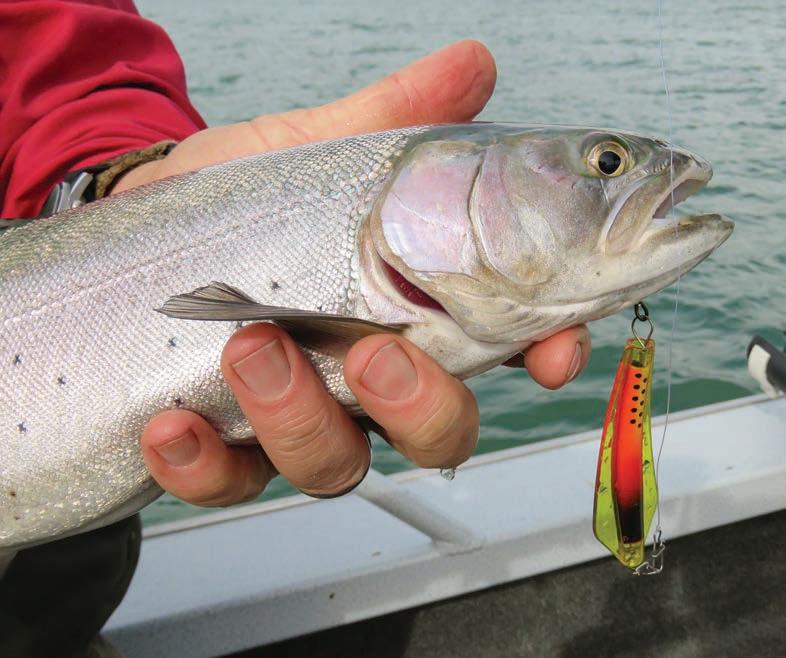
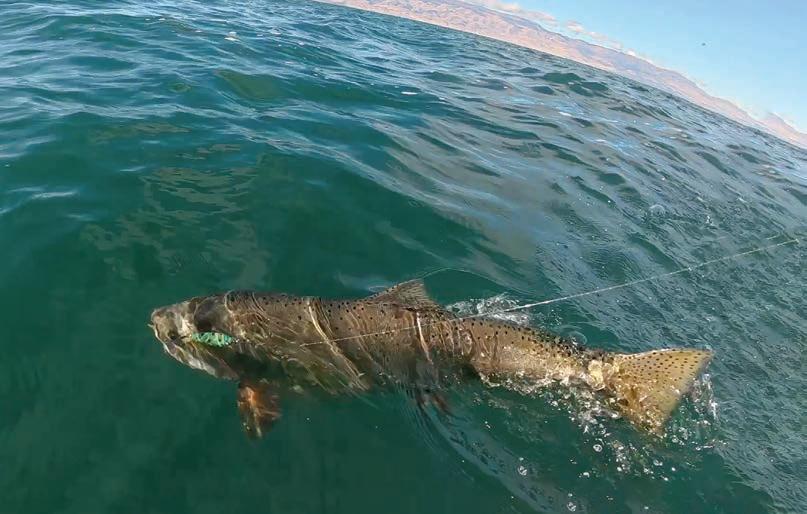
pieces align. Water temperatures are cold and stable, baitfish use the shallows and edges, and Lahontans, especially the bigger ones, begin transitioning toward prespawn behavior. The result is a fish that’s willing to move, willing to eat and often willing to do it in water shallow enough to reach from the beach or a slow-trolling boat.
One simple truth about Pyramid is that wind is usually your friend. Wind pushes warm surface water, plankton and bait, and that concentrates predators. A deadcalm, sunny day can be beautiful and slow. A nasty, sideways day with a strong wind line can be the day you remember for the rest of your life.
Shore casting is the classic Pyramid approach and the one most anglers picture when they think about the lake. Standing on a beach or rock point, often with the help of a ladder, firing long casts into waves and wind lines has become part of the culture. The ladder isn’t a gimmick. In many
areas the shoreline is shallow and the waves roll hard, and getting a little elevation helps keep your line out of the wash and lets you see water movement, structure and sometimes even cruising fish.
Late winter and spring shore fishing revolves around baitfish profiles and high-visibility reaction baits. You want lures that cast a mile, track well in wind and have enough presence to get noticed in moving water. Let them sink, then work them with steady retrieves mixed with pauses and speed changes.
Pyramid trout often eat on the stall or right as the lure accelerates again. Soft plastics and streamerstyle presentations on spin gear can be deadly when fish are cruising the inside edge, especially on days when they’re following but not committing to metal.
Where you stand also matters, but not as much as how you move. Wind lines are highways. Beaches with quick access to deeper water
tend to hold fish longer than long, shallow flats. If you see bait flipping, birds working or fish rolling, you’re in the right neighborhood. If you’re not seeing life, don’t get stubborn. Pyramid rewards anglers who treat shore fishing like hunting. Move until you find signs, then fish hard.
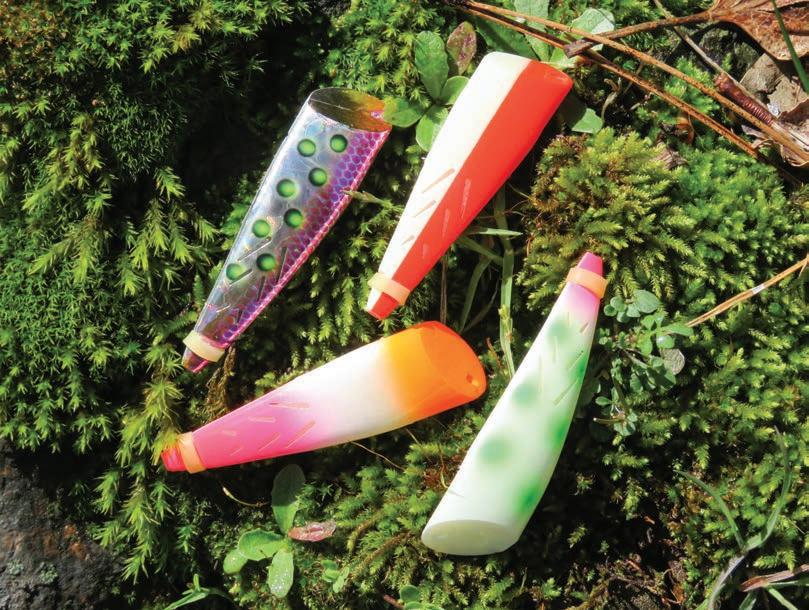
While fly fishing at Pyramid is a major attraction (see sidebar on page 30), for conventional gear anglers, classic coldwater fishery plugs and wobblers work well when the lake’s Lahontans want a lazy, wounded-baitfish profile. Spoons add flash and vibration when trout are actively feeding.
The real key here is boat control. Pyramid is big water and winddriven, and your ability to hold productive lines along contours and repeat successful passes matters more than the specific lure you’re pulling.
There are a few Pyramid truths that will save you years of frustration. First, rig it like you mean it. Barbless hooks and no scent mean you need sticky-sharp hook points, strong knots and constant attention to your leader. Second, steady pressure beats hero moves. Big Lahontans surge, roll and throw slack like champions. Smooth drag and a tight line win more fish than brute force. Third, wind lines matter more than comfort. Fish where the food goes, not where it’s easy to stand. Fourth, move until you find life. Pyramid is too big to sit in dead water and hope.
And a final Pyramid tip is to dress for battle. February and March can feel like winter on another planet. Windproof layers, good boots and warm hands aren’t luxuries; they’re part of the program.
Here’s why anglers drive from all over the West to fish Pyramid Lake in February, March and April: On the right day, in the right light, with the right wind, you can hook a trout
that doesn’t make sense; a trout that looks like it belongs in Alaska; a trout that makes your reel sound like a siren and your hands shake when it finally slides into the net.
That’s the real Pyramid experience. It isn’t just catching trout; it’s chasing something bigger than a bite. It’s chasing that moment when a true giant eats in shallow water and everything you thought you knew about trout fishing gets rewritten.
If you’ve never been, go. If you’ve been and got humbled, go back. February through April is when Pyramid is most likely to show you what it’s famous for, and why, once it gets in your blood, you’ll never stop thinking about it. CS

By Mark Fong
Big fish eat little fish, and there are very few baits that imitate a shad or minnow as effectively as a finesse swimbait.
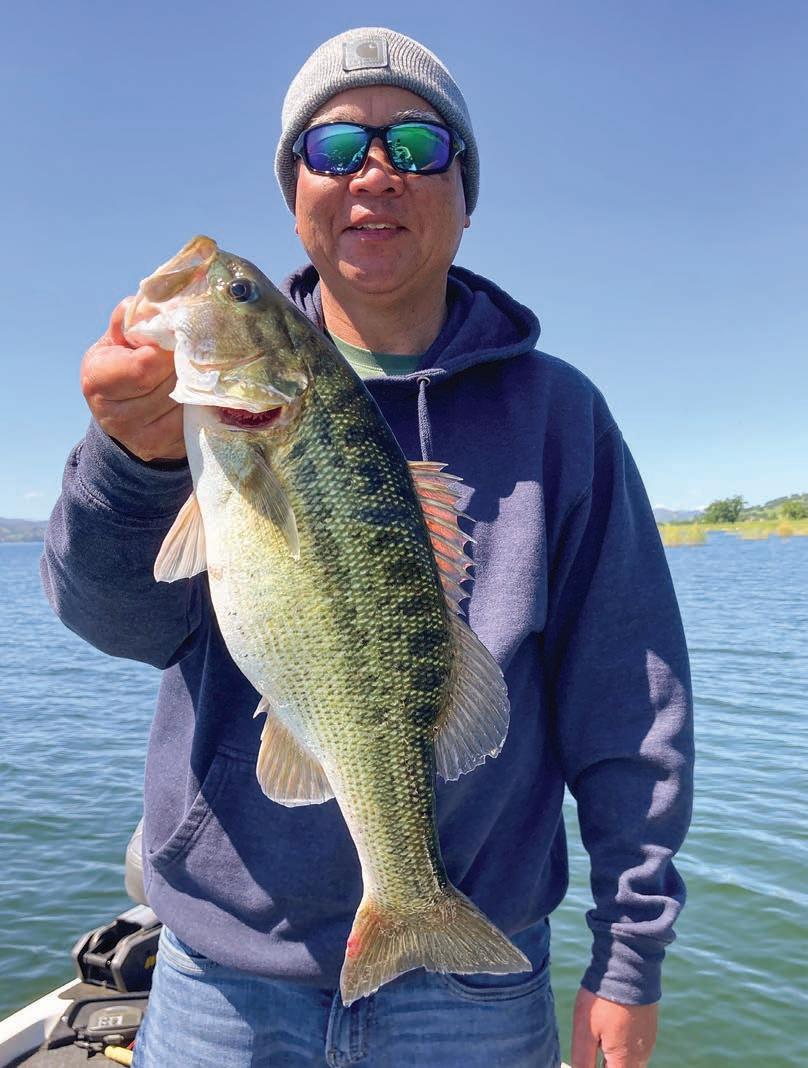
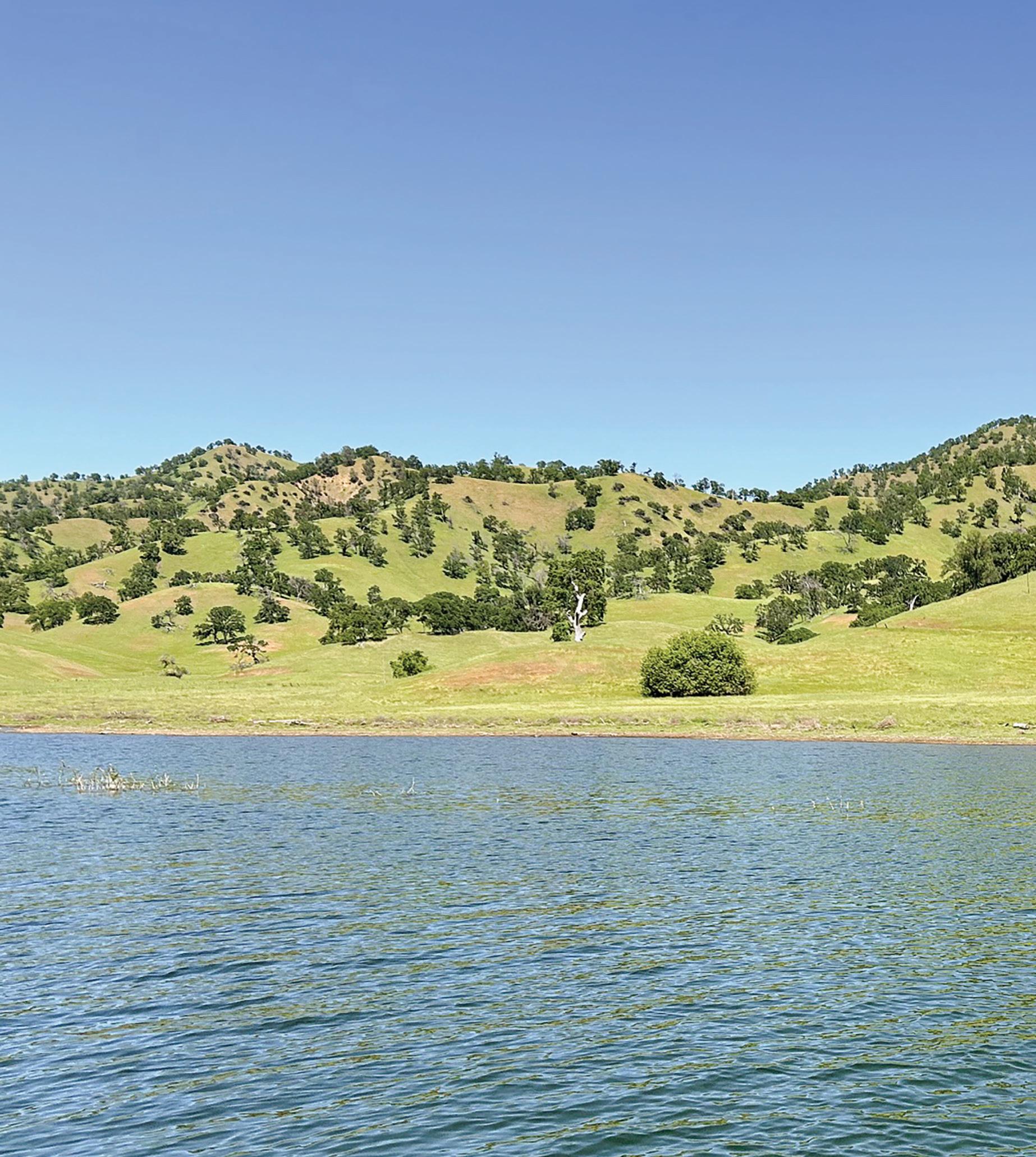
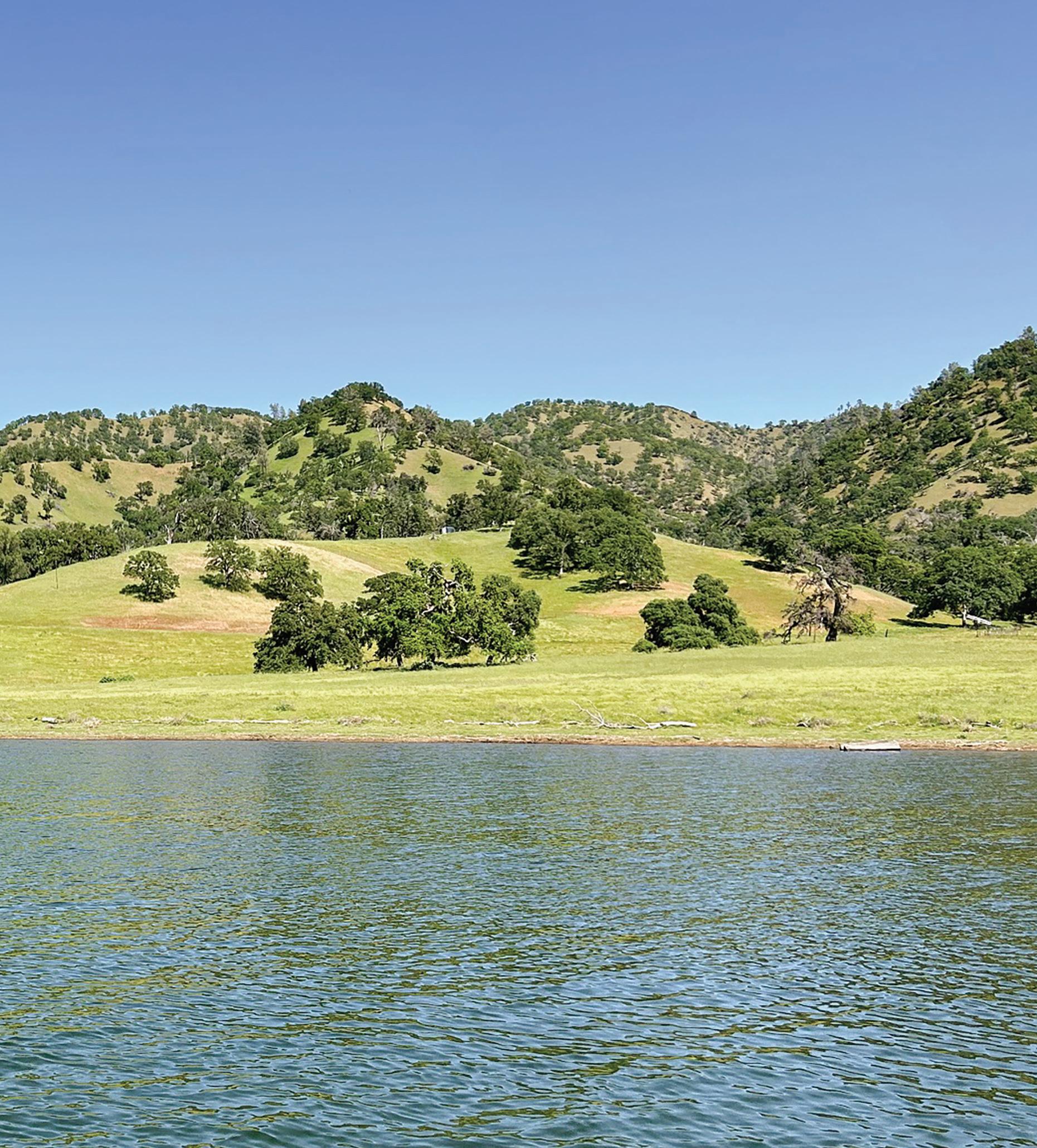
I have said it before many times: In my opinion, there are few things in fishing more fun than a good swimbait bite. Small swimbaits just plain get bit, they are yearround fish catchers and can be extremely versatile. When rigged on a traditional jighead, they can be fished throughout the water column. Thankfully for me, there are many lakes and reservoirs around Northern California loaded with bass that will readily eat a finesse swimmer.
THE DETAILS
Finesse swimbaiting is an easy technique to fish, but it does come with a learning curve. It is effective for both bank and boat anglers alike. High-percentage areas to target include points, flats, rocky areas and dropoffs. But a word of advice: Don’t overlook less attractive locations either. Finesse swimbaits have the uncanny ability to generate bites from water that is often bypassed and therefore underfished. Start by making a long cast and letting the bait sink to the desired depth before starting your retrieve. Begin with a slow, steady retrieve, as this will allow the bait to track in the zone for the longest part of the cast. Fan-casting a prospective area will give you maximum coverage when searching for fish.
If you are using forward-facing sonar on your boat, this technology makes it easy to pinpoint the bass and to adjust your bait’s depth accordingly. If you don’t have access to this technology or are fishing from the bank, don’t worry; you can search for fish by counting down your bait as it sinks before starting your retrieve. Experiment with different counts until you find the depth where the fish are holding. If a slow, steady retrieve is not productive, don’t be afraid to adjust your cadence until the fish reveal their preference.
Don’t forget to cover the area near the bottom. This can be done in one of two different ways. First and foremost, you can keep the bait swimming just above the bottom, or you can slowly drag the bait while maintaining contact with the bottom. And sometimes just dead-sticking the bait on the bottom is what is required to get the fish to bite.
A swimbait bite often feels like pressure akin to the tension created by pulling a rubber band. Don’t set the hook immediately; instead,
continue reeling until the rod begins to load, then sweep the rod firmly to drive the hook point home.
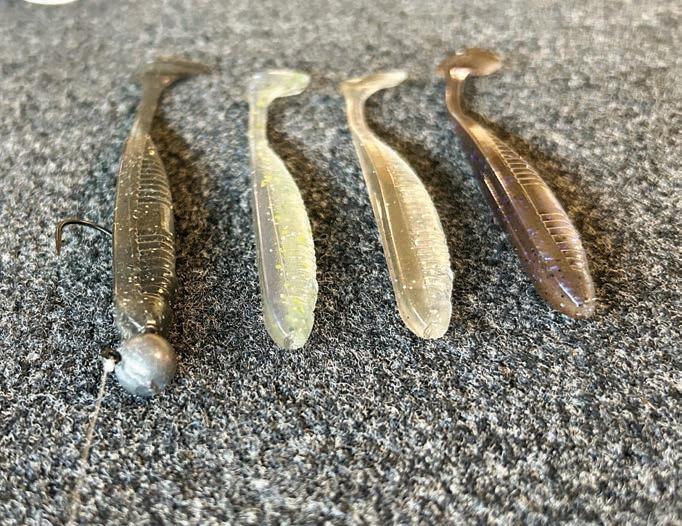
Some anglers like to use a specialized swimbait head, but I like to keep things simple and prefer a simple ballhead-style jighead. By adjusting the weight of the jighead, you can fish anywhere in the water column, from just under the surface all the way to the bottom.
I have caught swimbait fish in as little as 1 foot of water all the way down to 80-plus feet. In skinny water
I will go as light as 1/16 ounce, while I’ll go all the way up to 1/2 ounce in deeper water.
There are so many great finesse swimbaits on the market today, and rest assured, every swimbait angler has their favorite. I really like the Yamamoto Shad Shape Swimmer. It swims with a nice kicking action and has a good baitfish shape. It comes in three sizes – 3.2 inches, 3.7 inches and 4.2 inches – making it easy to match the size of the forage that the fish are feeding on.
Because this is a clear-water presentation, color is an important
piece of the equation. I like to keep it simple by sticking primarily to shad imitators such as natural shad, electric shad or sexy shad.
I can’t emphasize enough the importance of using a longer rod when fishing finesse swimbaits. In my opinion, the extra length provides many advantages that improve efficiency, such as allowing for longer casts and moving more line on the hookset. My preference is a 7-foot, 6-inch medium-light-action spinning rod with a light tip.
I’ll pair the rod with a 2500-series spinning reel spooled with a 10-pound braid mainline connected to a top-shot leader of 8-pound fluorocarbon line. Over the past year I’ve made the switch to the next generation of sinking braided line. I am impressed by the way it minimizes the amount of bow in the line, as opposed to traditional braided lines.
The next time you head to the lake, be sure to bring along some small swimmers; you may just be surprised with what kind of action you get on the end of your line. CS

By Tim E. Hovey
Iwill admit it: I’ve always been lucky in life. While I do subscribe to the adage that luck favors the prepared, there have been enough positive out-of-the-blue experiences to clearly demonstrate that my lucky horseshoe is pointed up and not down.
I don’t rely on this luck, but ask anyone who knows me and they’ll tell you that luck just finds me. I also believe that my lucky streak started around the time I met my wife.
In 1991, I was volunteering on a research vessel off the coast of California. I was chasing a marine biology degree and assisting on the trip during my second summer in school. On the third afternoon of the five-day trip, we had completed all our work for the day and had the rest of the afternoon on the ship to ourselves. Since we were anchored off the Channel Islands, I decided to fish off the stern. The next person I spoke with on that boat would change my entire life.
Fishing at the stern was Cheryl, another volunteer for the program.
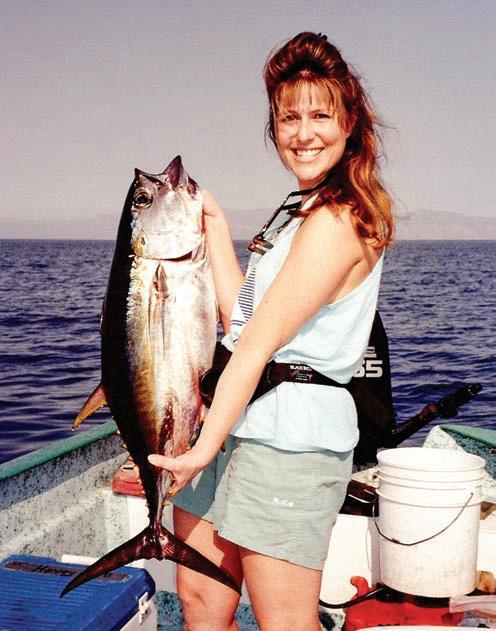
She was a year behind me in college and was also on her first volunteer research trip. We first met at a planning meeting a week before the voyage, but we hadn’t spoken much. At the stern, we made small talk. Instantly, I thought she was pretty. At the time we were both involved with other people. However, being in the same marine biology program and seeing each other frequently, fate had other plans. Six years later, in 1997, we got married.
SHARING AN INTEREST IN fishing, we fished together every chance we had. In over three decades together, we’ve fished from Canada to Baja and everywhere in between. All my favorite catches and all my amazing fishing adventures include Cheryl. Thinking about it now, I can’t remember the last time I fished without her. I believe having my wife as my number one fishing partner is beyond lucky.
However, when it came to hunting, she had no real interest and always considered it my thing. Even when my
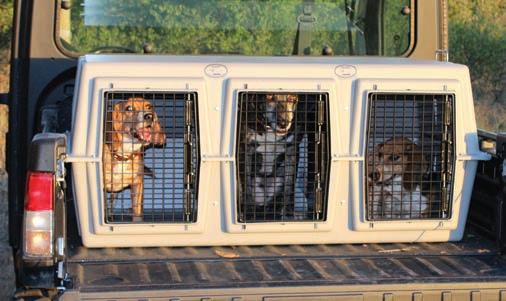
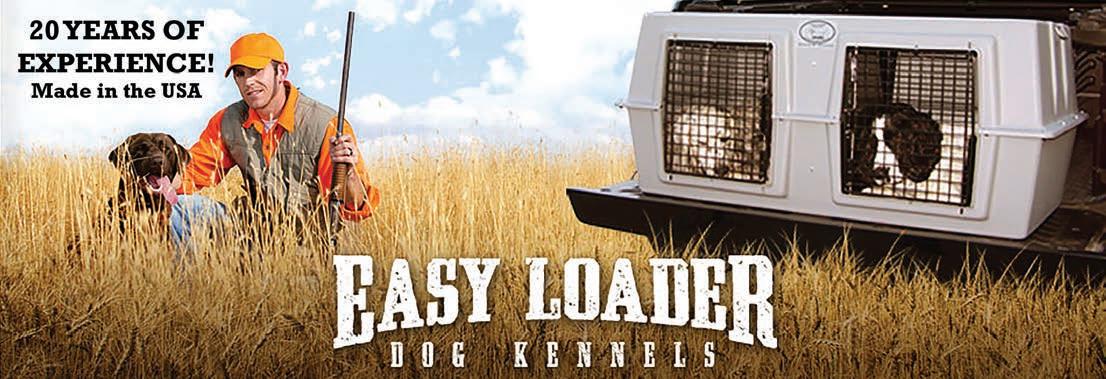
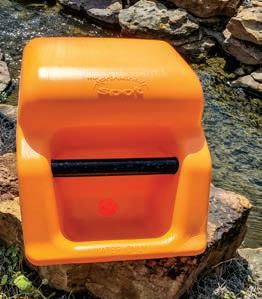
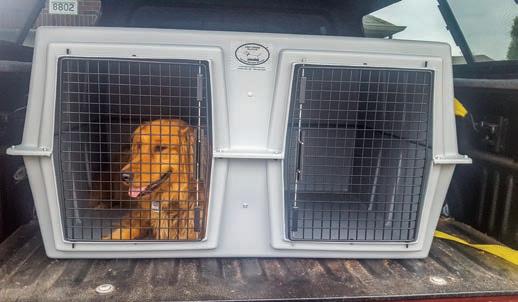
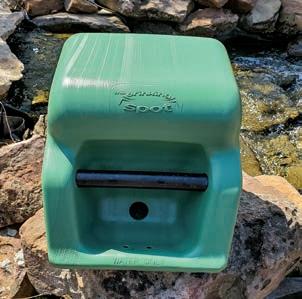
• Easy Loader & Deuce accommodate 2 dogs up to 65 lbs each
• EZ-XL accommodates 2 dogs over 65 lbs each
• Made from High Density Polyethylene with UV protection
• Easy Loader fits most full size pickups, SUVs & large UTVs
• Deuce fits smaller pickups, SUVs & UTVs
• EZ-XL is for larger breed dogs & full size vehicles
• Vents, cold weather door covers, insulated covers & custom kennel pads available
daughters started hunting with me, she was happy to just let us have our time together. Whenever we were headed outside as a family, we’d all fish together, but when it came to hunting, Cheryl would sit out.
In 2020, I retired from the California Department of Fish and Wildlife and moved my entire family to Idaho. With both my daughters finishing up college degrees and planning lives of their own, our outdoor time together became limited. While I missed our hunting adventures, I began to realize that just maybe hunting had run its course with me. My daughters were navigating life and becoming adults, and I had essentially moved away from all my California hunting buddies. I felt the change and when I settled in Idaho, I began spending more time fishing, bowfishing and trapping.
In 2021, I returned home from a successful bowfishing trip for carp. As I always did, I showed Cheryl the photos of the day. She looked through them and then looked through them again. That’s when I
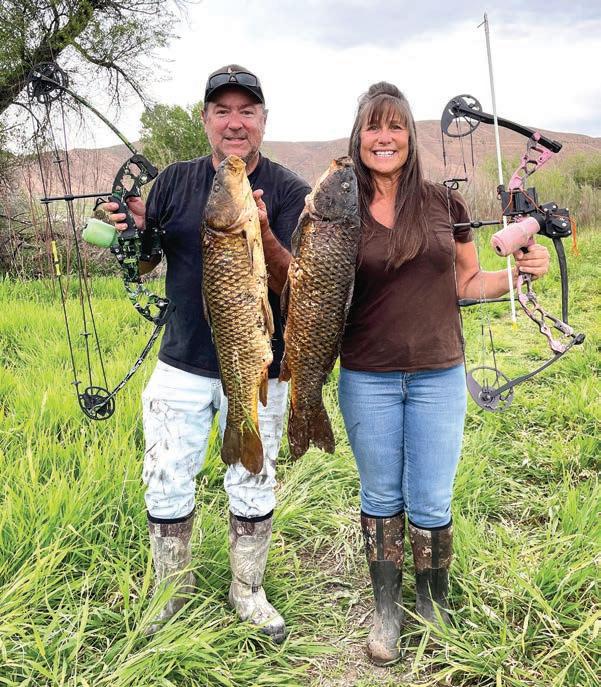
saw the spark. She handed me back the phone and stated, “I want you to teach me how to do this!”
Two days later we were back out slinging arrows at carp. After some practice and a few pointers, Cheryl stuck and landed her first bowfishing kill. The spark got brighter. On the drive home, we talked about the day, but I could tell something was on her mind. She finally blurted it out. “I want to go hunting with you. I want you to teach me how to hunt!”
DURING OUR ENTIRE RELATIONSHIP, Cheryl had shown almost no interest in hunting. She would listen to me and the girls talk about our trips, but I had stopped asking her if she wanted to go a long time ago. Still, if she wanted to hunt, I would be happy to teach her.
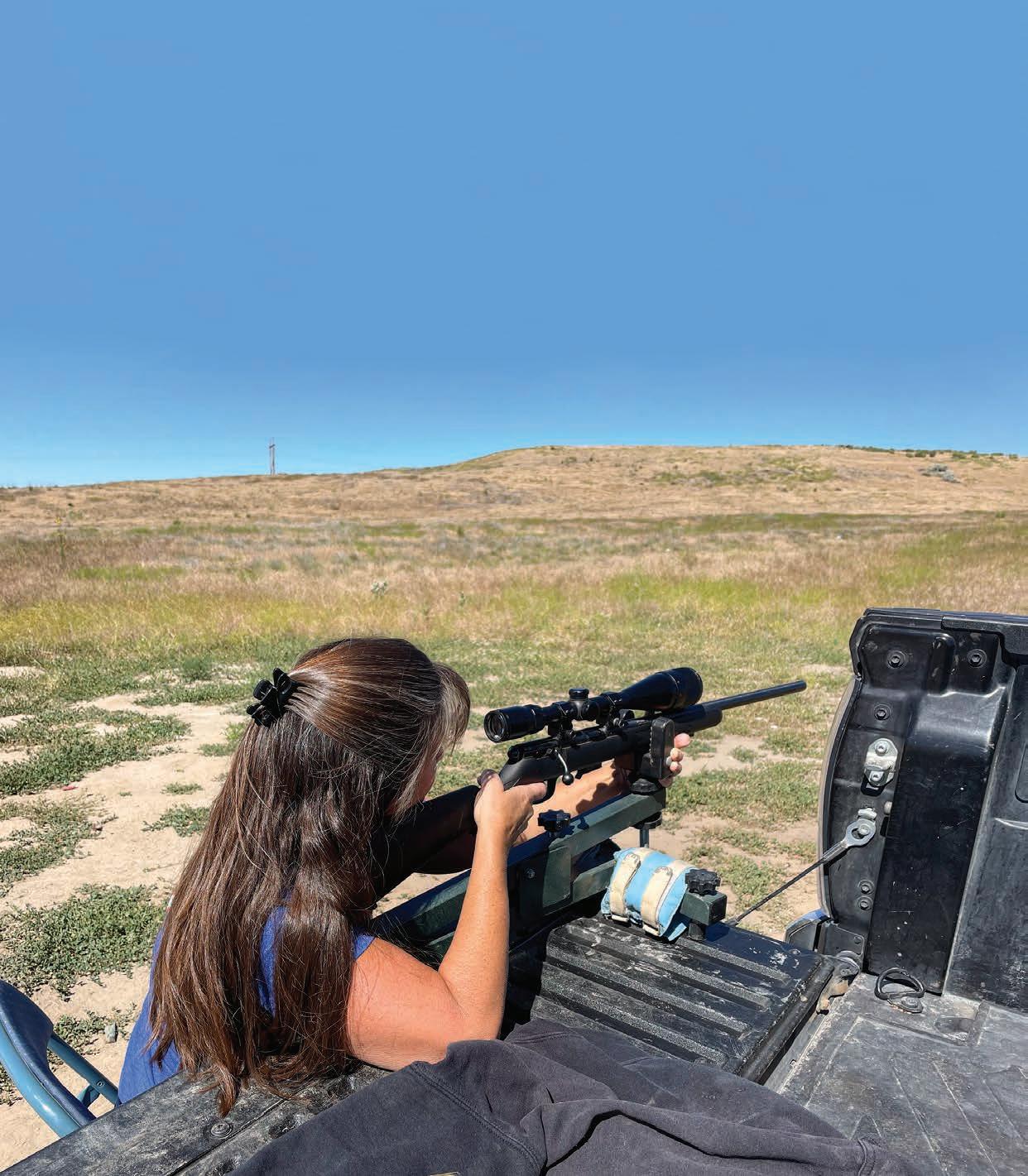
We started with firearm safety and target shooting. While Cheryl had very little shooting experience, she had gone through hunter safety with my daughters a decade earlier and had clearly remembered much of the course. She was a quick study
and proved to be very safe with firearms.
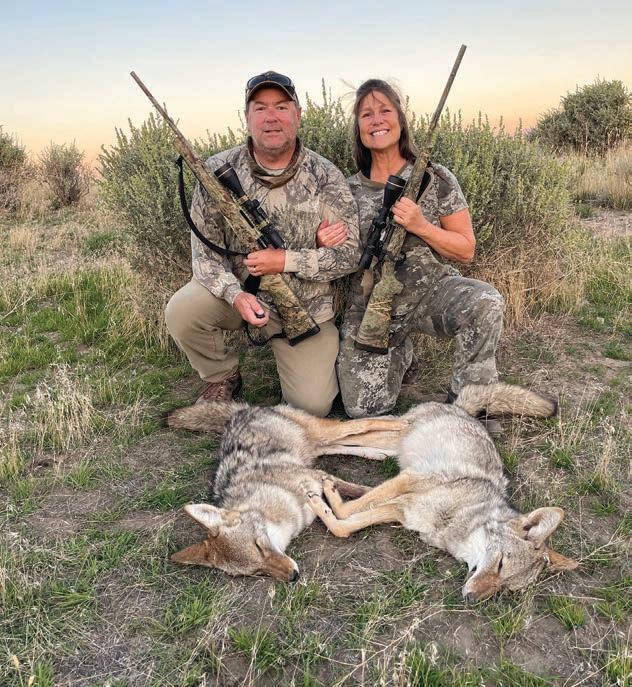
We moved on to shooting different calibers, getting her used to the differing recoils of rimfire rifles, centerfires and shotguns. We discussed the regulations and seasons, and I familiarized her with the gear I used during certain hunts. Thankfully, having spent so many years hunting with my daughters, I had three of everything, so getting Cheryl geared up was easy. It was finally time to take her hunting.
THE FOLLOWING FALL, CHERYL and I were set up at the edge of a cut corn field before sunrise waiting for the mourning dove to start flying on the morning of the opener. I’ve taken dozens of new hunters on dove hunts, and despite setting them loose on the smallest and fastest game bird out there, I find it’s a great place to start.
With two rotating decoys spinning out front, surrounded by a dozen static decoys propped up in the field, it didn’t take long for the birds to
start coming in. I sat back and spotted incoming birds for Cheryl and gave her some pointers. After a couple of missed shots, she finally connected on a mourning dove flaring at the decoy set. Her first hunted animal was on the ground.
Before the day was over, she eventually added a Eurasian dove and pigeon to her hunting tally.
During the afternoon lull, we headed into town for lunch. She was so excited about the morning hunt and couldn’t wait to get back out for the afternoon flight. She had lots of questions, and I knew, much like when my daughters hunted with me, my days of hunting solo were over. That day I watched the spark turn into a raging bonfire.
From there we moved on to small game, and when the seasons
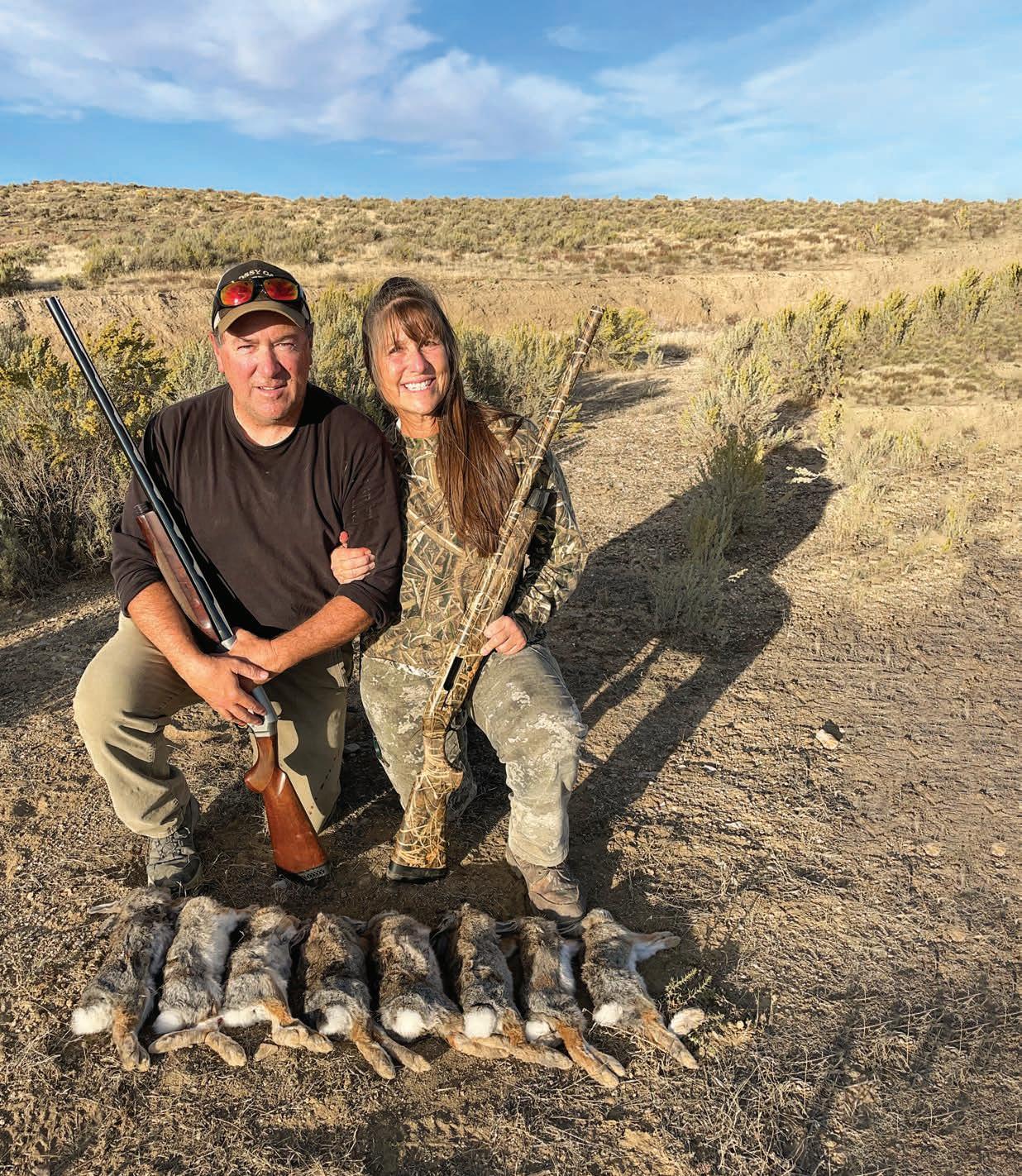
opened, the more challenging upland bird species. Despite being a little frustrated early on, Cheryl stuck with it and eventually began seeing success. She is very competitive, so afterwards when we’d head home she’d always compare game numbers between the two of us. On one rabbit hunt she bagged three bunnies to my two. I still hear about that day.
As we hunted together, I started to notice something else. Throughout the training process and during the hunts, I became reinvigorated with hunting again. Cheryl’s enthusiasm and enjoyment in the field was contagious. During the season, Cheryl would plan at least one hunt a week. It didn’t matter if we were chasing ground squirrels or pheasant, she enjoyed it all. And I was happy she was hunting with me.
IT’S NOT UNUSUAL TO have changing interests as we get older. As outdoorsmen, we develop different hobbies and move on to other outdoor activities. When I relocated to Idaho, I was convinced that I wouldn’t completely abandon hunting, but I could feel I was easing back a bit and exploring other sporting options. I was more than content with this new direction. Then my wife stepped in.
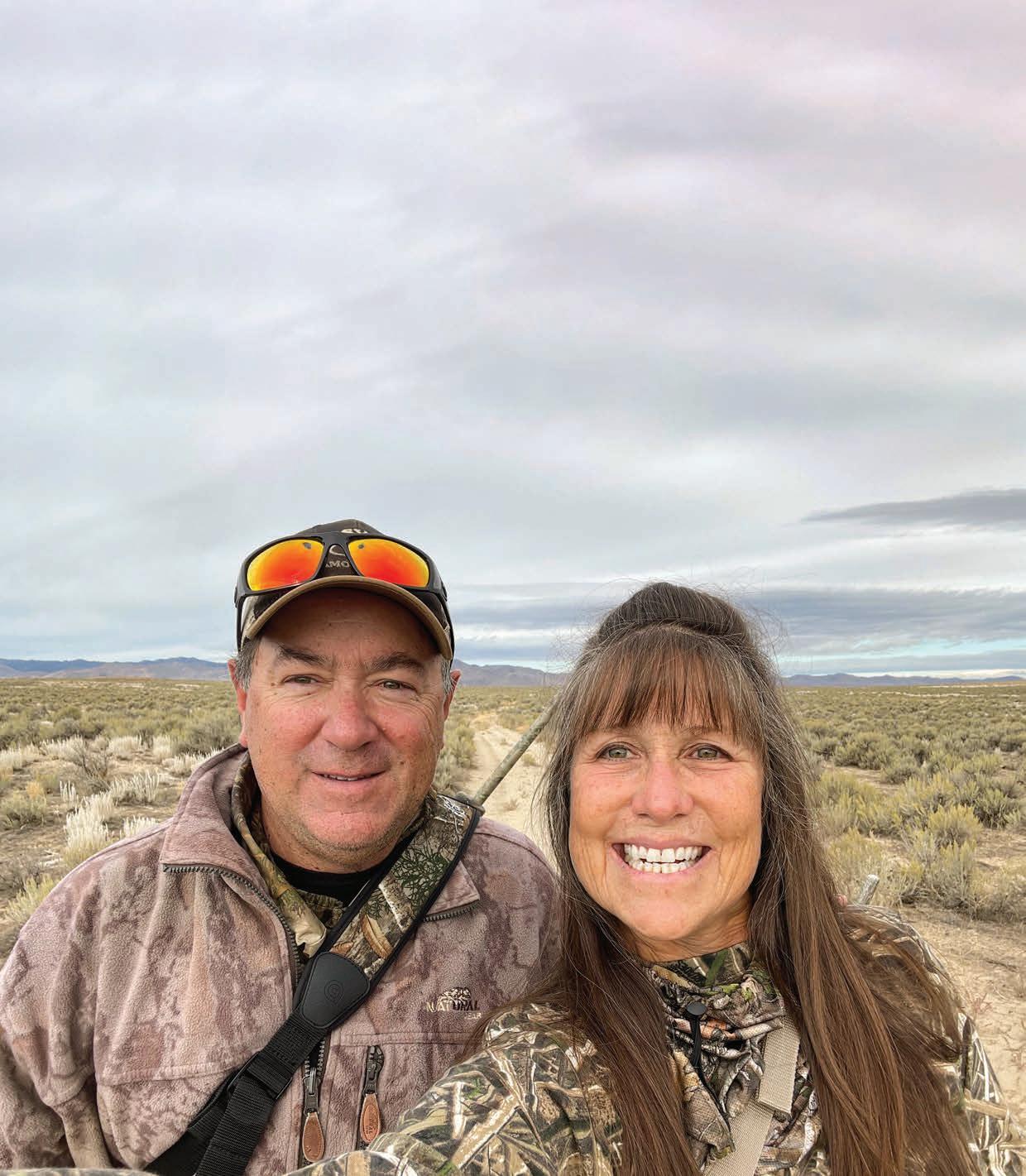
Teaching Cheryl to hunt and spending time with her outside has been beyond a blessing. It has not only reignited my interest in hunting, but it has given us an outdoor activity that we can enjoy together. When my family and friends speak of my luck, and they do often, I just smile and think of a chance encounter on the back deck of a research boat in 1991.
Lucky? As lucky as it gets! CS
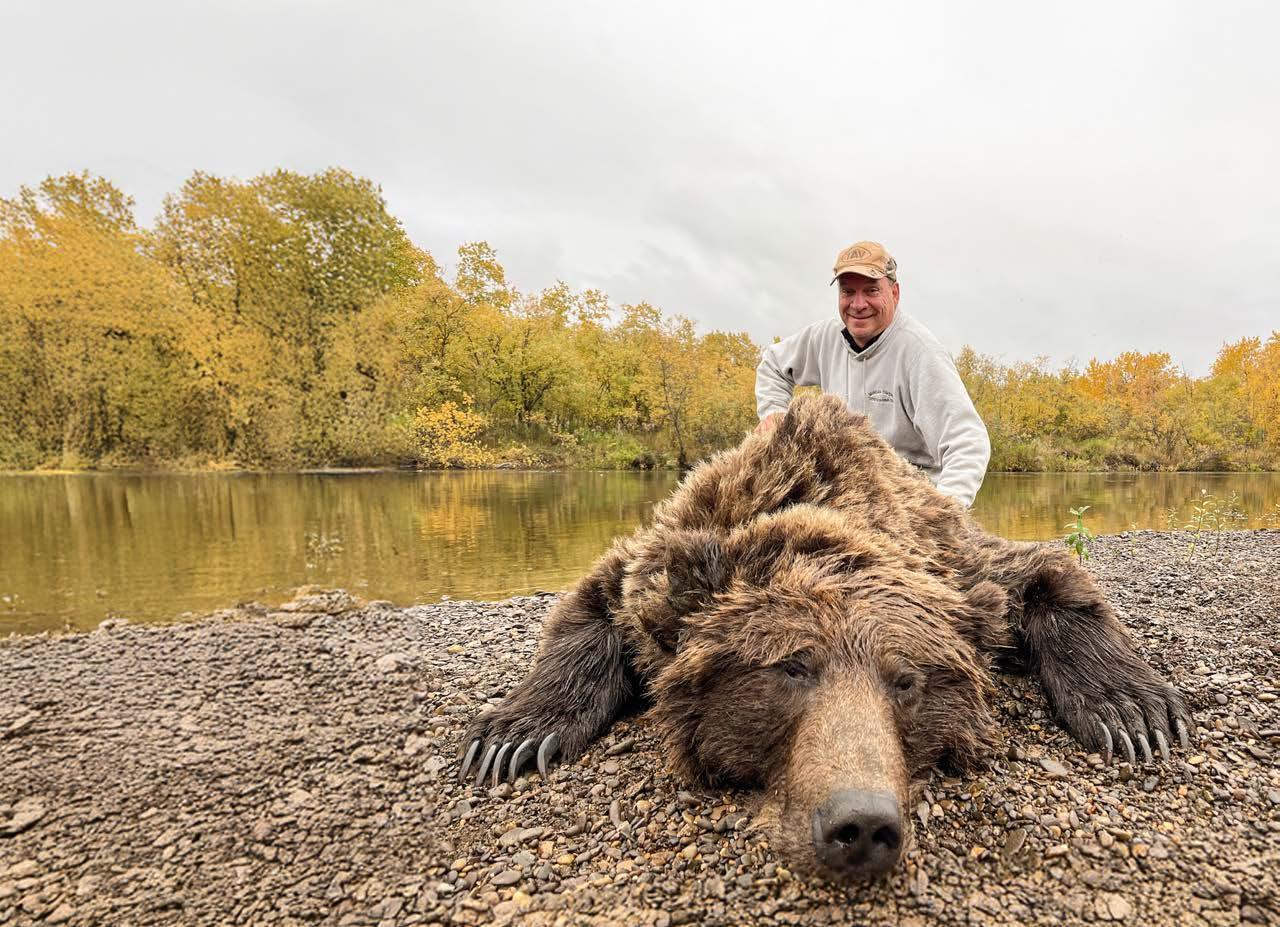
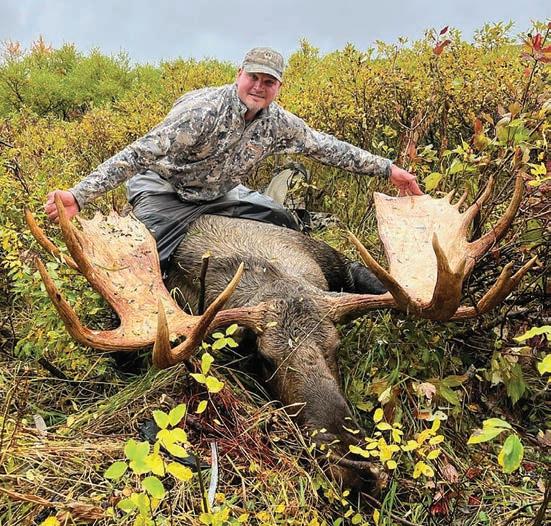
This is an unforgettable Alaskan adventure that blends raw wilderness, world-class game, and the thrill of pursuing some of North America’s most iconic animals in their natural environment. Long days on the river. Close encounters. The kind of moments you’ll talk about for the rest of your life.
• Trophy moose & bear hunts in prime river systems
• Regular 60”+ bull moose opportunities
• Near-100% opportunity rate on legal bulls
• High success on large Alaskan bears
• Fully guided & all-inclusive hunts
• Expert guides with deep local knowledge
• Carefully selected locations for consistent results
• 11–15 day hunts with 15-day combo moose & bear hunt available
Every hunt is carefully planned and professionally guided from start to finish. From scouting and calling to field care and logistics, your guide handles every detail—so you can stay focused on the hunt.
Contact us today to secure your hunt and discuss available dates.
www.alaskaeliteoutfitters.com 218-434-0068 • 907-464-6165
mike@alaskaelieteoutfitters.com


By Scott Haugen
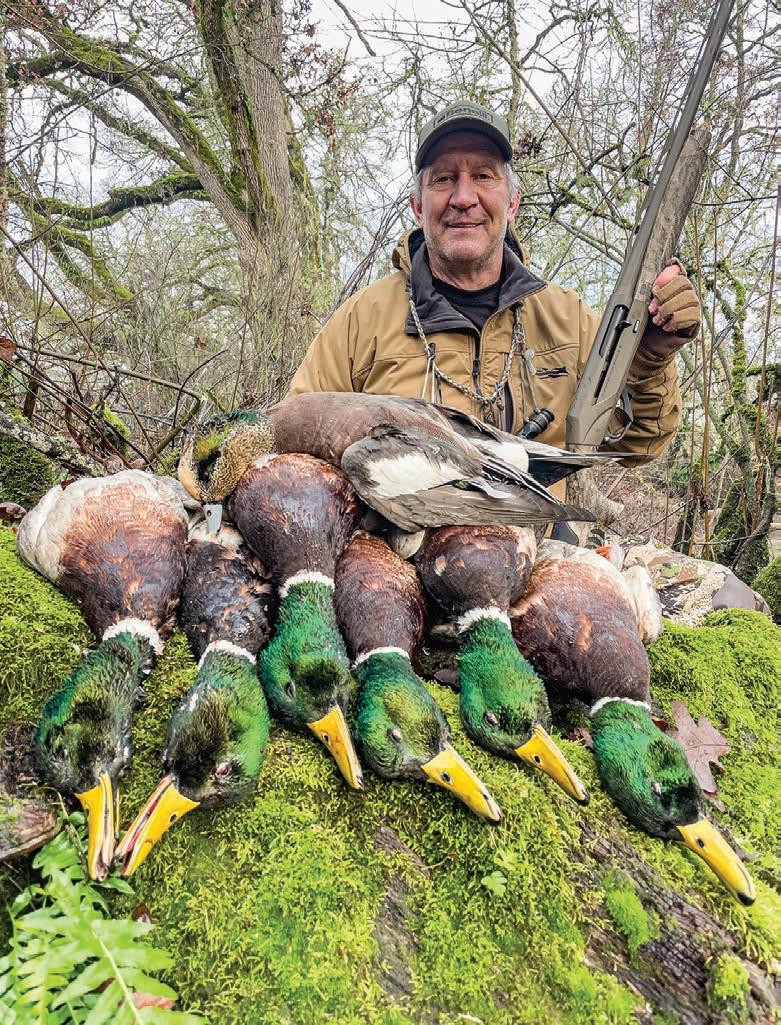
This past waterfowl season found me chasing birds in five states on several dozen hunts. It began in Alaska, then the journey took me to Florida, Nebraska and back to the West Coast. On these hunts I got to test out a lot of gear. Some of it is great; some, well, not so great. Here’s a look at the gear I liked, and why I think you’ll like it too.
When Chêne Gear came out with their first wader, it caught my attention. I wore it for two seasons covering over 150 hunts from Alaska throughout various flyways in the Lower 48. They’re great. When their new 2S wader hit the market, I was eager to try it. I’m glad I did – and so is my dad.
I wore them on three hunts, then left them home while on a road trip. That’s when my dad grabbed them. He’s 85 years old and has worn them on every hunt since, more than 30 total. He’ll be the first to tell you the new 2Ss are easy to get in and out of, their front zipper is waterproof, easy to work and durable, and the weight distribution of these waders makes them comfortable and streamlined to move in. They’re not restricted in any way and feel great all day long.
The boots are exceptionally comfy, stable and warm. The elastic base on the drain vent that covers the boot ensures there’s no loose material to
By Tiffany Haugen
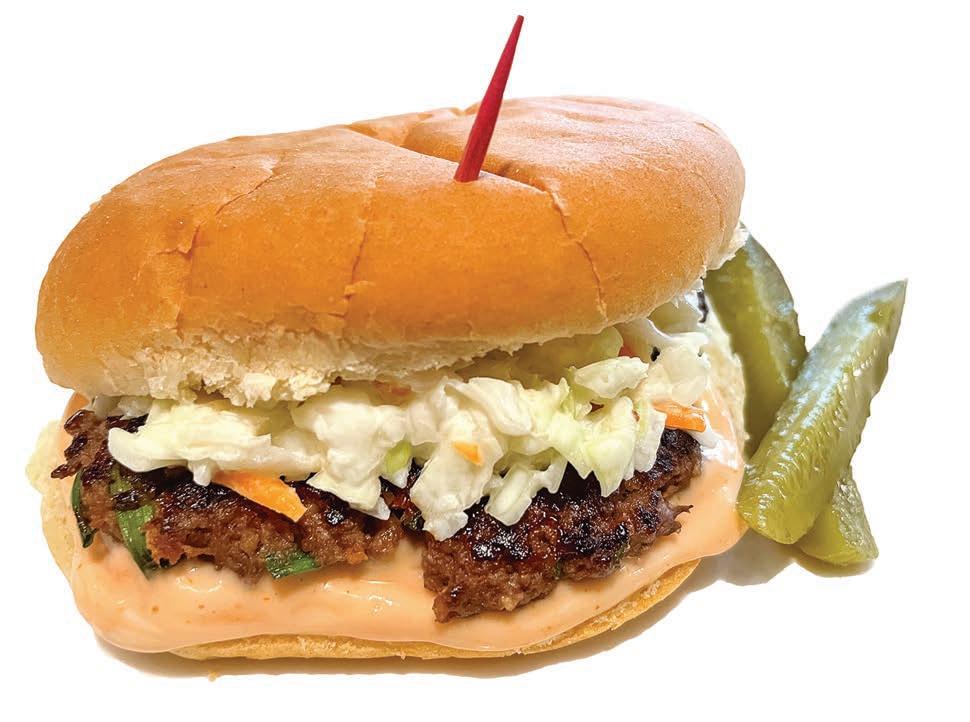
From deer to elk, antelope to bear – even wild boar – this recipe works with all sorts of wild game. One of the most versatile ways to cook ground game is in patty form. The shape and size can be customized from super big, triple-decker burgers to bite-sized sliders for appetizers. Several types of ground game can be mixed together for some fun combinations, or something as simple as ground pork can be added to make the game burgers a little more juicy. Feel free to be creative with the addins, toppings and sauces. The coleslaw and burger sauce (see ingredients below) turns this burger into a family favorite regardless of what kind of game meat is used.
1 pound ground game
1 tablespoon olive or coconut oil
One egg
¼ cup green onions, finely chopped
2 tablespoons grated carrot
2 tablespoons pickle relish
1 tablespoon fresh parsley, finely chopped
1 to 2 cloves garlic, minced
1 teaspoon black pepper
1 teaspoon salt
1 teaspoon smoked paprika
In a medium bowl, mix egg, onions, carrot, relish, parsley, garlic, pepper, salt and paprika until thoroughly combined. Rub spice mixture through meat and let sit at room temperature for 30 minutes. Divide meat mixture and form into patties of desired size.
Chef Tiffany Haugen says combining different kinds of ground wild game can create a unique-tasting burger that’s a fun alternative to beef patties. (TIFFANY

Cover the bottom of a nonstick pan with a thin layer of oil and heat on medium-high heat. Gently place burgers in the pan and cook for two to three minutes or until lightly browned. Flip burgers and finish cooking on the other side. Serve on a toasted bun with burger sauce and coleslaw, or your favorite condiments and toppings.
BURGER SAUCE MIXTURE
2 tablespoons mayonnaise
1 tablespoon ketchup
1 tablespoon chili sauce
Editor’s note: For signed copies of Tiffany Haugen’s popular cookbook, Cooking Big Game, visit scotthaugen.com.

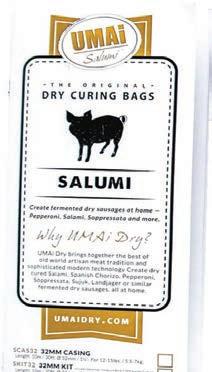
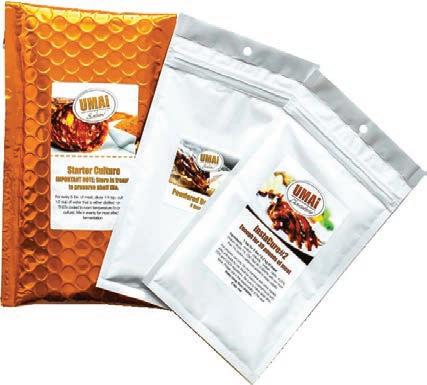
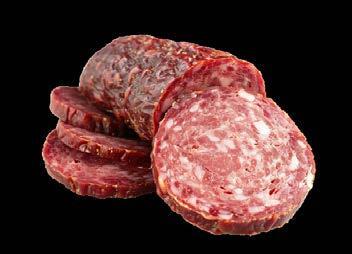
Create dry aged steak and cured meats from home!
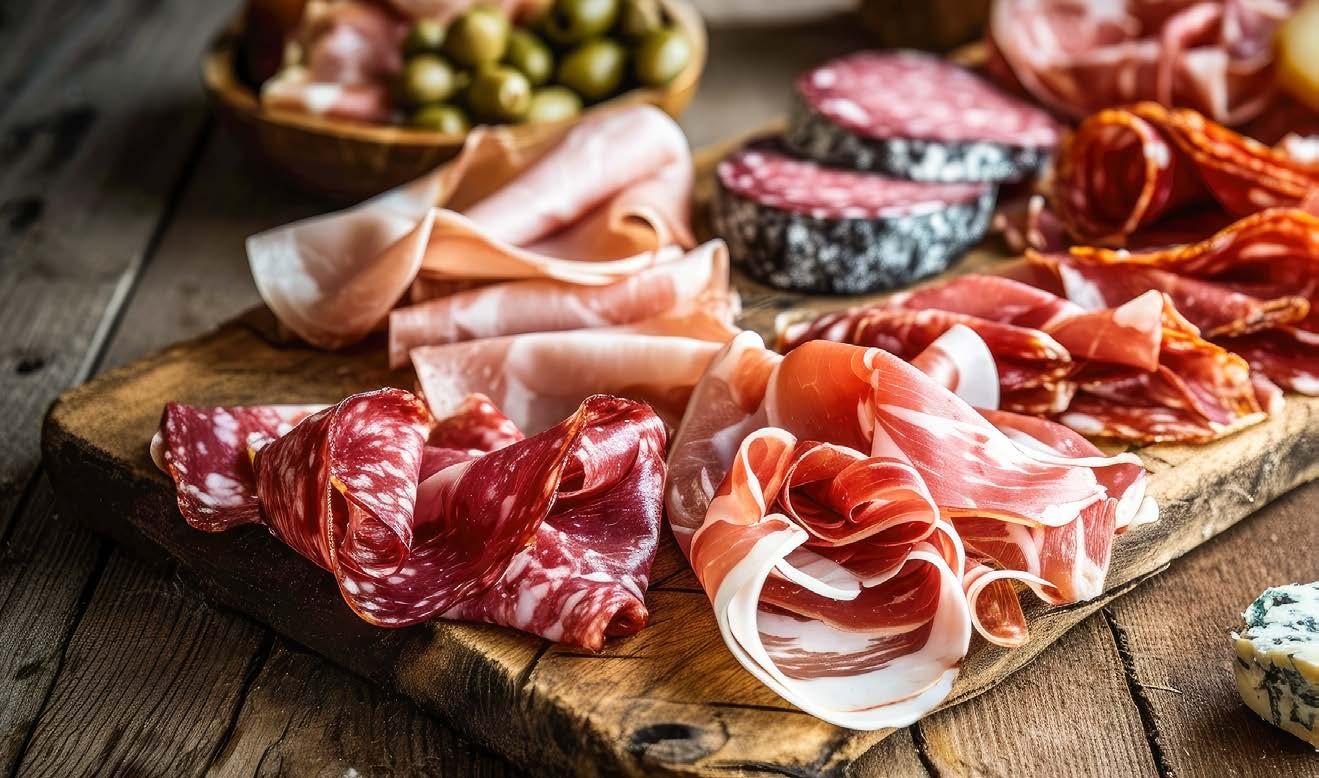
Whether you’re preserving whole muscle for charcuterie or grinding coarse for fermented salumi, our time-honored spice blends, easy starter kits, and UMAi Dry® technology make it safe and simple to cure like a pro!



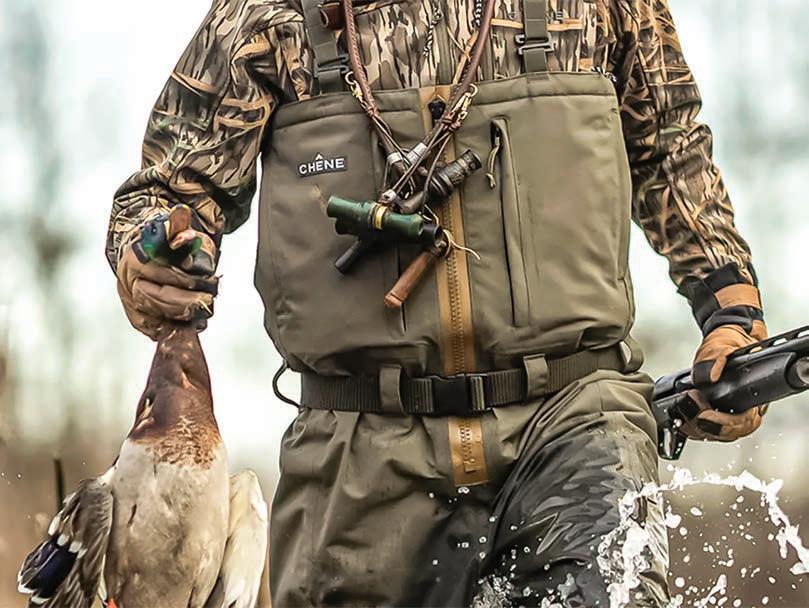
potentially hang up on brush, aquatic vegetation or submerged sticks. Every pocket option is strategically designed and serves its purpose. Dad loved the handwarmer pockets once cold weather hit our area.
The 2Ss aren’t cheap, but they’re one of the best all-around waders on the market, and I’m confident Dad –and I – will continue wearing them into next season.
The first time I wore Sitka’s famed Duck Oven Jacket, I instantly fell in love with it. I wore it on a few cold-weather hunts in the Midwest, but it was a bit warm for where I do most of my waterfowl hunting in the Pacific Northwest, and it lacked a hood. Then their new Duck Oven LT Hoodie arrived. It’s a warm, windproof, durable hoodie with an ergonomic design that makes it perfect for wearing under waders.
The hood cuts the wind and its streamlined design prevents it from blocking your field of view. The uniquely lined interior, along with the pockets, further increases the overall comfort of this hoodie. Once
I wore the Duck Oven LT Hoodie, it replaced my bulkier, less-functional cotton hooded sweatshirts, as well as one to two base layers; it’s that comfortable, warm and efficient. In fact, I liked it so much that I got a camo one in addition to the solid brown I originally picked up. I wore them on over 50 hunts this season around the country and will keep wearing them on outdoor excursions all year long.
Last winter and twice this past season I hunted surf scoters in multiple bays along the Pacific Coast, including San Francisco Bay (California Sportsman, January 2026). You don’t need camo on these hunts that take place in a dark boat on gray water, but you do need quality gear that’ll handle potentially brutal conditions.
I wore a Grundéns Neptune Thermo Bib on these outings. Their medium-weight, polyurethanecoated, fleece-lined fabric is comfortable and stretches well, which makes getting up and down and swinging on birds easy.
Grundéns Portal Gore-Tex Wading Jacket is my apparel of choice on these hunts; it’s also a top-notch saltwater fishing jacket. The protection and warmth this jacket provides against high winds, driving rains and boat spray is exceptional. I’ve worn this set of bibs and jacket from California to Alaska, in saltwater and torrential downpours, as well as extreme winds. They’re worth every penny.
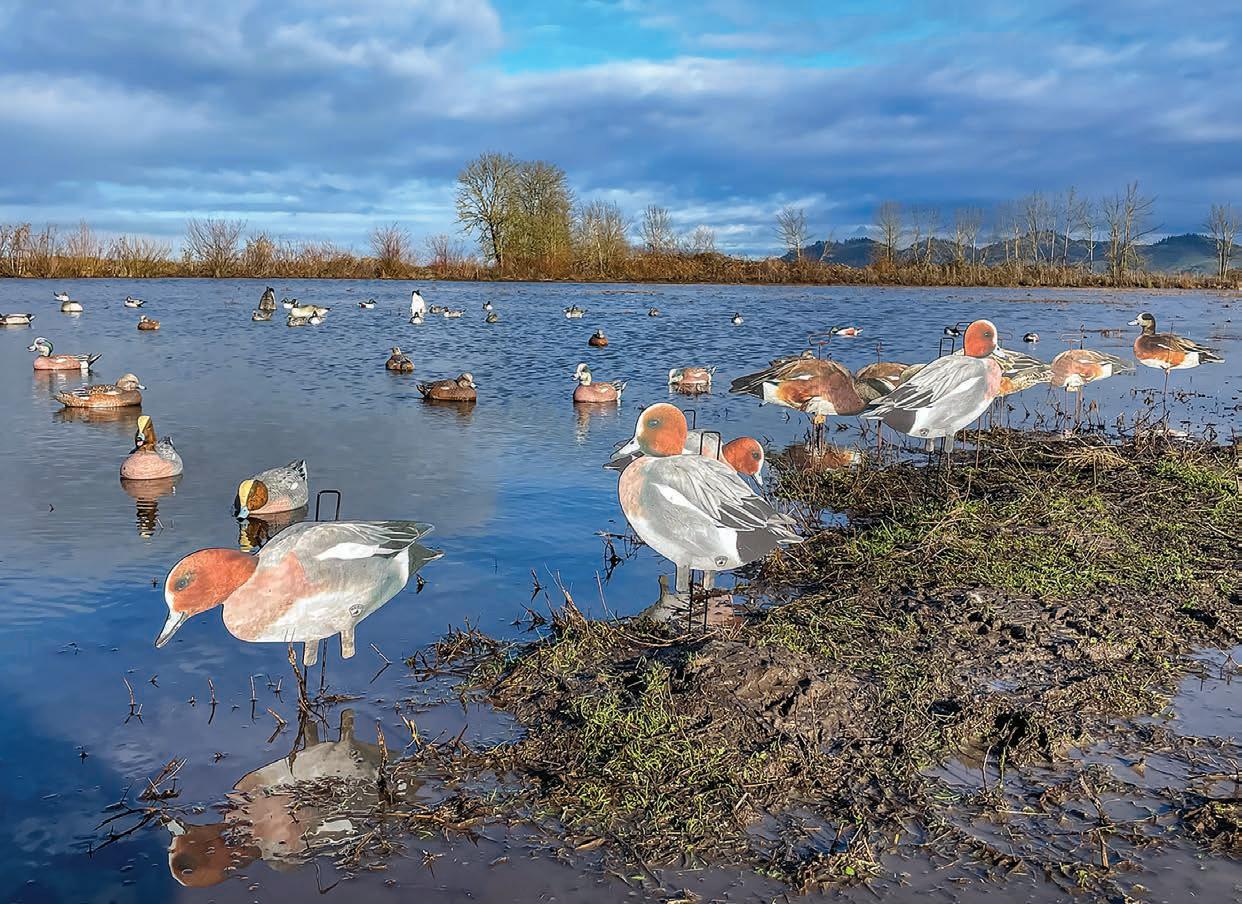
I use a variety of Big Al’s silhouette duck and goose decoys in many of my spreads. I like their photofinish realism because they don’t glare, they’re easy to clean and they retain their color season after season – without fading or turning dark. I also like hunting wigeon late in the season, and with the influx of Eurasian wigeon along the coastal zones and western valleys of the Pacific Flyway, Big Al’s timing was perfect to introduce their Eurasian Wigeon Pack.
These unique Eurasian silhouette decoys are available in a pack of 12 or 60. If you have some buddies, going in on a five-dozen pack so you can make them a part of every spread is a good choice. Over the years I’ve routinely watched incoming Eurasian wigeon land with their own kind among a flock of 5,000 or more American wigeon as they grazed. It amazes me how Eurasian wigeon can pick out the other copper-topped ducks amid a flock of thousands, but they do regularly.
I ran these silhouettes last season and we shot a Euro drake and an American/Eurasian hybrid over them. They were a part of many of my spreads this season, too, and they will be again next season.
Slayer Calls has two new goose calls that late-season hunters will appreciate. Their Snowstorm call is super easy to run and delivers high volume. Buddies hammered
snow geese with this call earlier in the season while working birds that were trafficking on public grounds. If you want to sound like a flock of geese, not just a loner, this is the call for you. Friends and I will be putting the Snowstorm to further use in the late season.
Slayer’s new white-fronted goose call, dubbed The Rice Wrecker, was a little more challenging for me to run right out of the box, but I’m not a great caller. Once I got it dialed in, though, oh my. It produces a smooth breakover and extremely lifelike sounds, including soft murmurs and crisp clucks for finishing geese. This is going to be a popular one for lateseason speck hunters concentrating their efforts on fields as well as trafficking birds.
My first experience with a Turtlebox speaker came last winter when six buddies and I started setting a massive goose decoy spread at 2:30 in the morning in Northern California. It made the laborious process fun; so fun, I had to have one. I chose their new Ranger. There are few pieces of outdoor gear I recall enjoying this much. I use it a lot – multiple times a week – be it working outside, in the shop, even when getting in a workout in our weight room.
This season I got the new Gen 3 Turtlebox. Now I can rock out to my 1980s hair bands anytime I like. It’s been fun on boats and when picking up massive spreads of goose decoys with buddies at midday. This thing is plenty loud for
my needs; it’s powerful, clear and simply rocks! The USB-C charging port is a nice addition. It can be paired with other Turtlebox models for a surround-sound experience. It’s easy to pack, has outstanding battery life, doesn’t take much room and it’s 100-percent waterproof.
There you have it: my top waterfowl gear picks that I’ll continue using next season and the season after that. This is quality gear that works and is worth the investment. Indeed, things have come a long ways since I started hunting ducks and geese 49 years ago! CS
Editor’s note: Scott Haugen is a fulltime writer for the past 23 years. Learn more at scotthaugen.com and follow him on Instagram.


By Scott Haugen
With this past season’s more restricted Canada goose opportunities, targeting those birds took a back seat to chasing ducks for many hunters. But spring white and white-fronted goose seasons are fast approaching, meaning there’s still time to get in some last-minute hunting, and more importantly, training time with your dog.
Spring goose hunts offer excellent training opportunities for owners of new pups. They’re also great hunts
if looking to fix bad behaviors or habits that your adult dog may have developed late in the duck season.
IF YOU ACQUIRED A pup this winter, water and air temperatures could have been too cold to get on many hunts. One of the most detrimental things we can do is force pups to enter cold water. The chilling temperatures won’t only impede a pup’s desire to hunt, it can totally shut down all the training and commands you’ve been building. You want that pup to succeed on its first hunts, and severely cold temperatures
can force a pup to struggle.
At the same time, if looking to correct some unwanted behaviors or redirect poor habits your adult dog was displaying at the end of duck season, spring geese can be just the remedy.
Spring goose hunts are ideal training grounds for many reasons. First, the weather is usually good. Even if it’s cold when the hunt starts, by midmorning, temperatures are typically warm. Better yet can be an afternoon hunt where the hunt starts and ends amid warm temperatures.
If a dog is comfortable, it’s level of performance is optimized.
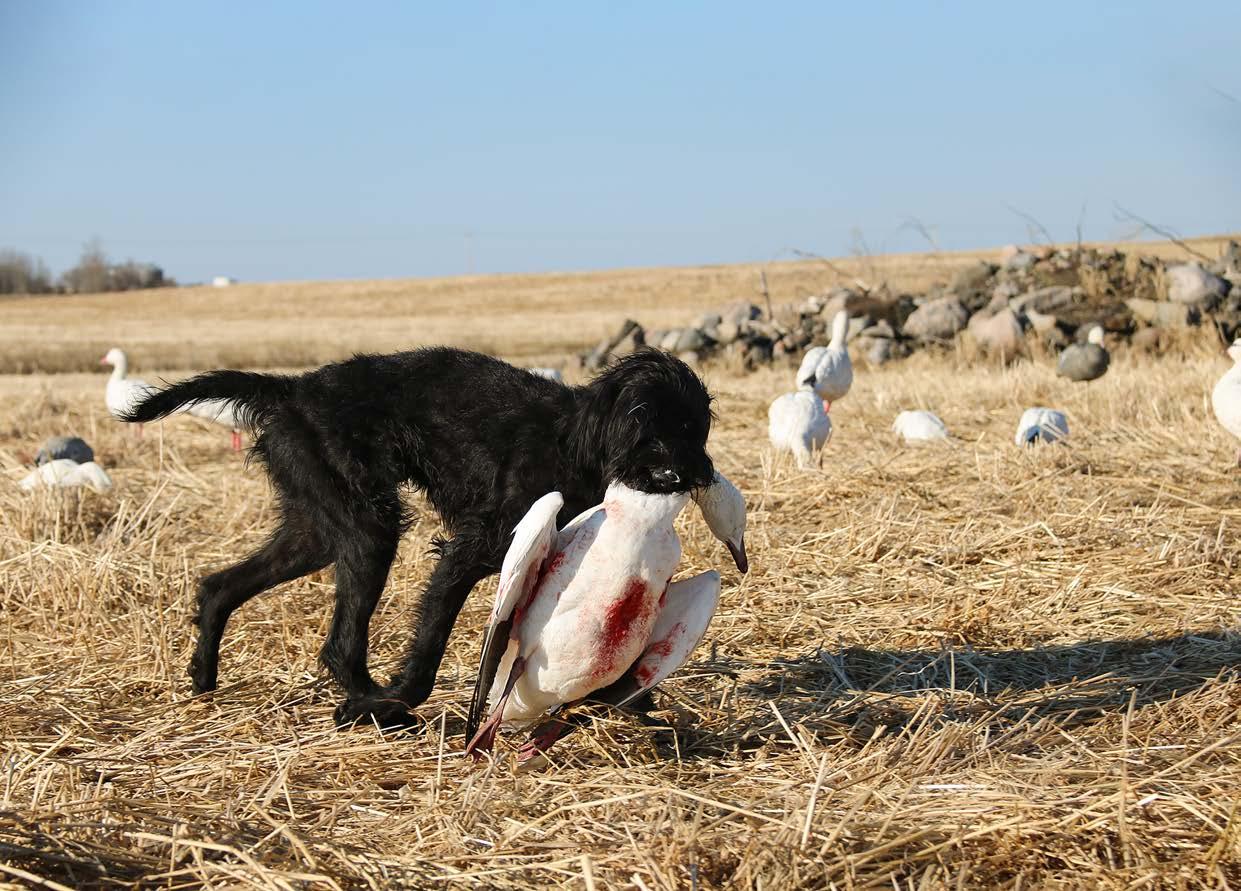
Second, spring goose hunts offer high-volume shooting opportunities. I hunted a place last year with a buddy and his dog. With a limit of 20 snow geese and 10 white-fronted geese per person, per day, high-volume retrieves ensued. Thanks to so much shooting, dog fixes happened fast and efficiently.
Third, because so much shooting can take place on spring goose hunts, there will be many opportunities to correct or shape your dog’s behavior, but you might need to set down your gun to do so. By letting your buddies shoot, you’ll be able to focus 100 percent of your training efforts on your dog. This can be anything from getting it used to sitting and staying in a dog blind, to not breaking at a volley of shots, to pulling off multiple retrieves via the use of hand signals.
When Kona, my male pudelpointer, was 6 and 7 months old I took him on multiple spring goose hunts. On one of his first big hunts he had 105 retrieves in one day. A spring snow goose hunt in Canada found him nearly doubling that in two days. Those early, formative hunts helped shape him into the exceptional dog he is today.
SPRING GOOSE HUNTS OFTEN take place in dry fields, which is a big benefit if temperatures are cold or your pup shies away from jumping into cold water. Dry fields and warm conditions make for ideal training situations.
If water work is a priority, take a few dead geese to a nearby pond or whatnot for your pup to retrieve. This is good to do during a midday lull, and is easy if there’s water near where you’re hunting. Taking the time to get in some water retrieves while on the hunt will keep your dog’s interest piqued. And if they have a clean field to run in and dry off, even better.
Just don’t turn these water training sessions into something laborious. Keep them short and positive. If your pup struggles with water retrieves,
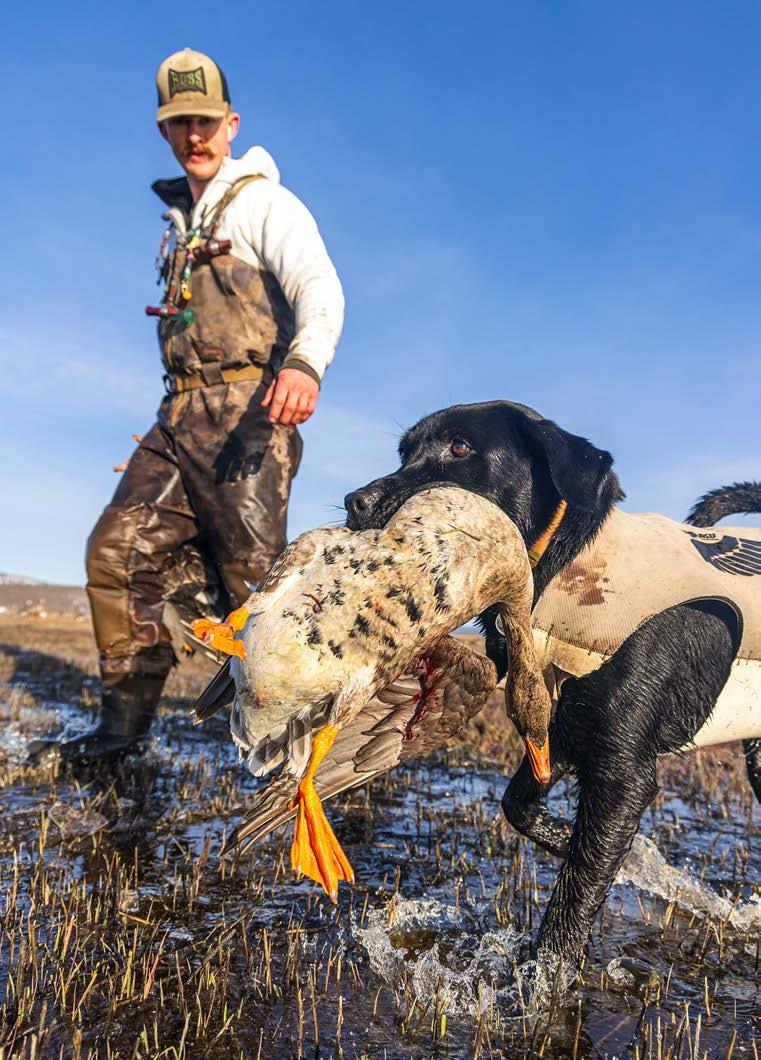
toss a goose out a short distance, then praise the pup on the retrieve. Repeat it a couple more times, tossing it a bit further each time. If it’s your pup’s first water training session, you might need to take waders and get in the pond with the bird, splashing it along the surface and offering words of encouragement for your pup to enter the water. Never physically force a pup into the water, as doing so can cause major setbacks. Pups need to enter the water under their own power.
IF YOU’RE SADDENED over the ending of duck season, don’t be, as there are still plenty of upcoming goose hunts to be had. Once your dog gets dialed in to the behaviors you’re seeking, it’s time to pick up your gun and get some shooting in yourself.
It’s a long wait until next fall’s waterfowl season, so make the most of what time remains with spring goose hunts. Your pup will thank you, and you’ll come away ahead of the training game. CS