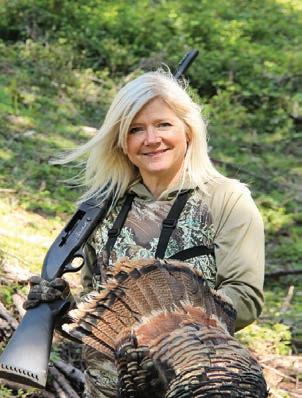
Scott Haugen, Tiffany Haugen, Tim E. Hovey, Cal Kellogg, Mike Stevens
SALES MANAGER
Paul Yarnold
ACCOUNT EXECUTIVE
Janene Mukai
DESIGNER
Kha Miner
WEB DEVELOPMENT/INBOUND
MARKETING
Jon Hines
ADMINISTRATIVE ASSISTANT
Katie Aumann
INFORMATION SERVICES MANAGER
Lois Sanborn
ADVERTISING INQUIRIES
media@media-inc.com
CORRESPONDENCE
Email ccocoles@media-inc.com
X @CalSportsMan
Facebook.com/californiasportsmanmagazine
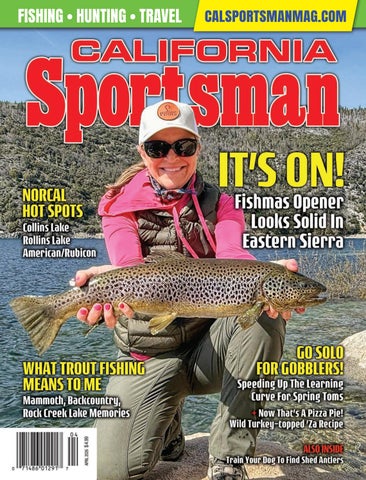
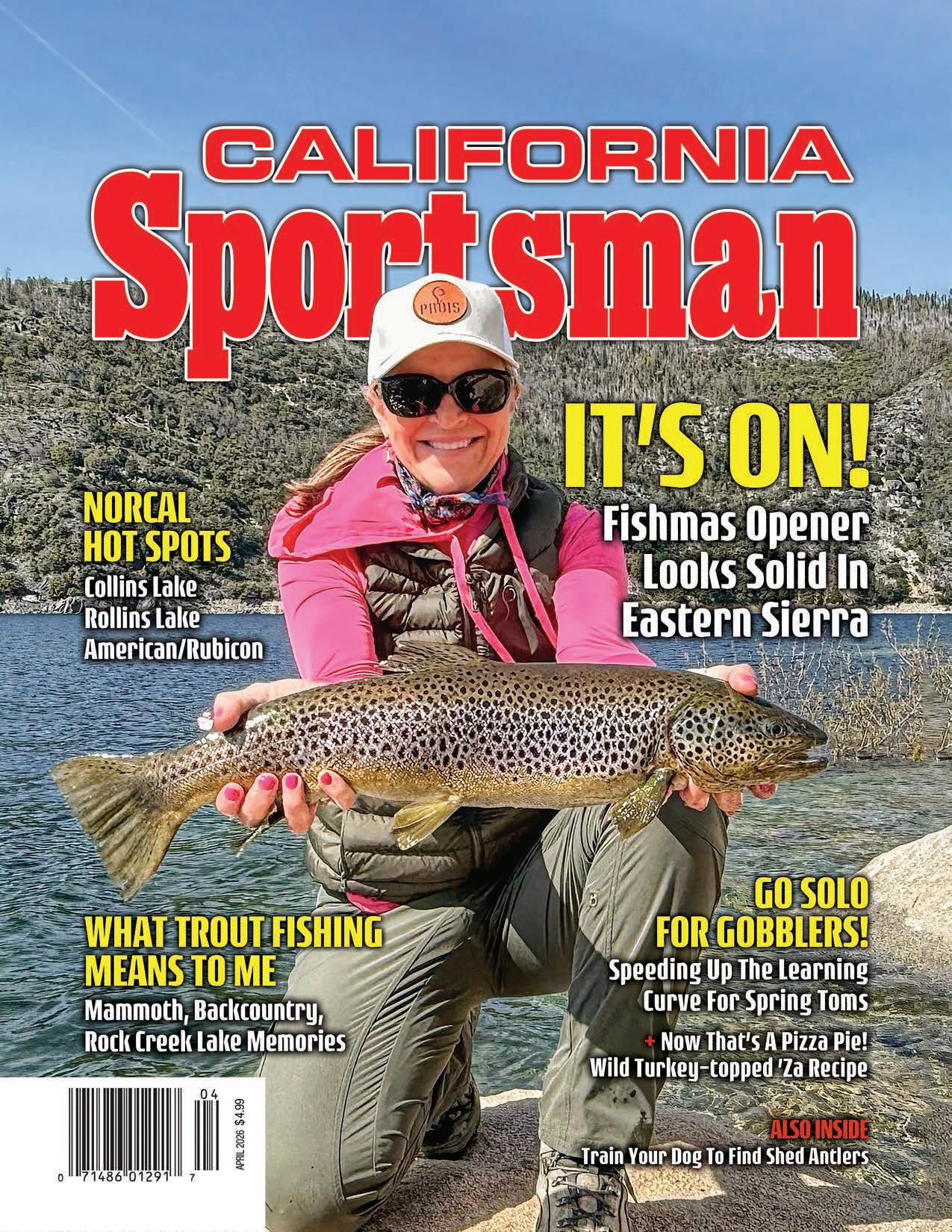
ON THE COVER
Occasional California Sportsman
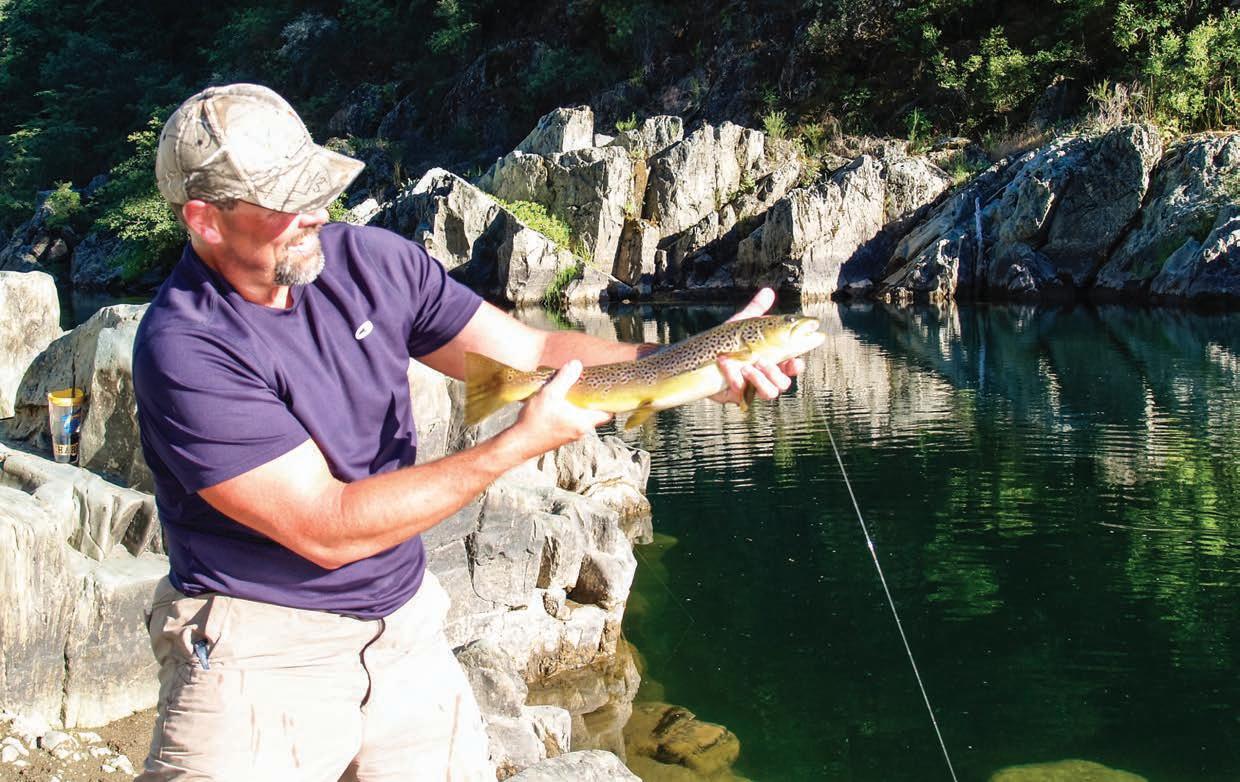
correspondent Nancy Rodriguez, here with her personal-best 26-inch brownie, is excited about spring and summer trout fishing in 2026. Check out our various stories on what to expect for the April 25 general season opener and beyond. (NANCY RODRIGUEZ)
MEDIA INC PUBLISHING GROUP 941 Powell Ave SW, Suite 120 Renton, WA 98057 (800) 332-1736 • Fax (206) 382-9437
media@media-inc.com www.mediaindexpublishing.com
19 FISHMAS FRENZY
Our annual trout preview starts with Mike Stevens analyzing the Eastern Sierra’s April 25 opening-day extravaganza. Stevens, a SoCal resident who is a Fishmas regular, breaks down both the good – a likely productive opening weekend at several staples and some wild card spots – and the bad – an inconsistent winter snowfall and a rare March temperature surge that could create some issues later in the season. But for now, the opener looks dynamite!
25 INTO THE RUBICON
Cal Kellogg has the scoop on just about every trout-producing lake and river in Northern California, and this month he details the diverse Middle Fork American/Rubicon Rivers Complex in the Sierra east of Sacramento. From trolling lures and dunking bait in highelevation and foothill reservoirs for big rainbows and browns, to casting flies for wild fish in pristine rivers, there’s something for every trout fanatic here.
39 SIMPLY (ONE OF) THE BEST
Among the state’s premier trout fisheries is Collins Lake, located in the Sierra foothills northeast of the Marysville-Yuba City area. A strong planting program sends thousands of both catchable and trophy fish into Collins from October to May, and since the lake’s open year-round, you can head over there right now and get into some elite action. And don’t forget to hit the resort’s store for some similarly epic ice cream! We preview the 2026 season.
45 SOLO GOBBLER GAMES
As spring turkey hunting peaks this month, our Scott Haugen shares the joys of chasing toms by himself. “When scouting and hunting alone you draw your own conclusions and thus make your own decisions,” he declares in his and wife Tiffany’s From Field to Fire feature. Meanwhile, Chef Tiffany ditches the pepperoni and bakes an outside-the-norm pizza with wild turkey meat to tempt your taste buds!
(MIKE STEVENS)
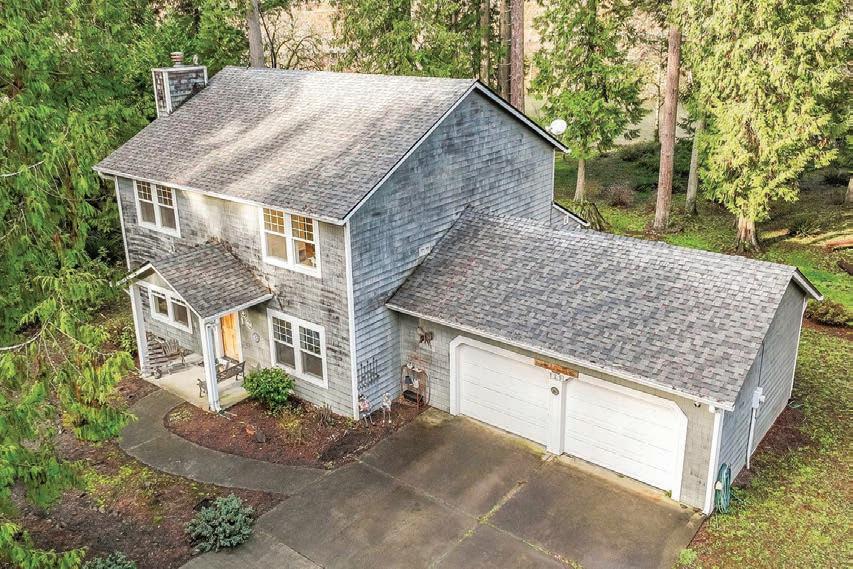
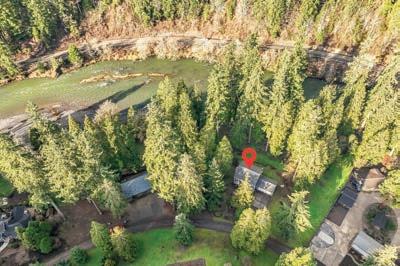
125 RIVER GLEN TERRACE, KALAMA
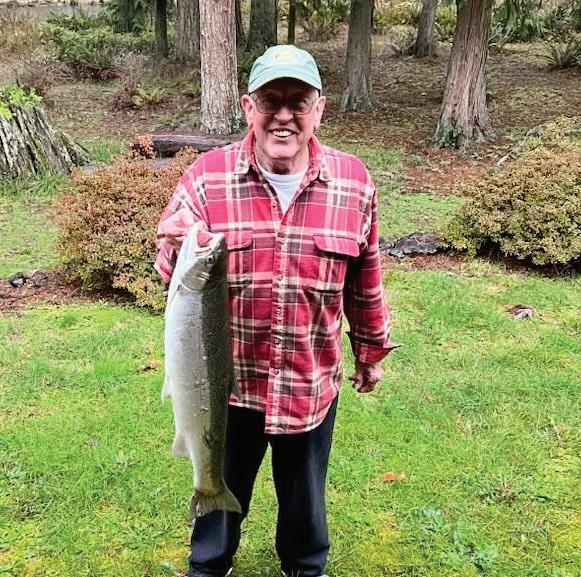
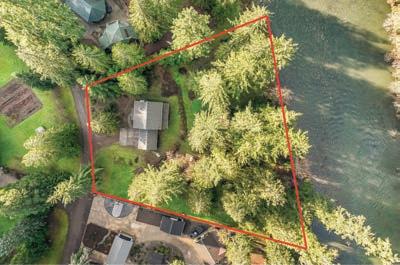
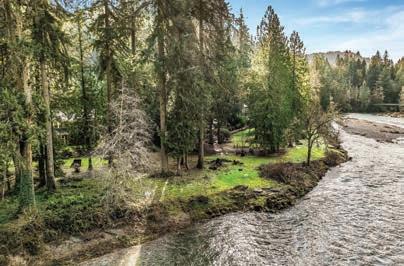
We have an incredible property for sale on the Kalama River, perfect for fishing enthusiasts. It’s located on Beginner’s Hole, and our client has caught hundreds of steelhead right from his backyard over the 30 years he has lived here!
• 2.27 nearly flat acres, with mature evergreen trees
• On ‘Beginner’s Hole’ on the Kalama River
• Photos of steelhead he’s caught
• Peaceful neighborhood, mostly retirees
• Only 10 min from town
• New roof in 2021
• Fiber internet connection may be available
• Home being sold by original owner - immaculately cared for!
• $875,000
Photos, videos, flooplans, and more are all here: www.kalamariverhouse.com
Please text or call me at 360-776-9599 for a private showing. We would love to show the property to any fellow fishermen!
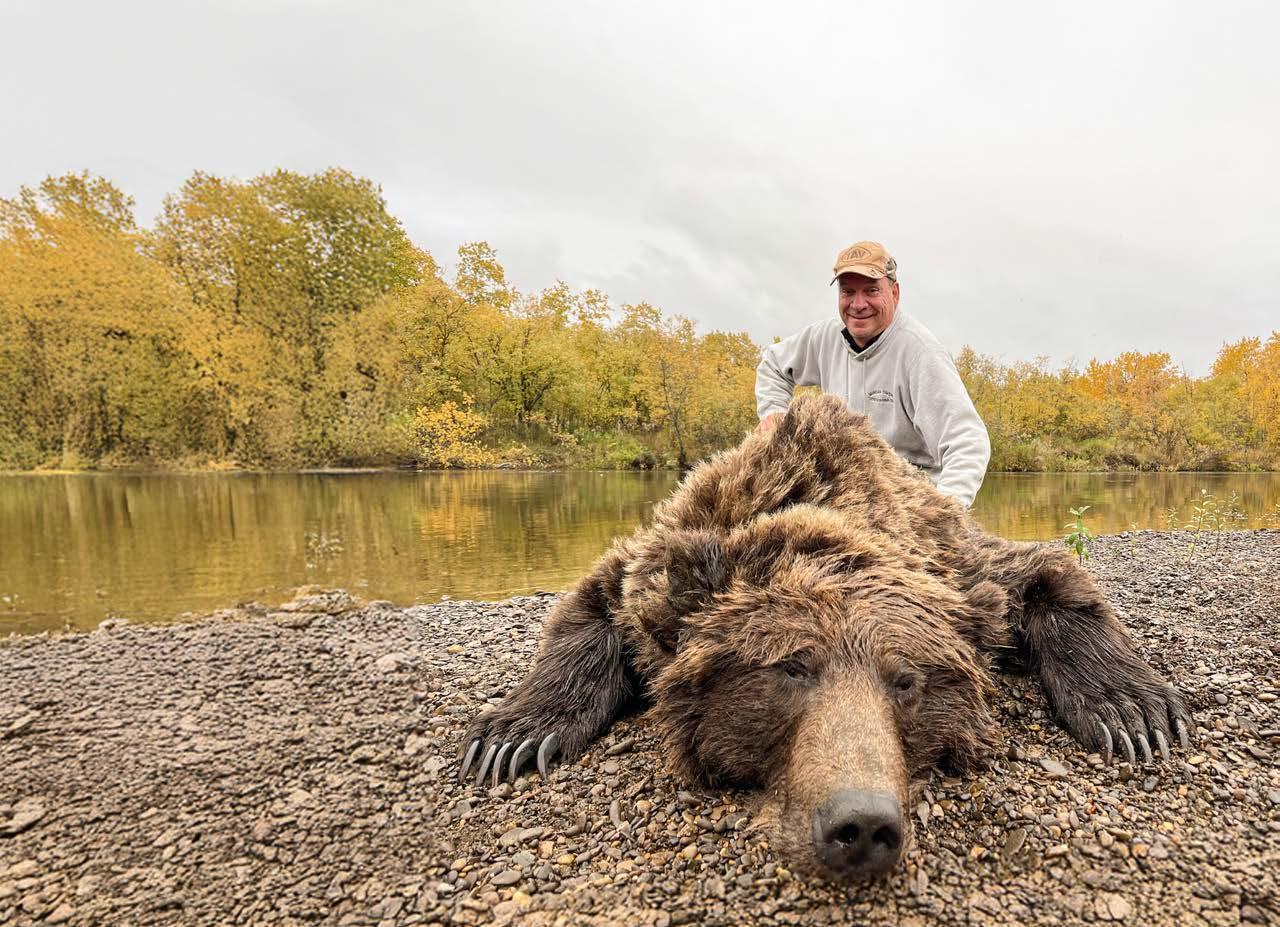
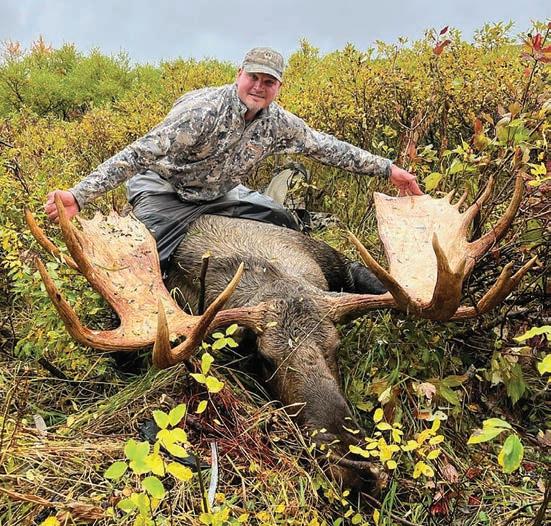
This is an unforgettable Alaskan adventure that blends raw wilderness, world-class game, and the thrill of pursuing some of North America’s most iconic animals in their natural environment. Long days on the river. Close encounters. The kind of moments you’ll talk about for the rest of your life.
WHY HUNT WITH US
• Trophy moose & bear hunts in prime river systems
• Regular 60”+ bull moose opportunities
• Near-100% opportunity rate on legal bulls
• High success on large Alaskan bears
• Fully guided & all-inclusive hunts
• Expert guides with deep local knowledge
• Carefully selected locations for consistent results
• 11–15 day hunts with 15-day combo moose & bear hunt available
Every hunt is carefully planned and professionally guided from start to finish. From scouting and calling to field care and logistics, your guide handles every detail so you can stay focused on the hunt.
Contact us today to secure your hunt and discuss available dates.
As we celebrate all things trout this month with a lineup that includes our preview of the April 25 Fishmas celebration in the Eastern Sierra, memories of past trout fishing adventures and some hot destinations that should be on your radar this spring and summer, I keep thinking back to the first rainbow I ever caught.
I’m too old to remember how young I was – I’m guessing 9 or 10 – but I do recall the circumstances and the moment. My dad and I went to a usual go-to spot back then, San Francisco’s Lake Merced, a quick 20-minute trip up Skyline Boulevard (Highway 35) from our San Bruno home. It’s not exactly among the state’s most iconic trout lakes like, say, Crowley, Collins or Tahoe, but for me it’s a special place that will always hold so many childhood memories with friends and family.
I’d previously landed my first fish
perhaps the summer before this one –a channel cat that I pulled in from the shore at a family friend’s waterfront home in Clear Lake – but there’s something mystical about a caught trout for a youngster that still brings out the kid in all of us years and even decades later.
We staked out a spot on the bank and I threw out a simple rig with a salmon egg and marshmallow, a staple of Merced anglers young and old. The bite was slow, so I’m sure I bugged the hell out of my father about the lack of action (this became commonplace for me as a rather mediocre fisherman). But after exiting my chair and wandering around to see what else was going on, I spied my rod and noticed the line had become slack. Then I saw a quick tug. “Holy sh*t! Something is happening here,” I thought, though I’m clearly paraphrasing the language and tone.
Wouldn’t you know that I set the hook,
reeled and probably nothing more than a 10-inch planter hit the beach. Yet for me it might as well have been a 10-pound trophy planted by a trout farm – which truly would have made for a quintessential fish tale at this urban fishery. (This was a few years before a new Lake Merced concessionaire did start to stock bigger trout before eventually folding, leaving the lake a shell of its former glory as a legitimate place to catch trout.)
You can guess how excited I was about this milestone. I looked over at my pops, who wore a goofy grin. “You knew I had a bite before I did, didn’t you?” He said nothing and kept smiling.
Fast forward a few decades, and as the 2026 season officially starts on the last Saturday of April, there will be longtime fishing buddies, generations of families and even some first-timers soaking in a special day. Here’s hoping everyone can fill their stringers with fish this spring. -Chris Cocoles
There’s something magical about pulling in a trout from your local lake or stream. It’s why the April statewide trout opener means so much to so many people. (TIM E. HOVEY)
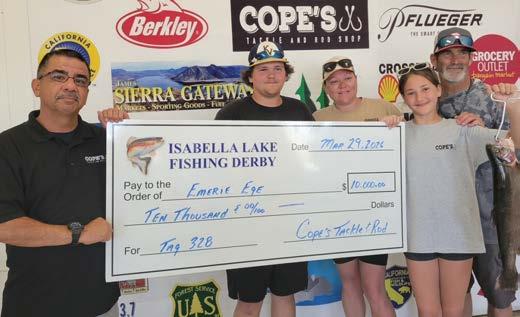
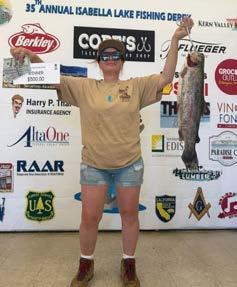
ISABELLA LAKE FISHING DERBY 35th Annual
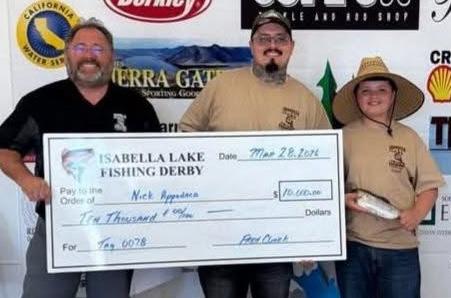
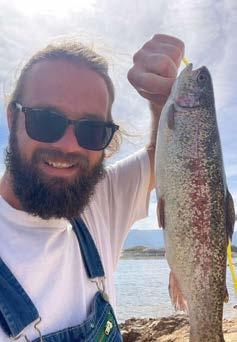
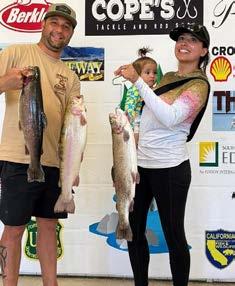
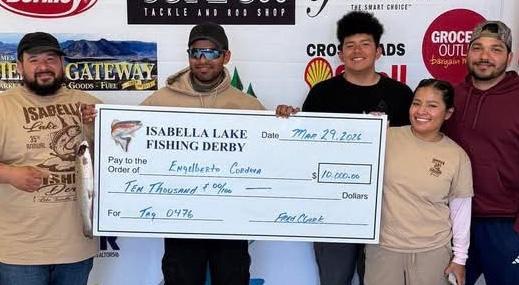
The annual Lake Isabella Fishing Derby wrapped up after three days and was a great success! Not one, not two, but three $10,000 prize fish were caught by lucky anglers, along with thousands more in cash and prizes.
Hosted by the Kern River Valley Chamber of Commerce, the derby draws hundreds of fishermen and their families to camp, fish, and enjoy beautiful Lake Isabella in the Kern River Valley.
OUTDOOR CALENDAR
APRIL
3-4
4
5
11
11-12
11-12
18
18-19
Blue Lakes Trout Derby, Lake County (707-477-8360)
Bullards Bar Team Kokanee Derby, Bullards Bar Reservoir (kokaneepower.org/derbies.php)
Barry Canevaro Memorial Striper Derby, Rio Vista Boat Ramp (701-330-9827)
Get Out and Fish Junior GOAFER Derby, Collins Lake (goafgear.com/event-details/4th-annual-junior-goafer-trout-derby)
SMUD Trout Derby, Rancho Seco Recreational Area, Sacramento County (anglerspress.com/events/smud-trout-derby)
For a list of upcoming bass tournaments, go to nrm.dfg.ca.gov/FishingContests/default.aspx.
Bullards Bar Reservoir will host the next Kokanee Power Team Derby on April 4 Go to kokaneepower.org/derbies.php for more information. (MARK FONG)
WHAT TROUT MEAN TO ME
ANGLER’S MEMORIES INCLUDE FAMILY AND SPECIAL FISH, AS WELL AS LATE FRIENDS
By Tim E. Hovey
Iadmit that, despite catching my first trout at the age of about 9, I came to the trout game late in life. I was so focused on saltwater fishing, I essentially ignored the freshwater opportunities for trout. I had caught a handful of stockers as a young adult, but it wasn’t until my
college days that I started to focus on freshwater fishing.
COLLEGE GETAWAY TO EASTERN SIERRA
My good friend Rich Rosen planned a Mammoth trip to celebrate our first completed college year in 1990. We headed to the Eastern Sierra late on a Friday and set up camp in the dark. The next morning, following Rich’s lead,
we fished a creek near our campsite. It was during this morning session that I caught my first brown trout.
Later that same day we spent the afternoon fishing one of the many local lakes, casting Kastmasters from the shore and catching our limits of large trout. It remains a great memory for me – fishing with a good friend.
The following day we packed up
made up for it with memories to last a lifetime.
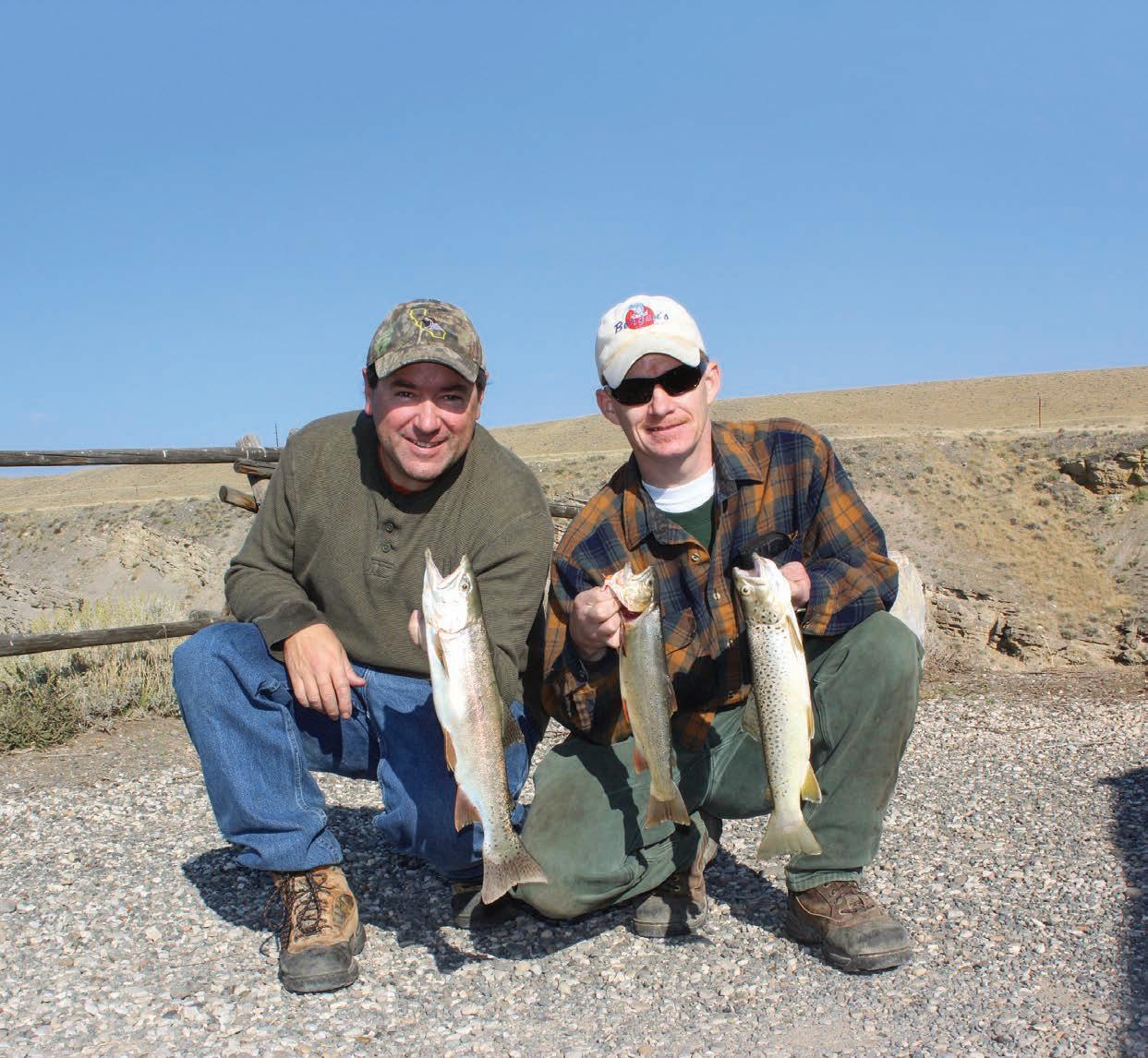
Tim Hovey’s (left) trout obsession began later in life than for most anglers, but he’s
He and friend Darrin Bergen, who has since passed, shared good fishing on Wyoming’s Shoshone River. (TIM E. HOVEY)
FISHING
camp and headed out, stopping off at Crowley Lake for a few casts. On the third cast from the shore, I hooked into a beautiful silver trout, which put an amazing exclamation on the trip. We continued this end-of-thecollege-year trout fishing tradition for a couple more years before the responsibilities of life pulled us in different directions.
FINDING NEW TROUT HOLES
For the next several years, I worked exclusively in the marine field before landing an inland fisheries job with the state. This put me in the back hills and mountain streams quite a bit. If
I knew I was going to be surveying perennial waters, I always packed a breakdown fishing rod and a small pack of terminal tackle.
As I mapped some of the drainages, I gradually accumulated a short list of streams that held wild trout. I would head out early for the survey and then spend a few hours rockhopping my way back downstream and fishing the larger pools. Using everything from small spinners to worms, I’d catch and release small, colorful trout. Honestly, when I had to conduct surveys in these stream areas, I always looked forward to catching these wild trout.
HOT SPOTS IN THE HIGH SIERRA
Relocating to the north for work, I began to hunt more than fish. However, when I started hunting with my good friend Ed Davis, he made it clear that I needed to bring my fishing gear during some of our desert outings. While our main focus was always calling predators, some of Ed’s spots put us close to trout waters. And so, another tradition was born.
During certain trips, we’d load up rifles and hunting gear but also add spinning and fly fishing gear. During the summertime, we’d head out early and call predators in the morning, then drive the high switchbacks to Horseshoe Meadows to fly fish for golden trout. When it comes to my limited experience, fishing for trout on fly gear in the high-elevation creeks and streams is where I cut my teeth.
Using tiny flies and a 40-year-old fly fishing rod given to me by my dad, we’d hike the narrow stream and make short casts to the pools. During my first trip with Ed, I caught one of the prettiest trout I had ever hooked, an 11-inch golden trout that took a Parachute Adams fly and fought for all it was worth in the confines of the narrow creek.
As soon as I figured out how to make precise casts with the heavy line, I couldn’t get enough. Across the half a dozen times we fished the meadows, Ed knew the only thing pulling us from the fishing grounds was darkness. Fly fishing the highmountain creeks for golden trout with Ed remains one of my fondest angler memories.
KID STUFF, BUDDY’S ’BOWS, BROWNS
As my daughters got older, we’d plan annual trips to the high Sierra to camp and fish with friends. We picked Rock Creek Lake as our chosen destination, and that’s where I taught my girls how to catch rainbows from a boulder we christened Hovey Rock. We fished from that boulder year after year. Rock Creek Lake is also where my
Hovey and his buddy Ed Davis have enjoyed multiple high-country adventures for iconic golden trout. (TIM E. HOVEY)
daughters sharpened their fishing skills and developed an interest in the outdoors. These are some of my most cherished memories with my daughters.
A few years before I relocated to Idaho, I made a road trip to Wyoming to visit my good friend Darrin Bergen and hunt antelope. While we were coordinating logistics, Darrin strongly suggested I pack a couple of fishing rods in case we filled our tags early. He stated that the trout fishing in the nearby Shoshone River was currently on fire. I thought, “Don’t threaten me with a good time!”
After driving literally all day and traveling through five states, I arrived in Cody, Wyoming, in the evening the day before the antelope opener. As Darrin predicted, we were eating pizza and drinking beers by noon the following day after having filled both our tags by late morning. After meat processing, we grabbed our fishing rods and made the short drive to the Shoshone River. Over the next few days, I experienced some of the best trout fishing of my life along the banks of that beautiful river.
Darrin, playing the role as guide, had scouted out the area and the subtle fishing technique before I got there. Using a modified rig with a river-friendly weight, some colorful beads and a barbless bait hook, we tipped the terminal tackle with a piece of corn and a short section of nightcrawler. If I had a thousand guesses, I never would’ve figured out this subtle offering.
We’d cast upstream, let the rig bounce off the bottom and watch the line for any indication of a bite. On the first cast, a healthy brown grabbed the hook and was on the stringer a short time later. We spent a few hours catching browns, cutthroat and rainbows, saving a few fish for a wild surf-and-turf feast back at Darrin’s place later that evening.
With still a full day in Wyoming planned, we again headed back to the Shoshone. Once again, the beautiful river did not disappoint. We were
Crowley Lake churned out this silver beauty on one of Hovey’s first trips to the Eastern Sierra years ago. (TIM E. HOVEY)
Having moved to Idaho, Cheryl and Tim Hovey have enjoyed new fishing spots like the famed Salmon River for more trout fun. (TIM E. HOVEY)
FISHING
treated to just about nonstop action on 18- to 24-inch trout of varied species. While I was excited that I had killed a nice antelope earlier in the trip, I think more about the amazing trout fishing we experienced in the following days. For me, it was a trip of a lifetime.
NEW HOME, NEW FISH
In 2020, I relocated my entire family to the southern portion of Idaho. Early on, I spent time investigating both the hunting and fishing opportunities in my new state. For the first year or so, my wife Cheryl and I enjoyed fishing for planted trout in some amazing areas. While we enjoyed visiting them to fish, I knew Idaho was home to many lakes and streams where wild trout swam. I was obsessed with finding these spots.
In 2021, my college friend Rich made a trip out to Idaho so we could head out on a trout fishing extravaganza. I told him I wanted to look for places I hadn’t fished yet. We headed out early and hit several spots before arriving at the Salmon River
near Stanley, Idaho. This is where we found trout fishing paradise.
Using a small black and yellow Mepps spinner, we caught dozens of trout each. In fact, we both hooked up on our first cast. We spent that afternoon catching and releasing all we caught and just enjoying the beauty of wild Idaho.
At that time, Rich mentioned that
he was dealing with some health issues and that it might be a while before he got back out for a visit. Those health issues turned into a twoand-half-year struggle with multiple myeloma. I was just happy Rich was able to get in a really good trout trip before hospitals and treatments took over his life.
MEMORIES OF FALLEN FRIENDS
Trout fishing has been a far larger interest for me later in life. I always enjoy exploring new areas and fishing for different species. My many trips have also been about spending time with good friends and my own family. And as life moves forward and things change, that kinship chasing trout becomes even more important than the hookups. Whether we know it or not, sometimes those memories may be our last.
Darrin passed away unexpectedly less than a year after sharing that Shoshone River trout trip with me. And Rich, having beaten cancer into remission and planning a return trip to Idaho, passed on, also unexpectedly, on Christmas Day 2025 after undergoing hip replacement surgery.
I miss them both dearly but will always smile knowing that I shared some amazing fishing with both friends. For me, that matters. CS
“My many trips have also been about spending time with good friends and my own family,” the author writes. “And as life moves forward and things change, that kinship chasing trout becomes even more important than hookups.” (TIM E. HOVEY)
What has made Hovey’s trout memories even more emotional has been the deaths of fishing partners like Rich Rosen (right), who unexpectedly passed this past Christmas. (TIM E. HOVEY)
Lakeside Lodge Life at Odell Lake Resort
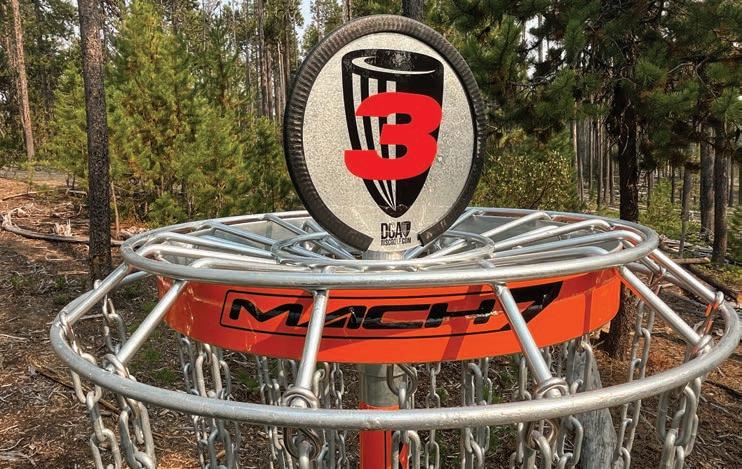
Whether you’re working the water, playing a round of disc golf, or basking in the perfect sunset, Odell Lake Resort is your place to unwind and explore.
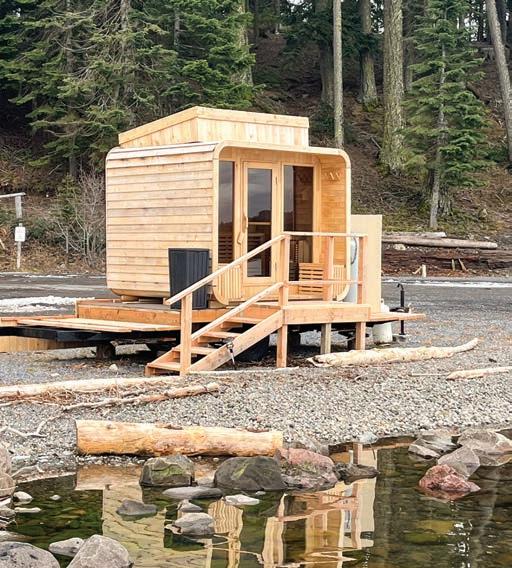
• Lakeside Sauna - a private, relaxing extraordinary experience
• Revitalized Outdoor Patio - a great time any day of the week
Come experience Odell Lake Lodge Life! Book your stay today!
You don’t have to worry about a repeat of 2023’s snow-heavy winter leading to icy conditions for the Eastern Sierra trout opener this year. A warm March will likely lead to good fishing on the last Saturday in April, but there are concerns for later in the summer. (MIKE STEVENS)
SHORT-TERM FUN, LONG-TERM FROWNS?
HOW WINTER SNOWPACK SETS TONE FOR EASTERN SIERRA TROUT OPENER, SEASON
By Mike Stevens
Regardless of what happens between now and the Eastern Sierra trout opener on April 25, anglers are going to be looking at a low-snowpack season and should plan accordingly. At the time of this writing, “snow water equivalents” in the Sierra Nevada dipped to about two-thirds of normal for the last week of March.
The Southern Sierra, which includes the Eastern Sierra in terms of trout fishing regions, is in better shape at around 90 percent of normal for late March, but unseasonably
hot temperatures have been steadily melting it off. That bodes well for fishing access on the lakes and streams typically available on opening weekend. It might even crack open some bonus areas that are usually still locked off in snow. But it creates some real question marks for trout anglers looking to head up in mid- to late summer.
SOLID SNOWFALL, TEMPERATURE EXTREMES
For example, snow totals on Mammoth Mountain were respectable this winter, with 16 inches reported in October followed by varied snowfall in November (24 inches), December (73) and
January (43), and a whopping 87 inches in February. February and December most benefitted from monster individual storms that turned what was looking like a bleak winter in terms of precipitation into decent totals.
Then came a warm storm in February, followed by March heatwaves that affected most of the West with summerlike conditions, if not record highs in some areas. The Sierra was not immune to that heat, and the “rapid melt” that normally happens in April or May took place in March, sending much of that water into the lakes and streams.
FISHING
Every lake and stream is going to be in great shape on opening weekend. Crowley Lake and the waters of the June Lake Loop already have open water, as do the big lakes around Bridgeport. So, access to the typical
opener hot spots won’t be an issue unless a blizzard hits near the end of April, which is about as likely as the Long Valley Caldera erupting (it hasn’t for the past 760,000 years).
Also, while still unlikely, there is a chance the Mammoth Lakes Basin
is available for the opener. There’s a better chance for that to happen than the aforementioned volcanic eruption, but I’ve been covering the opener in person for over a decade straight, and it’s only been open once in that stretch. But that one year it was open was incredible.
The thing about the Eastern Sierra trout opener is that most families who take part in it have been doing so for generations, with decades of making the annual trek specifically for that event. Almost all of them have the same opening weekend routine and go to the same lake or stream every year, if not the same spot on the same lake every year.
AN UNTAPPED GEM
Since the Mammoth Lakes Basin is rarely available, it’s not part of anyone’s tradition; when it happened, no one was up there. No one other than my dad, brother and I, that is, and we took advantage of wide-open fishing for 2- to 4-pound holdover rainbows that ate everything that hit the water. So, even a chance of the Basin opening in time is worth monitoring.
Similarly, some of the lakes down
MERRY FISHMAS
Twin Lakes, like many fisheries around the Bridgeport area, could be in play for the April 25 opening weekend barring any late-March and/or early-April snowstorms. (MIKE STEVENS)
Windy conditions for trollers, like this opening weekend outing on Twin Lakes during a recent April, can be commonplace. (MIKE STEVENS)
in Bishop Creek Canyon that are not always open could be openingweekend options. Lake Sabrina and South Lake are the ones to keep an eye on, as Intake II will definitely be open. However, North Lake will likely still be closed regardless of the snow situation. The Bishop Creek Canyon is an area that really needs those options because it can get crowded on the few waters that are typically available.
Lastly, unless a significant amount of snow falls in April and melts off before the 25th, the offcolor, frigid water and heavy creek flows associated with peak runoff that really put a damper on fishing are far enough back in the rearview mirror that conditions will have cleared up and stabilized before the opening bell sounds.
THE BAD NEWS
Even with all that snow melted off well before the season opens, there will be enough left in the high country to power creeks that feed lakes at least until June, but then what? While there is always enough melt to keep the creeks flowing at some level, things can get pretty low in the July through August doldrums. That makes creek fishing difficult, especially under bluebird skies and 80-plus-degree heat, but it doesn’t end there.
Those are the creeks feeding the lakes, and with minimal flows running into them, the water temps are going to rise. That’s going to send trout deep, and effective methods for catching fish will switch from casting out close to shore and near the surface to trolling deep with leadcore line or sending bait rigs out into deeper water. There’s still decent fishing to be had via those methods, but it can be more of a grind, and those techniques are considered boring by some anglers.
As far as I’m concerned, July and August are not options for my trips in 2026. I already don’t prefer trout fishing under conditions like those
home in San Diego regardless of snowpack, but I really don’t want to be up there if I have to work way harder for my bites.
If you can comfortably wade in shorts and sandals, it’s cool on a hot day, but it also means the trout are
less than stoked. But if an angler can only go in July or August this year, look for the coolest, most oxygenated water – shaded areas, inlets, deep dropoffs, wind-blown points and banks and creeks with the best flows all should be on the hit list.
at
Life can be good at traditional opening weekend hot spots like Gull Lake. Just know that you should expect unexpected weather conditions for the day. It could be T-shirts and shorts or heavy parkas needed. (MIKE STEVENS)
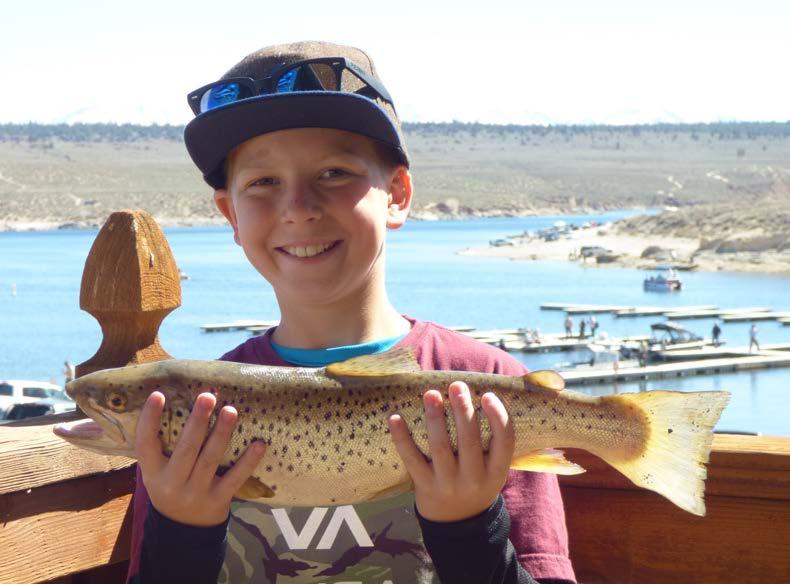
A youngster shows off Crowley Lake brown from a past opener. Crowley should be its usual crowded, productive self for anglers heading to the high country the last Saturday of the month. (MIKE STEVENS)
FISHING
THE SHORT VERSION
As far as the April 25 Eastern Sierra Fishmas weekend is concerned, the action will be unaffected by the snowpack/runoff situation, or it could even be better than usual due to the possibility of access to more lakes and streams. May and most of June should also be business as usual.
But come July, those creek flows are really going to start falling off, causing the lakes to warm up and trout to slow down. That, of course, is paired with the fact those months get a lot more traffic from the new Sierra visitors following the great 2020 Covid-influenced rush to the outdoors, and a lot of them aren’t anglers, but they’ll float right over your spot on the Owens River in inflatable unicorns when they’re up there.
For my time and money, the best months to fish the Eastern Sierra in 2026 are going to be May, June and October.
Bank on it. CS
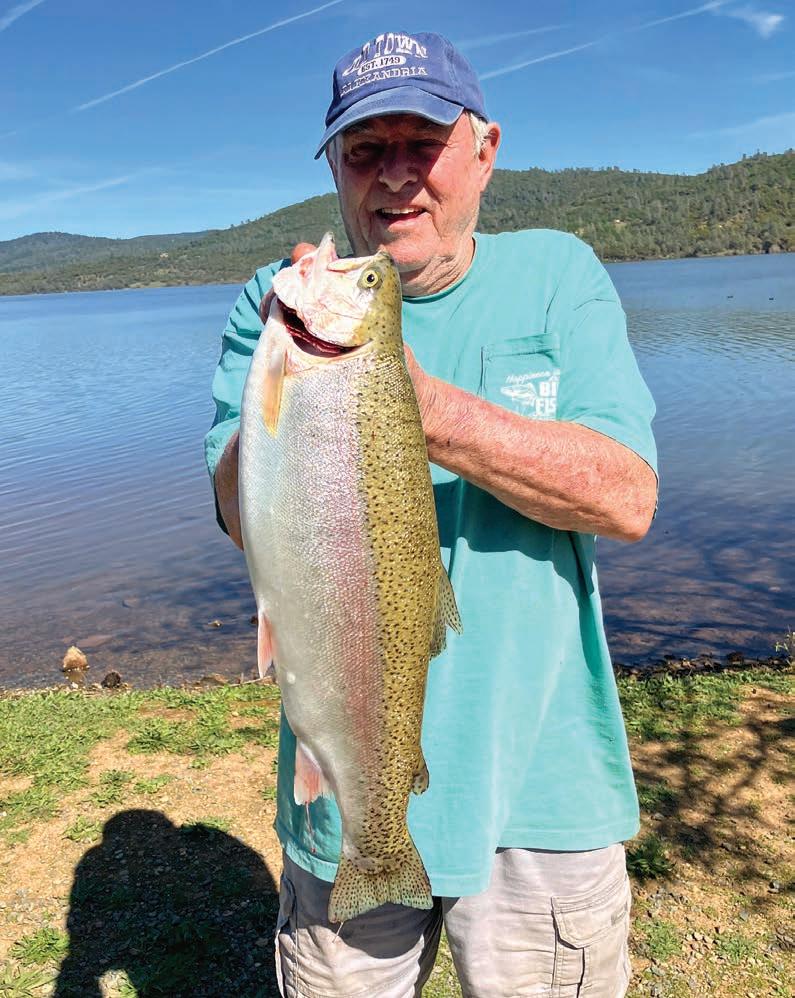
Marlon Meade with a Fishmas rainbow – what this weekend is all about. “The thing about the Eastern Sierra trout opener is most families taking part in it have been doing so for generations,” Stevens writes, “with decades of making the annual trek specifically for that event.” (MIKE STEVENS)
at marine.honda.com or visit your Authorized Honda Marine Dealer.
INTO THE RUBICON AND BEYOND
DIVERSE TROUT ACTION TO BE HAD IN AMERICAN RIVER’S EXTENSIVE FISHERIES COMPLEX
By Cal Kellogg
There are places in California where trout fishing isn’t defined by a single lake or stretch of river, but by an entire interconnected system of water. A place where snowmelt, granite and elevation combine to create a diverse and dynamic fishery that changes with the seasons. That’s exactly what you’ll find in what I’ve come to call the Rubicon/Middle American River Complex.
Tucked into the rugged west slope of the central Sierra Nevada, this network of waters includes high-elevation reservoirs, tumbling freestone rivers and deep canyon impoundments. It’s a system fed by snowpack and driven by elevation, meaning anglers can follow the bite as conditions shift from the high country down into the foothills. In early summer, trout are active in the upper reaches, while fall often brings prime action to mid- and lower elevations as cooling temperatures
and stable flows concentrate fish and make them more accessible.
What makes this complex so special isn’t just the quality of the fishing; it’s the variety. In a single weekend, you can troll for hard-fighting rainbows in a deep mountain reservoir, cast spinners or flies to wild trout in pocket water and finish the day probing rivers where large, opportunistic fish prowl. These waters are rich with forage, lightly pressured in many areas and capable of producing both numbers and
Big browns like this impressive fish lurk in the depths of the Middle Fork of the American River, part of the Rubicon/American Complex in the Sierra that features plenty of action for wild and planted trout at various lake and river fisheries. (CAL KELLOGG)
FISHING
quality fish.
For anglers willing to explore, the Rubicon/Middle American River Complex offers one of the most versatile and rewarding trout fisheries in Northern California. It’s not a single destination, but rather a system you learn, follow and return to season after season.
MEADOWS RESERVOIR
French Meadows is the high-country anchor of these waters, and it is one of the most consistent trout producers in the entire system. Set at roughly 5,200 feet on the Middle Fork American drainage, the reservoir offers cold, clear water, good launch facilities, multiple campgrounds and
a fishery built around rainbows and browns. Placer County Water Agency notes that rainbows are stocked annually. These fish commonly run 12 to 22 inches, while browns here frequently top 6 pounds.
For numbers, the rainbows are the main draw. In early summer, and again in the fall when surface temperatures cool, trolling small spoons, Needlefish and 2- to 3-inch minnow plugs along the edge of the old river channel, flooded wood and long, tapering banks is the fastest way to put fish in the boat.
French Meadows has a lot of submerged wood and stump structure, and those features give trout both shade and ambush cover, so pay close attention to contour changes and isolated timber on your electronics.
If you want bigger fish, focus on brown trout. Brownies at French Meadows aren’t usually free biters, but they are there and respond best to low-light trolling passes with larger plugs in trout, black-silver or gold finishes.
Work steep banks, points near deep water and the lower end of the reservoir early and late in the day. Bank anglers do well with inflated crawlers, PowerBait and hardware such as Kastmasters and Panther Martins, especially around accessible points, launch areas and creekinfluenced shoreline.
French Meadows is not just scenic water. It is a serious trout lake that rewards anglers who fish methodically, pay attention to depth and structure and adapt as the season shifts.
HELL HOLE RESERVOIR
If French Meadows is the accessible workhorse of the complex, Hell Hole is its wild, deepwater backbone – a place where the fish run bigger, the water runs colder and the learning curve gets steep in a hurry.
Sitting at over 4,600 feet on the Rubicon River, Hell Hole is a long, narrow canyon reservoir known for its dramatic depth, ultra-clear water
FRENCH
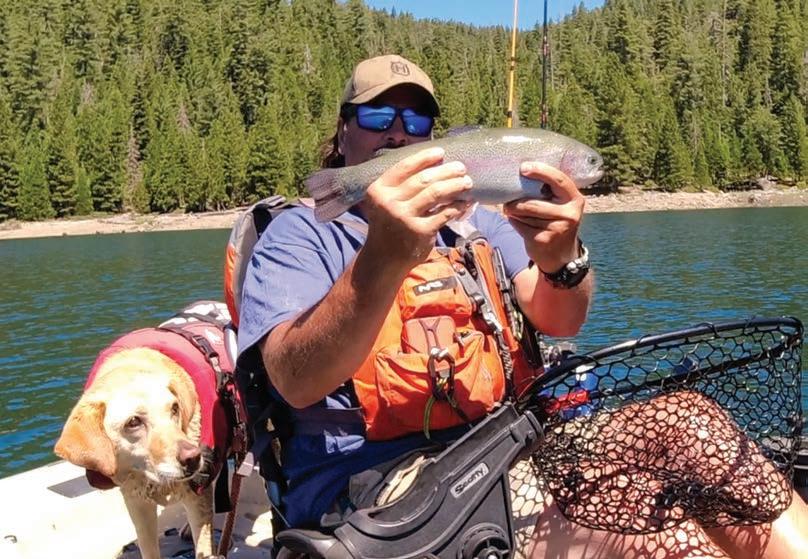
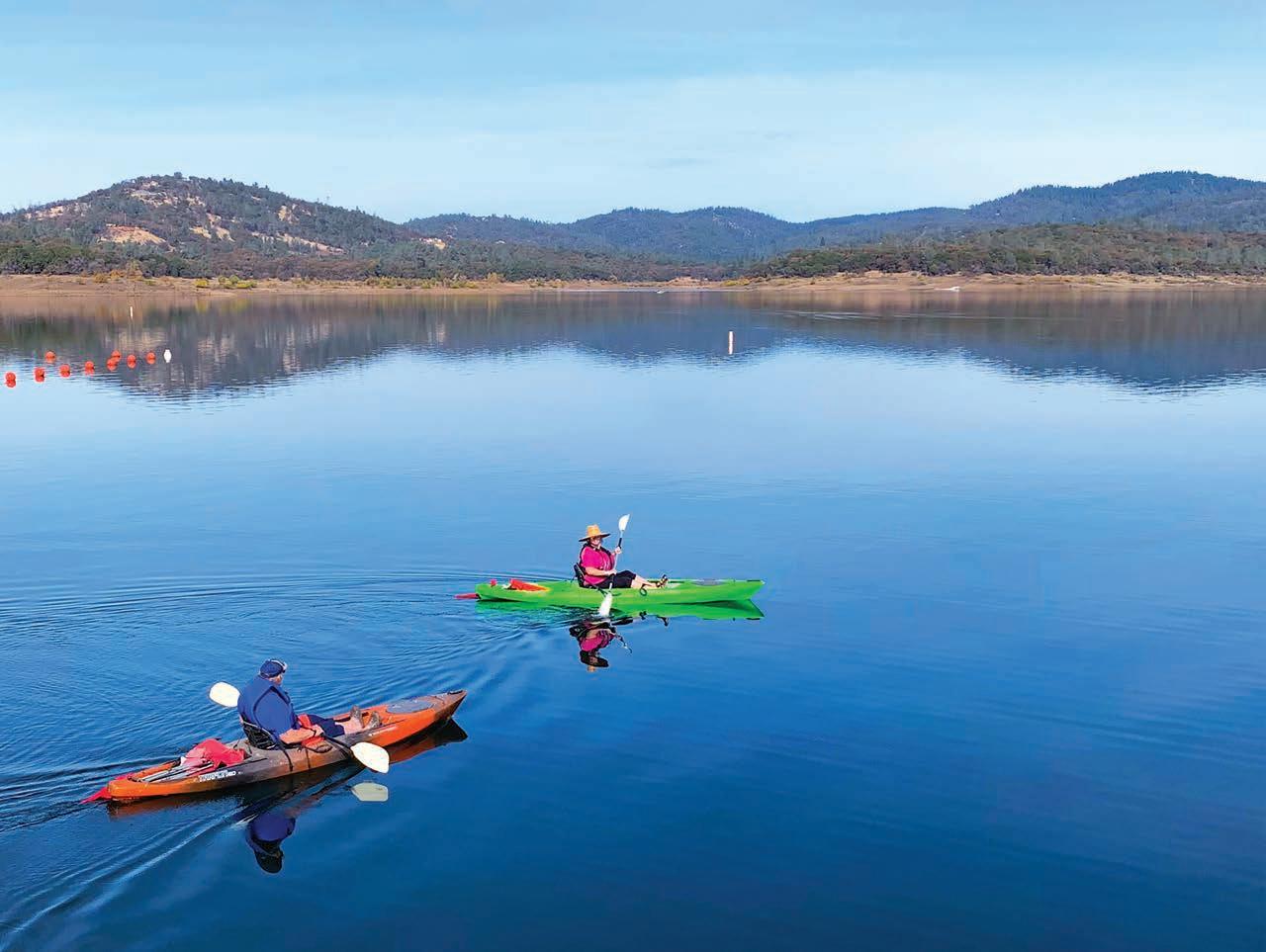
Big rainbows are the reward for anglers fishing from a boat or kayak at French Meadows Reservoir. (CAL KELLOGG)
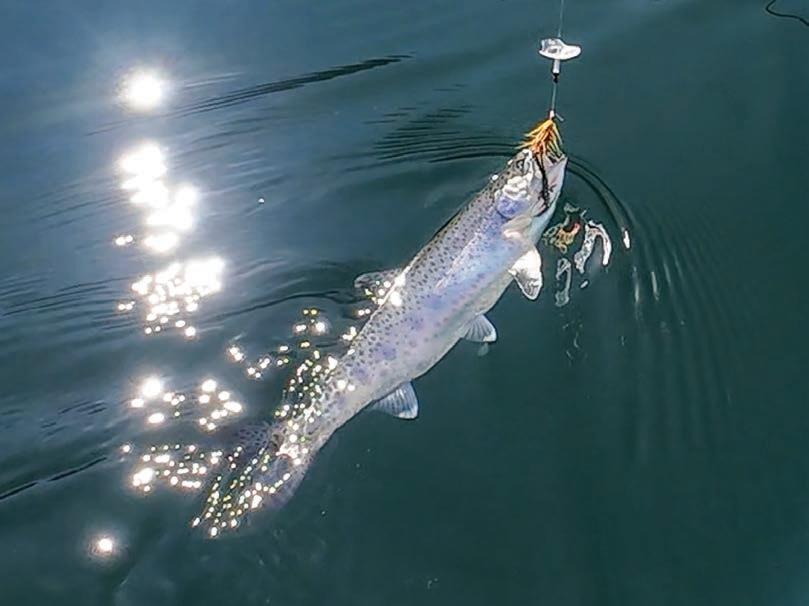
This feisty rainbow jumped all over a trolled Woolly Bugger fly at Oxbow Reservoir, a lower-elevation foothills fishery that author Cal Kellogg calls “a highly productive, year-round fishery that can deliver fast action and surprisingly quality trout when conditions line up.” (CAL KELLOGG)
and a trout fishery that consistently produces quality fish for anglers willing to put in the time.
Rainbow trout, bolstered by regular plantings, are the foundation of the fishery, but it’s the holdovers and brown trout that give Hell Hole its reputation. Rainbows commonly run 14 to 20 inches, but fish pushing into the mid-20-inch class are always a possibility. Browns are less abundant, but they grow big, and fish in the 5- to 10-pound class are very real targets.
Trolling is the primary method for covering water, and success at Hell Hole hinges on depth control. Early and late in the season, fish can be found from the surface down to 20 feet, especially along steep banks, points and areas where the old river channel swings tight to shore. As summer progresses, trout slide deeper and often hold 30 to 60 feet down over much deeper water. Downriggers, leadcore or weighted line systems are essential for staying in the strike zone.
Productive offerings include small spoons, Apex lures and minnowstyle plugs in natural baitfish patterns. For bigger browns, step up to larger plugs in trout, perch or black-silver finishes and focus on low-light periods along rocky shorelines and structure-rich zones near the dam and midlake narrows.
Trolling speed is critical – generally, 1.8 to 2.5 miles per hour, but don’t be afraid to experiment until fish show a preference.
Bank access is limited compared to French Meadows, but anglers can find opportunity near the dam and at the upper end when water levels allow. Inflated nightcrawlers, PowerBait and hardware such as Kastmasters and spinners will all take fish, particularly during the fall when trout push shallower.
Hell Hole isn’t a numbers lake; it’s a quality lake. Fish it with precision, respect its depth and it will reward you with some of the best trout in the system.
Oxbow Reservoir is the low-elevation outlier in the Rubicon/Middle American River Complex, but don’t let its modest size or foothill setting fool you; this is a highly productive, year-round fishery that can deliver fast action and surprisingly quality trout when conditions line up.
Formed on the Rubicon River below Hell Hole, Oxbow is a narrow canyon impoundment with relatively stable water levels, easy access and a mix of wild rainbows and browns.
Rainbows are the primary target. These fish typically run 10 to 16 inches, but can push well beyond that, especially during the cooler
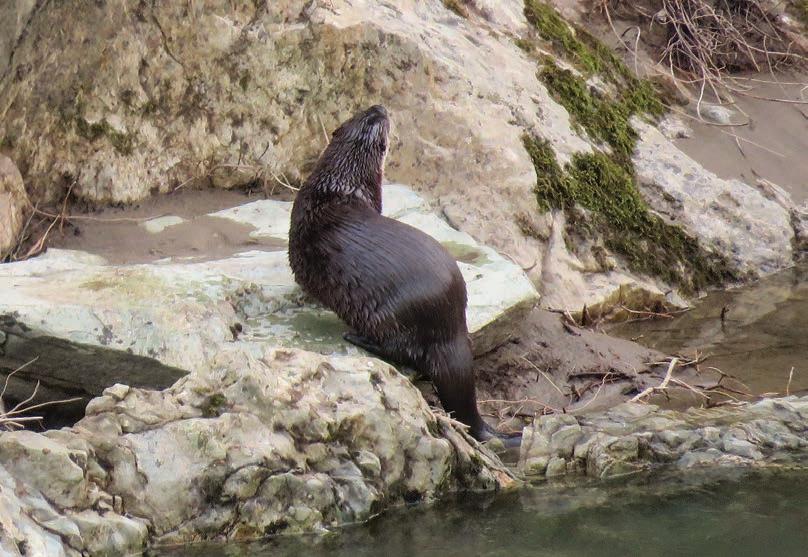
Wildlife like this otter the author spied on the Middle Fork American River abounds in the complex. (CAL KELLOGG)
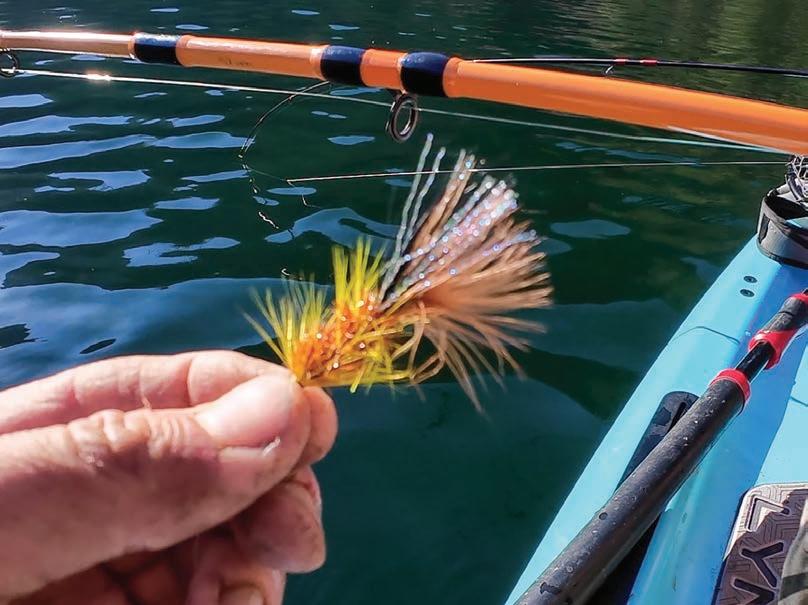
Trolling flies are a great option for anglers fishing the reservoirs. (CAL KELLOGG)
OXBOW RESERVOIR
FISHING
months. What makes Oxbow unique is its combination of current and still water – essentially a hybrid fishery where river and lake tactics both come into play.
From a boat, trolling is extremely effective, especially in the main basin and along the channel edges. Because Oxbow is relatively shallow compared to the upper reservoirs, most trout are accessible without heavy gear. Flat-line trolling or light leadcore setups with small spoons, spinners, flies or minnow plugs will cover the water efficiently. Speeds in the 1.5 to 2.2 mph range are ideal, and focusing on subtle contour changes, points and areas where current enters the reservoir can make a big difference.
Bank anglers have excellent opportunities at Oxbow thanks to good shoreline access. Fishing
inflated nightcrawlers or PowerBait off the bottom is a reliable approach, particularly near the dam and along accessible shoreline stretches.
For more active fishing, casting small spinners, spoons or even flies under a clear bubble can produce steady action, especially during morning and evening periods when trout move shallow.
Seasonally, Oxbow really shines in the fall, winter and early spring when water temperatures are cool and trout active throughout the water column. In summer, fishing can slow during the heat of the day, but early and late windows still produce.
Oxbow may not have the size or mystique of Hell Hole or French Meadows, but for consistent action and accessibility, it’s one of the most dependable trout fisheries in the entire complex.
MIDDLE FORK AMERICAN RIVER
The Middle Fork American River is the moving-water backbone of the complex, a classic Sierra freestone that offers some of the most rewarding –and at times challenging – trout fishing in Northern California. Flowing out of French Meadows Reservoir and carving its way through steep granite canyons, the river transitions from a cold, controlled tailwater in its upper reaches to a more natural, freeflowing system as it drops toward Foresthill and then Auburn.
Trout here are primarily wild rainbows, with a scattering of browns in the lower stretches. These fish don’t see nearly the pressure of more accessible streams, and as a result they are strong, opportunistic and willing to move for food when conditions are right. Fish in the 10to 14-inch range are common, but larger trout are always a possibility, especially in the deeper runs and plunge pools.
Tactics on the Middle Fork revolve around reading water and making precise presentations. Pocket water, seams, undercut banks and boulderstrewn runs all hold fish. Fly anglers do well with nymphing rigs featuring stonefly patterns, caddis imitations and small mayfly nymphs, while dry fly fishing can be excellent during evening hatches. Terrestrials – ants, beetles and grasshoppers – are also highly effective, particularly in late summer and early fall.
For spin anglers, small spinners like Panther Martins and Rooster Tails, along with compact spoons such as Kastmasters, are top producers. The key is to fish methodically, covering each piece of water thoroughly before moving on. Cast upstream and across, allowing your offering to drift naturally through holding water, and be ready for quick, aggressive strikes.
Water releases from French Meadows can influence flows in the upper river, so it pays to check conditions before heading out. In general, late spring through fall offers
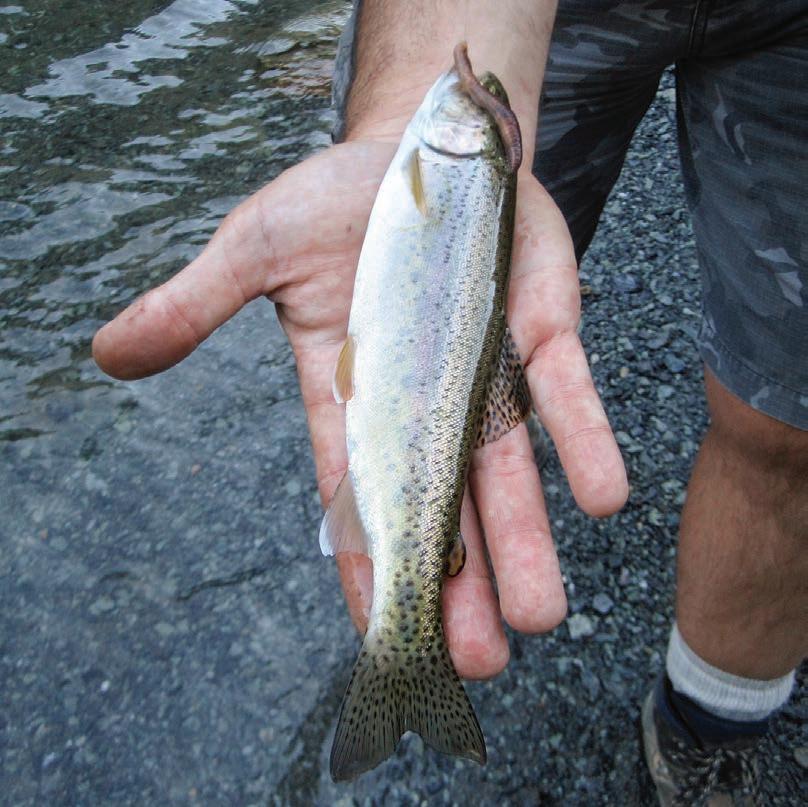
This Rubicon River rainbow couldn’t pass up a worm that was drifted along the bottom. (CAL KELLGG)
FISHING
the most consistent fishing, with fall standing out as a prime time when flows stabilize, water temperatures cool and trout feed aggressively ahead of winter.
Access can require some effort, but that’s part of the appeal. The Middle Fork American rewards anglers willing to hike, explore and think like a trout. It’s not just about catching fish; it’s about engaging with a wild river system on its own terms.
RUBICON RIVER
The Rubicon River is an epic wild trout fishery. Draining high granite basins and feeding directly into and emanating from Hell Hole Reservoir, the Rubicon is a rugged, often remote Sierra stream that offers classic trout water – cold, clear and full of character. This is not a numbers game for casual anglers, but rather a thinking angler’s river, one that rewards stealth, precision and a willingness to cover ground.
The Rubicon supports populations of wild rainbows along with a
mix of browns, particularly in the lower reaches below Hell Hole. Fish here are typically in the 8- to 14-inch range, but they are strong, beautifully marked and capable of surprising size in deeper pools and less-pressured stretches. These trout live in fast water, broken current and complex structure, and they are tuned in to natural forage.
From a tactics standpoint, this is textbook Sierra stream fishing. Fly anglers will find success with a combination of nymphing and dry fly work. Stonefly nymphs, caddis patterns and small mayfly imitations produce consistently, especially when drifted naturally through seams and pocket water. During summer and early fall, terrestrial patterns – again, think ants, beetles and hoppers – can be deadly, particularly along grassy banks and under overhanging brush.
Spin anglers should focus on small, high-action presentations. Panther Martins, Rooster Tails, small Countdown Rapalas and small spoons like Kastmasters are all effective,
“What makes this complex so
isn’t
the
“In a single weekend, you can troll for hard-fighting rainbows in a deep mountain reservoir, cast spinners or flies to wild trout in pocket water and finish the day probing rivers where
especially when worked through plunge pools, tailouts and current breaks. The key is to stay mobile and fish each likely holding lie thoroughly before moving on. Cast upstream whenever possible to maintain a natural drift and minimize spooking fish in the ultra-clear water.
Access to the Rubicon varies, with some areas reached by road and others requiring hikes into more isolated water. That effort pays off in reduced pressure and more willing fish. Late spring through fall offers the best conditions, with fall standing out as a prime window when flows stabilize and trout feed aggressively.
The Rubicon isn’t about convenience; it’s about connection. For anglers willing to meet it on its terms, it delivers pure, unfiltered Sierra trout fishing at its finest. CS
Editor’s note: Cal Kellogg is a longtime Northern California outdoors writer. Subscribe to his YouTube channel Fish Hunt Shoot Productions at youtube.com/ user/KelloggOutdoors.
special
just
quality of the fishing; it’s the variety,” writes Kellogg, who fooled this handsome Oxbow Reservoir trout.
large, opportunistic fish prowl.” (CAL KELLOGG)
QUIET WATER, BIG OPPORTUNITIES
MULTIPLE FISH SPECIES, GOOD TIMING IN PLAY AT ROLLINS LAKE
By Cal Kellogg
There are moments in fishing when everything lines up just right – conditions, access, pressure, timing – and for a brief window, a fishery shows you what it’s truly capable of. Rollins Lake is in one of those moments right now.
With boating restrictions in place due to California’s invasive golden mussel situation, the lake has been transformed. The big wake boats, jet skis and constant traffic that once
It’s all coming together at Rollins Lake
create a
defined summer weekends are gone. In their place is something that feels almost like stepping back in time –with quiet water, light pressure and fish that are behaving naturally.
For anglers, especially those fishing from kayaks or small watercraft, it’s a rare opportunity. Rollins is fishing freely, and it’s fishing well.
THE BASICS
Located just outside Colfax at roughly 2,100 feet in elevation, Rollins Lake
is a 900-acre impoundment on the Bear River. Constructed in the 1960s as part of Pacific Gas and Electric’s hydroelectric system, the lake was designed for power generation and not recreation. But over time, as is often the case in California, anglers discovered its potential. What they found was a diverse, structurerich reservoir capable of supporting multiple species and delivering consistent action across seasons.
Rollins isn’t a featureless bowl.
“to
unique window of opportunity,” writes author Cal Kellogg, scooping a rainbow from this fishery in the Sierra foothills near Colfax. (CAL KELLOGG)
FISHING
It’s a complex lake, with long arms, submerged timber, rocky shorelines, tapering points and a well-defined river channel that snakes through its depths. That diversity of structure is what drives the fishery. It provides habitat, ambush points and feeding lanes for everything from trout to bass to catfish.
Right now, with the boating restrictions in place, all of that structure is being utilized more effectively by fish that aren’t constantly pushed around by noise and wakes. Trout are holding tighter to contours. Bass are setting up more predictably. Even the panfish and catfish seem less scattered. It’s the kind of scenario that rewards anglers who fish methodically and pay attention to detail.
TROUT LEAD THE WAY
Trout are the headline attraction for many anglers, and Rollins delivers. The lake is regularly stocked with rainbows, but it’s the holdovers that really define the fishery. Given time and forage, these fish grow well
beyond stocker size, and it’s not uncommon to encounter rainbows in the 2- to 3-pound class, with larger fish always a possibility.
During the fall, winter and early spring, trout are accessible and active. Cooling water temperatures pull them up into the upper layers of the water column, often within the top 10 to 20 feet. This is prime time for trolling, and at Rollins that means covering water with small, efficient offerings. Spoons, spinners and 2- to 3-inch minnow plugs are all top producers.
Flat-line trolling early and late in the day is often all you need. Work
the dam area, main lake points and the mouths of coves where trout move in to feed. As the sun climbs or conditions change, adding a small amount of weight or transitioning to light leadcore allows you to stay in contact with fish that slide a bit deeper. Speeds in the 1.8 to 2.2 mph range are a good baseline, but subtle adjustments can make a big difference.
One of the keys to consistent success at Rollins is paying attention to detail. Watch your sonar. Note where you mark fish. Observe which rods are getting bit and at what depth. Small adjustments – running one rod a little deeper, changing lure
Located at about 2,100 feet elevation in Placer County, Rollins is productive for trout. Holdover rainbows take advantage of a solid forage base, growing to solid 2- to 3-pound sizes. (CAL KELLOGG)
FISHING
color, tweaking speed – can turn a slow day into a productive one.
Bank anglers have solid opportunities as well, particularly in the cooler months. Fishing inflated nightcrawlers or PowerBait off the bottom remains one of the most effective techniques. The key is location and restraint. Trout often cruise closer to shore than many
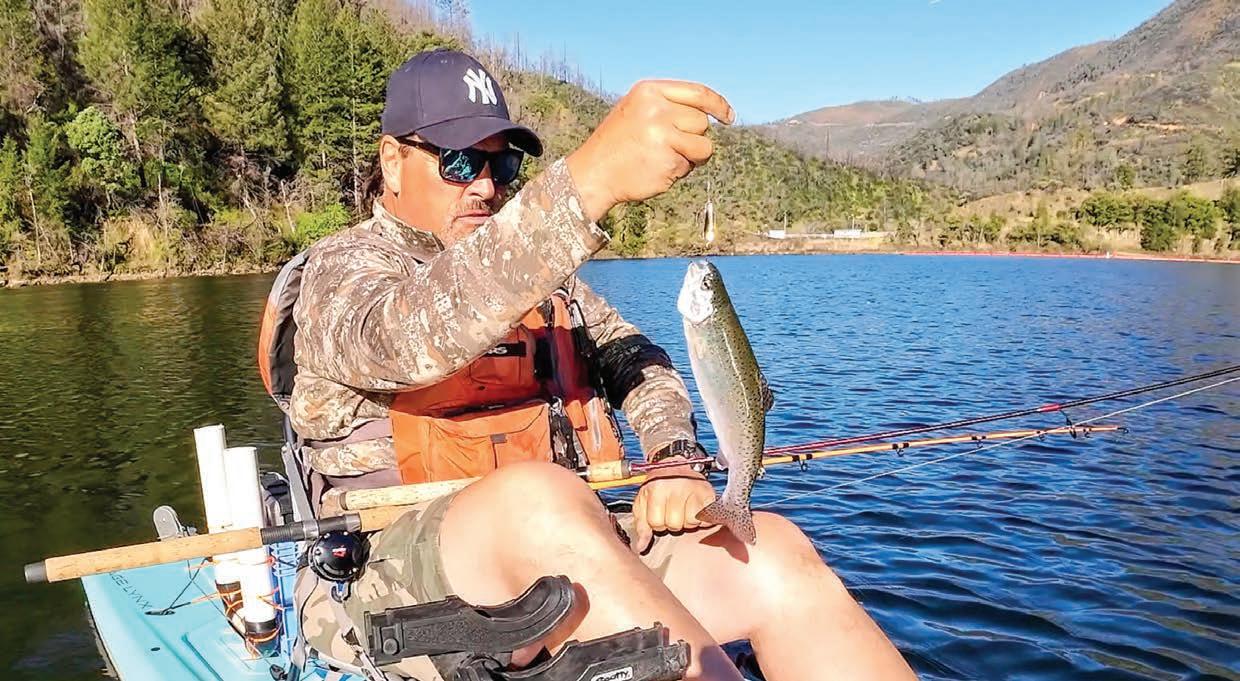
Launching kayaks is an easy proposition at Rollins, which features three different boat ramps. Given golden mussel restrictions, the fishery now “strongly favors kayaks and other small, non-trailered craft,” states the author. (CAL
anglers realize, especially when water temperatures are favorable. Instead of launching long casts into deep water, focus on likely travel lanes in 6 to 15 feet of water and let the fish come to you.
X MARKS THE SPOTS
If trout are the foundation, spotted bass are the personality of Rollins.
Rollins’s spotted bass range up to 4 pounds and can be caught year-round. (CAL KELLOGG)
These fish thrive in the lake’s clear water and rocky structure, and they are active, aggressive and widely distributed. While they may not reach the size of largemouth bass in some systems, Rollins spots make up for it with numbers and fight.
Bass fishing at Rollins is all about structure. Points, rock piles, submerged timber and transitions from shallow to deep water all hold fish. In fall, bass feed aggressively as they prepare for winter, and this can make for fast action.
Soft plastics are a go-to setup, especially worms, tubes and finesse baits worked along the bottom. A slow, methodical presentation often produces the best results, particularly when fish are holding tight to structure. Drop-shot rigs shine when bass are deeper or less aggressive, allowing you to present a bait precisely in the strike zone.
When bass are actively feeding, reaction baits come into play. Small swimbaits, crankbaits and spinnerbaits can all produce, especially when worked along points or through schools of baitfish. The key is covering water until you locate fish, then slowing down and working the area thoroughly.
Again, the current conditions on Rollins give anglers an edge. Without heavy boat traffic, bass are less pressured and more willing to commit. From a kayak, you can ease into position, make multiple casts and fully work a piece of structure without interruption. That kind of approach consistently produces more fish.
CATS AND PANFISH
Bluegill are another strong component of the fishery and are often overlooked. These fish can provide steady action, particularly in the warmer months, and they are perfect for anglers looking for consistent bites or introducing kids to fishing. Bluegill relate to shallow structure – look for docks, brush and protected coves – and will readily
KELLOGG)
take worms, small jigs and other simple offerings.
Channel catfish round out the lineup and offer a legitimate shot at quality fish. Rollins has produced some impressive channel cats over the years, and they are available throughout the lake. Fishing the bottom with cut bait, nightcrawlers or prepared baits in the evening or after dark is a proven approach. Focus on flats adjacent to deeper water or areas where the old river channel swings close to shore.
While Rollins Lake offers yearround potential, fall and early winter is when trout fishing comes alive, bass feed aggressively and overall conditions are comfortable and predictable. As winter progresses, trout remain active and fishing pressure drops even further.
THE TENT LIFE
Camping at Rollins adds another dimension to the experience. The reservoir features multiple campgrounds, including developed sites with amenities and more rustic options for those looking for a quieter stay. Spending a few days here allows anglers to take full advantage of prime fishing windows like early morning and evening without the need to travel. It also lets you settle into the rhythm of the lake, something that day trips rarely allow.
Access to the water is pretty straightforward, and under current restrictions it strongly favors kayaks and other small, non-trailered craft. For many anglers, that’s a benefit and not a limitation. Kayaks allow you to move quietly, fish efficiently and reach areas that larger boats often overlook. They also align perfectly with the current conditions at Rollins, where stealth and precision are paying off.
RIGHT LAKE AT THE RIGHT TIME
There’s a certain feel to Rollins right now that’s hard to describe but easy to appreciate. The lake is calm. The pressure is low. The fish are there
FISHING
and willing. It’s the kind of situation that doesn’t come along often, and it won’t last forever.
Rollins Lake has always been a solid fishery, but it’s something more at the moment. It’s a place where everything has come together – environmental conditions, access limitations and seasonal timing – to create a unique window of opportunity.
“For
For anglers willing to adapt, fish from a kayak, slow down and really work the water, Rollins is offering the kind of experience that keeps people coming back year after year: good fishing, beautiful surroundings and, for now at least, a welcome absence of crowds.
And in today’s world, that might be the best catch of all. CS
anglers willing to adapt, fish from a kayak, slow down and really work the water, Rollins is offering the kind of experience that keeps people coming back year after year,” writes Kellogg. (CAL KELLOGG)
Spoons are a top choice for trout trollers looking for a Rollins Lake limit. (CAL KELLOGG)
GO DEEPER EARLIER FOR COLLINS TROUT
MARCH’S HEATWAVE SPIKED WATER TEMPS, AS WELL AS NEARSHORE BASS ACTIVITY
By Chris Cocoles
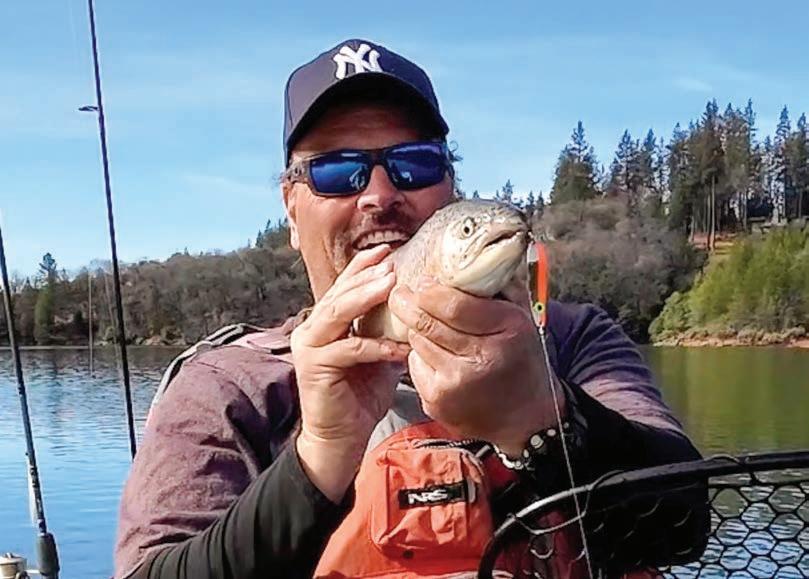
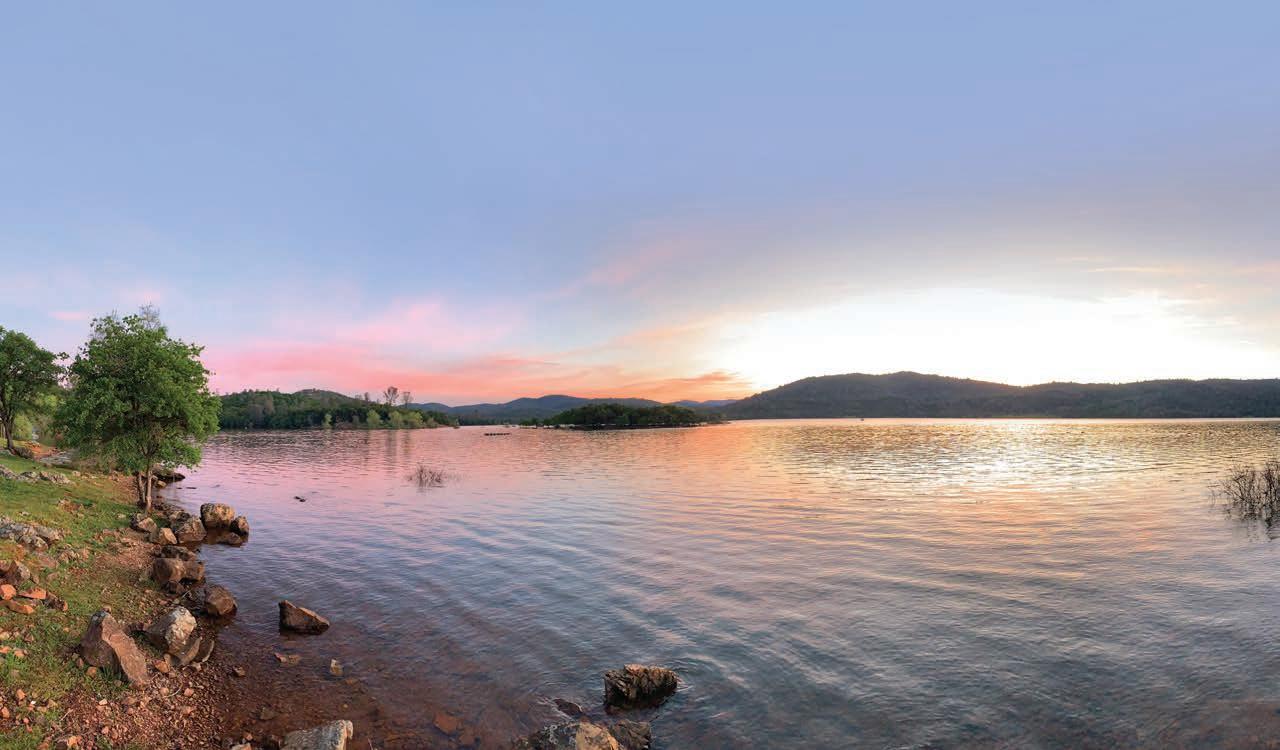
It’s not just a fluke, or a coincidence, that Collins Lake has become arguably California’s most productive trout fishery. Certainly, this year-round gem located in the Sierra foothills northeast of Marysville and Yuba City will be popular for spring trout fishing and more again this season.
“We count ourselves incredibly blessed to be part of a community that has made it possible for us to continue to invest our lives in providing a great place to enjoy outdoor recreation,” says Ed Palma of Collins Lake Resort (530-6921600; collinslake.com).
The Young family has been the driving force behind Collins Lake’s rise as a premier Northern California destination. But as Palma points out, “Our work family has grown to include dear friends and familiar faces, some of whom have been greeting campers and fishermen for 25 years or more.”
GREAT PARTNERS, GREAT FISH
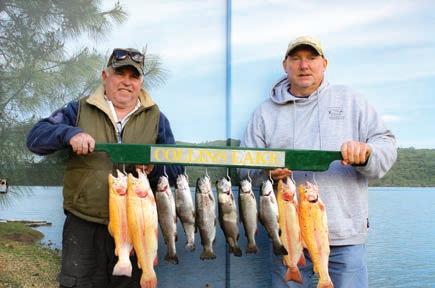
Collins’ plentiful stockings of trout – both catchable fish from the California Department of Fish and Wildlife and trophy rainbows from private hatcheries – has made it an annual spring pilgrimage for trout anglers.
This season alone, Collins has almost reached its goal of getting
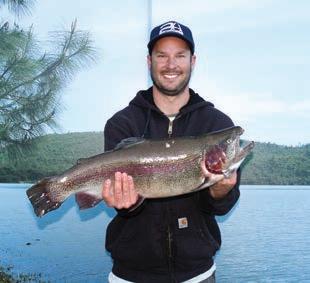
Joe Rustin caught this fat Collins Lake rainbow in early March. Such impressive fish have been commonplace at this Northern California lake. This spring should offer anglers more opportunities for both quality and quantity. (COLLINS LAKE)
FISHING
some semblance of plantings every week since October entering the spring season.
“We are not a super flashy operation, but we are focused on doing the main things well,” Palma says. “I suppose if we’re proud of anything, it’s that folks keep coming back! Really, it’s the same thing that keeps us humble and focused.”
Palma did the math in his head and calculated that 33,000 pounds of trout have been planted at a weekly cadence since October 2025. That number includes trophy rainbows from private hatcheries, Mount Lassen Trout Farm-raised lightning trout and California Department of Fish and Wildlife plants of catchable (mostly 1- to 2-pound) fish.
Trout are also raised in netpens at Collins, and they were released earlier than normal during a March heatwave. Many of these subcatchable-sized fish that survive hungry bass grow bigger over time, offering anglers brightly colored fish that are strong fighters.
“There are a lot of trout in the lake,” says Palma, who adds, “If conditions permit, we still have another 12,000 pounds of private trout plants scheduled between (late March) and the first week of May.”
WATER TEMPS ON THE RISE
March felt more like June at Collins, and as rising temperatures baked the Central Valley much earlier than normal, the lake’s surface temperatures climbed to about 67 degrees.
Palma cited two effects from the warmer-than-normal water temps.
“First, the trout are moving to deeper, cooler water. Shoreline activity has slowed since (February),” he said in late March.
“If you’re fishing for trout, plan to get out into deeper water,” he stated. “Troll with a downrigger or cast out along a steep shoreline; a Kastmaster is a good option to get from shore into cooler, deeper water. PowerBait from the shore can still work in certain areas, but we expect fishing
Ed Palma of Collins Lake Resort says the lake has been at or right below full capacity since January. But a hotter-than-usual March means April fishing might require anglers to get their offerings deeper due to rising water temps. (COLLINS LAKE)
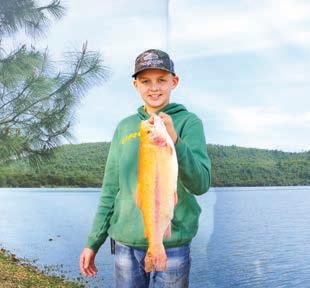
Tom Chissie with the kind of rainbow Collins Lake is famous for thanks to an extensive stocking program that features both catchable trout from California Department of Fish and Wildlife and private hatchery trout that can be trophy-sized catches. “There are a lot of trout in the lake,” Palma says. (COLLINS LAKE)
FISHING
KIDS’ SHOWCASE, TROUT DERBY HIGHLIGHT APRIL COLLINS EVENTS
Two big events highlight Collins Lake’s April schedule.
First up is April 11’s Get Out and Fish Junior GOAFER Derby, which focuses on getting kids out for a friendly competition at Collins.
“There are boat and bank divisions, so it’s about fun and a chance to win for everyone, and a post-derby barbecue is provided,” says Ed Palma of Collins Lake Resort.
“Last year we had over 150 participants, and this is the fourth year GOAF has held their event here,” he reports.
Go to collinslake.com/calendar for more information on the derby.
Then on the following Saturday, April 18, the Angler’s Press NorCal Trout Angler Challenge series returns to Collins Lake.
Entry details can be found at anglerspress.com/events/norcaltrout-anglers-challenge. -CC
deeper water to be more productive earlier than usual this year.”
Bass anglers should also take note of the early increased water temperatures. The fish were in prespawn mode earlier than other years even without the hotter weather. It’s all meant more bass being landed, when generally the action picks up later in spring.
“We’ve seen a sudden and significant increase in the number of bass caught in the last week. Even folks casting PowerBait for trout along the shoreline are picking up bass,” Palma said last month. “If you’re waiting for the bass bite to pick up, wait no longer. The time is now!”
Equally good news is that the lake level has been mostly at full capacity since January 4.
“It’s earlier than normal to be this high, but unless we see some more rain, we might be looking at an early start for the irrigation season as well,” Palma adds. “So all in all, we’ll probably be near the average for midseason levels.”
FAMILY FUN AND DELICIOUS ICE CREAM
If any spot in California can take advantage of hotter spring weather, it’s Collins Lake, which is well known for the iconic ice cream at the resort’s store.
Great amenities
“We brought in new freezer hardware this year to make sure we have room for your favorite ice cream flavors,” Palma says.
Elsewhere, management is in spring cleaning mode to make little improvements and tweaks around the campground areas and at the marina, where watercraft are rentable for a day on the lake.
“If you (showed up in late March), you probably noticed restrooms being renovated, sections of gravel and patches on the main road where new culverts and utility lines have been laid in preparation for repaving this fall,” Palma says.
“Patio boats have been out of the water for pontoon upgrades and we’re doing site work around new cabins; we replaced the last rental trailers with cabins,” he added.
“We used to call this the ‘slow season,’ but we keep pretty busy, and with warm weather bringing in the spring campers, our work has been more visible than usual,” Palma stated. CS
Editor’s note: As anglers and campers begin descending on Collins Lake in spring and summer, it’s recommended to use the resort’s reservations website at collinslake.com/reservations to book a spot at the campground.
if we’re proud of anything, it’s that folks keep coming back!” (COLLINS LAKE)
like a picnic area, boat rentals and some gorgeous campsites make this a popular spring destination for anglers, campers and day-use families. “We are not a super flashy operation, but we are focused on doing the main things well,” Palma says. “I suppose
Among the April events at Collins Lake is the Get Out and Fish Junior GOAFER tournament, which offers youngsters 15 and under some great fishing opportunities. (COLLINS LAKE)
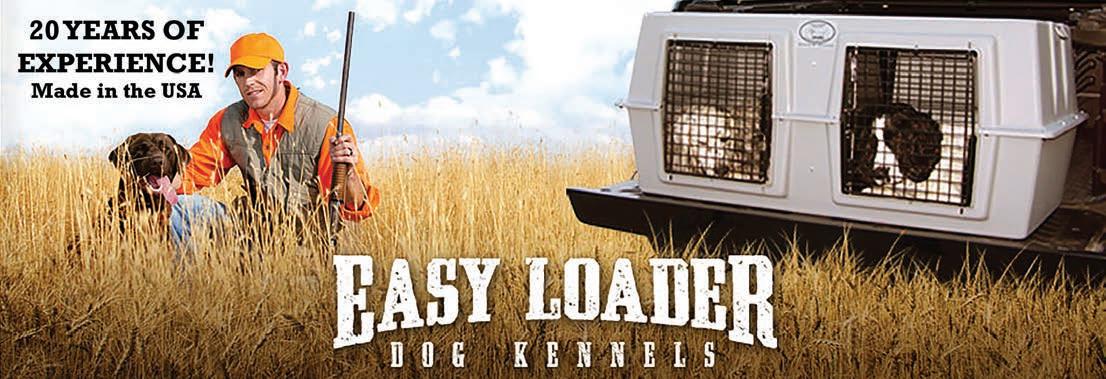
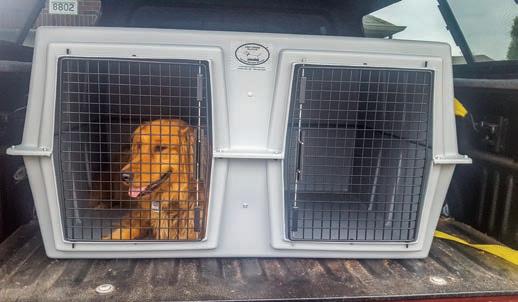
• Easy Loader & Deuce accommodate 2 dogs up to 65 lbs each
• EZ-XL accommodates 2 dogs over 65 lbs each
• Made from High Density Polyethylene with UV protection
• Easy Loader fits most full size pickups, SUVs & large UTVs
• Deuce fits smaller pickups, SUVs & UTVs
• EZ-XL is for larger breed dogs & full size vehicles
• Vents, cold weather door covers, insulated covers & custom kennel pads available
GOING SOLO FOR GOBBLERS FROM FIELD...
LONGTIME TOM HUNTER ON WHY HE PREFERS TO BE ALONE
By Scott Haugen
By daylight I was where I wanted to be. The sounds from my box call sounded good to me. Two toms gobbled on the other side of the ridge on which I sat. The tips of their strutting fans soon appeared. Gun on my knee, I dared not move.
The toms were slow to commit and I wished I knew how to work a diaphragm call. Then it happened. The two toms strutted uphill and right at me. The shot was simple from inside 20 yards.
This was 1986 and my first day ever hunting turkeys. Thus began my passion for hunting these birds, and 2026 marks my 40th year of turkey hunting. I’ve pursued these birds in many places with many people and even secured the world slam.
GOING IT ALONE
But the majority of my turkey hunting is done solo. I prefer it that way. The more I hunt alone, the more I realize I have yet to learn. I scout year-round for turkeys. Studying turkeys’ seasonal behaviors, their flock dynamics and poult recruitment, as well as the impact weather conditions and predators have on wild turkeys reveals a great deal.
I prefer physically scouting for turkeys, but I also run numerous trail cameras in video mode in an effort to
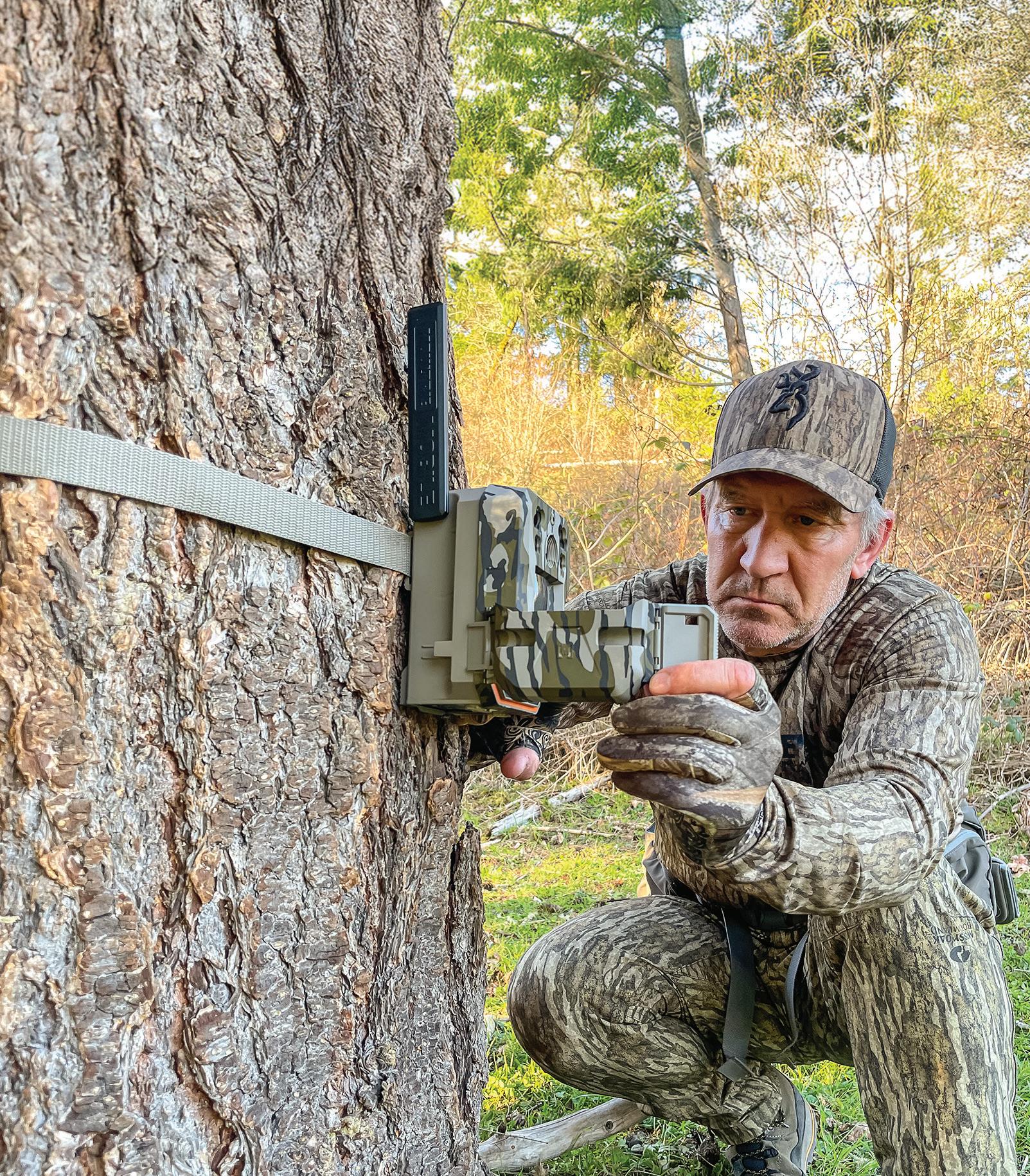
In recent years, author Scott Haugen has greatly expanded his understanding of turkeys and their behaviors, thanks to Moultrie cellular trail cameras, of which he currently has 89 set up in three states. (SCOTT HAUGEN)
... TO FIRE DITCH THE PEPPERONI FOR A WILD TURKEY PIE
By Tiffany Haugen
Wild turkey is one of the besttasting game birds out there, and if someone tries telling you otherwise, don’t believe them. Chances are they’re overcooking the bird, which leads to a tough, flat-tasting end result. Wild turkey is lean and far different from fatty, store-bought birds.
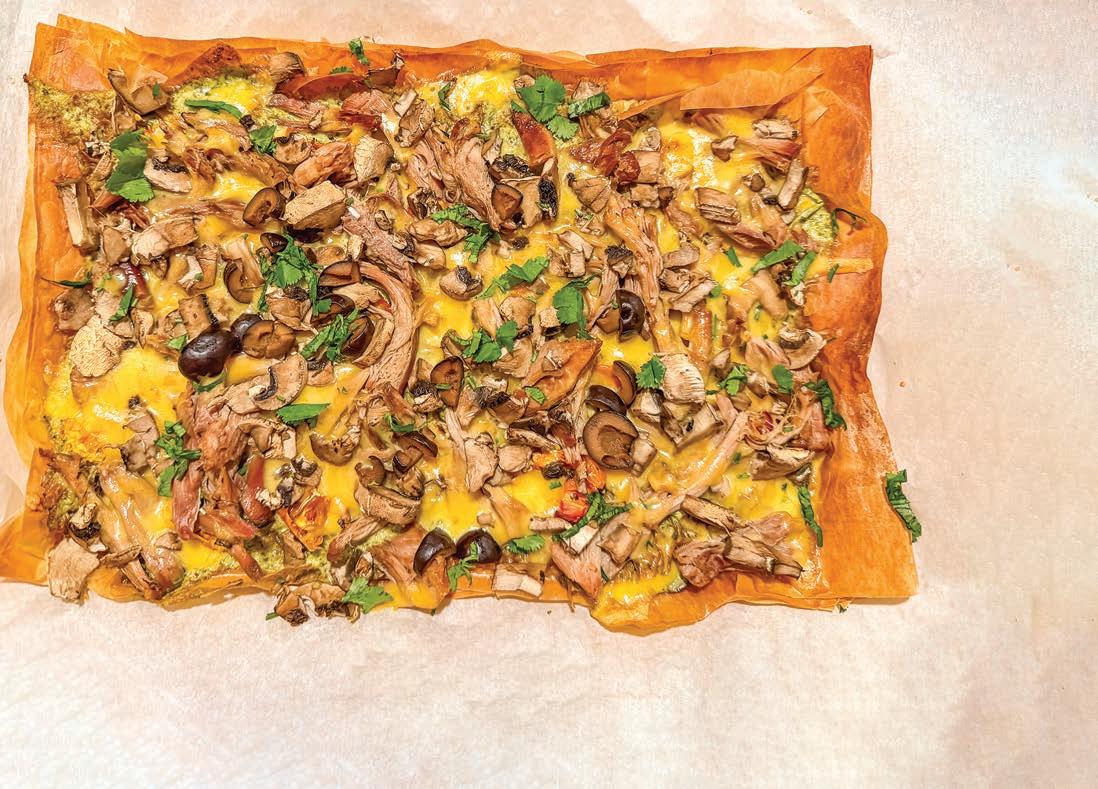
For over 30 years I’ve been cooking wild turkeys, and not only spring birds, but many that are taken in the fall and winter months. I’ve developed hundreds of recipes with these delicious birds, including pizza with a phyllo dough crust. This one, cooked on Super Bowl Sunday with a jake that Scott shot, didn’t even make it through the first few minutes of the opening quarter before it was gobbled up.
Two turkey legs and thighs
One onion
4 cloves garlic
1 cup chicken broth
1 cup mushrooms, sliced
1 cup black olives, sliced
Two to three sun-dried tomatoes, chopped 1 cup shredded cheese of choice
¼ cup pesto
¼ cup sour cream or Greek yogurt
10 sheets phyllo dough
¼ cup melted butter
Place turkey legs and thighs in a slow cooker or instant pot with onion and garlic. Slow cook on high heat for four to six hours, or until turkey meat separates easily from the bone. You can also pressure cook on high heat for 50 minutes (letting steam release naturally).
Remove all meat from bones, cartilage and sinew. Strain off onion and garlic and keep turkey meat in the broth until ready to make the pizza.
For the crust, place one sheet of phyllo dough on a parchment-lined baking sheet. Brush with melted butter. Place a second phyllo sheet on top
and brush with butter. Do this for all 10 phyllo sheets, but do not butter the top sheet. Bake phyllo crust in a preheated, 350-degree oven for 10 minutes. Remove crust from the oven and let cool, slightly. In a small bowl, mix pesto with sour cream or Greek yogurt. Spread pesto to within a half inch of the edge of the phyllo crust. Sprinkle evenly with cheese, cooked turkey, mushrooms, olives and tomatoes.
Place pizza back in the preheated oven and cook for five to seven minutes or until the cheese is fully melted. Garnish with parsley or cilantro if desired.
Editor’s note: For signed copies of Tiffany Haugen’s popular cookbook, Cooking Game Birds , visit scotthaugen.com.
Wild turkey can be as delicious a game meat as anything you’ll ever prepare. It can be blended into “hundreds” of dishes, including a Super Bowl watch party pizza that
Chef Tiffany Haugen concocted.
(TIFFANY HAUGEN)
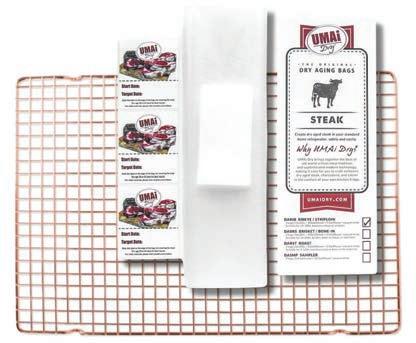
Start your dry age now and be ready for Memorial Day!
Learn
Memorial Day isn’t as far away as you think.
The perfect dry-aged steak takes time. Time to deepen flavor, time to tenderize, and time to transform something great into something unforgettable. With UMAi Dry®, you can start today and serve something extraordinary when it matters most. Start aging now. Taste the difference later.
And while you’re planning ahead…
UMAi Dry® is the ultimate Father’s Day gift. For the dad who takes pride in doing it right—this is more than a gift. It’s an experience!
HUNTING
boost my knowledge. Because I get cell coverage in most places where I hunt turkeys, I run cellular trail cameras. I’ve tried many brands but have had the best success with Moultrie cellular cameras. Currently, I have 89 of them set in three states. Some with solar panels attached have gone untouched since last October.
JUDGMENT CALLS
When scouting and hunting alone you draw your own conclusions and thus make your own decisions. It forces you to thoroughly assess all that’s going on around you, then formulate your next move based on personal observations and what you anticipate turkeys will do.
When afield with experienced turkey hunters, I often find us relying on one another to help plan the next move. When hunting with new hunters, they look to me for guidance. When hunting with guides, I’m at their mercy. Many guides are cautious when hunting with clients, and rightly so, given the amount of movement and talking that unfolds.
STAYING FOCUSED
I like hunting solo because words don’t break the silence or interrupt my thought process. The input of others doesn’t disrupt my train of thought. Hunting alone forces you to make decisions – what calls to use, what sounds to make and when to make them. It finds you contemplating how long to stay in one spot before moving, figuring out if a decoy is necessary or considering if a ground blind might offer an advantage over sitting against a tree.
You’re the one who decides when and where the shot will come. You form your own hypothesis, make moves and hope for the best based on what you’re seeing and hearing. Sometimes you win. Sometimes you don’t. That’s hunting. That’s how we learn. The more encounters you have with turkeys, the greater your understanding of them will become.
SOUNDS LIKE A PLAN
Hunting alone leads to efficient prehunt planning too. From patterning your shotgun to see what loads
perform best, to learning how to use a variety of calls, you acquire the gear and develop the skills necessary to be the best hunter possible. When going solo, you’ll spend more time scouting than hunting. Nothing will make you a more proficient turkey hunter than observing birds and understanding their behaviors all season long. Closely watching turkeys will teach you where to hunt, figure out what moves to make and when to do it. Base hunting decisions on turkey behaviors and your confidence will grow.
OK TO SECOND GUESS
As I enter my 40th season of turkey hunting, rarely is there a hunt where I don’t question my thoughts and moves. I still have a lot to learn. I wouldn’t want it any other way because once the desire to learn stops, the passion of hunting wanes. CS
Editor’s note: For signed copies of Scott Haugen’s popular book, Western Turkey Hunting: Strategies For All Levels, visit scotthaugen.com. Follow Scott on Instagram and Facebook.
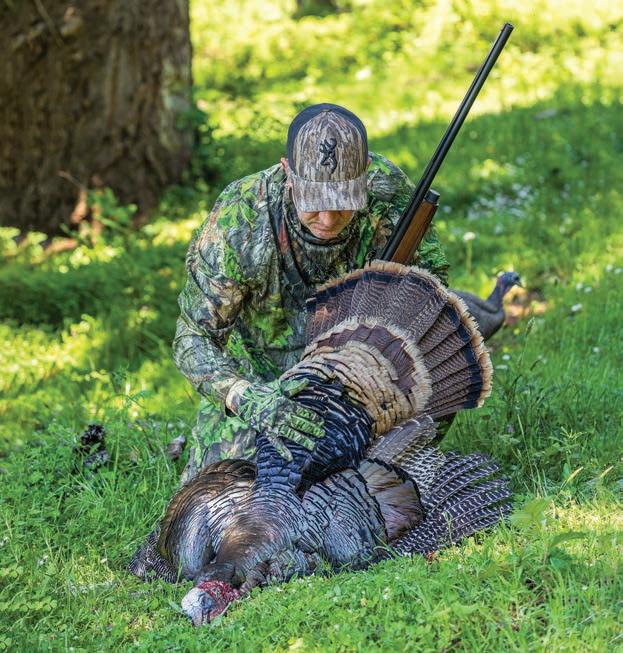
This marks Haugen’s 40th season of turkey hunting. He’ll be the first to admit he still has a lot to learn, but he loves tackling the task as a solo hunter. (SCOTT HAUGEN)
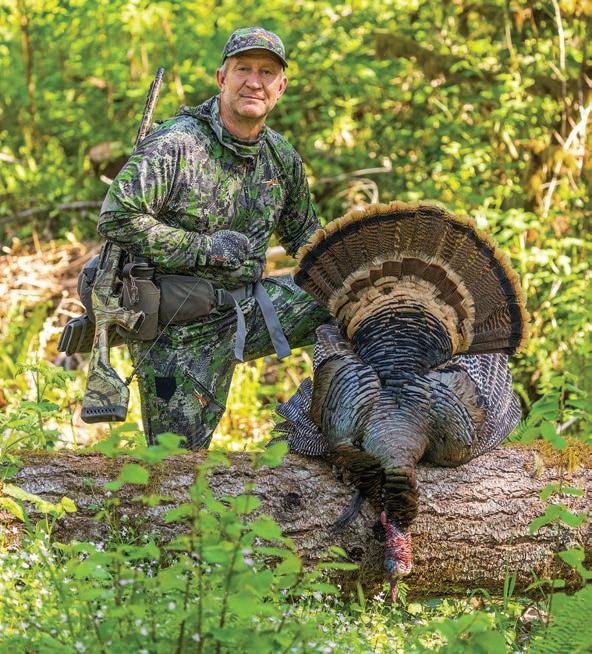
Hunting alone forces you to think and act on your own decisions, making every hunt a learning experience. (SCOTT HAUGEN)
HOW TO TRAIN YOUR DOG TO HUNT HORN
STARTING YOUR PUP EARLY WILL SET YOU BOTH UP FOR SHED ANTLER HUNTING SUCCESS
By Scott Haugen
Shed hunting with your dog takes dedication. The goal is to set them up for success.
I like hunting for antlers, just me and my dogs. That way there are no distractions from other people or their dogs who are competing for the same thing.
Done right, shed hunting with a dog can take your success to another level. While picking up sheds, or any bones, comes naturally to most dog breeds, there are certain aspects to teach a pup that will help it become a more proficient shed hunter.
WHEN YOUR PUP IS 8 or 9 weeks old, saw off an antler tine from a deer or elk rack and give it to the dog. Avoid giving the pup a big shed with multiple points, eye guards and burrs, as you don’t want the pup getting poked and having a bad experience.
When introducing a shed to your pup, lay down with it, get it excited and let it mouth the antler. As the pup chews the antler, rub its ears, back and neck and encourage it to keep going. Let it bite, lick and chew on the antler. This will tell the pup that what it’s doing is great, and the more fun it’s having, the more of it the pup will want. After a few minutes take away the antler. By taking away the shed when the pup is engaged, you’re instilling a desire to want more in your dog. Do this before the pup loses interest in it.
Antlers are not chew toys. I want the antlers to become something special with the end goal of the dog
Shed hunting season is here, and a well-trained dog can take the number of discoveries to
finding them, bringing them to me, getting verbal praise, then getting right back on the search.
A few days after introducing a shed to a pup, repeat the session. Keep it fun, brief and don’t let the pup run off with the antler. Get the pup excited about the shed and recognizing what it is. Don’t let it take possessive ownership of it. After
a minute or two, take the antler away while the pup wants more.
Once a pup sees the shed and gets excited, hide it in the yard. Place it so the pup can easily find it after walking a few feet. You may need a leash to direct the pup. Reward the pup with praise and ear rubs. Repeat this a couple times, making sure the pup doesn’t see where you’re hiding
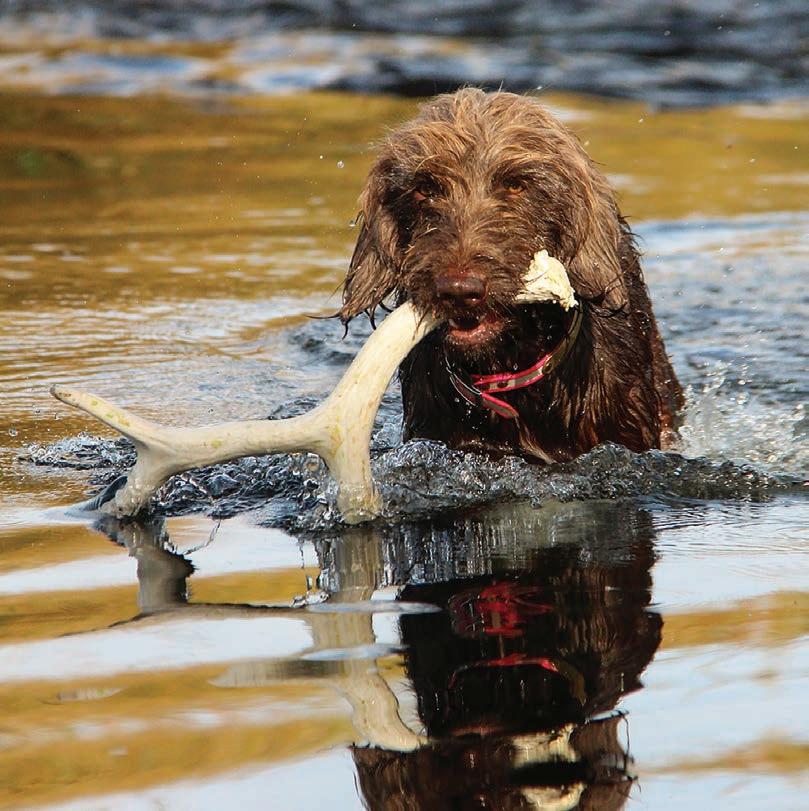
a whole new level, even on old, bleached sheds. This marks the 12th season of shed hunting for author Scott Haugen’s female pudelpointer Echo. (SCOTT HAUGEN)
HUNTING
the shed. Your goal is to set them up for success each time.
AS THE PUP PROGRESSES and gains interest in the shed, tie it to a string and drag it on the ground – moist grass is best to capture the scent. Let the pup track the smell until it finds the shed.
When the pup is comfortable with the piece of antler, introduce a full deer shed. Before the pup’s baby teeth start falling out, encourage it to pick up a shed, rather than just handing it directly to the pup. This will help it learn how to manage the awkward antler. Place the shed on the ground, tines down. Back up 5 feet, put the pup down and give the command to
fetch it. The pup will likely run to the shed, which is why placing it with the tines down is important.
As their baby teeth start falling out, some pups may quit picking up a shed for a couple months. Reintroduce the shed at 6 or 7 months of age, once the adult teeth are firm.
When a pup starts training with a whole shed, it will learn to recognize it by size and shape. Because bleached antlers that have been on the ground for a year or two hold little scent, your dog will find them by sight recognition. Sight training with bleached sheds, or plastic antler dummies, is time well spent.
As training for fresh sheds progresses, you want the dog to
recognize the antler by its natural smell, not odors transferred to the antler by your bare hands. Wash the antler and handle it with rubber gloves when hiding it. Roughing it up with abrasive paper will help freshen the antler’s scent and remove human odors.
WHEN ACTUALLY HUNTING FOR fresh deer and elk sheds, head into the wind so your dog can smell the antler. Mornings are best because the air is heavy. The hotter the day gets, the harder it will be for a dog to smell a shed.
I do a lot of scouting with trail cameras year-round. When I see antlers starting to drop in the spring, things get exciting. But if there are several deer or elk in an area, I give them time before scouring it with my dogs because I don’t want to spook the animals. Having just survived winter, big game herds are in a weakened state, which is why some areas are closed to public access until spring and new growth take hold.
If there is a target buck or bull that’s dropped and I don’t want coyotes or foxes to run off with the sheds, I’ll often go searching for the sheds in the middle of the day when animals are bedded down and less active. I’ll take one dog with me and keep it working close. Once all the bucks or bulls have shed, then I’ll go into the area with both dogs and scour it to see what they can find.
My dogs have found whitetail, mule deer, blacktail deer, Roosevelt elk, Rocky Mountain elk, even moose sheds. They love it, and they know when we’re shed hunting versus just going for a walk in the woods. That’s what proper training teaches them. Dogs are smart –don’t underestimate them.
Start shed training your pup as soon as it comes home. If you stay disciplined and consistent in the training, your shed hunting joy and success will rise to the point you won’t want to go into the woods without your dog. CS
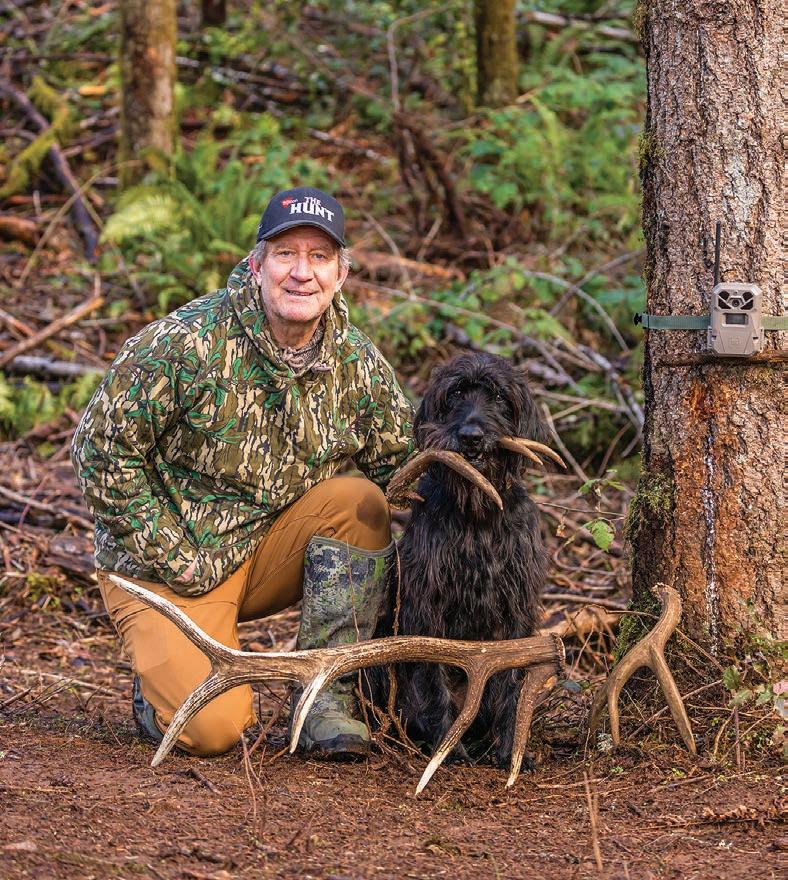
Haugen and his male pudelpointer Kona with a good day in the woods. Using trail cameras will reveal when antlers drop so you can try to find them before a canine predator does. (SCOTT HAUGEN)