





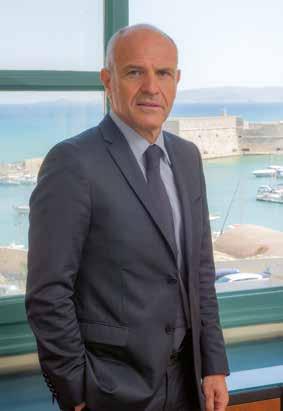
Dear fellow travellers,
The MINOAN LINES family welcomes you on board this summer to continue a journey that has been connecting people, places and experiences safely, consistently, and with high-quality hospitality for more than 50 years. A journey that is worth as much as the destination.
For MINOAN LINES , 2025 was a year of growth, investment and significant achievements. It was a special honour to receive the “Passenger Line of the Year” award from the internationally renowned shipping newspaper Lloyd’s List at the 2025 Greek Shipping Awards -one of the most important international maritime distinctions. This award recognises our commitment to reliability, innovation and social responsibility.
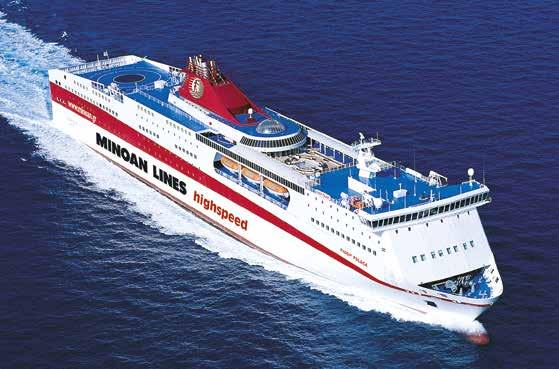
At MINOAN LINES, we are proud to offer our passengers comfort, luxury and speed through our modern, eco-friendly cruise ferries, the KNOSSOS PALACE , the FESTOS PALACE and the KYDON PALACE, where we provide high-quality services, and specialised human resources on land and at sea. Despite the challenges in the international geopolitical environment and the ever-changing economic landscape, we have kept our competitive prices unchanged, ensuring that travel remains affordable and accessible to all. We support our passengers with a range of offers and benefits, as well as through the MINOAN LINES Bonus Club, which offers special discounts and privileges. We provide the opportunity for every traveller to continue to travel safely and comfortably, with regular benefits for students, families of three or more, children and passengers over 60 years old, as well as seasonal offers. Throughout the year, we provide a daily service connecting Crete to Piraeus via Heraklion, showcasing the beauty and accessibility of our island. By offering excellent ticket prices, we help to make Crete an affordable tourist destination for
2026
“Best Places to Go in Europe” και “Best Places to Eat” από
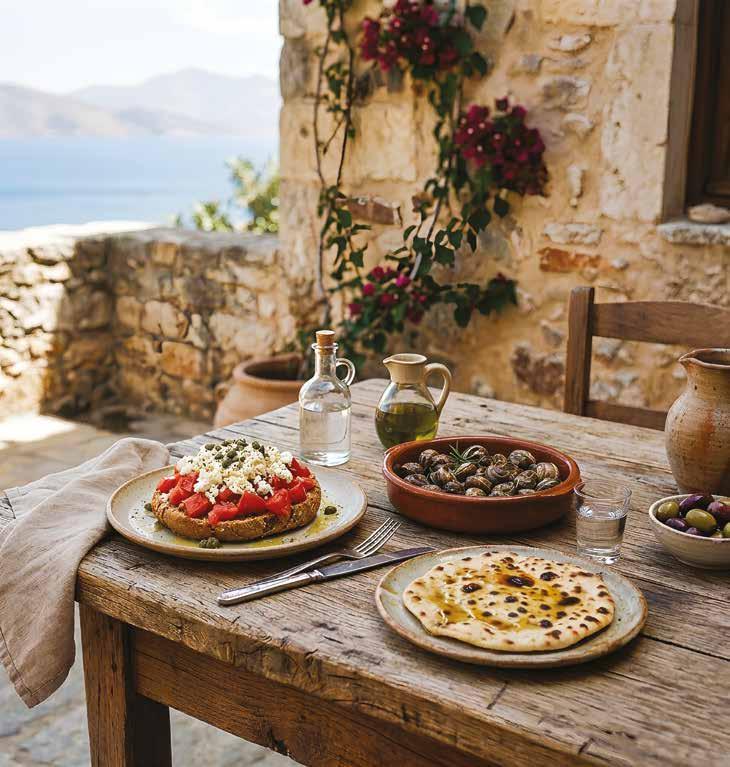
all Greek families. Crete is an authentic, multidimensional and timelessly beloved destination, offering a combination of culture, history, gastronomy and natural beauty. It is no coincidence that it has been included in the “Best Places to Go in Europe” and “Best Places to Eat” lists by Condé Nast Traveler, as well as in National Geographic’s list of the top gastronomic destinations worldwide. Furthermore, it has been declared Gastronomic Region of Europe 2026 by the International Institute of Gastronomy, Culture, Arts and Tourism
We are constantly focused on making a social contribution, implementing actions related to health, education, the environment, sport and animal welfare. We steadfastly support the work of “The Smile of the Child” and “Aegean Doctors”, donate equipment to local hospitals, and support the Pancretan Association of Parents and Friends of Children with Neoplastic disease “Iliaktida” (Sunshine)
For MINOAN LINES, the connection with Milos remains of particular importance; this island of unparalleled beauty attracts an ever-growing number of visitors from Greece and abroad. Milos is becoming even more accessible thanks to MINOAN LINES ’ daily, year-round service, which gives travellers the opportunity to discover an authentic Cycladic destination of unique natural beauty. During the summer season, the company further expands the options, with a variety of daily routes until the beginning of September. We actively promote our relationship with the island, supporting the Pammiliakos A.C. by donating sports equipment and sports clothing, as well as other local cultural, educational and health institutions by facilitating their transportation.
We take care of stray animals in Crete, Mykonos and on board. In Crete, we implemented multiple support and adoption actions, while in Milos, we offered specially designed feeder houses, enhancing the stray animal care program of Milos Municipality. At the same time, we invest in the care of pets on board, with specially designed pet cabins and modern hospitality services for passengers travelling with their companion animals.
Outside Greece, we travel again this year to Italy with KYDON PALACE on the Igoumenitsa - (Corfu) - Brindisi route. With a Greek flag and Greek crews, the daily routes of KYDON PALACE are carried out in cooperation with Grimaldi Lines’ EUROPALINK, offering travellers the opportunity to get to know the charming Apulia -the impressive coast, the historic cities and the picturesque villages of Southern Italy- in just 7 hours.
MINOAN LINES and the Grimaldi Group demonstrate how it is possible to combine business excellence with sustainable development and environmental responsibility , setting an example for the Greek and international shipping community.
The new era of MINOAN LINES is directly linked to the continuous development of our fleet and the transition to more sustainable practices, through improvements and upgrades of the existing fleet that make it more environmentally friendly, but also with the construction of two new, privately owned, state-of-the-art, eco-friendly vessels for the Piraeus - Milos - Heraklion and vice versa line.
The new ships are an investment of more than 300 million euros and will join our fleet in 2028 under the Greek flag. They will be equipped to use alternative fuels, cold ironing systems, and advanced energy technologies with a significantly reduced environmental footprint. Combining cutting-edge technology with increased capacity, innovative design, and upgraded spaces and service s, they are fully aligned with the principles of environmental sustainability, and mark the transition to a modern, operational and environmental model, upgrading the quality of maritime transport.
We warmly thank you for your trust over the years, and we promise to remain committed to investing in the high standards of our services, our fleet and our human resources, on land and at sea, in order to continue offering you unique and affordable trips in Greece, and abroad.
Let’s continue to create images, feelings and experiences that remain unforgettable, together. Because when you think of “travel”, you think of MINOAN LINES
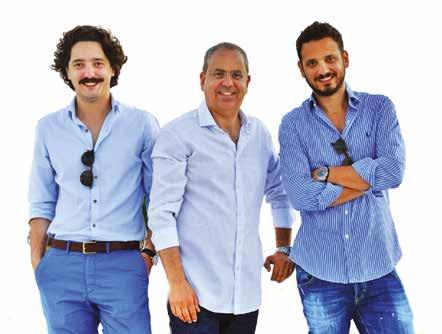
LucasSigalas CEO of Minoan Lines





e a l e s t a t e



Offices:
Offices:
Offices:
Offices:
Offices:
Offices:
Offices:
Offices:
Athens: 13-15 Sofokleous Rd, Athens
Athens: 13-15 Sofokleous Rd, Athens
Athens: 13-15 Sofokleous Rd, Athens
Athens: 13-15 Sofokleous Rd, Athens
Athens: 13-15 Sofokleous Rd, Athens
Athens: 13-15 Sofokleous Rd, Athens
Athens: 13-15 Sofokleous Rd, Athens
Athens: 13-15 Sofokleous Rd, Athens
w w w . r e v i t h i s - r e a l e s t a t e . c o m
w w w . r e v i t h i s - r
w w w . r e v i t h i s - r e a l e s t a t e . c o m
w w w . r e v i t h i s - r e a l e s t a t e . c o m
w w w . r e v i t h i s - r e a l e s t a t e . c o m
w w w . r e v i t h i s - r e a l e s t a t e . c o m
w w w . r e v i t h i s - r e a l e s t a t e . c o m
w w w . r e v i t h i s - r e a l e s t a t e . c o m
D r o s i a : 2 M a r a t h o n o s S t r .
D r o s i a : 2 M a r a t h o n o s S t r .
D r o s i a : 2 M a r a t h o n o s S t r .
D r o s i a : 2 M a r a t h o n o s S t r .
D r o s i a : 2 M a r a t h o n o s S t r .
D r o s i a : 2 M a r a t h o n o s S t r .
D r o s i a : 2 M a r a t h o n o s S t r .
w w w r e v i t h i s c o m
w w w r e v i t h i s c o m
w w w r e v i t h i s c o m
w w w r e v i t h i s c o m
w w w r e v i t h i s c o m
w w w . r e v i t h i s . c o m
w w w r e v i t h i s c o m
Mykonos: New Region Drafaki Rd, (Above Piraeus Bank)
Mykonos: New Region Drafaki Rd, (Above Piraeus Bank)
Mykonos: New Region Drafaki Rd, (Above Piraeus Bank)
Mykonos: New Region Drafaki Rd, (Above Piraeus Bank)
Mykonos: New Region Drafaki Rd, (Above Piraeus Bank)
Mykonos: New Region Drafaki Rd, (Above Piraeus Bank)
Mykonos: New Region Drafaki Rd, (Above Piraeus Bank)
w w w . m y k o n o s - r e a l e s t a t e . c o m
w w w . m y k o n o s - r e a l e s t a t e . c o m
w w w . m y k o n o s - r e a l e s t a t e . c o m
w w w . m y k o n o s - r e a l e s t a t e . c o m
w w w . m y k o n o s - r e a l e s t a t e . c o m
w w w . m y k o n o s - r e a l e s t a t e . c o m
w w w . m y k o n o s - r e a l e s t a t e . c o m
Arachova: Old Nation Rd
Arachova: Old Nation Rd
Arachova: Old Nation Rd
Arachova: Old Nation Rd
Arachova: Old Nation Rd
www.parnassos-realestate.com
Arachova: Old Nation Rd www.parnassos-realestate.com
www.parnassos-realestate.com
www.parnassos-realestate.com
Arachova: Old Nation Rd www parnassos-realestate com
www.parnassos-realestate.com
www.parnassos-realestate.com
Vouliagmeni: Astir Marina Vouliagmenis, South Suburbs
Vouliagmeni: Astir Marina Vouliagmenis, South Suburbs
Vouliagmeni: Astir Marina Vouliagmenis, South Suburbs
Vouliagmeni: Astir Marina Vouliagmenis, South Suburbs
Vouliagmeni: Astir Marina Vouliagmenis, South Suburbs
Vouliagmeni: Astir Marina Vouliagmenis, South Suburbs
Vouliagmeni: Astir Marina Vouliagmenis, South Suburbs
w w w . g r e e k t o p v i l l a s . c o m
w w w . g r e e k t o p v i l l a s . c o m
w w w . g r e e k t o p v i l l a s . c o m
w w w . g r e e k t o p v i l l a s . c o m
w w w . g r e e k t o p v i l l a s . c o m
w w w . g r e e k t o p v i l l a s . c o m
w w w . g r e e k t o p v i l l a s . c o m
C h i o s : A r c h e r m o u 4 , C h i o s
C h i o s : A r c h e r m o u 4 , C h i o s
C h i o s : A r c h e r m o u 4 , C h i o s
C h i o s : A r c h e r m o u 4 , C h i o s
C h i o s : A r c h e r m o u 4 , C h i o s
C h i o s : A r c h e r m o u 4 , C h i o s
w w w . r e v i t h i s . c o m
C h i o s : A r c h e r m o u 4 , C h i o s w w w . r e v i t h i s . c o m
w w w . r e v i t h i s . c o m
w w w . r e v i t h i s . c o m
w w w . r e v i t h i s . c o m r e a l e s t a t e s p e c i
w w w . r e v i t h i s . c o m
w w w . r e v i t h i s . c o m

w w w . r e v i t h i s . c
w w w . r e v i t h i s . c
w w . r e v i t h i s


w w . r e v i t h i
w w w . r e v i t h i s . c o m
i n f o @ r e v i t h i s c o m / + 3
w w w . r e v i t h i s . c o m i n f o @ r e
m i n f o @ r e v i t h i s c o m / + 3 0
i n f o @ r e v i t h i s c o m / + 3 0 2 1 0 8 1 3 5 1 8 1

ΙΔΙΟΚΤΗΣΙΑ MINOAN LINES S.A.
17, 71202,
Tηλ. 2810-399800, Φαξ: 2810-330308
www.minoan.gr
Minoan Lines
OWNERSHIP
MINOAN LINES S.A.
Shipping Company 17, 25th Avgoustou str. | Heraklion, Crete - Greece Tel.: +30 2810-399800, Fax: +30 2810-330308
www.minoan.gr
Published twice a year in June and August
Issue number: 10
The magazine is available free of charge to passengers of Minoan Lines
PRODUCTION
PMS MEDIA
18th km. Marathonos Avenue & Pylou Street, 153 51 Pallini
Tel: +30210 3212 037 info@pmsmedia.gr
SHAREHOLDER ACCORDING TO L. 5005/22: Xanthi Iliopoulou
LEGAL REPRESENTATIVE-PUBLISHER: Dimitris Kefalopoulos
MANAGING DIRECTOR: Xanthi Iliopoulou
MANAGING EDITOR: Thanassis Toloudis
CREATIVE DIRECTOR: Nikos Vatsitsis
ART DIRECTOR: Alexandros Bitsaras
CONTRIBUTORS: Maria Atmatzidou, Mia Kollia, Asteropi Lazaridou, Eva Petropoulou
COPY EDITOR: Niki Stathia
TRANSLATION: Evita Lykou
PHOTOS: Andreas Simopoulos
COMMERCIAL DIRECTOR: Stavros Kefalopoulos
ADVERTISING MANAGERS: Giorgos Andreadelis, Lena Konitsa, Kaiti Konitsa, Marifili Papanikolaou, Stella Selianiti, Peggy Stebili
PRINTING: PaperGraph S.A.
It is illegal to publish, reproduce, or transmit in whole or part of the magazine without the written permission of the publisher. The MINOAN LINES isn’t responsible for the contributors’ opinions as they are represented on issues.
Enjoy the summer, more to value.


4 actions that promote healing & soothe sunburn
anti-inflammatory healing


of effort, consistency and pride
Kritikos: A Cretan through and through!
of Milos in three days
representation of the divine


























































































ΤSantorini’s Luxury Travel Moments that travel, and experiences that never fade…
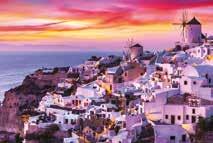
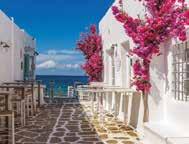
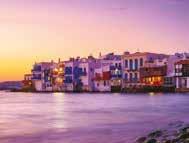
here is always a moment that defines a journey. From the very first arrival to the most authentic experiences, every journey in Santorini transforms into a story worth telling, one that should never remain in just a single place. This philosophy naturally expanded Santorini’s Luxury Travel to the islands of Mykonos and Crete, carrying with it the same sense of consistency, care, and authenticity.
In enchanting Mykonos, the experience is a balance of contrasts, discovering its most genuine and unpretentious side—far from the obvious.
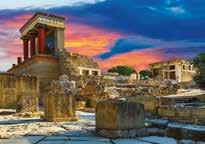
In majestic Crete, everything gains depth and meaning. Traditions, fl avors, and aromas come alive with a distinctive style and calmness, creating unique moments fi lled with emotion.
Santorini’s Luxury Travel believes that every experience is a carefully balanced blend of authenticity and luxury in perfect harmony.
Τhe goal is not only what you will see, but what you will feel An experience that lingers, evolves, and becomes a memory that remains forever—creating vivid and deeply human moments that are authentic, to every traveler seeking something truly meaningful and unique in every journey.

Tel.: +30 2286 771168, +30 22860 21743
Mob.: +30 6981804339 (WhatsApp, Viber)
Site: www.santorinisluxurytravel.com
Email: info@santorinisluxurytravel.com Santorini-Cyclades-Greece
ΘΆΛΆΤΤΆ, ΘΆΛΆΤΤΆ!
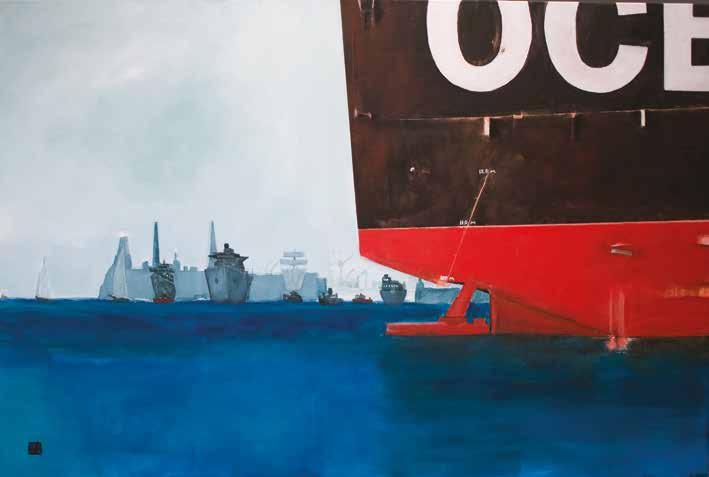
THIS SUMMER, AN ORIGINAL PARTNERSHIP OF ART AND POETRY WITH A MESSAGE ABOUT PROTECTING THE SEA IS GOING TO TRAVEL TO FIVE “STATIONS”, INCLUDING “KNOSSOS PALACE” OF MINOAN LINES.
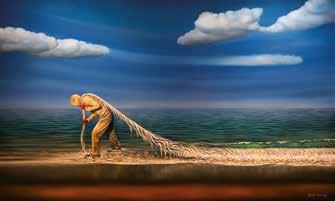
IAf you are travelling on the “Knossos Palace” of Minoan Lines between 16 and 21 June, whether to or from Heraklion, you will have the opportunity to experience a unique blend of art and poetry, as well as a powerful message about protecting our seas. Works of art by renowned Greek artists will be exhibited in the ship’s VIP Lounge, “conversing” with poems printed on canvas. The exhibition will be accompanied by activities for children, video screenings and discussions.
The project, titled “Thalatta, thalatta”, is an interdisciplinary cultural and environmental initiative by the non-profit cultural organisation IC Art & Cultural Projects, in collaboration with the Mediterranean Poets Network, under the auspices of the Greek


email: info@labyrinth.gr







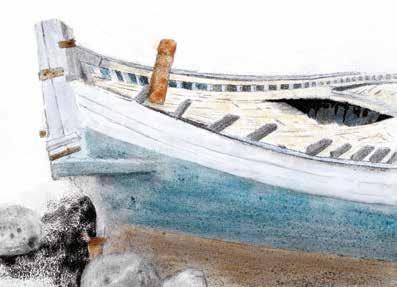
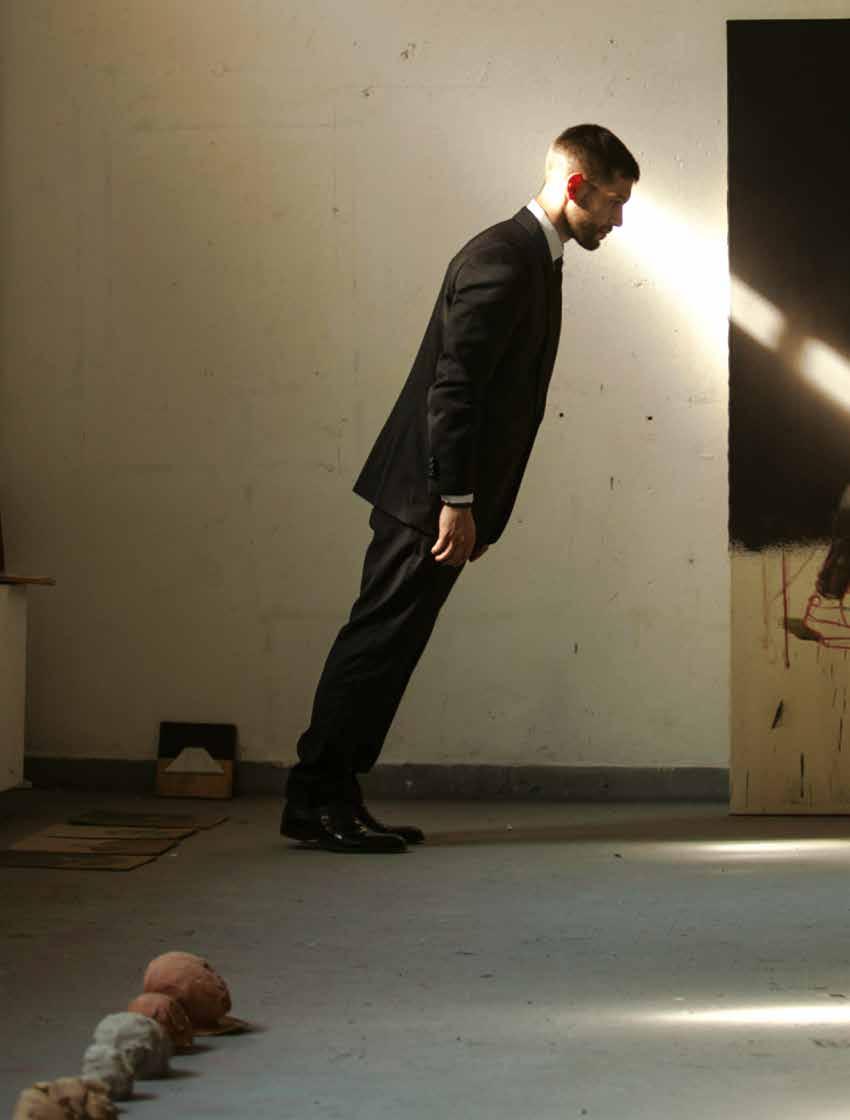
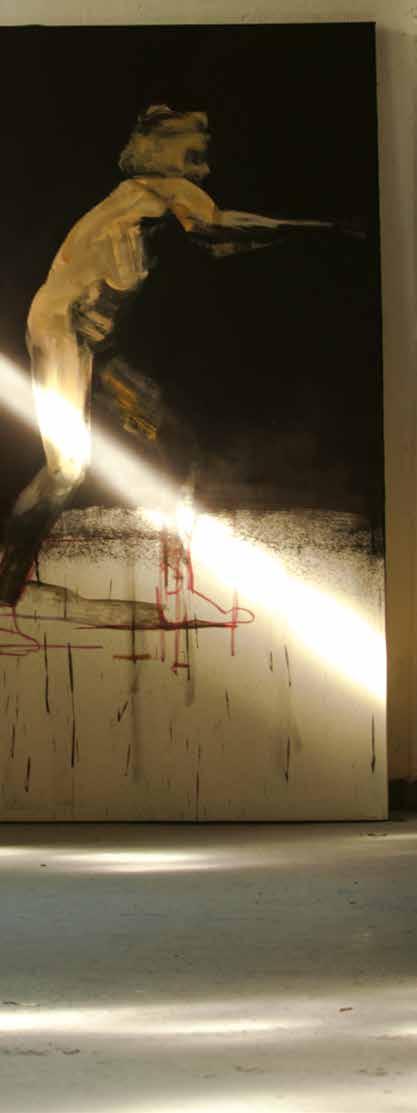
Sotiris Sorogas, “Old
Παναγιώτης Βούζης, Χαράλαμπος
Γλυνιαδάκη, Γιώργος Γώτης, Μαρία Καντ (Καντωνίδου), Ηλίας Κολύβας, Αντώνης Μακρυδημήτρης, Ηλίας Μαργιόλας, Ντί -
νος Σιώτης, Λίνα Στεφάνου, Αντώνης Φωστιέρης και Βαγγέλης Χρόνης,
Προτού
National Tourism Organisation, the Ministry of Maritime Affairs and Insular Policy, and the Ministry of Tourism. The objectives of the action are to raise public awareness of marine pollution and promote the need to protect the sea, as well as to encourage the adoption of modern educational methods that will foster a sense of responsibility among citizens by connecting culture and scientific knowledge through personal experience.
The exhibition features the work of twelve renowned contemporary Greek visual artists: Yiannis Psychopedis, Elias Kolivas, Sotiris Sorogas, Christos Kechagioglou (KEX), Manolis Charos, Petros Karavevas, Vasilis Solidakis, Dafni Angelidou, Stelios Gavalas, Nikos Υorgos Papoutsidis, Mina Papatheodorou Valyraki and Vangelis Rinas. Also participating are twelve renowned poets: Panagiotis Vouzis, Charalambos Giannakopoulos, Krystalli Glyniadaki, Giorgos Gotis, Maria Kant (Kantonidou), Elias Kolivas, Antonis Makrydimitris, Ilias Margiolas, Dinos Siotis, Lina Stefanou, Antonis Fostieris and Vangelis Chronis, who have composed new poetry especially for this initiative.
Before setting sail on the “Knossos Palace”, the “Thalatta, thalatta” exhibition will have been hosted at the Municipal Theatre of Piraeus from 11 to 14 June. It will then be exhibited at the Museum of Visual Arts in Heraklion from 23 June to 10 July, and at the Tinos International Literary Festival from 28 to 31 July. This cultural and ecological trip will take place at the Cultural Centre “Melina” in Athens from 7 to 20 September.
The action is in line with the European mission “Restore our Oceans and Waters by 2030”, which promotes the protection of marine ecosystems and encourages citizens to develop a sustainable relationship with the sea. It is being implemented in collaboration with the Hellenic Centre for Marine Research’s Institute of Oceanography. It comes with a collectible album published by Kastaniotis Publications, which contains accessible scientific information about the sea alongside works of art, poetry and photography that aim to share knowledge with a wider audience.




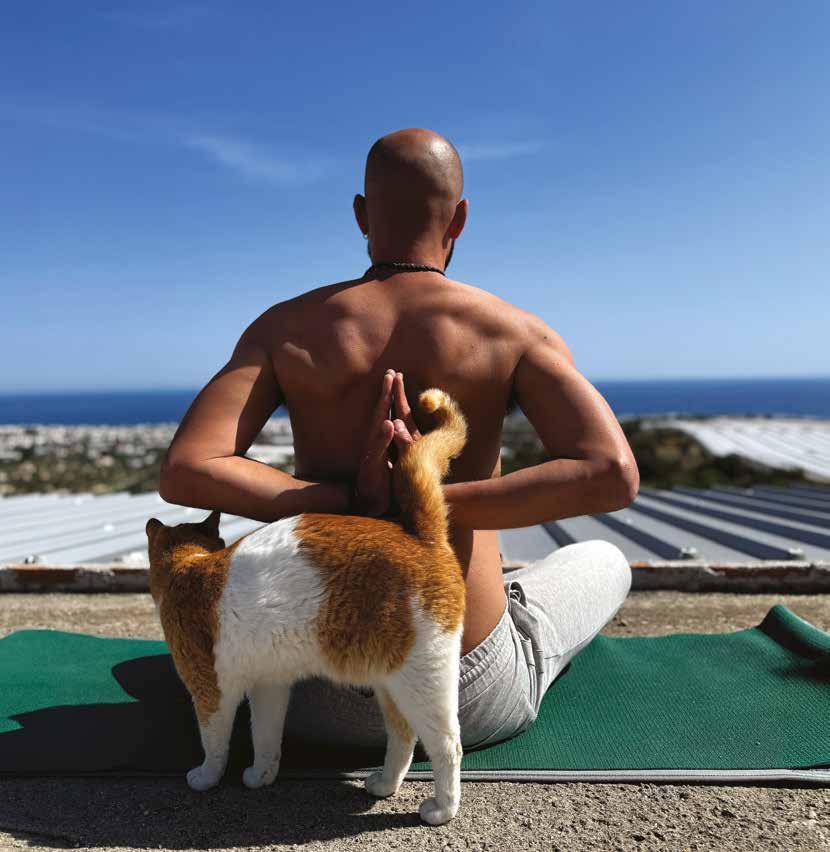
IS A SIMPLE LIFE CLOSE TO NATURE PREFERABLE TO THE COMPLEX, EVERYDAY LIFE OF URBAN CENTRES? GEORGE ANDROULAKIS DECIDED TO LEARN, RETURNING TO HIS HOMELAND AND THE WORK OF THE COUNTRYSIDE.
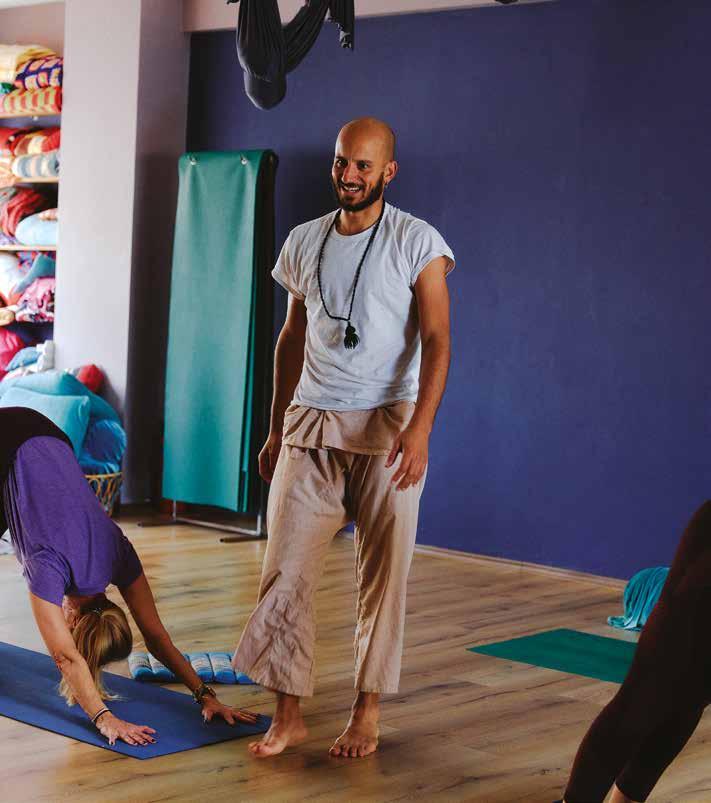
eorge Androulakis is a yoga and Thai massage instructor who runs the successful yoga studio he founded in the heart of Athens, Spiti Yoga. After years of impressive progress, he decided to return to his homeland
HERAKLIO_ CRETE GREECE 33, KALOKAIRINOU Av. 15, EL. VENIZELOU (LIONS’ SQUARE)
HERAKLIO_ CRETE GREECE
33, KALOKAIRINOU Av. 15, EL. VENIZELOU (LIONS’ SQUARE)
21, AVEROF Str. 41, DIKAIOSINIS Str.
21, AVEROF Str. 41, DIKAIOSINIS Str.
markakis.gr
markakis.gr
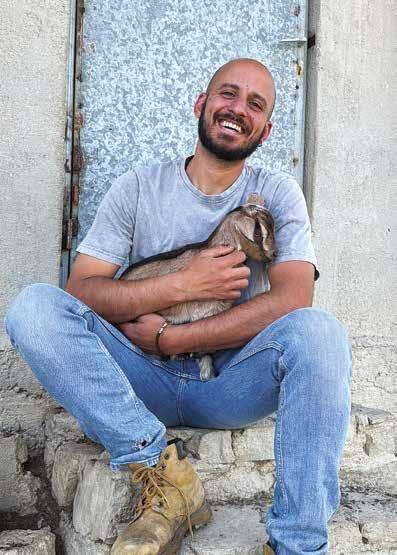
of Ierapetra explaining himself to his close friend and colleague, Gogo, in just four words: “The mountains called me!”.
Born and raised in Ierapetra, Crete, he has a deep connection with nature, aromas and colours that change with the seasons in his DNA. “This is something you cannot experience in Athens”, he says. “I was going crazy in Athens, especially after Covid. All of a sudden it was all our fault, it was dystopian. Also, the "village" that Athens used to be, was turned into a tourist resort and so I decided to return to my origins”, he explains.
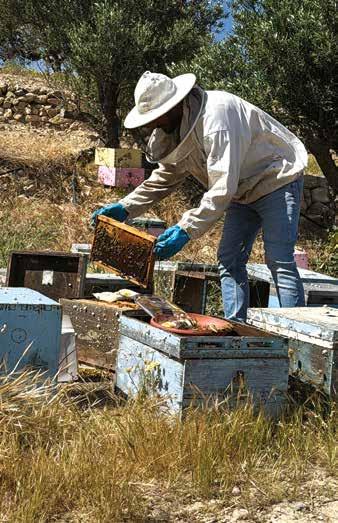
For two years now, he lives on a farm outside Ierapetra: “My father is a beekeeper, with a large production. We also keep goats, chickens and turkeys in our stables. We sell meat and eggs. My father makes cheese, xygalo and trahana. I also help with milking and, of course, I work with my parents at the farmers’ market. We have a stall there where we sell our products. It is a simple job with a nice ritual. I wake up to watch the sun rise. On my way, I see the sea, pine trees and mountains. I put on some music, set up the counter and unload the goods before selling them”.
At the farmers’ market, everyone is smiling -both the sellers and the buyers: “It’s a constant meeting point. People don’t get lost; they regularly see each other. This is how relationships are maintained”. But tourists who visit the place also “come to explore it. They are
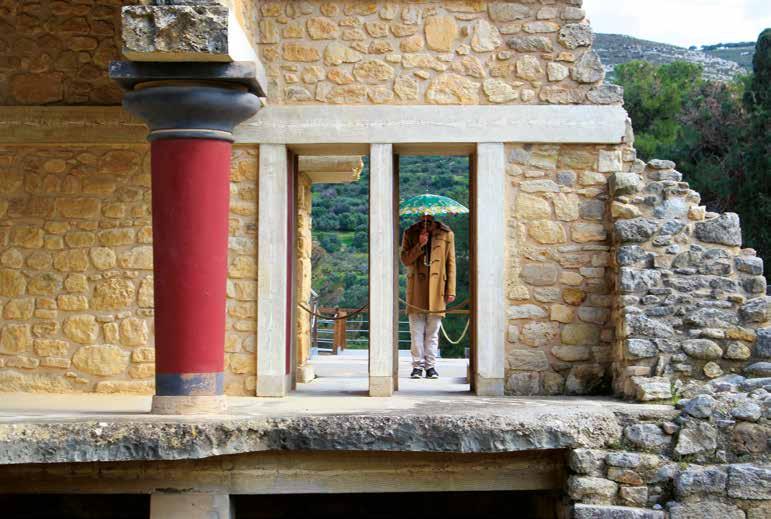
Emecalm Travel,

Emecalm Travel δεν

























not in a hurry and have a calmer pace. They blend in with the locals”.
As for the natural beauty of Ierapetra, “It has some very beautiful beaches with crystal-clear waters that are all different from each other and have a little something for everyone. It is an earthly paradise, filled with olive trees and pine forests. You can hire a car, enjoy magical routes, and discover villages. Wherever you are, it’s really worth it!”. Spiti Yoga in Athens continues to operate as usual. Meanwhile, George is enjoying life in his homeland. He offers Thai massage and yoga sessions to Greek and foreign visitors in Ierapetra, Agios Nikolaos, Elounda and Sitia, throughout the Lasithi prefecture.
At the same time, however, he remains committed to the great dream that brought him back to Crete: “I want to build a farm near


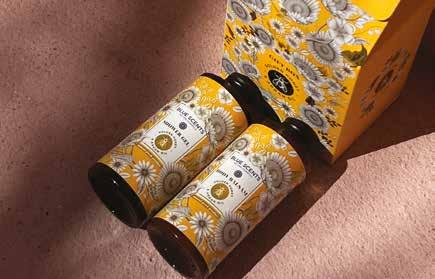
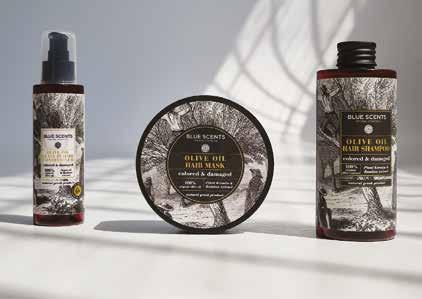
BLUE SCENTS is a new comprehensive cosmetic care line, inspired by the finest ingredients of the Mediterranean nature. Organic olive oil, natural extracts, essential oils and vitamins are harmoniously combined, offering targeted body and hair care...
A care experience that unites the power of Nature with everyday luxury.
Discover the line in selected stores throughout Crete.
https://georgiosandroulakis.com/ https://spitiyoga.gr/
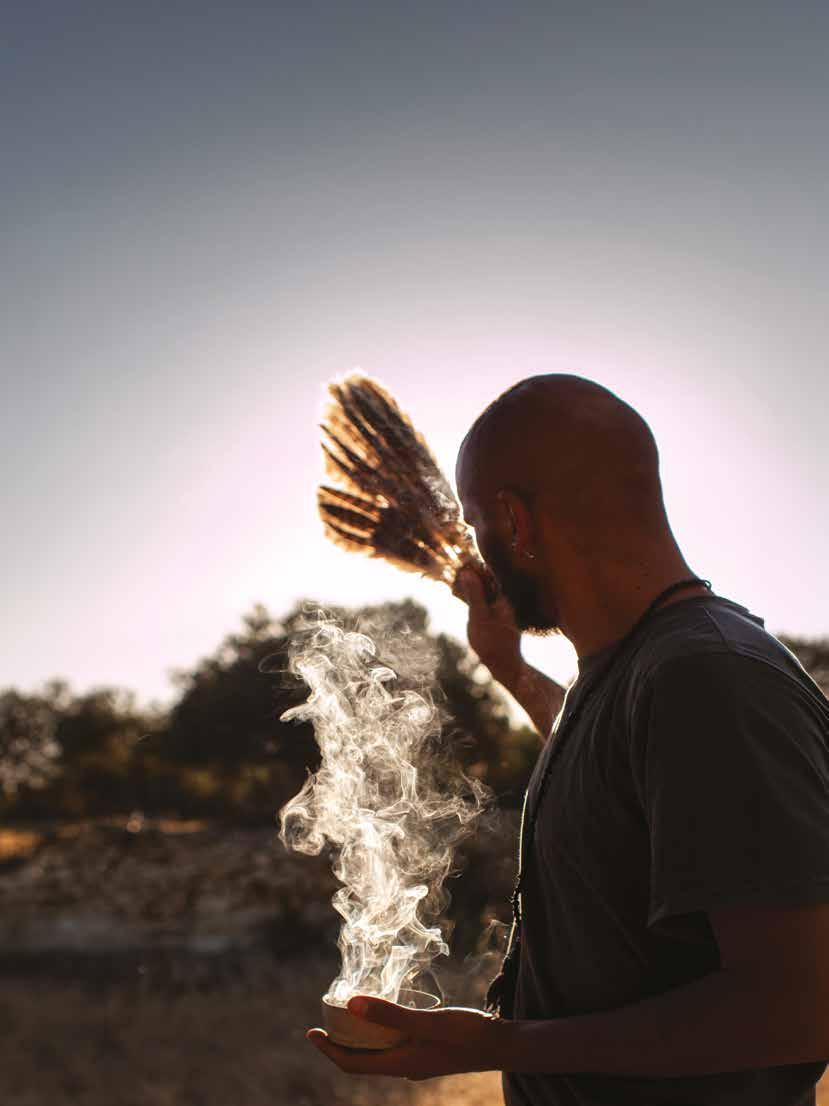
my grandfather’s olives that will be accessible and open to everyone. People from all over the world could come with their children and dogs to stay together in the olive grove. Learn to cook traditional dishes and listen to the sounds of nature and the passing of the seasons. This place is beautiful all year round”.
His days begin at sunrise, but he also enjoys watching the sunset: “Every day, I go up to the roof, where we leave tomatoes to sun-dry and grind wheat, and I do yoga at sunset”. As I stand there, admiring the magic of the landscape as if I were seeing it for the first time, I always ask myself the same question: “Did we enjoy planet Earth at all today?”.
https://georgiosandroulakis.com/ https://spitiyoga.gr/
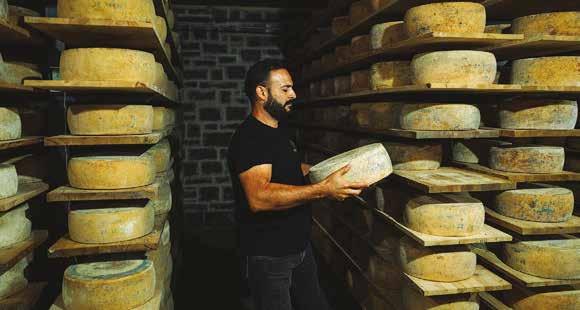



P ERFECTION Μ ATURES OVER ΤIME. WHERE ΜYTH TURNS INTO F LAVOUR

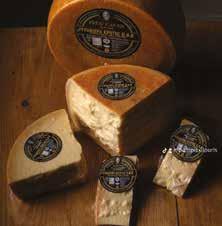
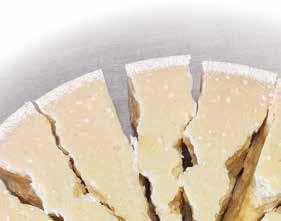
In Crete, the land of the gods and the birthplace of the Minoan civilisation, Zeus Caven was born to carry on a tradition stretching back thousands of years: the art of cheese-making. To us, graviera is more than just a product -it’s the continued legacy of a myth. It is the flavour of Crete that matures over time to deliver an experience fit for the most refined of gourmet dining tables.
Athens
Kostarelos - Alexandris - Chalkiadakis (Cretan Flavors)
Mandragoras - LEVON Delicatessen - Penteliko - Miran
Thessaloniki
The Grocery of Thessaloniki
Heraklion, Crete
Chalkiadakis Supermarket - O Kipos Tis Edem - Kaminaki
The Village - Papafigos - Ligo Krasi Ligo Thalassa
Leonis
Peskesi
Canaves
Χαράκι 1, Χαράκι 700 10, 698 391 1848



@Zeus Xilouris (Zeus Caven)
@zeus_caven_taste_from_crete_ @zeus.caven
Leonis - Peskesi - Kritikos Fournos Geuseis
Santorini
Tyrofolia - Canaves
1 Charaki Street, Charaki 700 10, +30 698 391 1848
@Zeus Xilouris (Zeus Caven) @zeus_caven_taste_from_crete_ @zeus.caven
https://zeuscaven.gr





Sitia has always been known for its close ties with literature and the arts. In recent years, it introduced us to a rich cultural and intellectual life throughout the year, which reaches its peak in the summer months thanks to the Stegi Vitsentzos Kornaros. In this spirit, from 12 to 14 June, this cultural organisation, now in its sixth year of operation, is organising the “Sitia Literary Festival”, with the support of the Ministry of Culture and the Municipality of Sitia.
This inaugural festival aspires to establish a dynamic meeting point for writers, creators, and the public. The focus will be on discussions taking place on 13 and 14 June at the Multipurpose Center (Polykentro), in the Municipality of Sitia. Twenty contemporary Greek writers will participate in four round-table discussions, in which four speakers and a moderator (who is also a writer) will converse in front of an audience. To illuminate different aspects of contemporary literary production and thinking, each-round table has a different theme.











• Θεατρική παράσταση «Η Αρετούσα και
ο Ερωτόκριτος», μια παραγωγή της Στέγης Βιτσέντζος Κορνάρος, βασισμένη στον
«Ερωτόκριτο του» Β. Κορνάρου (Παρασκευή 12 Ιουνίου, στις 20:00, Πολύκεντρο).
• Εγκαίνια έκθεσης ζωγραφικής του Βασί-
λη Σολιδάκη με ξενάγηση από τον ζωγράφο (Σάββατο 13 Ιουνίου, στις 20:30, Στέγη Βιτσέντζος Κορνάρος).
• Συναυλία του Νίκου Κυπουργού με τη συμμετοχή της χορωδίας του Ωδείου «Αρετούσα» Σητείας (Κυριακή 14 Ιουνίου, στις 21:00, Ενετικό Φρούριο Καζάρμα).
ΤηνεπιμέλειακαιτονσχεδιασμότουπρογράμματοςανέλαβανηΛουκία ΔέρβηκαιοΑλέξηςΠανσέληνος,διαμορφώνονταςένασυνεκτικόκαι δυναμικόπλαίσιοπουαναδεικνύειτησύγχρονηελληνικήδημιουργία.
At the same time, the programme incorporates a variety of artistic activities that connect literature with other art forms. In this way, the festival aims to provide a multidimensional experience in which letters, images and sounds coexist and interact. This year’s schedule is as follows:
• Theatre Performance “Arethousa and Erotokritos”, a production of the Stegi Vitsentzos Kornaros, based on “Erotokritos” by V. Kornaros (Friday, 12 June, at 20:00, Polykentro).
• Opening of Vasilis Solidakis’s painting exhibition, featuring a guided tour by the artist (Saturday, 13 June, at 20:30, Stegi Vitsentzos Kornaros).
• Concert by Nikos Kipourgos, featuring the choir of the “Aretousa” Conservatory of Sitia (Sunday, 14 June, at 21:00, Venetian Kazarma Fortress).
Loukia Dervi and Alexis Panselinos have curated and designed the programme, creating a cohesive and dynamic framework that showcases contemporary Greek creativity.
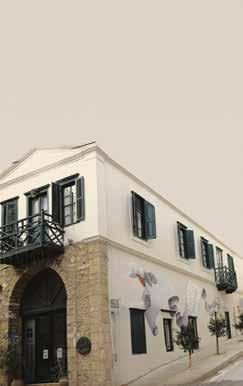
non-profit company founded by businessman Yiorgos Galanakis and his wife Aliki, in Sitia in September 2020. It fosters a vibrant cultural scene, encompassing literature, theatre, visual arts and music. Among other activities, it organises an International Conference on “Erotokritos” every three years, with the participation of academics from Greece and abroad. www.vitsentzoskornaros.org
Androulakis,
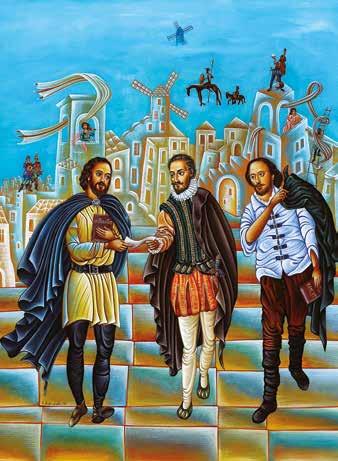
Cervantes,










ΖΩΓΡΑΦΙΖΟΝΤΑΣ ΜΕ ΦΩΣ
ΑΠΟ
ΒY ASTEROPI LAZARIDOU
THE ACTIVE PHOTOGRAPHIC GROUP PHOTOSAPIENS, BASED IN HERAKLION, INTRODUCES ITSELF TO US THROUGH WORDS AND IMAGES THAT CELEBRATE HUMANITY AND THE LAND.
s with all beautiful things in life that endure over time, it always begins with a group of people who share a common vision and sensibilities: “Some twelve years ago, our desire to see the world around us in a different, more visual and certainly unconventional way led to the formation of the PhotoSapiens photography group. The dominant element in our photos is always the human being in natural environments. We never use artificial means to alter the "painting" we are creating, and we always use natural light. After all, Crete has some of the best light”, says Spyros Androulakis, a member of the creative team.
The team also includes professional photographers Konstantinos Sakkadakis and Mara Giamali, as well as videographer Nikos Kalogerakis.
We ask Spyros what it’s like to produce images in such a photogenic location as Crete. “We live and create in a place like Heraklion, and of course Crete, which is a life-giving source of inspiration. The expression "blessed land" is therefore entirely fitting. In such ideal environments, every artist and photographer creates a framework in which art is interwoven with the nectar of the human intellect: artistic creation. With every shift in the light, Crete transforms into the perfect photographic canvas. From the urban fabric of Heraklion to the most remote olive grove, and from the peaks of the Asterousia Mountains to Knossos, the landscape is so enchanting that you cannot take your eyes off it. I would never change the place where I grew up, live and, above all, take photographs”.
The human element plays a prominent role in the photographs, and not by chance. “The strongest aspect of Crete is its people, the Cretans themselves. Purity and integrity can be found in every village in Heraklion, whether large or small. It is these people who have shaped their homeland into the most beautiful work of art. It’s no coincidence that Zeus hid on our island,



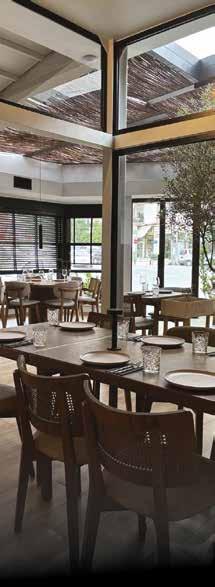
Wild, proud, full of memories, aromas and history.
Its high mountains are filled with the scents of ironwort, chamomile, savory and wild oregano.
Its land, fertilised by sweat and love, is passed on from one generation to the next as a precious heritage.
Spora was born from this land.
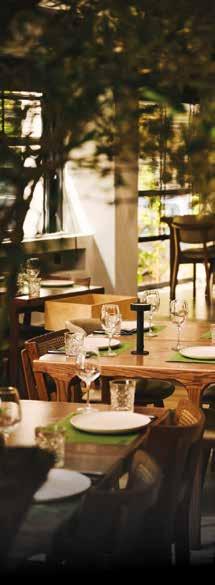
At the Spora restaurant Crete is more than just a geographical location; it’s a way of life.
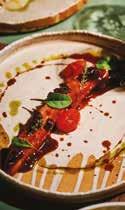
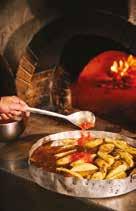
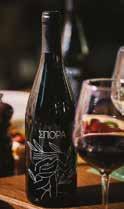
We create authentic flavours deeply tied to the Cretan tradition using raw ingredients produced in the Spora estates and by selected local producers. Wine, olive oil, liqueur, grape syrup, carob syrup and seasonal produce all come together to bring the true soul of Crete to the table.
Each dish has a story to tell.
The power of the land, the cycle of life, and the fusion of tradition and modernity.
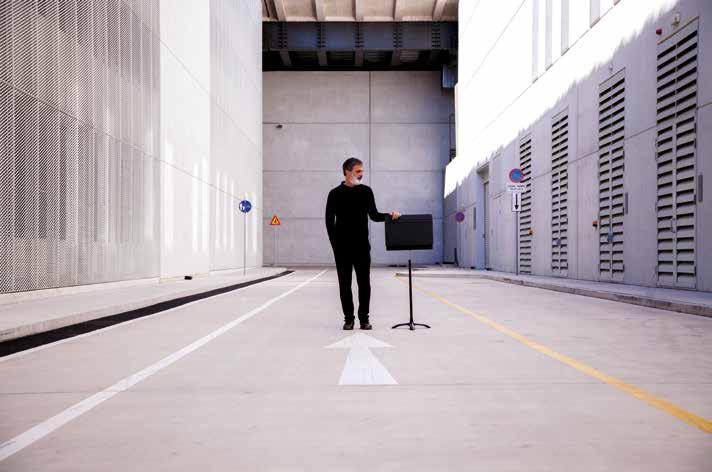
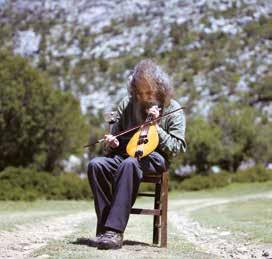
Project “Cretans”: Giorgos Koumendakis, artistic director of the Greek National Opera and Psarantonis, musician/performer.
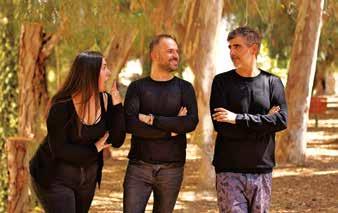
Down: Mara Giamali - Spyros Androulakis, Konstantinos Sakkadakis.
and that it was the Curetes who protected him with the sound of their shields. This concept of mutual protection and union still exists today” notes Spyros.
One of the group’s main objectives is to create photographic projects that have a social impact, whether charitable or informative, as well as collaborating with cultural institutions: “Our first photographic exhibition was for the SOS Children’s Village in Foinikia, Heraklion, Crete, and all the proceeds were donated to support the children hosted there. Our next plans include presenting a nationwide information campaign titled "I Am Aware", as well as a short film called "Gyala" for carers of people with Alzheimer’s disease. A documentary and a photo album entitled "Traces of Blood" will soon be released for the Municipality of Malevizi, commemorating the martyred villages of Damasta and Sarchos in Heraklion that were destroyed by the Nazi army during the Occupation.










































You




Project «Αγέρωχον»,
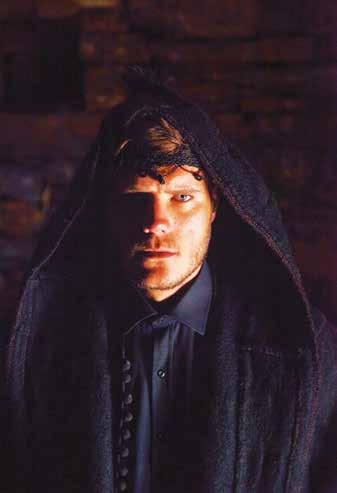
Project “Imperious”, Giorgos Ferbous. Πανελλήνια
”We are also collaborating with the Nikos Kazantzakis Museum on the “Kazantzakis Spirit” project. Our photographic collaboration with the Heraklion Archaeological Museum on the "Abelourgos" [The Viticulturist] project was also noteworthy. One of our most significant projects was the photographic work entitled “NIMA”, which we created in collaboration with the British School at Athens in collaboration with curator, Mr Kostis Christakis, we presented our interpretation of the Minoan Crete of the archaeologist Arthur Evans, who excavated Knossos. However, the project we are most proud of is the "Cretans": we have spent five years photographing important and emblematic Cretans from the fields of arts, sciences, sports and culture”.
Regarding the impact of technology on photography, Spyros says: “Photographic art must be organic and connected to place and people. No matter how much technology infiltrates our lives, especially through artificial intelligence, nothing can capture the moment more authentically than a click. We live for the moments because it is through them that we create our memories”.
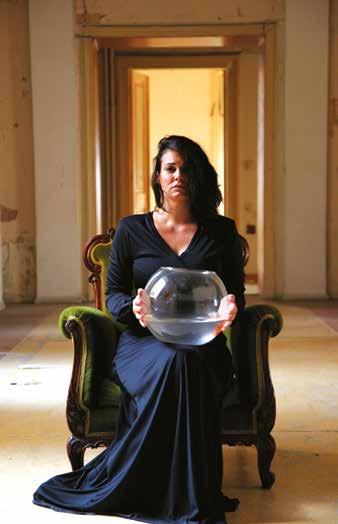
Panhellenic campaign for Alzheimer’s disease
“I am aware”, Maria Korinthiou, actress.
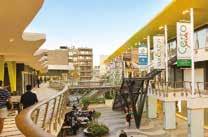

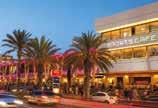
one for everyone and everything!
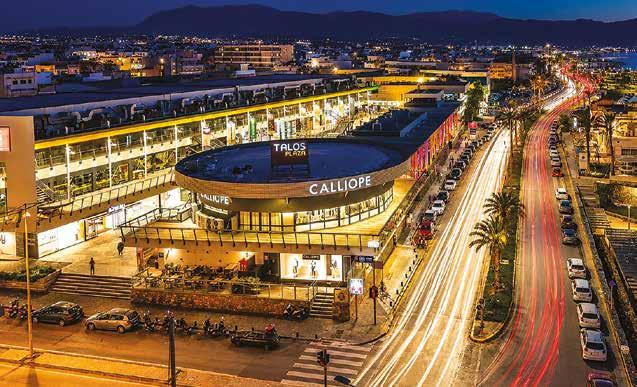
Talos Plaza is one of Heraklion’s most modern and popular shopping and entertainment destinations, offering a unique combination of shopping, relaxation and fun. Built in a prime location right by the sea, it boasts stunning views that make every visit special, whether you’re out shopping or simply enjoying a relaxing cup of coffee.
Spanning approximately 9,000 square metres, Talos Plaza is Crete’s largest shopping and entertainment centre. It features popular clothing and footwear brands that are affordable for everyone, meeting every need of the modern consumer. Meanwhile, the wide variety of restaurants and cafés on offer caters for all tastes, making it an ideal meeting place for people of all ages.
The venue’s entertainment facilities are also particularly noteworthy, featuring modern cinemas, and sports and recreation areas, including a gym and a sports café. This comprehensive range of amenities makes it an ideal destination for a day out. Easy access and ample parking make your visit even more convenient and enjoyable.
Among other things, at Talos Plaza you will find:
· ΟDEON, a multiplex cinema with 8 screens and a total seating capacity of 1,500

Talos Plaza is more than just a shopping mall -it’s a vibrant, multi-purpose space offering shopping, entertainment and relaxation. Whether you want to do all your shopping in one place, or enjoy a coffee and a meal by the sea, this is a great option for residents and visitors to the city alike.
Sofokli Venizelou
ΠΑΡΕΛΘΟΝ
THE HISTORICAL AND FOLKLORE MUSEUM OF RETHYMNO IS HOUSED IN A VENETIAN MONUMENT FROM THE EARLY 17TH CENTURY IN THE OLD TOWN, ONE OF THE MOST IMPORTANT CULTURAL INSTITUTIONS IN THE “CITY OF LETTERS”.
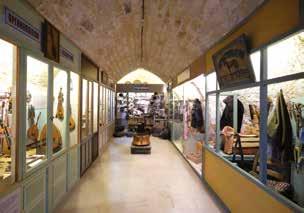
Ιt took over twenty years of preparation for the Historical and Folklore Museum of Rethymno to open its doors to the public for the first time, which it did in 1996. The founders, Fali G. Voyatzaki and Christoforos Stavroulakis, worked methodically to bring their vision to life. They sought to collect, preserve and protect important folk cultural documents, as well as to promote scientific research and the dissemination of Cretan folk culture. They wanted to show that folk culture is a dynamic element which inspires and enriches the lives of people today and will continue to do so in the future.
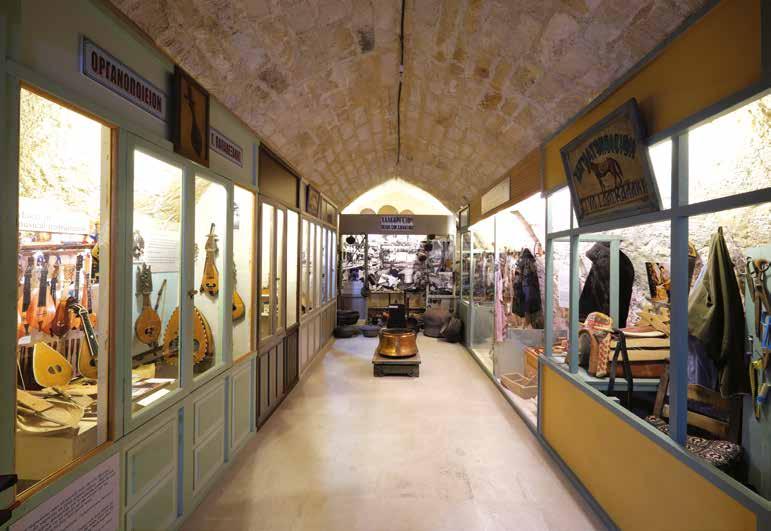
Its exhibition areas are filled with folk art and traditional handicrafts from the 17th century to the present day (including elaborate textiles and embroidery, and lace of unique artistry) as well as utilitarian objects of everyday life and representations of traditional professions from years gone by. Ms Voyatzaki, the president of the Historical and WAVE

Folklore Museum of Rethymno and a prominent Rethymnian, says: “The museum’s collection, which numbers over 10,000 objects, comes mainly from donations. These artworks reflect the myths, stories, values and spiritual wealth of the Cretan people, who shaped their cultural identity through imagination and soul”.
The building housing the museum is an excellent example of a Venetian urban residence and is worth visiting in itself. As it has been designated a “historical classified monument”, its association with the museum is also beneficial, as this status contributes to its preservation and protection. Mr Haris K. Stratidakis, a scientific associate of the museum, informs us that this building “was the urban residence of the Venetian-Cretan Clodio family. They settled in Rethymno in the 13th century and acquired the title of Cretan nobility (Nobili Cretensi)”.
The visit begins on the ground floor with the Historical Collection, which preserves objects from periods when the island was under foreign occupation by the Arabs, Venetians, Ottomans and Germans. These include coins, weapons, flags, maps, photographs and biographies of Cretan fighters. Next is the hall displaying traditional trades (coppersmiths, saddlers, farriers and cutlers).
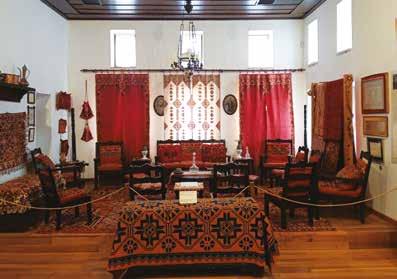
On the first floor, visitors can admire an impressive collection of woven fabrics from various regions of Crete. These fabrics are made from linen, cotton, wool and silk yarns and feature an array of colours and weaving techniques.
The next room houses an excellent collection of embroidered artefacts from the Byzantine tradition, including delicate lace knitted with crochet, the collection of works by the renowned 20th-century Rethymnian embroiderer Chrysi Aggelidaki, who introduced traditional weaving patterns to modern embroidery, and linen from the typical urban dowry of the late 19th and early 20th centuries.

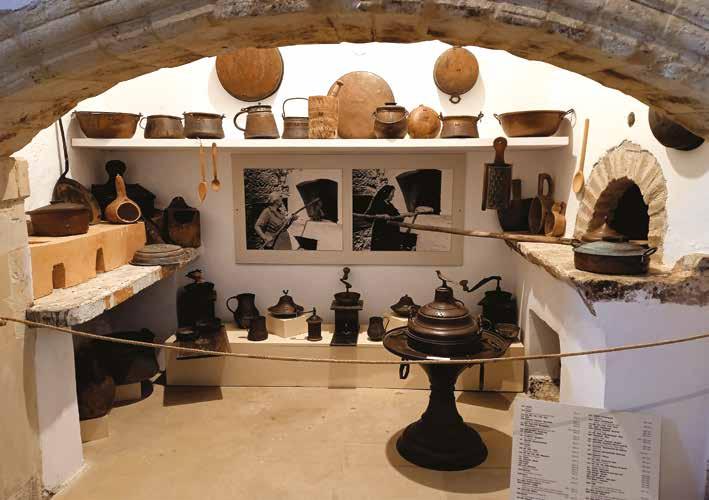
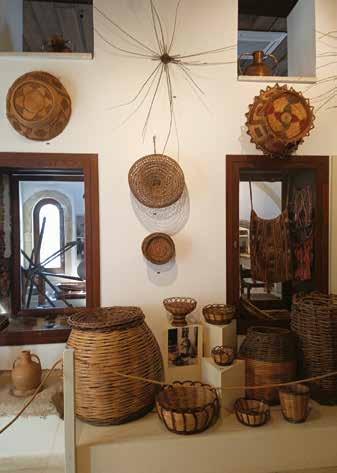
Then there are traditional items such as baskets and ceramics, along with the tools and techniques required to make them as well as the traditional foot-operated potter’s wheel. The rich collection of ceramics includes everyday items such as vessels for drinking from, preparing and consuming food, and storing olive oil and other products. There are also vessels that were useful for beekeeping and livestock farming. The last room contains metalworking and agricultural tools related to harvesting and grinding fruit and cereals, as well as kneading and baking bread.
The museum also has a room equipped with all the necessary audiovisual facilities for hosting temporary exhibitions, educational programmes and cultural events. Ms Voyatzaki adds: “Through research, temporary exhibitions, workshops and publications, the museum maintains its focus on the objectives for which it was founded. We continue to enrich the collections and are seeking to expand the museum, which is already struggling due to a lack of space. We are also seeking to cooperate with other museums, the Folklore Chair at the University of Crete and other bodies to create a pan-Cretan network that will highlight Crete’s great importance in world culture and clearly define its identity”.
HistoricalandFolkloreMuseumofRethymno,28-30VernardouStreet, Rethymno.





































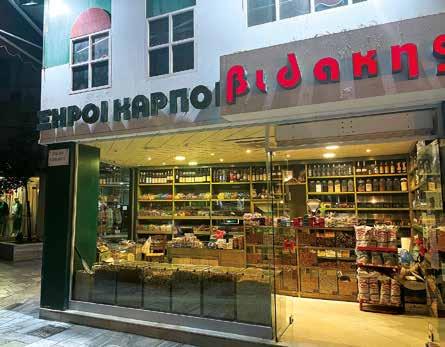
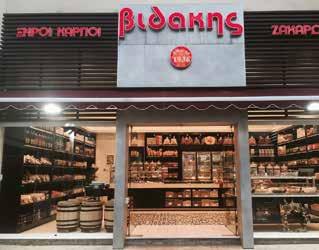


Asmall shop selling roasted chickpeas opened on Kornaros Square in Heraklion in 1936. Thanks to its tasty, warm treats, the shop quickly became known, and the name “Vidakis” became synonymous with taste and quality. Today, the fourth generation of the family business continues to embrace the values with which “Vidakis” has always operated. With the knowledge of the previous generations and their own fresh perspective, they o�fer the freshest and tastiest nuts and consider everyone who visits their stores as a guest rather than a customer.
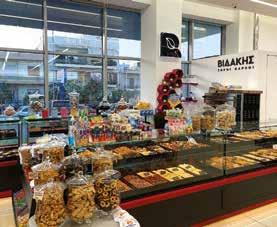
1. 38 Vitsentzou Kornarou Square, Heraklion, Crete, Tel.: +30 2810 224 823
2. 62 Martiron Avenue & Pavlou Mela Street corner, Heraklion, Crete, Tel.: +30 2810 257 410 At CHALKIADAKIS Super Markets
1. MAX Nea Alikarnassos
2. MAX Kapetan Manoli Mpantouva
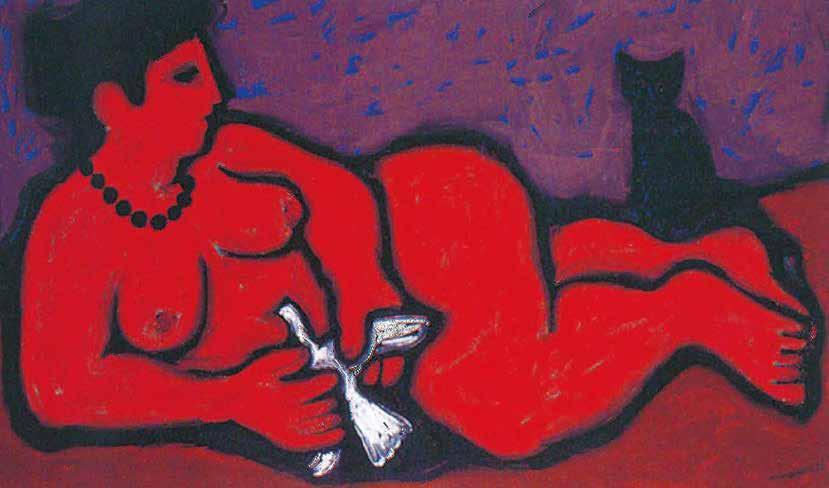
FROM 12 MAY TO 12 SEPTEMBER, SAINT MARK’S BASILICA WILL HOST THE FIRST MAJOR RETROSPECTIVE EXHIBITION OF WORKS BY THE RENOWNED PAINTER THOMAS FANOURAKIS.
MUNICIPALITY OF
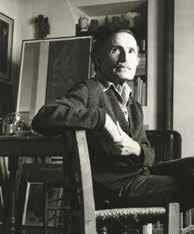
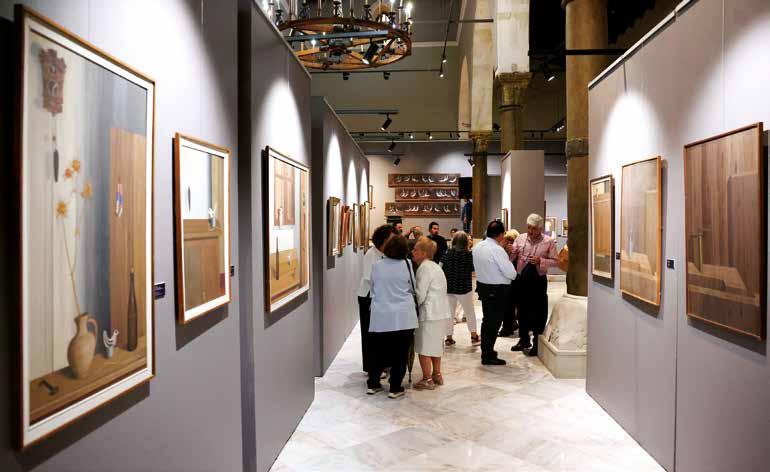
Until 12 September, the Municipality of Heraklion, the Deputy Mayor of Culture and the Municipal Art Gallery of Heraklion are organising a retrospective exhibition entitled “Thomas Fanourakis: 5 Decades of Painting” in the city where the artist lived and worked. The exhibition presents a total of 125 works from the last five decades of the artist’s career, ranging from 1940 -the year he returned to his birthplace after studying at the Athens School of Fine Arts- to 1984, when he retired and closed his workshop.
To mark this significant exhibition, works donated by the artist to the Municipality of Heraklion and the city’s Municipal Art Gallery are being brought together for the first time with pieces scattered across museums, collections and private properties throughout Greece. As Deputy Mayor of Culture Rena Papadaki emphasises: “The realisation of


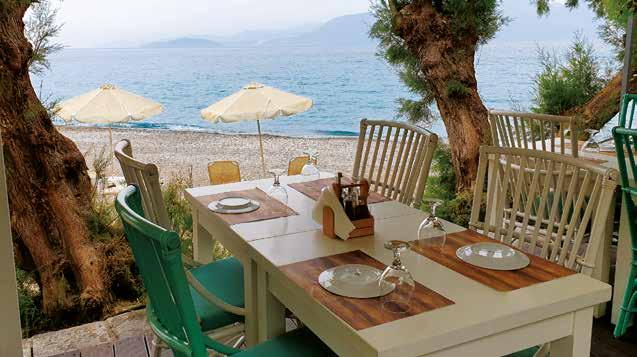
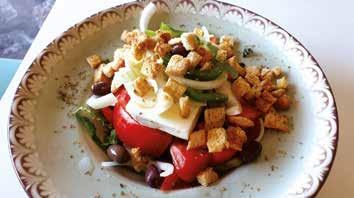
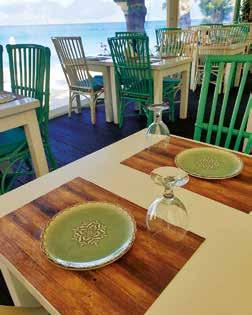
Enjoy delicious meat and seafood on bbq, mama’s cooking of local specialties, an exquisite wine selection and a magical seaside... Family owned, serving with love, since 1978. Your eating place in Agios Nikolaos.
5 Akti Pagalou, Kitroplatia, Agios Nikolaos, tel. 28410 83168
Facebook: FarosFamilyRestaurant
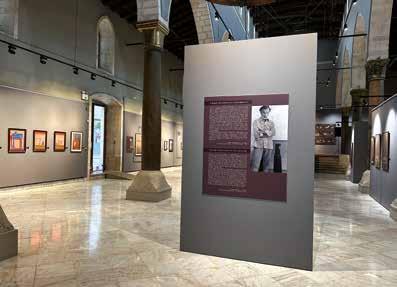
the exhibition is largely due to the individuals, museums and institutions that agreed to share the works in their possession and collections with the wider public. It is thanks to their concessions that the important tribute to the work of Thomas Fanourakis can be hosted in Saint Mark’s Basilica”.
The exhibition is structured into five main sections, following the painter’s work from his first steps in watercolour during the difficult years of the German Occupation, through his intense experimentation in the 1950s and 1960s -a period during which he, like many artists of the same generation, sought new pathsto his establishment of his personal artistic idiom in the 1970s and 1980s.
As the exhibition’s curator, art historian Denise-Chloe Alevizou explains: “In Fanourakis’s paintings, we witness the adventure of an entire era of modern Greek art, defined by the quest for "identity". In his work, as well as that of many artists of his generation, the answer emerges from an introverted and persistent dialogue with the art of painting itself”.
A bilingual catalogue accompanies the exhibition, containing explanatory texts and photographs of all the works on display. It is available from the bookshop at the Vikelaia Municipal Library. This luxurious publication contains full documentation of the exhibition but also features several of Fanourakis’s previously unknown works. You can view the works that he

Snapshot from the exhibition opening.







Address:






























































Coopz | Fried Chicken & Burgers


έργο
heraklionartgallery.gr
1. «Το ανδρόγυνο». “Husband and wife”.
2. «Ο χάρτινος μύλος». “The paper pinwheel”.
3. «Κροκοσυλλέκτης πίθηκος». “Crocus-picking monkey”.
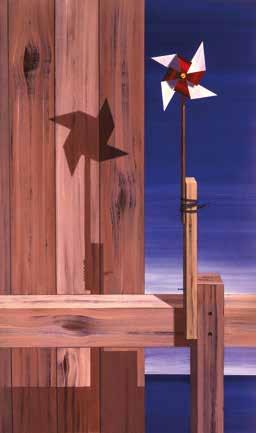
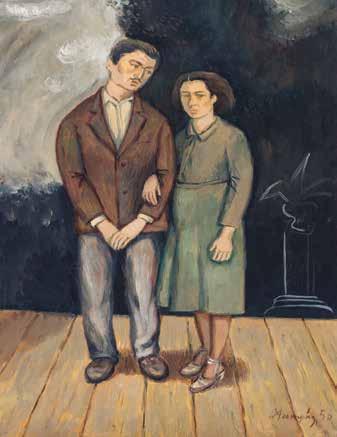
donated to the Municipality of Heraklion at the following link: https://heraklionartgallery.gr/artist/fanourakis-thomas/
Fanourakis, the illustrator
Thanks to the collaboration between the Vikelaia Municipal Library and the Municipal Art Gallery of Heraklion, and the involvement of the Society of Cretan Historical Studies and the Historical Museum of Crete, the exhibition was enhanced by the significant addition of the tribute, “Thomas Fanourakis & the Art of the Book”. It is a video projection displayed in a specially designed area of the exhibition in Saint Mark’s Basilica. This joint curatorial work by Denise-Chloe Alevizou and Kostas Bournazakis sheds light on the lesser-known aspect of Fanourakis’s work: the artistic curation and illustration of books.
heraklionartgallery.gr
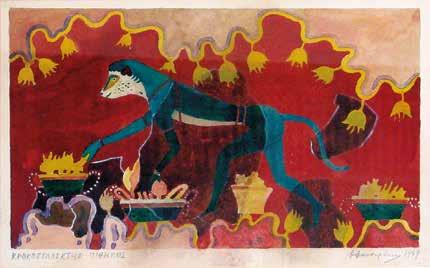
OPERATING HOURS FROM MAY, JUN, SEP: 10:00 - 17:30, JUL, AUG: 10:00 - 18:00, OCT: 10:00 - 17:00 34
BY ASTEROPI LAZARIDOU
IN RECOGNITION OF THE EXCELLENCE OF CRETAN CUISINE, THIS YEAR THE ISLAND WAS NAMED THE “EUROPEAN REGION OF GASTRONOMY 2026” AND RECEIVED GLOWING REVIEWS IN THE RENOWNED TRAVEL MAGAZINES CONDÉ NAST TRAVELER AND NATIONAL GEOGRAPHIC.
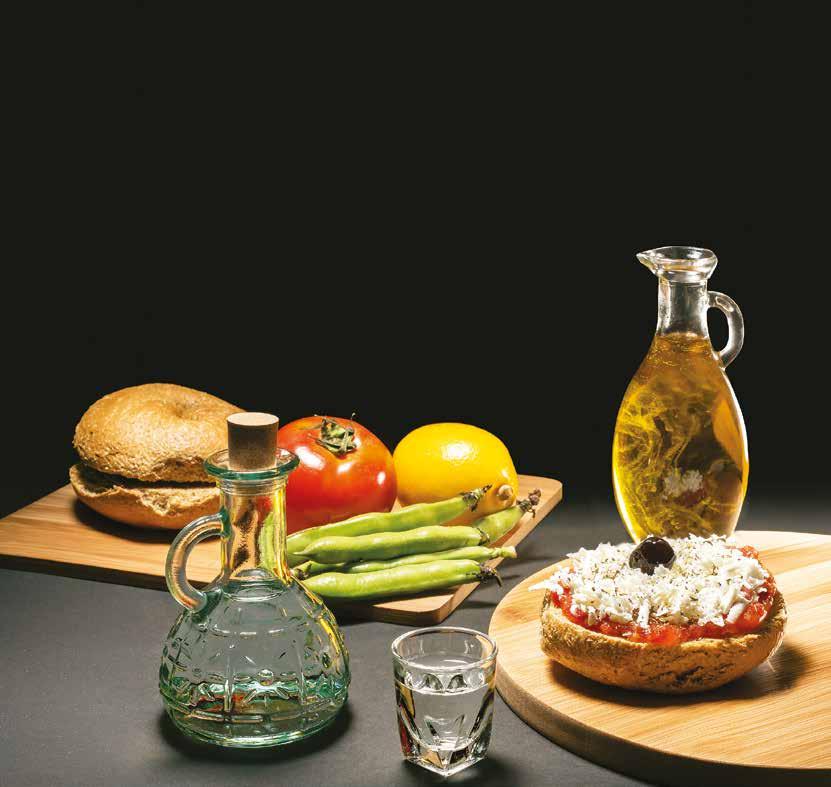
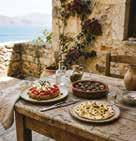
Vi sitors to Crete, from every corner of Greece and the world, praise its incomparable cuisine. From the time of the Minoans until today, the people of Crete have known how to enjoy life, create indelible memories through food and make the most of all the good things that the Cretan land has to offer. Above all, they have known how to share food, thereby multiplying the enjoyment of the gastronomic experience.
It is no coincidence that Crete features so prominently in this year’s Condé Nast Traveler and National Geographic lists. Not only is it among the best places in Europe to eat, it is also one of the best places to visit in general. Of course, reference is made to Crete’s emergence as the “European Region of Gastronomy 2026” and the
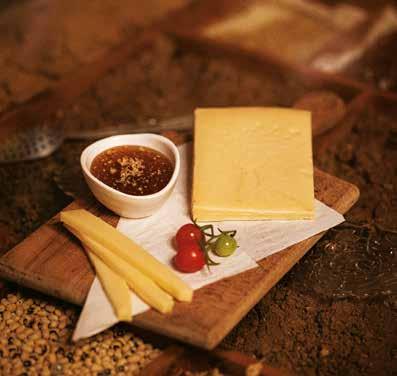
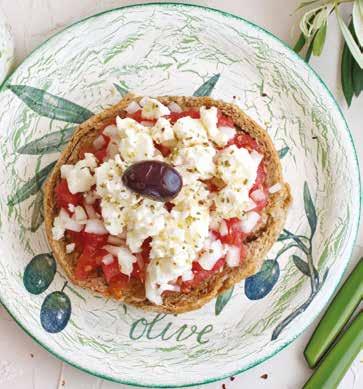
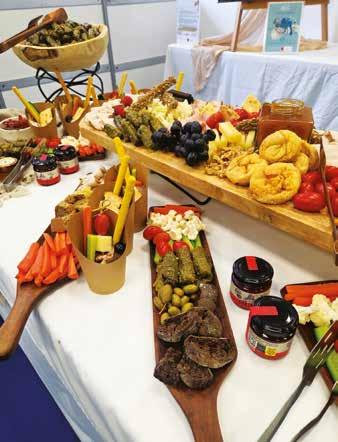
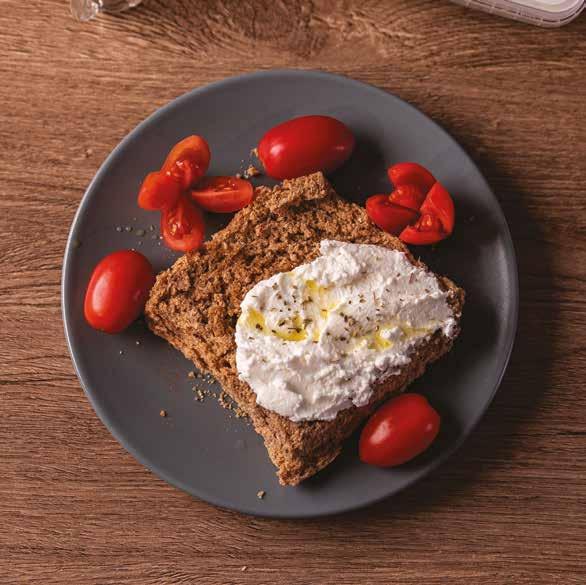
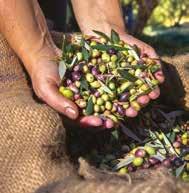
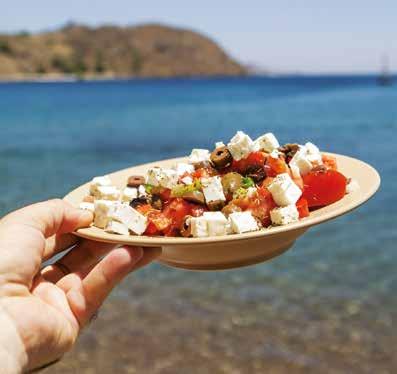
virtues of Cretan cuisine that have made it famous around the world: “Wherever you travel on the island it is impossible not to taste Cretan olive oil, its trademark, which is everywhere in abundance. Most locals grow their own olives and produce their own products. Olive oil is the king of every dish, from fresh salads to slow-cooked meats, not to mention the star of the show, dakos with creamy mizithra, ripe tomatoes and fresh oregano on a fresh rusk -a dish that clearly demonstrates Cretan cuisine’s skill in elevating simplicity to perfection”.
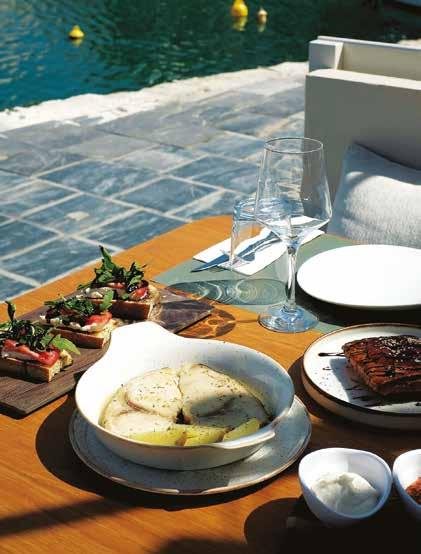
The high-quality Cretan cuisine is also valued on the carefully curated menus of MINOAN LINES’s ships, the “FESTOS PALACE” and the “KNOSSOS PALACE”. Passengers can enjoy a first-class gastronomic experience certified with the "Cretan Cuisine" Quality Label by the Agri-Food Partnership of the Region of Crete. The revamped menu features a selection of refreshing dishes and traditional specialities, all made with fresh ingredients sourced from local producers.
According to the Region of Crete, the honour of Crete being named the “Gastronomic Region of Europe 2026” marks the beginning of a wider cycle of cooperation with local authorities, tourism and catering professionals, and the island’s producers. In 2026, tourism and culture will make the most delicious stop in Crete through a variety of events spanning the whole island, and showcasing the region’s rich tradition, exceptional produce and the passion of local producers. Recipes and flavours, as well as the small and large secrets that make life more delicious, have been passed down from one generation to the next, and have been preserved thanks to the Region of Crete’s care and vision.



































“Cretan Nutritional Culture is a treasure”
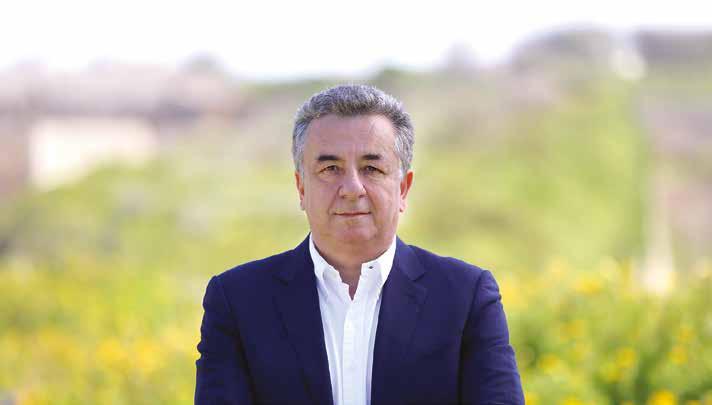
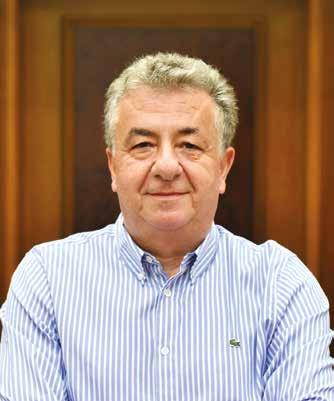
We talk to the Governor of Crete, Stavros Arnaoutakis, about the importance of this honorary distinction, the need for extroversion, and the exciting journey of the modern “gastronauts”!
How important is this European distinction for the Region of Crete and Crete in general? What benefits is the island expected to gain from its redefinition on the map?
Proclaiming Crete the “European Region of Gastronomy for 2026” is a development of profound symbolic and strategic importance. The International Institute of Gastronomy, Culture, Arts and Tourism’s (IGCAT) decision harmoniously connects the Minoan heritage with modern demands for nutritional quality. This distinction strengthens the island’s outward-looking strategy and establishes a robust network of partnerships between the local government, universities, business organisations and society. Crete is now becoming a bridge that connects the primary sector directly with tourism, establishing a dynamic presence on the global stage. This choice forms the basis of a coherent plan for 2030, with the aim of establishing the island as a world leader in gastronomy and securing its place in the World Regions of Gastronomy family.
Do you think that the promotion of pure local products and the Cretans’ timeless relationship with the land will lead to even more sustainable tourism?
Yes, undoubtedly. Contemporary international trends require tourism models that are based on sustainability, identity, heritage and local traditions. The “Cretan Nutritional Culture” is a treasure trove which meets all the criteria for sustainable development. Our aim is to organise quality gastronomic tourism that will stimulate local development and promote culture, health
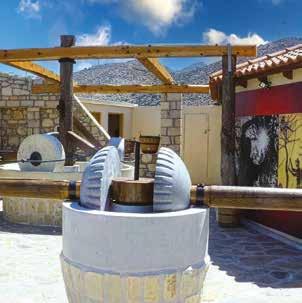
















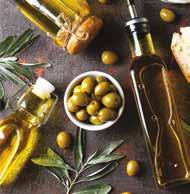
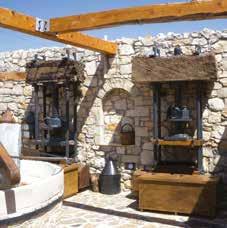
Discover the most ancient method of olive oil production at our family-owned Olive Mill & Museum in Achlada Heraklion and taste our extra virgin olive oils. A member of our family will guide you through generations of tradition, history, and authentic Cretan hospitality, while you can also visit our shop to buy premium -quality products.

























Olive Mill & Museum Tour – Free!















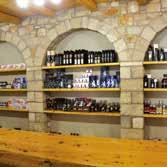









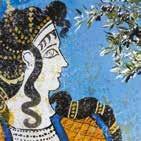
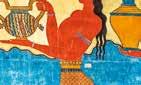
Visitors will taste 4 different olive oils while discovering the evolution of olive oil production in Crete. Beginning with the Minoan Fabrica (3000-1200 BCE), featuring a unique replica of a Minoan olive press, and continuing through history at the Byzantine Fabrica (330-1453 CE) and today’s production methods, guests will explore the island’s rich olive oil heritage through guided tastings.










Olive Mill & Museum Tour + Tasting Experience - 33 Immerse yourself in a unique experience – The Olive & Museum Tour PLUS professional tasting of 4 types of extra virgin olive oil in the special olive oil tasting glasses accompanied with traditional local appetizers and a traditional Cretan treat!





































































































and sustainable agriculture. This model puts visitors and society at the heart of the experience, in response to the trend of global homogenisation. At the same time, we propose the Cretan diet as a balanced lifestyle that nourishes the body and spirit. Its health benefits have been scientifically proven by renowned studies such as the Rockefeller Foundation study, the Seven Countries Study and the Lyon Study.
A variety of events embracing Crete from end to end throughout the year will highlight the local cuisine, products and culinary traditions. How important is unity through flavours, traditions and secret recipes that have been passed down through the generations?
This is of fundamental importance because the Cretan diet is not just a menu; it is a living social practice and a body of knowledge and traditions passed down unchanged from generation to generation. It is a form of intangible heritage, full of memories, and based on social interaction and sharing. Local habits have created a centuriesold productive identity and a single cultural asset. When planning the roadmap for the coming years, we are calling on all the bodies that make up the “Ecosystem of the Cretan Diet” to work together
as one. In addition, international collaborations such as those with the Beautiful Villages of Tuscany Association and the Academy of Fine Arts of Reggio Calabria highlight the supra-local and timeless characteristics of food culture that unite people.
As Regional Governor of Crete, what is your personal vision and goal for this distinguished role?
Our vision is to promote and safeguard our food heritage, which is a top institutional priority for Preserving the Intangible Cultural Heritage of our island. Within this framework, we are continuously strengthening the agri-food sector in terms of production, processing and distribution. This ensures that our products are authentic and certified, and that modern methods are used to capture the essence of our history. In collaboration with “Ploigos” and the Municipalities, we are taking action to demonstrate that Crete offers significant investment opportunities based on local entrepreneurship and innovation. We treat the Gastronomic Region title as a dynamic process involving the interaction of public and private sectors, with the aim of establishing Crete as an internationally renowned destination by 2030. As modern “gastronauts”, we are on a mission to share this wealth with all of humanity.
Food is memories and values. Imagine you are hosting an important colleague from abroad and want to introduce them to the simplicity and grandeur of Cretan cuisine. Which purely Cretan dishes would you serve to welcome them?
I would choose iconic dishes that reflect our connection to the earth and our commitment to simplicity. In this way, our guest would embark on an exciting culinary journey from the Minoan era to the present day. And, of course, I would invite them to lunch on one of the MINOAN LINES ships, where traditional recipes are prepared with passion and professionalism in accordance with the principles of the Cretan diet.
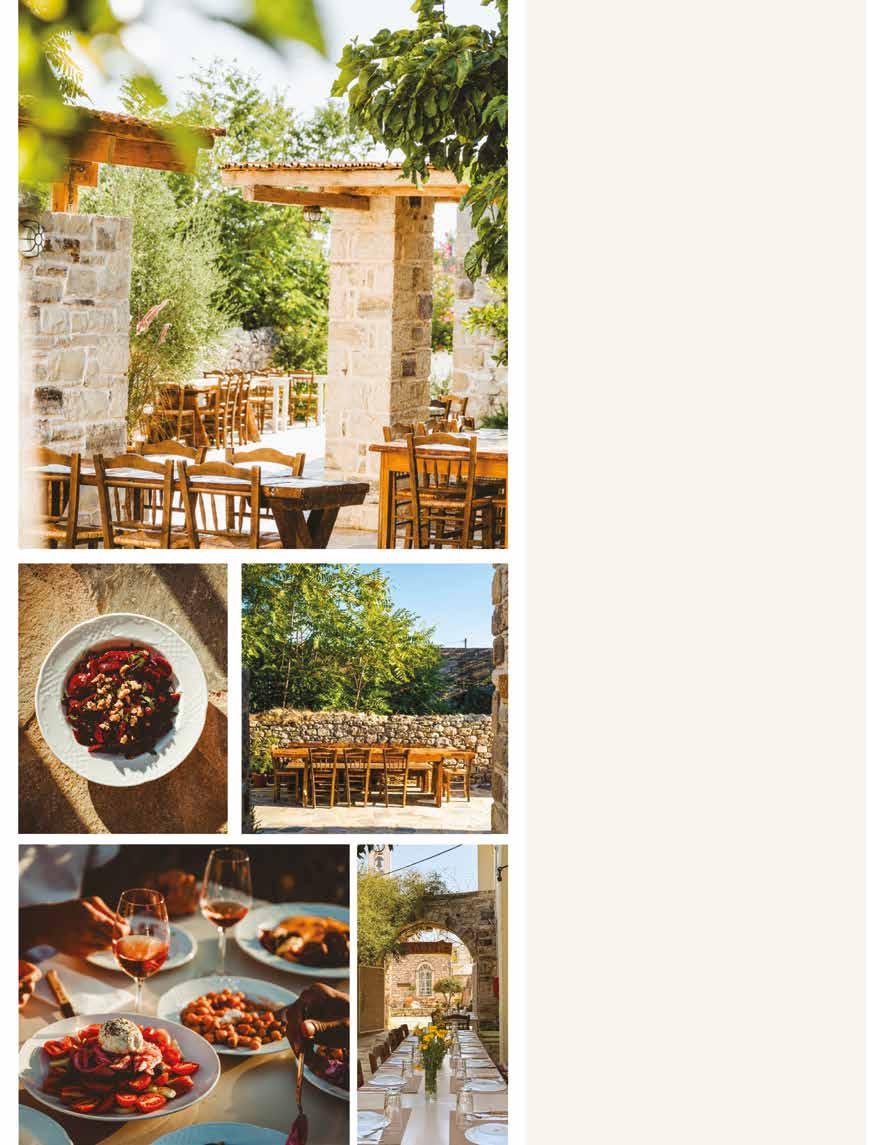
At Aloni, in the village of Agioi Deka, we cook with local ingredients and recipes passed down through generations.
In the land of ancient Gortyna, just a few minutes from the Archaeological Museum of Messara and Agios Titos.
Agioi Deka
Gortyna Municipality, Helaklion +30 2892 027225
info@aloniagioideka.com
Aloni - Traditional Cretan Restaurant aloni_agioideka @aloniagioi.deka





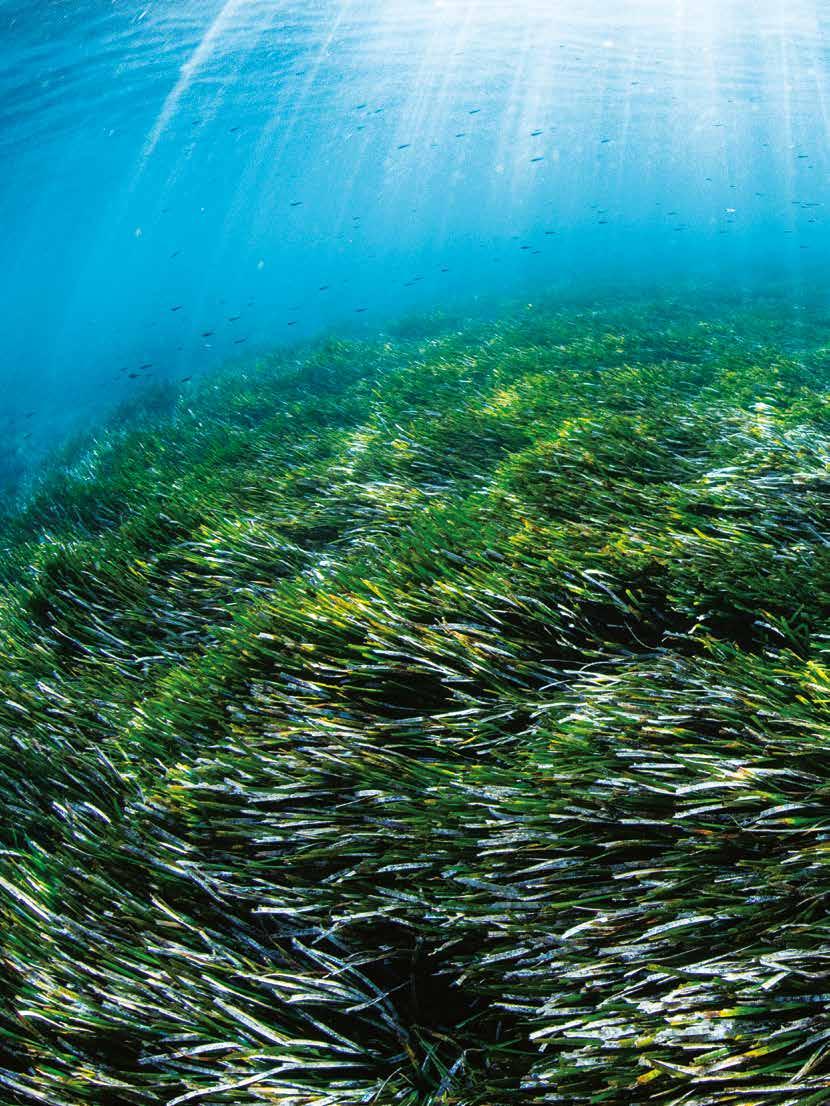
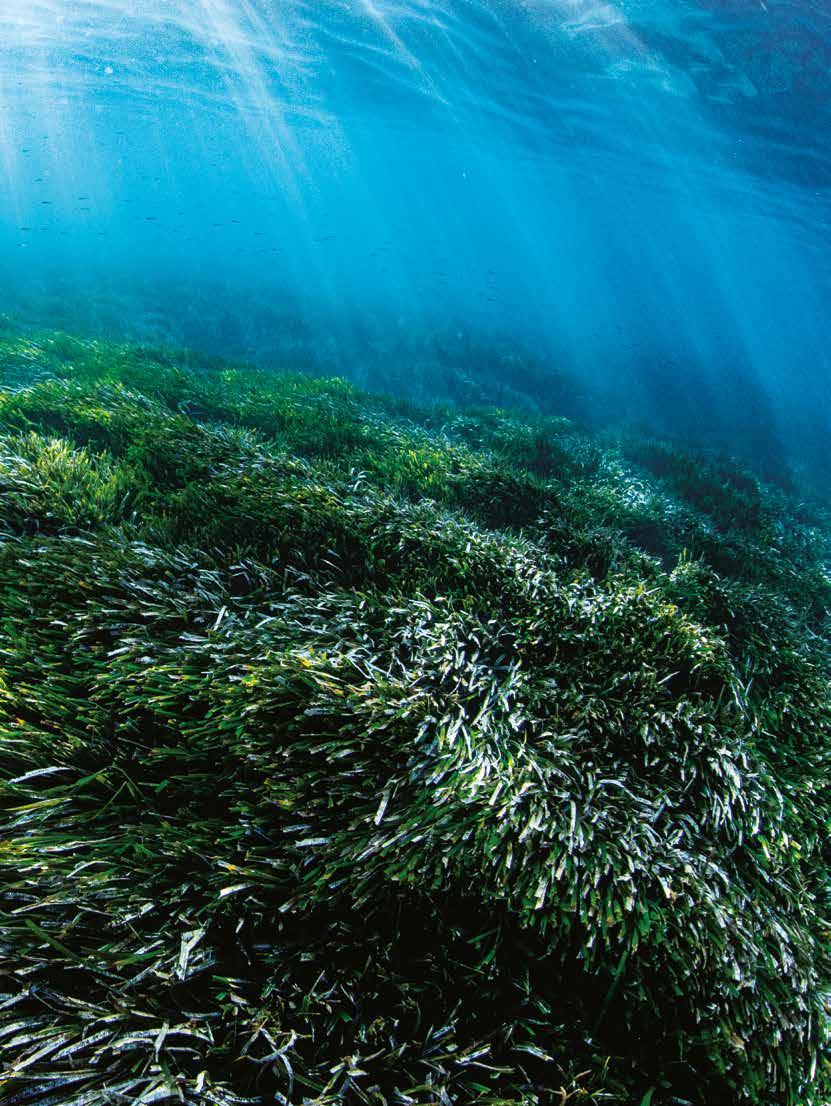
WE DISCUSS THE SURVIVAL OF POSIDONIA OCEANICA MEADOWS IN THE EASTERN MEDITERRANEAN WITH MARINE BIOLOGIST AND RESEARCHER DR DIMITRIS POURSANIDIS.
Οur seas are home to plants that “work” not only for their own survival, but also indirectly and unintentionally for our own benefit, often in adverse conditions. We owe them the largest percentage of oxygen in the atmosphere (they produce more than terrestrial forests) and they act as huge stores of carbon dioxide, thereby helping to mitigate the greenhouse effect. At the same time, they perform important ecosystem functions.
There are four species of marine plant that form meadows in the Mediterranean, predominantly the endemic “Neptune grass”, Posidonia oceanica.
However, as our knowledge of marine flora is rather limited, we asked an expert to enlighten us. Dr Dimitris Poursanidis, speaking to us from Jamaica, where he was conducting research, talked about the importance of Posidonia meadows and the crucial role technology can play in conserving them. As a specialist scientist at the Institute of Applied Computational Mathematics (IACM) of the Foundation for Research and Technology - Hellas (FORTH), and as the founder of TerraSolutions Marine Environment Research, he uses new technologies, such as satellites, drones, and underwater optical systems, to map marine ecosystems. “My main focus is Posidonia meadows, but I also study other ecosystems such as shallow reefs, coral reef ecosystems and Gorgonian forests. I have also worked with other endemic species, such as the pinna, which has almost disappeared from the Mediterranean, as well as with invasive
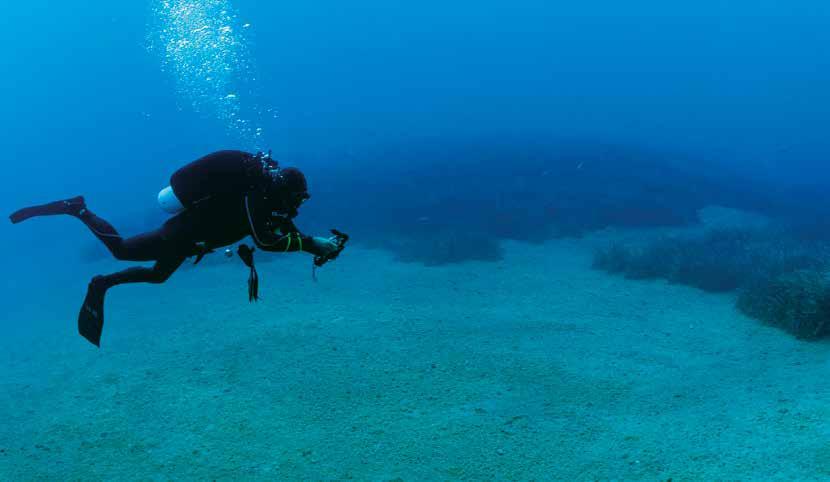
species that have flooded the region due to climate change. In addition, I collect photographic material and videos using underwater cameras in order to communicate scientific information to the public”.
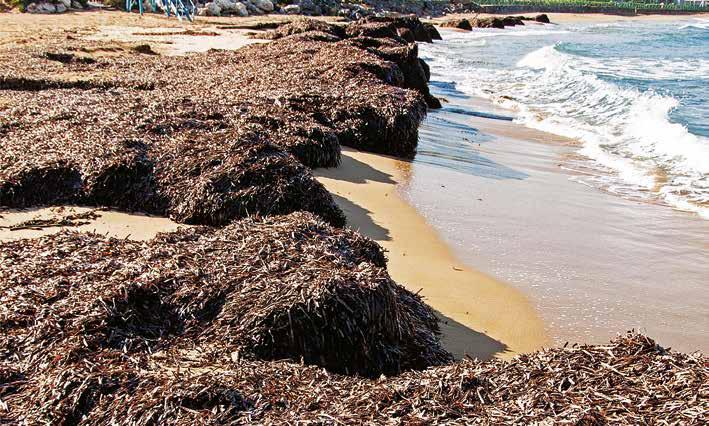
But why is it important to study these plants that we often encounter on beaches in the form of vast piles of grey-brown ribbons? “These dead leaves come from the most important marine plant in the Mediterranean! Posidonia forms extensive meadows a little deeper than the sea surface, at depths of up to 40 metres where there is sufficient sunlight for photosynthesis. Its meadows are primarily found on sandy seabeds. Although it is resistant to temperature changes and sea currents, it is highly sensitive to changes in salinity and nutrients”.
Given that Posidonia meadows create ecosystems of exceptional importance, their protection must be prioritised. “It is an important link in a chain that must not be broken. Every lost link causes further losses. Posidonia plays a key role in maintaining biological processes and natural balances, as well as being important from an economic standpoint. Dead leaves in the meadow provide nutrients for the marine ecosystem. When these are deposited on sandy beaches in the coastal zone, they provide natural protection against coastal erosion. The meadows also serve as a nursery ground for many
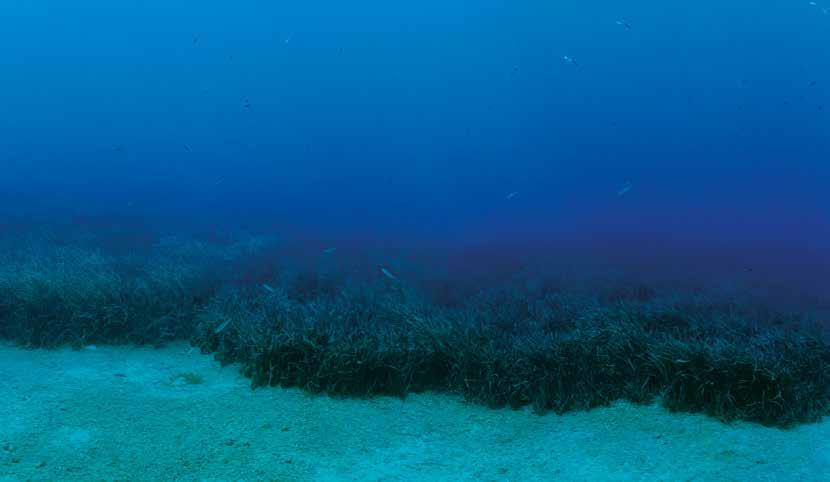
Both fieldwork and laboratory research are essential for the conservation of Posidonia meadows.
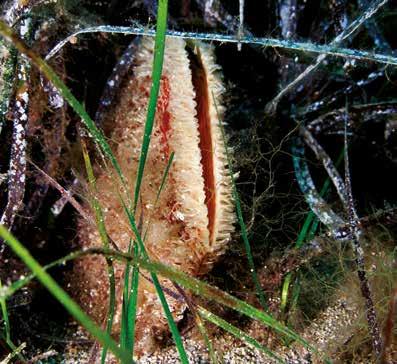
The noble shell (Pinna nobilis),
is under
θρεπτικά
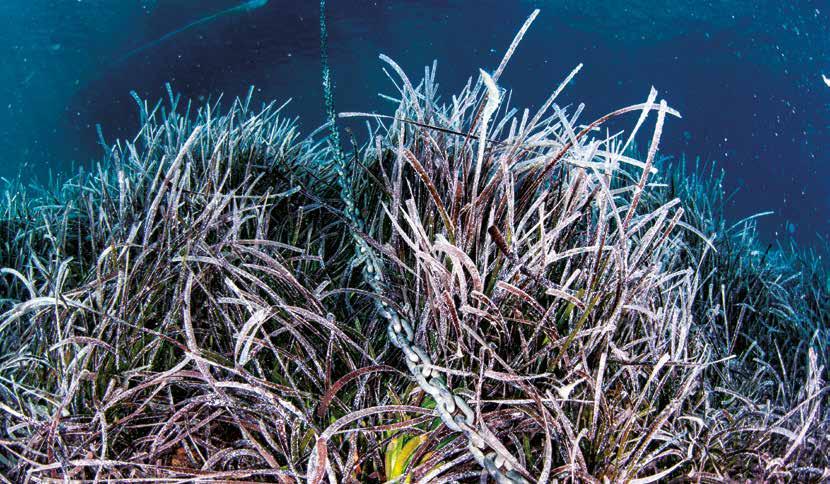
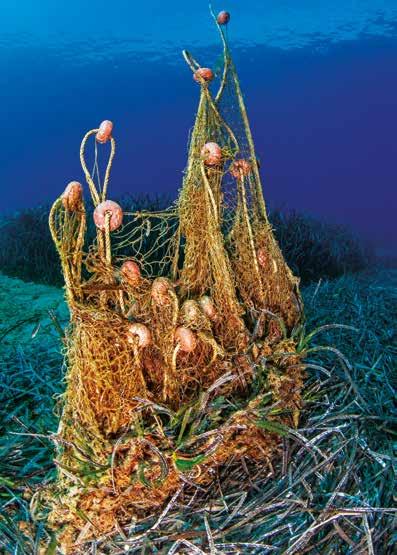
species of commercially important fish and crustaceans, such as crabs and shrimp. They are one of the largest stores of carbon dioxide on the planet because plants photosynthesise and accumulate organic matter that is buried in the sand as rhizomes, which can extend for many metres and take years to form. Moreover, it is a highly diverse ecosystem: 25% of the marine species found in the Mediterranean live in its meadows at some stage of their development. Unfortunately, however, these meadows are highly susceptible to human interference: “As a result, their decline has been observed in several areas of the Mediterranean since 1960, and in many cases they have become extinct. Posidonia is under threat from uncontrolled coastal development, such as port construction and land reclamation projects, the creation of sandy beaches in areas where they would normally not exist, marine pollution related to organic residues, such as the disposal of untreated urban wastewater, and the uncontrolled installation of fish farms, as leftover food increases organic loads when it escapes into the sea. Reasons related to fishing are also important, such as the illegal use of towed dredges, fishing with explosives and uncontrolled anchoring of recreational boats in meadow areas. The anchors and their chains slowly “shear” the meadow, resulting in erosion and extinction”.
In order to compensate for this burden on marine ecosystems, scientists start from the basics -collecting information. To properly manage the meadows, it is necessary to identify and map the area they occupy. “Only a few meadows have been mapped in Greece, mainly in Natura 2000 areas. However, these data are now outdated and must be updated. Although there are some technical limitations, the use of satellite remote sensing allows for frequent mapping of grassland distribution at a lower cost than classical methods. We use the data we gather to create a network of stations for monitoring grasslands over time. Therefore, any changes will be noticed promptly and appropriate action can be taken”.
Therefore, recording the Posidonia meadows is the first step towards protecting them. According to Dr Poursanidis, this has been carried out to a satisfactory extent in the European part of the Mediterranean: “As part of the C-BLUES research project, of which I am a scientific coordinator, we gathered all available data on marine meadows in the Mediterranean and the Baltic, North Sea and Atlantic regions of Europe. Our aim is to understand the extent of grasslands and to identify research gaps, so that we can propose strategies for their protection, conservation and restoration”.
As for Crete, its meadows are peculiar in that they are not located near the coast due to intense winter waves. They grow at depths of over 38-40 metres. “Degraded areas are mainly related to construction and roads in the coastal zone, i.e. human encroachment on the sea. People complain about coastal erosion because of the sea, when in fact it is human actions that cause it. The Posidonia meadows in Crete are generally in good condition, although they have not yet been fully mapped. The only area for which we have high-quality data is the Municipality of Malevizi. It was the first in Greece to map the meadows across its coastline using its own funding”.
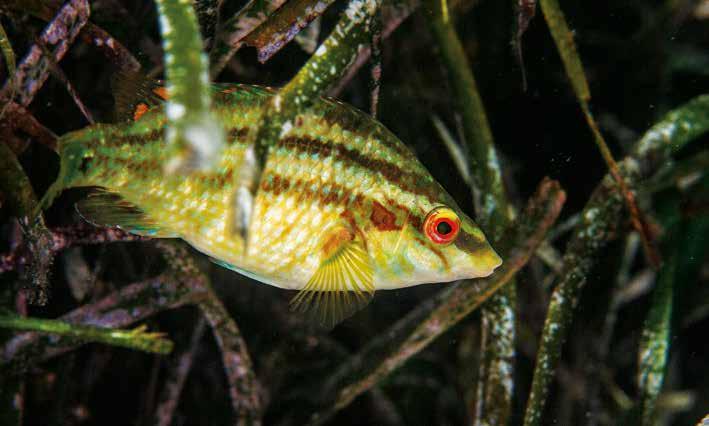
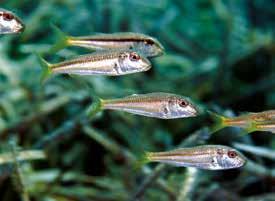
An East Atlantic peacock wrasse (Symphodus tinca), a common resident of the meadows.
Bellow: A school of damselfish (Chromis chromis).
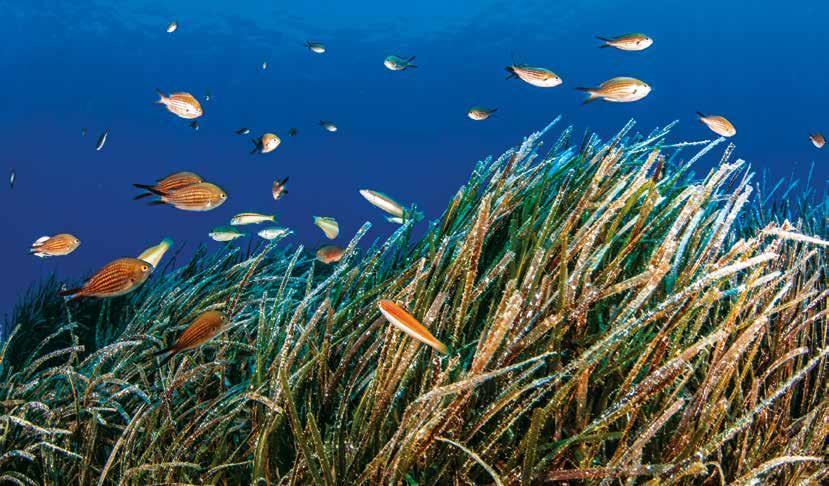
How feasible is it for scientists to contribute to the State’s development of effective protection programmes? “Unfortunately, we are often confined to academic bubbles and reluctant to engage with politicians and decision-makers, discuss our work with them and explain our research in a way that is easy for them to understand. I believe that if we communicate our research properly, we can achieve effective cooperation. I think we need to set aside our egos and recognise the importance of making research findings accessible to local communities and responsible stakeholders. We need to work together to design the next steps in delivering healthier ecosystems to future generations”.
Due to its important ecological role and tendency to decline, Posidonia is protected by all European countries. “So, the next time you find seaweed on the beach, don’t be upset, because it’s proof that the sea is clean. Grab a mask to snorkel and look out for the meadows. A new world is waiting for you to discover it!”.
Abandoned fishing gear causes nothing but problems for marine ecosystems.
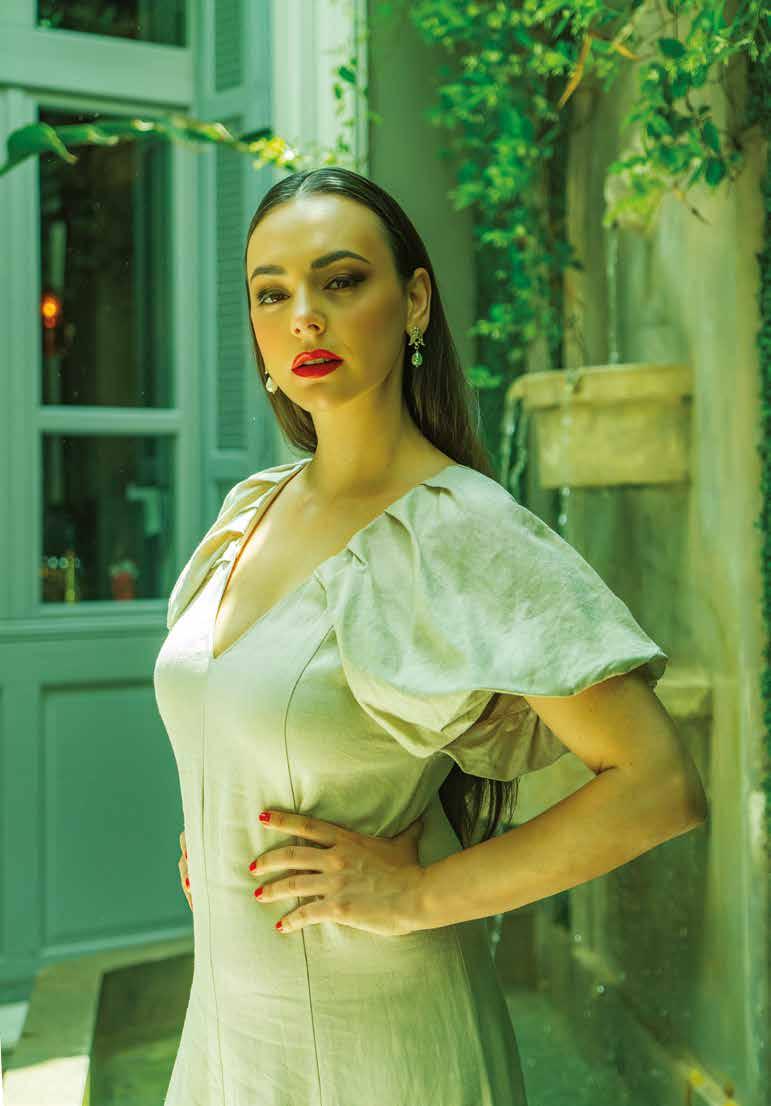
HAILING FROM CRETE, THE INTERNATIONALLY ACCLAIMED SINGER INTRODUCES AUDIENCES AROUND THE WORLD TO HER UNIQUE INTERPRETATION OF TRADITIONAL GREEK MUSIC, CAPTIVATING THEM WITH HER SILKY VOICE.
MIA KOLLIA
PHOTOS: ANDREAS SIMOPOULOS
STYLING: SOPHIA TSAKIRI
MAKIΓΙΑΖ / ΧΤΕΝΙΣΜΑ: MORPHE MAKEUP / HAIR: MORPHE
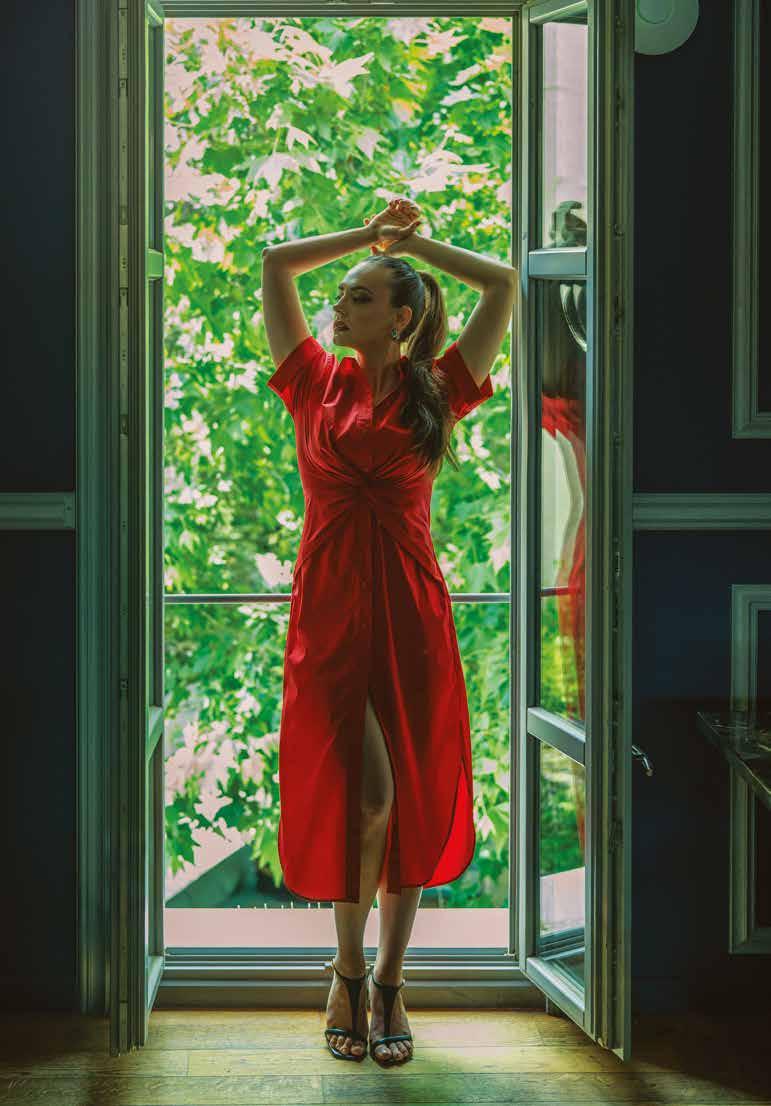
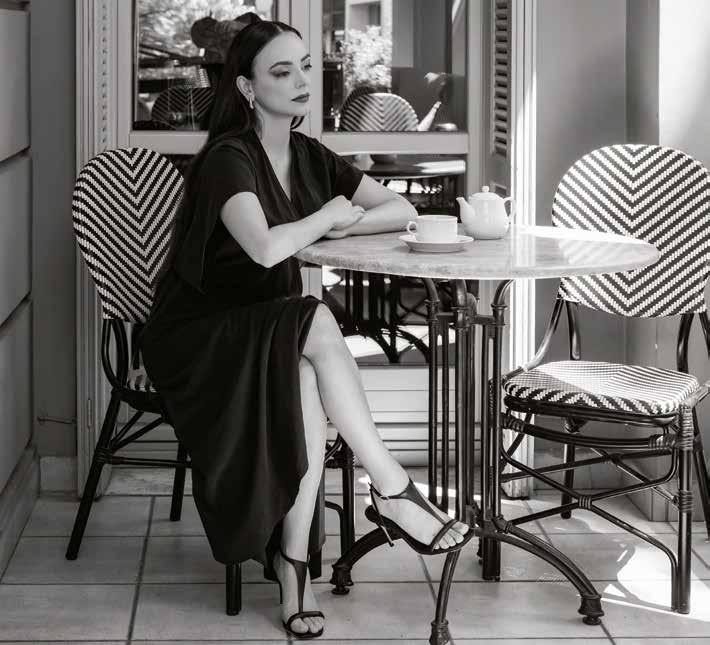
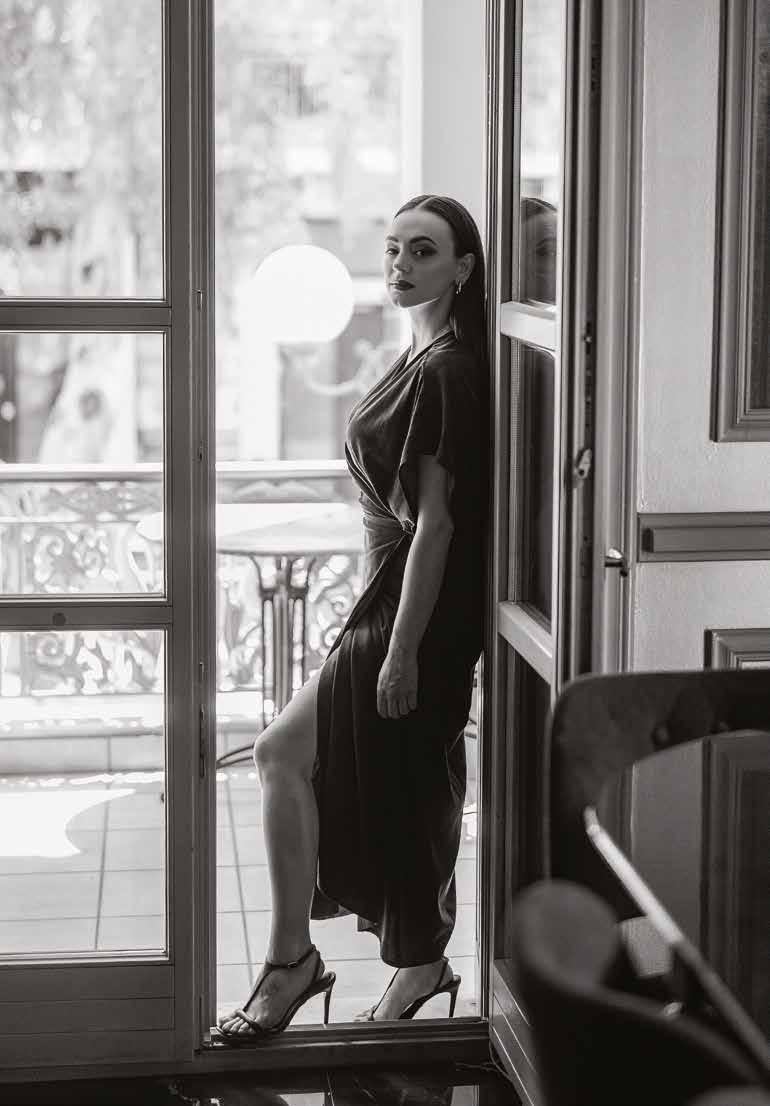
From Heraklion, Crete, to Cirque du Soleil, and from the stage of Carnegie Hall in New York to a professorship at the renowned Berklee College of Music in Boston. Erini successfully blends Cretan and Asia Minor musical traditions with contemporary music, earning international recognition and a steadily growing audience. While in Greece to perform in various festivals including the Near & Far Kastellorizo International Festival (June 25-28), she shares the story of her journey with us.
Where were you born and how did you get into music?
I was born and raised in Heraklion, Crete, until I left for studies at the age of 18. My childhood was full of music, because my mother was a secondary school music teacher -now retired- and our house was full of instruments. We lived and breathed music. It was a real feast. My two sisters and I played music all the time on the accordion and piano. My father, also, has a very nice voice. He owned a tourist tavern and sang duets with my mother for many years, accompanied by bouzouki and guitar, performing artistic and light folk music. However, I received a classical music education and attended a conservatoire. I started learning the piano and the cello, and I also studied music from Asia Minor because we have origins in that region. My mother took us to the Association of Alatsatians, which is one of the largest associations of refugee communities from Asia Minor. Both my grandmother and my father were members of the choir.
So, after finishing school, you left Heraklion...
When I was 18, I went to study in England. I studied vocal techniques and contemporary vocal performance in Brighton as part of a course entitled “Professional Musicianship ”. I learnt about both the music industry and professional development. At one point, I auditioned for Cirque du Soleil and they hired me as a singer for their new show, “Kurios”, which was touring North America at the time. At 22 years old, I toured all the major cities in America for three years. Every two months, we would go somewhere else. I was the only singer, performing a total of 1,074 times!
What was it like for a 22-year-old young woman?
I was at a point in my life where I had the courage to seize opportunities. It came very naturally to me; it was the next step. It has made me grow a lot as a singer and a professional.
What was it like with the people you met there? Was the group made up of French people only, or were there people of other nationalities too?
The company is Canadian, and its “hot spots” are in Montreal. I lived there for six months while rehearsing for the show’s production. The music was composed there and right after, we started the tour. The acrobats were also there, mainly from Russia and Ukraine, but the rest were from all over the world. The most difficult thing was that I only came to Greece for a few days each year for three years and I was always worn out. It was either bronchitis and being stuck inside or my wisdom teeth would come out. That was the one difficulty, that I was isolated from Greece and felt far away.
Did you miss your parents and friends?
Yes, I missed my friends, as well as my family, of course. Another difficulty was the workload.
Was the schedule intense?
It was very intense, with nine to ten performances per week, and double performances on Fridays, Saturdays and Sundays. As I was the only singer, I had to take care of myself and make sure I didn’t get sick. For this reason, the programme was quite military. At that time, I had the discipline of an acrobat or athlete.
Devotion, discipline, concentration. Were you prepared for this?
This is normally achieved through the preparation period. Obviously, I wasn’t ready, but I was very hard-working. There, I gained a better understanding of how your everyday life -your habits, exercise and diet- contributes to your performance. I also had a coach -a phonics teacher- who guided me every day.
All of the things you have experienced are skills that can be acquired over 15 years. However, you experienced them at an early age and over a short period of time. So, obviously, the next steps came quickly because you were ready, is that right? Yeah, maybe. For example, I became a professor at Berklee at the relatively young age of 28.
How did this happen?
At some point, I decided that I didn’t want to continue working for Cirque du Soleil -three years was long enough. Just think: this show is still going on! I also dreamt of going to Berklee. When I was 17, I received a scholarship to study there, but it was not full-tuition and the course is very expensive. In my final year at Cirque du Soleil, I auditioned for Berklee’s “Global Jazz” graduate programme, and was accepted on a full scholarship. So, that was the next step.
Do you remember what that audition was like?
Yes, it was very, very difficult. I had to do some writing, but I also had to record three songs and improvise, which took months of study and preparation to figure out how to interpret. Then there was a Cloudbased interview-audition.
So, you completed your Master’s degree when you were about 25?
Somewhere between 26 and 27. Then I stayed in Boston for a year. I had started holding my own concerts when Berklee asked me to design a postgraduate course called “Music Business”. Essentially, it’s about how an artist develops their career and earns a living from it.
You are an artist. It’s best to forge your own path and not worry about the competition. In other words, don’t compare yourself to others
What is this experience like? Do you like it?
I have been teaching this course for seven years now and I really enjoy it. I find it very fulfilling because I work with some very brilliant minds. The students are talented children with new ideas who are studying on a full scholarship. They are all jazz artists, and I feel useful because I can help them. I bring more material and real-life examples from the industry every year. That is to say, I may have been on a tour, and through it, I learned a lot about how to organise a tour. So, I show them real contracts and plans, which helps them a lot.
What else do you do apart from teaching?
Apart from teaching, I am involved in musical creation. I record my own work, as well as collaborating with people from the classical and jazz scenes, and from other cultural backgrounds. I also perform in concerts all over the world. I went to China four times last year. In general, I work with various artists in both television and academic contexts, such as conferences and seminars on Greek singing in America. I now live in New York and teach online.
Is the ability to sing a gift?
However, musical talent is a gift that depends on whether you cultivate it. You also have to be prepared for the circumstances. In other words, we need good timing and what we call luck or coincidence. However, if you are not prepared for this coincidence, you will not grasp its significance and nothing will come of it. So, that’s how I feel now. Because I often see coincidences and
Dalliance House» (thedalliancehouse.com),
circumstances, but I eventually realised that all the energy you put into something will eventually bring you to the places you want to be. It’s what we call being in the right place at the right time.
Is the competition tough?
This is a matter of perspective. You are an artist. It’s best to forge your own path and not worry about the competition. In other words, don’t compare yourself to others. Do it with the mindset of either “I’m better this year” or “I see something I admire. I can also do it that way”. But now, the competition feels less important in my life. I believe that I am simply forging my own path. I’ll create my music, and people will either like it or they won’t. I’m doing something different. Instead of trying to compete with others and become like them, we must embrace our individuality.
Did you have any reservations about combining traditional music with the modern world?
I was in a state of anxiety because, as an artist, I really needed to do this. As I’m not a traditional singer, I couldn’t follow the same path as them. So, it took me somewhere on its own, as if I had to do it from deep inside.
What more would you want? What about a bigger audience? Is there anything you want from your evolution?
I think the most important is that you should feel good about how you are developing as an artist. Ultimately, that’s what fills you up, and everything else follows. In other words, if I feel that I am presenting work that I am proud of, which I have poured all my passion into, I believe that professional development will follow, if you take the right steps.
How do you feel about fame?
The field I work in is quite niche. I mean, I’m not a mainstream artist, so not everyone will know me or have heard my name. Perhaps those who are involved in the art world and are looking for something a little different in terms of music. This is the kind of recognition I like. I mean, especially in Heraklion, I’m very happy when people talk to me.
Tell us about your performance at the Near & Far Kastellorizo International Festival.
I will be presenting the songs that I wrote for my debut album, “Fos”, which features orchestrated versions of traditional songs from Asia Minor with my own personal touch. I collaborated on this project with Gonzalo Grau, a leading arranger and composer from Venezuela. He helped me produce my album, and at the concert in Kastellorizo I will be performing alongside Sofia Efkleidou on the cello and Giorgos Kontogiannis on the lyra. So, two strings and one voice.
ThephotoshoottookplaceattheAllDayBarRestaurant“TheDallianceHouse”(thedalliancehouse.com),whichwewouldliketothank warmly for the hospitality.
Ή ΕΝΕΤΙΚΗ
ΚΛΗΡΟΝΟΜΙΑ ΤΟΥ ΉΡΆΚΛΕΙΟΥ
FROM THE LOGGIA AND THE MOROSINI FOUNTAIN TO THE VENETIAN WALLS AND SHIPYARDS, THE VENETIANS’ LEGACY IS STILL VERY MUCH ALIVE -NOT AS A REMNANT OF THE PAST, BUT AS AN INTEGRAL PART OF MODERN LIFE.
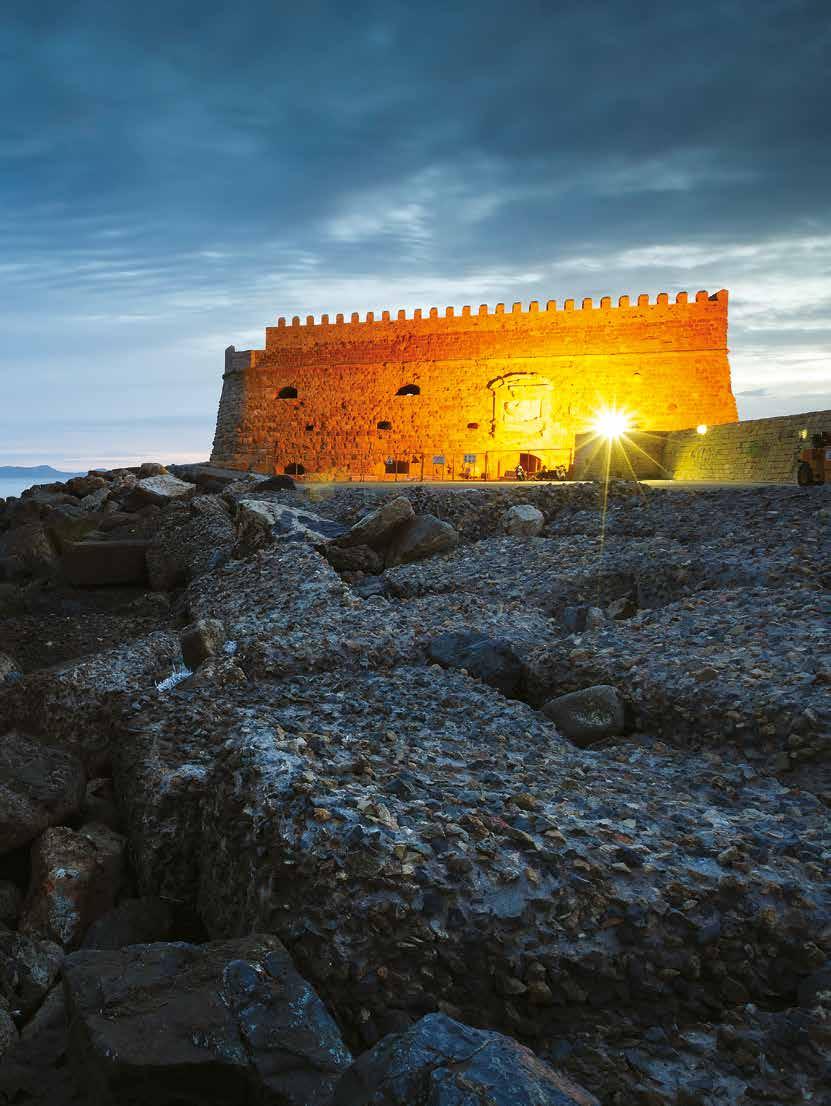
For more than four and a half centuries, the Venetians dominated Crete, turning Chandax -as Heraklion was knowninto one of the most important ports in the Eastern Mediterranean: a city of merchants, sailors, officials, and scholars, full of impressive public buildings, churches and fortifications.
Although there is no architectural homogeneity in Heraklion today, similar to that found in other historical European cities with a strong Venetian influence, the presence of La Serenissima remains prevalent in the urban fabric. The modern city is still adorned with walls and bastions, harbours and shipyards, Venetian churches and fountains, and narrow passages that look like something from a medieval legend. Visitors don’t just “see” history; they experience it at every turn. The Venetian Chandax continues to tell the stories of a time when Crete was not just an island, but a strategic crossroads for civilisations from the East and the West.
The history of Venetian Crete starts with the fall of Constantinople to the Franks in 1204 during the Fourth Crusade. Initially, the island was ceded to Boniface of Montferrat, a Latin, who later sold it to Venice. The Genoese had already settled in Crete, but Venice was unwilling to lose the island, which was strategically located and had great commercial potential.
Thus, the “Kingdom of Candia” is organised, with Chandax becoming an administrative and commercial centre of the Eastern Mediterranean. Venetian nobles and soldiers were given land on the island, which led to the establishment of the Latin aristocracy of Crete. At the same time, the Cretans repeatedly rebelled against the strict feudal system, heavy taxation, and the pressure exerted on the Orthodox Church.
In the 15th century, as the threat from the Ottomans became apparent, Venice invested huge sums in defending Crete. From 1462 onwards, Chandax was fortified with huge walls built according to the latest Italian fortification architectural principles. At the same time, the city is flourishing. Streets, squares, fountains and public buildings are constructed, and spiritual life flourishes.
This is the era of the Cretan Renaissance. Vitsentzos Kornaros wrote “Erotokritos”, Georgios Chortatsis wrote “Erofili” and Domenikos Theotokopoulos -later known as El Greco- started his journey as a painter. As Chrysoula Tzompanaki writes in her book “Chandax. The city and the walls” (Society of Cretan Historical Studies 1996, Vikelaia Municipal Library), “during the long Venetian rule, Crete became the cradle of a unique cultural entity characterised by significant intellectual and artistic activity”. And she continues: “The Greek spirit successfully assimilated the diverse elements of two different cultures, forging new paths in the history of literature and art, and creating significant milestones in Europe’s intellectual history”. The beginning of the end came in 1648 with the Great Siege of Chandax, one of the largest in world history -the Ottomans besieged the city for 21 years. Finally, in 1669, the Venetians surrendered Chandax, bringing to an end a period which, despite the initial oppression, had decisively shaped the city’s urban and cultural development.
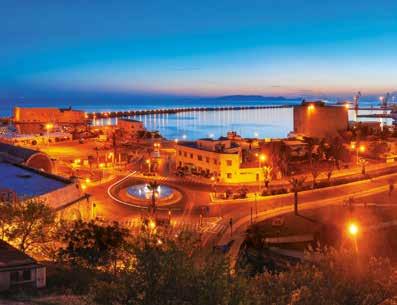
The Venetian Port and Koules from above.
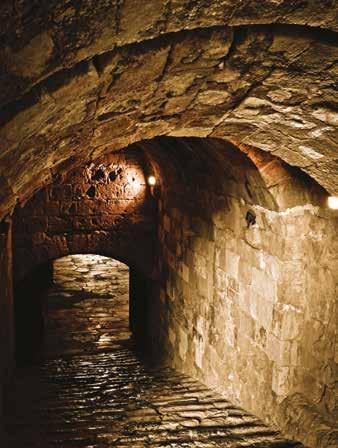
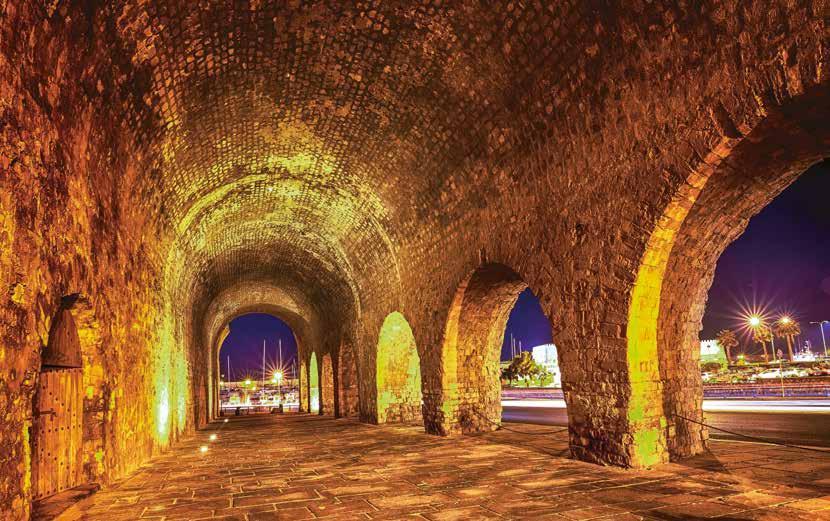
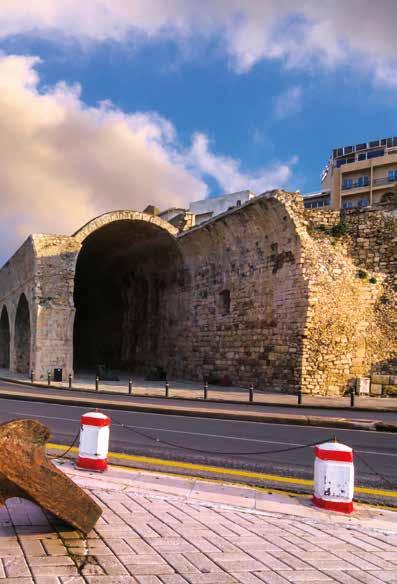
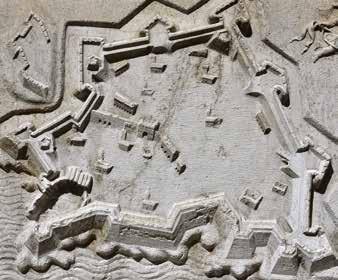
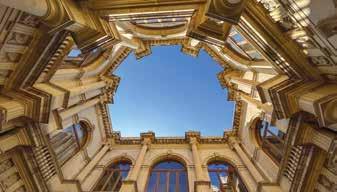
From left to right: Gallery in Koules. Against the backdrop of the Venetian shipyards, the anchor symbolises Heraklion’s maritime tradition. An 18th-century stone relief map of Heraklion from the façade of the Church of Santa Maria del Giglio in Venice.The Venetian Loggia, the Noblemen’s Club of Crete.
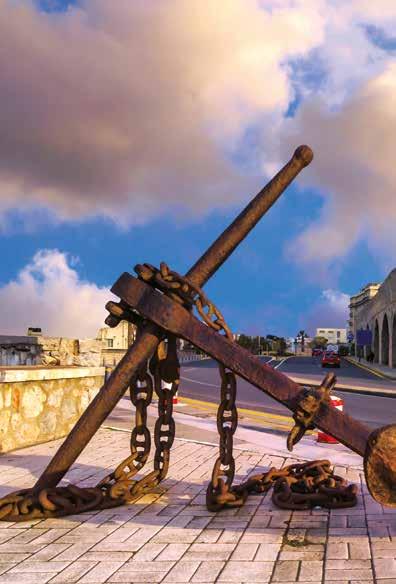
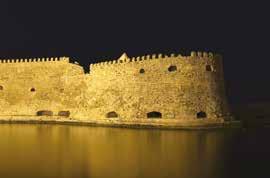
A walk by the sea in the Venetian harbour today, with its calmly swaying fishing boats, offers an effortless glimpse into the past. Back when the galleys of Venice transported wine, oil, grain, textiles and spices throughout the Mediterranean and northern Europe. Candia, the Venetian name for Heraklion, was not just a colony; it was an integral part of La Serenissima’s commercial network. Great emphasis was placed on shipyards, which were the centres of shipbuilding activity. The long, narrow, vaulted spaces were used to store and repair ships -each vault accommodated one galley. Of the 19 shipyards that existed in the past, only parts of four remain today, alongside the ruins of what was then the largest water reservoir and the salt warehouse. There was a time when this place would have been full of life: sailors, merchants, craftsmen and carpenters would have worked amid the incessant noise of hammers and loud voices. Rocca a Mare, also known as the “fortress by the sea” or Koules, stands at the entrance to the port. Built in 1523 on the site of an older tower, it was Chandax’s main marine fortress. The winged lions of Saint Mark, clearly visible on its sides, proclaimed who dominated the Mediterranean. It was later converted into a prison, yet to this day it remains the most recognisable symbol of the Venetian period in Heraklion.
The Venetian walls surrounding Chandax are among the most
significant fortifications in the Mediterranean region. They were designed to withstand the power of the cannons of the time, with seven large bastions and four gates. The fear of Ottoman expansion prompted Venice to recruit its most talented military engineers. The walls of Chandax represented the pinnacle of 16th-century fortification engineering. After all, that’s how they managed to withstand the 21-year Ottoman siege.
They are in excellent condition today and offer a unique walking experience with panoramic views of the city and sea. Notable among the fortifications is the Martinengo Bastion, featuring the tomb of the world-renowned writer Nikos Kazantzakis with the simple inscription: “I hope for nothing. I fear nothing. I am free”.
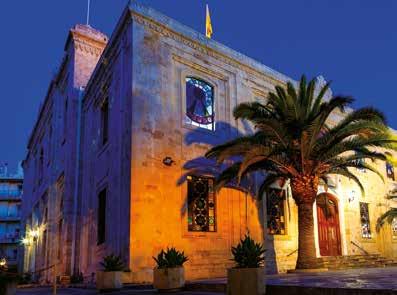
This is perhaps the most characteristic public building in Venetian Chandax, and the one that best reflects the finesse of the “Venice of the East”. Loggia’s receipt of the EUROPA NOSTRA award in 1987 was no coincidence. The Noblemen’s Club, frequented by the Venetian elite and boasting galleries, metopes and embossed coats of arms, was at the heart of political and social life.
Its current structure dates back to 1628 and is associated with Francesco Morosini, since earlier buildings had been destroyed by earthquakes. Here, political and commercial issues were discussed, agreements were reached and important decisions were made regarding
the area. Today, it houses services of the Municipality of Heraklion and it is considered one of the city’s most important monuments.
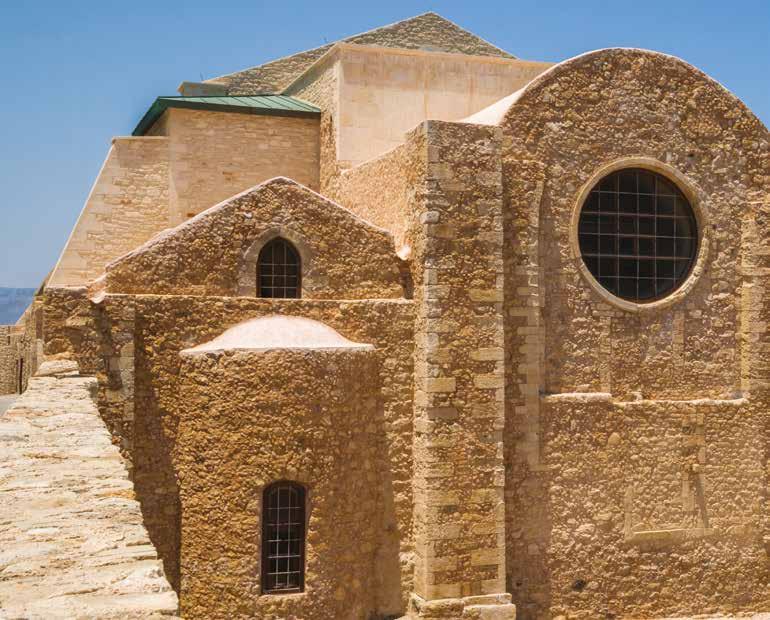
Saint Mark’s Basilica, a symbol of Venetian power, is located in the heart of Heraklion. Built in 1239, it was the official church of the Duke, and directly linked to the political and religious power of Venice which aimed to establish itself as the legitimate heir to Byzantium’s cultural and symbolic heritage.
The commercial heart of Chandax beat in the square in front of the basilica (then known as Grain Square). As Liana Starida writes in her book “There was a city... The Big Castle”, “The first mechanical clock in the Venetian-occupied Greek regions was brought from Venice and installed in the bell tower of Saint Mark’s in 1463”. The famous “berlina” [pillory], where minor offenders were publicly punished, was also in the same square.
Although little of the original ornamentation remains, the Basilica, which now houses the Municipal Art Gallery, still radiates the majesty of a time when Venice used architecture and public image as instruments of power.
The famous fountain, known as the “Lions”, was not only a decorative feature, but also a significant technological achievement. In 1628, Morosini constructed a 15 km-long aqueduct to carry water from the springs of Juktas. The octagonal fountain featuring lions,
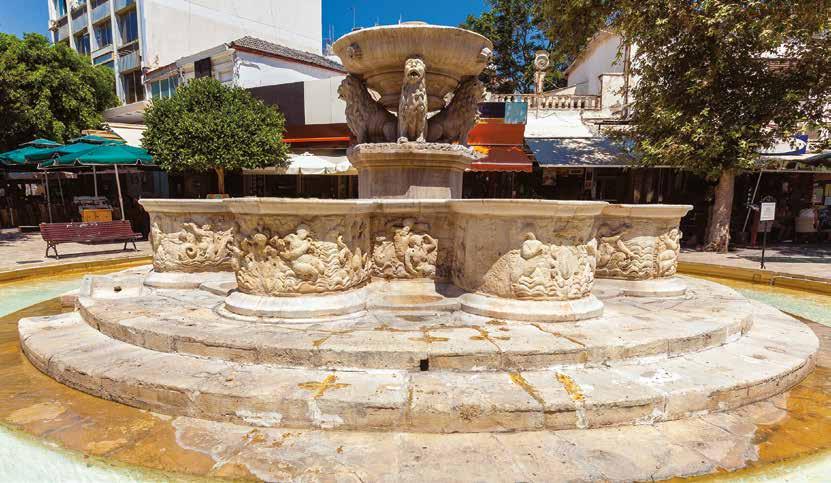
dolphins, nymphs and mythological figures became the most important source of water in Chandax. Up to forty people could fill their jugs simultaneously, and there was enough water for thousands of barrels a day.
Almost four centuries after its inauguration, the fountain remains the most vibrant meeting point in the city centre, impressing residents and visitors alike. Just like other Venetian fountains that once quenched the city’s thirst -such as the Bembo Fountain in Kornarou Square, the Sagredo Fountain on the northwest side of the Loggia and the Priuli Fountain (Fontana Nuova) behind the Bodossakeio Primary School.
MONASTERY
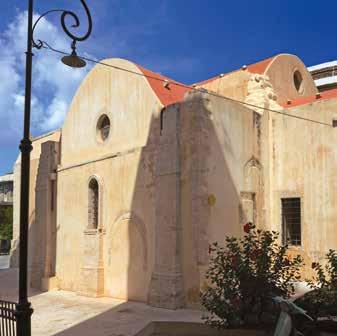
The monastery was a dependency of the Monastery of Sinai as well as an important spiritual and cultural centre in Chandax. The current church was built during the 16th century and combines Byzantine and Venetian architectural elements. It was here that Michael Damaskinos, one of the most important figures of the Cretan School, was taught the art of painting. During the Turkish occupation, it was converted into a mosque. Today, it houses an important collection of Byzantine icons, frescoes and ecclesiastical relics.
Priuli (Fontana Nuova)
Since the Arab period, the current road has been the most important arterial road of Chandax. The Venetian Ruga Maistra connected
Above: The Monastery of Saint Catherine, an important spiritual and cultural centre located in Chandax. Below: The Church of Saint Titus, named after Crete’s first bishop. Opposite page: The iconic Morosini fountain, also known as the “Lions”.
the port to the city’s administrative and commercial centre. According to regulations at the time, the mansions and public buildings that lined it were required to have elaborate facades. Only a few elements of the city’s former architectural wealth survive today. One example is the Palazzo d’Ittar on Epimenidou Street, which now houses a museum. Nevertheless, the street maintains some of its former cosmopolitan character even today.
The Church of Saint Titus, named after the first bishop of Crete, dominates one of Heraklion’s most beautiful squares. His veneration began in Gortys, where a magnificent basilica was built in his honour. After the Byzantines reconquered the island in 961 AD, it was transferred to Chandax. During the Venetian period, the basilica served as the seat of the Latin archbishop and played a key role in the city’s religious and political life. Following the fall of Chandax, many sacred relics were moved to Venice. In 1966, the
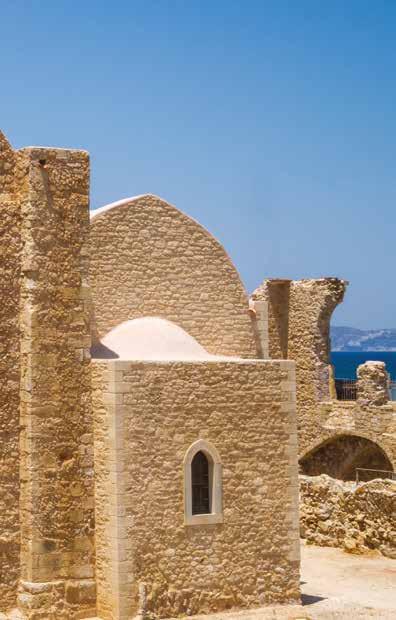
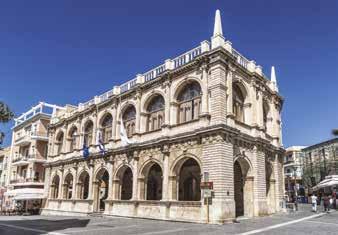
Above: Exterior view of the Loggia, which today houses the City Hall. Left: The Monastery of Saint Peter and Saint Paul stands out next to the sea wall.
skull of Saint Titus was returned to Heraklion with all the honours, while the famous icon of Panagia Mesopantitissa (Madonna della Salute) remains in Santa Maria della Salute in Venice to this day.
The Monastery of Saint Peter and Saint Paul, located next to the sea wall, was one of the most important Latin churches in Chandax. The Dominican Order built it in the early years of the Venetian rule and it was later converted into a mosque. Restoration work is underway on the surviving parts of the church and its walls, while excavations in the area have unearthed significant finds from the Byzantine period.
The Church of the Virgin Mary of the Crusaders (Crosecchieri), located on Markou Mousourou Street, stands out as a small gem of the old town. Built during the 14th century, the Venetian basilica features arches, pilasters and ancient columns. It flourished during the Venetian rule and was later converted into a mosque. Despite the changes that have occurred over time, it still retains its unique charm.
The perfect way to finish a journey through the city’s Venetian history. Scale models, historical documents, Venetian coats of arms, architectural sculptures, reliefs of the Lion of Saint Mark, pieces of majolica pottery and inscriptions from Venetian walls narrate the medieval history of the city. The Cretan School of Painting exhibition vividly illustrates how the creative dialogue between the Byzantine tradition and Western Renaissance influences gave rise to one of the most significant artistic movements of the time.
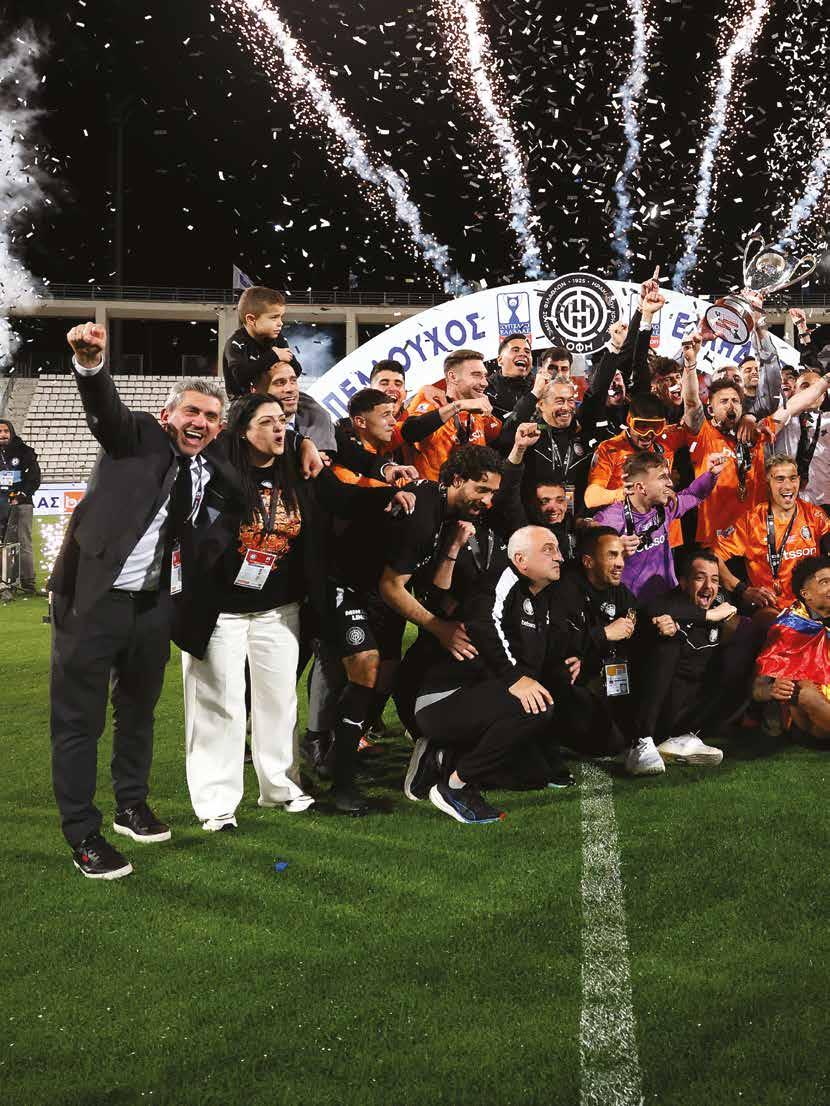

OFI CRETE F.C. IS MORE THAN JUST A REGIONAL FOOTBALL TEAM. IT IS ONE OF THE COUNTRY’S MOST HISTORIC CLUBS, WITH STRONG TIES TO CRETE, AND A LARGE AND LOYAL FAN BASE. IT HAS ALSO MADE ITS MARK ON GREEK FOOTBALL. AND THIS YEAR, IT IS THE GREEK CUP WINNER!
Gerards era
Dutchman Eugène Gerards took charge of OFI in 1985, staying on the club’s bench for 15 years. He is widely regarded as the most important coach in the club’s history and one of the most iconic figures in Greek football. He himself famously said, “OFI was my life”, a phrase which has gone down in history, capturing his bond with Crete and the club. With Gerards on the bench, OFI gained a European identity, a distinct style of play and great potential.
The peak of this period came in 1987. OFI won the first trophy in their history in the Greek Cup final against FC Iraklis, which was held at OAKA stadium. The game ended in a 1-1 draw in regular time. The Cretans, with goalkeeper Myron Sifakis heroically saving two penalties, won the Greek Cup with a 3-1 victory in the penalty shootout. For Crete, Gerards’s image of lifting the trophy became historic.
During Gerards’s time, OFI became a steadfast representative of Greece in Europe. One of the club’s highlights was winning
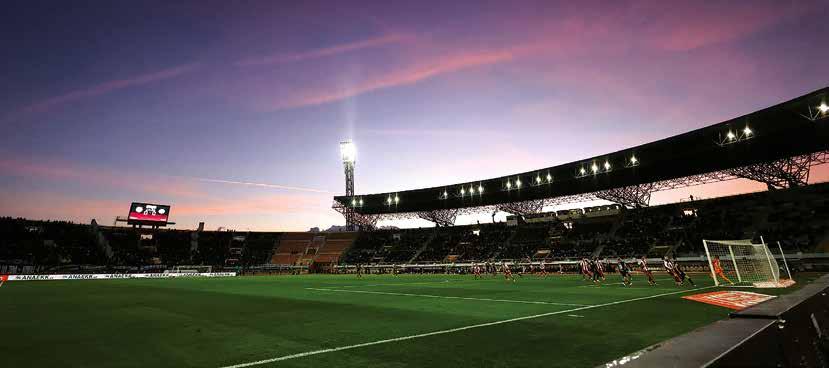
The OFI headquarters, the historic “Theodoros Vardinogiannis Stadium”, also known as “Yedi Koule”. Opposite page: A commemorative photo of the team before the 1987 Cup final.
The heart of Heraklion beats in the OFI stadium. Founded in Heraklion in 1925 as the “Heraklion Fan Club” («Omilos Filathlon Irakliou”), OFI was the biggest athletic representative of Crete for decades. However, it was not until the mid-1980s that it really took off, under the ownership of Theodoros Vardinogiannis and with Eugène Gerards at the helm of the technical leadership.
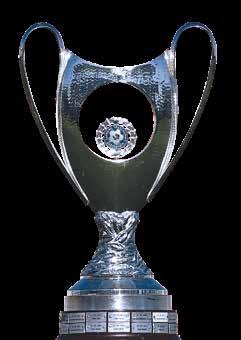
the Balkan Cup in 1989 against FK Radnički Ni from Serbia, with a final score of 3-1. The club’s biggest night came against Atlético Madrid in the 1993 UEFA Cup. In front of a packed Yedi Kule, OFI defeated the Spaniards 1-0, proving that they could hold their own against European giants.
In the 1985-86 season, OFI came second in the Greek championship for the first time in its history -which remains its greatest success to date- finishing behind Panathinaikos. The team included players such as Nikos Nioplias, Georgios Vlastos, Alejandro Hisis, Giannis Samaras as well as many other great footballers of the time. It is still considered one of the most skilled Greek teams to emerge from the Greek province to this day.
The OFI home stadium, the historic “Theodoros Vardinogiannis Stadium”, also known as “Yedi Kule”, took on mythical proportions during those years. With the enthusiastic atmosphere and the team’s supporters turning the stadium into a "furnace", it was one of the toughest venues in Greece. Many big teams “buckled” there.
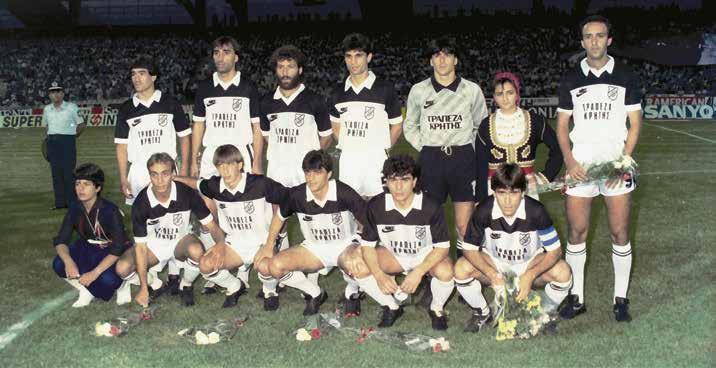
Myron Sifakis, the OFI goalkeeper, proved decisive in the 1987 final penalty shootout by saving two penalties. Opposite page: Team captain Takis Persias lifts the Cup in 1987, bearing obvious signs of facial injury. Right: The General Manager of OFI Crete F.C., Ilias Poursanidis, holds this year’s Cup.
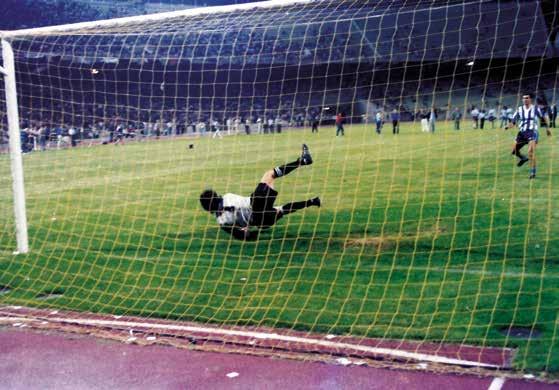
In the late 2000s, OFI began to face financial and administrative problems. This was followed by relegation, debts, administrative crises and even bankruptcy, resulting in a fall from the professional football divisions. Nevertheless, the club never lost the support of its fans.
The Greek-American businessman Michalis Bousis has been the owner and president of the OFI CRETE F.C. since October 2018. His administration brought financial stability and investment in infrastructure, as well as better organisation, leading to OFI’s return to a leading role. Michalis Bousis has stated several times that his goal is “OFI to become a great power in Greek football once again” and for the club to return permanently to European tournaments.
OFI made history again this year by winning the Greek Cup, 39 years after their first one. This achievement comes just one year after they reached the 2025 final, becoming a finalist of the tournament for the second time after 1990.
The final against PAOK took place at Panthessaliko Stadium in Volos. OFI’s supporters travelled from Heraklion to Volos with the support of Minoan Lines, who organised a special route for them. With the support of their fans and under the guidance of coach Christos Kontis, the Cretans emerged victorious with a final score of 3-2, returning as winners to Crete. This success brought OFI back to European tournaments, reviving memories of the Gerards era and creating enormous enthusiasm in Crete. In fact, just a few days after winning the trophy, the club’s management took the trophy to the grave of Eugène Gerards in Elia, Heraklion, in a deeply moving and symbolic gesture to honour the man who changed OFI’s history.
ΟA΄Αντιπρόεδρος&ΓενικόςΔιευθυντήςτηςΠΑΕΟΦΗ1925 ΗλίαςΠουρσανίδης,έναςάνθρωπος-κλειδίγιατηνομάδα-παλαιότεραμέσαστογήπεδο,τώραπιαεκτός-,μαςμιλάγιατο μυστικότηςεπιτυχίαςκαιτηςσυνέχειαςμιαςομάδας.
Ilias Poursanidis, the Vice President & General Manager of OFI Crete F.C. and a key figure for the team -formerly on the field and now off- talks to us about the secrets of a team’s success and longevity.
How can a manager strike the right balance to ensure their team’s success?
This is a complex position that requires difficult decisions. There are people like myself who were footballers and have this experience, as well as younger ones who have studied business administration and are more technocratic. So, a balance is necessary because, yes, a football team is a company, but not only that -it also involves emotion and people. Personally, I have a strong emotional bond with the club -I played for it, I loved it and I started my career there- so I try to operate in moderation. I admit that I don’t always succeed on that, but I know OFI’s DNA inside out.
What do you mean by “OFI’s DNA”?
How would you define it?
OFI’s DNA is the DNA of the Cretan. It is nobility, hospitality, pride. They are people who want their team to embody these values in every stadium around the world. The club must stand up for itself, rely on its own strengths and develop independently. This is the philosophy of both the Cretans and us.
How can this be applied to the day-to-day running of the club?
OFI is the flag of Crete. Great success is not necessarily measured by the number of trophies won, but by the development of facilities, personnel and personalities. The team’s tactics and values do not change depending on the results. This message shows that, even if you need to work harder, you can succeed in the right way.
Right: 1990 Cup Final against Olympiakos -team captains and referees before kick-off.
Below: The President of OFI Crete F.C., Michalis Bousis (right), holds the cup with the coach, Christos Kontis (left).Opposite page, above: Athens Olympic Sports Complex (OAKA) in the colours of OFI in last year’s final. Opposite page, below: Celebrations after this year’s final.
Yes, a priest in Crete congratulated his son on failing the nationwide exams, saying, “I love him for who he is, not for his achievements”. He continued, explaining that in life, we do not do what we know; we do what we can stand. Just as we never changed over the course of eight years, despite the pressures and difficulties we faced. We do what we can. Although we know that we will not reach the European final, we are consistently committed to our own efforts.
This depends on the person’s character. As a player, you can directly contribute to the outcome. Now, we prepare the players and coaches for the game. We work tirelessly towards it, but when the 90 minutes begin, we are paralysed and can no longer do anything. It’s hard when you’ve been a footballer because you know exactly how the players feel on the field, but you can’t manage their feelings. The difference

is that people who have not played football experience pressure and emotions differently.
So, what life lessons have we learned?
That we may feel strong emotions, but it is important not to be overwhelmed by them, to remain true to our values and to support the team properly. My experience as a player helps me understand what the players are going through and remain firm in my decisions. And I think it was this stability and loyalty that led us to this year’s success.
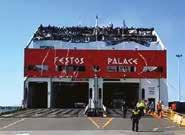
Minoan
THE POPULAR ACTOR AND MUSICIAN TALKS ABOUT HIS ARTISTIC JOURNEY AND HIS DEEP LOVE FOR THE ISLAND THAT SHAPED HIM.
LAZARIDOU
PHOTOS: ANDREAS SIMOPOULOS
STYLING: SOPHIA TSAKIRI
GROOMING: MORPHE
e is a talented actor, musician, singer and a proud native of Heraklion with deep roots in the city and a genuine love for his hometown. Although “Kritikos” [the Cretan] is a stage name, it could not be more fitting for an artist who embodies and showcases his homeland in the most authentic way. From his impressive performance and victory on “Your Face Sounds Familiar” to his much-loved character “Potis” in “The Land of the Olive Tree” and his recent song “Neraida ton Astrakion” [Fairy of Astrakoi] Yannis Kritikos takes us on a journey through everything that defines and inspires him.
This summer, I will definitely take a break, but I will also participate in musical and artistic evenings in Greece and Cyprus. Some of them have already been planned, but, as always, there will be some unplanned events during the summer.
This year, my “dowry” is my new song, “Neraida ton Astrakion”, which was released by Sony Music Entertainment Greece just before Easter. This was a happy coincidence for many reasons. Firstly, because the lyrics and music were written by a musician and composer whom I greatly appreciate and admire: Tassos Skouras. The song refers to
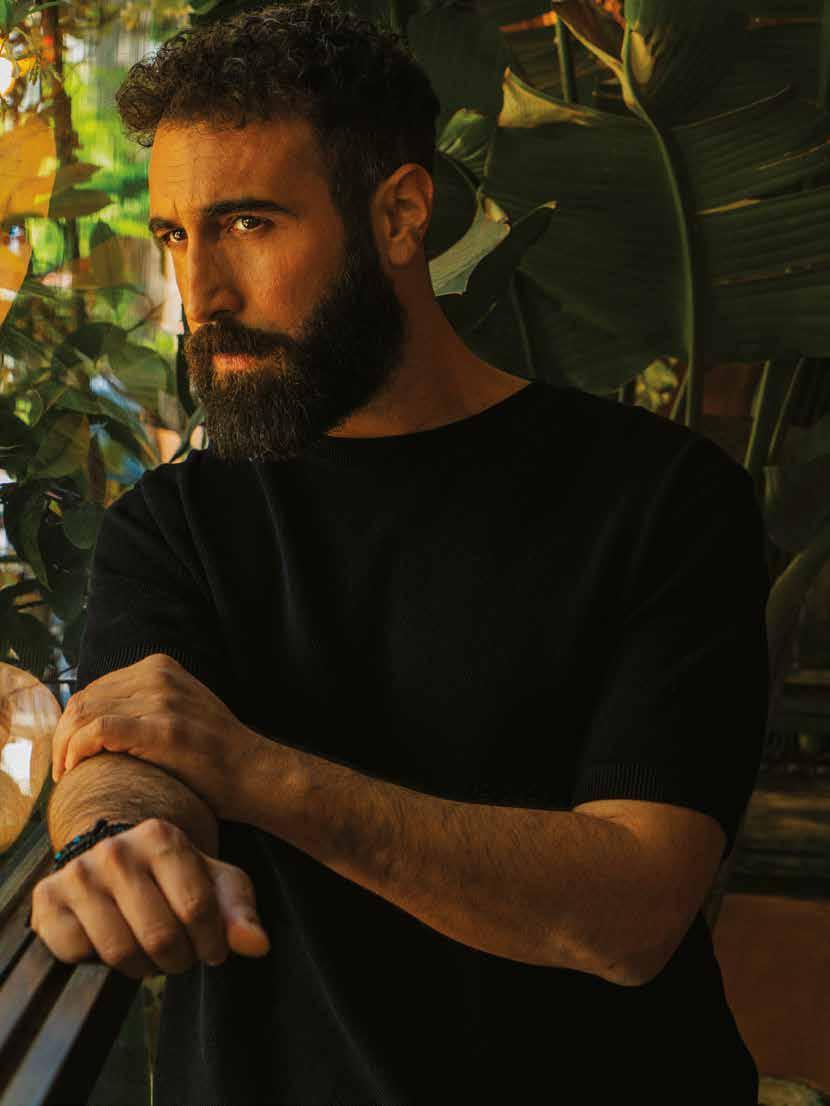
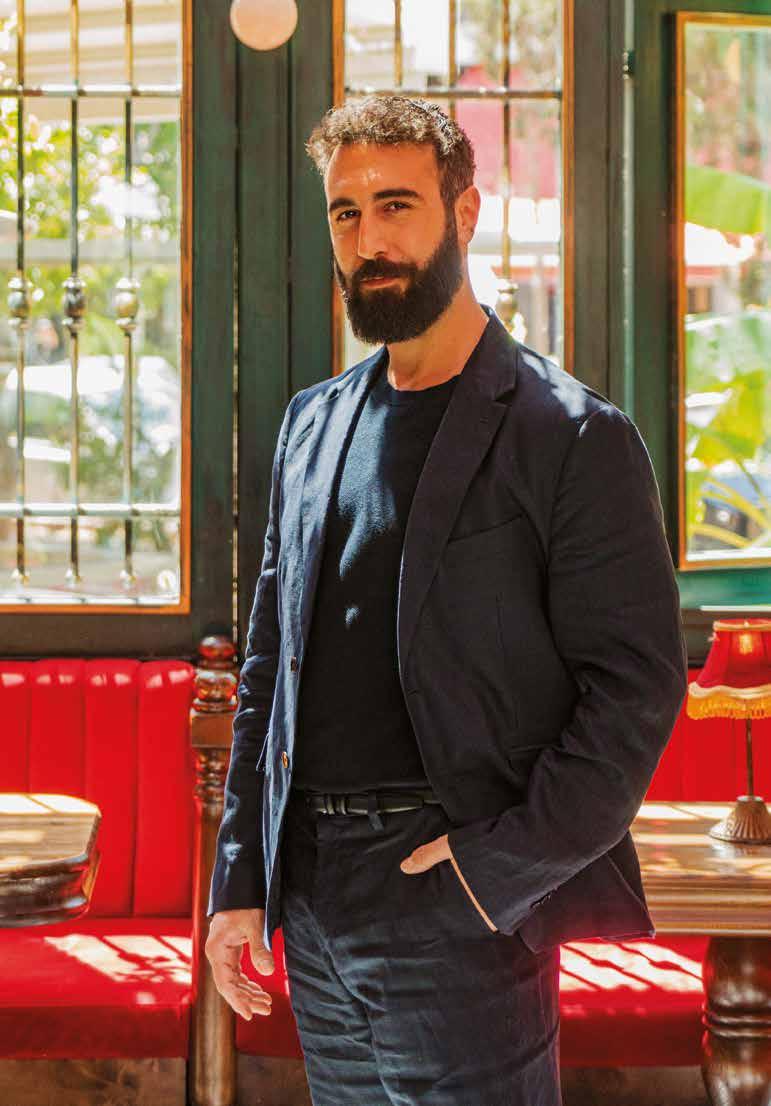
a local legend from the village of Astrakoi in the Heraklion prefecture, and describes the love between a fairy and a player of the lyra. Tassos Skouras, who is from Corinth, wrote this song during his visit to the Fairy Cave. When Andreas Georgiou heard it, he wrote a wonderful script and directed the video clip. This project was completed with great enthusiasm and depicts our local legend wonderfully. I feel very lucky that this piece was created by two brilliant artists, each a master of their own field. I am taking part in it as both a singer and an actor, using my lyra and my voice. I will, therefore, devote a large part of my time to promoting this new piece of work, as I consider it to be one of the most significant projects I have worked on in my career as a musician and actor thus far.
Your career as a musician and singer is just as important as your career as an actor. To what extent did the Cretan musical tradition influence your development?
I wouldn’t say I chose music; it was ingrained in me from an early age. I discovered that I had a natural talent for learning musical instruments when I started learning the Cretan lyra at a conservatoire with my most beloved teacher, Dimitris Pasparakis. This was my inclination. I chose this professional occupation because musical expression is an integral part of my life. I started acting professionally later on, when I took part in the TV game show “Your Face Sounds Familiar” and won first place. That’s when I realised that my childhood habit of successfully imitating artists and politicians was proof that I had a knack for it, too. I was offered the opportunity to participate in several theatrical productions, which I accepted with great pleasure, as well as a sense of responsibility and dedication. I have pursued this alongside my musical career. The Cretan musical tradition has played and continues to play a decisive role in my life. These are the sounds I grew up with, mainly thanks to my late grandfather, who would play his mandolin while resting from his daily work. I still use the same mandolin for several of my performances today, and it’s as if his fingers are guiding mine.
It was your leading role in “The Land of the Olive Tree” that made you popular all over Greece. How much did you enjoy playing the part of “Potis”, and how did you deal with the huge success and recognition that came with it?
For me, playing Potis in the “Land of the Olive Tree” was a joy and a thrill to work with such great actors. However, it was also a great responsibility to meet the expectations of Andreas Georgiou, Koullis Nikolaou, Panitsa Chatziarapi and Ms Vana Dimitriou, who entrusted me with the role. I tried very hard to portray him accurately, and found it more difficult to play the gossip because, in fact, as Yannis, I am on the other end of the spectrum. But, as it turns out, I did it. Several times when I’m out and about, people recognise me and give me advice not to be such a… gossip! Beyond that, though, I have loved the part very much, and I always derive great pleasure from my contact with the public! As is only natural, my appearance in a daily series has certainly increased my recognisability.
The Cretan musical tradition has played and continues to play a decisive role in my life
Zara./ Suit, T-shirt, belt and shoes, all from Zara.
Whenever we hear your name, we automatically think of Crete. What does this place mean to you?
My real surname is Tzagarakis. Kritikos is a stage name that came about when Mr Nikos Nomikos, with whom I first collaborated in Athens, couldn’t remember my surname. When asked who was in the band, he said, “Yannis Kritikos” [Yannis from Crete]! He gave me that nickname without meaning to, and it’s stuck ever since because Crete really is everything to me. I carry it with me wherever I go and I adore it. I sing it on all my tours, especially those in the United States, Canada and Australia. I am deeply moved every time I see tearful Cretans from the diaspora welcoming this “eucharist” of the lyra and our local dialect.
You have described Heraklion as a city that never sleeps. What makes this city so special?
How can I describe what makes Heraklion so special? Why does a child love their mother? I loved Heraklion even before I learned about its
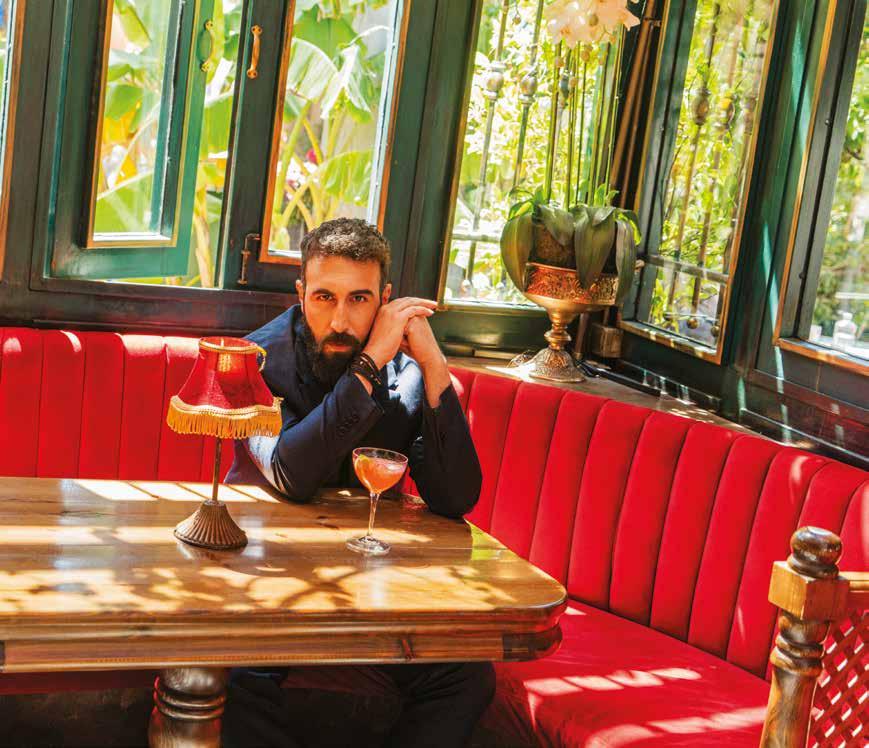
great history. Growing up in my family home, I faced the Cretan Sea every day, sometimes calm and sometimes stormy. And, in the background of every image I saw from my balcony, stood the ageless Koules Fortress [Rocca a Mare], which has remained unchanged for centuries. I would start the tour for a loved one who wanted to visit my city from the Venetian harbour. We would take a walk along the breakwater to the lighthouse. I have taken this route countless times over the years, and it really nourishes my soul to have such direct contact with the sea and the ships that come and go from the port. I would take them to the Lions for bougatsa and souvlaki. Then I would show them the many fountains and churches in our city. Some of these are hidden behind modern buildings. We did a project on these as elementary school students with a group of my classmates. I wouldn’t omit the tour to the Archaeological Museum. Every time I visit it, I admire the beauty and artistry of the exhibits. The level of detail and passion of the craftsmen involved is inconceivable. I would then naturally take them to the Palace of Knossos.
This place always fills me with positive energy and is a testament to the greatness of the Minoan Civilisation. It boasts the oldest theatre in Europe, as well as baths and an underfloor heating system! The Minoans were not only sea-emperors, but they also lived at a level of civilisation that other major European states failed to reach for many centuries.
I would take them for a swim in Paliokastro or Amnissos and then for an evening stroll around the city. We would visit the ouzo taverns on Kagiampi Street and then one of the many bars that play beautiful Greek and international music.
What is the first memory, taste or smell of a summer in Heraklion from your childhood that comes to you when you close your eyes?
I remember the smell of jasmine and evening primrose at my grandfather’s cottage, and the stuffed vegetables and pastitsio made by my two grandmothers.
Do you have a favourite mantinada or lyric from your own songs that speaks to your soul and expresses who you are?
There’s a short piece by my beloved Vasilis Skoulas that goes, “If Crete has two souls, / one soul is the lyra, / which is full of love, / sun, fire, and salt,” and that was my favourite song for many years.
My favourite mantinada, goes like this:
“God, if I am reborn / I want you to find a way / to make me Cretan again/ and from the same place”.
We live in an era flooded with social media, artificial intelligence and an overwhelming amount of information. What is your attitude and stance on all this?
My use of social media is limited to professional promotion. I am certainly not someone who holds their mobile phone all day communicating in this way. I prefer live contact, but if this is not possible, then telephone communication is fine. Clearly, looking someone in the eye and shaking their hand is preferable to ‘likes’ and emoticons. As for artificial intelligence, I find it useful in some cases, but it could have a devastating impact on education and vocational training if it replaces research and critical thinking with ready-made “packages”. It’s like a knife -you can cut a slice of bread to eat or you can cut yourself really badly, depending on how you use it.
What are your plans for the future in terms of your artistic work in television, theatre and music?
I am pleased with the progress of my new song, “Neraida ton Astrakion”, which is available to watch as a video clip from Sony Music on YouTube, as well as to listen to on Spotify. From mid-November, I will be playing with Chrysa Ropa at the Gloria Theater, in the play “The Binding” by Alexandros Rigas.
ThephotoshoottookplaceattheAllDayCafeBar“LibertineDrinkery” (Instagram @libertine_drinkery), which we would like to thank warmly for the hospitality.
WE’LL TAKE YOU ON A
Υou come to Milos to fall in love”. That’s what they told me the first time I visited the island, years ago. At first, I didn’t believe them. However, along the way, I experienced my own three-day weekend. And I found that Milos has its own way of stealing your heart. Boldly coloured volcanic rocks, eerie caves hiding unique surprises, crystal-clear waters changing from blue to turquoise to emerald, the lairs of legendary pirates who once shone in the Aegean and a turbulent history unfolding uniquely from the Neolithic era to the present day. Milos is not just another island; it is a revelation. If you (only) have three days to spare, follow this itinerary to soak up some of the city’s magic like a modern-day pirate.
FROM THE PORT TO THE DEPTHS OF THE EARTH -AND BEYOND!
As soon as the ship reaches Adamas, the vibrancy of the place becomes apparent. We start with a refreshing cup of coffee at the port, which still carries memories of the refugees from Sfakia who founded it, before setting off to enjoy our first taste of summer -and the sea. We make a stop at the well-organised and welcoming Papikinou Beach for a quick swim and later on at the Thermal Springs of Alykes, where we observe hot fumaroles emerging from the sand and bubbles rising to the surface of the water from deep within the earth. It’s as if the volcano that once created everything here is taking small breaths.
Then we take a break at the narrowest point where the west and
east sides meet. Here is the protected wetland of Achivadolimni, of rare beauty and environmental value -with its entire western side protected by the Natura 2000 Network. Migratory birds find refuge here, as do the red Milos viper, the Milos wall lizard (Podarcis milensis), the Mediterranean monk seal, and the rare Eleonora’s falcon, which we will often see flying proudly above us.
As we reach the intersection between Firiplaka and Tsigrado, the sun starts to warm us up. Where should we dive first? We choose Firiplaka, a small paradise consisting of three consecutive beaches with beautiful waters. The more adventurous among us can descend the rope ladder between the narrow rocks onto the tiny beach of Tsigrado. As we read on the sign, this is at our own risk, as pieces of rock sometimes break off.
Now it’s time to embark on a journey to the centre of the Earth! Or, more accurately, right in the heart of Milos. The now-inactive Firiplaka volcano, which erupted millions of years ago, created a landscape that stands quietly eerie and almost mystical today. Although half of the route to Greece’s largest crater is a dirt road, it’s well worth the effort. Especially when you stand in the middle of this geological monument, which is now covered in lush vegetation. Further on, in Kalamos, fumaroles emerge from the depths of the earth, reaching temperatures of 100° C, and the air is filled with the strong smell of sulphur.
For a “tasty” experience of the volcano, however, we head to Paliochori. Here, we sample the so-called “volcanic cuisine”. I first tried meat with quince potatoes here. It is slowly cooked for ten hours
sun sets over the enchanting beach of Fyriplaka.
The much-photographed Klima with its 70 colorful “wires”. Opposite page, below: The iconic Sarakiniko.
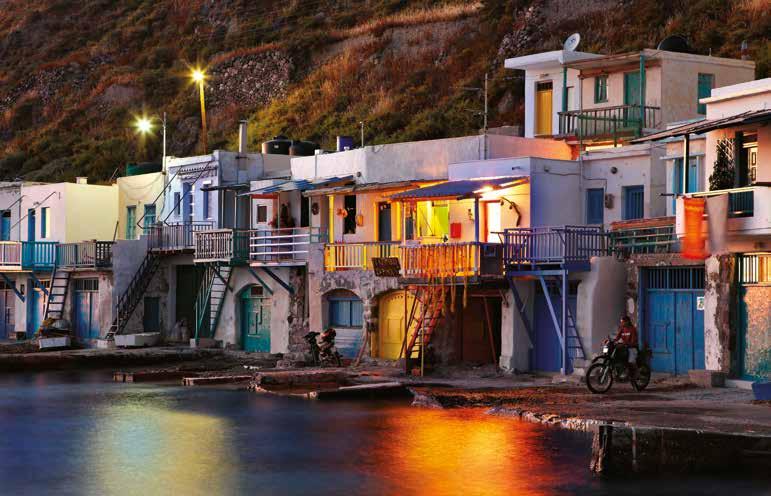
που
in pots buried in hot sand in a specially adapted construction. The flavour is unique and difficult to describe.
Thanks to its volcanic activity, the island is renowned for its mineral wealth, including bentonite, perlite, pozzolan and kaolin. As we travel, we observe the natural landscape that has been carved by mining. After all, it has been the island of obsidian -the glassy volcanic rock that was the basic raw material for the tools and weapons of Neolithic peoples in the Aegean and Mediterranean regions for thousands of years. A visit to the Mining Museum in Adamas (open until late at night during the summer months) is enough to immerse yourself in Milos’s rich geological and mining history.
On the afternoon of the first day, we find ourselves in the picturesque settlement of Pollonia. After a relaxing break in the peaceful chapel of Agios Nikolaos and the Pharos of Pelekoudas lighthouse, which marks the southernmost tip of Milos, we enjoy a meal of fresh fish in one of the seaside tavernas. Opposite us are the volcanic islands of Kimolos and Polyaigos, the latter of which is uninhabited and named after the goats that still live there.
Today, the day is entirely dedicated to the sea -after all, it is the great protagonist. We board a traditional boat in Adamas, ready for the ultimate summer adventure! The first “wow” is spontaneously uttered by all of us the moment we see the array of colours floating above the turquoise waters. In front of us is the much-photographed seaside settlement of Klima with its 70 colourful “wires” -traditional buildings where fishing boats were stored in winter, which have now been converted into seaside residences and tourist accommodation.
Next comes Sarakiniko. An emblematic natural monument, with an almost lunar landscape. White volcanic tuffs, caves half-hidden in the rocks, a deep-blue natural lake and a mysterious shipwreck slowly sinking to the bottom. Could a former lair of the legendary Saracen pirates be any more magical?
Our first dip is from the boat at the majestic Glaronisia, where striking andesite lava columns plunge steeply into crystal-clear, deep blue waters. Then on to paradise: Polyaigos, with its turquoise waters; Firligo, with its emerald waters; and Gerakas, with its powdery white sand and dazzling azure waters shimmering under the sun.
And the highlight of it all: Kleftiko. We sink into the cool, turquoise water and feel as though we are levitating between the sky and the sea. Caves, natural archways, galleries and giant white rocks rise from the sea. As we sail past them, we can see why pirates chose this place as their lair. Did Ioannis Kapsis, the legendary Greek pirate who founded his own independent state in Milos in 1677, first arrive here?
We stop at Vani shortly before our boat enters the bay of Adamas. As the sun sinks into the sea, the vertical, deep red rocks seem to catch fire, creating a real feast for the eyes. We will carry this pirate “treasure chest”, called Milos, forever in our hearts.
A JOURNEY TO THE DEPTHS OF TIME
The third part of our trip focuses on the fascinating history of Milos,
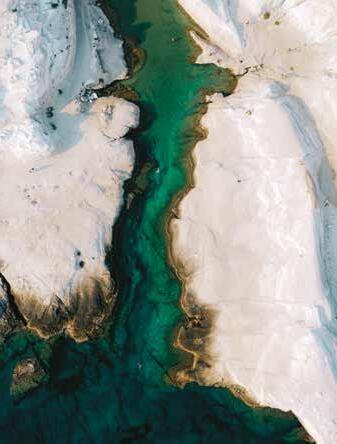
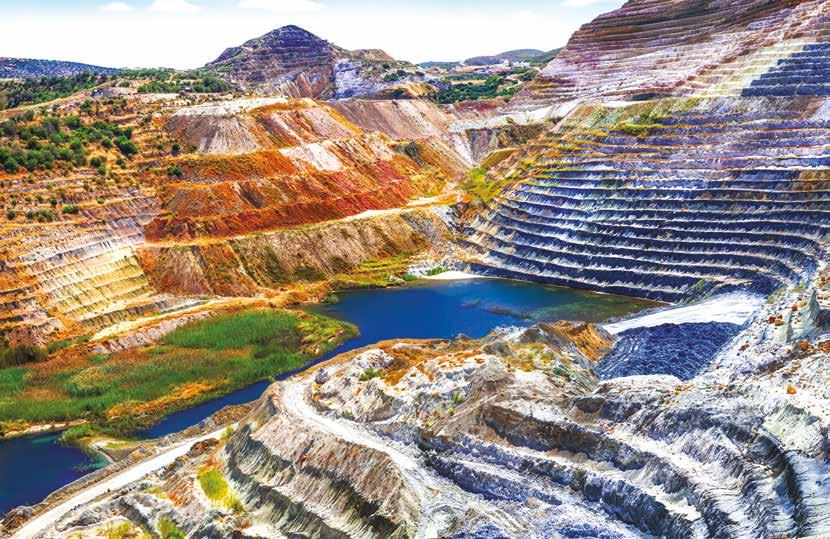
which dates back to prehistoric times. And just four landmarks are enough to experience different eras and cultures.
Our first stop is Phylakopi. Built on a small hill next to the sea caves of Papafragas, this important commercial and cultural centre was inhabited in three phases between 3000 and 1100 BC. For two millennia it was a crossroads between mainland Greece and Crete, as well as between three formidable cultures: the Cycladic, the Minoan and the Mycenaean. Most of the city now lies beneath the sea, but the Megaron, the Sanctuary and parts of the imposing wall remain.
Next is the Ancient Theatre: located near the traditional settlements of Tripiti and Klima, it is one of the best-preserved theatres and a real jewel. Although it was probably constructed in the Hellenistic period, what survives today dates back to the Roman period (1st-4th century AD). After a period of restoration work, the theatre reopened its doors on 9 July 2016 with Thucydides’s symbolic work, “The Melian Dialogue”, which refers to a dramatic battle of the Peloponnesian War. In 416 BC, the Athenians landed here to punish the inhabitants of Milos (then a Lacedaemonian colony) for defending their right to remain neutral in the war between Athens and Sparta.
Just five minutes from the Ancient Theatre are the Catacombs, the only Christian monument of its kind in Greece dating from the 1st to 6th century. An evocatively illuminated complex of three underground chambers and galleries, 200 metres long and between 1.6 and 2.5 metres high, with horizontal (loculi) and arched (arcosolia) tombs carved into volcanic tuff.
The next stop is the Archaeological Museum, located at the entrance
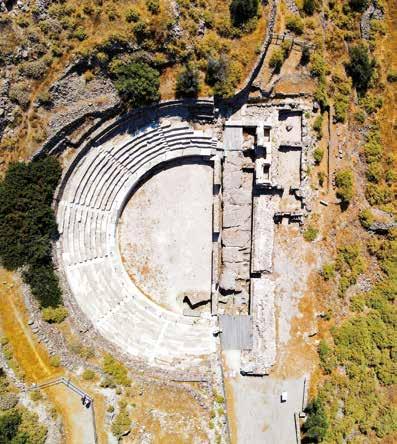
Above: The ancient theatre of Milos.
Left: The famous quarries.
to Plaka. Here, we admire the artefacts that were unearthed during the excavations of the historical landmarks that we have already visited. Most notable among them is the beautiful “Lady of Phylakopi”, a unique 14th-century BC figurine with expressive eyes and an ornate dress. Next is the “original copy” of the famous Venus de Milo statue, which is said to have been found near the ancient theatre in 1820 (the original is now exhibited in the Louvre). Here, we can also admire lamps adorned with rosettes and clams, as well as small figurines and impressive jewellery from the Catacombs. These beautiful offerings accompanied the islanders on their eternal journey.
In the afternoon, we ascend to Plaka, a traditional settlement. We wander through the winding, cobbled streets lined with neat houses, quaint shops and traditional tavernas until we reach the top of the Venetian castle, where we gaze out over the sea. Later, we will enjoy some delicious recipes from Milos, such as tomato beltes made from ripe, sun-roasted pomodoria. Also, crispy “pitarakia”, which are cheese pies made with local manoura or ladotyri cheese. There are also sweet treats such as the delicious watermelon pie and the “koufeto”, which is made with local white pumpkin, honey and almonds.
However, before all that, we will stop at Panagia Korfiatissa. And we’ll grab... a spot to watch the magnificent spectacle. It’s sunset time. One of the most beautiful things I’ve ever seen in my life. When the entire horizon is awash with golden and red explosions, creating an endless palette until darkness falls. For a few minutes, everyone falls silent. And everyone becomes friends. Because the greatness of nature -and of Milos- is something to be shared!
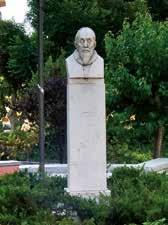
WITH THE HELP OF MARINA TOMAZANI, ART HISTORIAN AND CURATOR AT THE NATIONAL GALLERY - ALEXANDROS SOUTSOS MUSEUM, WE DISCOVER WHY DOMENICOS THEOTOKOPOULOS, “THE GREEK” (EL GRECO), IS ONE OF THE GREATEST AND MOST INFLUENTIAL PAINTERS OF ALL TIME.
The “Assumption of the Virgin” was designed to be the central theme of the iconostasis in the Church of Santo Domingo el Antiguo in Toledo. Above: Bust of El Greco in Heraklion.
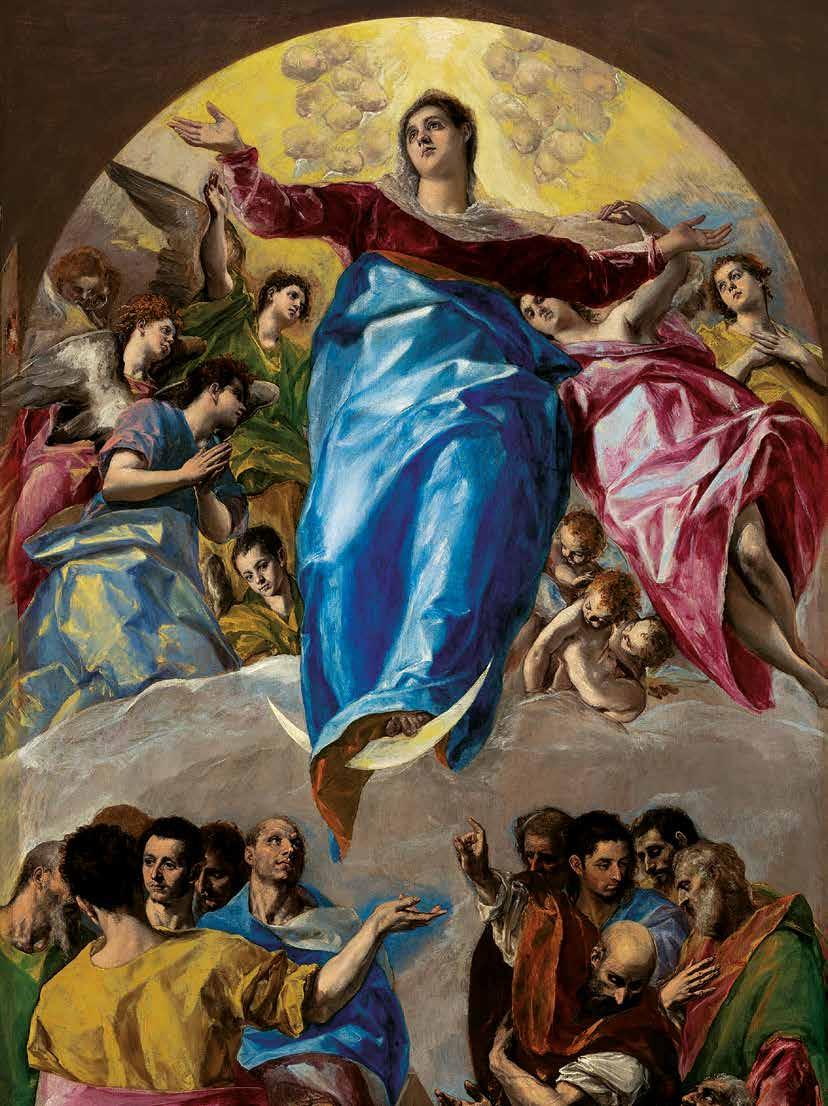
Ιpaint because the spirits are whispering like crazy inside my head”, this extraordinary man allegedly said. Pablo Picasso called him “father” and humanity owes him the masterpieces that have moved and inspired us, nourishing the souls of many great painters. Marina Tomazani, an art historian and curator at the National Gallery - Alexandros Soutsos Museum, enlightened us and introduced us to the “maestro” of painting..
Menegos Theotokopoulos
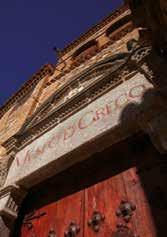
“Domenicos Theotokopoulos was born in Chandax, Crete, in 1541. He was a key figure in bridging the artistic traditions of the Byzantine and Western worlds in the 16th century. As an apprentice painter, he was taught Byzantine iconography from a young age. Although we do not know much about his early life in Crete, we know that he signed official documents as a maestro (maistro Menegos Theotokopoulos sgourafos) at the age of twenty-five. This term is derived from the Italian word “sgurafador”, meaning “painter”, and was used by Greek painters during the Venetian era in Crete. After departing for Venice in 1567, he studied Western Renaissance painting in depth, completing an apprenticeship under one of the greatest teachers of the time, Titian. However, he had probably already been introduced to this style of painting through works he had seen in the mansions of Venetian Crete. From around 1570, he lived in Rome for about a decade before leaving for Spain, where he remained until the end of his life” says Ms Tomazani.
“Theotokopoulos’s work is characterised by a mystical religiosity that preserves the Byzantine iconographic structure containing Venetian, Renaissance and Mannerist elements. From Venice and Rome, he adopted the techniques of colour, perspective and dynamic composition. However, he did not simply follow Western standards. On the contrary, he adapted them to create his own unique style. This is because, even in his Spanish works, Theotokopoulos does not forget the Byzantine tradition. This is evident in almost all of his works, where we find elements such as a lack of physical perspective or limited sense of depth, and the use of intense yet balanced colours with symbolic meaning. Above all, the religious and symbolic elements in his work are not intended to be realistic, but to express spirituality. Even his stern pastoral figures have an intense, expressive gaze. All these elements characterise the Byzantine tradition and run through the painter’s work. Combined with the intense expressiveness and theatricality of the forms, they make his work unique in European art history”, the art historian explains.
“Saint Francis and Brother Leo Meditating on Death”.
© National Gallery - Alexandros Soutsos Museum, Photographic Archive of the National Gallery.
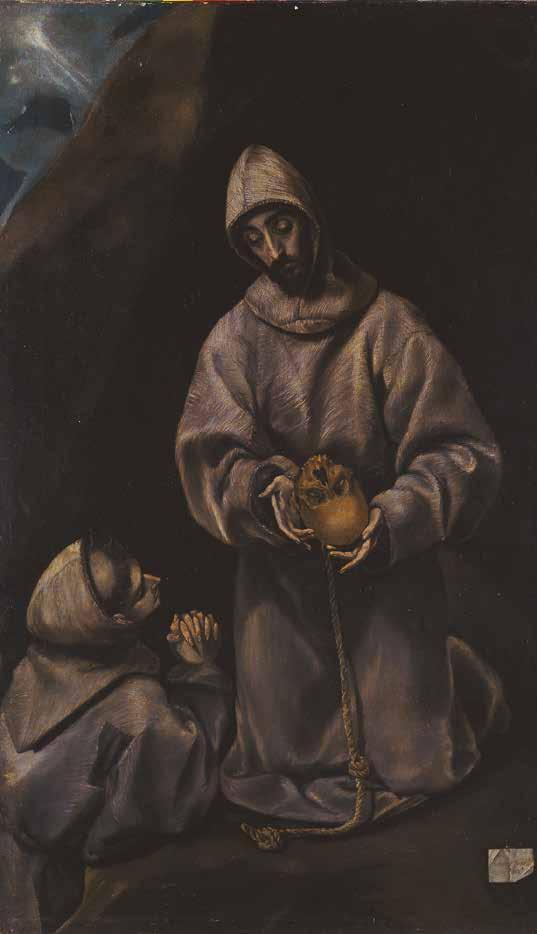
“St
Stavros Psiroukis (N.G.A.S.M.).
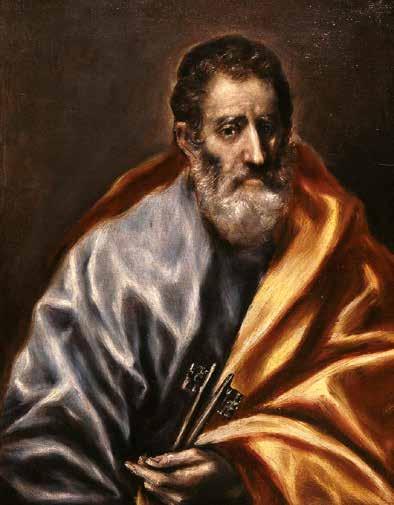
“Although Theotokopoulos was one of the artists whose work was rediscovered several centuries after his death, its impact on early 20th-century artists was profound and long-lasting. Theotokopoulos’s bold colour palette and his depiction of nature and humans through a combination of colour contrasts, deformation and intense emotional atmosphere did not leave important modern artists such as Pablo Picasso and Paul Cézanne unmoved. His work also influenced contemporary Greek artists such as Konstantinos Parthenis.
”At the same time, artistic movements such as Expressionism and Cubism recognised elements in his work that foreshadowed the birth of modern art.
”The simplicity that dominates his later compositions, as seen in "The Visitation" (c. 1610) and the freedom with which he approached form and space, projecting reality through an emotionally charged prism rather than mirroring it, contributed to the revision of traditional painting rules and the emergence of early modernism in his work. For this reason, Domenicos Theotokopoulos remains a model for painters and students to this «Ο
day, and art historians continue to examine his relationship with avant-garde artists. One such recent example is the "Picasso - El Greco" exhibition held at the Kunstmuseum Basel in Switzerland in 2021, which aimed to explore and present the influence of Theotokopoulos on Picasso’s work”, explains Ms Tomazani.
“The relationship between Domenicos Theotokopoulos and religion was substantial and deeply connected to his entire aesthetic and artistic perception. Much of his work features religious scenes and images of saints, through which he attempts to depict the physical and metaphysical dimensions of faith.
”The imposing figures of saints, painted in an eerie light and elongated as if reaching for the sky, create a sense of spiritual ecstasy and inner agony. His paintings reflect the Byzantine tradition he studied in Crete, depicting self-illuminating figures full of grace and simplicity. These are combined with the mystical climate of Counter-Reformation Spain, where art served as a means of religious expression and contemplation. Through Theotokopoulos’s works, the observer is invited to embark on a spiritual journey rather than an aesthetic one” says Ms Tomazani.
“Although Theotokopoulos arrived in Spain during a period of strict and limited artistic freedom, he chose to develop his own artistic identity by using colour in a way that was new to 16th-century Spain. The elongated and dramatic forms in El Greco’s paintings are an intentional aesthetic choice, rather than a result of technical weakness. Like other Mannerist painters (1520-1600), the artist attempts to escape the ideal of classical Renaissance art by elongating forms and using asymmetrical compositions to create a sense of instability. However, El Greco managed to create something completely personal using the characteristics of Mannerism, which several art scholars had viewed negatively until the beginning of the twentieth century. He developed his artistic identity by moving beyond the naturalistic realism of the Renaissance in his work, expressing an inner, spiritual and metaphysical world.
”His figures appear to be released from the constraints of gravity and elevated to a divine realm. The heads of those depicted are rendered as pulsating candle flames with an upward trend, which strengthens the mystical dimension of his work. At the same time, the figures’ intense expressions and theatrical movements convey mental tension and existential agony. Through this technique, El Greco managed to transform painting into a vehicle for intellectual and emotional expression”, continues Ms Tomazani.
“Domenicos Theotokopoulos was a genuine humanist. As an artist, he was influenced by the various cultural influences he experienced in Crete, Venice and Toledo, creating a visual language that fused his training and travels in these cities. Starting from his native Crete during the Venetian period, it can be said that he was initiated into the Byzantine iconographic tradition, characterised by more rigorous religious iconography, while also being introduced to the aesthetics of colour.
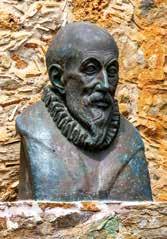
”His time in Venice disrupted the tranquillity and absolute harmony of Byzantine compositions, prompting him to embrace bolder colours. In Rome, he was introduced to Mannerism and the intellectual dimension of art. However, we must recognise that Theotokopoulos is an artist who does not reject previous visual elements when he comes across new ones. This is evident in the few works he produced during his time in Italy, such as the painting entitled "The Entombment of Christ" (c. 1568-1570) in the National Gallery. Here, we can see the change in colour intensity and perspective in his work, as well as the intense drama of his figures within the confines of Byzantine tradition while using the par excellence material of Byzantine icons by choosing to paint on wood rather than canvas. Finally, it was in Toledo that he developed his mature personal style, influenced by the intense religious and spiritual nature of Spanish society”, says Marina Tomazani.
“Theotokopoulos’s work was considered revolutionary because it challenged the prevailing aesthetic perceptions of his time. During a period when harmony, proportional precision and naturalistic realism were prevalent in Renaissance art, he proposed a style of painting that was strongly expressive, spiritual and dramatic. The elongated forms and unusual, sometimes bold colours of his works, combined with their almost hallucinatory atmosphere, initially made it difficult for him to gain acceptance from the public and critics of the time. This is the main reason why he was "forgotten" by the history of art for about four centuries. At the same time, however, when the artists of late 19th and early 20th centuries avant-garde movements discovered his work, they recognised him as a visionary artist far ahead of his time. Thus, this artist, who was born at the turn of the century and whose life shows signs of a personality that straddles the Renaissance and the Baroque, has been recognised as one of the most important and influential painters in the world’s artistic heritage”, concludes Ms Tomazani.
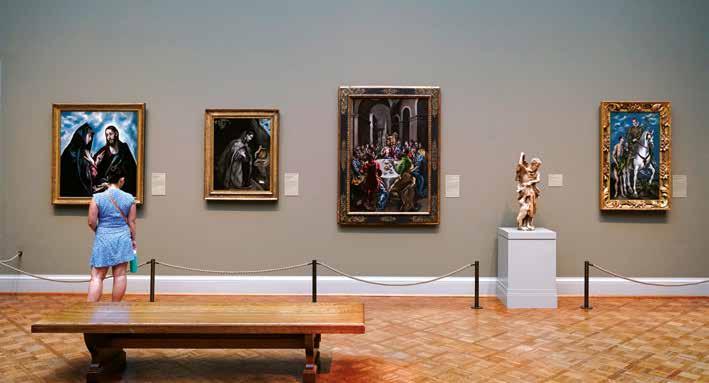
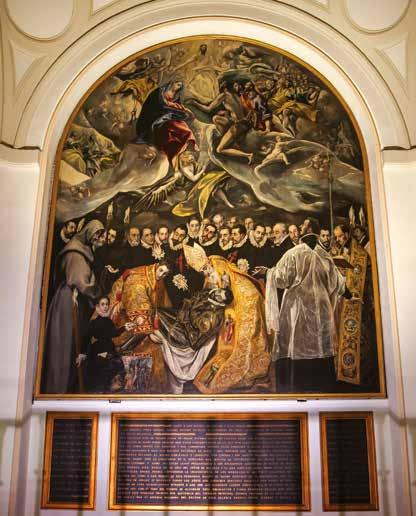
Above: Works by El Greco at the Art Institute of Chicago.
Left: “The burial of the Count of Orgaz”, in the Church of Santo Tomé, Toledo.
Below: “Saint John the Evangelist”.
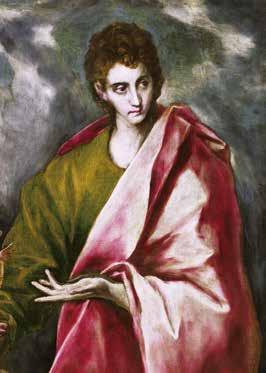
ΤΆΞΙΔΕΥΟΝΤΆΣ ΣΤΗ
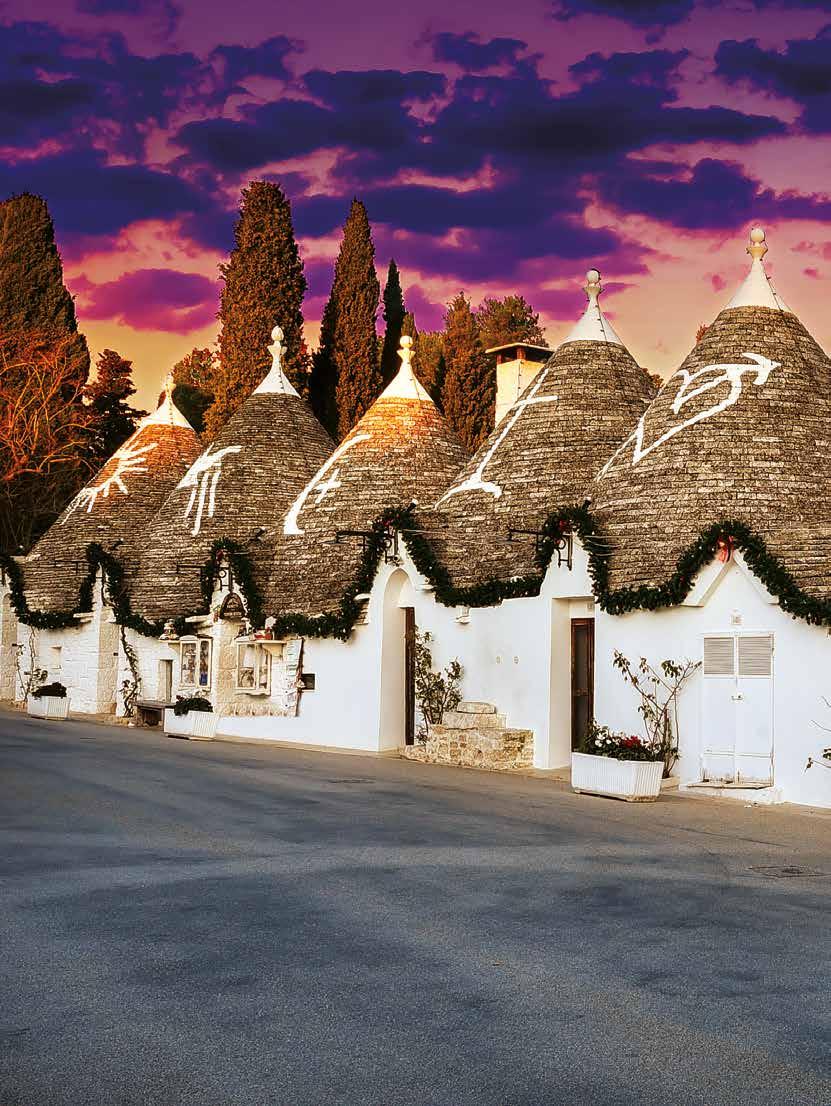
EVERY CORNER OF SOUTHERN ITALY LOOKS LIKE A CINEMATIC SHOT. NARROW ALLEYS WITH A SPECIAL ATMOSPHERE, COLOURFUL BALCONIES, DISTINCTIVE ARCHITECTURE, CRYSTAL-CLEAR TURQUOISE WATERS AND UNFORGETTABLE FLAVOURS ALL COME TOGETHER TO CREATE AN EXPERIENCE THAT PERFECTLY ENCAPSULATES THE CHARM OF ITALIAN LIFE.
ΒY MIA KOLLIA
The picturesque Alberobello.
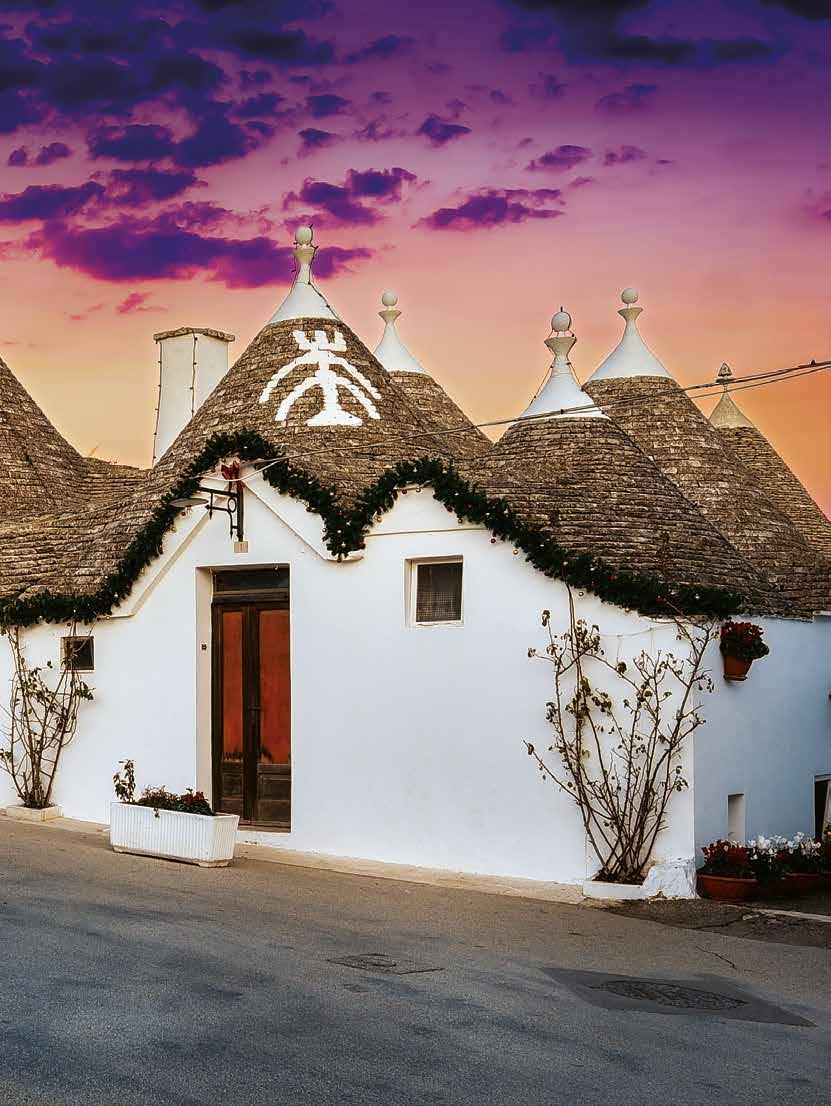

One of the gates leading to the old town of Lecce. Opposite page: Parades like this one often bring the area’s history to life.
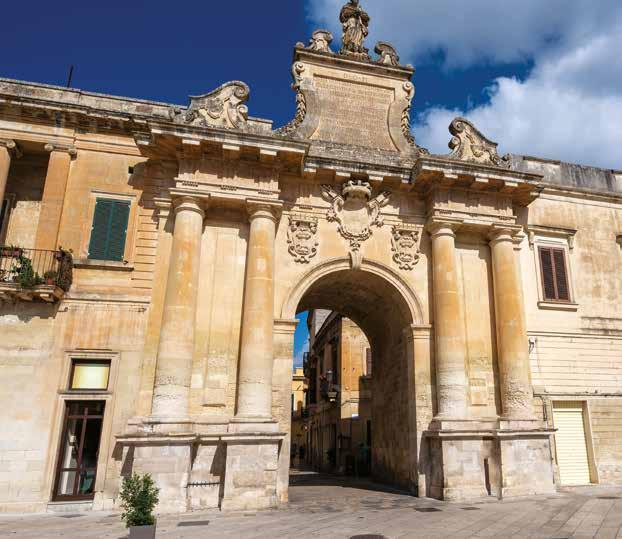
TThe “heel” of Italy’s “boot” conceals a world of delightful surprises: landscapes where the sea meets small islets; endless rural areas that blend harmoniously with nature; and picturesque conical houses (trulli) that look like something from a painting. Apulia or Puglia is a destination that combines elegance, tradition and authentic Mediterranean beauty.
Located at the southernmost tip of Apulia, Brindisi offers a blend of historic port charm and the relaxed atmosphere of the Italian “dolce vita”. Strategically located on the Adriatic coast, Brindisi has been a key passageway between the West and East for centuries. It was from here that travellers, merchants and crusaders set out, and the city was connected to Rome by two important ancient roads: the Via Appia and the Via Traiana. The city’s naval character is still evident today, reflected in both the port and daily life.
The old town of Brindisi is best explored on foot. Narrow alleys, arches and small squares reveal monuments from different historical periods, while the city’s many historical fountains lend the atmosphere a distinctive colour. The Fontana de Torres, a 17th-century fountain created from recycled medieval materials, is located in Piazza Vittoria, while the Fontana delle Ancore, with its characteristic anchors, stands out in Piazza Cairoli as a timeless symbol of the city’s maritime identity.
The historic centre is dominated by the impressive Piazza Duomo, one of
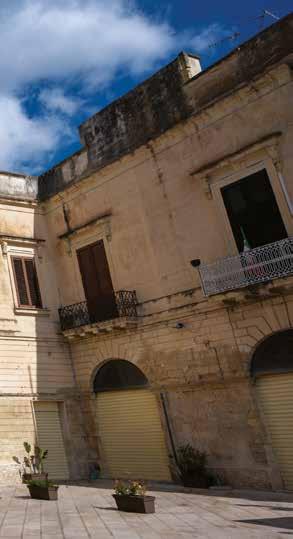
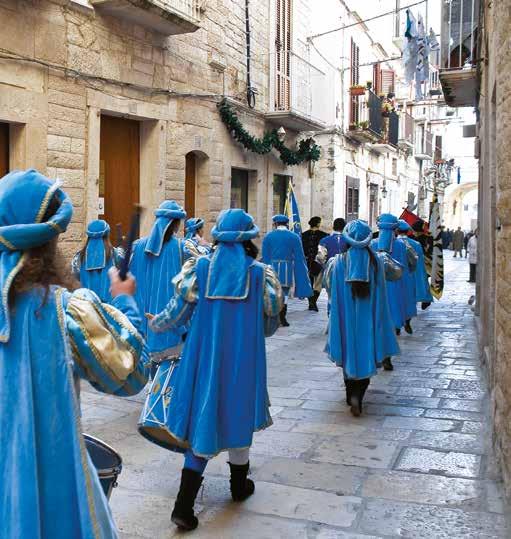
Brindisi’s most impressive squares. Notable sites include the Cathedral of St. John the Baptist, which features a tall bell tower and impressive mosaics, as well as historical buildings with Baroque influences and distinctive warm hues. The city’s Archaeological Museum is located next to the church and houses important findings from the Hellenistic and Roman eras -including bronze statues, terracotta figurines, and artefacts recovered from the bottom of the Adriatic Sea.
The historical route continues to the San Pietro degli Schiavoni archaeological site, featuring preserved remains of Roman baths, and to the 11th-century circular church of San Giovanni al Sepolcro, which is linked to the Knights Templar. Another important attraction is the castle, which was built by Emperor Frederick II during a period of great prosperity for the city.
Near the port, visitors will find the unique preserved Roman Column, a landmark that marked the end of the Via Appia. The monumental staircase surrounding it is often used as a venue for cultural events and concerts, particularly in the summer.
Heading inland, we arrive in the Itria Valley, also known as the Valley of the Trulli, due to the traditional whitewashed stone buildings with conical roofs found here.
Alberobello resembles an elf village with its unusual houses and narrow streets. During the day, it is full of visitors who are in for an unforgettable experience when the lights turn on after sunset and the domes look golden.
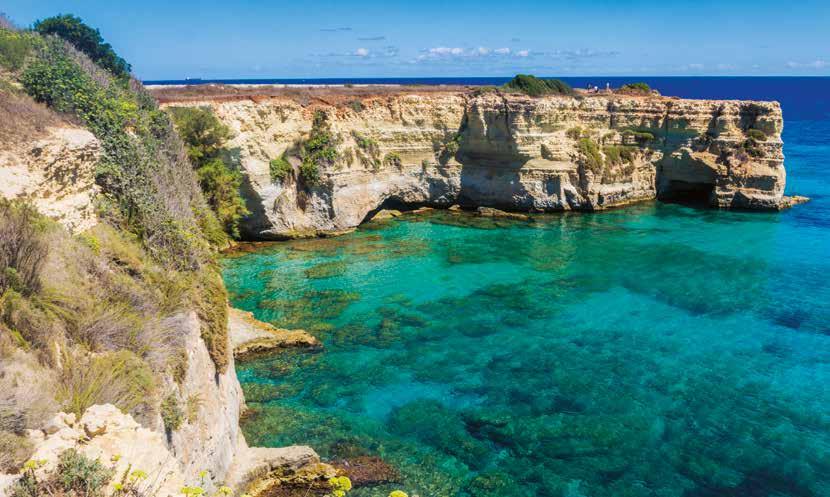
και
Ten minutes away is Locorotondo, whitewashed and circular, and considered one of the most beautiful villages in Italy. It is reminiscent of a Greek island. Its locally produced white wines, made from Verdeca and Bianco d’Alessano grapes, are renowned.
Cisternino is a small Italian town that seems like something from a fairy tale: a labyrinth of alleys and arches adorned with flowers, where the evening air is filled with the scent of grilled meat from the restaurants’ outdoor barbecues. There, you can sample the traditional Bombette, small pork rolls stuffed with cheese and spices, served on a skewer like the Greek souvlaki. Martina Franca is another city worth visiting, with its elegant Baroque architecture and palaces made of light-coloured stone with iron balconies. It resembles Venice, but with one key difference in the natural landscape: the area is dotted with ancient olive trees, some of which are over 2,000 years old and resemble beautiful sculptures. Many masserie have been converted into hotels. The word “masseria” comes from the Latin “massa”, meaning “farm” or “mansion”. Staying overnight in one of these converted buildings is a unique experience.
On our way to the sea, we come across the impressive city of Ostuni, a white “citadel” on a hill that sparkles in the sunlight.
The centre features a variety of stairs, squares and pottery shops, with the 15th-century cathedral standing out amongst them. Its most famous local product is its spicy, fruity olive oil. The nearby beaches at Lamaforca and Torre Guaceto are somewhat wild with dunes, while the latter boasts Caribbean-like waters.
Lecce and SalentoBaroque and endless coastlines
Lecce is the capital of the Baroque. Lecce’s soft stone is sculpted like butter, and 17th-century architects transformed it into lace. The
Λέτσε
Η Santa Cesarea Terme
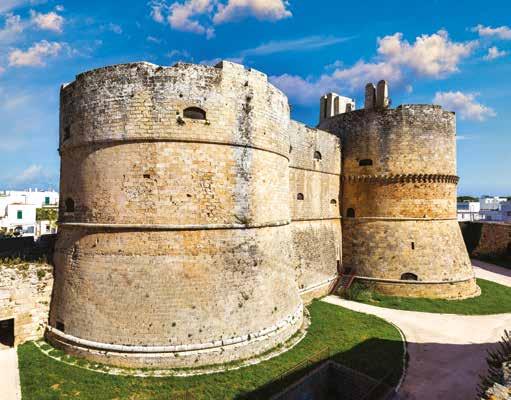
Above: View of the castle of Otranto.
Left: The impressive coastline of Salento, with its steep cliffs and turquoise waters.
Piazza del Duomo looks like a cinematic setting, with its cathedral, bell tower and theological school all made of “golden” stone. The Basilica di Santa Croce boasts the most opulent -and peculiar- façade in Italy, adorned with angels, monsters, fruit, and animals. The Roman amphitheatre is located in the middle of the city, below street level. The city comes alive even more at night -Vico dei Sotterranei and Via della Libertà are full of wine bars, bookshops, and restaurants.
After Lecce comes the Salento peninsula, the “heel of the heel”, where the sea takes centre stage alongside human creations.
Otranto is a jewel: an Aragonese castle stands in the harbour and the cathedral boasts the largest medieval mosaic in Europe, while small streets lead to Baia dei Turchi, a white-sand beach surrounded by pine trees.
Santa Cesarea Terme is home to Art Nouveau villas overlooking rocky coves and sea caves. It is an ideal destination for diving enthusiasts.
Santa Maria di Leuca
Santa Maria di Leuca is... the end of the world: its famous lighthouse marks the meeting point of the Adriatic and Ionian Seas, and the 19thcentury villas descending to the sea boast impressive stairways and gardens. Boats leave from here for the area’s famous caves -the Grotta del Diavolo, the Grotta delle Tre Porte and the Grotta del Soffio.
On the way back to Bari, the Adriatic coast is dotted with bays and villages. Monopoli is an ancient port town with white and blue houses, while Polignano a Mare is a town with houses perched on the rocks. If you have time, explore the area’s fishing villages -such as Mola di Bari and Torre a Mare- to enjoy some truly fresh fish.
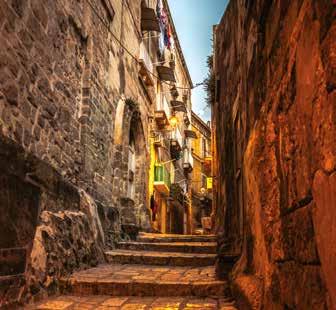
-Grotta del Diavolo, Grotta delle Tre Porte, Grotta del Soffio.
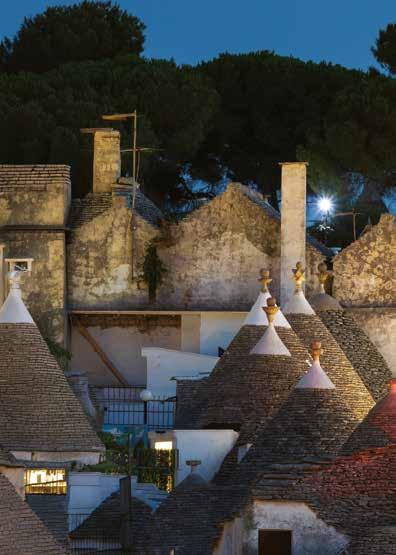
Αριστερά:
The conical roofs of Alberobello.
Left: Alley in the old town of Taranto.
A Sea that unites
Apulia and Greece are on opposite sides of the same sea, and for centuries they were part of the same world. If we look closely enough, we can see everywhere the threads that connect them.
History: Between the 8th and 6th centuries BC, the Greeks established colonies along the coast of Apulia, which was part of Magna Graecia. The Spartans founded Taranto in 706 BC, which became one of the most powerful city-states. The MArTA, the city’s archaeological museum, boasts a collection of vessels, funerary offerings and Greek gold artefacts that κατεβαίνουν
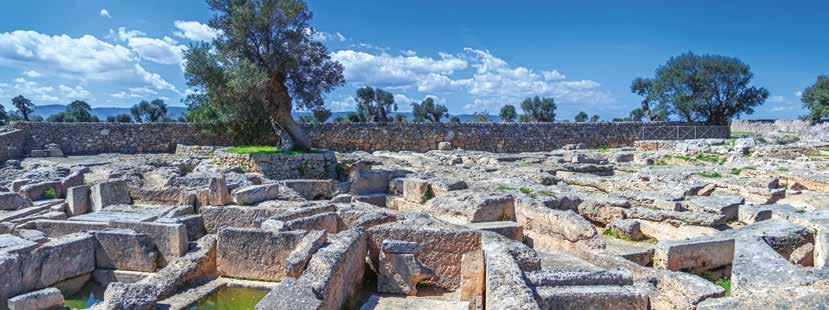
of the ancient Greek city of Egnatia.
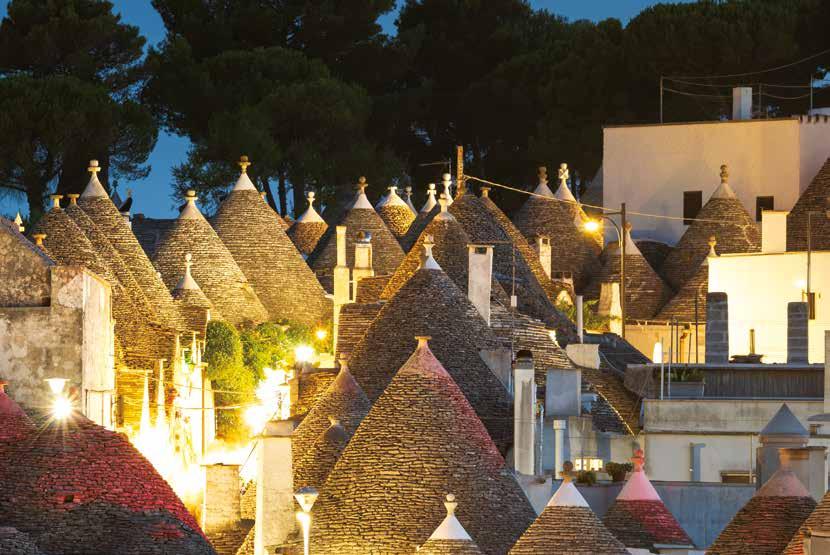
can rival those in Athens. When the Romans arrived, Otranto was already a Greek trading port. Walking among the ruins of Via Egnatia or Roca Vecchia is like reading a chapter of Greek history carved into stone.
Language: In Salento, the 11 Greek-speaking villages, people still speak Griko, a dialect descended from 6th-century Byzantine Greek. It’s not modern Greek, but it sounds like the music played at the famous Notte della Taranta festival in Melpignano.
Santa Caterina d’Alessandria
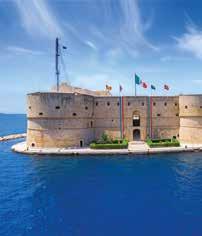
Castello Aragonese
Castello Aragonese in the port of Taranto.
Religion: The carved churches of Murgia and Salento are adorned with frescoes of saints against a golden backdrop, as well as icons, reminiscent of Cappadocia and the Peloponnese. The Santa Caterina d’Alessandria in Galatina, the Cripta del Crocifisso (Crypt of the Crucified) in Ugento and the Otranto Cathedral, with its medieval mosaic, all bear a resemblance to the East.
The products: Apulia produces 40% of Italy’s olive oil and its ancient olive trees resemble those found in Crete. Frisella is the Cretan rusk’s sister, and burrata has many Greek cheese “cousins”. Finally, Primitivo wine from Manduria certainly has Balkan roots -some claim it is Dalmatian, while others attribute its origins to the Greeks 2,000 years ago.
ε
With a long history dating back to 1947, the Grimaldi Group specializes in the operation of Ro/Ro (roll-on/roll-off) vessels, car carriers and ferries. It is a dedicated supplier of integrated logistics services based on maritime transport to the world’s major vehicle manufacturers.
Through its maritime services, the Naples-based group also transports containers, palletized/unitized cargo and passengers with a modern fleet of over 130 Ro/Ro and multipurpose vessels, pure car carriers and ferries.
The Grimaldi Group offers a wide network of maritime services for passengers in the Mediterranean Sea, under the Grimaldi Lines, Minoan Lines and Trasmed brands, and in the Baltic and North Sea, through the controlled company Finnlines.
Grimaldi Lines offers maritime connections to the most popular tourist destinations in Spain, Greece, Italy (including Sicily and Sardinia) and Tunisia.
Between Greece and Italy, the company offers frequent yearround services connecting Igoumenitsa to the Italian ports of Brindisi (Apulia) and Ancona (Marche). During the summer, services between both Italian ports and Corfu are operated as well.
Aware of the need to offer ever more innovative, high-quality and competitive services to its passengers, the Grimaldi Group deploys a fleet of modern RoPax ferries, providing cruise ship standard facilities, and new generation state-ofthe-art Ro/Ro-Passenger ferries.
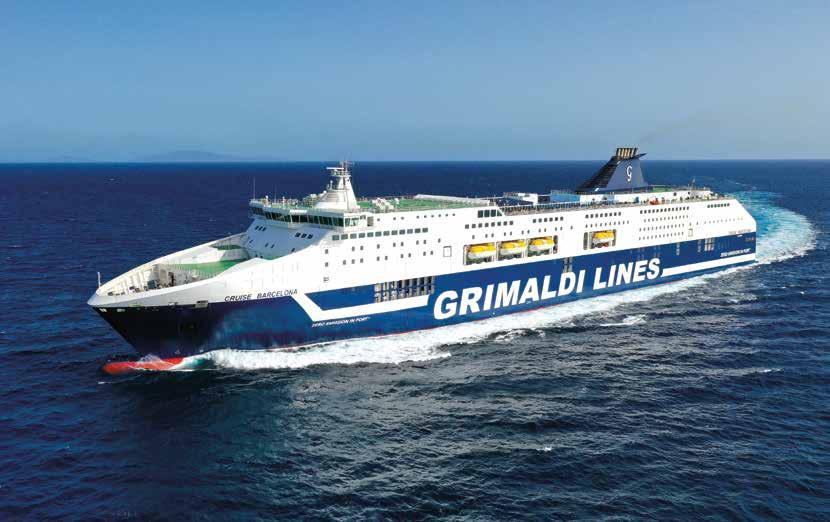
Two of the flagships of the Grimaldi Lines fleet are the Cruise Roma and Cruise Barcelona, both deployed between Italy and Spain on the Civitavecchia-Porto Torres-Barcelona route. Despite being already the biggest RoPax ferries in the Mediterranean, in 2019 they were lengthened and refurbished, which has enabled the two sister ships to transport more than 3,500 passengers.
Both vessels are equipped with 499 large, elegant cabins, 595 comfortable reclining seats, an à la carte and two selfservice restaurants, a swimming pool, a solarium bar and a modern wellness centre with sauna, hammam and massage room. On board entertainment services include a discotheque, a playground area for children and a conference room.
All the Group’s passenger ships perfectly combine excellent comfort on board with low-cost options. Special attention is given to families, groups of friends and students, with fare reductions offered on all routes. In addition, thematic events are periodically organised on board the Grimaldi Lines vessels mainly on the Civitavecchia-Barcelona route, while Grimaldi Lines Tour Operator offers ship and hotel packages in Greece, Spain and Italy (including Sardinia and Sicily).
The Grimaldi Group is the first Italian shipping company to have obtained the SMS, ISO 9001 and ISO 14001 certifications for Safety, Quality and Environment. Recent recognitions received by Grimaldi Lines for its outstanding performance in passenger transport include the World Travel Leaders Award (in 2016) and the Italia Travel Awards (in 2018 and 2019).



Can the summer heat affect the thyroid and the symptoms of thyroid disease?
Excessive heat can cause:
• Dehydration, affecting the absorption of thyroid drugs.
• More severe symptoms in hyperthyroidism, such as worsening of tachycardia, heart arrhythmias, increased sweating, increased nervousness/anxiety, decreased tolerance to heat, etc.
• More severe symptoms in hypothyroidism, such as worsening of fatigue/drowsiness etc.
Are thyroid operations performed during the summer months?
Summer is not a reason to avoid performing thyroid surgery. The hospital stay is only one day, with the patient being discharged the day after the operation. Postoperative pain is minimal (treated with paracetamol) and does not last long. Recovery is rapid, with an immediate return to daily activities, provided that intense physical stress is avoided for a week. The incision heals within four days, after which the patient can wet it and bathe in the sea while taking the prescribed measures to protect themselves from the sun. The patient can eat whatever they want from the day after their operation. Therefore, the timing of the operation depends on the type of thyroid condition (i.e. how urgent the thyroid removal is) and the patient’s preferences. Summer is not a contraindication for the operation.
What can I do over the summer to avoid further thyroid problems?
It is useful to follow these guidelines:
• If you take any thyroid medication, try to be consistent with both the medication itself and the dosage regimen.
• Make sure you drink enough water every day to avoid dehydration, which is common in summer due to sweating.
• Avoid sun exposure during the hottest hours of the day (12:00-16:00).
• Stay in a cool, shaded place and use air conditioning if necessary.
• Choose light, cool clothes in light colours.
• Follow a balanced diet and avoid heavy meals.
• You should see your doctor if your symptoms worsen or new ones appear. A simple blood test to measure thyroid hormones can help determine whether your thyroid is responsible for your symptoms. If thyroid hormone levels deviate from normal limits, it is highly likely that the patient’s medication dosage (levothyroxine for hypothyroidism or antithyroid medication for hyperthyroidism) will need adjusting.
OΟι

Minimally Invasive Spine Surgery (MISS) and endoscopic techniques represent a breakthrough in the treatment of spinal conditions -offering precise, safe, and faster recovery solutions for patients. The Endoscopic and Minimally Invasive Spine Surgery Clinic at IASO General Clinic, led by Dr. Georgios Vastardis, MD, PhD, is a certified Center of Excellence and an international training hub, welcoming spine surgeons from around the world to master advanced techniques.
MISS procedures are performed through tiny skin incisions (~1 cm), using local anesthesia and causing minimal tissue damage. Techniques include transforaminal injections, disc nucleoplasty, endoscopic discectomy, endoscopic rhizotomy, endoscopic foraminal and central decompression due to spinal stenosis -delivered with exceptional accuracy and minimal trauma. A key innovation is the combination of endoscopy with robotic-assisted navigation. Advanced systems like O-arm and robotic platforms allow surgeons to plan and execute each intervention with utmost precision -placing screws and interbody cages through percutaneous or endoscopic methods, even in complex spinal fusions. Stable spinal fractures due to trauma, osteoporosis, or other conditions can be treated with percutaneous kyphoplasty -an internal fracture repair performed without the need for blood transfusions. Patients typically mobilize independently just hours after surgery. Most procedures are completed within a few hours, with same-day discharge. Patients return to their normal routine quickly, without the prolonged recovery often associated with open spine surgery.
Every treatment is evidence-based and personalized. Following a step-by-step approach, our team aims to achieve the best possible outcome with the least invasive method and the least amount of postoperative pain.
Dr. Georgios Vastardis MD, PhD, Spine Surgeon, Chief of Endoscopic and Minimally Invasive Spine Surgery (M.I.S.S.) Clinic, IASO General Clinic, IASO Group, Athens, Greece

Aphysiotherapy assessment is the foundation of any successful treatment. It involves an in-depth analysis of a person’s physical condition to identify the cause of the problem, determine the most suitable rehabilitation programme and prevent future relapses.
Key Stages
• The process usually takes between 30 and 60 minutes, and involves the following steps:
• Patient History: Recording symptoms, lifestyle and any previous injuries, or medical history.
• Overview & Palpation: Postural control, symmetry and detection of signs of inflammation or muscle spasm.
• Clinical Tests: Assessment of joint range of motion (ROM), muscle strength, neurological function and balance.
Why is it essential?
The assessment acts as a “road map” for the physiotherapist. Identifying the cause: It does not just treat the symptom (e.g. pain), but also finds the cause (e.g. incorrect posture or muscle imbalance).
Personalising treatment: Every body is unique. The assessment enables the creation of a personalised, safe care plan tailored to the patient’s needs.
Ensuring safety: It excludes situations that require medical intervention (red flags) before any exercise can begin.
Measuring progress: It provides measurable data that can be used to compare the patient’s condition before, during and after sessions.
Physiotherapists receive training in physiotherapy assessment as part of their studies, in the form of a theoretical and practical course.
Throughout their professional careers, they constantly learn to evaluate all systems of the human body in new ways, depending on their area of interest. The key to success for the right treatment programme is proper evaluation and contact with the treating physician in more difficult cases.
Physiotherapists are constantly evolving to improve their skills and abilities, and enhance the health of their patients.
Theophanis Mountzouris
Physiotherapist Graduate of Athens University of Applied Sciences, Active Member of the Panhellenic Association of Physiotherapists, Trainer in the use of diamagnetic pump, diamagnetic shock waves and the Kineo isokinetic system.

TSigns that women should not ignore during the summer
Summer is a time for travel, the sea, carefree moments and relaxation. However, this is also a time when many women neglect their health. “I’ll look into it after the holidays”, “It’s not important”, “Maybe it’s just fatigue”. Yet the body often warns us well in advance of a serious problem occurring.
A change in the menstrual cycle. Unusual secretions. Itching or burning sensation after swimming in the sea or the pool. Lower abdominal pain. Bleeding between periods. Pain during intercourse. Many women consider these symptoms to be “transient”, but they are often the first signs of a gynaecological disorder that requires proper evaluation.
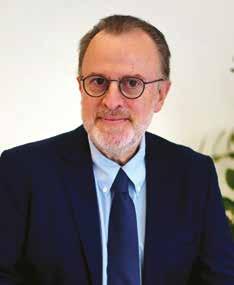
Summer is often associated with increased sexual activity and new acquaintances, as well as a more laid-back approach to protective measures. This leads to an increase in the number of cases of sexually transmitted diseases, many of which may remain asymptomatic for a long time. Infections such as HPV (Human Papillomavirus), herpes and chlamydia are often only discovered through a comprehensive gynaecological examination. Modern gynaecology is no longer limited to a simple cervical screening. Providing comprehensive gynaecological care requires stateof-the-art technology, specialised ultrasound examinations, experience and, above all, a personalised approach. This is because every woman has different needs, backgrounds and concerns.
Most gynaecological conditions (from simple infections and hormonal disorders to cysts, polyps and cervical lesions), can be effectively treated if diagnosed early. These conditions are often much simpler than women imagine.
Even during pregnancy, summer requires special care. Dehydration, urinary tract infections, contractions and intense fatigue, or even just a general feeling of heaviness, should never be underestimated. Proper monitoring of a pregnant woman involves more than just examinations; it also encompasses constant medical guidance and providing reassurance at every stage of the pregnancy.
However, the most important is for women to feel that they are in an environment where their problems will be listened to, understood and dealt with in a scientifically responsible, discreet and humane way. This is because the body usually “whispers before it starts shouting”. And prevention remains the greatest strength of modern obstetrics and gynaecology.
Which heart operations can be performed using a minimally invasive approach?
Most heart surgeries can now be performed without a sternotomy or an open-chest procedure. Aortic, mitral or tricuspid valve replacement or repair procedures, aortic aneurysm repair, cardiac tumour removal and interventricular communication procedures are performed primarily endoscopically, robotically or minimally invasively in 90% of cases. The same applies to more than half of patients undergoing coronary artery bypass surgery, also known as a bypass.
How dangerous are minimally invasive cardiac surgery techniques?
These procedures are performed through small incisions using special tools and a camera, which makes them less likely to cause complications such as bleeding and infection. They are as effective and safe as conventional "open chest" procedures, which have produced excellent long-term results for decades compared to other treatments.
How long do these procedures take? Do they require many transfusions?
The vast majority of procedures take 2-3 hours to complete. Due to the small incisions, blood loss is minimal and the need for transfusions is limited.
How long does someone typically stay in the Intensive Care Unit, and how long do they usually spend in hospital in total?
Patients usually stay in intensive care for a few hours, while the hospital stay is 3-4 days after surgery.
Do these incisions hurt? What can and cannot I do upon returning home?
Patients return home after the operation with full mobility. The minimally invasive approach allows for a swift return to everyday life. You may need to take over-the-counter painkillers for a few days. After about two weeks, you can resume exercise, office work, driving and sexual activity. So, recovery takes days instead of weeks or months.
How much medication is required after minimally invasive cardiac surgery?
The aim is to optimise medication. For example, in cases of valve repair and at the end of the first postoperative period, no further treatment is required. In other cases, medication is adapted to ensure it is both safe and effective for patients.
Are minimally invasive cardiac surgery techniques very expensive?
Although these operations are performed in private hospitals, they are covered by private insurance and the Greek National Health System makes a significant contribution.
Hip pain is a common musculoskeletal issue which can have a significant impact on a patient’s mobility, ability to work and overall quality of life. Although degenerative hip disorders were previously considered to be a condition of older age, nowadays, more and more younger, active people are experiencing symptoms such as pain when walking, stiffness, limited mobility and discomfort during exercise and everyday activities.
The most common causes are femoral impact syndrome, labial tears, cartilaginous lesions and early degenerative joint damage. If these conditions are not treated promptly, they can gradually lead to joint deterioration and, in advanced stages, necessitate total hip arthroplasty.
Hip arthroscopy has revolutionised the treatment of these conditions. This minimally invasive technique enables the surgeon to treat areas of tissue with greater accuracy and less injury by making small incisions and using a special high-definition camera. The arthroscopic technique can be used to correct mechanical malfunctions of the joint, repair labial cartilage tears and improve hip functionality, thereby reducing pain. Over the past few years, there has been a particular interest in the integration of regenerative medicine in hip arthroscopy.
PRF (Platelet-Rich Fibrin) is a modern biological therapeutic approach that uses growth factors obtained from the patient’s own blood. PRF is applied during surgery to enhance healing and improve the regeneration of biological tissue, creating a more favourable environment for joint protection.
Combining hip arthroscopy with regenerative medicine is currently one of the most sophisticated strategies for treating early degenerative hip damage. For certain patients, this approach can significantly delay or even prevent the need for total arthroplasty, thereby preserving the joint and enabling them to return to a more active daily routine of better quality.
We hear and will hear the term “human microbiome” more and more often in the future.
So, what exactly is it and what impact does it have on our health?
IEt refers to the community of microorganisms, including bacteria, viruses, fungi, parasites and ancient single-celled organisms, that inhabit our bodies, along with their genetic material and metabolic products. There are trillions of microorganisms living in our bodies -an impressive amount that exceeds the number of our own cells by 5-10 times and weighs around 2 kg for the average human.
Can our health be affected by the microbiome?
The microorganisms that make up the microbiome are not merely inactive “companions”. They contribute significantly to various bodily functions, such as nutrient metabolism and the training of the innate and acquired immune systems. They are also considered to affect the functioning of the brain through neurotransmitters.
Dysbiosis, or microbiome disorder, has been associated with the development of metabolic diseases such as obesity and diabetes mellitus, as well as allergies, inflammatory bowel diseases and mental health conditions.
What factors can affect the microbiome?
Like a fingerprint, each person’s microorganisms are unique. Particular importance is given to researching the factors that can affect the microbiome, such as diet, environment, lifestyle and the consumption of medicines, especially antibiotics.
Is there a link between the microbiome and cancer?
Relatively recent research data shows that the microbiome (mainly intestinal, but also found in other tissues) influences carcinogenesis, tumour progression and the response to treatment (mainly immunotherapy) through metabolites, inflammation and immune regulation.
A healthy diet, reduced use of unnecessary antibiotics and improved understanding of the microbiome are all key to prevention and effective treatment.
Dr Christos Panopoulos, MD Pathologist - Oncologist, PhD from the National and Kapodistrian University of Athens, Director of the Oncology Clinic Athens Euroclinic info@panopoulos-ogologos.gr, panopoulos-ogologos.gr
treatment of gallstone disease and its complications A common digestive disorder
Gallstone disease is one of the most common digestive tract disorder and involve the formation of stones in the gallbladder. Many patients remain asymptomatic for a long time. However, if the stones cause an obstruction in the normal flow of bile, serious complications may occur that require immediate medical treatment and often surgery.
The gallbladder is located beneath the liver and serves as a reservoir for storing bile. Stones are primarily made up of cholesterol or bile salts, and are more common in women, people over 40 and overweight patients.
The most common presenting symptom is biliary colic, which is characterised by severe pain in the right upper quadrant or the middle part of the abdomen, particularly after consuming a fatty meal. The most significant complications of gallstone disease include:
Acute cholecystitis
A gallstone blocks the cystic duct and causes inflammation of the gallbladder.
Acute cholangitis
The presence of gallstones in the common bile duct can lead to a potentially life-threatening condition called a biliary tract infection, due to generalized infection of bile ducts.
Acute biliary pancreatitis
Smaller gallstones could relocate to the area around ampulla of Vater, causing inflammation of the pancreas.
Modern treatment
The initial diagnosis depends on an upper abdomen ultrasound. Magnetic Resonance Cholangiopancreatography (MRCP) is used to obtain a detailed view of the biliary tree and confirm the presence of gallstones. Endoscopic Retrograde Cholangiopancreatography (ERCP) could be used to remove gallstones from the bile duct and is performed in cases of common bile duct stones or cholangitis.
Nevertheless, laparoscopic cholecystectomy remains the definitive treatment for symptomatic gallstone disease. This is a minimally invasive surgical procedure involving small incisions in the abdomen, providing significant benefits for the patient:
• Minimal post-operative pain
• Rapid mobilisation and food intake
• Hospitalisation typically lasts less than 24 hours
• Patient’s rapid return to pre-operative activities
• Excellent aesthetic result
Early surgical treatment can prevent relapses and other dangerous complications. Nowadays, laparoscopic cholecystectomy is one of the safest and most commonly performed procedures for gallstones disease.
Vasileios Vougas, MD, MSc, PHD, General Surgeon, Specialist in Diseases of the Liver, Pancreas and Biliary Tract, and Surgical Oncology, Director of the 1st Surgical Clinic and Organ Transplant Unit, Evangelismos General Hospital
Angeliki Skoufi, MD, MSc, General Surgeon, 1st Surgical Clinic and Organ Transplant Unit, Evangelismos General Hospital drvougas58@yahoo.gr | angieskoufi@gmail.com
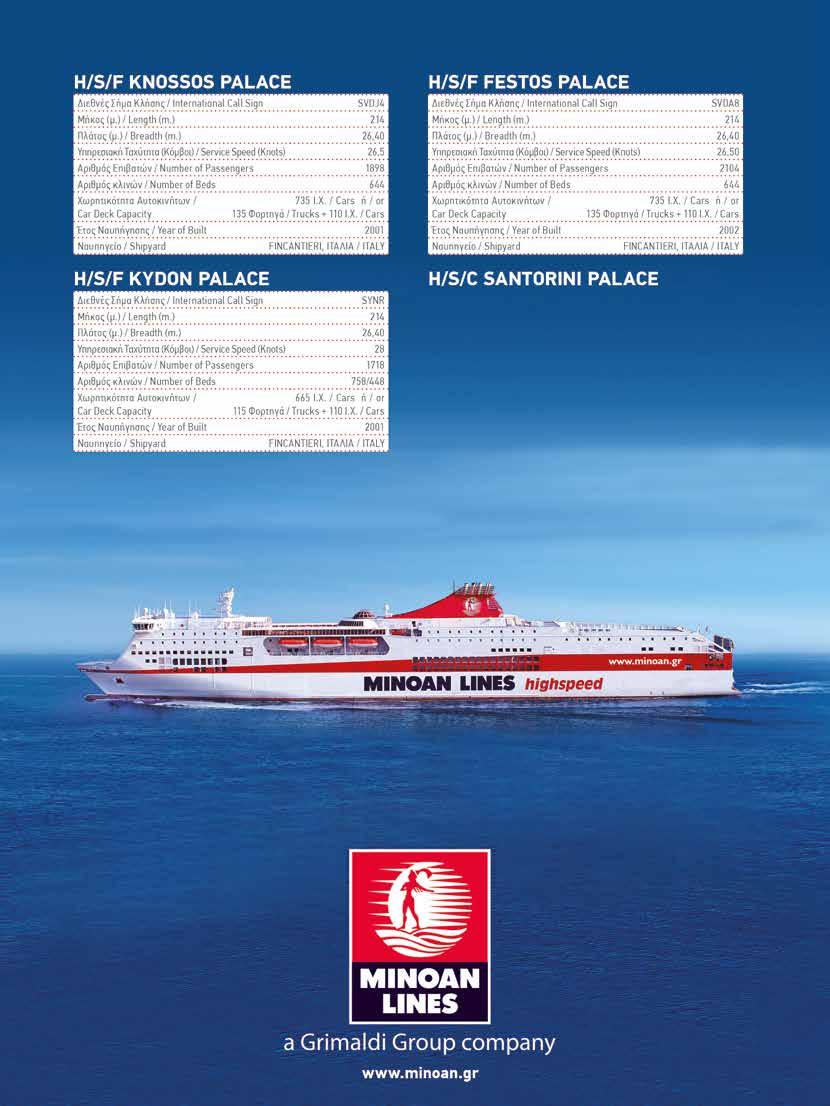
Under a different name, Santorini Palace has been charted out on a long-term basis.
ΜΙΝOAN LINES
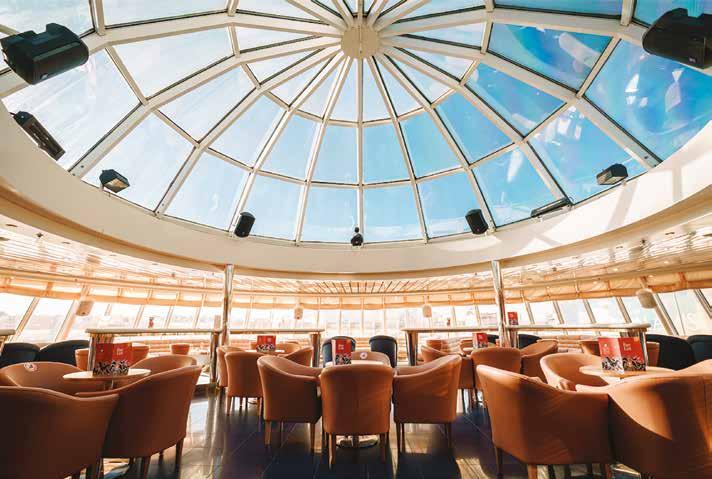
Enjoy
From the moment of embarkation until the arrival at the final port destination, the main objectives of the trained personnel of MINOAN LINES are the safety of their passengers and the assurance of a deluxe and comfortable travel experience. Begin your journey in one of the welcoming, hospitable, modern, comfortable, health safe lounges and public areas of the company’s cruise ferries, savoring your cup of coffee, meal, drink or dessert while enjoying the great blue color of the Greek seas.
The company has already completed 50 years of successful operation, it was founded in the Cretan city of Heraklion in 1972, and its course in the shipping sector began in 1974. Since then, it has played a leading role in the routes it serves and has set the standards in travel innovation, holding a prominent position among the foremost passenger ship companies in Greece as well as in Europe.
Since 2008 MINOAN LINES has been a member of the Italian Grimaldi Group, one of the largest carriers of vehicles and machinery of all types (roll-on/roll-off), containers and passengers in the world. The Grimaldi Group is headquartered in Naples, Italy, with branches in more than 25 countries, 17,000 employees and over 130 vessels approaching more than 140 ports worldwide.
The network of MINOAN LINES covers a wide range of domestic and foreign tourism. With our luxurious and ecological ships, we connect with the domestic routes, Heraklion, Crete and Piraeus and with the Adriatic routes, Greece with Italy. Cruise Ferries KNOSSOS PALACE and FESTOS PALACE make the trip more pleasant and comfortable than ever, connecting Piraeus with Heraklion with daily departures. In addition, a direct connection is offered from Piraeus and Heraklion with the enchanting Milos, in just a few hours, with the floating palaces KNOSSOS PALACE and FESTOS PALACE with daily itineraries all year round.
With regard to the selection of accommodation categories, it is worth noting that MINOAN LINES offers various cabin and accommodation categories on its ships. You can choose to travel in economy class, enjoying the services in the spacious and comfortable lounges of the ship, in the new VIP seats, which offer privacy and comfort in a specially designed area of the ship, or in one of the different cabin categories, depending on your needs, whether you are travelling alone, with friends or with your family. In fact, for those travelling with their beloved four-legged friends, MINOAN LINES offers specially designed Pet cabins if you wish to be with them during the journey.
Also, for lovers of Italy, it is worth noting that the ship KYDON PALACE operates on the route Igoumenitsa - Brindisi. Under the Greek flag and Greek crews, the daily itineraries of KYDON PALACE are operated, in conjunction with the itineraries of EUROPALINK, by GRIMALDI LINES.
Apart from the unparalleled aesthetics and luxury, the high safety, quality and comfort of our company’s vessels, every passenger of MINOAN LINES can enjoy during the trip, a wide range of services.
Shop for select products at one of the stores on board - treat yourself or buy for your beloved ones. Hop on-line on your own smartphone, tablet or laptop from the comfort of your coach or seat, using Wi-Fi services available.
The new à la carte Cretan menu is available on the FESTOS PALACE and KNOSSOS PALACE ships of MINOAN LINES, alongside other
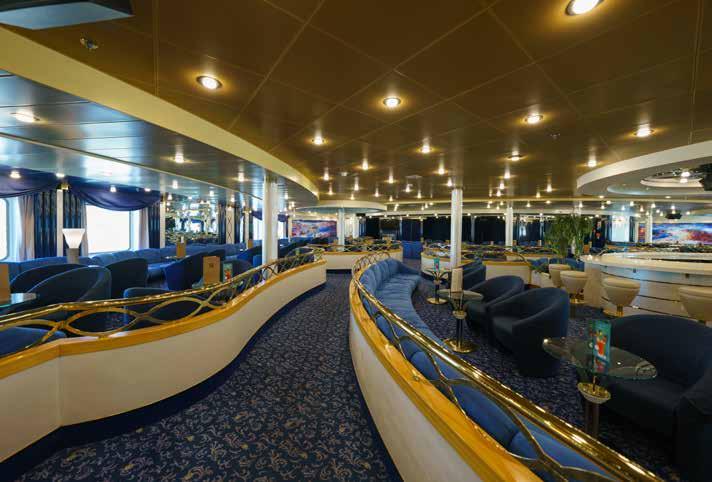
interesting options, on the PIRAEUS-ΜILOS-HERAKLION-MILOSPIRAEUS routes, and is certified with the "Cretan Cuisine" Quality Label by the Agri-Food Partnership of the Region of Crete. Regarding the meals options, in the two restaurants, A la carte and Self Service, of our cruise ferries KNOSSOS PALACE and FESTOS PALACE, the experienced chefs will travel you with their gastronomic creations and quality ingredients, ma-
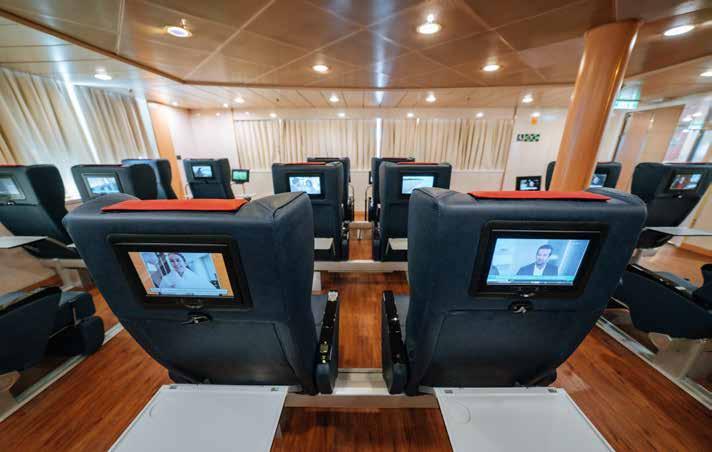
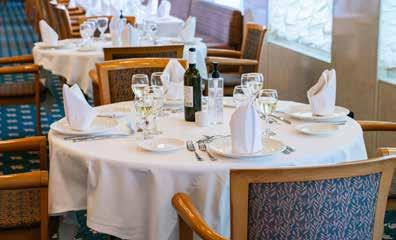
ny of which are produced from the fertile soils of the Cretan land. Dining options include an A la carte and a Self Service restaurant, where experienced chefs take diners on a gastronomic journey with their culinary creations, made with quality ingredients, many of them being the fruits of the fertile Cretan soil.
Comfort, luxury and quality services on board are combined with the hospitality and courtesy of our vessels’ staff to travel you quickly and safely to your favorite destinations!
MINOAN LINES, since their establishment, have recognized their responsibility towards society and seek to act and operate actively and consistently within the principles of Corporate Social Responsibility by developing innovative actions and presenting important social work.
The company always strives, based on its anthropocentric philosophy, and with full respect towards its principles and values, to encourage and reward worthwhile initiatives and efforts.
Being aware of its social role and in the context of its corporate strategy and commercial policy, MINOAN LINES promotes an integrated, coordinated, quality and significant social work, by setting important goals, actively participating and supporting, on an annual basis, through sponsorships (financial support or free / discounted tickets with the cruise ferries of MINOAN LINES’ fleet) socially vulnerable groups, various cultural associations, social organizations, sports clubs, organizations, educational and charitable institutions, animal welfare organisations, aiming for the prosperity of the society as a whole and its progress.
All in all, we must emphasize that in the rich plan of Corporate Social Responsibility activities, the cultivation of environmental awareness and sustainable development are promoted. MINOAN LINES is the first company in the field of Greek passenger shipping that fully complies with the new requirements of the International Maritime Organization (IMO), having invested and completed the installation of exhaust gas cleaning devices (SCRUBBERS), in the high-speed ferries KNOSSOS PALACE, FESTOS PALACE and KYDON PALACE, converting them into more environmentally friendly vessels.
MINOAN LINES does not just follow developments, it pioneers in them and continues to be on a growth trajectory by investing in the future and development of the tourism product for the benefit of our country.
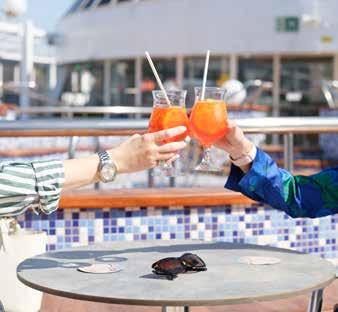



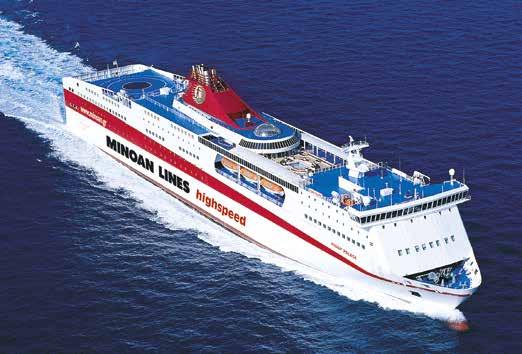
inoan Lines is the most highly regarded shipping company in Greece and Europe. It has won several quality awards and top distinctions for its vessels, services and outstanding professional standards from a number of highly rated institutions and publications, as follows:
LLOYD’S LIST GREEK SHIPPING AWARDS 2025
Line of the Year»
TOURISM AWARDS 2025 ΧΡΥΣΟ
TOURISM AWARDS
TOURISM AWARDS
Travel.
ΧΡΥΣΟ
Online Strategy.
Online Strategy
(Travel Experience),
Lines,
GREEK HOSPITALITY AWARDS 2020 & 2018
TOURISM AWARDS
Branding / Public Relations / People Strategy.
Attractions & Destinations
CORPORATE SUPERBRANDS
ICAP GROUP
«True Leader»
- Passenger Line of the Year».
LLOYD’S LIST GREEK SHIPPING AWARDS 2025 «PASSENGER LINE OF THE YEAR»
TOURISM AWARDS 2025
GOLD AWARD in the “Promotion of Local Greek Cuisine” category, nominated as “Journey to Cretan Gastronomy / Greek Inspired Gastronomy Restaurant”.
TOURISM AWARDS 2024
GOLD AWARD in the category Promotion of Local Greek Cuisine, under the nomination title "Journey to Cretan Gastronomy / Greek Inspired Gastronomy Restaurant"
SUPERBRANDS 2024
THE TOP CORPORATE BRAND in Greece’s transport sector for 2024.
TOURISM AWARDS 2022
GOLD AWARD in the Corporate Social Responsibility Actions category, with nomination title "Minoan Lines is always close to the society and its values!"
GOLD AWARD in the Social Media Presence category, with the nomination title: “Minoan Lines continues its dynamic presence in Social Media”.
TOURISM AWARDS 2021
GOLD AWARD in the Search Engine Optimization (SEO) Strategy category, with the nomination title “Optimization of SEO Strategy in 5 countries”.
GOLD AWARD in the Social Media Presence category. Minoan Lines continues its dynamic presence in social media (Facebook and Instagram).
TOURISM AWARDS 2020
GOLD AWARD for Travel Experience, in the Travel section/category.
GOLD AWARD for the Online Strategy of Minoan Lines, in the Online Strategy section/category.
GREEK HOSPITALITY AWARDS 2020 & 2018
“Best Greek Coastal Shipping company”.
TOURISM AWARDS 2019
GOLD AWARD for the Support of Local Communities and Corporate Social Responsibility actions, implemented by the company, in the Branding / Public Relations / People Strategy category.
GOLD AWARD for the “New Destinations” in the Attractions & Destination category.
CORPORATE SUPERBRANDS 2018-2019 & 2016-2017
“Top Corporate Brand Name in the Sea Transportation Sector”.
ICAP GROUP - 2018 & 2017
“True Leader” in the category “Maritime Shipping”.
TOURISM AWARDS 2018
GOLD AWARD for MINOAN LINES BONUS CLUB, the pioneering and flexible customer loyalty program.
GOLD AWARD for the reduction of the energy footprint of the company's vessels and the protection of the environment.
GOLD AWARD for the integrated On-Line Digital Campaign entitled “Away with the Müllers”.
TOURISM AWARDS 2017
GOLD AWARD in the category “Supporting local communities / Actions of Corporate Social Responsibility”.
GOLD AWARD in the category “Online presence and communication” for the NEW Minoan Lines’ Online Booking System.
LLOYD’S LIST GREEK SHIPPING AWARDS 2016
“Passenger Line of the Year”.



Το πρωτοποριακό ΠΡΟΓΡΑΜΜΑ ΠΙΣΤΟΤΗΤΑΣ ΕΠΙΒΑΤΩΝ των ΜΙΝΩΙΚΩΝ ΓΡΑΜΜΩΝ, έχει συμπληρώσει 496.000 μέλη στα 20 χρόνια επιτυχημένης λειτουργίας από την έναρξη του, αποδεικνύοντας την τεράστια απήχηση του

•
Tηλ.:


The truly innovative customer loyalty program of Minoan Lines now has 496.000 members and 20 years of successful operation from the launch, demonstrating its enormous appeal to the passenger public in Greece and abroad.
Gold Award for Minoan Lines Bonus Club at Tourism Awards 2018 & Silver Award for Loyalty Programs at Tourism Awards 2021 & 2022.
Benefits:
• 10-20% discount on CRETE, MILOS, ADRIATIC routes.
•Free tickets in all accommodation and private vehicle categories.
•10-20% discount at the bars and restaurants on board.
•10-15% discount at the stores on board.
• Promotions and offers only for members.
*Not applicable on ixed dues.
YOUR BONUS CLUB CARD IS AVAILABLE DIGITALLY!
Minoan Lines Bonus Club goes digital! We have good news for you!
As a Minoan Lines Bonus Club member, you don’t need to have a physical card in order to enjoy all the benefits
Log in to your Minoan Lines Bonus Club account at www. minoan.gr and download your digital loyalty card, print it or save it to your smartphone, tablet or laptop for quick access to your membership details.