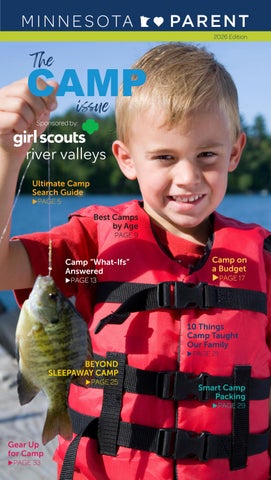
Minnesota Parent Summer Camp and Programs Guide 2026

Page 1


CAMP

Sponsored by:

Ultimate Camp Search Guide uPAGE 5

Camp “What-Ifs” Answered uPAGE 13 Best Camps by Age PAGE 9

Gear Up for Camp uPAGE 33

BEYOND SLEEPAWAY CAMP uPAGE 25

Camp on a Budget uPAGE 17

10 Things Camp Taught Our Family uPAGE 21

Smart Camp Packing uPAGE 29

CAMPS TURN CURIOSITY INTO CONFIDENCE

Every parent wants their child to feel confident, brave, and connected — but it’s not always easy to find a place where they can safely explore who they are and what they love. Girl Scout Camp gives campers the space, the support, and the experiences to grow — one adventure at a time. Led by expert staff and filled with unforgettable activities, our camps are designed to help every camper discover their strengths, make new friends, and build lifelong memories.

Kids need a place to try, to grow, and to belong. Girl Scout Camp is that place. Whether your camper is brand new to camp or a seasoned adventurer, there’s a session designed for their pace, their personality, and their interests. Our camps offer a wide range of exciting activities, including horseback riding, STEM, arts, water sports, Power Girls, and spaces that support and affirm BIPOC campers and families.

Kids are craving adventure, not just another activity. At Girl Scouts River Valleys Camps, campers will:

• Build confidence through hands-on experiences.

• Try new things in a supportive environment.

• Make real friends who cheer each other on.

• Explore the outdoors and discover new passions.

Sending your child to camp is a big decision. You want to know they’ll be safe, supported, and surrounded by people who care. Our focus is simple: every camper feels seen, accepted, and celebrated. Campers stay in clean, cozy cabins, yurts, or bunkhouses designed for safety and comfort. We serve balanced, kid-approved meals that accommodate your camper’s dietary needs. And your child will be surrounded by supportive, highly-trained, and passionate staff who are prepared for everything.

With 50+ years of camp expertise, Girl Scouts River Valleys knows how to create magical, meaningful experiences that stay with campers for life. And with our three beautiful camp properties just a short drive from the Twin Cities metro, your child will enjoy an immersive outdoor experience that’s both fun and accessible.

Registration for Sleepaway Camp sessions opens on January 27. Visit gsrv.gs/camp-sessions to get all the info you need to give your child their best summer yet.

BEGIN YOUR SUMMER CAMP SEARCH:

A PARENT’S ROADMAP

Summer camp is a rite of passage for many kids, providing a chance to make new friends, learn new skills, and experience independence. But as a parent, choosing the right camp can feel overwhelming. With so many options—day camps, overnight camps, sports camps, arts camps, and more—it can be tough to know where to start.

Starting your research early and following a clear plan will make the process smoother and more enjoyable. Here’s how to begin researching the perfect summer camp for your child.

1. Know Your Child’s Interests and Needs

The first step in finding the right camp is knowing what excites your child. Is your son an outdoor adventurer who loves hiking and swimming? Or is your daughter a budding artist or athlete? Matching the camp’s focus with your child’s passions will ensure they’re engaged and happy.

Also, consider your child’s personality. Some kids are ready for the adventure of overnight camp, while others might prefer to stick close to home at a day camp. If your child has special needs—whether it’s a medical condition, dietary restriction, or social-emotional support—many camps offer programs specifically tailored for inclusivity.

2. Choose the Camp Type

Once you’ve nailed down your child’s interests, it’s time to choose the type of camp. There are several options:

• Day Camps: These are great for younger kids or those not ready for an overnight stay. They offer a full day of activities but kids return home in the evening.

• Overnight Camps: Perfect for older or more adventurous children who are excited about spending a few days or even weeks away from home.

• Specialty Camps: Does your child love soccer, painting, or science? There are camps dedicated to specific interests, from sports to STEM.

• Traditional Camps: These offer a wide range of activities like swimming, hiking, and team-building, giving kids a little taste of everything.

• Faith-Based Camps: If your family values align with a particular faith, consider a camp that includes spiritual growth alongside fun activities.

The key here is balance. If your child loves soccer but also enjoys swimming, a general outdoor camp with a soccer focus might be the best of both worlds.

Camp Invention

3. Research the Camp’s Reputation

Now that you’ve narrowed down the type of camp, it’s time to dig into the details. Start by asking around. Word-of-mouth recommendations from other parents can be invaluable. You can also check online reviews and ratings on sites like Yelp or Google.

For added peace of mind, look for camps accredited by the American Camp Association (ACA). ACA accreditation means the camp meets industry standards in health, safety, and program quality.

You should also review the camp’s website and social media pages. Many camps post videos or photos from previous summers, giving you a feel for what the camp is like in action. If possible, attend open houses or camp fairs to meet the staff and see the facilities firsthand.

Wolf Ridge Environmental Learning Center

4. Check the Staff and Safety Protocol

Staff make all the difference in creating a positive camp experience. Make sure the camp hires experienced, well-trained counselors. Ask about the counselor-to-camper ratio—ideally, there should be enough counselors to give each camper attention while maintaining safety.

Speaking of safety, inquire about the camp’s medical staff and emergency protocols. Does the camp have nurses on-site? What’s the protocol for handling allergies or injuries? With the right precautions in place, you’ll feel more confident about your child’s well-being.

5. Review the Schedule and Activities

Most camps will provide a schedule of daily activities. Look for a good mix of structured activities and free time. This balance helps keep kids engaged and gives them the chance to explore at their own pace.

If it’s a specialty camp, check that there’s enough variety to keep things interesting. Even a sports camp should offer downtime or alternate activities like swimming or arts and crafts so kids have breaks and less-structured fun time.

6. Consider Location and Cost

Think about practical considerations like location and cost. If it’s a day camp, make sure it’s within a reasonable distance for daily drop-offs and pick-ups. For overnight camps, consider how far you’re comfortable with your child being from home.

Cost can vary widely, but many camps offer scholarships or payment plans. Don’t hesitate to ask about financial aid if it’s needed. Early registration discounts are another way to save money, so starting your research early can pay off.

7. Trust Your Instincts

Finally, trust your gut. If something doesn’t feel right about a camp—even if it looks great on paper—keep looking. The perfect camp is out there, and when you find it, you’ll know.

Summer Fun Awaits!

With some planning and research, you can find the perfect summer camp that matches your child’s interests and your family’s needs. By following these steps and including your child in the process, you’ll both be confident and excited for a summer full of fun and new adventures!

Northern Star Scouting

CAMP TIPS:

AN AGE-BY-AGE GUIDE TO THE BEST CAMP EXPERIENCE

Summer camps are more than just summer playgrounds; they’re transformative experiences that shape a child’s growth and independence while building cherished memories. For each age group and stage of development, kids’ experiences at summer camp have different things to consider.

While there are a variety of camp options, there are different goals for each age and different things parents should consider. A six-year-old’s camp experience should look very different from that of a sixteen-year-old. As you think about your child, think about their unique needs and goals for camp. Look for these key considerations for each age group:

Early Childhood (Ages 4-6)

At this age, summer camps focus on nurturing curiosity and fostering social skills through playful activities. Camps often offer themed weeks—ranging from nature exploration to arts and crafts— where little ones engage in finger painting, outdoor adventures, and storytelling sessions.

These camps prioritize a nurturing environment that introduces teamwork, sharing, and cooperation through fun-filled games and activities. Often these are day camps, but overnight camps are available as well.

Important considerations:

• Comfort and Familiarity: Ensure the camp environment is nurturing and familiar, allowing for a smooth transition. Familiar faces or activities can ease separation anxiety.

• Safety Measures: Verify the camp’s safety protocols, especially regarding supervision, food allergies, and basic medical needs.

• Communication: Choose camps that prioritize clear communication with parents, providing updates on daily activities and your child’s progress.

• Play-Based Learning: Look for camps emphasizing play-based learning to nurture curiosity and social skills in a fun and engaging manner.

Middle Childhood (Ages 7-10)

As children step into the elementary years, summer camps offer a broader spectrum of activities. Sports camps are popular, providing fundamental skills training in activities like soccer, basketball, or swimming. Adventure camps introduce thrilling experiences that include rock climbing, zip-lining, and camping, instilling a sense of courage and resilience.

Camp Invention

Specialized camps also emerge at this age, catering to specific interests such as coding, robotics, or theater. This is a great way to nurture budding passions and talents. Team-building activities and structured games further develop social skills and cooperation among peers as developing relationships becomes more important with age.

Important considerations:

• Interest Alignment: Consider your child’s interests when selecting camps. At this age, children often enjoy exploring hobbies or sports they’re passionate about.

• Balanced Activities: Ensure a balance between structured activities and free time for social interaction and personal exploration.

• Friendship Opportunities: Check if the camp facilitates teamwork and bonding among campers through group activities and team sports.

• Independence Development: Encourage camps that foster independence through small responsibilities and decision-making opportunities.

ENGINEERING & DESIGN CAMPS

Coding • Robotics • LEGO Engineering • Architecture • Pre K • and more!

Scholarships available!

Learn more and register at theworks.org

Pre-Teens (Ages 11-13)

Entering the pre-teen phase, camps focus on honing skills and providing opportunities for personal growth. Leadership camps empower adolescents through workshops, discussions, and challenges that cultivate self-confidence and decision-making abilities. Wilderness camps push boundaries with more extensive outdoor excursions, fostering independence and resilience through survival skills and exploration.

Additionally, creative arts camps delve deeper into various art forms, encouraging self-expression and creativity. These camps often offer more specialized instruction and advanced techniques to further develop talents. Individual growth as well as developing strong relationships is essential at this age.

Important considerations:

• Challenges and Growth: Look for camps offering appropriate challenges that encourage personal growth and self-confidence, such as leadership or adventure camps.

• Specialized Interests: Consider specialized camps that cater to your child’s emerging interests and talents, providing opportunities for skill development.

National Sports Center

• Communication and Support: Ensure the camp has mechanisms for supporting pre-teens navigating social dynamics and offers avenues for open communication with counselors.

• Balance and Rest: Acknowledge the importance of downtime and adequate rest amidst more intensive activities to prevent burnout.

Teenagers (Ages 14-17)

The teen years mark a shift towards more immersive and specialized experiences. High schoolers can opt for camps tailored to their career interests, such as STEM camps, journalism workshops, or entrepreneurship programs, providing hands-on experiences and mentorship.

Adventure camps for teens become more intense, offering wilderness expeditions, whitewater rafting, or international travel programs. These experiences challenge teens physically and mentally, fostering resilience, adaptability, and a global perspective. Community service camps allow teens to contribute meaningfully through volunteer work, promoting empathy and social responsibility.

The social component is essential for teens, but it can take on different forms. While some kids enjoy a team-building extroverted camp experience, others prefer something that focuses on independent growth or learning a new skill. Make sure your teen is comfortable with the level of social interaction offered.

Friends School of Minnesota

Important considerations:

• Goal Alignment: Select camps aligning with your teen’s future goals or career interests for a more focused and beneficial experience.

• Independence and Responsibility: Encourage camps that promote independence and responsibility, allowing teens to make decisions and navigate challenges.

• Mentorship and Guidance: Look for programs with experienced mentors or instructors who can provide guidance and support to teens exploring their passions.

• Community and Impact: Consider camps that involve community service or global initiatives to instill a sense of social responsibility and global awareness.

The Best Camp Experience

Regardless of age, summer camps serve as transformative spaces where children and teenagers develop essential life skills, forge lasting friendships, and create cherished memories. As you choose camp experiences at each age, consider your child’s evolving needs to offer the best camp experience.

We support students entering grades 2-8 with ADHD, dyslexia, Executive Functioning Challenges, and more. Through expert and individualized instruction, we build skills and confidence, helping students start the school year strong and prepared. Learn more: groveslearning.org/summer

LEARN MORE

THE MOST COMMON “WHAT-IFS” OF SUMMER CAMP

One of the hardest things about sending kids to camp is knowing that you are not there, and worrying about the things that could happen. I remember thinking about my kids, worried about every scenario:

u What if they can’t sleep?

u What if they get hurt?

u What if they lose their towel?

My list of “what-ifs” was longer than the forms you fill out to send them to camp. And I wasn’t the only one; my kids had their own “what-ifs” as well.

When kids go to camp, you won’t be there to fix everything or answer every question. But you can help them feel prepared (and you feel a little more at ease) by having some “what-if” conversations before they leave.

What if I get hurt? The camp is trained to deal with all kinds of medical situations, from band-aids to bones and beyond. Talk about the staff they have available, and reassure your child that the nurse will contact you in an emergency.

What if I get lost? While the kids will likely spend time outdoors and be in new surroundings, kids are not left on their own. There are lots of staff and other kids that will always be around. Plus, there are always people where the fun stuff is.

What if someone makes me feel uncomfortable? Say something. Always. Find another adult, go to the nurse, tell the counselor or lifeguard. While incidents like this are not common, it is important to talk about how to handle them. Staying in groups is another great way to help foster a safe, comfortable environment.

What if I lose my ______?

It could be anything. A towel, swimsuit, a favorite stuffed bear that no one knows is hidden under the pillow. Things will get lost at camp. The best bet is to talk to your counselor for help. Camp is full of extras of things left behind by other kids, plus some just for this purpose. Kids don’t need to pretend or miss out on an activity if they lose something. There are always extras, a place to get things, or a friend who is willing to share.

What if I miss home?

Your child won’t be the first and they won’t be the last to feel homesick. It’s one of the most common and expected struggles with going to camp. And they don’t have to suffer alone. Counselors, leaders, and staff are all trained to help kids who feel lonely or homesick. They can suggest ideas for feeling connected like writing a letter or sending a daily picture home, as well as finding activities and friends that can help.

What if I don’t make friends?

Going somewhere new, where you don’t know anyone, can feel scary. Remind kids that most of the other kids feel the same way. Camp is full of fun ways to help them make friends. From games to cabin time, to swimming and activities, there are tons of opportunities to meet new people and find a friend or two.

What if I’m scared of the dark?

It can get pretty dark at night at camp. Bringing flashlights is always a good starting place. Another great tip is to bring a reading light and a book, this way kids don’t have to tell anyone they are scared they can just read before bed.

What if I don’t want it to end!

This one is one of the most common problems kids face by the end of camp! They simply don’t want the fun to end. Remind them to share great memories with you, stay in touch with new friends, and be ready to sign up for next year!

Summer Day Camps

C u l i n a r y C a m p

V a r i e t y W e e k C a m p

*Beautifully Maintained on

*Modern,

*State of the Art Dining Hall

*Indoor Gym

*Full

*30

*State

Performing

CAMP ON A DIME:

SIMPLE TIPS FOR SAVING MONEY ON SUMMER CAMP

Summer camp is a cherished tradition that offers children the opportunity to acquire new skills, form lasting friendships, and create memories that will last a lifetime. However, for many families, the cost can feel out of reach. Fortunately, there are numerous ways to make summer camp more affordable. Whether you’re considering overnight or day camps, these budget-friendly ideas will help you plan a memorable summer for your kids without breaking the bank.

1. Explore Community Programs

Local community centers, YMCA branches, and your city parks and recreation departments often offer low-cost summer camp options. These programs provide a wide range of activities like sports, field trips, beach time, and arts and crafts, at a fraction of the cost of private camps. Some even offer sliding scale fees based on income, making them accessible for families on tight budgets.

2. Look for Nonprofit or Religious Camps

Many nonprofit organizations and religious groups run summer camps that are free or low-cost. Scouts, 4-H, Boys & Girls Clubs, and church-sponsored camps often have lower fees and even offer scholarships for families in need. These camps emphasize community, character-building, and fun.

3. Take Advantage of Early Bird Discounts

Booking early can save you a significant amount of money. Many camps offer early registration discounts, often in the fall or winter before the summer camp season. If you plan ahead, you can lock in lower rates and avoid last-minute price hikes.

4. Volunteer in exchange for tuition discounts

Some camps offer reduced fees for parents who volunteer. Whether you’re helping with administrative work, cooking meals, or supervising activities, your time could significantly reduce the cost of camp. This arrangement benefits both the camp and your wallet.

5. Consider Shorter Camp Sessions

Instead of committing to a full week or more, look for shorter camp options. Many camps offer half-day, weekend, or half-week programs that provide the same enriching experiences without the hefty price tag. This can also be a great way for younger children to ease into the camp experience and allow for more family time in the summer.

6. Create a DIY Camp Experience

If a traditional camp is out of the budget, consider organizing a DIY camp at home. Team up with other parents to host a backyard camp, where each family takes turns leading activities. Themes like “science week,” “art week,” or “adventure week” can keep kids engaged and entertained without the cost of a formal camp. Each family can take a day of the week or be in charge of a whole week.

7. Check Out Specialty Camps

Specialty camps focused on skills like coding, sports, or performing arts are sometimes offered at discounted rates by local businesses, libraries, or colleges. These camps may be shorter or less expensive than traditional day or overnight camps and provide valuable learning opportunities. Colleges and universities often offer unique opportunities for middle and high school students that are great experience and resume builders.

8. Shop Smart for Camp Gear

Camp essentials like sleeping bags, flashlights, and clothing can add up quickly. Save money by borrowing items from friends or family or shopping secondhand at thrift stores, consignment shops, or online marketplaces. Check if the camp provides certain items to reduce your packing list.

9. Pack Snacks and Supplies to Avoid Extra Fees

Some camps charge extra for snacks, water bottles, or forgotten supplies. Carefully review the packing list provided by the camp and stock up on affordable items at discount stores. A little preparation can help you avoid unexpected costs.

10. Apply for Financial Assistance

Many camps offer financial aid or scholarships to families who qualify. Reach out to camp organizers to learn about available options. Even if you think you may not qualify, it never hurts to ask—some scholarships are need-blind or have flexible criteria.

11. Encourage Kids to Help Fund Their Camp Costs

Teach kids responsibility and financial literacy by involving them in saving for camp. They can take on small jobs like babysitting, lawn mowing, or a lemonade stand to contribute to their camp fund. Family members might also be willing to pitch in as a birthday or holiday gift.

12. Consider Day Camps for Younger Kids

Day camps can be an excellent alternative to overnight camps, especially for younger children. They’re usually more affordable and eliminate the need for overnight gear. Plus, kids still get to enjoy fun activities, social interaction, and outdoor adventures during the day.

13. Plan for Next Year Now

Once camp season ends, start planning for the next one. Set up a dedicated savings fund and contribute a small amount each month to spread out the expense. Look for payment plans offered by camps to make the cost more manageable over time.

A Summer to Remember on a Budget

Summer camp doesn’t have to be an expensive endeavor. With a little creativity, research, and planning, you can provide your kids with an unforgettable summer experience without overspending. From exploring local programs to organizing DIY adventures, there are plenty of ways to enjoy camp on a dime.

Northern Star Scouting

YOUR SOUNDTR ACK TO SUMMER

I nspir ing music camps for all ages.

Explore instruments and ensembles, build sk ills, and discover the joy of mak ing music with world- class teaching ar tists.

Day Camps for Ages 3–18 | Available June – August All instruments, genres, and sk ill levels.

Financial assistance is available.

10 SURPRISING THINGS

I LEARNED AFTER SENDING MY CHILD TO CAMP

Sending my kids to camp I knew they would spend a lot of time outside and they would try new things. I was thrilled they would meet new people and learn more about something they love. They would swim and laugh and stay up way too late.

After they got home, there were things I couldn’t have imagined would be true. Beyond the fun and the lousy food. After the bonfire stories and the silly games they played, these are the things I didn’t see coming. And I’m starting with the hardest one.

1. They struggled, but it’s worth it. Maybe they didn’t get the top bunk as they wanted or they weren’t able to stand up on the water skis. Maybe they missed home. Whatever the struggle, it was an opportunity for growth they would not have had at home.

2. They grew. They left looking like your baby, and they come home looking more grown-up. It doesn’t matter if they were gone the whole summer or two days. Independence makes them grow.

3. That last hug and first hug are the best you have had in a long time, especially if you have tweens or teens. The hug right before they leave is hard, so you hug tight. When they get back, the simple act of having your arms around them again, well, that’s just magic. Except…

4. They stink. It doesn’t matter if they went to day camp or three weeks in a cabin. Hygiene is different at camp. Let’s be real: it’s non-existent. But they survived and you can send them right to the shower when they get home.

5. The laundry will surprise you. Somehow all the clothes will smell like damp gym shoes left in a garbage can for a week. This is odd considering they wore the same clothes all week. If it went to camp it gets washed. Clothes, sleeping bags, people. It all gets washed.

Camp Invention

6. They need sleep. You’re going to want to hear all about it. And they will be excited to tell you. For exactly fifteen minutes. And then they will fall into a deep sleep, perhaps even sleeping through dinner straight until the next day. There is nothing wrong, they are simply exhausted from their adventures.

7. They have friends you don’t know. They met people. They made new friendships. They’ll talk about these people as if you know them. Just play along.

8. Camp store money was the best. And yes, they spent it all on candy. They’ll be fine.

9. Your letters/emails/texts meant more to you than they did to them. And it’s okay. They reminded them you are always there for them and they let you feel more connected. Win-win.

10. Even if it was “THE BEST WEEK EVER” they are glad to be home. They are back to where they are safe and loved and can relax. And that feels pretty great for both of you.

LOFT.OR G /YOUTH

Friends School of Minnesota

DAY CAMP:

Week long program (5 days) that's open to all youth entering K - 6th grade at 6 sites

Located at: Base Camp (Fort Snelling), Kiwanis (Marine on St Croix, bus from Forest Lake), Rum River (Ramsey), Tomahawk (Birchwood, WI) and Horace Johnson (Duluth), Phillippo (Cannon Falls, bus from Apple Valley and Northfield)! ADVENTURE OVERNIGHT

CAMP:

Is your 6 - 9 grader ready to discover your next camp Adventure? On their first day, campers will depart from Base Camp to head to Tomahawk for a sleep-away camp experience. Bussing included. Try new activities like climbing, horses, canoeing, swimming and more! Options available for 3 and 4 nights.

ALTERNATIVES TO SLEEPAWAY CAMP

Sending a child to a sleepaway camp is a big step for many families. While many kids have fun going to sleepaway camp in the summer, it isn’t the right choice for everyone. There many reasons it may not be the best fit for a family such as a child not being ready, finances, medical concerns, and personal reasons.

If sleepaway camp isn’t the best option for your family, there are plenty of other options that will help your child learn, meet new friends, and most importantly, have fun.

Day Camp

Many families opt to send their kids to a day camp. It is set up just like a sleepaway camp, except the kids come home every day to sleep. Day camps vary in length, but are often Monday through Friday, lasting a week at a time. The schedule typically follows an extended school day schedule starting in the morning and finishing in the late afternoon. Some day camps even provide transportation.

The activities at day camp can vary. Traditional camp settings offer many of the things people think of when camp comes to mind. Things like swimming, arts and crafts, games, and hiking are common.

Some camps offer specialized activities as well. These can range from drawing and painting to boating and waterskiing. Meals may be included, but each camp varies. If kids bring their meals, this can be a great alternative for families concerned about food allergies as all your child’s food comes from home.

Specialty Programs

A growing trend is a program that offers specialized content to kids during the summer. These can be similar to a day camp program or just for a few hours each week. The time at a specialty program allows kids to explore a specific topic or interest for the whole time they participate.

STEM (science, technology, engineering, and mathematics), art, music, athletic, and hobby programs are great ways for your child to learn and connect with other kids with similar interests. Some kids thrive in specialty programs because they are given the opportunity to explore in depth. These programs can be sponsored locally. Colleges and universities are also great places to find specialty summer programs for kids of all ages.

Local Resources

Sometimes families need a more flexible option that is local and more affordable. Looking at local resources such as public school-sponsored programs, libraries, museums, churches, recreation departments, and nature centers offer a wealth of opportunities for kids in the summer.

The possibilities vary but can include things like a summer book club, lego club, volunteering at an animal shelter or organization, VBS, writing club, farm help, state park programs, craft times, zoo programs, and more.

Utilizing local resources is a great way for kids to explore a variety of things. This option does require a bit more legwork to plan, but can be a very economical and fruitful possibility.

Create a Camp with Other Families

A creative way to foster summer fun with other kids might be in your backyard. This works when multiple families create a plan and schedule to share the responsibilities and reap the benefits of summer camp for their kids.

Each family is responsible for a specific time. This could be a whole day, part of a day, or any arrangement that works for everyone. On a family’s designated day, all the kids go to that house and participate in activities. These could be things like playing outside, swimming, crafts, games, science experiments, cooking, and more.

The other parents simply drop their kids off and pick them up at the predetermined times while the host family handles all the kids’ activities for that day. This is a great option for people who need some time to work or run errands sans kids. The days you host will be busy, but you will have free time when the other families host.

Family Member Camp

A simple, fun alternative to a structured program is to assign a certain day every week or even a whole week for your kids to spend with a close family member. Extended family like grandparents often look forward to some special time with the kids to go places, bake, play, and explore.

This is a wonderful way to help your child connect more with their family members. It fosters relationships beyond what kids find when the whole family is together as it provides dedicated time for them with a family member.

Things to Remember

When you are choosing a camp option for your child the most important thing is that it works for your family. There is no shame in opting out of sleepaway camp, especially with the array of possibilities that await.

Whatever you sign up for, be sure to research the activities offered, staffing, and schedule, and sign up early. Discover what is best for your family, and everyone can have a great time at summer camp.

At the Y, we’re all about creating unforgettable experiences for kids! Whether your child loves the outdoors, sports, swimming, or just having fun with friends, we have something for everyone this summer.

CAMP TIPS:

PACKING YOUR BAGS FOR CAMP

Encourage Your Child to Pack their Own Bag

(And learn to pack away your anxiety, too.)

“Mom. You forgot to pack extra socks.”

Those words came from my 10-yearold son after we picked him up from a weeklong overnight camp. According to him, he’d worn the same pair of socks all week—and now had a blister to prove it.

I was baffled. I distinctly remembered buying extra hiking socks from the camp list and packing plenty of everyday socks and underwear.

“I packed them,” I said confidently. “They were right there with your underwear.”

His reply stopped me cold: “Oh yeah… I couldn’t find my underwear either. So I wore the same pair all week.”

When we got home, we opened his large gear bag. Sure enough, neatly tucked into a second zippered compartment—exactly where I’d put them—were all the clean socks and underwear.

“We didn’t see that section,” he admitted.

That’s when I remembered the night before camp, when I carefully showed him where everything was packed.

His distracted “Yeah, yeah, Mom, I know” should have been my clue.

Lesson learned: the next year, he packed his bag—and I simply reviewed it.

Whether your child is heading to camp for the first time or the fifth, these tried-and-true tips can help make packing (and the camp experience) smoother for everyone.

Smart Camp Packing Tips for Families Start early

Review the camp’s packing list together a few weeks in advance. This gives you time to purchase missing items—and helps build excitement for camp.

Let them do the packing

Have your child pack their own bag with your supervision. Knowing what they packed (and where) makes it much easier for them to find essentials. Bonus: it builds independence.

Label everything

Label luggage and individual items. Labels work well, but a permanent marker can do the trick. One year, we even created a simple “logo” using initials to make items easy to identify.

Be cautious with care package

Check camp rules before sending anything. Some camps prohibit food due to wildlife or allergy concerns. If food is allowed, send enough to share and be mindful of nut-free policies.

Pack it out

Some camps recommend sending a detailed list of everything your child brings. This helps when it’s time to head home.

Don’t helicopter

Many camps limit parent-child contact for good reason. Ask yourself: will messages from home help your child—or make them more homesick? One of our kids actually asked us not to write after realizing it made camp harder.

Prepare for homesickness

Homesickness is normal and can happen at any age. Reassure your child before camp that it’s okay to feel that way—and that you’re confident they can handle it. Counselors are trained to help. If you get a tearful call, stay calm, offer encouragement, and talk with camp staff if needed.

Leave valuables at home

Jewelry, expensive electronics, and unnecessary gadgets are best left behind. Camp is about unplugging, making friends, and trying new things—without worrying about lost or broken items.

Sending your child to camp is a big step—for them and for you. Trust the camp staff, follow the packing list, and give your child the chance to take ownership of their experience. You might be surprised at just how capable they are.

YMCA CAMP PEPIN

RESIDENT CAMPS DAY CAMPS TEEN/LEADERSHIP SPECIALTY CAMPS ROPES COURSE TARGET RANGES

Camp Franklin offers recreational, academic, and social skills programs for K-12 students with ASD or other neurodiversities.

SESSION 1

Week 1: June 8-12

Week 2: June 15-19

Week 3: June 22-26

SESSION 2

Week 1: July 6-10

Week 2: July 13-17

Week 3: July 20-24

Week 4: July 27-31

SESSION 3

Week 1: August 3-7

Week 2: August 10-14

Visit franklinmn.org/camp/ to apply or contact Chloe Herzog at chloe.herzog@franklinmn.org for more information.

Northern Star Scouting

A Jam-Packed Summer of Exploration and Fun!

Minneapolis Summer Smash CAMP

YWCA Minneapolis Summer Smash Camp blends learning and play. From art and music to science and global cultures, campers will explore, make friends and build teamwork while having a blast!

Dates: June 15 – September 2, 2026

Time: 7:00 am – 6:00 pm

Ages: Grades K-4 (school year 2025-2026)

YWCAmpls.org/summer-camp

TIPS ON PACKING & GEAR FOR SUMMER CAMP

Packing for camp doesn’t have to be overwhelming. A little planning goes a long way toward helping kids feel confident, comfortable, and ready for adventure.

Before You Pack

• Plan ahead: Think about how long your child will be living out of a backpack, duffel bag, suitcase, or trunk.

• Follow camp rules: Always review the official packing list provided by your camp—policies can vary.

• Label everything: Use laundry pens, iron-on, or sew-in labels on clothing, shoes, and gear.

• Break in footwear: Avoid sore feet by having kids wear new shoes or boots before camp begins.

What to Pack

Headwear & Accessories

• Baseball cap

• Scarf or bandanna

• Swimming goggles

• Sunhat

• Sunglasses

• Eyeglasses or contact lenses (plus case/solution)

Footwear

• Boots (if needed for camp activities)

• Tennis shoes or athletic shoes

• Sandals or flip-flops

• Dress shoes (check with camp)

• Plenty of socks

Clothing

• T-shirts or tank tops

• Long pants

• Lightweight jacket

• Raincoat or poncho

• Underwear & Socks

• Shorts

• Jeans

• Sweatpants

• Swimsuit(s)

• Sweatshirt

• Dress clothes (if required by camp)

• Pajamas (and robe, if desired)

Bed & Bath

• Towels

• Pillow

• Laundry bag

• Sleeping bag or bedding

• Sheets (check size requirements)

Bathroom Kit

• Brush or comb

• Insect repellent

• Lip balm with SPF

• Toothpaste

• Deodorant

• Sunscreen

• Shampoo and conditioner

• Bar soap (with case) or body wash

• Toothbrush (with case)

• Shaving supplies (if needed)

• Feminine hygiene products

Camp Gear & Extras

• Books or magazines

• Flashlight and extra batteries

• Frisbee or small outdoor toys

• Refillable water bottle

• Writing paper or journal

Helpful Reminder: Check with your camp for specific policies on electronics, musical instruments, sports equipment, food, and specialty gear.

Summer Camps & Golf Academy

Your child’s summer adventure begins with Three Rivers!

Summer Camps

Ages 4-18

Archery

Art

Biking

Fishing

Hunting & Firearms

Paddling

Photography

Wildlife

Golf Academy Lessons & Leagues

Ages 5-Adult

Baker National Golf | Medina

Cleary Lake Golf | Prior Lake

Eagle Lake Golf | Plymouth

Glen Lake Golf | Minnetonka

Hyland Greens Golf | Bloomington

Parkers Lake Golf | Plymouth

Plus many more exciting camps to choose from!

Registration begins:

Tuesday, February 24 at 7 a.m. for Summer Camps

Tuesday, March 10 at 8 a.m. for Golf Academy

Kids Cooking Camps

Let them make a mess and learn a ton about life in the kitchen this summer~

Kids & Teen Cooking Camps at Cooks of Crocus Hill.

CAMP DIRECTORY

Our summer camp directory serves as an essential resource for parents seeking enriching and engaging activities for your children during the summer months. This directory provides a comprehensive overview of various camps, allowing parents to compare options based on location, cost, and the specific interests and needs of your children. With detailed descriptions and specialized themes, the directory simplifies the decision-making process, ensuring that parents can find camps that align with their children’s passions.

Academic

Groves Learning Center

Groves Summer Programs are designed specifically for students with dyslexia, ADHD, and other language-based learning challenges. Our programs offer in-person, expert, individualized instruction.

• Reading Writing and Math Instruction for students entering grades 2-8

• Writing and Executive Function Program for students entering grades 6-8

St. Louis Park, MN groveslearning.org/info

Arts

Celtic Junction Arts Center

Ignite your child’s curiosity about Ireland through music, dance, language, and sport! At this lively summer camp, 6-11-yearolds jump into Irish culture with hands-on activities – from learning Irish phrases and traditional tunes to exploring Ireland’s landscapes and playing Gaelic games. Give your young explorer an adventure filled with Irish discovery!

St Paul, MN

celticjunction.org/product/irish-adventure-camp

White Bear Center for the Arts

Imagine Art at White Bear Center for the Arts invites kids in grades 1–8 to paint, draw, sculpt, and dream big in a playful, supportive studio environment—including two special nature-inspired weeks for ages 10-13, offered in partnership with Tamarack Nature Center that blend artmaking with outdoor exploration.

White Bear Lake, MN WhiteBearArts.org/imagine-art

Textile Center

Join us for a summer of fiber art exploration! This year’s week-long camps weave together themes of storytelling, self-expression, identity, and repurposing. From puppet making and dyeing with flowers to learning about fiber and meeting llamas, our lineup invites young, curious kids to explore, create, connect, and have tactile fun.

Minneapolis, MN textilecentermn.org/youth-family-classes/

The Loft Literary Center

Budding authors, let’s write! The Loft’s Young Writers Program offers weeklong, in-person writing camps and intensives for ages 6–18 at Open Book in Minneapolis. Screen-free creativity, Tue–Fri, July 7–Aug 14, 2026, with full- and half-day options. All experience levels welcome. Register at loft.org/youth. Minneapolis, MN Loft.org/youth

Zenon Dance School

Join Zenon Dance School for Summer 2026 Camp Zenon! Our one-week camps invite children ages 4-10 to discover diverse dance styles and creative movements. Designed for all experience levels, campers will learn, grow, and thrive in a nurturing environment, ensuring an unforgettable and enriching experience for young dancers.

Minneapolis, MN zenondance.org/camp-zenon

MacPhail

CAMP RESOURCES

Dance/Music/Performance

Ballet Co.Laboratory

Explore dance through music, movement, stories, & games this summer at Ballet Co.Laboratory. With 28 unique classes offered for ages 3+, you are sure to find time to dance! Led by professional dancers, our classes will help your budding dancer unleash their creativity while making lifelong friends. Saint Paul, MN balletcolaborator.org/dancewithus

Angelica Cantanti Youth Choirs

For Elementary boys & girls who love to SING! Join us for a week with music games, singing, & fun! Singers will explore their vocal potential & increase their confidence. Grades K-1 & 2-5. See website for dates, times & fees. Bloomington, MN www.angelicacantanti.org

MacPhail Center for Music

Find their sound this summer! MacPhail’s summer camps offer inspiring music experiences for ages 3–18 in downtown Minneapolis. Campers explore instruments and ensembles, build skills, and discover the joy of making music alongside world-class teaching artists. Day camps available June–August for all instruments, songwriting, classical, jazz, rock, and more. Minneapolis, MN macphail.org/camp

Threads Dance Project

Threads NexGen/YDP offers two weeklong camps: Young Movers Project for ages 7–9 and Young Dancers Project for ages 10–12+. Each week includes creative exploration of ballet, modern, and other dance styles; age-appropriate wellness and nutrition education; and a casual end-of-week showing celebrating students’ growth. Minneapolis, MN threadsdance.org/youth-dance-classes

Stages Theatre Company

Spend summer break singing, dancing, playing, and imagining at Stages! Summer Theatre Workshops are taught by professional teaching artists and are designed to give students an opportunity to get creative, make friends, explore the arts, and have a whole lot of fun over summer break! Hopkins, MN stagestheatre.org/summer/

Greater Twin Cities Youth Symphonies

Dive into a summer filled with music, friendship, and fun at GTCYS’ orchestra camps! Led by GTCYS’ artistic staff and open to students ages 8–18 at all skill levels, these camps offer inspiring music-making, social activities, and the chance to sharpen your musical skills. University of Minnesota’s School of Music, Minneapolis gtcys.org/summer

Day Camp

Discovery Day Camp

Discovery Day Camp is a week-long program (5 days) that is open to all youth in Kindergarten through 6th grade at 6 locations across MN and WI. Each day will be filled with activities such as swimming, hiking, climbing, archery, STEM activities, outdoor skills, crafts, and more!

Throughout MN & WI camp.northernstar.org/Discovery

Steve & Kate’s Camp

Campers choose from a variety of activities in real-time, including sewing, coding, maker crafts, sports & more! Buy any number of days to use at any time. Unused days are automatically refunded at summer’s end. Est. 1980. Lunch, snacks & all hours (8am–6pm) included. Ages 4–12. Minneapolis, MN steveandkatescamp.com

Animal Humane Society

Calling all animal lovers: Animal Humane Society offers weeklong day camps throughout the summer for children entering grades 3-8. Shelter Explorers enjoy animal-related educational activities, including games, crafts, and animal interactions, or campers can enroll in animal-themed arts and crafts or science camps. To learn more and register, visit animalhumanesociety.org/summercamp.

Golden Valley, Woodbury, Coon Rapids animalhumanesociety.org/summer-cam

Jam Hops Camptastic

Summer camp at Jam Hops is nonstop fun inside our gymnastics and ninja facility! Kids in 1st - 6th grade can enjoy crafts, water play, science, games, movies, and academic projects, plus tons of active movement in the gym. Outdoor play is included weather permiting, ensuring an exciting experience! Ramsey and Blaine/Ham Lake www.jamhops.com/camptastic

Camp Franklin

Camp Franklin offers recreational, academic, and social skills programs for K-12 students with neurodiversities.

Golden Valley, MN franklinmn.org/camp

Overnight

Girl Scouts River Valleys Camps

Through the Girl Scout camp and outdoor experiences, campers develop a strong sense of self and positive values, build healthy relationships, seek challenges, and have fun—all while making memories of a lifetime! Join us for endless adventure at one of our camp properties or programs. Open to current Girl Scouts, new members, and non-members. Girl Scouts welcomes cis-gender girls, transgender girls, and gender non-conforming youth. Three camps within 90 minutes of the Twin Cities girlscoutsrv.org/en/programs/camp.html

Camp Pillsbury

Camp Pillsbury is a premier sleepaway Coed camp for kids ages 6-17. Programs include: Musical Theatre, Circus Arts, Trapeze, Dance, Rockband, Equestrian, Woodworking, Visual Arts, Sports, Technology, Watersports, Magic, Gymnastics, Fashion Design & more. Located an hour south of Minneapolis. Attend a two or three week session or stay the whole summer!

Owatonna, MN CampPillsbury.com

YMCA Camp Pepin

On beautiful Lake Pepin - 90 minutes south of the Twin Cities - YMCA Camp Pepin blends big adventure with small-camp heart. Enjoy climbing, waterfront, high ropes, archery, arts, and goofy campfires. International staff bring the world to camp, while cabin life and daily traditions help every camper feel celebrated. Stockholm, WI camppepin.org

Camp Fire Minnesota

In the forests and fields of more than 100 acres on the shore of Lake Minnewashta, young people discover something many didn’t even know they were looking for—their inner sparks. Find endless adventure and maximum fun at our day & overnight camps this summer! All youth are welcome.

Excelsior, MN campfiremn.org

Wolf Ridge

Environmental Learning Center

Wolf Ridge Environmental Learning Center Summer Camp immerses youth in nature through hands-on exploration, outdoor adventures, and environmental education. Campers build confidence, curiosity, and community while hiking, canoeing, studying wildlife, and learning stewardship skills in Minnesota’s North Shore wilderness. Finland, MN wolf-ridge.org

Sports and Fitness

TAGS Gymnastics

Fun, Fitness, Friends! TAGS Gymnastics has been providing quality gymnastics in a safe, fun, positive atmosphere since 1977. At TAGS classes & summer camps, kids work on fun skills while developing strength, flexibility, and coordination. Register online! Eden Prairie & Apple Valley TAGSgym.com

National Sports Center

Next Level Hockey Camp

An all-day summer experience for ages 8–12, combining elite on-ice development with unforgettable fun. Athletes train at NSC facilities with experienced coaches, power skating, dryland training, golf at Victory Links, field trips, and a safe, professionally administered environment focused on skill, confidence, and player enjoyment. Blaine, MN nscsports.org/events/nextlevel/

Saint Paul Urban Tennis

Affordable, inclusive youth tennis programs year-round for ages 5-18. Our experienced coaches provide skill development through seasonal clinics, summer camps, and team opportunities at accessible Twin Cities locations. We welcome all skill levels and backgrounds, making tennis fun and accessible for every child in our community. Saint Paul, MN stpaulurbantennis.org

STEM

Coder’s Clubhouse

Coder’s Clubhouse is Edina’s modern tech and makerspace center offering STEM summer camps for ages 10–15. Campers explore robotics, drones, Minecraft, Roblox, Rubik’s cubes, game design, 3D printing, and invention through hands-on projects. Small, supportive classes build skills, creativity, problem solving, and confidence! Edina, MN codersclubhouse.com/camps

The Works Museum

At The Works Museum, kids are the designers, creators, and problem solversthe engineers! Our camps for kids ages 5-12 include topics like robotics, architecture, coding, LEGO engineering, carpentry, and more. With half-day, whole-day, 1-day, and 4-day options, there’s a summer camp for every schedule.

Bloomington, MN theworks.org/

Camp Invention

Spark your child’s imagination with the all-new 2026 Camp Invention® program! This summer in Minneapolis, rising K-6 campers will explore hands-on STEM challenges, igniting creative thinking and confidence. They’ll team up with robotic capybaras, build a DIY space rocket and more! For a limited time, save $25 with promo code MYCAMP25. Multiple Locations Across Minneapolis invent.org/save/summer-camp

Special Needs

True Friends Camp Eden Wood

Looking for an inclusive day camp for individuals with disabilities, ages 5+? Join us June 8–August 6 for weekly sessions packed with hiking, arts & crafts, ropes courses, and local outings. Prefer overnight adventures? Explore True Friends, Camp Friendship and Camp Courage.

Eden Prairie, MN truefriends.org

Variety

YMCA of the North

Unplug and get into nature with Y Overnight and Day Camps, refine sports skills with one of our many Sports Camp offerings, or take advantage of the flexibility offered by Summer Power and Nature Power. All our summer programs and camps provide kids with a safe space to explore, learn, grow, and thrive during the summer months.

Twin Cities Metro ymcanorth.org/summer

click here to download your own journal!

SUMMER CAMP

150+ CAMPS LISTED

Turn static files into dynamic content formats.

Create a flipbook
Issuu converts static files into: digital portfolios, online yearbooks, online catalogs, digital photo albums and more. Sign up and create your flipbook.