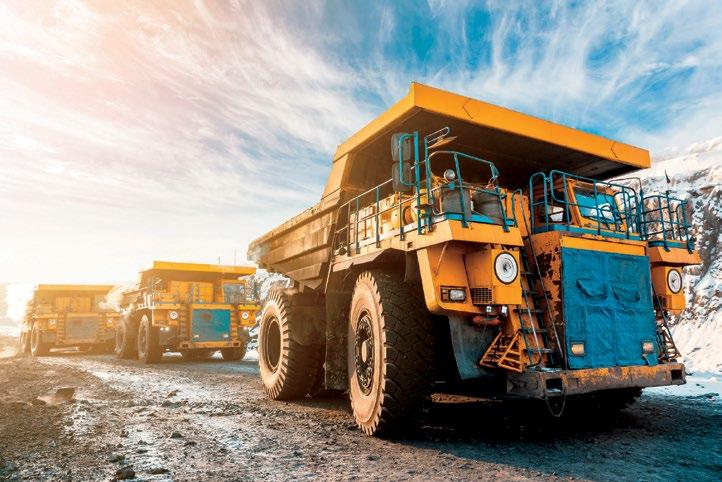
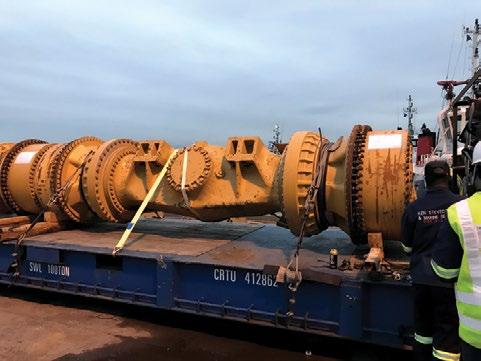
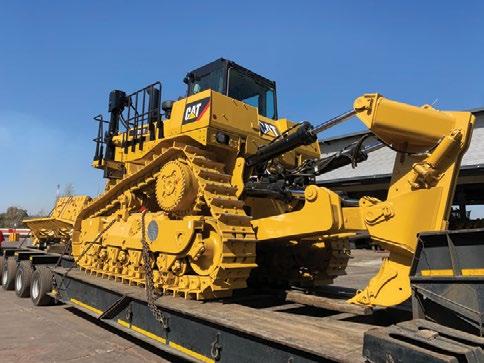
Tega Dynaprime Mill Liners for increased Mill availability and liner life (R)
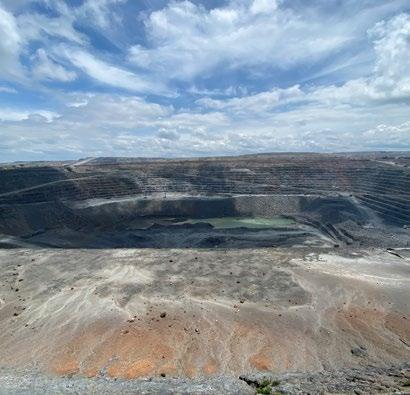
MINING INDABA: STRENGTH IN PARTNERSHIPS
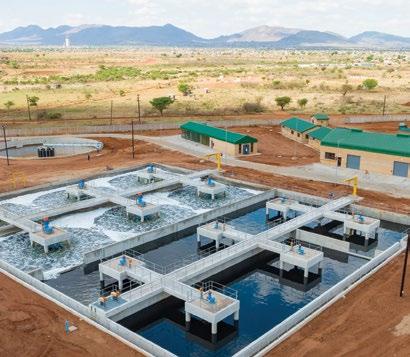
WATER MANAGEMENT: THE MODULAR REVOLUTION GOES SMART
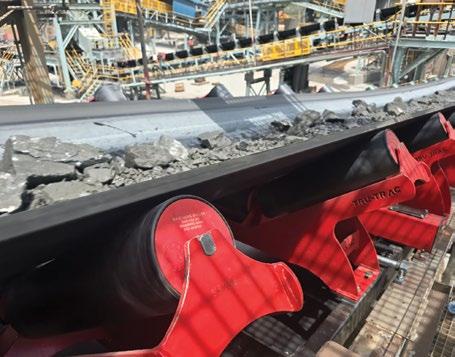
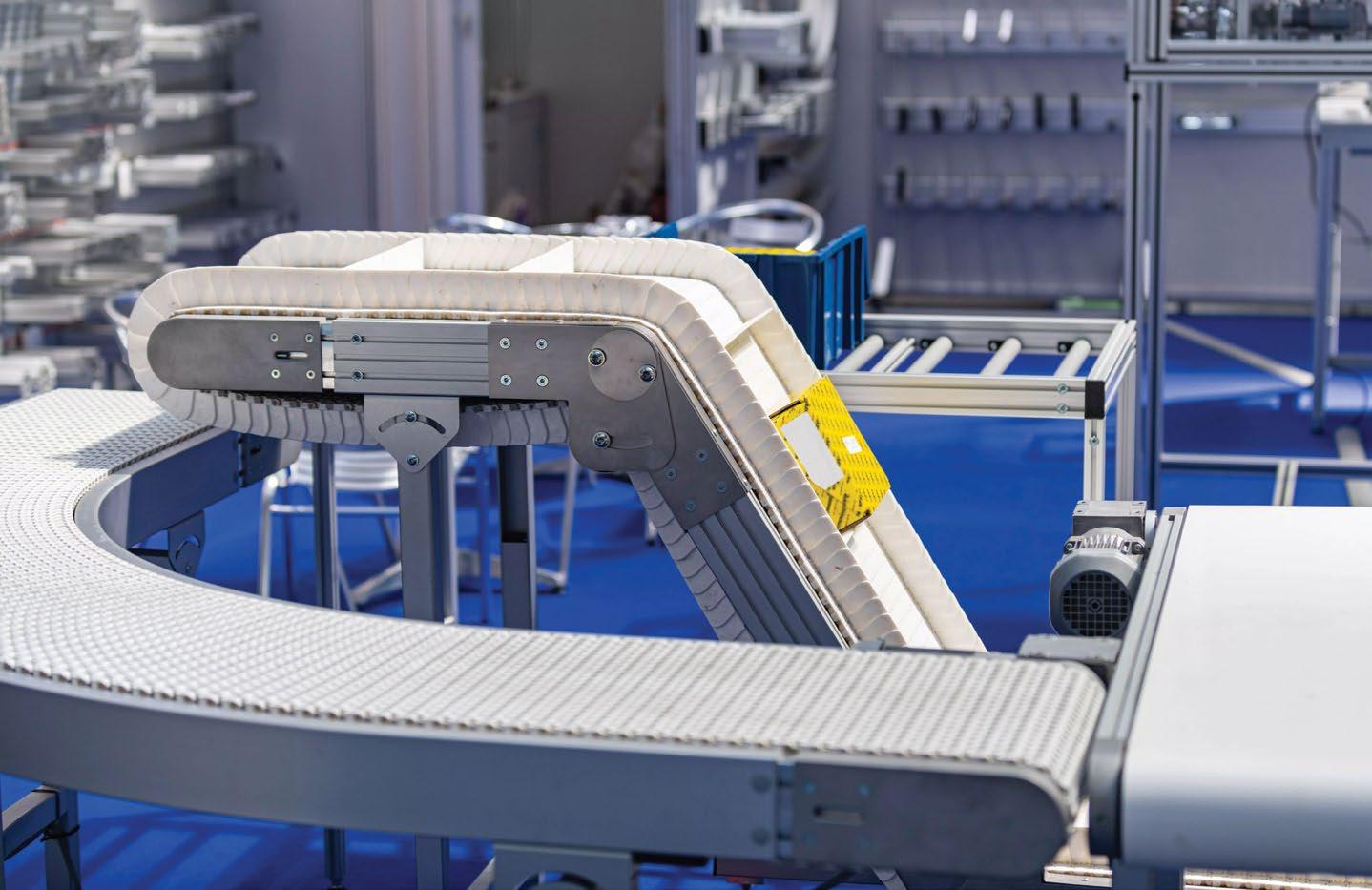
CONVEYOR MANAGEMENT: DATA DRIVES INTELLIGENT DECISIONS
Don’t miss the world’s premier mineral exploration and mining convention
27,000+ attendees
400+ hours of programming
1,300+ exhibitors
Delegates from 125+ countries
Meet investors & senior executives
Unrivaled networking
pdac.ca/convention | Toronto, Canada
The Rich Getting Richer?
The Anglo-Teck merger will probably have gone through by the time our first edition of 2026 is published.
At $50bn it is the second biggest merger in mining history (the biggest being the $90bn merger between Glencore and Xstrata in 2013), and is wrongly trumpeted as a merger between equals. With a market capitalisation of $42bn Anglo American is more than double the size of Teck Resource ($20bn).
According to public policy analyst, Duma Gqubule, this merger will sound the “death knell to Anglo in South Africa” as it “will transfer wealth and strategic control to Canada”. Among these benefits ceded to Canada is a move of Anglo headquarters to Vancouver, substantial board and executive positions to be held in Canada and a pledge to invest CAD $4.5bn (R55bn) in Canada over five years.
Anglo will in all probability only retain one asset in South Africa, namely Kumba Iron Ore. This will see the number of employees dwindle even further from the 14 766 currently employed by the mining giant. Ten years ago more than 88 000 people were employed by Anglo in South Africa.
Anglo executives were set to be rewarded with multi-million-pound bonuses. CEO Duncan Wanblad was on course to receive a share bonus of £8.5 million before investors objected and the plan was abandoned.
The benefits of this merger is skewed in favour of the already rich Global North and follows a pattern long established not only in the mining industry, but also in other sectors. This happens while 90% of the company’s revenue comes from minerals mined in countries in the Global South.
Nick Barnes | Editor editor@miningbusinessafrica.com
TEAM
Editor Nick Barnnes
editor@miningbusinessafrica.co.za
+27 10 055 3356
Writers Jimmy Swira jimmy@miningbusinessafrica.co.za
WearCheck Brings Predictive Maintenance at Mining Indaba | PAGE 8
Robust Water Balances Make for Smarter Infrastructure on Minesr | PAGE 16
An Intelligent Lifeline for Water-Stressed Mines | PAGE 18
Bringing Real Time Accuracy to Conveyor Belt Scales | PAGE 26
Alphamin Confirms Board Change as Paul
Baloyi Resigns
Tin producer Alphamin Resources has announced that Paul Baloyi will resign from its board of directors effective January 31. Baloyi, appointed by South Africa’s Industrial Development Corporation (IDC) in April 2017, played a key role during a period of growth for the company’s Bisie Tin Project in the DRC.
Alphamin thanked him for his contributions, noting that the resignation will not impact dayto-day operations. The company remains focused on operational stability, responsible mining, and advancing its high-grade tin assets amid rising global demand.
Jihadist attack on Morila Gold Mine in Mali raises concerns for foreign investment
A jihadist assault on Mali’s Morila gold mine over the weekend has intensified worries about security risks for foreign investors. Armed attackers set fire to equipment and briefly took seven employees' hostage, releasing them the following evening unharmed.
The Morila mine, with estimated reserves of 2.5 million ounces, was recently slated for revival by Flagship Gold after previous operators abandoned it. While no fatalities occurred, the incident underscores the growing threats to Mali’s mining sector and raises questions about the stability of the region for economic development.
Botswana Pitches Diamonds and Rare Earths to Russia
Botswana is seeking closer economic and diplomatic ties with Russia, announcing plans to open an embassy in Moscow and inviting Russian investors to partner in its diamond and rare earth sectors.
Minister of International Relations Phenyo Butale highlighted Botswana’s political stability and investment-friendly environment as
Glencore and Rio Tinto
Merger Talks Gain Momentum
Talks between Glencore and Rio Tinto over a potential merger have reignited speculation about the creation of the world’s largest mining company, with a combined market value of about $207 billion. CreditSights has reaffirmed an outperform rating on Glencore, citing stronger expected bond returns, while maintaining a market performance view on Rio Tinto.
Although discussions remainat an early stage, analysts note improved strategic conditions compared with failed 2024 talks. Any deal would hinge on resolving governance, valuation and Glencore’s
key attractions.
Mining remains central to the economy, with diamonds generating around one-third of national revenue. The outreach aims to diversify partnerships, attract strategic investment, and build long-term cooperation, marking a new phase in Botswana–Russia relations.
coal exposure, amid growing consolidation pressure across the global mining sector.
2026 Investing in African Mining Indaba
Commit, Collaborate, and Deliver
The theme for the 2026 Investing in African Mining Indaba is clear: make integration a reality, and the mining industry will become the much-touted engine for economic growth. By Jimmy Swira
Africa is endowed with abundant mineral resources, but many countries have derived little value from them. This should change.
The challenge has been how to exploit them for the benefit of all stakeholders equitably.
This has to change. There is a need for solutions that could unlock the untapped opportunities lying buried in African mining and turn potential into reality.
The theme of the 2026 Investing in African Mining Indaba encapsulates the approach that the continent needs to take if it is to turn potential into tangible benefits for all: Stronger Together: Progress through Partnership. The relevance of this
theme was underlined at the PreMining Indaba Press Briefing in early November 2025.
What was stressed is that this is more than a slogan but a call to action: the urgent need for a unified strategy if the continent is to unlock mining-led growth.
Appropriate timing
The timing for this call couldn’t have been more appropriate.
Factors favour African mining, and it is the opportune time for stakeholders in African mining to seize the moment.
Key factors
Based on recent developments, two key factors stand out and are worth
highlighting:
1. Critical Minerals and the Clean Energy Transition
Critical minerals have become the new gold - no pun intended.
There is rising demand for socalled critical minerals, which are vital in defence, renewable energy (e.g., wind turbines and EV motors), clean energy transitions, and high-tech industries: Rare Earth Elements (REEs), lithium, cobalt, nickel, graphite, gallium, germanium, tantalum, niobium, tungsten, and PGMs (Platinum Group Metals like platinum, palladium, rhodium).
The International Energy Agency (IEA) Global Critical Minerals Outlook 2025 predicts strong growth in demand. Providing some context, the outlook explains: “Battery deployment in electric vehicles (EVs) and storage applications drives strong demand growth for these minerals. Meanwhile, expanding construction and the electrification of grids and industrial equipment are fuelling increased demand for copper. Growing demand for permanent magnets, particularly from EVs and wind power, boosts the need for magnet rare earths.”
Results from recent mineral exploration projects indicate that Africa holds a significant portion of these critical minerals in abundance, with tonnes of deposits indicating long life-of-mine operations. The following countries are major players, powering the global green energy transition and tech industries:
• DR Congo (cobalt, copper)
• South Africa (platinum, manganese, chromium, cobalt, copper)
• Madagascar (nickel, cobalt) What is more, ongoing exploration
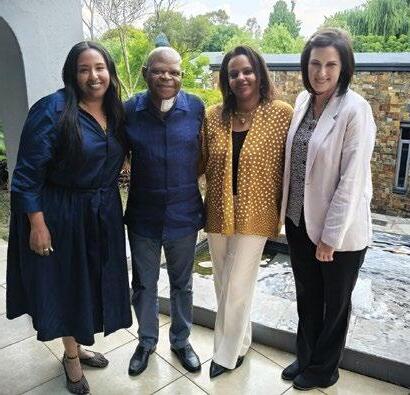
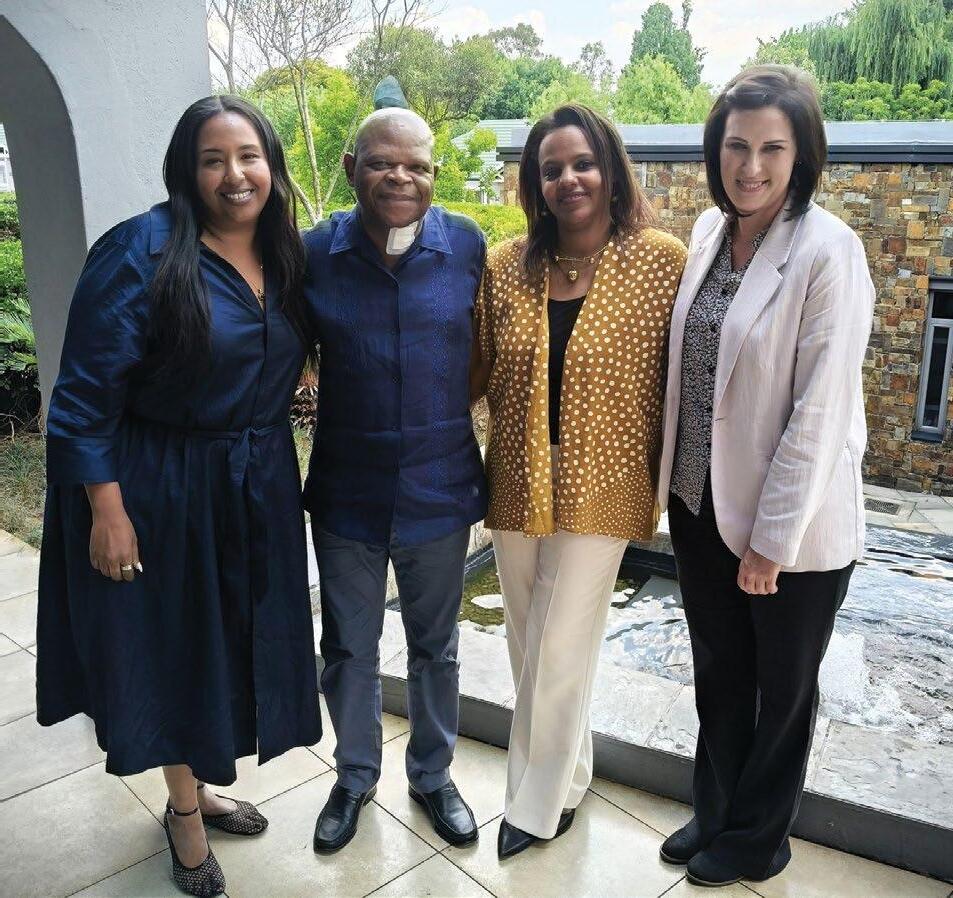
From left: Frans Baleni, Chairman, Executive Advisory Board, Investing in African Mining Indaba; Dr. Marit Kitaw, Executive Advisory Board Member, Investing in African Mining Indaba; Economic Affairs Officer, United Nations Economic Commission for Africa; Zeinab El-Sayed, Head of Government Partnerships, Investing in African Mining Indaba; Laura Nicholson, Product Director, Investing in African Mining Indaba.
efforts indicate the promise of big discoveries on the continent.
2. Geopolitical realignment and the long-haul gold rally
Ongoing changes in the global economy - which are conspicuously ignored in mainstream media - have significantly triggered increasing demand for gold.
Countries are stockpiling gold as a safe haven from dollar-denominated assets that are increasingly seen as high-risk due to the US government‘s exposure to ballooning public debt. Some analysts fear the potential default on treasury bond
repayments. In addition, there is also the controversial freezing of foreign government assets for alleged breaches of international regulations.
As of now, China is leading the charge, stockpiling a record amount of gold and buying more. Official estimates put the country‘s gold reserves at 2,303.5 tons (as of late 2025), but unofficial figures suggest it could be higher. This is according to various reports, including Fortune Magazine discussions on China‘s gold strategy in late 2025. Other countries are following suit.
As a result of this development, the world gold price is at the highest
Changing the Global Perception
A documentary capturing this achievement will premiere at Mining Indaba 2026 - The world first: the deepest underground marathon ever recorded, breaking two Guinness World Records. ICMM, a strategic partner for Mining Indaba 2026, recently supported it.
ever in recent history. As of January 14, 2026, it peaked around $4,635 per ounce (with intraday highs near $4,642), far breaching the 2020 high of $2,000–$2,100 per ounce (set in 2020 and revisited in later years). So, what do these developments mean for the African mining sector? Truth be told, they could mean much more if African countries take action.
Time to seize the opportunity
Evidently, this is the time for stakeholders in African mining to seize the moment, now or never.
It is clear that previous methods mining jurisdictions have employed have not served the desired purpose. Hence, the first step is to revise the approach; otherwise, in years to come, this will be another missed opportunity.
The regional integration path
It has to be acknowledged that the main oversight of mineral-rich countries has been working individually to further their aspirations. Dr. Marit Kitaw, Economic Affairs Officer at the United Nations and member of the Mining Indaba Executive Advisory Board, pointed this out.
Kitaw applauded that most of
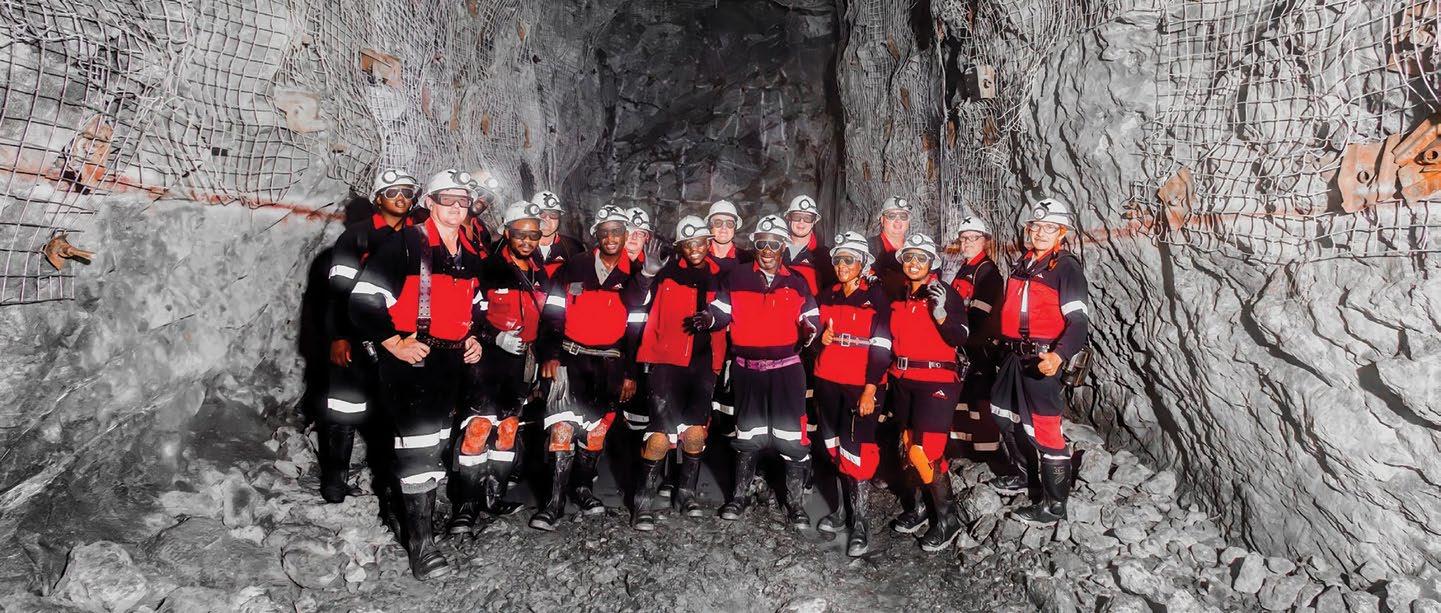
The opening ceremony of the Platreef platinum-palladium-nickel-rhodium-gold-copper mine
Delegates networking at the 2025 Mining Indaba
2026 Investing in African Mining Indaba
Africa’s 20 major mineral-producing countries have revised their policies around the Africa Mining Vision. However, she contended that the real inflection point lies in continental alignment.
That is why, unanimously, the experts at the press briefing underscored that regional integration could be the engine that will determine whether the continent as a whole captures the full economic, industrial, and societal value of its mineral endowments.
Kitaw stated: “Investors aren’t only chasing minerals; they’re chasing markets, corridors, scale, and stability. A single country cannot secure bargaining power alone. Africa must act as a unified economic bloc.”
She raised an undeniable fact: the next decade of mining-led growth hinges on political alignment, crossborder collaboration, industrial connectivity, and a decisive shift from dialogue to action. For this reason, regional integration should not be treated as a mere policy aspiration but a reality.
From aspiration to reality
So, what are the key priorities to turn this aspiration into a reality?
Many points were raised, all of them interesting, but the Mining Business Africa team cherry-picked
two critical ones:
1.Accelerating policy execution
Frans Baleni, Chairman of the Mining Indaba Executive Advisory Board, noted that while Africa has the frameworks and ambition, what has been lacking is coordinated delivery, while other regions have moved faster. Cognisant of this, he made a firm call to accelerate policy execution across the continent.
“Africa must close the policy execution gap. Regional integration makes good policy easier, more predictable, and truly investorready.” — Frans Baleni, Chairman, Executive Advisory Board, Mining Indaba
Echoing Baleni, Dr. Kitaw added: “We don’t lack frameworks; we lack coordinated implementation. Regional infrastructure, energy, logistics, technology, and skills development are the backbone of value addition.”
1. Shared and sustainable development
Dr. Marit Kitaw stressed that Africa’s mineral wealth must translate into shared and sustainable development.
So, where does the Mining Indaba fit in this drive?
Shifting from Aspiration to Action
Dr. Kitaw brought up Indaba as the platform that could facilitate the shift from aspiration to action. Zeinab El-Sayed, Head of Government Partnerships at Mining Indaba, mentioned that this is what the 2026 programme has been intentionally designed to achieve: driving collaboration across governments, regions, and private sector partners.
“Integration is the thread connecting mining to energy, energy to infrastructure, and infrastructure to manufacturing, creating the scale needed for African competitiveness.”
True to form, the 2026 Ministerial Symposium underpins this commitment to regional integration. The Symposium will convene leaders from South Africa, Ghana, Zambia, DRC, Botswana, Angola, and others to showcase real models of cross-border collaboration— from shared energy projects to harmonised policy frameworks and
Three Priorities for Africa’s Mining Transformation
Dr. Kitaw outlined three priorities for Africa’s mining transformation:
• Deepening regional markets and free movement of goods
• Connecting value chains across borders
• Investing in skills and technology to power industrialisation.
interconnected transport corridors.
“Progress cannot happen in isolation. This year, we are aligning ecosystems, timelines, and national priorities to unlock scale. Regional integration is the blueprint.”
Driving the shift
Mining Indaba 2026 will be the platform driving the shift towards regional integration through bold dialogue, cross-border partnerships, deal-making, and policy harmonisation—all under the unifying theme: “Stronger Together: Progress Through Partnership.”
This is where Africa’s mining transformation blueprint will be shaped and where stakeholders across the value chain will be called upon to commit, collaborate, and deliver.
Reshaping the Trajectory
Providing more context, Mining Indaba’s Product Director, Laura Nicholson, affirmed that MI26 represents a pivotal moment in how the continent defines and advances its mining future. “Mining Indaba is no longer just where people meet; it’s where Africa’s mining trajectory is reshaped. We are enabling meaningful dialogue that changes the narrative of what Africa can achieve.”
Indisputably, this shift is reflected in the growing stakeholder universe now participating at the Indaba. This now includes governments, investors, miners, OEMs, communities, youth, and downstream industries—all forming part of a “connected value chain that is critical for Africa’s industrialisation.”
Collective execution
Yes, with everyone aboard, Africa can develop. Why not? The continent has the resources, the policy frameworks, and the continental vision. The next frontier is collective execution.
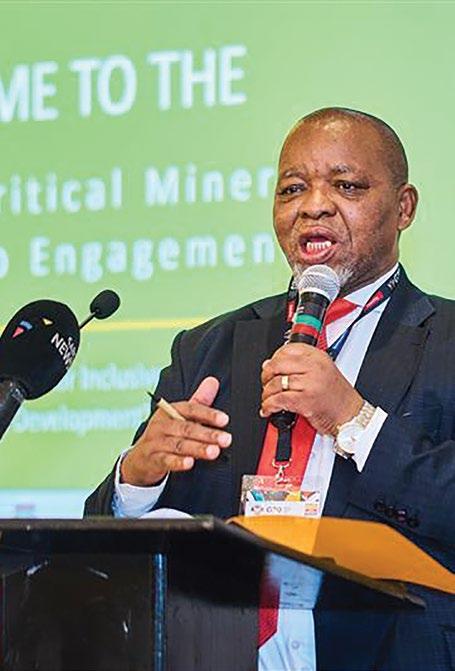
South Africa Minister of Mining Gwede Mantashe
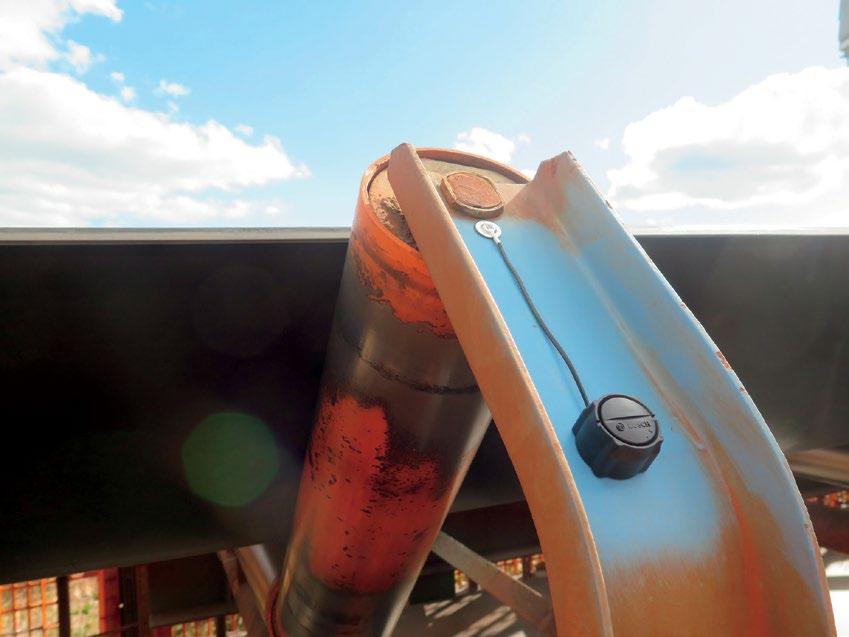
Smart Mine strategically bolsters the Group’s services to the mining industry by offering cutting-edge, AIoT-based solutions, driving growth across the African continent.
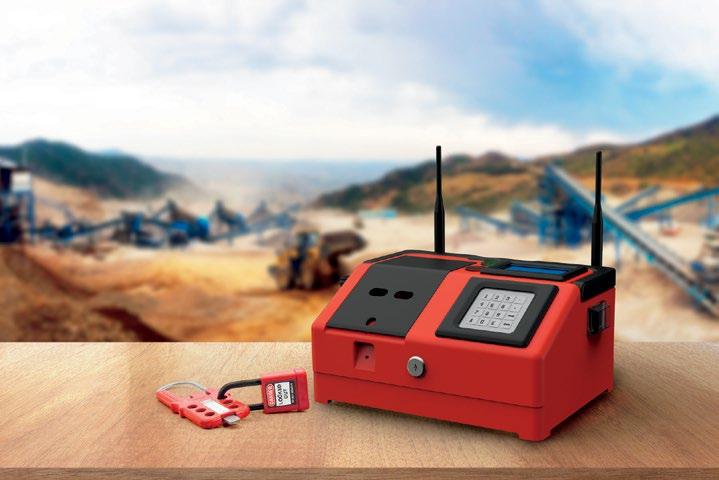
Smart Mine’s Solutions, Smart Lockout, Smart Conveyor, Stop-Start Retrofit, and Smart Inspection, aim to optimise mining operations and promote sustainable business practices.
Smart Conveyor
Maximise conveyor system efficiency with Smart Conveyor by Bosch Rexroth Smart Mine. Prevent downtime and reduce maintenance costs.
Smart
Lockout System
Smart Lockout from Bosch Rexroth Smart Mine ensures personnel safety during machine and equipment repairs and maintenance.
Smart
Inspection Application
Smart Inspection from Bosch Rexroth Smart Mine is a customisable web-based application that streamlines inspection processes.
Stop-Start Retrofit
Boost your mining efficiency with Bosch Rexroth Smart Mine's Stop-Start Retrofit. Cut fuel use and emissions while enhancing productivity.
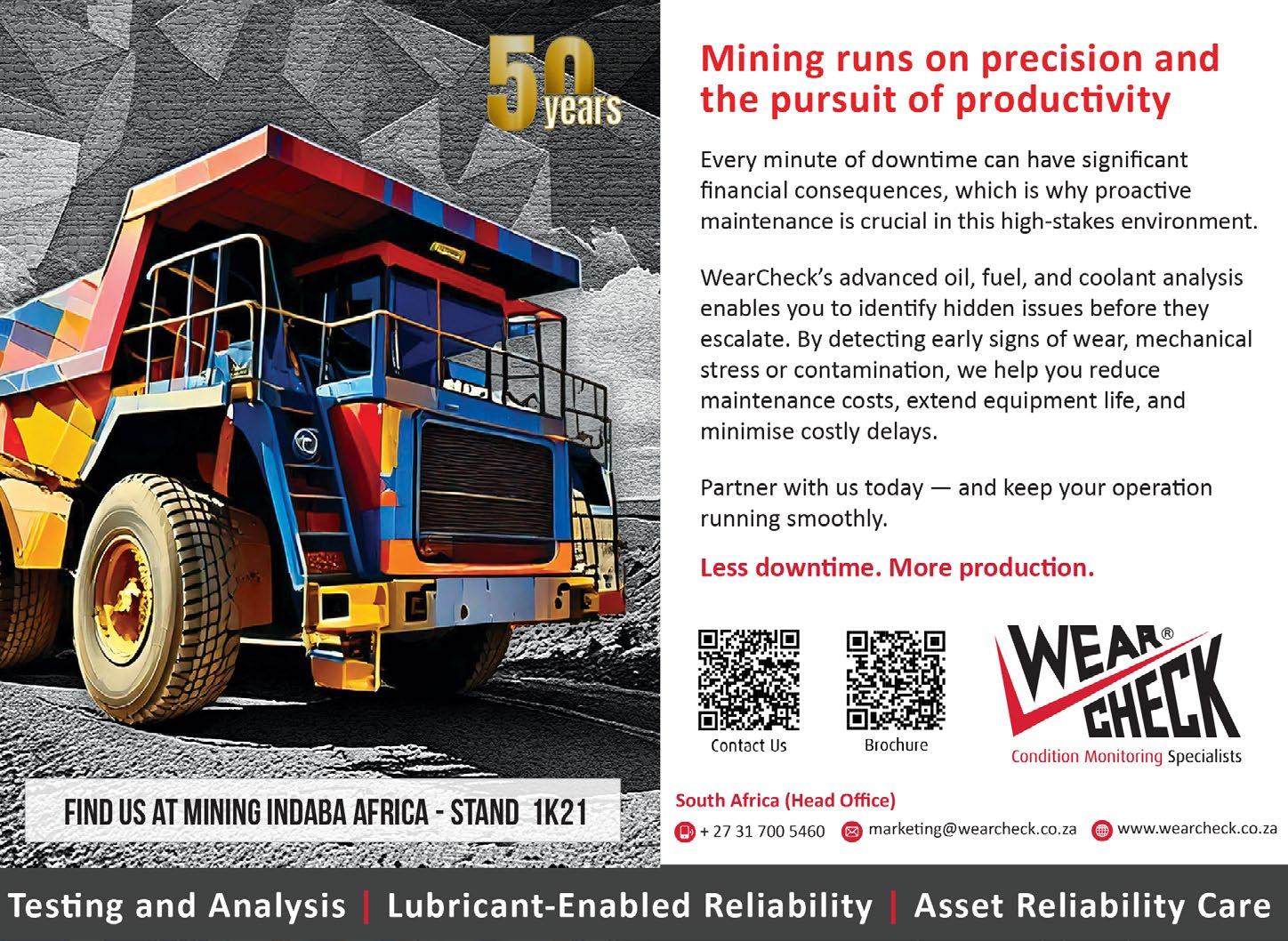
WearCheck Brings Predictive Maintenance at Mining Indaba
“At the heart of WearCheck’s services is the scientific analysis of used oil, fuel and other fluids. By examining samples for microscopic wear debris and other indicators, the company can flag early-stage abnormal wear and developing faults in mechanical systems.”
WearCheck will be showcasing a broad mix of condition monitoring solutions at the 2026 Investing in Africa Mining Indaba, hosted at the Cape Town International Convention Centre (CTICC) from 9 to 12 February. From scientific used oil analysis and transformer oil testing to asset reliability care services and water testing and analysis, the company’s stand will highlight how predictive maintenance can strengthen mining performance across the continent.
As a specialist in condition monitoring, WearCheck supports mining operations throughout Africa with practical tools and programmes aimed at reducing unplanned downtime, improving asset reliability and extending component life. The company’s offering spans both laboratory-based diagnostics and on-site technical services, enabling mines to build a clearer, more complete picture of equipment health.
Visitors will find WearCheck at stand 1K21, hosted by marketing manager Vanessa Evans. A team of technical specialists will be available throughout the event to explain the company’s latest capabilities, share real-world applications and demonstrate technology-driven solutions that can be built into site maintenance strategies.
‘Mining Indaba brings together exactly the type of audience we want to speak to,’ says Evans. ‘It’s a place where we can have meaningful conversations about
operational challenges and showusing real examples - how condition monitoring can make a measurable difference. We value the opportunity to meet new contacts, but it’s equally important for us to reconnect with long-standing customers and update them on the most recent developments across our divisions.’
Evans adds that the event is also a chance to strengthen relationships that have grown over decades. ‘Some clients have been with WearCheck for so long that the relationship feels more like a partnership than a supplier arrangement. It’s always a highlight for our team to see customers in person, exchange insights and talk through what’s next.’
At the heart of WearCheck’s services is the scientific analysis of used oil, fuel and other fluids. By
examining samples for microscopic wear debris and other indicators, the company can flag early-stage abnormal wear and developing faults in mechanical systems. The results are evaluated by a team of specialist diagnosticians who interpret trends and, where necessary, recommend corrective action - helping maintenance teams intervene early rather than reacting after failure.
Beyond fluid analysis, WearCheck has built a portfolio of complementary predictive maintenance services that can be selected according to the site’s equipment mix and operating conditions. These include asset reliability care (ARC) services and transformer chemistry services, as well as advanced field services (AFS) such as nondestructive testing (NDT), technical
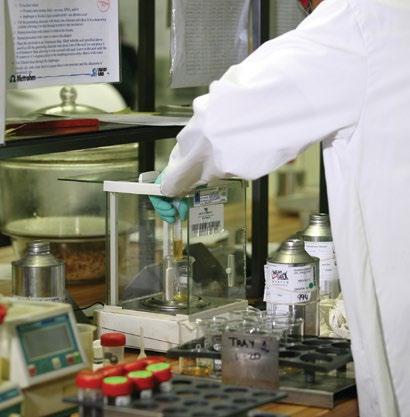
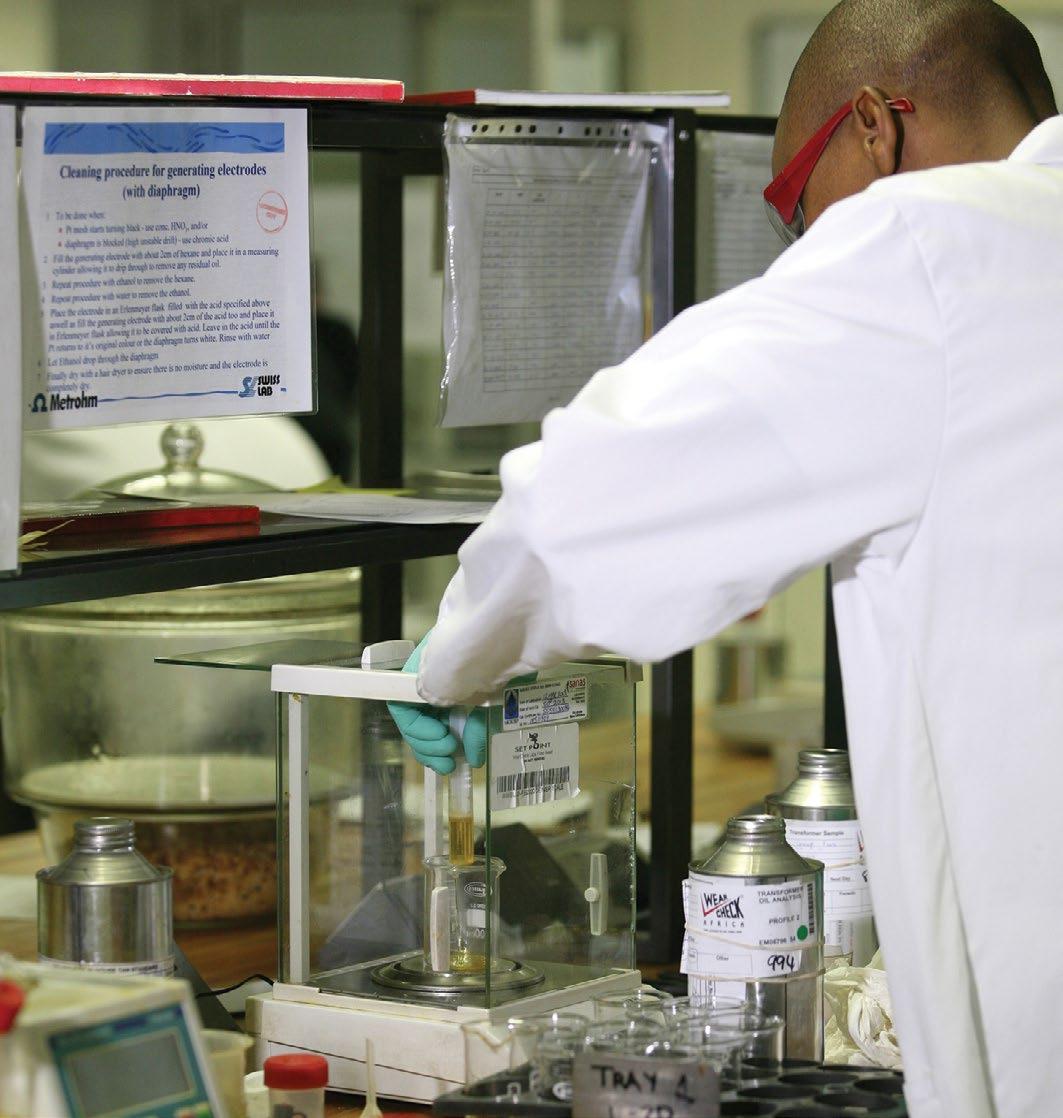
A WearCheck laboratory technician processes used oil samples to test for trace elements of contamination – information which provides important clues about a machine’s condition.
compliance (TC) and rope condition assessment. The company also offers lubrication-enabled reliability (LER), providing tailored support to ensure lubrication systems are managed efficiently, consistently and cost-effectively.
WearCheck’s scope also includes scientific water testing through its dedicated water division, which assesses the quality of wastewater, groundwater and surface water in and around mining and exploration sites. This work supports both operational requirements and environmental responsibilities. For many sites, confirming that effluent and wastewater meet compliance requirements is essential for safe disposal. Adherence to municipal by-laws and environmental standards helps mines manage discharge responsibly and minimise risk to surrounding watercourses.
Water quality testing can also inform decisions about whether water is suitable for different uses on site - such as equipment
Marketing manager Vanessa Evans will be on hand to greet visitors at WearCheck’s stand at the 2026 Investing in Africa Mining Indaba, where delegates can explore a selection of the company’s world-class condition monitoring techniques.
applications, washing and, where applicable, safety considerations for broader use. By providing accurate analysis and clear reporting, the water division supports informed, defensible decisions in a highly regulated environment.
And as WearCheck celebrates 50 years in business this year, it’s fair to say the company has spent
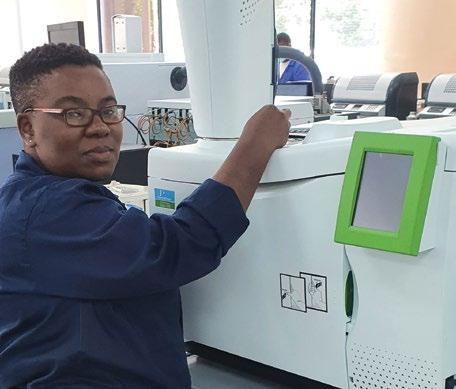
WearCheck transformer laboratory technician, Zamaswazi Dlamini, operates a gas chromatograph - a vital tool for detecting dissolved gases that reveal early signs of transformer faults.
five decades helping mines stay productive by catching problems before they strike gold.
WearCheck will be exhibiting at stand 1K21 at the 2026 Investing in Africa Mining Indaba. For further information, please visit www.wearcheck.co.za, call head office on +27 31 700-5460, or email marketing@wearcheck.co.za.
Non-Slip Matting for African Mining Operations
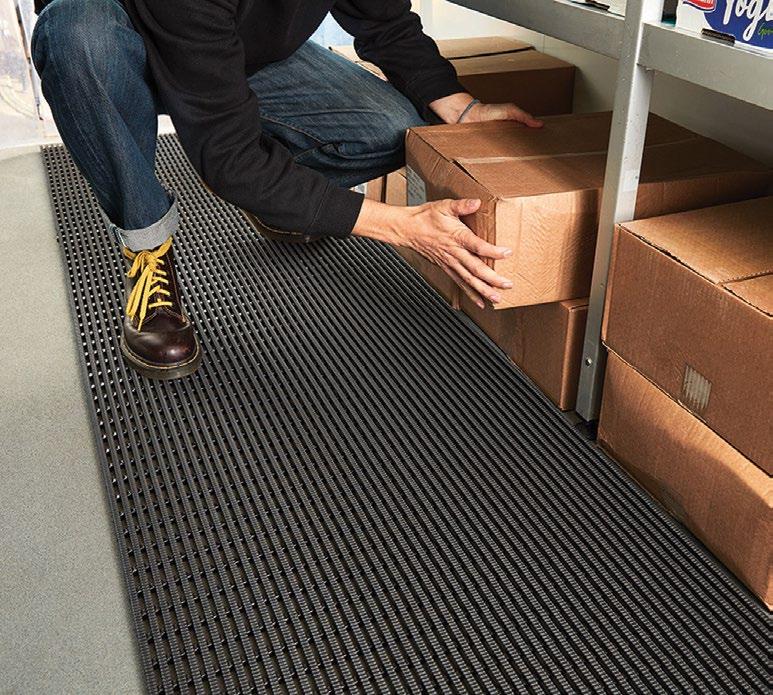
Hard-wearing, non-porous, slip-resistant, Heron Vynagrip PVC matting enables mines and associated industries to mitigate the risk of slip accidents on wet surfaces to improve compliance with Mine Health and Safety Regulations.
HERONRIB Matting is available for customers on the African continent from Gold Pack (Pty) Ltd in Durban, South Africa. From a business perspective, accidents result in costly downtime to production and translate into loss of revenue. Furthermore, it is not only the productivity of the worker that is impacted but all of the other departments that now have to deal with the outcomes of an accident.
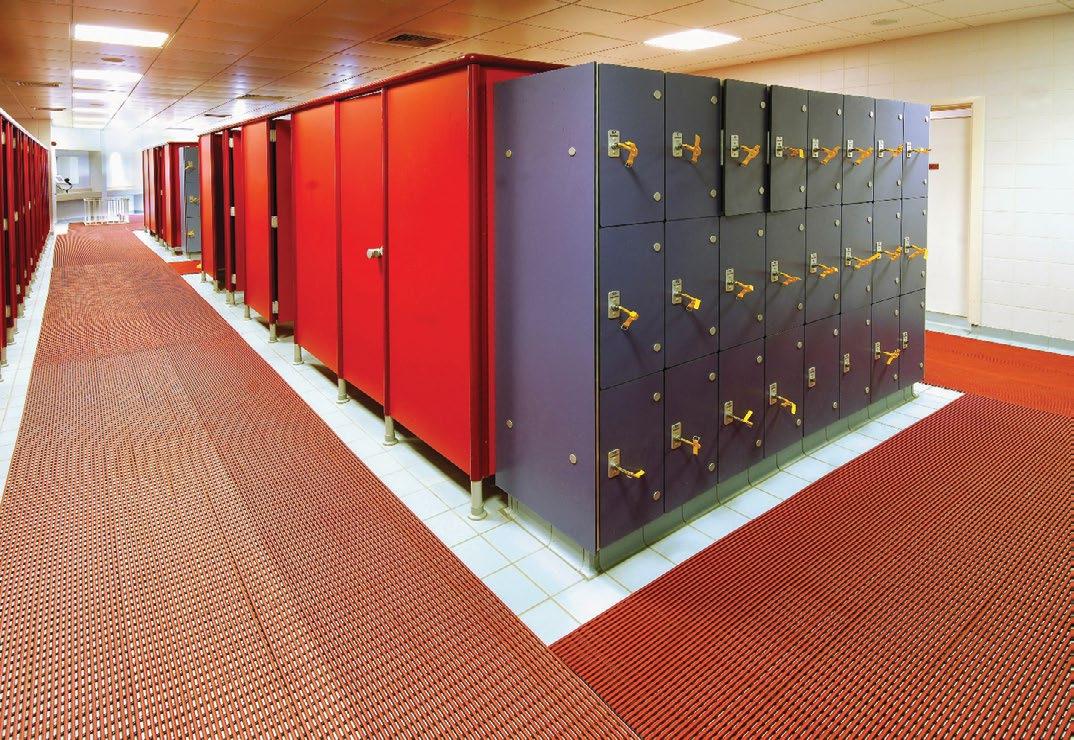
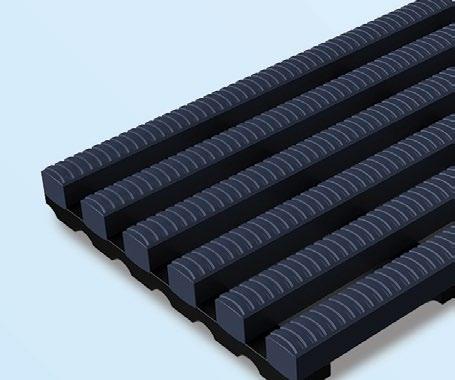
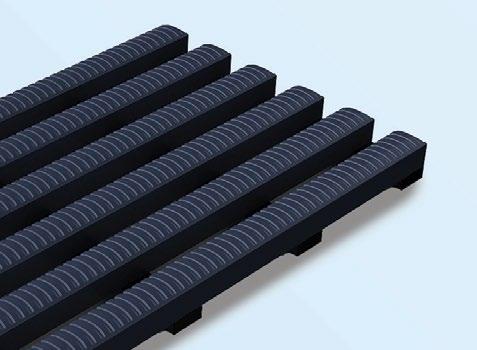
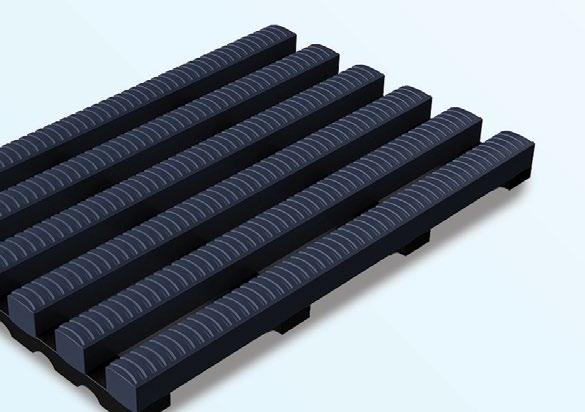
HERONRIB wet area matting
Gold Pack (Pty) Ltd supplies HERONRIB to mines and other operations to reduce slip accidents and provide comfort and protection from bacterial infection in barefoot areas. This non-slip matting is highly recommended due to its unique features, convenience, and diverse applications.
HERONRIB wet area matting is suitable for showers and wash areas, canteens and kitchens, bars and pubs, in fact for any work area that may encounter liquid spills or splashes.
Unique features
The HERONRIB non-slip matting is ideal, due to the following features:
• It is slip-resistant and drains superbly.
• It has anti-bacterial treatments, anti-microbial and anti-fungal properties
• It is easy to cut and lay and will contour to uneven surfaces
• Exceptionally hard-wearing and can be fitted without tools.
• Can be rolled up easily for cleaning underneath.
• Embossed surface
• Two-layer construction and channelled underbars
• Made from flexible PVC
• UV resistant
The non-slip matting offers
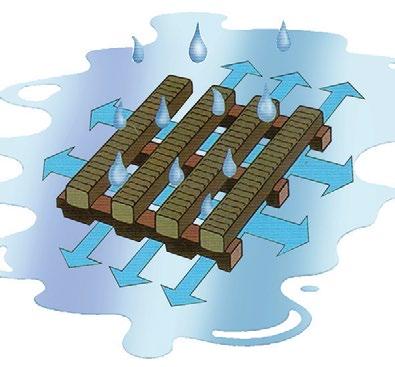
• Four-way drainage
• Excellent hygiene, easy to clean
• Easy to cut to fit, contours to uneven surfaces
• Can be used indoors or outdoor
Fostering a positive culture
Besides improving productivity,
the use of HERONRIB matting can indicate that a company cares for and highly values employees. This can foster a positive corporate culture in an organisation the following ways:
• Reduced sick leave and absenteeism
• Lower the rate of employee turnover
• Reduced hiring costs
• Higher levels of skilled employee retention
• Improved company culture and inclusion
• Increased age diversity and intergenerational collaboration
• Attracting top talent.
Last but not least, Gold Pack (Pty) Ltd guarantees prospective customers on the continent that the HERONRIB brand is of premium quality. It is made of are made of highest quality anti-slip materials with proven certified slip resistance (DIN 51097: C; ASTM 1677: 0.9/0.7).
• Easy to installcut to shape/size
• Hygienic and easy to clean
• Four-way drainage
• Warm and comfortable for barefoot traffic
• ‘Sanitized’ Anti-bacterial and anti-fungal properties
Braking boundaries
The greatest strength of Axiom Hydraulics lies in their ability to solve complex problems and adapt systems to meet unique challenges. This capability stems from two key factors: the diverse experience of their team members (spanning decades across multiple disciplines) and their unwavering dedication to their clients.
Regardless of the project's size or scope, Axiom’s engineers are committed to and invested in their clients’ success.
The CAS Level 9 project illustrates these unique attributes of Axiom Hydraulics. When the CAS Level 9 legislation required autonomous braking systems for LDVs (Light Duty Vehicles) on mines, compliance posed a significant challenge for many in the industry.
“The Level 9 standard is a major leap from Level 8, which required systems to deliver an advisory instruction to operators. Now, electronic systems must automatically take mechanical control of the vehicle and slow down and apply the brakes at any mine where there is a significant risk of such collisions.” - Gert Roselt – CEO, Probe Integrated Mining Technologies (Probe IMT)
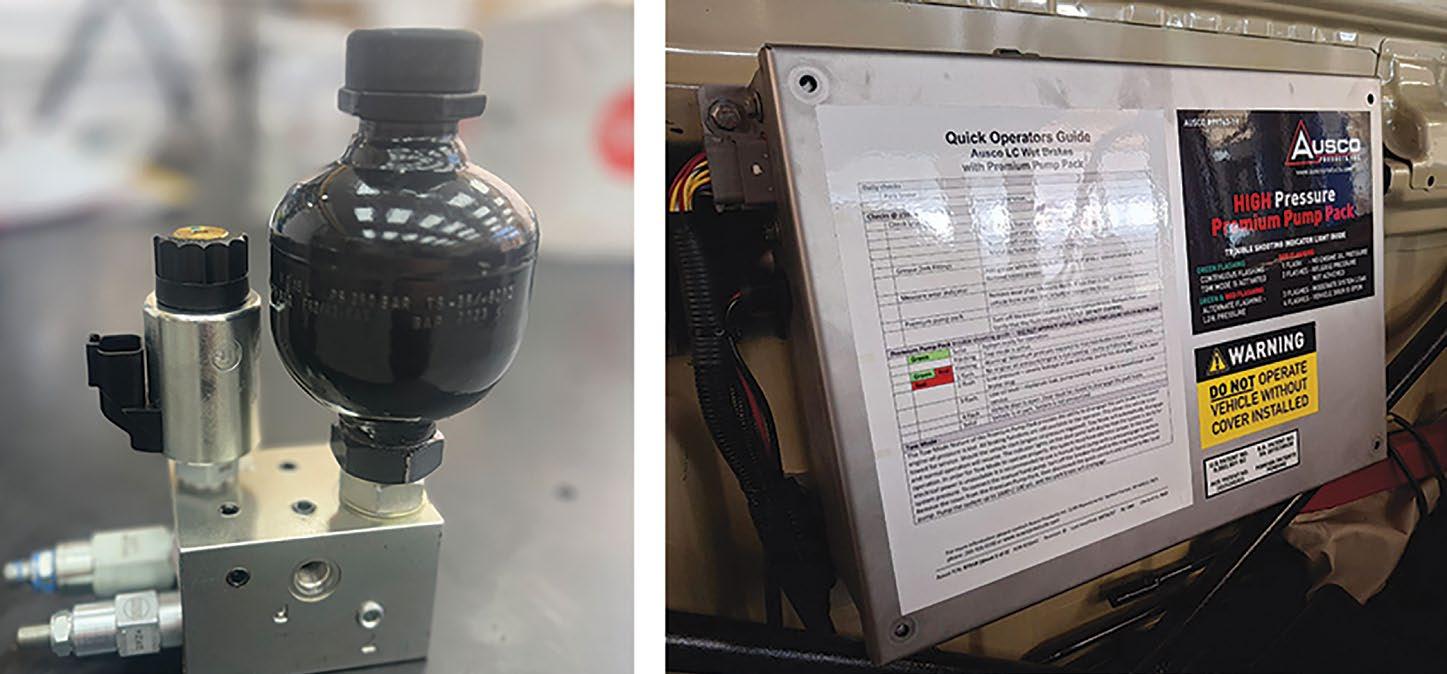
With the announcement of this new legislation, Axiom Hydraulics began developing a hydraulic solution that would allow for the required
adaptions to their existing braking system, specifically, the AUSCO failsafe braking system.
A&R Engineering designs custom systems, ranging from proximity awareness systems to emergency control systems. They specialize in delivering innovative safety and automation solutions for mining operations. A&R approached Axiom Hydraulics to develop a solution that would integrate their control unit with the AUSCO fail-safe brake to create a fully compliant braking control solution.
The project required taking a system that engaged a full stop when faced with a sudden hazard and adapting it to allow for controlled autonomous deceleration in response to proximity threats. To achieve this, Axiom Hydraulics designed an advanced custom-built hydraulic unit. This system allowed A&R’s control unit to regulate braking force
by modulating hydraulic pressure, thereby ensuring proportionally controlled deceleration without triggering the full-brake mechanism of the AUSCO fail-safe system.
As Marilette Pieterse, the engineer from A&R who initially worked with Axiom on this project, explained, “The solution is impressive, and it's much safer now. Our priority is safety on the vehicle, and with the combined efforts of Axiom and A&R, we’ve achieved that.”
The collaboration between Axiom Hydraulics and A&R Engineering delivered a robust and reliable solution for LDV’s fitted with AUSCO brakes on mining sites. The final system is fully CAS Level 9 compliant and integrates automatic proportional braking with emergency braking capabilities. This innovative solution overcame technical limitations and hurdles to deliver a system that not only met the stringent requirements of the CAS Level 9 legislation but also ensured seamless functionality under the most demanding conditions.
Lance Tondolo from Axiom Hydraulics reflects, “It was not a quick & easy project, and we faced several operational challenges before achieving the desired result. Some of the more complex issues demanded a more creative approach to problem-solving, and I’m incredibly proud of what we have accomplished together”.
Powering Progress: Botse Drill & Blast’s Rise
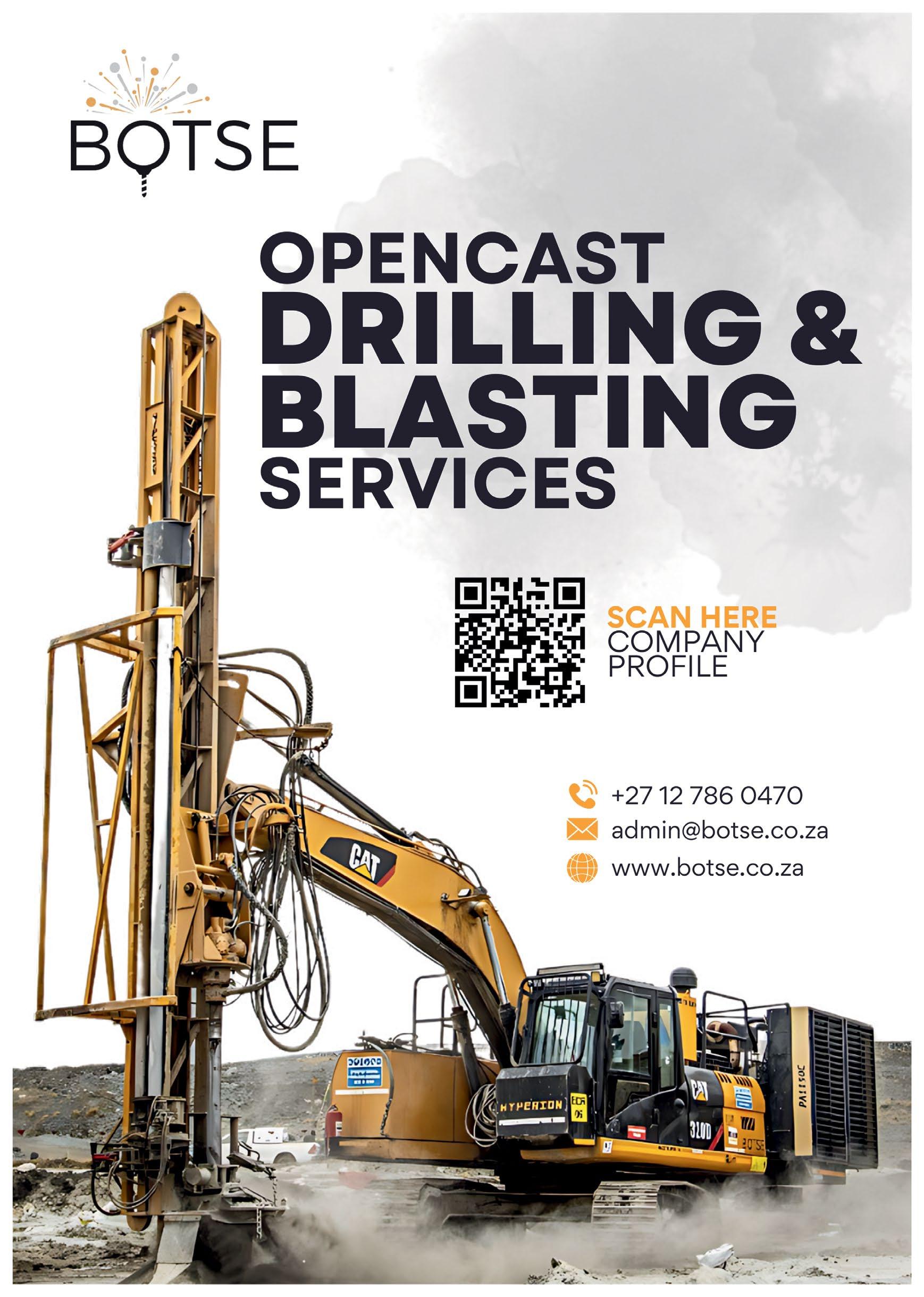
In South Africa’s mining heartlands, Botse Drill & Blast (Pty) Ltd has quickly carved out a reputation for precision, reliability, and innovation. Founded in January 2020, Botse has become a trusted partner for surface mines and quarries, delivering tailored drilling and blasting solutions that balance efficiency with uncompromising safety standards.
Founded in January 2020, Botse may be a relatively young company, but it is backed by deep industry experience and a clear operational focus. From the outset, the company set out to build strong, collaborative partnerships with client, an approach that enables predictable outcomes, mitigates operational risk, and contributes to improved productivity and cost efficiency on site.
Specialised Services for Surface Mining and Quarries
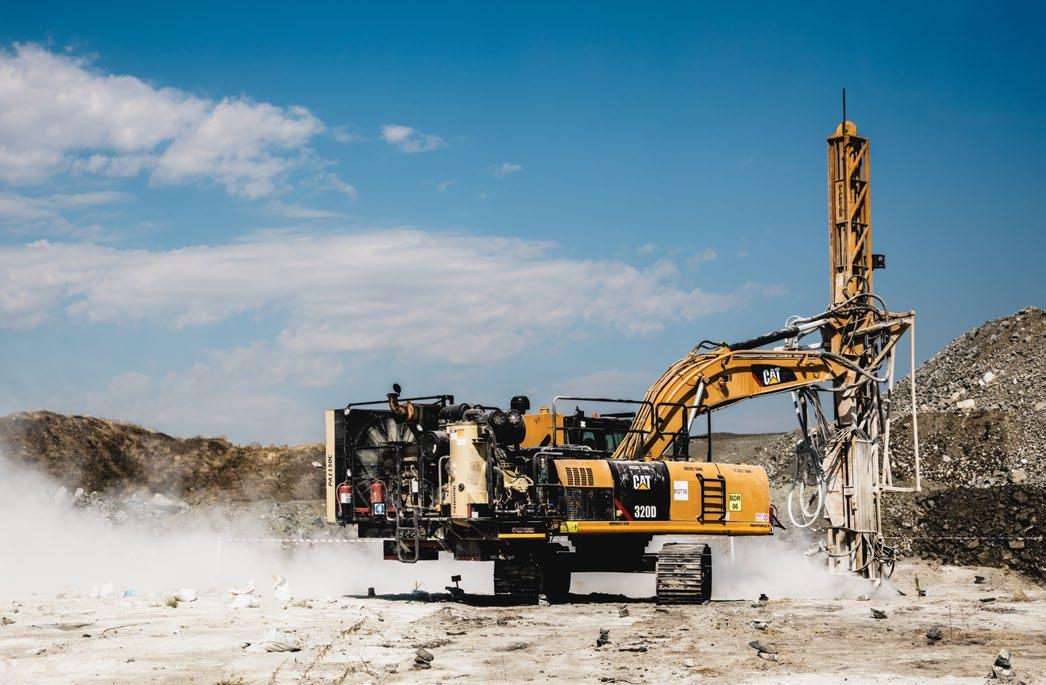
Botse specialises exclusively in rock drilling and blasting services for surface mines and quarries. Its comprehensive service offering is designed to accommodate a wide range of project sizes and ground conditions while maintaining high standards of safety, quality, and performance.
The company provides surface drilling services using drill rig diameters ranging from 76mm to 311mm, allowing flexibility across both quarry and large-scale mining operations. For blast hole drilling,
Botse operates state-of-the-art equipment capable of drilling 89mm to 127mm holes using top hammer technology, as well as 127mm to 171mm holes with Down-the-Hole (DTH) equipment.
Blasting is executed by highly skilled and experienced teams who manage the entire process with precision, from planning and priming through to loading, tie-in, and blast initiation. This structured and disciplined approach ensures consistent results while maintaining strict adherence to safety and regulatory requirements.
Rock on Ground Services and Technical Expertise
In response to growing demand for integrated solutions, Botse offers Rock on Ground (ROG) Services, providing a full turnkey drilling and blasting solution. This includes drill pattern design, execution, and blast initiation, enabling clients to streamline operations through a single, accountable service provider.
Beyond operational execution, Botse also provides technical
consulting services across all opencast drilling and blasting activities. The company works closely with clients to optimise drilling and blasting outcomes, improve efficiencies, and align operations with best-practice standards.
Leadership and Experience
Botse is led by a management team with extensive experience in opencast mining, drilling, and blasting operations. Founder and lead Steyn Janse van Rensburg brings 17 years of industry experience, having held senior management roles at large opencast operations prior to establishing Botse. By creating an authentic employer brand, Janse Van Rensburg has been able to attract a highly diverse and accomplished management team from across the mining sector.
A Commitment to Safety, Community, and Sustainability
As a Level 2 BEE Contributor, Botse is committed to economic transformation and empowerment in South Africa. The company places strong emphasis on responsible operations that prioritise employee health and safety, community engagement, and environmental stewardship.
Botse is committed to achieving zero injuries and work-related illnesses by fostering a culture of safety, accountability, and continuous improvement. Environmental responsibility is equally embedded in the company’s operations. Botse actively minimises its environmental footprint using fuel-efficient equipment, biodegradable products, and strict adherence to dust emission standards.
Well-Equipped and Looking Ahead
After six years of steady growth, the company continues to take stock of its achievements while looking ahead to the next phase. With a solid foundation, strong leadership, and a proven service offering, Botse is ready to expand its footprint and form new partnerships across South Africa and the broader region.
As a drill and blast innovator, Botse (Pty) Ltd remains focused on one core principle: “your success is is our business”.
Botse (Pty) Ltd is based in Hartbeespoort, North West Province, Republic of South Africa
Robust Water Balances Make for Smarter Infrastructure on Mines
An effective water balance helps mines to optimise recycling and reuse while reducing freshwater intake. By Simon
Bruton
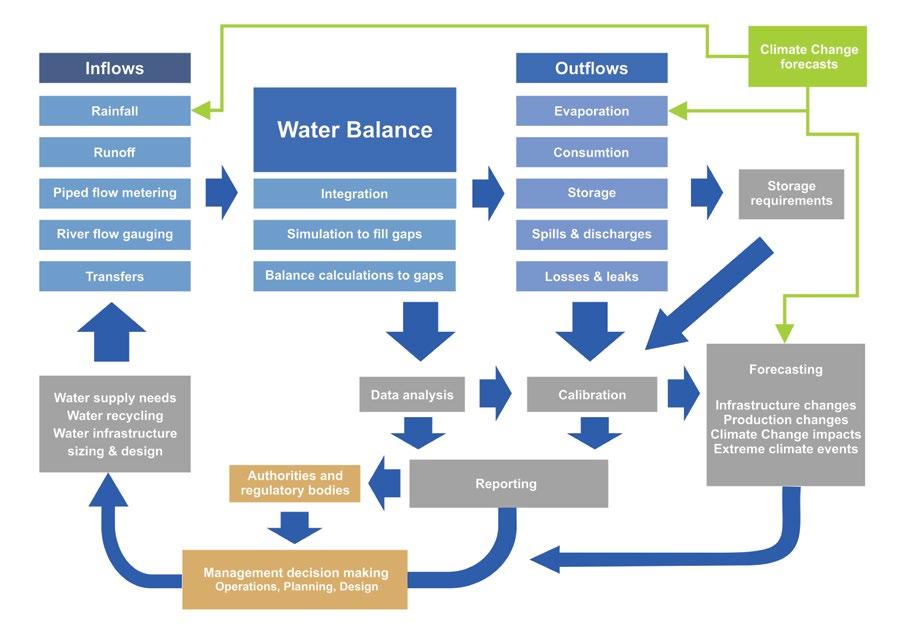
In the mining sector – where water can represent both a vital input and a major operational risk- the ability to understand, quantify and forecast water flows is essential. However, many operations still underestimate the power of a welldeveloped water balance.
Far more than a compliance tool, a water balance is a strategic instrument that supports infrastructure design, operational planning, environmental risk management and long-term sustainability. Just as financial systems require detailed accounts to guide investment and mitigate risk, water systems require the same discipline.
In an era of growing water scarcity and climate variability, as well as increasing regulatory scrutiny and rising operational costs, mines need certainty about their water systems –and a water balance can provide it. It is, fundamentally, the ‘balance sheet’ of a site’s entire water system, capturing inputs, outputs, storage, losses and transfers across complex networks.
For mining companies operating in Africa’s diverse and often waterstressed landscapes, therefore, an accurate water balance is not optional. It is the foundation upon which resilient, cost-effective and environmentally responsible infrastructure is planned.
Decision-making tool
A water balance quantifies all water entering, leaving and being stored on a site – whether through piped systems, rainfall, runoff, groundwater
inflows, evaporation, seepage or discharge. This integrated approach is essential for mines, where multiple water systems interact across broad areas and through numerous operational units.
In mining, a water balance can comprise an extensive site-wide simulation incorporating hydrology, geohydrology, stormwater, processing circuits, tailings storage facilities and return-water systems. The value lies even beyond the quantification of current water use; it also supports mines in shaping decisions about their future.
For instance, it guides the sizing and design of water storage facilities, and informs pumping and pipe-network requirements – which could in turn identify infrastructure bottlenecks or vulnerabilities. From an environmental perspective, it supports the separation of clean and dirty water systems, and helps evaluate risks associated with extreme rainfall, droughts or climate change. It can even predict the impacts of production changes and future expansion on water consumption and storage, while reducing unnecessary expenditure on oversized or duplicated infrastructure.
Knowing what can be measured
While some flows can be monitored directly – such as pipe volumes, tank levels and discharge rates – others cannot. Measuring every component of a mine’s water system can be impractical or prohibitively expensive
so hydrologists use modelling, calculations and simulation tools. These can be used to estimate flows such as runoff from catchments into dams, rainfall contributions, infiltration into the ground, evaporation from large water bodies and seepage losses. These techniques not only fill data gaps but often reveal discrepancies or errors in existing monitoring networks. A water balance is therefore a powerful diagnostic tool. It can highlight anomalies in data, uncover previously unreported losses, and identify areas where improved instrumentation or study is essential. An iterative process of measuring, simulating, comparing and recalibrating is central to developing a water balance that decision-makers trust.
Forecasting scenarios for managing risk
Once a water balance accurately reflects current operations, a further valuable function becomes scenario forecasting – which gives mines real strategic advantage. Forecasting allows mining teams to test the waterrelated effects of new or expanding infrastructure, increased production rates or alternative water supply sources. They can also us the data to plan more accurately for new storage facilities, changing water recycling rates or climate change scenarios including extreme rainfall or drought impacts. A key component of this forecasting is to assess transfer capacities –to check if the mine’s pipelines, stormwater channels, spillways or pump systems can handle the expected flows under future
Simon Bruton is Senior Hydrologist, SRK Consulting (South Africa)
production or more extreme rainfall conditions. Accurate data helps to avoid undersized systems, which can lead to overflows, unplanned discharges and contamination events. These events may also result in regulatory non-compliance, costing the mine considerably in fines or emergency upgrades.
Stochastic modelling adds further value. By generating multiple synthetic rainfall or flow realisations based on historical patterns, hydrologists can produce probability-based risk profiles. These help mining teams weigh expenditure against risk – particularly for major infrastructure such as tailings dams and water storage facilities.
Complexity of climate change
Mines are adapting their designs to deal with climate change, but different regions in Africa are expected to experience shifts in rainfall intensity, seasonality and drought frequency. Even where average annual rainfall may not change significantly, its
distribution might – leading to longer dry spells punctuated by more intense storm events.
This is highly significant for water infrastructure planning, and climatetailored water balance modelling allows mining operations to make a range of adjustments, such as planning for larger stormwater detention ponds and designing spillways for higher peak flows. Many mines will also have to endure longer dry periods, ensuring adequate supply while still avoiding the over-design of facilities.
By incorporating climate scenarios affecting rainfall and evaporation and simulating hydrological processes such as runoff and infiltration, a water balance becomes a forward-looking tool that can stress-test infrastructure under future climate conditions.
Supporting operations and reporting
Beyond planning and design, water balances also enhance operational management, and allow mines to
streamline their reporting to regulators and other stakeholders. By integrating measurements, monitoring data and simulation outputs, a water balance can be set up for automated reporting at daily, weekly or monthly intervals. Not only does this support day-today water system management and compliance with water-use licences, but it also assists with environmental authorisations and industry-standard ESG reporting.
This is becoming a more stringent requirement as mines face growing expectations from regulators, investors and financiers – to demonstrate water stewardship and efficiency. Transparent water-use reporting is now a prerequisite for regulatory compliance and access to capital. The adage “You can’t manage what you don’t measure,” is increasingly applicable – and a welldesigned water balance provides the backbone of that transparency.
Controlling costs
Finally, the financial benefits of a robust water balance are often underestimated. With rising costs of water abstraction, storage infrastructure, pumping energy and water treatment, understanding water flows can save significant operational expenditure.
An effective water balance helps mines to optimise recycling and reuse while reducing freshwater intake. They can also minimise treatment and discharge volumes, thus avoiding costly emergency storage construction or over-designed infrastructure.
In a continent where water scarcity, regulatory pressures and climate variability are intensifying, a water balance is no longer a technical addon—it is a strategic foundation for planning and operating mines.
An Intelligent Lifeline for WaterStressed Mines
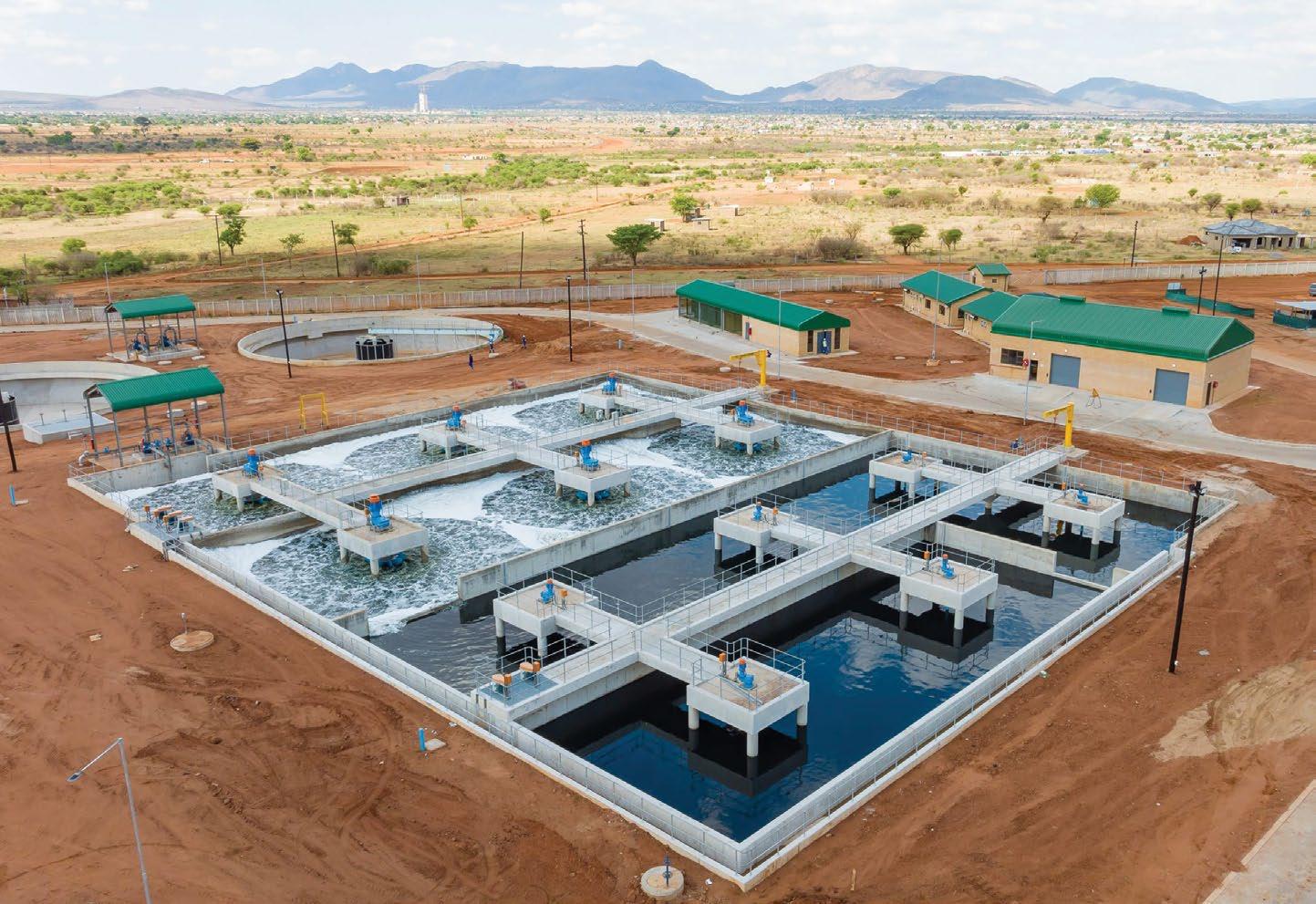
African mining operations are carrying a heavy burden: increasingly scarce water resources, the obligation to ensure sound environmental practices in line with their operating licences, and operational sustainability. Given this scenario, the decision on whether to opt for modular water treatment plants does not need a second thought. By Rejoice Ndlovu
Typically, African mining operations are located in areas with little or limited access to reliable water sources. Despite this, they annually require millions of cubic meters of water for tasks like mineral processing, dust suppression, and others in their brownfield and greenfield projects.
For this reason, mining operations need to ensure that water is used prudently, in compliance with requisite
environmental regulations as much as possible.
More urgent
Worsening drought conditions - one of the extreme effects of climate change - have made this even more urgent in brownfield and greenfield projects. The United Nations Environment Programme (UNEP) predicts that planet-warming greenhouse gas emissions are expected to rise to 75 billion tonnes a
year by 2050. This is a nearly 50 per cent jump from current levels (about 57–58 billion tonnes a year). What is clear is that traditional methods of water treatment won‘t cope with this challenge effectively.
Traditional water systems
On many critical fronts, traditional water systems fall short in meeting contemporary requirements. Mainly due to reliance on open reservoirs and pumping networks, conventional water treatment plants often face high evaporation losses, inefficient chemical usage, and constraints in adapting to production changes.
Alternative options
This has necessitated the exploration of alternative innovative methods in projects. One of these is the use of modular water treatment plants, which have interestingly become mainstream - generally considered the way to go by project specifiers.
The modular advantage
As pre-engineered, containerised, or
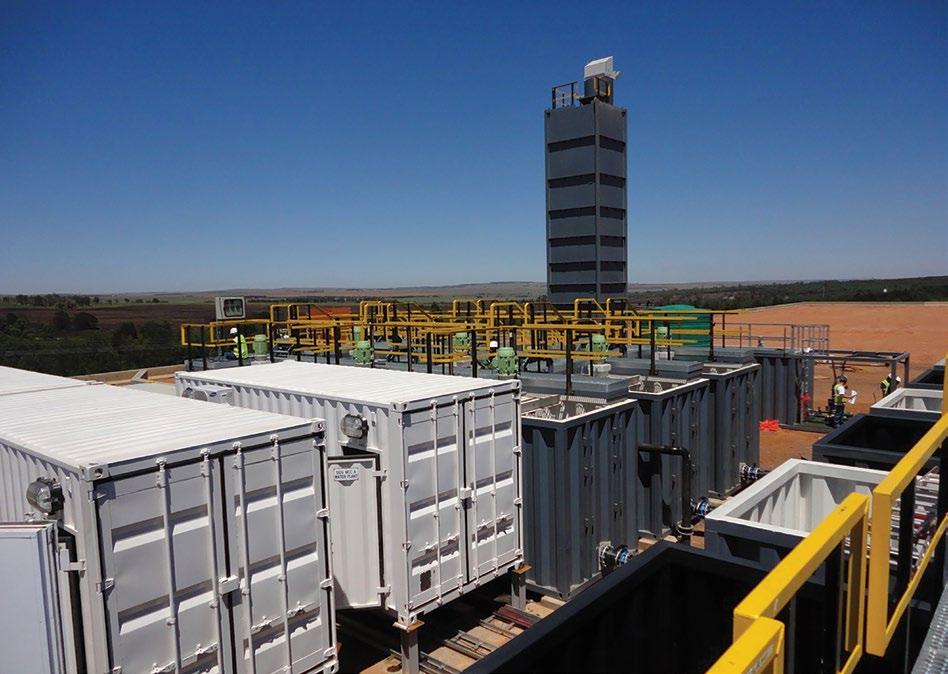
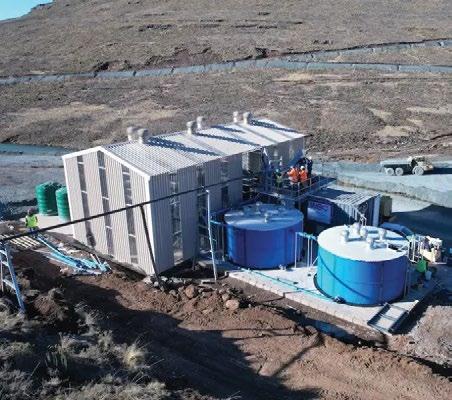
Annually, mines require millions of cubic meters of water for tasks like mineral processing, dust suppression, and others in their brownfield and greenfield projects.
Modular Water Treatment Plants
skid-mounted units, modular water treatment plants offer a number of advantages over conventional plants. Due to these features, they allow for quick deployment, scaling according to operational needs, and ease of relocation if operations shift. More to the point, they enable expansion of capacity without the need for long construction delays experienced with traditional plants.
What is unique in contemporary mining projects is the use of tailored integrated water recovery technologies and intelligent technologies as a monitoring tool.
Integrated techniques
The use of integrated water recovery technologies makes modular treatment plants more efficient than conventional plants. The technologies employed to treat process water, recover metals, and recycle water back into plant operations include membrane filtration, reverse osmosis, and ultrafiltration. These can be combined or a select few chosen that could serve the purpose. It all depends on the mine’s preferences.
The intelligent edge
What is more, intelligent technologies have given modular plants that extra edge, making them smarter.
The integration of intelligent technology - in the form of digital monitoring, predictive analytics, and process automation - has ensured that mines benefit more from their modular plants. Through data gathered by sensors that track water quality, flow rates, chemical dosing, and treatment performance in real time, operators are able to take proactive action where necessary.
This intelligent monitoring reduces operational risk, optimises chemical and energy usage, and ensures consistent treatment quality. For example, mines facing high salinity or metalliferous effluent can use these systems to reduce freshwater intake, lower environmental discharge, and recover valuable resources.
The perfect answer
Generally, these provide the perfect answer to scalability and flexibility, which are needed for mines to cope
Modular water treatment plants offer a number of advantages over conventional plants.
with current conditions in waterstressed areas.
Unquestionably, it is not surprising why modular water treatment plants have become mainstream due to this factor.
The lifeline
On the whole, modular water plants are a lifeline for mines in the following ways:
• Allow operators to optimise water use.
• Energy efficiency gains arise from optimised pumps, advanced chemical dosing, and automated process controls.
• Reduce dependency on scarce freshwater, especially in regions which require water to be transported from distant sources.
• Comply with increasingly stringent environmental regulations through reduced effluent discharge, better sludge management, and lower chemical consumption.
• Ensure water availability in line with production demands, whether during expansions or mine relocations.
• Water recovery is another potential avenue where modular systems provide gains. Data from some providers indicate that the use of integrated treatment technologies provides better recovery than conventional plants in most cases, in some cases with gains of between 70-80 per cent.
The Continental adoption
Doubtless , due to the lifeline they offer, it is not surprising why modular water treatment plants have become an integral part of water management programmes in mining projects across the continent due to their operational benefits. Some notable examples, among others, include:
• In Namibia, the Erongo desalination plant supplies millions of cubic meters of treated seawater to the Trekkopje uranium mine.
• In Ghana, the AngloGold Ashanti Obuasi gold mine has multiple treatment plants to meet industrial wastewater reuse and potable water needs.
• In Zambia, modular potable and wastewater systems at the Lumwana copper mine provide clean drinking water and treat wastewater.
• In Botswana, modular sewage and water treatment plants are employed at diamond mining operations.
• Clearly, these examples, among others, demonstrate the adoption of flexible water management solutions. Ongoing projects shared with Mining Business Africa by providers of modular water treatment solutions indicate that more installations are on the cards in 2026 and beyond.
Automated Transformation
There was a time in African mining when conveyor automation was viewed as an afterthought. That is no longer the case: automation has become a necessity, and leading companies recognise it as the difference between compliance and violation, profit and loss. They have embedded it in their core operations. By
Rejoice Ndlovu
To sustain their operations in the current operating environment and beyond, African mining companies need to embrace new ways of doing things from pit to port, if needs be. This will ensure they are environmentally friendly, safer, more efficient, and cost-effective.
One avenue which presents an opportunity to achieve this is materials handling - in this context, conveyor monitoring.
A manual process
Traditionally or conventionally, conveyor monitoring has been a manual process involving personnel. For all the good it does, this approach has its own limitations. These render achieving
contemporary objectives while using this approach a big challenge.
Automation’s Strategic Prominence
Automation is gaining strategic prominence as one of the practical alternative ways through which conveyor monitoring can be turned into a strategic advantage.
For a better understanding and appreciation of the compelling business case for conveyor automation, it is worth highlighting the shortcomings of conventional monitoring.
Shortcomings of Conventional Monitoring
Usually, conventional conveyor monitoring involves sending personnel for physical inspections.
This exposes them to hazards like fire and injury from slipping and falling at height, or from a component falling on them. These incidents could result in serious injury or fatalities.
Needless to say, gathering data manually is prone to error, which can result in inaccuracies. It is inconceivable to witness such data being utilised in maintenance schedules. You are more likely to have downtime or, in a worst-case scenario, wrong data may result in wrong decisions, increasing the risk of accidents.
A Practical Response
On the other hand, conveyor automation has emerged as a practical response, offsetting the limitations of traditional monitoring
and offering more in terms of capabilities.
Automated systems integrate sensors, programmable logic controllers, and data analytics platforms to create intelligent material handling networks. Highly valued for their versatility, they continuously monitor belt speed, vibration, temperature, alignment, and load. They transmit real-time data to central control rooms, which informs decisions to be taken.
Equipped with these tools, operators can identify abnormal conditions early, adjust parameters remotely, and prevent minor issues from escalating into costly failures.
The Considerable Payback
These features offer considerable payback in a myriad of areas; perhaps the most important ones are:
i. Proactive Maintenance
Without doubt, the most vital benefit from a conveyor reliability perspective is in enabling proactive maintenance.
By providing real-time data on critical areas, automated systems reduce interruptions caused by manual inspections or reactive maintenance. For instance, predictive maintenance
tools analyse performance data to forecast component wear. This allows maintenance teams to schedule interventions during planned shutdowns.
This is a significant convenience from an asset availability perspective.
Improved alignment monitoring and condition tracking extend the lifespan of belts, idlers, and pulleys. And the gains are immense: replacement and repair expenses are reduced.
This cannot be overlooked.
Bear this in mind: in large-scale mining operations running twentyfour hours a day, even short periods of downtime can result in significant revenue losses.
All in all, by improving equipment availability and stabilising throughput, automated conveyors help mines meet production targets more reliably.
ii. Efficiency
Automated systems regulate material flow automatically. This prevents overloading, spillage, and blockages that traditionally disrupt production.
iii. Safety Improvements
One cannot overstate the benefits
Continental Uptake
The fact is that conveyor automation is the way to go and here to stay.
This is evident from the uptake of conveyor automation - from iron ore operations in South Africa and Guinea to copper and cobalt mines in Zambia and the Democratic Republic of Congo.
In early 2024, in an interview, automation specialists from Electrotron told Mining Business Africa that they have been busy installing automated fire protection systems in mines in the DRC and are looking forward to orders from clients in other regions in African mining.
of conveyor automation without mentioning enhanced safety: a vital obligation.
The safety improvements from adopting automation of conveyor monitoring are immense.
Conveyor automation eliminates or reduces instances where personnel work near hazards on conveyor belts to perform tasks. Their role is handled by remote monitoring, automated shutdown systems, and emergency stop mechanisms, which significantly reduce accident risk.
Conveyor automation directly contributes to safer working conditions by reducing the need for personnel to operate near moving machinery.
iv. Labour Costs
Automation also reduces labour costs by limiting manual supervision and repetitive inspection tasks.
Thinking Long-Term
Granted, the upfront cost of transitioning from manual to automated conveyors doesn’t come cheap. This is in addition to the need for skilled personnel - like technicians, control room operators, and data specialists - to manage the systems. This is especially true for smaller operations (junior miners), which may not even have the necessary digital infrastructure.
The Main Takeaway
The main takeaway is that, for Africa’s mining sector, conveyor automation is no longer a future concept but a present-day business imperative. It has transformed conveyor systems through improving reliability and safety, and increased efficiency.
A Continent at the Crossroads of Opportunity and Risk
The African mining sector is a paradox for investors. On the one hand, there is no question about the tonnes and tonnes of most after-sought untapped minerals underground. On the other, throwing money into those projects carries a huge risk: safety and security concerns, policy uncertainty, and coroporate governance risks. By
Rejoice Ndlovu
Africa’s mining industry is entering a moment of unprecedented significance. For decades, the continent has been viewed primarily as a source of raw materials: copper, gold, diamonds, and other base metals extracted for export.
Yet, the global energy transition, driven by the urgent need to decarbonise economies, is reshaping the role Africa can play in the global economy. Minerals that power renewable energy, electric vehicles, and energy storage - lithium, cobalt, graphite, manganese, and copperare suddenly in extraordinarily high demand.
Africa holds some of the richest reserves of these strategic metals, positioning the continent to play a central role in supplying the world’s clean energy needs.
The stakes could not be higher.
Meeting global climate change targets
According to the International Energy Agency, World Bank, and US Geological Survey, meeting global climate targets will require dramatic increases in the supply of these minerals. Lithium demand, for example, is projected to grow several-fold by 2030 as the world shifts towards electric mobility and energy storage.
Copper, the backbone of electrification, will be needed in unprecedented volumes to power grids, renewable energy infrastructure, and charging networks. Africa’s reserves, spanning the
Democratic Republic of the Congo, Zambia, South Africa, Mozambique, Mali, and Zimbabwe, place the continent at the centre of this historic transformation.
Consider the Democratic Republic of the Congo, home to the Central African Copperbelt and more than half of the world’s cobalt production. The Kamoa-Kakula Copper project, one of the richest copper deposits globally, is set to expand production significantly (with recent guidance indicating around 380,000 - 420,000 tonnes annually in the coming years, following smelter developments).
Meanwhile, lithium projects like Manono in the DRC and Goulamina and Bougouni in Mali are coming online, offering Africa a pathway to shape the global battery supply chain. Similarly, South Africa and Gabon host some of the world’s highest-grade manganese reserves, critical not just to steelmaking but increasingly to battery chemistries aimed at reducing reliance on more expensive metals.
New discoveries reshape perceptions
Graphite, another essential battery component, is seeing rising production in East and Southern Africa, including Mozambique, Tanzania, and Madagascar. While Africa currently produces less lithium than established players in Australia, Chile, and China, new hard-rock discoveries are beginning to reshape perceptions, showing that the continent can be both
a reliable and ethically responsible source of these minerals.
By 2030, Africa is expected to be viewed not just as a supplier of raw materials but as a strategic partner in the global energy transition, capable of delivering processed, high-value products.
Security risks
However, the path forward is not without obstacles. Security risks remain a significant concern. The recent attack on Mali’s Morila gold mine, where armed jihadists briefly took seven employees hostage and destroyed equipment, illustrates the vulnerability of mining operations in conflict-affected regions.
Such incidents underscore the challenges of maintaining operational continuity and protecting human capital in areas plagued by insurgencies.
Beyond Mali, parts of the DRC and other resource-rich regions face similar threats, from local unrest to organised criminal activity targeting valuable mineral exports.
Governance and regulatory uncertainty
Governance and regulatory uncertainty also weigh heavily on investors. Mining operations often require long-term capital commitments, sometimes spanning decades. Companies need consistent policies, clear licensing processes, and stable taxation frameworks to plan expansions and attract international partners.
Disruptions to these systems,
whether due to political change, corruption, or bureaucratic delays, can deter investment and slow the growth of projects critical to both local economies and global supply chains.
Recent high-profile corporate developments, such as the board changes at Alphamin Resources and the potential Glencore–Rio Tinto merger, highlight the importance of transparent governance and investor confidence in maintaining a stable mining environment.
Sustainability and community
Sustainability and community engagement are equally crucial. Africa’s mining sector can no longer rely solely on extraction; it must consider environmental stewardship, social responsibility, and long-term economic impact. Mining companies face increasing scrutiny from investors, governments, and civil society regarding environmental degradation, carbon footprints, and labour practices.
Responsible sourcing
Responsible sourcing is particularly relevant in cobalt production in the DRC, where child labour and unsafe working conditions have drawn international criticism. Companies that fail to meet these expectations risk losing access to key markets, particularly as Western buyers demand ethically sourced minerals.
Structural challenge
The continent also faces a structural challenge. Much of Africa’s mining output is exported as raw materials rather than processed goods. Downstream processing, including smelting, refining, and battery-grade material production, remains limited. Without investment in infrastructure and skills, Africa risks being locked into lowvalue export markets while missing the economic benefits of value addition.
More investment needed
Strategic initiatives, such as the Lobito Corridor rail link connecting the Central African Copperbelt to the Atlantic, are steps in the right direction, but much more investment is needed in energy, transport, and industrial capacity to fully capture the continent’s potential.
Enormous stakes
On the economic front, the stakes are enormous. Mining is already central to many African economies.
In Botswana, diamonds contribute roughly a third of national revenue and three-quarters of foreign exchange earnings.
In Mali, gold remains a key export and revenue source. Successful mining projects can create jobs, stimulate local industries, and provide governments with resources to invest in infrastructure, education, and healthcare. Conversely, instability or mismanagement can exacerbate inequality, fuel corruption, and undermine public trust.
Africa’s mining sector thus embodies both immense opportunity and considerable responsibility.
Global race for critical minerals
The global context also shapes Africa’s mining trajectory. Rising demand for energy transition metals is prompting consolidation and strategic partnerships among multinational mining companies.
Proposed mergers, such as Glencore and Rio Tinto, and regional investment initiatives, including Botswana’s outreach to Russia for diamonds and rare earths, illustrate the global race for critical minerals. African governments and firms must navigate these dynamics carefully to ensure that partnerships bring tangible benefits to local communities and national economies.
So, what does this mean for Africa?
The Crossroads
The continent stands at a crossroads. On one hand, it possesses geological riches, human capital, and growing infrastructure to become a central player in the green energy economy. On the other hand, security threats, governance challenges, environmental concerns, and insufficient value addition could limit its impact and leave wealth concentrated in foreign hands.
Seizing the opportunity will require coordinated action among governments, mining companies, and civil society: strengthening security, streamlining regulatory frameworks,
investing in downstream processing, and ensuring that mining contributes to inclusive and sustainable development.
Promise and fragility
Africa’s mining industry is, in many ways, a mirror of the continent’s broader potential and challenges. It reflects the promise of economic transformation and global relevance, but also the fragility of progress in the face of political, social, and environmental obstacles.
From supplier to global hub
If governments, investors, and companies act decisively, the next decade could see Africa transition from being a supplier of raw materials to a global hub for clean energy minerals, powering both the world and its own economies. If not, the continent risks being sidelined in a market that is only growing more competitive, as other regions secure investments, infrastructure, and technology.
A test
The narrative is clear. Africa’s mineral wealth is a bridge to the future, but it is also a test of governance, resilience, and foresight. Mining is no longer simply an economic activity; it is a strategic instrument of national development, global influence, and technological progress.
The choices made today, in security, investment, sustainability, and regulation, will define Africa’s role in the global economy for decades to come. For a continent rich in resources yet historically underleveraged, the message is urgent: the time to act is now.
Africa’s mining sector, with its vast potential and complex risks, is emblematic of the broader challenge facing the continent: turning natural wealth into sustainable prosperity.
The next chapter
By embracing innovation, strengthening governance, and prioritising both environmental and social responsibility, Africa can lead the world not just in supplying minerals, but in doing so responsibly, sustainably, and profitably. The stakes are high, but so is the opportunity. The next chapter of Africa’s mining story could very well define the continent’s economic destiny.
Bringing Real Time Accuracy to Conveyor Belt Scales
Tru-Trac’s new AccuTrac™ AI-enabled Belt Scale adapts dynamically to changing conveyor conditions, overcoming the limitations of traditional systems that rely on fixed assumptions. The platform delivers continuous accuracy, diagnostic insights and seamless integration with plant control systems to improve efficiency and reliability across industrial operations.
As the industrial sector undergoes rapid digital transformation, conveyor systems - once regarded as passive infrastructure - are emerging as intelligent data sources. Shaun Blumberg, COO of Tru-Trac, notes that at the centre of this shift is the belt scale.
“This technology was historically focused on weighing material flow but is now transforming into a strategic tool for real-time production visibility, process optimisation and predictive analytics,” he says.
Tru-Trac’s AccuTrac™ AI-enabled Belt Scale platform represents the leading edge of this evolution. Rather than being a retrofit of outdated hardware, it has been designed around the principle that mass flow measurement should be dynamic, contextual and adaptivenot static and reactive. Developed in partnership with Germany-based SHG, the system fundamentally changes the way material flow is measured and managed in industrial environments.
Blumberg explains that
Unlike traditional systems,
conventional belt scales rely on assumptions such as constant belt speed, consistent loading geometry and stable mechanical conditions. In reality, these factors vary: belts stretch, rollers wear unevenly and bulk density fluctuates. This leads to drift in measurement accuracy, frequent recalibrations and reduced confidence in the data.
“The Tru-Trac AccuTrac AI Belt Scale does not rely on static assumptions. Instead, it continuously learns from the conveyor’s operating behaviour and compensates for factors such as drift, vibration and anomalies in the load profile in real time,” Blumberg says.
At the core of the system is a fusion engine that processes
for
inputs including belt speed, load cell output, vibration patterns and environmental conditions. Adaptive algorithms then generate a normalised computational mass flow that more accurately reflects true material movement in demanding environments.
The intelligence is embedded at the edge rather than in a remote server, allowing the system to respond immediately without relying on constant connectivity. This provides operations teams with realtime information and alerts such as early indications of belt tension changes, density fluctuations or idler failures.
“Unlike traditional systems that provide delayed or averaged
AccuTrac™ AI compensates
drift, vibration and operational anomalies in real time to ensure consistent, reliable performance.
readings, the Tru-Trac AccuTrac AI Belt Scale delivers contextual data that can be acted upon immediately,” Blumberg adds.
Beyond mass flow measurement, the scale also performs diagnostic functions. It can identify belt slip or stretch, uneven loading, mechanical wear and systemic inconsistencies. By combining these roles into one device, the system reduces the need for additional sensors and infrastructure, simplifying installation and maintenance while lowering potential points of failure.
Calibration, often a challenge with conventional belt scales, is managed through intelligent autocalibration. The Tru-Trac AccuTrac™ AI Belt Scale system references historical data, production baselines and throughput values to optimise its internal models, improving accuracy with use rather than degrading over time.
The platform is also designed for integration with plant control systems using standard protocols. This allows belt scale data to feed into wider process control loops, such as adjusting feed rates based on downstream capacity or modifying loading geometry in response to live conditions.
In this way, the system moves the belt scale from a static measurement device to an embedded intelligence platform, delivering operational insights across industries such as mining, cement and ports.
“Our AccuTrac AI Belt Scale is designed to adapt continuously to real operating conditions. By embedding machine learning into the system, we can deliver reliable mass flow measurement and diagnostics that support more accurate, efficient and responsive operations,” Blumberg concludes.
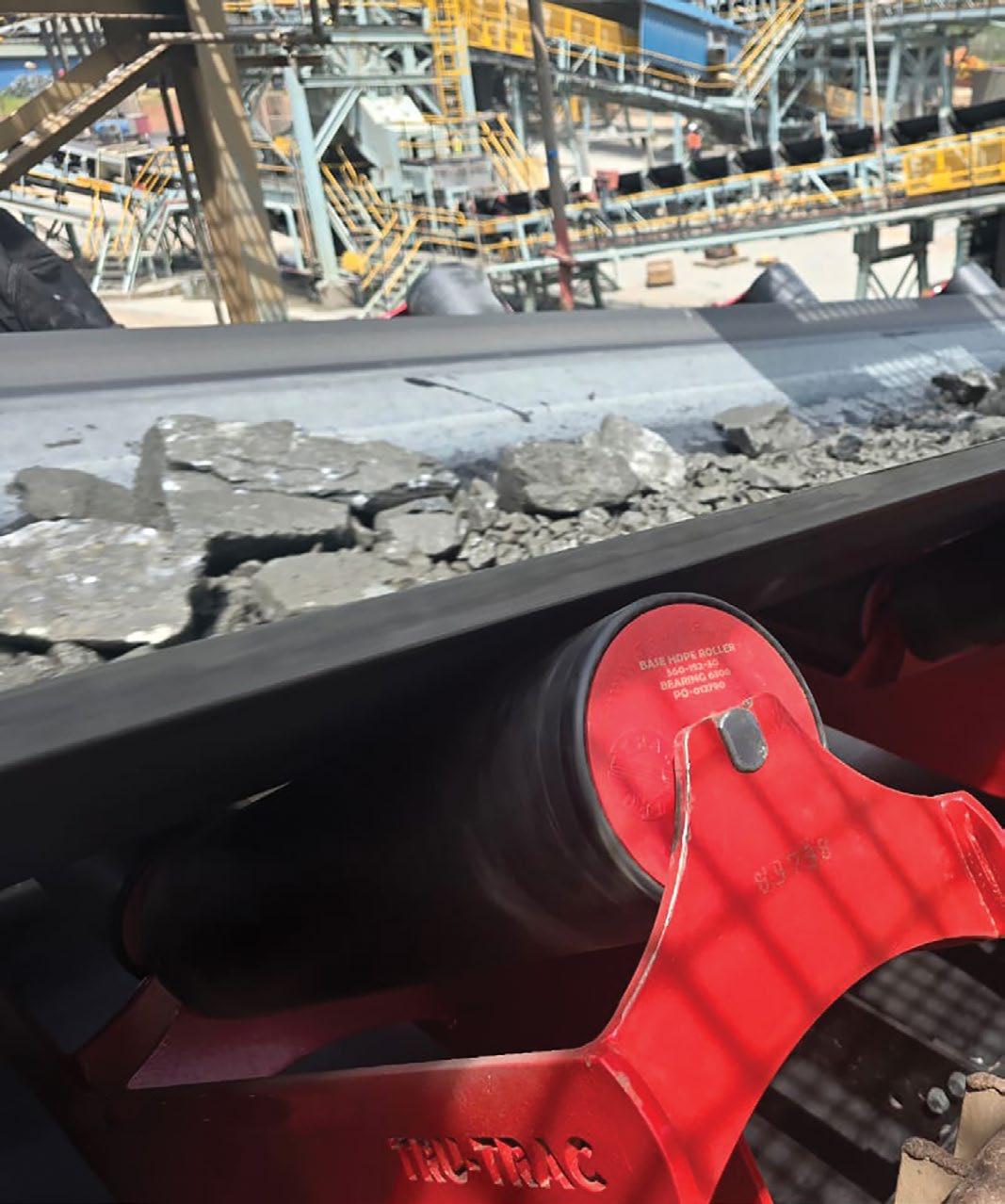
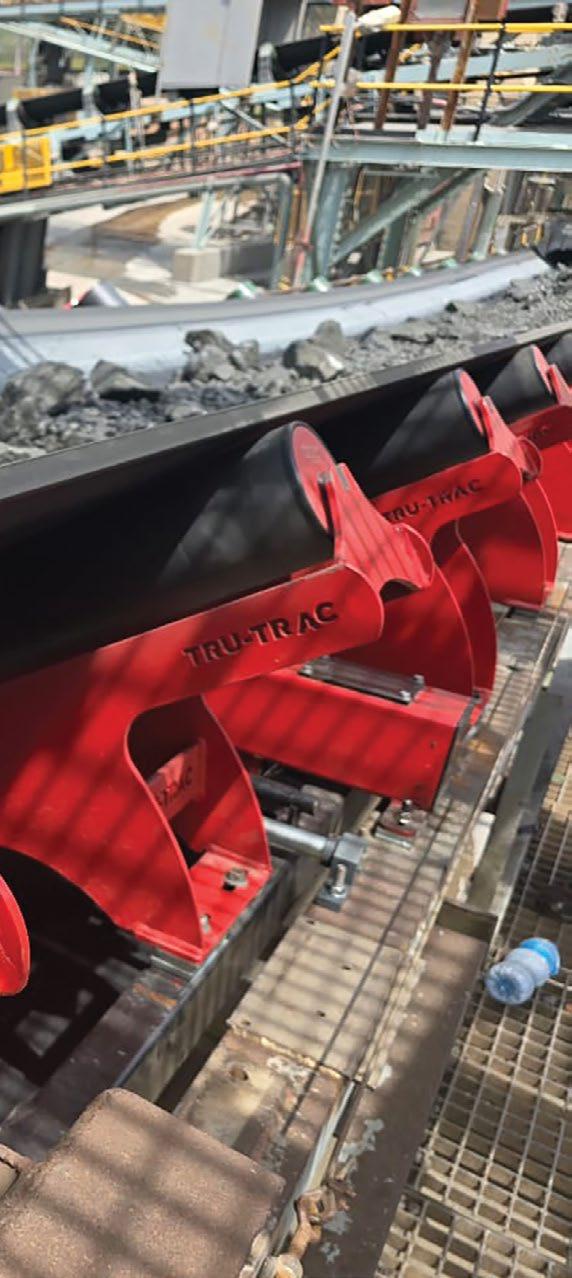
AccuTrac™ AI integrates seamlessly into plant control systems, enabling smarter, automated decision-making across the operation.
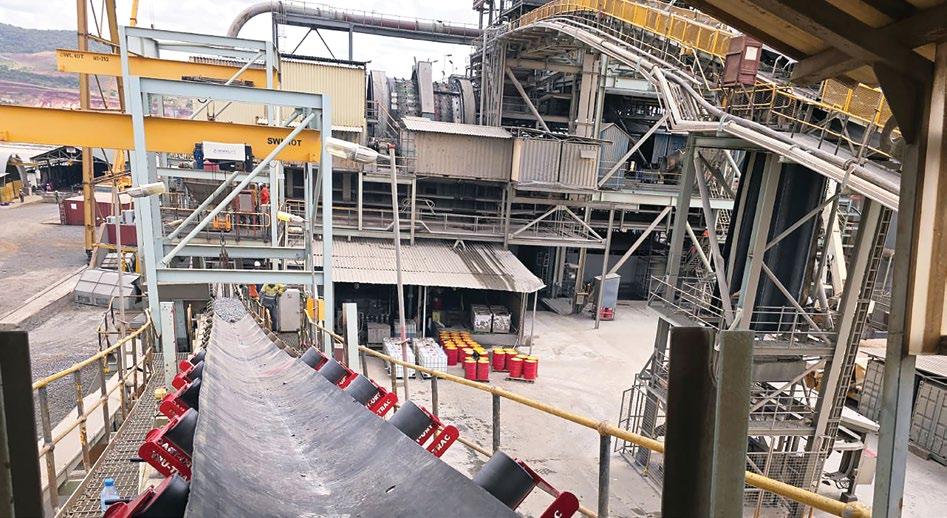
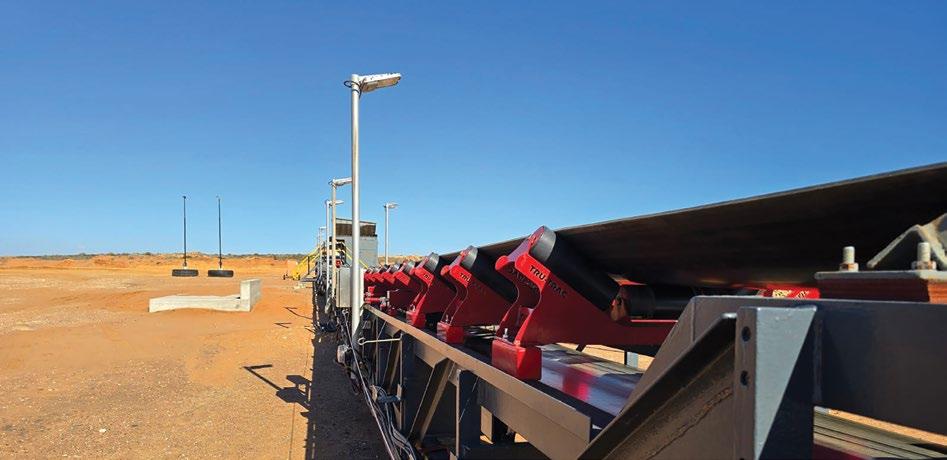
The Tru-Trac AccuTrac™ AI Belt Scale is installed on the conveyor line, delivering real-time mass flow accuracy to support precise plant control.
Shaun Blumberg, COO of Tru-Trac.
Giving you access to oppor tunities in Af rica’s dynamic energy sector!