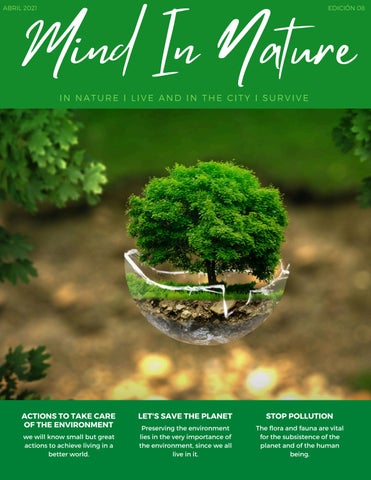
we will know small but great actions to achieve living in a better world
LET'S SAVE THE PLANET
Preserving the environment lies in the very importance of the environment, since we all live in it
STOP POLLUTION
The flora and fauna are vital for the subsistence of the planet and of the human being
ACTIONS TO TAKE CARE OF THE ENVIRONMENT
IN YOUR HOME
1
Do not waste water
Water is a scarce commodity and as such, we must take care of it! The best way to do this is by reducing your waste. Water is a limited resource. We must exercise caution when taking a shower or turning on the tap
2
3
Turn off the lights that you don't use
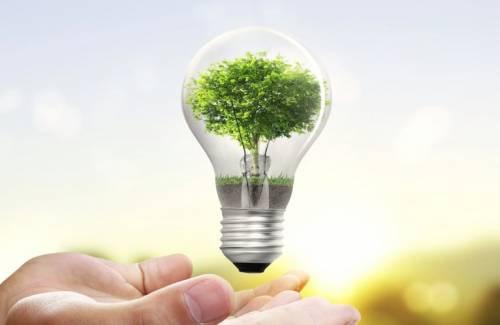
We must be aware of the cost of energy and we are not referring only to its monetary cost, but to the pollution that its generation produces. Therefore, we advise you to turn off the lights when you leave a room.
Separate the waste
Recycling is one of the best ways to take care of the environment and, let's face it, it doesn't take too long or too much work. The best thing is to recycle as a family to teach children to do it and that they can help us.
4
Reuse and Recycle
Do you have jars at home and don't know what to do with them? You can create lamps with a jar. Reusing is one of the best ways to conserve the environment.
ACTIONS TO TAKE CARE OF THE ENVIRONMENT IN YOUR COMMUNITY
5
6
Do not throw garbage in the street
Although it is obvious to you, it is one of the main actions to take care of the environment on the street. If we throw paper or packaging in the street, it will probably end up polluting the lands and oceans.
Choose sustainable mobility. The bike is a perfect means of transport to take care of the planet Using public transport or sharing the vehicle among several people is also a way to reduce harmful gases
7
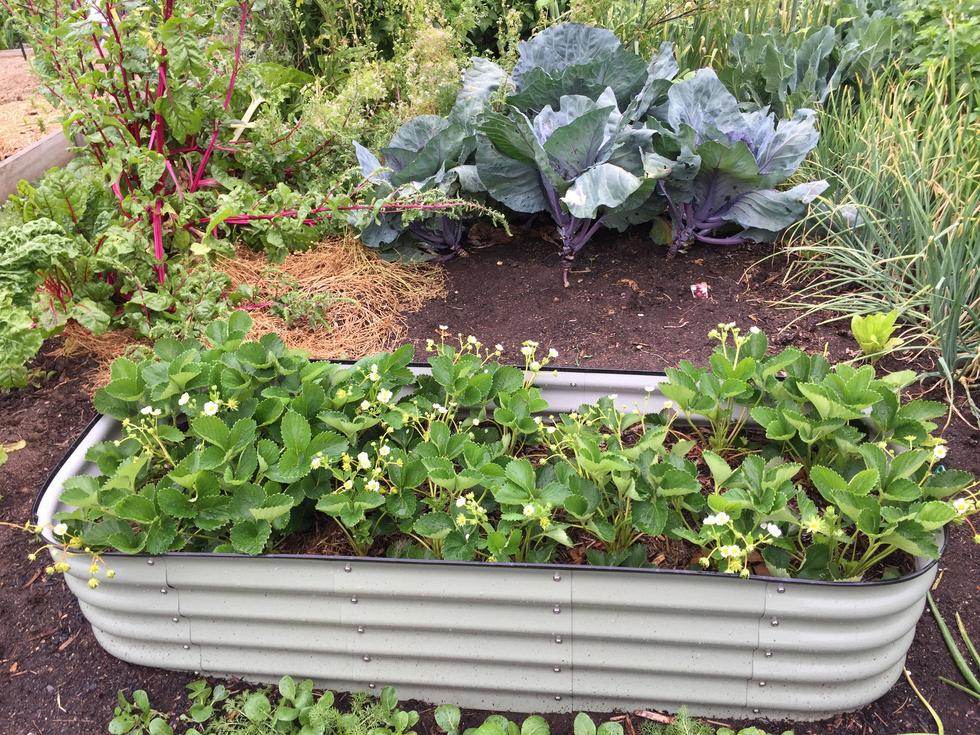
How about starting a community compost?
Thus, the neighbors who still do not dare to have their own compost heap can leave their organic waste in the community compost heap With a few in charge to watch it, voila! The rest of the work is done by nature
8
Plant trees and flowers
Trees, plants and flowers are home, shelter and food for hundreds of species that share their habitat with ours.
THIS STARTED WITH A CAN THROWN ON THE BEACH
WE ARE ALL RESPONSIBLE
Pollution has drastically increased in the oceans and has become a global problem Toxic waste, garbage and plastic end up in the seas and are washed away by currents, thus affecting a large number of species. It is estimated that, each year, more than eight million tons of garbage end up in the ocean and of those eight million, between 60% and 80% are plastic.
.
SAVE THE FORESTS
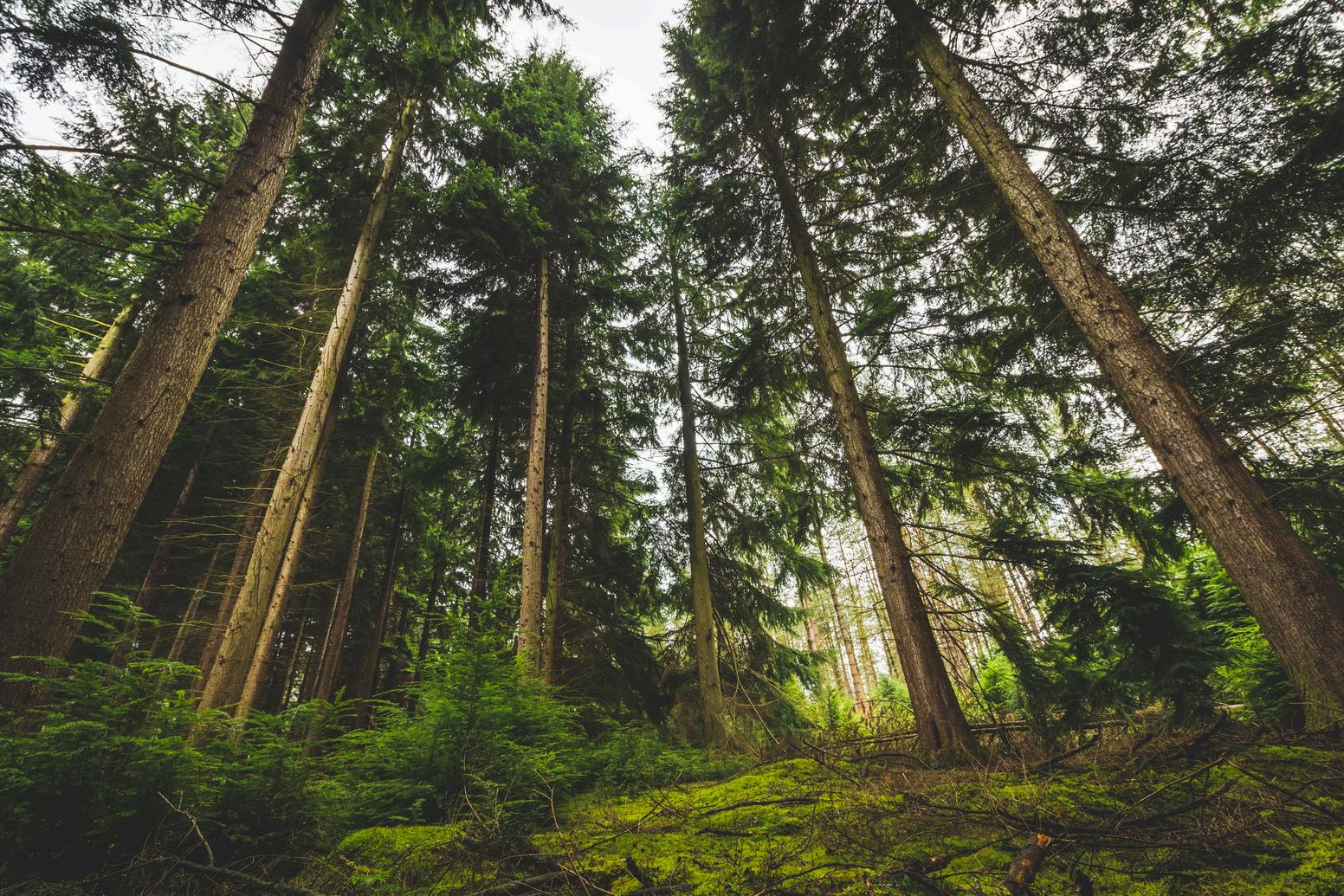
The Earth is running out of oxygen, our forests are dying, and with them our biodiversity. Starting in 2020, Australia had to face thousands of fires caused by a heat wave, the fires that affected more than a billion animals, destroyed more than 6 million hectares of Australian forests. In 2019, the largest tropical forest in the world also became a true hell, the fierce flames destroyed thousands of hectares of the Amazon, given the vulnerability of the so-called plant lung of the world, scientists say that the Amazon could become a African savanna-like landscape, as its tropical trees and fauna disappear, thus releasing up to 140 billion tons of carbon, which would cause extreme increases in global temperatures. In conclusion, our stay on earth would be coming to an end, since we have not appreciated the importance of forests.
A THOUSAND
TREES THAT GROW MAKE LESS NOISE THAN A TREE THAT COLLAPSES
Forests are ecosystems that are made up of trees and. Analysts consider that in the early days of the Earth, our planet was made up of 80 percent trees, but the presence of the human species has caused these to disappear over the years. Forests contribute to mitigating the impact of global warming, therefore, beyond planting a tree from time to time, actions are urgently needed to raise awareness about the importance of forests and their preservation.
"PLANT A TREE AND YOU WILL BE SOWING AWARENESS"
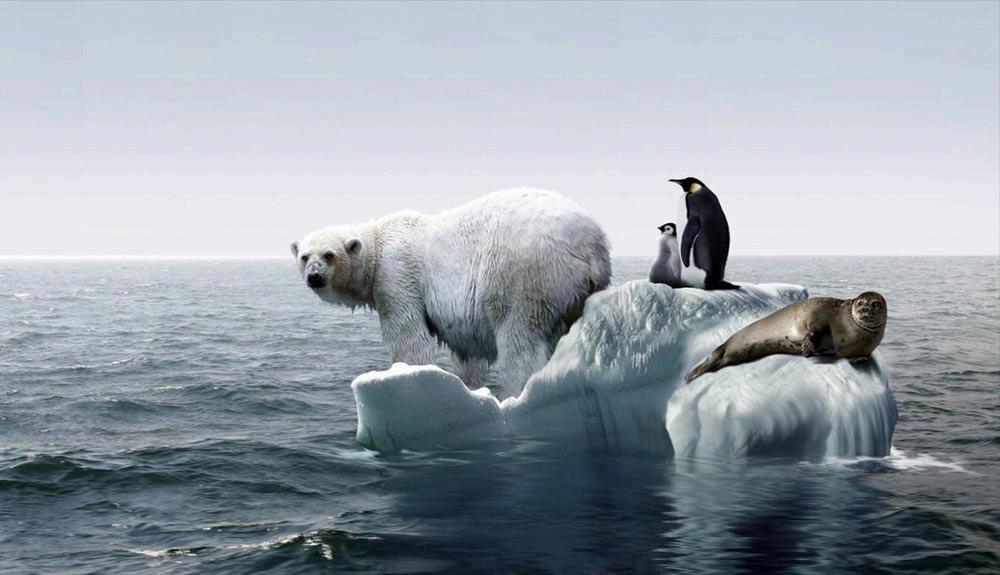
Save Our Friends From The North Pole
¡REALIZE! WE ARE LEAVING THEM HOMELESS
As is already known, climate change is affecting our planet a lot and every day more, but one of the most serious impacts it is causing is the melting of the poles.
Both the Arctic and Antarctica contain 80% of the planet's fresh water in addition to containing 90% of the ice on the earth's surface. For centuries, the thaw has been a natural process since it was determined by the season of the year, and although it has had times of glaciation and melting, it has always been in constant balance.
The most threatened species:
The polar bear, which lives in the north pole and is in a vulnerable state on the Red List of endangered species.
The penguin, specifically the Emperor Penguin and Humboldt Penguin species that inhabit Antarctica, and the Galapagos Penguin that inhabit the Galapago Islands, among others.
The Pacific walrus that lives exclusively in the Arctic seas and is endangered by the exploration of gas and oil that pollute the oceans of its habitat.
1. Earth is the largest terrestrial planet
Earth is the third planet if we count from the Sun and is the largest of the four terrestrial planets, that is, Mercury, Venus, Earth and Mars. These planets are also the closest to the sun.
2. - The only planet with life? + The only planet with water
The existence of water in liquid phase on Earth is due to the temperature that exists in it: 0 - 100 degrees Celsius. Water boils at 100 degrees Celsius, thus turning it into gas and making it unusable for consumption by living beings, including humans, animals, and birds, etc.
3. Water in all states
Earth is also the only place in the solar system where water can be present in all three states: solid, liquid, and gas.
4. Dangerous planet to live
A fascinating fact is that 99% of all species that ever existed on Earth are extinct. Activism related to the environment tries to defend the species that inhabit our planet, but few know this fact.
5. - The only planet with water + The only planet with life?
Earth is the only known planet that supports life. However, attempts are being made to help life survive on other planets such as Mars.
OUR RIOSITY WHAT L TAKE U VERY FAR
7. Composition of our planet
The core of the Earth consists of two layers, an outer layer and an inner layer Although the specific percentages are unknown, both the outer and inner layers of the Earth's core consist primarily of iron and nickel.
8. Our stones do move
Some rocks on our planet move by themselves. However, scientists have not been able to capture the actual movement of these rocks because they move very little, but their movement is safe
9. The Earth is at a higher temperature than the Sun
The inner core of the Earth has a temperature between 5400 and 6000 degrees Celsius. So this means that the core is hotter than the surface of the Sun (surface temperature: 5500 degrees Celsius)
10. Earth, a nitrogenous planet
Earth's atmosphere is made up of 78% nitrogen, 21% oxygen, and minute amounts of other gases, including argon and carbon dioxide.
11. Without plants there would be no life
The large amount of oxygen on Earth comes from the consumption of carbon dioxide by our plant life during photosynthesis