Guest Artist Biographies
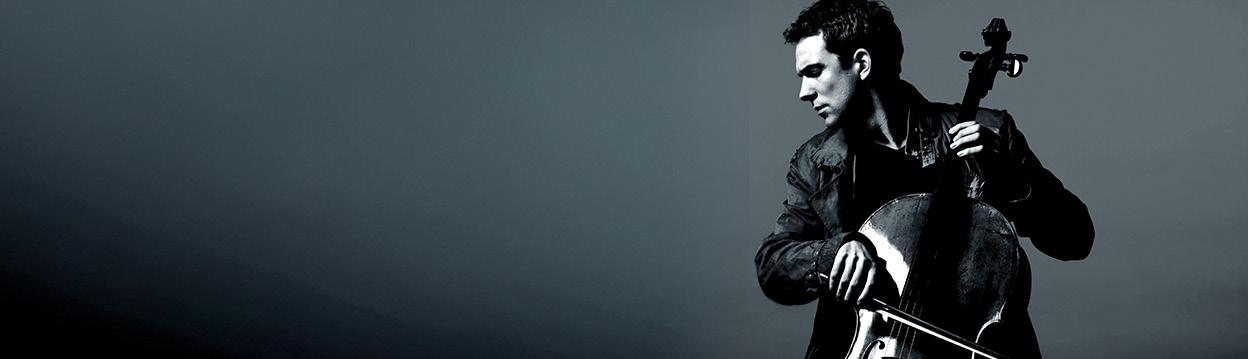
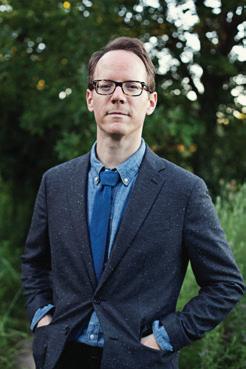
JOHANNES MOSER
Hailed by Gramophone Magazine as “one of the finest among the astonishing gallery of young virtuoso cellists,” German-Canadian cellist Johannes Moser has performed with the world’s leading orchestras, including the Berlin Philharmonic, New York Philharmonic, Los Angeles Philharmonic, Chicago Symphony Orchestra, BBC Philharmonic at the Proms, London Symphony Orchestra, Bavarian Radio Symphony Orchestra, Royal Concertgebouw Orchestra, Tonhalle-Orchester Zürich, NHK Symphony Orchestra, and the Philadelphia and Cleveland orchestras with conductors of the highest level, including Riccardo Muti, Lorin Maazel, Mariss Jansons, Valery Gergiev, Zubin Mehta, Vladimir Jurowski, Franz Welser-Möst, Christian Thielemann, Pierre Boulez, Paavo Jarvi, Semyon Bychkov, Yannick NézetSéguin, and Gustavo Dudamel.
His recordings include concerti by Dvořák, Lalo, Elgar, Lutosławski, Dutilleux, and Tchaikovsky, which have earned him the prestigious German Record Critics’ Award and the Diapason d’Or. Of his recordings of the Lutosławski and Dutilleux cello concerti, Gramophone Magazine commented “Anyone coming afresh to these masterly works…should now investigate this new release ahead of all others.”
A dedicated chamber musician, Moser has performed with Emanuel Ax, Joshua Bell, Jonathan Biss, James Ehnes, Vadim Gluzman, Leonidas Kavakos, Midori, Menahem Pressler, Andreï Korobeinikov, Gloria Campaner, and Yevgeny Sudbin. Moser is also a regular at music festivals around the world, including the Verbier Festival, Schleswig-Holstein Musik Festival, Menuhin Festival Gstaad, Kissinger Sommer Festival, Mehta Chamber Music Festival, and the Colorado, Seattle, and Brevard music festivals.
Renowned for his efforts to expand the reach of the classical genre, as well as his passionate focus on new music, Moser has commissioned works by Julia Wolfe, Ellen Reid, Thomas Agerfeld Olesen, Johannes Kalitzke, Elena Firsova, and Andrew Norman. In 2011, he premiered Enrico Chapela’s Magnetar for electric cello with the Los Angeles Philharmonic and Gustavo Dudamel, returning in the following season to perform Michel van der Aa’s cello concerto Up-close. Throughout his career, Moser has been committed to reaching out to all audiences, from kindergarteners to college students and beyond, and he combines most of his concert engagements with master classes, school visits, and preconcert lectures. He holds a professorship at the prestigious Cologne University of Music and Dance.
Born into a musical family in 1979, Moser began studying the cello at the age of eight and became a student of David Geringas in 1997. He was the top prize winner at the 2002 International Tchaikovsky Competition, simultaneously winning the Special Prize for his interpretation of the composer’s Variations on a Rococo Theme. In 2014, he was awarded the prestigious Brahms Prize by the Brahms Society of Schleswig-Holstein.
Moser plays a cello built by Andrea Guarneri in 1694 on loan from a private collection.
Program notes by David Jensen
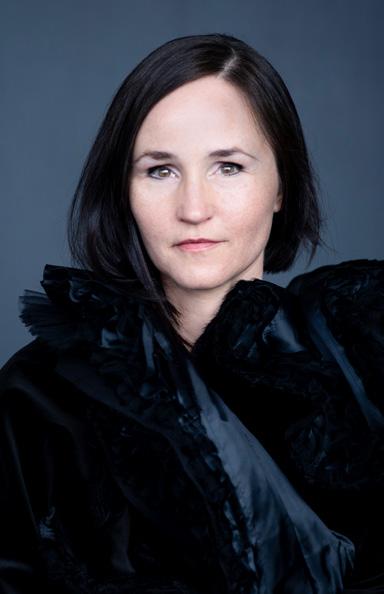
ANNA THORVALDSDOTTIR
Born 11 July 1977; Reykjavík, Iceland
Before we fall (Cello Concerto)
Composed: 2025
First performance: 15 May 2025; Dalia Stasevska, conductor; Johannes Moser, cello; San Francisco Symphony
Last MSO performance: MSO Premiere
Instrumentation: 2 flutes; alto flute; English horn; 2 clarinets; bass clarinet; 2 bassoons; contrabassoon; 4 horns; 2 trombones; tuba; percussion (2 thunder sheets, large tam-tams, 2 large bass drums); strings
Approximate duration: 26 minutes
The following essay was prepared by the composer and appears here with her permission.
The core inspiration behind the cello concerto Before we fall centers around the notion of teetering on the edge, of balancing on the verge of a multitude of opposites. The musical structure flows between lyricism and a sense of distorted energy — two main forces that stabilize this entropic pull. Driven by the strong sense of lyricism that permeates the piece, the work also orbits a forward-moving energy that connects and balances the opposites in different ways. The stable fundament — a grounding power of sustained harmonic presence — communicates with ethereal and distorted sounds, together providing the earth for the essence of the solo cello, the structure upon which it stands and within which it moves. The cello, both alone and deeply connected to the orchestral elements in its expression, generates the atmospheric progression of the world it inhabits, yet continuously on the verge of falling outside the reality it is building for itself.
As with my music generally, the inspiration is not something I am trying to describe through the music or what the music is “about,” as such. Inspiration is a way to intuitively tap into parts of the core energy, structure, atmosphere, and material of the music I am writing each time. It is a fuel for the musical ideas to come into existence, a tool to approach and work with the fundamental materials, the ideas and sensations, that provide and generate the initial spark to the music — the various sources of inspiration are ultimately effective because I perceive qualities in them that I find musically captivating. I do often spend quite a bit of time finding ways to articulate some of the important elements of the musical ideas or thoughts that play certain key roles in the origin of each piece, but the music itself does not emerge from a verbal place; it emerges as a stream of consciousness that flows, is felt, sensed, shaped, and then crafted. So inspiration is a part of the origin story of a piece, but in the end, the music stands on its own.
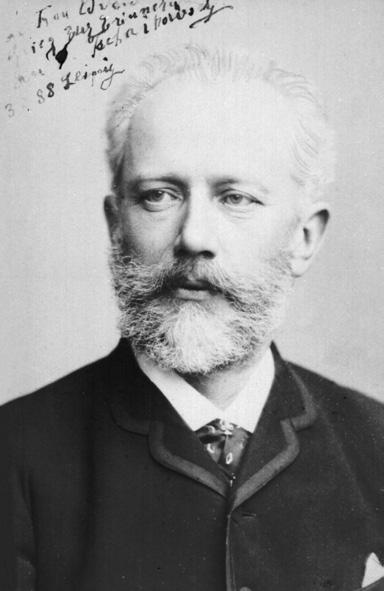
PIOTR ILYICH TCHAIKOVSKY
Born 7 May 1840; Votkinsk, Russia
Died 6 November 1893; Saint Petersburg, Russia
Selections from The Sleeping Beauty, Opus 66
Composed: October 1888 – August 1889
First performance: 15 January 1890; Riccardo Drigo, conductor; Mariinsky Theater, Moscow
Last MSO performance: 19 June 1992; Neal Gittleman, conductor
Instrumentation: piccolo; 2 flutes; 2 oboes; English horn; 2 clarinets; 2 bassoons; 4 horns; 4 trumpets; 3 trombones; tuba; timpani; percussion (triangle); glockenspiel; piano; strings
Approximate duration: 1 hour and 5 minutes
We all know the story: somewhere in the depths of history, a king and queen who had longed for a child welcomed their first, a daughter, to the world with a christening ceremony. Half a dozen fairies showered the child with love, gifts of virtue, and good fortune before the wicked fairy Carabosse (whose invitation to the function, she notes quite pointedly, never arrived) spitefully blights the girl’s future with a curse: on her sixteenth birthday, Princess Aurora would cut her finger on a spindle and die. The great Lilac Fairy naturally interferes to the extent her magic allows her, diminishing the spell’s effects and instead dooming the princess to a century of slumber. As her destiny comes to pass, the entire kingdom joins her in sleep at the Lilac Fairy’s behest, and true love, in the form of a noble prince, saves Aurora with a kiss.
As with most of the fairy tales that have survived into modernity, the roots of the sleeping beauty myth reach backward through oceans of time. The story first appeared nearly seven centuries ago in the medieval epic Perceforest and was adapted across Europe for generations, perhaps most famously by Charles Perrault, that legendary French gatherer of folklore, in his somewhat conspicuously titled 1697 collection Stories or Tales from Past Times, with Morals, and the brothers Jacob and Wilhelm Grimm, who wisely chose to excise some of the more questionable material found in earlier tellings when publishing their Children’s and Household Tales in 1812.
Raised in a trilingual household by a French-German mother, Russian father, and a French governess, Tchaikovsky was doubtlessly aware of the story and was understandably pleased to receive a letter in the spring of 1888 from Ivan Vsevolozhsky, director of Russia’s Imperial Theatres, in which he proposed to adapt Perrault’s La belle au bois dormant for the ballet. “I would like a mise en scène in the style of Louis XIV, which would be a musical fantasia written in the spirit of Lully, Bach, Rameau, etc.,” a historical setting clearly intended to glorify the monarchial rule that had shaped Europe’s sociopolitical life in ages past and one which the Romanov dynasty was then trying desperately to match. The inclusion of many of Perrault’s most beloved characters in the third act, including Cinderella, Little Red Riding Hood, Tom Thumb, and the Puss in Boots likely stimulated Tchaikovsky’s imagination, who, after leafing through Vsevolozhsky’s script, was swift to inform him that he was “delighted and enchanted beyond all description. It suits me perfectly and I ask nothing more than to make the music for it.”
Not only did Tchaikovsky find the subject matter compelling enough to make another attempt at writing for the stage after the failure of his first balletic venture, Swan Lake, but his decision to accept the commission coincided with what has since been described as the “golden age” of Russian ballet. Tchaikovsky had the good fortune to collaborate with the head of the Imperial Ballet, Marius Petipa, in marrying the master’s famously detailed choreography to his enchanting incidental music, and the production enjoyed an especially extravagant budget provided by the treasury of the Tsar. He began to sketch out his thoughts in the autumn of 1888, finishing the first draft the following May and swiftly orchestrating the music with a great deal of enthusiasm. “It seems to me,” he wrote that summer, “that the music from this ballet will be among my best works.”
Continued on page 20
Continued from page 19
The score contains some of his most memorable and attractive music, as he himself noted in a letter to his patroness, Nadezhda von Meck, in August 1889: “I lavished particular care on its instrumentation and devised several completely new orchestral combinations, which I hope will be very beautiful and interesting.” And beautiful they are — in The New Grove Dictionary of Music and Musicians, musicologist David Brown claimed the ballet as one of the composer’s crowning achievements: “The conjunction of characterful musical invention, structural fluency, and sure sense of atmosphere makes The Sleeping Beauty his most consistently successful theatre piece and one of the peaks of the ballet repertory.” Tsar Alexander III, in attendance at the premiere, simply called Tchaikovsky to his box in the theater to offer his own assessment: “Very nice.”
2025.26 SEASON
KEN-DAVID MASUR
Music Director
Polly and Bill Van Dyke Music Director Chair
EDO DE WAART
Music Director Laureate
BYRON STRIPLING
Principal Pops Conductor
Stein Family Foundation
Principal Pops Conductor Chair
RYAN TANI
Associate Conductor
CHERYL FRAZES HILL
Chorus Director
Margaret Hawkins Chorus Director Chair
TIMOTHY J. BENSON
Assistant Chorus Director
FIRST VIOLINS
Jinwoo Lee, Concertmaster, Charles and Marie Caestecker Concertmaster Chair
Ilana Setapen, First Associate Concertmaster, Thora M. Vervoren
First Associate Concertmaster Chair
Jeanyi Kim, Associate Concertmaster
Alexander Ayers
Autumn Chodorowski
Yuka Kadota
Elliot Lee
Dylana Leung
Kyung Ah Oh
Lijia Phang
Vinícius Sant’Ana**
Yuanhui Fiona Zheng
SECOND VIOLINS
Jennifer Startt, Principal, Andrea and Woodrow Leung Principal Second Violin Chair
Ji-Yeon Lee, Assistant Principal (2nd chair)
Hyewon Kim, Acting Assistant Principal (3rd chair)
Heejeon Ahn
Lisa Johnson Fuller
Clay Hancock
Paul Hauer
Sheena Lan**
Janis Sakai**
Yiran Yao
VIOLAS
Victor de Almeida, Principal, Richard O. and Judith A. Wagner Family Principal Viola Chair
Samantha Rodriguez, Acting Assistant Principal (2nd chair), Friends of Janet F. Ruggeri Assistant Principal Viola Chair
Alejandro Duque, Acting Assistant Principal (3rd chair)
Elizabeth Breslin
Georgi Dimitrov
Nathan Hackett
Michael Lieberman**
Erin H. Pipal
CELLOS
Susan Babini, Principal, Dorothea C. Mayer Principal Cello Chair
Shinae Ra, Assistant Principal (2nd chair)
Scott Tisdel, Associate Principal Emeritus
Madeleine Kabat
Peter Szczepanek
Peter J. Thomas
Adrien Zitoun
BASSES
Principal, Donald B. Abert Principal Bass Chair
Andrew Raciti, Acting Principal
Nash Tomey, Acting Assistant Principal (2nd chair)
Brittany Conrad
Broner McCoy
Paris Myers
HARP
Julia Coronelli, Principal, Walter Schroeder Principal Harp Chair
FLUTES
Sonora Slocum, Principal, Margaret and Roy Butter Principal Flute Chair
Heather Zinninger, Assistant Principal
Jennifer Bouton Schaub
PICCOLO
Jennifer Bouton Schaub
OBOES
Katherine Young Steele, Principal, Milwaukee Symphony Orchestra League Principal Oboe Chair
Kevin Pearl, Assistant Principal
Margaret Butler
ENGLISH HORN
Margaret Butler, Philip and Beatrice Blank English Horn Chair in memoriam to John Martin
CLARINETS
Todd Levy, Principal, Franklyn Esenberg Principal Clarinet Chair
Jay Shankar, Assistant Principal, Donald and Ruth P. Taylor Assistant Principal Clarinet Chair
Besnik Abrashi
E-FLAT CLARINET
Jay Shankar
BASS CLARINET
Besnik Abrashi
BASSOONS
Catherine Van Handel, Principal, Muriel C. and John D. Silbar Family Principal Bassoon Chair*
Rudi Heinrich, Acting Principal
Matthew Melillo
CONTRABASSOON
Matthew Melillo
HORNS
Matthew Annin, Principal, Krause Family Principal French Horn Chair
Krystof Pipal, Associate Principal
Dietrich Hemann, Andy Nunemaker French Horn Chair
Darcy Hamlin
Dawson Hartman
TRUMPETS
Matthew Ernst, Principal, Walter L. Robb Family Principal Trumpet Chair
David Cohen, Associate Principal, Martin J. Krebs Associate Principal Trumpet Chair
Tim McCarthy, Fred Fuller Trumpet Chair
TROMBONES
Megumi Kanda, Principal, Marjorie Tiefenthaler Principal Trombone Chair
Kirk Ferguson, Assistant Principal
BASS TROMBONE
John Thevenet, Richard M. Kimball Bass Trombone Chair
TUBA
Robyn Black, Principal, John and Judith Simonitsch Principal Tuba Chair
TIMPANI
Dean Borghesani, Principal
Chris Riggs, Assistant Principal
PERCUSSION
Robert Klieger, Principal Chris Riggs
PIANO
Melitta S. Pick Endowed Piano Chair
PERSONNEL
Antonio Padilla Denis, Director of Orchestra Personnel
Paris Myers, Assistant Manager of Orchestra Personnel
LIBRARIANS
Paul Beck, Principal Librarian, James E. Van Ess Principal Librarian Chair
Matthew Geise, Assistant Librarian & Media Archivist
PRODUCTION
Tristan Wallace, Production Manager/Live Audio
Lisa Sottile, Production Stage Manager
* Leave of absence during the 2025.26 season
** Acting member of the MSO for the 2025.26 season