I. Allegro non troppo e molto maestoso – Allegro con spirito
II. Andantino semplice – Prestissimo – Tempo I
III. Allegro con fuoco
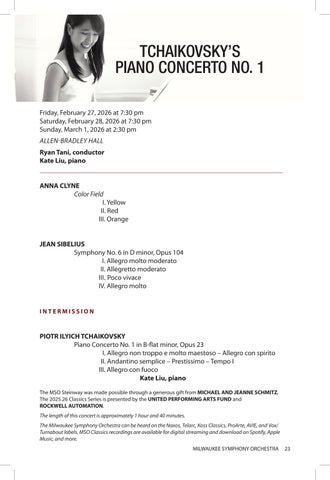
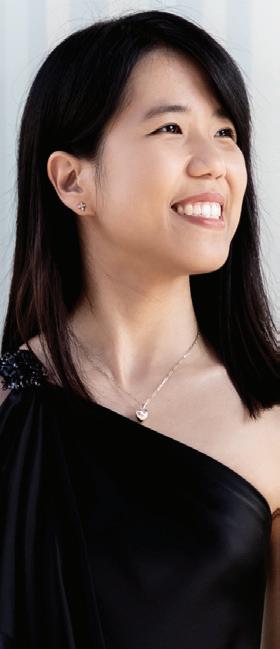
Kate Liu, piano
The MSO Steinway was made possible through a generous gift from MICHAEL AND JEANNE SCHMITZ
The 2025.26 Classics Series is presented by the UNITED PERFORMING ARTS FUND and ROCKWELL AUTOMATION
The length of this concert is approximately 1 hour and 40 minutes.
The Milwaukee Symphony Orchestra can be heard on the Naxos, Telarc, Koss Classics, ProArte, AVIE, and Vox/ Turnabout labels. MSO Classics recordings are available for digital streaming and download on Spotify, Apple Music, and more.
Guest Artist Biographies
KATE LIU
Pianist Kate Liu has garnered international recognition, notably winning the Third Prize at the 17th International Fryderyk Chopin Competition in Warsaw, Poland. She also received the prize for Best Performance of Mazurka, as well as the Audience Favorite prize, awarded by the Polish public through Polish National Radio. Since then, she has toured internationally, performing at some of the world’s most renowned venues and collaborating with orchestras around the globe.
As a distinguished soloist, Liu has been presented in numerous prestigious halls, including Carnegie Hall’s Weill Recital Hall, Severance Hall in Cleveland, the Seoul Arts Center, Tokyo Metropolitan Theatre, National Philharmonic in Warsaw, Maison symphonique de Montréal, Kennedy Center in Washington, D.C., Shanghai Concert Hall, Osaka Symphony Hall, and the Phillips Collection. She has collaborated with a number of esteemed orchestras, including the Warsaw Philharmonic, Orchestre Symphonique de Montréal, Yomiuri Nippon Symphony Orchestra, Daegu Symphony Orchestra, Rochester Philharmonic, Hilton Head Symphony Orchestra, and The Cleveland Orchestra. Liu is a regular invitee to the Chopin and His Europe festival in Warsaw, and in 2024, she was the recipient of the Olivier Berggruen Prize as part of the Gstaad Menuhin Festival.
In 2025, she released her debut album, featuring sonatas by Beethoven and Brahms, with Orchid Classics.
Born in Singapore, Liu began her piano studies at the age of four and relocated to the U.S. at age eight. She studied at the Music Institute of Chicago under Emilio del Rosario, Micah Yui, and Alan Chow. Early in her career, she was awarded first prizes at the Third Asia-Pacific International Chopin Competition and the New York International Piano Competition. Kate holds a bachelor’s degree from the Curtis Institute of Music, as well as a master’s and Artist Diploma from The Juilliard School, where she studied with Robert McDonald and Yoheved Kaplinsky.
Program notes by David Jensen
ANNA CLYNE
Born 9 March 1980; London, England
Color Field
Composed: 2020
First performance: 23 October 2021; Marin Alsop, conductor; Baltimore Symphony Orchestra
Last MSO performance: MSO Premiere
Instrumentation: 2 flutes (2nd doubling on piccolo); 2 oboes (2nd doubling on English horn); 2 clarinets (2nd doubling on E-flat clarinet); 2 bassoons (2nd doubling on contrabassoon); 2 horns; 2 trumpets; percussion (large bass drum, 2 bowed crotales, high hat, snare drum, suspended cymbals, large suspended cymbal, large tam-tam, alto tambourine, tambourine, 2 middle tom-toms, 2 low tom-toms, 2 vibraphones); timpani; strings
Approximate duration: 15 minutes
The following essay was prepared by the composer and appears here with her permission.
Color Field was inspired by Mark Rothko’s Orange, Red, Yellow (1961) — a powerful example of the artist’s “color field” paintings, featuring red and yellow framing a massive swash of vibrant orange that seems to vibrate off the canvas.
Whilst creating music that evokes colors, I explored synesthesia — a perceptual phenomenon whereby a person can hear sound, pitch, or tonal centers and then correlate them to specific colors, and vice versa. In the case of the composer Alexander Scriabin, he associated specific pitches with specific colors, which I have adopted as tonal centers for the three movements of this piece: Yellow = D, Red = C, and Orange = G.
Yellow evokes a hazy warmth and introduces a melodic theme, first heard as a very slow bass line, and then revealed in the middle of the movement in the strings and winds. In Red, the fires blaze with bold percussive patterns and lilting lines. In Orange, the music becomes still and breathes, and then escalates once more, incorporating elements of Yellow and Red to create Orange
JEAN SIBELIUS
Born 8 December 1865; Hämeenlinna, Finland
Died 20 September 1957; Järvenpää, Finland
Symphony No. 6 in D minor, Opus 104
Composed: Autumn 1914 – February 1923
First performance: 19 February 1923; Jean Sibelius, conductor; Helsinki Philharmonic Orchestra
Last MSO performance: 12 October 1980; James Paul, conductor
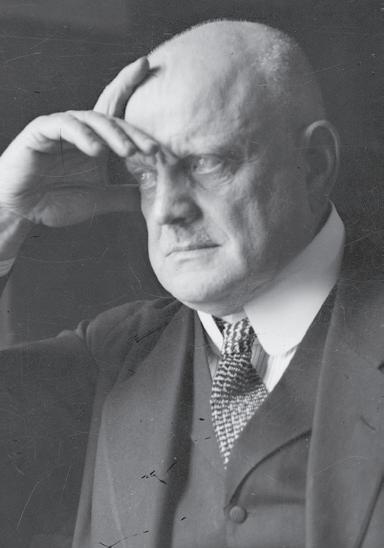
From his earliest symphonic endeavor, the mythologically proportioned Kullervo, Jean Sibelius enshrined himself in the Finnish consciousness as both a nationalistic composer of exceptionally skillful means and a strikingly imaginative master of orchestral writing. No other Finn has found such favor in the spheres of classical music, and his sensitivities to the natural world, his cultural heritage, and the timbral possibilities of the modern orchestra coalesced as music of the utmost originality. While his German contemporaries (namely Mahler, Bruckner, and Strauss) were in constant search of a greater intensity of sound by means of their ever-weightier formal schemes and imposing instrumental demands, Sibelius’s career was one of continual refinement and distillation — an expert craftsman’s quest for clarity of expression, thematic cohesion, and structural precision. As Sibelius put it, “Whereas most other modern composers are engaged in manufacturing cocktails of every hue and description, I offer the public cold spring water.”
By the time Sibelius began outlining the ideas for his last three symphonies in the late 1910s, he had rejected both the Romantic nationalism that had earned him his flourishing international reputation and the complex, aggressively expressionistic styles emerging in Europe on the heels of the Great War, favoring simpler instrumental combinations, naturalistic effects, and a certain liquidity of form. Of a more introverted and subdued character than his most popular symphonies, the sixth has largely been neglected in symphonic programming, with the English musicologist Gerald Abraham going so far as to describe it as the “Cinderella of the seven symphonies.” “If it lacks the heroic countenance of the fifth and the stern, epic majesty of the seventh,” wrote the music critic Robert Layton, “it possesses a purity of utterance and spirit that has few parallels in either Sibelius or the music of its time.”
At first blush, the sixth appears to be a product of Sibelius’s neoclassical tendencies: its instrumentation is conventional, as is its division into the four movements that had traditionally served as the genre’s architecture since the 18th century. But rather than restricting his thoughts to those established and relatively limiting designs, it is the individual themes themselves which determine their organic development (a feature shared by each of his last three symphonies), and there are no clearly defined correlations between the key signatures explored within each individual movement. In fact, Sibelius casts much of this music in the Dorian mode with D as its tonal center, a scale derived from medieval musical theory, exploring the vivid contrasts available in the key of C major, which shares each of the pitches in the Dorian scale. “Rage and passion,” Sibelius remarked to his student Simon Parment, “are utterly essential in it, but it is supported by undercurrents deep under the surface of the music.”
The music’s nuanced shadings, given a particularly mysterious inflection by the ambiguity of its harmonies, along with its glowing sonorities, flowing lyricism, and translucent orchestration make for an especially poignant portrait of a man looking back on his life. The finely sculpted polyphonic writing, stepwise melodic motion, and modal harmonies that pervade the sixth have invited comparisons to the music of the Renaissance composer Giovanni Pierluigi da Palestrina, whose lucid contrapuntal style Sibelius had studied as a student, but perhaps its loveliest interpretation comes from the composer himself, writing twenty years after its premiere: “The sixth symphony always reminds me of the scent of the first snow.”
PIOTR ILYICH TCHAIKOVSKY
Born 7 May 1840; Votkinsk, Russia
Died 6 November 1893; Saint Petersburg, Russia
Piano Concerto No. 1 in B-flat minor, Opus 66
Composed: November 1874 – 21 February 1875; revised 1879 and 1889
First performance: 25 October 1875; Benjamin Johnson Lang, conductor; Hans von Bülow; piano; Boston Music Hall
Last MSO performance: 26 January 2020; Stefan Asbury, conductor; Joyce Yang, piano
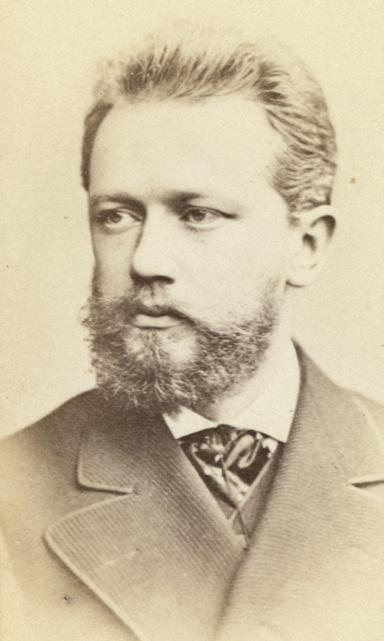
“I wanted to start a piano concerto — but for some reason it didn’t work out.” As far as ill portents go, one could hardly do worse: this is the very first notice from Tchaikovsky, in a letter to his brother Modest written in the autumn of 1874, that he was engrossed in the writing of his first concerto. After years of feeling torn between the Western modes of expression that had provided him with harmonic direction and structural clarity, the influence of that heavily nationalistic Saint Petersburg cohort of composers, The Mighty Five, and his own fiercely emotional tendencies, he was finally arriving at a highly personal style defined by its passionate excesses, widely diversified melodic sensibility, and crisply defined colors.
But having yet to find consistent success as a composer, none of the technical proficiency or musical intellect he had developed leading up to that point would prepare him for the impending disaster of his piano concerto. “I am completely bogged down in the composition,” he wrote to Modest, only weeks later: “it’s coming along — but very poorly.” Tchaikovsky labored over the score, “routinely having to be strict with myself and to compel piano passages to come into my head,” and lacking any natural talent at the keyboard himself, he felt obligated to seek advice from the pianist Nikolai Rubinstein, who had hired him to teach at his newly established Moscow Conservatory in 1865. What followed was one of the most sensational confrontations in all of music history.
Only a few days after finishing the first draft, Tchaikovsky played for both Rubinstein and his friend, Nikolai Hubert. Recounting the incident to his patroness, Nadezhda von Meck, in a letter some years later, Tchaikovsky described Rubinstein’s frigid silence and Hubert’s obvious discomfort: “Not a single word, not a single remark! If you knew how stupid and intolerable is the situation of a man who cooks and sets before a friend a meal, which he proceeds to eat in silence!” Rubinstein, finally, could not restrain himself, and was (at least according to Tchaikovsky’s recollection) unrelenting: “It turned out that my concerto was worthless and unplayable; passages were so fragmented, so clumsy, so badly written that they were beyond rescue; the work itself was bad, vulgar … if within a limited time I reworked the concerto according to his demands, then he would do me the honor of playing it … ‘I shall not alter a single note,’ I answered. ‘I shall publish the work exactly as it is!’”
Disturbed by the whole ordeal, Tchaikovsky completed the orchestration without revising any aspect of the score before turning to the German pianist Hans von Bülow, who agreed to perform the concerto as part of his tour of the United States the following autumn. This probably appealed to Tchaikovsky, who would have likely withered had he been anywhere near the premiere had it gone poorly, which, to some extent, it did: the composer George Whitefield Chadwick, who attended the performance, later wrote that the orchestra “had not rehearsed much, and the trombones got in wrong in the ‘tutti’ in the middle of the first movement, whereupon Bülow sang out in a perfectly audible voice, ‘The brass may go to hell.’”
To Tchaikovsky’s bewilderment, the performance was nonetheless so successful that the audience demanded Bülow repeat the final movement, and the piece has remained one of Tchaikovsky’s most popular compositions since. Even Rubinstein himself eventually changed his tune, playing it and advocating for it throughout his career; thankfully, none of his sweeping criticisms made their way into Tchaikovsky’s subsequent revisions. The very points Rubinstein had taken to task — the glorious entrance of the orchestra in the “wrong” key of D-flat major with a theme that never returns, the structural irregularities, and the virtuoso impossibilities that strike fear into the hearts of pianists everywhere — have never failed to excite wonder among listeners, making for some of the most gripping and utterly compelling music in the repertoire.
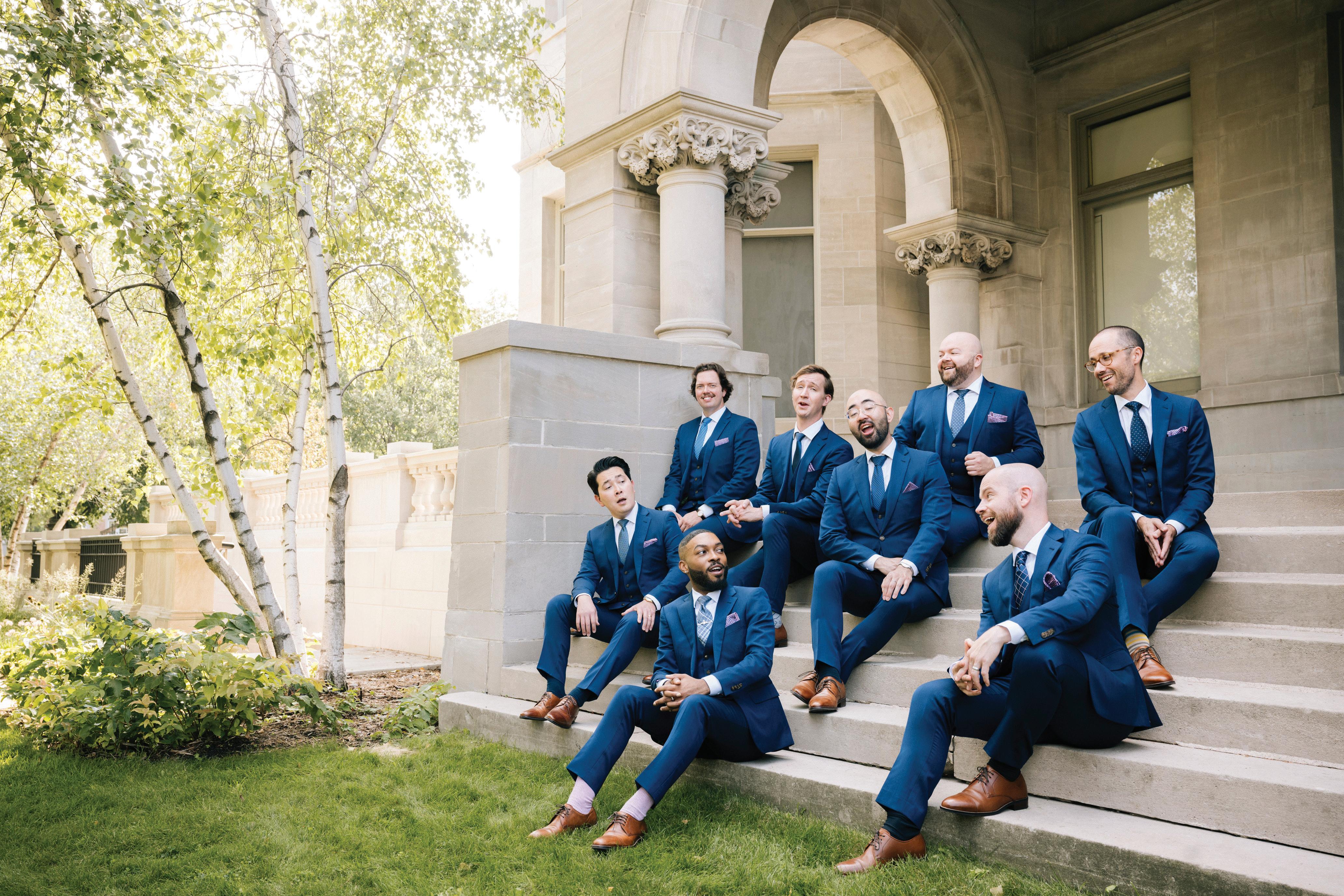
Cantus
2025.26 SEASON
KEN-DAVID MASUR
Music Director
Polly and Bill Van Dyke Music Director Chair
EDO DE WAART
Music Director Laureate
BYRON STRIPLING
Principal Pops Conductor
Stein Family Foundation
Principal Pops Conductor Chair
RYAN TANI
Associate Conductor
CHERYL FRAZES HILL
Chorus Director
Margaret Hawkins Chorus Director Chair
TIMOTHY J. BENSON
Assistant Chorus Director
FIRST VIOLINS
Jinwoo Lee, Concertmaster, Charles and Marie Caestecker Concertmaster Chair
Ilana Setapen, First Associate Concertmaster, Thora M. Vervoren First Associate Concertmaster Chair
Jeanyi Kim, Associate Concertmaster
Alexander Ayers
Autumn Chodorowski
Yuka Kadota
Elliot Lee
Dylana Leung
Kyung Ah Oh
Lijia Phang
Vinícius Sant’Ana**
Yuanhui Fiona Zheng
SECOND VIOLINS
Jennifer Startt, Principal, Andrea and Woodrow Leung Principal Second Violin Chair
Ji-Yeon Lee, Assistant Principal (2nd chair)
Hyewon Kim, Acting Assistant Principal (3rd chair)
Heejeon Ahn
Lisa Johnson Fuller
Clay Hancock
Paul Hauer
Sheena Lan**
Janis Sakai**
Yiran Yao
VIOLAS
Victor de Almeida, Principal, Richard O. and Judith A. Wagner Family Principal Viola Chair
Samantha Rodriguez, Acting Assistant Principal (2nd chair), Friends of Janet F. Ruggeri Assistant Principal Viola Chair
Alejandro Duque, Acting Assistant Principal (3rd chair)
Elizabeth Breslin
Georgi Dimitrov
Nathan Hackett
Michael Lieberman**
Erin H. Pipal
CELLOS
Susan Babini, Principal, Dorothea C. Mayer Principal Cello Chair
Shinae Ra, Assistant Principal (2nd chair)
Scott Tisdel, Associate Principal Emeritus
Madeleine Kabat
Peter Szczepanek
Peter J. Thomas
Adrien Zitoun
BASSES
Principal, Donald B. Abert Principal Bass Chair
Andrew Raciti, Acting Principal Nash Tomey, Acting Assistant Principal (2nd chair)
Brittany Conrad
Broner McCoy
Paris Myers
HARP
Julia Coronelli, Principal, Walter Schroeder Principal Harp Chair
FLUTES
Sonora Slocum, Principal, Margaret and Roy Butter Principal Flute Chair
Heather Zinninger, Assistant Principal
Jennifer Bouton Schaub
PICCOLO
Jennifer Bouton Schaub
OBOES
Katherine Young Steele, Principal, Milwaukee Symphony Orchestra League Principal Oboe Chair
Kevin Pearl, Assistant Principal
Margaret Butler
ENGLISH HORN
Margaret Butler, Philip and Beatrice Blank English Horn Chair in memoriam to John Martin
CLARINETS
Todd Levy, Principal, Franklyn Esenberg Principal Clarinet Chair
Jay Shankar, Assistant Principal, Donald and Ruth P. Taylor Assistant Principal Clarinet Chair
Besnik Abrashi
E-FLAT CLARINET
Jay Shankar
BASS CLARINET
Besnik Abrashi
BASSOONS
Catherine Van Handel, Principal, Muriel C. and John D. Silbar Family Principal Bassoon Chair*
Rudi Heinrich, Acting Principal
Matthew Melillo
CONTRABASSOON
Matthew Melillo
HORNS
Matthew Annin, Principal, Krause Family Principal French Horn Chair
Krystof Pipal, Associate Principal
Dietrich Hemann, Andy Nunemaker French Horn Chair
Darcy Hamlin
Dawson Hartman
TRUMPETS
Matthew Ernst, Principal, Walter L. Robb Family Principal Trumpet Chair
David Cohen, Associate Principal, Martin J. Krebs Associate Principal Trumpet Chair
Tim McCarthy, Fred Fuller Trumpet Chair
TROMBONES
Megumi Kanda, Principal, Marjorie Tiefenthaler Principal Trombone Chair
Kirk Ferguson, Assistant Principal
BASS TROMBONE
John Thevenet, Richard M. Kimball
Bass Trombone Chair
TUBA
Robyn Black, Principal, John and Judith Simonitsch Principal Tuba Chair
TIMPANI
Dean Borghesani, Principal
Chris Riggs, Assistant Principal
PERCUSSION
Robert Klieger, Principal
Chris Riggs
PIANO
Melitta S. Pick Endowed Piano Chair
PERSONNEL
Antonio Padilla Denis, Director of Orchestra Personnel
Paris Myers, Assistant Manager of Orchestra Personnel
LIBRARIANS
Paul Beck, Principal Librarian, James E. Van Ess Principal Librarian Chair
Matthew Geise, Assistant Librarian & Media Archivist
PRODUCTION
Tristan Wallace, Production Manager/Live Audio
Lisa Sottile, Production Stage Manager
* Leave of absence during the 2025.26 season
** Acting member of the MSO for the 2025.26 season