For pupils aged 13 - 18
Instilling values, inspiring minds

For pupils aged 13 - 18
Instilling values, inspiring minds


Lucinda G Head of Art
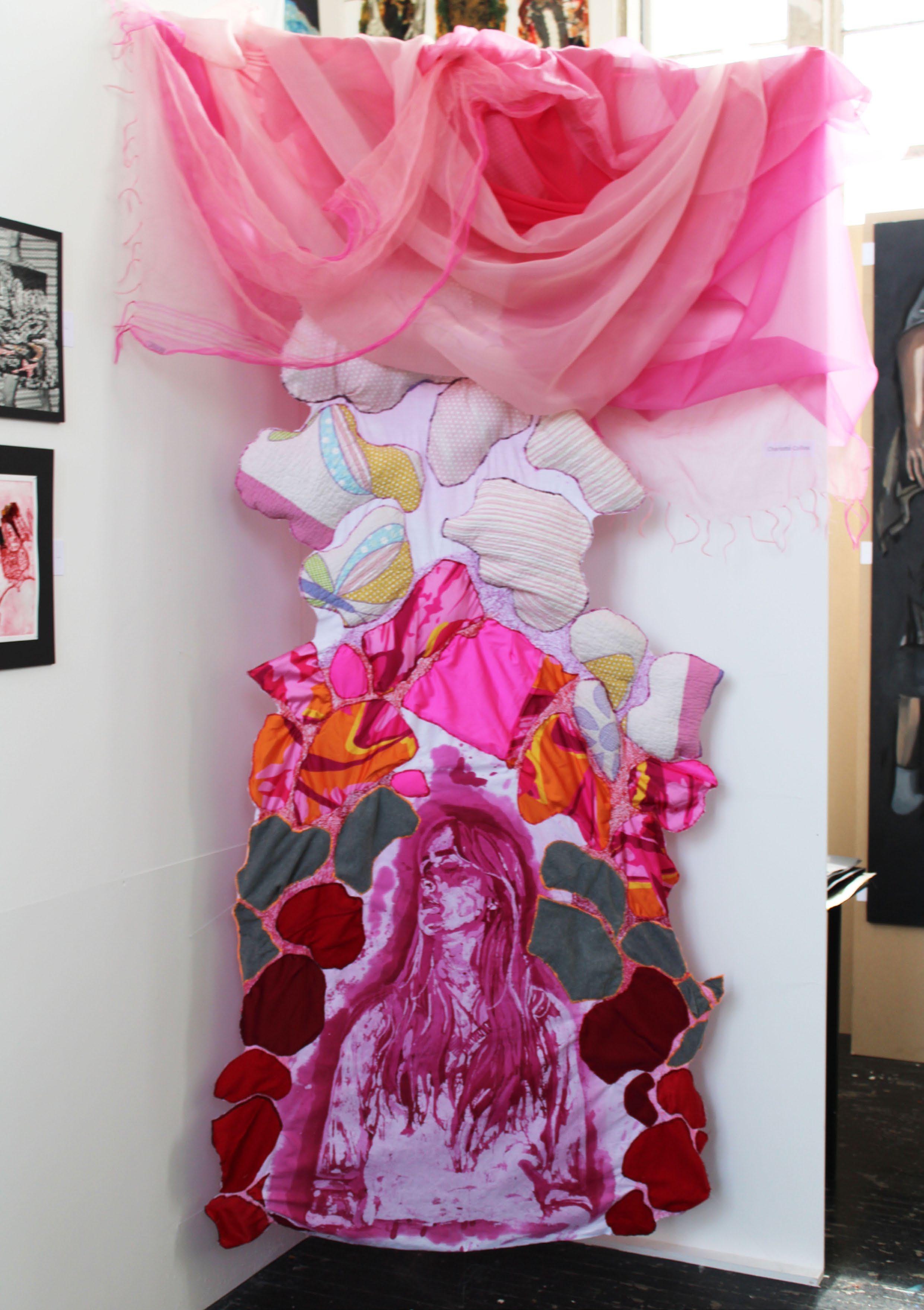
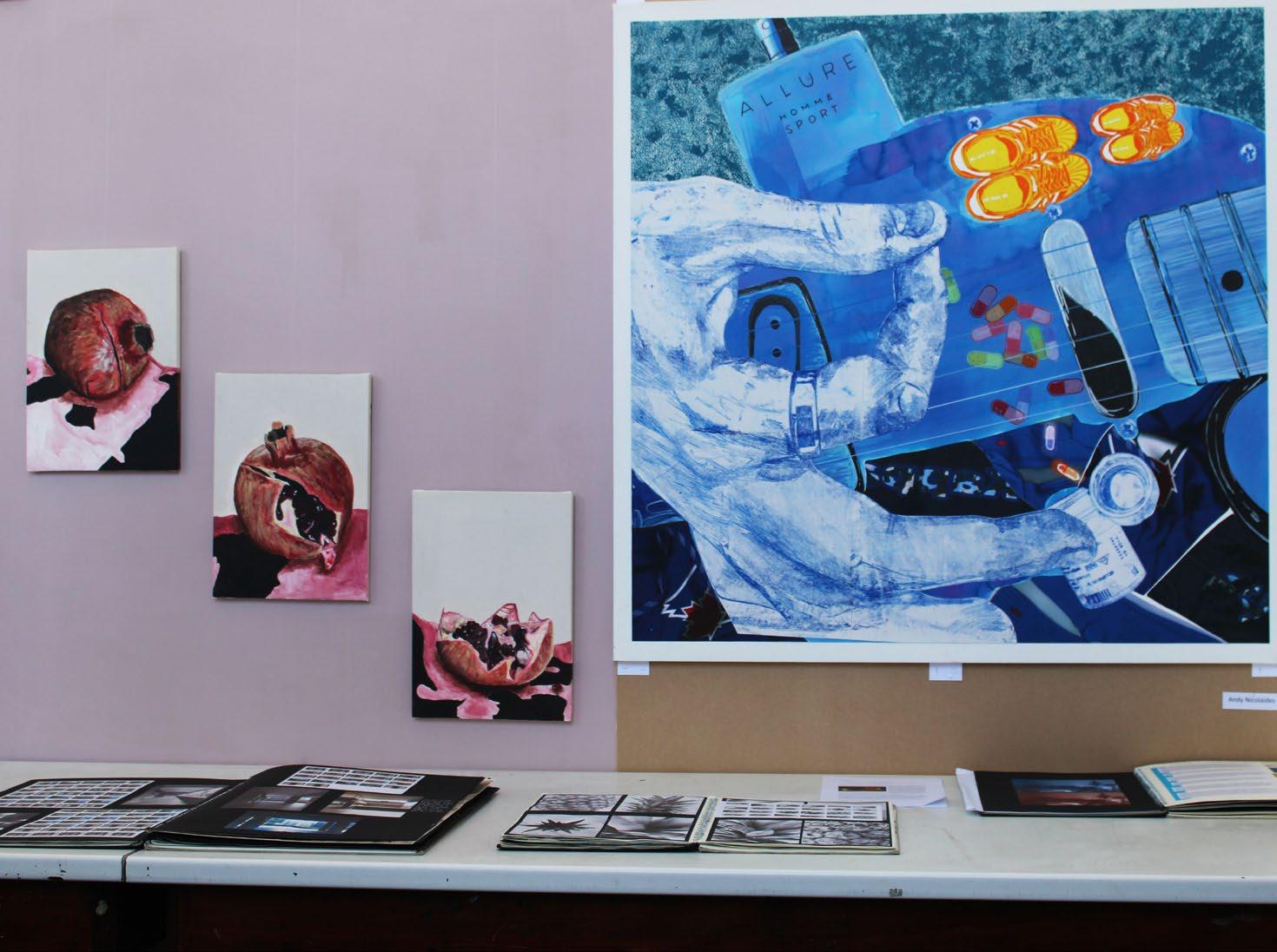
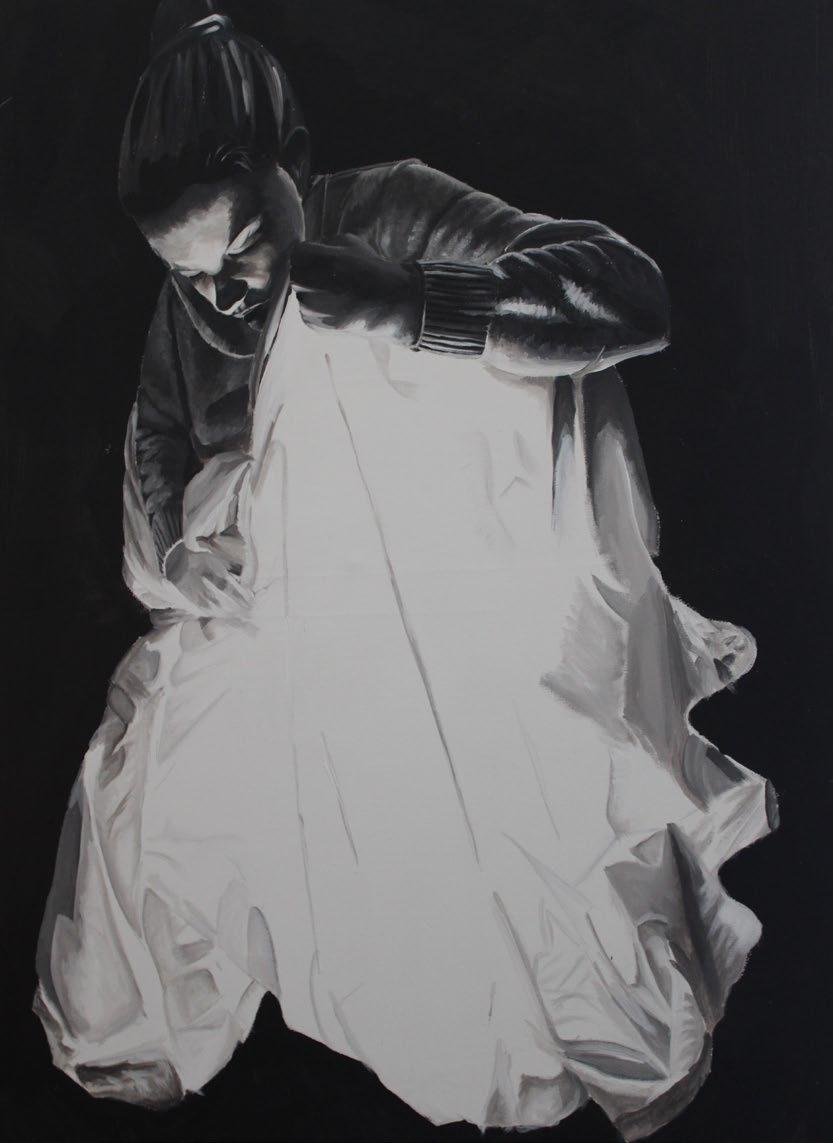
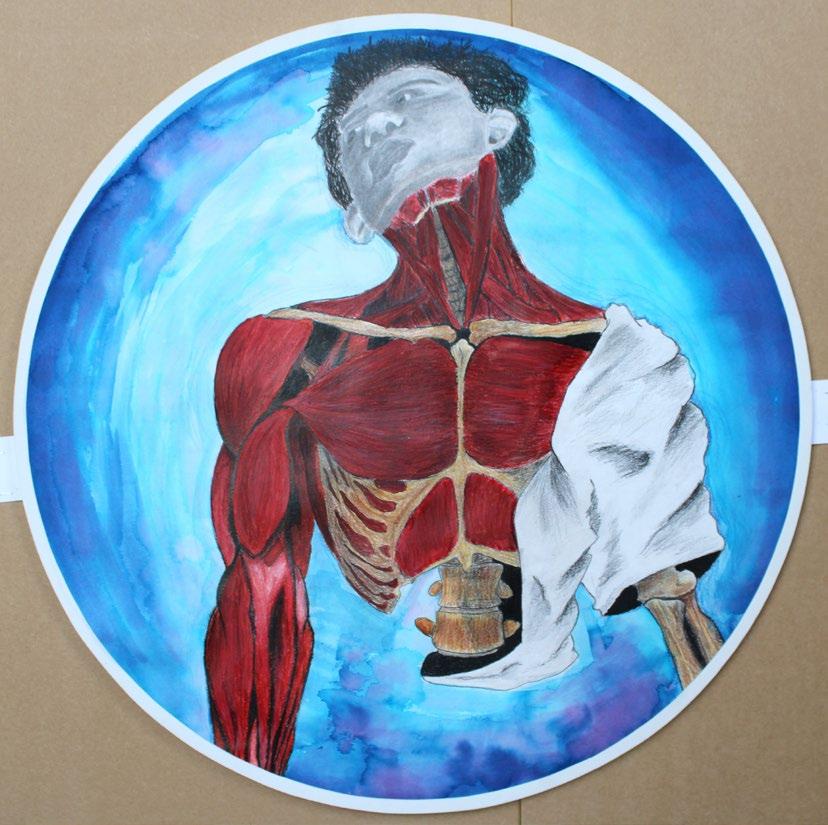
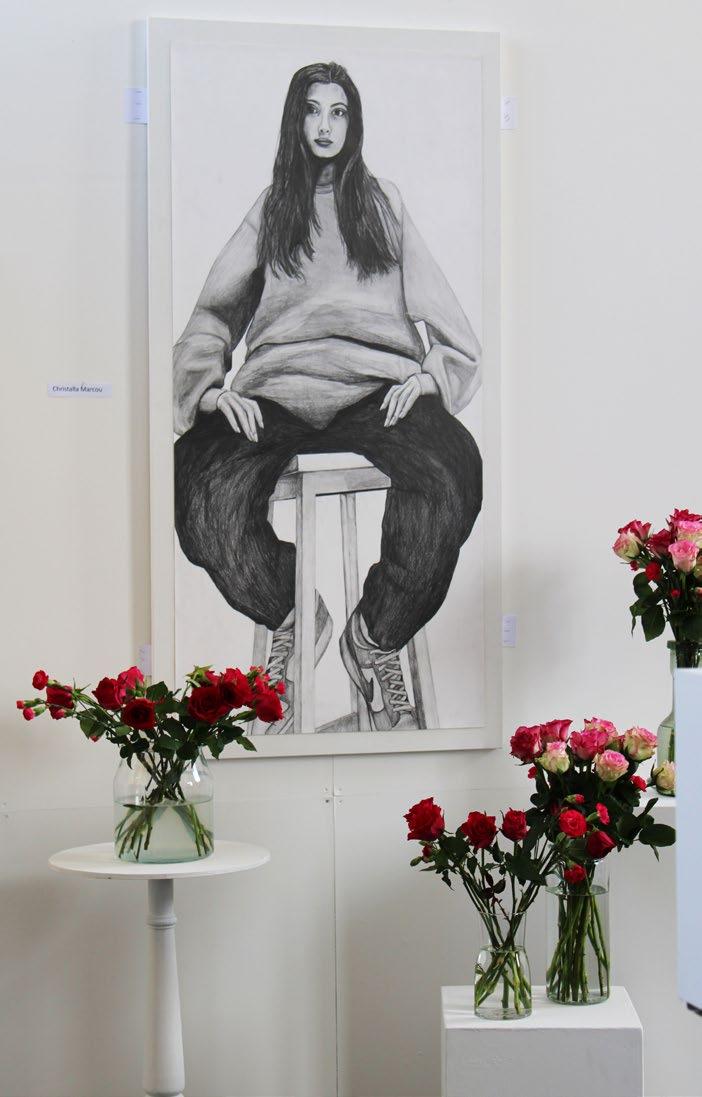
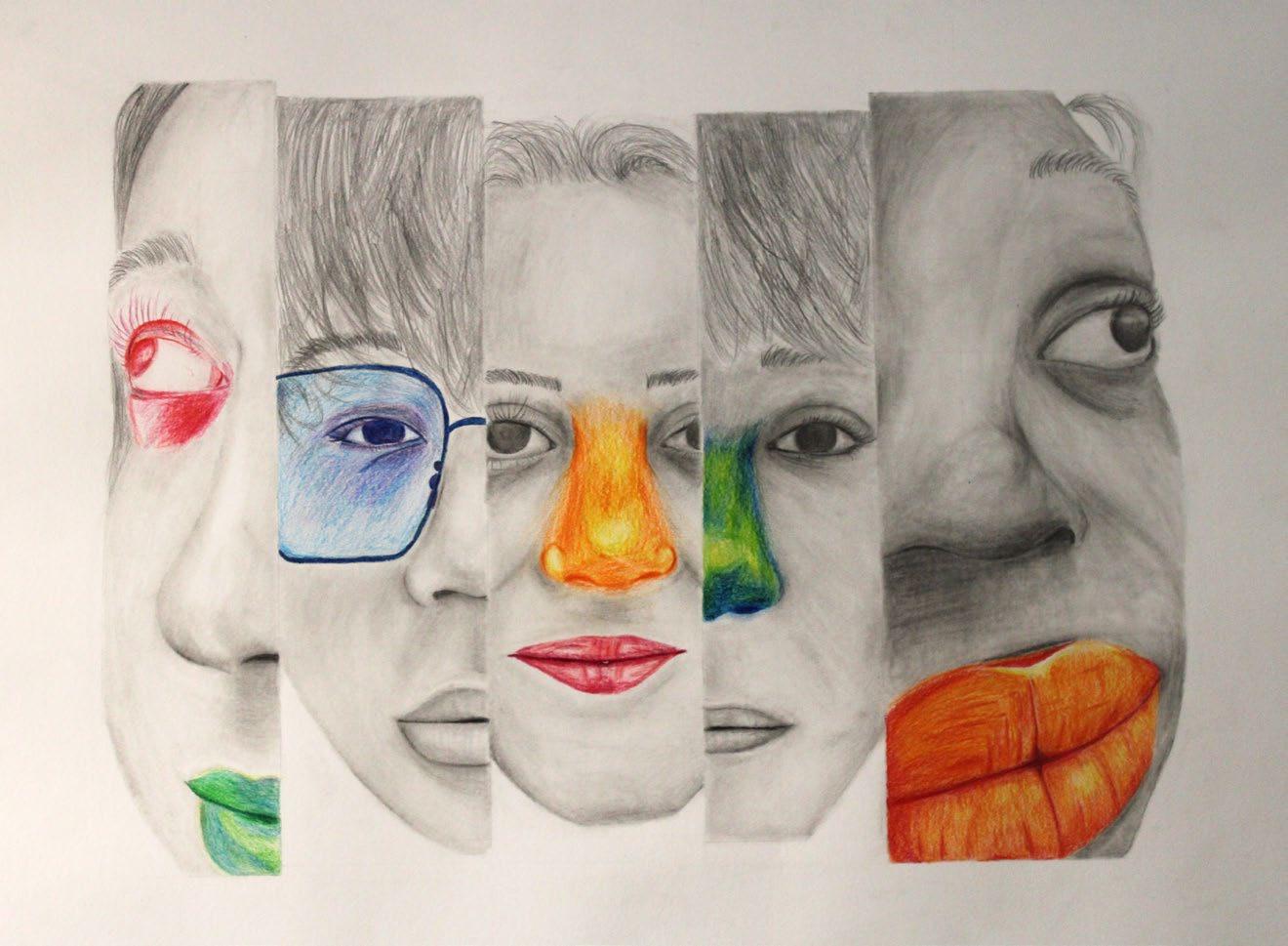
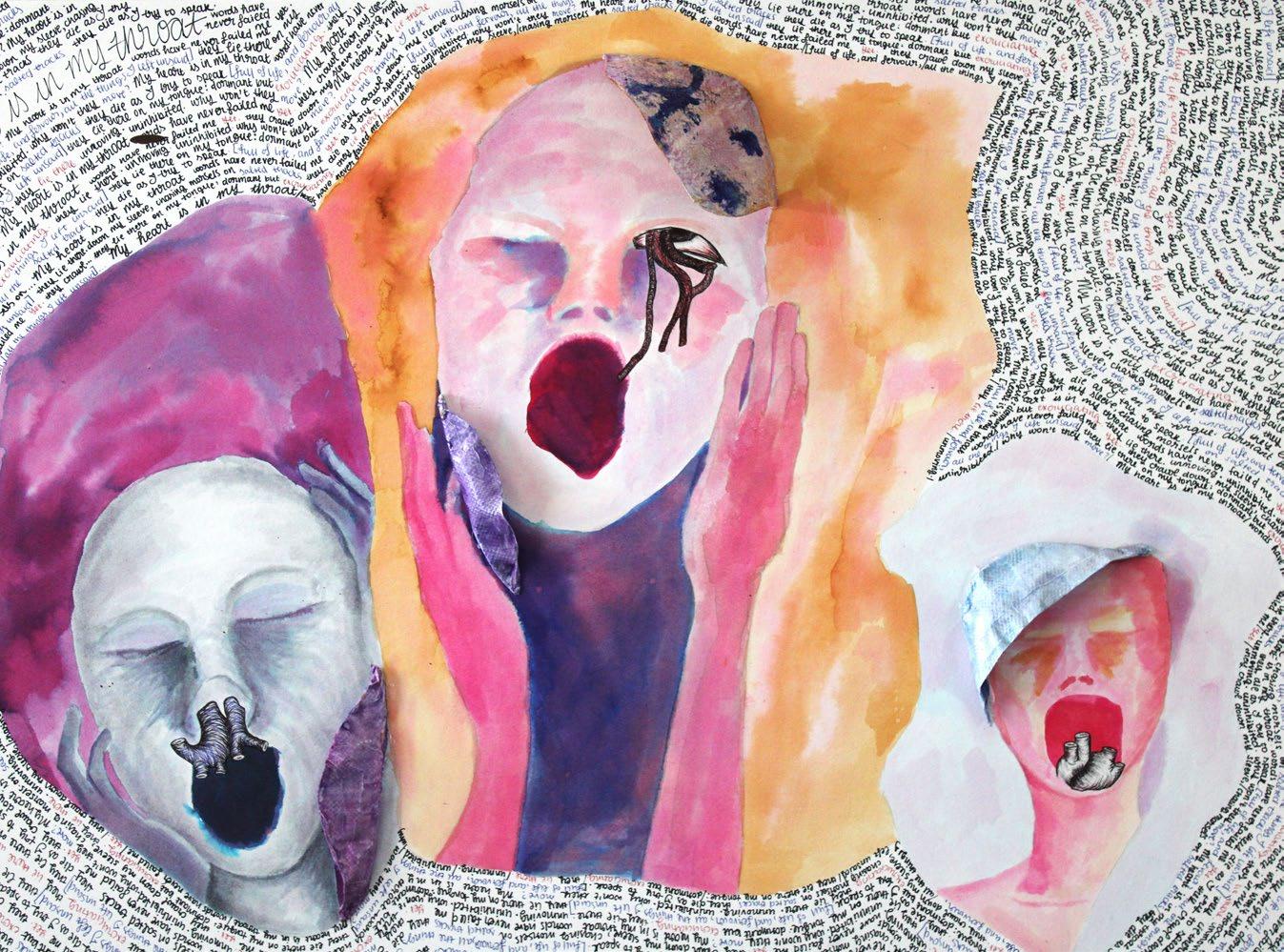
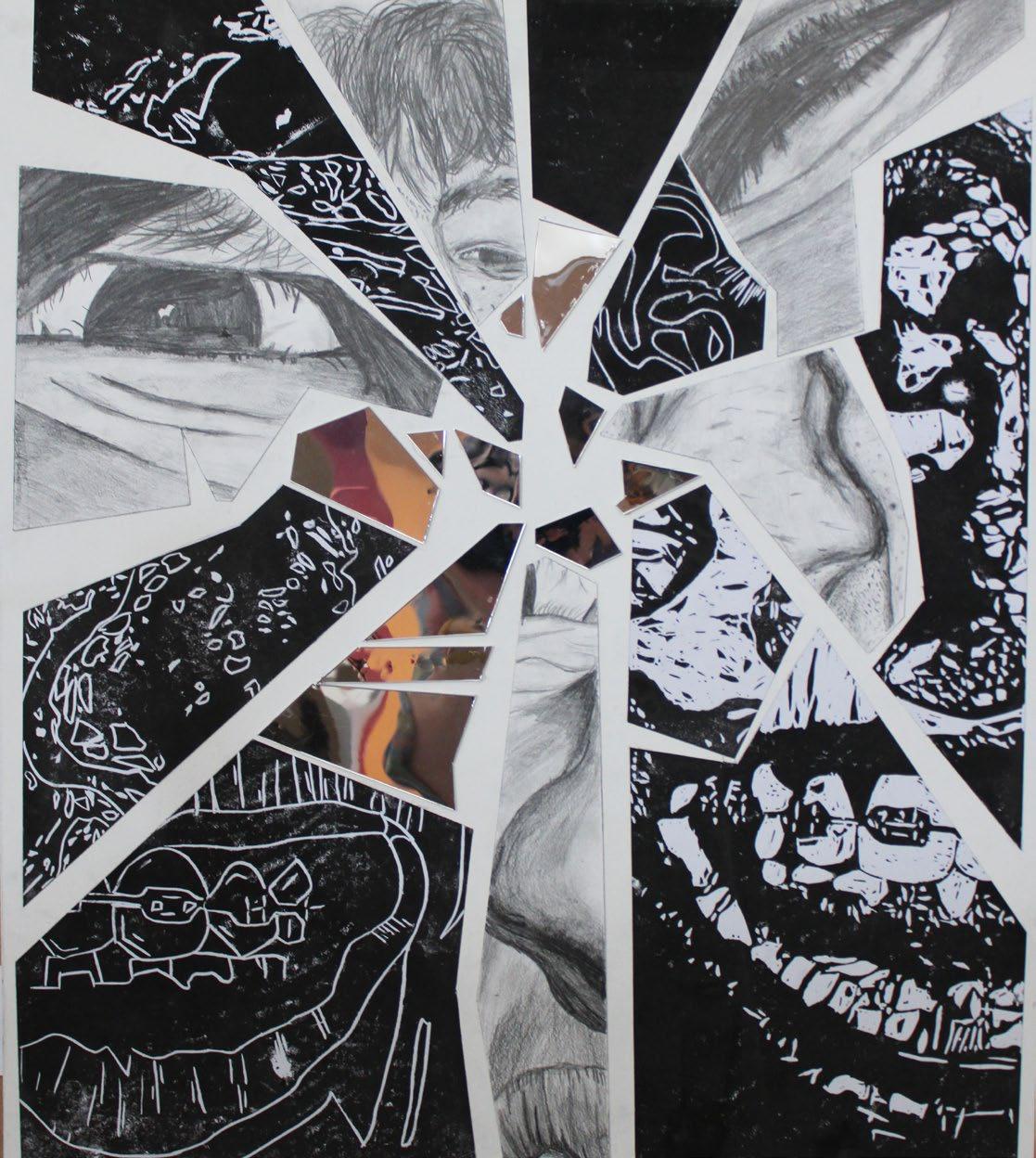
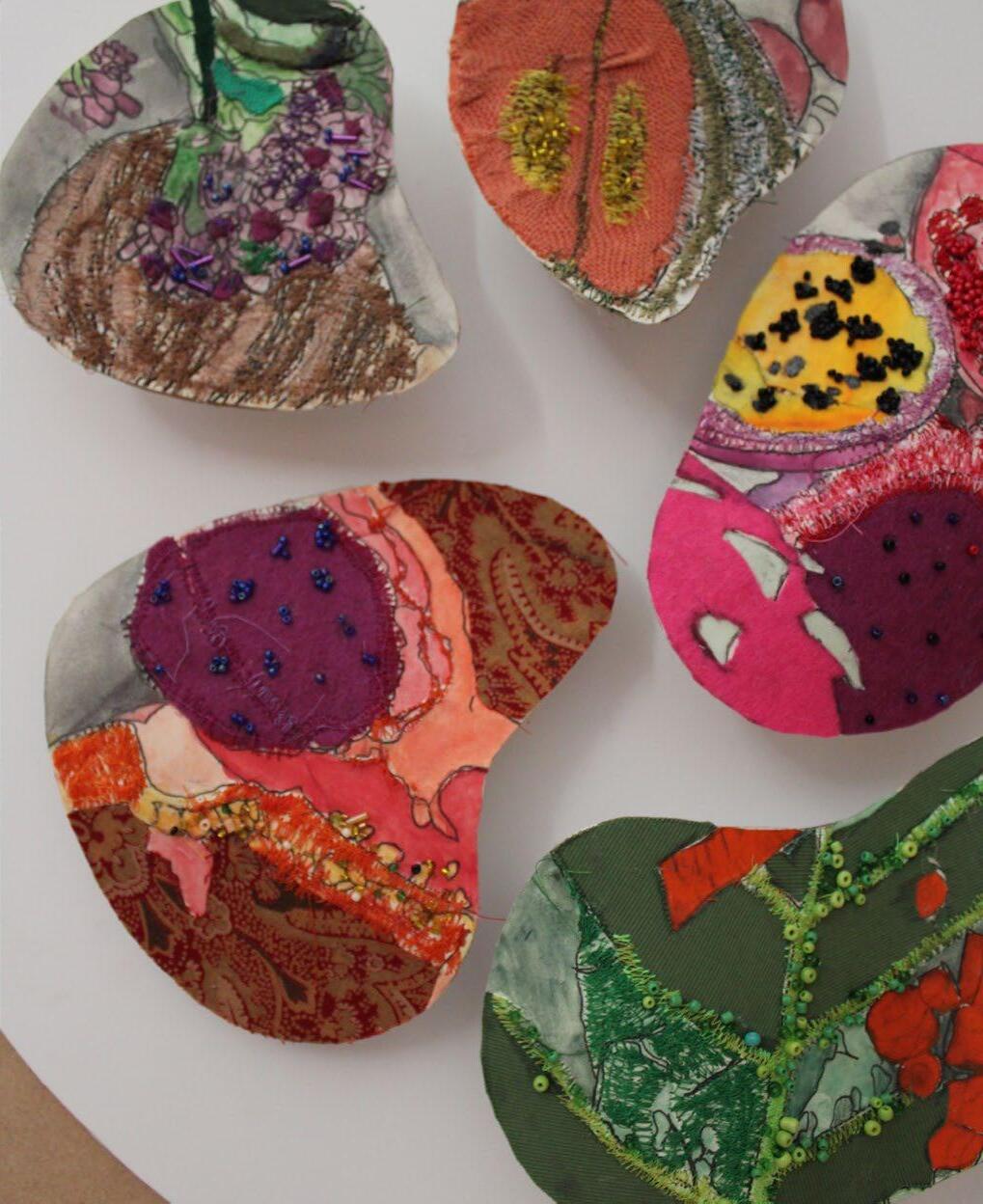
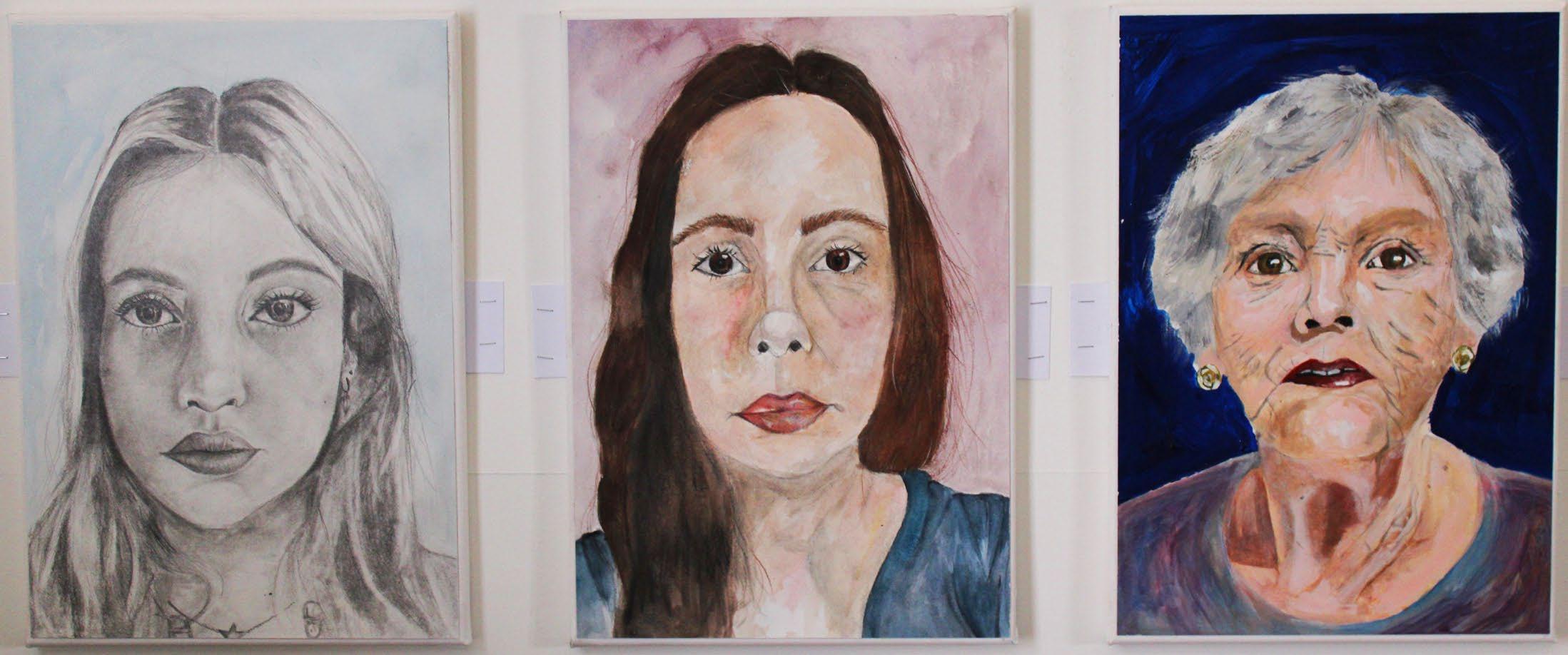
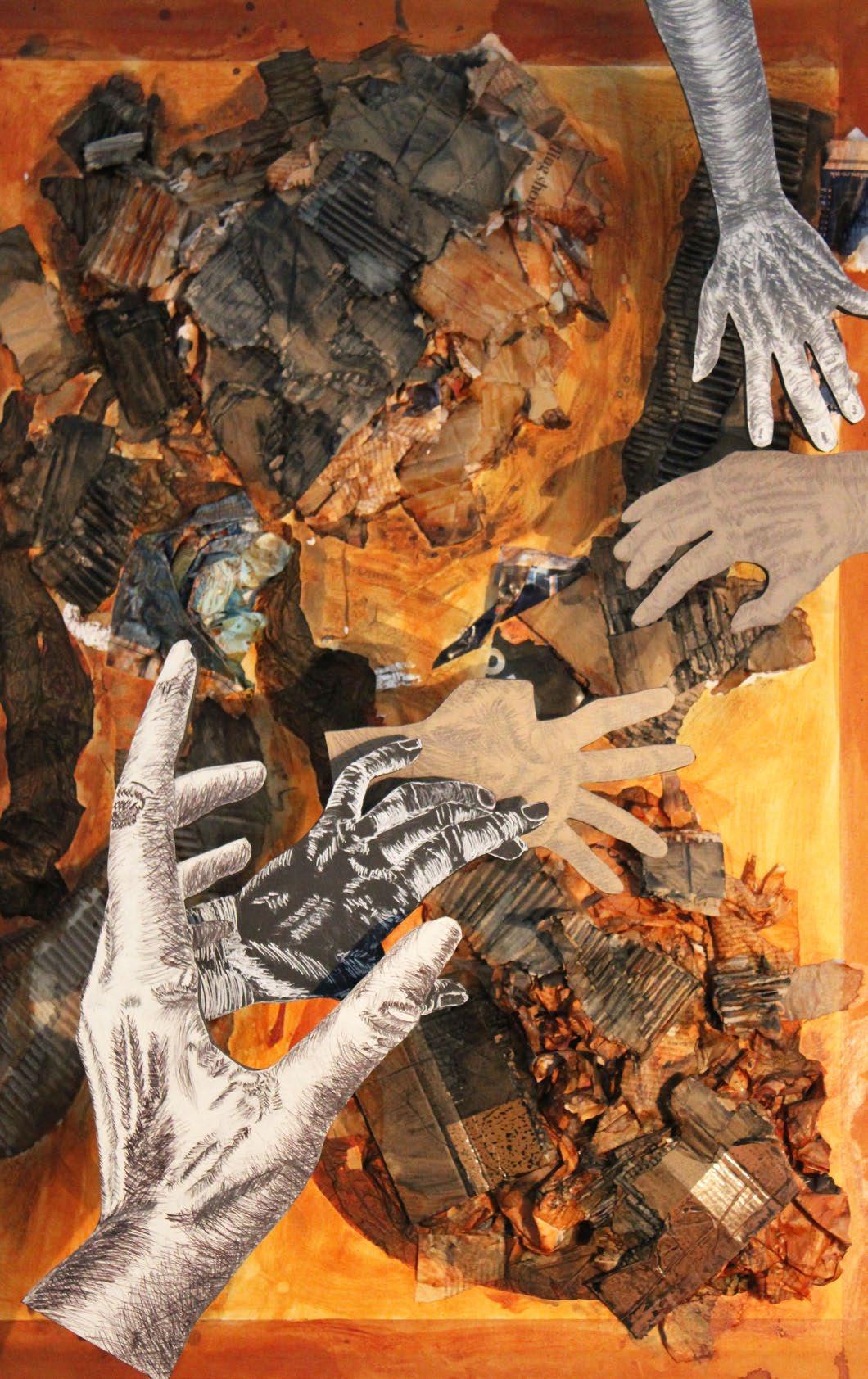
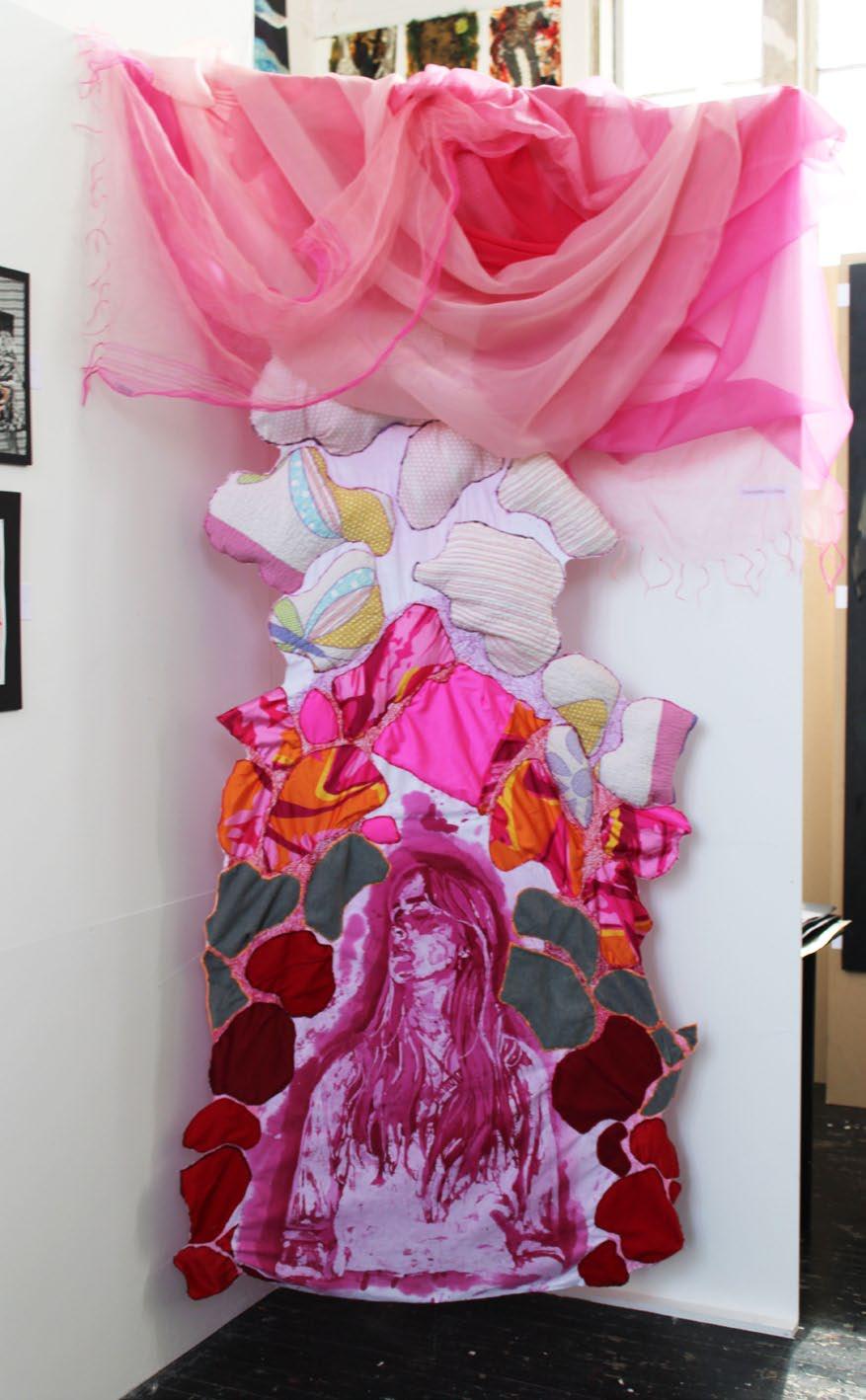
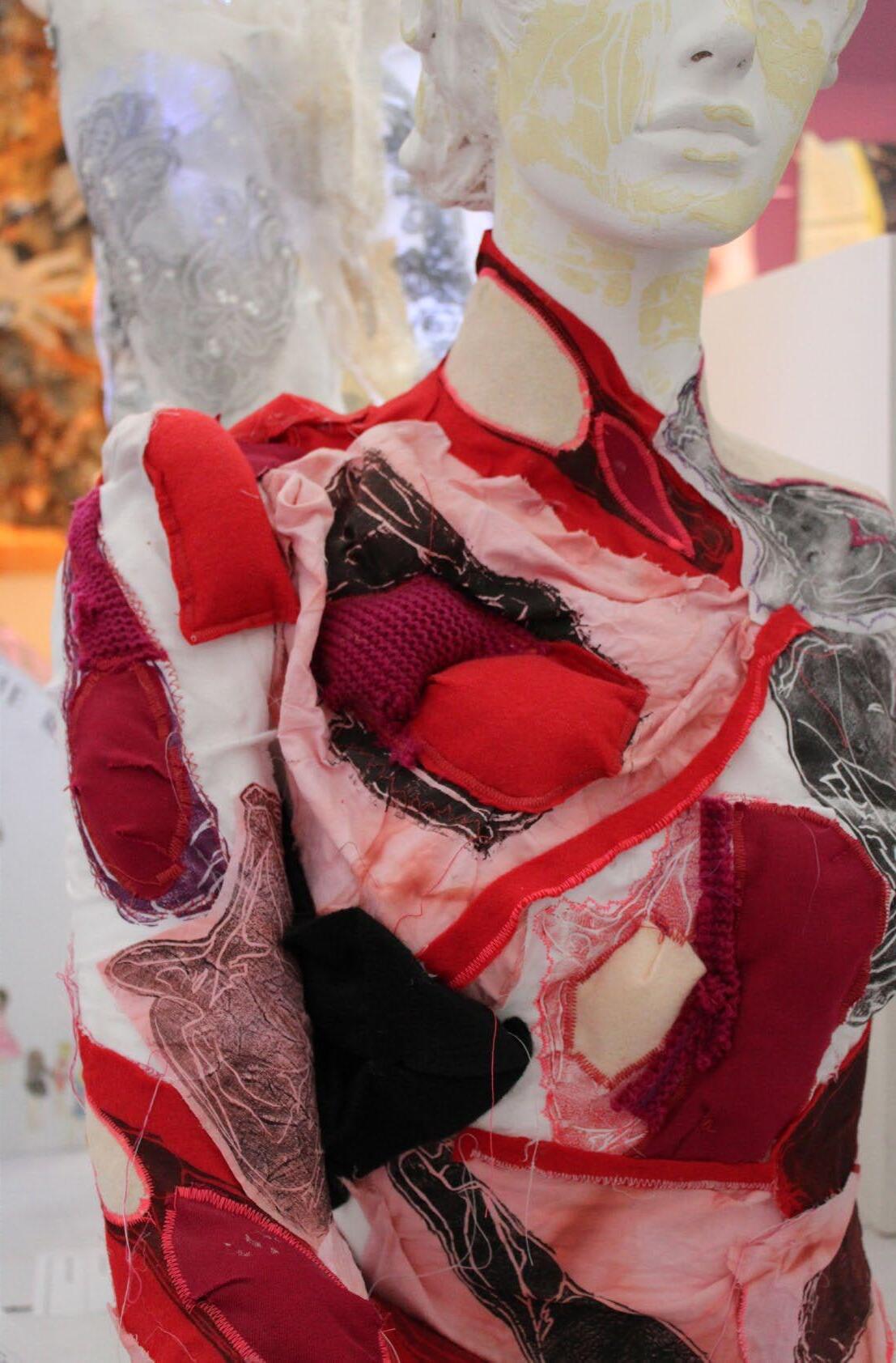
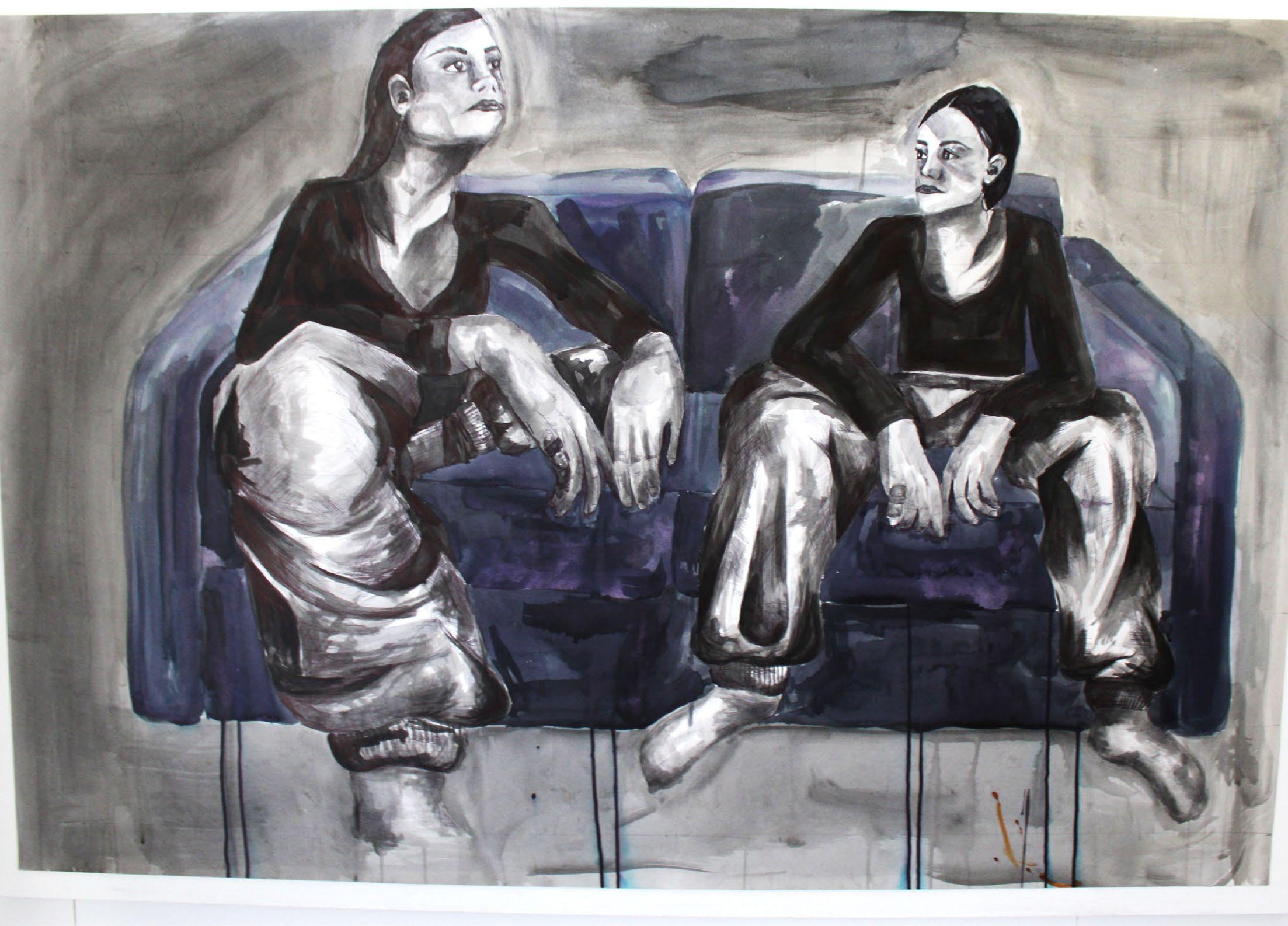
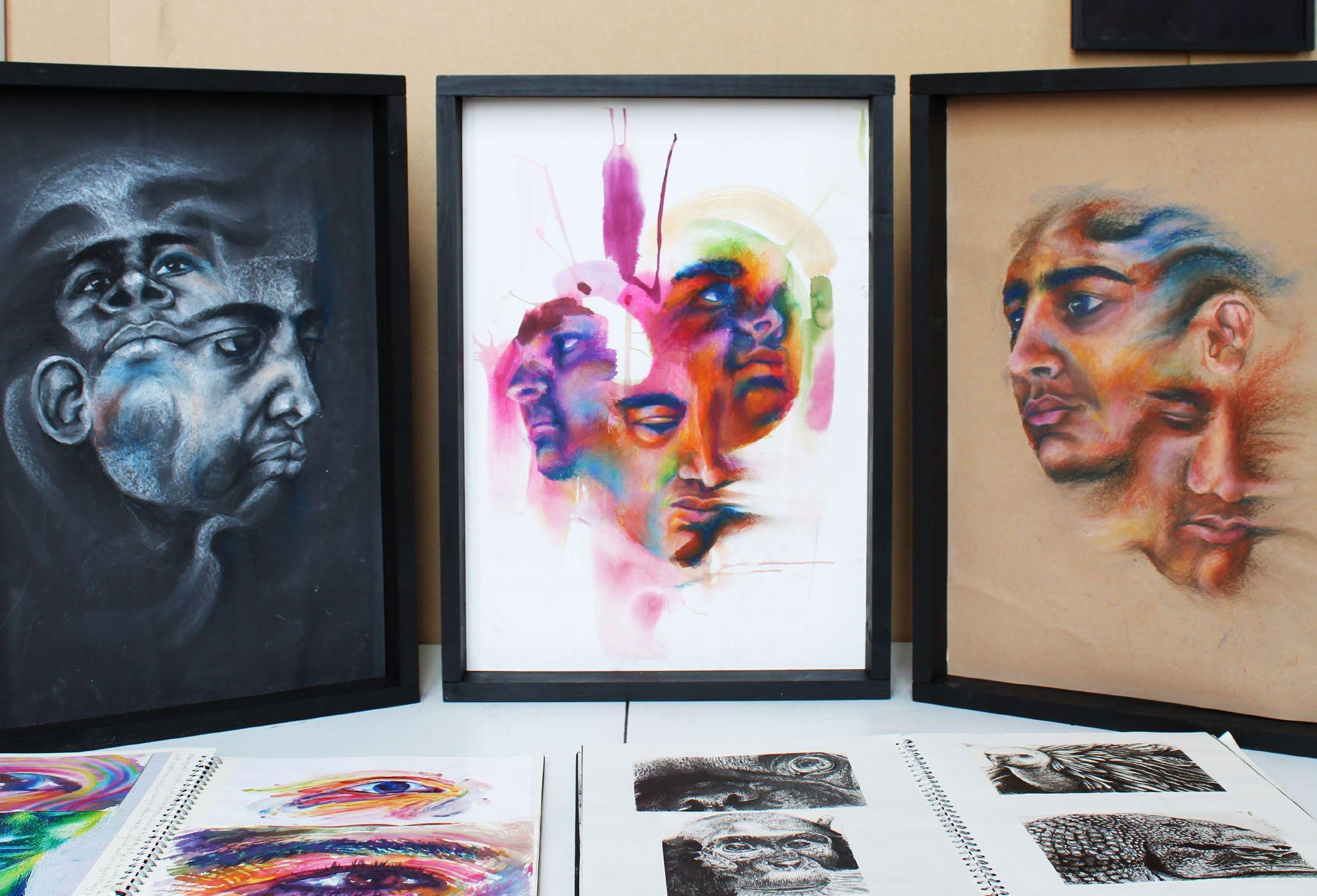
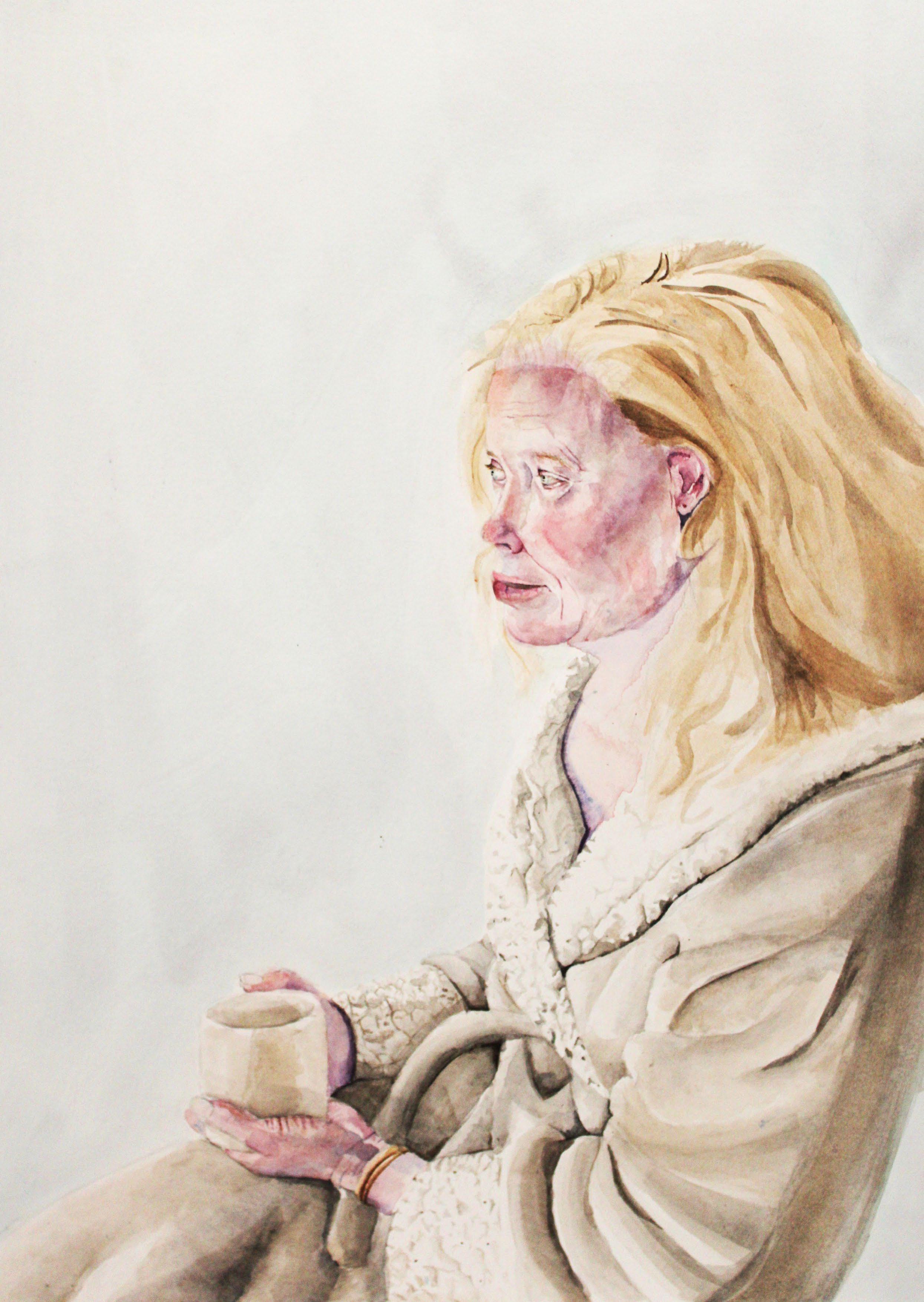
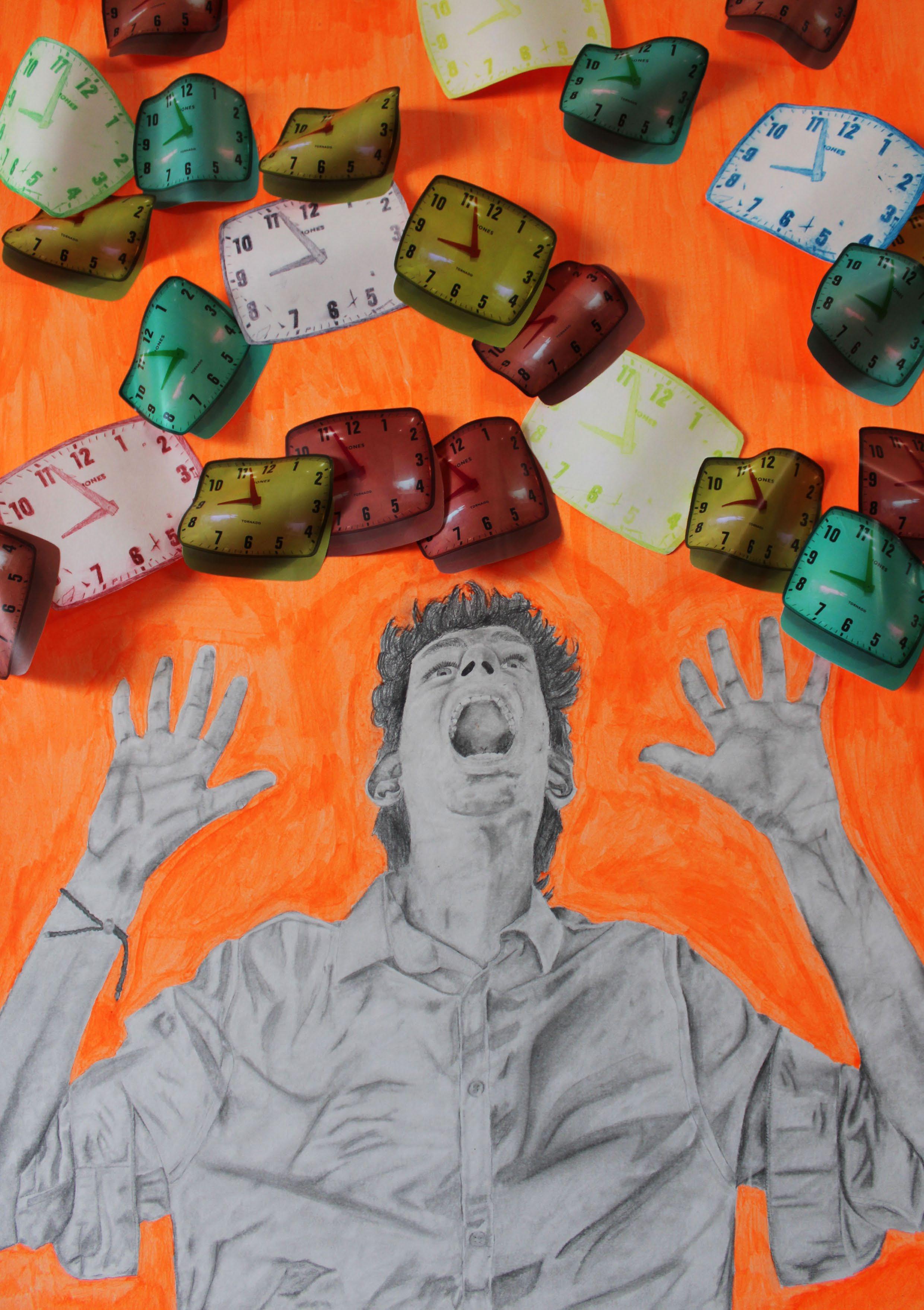
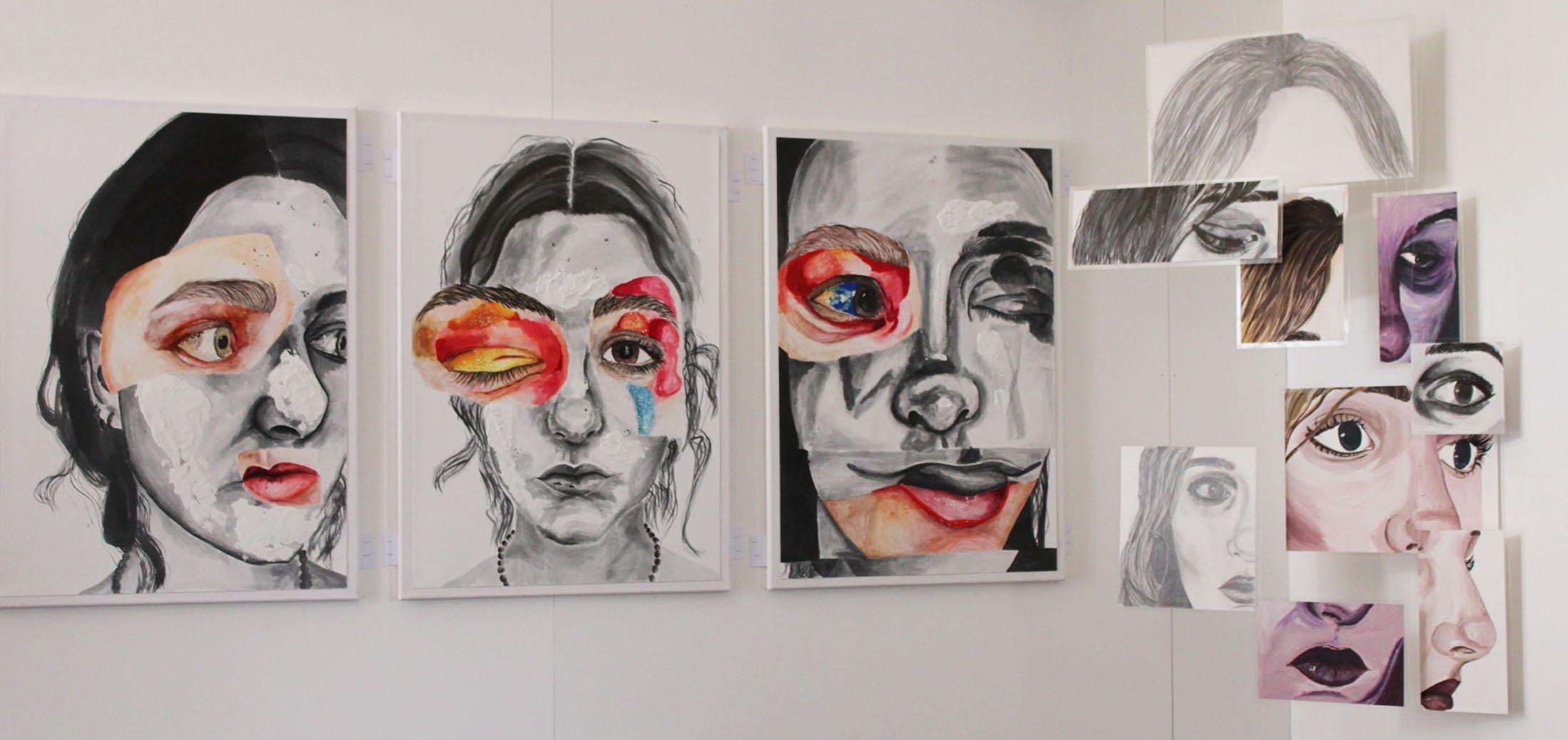
The artwork featured has been created by our GCSE and A Level artists (2025). Each piece represents the outcome of a broader project, with pupils producing paintings, drawings or prints in response to an overarching theme. This year’s themes included Union, Gathering and Skin.
Our A Level pupils also pursued more personal and independent lines of enquiry. For example, members of the Upper Sixth explored beauty standards through a feminist lens, while others examined the history and conflicts of Cyprus, using their own understanding of its political landscape to create textile-based homages to their heritage.
We are delighted that several A Level pieces have been generously donated to MHS by our 2025 leavers. These works are now proudly displayed in the Marnham building.
Lucinda G


Kate D Head of Biology
Introduction Page 11
Biology in Action Page 12
The Biology Department has enjoyed an exceptionally productive and successful year, marked by high levels of pupil engagement, academic stretch, and outstanding achievement. Lessons and cocurricular activities have challenged pupils to think critically and creatively, and the resulting academic accomplishments across year groups have been truly impressive.
A diverse range of clubs and enrichment opportunities continues to strengthen and broaden pupils’ biological knowledge. The Medical Society, which meets weekly, provides L6 and U6 pupils with an immersive introduction to the breadth of medical careers. Pupils begin by evaluating both the rewards and challenges of entering such a demanding profession, before exploring the full journey of medical training in depth. Ethical discussions centred around the Four Pillars of Medical Ethics encourage pupils to apply these principles to real-world scenarios. This year, the Society has benefited greatly from the leadership of a U6 pupil, who has delivered engaging presentations on cutting-edge medical therapies and guided pupils through activities such as patient history-taking and forming differential diagnoses. Members also attended the annual Old Millhillians Medical Professions meeting in central London—an inspiring highlight that offers invaluable networking opportunities. The continued success of the Medical Society has contributed to a strong record of pupils securing places at UK medical schools year after year.
The pupils have embraced the Ecology Club, where they gain hands-on experience in selecting and cultivating plants suited to the Mill Hill School environment. From sowing seeds to nurturing mature specimens, pupils develop practical horticultural skills alongside a deeper appreciation of ecological principles.
The department’s Scholars Programme has flourished. Lower School Scholars choose from weekly Physics, Chemistry, or Biology clubs, each supporting pupils as they design and carry out investigations and work towards a prestigious CREST Award. Scholars also enjoy opportunities to attend science festivals, competitions, and lecture series in central London. Senior Biology Scholars meet weekly to explore advanced biological concepts, develop their own investigative projects, and present critical evaluations of their plans. This year, they attended a series of university-level lectures and are preparing to participate in the 2026 Biology Olympiad, broadening their horizons far beyond the A Level curriculum. Academically, the department has achieved record-breaking success. The 2025 Biology and Combined Science GCSE results were the strongest in the department’s recent history. GCSE Biology Level 9 results rose from 29% to an impressive 47%, with Combined Science also showing a significant 7% increase in Level 9 attainment compared with 2024. At A Level, Biology continues to deliver consistently excellent outcomes, with numerous pupils progressing to study biological and biomedical subjects at leading UK universities.
Kate D Head of Biology
MedTech on the Brain – James Piercy
On the 14th of November, the year 12 biology students attended the Biology in Action event, where several speakers shared new ideas and developments in biology. The talk I found the most interesting was “Medtech on the Brain” by James Piercy. It showed how technology is used today to improve the diagnosis and treatment of brain injuries, and it made me realise how quickly medical innovation is advancing.
James Piercy works with the NIHR Healthtech Research Centre in Brain Injury and is also a brain injury survivor. This made his talk incredibly engaging because he spoke from both real experience and scientific knowledge. He explained how important patient involvement is in research and why understanding people’s personal experiences helps scientists develop better solutions.
During the talk, he explained the main areas of research in brain injury, including prevention, diagnostics, acute care and rehabilitation. He detailed the different types of brain injuries, such as strokes, tumours, and concussions, which gave us an overview of the typical traumatic brain injuries that frequently occur.
One thing that stood out to me was the use of biomarker kits, such as those that analyse biomarkers in tears, to detect brain injuries more rapidly. Biomarkers are measurable signals in the body that change in response to injury or disease, and they can help clinicians quickly identify who needs urgent treatment. In sport, for example, in rugby, these biomarkers could be used pitch-side as part of a head injury assessment (HIA). By detecting biochemical signs of concussion or brain trauma within minutes, medical teams could make faster and more
accurate decisions about the type of care a player needs, including whether they should be removed from play or receive further medical evaluation.

Another part of the talk that I found fascinating was the description of new technology for scanning newborn babies’ brains. He talked about the newborn fusion study, where researchers are testing a special cap fitted with light sensors and functional ultrasound. This cap can detect changes in blood oxygen levels on the surface of the brain and produce detailed images of tiny blood vessels deeper inside it. This technology could make brain scans safer and more comfortable for babies than some traditional imaging methods, such as MRI.
Piercy also explained how newer, non-invasive tools are replacing older techniques that required drilling into the skull. One example he gave was transcranial Doppler ultrasound, which uses sound waves to examine blood flow in the brain. It can identify problems such as blockages or narrowed blood vessels in under an hour, without any surgical procedure.
Towards the end of the talk, he discussed how artificial intelligence and apps are helping people recover from brain injuries. Some apps guide patients through interactive physiotherapy exercises from home, while others support memory by recording conversations or offering reminders. These technologies make rehabilitation more personalised and accessible, especially for people who struggle with memory or mobility after an injury.
This talk showed me how biology, engineering and technology are all combining to create real solutions for patients. It made me think about how these innovations could shape the future of medicine, in areas including diagnostics and recovery.
Carlota (Pupil)

Kamla
S Head of Business and Economics
Extract A: Greggs on the go Page 15
McDonald’s Hamburgers since 1940 Page 16
The Business of Imitation Page 17

Greggs is a bakery business with outlets across the UK. In more recent times, Greggs has adjusted their product portfolio from traditional bakery products such as bread, sausage rolls and pasties towards “food on the go” products, such as freshly made sandwiches, pizza slices and salads. The firm is constantly looking at new trends and recently launched its first “veganfriendly” product line. This is continuing to succeed due to a lack of direct competitors, as less healthy products such as sausage rolls and steak slices dominate this market. Greggs has taken advantage of the trend towards healthier eating and introduced vegan and vegetarian options. Greggs has also taken advantage of the economic downturn by introducing a coffee for just £2. Again, this targets the “food on the go” market, which is set to grow 9% annually.
Greggs can now be found in retail parks, shopping centres, industrial estates and office parks. They have shops in travel hubs and roadside locations with parking and operate one Greggs drive-thru site located in Irlam, Manchester. They are also in motorway service stations and petrol forecourt.
Assess the value of using PESTLE analysis to the success of Greggs
Using PESTLE analysis to maintain Greggs’ success is valuable because it helps identify environmental and social factors when scanning external market trends. As Greggs is constantly looking at new trends and hopes to expand its “food on the go” offering, this means it can build on its existing PESTLE analysis. They can use this to predict the likely response of younger stakeholders who want vegan and healthy products. This is evident in Greggs’ introduction of veganfriendly products and vegetarian snacks. This shows Greggs can identify and respond to environmental trends such as sustainability and simplicity.
However, although Greggs can use PESTLE to analyse and maintain its success, it is somewhat limited because its traditional products, such as sausage rolls, remain its best-selling items. This could signal economic conditions, as some trends are not being followed, nor are environmental factors fully addressed. Greggs uses PESTLE for trend analysis, but may not include economic aspects such as interest rate changes or trade impacts that could lower profit margins. PESTLE analysis may be more useful for identifying external factors, such as cheap imports, that could affect Greggs’ margins. Prices may rise if PESTLE analysis highlights cost increases. Some analysis may also be too detailed; for example, social trends might be included while economic trends are ignored. This could highlight Greggs’ failure to maintain comprehensive attention on all relevant trends.
In conclusion, I think a PESTLE analysis is the best way to assess Greggs’ short-term success. Greggs can use it to remain aware of social and environmental trends to maintain and improve its success. However, in the long term, it is highly important to include economic trends, as markets are highly competitive. In the long term, Greggs can use PESTLE to identify economic and legal changes in the UK that may affect the elasticity of demand for their products. They can also use elasticity trends to incorporate existing information and prepare accordingly. This will help them achieve their expansion plans to grow by 9% annually, and focusing on external factors will help mitigate the risk of extreme losses to competitors in the “food on the go” market. This will make Greggs highly profitable while keeping prices low, thanks to its widespread availability (drive-thru, retail parks) and cost competitiveness.
Markela (Pupil)

Since its founding in 1940, McDonald’s has become a well-known fast-food chain worldwide. In the beginning, its menu was simple, with the hamburger as a main item sold for 15 cents. This low price was due to the economy at the time and to the goal of providing cheap, quick meals to many Americans. Over the years, the price of a McDonald’s burger has increased significantly. Today, in 2026, a burger costs about $3.37 in the United States. This may seem like a big jump, but when you consider inflation, it doesn’t seem as surprising. Inflation is when the general prices of goods and services go up over time, reducing how much you can buy with your money. What you could buy for one dollar today costs more than it did many years ago. Inflation occurs for various reasons, such as increased demand for goods, higher production costs, and higher wages.
Economists track inflation with tools such as the Consumer Price Index, which measures price changes over time for different goods and services. To understand how inflation affects the price of a McDonald’s burger, we can compare the original 15cent price from 1940 to today’s prices. When adjusted for inflation, 15 cents in 1940 is about $3.27 in 2025. So, the current price of $3.37 is only a little higher than what it would be after adjusting for inflation. This shows that the cost of a McDonald’s hamburger has not changed much in the last 85 years, given the value of money. This price stability is impressive, especially compared to other products whose prices have risen faster than inflation.
The increase in hamburger prices isn’t just about inflation; it’s also due to other economic factors, such as higher labour costs, improved food quality and safety measures, and McDonald’s expansion into a global brand with higher marketing and operational costs. The story of the McDonald’s hamburger extends beyond money alone; it shows how inflation affects our view of value and how something can remain fairly priced over time, even as the economy changes. While the price has changed, the hamburger serves as a reminder of stability in a changing economy.
Dupe culture has become one of the most influential trends in online markets, as social media dictates trends at a rapid pace. What began as a search for affordable alternatives to make luxury more accessible has become a common shopping habit, especially among Gen Z, who proudly showcase their inexpensive duplicates of luxury products on Instagram and TikTok. Dupes now influence brand strategies, consumer choices, and even societal perceptions of luxury. However, there is a darker side to accessibility and affordability.
Dupes thrive because they directly reflect the realities and values of today’s consumers. For many, particularly amid rising living costs, affordability is a high priority. Dupes offer the look of luxury without the high price tag. By celebrating dupe discoveries, social media transforms affordability into social capital, rewarding these finds with likes and engagement.

Dupes also carry psychological weight. Buying them can feel rebellious or even ethical in a social media world where resisting luxury markups or choosing cruelty-free alternatives is seen as desirable. Influencers play a central role by normalising dupes as aspirational and blurring the line between imitation and inspiration.
For some members of Gen Z, dupes are no longer just substitutes; they have become symbols of identity and participation. To showcase a dupe is to signal taste, cultural awareness, and financial pragmatism. While dupes may feel harmless to consumers, their effects on businesses are far more serious. When imitation oversaturates the market, brands lose distinctiveness. Signature designs and aesthetics become diluted as seen in the widespread use of Gucci and Louis Vuitton monograms, making it harder for originals to stand out. Over time, even loyal customers begin to question what makes the authentic product worthwhile, and some avoid purchases altogether out of fear of being mistaken for consumers of fake products.
Revenue also suffers. As consumers increasingly choose dupes over originals, the pricing power that premium brands rely on erodes, weakening their ability to market exclusivity and maintain high margins. Innovation is undermined as well. Why invest in research, design, or craftsmanship if a product will be copied and commodified within weeks? The speed of duplication leaves little room for creators to benefit from originality and quality, leading to creative fatigue. Finally, dupes operate in a legal and ethical grey zone. They may avoid outright trademark infringement, but they still exploit the original’s reputation.
Dupe culture may feel like a clever, inexpensive shortcut for consumers, but its impact on businesses is far from harmless. By eroding brand distinctiveness, undermining innovation, and normalising imitation, dupes reshape the market in ways that threaten long-term trust and value. True worth lies not only in affordability but also in originality, ethics, and the innovation that keeps industries moving forward.
Jule F (Pupil)
Dr Sanja R Head of
Chemistry Events
19
The Chemistry Department runs a rich and varied programme of enrichment activities each year. This offers pupils opportunities to extend their scientific knowledge, challenge their thinking, and explore real-world chemistry in imaginative ways. From national competitions to research projects and weekly scholarship sessions, our pupils have demonstrated exceptional curiosity, commitment, and achievement throughout the year.
One of the department’s long-standing annual activities is the Cambridge Chemistry Challenge. This competition, designed by the University of Cambridge, pushes A-level pupils well beyond the standard syllabus. Our pupils approached this challenge with remarkable enthusiasm and resilience, supported by weekly advanced problem-solving sessions with Mr Saint.
Last year, we were delighted that Dhruv Jain and Hugo Smith achieved prestigious Gold Awards, reflecting truly outstanding analytical chemistry skills. A further group of talented pupils — Yihan Ding, Alexander Barrison, Victor Zisman, Saimruithy Kohulan, Petr Vankov, Julie Matsuo and Daniel Noffke — earned Silver Awards, demonstrating impressive reasoning and adaptability when faced with unfamiliar chemical contexts. Meanwhile, Alexander Ostroumov, Charles Wilson, Reece Shah and Luca Crook each secured Copper Awards, showing determination and thoughtful problem-solving in this demanding national competition.
Last academic year also saw the introduction of the Junior Chemistry Challenge. This is aimed at inspiring younger pupils and igniting early enthusiasm for the subject. Our pupils engaged with the challenge brilliantly.
We were extremely proud of all those taking the challenge, especially that Kevin Da Silva and Sam Aghababazadeh achieved Gold awards, and that Daniel Katai achieved Silver Awards, reflecting excellent
chemical reasoning at this early stage in their studies. In addition, Ben Carruthers, who was a removed pupil at the time, earned a Bronze Award, demonstrating growing skill and engagement.
As part of the department’s commitment to nurturing scientific inquiry, the Lower School Chemistry Scholars undertook a CREST Silver Award project during the autumn term. This year, they chose to investigate the chemistry behind lipstick formulation. They explored how ingredients influence properties such as texture, colour intensity, sustainability, stability and overall performance.
Through hands-on experimentation, research and careful documentation, the group developed a strong understanding of formulation chemistry and its complexities.
involved in creating a cosmetic product. Their project is now entering the national CREST competition, providing a valuable opportunity to showcase their innovation.
Reflecting on their work, Ben Carruthers and his team explained:
For our CREST Silver Award project, we set out to create a sustainable, natural lipstick that was both ecofriendly and enjoyable to use. Over several weeks, we carefully planned each stage—researching ingredients, mapping out our method, and testing multiple batches to refine the colour, texture, and overall formula. We focused on natural, locally sourced ingredients. These included vitamin E, beeswax, coconut oil and a rose-gold dye. Our aim was to achieve both sustainability and the warm shade we desired. After many trials, we created our final product: “Sunset Shimmer.” This gold-toned lipstick was inspired by evening light. Reviewers praised its smooth feel, subtle shimmer, and the thoughtful, environmentally conscious approach behind its creation. The project stands as a beautiful illustration of how chemistry can be creative, purposeful and connected to everyday life.
British Science Week is an annual event we celebrate within the Mill Hill School Science department, running a variety of exciting experimental activities. The focus is on engaging pupils from prep and preprep schools in hands-on learning experiences. One of the highlights of the week is our special day dedicated to the Women in Science. On this day, we collaborate with Belmont Year 6 pupils to explore the significant contributions of women across various scientific fields, an experience that is always inspiring and empowering for the younger pupils, fostering a greater appreciation for the role of women in science. A unique aspect of this annual event is that Mill Hill Remove, Lower Sixth, and Upper Sixth pupils take the lead, guiding and teaching their younger peers. This approach not only enhances the younger pupils’ understanding of scientific concepts but also helps the older pupils develop their social interaction and leadership skills.
Dr Sanja R
““I really enjoyed Science week as it gave me the opportunity to step into a leadership role and gain experience and skills in teamwork and organisation”.
Kei (U6)
““It was wonderful to be able to help such bright children and future scientists - Victor Zisman (U6). A unique and truly enjoyable experience, and it’s great to see the children learn so much and really get involved in our Science department”.
Matthew (U6)
Andrew
G Head of Classics
Italy Trip Page 23
The Legacy of Roman Literature within Jeffrey Eugenides’
The Virgin Suicides Page 24
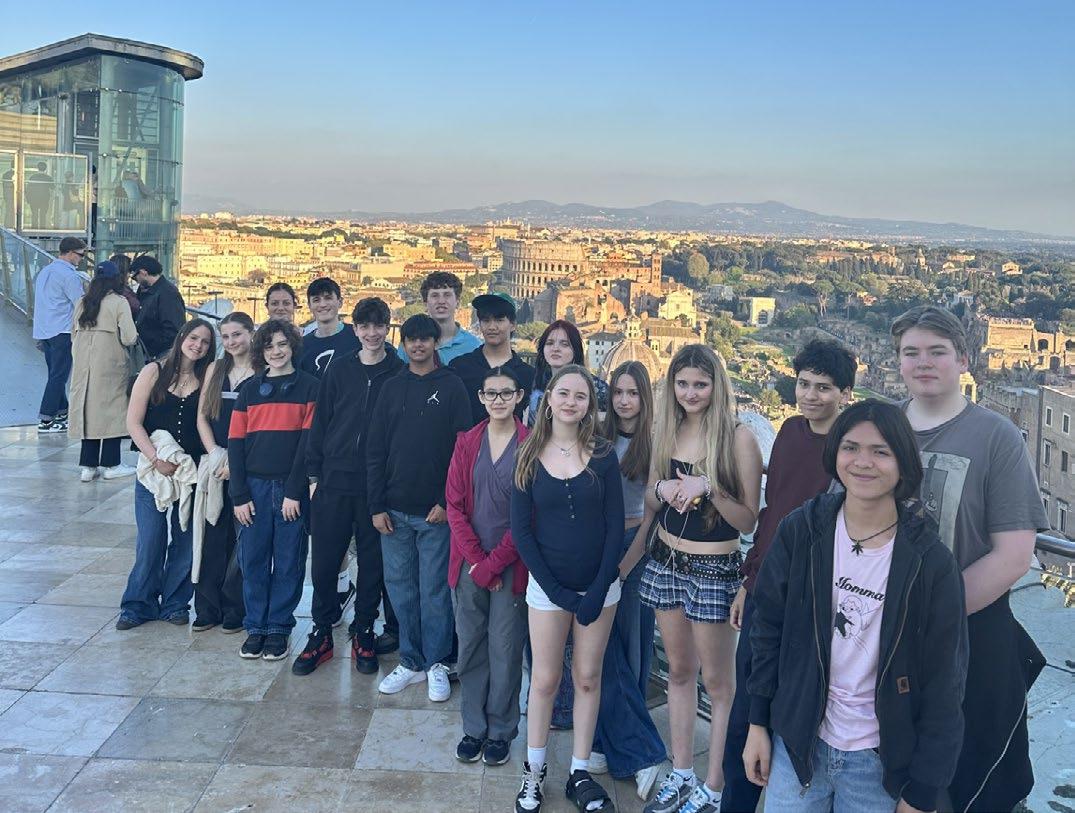
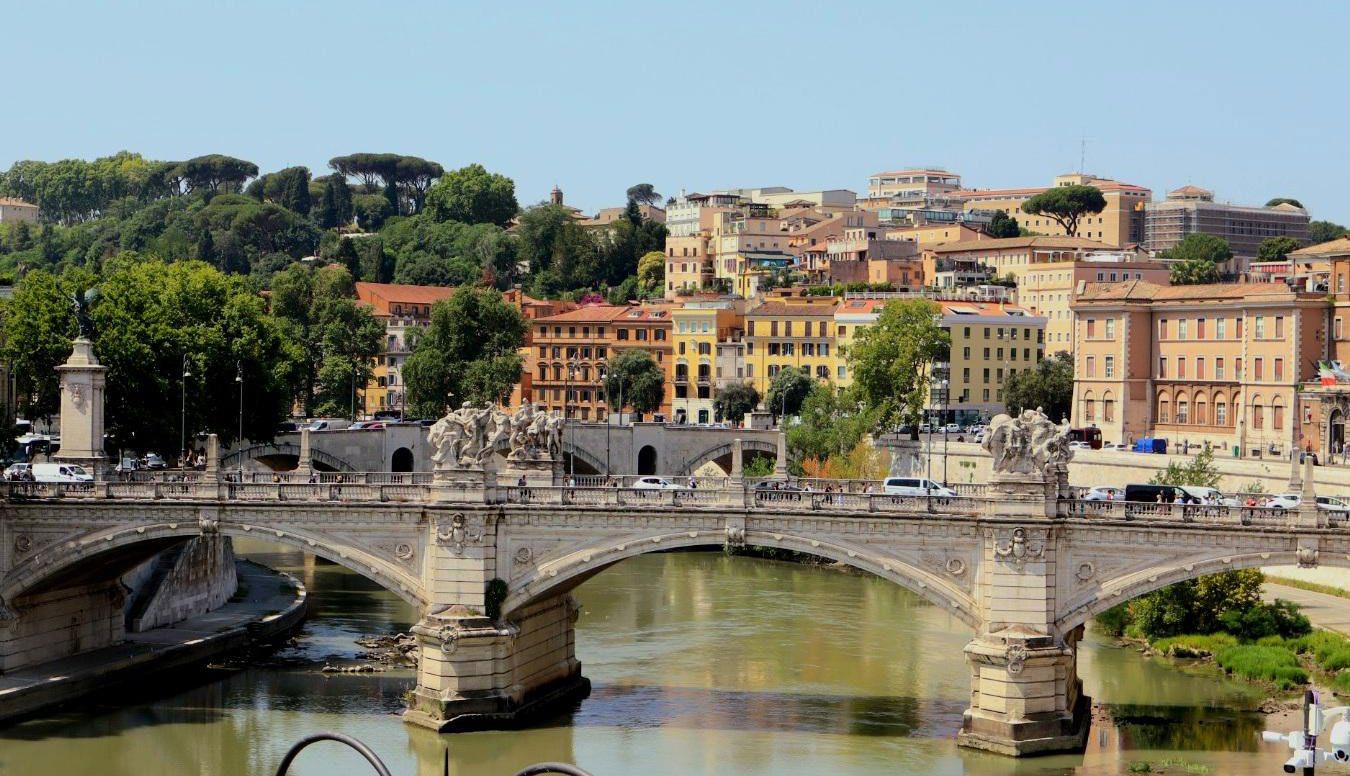
Landing in Naples felt like stepping into a warm oven — probably because, as Mr Gill kept reminding us, Vesuvius is literally right there. After dropping our bags, we headed straight to Pompeii, where we spent a glorious two hours taking in the impressive buildings that have survived two millennia, struck by the seeming familiarity of a gridded city with its corner shops and the spectacle of archaeologists literally digging up new discoveries beneath our feet. Herculaneum, the next day, was like Pompeii’s cooler, better-preserved sibling. Our guide casually pointed at perfectly intact ancient wood like it was no big deal, while we all whispered things like, “That’s older than the entire UK.” Vesuvius itself was a slightly more difficult challenge with the 1km vertical hike to the crater. Nevertheless, the panoramic views of the Bay of Naples from the summit were worth every step.
The train to Rome was a thrilling mixture of snacks, card games, and people claiming they could see Vesuvius from the window (it wasn’t Vesuvius). Arriving in Rome felt like someone had dropped us into every movie set ever: ruins on your left, scooters trying to run you over on your right, gelato stalls everywhere like some kind of divine test of willpower. The Forum was incredible —a giant playground for anyone who’s ever said “Actually, in ancient Rome…” at least once in their life. We stood where senators once schemed, where Caesar walked, a place completely immersed in historical events.
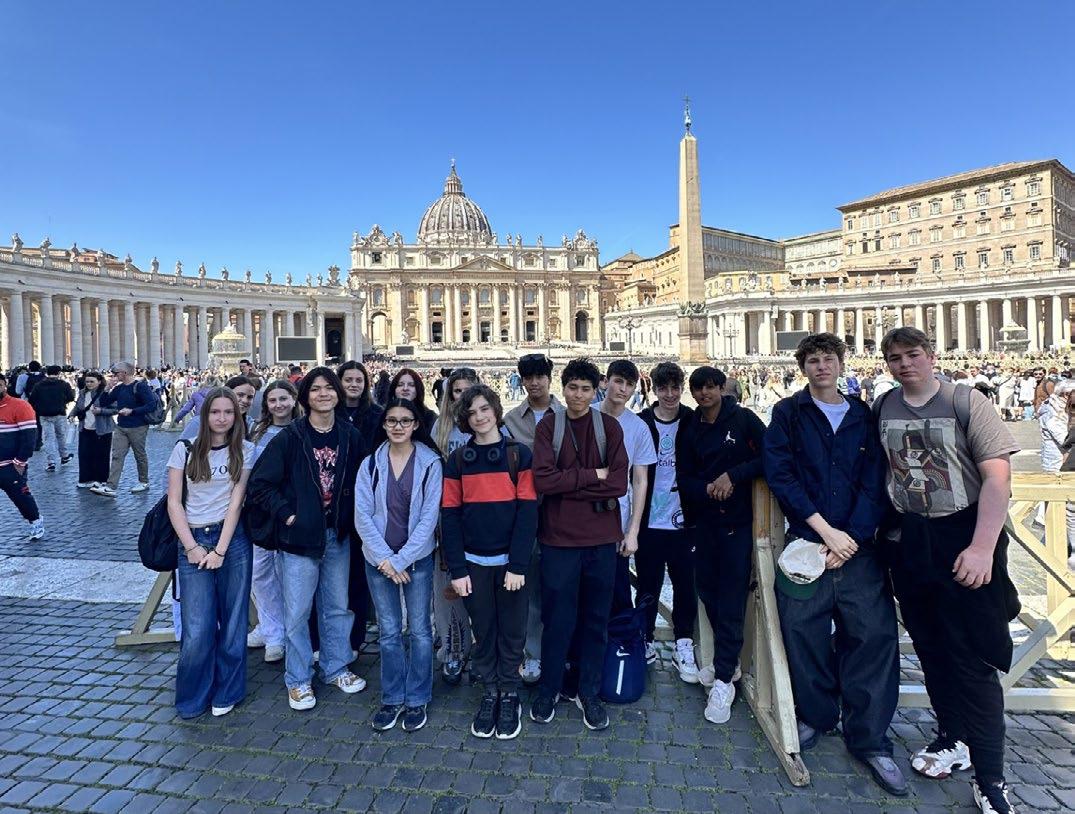
The Colosseum was next, and honestly? Nothing prepares you for how massive it is. It’s like the ancient Romans looked at an arena and said, “Yes, but make it unnecessarily dramatic.”
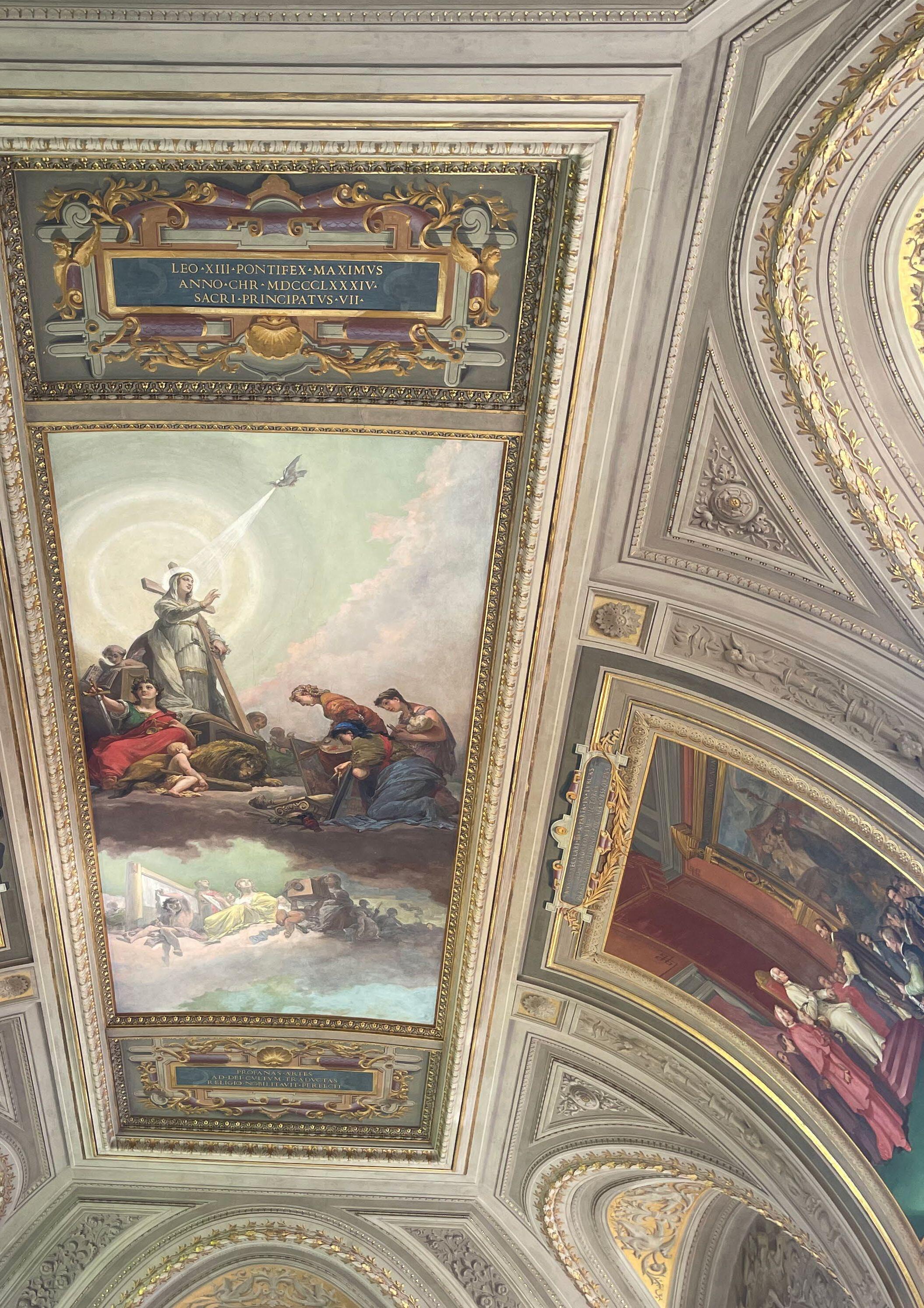
And then: The Vatican Museums. A magical maze where the gilded corridors themselves could be the main attraction, let alone the priceless artefacts. We shuffled reverently into the Sistine Chapel, where half of us tried to look intellectual while actually thinking, “My neck hurts, but wow, Michelangelo really did know what he was doing”
By the final evening, we were all exhausted and buzzing at the same time. Between the ancient streets, the incredible art, the endless pizza, the surprisingly competitive gelato flavour debates, and teachers herding us like very distracted cats, it was the kind of trip you only get once.
We left Italy with:
• A million photos
• Several questionable souvenirs
• A new appreciation for Roman engineering
• And about three hours of sleep between us
But honestly? We’d go back tomorrow.
Douglas (Pupil)
Milo (Pupil)
Stoic Defiance and Sacrificial Virtue: Cato & Lucretia in Conversation with The Virgin Suicides
Jeffrey Eugenides’ The Virgin Suicides presents an American suburb haunted by the deaths of five sisters whose stories are reconstructed by a collective male narrator. The Lisbon girls’ tragedy is deeply rooted in the social anxieties of 1970s America, yet their representation resonates strongly with patterns in Roman literature—especially those surrounding Cato the Younger and Lucretia. These figures remain emblematic within classical tradition: one as the Stoic resistor of tyranny, the other as the exemplar of violated purity whose suicide transforms a political order. Examining the Lisbon sisters through these Roman lenses sharpens our understanding of the novel’s themes: purity, agency, surveillance, conformity, and the way women are made to carry the symbolic burdens of their cultures.
Cato the Younger’s suicide occupies a singular place in Roman moral imagination. Facing political defeat and unwilling to live under Caesar, he chose to end his life through an act of extraordinary calm and deliberation. Accounts emphasise the almost ritualised pacing of his final hours: dining, speaking with companions, withdrawing to read, and then stabbing himself with solemn resolve. Even when physicians attempted to save him, he tore open the sutures himself, determined to refuse a world he believed compromised beyond repair. His death became a model of Stoic courage, integrity, and unwavering personal principle.
Something remarkably similar—though deliberately complicated—appears in the portrayal of Cecilia Lisbon. Her first suicide attempt, set in a bathtub and suffused with ritual atmosphere, evokes the serene, ceremonial deaths of Roman Stoics. Eugenides describes her as eerily tranquil, her young body taking on a kind of mythic stillness that frightens
the paramedics. This is the suburban recasting of the classical death scene: a private domestic space transformed into a site of philosophical intensity.
But it is Cecilia’s second and fatal attempt that most vividly mirrors Cato. Before jumping from her window, she moves through a sequence of quiet, almost ceremonial tasks: dressing, helping decorate for the party, sitting apart in contemplation, asking to leave, drinking peach juice. Nothing is rushed; nothing is frantic. The boys who narrate the novel track her movements step by step, as if reconstructing the orderly progression of a Stoic philosopher preparing for death. The calmness itself becomes shocking. Yet there is a crucial difference. Cato’s death is granted immediate meaning by his society: he is a hero, a political symbol, a man of principle. Cecilia’s death, by contrast, is almost immediately reclassified as an “accident” by adults unable or unwilling to confront its significance. Her motives are debated by neighbours, psychiatrists, and teenage boys, but never taken as authoritative. Where Cato’s suicide is fully legible to his culture, Cecilia’s is absorbed into confusion, voyeurism, and denial.
This contrast reveals one of the novel’s central insights: young women are not afforded the same philosophical agency as men in their societies. Cato is a Stoic; Cecilia is a mystery. His refusal becomes moral instruction; her refusal becomes pathology. And yet Eugenides quietly frames Cecilia with the same attributes admired in Roman Stoics—calmness, seriousness, refusal of falsity—inviting readers to question why these qualities are not recognised when embodied by a girl.
If Cecilia resembles a Stoic rebel, Lux Lisbon echoes a very different Roman figure: Lucretia, whose rape and suicide became a foundational moment in Rome’s political history. Her death was framed as an act that restored honour, prevented her violation from serving as a precedent, and justified a national uprising.
Lucretia’s story, from its earliest tellings, is embedded in the ideology of pudicitia—female modesty and sexual purity. Her body becomes the site through which Rome negotiates its moral self-definition. Lux Lisbon bears a similar symbolic function, though with inverted logic. Her sexuality becomes the subject of intense scrutiny, desire, and judgment. She is watched constantly: by the neighbourhood boys who idolise her, by parents who fear for her purity, by teachers and neighbours who treat her as a moral weathervane. Every rumour, every encounter, every article of clothing is interpreted as evidence of her purity or lack thereof.
The alignment with Lucretia lies not in circumstances but in the social mechanism at work. Both girls’ bodies become moral battlegrounds, places where a community expresses anxiety about decline, disorder, and its own integrity. Where Lucretia dies to preserve her family’s honour and purify Rome, Lux is made into a cautionary tale, her sexuality framed as contamination. In life, she is shamed; in death, her suffering is sanitised.
Both figures are also mediated almost exclusively through male narrators. Lucretia’s story is filtered through male historians, who elevate her modesty and minimise her interiority. Lux’s story is told by a chorus of men who were once boys and who remain fixated on her beauty, her underwear, and her romantic encounters. The female voice is almost entirely absent in both cases. What remains is a narrative about a woman, told by men, in which the woman’s death serves a symbolic rather than personal function. One more unsettling parallel emerges: agency is reconfigured by the narrator’s needs. Lucretia’s suicide becomes an emblem of virtue, even though her decision is shaped by a brutal assault and by the crushing weight of Roman honour culture. Lux’s choices—many of which are made in situations where she lacks meaningful power—are reframed as rebellious, erotic, or misguided. Neither girl is permitted an uncomplicated self-definition.
Rome and 1970s America share an important structural similarity: both uphold ideals of freedom and individuality while enforcing rigid moral codes. Roman society celebrated personal virtue, but only within the confines of expected roles—especially for women. Similarly, the suburban America of The Virgin Suicides, outwardly prosperous and stable, is governed by its own unwritten rules: conformity, privacy, Christian morality, and the maintenance of appearances. Cato and Lucretia each operate within these honour codes. Cato exemplifies Stoic integrity; Lucretia
embodies chastity and sacrifice. Their suicides reaffirm the moral structures of their world. The Lisbon sisters, however, live in a culture that offers no coherent honour code for young women. Their acts cannot be absorbed into a meaningful narrative because suburban society does not recognise female autonomy as a moral category.
The boys’ narration attempts to impose classical coherence onto the Lisbon tragedies—seeking causes, symbols, and lessons—but the novel refuses to grant them that satisfaction. Unlike Roman historiography, which confidently assigns meaning to its deaths, The Virgin Suicides leaves the community in a fog of speculation. The classical frameworks fit only imperfectly, and the mismatch reveals their insufficiency when applied to real, contemporary girls.
Sofia Coppola’s film adaptation reshapes the narrative by doing something the novel rarely does she gives the girls moments of interiority and presence independent of the male narrators. Lux on the football field, Cecilia withdrawn at her party, Bonnie moving through the decaying house—these moments restore humanity to figures otherwise rendered mythical. In effect, Coppola challenges the classical pattern itself. Where Roman literature often aestheticises female suffering, the film rehumanises it.
Reading The Virgin Suicides through the figures of Cato and Lucretia reveals how deeply Eugenides’ novel engages with classical traditions of honour, purity, and symbolic death. Cecilia’s ritual calm echoes Stoic resolve, yet her refusal is denied the status of philosophical agency. Lux’s sexualised myth aligns her with Lucretia, yet she is neither vindicated nor honoured—merely consumed by the community’s gaze. In both cases, the Lisbon sisters are made to carry burdens of cultural meaning that obscure their lived reality.
Roman literature provides frameworks that a patriarchal society uses to interpret extreme acts— heroic for men, sacrificial for women. Eugenides borrows their gravitas but also exposes their limitations. His novel asks us to recognise how narratives crafted by men—ancient or modern—can distort female experience. And by placing the Lisbon sisters alongside Cato and Lucretia, we are reminded that the myths a society tells about its dead often reveal more about the storytellers than the subjects themselves.
Amelie (Pupil)
Daniel C Head of Computer Science
British Informatics Olympiad, Advent of Code and UK Bebras Page 27


The first term in Computer Science comprised three competitions that pushed pupils to the limits of computational problem-solving, pitting their skills against challenging and quirky problems that defy explanation, and writing programs that must run as efficiently as possible.
The British Informatics Olympiad is a national competition that encourages our most capable pupils to test their abilities through abstract and mathematical problems. Whilst we are unable to share the details of the questions, the pupils enter the competition knowing that they will be stretched for time, may not be able to complete all the questions, but are rewarded for participating and for further stretching their problem-solving capabilities. The promise of refreshments throughout the gruelling 3-hour paper provides the energy to endure.
Advent of Code is a highly accessible competition open to a global audience, but its competitive nature is tailored to our pupils through our personal league table. Each day from 1 December to 12 December, a new challenge is issued within the context of a Christmas theme – to save Christmas. As pupils progress through the challenges each day, the story progresses – as do the level of challenge. Each day begins with a problem to solve with code and a unique dataset for each participant. Upon completion of your algorithm, using your unique data, you will submit your result – and if correct, progress to part 2 of the day’s challenge. If both parts 1 and 2 are complete, you are awarded a gold star for the day and points on the leaderboard.
What began as 28 pupils enthusiastically embracing the Christmas spirit ended with four core pupils taking the lead, with one ultimate victor – O Stupple. An honourable mention must go to F Nyemecz, who only started his programming journey this year and led the leaderboard for several days.

The Bebras Challenge is a national competition to which all Fourth Form pupils are entered, and other year groups can optionally participate. It is a competition that provides another opportunity for our pupils to engage in problem-solving activities, often requiring lateral and outside-the-box thinking. There were some exceptional results, with 53 Distinctions from 204 participants. The highest achievers were A Kartashova (Fourth Form), A Nield (GCSE) and D Katai (Senior).
For all the participants this year across all these competitions, it is worth congratulating their commitment to pursuing challenging tasks that push their programming and problem-solving capabilities, relishing the chance to work systematically through problems they know are difficult to complete –all in order to strengthen their understanding of computational problem-solving.
Daniel C
Steven P Head of Drama
SIX the Musical: A Six-sational Celebration of Talent, Empowerment, and Community at Mill Hill Page 26
The Mill Hill Drama Department presents: The Curious Incident of the Dog in the Nighttime. Page 27

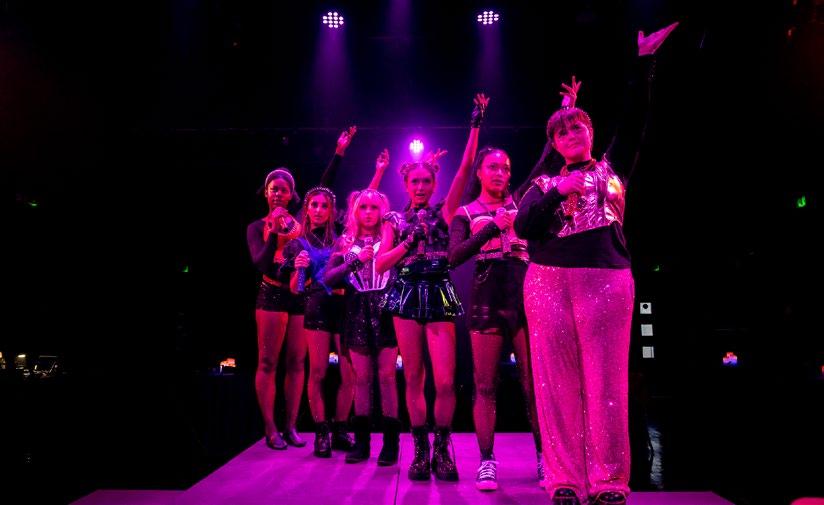
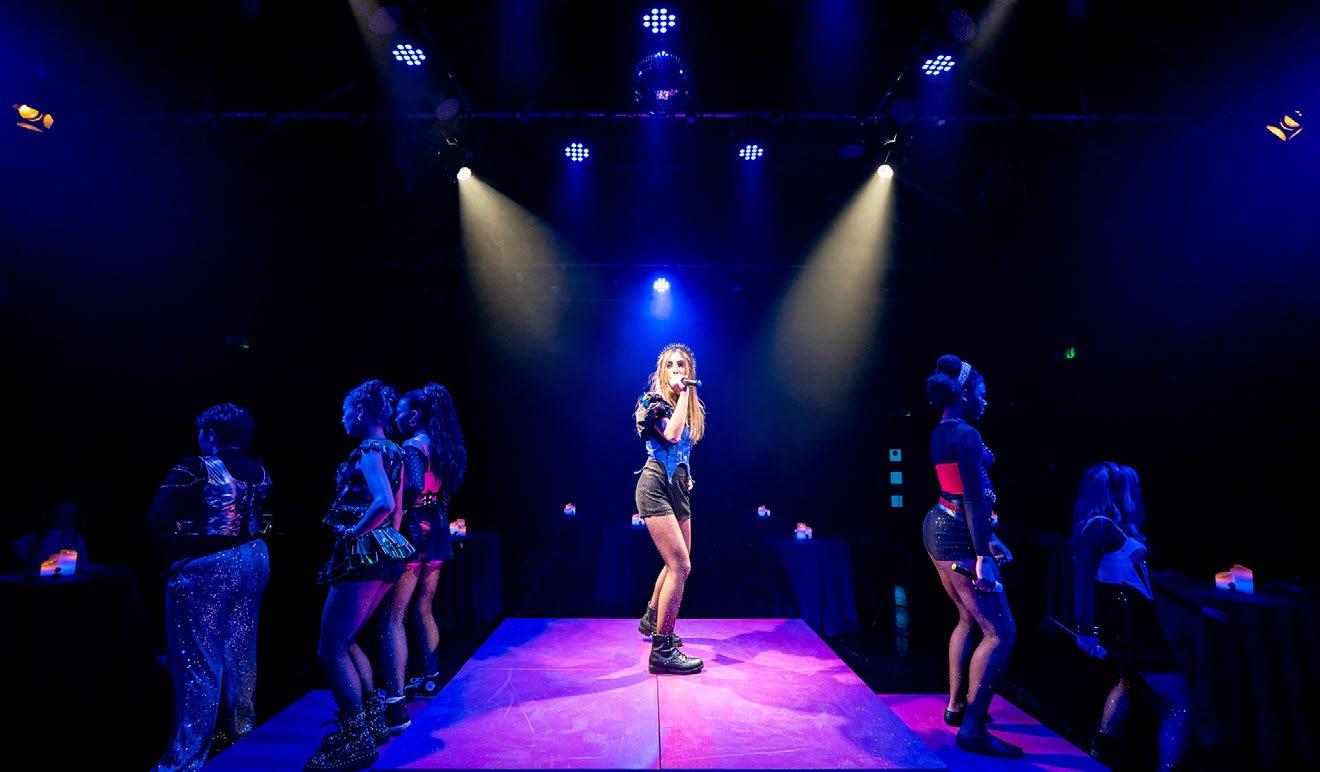
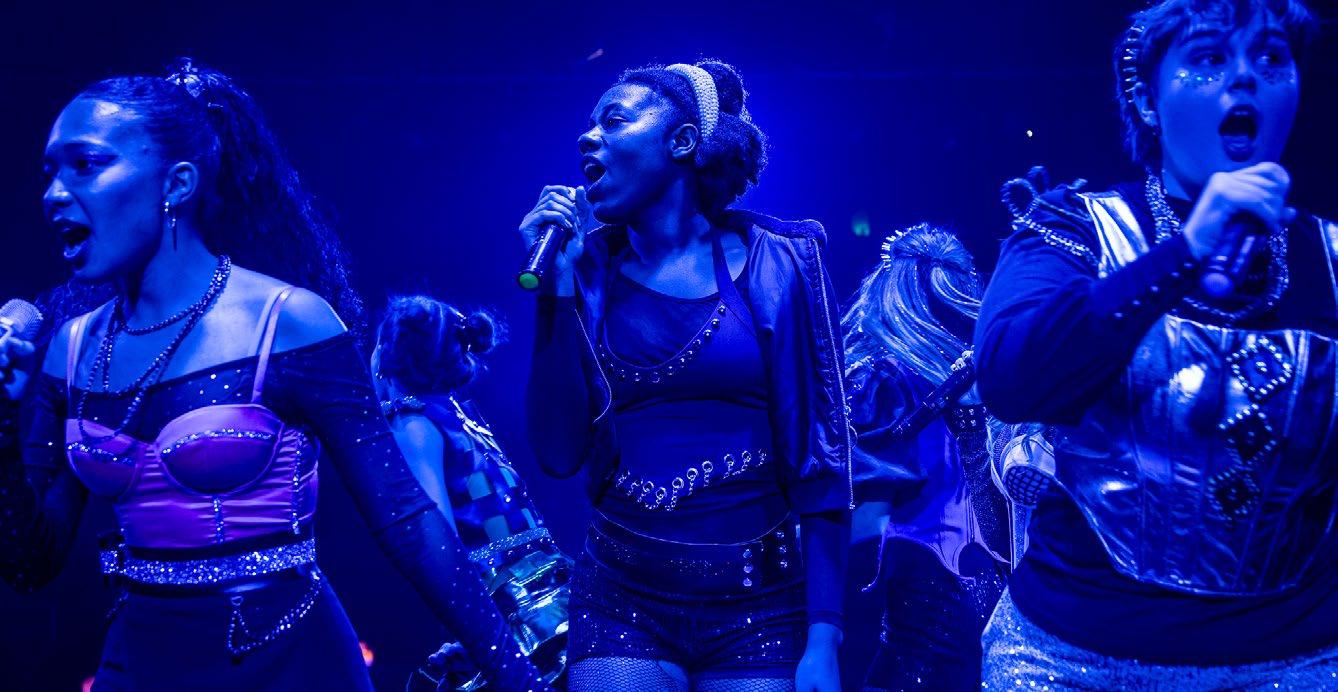
These stirring final lyrics from SIX The Musical echoed through the Patrick Troughton Theatre, closing a production that was nothing short of extraordinary. Over four sold-out nights, the School’s latest theatrical triumph captivated audiences with its fierce energy and powerful message of female empowerment and unity.
This wasn’t just a retelling of history; it was a rewriting of it. SIX boldly reclaimed the narrative, transforming the stories of Henry VIII’s six wives into a celebration of HER-story: a punchy, unapologetic reimagining that gave voice to women defined by the men around them. With the 50-year anniversary of Mill Hill welcoming its first female pupils on the horizon, the production felt especially powerful and timely. The production further underpinned the ISI judgement that the Co-Curricular provision at Mill Hill is a Significant Strength of the School. SIX served as a living, breathing embodiment of that accolade, an exuberant showcase of the School’s commitment to
nurturing creativity and collaboration.
From the moment the lights dimmed and the bass dropped, the audience was swept into a whirlwind of fierce vocals and razor-sharp choreography. The cast brought the six wives of Henry VIII to life with charisma and heart. Their performances were not only technically accomplished, with tight harmonies and seamless transitions, but also emotionally resonant, offering a fresh and empowering take on the historical narrative.
Directed by Alex Gatherer, Director of Theatrical Performance, the production was conceived as a bespoke opportunity for Year 11 and Year 13 pupils who, due to exam commitments, will be unable to participate in the full-scale summer musical. Rather than allowing these students to miss out, Mr Gatherer created an opportunity that quickly became a headline act in its own right.
“I’m incredibly proud of how the cast have seized this opportunity to show the School not just their remarkable performance skills, but their unapologetic confidence and self-belief,” said Mr Gatherer. “They are shining role models to all the young girls who joined us throughout the week and will have seen first-hand how they too can be fierce, independent Queens in their own story, not just on stage but in every moment of the day.”
The show also drew praise from the National School Theatre Awards, which wrote:
“The synchronicity and collaboration between the six performers was the rich heart and soul of the show throughout. A particularly heart-warming moment came when Yasmine caught Olivia’s eye across the stage, and they shared a smile that seemed to say everything – in that moment, their shared performance spoke volumes about the unifying power of theatre and teamwork. It was the theatre’s magic distilled into a single glance. Marks out of five? SIX!”
The production has since been nominated for Best Musical at the 2026 National School Theatre Awards, with the entire cast also shortlisted for Best Ensemble, a testament to the extraordinary talent and cohesion of the performers and creative team.
Audience members, including parents, staff, and stakeholders from across the Mill Hill Foundation’s schools, were unanimous in their praise. “The energy
was unreal, it felt like I was at the West End,” said one parent. Another remarked, “I forgot I was in a school theatre. The professionalism was astonishing.” From the slick lighting and bold costuming to the dynamic set design and meticulous direction, every element of the production reflected a deep commitment to excellence.
And the momentum continues. The second half of the term promises the hotly anticipated House Drama Competition, with 12 house plays set to take the stage. Spring will bring both upper and lower school productions, and the summer term will culminate in the full school musical (Little Shop of Horrors), which will doubtlessly be a highlight of the Mill Hill calendar.
SIX was more than a performance. It was a statement. A celebration of voice, identity, and the power of young people to command a stage and tell their stories with pride. It reminded us all that the arts are not an add-on, but a vital part of education and personal growth.
Andrew G






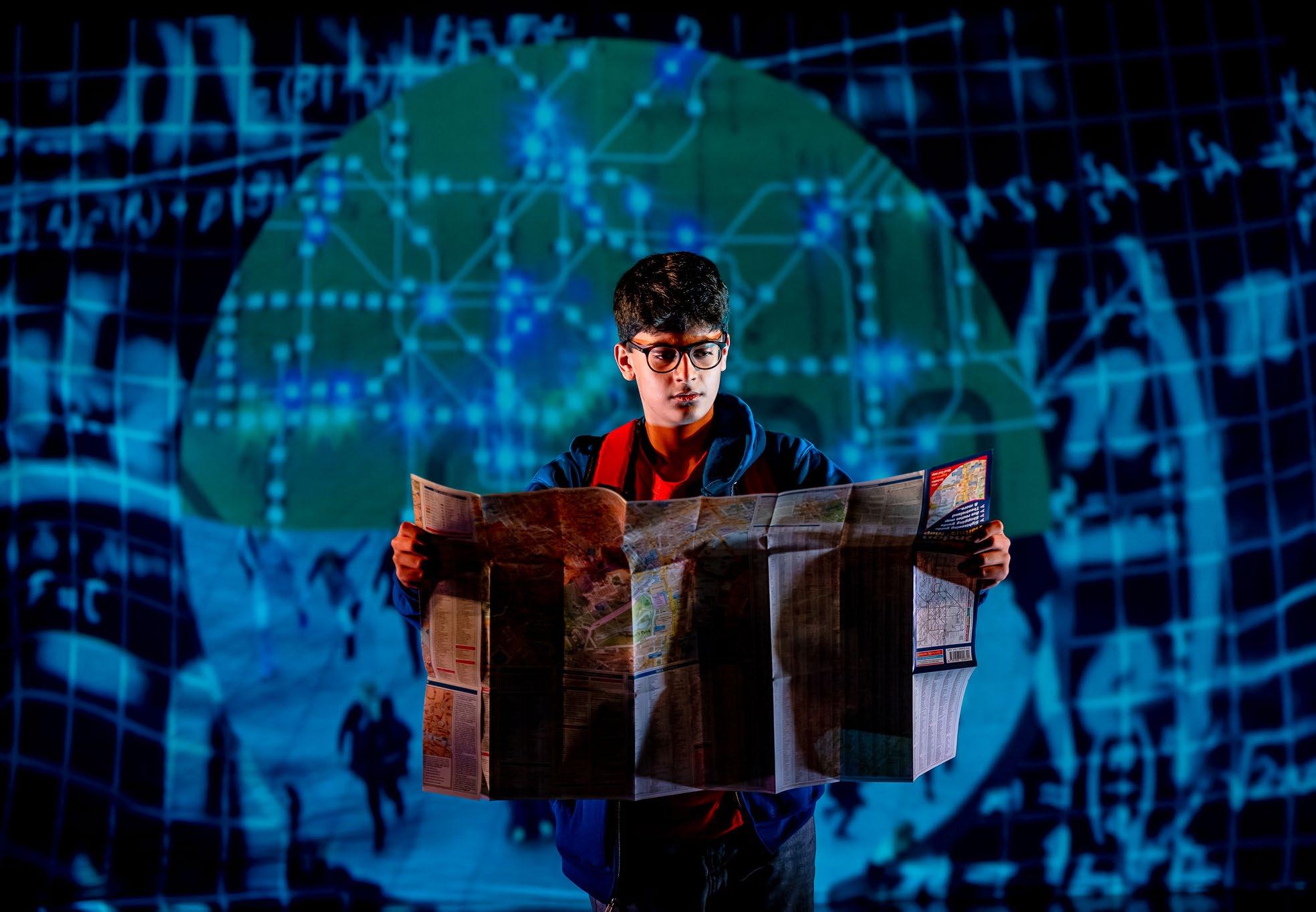
After a jam-packed Autumn of stellar performances at Mill Hill, from Six the Musical to the biennial House Drama competition, our Remove students concluded the term’s theatrical offerings with a fantastic production of The Curious Incident of the Dog in the Nighttime.
The play, based on the novel of the same name, centres around a boy called Christopher who is neurodivergent, most likely autistic, as he investigates the murder of his neighbour’s dog, Wellington, and subsequently unravels a chain of troubling secrets within his own family. Both the book and the play use language, movement, and mathematical imagery to depict Christopher’s struggle with complex family dynamics and neurodivergent sensory experiences. Our production, directed by Mr Pleasants, was a hit with audiences on both nights, featuring creative
blocking, strong ensemble movement, and projections by Mr Ward that brought the story to life. The cast, led by Krishan Dhanak as Christopher, brought energy and passion to their telling of Christopher’s story and, in doing so, raised awareness and understanding for young neurodivergent people. Krishan wrote of his experience that “playing Christopher was a privilege for me. I felt a special bond with the character, and I will never forget it. During the process, I learned that neurodivergence is actually a superpower.”
The cast and crew wanted to engage deeply with the play’s themes, promoting awareness of neurodivergence through other creative channels. A collaborative effort between multiple departments produced an interactive pre-show installation, a first for Mill Hill School. The art scholars, led by Head of Art, Ms Green, created works inspired by
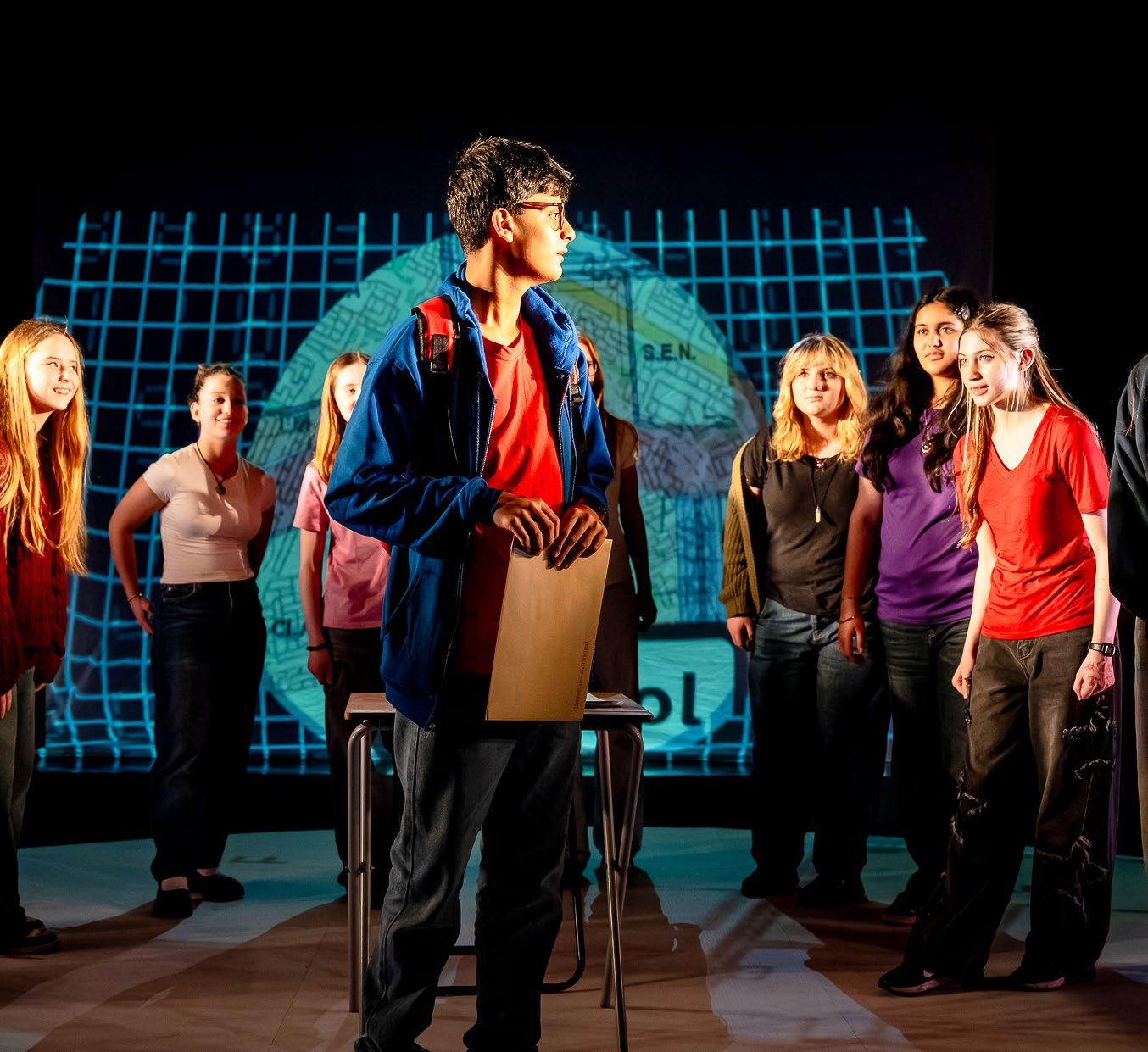
neurodivergent artist and advocate Mahlia Amatina, using the play’s soundtrack to explore neurodivergent sensory experiences. The Learning Support team supplied informative posters, and a video featuring first-hand accounts from autistic members of the community was screened in the space. The installation was neurodivergent-friendly, with dimmed lighting and a single sound source. It also featured a ‘sensory corner’, where visitors could sit comfortably and wear headphones playing static noise, to immerse themselves in one of Christopher’s coping strategies for sensory overload. The artwork produced by the scholars was fantastic, resonating beautifully with Amatina’s work and our actors’. Each contribution came together to form an incredible and informative addition to this already outstanding theatrical production.
Through their hard work, collaboration, and creative talent, pupils and staff combined to raise awareness surrounding neurodiversity and ASD (Autism Spectrum Disorder), reducing stigma and truly showing the great impact the creative arts can have in our communities. If you didn’t make it to the show, please look at the resources below!
Young people explain autism video
How to talk and write about autism
Sensory Overload
Computer Aided Design and Manufacture Club Page 35
Pinball Wizard - DT & Computer Science joint project Page 36
Reflection on A-Level Satellite Dish Project Page 37
Reflections on Engineering Club Page 38
Reflections on independent project clubs Page 39
In today’s fast-paced world, where products see the light of day and rapid product upgrades are the norm, the use of computer-aided design and manufacturing has taken a prominent place in the engineering sector. It is therefore no wonder that computer-aided manufacturing is taking over the world of product design, thanks to its ability to help product designers and engineers bring products to market quickly.
Skilled engineers who are adept at conceptualising and making ideas manifest are highly sought after and are drawn into the workplace with high occupational value. To contend with this budding discipline of creating utilitarian objects and producing them rapidly, we have decided to start a club where pupils can design and create, not only acquiring the skill but also developing a personal passion for this gentle technical art.
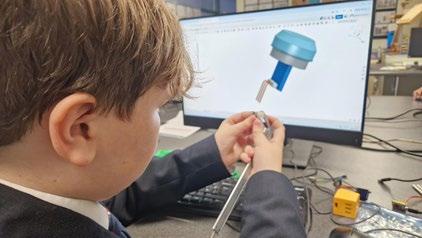

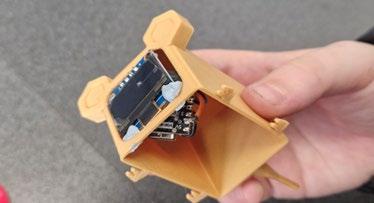
We have decided this year not only to teach and promote a new computer-aided design package, called Onshape, but also to dip our toes into the world of microelectronics. With the advent of small programmable boards and tiny OLED screens, one can use blocks of code from pre-existing libraries and leverage AI to help troubleshoot and add functionality to pupil-designed products.
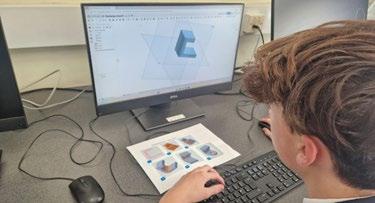
The pupils have set themselves a challenge to design and print 3D housings and containers for these little objects, as an illustration of our design prowess.
In the photo, Jamie Freedman sports his mouseinspired enclosure for a little computer with eyes that respond to touch.
We will keep improving our skills and refining our designs, so that by the end of this year, we will have a nice little collection of weird and wonderful electronic gadgets that do everything from showing googly eyes to telling the weather to warning people if the air quality is changing.
We hope we can keep this impetus and possibly gravitate toward something bigger and more meaningful that will have an impact not only in our classroom but perhaps a much, much wider impact on yet-unknown new career paths.
Daniel V N
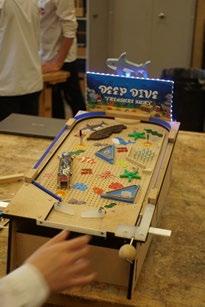
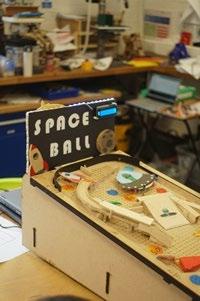
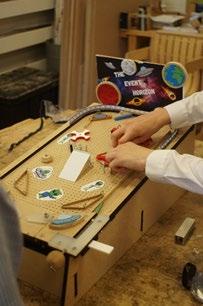
2025 saw another excellent collaboration project between DT and Computer Science. Pupils from across all year groups took part in a four-day design and make competition. This also includes Kiril, a former pupil now studying engineering at university, who returned to share his knowledge and understanding with our current pupils.
Pupils had to design and make Pinball machines that were dynamic, used electronic sensors, and required Arduino coding to keep score, make sounds, and control lights. This required teamwork, innovation, and thoughtful planning to have a chance of winning. You can see from the excellent outcomes that pupils really immersed themselves in the challenge and gained valuable experience by seeing quite complex projects through to successful outcomes.
Both departments hope to run a similar project again this year and are keen to hear from any pupils who have great ideas for this year’s summer project.
Daniel V N

My curiosity about how data from space can be used to understand Earth, from weather imagery to environmental change, has sparked my interest in satellites. For me, satellite data is more than just theoretical knowledge; it plays a vital role in communications, forecasting, and global monitoring of our planet. Investigating how this data is collected and analysed has led me to satellite communication as one of my main areas of interest.
Design Technology has played a vital role in supporting my passion for radio and satellites. Using computeraided design (CAD) and workshop machinery, DT has allowed me to translate ideas that would otherwise remain theoretical into tangible products. Through this subject, I have explored how real-world products are designed, prototyped, and refined through iterative design processes, helping me develop my own creative abilities. This hands-on approach has enabled me to combine my interest in satellites with the creative adaptability of DT, allowing me to design components for my own equipment and continually improve them through iteration.
To me, DT is an extremely valuable subject because it allows students to develop a wide range of realworld skills that extend far beyond the classroom. Our studies link directly to manufacturing processes, materials, and modern production methods, while also introducing key ideas from business and the global economy. DT encourages students to consider ethical issues such as sustainability and responsible use of resources, which are increasingly important in modern design and engineering. Overall, DT is a thoughtful and creative subject that encourages students to think beyond the obvious and create meaningful solutions.
Noah (Pupil)
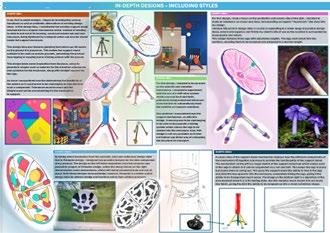
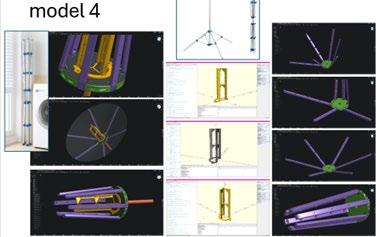
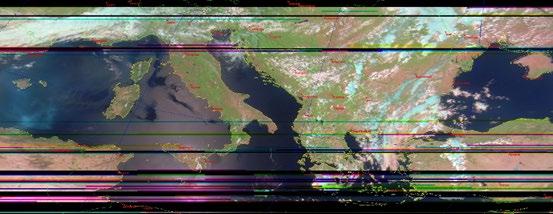
Every Wednesday and Friday, I participate in engineering clubs in the workshop. These sessions are really enjoyable as I get to learn practical skills, solve problems, and bring ideas to life.
One of my main projects this year and last year has been assembling a Grasshopper RC car kit. This task has been both challenging and rewarding, requiring careful attention to detail and precision. Following the instructions has significantly improved my Design and Technology skills, teaching me the importance of quality over quantity in engineering. Beyond individual work, the club collaborated to create a series of obstacles for the RC cars to race on.

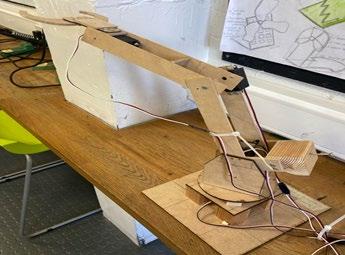
Alongside the RC car, I have been developing a robotic arm based on my own design. This project has pushed me to explore more advanced concepts in mechanics and electronics. Currently, I am focusing on two key aspects: the rotation mechanism at the base of the arm and the pincers that will allow it to grip objects. I’m planning to laser-cut two small gears that will allow the pincers to spin into each other, which is one of the many tools available to me in the DT workshop. The ‘elbow’ is working, though I keep everything disassembled until I finish. Each joint is powered
by servos, which has given me valuable hands-on experience with wiring and electronic control systems. Understanding how these pieces come together is a really rewarding experience for me, and I enjoy my sessions. Others at the Engineering Club are building RC tanks and display cases.
Through these projects, I have learned a great deal about joinery, wiring, and the integration of mechanical and electrical systems. Moreover, I have discovered how enjoyable it is to spend time in the workshop, turning ideas into reality. Every session presents a new challenge, and each completed project brings a sense of accomplishment.
Looking ahead, I am excited to continue refining my robotic arm and exploring new projects that push the boundaries of what I can create, and I look forward to many more hours in the workshop.
Aiden (Pupil)
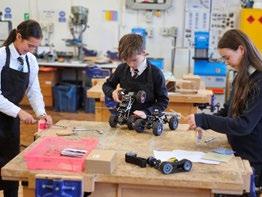
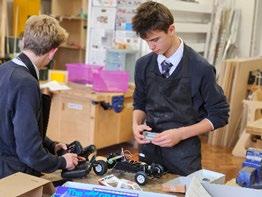
I really enjoy being part of the DT club, as it focuses on designing and making practical products. The club gives me the opportunity to be creative and develop hands-on skills that closely align with what we learn in DT lessons. Currently, Ada, Poppy, and I are working on making a chair, which has helped me understand the full design process, from planning and designing to thinking about materials, construction methods, and how the final product will be used.
I have particularly enjoyed developing my skills in Onshape, as it allows me to create detailed digital designs and refine them. Using Onshape has helped me better understand how professional designers plan and refine their ideas before making them, and it has also improved my confidence with CAD. The DT club has helped me apply classroom knowledge in a more practical and creative way.
Overall, the DT club is very enjoyable and rewarding, and it has increased my interest in design and making. I really like that the club is focused on creating real products and learning through doing, and it has helped me develop my problem-solving skills and creativity, giving me some great opportunities.
There is a DT Arkwright Scholarship Activity club on one lunch time every week. Focused on engineering, and there is the opportunity for pupils to work towards applying for an Arkwright Scholarship (an external organisation that awards bursaries to talented future
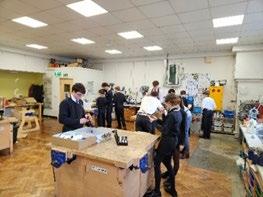
engineers) later in their school career. Some example projects and activities follow:
• Robotic arm. A design, make and program Project.
• Remote control vehicles – obstacle course challenge.
• Walking robot. A design, make and program Project.
• Structures & flight projects.
• Remove and Fifth Form Arkwright scholarship project.
• Y9 Scholars compete to become club leaders in the Remove Year.
• Attend guest speaker event from Arkwright.
Capree (Pupil)
Karl V Head of English
A review of The Great Gatsby musical Page 41
Introducing Our New Poet Laureates Page 43
Poetry by Ben Page 44
The Tanika Gupta Essay Prize Winner 2025 Page 45
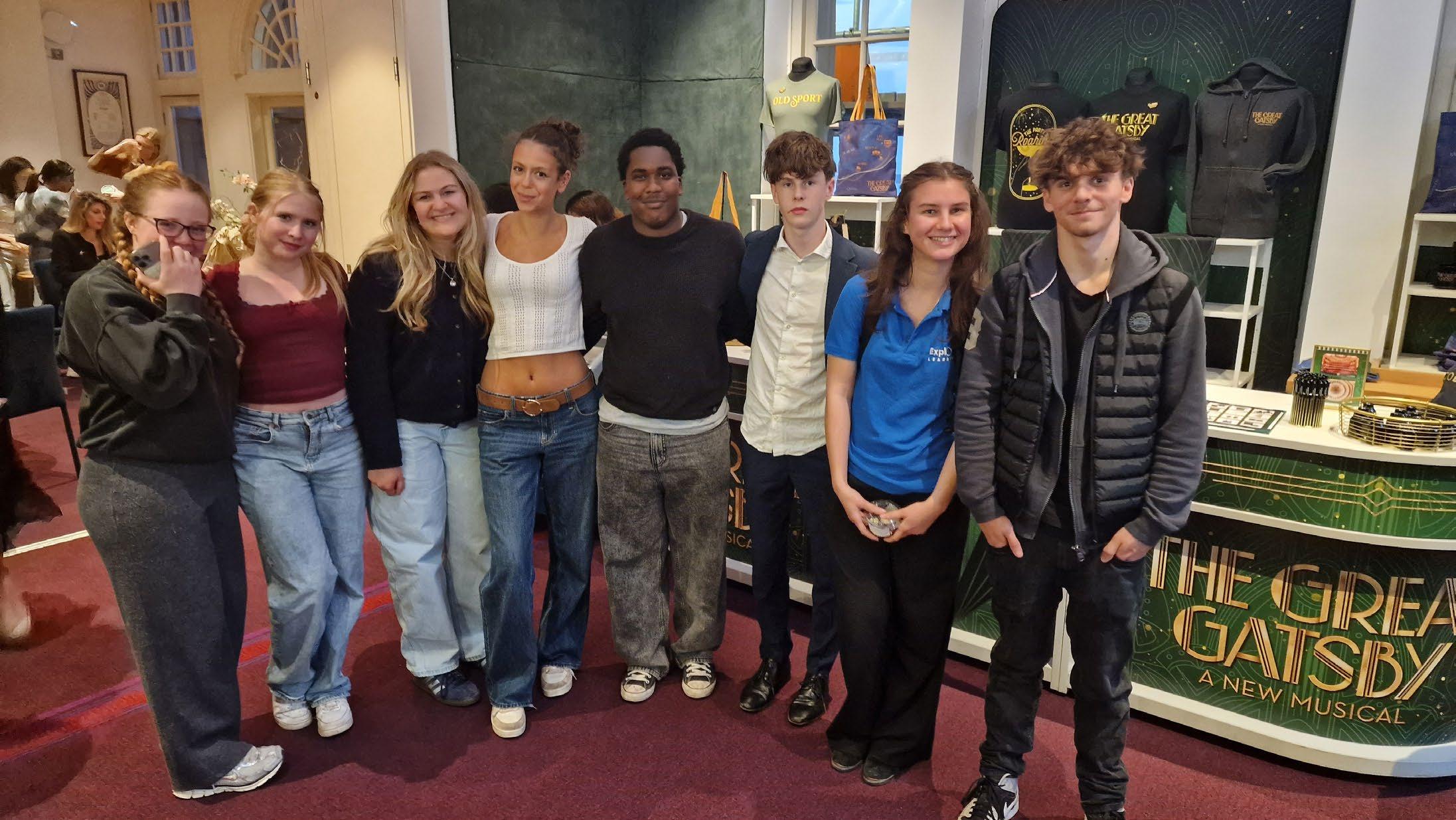
Watching The Great Gatsby reimagined as a musical offered a fresh lens through which to experience a story that is so deeply embedded in literary study. The production captured the glamour and volatility of Fitzgerald’s 1920s America through its energetic choreography and a score that made the characters feel both larger-than-life and unexpectedly vulnerable. Seeing the narrative unfold on stage emphasised emotional beats that can seem muted on the page; music and movement underscored the moments of longing and illusion that enabled this.
The creative team made bold stylistic choices that shaped the evening’s tone. The art deco set, all gleaming lines and fractured mirrors, created an atmosphere of glamour that hinted at fragility beneath the surface. Choreography was sleek and often frenetic, mirroring the restlessness of Gatsby’s world. Particularly striking were the party scenes: bursts of light, cascades of colour, and ensemble numbers that swelled with chaotic energy. These sequences contrasted the quiet, deliberate scenes between Gatsby and Daisy, highlighting the gulf between fantasy and reality.
The musical numbers themselves varied in impact. Upbeat ensemble pieces carried an infectious momentum, making the Jazz Age’s excess feel vivid, while the more introspective solos added welcome emotional depth. At times, though, the score prioritised atmosphere over narrative clarity, and a few plot developments felt sudden. Viewers unfamiliar with the novel may have found certain shifts underexplained.
Still, the production succeeded in offering a lively, modern take on Fitzgerald’s world. Its visual richness, strong performances and inventive staging made the familiar story feel new and immediate. While not every artistic choice landed perfectly, the musical ultimately provided a memorable interpretation that illuminated the novel’s key themes through its own distinctive theatrical language.
Phoebe (Pupil)
F. Scott Fitzgerald’s masterful novel The Great Gatsby was recently adapted to the stage in New York and brought to London’s West End as a thrilling new musical. Director Marc Bruni brought the extravagant Jazz Age story to the London Coliseum this year, creating a transportive, magical experience for all audience members, with performances and music that can draw them in. With 22 original songs, a chillingly talented cast and a brilliant creative team behind it, the production landed itself multiple nominations and awards among the West End’s finest.
Mill Hill School Sixth Formers had the privilege of enjoying the show during the summer, all leaving the theatre amazed with surpassed expectations. There was a unified opinion that the production was utterly riveting and remarkable, theatrically. However, from a literary perspective, a view that the narrative undermined the original plot was shared.
The designers of the show generated pure magic on the stage, with a mirage of pyrotechnics, hydraulics, impressive technical projections and elaborate sets to bring the grandeur of 1920s luxury to life. The green light, an integral symbol recurring throughout Fitzgerald’s story, was utilised in this production, with a glowing beam piercing through the stage at critical moments and establishing a powerful cyclical structure. The use of music also enhanced the story's poignant narrative.
The opening song, ‘Roaring On’, featured Nick establishing the context and setting of the story, including his iconic sighting of Gatsby who reached
towards the water, entranced by the green light (a symbol of wealth and jealousy, two major themes), where a silhouetted Gatsby appears, extending his arm chillingly towards the radiant beam, enacting this infamous image. This visual recurs at the end of the show, serving as the musical's final image. In a reprise of ‘Roaring on’, Nick delivers a monologue celebrating the closing speech from the novel, against intensifying music, which comes to a climax when Gatsby’s eternal yearning is materialised before the final curtain falls.
As this song’s lyrics centre around the post-war craving for exciting and risqué activities in the form of partying and illicit behaviour, and the lively easy-going lifestyle that was established and subsequently elevated by Gastby’s extravagant parties, a tone of superficiality fiercely underpins the addictive, high-tempo rhythm of the music, which conveys Fitzgerald's intended social commentary criticising shallow, elitist attitudes of the Jazz Age.
Overall, the adaptation deserves the praise it’s received and should be celebrated as a revolutionary piece of theatre with outstanding atmospheric creation and deeply moving musical composition. The experience completely immerses people of 21stcentury Britain in the mesmerising struggles of the nouveau riche and the elite, combining jazz, glamour, feathers, and glitter.
Sofia (Pupil)

Earlier this term, we ventured to find new Key Stage 3 and Upper School Poet Laureates to join Ben C, our Key Stage 4 Poet Laureate, to entertain and enthuse, inspire and intrigue, through our collective love of poetry. The competition was set: pupils who entered were tasked with writing their own Shakespearean sonnet in the style of the Master’s Sonnet 130.
Here are the winning entries:
A Potent Mirage
There is a woman standing before me.
Her man does keep her out of reach.
But her gleaming beauty he does not see, Her story, her song, he does not preach. Her sonnet is written behind her eyes
Her lips do sing in the colour of love
Her hair so fair it spells models’ demise
Her kindness a plague, carried by dove, Bird snatched and caged, but sent to me, Robbed, oh robbed from me too soon, Yet tasteless she is, still overcome by glee.
A mirage she is, showered in fake love.
Oscar (Pupil)
I espied thee
I espied thee when sadly Death did call,
Thy blade a whisper, chill as winter’s breath; Yet in thine eyes there burned a flame withal, A clandestine image against death.
wite an abash, death a terror oh lord
Love an abash, abash of gold ground
Oh, enamour thee cannot afford
If Fate decry those bullet’s shall stain the sound, And thee shall not fight, for amor never be,
For in that wound eternal peace is engraved,
And my resting place I shall foresee,
Over the dim waters thou are now laid.
A sad Wundorlic feeling, love may be,
For death itself is gentler compared to thee.
George (Pupil)
These two poems are based on the Tower of Babel story and the idea of languages dividing. The first is written in an English Renaissance style inspired by Donne and Shakespeare, and the second in a French poetic style inspired by Baudelaire.
The Tower of Babel wasn’t stopped of sin, But as a temporary solution; One language had not enough words within, To capture your beauty to perfection.
Yet still, this attempt was truly woeful, For sight of you would make Pygmalion Feel despondent ‘t-his efforts reproachful, For your allure transcends explanation.
Too, DaVinci would have-’n epiphany, Just a glimpse of you; he would surely know, His art’s futility compared with thee; Such radiance you seamlessly bestow.
He knew no brush nor voice could e’er convey, The work of His own hand, shown in your way.

Souvent, je me demande comment ta beauté, peut humilier jusqu'au plus profond de l'âme; À tel point que le flâneur, surpris, se réclame, Esclave de ton charme et captif de ta flamme.
Tu es la preuve même de la grâce du Très-Haut, Que même pécheur je jouisse de ton éclat ; Cruelle est ta bonté, douce est ta lumière, Me voyant t’admirer, je ploie sous ton éclat.
Devant toi, Picasso verrait son art tomber, Et toutes ses couleurs fondraient devant tes yeux ; Il pleurerait sans joie d’une vérité contrariée, Car ton éclat défie toute main de créateur précieux.
Comme Babel jadis, ma langue se brise et s’incline, Devant la splendeur que Dieu seul pouvait concevoir ; Même la tour du ciel pâlirait sous ta divine Présence, et l’homme humble se perd dans ton pouvoir.
Ben (Pupil)
Complex Identities Navigating Through a National Health and Prejudice Crisis: How Diversity is Explored in Kushner’s Angels in America: Millennium Approaches
In Tony Kushner’s work, Angels in America: Millennium Approaches, which is the first part to the 7 hour epic, diversity is not merely a backdrop but a foundational element that shapes its “Gay Fantasia on National Themes”, as Kushner introduces it. The play is set during Reagan’s time in office, when the AIDS epidemic was at an all time high. Angels delves into the intricate lives of the main characters who are dealing with identity, morality, and survival. While the play explores various forms of diversity, its primary focus on sexuality is undeniably central, profoundly impacted by the pervasive health crisis of AIDS and punctuated by instances of racism, particularly directed towards the character of Belize.
The exploration of sexuality forms the very core of Millennium Approaches, explicitly stated in its subtitle. The play immediately introduces Prior Walter and Louis Ironson as a gay couple whose relationship is under immense strain due to Prior’s battle with AIDS. Their love, struggles, and eventual separation highlight the personal and societal pressures faced by gay men in the 1980s. Louis grapples with the emotional burden of caring for his sick partner, however, eventually abandoning Prior, a decision born of fear and an inability to confront the reality of the epidemic. Prior’s identity as a gay man is unshakeable, even as he experiences physical and spiritual torment, accepting his condition as part of his larger self. Contrasting sharply with Prior and Louis’s open, albeit troubled, relationship is Joe Pitt, a devout Mormon Republican who struggles with his repressed homosexuality. Joe’s internal conflict, Ren Trager elevated by his strictly conservative faith and upbringing, leads to deep personal turmoil and a strained marriage to Harper, his wife. Joe acknowledges his identity as a “homosexual Mormon”, – a dichotomy that embodies the uncomfortable blend between personal truth and religious expectations. His journey to Washington D.C. is partly an escape and a search for an identity he can reconcile.
Perhaps the most complex and tragic representation of sexuality comes through Roy Cohn, a closeted lawyer.
Despite having sexual relations with men, Roy denies being gay, especially when confronted with his AIDS diagnosis. He insists he is not a “homosexual” but a “heterosexual man” who has sex with men, adamantly differentiating himself to avoid being categorised with “those little limp-wristed liberal f*****s”. This harsh denial and use of a slur underscores the deep-seated homophobia prevalent in society, which Roy has internalised to such an extreme that he would rather forever hide his true identity up to his deathbed than be associated with the stigmatised “gay” label and the disease that came with it. His speeches at the hospital reveal a profound fear of losing power and status, which he believes are fundamental to a “heterosexual” identity. Further broadening the spectrum of sexual and gender diversity, Belize is introduced as a “former drag queen”, presenting a queer identity beyond traditional gay relationships.
Through Belize, the play also addresses racism. Belize is described as a “Black man” and “former drag queen”, whose original name is Norman Arriaga. Belize, who is also a registered nurse, serves as a moral compass to the liberal yet prejudiced Louis Ironson. Louis, despite being in a gay relationship, harbors and expresses racial prejudice. He makes demeaning comments, referring to “black-eyed and Ren Trager shriveled Jews” when discussing his Jewish ancestry, and his remarks reveal quite a disturbing racist underscore even within marginalised communities. Belize directly confronts Louis on his “racial prejudice” and his “ambivalent” feelings towards Black people, exposing the hypocrisy and complexity of identity politics in America. This dynamic highlights how diversity is not an unbending concept, and prejudice can exist even among those who might otherwise be considered part of an oppressed group.
The AIDS epidemic serves as an overarching issue of health and disability, fundamentally shaping the lives and relationships of the characters. Kushner began writing the play at the height of the epidemic, reflecting its devastating impact on the gay community in particular, so, naturally, Prior’s struggle
with AIDS is a central narrative thread, manifesting in debilitating symptoms, visions, and profound emotional suffering. His physical deterioration and Louis’s abandonment illustrate the immense toll the disease has on people and their loved ones. The play vividly portrays the physical manifestations of AIDS, especially in a production from the National Theatre in 2017, such as Kaposi’s sarcoma lesions, and the weakened immune system of those affected. Roy’s battle with AIDS, which he falsely claims is “liver cancer” or “liver trouble,” further underpins the stigma attached to the disease. His desperate attempts to obtain the experimental drug highlight the medical desperation of the time. His denial is a reflection of the societal fear and judgment surrounding AIDS, particularly its association with homosexuality. Belize, in his role as a nurse, provides care for Prior, embodying the compassionate, often thankless, work of those on the fronts of the fight with the epidemic, contrasting with Louis’s escape in the face of crisis and Roy’s shameful denial. The epidemic not only brings physical suffering but also exposes deeprooted societal prejudices and the fragility of human connections.
In conclusion, Angels in America: Millennium Approaches powerfully and poignantly explores diversity by intertwining sexuality, the AIDS epidemic, and racism into a rich play that has become a modern classic. Through characters like the openly gay Prior and Louis, the closeted Joe, the self-loathing Roy, and the resilient Belize, the play highlights the multifaceted challenges and “problems of virtue and happiness” that these characters face. The play remains a powerful showcase, criticism and discussion of identity, prejudice, and the search for connection in the middle of a national crisis, reflecting the diverse and often polarising realities of America in the 1980s.

Daniel C Head of Extended Project Qualification
The Extended Project Qualification (EPQ) Page 49
Every year, our Lower Sixth pupils have the opportunity to embark on a challenging adventure that takes them through a roller coaster of imagination, research, and idea development, culminating in a final research essay that is almost at university standards. That is the Extended Project Qualification (EPQ).
The attraction to this qualification is that it enables pupils to take an area of interest that both expands and enhances their current subject selection, as well as takes them in a direction well outside what is taught in lessons. This year saw a variety of exciting topics, ranging from an investigation into the impact and effectiveness of tariffs in the US, modelling an investment portfolio, and what makes the most effective balanced portfolio (both of which focus on economics and business), through to scientific modelling of the world at the smallest possible scale and the making and testing of a rocket.
One pupil, Phoebe Lipton, with a deep interest in Computer Science alongside Philosophy, chose to investigate the search for an appropriate metaphor for Artificial Intelligence (AI). This led her to research the various ways we use and interact with AI, including the fascinating statistic that over 70% of British AI users are polite to their AI, consistently using their “pleases” and “thank yous” – personifying what is largely considered a tool. Although challenging to complete such a project alongside A-Levels and university applications, the benefits of the undertaking spark further thoughts on intellectual development, such as what it means to be human in a world where AI is becoming more human.
Another pupil, Oscar Stupple, undertook a rigorous process of making what is referred to as an “artefact”. In this case, it involved the researchbased development of software to model the world at the smallest scale possible. It required learning and mastering software to run the model, and at its foundation were the application of complex formulas to represent Electromagnetism, the Nuclear Force, and Gravity. What quickly became apparent in his research was that the amount of computer power necessary for complex modelling far exceeded his laptop’s capabilities – though the theory was sound. In fact, the level of Physics knowledge required to undertake this project was highly advanced and well beyond what would be covered in lessons, as was
the Computer Science. As quoted by Oscar: “I got to combine two of my favourite subjects together – it was great!”
A universal comment from all the participating pupils this year was that they’ve learnt valuable time management skills, have loved expanding their knowledge in an area they’re passionate about, and have truly enjoyed the challenge of managing their own project.
Daniel C

French Cultural Heritage Page 51
As part of their contribution to the French magazine, our Lower Sixth pupils each took on an aspect of French cultural heritage to explore in writing. Here, F Parente details the linguistic diversity of France, covering le Breton, a Celtic language, spoken in the North-Western region of Brittany, l’Alsacien, a FrenchGerman hybrid language spoken in Alsace, adjacent to the border between the two countries, and L’Occitane, or Languedoc, a romance language heard in southern regions of France.
Les langues régionales en France – F Parente
Saviez-vous qu’il existe plusieurs langues en France outre la langue française ? En réalité, le français moderne (ou le français parisien) que tout le monde connaît n’est devenu la langue officielle qu’après la Révolution française !
Avant les événements de la révolution, la langue que l’on parlait dépendait en grande partie de la région où l’on était né, le normand en Normandie, le breton en Bretagne, le picard en Picardie, l’alsacien en Alsace, le bourguignon en Bourgogne, l’occitan en Occitanie et ainsi de suite. Cet article présente trois des nombreuses langues régionales, le breton, l’alsacien et l’occitan.
Le breton est une langue celtique parlée en Bretagne, à l’ouest de la France. Cette langue est arrivée en Bretagne depuis la Grande-Bretagne vers le Ve siècle. Aujourd’hui, le breton est la seule langue celtique parlée en Europe continentale, avec environ 107 000 locuteurs. L’UNESCO la considère comme gravement en danger, pour la préserver, des écoles bilingues existent en Bretagne.
L’alsacien est une langue germanique parlée en Alsace, notamment à Strasbourg, la capitale de la région. L’Alsacien est lié aux dialectes du sud-ouest de l’Allemagne. Après la deuxième guerre mondiale, l’Alsacien a été moins utilisé en raison de sa similarité avec l’allemand. Il ne reste donc qu’environ 500 000 locuteurs.
L’occitan est une langue romane parlée au sud de la France, on l’entend à Toulouse, à Montpellier et dans les régions autour. Comme le français, l’occitan a évolué du Latin. Au Moyen Âge, c’était la langue des troubadours et celle d’Aliénor d’Aquitaine, reine d’Angleterre de 1154 à 1189. Aujourd’hui, on compte entre un et deux millions de locuteurs en France.
Francisco (Pupil)
Claire G Head of Geography
An Inter-connected world Page 53
What are the implications for different countries of international trade policies in the contemporary world? Page 55
Would you rather conserve Antarctica or the Amazon? Page 57
In the modern world geographers have almost, categorically agreed that international trade is beneficial to all involved. However, increasingly complicated trade policies shaped by geo-politics is likely to create losers as well as winners. These policies shape how goods, services, and capital move across boarders, influencing economic growth, international cooperation, and competition. They include instruments such as tariffs, embargoes, subsidies, quotas, and trade agreements.
Among the most influential of these trade instruments are embargoes and sanctions, which the United States and its allies frequently employ as tools of foreign policy to pressure and isolate nations that threaten global security or violate international norms. They have large scale effects on the global economy, felt by those not involved in decision making.
Current US- led embargo’s number at 26 (2) including measure against Russia, Iran, North Korea and Cuba, often in response to human rights abuses, nuclear proliferation, acts of aggression and other malign actors (3) .These measures typically aim to restrict financial transactions, trade, or the export of critical goods such as technology weapons and energy.
This is done in an aim to restrict a target country's access to strategic resources, technologies, or weapons, thereby weakening its military capabilities and addressing security threats. This is a major goal of controls placed on Russia and North Korea. It also serves as fiercer condemnation to rouge states other than just ‘strong words’ to pressure these regimes to alter policies related to human rights or other actions that violate international norm.
Following Russia’s 2022 invasion of Ukraine, for instance, the US, the EU, the UK and others, imposed largescale sanctions and embargoes
on Russia oil/gas, banking, and technology sectors (4). Along with restrictions on trade, more than 2500 select individuals have been personally sanctioned by the US, and roughly half of Russias foreign reserves held in G7 nation have immobilised (5), making it harder and costlier for the Kremlin to obtain the capital, materials, technology, and support it needs to sustain its war of aggression. However, embargoes can also produce unintended humanitarian and economic consequences that harm civilian populations and destabilise global markets. It is estimated that embargoes have indirectly contributed to the suffering or death of more than 38 million people worldwide since 1970.
Tariffs are taxes placed on imported goods, often used by nations to protect their domestic industries or exert political pressure on trading partners. They attempt to encourage local production by increasing the price of external trade, which helps reduce dependence on foreign nations in addition to an increase in domestic GDP, employment rates, and economic growth. However, tariffs also tend to increase prices for
the consumer, disrupt supply chains, and provoke retaliatory measures.
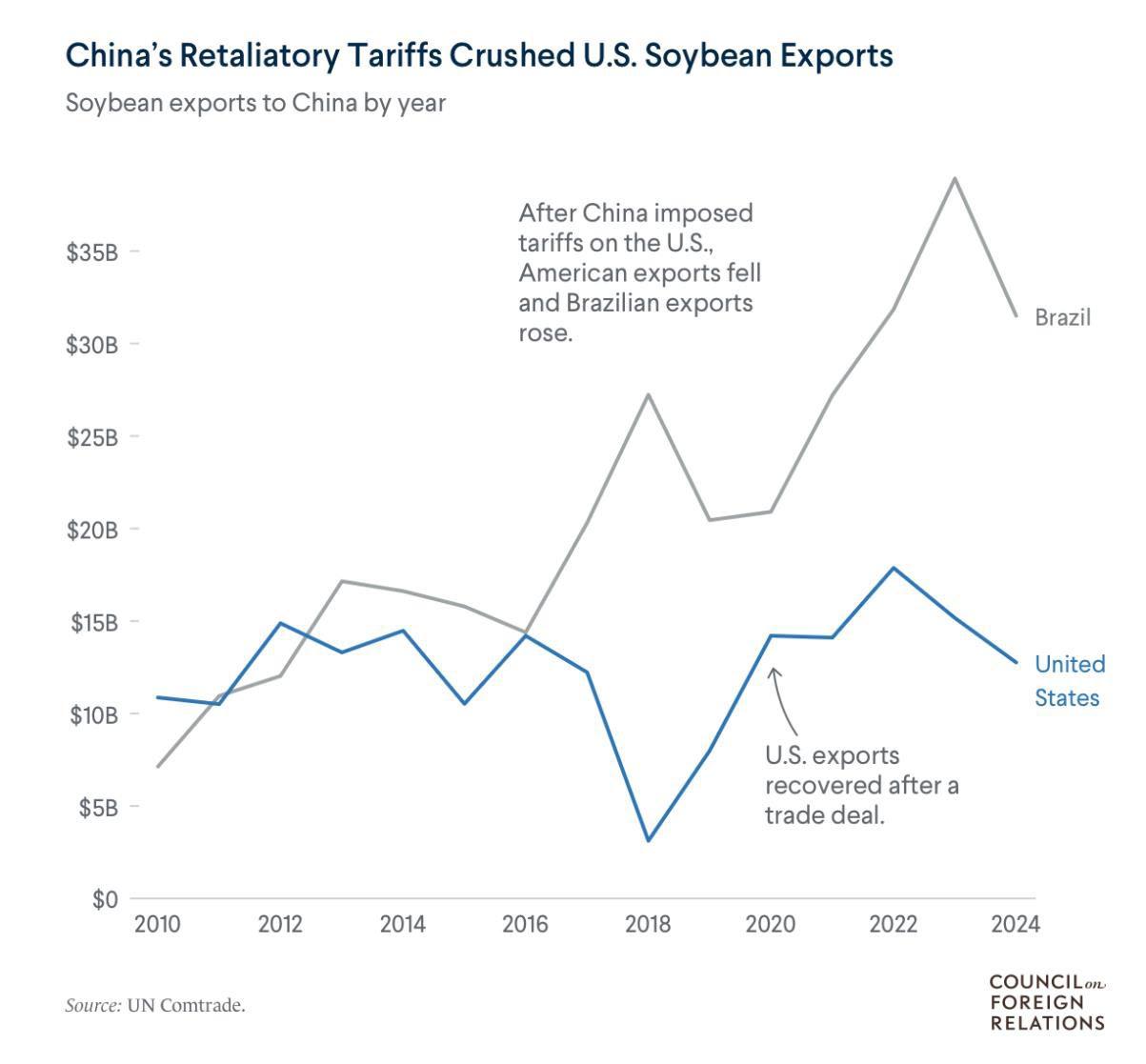
In an interconnected global economy, their effect stretch far beyond national borders, shaping growth employment and international relations. A prominent recent example of tariff policy can be seen in the United States, which in mid-2025, under Donald Trump’s leadership, expanded import duties targeting goods from China, Mexico, and the European Union. Tariffs reached 25% on steel and aluminium (7) and up to 25% on all foreign made vehicles (8), include higher ones for Chinese manufactured EV’s, aiming to protect U.S. manufacturing and counter China’s trade dominance. However, China retaliated with tariffs on U.S. soybeans and pork, hurting American farmers and raising food prices (9) . This has left many American farmers with net loss as they cannot find enough market demand whilst Brazilian farmers fill the gap and increase exports to China.
The tariffs also increased production costs for U.S. companies reliant on imported components, fuelling inflation and supply chain disruptions resulting in several companies such as Tesla, Mercedes-Benz, and Ford to sue the federal government for unlawful tariffs (10). While intended to boost domestic industry, these measures deepened global trade tensions and created widespread economic uncertainty.
While tariffs can shield domestic industries in the short term, they may often invite retaliation and uncertainty for the nation which placed. Countries affected by such measures often respond with their own trade barriers, leading to economic recession and market volatility. Ultimately, tariffs remain a double-edged sword that are capable of protecting economies, but equally capable of destabilising them.
In addition to other international trade policie such as tariffs and sanctions, trade agreements and regional blocs play a prominent role in shaping global economic relations. These trade blocs aim to facilitate cooperation by reducing tariffs, standardising regulations, and encouraging investment across member states. They push for trade liberalisation between nations. Unlike protectionist policies, they look to promote integration, increase market access, and increase economic stability through collective growth.
For developed nations, trade agreements can increase export opportunities and reinforce political alliances. The EU’s single market exemplifies this, enabling the free movement of goods, services, and labor (11) through the Schengen zone, which has enhanced regional prosperity and interdependence. Similarly, the
United States–Mexico–Canada Agreement (USMCA) modernised North American trade, promoting digital commerce and fair competition (12).
In contrast, for developing countries, trade agreements can attract investment and drive industrialisation. The African Continental Free Trade Area (AfCFTA) aims to connect 54 out 55 African economies (13), boosting African trade and reducing their dependency on Western markets. However, such agreements can also disadvantage smaller economies, which may struggle to compete or risk losing policy control to larger partners.
Ultimately, trade agreements and regional blocs highlight the cooperative dimensions of trade policy. When designed fairly, they promote shared prosperity but when dominated by powerful nations, they risk reinforcing inequality and deepening economic divides.
In conclusion, international trade polices including embargoes, sanctions, tariffs and trade blocs are powerful tools of diplomacy and political influence with large effects on all countries and the global economy. They can protect domestic industries, advance strategic aims, and pressure foreign governments, yet they often disrupt global supply chains, raise consumer costs, and provoke retaliatory measures. Effective trade policies require careful planning and international coordination to balance national interests with the wider global economy, ensuring that such measures promote sustainable growth, cooperation, and stability rather than conflict and economic disruption.
Mateo (Pupil)
International trade policies (ITP) shape how countries transfer goods and services between themselves. They are set by institutions and governments including Intergovernmental Organisations (IGOs) such as the World Trade Organisation (WTO) which aims to create a free trade market with no tariffs, quotas or restrictions and this helps global trade run making it run more smoothly. Another IGO is the IMF which channels loans from rich countries to nations that apply for help and to stabilise currencies, in return, the recipients must agree to run a free market economy. The IMF helps global trade by stabilising countries which allows them to focus on trading than reducing inflation or recessions. ITPs support domestic strategic interests such as economic growth, promoting domestic industries and job creation and play a role in foreign policy such as improving diplomatic relations, or even imposing sanctions on hostile nations. Transparency and clarity provided by agreeing ITPs brings security and stability. However, in 2025, geopolitical crises and leadership changes have created significant volatility.
tariffs, embargos and quotas on imported goods help national goods to remain cheaper in local markets. To reduce protectionism, governments try to liberate the market to make trade more open. The implications of tariffs are profoundly different for different countries
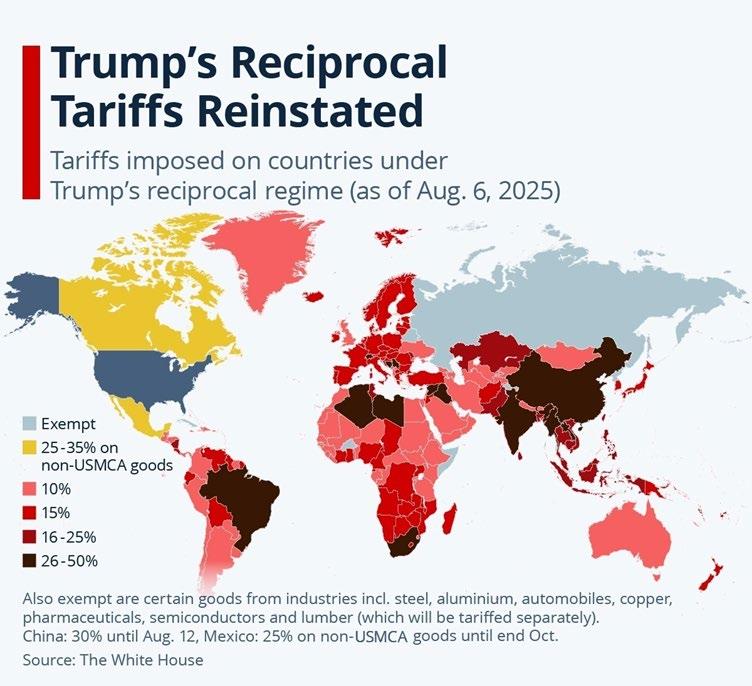
Trump’s tariffs are a prime example of one ITP lever creating turmoil and instability. Donald Trump is serving his second term as president of USA. He has been creating ripples in global trade by introducing tariffs on other countries’ goods to protect American producers. Tariffs make it more expensive to buy overseas products. Importing cheaper foreign goods and services can devalue domestic goods due to other companies or countries selling the same goods at lower prices. Protectionist policies in the form of
depending on their level of development. For example, in China, tariffs are an economic constraint; in the UK tariffs feel like financial setbacks; and in microstates, like the Federated States of Micronesia, tariffs intensify geopolitical control.
China is a Newly Emerging Economy (NEE) which has been growing exponentially over the last few years. It is a rising superpower accounting for 27.7% of global manufacturing output worth $4.66 trillion. Trump’s tariffs meant Chinese exports to the US fell by 35% from $44 billion in May 2024 to $28.8 billion in May
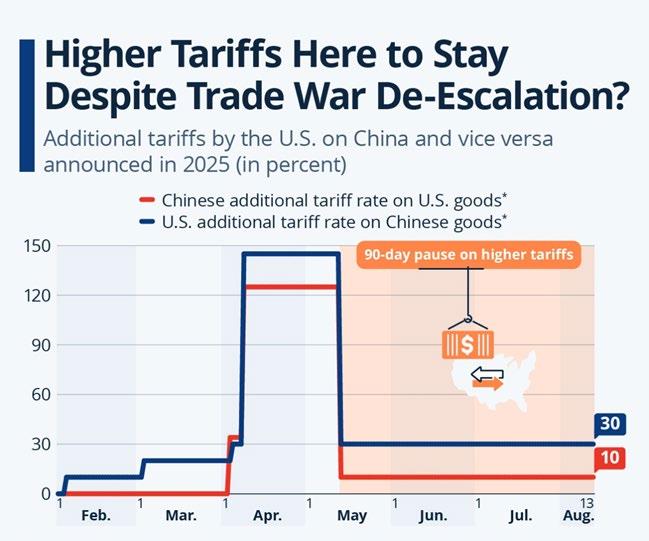
2025. The impact and unpredictability of Trump’s tariffs announcements and reciprocal tariffs from China on US products were creating a trade war. This was halted during the 90-day suspension of tariffs in June 2025 which has been extended to allow for more negotiation. In these circumstances, you would expect to see economic growth decline. However, according to the International Monetary Fund (IMF) increased its forecast for Chinese growth slightly to 4.6% for 2025, reflecting increased momentum caused by offset trading. Beijing offset the deficit in US trade by exporting more to Southeast Asia (+14.8%), Europe (+12%) and Africa (+33%). Ironically, for China, neoprotectionist trade policies with the US accelerated their global growth by forcing them to sell their output in other international markets.
The United Kingdom is one of the G7, a group of the seven richest countries in the world. One of the biggest financial centres in the world, the London Stock Exchange trades £4.5 trillion annually. In 2024, the US was the UK’s largest import and export partner for services and was the UK’s largest export partner and third-largest import partner for goods. Owing to the special relationship between the UK and US, and a long trading history, Trump has negotiated favourable tariffs with the UK enjoying a blanket rate of 10% on the majority of goods; services are exempt. However, despite favourable terms, the IMF has reduced the UK’s 2025 growth forecast from 1.6% to 1.1%, which is at least partly due to Trump’s tariffs. In April 2025, UK’s manufacturing export orders declined at the fastest rate in five years, attributed to reduced global
demand owing to tariffs and UK goods exports to the US fell by a record £2 billion (33% drop) marking the sharpest monthly decline since records began in 1997. At the same time, higher import costs have contributed to the continued rising cost of living resulting in the UK having the highest level of inflation among G7 nations in 2025. Additionally, the impact of Brexit requiring the UK to negotiate individual trading agreements with international markets means tariff changes have had a significant impact on the UK economy and global position.
The Federated States of Micronesia (FSM) are an archipelago of Pacific islands and coral atolls situated South of Thailand and Philippines and North of Australia. The FSM are directly affected by Trump’s tariffs. Although the monetary value of goods exported to the US is tiny on the global stage, trade data shows that between May 2024 and May 2025 the FSM exports to the US fell 71%. The FSM are also reliant on imports which have become more expensive owing to tariffs, thus raising local prices for poor populations. But the bigger consequence for the FSM is geopolitical, due to the neo-colonial dynamic between China and the US both trying to get military bases on the islands in the area. Another major source of economic income for the FSM is foreign aid. Trump has cut aid budgets significantly and without warning. So, while the tariffs have had a negative impact on this developing nation, they are not as significant as other foreign policy changes.
Using tariffs as an example, ITP in the contemporary world do not produce uniform outcomes for all countries, they tend to reinforce imbalances in economic power depending on a nation’s stage of development. Tariffs are only one lever and can be protectionist functioning as both economic and political weapons. The future of international trade is defined by geopolitics and economics however more scarily by reducing effects of global warming as tens of millions are threatened by sea levels rising. As such, IGOs and independent bodies have a vital role to play to lobby global powers to influence fairer outcomes for all nations regardless of economic power.
The Amazon contains 1/3 of the world's remaining tropical rainforests, a staggering 2.8 million mi2 in 9 countries (WWF). This paradise contains 10% of the world’s species along with the last uncontacted indigenous tribes (WWF). In contrast, Antarctica is frigid and barren, covering 5.5 million mi2, 98% of it covered by thick ice (AIU), only inhabited by a handful of the hardiest species on earth. Despite their differences, both are incredibly important to global climate regulation, both are threatened by anthropogenic global warming and both will require the efforts of billions of people around the world to conserve. This essay aims to identify which of these two spectacular landscapes is more significant for humanity and therefore which should be conserved.
It is imperative humanity conserve Antarctica as without it the global ocean pump would collapseleading to total disintegration of all marine ecosystems and dismantling of the world economy. Sea ice processes and strong winds create the AABW, the Antarctic bottom water, the coldest, saltiest and therefore densest water on earth. This sinks to a depth of 3 miles below surface level, causing warm water from the tropics to flow South to replace it (ASOC 2025) - shown as the North Atlantic Deep water in the Diagram below. This initiates the deep sea ocean
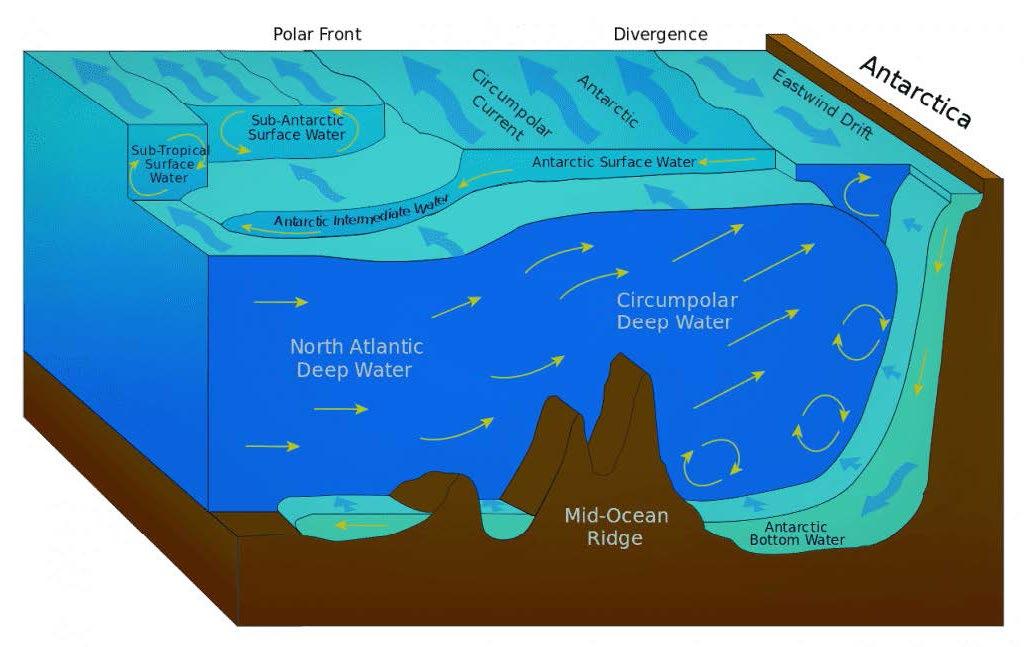
currents which drive the global pump - a cyclical process by which cold water flows to the tropics and warm water to Antarctica, allowing solar radiation (which is disproportionately absorbed at the Equator) to be evenly spread across the earth.
If Antarctica were to melt/disappear as the earth warms, so would the AABW causing a breakdown in
the global pump. Therefore, without global climate regulation, local temperatures would be more extreme making much of Earth uninhabitable.
Furthermore, extreme heat could lead to increased evaporation and droughts in vital trade arteries such as the Panama and Suez Canals. Already, droughts have reduced the capacity of the Panama Canal in 2023 leading to the capacity of the canal dropping by 50% - this is incredibly significant for the global economy as 5% of all world trade and $500 billion worth of merchandise crosses through the canal yearly (Atlantic Council 2024). Therefore, if the Antarctic is not preserved and the global pump does breakdown then Panama Canal administrator Ricaurte Morales’s estimates suggest that the Canal will only be functional for 3-4 months of the year (AC 2024). This will severely hinder trade and commerce and would also lead to economic disaster as shipping prices would skyrocket - as trade would have to travel all the way around Cape Horn. This adds an additional 8,800 nautical miles to the journey and up to 35 extra days travel time (Sinay 2024) . This could cause skyrocketing fuel and shipping prices which is devastating for our hyperglobalist modern world. Additionally the droughts do not just affect Panama - rivers such as the Mississippi and Yangtze
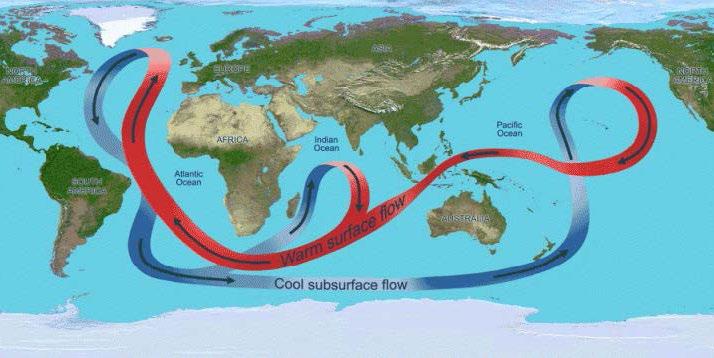
have both experienced droughts leading to inflated prices. Therefore, without Antarctica the Antarctic Circumpolar Current, the largest current in the world, would no longer exist - wreaking devastating havoc on not just rivers and canals, but vital ocean trade routes such as the Kurishio and Labrador currents.
Deep ocean currents and the global pump are also the backbone of all marine ecosystems. Without deep sea currents, downwelling cannot occur, meaning any oxygen within the oceans would be quickly used up in decomposition and not replenished. This means that anaerobic decomposition would soon occur leading to increased hydrogen-sulfide build-up in the oceans (a highly corrosive chemical that threatens all aquatic life). This would cause marine life in the deep sea to perish, creating a negative feedback loop as more anaerobic decomposition takes place. This acid could eventually spread to the continental shelves and shallower waters, leading to a marine mass extinction. One could argue this is highly speculative, however Paleontologists believe this is what caused the marine Permian mass extinction 250 million years ago, which killed 95% of oceanic life (NOAA 2013).
If this were to occur in the modern era, the effects would be cataclysmic. Over 3 billion people rely on the oceans for their livelihoods, mostly vulnerable people in developing countries (UN Press 2021) from directly relying on it as their main (or only) food source, to their jobs and traditional ways of life . Without the oceans and its plethora of natural wonders, humanity is destined for extinction. The very fate of the ocean is in the hands of the Global Pump powered by Antarctica, and thus our livelihoods are closely tied to this extraordinary continent as well.
However, our lives are just as inextricably linked to the Amazon rainforest. This huge jungle also works as a climate regulator, but instead of ocean currents it affects the water cycle. As the Amazon is located along the Equator, the air here is warmer, leading to an increase in evapotranspiration compared to other forests. The Amazon releases 20 billion tonnes of water into the atmosphere daily, (RFN 2024) travelling across the world and impacting numerous weather systems. Evapotranspiration also has a net cooling effect, without it many parts of South America could become too hot to be habitable. The effects of evapotranspiration in the Amazon are especially vital for South America - 50% of rainfall in the region is attributed to moisture supply from the Amazon (Nature 2024). Without the Amazon, precipitation will reduce inland - a particular worry for countries like Brazil where only 6% of farmland is irrigated and the rest relies on rain (Geographical 2024). Already, deforestation has caused wet and dry seasons in Brazil when rain used to be constant, if this is to continue widespread drought and desertification will occur across South America. This would be cataclysmic for food security globally as South America represents 60% of world soybean trade, 50% of corn supply and 25% of Bovine meat supply (Americas Quarterly 2024). Additionally, Latin America is the largest exporter
of food globally (AQ 2024), and in a world where 1/11 already faces food insecurity, (WHO 2024) the implications of some of the world’s most vital farmland becoming derelict is catastrophic.
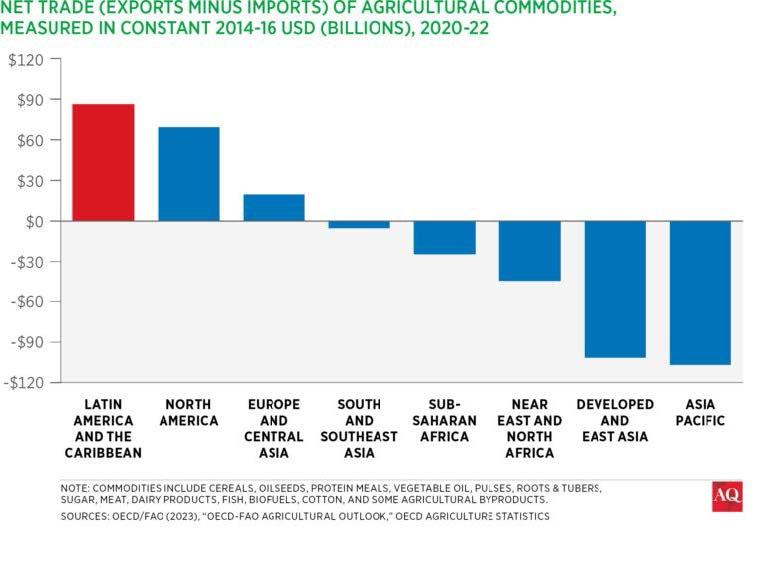
If we fail to conserve the Amazon, not only will South America face climate disasters, but the whole world will too. The Amazon stores an estimated 150-200 billion tonnes of carbon (WWF), and for thousands of years was a ‘carbon sink’. However, deforestation means there are fewer trees to undergo evapotranspiration, resulting in a drier climate (often exacerbated by the dry season) leading to forest fires. This further reduces the supply of trees leading to an even drier climate, creating a negative feedback loop. This culminated in a study from 2010-2018 in which fires in the Amazon released 1.5 billion tonnes of CO2 a year, while only 0.5 billion tonnes of CO2 was absorbed each year by the forest (Guardian 2021). As the Amazon becomes a carbon source rather than a sink, emissions from industries are no longer being sequestered, leading to an acceleration in the greenhouse effect and anthropogenic climate change. Needless to say this is cataclysmic, especially when considering sea level rise. Sea levels are predicted to rise 0.4-0.8m by 2100 (Royal Society 2020) due to thermal expansion and melting of ice caps, however many of these calculations don’t account for the fact that the Amazon has become a carbon source rather than sink, exponentially increasing the likelihood of much higher sea level rise. This is devastating for low lying regions, from the coastal plains of the eastern US to the heavily industrialised urban hubs of the Pearl River Delta in China, home to 67 million people and one of the most economically significant regions globally, known as the ‘factory of the world’. Sea level rise is especially pressing for island nations such as Kiribati and the Maldives, where the highest point is 5.1m above sea level (Telegraph 2013). Any change in sea levels here could result in entire islands being lost and complete cultural erosion. Therefore, it is
imperative we conserve the Amazon as it gives us valuable time to prepare, mitigate and adapt to the reality of climate change and sea level rise.
In conclusion, I believe that the Antarctic is more important than the Amazon due to the uniqueness of the landscape. The Amazon represents just 1/3rd of all tropical forests - if it was lost there could be ecological disaster in South America yes, but other forests such as the Congo and South-East Asian rainforests perform the same global function. In contrast the Antarctic is significantly colder than the Arctic, as it is raised off of the ocean and on land - which makes it much more significant than the Arctic in terms of ocean currents and therefore it is a unique landscape. I believe that while both are significant, the Antarctic is essential - though the question remains - how could we even conserve this landscape, and is it already too late?
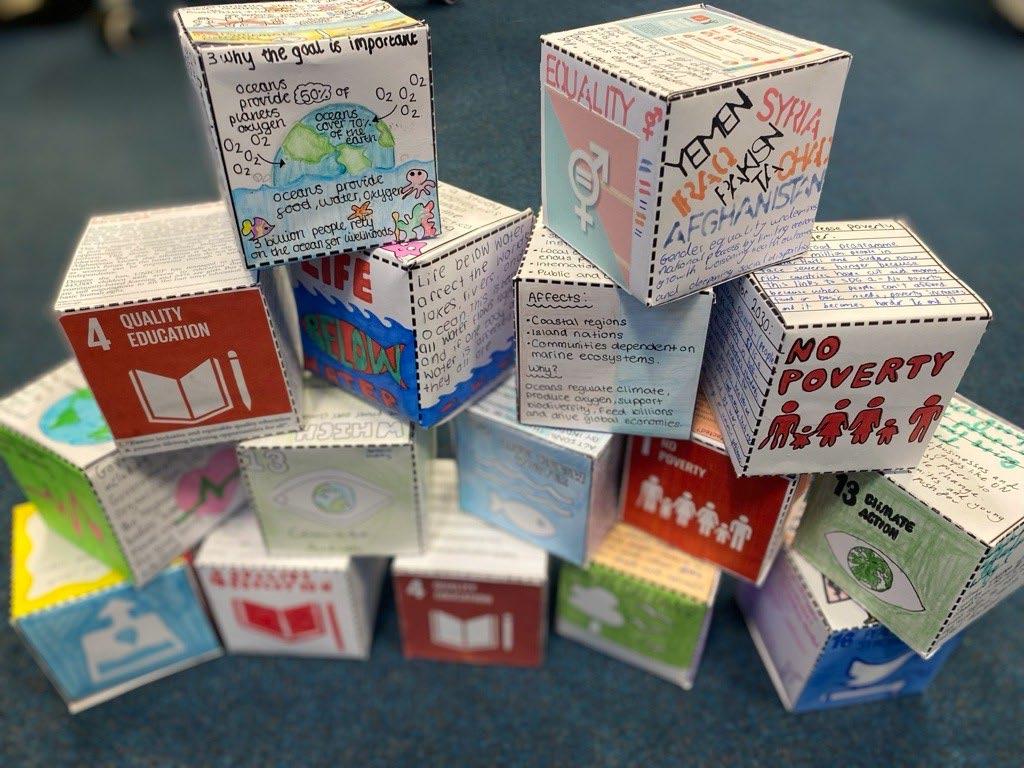
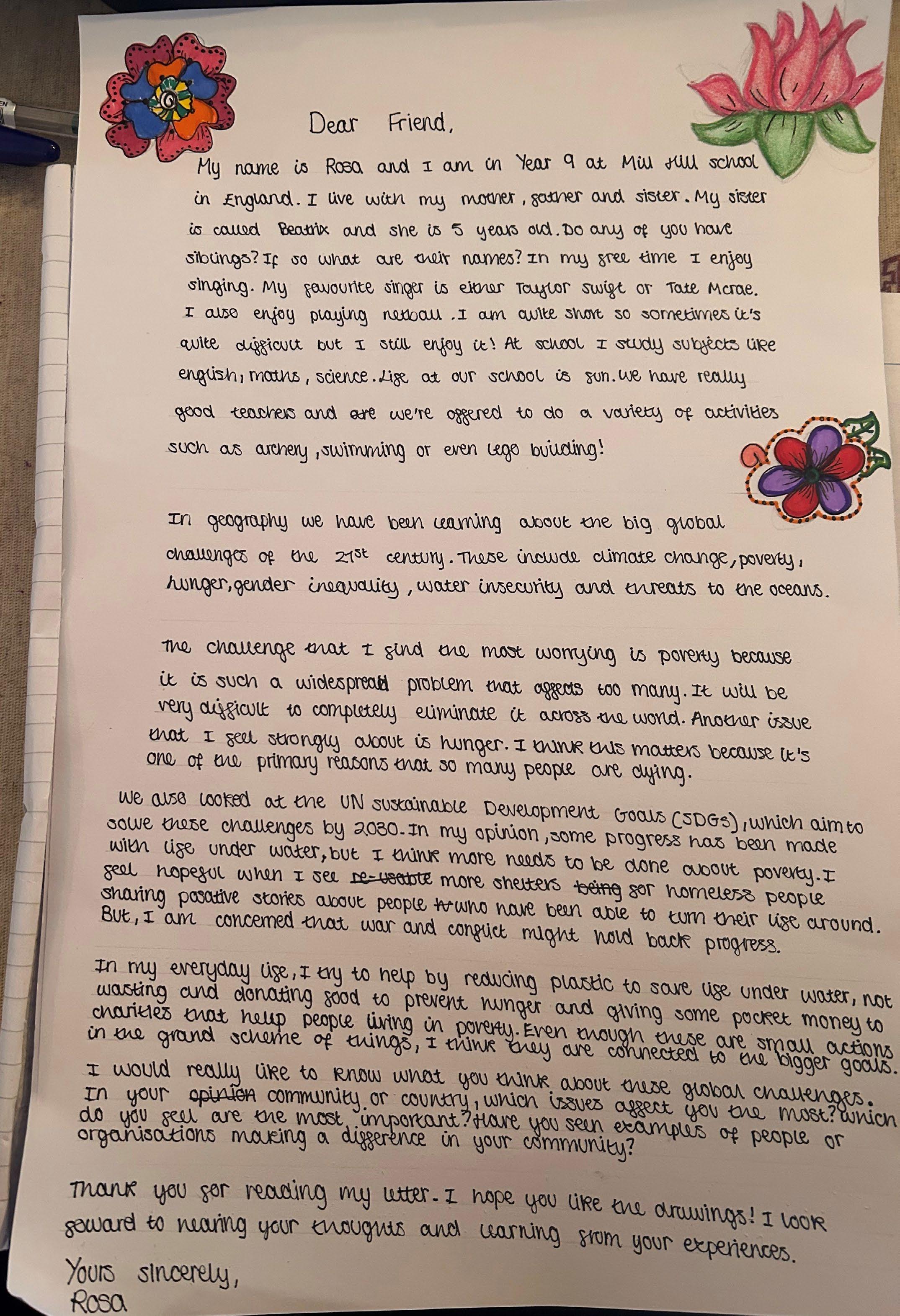
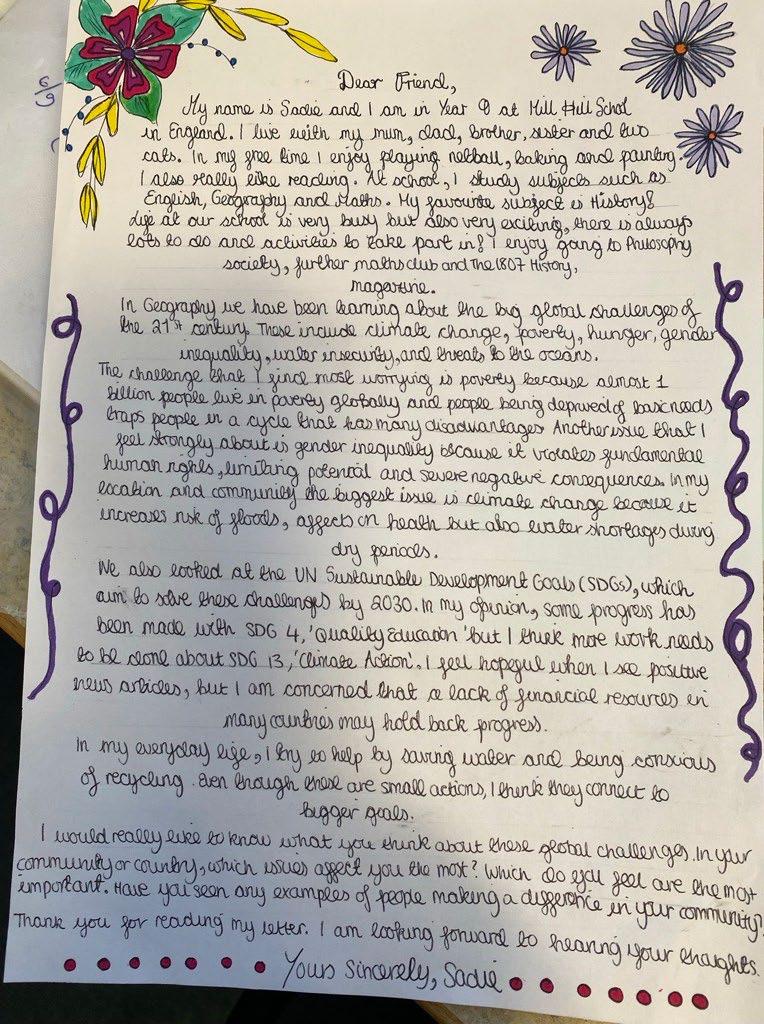
Julia S Head of German
Introduction Page 63
Vergnügenen von Bertolt Brecht Page 65
The German department at Mill Hill proudly maintains an exciting partnership with Maria Montessori Gesamtschule in Aachen. Through this partnership, pupils gain direct experience of school life in another country and deepen their understanding of a different culture, language, and education system.
We visited Aachen in December and were warmly welcomed by our partner school. We joined normal lessons alongside German pupils and experienced a full school day with their community, observing how lessons are taught and how the school operates. In June, pupils from Maria Montessori Gesamtschule visited us. They joined our lessons and routines for a comparable experience of English school life.
A key aspect of the exchange is the contrast between the two schools. These differences enrich the partnership, letting pupils compare teaching styles, environments, and routines for a broader perspective.
During the visits, we also organise bilingual lessons where English and German pupils learn together. In these lessons, both groups communicate in their languages, enhancing their language skills and learning from each other in a supportive, engaging way.
Overall, the partnership is a unique and memorable experience that helps pupils enhance language skills, build confidence, broaden cultural understanding, and establish international friendships.
Julia S (Pupil)

Dear teachers and students at Mill Hill Senior School, We had the pleasure of visiting your school and meeting many of you last week.
When we first arrived, we tried a full English breakfast and were astonished at the majestic dining hall. Whilst eating, we talked to Year 10 boys who told us all about their experience studying at Mill Hill High. Afterwards we interacted with Year 9 students, who were learning German, followed by a detailed tour throughout the school, with a lot of interesting facts and information.
Later, we split up into pairs and had the wonderful opportunity to experience and participate in lessons first hand, which ranged from history, to physics, to design and more. Before our scrumptious lunch in the dining hall, we were fortunate to have a one-on-one conversation with students from Year 12. Later on, we continued with an assigned student and got more insight into the lessons. Lasty, we took a fun quiz with students who were learning German and exchanged knowledge about our cultures.
All in all, it was a memorable experience and a joyous and educational day for everyone involved. We had a splendid time and are looking forward to seeing all of you next year.
Yours friendly, Year 12 students from MMGE Aachen
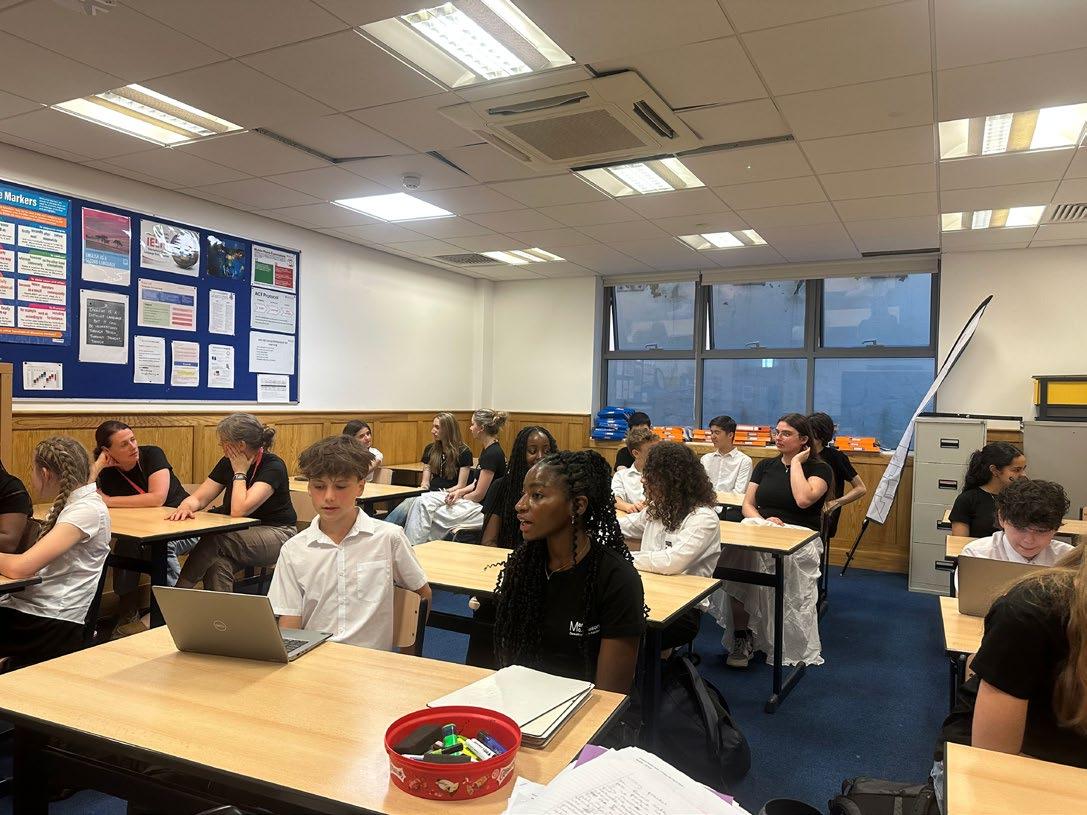
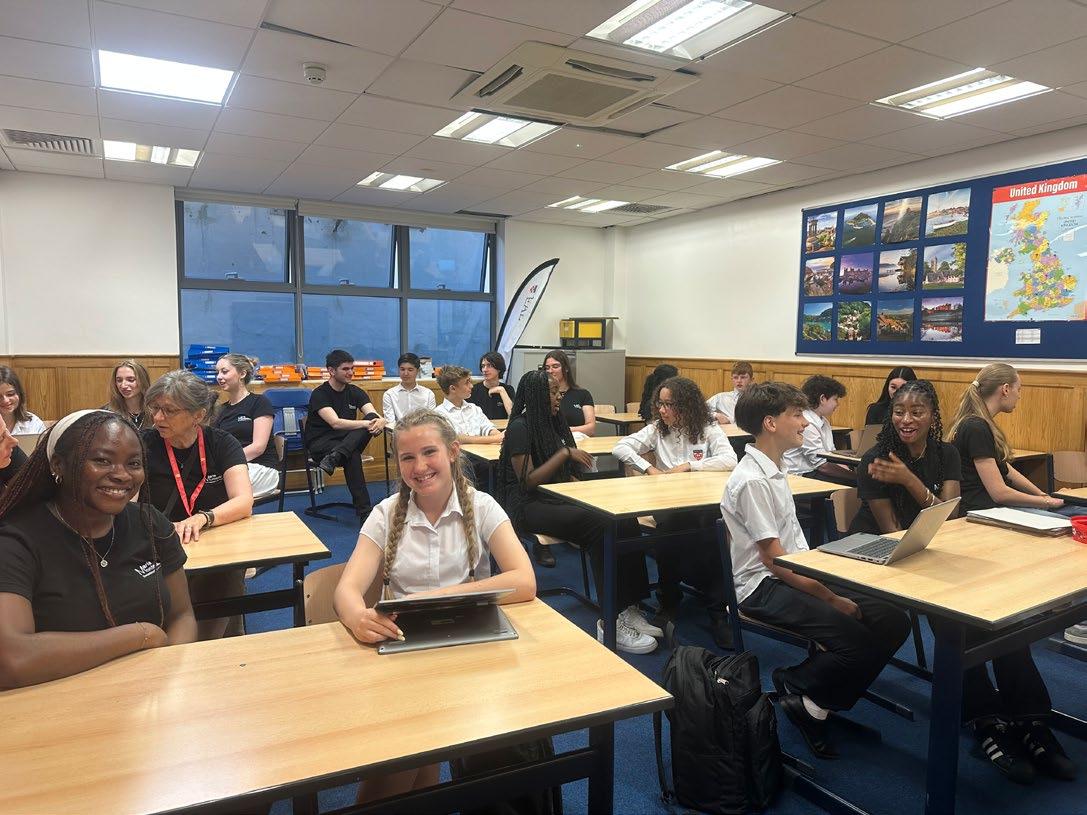
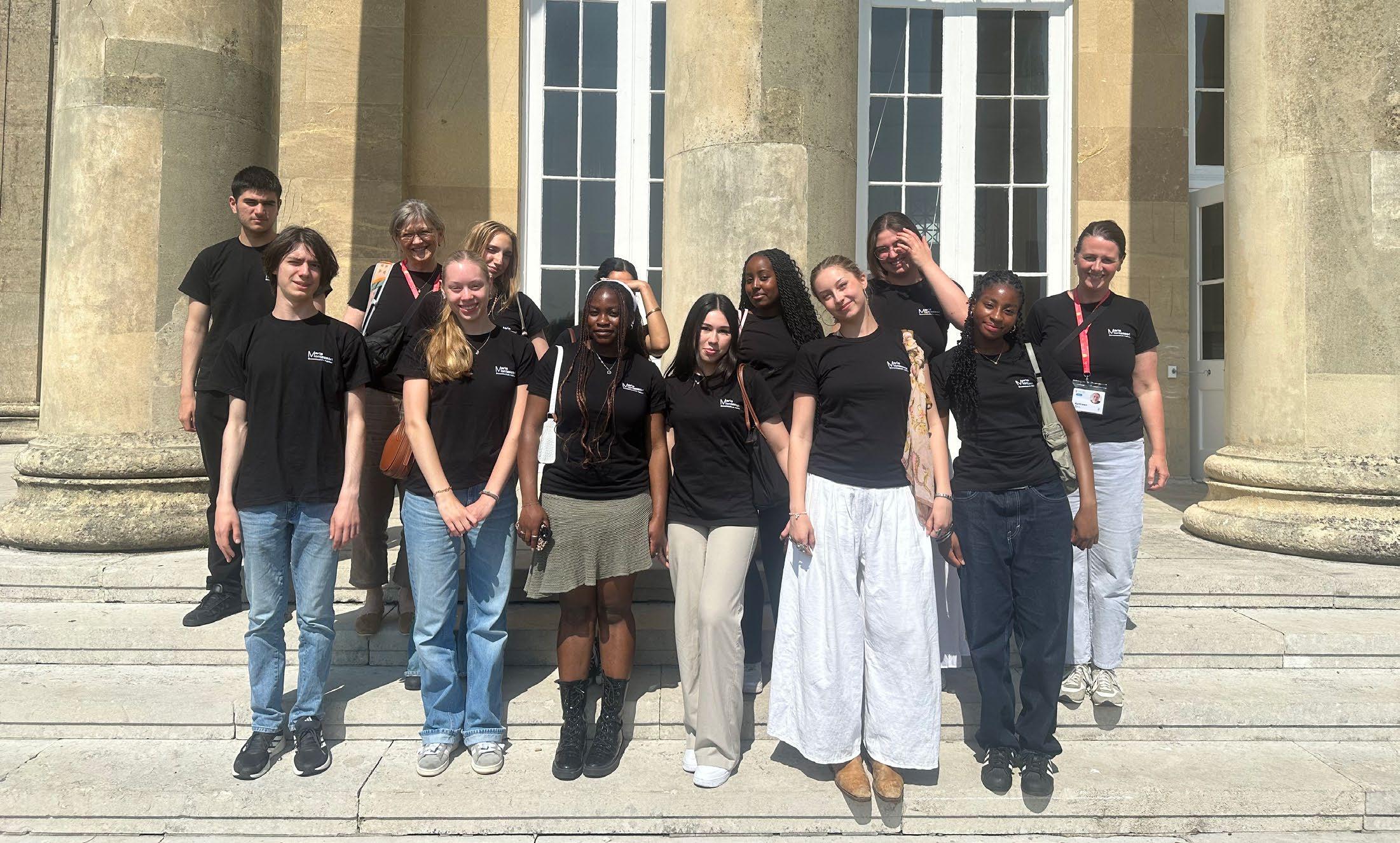
Der erste Blick aus dem Fenster am Morgen
Das wiedergefundene alte Buch
Begeisterte Gesichter
Schnee, der Wechsel der Jahreszeiten
Die Zeitung
Der Hund
Die Dialektik
Duschen, Schwimmen
Alte Musik
Bequeme Schuhe
Begreifen
Neue Musik
Schreiben, Pflanzen
Reisen
Singen
Last term, we read the above poem by Bertholt Brecht where he wrote about the little things in life which give him pleasure. The Fourth Formers all had a go at writing their own versions.
Cricket
Computer spielen
Ferien
Clash Royale
Deutsch
Fussball
X box
Schwimmen
Keine Hausaufgaben
Keine Schule
K Malhotra (Pupil)
Am Abend im sanften Licht im Bett lesen.
Der Geruch von frischem Kaffee
Mit Kindern spielen
Sommerferien
Laufen während ich Musik höre
Das Essen meiner Mutter
Fleißig sein
Japanisch mit meiner Familie sprechen
Lernen
Reden
Schreiben
Reisen
Allen sein
Freiheit
Frieden
N Morii (Pupil)
Die Sonne am Morgen
Ferien
Rugby
Meine Famillie
Mein Bruder
Die Schule
Keine Hausaufgaben
Deutsch lernen
T Barriball (Pupil)
Musik hören
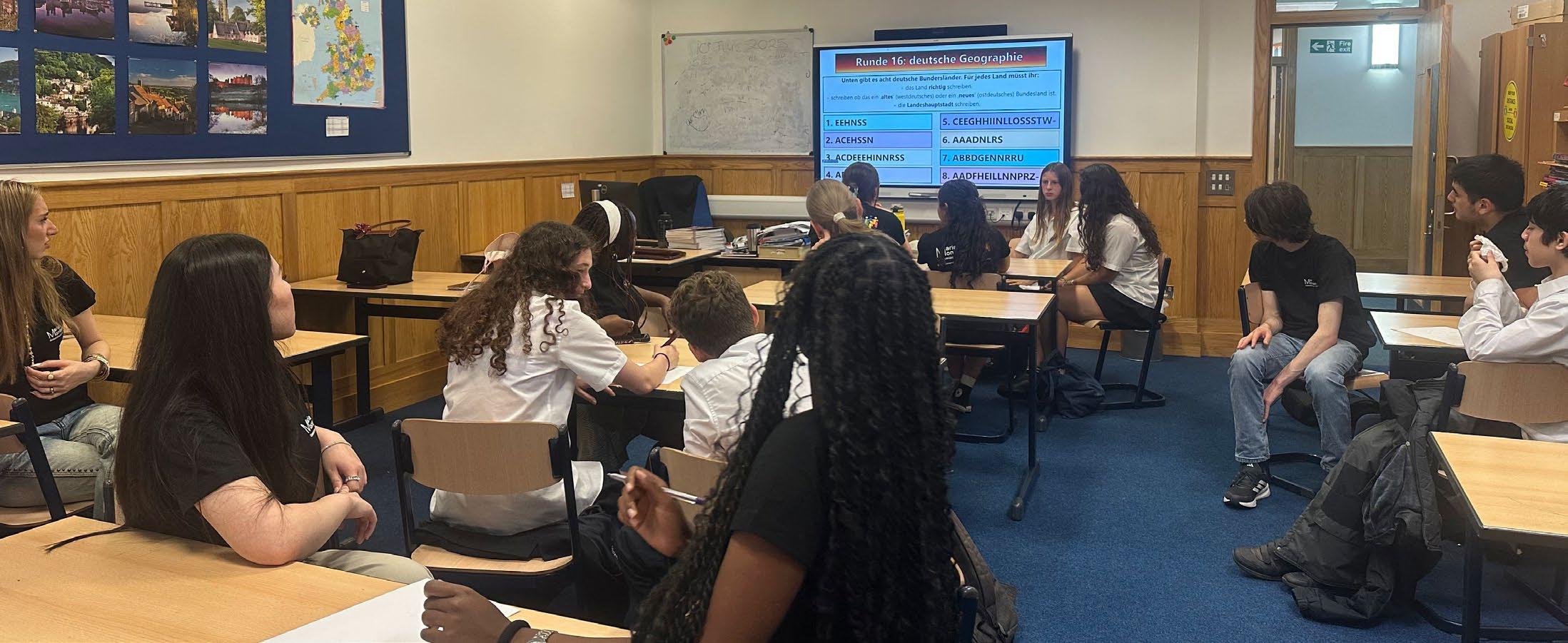
Mein Hund
Computerspiele
Fernsehen
Sport
Die Sonne
Deutsch
Im Internet surfen
Fussball
Werken
Mit meinen Freunden chatten
Ferien
Z Cartwright (Pupil)
Fernsehen
Schlafen
Meine Freundin
Regen
Sport
Lesen
Der Abend
Meine Grosseltern
Das Ende der Schule
Babys
Das Meer
Das Mondlicht
Der Sonneuntergang
Sprachen
Freizeit
D Keren (Pupil)
Ich mag…
Schwimmen
Das wiedergefundene alte Buch
Netball mit meiner Freundin spielen
Lesen
Die Kälte
Kunst
Musik hören
Die Sommerferien
Die Farbe weiss
Rosa Lätzchen
Das Wochenende
Alle meine Hausaufgaben zu erledigen
Ich liebe Geschichte
Meinen Vater und meine Mutter
S Saklow (Pupil)

Mark D Head of History
Silenced Suffering: Women’s Narratives of Partition Page 69
The Meistersinger and The Master Race: Wagner in Israel Page 72
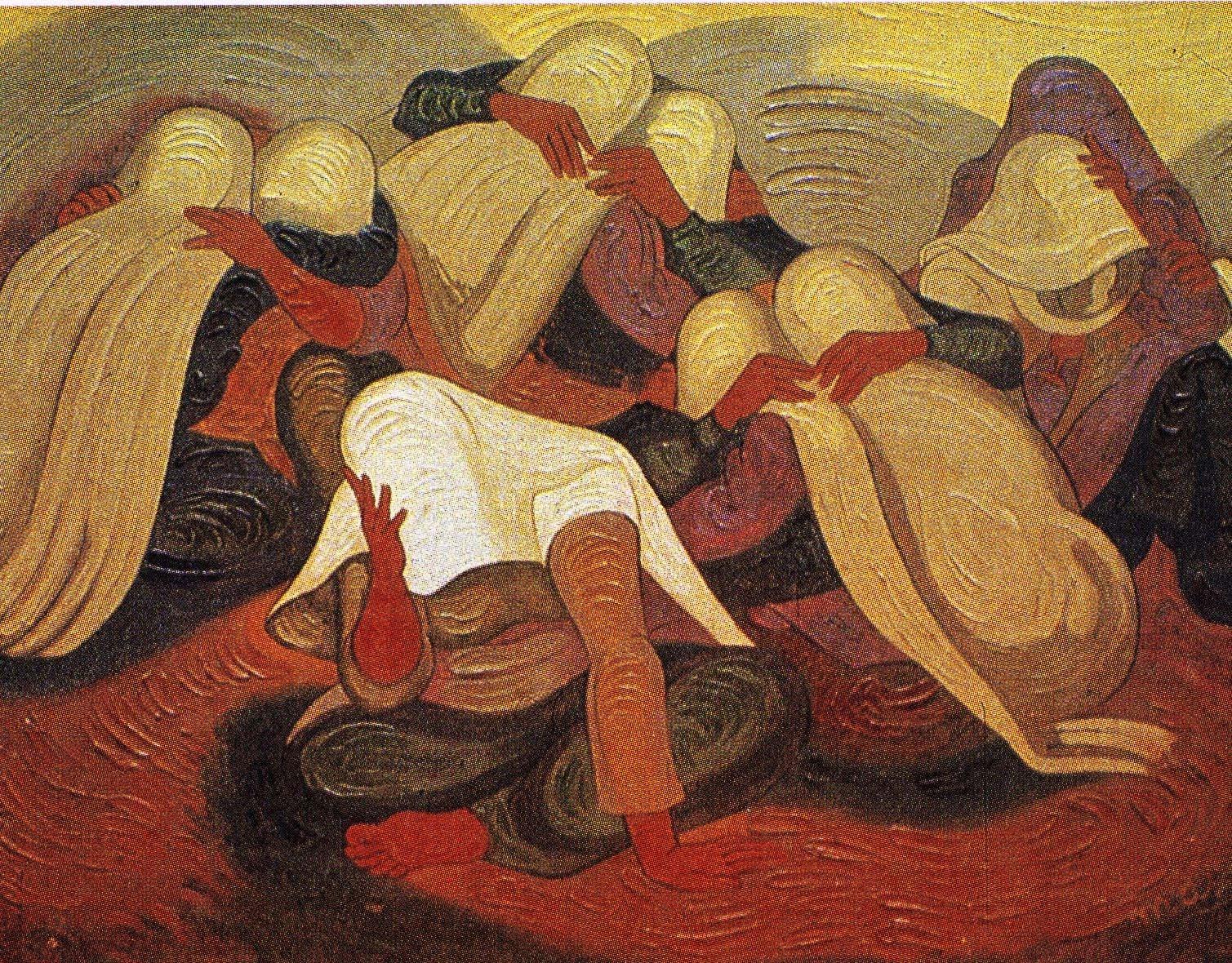
The 1947 partition of British India, which saw the birth of the two independent nations, India and Pakistan, was riddled with unmatched levels of trauma, dislocation and violent bloodshed. The topic most discussed when dissecting this tragedy is political and communal issues such as religion, leaving the gendered impact overlooked, more prevalent in the mothers and sisters of the two newly self-determined countries. In addition to the immediate effect of the horrors that occurred, the subsequent psychological impact on women is still prevalent to this day, highlighted by the recent 75th anniversary of the event where alarmingly few British Asians were aware of the true impact of Partition. A large proportion of the violence which ensued during partition saw women targeted. An estimated 75,000 to 100,000 women were kidnapped, raped or forced to convert religion. This purposeful tactic
of abusing “othered women” - women of the “other” community - was an attempt to degrade and discourage entire tribes, damaging morale significantly and leaving women constantly fearing the worst. Tragically, families often internalised this patriarchal reasoning and resorted to killing their wives, daughters and sisters in “honour killings” to avoid them from being captured or defiled.
Those who were immediately affected by the trauma of Partition were not the only ones who suffered the consequences. Female survivors’ psychological wounds frequently had a significant impact on their new “liberated” life. Furthermore, children of those emotionally scarred were dramatically influenced. Partition often left families living in the shadow of unsaid grief, humiliation or terror. These effects over generations can be seen in numerous ways. Because
of the severe psychological impact on mothers and grandmothers—who were often overprotective or emotionally absent owing to their personal trauma— parenting practices and family dynamics underwent a significant transformation. Witnessing tremendous violence or displacement caused many survivors to develop a strong dread of instability and loss. This led to either excessive attention to detail when caring for children or, at the other extreme, the use of emotional dissociation as a tactic. Future generations were placed in uneasy or insecure situations as a result of these acts, which also affected family dynamics. Children of Partition survivors often grow up hearing mythologised tales about the Partition or bits of the reality. Parents and grandparents regularly shied away from talking about their experiences, which created a gap in knowledge that was filled by silence or generalised accounts of loss and victimisation. The lack of narration resulted in “phantom trauma” which is an unexplained sense of loss and alienation. Younger
unease. In families where the Partition was marked by severe violence or displacement, this pattern is more noticeable.
The emerging field of epigenetics provides a scientific basis for understanding how the trauma of Partition may have been biologically transmitted to later generations. The study of epigenetics examines how environmental factors impact gene expression rather than modifications to the genetic code itself. Trauma, especially severe and prolonged trauma, can chemically label genes that regulate stress responses. These epigenetic changes may then be passed down to offspring, potentially affecting their development both mentally and physically. Research on trauma survivors, including Holocaust survivors and their descendants, has shown that trauma can alter the regulation of cortisol, a hormone crucial for stress management. We refer to this as dysregulation. In a same vein, women who were subjected to severe
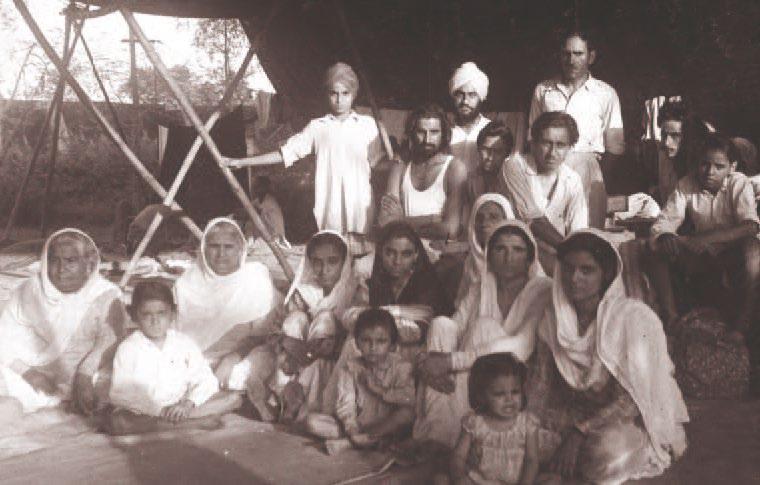
generations occasionally struggled with identity and belonging due to the apparent lack of closure and explanation.
Unresolved sorrow and trauma can raise the likelihood of mental health disorders in future generations, validated by evidence obtained in trauma psychology. Children and grandchildren of survivors display increased anxiety, despair, or existential
violence or forced to relocate during Partition most likely endured continuous stress that disrupted their hormonal balance. These disruptions might have been passed on to their children, increasing their vulnerability to stress and anxiety. Additionally, epigenetic changes might affect behavioral preferences. For example, descendants of trauma survivors may exhibit hypervigilance, heightened fear responses, or difficulties forming lasting relationships.
These characteristics may become maladaptive behaviors in succeeding generations that live in more stable environments, even though they were useful for survival during Partition.
Epigenetics does also offer some hope for the future. Although trauma can leave biological scars these consequences can be reversed or lessened by treatments such as counseling, improving relations and connections with others in the community. The significance of establishing supportive environments for survivors and their children should not be undermined and is highlighted by an understanding of the epigenetic legacy of Partition.
In the years following partition, many women did show strength, enduring through all the immense pain they had suffered in a form of defiance against it. Women were often the central component of family survival in resettlement towns and refugee camps. They conjured strategies to restore livelihoods, set up networks to exchange resources and even offered emotional support to those who needed it. In addition to this brave showing of resilience, many saw this process of adaptation and recovery as a way of securing stability and security for many to come.
Although Partition was rife with suffering and pain, women were also essential in maintaining the rich culture and sense of family visible to this day. From transmitting survival skills through religious rites to oral traditions and practices, women have provided stories of optimism and continuity.
In addition to being a geopolitical disaster, the 1947 Indian Partition was a profoundly emotional and generational tragedy, particularly for women. The cruelty, dislocation, and tenacity they faced permanently altered their lives and the lives of their descendants. The psychological and epigenetic repercussions of Partition demonstrate the lingering impact of past trauma on families and communities. We can go towards a more sympathetic interpretation of this historic event by emphasising women’s viewpoints and addressing the generational impacts of Partition. In order to respect the past and create a more inclusive and hopeful future, this journey calls for a dedication to hearing, recording, and healing.
Bilal (Pupil)
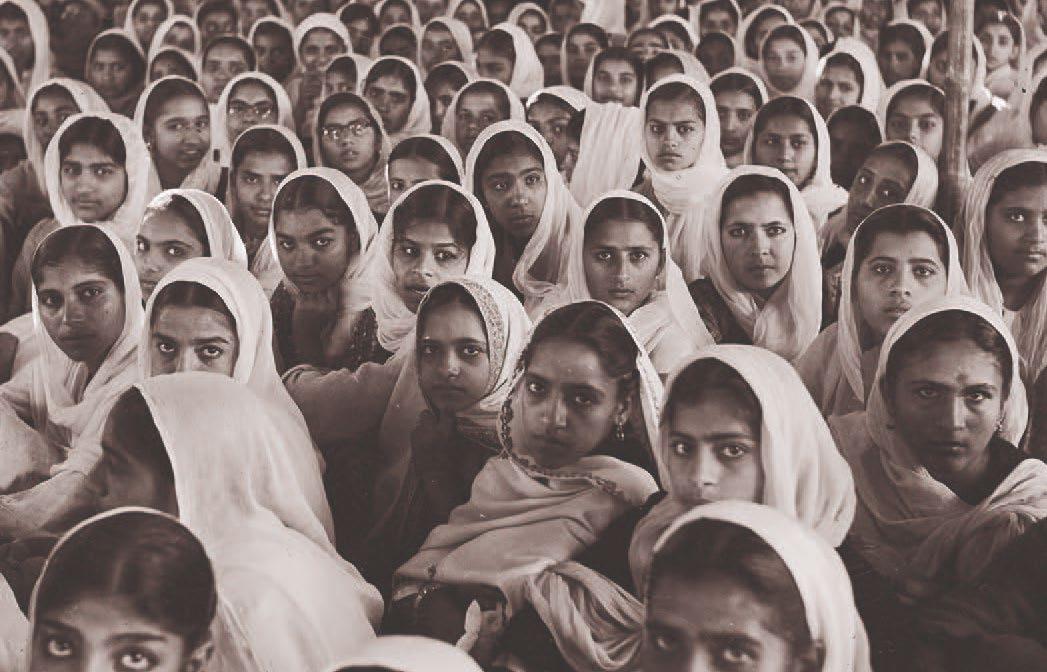
In the 1993 film, Manhattan Murder Mystery, Woody Allen comments: “I can’t listen to too much Wagner, ya know? I start to get the urge to conquer Poland.”
Richard Wagner’s operas have become some of the most deeply loved works in the operatic canon. His personal opera house, Bayreuth, has become a quasi-sacred place of pilgrimage for Wagnerians. However, his well-documented, vitriolic anti-semitic views present a number of issues regarding the performance of his music, specifically in Israel. It was not only Wagner’s own views which present a challenge to those performing his music, but also the way in which Wagner’s music and views were appropriated by Hitler and the Nazis, before and during World War II and the Holocaust. Both of these issues raise a number of moral questions - is it wrong to have Wagner performed in Israel? And if so, why?
There is no doubt that Wagner was a rabid anti-semite. In 1850, he wrote a venomous treatise called “Jewishness in Music” which sought to explain “the involuntary repellence possessed for us by the nature
and personality of the Jews.” He described Hitler’s Untermenschen (which translates as ‘sub-human’) as having an “alien” appearance, in addition to them having “no connection to the genuine spirit of the German people”. He stated that “only one thing can redeem you [the Jews] from the burden of your curse: the redemption of Ahasuerus — going under!”.
This is evident in Wagner’s operas, in Das Rheingold, the dwarf Alberich is portrayed as power-hungry and crude, often being depicted with a hookednose, a common stereotype of the Jew. In 1898, the Jewish-born composer Gustav Mahler commented about Mime, a character from Wagner’s The Ring cycle: “I am convinced that this figure is the embodied persiflage of a Jew, as intended by Wagner with all the traits which he gave him; his petty cleverness, greed...” The character Beckmesser from Die Meistersinger von Nürnberg has been widely described as an antisemitic stereotype. Barrie Kosky, the first Jew to direct a production at Bayreuth in 2017, presented Beckmesser as a true caricature of the Jew, complete with an evil grin and a hooked nose.
The hot air balloon head of Beckmesser deflates on stage, leaving nothing but a Star of David skullcap, forcing audiences to confront Wagner’s anti-semitism so present in his works. Even when directed by a Jew, Wagner’s anti-semitism is constantly apparent.
in looking back at their shared experience of hearing Wagner’s Rienzi when they were young: “At that moment, it all began.” Perhaps most troubling of all, Hitler commented in a speech in 1923: “The reason we perceive the artist Richard Wagner as being great is

Towards the end of his life, Wagner invited the great Jewish conductor, Hermann Levi, to conduct the premiere of his final opera, Parsifal. However, not only are there myriad themes of anti-semitism in Parsifal, such as the evil magician Klingsor possessing a number of stereotypical Jewish characteristics and Kundry explicitly representing the archetypal wandering Jew, cursed to roam the world eternally for mocking Christ on the cross, Wagner initially made his invitation conditional on Levi being baptised. Whilst eventually Wagner did allow Levi to conduct, showing that, despite his anti-semitism, Wagner remained, at heart, a narcissistic chameleon, who did and said whatever was right for him and for the success of his music, Wagner’s writings are so overtly anti-semitic that there can be no doubt about his malice towards the Jews throughout his whole life.
Wagner played a prominent role in Hitler’s life and Nazi pageantry. Hitler’s obsession with Wagner began long before he became Chancellor. Although his post facto comments can often be taken with a pinch of salt, he reported that when fighting in WWI, he carried pages from the score of Tristan und Isolde in his knapsack and he said to a childhood friend,
because he represented heroic folklore, Germanness, in all his works. The Heroic is the Great. That is what our people long for.” As the Hitler biographer, Ian Kershaw, wrote: “Hitler, the nonentity, the mediocrity, the failure, wanted to live like a Wagnerian hero. He wanted to become himself like a new Wagner - the philosopher-king, the genius, the supreme artist.”
During WWII, Wagner was utilised by the Nazi There are some powerful images which endure to cement the relationship between Wagner and the Nazis in the public imagination. One such image is that of Wilhelm Furtwängler, considered to be one of the greatest Wagnerian conductors, conducting the prelude to Die Meistersinger von Nürnberg at the height of WWII, surrounded by an audience of blond youths, other Germans and Wehrmacht officers, and a large Swastika banner above him. Although there are only a few reports of this, some survivors of the death camps have reported Wagner being played as inmates were herded to the gas chambers. Some may argue due to the fact Wagner was not himself a member of the Nazi Party, he should not be criticised for the use of his music by Hitler. However, he most likely would have been a member, had he not died 37 years before the party’s creation,
and Wagner’s family and associates were extremely close to Hitler himself. His daughter in law, Winifred, even provided the paper for Hitler on which he is likely to have written Mein Kampf whilst in prison. As early as 1924, performances of Die Meistersinger von Nürnberg at Bayreuth were followed by audience renditions of Deutschland über alles. Hitler was warmly welcomed at Haus Wahnfried - the Wagner family home in Bayreuth and he was called Uncle Wolf by Wagner’s grandchildren. Winifred was director of the Bayreuth Festival during the Third Reich and remained a Nazi loyalist until her death in 1980.
Although it is difficult to ascertain from Wagner a consistent and coherent political philosophy, and George Bernard Shaw even regarded The Ring as a socialist work, there are unavoidable parallels between Wagner’s libretti and Hitler’s idea of the Tausendjähriges Reich (“Thousand Year Reich”). These can be seen at the beginning of Wagner’s Lohengrin, written eighty-five years before Hitler’s rise to power in Germany, during which King Heinrich states “Now it is time to defend the Empire’s honour; East and West, to all I say: let every acre of German soil put forth troops of soldiers, never again shall anyone abuse the German Empire!” In Die Meistersinger von Nürnberg, Wagner wrote:
“Beware! Evil threatens us: If the German land and folk should one day decay
Under a false foreign rule
Soon no prince will understand his people any more; and foreign
Mists with foreign conceits
They will plant in our German land; What is German and pure no one will know if it does not live in our esteem for our German masters.
Therefore I say to you:
Honor your German masters!
Then you will have protection of the good spirits; and if you
Remain true to their endeavours, Even if mists should dissolve
The Holy Roman Empire, There would still endure
Our holy German art!“
Hitler’s use of Wagner’s nationalism - found both in his libretti and the music itself - does, at first sight, present a challenge when being performed in the State of Israel, created and populated by the very people that Hitler vowed to destroy.
However, the connection between Wagner and Hitler is actually much more nuanced than is sometimes claimed and than the imagination of some sections of the public entertains. Hitler’s seemed to have a few “favourite composers”, including Bruckner and the operetta composer, Franz Léhar. The source for Hiter’s comment about Rienzi was a celebrity memoir entitled “The Young Hitler I Knew”. Hitler never referred to Wagner’s writings about the Jews or referred to Wagner as being an inspiration for his own anti- semitism. It is true that Wagner’s music was
played at Dachau to political prisoners as part of their “re-education”, but the vast majority of eye witnesses make no mention of hearing Wagner at Auschwitz and they recall rather that light music, such as Strauss waltzes and operetta arias, were the main staple of camp concerts and music played from loudspeakers. The opera most performed in Germany under the Nazis was Puccini’s Tosca, rather than anything by Wagner.
He shouted at Yair Stern, the CEO of the Orchestra: “You defile the memory of your father, who was murdered so I could speak here today.” Whilst Wagner has been played occasionally in Israel, after the protests the last time it was heard in 2001, it has not been played publicly, and there has never been a Wagner opera staged in Israel. This raises some important questions:
After the formation of modern-day Israel in 1948, many of the survivors of Hitler’s Holocaust who took refuge there, refused to use products of German origin - not only those of an industrial nature, but also cultural products. This included an unofficial “ban” on Wagner being publicly performed in Israel. In 1981, Zubin Mehta was conducting an Israel Philharmonic concert and, after giving audience members an opportunity to leave the auditorium, he conducted “Liebestod” from Tristan and Isolde as an encore. In response, a Holocaust survivor walked in front of the podium, revealed his scarred stomach and shouted “Play Wagner over my body.” In 2014, the Jerusalem Symphony Orchestra marked the anniversary of Wagner’s birth with a compromiseto present a conference on his music, his cultural influence and his anti-semitism, with a view to asking if the “ban” made sense. They advertised: “All the difficult questions but none of the notes.” According to a contemporary newspaper report, as the opening speech was given, a young man climbed on the stage and shouted: “Dachau, Auschwitz, Kapos” and threatened to fight anyone who tried to remove him.
Is this ongoing anti-Wagner fervour justified and what are the reasons for it?
There are many accounts of other composers, predominantly from the romantic period, holding anti-semitic beliefs. These beliefs were commonplace and even fashionable in the 19th Century. Tchaikovsky, for example, is known to have referred to Jews at a train station as a “mass of dirty yids”, yet Tchaikovsky’s music is often played by the Israel Philharmonic Orchestra and conducted by Jews across the diaspora without anyone batting an eyelid.
Does this show hypocrisy from those who decide whether Wagner is to be played in Israel?
Actually, the strength of feeling against Wagner in Israel, does not in large part relate to Wagner’s own revolting views. We know this because there was no taboo on Wagner being publicly played in Israel until 1938 after Kristallnacht. Widespread recognition of Wagner’s anti-semitism did not prevent his music from being performed by Jews even after Hitler came
to power. In Tel Aviv in 1936, for example, the precursor to today’s Israel Philharmonic performed the Preludes to Act 1 and Act 3 of Lohengrin under Arturo Toscanini and there was no public outcry. Ruth Jordan, who describes the concert she attended in her memoirs, recalls: “At the end of the evening we went berserk, for once forgetting about buses and clapping madly, cheering, bringing Toscanini back five times.” Although Jordan comments that the Wagner debate had raged prior to Toscanini’s visit, she recalls that after his interpretation it was tacitly agreed that Wagner had some good in him and could be performed by Jews for Jews. In June 1938, Jascha Horenstein conducted Wagner’s Tannhäuser overture and in July 1938, Bronislaw Schlutz conducted the Fliegende Holländer overture. It was only in November 1938, when the Nazis committed the Kristallnacht atrocities, that Wagner was taken off the repertoire of the Israel Philharmonic’s, in response to hundreds of requests.
Ironically, and in further support of the fact that it was not Wagner himself or his works which has caused such strength of feeling against the performance of his music in Israel, Theodor Herzl, the founder of Zionism was a great admirer of Wagner’s work and even took inspiration from the composer’s Overture to Tannhäuser when advancing his project of a Jewish State and while planning the Second Zionist Conference. Herzl was well aware of the composer’s bigotry and hatred, yet, as an assimilated Jew in Germany, he fully embraced German culture, leading him to attend every performance of Wagner at the Paris Opera whilst writing The Jewish State. Herzl looked beyond the composer’s beliefs and instead dived deeper into the significance of his works. Most significantly, Tannhäuser - which inspired visions of liberation for Herzl, clearly mattering far more to him than Wagner’s beliefs regarding the very people that Herzl was trying to help. Does this mean that Wagner had an impact regarding the formation of modern-day Israel? That is too much of a stretch, but there is no denying that the themes of heroism and liberation so present in Wagner’s works contributed
to Herzl’s ideas of Zionism. Whilst this may sound as if Wagner’s works should be heralded throughout Israel, Herzl’s writings partly inspired by Wagner preceded the Holocaust by almost fifty years. If Herzl had lived beyond 1904 to see Hitler’s use of Wagner’s music as a weapon against the Jewish people, perhaps he too would have objected to Wagner being played in Israel.
So it would seem that the anti-Wagner sentiment in Israel stems more from the nexus between Wagner and the Nazis, than from anything Wagner wrote during his lifetime. Certainly the protester who interrupted the Wagner conference in Israel in 2014 and the Holocaust survivor who protested the Zubin Mehta encore cited the Holocaust as the reason for their objections.
But does this make sense? Is it justified?
In Israel now, the ban on German products has all but ceased. Significantly, there is no issue, and never has been any issue, with other composers connected to the Nazis being played in Israel. The waltzes and operettas which eye witnesses report being played at the death camps are still played in Israel. Liszt’s Les Preludes was played on German radio every time a Nazi victory was announced, yet there is no ban on Liszt. Bruckner and Léhar - two of Hitler’s favourite composers - are played in Israel. Carl Orff, whose Carmina Burana is played frequently by the Israel Philharmonic, had to be “denazified” by the United States in 1946 as remained actively working in Germany throughout the Nazi regime. At the request of the regime, he even wrote music for A Midsummer Night’s Dream, to substitute for the well-known Mendelssohn score, which the Nazis had outlawed because of that composer’s Jewish origins. There is nothing in the libretto of Die Meistersinger von Nürnberg which is anywhere near as obviously critical of the Jews as the opening of Strauss’ opera, Salome, or parts of Bach’s St John’s Passion.

essentially giving Hitler the last word. There is, it is true, something strangely heroic (and ironic) about performing Wagner in the Jewish State. Those in the audience, including survivors of Hitler’s Final Solution, could be said to enjoy an element of pride, knowing that the forces of evil have been destroyed and their legacy will continue to live on long after that of Wagner, Hitler and his Nazis. The conductor, Asher Fisch, who opposes the “ban” describes how important it would be for his mother, herself forced to flee Vienna in 1939, to hear him conduct Wagner in Israel as it would amount to the final victory over Hitler.
In 2018, after the Israeli Public Broadcasting Corporation apologised for playing Wagner, saying that it recognised the pain such a broadcast would cause among Holocaust survivors, the head of the Israel Wagner Society responded: “There are just as many Holocaust survivors who love the music as there are those who object to it. You have to listen to his music and his music is absolutely beautiful.” Barenboim’s view is that the “ban” is part of a political agenda. In 2001, his decision to offer a piece of Wagner as an encore led to widespread condemnation – particularly regrettable, he says, because the audience had been asked beforehand, during a measured 40-minute discussion, if they would like to hear it. Those who did not were invited to leave and they were less than five per cent of the audience. He stresses his respect for “anybody’s right to choose not to listen to Wagner.” But, he says, “in a democratic society there should be no place for such taboos.” Whether this issue has become part of Barenboim’s own political agenda is arguable.
Barenboim and others who oppose the “ban” fail to take into account how deeply held and visceral the feelings of some Holocaust survivors and their descendants in Israel are regarding this matter. This does not necessarily need to be a feeling which can be rationalised or justified. With good reason or not, Wagner has become, in the imaginations of some Holocaust survivors and their families, a cultural symbol of the horrors they suffered. In the contemporary play “You Will Not Play Wagner”, Holocaust survivor Esther Greenbaum has argued that whilst Wagner should be played in time in Israel, it is too soon whilst the Holocaust reverberates for any survivor in the country. It could be asked why it should be the responsibility of survivors to have to avoid Wagner’s music in the place designed as a safe haven for them? If a connection has been forged between Wagner and the Nazis in the mind of survivors, then whether that has a rational basis or not, may not matter.
While complex and emotive, the ban on Wagner in Israel constitutes a gesture of recognition of the deeply unpleasant use to which Wagner’s music was put. It may also symbolically represent a recognition by proxy of the other cultural contributors to the Third Reich - that while not all music ever used or played by the Nazis can or should be banned, in maintaining the Wagner ban, there is a nod towards Hitler’s victims taking back their control and their rights. Despite the debate on this issue raging for decades, the question of whether someone should be “cancelled” for their views alone or for actions they encouraged but did not themselves commit could not be more contemporary.
Josh (Pupil)

Emma L Head of Maths
Meet the Scholar: Celebrating Mathematical Curiosity Page 79
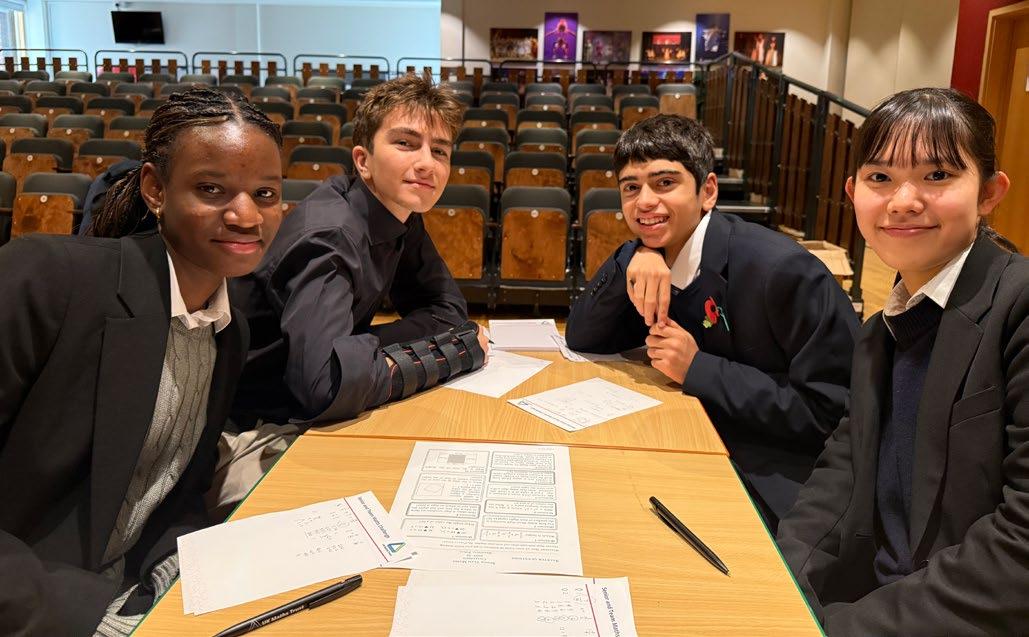
Mathematics is more than numbers and formulas— it’s a way of thinking that helps us solve complex problems and discover patterns in our lives. Our department is dedicated to nurturing learners who embrace challenge and thrive on discovery.
Our Mathematics Scholarship Programme offers pupils the opportunity to explore advanced ideas, participate in enrichment activities, and develop the qualities that define mathematical scholars: tenacity, curiosity, and collaboration. These scholars inspire, contribute to our community, and model the transformative qualities of learning.
In this feature, we introduce one of our scholars, who shares their journey, insights, and advice for aspiring mathematicians.
Hello Rinko. Please tell us a little bit about yourself. I am a student who has always enjoyed challenging myself academically, particularly in mathematics. I like exploring problems in depth and taking part in opportunities that allow me to develop my thinking beyond the classroom.
Why did you choose to apply to be a Maths Scholar?
I was very keen to study A Level Mathematics, and I felt that becoming a Maths Scholar would give me more experience through maths challenges, competitions, and enrichment opportunities. My teacher at MHI also inspired me to apply.
Why were you so keen to study A Level Maths? Mathematics has been my favourite subject since I was young. I especially like geometry because there are often multiple approaches to solving a single problem. The experience of studying Additional Mathematics at
GCSE made me want to further deepen and expand my understanding at A Level, so not taking A Level Mathematics was never really an option for me.
Aside from Geometry, what is your favourite aspect of Maths?
My favourite aspect of maths is the flexibility in problem-solving. I enjoy applying my knowledge in different ways and comparing multiple methods before choosing the most suitable approach for each question.
Do you do any Maths beyond the classroom?
Yes, in my spare time, I also study mathematics in Japanese. This helps me broaden my understanding beyond the A Level syllabus and exposes me to a wide range of alternative techniques and problem-solving strategies.
Wow! That’s impressive. You’ve taken part in some competitions so far this year as a Scholar. What was it like taking the Maths Competition for Girls?
As this competition was introduced this year, I did not know what to expect. The paper consisted of five main questions, which became progressively more challenging. Although I ran out of time, I really enjoyed tackling the difficult problems.
You’re being quite modest here, given you got a Distinction and Best in School! Were you also selected to be part of the Mill Hill School team for the Team Maths Challenge? What did this involve?
The competition involved three rounds: a group round, a cross-number round, and a relay. We competed in teams of four against other schools in Cambridge, and everyone had to contribute, which gave me a strong sense of responsibility. We were particularly pleased to score 59 out of 60 in the crossnumber round.
That is a great score. Finally, what advice would you give to a pupil taking their GCSEs, considering a Maths Scholarship or A Level Maths?
If you genuinely enjoy mathematics, my advice is to follow your interest and not worry if you lack confidence at first. Approach challenges with curiosity and persistence—they matter as much as talent. Remember, enjoying the subject will help you overcome difficulties and deepen your understanding over time.
Gareth H Director of Musical Performance
Music Piece by Joshua Page 81
Sir Stephen Hough interview Page 82
In my recital, I performed music by three of my very favourite composers, Haydn, Mozart, and Schubert. Haydn’s ‘She Never Told Her Love”, combines text from Shakespeare's Twelfth Night with Haydn's charming writing for the voice. I find this to contrast nicely with Schubert's Liebesbotschaft, from his final collection of songs, Schwanengesang. Mozart's "Deh Vieni alla Finestra", from Don Giovanni, is an altogether darker affair, with the protagonist (Don Giovanni himself) attempting to woo a young woman at her window - whilst the subject matter is not as joyful, it does contain some of Mozart's very finest music.

Scan the QR code or click here to listen
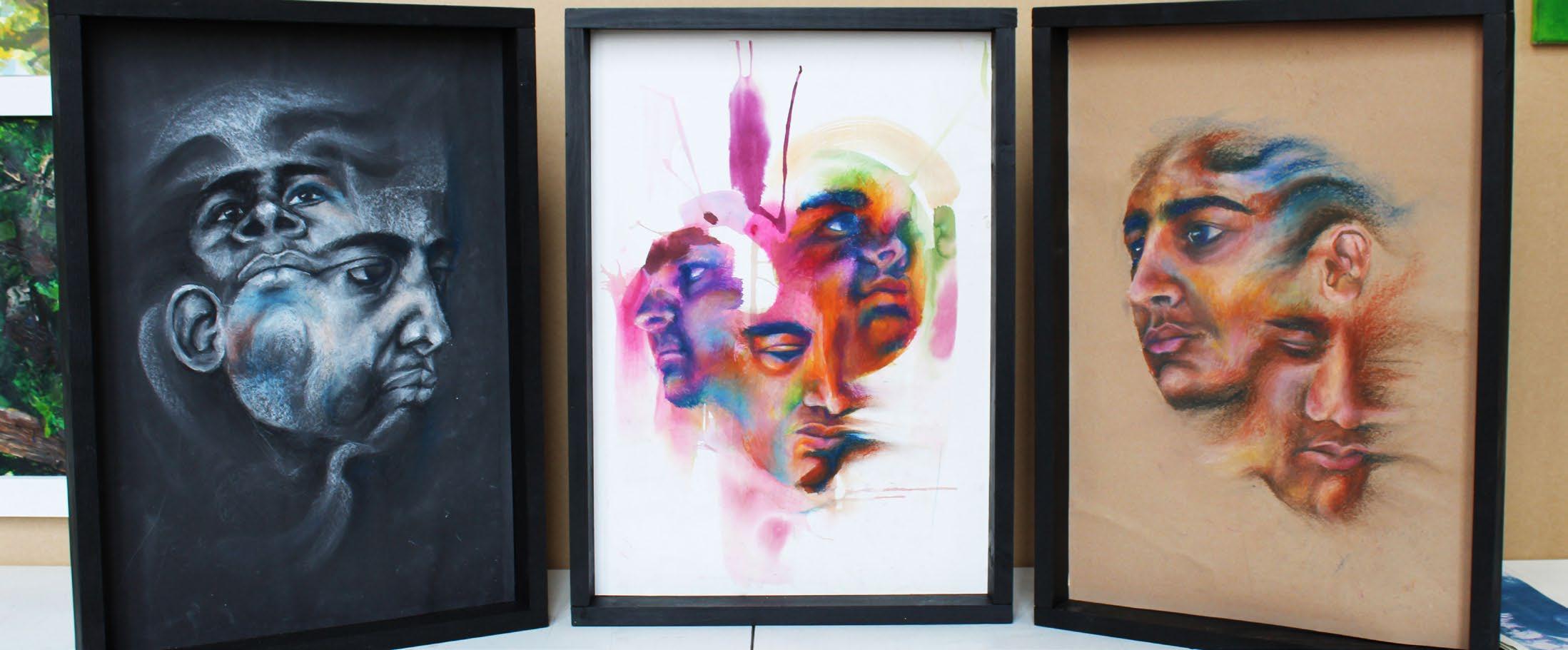
Named by the Economist as one of "twenty living polymaths", in my interview with the pianist, composer and author, Sir Stephen Hough, we discussed several wide-ranging topics, from his new Piano Concerto, to his changing relationship with faith. These particular themes bridge the gap between my love for music and theology.
In 2023, you recorded an album entitled Mirabilis, made up of choral music. Has engaging with this tradition that's both liturgical and musical brought you closer to your faith?
Well, I think so, in a way. Particularly those English texts, the first piece on that record is Just As I Am. It's a setting of a Victorian Anglican hymn that I think has the most beautiful sentiment, not in a sense of sentimentality, but the words themselves really say so much about faith. The words are very simple. It's very trusting. It's what I would like to be able to say as I'm dying, whenever that might be. Actually, every piece of music I've written, that I feel is of any value or that means anything to me has made me cry when I was writing it. I don’t mean it made me weep, but just tears in the eyes. And that was certainly true with that one. And I'm just writing a Requiem at the moment, but this is a long process. It's going to be another year. And the other day, I had my first tears. I thought, “OK, well, this has a chance to be a good piece!”
I don't know why human beings feel they have to be ashamed of emotions. It's weird, isn't it? Because it's sort of a defining feature of being human, in a way. And I think there was a time in the 20th century, when if music was too emotional, it was somehow suspicious. Everything had to be very cerebral. And that was the music that was the most intellectually respectable.
You've talked about finding religious inspiration outside of Catholicism. Are there other theological inspirations that influence you in your worship and thought?
Well, I love the idea of creating connections between people who don't agree. I feel that I might have liked to have been a diplomat in another life. I love to find common ground. Sitting on the fence can sometimes
mean that you're above things and can see a greater perspective and see further away. Of course, it can also be a compromise that's lacking courage, but that's another issue. I want to bring joy and consolation, both when I'm playing concerts and when I'm writing music. Music enters a person's heart, their soul, their being. And that's quite a responsibility. At the end of a concert last year, I met a woman who told me that her son had died and that this music had been a comfort to her and for me, that was such an amazing privilege to be able to be a part of that woman's life. I never met her before and I may never meet her again but, there was a brief moment when we had a special connection. So, if music can do that, it can be worldchanging.
The idea of “sacred music” has deep roots in Christian theology and Western classical music. Do you believe that all music can be a form of worship or is there a distinction between secular and sacred music?
I don't think there's an important distinction, between anything sacred or secular, if something is genuine and if it's of quality and if it’s human. So I would say if there's a human element there, then anything can be sacred. Perhaps techno music would be harder to do! I'm actually a little suspicious of religious music, of composers who feel they're preaching the gospel through their music. Because some of it is so bad, you think, “well, actually, I don't think God has any part in this!” Some terrible church music has been written over the last 50 years. So anything that's good, anything that's worthwhile, I think, can be thought of as spiritual.
Joshua (Pupil)

It has been a busy, productive, and highly successful year for the Physics Department, marked by innovation, exploration, and outstanding student achievements.
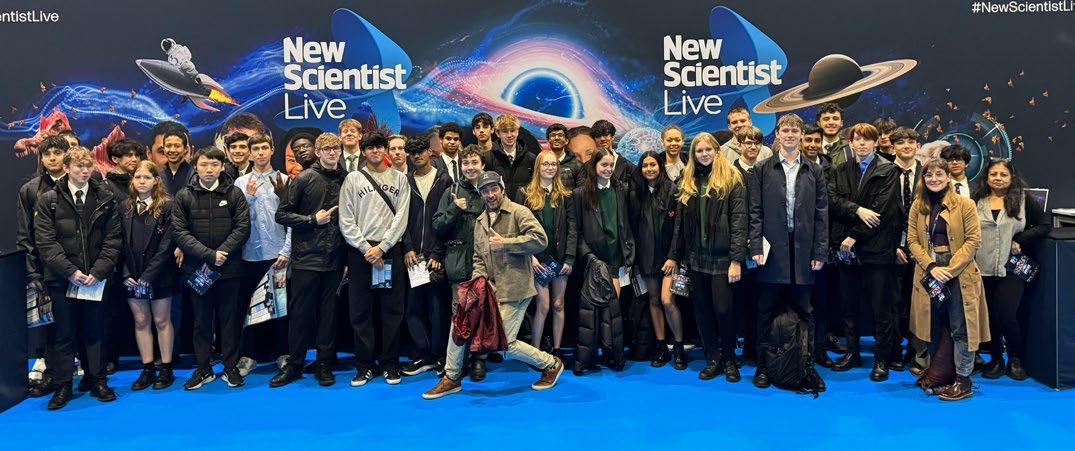
Almost 30 pupils attended the New Scientist Live Festival at London’s ExCeL Centre, one of the UK’s largest science exhibitions. They explored interactive exhibits, attended talks on quantum computing, space exploration, and climate science, and engaged directly with experts. This experience sparked curiosity and broadened their understanding of physics in the modern world.
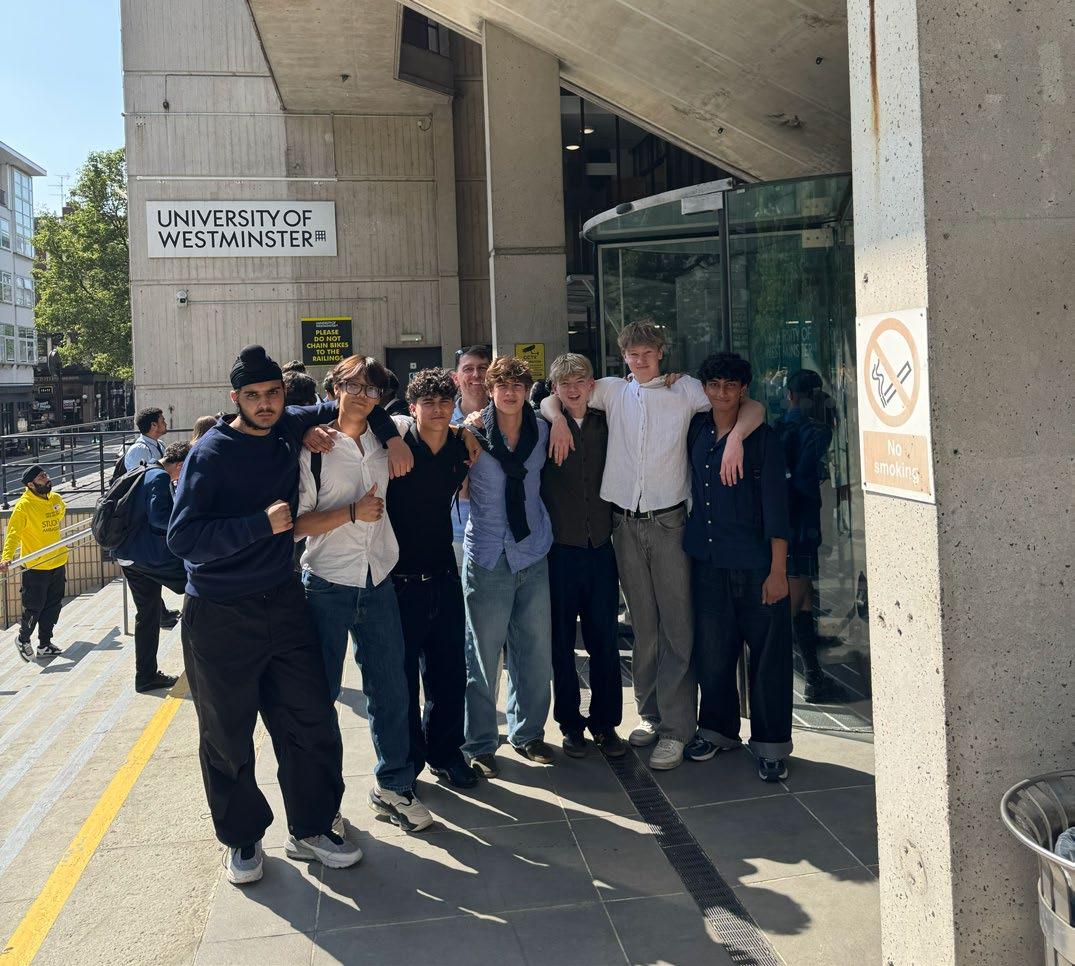
22nd Annual School Science Conference –April
Eight Fifth Form pupils represented the department at the University of Westminster for the prestigious Annual School Science Conference. They showcased their creativity and technical skills by designing and building a piezoelectric board that converts mechanical energy from footsteps into electrical energy. The board generated a potential difference of up to 70 volts and a power output of 16 watts, demonstrating practical applications of physics in sustainable energy solutions. Their project was met with enthusiasm and highlighted our students’ innovative spirit.
Dozens of Lower and Upper School pupils participated in the British Physics Olympiad, a highly challenging national competition. Many of our students achieved Gold and Silver awards, an exceptional accomplishment that reflects their dedication and deep understanding of physics principles. This success places our department among the topperforming schools in the country.
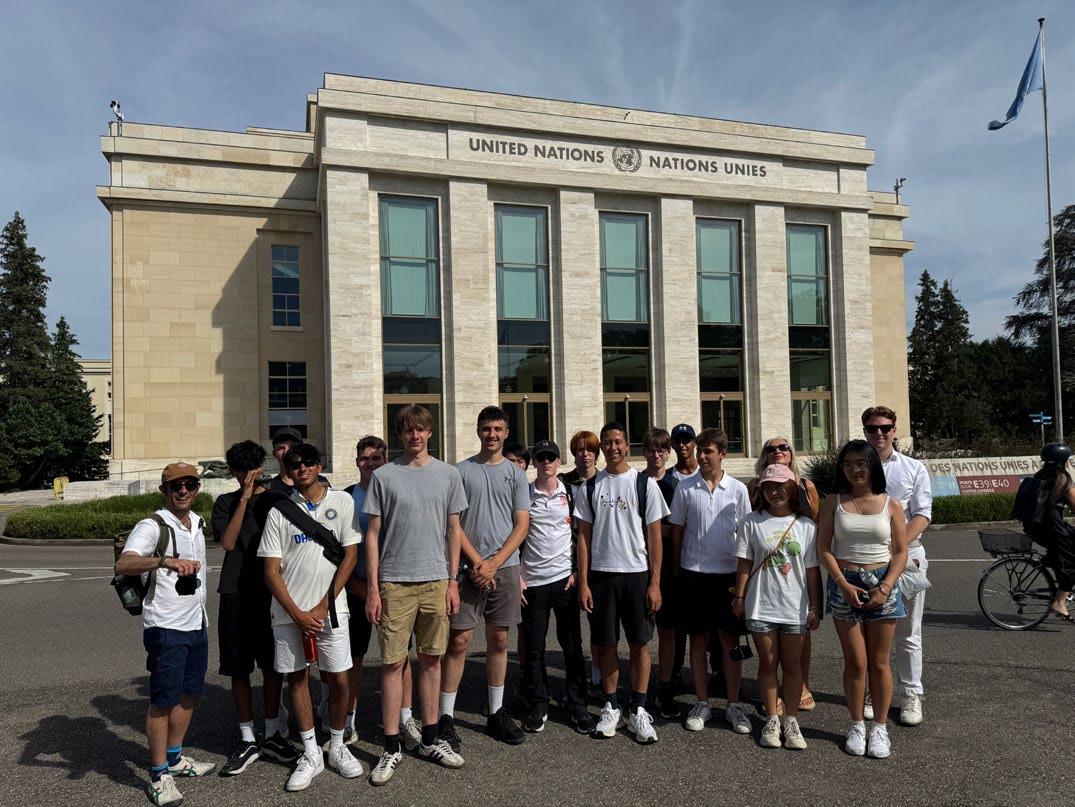
Sixteen Lower Sixth pupils embarked on an unforgettable journey to CERN in Geneva, home of the Large Hadron Collider (LHC), the world’s largest and most powerful particle accelerator. They learned about groundbreaking research in particle physics, including the discovery of the Higgs boson, and explored how international collaboration drives scientific progress. The trip also included a visit to the Swiss Plasma Centre in Lausanne, where pupils gained insight into cutting-edge research on nuclear fusion – a potential future source of clean energy. They observed experimental reactors and discussed the challenges and opportunities of harnessing plasma for sustainable power generation.
During our trip to Geneva, we had the chance to explore some of the world’s leading centres of science and global cooperation. To start off the trip, we visited the United Nations headquarters, where we observed a live diplomatic meeting and gained insight into how representatives from around the world work together to address pressing global challenges. At CERN, we attended an engaging science show and took part in a hands-on workshop where we used liquid nitrogen to supercool metals, watching them levitate through the principles of superconductivity. We also explored exhibits on the history of particle physics and experimented with interactive simulations showing how high-energy photon collisions can produce particles and antiparticles. Our visit to the Swiss Plasma Centre was equally fascinating, as we stood beside their tokamak reactor and learned about its potential to revolutionise clean energy production through plasma and electromagnetic fields. The trip also involved lots of sightseeing around Geneva, where we were able to go off and explore the city centre. Overall, this trip was an incredible experience. It was amazing to learn about the cutting-edge science that is taking place in Switzerland and to experience Geneva and its culture.
Dhruv (Pupil)
Gaby K Head of Psychology
Does physical attractiveness influence moral judgment?
Visit to the Sigmund Freud museum
Page 89
Page 93

Abstract
Aim: To investigate whether an individual’s level of physical attractiveness affects how harshly they are judged for a moral wrongdoing Procedure:
1. Randomly assign participants to group A or B with a random number generator each for the girls and the boys
2. Each group reads a short scenario describing a minor wrongdoing like cheating on a test, stealing a small item, lying to a friend
3. Both groups read the same scenario but see a different photo of the person who committed the act
4. Participants then rate how morally wrong the behaviour was on a 1-10 scale, and optionally how harsh the punishment should be
5. Collect and compare the data
Findings: Our results did not support the null hypothesis, so we rejected the null hypothesis, but the alternative hypothesis was accepted. The average moral judgement rating for both groups was 4.9/10, regardless of whether participants saw the more attractive or less attractive girl. This suggests that in our sample, physical attractiveness did not influence how participants judged the morality of the individual’s actions. This could indicate that participants were not affected by the level of attractiveness, or they were consciously trying to avoid bias.
Conclusion: The more attractive a person is, the less harsh the moral judgement so we can accept the hypothesis. Overall, we felt our experiment was successful as our hypothesis was correct, and the data showed a positive relationship between attractiveness and morality score on a scale of 1-10.
As human beings, we are social creatures. We constantly make judgements about one another, including dictions about trustworthiness, competence and even morality, often within just seconds of meeting.
One factor that can strongly influence these snap judgements is physical attractiveness. In many cases, we tend to attribute positive characteristics to those who are physically attractive. This is a phenomenon known as the ‘halo effect’, which is a form of cognitive bias. This bias leads us to assume that attractive people possess other socially desirable traits, like intelligence and honesty, even when there is no actual evidence to support these judgements.
Previous research has shown attractiveness can bias perceptions in many different contexts. For example, Dion, Berscheid and Walster (1972) found that attractive individuals were more likely to be perceived as possessing socially desirable personality traits, and were expected to lead happier, more prosperous lives.
This has also been demonstrated in legal settings, where attractive defendants are often given lighter sentences than less attractive individuals for the same crime, discovered by Sigall and Ostrove (1975) Both findings suggest that physical appearance can significantly influence moral and ethical judgements, even when it is irrelevant to the behaviour being evaluated.
Much research has focused on the role of attractiveness in areas such as employment, dating, and criminal justice. However, fewer studies have
looked specifically at how attractiveness affects moral judgement specifically in everyday social situations.
As young people growing up in a world that is increasingly dominated by social media, where physical appearance is often at the forefront of online presence, we were interested in exploring how attractiveness might influence our perception of people’s morality. If we judge people as more moral simply because they are attractive, it raises questions about the fairness of our social interactions, and the unconscious biases we may carry.
The aim of our study is to investigate whether physical attractiveness has an influence on how moral a person is perceived to be. Specifically, we will explore whether people rate individuals as being more morally good or bad depending on their attractiveness, even when no other information is provided. By using carefully selected photographs of individuals rated as either ‘more attractive’ or ‘less attractive’, we hope to understand whether attractiveness alone can bias moral evaluations.
Method
Null hypothesis: There will be no relationship between the attractiveness of a person and their moral judgement.
Alternative hypothesis: Participants will rate the wrongdoing as less severe on a scale of 1-10 when the physically attractive girl is shown, compared to when the photo of the less attractive girl is shown
Participants: 20 year 12 students split evenly into 10 year 12 girls and 10 year 12 boys selected by opportunity sampling (asking people who walked by to participate for convenience).
Experimental design: We conducted a correlational study between two co-variables: physical attractiveness and morality scores. For data collection, we used structured interviews rather than unstructured interviews as they are standardised so each participant received the same question. This meant that if non standardised changes occurred (such as different testing environments like noisy or quiet room), it ensures these changes don’t act as extraneous variables and affect the relationship between our co-variables. It also reduces investigator bias as we could not ask any more questions to prompt the participants to give higher scores for the less attractive women than the more attractive, improving the accuracy of our results.
Materials used: We used two images of two different girls: one who was conventionally attractive and one who was not conventionally attractive. Both images however shared similar features such as fair complexity, brown hair, brown eyes so the participants judgement wouldn’t be affected by subjectivity of attractiveness (acting as a confounding variable in the participants)
Ethical issues: One ethical issue was deception as prior to the experiment, the participants were not told the true aim of the study (it being to investigate whether an individual’s level of physical attractiveness affects how harshly they are judged for moral wrongdoing. This was managed by debriefing participants after the experiment with the true aims of the study and giving them the right to withdraw if they do not feel comfortable participating and reinforcing the consent they gave before the experiment. Another issue was confidentiality when collecting the data as their personal information must be kept private. We combatted this by removing their names when we collected the data, so when we carried out data analysis and made our scatter graph, we did not know who put certain scores down.
Variables: As we carried out a correlational study, we had 2 co-variables: physical attractiveness of the woman and the score on the morality test. We also had to control certain extraneous variables such as environment as if the environment was loud, this could have interfered with the focus of the participants when listening to the scenario and therefore could have given a random score or a score less reflective of the scenario because they couldn’t fully understand it. Another extraneous variable is the background of the photo. For both pictures, the girls were standing in front of a white background as if the scenery was nicer in one picture or another, the score the participants gave could have been lower than usual as they were attracted to the scenery rather than focusing on the physical attractiveness of the girl. Another extraneous variable is the physical appearance of the women because if we used two girls with distinct features like different race, the effect of the confounding variable of the subjectivity of attractiveness will be reduced, improving the accuracy of the correlation.
1
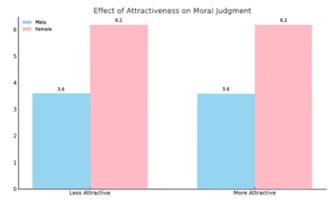
Conclusions:
There is no direct relationship between an individual’s level of physical attractiveness and the harshness with which they are judged for moral wrongdoings, according to the mean moral scores. Although the results from the table indicate that the condition factor has no effect on the moral scores, robust gender differences are evident in both conditions. For instance, the female control group consistently gave higher moral scores in both the ‘more attractive’ and ‘less attractive’ conditions. Thus, the mean moral score was 6.2/10 in the female group and only 3.6 in the male group.
However, the male group's responses were more varies, as illustrated by the box plot. Whereas the female responses in the ‘less attractive’ condition fluctuated slightly between 5/10 and 7/10, being predominantly 6 and 7, the male group responses were much more diversified, ranging from 1/10 to 6/10. This may be due to gender bias introduced using exclusively female photographs in the experiment.
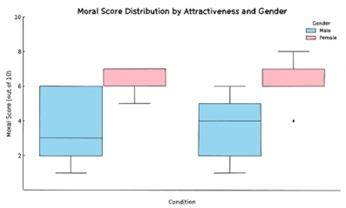
Moving on to the second condition, the male results also vary from the lowest 1/10 to the highest 6/10. Nonetheless, in the second condition, the median is at a moral score of 4/10, which is considerably higher than in the first condition (3/10) and may indicate that indeed, the level of physical attractiveness is negatively correlated with the harshness of moral judgment, and the identical mean moral scores could be due to anomalies in the data, potentially caused by insufficient control over some of the controlled variables.
Similarly, the median moral judgement of the female group is higher at the second condition (7/10) than in the first condition (6/10), and the same moral judgement may be caused by the apparent outlier of 4/10 in the second condition, significantly lowering the mean moral judgement. Hence, both medians in the female and male groups show that indeed the more attractive a person is, the less harsh the moral judgement, and therefore we accept our hypothesis ‘Participants will rate the wrongdoing as less severe on a scale of 1-10 when the physically attractive girl is shown, compared to when the photo of the less attractive girl is shown’, despite that the fact mean moral scores are identical for both conditions.
One strength of our research method was that we used a standardised procedure. This was done by showing all the participants the same scenarios of cheating in a university exam, with the only variable we changed being the level of attractiveness of the women. This ensures that if non-standardised changes such as the room noise, they won’t act as extraneous variables and influence the relationship between the two co-variables. Therefore, this strengthens the internal validity of the findings, making the results more accurate in showing a correlation between physical attractiveness and moral judgement rather than being controlled by extraneous variables in the environment.
Another strength of the research we conducted is that the data collected was quantitative. In our data collection, we used the Likert scale (ranging from 1-10) to measure each participants’ opinion of how severe the moral crime Luna did. This is a benefit as numerical, quantitative data is objective and can be used in statistical analysis to calculate the mean (as we did) to understand the findings of our results better to produce more accurate conclusions about the relationship between physical attractiveness and moral judgement.
However, a weakness of our research is the gender bias in the stimuli. Across both the female and male participants saw photos of only attractive and unattractive women even though women are biologically more likely to be attracted to males. The
findings for the females therefore may not be reflective or accurate of physical attractiveness affecting moral judgement as our female participants may not have experienced any attraction or emotion to the women. Therefore, this reduces the generalisability of the results, but this problem could be combatted next time by using pictures of unattractive and attractive males for our female participants to retrieve more accurate findings.
Another weakness of our research study is our sampling technique. We used opportunity sampling by selecting people who were present at the time of conducting the research. A flaw with this is that we as the researchers could have been more inclined to select people who we were friends with or were in our lessons as we feel more comfortable talking to them than other people. This introduces sample bias as it is more likely for one sub-group to be selected more, which makes the results less representative of the population, reducing the generalisability of the results.
Jess (Pupil)
Saimruithy (Pupil)
Lisa (Pupil)
On the 5th December, Upper Sixth Psychology pupils, and a small number of Lower Sixth pupils who attend the Psychology society, were given the opportunity to visit the Sigmund Freud Museum in Hampstead, organised by Miss Kleimberg and supported by Miss Aries. For background, Sigmund Freud was an Austrian neurologist who founded psychoanalysis, a groundbreaking theory focusing on the unconscious mind and how desires, thoughts, and conflicts shape our personalities. This trip promised to build on the existing curriculum knowledge of Upper and Lower Sixth; it was a fantastic opportunity to gain new knowledge about a branch of psychology that will be studied in theA Level Psychology course.
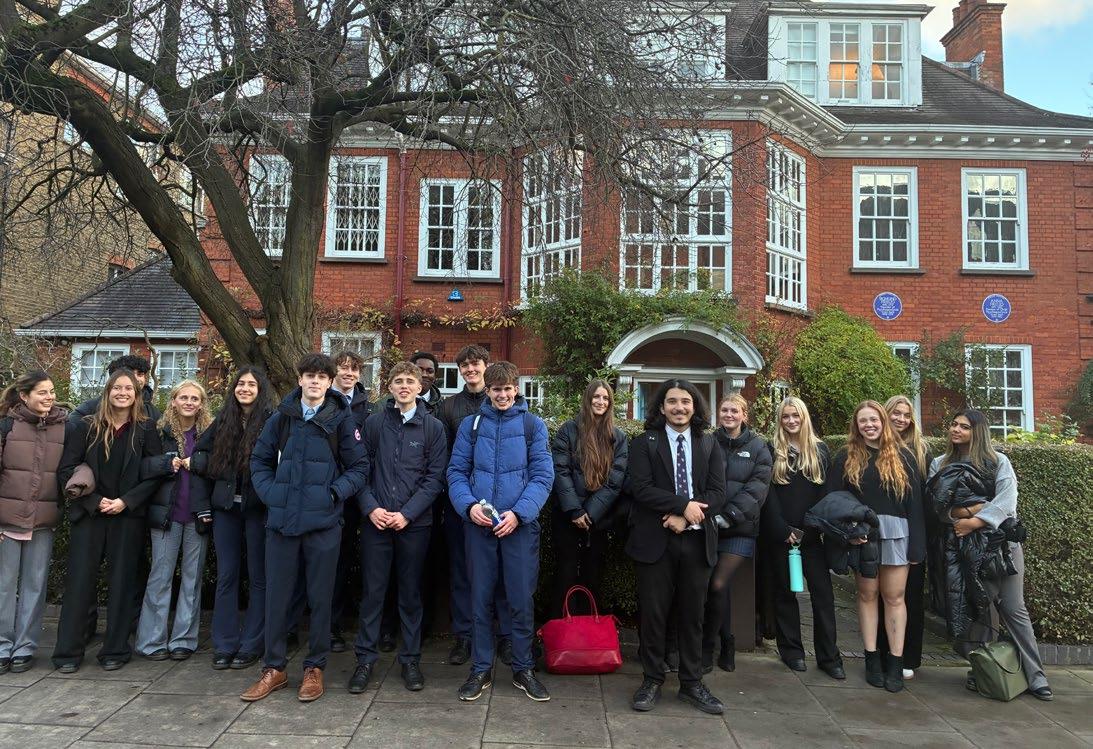
was also dedicated to psychoanalysis and studied psychological development in children. Alongside this, she was an expert craftswoman and knitted some of the beautiful textiles which were present as we entered the room. A couple of other rooms showcased some of the dreams Freud noted, which were very intriguing and provided more background on Freud’s theory and practice. Unexpectedly, as we came to the end of exploring what vast information was present in the museum, Miss Kleimberg surprised us by informing us that her dad was going to step in and provide an online lecture in place of the lecture on ‘Dreams’ that we were expected to listen to as part of our visit to the museum.
At around lunchtime, we took the Thameslink train from Mill Hill Broadway to West Hampstead, then walked the short distance across to the museum. Upon entry, one of the supervisors provided us with information about Sigmund Freud and the significance of the museum as his final home, where he spent the last year of his life. Unfortunately, we were also informed that our tour guide and lecturer had fallen ill shortly before our arrival, and that our visit to the museum would be a self-guided exploration of the two floors.
On the bottom floor, there was a room that housed the famous couch on which Sigmund Freud treated his patients. He carried out therapy sessions with his patients, intending to use the couch to help them divulge their thoughts and unpack their unconscious freely. The purpose of the couch was not only to relax patients to enable them to immerse themselves in the complexity of their thoughts, but also to suspend their conscious mind, quite literally, as they lay down, to enable patients to reach their unconscious.
Upstairs, there were multiple rooms, one of which was used by Sigmund Freud’s daughter, Anna. She
Mr Kleimberg spoke to us for around half an hour, delving into the unconscious mind. He also touched on his work as a psychoanalyst, the same profession as Freud, and spoke about Freud and what he has done for the wider field of psychology. It was a fascinating talk that we all greatly appreciated him making the time for!
To wrap it up, it was undoubtedly a thoroughly enjoyable trip. We were all grateful to visit the home of one of the most influential figures in modern Psychology. Another big thanks to Miss Kleimberg and Miss Aries for taking us again.
Jonathan (Pupil)
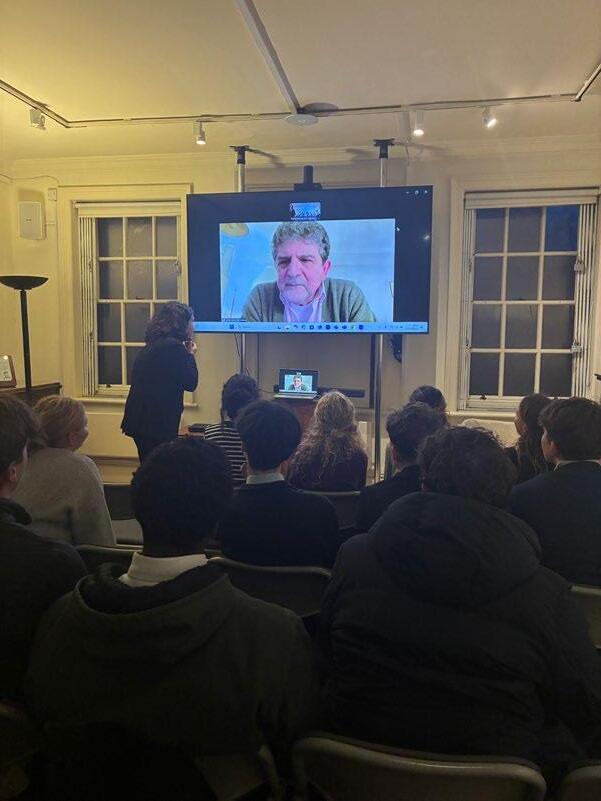
Enrichment week visit to Rome
From Gospel to Hip-Hop –Christianity’s presence in music
Page 95
Page 98
This year, I had the incredible privilege to visit Rome, Italy, with the RS department to deepen my understanding of both the Christian and Jewish faiths. Over the course of the trip, we explored numerous historical sites and religious landmarks, including the Vatican, the Colosseum, the Roman Forum, the Trevi Fountain, and many more iconic religious sites. We began our first day by visiting the Spanish Steps, Trevi Fountain, Via del Corso, Pantheon, and the Piazza Navona. Our fantastic tour guide, Natalia, informed us of many interesting facts throughout the day; however, my favourite fact was about the intricate details of the Pantheon. She explained that the dome is a direct symbol pointing towards the heavens, and it remains the largest dome in the world for over 1300 years. Later that day, Mr Cambridge treated us with some authentic Italian gelato from a family-run shop that has been in business for over 200 years! We ended our first brilliant day with a delicious carbonara for dinner, followed by tiramisu for dessert. This trip was not just a journey, but a rich educational experience that deepened my understanding of history and culture.
The second day was my personal favourite, as we explored key Christian sites, including the Vatican Museums, the Sistine Chapel, St. Peter’s Basilica, and Castel Sant’Angelo. We began the day by visiting the Castel Sant’Angelo, where we learnt about its rich history dating back to the Roman Empire. From there, we made our way to the Vatican Museum, the Sistine Chapel, and St Peter’s Basilica. Entering the Sistine Chapel felt surreal, as the conclave had just taken place a few weeks before our visit, which made the experience even more special. Standing outside the Vatican, let alone being in St. Peter’s Basilica, left me speechless, as this building has shaped history for many centuries. Seeing the artwork by Michelangelo and Raphael in such excellent condition made me feel as though I was entering heaven. We watched a mass led by the priests inside the Vatican, and we were later informed that Pope Leo XIV had done a service shortly before we arrived. We also had the opportunity to climb up the Dome of St Peter’s Basilica and admire the stunning views of Rome. This was the highlight of my trip because I was able to learn more about the key aspects of the Christian religion, which I will carry with me for the rest of my life. Naturally, the day ended again with lots of ice cream alongside a delectable dinner of pasta al pomodoro with tiramisu.
On our third day, we visited the Colosseum, Arch of Constantine, the Roman Forum, Palatine Hill, Piazza Venezia, and the Vittorio Emanuele Monument. Visiting the Roman Forum and the Colosseum were my favourite visits of the day. At the Roman Forum, we learnt about how it was an ancient commercial centre filled with markets, shops, and public gatherings. The Arch of Titus really stood out to me with its detailed design and beautiful architecture. Natalia also showed us the location where Julius Caesar’s body was cremated after his assassination in 44BC. She also mentioned that some of the pavement was still in its original state, dating back to the Middle Ages. The Colosseum was impressive, and I was surprised to learn that there were originally 80 statues under the iconic arches on the exterior of the Colosseum! It was around 35 degrees that day, but Mr Cambridge kept our spirits high with many rounds of gelato!
Our final day in Rome was a deeply moving experience as we visited the Jewish part of Rome. We explored the Jewish Ghetto, the Great Synagogue and the Jewish Museum. Discovering the Jewish Ghetto made me extremely emotional at how harshly the Jews were treated during the Second World War, especially when they were forced to evacuate their homes due to the Nazi Invasion in Rome. We tried the Biscotti Ebraici, which originated in the Jewish Ghetto, and the grandmas told us that they continued to use the same recipe for hundreds of years. We also discovered the story of Emanuele Di Porto, a little boy whose entire family was deported by the Nazis and survived by his mother pushing him off the truck towards Auschwitz. He now lives in the same house where he lived during World War II. This experience was deeply moving and made me feel a strong connection to the history of Rome. After a long day, we then headed back home to England. I would absolutely recommend going on this trip during enrichment week, as you create unforgettable memories and learn so many interesting facts to deepen your knowledge. A massive thank you to Mr Cambridge, Ms Oliver, and Ms Lancaster for organising and making this trip extra special.
Valentina (Pupil)
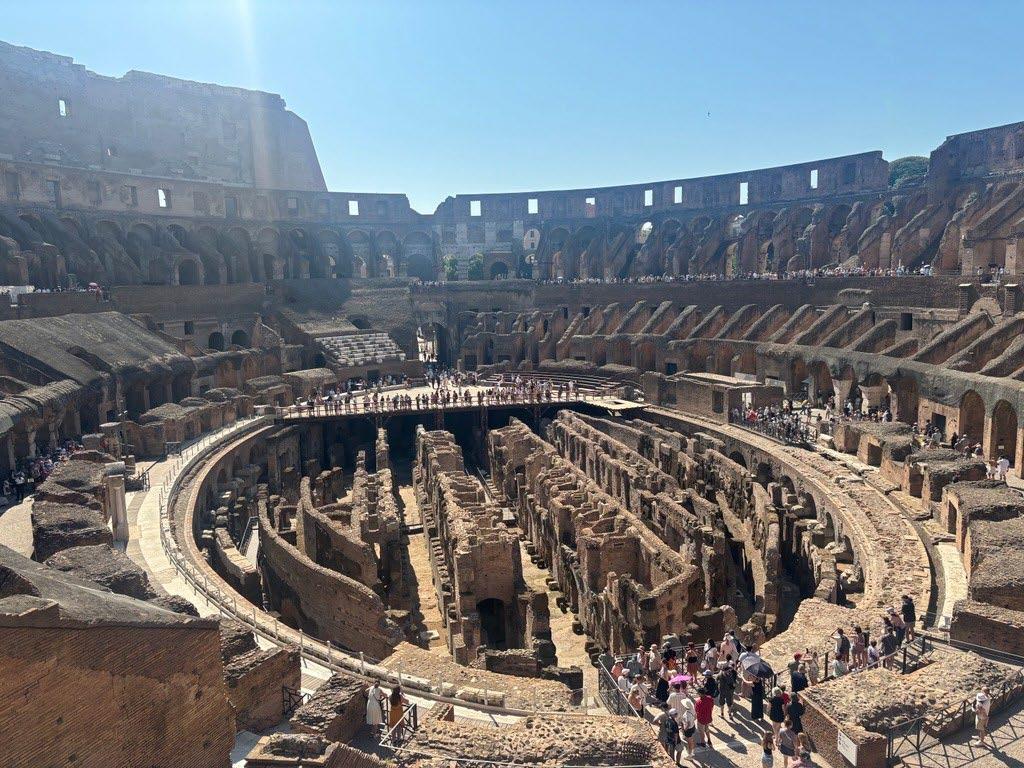


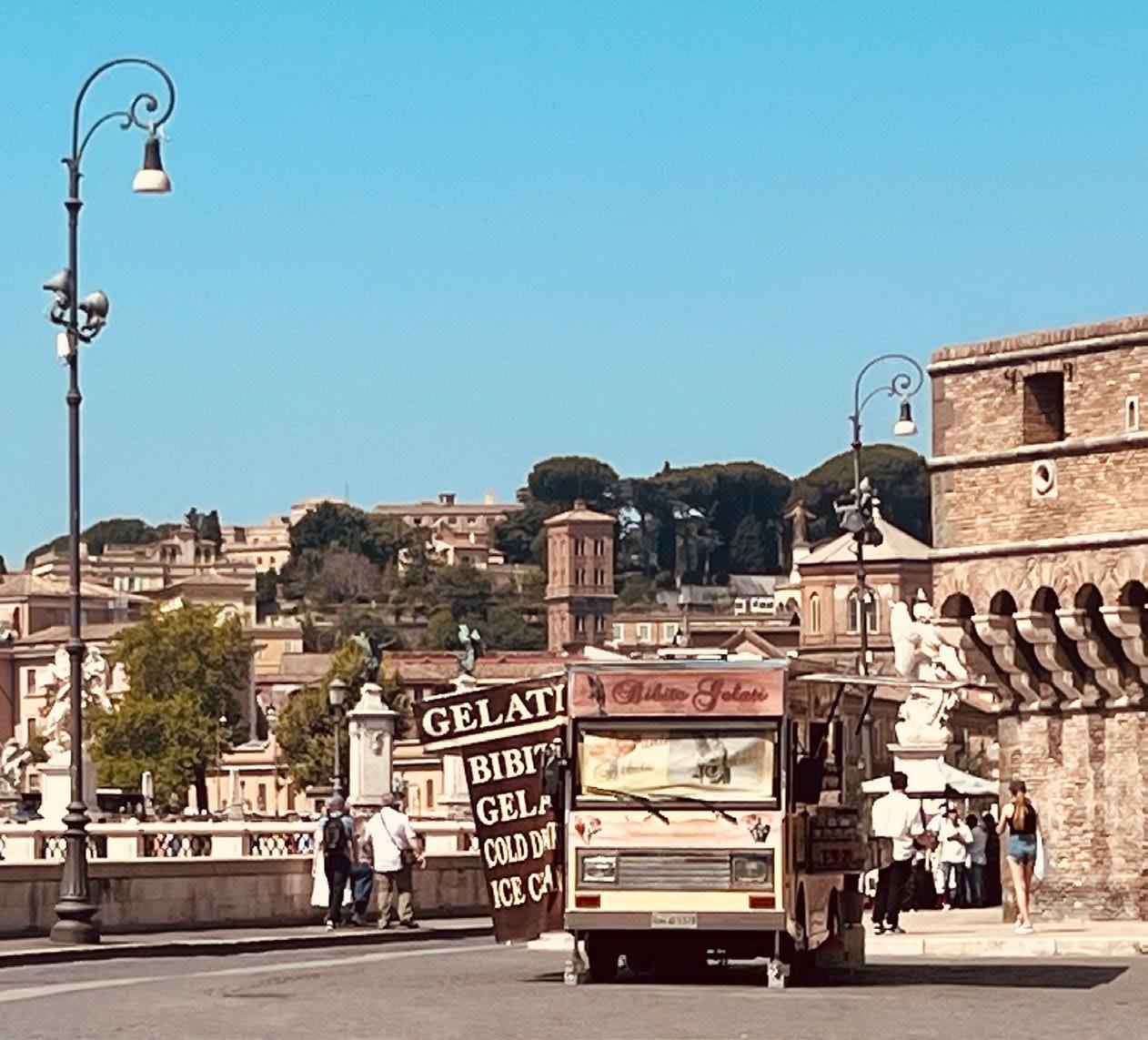
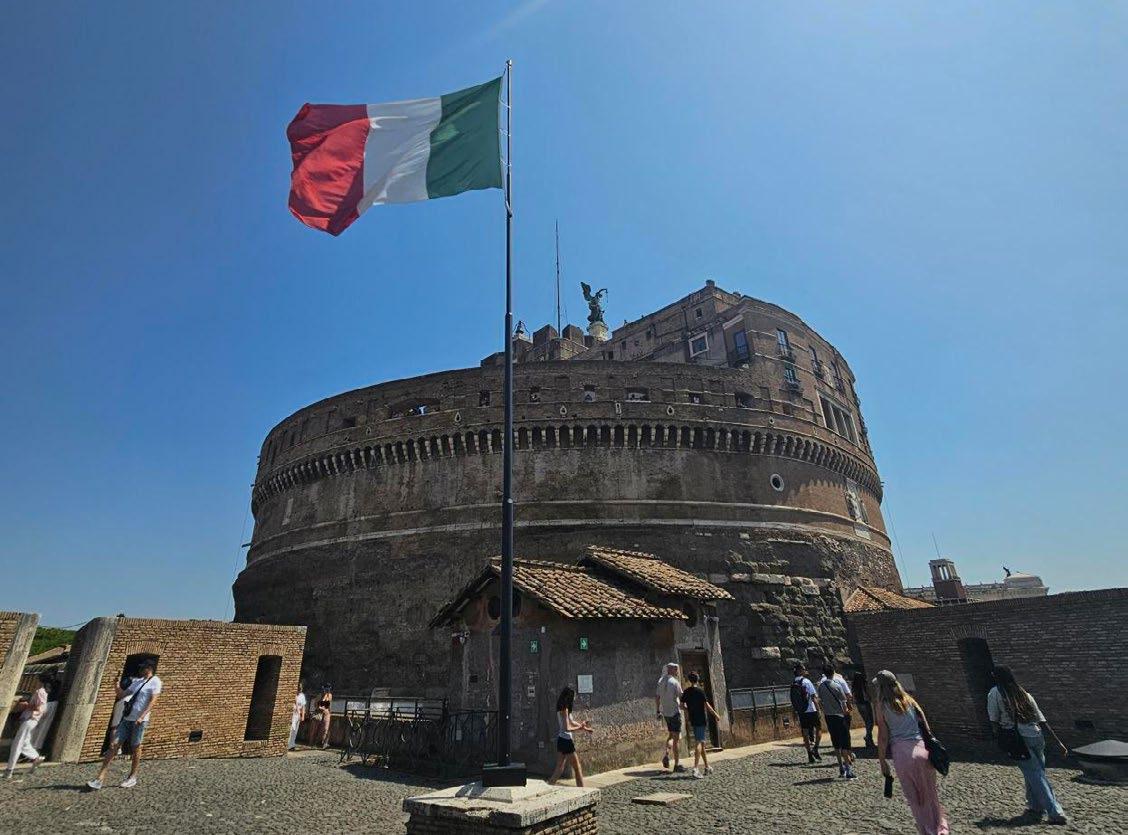

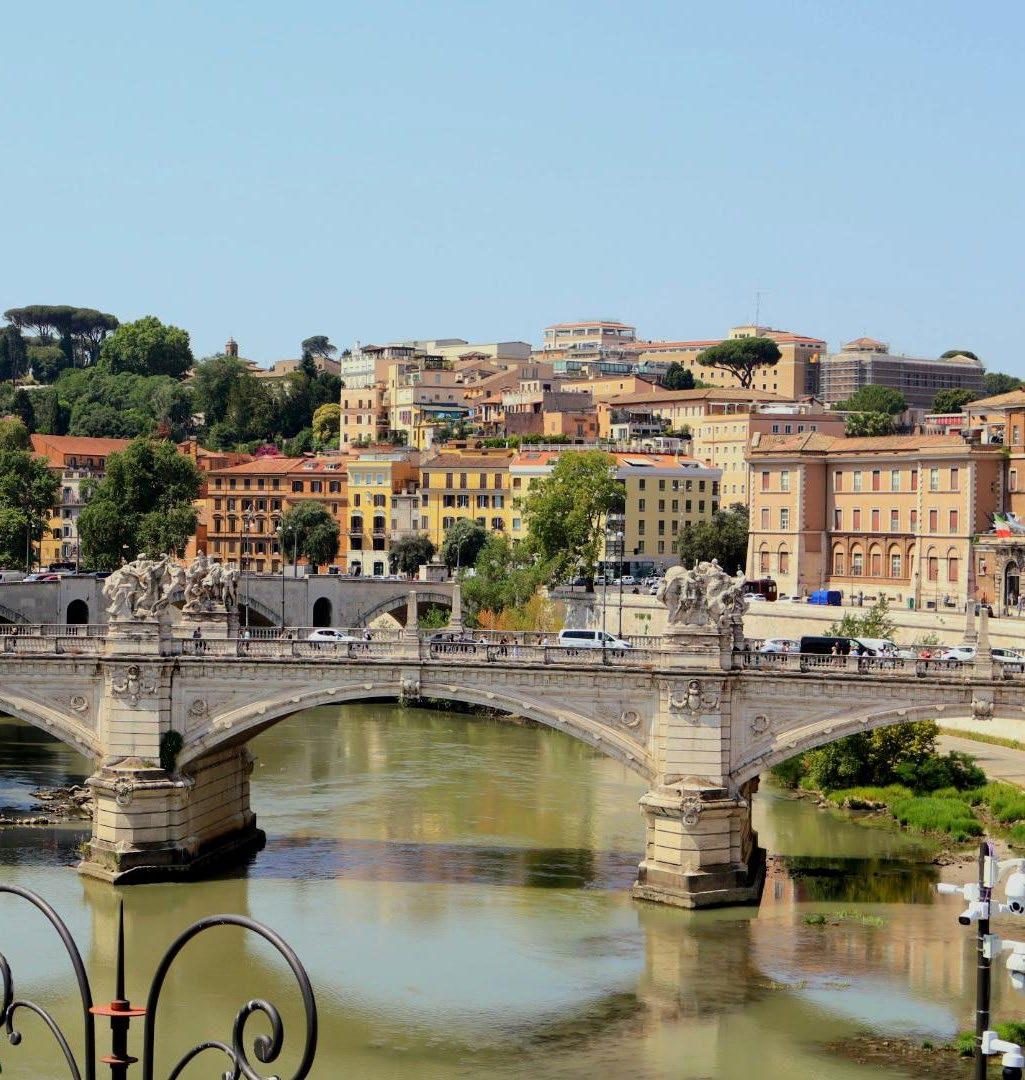



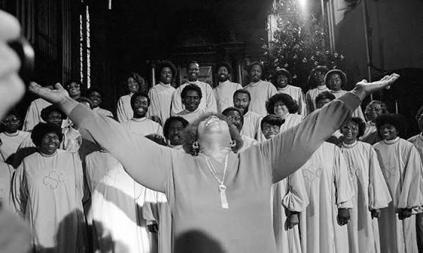
Step into a church on a Sunday morning, and you may hear a gospel choir lifting their voice in prayer. Step into a packed stadium on a Friday night, and you might listen to thousands of fans chanting the words to Kanye West’s Jesus Walks. At first glance, these two scenes look worlds apart, one is sacred and the other secular, yet both are driven by rhythm and faith. Christianity has profoundly shaped African American music for centuries, and nowhere is its influence more evident than in the evolution from gospel to hip-hop. Far from rejecting religion, as some might argue, hiphop has taken Christian ideas and transformed them into a new cultural language.
This story begins with the European colonisation of North America and the establishment of the slave trade, where Africans were treated as property and oppressed. Longing for freedom and seeking to express their faith, the enslaved drew on biblical stories with themes of deliverance and justice; thus, the gospel was born in songs such as “Go Down, Moses.” Although these may have seemed like hymns of devotion, they carried underlying messages of resistance and escape. Gospel was more than music; it was faith turned into cultural and political power. As the 20th century progressed, gospel’s sound spilled out of the church community and into mainstream culture, and the evolution of music occurred simultaneously. Aretha Franklin carried her gospel training into soul, releasing songs like “Respect” and “Think” that promoted empowerment with a voice straight from the pulpit. In addition, her 1972 album, Amazing Grace, remains one of the best-selling gospel
took a different route by directly reworking gospel songs into rhythm and blues, most notably when he adapted a hymn called It Must Be Jesus into his hit I Got a Woman. This sparked controversy with many Christians labelling the act as sacrilege, but his fusion paved the way for future music, especially regarding the sampling of other songs. The controversy surrounding Charles’s adaptation underscores the complex relationship between religion and music, as well as the blurring of boundaries between the sacred and the secular in the context of African American music.
Following this, hip-hop began to emerge in the Bronx in the 1970s and soon spread across the nation as a voice for the marginalised African-American community facing poverty and neglect. The early pioneers did not always preach sermons, but their songs often carried moral warnings. For example, Grandmaster Flash’s “The Message” painted a grim picture of despair, survival, and God’s guidance – themes that indeed echoed biblical struggles. However, Christian messages were not always this discreet, and the life of Tupac Shakur exemplifies this presence. Tupac’s songs, such as “Only God Can Judge Me” and “Ghetto Gospel,” fully invoked God, and he explored the complexities of spirituality and faith through his concept of a “Black Jesus” as a symbol of hope for the African-American community. His messages of violence and inner conflict were accompanied by his crucifix chain and tattoos of the

cross. Similarly, artists like Chance the Rapper and Kendrick Lamar have also incorporated Christian themes in their music, with Chance’s mixtape “Colouring Book” and Lamar’s album “To Pimp a Butterfly” being notable examples. Despite opposing traditional and dogmatic church structures, these artists drew on Christian and spiritual references to address issues of injustice, much like gospel singers before them.
In the 21st century, Kanye West has become the most transparent bridge between gospel and hiphop, a theme that remained at the heart of his music for most of his career. His debut album defied industry expectations with the song “Jesus Walks,” a mainstream rap song featuring a sample of “Walk With Me” performed by the ARC Choir, which put Jesus at the centre, blending street narratives with a prayer for guidance. At a time when record labels doubted religion could sell, Kanye pushed Christianity into pop culture, and the song peaked at No. 11 on the Billboard Hot 100. Kanye took his fusion further as his
career developed, balancing spiritual searching with raw confession in his 2016 album The Life of Pablo. Most notably, he launched the Sunday Service Choir in 2019, which coincided with the release of his 9th studio album, Jesus Is King, marking a bold declaration of faith. The choir donned matching robes, weaving rap lyrics into hymns and reinventing faith fashionably. Thus, Kanye’s influence certainly demonstrates how hip-hop has carried forward gospel traditions, calling listeners to wrestle with faith and sin through the language of rap.
To conclude, hip-hop can be seen as assuming the functions of the church beyond its lyrics, with the echoes and raised hands of concerts resembling worship, and rappers delivering moral lessons and social critique, thereby embodying the role of the preacher. For many, hip-hop has become a spiritual home where communities come together in search of solace and peace. From gospel choirs to hip-hop cyphers, Christianity has never stopped beating at the heart of African American music. Over the last 200 years, an evolution in music has occurred, but the language of survival and hope has not withered away. Christian themes still electrify popular culture, and although the location of the church has changed, the message endures, and the Christian beat goes on. It’s essential to recognise that the audience also plays a crucial role in the development of African American music. Their reception and interpretation of the music contribute to its cultural and historical significance, and their engagement with the Christian themes in the music further reinforces the enduring influence of Christianity in African American music.
William (Pupil)
Alex K-B Deputy Head of Sixth
Form
MHS Sixth Form - “a busy and multi-faceted life” Page 101
Two L6 pupils reflect on their transition to the Sixth Form in the following articles. Noor joined us, new to L6, whilst Ella continued from 5th Form at MHS. Both girls talk here about how busy and varied the opportunities in Sixth Form have been over the past term, and how excited they are for the future.

Life at Mill Hill Sixth Form has transformed my sense of independence and support. Transitioning from Lower School, I am discovering new freedoms in learning that I couldn’t have predicted, backed by an exceptionally supportive staff. Becoming part of the Sixth Form has been a milestone I have looked forward to since joining the Foundation at age three.
One element of Sixth Form life that I had not expected to love so much is the community built around the Sixth Form centre itself. I have made many connections with pupils in my year and the year above, which has helped me ease into the A Level flow more smoothly. Taking the advice of Upper Sixth pupils and having the support of my friends and classmates when I need it makes my experience of Sixth Form feel more like a team effort, and it has had a massive impact on my enthusiasm for my subjects. Being able to lean on my community for help in busier weeks allows me to continue doing the things I love. These activities, like drama, music and sport, sit alongside my A Levels, which is a unique experience at Mill Hill, as the extracurricular programmes help maintain academic excellence.
Being a Sixth Form pupil has enabled me to become more engaged with the subjects and activities that interest me, not only through the support of the people around me, but also through the sheer variety of opportunities available. Last term, I was able to attend and contribute to house events, get involved in the French and Drama scholarship programmes, and attend careers events, all thanks to the plethora of activities set up to enrich our school lives. I have found that having these opportunities to explore my studies
further while also nurturing my creative spirit has inspired me to delve deeper and focus more effectively on my A Levels.
Being in the Sixth Form also means I have a larger leadership role across the school. In November, I led Atkinson to a proud victory in the House Drama competition, participated heavily in the House Charity event, and represented the languages department at Open Day 2025. Taking on leadership roles, this year has enabled me to see just how much work goes into running all the incredible events across the school, and, more importantly, has given me a taste of realworld leadership and the possibility of becoming part of the School Staff in Upper Sixth.
Mill Hill offers a vast array of programmes for pupils in the Sixth Form and younger years. Each activity is designed to enrich our academic experience, whether building confidence and inspiring teamwork on stage, offering scholarship programmes that deepen pupils’ understanding in a particular subject, or, in a sports match, letting loose and improving physical wellbeing. This is where I think the Sixth Form at Mill Hill makes all the difference, making sure that everyone is driven and encouraged to do well academically, both in and out of the classroom. The classroom experience has been so different from the Lower School experience. Most notably, classes are smaller, allowing more attentive teaching and faster advancement in each subject. I feel that my study periods have allowed me to dedicate more time to specific topics I want to engage with more deeply, enabling me to keep up with lessons and improve my overall A Level experience.
So far, life at Mill Hill Sixth Form has been incredibly rewarding socially, creatively, and academically, and each day brings something new. The move from Lower School to Sixth Form has brought positive changes that support our growing independence and ambitions, and for that, I thank Mill Hill deeply.
Ella (Pupil)

I’ll often pack my bag for the next day and notice the incongruent collection of items I end up gathering. I pile up my textbooks and notes, which I’ll need to revise for my physics exam in the morning, followed by a slightly crumpled script, covered in annotations and highlighted lines, ready for drama rehearsals, and finally my hockey kit, trying my best to remember everything I will need for training after school. I find myself thinking that this bizarre combination of papers, books, and equipment perfectly encapsulates my busy, multifaceted life, which I so treasure. It is in these moments that I realise how lucky I am to be able to embrace all my passions and how much I value my routine, shaped by curiosity, creativity, and change.
Obviously, there are struggles that come with pursuing my interests across multiple areas and maintaining a busy lifestyle. When I was younger, I would rely on my parents or teachers to tell me what I should be doing and when, but as I have got older, I had to take this responsibility into my own hands. At first, it was a challenge, as I would often find myself staying up late to get my homework done or skipping sports training because I had too much on my plate. Slowly, I began to balance my time between my interests and schoolwork effectively. This helped me in numerous ways: I felt less stressed, more productive, and I wasted far less time on social media. When exams came around, these benefits became abundantly clear, as I stayed on top of my revision, whilst still keeping up with my hobbies, all of which culminated in a set of GCSE results that I am very proud of.
When I joined Sixth Form at Mill Hill School in September, I was initially worried that it would become more difficult to balance my interests, due to the increased workload of A-Levels and the possibility that teachers might pressure me to focus on only one path. However, I was pleased to discover that not only would everyone help me improve my skills, but that the school also actively encourages students to pursue interests across multiple fields. This was a refreshing change from what I had previously experienced, and I have already been given many opportunities to take part in activities that have helped me to develop my passions. In sport, I was fortunate enough to receive a
hockey scholarship, and I have seen the benefits of this by receiving high-level coaching, regular matches, and gym sessions, which have improved my performance and given me the chance to develop skills such as communication, teamwork, and resilience. In drama, I took part in my house drama production, which was a very enjoyable experience and allowed me to meet new people. Additionally, I auditioned for the Upper School play, “The Crucible,” and was lucky enough to receive a principal role, which I will be performing in a few months’ time. Finally, my love for physics has been amplified through my A-level studies, where my teachers have pushed me to delve deeper into the content and expand my knowledge.
I am incredibly grateful for the opportunities I have been given, and even more thankful for the amazing environment at Mill Hill School, where students are encouraged not to narrow their interests but to broaden their experiences, challenge themselves, and discover what truly excites them. This has led me to become a resilient, confident, and open-minded person, and I hope that many more students will similarly benefit from this and become more wellrounded and self-assured, just as I have.
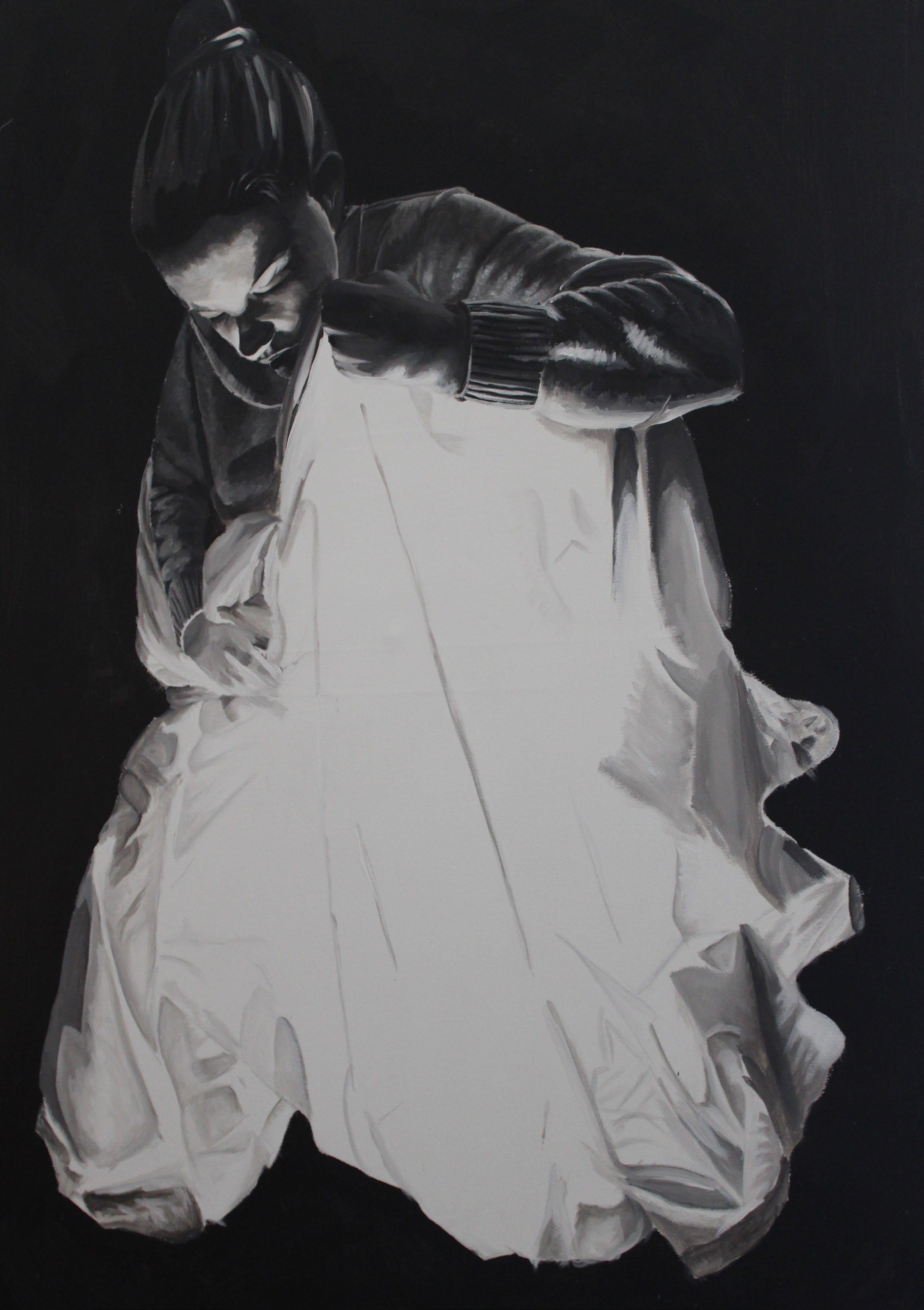
Maria C Head of Spanish
Voces, Escenarios e Historias: Un Trimestre Dinámico para los Estudiantes de Español
Page 105
Este trimestre ha sido muy emocionante para el departamento de español, ya que hemos participado en algunos eventos. Para empezar, tuvimos la oportunidad de participar en el festival de teatro hispano que fue organizado por NLCS-(North London Collegiate School) que se lleva a cabo anualmente. Esta competición reúne a algunos de los colegios más prestigiosos del país como por ejemplo Eton, Harrow o Wellington College, lo que convierte la experiencia en un gran desafío.
This term has been very exciting for the Spanish department, as we have taken part in several events. To begin with, we had the opportunity to participate in the Hispanic Theatre Festival organised by NLCS (North London Collegiate School), which takes place annually. This competition brings together some of the most prestigious schools in the country, such as Eton, Harrow, and Wellington College, which makes the experience a significant challenge.
Nuestro grupo presentó La Última Clase, que es una obra original escrita y dirigida por una alumna de Upper Sixth, quien también interpretó uno de los papeles principales. La producción reunió a estudiantes desde Remove (año 10) hasta Upper Sixth (año 13). Esto crea un equipo lleno de talento con energía y creatividad. La Última Clase es un drama emocional situado en un aula. En su último día antes de jubilarse, la Profe García impone una pregunta sencilla pero profunda a sus alumnos: “¿Qué vas a hacer con lo que has aprendido?”. A través de una serie de flashbacks llenos de humor y confesiones inesperadas, la obra revela cómo las lecciones de la profesora han marcado la vida de cada estudiante. Además, la historia incluye comedia, música y momentos de gran sensibilidad. La verdadera educación no es memorización, sino la transformación. Nuestro colegio fue reconocido con dos premios: el Audience Choice Award y el galardón a Best Supporting Actress, otorgado a Parul Saha (Upper Sixth), que también escribió y dirigió la obra.
Our group presented La Última Clase, an original play written and directed by an Upper Sixth student,
who also performed one of the leading roles. The production brought together students from Remove (Year 10) to Upper Sixth (Year 13), creating a team full of talent, energy, and creativity. La Última Clase is an emotional drama set in a classroom. On her last day before retiring, Profe García poses a simple yet profound question to her students: “What will you do with what you have learned?” Through a series of humorous flashbacks and unexpected confessions, the play reveals how the teacher’s lessons have shaped each student’s life. The story also includes comedy, music, and moments of great sensitivity. True education is not memorisation but transformation. Our school was recognised with two awards: the Audience Choice Award and Best Supporting Actress, awarded to Parul Saha (Upper Sixth), who also wrote and directed the play.
Tras del texto teatral, dos estudiantes, Parul y Corinne, participaron en la Spanish Debating Competition, organizada por Haberdashers Elstree School. Debatieron temas de gran actualidad como los efectos de la inmigración, la importancia de los festivales frente a los monumentos y la influencia de las celebridades en los jóvenes. Su conocimiento y su uso del idioma fueron muy elogiados por los jueces. Alcanzaron la ronda final y obtuvieron el segundo puesto.
After the theatre performance, two students, Parul and Corinne, took part in the Spanish Debating Competition, organised by Haberdashers Elstree School. They debated highly relevant topics such as the effects of immigration, the importance of festivals versus monuments, and the influence of celebrities on young people. Their knowledge and use of the language were highly praised by the judges. They reached the final round and achieved second place.
Como parte de este artículo, tuvimos la oportunidad de realizar una breve entrevista con Parul y, al preguntarle sobre su experiencia en ambas competiciones, nos compartió las siguientes palabras:
As part of this article, we had the opportunity to conduct a brief interview with Parul, and when asked about her experience in both competitions, she shared the following words:
“Debatir completamente en español nos desafió a pensar de manera crítica y a articular nuestras ideas y argumentos bajo presión, lo que mejoró significativamente nuestra fluidez, confianza y habilidades de oratoria. Entre las rondas, disfrutamos de conectar con otros estudiantes que comparten nuestra pasión por la lengua y la cultura españolas. Nos alegró muchísimo lograr el segundo puesto; esta competición ha sido una experiencia inolvidable y estamos profundamente agradecidas por la oportunidad de crecer tanto académica como personalmente.”
“Debating entirely in Spanish challenged us to think critically and to articulate our ideas and arguments under pressure, which greatly improved our fluency, confidence, and public-speaking skills. Between rounds, we enjoyed connecting with other students who share our passion for the Spanish language and culture. We were incredibly happy to achieve second place; this competition has been an unforgettable experience, and we are deeply grateful for the opportunity to grow both academically and personally.”
Su reflexión resume el carácter del departamento este trimestre: creatividad, dedicación y un profundo amor por el español. Dos competiciones, dos experiencias inolvidables y un orgullo compartido por todos nuestros alumnos y profesores.
Her reflection summarises the spirit of the department this term: creativity, dedication, and a deep love of Spanish. Two competitions, two unforgettable experiences, and a shared sense of pride among all our students and teachers.
Max (Pupil)
Tomás (Pupil)
Parul (Pupil)
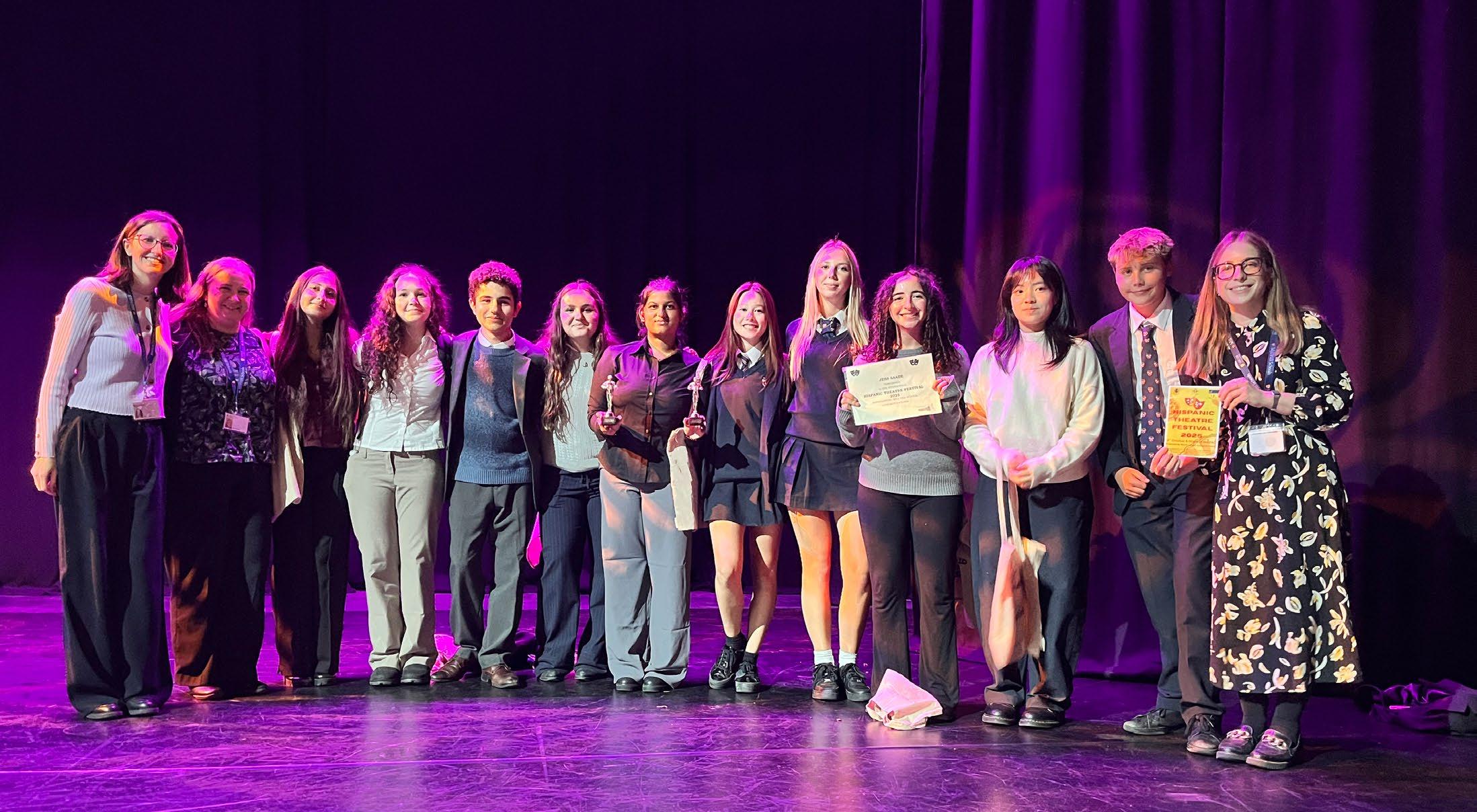
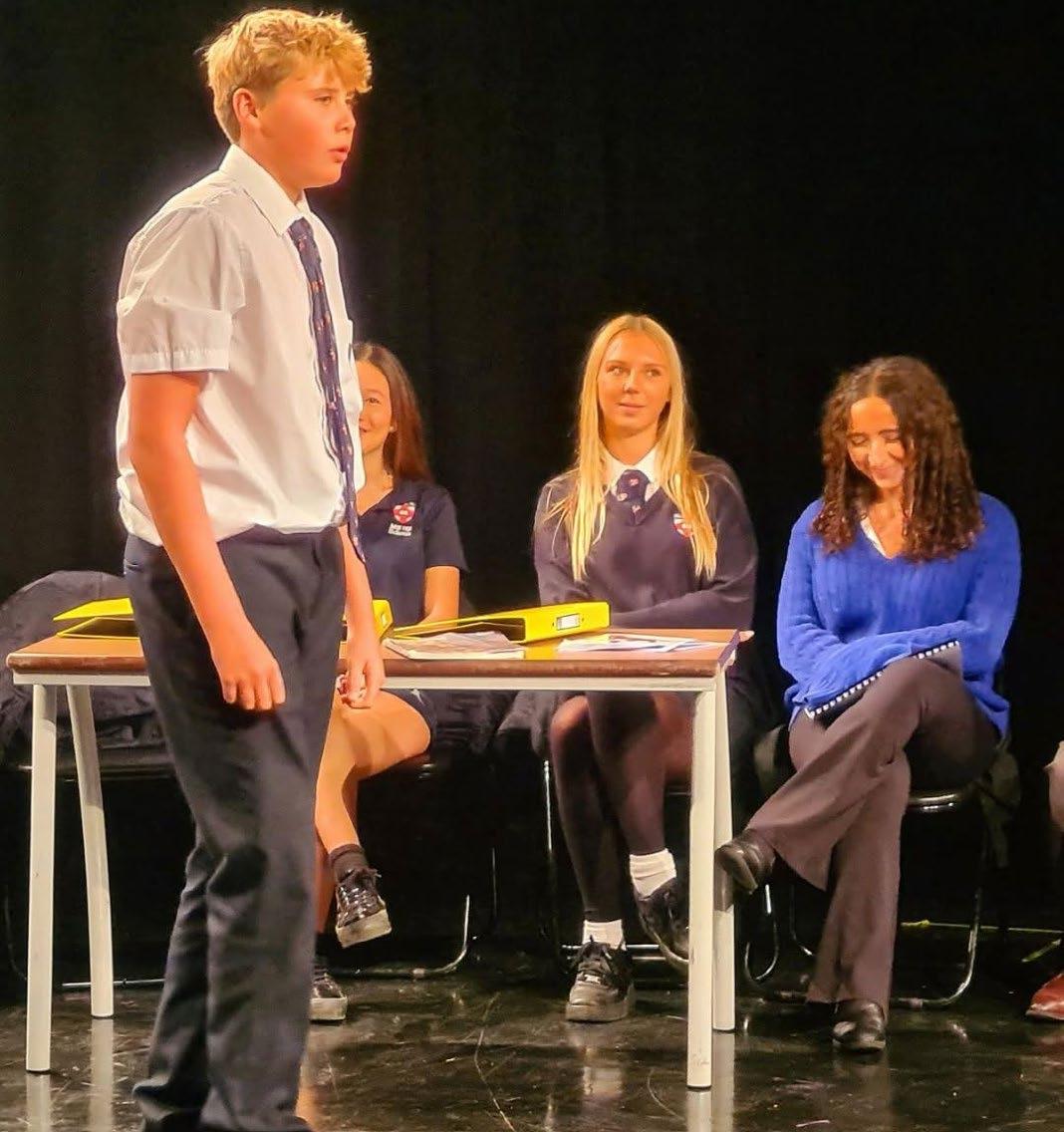
53
An Inter-connected world
1. List of current sanctions in place by OFAC (Office Of Foreign Assets Control) https://ofac.treasury.gov/sanctions-programs-and-country-information
2. List of current US sanctions and embargoes by the Office of the General Counsel from the Rensselaer Polytechnic Institute https://generalcounsel.rpi.edu/export-controls/regulations/current-list-us-sanctions-and-embargoes
3. Explanation paragraph by OFAC https://ofac.treasury.gov/faqs/topic/1501#:~:text=1.,Updated:%20August%2021%2C%202024
4. A research breaking published in the House of Commons library about UK sanctions on Russia https://researchbriefings.files.parliament.uk/documents/CBP-10342/CBP-10342.pdf
5. A press release fact sheet by the Department of the Treasury. https://home.treasury.gov/news/press-releases/jy1298?
6. Al Jazera new article about the effect on US and EU trade embargoes https://www.aljazeera.com/opinions/2025/9/3/us-and-eu-sanctions-have-killed-38-million-people-since-1970
7. New article about the timeline of trumps tariff actions so far https://www.pbs.org/newshour/economy/a-timeline-of-trumps-tariff-actions-so-far
8. Official fact sheet released by the WhiteHouse https://www.whitehouse.gov/fact-sheets/2025/03/fact-sheet-president-donald-j-trump-adjusts-imports-ofautomobiles-and-automobile-parts-into-the-united-states\
9. Article published by the Council on Foreign Relations https://www.cfr.org/article/heres-how-countries-are-retaliating-against-trumps-tariffs
10. Article from the Guardian https://www.theguardian.com/technology/2020/sep/24/tesla-sues-trump-administration-over-unlawfultariffs-on-chinese-parts
11. Official website of the EU commission detailing what the EU single market does. https://commission.europa.eu/topics/single-market_en
12. US department of Agriculture service article describing the USMCA https://www.fas.usda.gov/topics/us-mexico-canada-agreement-usmca
13. Article from the Africa trade foundation https://www.africatradefoundation.org/the-afcfta
Page 55
What are the implications for different countries of international trade policies in the contemporary world?
Both graphs from Statista - Chart: Trump’s Reciprocal Tariffs Reinstated | Statista
China
• The Times
• AP News
• New York Post
• Reuters
• United States Trade Representative
• The Guardian
• Reuters
• The Times
UK
• The Guardian
• The Guardian
• Reuters
• The Guardian
• Reuters
• https://www.ons.gov.uk/economy/nationalaccounts/balanceofpayments/articles/ uktradewiththeunitedstates/2024
Micronesia
• Harvard Kennedy School+2Devpolicy Blog+2
• OEC+1
• Devpolicy Blog+1
• pactimes+1
• Reuters+1
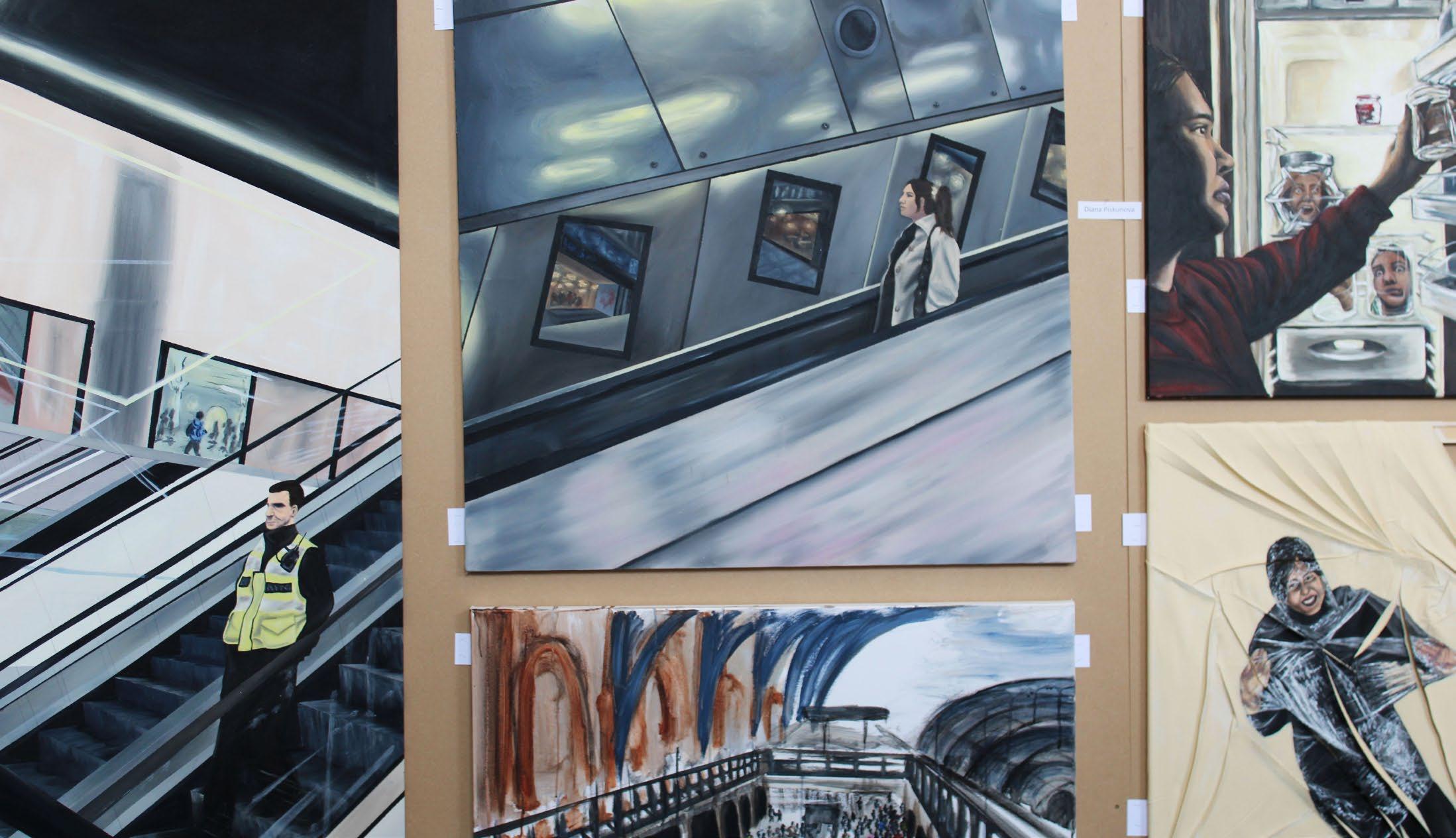
Bibliography:
WWF:
https://wwf.panda.org/discover/knowledge_hub/where_we_work/amazon/about_the_amazon/
AIU:
https://www.iceultra.com/about-antarctica
ASOC:
https://www.asoc.org/learn/the-global-ocean-pump/
Atlantic Council:
https://www.atlanticcouncil.org/blogs/econographics/climate-drought-and-the-disrupted-future-of-global-trade/ Sinay:
https://sinay.ai/en/sailing-the-long-way-comparing-co2-emissions-and-travel-time-around-cape-horn-vs-panamacanal-and-cape-of-good-hope-vs-suez-canal/
NOA:
https://oceanexplorer.noaa.gov/edu/learning/8_ocean_currents/activities/currents.html#:~:text=Currents%20 are%20important%20in%20marine,and%20carry%20off%20living%20organisms
UN Press:
https://press.un.org/en/2021/sgsm20754.doc.htm#:~:text=The%20theme%20of%20this%20year's,vast%20 majority%20in%20developing%20countries
RFN:
https://www.regnskog.no/en/long-reads-about-life-in-the-rainforest/the-amazonian-effect-how-the-rainforestsustains-life-in-south-america
Nature:
https://www.nature.com/articles/s41586-023-06970-0
Geographical:
https://geographical.co.uk/news/what-would-happen-if-the-amazon-disappeared#:~:text=Estimates%20 suggest%20that%20if%20the,tons%20of%20CO2%20each%20year
Americas Quarterly:
https://www.americasquarterly.org/article/new-aq-creating-a-better-breadbasket-for-latinamerica/#:~:text=AQ's%20new%20special%20report%20looks%20at%20why%20the%20issue%20deserves%20 more%20attention.&text=Today's%20Latin%20America%20is%20truly,and%20chicken%2C%20and%20so%20on
WHO:
https://www.who.int/news/item/24-07-2024-hunger-numbers-stubbornly-high-for-three-consecutive-years-asglobal-crises-deepen--un-report
Guardian:
https://www.theguardian.com/environment/2021/jul/14/amazon-rainforest-now-emitting-more-co2-than-itabsorbs
Royal Society:
https://www.theguardian.com/environment/2021/jul/14/amazon-rainforest-now-emitting-more-co2-than-itabsorbs
Telegraph:
https://www.telegraph.co.uk/travel/news/Maldives-resort-claims-worlds-smallest-mountain/ WWF:
https://www.wwf.org.uk/where-we-work/amazon#:~:text=Not%20just%20for%20food%2C%20water,regional%20 carbon%20and%20water%20cycles