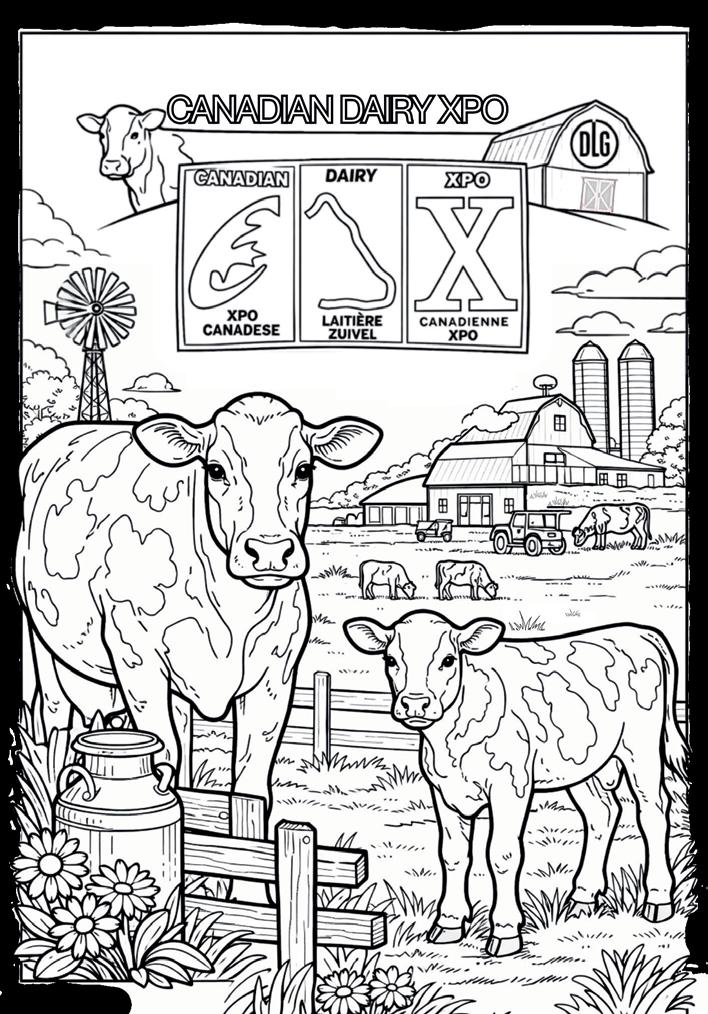
BRING YOUR COLOURING PAGE TO THE CORN BOX IN THE COW COLISEUM AT CDX FOR A CHANCE TO WIN PRIZES!
BRING YOUR COLOURING PAGE TO THE CORN BOX IN THE COW COLISEUM AT CDX FOR A CHANCE TO WIN PRIZES!
April 1 & 2, 2026
PUBLISHED BY
DAIRY FARMERS OF ONTARIO
6780 Campobello Road Mississauga, ON L5N 2L8
COMMUNICATIONS
Sandra Da Silva sandra.da-silva@milk.org 905-817-2178
ADVERTISING
Pat Logan
pat.logan@milk.org 519-788-1559
GRAPHIC DESIGN
Katrina Teimo
CONTRIBUTORS
Jeff Hyndman, Kristin Benke, Cheryl Smith, Robert Matson, Joanna Yalcinkaya, Ashley Wannamaker, Sebastian Decap, Jeanine Moyer, Jean Lian, Essi Evans, Jean-Philippe Laroche, Dairy Science Club Executives, University of Guelph, Veal Farmers of Ontario
Canada Post Publications Mail Sales Product Agreement No.40063866.
Return postage guaranteed. Circulation: 6,950. ISSN 0030-3038. Printed in Canada.
SUBSCRIPTIONS
For subscription changes or to unsubscribe, contact: MILK PRODUCER
6780 Campobello Road Mississauga, ON L5N 2L8
Phone: (905) 821-8970
Fax: (905) 821-3160
Email: milkproducer@milk.org
Opinions expressed herein are those of the author and/ or editor and do not necessarily reflect the opinion or policies of Dairy Farmers of Ontario. Publication of advertisements does not constitute endorsement or approval by Milk Producer or Dairy Farmers of Ontario of products or services advertised.
Milk Producer welcomes letters to the editor about magazine content.
*All marks owned by Dairy Farmers of Ontario.
WEBSITES & SOCIAL MEDIA
www.milkproducer.ca
www.milk.org
Facebook: /OntarioDairy
X: @OntarioDairy
Instagram: @OntarioDairy
LinkedIn: dairy-farmers-of-ontario
www.milkproducer.ca
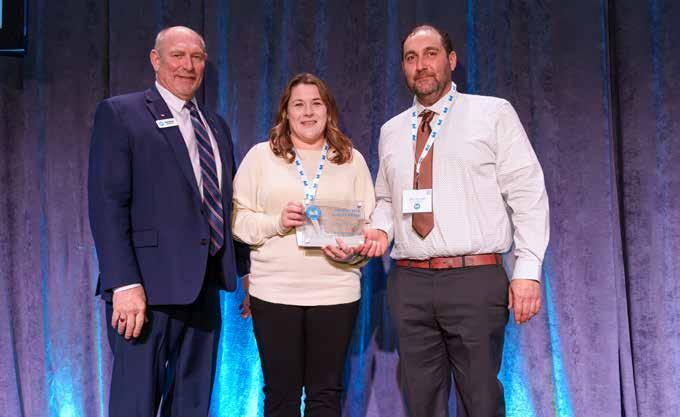
At the 2026 AGM in January, DFO’s Board recognized outstanding producers for their commitment to consistently produce high quality milk and who demonstrate industry leadership.
or mirage? How to separate facts
Delivering excellence in quality milk everyday
Highlighting Ontario dairy’s commitment to quality
By Vicky Morrison, Dairy Farmers
of Ontario
(DFO) Board
Member, Region 9, representing producers in the counties of Elgin, Essex, Kent, Lambton and Middlesex. Vicky chairs the DFO Quality Assurance Committee and serves on the Marketing and Promotions Committee, the Ontario Advisory Committee for Milk and on the P5 Pool Committee for Raw Milk Quality. She is also a Director on the Dairy Farmers of Canada Board and chairs the proAction® Committee.
Quality in dairy starts on the farm, where producers across the province work with care and commitment to produce milk Ontarians trust. As the delegated authority, Dairy Farmers of Ontario upholds that trust through oversight and support. The Quality Assurance Committee strengthens this work by monitoring and recommending improvements to raw milk quality, safety and sustainability in Ontario. This includes monitoring and making recommendations to the DFO Board with priority on assessing quality penalty programs, maintaining temperature logs, monitoring for antibiotic residues and addressing any related issues.
In a 2025 edition of Milk Producer, I wrote that “commitment to quality is the cornerstone of consumer trust and confidence in our milk supply.” That sentiment rings just as true today. Every touchpoint in our system exists to ensure that the milk leaving our farms meets the highest possible standards of purity, safety and consistency. These processes aren’t just technical requirements; they are the backbone
of a sector designed to produce highquality milk, protect consumers and support long-term industry sustainability. To further strengthen this commitment to quality, work is underway to deliver test results to producers more quickly through SMS notifications. A pilot group is currently trialing this approach, allowing them to receive essential quality information in near real time. Together, it is a responsibility we all carry on behalf of every Ontarian who pours a glass of milk, spreads butter on their toast or adds cream to their favourite recipe.
DFO has long recognized the unwavering commitment of Ontario dairy farmers. Each year at local producer meetings, county Annual General Meetings (AGM) and the DFO AGM, we acknowledge and recognize farms that achieve exceptional results in two key indicators of milk quality, and producers that go above and beyond on their farms to produce high-quality milk– a well deserved recognition of exceptional milk and the people who make it possible.
Vicky Morrison
This edition of Milk Producer magazine highlights the Ontario producers who achieved excellence in quality, earning distinction as this year’s Quality Award recipients. Their work reflects what is possible when passion and care come together to produce a product that nourishes families every day.
Vicky Morrison
High-quality milk doesn’t happen on its own. It is produced through hard work, commitment and an industry-wide belief that excellence is always worth striving for. Ontario dairy farmers take pride in our farms and the work we do each and every day to produce high-quality Canadian milk that consumers can trust. That same commitment guides DFO in delivering the mandate entrusted to us: supporting farmers, enhancing and enforcing compliance, meeting market expectations and ensuring a reliable supply of safe, high-quality milk. Together, we continue to earn and protect the trust that Ontarians place in our dairy industry.
Tailored succession planning for your family farm
Attend a local workshop to secure your farm’s future
Don’t settle for generic advice. Our workshops provide your family with direct consultations with a team of advisors, including an accountant, lawyer, and financial advisor. Scan the QR code to find a workshop near you. Scan Here
Fiber Separation System a sustainable source of comfort for your cows.
GEA XPressTM provides the best available comfort to your cows.
‘‘We’re a closed herd calving all our own replacements. By adding fiber bedding from our GEA roller press system, it’s comforting, not worrying if any bacteria will come in purchased bedding material. We can bed anytime of the day even during the summer with fans running and curtains open, there’s no dust blowing. Since switching from sawdust, the barn stays much cleaner.’’
BRITISH
COLUMBIA
Mountain View Electric Ltd.
Enderby — 250 838-6455
Pacific Dairy Centre Ltd.
Chilliwack — 604 852-9020
ALBERTA
Dairy Lane Systems
Leduc: 780 986-5600
Blackfalds: 587 797-4521
Lethbridge: 587 787-4145
Lethbridge Dairy Mart Ltd.
Lethbridge — 888 329-6202
Red Deer — 403 406-7344
SASKATCHEWAN
Dairy Lane Systems
Warman — 306 242-5850
Emerald Park — 306 721-6844
Swift Current — 306 203-3066
MANITOBA / NW ONTARIO
Penner Farm Services Ltd.
Blumenort — 204 326-3781
Thunder Bay ON – 800 461-9333
Tytech
Grande Pointe — 204 770-4898
ONTARIO
Claire Snoddon Farm Machinery
Sunderland — 705 357-3579
Conestogo Agri Systems Inc.
Drayton — 519 638-3022 1 800 461-3022
County Automation
Ameliasburg — 613 962-7474
Dairy Lane Systems
Komoka — 519 666-1404
Keith Siemon Farm Systems Ltd.
Walton — 519 345-2734
Lamers Silos Ltd.
Ingersoll — 519 485-4578
Scan this QR code to learn more about GEA XPressTM fiber separation system.
Lawrence’s Dairy Supply Inc.
Moose Creek — 613 538-2559
McCann Farm Automation Ltd.
Seeley’s Bay — 613 382-7411
Brockville — 613 926-2220
McLaren Works Cobden — 613 646-2062
Melbourne Farm Automation
Melbourne — 519 289-5256
Watford — 519-876-2420
Silver-Tech Systems Inc.
Aylmer — 519 773-2740
Dunnville — 905 981-2350
ATLANTIC PROVINCES
Atlantic Dairy Tech.
Charlottetown, PE — 902 368-1719
Mactaquac Farm Equip. Ltd.
Mactaquac, NB — 506 363-2340
Sheehy Enterprises Ltd.
Shubenacadie, NS — 902 758-2002
Sussex Farm Supplies
Sussex, NB — 506 433-1699
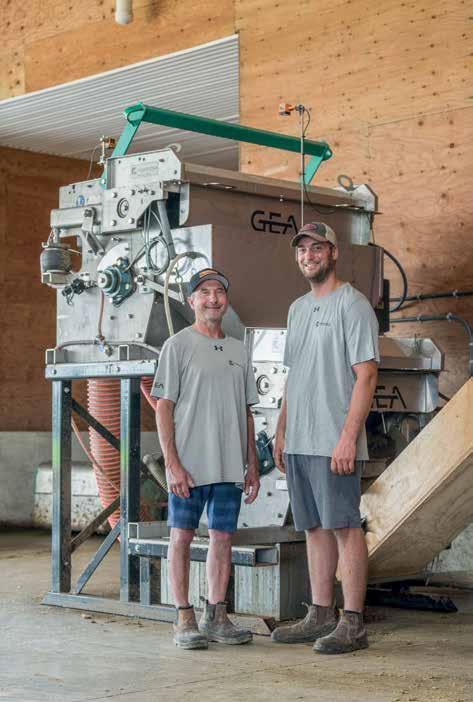
Ryan Bross and his father Bross Dairy, Mildway, ON, Canada
Using test results as a part of on-farm troubleshooting
By Jeff Hyndman, Executive Director, Regulatory Compliance and Quality Assurance, Dairy Farmers of Ontario
IN THE FEBRUARY 2024 ISSUE OF MILK PRODUCER, the Enhanced Laboratory Services (ELS) program was introduced to producers. The ELS program started in March 2024, and under it, the number of bacterial tests increased from one per week to 15-16 per month for an every-otherday shipper. Additionally, the Agriculture and Food Laboratory (AFL) at the University of Guelph adopted a seven-day testing schedule, resulting in more timely results for producers for all test results.
Data is one of the key components in the troubleshooting ‘toolbox’ for producers. Currently, all samples are tested for fat, protein, other solids, somatic cell counts (SCC), milk urea nitrogen (MUN), free fatty acids (FFA), bacteria and a freezing-point estimate (FPE). Looking at individual samples is important for regulatory, payment and information purposes, but stepping back to examine trends is equally important for troubleshooting milk quality issues on the farm.
Dairy Farmers of Ontario (DFO) is unique as a marketing board that is accountable to the Ontario Farm Products Marketing Commission, which delegates authority to all marketing boards, and also has the additional delegated authority for administering the raw milk quality (RMQ) program under the authority of the Ontario Ministry of Agriculture, Food and AgriBusiness (OMAFA). This unique position is the focus of my DRC corner this month; the goal is to highlight the different ways we support producers in their journey to improve milk quality.
Online test results
In the Milk Management System (MMS), producers can view all available test results for the month in their Test Result dashboard. These test results are colour-coded based on the individual test result based on the following table.
Please note: While FFA is not a regulatory measure, it is an indicator of milk quality, which is why the colour differs from the typical yellow or red pattern.
Additionally, all milk marketed must be free of inhibitors based on Regulation 761 of the Milk Act. If a test result for any inhibitor is positive, it will also appear as a red colour on the producer Test Result dashboard (indicating the result is in the penalty range). If a test result is grey, the sample was deemed unsuitable.
When looking at the producer Test Result dashboard, producers should be looking for as little colour as possible. Even elevated test results may point to a potential milk quality issue in the future. By ensuring that test results in the elevated (yellow) warning zone are addressed promptly, producers can continue to deliver the highest quality milk to consumers.
DFO maintains the Milkline system for test results, which supports producers with and without internet access, and is continually seeking additional ways to provide test results to producers.
Although the relevant penalty and application differ based on the test result, all penalty levels and penalties are clarified in the DFO Raw Milk Quality Program Policy booklet. Producers are encouraged to consult these documents regularly to ensure compliance with all requirements.
On-farm troubleshooting
In addition to the data on the website, DFO allows sharing of these test results with service providers, including the herd veterinarian, nutritionist, equipment dealer or other trusted advisors. These advisors can be instrumental in troubleshooting quality issues.
Another great resource is your DFO Field Service Representatives (FSRs), who are not only milk inspectors, but they are also your source of support for everything, including milk quality troubleshooting. Our team of 13 FSRs are a great resource for investigating milk quality issues and routinely conducts quality investigations for farmers across Ontario and would be eager to support producers interested in improving their milk quality.
Conclusion
For the quality of Ontario milk, every elevated test result matters. For the health of the industry, there are no elevated or penalty level test results that do not warrant action. Furthermore, producers need to ensure they treat each test result as information that can improve their milk quality, regardless of whether it will trigger a penalty dollar application.
DFO is here to support producers through tools and on-farm support with the goal of further improving Ontario milk quality, and your FSR is a great place to start.
When looking at the producer Test Result dashboard, producers should be looking for as little colour as possible. Even elevated test results may point to a potential milk quality issue in the future. By ensuring that test results in the elevated (yellow) warning zone are addressed promptly, producers can continue to deliver the highest quality milk to consumers.
Smarter Dairy Stronger Future
Herd Management with
Better than ever and included with your milk recording subscription
Powerful Cow-side Technology
Trends
Review key metrics and swipe through graphics to quickly spot variations in the herd.
Cow profiles
View animal profiles, sort cow and heifer records, and analyze data to determine which animals require attention.
Performance
A proven time-saver for retrieving test day results, production, SCCs, milk values, and lactation history.
Learn more and contact us to get started
Managing milk supply and filling markets
Supplying the demand for protein and butterfat
By Kristin Benke, Chief Business & Supply Chain Officer, Dairy Farmers of Ontario & Cheryl Smith, Chief Executive Officer, Dairy Farmers of Ontario
Globally, consumer demand for milk and dairy products continues to rise, driven by changing consumption habits, fuelling appetites for animal proteins, while maintaining strong market preference for butterfat. This is supported by population growth and increasing per capita income with a rising middle class in the Indo-Pacific region.
Like other dairy producing countries and markets, Canada is projecting continued strong growth in high-protein markets, while adjusting to a slightly lower forecast butterfat market as the previously observed sharp rise in Canadian population growth stabilizes.
This presents both an opportunity and a challenge for dairy producers, who are primarily focused on caring for healthy, productive, well-managed herds and producing high-quality, safe milk.
Responding to the market, population and dietary shifts takes diligent planning and recognition of the time required to responsibly adapt farm operations, while also ensuring milk production balances supply, demand and imports for consumers and processors. Thanks to the stability and predictability that supply management provides, Ontario dairy has continually demonstrated our ability to bring supply in balance with market demand for local, quality milk.
Efficient logistics and planning from farm to processing customers
It begins on the farm.
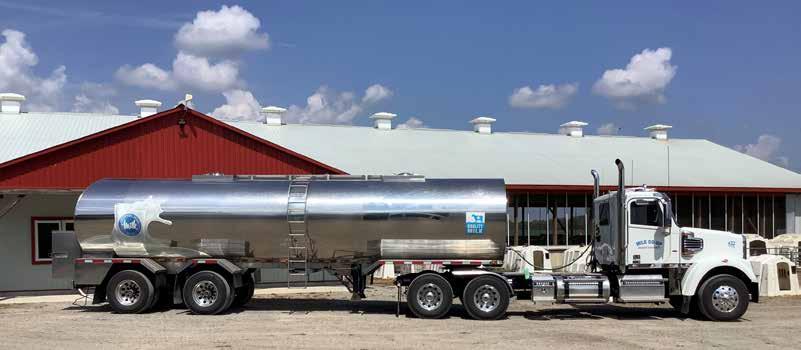
Milk is picked up daily from farms in communities across Ontario. Dairy Farmers of Ontario (DFO) manages a dynamic logistics system that plans milk pick up and delivery by 31 milk transporters who then deliver the milk to processing plants based on their orders. Annually, DFO manages the collection of almost 300 loads daily, from 3,100+ farms to 90 processing plants throughout the province.
In 2025, Ontario dairy farmers produced more than 3.18 billion litres of milk that is transformed by dairy processors into fluid and dairy products, with an increasing shift to higher protein products in fluid, cheese, yogurt and cottage cheese. For example, Greek yogurt that uses up to six times more
milk than regular yogurt now represents a third of yogurt retail sales in Canada. Soft cheeses that are high in protein are also growing categories, such as cottage cheese that now represents 10 per cent of cheese sales. This shift in demand occurred as there continues to be a decrease of the farm production ratio, which has resulted in shifts in the protein available to serve all markets, and a better return for surplus solids-non-fat (SNF). This has an impact on the volumes required as dairy producers also adjust rations in response to the protein-to-butterfat ratio.
DFO is managing the efficient production and marketing of a fresh, perishable product. This takes a dynamic logistics, allocation and transportation coordination between farms and processing plants. It includes contingencies when unplanned milk delivery disruptions arise, as they sometimes do with customers. We work closely with dairy processors to ensure utilization of Ontario milk, shifting milk deliveries to ensure timely receipt and processing. Like in other dairy jurisdictions, skimming is a solution when milk cannot be utilized by another plant. It is then directed to animal feed and biodigesters. This is not a monthly occurrence, deployed as a back up solution when all other avenues for processing have been exhausted.
2030 strategic targets
In 2024, the DFO board approved 2030 strategic priorities, focusing on value creation through production growth and processing increases. While we are working towards these objectives, DFO remains nimble in adjusting the strategy to meet the growing opportunity for dairy proteins. We continue to work on securing new processing capacity, to support our ability to grow the Canadian dairy sector, delivering the desired milk components for use in domestic processing. This will strengthen our agriculture sector and protect Canada’s food security.
Ontario is well-placed to facilitate and enable this growth, currently sustaining over 30 per cent of existing dairy processing, while encouraging new capacity and capabilities, servicing Ontario’s dairy and food sectors. Home to 40 per cent of the Canadian population and one of North America’s top food manufacturing hubs, we are working with our processing customers and the government to secure and grow our dairy sector for Ontario and Canada.
Addressing market dynamics
In today’s geopolitical and business climate, any strategic plan needs to be adaptable to derisk and mitigate unplanned externalities, while still progressing towards desired outcomes.
Working with our colleagues in the P5, DFO is responding to shifting market demands for dairy protein by adjusting the farm payment policy. Read more on page 30 in February’s issue of Dairynomics
DFO recognizes that it will take time for farmers to make the necessary changes to adapt on farm, and that some may not be as able to make the adjustments in the short-term. This is a necessary shift to remain responsive to market demand. It will require farms to work with their advisors to determine appropriate changes to increase protein production on farm to maximize profit per kilo of quota. Working with their nutritionists, feed suppliers, genetics companies and veterinarians, farmers will come up with a plan that makes sense for their farm operation, while maintaining milk quality, animal care and other on-farm food safety standards.
As Ontario producers make the adjustments on their farms, DFO continues to work with processing customers to minimize disruptions in milk supply to ensure that Ontario milk makes it safely to Ontario consumers.
In 2025, Ontario dairy farmers produced more than 3.18 billion litres of milk that is transformed by dairy processors into fluid and dairy products, with an increasing shift to higher protein products in fluid, cheese, yogurt and cottage cheese.
Ontario dairy commitment
Ontario dairy delivers for Ontario, every day. Together, DFO with Ontario dairy farmers and our processing customers, we will continue to deliver high-quality milk, nourish communities and grow our sector for the benefit of Ontario and Canada. We will do it with the appropriate policies, that make sense for Ontario and Canada, while strengthening a healthy, growing dairy sector.
Set your calves up for success with premium, research-backed milk replacer, powering growth, health, and performance from day one.
Milk quality, immunity and hidden milk losses: why mastitis steals energy before it steals milk
B y Sebastian Decap, DVM, MSc, Director of Strategic Marketing & Technology, Trouw Nutrition Canada
WHEN WE TALK ABOUT MILK QUALITY, we often think about somatic cell count (SCC), bacteria count and penalties that impact the revenue of the farm. Certainly, that’s important, but it misses a major biological cost: a cow fighting mastitis re-routes nutrients and energy away from milk synthesis to fuel the immune system. In other words, milk losses are not only “damage in the udder”, but they are also a reflex of metabolic and hormonal priorities shifting toward defense.
The cow’s energy budget: milk vs immunity
Milk production is one of the most energy-intensive processes for the cow. Glucose is required for synthesis of lactose, which drives milk volume. Amino acids support milk protein synthesis and efficient rumen fermentation, which are essential for fat and protein production. The immune system uses all of those same nutrients.
When a cow develops mastitis, immune cells activate quickly and demand large amounts of glucose and amino acids to produce antibodies, inflammatory mediators and acute-phase proteins. Research has shown that
during immune activation, glucose use by the immune system can rival or exceed glucose use for milk synthesis (Kvidera et al., 2017).
Physiologically, the cow prioritizes survival over production and therefore, nutrients are redirected from milk to the immune system. At the same time, sick cows often reduce feed intake. This leads to a two-fold impact- less energy coming in and more energy diverted to immunity.
Why components drop
For producers, mastitis frequently shows up in components before it shows up in the tank. Inflammatory issues typically lead to:
• Reduced lactose synthesis -> lower milk yield
• Reduced microbial protein flow and amino acid availability-> lower milk protein yield
AGRI-TRAC Milled our dair y barn floors in August of 2000.22 Years later we just had AGRI-TRAC backto do them again. It lasted 22 Years! We chose AGRI-TRAC bothtimesinstead of grooving because it works and lasts. We have experience, grooving does NOT work! Thank you AGRI-TRAC.
Mario Vriens Friendly Farms Arthur, ON
Many herds notice a protein test drop first, followed by an unstable fat test, even when the cows still look fine. That’s because amino acids and glucose are being diverted to immune function rather than milk synthesis.
This is why mastitis isn’t only a quality issue — it’s a milk component efficiency issue.
Days in milk (DIM) matters
The same mastitis case affects the cow throughout the entire lactation, but the economic impact varies depending on the stage of lactation in which it occurs.
Early lactation (0-60 DIM)
This is the highest risk and most expensive period. Cows are quite often in negative energy balance, dry matter intake is still increasing and immune function is challenged. When mastitis occurs here, nutrient competition is severe. Peak milk is reduced and total lactation yield may never fully recover. One early case can mean hundreds of kilograms of lost components over the lactation.
Mid lactation (60-200 DIM)
AGRI-TRAC gives thecows the Traction they need without being too aggressive on their feet. We also like how the floor is easy to scrape and clean.
James Walker Walkerbrae Farms Guelph, ON
Cows are more metabolically stable, so losses are moderate but still meaningful. Subclinical inflammation often goes unnoticed, while quietly reducing components day after day.
Late lactation (>200 DIM)
Immediate losses are smaller, but chronic inflammation still affects SCC, quality and potentially will carry-over udder health issues into the next lactation.
Reviews linking metabolism and mastitis consistently show that metabolic stress and inflammation are tightly connected to reduce production efficiency (Swartz et al., 2021).
Subclinical mastitis: the silent drain
Clinical mastitis get attention. Subclinical mastitis often does not. However, elevated SCC reflects immune activation, which still consumes a lot of energy.
A cow with chronically high SCC may never show a dramatic drop in milk, yet she quietly produces fewer kilograms of fat and protein for months. Across a herd, these hidden losses add up fast. Economical analysis confirms mastitis remains one of the most costly diseases in dairy because of cumulative reduction in yield and profitability (Rasmussen et al., 2024).
Milk quality and production strategy
If immune activation diverts nutrients away from milk, then improving udder health is more than a best practice — it’s a production, efficiency and profitability strategy. Check out Table 1 to see how production can be affected.
Fewer infections mean:
• More glucose for lactose
• More amino acids for protein
• More stable rumen fermentation for fat
• Higher feed efficiency
• More kilograms shipped
Practical priorities that pay back:
• Consistent teat prep and post-dipping
• Clean, dry bedding and stall management • Proper liner and vacuum maintenance •
using SCC trends and routine forestripping
• Extra focus on transition cow intake and stress reduction
These practices may seem simple, but they remain some of the most effective and profitable tools on the farm.
Table 1. Somatic Cell Counts as they Relate to Estimated Milk Losses
*Based on 14,000-15,000 lb average/cow/year.
Source: Masitits: Counter Attack, Philpot and Nickerson (1991)
Their FUTURE starts with
They only get one start – and it happens on your farm. Agri-Plastics designs calf housing and feeding systems that support healthy development from day one.
Agri-Plastics – because their future starts with you.
Securing the milk supply chain
The importance of the Bulk Tank Milk Grader
By Robert Matson, Production Research Manager, Dairy Farmers of Ontario & Joanna Yalcinkaya, Program Manager, Raw Milk Quality, Dairy Farmers of Ontario
ALL COMPONENTS OF THE DAIRY SUPPLY CHAIN must work together to ensure consumers can enjoy safe, nutritious dairy products that they expect each day. While producers and processors are key and well-known players in the supply chain, the Bulk Tank Milk Grader (BTMG) plays an equally important role. The BTMG is more than just a milk truck driver, and their role is defined under Regulation 761 of the Milk Act
Under Regulation 761, only the BTMG or an apprentice BTMG may transfer milk from the bulk tank of the farm. However, before BTMGs may transfer any milk from a bulk tank to a tank truck, a BTMG alone must first complete several essential tasks:
1. Examine the raw milk, grading it by sight and smell for off odour grades or impurities, and rejecting any milk that does not meet the appropriate grade.
2. Ensuring the raw milk meets all other requirements set out in the regulation (including that the milk is at or below the regulatory temperature).
3. Ensures a representative sample is collected of the raw milk that is offered for sale and for recording the volume before starting the transfer.
4. Ensures samples in their care are kept in accordance with regulations, including that the sample temperature is monitored and maintained between 0 and 4°C.
5. Ensuring their tank truck is clean and sanitary.
The activities outlined above are essential to the safety and operation of Ontario's milk system. The grading process helps ensure that milk marketed to processors in Ontario is consistent and safe for consumers. Additionally, milk in Ontario is pooled when marketed to processors, and producers are paid based on their components, the volume they shipped and the processors' final declared product class price. The representative samples collected by the BTMG are tested at the official laboratory and serve as the basis for producer payments and penalty applications. Therefore, there is a strong desire to ensure the samples remain representative and are transported appropriately based on regulation.
These samples also have implications for quota position, as the composition is used, along with the volume of milk shipped, to determine the total amount of butterfat shipped. Considering the implications the sample collected by the BTMG has on producer payments, penalty application and quota position, the BTMG's impartiality and their ability to act as a third-party are critical to the independence of the milk supply chain.
To consistently carry out these responsibilities, BTMGs undergo a rigorous apprenticeship and certification and recertification process. The process starts when the Board-appointed transporter hires a driver and puts them forward as a candidate to become an apprentice BTMG with Dairy Farmers of Ontario (DFO).
The BTMG course is a two-and-a-halfday session that provides apprentice applicants with practical grading experience and comprehensive instruction on the duties and responsibilities of a BTMG.
A DFO Transportation Officer conducts an apprentice performance evaluation and scores the applicant to ensure they understand milk grading, measuring, sampling, transportation, and delivery duties and responsibilities. From here, apprentice BTMGs register to attend the BTMG certification course.
The BTMG course is a two-and-a-half-day session that provides apprentice applicants with practical grading experience and comprehensive instruction on the duties and responsibilities of a BTMG. It also provides the applicant with information on topics such as milk quality and composition, regulations and policies, the use of handheld computers, the tank truck inspection program, and the duties and responsibilities at the plant. This training is firmly rooted in regulation and is designed in such a way as to ensure that all BTMGs share the same training.
To pass the BTMG course, applicants are assessed on their ability to grade milk and their understanding of the responsibilities and duties of a BTMG. To achieve a pass mark, the applicant must obtain a minimum of 70 per cent on both a written and a practical exam. Those BTMGs which meet the requirements and are employed by a Board-appointed transporter are granted a BTMG certificate with a five-year validity period.
BTMGs wishing to renew their certification are required to have completed a successful performance evaluation in that five-year period and a mandatory refresher course in their last year of certification. Successful completion of the refresher course requires that the grader obtain a minimum 70 per cent score on both a written exam and a practical milk grading exam.
As part of their (apprentice and routine) performance evaluation, a total of 36 requirements are assessed; elements include procedures conducted during pre-departure, en route, on-farm pickup, delivery and at sample transfer. BTMG must pass this evaluation, similar to a producer passing their Grade A inspections.
Both regulatory and certification requirements underscore the importance of the BTMG's independent judgment role for DFO and the dairy sector and further safeguard the milk supply chain. By working together as core components of the milk supply chain, we continue to provide safe and nutritious milk to Ontario consumers.
Quality to Commitment
“Ontario dairy producers take tremendous pride in delivering high-quality milk, meeting standards that rank among the highest anywhere. This year’s Quality Award recipients have gone above and beyond, demonstrating true leadership through their unwavering commitment to excellence on their farms. Their dedication sets a powerful example for our entire sector. Congratulations to each award winner on this outstanding achievement.”
— Mark Hamel, Board Chair
“Congratulations to this year’s Quality Award recipients for setting an impressive benchmark in milk quality. Your dedication to excellence, paired with forward thinking on farm practices, is evident in the exceptional product you deliver every single day. At Dairy Farmers of Ontario, we are proud to recognize the care and passion you bring to your work, and the meaningful impact you continue to have on our industry.”
— Cheryl Smith, CEO
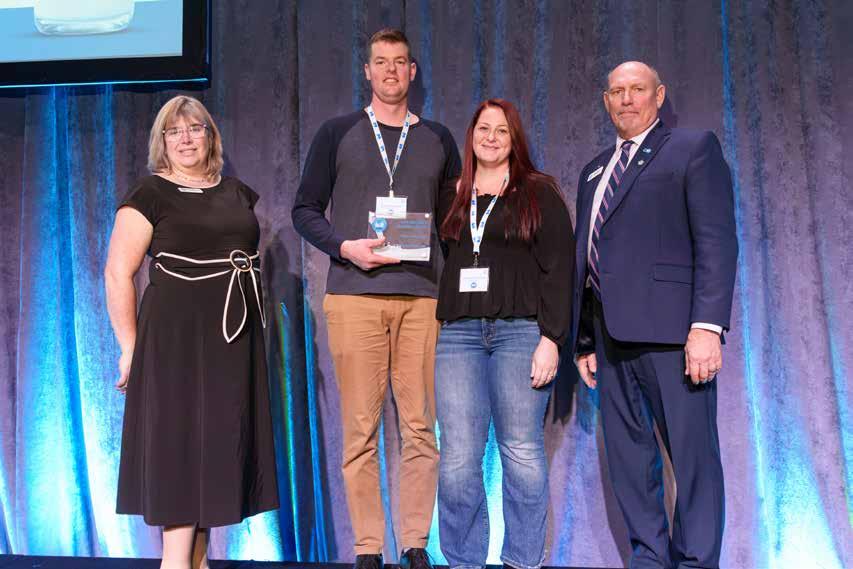
At the 2026 AGM in January, Dairy Farmers of Ontario's (DFO) Board recognized outstanding producers for their commitment to consistently produce high-quality milk and who demonstrate industry leadership.
Five Ontario dairy farms with the best quality scores were recognized for their outstanding commitment to quality. In this issue, we are recognizing our Quality Award winners, who all received Gold Quality Certificates for milk shipped in 2024:
Zethill Farms Ltd.
Russell, Joyce & Joel Zettler
Oasis Acres Ltd.
Albert, Suzanna, Jonathan & Jocelyn Westerhof
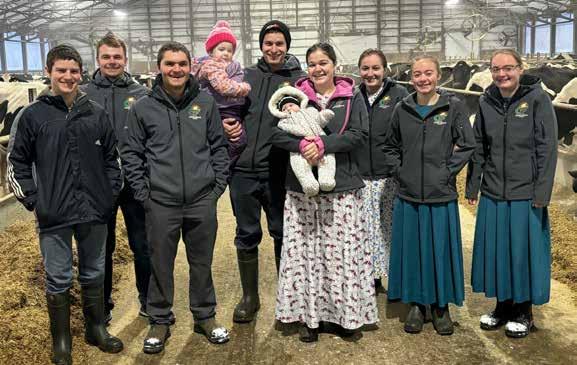
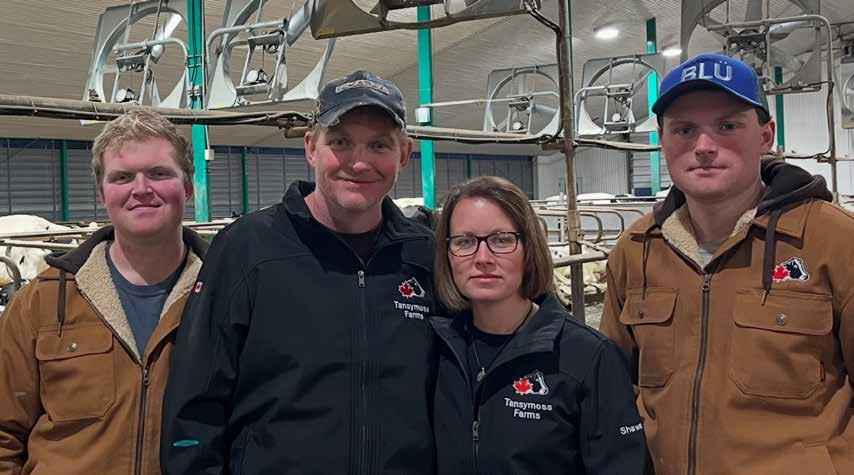
Tansymoss Farms
Paul, Shawna, Wyatt & Dawson
Chaddock
Crescendo Farms
Darryl & Megan Bowman
Sunnyfield Holsteins
Brent & Susanne Snodden
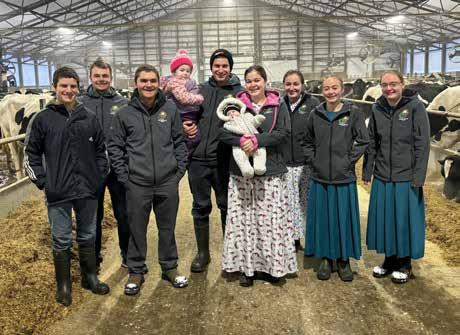
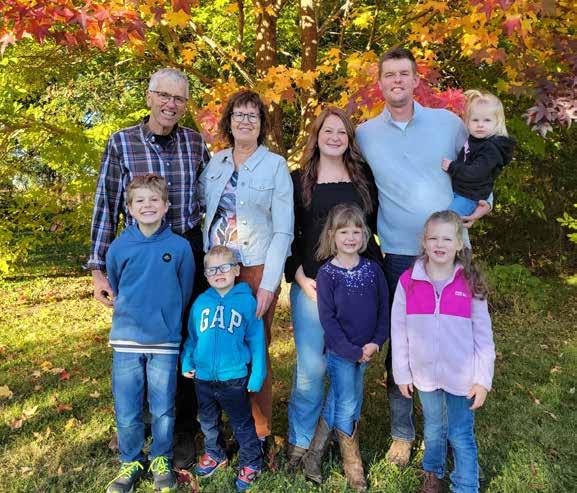
Zethill Farms Ltd.
RUSSELL, JOYCE & JOEL ZETTLER Hanover, Ont., Bruce County
"We’re proud to be quality award winners four years in a row. Winning this award demonstrates that we are consistently consistent in producing high-quality milk."
Congratulations Zettler family on achieving this well-deserved award. Your continuing commitment to producing high-quality milk can be seen as soon as anyone enters your dairy facility. Clean equipment, clean cows and a clean environment show your pride in a job well done. Thank you for making my job easy when I visit your farm and for supporting Ontario’s goal to provide high-quality milk to our processor customers.
– Field Service Representative, Betty-Ann Elliott
2022 2023 2024 2025 winner
What steps do you take to ensure consistent, high-quality milk production on your farm?
Good stall management is key to producing high-quality milk. Cleanliness, regular maintenance and ensuring our milk equipment is properly serviced all play an important role. We also believe that keeping our cows happy and healthy is essential to maintaining milk quality.
What is the most important factor that influences milk quality on-farm?
Sticking to routines. Even with a robotic system, consistency is critical. Every task is done at the same time each day to ensure reliability and consistency in our results.
What are you most proud of?
We’re proud to be Quality Award winners four years in a row. Winning this award demonstrates that we are consistently consistent in producing high-quality milk.
What do you love most about the dairy industry?
Having cows as co-workers.
What advice would you give to other farmers who want to improve their milk quality results?
Establish a detailed routine and stick to it. Regular stall cleaning, barn maintenance and equipment upkeep directly contribute to better milk quality.
Breed of cow milked
Holstein – 55
Farm established 1979 (tie-stall) with new robot barn built in 2017
Barn and parlour
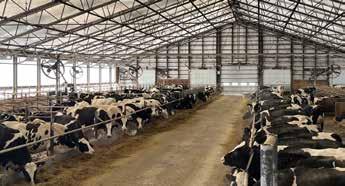
Free-stall, sand-bedded barn
One Lely A4 robotic milking system
awards
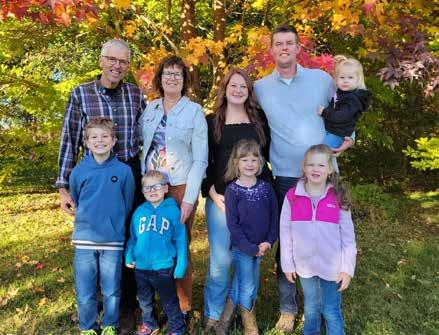
Oasis Acres Ltd.
County
"Producing top-quality milk starts with clean, healthy cows, a well-maintained parlour and a consistent milking routine. Attention to detail in every part of our daily work ensures our milk remains reliable and safe."
Breed of cow milked
Holstein – 50
Farm established
Established in 1958 by Albert’s parents. In 1993, Albert and Suzanna took over, and today their son Jonathan and his wife Jocelyn are also actively involved. A new barn was built in marking an important step for the family in modernizing their operation and improving cow comfort.
Barn and parlour
Double eight-parallel parlour with sand stalls built in 2018.
ALBERT, SUZANNA, JONATHAN & JOCELYN WESTERHOF Komoka, Ont., Middlesex
What steps do you take to ensure consistent, high-quality milk production on your farm?
Producing top-quality milk starts with clean, healthy cows, a well-maintained parlour and a consistent milking routine. Attention to detail in every part of our daily work ensures our milk remains reliable and safe.
What is the most important factor that influences milk quality on-farm?
Consistency and cow health – when our cows are well-cared for and our processes are reliable, milk quality naturally follows.
What does this award mean to you?
Nothing we do on the farm would be possible without God’s blessings, and we are deeply grateful for them.
What does quality mean to you?
Quality means producing a safe, delicious product that we can be proud of and that families can trust.
What keeps you so successful?
We strive for excellence in every task, but most importantly, we are thankful to God for the success He has given us.
What do you love most about the dairy industry?
We love working closely with our cows and constantly finding ways to improve. Seeing a happy, healthy herd produce high-quality milk is incredibly rewarding.
What role does your team (family, employees, advisors) play in maintaining milk quality?
Our family works side by side to care for the cows and manage the farm. We also rely on trusted advisors, like Dairy Lane Systems, to maintain our milking equipment, which is essential for keeping milk quality high.
Can you share a change or improvement you made that had the biggest impact on milk quality?
Building a new barn with sand bedding and milking equipment has been our most significant improvement, enhancing cow comfort and milk quality.
We love working closely with our cows and constantly finding ways to improve. Seeing a happy, healthy herd produce high-quality milk is incredibly rewarding.
What advice would you give to other producers who want to improve their milk quality results?
Keep your cows clean, maintain your equipment, be consistent in your routine and focus on small, steady improvements. There’s no secret, good quality milk comes from care and attention to detail.
What’s one lesson you’ve learned over the years that has shaped how you manage quality today?
Address problems immediately, waiting can affect milk quality.
What do you wish consumers understood better about how milk is produced in Canada?
Canadian farmers work hard every day to provide safe, high-quality milk that families can trust.
I would like to congratulate the Westerhof family for receiving this special award for milk quality. They have consistently received milk quality awards for many years in a row. What they achieve together with their energy and dedication continues to keep the quality bar high. The family is very modest about this achievement, and I want them to know the award is welldeserved. I am very fortunate to have farms like theirs in the areas I cover for DFO.
– Field Service Representative, Ross Crawford
awards
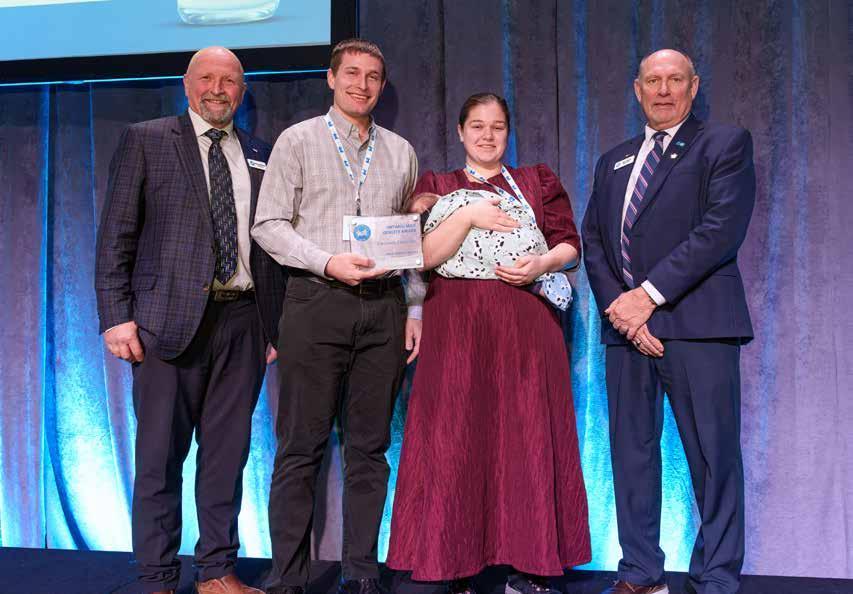
Crescendo Farms
Mount Forest, Ont., Wellington County
"Our team has a massive impact. Everything we know has been learned from others, so having good advisors, supportive family and dedicated employees is critical to maintaining quality."
Breed of cow milked
Holstein – 105
Farm established 2022
Barn and parlour
Free-stall barn with sand bedding
24-stall rotary parlour
DARRYL & MEGAN BOWMAN
What steps do you take to ensure consistent, high-quality milk production on your farm?
We place a strong focus on proper milking procedures, including thorough prepping and correct milker attachment. Keeping stalls clean is also critical to maintaining milk quality.
What is the most important factor that influences milk quality on-farm?
Great employees. If people don’t care about what they’re doing, it’s very hard to achieve consistency. We believe that consistency is key when it comes to cow care and milk quality.
What does this award mean to you?
It’s a great benchmark for our farm team. It shows that everyone is doing their job well and working toward the same goal.
What does quality mean to you?
Quality means a lot to us. One of my favourite things to do is drink a glass of fresh milk and think about everything that went into producing that milk.
What keeps you so successful?
Faith, family and friends. Our faith in God gives us purpose and meaning. My family provides massive support, and good friends are vital –they help you find solutions when you’re stuck and push you forward when motivation runs low.
What do you love most about the dairy industry?
The willingness of people to help each other. Whether it’s asking questions, seeking advice or attending meetings, there’s always something to learn. The dairy industry is complex, and there’s always room to grow.
What role does your team (family, employees, advisors) play in maintaining milk quality?
Our team has a massive impact. Everything we know has been learned from others, so having good advisors, supportive family and dedicated employees is critical to maintaining quality.
Can you share a change or improvement you made that had the biggest impact on milk quality?
Implementing proper prepping procedures during milking. With better prep, we also found that cows milk faster, which is especially important in a rotary parlour.
I wish more people had the opportunity to experience farm life and see what goes into producing milk. Farm life brings you face to face with reality.
What advice would you give to other farmers who want to improve their milk quality results?
Milk quality is the sum of cow health. Three key steps apply not only to milk quality but to farming in general: learn, apply and be consistent. There’s also a motto my dad hung in our barn office that we all follow – “Success is the sum of small things done day in and day out.”
What’s one lesson you’ve learned over the years that has shaped how you manage quality today?
There’s no silver bullet in farming. While some fundamentals always apply, what works well for one farm may not work for another. It’s important to be innovative and find what works best for your own operation.
What do you wish consumers understood better about how milk is produced in Canada?
I wish more people had the opportunity to experience farm life and see what goes into producing milk. Farm life brings you face to face with reality.
Although not being dairy farmers for very long, Darryl and Megan run Crescendo Farms like seasoned pros. Cleanliness and consistency are two words that come to mind when describing the secret to their success. Staff are well-trained so that all duties performed in the sand bedding free-stall or the rotary parlour are completed with consistency. Their attention to daily stall maintenance and udder prep really has set them up for success. Darryl gives credit to his equipment dealer for maintaining the parlour and the cooler, making for excellent quality milk and an easy Grade A visit. Working with this young couple has been a true pleasure for me. – Field Service Representative, Scott Hartle
awards
awards QUALITY AWARDS 2026
2024 2025 winner
"Our attention to detail and always knowing where the dollars are. We strive to be openminded, able to self-evaluate, willing to make changes and embrace new technology."
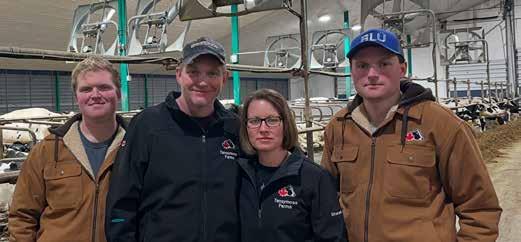
Tansymoss Farms
PAUL, SHAWNA, WYATT & DAWSON CHADDOCK
Lancaster,
The Chaddock’s have once again demonstrated their commitment to producing high-quality milk and been formally recognized for the second year in a row. Even with a change in their milking system in 2025, they remain consistent in their excellent milk quality and attention to detail. I’m thrilled to see their hard work recognized once again. Congratulations to the Chaddock family on this welldeserved achievement.
– Field Service Representative, Karen Thomson
To consistently achieve quality results, everyone involved understands the importance of following protocols and bringing their best effort every day.
Breed of cow milked Holstein – 150
Farm established 1982
Barn and parlour
Retrofitted barn to AMS with four GEA R9500 robots in 2025
Ont., Glengarry County
What steps do you take to ensure consistent, high-quality milk production on your farm?
We place a high emphasis on cleanliness in every aspect of the operation, including robots, stalls and water bowls. Robots are scrubbed daily, water bowls are cleaned three times a day, and stalls are scraped regularly to maintain a clean and comfortable environment for the cows.
What is the most important factor that influences milk quality onfarm?
Consistency, and ensuring that everyone involved follows established protocols.
What does this award mean to you?
This award shows that the hard work, time, effort and consistency we put in every day has paid off with quality results. We’re grateful once again for the recognition.
What does quality mean to you?
Quality is the result of good management, strong communication, attention to detail and a commitment to continuously improving.
What are you most proud of?
We’re proud of everything we’ve achieved over the years – from milking 15 cows in a tie-stall barn back in 1982 to milking with robots in 2025. Our farm has come a long way.
What keeps you so successful?
Our attention to detail and always knowing where the dollars are. We strive to be open-minded, able to self-evaluate, willing to make changes and embrace new technology.
What do you love most about the dairy industry?
The strong sense of community and knowing that we’re nourishing fellow Canadians with a high-quality product.
What role does your team (family, employees, advisors) play in maintaining milk quality?
To consistently achieve quality results, everyone involved understands the importance of following protocols and bringing their best effort every day.
Can you share a change or improvement you made that had the biggest impact on milk quality?
We don’t believe there’s one single change that makes the difference. It’s the daily focus on cleanliness in everything we do that has the greatest impact.
What advice would you give to other farmers who want to improve their milk quality results?
Ensure milking equipment is well-serviced, properly maintained and disinfected daily. Regularly evaluate and improve cleanliness protocols.
What’s one lesson you’ve learned over the years that has shaped how you manage quality today?
We’ve learned the importance of continual self-evaluation – asking ourselves every day if we’re doing things right, no matter how good the results already are.
Behind every glass of milk
How DFO brings the heart of Ontario dairy to consumers
Bringing the story to consumers where they are
To build trust and emotional connection with consumers, it’s important to show up across channels they use daily. DFO leverages various tactics including television, online video, digital display, billboards, social media, public relations, influencer partnerships and broadcast integrations to reach consumers. During a campaign timeframe, an integrated media mix is leveraged to broadly reach and surround Ontarians – from heavy milk and dairy users to occasional users – with our campaign messaging to grow their purchase frequency and consumption. Whereas, at other points in the year, a single medium like social media is leveraged to keep an ongoing connection point.
On platforms like Facebook, Instagram, TikTok and Pinterest, creative assets leverage platform specific trends to deliver key messages in ways that feel authentic and native to the content consumers enjoy. Whether through the iconic milk glass, a latte moment or farm to table visuals, every asset reminds consumers of the local source of their milk and dairy.
EVERY DAY, Ontario dairy farmers deliver high-quality milk produced with care, passion and dedication on local, family run farms across the province, and through Dairy Farmers of Ontario’s (DFO) farmer equity marketing initiatives, this story is shared with Ontarians where they live, shop, connect and engage. These ongoing efforts help build trust, strengthen perceptions and remind Ontarians of the care behind every glass of milk.
DFO’s equity marketing efforts aim to reinforce and strengthen three core brand perceptions of milk: Local. Quality. Care. By spotlighting dairy farming families and the values they embody, consumers connect not only with the products they choose, but with the people who produce them. Whether through a farmer’s story on television, a relatable moment on social media or an in-person interaction at a community event, every touchpoint reinforces the same message: The milk we love is produced right here in Ontario, on family farms, by dairy farmers who put care into producing high-quality milk for everybody.
Strengthening trust through every touchpoint
“These initiatives show how meaningful it is when we bring the story of our dairy farmers directly to Ontarians,” says Chief Marketing Officer, Rosa Checchia, Dairy Farmers of Ontario. “When consumers see the dedication behind every glass of milk, it deepens trust and reinforces the values our farmers live every day, strengthening the bond between farm families and the people they nourish across the province.”
Through authentic, storytelling delivered across channels, the relationship between Ontarians and their local dairy farmers grows stronger, rooted in authenticity, care and a shared commitment to quality.
Building authenticity and connection through influence
Local creators and influencers play an important role in extending Ontario dairy messages beyond traditional channels. Through recipe content, farm-to-table storytelling and visits to activations, Ontario-based creators share relatable, everyday moments that highlight how local milk and dairy fits into their everyday routines. Their authenticity helps bridge the gap between consumers and the farming community.
Broadcast integrations, such as segments featuring Ontario dairy farmers answering common consumer questions, enhance this credibility even further. In 2025, Breakfast Television integrations with dairy producer, Ashley Brown of Browndale Farms in Paris, Ont., answered real consumer questions about dairy farming. Her approachable and knowledgeable presence underscored the trust consumers place in farmers and reinforced the transparent, community spirit of our sector.
Connecting directly with Ontarians through engagement
In-person consumer engagement allows us to connect directly with consumers, reinforcing marketing messages in real world interactions. Presence at farmers markets across the province is a powerful example of how direct experiences enhance trust and understanding.
In 2025, impactful activations in Toronto, Wellington and Niagara Falls created opportunities for Ontarians to speak with local dairy farmers, sample milk and cheese and learn firsthand about the care that goes into producing high-quality, local milk. These community touchpoints leave lasting impressions. Hundreds of samples and branded giveaways help make the connection between the hard-working dairy farmers and the highquality products they produce, while public relations efforts amplify the reach of these moments — generating millions of impressions and sparking meaningful conversations in both local and digital communities.
How reducing MUN can improve cow health
By Essi Evans, Ph.D., E+E Technical Advisory Services Inc.
MILK UREA NITROGEN (MUN) IS NOT JUST A SIMPLE NUMBER ON
A MILK TEST REPORT. It can tell dairy producers a lot about how well their cows are using protein, and how that protein use is affecting cow health. When MUN is consistently outside the target range, it often signals opportunities to improve nitrogen efficiency, support cow wellbeing and reduce unnecessary feed costs.
Why does MUN matter?
MUN reflects the amount of urea circulating in the cow’s blood that ends up in milk. Urea is produced in the liver when excess nitrogen, mainly from ammonia, must be detoxified. When protein supply exceeds what rumen microbes and the cow can efficiently use, urea levels increase. Typical recommended MUN values for high-producing dairy cows range from approximately 8 to 12 mg/dL. Values consistently above this range suggest excess or poorly balanced protein intake.
Elevated MUN places extra metabolic demand on the liver. Converting ammonia into urea requires energy: energy that could otherwise be used for milk production, immune response or body condition recovery. This is especially important in early lactation, when cows are already under metabolic pressure.
Reproductive performance and fertility
Numerous field observations and research studies have linked high MUN with impaired reproductive performance. Elevated blood urea can alter the uterine environment, reducing embryo survival and conception rates. Herds with consistently high MUN often experience delayed breeding, more services per conception and lower pregnancy rates.
By reducing MUN through balanced protein feeding, producers can support a more favorable reproductive environment. Improved nitrogen efficiency often coincides with better energy balance, both of which are critical for timely return to estrus and sustained fertility.
Immune function and cow longevity
Efficient protein and amino acid utilization also has an indirect effect on immune health. Excess dietary protein can increase oxidative stress and reduce the energy available for immune responses. These cows are often slower to recover from mastitis, metritis or other inflammatory conditions. Lowering MUN by feeding helps redirect nutrients toward immune function
Reducing
MUN is not simply a nutritional goal – it is a strategy for improving cow health, fertility and longevity.
and tissue repair. Over time, this contributes to improved cow longevity, reduced treatment costs and greater consistency in herd performance.
Practical strategies to reduce MUN
Reducing MUN does not necessarily mean reducing milk production. In fact, many herds maintain or even improve performance when protein sources are better balanced. Effective MUN management starts with accurate ration formulation and regular monitoring. Strategies include aligning crude protein levels with production stage, evaluating amino acid balance rather than total protein alone and ensuring adequate fermentable energy. Forages should be tested frequently, and ration adjustments should be made during seasonal changes that affect intake or milk production.
High-quality protein ingredients, such as canola meal, can play an important role. Canola meal, as an example, provides a consistent supply of rumen degradable protein (RDP) to support microbial growth, along with a healthy fraction of rumen undegradable protein (RUP) that delivers amino acids directly to the cow. In addition, the amino acid profile of canola meal complements microbial protein, supporting efficient milk protein synthesis without oversupplying crude protein.
Reducing MUN is not simply a nutritional goal –it is a strategy for improving cow health, fertility and longevity. By optimizing nitrogen utilization through balanced diets and careful ration management, producers can reduce metabolic stress, support rumen and reproductive function, and build a healthier, more resilient herd. MUN, when used correctly, becomes a powerful tool for aligning nutrition with both performance and wellbeing.
Precision feeding approaches that reduce unnecessary protein oversupply not only improve cow health but also lower nitrogen excretion, supporting environmental stewardship and economic efficiency.
Our special blend of exclusive ingredients is unique to Grober milk replacers, and ensure you raise your calves
Living Lab – Ontario research forum: Cover Cropping Innovation
How the Living Lab is promoting innovation through co-development
By Robert Matson, Production Research Manager, Dairy Farmers of Ontario
TO REACH DAIRY FARMERS OF ONTARIO’S sector goal of working towards Net Zero by 2050 and achieve our ambitious sustainability targets, we can't just talk about solutions — we need to develop them with producers to make sure they work for producers. It demands practical solutions that are developed, tested, refined and proven on real farms.
As a part of the larger program funded by Agriculture and Agri-Food Canada, the Ontario Soil and Crop Improvement Association (OSCIA), Beef Farmers of Ontario, Dairy Farmers of Ontario, Grain Farmers of Ontario, Ontario Federation of Agriculture, Ontario Pork, Ontario Sheep Farmers and several other partners have embarked on a collaboration for an Ontario-based Living Lab.
As highlighted in the April 2025 issue of the Milk Producer magazine, the Living Lab – Ontario is grounded in the principle of co-development, bringing scientists, farmers and industry experts together to design, test and evaluate farming practices that are both economically viable and environmentally sustainable. By moving research from the lab to working farms, the program ensures solutions are rooted in real-world conditions and farmer priorities.
In late 2025, Living Lab – Ontario hosted the 2025 Innovation Exchange, a four-part research forum highlighting learnings from Living Lab –Ontario. Over the next four issues of the Milk Producer, highlights and key learnings from this series will be presented, beginning with the session on Innovations in Cover Crops.
Expanding opportunities for cover cropping with drone seeding
Establishing cover crops after corn and soybeans remains a challenge in Ontario’s relatively short growing season. To address this, a Living Lab – Ontario activity led by the Ontario Ministry of Agriculture, Food and Agribusiness (OMAFA), soil management specialist Jake Munroe and the participating farmers developed, tested and evaluated the feasibility of drone seeding cover crops into standing corn and soybeans.
Jake, his team and participating farmers hoped to develop and test new opportunities for extended cover cropping beyond planting after winter wheat harvest, identify the species best suited to aerial seeding and compare drone seeding with conventional ground-based methods.
In 2024, six sites across four counties were established, evenly split between corn and soybeans. Species of cover crops included rye, oats and red clover, with seeding occurring in late September. While seeding was later than ideal, a productive rainfall followed.
Results from the first year of this activity indicated that establishment was moderately successful: three of six sites established a cover crop, and one additional site had marginal success. In terms of the variety that performed the best, cereal rye consistently outperformed other species, showing better establishment, overwinter survival and spring biomass. In contrast, oats established in some locations but generally lacked sufficient fall growth due to the late seeding and red clover performed poorly, likely due to the late seeding, the surface placement by the drone and herbicide sensitivity.
A comparison with drilled rye in Elgin County showed that while drilling produced more uniform stands, drone-seeded rye benefited from earlier establishment, resulting in comparable — or even greater — spring biomass despite lower plant density. This finding underscores the importance of an earlier start when post-harvest seeding is unreliable.
Learning from their 2024 experiences, both researchers and farmers decided to make tweaks to the practice and try earlier in September, adding side-by-side early and late seeding comparisons and testing full-field drone seeding in 2025. While the cover crops are still in their dormancy over winter, early imagery from the fall and biomass assessments suggest improved establishment, especially for rye. These findings suggest that while challenges of residue interference, herbicide carryover and variable moisture exist, rye appears to be the most reliable species for drone seeding under Ontario conditions.
Grazing cover crops: agronomic and environmental impacts
A second Living Lab – Ontario activity, led by University of Guelph professor Dr. Kimberley Schneider, was also highlighted as part of the 2025 Innovation Exchange. Under Kimberly’s project, her research team and participating farmers were interested in developing new ways and testing whether grazing cover crops could provide soil health or yield benefits, while supporting a more integrated crop and livestock system.
Seven beef or sheep farmers participated from across Ontario, with all farmers following a corn, soybean and winter wheat rotation. After the wheat harvest, researchers and farmers used a 70 per cent oats-30 per cent peas (by weight) cover crop mix and established both grazed and ungrazed comparison areas.
Soil samples were collected before grazing, after grazing in the fall and again in spring. Corn yield was measured in the following harvest, and soil health indicators, including organic matter, respiration, bulk density and nutrients, were evaluated.
While no significant differences were observed between grazed and ungrazed treatments in soil health indicators or grain yield when analyzed across sites, a small number of individual sites demonstrated a small and temporary increase in soil inorganic nitrogen concentrations and bulk density after grazing, but these effects disappeared by spring, likely due to freeze-thaw cycles. More importantly, no evidence of lasting compaction was found, which may alleviate a common concern among cash crop farmers, as grazing cover crops do not harm soil health or yield under the conditions studied. However, longer term monitoring and modifications to the practice will be needed to establish if grazing cover crops has an effect on soil parameters over time.
Farmer perspectives from Living Lab – Ontario
Farmers are at the heart of the co-development process. As a part of this Research Forum, farmers Adam and Marie Shea of Bethany, Ont., participated in the grazing cover crop trial and shared insights from their participation in the Living Lab – Ontario project as cash crop and beef farmers.
For them, grazing cover crops offsets cover crop seed costs through feed savings, extends the grazing season and reduces reliance on stored feed, improves manure nutrient distribution and adds what they describe as a “fourth crop” to a three-year rotation. These benefits demonstrate what might be defined as co-benefits of adopting the practice.
The Sheas highlighted their challenges, including water access in freezing conditions, labour to set up the fencing and weather-related risks, but emphasized that many barriers can be managed through planning and lightweight temporary fencing. These challenges help inform changes that need to be made to the practice before it is ready for adoption. Their perspective reinforces that, when managed properly, grazing cover crops can be both economically and environmentally viable.
Looking ahead to future years
The Living Lab – Ontario 2025 Innovation Exchange session highlighted the importance of innovations being co-developed with with researchers and producers. As data continue to become available over the next couple of years, and refinements are made to the practices based on participant insight, Living Lab – Ontario will provide increasingly valuable guidance on how cover crop innovations can support productive, climate-resilient farming systems.
More information, resources and recordings from the 2025 Innovation Exchange can be found on the Ontario Soil and Crop Improvement Association Living Lab – Ontario website: https://www.ontariosoilcrop.org/ livinglab/.
Funding for the project has been provided by Agriculture and Agri-Food Canada under the Agricultural Climate Solutions – Living Labs program and by the following partners: Beef Farmers of Ontario, Dairy Farmers of Ontario, Grain Farmers of Ontario, Ontario Federation of Agriculture, Ontario Pork and Ontario Sheep Farmers. The project is coordinated by the Ontario Soil and Crop Improvement Association.
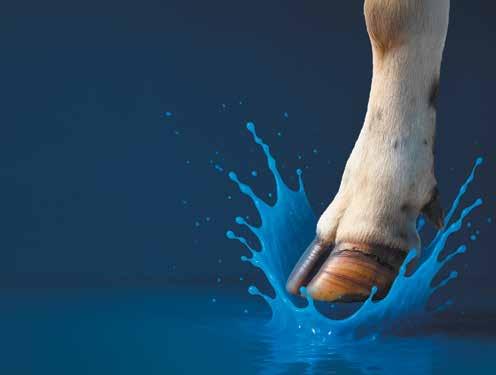
With BlueStride™, hoof health and worker safety can go hand-in-hand. With its all-in-one formula, BlueStride delivers stronger hooves and healthier cows without the health concerns of alternative options or complicated mixes or additives. Safe. Simple. Proven. BlueStride.
Miracle or mirage? How to separate facts from marketing
By Jean-Philippe Laroche, agr., M. Sc., Dairy Production Expert –Nutrition and Forages, Lactanet
THESE
DAYS, WE OFTEN GET PITCHED PRODUCTS THAT ARE SUPPOSED TO
IMPROVE FARM PROFITABILITY.
But is that always true? If the answer were yes, we’d all be rich! With your busy schedule, it can be hard to sort out what’s real from what’s just marketing.
Some companies rely on solid data to promote their products. Unfortunately, others often use marketing strategies that embellish actual effects. Part of my job is to help our advisors and clients identify products that are relevant for their farm – and those that are unlikely to work. Let’s take a look together at actual examples of marketing strategies that I regularly see. This might help you gain clarity when someone presents product data to you. Note that everything presented in this article comes from real promotional brochures currently in circulation.
Exaggeration of effects
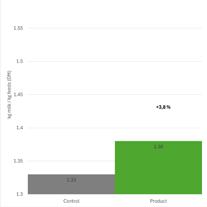
A very common strategy is to visually exaggerate a product’s effects, or to claim a significant impact when that’s not actually the case. Let’s look at an example involving a product supposedly better in terms of starch digestibility, which should translate into improved feed efficiency.
In the brochure, the graph shown appears on the left side of Figure 1. It states that the results come from a scientific study (which is indeed true).
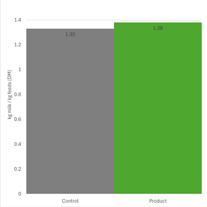
We can see that on the vertical axis, results between 1.3 and 1.6 were “zoomed in.” In reality, to properly appreciate the relative impact of the product, the full axis (0 to 1.6) should be shown, as in the version on the right. Much less impressive, isn’t it?
Figure 1: Example of exaggerated product effects.
When digging deeper and looking directly at the study, we realize that statistically, we cannot affirm that there is a significant difference between the product and the control. So, we can’t say that the observed increase is attributable to the product. Moreover, looking at a more relevant variant of feed efficiency (corrected milk/kg of DM intake), results are 1.37 for the control and 1.37 for the product, which is not very convincing.
Misinterpretation of results
We also see misinterpretations of results aiming to give a false positive impression of the product. Still using the product above, another credible study is presented in the brochure. This one indeed observed a significant increase in feed efficiency (1.55 with the product vs. 1.47 with the control). However, when reading the scientific article in full, we see that the authors do not attribute this improvement to the product, but rather to another factor that influenced the outcome. Once again, we cannot say that the product worked in this study.
Internal studies contradicting scientific literature
Companies sometimes present internal study results. However, it is common for these results to contradict what peer-reviewed scientific literature shows. The key difference is the peer-review process: before an article is published, external scientists review it and request modifications if necessary (additional analyses, changes to interpretations, etc.). They may even reject it entirely.
Naturally, this process gives scientific articles much more credibility than internal studies. Not all scientific articles are peer-reviewed, so it’s important to confirm that the ones you consult are. A concrete example: there is currently a forage crop cultivar marketed as more digestible in terms of fibre. The brochure claims a five to 10 per cent increase according to company data. However, peer-reviewed studies (including one conducted in Canada) have never observed an increase.
Poor experimental design
Internal studies sometimes use an experimental setup that artificially favors the product. I recently saw an example of a product intended to improve alfalfa digestibility. In its internal study, the company compared unchopped silage (control) to chopped silage containing the product. Obviously, that’s not comparing apples to apples! This is the type of thing that would never pass peer review.
I’ve also seen a study testing a biostimulant intended to increase crop yield – but conducted in sterilized soil, which gave the product an advantage. While interesting scientifically, the results do not apply to real farms. How many of your fields are sterilized?
Omitting information
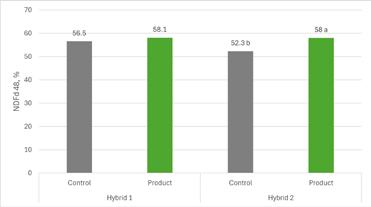
Another common strategy is to omit studies that show negative or inconsistent results. One example that comes to mind is a product supposed to improve fibre digestibility in corn silage. The brochure claims a four per cent improvement.
But looking at all studies on this product, we see that in about 50 per cent of cases, there is no significant effect. The best example comes from the study below (Figure 2): the product failed on Hybrid 1 but had a significant effect on Hybrid 2. Most importantly, researchers do not fully understand why the product works only in certain cases.
Therefore, it’s impossible to know whether it could be useful in your conditions. In other cases, while the product does work, it only does so under specific circumstances, which brochures do not always mention.
Lack of scientific data
In many cases, there simply are no scientific studies on a product. There are two possible reasons for that:
1. The product is too new, and researchers haven’t had time to study it yet.
2. The product is unlikely to work, and researchers have no interest in studying it.
One example is a biostimulant that supposedly captures nitrogen from the air and provides it to corn plants. After thoroughly reviewing the literature, I found nothing about this product. I have serious doubts about its effectiveness, especially since producers are not told by how much they could reduce N fertilization. If the product really worked, why wouldn’t we reduce N rates?
A lack of data does not necessarily mean a product doesn’t work. You can wait for more research or try an on-farm trial.
What should you do with all this?
Should you spend hours reading scientific literature every time a new product is proposed? Of course not!
Here are the best tips I can give you to avoid investing in products that won’t work for your situation:
1. Always keep a critical mindset, especially when data comes from the company selling the product. Brochures can embellish the truth.
2. Ask for the opinion of a trusted person, someone external to the company selling the product. Be cautious with artificial intelligence – it often uses company brochures as sources.
3. There’s nothing wrong in trying products with uncertain profitability. But in these cases, it is crucial to measure whether it works on your farm and whether it’s profitable! How much did productivity increase? Is it enough to pay for the product? If you see no difference and there is no strong scientific backing, the product is likely unnecessary for your operation.
I hope these three tips will help you avoid a few unnecessary expenses! Keep in mind that proven, effective products also exist!
Where the science of nutrition meets accurate feeding for a sustainable future
Sustainability Driven
Figure 2: Example of data omitted in brochures.
Changes in Solids-Non-Fat (SNF) Payment Policy – April 1, 2026
AS
THERE CONTINUES TO BE A STRONG CONSUMER PREFERENCE
for dairy products high in protein, it has increased the demand for protein from the market at a faster rate. For example, Greek yogurt that uses up to six times more milk than regular yogurt grew by 18.8 per cent in 2025, and now represents a third of yogurt retail sales in Canada. Soft cheeses that are high in protein are also a growing category, such as cottage cheese that that now represents 10 per cent of cheese sales. This shift in demand occurred as there continues to be a decrease in the farm production ratio, which has resulted in shifts in the protein available to serve all markets.
The P5 Quota Committee will continue to evaluate the payment policy and update its parameters and objectives as necessary, to ensure markets continue to be met.
Effective April 1, 2026, the P5 Boards have approved changes to the payment policy to increase protein production:
• Increase the market ratio to 2.20;
• Increase the no-pay ratio to 2.30; and
• Modify butterfat (BF) and Tier 1 Protein price by changing the distribution of the residual revenue from the other solids, 30 per cent to BF and 70 per cent to protein paid in Tier 1.
As observed increasingly in 2025, the demand for protein is strong while the butterfat test at the farm has grown faster than anticipated in the P5. As part of the continuous assessment of the payment policy parameters, the conclusion was reached that to meet the recent and expected market demand for increased protein, the volume produced by the P5 needs to increase more significantly.
Therefore, both payment ratios are increased to encourage an increase in the on-farm SNF/BF production ratio to increase volume in P5 to better align with market demand. The market ratio increase is expected to generate additional volumes to reduce the milk shortage, while limiting the impact on butter stocks.
To emphasize the importance of increasing the protein and volumes produced, the revenue distribution from other solids for the prices of butterfat and Tier 1 protein are also modified. The effect is expected to increase the Tier 1 protein price by approximately $2.00 and decrease the butterfat price by approximately $1.80.
Total requirements in November saw a 6.6 per cent increase compared to November last year. On a 12-month basis, growth continues to be strong at 4.2 per cent. The same trend was seen in quota requirements for November.
At the P5 level on a 12-month basis for November, quota growth continues to be strong at 3.4 per cent. However, production has also been very strong throughout the fall.
In December 2025, butter stocks reached 36,545 tonnes, up from November by 1,329 tonnes. Butter stock levels continue to be at the highest seen in the last five years.
Cheese stock levels for the month of December 2025 were at 103,412 tonnes, down 1,970 tonnes from November and higher than the last five-year average.
For the 52 weeks ending January 3, 2026, sales for fluid milk, fluid cream, yogurt, ice cream, cheese and butter increased/decreased by -0.2, 0.3, 6.6, 7.6, 2.0 and 4.4 per cent, respectively.
A monthly recap of markets and production trends in Canada and Ontario
CANADIAN REQUIREMENTS AND PRODUCTION
Canadian butterfat requirements in kilograms and actual butterfat production across the P10.
Average increase in retail sales for dairy products sold in Ontario and the dairy product’s share of the total market sales, including at hotels, restaurants and institutions.
As of March 26, 2022
* Source: AC Nielsen & StatsCan NOTE: There is a two-month lag in the national retail sales data.
12-month production (in millions of kilograms)
12-month requirements (in millions of kilograms)
431.4
454.0
Canadian production has increased by 3.5 per cent over the previous 12 months, and requirements have increased by 3.7 per cent over the previous 12 months.
This graph shows Ontario’s SNF-BF ratio for the last 12 months.
DECEMBER HIGHLIGHTS
• As there continues to be a strong consumer preference for dairy products high in protein, it has increased the demand for protein from the market at a faster rate;
• To emphasize the importance of increasing the protein and volumes produced, the revenue distribution from other solids for the prices of butterfat and Tier 1 protein are also modified. The effect is expected to increase the Tier 1 protein price by approximately $2.00 and decrease the butterfat price by approximately $1.80;
• For the 52 weeks ending January 3, 2026, sales for fluid milk, fluid cream, yogurt, ice cream, cheese and butter increased/ decreased by -0.2, 0.3, 6.6, 7.6, 2.0 and 4.4 per cent, respectively.
ONTARIO UTILIZATION
Percentage of the total milk produced in Ontario that was used to produce dairy products.
December 2025
P10 UTILIZATION BY CLASS
For December 2025 (kg of butterfat/kg of solids non-fat)
*There is a two-month lag reporting these figures.
% Solids non-fat
Class 5c Confectionery products % Butterfat
Class 1a1 (includes Classes 1a2, 1a3, 1c and 1d for confidentiality reasons) Fluid milk and beverages
Class 1b Fluid creams Class 2a Yogurt, yogurt beverages, kefir and lassi
Class 2b4 (includes Classes 2b1, 2b2 and 2b3 for confidentiality reasons) Fresh dairy desserts, sour cream, milkshakes and sports nutrition drinks
Class 2b5 Ice cream and frozen yogurt
Class 3a1 Specialty cheese
Class 3a2 Cheese curds and fresh cheeses
Class 3b2 (includes Class 3b1 for confidentiality reasons) Cheddar cheese and aged cheddar
Class 3c1 Feta
Class 3c2 Asiago, Gouda, Havarti, Parmesan and Swiss
Class 3c4 (includes Classes 3c3 and 3c5 for confidentiality reasons) Brick, Colby, farmer’s, jack, Monterey jack, muenster, pizza cheese, pizza mozzarella and mozzarella other than what falls within 3d
Class 3c6 Paneer
Class 3d Mozzarella used strictly on fresh pizzas by establishments registered with the Canadian Dairy Commission
Class 4a Butter and powders
Class 4d (includes Classes 4b1, 4b2, 4c and 4m for confidentiality reasons) Concentrated milk for retail, losses and animal feed
Class 5a Cheese for further processing
Class 5b Non-cheese products for further processing
ONTARIO MONTHLY PRODUCER AVERAGE GROSS BLEND PRICE
A total 3,144 producers sold milk to DFO in December compared with 3,162 a year earlier.
ONTARIO DEDUCTIONS, PER HL For December 2025
* These figures are based on Ontario’s average composition for December 2025 of 4.4848 kg butterfat, 3.4079 kg
P5 AND WESTERN MILK POOL BLEND PRICES
The graph below shows the 12-month blend price for the P5 provinces and Western Milk Pool (WMP).
*There is a two-month lag reporting these figures.
U.S. CLASS PRICES
The January 2026 Class III Price, US $14.59 per hundredweight, is equivalent to C $45.24 per hectolitre. This equivalent is based on the exchange rate US $1 = C $1.3658 the exchange rate when the USDA announced the Class III Price.
The Class III Price is in US$ per hundredweight at 3.5 per cent butterfat. One hundredweight equals 0.44 hectolitres. Canadian Class 5a and Class 5b prices track U.S. prices set by the U.S. Department of Agriculture.
Source: USDA
Co-ordinated by Dairy Farmers of Ontario’s communications and economics departments. Questions? Please email questions@milk.org.
STAY UP TO DATE!
Weekly Update email newsletter every Friday for Ontario dairy producers.
Milk Producer magazine is the voice of Ontario dairy producers. Subscribe for free or read online at www.milkproducer.ca.
Dairy Farmer Update provides updates with the monthly milk cheque.
Producer Dashboard , a secure platform behind your password on MMS that contains important news, updates and forms.
Advanced approval of proAction requirements effective April 1, 2027
By Ashley Wannamaker, Quality Programs Analyst, Dairy Farmers of Ontario
IN DECEMBER 2025, the Dairy Farmers of Canada (DFC) Board of Directors approved the requested advanced approval of proAction requirements related to animal housing and freedom of movement. These changes will take effect on April 1, 2027, and will be included in proAction validations after this date. Producers should be aware of these changes when determining updates to their facilities or on-farm practices.
The following advance requirements are clarified and included behind the password on the Dairy Farmers of Ontario (DFO) website for both producers and service providers:
1. Dry and Lactating Stocking Density 2. Stanchions
3. Unweaned Calf Housing
4. Freedom of Movement Requirements
Producers should be aware of these requirements and consider changes to new or existing facilities or practices to align with these changes. All Code of Practice Requirements for the Care and Handling of Dairy Cattle can be found in the 2023 document that is available on the National Farm Animal Care Council website.
The outlined code requirements are being provided well in advance so producers can make changes to align with the changing code requirements. The remaining proAction requirements will be available in July 2026. In addition, the Reference Manual and Notice of Change will be available in October 2026.
Producers should consult these documents when available to confirm compliance with current proAction requirements, and are encouraged to contact their Field Service Representative with any questions.
“I am absolutely a fan of Udder
Comfort!
“I am absolutely a huge fan of Udder Comfort!™ It gives the feeling of freshness and comfort. We have used it 12 years, rubbing it on for better texture or to soften a quarter. We use Udder Comfort for fresh cows, especially good for rst calf cows. We also use it before, during, and after a show to give the best udder texture possible. We see more of the udder’s veins, and the cows are more comfortable,” says Bianca Foley. The Foley family has a rich history of honors in Ayrshire breeding. They milk 50 Ayrshires at Vieux Village, Piopolis, Quebec. Their 5-year-old Vieux Village Gentleman Joy EX97 stood grand with 4-year-old Vieux Village G Montana EX94 reserve at the 2024 World Dairy Expo and Royal Agricultural Winter Fair.
— Bianca Foley
GEA DairyRobot R9650 tradition meets automation.
You’ve mastered batch milking for decades. Now, take it further. The DairyRobot R9650 combines the structure you trust with the automation you need— delivering predictable schedules, lower labour costs, and consistent milk quality.
Efficiency without compromise: Subway cellar design means cleaner barns, easier maintenance, and more space.
Smart savings: One central receiver serves up to 12 boxes—fewer pumps, fewer parts, less power required.
Your flexibility: Retrofit or new build—whatever fits your farm.
Farmer-focused innovation: Every improvement comes from real farm feedback.
Plan your day. Own your schedule. Automate your future.
Batch. Your. Way.
BRITISH COLOMBIA
Pacific Dairy Centre Ltd.
Chilliwack — 604 852-9020
ALBERTA
Dairy Lane Systems Alberta
Leduc: 780 986-5600
Blackfalds: 587 797-4521
Lethbridge: 587 787-4145
Lethbridge Dairy Mart Ltd.
Lethbridge — 888 329-6202
Red Deer — 403 406-7344
Scan to explore Batch Milking with GEA DairyRobot R9650.
SASKATCHEWAN
Emerald Park — 306 721-6844
Swift Current — 306 203-3066
MANITOBA
Tytech
Grand Pointe — 204 770-4898
Dairy Lane Systems Saskatchewan Warman — 306 242-5850
Conestogo Agri Systems Inc.
Alma — 519 638-3022
Dairy Lane Systems
Komoka — 519 666-1404
Lawrence’s Dairy Supply Inc.
Moose Creek — 6 13 538-2559
McCann Farm Automation Ltd.
Seeley’s Bay — 613 382-7411
McLaren Works
Cobden — 613 646-2062
Performance Dairy Centre Inc. Embro — 519 423-9119
ATLANTIC PROVINCES
Atlantic Dairy Tech, Inc.
AMS Sub-dealer for Sheehy Entreprises Ltd.
Charlottetown, PE — 902 368-1719
Sheehy Entreprises Ltd.
Shubenacadie, NS — 902 758-2002
Lower Queensbury, NB — 506 478-4878
ONTARIO
FOUNDATIONS FOR THE FUTURE: DAIRY FARMERS GATHER IN OTTAWA FOR DFC ANNUAL DAIRY POLICY CONFERENCE
Dairy Farmers of Canada (DFC) welcomed farmers and a wide range of engaged delegates to Ottawa for the 2026 Annual Dairy Policy Conference (ADPC) from February 3 through February 5.
“Foundations for the Future” was the theme of this year’s conference. The panels and discussions emphasized how federal policies and actions reflecting rural and agricultural realities will be critical in 2026 and beyond.
On Tuesday, February 3, dairy farmers from across Canada participated in DFC’s Hill Day, sharing their perspectives and advocating for issues with more than 120 parliamentarians and government officials.
Farmers emphasized the critical importance of protecting supply management in future trade negotiations, including ensuring no dairy concessions of any kind. Beyond trade, discussions also focused on maintaining funding in the next agricultural policy framework and reducing inefficient on-farm red tape.
DFC President David Wiens, along with Vice President Daniel Gobeil, Second Vice President Bart Rijke, and incoming CEO Annie AcMoody, met with Prime Minister Mark Carney for a brief discussion. DFC was reassured by the Prime Minister’s comments when it comes to the government’s ongoing support for the industry.
On Wednesday, February 4, DFC President David Wiens opened the Conference with an address on the theme of the ADPC, setting the stage for that morning’s panel discussions and the strategic planning session that followed.
“Farmers know a lot about planning for the future,” said Wiens. “But it’s not just us - a country is defined by the foundation it sets for the future, too: how it affects its people, its communities, and where it is headed. In Canada, dairy has always been a part of that foundation.”
“Canadians know that supply management is essential to our food sovereignty and security, and what that means in times of instability like we’ve never seen before. Dairy is here for Canadians, and Canadians are here for dairy farmers.”
Much of the program was devoted to contextualizing Canadian dairy in the current uncertain trade and economic environment. Wednesday’s first presentation was the Canadian Dairy Market Outlook with DFC’s Lead Policy Analyst Maxime Collette and Policy and Trade Analyst Christopher Kimmerer.
Reviewing the trends and numbers from the last year to place dairy in the broader economy, the team also looked ahead to what farmers and processors might expect in the coming year.
“In Canada, under supply management, small and medium-sized farms are still a healthy and sustainable part of milk production,” said Kimmerer.
DFC’s Matt Morrison, Director of Government and Regulatory Affairs, and Érik Tremblay, Director of International Trade and Market Integrity, briefed attendees on recent government relations and trade priority initiatives.
“We remain confident that the government understands the importance of keeping supply management off the table, a message that we clearly reiterated in our Lobby Day meetings yesterday,” said Morrison.
Tremblay noted that our trade goals are “not complicated.”
“DFC and its partners are the ‘shield’ for Canadian dairy. In an era of global supply chain uncertainty, our model provides the stability the world often lacks.”
For the panel discussion “The State of Trade: What’s Next for Canada?,” DFC Executive Vice President Declan Hamill welcomed Canada’s former chief trade negotiator Steve Verheul, international trade partner at law firm Holland & Knight Patrick Childress, Canadian political advisor Brian Clow, and pollster Nik Nanos. They discussed what Canada and our dairy industry might expect for the upcoming CUSMA review.
From left to right: DFC President David Wiens, Vice President Daniel Gobeil, CEO Annie AcMoody, Second Vice President Bart Rijke, and the Right Honourable Prime Minister Mark Carney.
DFC President David Wiens
The final panel of the morning was “Animal Health Preparedness in the Dairy Sector.”
DFC Chief Research & Sustainable Production Officer Fawn Jackson was joined by Donald Boucher, Co-Chair of Animal Health Canada; Dr. Noel Ritson-Bennett, Veterinary Program Manager for Western Canada, Canadian Food Inspection Agency; and Lisa Baron, Market Supply and Development Manager of Dairy Farmers of Manitoba.
The panel discussed how the industry must continue reviewing and testing our systems and building relationships so that what we have in place stays successful.
“The systemic pillars of surveillance, collaboration, biosecurity – all of these need to be priorities,” said Boucher. “It’s a social contract that all interested parties have in order to prevent any problems. Biosecurity standards and plans have to be in place.”
THANK YOU
to all the speakers, delegates, farmers and stakeholders who joined us in-person and virtually at the 2026 ADPC.
SAVE THE DATE
Join us this summer for the Dairy Farmers of Canada Annual General Meeting, July 13 through 15 in Moncton, New Brunswick.
QUESTIONS WITH NEW DFC CEO ANNIE ACMOODY
In February, DFC welcomed Annie AcMoody as the new Chief Executive Officer. Learn more about her outlook for 2026 and the perspectives she brings to the role.
Tell us about your experience in dairy and how it led you to DFC. Dairy pulled me in when I was young. I was drawn to the system itself – how it works, how it supports farmers, how it benefits consumers, and how policy shapes it. I even worked on a dairy farm for a summer to learn more.
Since completing my Master’s, my career has been entirely focused on dairy. I’ve worked at a dairy branch of the government of California and, later, at a producer association there which focused on many of the same files as DFC: policy, sustainability, and economics.
Five years ago, I had the chance to take my passion, interest and experience back home to Canada in a policy role with DFC. To me, it was a key opportunity to work on dairy policy in a way that makes a real difference for Canadian farmers and our sector.
In this new role, I’m committed to continuing just that. I believe in what dairy farmers produce. I believe in the system that allows them to produce it, and I’m ready to fight for the sector’s collective interests and work alongside all of you to write the next great chapter for the industry.
What do you see as the key areas of focus for DFC over the next year?
Undoubtedly, our focus will continue to be on trade and defending not only the livelihoods of Canadian dairy farmers, but the key role they play in our national food sovereignty and security.
Canada’s dairy farmers have given up quite a bit of market share and several other significant concessions outside of market access in the last three major trade agreements; as the CUSMA review gets underway, DFC’s focus will be on ensuring that no more is given up.
What do you see as the strengths of the Canadian dairy sector?
One of our core strengths is our unity. We have one system for all dairy farmers, and this allows for strong standards and better coordination on issues like animal health, sustainability, economics, and trade.
On top of this, our sector’s priorities resonate with Canadians, especially as they relate to food security, food sovereignty, and keeping rural communities strong. None of this is possible, though, without farmers. Their commitment and hard work are the foundation for our sector’s strengths.
What’s your favourite dairy product?
It’s hard to choose, but milk is the best vehicle for coffee in my opinion. I may also be known for eating ice cream for breakfast, so it would be a close second.
DFC CEO Annie AcMoody
Reporting boilers and pressure vessels What Ontario’s dairy farmers need to know
By Jean Lian, Communications Advisor, Technical Standards & Safety Authority
DAIRY FARMERS WHO USE BOILERS AND PRESSURE VESSELS (BPVS) for agricultural purposes are required to report their pressure equipment to the Technical Standards and Safety Authority (TSSA).
The lifting of the exemption on agricultural BPVs on July 1, 2021 means that installations of BPVs, fittings and piping used for agricultural purposes must comply with Ontario Regulation 220/01: Boilers and Pressure Vessels under the Technical Standards and Safety Act, 2000, and the Canadian Standards Association (CSA) B51 Boiler, Pressure Vessel and Pressure Piping Code.
Dairy operations often use BPVs for heating, cooling and processing systems. For example, steam boilers are used for cleaning milking systems, and pressure vessels are used in various
processing or storage applications. If a dairy farm in Ontario uses BPV equipment that heats, cools or pressurizes fluids, it likely falls under BPV regulations and must be registered by completing an online form.
TSSA is working with dairy farmers and other agricultural associations across Ontario to ensure that operators and owners are informed that installations of BPVs, fittings and piping used for agricultural purposes are regulated by safety laws. TSSA inspectors will educate owners by conducting a site assessment for those who report BPVs.
Owners and operators of agricultural BPVs that are regulated by safety laws must comply with key requirements. These include:
• Ensuring that pressure equipment has a Canadian Registration Number (CRN) marked on the nameplate of every BPV.
• Obtaining a Certificate of Inspection (COI) for their pressure equipment that will require periodic inspections to ensure continued safe operation.
• Ensuring that the company they engage to repair or alter BPVs holds a Certificate of Authorization from TSSA.
Since some equipment is exempt from inspection that is required by the regulation, due to factors like size, pressure, operating temperatures or its use of non-hazardous liquids, TSSA uses the information submitted in the reporting form to conduct a risk assessment, which will be used to establish a priority list for scheduling site assessments. For a full list of pressure equipment excluded from the regulation, see Ontario Regulation 220/01 and Amendments to the 2001 Boilers and Pressure Vessels Code Adoption Document.
Tony Gabriele, BPV project lead and regional supervisor with TSSA, emphasizes that the safety of Ontarians will continue to be the driving force. “Site assessments ensure that owners and operators of agricultural sites that use regulated BPVs understand and comply with the provincial regulations,” he explained.
TSSA will notify agricultural sites that have been selected for a site assessment. Agricultural operators can prepare for the site assessment by reviewing the checklist of what an inspector will look for. Agricultural sites need to ensure their equipment is accessible and ready for site assessment.
Agricultural sites should inform TSSA if there are any biosecurity protocols related to the site and provide information if there has been a bio-outbreak at the site that could affect the completion of the site assessment.
Move towards compliance
Lifting the exemption for boilers and pressure equipment from safety regulations brought Ontario in line with other Canadian jurisdictions. Until then, Ontario was the only province where BPVs used in agricultural operations were exempt from safety laws. While TSSA registered, inspected and certified the manufacturing designs of new BPVs before they were sold, BPVs installed and used in agricultural operations did not fall under TSSA’s jurisdiction until July 1, 2021.
TSSA is working with dairy farmers and other agricultural associations across Ontario to ensure that operators and owners are informed that installations of BPVs, fittings, and piping used for agricultural purposes are regulated by safety laws.
“Aging equipment has been one of the biggest concerns, along with faulty relief valves,” says Ryan Dick, health and safety consultant with Workplace Safety & Prevention Services (WSPS). “Before this change, farmers were often left to perform inspections on their own. This can become problematic because if the equipment is not maintained properly and the structural integrity degrades, the outcome could be a serious explosion.”
Boilers and pressure vessels are pressurized systems that operate at high temperatures. In agriculture, they are often found in many settings, including greenhouse operations, mushroom farms, maple syrup farms and wineries. According to Dick, a failure of the pressure-containing walls or over-pressurization of these devices can lead to ruptures and explosions. Mechanical failures resulting from corrosion can lead to leaks of hazardous fluids and the uncontrolled release of steam, hot condensate and nitrogen gas.
Given the hazards associated with BPVs, inspections by qualified safety professionals are critical to their safe operation. “There is a distinction between operating and operating safely,” says Dick. “Having a safety professional inspect this equipment regularly reduces the risk of something going wrong.”
Owners and operators must register their pressure equipment and schedule a TSSA inspection to obtain a COI to confirm that a BPV has been inspected and meets safety standards under Ontario Regulation 220/01. A COI is typically valid for 12 to 36 months, depending on the type of device. Owners and operators, including those in the agriculture sector, must have a valid COI to legally operate each device.
“If you have not yet reported your boiler or pressure vessel equipment to TSSA, please go to TSSA’s website and fill out the self-reporting form. This is the first step in complying with the regulation, and we will work with you to support you through the process to ensure your BPVs are operating safely,” says Gabriele.
Certified BPVs must be inspected periodically by a qualified inspector. Before a COI expires, owners and operators must ensure they request a periodic inspection from their insurer (if the device is insured) or from TSSA (for uninsured equipment).
“The best thing you can do to protect yourself, your workers, and your business is to make sure qualified inspectors inspect your equipment as required,” says Dick.
For more information to help you prepare for inspection and comply with legislation, check out Boiler and Pressure Vessel Equipment for Agricultural Use on TSSA’s website or send questions to agriculture.bpv@tssa.org.
Another successful year for the Dairy Science Club
By Ian Egger, Megan Atkinson, Xavier Wilson, Damy Overdevest, Grant Barkey, Devin Johnston, Jessica Young and Kyle Meek, Dairy Science Club Executives, University of Guelph
THE DAIRY SCIENCE CLUB AT THE UNIVERSITY OF GUELPH is dedicated to promoting, supporting and serving students who are involved or interested in the dairy industry. The club's primary purpose is to educate and promote the dairy industry by providing learning opportunities beyond the classroom.
The interests of the club span a wide range of topics, including genetics, technology, herd management, nutrition, research and innovations in the dairy industry. By exposing students to these diverse areas, the Dairy Science Club helps prepare future dairy professionals for a successful career. Throughout the school year, the club offers seven meetings led by dairy industry experts and organizes an annual dairy trip in January. The club has over 100 members, with numbers growing every year.
In past years, the club has held trips through Eastern Canada and the Maritimes, New York, Pennsylvania, Ohio and Michigan, and even British Columbia. This year, the Dairy Science Club executive organized a trip to Eastern Canada, visiting dairy farms across Eastern Ontario and continuing through Quebec, New Brunswick and into Nova Scotia. This allowed club members to see a variety of farms, each with different ways of managing their herd and employees. Each farm visited was different from the one before. The attendees saw many setups like guided and free-flow robot barns, parallel and herringbone parlour barns, external and internal rotary barns, and tie-stall barns. The students also saw multiple types of ventilation systems being used, such as natural, cross, tunnel and hybrid systems. Additionally, the students had many engaging and constructive conversations with the producers about their challenges and plans for the future of their farm and the dairy industry.
Students also learned about different management practices used on dairy farms, such as breeding programs, labour management and on-farm protocols. The trip focused on different opportunities that young dairy farmers could pursue to diversify their dairy operation. These opportunities consisted of seeing operations with digestors, a genetic company, feed mills and custom calf raising facilities. The trip was a great success; students who attended took home many insights they could bring back to their farms or apply to areas in the dairy industry.
The club also maintains active Facebook, X and Instagram accounts, sharing updates from event, and allowing others to follow throughout the year.
The Dairy Science Club is grateful for the continued support and generous sponsorship it receives, which plays a vital role in developing the next generation of dairy industry leaders. The club would also like to thank the dairy producers who generously took time out of their schedules to host and tour the students on the dairy trip.
OxfOrd Cattle COmpany wants yOur Beef / dairy CrOss Calves
Oxford Cattle Company is working with genetic companies to select sires for use in our guaranteed calf buy back program.
We are now pleased to announce that we are interested in buying your holstein bull calves and can include them i n your regular pick up. We will take calves that are over 9 2 lbs and 10 days old. The price will be negotiated on a w eekly basis.
Presently serving southwestern Ontario region and Ottawa region.
• For a Calf Pick Up Request text (519) 788-1399 by 1:00 pm Mondays
Ketosis: The Hidden Challenge Affecting Dairy Herd Performance
Some of the biggest threats to dairy herd health are hard to spot. Ketosis (hyperketonemia), a metabolic disease that erodes productivity, fertility, and profitability, often occurs without any obvious clinical signs. In Canada, 4 in 10 cows in early lactation are affected annually, with 95% of cases being subclinical.
Ketosis Impacts Your Herd and Your Bottom Line
Most fresh cows with elevated ketones will look normal, but the disease will impact milk yield, breeding success, and health. If left unchecked, this “silent thief” can remove up to $400 per case from your bottom line, making early action critical for herd profitability.
Ketosis typically develops early in lactation when energy demand for milk production outpaces feed intake. Cows start mobilizing body fat for fuel, some of which the liver converts into ketones that accumulate in the blood. Excessive weight loss and poor feed intake often lead to ketosis. Risk factors include high-energy dry cow rations, over-conditioned cows at calving, long dry periods, carrying twins, inconsistent bunk management, limited feed and water access, or crowded housing.
Visible symptoms only show the tip of the iceberg. Subclinical cases can spiral into major issues like displaced abomasum, metritis, poor conception rates, higher culling rates, and increased vet bills. Routine testing in the first two to three weeks post-calving provides a clear snapshot of how cows are adapting and whether your nutrition and management strategies are on target. Frequent monitoring
helps find and treat cows that are positive to the ketone test, minimizing your losses.
Prevention Kickstarts Lasting Success
The best defense against ketosis starts in the dry period. Keep diets balanced for maintenance and fetal growth, and dilute dry cow rations with chopped straw or mature forages to help avoid overfeeding. When cows are crowded or stressed, their feed intake may suffer, opening the door to metabolic issues. Consistent routines, clean feed, and a calm environment matter.
A smooth transition sets the foundation for a productive lactation. Focus on the fundamentals: moderate body condition, balanced rations, comfortable facilities, and proactive monitoring. Test fresh cows within the two to three weeks post-calving to spot at-risk cows and act quickly on elevated ketones. Pair routine observation with regular testing and adjust your transition approach.
Tackling ketosis takes a team. Work closely with your veterinarian and your nutritionist to tailor a transition plan for your herd. Your Elanco representative is also a valuable collaborator, offering expertise, research insights, and practical solutions to keep your cows and your bottom line on track.
Interested in learning more about Kexxtone and how it may fit within your herd management strategy? Speak with your veterinarian or nutritionist. The label contains complete use information, including cautions and warnings. Always read, understand and follow the label and use directions.
Managing diarrhea in your calf barn
Part one: identifying clinical signs and key risk factors
By Veal Farmers of Ontario
THE THREE MOST COMMON DISEASE COMPLEXES affecting young calves are diarrhea, pneumonia and umbilical infections. Among these, diarrhea remains the leading cause of death in pre-weaned calves in Ontario. Mortality most often results from severe fluid loss and the complications associated with dehydration.
The economic impact of calf diarrhea extends far beyond treatment costs and veterinary care. Diarrhea can reduce growth rates, increase the likelihood of culling, delay age at first calving and decrease milk production in the first lactation – losses that may reach up to 320 kg. These long-term effects highlight the importance of understanding both the biological and financial consequences of this disease.
This article is the first in a two-part series exploring the full scope of calf diarrhea, including early clinical signs, key risk factors and practical steps producers can take to protect herd health and long-term productivity.
Causes of calf diarrhea
Infectious causes of diarrhea can be viral, bacterial, protozoal or parasitic. Calves may also develop nutritional scours, which can occur when too much or too little milk is fed at one meal, or when milk or milk replacer is improperly mixed or not fully digested. Importantly, the appearance of the manure cannot be used to distinguish between infectious and nutritional diarrhea.
When infectious organisms are involved, they produce toxins that inflame and damage the intestinal lining. This damage causes large volumes of water and minerals to move from body tissues into the digestive tract, where they are lost in the manure, leading to dehydration and electrolyte imbalance. Common infectious agents include Escherichia coli, rotavirus, coronavirus, Cryptosporidium parvum, Salmonella and coccidia.
In calves older than one to two weeks of age, diarrhea is most often caused by viruses, parasites or protozoa. Because antimicrobials only target bacteria, they are not effective against these pathogens. This makes accurate diagnosis and appropriate supportive care essential for successful treatment.
Clinical signs
Clinical signs in calves with diarrhea include:
• Loose manure, which may contain blood;
• Dull or depressed attitude;
• Slower to rise, reluctance to stand or failure to exhibit normal herd behaviour;
• Reduced or complete loss of appetite;
• In some cases, an elevated rectal temperature.
The first visible sign is increased water content in the manure. In the early stages of diarrhea, the calf can often be managed by administering oral electrolytes. As the disease progresses, the calf will quickly become dehydrated. A gaunt or hollow abdomen with sluggish behaviour might be observed.
Risk factors
Diarrhea in young calves is often multifactorial, with several potential sources contributing to disease. In most cases, pathogens originate from the dam or other nearby cattle that contaminate the calf’s environment with manure. Calves can easily ingest bacteria, viruses and protozoa present in contaminated bedding, surfaces or feeding areas, and these organisms can lead to the development of diarrhea.
Environmental risk factors include both overcrowding and hygiene, each of which can significantly influence disease pressure in young calves.
• Overcrowding: More animals in a confined area increases manure buildup and elevates the concentration of infectious pathogens in the environment. Maintaining appropriate stocking densities helps reduce pathogen load and keeps housing areas drier – an important factor, since bacteria thrive in warm, damp conditions.
• Hygiene: Cleanliness plays a critical role in limiting pathogen exposure. Regularly refreshing bedding, cleaning pen or hutch walls, and ensuring feeding and medicating equipment is properly sanitized all help reduce the number of pathogens a calf may ingest.
Animal risk factors include both failure of passive transfer and conditions within the maternity pen.
• Failure of passive transfer: Calves with low levels of immunoglobulins face significantly higher mortality rates. Because they may be exposed to diarrhea-causing bacteria immediately after birth, their underdeveloped immune system leaves them far more susceptible to illness.
• Maternity pen management: Removing the newborn calf from the maternity pen as soon as possible helps limit exposure to manure, bedding and other potential sources of bacterial contamination, reducing the risk of early infection.
Providing calves with clean, high-quality colostrum, maintaining a clean environment and ensuring proper nutrition are foundational steps in reducing the incidence of diarrhea within your calf barn. Working closely with your herd veterinarian to discuss the causes of, and solutions to, diarrhea outbreaks can also help prevent unnecessary treatments and improve long-term outcomes. Early intervention is critical. Addressing the issue as soon as the first signs of diarrhea appear in a calf greatly improves the chances of recovery and helps limit the spread of disease.
Part two of this series will focus on treatment and supportive care, along with herd-level prevention strategies to help producers strengthen calf health and reduce future disease risk.
WITH EXTRA CARE
The BouMatic TL Series liners are the next step for a more efficient dairy parlor.
The specially designed tapered triangular barrel along with the round should aides to keep the mouthpiece vacuum low. The tapering also keeps the touchpoint well below the teat end, effecitively hugging the teat rather than pinching the teat. Our lightweight shell keeps her comfort level high and the milkout time at an all-time low.
Give your herd the extra care they need for the life of your dairy. Learn more at BouMatic.com/Turbo
HAVENOFEAR
LAMBDA x DOC x JEDI
Havenofear delivers.
Elite mammary systems, strength, durability, and style — Havenofear delivers functional, long-lasting cows proven to succeed in herds, show rings, and in any setting.
More on Havenofear
Daughter: Jacobs Havenofear She-Ra VG-89-2YR-USA
Photo: Carl Saucier
Daughters at Ferme Dubenoit, Sainte-Anne-de-la-Pocatiere, QC