The Full Journey

14 Sustainability Spotlight: Rosemary Sample
On a family dairy farm built from the ground up in the 1970s, sustainability is a daily practice shaped by decades of decisions, challenges and careful attention to detail. For Rosemary Sample, who co-owns and operates Rose Valley Dairy LLC, in Filion, Mich., alongside her brother Val, sustainability is rooted in a simple but powerful idea: building a business that lasts.
16 THE FULL JOURNEY
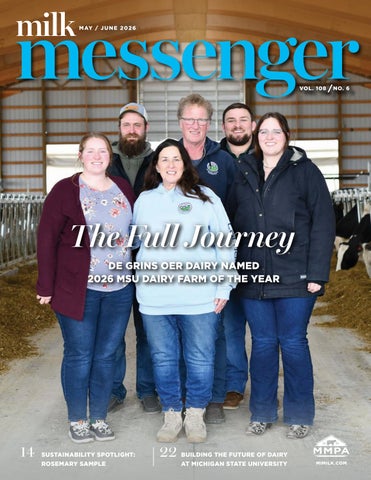
From bare buildings and old-fashioned grit, the Okkemas built De Grins Oer Dairy piece by piece after arriving from the Netherlands in 1999. In 2026, the farm’s journey from uncertain beginnings to focusing on the next generation came full circle when they were named 2026 Michigan State University Dairy Farm of the Year.
22 BUILDING THE FUTURE OF DAIRY AT MSU
Michigan’s dairy industry has long been built on innovation, education and collaboration. Today, that legacy continues through two initiatives at Michigan State University: the Dairy Cattle Teaching and Research Center Campaign and the Dr. Joe Domecq Dairy Education Endowment. The two initiatives are separate efforts, but neither reaches its full potential without the other.
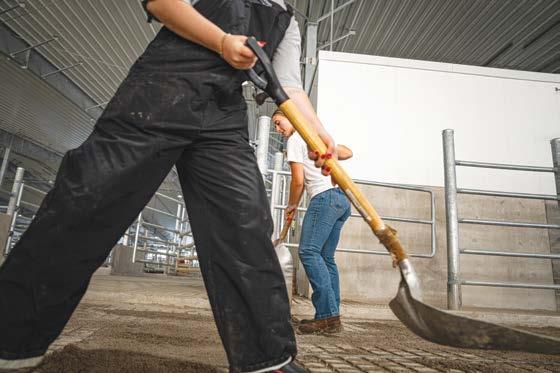
MSU Dairy (page 22)
De Grins Oer Dairy (page 16)
DOUG CHAPIN (PG.
Editor’s Note
BY EMILY KITTENDORF-KING
Dairy’s future is being built piece by piece: through families willing to innovate, through institutions willing to invest and through people whose everyday leadership strengthens the industry. In this issue, those threads come together in stories about excellence on the farm, momentum at Michigan State University and the many forms leadership can take across the industry.
On the Cover
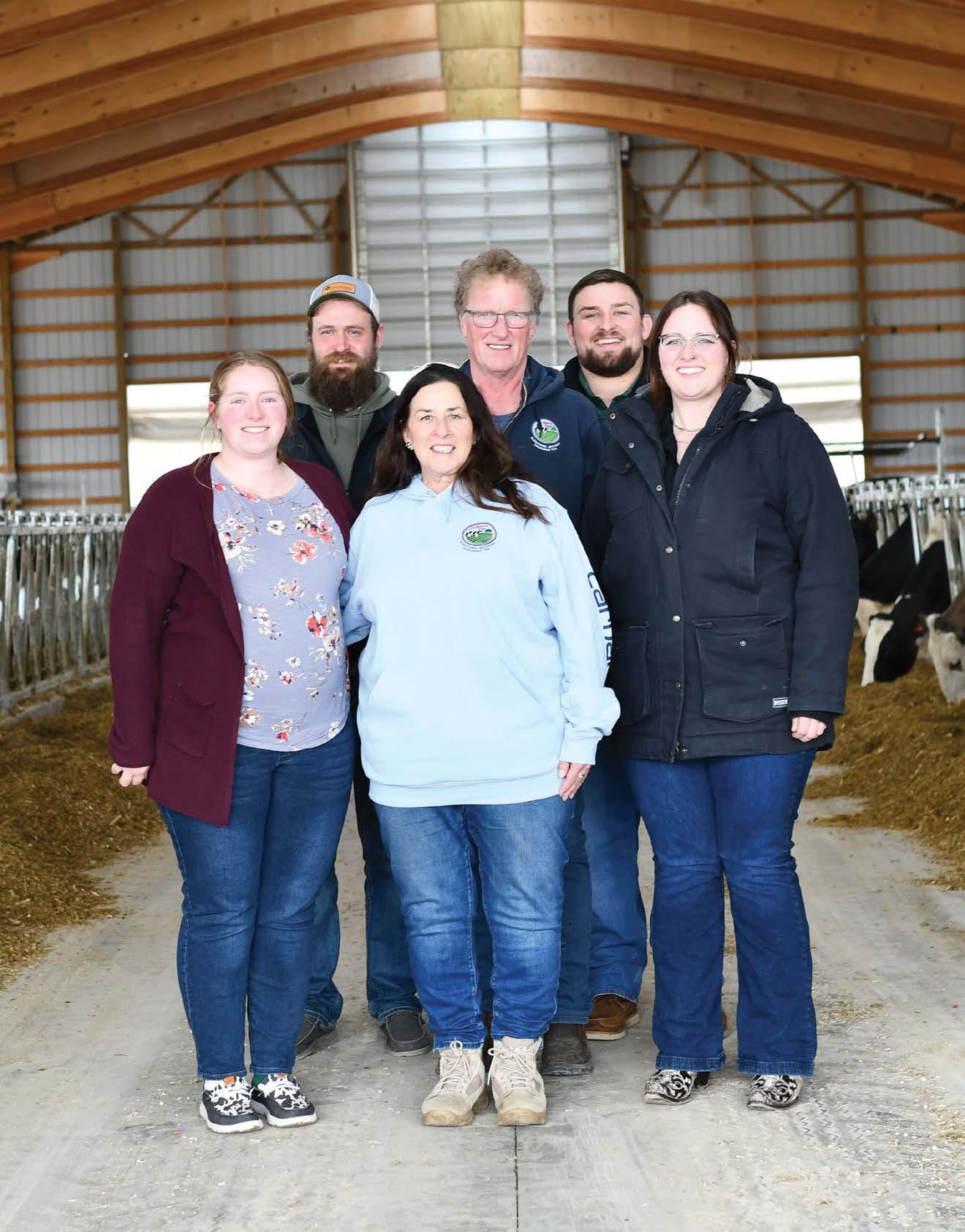
I had the chance to meet with the Okkema family of De Grins Oer Dairy in Blanchard, Mich., recently named Michigan State University’s 2026 Dairy Farm of the Year. The award recognizes excellence in management, innovation and leadership, and the Okkemas embody all three through their focus on milk quality, use of technology, commitment to outreach and family-centered approach to building a first-generation dairy from the ground up. Learn more and be inspired by their story on page 16.
Also Inside
We are also featuring women farmers in the sustainability spotlight series this year in recognition of the United Nations’ designation of 2026 as the International Year of the Woman Farmer. We kick it off with Rosemary Sample whose work, stewardship and leadership, alongside other women farmers, continues to shape the industry on farms, in families and across rural communities (pg. 14). It is a fitting opportunity to broaden the picture of sustainability by recognizing the people whose care and commitment help carry dairy forward every day.
VOL. 108 / NO. 6
Milk Messenger (USPS # 345-320) is published bimonthly by the Michigan Milk Producers Association, 41310 Bridge Street, Novi, MI 48376-8002. Periodicals postage paid at Novi and additional mailing offices.
POSTMASTER: Send address changes to Milk Messenger, PO Box 8002, Novi, MI 48376-8002.
President and Chief Executive Officer
Joe Diglio
Managing Editor
Sheila Burkhardt, Chief Corporate Affairs Officer
Editors
Emily Kittendorf-King, Editor & Advertising Manager
Mikayla Bowen, Editor messenger@mimilk.com
Publication Designer
Stacy Love rezudesign.com
Printing Foresight Group, Stacey Trzeciak staceyt@foresightgroup.net
Publication Office
MMPA Milk Messenger P.O. Box 8002, Novi, MI 48376-8002 p: 248-474-6672 f: 248-474-0924
e: messenger@mimilk.com w: mimilk.com
Established in 1916, MMPA is a member owned and operated dairy cooperative serving dairy farmers in Michigan, Indiana, Wisconsin and Ohio.
An Equal Opportunity Employer – F/M/V/D
Subscriptions: mimilk.com/subscribe
MMPA members - 50¢ per year Non-members - $5 per year
Circulation: 2,600 (ISSN 0026-2315)

Supporting MSU’s Dairy Program is a Win for the Industry
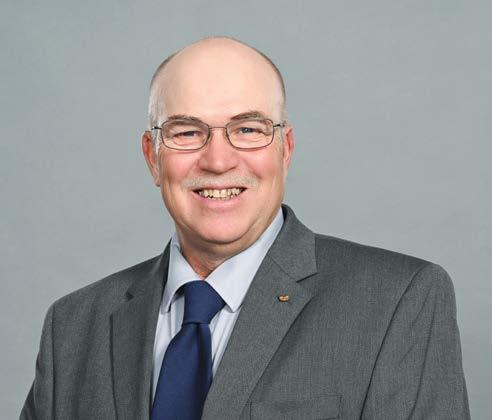
BY DOUG CHAPIN, MMPA BOARD CHAIRMAN
The need to update and modernize the MSU Dairy Farm has been talked about for years. The facility didn’t need a facelift; it needed to catch up with the industry. A fire at the dairy may have been the impetus to update the facility, but it was the once in a lifetime opportunity to get substantial funding from the state of Michigan that got it moving. MMPA, working with all the stakeholders in agriculture, lobbied and supported MSU’s proposal to build a new dairy and greenhouses on campus. MSU received $53 million towards both projects, including $30 million for the dairy, leaving a gap of $45 million dollars in covering the complete dairy facility cost.
Congratulations to the Okkema family for being selected as the Michigan State University (MSU) Dairy Farm of the Year! It’s always exciting to see Michigan Milk Producer Association (MMPA) members excel, it’s even more exciting to get that recognition from MSU, a land grant university that takes its role with Michigan agriculture to heart.
The MSU Board of Trustees saw the need with the new dairy farm and more importantly, saw the opportunity for dairy producers, students and Michigan citizens. They recognized that the benefits of this investment would be greater than just the university. They approved the construction knowing more funds were needed, but trusting that those funds could be raised. MSU has been working on fundraising with industry and is kicking off a campaign aimed at producers. Their goal is to raise $1 million from producers. This helps send a message to MSU that our Michigan dairy industry supports the investment and sees real value for our farms. In addition to the fundraising for the dairy facility, there is also an opportunity to support the Dr. Joe Domecq Dairy Education Endowment Fund. The Domecq Endowment will serve as the basis to expand teaching capacity to meet the anticipated growth in the dairy education program. Enrollment in MSU’s dairy program has already doubled over the last five years. The endowment not only honors Dr. Domecq’s lifelong service to the dairy industry, but provides support in meeting the teaching needs associated with the facility and the dairy program.
I challenge our members to consider how MSU has influenced their farms. Some of our members have attended MSU, several of our children have as well. Look at the expertise that you work with to remain successful. Where did your veterinarian, nutritionist or financial personnel receive their training? It’s clear to me that as we have fewer farms, we have fewer children with farm backgrounds to fill the positions that serve us. A dynamic dairy farm and school at MSU helps us attract more talent from students without an ag background. This talent and interest are necessary for us to be successful in the future.
For me, MSU Extension played a major role in helping me establish and grow my dairy farm, maybe it did for you as well. Dr. Richard Pursley’s research on timed artificial insemination had a great impact on my dairy and I’ve never seen a faster response to research than the industry response to Dr. Adam Lock’s research on high oleic soybeans.
The significance of producers supporting the new dairy is twofold. The support is needed and crucial for the new dairy, but more importantly it sends a message to our larger industry that this is important to us. That they should consider how they can support the MSU Dairy Farm which directly supports producers and growth of the dairy industry in Michigan.
MMPA has announced significant investments in Michigan, others have made announcements of their investments in dairy as well. Michigan is poised for real wins in dairy. MSU will play an important role in that growth by providing research, expertise and educational infrastructure. Everyone in the state wins with this growth: our producers, citizens and rural communities.
MSU is giving opportunities for you to recognize your farm, a family member or someone significant in your success or simply support its direction with a gift to the Domecq Endowment and the new dairy. Learn more about how to support this initiative on page 22.
DOUG CHAPIN
Is your milking and cooling system
WE ASKED THE EXPERTS:

Ben Chapin
MMPA
MEMBER SERVICES DIRECTOR
It’s hard to believe that summer is already upon us and after this past winter in the Midwest, it is a welcomed season. While we welcome summer and continue to get field work completed, it is important to keep in mind the challenges of cooling milk and keeping it cold.
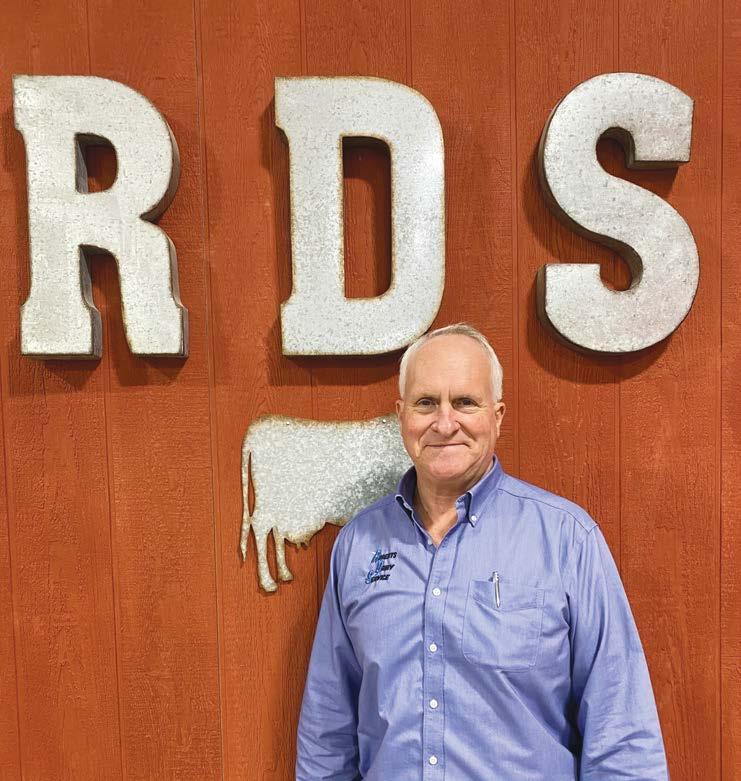
Marc Roberts ROBERTS DAIRY SERVICE OWNER
Steve Lehman
Over the years the first heat wave of summer would often bring milk cooling challenges across the area. This could happen for a variety of reasons including compressors not being properly ventilated for the season, low freon levels, restricted plate coolers, etc. The first heat wave often identified areas of milk cooling that may have been sufficient in the cooler weather but stressed the system when we entered summer heat. Unfortunately, this may have led to warm milk and a potential loss for the farm.
This can be avoided by taking time for preventative maintenance on your milk cooling systems. An inspection of the cooling system is a great first step including compressors, freon levels and plate coolers. If you have a temperature recording chart, compare charts from previous weeks or months and identify if it is taking longer to cool the milk down. This may help catch an issue that has slowly crept up.
Maintaining your milk cooling system’s efficiency is critical, especially when summer heat adds extra strain. Precooling with well water can significantly reduce the cooling load, removing up to 2/3 of the heat. To optimize this, flush the well water side of your pre-cooler to eliminate rust and mineral buildup that hinders heat transfer. Ensure all water lines to and from the unit are clear of obstructions caused by mineral deposits. Also, consider if your current milk flow rate exceeds your system’s capacity. Regularly check refrigerant pressures and levels in your compressors. For watercooled units, verify adequate water flow and a clean heat exchanger. Air-cooled compressors require clean condensers with straightened fins and unobstructed airflow. Ensure condenser fans and their controls are clean and functioning correctly. Many power providers offer rebates for cooling system tune-ups, so contact your local dairy equipment dealer for this service. Proactive maintenance ensures efficient cooling and protects milk quality during hot months.
MMPA RAW MILK COMPLIANCE MANAGER
Milk cooling, along with sanitary milking procedures and clean equipment are the three keys to producing top quality milk. Providing top quality milk and milk products to our customers has enabled MMPA to become a preferred supplier of raw milk and milk products across the country. Milking procedures and equipment provide the “seed” for bacterial growth; compromised cooling magnifies the growth of bacteria that is present.
The Pasteurized Milk Ordinance (PMO) requires that milk be cooled to 50O F within 4 hours of the start of milking, and allows for an additional two hours to bring the milk to 45O F. The blend temperature must not exceed 50O F after the first milking. Keeping your mechanical cooling systems (compressors, chillers and bulk tank interval timers) operating properly, along with maximizing well water precooling enables these temperatures to be met while obtaining the maximum efficiency of energy used.
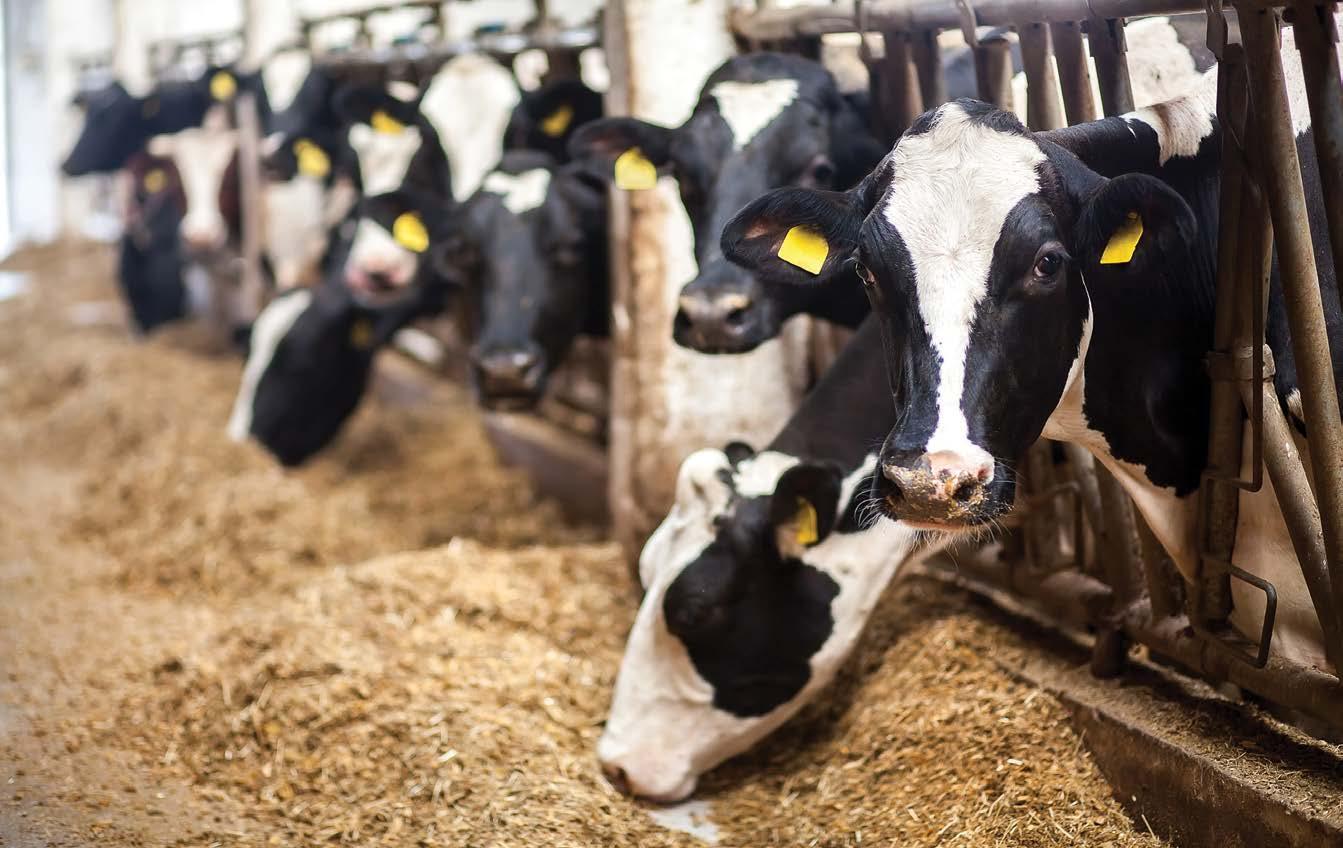
Cooling milk quickly to 36-38O F or less enables milk to be sent to high value and long distance markets. While milk tankers are well insulated and cooling rinses are employed when practical, the milk still needs to absorb any heat remaining from tanker cleaning and storage in the summer sun.


MMPA producers scoring 95 percent or higher on Grade A Surveys and Federal Check Ratings STARWARD
ROSE
ROSE
VANDERPLOEG
MMPA photo contest entries due July 1
The ninth annual MMPA member photo contest opened on May 1 with submissions due by July 1. Contest applicants are encouraged to submit photos that are reflective of what embodies our cooperative and captures a wide variety of the dairy farm lifestyle.
Phone photographers are encouraged to submit entries! First, second and third place will be selected based on composition, quality and character of the image, suitability and/or creativity and overall impression of the photo. People’s Choice and Staff Choice awards will be selected based on public and staff popularity.
For more information about the contest and to see last year’s award-winning photos, visit mimilk.com/photo-contest.
Over $4 million paid to MMPA members
In April, MMPA made cash payments totaling nearly $4.1 million in the retirement of 2016 certificates of equity. This is in addition to the over $1.4 million in cash patronage from 2025 earnings paid earlier this year. MMPA’s strong financial position allows them to return allocated equities to members on a ten-year revolving basis. OUR MISSION
To market MMPA members’ milk to the greatest advantage possible.
Remus and Ovid achieve production milestones
Two Michigan Milk Producer Association (MMPA) facilities recently marked significant production milestones in April, reflecting continued progress across the cooperative’s processing network.
At the Remus, Michigan facility, the team completed its first cottage cheese test run on April 10, producing 7,000 pounds. The run represents an important step as the plant moves forward with new production capabilities.
At the Ovid plant, the team processed more than 1 million pounds of ultrafiltered milk for the first time, signaling continued growth in meeting demand for ultrafiltered milk production.
First announced in December, the projects at both the Remus and Ovid facilities are part of MMPA’s broader effort to strengthen processing capacity and better position the cooperative for future growth. The Remus project focuses on expanding product capabilities with the addition of cottage cheese production, while expansion at the Ovid plant is designed to increase ultrafiltered milk processing capacity. Together, these investments reflect a long-term commitment to adding value to members’ milk and ensuring MMPA continues diversifying our product mix and meeting evolving market demands.

Do you have the right team and tools in place to help mitigate risk to your operation? Forecast expected income, calculate potential loss, and review quarterly statistics through our exclusive analyzer tool, all backed by the expert support of our dedicated livestock insurance team.
With locations across Michigan and northeast Wisconsin, we're here when you're ready to talk.

MMPA meets with legislators in Washington, D.C.
In late March, the Ag Leaders of Michigan (ALM) hosted an event in Washington, D.C., to meet with members of Michigan’s Congressional delegation
MMPA Board Members Doug Chapin, Tony Jandernoa and Bruce Benthem met with legislators and focused on priorities and opportunities for the dairy and agriculture industries,
including labor legislation and the Farm Bill.
Agricultural Leaders of Michigan is a coalition of agricultural, commodity and agri-business leaders committed to bolstering the profile of the industry and educating policymakers about core issues affecting Michigan agriculture and agri-businesses. Members include MMPA, Michigan Pork Producers Association, GreenStone Farm Credit Services and the Michigan Agri-Business Association.
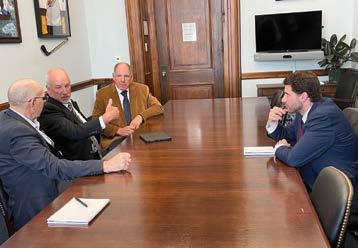
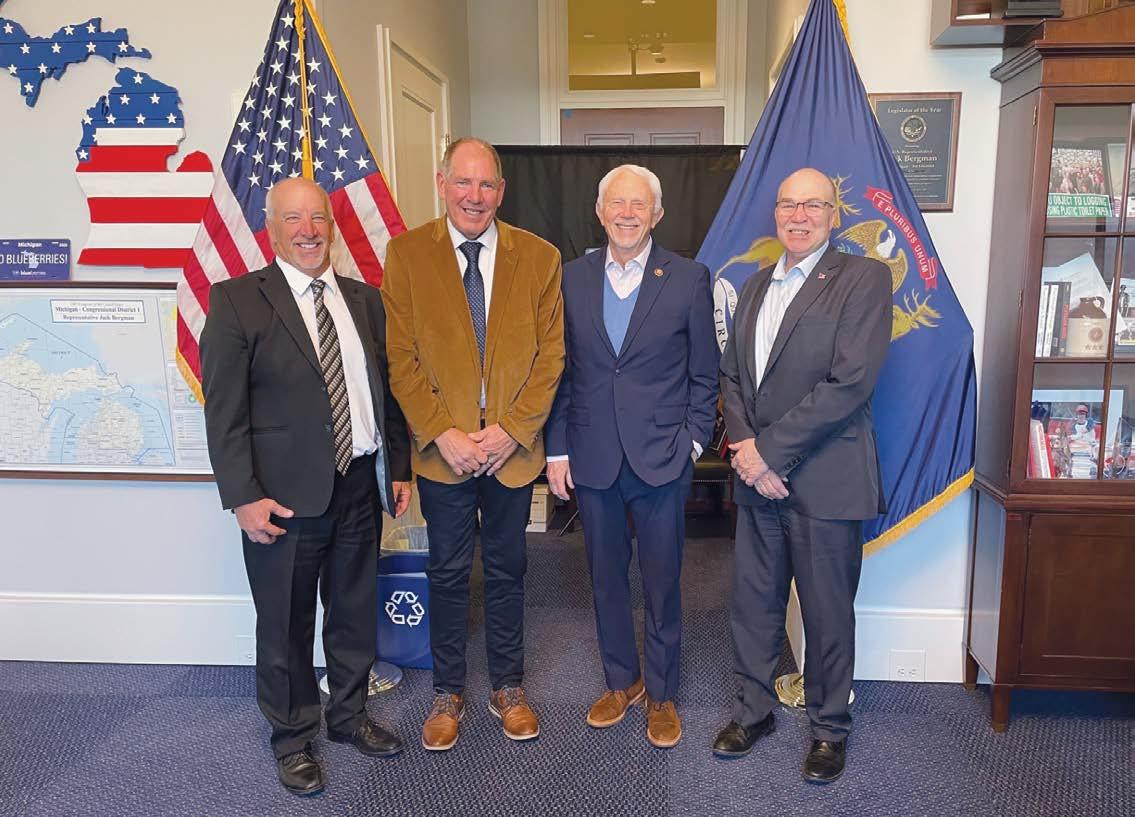
Above: MMPA Board Members visit with Bennett Abrams in the office of U.S. Senator Elissa Slotkin Pictured below (L-R): Tony Jandernoa, MMPA Board Vice Chairman; Bruce Benthem, MMPA Board Member; Rep. Jack Bergman; and Doug Chapin, MMPA Board Chairman.
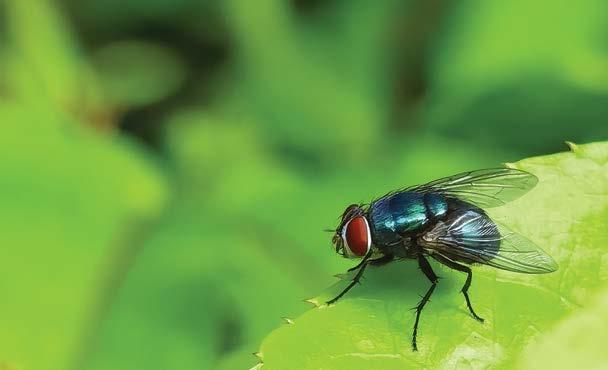
New World Screwworm draws near U.S. border
As spring temperatures rise, the threat of New World screwworm making its way into the United States is also increasing. The dairy industry, including the National Milk Producers Federation (NMPF), is working with agencies and stakeholders to ensure dairy preparedness.
Infestations continue to push north toward the U.S.-Mexico border, with the closest currently active case about 150 miles from Texas; meanwhile, sterile flies are being released in Texas up to 50 miles from the Mexican border to help suppress populations before they can reach American livestock.
USDA and state agencies will take the lead in managing any outbreak. NMPF has provided feedback to USDA’s Animal and Plant Health Inspection Service on its emergency response plans for a U.S. screwworm infestation
and USDA is taking that feedback into account to incorporate in its next response playbook draft.
During an outbreak, USDA handles movement between states, and individual states can add their own rules for moving livestock within their borders. Farmers can expect that animals will be subject to quarantine and movement restrictions in the areas closest to the infestation, including pre-movement animal health inspection and treatment when appropriate, based on standardized continuity of business New World screwworm animal health certification guidance. Most farmers should still be able to move their animals if they stick to the rules around inspections, treating wounds, paperwork and good biosecurity. FDA has expanded animal drug treatment options for New World
screwworm through Emergency Use Authorizations. Most recently, FDA issued an EUA March 10 for a new topical spray for lactating dairy cows that comes with only a 10-day milk withdrawal time. This is the first drug authorized for use to treat New World screwworm in lactating cattle.
U.S. Dairy highlights USMCA review priorities
The U.S. dairy industry, including the National Milk Producers Federation (NMPF), is sharing the importance of the North American market for dairy producers and underscoring the need to use the U.S.-Mexico-Canada Agreement (USMCA) review process to resolve longstanding trade barriers that limit American dairy-farmer access to key North American markets.
“The USMCA Joint Review presents an opportunity for the United States to strengthen the agreement and ensure Mexico and Canada live up to their commitments,” Tony Rice of NMPF said. “Preserving tariff-free access to Mexico is paramount, while measures to address Canada’s failure to comply with its dairy obligations and Mexico’s delayed implementation of its common
name provisions are necessary for U.S. dairy producers receive the full benefit of the agreement.”
Canada has continued to manipulate its tariff-rate quota administration in ways that effectively shut out U.S. dairy, while also circumventing its USMCA disciplines on dairy protein exports. These violations undermine the market access that USMCA was designed to deliver.
Mexico, meanwhile, also as implementation gaps that require attention during the review even as it remains a positive trading partner. Specifically, Mexico still needs to incorporate certain USMCA common name commitments, which protect the ability of American producers to market their products like “feta,” into its regulatory structures and
take clearer steps to ensure that new restrictions are not imposed on U.S. cheese exports.
NMPF and the U.S. Dairy Export Council have been raising these concerns with members of Congress and the Administration throughout the lead-up to renewal, and the Agriculture Trade Caucus has become an important venue for that work.
The bipartisan caucus, which NMPF and USDEC helped launch in January 2024, regularly convenes briefings on challenges facing agricultural exporters and Congress’ role in leveling the playing field.
The industry will continue to push to strengthen the agreement and ensure that the promises made to U.S. dairy farmers are kept as the three countries meet to discuss the future of the trade pact on July 1.
Rosemary Sample
BY MIKAYLA BOWEN
MMPA IS COMMITTED TO COOPERATIVE SOCIAL RESPONSIBILITY AND SUSTAINABLE BUSINESS PRACTICES THROUGHOUT OUR ENTIRE SUPPLY CHAIN. AT THE FARM LEVEL, MMPA MEMBERS ARE ALSO ON A SUSTAINABILITY JOURNEY. IN RECOGNITION OF THE UNITED NATIONS’ DESIGNATION OF 2026 AS THE INTERNATIONAL YEAR OF THE WOMAN FARMER, THIS YEAR’S SUSTAINABILITY SPOTLIGHT SERIES CHECKS IN WITH A HANDFUL OF OUR FEMALE MEMBER FARMERS WHO ARE LEADING THE CHARGE.
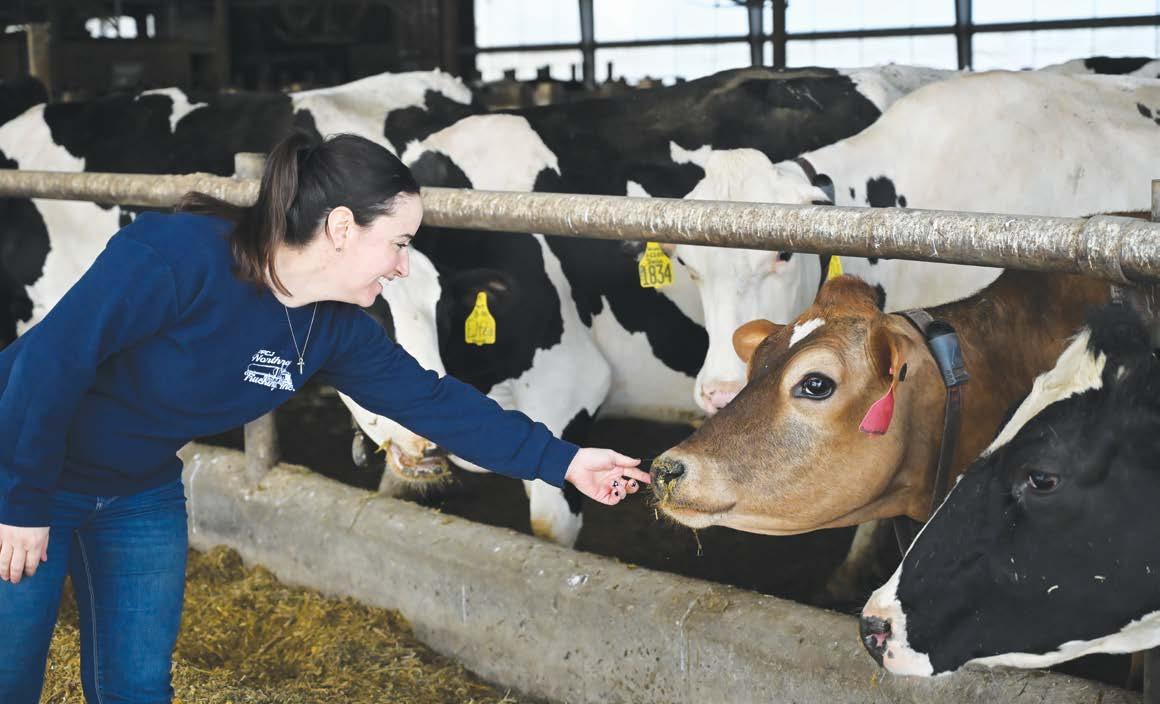
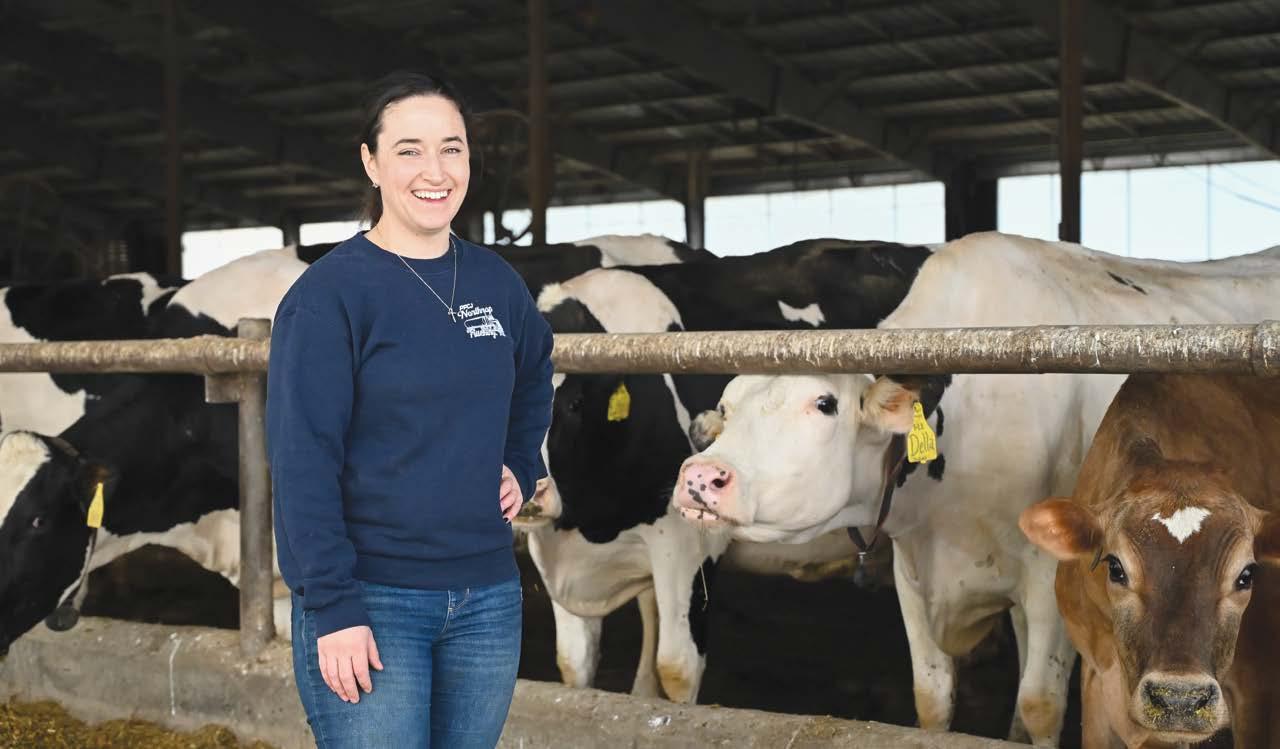
On a family dairy farm built from the ground up in the 1970s, sustainability is a daily practice shaped by decades of decisions, challenges and careful attention to detail. For Rosemary Sample, who co-owns and operates Rose Valley Dairy LLC, in Filion, Mich., alongside her brother Val, sustainability is rooted in a simple but powerful idea: building a business that lasts.
“Our definition of sustainability really comes down to creating something that will stand the test of time,” Rosemary explains. “It’s about efficiencies and knowledge, understanding what you’re doing well, where you can improve and making sure everything works together long term.”
That mindset has guided the siblings since they officially took over the operation in 2011, following a trial period encouraged by their father.
Unlike many farm transitions, the handoff came with few safety nets.
“It was very much, ‘If you’re going to buy it, you’re on your own,’” Rosemary recalls. That early independence forced them to learn quickly, make decisions confidently and take full ownership of the farm’s direction.
Even before purchasing the farm, Rosemary was already seeking out ways to improve it. As a young farmer, just 19 years old, she began exploring
conservation programs through the Natural Resources Conservation Service (NRCS), looking for practical ways to strengthen the farm’s infrastructure.
“We weren’t thinking in broad terms at first. We focused on what would make the biggest impact right away: manure handling, cover crops, improving how things function day-to-day,” she says.
One of their early investments was a concrete manure pit, designed for durability and long-term use. With reinforced thickness and careful consideration of drainage and freezethaw cycles, the system reflects the farm’s broader philosophy, invest for long term use to avoid costly issues later. That same attention extends across the operation. From heavy-use concrete areas to nutrient management and cropping strategies, each improvement is evaluated not just for immediate return, but for how it contributes to overall efficiency.
Today, the farm milks around 250 cows using a combination of robotic milkers and a double-nine parlor, allowing flexibility to manage different animals effectively. Rather than maximizing herd size, Rosemary and her brother focus on optimizing what they already have.
“We’d rather fine-tune our efficiencies before we expand,” she says. “If you’re not doing things efficiently now, for us, growing only makes those problems bigger.”
Rosemary personally handles breeding decisions, selecting bulls heavily based on traits like feet, legs and udder conformation, key factors in longevity and productivity. While genomic testing has become more common across the industry, she relies heavily on proven performance.
“If a cow has shown she can last 12 or 13 years and never miss a beat, that tells you all you need to know,” she explains.
The result is a herd built for durability, with animals that remain productive well beyond industry averages.
Heifer management also reflects that long-term mindset. During the summer months, heifers are pastured to support hoof health and overall wellness. While pasture ground can be costly and doesn’t always deliver immediate financial return, Rosemary sees it as an investment in the herd’s future. Healthier animals, she notes, lead to fewer problems down the road and stronger performance over time.
In recent years, Rosemary has abruptly expanded her role to include crop management, gaining a deeper understanding of how soil health and feed production tie directly into dairy performance.
“It’s really interesting because working with crops isn’t that different from working with cattle,” she says. “It’s just a different language: understanding inputs, balancing nutrients and figuring out what works best for your farm.”
The farm grows corn, soybeans, wheat and alfalfa, with a strong emphasis on practices that improve soil health and nutrient retention.
Cover crops are planted following manure application to protect soil and maintain living root systems, while filter strips help manage runoff from high-traffic areas. These practices not only support environmental stewardship, but also improve the efficiency of nutrient use across the farm. Rosemary and Val are increasingly interested in exploring soil
KEYWORDS
biology and conducting side-by-side trials to better understand how different approaches impact crop performance. Like their work with cattle, their cropping decisions are guided by observation, data and a willingness to adapt.
“Sustainability really fits into everything you do on the farm,” Rosemary says. “Whether it’s selecting a bull, choosing a crop variety or managing manure, it all plays a role.”
This whole-farm perspective shapes how decisions are made, encouraging continuous evaluation and improvement across every area of the operation.
While large investments and technology play an important role, Rosemary believes some of the most meaningful gains come from small, consistent adjustments. From hoof trimming schedules to feed management and daily observation of cattle, attention to detail is a defining characteristic of the farm’s success.
“Even small changes can have a big impact over time,” she says. At its core, Sample’s approach to sustainability is grounded in responsibility, to the land, to the animals and to the future of the farm. Every decision, whether large or small, is made with longevity in mind.
“You have to look at everything you’re doing and ask, ‘Is this going to last?’ she says. “If it’s not, then you need to find a better way.”
FILTER STRIPS – A STRIP OR AREA OF HERBACEOUS VEGETATION, TYPICALLY LOCATED AT THE LOWER EDGE OF A FIELD, USED TO REMOVE CONTAMINANTS, SUCH AS SEDIMENT, NUTRIENTS, PESTICIDES AND ORGANIC MATERIAL, FROM OVERLAND FLOW.
GENOMIC TESTING – THE MAPPING AND SEQUENCING OF GENETIC MATERIAL (DNA) IN AN ORGANISM, COMBINED WITH THE USE OF THAT INFORMATION TO UNDERSTAND THE ROLE OF GENES, HOW THEY ARE CONTROLLED, HOW THEY WORK TOGETHER AND HOW THEY CONTRIBUTE TO SPECIFIC TRAITS.
SOURCE: U.S. DEPARTMENT OF AGRICULTURE
VERIFICATIONS
FARM Animal Care
MMPA SUSTAINABILITY MISSION
To continually strive for a more sustainable future for our community, our environment, our economy’s health, and for the lives and world around us.
DE GRINS OER DAIRY
NAMED MSU DAIRY FARM OF THE YEAR
BY EMILY KITTENDORF-KING
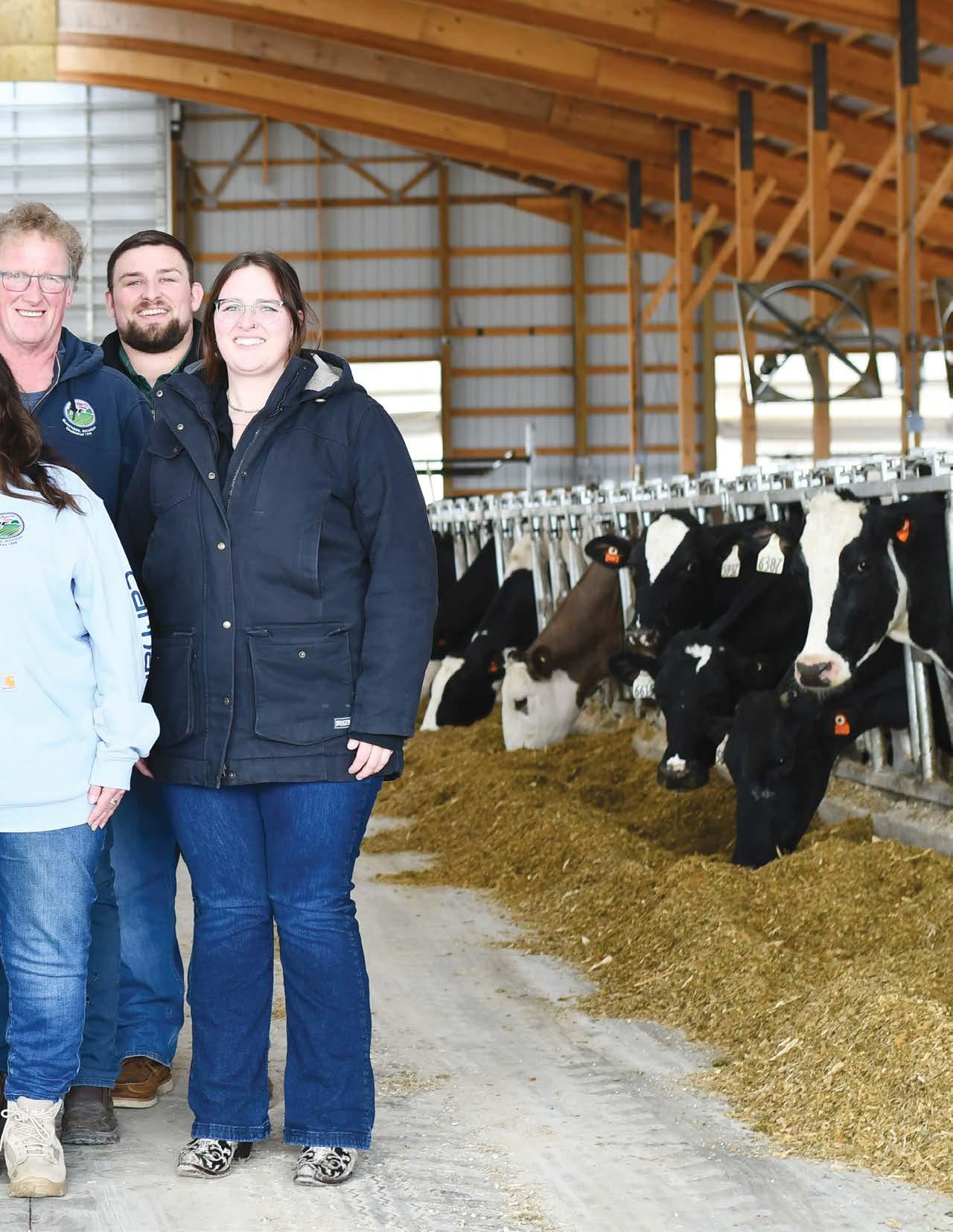
When Tjerk and Ramona Okkema came to Blanchard, Michigan, in 1999 from the Netherlands, they didn’t step into a working farm, they stepped into a challenge.
There were buildings, but not much else; equipment was scarce, and even the shovels were gone. What followed was months of cleaning, figuring things out and building piece by piece, turning something uncertain into something that worked.
Today, the focus is different. It’s not how to build the farm, it’s how to pass it on.
In 2026, that full journey from those early years to where the farm stands today was recognized when De Grins
Oer Dairy was named the Michigan State University Dairy Farm of the Year.
But for the family, the recognition reflects more than what the farm looks like now. It reflects everything it took to get there and what it will take to carry it forward.
Growing into the next chapter
Tjerk and Ramona remain at the center of the farm they built, but the day-today no longer rests on just one set of shoulders.
“We’re in the process of transitioning,” Ramona explains.
Their children, Evelyn Damveld, Cora Okkema and Dirk-Thomas Okkema, are each part of the farm in their own way, staying connected as the operation continues to evolve. Evelyn, alongside her husband Aaron, are the next generation to take over the farm and they are more directly involved in the daily work. The entire family remains invested in where the farm is headed and that shared connection shapes how decisions are made.
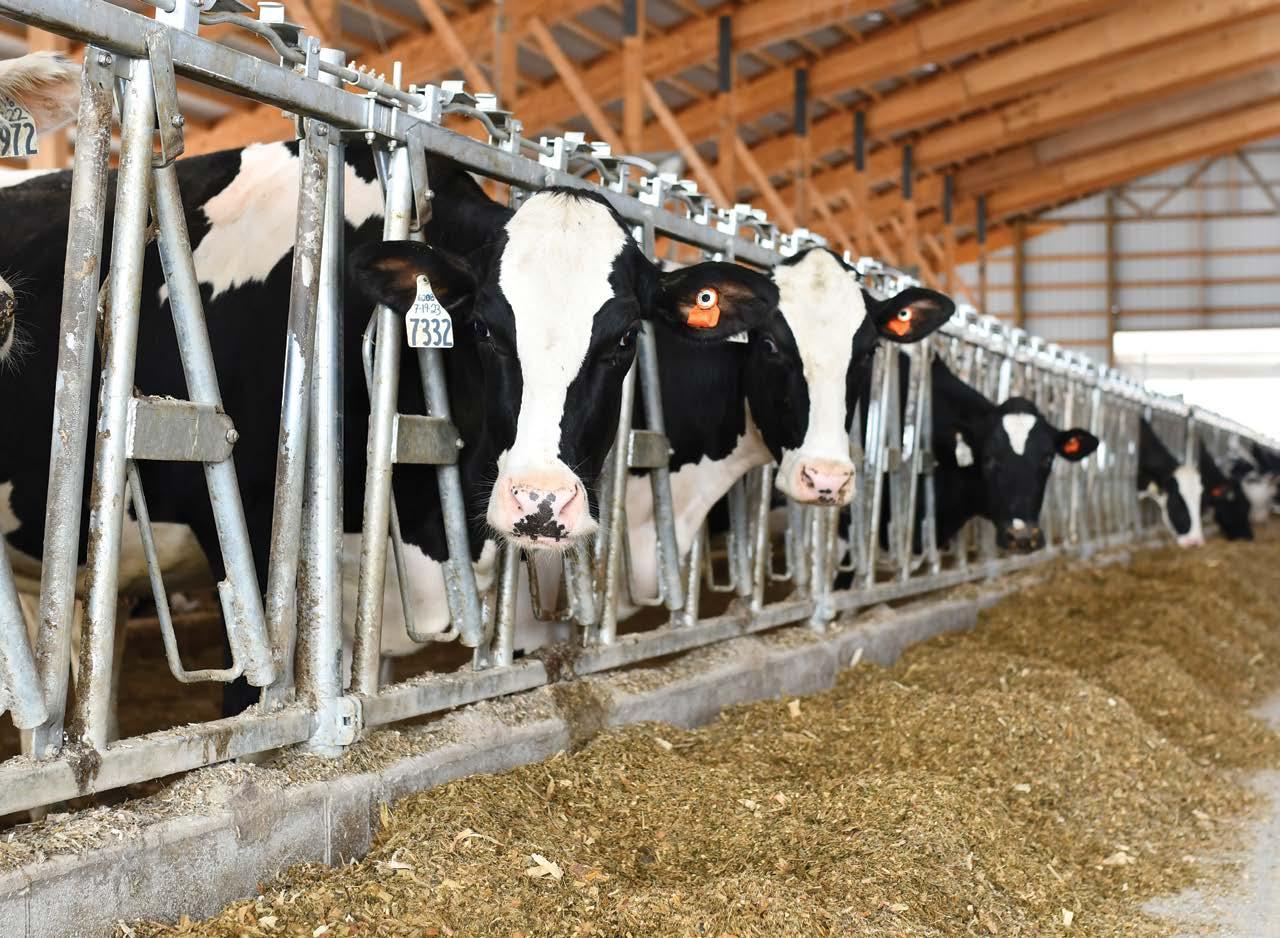
Evelyn and Tjerk, in particular, have taken a close role in refining the operation, focusing on the kind of improvements that don’t always stand out immediately but make a lasting difference over time. That includes changes to facilities, like adding a new barn, as well as adjustments to how cows are handled day to day with a focus on reducing stress, improving comfort and building consistency into the system. Over time, those efforts have added up.
“You just see the difference,” Tjerk said, and the family agrees. Evelyn said, “We were just talking the other day, our second lactation cows are all milking well over 100 pounds.”
The success is not the result of one decision, but many made carefully, and often together.
“It’s not just about our high production, but our hopes for being better and keeping ourselves to a high standard,” Dirk shared.
Sharing the work
As the farm has grown, so has the number of people it takes to run it. Today, that work is shared not only across the family, but with a team of employees who play a key role in the operation. With that comes a different kind of responsibility.
“It’s a lot more management,” Tjerk said.
But on the farm, management doesn’t just mean oversight. It means creating space for others to take on more.
“I’ve focused on splitting some responsibilities out to other employees that want to learn more,” Evelyn said. “One gal was happy that I was even willing to train her on how to do some of the things. She wants to learn and grow with her experience.”
Over time, that approach has helped build a team that works together more fluidly where people understand more than just their own role.
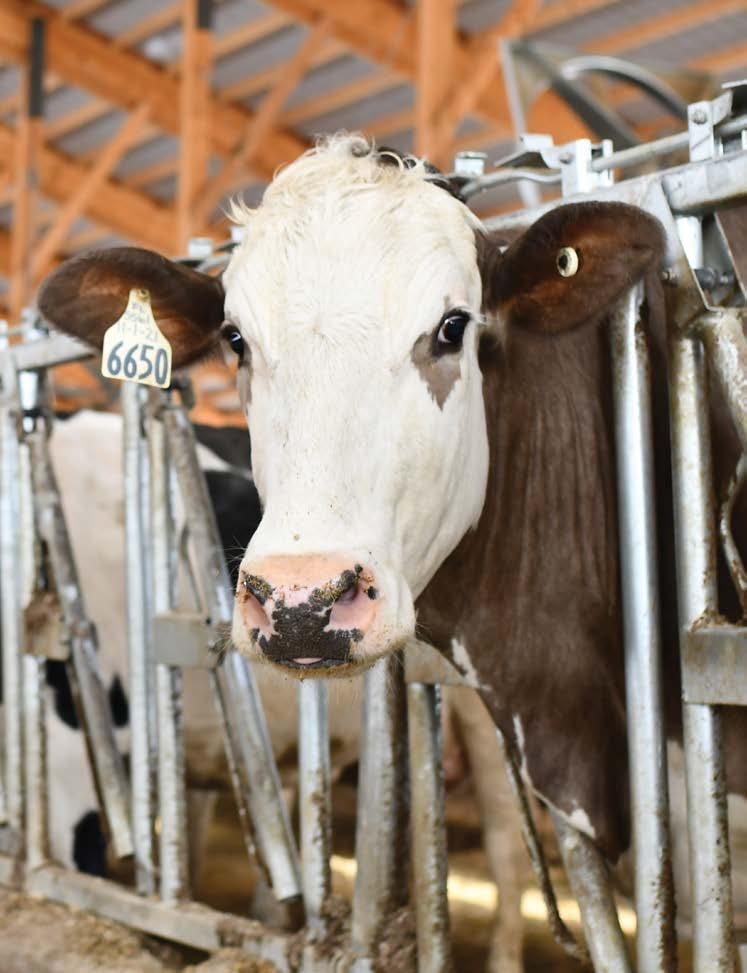
“If everybody knows how to do a little bit of everything, then there’s a lot more teamwork involved and it’s a lot less overwhelming,” she said.
It’s a shift that reflects not just the size of the farm, but the kind of place the family wants it to be.
Taking on more
That same mindset has shaped other decisions as well.
In the past year, the farm took on more of its cropping work in-house, bringing another piece of the operation under its own management.
For Aaron, that meant stepping into a larger role, one that came with its own learning curve.
“I got a 15-minute crash course,” he said of learning how to plant corn. He shared that the trainer said, “Yep, you got my phone number. See you later!”
It was a moment that captured both the challenge and the opportunity.
“It was stressful, but it was fun,” Aaron said.
And like many things on the farm, it became part of a bigger pattern: taking on more responsibility, learning as they go and building confidence along the way. Even with those changes, the reality of the work hasn’t become simpler.
“There are always problems that pop up,” Evelyn said. “You have so many different aspects that you have to manage.”
The Okkemas milk their 700-cow herd three times a day in a 40-stall rotary parlor, originally constructed in 2017.
It’s the nature of the farm with many moving parts, all requiring attention. What has changed is how those challenges are handled. More voices are part of the conversation, more people are involved in finding solutions, and more of the responsibility is shared.
What it all means
For the family, the farm has always been something built over time: through effort, persistence and a willingness to keep going. Now, it’s something that carries a different kind of responsibility.
“I think at the end of the day, we all remember what’s important,” Cora said. “We want this farm to succeed and for our family to have a legacy. It takes teamwork to keep this dream alive and make it sustainable for our generation and future generations.”
That sense of purpose remains steady, even as roles shift. The future of the
farm isn’t defined by a single plan, but shaped by the same approach that built it, step by step.
“The main goal is the next generation,” Tjerk said. Which Ramona is quick to point out doesn’t mean stepping away completely, “He wants to stay involved till his last days.”
Instead, it means continuing to make space for new ideas, new responsibilities and the people who will carry the farm forward.
“You’ve got to train the next generation,” Tjerk said.
A steady foundation
Through every stage of the journey, from starting from scratch, building the farm and now preparing for what comes next, there has been something constant.
“Faith,” Ramona said. “It seems small, but it’s extremely powerful.”
It’s a visible part of the operation with scripture etched on the side of the barn, but it’s also one that shapes how the family approaches both challenges and success. For a farm that has come as far as this one has, that perspective carries weight.
We want this farm to succeed and for our family to have a legacy. It takes teamwork to keep this dream alive and make it sustainable for our generation and future generations.”
“God pours far more blessings into the farm than what leaves in a milk tank,” she said.
And as De Grins Oer Dairy moves into its next chapter, that belief, built alongside everything else, remains at the center of it all.
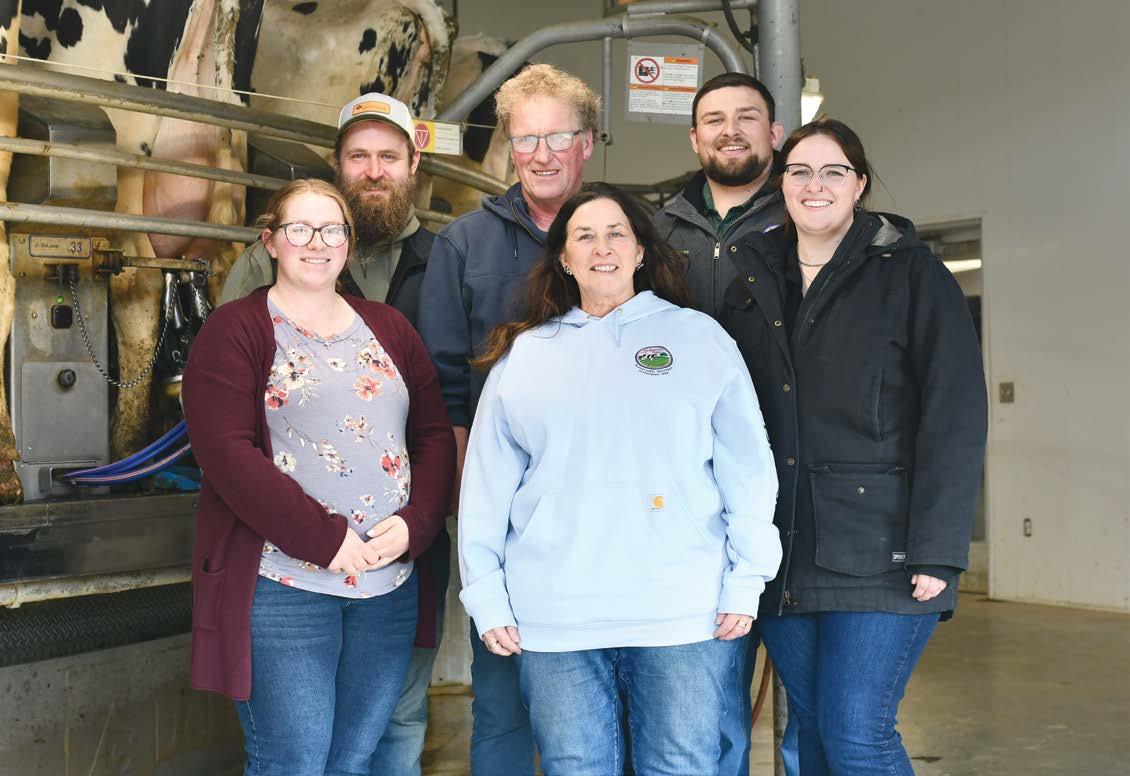
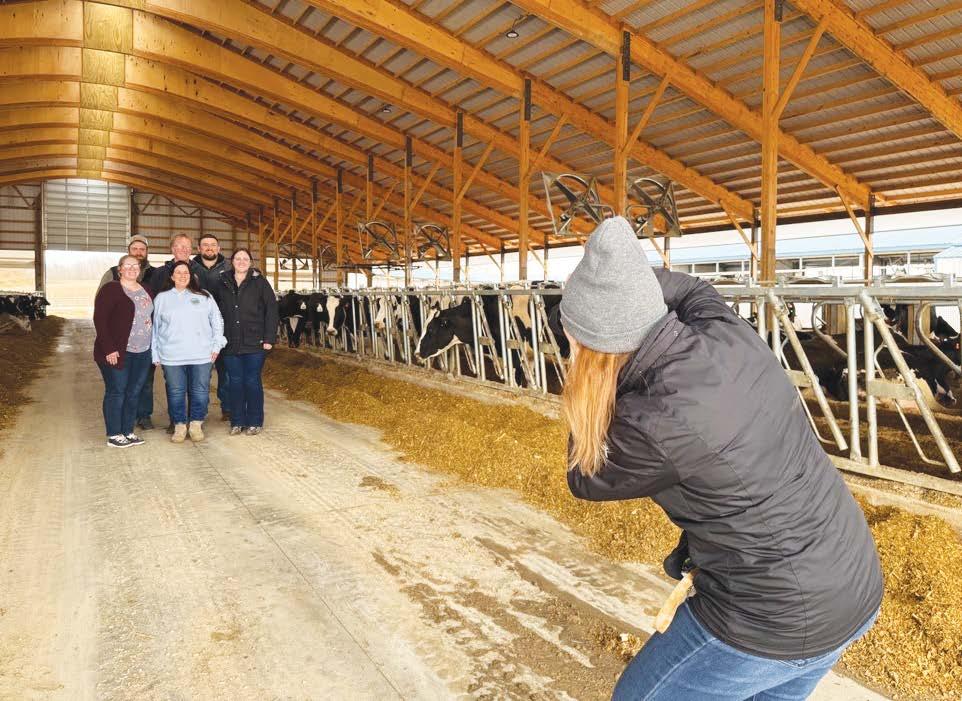
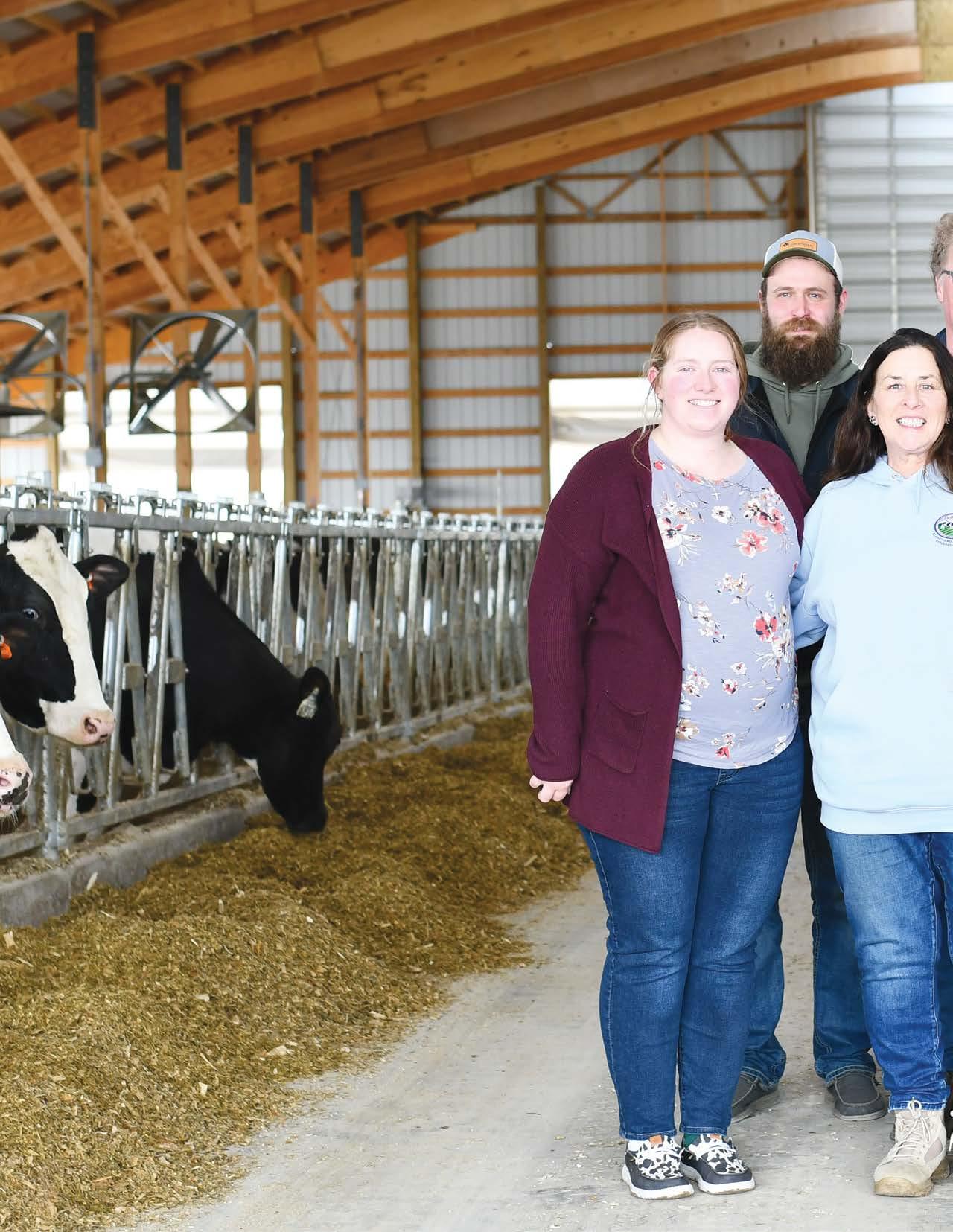
Back Row (L-R): Aaron Damveld, Tjerk Okkema and Dirk-Thomas Okkema. Front Row (L-R): Evelyn Damveld, Ramona Okkema and Cora Okkema.


BUILDING THE FUTURE OF DAIRY AT MSU
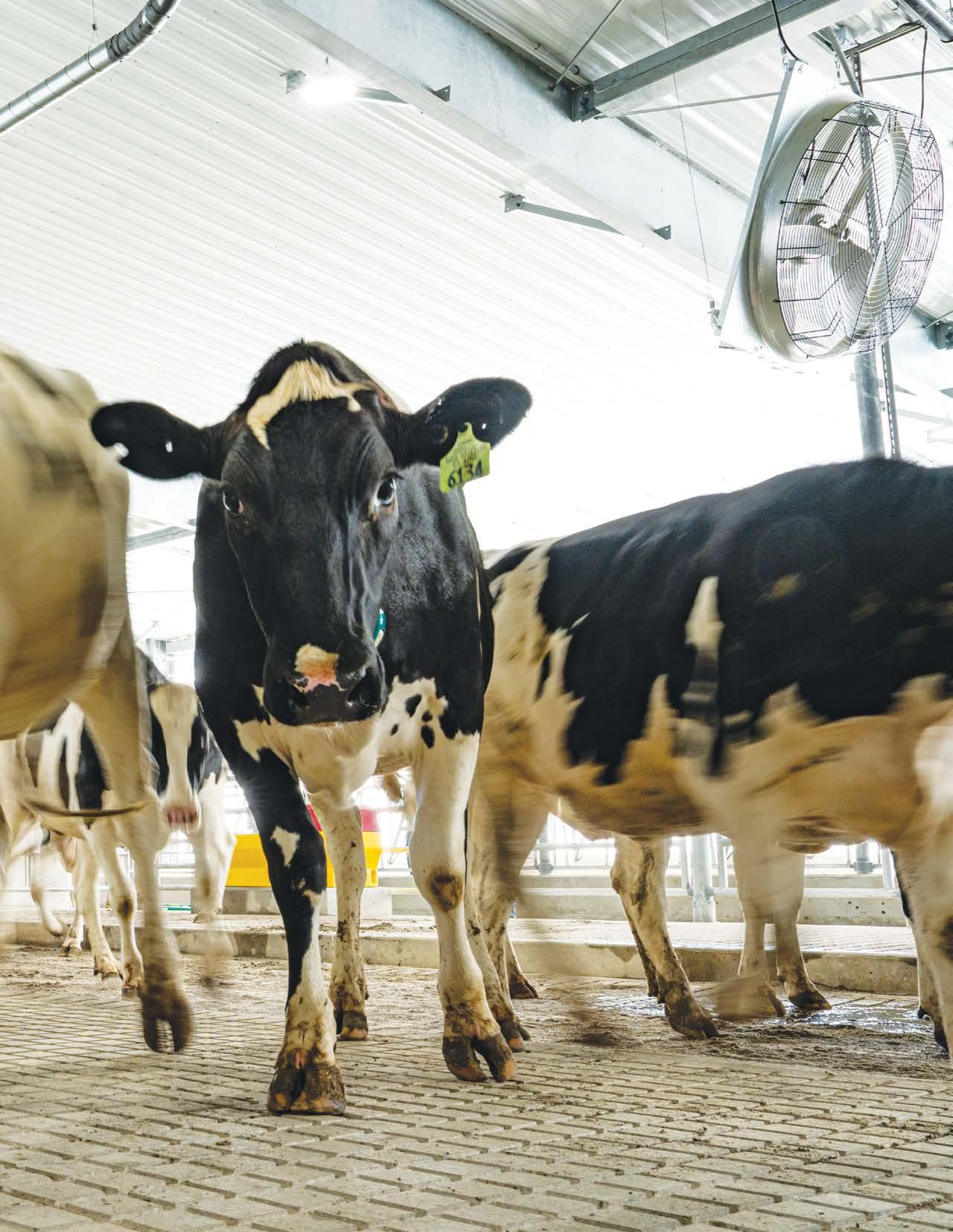
MSU DAIRY FACILITY CAMPAIGN AND DOMECQ ENDOWMENT GO HAND IN HAND
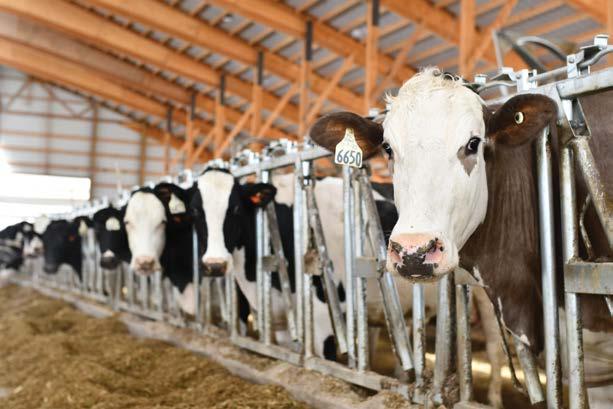
Michigan’s dairy industry has long been built on a foundation of innovation, education and collaboration. Today, that legacy continues through two major initiatives at Michigan State University (MSU): the Dairy Cattle Teaching and Research Center Campaign and the Dr. Joe Domecq Dairy Education Endowment.
The two initiatives are separate efforts, but as those closest to them explain, neither reaches its full potential without the other.
“They go hand in hand,” said Dr. Cathy Ernst, MSU Chairperson, Department of Animal Science. “The facility is necessary for us to teach our students, but this endowment is focused on our teaching mission. We need the facilities, but we also need the teaching expertise and the curriculum to drive what we do.”
That connection starts with the facility itself, an effort shaped not just by university leadership, but by the dairy industry.
“We started to hear from people, ‘How can we help?’” said Dr. George Smith, MSU Director of AgBioResearch. “So, then we started to think about what might be a goal or a strategy that would resonate with our producers.”
The result was a simple, collective ask: $2.50 per cow. Across Michigan’s dairy herd, that approach could generate roughly $1 million in support, while also sending a clear message about the industry’s commitment.
“It’s something tangible,” Smith said. “If successful, it would add up to about a million dollars and be a strong testament and endorsement from our dairy producers of the value they see in this effort.”
Endorsement goes beyond fundraising
“Having this statement of support from the industry will carry a lot of weight,” he added. “It will really help us as we approach other donors to solidify that foundation for the future.”
While the facility represents a major step forward in infrastructure, its real impact will come from what happens inside it: research, outreach and, most importantly, student training.
“Through the research at the dairy and training the workforce of the future, we will make a direct contribution to helping dairy farms be profitable,” Smith said. He emphasized that exposure to modern dairy practices is critical, especially for students who didn’t grow up on farms.
“Having a controlled experience for people that didn’t grow up on a dairy farm and introducing them to all of the technology involved in a modern dairy operation will be instrumental to recruiting the workforce of the future,” said Smith.
That’s where the Domecq Endowment becomes essential.
“This endowment allows us to have the flexibility to fund teaching staff, as well as fund student activities and student support,” Ernst said.
As the MSU dairy program is seeing steady growth in enrollment, those resources are increasingly important.
How to Support…
MSU Dairy Facility Campaign
The new Dairy Cattle Teaching and Research Center (DCTRC) reflects MSU’s ongoing commitment to Michigan’s dairy industry and rural communities. Advocacy from the dairy community led the state of Michigan to invest in this facility, but to fully fund it, additional private support is needed.
GOAL
Raise $2.50 per cow in Michigan to help collectively raise $1 million.
GIVING LEVELS
• Gifts can be pledged over three to five years, making it easier for farms of all sizes to participate.
• Under $10,000: recognition in the Visitor Center
• $10,000, $25,000, $50,000: tiered recognition on the Michigan Dairy Hall of Fame
• $50,000 and up: space-naming opportunities
HOW TO GIVE
• Online at https://give.msu. edu/?sid=20997
• Mail a check to: University Advancement 535 Chestnut Road, Room 300 East Lansing, MI 48824 with “DCTRC Producers Campaign” specified in the memo line.
• Call or email Kyle Cutler at 616-204-6648 or cutlerky@msu.edu.
Dr. Joe Domecq stated, “Enrollment in the MSU Dairy Education program continues to grow with students coming from across the country, and as we adapt our curriculum to reflect the latest dairy practices and technology, there is a need for additional academic staff with practical dairy experience. Maximizing the value of the new dairy facility within the education program will require additional instructors who can effectively teach students with varying levels of experience. The financial support allows us to continue building and strengthening the program for the future.”
Hands-on experience is a major focus moving forward.
“One of our goals is to have the robot portion be a student-run herd,” Ernst explained. “So that students would come away with having actually managed their own robotic herd so that they’re ready to go out to the industry where those technologies are common.” For producers, that preparation translates directly into a stronger workforce.
“This ensures that the employees they’re hiring have had the latest training and opportunities to be ready to fill the jobs that are out there and that will be jobs of the future,” Ernst said.
That workforce impact is something dairy producer and MMPA board member, Eric Frahm, has experienced firsthand, “The new dairy facility will deliver long-term value to the dairy industry across Michigan and the Great Lakes region. It will allow MSU to train students to support the industry in a variety of ways. On our farm, we’ve worked with MSU alumni in nutrition, veterinary care, reproduction and consulting. While modern facilities
create opportunity, it’s the people who ultimately determine how far that opportunity goes, making the Domecq Endowment just as critical as the facility itself.”
Support is already being demonstrated by producers who have witnessed the program’s value. Dairy producer and MMPA member, Ken Gasper, said the experience speaks for itself, “We’ve had three generations from our dairy complete MSU’s two-year dairy management program, and I truly believe it’s one of the best in the country. When you look across Michigan and see how many farm owners, herdsmen and employees are MSU graduates, it shows the impact the program has had on our industry. Having a fully funded endowment will ensure we have funds to hire the best individual in the future to continue the legacy that has been established. That’s why we’re proud to support the Domecq Endowment.”
And while the two efforts are funded separately, both Smith and Ernst emphasized that their impact is shared.
“For us to be most effective in training students, we need state-of-the-art facilities,” Ernst said. “But the facility without the mission happening won’t have a real impact. It’s the things we can do in that facility.”
“They’re very closely interconnected,” Smith added. “What a great way to honor Dr. Domecq and his legacy and support those programs at the same time.”
Together, the Dairy Facility Campaign and the Domecq Endowment represent a full-circle investment, one that supports both the space where learning happens and the people who make it meaningful.
How to Support…
Dr. Joe Domecq Dairy Education Endowment
Thanks to support of dairy producers and industry partners an endowment was established in 2023 to recognize Dr. Joe Domecq’s lifelong service to the dairy industry. Efforts are now underway to build on the initial endowment to not only honor Dr. Domecq, but to expand teaching capacity of MSU dairy education programs, launch a student run herd and develop a stand-alone Dairy Science major at MSU.
GOAL
Raise $2.5 million to expand the Dr. Joe Domecq Dairy Education Endowment.
GIVING LEVELS
Any amount will help reach the goal. Donors who contribute $10,000 and more will be recognized on a plaque at various levels of giving.
• Platinum >$250,000
• Gold $150,000-249,99
• Silver $50,000 - 149,999
• Bronze $10,000 - 49,999
HOW TO GIVE
• Online at https://givingto.msu. edu/ gift/?sid=9436
If we can have the resources that we need to make sure students are as prepared as possible, it’s a win-win… for the students and the producers.”
As Ernst states, “If we can have the resources that we need to make sure students are as prepared as possible, I think it’s a win-win for everyone, for the students and the producers in the state and beyond.”
And for Michigan’s dairy industry, that shared investment is what will carry it forward.
• Mail a check to Michigan State University, Department of Animal Science, 474 S Shaw Ln #1290, East Lansing, MI 48824, made payable to Michigan State University and designate: Domecq, CANR (A105121)
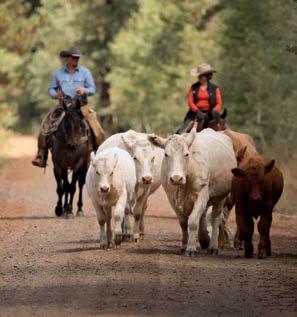
2025 Michigan Beef Industry Commission Annual Report
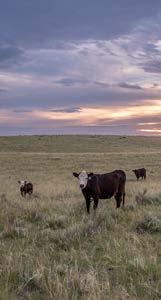
Educating Consumers
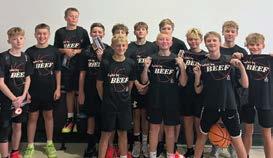

In 2025, MBIC worked to educate consumers by positioning beef as food for strength and demonstrating the nutritional value of beef. These efforts were spearheaded by our partnership with Build Your Base, a sports nutrition program that promotes beef as a premier protein. The program features a beef jerky product developed specifically for athletes. High school sports teams and organizations were encouraged to apply for jerky grants to fuel their young athletes. Additionally, MBIC sponsored a “Fueled by Beef” basketball tournament hosted by Team Focus youth basketball, reaching hundreds of young people and their families in Michigan and Indiana.
Riverbank Run
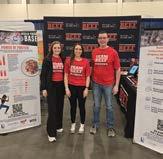
MBIC sponsored the 2025 Amway Riverbank Run where over 10,000 people of all ages and abilities compete in a festival of races in downtown Grand Rapids. Beef was front and center at the Amway Junior race for kids, at the Sports & Fitness Expo, and Build Your Base beef jerky was provided in the race day recovery tent for contestants in the 25K, 10K, & 5K runs, community walks, handcycle & wheelchair events.
AuSable River Canoe Marathon
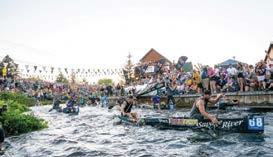
MBIC was also a Bronze Paddle sponsor of the 2025 AuSable River Canoe Marathon. Dubbed The Greatest Canoe Races on Earth, the marathon attracts professional paddlers from across the United States and Canada who endure the grueling physical and mental strains that the all-night race demands. In addition to advertising and event signage, Build Your Base beef jerky was provided to each contestant to fuel them toward the finish.
MISSION
Building consumer demand for beef by growing consumer trust and promoting beef’s value.
Health Professional Outreach
MBIC reinforced the nutritional value of beef in the diet through partnerships with the Michigan Academy of Nutrition and Dietetics and Michigan’s chapter of the American Academy of Pediatrics. Additionally, through a partnership with NCBA, a contractor to the Beef Checkoff, 228 health care professionals in Michigan received a toolkit providing practical, evidence-based information on beef’s role in a healthy and balanced diet. 2025 surveys reveal that between 73%-88% of Michigan consumers agree that beef is nutritious, beef is a healthy choice, and beef is a great source of protein.
Building Trust
Showing consumers and those who influence them that beef is responsibly raised is a key component of building trust in beef. In 2025, the percentage of Michigan consumers with a positive opinion of how cattle are raised increased to 39%, a significant lift from just 26% in 2023.
Beef Quality Assurance
Working with Michigan State University Extension and the Michigan Cattlemen’s Association, MBIC sponsored Beef Quality Assurance training at eight different locations in 2025, with 219 beef producers earning their BQA certification.
Junior Beef Ambassadors
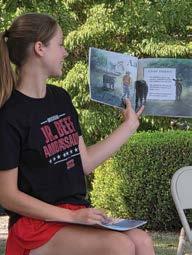
The first year of the Junior Beef Ambassador Program has been a strong step forward for MBIC, equipping 36 youth with the tools and confidence to share beef’s story in their schools and communities. Participants have expanded MBIC’s reach through social media engagement, event representation, and peer-to-peer advocacy. The program has proven to be a valuable asset in building the next generation of informed, passionate beef advocates across Michigan.
Maintaining Stability
Fiscal year 2025 was the first full year MBIC collected both the federally authorized National Beef Checkoff and the state authorized Michigan Beef Checkoff. Modernizing the funding model resulted in nearly half a million additional dollars available to promote beef to Michigan consumers.
New Location
In January 2025, MBIC’s office moved from DeWitt to Okemos. By leasing office space from the United Dairy Industry of Michigan, MBIC can make the most effective use of producers’ Checkoff investments while creating synergies with our dairy colleagues.
Increasing Beef’s Visibility
The goal of increasing beef’s visibility is to inspire beef purchases and to remind consumers of their love for beef. Surveys conducted in 2025 revealed that 87% of Michigan consumers agree beef is both great tasting and good for many types of meals, demonstrating an increase of 12-14 percentage points over 2024 levels. Together, these efforts are strengthening brand awareness, driving demand, and positioning beef front and center across Michigan.
Roadside Billboards
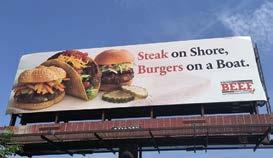
MBIC continued a series of summertime roadside billboards in 2025 featuring mouthwatering images paired with uniquely Michigan phrases like Great Lakes, Even Better Steaks, That Sizzle Means Summer is Here, and Steak on Shore, Burgers on a Boat. Billboards appeared alongside the busiest summertravel highways in Michigan and delivered over 8.7 million consumer impressions.
MICHIGAN BEEF INDUSTRY COMMISSION
Digital Advertising
MBIC’s 2025 digital advertising campaign extended the Beef. It’s What’s For Dinner. anthem campaign and disseminated Michigan original content that informed and educated consumers around how beef is raised and grown in Michigan. The campaign ran through the entire fiscal year and included a diverse mix of advertising platforms including Connected TV, YouTube, Display Advertising, Online Audio, Paid Search and Digital Out of Home. During the campaign, ads were shown to consumers across Michigan over 12 million times.
Great Lakes Burger Battle

MBIC launched the inaugural Great Lakes Burger Battle in 2025 to identify Michigan’s best burger. Ten “Burger Legend” locations were selected by the public, evaluated by secret judges and visited by influences tasked with highlighting their dining experience in engaging, original content.
Meet the Beef Commission
The Michigan Beef Industry Commission was created in 1972 through Public Act 291 and is composed of nine Commissioners appointed by the Governor who serve 3-year terms. They include:
• Chairman – Monte Bordner, Sturgis
• Vice Chairman – Travis Schunk, Clare
• Secretary – Jennifer Lewis, Jonesville
• Treasurer – Leon Knirk, Quincy
• Tammy Klink, Garden
• Ed Leist, Gaylord
• David Neitzel, Kentwood
• Matt Noggle, Manchester
• Doug Ritchie, Gladwin
• Ex-Officio Members: Dr. Tim Boring, Michigan Department of Agriculture & Rural Development; Dr. Cathy Ernst, Michigan State University Staff
George Quackenbush, Executive Director; Lindsay Green, Director of Marketing Communications; Sara Horton Flokstra, Administrative Manager.
Michigan Beef Industry Commission Strategic Focus Areas
MBIC’s program continues to execute against four major focus areas, including:
1. Educating consumers on beef’s value, nutrition, versatility and eating experience.
2. Building Trust with consumers, partners and our producer stakeholders.
3. Maintaining Stability in MBIC’s finances, operations and staff.
4. Increasing beef’s visibility to inspire beef purchases

Dear Fellow Producers,
The Federation of State Beef Councils is the perfect example of how working together delivers so much more, and it all starts with you. Cattle producers from across the country share their ideas and expertise to build beef demand by inspiring, unifying and supporting an effective and coordinated state and national Checkoff partnership.
The Federation plays a critical role because we have states that have more cows than people. And then we have other states where their human population is greater. By pooling our money and resources, we can accomplish more to educate people from coast to coast about beef’s taste, versatility and nutritional value. Your investment continues to drive demand for beef, and our industry is growing. According to the USDA, beef (cattle and calves) is the top agricultural commodity in the United States.1
As a volunteer-led organization, we work hard to be effective stewards of the money. The Federation funds research, promotion and outreach that individual producers and states may not be able to do on their own.
This “State of the Federation” demonstrates how producers have come together to direct Federation-supported programs. State beef council investments in the Federation fund research, promotion, consumer and industry outreach, as well as state services and human resources. Your investment truly makes a difference, so thank you for your commitment to this work. You have helped to make beef the number one agricultural commodity in America,1 and through the Federation, we work to make it consumers’ first choice.
Sincerely,
Nancy Jackson
Eupora, Mississippi
Chair, Federation of State Beef Councils
United Through The Federation
The Federation of State Beef Councils builds a larger, more impactful, coordinated plan that is executed as a partnership between the Federation and individual state beef councils (SBCs). State beef councils voluntarily invest in the Federation each year. More than 50% of the Federation’s annual budget supplements tactics within Authorization Requests (ARs) approved by the Beef Promotion Operating Committee (BPOC) and executed by NCBA, home of the Federation of State Beef Councils. Supplementing these tactics helps the national Checkoff program have a larger impact on consumer demand.
In 2025, with input from SBC staff, the Federation Executive Committee approved more than $3.1 million to supplement national efforts. Specific programs made possible by SBC contributions to the Federation include, but are not limited to:
PROMOTION
State Beef Councils Supplement: $898,600
The Federation supports Beef. It’s What’s For Dinner. marketing and advertising efforts to educate and inspire consumers nationally. The Federation investment supplements media buys including cable television advertising and content partnerships focused on nutrition and wellness. Content is developed using trusted influencers and chefs and is used on BeefItsWhatsForDinner.com and across media channels to drive brand affinity, increase credibility and attract new consumers.
RESEARCH
State Beef Councils Supplement: $1,048,036
Through the partnership of national funding and state investments in the Federation and to specific projects, the foundation of research provides insights for other Checkoff programs and contractors as well as insights for industry action. Research is conducted in the areas of product quality, beef safety, human nutrition, sustainability and market research.
CONSUMER INFORMATION
State Beef Councils Supplement: $787,000
The Federation advances consumer information efforts including thought leader engagement; nutrition, health and medical expert outreach; and public relations, including the development and distribution of “Cattle Calling” documentary episodes, and other educational content. Examples include supporting states by placing speakers at annual dietetics meetings through the Nutrition Seminar Program; sending beef toolkits to physicians and health professionals; creating content partnerships with foodfocused digital media outlets that utilize influencers and pitching beef stories to national media.
INDUSTRY INFORMATION
State Beef Councils Supplement: $394,000
Providing information and resources to the industry remains a critical component of the Federation budget, with funding elevating the Trailblazers advocacy program and supporting the Beef Quality Assurance program with training, advertising, and updating materials.
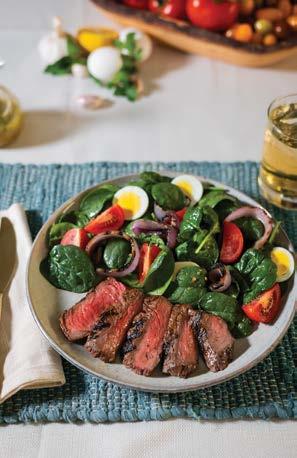
A Modern Take on Recipe Photography

Beef. It’s What’s For Dinner. recipe imagery is regularly updated to meet changing consumer trends and tastes.
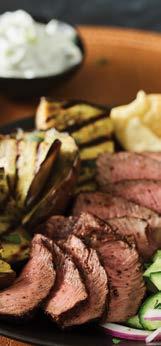
When considering beef imagery in need of updating, old and outdated pictures are prioritized based on popularity and content on BeefItsWhatsForDinner.com. While the recipes themselves may not change how they look and the stylized elements around the entrée do. Beef is showcased by modernizing the environment, colors, props and including appropriate colorful garnishes. Another trend in recipe photography is including step-by-step photos in addition to the final dish.
Nutrition is also a focus when highlighting beef in recipes. Current recipe images often feature a full meal, with beef in the center of the plate accompanied by a variety of colorful fruits and vegetables highlighting beef’s role in a healthy diet.
Beef Quality Assurance Journey Made Easier With New Resources
For more than 30 years the Beef Checkofffunded Beef Quality Assurance (BQA) program has been driving continuous improvement using science-based production practices that assure cattle wellbeing, beef quality and safety. The program continues to adapt and develop new resources to guide producers on their BQA journey. Resources area available at bqa.org.
Continuing Education Credits
Available for Recertification
Those who are BQA certified through in-person or online training are required to recertify every three years. Instead of going through the same foundational training, the BQA program has developed continuing education courses to create a new educational experience for those who need to recertify.
Spanish Language Materials
In response to producer feedback and requests, all BQA materials are in the process of being translated from English to Spanish, with additional Spanish video content to be used for training opportunities.
Updated National Manual & Field Guide
The updated BQA National Manual serves as a resource for science-based cattle production information and is available for free. It was developed to set production standards for beef quality and safety that are appropriate to an operation and that producers can realistically meet or exceed. An abbreviated “Field Guide” version of the manual is also available for cattle producers and on-farm/ ranch workers.
The Federation is at Your Service
In addition to the funds invested which supplement the integrated state/national plan, state beef council investments provide services for states and support the governance of the Federation. A variety of services are available at no additional cost to state beef councils, including creative and design services, communications assistance, IT and website support, human resources facilitation, as well as staff and leadership development, training and education.
Health Professional Toolkits
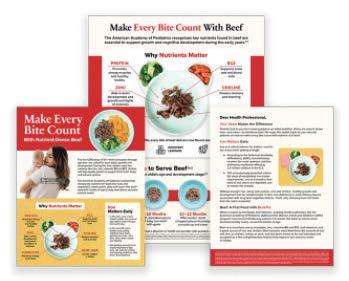
One project that exemplifies the statenational partnership is the health professional toolkits. These toolkits, sent directly to doctors’ offices help correct outdated notions/ perceptions and empower medical health professionals to confidently recommend beef. In 2025, 26 states invested more than $160,000 to supplement national Checkoff dollars. These additional funds lowered the cost per reach and expanded national impact, which enabled the program to reach more than 5,000 health professionals and more than 500,000 consumers.
1. United States Department of Agriculture Economic Research Service, https://data.ers.usda.gov/reports.aspx?ID=4052
National Updates
Barbara O’Brien Announces Plans to Retire as DMI CEO
Barbara O’Brien, president and CEO of Dairy Management Inc. (DMI) and the Innovation Center for U.S. Dairy, announced she will retire at the end of her five-year term this fall.
O’Brien was unanimously approved by the DMI Board of Directors as CEO on Oct. 11, 2021, and has since led the organization through a period of strategic alignment, innovation and measurable growth on behalf of America’s dairy farmers and importers.
O’Brien’s planned retirement initiates a leadership transition designed to ensure continuity and long-term success for the dairy checkoff. The DMI Board of Directors has begun succession planning efforts to support a smooth transition and continued focus on delivering value for dairy farmers and importers.
Checkoff Launches ‘Dairy Does More’ To Spark Growth, Reignite Relevance
The dairy checkoff has unveiled Dairy Does More, a national marketing communications platform to help grow demand by reshaping how consumers think about dairy foods. Developed by DMI, the initiative brings to life the Undeniably Dairy brand in a contemporary way and reflects a long-term strategy to strengthen dairy’s role in modern lifestyles.
Local Updates

New Videos at DrinkMilk.com Educate Consumers
To help consumers better understand dairy farming, ADA Mideast recently filmed new video and social media content at Cain Farms. In “Meet Devin Cain,” viewers see how innovative technology helps dairy farmers care for their cows and produce high-quality milk. Another video, “Meet Dr. Allie Cain: Large Animal Veterinarian,” highlights the vital role veterinarians play as they work alongside farmers to maintain animal health and well-being. The videos are being shared across ADA Mideast’s social media platforms and can also be viewed on Drink-Milk.com.
Promoting Dairy at State Nutrition Meetings
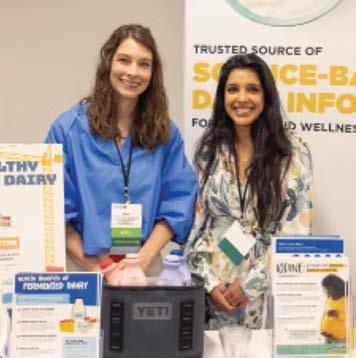
ADA Mideast recently connected with health professionals across Ohio and West Virginia at state nutrition meetings by sponsoring speakers, exhibiting and sharing evidence-based dairy nutrition science.
At the Ohio Academy of Nutrition and Dietetics Annual Conference, the keynote speaker highlighted research on dairy’s fat flexibility and role as a key source of iodine, an essential nutrient for infant brain development. ADA Mideast’s Anna Busenburg was also named Ohio’s Registered Dietitian of the Year at the conference.
ADA Mideast also engaged attendees at the West Virginia School Nutrition Association Conference, featuring dairy recipes that align with new school meal guidelines. At the West Virginia Academy of Family Physicians and the Academy of Nutrition and Dietetics annual meetings, speakers shared emerging research on how fermented dairy foods can support gut health.

Delicious Dairy Goodness
Featured at the South Beach Food & Wine Festival
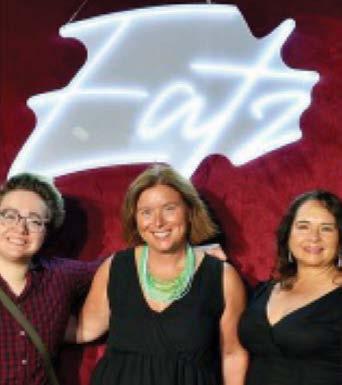
Dairy was front and center at the 25th Annual Food Network South Beach Wine & Food Festival, one of the nation’s most influential culinary stages that drew more than 70,000 attendees.
The return of the iconic MOOnlight Diner anchored FDF and UDIM’s presence at several of the festival’s largest nighttime events. Guests lined up for Firehouse Mac & Cheese, Parmesan Wheel Pasta, Brazilian Cheese Bites, and Boozy Cookies & Cream Milkshakes.
A standout moment was Parm Bar, a playful parmesan sampling concept that connected dairy with fitness culture and generated strong social buzz.
With dairy farmers onsite, influencer engagement, media coverage and federation collaboration woven throughout, the impact extended far beyond Miami Beach.
Dairy Promotion at Basketball Games is a Slam Dunk
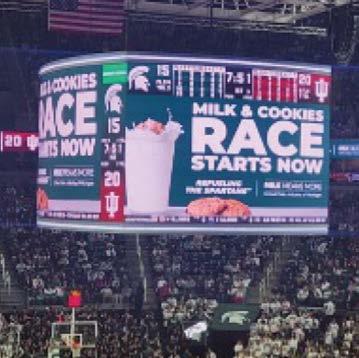
As the college basketball season has ended, we reflect back on our work alongside Michigan State University (MSU) and The University of Florida. Throughout the season, Florida Dairy Farmers and the United Dairy Industry of Michigan brought dairy to the heart of the action with fan engagement and community-driven programs.
At Michigan State, Dunks for Dairy turned every slam into meaningful support for the MSU Food Pantry, while the Milk and Cookies activation delivered a fun and memorable game-day moment for Spartan fans.
At the University of Florida, the 40 for 40 Sweepstakes energized Gator Nation all season long and culminated in the entitlement game against Arkansas.
More than 200,000 fans across both states have been reached by our partnerships, and more than 4,000 incremental pounds of milk have been utilized in sampling and prizes.

University of Michigan Dining Staff Learn about Dairy in Training Session FDF and UDIM hosted a chef training session with University of Michigan Dining led by Chef Jenn Struik. Nine Chefs learned about dairy farming, dairy nutrition, and highlighting dairy in dishes. Chefs competed in a Chopped style cookoff, featuring milk, cheese and yogurt, producing outstanding dishes like mozzarella corn fritters, buttermilk battered chicken sandwich, lamb with tzatziki sauce, and chocolate cherry pie milkshakes. That evening, three dairy recipes –butternut squash mac and cheese, buttermilk-style kefir ranch dressing and Japanese milk pudding – were featured at dining halls across campus.
Freeliners
Freeliners Policy
The Freeliners column is open to current MMPA members who wish to advertise—at no charge— goods or services relating directly to their dairy farm operations.
• An item submitted will be published for no more than two consecutive issues (one issue, unless otherwise requested). After that, it will be withdrawn.
• It will be published again for no more than two consecutive months only if the member resubmits the item by writing or calling the Novi office.
• Reference to a name of a firm or other commercial enterprise with which a member is involved will be deleted, with permission of the member.
• If the member does not wish such deletion, he/ she may choose to have the item published as a Classified Ad at the regular per-line rate.
• Freeliners must be received by the 10th of the month preceding desired month of publication.
FOR SALE: Polled Holstein, Jersey and Norwegian Red bulls. AI bred from very functional dams. Many young bulls to choose from. Hardy and healthy with strong feet and legs, raised on pasture. Competitively priced. Young beef bulls also available. For pictures and pedigrees call or text 906-287-0746.
FOR SALE: Dairyplan C-21 software system with computer. Call 810-728-6237.
FOR SALE: John Deere 348 baler with number 40 thrower, inoculant applicator, ready to work. $7,900. Call 810-728-6237.
FOR SALE: New Holland 890 chopper with 27P hay head. Low use. $6,500. Call 810-728-6237.
FOR SALE: New Idea bale conveyor, late model 50’, good shape. $3,750. Call 810-728-6237.
FOR SALE: Delaval 78 vacuum pump $100 ; Delaval milk jar pump with new motor $200; Delaval single pulsation, steel body pulsators and control box; GEA stainless plate cooler $250; and Delaval receiver jar, 3 top holes $100. Call 616-406-5611.
Looking for dairy heifers to custom raise on pasture for 2026 season. Over 1,500 fenced acres intensively rotationally grazed. Very good economic daily gains with flexible, custom health and breeding protocols and low pest pressure. Send your young stock to the Upper Peninsula and have them return with strong feet and legs, excellent social skills and gorgeous temperaments. Call Richlo Dairy at 906-287-0746.
FOR SALE: 2000 gallon bulk tank with compressor. Mueller. HiPerform controls. Call (989) 259-8697.
FOR SALE: Calf hutches, various manufacturers. $100 each, OBO. Call (989) 259-8697.
Classifieds
Classifieds Policy
Cost for classifieds is $25 for the first 35 words and then $5 for each additional word. Payment due with order. All ads must be received by the 10th of the month preceding desired month of publication. MMPA neither sponsors nor endorses products or services advertised in the Milk Messenger
OPPERMAN GROOVING INC., home of the original cost effective DIAMOND sawed grooves 1/2 inch wide, 3/8 inch deep on 4 inch centers for best cattle traction since 1978. We also offer texturing. Call 517-647-7381
DAVIDSON CEMENT GROOVING, INC: No water needed. Wider, rougher grooves for better traction. We also offer texturing for your previously grooved floors. Three operators will travel Michigan and other states. No interest payment terms. Est. since 1987. Call 1-800-365-3361.
CONCRETE GROOVING BY TRI-STATE SCABBLING, home of the 2” wide groove. Best traction, lowest prices. Call 800-554-2288 or visit www.tristatescabbling.com.
A SURE WAY TO KEEP YOUR COWS UPRIGHT! Concrete grooving/texturing provides high quality traction in new and old concrete, fast service. NIENOW GROOVING. Call Cliff at 989-635-1494.
FOR SALE: NEW & USED MILK TANKS. We stock all sizes, makes, models. Special prices to co-op members, corporate & private farms. Contact us anytime, day or night. Special on 2000 gal. Muellers for $13,900 & up. 2700 & 4000 gal. Muellers. Call 800-558-0112 for quote.
STRAW & DRY HAY (large & small bales).
Feed Oats, Feed Barley and Corn Silage. Delivery Available. Call 989-723-1886 or 989-277-1414.
ALFALFA HAYLAGE (excellent & fair grades) & CORN SILAGE. Call 989-723-1886 or 989-277-1414.
SEED CORN - “Minnesota 13” open pollinated 85-day yellow field corn seed. High protein, High yield, high fat, fast drydown. Great Digestibility! 80,000 graded seeds $100.00. Call 989-284-5052 or visit JanksSeeds.com
OPEN POLLINATED CORN SEED. Early varieties Green Haven Open Pollinated Seed. Hulles Oats, Einkorn Wheat. Call 607-566-9253 or visit openpollinated.com.
Fresh Cut Pine Sawdust. 130 yards delivered on walking floor trailers. Serving Dairy Producers since 1989. Call 888-639-8585.
A+ WELDING AND FABRICATION now offering mobile repairs and Fabrication. Suspension work, leaks, new side boxes, tail light boxes, ladders or bumpers. Frame repairs and 5th wheel plates. All work done mobile. Free estimates and very reasonable rates. Call (989) 824-7593.
Manure Safety
BY RACHEL ROGERS, MMPA SUSTAINABILITY COORDINATOR
Spring manure handling brings a spike in risk for dairy farms, especially around lagoons and storage systems that have built up gases over winter. Storage facilities can release toxic gases such as hydrogen sulfide, methane and ammonia which in high enough levels, can cause unconsciousness or death. In fact, tragic incidents have shown that a single exposure event in a confined space can quickly become fatal, particularly when workers attempt rescue without proper equipment.
Producers should avoid confined spaces, ensure strong ventilation, and use gas monitors and proper respiratory protection when necessary. It is also important to enforce a strict no-entry policy for manure pits unless it is with trained personnel with safety harnesses and lifelines present.
Crusted surfaces on open lagoons can give a false sense of stability, increasing the risk of falls and drowning. Safeguards such as fencing, warning signage and accessible rescue equipment are essential. It is also recommended to perform routine inspections of lagoon edges to check for weakness and/or environmental damage.
Ultimately, manure safety in spring depends on preparation, training and vigilance. By following proven safety protocols, dairy producers can protect their employees, livestock and themselves during one of the busiest times of the year.

Peroxide 34% Drum
The MMPA Farm Supply Store is now carrying a 34% food grade hydrogen peroxide. Diluted to 3-5% hydrogen peroxide in livestock water systems, it primarily acts as a powerful oxidant to eliminate pathogens like E. coli and Salmonella while removing biofilm, scale and other impurities from water lines. This improves water palatability and clarity which can lead to increased water intake and improved milk production.
Contact Jake Riley at 248-912-5070 or the Farm Supply Store at 989-317-8370 for more information.
MMPA Fiel d Staff
Ben Chapin, Member Services Director
Steve Lehman, Raw Milk Compliance
Doug Soehnlen, Member/Superior Supply Representative
Joe Packard – Area Supervisor
Kylie Crandall
Logan Archibald
Brandon Ewers
Emily Patton ................................................................................
Christy Dinsmoore – Area Supervisor
John Lehman
Chelsea Smith
Ella Cloud-Schneider
Sarah Michalek – Farm Sustainability Manager ..............
Deb Gingrich, Animal Care/Sustainability
989-289-0731
989-330-1638
330-575-4643
248-520-3481
269-967-7351
947-265-0817
231-414-4539
248-880-3785
248-513-7920
248-444-6775
231-519-2455
269-245-6632
248-305-0537
248-520-3580
Rachel Rogers, Sustainability Coordinator 248-826-7243
MMPA Labs
Novi (Monday-Friday, 8 a.m.-4:30 p.m.)
In Michigan
Toll Free
Ovid (Daily, 6 a.m.-10 p.m.)
Constantine (Daily, 7 a.m.-10 p.m.)
800-572-5824
800-233-2405
989-834-2515
800-391-7560
Farm Supply - Mt. Pleasant
Stephanie Walther, Farm Supply Manager
Jake Riley, Mt. Pleasant
Farm Supply Sales
Main Line
Novi Headquarters
Main Office
Local line
989-824-3321
248-912-5070
989-317-8370
Toll Free ....................................................................... 877-367-6455
Orders (Novi)
800-572-5824, then dial 2 Fax 989-317-8372
248-474-6672
Toll free ............................................................................... 800-572-5824
President and Chief Executive Officer
Joe Diglio ext. 202
Chief Financial Officer
Aaron Anticic ext. 277
Chief Corporate Affairs Officer
Sheila Burkhardt
Chief Operating Officer
208
Brad Parks ext. 341
Laboratory Supervisor
Teresa Farmer ext. 219
Quality
Sudeep Jain ext. 305
Member Services
Emily Keranen ext. 203
Human Resources
Kelly Kerrigan ext. 301
Sales
Molly Costaris ext. 209
Communications
Emily Kittendorf-King ext. 234
Senior Corporate Controller
Jeannie Strain ............................................................................... ext. 312
Member Relations
Jessica Welch ext. 303
Manufacturing Plants
Canton, Ohio
Matt Rogers, Plant Manager
Constantine, Michigan
330-477-4515
Dave Davis, Plant Manager 269-435-2835
Ovid, Michigan
Rodney Gutierrez, Plant Manager
989-834-2221
Middlebury Cheese Company, Middlebury, Indiana Plant Manager ...................................................................... 574-825-9511
Remus, Michigan
Plant Manager, Ryan Belleville 989-309-3630
If you are unable to reach your assigned member representative, please contact the representatives listed in your area. Your assigned member representative is listed on your quality statements or can be found by visiting mimilk.com/contact/field-staff and searching by your producer number.
Board of Directors
Officers
Doug Chapin, Board Chairman
Tony Jandernoa Board Vice Chairman
Eric Frahm, Treasurer
Joe Diglio, President and CEO
Sheila Burkhardt, Secretary
Aaron Anticic, Assistant Treasurer
Brad Parks, Chief Operating Officer
Todd Hoppe, General Counsel
Directors-At-Large
Aaron Gasper, Lowell, MI 616-291-4092
Bruce Benthem, McBain, MI 231-920-1615
Kris Wardin, St. Johns, MI 989-640-9420
District Directors
1 Paul Keener Ashland, OH 330-988-0139
1 Kurt Steiner Creston, OH 330-464-1219
2 Brian DeMann Martin, MI 269-720-7637
2 Brian Preston Quincy, MI 517-376-1350
3 Doug Chapin Remus, MI 231-349-4059
3 Amy Martin LeRoy, MI 231-388-0496
4 Eric Frahm Frankenmuth, MI 989-213-6696
4 Corby Werth Alpena, MI 989-464-5436
5 Tony Jandernoa Fowler, MI 989-593-22245
5 Scott Lamb Jeddo, MI 810-327-6135

Golden light spills where grain bins touch the sky, barns stand like sentinels as the day goes by. Cows move slowly through the amber haze, as spring meets summer in the sun’s last blaze.
The farm’s silhouettes stretch long and wide, casting quiet shadows the fields can’t hide. Dust and dusk together soften every line, on a farm where work and sunset intertwine.
Photo by Hector Quirino, Hudson, Michigan
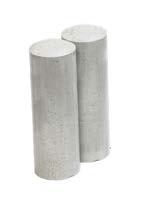
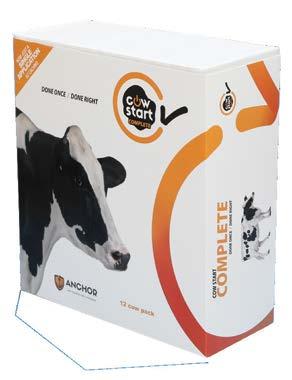
The Next Generation Transition Cow Bolus
Cows given two Cow Start™ Complete boluses at calving produced +5.3 pounds more milk per day over the first 100 days of lactation, returned to breeding sooner, and had higher first-service conception.