The Long Game
HARDY SPRING LAKE FARMS EARNS


14 MMPA Hosts Annual Meeting
MMPA members gathered for MMPA’s 110th Annual Meeting on March 18 to learn about upcoming initiatives, celebrate our award winners, and hear from our partners at Trilliant Foods, CoBank and more.
18 MMPA DAIRY FARMERS TAKE HOME NATIONAL DAIRY QUALITY AWARDS
MMPA members continue to produce some of the best quality milk in the country with eleven MMPA members awarded National Dairy Quality Awards. The 2025 winners make up nearly a third of total awardees in the national contest.
20 THE LONG GAME
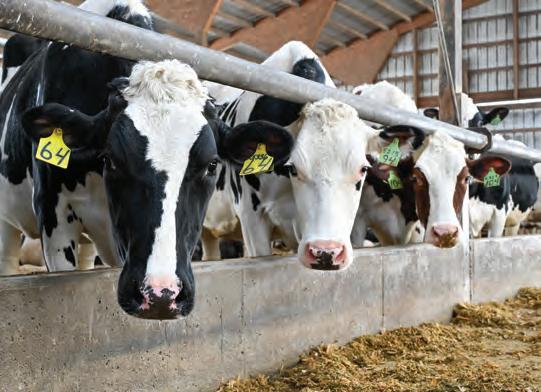
At Hardy Spring Lake Farms, the MMPA Top Quality Award Winner, producing high quality milk isn’t an accident. It’s not luck, either, though they’ll humbly tell you there’s always a little bit of that involved.
“As
MMPA celebrates ultrafiltered milk expansion (page 11)
Hardy Spring Lake Farms earns MMPA's 2025 Top Quality Award (page 20)
Editor’s Note
BY MIKAYLA BOWEN
At MMPA, we’re accelerating with intention, building momentum not just for today, but for the future of our cooperative. Our 110th Annual Meeting at the end of March highlighted how we are moving forward with confidence, strengthening our foundation while positioning ourselves for long-term growth. This past year alone, we completed significant renovations, upgrades and strategic purchases across three of our plants, reinforcing our commitment to efficiency, innovation and member value. We’re not standing still, we’re gaining speed, just as we have for more than a century. And because of that steady acceleration, we’re confident the next 100 years will be even stronger than the last.
On the Cover
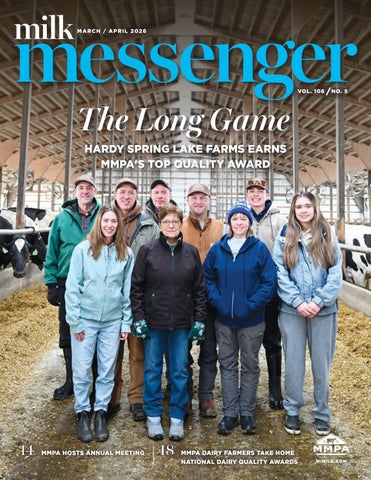
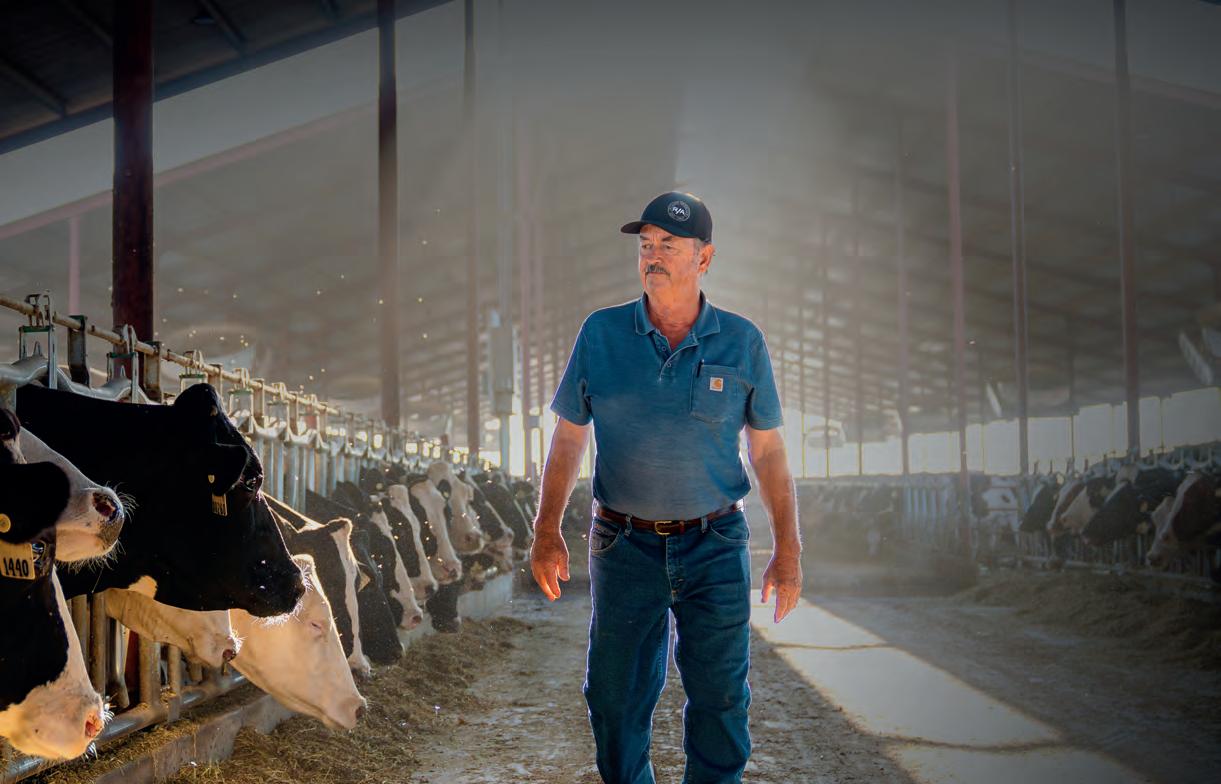
During the Annual Meeting, Hardy Spring Lake Farms in Stanton, Michigan, was recognized as MMPA’s Top Quality Award Winner. Through intentional management, unwavering consistency and the hands-on involvement of three family households working side by side, the Hardy family achieved the lowest somatic cell count among membership in 2025. Learn more about what they do on their farm to achieve success on page 20.
Also Inside
Hardy Spring Lake Farms isn’t alone in producing high quality milk. MMPA members received nearly a third of all National Dairy Quality Awards, a true testament to the prestige of the Top Quality Award Winner and the hard work every MMPA member puts in on their farms (pg. 18). Other outstanding MMPA members were recognized during the Annual Meeting (pg. 14) including milestone members reaching 35 and 50 years, and employees who were honored for their loyalty and years of dedicated service to the cooperative. You can flip to page 24 to see an overview of the nation’s dairy industry in 2025, a numerical representation of how MMPA and the industry as a whole is continuing to change and grow.
VOL. 108 / NO. 5
Milk Messenger (USPS # 345-320) is published bimonthly by the Michigan Milk Producers Association, 41310 Bridge Street, Novi, MI 48376-8002. Periodicals postage paid at Novi and additional mailing offices.
POSTMASTER: Send address changes to Milk Messenger, PO Box 8002, Novi, MI 48376-8002.
President and Chief Executive Officer
Joe Diglio
Managing Editor
Sheila Burkhardt, Chief Corporate Affairs Officer
ditors
Emily Kit tendorf-King, Editor & Advertising Manager
Mik ayla Bowen, Editor messenger@mimilk.com
Publication Designer
Stacy Love rezudesign.com
Printing
Foresight Group, Stacey Trzeciak staceyt@foresightgroup.net
Publication Office
MMPA Milk Messenger P.O. Box 8002, Novi, MI 48376-8002 p : 248-474-6672 f: 248-474-0924
e: messenger@mimilk.com w: mimilk.com
Established in 1916, MMPA is a member owned and operated dairy cooperative serving dairy farmers in Michigan, Indiana, Wisconsin and Ohio.
An Equal Opportunity Employer – F/M/V/D
Subscriptions: mimilk.com/subscribe
MMPA members - 50¢ per year
Non-member s - $5 per year
Circulation: 2,600 (ISSN 0026-2315)

It’s all about the story.
BY JOE DIGLIO, MMPA PRESIDENT & CEO
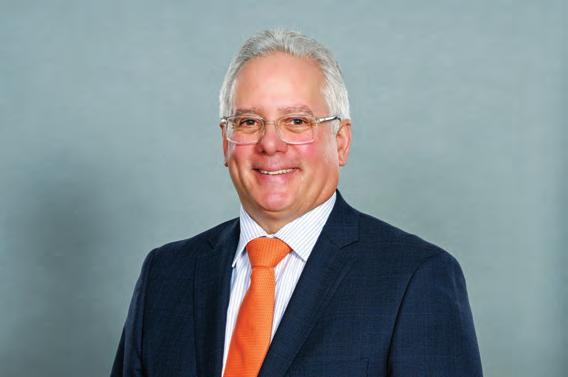
That’s something I’ve said often, and it feels especially fitting as I reflect on where we are today as a cooperative. Our story isn’t just about where we’ve been, it’s about where we’re going and, more importantly, how we’re getting there.
Six years ago, we made a deliberate decision: we weren’t going to let our future be dictated solely by commodity markets. We chose to invest differently, to think differently and to position this cooperative to have more control over its destiny. That decision set a new course, one that continues to take shape today. Since then, we’ve made bold moves. We stepped into the Class I space by acquiring a fluid milk plant, not because it was easy, but because it gave us a direct line of sight to the consumer. It allowed us to better understand what customers are asking for and how we can deliver products that meet those needs.
We expanded our ultrafiltration capabilities, recognizing early on that protein would play a larger role in the marketplace. What started as a solution to a skim surplus has evolved into a strategic advantage, opening doors to new products and new opportunities.
For more than 110 years, Michigan Milk Producers Association has built a strong foundation serving commodity markets with high-quality milk and products our members take pride in. That legacy matters, but the story we’re writing today is focused on what comes next.
And when challenges emerged, like what to do with permeate, we didn’t sit still. We innovated. Through our work with Dairy Distillery, we’re turning a low-value byproduct into energy, creating new revenue streams while strengthening our sustainability story. That’s what it looks like to think differently and move the needle.
At the same time, we’ve been intentional about building partnerships that extend our reach. Whether it’s working with global organizations like Amul or aligning with innovative brands like Trilliant Foods, these relationships are helping us connect more directly with consumers and expand our footprint in meaningful ways.
None of this is accidental. It’s grounded in a strategy built on our key pillars. Each decision we’ve made ties back to those fundamentals and we’re seeing that strategy come to life today.
The investments are coming online very shortly, the partnerships are taking shape and the strategy is turning into execution. Now, the focus shifts to execution. The groundwork has been laid, and it’s time to perform.
What excites me most is the momentum we’re building. We’re not standing still. We’re evolving, adapting and positioning this cooperative for long-term strength. We’re creating opportunities that didn’t exist before and finding new ways to bring value back to you, the member-owner.
But none of this happens without people.
From the trust our member-owners have put in the cooperative, to our employees and our leadership team our board of directors executing the vision, it takes alignment and commitment across the entire organization. When governance, management and members are all moving in the same direction, that’s when real progress happens. And that’s exactly what we’re seeing.
We’ve added new chapters to our story, but we’re far from finished. The strategy is in motion, and the future is taking shape. Stay tuned. There’s more to come .
JOE DIGLIO
What are the takeaways from National Mastitis Council Regional and Annual Meeting?
WE ASKED THE EXPERTS:
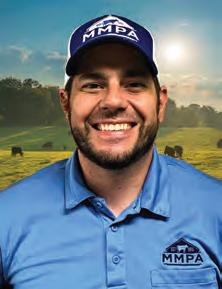
Brandon Ewers MMPA MEMBER REPRESENTATIVE

Joe Packard MMPA AREA SUPERVISOR
Kris Wardin
MMPA MEMBER & DIRECTOR-AT-LARGE
It was my first time attending the National Mastitis Council (NMC) Regional and Annual Meeting, and the information I received was invaluable. While the speakers gave insightful talks and presentations, it’s really the wealth of knowledge from attendees that makes this conference stand out. Attendees come together to develop fact sheets and initiatives to build resources crucial to the dairy industry whether it’s a farmer, equipment dealer or member representative. From short courses covering wash and vacuum analysis, to mastitis treatment and drug usage, the topics covered are varied. Likewise, NDQA winners gave farmers an opportunity to learn from other farmers, explaining why doing all the little things well can make the biggest impact. My key takeaways from the conference include careful consideration of facility design and bedding choices that can positively affect mastitis management. Backed by science and studies, options included everything from minor, costeffective tweaks to major, high-cost renovations. Either way, the goal is the same - improve animal health and boost production by understanding what helps or hinders mastitis control. Most dairy farmers know healthy, comfortable cows create better profits but it’s helpful to remind us how to achieve that goal through time-tested methods or incorporating newer innovations.
The National Mastitis Council’s Regional and Annual Meeting are an opportunity for producers, veterinarians and industry personnel to learn from the dairy industry’s leading experts on all things related to mastitis control, quality milk production and udder health. From academics and researchers to industry technicians and equipment manufacturers, there is a breakout session tailored to anyone who has an interest in learning about mastitis and improving herd health.
I’ve had the opportunity to attend this conference several times throughout my career at MMPA, and I still learn something new each time. One staple breakout session that I will always remember from my first conference was called “The Bugs That Bug Us,” which was a primer on several common mastitis-causing pathogens and offered preventative management practices to help producers troubleshoot and decrease mastitis cases on their farms.
Each year, MMPA sends one or two member representatives to the Regional and Annual Meeting because it provides an opportunity to increase our knowledge base as a field staff, making us a better resource for our memberowners when dealing with somatic cell count and bacteria-related issues.
Having been to NMC a few times, I knew we’d learn a lot about milk quality, but this year’s meeting also broadened the topic. The meeting theme, “What’s Best for Her” highlighted how animal care and comfort are key to milk quality.
Presentations were given by top milk quality experts from around the world, several from Michigan! One topic I enjoyed was the science behind basic milking procedures but within the context of modern solutions such as rotary parlors and milking robots.
Discussing the current industry trends with professionals, professors, veterinarians and fellow producers was a highlight. It reminded me how much support we have as dairy farmers in this industry. We should all remember to take advantage of our resources, be it suppliers, extension agents or MMPA field staff. Most farmers are also willing to share their experiences, both good and bad, about their farm and the industry.
It was obvious how much respect our field staff have within this international organization. I want to thank them not only for making this conference fun, but for all the important work they do helping us produce and sell quality milk every day!

An option for every farm
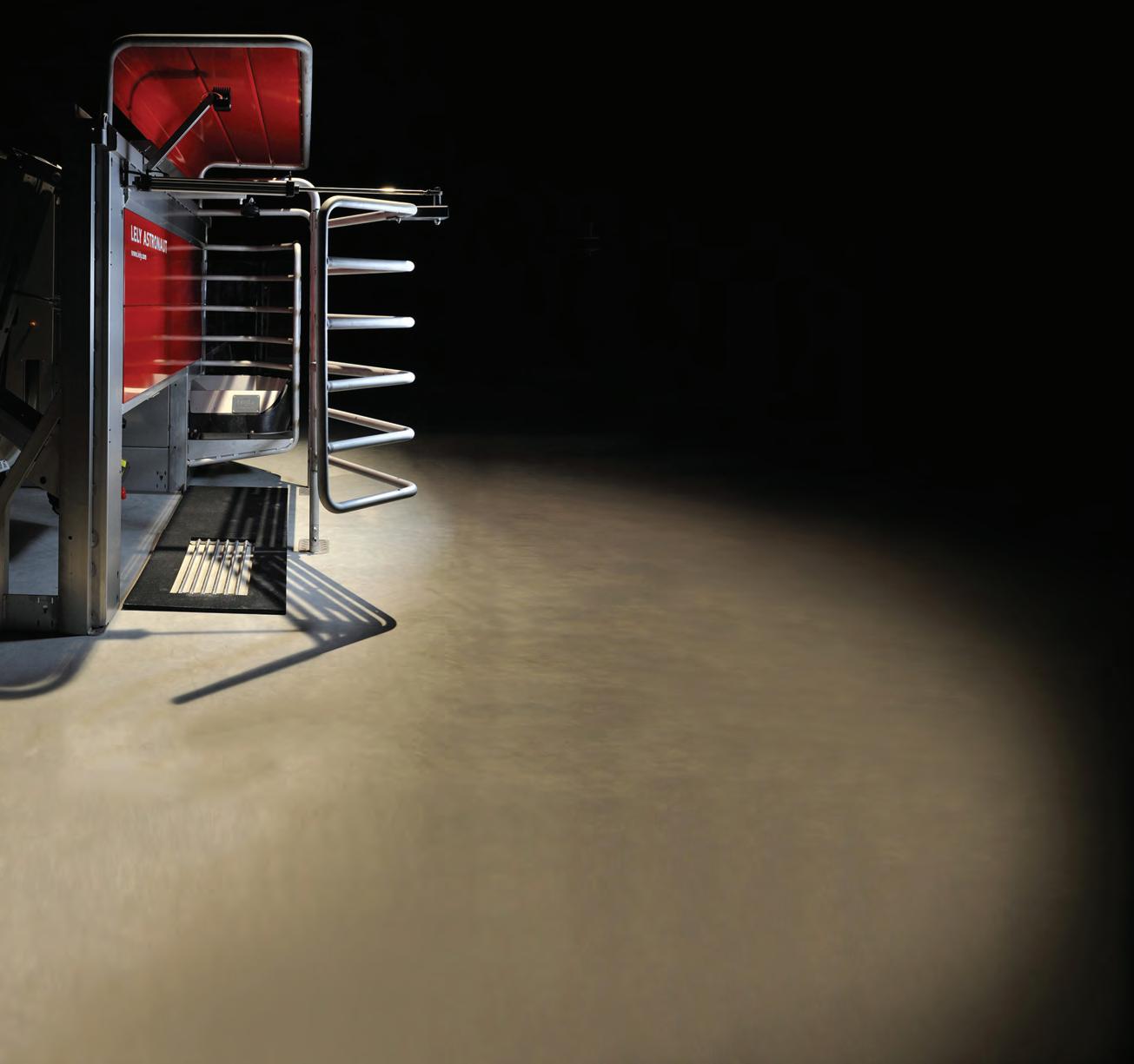
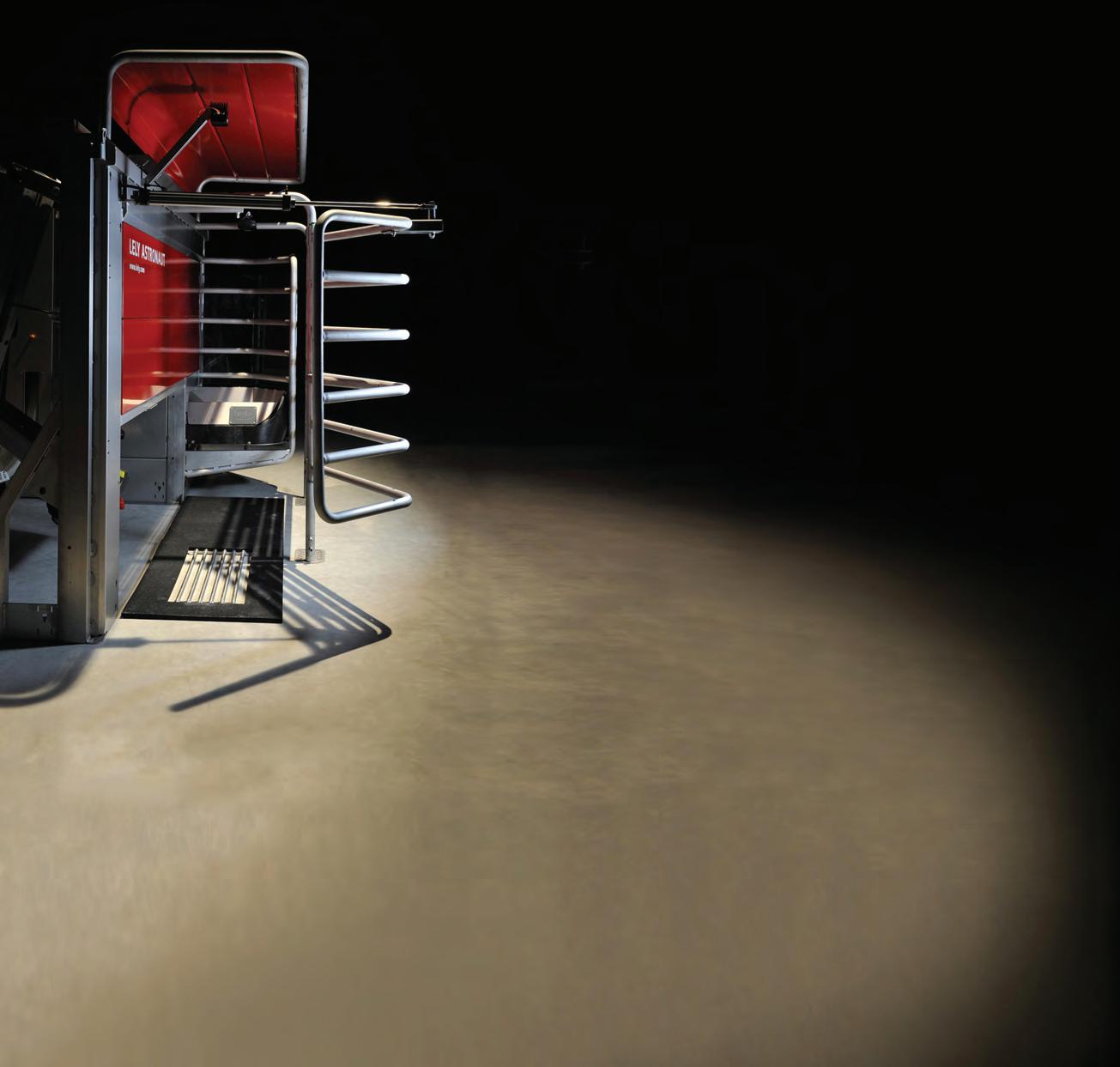
At Lely, we believe every dairy producer should have the tools they need to achieve a sustainable, profitable and enjoyable future in farming. That’s why we’re introducing Lely Certified Pre-Owned systems. Field proven Lely robots, reconditioned and certified to perform at original equipment standards. With a range of options to fit any budget and business plan, it’s an easier choice than ever to switch your barn to automation and start benefitting from the Lely Advantage™. Add the efficiency, optimization and predictability of Lely automated dairy systems to your farm today!

MMPA returns $1.4 million cash patronage refund
This month MMPA will pay $1.4 million in cash patronage refunds to its dairy farmer member-owners. This cash allocation represents 100 percent of the Farm Supply Store earnings and 25 percent of the milk marketing earnings. All members who marketed milk through MMPA for fiscal year 2025 will receive a portion of the allocation.
This payment, in combination with the additional $4.2 million allocated to Certificates of Equity, resulted in a total $5.6 million allocated to members from the business conducted during the fiscal year. In total, the combination of cash refunds and Certificates of Equity equals approximately 11 cents per hundredweight for fiscal year 2025.
MMPA producers scoring 95 percent or higher on Grade A Surveys and Federal Check Ratings
JLH-JH FARMS LLC*
ROCKY POINT FARMS LLC*
GASSER FARMS LLC*
YOLONDA MARKEY*
LAWLER DAIRY FARM*
BRADLEY STINE*
FREDERICK L INBODY*
HERMAN’S HOLSTEINS LLC
STEINHURST FARMS LLC
GOEDEL DAIRY FARM LLC
LAVERN D SCHLABACH
LEROY L YODER
MARION A MILLER
PRIME LAND FARM
ALBERT J GUSA
VOLMERING FAMILY DAIRY INC
MK FARMS LLC
B W HULETT FARM INC
EDWARD L HUDZINSKI
SCHULTZ DAIRY LLC
ANKLEY FAMILY FARM
CLARDALE FARMS INC *100
MSU honors MMPA member as 2026 Dairy Farm of the Year
The MSU Department of Animal Science named De Grins Oer Dairy of Blanchard, Mich., as the recipient of the 2026 Dairy Farm of the Year. Presented annually
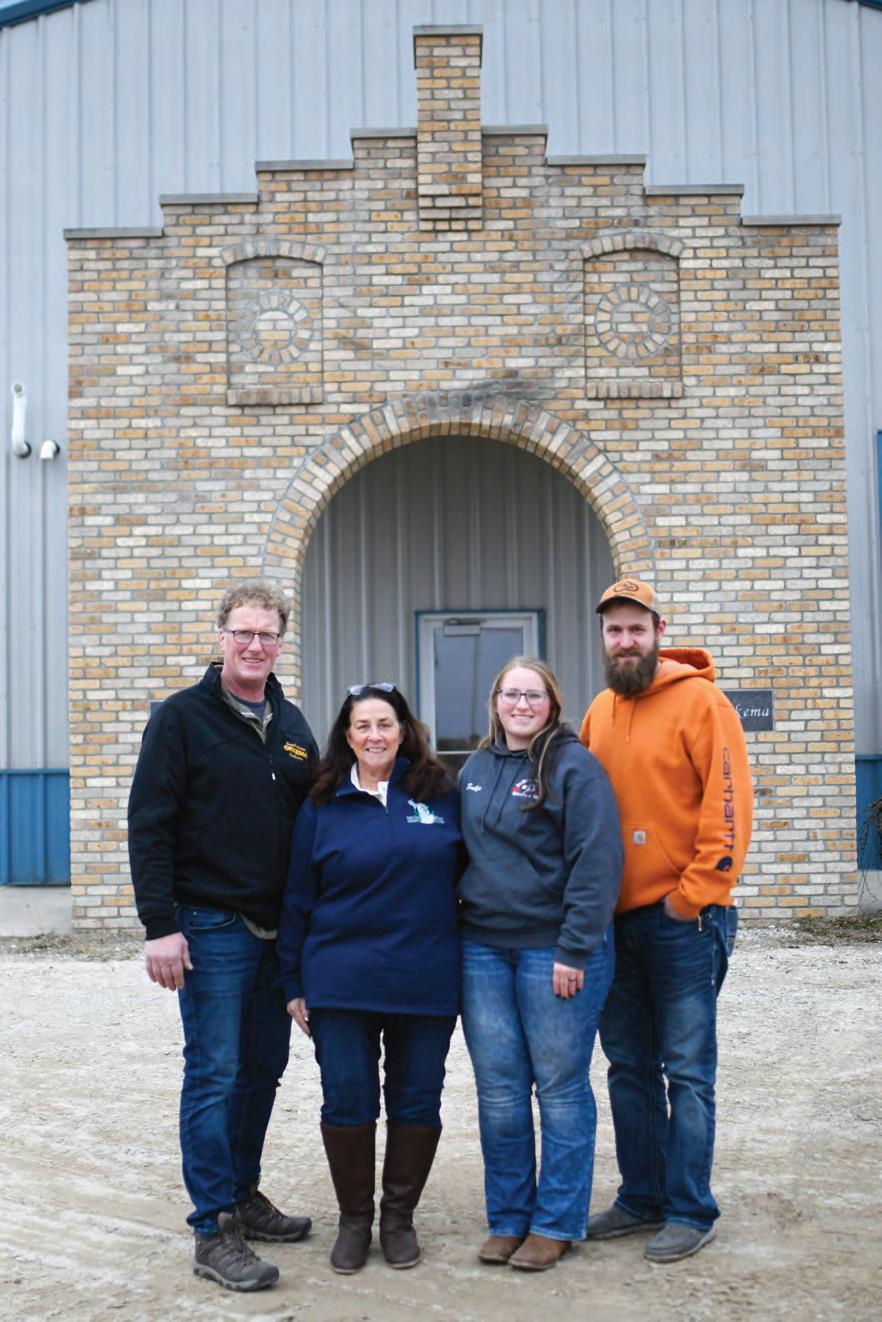
MMPA member, De Grins Oer Dairy, was named the recipient of the 2026 Dairy Farm of the Year by the MSU Department of Animal Science. Pictured (L-R): Tjerk Okkema, Ramona Okkema, Evelyn Okkema-Damveld and Aaron Damveld.
MMPA celebrates ultrafiltered milk expansion
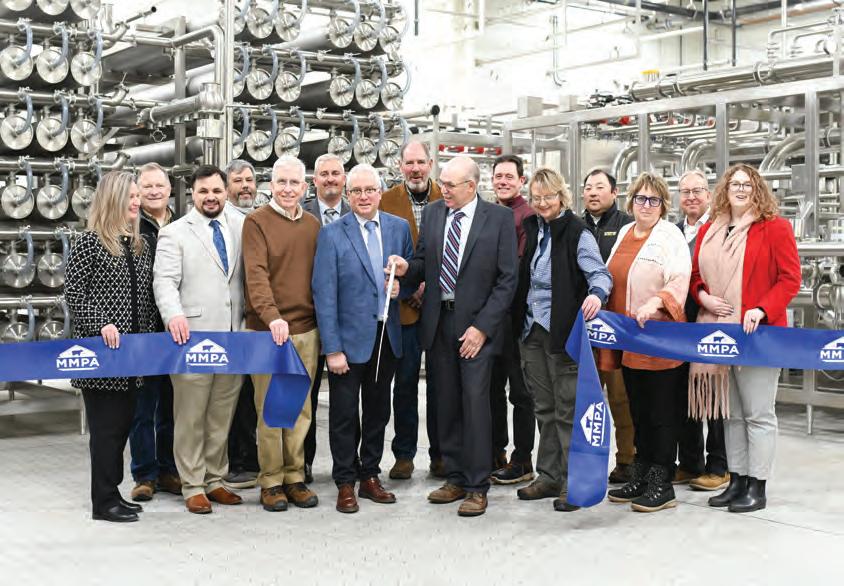
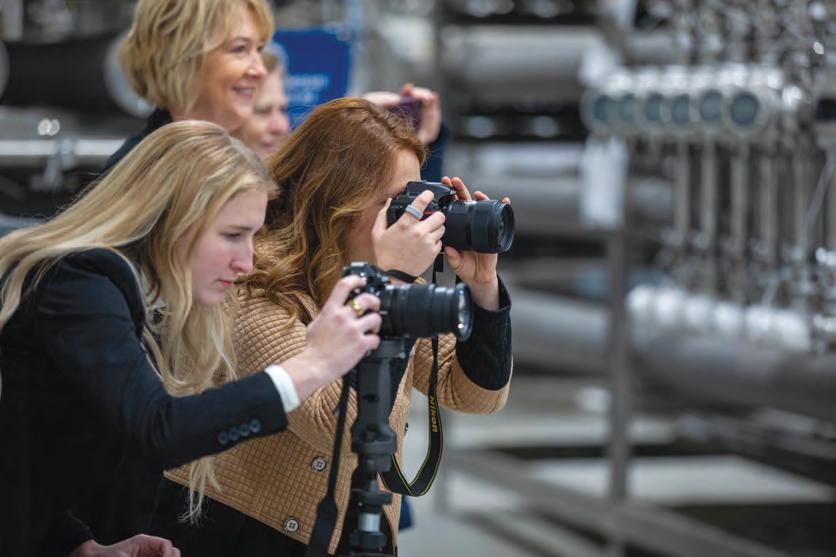
MMPA hosted a ribbon cutting ceremony at its Ovid, Mich., processing facility in January, celebrating a major expansion to increase ultrafiltered milk processing capacity. The investment reflects MMPA’s strategic focus on highprotein dairy ingredients and further solidifies the cooperative’s commitment to innovation, sustainability, and longterm member value.
The project complements MMPA’s existing ultrafiltered milk production in Constantine, Mich. Full operations at the expanded site are set to begin later next month.
“This investment reflects our memberowners’ commitment to growing this cooperative and driving innovation in dairy,” said Joe Diglio, President and CEO of MMPA. “With this expansion, we’re reinforcing our dedication to producing high-quality dairy ingredients while meeting consumers’ growing demand for high-protein dairy products.”
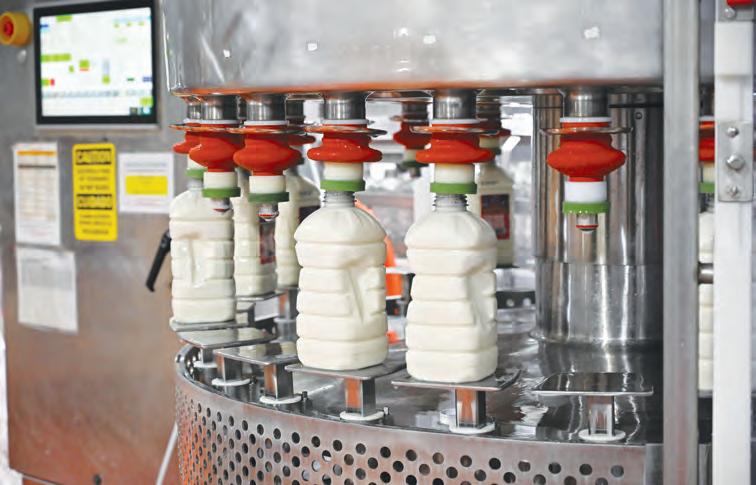
Ultrafiltered milk is a value-added product created using membrane filtration technology that separates milk’s components, resulting in a
product that’s naturally higher in protein and lower in sugar. This expansion allows MMPA to deliver more of what today’s consumers are looking for: better nutrition, less sugar and more protein. Commonly used in high-protein yogurts and ready-todrink protein shakes, ultrafiltered milk supports the needs of health-conscious, active lifestyles.
“These investments are more than infrastructure, they represent our cooperative’s dedication to progress and build long-term value for our memberowners,” said Doug Chapin, MMPA Board Chairman. “As consumer demand for high-protein dairy continues to grow, this expansion ensures we’re well positioned to meet that demand. It’s a powerful example of what member investment in their cooperative and strategic planning can accomplish.”
The grand opening follows MMPA’s recent announcement of the acquisition of the Remus, Mich., facility from Leprino Foods, which will introduce cottage cheese production to the cooperative’s product offerings. Both
the Ovid and Remus projects were made possible in part by support from the Michigan Economic Development Corporation (MEDC). The Ovid facility’s expansion also strengthens MMPA’s long-standing presence in Clinton County and supports Michigan’s robust dairy economy.
“We’re proud to have MMPA as part of our Ovid community,” said Mary Perrien, Mayor of Ovid. “Their investment here brings jobs, opportunity and renewed energy to our local economy. This achievement showcases the strength of our farming community and signals that the City of Ovid is open for agri-business. Thanks to the work of our Planning Commission, and MMPA’s investment in our community, we envision a future rooted in agriculture and innovation.”
By focusing on value-added product lines like ultrafiltered milk, MMPA is expanding its manufacturing footprint while continuing to deliver on its nearly 110-year legacy of memberfocused leadership
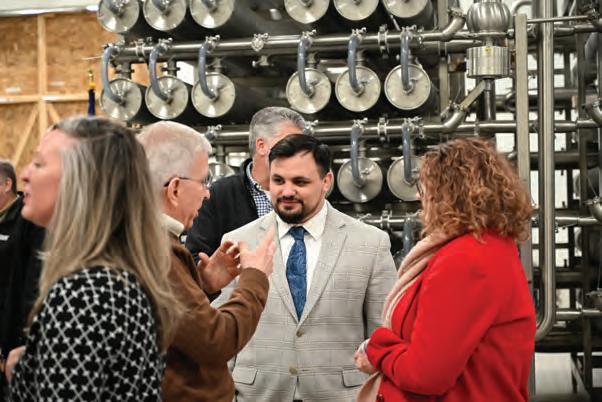
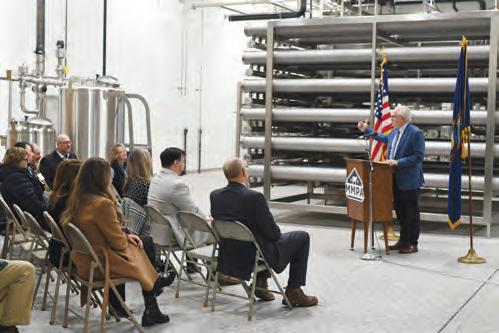
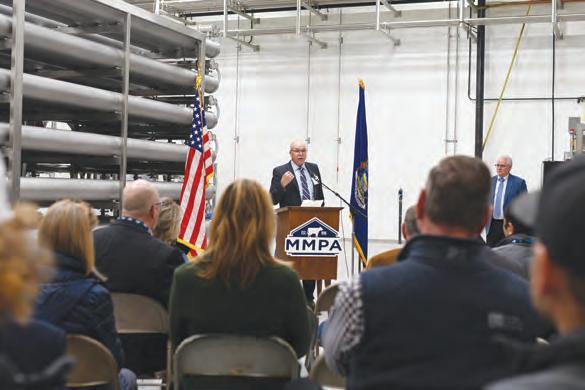
Ceremony attendees heard from several community stakeholders, along with Joe Diglio, MMPA President & CEO (pictured at top), and Doug Chapin, MMPA Board Chairman (pictured above).
MMPA partners cut the ribbon celebrating the ultrafiltered milk expansion in Ovid, Michigan on January 22, 2026.
HHS, USDA Release Dietary Guidelines
SOURCE: NATIONAL MILK PRODUCERS FEDERATION
The Department of Health and Human Services and USDA released the 2025-2030 Dietary Guidelines for Americans in January. These guidelines are updated every five years and affect government policies in numerous ways, such as guiding what can be served in school meal programs.
The latest guidelines reflect a great deal of hard work by the dairy industry and allies to maintain dairy foods’ central role in American diets, including continuing the recommendation of three servings of dairy for Americans and recognizing milk’s benefits at all fat levels and dairy’s prominence in diverse dietary patterns.
What do the guidelines say about dairy?
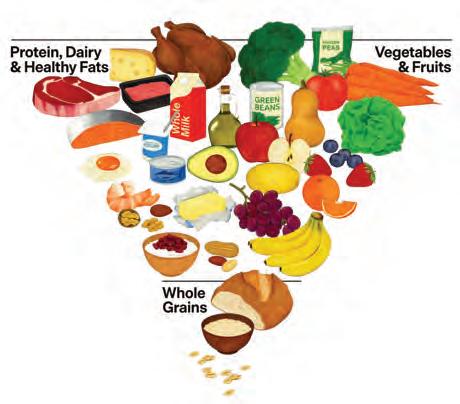
Introduce a New, Inverted Food Pyramid:
Dairy is prominently featured in the new icon, which retains whole grains at the bottom as in the popular graphic from the 1990s but this time radiates upward to culminate in a much broader agglomeration of “Protein, Dairy & Healthy Fats” on one side of the top and “Vegetables and Fruits” on the other. The new icon replaces the MyPlate imagery created during the Obama administration.
Maintain Three Servings Per Day:
The new dietary guidelines maintain the previous recommendation of three servings of dairy per day for those consuming a 2,000 calorie diet.
Recognize Benefits of Dairy at All Fat
Levels:
The new pyramid specifically includes an image of a carton of whole milk, along with butter, yogurt and cheese. The guidelines explicitly endorse full-fat dairy consumption, including whole milk, a marked departure from previous guidelines that only recommended low- and non- fat milk.
Are Stricter on Added Sugars:
The new guidelines state that while no amount of added sugars or non-nutritive sweeteners is recommended or considered part of a healthy or nutritious diet, one meal should contain no more than 10 grams of added sugars. The naturally occurring sugar in milk is acknowledged as not counting towards those 10 grams.
Include Other Fortified Beverages in Dairy Food Group:
In the accompanying document to the guidelines, “Daily servings by calorie level,” the “Dairy” food group includes “fortified dairy alternatives.” Previously, only fortified soy has been acknowledged as a dairy substitute in the guidelines.
With that noted, this should have little impact on school meals. Substitutes for school milk have to meet specific nutrient levels as laid out in regulation. In a more practical sense, expanding the dairy food group to include additional plant-based alternative beverages is unlikely to change consumption patterns, as the cost of reformulating niche products to roughly match dairy nutrition makes it unlikely that many plant-based beverage manufacturers will attempt to be included in federal programs at any meaningful level. The expansion is not supported by scientific evidence, which the advisory committee acknowledged in its December 2024 scientific report.
The National Milk Producers Federation (NMPF) has repeatedly emphasized the point that imitators do not offer the same consistent package of nutrition provided by real milk — and the committee agreed. Fortification is an oversimplification of nutrition benefits, and any encouragement of plant-based alternatives when lactose-free milk is available to for those who are lactose-intolerant seems out of step with otherwise encouraging recommendations.
How are others responding?
The Dietary Guidelines can be controversial, as the public’s idea of health does not always align with the scientific and nutrition research that is reviewed before writing each iteration of the dietary guidelines. The 2025-2030 Dietary Guidelines for Americans may face additional skepticism because of its relation to the Make America Healthy Again (MAHA) Movement, which has faced intense criticism in areas outside of nutrition. The Dietary Guidelines are always accused of including compromises based on politics rather than science; in a highly politicized era, this iteration of the DGAs will inevitably face increased scrutiny.
What's Next?
Now that the guidelines are out, the federal government will begin applying them across federal programs. We are proud to benefit American health in fundamental ways, and we welcome the potential these guidelines hold for expanding upon dairy’s critical role in the diet.


MMPA 110th Annual Meeting
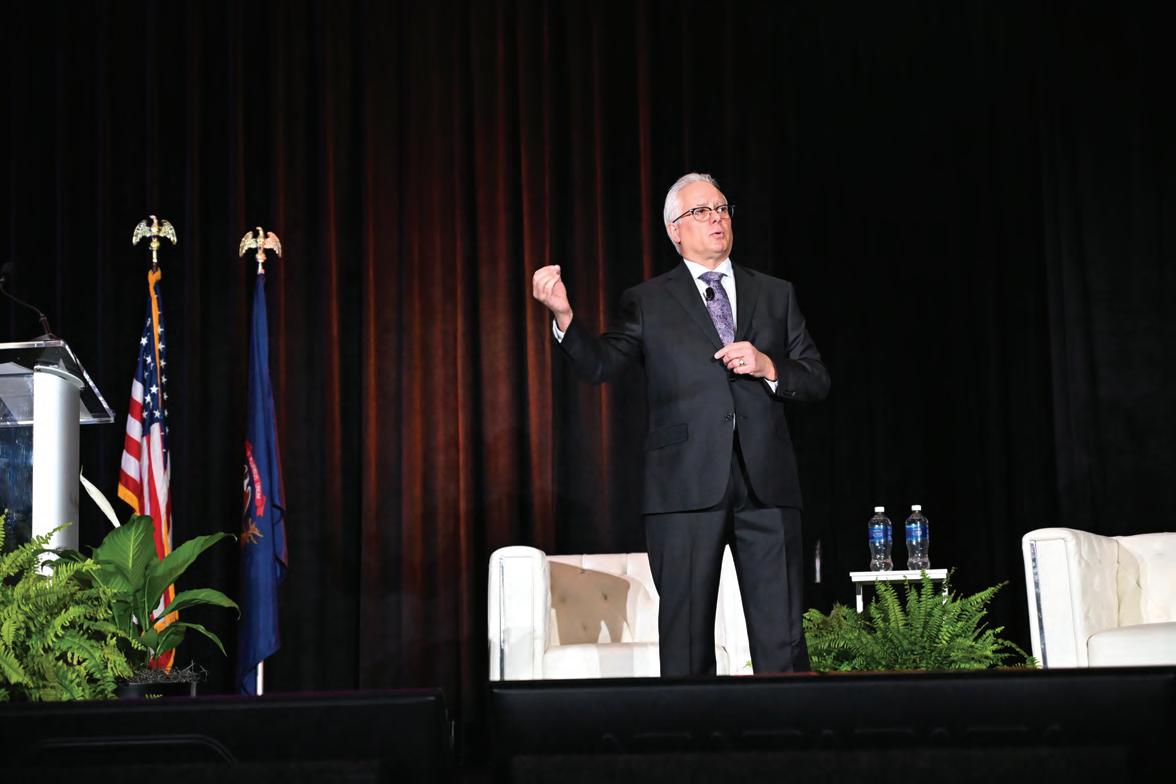
The Michigan Milk Producers Association (MMPA) is moving full throttle: propelled by momentum, guided by purpose and united in their mission to deliver for their memberowners. As members and guests gathered for the 110th Annual Meeting on March 18, in Novi, Mich., the focus was clear; MMPA is accelerating forward, building on the strength of the cooperative to create opportunities that benefit farms today and for generations to come.
This year, MMPA hit the accelerator on innovation, partnerships and progress, positioning the cooperative not just to respond to change, but to lead it. From launching strategic initiatives to expanding product capabilities and forming bold collaborations, momentum is building across every corner of the organization.
Recognizing Success
During the Annual Meeting, MMPA Outstanding Young Dairy Cooperator finalists, members reaching 35 and 50 years of membership, the MMPA Top Quality Award winner, the MMPA Food Bank Legacy Award winner and MMPA employee service award recipients were recognized.

With transformative initiatives gaining traction and a shared vision guiding the road ahead, MMPA is forging a path that sets them apart in the industry. Looking toward the opportunities ahead, one thing remains constant: the strength of the cooperative is driven by the commitment of their member-owners, employees and partners working together to keep MMPA moving forward.
The strength of our organization comes from young farmers building their future within the cooperative, long-time members who bring stability and experience gained through decades in the industry, and members who serve their communities by helping ensure dairy products reach those in need.”
— Doug Chapin, MMPA Board Chairman
MMPA members and guests gather to celebrate association’s success
Milestone Members
Recognized for their long-term dedication and commitment to the cooperative as MMPA members for 35 and 50 consecutive years.
35-Year Members
William Hough Blanchard, Michigan
Casey Moore Mason, Michigan
William Risch
Webberville, Michigan
Klaas and Mary Ann Vanderploeg Ithaca, Michigan
50-Year Members
Keith and Wendy Bott Wheeler, Michigan
Rodney Daniels
Whittemore, Michigan
Arden Eadie Conklin, Michigan
Jack Evans
Sanford, Michigan
Mark Hilaski Hopkins, Michigan
Clark Humrich
Webberville, Michigan
Michael Noll Croswell, Michigan
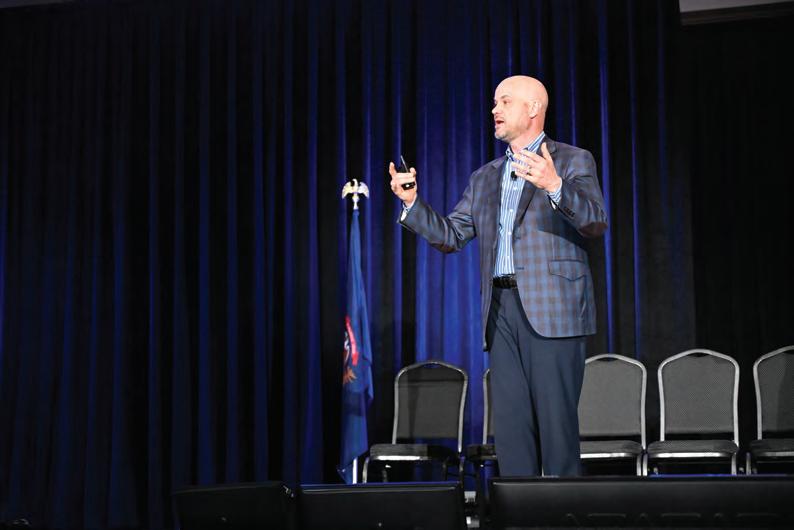
future. We’ve added meaningful chapters to our story today, but we’re far from finished. The investments are coming online very shortly, the partnerships are taking shape and the strategy is turning into execution. As we continue to accelerate our vision, the story isn’t ending, we’re just getting started.”
— Joe Diglio, MMPA President & CEO
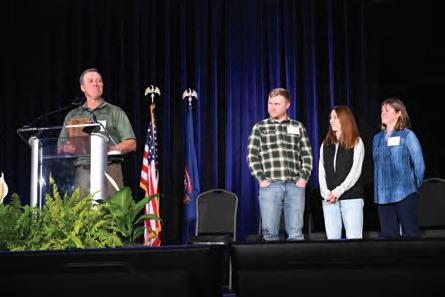
MMPA Top Quality Award WinneR
Recognized for an impressive average somatic cell count of 44,910, an indicator of producing high quality milk.
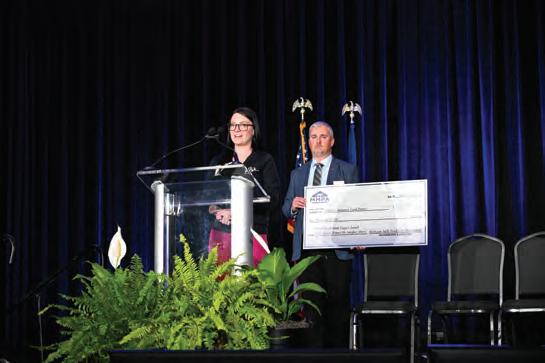
Award Recipient
Recognized for their efforts in supporting their local food bank and strengthening their local community.
De Saegher Dairy of Middleton, Michigan
MMPA Annual Report in Review
MMPA Plants Achieve Top Scores in Annual SQF Audits
Three of MMPA’s processing facilities, located in Canton, Ohio; Ovid, Mich. and Constantine, Mich., earned top scores in their 2025 Safe Quality Food (SQF) audits. These comprehensive audits evaluate facilities on food safety programs, operational procedures and product quality management. The Canton plant achieved 100% in food safety and 98% in food quality, while Ovid earned 99% in food safety and 100% in food quality. Constantine secured a perfect 100% in both categories.
Components Skyrocket
In 2025, member farms saw a notable rise in milk component levels by over 4% in butterfat and a nearly 3% increase in protein. The upward trend reflects the investments members have made in optimizing cow health and nutrition, with support from MMPA’s member services team.
New Endowment Invests in Dairy Youth Leadership
To support the next generation of agricultural leaders, MMPA and CoBank established the Joseph M. Diglio 4-H Dairy Youth Endowment in 2025. The fund was created in recognition of MMPA President & CEO Joe Diglio’s national leadership honor and his dedication to youth development. Administered by the Michigan 4-H Foundation, the endowment will provide long-term support for educational and leadership opportunities in the dairy sector.
Measuring Impact with Product Carbon Footprinting
In 2025, MMPA took a significant step forward by launching a product carbon footprinting initiative, becoming only the second dairy cooperative in the nation to measure and manage the environmental impact of dairy products this way. By quantifying emissions associated with production and processing, MMPA is equipped with the information needed to make informed decisions about sustainability practices.
Recognized for a Culture of Safety
For the second consecutive year, MMPA’s Constantine, Mich., facility was honored with an International Dairy Foods Association (IDFA) safety award for outstanding worker safety. This award, co-sponsored by Dairy Foods magazine, is based on a facility’s occupational injury and illness performance rates, and recognizes outstanding achievement in worker safety. The Constantine plant reached three years without a lost-time
– Corey Geiger, CoBank Lead Dairy Economist
Employee Service Award Milestone Recipients
25 Years of Service
Sandra Murphy - Canton
Kerry Sherman - Ovid
Dennis Settlemyre - Ovid
Robin Miller - Constantine
20 Years of Service
Wayne Blazer - Canton
Gary Bernard - Canton
Linda Sullivan - Canton
30
Chad Mehok - Canton
Albert Soehnlen - Canton
James Dorsey - Canton
Ryon Shaw - Ovid
Dean Letter - Novi
Allen Clark - Constantine
Thomas Brandebury - Constantine
15 Years of Service
Andrew Pierce - Canton
Maximos Mihailides - Canton
Raymond Boyle - Canton
James Davis - Ovid
Patrick Chapko - Ovid
Benjamin Chapin - Novi
Brent Weller - Novi I
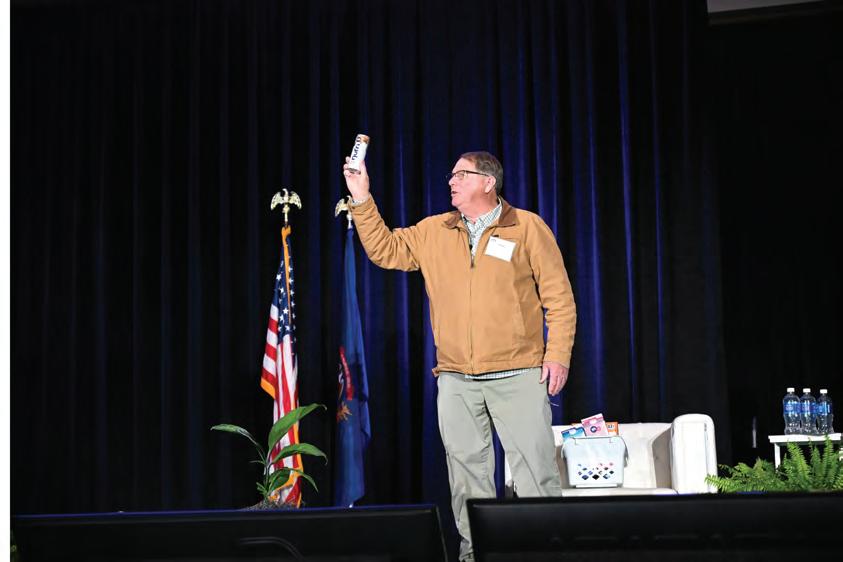
— Mike Upchurch, Trilliant CEO
MMPA dairy farmers take home National Dairy Quality Awards
Eleven Michigan Milk Producers Association (MMPA) dairy farms were awarded National Dairy Quality Awards by the NMC: The Global Milk Quality Organization in January. Recognized during the NMC Annual Meeting in Birmingham, Ala. these MMPA members were among 36 nationally recognized farms in the annual award program and were selected from a pool of 56 applicants nationwide.
One MMPA farm earned the highest honor, which was granted to only six dairy farms in the U.S. and Canada. The platinum award winner was Schultz Dairy LLC in Sandusky, Mich. MMPA farms also won five gold awards and five silver awards.
“MMPA’s members exemplify an unparalleled commitment to milk quality within the dairy industry. Their dedication to animal care, meticulous attention to farm details, and ongoing efforts result in the production of some of the finest quality nationwide,” said Ben Chapin, MMPA Director of Member Services. “The notable representation in this year’s NMC National Dairy Quality Awards is a clear testament to the relentless hard work of our members and the devoted field staff in upholding excellence.”
MMPA offers a portfolio of member services to help members produce the highest quality milk possible, with field representatives working closely with each member to achieve quality goals. MMPA also offers a quality premium incentive for its members producing higher quality milk. MMPA offers its own quality award program, and this
year presented 238 quality awards to member farms for the production of outstanding quality milk over the last fiscal year.
MMPA’s representation in the NMC National Dairy Quality Award Program further underscores the hard work of the cooperative’s farms
and prevention programs, strategies for overall herd health and welfare, and adherence to drug use and record keeping regulations.
This year’s NDQA sponsors included Boehringer Ingelheim, GEA, Cargill, Conewango, Hoard’s Dairyman and NMC. NMC is a not-for-profit professional organization devoted to reducing mastitis and enhancing milk quality. NMC promotes research and provides information to the dairy industry on udder health, milking management, milk quality and milk safety. Founded in 1961, NMC now has about 1,100 members in more than 40 countries throughout the world. NMC is headquartered in Minn.
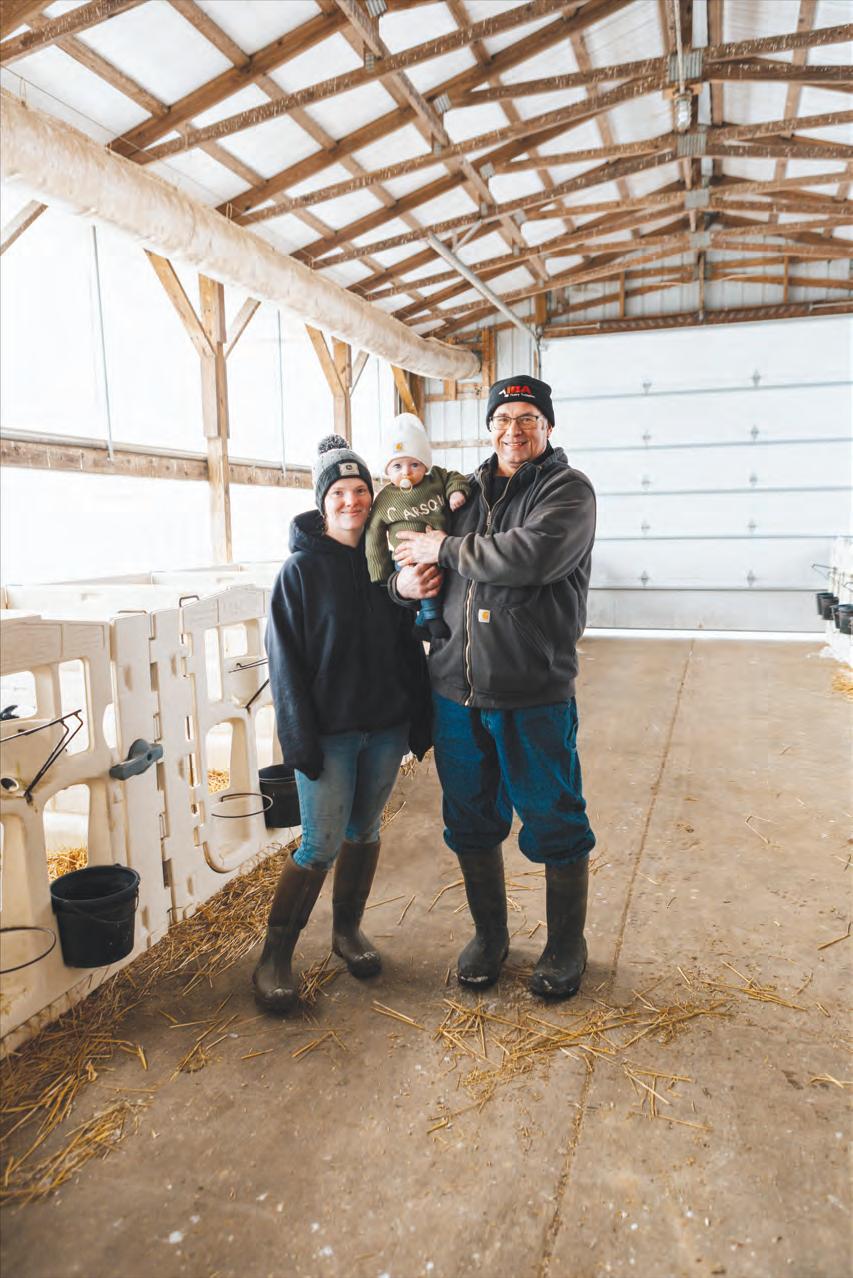
Pictured Left to Right: Hannah Gildner, Carson Schultz and David Schultz. Not Pictured: Kelton Schultz
Platinum
Schultz Dairy LLC (Dave and Kelton Schultz, and Hannah Gildner), Sandusky, Michigan
Gold
Evergreen Dairy Farm LLC (Kris and Carla Wardin), St. Johns, Michigan
Crandall Dair y Farms LLC (Brad, Monica and Mark Crandall), Battle Creek, Michigan
Hor ning Farms LL (Earl, Jeffrey, Lynda and Mason Horning, and Katelyn Packard), Manchester, Michigan
Hammond Dair y Farm LLC (Norm, Kim and Derrick Hammond), Dowling, Michigan
Vanpolen Farms (Duane and Laune Vanpolen), Marion, Michigan
Silver
Mooville Dairy (Karl and MaryAnn Bontrager), Wolcottville, Indiana
Koppenol Dairy Farms Inc (Al and Deb Koppenol), Coopersville, Michigan
Gallagher Dair y Farm Inc (Chad and Mark Beck), West Branch, Michigan
Gasser Farms LLC (Virgel Gasser), Creston, Ohio
Gasser Farms LLC ® (Virgel Gasser), Creston, Ohio

Stepping up our partnership means more than giving back a record-breaking $125 million in Patronage returns. No matter the season, we remain committed to serving our members through meaningful relationships and providing reliable financial partnership.
With locations across Michigan and northeast Wisconsin, we're here when you're ready to talk.

THE LONG GAME
BY MIKAYLA BOWEN
A
t Hardy Spring Lake Farms, high quality milk isn’t an accident. It’s not luck, either, though they’ll humbly tell you there’s always a little bit of that involved.
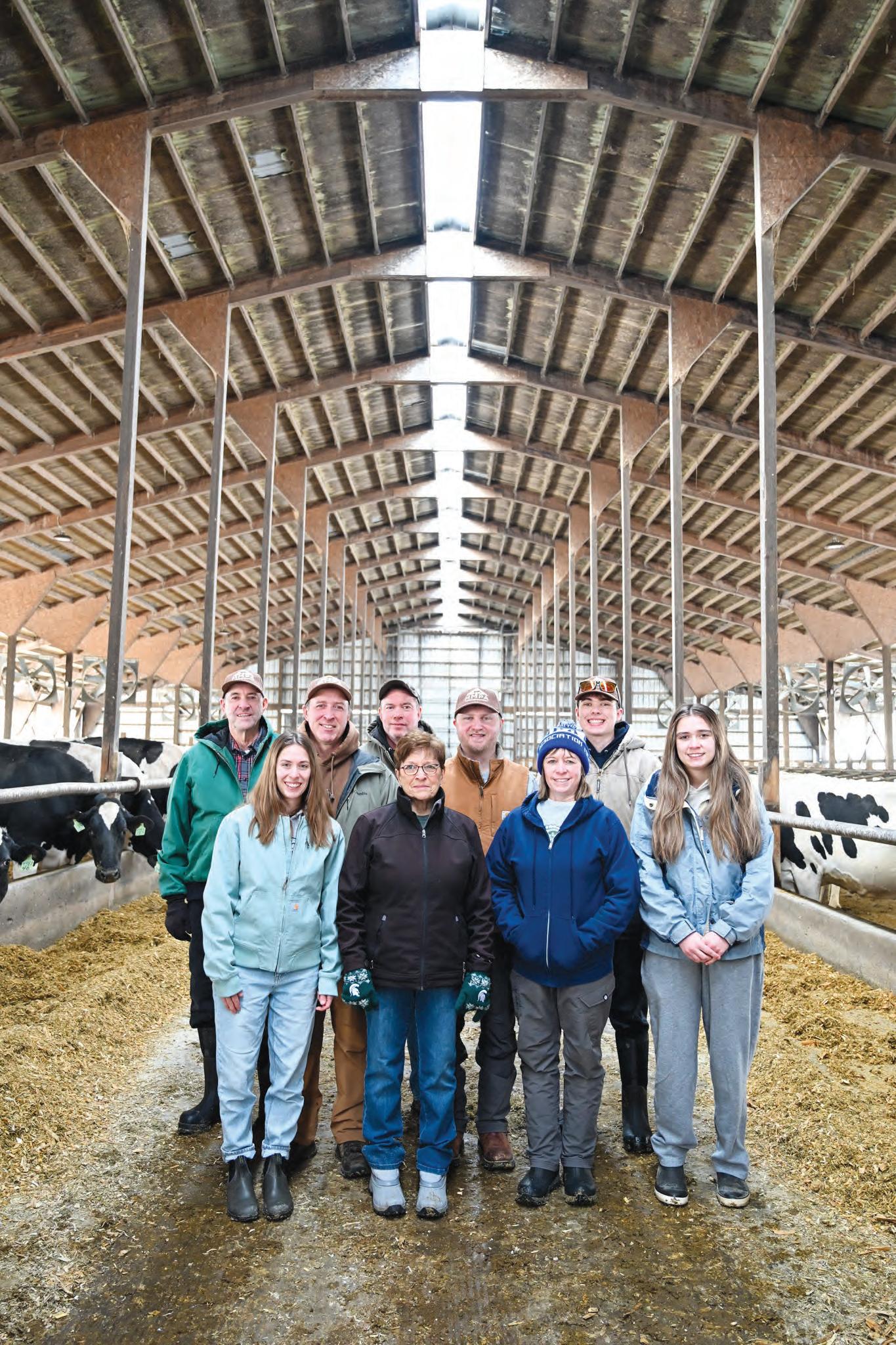
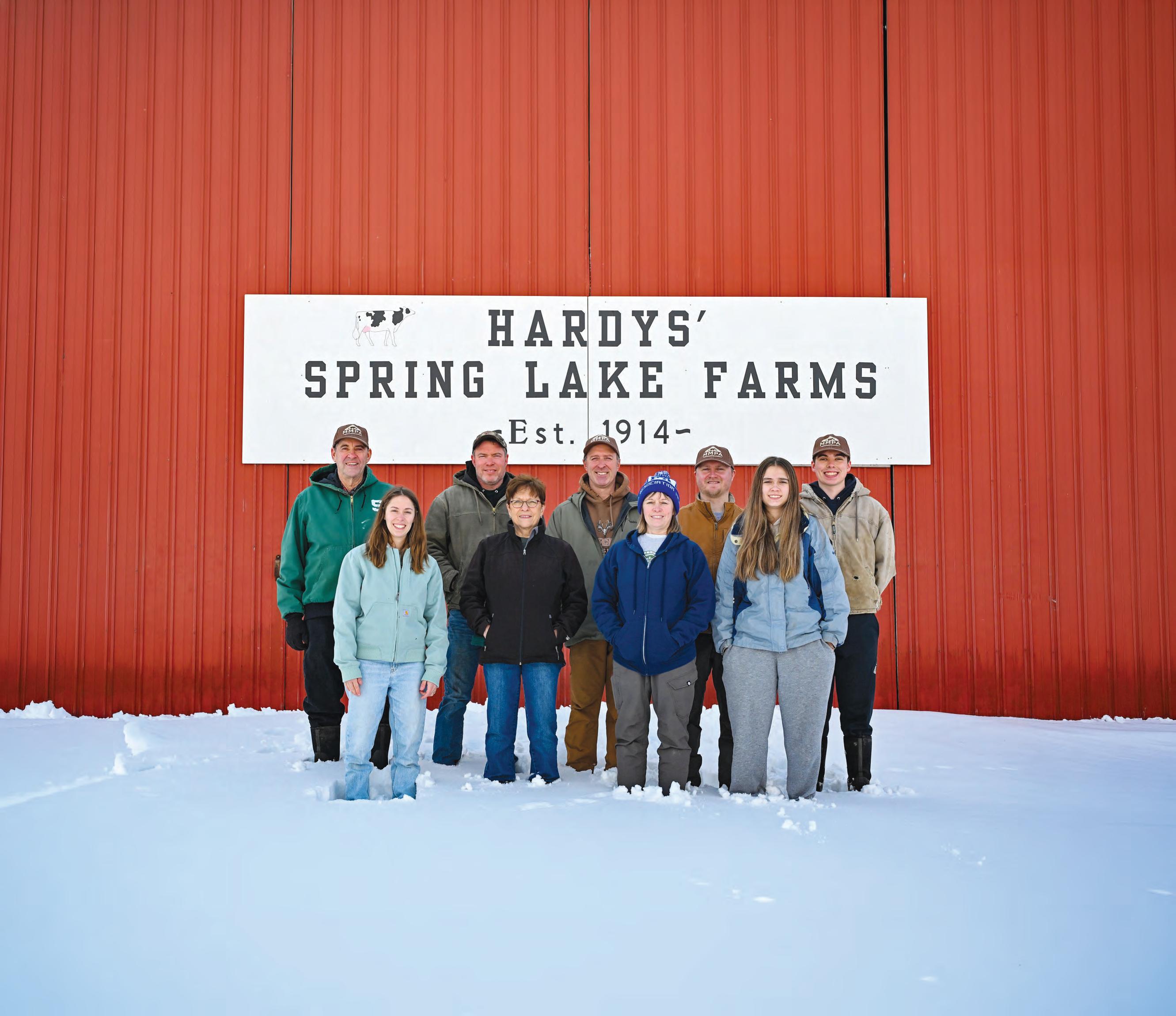
Front, L to R: Tina Hamp, Judy Hardy, Amy Heydenburg, Allison Hardy
Back, L to R: Mike Hardy, Jason Hardy, Bill Hardy, Ben Hamp, Caleb Hardy
“You can work your tail off all year,” Bill Hardy said with a grin, “and if they pull a milk sample on the one day you messed something up, that’s the day that gets you.”
Quality here is built in the quiet moments: in the middle-of-the-night glances at cow cams, in the careful decision to sell a good cow to make room for a better one, in the steady rhythm of milking done the same way, the right way, every single day.
That commitment is what earned the Hardy family MMPA’s 2025 Top Quality Award, finishing the year with an impressive somatic cell count of 44,910. It’s a number that speaks volumes about their management, consistency and attention to detail leading to producing high quality milk. This year’s recognition is well deserved, and it adds to a history of excellence rather than beginning one. The Hardys also earned Top Quality honors in 1993 and 1999, a testament to a standard that spans generations.
Hardy Spring Lake Farms, located in Stanton, Mich., has been in the Hardy family since 1914. What began with 15 cows under Mike Hardy’s father has grown, gradually and intentionally, into a 200-cow Holstein herd now owned by brothers Bill and Jason. They’ve been in their current facility since 2005, after building across the road from their original farmstead.
“My dad started with about 15 cows,” Mike shared. “We were milking 100 across the road for years. We didn’t go out and buy another hundred cows when we built this place. We grew into it.”
Three families are actively involved in the day-to-day operation of the dairy.
Mike and Judy, children Amy, Bill and Jason and grandchildren growing up in the barn aisles. It’s rare to see that many hands-on family members working together so seamlessly, and even rarer to see it done with such unity and purpose. “It’s a tremendous blessing to have a family that’s together,” Mike shared. “It’s not a sprint, it’s a marathon.” A phrase that defines not just their approach to farming, but to family as well.
Built by Their Own Hands
Drive through Hardy Spring Lake Farms and you’ll see more than barns, you’ll see fingerprints.
“There isn’t a barn on the property that we didn’t have a hand in building,” Bill said.
From the main freestall barn to the calf facility, the Hardys were there, pouring cement, setting trusses, wiring cameras and finishing details.
“I spent most of one summer building the calf barn by myself,” Bill recalled. “Just me, a hammer and a manlift.”
Mike added with a laugh, “If I hadn’t farmed, I probably would have been a carpenter.”
That mechanical mindset car ries over into their dairy management. Bill, who originally studied packaging at Michigan State University, now serves primarily as herd manager.
“Jason is basically the nutritionist,” Bill explained.
Mike nodded. “He’s in charge of making sure we’ve got enough feed to feed the cattle.”
With approximately 800 acres of corn, soybeans and alfalfa, the farm raises as much of its own feed as possible. It’s part of their commitment to staying within their means.
“Even from the equipment side or the land side, we try to stay within our means,” Bill said. “You don’t go out and borrow money just because you think you need something.”
Amy, who returned to the farm in 2022, plays a critical role as well. Her attention to detail has become part of the farm’s culture. Mike credits her for their earlier quality awards. She watches the small things; the protocol, the consistency and the follow-through.
And then there are the next-generation family members, helping milk mornings and afternoons, feeding calves, stepping in during summer fieldwork. Even those with off-farm careers remain deeply connected to the daily operation.
It all works because everyone understands their role and respects each other’s strengths.
Consistency Is King
When asked what contributes most to achieving such a low somatic cell count, the answer wasn’t flashy technology or revolutionary change.
While the facilities and numbers are impressive, what truly sets this operation apart is the people behind it.
“I like engineering things, building things, figuring things out,” he said. “Cattle’s almost my side job sometimes, but I like doing that too.”
Jason focuses heavily on crops, feed and nutrition.
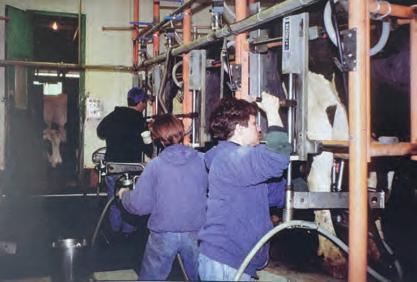
“Being consistent,” Bill said simply.
“You’ve got to do everything right,” Amy added.
The Hardys milk in a double-10 parlor, focusing heavily on proper protocol.
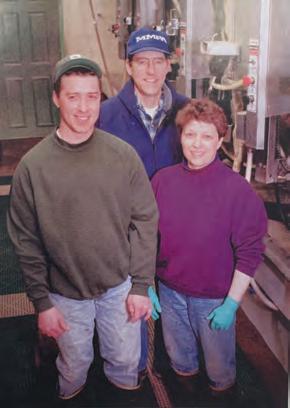
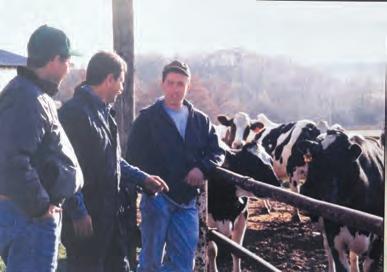
“You can’t just dip and wipe and throw the unit on in 15 seconds,” Bill explained. “You have to follow the proper protocol.”
A recent investment in new takeoff sensors has also paid dividends.
“Over-milking cattle gets you in trouble more than anything,” Mike said. “If you have equipment that gets the units off on time, it really helps cow comfort and milk quality.”
It’s a subtle improvement, but one that aligns perfectly with their philosophy of managing the details.
They also maintain a closed herd, raising all of their own replacements.
“We haven’t bought cattle here since 1972,” Mike shared.
That level of control provides consistency in health, genetics and performance. With over 100 heifers freshening annually, they have the flexibility to be selective, and they are If a cow doesn’t fit the long-term vision of the herd, she moves on, often into the dairy market, where strong animals still hold value.
“We’re at a point where they’re all good cows,” Judy said. “Sometimes it’s hard to decide.”
Stall management also plays a critical role in their quality success.
“We’ve bedded with sand forever,” Bill said.
Fresh sand is added as needed, not by calendar, but by observation.
“It’s not a once-a-week thing,” Bill explained. “If a stall looks low, we add sand.”
He once believed he could control the tank’s somatic cell count simply by managing stalls well.
“And honestly, it’s part of it,” Mike affirmed. “How clean you keep those cows makes a huge difference.”
Granddaughter Tina, who spends a lot of time in the parlor, has noticed the difference over time.
“I used to wipe a lot more sand off udders,” she said. “Now there’s hardly any there. They’re just cleaner.”
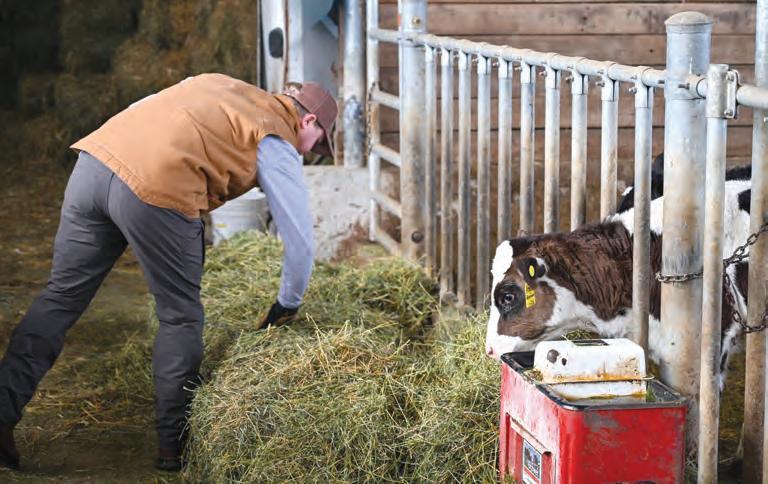
When cows enter the parlor clean, the rest of the process becomes smoother and more consistent.
“They come in clean,” Mike said. “You wipe them and there’s nothing there. That’s because the stalls are kept clean.”
Another contributor to their success? Cameras.
Long before “cow cams” became commonplace, Bill was experimenting with different systems, wiring setups and monitoring tools. Today, the maternity pen is wired directly into Mike’s home monitor. He keeps watch overnight, stepping in only when needed.
“It saves a lot of trips to the barn,” Mike said.
Amy also checks from her phone. Between experience and vigilance, the farm has dramatically reduced calf losses.
In today’s market, when newborn calves carry significant value, that attention pays off, financially and ethically.
But beyond dollars, it reflects something deeper: stewardship.
Over-milking cattle gets you in trouble more than anything. If you have equipment that gets the units off on time, it really helps cow comfort and milk quality.”
The Hardys don’t just manage cows. They watch them. They know them. They anticipate problems before they escalate. It’s a mindset built over decades.
A Lifestyle and a Legacy
Dairy farming isn’t for everyone. Twicea-day milking, every day. Weather extremes. Market swings.
“But it’s a lifestyle,” Mike said. “I don’t regret any of it. I’ve been totally blessed to raise a family here.”
That gratitude echoes through each conversation. They understand that the ability to farm together, across three families, is rare. It requires patience, humility and a shared commitment to something bigger than individual preference.
It also requires trust.
Bill delegates. Amy observes. Jason plans ahead. Mike mentors and monitors. The younger generation steps in and learns by doing. There is teasing and laughter in the barn, but also accountability.
When they won Top Quality in 1993 and 1999, they were operating in different facilities, with different equipment and fewer cows. The fact that they’ve achieved it again in 2025, two decades later, in a larger and more complex operation, may be even more meaningful.
The tools have changed. The scale has changed. The standard has not.
2025 U.S. Milk Production
232 BILLION POUNDS OF MILK (2.6% FROM 2024, 9% SINCE 2016)
9.5 MILLION MILK COWS
( 153,000 HEAD FROM 2024, 1.8% SINCE 2016)
24,390 AVERAGE PRODUCTION PER COW (218 POUNDS ABOVE 2024 7.2% SINCE 2016)


National Updates
Th e new Dietary Guidelines for Americans were released and the Whole Milk for Healthy Kids Act of 2025 was signed.
The Dietary Guidelines for Americans help inform people how to nourish themselves and their children. Here’s what you should know about dairy in the new guidelines:
• Dair y foods remain a recommended component of healthy diets.
• Dair y foods including milk, cheese and yogurt at all fat levels, including whole milk, are encouraged for the first time.
• Dair y aligns with protein and whole food priorities.
• Flavored milk is not mentioned, but foods containing added sugar are discouraged.
• Dair y is valued across the lifespan.
The Whole Milk for Healthy Kids Act of 2025 was officially signed into law. Here are a few things to know:
• Schools now have the option to offer whole and 2% milk; they are not mandated to offer it.
• This flexibility is for lunch only, not breakfast or other meals served at the school.
• It may take time for schools to start serving whole or 2% milk with school lunches.
• USDA still needs to go through a rule making process and issue the final rule.
• Schools may not be able to offer a third milk option that’s only allowed during one school meal due to refrigerator space, staff time, and education.

Local Updates
2025 Ohio Cheese Campaign Drives Record Website Traffic
ADA Mideast’s seasonal
ShopOhioCheese.com campaign achieved its strongest performance in five years, encouraging consumers to purchase Ohio-made cheese for holiday entertaining and gifting.
During November and December, the website received nearly 232,600 visits and more than 267,000 page views— significantly higher than the previous year. Digital advertising across YouTube, search and social media generated over 16.5 million impressions and 239,600 clicks, exceeding expectations and driving increased traffic and sales for participating cheesemakers.
A nationally distributed sponsored article featuring 11 Ohio cheesemakers secured 1,032 media placements, including the Los Angeles Times, San Francisco Chronicle, Miami Herald, The Cincinnati Enquirer and The Columbus Dispatch, reaching an audience of more than 131 million.

2025 Influencer Content Reached More Consumers
In 2025, ADA Mideast partnered with 12 influencers to expand its reach and connect with consumers through trusted voices. Through recipe blog posts and Instagram and TikTok reels, these influencers shared authentic dairyinspired content that highlighted how dairy fits into their daily routines and showcased creative ways to enjoy dairy foods. The content generated more than 7 million impressions, 7.56 million views and over 285,000 engagements, extending visibility beyond ADA Mideast’s own channels.
‘Dairy Isn’t Scary’ Drives Dairy Sales in Supermarkets
A recent campaign, which directed shoppers to purchase milk, cheese and other dairy foods on Instacart, saw stellar metrics, with the highest total return on ad spend (ROAS) of any of the UDIM and FDF quarterly campaigns in 2025.
The Halloween-based ‘Dairy Isn’t Scary’ ads resonated strongly with our consumers, leading to:
• $73.37 returned per $1 of ad spend.
• Over 1.5 million incremental pounds of milk were purchased.
• $4,028,800 total sales.
This means, in total for 2025, over $5,300,000 of sales on dairy foods were attributed to our four campaigns in the supermarket space. These campaigns will continue into 2026 and serve as a strong example of how UDIM and FDF are putting funds back into the marketplace to promote dairy foods.
Fuel Up with Dairy in and out of Indiana Cafeterias
American Dairy Association recently awarded dairy equipment grants in 23 counties across the Hoosier state. Within those counties, school nutrition programs will utilize mobile yogurt parfait carts and hot chocolate milk dispensers. Also, thanks to refrigerated coolers, milk will be readily available for eight more school athletic programs, four school performing arts programs and two food pantries.
ADA Indiana Names 2026 Dairy Ambassadors
After an intensive application process, five college students were selected to be Dairy Ambassadors based on their abilities to communicate with the general public about dairy farming, dairy nutrition and modern agricultural practices. Each will be awarded a $2,500 scholarship in installments over the course of their year of service. The Dairy Ambassador Scholarship program replaced the Dairy Princess program in 2017, allowing more students and men to be a part of advocating for the dairy community.
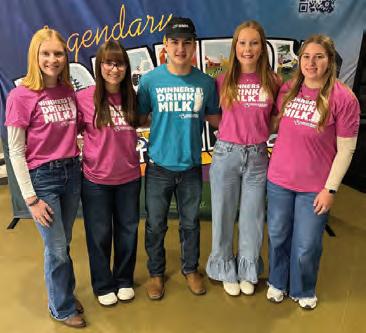
National Milk Day: Food Banks Making a Difference with Dairy
Across three food banks in Michigan, donations collected for a National Milk Day campaign generated almost $30,000 for the purchase of nearly 10,000 gallons of milk to support Michigan families. The Greater Lansing Food Bank, South Michigan Food Bank and the Food Bank of Eastern Michigan created campaigns raising awareness of National Milk Day, requesting donations across their social platforms. The UDIM and FDF team then matched those donations to increase the impact for communities in need.
Physicians Program Reaches Hundreds
of Health Professionals
The UDIM & FDF’s Physician Program continued to call on Pediatricians and OBGYNs in 2025 in Lansing, Grand Rapids, Metro Detroit and expanded the reach into Orlando, Florida. Over the course of the year, the Dairy Reps had 789 interactions with healthcare professionals, held 33 Lunch & Learns for 287 healthcare professionals. Additionally, 5,663 kits of educational materials were distributed. Healthcare professionals continued to engage positively in conversations with asignificant focus on Lactose Intolerance, The First 1000 Days and Sports Nutrition.
Freeliners Policy
The Freeliners column is open to current MMPA members who wish to advertise—at no charge— goods or services relating directly to their dairy farm operations.
• An it em submitted will be published for no more than two consecutive issues (one issue, unless otherwise requested). After that, it will be withdrawn.
• It will be published again f or no more than two consecutive months only if the member resubmits the item by writing or calling the Novi office.
• R eference to a name of a firm or other commercial enterprise with which a member is involved will be deleted, with permission of the member.
• If the member does no t wish such deletion, he/ she may choose to have the item published as a Classified Ad at the regular per-line rate.
• F reeliners must be received by the 10th of the month preceding desired month of publication.
FOR SALE: Polled Holstein, Jersey and Norwegian Red bulls. AI bred from very functional dams. Many young bulls to choose from. Hardy and healthy with strong feet and legs, raised on pasture. Competitively priced. Young beef bulls also available. For pictures and pedigrees call or text 906-287-0746.
FOR SALE: Dairyplan C-21 software system with computer. Call 810-728-6237.
FOR SALE: John Deere 348 baler with number 40 thrower, inoculant applicator, ready to work. $7,900. Call 810-728-6237.
FOR SALE: New Holland 890 chopper with 27P hay head. Low use. $6,500. Call 810-728-6237.
FOR SALE: New Idea bale conveyor, late model 50’, good shape. $3,750. Call 810-728-6237.
FOR SALE: Delaval 78 vacuum pump $100 ; Delaval milk jar pump with new motor $200; Delaval single pulsation, steel body pulsators and control box; GEA stainless plate cooler $250; and Delaval receiver jar, 3 top holes $100. Call 616-406-5611.
Looking for dairy heifers to custom raise on pasture for 2026 season. Over 1,500 fenced acres intensively rotationally grazed. Very good economic daily gains with flexible, custom health and breeding protocols and low pest pressure. Send your young stock to the Upper Peninsula and have them return with strong feet and legs, excellent social skills and gorgeous temperaments. Call Richlo Dairy at 906-287-0746.
Classifieds
Classifieds Policy
Cost for classifieds is $25 for the first 35 words and then $5 for each additional word. Payment due with order. All ads must be received by the 10th of the month preceding desired month of publication. MMPA neither sponsors nor endorses products or services advertised in the Milk Messenger
OPPERMAN GROOVING: We can fix your scabbled floors. Diamond sawed grooves, no hammering or cracking of concrete. No hoof damage. Call Opperman Grooving Inc., Portland. Call 517-647-7381.
DAVIDSON CEMENT GROOVING, INC: No water needed. Wider, rougher grooves for better traction. We also offer texturing for your previously grooved floors. Three operators will travel Michigan and other states. No interest payment terms. Est. since 1987. Call 1-800-365-3361.
CONCRETE GROOVING BY TRI-STATE SCABBLING, home of the 2” wide groove. Best traction, lowest prices. Call 800-554-2288 or visit www.tristatescabbling.com.
A SURE WAY TO KEEP YOUR COWS UPRIGHT! Concrete grooving/texturing provides high quality traction in new and old concrete, fast service. NIENOW GROOVING. Call Cliff at 989-635-1494.
FOR SALE: NEW & USED MILK TANKS. We stock all sizes, makes, models. Special prices to co-op members, corporate & private farms. Contact us anytime, day or night. Special on 2000 gal. Muellers for $13,900 & up. 2700 & 4000 gal. Muellers. Call 800-558-0112 for quote.
STRAW & DRY HAY (large & small bales).
Feed Oats, Feed Barley and Corn Silage. Delivery Available. Call 989-723-1886 or 989-277-1414.
ALFALFA HAYLAGE (excellent & fair grades) & CORN SILAGE. Call 989-723-1886 or 989-277-1414.
SEED CORN - “Minnesota 13” open pollinated 85-day yellow field corn seed. High protein, High yield, high fat, fast drydown. Great Digestibility! 80,000 graded seeds $100.00. Call 989-284-5052 or visit JanksSeeds.com
OPEN POLLINATED CORN SEED. Early varieties Green Haven Open Pollinated Seed. Hulles Oats, Einkorn Wheat. Call 607-566-9253 or visit openpollinated.com.
Fresh Cut Pine Sawdust. 130 yards delivered on walking floor trailers. Serving Dairy Producers since 1989. Call 888-639-8585.
Prioritizing Mental Health on the Dairy Farm
When we think of a healthy farming operation, we often focus on herd health, but the mental health of owners and farm staff is just as important to long-term success. Dairy farming is a stressful occupation and over time these stressors can take a toll.
Signs of stress, depression or other mental health concerns may include changes in sleep or appetite, increased fatigue, agitation or ir ritability, withdrawal from others, or increased use of drugs or alcohol. Recognizing these signs in yourself and loved ones is an important first step to improving overall mental health. Healthy ways to cope with stress include talking with people who understand farming life and building a trusted support network. Taking short breaks and spending time on hobbies, you enjoy, away from the farm environment, can help reset your mind. Use caution when handling insecticides or certain medications, as some chemicals may worsen anxiety or depressive symptoms. If stress feels overwhelming, seek professional help.
Free, confidential support is available 24/7 through the 988 Suicide & Crisis Lifeline (call or text 988). Taking care of your mental health is not a weakness, it’s a key part of a happy and successful farming operation.
SOURCE: CENTER FOR DAIRY EXCELLENCE

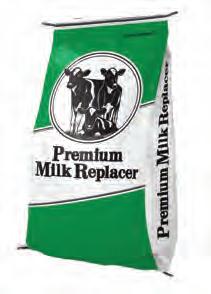
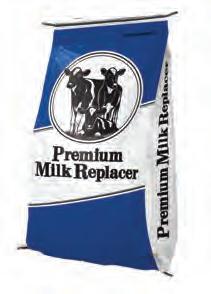
The MMPA Farm Supply Store is now offering a new line of milk replacers from Strauss Feeds. Two protein-tofat formulations are available, 22/20 and 21/20, each containing Bovatec®, MOS and Clarify®. Strauss Feeds is committed to delivering high-quality nutrition backed by exceptional customer service and attention to detail, helping you raise healthy calves the right way.
Contact Jake Riley at 248-912-5070 or the Farm Supply Store at 989-317-8370 for more information.
MMPA Fiel d Staff
Ben Chapin, Member Services Director
Steve Lehman, Ithaca, Raw Milk Compliance
989-289-0731
989-330-1638
Doug Soehnlen, Member/Superior Supply Representative 330-575-4643
Joe Packard – Area Supervisor....................................248-520-3481
Kylie Crandall
Logan Archibald, Fowlerville
269-967-7351
947-265-0817
Brandon Ewers, Coldwater 231-4 14-4539
Emily Patton, Lansing
Christy Dinsmoore – Area Supervisor
John Lehman, Elsie
248-880-3785
248-513-7920
248-444-6775
Chelsea Smith, Falmouth, MI .......................................................231-519-2455
Ella Cloud-Schneider, Caro, MI
Cristen Cornell, Remus, MI
Sarah Michalek – Farm Sustainability Manager
269-245-6632
248-826-6294
248-305-0537
Deb Gingrich, Leroy, Animal Care/Sustainability ..................... 248-520-3580
Rachel Rogers, Charlotte, Sustainability Coordinator 248-826-7243
MMPA Labs
Novi (Monday-Friday, 8 a.m.-4:30 p.m.)
In Michigan ..........................................................................
Toll Free
Ovid (Daily, 6 a.m.-10 p.m.)
Constantine (Daily, 7 a.m.-10 p.m.)
800-572-5824
800-233-2405
989-834-2515
800-391-7560
Farm Supply - Mt. Pleasant
Stephanie Walther, Farm Supply Manager ....................
Jake Riley, Mt. Pleasant
Farm Supply Sales
989-8 24-3321
248-912-5070
Main Line ...................................................................... 989-317-8370
Toll Free
Orders (Novi)
877-367-6455
800-572-5824, then dial 2
Fax 989-317-8372
Novi Headquarters
Main Office
Local line
248-474-6672
Toll free ...............................................................................800-572-5824
President and Chief Executive Officer
Joe Diglio ext. 202
Chief Financial Officer
Aaron Anticic ext. 277
Chief Corporate Affairs Officer
Sheila Burkhardt ext. 208
Chief Operating Officer
Brad Parks ext. 341
Laboratory Supervisor
Teresa Farmer ext. 219
Quality
Sudeep Jain ext. 305
Member Services
Emily Keranen ext. 203
Human Resources
Kelly Kerrigan ext. 301
Sales
Molly Costaris ext. 209
Communications
Emily Kittendorf-King ext. 234
Senior Corporate Controller
Jeannie Strain ............................................................................... ext. 312
Member Relations
Jessica Welch ext. 303
Manufacturing Plants
Canton, Ohio
Matt Rogers, Plant Manager ..................................................330-477-4515
Constantine, Michigan
Dave Davis, Plant Manager 2 69-435-2835
Ovid, Michigan
Rodney Gutierrez, Plant Manager 989-834-2221
Middlebury Cheese Company, Middlebury, Indiana Plant Manager ...................................................................... 5 74-825-9511
Remus, Michigan
Plant Manager, Ryan Belleville 989-309-3630
If you are unable to reach your assigned member representative, please contact the representatives listed in your area. Your assigned member representative is listed on your quality statements or can be found by visiting m imilk.com/contact/field-staff and searching by your producer number.
Board of Directors
Officers
Doug Chapin, Board Chairman
Tony Jandernoa Board Vice Chairman
Eric Frahm, Treasurer
Joe Diglio, President and CEO
Sheila Burkhardt, Secretary
A aron Anticic, Assistant Treasurer
Brad Parks, Chief Operating Officer
Todd Hoppe, General Counsel
Directors-At-Large
Aaron Gasper, Lowell, MI 616-291-4092
Bruce Benthem, McBain, MI 231-920-1615
Kris Wardin, St. Johns, MI 989-640-9420
District Directors
1 P aul Keener Ashland, OH 330-988-0139
1 Kurt Steiner Creston, OH 330-464-1219
2 Brian DeMann Martin, MI 269-720-7637
2 Brian Preston Quincy, MI 517-376-1350
3 Doug Chapin Remus, MI 231-349-4059
3 Amy Martin LeRoy, MI 231-388-0496
4 Eric Frahm Frankenmuth, MI 989-6 52-3552
4 Corby Werth Alpena, MI 989-464-54 36
5 Tony Jandernoa Fowler, MI 989-5 93-22245
5 Scott Lamb Jeddo , MI 810-327-6135
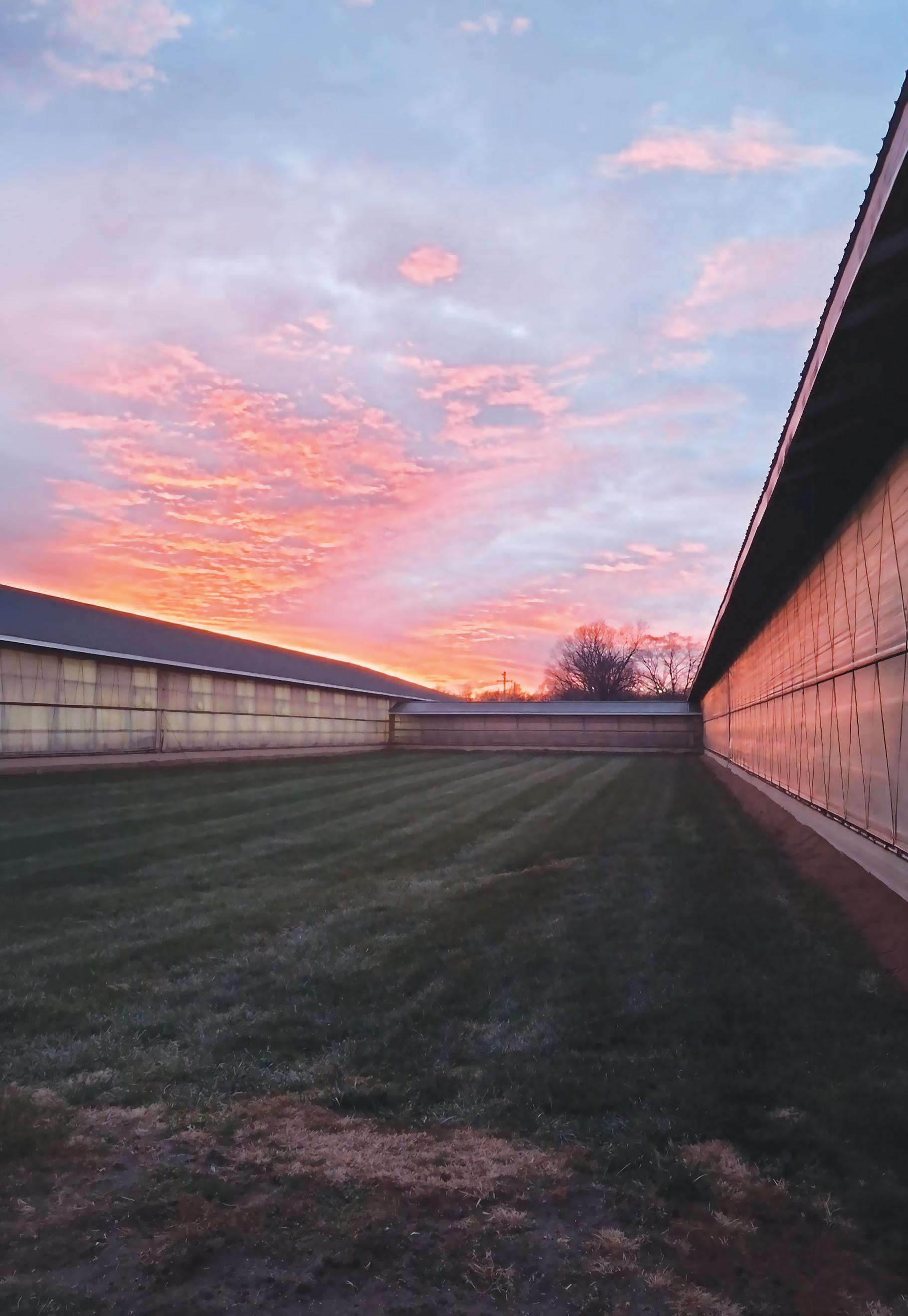
Winter hangs on, but it’s losing its fight, as pink skies glow soft in the lengthening light.
The freestall barn blushes at sunset’s show, while snowbanks shrink steady and let the mud grow.
Icicles drip with a plink-plink cheer, and sparrows gossip that springtime is near.
Boots get stuck, but spirits don’t stay worn, there’s fresh green promise in each new morn.
Photo by Shyann Kick, Jeromesville, Ohio