The
story
of America,

EOD Mobile Unit TEN earns Navy’s top Retention Excellence Award
The award, announced by the Chief of Naval Operations, signifies the Navy’s highest level of recognition for commands that sustain superior levels of Sailor retention. Page A2
told by those who defend it:
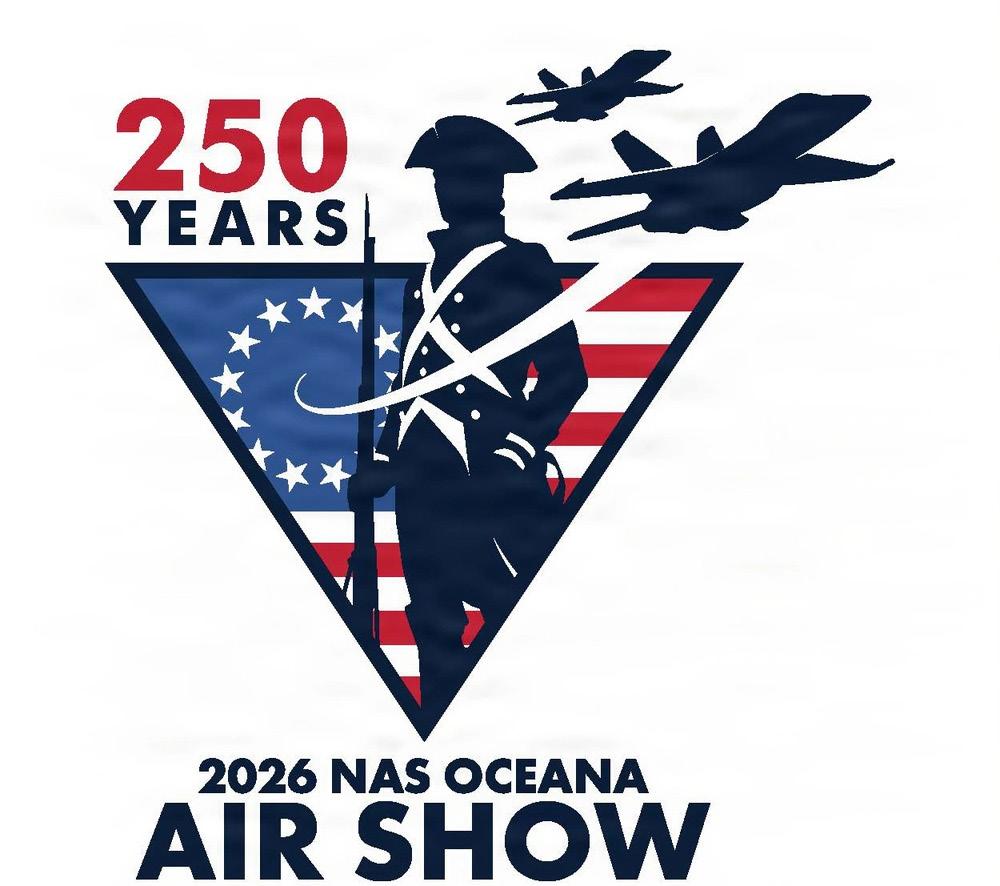
2026 NAS Oceana Air Show to celebrate 250 years of America
By Katie Hewett NAVAL AIR STATION OCEANA
Get ready to celebrate 250 years of America at the 2026 NAS Oceana Air Show on Sept. 19-20.
Naval Air Station (NAS) Oceana officially announced the dates and theme for this year’s air show. The lineup will feature the U.S. Navy’s flight demonstration team, the Blue Angels; the F-22 Raptor Demonstration Team; the F-35C II Lightning Demonstration Team; the Rhino Demonstration Team of Strike Fighter Squadron (VFA) 106; as well as some of the world’s best aerobatic pilots.
The 2026 NAS Oceana Air Show is open to the public, and admission and parking are free. Spectators 18 and older must show a physical photo ID for entry. The performance schedule is under development and will be announced as the event nears. Performances are subject to change.
“This year’s theme, Celebrating 250 Years of America, honors our nation’s founding, its enduring legacy and the generations of men and women who have answered the call to serve and defend it,” said Capt. Rob Littman, commanding officer of NAS Oceana. “We
are proud to bring that story of strength and determination to life at this year’s show.”
Throughout the weekend, visitors will experience the power and precision of modern aviation, but the experience extends well beyond the skies. Guests will have the opportunity to explore aircraft up close, enjoy a variety of local vendors and engage with interactive STEM (Science, Technology, Engineering and Mathematics) exhibits designed to inspire the next generation of innovators and leaders.
The NAS Oceana Air Show has been a part of Virginia Beach for more than 70 years.
According to Littman, the show is a chance for the Master Jet Base to give back to the community it calls home.
“This show is a cornerstone for the City of Virginia Beach, strengthening the bond between our warfighters and the community we proudly serve,” Littman said. “This is our chance to give back and to showcase how the future of naval aviation begins right here at the U.S. Navy’s Master Jet Base.”
Additional information about the 2026 NAS Oceana Air Show will be released on the air show’s website and social media page at oceanaairshow.com and facebook.com/oceanaairshow.
commissioning ceremony of the warship in Norfolk, Virginia,
USS HARVEY C. BARNUM JR. COMMISSIONS
By Ensign Dylan Barron COMMANDER, NAVAL SURFACE FORCE, U.S. PACIFIC FLEET
NORFOLK, Va. (April 11, 2026) — The U.S. Navy welcomed a new Arleigh Burke-class guided-missile destroyer to the fleet Saturday morning during the commissioning ceremony of USS Harvey C. Barnum Jr. (DDG 124) at Naval Station Norfolk. Arleigh Burke-class guided-missile destroyer USS Harvey C. Barnum Jr. (DDG 124) was commissioned before a crowd of approximately 1,800 guests, including senior military leaders, Sailors, Marines, veterans and family members. Secretary of the Navy John C. Phelan served as the ceremony’s principal speaker, joining Vice Chief of

Naval Operations Adm. James W. Kilby and Commandant of the Marine Corps Gen. Eric M. Smith in celebrating the ship’s entry into service. During the ceremony, Phelan wished the crew of Harvey C. Barnum Jr. fair winds and following seas as they brought the ship to life and began her commissioned service.
“This is the first vessel to bear the name of a Vietnam War Medal of Honor recipient, and Col Barnum’s actions in the Que Son Valley during Operation Harvest Moon defines what leadership looks like when everything is on the line,” said Secretary of the Department of the Navy John C. Phelan. “This ship is not symbolic, it is combat power, and today she joins something bigger. The ship and her crew join the President’s Golden Fleet, the Fleet of the future— rebuilding American maritime
dominance by putting more capable ships in the water, strengthening our industrial base, and ensuring we can fight tonight and win tomorrow. To be a superpower, one must be a seapower, and USS Harvey C. Barnum Jr. represents exactly what that future looks like.”
Adm. James W. Kilby emphasized the role of Arleigh Burke-class destroyers in delivering combat power and sustaining the Navy’s global warfighting advantage.
“The need to build great warships like Harvey C. Barnum Jr. is as clear today as it ever has been. Sailors on ships like Harvey C. Barnum Jr. are standing the watch, defending the homeland, and deterring aggression.”
Gen. Eric M. Smith highlighted the legacy of the ship’s namesake and the standard it sets
for the crew.
“Col. Barnum represents the very best of our naval service, courage under fire, selfless sacrifice, and an unwavering commitment to mission and to others,” said Smith. “The crew of USS Harvey C. Barnum Jr. carries forward that legacy, and with it, the warrior ethos required to deter aggression and win when it matters most.”
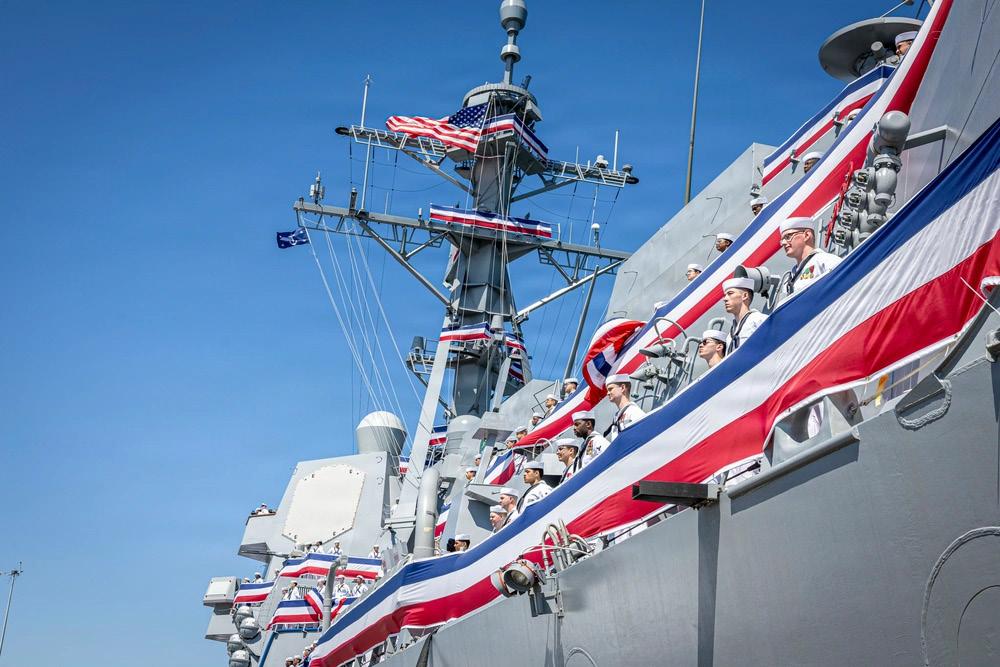
The ceremony featured traditional naval honors, including music from “The President’s Own” United States Marine Band, as Sailors manned the rails and the ship was officially placed into active service. Upon the order from the ship’s sponsor, Martha Hill, to “man our ship and bring her to life,” the crew
NORFOLK, Va. (April 11, 2026) – Sailors assigned to the Navy’s newest Arleigh Burke-class guided-missile destroyer USS Harvey C. Barnum Jr. (DDG 124) man the rails during the
April 11, 2026. The warship bears the name of a living Medal of Honor recipient, retired Col. Harvey C. “Barney” Barnum Jr. (U.S. NAVY PHOTO BY MASS COMMUNICATION SPECIALIST SEAMAN OLIVER MCCAIN VIEIRA)
NSASP celebrates Month of the Military Child
By Andrew Revelos
Dahlgren School celebrated military children with a special assembly April 7 featuring a proclamation signing by Capt. John Nadder, commanding officer of Naval Support Activity South Potomac (NSASP). April is the Month of the Military Child.
After leading students in the pledge of allegiance, Nadder turned over the podium to Ailani, 8th grade. “I think every single one of you is brave and you are all strong,” she told her classmates. “I know it’s hard; you always leave your friends behind. My middle school friends know what I’m talking about.”
While missing friends whose families moved to new duty stations is difficult, she said, it is resilience that defines military children. “The point is that we all get through it and I think we’re very strong. This is a good month to recognize that. Give yourself a pat on the back.”
“That was wonderful,” said Nadder after Ailani concluded her remarks. “Good morning, Dahlgren School. We’re here to celebrate you today.”
Nadder noted the challenges military children typically face: different environments, different schools, different friends. “But you never leave who you had,” he said. “They are always in your hearts.”
Overcoming those challenges makes military children resilient, Nadder said. “You are the sum of your experiences, and that makes you strong.”
There are more than 1.6 million military children in America, according to Department of War statistics. On average, these children move every two to three years. We salute the military children of Dahlgren School, and all military children this April for their sacrifices and for their strength.
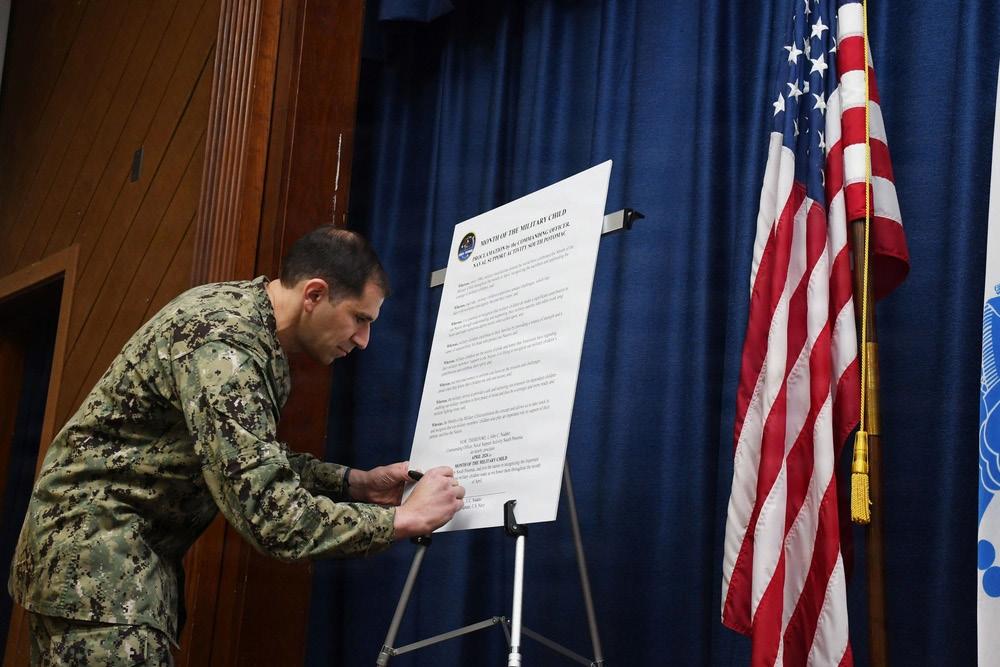
Dahlgren School celebrated military children with a special assembly April 7 featuring a proclamation
by
commanding officer of Naval Support Activity South Potomac (NSASP). April is the Month of the Military Child. After leading students in the pledge of allegiance, Nadder turned over the podium to Ailani, 8th grade. “I think every single one of you is brave and you are all strong,” she told her classmates. “I know it’s hard; you always leave your friends behind. My middle school friends know what I’m talking about.”
While missing friends whose families moved to new duty stations is difficult, she said, it is resilience that defines military children. “The point is that we all get through it and I think we’re very strong. This is a good month to recognize that. Give yourself a pat on the back.” “That was wonderful,” said Nadder after Ailani concluded her remarks. “Good morning, Dahlgren School. We’re here to celebrate you today.” Nadder noted the challenges military children typically face: different environments, different schools, different friends. “But you never leave who you had,” he said. “They are always in your hearts.” Overcoming those challenges makes military children resilient, Nadder said. “You are the sum of your experiences, and that makes you strong.” There are more than 1.6 million military children in America, according to Department of War statistics. On average, these children move every two to three years. We salute the military children of Dahlgren School, and all military children this April for their sacrifices and for their strength. (PHOTO BY ANDREW REVELOS, NAVAL SUPPORT ACTIVITY SOUTH POTOMAC)
EOD Mobile Unit TEN earns Navy’s top Retention Excellence Award
By Lt. Martin Carey
EXPLOSIVE ORDNANCE DISPOSAL
GROUP TWO
VIRGINIA BEACH, Va. — Explosive Ordnance Disposal Mobile Unit TEN (EODMU-10) was recognized with the “Best in Class” distinction for the Fiscal Year 2025 Retention Excellence Award, an honor that identifies it as the top-performing command in its category.
The award, announced by the Chief of Naval Operations, signifies the Navy’s highest level of recognition for commands that sustain superior levels of Sailor retention. This achievement reflects an exceptional command climate and a deep commitment to the career development and well-being of
Navy
its Sailors. The focus on people is a core tenet of the Navy’s mission, which emphasizes that retaining experienced Sailors is one of the most powerful weapons in securing victory and maintaining a warfighting advantage.
“Our people are our most crucial asset,” said Cmdr. Jon Maurus, Commanding Officer of EODMU-10. “This recognition isn’t just about meeting metrics; it’s about the positive command climate we’ve built together, where our Sailors feel valued and see a clear path for professional growth. Their dedication is the bedrock of our success in every mission we’re tasked with.”
The Navy’s retention awards program highlights the critical role leaders play in inspiring Sailors to continue their service. By fostering an environment where Sailors can
thrive, commands like EODMU-10 directly contribute to the readiness and strength of the entire fleet.
“Earning this award is a direct reflection of the hard work and professionalism of our Sailors,” said CMDCM Jason Mette, Command Master Chief of EODMU-10.
“We talk about the Navy being a foundry that forges resilient and ready warfighters, and that starts with taking care of our team. This award proves that our focus on career development and personal well-being is making a real difference. I couldn’t be prouder of these teammates.”
As a symbol of this achievement, EODMU10 is now authorized to paint its command anchors gold and fly the “Best in Class” pennant, which is blue with a silver anchor,
gold chain and four stars.
EODMU-10 is a critical component of the Navy’s EOD force. These highly trained specialists are experts in neutralizing and exploiting a wide range of explosive hazards, including conventional, chemical, biological, nuclear, and improvised explosive devices. Their vital mission includes ensuring waterways remain safe and open for military and civilian transit by clearing underwater mines and other ordnance. Furthermore, EODMU-10 possesses the capability to conduct diving and salvage operations, allowing them to recover sensitive equipment and clear obstructions from the seabed to support naval and joint forces. For more information, visit https://www. necc.usff.navy.mil/eod/
bases honored with prestigious Ney Awards for food service excellence
By Chief Petty Officer Janweb Lagazo COMMANDER, NAVY INSTALLATIONS COMMAND
WASHINGTON — Three U.S. Navy installations have received the prestigious Captain Edward F. Ney Memorial Award for Fiscal Year 2026, recognizing their outstanding culinary achievements.
Established in 1958, the award is the U.S. Navy’s highest honor for food service excellence and recognizes top-performing galleys both ashore and afloat.
THE WINNING INSTALLATIONS ARE:
Naval Station Newport: East Coast general mess category
Naval Air Station North Island: West Coast general mess category
Commander, Fleet Activities Yokosuka, Japan: Outside the contiguous United States general mess category
“The hard work and culinary excellence of our food service professionals are vital to the morale and readiness of the entire Navy,” said Vice Adm. Scott Gray, Commander, Navy Installations Command (CNIC). “A wellserved, nutritious meal is more than just food. It’s a critical component of our warfighting readiness, providing a sense of home for our Sailors and enabling them to be at their best. These awards honor the galleys that repre-
sent the pinnacle of service and dedication. We are immensely proud of their accomplishments.”
CNIC’s Force Master Chief Andre Brown echoed the admiral’s sentiment, emphasizing the direct impact culinary specialists have.
“Our culinary specialists are often the first and last faces a Sailor sees during their day. The pride and professionalism they pour into their work have a direct and profound impact on the morale of the entire crew,” said Brown. “Winning a Ney Award is a testament to that dedication and a clear indicator of a high-performing, motivated team that takes care of our most valuable asset — our Sailors.”
Excellent food service is also a cornerstone of fleet readiness, fostering an environment of wellness and support that strengthens the entire naval community and contributes directly to the resilience of Sailors and their families.
Commander, Navy Installations Command is responsible for worldwide U.S. Navy Shore installation management, designing and developing integrated solutions for sustainment and development of Navy shore infrastructure as well as quality of life programs.
CNIC oversees 10 Navy regions, 70 installations, and more than 48,600 employees who are focused on warfighting and manning, training, and equipping the Shore to fight and win. Navy installations are warfighting platforms essential to every fleet operation.


signing
Capt. John Nadder,
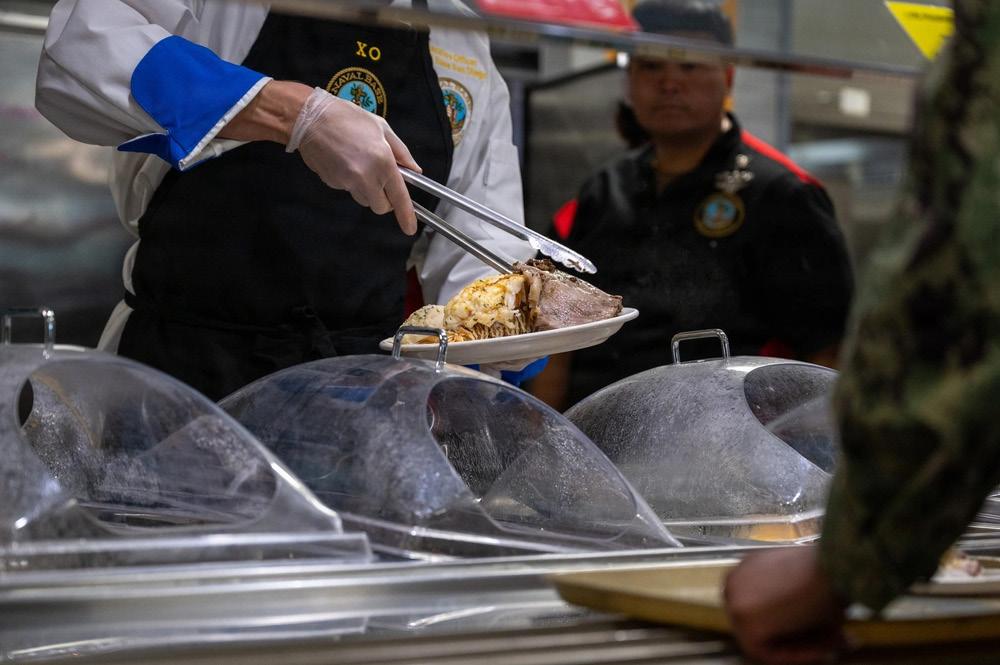
NAVAL BASE SAN DIEGO (Mar. 19, 2026) Cmdr. William Burkland, executive officer, Naval Base San Diego (NBSD), serves Sailors during a special meal onboard Mercer Hall Galley, Mar. 19. Established in 1922, NBSD is the largest West Coast naval installation and principal homeport of the Pacific Fleet, supporting more than 60 combatant and auxiliary surface ships and more than 250 shore commands. (U.S. NAVY PHOTO BY SEAMAN APPRENTICE
ADZIRY GARCIA)
rushed aboard, bringing the warship to
amid applause and ceremonial cannon fire.
Martha Hill, the ship’s sponsor and wife of Harvey C. Barnum Jr., reflected on the crew’s role in bringing the warship to life.
“This moment marks the transformation of this ship from steel into something living — a reflection of the spirit, dedication, and strength of the Sailors who will carry her forward,” said Hill. “You are now part of her story, and wherever she sails, you will represent the very best of our nation.” DDG 124 is the first ship to bear the name of Medal of Honor recipient, U.S. Marine Corps Col. Harvey C. Barnum Jr.. The ship honors Barnum’s gallantry and intrepidity at the risk of his life beyond the call of duty during the Vietnam War.
Barnum reflected on the responsibility carried by the crew and the trust that defines the naval service.
“Our strength is not built on technology alone, but on trust, trust that we will stand by one another and that no one will ever be left behind,” said Barnum. “That belief shapes how Sailors and Marines fight, how they lead, and how they act when it matters most. The crew of USS Harvey C. Barnum Jr. now carries that responsibility forward.”
On Dec. 18, 1965, then-1st Lt. Barnum assumed command of his company after the commander was mortally wounded. With two armed helicopters under his control, he moved fearlessly through deadly fire to lead air attacks against enemy positions while directing a counterattack that helped secure key terrain. He later coordinated the evacuation of wounded personnel and continued the assault to achieve the battalion’s objective. He is among the few living namesakes to witness the commissioning of a ship bearing his name.
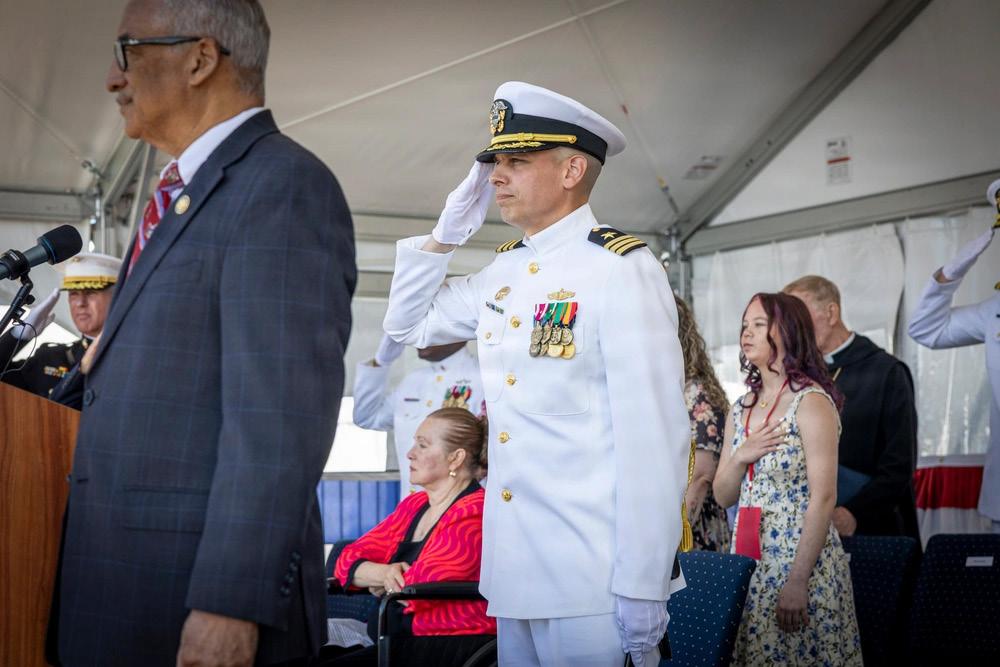
Cmdr. Cantu, commanding officer of USS Harvey C. Barnum Jr., emphasized the responsibility carried by the crew.
“Every Sailor who walks these deckplates will be reminded of what it means to serve with honor, lead with integrity, and defend our nation without hesitation,” said Cantu.
“We accept the responsibility that comes with bearing Harvey C. Barnum Jr.’s name, and we will carry his legacy forward in everything we do.”
Cantu leads a crew prepared to operate one of the Navy’s most advanced warships, built to meet the demands of modern maritime operations.
Arleigh Burke-class guided-missile destroyers are the backbone of the U.S. Navy’s surface fleet. These highly capable, multi-mis-
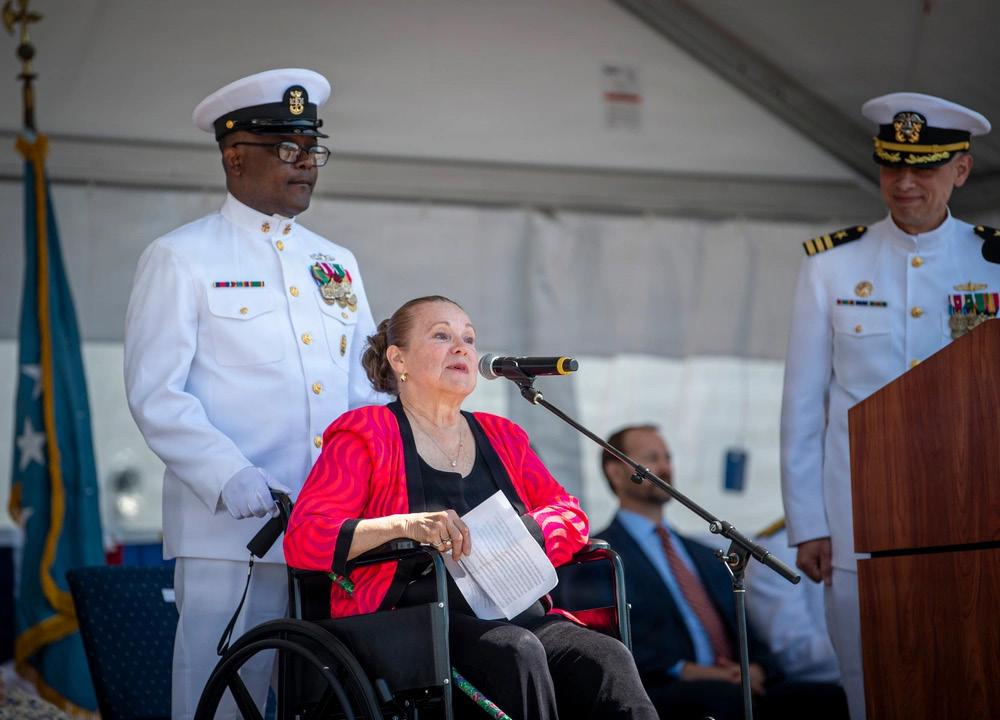
Martha Hill
sion ships conduct a wide range of operations, from peacetime presence to national security missions, delivering warfighting capability across multi-threat air, surface and subsurface environments. Equipped with the Aegis Combat System and a range of advanced weapons systems, USS Harvey C. Barnum Jr. strengthens the Navy’s ability to project power, deter aggression and defend U.S. interests worldwide. Following the ceremony, guests were invited aboard for tours of the Navy’s newest warship, offering a firsthand look at the capabilities and professionalism of the crew bringing DDG 124 to life. The mission of Commander, Naval Surface Force, U.S. Pacific Fleet (CNSP) is to man, train, and equip the Surface Force to provide fleet commanders with credible naval power to control the sea and project power ashore. For more news
the sponsor of the Navy’s newest Arleigh Burke-class guided-missile destroyer USS Harvey C. Barnum Jr.
124), delivers
during the commissioning ceremony of the warship in Norfolk, Virginia, April 11, 2026. RIGHT: Cmdr. Ben Cantu, commanding officer of USS Harvey C. Barnum Jr., salutes during the playing of the national anthem at the commissioning ceremony. The warship bears the name of a living Medal of Honor recipient, retired Col. Harvey C. “Barney” Barnum Jr.

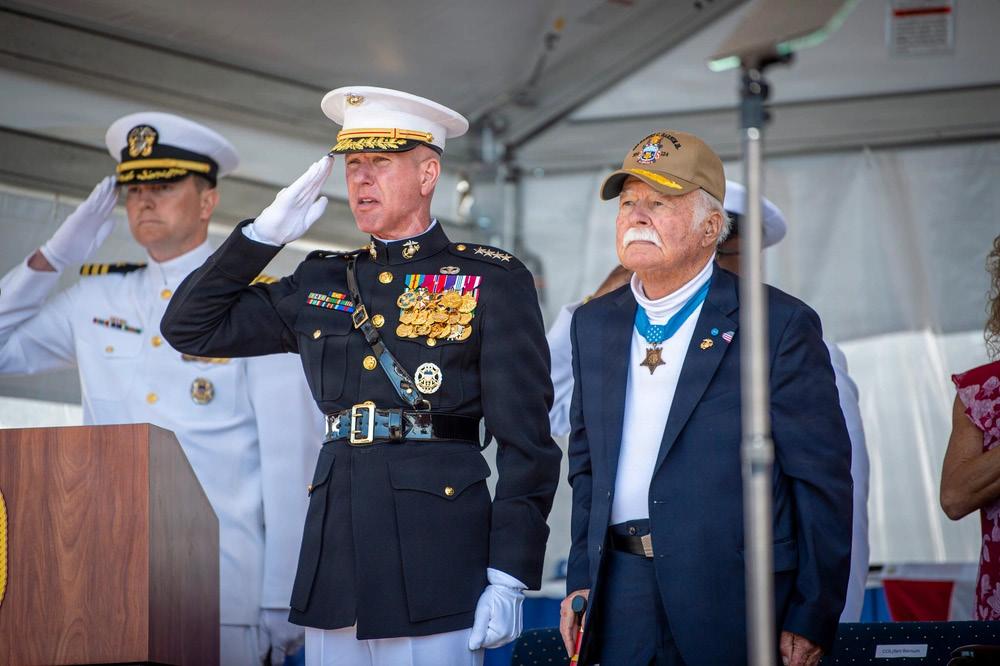
NORFOLK, Va. (April 11, 2026) – General Eric Smith, commandant of the Marine Corps, left, and retired U.S. Marine Corps Col. Harvey C.
Barnum Jr., a Medal of Honor recipient and namesake of the Navy’s newest Arleigh Burke-class guided-missile destroyer USS Harvey C. Barnum Jr. (DDG 124), salute during the playing of the national anthem during the commissioning ceremony of the warship in Norfolk, Virginia, April 11, 2026. (U.S. NAVY PHOTO BY MASS COMMUNICATION SPECIALIST SEAMAN OLIVER MCCAIN VIEIRA)
NORFOLK, Va. (April 11, 2026) –
(left),
(DDG
remarks
(U.S. NAVY PHOTO BY MASS COMMUNICATION SPECIALIST SEAMAN OLIVER MCCAIN VIEIRA)
NAVSUP WSS Cost Analysts support Artemis II mission
By Matthew Jones NAVSUP WEAPON SYSTEMS SUPPORT
A specialized U.S. Navy team from NAVSUP Weapon Systems Support played a vital, behind-the-scenes role in NASA’s Artemis II mission, which embarked April 1, 2026, on a new era of space exploration. The Navy Price Fighters provided critical procurement support for nearly every piece of the monumental Space Launch System, the successor to the Space Shuttle.
The Price Fighters are NAVSUP WSS’s expert cadre of cost analysts whose unique insight into the defense industrial base and ability to navigate high-stakes and sole-source procurements makes them an invaluable part of the Navy and partner for agencies like NASA. This interagency support sharpens the skills necessary for their primary naval mission, reinforcing the analytical rigor required to deliver capability to the fleet and maintain warfighting readiness.
The strategic partnership with the NASA Marshall Space Flight Center began in 2012 as a means of leveraging the Navy’s deep expertise in acquisition. The Price Fighters have been an essential part of the national foundry that transforms industrial innovation into sovereign capability. Their work
ensures that complex programs deliver success without sacrificing value.
The team has applied their expertise to almost every aspect of the Space Launch System including detailed proposal evaluations for the legacy RS-25 main engines manufactured by Aerojet Rocketdyne, from their initial Space Shuttle to Space Launch System adaptation to full production restart. They have also supported procurements for the massive Core Stages delivered by Boeing, and the replan evaluation of the Design, Development, Test, and Evaluation of the Orion space capsule.
The successful partnership on Artemis II is a testament to this unique collaboration. The Navy team is already postured to support future efforts, including the new Centaur Upper Stage, continuing to protect America’s advantage in the sea, air and even space.
NAVSUP WSS provides the U.S. Navy, Marine Corps, and allied forces the program and supply support for the weapon systems that keep naval forces mission ready. With locations in Norfolk, Philadelphia, Mechanicsburg, and Tucson, NAVSUP WSS manages operational readiness for almost 300 deployable ships, 92 submarines, and 3,700 aircraft worldwide.


NRL’s advanced payloads soar into orbit aboard STPSat-7 mission
By Emily Winget
U.S. NAVAL RESEARCH LABORATORY
WASHINGTON, D.C. — U.S. Naval Research Laboratory (NRL) successfully launched three advanced experimental payloads aboard the Department of War (DoW) Space Test Program’s (STP) Satellite-7 mission at approximately 4:33 a.m. PDT on April 7 from Vandenberg U.S. Space Force (USSF) Base, Calif.
NRL’s payloads included the Lasersheet Anomaly Resolution and Debris Observation (LARADO) instrument; the Global Navigation Satellite System (GNSS) Orbiting Situational Awareness Sensor (GOSAS); and the Gadolinium Aluminum Gallium Garnet (GAGG) Radiation Instrument (GARI-1C).
The STPSat-7 spacecraft is aboard the STP-S29A mission, which uses a Northrop Grumman Minotaur IV launch vehicle, marking a significant step forward in advancing U.S. space-based capabilities for the U.S. Navy and national security. By improving understanding of the space environment and testing next-generation satellite technologies, NRL is ensuring the United States maintains its technological advantage and protects critical assets in orbit.
LARADO One of the key NRL payloads, LARADO will directly address the growing threat of orbital debris.
“LARADO is the next step in ensuring situational awareness in space,” said Andrew Nicholas, NRL Sensor Development and Applications Section Head and LARADO principal investigator. “The instrument will
detect and characterize small orbital debris that cannot be observed from the ground. This is vital to understanding the space environment and will provide essential data to update orbital debris models. These updates are important to the orbital debris research community, engineers designing spacecraft to survive and minimize growth to the debris environment, satellite operators, and policy makers.”
The LARADO concept began in 2012. In FY22, NASA’s Heliophysics Division Space Weather Program’s Orbital Debris and Space Situational Awareness portfolio within its Science Mission Directorate began funding the development of the LARADO instrument for STPSat-7.
GOSAS
GOSAS will improve the reliability of navigation and communication systems for warfighters.
“The GOSAS is a CubeSat-compatible, programmable dual GPS receiver designed to characterize the orbital GNSS environment and produce high quality ionospheric space weather products,” said Scott Budzien, Ph.D., NRL research physicist and GOSAS principal investigator. “Understanding and predicting space weather is critical for ensuring the accuracy of GPS and the integrity of military communications.”
GOSAS is a follow-on to the NRL experiment GROUP-C (GPS Radio Occultation and Ultraviolet Photometry-Collocated) experiment on the International Space Station from 2017-2023 that serendipitously detected GPS ground interference. GOSAS originated in 2020 with the mission of increasing GPS
accuracy for the warfighter.
GARI-1C
GARI-1C is set to pave the way for future defense applications from space, including detecting weapons of mass destruction. The NRL team takes technology developed for ground-based applications and tests its performance in space. Since most commercial-off-the-shelf components are not radiation-hardened, understanding how they respond to the harsh radiation environment of space is critical for future operational use.
“GARI-1C is designed to space-qualify new gamma-ray detector technology for spacebased defense applications,” stated Lee Mitchell, Ph.D., NRL Research Physicist and GARI-1C principal investigator. “This detector technology offers improved energy resolution, lower power consumption and reduced size compared to similar systems, which is key to developing more advanced and efficient sensors for detecting threats from orbit.”
The DoD/DoW Space Test Program (STP) was founded in 1966 to provide flight opportunities for all DoD/DoW research and development activities in an economic and efficient manner. Under the U.S. Space Systems Command, STP supports mission design, payload-to-bus integration, space vehicle-to-launch vehicle integration, and on-orbit operations for S&T payloads that exhibit potential military utility. By advancing scientific knowledge and capability, STP is foundational to ensuring continuous STP advantage in the space domain.
“The success of this mission, achieved through a powerful collaboration with the
DoW’s Space Test Program, highlights how cutting-edge research and development are fundamental to preserving America’s strategic edge in space,” said USSF Lt. Col. Brian Shimek, system program manager and director for STP.
NRL’s Space Science Division conducts a broad-spectrum of Research, Development, Test & Evaluation in solar-terrestrial physics, astrophysics, upper and middle atmospheric science, and astronomy. The Division’s Military Deputy, Lt. Elijah Ray, is embedded with DoW STP at Kirtland Air Force Base, N.M., as NRL’s on-site liaison for space experiment coordination and advocacy. About the U.S. Naval Research Laboratory NRL is a scientific and engineering command dedicated to research that drives innovative advances for the U.S. Navy and Marine Corps from the seafloor to space and in the information domain. NRL, located in Washington, D.C. with major field sites in Stennis Space Center, Mississippi; Key West, Florida; Monterey, California.
NRL offers several mechanisms for collaborating with the broader scientific community, within and outside of the Federal government. These include Cooperative Research and Development Agreements (CRADAs), LP-CRADAs, Educational Partnership Agreements, agreements under the authority of 10 USC 4892, licensing agreements, FAR contracts, and other applicable agreements.
For more information, contact NRL Corporate Communications at mailto:NRLPAO@ us.navy.mil.
A NASA SLS rocket launches the Artemis II mission from Space Launch Complex 39B at Kennedy Space Center, Florida, April 1, 2026. NASA’s Artemis II test flight will take astronauts from NASA Commander Reid Wiseman, Pilot Victor Glover, and Mission Specialist Christina Koch, and Canadian Space Agency, Mission Specialist Jeremy Hansen.
Artemis II is NASA’s first crewed mission under the Artemis program and the first mission with astronauts aboard the SLS rocket and Orion spacecraft, sending four astronauts on an approximately 10-day journey to orbit the Moon and back to Earth. (U.S. SPACE FORCE
PHOTO BY GWENDOLYN KURZEN)
Department of War (DoW) Space Test Program’s (STP) STPSat-7 payload, at NASA Marshall Space Flight Center, Huntsville, Ala., June 25, 2025. (PHOTO BY DOW SPACE TEST PROGRAM)

















HURREX 2026: U.S. Navy Launches Major Hurricane Drill to Test Fleet and Shore Readiness
By Destiny Sibert COMMANDER, NAVY INSTALLATIONS COMMAND
WASHINGTON, D.C. — U.S. Fleet Forces Command (USFFC) and Commander, Navy Installations Command (CNIC) will launch their annual hurricane preparedness and disaster response exercise, HURRICANE EXERCISE/CITADEL GALE (HURREX/ CG) 2026, from April 13-24.
The two-week exercise ensures the Navy’s severe weather readiness and exercises response protocols to damaging weather events along the U.S.’s Southern and Eastern coasts. It provides a focused training event for afloat and shore-based commands using simulated hurricane scenarios to prepare for the upcoming hurricane season, ensuring the fleet remains ready for global tasking and a credible deterrent.
Ensuring the resilience of our assets ashore is a critical component of national defense. HURREX/CG 2026 demonstrates the Navy’s commitment to maintaining uninterrupted operational readiness, ensuring that our forces can deploy worldwide, undeterred by environmental threats. The exercise sends a
clear message to any potential adversary: the U.S. Navy is resilient, protected, and always ready.
“Naval power underpins national security and economic prosperity. That strength begins at our homeports, where a warship’s readiness isforged from our shore-side infrastructure and the dedicated professionals who sustain it during calm weather and heavy storms,” saidAdm. Karl Thomas, commander, U.S. Fleet Forces Command. “HURREX/CG 26 ensures we can harden our installations to protect them and our personnel during the upcoming hurricane season, and to ensure ourforces remain readyfor global tasking regardless of the environment.”
A new element for this year’s exercise is the focus on public works scenarios designed to test the Navy’s recent Shore Command and Control Realignment. This realignment places Public Works Departments directly under Installation Commanding Officers and CNIC for immediate operational response and maintenance. NAVFAC retains its role focusing on large-scale restoration, major construction, and technical acquisition. HURREX 2026 will be the first exercise to test this new integrated command struc-
ture, with scenarios challenging CNIC-led installation teams to respond to infrastructure damage and exercise energy resilience capabilities, such as coordinating the refueling of critical generators.
“Our installations are the bedrock that enables naval power projection, and this year’s exercise places that foundation under a microscope,” said Vice Adm. Scott Gray, Commander, Navy Installations Command.
“By stress-testing our new command and control structure for public works, we are validating our capacity to maintain essential services like power and water in a crisis. This proves our shore enterprise is more than just infrastructure; it is a resilient and indispensable component of the Navy’s warfighting team, enabling our Sailors and civilians to remain focused and ready.”
The exercise is structured in two distinct phases. The first week focuses on preparedness and response, simulating an approaching hurricane to drill decision-making timelines for setting Tropical Cyclone Conditions of Readiness (TCCOR), evacuating aircraft, and, if necessary, issuing sortie orders for ships to get underway.
The second week shifts to recovery oper-
ations. Following the simulated storm’s passage, commands will exercise post-storm damage assessments, mustering personnel via the Navy Family Accountability and Assessment System (NFAAS), and restoring base operations. This phase heavily emphasizes coordination with local, state, and federal partners to ensure a unified recovery effort. Our people are our greatest warfighting advantage, and Sailors and their families are at the center of this readiness effort. All personnel are encouraged to log into the Navy Family Accountability and Assessment System (NFAAS) at https://navyfamily.navy.mil to verify and update their contact information, which is essential for personnel accountability in a crisis.
While measures have been taken to minimize disruptions, the public may notice increased activity on and around naval installations as commands execute their response plans.
For more details on any potential local impacts, residents are encouraged to visit their respective Navy installation’s website and social media channels.
Portsmouth Naval Shipyard hosts Chief of Naval Operations
By Libby Hite PORTSMOUTH NAVAL SHIPYARD
KITTERY, Maine — Chief of Naval Operations Adm. Daryl Caudle visited Portsmouth Naval Shipyard to engage with shipyard leadership regarding ongoing submarine modernization efforts, technological innovation and quality-of-service initiatives, April 9.
Marking his first visit to the shipyard since assuming command in August, Caudle was accompanied by U.S. Senator Susan Collins, from Maine and Rear Adm. Scott Brown, deputy commander, Naval Sea Systems Command Industrial Operations, who met with Capt. Jesse Nice, shipyard commander; Capt. Bryan Kupyar, commanding officer, Naval Support Activity Maine; Capt. Jason Deichler, commodore, Submarine Squadron TWO; and Mr. Stephen Fahey, senior executive service, nuclear engineering and planning manager to discuss critical infrastructure modernization efforts, next generation submarine maintenance technologies, and Sailor quality-of-service initiatives.
“Victory starts here,” said Caudle. “By investing in advanced technologies and the quality of service our Sailors deserve, we strengthen the Foundry that forges our Fleet. A combat-ready force, built on sustained and modernized Virginia-class submarines, highlights our differentiated value to the nation and delivers the decisive advantage required to defeat emerging threats and ensure peace through strength.”
The tour focused on the shipyard’s role as part of the Foundry, the engine that drives the Navy’s warfighting advantage.
“The success seen here at Portsmouth Naval Shipyard is a direct result of deliberate decisions in how we execute work,” said Nice. “The advanced manufacturing and repair technologies demonstrated for the CNO are a testament to our team’s dedication to building and sustaining the fleet. By investing in our workforce and leaning on their expertise to enhance problem-solving, we are enabling our shipyard team to be force multipliers for our industrial base — the bedrock of the U.S. Navy.”
Deichler emphasized how the visit highlighted the synergy between the operational fleet and the industrial shipyard team. “During the CNO’s visit to PNSY, he saw Sailors and shipyard civilians operating as one team — identifying problems, solving them at the deckplate, and moving at speed,” said Deichler. “Here at Submarine Squadron TWO, we are living Foundry, Fleet, and Fight — leveraging the shipyard and advanced manufacturing as our Foundry, forging resilient fleet Sailors, and delivering combat-ready submarines to the Fight. The result is our crews return to sea tougher, stronger, and ready to win tonight.”
Highlighting the direct link between Sailor well-being and mission readiness, Caudle’s visit concluded with a review of quality-of-service improvements at the unaccompanied Sailor housing.
“Hosting the CNO during his visit to Seavey Island provided a unique opportunity to display how NSA Maine is advancing
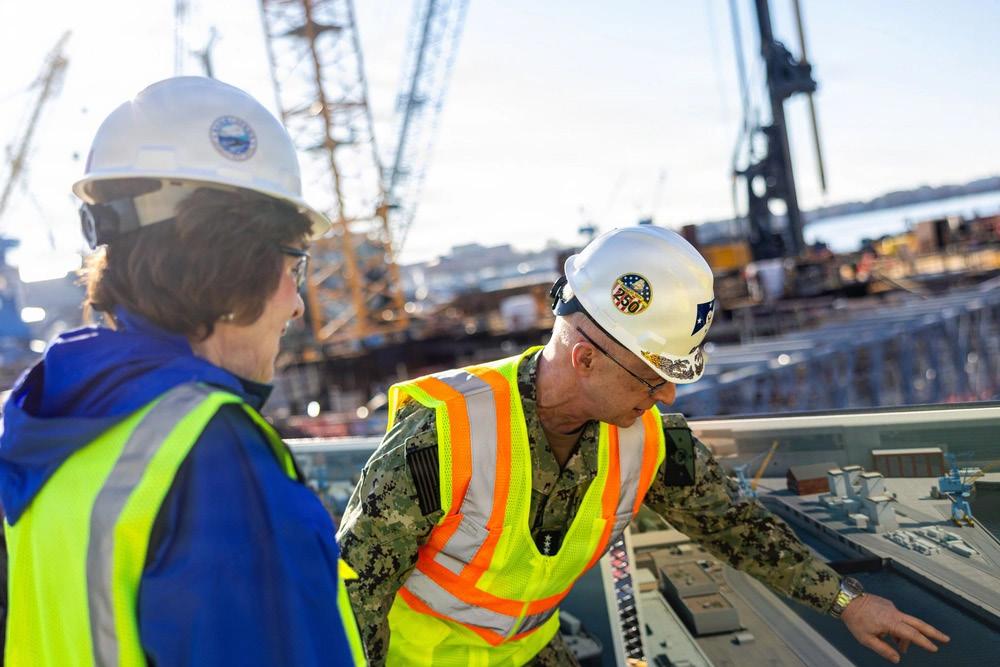
Maine — Chief of Naval Operations Adm. Daryl
visualization discussion on the P-381 and Dry Dock
in a Shipyard
modernization projects With Maine
Susan Collins at Portsmouth Naval Shipyard (PNSY), April 9, 2026. The Chief of Naval Operations is touring various bases and shipyards for fleet engagement to support the Department of War’s focus on readiness, lethality and warfighting. As America’s leader in attack submarine maintenance, repair and modernization, PNSY delivers the decisive edge required to master an era of evolving threats. It stands at the forefront of America’s commitment to peace through strength, delivering combat-ready submarines that are lethal, resilient and prepared to win.
his priorities,” said Kupyar. “By aligning our shore infrastructure — focusing on communication, security, and base operations — we are accelerating Portsmouth Naval Shipyard’s pace of modernizing and sustaining the nation’s submarine force, which will lead to improved lethality and combat effectiveness.” As America’s leader in attack submarine maintenance, repair, and modernization, Portsmouth Naval Shipyard delivers the decisive edge required to master an era of evolving threats. It stands at the forefront of America’s commitment to peace through strength, delivering combatready submarines that are lethal, resilient, and prepared to win. Through a focus on innovation, accountability, and fostering a culture of warfighting excellence, PNSY strengthens the maritime industrial base and invests in its highly skilled workforce. The work done at the shipyard is a direct contribution to national security. Submarines leave the shipyard more capable than ever before, ensuring the U.S. Navy remains the most dominant maritime force and that the nation’s warfighters are prepared for any mission, anywhere in the world.
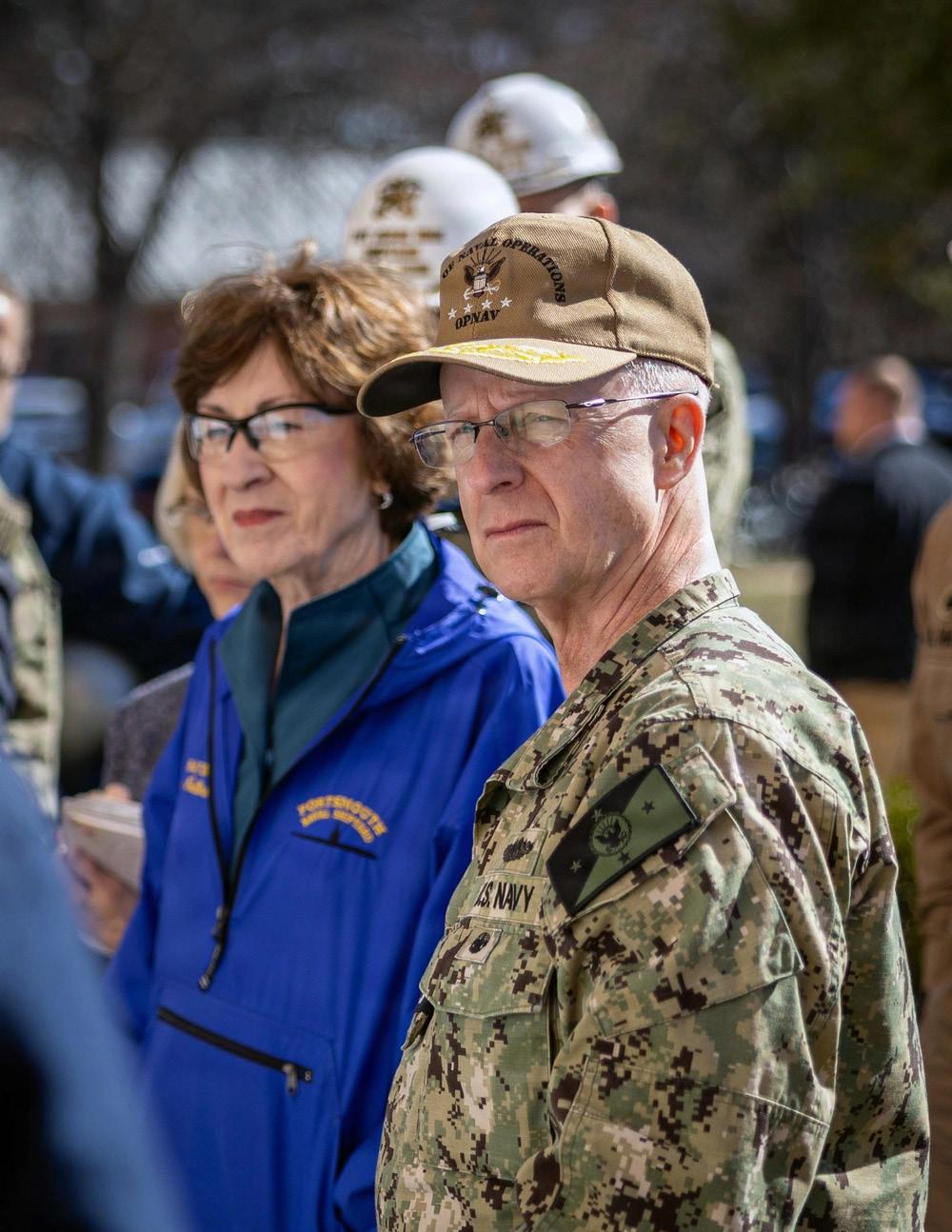
of evolving threats. It stands at the forefront of America’s commitment to peace through strength, delivering combatready submarines that are lethal, resilient and prepared to win. (U.S.
KITTERY,
Caudle participates
Infrastructure Optimization Program
#1
Senator
(U.S. NAVY
PHOTO BY BRANDEN BOURQUE)
NAVY PHOTO BY BRANDEN BOURQUE)
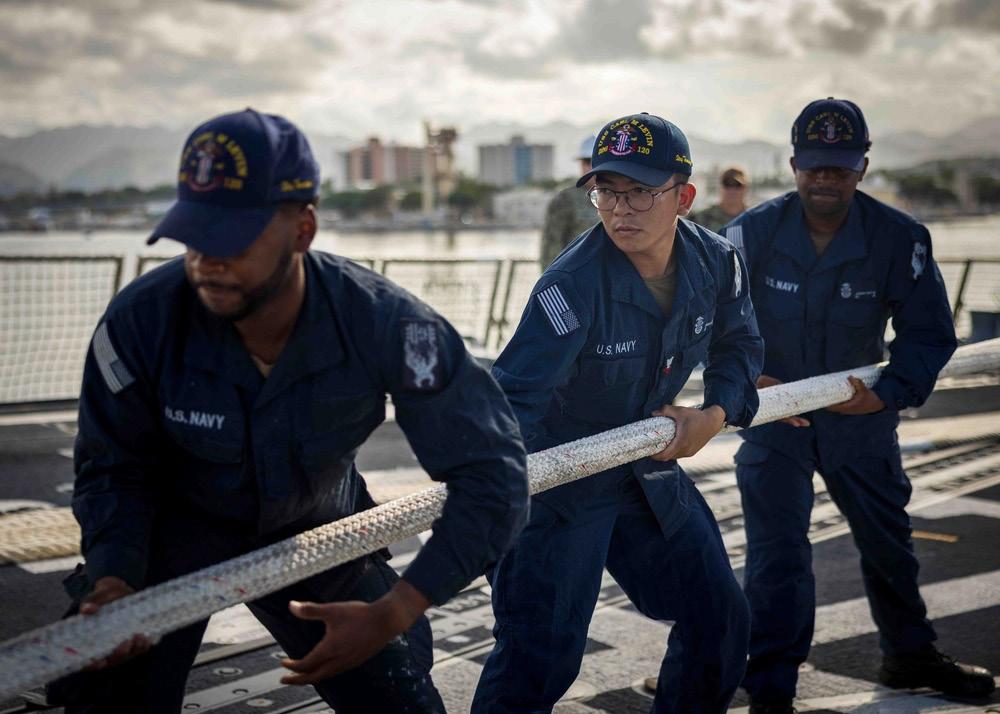
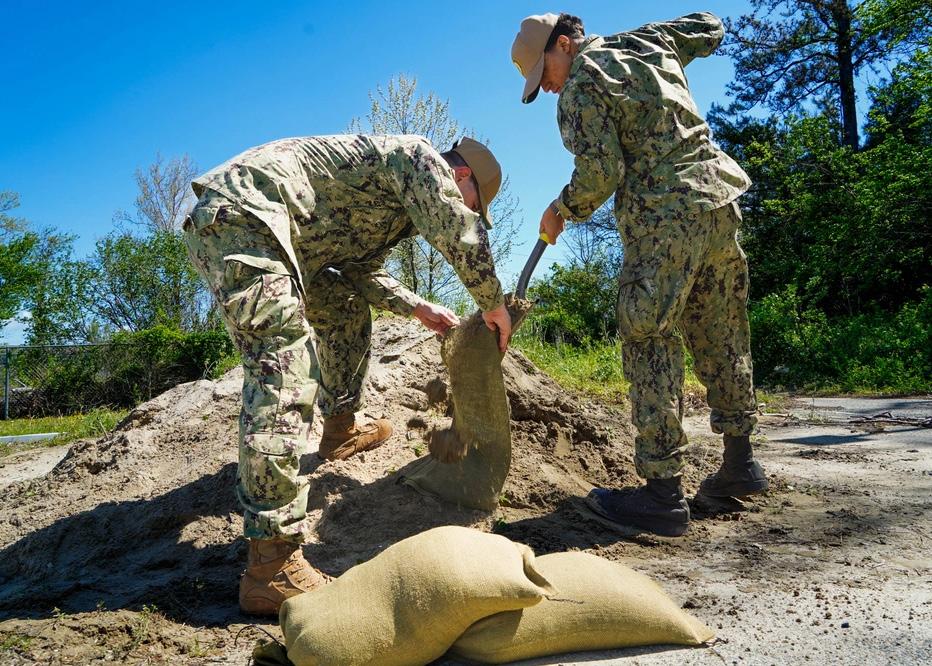
LEFT: Boatswain’s Mate 2nd Class Joshua Batican (center), assigned to the Arleigh Burke-class guided-missile destroyer USS Carl M. Levin (DDG 120), heaves additional foul-weather mooring lines during Hurricane Exercise (HURREX) 2025 on Joint Base Pearl Harbor-Hickam (JBPHH), April 2, 2025. HURREX allows Navy and Air Force activities at Navy Region Hawaii, JBPHH and Pacific Missile Range Facility to review, exercise and validate their response plans and operational capabilities as they pertain to the threat of hurricanes and effects of severe weather. Commander, Navy Region Hawaii is the regional coordinator for all shore-based naval personnel and shore activities in Hawaii and enables naval forces and fleet operations. (U.S. NAVY PHOTO BY MELVIN J. GONZALVO) RIGHT: Sailors assigned to naval Support Activity Hampton Roads make sandbags as part of hurricane preparedness exercise HURREX. U.S. Fleet Forces Command and Commander, Navy Installations Command, conduct this annual hurricane preparedness/disaster response and recovery exercise prior to the onset of hurricane season to prepare staffs and crews for potential impacts on infrastructure and fleet operations. (U.S. NAVY PHOTO/ NINOSHKA BASANTES, NSA HAMPTON ROADS PUBLIC AFFAIRS OFFICER)
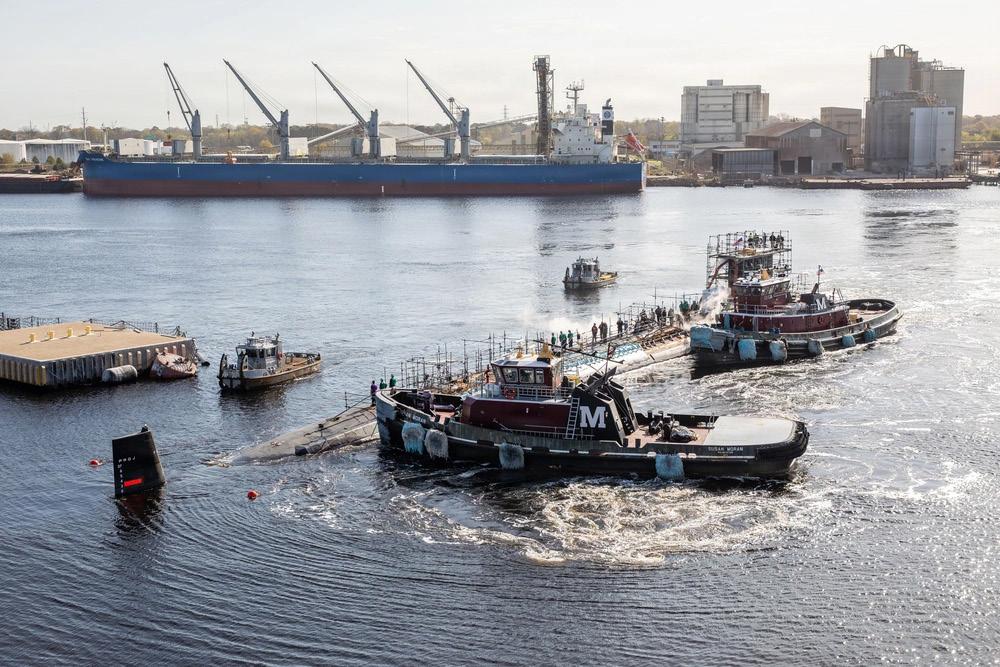
Norfolk Naval Shipyard undocks USS John Warner
By Michael D Brayshaw NORFOLK NAVAL SHIPYARD
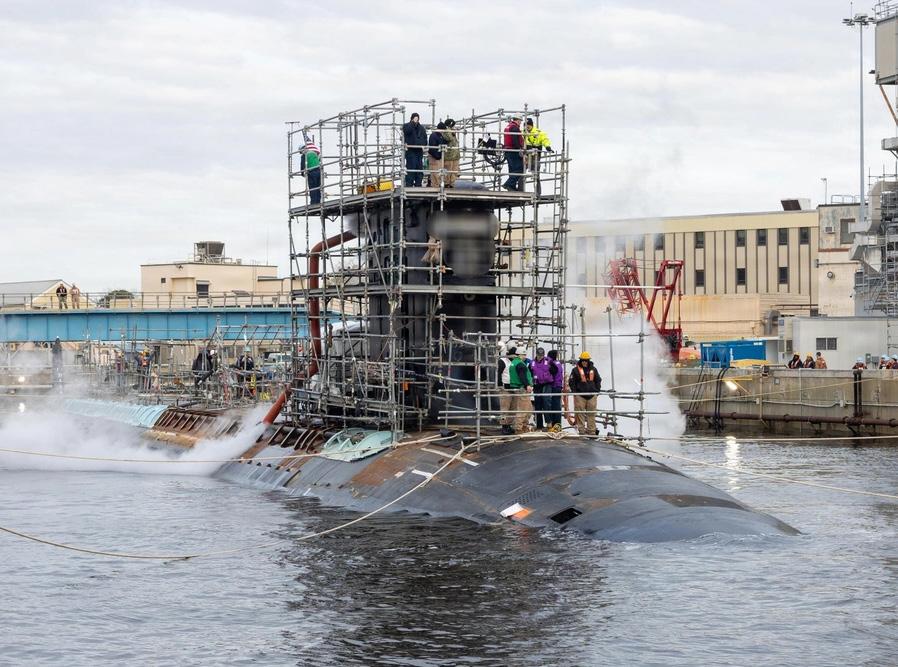
Norfolk Naval Shipyard (NNSY) successfully undocked USS John Warner (SSN 785) last month, meeting a major milestone in the Virginia-class submarine’s Extended Drydocking Selected Restricted Availability (EDSRA).
During an EDSRA, the submarine is drydocked to undergo hull, propulsion system, and modernization upgrades, allowing the submarine to remain fully operational for its planned service life. Virginia-class submarines are critical vessels in maintaining national security given their operational versatility and nuclear-powered fast attack capability.
John Warner has been a pivotal availability for the Navy as the first Virginia class Block III drydocking at any of the nation’s four public shipyards. Block III refers to the redesigned submarines procured during the third Virginia-class acquisition contract.
NNSY’s preparations for John Warner involved extensive teaming and knowledge sharing with Portsmouth Naval Shipyard and Pearl Harbor Naval Shipyard and Intermediate Maintenance Facility, having previously executed Virginia-class CNO availabilities.
“NNSY’s commitment to learn and reach out for knowledge from the other shipyards for critical work evolutions has been a major key to the success of the project,” said Charles Brock, NNSY Submarine Program Manager. “The Virginia-class shipyard community is a very close-knit group that leans in to help one another. Because this is the first Block III EDSRA for the corporation there were many opportunities where NNSY was able to share lessons learned with the other shipyards to help them as well. Additionally, the team’s drive to work all possible solutions and then execute the best one was critical.”
In a demonstration of the shipyard’s ability to adapt and overcome first-time challenges, John Warner undocked with the crew able to move back aboard, mast and periscope installation completed, and command and control system testing started, a trifecta feat not accomplished on a submarine availability at NNSY since 2001.
“The powerful collaboration between our crew and the shipyard delivered the most materially ready submarine I’ve undocked,” said Cmdr. Nicholas Tuuk, John Warner commanding officer. “This achievement allows us tonow fully focus on forging a crew of master submariners, ready to execute any mission when we return to the fleet.”
Undocking with more than 95 percent of the production work complete, remaining availability work will focus on testing and crew readiness to support critical operations and sea trials.
NNSY established a Submarine Maintenance Operations Center (SMOC) Detachment in 2025 to provide timely depot-maintenance submarine deliveries back to the fleet. The SMOC assists project teams including John Warner’s in resolving issues such as material and resource needs, work package modifications, and technical adjudication. By aligning resources with readiness priorities, the Navy is able to provide more available ships and submarines to defend US interests globally and support critical operations.
“Clearly identifying the project’s needs and expecting a reciprocal response and commitment has been one of the key elements to the success of John Warner,” said Brock. “It has kept the team and all support aligned to what was needed and when it was needed. Additionally, the team employed a process of setting aggressive goals with specific dates to steer the shipyard in the direction needed to complete these major key events.”
“It’s a great win for our shipyard and Navy taking such a huge step toward deliv-
ering a Virginia-class submarine back to the fleet and ready to meet the mission,” said Rear Adm. Kavon Hakimzadeh, shipyard commander. “I thank everyone for their efforts so far and we now rally around John Warner to urgently complete all remaining work as a committed team to return this critical asset supporting our nation’s warfighting readiness.”
Commissioned on Aug. 1, 2015, John Warner is the 12th Virginia-class attack submarine and the first ship bearing the name of Senator John Warner who served the Commonwealth of Virginia for three decades until his retirement in 2009. Warner also served as Chairman of the Senate Armed Services Committee from 1999 to 2001, and again from 2003 to 2007.
As one of the largest, most historic and multifaceted shipyards in the nation, Norfolk Naval Shipyard’s mission is to repair, modernize and inactivate Navy warships and training platforms to maximize readiness and availability for fleet tasking.
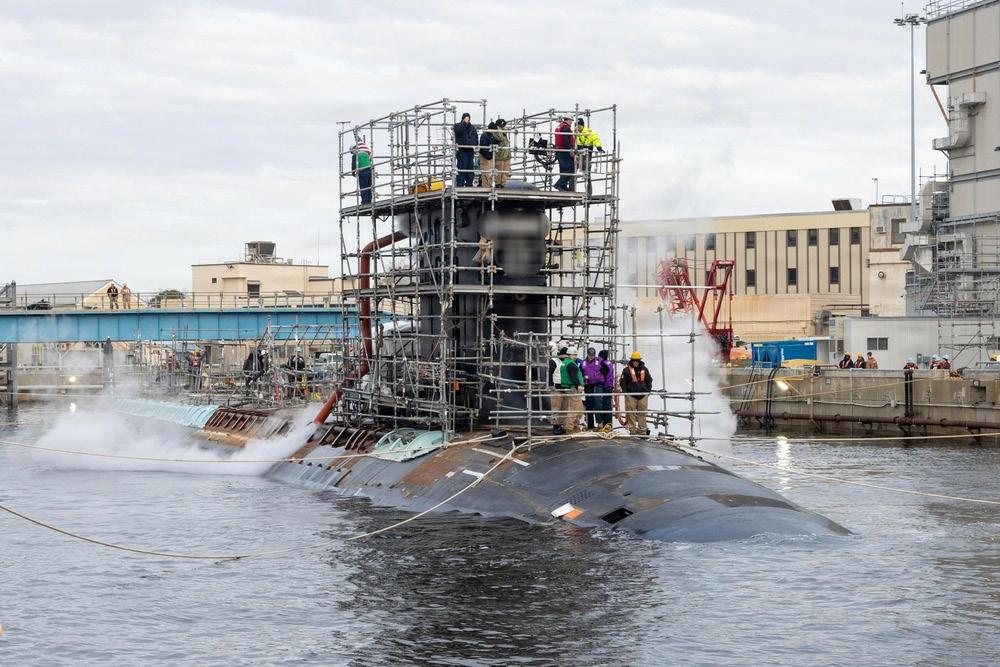
Norfolk Naval Shipyard (NNSY) successfully undocked USS John Warner (SSN 785) last month, meeting a major milestone in the Virginia-class submarine’s Extended Drydocking Selected Restricted Availability (EDSRA). (PHOTO BY SHELBY WEST, NORFOLK NAVAL SHIPYARD)























































































Forged to lead: Weapons Station Yorktown Chiefs celebrate the 133-year legacy
By Max Lonzanida NAVAL WEAPONS STATION YORKTOWN
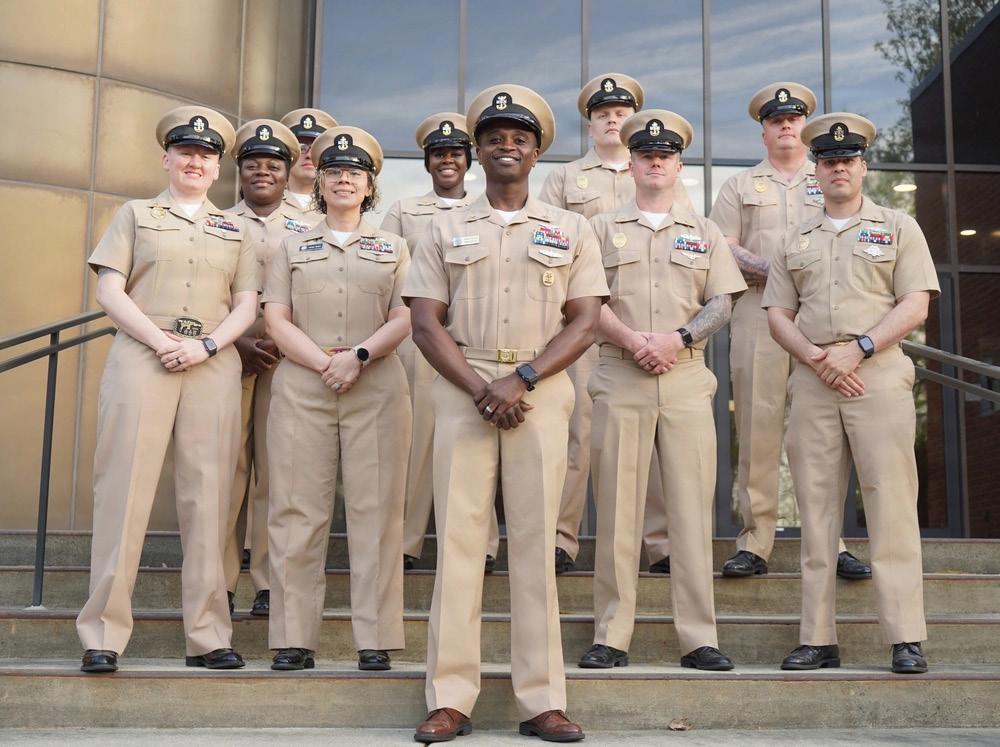
YORKTOWN, Va. – While the rest of the world was on the lookout for April Fools’ Day pranks, the Chief’s Mess onboard Naval Weapons Station Yorktown were all business on the morning of Wednesday, April 1st. On that crisp morning, Chiefs from across the installation gathered for morning colors to mark the 133rd birthday of the United States Navy Chief Petty Officer; a rank synonymous with expertise, leadership, and an unwavering commitment to the sailors in their charge. Since its official establishment on April 1, 1893, the rank of Chief Petty Officer was created to fill a crucial gap between Officers and enlisted Sailors alike. The Navy needed technical experts and seasoned leaders who could not only do the job but could also train and mentor junior Sailors. Enter the Chief. They quickly became the revered Backbone of the Fleet, the men and women who live at the deck plates, translating Officer’s strategy into real-world, decisive hands-on action. They are the keepers of tradition, the fountains of knowledge, and the leaders who ensure the job gets done right, every single time. This tradition of excellence was on full and vivid display as the sun climbed over Naval Weapons Station Yorktown last Wednesday, April 1st. The installation, a critical warf-
ighting platform on the Virginia peninsula and York County’s largest civilian employer joined a chorus of similar flag raisings at Navy installations throughout Hampton Roads and the nation.
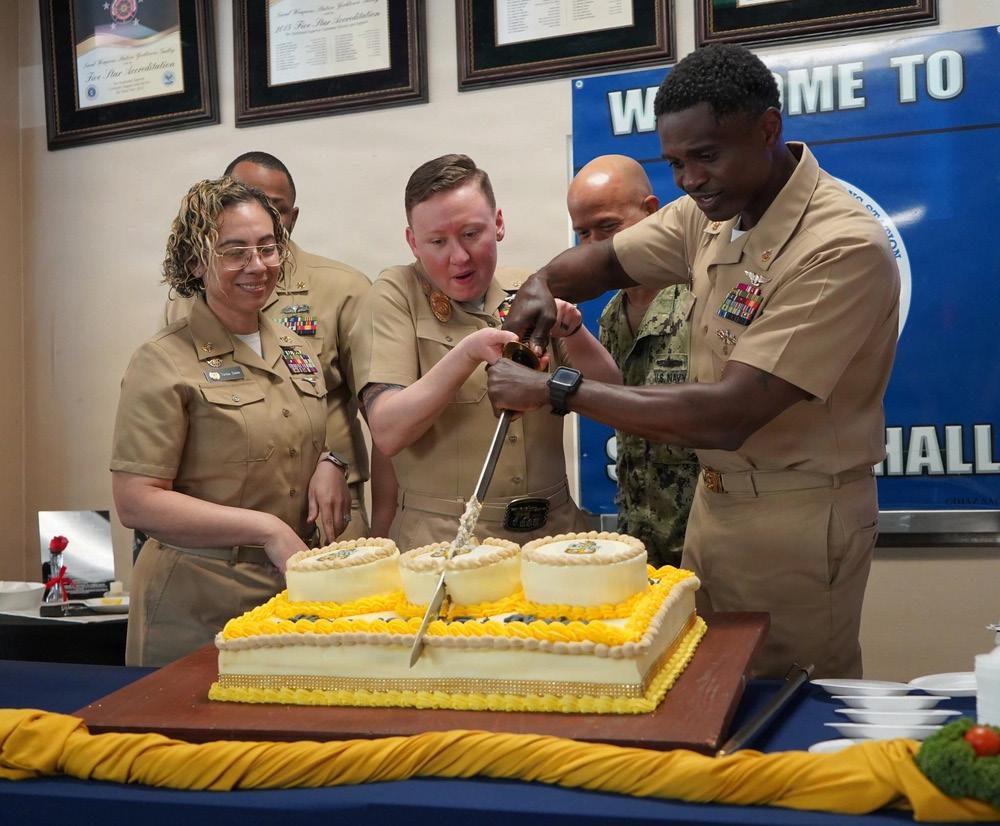
As the First Call to Colors echoed across the installation’s loudspeakers, the assembled Chiefs in-front of the headquarters building snapped to attention. As the first notes of the Francis Scott Key’s Star Spangled Banner filled the crisp morning air, a single, unified motion swept the assembled rank as the installation’s Command Master Chief Donavon Gray saluted as the flag was raised. The salute was smartly followed as each Chief rendered a crisp, unhesitating salute. For about a minute, time seemed to stand still as the National Anthem rang out. All eyes were fixed on the nation’s flag, raised proudly by Senior Chief Teresa Duson and Chief Hannah Jackson; assigned to the installation’s Scudder Hall Galley and Security Department respectively as it made its steady, deliberate ascent up the flagpole. This was a powerful symbol of freedom rising against the clear Virginia sky. The celebration also continued with a side of cake at lunchtime, when members of the installation’s Chief Mess both past and present gathered at the galley for a special cake cutting.
The brief and powerful moment was a
of the fouled anchor
By Jacquelynn Fisher NAVAL INFORMATION FORCES
Success is where hard work and opportunity meet. That motto has guided Capt. Robert ‘Brian’ Conner, commanding officer, Naval Computer and Telecommunications Area Master Station, Atlantic (NCTAMS LANT) throughout his career. That and the refrain, “No. The Navy needs you.”
It’s not a stretch to say Conner, as a young Sailor, had his sights set on being stationed at NCTAMS LANT. This was the goal at almost every turn in his career. But before that, as a high school student, he first aspired to attend college.
“I had ideas, plans, … and I would say a lot of untapped potential,” recalls Conner about his high school years in Birmingham, Ala. Conner applied to just one college and was accepted — Morehouse College. The only issue was tuition. A search for scholarships led him to the Navy Reserve Officers’ Training Corps (NROTC) scholarship, but it was competitive.
“I was advised by a Navy Recruiter that if I wanted to make myself look serious about wanting a Navy ROTC scholarship, I should join the Navy,” said Conner. “‘OK’, I thought. I can do that.”
In 1996, Conner enlisted under the Delayed
Entry Program to be an Electronics Technician (ET). “I was interested in anything in the communications field,” Conner said. “I’ve always had a real passion for it.”
After bootcamp Conner headed for ET ‘A’ school. “While I was in Tech Core my parents told me a college was offering me an NROTC scholarship,” said Conner. “I wanted to finish “A School”. I wanted to ride this Navy thing out and see where it would take me.”
Conner’s nearly 30-year career took him from shore to sea and back again. Starting with his first tour at Naval Computer and Telecommunications Area Master Station, Pacific (NCTAMS PAC), as a newly minted ET, Conner’s career path was as diverse as it was upwardly mobile. From USS Kitty Hawk (CV 63), then homeported in Japan, as an Information Systems Security Manager (ISSM) and Tactical Action Officer, to the Naval Post Graduate School in Monterey, Calif., as a student — because who would turn down an opportunity to be paid to earn a master’s degree, to Carrier Strike Group 12 in Norfolk, Va. … at each turn orders to NCTAMS LANT was the goal. And the Navy’s response would be, for some time, “No. The Navy needs you.” It was during his ET ‘A’ school that Conner
Yorktown, Va.
(April 1, 2026) Senior Chief Culinary Specialist Teresa Duson, Master at Arms
Chief Hanna Jackson and Command Master Chief Donavon Gray cut an ornately decorated cake at the installation’s Scudder Hall during a cake cutting to commemorate the 133rd CPO Birthday. (U.S. NAVY PHOTO BY MAX LONZANIDA/RELEASED)
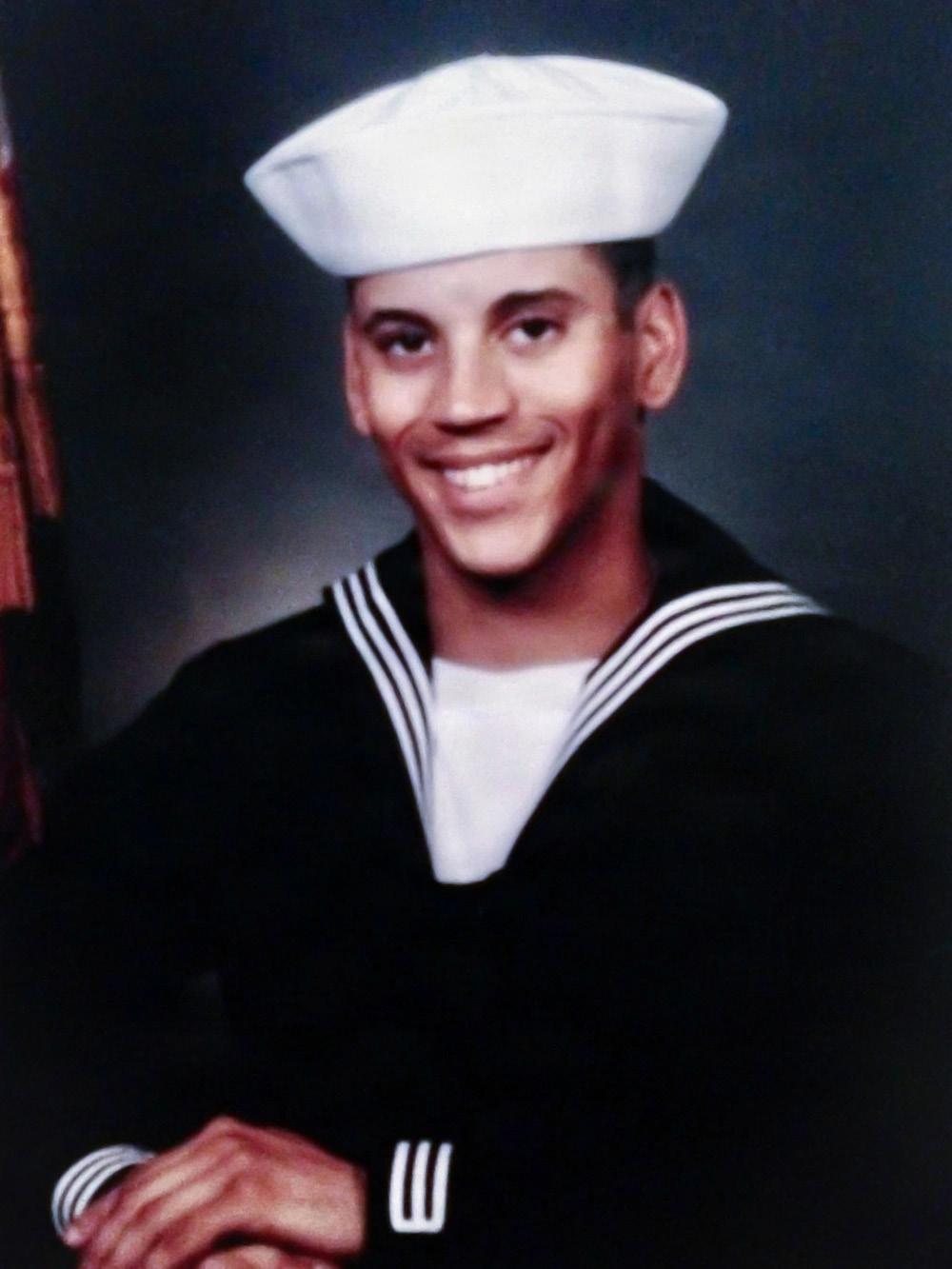
LEFT: Seaman Recruit Robert ‘Brian’ Conner attended bootcamp in 1996 at Recruit Training Command, Great Lakes, Ill., after a short stint in the Delayed Entry Program.
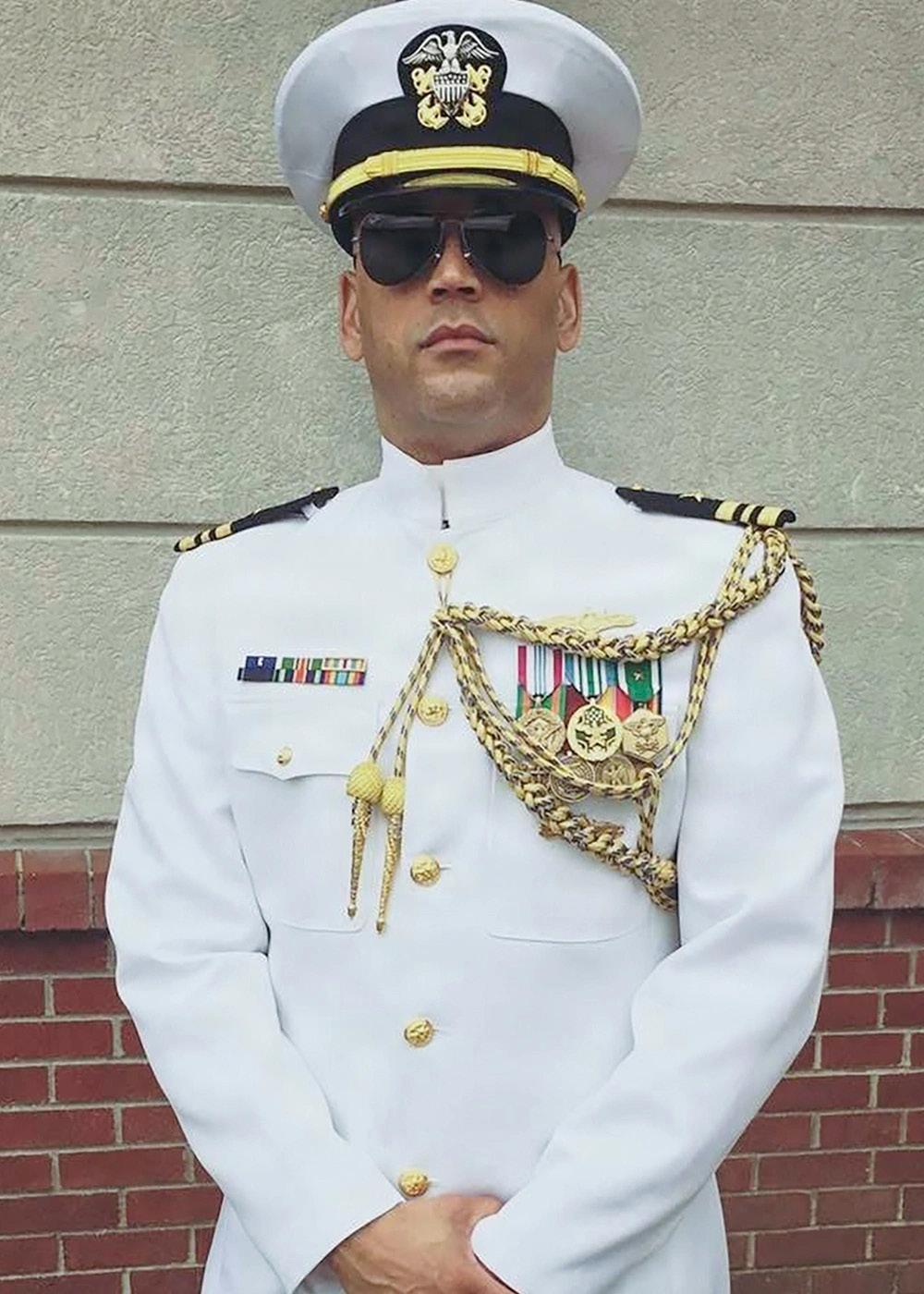
RIGHT: Lt. Cmdr. Robert ‘Brian’ Conner in full dress whites complete with aiguillette that indicates his position as Executive Assistant to then-Vice. Adm. Michael M. Gilday, U.S. Fleet Cyber Command / U.S. 10th Fleet, at an official event Charleston, S.C. (COURTESY PHOTOS
BY
CONNER / RELEASED)
Yorktown, Va. (April 1, 2026) Members of the Chief’s Mess onboard Naval Weapons Station Yorktown pose for a group photo in-front the installation’s headquarters building at the conclusion of morning colors. Morning colors was observed on Wednesday, April 1st by members of the installation’s Chief’s Mess at the installation’s headquarters building to commemorate the 133rd CPO Birthday. (U.S. NAVY PHOTO BY MAX LONZANIDA/RELEASED)
CHIEFS
testament to the core function that the Navy’s power is forged not just on the high seas, but also on the shores where our warfighters train and prepare for decisive action when called on. As promulgated by Naval Administrative Message (NAVADMIN) 065/25 released earlier this year, “Installations are warfighting plat-
forms... where victory starts.” The celebration also echoed the core tenets laid out by the C-NOte #5, released last month by Admiral Daryl Caudle, the 34th Chief of Naval Operations (CNO). The CNO’s message emphasizes that “Great ships, squadrons and commands are never accidents.” They are the direct result of the intrusive, deckplate leadership that has been the hallmark of the Chief Petty Officer for 133 years. The morning ceremony at was more than
just a history lesson; it was a renewal of vows.
As the American flag ascended the pole, the crisp salutes rendered by the line of Chiefs were a silent promise to uphold their legacy of confident, humble leadership. From the shipyards to the flight lines, and at the very gates of our installations, the Chiefs Mess remains the steadfast engine of the world’s most powerful Navy. So here’s to 133 years of the Fouled Anchor. Happy Birthday, Chiefs! The deck plates are calling.
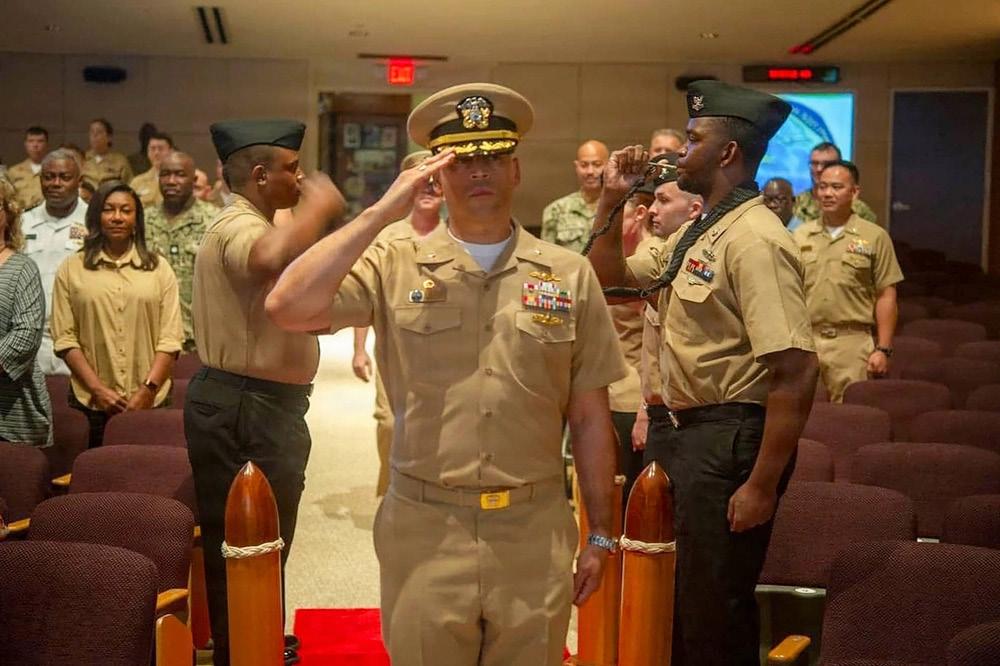
from Page B1
was encouraged to take the college SATs. “My bootcamp buddy, Jay Rodriquez, got me to go with him. We both scored well.” Rodriguez went on to the U.S. Naval Academy, but that path “was a bridge too far” for Conner. “I wanted to apply to the BOOST (Broadened Opportunity for Officer Selection and Training) program.”
His first BOOST attempt hit a snag when he failed the Radar portion of ET school. “I sailed through Comms. But because I failed Radar the Master Chief wouldn’t support my application,” he states. It wasn’t a definitive ‘no’ for Conner, but he knew what he needed to do. Focus on school and pass both sections to better position himself to earn command support for his application.
In the 90’s, instructions were printed and kept in Admin. There was no on-line surfing -information at your fingertips. When it came time for Conner to apply, the same Master Chief looked at his copy of the BOOST instruction and “informed me my scores weren’t high enough for the program. ‘OK’ I thought. So, I went to the Fleet.”
It was at his first duty station, NCTAMS PAC, that a fellow Sailor told Conner she had been accepted to BOOST. He was happy for her and asked if he could see her program package. He noticed his scores were higher than hers.
“That’s when it became my focus to learn my rate, get into that program, and earn a commission,” said Conner. “That was also when I learned to never accept ‘no’ from someone who isn’t authorized tell you ‘yes’.”
“I literally took the BOOST flyer off my DivO’s door, and told him, ‘This is what I want to do,’ ” Conner said. Encouragement from Lt. Mike Coleman, Satellite Communication Division Officer, NCTAMS PAC, was instrumental in Conner finally submitting his BOOST application. Coleman’s encouragement and that of his bootcamp buddy, Rodriguez.
“He (Rodriguez) was stationed in D.C. He’d call me in Hawaii — remember this is way before texting, and the conversation went like this. ‘What are you doing?’ ‘I’m sleeping. It’s Hawaii. It’s 3 a.m.’ ‘Get up and work on your BOOST package. While you’re sleeping someone else is working on theirs!’ That was always the push I needed to get me up and
motivated.
“That’s one thing about the Navy. You can make lifelong friends,” said Conner. “We’re still great friends to this day, and I always credit him for giving me the nudge I needed to achieve my goals.”
His BOOST application submitted and accepted, Conner was on his way to becoming a commissioned officer. In May 2004 Conner was commissioned, and in 2005 he was designated as a Surface Warfare Officer. Then in 2006 he laterally transferred to a then-relatively new designator, Information Professional (IP); communications was still his passion.
In hindsight, Conner was always focused on NCTAMS LANT. He made multiple attempts to get there from here. But each time he made the request, the Navy replied with the reoccurring response, “No. The Navy needs you.”
Staying true to his roots and his love for the communications field, as an IP officer Conner took orders in 2004 to USS Blue Ridge (LCC 19), the flagship for the U.S. 7th Fleet that provides critical Command, Control, Communications, Computers, and Intelligence (C4I) in support of missions and operations in the Indo-Pacific region.
The goal - to get into the Communications Department. “No. The Navy needs you.” What happenedConner was assigned as the Repair Division Officer and Assistant Damage Control Assistant.
He had verbal orders to NCTAMS LANT only once before. But “No. The Navy needs you.” He was re-directed to the USS Independence (LCS 2), to serve as the Combat Systems Officer. In this role, he was responsible for the C4I, Electronic Warfare (EW), and shipboard weapons systems. He was still doing what he loved but doing it at sea!
“Working towards a goal is not going to be comfortable. Sometimes you have to roll up your sleeves and get your hands dirty,” Conner said. Working as an Engineer I gained invaluable work experience that only broadened my technical knowledge. I grew where I was planted.” The NCTAMS LANT dream was still alive. Certainly, as a Lieutenant
Commander who served for 21 months as Deputy Executive Assistant to then-Vice. Adm. Michael M. Gilday, U.S. Fleet Cyber Command / U.S. 10th Fleet, reaching his NCTAMS LANT goal was inevitable. “No. The Navy needs you.”
The Universe eventually paved the road to lead then-Capt. (sel) Conner to be the Senior IP community detailer where he literally wrote his orders to NCTAMS LANT. Finally, Conner’s question, “Is NCTAMS LANT an option?” was responded to in the affirmative — Yes. Approved by Vice Adm. Michael Vernazza, the Navy’s IBoss commander, Naval Information Forces, Conner was heading to NCTAMS LANT. But not to be just part of the team. He would report as the Commanding Officer (CO).
An avid sports fan, Conner likens his position as CO to the viewpoint of Nick Saban and Tony Dungy, former University of Alabama NFL coach to both Tampa Bay Buccaneers and Indianapolis Colts. Defining the culture, focusing on fundamentals, and developing people sets the conditions for that organization to succeed. As NCTAMS LANT CO, this is Conner’s charge. “I love the scope of this command’s mission and its impact — executing worldwide operations and still have regional responsibilities,” said Conner. “I want to pick up from where past CO’s left off and take this command and the entire staff to greater heights.”
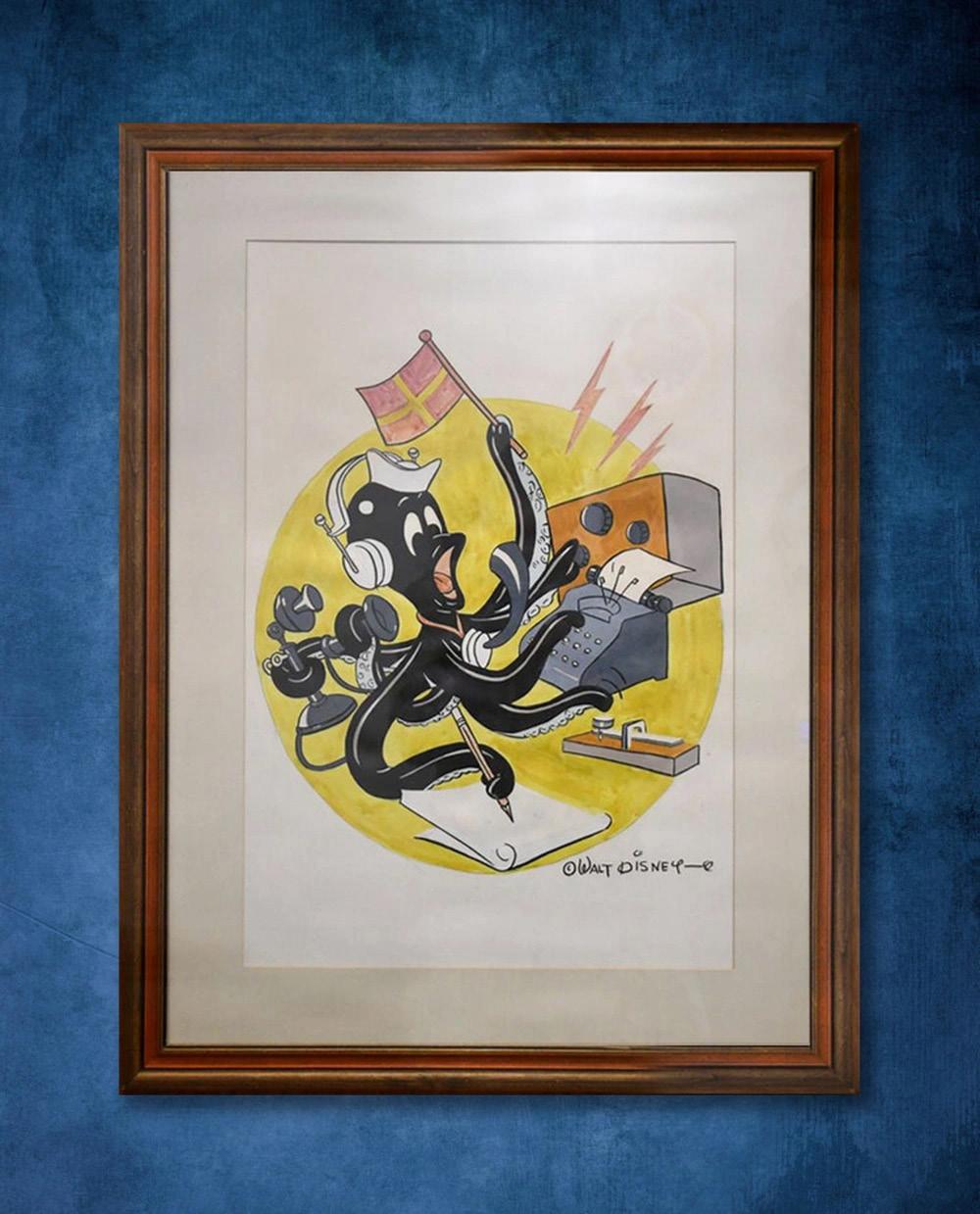
NCTAMS LANT has an interesting history. Walt Disney himself designed the Oscar character that has been featured on the command logo since 1947 when the command, known then as Naval Communications Station Norfolk, was established. And the leadership legacy is just as impressive. The list of former COs to the nearly seven-decades-year-old command includes retired Vice Adm. Kelly Aeschbach, and the late Rear Adm. Danielle Barrett.
“You have choices. Keep pushing or stop. But listen to the Universe,” advises Conner. “It wasn’t my time,” he said, referring to his many attempts to get to NCTAMS LANT. “But now my time is here. My faith drove me to this.”
NCTAMS LANT’s mission is to operate and secure critical communications systems that support our nation’s global operational priorities. Follow them on Facebook: https://www. facebook.com/NCTAMSAtlantic Follow us on LinkedIn: https://www.linkedin.com/ company/nctamslant Visit us: https://www. navifor.usff.navy.mil/nctamslant/
Mid-Atlantic Fleet and Family Support Centers (FFSC) programs and services are designed to help you make the most of your military experience, and they’re all available to you at no cost.


Cmdr. Robert ‘Brian’ Conner assumed command of Naval Computer and Telecommunications Station Hampton Roads in 2021. He served as Commanding Officer from October until June 2023. (Courtesy photo provided by Capt. CONNER / RELEASED)
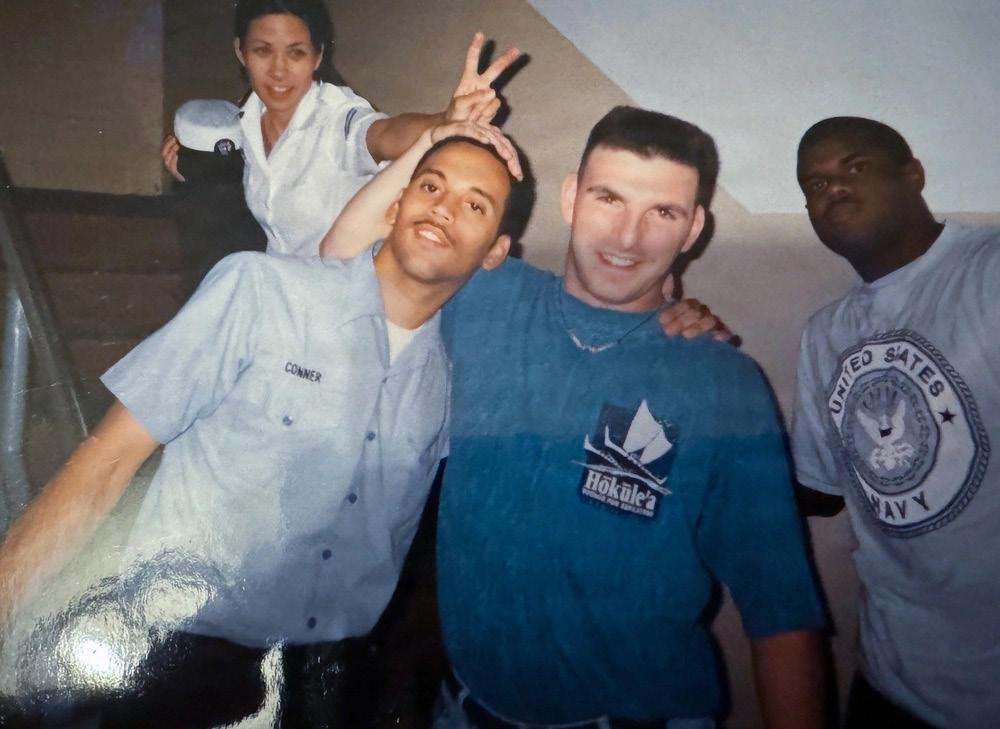
Seaman Robert ‘Brian’ Conner (far left front row) in a candid shot with classmates as another classmate photobombs Conner with ‘bunny ears’ taken during ET ‘A’ School in 1997.
(Courtesy photo provided by Capt. CONNER / RELEASED)
Oscar has been featured in NCTAMS LANT logo since 1947 when Walt Disney designed the character for Naval Computer and Telecommunications Area Master Station Atlantic (then known as Naval Communications Station Norfolk) was established. (COURTESY PHOTO / GRAPHIC PROVIDED BY NCTAMS LANT / RELEASED)
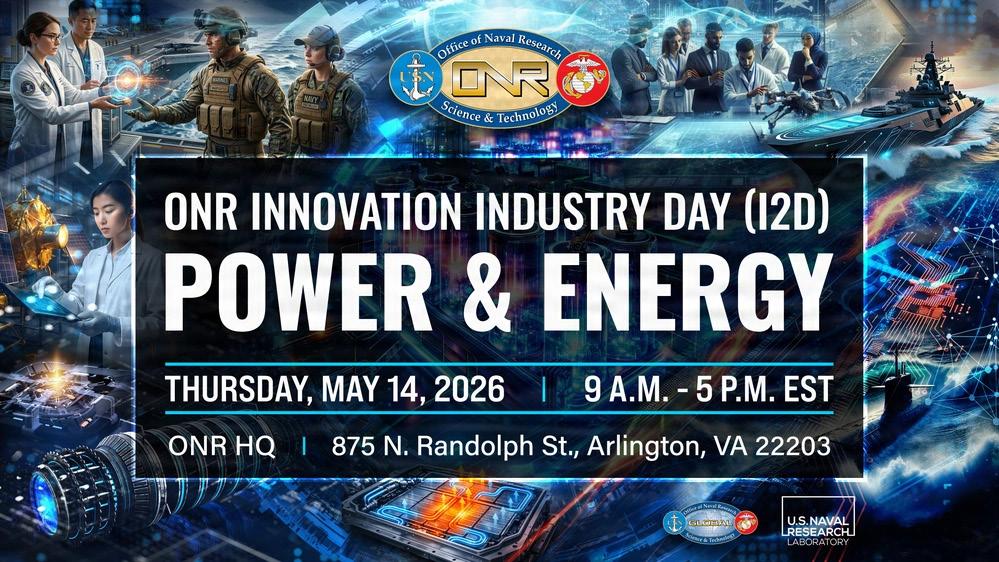
Power moves: ONR to host Innovation Industry Day event on May 14
By Warren Duffie OFFICE OF NAVAL RESEARCH
To build new partnerships and develop accelerated warfighter capabilities, the Office of Naval Research (ONR) will host an Innovation Industry Day (I2D) — focusing on the command’s Power & Energy portfolio — on Thursday, May 14, at its headquarters in Arlington, Virginia.
This event — which will be held from 9 a.m. to 5 p.m. — kicks off a series of Innovation Industry Days that will spotlight science and technology (S&T) topics throughout 2026.
The I2D is open to technical representatives from industry seeking to do business with ONR.
More information can be found at https:// www.onlineregistrationcenter.com/I2DPowerandEnergy. Space will be limited.
“Innovation Industry Days present an excellent opportunity to collaborate with industry and discuss the Navy and Marine Corps’ most pressing research needs and challenges,” said Chief of Naval Research Dr. Rachel Riley. “This sharing of knowledge will empower us to continue to shape the future, overcome hurdles and deliver dominant warf-
ighting capabilities to the fleet and force.”
At the May 14 event, the ONR Power & Energy Focus Area Lead will speak about S&T challenges projected over the next 15 years. ONR seeks to engage non-traditional, commercial and innovative partners interested in addressing the Department of the Navy’s future power and energy needs.
Discussions will center on key research areas, including energy storage; power generation; thermal management; and power distribution, control and resilience.
The primary goal of the I2D is to solicit direct feedback from industry. Insights
gathered will directly inform future S&T opportunities, with the aim of encouraging subsequent white paper submissions for fiscal year 2027 consideration.
Pre-registration is required for all attendees. On-site registrations will not be permitted. Registration closes on Friday, May 1. To register or learn more details about the Innovation Industry Day, visit https://www. onlineregistrationcenter.com/I2DPowerandEnergy.
First contact: Meet the Dive Medical Recovery Team of Artemis II
By Lt. Erin Wiley
EXPLOSIVE ORDNANCE DISPOSAL
GROUP ONE
SAN DIEGO — The first face the Artemis II crew will see upon their return to Earth will be the face of a U.S. Navy Sailor.
Lt. Cmdr. Jesse Wang, Senior Chief Hospital Corpsman Laddy Aldridge, Chief Hospital Corpsman Vlad Link, and Hospital Corpsman 1st Class Steve Kapala make up the dive medical team who will be the first to open the Orion capsule upon its return to Earth, make initial medical assessments of the Artemis II crew, and assist them out of the capsule safely and efficiently.
They will provide initial one-on-one assistance to Christina Koch, Jeremy Hansen, Reid Wiseman, and Victor Glover respectively. Training for this mission has been a yearslong process between the four team members as the first-contact medical providers inside the capsule.
Often working in expeditionary warfare communities, Navy dive medical personnel are certified divers and undergo specialized training, making them experts in decompression illnesses and other undersea medical considerations. Their mission is to care for and ensure dive-qualified service members are safe to conduct diving operations.
Following Orion’s reentry into Earth’s atmosphere and splashdown in the Pacific Ocean, the medical team will enter the capsule to conduct initial exams for the crew, provide triage care as necessary, and assist the astronauts in egress onto the inflatable raft set up outside by Navy divers. The first-contact medical providers will then prepare the crew to be airlifted by Helicopter Sea Combat Squadron (HSC) 23 back to amphibious transport dock USS John P. Murtha (LPD 26) for follow on evaluations.
Wang, assigned to Explosive Ordnance Disposal Group 1, serves as the lead for the four-man team. From Laguna Beach, Calif., he is a board-certified emergency medicine doctor by trade, having completed residency training at Lincoln Hospital in Bronx, New York. He joined the Navy in 2021 and was designated as an undersea medical officer in 2024.
“As a proud member of the undersea medical community, I am particularly humbled to play a part in this mission,” Wang said. “It is the honor of a lifetime to stand here today, ready to provide the absolute best care to the Artemis II crew.”
Aldridge, from Cushing, Okla., will be the first member to make contact with the
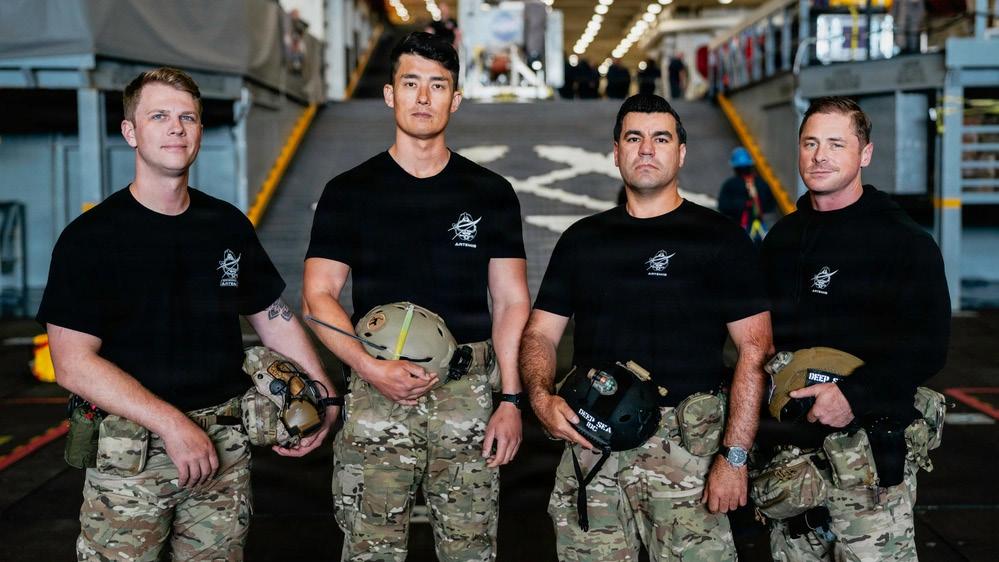
crew upon their return to Earth. Assigned to Explosive Ordnance Disposal Expeditionary Support Unit 1, he will open the capsule, enter the space, and begin medical assessments.
“Coming from three generations of military service in my family, I’m honored to serve as the senior dive independent duty corpsman for this mission,” Aldridge said. “This effort is the culmination of both our training to bring world class care to the Artemis II crew and countless dedicated years of Navy Diving and Navy medicine.”
Dive independent duty corpsmen like Aldridge, Link, and Kapala are specifically trained in dive medicine.
Link, assigned to Explosive Ordnance Disposal Mobile Unit (EODMU) 1, is the third member of the team and hails from Chelsea, Mass. He has 18 years of experience in dive medicine, but he shares that this mission is already a highlight of his career.
“I have been exposed to the Navy since I
was a young teenager, and I’m proud to represent both my family and hometown,” Link said. “Contributing our efforts to NASA and the Artemis II mission is something we take great pride in as part of that legacy.”
The fourth member, Kapala, assigned to EODMU-11, hails from Alpena, Mich., and has been practicing dive medicine since 2018. He notes the significance of the historical mission as a unified effort, both for himself and everyone involved.
“I grew up reading sci-fi novels and watching space movies, never thinking that I would play a part in a recovery mission like this,” Kapala said. “It is surreal to play a part in safely recovering the astronauts from the capsule to get them home safe to their families, an effort that really makes you realize this team is bigger than just the four of us.”
With immense levels of experience and specialized training under their belts, this team of expeditionary medical providers is
prepared to give the Artemis II crew a warm welcome back to Earth following their 10-day lunar mission.
“Our fellow divers, the Sailors on the ship, the helicopter squadron, our partners at NASA, and everyone supporting this mission are ready to bring the Artemis II crew home,” Wang said. “This team is undoubtedly making history.”
U.S. Navy Divers assigned to EODGRU-1 are underway on USS John P. Murtha in the U.S. 3rd Fleet area of operations supporting NASA’s Artemis II mission, retrieving the crew and spacecraft following their return to Earth and splashdown in the Pacific Ocean. NASA’s Artemis II mission sent four astronauts on a flight around the moon in the Orion space capsule, marking the first time humans journeyed to deep space in over 50 years.
(GRAPHIC BY THE OFFICE OF NAVAL RESEARCH)
NAVSUP FLC Norfolk launches new training and assist program to bolster fleet readiness
By Thomas Kreidel NAVSUP FLC NORFOLK
NAVSUP Fleet Logistics Center (FLC)
Norfolk has launched an innovative new program, the Supply Training and Assurance Review (STAR), aimed at enhancing naval ship readiness.
With the motto, “Training the Fleet to Sustain the Fight,” the STAR team provides expert-led training, preparation and functional assurance for afloat logistics departments.
According to Lt. Cmdr. Brandon McNutt, the program is designed to ensure the proficiency and sustained integrity of critical supply functions.
“We conduct targeted engagements before deployment, after deployment and while in port to ensure the proficiency and sustained integrity of critical supply functions, including pay, personnel records, stores, galley operations, laundry, mail and vital parts support,” McNutt said.
“This program puts them all together and creates a spotlight on one ship for all the assist teams to provide support at once,” he added.
According to Operations Department Director Tony Ting, NAVSUP FLC Norfolk will partner with ships’ type commanders to identify participating units.
“Subject matter experts provide training, preparation and functional reviews of afloat logistics and supply departments to enhance readiness and proficiency,” Ting said.
The USS James E. Williams (DDG 95) is the first ship to participate in the STAR program, which will be implemented in three phases: a pre-deployment “readiness push,” in port “tune ups” and a post-deployment “lessons learned” review to ensure continuous improvement across the fleet.
NAVSUP FLC Norfolk is the largest of eight globally positioned fleet logistics centers that provide the full range of solutions for logistics, business and support services to our mission partners. The more than 1300 Sailors, civilians and contractors that make up NAVSUP FLC Norfolk support operations at more than 30 sites across three regions and 12 states, plus Washington D.C.
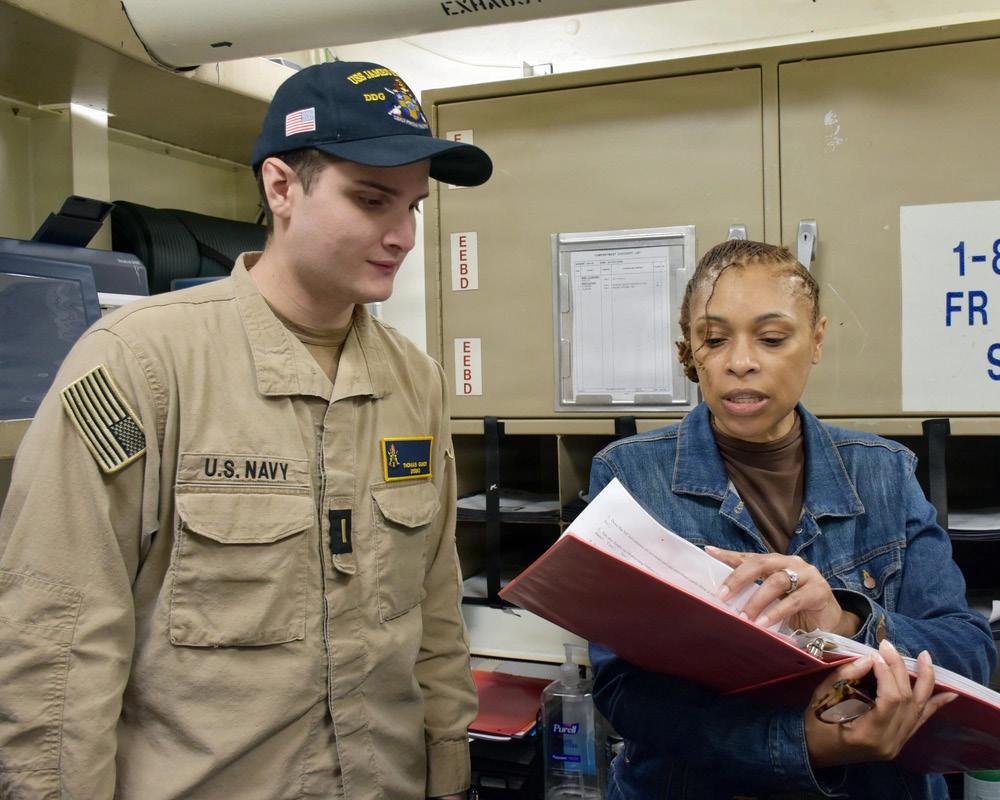
Sparks fly during Norfolk Naval Shipyard’s Annual Battle of the Welders competition
By Kristi R Britt NORFOLK NAVAL SHIPYARD
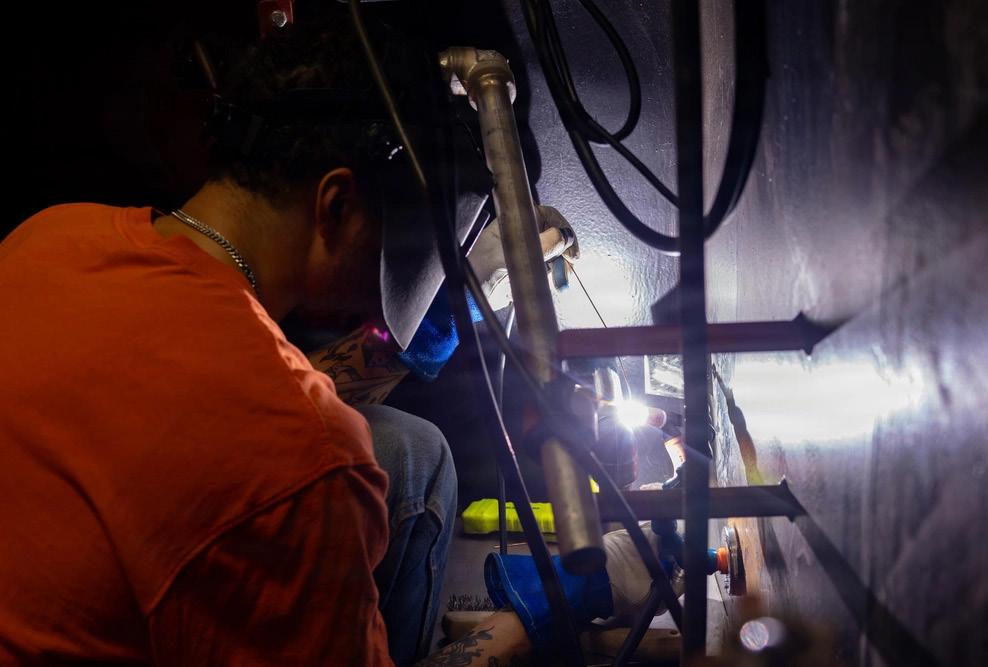
For three years running, welders within Norfolk Naval Shipyard (NNSY) have stepped up to the plate to showcase their skills in a unique competition originally developed by Code 926 Submarine Director Tracy Skinner. This year nearly 60 contestants stepped up to the plate, burning rods in a range of three categories to determine who’s the best of the best when it comes to welding at America’s Shipyard.
“The Battle of the Welders is an annual competition to showcase the true artistry of our craft — the best of the best artisans in each process,” said Code 926 Welding Superintendent Jeff Griffin. “We are showcasing the men and women behind the shield that do the work every day. It’s a healthy competition that makes for good morale within the team.”
The competition is split into three distinct categories: gas tungsten arc welding (GTAW), gas metal arc welding (GMAW), and shielded metal arc welding (SMAW). The contestants, ranging from apprentices to work leaders, choose their weld of choice between the three and work the weld to the specifications provided. Each weld then goes through a judging process until winners are decided for each category.
“It’s more than just a competition, it’s about the camaraderie,” said Skinner. “Battle of the Welders means a lot to me because it brings that spirit back to the forefront. It’s about welders coming together, enjoying what we do, learning from each other, and respecting the art of the trade. Welding is more than just work. It’s a craft and an art form. Every weld tells a story about the person behind the hood, it’s their patience, their skill, and their pride in the job.”
She continued, “Each of our welders here at NNSY who take on the challenge turn up the heat in the booths, showing off who they are with the work they do. This effort creates a space where people can showcase their talent, laugh together, talk a little trash in good fun, and remind ourselves why we fell in love with this trade in the first place. It builds morale, it builds respect for the craft, and it brings the shop together in a positive way. At the end of the day, it’s about celebrating welders, the experience, the skill, and the brotherhood and sisterhood that comes with this line of work.”
After a week-long battle of sparks flying in the welding booths along the waterfront, three welders were officially crowned the winners for 2026: Chance Wainwright for the GTAW category, Brian Rose for the GMAW category, and Marques Rider for the SMAW category. In addition to the medals they were presented in the shop, the three have been given a unique opportunity to take the challenge further than ever before.
“For a few months, we’ve been in talks with the other shipyards and NNSY threw down the gauntlet, ready to take this competition beyond our gates,” said Griffin. “For the first time ever, our Battle of the Welders competition will open up to the four public shipyards — each of us bringing our best to our Structural Community of Practice later this year.”
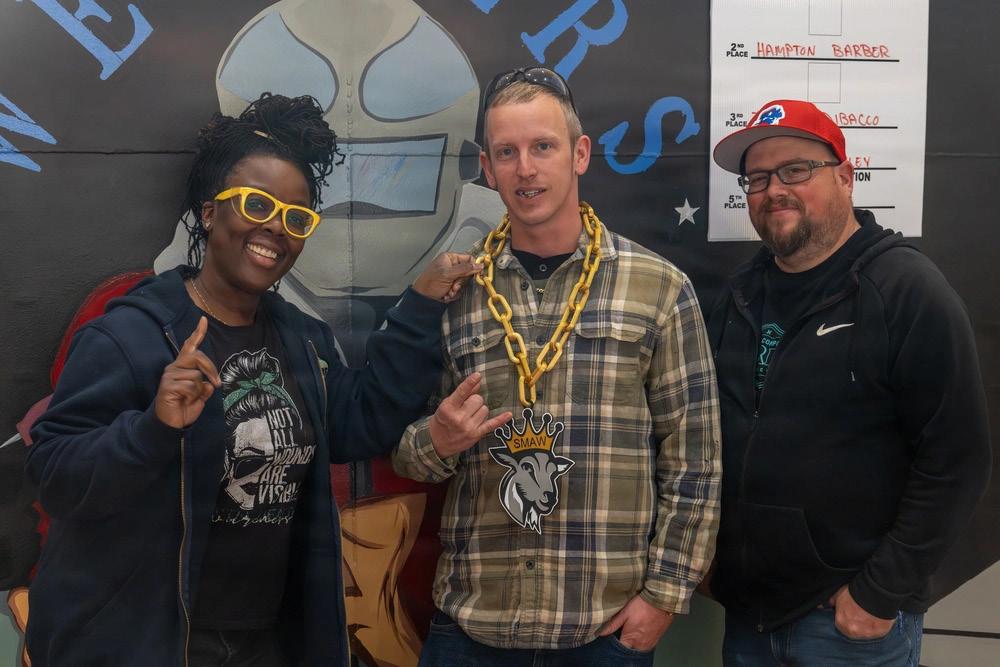
“It’s an honor to be able to represent our shipyard and our code,” said Rider. “Many of us would agree — we’re not in this to brag. We truly just want to showcase what we can do and represent our team the best way possible. We love what we do!”
my directors - the talent, quality, and overall performance of the code,” he said. “I want to say thank you to my team for all that you do. We’ll be coming for the belt later this year when we compete with all the shipyards — the champs are ready to set the score!” Nearly 50 NNSY welders took to the welding booths in the shop as part of the Battle of the Welders Competition, each completing a weld from three different categories: gas tungsten arc welding (GTAW), gas metal arc welding (GMAW), and shielded metal arc welding (SMAW). After a week-long competition, the winners were decided and received medals for their accomplishments. In addition, they will be representing America’s Shipyard in a future Battle of the Welders: Shipyard Edition between the four public shipyards. (PHOTO BY DANIEL DEANGELIS, NORFOLK NAVAL SHIPYARD)
Griffin says that he couldn’t be happier with his code and is impressed with everyone’s efforts daily — whether it be in their annual Battle of the Welders competition or serving the Nation’s fleet one weld at a time. “From our first-year apprentices to
NAVSUP Fleet Logistics Center (FLC) Norfolk has launched an innovative new program, the Supply Training and Assurance Review (STAR), aimed at enhancing naval ship readiness. (PHOTO BY THOMAS KREIDEL, NAVSUP FLC NORFOLK)


WE WILL NEVER FORGET: THRESHER MEMORIAL SERVICE
By Alana Demo PORTSMOUTH NAVAL SHIPYARD
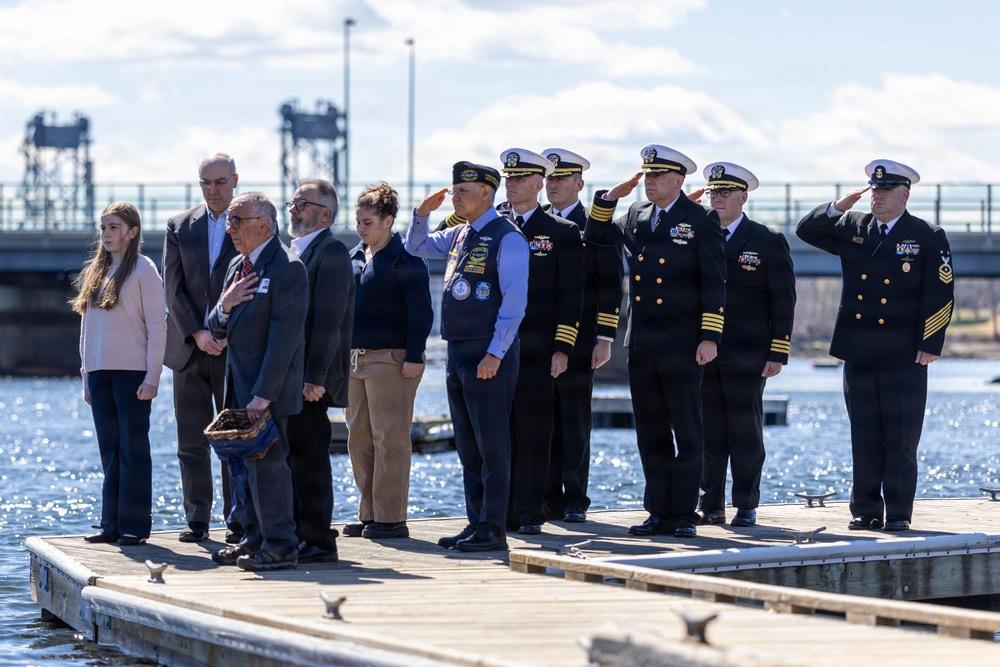
Thresher Base, United States Submarine Veterans, Inc (USSVI), in partnership with Portsmouth Naval Shipyard, hosted the 63rd Thresher Memorial Service at Robert W. Traip Academy, Kittery, Maine, April 11. Shipyard Commander, Capt. Jesse Nice provided introductory remarks. “Today is about more than remembrance,” said Nice. “It is about acknowledging the bravery, sacrifice, and unwavering commitment of the officers, crewmen, and civilians we lost. Their honor and loyalty represent the very best of our nation.”
Capt. Jason Deichler, commodore, Submarine Squadron TWO was the keynote speaker. Addressing the crowd of Thresher families, friends, and ceremony guests,
Deichler expressed profound sentiments on the legacy of Thresher and what it means to the PNSY workforce and surrounding community. “We gather today not just to remember—but to understand. And to carry forward,” said Deichler. “This is our legacy as submariners. We approach our duty with dignity, courage and fearlessness.”
Representing the Thresher families was Neal Collier, son of Lt. Merrill F. Collier who was among those who perished on Thresher. Collier, an enlisted submarine veteran and retired Portsmouth Naval Shipyard electrical engineer gave a heartfelt portrayal of his father’s history in the Navy in his family remarks. “He was a leader,” said Collier. “[He was] president of his high school, naval academy prep school drill team, class president of the naval academy brigade commander —he was a leader.”
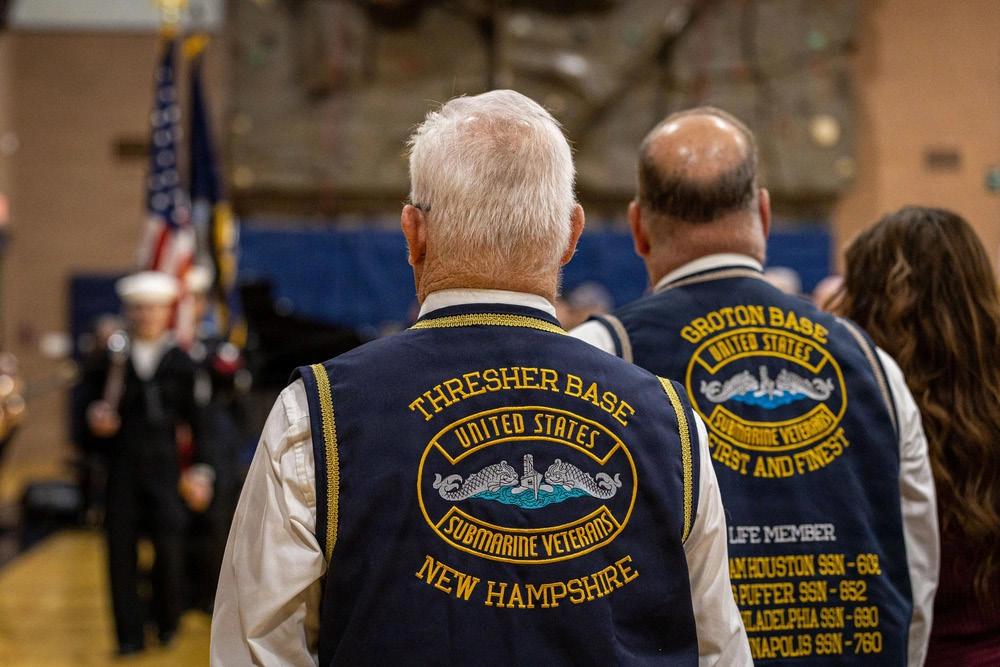
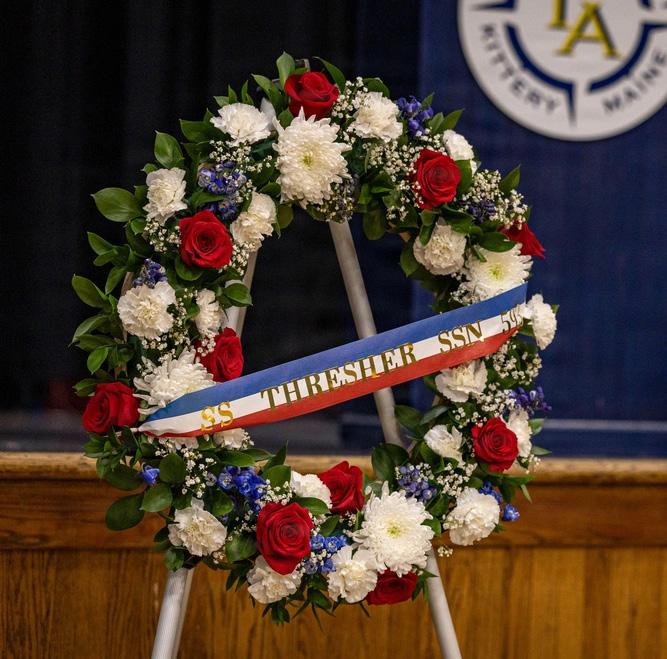
On April 10, 1963, Thresher, a nuclear-powered attack submarine, built at PNSY and commissioned in 1961, was lost approximately 100 miles east of Cape Cod while conducting sea trials. Onboard were 16 officers, 96 enlisted men, and 17 civilian technicians.
The aftermath of the Thresher loss led the Navy to implement extensive changes in design, procedure, operations, and processes. The Thresher would become synonymous with a new approach to submarine safety through the creation of the Submarine Safety Program, known as SUBSAFE.
The SUBSAFE program and the era of safety that followed is due to the dedication and expertise of those involved that the program has successfully kept the Nation’s submarine force safe from a similar event
for more than 60 years. And though the first-hand accounts of the Thresher loss are dwindling after six decades, it is today’s submarine community and the descendants of those lost that are keeping their memory alive.
The service concluded with the family of Robert E. Charron, an electrical engineer from Portsmouth Naval Shipyard who was aboard Thresher, casting a wreath along the water’s edge.
The SUBSAFE Program will continue to be an integral part of the submarine community to guard against complacency and rigidly uphold the highest standards of design, operation, and training lest we be reminded by the power of the sea and the loss of irreplaceable loved ones.
USS Thresher (SSN 593) - We will never forget.
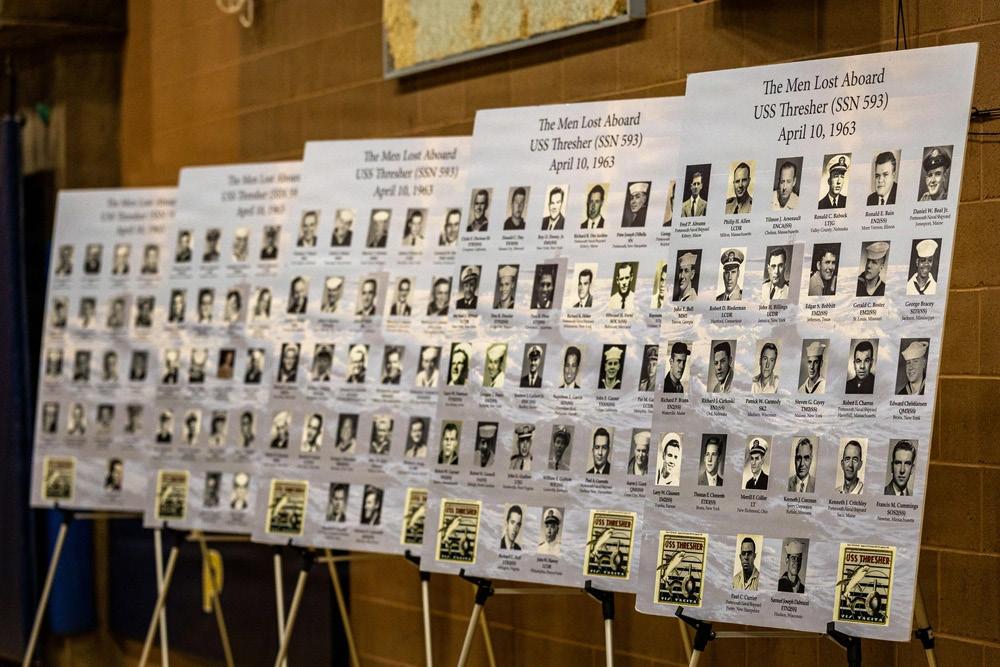
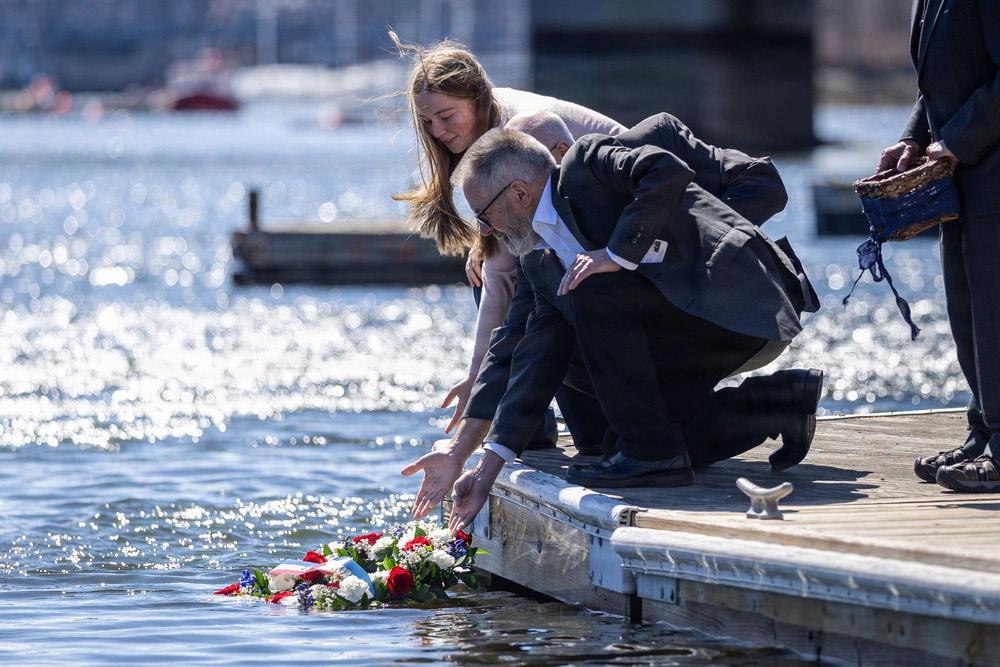
KITTERY, Maine, (April 11, 2026) - The Thresher Base United States Submarine Veterans,
KITTERY, Maine, (April 11, 2026) - The Thresher Base United States Submarine Veterans, Inc. hosted
63rd USS Thresher Memorial Service at R. W. Traip Academy, Kittery, Maine, April
BRANDEN BOURQUE)
NAS Patuxent River completes $3.9 million hot pit refurbishment project
By Chief Petty Officer Patrick Gordon NAVAL AIR STATION PATUXENT RIVER
Naval Air Station Patuxent River officially marked the completion of a multi-year Sustainment, Restoration, and Modernization (SRM) project for its “hot pit” refueling stations with a ribbon-cutting ceremony on March 17.The $3.9 million investment, which began following a ground-breaking in April 2021, significantly enhances the air station’s ability to support rapid-turnaround flight operations and ensure full compliance with NAVAIR safety standards.
“In the world of naval aviation, every second counts; hot pit refueling allows fixed and rotary-wing aircraft to refuel while their engines are still running,” saidTony Ramirez, NAS Patuxent River Installation Fuels Officer.
“By eliminating the need for a full shutdown and a slow transition to a hangar, the process keeps aircraft mission-ready and drastically reduces turnaround times.
Ramirez explained that while hot refueling is inherently more complex, the time saved makes it the ideal way to refuel. Eliminating the engine shutdown and restart cycle reduces turnaround time from over an hour to less than 15 minutes.
“It keeps our pilots in the air and on schedule, rather than waiting for a fuel truck,” he added.
The upgrade was a necessary upgrade given the technological advancements in naval aviation over the past forty years, much of which was developed at NAS Patuxent River. The existing facility relied on 1980sera tactical equipment and lacked modern filtration and automated control systems.
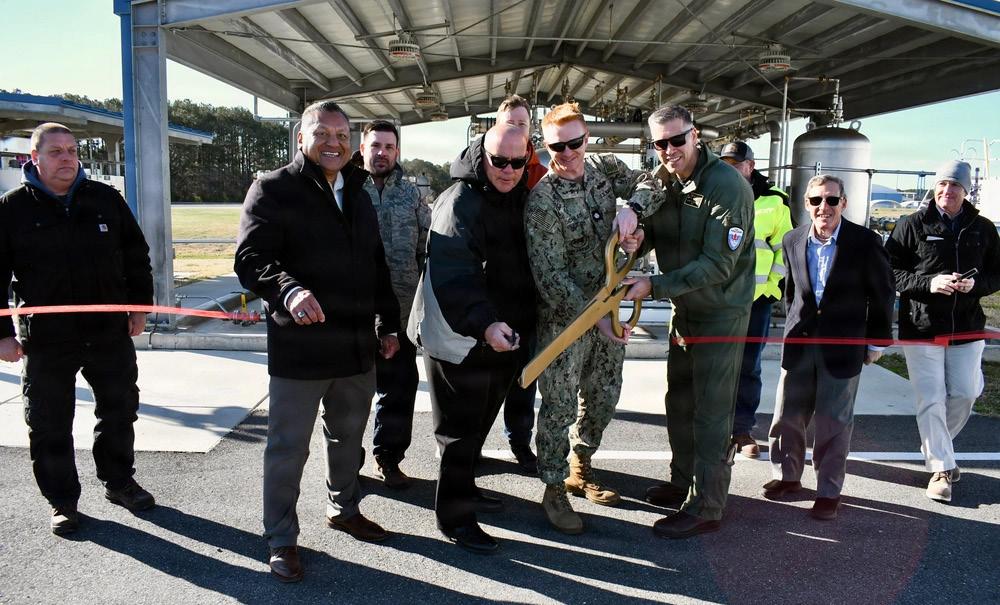
The refurbishment overhauled the piping supports and overall infrastructure, which had begun to show signs of degradation.
The ribbon cutting celebrated five
Innovation for CVN 80 Rudder Work
By Telly B. Myles SUPERVISOR OF SHIPBUILDING NEWPORT NEWS
NEWPORT NEWS, Va. — The construction of a Ford-class aircraft carrier is a monumental task, and the recent work on the rudders for the future USS Enterprise (CVN 80) has become a powerful example of how the Navy’s enterprise-wide collaboration network, Carrier Team One (CT1), drives success. During the complex machining of the CVN 80 rudders, a unique manufacturing opportunity was identified by the teams at HII-Newport News Shipbuilding (NNS) and Collins Machine Works. To optimize the process, they sought highly specialized tooling for this exact application.
This is where the power of the CT1 network came into full display.
Chuck Longacre of HII-NNS, recognizing the potential for knowledge-sharing, leveraged the CT1 Co-Yard, Shafting, Rudders, and Propellers Group. Through this connection, the team learned that Puget Sound Naval Shipyard (PSNS) had recent, successful experience using this specific equipment on several CVN hulls and possessed the only one readily available. At PSNS, the tool had already proven to be highly effective on complex and time-sensitive operations.
Devin Johnson of PSNS quickly stepped up, offering not just the specialized equipment but also the invaluable subject matter expertise of his team to assist NNS. This cross-country partnership is projected to significantly enhance the schedule performance for the rudder construction, marking a tremendous gain for the CVN 80 program.
The collaboration was seamless, thanks
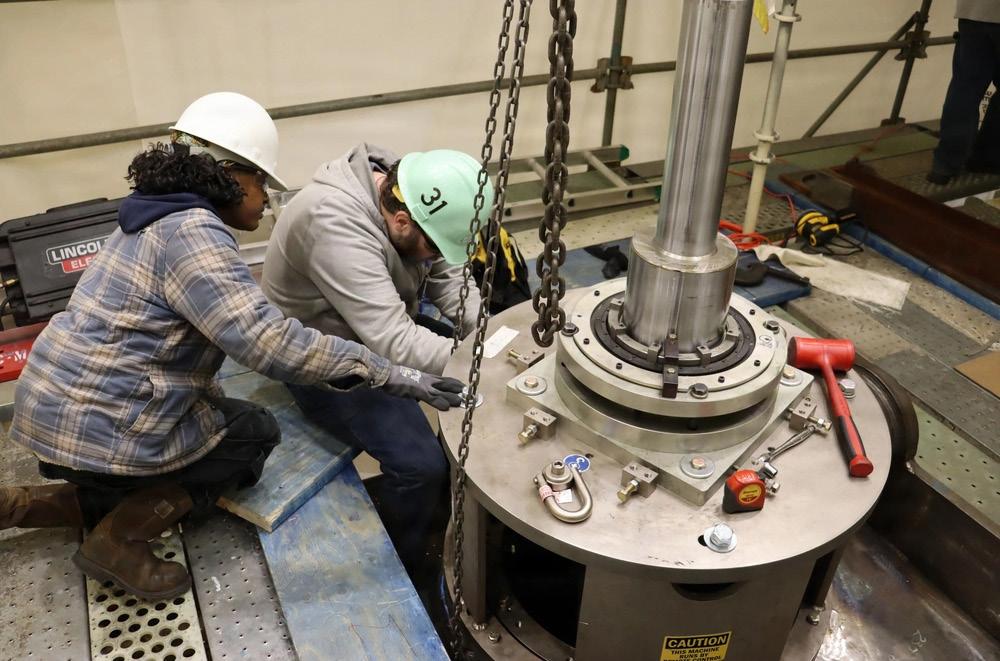
to the efforts of multiple key players. Shawn Schmoll of SUPSHIP Newport News facilitated the partnership by clearing administrative and business hurdles. Nick Valot of PEO Carriers provided continuous program office support, coordinating the effort and ensuring the teams on site had everything they needed to succeed.
The result was a textbook case of teamwork: the PSNS team traveled to NNS, where
they trained the Collins Machine Works and NNS teams on the setup and use of the specialized equipment.
This effort marks a significant milestone.
While CT1 has supported shipyard performance for over 30 years, this is the first time the community has come together to provide direct teaming and integration support for a Ford-class new construction aircraft carrier.
In the true spirit of CT1, the knowledge
sharing will continue. Once the CVN 80 rudder work is complete, the visiting PSNS personnel will tour Collins Machine Works, further strengthening the network and ensuring lessons learned are shared across the enterprise. This proactive collaboration demonstrates how the Navy shipbuilding community is working smarter and more cohesively to deliver world-class ships to the Fleet.
MARMC team completes accelerated repairs to ready ships for deployment
By Oscar Pope
NORFOLK, Va. — Mid-Atlantic Regional Maintenance Center (MARMC) completed an accelerated, multi-ship maintenance effort in March to ensure two guided-missile destroyers were able to begin operations in support of their scheduled deployments.
The push compressed normally sequential work that would span over two years, into overlapping phases in under three months, requiring MARMC teams, contractors and ship’s force to execute dozens of major repairs simultaneously aboard USS Gonzalez (DDG 66) and USS Ross (DDG 71). Throughout the repair period, MARMC’s Production Department (Code 900) demonstrated their responsiveness and agility that enabled the strike group to meet its operational timeline, completing 66 intermediate-level jobs aboard Gonzalez in just nine days, and 120 jobs aboard Ross in a little over three weeks.
“This was a coordinated, all-hands effort to deliver two fully combatready destroyers back to the fleet on a compressed schedule,” said Capt. Megan Thomas, MARMC production department head. “The teams moved with urgency, and I was impressed with the way the team responded. They worked around the clock to deliver warships ready to enter the fight.”
MARMC’s production department is home to nearly 800 Sailors who work alongside a staff of civilian employees to perform intermediate level repairs across the waterfront. This collaboration with the technical experts creates a training pipeline for the Sailors that directly impacts mission.
MARMC, a field activity under Program Acquisition Executive Industrial Operations (PAE IO), provides surface ship maintenance, management and oversight of private sector maintenance and fleet technical assistance to ships in the Mid-Atlantic region of the United States.
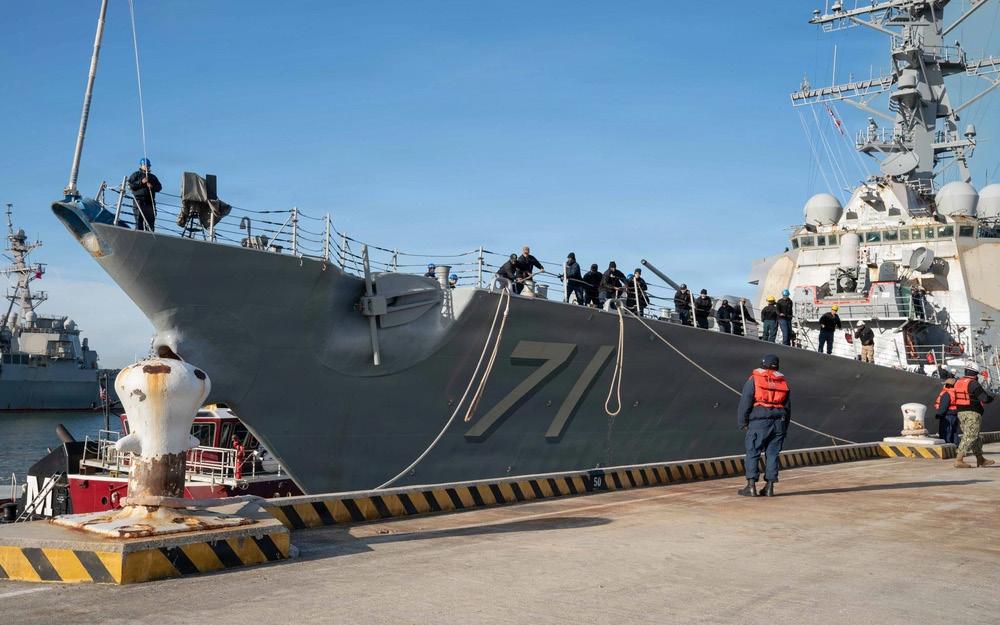
live aircraft to ensure the mission remains on track.
PATUXENT RIVER, Maryland (March 17, 2026) - NAS Patuxent River leadership cuts the ribbon on its refurbished hot pit refueling station
March 17. The multi-year $3.9 Sustainment, Restoration, and Modernization project significantly enhances the air station’s ability
CHIEF PETTY OFFICER
2026) Arleigh
NEWPORT NEWS, Va. (April 8, 2026) – Specialists operate a specialized boring bar during the complex machining of a rudder for the future USS Enterprise (CVN 80) at Newport News Shipbuilding. This work highlights a collaborative effort across the Navy’s shipbuilding enterprise, including Puget Sound Naval Shipyard and Collins Machine Works, to share unique tools and expertise. The teamwork, facilitated by the Carrier Team One network, is the first of its kind for a new construction Ford-class aircraft carrier. (U.S. NAVY PHOTO BY
TELLY B. MYLES)


Norfolk NATO Festival – the longest continuously running Festival in Hampton Roads – returns this week, through April 18
Norfolk NATO Festival is the longest continuously running Festival in the Hampton Roads region, and the only one of its kind in the United States which honors the NATO Alliance and its member nations.
FESTIVAL HISTORY
In 1951, the Women’s Club of Norfolk and a number of Norfolk’s garden clubs embraced an idea espoused by Fred Heutte, the city’s Superintendent of Parks and Forestry, to promote the city’s floral beauty through an annual Festival. Named the Norfolk Crape Myrtle Festival, it took place in Stone Park, located at the north end of The Hague, in the heat of the August sun. However, after the 1952 Festival, city business leaders from the Norfolk Chamber of Commerce, the 21st Street Business Area Association, and the Retail Merchants Association revised the Festival’s theme and season, choosing a springtime Azalea Festival to highlight the beauty of the one-hundred acre Norfolk Azalea Gardens (now called Norfolk Botanical Gardens). The Festival was operated and financed as a Committee of the Chamber of Commerce, in cooperation with the City of Norfolk, from 1953 to 1998.
In 1953, NATO (North Atlantic Treaty Organization) established its first and only Command in North America, Supreme Allied Command, Atlantic, in Norfolk, Virginia. Aligning the city’s Azalea Festival with the newly formed NATO command helped it to stand out from the multitude of other azalea festivals in nearly every state south of Mason-Dixon line. One year after NATO’s arrival, Norfolk city leaders renamed this event the International Azalea Festival, which served the dual purposes of a salute to the allied forces and celebrating the beauty of the city’s gardens.
EVENTS
NORFOLK NATO FESTIVAL FLAG RAISING
Thursday, April 16, 2026 | 5-6 PM | Scope Plaza

Celebrate the bond between the city of Norfolk and NATO at this colorful display of NATO Member Nation flags that includes representation from all NATO Nations and performances by the U.S. Fleet Forces Band. This event is
free and open to the public. In case of inclement weather, the Flag Raising will be moved into Scope Arena.
The NATO Flag Raising Ceremony is presented by NATO — Allied Command Transformation and the Norfolk NATO Festival, in partnership with the Virginia International Tattoo.
73RD ANNUAL PARADE OF NATIONS
Saturday, April 18, 2026 | 12-1:30 PM | Downtown Norfolk
The only parade in the U.S. to honor NATO features over 100 parade units including U.S. and international bands, military units, community groups and floats representing ever NATO Member Nation!
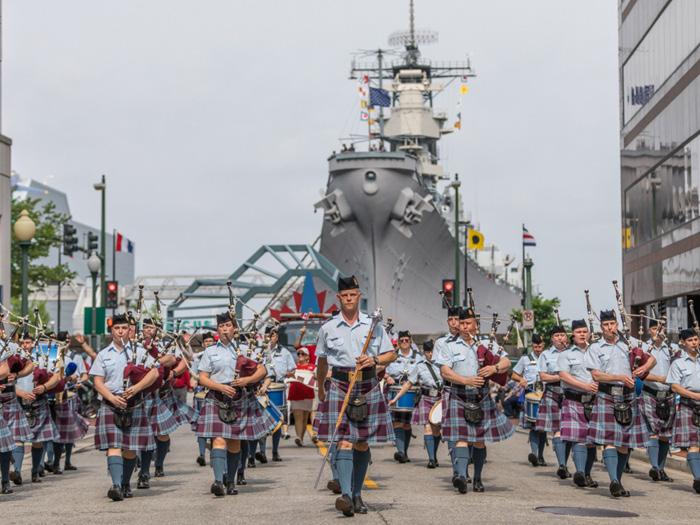
The parade is free and open to the public; however, reserved seating is available for guests who would like a guaranteed viewing spot. Reserved seats are folding chairs that are numerically assigned in the order they are purchased. Seating is arranged in a single row along both sides of Granby Street between Brooke Avenue and College Place. Volunteers will be onsite to assist and check you into your assigned seat(s) upon arrival. Suggested parking is available at MacArthur Center. To purchase reserved seats for $10 each, visit https://vafest.org/norfolk-nato-festival/norfolk-nato-festival-events/73rd-annual-parade-of-nations/
Note: Clear bags are strongly encouraged. Bag checks will be conducted at random.
NORFOLK NATO FESTIVAL INTERNATIONAL VILLAGE
Saturday, April 18, 2026 | 1:30-4 PM | Town Point Park
Join in a celebration and appreciation of our local NATO Headquarters. Interact with NATO Representatives and

explore international heritage with cultural performances, international art, cuisine, and craft beers. Come celebrate with the whole family in a European Street fair atmosphere in Downtown Norfolk.
Check back in for our digital NATO Explorer Passport online below and visit each country to travel ‘Around the NATO World!’ Meet representatives from each of the NATO Member Nations from Norfolk’s Allied Command Transformation and Joint Forces Command Norfolk. Music, Cultural dancers and performers will entertain guests throughout the event on the NATO Market Stages! Note: Clear bags are strongly encouraged. Bag checks will be conducted at random.
TAKE TRANSIT!
Let Hampton Roads Transit get you to the show without the worry of traffic and parking. The Tide light rail stops at Monticello Station, just a short walk to the Scope Arena and Scope Plaza. Park for free at three HRT park-and-ride lots at Newtown Road Station, Military Highway Station and Ballentine/Broad Creek Station. Then hop on board for just $2 each way. Kids ride free with a paying adult. Plan your trip for hassle-free travel to the Virginia International Tattoo online at GoHRT.com!
FOR MORE INFORMATION visit https://vafest.org/norfolk-nato-festival
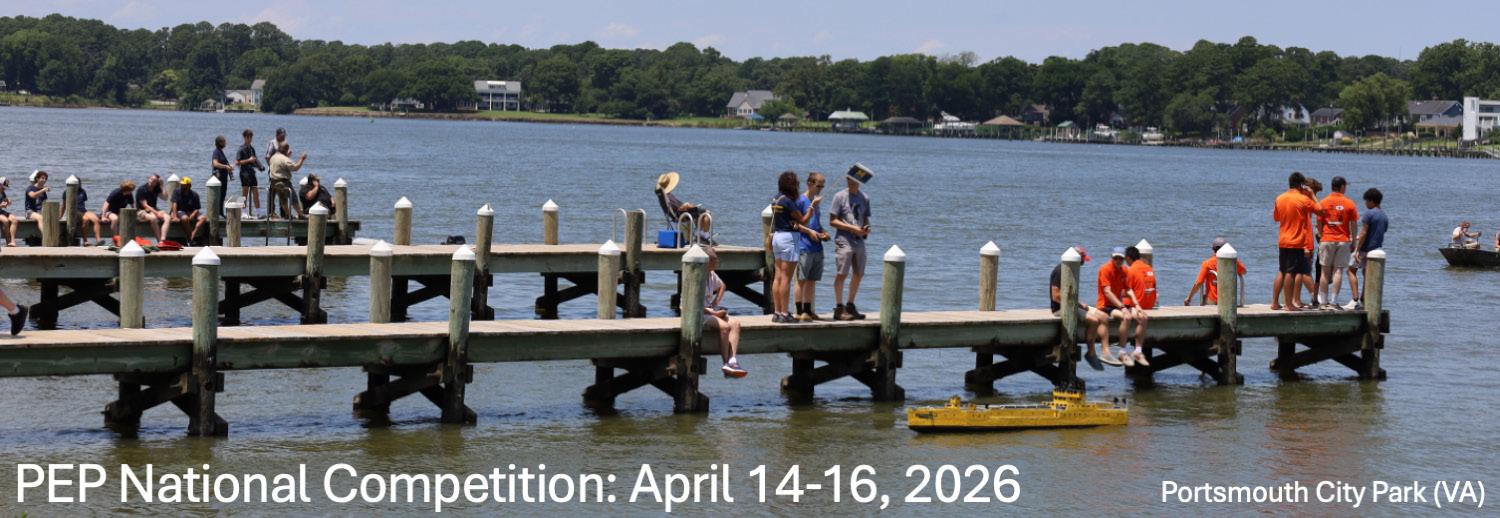
Press Release
PORTSMOUTH, Va. — The Office of Naval Research, in partnership with the American Society of Naval Engineers, invites the public and media to attend the Promoting Electric Propulsion Collegiate Boat Competition, a free, three-day event featuring high-speed electric boat races, student innovation and hands-on exposure to maritime careers.
Taking place April 14—16, 2026 at Portsmouth City Park, PEP26 brings together more than 350 collegiate engineers from over 45 universities to race more than 55 electric-powered vessels in the Elizabeth River. The teams will share their engineering processes and demonstrate their cutting-edge designs.
Qualifications take place on April 14, manned racing on April 15 and unmanned racing on April 16. Races start at 9:00 a.m. and finish at 3:00 p.m.
The Promoting Electric Propulsion competition is an initiative of the Office of Naval Research, designed to advance electric propulsion technologies while building a pipeline of highly skilled engineers for the Navy and maritime industry. PEP26 is more than a race - it also highlights the
strength of regional workforce efforts such as the Hampton Roads Maritime Training System, a collaborative initiative led by the Hampton Roads Workforce Council to meet growing demand for skilled maritime workers. Events like PEP26 help connect emerging engineering talent with career pathways across Virginia’s maritime industry. Since launching in 2024, HRMTS has already helped deliver nearly 6,000 trained workers to meet regional industry demand, with plans to expand training capacity to nearly 10,000 trainees annually by 2028. About Hampton Roads Regional Maritime Training System: Led by the Hampton Roads Workforce Council (HRWC), the Hampton Roads Regional Maritime Training System (HRMTS) is a collaborative coalition of businesses, training providers, educational institutions and community organizations working together to enhance and grow the
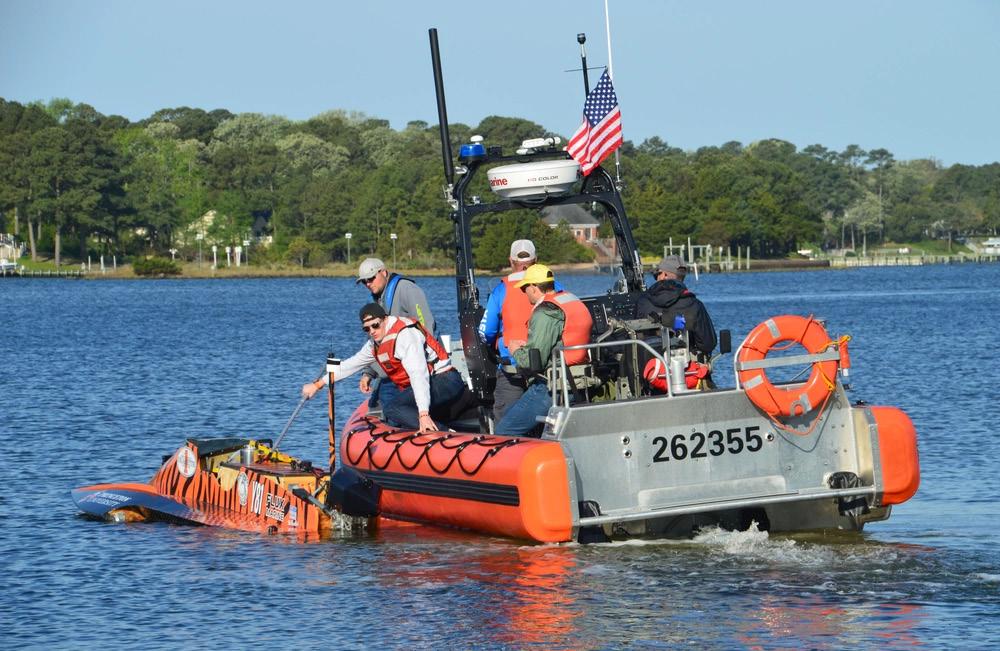
Hunt Club Farm celebrates Month of the Military Child in partnership with Hero Kids Foundation
Press Release
VIRGINIA BEACH — Hunt Club Farm and Suffolk-based Hero Kids Foundation are in the seventh year of their partnership to recognize the resilience of the determination and adaptability of military kids as they celebrate the Month of the Military Child at the Farm, 2388 London Bridge Rd., Virginia Beach.
In a time when it’s more important to support our active-duty military families, especially the children, Hunt Club Farm (HCF) continues their partnership with Hero Kids Foundation (HKF) each April with a donation of 250 tickets which HKF collaborates with the Navy-Marine Relief Society to get to the ships, in turn gets shared with the families.
John Raniowski, executive director of the Foundation, said, “Hero Kids has been in existence for 12 years and Hunt Club Farm has worked with us for over half that time, providing 3,600 tickets over the last seven years to share with these active-duty families located in one of the largest concentrations of military members and instillations in the country.” He went on to say, “The impact of this on the military families is incredible.”
“This partnership is something that all of us at Hunt Club Farm cherish as our military families, especially the kids, are very important to us.”, said Farm general manager, Sevannah Harvey.
MORE: In addition to the 250 free admission tickets shared with ship families through HKF and the Navy-Marine Relief Society, the Farm will offer Buy One Get One Sundays for active-duty military when they present the coupon (distributed from Hero Kids Foundation) and their valid military ID. The Farm will be selling purple Month of the Military Child t-shirts and stickers in their Market. A portion of the t-shirt sales go to HKF and military families can get a free sticker with purchase. And don’t forget to wear that HKF Month of the Military Child tee - or any purple tee - this month, but especially on April 15, which is Purple Up! Day. Please visit HuntClubFarm.com to purchase tickets or for event information. You can also call (757) 427-9520 or connect with Hunt Club Farm on Facebook or Instagram.
About Hunt Club Farm: Hunt Club Farm is a 50-acre family-owned and operated farm located five miles from the Virginia Beach Oceanfront. Hunt Club Farm is proud to be part of the area’s rich agricultural heritage and a crown jewel in southern Virginia Beach. Winner of COVA Best of Reader’s Choice Best Local Attraction and Best Family Friendly Attraction for 2025 and selected as one of Haunted Attraction’s

Farm and Suffolk-based Hero
determination and adaptability of military kids as they
Top 20, the fun never stops. To learn more or follow us, please visit HuntClubFarm.com or find us on Facebook or Instagram.
About Hero Kids Foundation: Hero Kids Foundation was founded on the realization
that nature — specifically, horses — can do a lot of good for a family’s overall communication and bond. Our nature-based approach to therapy, including equine therapy, surf and kayak excursions and family counseling
and helps families of first responders, military and law enforcement connect with one another, restore communication and thrive as a unit. For more information, call 757-5984453 or visit https://hkfva.org/
FLY NORFOLK: Connecting community to careers in aviation and space
Press Release
NORFOLK, Va. — This Saturday, for the 5th year, Fly Norfolk will bring the community together at Norfolk International Airport for a hands-on, immersive experience that connects residents with the world of aviation and the growing opportunities in space exploration.
Hosted at the Signature Aviation Terminal, Fly Norfolk is a free, family-friendly event that invites attendees of all ages to explore aircraft up close, engage with industry professionals, and learn about pathways into aviation, technology, and aerospace careers.
At a time when the aviation industry faces a nationwide shortage of pilots and air traffic controllers, Fly Norfolk aims to introduce the next generation to careers critical to keeping the nation moving. At the same time, with renewed investment in space exploration and missions like Artemis expanding the possibilities of human spaceflight, the need for a skilled and diverse workforce has never been more urgent.
“Fly Norfolk is about access and exposure,” said Delegate Jackie Glass. “For many Virginians, especially here in our community, careers in aviation or space shouldn’t feel distant. This event brings those opportunities down to the ground level, right here at Norfolk International Airport.”
Attendees can expect a range of interactive and educational experiences, including:
Aircraft displays with opportunities to view and sit inside select aircraft
Flight simulators and virtual reality space experiences
Drone demonstrations and hands-on technology engagement
Opportunities to meet and speak with pilots, air traffic controllers, engineers, and aviation professionals
Conversations with meteorologists and public safety personnel who play a critical role in air travel
Family-friendly activities designed to inspire curiosity and learning
Fly Norfolk also highlights the broader ecosystem that supports aviation, including local first responders and weather experts who help ensure safe and efficient travel every day.
“This is not just about planes,” Andrew Crider, the pilot who
his own
added. “It’s about
Hunt Club
Kids Foundation are in the seventh year of their partnership to recognize the resilience of the
celebrate the Month of the Military Child at the Farm. (PHOTO CREDIT: HUNT CLUB FARM)
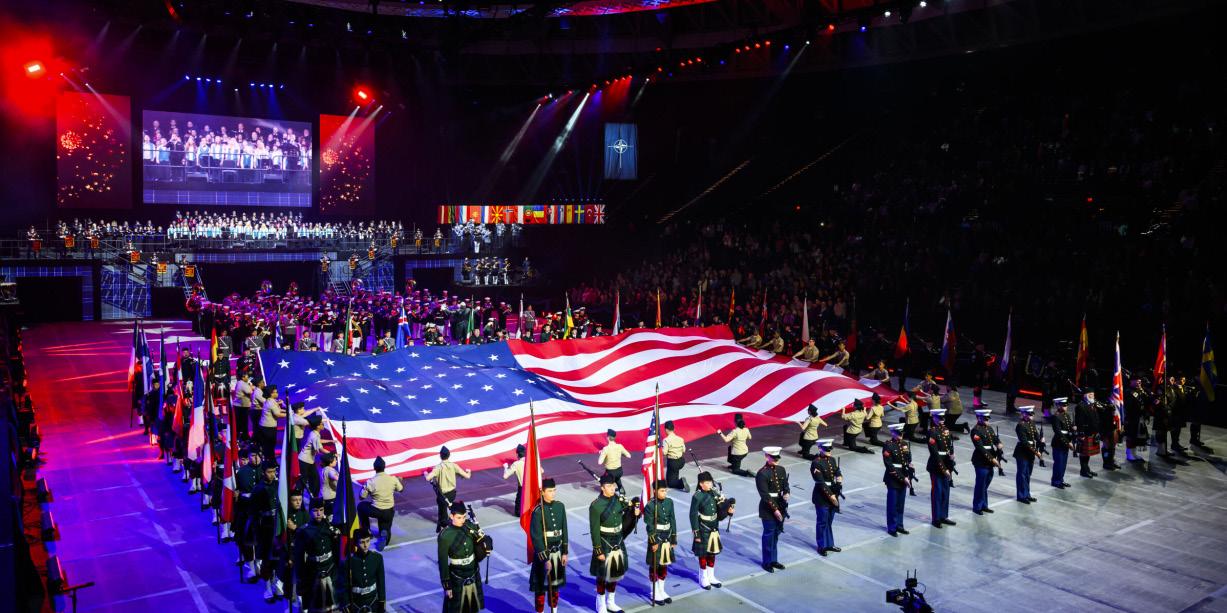
Don’t miss the 2026 Virginia International Tattoo this week, April 16-19 in Norfolk
Life, Liberty, and the Pursuit of Happiness – A Salute to 250 Years of American Independence
In 2026 we commemorate the 250th anniversary of the American Revolution and the founding of the United States, and Virginia stands as the perfect place to honor our shared history. From the principles that built our democracy to the visionary leaders who forged its path, Virginia remains at the heart of the American story.
The 2026 Virginia International Tattoo proudly honors 250 years of American independence. More than 800 performers from around the world will take the stage, including massed pipes and drums, renowned military bands, precision drill teams, dancers, choirs and more. Through stirring music, historic imagery, and moving tributes, the 2026 Virginia International Tattoo will cele-
brate the enduring promise of freedom that defines our nation.
This is more than a performance — it is a celebration of America’s spirit, 250 years in the making. For more information, to purchase tickets and a full list of festivities, visit https://vafest. org/tattoo/.
2026 VIRGINIA INTERNATIONAL TATTOO CAST
CANADA
Royal Canadian Air Force Pipes and Drums FRANCE Musique de la Marine Nationale (National Band of the French Navy)
REPUBLIC OF KOREA
Lee Keum-yong Sagang Dance Company of Chungnam National University
Republic of Korea Army Military Band and Honor Guard Battalion
UNITED KINGDOM
Dougie Anderson
King’s Colour Squadron of the Royal Air Force
UNITED STATES OF AMERICA
Camden County Emerald Society Pipes and Drums
Sergeant First Class Colin Eaton, U.S. Army, Retired
Hampton Roads Police Color Guards
Kilgore College Rangerettes
The Kiltie Band of York
Norfolk Fire-Rescue Honor Guard
Norfolk Public Schools Naval Junior
Reserve Officer Training Corps
Old Dominion University Concert Choir
Rhodes Academy of Irish Dance
Rhythm Project
Tidewater Pipes and Drums
U.S. Air Force Heritage of America Band
U.S. Army Old Guard Fife and Drum Corps
U.S. Marine Corps FAST Company
U.S. Marine Corps 3rd Marine Aircraft Wing Band
U.S. Navy Fleet Forces Band
Virginia International Tattoo Highland Dancers
Virginia Symphony Orchestra Chorus
*Cast as of 4.7.26. Subject to change.
Press Release

Shen Yun, an incredible ancient Chinese culture and dance experience, returns to Chrysler Hall April 2223, volunteer promoter Dong Xiang tells us about it
Interview By Yiorgo
After a two year absence, the internationally global sensation Shen Yun makes its triumphant return to Chrysler Hall April 22nd-April 23rd. Since it was established in 2006, they have performed for well over a million audience members around the world.
This incredible theatrical experience of epic proportions is a multidimensional, inspiring journey that immerses you into their amazing storytelling featuring one of the world’s oldest art forms— classical Chinese dance—along with patented scenographic effects and all-original orchestral works.
Kenn Wells, former lead dancer of the English National Ballet said it best when he said that Shen Yun is, “Absolutely the NO. 1 SHOW in the world—no other company or of any style can match this.” Cate Blanchett, Academy Award-winning actress praises Shen Yun, “Exquisitely beautiful. An extraordinary experience for us and the children.”
For ticket prices and more info, go to https://www.sevenvenues.com/events/ detail/shen-yun-5
Editor’s note: What follows below is a past interview with Dong Xiang, a DC volunteer promoter, who helps organize the local volunteers to work together and promote Shen Yun. Mr. Xiang is not employed by Shen Yun.
Yiorgo: I have seen Shen Yun several times and I can not recommend it highly enough to those seeing for the first time or returning like me. Thank you Mr. Xiang for bringing this incredible show back to Chrysler Hall. Tell us, what should people expect to see when they come to a Shen Yun performance?
Dong Xiang: Thank you for the very kind words Yiorgo. Shen Yun is a very fast paced, about two hour show, and a 15 minute intermission. Our show has 20 short, different programs, experiencing and learning about Chinese culture and history. It’s like time travel. For those coming for the first time, it is definitely something that the people have not seen before. They will see very, very expressive, very challenging, classical Chinese dancing filled with spinning, jumping, forward and backward flips. It is almost like martial arts but actually martial arts came from Chinese dances. It’s very interesting that in China the word for dance is pronounced “wu” and the martial arts word is also pronounced “wu” so it is exactly the same pronunciation but the writing is different. In the old days, the warriors would use martial arts on the battlefield but in the Imperial palace the warriors used martial arts as a way of entertaining the emperor and the guests. So it’s almost like classical Chinese dance and martial arts are two sides of the same coin.
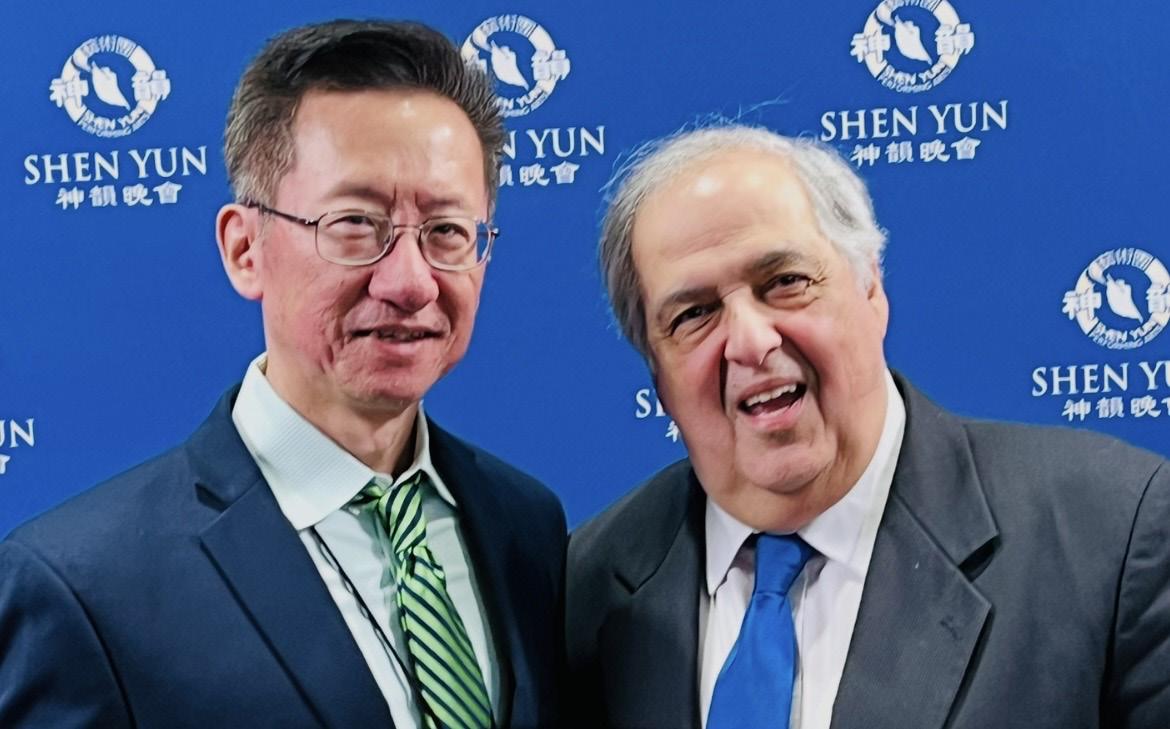
Y: You do not use the traditional dropdown backdrops. Instead you use a very expensive, high tech backdrop. Can you tell us about it?
DX: It feels like you have a large screen TV with animation in the background, with the dancers performing in front of it and interacting with it. It feels like the characters are jumping in and out of the background enhancing the very expressive way of telling a story. The incorporation of the high tech backdrop and the Chinese dancing is so unique that it was patented in the US a few years ago.
Y: The show is so mesmerizing that fans come back year after year like me. Will they see the same show?
DX: Every year they come up with a different program so even if you have seen a Shen Yun performance before, this show is totally different. Also, do not be late to the show because when the curtain opens with the first program, it is designed to have a lot of wow, wow, breathtaking moments.
Y: Can you tell us about the dancers, musicians and the costumes in the show?
DX: There are close to 40 dancers, 40 musicians and a handful of a production crew. There are six touring companies. Everything in Shen Yun is original. The artists train and meditate in a secluded, peaceful area in upstate New York, adhering to old traditions of purifying themselves and preparing themselves to perfectly perform the dancing and music.
The costumes are of course influenced and based on the 5000 year old programs being presented. They are hand made and in order to ensure that the color matches the feel and mood of the particular story being performed, they mix and custom make their own colors

because they can not buy the colors they need.
The music that you hear are all original compositions, composed by the Shen Yun conductor. The music is performed live by an orchestra that also includes the Chinese musical instruments: erhu and pipa. This is not an easy thing to do, to include these Chinese instruments. It is like trying to mix oil and water together, it’s close to impossible because the pitch and the tone of these instruments are very different from the western instruments. The Shen Yun orchestra is able to mix them together. The performances are not just a feast to your eyes but also music to your ears.
Y: Let’s learn about you. Where are you from and how did you get involved as a volunteer promoter for Shen Yun?
DX: I was born in 1969 and grew up in China under Communist rule where I was raised like all of us in our generation to believe in Communism. That’s totally different from what my parents and grandparents believed in. When I came to the United States I realized that my Chinese culture is so different from what I was familiar with when I grew up. A lot of us are ex-patriots from China. We want to tell the world how China was before Communism took over. This has motivated a lot of Shen Yun artists to dedicate their lives and technical skills to present this show. It also empowered people like me who are not artists to help and promote the show. We, the promoters of the show, are all volunteers, not only do we not get paid to promote Shen Yun but we contribute a small portion of our personal wealth to make sure that Shen Yun has enough resources to send the message out. We have a shoestring budget but we have a lot of volunteers and that is why we are able
to promote it in Norfolk.
I am the Executive Director of the Falun Gong Association in Washington DC and we present Shen Yun in the Virginia, Maryland and Washington DC areas. Shen Yun was founded in 2006 and their mission is to restore and showcase the traditional Chinese culture to honor on the stage through classical Chinese dance. The mission is in line with what we believe in the Falun Gong Association. As we know, China has a five thousand year old history and we want to present the Chinese before Communism. The traditional Chinese culture is so different then the contemporary Chinese culture that a lot of people are not familiar with and sadly even many Chinese people don’t know it. I am a perfect example.
Y: What has been a favorite moment of yours with the show?
DX: There is also another very unique aspect of the show and none of the other performing arts have it. It’s Show Energy. A few years ago, I presented a show in West Virginia, and there was a lady sitting near the front who came to see the show by herself. She was very excited and clapped at everything, sometimes too much. When the show finished, we filmed collecting some feedback from the audience and I was very moved by her comments in her video clip. She said that she was in her 70’s and had pain all the time. She stopped taking the pain-killing medicine because it did not work, but she said, trying to hold back her tears, that when she was watching the show, for the entire show, she did not feel any pain. I was not surprised because I know the power of Shen Yun.
In the old days, the Chinese people believed that dancing is not for entertainment for human beings. In ancient times, artists believed that dancing was a gift from heaven. The artists would cultivate their inner purity and beauty so they can purify themselves, have high morals, and perform the art beautifully and show their gratitude to heaven. In the old days, artists lived in very secluded, temple settings, not interacting with everyday people and they constantly practiced their skill sets and sharpened their minds. Today they practice the same noble task. When they perform on the stage, the power of meditation is such that they can radiate energy directly to the audience and that is why the woman felt no pain. That is something that is very unique about Shen Yun and no other performing art group can do that.
Yiorgo is an arts, entertainment and sports writer. A stage, TV and movie actor, he is also a sports entertainer, educator, motivational speaker, writer, storyteller and columnist.


(SHEN YUN PHOTO COURTESY OF DONG XIANG)
Shen Yun volunteer promoter Dong Xiang (left) and Yiorgo. (PHOTO COURTESY OF YIORGO)
(SHEN YUN PHOTOS
DAV launches new resource page to support veterans with diabetes
Press Release
ERLANGER, Ky. — DAV (Disabled American Veterans) has announced the launch of its new online diabetes resource page, developed in partnership with Dexcom, a global leader in glucose biosensing. The new resource page will provide an understanding of the prevalence of diabetes among veterans—especially those with Type 2 diabetes—and various treatment options.
Diabetes affects an estimated 25% of veterans, underscoring the need for accessible, tailored resources that address the unique health challenges faced by those who served. The resource page is designed to provide veterans and their caregivers with critical information, tools and support to better understand and manage diabetes. The page comes at a crucial time as veterans are nearly twice as likely to develop diabetes as the general population.
“Developed with support from Dexcom, the diabetes resource page reflects a shared commitment to improving health outcomes for veterans by increasing awareness and access to innovative approaches in diabetes
care,” said DAV’s CEO and National Adjutant Barry Jesinoski. “The collaboration brings together DAV’s expertise in veteran support with Dexcom’s leadership in glucose monitoring technology.”
“On behalf of Dexcom, we salute the DAV team for their commitment to improving the health of veterans, including those with
diabetes,” said Mike Steelman, Senior Vice President, Dexcom Global Market Access and Captain, US Army. “As a veteran myself, I understand firsthand the challenges of managing diabetes and the importance of having access to education and tools like Dexcom CGM to help take control of your health and achieve better outcomes.”
DAV provides a lifetime of support for veterans of all generations, their families, survivors and caregivers. Every year, DAV’s no-cost services help more than 1 million veterans access the benefits and health care they’ve earned while connecting them with meaningful employment and representing their voice on Capitol Hill. Visit the page at dav.org/diabetes.
About DAV: DAV is dedicated to ensuring our promise is kept to America’s veterans. DAV does this by helping veterans and their families access the full range of benefits available to them, fighting for the interests of America’s injured heroes on Capitol Hill, providing employment resources to veterans and their families, offering programs and services to empower them, and educating the public about the great sacrifices and needs of veterans transitioning back to civilian life. A nonprofit organization with nearly 1 million members, DAV was founded in 1920 and chartered by the U.S. Congress in 1932. Learn more at DAV.org.
How divorce affects your family’s TRICARE benefits
By TRICARE Communications
FALLS CHURCH, Va. — During a divorce or an annulment, you may be concerned about what will happen to your family’s TRICARE coverage.
In general, here’s what will happen to your TRICARE eligibility when your divorce or annulment is final.
Sponsors and their children: Sponsors, their biological children, and their adopted children stay eligible for TRICARE (unless they lose eligibility for other reasons).
Stepchildren: Stepchildren who haven’t been adopted by a sponsor will lose TRICARE eligibility. Their coverage will end on the final date of divorce or annulment.
Spouses: Former spouses must meet certain criteria to stay eligible for TRICARE. If you don’t meet these criteria, your last day of TRICARE coverage is the day your divorce decree or annulment is final.
If you’re in the process of getting a divorce or you’re recently divorced, here are some important things to keep in mind.
Sponsors and their children
Are you a sponsor? You must update your marital status in the Defense Enrollment Eligibility Reporting System when your divorce or annulment is final.
To update DEERS, you’ll need to go to a local ID card office. Be sure to bring a certified copy of your divorce or annulment decree.
Are you eligible for a TRICARE Prime or TRICARE Select plan option? In some cases, divorce or annulment is a TRICARE Qualifying Life Event. As described in the TRICARE Qualifying Life Events Fact Sheet (online at https://www.tricare.mil/qlefs), a TRICARE QLE opens a 90-day window for you and your eligible children to change your TRICARE health plan.
“This 90-day window starts on the date of your divorce or annulment,” noted Shane Pham, management and program analyst, TRICARE Health Plan Policy and Programs Branch, at the Defense Health Agency. “If you’re thinking about changing your plan, it’s a good idea to update DEERS as soon as possible.”
Do you have a child custody agreement? Consider your custody agreement and where your children will live when choosing a TRICARE plan for your children. (Your children don’t all need to be enrolled in the same plan.) Learn more about child custody scenarios. You can use the Plan Finder (online at https://tricare.mil/PlanFinder) to see which plans your children may be eligible for.
Former spouses
Are you separated or living apart from your sponsor? If you aren’t yet divorced, you can keep your TRICARE benefits.
After a divorce, you may be eligible for TRICARE coverage if you meet the criteria

for one of the following scenarios. You’ll have the same health benefits, plan options, and costs as retiree family members.
SCENARIO 1 — THE 20/20/20 RULE
You keep TRICARE health care benefits for as long as you remain eligible if:
Your sponsor has at least 20 years of creditable service toward determining retirement pay,
You were married to your sponsor for at least 20 years, and The period of service and your marriage overlapped for at least 20 years.
SCENARIO 2 — THE 20/20/15 RULE
You keep TRICARE health care benefits for up to one year if:
Your sponsor has at least 20 years of creditable service toward determining retirement pay,
You were married to your sponsor for at least 20 years, and The period of service and your marriage overlapped for at least 15 years.
In either scenario, you’ll need to establish your eligibility as an unremarried former spouse. You’ll need to update your DEERS record in person at your local ID card office. Bring these documents: Marriage certificate
Divorce decree
DD Form 214 or Statement of Service from the sponsor’s service personnel component
Remember: You can lose your TRICARE eligibility under either scenario if you:
Remarry (unless you gain eligibility under your new spouse), or
Buy and gain coverage through an employer-sponsored health plan
Learn more about benefits for former spouses online at https://tricare.mil/formerspouse.
What are my health coverage options if I lose eligibility for TRICARE?
Former spouses and stepchildren may have other options for health care coverage when they lose TRICARE eligibility. These may include:
Buying Continued Health Care Benefit Program coverage. If you qualify for CHCBP, you must buy coverage within 60 days of loss of TRICARE coverage. Certain former spouses who haven’t remarried before age 55 may qualify for an unlimited duration of coverage.
Searching the Health Insurance Marketplace to find civilian health plans.
You can also check for Medicaid eligibility in your state.
Getting coverage through your employer
Continuing to use Medicare, if you’re entitled to it
Looking for more information?
Do you have questions about your eligibility for TRICARE? You can call the DMDC/ DEERS Support Office at 800-538-9552.
Getting a divorce or annulment is just one type of TRICARE QLE. Examples of other QLEs include:
Moving
Losing or gaining other health insurance
Children becoming adults
Getting married
Giving birth or adopting
Retiring
Go to Qualifying Life Events (online at https://tricare.mil/lifeevents) to learn about other QLEs and your options following a QLE.
Would you like the latest TRICARE news sent to you by email? Visit TRICARE Subscriptions to get benefit updates, news, and more.

In some cases, divorce or annulment is a TRICARE Qualifying Life Event. A TRICARE QLE opens a 90-day window for you and your eligible children to change your TRICARE health plan.









CROSSWORD & SUDOKU ANSWERS:

and soul superstar who adores fish such as bluefin, yellowfin and albacore: Tuna Turner.