Nominate the Military Citizen of the






“Let Americans disdain to be the instruments of European greatness! Let the thirteen States, bound together in a strict and indissoluble Union, concur in erecting one great American system, superior to the controlofalltransatlanticforceorinfluence and able to dictate the terms of the connectionbetweentheoldandthenewworld!”
So ended Alexander Hamilton’s essay (no 11 of the Federalist Papers, 1787) on the crucialroleanavywouldplayinsafeguarding America’s commerce and reputation The essay also laid out all the hopes of the new nation: peace, prosperity, and respect fromthemightynationsofEurope
Yet the Navy’s creation and development proceededpiecemealandhaltinglyinfaceof seemingly intractable political, ideological, and economic obstacles. It took a quarter century for the Navy to emerge as a stable institution, and although we now celebrate thebirthdayof theNavy on13October,that date in 1775 is but one of several import ant steps on the way to a permanent naval defenseforcefortheAmericanpeople

1775:TheBirthoftheNavy
The origins of the Navy actually predate independence by almost a year On 26 August 1775, the assembly of the colony of Rhode Island sent its delegates to the Continental Congress in Philadelphia to request that “a fleet of sufficient force for the protection of these colonies” be estab lished. Although the Congress had already urged individual colonies to mount their own naval defenses, the Rhode Island Assemblyunderstood that securing Amer icanportsandwaterswouldbeabiggerjob than any one colony could handle Philadelphia agreed on 13 October 1775 and created an advisory committee staffed by John Langdon of New Hampshire, Silas Deane of Connecticut, and John Adams of Massachusetts (Adams would become a lifelong champion of the Navy.) In addi tiontoprotectingAmericantradefromBrit ish blockade and predation, the committee also made recommendations for intercept ing British ships laden with supplies for the king’s forces in North America Within hours, the Congress approved the commit tee’s recommendation that Massachusetts supply General George Washington, then stationed in Massachusetts with an armed schooner and a sloop for the purpose of seizing British supplies. At the same time,
Connecticut and Rhode Island would arm merchant vessels to patrol the near North Atlantic for British transports. These small foraysfoundimmediatesuccess.
On the heels of these successes the Continental Congress committed itself to naval expansion in three key ways First, the Congress authorized the purchase of four moreships ofwar.Second,it enlarged the Naval Committee to seven men. And third, it extended the committee’s brief to building up a naval force south of New Englandwaters,allthewaytoGeorgia,“for the protection and defense of the United Colonies.”
As plans materialized, the Congress received some bad news from London— news that would push the delegates to commit even further to the establishment of an American navy On 9 November 1775, word arrived that George III of Great Britain had refused the Olive Branch Petition, the Congress’s last-ditch effort to preserve peacewiththemothercountry,andthatthe kinghaddeclaredthecoloniestobeinastate ofopenrebellion.TheContinentalCongress now geared itself up for a protracted strug gleontheseas.
Intheensuingweeks,theCongresspassed a series of resolutions to purchase more ships;toallocatefundstothenavalcommit tee;tocallup“AmericanMarines,”thecoun try’s first; to approve the set of rules and regulations, modeled on those of the Royal Navy and penned by John Adams for this new“AmericanNavy”;andtoauthorizethe capture of all British vessels involved in the suppressionofthecolonies’nascentrevolt
Taken between 13 October 1775, and the end of that year, these actions served to establishthefirstAmericannavy
When the American Revolution ended, however, the Navy passed into disuse and oblivion. The Articles of Confederation, which came into force in 1781 and bound the former colonies into a loose arrange mentofsovereignstates,didnotprovidethe centralgovernmentwithpowersoftaxation sufficient for the maintenance of anything as expensive as a national navy Moreover, peacewithGreatBritainremovedtheforce that had called the Continental Navy into existenceinthefirstplace:imminentdanger to American commerce from British block adeandpredation.
Nevertheless, dangers persisted. In 1785, Barbary(NorthAfrican)piratesseizedtheir first American vessels and tried to ransom 22 passengers and crew Many Americans, Thomas Jefferson included, believed that the British were behind these misfortunes At any rate the states were helpless without naval power. “The Americans cannot protect themselves,” an English politician quipped,for“theycannotpretendtoanavy.”
1794:TheNavyReestablished RelationsamongtheUnitedStates,Great Britain, and France ultimately caused Congresstoreestablishanavybutonlyafter the constitution had been ratified and the federalpowersoftaxationhadincreased.
In the course of the French Revolutionarywars(1792–1802),whichquicklyspilled intotheAtlanticworld,Americans’neutral ity on the seas became difficult to support, andAmericanmerchantsinparticularbegan to press Congress for a standing naval force that could defend against ships of war and privateers often hired by France or Brit ain for the express purpose of depredating Americanmerchantvessels
As Britain and France began to wage economic war on each other, the British government blocked American ships from the French West Indies, a crucial source of sugar and other commodities for United States merchants On the high seas and in nearby waters British war ships also harassed and attacked American merchant vesselsaspartofawiderefforttochokethe economy of the French empire and diminish its war-making capabilities. On behalf ofPresidentWashington,SecretaryofState EdmundRandolphimploredCongresstodo somethingaboutBritishviolationsofAmer icans’ rights as neutrals to trade with those countriespresentlyatwarwitheachother
Yet Congress still waffled on the issue of a navy Where the president his supporters, and most Federalists saw a navy as essential to prosperity at home and pres tige abroad, the president’s detractors and most Anti-Federalists had serious reservations Americans against the establishment ofanavywereworriedabouttheenormous debtsitwouldrackup,thefederaloverreach itwouldportend andthedevastatingretaliationitmightprovokefromBritain.
Events in the Mediterranean ultimately forced the issue in early 1794. Algerine (Barbary) pirates, having signed a truce with Portugal and been paid off by the Brit ish, began to attack American ships in full forceandnotjustintheMediterranean On2 January1794,Congressresolvedtocreate“a navalforce adequatetotheprotectionofthe UnitedStatesagainsttheAlgerinecorsairs.” Acommitteeformedandrecommendedthat a fleet of six frigates be constructed. The committee,aswellasthefiftycongressmen whovotedforthesubsequentActtoprovide aNavalArmamentof27March1794,which finallyre-establishedtheUnitedStatesNavy, mostly represented maritime trading cities of the north and east, where the first calls foranavalforcehadoriginatedbackin1775
In order to spread the economic favors thattheconstructionofanavywouldbring Congress had no two frigates built in the
sameyard Portsmouth,NewHampshire,got Congress; Boston, Constitution; New York City,President;Philadelphia,UnitedStates; Baltimore,Constellation;andGosport(now Norfolk), Virginia, Chesapeake. The oak camefromasfarawayasGeorgia
On 5 June 1794, the reestablished Navy got its first officers, all naval veterans of the American Revolution: John Barry, Samuel Nicholson, Silas Talbot, Joshua Barney, RichardDale,andThomasTruxton.
Also a veteran of the Revolution, Henry Knox, now President Washington’s Secre tary of War, assumed responsibility for the new Navy and perhaps did more than anyone else to ensure its survival. When in late 1794 the Washington administration managed to come to terms with Brit ain and the Barbary pirates, the need for a navyappearedtohaveevaporatedbeforethe fleetevenmaterialized.Moreover,Congress had approved the construction of the Navy for one purpose and one purpose only––to counter the Barbary threat Nevertheless Knox proceeded with construction, and he did so to higher standards—and at greater expense—thanCongresshadauthorized.In hisownwords,Knoxwastryingfornothing less than a fleet of frigates, “superior to any oftheEuropeanpowers.”
Knox’s energies and the efforts of his successors could only take the project so far however. The immediate danger to Americanmaritimetradehavingsubsided, Congresshesitatedtoauthorizethecontin uation of construction. Looming conflict, this time with France, would speed their decision
AlthoughtheNavyoriginatedin1794amid worries about the British and the Mediter ranean, it was concern over France and the CaribbeanthatmadetheNavyapermanent institution.
CaughtupinthegeopoliticsoftheFrench Revolutionary wars, the United States found itself after 1794 on the wrong side of France, now a republic. Diplomatic rela tionsbetweentheUnitedStatesandFrance, the colonists’ crucial ally in the American Revolution,hadsodeterioratedby1797that French leaders refused even to receive the American minister to Paris For the better partofayear,already,Frenchwarshipsand privateers had been attacking merchant vesselsintheWestIndies.
These attacks and the mounting diplo matic tensions between France and the United States produced pressure on Presi dent Washington and Congress to resume work on a United States navy In spring of 1796, Congress finally authorized comple-
ByNavalFacilitiesEngineering SystemsCommand(NAVFAC) Mid-AtlanticPublicAffairs
NORFOLK Va October is Energy Action Month, which presents an opportunity for Department of Defense employees, andtheirfamilies,tomakeaconsciouseffort toreducetheiroverallenergyconsumption bothathomeandwork.Thisyear’stheme is“EFFICIENT RELIABLE.RESILIENT.”

“All of us play a part in reducing our energy and water footprint when we come into the office or workplace,” said Arnold Agustin,EnergyProgramDirectorforNaval Facilities Engineering Systems Command (NAVFAC) Mid-Atlantic. “Any opportunity tosaveevenonedollar,isadollarthatcango toward supporting the primary reason we come to work every day protecting and defendingournation.”
Navyenergyconservationandutilization falls into three distinct pillars: Efficiency, Reliability andResiliency
Efficiency helps us reduce our consump tionandoperatingcosts
Reliability helps to minimize power outages, so we can provide more reliable energyresourcestoourcustomers
Resiliency helps us resist power outages andrecoverquickly Energymanagementisn’tanewconcept TheDepartmentoftheNavyhasundertaken many initiatives to help improve energy efficiency, reduce overall energy usage, and harness alternative fuels and renewable energy sources Below are a few SMART (Specific,Measurable,Achievable,Relevant,
and Time-Bound) tips that you can do now tobeapartofthesolution:
Report any unusual heating ventilation and air conditioning (HVAC) activity such as being too hot in winter or too cold in summer. This could mean that your HVAC isinneedofserviceorarepair Homeowners can also seal leaks around windows and doors with simple, inexpensive items like caulk,low-expandingwindowfoamoreven temporary seasonal window films, which cansignificantlyreduceyourenergybill
Cleanorreplaceallairfiltersinyourhome regularly Dirty filters make your HVAC system work harder and run longer than necessary Set your thermostat to 78 degrees Fahrenheit in the summer and 68 degrees Fahrenheit in the winter every degree of extra heating or cooling will increase your energy usage Setting your thermostat to a lower temperature than normal will not cool your home faster. Added tip: Installing a programmable thermostat will help you automatically adjust the temperature accordingtoyourspecificschedule.
Chooseenergy-savinglighting Replacing five of your home’s most frequently used lightswithenergy-efficientENERGYSTAR bulbs could save you up to $75 a year in energycosts It’salsoimportanttousenatural lighting whenever possible Lighting accountsforabout12%ofatypicalresiden tialutilitybill.
Lowerhomeandofficeblindsinsummer to shade the room, which offers extra cooling
Keep blinds open in winter, if facing
south or west, to allow sunlight to warm the air
Shut blinds in north or east facing windowsinthewintertoaddanextralayer of window insulation
Turn off the lights after work, or in any unoccupied space during the day. Turn off overheadofficelightsandtakeadvantageof tasklighting,especiallywithreducedoccu pancy due to telework schedules.
Make sure all computer equipment, office devices, and power strips are turned off at the end of the business day, or when they are not in use

Keepexteriordoorsandwindowsclosed when the air conditioning or heat is on to minimize energy losses
If you’re buying a new fridge, freezer, television, washing machine, clothes dryer, dishwasher or air-conditioner, look for the Energy Rating Label the more stars the less energy the product will use
Using ENERGY STAR certified products throughout your home could save nearly $750 over the lifetime of the products
Don’t leave your mobile phone plugged inovernight.Note:Itonlytakesacoupleof hours to fully charge
Hotwaterisresponsibleforabout25%of the average household energy bill. Ways to reducethisinclude:waitinguntilthereisa full load and washing them in cold water; onlyrunthedishwasherwhenit’sfull;and keep shower times short.
Replaceyourwindows Ifyourhomehas single-pane windows, consider replacing themwithmoreenergy-efficientwindows, or adding solar shades or tinting film.
Focused efforts such as these may seem like small changes, but these efforts can have a large impact on the power grid. Reducing energy usage in our homes or offices also helps to lower power demand onthegrid,whichcanboostelectricsystem reliability
Although the month’s campaign is designed to bring awareness to our energy usage in October, it’s important to look for ways to save energy all year long, and developenergy-efficientbehaviorsthatwill sustain us all for years to come

(Jessanna Revels Regional Energy Program Manager for NAVFAC Mid-Atlantic, contributed to this article.)
NAVFAC Mid-Atlantic provides facil ities engineering, public works and envi ronmentalproductsandservicesacrossan areaofresponsibilitythatspansfromSouth CarolinatoMaine,andasfarwestasMich igan, and down to Indiana. As an integral member of the Commander Navy Region Mid-Atlantic team, NAVFAC Mid-At lantic provides leadership through the Regional Engineer organization to ensure theregion’sfacilitiesandinfrastructureare managed efficiently and effectively
For additional information about NAVFAC MIDLANT on social media, follow our activities on Facebook at www facebook.com/navfacmidatlantic and on Instagram @navfacmidatlantic.
To learn more about NAVFAC Mid-At lantic’sEnergyProgram,visithttps://www dvidshub.net/video/859421/am-team-navfac-meet-arnold-agustin-energy-program-director-navfac-midlant


 ByTravisKuykendall Commander Navy Region Mid-Atlantic Public Affairs
Are you a Sailor or do you know a Sailor, who goes above and beyond the call to duty by volunteering in the Hampton Roads community? The Hampton Roads Chamber is now accepting nominations for the 2022 Samuel T. Northern, Military Citizen of the Year (MCOY) award.

The Samuel T. Northern award has been given annually to recognize the militarycitizenwhohasmadethemost significant contribution in the area of community service The award is not forasingleact,butratherforsustained community service in the Hampton Roads area for a period of at least one year Nominees volunteer by coach ing Little League teams, youth mentoring, fundraising emergency medical services and many more community programs “Hampton Roads is blessed with such a large presence of Navy in the region The men and women who weartheNavyuniform,Departmentof
the Navy civilians and all their family members are intertwined into the fabric of our region and contribute so much to it,” said Bryan K. Stephens, President & CEO, Hampton Roads Chamber “It is our honor every year to recognize those who go above and beyond their call to duty to the Navy and give back to their community.”
Local commands as well as local volunteer organizations can nomi nateactivedutyE-6andbelow.Nomi nations must be received by Friday, Oct 28 Nominations received from volunteer organizations must be endorsed by the service member’s parent command in order to qualify for the award. Packages received from volunteer organizations will be forwarded to the appropri ate command for verification and endorsement. This year’s winner and finalists will be recognized during a luncheon on Thursday, Nov. 17, at the Norfolk Waterside Marriott.
 ByLtjg JenniferMarks NIWDC Public Affairs Office
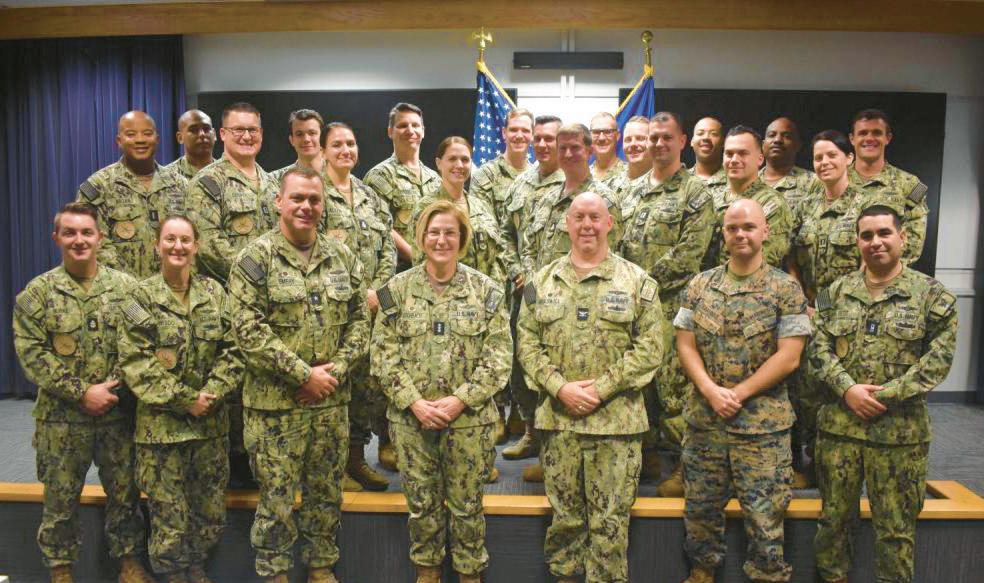
NORFOLK, Va On Sept 27 the Naval Information Warfighting Development Center(NIWDC)heldapatchingceremony and designated 22 Information Warfare (IW) Warfare Tactics Instructors (WTIs) in its ninth class of IW WTIs. Armed with their new patches, these WTIs will be sent backintotheFleet.
Thisclassisalsothefirsttograduatefrom the Naval Information Warfare Advanced Weapons School (NIWAWS), a significant milestone in IW history NIWAWS showcases the growth and the continued evolutionoftheIWidentityandintrainingWTIs, and meets the challenges of modern infor mation warfare across all domains with vigor, thought, leadership, and creativ ity In total, 16 commissioned officers and six senior enlisted members successfully completedthischallenging10-weekcourse and are now armed with more knowledge andanetworkof147WTIstoresourcetoaid intheaccomplishmentoftheIWmissionat large.NIWAWS’sfirstgraduatesencompass the Meteorology and Oceanography, Intel ligence, Electronic Warfare and Command and Control/Cyber Operations communities,allcomingtogethertoexpandthedepth onimpactofoperationsinacontestedenvi ronment. The continued presence of the MarineCorpswiththeirElectronicWarfare graduate continues to be an integral part of the execution of the Tri-Service Maritime Strategy ViceAdm.KellyAeschbach,commander, Naval Information Forces, along with NIWDC Commander, Capt. Bryan Bras

well, presided over the patching ceremony
Also in attendance was Rear Adm. Gregory K. Emery, commander, Naval Information ForcesReserve.
Aeschbach commended the graduates stating “What you’re now ready to provide ourFleetissoincrediblycritical.Nowmore thanever,asourNavyandnationarefacing threats across every domain, we need your collective talent, your experience and your innovationtosolvethehardchallengesand ensure our Navy can win, today and in any futurefight.”
DuringtheclasscandidatesmetwithVice Adm. James Kilby, commander, Task Force 80anddeputycommander U.S.FleetForces Kilby reiterated the importance of WTIs and what they bring to the Fleet. “You’re in a group of innovators I commend you for beingaWTI.”Headded,“Everyoneisgoing tolookatyoudifferently Andtheyshould.”
In closing Kilby said, “Much will be expected of you. You must pay your newfound knowledge forward, and when we call you to attack warfighting problems weexpectyouwillanswer.”

NIWDC is the U.S. Navy’s IW tactical center of excellence, which enhances fleethigh-endwarfightingcapabilitiesand readiness across the operational and tacti cal levels of war. For more information on NIWAWS,visithttps://intelshare.intelink. gov/sites/NIWDC-Doctrine-CIE/IW_ WTI/SitePages/Home.aspx or email IW_ WTI@navy.mil To keep up to date with thelatestnewsfromNIWDC,visithttps:// www.navifor.usff.navy.mil/Organization/ Operational-Forces/NIWDC/orNIWDC’s Facebook page, https://www.facebook. com/NIWDC

 Norfolk,Va From left to right front







 ByMatthewOlson Public Works Department Archaeologist
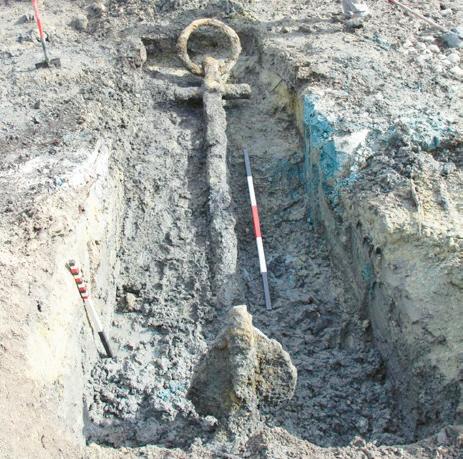
October is Virginia Archaeology Month and theNorfolkNavalShipyardhasseenitsfairshare ofarchaeologicalworkwithinthepastyear The effortsrangedfromdeterminingthepresenceof archaeological deposits (referred to as a Phase I Survey) to ensuring historical resources are not adversely affected by projects through archaeo logical monitoring. Archaeological monitoring occurs when an archaeologist is on site during constructionandconductsdatarecoveryorexcavation should artifacts be uncovered. A NNSY exampleistherecoveryofthreeanchorsdiscovered during the construction of a floodwall near DryDock1.
During late January and early February of 2022, MEB General Contractors (MEB) were grading north of Dry Dock 1 for the installation of the floodwall, when an anchor ring became visible Additionalexcavationtoremovethering unearthed the entire anchor James River Institute for Archaeology, Inc. (JRIA) was contacted to further investigate the site. Through MEB’s and JRIA’s efforts two additional anchors were uncoveredinalignmentwiththeoriginalanchor find. Initial evaluation is that all three anchors were manufactured before the Civil War. One anchor is made from iron, but includes a large wood stock The design suggests a relative date oftheverylate18thcenturytoearly19thcentury.
Another anchor features a unique design due to havingashortironstockandlittleisknownabout this type of anchor It is speculated that it was manufactured prior to the Civil War. As for the third anchor, it is yet a different design from the other two, consisting of a folding stock, which
suggestsdatingittothe19thcentury













































































































So,howdidtheygetthere?Areviewofhistori calmaterialsshowsthattherewereanchorracks inthevicinityofthesite.Soitisplausibletothink thattheanchorswerebeingstoredatthislocation. Then the anchors were discarded for whatever reason and deposited into the landfill. However, the arrangement potentially suggests a different motive. All three anchors were buried with the flukesarrangedverticallyataslightangle,allowingtheanchorringtobeatahigherelevationthan theflukes Thissuggeststhattheywerepurpose fully placed rather than being discarded. If true theanchors could havebeenusedasimprovised mooring along the waterfront at the time Addi tionalresearchcouldpotentiallyconfirmordeny thistheory Inthemeantime,allthreeanchorsare currentlybeingstoredandawaitingconservation andfurtherresearchefforts.
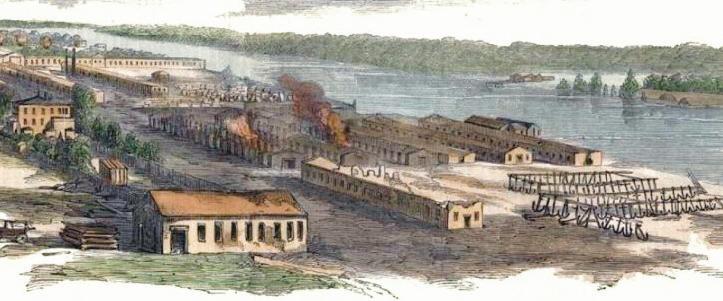
ABOVE:This historical photo from the 1861 HarpersWeeklyshows NorfolkNaval Shipyard as it looked in that era.
RIGHT: InJanuaryand February2022 MEB uncovered three anchors nearDryDock1 at NorfolkNaval Shipyardwhile working to install the floodwall.Initial evaluation is that all three anchorswere manufactured before the CivilWar.One anchoris made from iron,but includes a largewood stock.The design suggests a relative date oftheverylate 18th centuryto early 19th century Anotheranchorfeatures a unique design due to having a short iron stockand little is known about this type ofanchor It is speculated that itwas manufactured priorto the CivilWar.As forthe third anchor it isyet a different design from the othertwo,consisting ofa folding stock,which suggests dating it to the 19th century (COURTESY PHOTOBYNORFOLKNAVALSHIPYARD)









tionofthreeofthesixfrigatescommissioned back in 1794. By the end of 1797,United States,Constellation,and Constitution, the Navy’s firstpurpose-built warships, were readyforservice.
When John Adams assumed the presi dency on 4March 1797,the Navy nowhad its staunchestdefender yet. Indeed, the Navy wasfastbecoming the centerpiece of Adams’sforeignpolicy,whichsoughtstabilityinthe West Indies,now in the throes of revolution,and an end to French predation onAmericancommercialshipping.Withthe French threat in the West Indies growing, CongressallowedAdamstomanandemploy the Navy’s three completed frigates and authorized aseveral-fold expansionofthe fleet. Work soonresumed on theother half of the originalsix frigates––the Congress, Chesapeake,andPresident,eachofsymbolic importanceasthefirstshipscommissioned bytheUnitedStatesNavy
Yetthe Navy still lacked an adequate bureaucracy to overseeits expansionand operations. Members of congress were already complaining in March1798about costoverruns and mismanagement by the Department of War, which, for itspart, did nothavethe resources to oversee thenaval buildupnowunderway,accordingtoSecre taryofWarJamesMcHenry.
Congress’s solution wasanact establish ing anew Department of theNavywiththe powertomakecontracts,disburse funds, andmanagethe fleet. President Adams signed the act into lawon30August1798 justaschances for peace collapsed under thestrainofthe“XYZ”affair,thediplomatic incidentthat sent the United States into undeclared navalwar with France. Forthis conflict, Congress authorized thepurchase of morevessels to defend American inter ests against the French in the West Indies, and by the end of May, the United States Navy,withthe crucial support of its brand newgovernmentDepartment,wasengaged in battle in the Quasi-War(1798–1801),the firstlarge-scalenavalengagementinUnited Stateshistory

AttheendofAdams’spresidencyin1801, theNavynowboastedfiftyvessels,acountit maintaineddowntotheCivilWar.
Although the U.S. Navy is bestknown as the world’spremier navalfighting force, U.S. navalforces perform awide range of humanitarianoperations.Theseoperations include disaster relief(hurricanes, earthquakes, etc.), rescues at sea,refugee assis tance,emergency medical deployments nationbuildingactivities(foodorconstruc tion),andsoforth.
The Navy has alonghistoryofprovid ing assistance to both domestic and foreign governments.On1 September 1923, a9.0 magnitudeearthquake, knownasthe Great Kanto Earthquake, hitJapan killing thousands of people,and sweepingawayentire cities in the subsequent tsunami. At the time,the natural disaster wasconsidered the worstevertooccur.President Calvin Coolidgetook the lead in rallying support for the Japanesenation.“An overwhelming disaster has overtaken the people of the friendlynation of Japan,” he declared on 3September.“The citiesofTokyoand Yokohama, and surrounding towns and villages,have beenlargelyifnot completely destroyedbyearthquake,fireandflood,with aresultant appalling loss of life and desti tutionand distress,requiringmeasuresof urgent relief.”The Navy and the American RedCrossprovidedunprecedentedsupport tothecitizensofJapaninwakeofthedisaster.Inaddition,anationalreliefdriveraised nearly$12millionforthevictims.Thetrag edyalsopromptedcountlessactsofheroism. Forinstance,EnsignThomasRyanreceived the Medal of Honor for rescuing awoman trapped inside the Grand Hotel in Yoko hama, who had twobrokenlegs and was trappedunderruble
Priortothe Vietnam Warin1954–1955, OperationPassagetoFreedomwasinitiated to assistinthe transportation of hundreds ofthousandsVietnamesecivilians,soldiers, andnon-VietnamesemembersoftheFrench armyfromcommunistNorthVietnam to SouthVietnam.TheNavyformedTaskForce 90 (TF-90), which included adetachment of Seabees from Amphibious Construction Battalion(ACB)1.TheSeabeesmission“was
toinstallandoperate…pontoonpiersonthe Do SanPeninsula(approximately 15 miles south of Haiphong).”The piers were to be used as additional dockingspace to accom modatethe transportation of the refugees AlthoughtheFrenchgovernmentultimately halted the building of the piers due to the presenceofaforeignmilitaryinVietnam,the Seabeeswerestillinstrumentalinthebuild ingofcampstoaccommodatethethousands ofrefugees.Shipsoffshoreprovidedmostof thesupportfortheoperation
In 2004,USS AbrahamLincoln(CVN72)departed Hong Kong in response to a powerful earthquakeand tsunami that devastatedSoutheastAsiakillingmorethan 250,000 people. During Operation Unified Assistance,U.S.forces airlifted on adaily basis an average of 522,000 pounds of food, water,andothercriticalsuppliesduringthe 47-day operation. Six yearslater, USSCarl Vinson (CVN-70), six amphibious vessels and more than adozenescorts responded to the 2010 Haiti earthquakethat leveled the capital city Port-au-Prince.Operation Unified Response provided criticalreliefto variouslocationsthroughoutthecountryby airdroppingsuppliestotheHaitiancitizens
The operation also established field hospitals, flew outevacuees, and provided medicalassistancewiththedeploymentofUSNS Comfort(T-AH-20).U.S.Marinesprovided assistancewiththedeploymentofthe22nd and 24thMarine Expeditionary Units.The operationwascompleteon24March.
Domestically, in the aftermath of the devastating HurricaneKatrinain2005,the IwoJima Amphibious Ready Group,with elements of the 24th Marine ExpeditionaryUnit,rapidlydeployedtotheMississippi coast. “Our service menand women were selflessandcaringtoall,andweshowedour citizens the compassionate sideofhuman naturethroughout the region,”wrote retired Rear Adm. Sinclair M. Harris,who commanded the amphibiousready group duringthe operation. “Manycommented to me thatnow that they sawus, they knew Americacared. Iexpected my Sailors and Marines to find the good and do it.” In 2017, Hurricanes Harvey,Irma, andMariahighlighted the Navy’s continued commitment to supportcivil authoritiesduring natural disasters.In2020,hospital ships Mercy and Comfort deployedtoLos Angeles and NewYork, respectively,toassistthe coun
try’stwolargestcitiesduringtheCOVID-19 pandemic

FromNavalHistoryandHeritageCommand
The U.S. Navy has along history in polar exploration. Asearlyas1839,Captain CharlesWilkesledthefirstU.S.navalexpedition into Antarctic waters.Inthe early 1900s,AdmiralRichardE.Byrdestablished an Antarctic navalbase known as Little America I, led an expedition to explore further inland, and conductedthe first flight overthe South Pole.From1934–35, thesecondByrdExpeditionexploredmuch further inland, and the third expeditionby Byrd in 1940 charted the Ross Sea.
AfterWorldWarII,Byrdwasinstrumen tal in the Navy’s Operation Highjump that charted mostofthe Antarctic coastline In 1948,Commander Finn Ronne led an expedition that photographed morethan 450,000squaremilesbyair.Thenin1954 55,theicebreakerUSSAtka(AGB-3)made ascouting expedition for futurelanding sitesand bays
Operation Deep FreezeI would prepare apermanent researchstation and pave the wayfor moreexhaustiveresearch in later Deep Freeze operations.The expedition transpired overthe Antarctic summer of November 1955 to April 1956.From1957 58,acollaboration effort between 40 nationstookplacetocarryoutearthscience studies from the North Pole to the South Pole and at points in between. The United States,along with Great Britain, France, Japan, Norway,Chile,Argentina, and the USSRagreedtogotheSouthPole—theleast explored area on Earth. Their goalwas to advanceworld knowledge of Antarctic hydrographyand weather systems,glacial movements,andmarinelife.TheU.S.Navy waschargedwithsupportingtheU.S.scien tists for their portion of the studies
On 9June 1958,USS Nautilus (SSN571)departed Seattletoconduct “Operation Sunshine.” The mission wastobethe first submarine to make afully submerged transit under the North Pole.After afirst failed attempt, Nautilus departed Pearl Harbor on 23 July and successfully made it to the BeringStrait. The crew on Nauti lus submerged under the icecap at Point






Barrow,Alaska, surfaced briefly to photo graphtheareaandfindtheseavalleyinthe ocean floor,and then on 3August, Nauti lus became the firsttopass directly below the North Pole.The crew did not pause to conveythe news until some 36 hours later when they surfacedinthe Greenland Sea. President Dwight D. Eisenhowerlater awarded the Presidential Unit Citation to the commanding officer,Commander William R. Anderson, and the crew

FromNavalHistoryandHeritageCommand PirateinterdictionandtheU.S.Navyhave along history that goesall theway back to theearlyyearsofthenationwhenPresident ThomasJeffersonfoundhimselfinvolvedin one of the firstconflictsoverseas known as the FirstBarbary War. Algerine (Barbary) pirateswereattackingAmericanmerchant ships in full force.Jeffersonhad no choice but to deployforces to protectAmerican interests and the free flowofcommerce CommodoresStephenDecaturandEdward Preblewouldemergeassomeofthenames synonymouswithAmericancounterpiracy operationsfor years to come In the summer of 2007,modern-day piracy off the coastofSomaliabecame arealissue for the United States. Somali pirates hijacked M/VDanica White—a Danish cargo ship—in June and spent 83 days in captivity until the Danish Foreign Ministry paidaransomof753,000 pounds ($1.5million)forthereleaseoftheshipand crew.Notonlydidthepirateshititrich,but they alsostarted increasing the number of attacks and hijackingsoff the Horn of Africa.
Probably the mostwell-knownincident in recent history with the U.S. and pirates wasonApril7,2009,whenM/VMaersk-Alabama,under Capt.RichardPhillips,was hijacked 250 nautical miles off the Somali coast.USSBainbridgewasquicklydeployed andaSEALteamcarriedoutadaringrescue onApril12afteritwasdeterminedthatPhil lips life wasindanger.The incident would leave three pirates killed and Phillips and hiscrewrescued.Theincidentmadethebig screen in the 2013 film “Captain Phillips.”



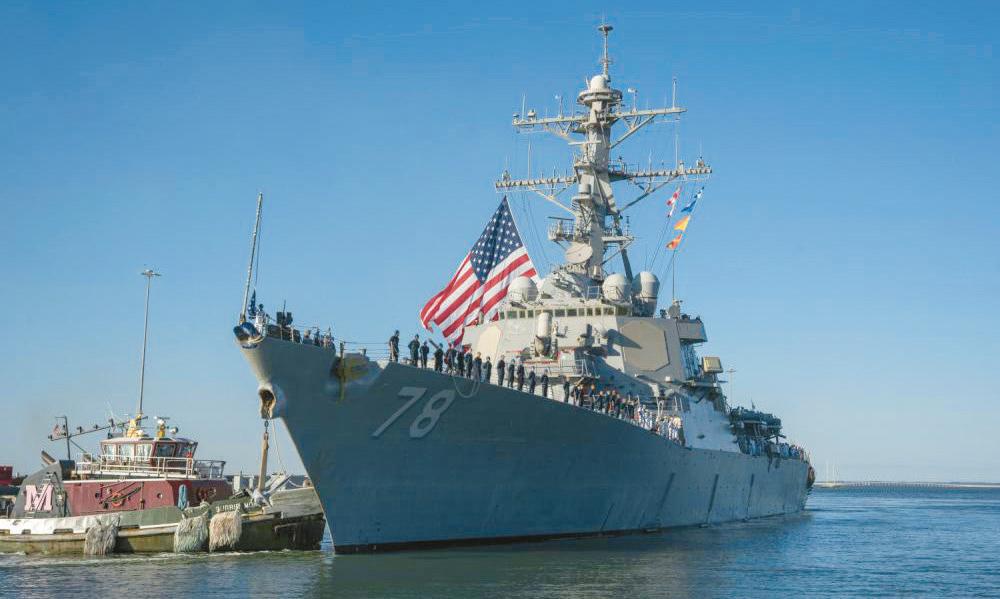
NORFOLK, Va The Arleigh Burkeclass guided-missile destroyer USS Porter (DDG78)returnedtoNavalStationNorfolk, marking the end of its time as a Forward Deployed Naval Forces-Europe (FDNF-E) destroyer Oct.9,2022.
Porter departed Naval Station Rota, SpainSept.28thfollowingsevenyearsasan FDNF-E destroyer assigned to Destroyer Squadron 60 and Commander, Task Force (CTF) 65, operating under command and control of U.S. 6th Fleet in the U.S. Naval ForcesEurope-Africaareaofoperations.
“Porter’s time in 6th Fleet was an invaluable experience for all. The crew and I depart Rota, Spain at the highest state of readiness thanks to the many operations and exercises conducted with our NATO
Alliesandpartners,”saidCmdr Christopher Petro,Porter’scommandingofficer.“Weare extremely grateful for personal and professional development provided by the opportunities and challenges encountered as a memberofForwardDeployedNavalForces Europe.”
Rear Adm. David Patchell, vice commander at U.S. 2nd Fleet, greeted the shipuponmooringatNavalStationNorfolk.
“I won’t speak for long because I know I am standing between you and your family and friends, but I wanted to extend my congratulations on a successful return to thehomefrontafteryoureightyearforward deployment to Rota. As an FDNF Europe destroyer, your team proudly represented our Navy and our Nation, working side by side with our Allies and Partners building interoperability and providing invaluable defensive capabilities over the course of 11
patrols within 6th Fleet. Your dedication to the mission is not lost on us Thank you for all you have done for our Navy, our Nation, andourAlliesandpartners.”
Porterconducted11patrolsintheU.S.6th Fleet area of operations, finishing the most recentpatrolinJuly2022.Throughoutthese patrols, Porter sailed through the Mediter ranean Sea, Baltic Sea Black Sea and High North.TheshiphasalsocrossedtheAtlantic three times, building interoperability with NATO Allies and partners throughout the region.
During its seven years with the FDNF-E force, Porter participated in many joint operations with Allies and other branches of service Some of the notable exercises the ship participated in include FOST, BALTOPS,AtlasHandshake JointWarrior, SeaBreeze,Polaris,andAtlanticResolve.
Porter will be replaced on the FDNF-E
force by USS Bulkeley (DDG 84), the latest destroyer to arrive to Rota, Spain. USS Bulkeley was commissioned in December of2001,andisnamedforViceAdmiralJohn D.Bulkeley
Porter is named for Commodore David Porter, and his son, Adm. David Dixon
Porter,andisthefifthshiptobearhisname
Commodore David Porter served in the Quasi War, First Barbary War, War of 1812 andintheWestIndies Hetookcommandof numerous ships, including the USS Consti tution. He is known for first originating the saying,“FreeTradeandSailorsRights.”
U.S. 2nd Fleet, reestablished in 2018 in response to the changing global security environment, develops and employs maritime forces ready to fight across multiple domainsintheAtlanticandArcticinorderto ensure access, deter aggression and defend U.S.,allied,andpartnerinterests
Command: PublicWorksDepartmentNewport, RhodeIsland(NAVFACMid-Atlantic)
Hometown: Boxford,Massachusetts
What are some healthy ways that you relievestress?
It’s important to know how you react to stress and how you manage it. My favorite activity is kayaking being on the water and looking at the land from a different angle helps remove me from work and find a sense of calm, no matter the conditions Youcanalwaysspotmedrivingaroundwith my kayak on the roof of my car For day-to daystressrelief,goingforarunorgettingout onthewaterhereinNewportprovidessome perspectiveandprovidesanoutlettoletme thinkandreset AnotherusefulwayIrelieve stressistotalkwithmypeers There’salways peopletosupportyou,andyoudon’thaveto dealwithstressalone
Command: PublicWorksDepartmentNewLondon, CT(NAVFACMid-Atlantic)
Hometown: Troy,Illinois
What are some healthy ways that you relievestress?
Playing with my three young children and going on long walks in my neighborhood. I also like to keep fit and exercise daily so that I can keep up with my kids. I am very involved in my community and participate in events with other great families at least twiceaweek.
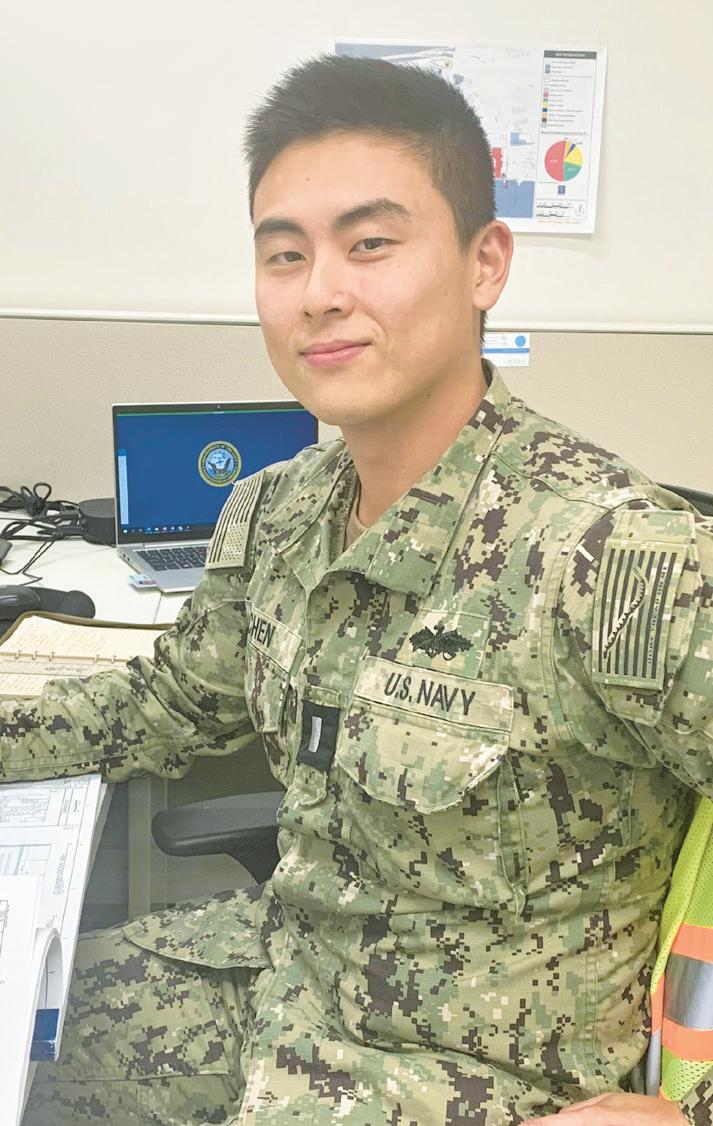
Command: PublicWorksDepartmentPennsylvania, Philadelphia(NAVFACMid-Atlantic)
Hometown: NewYorkCity,NewYork
WhydidyoujointheNavy?
I joined the Navy in order to pursue unique experiences and become a leader There’s nowhere else I could have led Seabees to enablestrategicnationalgoalsandhumani tarianassistancetoPacificnations
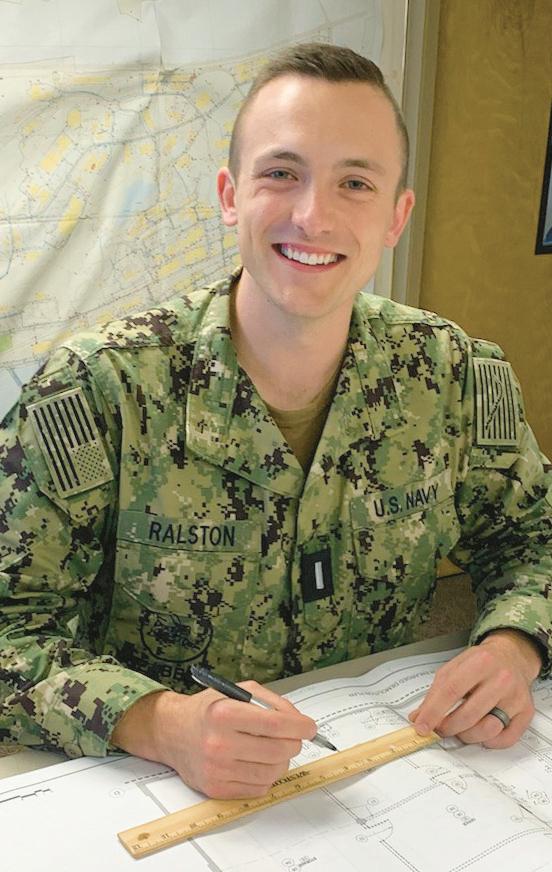
Whatdoyoulikeaboutyourjob?
I like the fact that I’ve been given respon sibility beyond my years and the opportu nitytolearnhowtosucceedindifficultroles I’vebeenluckyenoughtoreceiveworldclass mentorship from all my Chiefs and learned a great deal about leadership from senior officers. I’ve been given the opportunity to develop sailors personally and professionally, seeing them grow has been exceptionallyrewarding
Whatareyourgoalsforthefuture?
I plan on continuing to develop my style of leadership and try to incorporate what I appreciate from my leaders. Transitioning to NAVFAC from the Naval Construction Force,Ialsoplanonfocusingonmyprofessionaldevelopmentasanengineerandprojectmanager.
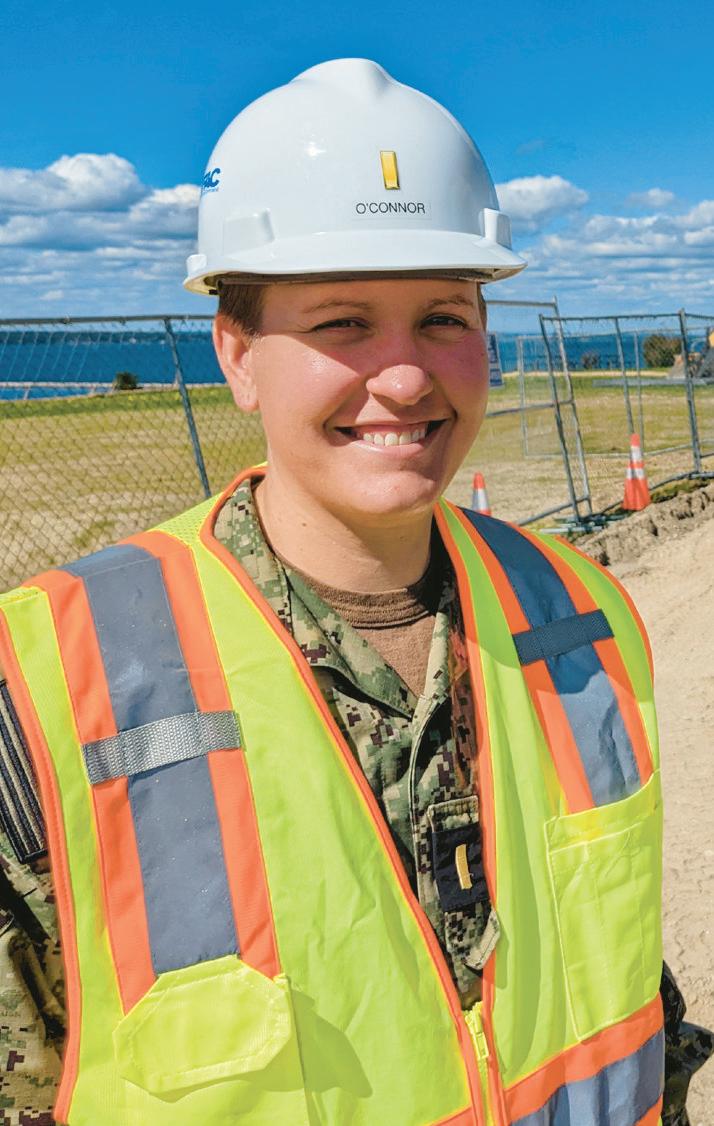
Command: Public Works Department Newport, Rhode Island (NAVFAC Mid-Atlantic) Hometown: Montgomery,Indiana
WhydidyoujointheNavy?
I wanted to pursue unknown challenges leave my small town and see the world. I didn’t know anyone that had been in the military, so I’m the first in my family to do so I am also prior enlisted, and the Navy providedmetheopportunitytogotocollege forfreewhileonshoreduty
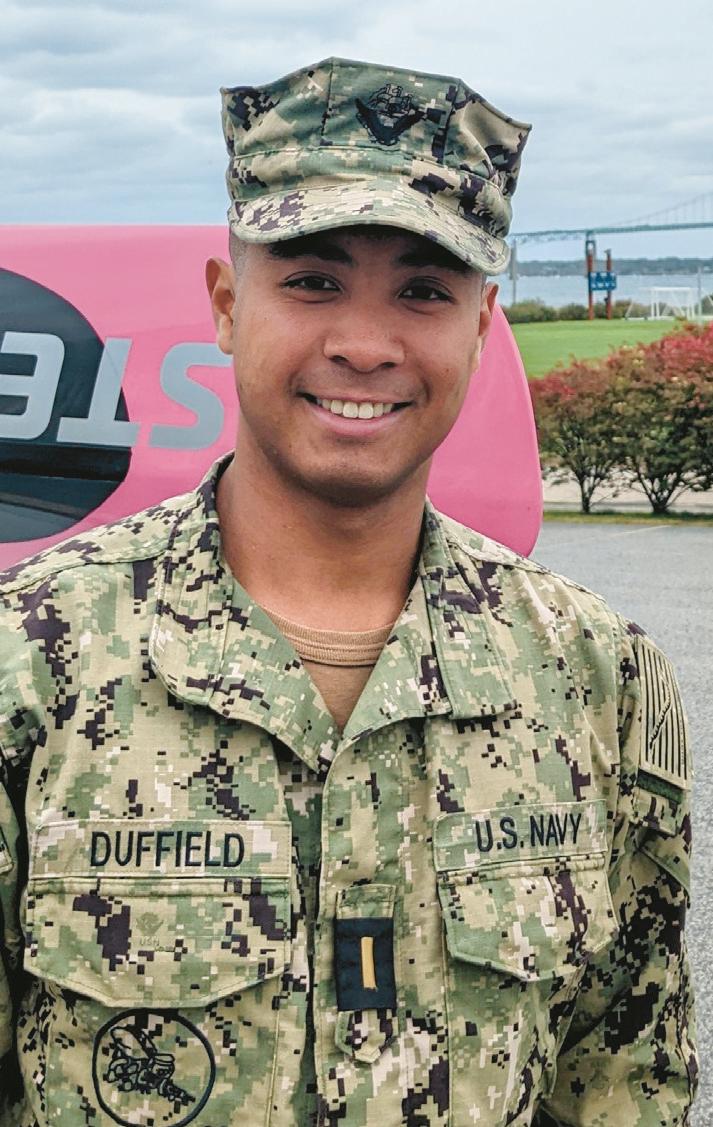
Whatdoyoulikeaboutyourjob?
The best thing about my job is that I get to see the improvements that are made to the installation through our construc tion contracts I like to interact with our supported commands and see first-hand how the project resolves their infrastructure issues and improves their operational capabilities
Whatareyourgoalsforthefuture? Iwouldliketocontinuemycareerdevelop ment and obtain my Professional Engineer license takeonincreasingleadershipoppor tunities,andeventuallyretire.
Ensign Samuel DuffieldFORTLEE,Va OnOct.13,theDefense Commissary Agency (DeCA) salutes the U.S. Navy on the 247th anniversary of their establishment by the Continental Congress in 1775
Throughout its history the commis sary benefit has gained the admiration and gratitude of sailors and their families, said MarineSgt.Maj.MichaelR.Saucedo,senior enlisted advisor to the DeCA director.
“At DeCA we salute the Navy’s 247 years ofservicebydeliveringacommissarybene fitthatprovidesvaluablesavingstosailors, retirees and family members,” Saucedo said. “We want our sailors and their family members to know that if they’re not shop ping their commissary, then they are miss ingoutonsavingatleastaquarteronevery dollar compared to prices at ‘outside the gate’ grocery stores that means you save $50 on a $200 grocery bill!”
Before the Navy established its commis sary operations sailors had to find ways to procure food while they were at sea.
In the late 18th and early 19th centu ries, sailors received a weekly ration that included 3 pounds of pork or beef, a pound of flour, some cheese, hardtack biscuits, and a half pint of distilled spirits or a quart of beer each day. The meat was kept in brine inside barrels to preserve it and was boiled before it could be consumed. Some captains allowed their crew to cast fishing nets and the fish was distributed among the sailors
The food sailors had onboard was often nutritionally deficient and could spoil over a few weeks Hardtack biscuits often becameinfestedwithmaggotsandweevils shortly after the ship set sail.
There was also the dilemma of sailors falling ill with scurvy caused by a defi ciency of vitamin C. As a result, sailors were required to drink a daily grog that contained spirits and a citrus beverage such as orange, lime or lemon juice The British Navy started this tradition lead ing to the use of the American slang term of “Limeys” for the British which endures to this day.
Sailors eagerly anticipated traveling to foreign ports where they could buy fresh fruits vegetablesandmeat.Bumboatoper ators would pullalongside visitingships to sell an array of goods including seafood, shellfish, exotic fruits and baked goods Theyalsochargedexorbitantprices,andat timestheirgoodswerenotofthebestqual ity But when the Navy reduced rations in 1801,bumboatsbecameevenmoreimport ant to the sailors
In the early 20th century during the worldwide voyage of the “Great White Fleet, the Navy began to realize that bumboats were not sufficient to serve the needs of large ships Congress had already started taking steps to eliminate bumboats
by establishing ships stores aboard every vessel and “ships stores ashore, similar to Army commissaries that had been estab lished in 1867
The first Navy sales commissary opened in the Washington, D.C., Navy Yard in 1910 and operated similarly to a warehouse Clerks stood at a counter and pulled items from the shelves for customers Self-ser vice style stores started gaining popularity by the late 1920s and became more wide spread by World War II.
In 1946, Navy commissaries fell under the authority of the Navy Ships’ Store Office, later under the Navy Resale System Office (NRSO) in 1969 and finally the Navy Resale and Services Support Office (NAVRESSO) in 1979

OnOct. 1,1991, theDefenseCommissary Agencywaslaunchedandassumedcontrol of all U.S. military commissaries around the world. Today, members of the Navy community may shop at any of DeCA’s
236 commissaries worldwide There are 60 such stores at Navy bases, plus one at the Joint Reserve Base at Naval Air Station Fort Worth, Texas.
All commissaries boast conveniences like internet ordering/curbside pickup services, self-checkouts, digital coupons, dietitian-approved resources to identify nutrient dense foods sushibars hotfoods deli-bakeries, credit and debit card accep tance, gift cards and much more.
“As the Navy continues to build on its legacy, we will keep providing to their service members and their families along with all of our eligible patrons superior customer service and the items they want at the best possible savings,” Saucedo said.

About DeCA: The Defense Commis sary Agency operates a worldwide chain of commissaries providing groceries to military personnel, retirees and their




families in a safe and secure shopping environment. Commissaries provide a militarybenefit,savingauthorizedpatrons thousands of dollars annually on their purchases compared to similar products at commercial retailers The discounted prices include a 5-percent surcharge, which covers the costs of building new commissaries and modernizing existing ones A core military family support element, and a valued part of military pay and benefits, commissaries contribute to family readiness, enhance the quality of life for America’s military and their fami lies, and help recruit and retain the best and brightest men and women to serve their country

Naval Medical Readiness Logistics Command
WILLIAMSBURG, Va Naval Medical ReadinessLogisticsCommand’s (NMRLC) DesignTeamdoesamazingworktosupport the logistical complexities of delivering world-classmedicalcapabilitiestowarfight ers and to other national medical response requirements at remote, dangerous, and hostilelocations.
When American warfighters are called tothebattlefield yearsoftrainingandexer cises allow our warriors to pull the triggers and send projectiles downrange hitting targets Just as they trained throughout the many exercises that prepared them for the firefight
Similarly, when warfighters need emer gencyornon-emergencypreventativeassis tanceofanytype,theexpectationisheorshe will receive world-class medical care. That care has reduced battlefield fatalities by 92 percent with advanced training and signif icant medical and technological advances with battlefield medicine throughout the pastcentury
In 2016, the U.S. Army Surgeon General
spoke to the Defense Writer’s Group and expressed the significant battlefield tech nological advances that have increased the percentageofthoseinjuredonthebattlefield making it back home alive. Lt Gen. Nadja Y. West said about 92 percent of Soldiers wounded in Iraq and Afghanistan returned homesafely.
“That’s the highest percentage in the history of warfare, despite the rising severityofbattleinjuriesfromincreasinglylethal weapons,”Westsaid.
Medical efforts to address the diverse health threats from accession through mission execution seek to sustain and restore warfighters’ overall health, increasing performance and deployability Investments are focused on materiel and knowledge-basedmedicalsolutions,includingthedeliveryofimprovedcombatcasualty care,enhancedsurvivability,reducedimpact ofinjury,andoptimizeddownrangemedical footprint.
NMRLConCheathamAnnex,Williamsburg, VA, and lead by Cmdr. Matthew P. Marcinkiewicz, is a major part of the Navy’s downrange footprint and its abil itytodelivercareanywhereatanytime As
the Department of Defense’s (DoD) only expeditionary medical production facility thathasanembeddeddesignstaff,NMRLC develops and produces “tailor made” plat forms to support any medical capability requirements
NMRLC Design Team Director Cmdr Jeremy Schwartz, explained the different platforms
“We accomplish this mission by providing the Expeditionary Medical Facility (EMF), forward deployed platforms with Role Three medical and surgical capabil ities designed to increase the survivabil ityofthoseinjuredinacombattheater,”he said. “Role Three support has additional capabilities, including specialist diagnostic resources, specialist surgical and medical capabilities, preventive medicine, food inspection,dentistry,andoperationalstress management teams.”
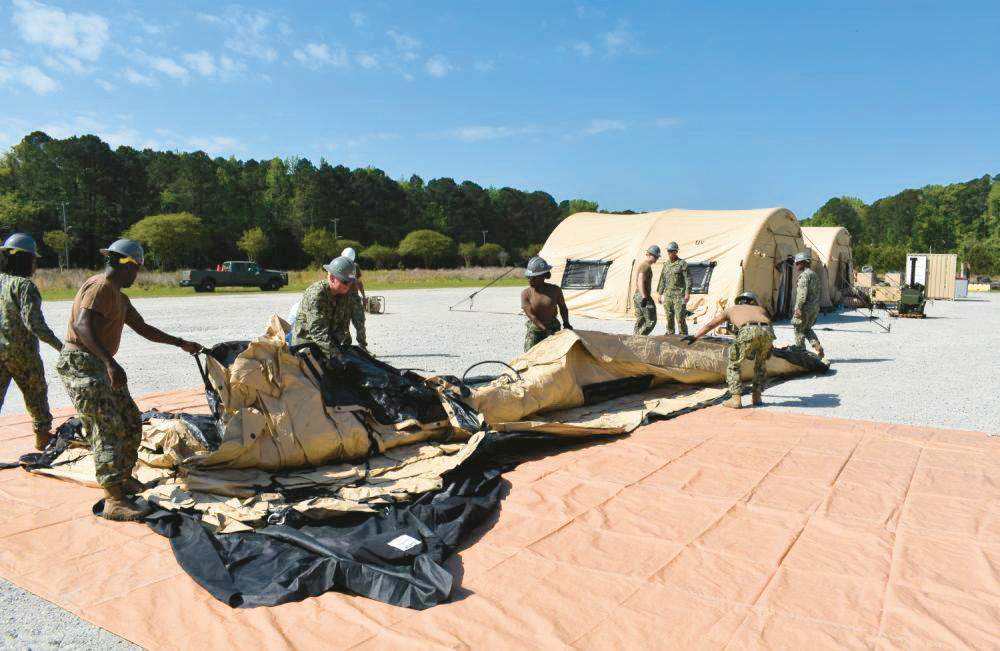
NMRLC is responsible for building and maintaining rapidly deployable medical systemstosupportcontingencyoperations humanitarian assistance, and real-world events and exercises around the globe
To address emerging requirements more responsively, Navy Medicine transformed
the legacy Fleet Hospitals into more agile, flexible,scalable,modularEMFstosupport the full range of military operations
The unique capabilities provided by the experts who comprise NMRLC saves lives Thecommandhasauniquelydiverse staff of active duty, Government Civilians, and a team of dedicated contract support personnel.Together,theyembodytheidea of strength through diversity, and it is this mixofdiverseexpertsthatallowsNMRLC tobethemostcapableandadeptcommand within DoD regarding the design, produc tion, and delivery of deployable medical capabilities
The NMRLC Design Team is an integral element in delivering the scared promise tocareforuniformedmenandwomen,our nation’smostpreciousasset,anywhereand everywhere they are called to serve. The menandwomanwhodesignthebattlefield hospitals work to plot, design, and create scalable and tailorable deployable medi cal facility design supporting from 10 to 144-bedstaffedbytheworld’sbestmilitary doctors,nurses,corpsmen,andtechnicians ensuring our nations service members return home safely.
MILLINGTON,Tenn Fiscalyear(FY) 2022Navyrecruitingcompletedtoday,with the Navy reaching its goal in enlisted active duty recruiting, while falling short of its goalsinreserveenlistedandbothactiveand reserve officer recruiting FY22 has been a highlychallengingrecruitingenvironment, withcompetitionfortoptalentfiercewithin the branches of the Department of Defense and the private sector, where major corpo rations have begun offering incentive packages to compete with the military. As all branches of the military have struggled to makemission,theNavyimplementedmulti ple initiatives in order to accomplish their accessiongoal.
The Navy finished FY22 with the followingnumbers:
Enlisted(Active)33,40033,442
Officer(Active)2,5072,298*
Enlisted(Reserve)7,4005,442*
Officer(Reserve)1,360982*
*Preliminarynumbers whichmaychange slightlybasedonSept 30activity
“We’ve completed a very challenging year,andIamveryproudofthetremendous efforts our Recruiters gave to bring in the nation’s top talent and build the future of the fleet,” Rear Adm. Alexis “Lex” Walker, Commander, Navy Recruiting Command said.“Thecomingyearpromisestobe even morechallenging aswearenotstartingthe yearinasstrongapositionasFY22.Inorder toachieveourmissiongoalsthisyear wewill need an all-hands-on-deck effort, not only from our recruiters, but from throughout theactiveandreservefleet,ourretiredNavy veterans,andourcommunityleadersaround the country who are centers of influence in thelivesoftheyoungpeoplewearetryingto recruit.Wearegoingtodoeverythingwithin our power to ensure that our recruiters are empoweredandhavetheassetstheyneedin ordertoaccomplishthemission.
While the enlisted active accessions reached their mission goal, this came at a heavy price The Navy entered FY22 with a relatively healthy Delayed Entry Program (DEP) pool and finished the year with the lowest DEP pool in 40 years DEP allows future Sailors to be contracted to join but remainonholdbeforeshippingofftoRecruit Training Command (boot camp). The goal oftheprogramistoacclimatefutureservice memberstothemilitaryenvironment,military rank structure, history, customs and courtesies and to improve their physical fitness prior to shipping out. It also allows the military flexibility in when they ship futureservicememberstoregulatetheflow offutureSailorstobootcampandfollowon trainingschools.
Draining the DEP pool to critically low levels brings many new challenges for the upcoming year Around a third of those remaining in DEP are future Sailors who are seniors in high school, who cannot ship until after graduation in May/June 2023 So the Navy is expected to be in a contract and-ship posture where future Sailors are shippedtobootcampwithinweeksoreven days of contracting to serve This posture is expected to persist through FY23 with the followinggoal.
FY23Goal
Enlisted(Active)37,700
Officer(Active)TBD*
Enlisted(Reserve)8,100
Officer(Reserve)1,732
*Active Officer goals are usually released duringthefirstquarteroftheFY
In an effort to bring more future Sailors intotheDEPpool,theNavyhasbeenoffer ingmultipleincentivestogenerateagreater interest in naval service among qualifying applicants. In August, Navy Recruiting Command (NRC) announced enlistment bonuses up to $50,000 and student loan repayment up to $65,000 This offers the opportunity for future Sailors to earn a substantialsumastheybegintheircareers
The loan repayment program remains in placeforFY23,andthebonusstructurefor the start of FY23 is posted at this link, with a maximum bonus remaining $50,000: https://www.cnrc.navy.mil/Portals/87/ Documents/Bonus%20Loans/FY22/ CNRC_EB_LRP%20GENADMIN_ SEPTEMBER2022_effective17SEP pdf?ver=CiJD5usN-CcYkKX__9wvu w%3d%3d×tamp=1663602235466
“The maximum current enlistment bonus is $50,000, and the maximum loan repayment is $65,000,” said Walker “They are not mutually exclusive, so if a future Sailor maximizes both, that adds up to a life-altering $115,000 and the opportunity to serve in the world’s finest Navy.” In addition to bonuses and loan repay-
ment, leadership throughout the Navy is engaged in helping to improve Navy recruiting numbers Secretary of the Navy Carlos Del Toro has begun sending letters to high school principals to promote military service and to foster school access for recruiters These initial letters will be followedupwithaletterfromCommander, Navy Recruiting Command (CNRC) to further foster a relationship with these centers of influence
CNRC also began the “Every Sailor is a Recruiter” (ESAR) program in July The goal of the program is for U.S. Navy Sailors all over the world to share their positive experiences of naval service with qualify ing applicants and provide referrals based upon these interactions “EverySailorhasavoice,andit’snotjust uptorecruiterstorepresenttheNavyback at home, but it is their duty to share their experiences and inspire people to serve their country,” Master Chief Navy Coun selor Gerald Allchin, NRC National Chief Recruiter said “Growing up in Cleveland, Ohio, I know first-hand how rare it can be in non-fleet concentration areas to hear anything about the Navy So, I tell my ship mates to share your stories!”
This program will be a force multiplier and will make the Navy more competitive in today’s challenging labor market. Navy leadership is currently determining the best way to recognize and award Sailors that provide referrals who ultimately join.
ToaddressReserverecruitingshortfalls,
the Navy altered its recruiting command structure this summer, standing up Navy Recruiting Reserve Command (NRRC) to specifically tackle these challenges Part of this restructure’s focus is on Canvasser Recruiter (CANREC) professionals They make up 65% of NRRC and carry a criti cal portion of the NRRC enlisted goal and 100% of the officer mission goal.
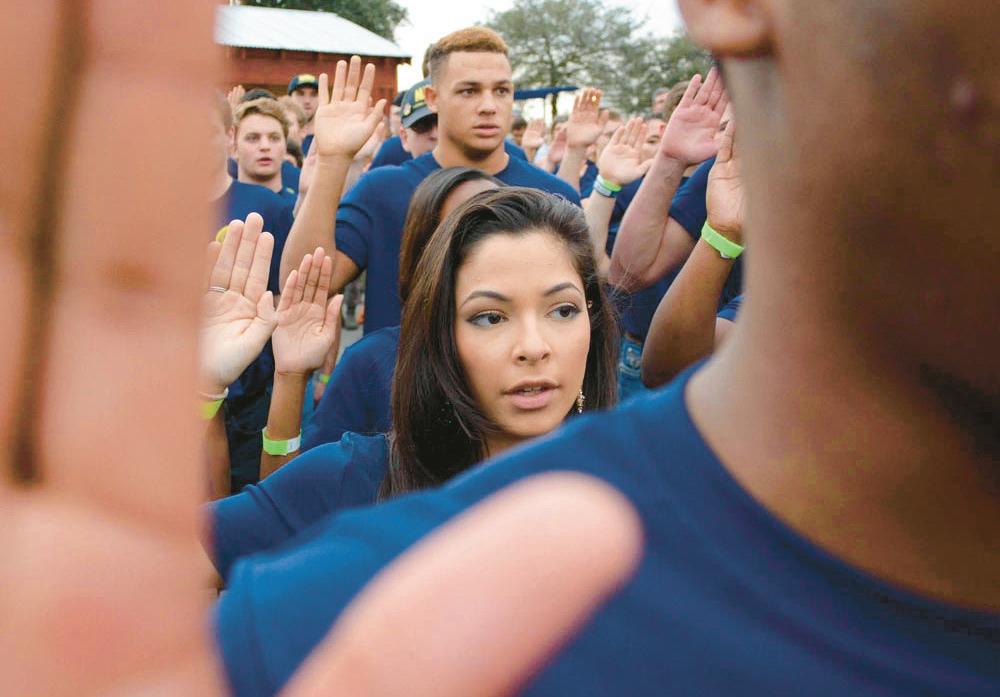
“Our success depends upon CANREC professionals, and I am continually amazed at their commitment,” said CAPT Karen Muntean, Commander of NRRC. “These individuals are Selected Reservists (SELRES) and civilian professionals who have committed themselves to joining our challengingrecruitingcharge Theirroleis to recruit for the reserve mission, educate active duty, civilians and veterans on the benefitsofservingintheNavyReserve,and partner with military and industry organizations.”
CNRCconsistsofacommandheadquar ters two Navy Recruiting Regions NRRC, and 26 NTAGs that serve more than 1,000 recruitingstationsaroundtheworld.Their mission is to attract the highest quality candidates to assure the ongoing success of America’s Navy
For more news from Commander, Navy Recruiting Command, go to http://www cnrc.navy.mil. Follow Navy Recruiting on Facebook (www.facebook.com/MyNA VYHR) Twitter (@USNRecruiter) and Instagram (@USNRecruiter).
FromOfficeoftheDeputyChief ofNavalOperationsfor InformationWarfare(N2N6)
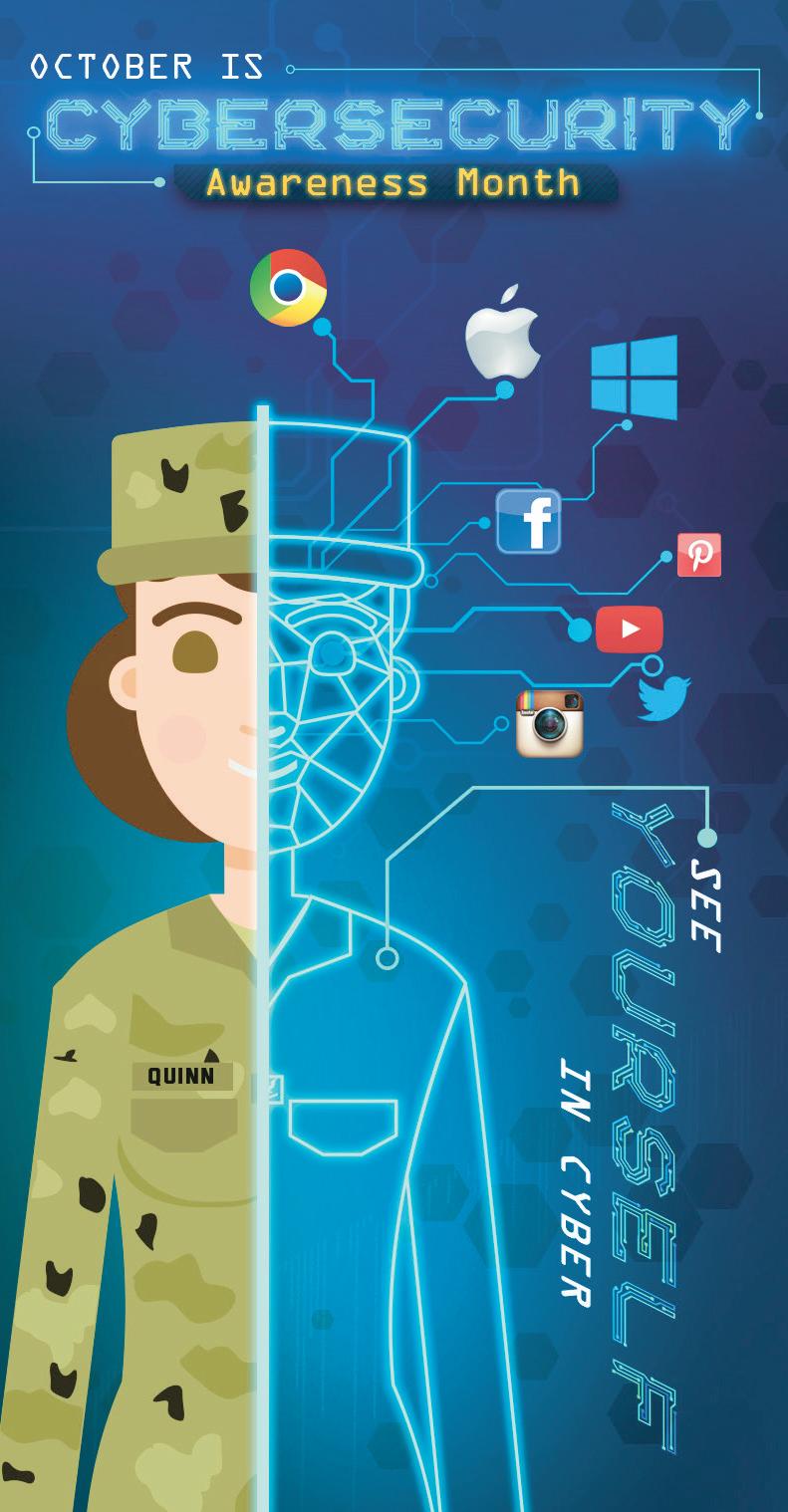
WASHINGTON The Navy will observe Cybersecurity Awareness Month this October joining govern ment and private industry to raise awarenessaboutonlinesecurity.
Since 2004, the President of the United States and Congress have declared October Cybersecurity Awareness Month, helping individuals protect themselves online as threatstotechnologyandconfidential databecomemorecommon.Celebrat ing its nineteenth year the campaign hasgrowngloballysinceitsinception, reachingconsumers,smallandmedium-sized businesses, corporations, and families in over 75 countries and territories.
The Navy is adopting the National Cybersecurity Alliance’s Cybersecu rity Awareness Month theme of “See Yourself in Cyber,” demonstrating that while cybersecurity may seem like a complex subject, ultimately it’s really all about people Informationandresourceswillbeprovidedto helpeducatepartnersandthepublic, ensuringallindividualsandorganiza
tions make smart decisions whether onthejob,athomeoratschool now andinthefuture.
“Any individual logging on to a Navy information system immediately becomes a cyber warrior,” said Rear Adm. Tracy Hines Director of the Navy’s Enterprise Networks and Cybersecurity Division. “A single user can impact our global force, and vigilance by everyone will make the differencebetweencontinuedmission successorthefailuretomeetthetaskingofournation.”
EverydayacrosstheDepartmentof Defense information network there are 48 million e-mails processed, 174.8 billion cybersecurity events 420 million marketing and phishing attacks,and1.5billionmaliciouscyber attacksblocked.
The Navy is increasingly reliant on technologyandcyberspacetoconduct its missions and protect the United States Unlike traditional combat, a cyber attack has the ability to reach multiple areas of destruction in very littletimeduetothenatureofcommu nicationssystems.Asuccessfulcyber intrusion of the Navy’s network can jeopardize systems and data that affectnearlyeveryaspectoftheNavy’s
mission.
A larger cyber footprint, coupled with technological advances among adversaries, has increased the Navy’s risk for potential cyber intrusions All those who access Navy information systems need to understand that their decisions in the digital environment are either an asset or a threat to protecting the Navy’s networks, and alsoathreattothemandtheirfamilies outsidetheworkenvironment.
“In the spirit of the Chief of Naval Operations’ Get Real Get Better campaign, it’s important to acknowledge what our cybersecurity weak nesses are so we can improve,” said Rear Adm. Hines. “Throughout this month we will be sharing cybersecu rity best practices, and I invite you to challenge yourself, your colleagues, andyourcommandtotakeacollective responsibilityinprotectingtheNavy’s cyberinfrastructure.”
FormoreinformationontheNavy’s Cybersecurity Awareness Campaign visit doncio.navy.mil and search “CybersecurityAwarenessMonth.”
Service members: if you’ve beenwantingtomakeyourvoice heard on issues related to race and discrimination in the mili tary,now’syourchancetodoso

On Sept. 26, the Department of Defense released the 2022 Workplace and Equal Opportu nity Survey for a random selec tion of active-duty, reserve and National Guard members to take. For the first time, too, the survey will measure the estimatedprevalenceofexposureto extremistactivityinthemilitary
Diversity, equity and inclu sion are important to the DOD which is committed to promot ing dignity and respect within the workplace This survey lets

the department and Congress know how the military is living up to those ideals.
Survey participants have the chance to detail their experi ences and perceptions about unit climate and cohesion, as well as diversity and inclusion They can also give their thoughts on the effectiveness ofpoliciestoimproveracialand ethnic relations as well as the complaints process Service members who were invitedtotakethesurveyshould havereceivedanemailinvitation fromweo-survey@mail.miland a note in the mail with instruc tions However,ifyou’renotsure you received either and would like to check your eligibility, visit the survey page at https:// dodsurveys.mil and click on
“Don’t have a ticket number?” to look up yours
FYI If you are using the ticket number lookup, you’ll be redirectedfromthe.milwebsite to a .com website Survey offi cials say that is a safeguarded site; however, if you still have questions about its legitimacy, you can call 571-372-1034 or email the address above You can also get answers to some frequently asked questions about the survey on the DOD’s Office of People Analytics website.

Sincethesurveyisconsidered official business, you can take it during work hours on your personalorgovernmentdevices, including smart phones and tablets A common access card is NOT required for this, and all
results are confidential, mean ing your leadership won’t know what feedback you specifically provided.
The last day to fill out the survey is Dec. 29
TheOPAhasbeenconducting the Congressionally mandated survey since 2005 It allows the departmenttomonitortheprog ressofitsprogramsandpolicies and to make progress towards the goal of creating a healthy workplace for all members of the military
Previously, the surveys were split into two one for activeduty components and one for reservists Theyhavesincebeen compiled into one survey that will be fielded every two years instead of every four years
 ByChiefPettyOfficer AlexanderGamble
QUANTICO,
engineering technology, orcybersecurity
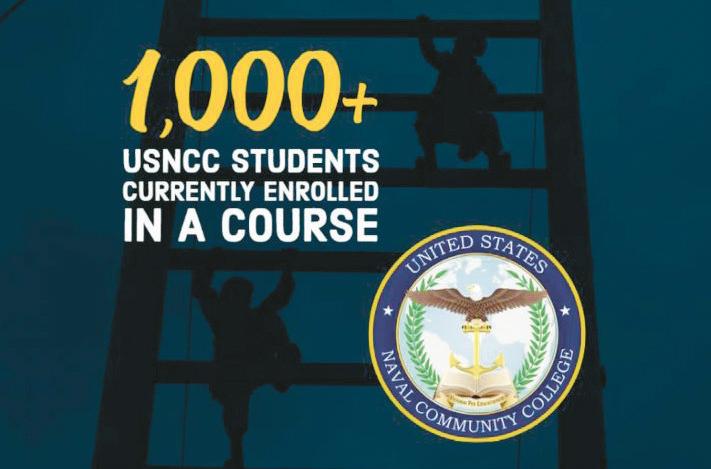
“We are excited to be the institution of choice for more than 1,000 men and women in uniform,” said USNCC’s Presi dent Randi R. Cosentino, Ed.D “Just two years ago we began with an idea as to how to make naval-relevant enlisted educa tionpossible Now,wehaveintroducedsixacademicprogramsso we can support the educational needsoftheNavy,MarineCorps, andCoastGuard.”
The USNCC students are enrolledincourseseitherdirectly with the school or through one of its consortium partners The USNCCusesaconsortiummodel of education, which means the USNCC teaches the five Naval Studies Certificate courses, and the partner institution teaches the remaining courses that complete the associate degree This allows the naval services to have a flexible scalable model of education to meet the needs of the services while providing quality education to the Sailors, Marines, and Coast Guardsmen who earn their degree through
theconsortium.
“We are staggering the starts of our programs to ensure each degree has a smooth introduc tion, said Alphonso Garrett, director of enrollment at the USNCC.“Wearetrackingtoward our planned growth as an institution, and we’re receiving feedback from the services and the service members that there is a demand for these types of degrees.
There is already a demand for future degree programs the USNCC is developing The USNCC is accepting applica
tions for classes for the orga nizational leadership degree program scheduled to begin in early 2023 and is developing its aviation maintenance technology program to start after that By the end of 2023, the USNCC planstohaveupto3,000students enrolled across seven different degree concentration areas with a data analytics program andamaritime-focusedlogistics programcomingonlinein2023
“This is a great program that I wish was available when I was a young infantry Marine,” said the USNCC’s command senior
enlisted leader Sgt. Maj. Mike Hensley “The opportunity to earn a naval-relevant education entirely online and at no cost not even books that’s an incredible opportunity for today’s Marines, Sailors, and CoastGuardsmen.”
The United States Naval Community College is the offi cial community college for the Navy Marine Corps and Coast Guard. To get more information about the USNCC, go to www usncc.edu Click on the Inquire Nowlinktolearnhowtobeapart oftheUSNCC.
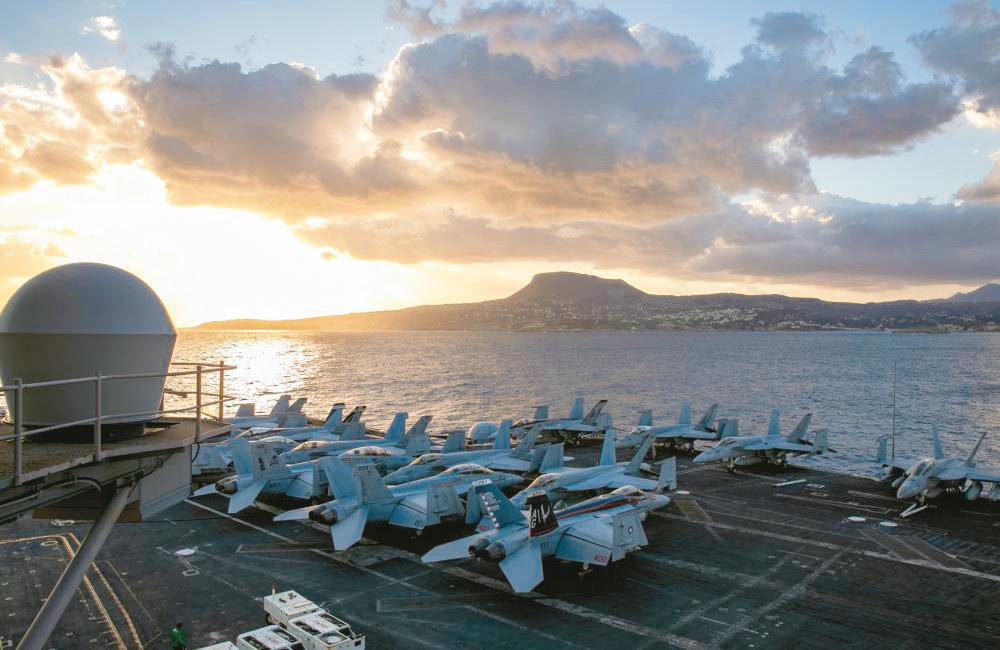
ByCarrierStrikeGroup10
The Nimitz-class aircraft carrier USS George H.W. Bush (CVN 77) along with the embarked staff of Carrier Strike Group (CSG) 10, George H.W. Bush Carrier Strike Group(GHWBCSG) arrivedinSoudaBay, Crete,forascheduledportvisitOct.6,2022
The port visit provides an opportunity to furtherstrengthentheenduringrelationship between the United States and Greece, and allowtheSailorsofGHWBCSGachanceto experiencethealliednation’sculture
“The defense and security cooperation between the United States and Greece is at an all-time high. We value the relationship wehavewithourGreekalliesandthebases andsupportfacilitiesatSoudaBaycontinue to serve as a “crown jewel” in the eastern Mediterranean Sea that enable U.S. and NATO missions, interoperability, and security in the region,” said Rear Adm. Dennis Velez, commander, CSG-10, GHWBCSG
“We are stronger when we work together withourallies,andalsowhenwebuildupon the already strong relationships we have withthem.”
During their time in port, Sailors will depart the ship to experience and appreciate the people and culture in and around SoudaBay.Itwillbetheship’sfirstportvisit sincedepartingNorfolkonAug.10,2022for aplanneddeployment
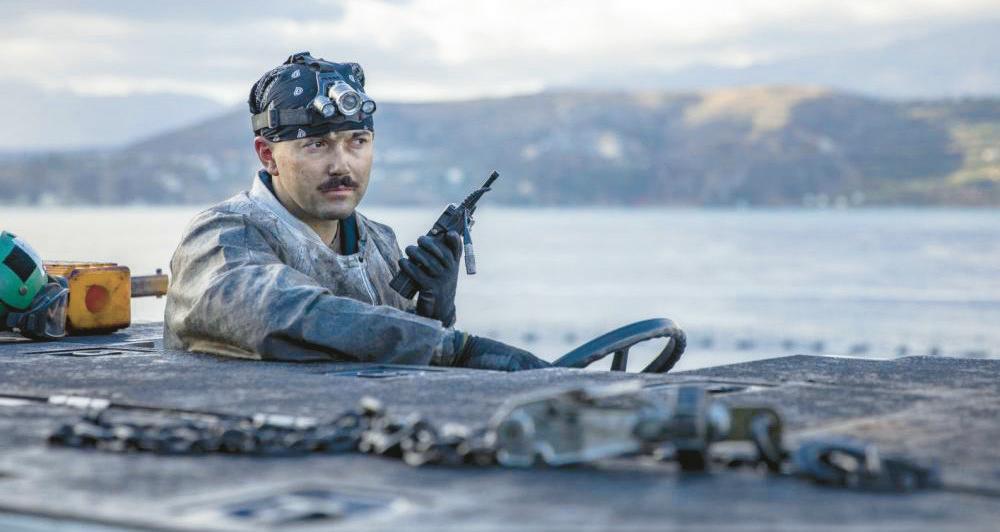
“Our Sailors know the importance of our responsibility to represent our families, cities states and shipmates as Ambassa dors wherever we go and we look forward to enjoying a well-deserved port visit with
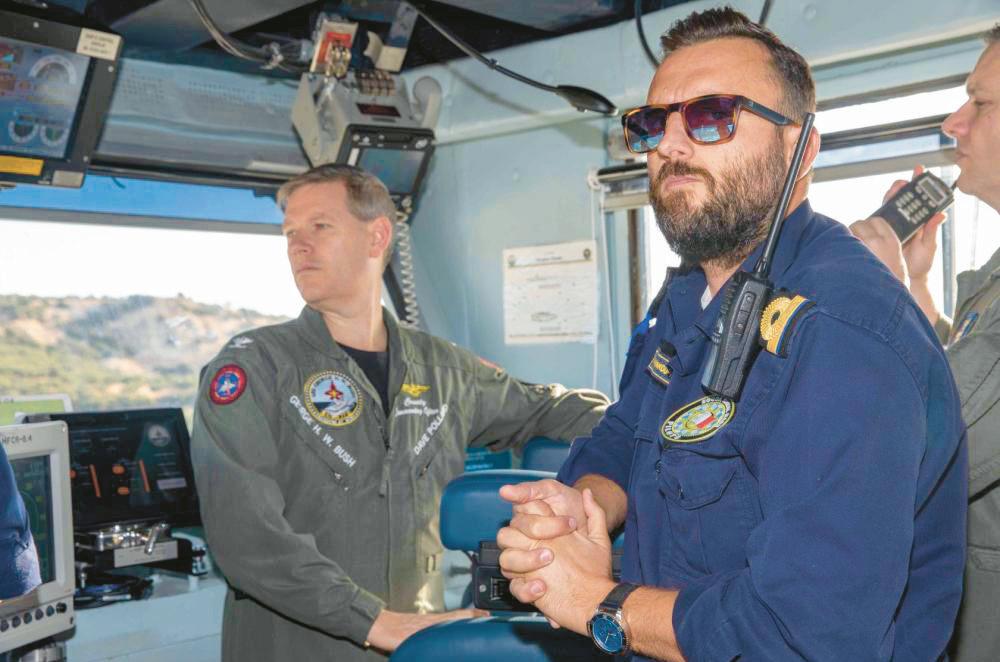
our friends in Souda Bay,” said Capt. Dave Pollard “We value the importance of the relationships we have with our allies, and we look forward reinforcing and building uponthatfoundation.”
Theship’sMorale,Welfare,andRecreation (MWR)teamworkedwithlocalandregional partners to line up a variety of tours and daytripsforSailorstoexperiencetheregion Trips include a daylong hikes and trips to well-knownhistoricalandculturalsites
In addition to MWR trips Sailors will also have the opportunity to participate in clean-upeventsorganizedwithandthrough localofficials.
“Itwillbegoodtospendtimeinabeauti ful country enjoying the local food, art, and history to recharge from being on the ship,” said Aviation Boatswain’s Mate (Handling)
First Class Jose Mercado, George H.W. Bush’s Sailor of the Year “But we know it’s also important to give back to the local community while we have these opportu nities to enjoy the culture and learn about regionalhistory.”
CSG-10, GHWBCSG, is on a scheduled deployment in the U.S. Naval Forces Europe-Africaareaofoperations employed by U.S. Sixth Fleet to defend U.S. allied and partnerinterests
GeorgeH.W.BushistheflagshipofCSG-10 andtheGHWBCSG CSG-10iscomprisedof GeorgeH.W.Bush,CarrierAirWing(CVW) 7, Destroyer Squadron (DESRON) 26, the Information Warfare Commander, and the Ticonderoga-class guided-missile cruiser USSLeyteGulf(CG55)
TheshipsofDESRON-26withinCSG-10 are the Arleigh Burke-class guided-missile destroyersUSSNitze(DDG94),USSFarragut(DDG99),USSTruxtun(DDG103),and USSDelbertD.Black(DDG119)
The squadrons of CVW-7 embarked aboard George H.W. Bush are the “Jolly Rogers” of Strike Fighter Squadron (VFA) 103 the“PukinDogs”ofVFA-143,the“Blue tails” of Carrier Airborne Early Warning Squadron (VAW) 121, the “Nightdippers of Helicopter Sea Combat Squadron (HSC) 5,the“Sidewinders”ofVFA-86,the“Night hawks” of VFA-136, the “Patriots” of Electronic Attack Squadron (VAQ) 140, and the “Grandmasters” of Helicopter Maritime StrikeSquadron(HSM)46
For over 80 years, U.S. Naval Forces Europe-U.S NavalForcesAfrica(NAVEUR NAVAF) has forged strategic relationships with allies and partners, leveraging a foundationofsharedvaluestopreservesecurity andstability
HeadquarteredinNaples,Italy,NAVEURNAVAFoperatesU.S.navalforcesintheU.S. EuropeanCommand(USEUCOM)andU.S. Africa Command (USAFRICOM) areas of responsibility U.S. Sixth Fleet is permanently assigned to NAVEUR-NAVAF and employs maritime forces through the full spectrumofjointandnavaloperations.
Earth’s average annual temperature is rising andasservicemembersadjusttonew climate realities the Defense Department mustdoitsparttocombatclimatechange Therearehistoricdroughtsinmanyparts of the world, including the western United States and in the countries of East Africa. Desertification is expanding the Sahara and Gobi Deserts Heat waves are longer and hotter, contributing to more wildfires According to climate experts, the intensity of hurricanes is projected to increase over thecomingdecades
Some recent examples include the heat dome over Europe, where London the capital of a country where 85 degrees Fahr enheit is generally considered hot had a temperature of 105 degrees, and the catastrophic flooding in St Louis and eastern Kentucky
“DOD must prepare for and adapt to these changes,” Iris A. Ferguson, who is leading on this effort for the Office of the undersecretary of defense for policy, said. Ferguson is the deputy assistant secretary of defense for Arctic and global resilience Sheisaprincipaladvisortothesecretaryof defense and other senior DOD leaders for policymatterspertainingtoArcticsecurity andglobalresilience includingclimateand
energy resilience The effects of extreme weather exacer bated by climate change have already had profound impacts on the DOD Hurricane Michael a Category 5 storm destroyed at least half of the buildings at Tyndall Air Force Base, Florida, when it roared ashore in2018 Reconstructingthecriticalbasewill costmorethan$5billiontorepair,AirForce officialssaid.
The world’s largest naval base, Naval Station Norfolk, Virginia, is endangered by rising sea levels Water in the bay has risen aboutafoot-and-a-halfsincethe1920s anda normalhightidenowcomesclosetolapping over containment walls The Navy, the city and businesses that depend on the harbor mustworktoadapttorisingsealevels
A Missouri River flood in March 2019 engulfedroughlyathirdofthehomeofU.S. StrategicCommandatOffuttAirForceBase, Nebraska. The damage was so severe that manyfacilitiesatthebasemustberebuilt the cost of which is estimated at more than $500million.
Ferguson’s office will work closely with the other parts of the department that are focused on making bases, posts and facilitiesmoreresilientinthefuture,whichcould include retrofitting buildings to improve theirabilitytowithstandnaturaldisasters.
“We’re trying to increase understanding
of all the ways climate change is impacting the missions of the Department of Defense andparticularlyhowitimpactsthewarf ighter,”Fergusonsaid.
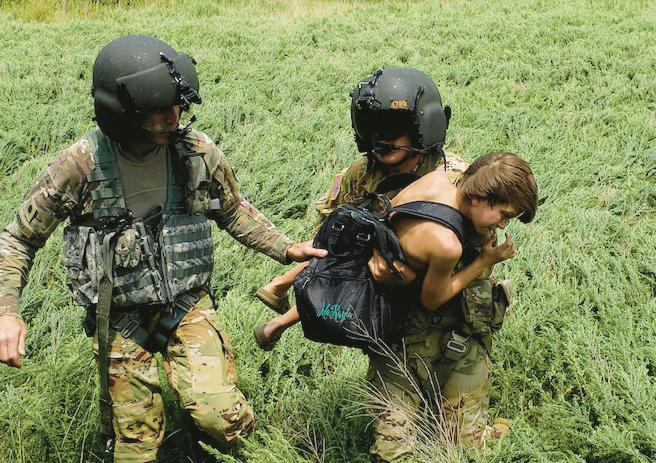
Service members are already being affected by climate change and will see increasing demand on the force On one hand, service members mostly National Guardsmen willbecalledupontorespond to extreme weather events in the United States ThedroughtshavemadeU.S.forests into tinderboxes, and service members are often called to augment firefighters Kentucky National Guardsmen recently helped with flooding in the eastern part of thestate
Climate change is also contributing to extreme weather events around the world, which could increase demand for DOD missions related to conflict, stabilization, humanitarianassistanceanddisasterrelief

“For the department, it’s also imperative for us to work alongside our allies and partners to prevent climate change from contributing to instability and insecurity,” Ferguson said.
As regions become too hot for sustaining livelihoods or human habitation, climate change may spur migration. Tensions over water and other resources could lead to instability and conflict. Climate change is already making the Arctic more accessible
withnationsvyingoverresourcesandaccess
Due to warming temperatures in many regions, diseases and viruses are expected tomigratetonewareasoftheglobe
Climate change will also affect the envi ronments U.S. service members must be preparedtodeploytoandfightin.
Future Arctic combat will require equip ment that can operate dependably in that environment Climatechangemayalsomake amphibious operations more complicated than they already are. Sea and air lines of communicationwillchange
Combatting climate change is also part of the department’s efforts Ferguson said. Newtechnologies,moreefficientplatforms, expansion of electric vehicles and alternativemethodsofproducingenergy allthese effortsacrossthedepartmentaimtoincrease combatcapabilityandmitigaterisk,shesaid, andtheserviceshavealreadystartedtotake actionwithclimatestrategiesandfunding.
DOD personnel are learning firsthand about how climate change impacts their mission
“Our office has our work cut out for us, both internally within the department and externally with allies and partners,” Ferguson said. “Climate change is creating a new operating context for the department, and oursuccessandresiliencewillbecontingent onhowfastwecanadapt.”
FORTLEE, Va.—Service members and their families will soon see a3-5 percent decreaseinpricing on mostgrocery items in theircommissariesaspart of aDepart mentofDefense(DOD)initiativetobolster the economic security and stability of the military community.
DOD’s“TakingCareofServiceMembers and Families” initiativelaysout comprehensiveactions to support military members struggling with the financial impacts of inflation, supply chain disrup tions andthe pandemic
“TheDepartment’saddedinvestmentin ourbudgetallowsustoreducecommissary pricesatthe register about 3-5percent on mostitems —particularly on food staples thatstrugglingmilitaryfamiliesneedmost such as bread, eggs,milk and more,”said BillMoore,directorandCEOoftheDefense Commissary Agency (DeCA). “With this boostwecan achieve at least25percent in overall savings for eligiblepatrons who shop their commissaries.”
Commissary customersare expected to see price changes at mostlocations by mid-October.Pricingonsomeproductsand categories will vary Beforetheadditionalfunding,DeCAwas able to provide service members and their familieswith discounted groceries that costonaverage 22 percent lessthan civiliangrocery stores for fiscal year 2022.
“Going forwardwith the Department’s initiatives,wewanttosustaintheincreased savingsthroughfiscalyear2023andexceed
the25percentbenchmarktotheextentour resources allow,” Mooresaid.
“In addition to the savings,weprovide healthyfoodoptions,cleanandsafestores, convenienceandpremiercustomerservice forour service members and their fami lies,” Mooresaid.
“Commissaries arethere whenourmilitaryfamiliesneedthemmost, even in disasters or pandemics or periods of inflation. We’reaninsurance policy to ensurefood security for our military fami lies.Withallthatvalueandnowadditional savings,ourpatronswouldbeverysmartto shop their commissaries!
“Taking CareofService Members and Families” aligns with DOD’soverall campaign for economic security,first announced November 2021whenthe Department unveiled its “Military Lead er’s EconomicSecurity Toolkit”onMili tary OneSource.The webpage is acentral landingspottohelpleadersconnectservice membersandtheirfamilieswithresources they need to help boosttheir economic readiness
The commissary benefit portion of the economic toolkitisspotlighted on the DeCA website,specifically on its “We’re StrongerTogether”pagethatlinksmilitary members to the following patron savings and nutritiousoptions:
Timelysales promotions as well as specific itemshighlightedinthe biweekly sales flyer
Private label brands and Your Everyday Savings! (YES!) programs that offer better prices on popular,coreitems
Healthyoptionswithdietitian-approved
recipes,mealplansandquick,ready-to-eat, economical meal options via the deli and 174dietitian-approvedfueling stations DeCAisalsoexpandingeffortstoensure all eligible patrons knowabouttheir bene fit, particularly targeting the millions of disabledveterans(DAV)whobecameeligi ble for the benefit in January 2020,said Marine Sgt. Maj. Michael Saucedo,senior enlisted advisor to the DeCA director.
“Weare working closely with veterans’ groups to reach our DAVs and with the activeduty military to increase awareness of the benefit to troops earlier in their careers,” he said. “And as we spread the word on thismuch-needed benefit to all our eligible customers,weare striving to anticipateourpatrons’needs,offerpremier customerserviceanddowhatittakestobe theirgrocery provider of choice.”
Commissariesarealsopushingoutmore initiatives to include the following to help boostthe benefit for eligible patrons:
Expandinghoursofoperationandusing technologyto improve access in more convenientwaysthaneverbefore.Todate, 56storeshaveconvertedfromsix-tosevendayoperations,sevenstoreshaveconverted from five- to six-day operationsand 43 stores have adjusted hours to betterfitthe shoppingpreferencesoftheircommunities
Working with installations on piloting bulk deliveriestobarracks or other speci
locations with futureplans to expand
Expandingonlineshoppingandcurbside pickupwithonlinepaymentnowavailable at all
CONUSlocations,withagency-wide expansion planned soon thereafter “Thecommissarysystem’scommitment to saving military communities money has not waveredfor over30years,” Moore said. “Weremain steadfastinour efforts to improve the quality of life of our eligi ble patrons by saving them at leasta quar teroneverydollartheyspendongroceries compared to ‘outside the gate’ grocery stores.That’s$50 back in your pocket on a $200 grocery bill!
“Weare afood security resource for our customers,andassuch,wearedoingevery thing we can to get our precious military families the products they need —atthe lowest pricepossible,” he added.
About DeCA:The DefenseCommissary Agency operatesa worldwidechain of commissaries providing groceriestomilitary personnel, retirees and their families in asafe and secureshopping environment. Commissaries provide amilitary benefit, saving authorized patrons thou sandsofdollarsannuallyontheirpurchases compared to similar productsatcommer cialretailers.Thediscountedpricesinclude a5-percent surcharge,which covers the costs of building new commissaries and modernizingexistingones.Acoremilitary family support element, and avaluedpart of military payand benefits,commissar iescontributetofamilyreadiness,enhance thequalityoflifeforAmerica’smilitaryand their families,and help recruitand retain thebestand brightest men and women to servetheir country.
FromNavy.mil
WASHINGTON This year theDepartment of theNavyOffice of ForceResiliency (DON OFR), in partnershipwiththe Depart ment of Veterans Affairs(VA), distributed 200,000 gun lockstoNavyand Marine Corps installations. This effortadvances fleet-wide lethalmeans safety educationfor suicide prevention Lethalmeanssafety involves making a methodofsuicide—ormeans—morediffi cult to access whensomeone isatriskfor suicide.
“Suicides arepreventable with timely, evidence-basedinterventions,”saidAndrea N. Goldstein, acting director,DON OFR. “Research tells us that putting time and distance between an at-riskindividual and ameans of suicide is an effectiveway to preventsuicide.Weare gratefultothe VA
fortheirpartnershipandprovidingthistool forourSailorsandMarines.”
Safely storing firearms and other lethal means can preventsuicide by adding barri ersbetweensuicidalimpulseandaction.The gunlocks,outfitted with contact informa tion for the Military/VeteransCrisis Line, provideatangiblepreventionmechanismto mitigateself-harminatimeofcrisis
Whileowninga firearm does not cause someone to be suicidal, research suggests storing aloadedfirearm inthe homemay makethe risk of deathbysuicidefour to six timesgreater
“Firearms areone of the mostlethal and common method for suicide among service members and their families,” said Dr.Matthew Miller,director of suicide prevention,DepartmentofVeteransAffairs “The VA is poisedtocontinue partnerships withthe Servicestokeepservicemembers,
veterans and their families safe.Together, ourDepartmentsareencouragingsaferstor agepractices,safetyplanning,andtimeand spacemeasuresforcrisisresponse.”
Suicide can be an impulsivedecision. It cantakelessthan10minutesbetweenthink ingaboutsuicidetoactingonit.
“Everyone plays arole in preventing suicide,” said Goldstein. “In addition to safely storing firearms and other lethal means,wecan protect our families and friends by listening,providinganopen and supportiveenvironment, and connecting themtolocalresources.”
The gunlocks areavailable at local Fleet and Family Support Centers and Marine CorpsCommunityServiceslocationsaswell asVAfacilitiesthroughoutthecountry.
Morelethalmeanssafetyinformationfor service members and families can be found atdspo.mil.
resources for DODpersonnel incrisisinclude:
TheNationalSuicideHotline Dial988
TheMilitaryCrisisLine 800-273-8255(press1) Text838255 www.veteranscrisisline.net
MilitaryOneSource 800-342-9647 www.militaryonesource.mil
VetCenters 877-WAR-VETS(877-927-8387) www.vetcenter.va.gov
DepartmentoftheNavyCivilian EmployeeAssistanceProgram (DONCEAP) 844-DONCEAP(1-844-366-2327) www.magellanascend.com
DoD invests extrafunding in benefittohelp reduce prices and help strengthen economic security of military families
The CH-53 Sea Stallion and MH-53 Sea Dragonhelicoptershavebeenmainstaysof theNavyandMarineCorpsfordecades On any day, these heavy lift helicopters can be seen around the world performing a wide variety of critical missions Fleet Readiness Center East (FRCE) ensuressquadronsintheNavyandMarine Corps are equipped with combat-ready helicopters by providing maintenance, overhaul and repair services for the plat form To do this, FRCE employs a work force of highly skilled civilian aviation maintenance professionals who perform this often complex work. Working along side these artisans is a small group of Marines who make up FRCE’s H-53 Mili tary Branch. These four Marines fill a crit ical need in ensuring fleet aviators have what they need, when they need it.
“That may not be a large group, but they play an outsized and pivotal role here at the depot,” said FRCE Commanding Offi cer Capt. James Belmont. “The CH-53 and MH-53 helicopters are workhorses of the fleetandtheseMarinesareinstrumentalin getting these aircraft out of the depot and back into the hands of the warfighter.”
FRCE’s H-53 Military Branch consists of two pilots and two crew chiefs, who workwiththeaircraftfromthetimeFRCE inducts it for service until they fly it back to the fleet.
The squadrons expect to receive a capa bleaircraftthatisreadyforimmediateuse, said Capt. Ryan Boyer, FRCE’s H-53 Military Branch head and CH-53 pilot. Boyer flewCH-53swithMarineHeavyHelicopter Squadron 462 and while deployed as part of the Unit Deployment Program prior to his assignment to FRCE. He has first-hand knowledge of the importance of flight line readiness
“Some of these aircraft are heading straight out to units that are going on Marine Expeditionary Units and deploying,” said Boyer. “Other squadrons need aircraftthattheycanflyandtrainon,sowe needtobeabletoprovideasafeaircraftthat are mission-ready.”
In order to provide the fleet with qual ityandcapableaircraft,FRCE’sH-53Military Branch oversees a variety of critical functions,includinginspectionsandsafety checksconductedduringeachphaseofthe maintenance overhaulandrepairprocess, and ensuring artisans obtain and maintain necessarycertificationsandqualifications
“There is no check or process that we takeashortcutwithatthedepot,”saidStaff Sgt.MatthewHotelling,FRCE’sH-53Military Branch deputy and CH-53 crew chief “Every single process has to be exactly by the book to ensure that we are giving the squadron the best, safest and most capa ble aircraft. Throughout all phases of the process,we’reoutcheckingtheaircraft.We goinandtalktotheartisansandbeforeitis allowed to come out to the line, we have to go out there and essentially look over the entire aircraft.”
Hotelling, whose past assignments include deployments throughout U.S. Indo-Pacific Command, said delivering a capable combat-ready aircraft to the fleet drives the team at FRCE. Drawing on his own experience in the squadrons, he said mission readiness in the fleet relies on aircraft the squadrons can depend on.
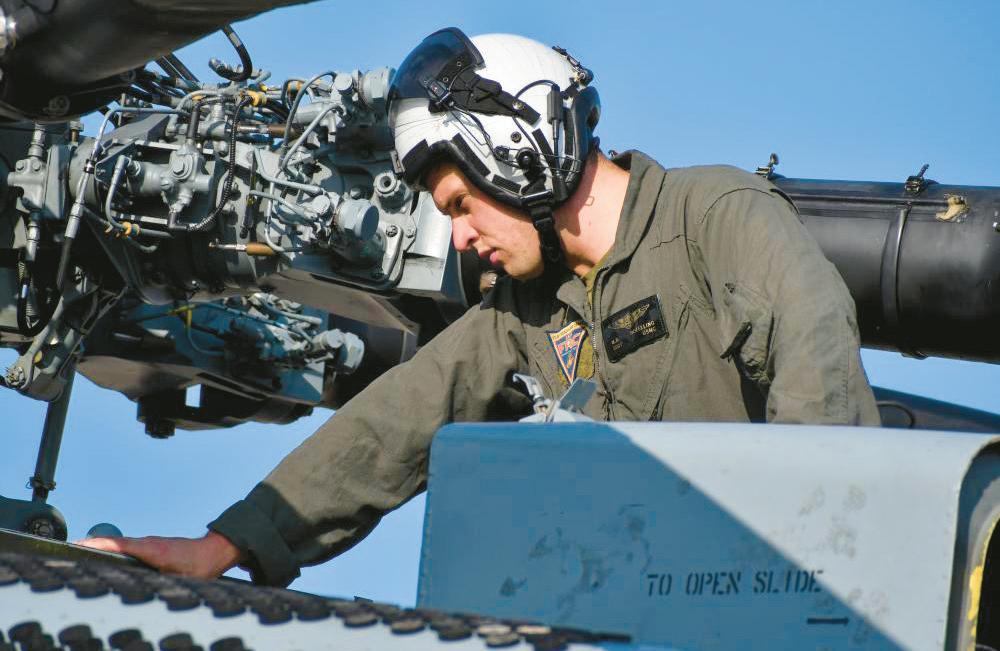
“Out in the fleet, the Marines and Sail ors are expecting a quality product from us,”saidHotelling “Wehavetogivethema qualityproducttheycantrust Theycando theirinspections,takeitontheboat,andgo wherever they need to go with total confidence that it is going to perform as we say it will. Providing a safe, effective aircraft for the warfighter is what it all really boils down to.”
Inthecourseoftheirduties,theMarines work closely with the depot’s civilian artisans For Cpl Devon Schoff, a CH-53 crew chiefatFRCE,thiswasthefirsttimehehad worked with such a large number of civilians
“Working with so many civilians was a bit strange at first,” said Schoff “I worked withahandfulatmylastsquadron,soIhad someexperienceworkingaroundcivilians
andcontractors butnotonthisscale Here at FRCE, it’s roughly 30 Marines to 4,000 civilians.”
Althoughcivilianemployeesfaroutnum berFRCE’suniformedpersonnel,manyare no stranger to the military Hotelling said FRCE’sworkforceincludesalargenumber ofmilitaryveterans,manyofwhomworked on the same aircraft during their time in uniform.
“Something like 40% of the artisans we employareformermilitary,”saidHotelling. “They bring to the table this wide range of experience We have people here with 30, 40andeven50yearsofexperienceworking on a specific aircraft platform.”
Boyer said working closely with this highly skilled and dedicated workforce makes the often complicated process of getting an aircraft out to the fleet easier
“There’s so much expertise here and there’s so many different people that are allwillingtohelpyou, saidBoyer.“I’monly a phone call or two away from an engines, componentsormanufacturingexpert,and getting any answers that I need.”
This close collaboration between the Marines and their civilian colleagues is essentialwhensolvingissuesthatcanarise when working on the aircraft. Hotelling said working on the helicopters can be demanding, as no two are alike.
“These aircraft can be finicky,” said Hotelling “Each one has its own unique issue that we have to work around Figuring out that solution with the artisans and with the pilots can be extremely challeng ing, but it’s also the most rewarding aspect of the job.”
AnotherfunctionoftheMarinesworking intheH-53programistoserveasadvocates for the fleet, Boyer added.
“We are the fleet’s voice within FRCE,” saidBoyer.“FRCEisahugemachine These artisans get the aircraft, break them down, repairthemandputthemallbacktogether. Throughoutthatentireprocess,we’rehere tomakesurethatthethingsthatneedtoget fixedforthefleetaregettingfixed,andthat we’re communicating with the fleet.
Once maintenance, repair and overhaul processes are complete, and all necessary checks and inspections have been conducted, the final step for FRCE’s H-53 Military Branch is the delivery of the aircraft to the squadron. The aircraft is towed to the flight line, where the H-53 Military Branch works side by side with FRCE civilian artisans to conduct a functional check flight. This determines whether an aircraft airframe, engine or engines,accessories,orequipmentisfunctioning according to established standards while the aircraft operates in its intended environment
After the functional check flight is completed, Boyer and Maj. Brittany Fayos, FRCE’sRotaryWingDivisiondeputyanda CH-53pilot,willflytheaircrafttoitssquadron, with crew chiefs Hotelling and Schoff aboard.
TheCH-53andMH-53helicoptersleaving the depot go to both Navy and Marine Corps units in the eastern half of the United States, where pilots will fly them onmissionsrangingfromtrainingflightsto realworldoperations AccordingtoSchoff supporting the fleet on this scale is what makes an assignment to FRCE unique for Marines
“I think our mission at FRCE is special,” said Schoff “There’s nothing else likeit. In the squadrons, the mission is to get flights out,trainnewpeopleandbereadytofight. Our mission as Marines here is to make sure the fleet has the aircraft to complete their warfighting mission. I feel that being here, I’m able to support all my brothers and sisters in uniform.
FRCE is North Carolina’s largest maintenance, repair, overhaul and technical services provider, with more than 4,000 civilian, military and contract workers Its annual revenue exceeds $1 billion. The depot provides service to the fleet while functioningasanintegralpartofthegreater U.S. Navy; Naval Air Systems Command; andCommander FleetReadinessCenters Learnmoreatwww.navair.navy.mil/frce orhttps://www.facebook.com/FleetReadi nessCenterEast.











The incredible world that is Disney On Ice, returns to the Hampton Coliseum this weekend, October 13-16 with their first time ever show, Disney On Ice presents Frozen & Encanto. This once in a lifetime Disney On Ice show transports fans into two of the most popular Disney films
The audiences can sing-along to their favorite songs while witnessingworld-classiceskating aerialacrobatics,amazing singing dancing performers in dazzling costumes and somuchmore
Formoreinfo,ticketsandtimes,gotohttps://www.hamp toncoliseum.org/events/detail/disney-on-ice-presents-frozen-and-encanto
Yiorgo: On the phone with us today is Jenna Teplitzky, oneoftheperformersintheshow.Jenna,whyshouldpeople comeseeDisneyOnIcepresentsFrozen&Encanto?

Jenna Teplitzky: Disney On Ice presents Frozen & Encanto is a wonderful theatrical experience that really tellstwostoriesaboutyoungwomencomingintotheirown magic and by that I mean their own power and how they can use love and courage to heal relationships within their ownfamilies
Y:ForthosewhoarecomingforthefirsttimetoaDisney OnIceshow,whatshouldtheyexpecttosee?
JT: Disney On Ice is a world class theatrical experience andworldclassiceshowwhereyouwillseeBroadwayqual itycostumes sets sound,musicandworldclassiceskaters
We are athletes but we are also performing So you will see skating dancing aerialstunts acrobaticsandyouwillbeable to sing and dance along with your family to all the Disney songs Weloveaudienceparticipation.
Y:Whatisyourfavoritepartofthisshowthatyouarenot inthatyouenjoyseeingasafan?
JT: The number that is my favorite that I am not in yet, but I will make it in the future, is Luisa’s solo. It’s called No Pressureandwhatreallyshinesinthenumberisthedonkeys in the background In the original film they are doing some crazystuffaspartofLuisa’simaginationasfarashowmuch pressure she’s under carrying the world on her shoulders and the donkeys are doing some crazy dances. Seeing that sceneperformedintheDisneyOnIceshowbyourperformers doing some crazy stunts in the donkey costumes, they bringthataudienceintothefantasythatexistsonlyinLuisa’s mindandIloveit

Y:Youareintheensemble Whatexactlydoesthatentail?
JT:Theamazingthingaboutbeinganensemblemember inaDisneyOnIceshowisthatwehavetoknoweverysingle memberthatwecouldpossiblydo Somebeingashortyoung woman,Ihavetoknoweveryensemblepartthatisplayedby anyshortyoungwomaninthecast.Soonanygivennight,I canbeinTheFamilyMadrigalnumberasoneofthetowns people. Another night, I could be in the Frozen coronation sceneasoneoftheattendeesattheball.
Hopefully we get a couple of hours notice but usually it’s less than that. We are totally expected to be and we have to be ready to jump in as needed and know our steps. We get theopportunitytoreviewwithotherpeopleinthenumber as well as our line captain So you never know. I may have gotten a chance to be in the donkey number and fulfill my dreambythetimewegettotheHamptonColiseum.
Y:Youareatravelingentertainer Canyougiveourread ers a typical week’s work schedule? Where are you now as wespeakandwhathappensnext?
JT: As this interview is taking place, I am in Charlotte, NorthCarolina.SoattheendofathreeshowdateinAtlanta, Georgiawepackedupourstufffromthevenue,putallofour luggage on to two buses along with the cast and we drove and arrived in Charlotte at 2 AM, unloaded the buses, got room keys and I personally collapsed The next two days were free days for me so I grocery shopped and walked around Charlotte I am on my second day now, doing the interview with you and then I have the rest of the day off Tomorrowwehaveafilmandvideoshoot.Weareonlyguar anteedonedayoffaweek
Thursday in Charlotte is our opening night then Friday we have a morning and an evening show. In the morning showwegettheopportunitytoblockinbreakworkperform erswhoarecomingfromanotherDisneyOnIceshowtohelp usout SaturdayandSundaywehavethreeadayshowsback toback.Soaftersixshowsintwodays,wewillpackoutthe venue,getonthebusanddoitalloveragain.
Y: Where were you born, and did you have a favorite
JT: I am originally from Fairfax, Virginia and after we leave Charlotte and before we come to Hampton, we are going to Fairfax. I will be performing in the venue where I used to go and watch Disney On Ice with my friends and familyandIhadmyhighschoolgraduationinthatvenue It’s afullcircleforsure MyfavoriteDisneycharacterisMulan. She is the epitome of the strength I wanted to grow into when I was a kid And the music in that film is just incredible I grew up with my mom as a single parent and Mulan definitely was a woman that I saw my mom as My mom is that person who took it upon herself to do what is right for ourfamily,justlikeMulan.
Y: Have you had any pinch me moments yet with this show?
JK: Every time I go out and I see the little girls in their princess dresses, dancing and singing their hearts out, screaming their heads off, having the time of their lives, that is what keeps me going for sure Seeing kids and their families having those moments that we created, that they can look back and remember having that great experience
together They are here to see us as a team do what we do Our amaz ing comaraderie and chemistry when we do ourshowinbringingjoy tothoselittlegirlsandto thethousandsandthou sands of our fans that come to our Disney On Iceshows,aremypinch me moments every singletime
Yiorgo is an arts enter tainment and sports writer A stage, TV and movie actor, he is also an educator, motivational speaker, writer, storyteller and columnist.
NORFOLK Va More than 1 million lightsandtheall-newMistletoeMarinawill usherintheholidayseasonasNauticuspres ents its annual WinterFest on the Wisconsin Theregion’snewestholidaycelebration welcomedmorethan65,000guestsin2021, andNauticusanticipatesrecordattendance againthisyear Ticketsareonsalenow.
This season, guests will experience even more magic in the all-new Mistletoe Marina.Thisultimateholidaydestinationis

of
live
featuring
and interactive
MooneCruiseCenter,MistletoeMarinaisa
“This is an ambitious new project that nearly doubles the size of WinterFest,” said Nauticus’ executive director Stephen E. Kirkland.
has all the charm of a New England seaport
here on the Eliza beth River.”
Aboard the Battleship Wisconsin this season, visitors will explore nine dazzling light trails and all-new
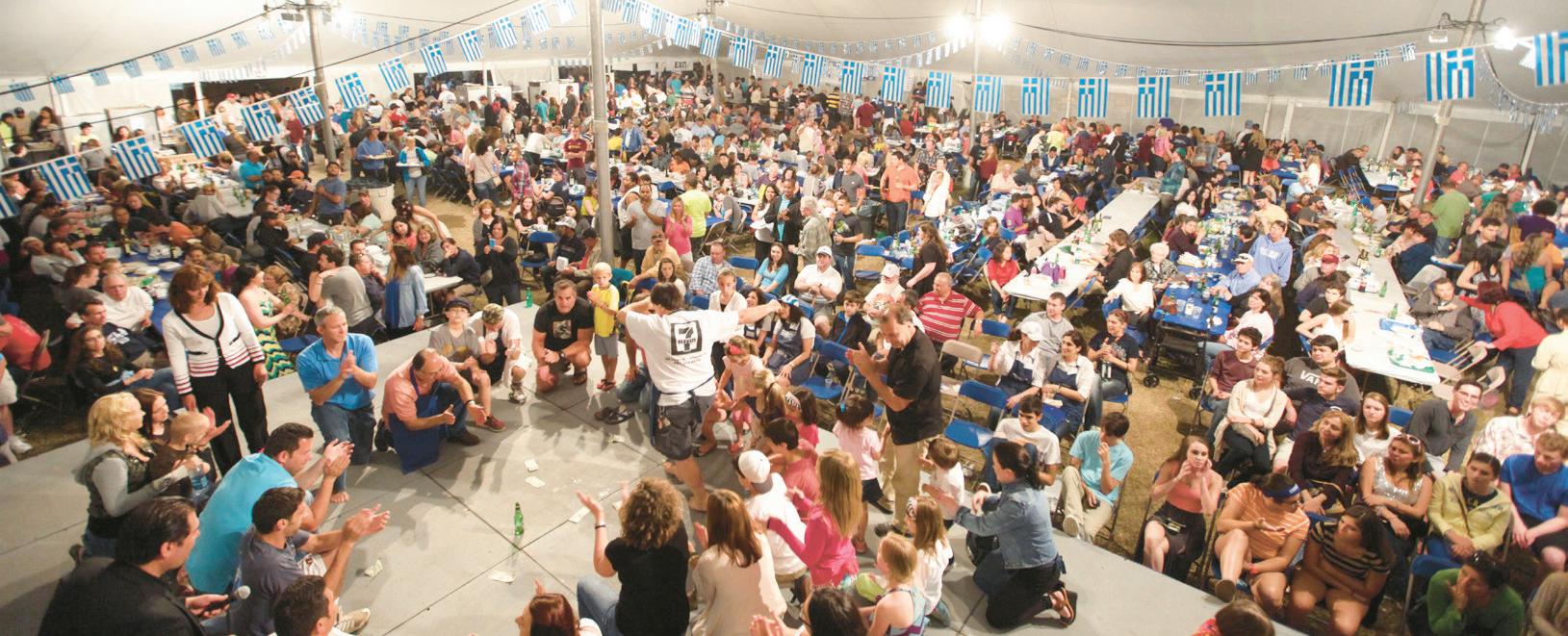


After a two year absence due to covid, the annualNorfolkGreekFestival,thisregion’soldest and largest ethnic festival returns this weekend, October 13th-16th at the Annunciation Greek Orthodox Cathedral at 7220 Granby Street, Norfolk,Virginia.

Ifyoulovetoeatgoodfoodanddancetolively, vibrant music, then the Norfolk Greek Festival is where you want to be this weekend. Outdoor standsadjacenttothehugetenthavebeensetup and you can buy everything from shish kebob to baklava to be eaten at the tables in the outdoor tentsatthefestivalorplacedintake-outcontain erstotakehome
Under the huge tent, in a cafeteria style setting, a variety of Greek food specialties will be available for purchase Some of the options includes: Greek salad; fried calamari; char coal-broiled souvlaki (shish kabob); mous saka (sliced eggplant combined with ground beef, spices and tomato sauce topped with a sauce of eggs, butter, cheese and milk); chicken lathoregano (charcoal-broiled chicken mari nated in a sauce of olive oil, lemon juice and oregano); spanakopita (a blend of spinach and feta cheese baked in filo pastry leaves); pastit sio(amacaronicasserolewithgroundsirloinof beef topped with a creamy cheese sauce), and Greek-styleFrenchfries Greekpastries,suchas galaktoboureko(afilocustardpastry)andlouk oumades (hot honey-sweet fritter pastries) are famousallovertheworldandtheywillbeplen tiful at the Norfolk Greek Festival.
TheAnnunciationDancers madeupofvarious agegroupsrangingfromthreetoseventeenyears old,willdancetraditionalGreekdanceseachday andeveningtoentertaineveryonethere.Thereis alsoliveGreekmusic,performedduringthefour day festival by the famous Greek band Apollonia andeveryoneisencouragedtogetuponthestage anddancethenightaway
For those who like to shop vendors from Hampton Roads to Greece will be there to offer a wide variety of artwork, gold, and fine jewelryforsaleintheHellenicHallattheAgora (Marketplace).
The beautiful Annunciation Greek Orthodox Cathedral will have tours available throughout thefestival.
Yiorgo: With us today is John Katsias, Parish Council President of the Annunciation Greek Orthodox Cathedral. John, a monumental undertaking such as this 40,000 to 50,000 people continue to attend the festival every year needs a greatteamatthehelmtogetthejobdone.Whoare thechairpersonsfortheGreekFestivalthisyear?
John Katsias: We have a seven member committee and three chairmen. They are: Tony Damalas, Royall Ferguson and Mike Georgiou. The other members are my self, Angelo Neskis, SteliosBredologosandTerryLynch.
Y: How is the Greek community involved in theGreekfestival?
JK: Most of our Greek community members arevolunteeringin avarietyof positions such as helping prepare the food and serve it during the festival as well as help in multiple positions to
ensure the success of our great Greek Festival
Y: What is the purpose of the Greek festival and why should people attend?



into the
in early Colonial Virginia, sepa
not exactly as Monty
depicts it!
lightrefreshmentswillbe
Hudson
JK: We love to share our Greek heritage with the Hampton Roads communityandgive everyone attending the opportunity to experiencewhatit’s like going to Greece without having to fly there. People who attend will experience a taste of Greece in Norfolk,Virginia.
John Katsias (PHOTO COURTESYOFJOHN KATSIAS)Y:HowwouldyoudescribetheGreekfestival tosomeonewhohasneverbeentherebefore?
JK: From the minute you enter our property, you will be embraced with visual sights and the aroma of Greek food being served Greek music being played by our live Greek Band Apollonia, ouryouthdancersinfullGreekcostumeswillbe performingtraditionalGreekdancesthroughout the entire weekend and everyone is invited up to learn how to dance Greek dances and have a greattimeexperiencingourculture Wealsohave church tours for our friends to see the beautiful iconography hearselectionsfromourchoirand enjoytheambianceofourchurch.
Y: Where were you born and did you go to church?
JK:IgrewupinVirginiaBeachandhavelived thereallofmylife IproudlyattendedtheAnnun ciation Greek Orthodox Cathedral as a little kid andcontinuetodosountiltoday
Y: What is a favorite memory of yours while attendingtheNorfolkGreekFestival?
JK: Working
Y:WhatisyourfavoritepartoftheGreekfesti
of
JK: Watching
Y: Where does some
JK
the
focus is on the American Civil War and Witchcraft in Colonial Virginia. He is an Emmy Award-Winning screenwriter and is an accomplished musician playing regu larlyfortheduoofHudson&ClarkandtheCigarBoxStringBand.Mr Hudson servedastheProgramManagerfortheColonialWilliamsburgFoundationfor 34yearsandhasworkedwiththeMarinersMuseumsince1990.
a practicing military and social historian.
Luke’shasbeenthesiteof burialssincethe1600’s.Enjoythestoriesoflocalsaintsandsinnersonaguided tourthroughtheAncientCemetery WewillbeofferingbothaFamilyFriendly

WILLIAMSBURG, Va Water Country USA, voted one of the country’s top ten water parks by USA Today is splashing into 2023 with Riptide Race, the first dueling pipeline in Virginia. This family-friendly water slide will be the park’s tenth slide when it opens next year, complimenting relaxingareastounwind,includingHubba Hubba Highway, Rock ‘n’ Roll Island plus kid-friendly spaces like the all-new Lil’ Surfers Splash Pad, which opened earlier this year at Virginia’s largest water park
Riptide Race is an adrenaline-pumping waterslideracethatpitsteamsagainsteach other in a splash to the finish line Riders challenge friends and family members to see which team feels the rush of victory Speeding through each turn in a down-to the-wirefinish,thisfast-paced,high-speed adventure is one that guests will want to experience again and again
It all starts atop a 54-foot tower, where visitorsgrabatwo-personraftbeforeracing through 520 feet of slide, with low walls to keep an eye on the competition. It’s a dash to the splash when competing in this side-by-side raft run through high-speed tunnels twists and turns
“The addition of Riptide Race will elevate our guest experience in a unique and unprecedented way”, said Kevin Lembke, Park President of Busch Gardens Williamsburg and Water Country USA. “With a 42-inch height requirement, Riptide Race was designed with the whole family in mind. We are excited for our guests to enjoy this fast-paced adventure together and look forward to the debut of Riptide Race next year.”
Water Country USA will open for the 2023 season on Saturday, May 13 Addi-
tional details about Riptide Race includ ing an opening date will be shared in the coming months
The thrills continue in 2023 at Busch GardensWilliamsburgwiththeadditionof DarKoaster™, North America’s first all-indoor straddle coaster Traveling on snowmobiles across 2,454 feet of track, daring explorersracethroughtotaldarknesswhile changing course to avoid the elements As the weather strikes riders encounter four accelerating launches and speed through the storm on this family-friendly dark ride experience Opening next year, the new attraction is the park’s tenth coaster and anunprecedented,family-friendlyaddition to Busch Gardens’ thrill ride portfolio
The best way to experience DarKoaster and Riptide Race is with a Busch Gardens and Water Country USA 2-Park Member ship Priortotheofficialopening Members will receive exclusive ride access and be
amongthefirsttoridebothnewattractions in 2023 In addition to receiving unlimited admission all year long, unbeatable bene fits and monthly rewards, Members enjoy amazing park perks including free park ing, up to six free guest tickets, savings on merchandise and more.
For a limited-time guests who purchase a 2023 2-Park Fun Card to Busch Gardens andWaterCountryUSAwillgetunlimited visits now through October 31 for FREE! Guests can enjoy free admission to Busch Gardens Howl-O-Scream, one of the top four Halloween Events by USA Today’s 10Best Awards, and The Count’s Spook tacular offering family-friendly daytime fun Plus unlimitedadmissionin2023from January 9 through September 4. Hurry before prices go up October 3!
Tobethefirsttoknowabouteventdetails andspecials,followWaterCountryUSAon Facebook and Instagram.
Water Country USA® is Virginia’s largest family water park featuring fun for the entire family in a cool beach vibe, with resort-style amenities and more than 40 state-of-the-artwaterridesandattractions includingCutbackWaterCoaster®theonly RocketBLAST® coaster on the East Coast.
For more information, visit WaterCoun tryUSA.com.WaterCountryUSAisowned by SeaWorld Entertainment, Inc. (NYSE: SEAS), a leading theme park and enter tainment company providing experiences that matter and inspiring guests to protect animalsandthewildwondersofourworld
The SeaWorld® rescue team has helped morethan40,000animalsinneedoverthe Company’s history
Halloween is usually about costume parties, candy, scary movies and fun pranks, but this year, there is a philan thropic way to celebrate this spooky holiday. From the war in Ukraine to the drought across the Horn of Africa, there are innumerable compounding crises impacting children around the world. This Halloween, there are meaningful ways to make a difference for children in need across the world.
Beginning in early October and running through Halloween, UNICEF USA’s iconic orange box is being transformed into a reimagined digital experience as a new twist on a classic campaign that is scalable simple to use and empowers a new generation of changemakers to drive impact for children globally A QR code will be available across the United States for all to download and use in tandem with Halloween festivities The code will digitize the Trick-or

Treat for UNICEF experience while still providing a meaningful opportunity to give back and discover joy through help ing others. It can be used at nearly any Halloween activity, including costume parties, fall festivals or on candy collec tion bags

By modernizing the campaign, the emphasis shifted from a kids-helping-kids program to one that encourages people of allagestomakeadifferencethisHalloween.
Donations help deliver health care and immunization, safe water and sanitation, nutrition, education and emergency relief to children where and when they need it most.Formorethan75years,UNICEFhas advocated for the rights and protection of the world’s most vulnerable children. As the longest-running youth engagement activity in the U.S. the campaign has raisedmorethan$195millionforchildren around the world.
Learn more, and add some meaning to your Halloweening, at trickortreatforu nicef.org
 BySarahAtCuriousCuisiniere/ Curiouscuisiniere.com
Pan de Muerto or “Bread of the Dead” is a sweet bread that is baked during the Dia de los Muertos, or Day of the Dead, celebrated in MexicoonNovember1stand2nd.
It is a light and egg-y sweet bread that is shapedasaroundloaforsmallerroundrolls.
Both loaves and rolls are decorated with bone-shaped strips of dough to honor the celebrationofthosegonebefore
The most prominent symbol of Dia de los Muertos is the calacas and calaveras, or skeletonsandskulls Fromparadestodeco rations, even to foods, images of bones are everywhere. Sugar skulls and chocolate skullsareoftengivenasgifts
Inlargercities,youwillfindparadesfilled with dancers musicians, and many people dresseduplikeskeletons Despitethemulti tude of skeletons prancing through the streetsandthebeliefthatspiritsreturntobe with their families, the festival is not scary, somber, or macabre. Rather, it is a joyous event, full of parties, good memories, and goodfood.
The festival celebrates death as a natural part of the human experience: as natural to celebrateasanewbornbaby,acomingofage, or any birthday. Through the celebrations and decorations of graves and home altars, thedeadarerememberedandhonored.
During Dia de los Muertos, it is common to eat Pan de Muerto as well as other foods that were loved by those loved ones who havedied.
The skeleton and bones that are found throughout the celebration of Dia de los MuertosarealsofoundatopPandeMuerto givingthisbreadaveryuniqueappearance
The idea is to create the look of a pile of bonesatopyourbread(orroll).
Like many other sweet breads (such as challah of Finnishpulla),thedoughforthis breadisa“richdough”thatconsistsofmilk, eggs,andbutter
Pan de Muerto is commonly lightly flavored with anise and given an orange glaze after baking The warm spice and orange combo is one that is familiar in the fall And it is common in other Day of the Deadfoods likecalabazaentacha(Mexican candiedpumpkin).
To create the topping of ‘bones, for our DayoftheDeadbread,dividethedoughinto alargerportionandafewsmallerportions.
If you roll the small portions into a rope, keeping your fingers roughly in the same place, you will create 4 little nobbies on the rope When arranged on the bread, these look remarkably like a pile of bones. Itismostcommontoarrangethebonesina circlepattern,representingthecircleoflife.
Asthedoughrisesandbakes,thecircleof ‘bones’ may shift a bit, but that’s more than ok.Itaddstotherusticappealofthebread!
Even if you’re not celebrating the Day of theDead,thisbreadisatasty,sweetandeggy bread that would make a delicious addition toaHalloweenpartyspreadaswell

Yield: 1 (7 inch) round loaf
Time: 50 mins
Time: 30 mins
Time: 2 hrs
Time: 3 hrs 20
¼cwater
ByCesarDiaz/Growingupbilingual.com
These
temperature
3cunbleachedallpurposeflour
1½tspgroundanise
1egg,lightlybeaten(foreggwash)
Cut 3 small portions (roughly 1.5 ounces each) and 1 smaller portion (roughly .5 oz) from your dough. Shape the 3 smaller portions into a rope that is roughly 6-7 incheslongandhas4bulges (Theseareyour ‘bones’.) Shape the smallest portion into a smallball(forthetop).(SEEIMAGE1)
Shape the remaining larger portion of dough into a large ball and place it on a flour-dusted baking sheet. Brush it with the egg wash and layer the three “bones” across the top Brush again with egg wash and press the smallest ball into the top where the bones meet. Brush the top ball with egg wash. (SEE IMAGE 2)

a small saucepan heat the milk, water,
the butter has
together
the pan from the heat and transferthemixturetoashallow,widebowl tocoolto80-90F.
a large bowl, mix together 1 c flour, sugar, yeast, salt, and anise Add the cooled milkmixtureandwhiskuntilcombined.Add theeggsandwhiskuntilsmooth.
Add the remaining 1 ½ 2 c flour gradually,mixinguntileachadditionisfullyincorporated before adding more. Add just as muchflourasyouneedforasoft, butwork abledoughtoform.
Turnthedoughoutontoalightlyfloured surface and knead for 5-7 minutes, adding any remaining flour as needed to keep the dough from sticking to your hands or the counter. Knead until the dough is smooth andsoft,butdoesn’tsticktoyourhands

Transfer the dough to a lightly greased bowl. Cover it with a damp tea towel and let is rise in a warm, draft free place until doubledinbulk,roughly1hour
Let the dough rise in a warm and draft free place until puffy and nearly doubled, roughly 35-45 minutes Near the end of the rising time, move your oven rack to the lowest position (this bread gets tall and having extra space over the top of the bread in the oven will help it not darken so quickly) and preheat your oven to 350F Bake the bread for 20-25 minutes, until it sounds hollow when tapped (The inter naltemperaturetakenwithaninstantread thermometershouldread170F.)Ifthecrust looks like it is getting too brown for your liking towards the end of baking, you can tentitlooselywithapieceofaluminumfoil
While the bread is baking, make the glaze: Heat ¼ c sugar together with the zest and juice of one small orange Bring the mixture to a simmer and simmer for 2-3 minutes If necessary, strain the glaze of any orange pulp and set the strained glaze aside
Whenthebreadisdone,brushthewarm loaf with the glaze and sprinkle with gran ulated sugar
Letthebreadcoolslightlybeforeslicing.
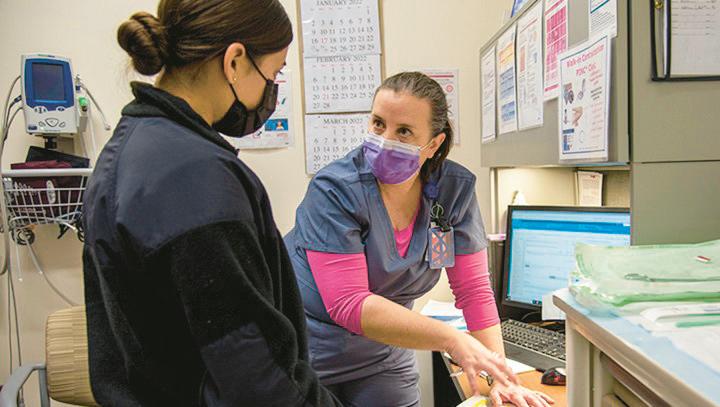 ByTRICARECommunications
Whether you’re a service member or a TRICARE-eligible family member, contraceptive care plays a key role in your over all health, wellness, and quality of life It also supports your individual and family readiness TRICARE covers a full range of contraceptivemethods,regardlessofwhich health plan you have And recent changes to TRICARE policies help make sure you’ll have easy convenient, and timely access to contraceptiveservices
“Because contraceptive health care supports stability and flexibility, we looked at how to make contraceptive services both more affordable and accessible for all TRICAREbeneficiaries,”saidReginaJulian, deputy assistant director for Health Care Operations Defense Health Agency “The waiving of cost-shares and copayments for certain contraceptive services is one way we’remakingiteasierforyoutogetthecare you need. Remember to ask your primary care provider if you have questions You also can get medical advice 24 hours a day, seven days a week from registered nurses by calling the MHS Nurse Advice Line at 1-800-TRICARE,option1.”
It’s important to note that contraception servesseveralpurposes:
Preventingpregnancy
Supportingfamilyplanning
Controllingmenstrualcycles
Treatingmenstrual-relatedconditions
Here are answers to common questions aboutTRICARE’scoverageofcontraceptive careandservices
Which types of contraceptive services no longer require cost-shares or copayments?
no longer have to pay cost-shares
or copayments for all TRICARE-covered reversible medical contraceptives These include IUDs hormonal shots, and slow-re leasehormonalrods,whichgoundertheskin
ThischangewentintoeffectJuly28 What doyoudoifyoupaidforservicesonorafter July 28? You can submit a claim to your TRICAREcontractorafterNov.1toreceive reimbursement
You should contact your TRICARE contractorifyouhavequestionsaboutcost sharesandcopayments.Youcanalsoreview costsdetailsontheTRICARECostspage.
Does TRICARE cover permanent birth controlmethods?
Starting Jan. 1, 2023, TRICARE will eliminate copayments and cost-shares for anyone who has TRICARE Prime and TRICARE Select and choose a permanent birthcontrolmethod suchastuballigation. (Tuballigationinvolvesremovingorsealing off the fallopian tubes.) It’s the only form of permanent contraception that TRICARE covers,andaTRICARE-authorizednetwork provider must perform the procedure. Cost-sharing may still apply for tubal liga tionsperformedout-of-network Cost-sharingforvasectomiesandhysterectomieswill stillapply
DoesTRICAREcoveremergencycontraceptives?
Yes. TRICARE covers non-prescription emergency birth control to prevent preg nancy (Themorning-afterpillisacommon name for it.) You can get products such as PlanBOne-Stepatmanyretailersatnocost. Thisincludesmilitarypharmaciesandretail network pharmacies They don’t require a prescription.
In addition ella, is an emergency contraception also covered by TRICARE that requires a prescription. Ella can be more
than Plan B when you take it
days of unprotected
is
militarypharmacies
retail network pharmacies with a prescription.
What contraceptive services does TRICAREcover?
covers a complete range of
services
Birthcontrolpatch
What contraceptive services doesn’t TRICAREcover?
learn more about
Yes. However, the Defense Health Agency can’t currently waive cost-shares and copayments for daily use prescription birth control pills and other drugs This is because TRICARE Pharmacy Program
cost-sharing is mandated by law. You may have to pay a copayment for pharmacy contraceptives—likebirthcontrolpillsand patches—depending on your health plan and where you fill your prescription.
TRICAREcoversprescriptionsfilledata pharmacy, consistent with other prescrip tions from TRICARE:
There’snocosttofillyourprescriptionsat amilitarypharmacy
If you use TRICARE Pharmacy Home Delivery you may have a copayment depending on who you are, your plan, and yoursponsorstatus
Ifyoufillaprescriptionataretailnetwork pharmacy,youmayhaveacopayment
If you fill prescriptions at a non-network pharmacy,you’llpaythefullprice.
“Contraceptive choices are highly personal,”saidJulian.“What’srightforyou may not be what’s right for someone else andyourneedsmaychangeovertime The Defense Health Agency encourages you to participate fully in your own care.
Talk to your doctor or primary care manager about the types of birth control that’s right for you. If you need to find a doctor, you can use the Find a Doctor tool.
Your TRICARE contractor can also help you find a network provider Know your options for contraceptive care and how you can access that care, todayandinthefuture.Tolearnmoreabout services available to you, go to TRICARE’s Birth Control Covered Services page
WouldyoulikethelatestTRICAREnews sent to you by email? Visit the TRICARE Subscriptions page today, and create your personalizedprofiletogetbenefitupdates, news and more.
ByJanetA.AkerHi,Doc,
Sr
DearSr
to
Here’s what
specificallytomedicalpersonnelinorderto determinepossiblecauses
Some studies have shown that noise exposure can cause headaches, including
migraineandtension-typeheadaches
However, there are a variety of other reasons that could be contributing to your headaches, so it’s best to talk with your doctor
The environment in the “bowels of a destroyer” may include odors from fuels oils and other chemicals; heat; and high noise
It’s also important to work with your safetyandmedicalpersonneltoensurethat your personal protective equipment prop erly fits, and that you are wearing it appro-
priately Hearing protectors can be individually fittedtoenhanceprotection.
Also, drink plenty of water to stay hydrated,andgetadequatesleep
Make sure you spend time each day in cooler, quieter areas of the ship to enable your ears to recover from the noisy envi ronment. It’s good for your ears and your well-being
Your safety officer may consult with an industrial hygienist to better understand your exposures to noise and hazardous
chemicals An industrial hygienist would help to recommend the best solution for yourworkenvironment.
Sr Chief, I hope this advice is helpful to you, especially the
erly wearing your personal
and moving to a quieter
of the ship when you have the opportunity Also as soonasyoucan talkwithyourprimarycare doctor to schedule an appointment for a checkupandhearingevaluation
Goodluck,myfriend,andasalways…take careoutthere!