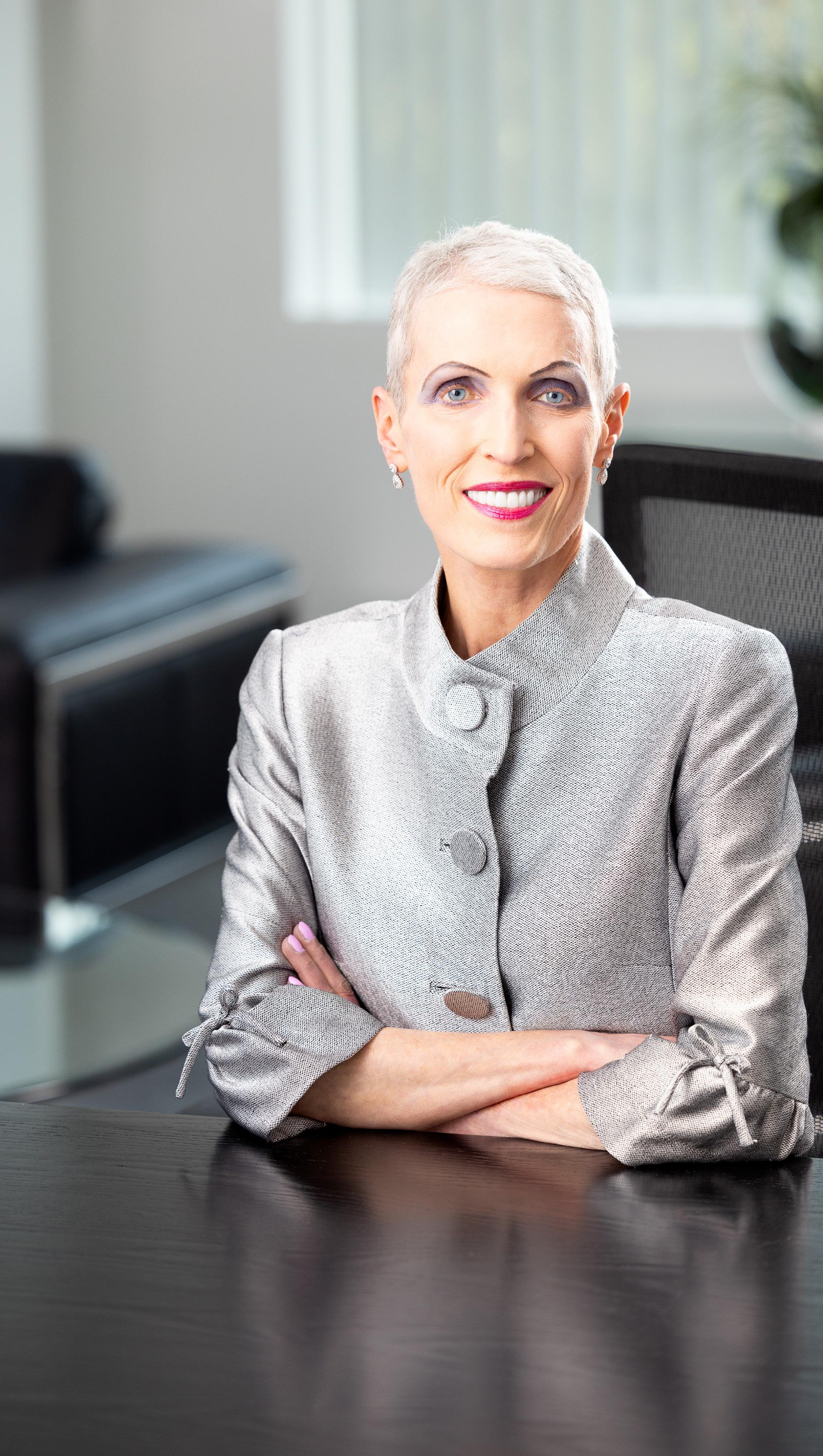
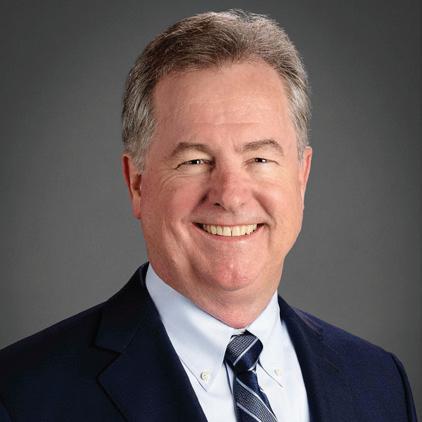
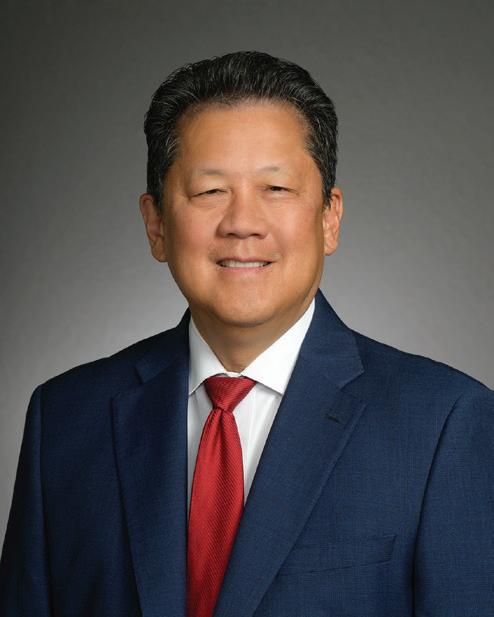
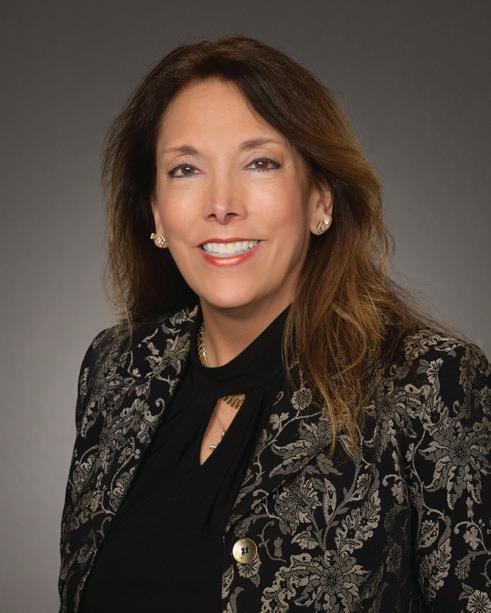
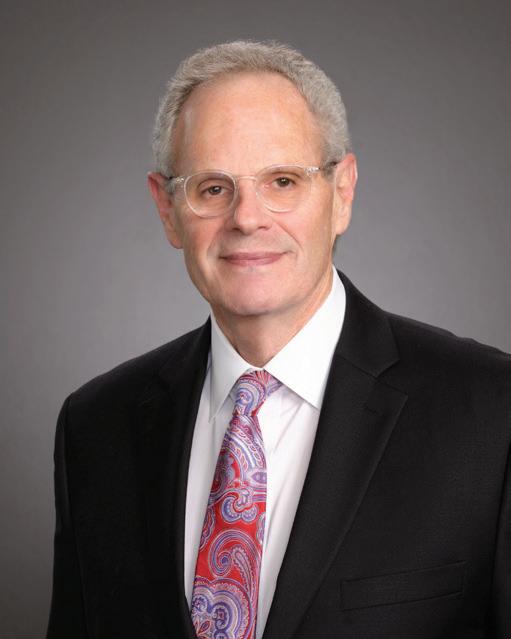
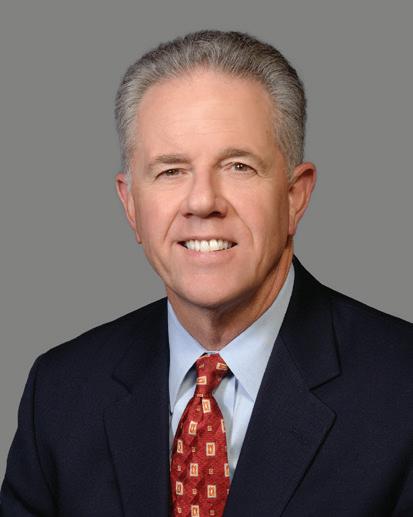
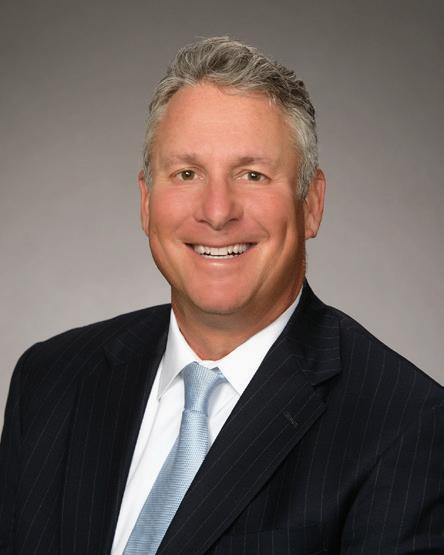
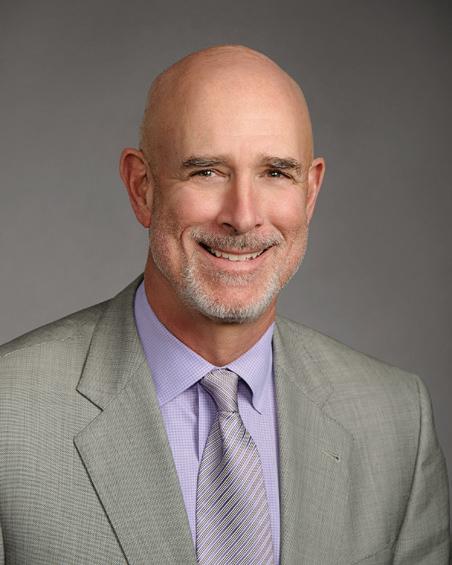
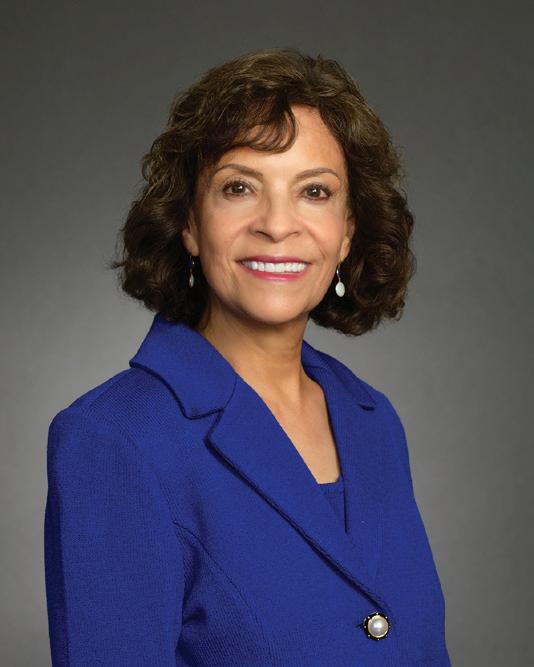
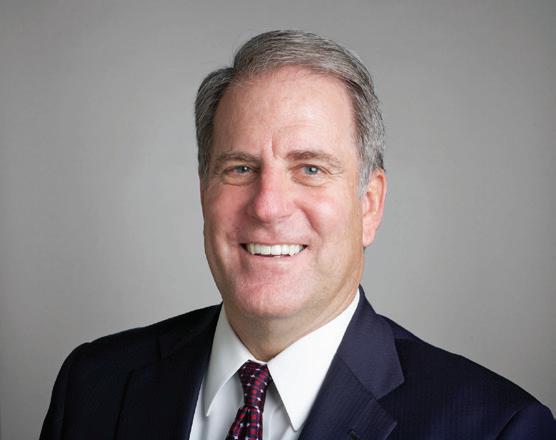
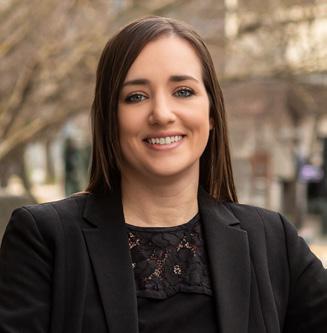
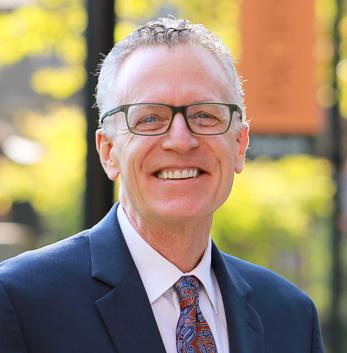
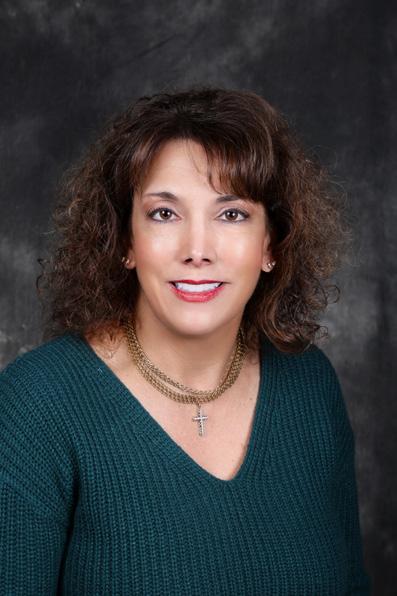
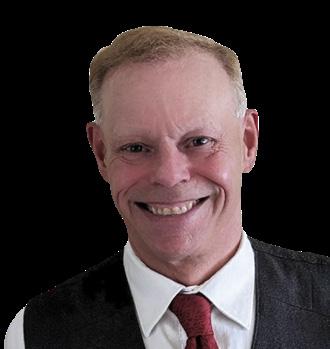
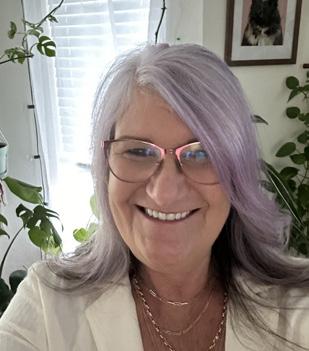
Gayle eskridGe provides mediator, arbitrator, and discovery referee services throuGhout california. located in rancho cordova
Conducted over 285 mediations and over 175 arbitrations. Member of American Arbitration Association Arbitrator and Mediator panels for both Employment and Commercial Law.
•Professional Member of the Southern California Mediation Association
•Senior Mediator with Mediate.com
• Certified in Mediation by the Los Angeles County Bar Association Dispute Resolution Services (2002)
•Martindale Hubbell® AV Preeminent Attorney® (every year since 2003)
• California Super Lawyer® (every year since 2012)
• Martindale-Hubbell® Top Rated Lawyer in Litigation (Every year since 2015)
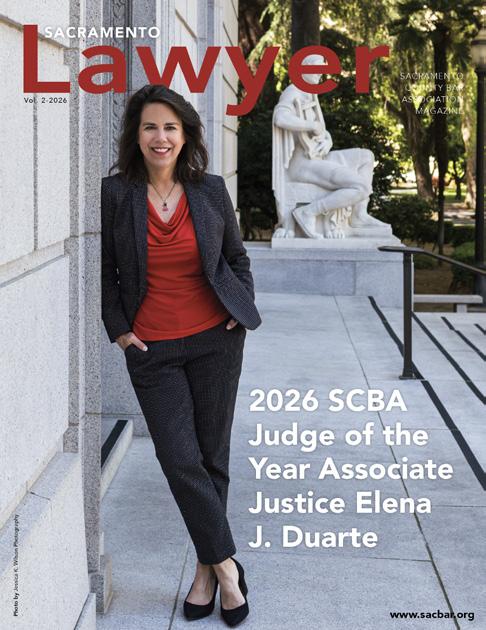
INDEX L awyer SACRAMENTO
SACRAMENTO COUNTY BAR
ASSOCIATION MAGAZINE
Vol. 2-2026 PRESIDENT’S MESSAGE
EDITOR-IN-CHIEF
Ellen Arabian-Lee
Arabian-Lee Law Corporation
EDITOR EMERITA
Heather Hoganson
PRODUCTION DESIGN, ADVERTISING
Milenko Vlaisavljevic milenko@sacbar.org
6 Building Connection FEATURE ARTICLE
8 The New Sacramento Courthouse Has Arrived. No, REALLY!
10 Nominate a Sacramento Mentor for a National Study of Legal Mentors
12 Exploring the Edges of Change: A Human and an AI Discuss California Mediation COVER ARTICLE
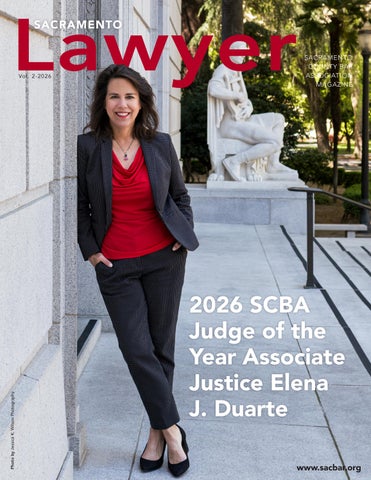
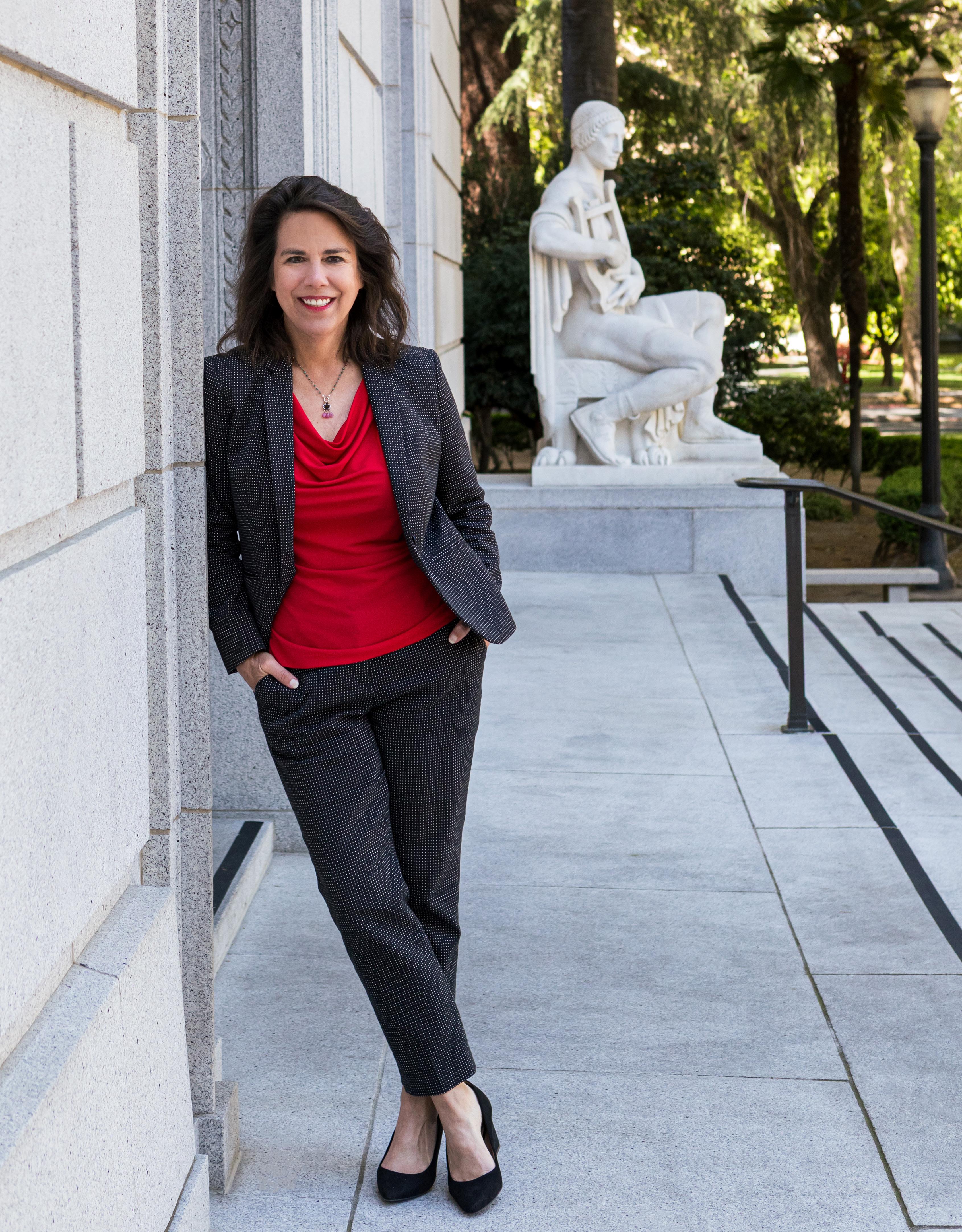
18 Justice Elena Duarte: A Career Defined by Excellence, Service, and Impact
SCBA NEWS & EVENTS
24 Voices of the Sacramento Legal Community - What We Learned from the SCBA Attorney Survey
27 SCBA’s Executive Director, Tom Roberts, Becomes Juvenile Court Justice Commissioner for Sacramento County
28 A Standout Year for the Valentine Run Walk, Race for Justice
30 Sacramento 37th Annual Unity Bar Celebration CAPITAL PRO BONO
Sacramento Lawyer welcomes letters and article suggestions from readers. Please e-mail them to support@sacbar.org. The SCBA reserves the right to edit articles and letters submitted for publication. Please contact the SCBA at 916-564-3780 for deadline information. Web page: www.sacbar.org. Caveat: Articles and other work submitted to Sacramento Lawyer become the copyrighted property of the SCBA. Returns of tangible items such as photographs are by permission of the editors, by pickup at the SCBA office only.
Sacramento Lawyer (USPS 0981-300) is published by the Sacramento County Bar Association, 8950 Cal Center Drive, Bldg. 2, Ste. 346, Sacramento CA 95826. ISSN 1087-8771. Periodicals postage paid at Sacramento, California. Postmaster: Send address changes to Sacramento Lawyer, 8950 Cal Center Drive, Bldg. 2, Ste. 346, Sacramento CA 95826. Copyright 2026 by the Sacramento County Bar Association.
Building Connection
By Brittany Berzin
s we share this edition of Sacramento Lawyer Magazine, I’ve been reflecting on where we are as an association this year and where we’re headed, with a focus on creating more opportunities for members to engage and connect.
It is especially meaningful, in that spirit, to recognize Associate Justice Elena Duarte as SCBA’s Judge of the Year. Justice Duarte is widely respected for her legal acumen and fairness on the bench, but just as importantly for the way she shows up for the legal community. She has been a consistent presence at bar and community events, a mentor to attorneys, and a thoughtful voice on issues of access to justice and equity in the profession. Many of us have seen firsthand her willingness to engage and support others. We are proud to recognize her and grateful for her continued impact. Congratulations, Justice Duarte.
We also have been focused on listening to our members and responding in practical ways. In a survey at the beginning of the year, some of you asked for more casual opportunities to connect. In March, we launched our first SCBA Monthly Meet-Up - and it was a great success. The turnout
Berzin is the President of the Sacramento County Bar Association. She can be contacted at brittany@norcaladvocates.com.
was strong, the atmosphere was relaxed, and it was simply enjoyable to spend time together outside of a formal setting.
We will continue these meetups on the third Thursday of each month at 5:30 p.m., rotating locations. I hope you will join us.
SCBA continues to grow through the involvement of its members, and we are always looking for those interested in contributing to leadership within our sections and divisions. Whether your interest is in organizing social events, developing CLE programming, or something new we haven’t thought of yet, I encourage you to reach out.
Looking ahead, we are excited to host our second annual Trial Conference at the end of the summer and to support the Sacramento County Bar Foundation’s scholarship event this fall - both important opportunities to invest in our profession and its future.
Thank you for being part of SCBA. I look forward to seeing you at an upcoming event!
Warm Regards,
Brittany Berzin SCBA President
Get ready for one of our most anticipated (and heartwarming) issues of Sacramento Lawyer!
We’re inviting SCBA members to share photos and short stories (500 words or fewer) about the animals who brighten your life. Whether it’s a loyal dog, a mischievous cat, or a more unconventional companion, we’d love to hear how your pet became part of your story – how you met, why you chose them, and the role they play in your life today.
You can also just submit a fun photo of your pet, but please tell us your name and your pet’s name. We will try and publish as many photos as we can!
This is a chance to celebrate the personal side of our legal community and highlight the connections that matter most outside the courtroom.
Submission Deadline: June 12, 2026
Send to: troberts@sacbar.org
We look forward to featuring your stories – and your pets – in this special issue! ��
Brittany
Exceptional Service. Unparalleled Results.
We’re not just lawyers. We’re your legal partners. With offices in Sacramento and Los Angeles, Gavrilov & Brooks offers accessible, high-level representation in even the most complex cases. Whether you’re protecting a business, defending your rights, or navigating regulatory law, we’re in your corner.
Practice areas include Business & Corporate Law, Personal Injury Law, Immigration Law, Employment Law, Civil Litigation, Cannabis Law, Tax Law, Family Law, Probate Litigation & Estate Planning, Transaction Law, Intellectual Property, and more.
A Legal Team You Can Trust
At Gavrilov & Brooks, we blend the skill and experience of a large firm with the personalized attention of a dedicated team. Whether you’re a business owner, an employee, or an individual in need of counsel, we’ll guide you through every step with clarity, strategy, and unmatched advocacy.
Founded in Sacramento and now serving clients throughout California, our firm is known for its aggressive litigation tactics, thoughtful negotiation, and unwavering commitment to justice.
Why Gavrilov & Brooks
• Aggressive litigation approach
• Respected legal minds with real courtroom results
We regularly handle cases throughout Northern California and Southern California.
We are also equipped to serve remote clients via phone, email, and virtual meetings, making professional legal support accessible no matter where you are in California.
Los Angeles Office
515 S. Figueroa Street, Suite 1235
Los Angeles, CA 90071
P: (213) 528-5500
Sacramento Office
2315 Capitol Avenue, Sacramento, CA 95816
P: (916) 504-0529
The New Sacramento Courthouse Has Arrived. No, REALLY!
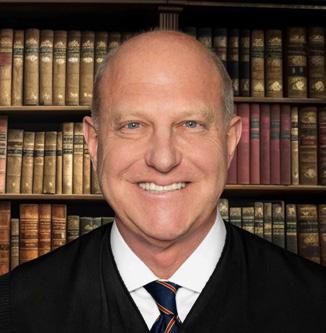
By Hon. Lawrence G. Brown
n the fall of 2020, Sacramento Lawyer featured a cover story titled, “Our New Courthouse is Almost Here.” Such optimism may have been warranted. After all, it had been a good decade or so since planning had begun in earnest. But, alas, major state construction projects in abandoned railyards are not built in a day. Particularly when budgetary waters get choppy. Meanwhile, at the court, feelings ebbed and flowed between eager anticipation and a worrying concern whether we would ever be able to bid farewell to the Gordon D. Schaber Courthouse. It was so tantalizingly close, both figuratively and literally.
In late 2025, the skies parted, and the project received something that had taken on near-mythical status – the “certificate of occupancy” issued by the State Fire
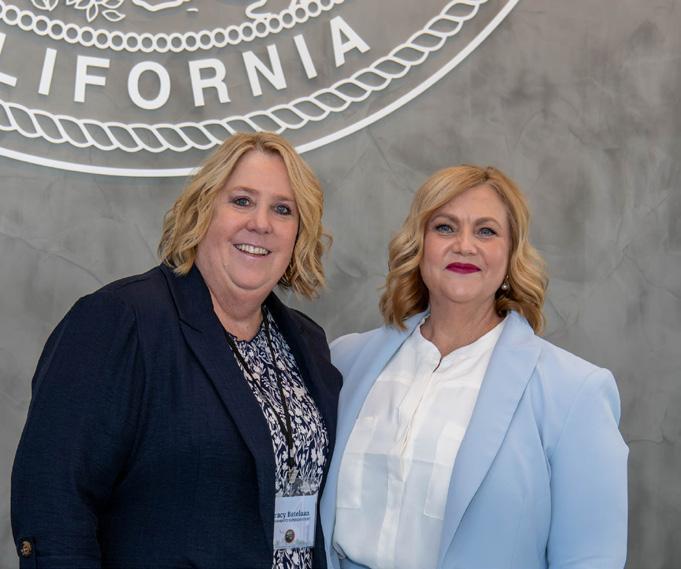
Marshal. With precision and planning that would have made General Eisenhower proud, so began a months-long move into the Tani G. Cantil Sakauye (TCS) Courthouse, an 18-story structure with 53 courtrooms. This herculean effort was led by a truly remarkable duo, Court Facilities Director Tracy Batelaan and Court Executive Officer Kelly Sullivan, with outstanding and dedicated staff tending to every facet.
After electronic infrastructure and furnishings were in place, the court undertook a methodical five-weekend relocation, beginning in late March. By April 13, civil operations from both GDS and the Hall of Justice were live; by April 27, so too were criminal. When the dust finally settled, some 470 judges and court staff found a new home at 500 G. Street.
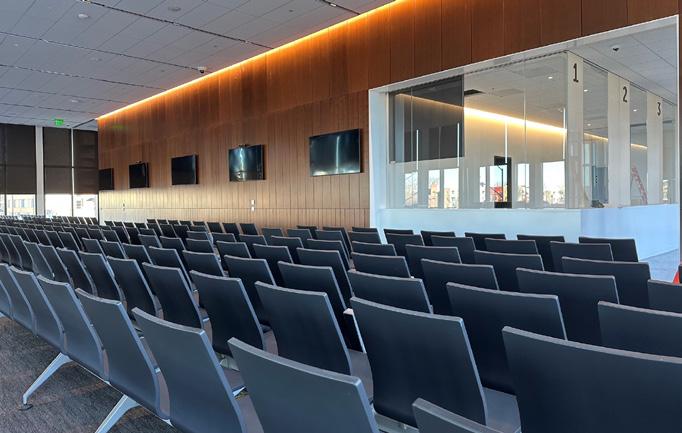
And what about the new courthouse? It’s stunning. Truly. The public spaces are magnificent. The first floor is two stories high throughout, with floor-to-ceiling windows providing natural lighting. The jury assembly room can seat up to 500, with modern seating and charging outlets throughout. There are also desks and other workstations. Also located on the
Judge Brown is the Presiding Judge of the Sacramento County Superior Court.
Director of Facilities Tracy Batelaan on left; CEO Kelly Sullivan on right.
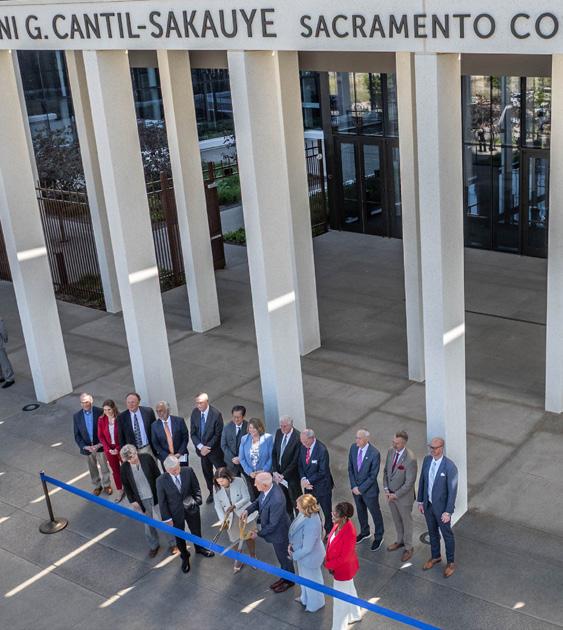
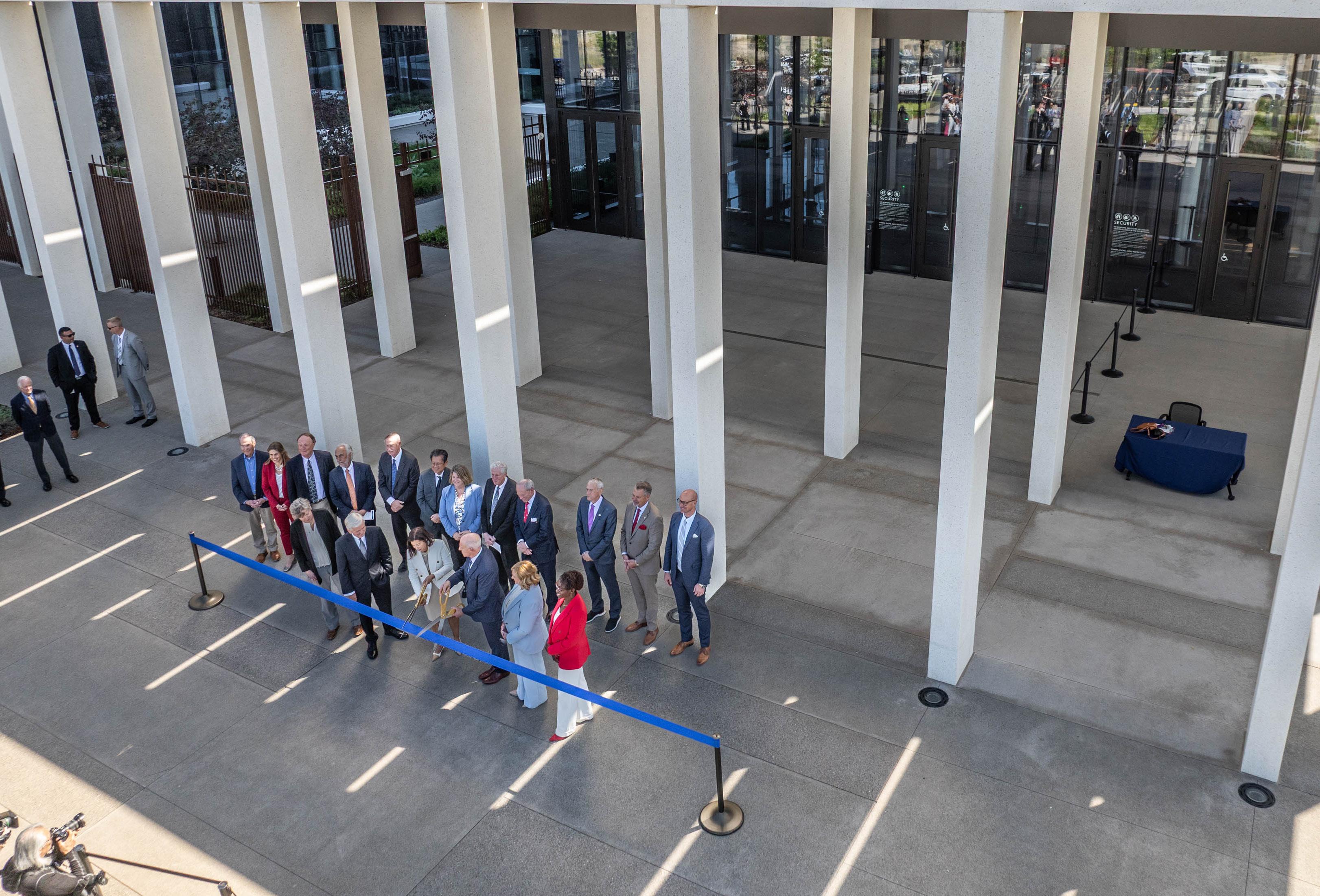
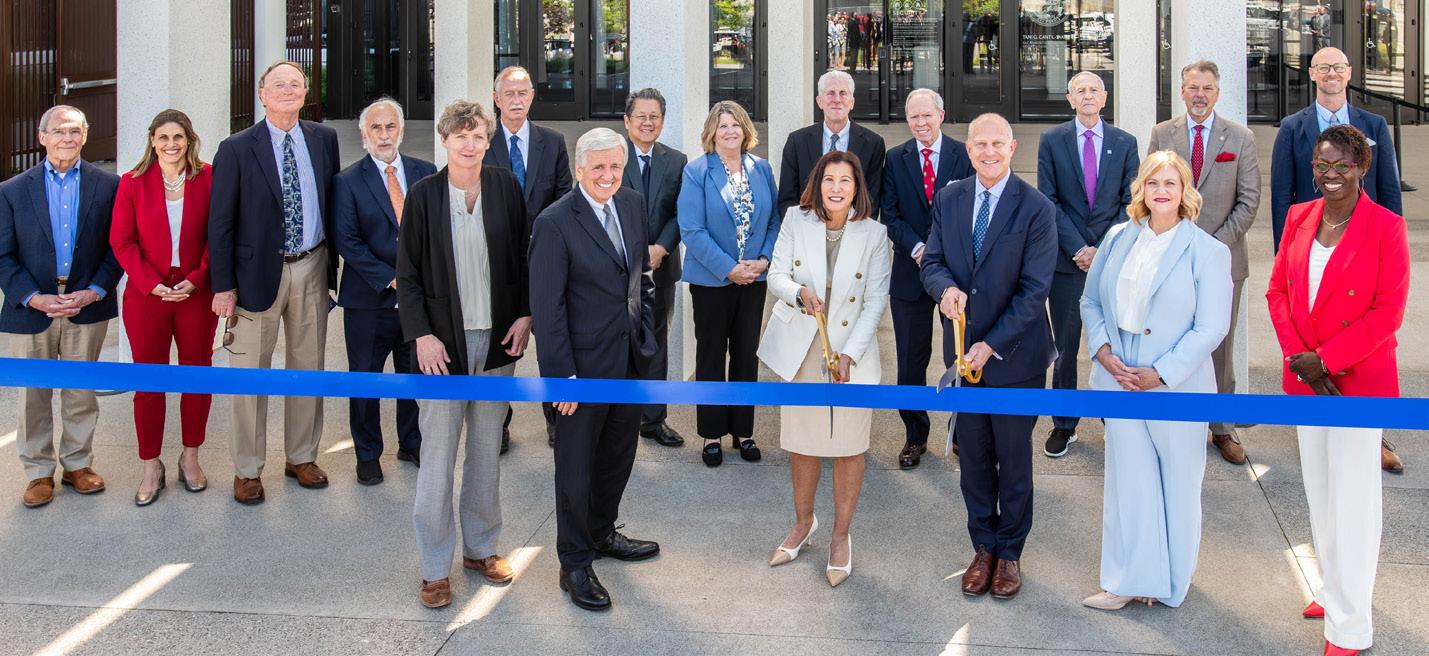
Front row, from left to right: Michelle Curran, Administrative Director, Judicial Council of California; Hon. Brad Hill, Administrative Presiding Justice, Fifth Appellate District; Chief Justice TCS; Presiding Judge Lawrence G. Brown; Sacramento Superior Court Court Executive Officer Kelly Sullivan; Judge Bunmi Awoniyi.
Back row, from left to right: CA State Senator Roger Niello; CA Assembly Member Maggie Krell; Tim Ainsworth, Ret. CEO; Hon. David DeAlba, Ret.; Hon. Kevin Culhane, Ret.; Hon. Russell Hom, Ret.; Hon. Laurie Earl, Administrative Presiding Justice, Third Appellate District; Hon. Steven Gevercer, Assistant Presiding Judge; Hon. Steve White; Hon. Robert Hight; Ret.; Hon. Michael Bowman; Lee Seale, Ret. CEO.
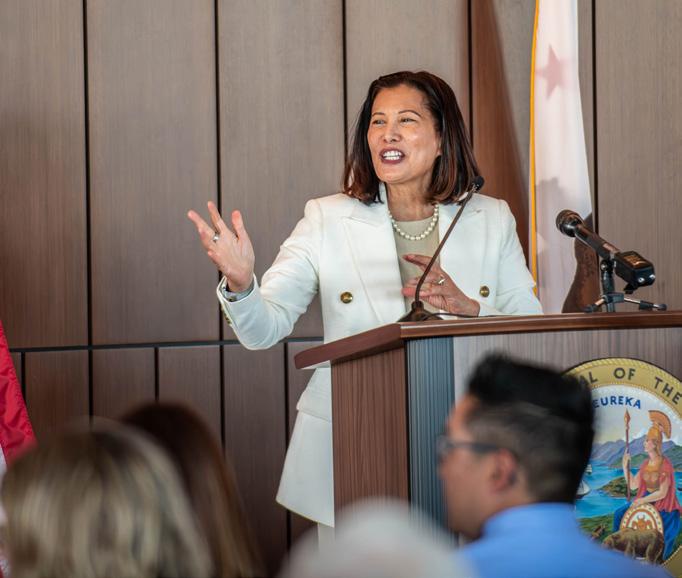
first floor are food services and a children’s waiting room. As former Chief Justice Tani Cantil-Sakauye remarked at an April 17 dedication ceremony attended by nearly 400, “This is a court built to be people-facing, because we understand that our work here is all about access to justice.”
For counsel, there will be notable and much-welcome changes. An attorney convenience room is located on the first floor. Each courtroom also has been designed to have two ante rooms for use by trial counsel for private meetings with clients or witnesses. Once inside the courtroom, counsel will discover the unitary counsel tables of GDS have been replaced with separate counsel tables for opposing parties. They also will find true state-of-the-art technology, permitting the enhanced presentation of digital evidence to the trier of fact.
As did the Gordon D. Schaber Courthouse, may the Tani G. Cantil-Sakauye Courthouse serve our community well for decades to come. And yes, honestly, the new courthouse is here.
THE
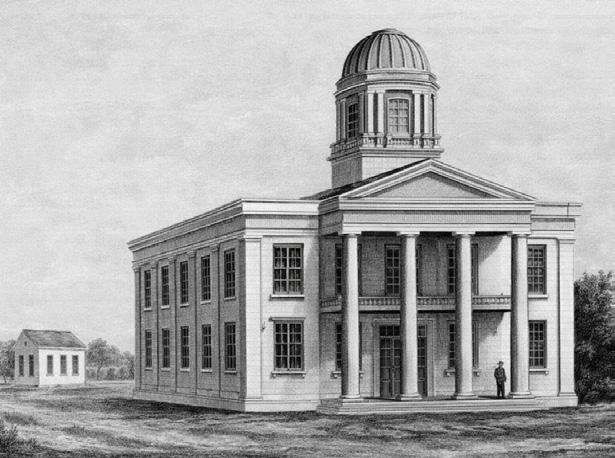
Courthouse (1851-1854) 7th and I streets
This building also served as the State Capitol. In 1854, it burned, along with a “considerable portion of the city."
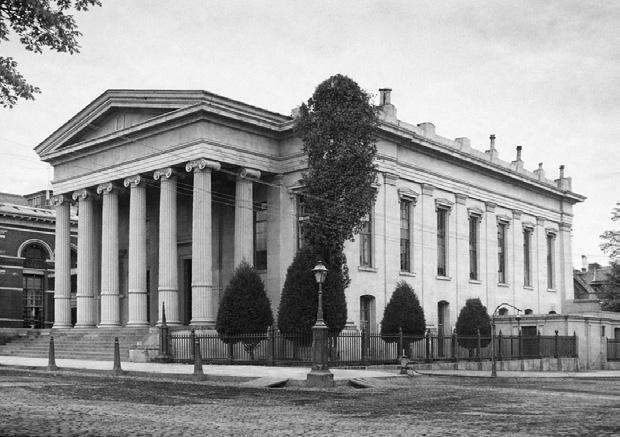
Courthouse (1855-1910) 7th and I streets
This building also served as the State Capitol until the present State Capitol Building was completed in 1869.
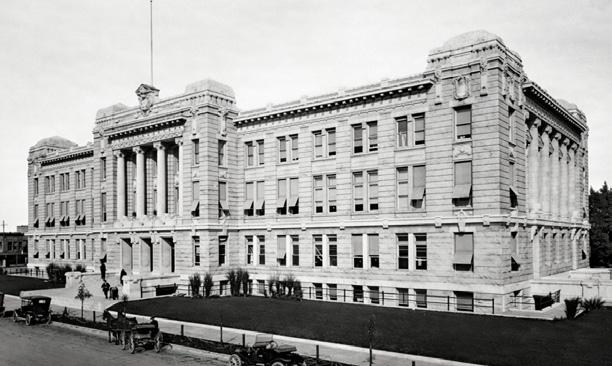
Courthouse (1910-1965) 651 I Street
This building was removed to build the Main Jail & Lorenzo Patino Hall of Justice.
Courthouse (1965-2026) 720 9th Street
The Gordon D. Schaber Courthouse.
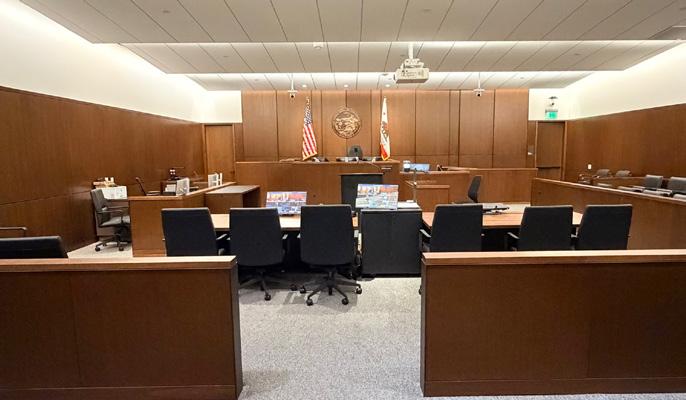
State of the art courtroom.
Jury assembly room.
Former Chief Justice Tani G. CantilSakauye (Ret.) at Courthouse Dedication Ceremony on April 17, 2026.
Nominate a Sacramento Mentor for a National Study of Legal Mentors
By Professor Michael Hunter Schwartz
uch has been said about the importance of mentors for new attorneys. However, not much is known about what makes a senior attorney a good mentor. We are law professors (two former deans and two former associate deans) who are working on a book, “What the Best Legal Mentors Do,” under contract with Harvard University Press, to discover the characteristics of the best legal mentors.
Our goal is to identify the most effective law mentors and supervisors in the United States, to synthesize the principles by which they guide and supervise their mentees, and to share these principles and stories with other lawyers who are committed to mentoring the next generation of lawyers. Mentorship
in the ethical standards required by lawyers is particularly important in this moment.
“What the Best Legal Mentors Do” will profile 25-30 exceptional legal mentors from all over the country who have been nominated by their mentees or other community members and selected for their outstanding impact in guiding other lawyers in the legal profession. The book will synthesize the strategies these mentors use to motivate, support, and inspire others, offering a range of mentorship models across a wide variety of practice types and generations. It will also identify key qualities and approaches that lawyers who want to mentor others can develop and implement.
In thinking of ways to find at-
He is the author of seven books, including a Harvard University Press book focusing on the best law school teachers in the country, and about a dozen law review papers.
torneys who could help us identify high-quality mentors nationally, we decided to reach out to county bar associations. Bar associations are uniquely well-positioned to reach lawyers who can identify strong mentors. It would be a shame if a book authored by two McGeorge faculty members, Professor MaryBeth Moylan and me, did not include at least one Sacramento-based mentor. We have already received nominations for lawyers from Connecticut, Delaware, Illinois, Iowa, Kansas, Kentucky, New York, South Carolina, South Dakota, Washington, D.C., and a few from other cities in California.
Our mentor nomination form is available at Best Law Mentors, https://sites.google.com/u.pacific.edu/bestlawmentors/home.
Michael Hunter Schwartz is the former dean and current professor of law at McGeorge.
Hon. Cecily Bond (Ret.)
Hon. David I. Brown (Ret.)
Hon. Kevin R. Culhane (Ret.)
Hon. Ben Davidian (Ret.)
Marc Alan Fong, Esq.
Gary S. Davis, Esq.
Hon. Robert Hight (Ret.)
Hon. Fred K. Morrison (Ret.)
Donald R. Person, Esq.
Hon. Kevin M. Seibert (Ret.)
Exploring the Edges of Change: A Human and an AI Discuss California Mediation
By Judge Judy Holzer Hersher, Ret., and Microsoft’s Copilot1
Judge Hersher retired in February 2021 after 20 years on the Sacramento County Superior Court bench and mediates disputes, arbitrates, and serves as Special Master in court cases. She can be reached at JudgeHersher@JudicateWest.com.
ike many of you, I read the almost daily articles about the impact of artificial intelligence (AI) on the practice of law. As a former judge and now mediator, I think about whether AI can or will supplant the human role in today’s private mediation practices. Some mediators think there is little to talk about. Others see a lot. So, I decided to go to one of the agents of change, Microsoft’s Copilot, to get its take on AI-assisted mediation in California.
There are other AI programs I
could have used, but Copilot was readily available on my computer.
In response to my early questions or prompts, Copilot was “gracious” enough to list things that present-day AI cannot do that human mediators can. This included making a personal connection with the parties and engendering trust based on the mediator’s human qualities of integrity, ability, and experience. Copilot acknowledged that humans are also better at reading tone and body language, sensing fear, anger, shame, or grief,
and responding with warmth and emotional validation. Humans also know better how to pace a mediation (i.e., when to slow down, pause, or shift strategies).
Copilot mentioned that existing AI mediators cannot de-escalate personality conflicts in real time, recognize when a party is shutting down, reframe issues, navigate trauma-informed communication, or handle power imbalances, cultural differences, or differing communication styles. And it cannot chase after a party that is walking
out the door and convince them to stick around.
But it also pointed out that AI is evolving and being trained with each use to be more human-like, thereby possibly closing the talent gap between mediator and bot. And its data-gathering capabilities far exceed those of an individual human.
As our chat continued, I asked it to focus on the following: (1) Can an autonomous 2 AI platform that refers to itself as a mediation program but, in fact, has no human interaction with or control over the parties, legally conduct business in California? (2) How, if at all, will the use of AI be treated under the law and rules surrounding confidentiality in California mediation? What follows is a modified and (human) edited version of my questions (input) and Copilot’s generated responses (output):
Can AI Autonomous Mediation Programs Operate in California?
Judge Hersher: Good morning. I am a human mediator, and I am trying to digest the information available on artificial intelligence (AI) and its place in a California mediation practice. To begin, how many different AI Platforms say they are currently available to mediate disputes for parties?
Copilot: This list is not comprehensive, but at least three AI platforms identify themselves on their websites as providing mediation. According to its website, BOTMediation3 developed its program with the help of human mediators but is “fully virtual.” It says it is a “fully synchronous and secure digital platform that facilitates negotiations by leveraging proprietary AI technology.” It offers an “immersive user experience that visually guides parties toward a settle-
ment.” It says a neutral reviews the case, and if mediation fails, it can refer your case to a qualified neutral mediator.
Easy Settle.ai4 says it “settles disputes quickly, privately, and affordably without lawyers or courtrooms.” It says it is a “Trusted AI-powered mediation built by DRai Solutions.” Its website helps parties negotiate disputes, such as security deposit issues, personal loans, and claims. Its website claims that it is 100 percent private and confidential, but notes that it does not provide legal advice or legal representation. It is not immediately clear how humans fit into the picture.
Then there is Mediator.AI5 which promotes itself as a better alternative to human mediation. Its website states, “Humans cannot reliably evaluate multiple preferences, non-linear tradeoffs, and asymmetric fallback options, all at once.” Its founding premise is that computers can evaluate tradeoffs systemically and reduce human bias.
Judge Hersher: I note that the Mediator.AI website strongly favors data-driven decision-making in settlements, presumably based on its cache of data it has gathered from a variety of sources. It seems to take an aggressive stance in favor of non-human participation in the negotiation process. Do you agree?
Copilot: I agree. It strongly favors its bank of data-driven intelligence for negotiation over human-involved mediation.
Copilot: There are also options like eBay/PayPal ODR (Online Dispute Resolution), an automated “negotiation system” in e-commerce with no human intervention. It handles inputs about items not received or items not as described and proposes resolutions. Humans are not involved at this stage.
And courts are using AI and ODR for dispute resolution. The Judicial Council of California has created a workbook titled Online Dispute Resolution, Workstream and Findings, which includes recommendations for testing and statewide adoption of electronic settlement systems.6 It lists several courts that are using these systems. As of the date of its publication, the Superior Courts of Los Angeles, Yolo County, and Santa Clara had implemented ODR platforms for small-claims, landlord-tenant, and other matters. Parties register and submit case details online. If electronic negotiation between the parties fails, it refers the parties to court hearings or human mediation.
Judge Hersher: Okay. The term “mediation” seems to be used in different contexts, some where humans are involved, and others where no humans are involved. Let’s focus on whether AI can legally replace a human in California and still have the process be called a “mediation.” Does a fully automated, autonomous AI system that advertises itself as a mediation practice comply with California law?
Copilot: California Evidence Code §1115 defines “mediation” as a process in which a neutral person or persons facilitates communication between the disputants to assist them in reaching a mutually acceptable agreement. It also defines a mediator as a neutral person who conducts a mediation and includes any person designated by a mediator either to assist in the mediation or to communicate with the participants in preparation for a mediation. That would seem to require a human person to conduct mediations.
Judge Hersher: Hmmm. I wonder what the phrase “person or persons facilitates communication” means in this context and how it might be interpreted for use in AI mediation programs. Your thoughts?
Copilot: There is no published California appellate or Supreme Court decision that directly interprets or construes the statutory phrase “facilitates communication” in Evidence Code §1115(a). California courts have not said what it limits, or what it includes. The interpretation may be important for online dispute resolution (ODR) and AI-assisted mediation, where “facilitating communication” may occur through digital tools created by persons, rather than through live, human conversation in real time.
Judge Hersher: What else should I look at?
Copilot: The “Legal Advisory on the Application of Existing California Laws to Artificial Intelligence,” published by the California Attorney General, surveys California laws that affect AI platforms.7 The Advisory warns that those who claim, without basis, that a system performs tasks better than a human may violate the California Unfair Competition Law (Bus. & Prof. Code § 17500 et seq.) and Civ. Code §1770 (The Consumer Legal Remedies Act). California’s False Advertising Law also prohibits false advertising regarding the capabilities, availability, and utility of AI products. (Bus. & Prof. Code, §17500 et seq.)
Judge Hersher: Please review recent California legislation and proposed regulations now in development by the California State Bar that establish certification levels and other requirements for California mediators and ADR providers. How would this legislation and accompanying rules impact the use of fully autonomous AI mediation in California?
Copilot: California Senate Bill 940 created a voluntary certification program for mediators and ADR providers, directing the State Bar of California to design and ad-
minister a multi-tiered certification program with ethical and continuing education rules, as well as a complaint and discipline procedure. Business & Professions Code §6173 codifies the bill.
California Assembly Bill 316 makes humans, developers, ADR providers, and deployers responsible for any negligence, misuse, or failure to supervise or monitor the use of AI in practice. That’s broad enough to include professional standards for mediation practice. It defines “artificial intelligence” and adds Civil Code §1714.468, which provides that humans can’t hide behind the defense in civil lawsuits that “AI did it,” not me.9 When viewed together, humans are inseparable from the professional responsibility and any liabilities associated with a mediation process.
Judge Hersher: So, does eBay/ PayPal ODR and others like it qualify as mediation?
Copilot: They don’t. It and others like it call themselves “automated negotiation” or, as the acronym suggests, online dispute resolution. They use online dispute resolution (ODR) platforms that use AI components to triage, suggest, and negotiate. They do not mediate as the term is currently defined.
Judge Hersher: What about the “hybrid” mediator systems, which say they have mediator input in their creation, but don’t have human participation in the output itself?
Copilot: I don’t have an answer for you. This would require a deep dive into a particular AI’s entire system, including how it is created, promoted, and used. As noted above, hybrid mediator systems may ultimately be designed to assist a human neutral or facilitate communication, but the system still needs to comply with all laws and rules. They may produce cost savings over a fully human mediation in some cases.
Is the Use of AI covered by Mediation Confidentiality?
Judge Hersher: Let’s talk about confidentiality. California mediation is governed in part by Evidence Code §§1115-1129. Evidence Code §1119(b) states that “no writing, as defined in §250, prepared for the purpose of, in the course of, or pursuant to, a mediation or a mediation consultation, is admissible or subject to discovery and cannot be compelled in any…civil action or other noncriminal proceeding.” But, like some other protections, evidence otherwise admissible or subject to discovery outside mediation or a mediation consultation is not protected from disclosure solely because of its use in mediation. (Evid. Code §1120.)
Judge Hersher: Three very recent federal cases, while not on point regarding AI-mediated confidentiality, have generated considerable discussion about when and how a client’s use of AI is protected under the attorney-client privilege or the work-product doctrine. United States v. Heppner, 2026 U.S. Dist. LEXIS 32697 (S.D.N.Y., February 17, 2026) held that in a criminal case, the defendant’s use of an AI tool to run queries related to his criminal investigation without direction or oversight from counsel was not protected under the attorney-client
privilege or work product doctrine. This was because the AI was not an attorney, there was no attorney-client relationship with the AI platform, and the platform expressly stated its content was not private or confidential, thereby making any discussion a third-party disclosure. In contrast, in Warner v. Gilbarco, Inc., 2026 WL 373043 (E.D. Mich., Feb. 10, 2026), a pro se civil litigant’s use of AI to help prepare and litigate her employment discrimination case was deemed protected as work product. In that case, the self-represented litigant was acting as an attorney. It also held that AI assistance should be considered a “tool” rather than a “person,” so its use did not constitute disclosure to a third party. Morgan v. V2X, Inc. (D. Colo Mar. 30, 2026) uses the same “tool” analysis but adds guardrails for AI use, requiring the platform to offer the ability to delete confidential information and certain record-keeping.
Judge Hersher: The question thus arises: are AI inputs and outputs considered part of or outside the mediation process? Are they tools or something else? Are there any California cases that address confidentiality with respect to the use of AI in the mediation context?
Copilot: There are no reported decisions wherein a California court analyzed what uses of AI documents or information waive mediation confidentiality; whether AIgenerated documents qualify as “writings prepared for the purpose of mediation” under Evidence Code §1119; or whether AI tools constitute “third parties” whose involvement destroys confidentiality. It may be important to consider whether the AI in use is considered an “open” or “enterprise” system.
Judge Hersher: What’s the difference between an open and an enterprise system, and why does it matter?
Copilot: Think of an open AI system as a public internet version of AI, where data is processed and stored on servers used by millions of others. You can’t dictate how the AI model is trained, updated, or configured, or limit access to your data. An enterprise AI system is a private, controlled version of AI. It hosts your data in a dedicated location and keeps it separate from other users’ data. There are likely negotiated agreements about non-disclosure and confidentiality, and prohibitions against using your inputs or outputs to train the AI. Contracts are generally negotiated with terms designed to protect inputs and outputs. An enterprise system may better support and protect confidentiality claims associated with mediation practices.
Judge Hersher: To summarize, no fully autonomous AI dispute resolution platform currently satisfies California’s statutory or ethical requirements for providing what is called a mediation. This is to be distinguished from online dispute resolution (ODR) programs that connect parties directly to negotiate with one another with automated suggestions. These may be considered a form of mediation under current law if the system’s input involves a human evaluation and ultimately refers the parties to a human neutral. No California
court has yet addressed the use of open or enterprise AI in mediation, including what is and is not protected by confidentiality. From my perspective, however, the new AI ODR and hybrid mediation options will influence the mediation market and its costs. But that is a story for another day.
Copilot: Yes.
Judge Hersher: Nice chatting.
1 Microsoft Copilot is owned and developed by Microsoft. It serves as Microsoft’s unified AI assistant, integrated across their ecosystem, including Windows, Edge, Bing, and Microsoft 365.
2 Having the ability to act, govern, or function independently without external human control.
7 Published by the California Department of Justice, Office of the Attorney General, January 1, 2025, and available at https:// oag.ca.gov/system/files/attachments/ press-docs/Legal%20Advisory%20-%20 Application%20of%20Existing%20CA%20 Laws%20to%20Artificial%20Intelligence. pdf
8 Civil Code §1714.46.
(a) “Artificial intelligence” means an engineered or machine-based system that varies in its level of autonomy and that can, for explicit or implicit objectives, infer from the input it receives how to generate outputs that can influence physical or virtual environments.
(b) In an action against a defendant that developed or used artificial intelligence that is alleged to have caused a harm to the plaintiff, it shall not be a defense, and the defendant may not assert, that the artificial intelligence autonomously caused the harm to the plaintiff.
9 Identical definitions appear in Civil Code §3110 (Artificial Intelligence Training Data Transparency); Gov. Code §11546.45.5 (Part 1-State Departments and Agencies, Chapter 5.6- Department of Technology). A similar definition is found under federal law, at Chapter 119-National Artificial Intelligence Initiative, 15 U.S.C. §9401(3).
EXCELLENCE AT ITS FINEST.
Signature Resolution is a proud supporter of the Sacramento Bar Association’s Bench Bar Reception 2026.
Associate Justice Elena J. Duarte 2026 Judge of the Year We congratulate the honoree of the evening:
Daniel V. Kohls
Rex Darrell Berry
SAN FRANCISCO
601 California Street Suite 1450
San Francisco, CA 94108
OAKLAND
1111 Broadway Suite 1490
Oakland, CA 94607
SILICON VALLEY
3979 Freedom Circle Suite 850
Santa Clara, CA 95054
CENTRAL CALIFORNIA
8500 Stockdale Hwy Suite 195
Bakersfield, CA 93311
CENTURY CITY
2049 Century Park E Suite 620
Los Angeles, CA 90067
LOS ANGELES
633 W 5th Street Suite 1000
Los Angeles, CA 90071
ORANGE COUNTY
Coming Soon
660 Newport Center Drive Suite 200
Newport Beach, CA 92660
SAN DIEGO
12730 High Bluff Drive Suite 350
San Diego, CA 92130
Silicon Valley
Los Angeles
San Diego
Orange County
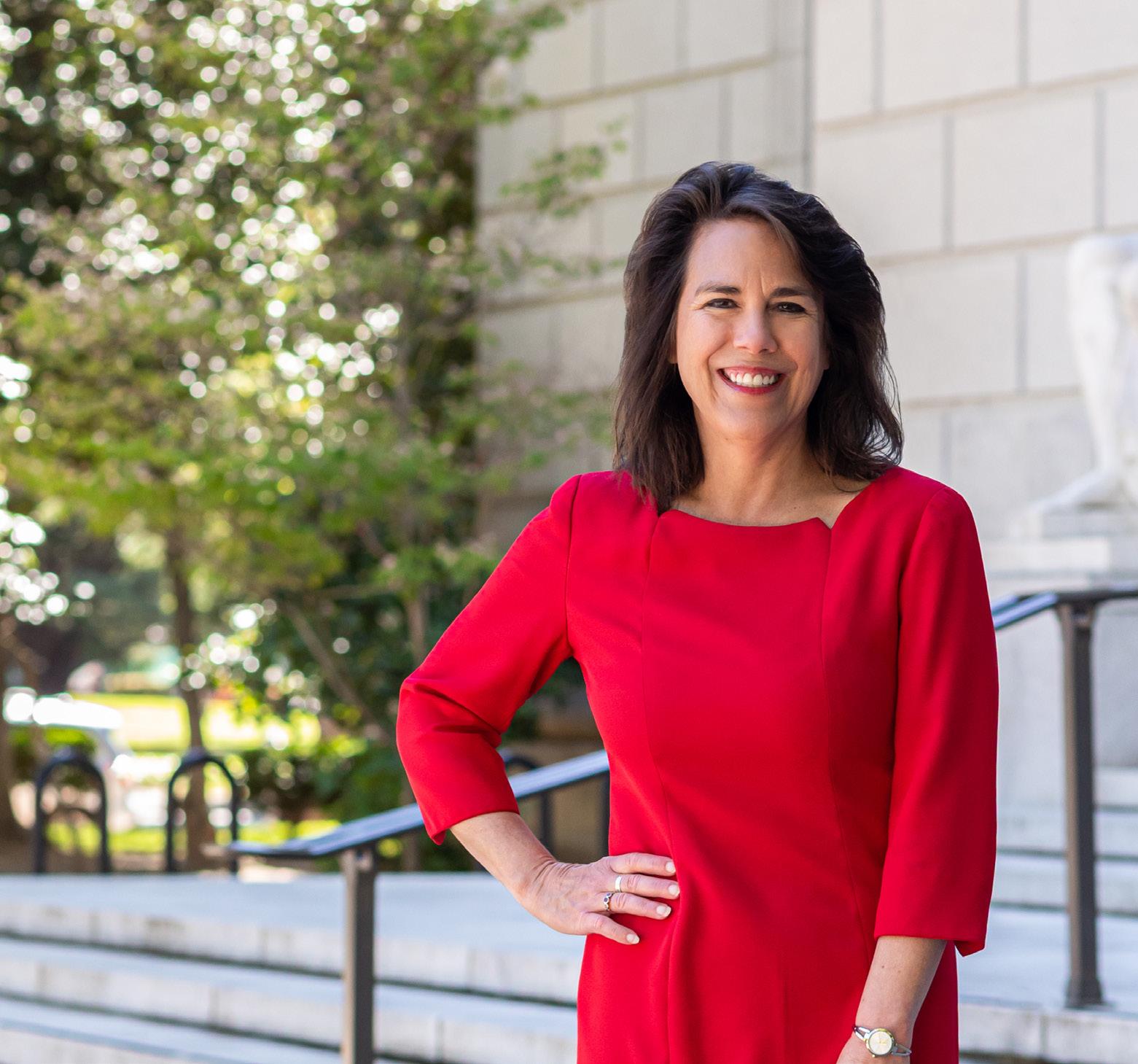
Justice Elena Duarte: A Career Defined by Excellence, Service, and Impact
By Jill Telfer
Jill P. Telfer serves as the Immediate Past President of the Sacramento Chapter of the American Board of Trial Advocates and the Vice President of the Disability Inclusivity Bar Association of Sacramento. She can be reached at jtelfer@telferlaw.com.
ustice Elena Duarte has been an outstanding, well-respected, and actively contributing member of our legal community since 1994. Defined by a strong work ethic, decades of distinguished service, and a deep commitment to both the legal profession and the broader community, Justice Duarte has built a career that reflects resilience, intellect, and purpose.
In supporting her as the Judge of the Year nominee, her current colleagues describe her as “deftly balance[ing] significant community involvement with the determined pursuit of excellence in her core judicial function” and having “a strong commitment to community and unyielding commitment to rigor, excellence, and timeliness as a judicial officer,” as well as a “wonderful colleague” who makes a “tremendous contribution to our community.” They also note her “exceptional people skills,” on display in “her dedication to court
outreach and the mentoring of students” and at the court every year when she chairs the committee tasked with organizing the annual holiday party. Another colleague describes being “consistently impressed by Justice Duarte’s intellectual rigor” and noted that “[b] eyond the bench, Justice Duarte is a mainstay of our legal community” who “consistently works to elevate the standards of our profession.” He adds that Justice Duarte embodies “the ideal of a ‘dispassionate but compassionate’ jurist.”
Justice Duarte’s path to a career in the law was not linear. Her father is from Mexico, and picked crops, worked in a cannery and eventually went to law school in California. He became a criminal defense attorney, consistently expressing his desire to help the disadvantaged, and representing primarily clients of Mexican heritage with limited English skills and financial resources. (He is now retired, in good health, and lives with his wife in
Vail, Arizona.) But although one of her favorite childhood memories is her father picking her up and swinging her around in elation when he passed the California Bar exam, Justice Duarte grew up with her eye on music, not the law, as a career. In high school she excelled in academics, but her true passion was singing – she performed often. As a teenager in the 1980s, she envisioned herself as a future rockstar. When her mother suggested college, she responded that “rockstars don’t go to college.” Her mother persuaded her to apply to college, if only to study music, but reinforced the need to obtain scholarships since the family had limited resources.
True to form, Justice Duarte obtained multiple scholarships and attended the Conservatory of Music at the University of the Pacific from 1984 to 1986, earning her Bachelor of Arts from the University of Southern California in 1989. She trained in classical voice and
studied an additional year to complete a major in Italian. In what she describes as one of her few practical decisions made around that time in her life, she took the last offering of the LSAT for the upcoming academic year and went on to attend Stanford Law School.
Upon graduating, Justice Duarte was selected as one of only 12 law graduates nationwide to join the prestigious Attorney General’s Honor Program in the Criminal Division of the US Department of Justice in Washington, DC and served as a Trial Attorney there as well as a Special Assistant United States Attorney, prosecuting misdemeanor criminal cases in the District of Columbia. In late 1994, she returned to California as an Assistant United States Attorney in Sacramento. At just 28 years old, she had already completed 25 jury trials. She remembers that during her first week in her new office, a lawyer there speculated out loud to her that she had been hired solely because of her ethnicity. Rather than discouraging her, the experience strengthened her resolve to prove her capabilities through excellence and dedication. From 1994 to 2000, she prosecuted a wide range of federal crimes, handling most of her cases from investigation through appeal, and developing her reputation as a skilled and fair prosecutor.
Local criminal defense attorney (and former Assistant Federal Defender) Mark Reichel often opposed Justice Duarte during those early years of her career in Sacramento, and notes in his letter supporting her nomination that he “immediately found AUSA Duarte to be professional, compassionate, competent, with the highest courtroom skill and ethical guidance.” He adds that “[every defendant that she dealt with felt that they had been given fairness, fair treatment” and that “[e]very defense
counsel felt the same.”
In 2000, Justice Duarte and her family relocated to the Los Angeles area for her then-husband’s work, and she joined the US Attorney’s Office in Los Angeles, working in the Major Frauds and Cyber and Intellectual Property Crimes sections. Her work earned her an appointment as section chief as well as numerous accolades, including recognition by the Daily Journal as one of the top 75 female litigators in California.
Justice Duarte’s judicial career began with her appointment by Governor Arnold Schwarzenegger to the Los Angeles Superior Court in 2007. In 2008, she wanted to return to the Sacramento area to be closer to her stepson, Andrew, and sought a second judicial appointment, this time to the Sacramento Superior Court. (Andrew now lives in San Diego, but their relationship remains very close.) Mark Reichel relates that when Justice Duarte first arrived back in Sacramento as a judge, he alerted his colleagues and many of them stopped by her courtroom “just to observe.” He describes what they saw as “the best in the system: Judge Duarte exhibited in her courtroom tremendous fairness, compassion, and a human touch to defendants who appeared, as well as a tremendous respect for law enforcement.” Retired Judge Russell Hom was in charge of training new judges in Sacramento when Justice Duarte arrived, and writes that he “regarded [her] intellect, command of the law, and her judicial demeanor so highly that she shared in my responsibility of training new judges on the skills needed to excel as judicial officers.” Judge Hom refers to Justice Duarte as “perhaps one of the most intellectually gifted individuals whom I’ve had the pleasure of knowing” and adds that she is “a person of exemplary
character.” Commissioner Marlene Clark, who served with Justice Duarte on the bench in the area of Juvenile Dependency, notes that she “is respected not only for her intelligence and legal insight but also for her warmth, humility, and kindness.”
In December 2010, Justice Duarte was elevated to the Court of Appeal, Third Appellate District. In her letter of support, appellate attorney Carissa Shubb notes that Justice Duarte “takes particular care and pride in the refinement of her written opinions, making sure the opinions are concise, but thorough and grounded in sound legal reasoning. Her written opinions are thoughtful, respectful, unbiased, and always drafted with consideration for the participants involved. She strives to provide guidance to the Superior Court and involved attorneys as well as explain the reasoning to the litigants themselves. She embodies the best of our judiciary providing the commitment and dedication the bench and public seek and deserve.” Many of the other attorneys with whom Justice Duarte works at the Court of Appeal agree, often describing her as a tireless worker, with one noting that “[n]ot only does Justice Duarte bring a high level of excellence to the bench, but she also brings her heart.” Another writes that she is “smart, thoughtful, funny, and most of all collabo-
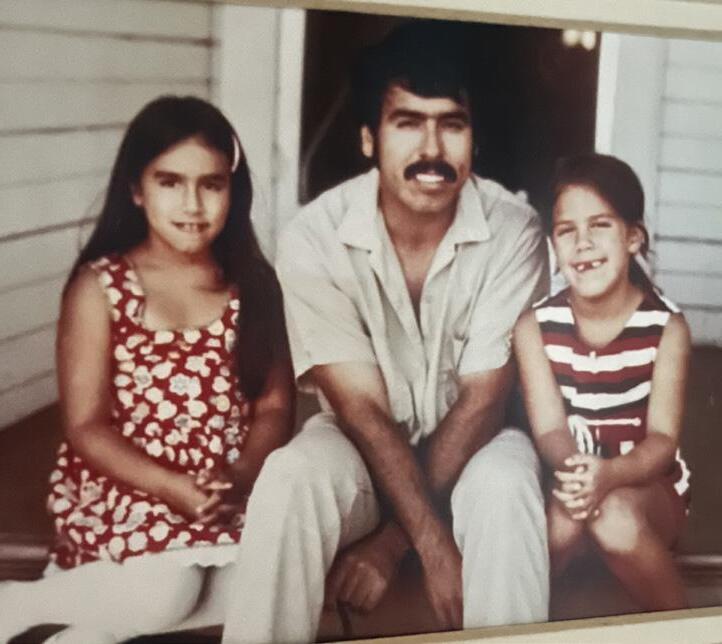
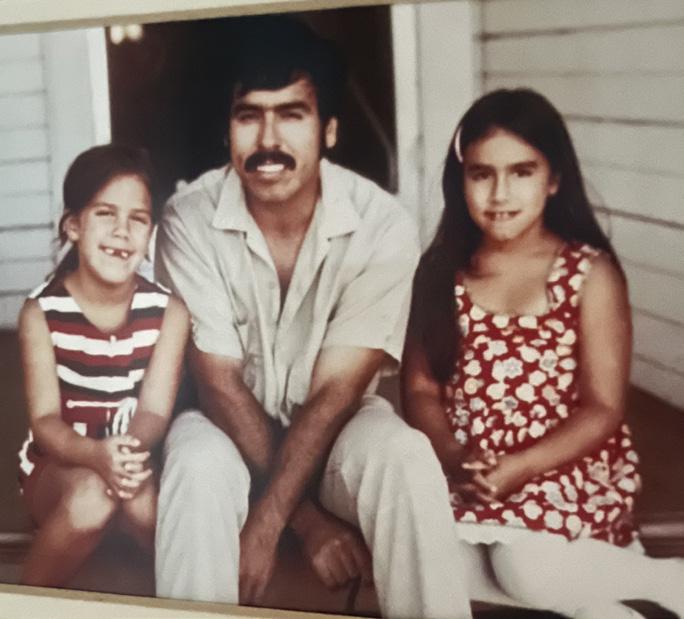
Justice Duarte (left) with her father and sister relaxing in the 70’s.
rative,” adding that for the court’s attorneys “judicial collaboration is a key to the success of this job and this court.” Others add that she is an “outstanding mentor” and a “warm and inspiring figure.”
Almost as critical to the community as her work on the court is her work outside the court, in the form of her engagement with the greater community, both legal and non-legal. Examples of her activities outside the court raised in the many letters supporting her include her participation in the Kennedy Inn of Court, her work with Operation Protect and Defend, her many activities as Chair of her court’s Outreach Committee, and her work judging mock trials and moot courts for students of all ages, all while serving as a mentor for young attorneys and law students and in leadership of various organizations.
When Justice Duarte first returned to Sacramento as a judge in 2008, then-Presiding Justice Art Scotland recruited her to join the Kennedy Inn of Court. She became highly involved in contributing to the Inn’s mission of promoting professionalism, ethics, and civility in the legal field. She was first a team leader, then was asked to join the executive committee, and then was named President from 2013 to 2015. She continued with the Kennedy Inn as the social chair, setting up events and opportunities for the membership, until she left the executive committee in 2018. Her team presentations were cutting edge, provocative and fun, while promoting important discussions about the independence of the judiciary, civility, and the rule of law. In the words of one former teammate, current Sacramento Superior Court Presiding Judge Larry Brown, “[t]o serve on an Inn of Court team led by Justice Duarte was a thing to behold. Her ener-
gy and commitment to provide a meaningful learning opportunity for both team members and the greater Inn were inspiring.”
Her work with organizations such as Operation Protect and Defend (“OPD”) highlights her dedication to civics education. A member of OPD’s steering committee since 2008, Justice Duarte regularly visits high schools and engages students in meaningful discussions about constitutional principles, encouraging critical thinking and respectful dialogue. The judges and attorneys who serve with Justice Duarte on the OPD steering committee and wrote in support of her nomination observe that she is routinely among the first to volunteer for additional classroom visits when the need arises and is often the judicial officer who commits the greatest number of classroom sessions each year. She has served multiple times as a master of ceremonies for OPD’s Annual Law Day Dinner, supported the student art program, and contributed across numerous committees. Judge Joseph Cress, who has served on the steering committee with her for 15 years writes: “Justice Duarte is a jurist of unmatched integrity, strong
intellect and a fervent commitment to public service,” adding that she “is a valuable resource for every component of OPD.” US Magistrate Judge Chi Soo Kim, who counts herself as one of Justice Duarte’s “fortunate mentees,” writes that she “spends countless hours doing the work to educate individuals about the rule of law beyond the courtroom.” Judge Kim adds that she has volunteered with Justice Duarte in multiple high school classrooms over the years, and has “witnessed the positive impact she has had and continues to have on the greater community.” One of the attorneys on the committee noted that he had appeared on cases multiple times before Justice Duarte, as well as witnessed her commitment to OPD’s mission of bringing civics education and respectful discussion of difficult legal and societal issues to high school classrooms around the Sacramento area. He observed that “she has a knack for connecting with students, engaging in discussions with the same approachable manner that I’ve experience[d] before her in court.”
Although her judicial duties remain her top priority, Justice Duarte has made significant contributions to her community as Chair of the court’s outreach committee. The committee is focused on holding oral argument sessions before students, lawyers, and members of the public within the 23 counties that make up the Third District and also tasked with welcoming and hosting visitors to the court itself, primarily groups of students of all ages. For example, in 2023, the committee coordinated oral argument outreach sessions in front of law students and faculty at both King Hall and McGeorge School of Law. In 2024, the committee coordinated oral argument outreach sessions in the El Dorado County before over 200 high school stu-
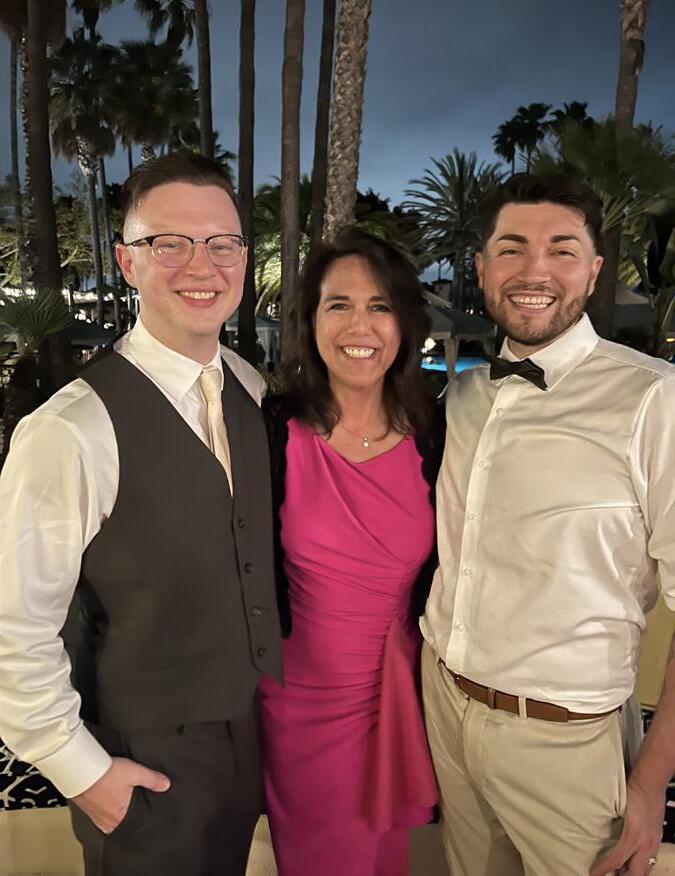
Justice Duarte with her stepson (left) and his husband at their wedding in 2024.
dents. Most recently, this past March, the committee brought oral arguments and students together with judges and members of the bar from three counties at the Sutter Superior Court. After argument concludes at each of these outreach events, Justice Duarte moderates a question-and-answer session between the students in the audience and the participating justices.
In addition to these bigger events, Justice Duarte routinely coordinates and hosts groups of students wishing to visit the court, most to see oral argument and then speak with a justice. Some chaperones have become regular visitors, including Chris Voisin, the coordinator of the McClatchy High School Law and Public Policy Academy, who brings student groups twice a year to observe oral argument and meet with Justice Duarte. He notes that “[t]he connection she makes with my students reflects her deep commitment to and compassion for their education, her judicial temperament, and sense of civic duty, all which come across to my students during their visit to the Court.” Attorney Jessica Wall, who routinely brings groups of externs from different agencies and the federal court to visit the Court of Appeal, describes the summer extern visit as “a highlight of the summer program because of Justice Duarte.” She notes Justice Duarte’s kindness, and opines that “[o]ur profession would be immeasurably stronger if more of its members shared Justice Duarte’s generosity of spirit.”
People often ask Justice Duarte to speak to groups whom they think would benefit from seeing a woman of color in her position. For example, she has spoken to the Friends Outside Community as well as to the YMCA Youth Programs and participated in the career fair at Florin High School
on several occasions. As one of the few Latina judges in the area, she has met and spoken with members of the various law school Latinx organizations over the years, at their mixers and annual dinners. McGeorge Professor Mary-Beth Moylan notes that she has “seen the eyes of many a female law student light up when I introduce them to Justice Duarte. In particular, our Latina law students see in her a picture of what they might someday achieve.”
Justice Duarte routinely agrees to judge moot courts for McGeorge and Davis law schools; Ed Telfeyan, the Director of the Moot Court program at McGeorge, notes that “she takes on those roles with as much energy and attention as she brings to her work as an appellate justice.” She also judges the finals of the Constitutional Rights Foundation high school moot court competition and has judged later rounds of its mock trial competition since 2008. When speaking at the competition’s awards dinner in 2016, she received what she calls one of the greatest examples of why she volunteers: a Latina mother approached her and said that her daughter played a witness
on a team that had competed that past week in Justice Duarte’s courtroom. She said her daughter came home and said “mom, mom, guess what – the judge in my trial tonight was a Latina and she is a REAL JUDGE!” The mother thanked Justice Duarte for inspiring her daughter and being a role model. Justice Duarte acknowledges the significance of these moments, recognizing that representation and visibility can inspire future generations in ways formal education alone cannot.
Justice Duarte also has engaged in substantial judicial liaison work for boards and bar groups. She served on the board for the Women Lawyers of Sacramento (WLS) for 10 years and California Women Lawyers for eight years. Current President of WLS Vanessa Raven notes that “she shows up[] with energy, ideas, her unique perspective and a willingness to help, without ego and without restraint.” Justice Duarte was also a judicial advisor to the California Lawyers’ Association’s Litigation Section for five years, participating in judicial roundtables and other panels for the group’s continuing education efforts with its membership. She enjoys meeting lawyers in the community and statewide through these groups. She has provided many young lawyers with training, including speaking at law schools about brief writing and oral argument, and presenting the criminal law update for the courts’ appellate lawyers statewide.
Justice Duarte lives within an hour’s drive of her mother, her sister and brother-in-law, and her niece, and sees her family often. She generally keeps her personal and family lives separate, with one key exception – her Corgis. She has owned Corgis since 2002, and her current pair of twins recently turned two and celebrated their birthday
Justice Duarte with her pups at CorgiCon 2025.
with a party in her chambers. She swears they are much more popular at the court than she is, and if she didn’t have Corgis and a candy bowl in her chambers, she would never have any visitors there!
In conclusion, Justice Duarte’s legacy is not only defined by her legal achievements and impact on the community but also by the countless individuals she has mentored and inspired. As noted by Presiding Judge Brown, “It is hard to imagine the number of people Justice Duarte has inspired by the example she sets.” One such person is a former extern of hers, who is now a senior associate in Southern California and wrote in support of her nomination that Justice Duarte provided “invaluable guidance” to her as a law student in 2015, and continues “to serve as a role model to this day.” She adds that “Justice Duarte taught me that remaining unbiased is not passive, it is an active and intentional practice. She approaches the law ob-
jectively, carefully considering all perspectives, and grounding every decision in a thorough review of the facts and the law. These are the values she instilled in me as a law student, and ones I continue to apply in my legal practice today.”
Justice Shama Mesiwala explains, “Justice Duarte has been giving back to the community since I first met her over 15 years ago at the Diversity Law Student Reception. She has mentored young law students and attorneys like me who needed direction in their careers and sticks with us through the good times and bad. And her commitment to outreach through Operation Protect and Defend, the Third District’s committee, and the McClatchy program is peerless. When I became a justice on her court, I was struck by her gracious collegiality in offering helpful suggestions that moved case analysis forward while never being overbearing. She sets a standard for all of us to emulate, whether in her excellence in
the profession, service in the community, or collegiality to all she encounters. This award has been two decades in the making for Justice Duarte and is long overdue.”
Congratulations Justice Duarte as SCBA’s 2026 Judge of the Year!
Effective November 4, 2025, Judge Kronlund joined our firm as a Mediator and Arbitrator after serving 30 years on the California Superior Court for San Joaquin County. During her distinguished judicial career, she managed a high-volume direct civil calendar for over 15 years, presiding over a wide range of complex civil matters.
Judge Kronlund has conducted well over 1,000 civil settlement conferences and presided over more than 200 jury trials and thousands of court trials spanning nearly every area of law. Known for her direct and practical approach, she provides valuable insight into litigation risk and brings a unique ability to connect with individuals from all walks of life—qualities that foster resolution and understanding in mediation and arbitration settings.
Judge Kronlund earned her Bachelor of Arts in Psychology, cum laude, from Pepperdine University; her Juris Doctor, with Distinction, from McGeorge School of Law; and her LL.M. in Dispute Resolution from the Pepperdine Caruso School of Law, Straus Institute.
She made history as the first female South Asian American judge in California and held numerous leadership roles, including Presiding Judge of Juvenile Court, Supervising Judge of the Civil Department, and Direct Civil Judge.
We are delighted to welcome Judge Kronlund to our panel and look forward to the expertise, fairness, and commitment she brings to alternative dispute resolution.
Judge Hom, Justice Duarte, and Justice Mesiwala celebrating Justice Duarte’s 10 years on the WLS Board.
SACRAMENTO
Voices of the Sacramento Legal Community - What We Learned from the SCBA Attorney Survey
By Tom Roberts
he Sacramento County Bar Association exists to serve the attorneys of our region, and the best way to do that is by listening. Earlier this year, we invited attorneys across Sacramento County to share their perspectives on professional education, networking opportunities, and the value they seek from their local bar association.
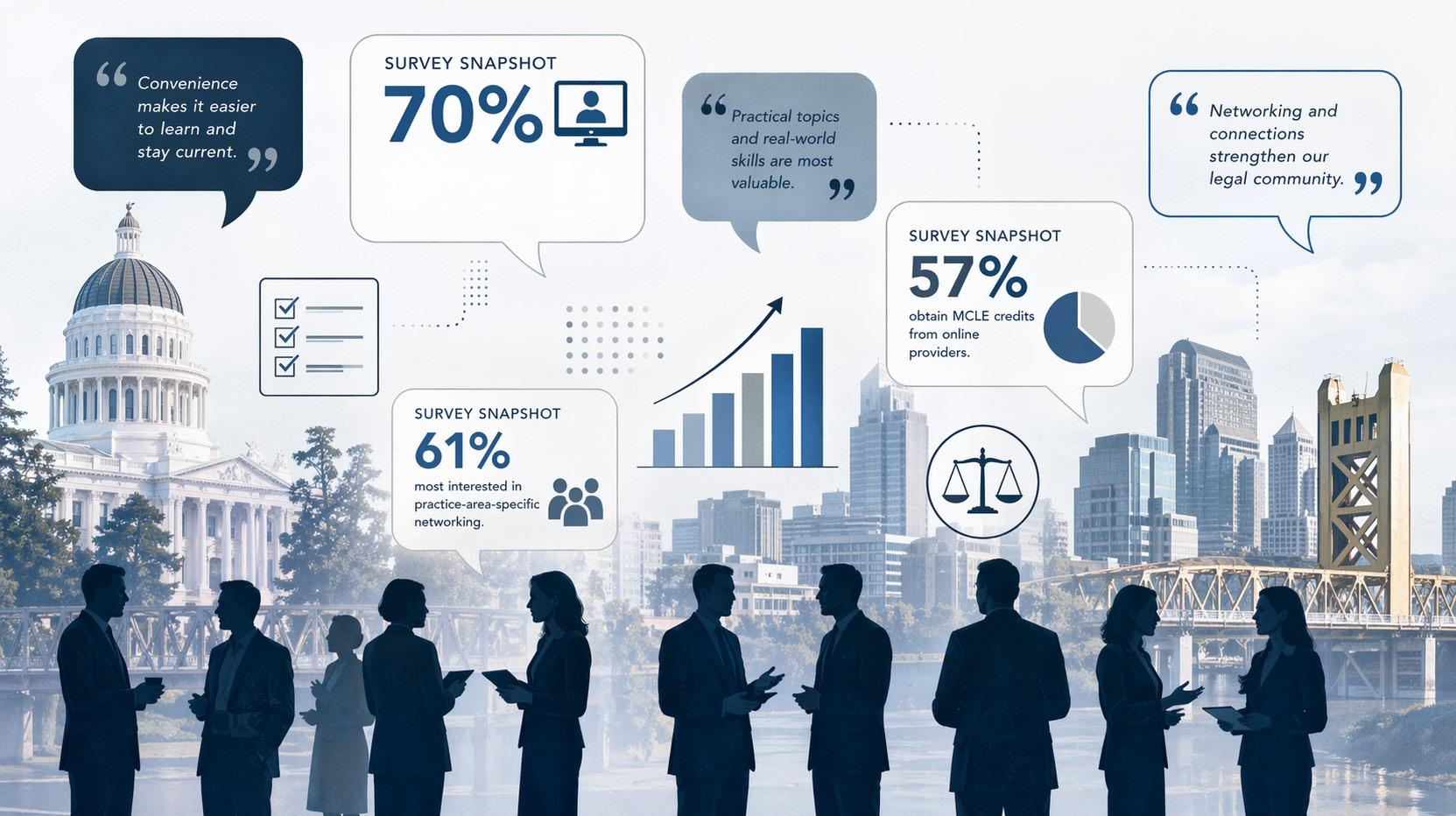
The survey was conducted between January 6 and January 14, 2026, reaching nearly 8,000 Sacramento County attorneys. The email invitation generated an unusually strong open rate of more than 60%, and 117 attorneys ultimately participated, offering insights that will help guide SCBA’s future plan-
ning. Respondents included current SCBA members (41%), former members (25%), and attorneys who are not currently members (34%), providing a useful cross-section of the local legal community.
The survey focused on three broad areas: MCLE programming, membership value, and networking and social opportunities. Several clear themes emerged.
Convenience Is Driving MCLE Participation
One of the most striking findings from the survey was the strong preference for virtual continuing legal education.
Approximately 70% of respondents said they prefer attending MCLE programs live via Zoom,
compared with 30% who prefer in-person programs.
This reflects a practical reality for many attorneys. Virtual programs eliminate travel time and make it easier to attend educational programs without disrupting court appearances, client meetings, or billable work.
At the same time, respondents made clear that in-person programming still has an important role, particularly when it offers something distinctive. Judge-led panels, conferences, and special events featuring notable speakers continue to attract strong attendance.
Rather than replacing in-person programs, virtual MCLE appears
Tom Roberts is the Executive Director of the SCBA. He can be reached at troberts@sacbar.org.
prefer attending MCLE programs live via Zoom rather than in person.
to complement them – allowing attorneys to balance convenience with opportunities for deeper professional engagement.
A Competitive MCLE Marketplace
The survey also confirmed that attorneys rely on a wide range of providers for continuing legal education.
More than half of respondents reported obtaining MCLE credits from online providers, while many also rely on other local or specialty bar associations, the State Bar, or programs offered by their employers. Only a small percentage indicated that SCBA is currently their primary source for MCLE credits.
This reflects the increasingly competitive landscape for professional education. However, respondents also suggested that local bar associations can offer something national providers cannot – programming that reflects the specific needs and professional relationships of the local legal community.
The Topics Attorneys Want Most
When asked what topics they would most like SCBA to offer, respondents expressed strong interest in both required-credit programming and practical professional development.
Two of the most frequently requested areas were ethics and elimination of bias or civility programs, both required components of California’s MCLE system. Respondents also expressed strong interest in technology and artificial intelligence in legal practice, reflecting the rapid evolution of digital tools and their growing impact on the profession.
Attorneys also emphasized the value of practical skills-based training, including litigation and trial skills, law office management, and programs addressing attorney wellness and profession-
al resilience. Many respondents noted that practice-area-specific programs can be particularly valuable because they combine targeted education with opportunities to build referral relationships with colleagues.
Price Matters
The survey confirmed that cost remains an important factor when attorneys decide whether to attend professional programs.
More than one-third of respon-
dents indicated that they typically attend free MCLE programs, while many others reported that they generally pay $25 or less for a program.
Higher-priced programs can still succeed – particularly conferences, judge panels, or specialized training – but respondents consistently emphasized the importance of clear value relative to both the price of the program and the time required to attend.
Awareness of Member Benefits
The survey also revealed opportunities to improve awareness of existing SCBA member benefits.
For example, only 17% of respondents indicated they were aware that SCBA offers insurance options, including health and dental coverage programs available to attorneys and law firms. Another 29% indicated they would like to learn more about those offerings.
This suggests that some benefits may simply be underutilized because attorneys are not aware they exist.
Networking Remains a Priority
While the survey highlighted the growing popularity of virtual education, it also made clear that attorneys continue to value in-person professional connections.
Respondents expressed strong
interest in practice-area-specific networking events, casual receptions and mixers, and smaller affinity-based gatherings. Many respondents noted that they prefer smaller, quieter settings that encourage conversation, rather than large events where meaningful interaction can be difficult.
Several creative venue ideas were also suggested, including events at museums, cultural institutions, local breweries, and Sacramento sporting venues. These types of settings can provide relaxed environments where attorneys can connect with colleagues across practice areas.
Listening and Moving Forward
The purpose of the survey was not simply to gather data, but to ensure that SCBA’s programs reflect the needs and priorities of the attorneys we serve. The insights gath-
ered will help guide future efforts to expand high-value Zoom MCLE programming, develop practice-specific educational offerings, increase networking opportunities, and improve communication about existing member benefits.
Most importantly, the survey reinforced something many of us already know: Sacramento has a vibrant legal community that values professional learning, collegiality, and meaningful connection.
SCBA looks forward to continuing that conversation—and to building programs and opportunities that reflect the voices of the Sacramento legal community.
SCBA’s Executive Director, Tom Roberts, Becomes Juvenile Court Justice Commissioner for Sacramento County
he Sacramento County Bar Association is pleased to share that Executive Director Tom Roberts was formally sworn in on April 21, 2026, as a member of the Sacramento County Juvenile Justice and Delinquency Prevention Commission.
Roberts took the oath of office before the Honorable Kristina Lindquist, Presiding Judge of the Juvenile Court, affirming his commitment to uphold the law, maintain confidentiality, and promote a juvenile justice system grounded in fairness, dignity, and respect for youth.
The Commission serves a vital role in Sacramento County, overseeing the juvenile justice system, inspecting facilities, and advocating for improvements
that support youth and strengthen community outcomes. Its mission is to encourage positive citizenship, prevent delinquency, and promote the effectiveness of the justice system.
For Roberts, the appointment reflects a lifelong commitment to juvenile justice issues. “I have been engaged in issues impacting youth and juvenile justice since I was a teenager,” Roberts said. “This appointment is both an honor and a responsibility. I look forward to working collaboratively with the Court, County partners, and fellow commissioners to ensure our system serves young people with fairness, accountability, and opportunity.”
The Juvenile Justice Commission is mandated under California law and operates as an independent body working closely with the Juvenile Court. Among its responsibilities are conducting inspections of juvenile facilities, reviewing conditions of confinement, and making recommendations to improve services and outcomes for youth in the system.
Roberts brings decades of leadership experience in public service, nonprofit management, and community-based systems to the role, along with a longstanding commitment to equity, accountability, and effective governance.
This appointment reflects SCBA’s broader commitment to supporting initiatives that strengthen the justice system and improve outcomes for the communities it serves.
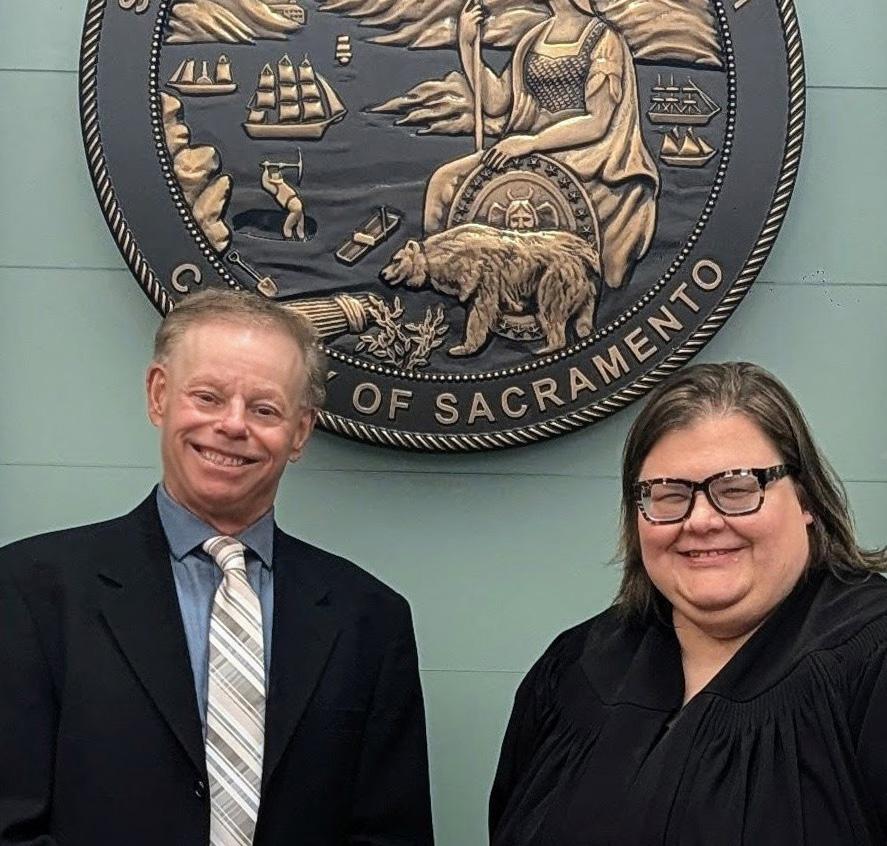
SCBA Executive Director Tom Roberts and Hon. Kristina Lindquist.
A Standout Year for the Valentine Run Walk, Race for Justice
By Nanette Aubut
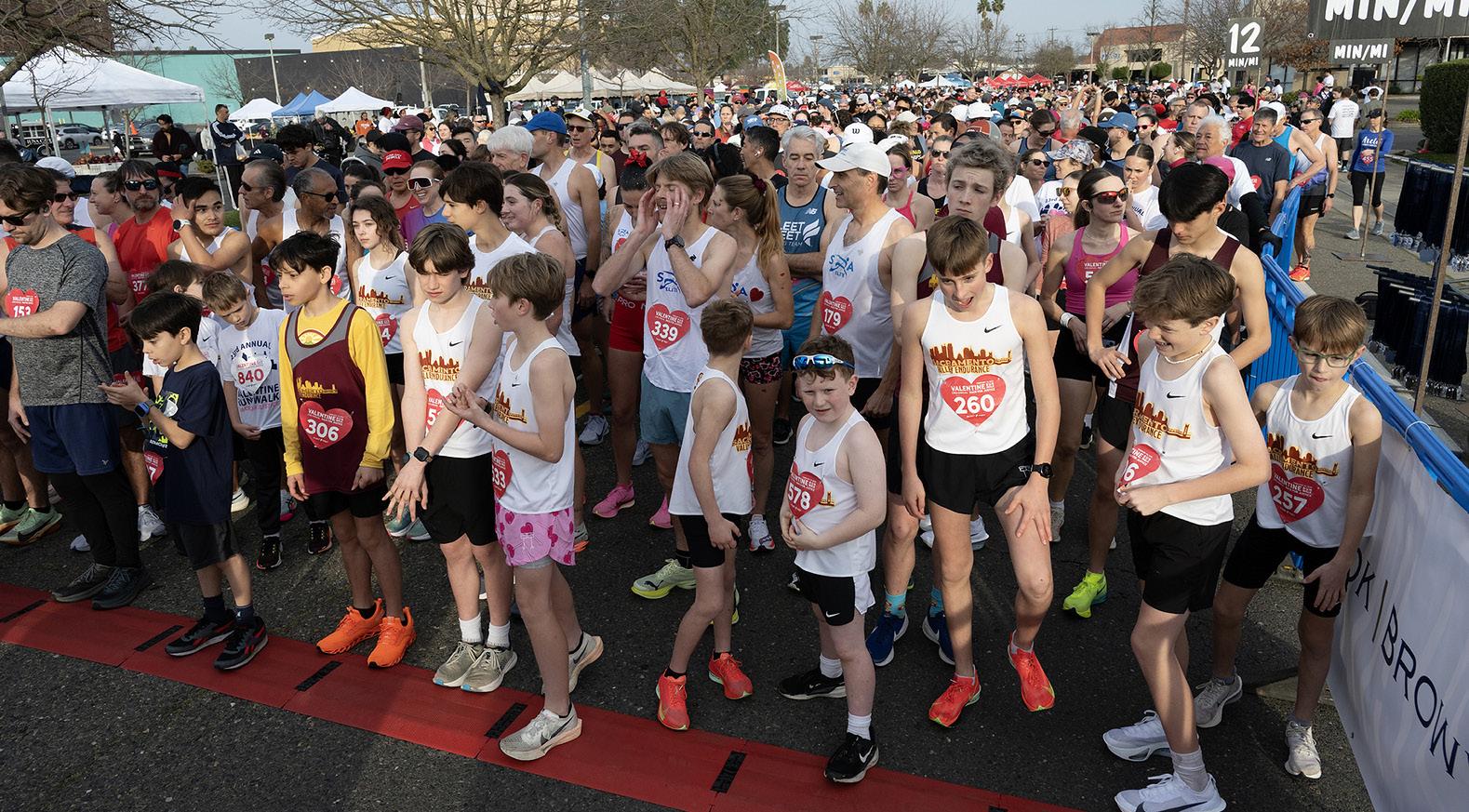
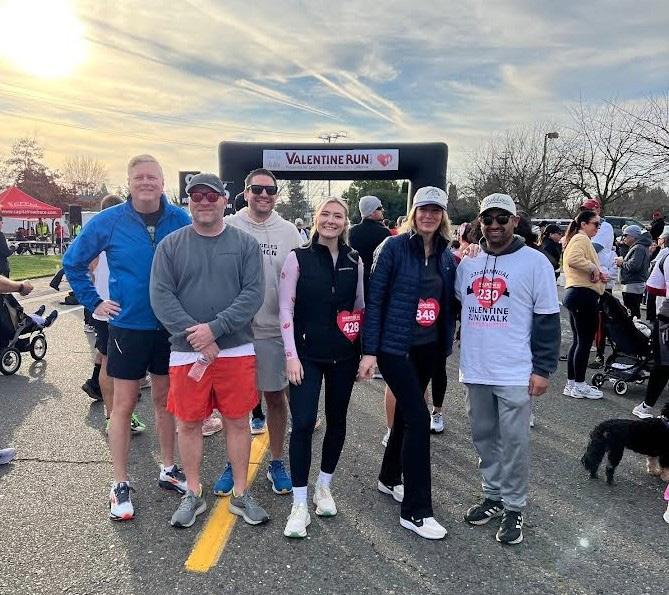
he 23rd Annual Valentine Run Walk, Race for Justice was a standout success, drawing its strongest participation in 10 years on a beautiful Valentine’s Day morning, Saturday, February 14, 2026. The event welcomed runners, walkers, families and four-legged friends under clear skies and comfortable temperatures that were crisp enough for racing, yet pleasant for enjoying the festivities. The 2026 Valentine Run reflected a renewed and powerful show of community support for the work of Legal Services of Northern California (LSNC).
For twenty-three years, the Valentine Run Walk has raised critical funds for LSNC, the nonprofit civil legal aid provider serving Sacramento County and 22 more counties throughout Northern California. The event continues to provide a meaningful opportunity for attorneys, legal professionals, and community members to come together in support of access to justice for low income individuals and families. Participants selected
from a 4-mile timed race, a 1.8mile untimed walk or run, adaptive wheelchair division, and kids’ races, ensuring broad participation across ages, abilities and experience levels.
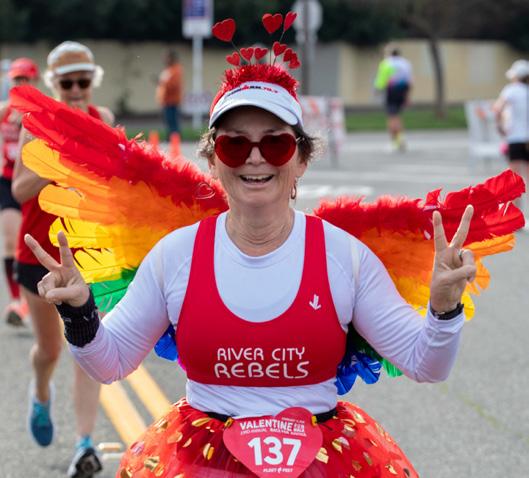
The event’s inclusive, family-friendly atmosphere was on full display once again. Runners, walkers, wheelchair users, strollers and canine companions filled the course, many wearing festive Valentine-themed attire. The popular best dressed contests added to the celebration, as individuals, teams, and paw pals showcased creativity, enthusiasm, and community spirit.
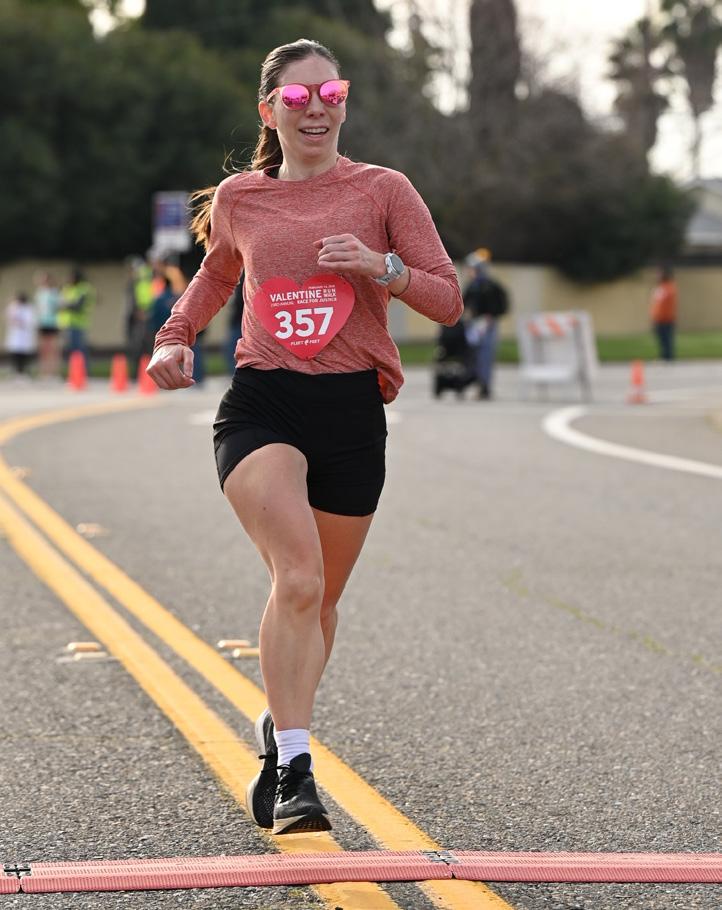
Competition was spirited throughout the morning. Overall race winners were Brendan Gregg, male, with a time of 18:51, and Gillian Meeks, female, with a time of 21:45. Ainsley’s Angels athletes Audrua Sysum and Kimberly Filos-Smith, including Audrua’s father, Richard King, won the adaptive wheelchair division, finishing in 40:08 and also took home honors as Best Dressed Team. Victory in the always-anticipated race for
Sacramento’s Fastest Attorney title was claimed by Malcolm Brudigam of the Office of the Attorney General, male, with a time of 26:32, and Daneille Keller, of Cohen Defense Group, female, with a time of 21:45.
“LSNC is so grateful for the community’s support for the Run for Justice over these many years,” said LSNC Interim Executive Director Julie Aguilar Rogado. “The weather was spectacular and the mood was exuberant. As a staff member, I always feel great encouragement seeing how many people turn out to demonstrate their commitment to legal aid in our region.”
LSNC extends sincere thanks to all participants, sponsors, volunteers, donors, vendors, fundraisers and the Sacramento County Bar Association for helping make the 23rd Annual Valentine Run Walk the most successful in a decade. Together, they made the 2026 Race for Justice a true celebration of compassion, commitment, and community.
Nanette Aubut is the Development Director of Legal Services of Northern California.
Photos by Kevin Graft Photography, Luke Pearson and David Blakeney.
Team Murphy Austin Adams and Schoenfeld LLP.
Trini, Winner of Best Dressed Dog.
Brielle Mansell, Managing Attorney of LSNC Yolo County Office, with her fiancé and friends.
Danielle Keller, Cohen Defense Group, Female Winner of Attorney Race.
Team Downey Brand.
Best Dressed Over 18.
Ainsley’s Angels, Audrua Sysum and Kimberly Filos-Smith, with father Richie King, Winners of the Adaptive Wheelchair Category and Best Dressed Team.
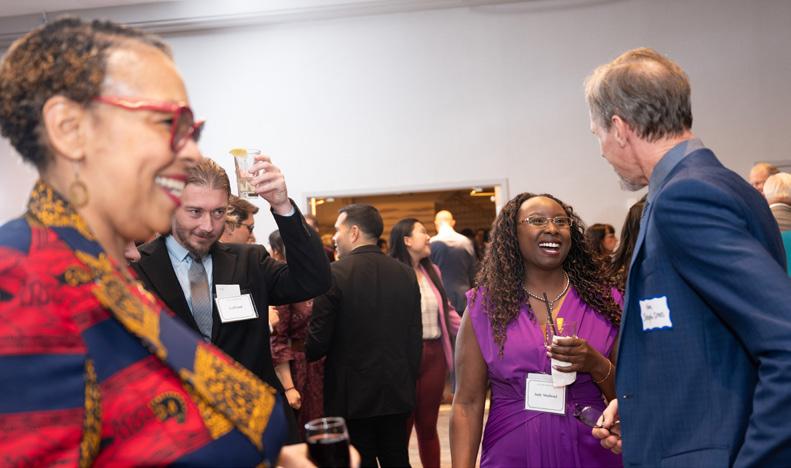
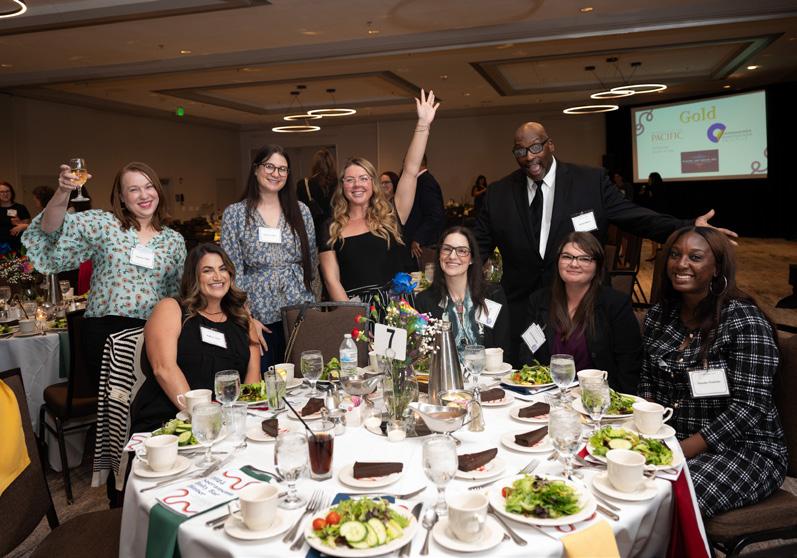
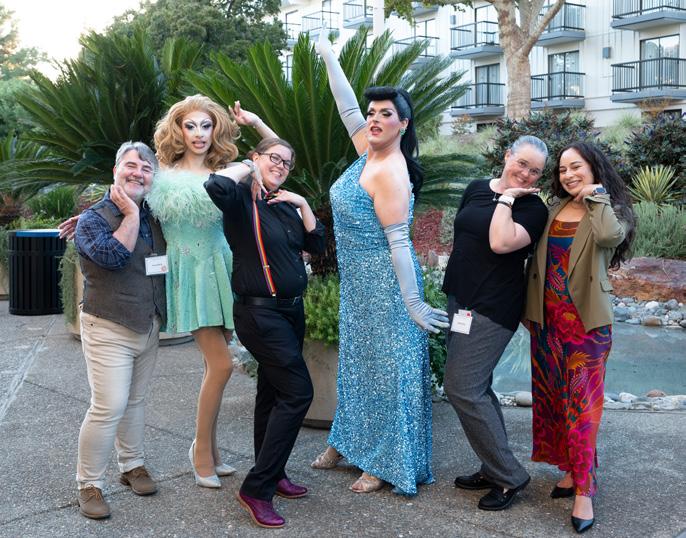
n October 21, 2025, SacLegal (Sacramento’s LGBTQ+ Bar Association) hosted the 37th Annual Unity Bar Dinner in conjunction with, and supported by Sacramento’s Unity Bar members: the Asian/Pacific Bar Association of Sacramento; Cruz Reynoso Bar Association; Disability Inclusivity Bar Association of Sacramento; Leonard M. Friedman Bar Association; Sacramento Filipino American Lawyers Association; South Asian Bar Association of Sacramento; Wiley W. Manuel Bar Association; and Women Lawyers of Sacramento.
The Sacramento County Unity Bar was co-founded in 1987 with the California Unity Bar by three remarkable trailblazers: Jerry Chong, Judicial Appointments Secretary Luis Céspedes, and Retired Judge Renard Shepard. The Unity Bar movement was founded on the belief that our judiciary should not only serve the law, but should also reflect the diversity, fairness, and dignity of every community. The Unity Bar’s mission is to foster a
Sacramento 37th Annual Unity Bar Celebration
By Annette Rose
more equitable, inclusive, and representative legal system.
The Unity Bar’s mission has stood the test of time and has supported development of a more inclusive judiciary over the last 40-years. Sacramento’s Unity Bar affiliates form a powerful local and statewide network – one that continues to shape a judiciary that represents and upholds the ideals of justice for all. Both the California and Sacramento Unity Bar actively support appointment of diverse judicial candidates and advocate for nominees to California’s courts.
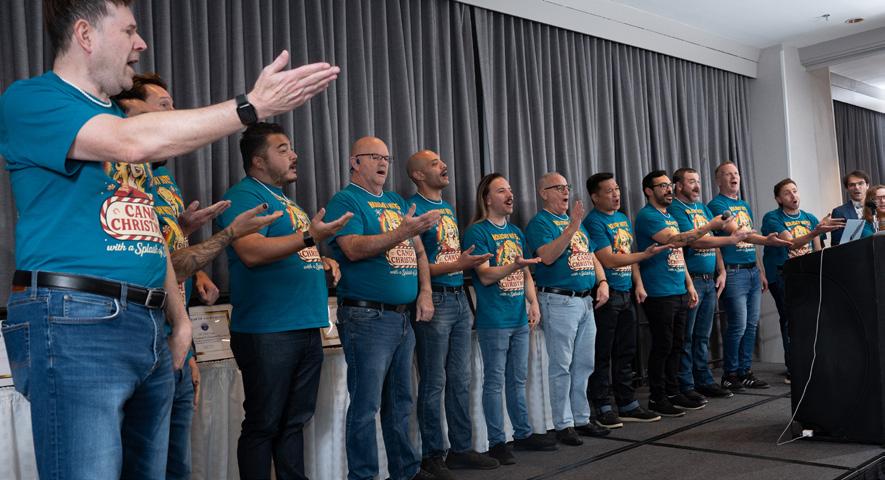
The 37th Annual Unity Bar Dinner’s theme was “Hope Will Never Be Silent.” This quote is often attributable to Harvey Milk who was the first openly gay man to be elected to public office in California and a civil rights leader. With this theme, SacLegal celebrated Sacramento’s rich diversity and unity, offering a message of hope and loud and proud visibility to law students, practitioners, judges and justices, and the broader Sacramento legal community. Highlighting LGBTQ+
Annette Rose is the SacLegal Co-Chair. She can be reached at alrose84@gmail.com.
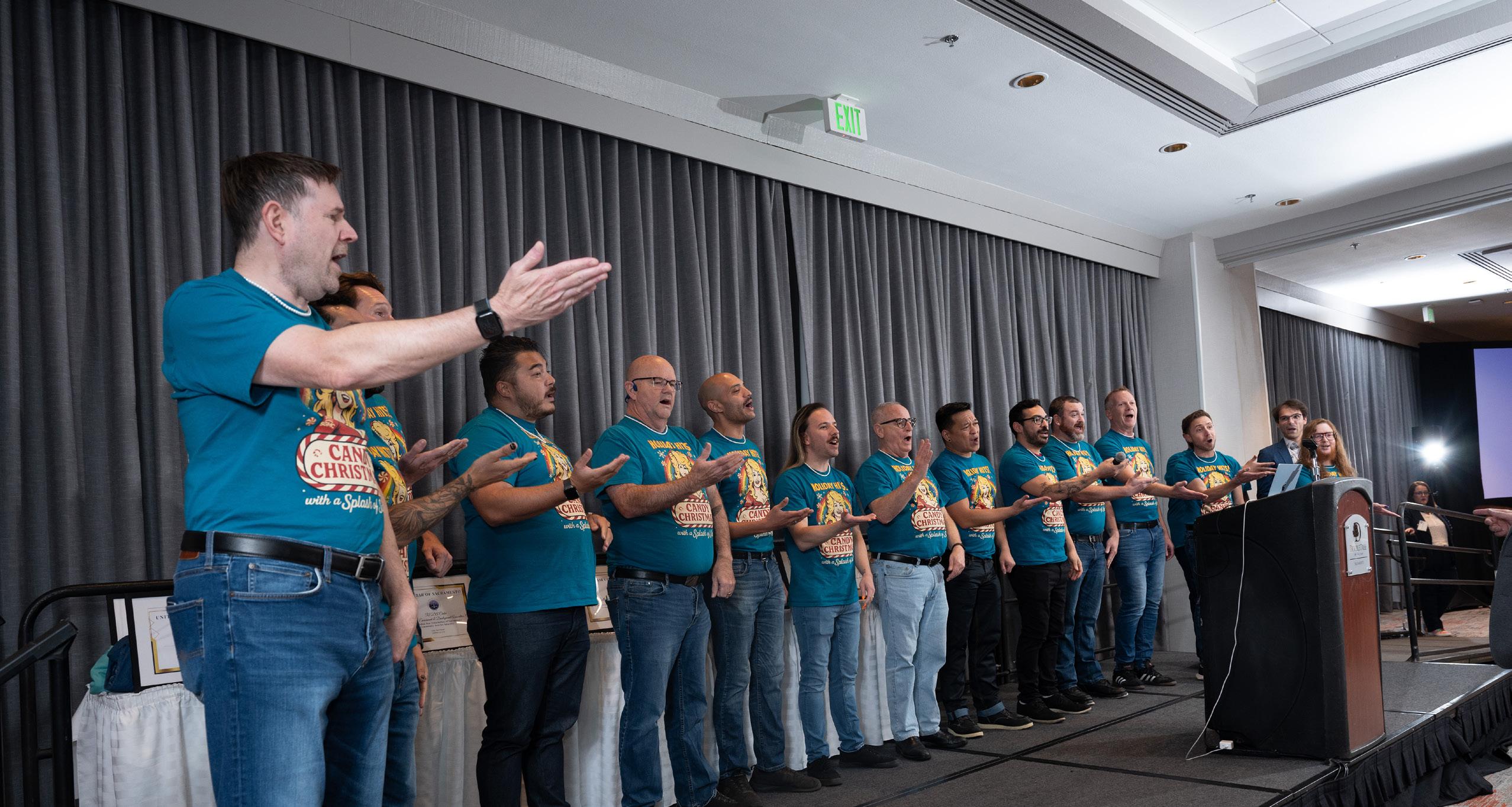
culture, the dinner featured performances by the Sacramento Gay Men’s Chorus, local drag queens, and messages of diversity, equity, and inclusion from various members of the SacLegal Executive Board of Directors and other Unity Bar Affiliate Leaders.
The highlight of the event was offered by keynote speaker Kylar W. Broadus, a nationally recognized attorney and advocate who has battled workplace discrimination throughout his career. He is a Black trans man who has been a pioneer in the movement as an attorney, longtime activist, public speaker, author and professor. Broadus is known worldwide for his avant-garde work in the LGBT and Trans movements. Broadus spoke of his personal and professional journey, the adversity that he has faced, tackled, and overcame, and offered inspirational words on navigating the current social and legal environments. Broadus concluded his remarks to a standing ovation of more than 400 members of Sacramento’s broader legal community.
The Unity Bar has grown in its attendance and breadth over its multi-decade expansion—a testament to its value in the Sacramento area. The Unity Bar is made possible with the generous support of local donors, including law firms, bar associations, legal association entities, and private businesses. The Unity Bar highlights the power of community when diversity, equity, and inclusion are highlighted and celebrated.
The 38th Annual Unity Bar Dinner will be hosted by the South Asian Bar Association in late October.
Celebrating 45 Years and Counting
By Heather Tiffee
e know only too well that what we are doing is nothing more than a drop in the ocean. But if the drop were not there, the ocean would be missing something. – Mother Teresa
From a one-person direct referral operation assisting 50 people annually, to our current five-person staff and dozens of volunteer attorneys advising hundreds of people every year – we’ve come a long way, baby! Capital Pro Bono (or you may remember us as VLSP) has been helping low-income individuals in the Sacramento region for 45 years now and I am truly
blessed to have been a part of it for the past 25 years. I started as a volunteer law student, then moved my way through various staff positions from clinic coordinator to staff attorney, assistant program manager to managing attorney, to my current position of Executive Director. It’s been a wild ride –navigating the everchanging ebb and flow of legal aid funding, staff challenges, client expectations, volunteer availability, and, or course, surviving COVID-19.
Looking back on the past few decades, I am incredibly proud of the work Capital Pro Bono has done
Heather Tiffee is the Executive Director of Capital Pro Bono. She can be reached at htiffee@ capitalprobono.org.
and the thousands of lives that have been positively impacted by the generosity of our donors and volunteers. I am looking forward to witnessing what we accomplish together in the years ahead.
If you would like to partner with us in our mission to secure access to justice for low-income people in our community, please check out our website: www.capitalprobono.org. Or, better yet, contact me directly at htiffee@capitalprobono. org. Add your drop to the ocean! So, from the Capital Pro Bono family to yours, thank you for an amazing 45 years. Here’s to 45 more!