Understanding Gynecomastia Surgery: Causes,
Treatment Options, and Results

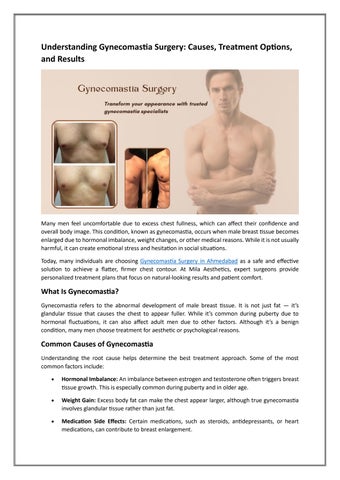
Many men feel uncomfortable due to excess chest fullness, which can affect their confidence and overall body image. This condition, known as gynecomastia, occurs when male breast tissue becomes enlarged due to hormonal imbalance, weight changes, or other medical reasons. While it is not usually harmful, it can create emotional stress and hesitation in social situations.
Today, many individuals are choosing Gynecomastia Surgery in Ahmedabad as a safe and effective solution to achieve a flatter, firmer chest contour. At Mila Aesthetics, expert surgeons provide personalized treatment plans that focus on natural-looking results and patient comfort.
What Is Gynecomastia?
Gynecomastia refers to the abnormal development of male breast tissue. It is not just fat it’s glandular tissue that causes the chest to appear fuller. While it’s common during puberty due to hormonal fluctuations, it can also affect adult men due to other factors. Although it’s a benign condition, many men choose treatment for aesthetic or psychological reasons.
Common Causes of Gynecomastia
Understanding the root cause helps determine the best treatment approach. Some of the most common factors include:
• Hormonal Imbalance: An imbalance between estrogen and testosterone often triggers breast tissue growth. This is especially common during puberty and in older age.
• Weight Gain: Excess body fat can make the chest appear larger, although true gynecomastia involves glandular tissue rather than just fat.
• Medication Side Effects: Certain medications, such as steroids, antidepressants, or heart medications, can contribute to breast enlargement.
• Health Conditions: Liver or kidney disease, thyroid disorders, and other hormonal conditions can play a role.
• Genetics and Lifestyle: Genetic predisposition, alcohol use, and substance abuse (like anabolic steroids) may increase the risk.
While mild cases can sometimes improve on their own, persistent or severe gynecomastia often responds best to surgical correction.
Treatment Options for Gynecomastia
There’s no one-size-fits-all approach to treating gynecomastia. The right method depends on the cause, severity, and patient expectations. Some effective options include:
1. Non-Surgical Management
For mild breast enlargement, doctors may recommend lifestyle changes such as exercise, weight loss, and adjusting medications. However, this doesn’t reduce glandular tissue and is limited in effect.
2. Liposuction
This minimally invasive technique removes excess fatty tissue from the chest using small incisions and a thin tube called a cannula. Liposuction is an excellent option when fat is the primary contributor to breast enlargement.
3. Excision Surgery
When glandular tissue is significant, simple liposuction may not achieve the desired result. In such cases, excision directly removing breast tissue provides the best contour. This method may also reposition or reduce the size of the areola for improved shape.
4. Combination Techniques
Often, a blend of liposuction and excision surgery delivers optimal contouring. This ensures both fatty and glandular components are addressed for a more defined chest.
What to Expect During Recovery
Recovery from gynecomastia surgery is generally straightforward. Patients can expect:
• Mild swelling and tenderness for 1–2 weeks
• A compression garment to support healing
• Most normal activities resumed within a week
• Full results visible in several weeks as swelling subsides
Your surgeon will guide you on activity restrictions, wound care, and follow-up visits to ensure a smooth healing process.
Realistic Results and Patient Satisfaction
Patients who undergo gynecomastia correction typically report significant improvement in chest appearance and self-confidence. Results are long-lasting when a stable weight is maintained and healthy lifestyle habits are followed. Most men feel more comfortable in shirts, swimwear, and active pursuits.