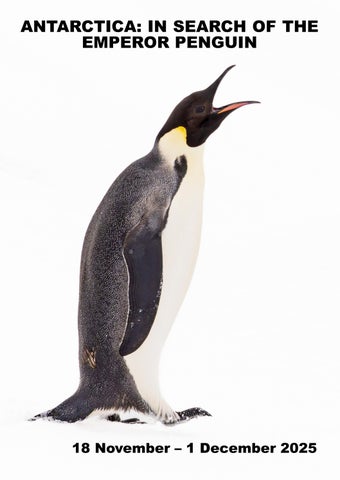
ANTARCTICA: IN SEARCH OF THE EMPEROR PENGUIN
18 November – 1 December 2025
Emperor Penguin must be one of the ultimate birds, right? It is large at 1.3m tall, spectacular-looking and usually requires a massive effort to see it in the world’s last true wilderness, Antarctica. In a nutshell, although we did not make it to the colony at Snow Hill (there remains less than a 50% chance of getting there), we did have two mega encounters with the ruling penguin right next to MV Ortelius and combined with a great selection of other Antarctic wildlife this was definitely still one for the ‘trip of a lifetime’ category. The other Antarctic wildlife included: visits to colonies of Chinstrap, Adelie and Gentoo Penguins; five albatross species (Southern Royal, Snowy (Wandering), Grey-headed, Black-browed and Light-mantled); Antarctic Petrels on three days, for 12 hours(!); numerous Snow Petrels; a pod of ‘Type B’ Orcas and Fin and Humpback Whales. We also enjoyed relatively calm conditions in the Drake Passage, with a heavy swell on only one afternoon. The Tierra del Fuego pre-tour extension delivered some excellent Southern Cone birds, notably the highly sought-after White-bellied Seedsnipe, up high in the snow north of Ushuaia, as well as: Bronze-winged Duck; Rufous-chested Dotterel; Magellanic Woodpecker; Austral Parakeet; Ochre-naped Ground Tyrant; Yellow-bridled Finch and the localised Blackish Cinclodes among others.
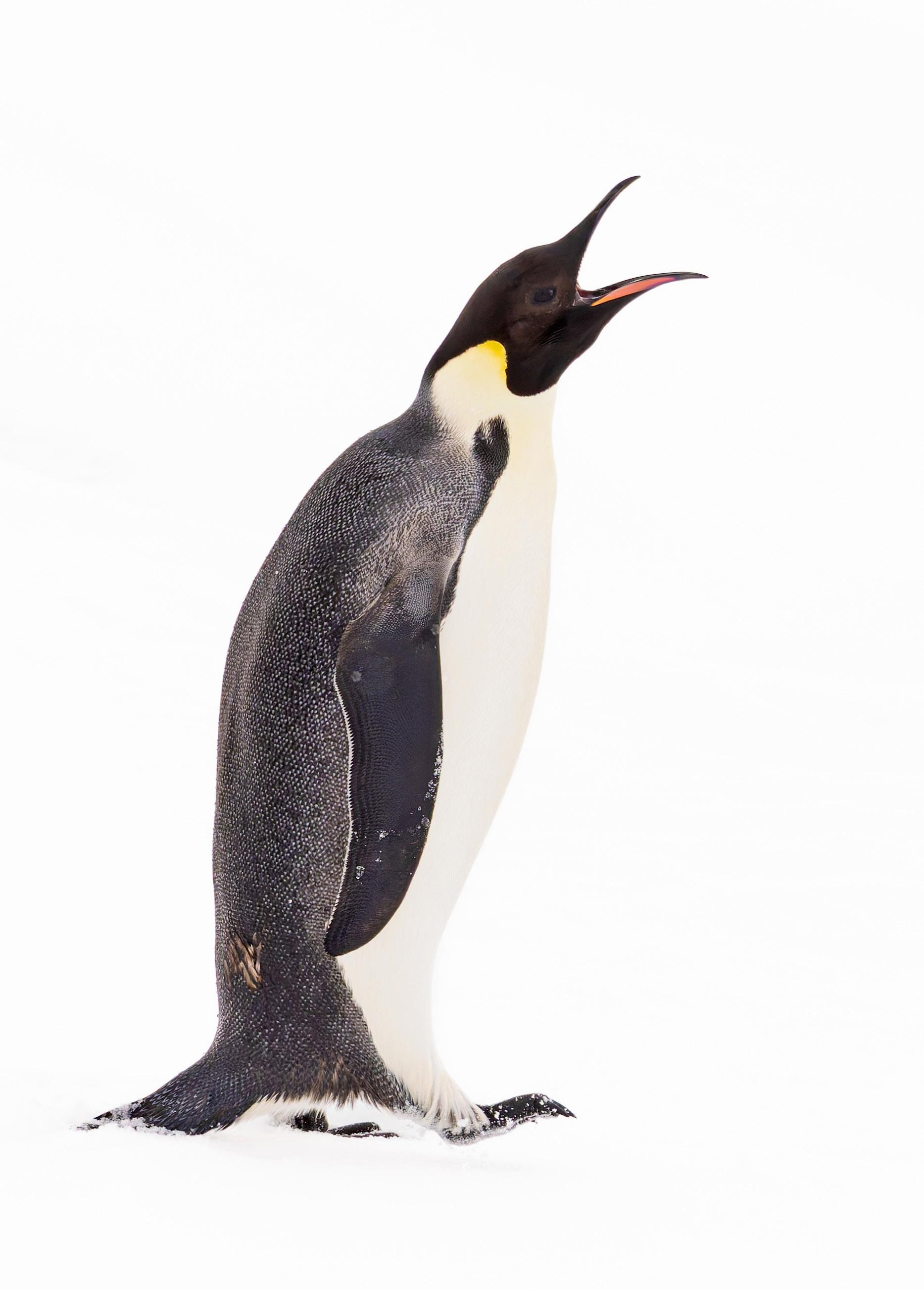
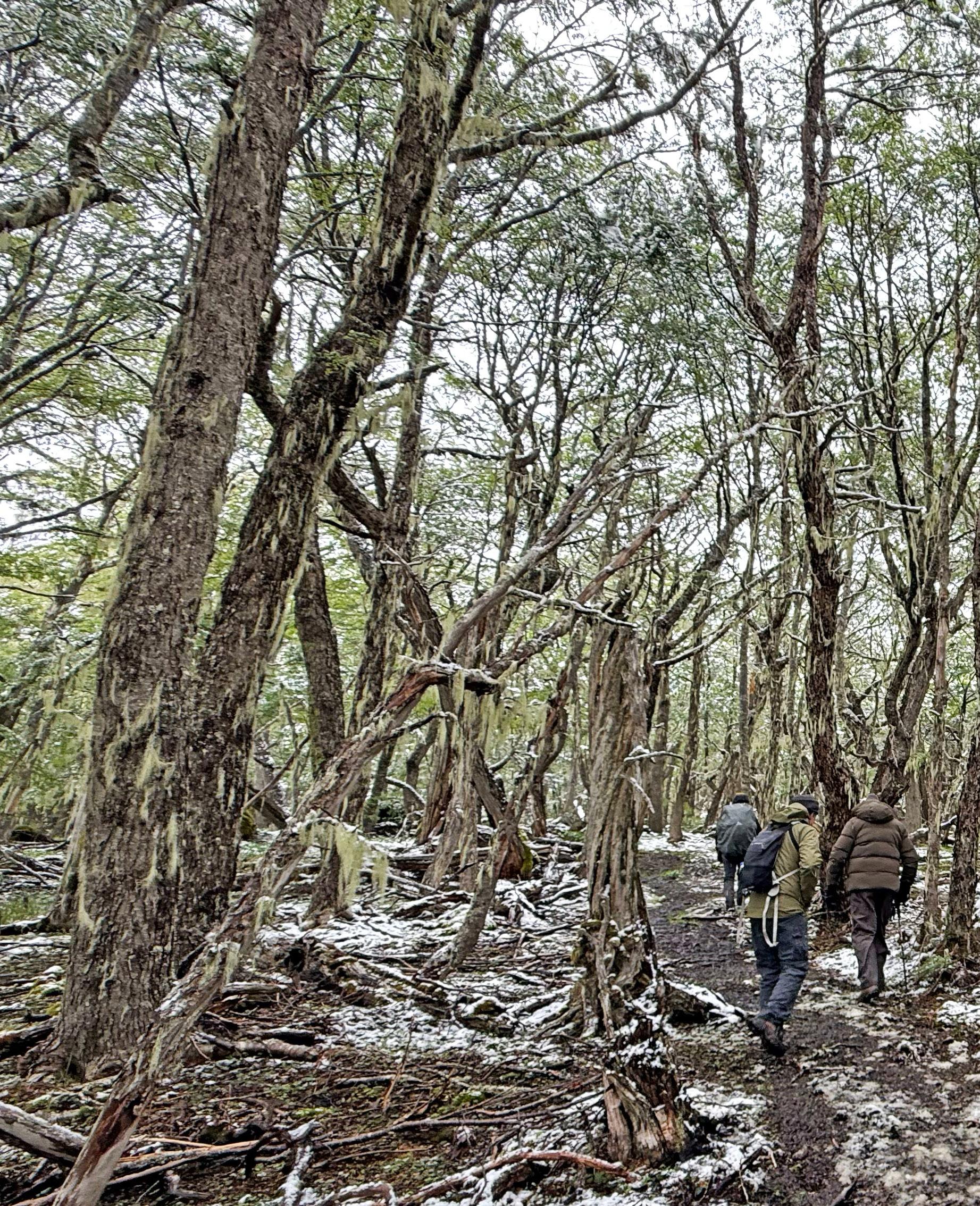
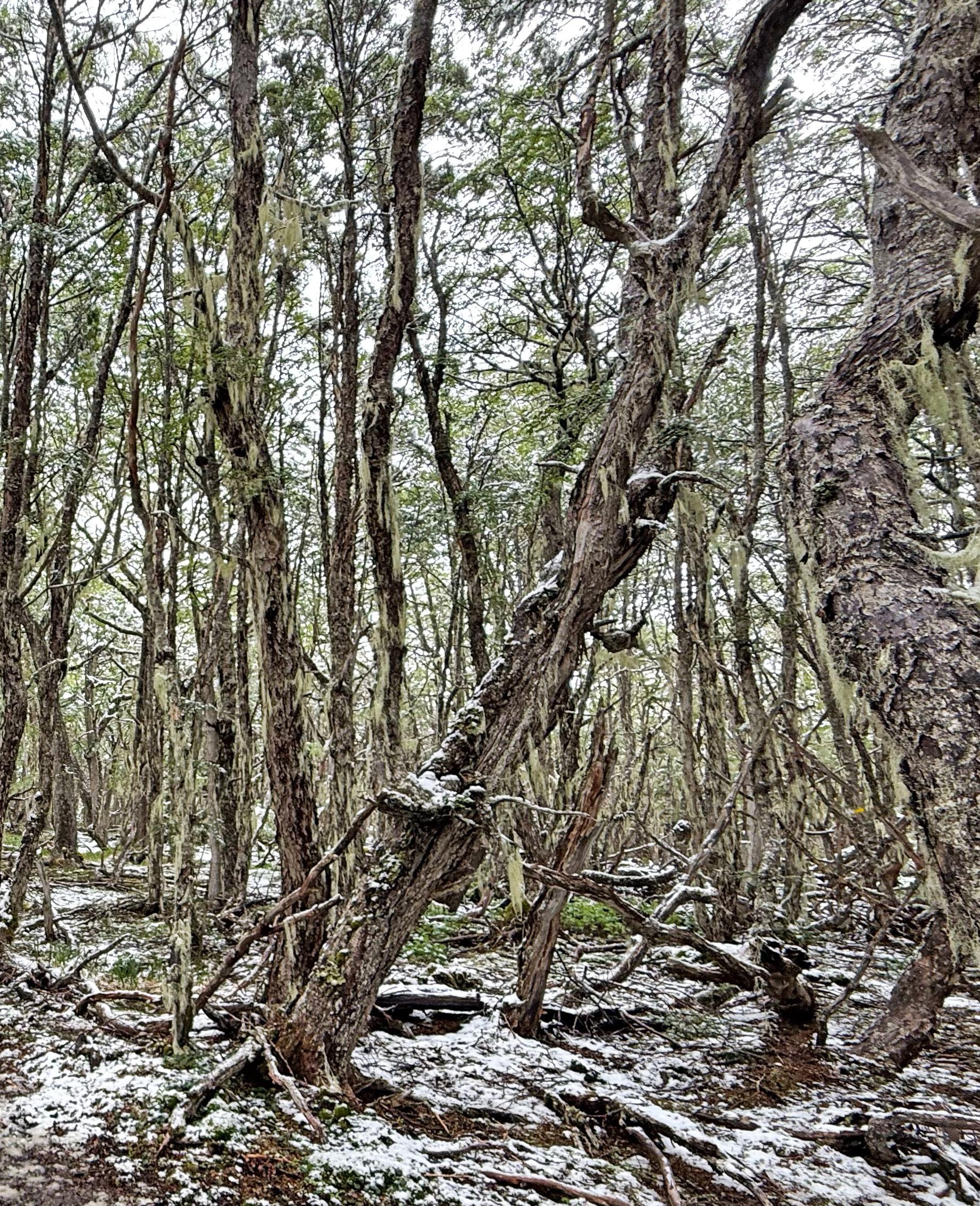
Emperor Penguin. Next pages: Reserva Rio Valdez Southern Beech forest (Mike Watson)
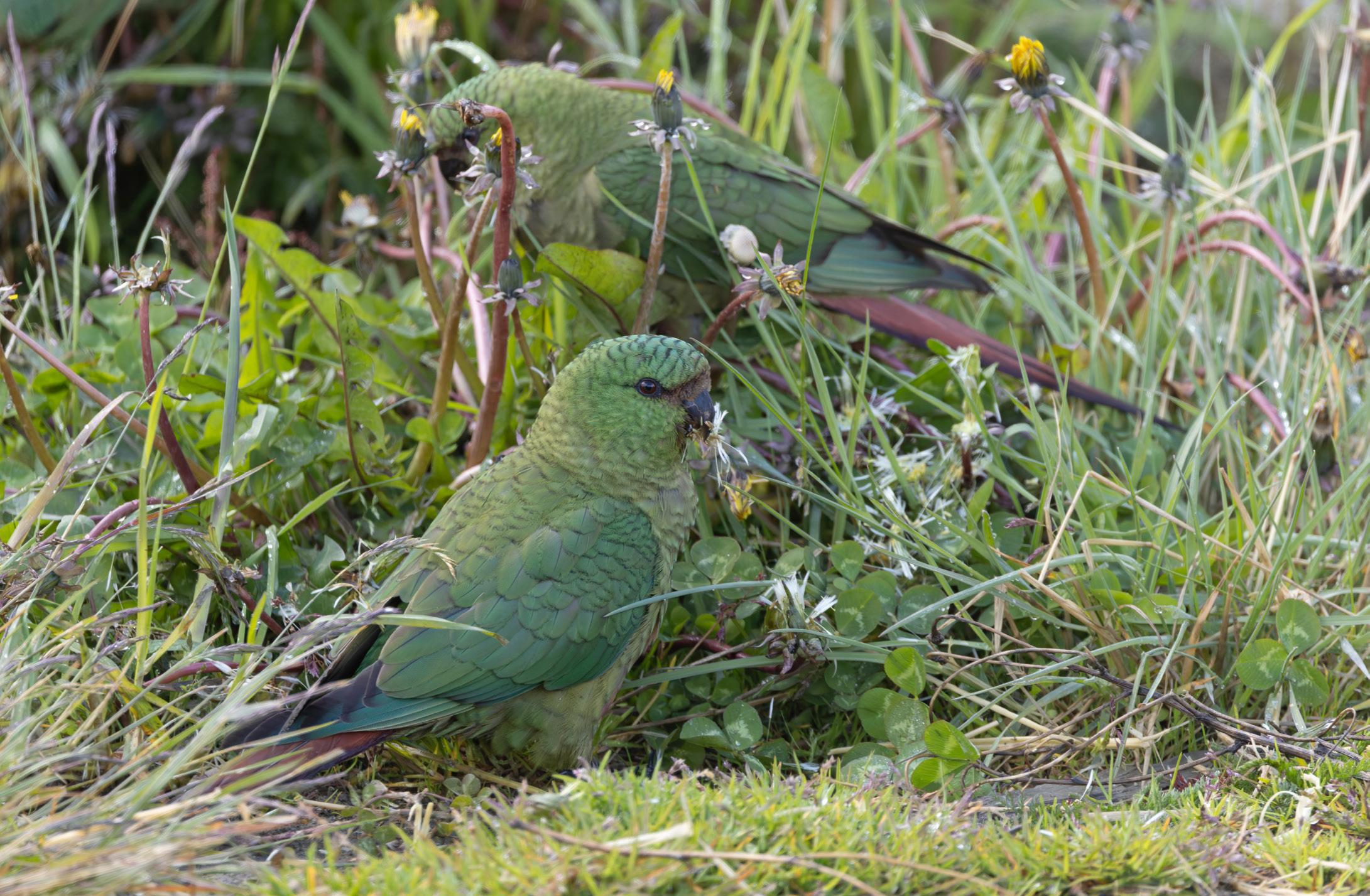
Austral Parakeets. Next page: Yellow-bridled Finch & Rufous-chested Dotterel (Mike Watson)
WHITE-BELLIED SEEDSNIPE
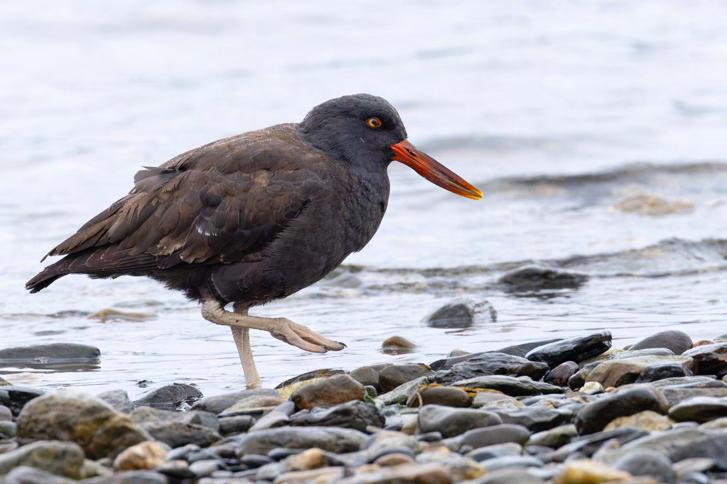
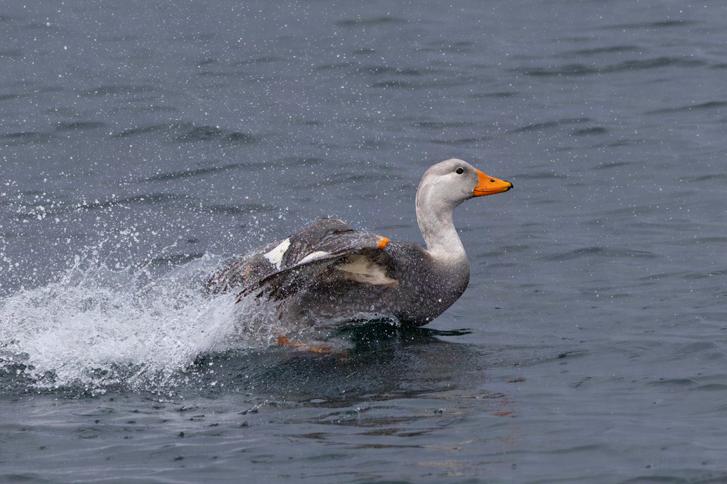
Flying into Ushuaia from the north, a huge wall of cloud loomed south of El Calafate, making descent into Argentina’s southernmost city interesting. This shouldn’t be here I thought, and what has happened to Torres del Paine? We would experience the tail end of this huge storm the following day, one which killed five hikers in Torres del Paine National Park and affected the whole of Patagonia. The mountains were white with snow as we woke on ‘seedsnipe day’. Gulp. Around our hotel a pre-breakfast ramble hinted at the effect of the weather, there had been a mini fall of Dark-faced Ground Tyrants. The foreshore by our hotel is a great birding spot and has both Flying and Fuegian (Flightless) Steamer Ducks. The former of these two bulky birds can be seen anywhere, the latter sticks to the seashore. Three of the four South American geese were here too: Kelp, Upland and Ashy-headed and two oystercatchers: Blackish and Magellanic. They were not the only shorebirds, migrant White-
rumped and Baird’s Sandpipers, fresh from the North American Arctic were also along the shore. Black-browed Albatrosses and Southern Giant Petrels wheeled over the waves offshore; the waters of the Beagle Channel had turned quite choppy this morning. Southern Fulmars and Imperial Shags had also taken to the air, disturbed by the turbulence. A couple of classic Southern Cone passerines foraged along the tideline: the tiny Austral Negrito and Buff-winged Cinclodes. A Grass Wren singing from a nearby tangle was unusual here, maybe another product of the storm? Correndera Pipit was more to be expected. A small flock of Black-chinned Siskins hung out by a nearby beech wood and the ubiquitous Rufous-collared Sparrow popped up here and there. As we drove through town, a large flock of Austral Parakeets was gorging on dandelion heads by the Avenida Heroes de Malvinas! We passed over Garibaldi Pass in horrible conditions, the seedsnipe habitat here was covered in snow and an attempt today would
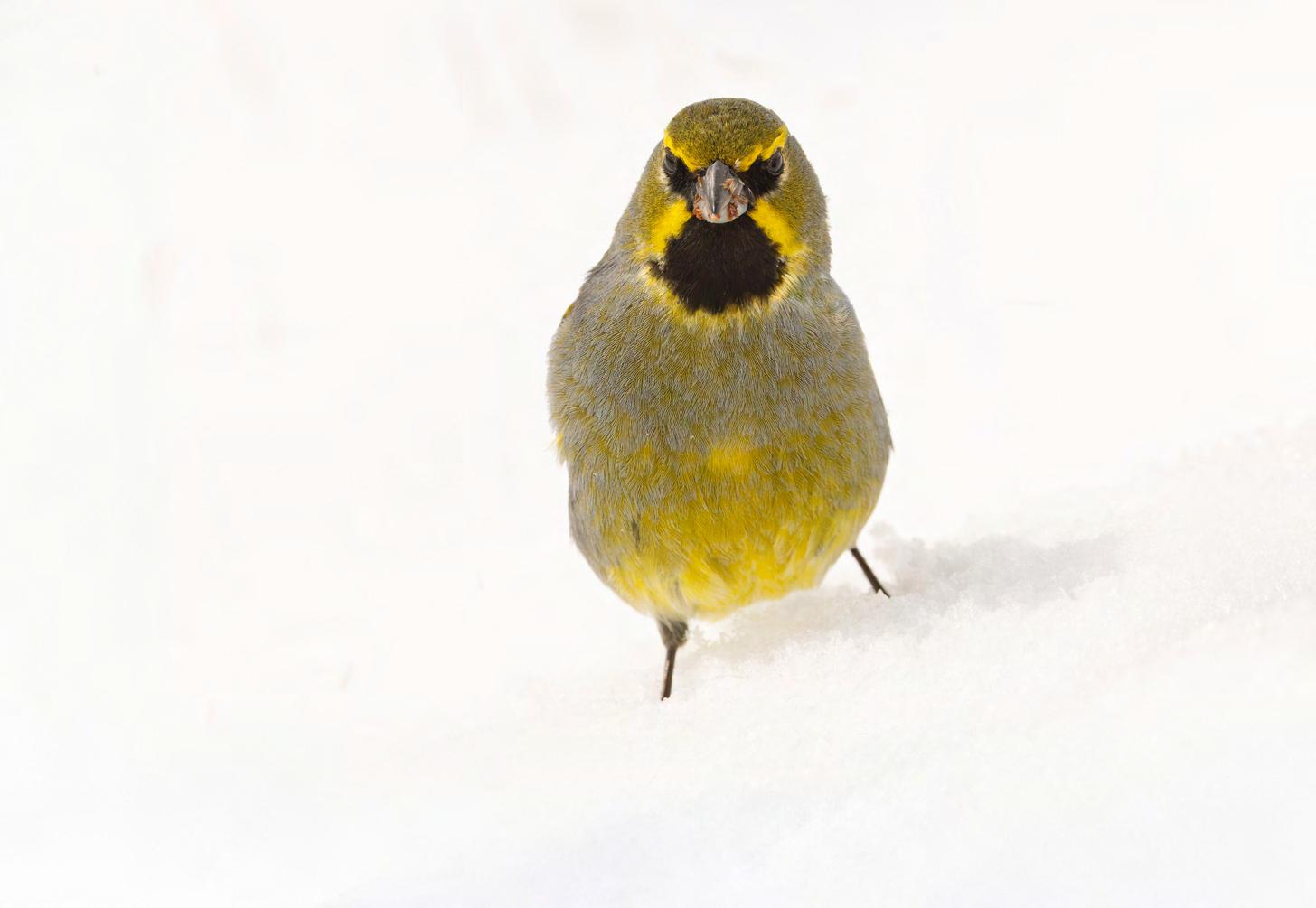
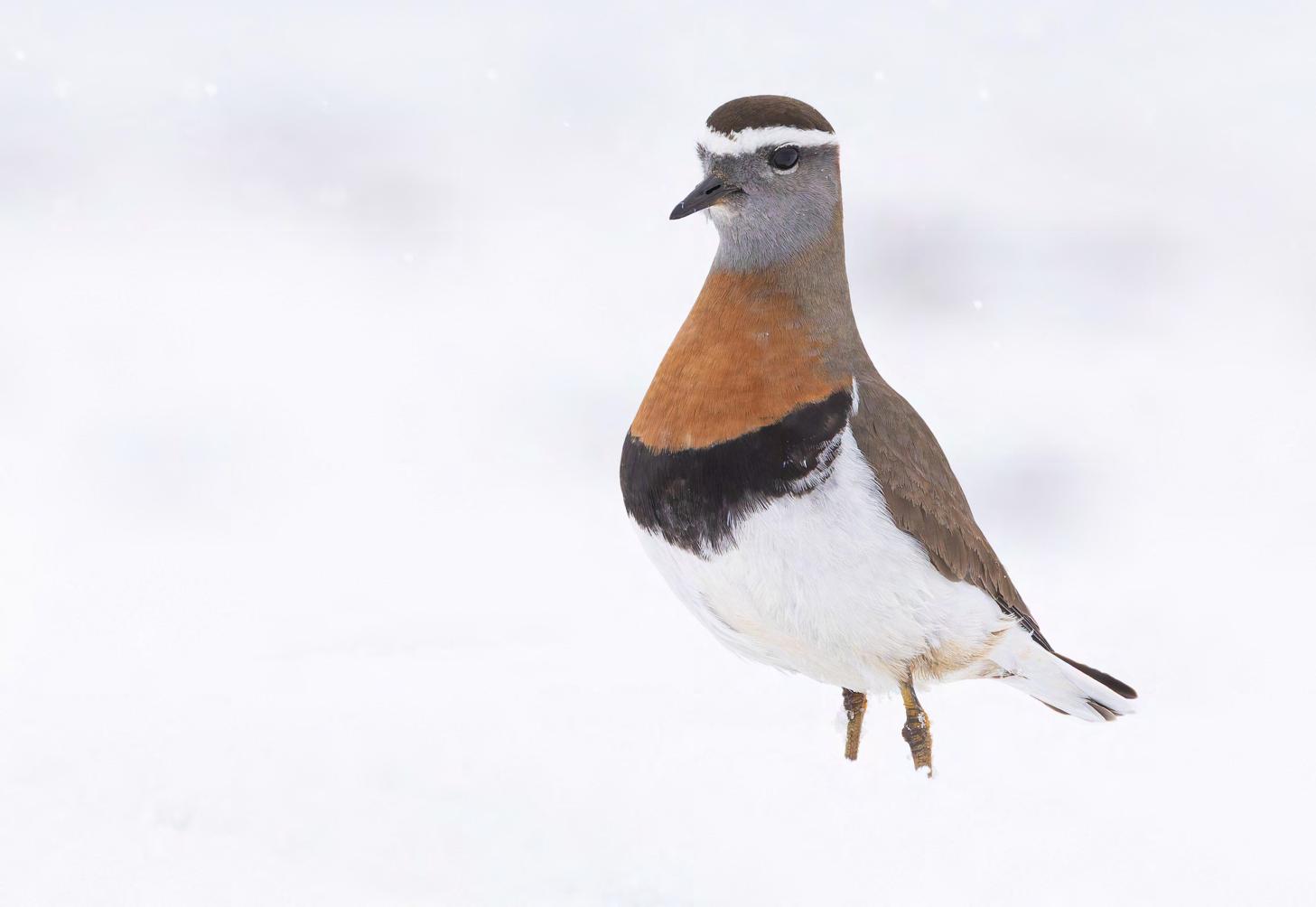
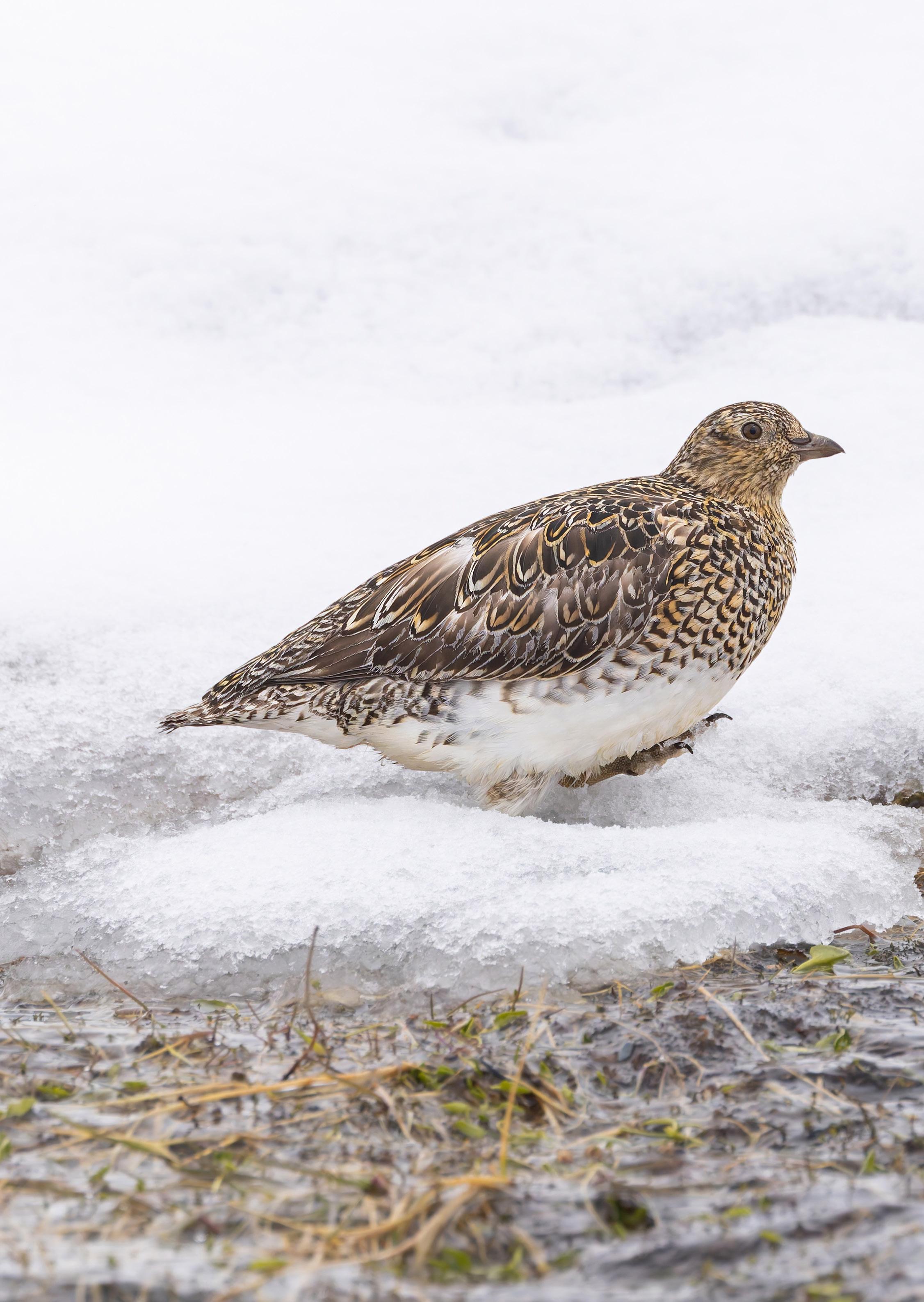
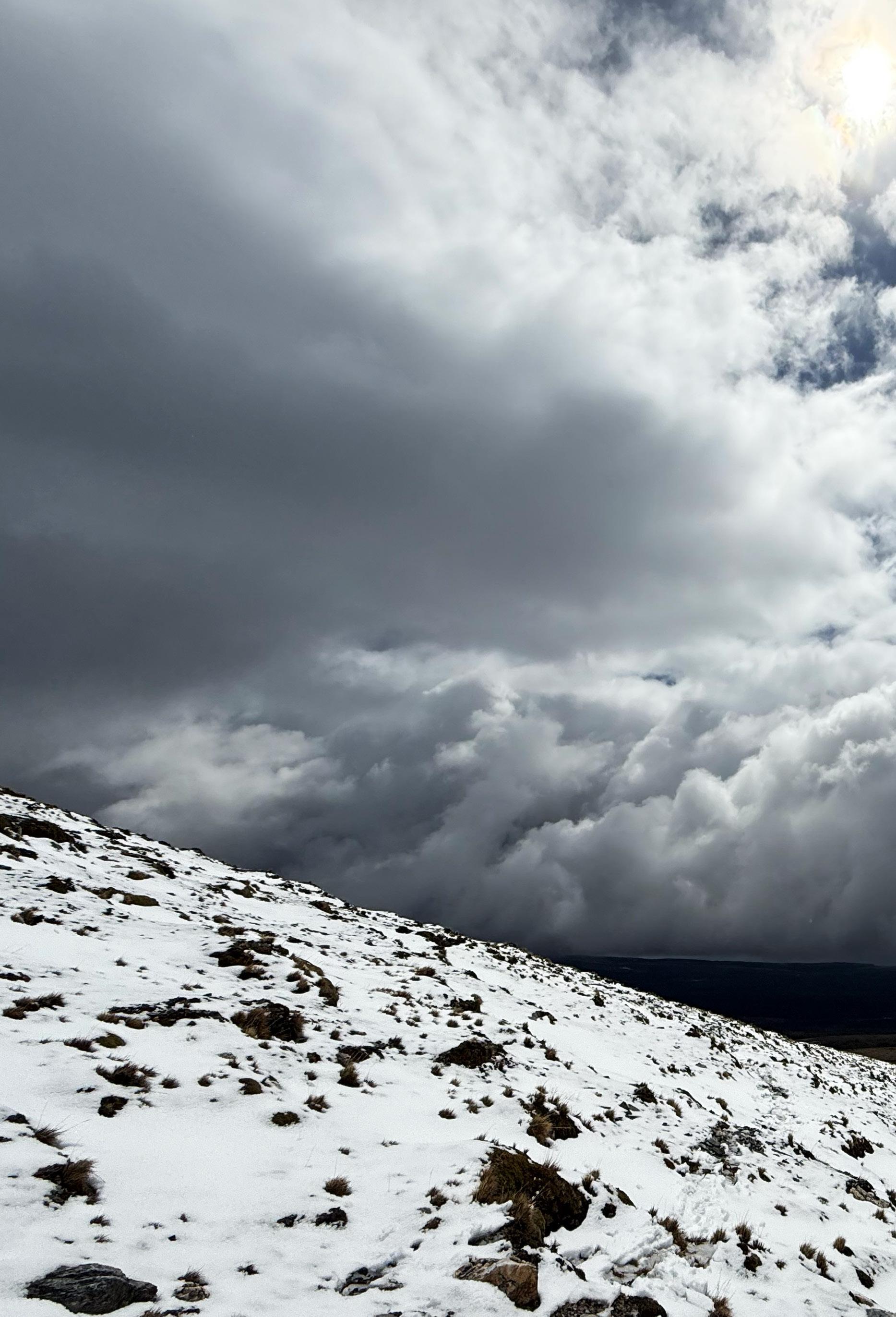
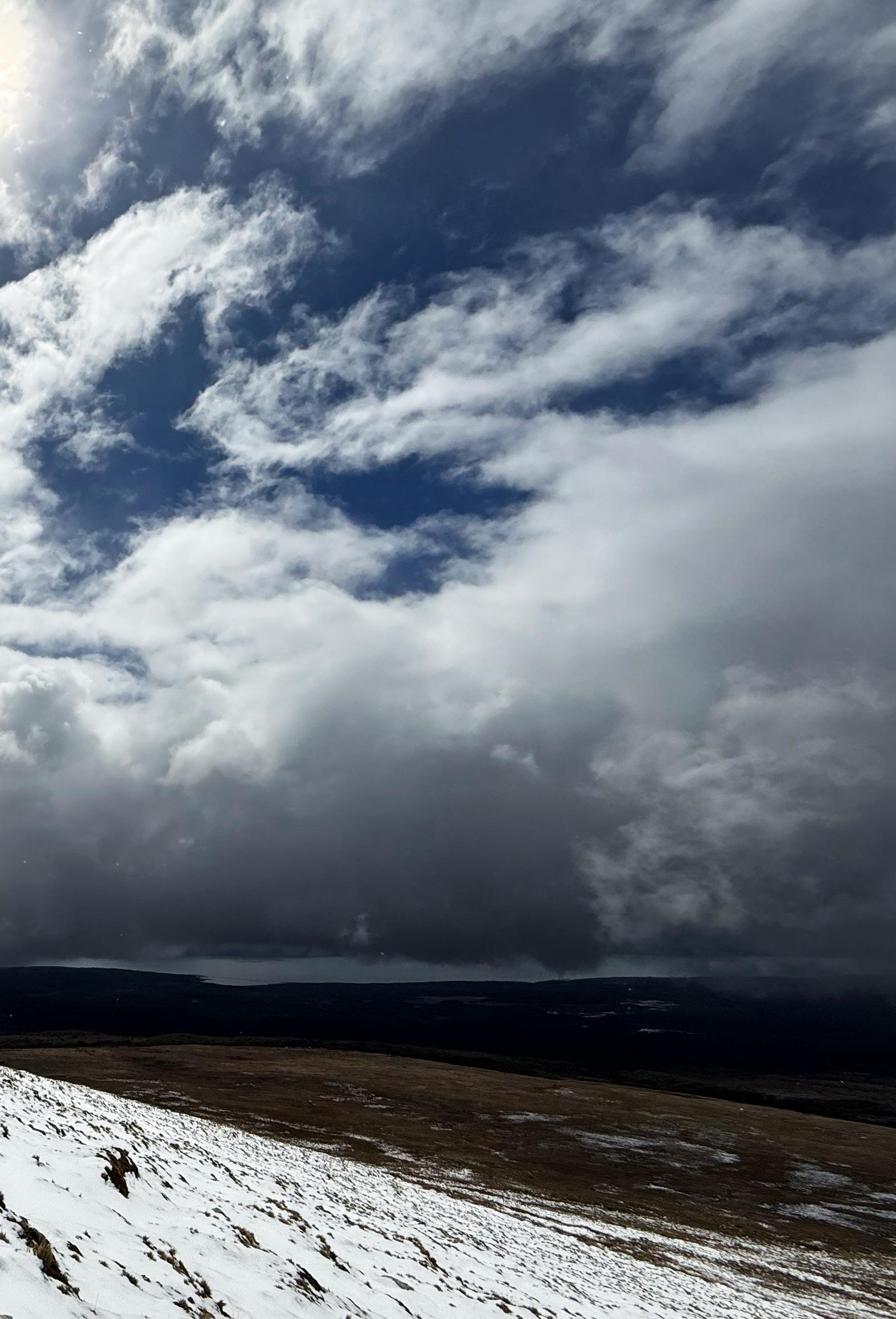
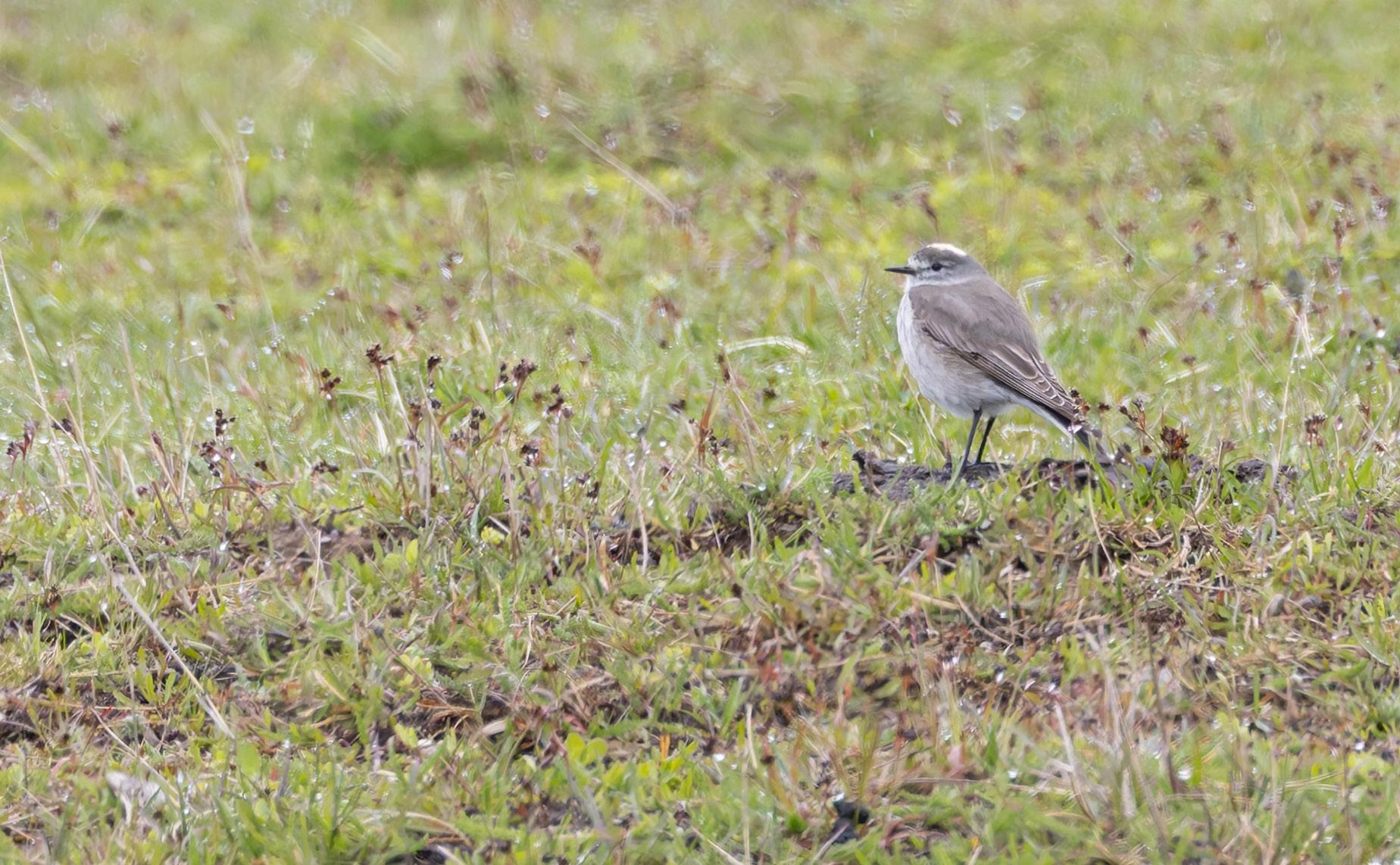
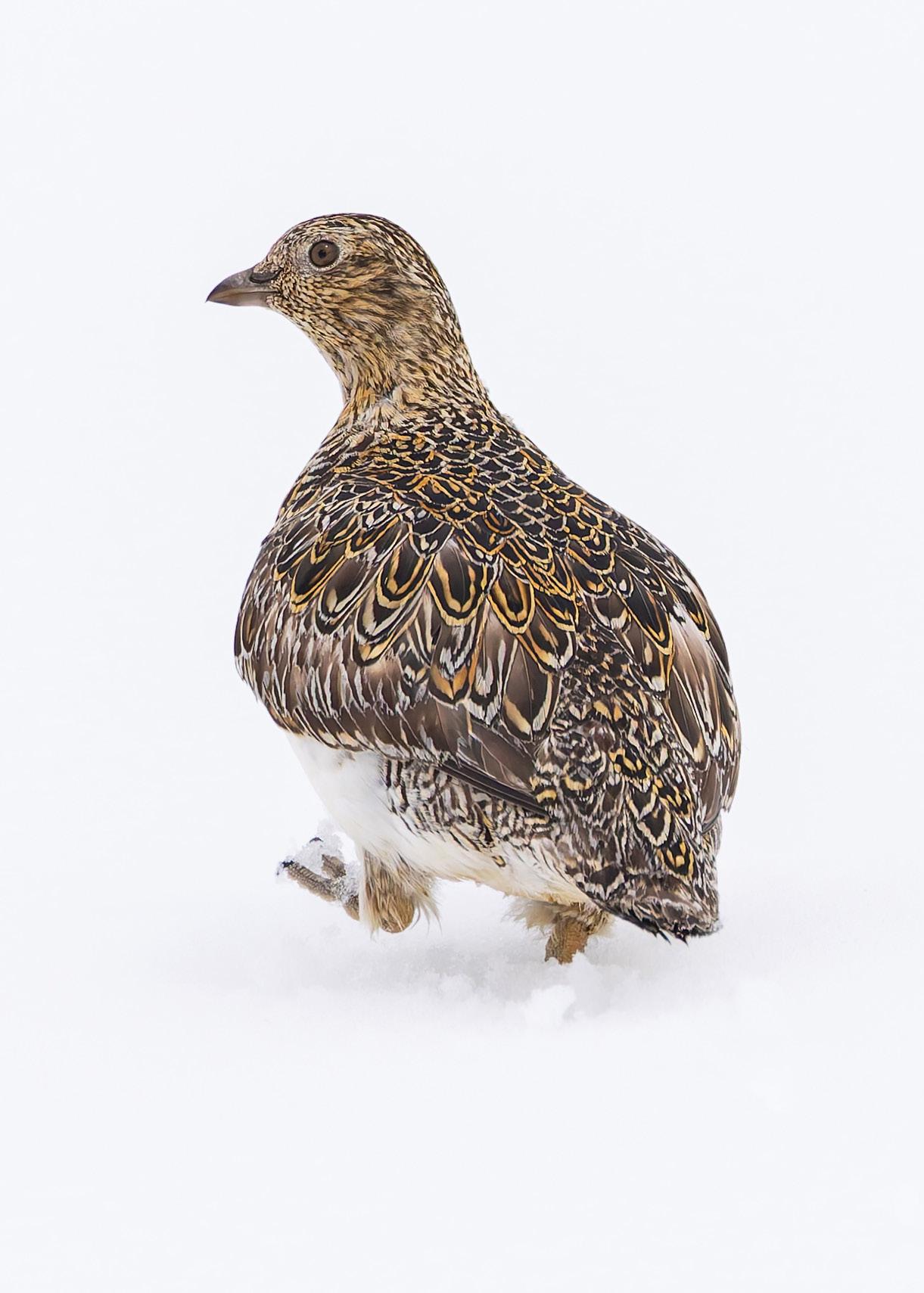
have been madness. Thank goodness for the new Birding Ushuaia site on the northern side of the watershed, which does not bear the same brunt of storms from the south and is accessed by a much easier hike. Not shorter at 8km return but entirely gentle gradient. We made another stop at a gravel airstrip by Ruta Nacional 3 north of Lago Escondido and spotted the hoped-for Ochre-naped Ground Tyrant, no doubt forced down from the mountain tops above by the snowstorm. A few Ashy-headed Geese and a Black-faced Ibis were also here. A couple of roadside Austral Blackbirds followed soon afterwards. We made our way through the beech wood via forestry tracks to the trailhead and then followed a hike along a water-logged trail to the treeline, across the grassland and then an easy stroll up to the seedsnipe’s alpine habitat. Two excellent specialities of the southern Andes quickly followed: Yellow-bridled Finch and Rufous-chested Dotterel. Both stunning birds lit up the whiteness of the fresh covering of snow, the dotterel doing a distraction display, which we followed. Ochre-naped Ground Tyrants had also stayed up here, at a slightly lower elevation than the pass. We paused for a cup of coffee, as our guide Federico took us to a likely spot for the seedsnipe, which he

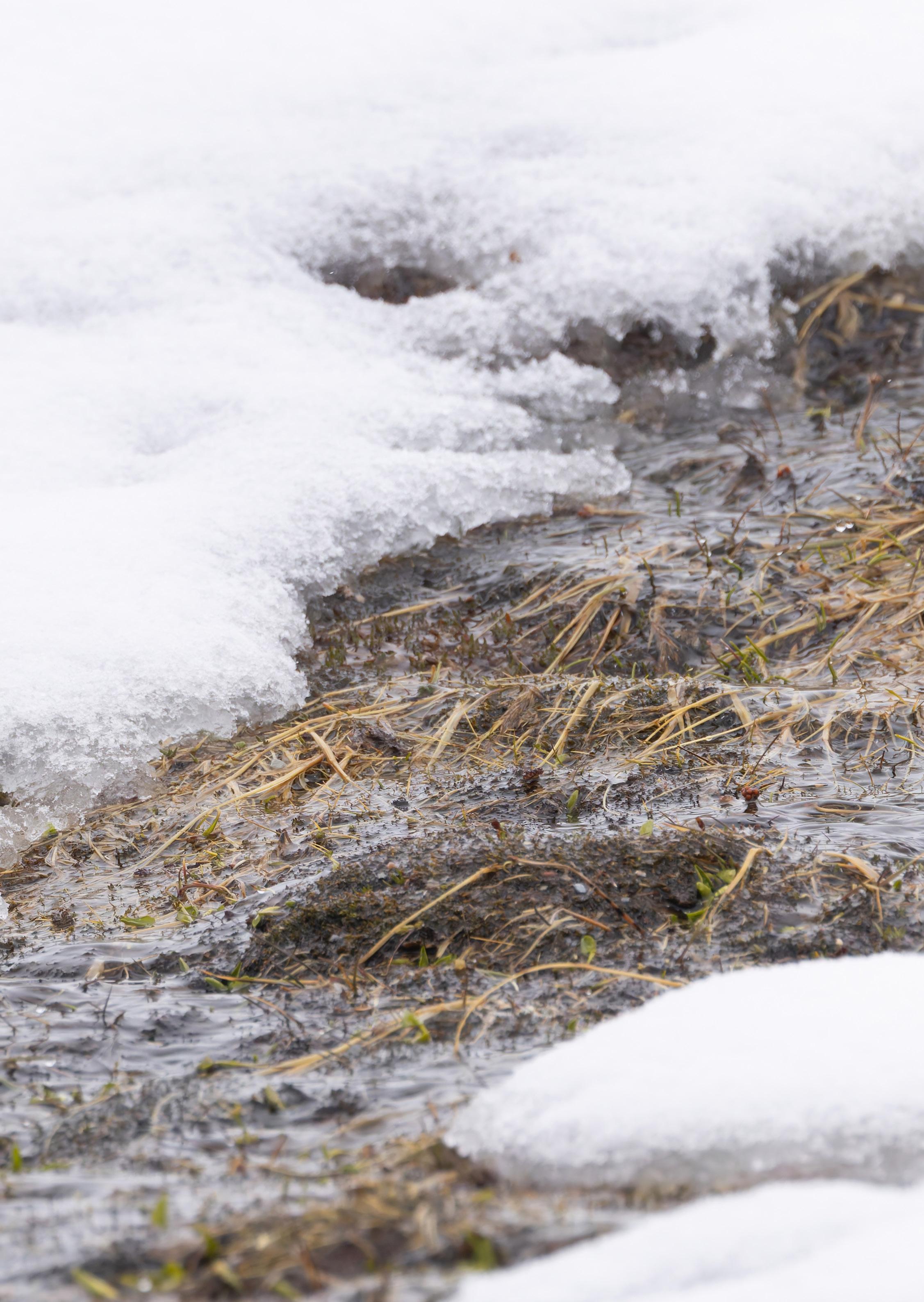
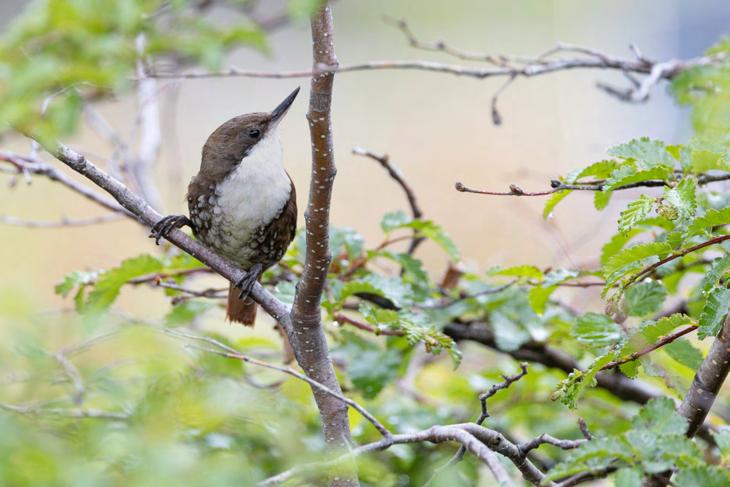
keeps regular tabs on, and indeed, one was there, sheltering in a snow-free streambed. So nice to see it on its alpine breeding grounds! But the snow was already melting now, swirls of mist evaporate from the lichen-covered hillside as it was time to leave, quite a different scene to our arrival here! Hiking back through the beechwood (it is weird to walk through a forest in which there is only one species of tree!) we had time to look for passerines. While the woods were largely quiet, except for the songs of Austral Thrushes and Southern House Wrens, we found Thorn-tailed Rayadito and White-crested Elaenia, as well as a few of the introduced North American Beavers tending their dams, we could see they had been busy! A planned stop at a pygmy owl spot did not find the tiny owl but instead we had a multitude of its haters: Tufted Tit Tyrant; Fireeyed Diucon and Patagonian Sierra Finch were new, along with a few repeats. They really do not like the pygmy owl! It had already been a long day, but we were out again after dark in search of owls in the national park, to no avail unfortunately, it was very quiet.
Ochre-naped Ground Tyrant. Previous and next pages: White-bellied Seedsnipe and habitat at Reserva Rio Valdez (Mike Watson)
FUEGO NATIONAL PARK
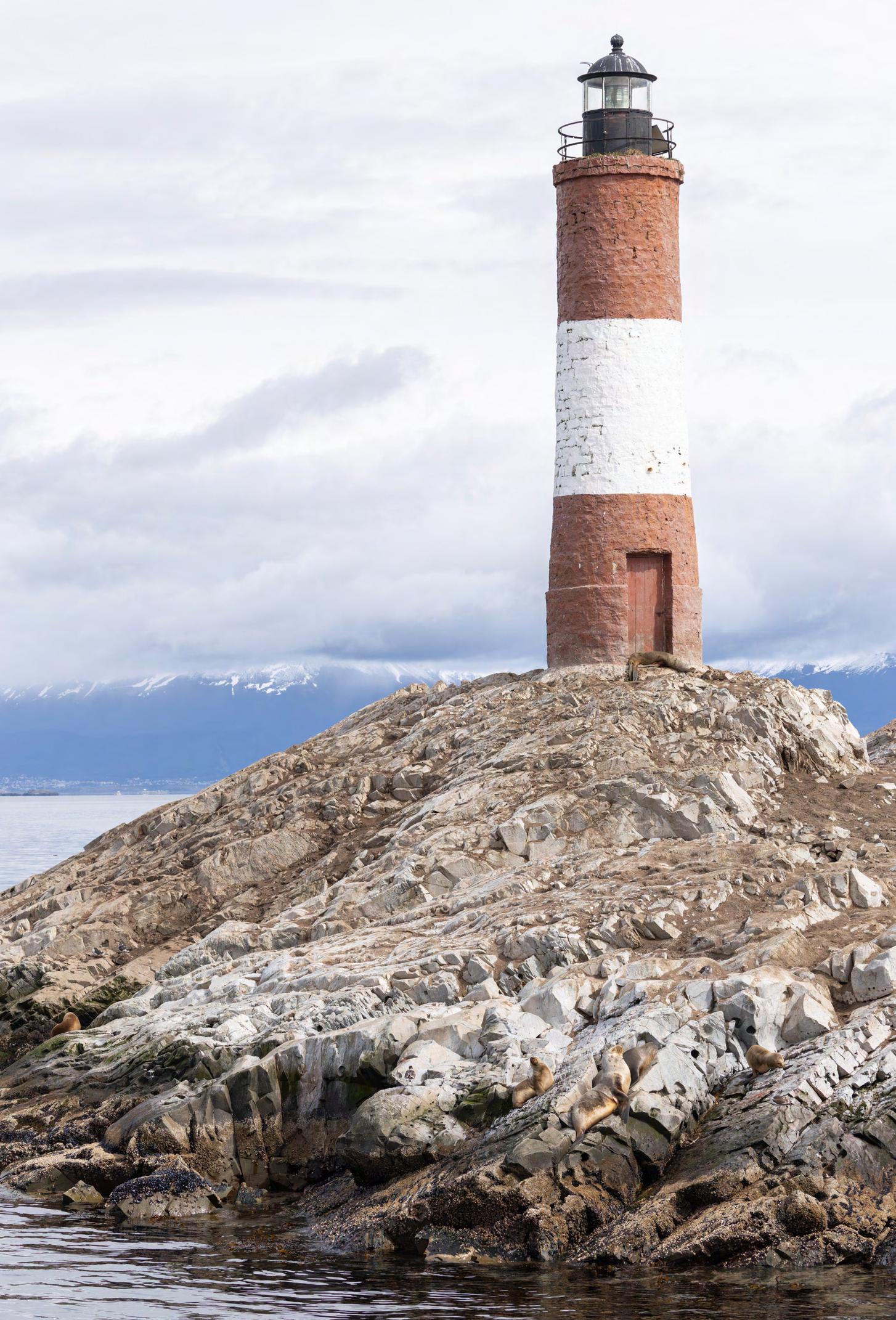
Pre-breakfast birding the following morning added Long-tailed Meadowlark and White-throated Treerunner near the hotel but generally fewer birds as we realised our luck owing to the snowfall the previous day. We made a boat trip aboard a large sturdy 26m long catamaran to the furthest islets in the Beagle Channel in the vicinity of Ushuaia, Faro les Eclaireurs. The pair of islets where the 11m tall red and white lighthouse is located is home to Blackish Cinclodes (of the mainland, not nominate, form maculirostris, a future split maybe? The nominate form is found on the offshore islands of the Falklands). This crazy bird usually lands on the boats looking for freshwater and/or food. There were plenty of other interesting birds to look at here including Rock Shag among the many Imperial Shags, Snowy Sheathbill (which also land on the visiting tourist boats), South American Terns and more Fuegian Steamer Ducks and pretty Kelp Geese. The rocky islets are also home to lots of noisy South American Sea
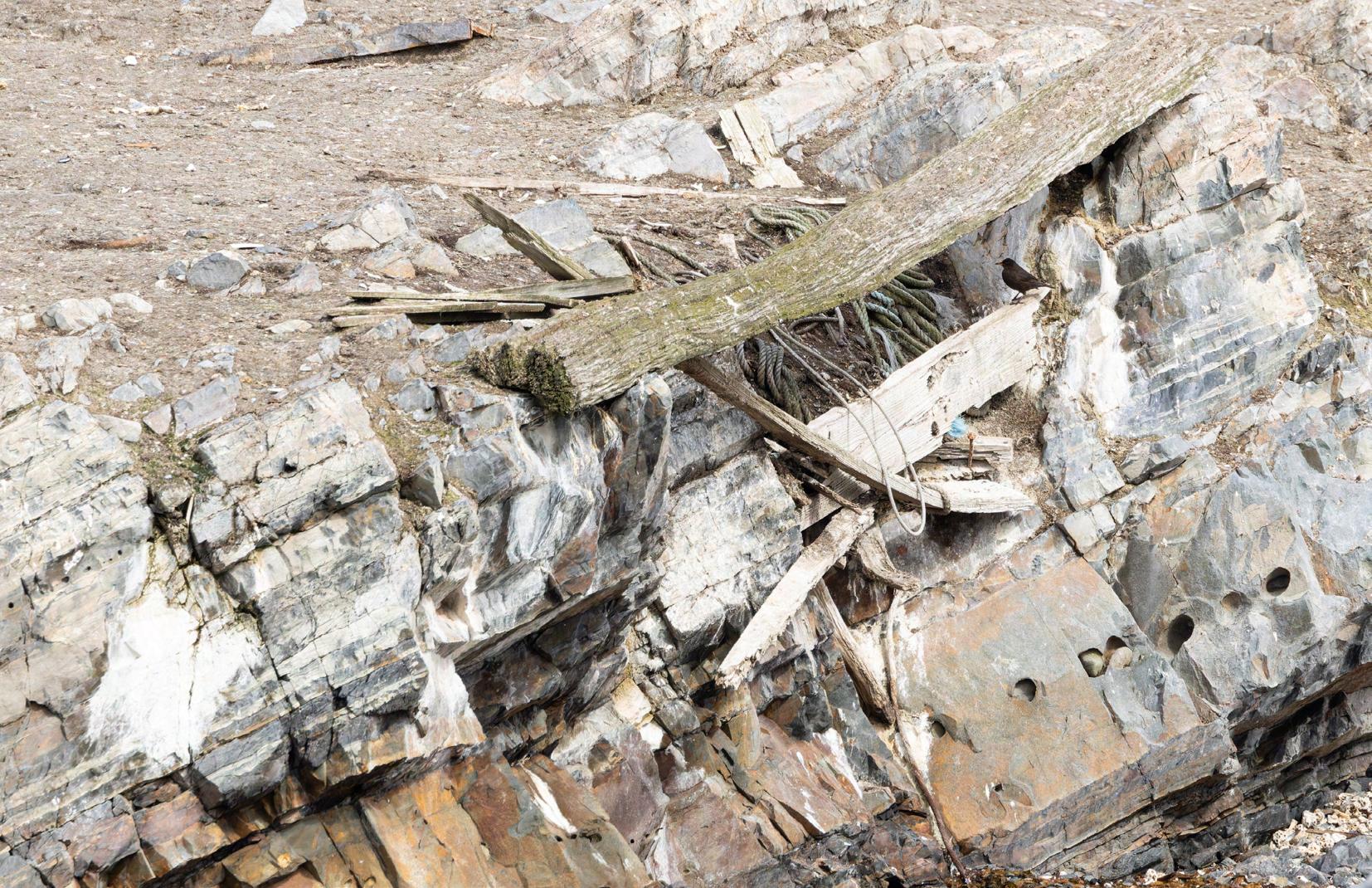
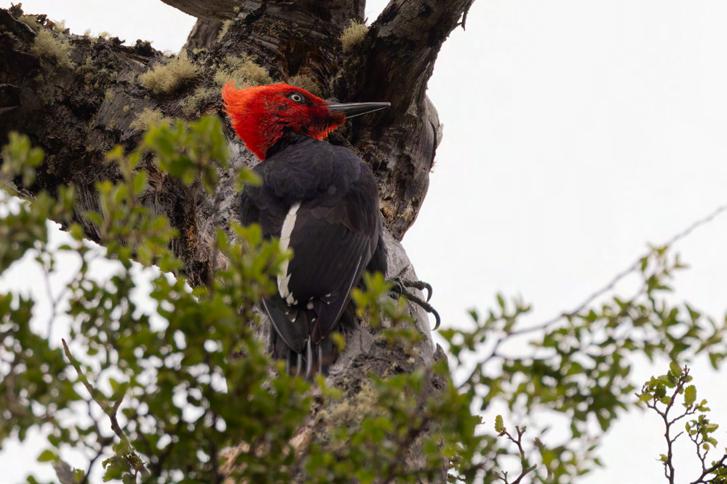
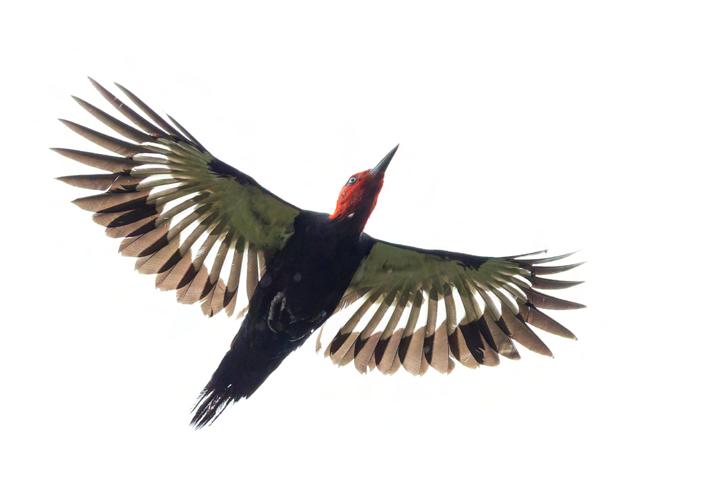
Lions, which can be seen at very close quarters from the boat if you can fight your way through the wall of raised smartphone selfie takers, a mega irritating facet of modern tourism. A short landing on Isla Bridges (so folks could take selfies with Ushuaia in the background!) was useful in that it produced singing Austral Canastero near the landing spot. After the boat trip we added another weird South American passerine, Dark-bellied Cinclodes, around the wreck of the St Catherine, which is preserved as a tourist attraction on Ushuaia sea front but is also a cinclodes nesting site. We spent a little less time than usual in the national park this year, partly owing to the earlier than usual embarkation time but it was just enough to locate a pair of Magellanic Woodpeckers. These massive woodpeckers, the largest extant species in the Americas, were a little shy but the male at least sat up for us a top a tall old beech tree for some minutes. We sifted through many gatherings of passerines but did not add anything new. It was at Lago Roca where we had some more success in the form of some great views of Great
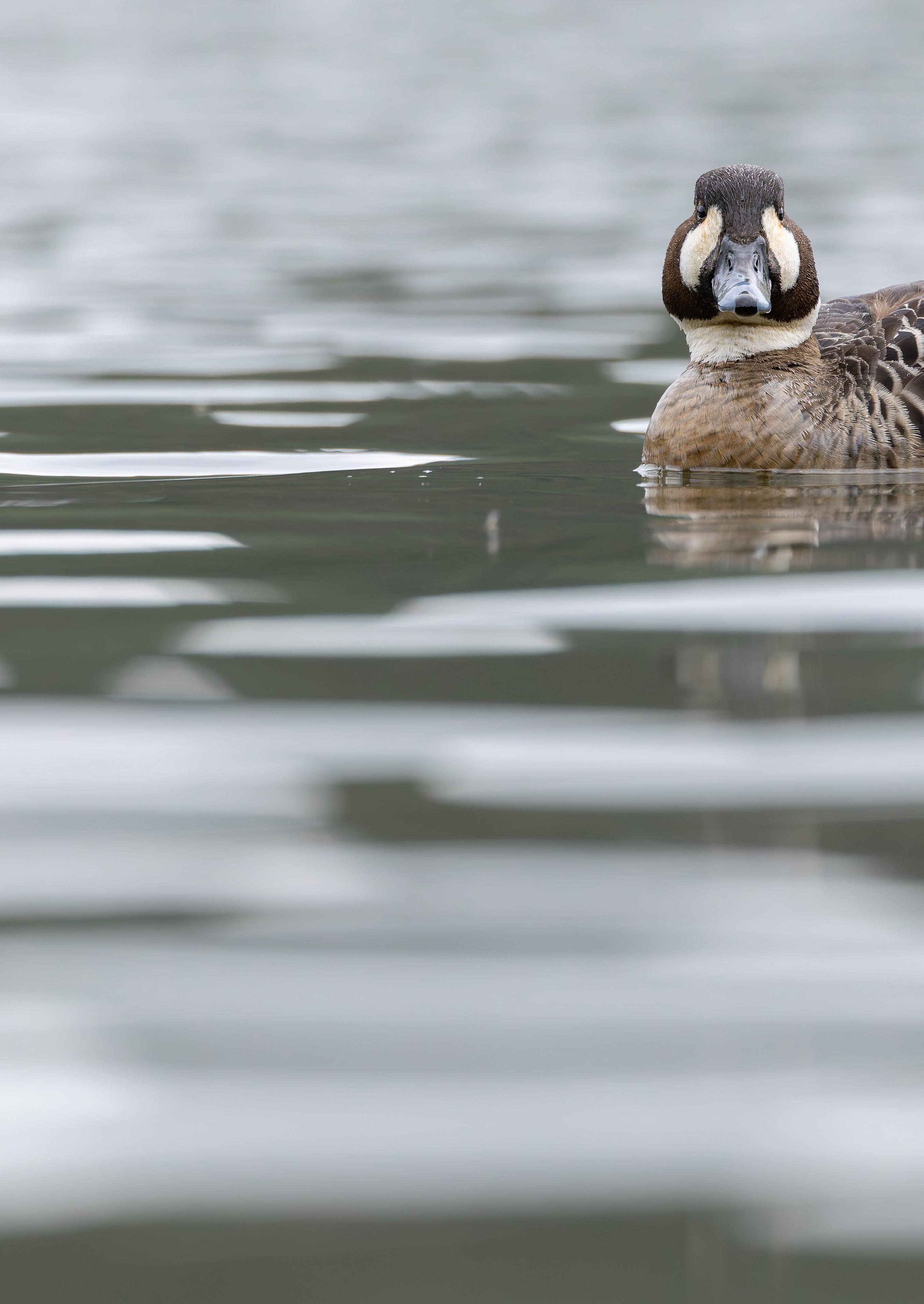
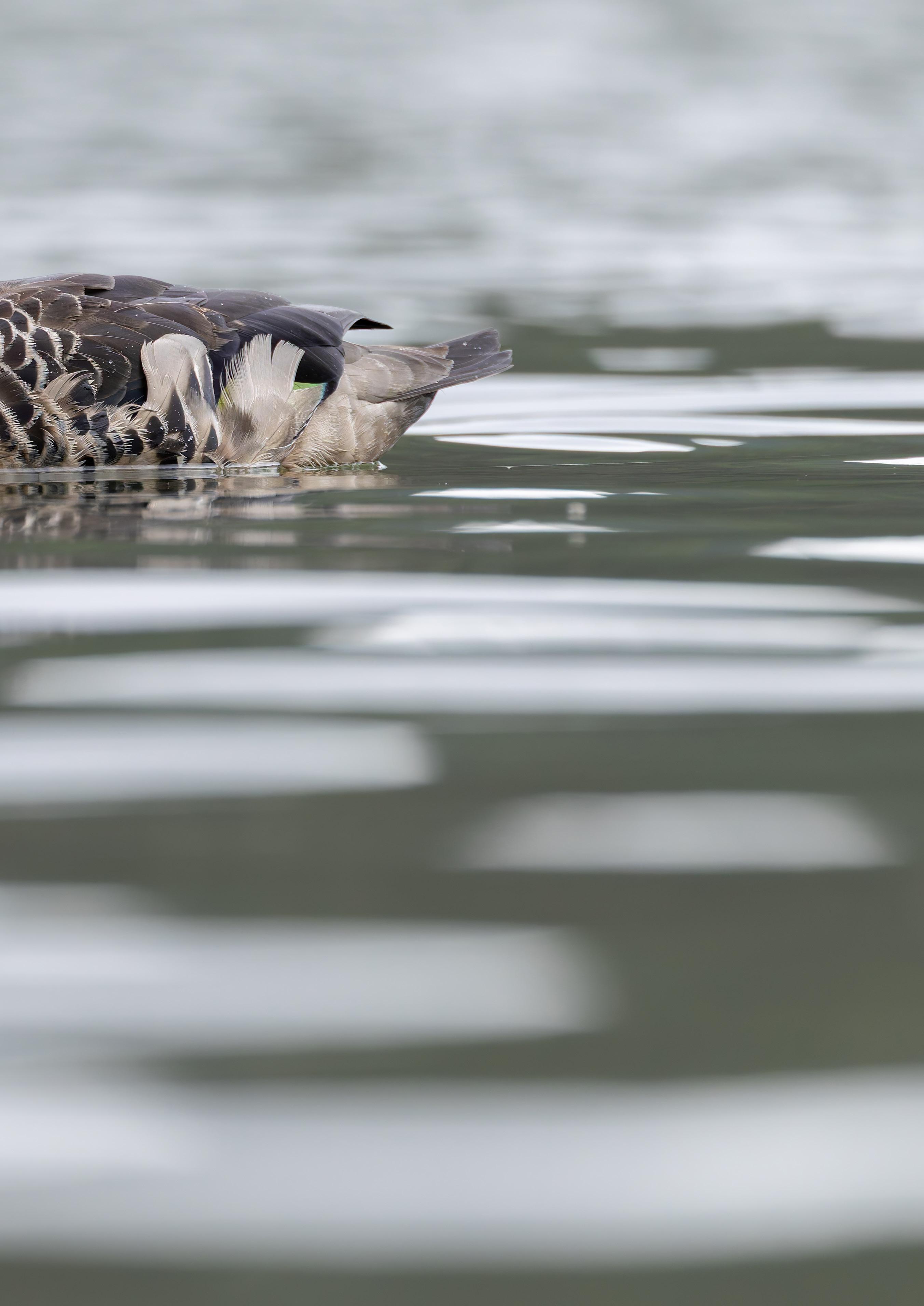
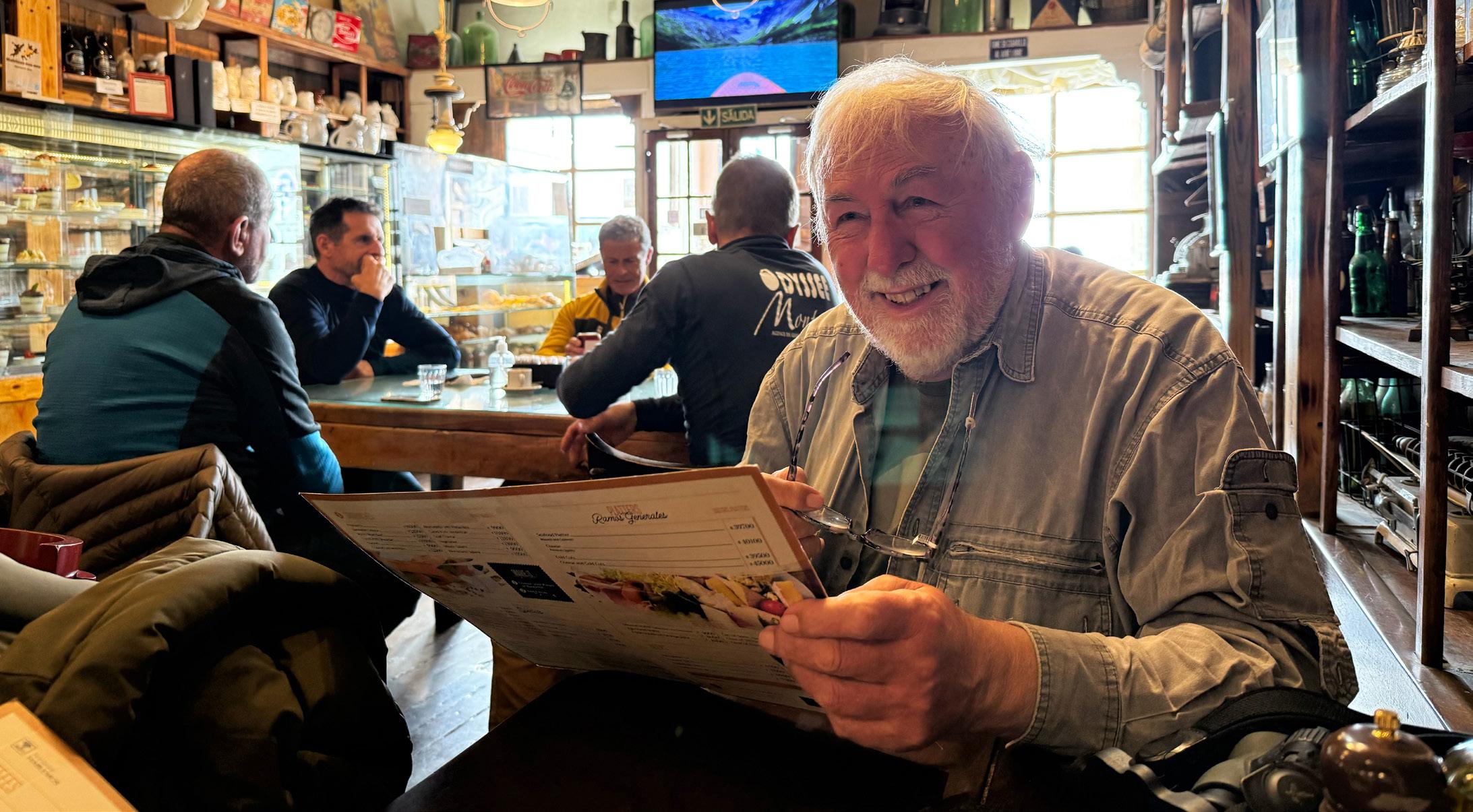
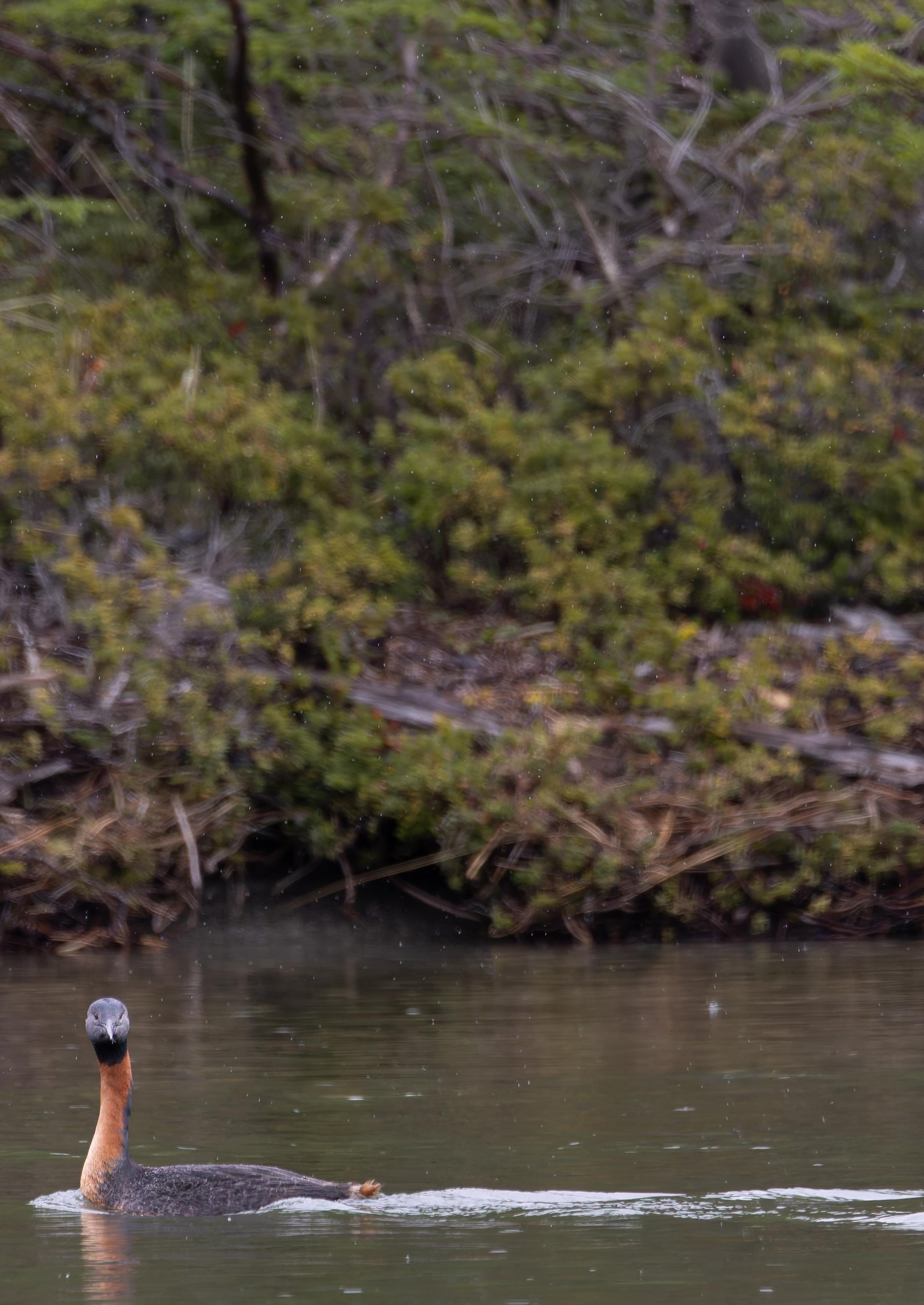
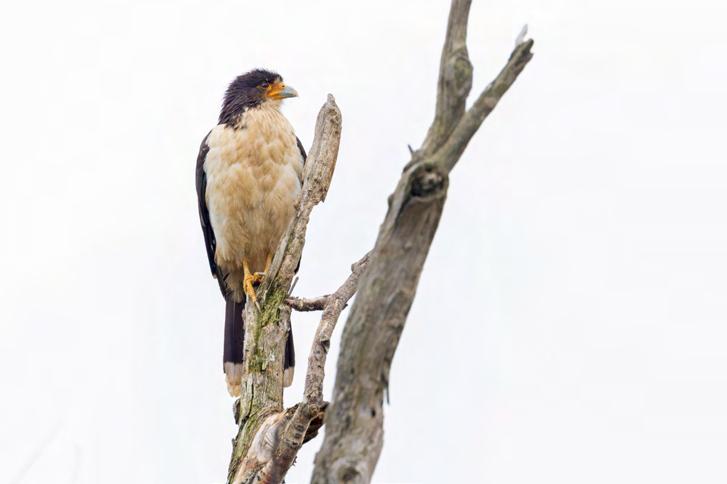
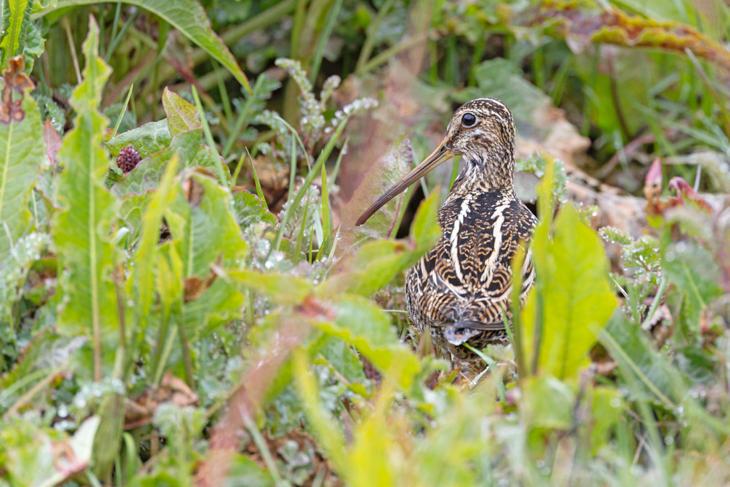
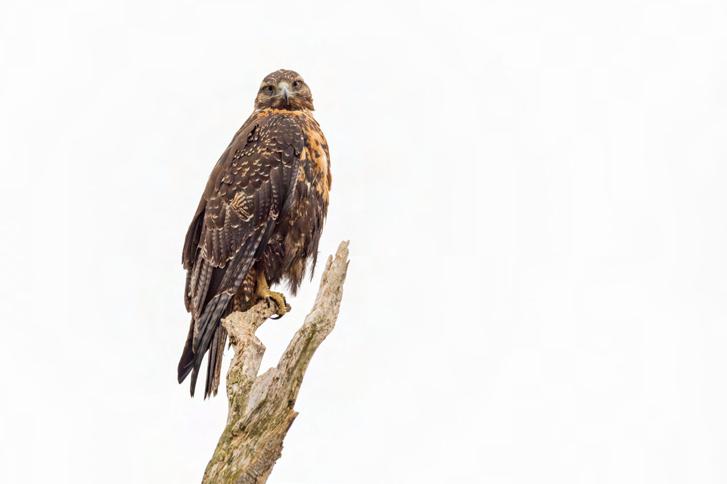
Grebes and a very obliging pair of Bronzewinged (or Spectacled) Ducks, the most sought-after of the Southern Cone waterfowl. The weather was also foul. It rained all afternoon and evening. We had another forlorn attempt at finding owls after dark, rewarded only with a Culpeo (fox) in the wee small hours. Embarkation day had arrived. A final pre-breakfast jaunt added Yellow-billed Teal, Magellanic Snipe and White-throated Treerunner for Dave before it was time to make our way to the port and drop our bags. This serves as a check-in too, with your bag being transported to your cabin. We had time for more birding around Ushuaia (we dare not venture too far today!) and logged a high count of 120 Crested Ducks at the Reserva Natural Bahia Encerrada in town before we headed to the least attractive birding spot in Ushuaia, the landfill site. Crippling views of White-throated Caracara and Black-chested Buzzard Eagle along the access road were very welcome and among a mass of Kelp Gulls and Chilean Skuas on the shore we spotted a couple of Chiloe Wigeon and a lone Turkey Vulture. It was lunch time now so we paid a visit to the amazing El Amacén Ramos Generales – a terrific ‘olde worlde’ establishment and a must for anyone with an interest in historical artefacts, of which it is full. The food was pretty good too. Bronze-winged Duck, Tierra del Fuego National Park. Next page: Great
EMBARKATION & THE DRAKE PASSAGE
Embarking on an adventure like this one is always very exciting! After being escorted to our cabins and hastily arranging our things in the various storage areas we began at least one million welcome briefings, in between these we did some birding from the deck, adding Andean Condor over a peak on the north side of the channel. We had been thwarted in our efforts to see this one so far by the bad weather. Phew! As we neared the entrance to the channel, we added Magellanic Penguin (there is a large breeding colony on the north shore), Wilson’s Storm Petrel, Sooty Shearwater and Common Diving Petrel (not the hoped-for Magellanic). The sea was getting much livelier now and we would wake up the following morning in the Drake Passage.
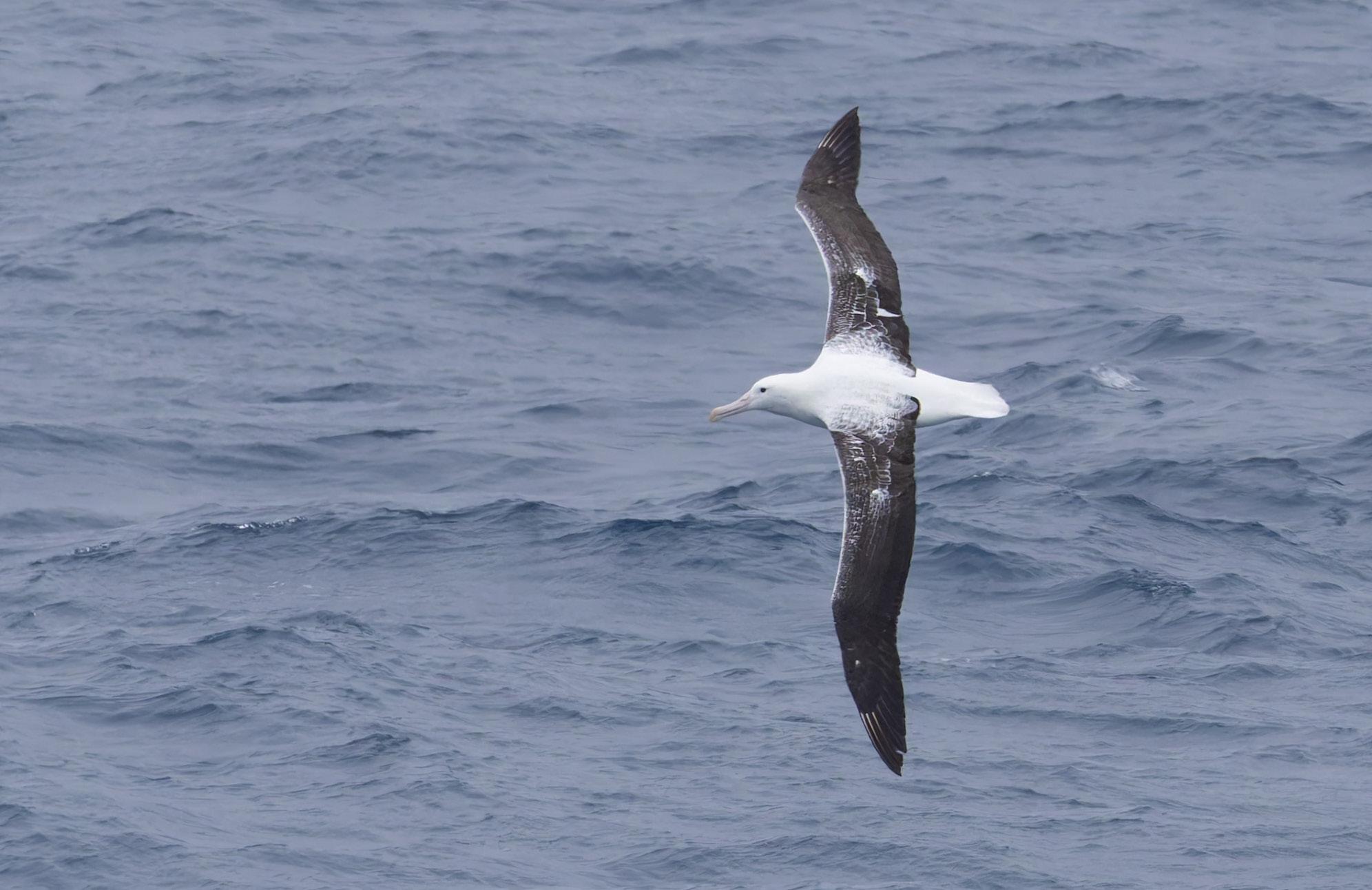
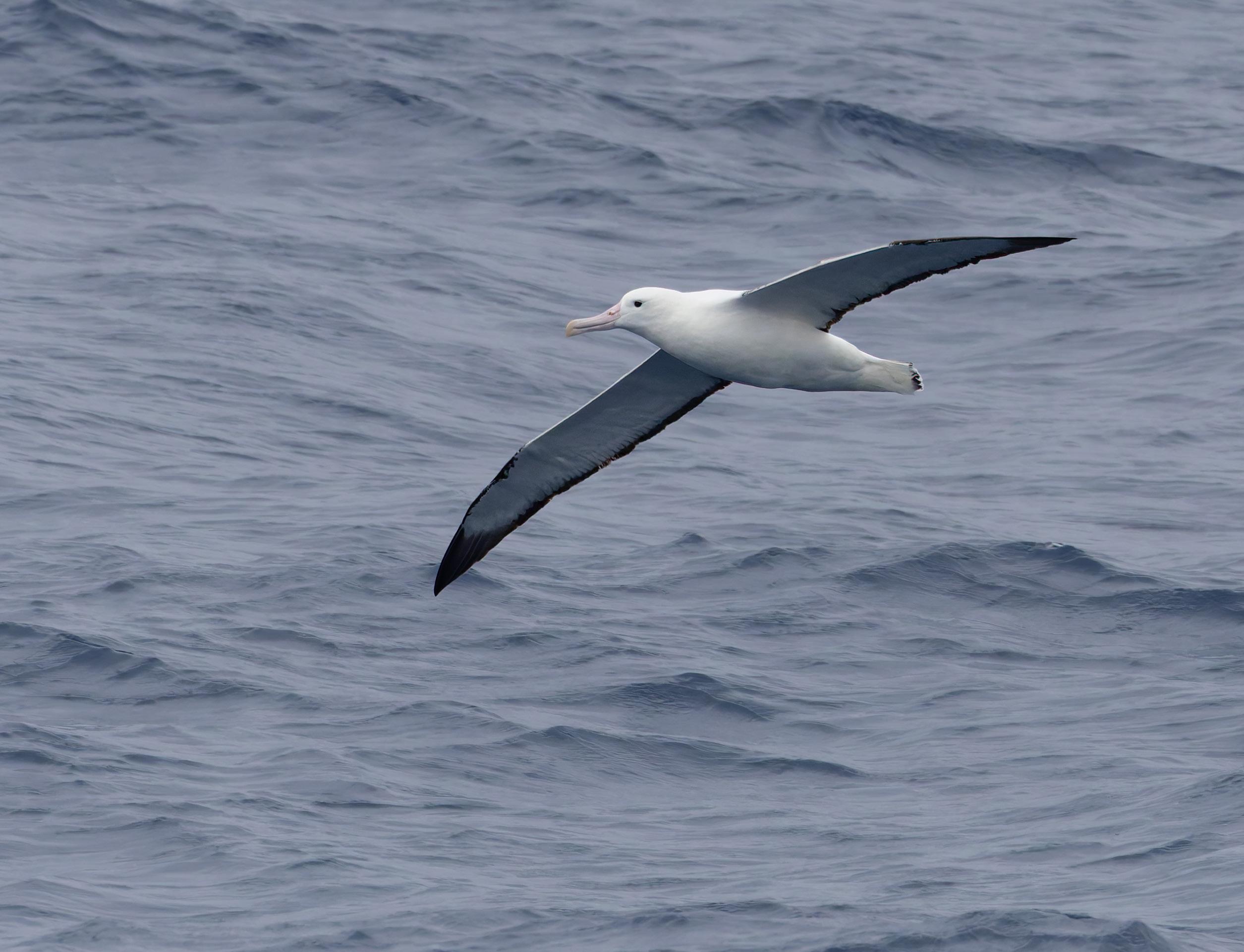
We were certainly far out to sea when we woke up, there was a lot more movement too, although calm for the Drake, a lake instead of a shake. As soon as I peered out of the saloon, I could see albatrosses! There were Light-mantled, Grey-headed and Black-browed following the boat already. Wow! Smaller seabirds included Wilson’s Storm Petrel, Pintado Petrel, Southern Giant Petrel and Southern Fulmar. Blue Petrels, with their white taillights on zipped over the waves as some of the larger, more aircraft-like birds appeared, Southern Royal and Snowy Albatrosses! When the sea is calmer, they can be surprisingly difficult to spot approaching from far away, with only a football-sized white head to go on as they hug
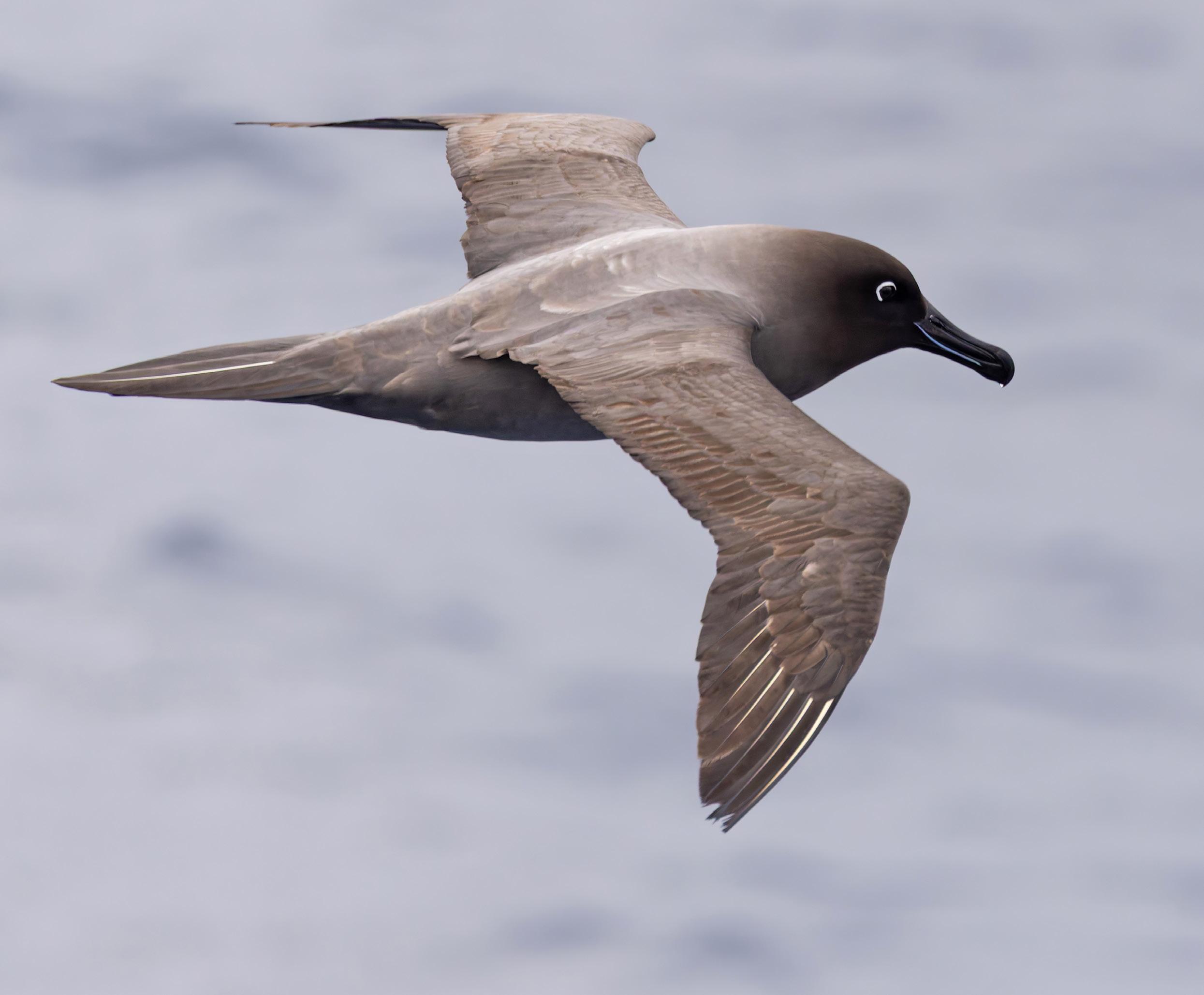
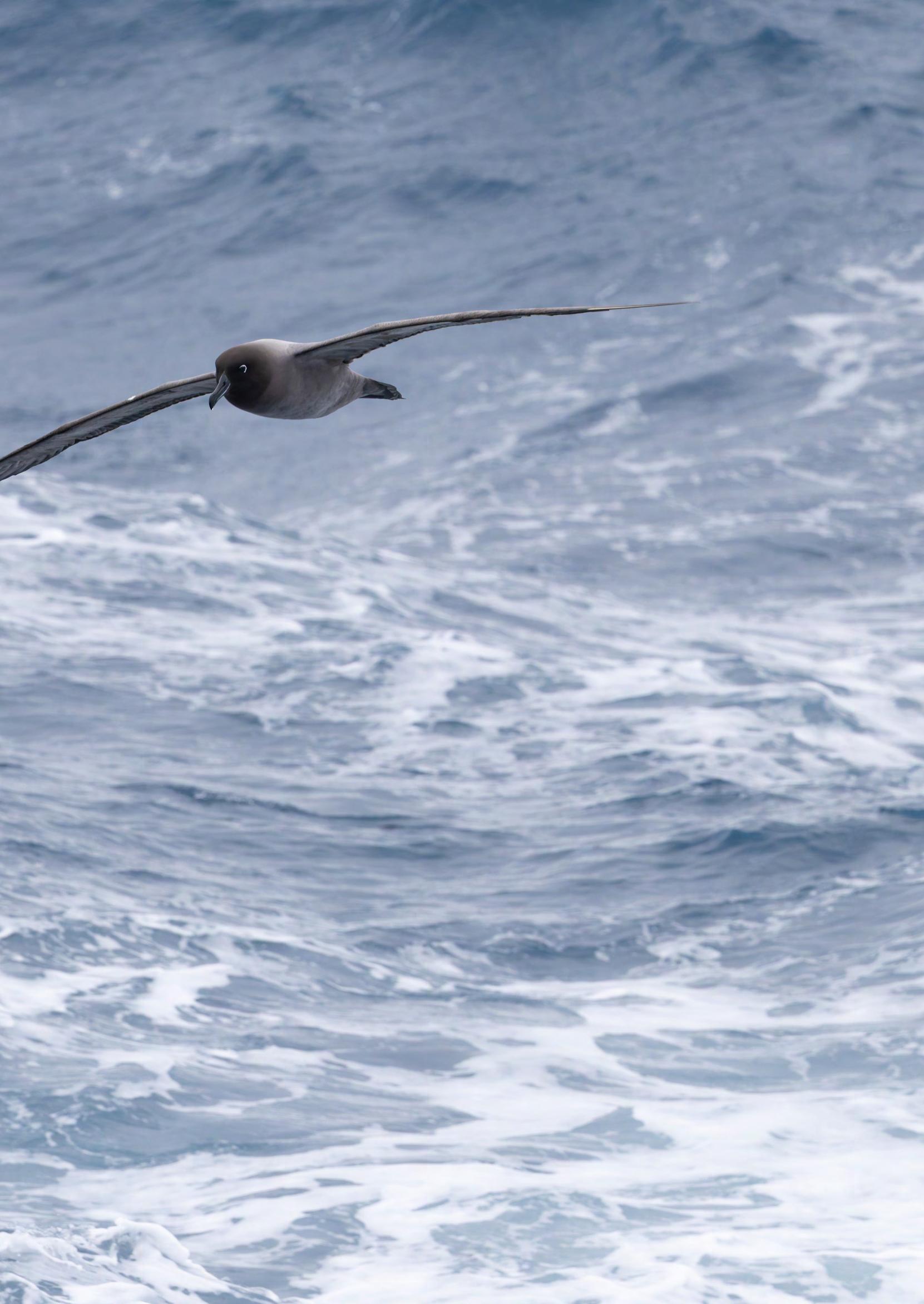
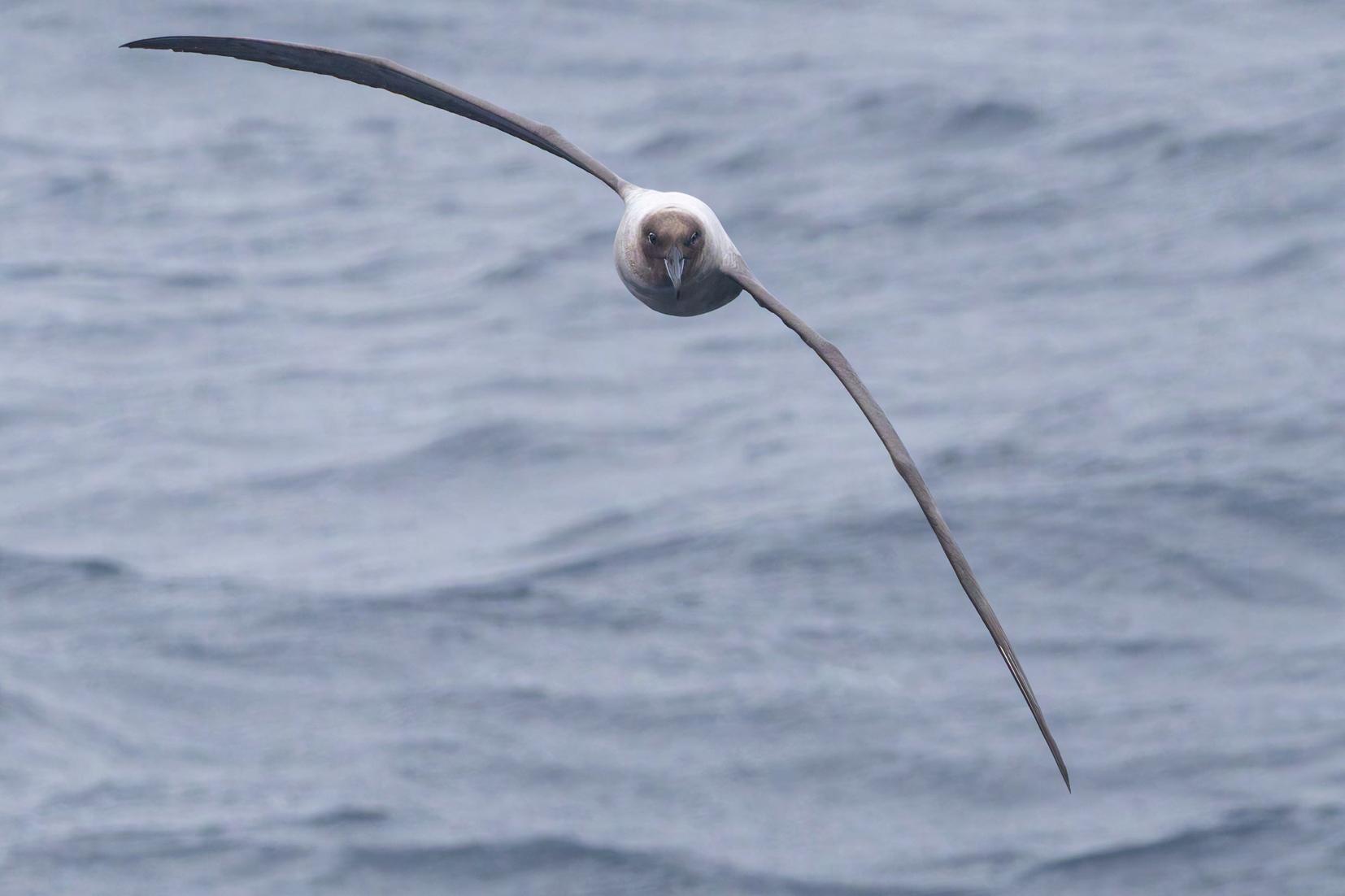
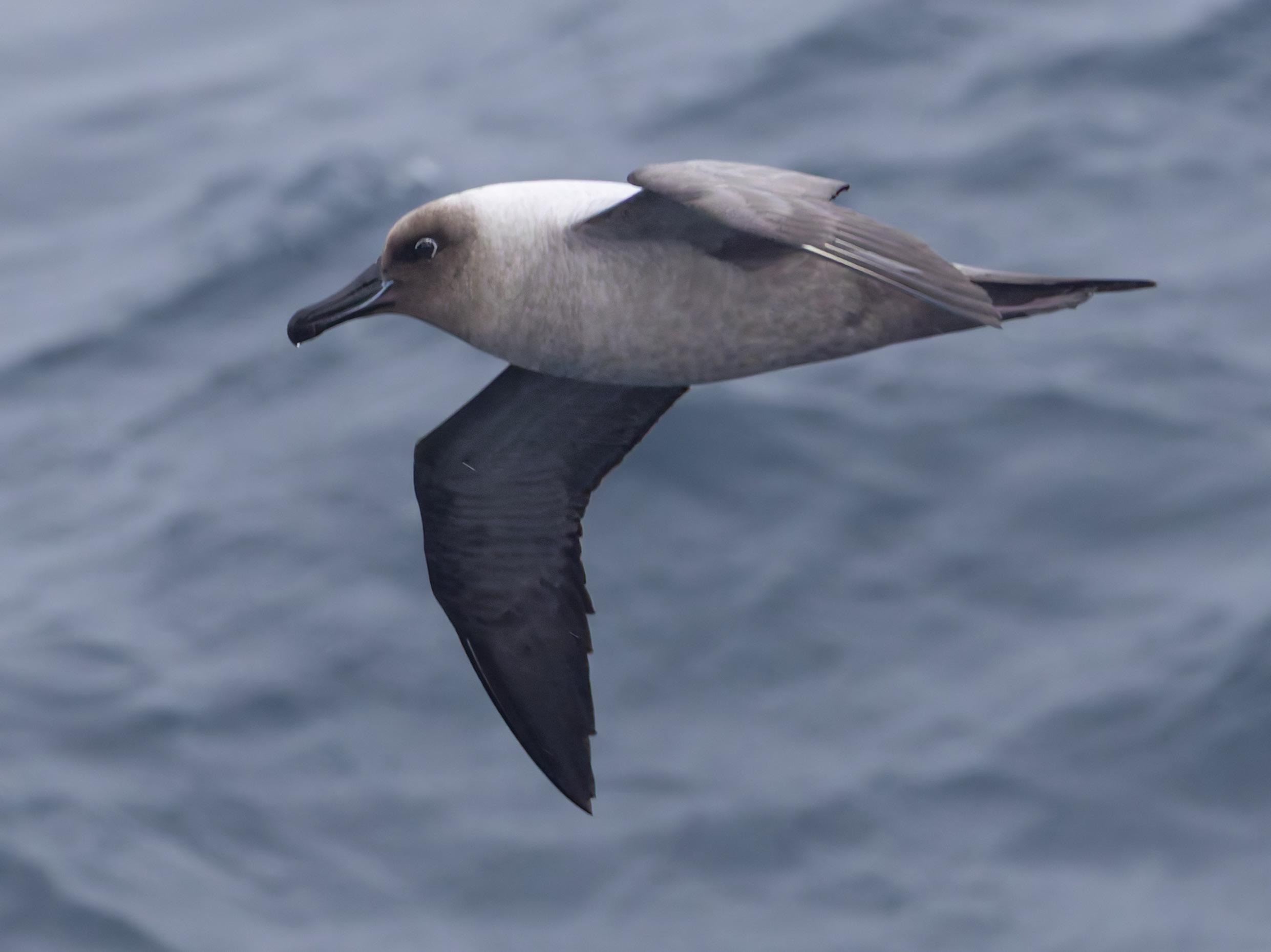
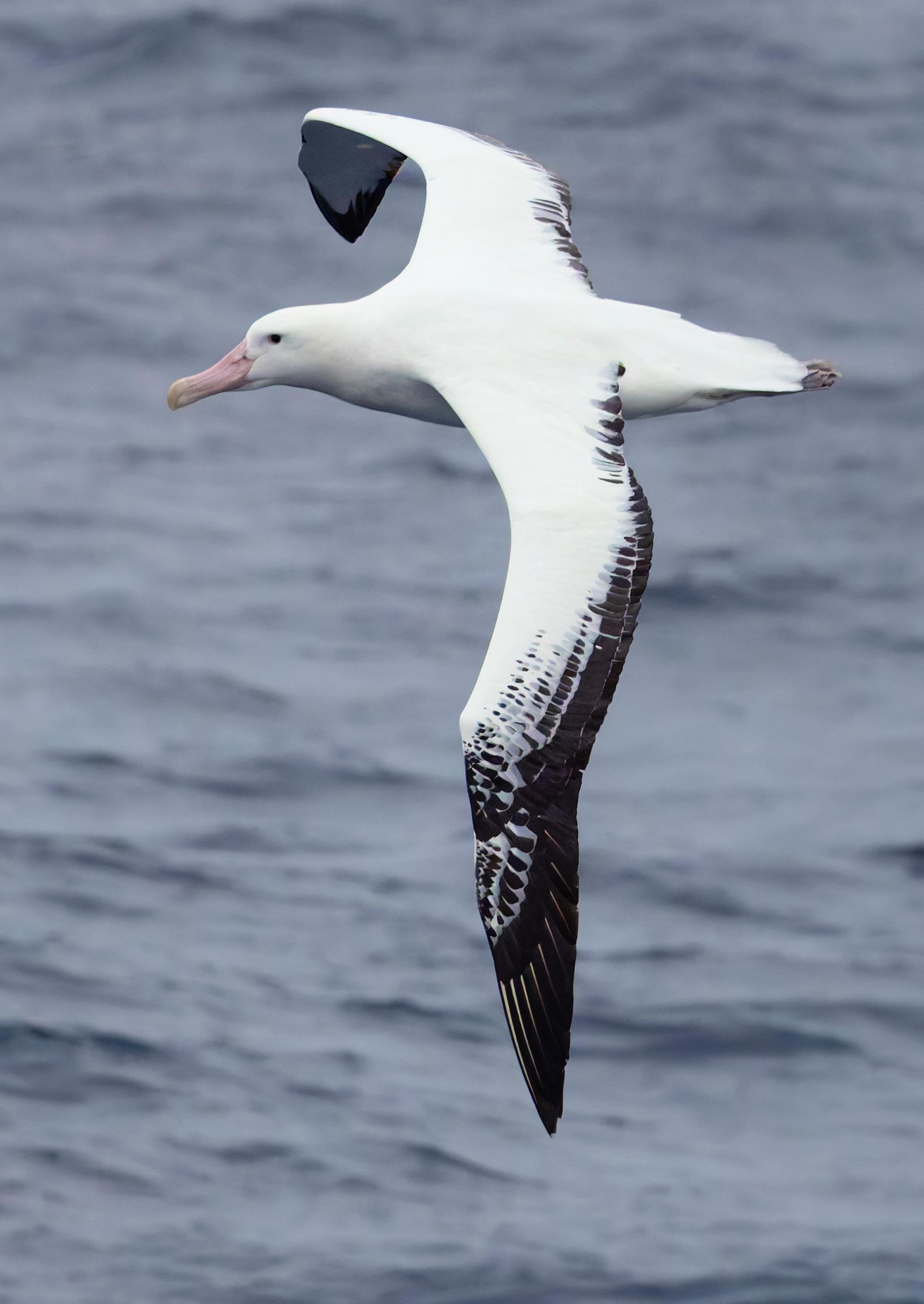
the waves, their wings bowed and disappearing into the shallow troughs seeking every little push of uplift. There was at least another one million briefings today, interrupting seabirding but an enforced rest is not a bad idea, it is tough work to concentrate hard on deck all day! We added White-chinned Petrel and both Antarctic and Slender-billed Prions. As we ventured further south towards the Antarctic Convergence (the meeting of the warmer Atlantic and cold Antarctic waters) at roughly 60 degrees it grew misty. Brown Skua and Hourglass Dolphin were late additions before our watch ended. However, the day had belonged to the magnificent Light-mantled (Sooty) Albatrosses, of which we had logged almost 30, including some strikingly pale-bodied first year birds. I didn’t see any birds of this age last time I crossed the Drake. They were almost ever present, a real privilege to spend so much time with them, made even more spectacular by their propensity to whizz by the boat’s superstructure at very close range. Thrilling stuff! The swell had increased to around 3m by the end of the day as we rolled south along the waves with a tailwind roughly at the convergence at 60.1 degrees south.
THE SOUTH SHETLAND ISLANDS
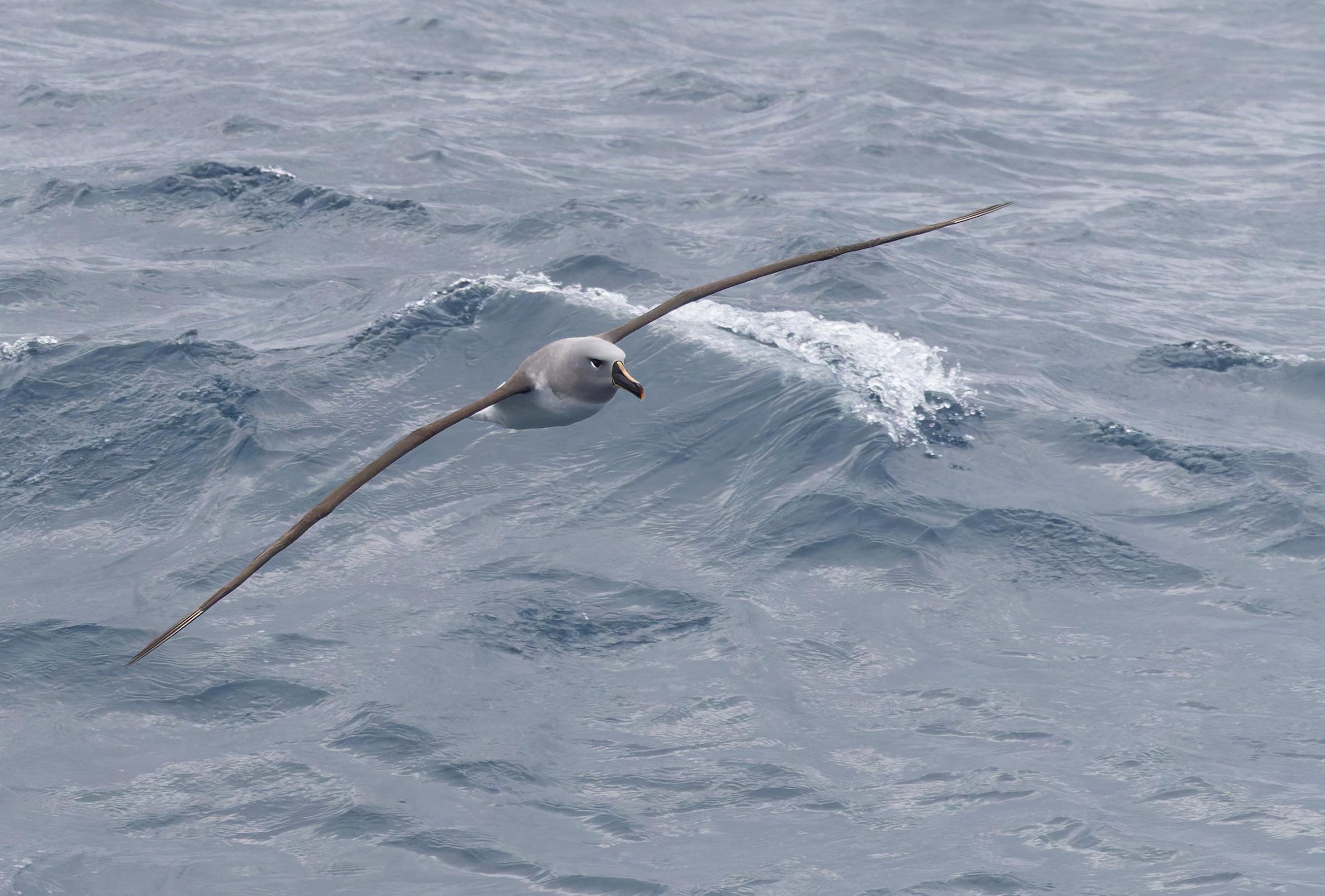
The following morning saw us south of the convergence and the range of birds following the boat had changed. There were more Pintado Petrels and Antarctic Prions, Black-bellied Storm Petrel put in its first appearance and we had lost a couple of albatross species; only Snowy (one), Light-mantled and Black-browed were seen today. However, major excitement was our first Snow Petrel and even better, Antarctic Petrel, although the latter was rather brief and tricky to see in the horizontal snow. The wind had swung around to the east and was gusting up to 50 knots (storm force 10!). We reached the South Shetland Islands in good time this afternoon and were able to make a (wet) zodiac landing at Whaler’s Bay on Deception Island. We were invited to watch the tricky navigation through Neptune’s Bellows, the narrow entrance to the sunken volcano caldera. A forbidding place in this grim weather. The weather was still very poor as we went
Grey-headed Albatross. Previous pages: Light-mantled Albatross & Snowy Albatross. Next page: Southern Royal Albatross (Mike Watson)
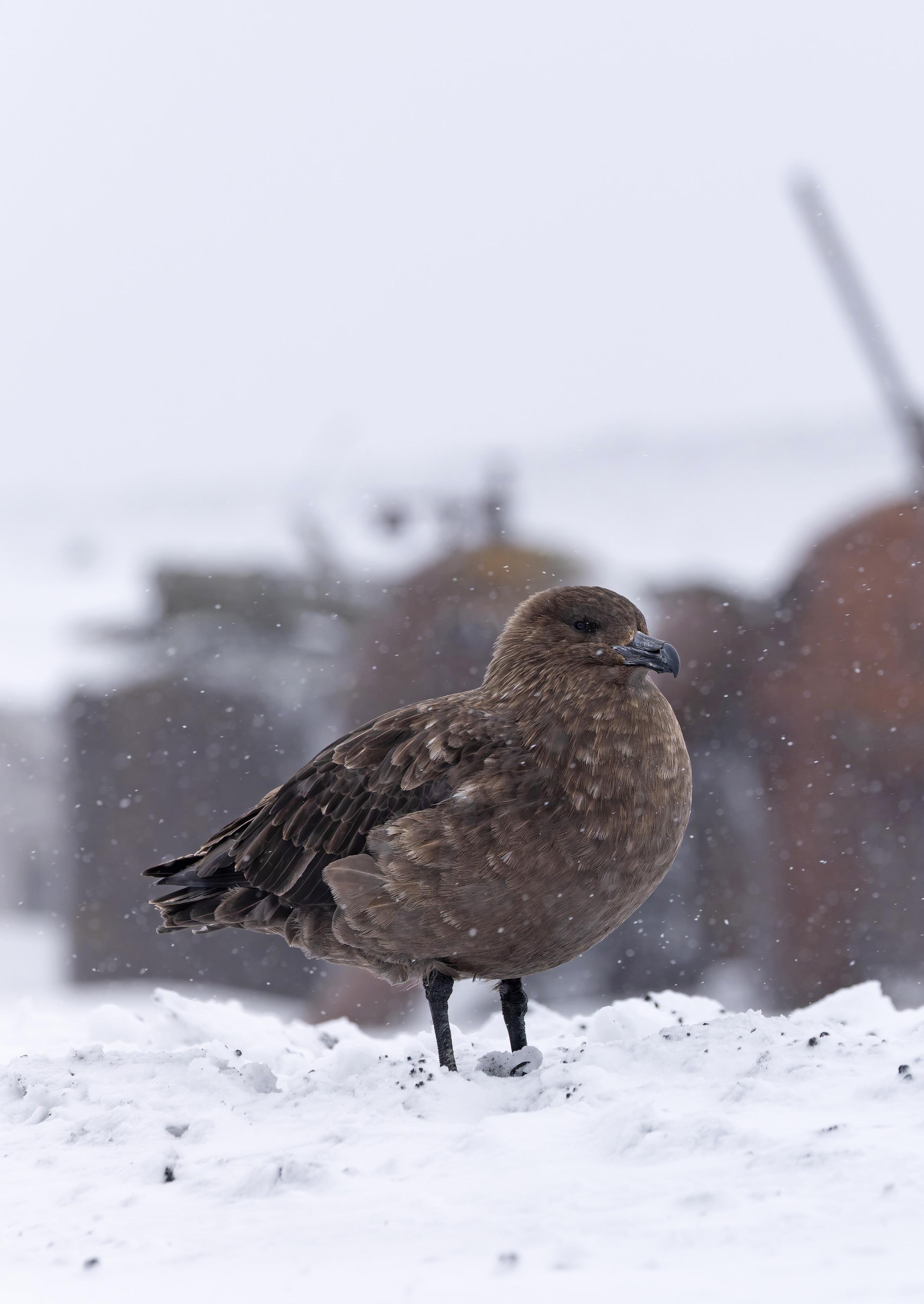
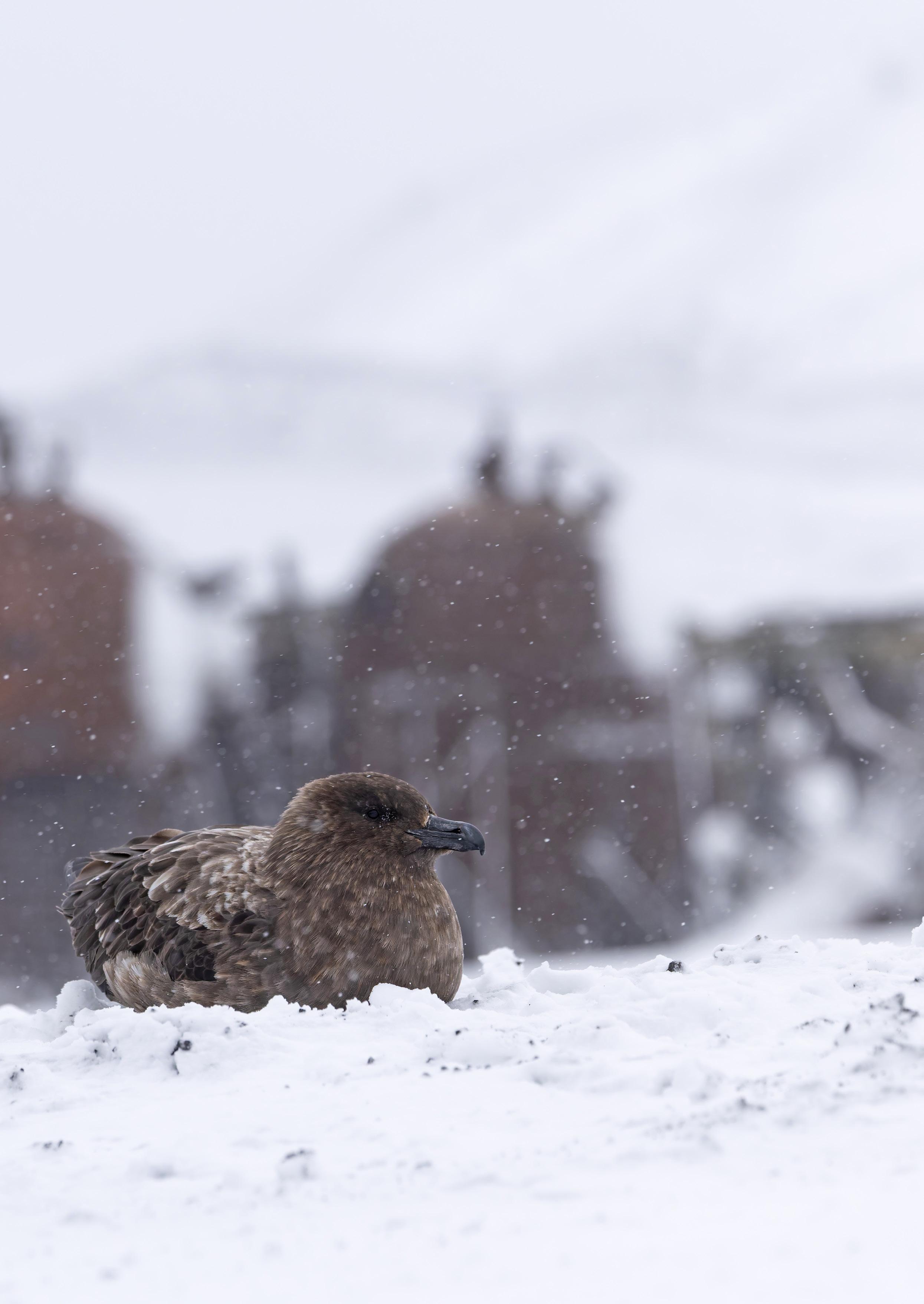
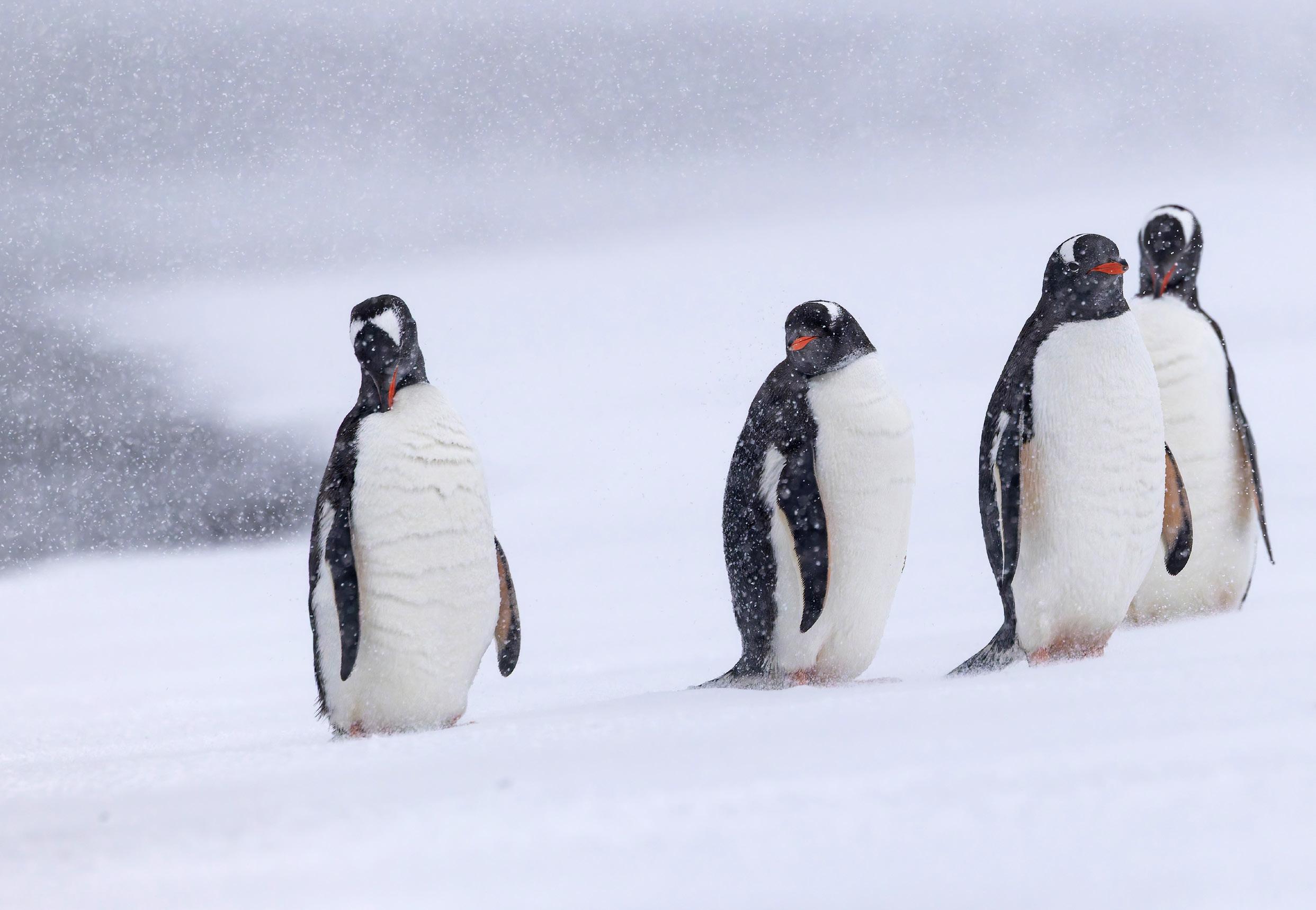
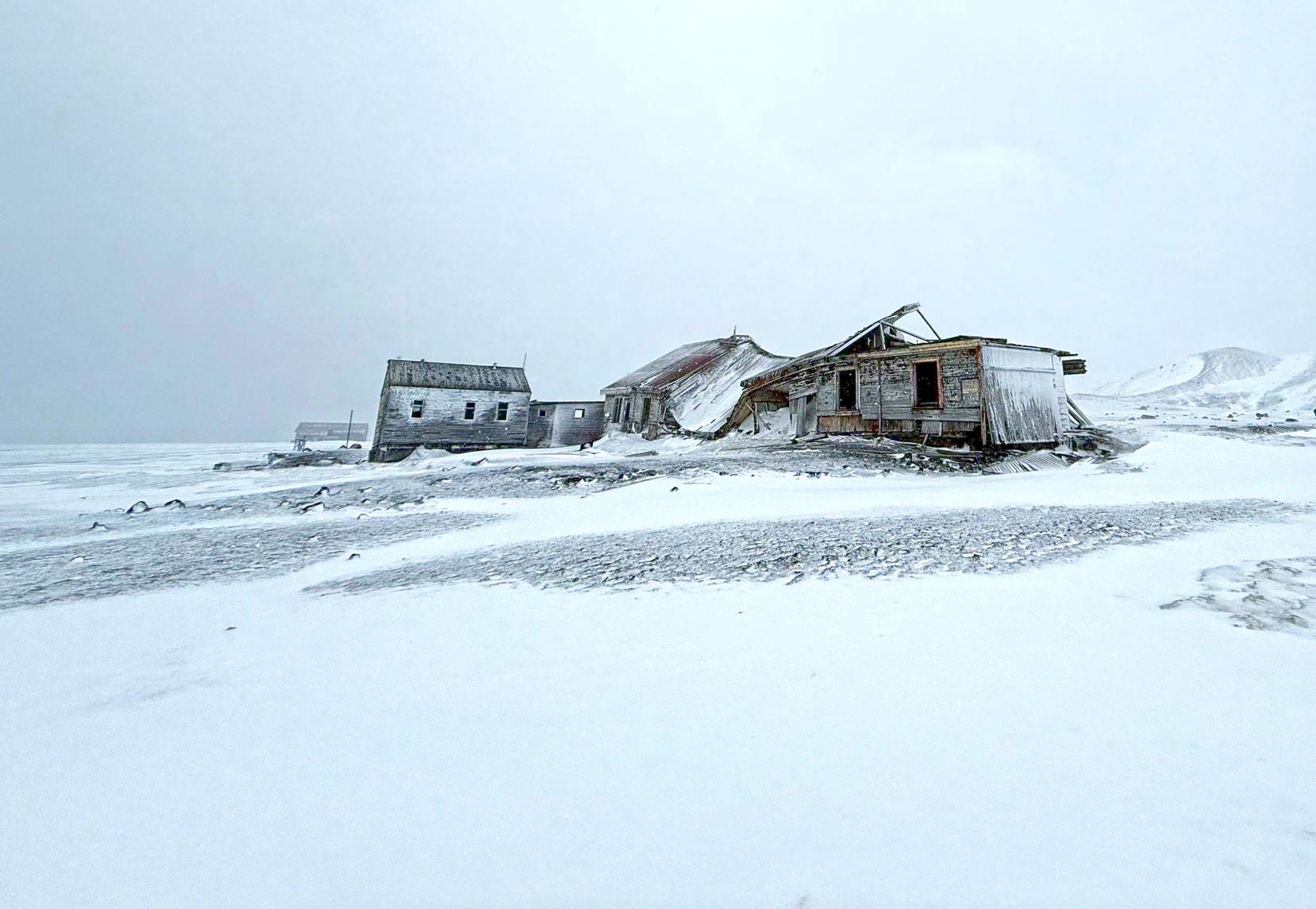

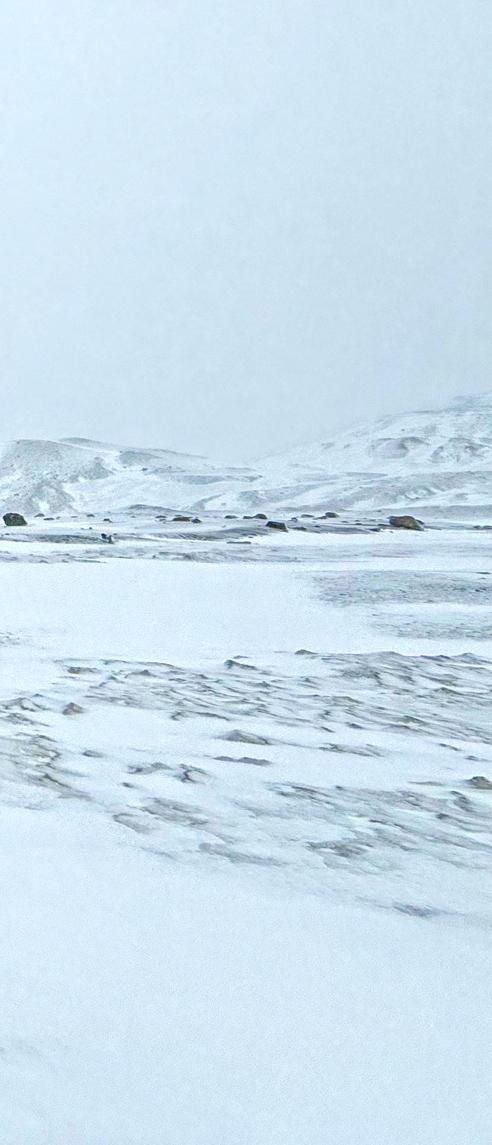
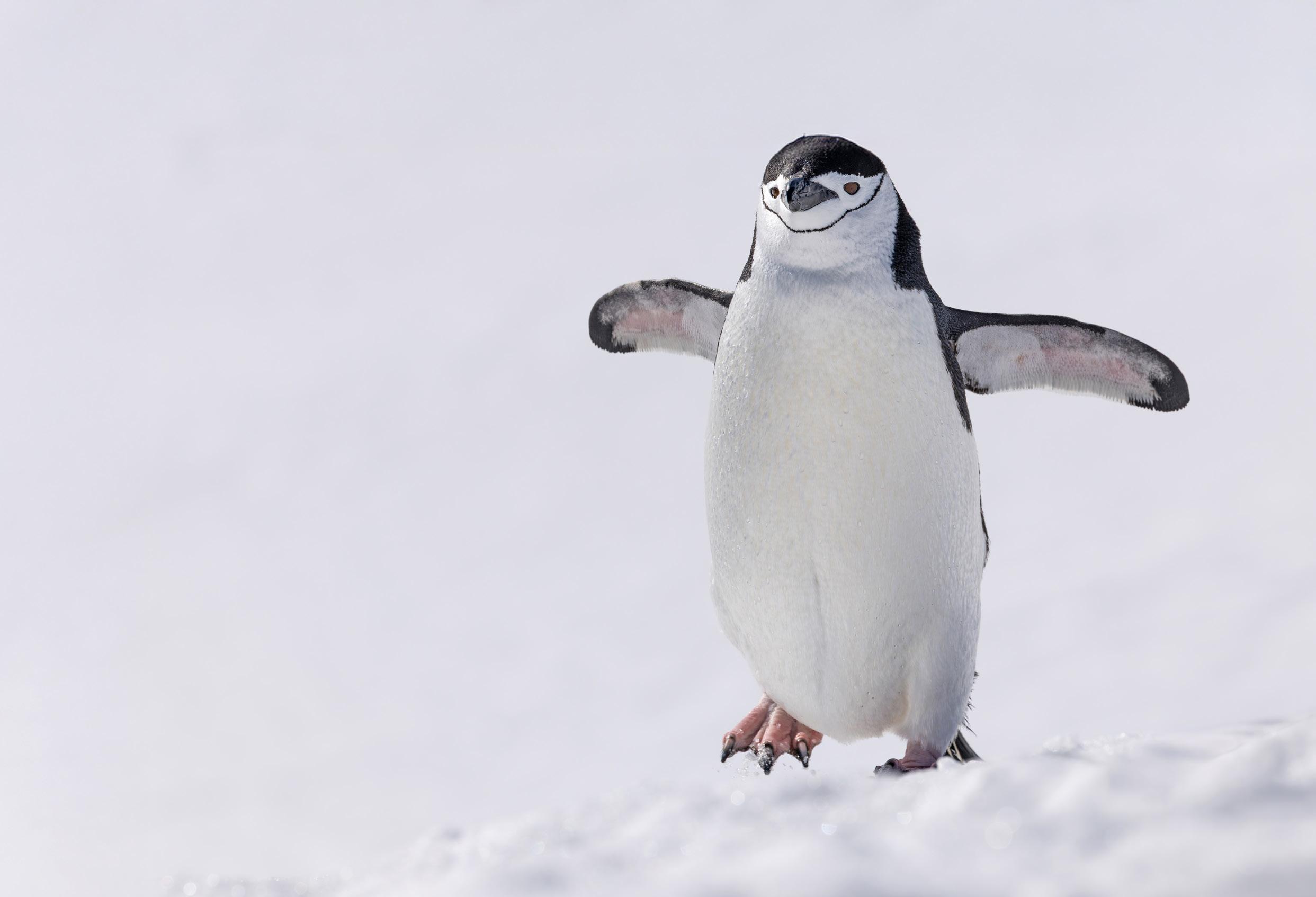
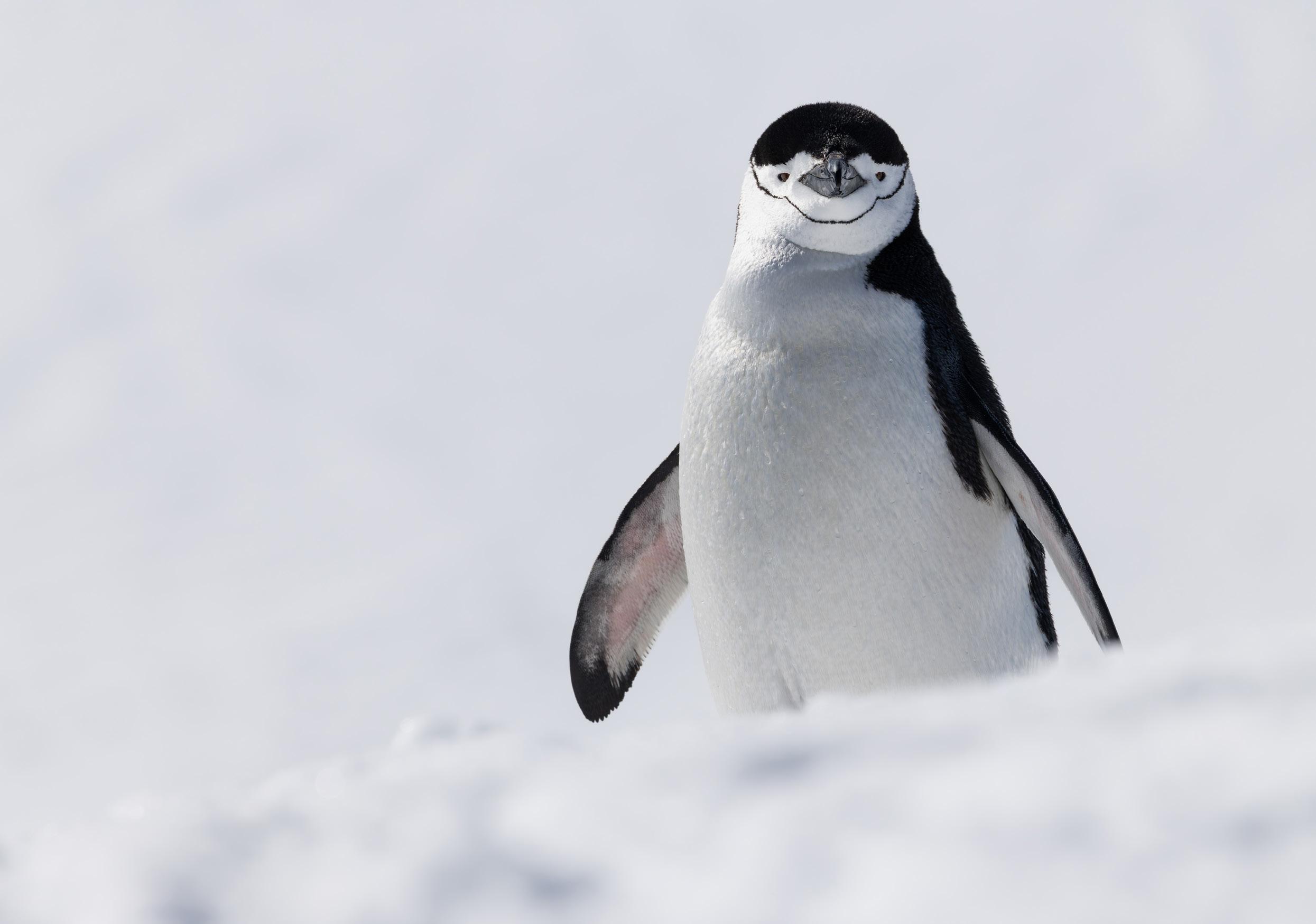
ashore, it was still snowing and blowing a gale, but this was our first chance to set foot on Antarctica, albeit not the continental mainland. A greeting party of Gentoo Penguins was on the beach, and an intrepid pair of Kelp Gulls was nesting nearby on an old whaling boiler. The 15km wide island is in the Bransfield Strait and has a safe natural harbour, accessed via the 500m wide narrows. First discovered by Smith and Bransfield in 1820, it was sealer Nathaniel Palmer who found the inner basin the following year and named it Deception Island. A small seal hunting operation lasted a few years after which the island was quiet for another 80 years when a whaling operation began, as an extension to activities on South Georgia. In 1908 the island was declared part of the Falkland Islands Dependencies by the British Government. We explored some of the derelict buildings, including Biscoe House, which was the British scientific base, destroyed by mudflows from the 1969 volcanic eruption. (We had to check seismic activity before our landing this time! 55 years is the blink of an eye in geological time!). We returned to the landing spot to find a pair of brutish Brown Skuas had appeared from further along the beach and a small party of Antarctic Terns flew over. Towards the end of our landing a Chinstrap Penguin came ashore for some, and there were a few seen on the beach on our way out, only a fraction of the 200,000 Chinstraps breeding on the eastern tip of the island at Baily Head! A few of the crazier guests on board took a polar plunge at Whaler’s Bay, some of them were coughing for days afterwards, so be warned. Cruising south this evening, the sea was calm and the wind had dropped. Fin Whales were spotted, the Bransfield Strait is a good spot for them!
Gentoo Penguins & Biscoe House, Deception Island. Previous page: Brown Skuas and whaling boilers at Whaler’s Bay, Deception Island (Mike Watson)
GERLACHE STRAIT
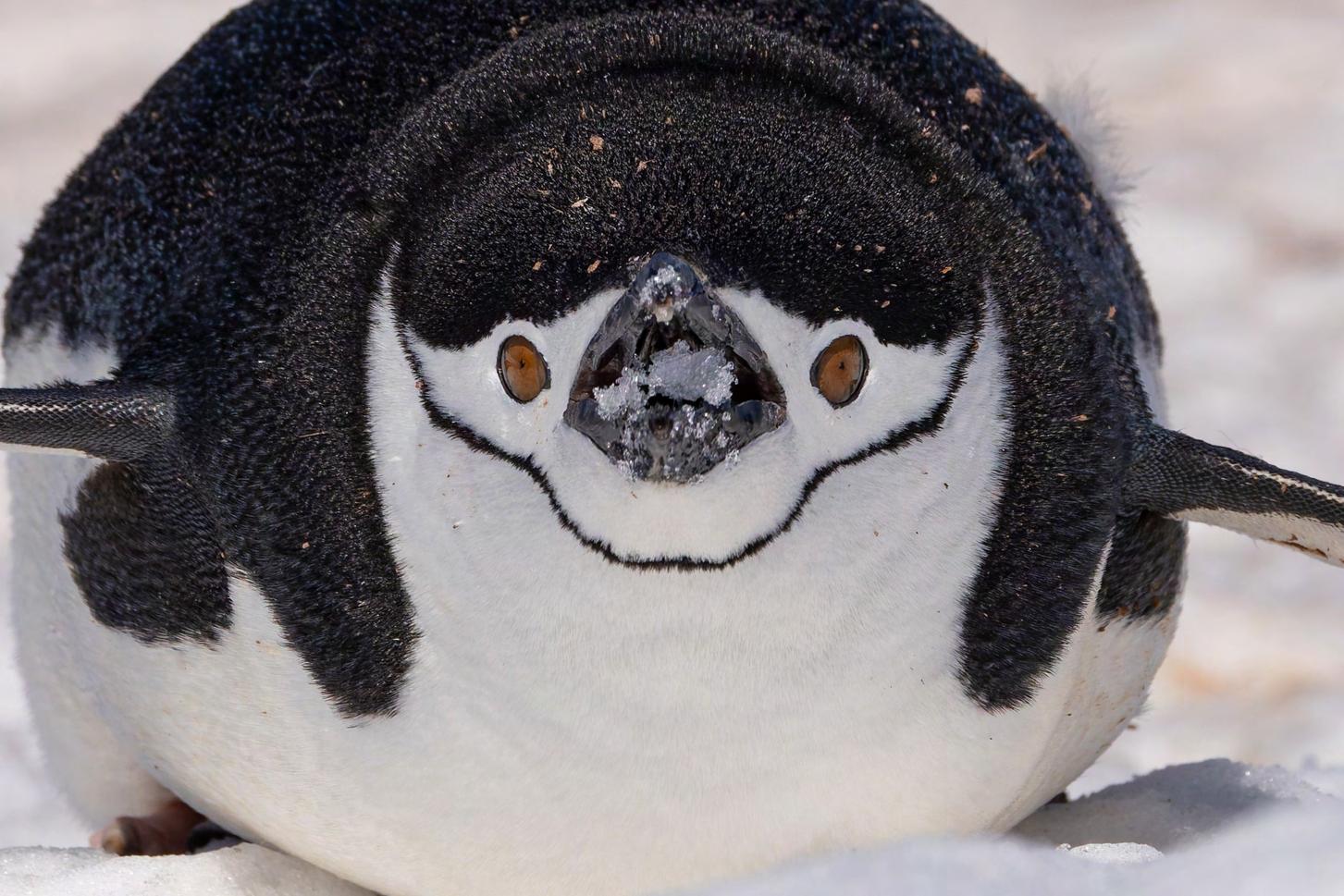
Our progress overnight had taken us into the Gerlache Strait, off the west coast of the Antarctic Peninsula, and we were heading for Palaver Point on Two Hummock Island in the Palmer Archipelago. There was some weather in the Weddell Sea on the eastern side of the Peninsula, so we had to wait until that subsided, lest we cast ourselves into a washing machine full of ice bergs. Palaver Point is another favourite landing spot for cruise ships, featuring a very nice Chinstrap Penguin colony after which the point is named, owing to the noise coming from the penguins. The zodiac landing was a very straightforward one, onto some dry rocks from where a short snowshoe hike uphill took us to several Chinstrap Penguin colonies overlooking the bay. Scenic view seekers could hike to the top of the hill for a wider view but there was much going on in the colonies, where birds were already sitting on eggs, stealing the stones comprising their
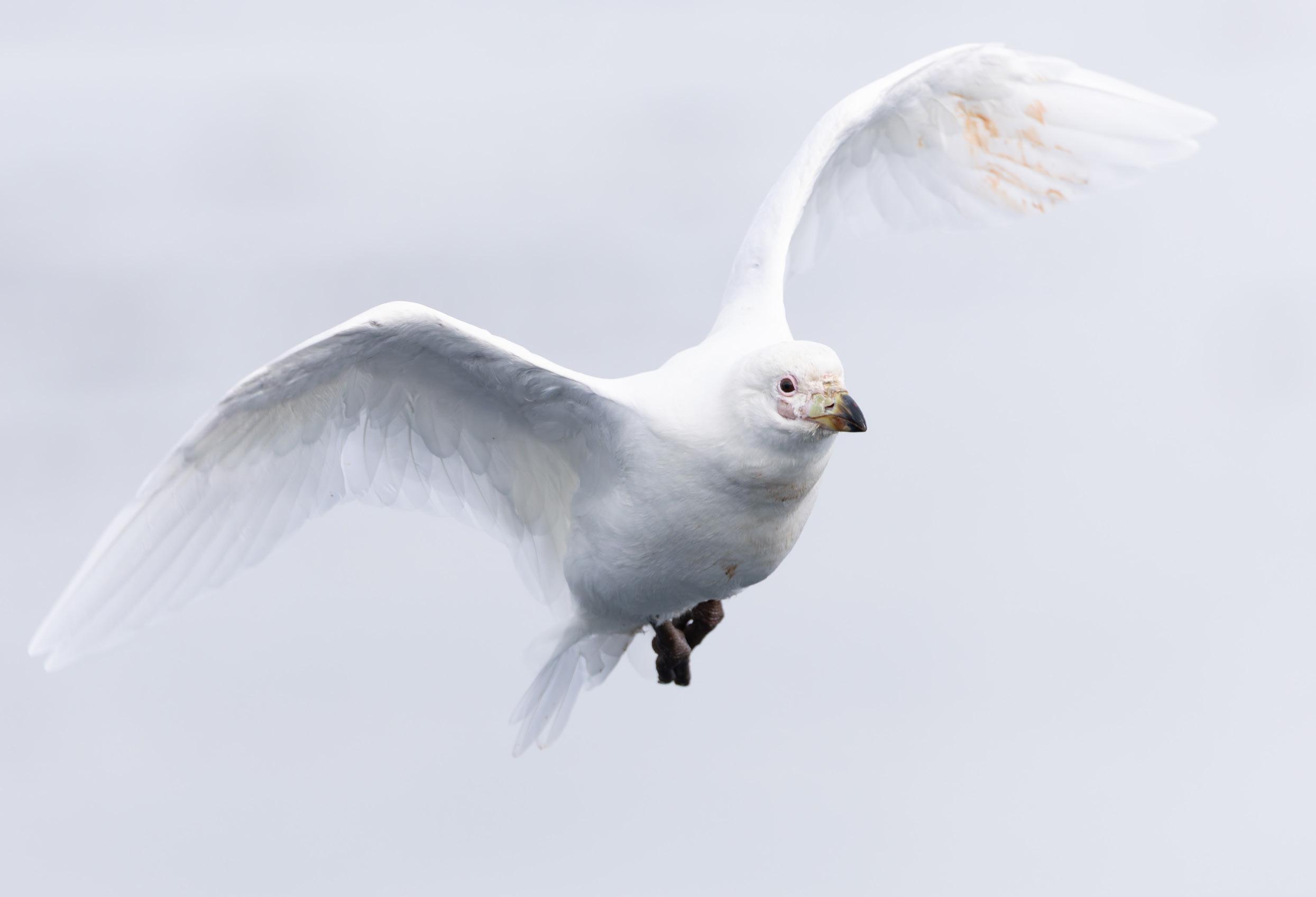
nests and generally coming and going to the sea. The sitting birds were already starting to look a bit grubby but those newly returned were pristine. Can you imagine what the muddy scene looks like in a month or two? Several Snowy Sheathbills were busily looking for food in the colony and Kelp Gulls and South Polar Skuas patrolled overhead. A nearby Humpback Whale provided some mammalian interest. It was a fine landing in glorious sunshine, a complete contrast to the bleakness of the previous day on Deception Island. The afternoon was spent cruising north in sunshine, passing ever more tabular ice bergs, many dotted with brushtail penguins, including our first Adelies. Several South Polar Skuas were tallied and the common seabirds reappeared: Pintado and Southern Giant Petrels and Southern Fulmars. However, the star of the evening was a wonderful Antarctic Petrel that joined the boat for around five minutes in the company of a couple of Pintado
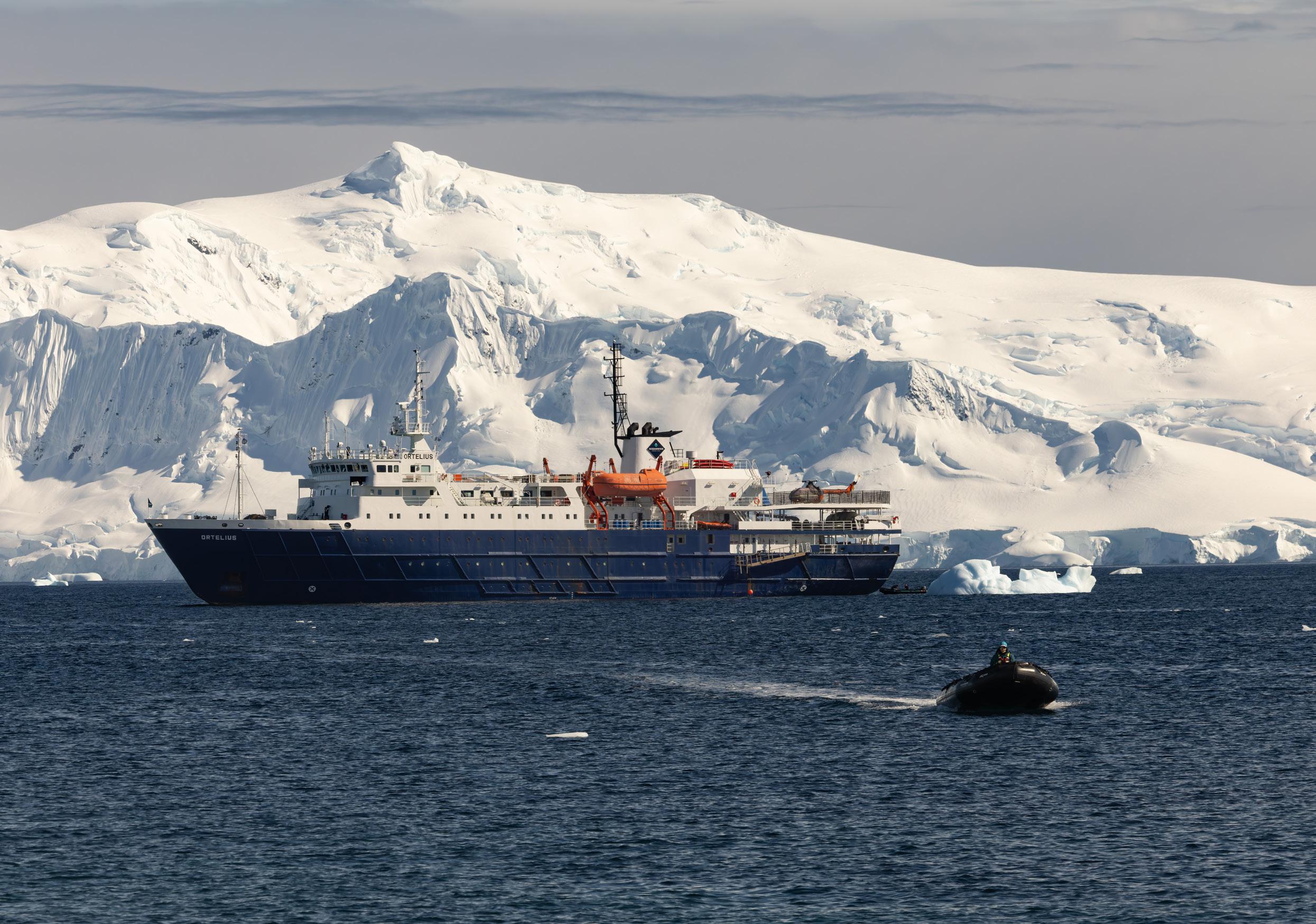
Petrels. They circled MV Ortelius ever faster before gaining height and swinging away from the boat and out of sight. An Antarctic Minke Whale surfaced nearby, and Fin Whale and 3 Humpback Whales were also spotted but we do not usually have time to stop for whales, we usually have a schedule to stick to.
ANTARCTIC SOUND
We had spent the night cruising towards the Antarctic Sound, the gateway to the Weddell Sea and a shortcut to our goal, Snow Hill Island. However, we had already been warned in one of our one million briefings that owing to the greater than usual extent of the sea ice this year, we were unlikely to get there on this cruise. The weather today was much more Antarctic, absolutely brutal in fact, -5 Celsius with a tremendous windchill owing to the 69 knot gusts from the south on the bridge (hurricane force 12!). Fortunately the wind abated during the morning and for the first time we saw what Mv Ortelius is capable of in the sea ice. Expecting that we would carefully mince
around ice-free channels, instead we ploughed right through the thin drift ice floes. We could also see ice forming today as the temperature dropped, grease ice and pancakes, very instructional. The eminent Gary Miller gave a good lecture about the formation of ice, one of the few I tore myself from the watch to listen to. We ploughed on, looking for a way towards Snow Hill but eventually ended up parked on an ice floe at the southern end of Fridtjof Sound. Snow Petrels stole the show today and there were many of both Adelie Penguins and Antarctic Shags on the ice. No sign of the big one though, it is usually here somewhere, as we would discover soon enough. One of MV Ortelius’s helicopters set off to fly to Snow Hill and back, to recce a possible landing, right at the limit of operations at 55 NM (102km) each way. They returned and it was announced that we would try to get there over the following two days, and it would indeed take two days to take everyone there and back, but it also had to be everyone or no-one. A difficult situation!
FRIDTJOF SOUND
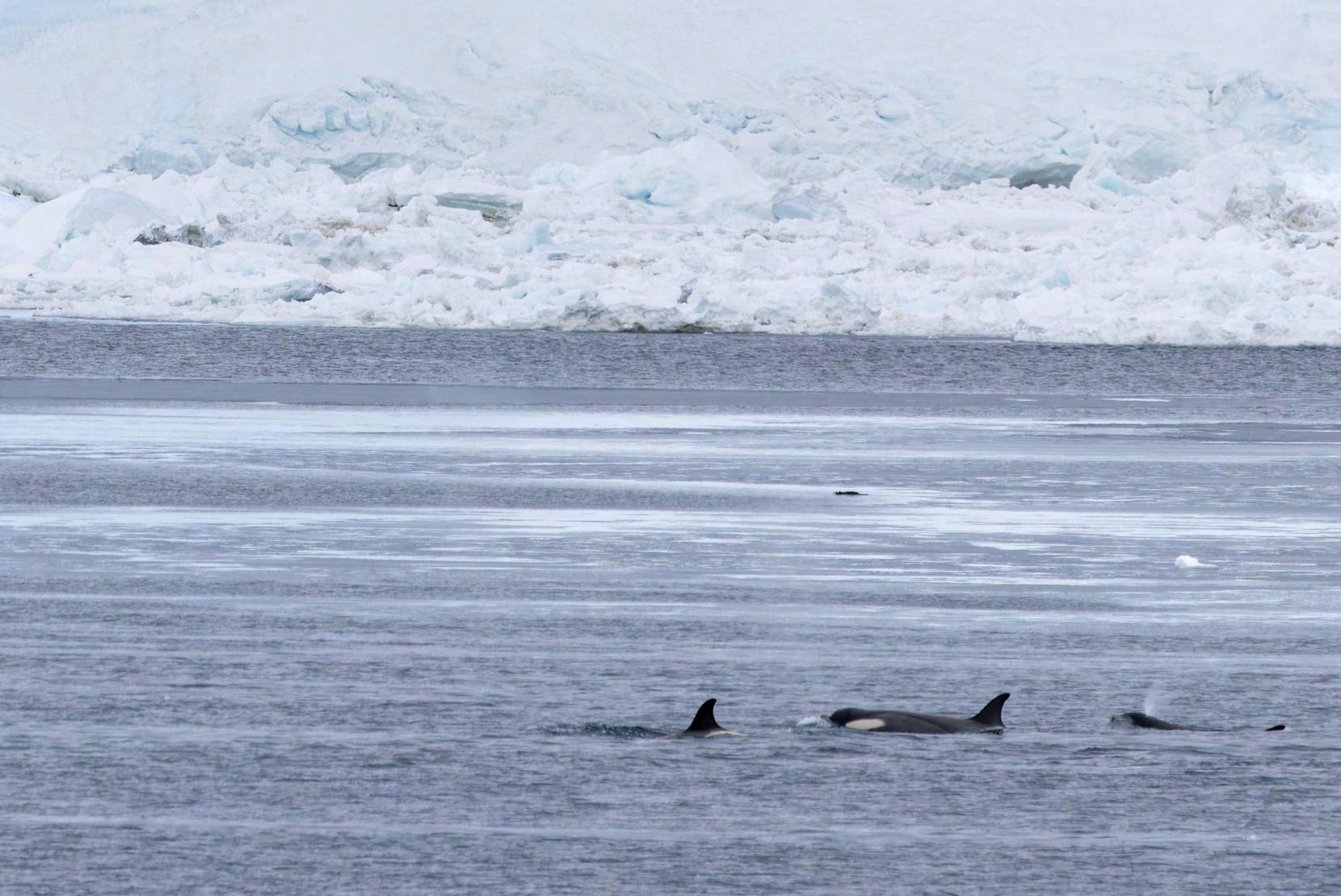
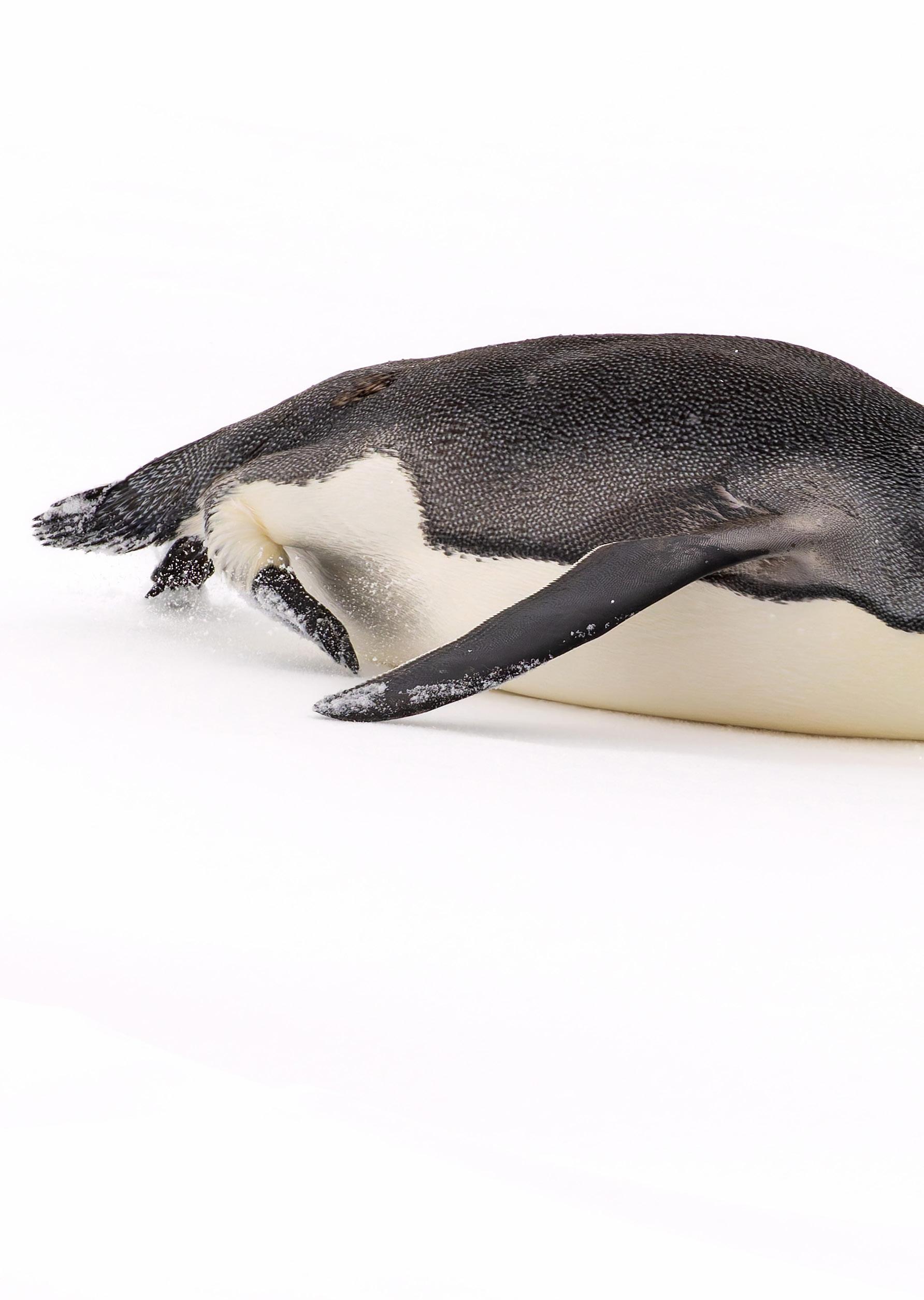
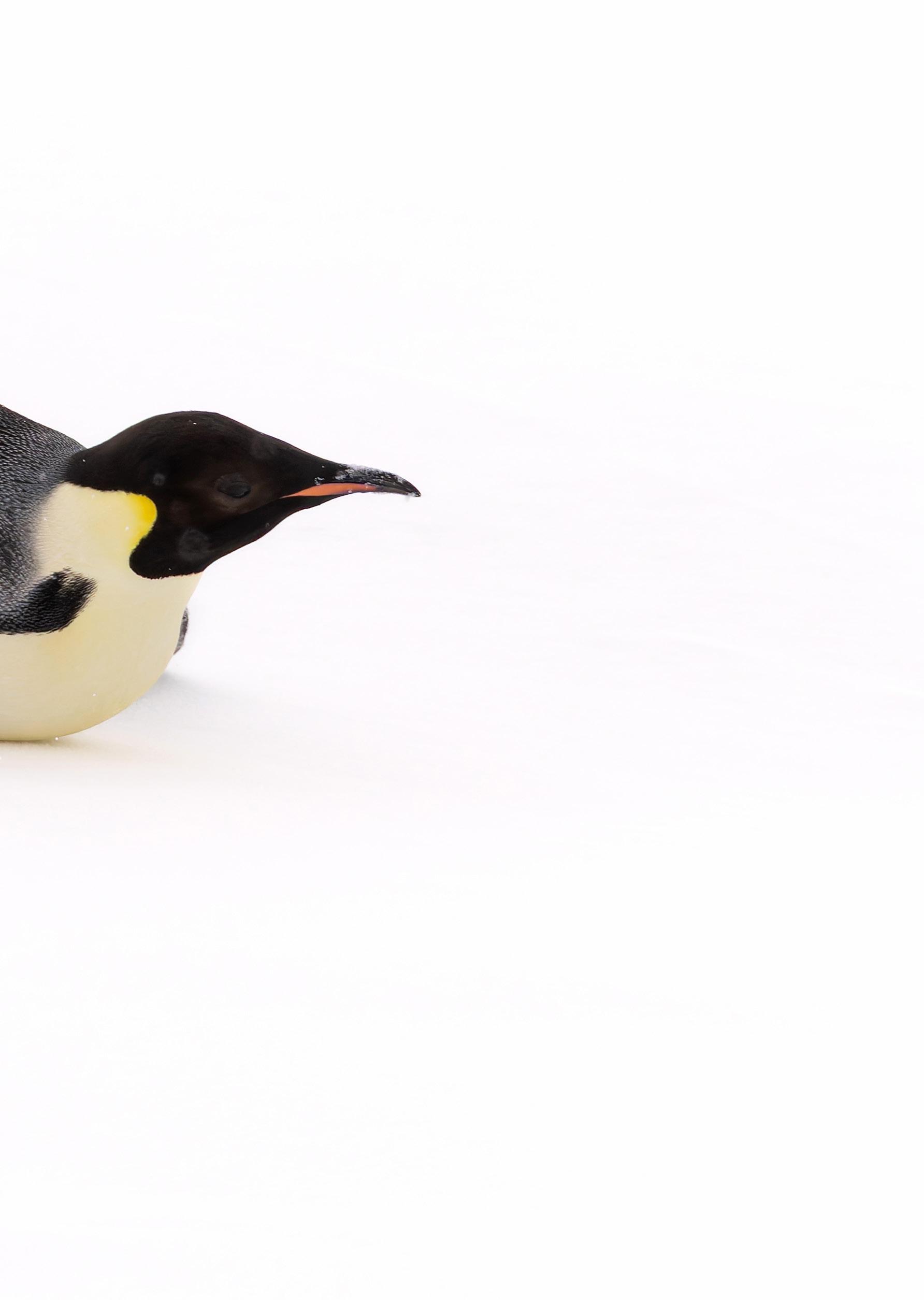
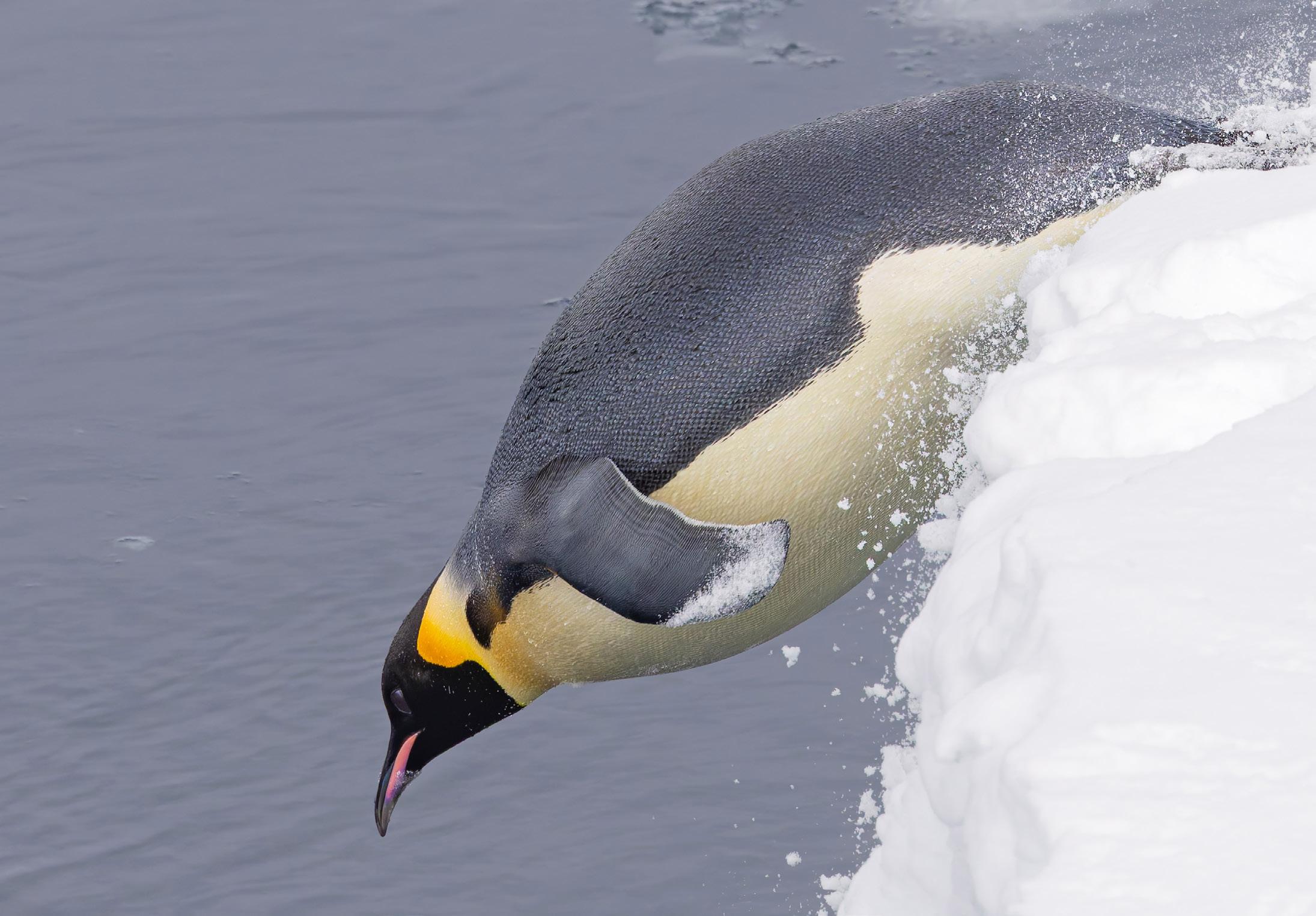
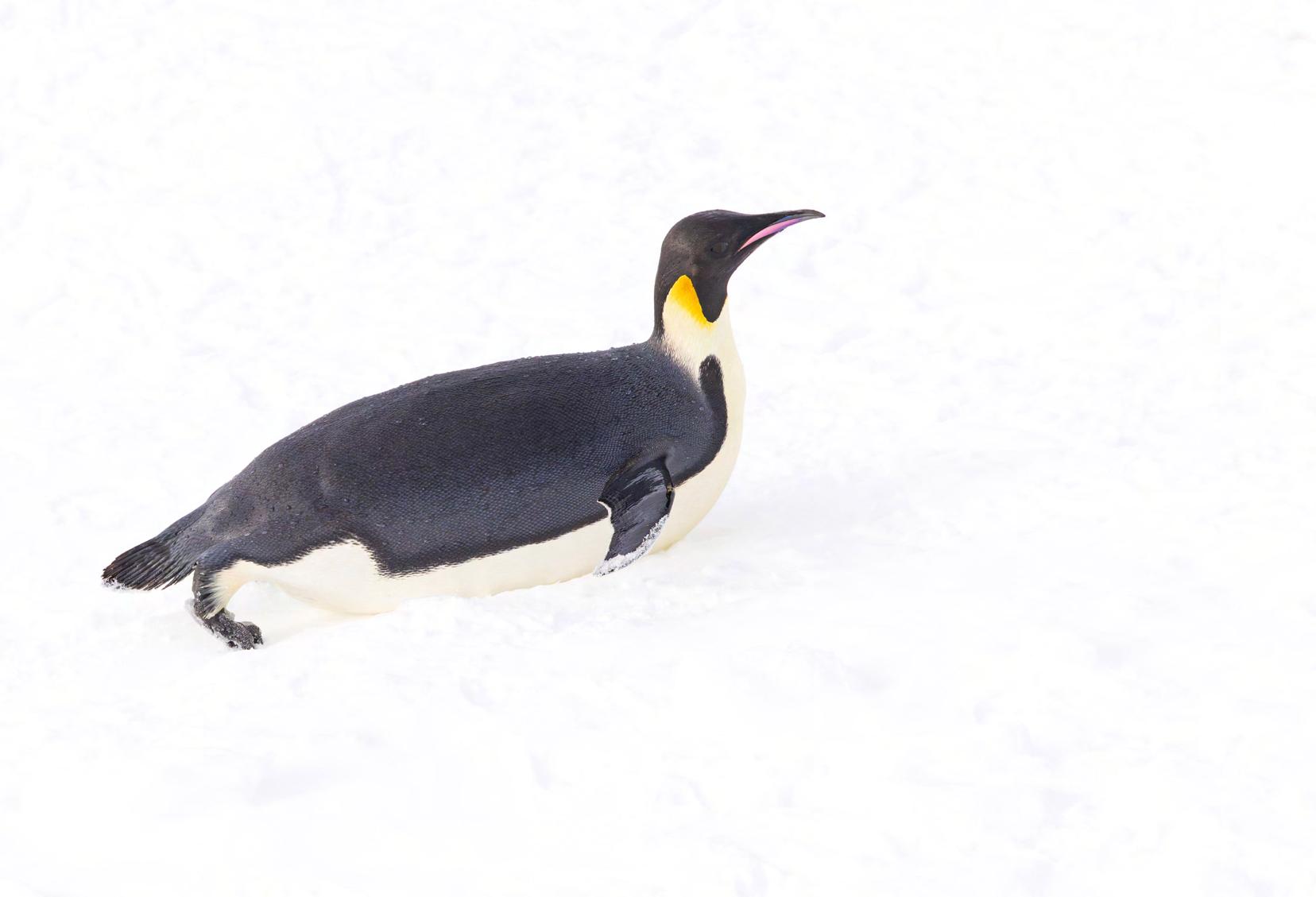
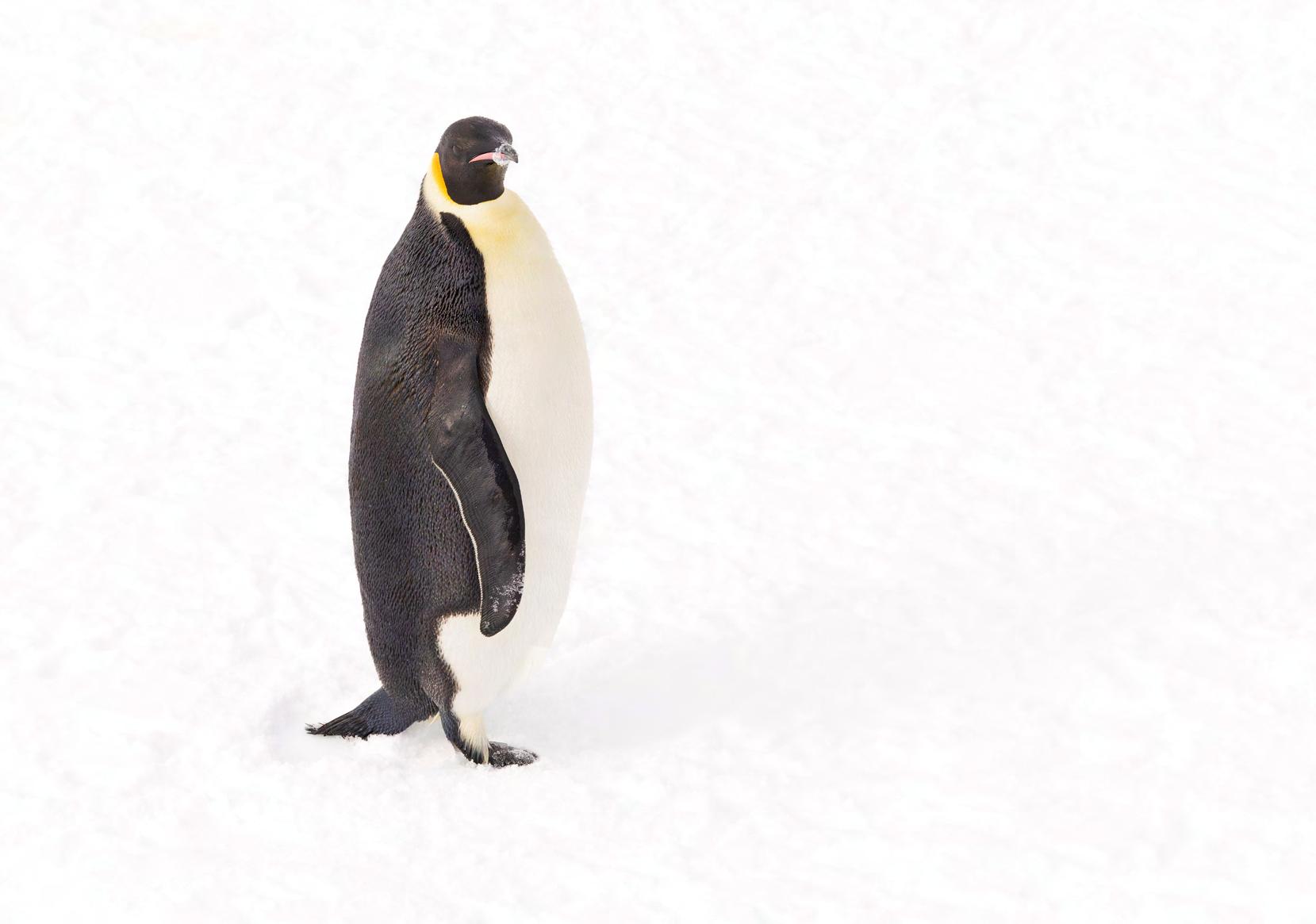
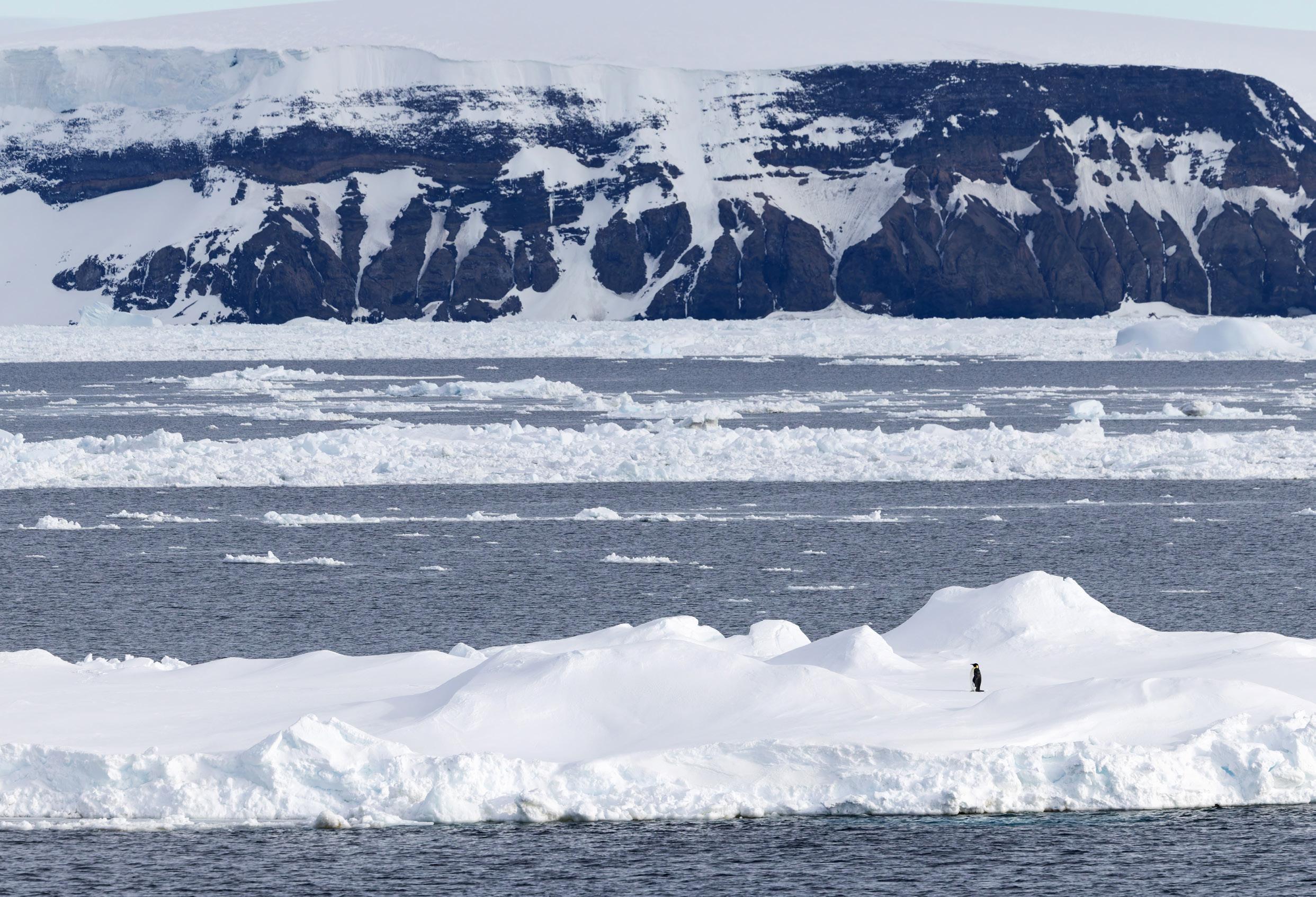
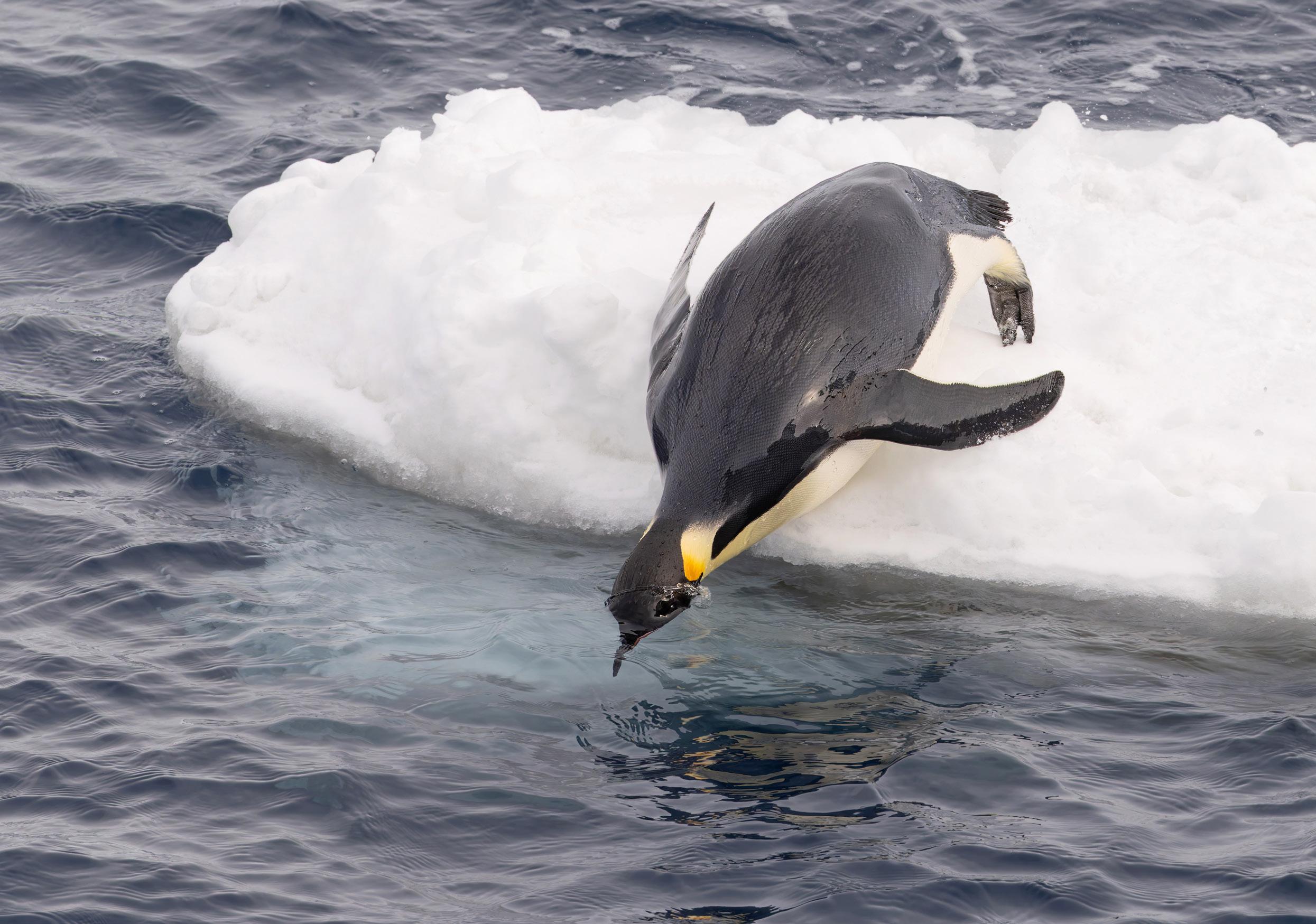
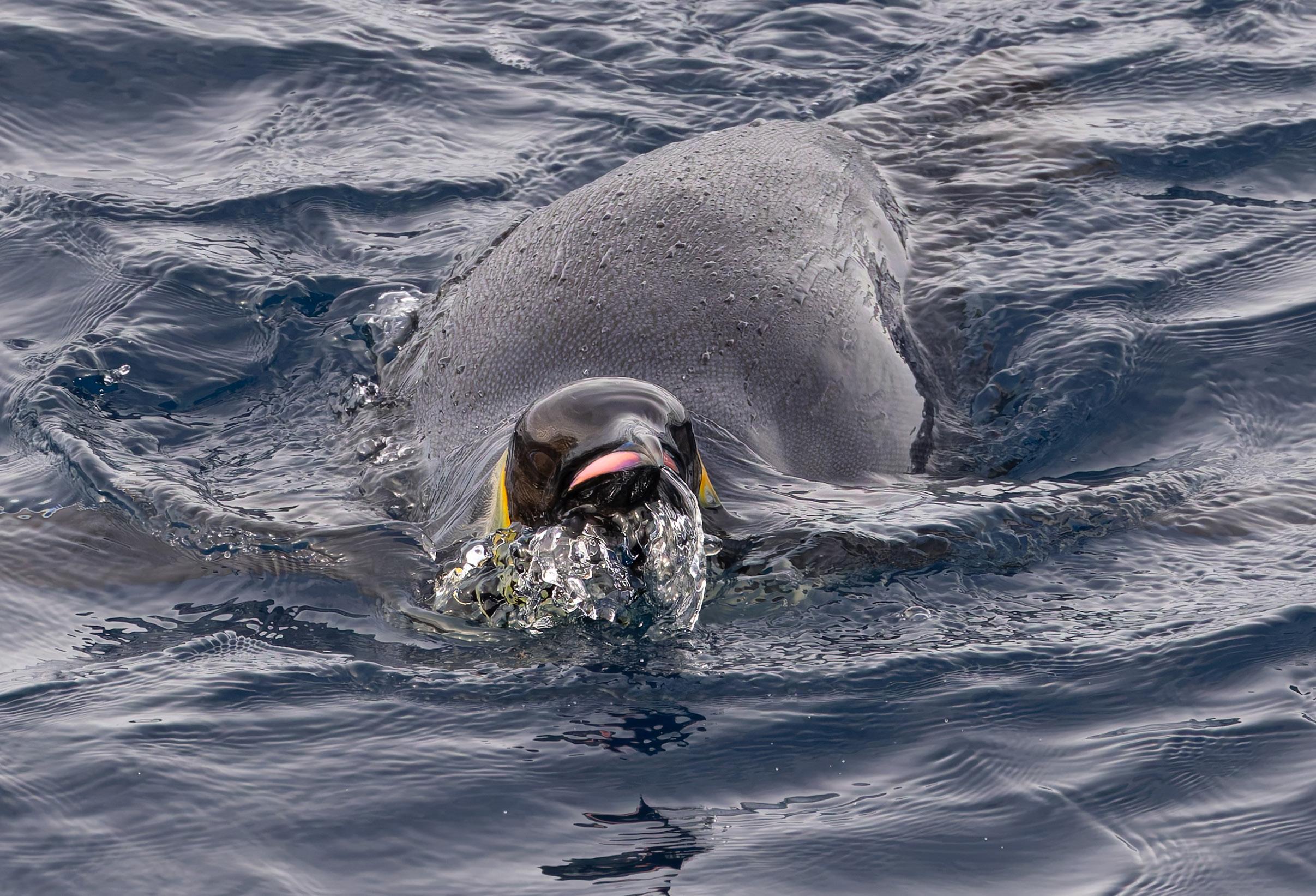
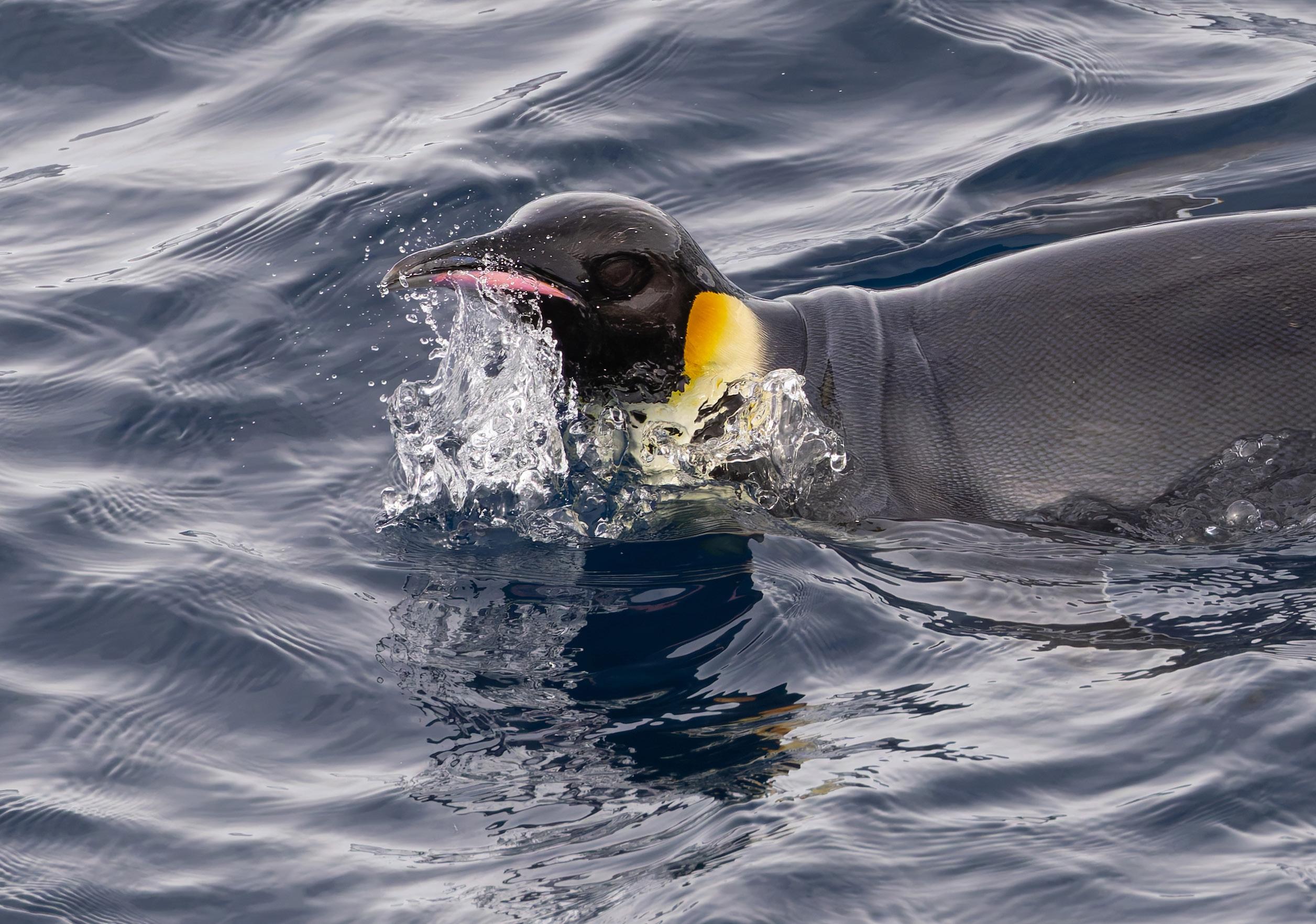
We were still in the same spot with the bow nudged into a large ice flow and we waited for news of the weather. There was some low cloud here, so we knew that things weren’t great for our immediate vicinity. Time ticked away as we watched Snow Petrels, Adelie and Gentoo Penguins as well as South Polar Skuas around the boat. Then BOOM! Emperor Penguin on the ice by the boat, spotted by AEL George Kennedy, thanks mate! Panic stations as folks made their way onto deck. It stood only a few metres off the bow, calling to some long-lost pal before it part waddled/part tobogganed to the water’s edge and gracefully slipped into the dark depths. It reappeared briefly but dived and was lost to sight. It must have swum far this time as we did not relocate it. I wonder if its disappearance had something to do with the pod of Orcas that was called soon afterwards? It would be able to hear them from a great distance! Everyone could now enjoy the Orcas too, as they cruised the large expanse of ice-free water behind us. They belonged to Type B – the Antarctic Peninsula form with a huge white oval mark on the side of the head. Shame we could not see their golden saddles though. The pod of around 10 included a calf or two and a couple of large males. Wow that was something, Antartica in a nutshell! But OMG! David was still in the shower unfortunately and the Emperor had gone by the time he got dressed. Lucky for him it resurfaced sometime later about 100m away and stood on the ice with some Adelies and giant petrels. Phew! A Crabeater Seal appeared near the boat today, one of very few live ones spotted. There were some carcasses, thought to be avian flu victims. The nasty AI is at work in Antarctica but fortunately this was the only suggestion we saw on this trip.
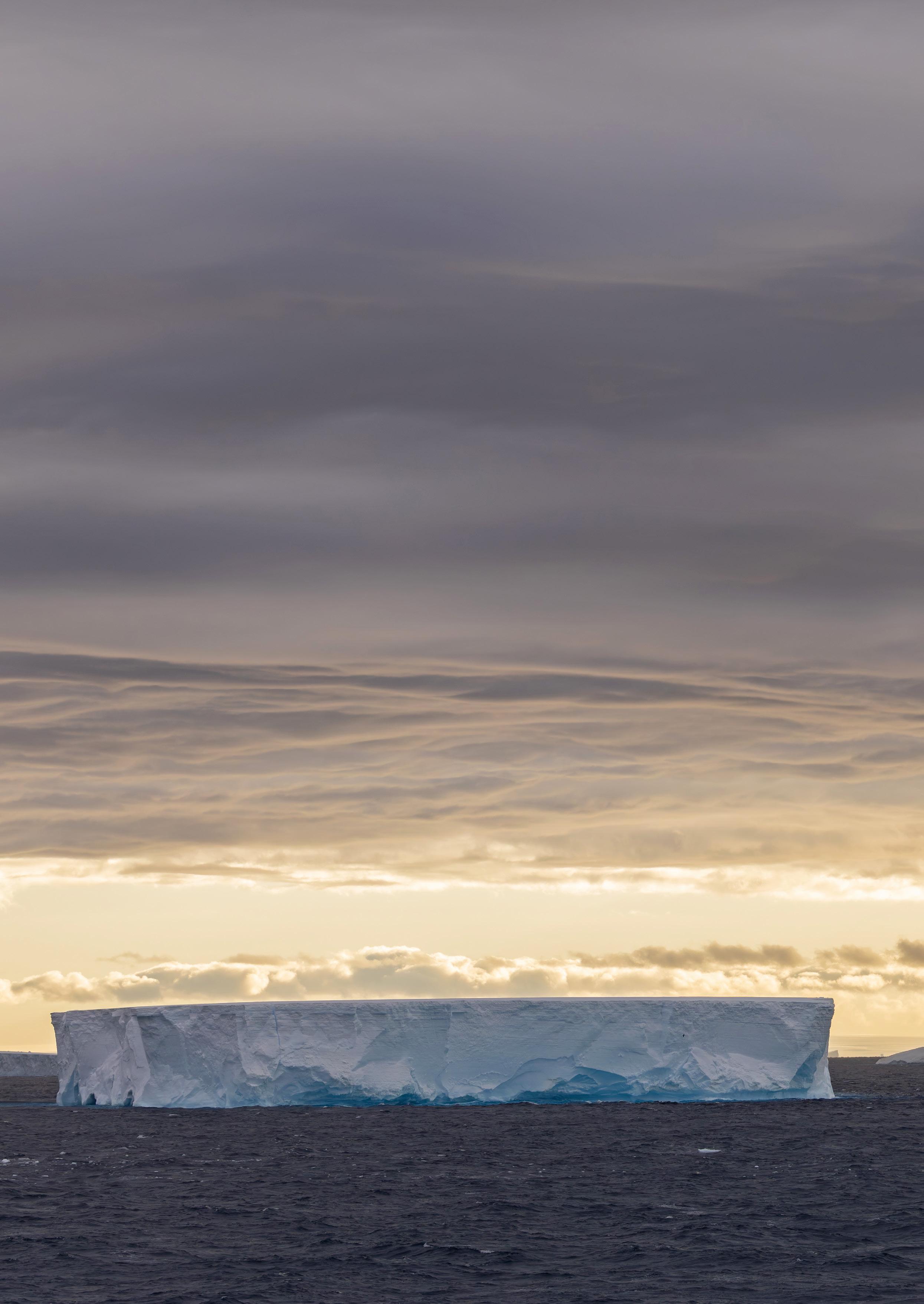
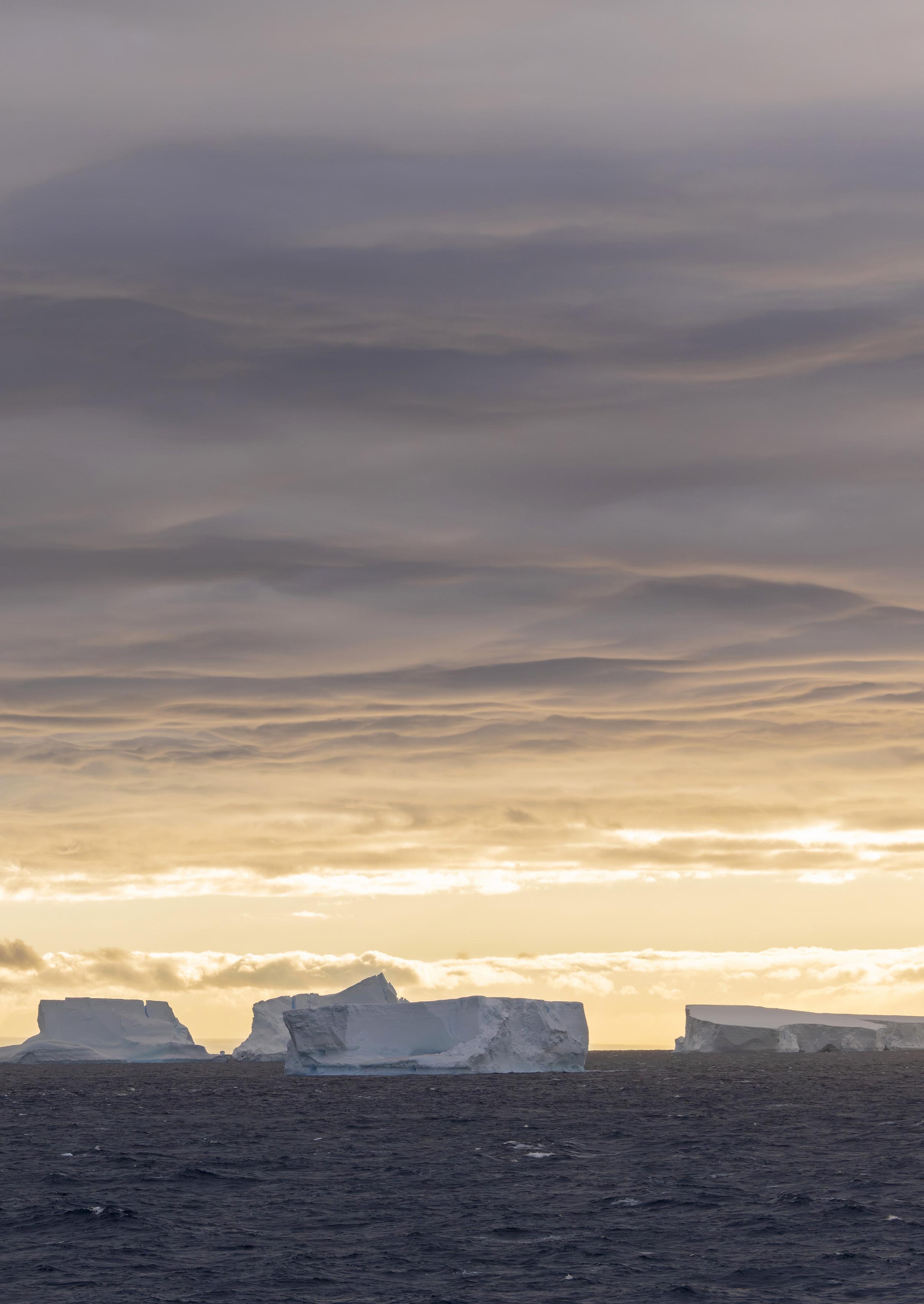
Emperor Penguin, Fridtjof Sound. Previous page: tabular icebergs Antarctic Sound. Next pages: Adelie Penguins (Mike Watson)
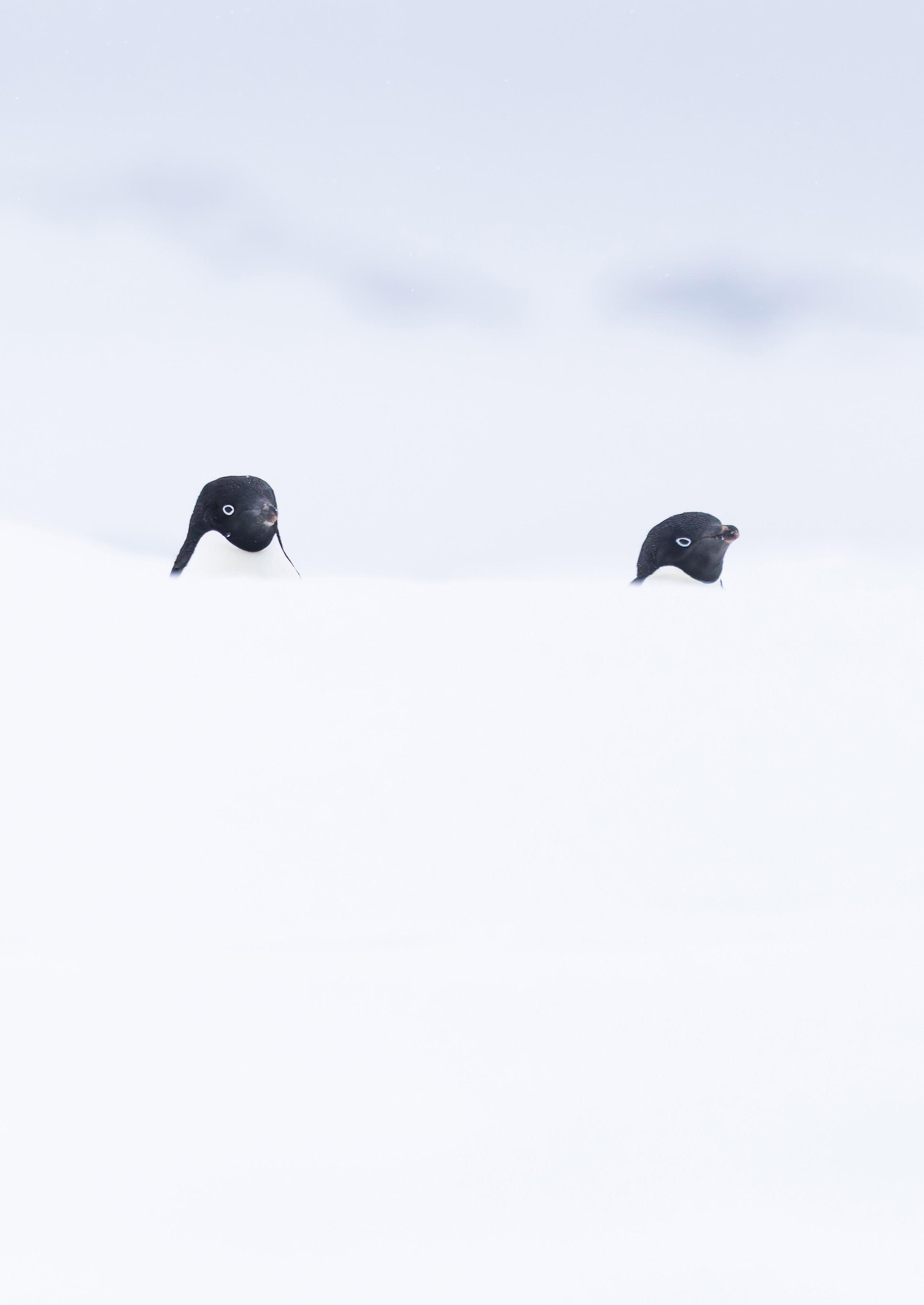
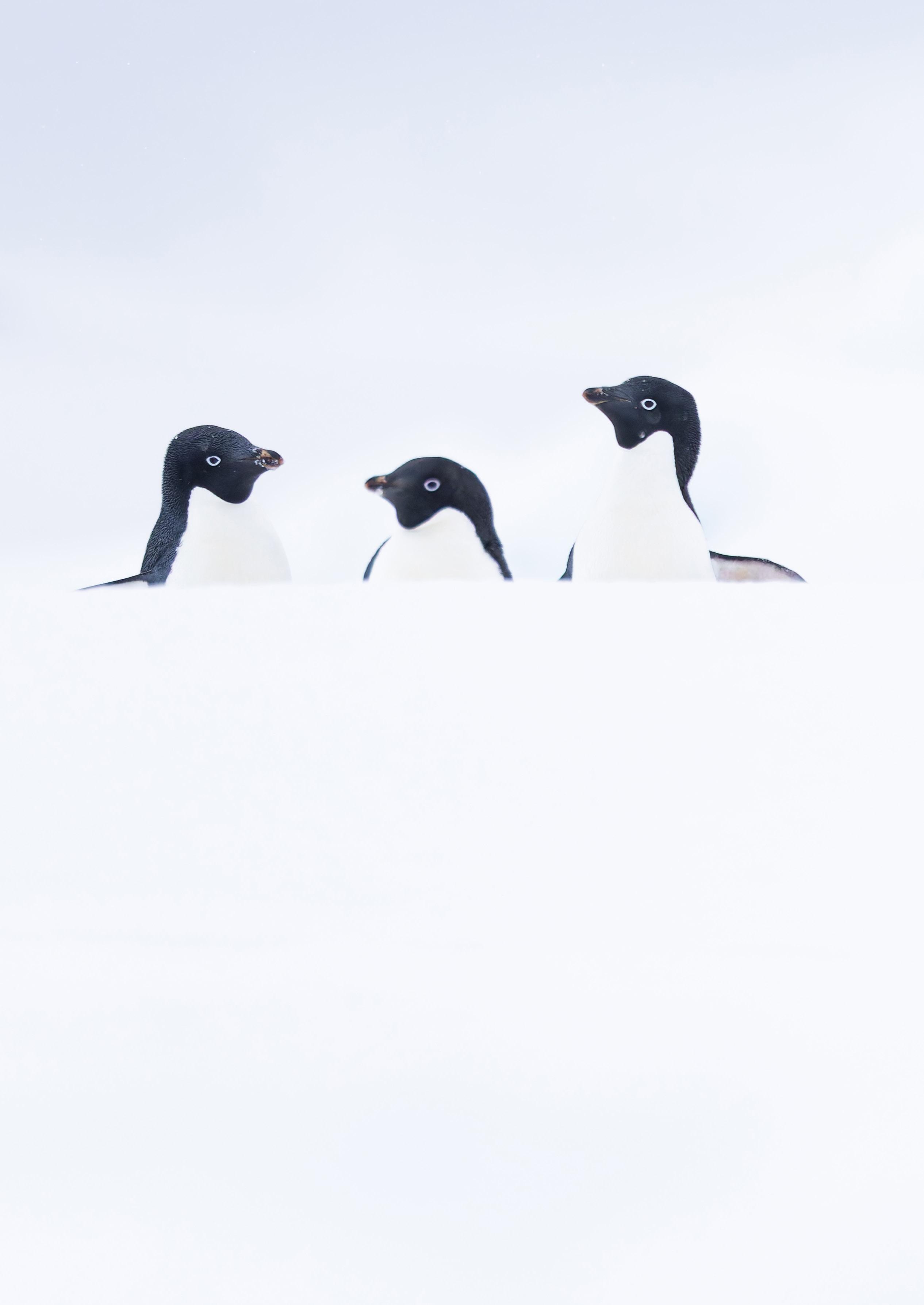
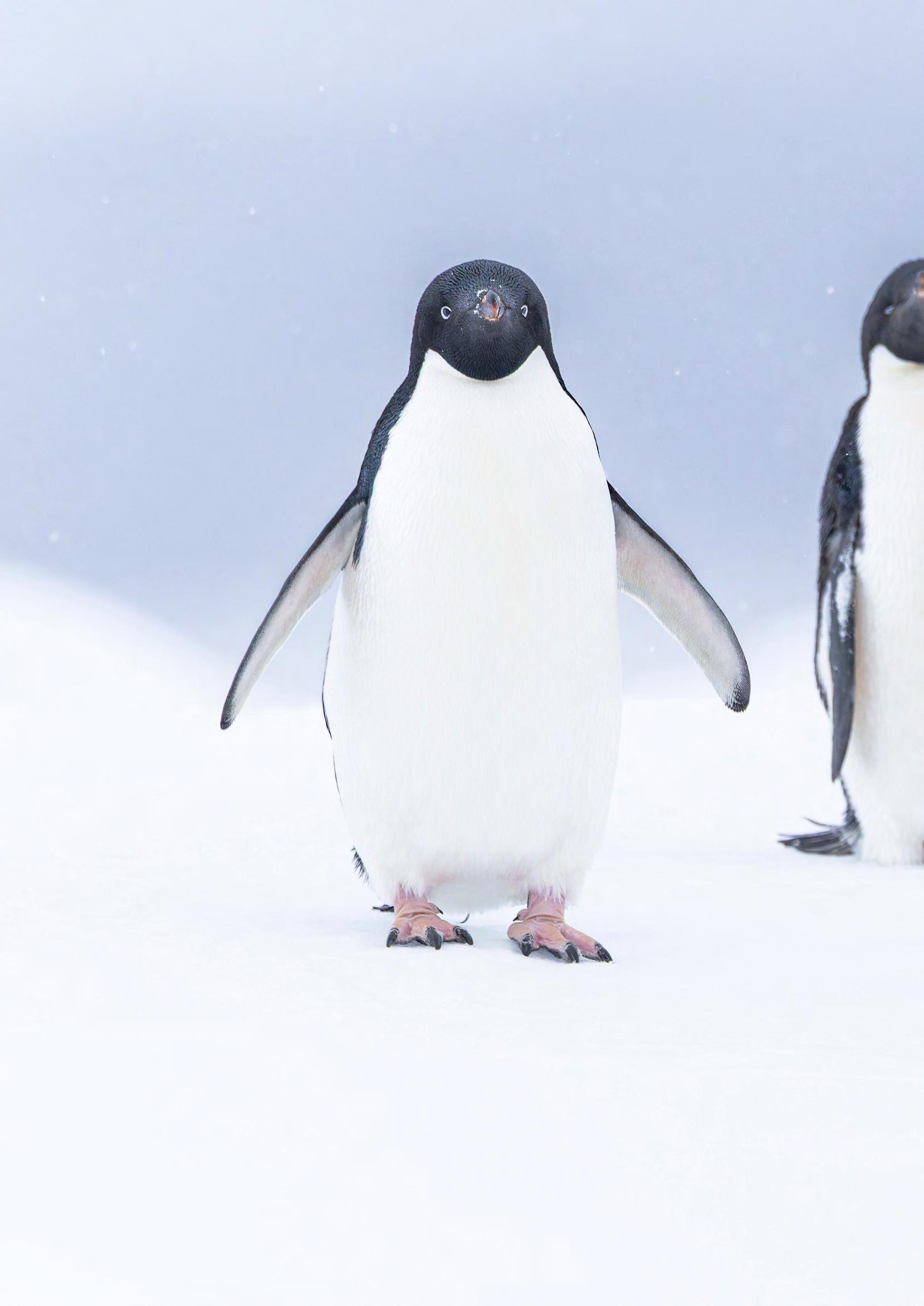
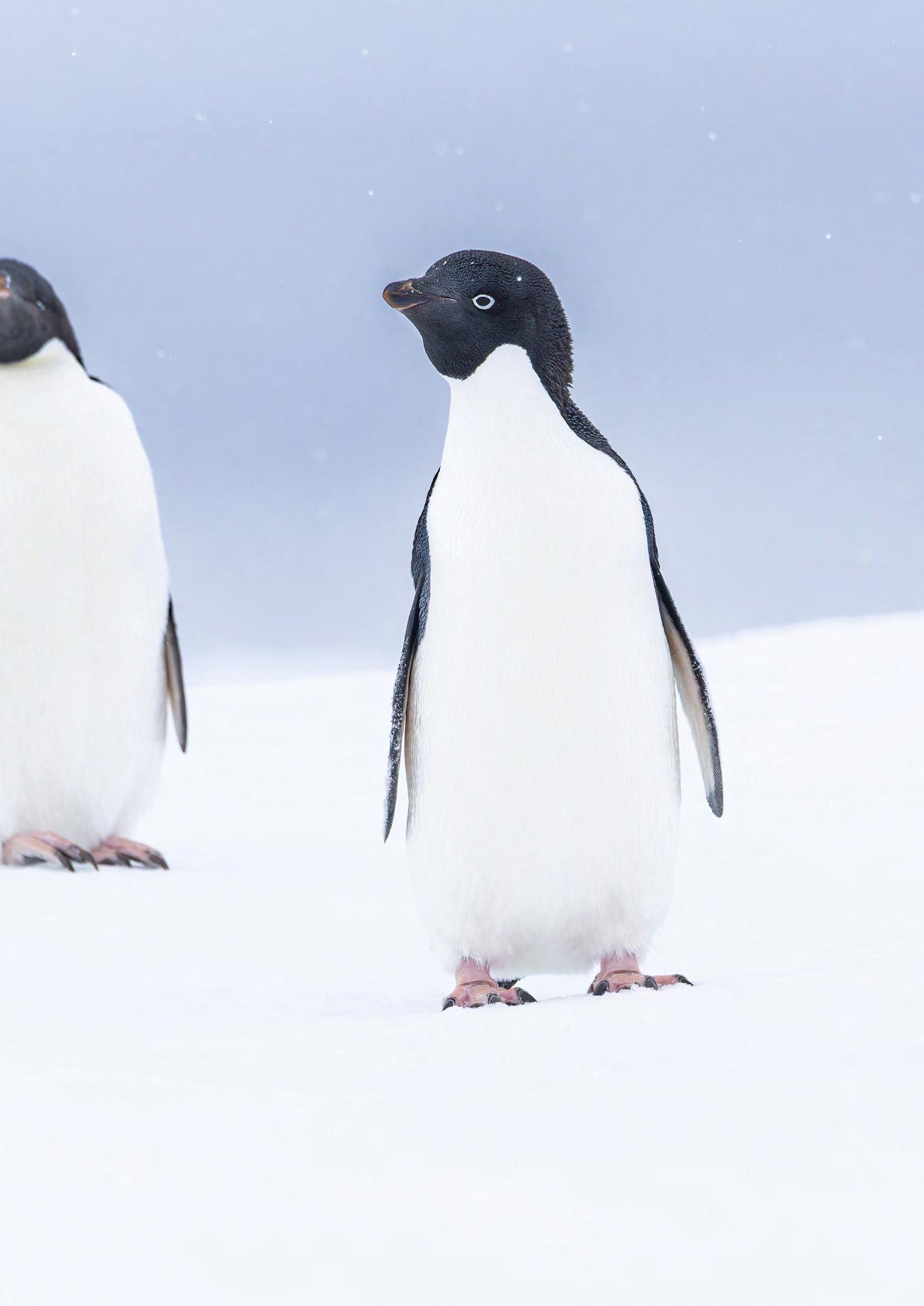
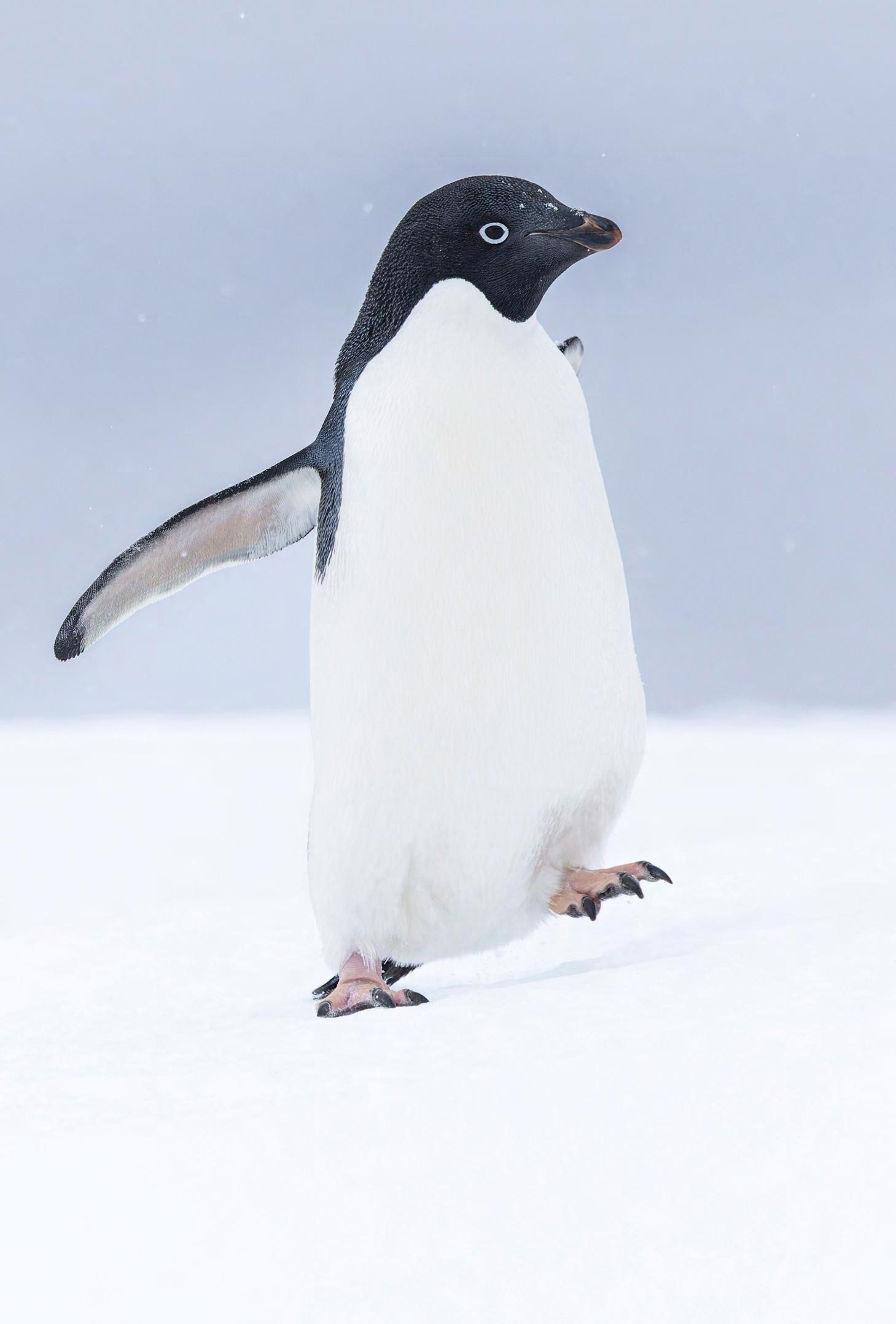
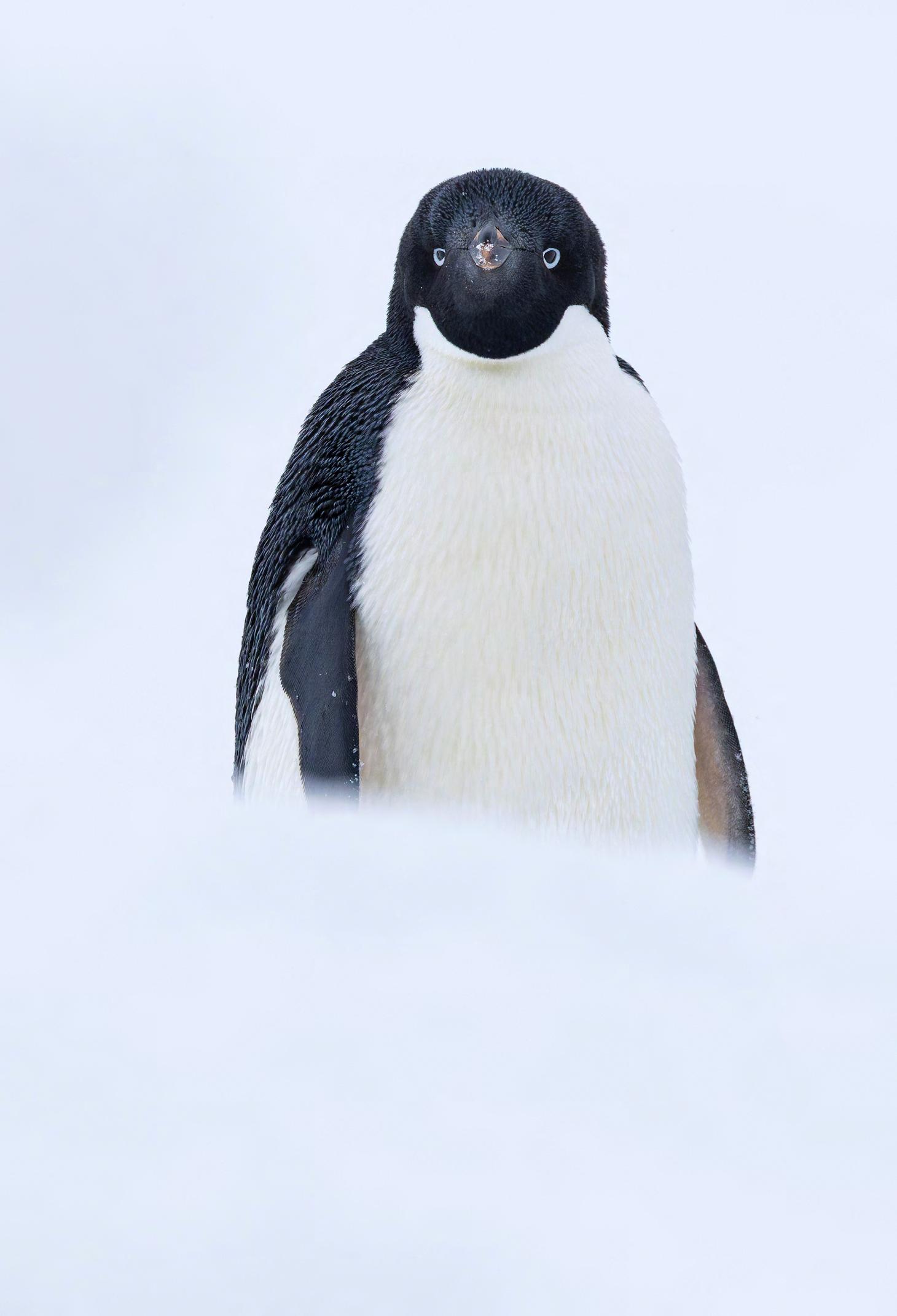
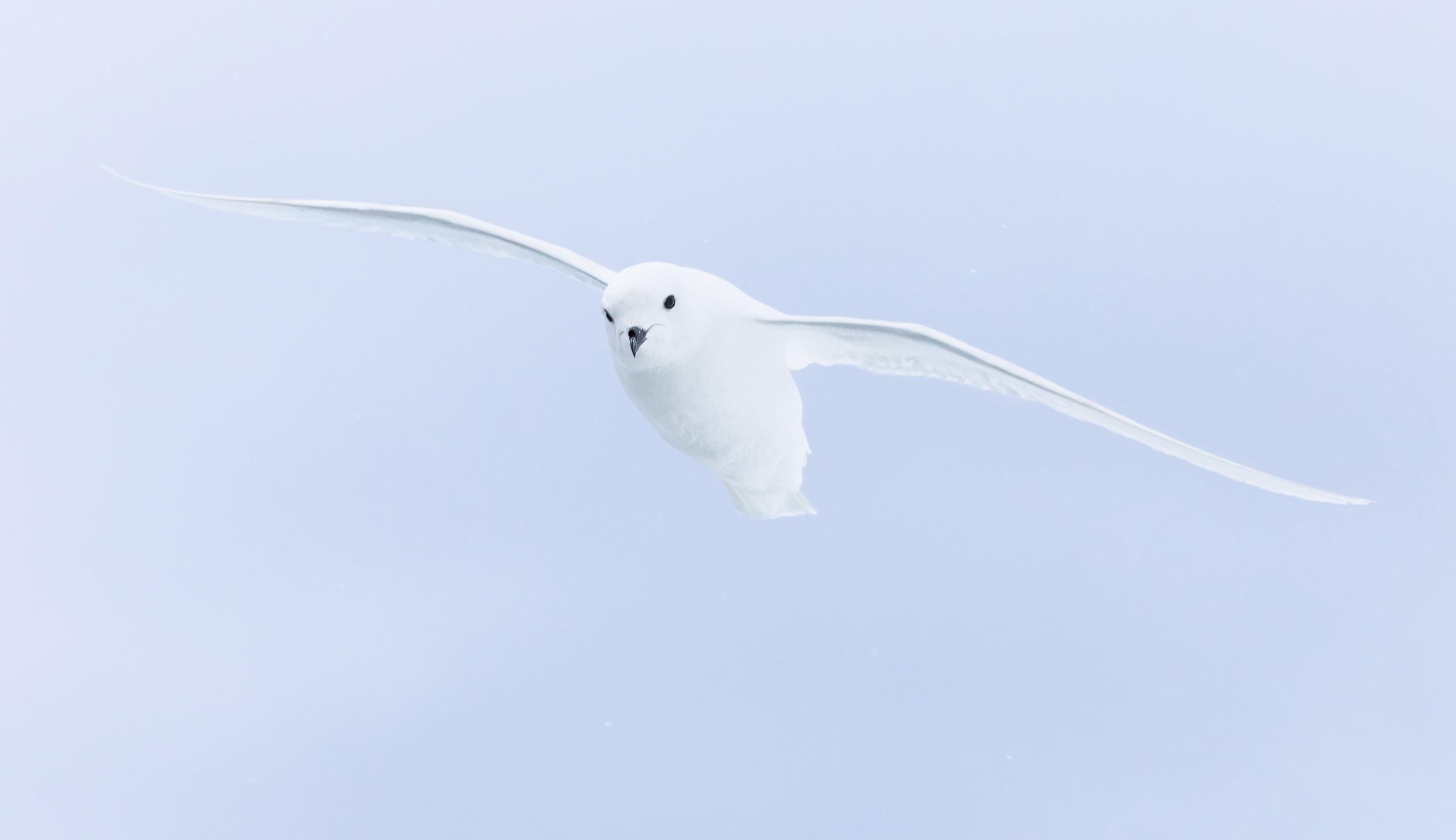
Not long afterwards we were called to briefing no. #1,000,001 with the news that the weather at Snow Hill today was so bad that we could not fly anyone and therefore, according to our all or nothing rule, that meant our chance of making it to Snow Hill had gone. This was a crushing disappointment but not a surprise. Added to this news, there was apparently some ice moving behind us in the sound, a site of complex currents and we had to get out of there. Not a moment too soon as the doors slammed shut behind us in the form of a large iceberg that we bumped into on the way out. It was a slow-motion collision but enough to dent the gunnel on the bow, compressed glacial ice is as strong as the steel it collided with. Happily, our cheery expedition team quickly put these disappointments behind us with the best zodiac ride of the cruise, a foray along the ice edge with gorgeous Adelie Penguins at eye level against a lovely soft background of ice and a mauve sky. No effects needed, the images perfect straight off the card! Thanks to our awesome zodiac driver Saskia for some great positioning. Cashing in our gains, what a grand day today had been!
BROWN BLUFF – CONTINENTAL ANTARCTICA LANDING
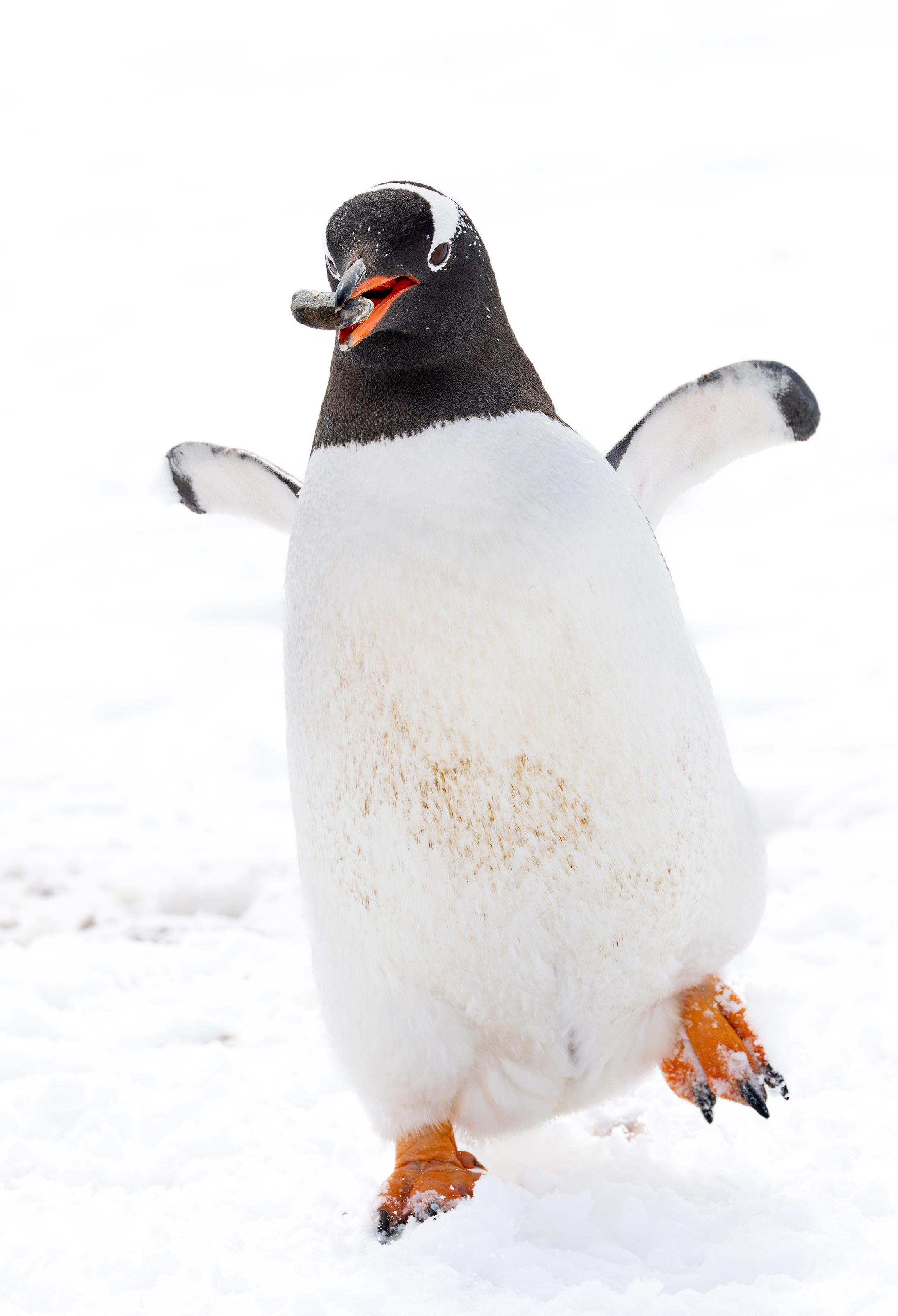
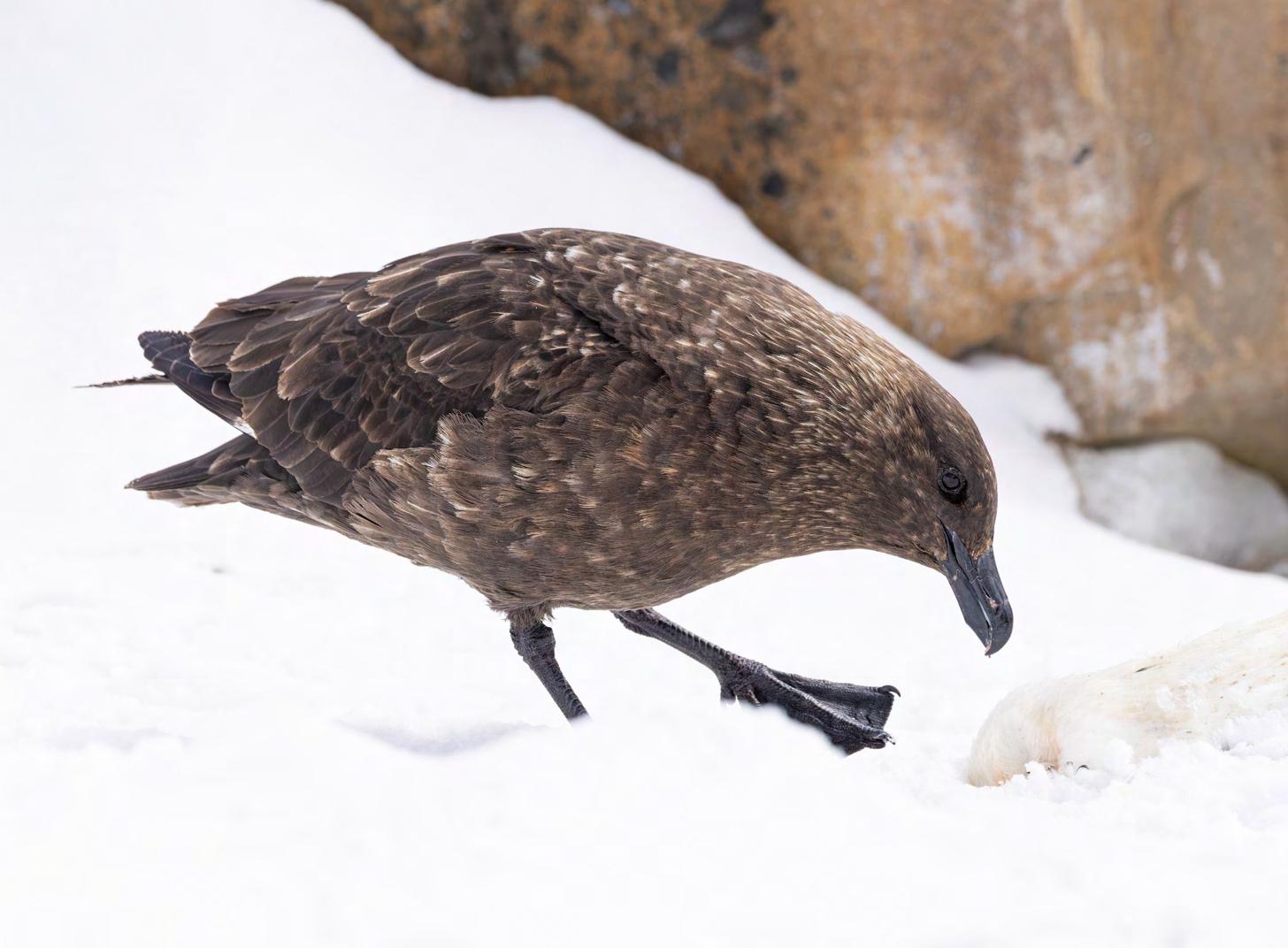
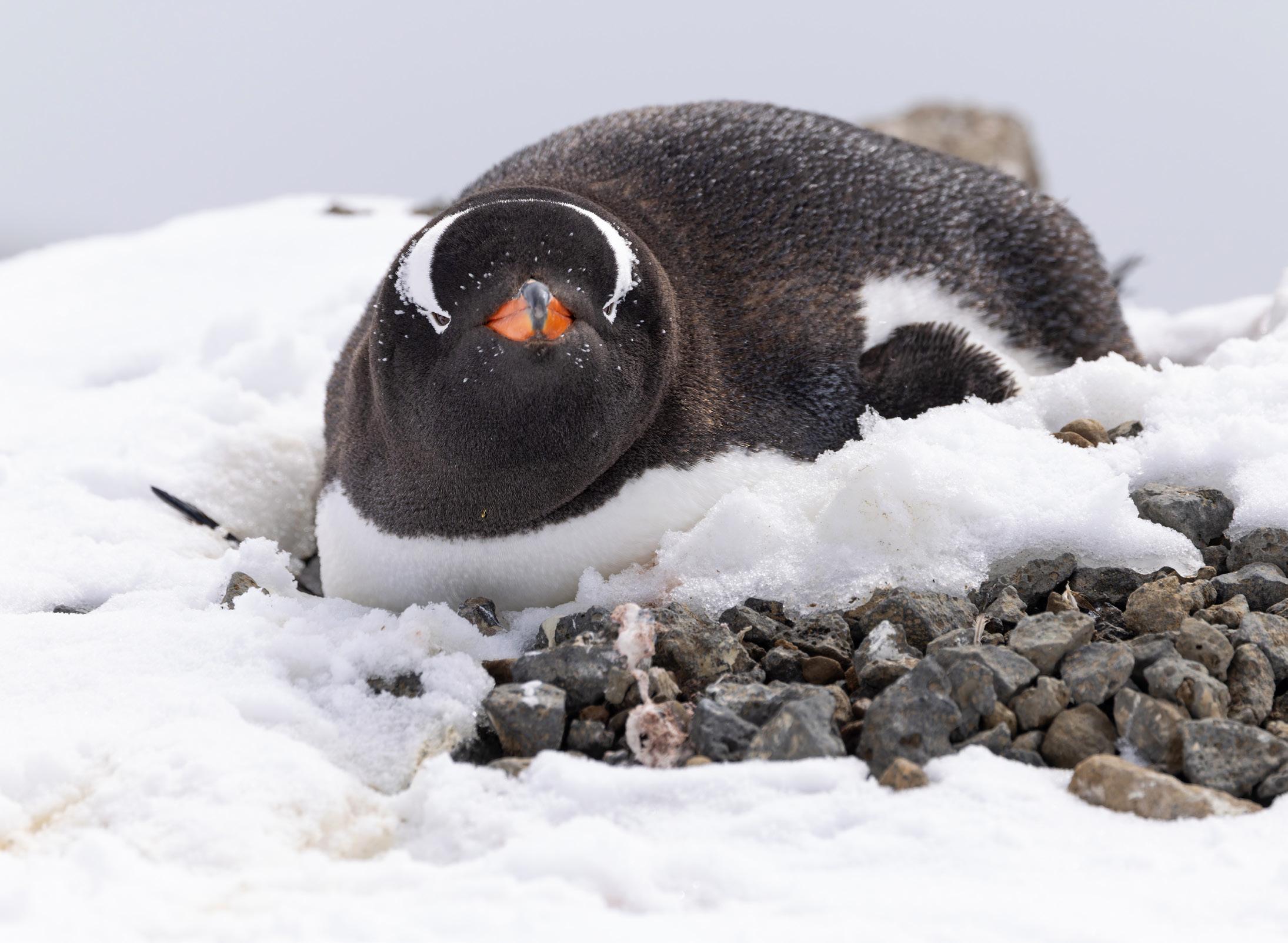
Another terrific day followed. A landing at Brown Bluff, a famous Adelie Penguin colony is never guaranteed. I had someone on my 2018 cruise who missed it twice. Barring Emperors it is probably the best penguin landing. Adelies are very endearing and usually everyone’s favourite penguin and the colony itself is very nicely situated. A wet zodiac landing took us to the beach below the snow- and ice-covered slopes below the impressive cliffs, where Snow Petrels wheeled above, entering crevices here and there. There had been a lot of snowfall in the last couple of weeks, and it was obviously a challenge for the penguins to keep their eggs warm. There were some Snowy Sheathbills and Kelp Gulls around the colony as well as both skuas, a Brown Skua tucked into the corpse of a dead penguin. Lately Gentoo Penguins have joined the Adelies and it was fun to watch their stone stealing antics. One habitual criminal was stealing stones for more than one nest! We wondered if he had more than one partner? Wilson’s Storm Pet-
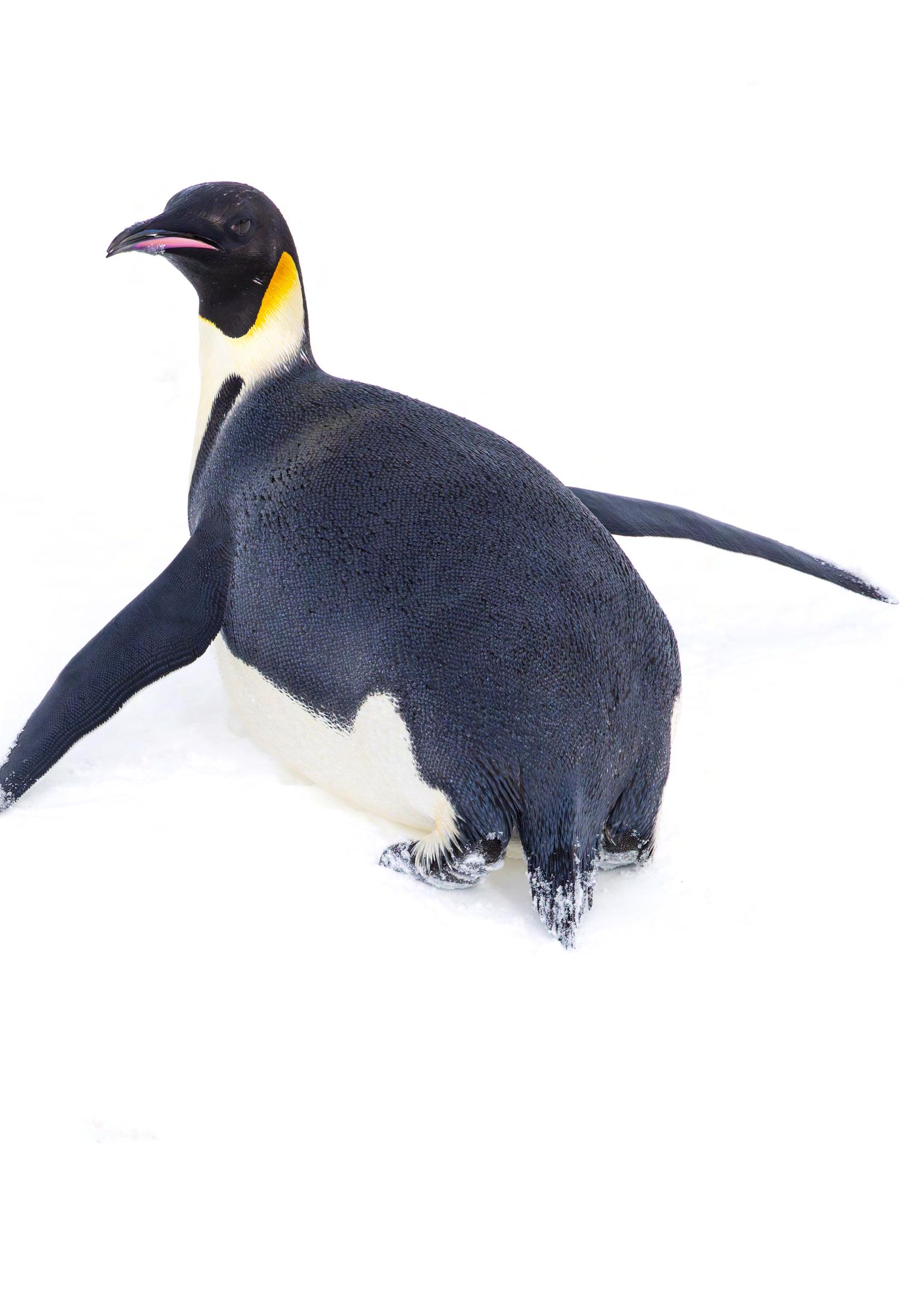
rels and Snow Petrels were everywhere again today, it was apparently a very good year for the latter. What a very enjoyable landing this one was, another bucket list ambition fulfilled! This afternoon saw us doing some non-birding activities. Scenic helicopter rides started and the saloon transformed into a departure lounge, minus duty free and soon most people were whizzing off to take a closer look at icebergs etc. The galley crew were also busy setting up the evening’s barbecue, a lovely tradition of these cruises! A quiet afternoon then? No. BOOM! Emperor Penguin off the port side. This one was even better than the previous day’s. Joking that it has been kidnapped on the Snow Hill recce, but it must have spotted us from afar and made its way to check us out. They are inquisitive like that. This one was also braying and jumping on and off small ice floes, with some great angles and close range images possible from through the scuppers on the fore deck! Another genuine WOW moment. Interesting to note that it was during my heli-ride slot that was taking place when it turned up, funny that! There was
a ready-made celebration in the form of the barbecue on the deck behind the bridge this evening. It will be hard to forget Tom Jones blasting ‘Sex bomb, sex bomb, you’re my sex bomb’ through the big speakers, with the Emperor Penguin in the distance. Truly surreal.
RETURN TO THE DRAKE
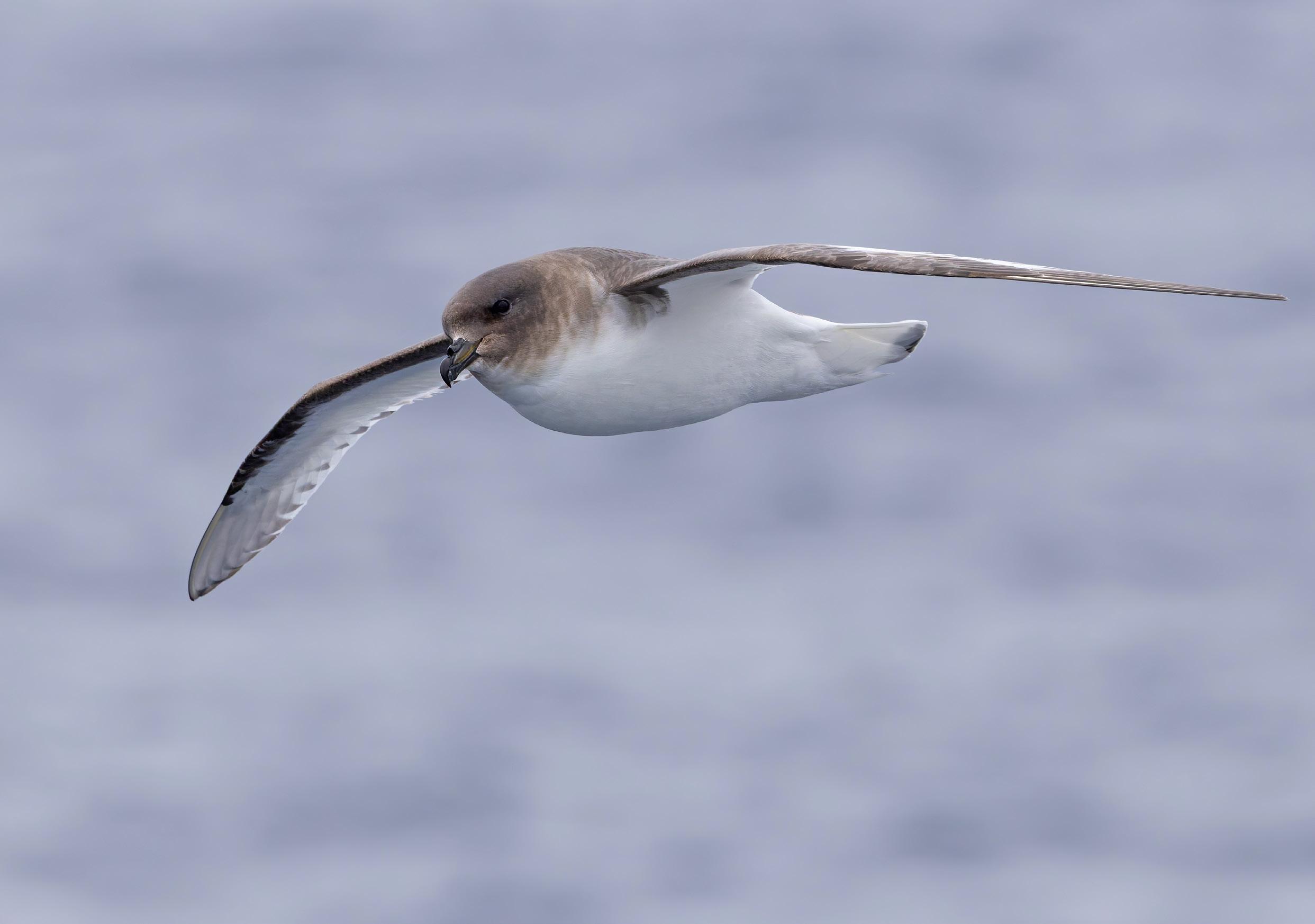
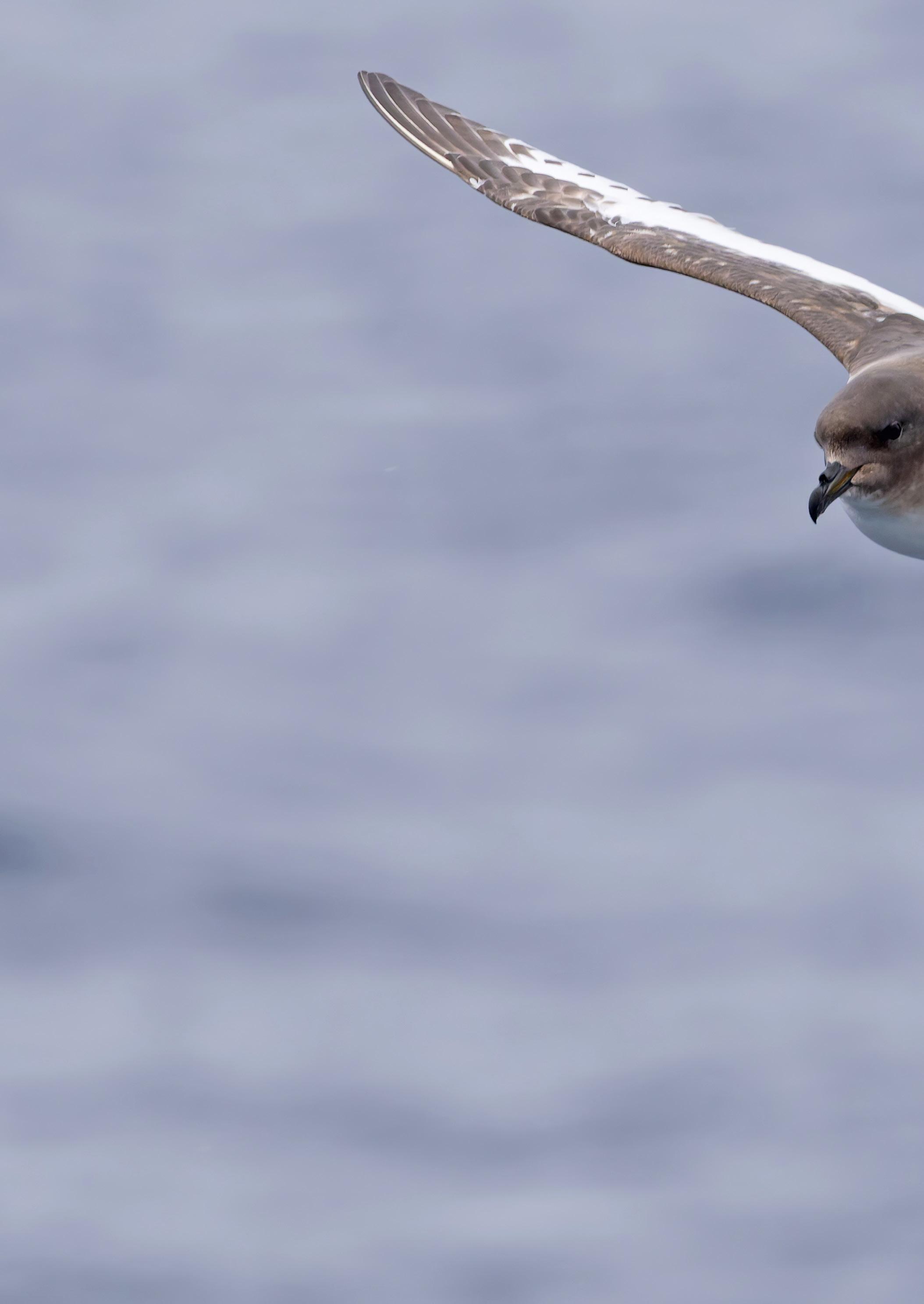
The large non-birding contingent aboard meant that the afternoon of the following day was spent doing scenic heli rides in the lee of Trinity Island, instead of zodiac cruising and with that went our last chance for Leopard Seal (it takes 6.5 hours to do all the scenic heli-rides!). Next time! Crossing the Bransfield Strait in the evening we spotted several whales, at least 9 Humpbacks and a probable Antarctic Minke. A Fin Whale was also spotted. We said goodbye to the last Adelie Penguins as a couple of good views of dark South Polar Skuas entertained us. As usual several skuas were left unidentified, they hybridise on the peninsula. The following morning was another BOOM! moment. A peak out of the window at 0500 and there was another Antarctic Petrel fol-
lowing the boat, well sometimes overtaking it. It was accompanied by a gang of Pintado Petrels, Antarctic Prions and Southern Fulmars and before long there were two of them! Sometimes even appearing to touch wing tips. They stayed with us all day, for almost 12 hours until all the birds following the boat disappeared at 1650, at the convergence. The beauty of this being they were around in some nicer light later in the afternoon. There were some albatrosses again too: Southern Royal; Grey-headed; Black-browed and Light-mantled. Another dark morph South Polar Skua appeared briefly, and White-chinned Petrel was also noted. However, it was not all plain sailing today, into a 4m NW swell that had us pitching and rolling for hours and doubled in size when wave crests combined. It was folly to attempt to give someone some photos or read small print below decks, and I missed most of the afternoon. Alain stuck it out for the whole way, seeing a Magellanic Diving Petrel before dark.
HOMEWARD BOUND TO THE BEAGLE
Hooray! The swell had subsided to 1-2M so an all-day effort was possible but that said, the number of seabirds was disappointing compared to recollections of my last voyage here. Southern Royal Albatross outnumbered Snowy 14 to one for instance! There were 80% fewer Light-mantled Albatrosses too. Probably something to do with the sea conditions being so calm, it is an effort to travel in light winds for the big birds. Blue Petrels were prominent again north of the convergence and a Slender-billed Prion was noted again. Things got more interesting nearing the Beagle Channel and as we grilled every bird at least 10 Western Rockhopper Penguins were spotted among the many Magellanics, Wojciech picking out the first one. Then Sooty Shearwaters, Chilean Skuas, Rock Shags, Imperial Shags and South American Terns started to appear again. A pair of Peale’s Dolphins at the entrance to the Beagle Channel were the final additions to
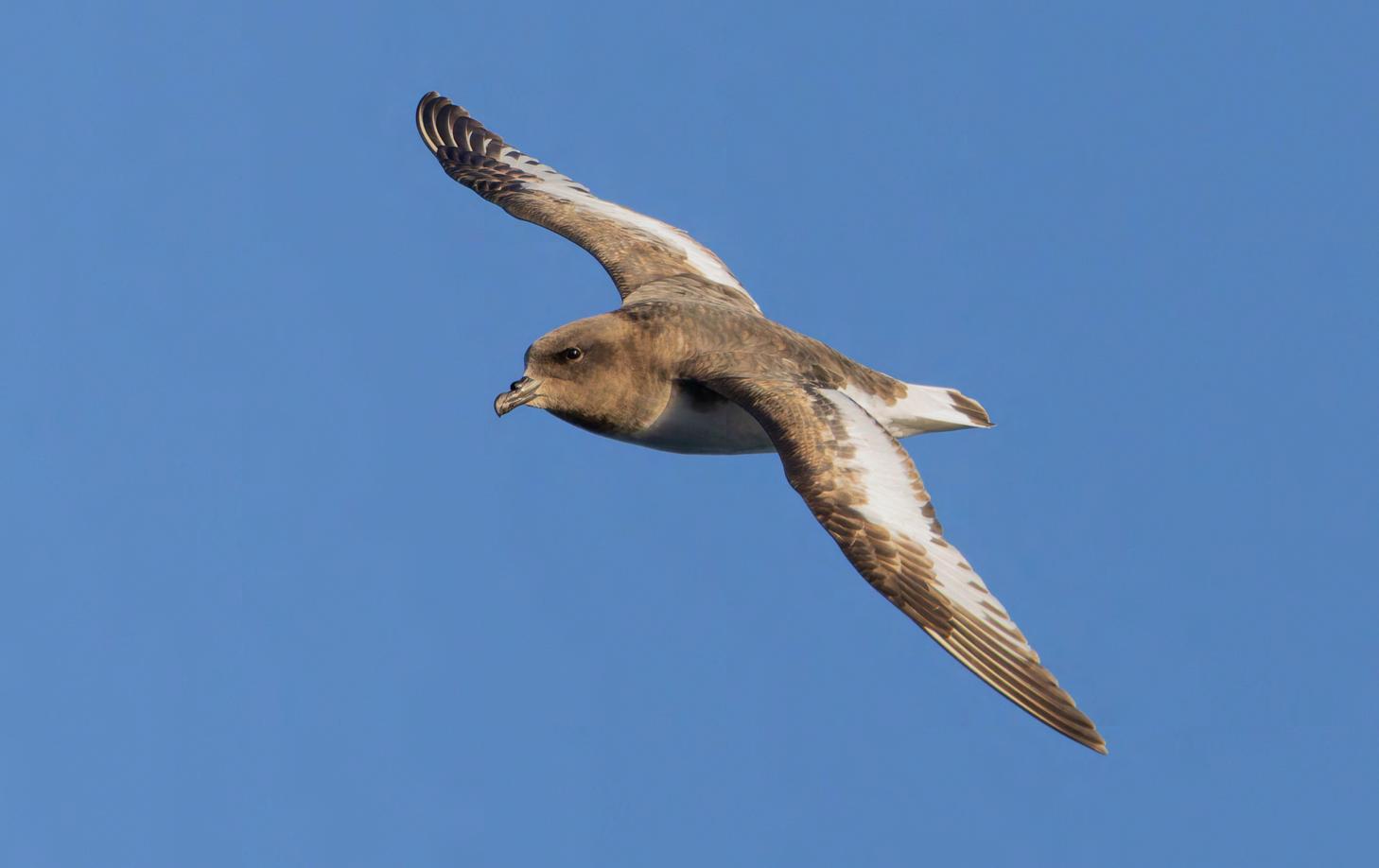
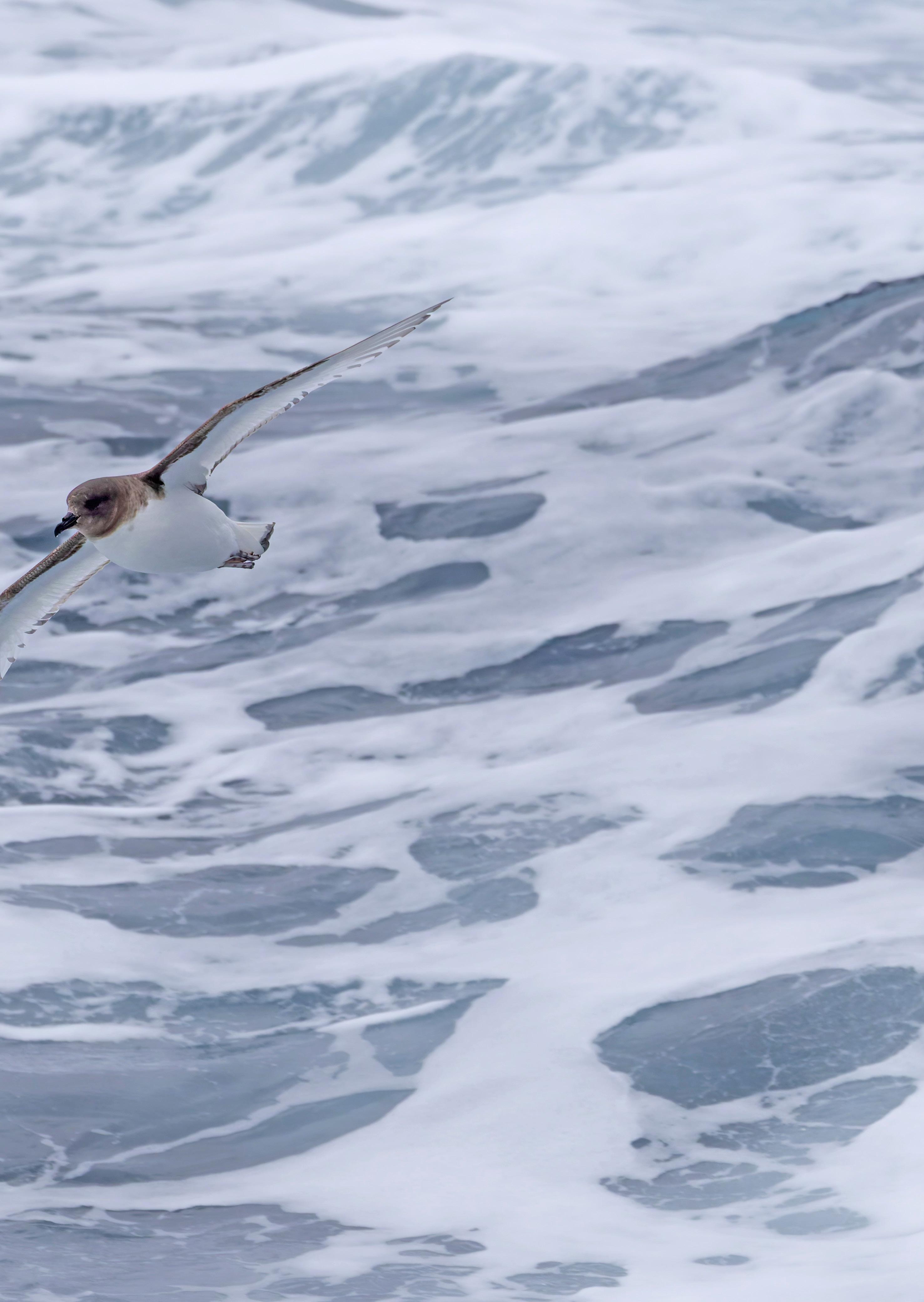
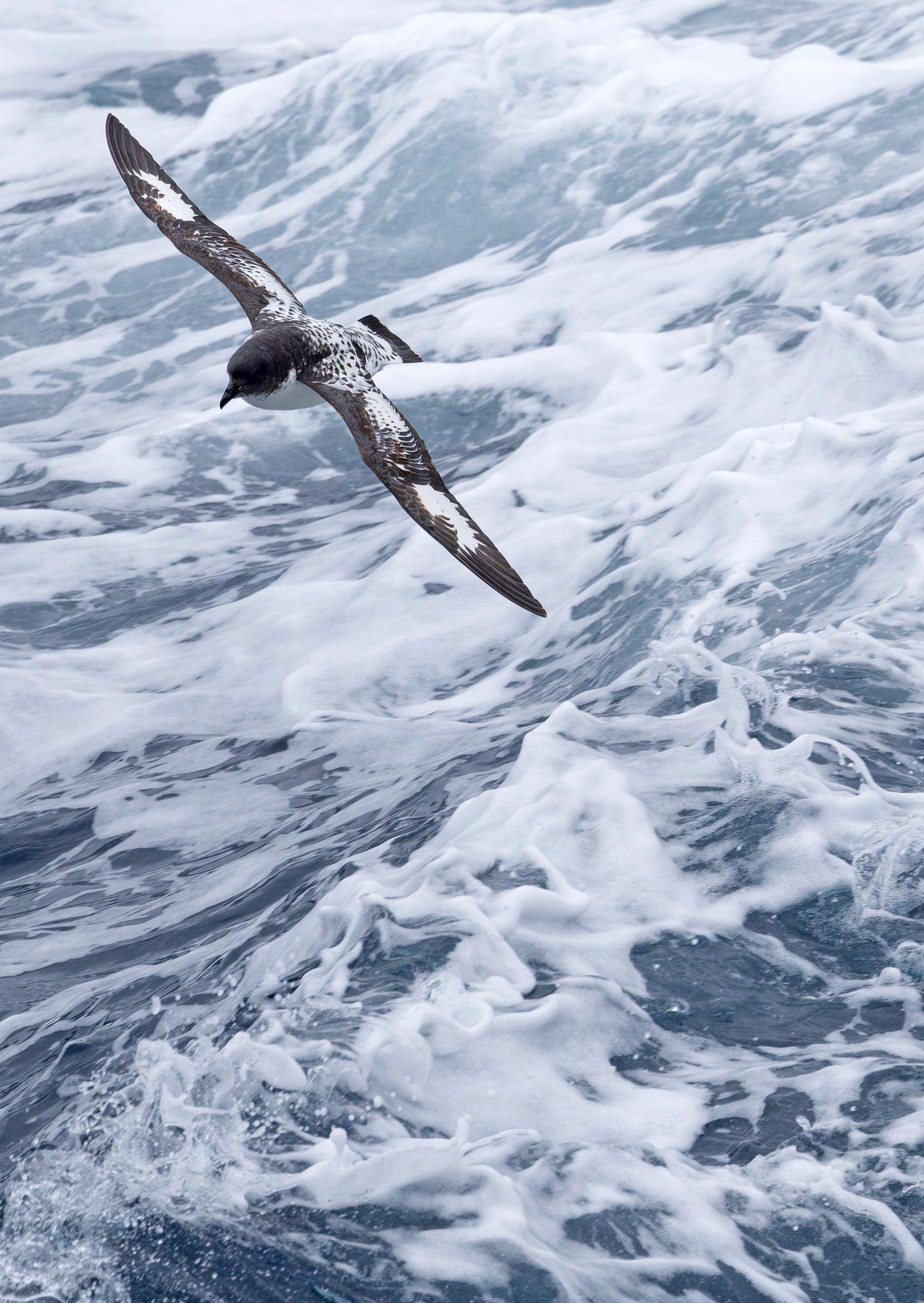
This page and following pages: Antarctic Petrel and Pintado Petrel magic. Previous pages: Emperor Penguins (Mike Watson)
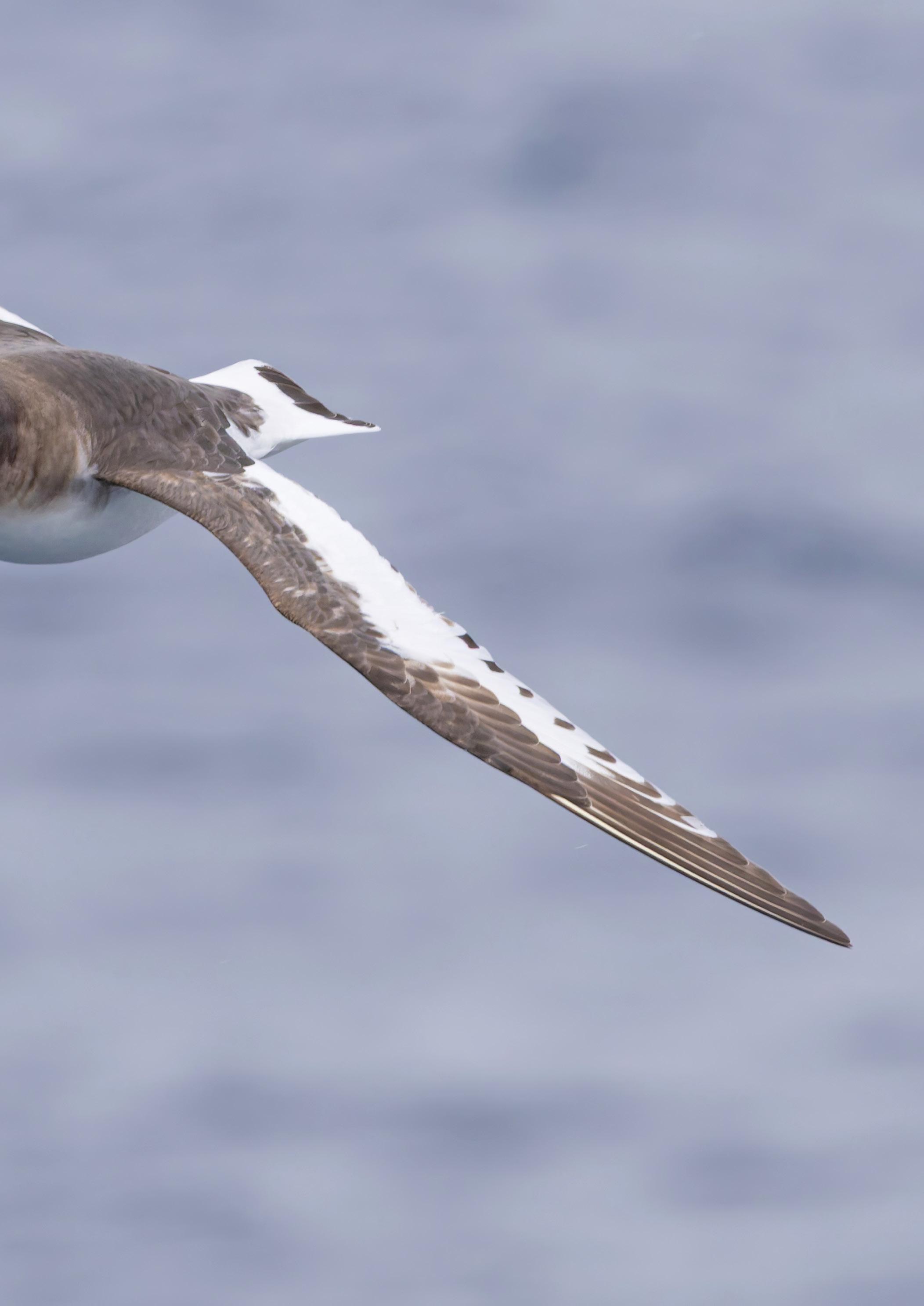
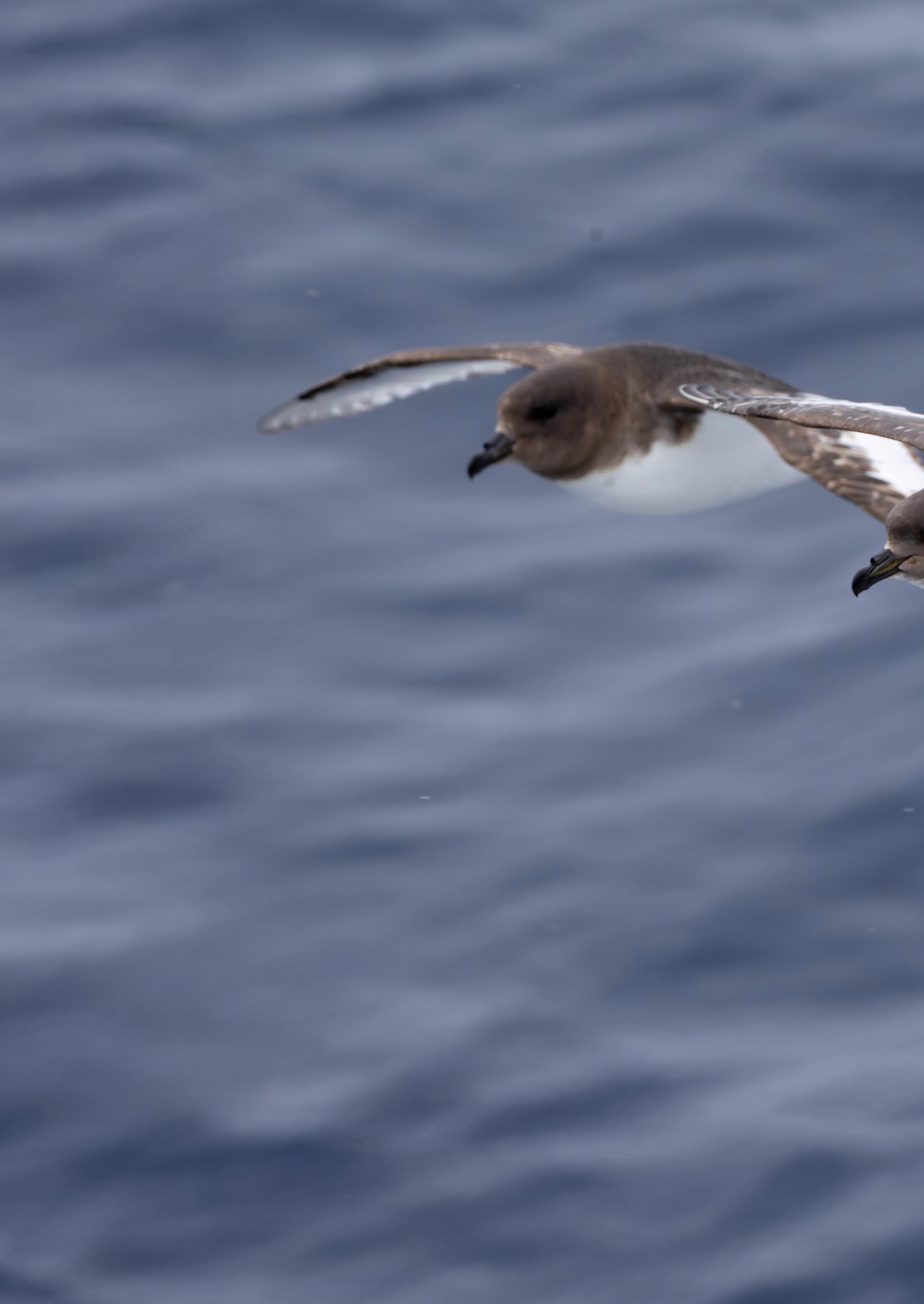
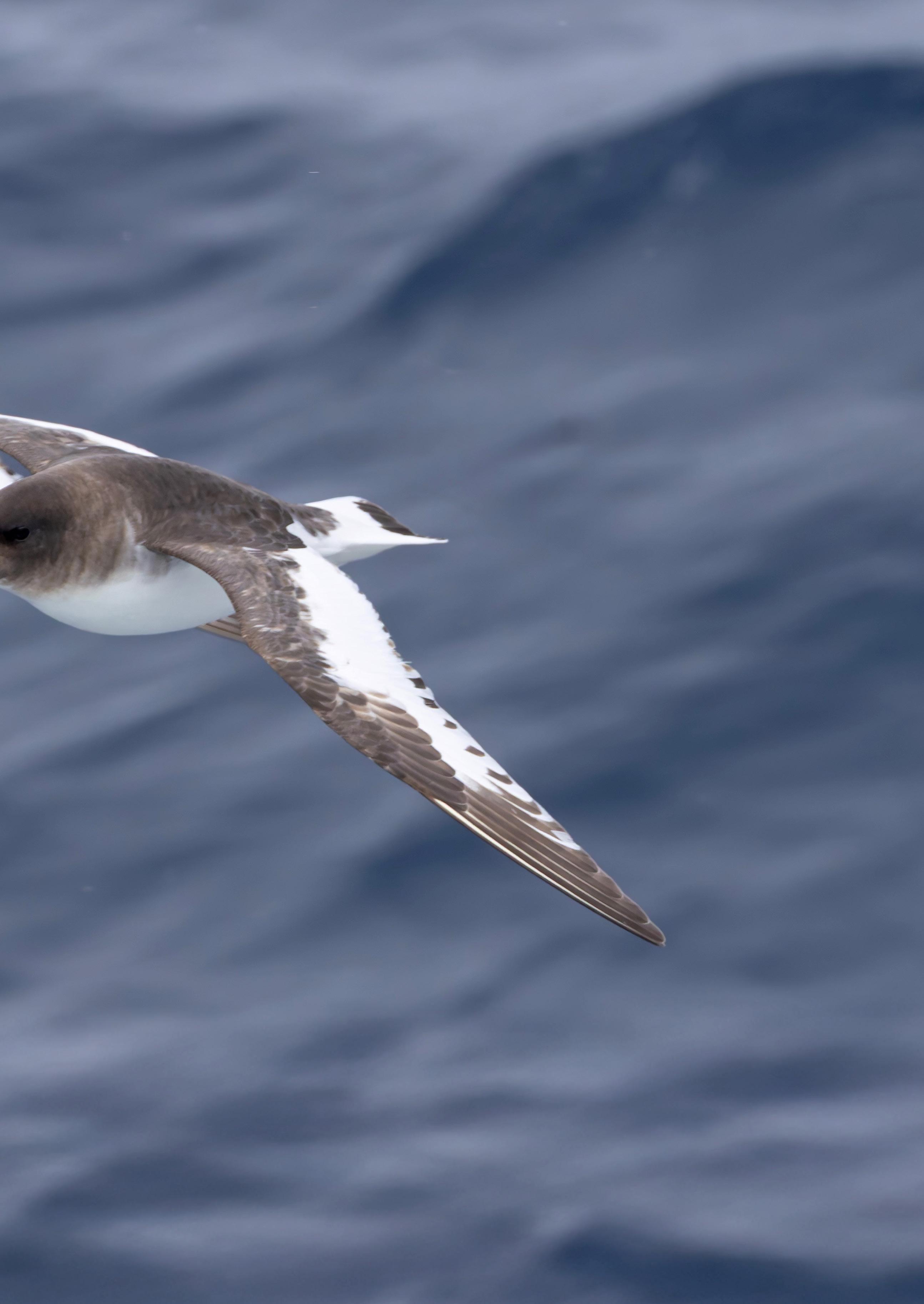
our lists. This evening’s meal was a very pleasant plated affair after we had said goodbye to our captain and Oceanwide Expeditions’ Pippa Low and her excellent team. It was sad to disembark and, putting aside disappointment of Snow Hill, we settled for the highlights of this amazing tour!
BIRD OF THE TRIP
1. Emperor Penguin
2. Adelie Penguin
3. Snow Petrel
4. Antarctic Petrel
5. White-bellied Seedsnipe
SYSTEMATIC LIST OF SPECIES RECORDED DURING THE TOUR
Species marked with the diamond symbol (◊) are either endemic to the country or local region or considered ‘special’ birds for some other reason (e.g., it is only seen on one or two Birdquest tours; it is difficult to see across all or most of its range; the local form is endemic or restricted-range and may in future be treated as a full species). The species names and taxonomy used in the bird list follows AviList v2025.
BIRDS
Upland Goose ◊ Chloephaga picta Common Ushuaia.
Kelp Goose ◊ Chloephaga hybrida Seen well in Ushuaia and on the Falkland Islands.
Ashy-headed Goose ◊ Chloephaga poliocephala 18 tallied Ushuaia.
Crested Duck Lophonetta specularioides Maximum 120 Ushuaia area.
Flying Steamer Duck ◊ Tachyeres patachonicus Common in Ushuaia.
Fuegian Steamer Duck ◊ Tachyeres pteneres Common in Ushuaia area.
Chiloe Wigeon ◊ Mareca sibilatrix Two pairs in the Ushuaia area.
Yellow-billed Teal Anas flavirostris Four Ushuaia.
Bronze-winged Duck (Spectacled D) ◊ Speculanus specularis Pair Tierra del Fuego NP.
Great Grebe Podiceps major Three Tierra del Fuego National Park.
Rock Dove Columba livia Two Ushuaia.
Snowy Sheathbill ◊ Chionis albus Several Faro les Eclaireurs & also in Antarctica.
Magellanic Oystercatcher ◊ Haematopus leucopodus Six noted Ushuaia.
Blackish Oystercatcher ◊ Haematopus ater 10 noted Ushuaia.
Rufous-chested Dotterel ◊ Zonibyx modestus Pair Reserva Rio Valdez.
Southern Lapwing Vanellus chilensis Common around Ushuaia.
White-bellied Seedsnipe ◊ Attagis malouinus Close views at Rio Valdez, Ushuaia.
Magellanic Snipe ◊ Gallinago magellanica One near our hotel in Ushuaia.
Baird’s Sandpiper Calidris bairdii 11 tallied Ushuaia.
White-rumped Sandpiper Calidris fuscicollis 55 noted in the Ushuaia area.
South Polar Skua ◊ Stercorarius maccormicki 15 dark morphs Antarctica.
Chilean Skua ◊ Stercorarius chilensis Very common in Ushuaia.
Brown Skua ◊ Stercorarius antarcticus 14 noted, usually around penguins.
South American Tern Sterna hirundinacea Very common in the Ushuaia area.
Antarctic Tern ◊ Sterna vittata Daily from the South Shetlands onwards.
Dolphin Gull ◊ Leucophaeus scoresbii Common and widespread in the Ushuaia area.
Kelp Gull Larus dominicanus Thousands in Ushuaia, only a few pairs in Antarctica.
Emperor Penguin ◊ Aptenodytes forsteri Two prolonged, close encounters in Antarctica.
Adelie Penguin ◊ Pygoscelis adeliae Very common including a landing at Brown Bluff.
Chinstrap Penguin ◊ Pygoscelis antarcticus A landing at the Palaver Point colony.
Gentoo Penguin ◊ Pygoscelis papua Common, including a landing at Brown Bluff.
Magellanic Penguin ◊ Spheniscus magellanicus Common in the Beagle Channel.
Western Rockhopper Penguin ◊ Eudyptes chrysocome Ten in the Beagle Channel.
Southern Royal Albatross ◊ Diomedea epomophora 19 noted in the Drake Passage.
Snowy Albatross (Snowy A) Diomedea exulans Four (one immature) Drake passage.
Light-mantled Albatross ◊ Phoebetria palpebrate 47 tallied was a high count.
Grey-headed Albatross ◊ Thalassarche chrysostoma 22 noted in the Drake Passage.
Black-browed Albatross Thalassarche melanophris Very common Beagle Channel.
Wilson’s Storm Petrel Oceanites oceanicus The commonest storm petrel!
Black-bellied Storm Petrel ◊ Fregetta tropica Six sightings was down on usual.
Snow Petrel ◊ Pagodroma nivea Very common in Antarctica.
Antarctic Petrel ◊ Thalassoica antarctica Four sightings plus another for Alain only.
Pintado Petrel Daption capense Common, particularly in the Drake Passage.
Southern Giant Petrel Macronectes giganteus Very common, strangely the only GP!
Southern Fulmar ◊ Fulmarus glacialoides Very common.
White-chinned Petrel Procellaria aequinoctialis Only 13 sightings was a low count.
Sooty Shearwater Ardenna grisea Very common north of Cape Horn.
Common Diving Petrel Pelecanoides urinatrix Three sightings in the Drake Passage.
Blue Petrel ◊ Halobaena caerulea Very common north of the convergence.
Antarctic Prion ◊ Pachyptila desolata Common south of the convergence.
Slender-billed Prion ◊ Pachyptila belcheri Four sightings north of the convergence.
Neotropic Cormorant Nannopterum brasilian Four sightings Ushuaia.
Rock Shag ◊ Leucocarbo magellanicus Common Beagle Channel.
Imperial Shag ◊ Leucocarbo atriceps Abundant breeder in the Ushuaia area.
Antarctic Shag ◊ Leucocarbo [atriceps] bransfieldensis Common Antarctic Sound.
Black-faced Ibis ◊ Theristicus melanopis Several sightings around Ushuaia.
Black-crowned Night Heron Nycticorax nycticorax Five noted Ushuaia.
Andean Condor Vultur gryphus One Beagle Channel from MV Ortelius!
Turkey Vulture Cathartes aura Two sightings Ushuaia.
Black-chested Buzzard-Eagle Geranoaetus melanoleucus One Ushuaia’s Landfill.
Magellanic Woodpecker ◊ Campephilus magellanicus Pair Tierra del Fuego NP.
Crested Caracara Caracara plancus Five sightings Ushuaia.
Chimango Caracara Milvago chimango Very common Ushuaia.
White-throated Caracara ◊ Phalcoboenus albogularis Great views Ushuaia Landfill.
Austral Parakeet ◊ Enicognathus ferrugineus A flock of 30 in downtown Ushuaia.
White-crested Elaenia Elaenia chilensis Common around Ushuaia.
Tufted Tit-Tyrant Anairetes parulus Seen Rio Valdez and Tierra del Fuego NP.
Ochre-naped Ground Tyrant Muscisaxicola flavinucha One Lago Escondido, sev. Rio Valdez.
Dark-faced Ground Tyrant Muscisaxicola maclovianus Four noted Ushuaia.
Austral Negrito ◊ Lessonia rufa Common on Ushuaia’s coast.
Fire-eyed Diucon Pyrope pyrope Five sightings Rio Valdez and Tierra del Fuego NP.
White-throated Treerunner ◊ Pygarrhichas albogularis Three sightings Ushuaia.
Buff-winged Cinclodes Cinclodes fuscus Two sightings Ushuaia.
Blackish Cinclodes ◊ (Black C) Cinclodes [antarcticus] maculirostris Three Beagle Channel.
Dark-bellied Cinclodes ◊ Cinclodes patagonicus One Ushuaia seafront.
Thorn-tailed Rayadito ◊ Aphrastura spinicauda 11 sightings Ushuaia.
Austral Canastero Asthenes anthoides Two Isla Bridges.
Chilean Swallow ◊ Tachycineta leucopyga Common around Ushuaia.
Grass Wren Cistothorus platensis One near our hotel in Ushuaia.
Southern House Wren Troglodytes musculus Common around Ushuaia.
Austral Thrush ◊ Turdus falcklandii Abundant around Ushuaia (magellanicus).
House Sparrow Passer domesticus Common in Ushuaia and Port Stanley.
Correndera Pipit Anthus correndera Seen well in Ushuaia area.
Black-chinned Siskin ◊ Spinus barbatus Abundant Ushuaia and Tierra del Fuego NP.
Rufous-collared Sparrow Zonotrichia capensis Abundant Ushuaia area (australis).
Long-tailed Meadowlark ◊ Leistes loyca One Ushuaia.
Austral Blackbird ◊ Curaeus curaeus Three sightings north of Ushuaia.
Patagonian Sierra Finch ◊ Phrygilus patagonicus Ushuaia and Tierra del Fuego NP.
Yellow-bridled Finch ◊ Melanodera xanthogramma Fabulous sightings Rio Valdez.
MAMMALS
Culpeo Lycalopex culpeus One Tierra del Fuego NP.
Antarctic Fur Seal ◊ Arctocephalus gazella One Drake Passage.
South American Sea Lion ◊ Otaria flavescens Colony visited at Faro les Eclaireurs.
Weddell Seal ◊ Leptonychotes weddellii One Antarctic Sound near Brown Bluff.
Crabeater Seal ◊ Lobodon carcinophaga One sighting Antarctic Sound near Brown Bluff.
Antarctic Minke Whale ◊ Balaenoptera bonaerensis A couple in the Bransfield Strait.
Fin Whale ◊ Balaenoptera physalus Six sightings.
Humpback Whale Megaptera novaeangliae 15 sightings.
Killer Whale ◊ Orcinus orca A pod of c.10 in Fridtjof Sound were of Type B.
Peale’s Dolphin ◊ Sagmatias australis Two Beagle Channel entrance.
Hourglass Dolphin ◊ Sagmatias cruciger Two Drake Passage north of the convergence.
North American Beaver (introduced) Castor canadensis Three Rio Valdez.