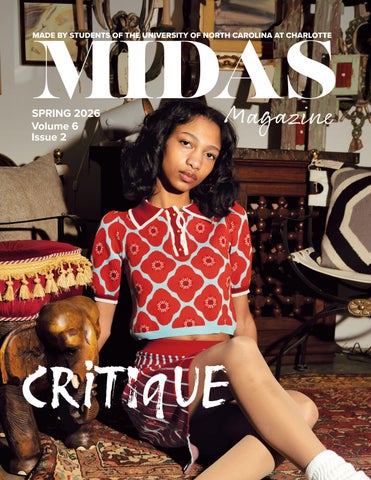
MIDAS
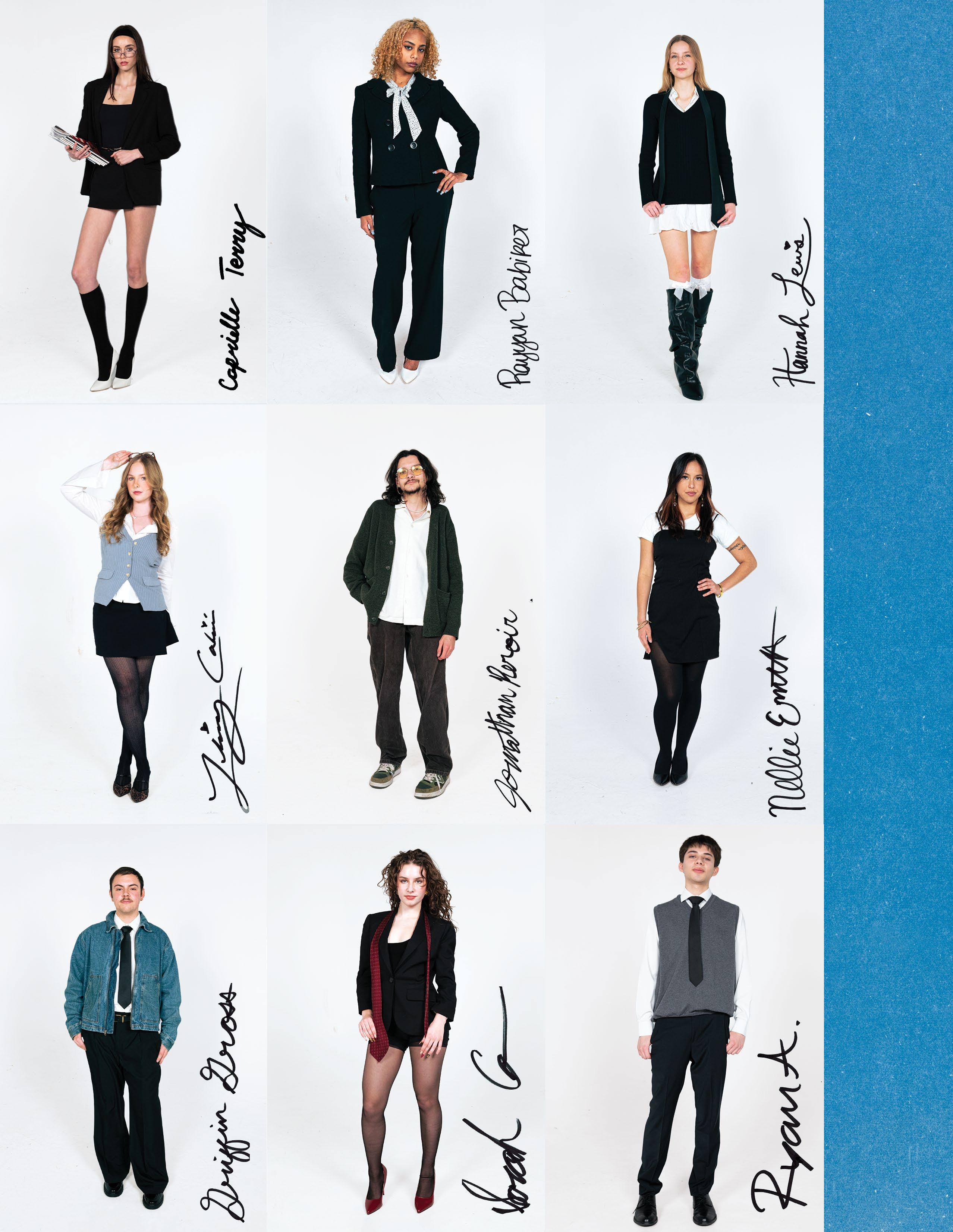
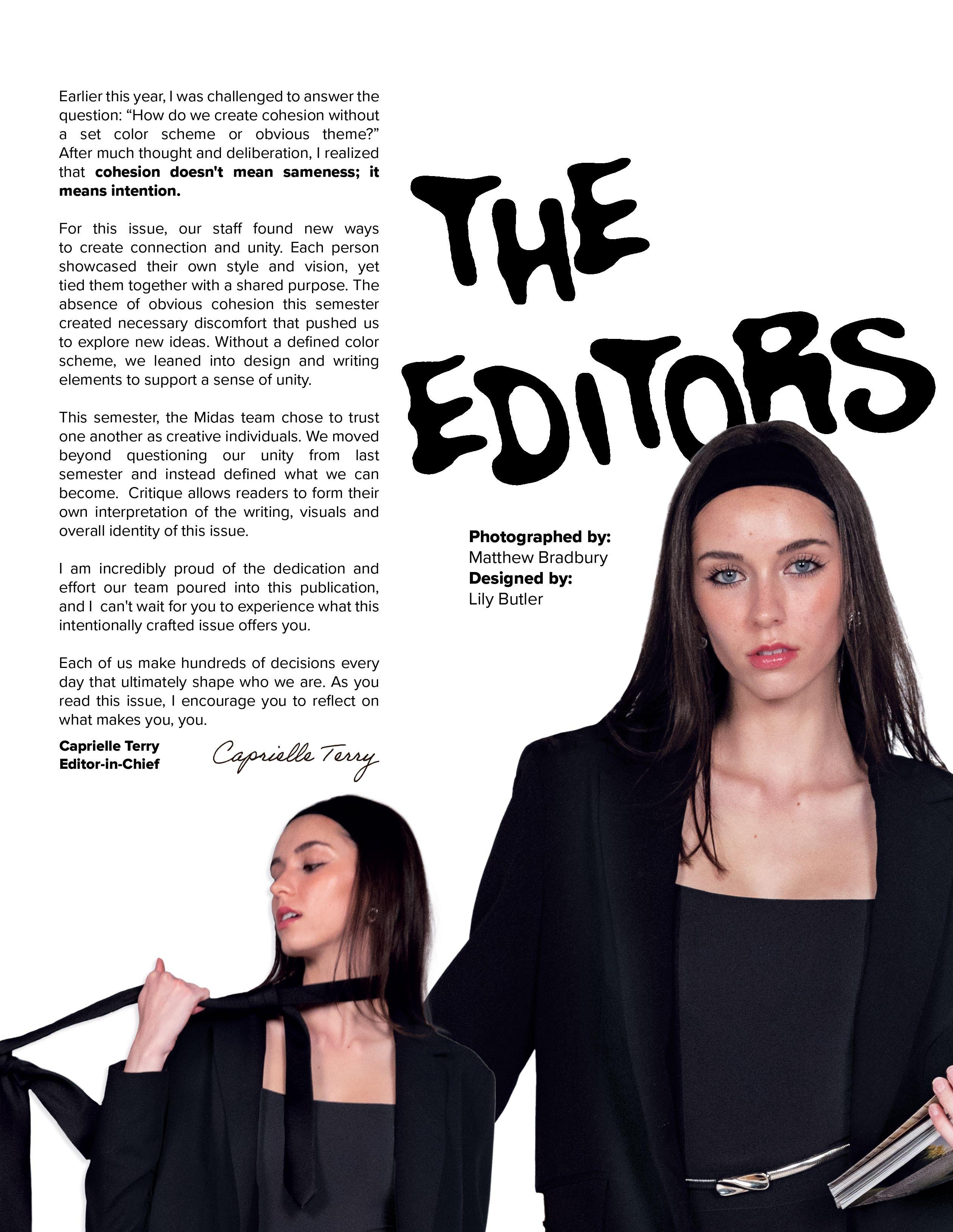
Editor-in-Chief
Caprielle Terry
Managing Editor
Ryan Arias
Creative Director
Rayyan Babiker
Design Director
Sarah Carson
Writing Director
Lindsay Cabrie
Media Coordinator
Griffin Gross
Website Coordinator
Jonathan Revoir
Talent Coordinator
Hannah Lewis
Event Coordinator
Nellie Errett
Creative
Matthew Bradbury
Zantiria McNeil
Finn Isler
Design
Kim Mai
Giselle Carrasquilla
Mia Primus
Emily Jeton Inga
Lily Butler
Writing
Kanousa Thapa
Giselle Jimenez Del-Carmen
Hyein Jun
Nirvana Salado Harris
Audrey Jager
Bayan Ammar
Allison Howard
Davis Cuffe
Media Assistants
Brenna Williams
Simone Kahoussi
Eiycess Richburg
Zaria Reid
Meaira Alston
Asiya Faulkner
Benley Love
Duvermond
Madison Morris
Ariana Freeman
Grace Zheng
Jackson Dillow
Rhyli Brunson
Zoey Jones
Rithika Pogula
Davin Dietz
Bryce Katiman
Zoe Brougher



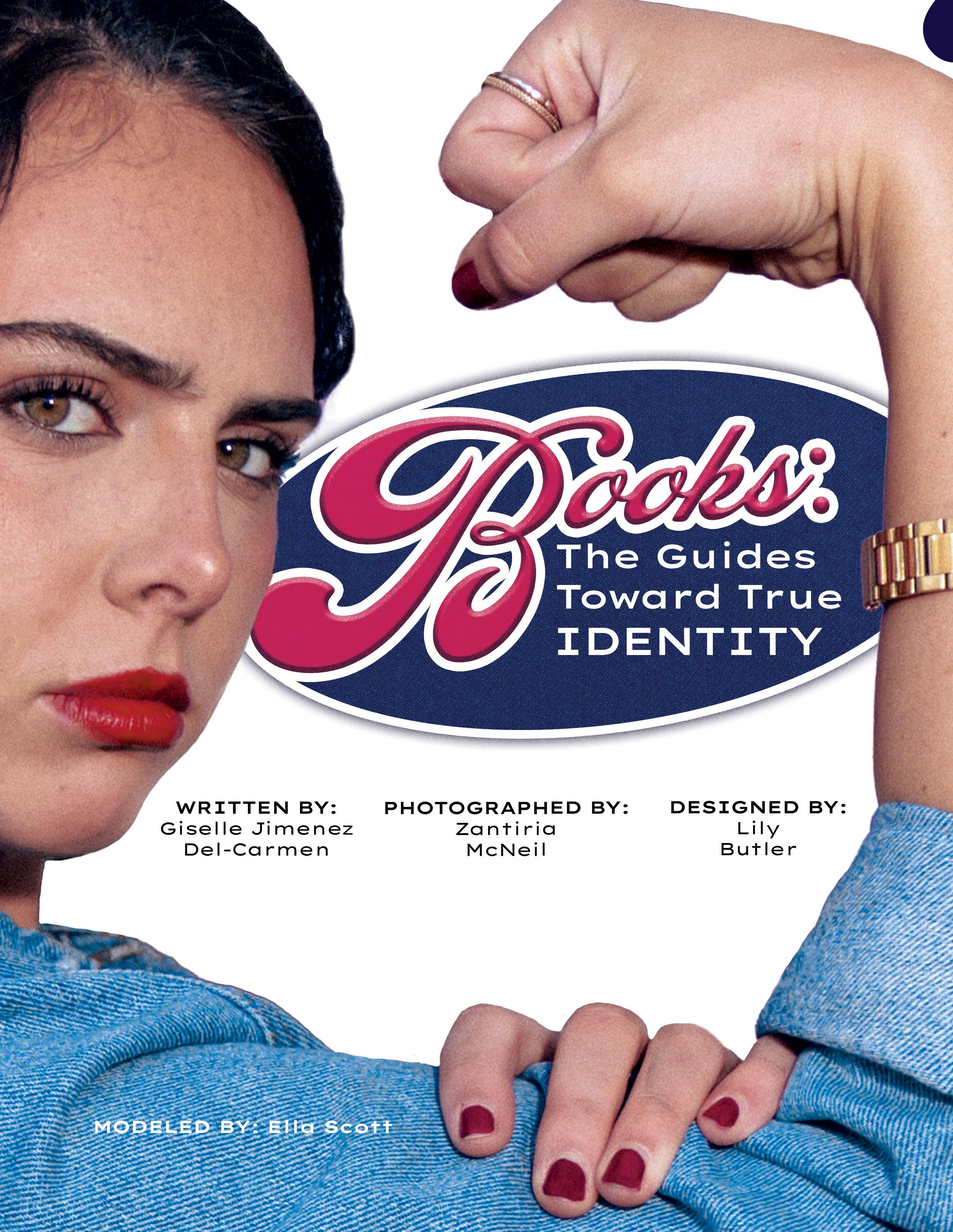
Books: The Guides Toward True Identity
Can a few bound pages really shape your true self? This opinion piece argues that they can, and that there’s more to find about yourself if you just turn a page.
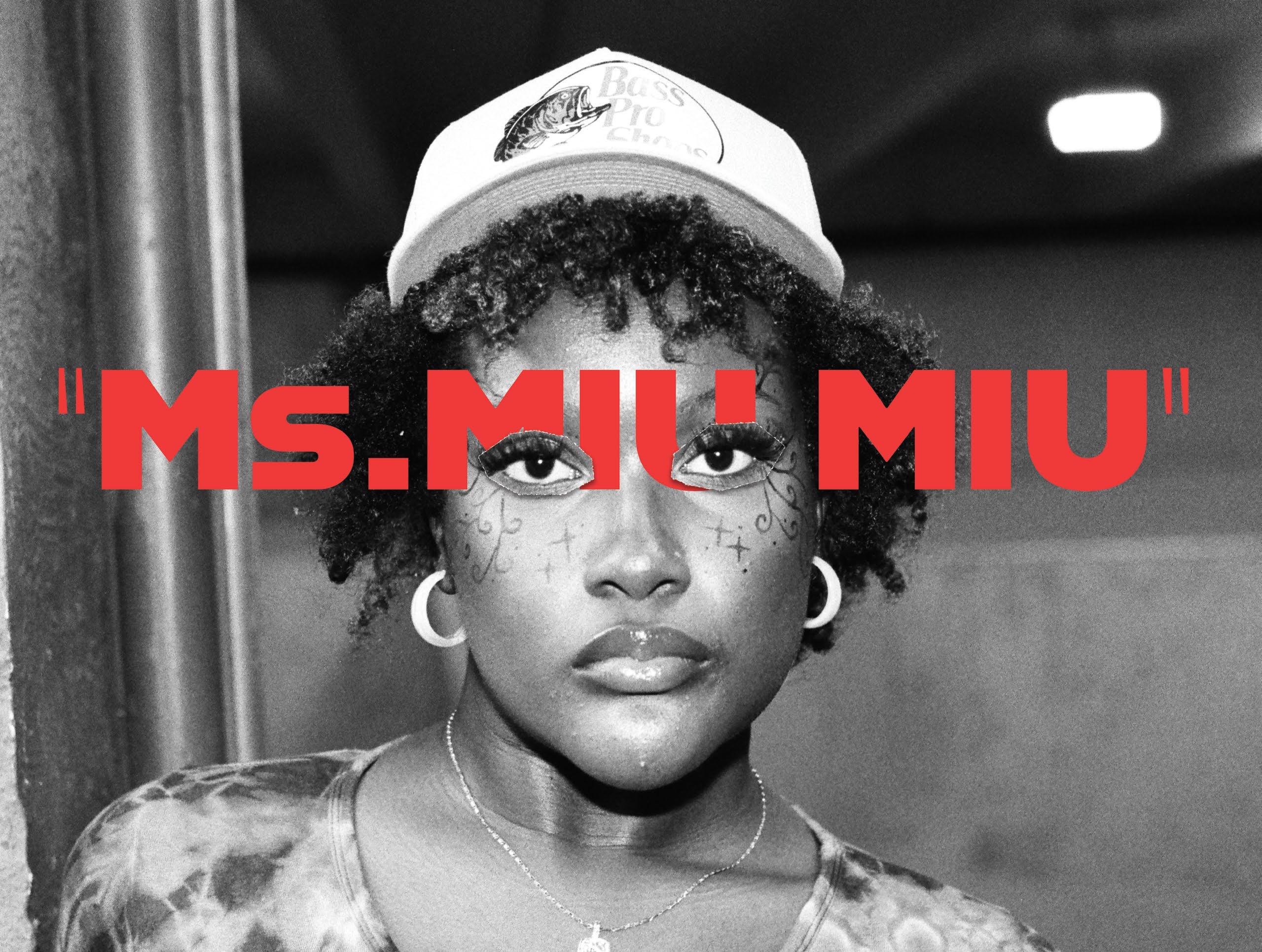
Ms. MiuMiu
on, femininity, glamor, artistry — MiuMiu. This informational article dives into how Prada’s sister in fashion grew into the iconic brand we see today.
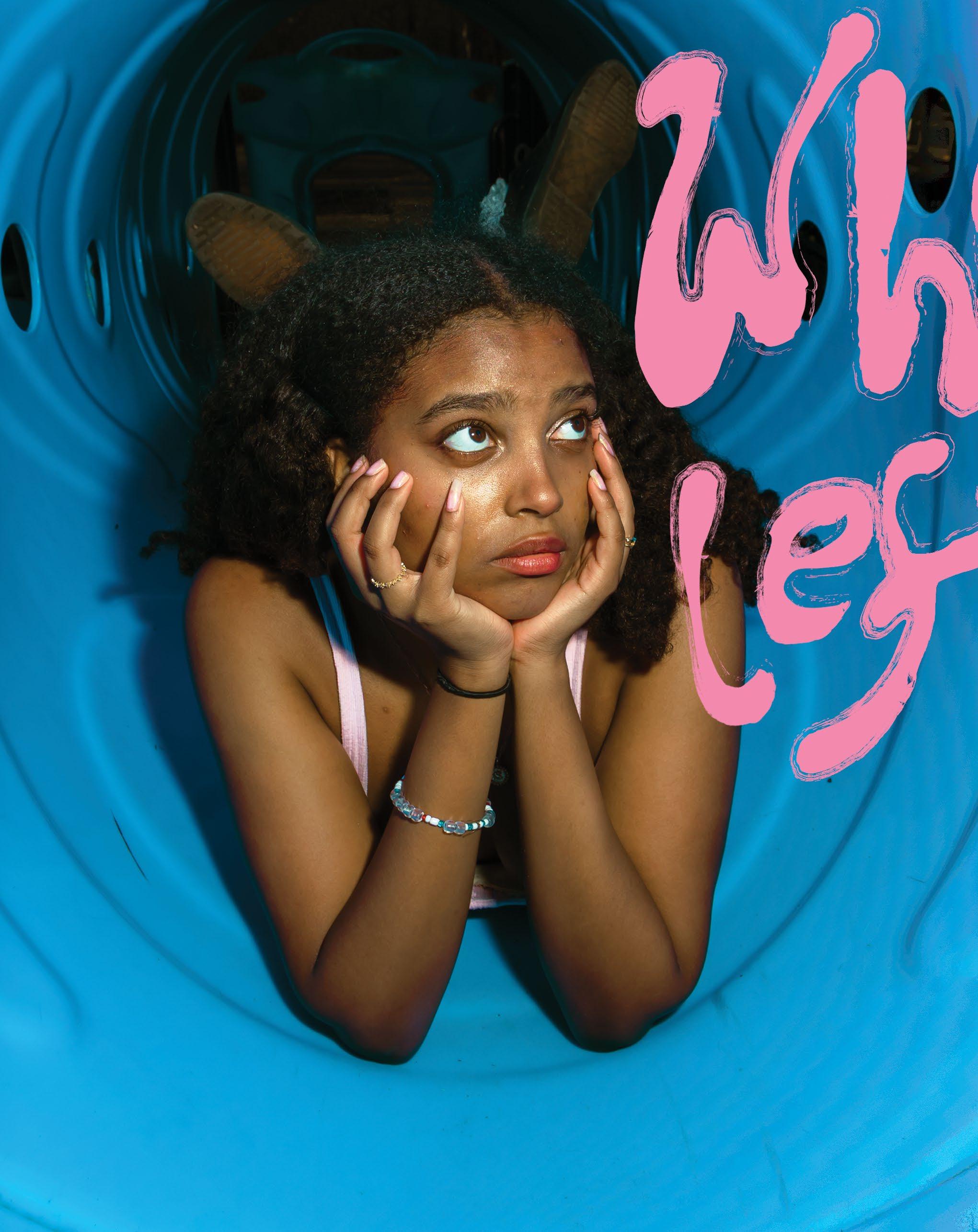
What You Left Behind
Taking you back into the mind of your younger self –carefree, playful and unrestricted. Break free from the box of adulthood and find what you left behind through this think
Dress Code: Our Body is a Rulebook
Are our closets a form of conformity? A think piece that forces society to reimagine our ideas of conforming, that maybe it is something we subconsciously do every day.
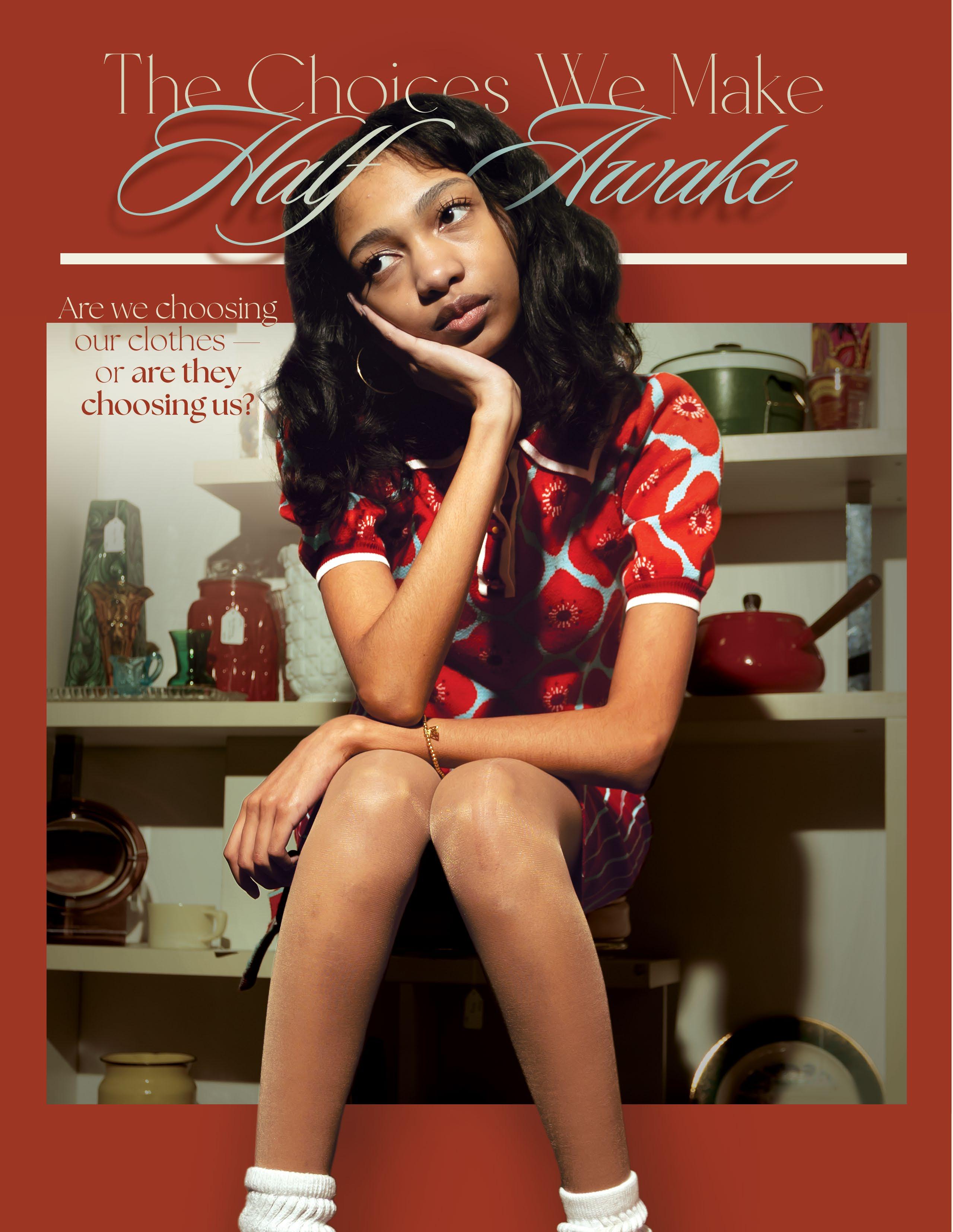
The Choices We Make Half Awake
From centuries ago to today, the colors of our clothing convey messages to the world around us. An investigative piece seeking meaning in the hues of our wardrobes.
Who Am I Without My Homeland?
Where we’re are from is a defining piece of who we are. Sudanese students at the University of North Carolina at Charlotte express their resilience and culture, speaking up about their homeland.
Dress for the Desk
The imminent danger individuality faces when confronted by corporate America. A critical look at how the office suit and tie may be suffocating originality.
Letting Go of Judgment
An artist’s journey from perfectionism to personalization. Exploring how an artist slowly graduates from a mimicking student, to an original master.
Video Killed the Runway Star
A commentary on Gen Z fashion as a form of self expression shaped and constrained by algorithm-driven conformity.

Fruit with skin, whether an orange, mango or yellow dragonfruit, can be stitched back together. In fact, Jordan Kisner’s “Orange” in the Paris Review shows that anything can be stitched back together.
Identity is like invisible ink, with books serving as a UV light or baking soda. Reviews, poetry collections, essay books and photography books are among the endless literary works that guide the reader to a tree of questions. With the flip of a new page, a new answer emerges. Books bring forth new perspectives, new thoughts and, eventually, the uncovering of one’s identity.

The Paris Review is a literary magazine featuring an array of essays, columns, poetry and more for readers of all kinds. Reviews are a perfect choice to begin the journey of the soul, as the literary variety is rich. It allows for investigation in all directions from the same beginning; it’s a full circle.
One column titled “Corpus,” by Jordan Kisner, features the article “Oranges,” in which it’s one of many articles dedicated to “the stories our bodies tell.” She wrote about how she was eating an orange as she looked through Zoe Leonard’s “Strange Fruit,” an installation of around 300 fruit skins that have been stitched back together. While the installation conveyed a messagve of grief and decay, Kisner offered her own interpretation. She goes into scientific detail about how the orange she was eating while looking through the book breaks down into several fibers, sugars and minerals. The fibers, sugars and minerals will stay inside her body for two days, as it goes through a filtering process. Afterwards, remnants of what didn’t leave the body will find a home within her bones as vitamin C or potassium. It has added a layer of protection from decay, the body’s healing mechanism.
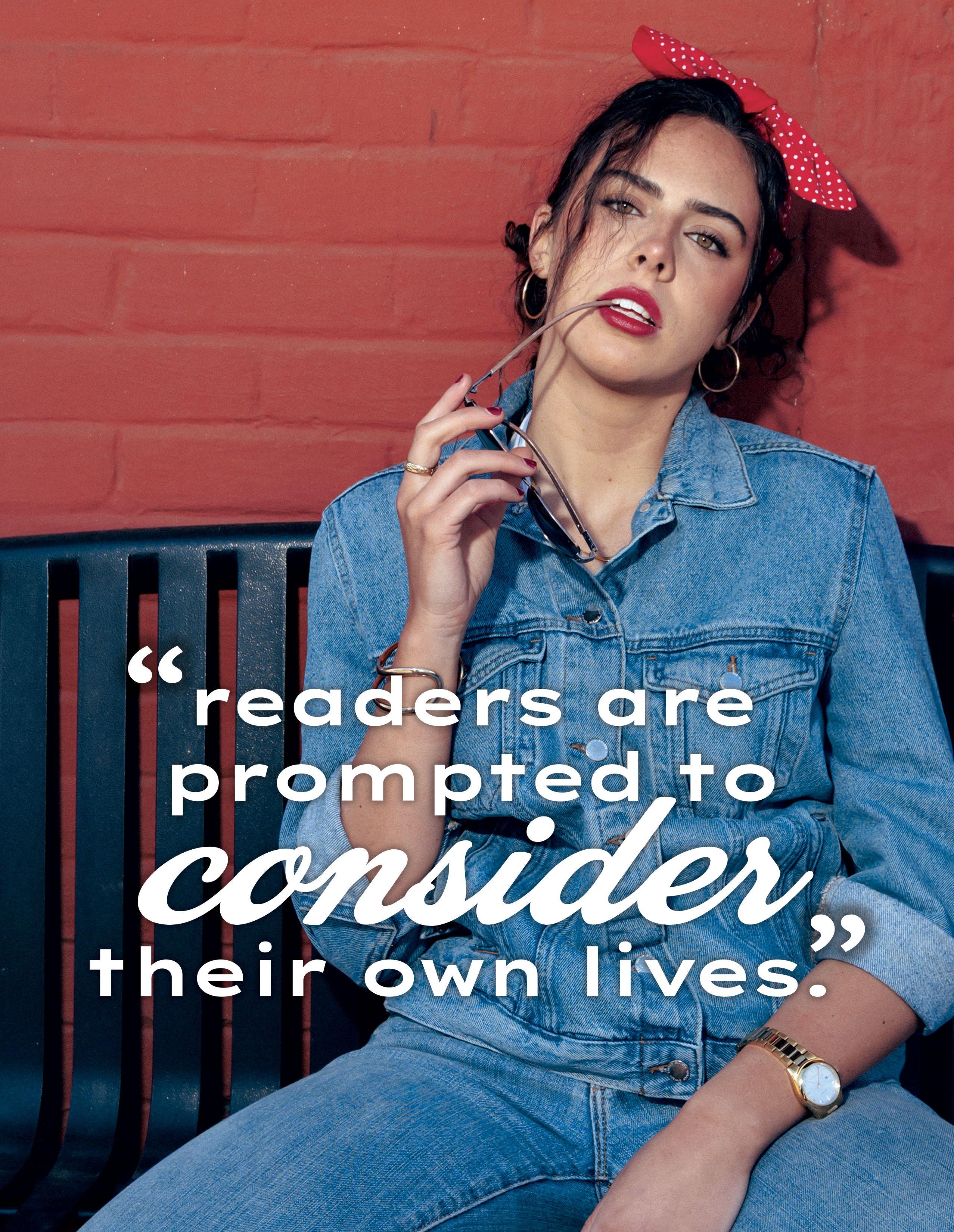
Kisner brought the reader along her train of thought as she moved from one to another. This is the very core of why Reviews are excellent guides: Kisner offered a variety of new perspectives on healing, art and fruit in one reading. Through brief science lessons and personal reflection, readers are prompted to
consider their own lives. It may inspire readers to explore books on art or photography, giving them a glimpse of life they might not otherwise see. Perhaps provoking inspiration to finish a poem about a yellow dragonfruit bought on a whim, or think about how they heal as a unique individual.
The Hidden Words In
On the topic of photography books, these books contain more words than readers may realize. They aren’t just pictures; they convey emotions. They prompt the reader to use their life to interpret a photograph that can hold an unlimited number of messages. In addition, some may even include visible words that guide the reader toward a unique thought.
“I Am Also a You” by Jay Thompson is a book of Thompson’s photographs accompanied by his thoughts. At first glance, these books may appear thin and as a short read, but their size tells us the rest of the wording is to be thought by the reader. At the halfway point of this book, a picture shows a young person sitting alone in a grassy field, away from a large crowd. They’re crouched with their head achingly in between their knees. The thought that accompanies the photo is “If a man does not keep pace with his companions, perhaps it is because he hears a different drummer. Let him step to the music which he hears, however measured or far away,” signed by Henry David Thoreau.
Thoreau was a naturalist, writer and philosopher born in 1817. Some of his famous works include
“Civil Disobedience,” which centers on the moral right of human beings to disobey unjust laws. Additionally, “Walden” is a book of 18 essays he wrote while living in a cabin in semi-isolation in Concord, Massachusetts. It’s credited with a significant contribution to New England Transcendentalism and with influencing nature writing. This research arose from the simple act of giving a name. It is intentional so that readers find inspiration not in the person quoted, but in how they arrived at the point of giving it. It does not force the reader to agree; rather, it prompts them to draw on their own experiences to interpret the act, and emotion, in the photo.
The person in the photograph is far from the crowd, which stands close together, leaving no space in between. The subject, with their head down, doesn’t care to look at what is happening; they’re buried in their own isolation. The photograph resembles the inevitable isolation one will experience once in their lifetime. It’s better to embrace it, perhaps achingly between the knees, but that isolation is necessary for the soul.
This emotional reading, which can be undertaken by any reader, arose from the seemingly simple photograph. A book with many more photographs will create a space for readers to reflect on the hidden or compressed thoughts they have. The photographs work as a force to get readers thinking about what they truly feel.
Is It Pretty To

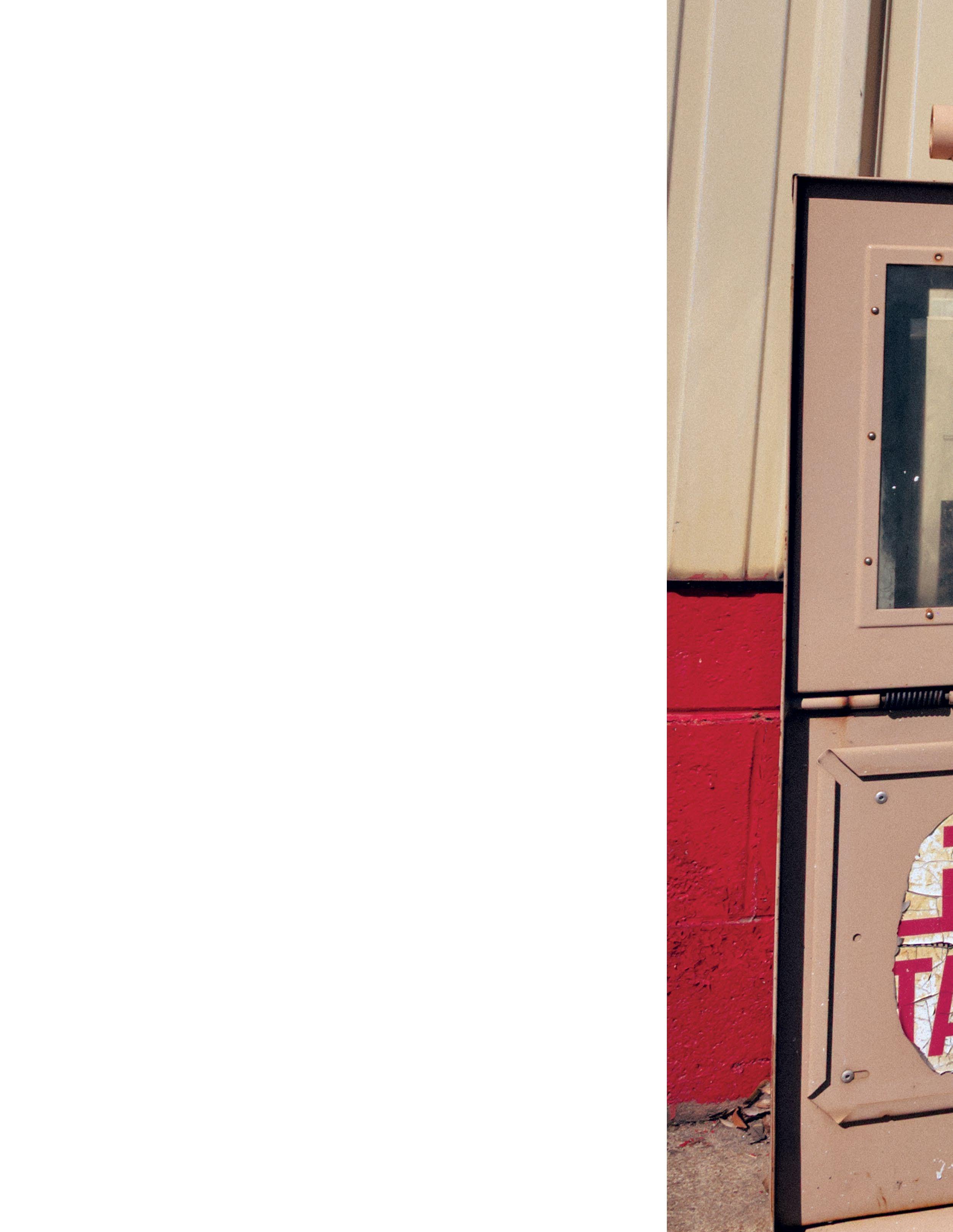
Mary Szybist asks in the title of one of her poems, included in her collection, “Incarnadine: Is It Pretty to Think.”
Szybist is a poet whose poetry focuses on religion. It also explores the flexibility of poetic structures and meanings. Incarnadine features a variety of poetic structures and rich themes, despite its religious basis. It is an example of how poetry is, by far, a pillar for uncovering identity. It is a unique body of literature based on human experience, with the most flexible presentation of it. While poem forms with “rules” exist, such as villanelles or the Shakespearean sonnets, it doesn’t limit the unique perspectives from them.
“Is It Pretty To Think” features a unique structure that surprises the reader. The words are guided by lines that look unnatural for a computer to create. The poem begins with “That/ figure/ a/ mourning/ poses” before the line starts to break into the word “but,” it continues with the words left to right, “not/ here/ after midnight/ well rest/ in city/ our/ well-lit/ in yard/ my/ shadowed/ near bees/ the/ asleep/ in/ sunflowers/ the.”
The structure signals to the reader that there are unlimited ways to read it. Each reader can construct their poem however they like. It can be intimidating, especially for first-time poetry readers, but that’s the point. Approaching human
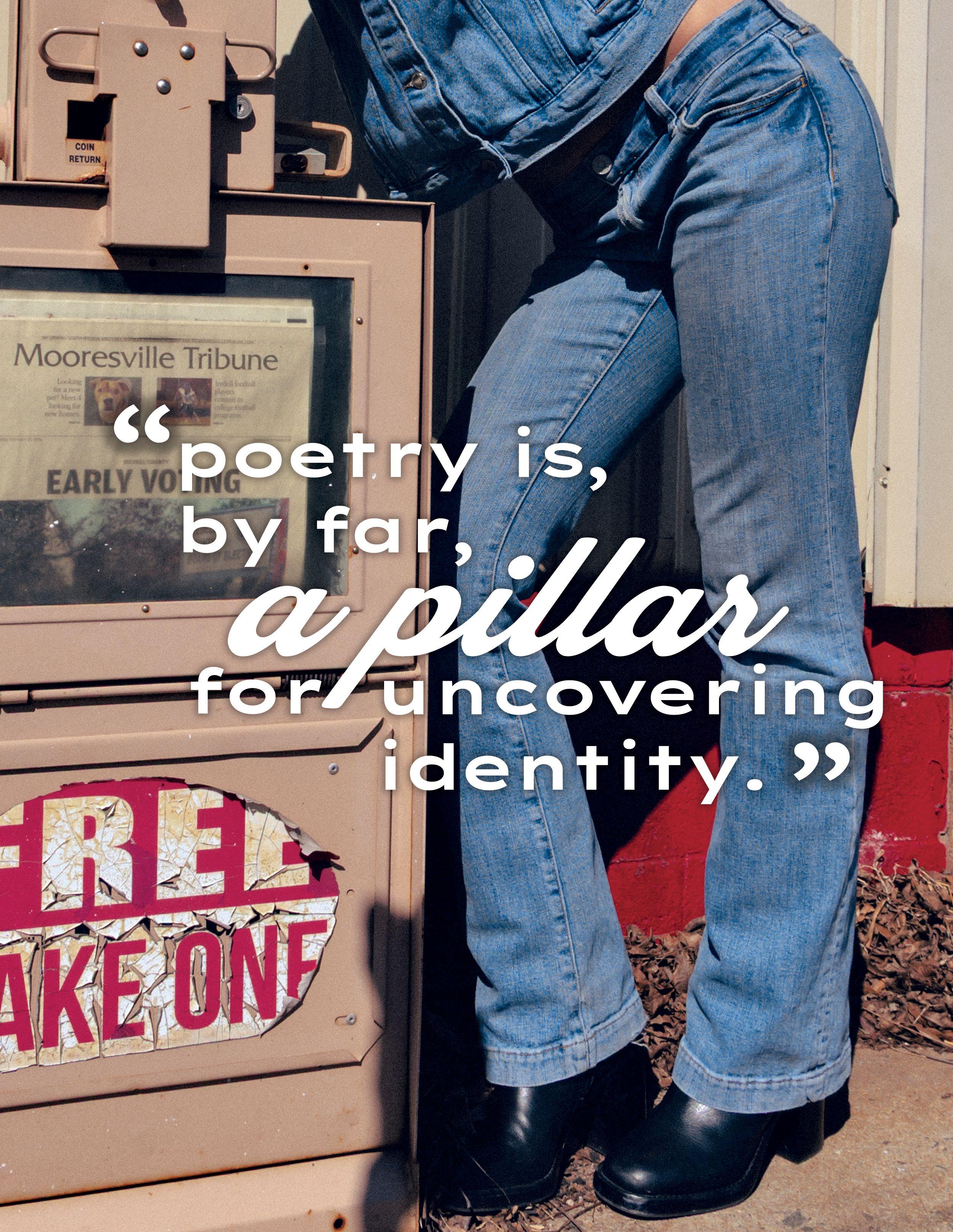

experience is not easy, and poetry embodies this; readers turn the page to perspectives on the endless possibilities of what it is like to be human. What it is to mourn, to die, to live, to love, to exist, to breathe and quite literally everything in between.
This is where the title comes in, because it is quite appealing to think about after all. Readers are prompted to consider the number of ways they can construct her poem, which in turn prompts reflection on why. Why are they reading it as grief more than about the nature around them? Is the grief a representation of the death of something within them? Even after thinking about every possibility, they might still be left with the wonder of what the intended message was. However, it is not about catching the message; it’s about creating an entirely new message, similar to photography.
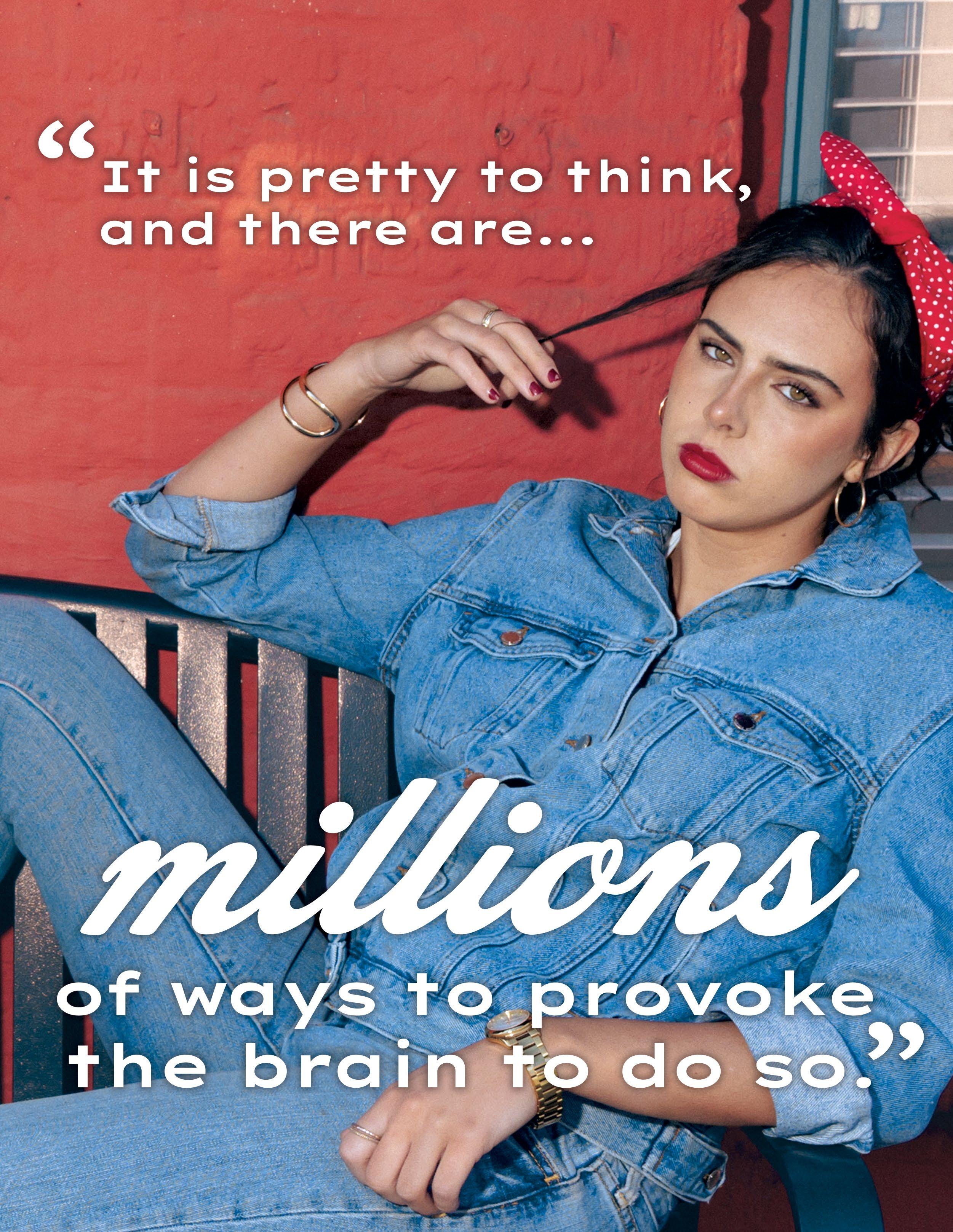
It is pretty to think, and there are millions of ways to provoke the brain to do so. One of them includes books. By reading every page of every book, one will find healing, hidden words and new meanings to what is to be human. They will uncover who they truly are beneath the flesh and residue of false facades they thought were them.
Free-Spirited ”
Designed by: Emily Jeton Inga
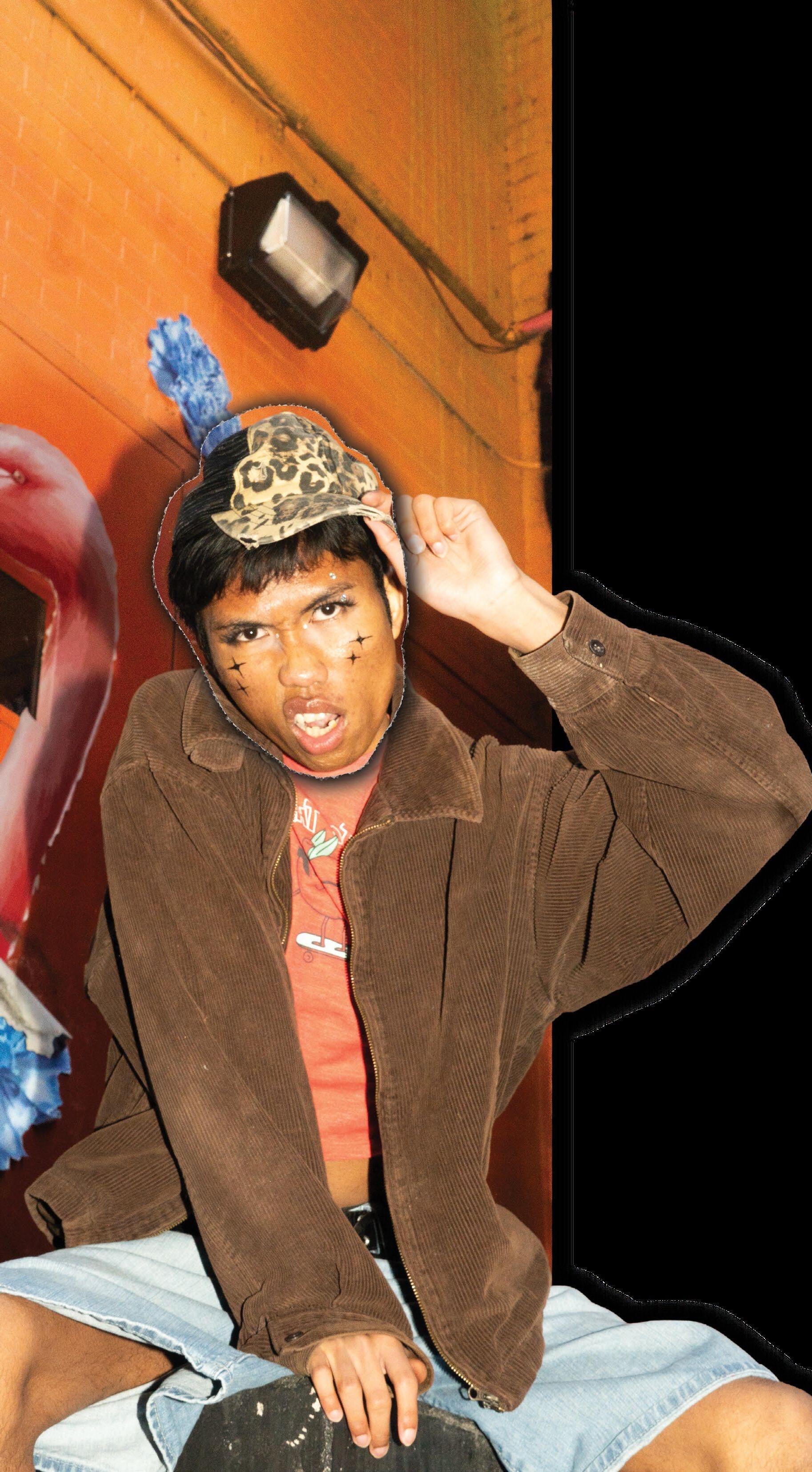
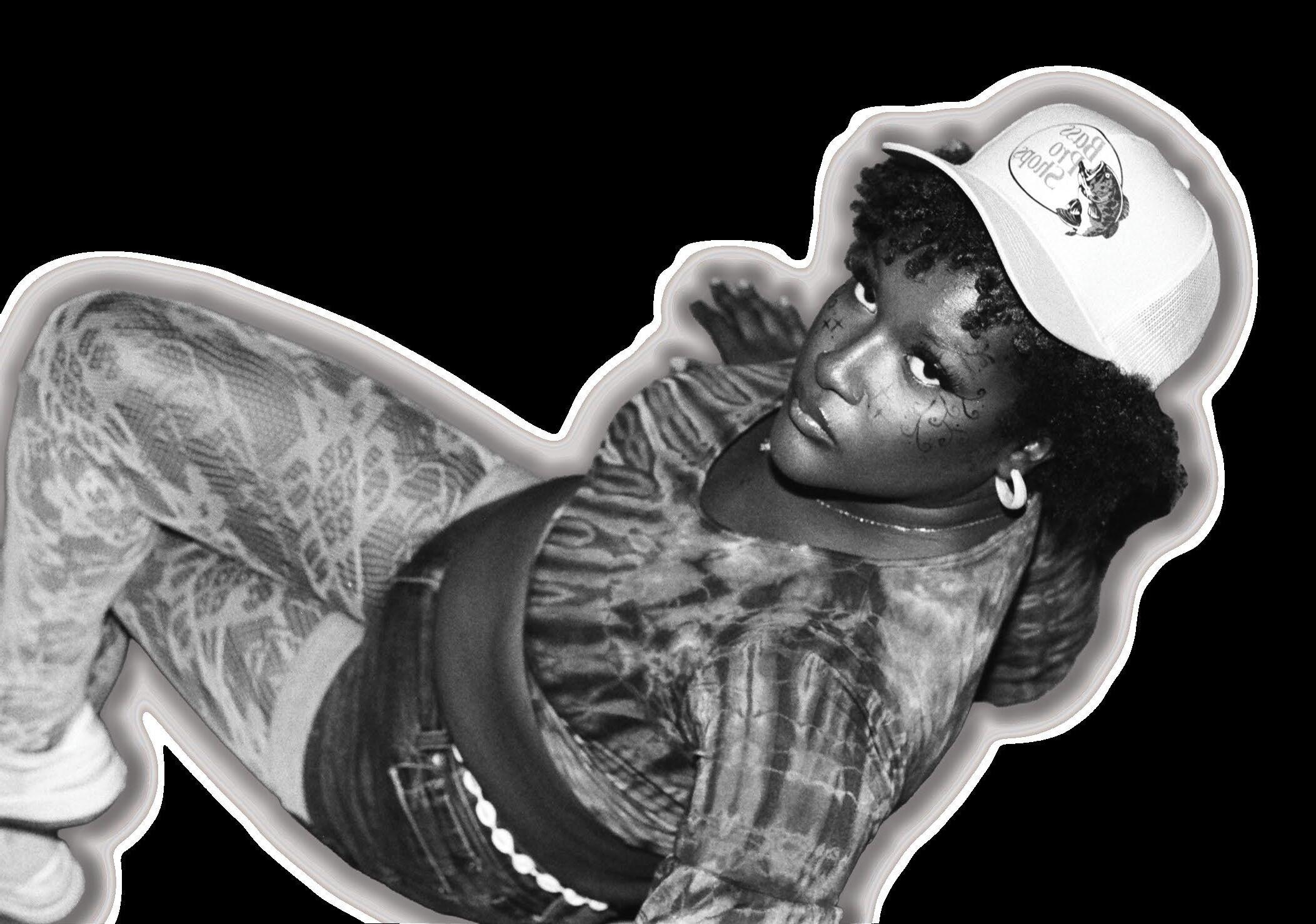
The MiuMiu girl is the Prada girl’s little sister. Where Prada must be raw in her chicness and glamour, sometimes understated and intelligent in her own elegance, MiuMiu transforms the silhouette to her own desire. But like her older sister, she remains rebellious. She is the free spirited little sister.
Founded in 1992 and launched in 1993, Miuccia Prada, head designer of her grandfather’s fashion house, Prada, welcomed MiuMiu, which has become the hots for the girls of Gen-Z and the Millennials.
“Prada’slittlesister”
Miuccia brings back the playful teases of her childhood into her brand MiuMiu, as ‘Miu’ was her childhood nickname gifted to her by her family. To Miuccia, Prada remains a tradition, a legacy to pass on in which she also identifies with. However, MiuMiu is her personal playground to explore her inner artistry past the selections of what is trending in the industry market. MiuMiu is who Miuccia desires to be. Prada is who she is.
Written by: Hyein Jun
Photographed by: Rayyan Babiker, Finn Isler
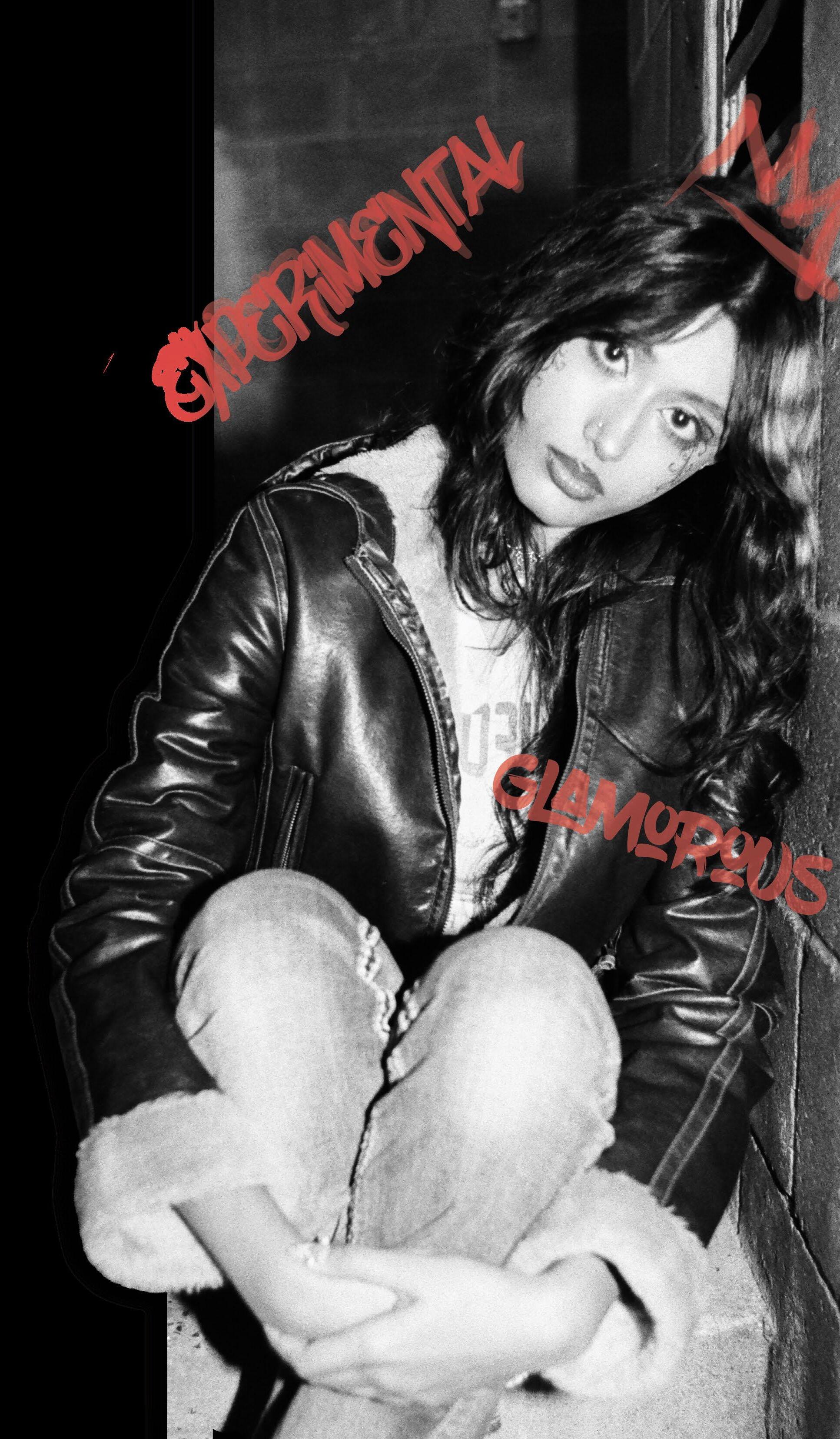
MiuMiu’s glamour doesn’t come from the same materials as Prada’s. MiuMiu seduces attention with the “boring, poor little things,” the most inconvenient for patterns and colors. It is her first way of being glamorous.
She’s
experimental. That is her chicness.
However, MiuMiu is beyond what it is in the grounds of fashion. It’s not just a couple of mini-skirts, or a mix-and-match of quirky patterns and colors; MiuMiu serves as a means for Miuccia to disturb and to push for a special kind of freedom. A kind of freedom that disturbs the traditional wear of femininity. In this freedom, MiuMiu addresses and leads the conversation of modern feminism and womanhood.
Eric Wilson’s article, “Miuccia Prada Talks 30 Years of MiuMiu, Her Greatest Experiment,” featured in W Magazine, quoted Miuccia, who noted that it was not very popular within certain groups to talk about fashion. That this was because the discussion of clothes made one aware of
their own physicality, their sexuality and “all of their intimate selves.” Miuccia highlights the confidence of a person— how in the situation where one is faced with discomfort in the confrontation of their autonomy about their fashion, theirconfidence may thin. However, with MiuMiu’s self-assurance, MiuMiu acknowledges the multifaceted nature
within femininity, reclaiming it so that femininity is defined by her intuitive being, rather than the sensual appeal , through Miuccia’s experiments in her personal playground.
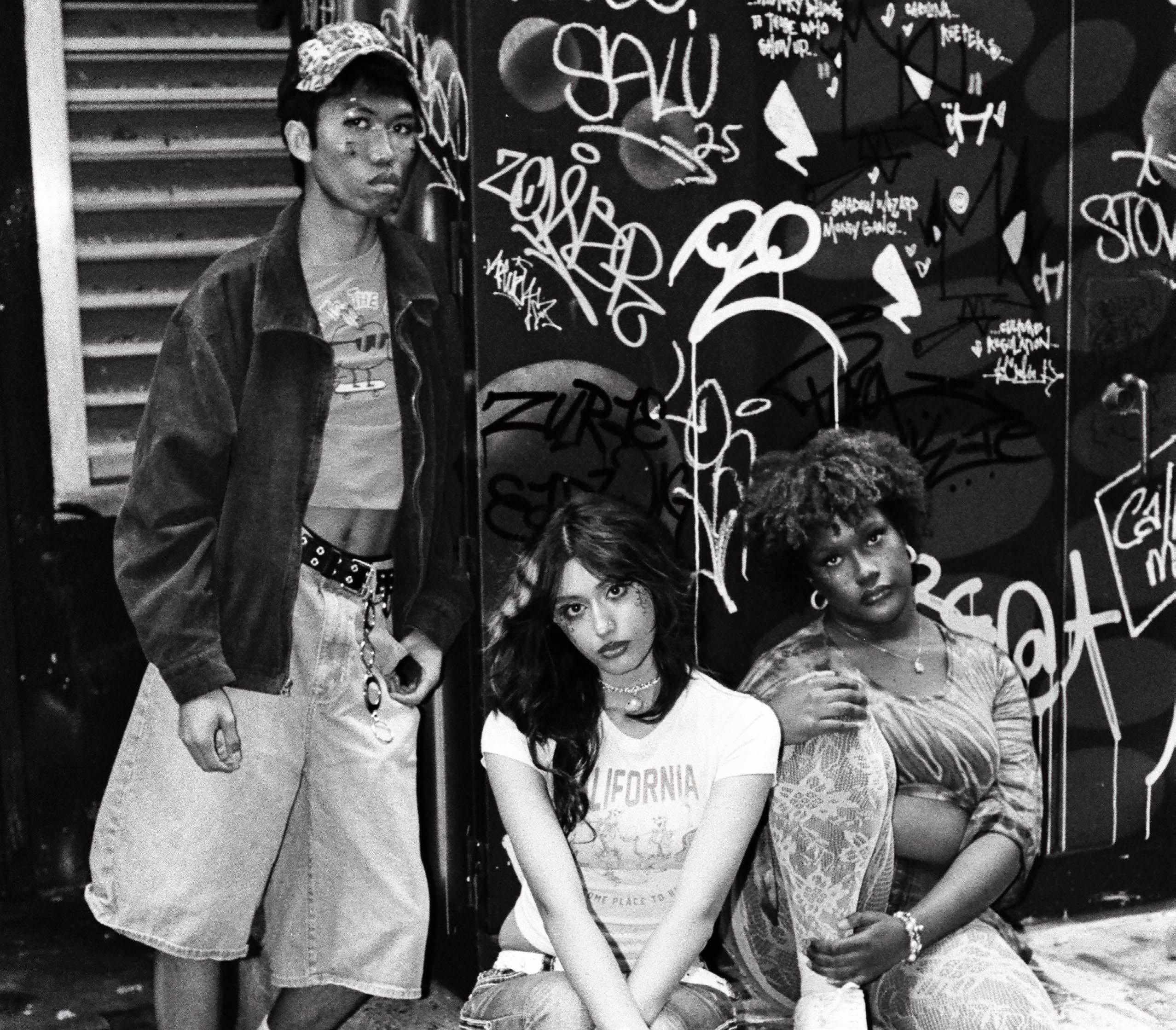
Models : Bryce Katiman, Czara Syed, Lenzie Scales
There is strength in her contradiction; in the desire to be soft and playful, yet bold and rebellious. Under PLANN Magazine, Spotlight On: Miuccia Prada - Redefining Modern Feminism in Fashion, Ryan Packer makes note of this study, observing the contrast in MiuMiu’s choice of fashion: heavy wools paired with translucent silks, leather details with pastel colors and
All of these are what defines MiuMiu in her wardrobe. She transcends the boundaries of femininity. Her witty sense in fashion dissolves the archaic appeal, letting go of control and developing structure in her own Her sensitivity remains from her curiosity, everything all intuitive.


they hold wisdom within their head, in how they speak. You notice it with the words that their tongues create, and how you

insecurities touched upon them and doubts corrupted them.

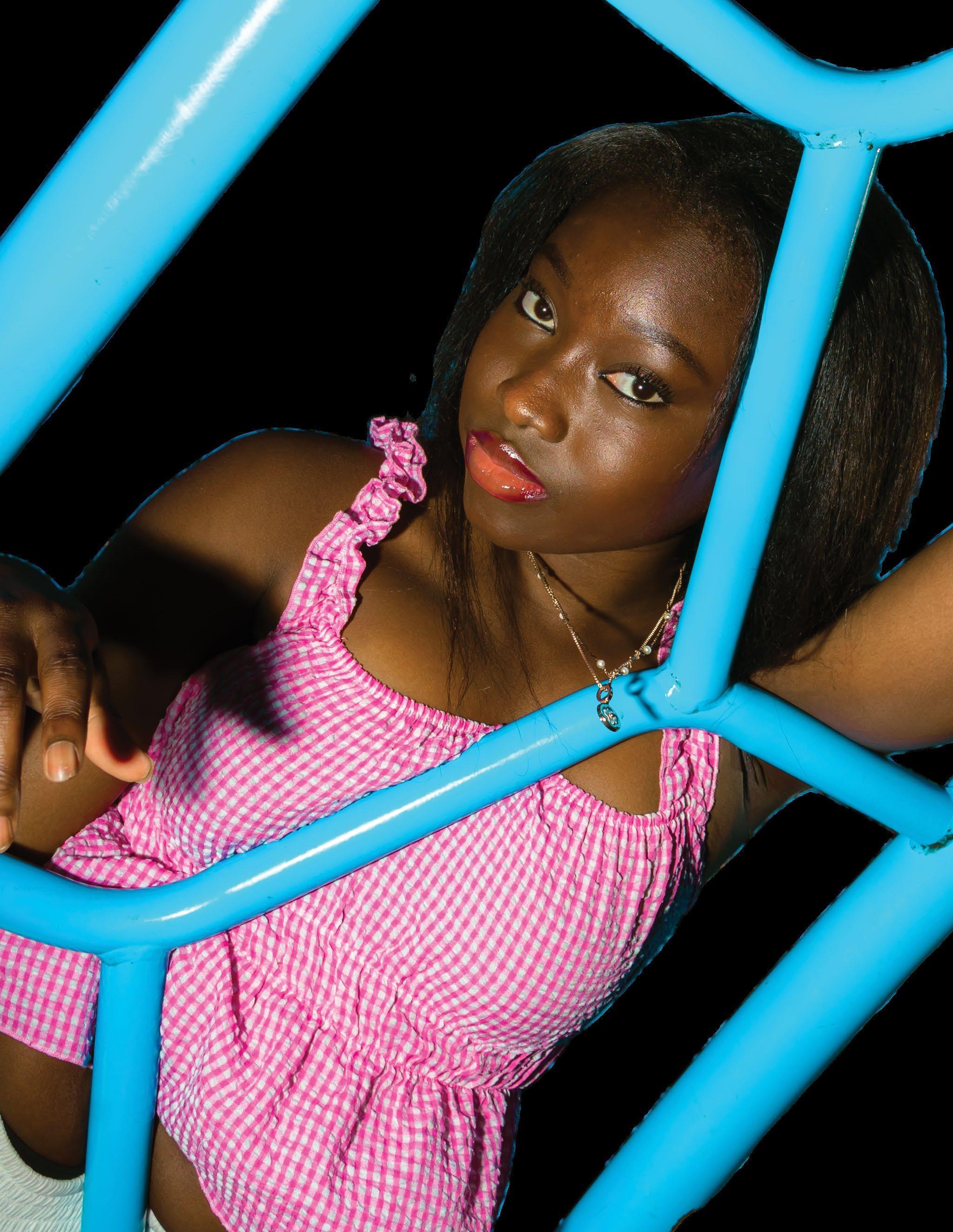

As kids, we become slightly older with each day that passes us, and begin to notice how our limbs are becoming more like those of the adults that we looked up to. But along with this, we notice a shift in how we present ourselves; a shift in the image we see in the mirror. Instead of seeing an authentic and raw version of ourselves, we now see individuality that has been chipped away by society. Somewhere along the way, we found ourselves becoming desperate to be liked and accepted by others, encouraged to fit into a box.

takes a piece of our confidence away, or a painful one that makes you realize that your identity is suddenly, nonconsensually, offered for harsh critiques. It’s through these specific experiences that we tend to see how cruel life can be when it comes to how we, as humans, find our place in a society that’s forever changing and shifting.
We begin to hide parts of ourselves to fit into that tiny box, in hopes that we will somehow find security from the scrutiny and judgment of those whose words inflict harm. Suddenly, identity is no longer personal but something we attempt to sell to one another in order to be seen as someone without any faults or weaknesses.
However, it should be noted that experiences possess value in teaching us lessons and, by default, help shape who we become. Yet it’s also seen that experiences at times can strip us of something rather than us obtaining insight from it. It can sometimes be a humbling experience that
Somewhere along the way, we found ourselves becoming desperate to be liked and accepted by others, encouraged to fit into a box.

It’s potentially through those painful, agonizing experiences that we lose fundamental parts of our identity; or maybe it’s a part of the process of growing up and learning to let certain things go, along with the times in which they thrived within.



One day, you wake up and realize that you are no longer a kid, and notice that your limbs are officially as long as the adults you once looked up to as a small child. You look at the world around you and find kids who share the same ambition and fearlessness you once had. You see them with this need to explore everything, and notice that the thoughts of all the ways they could get hurt are absent.
Coming to this realization, you look down at the children who seem to gaze upwards at you, and finally see that the box society pressured you to believe was predetermined for you, was hollow and fueled by lies.

You look at them, and you all of a sudden realize that the purest form of freedom is knowing who you are and getting to act as such. There’s a duty given to everybody who gets to breathe this earth’s air, and it’s to live their life to the fullest. We only get to live once, and there’s no guarantee
we’ll get this chance again. A chance to feel the wide range of emotions that come with being human, so there’s a duty bestowed upon all of us. That duty is given to us as children, and we honor it by acting as ourselves without any shame or hesitancy. Coming to this realization, you look down at the children who seem to gaze upwards at you, and finally see that the box society pressured you to believe was predetermined for you, was hollow and fueled by lies.
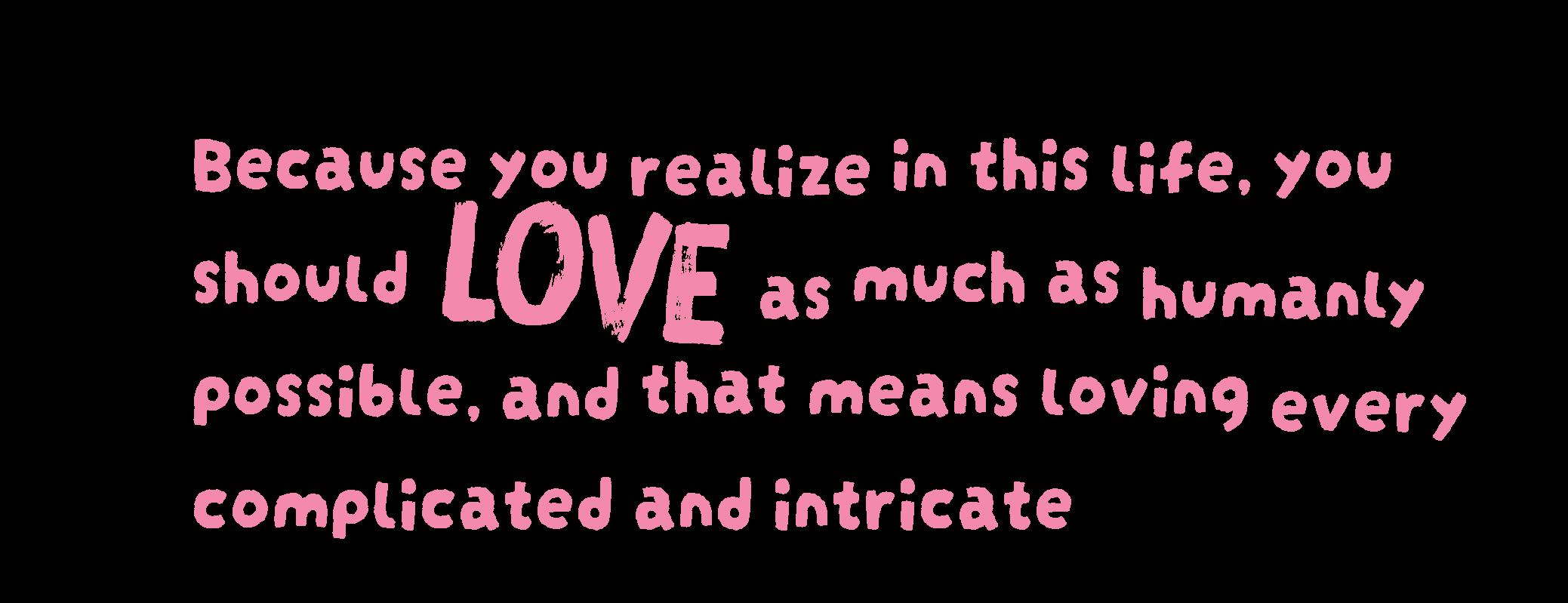
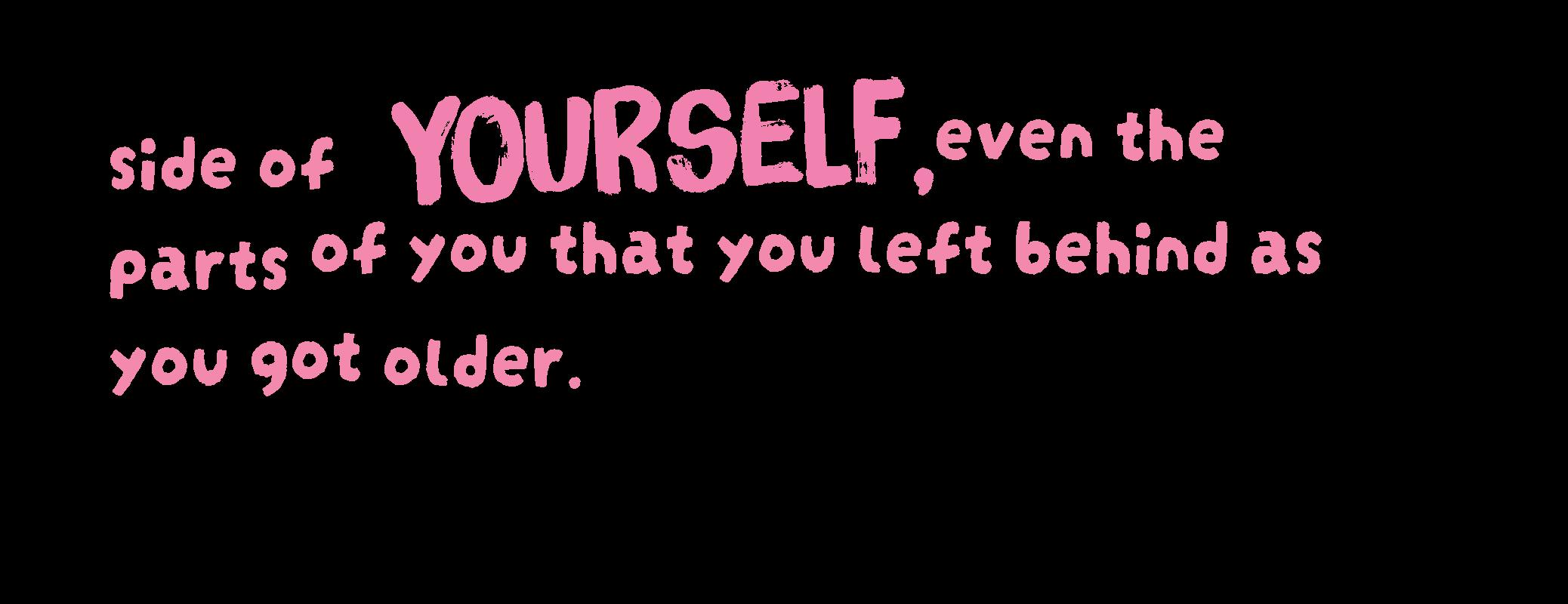
You suddenly manage to give yourself grace and forgiveness for having to diminish fundamental parts of yourself that made you unique. So you find the time to revisit things you left behind, such as hobbies or certain curious thoughts you once had and take the time to indulge yourself in them. Because you realize in this life, you should love as much as humanly possible, and that means loving every complicated and intricate side of yourself, even the parts of you that you left behind as you got older.


Dress Code:
Our Body is a Rulebook
Kanousa Thapa
Finn Isler, Rayyan Babiker

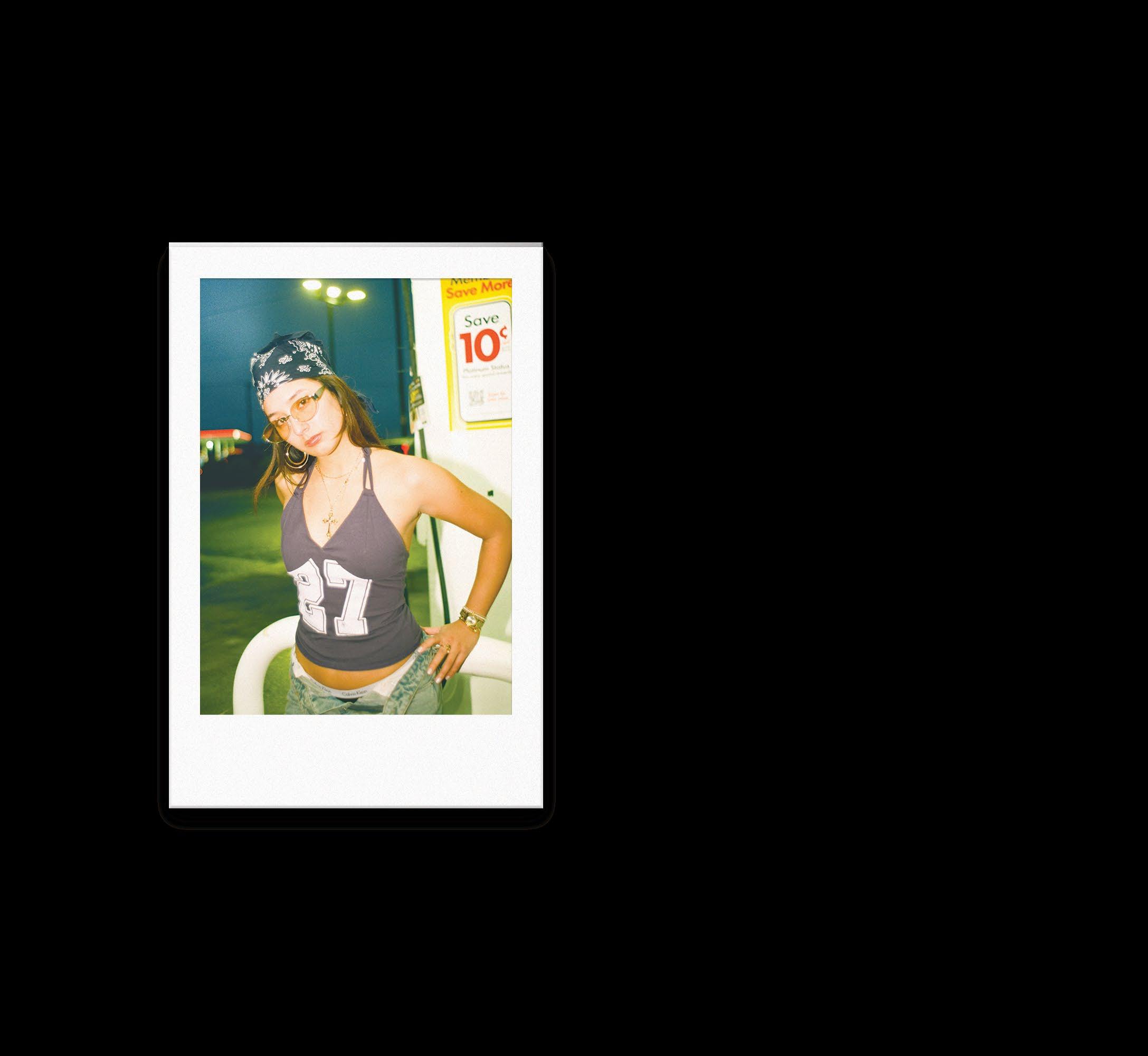

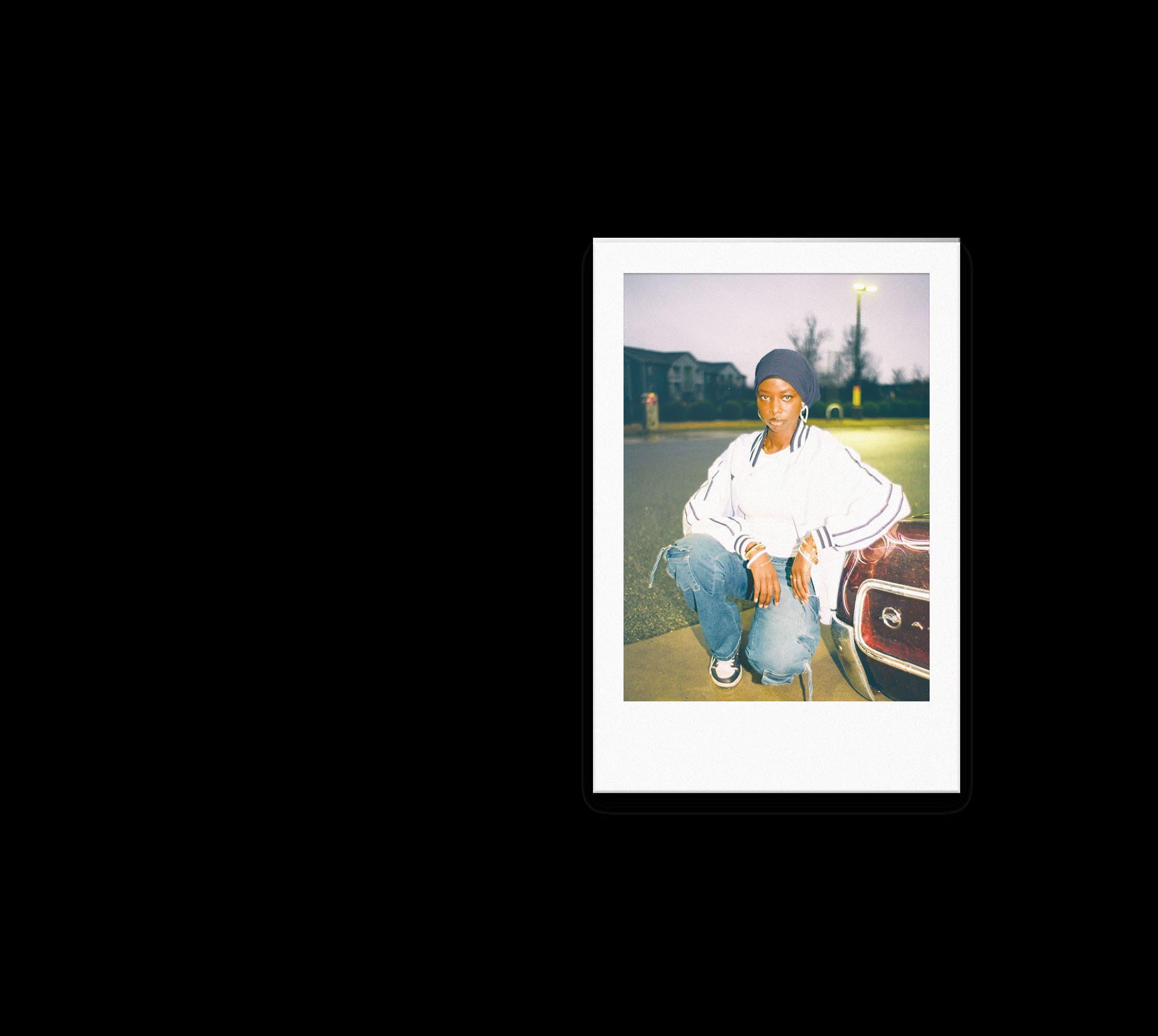

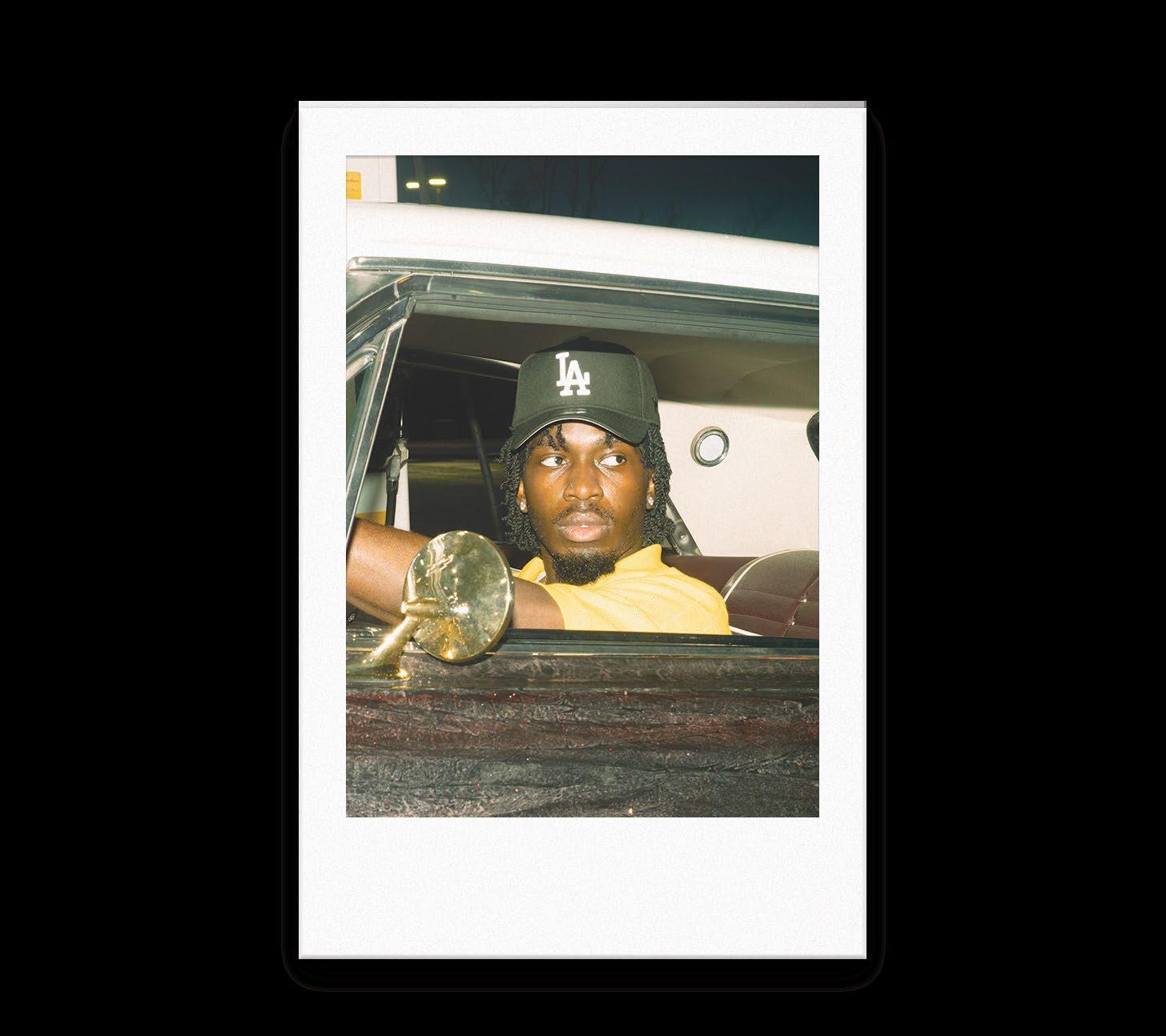
Zoe Brougher
Daniel Odei
Dashawn Ervin
Betty Diop
Emily Jeton Inga

Before we learn laws, we learn silhouettes.
Before even understanding what is appropriate, professional or presentable, we are taught these values through our clothing. Through stitching and sewing, the fabric of our clothing becomes one of the earliest systems of moral and ethical order. From our surroundings to our senses, we learn what is appropriate, what feels excessive or what seems modest. This is not an abstract; it’s a lived experience through our bodies. We learn this through the dress code.

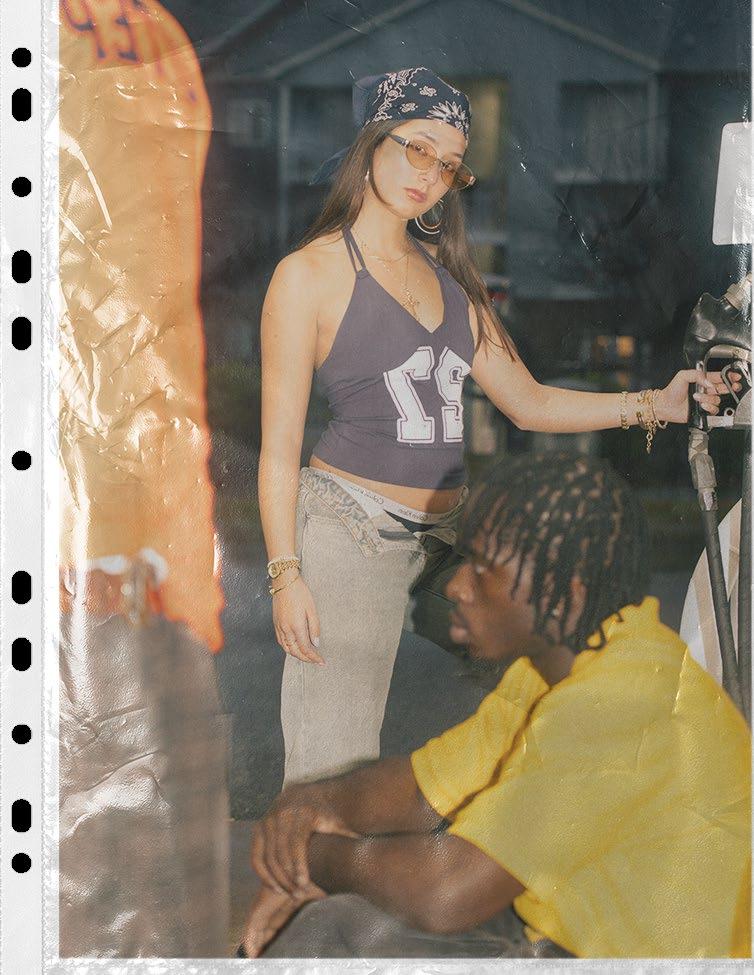

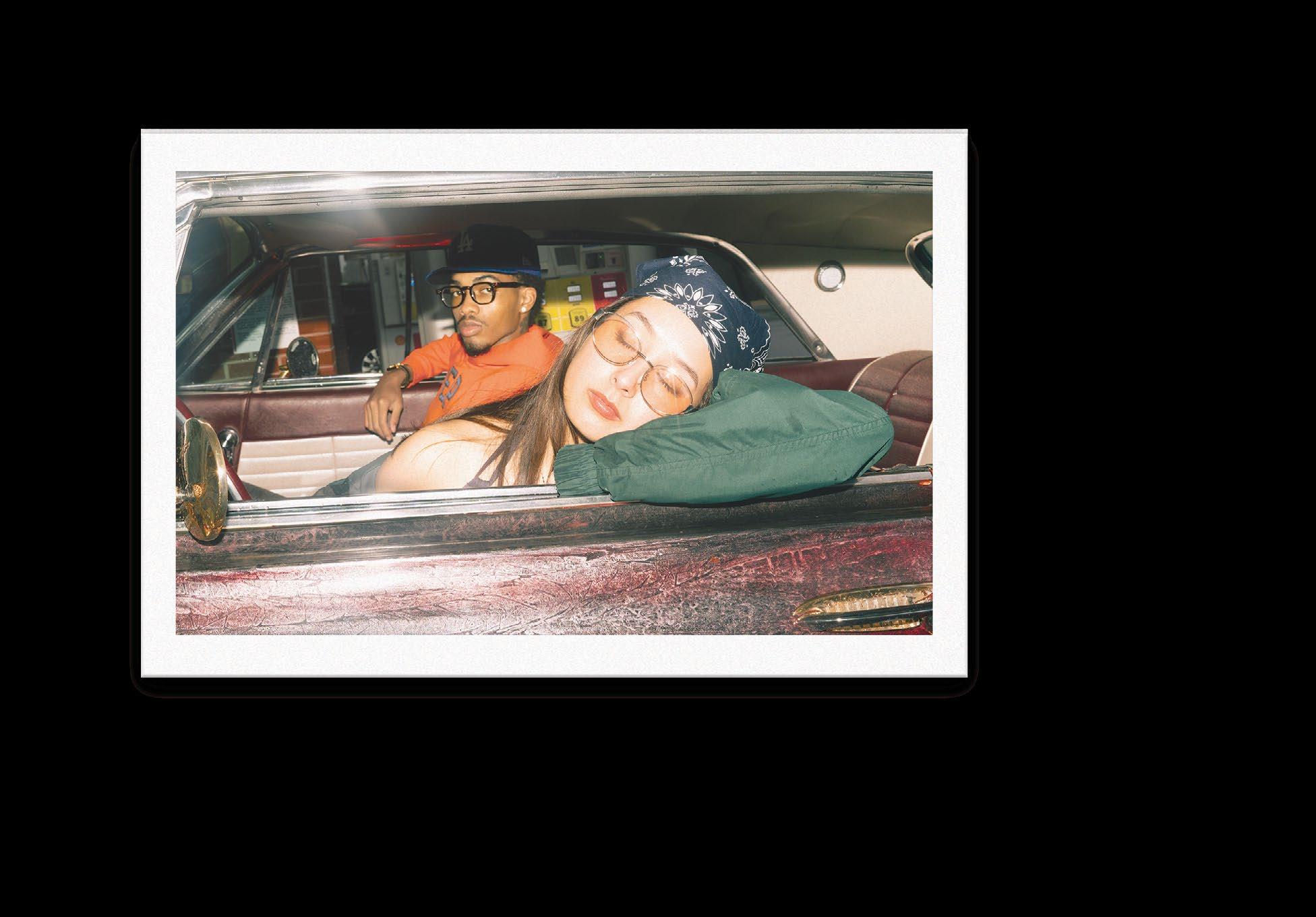
compliant with societal expectations before we even consider our own self-expression. Before our clothes communicate who we are as people, we first have to learn the rules of the surrounding space. Before you can be expressive, you have to first prove that you can follow the rules. You have to fit into society before you can stand out. Our dress code depends on the occasion;

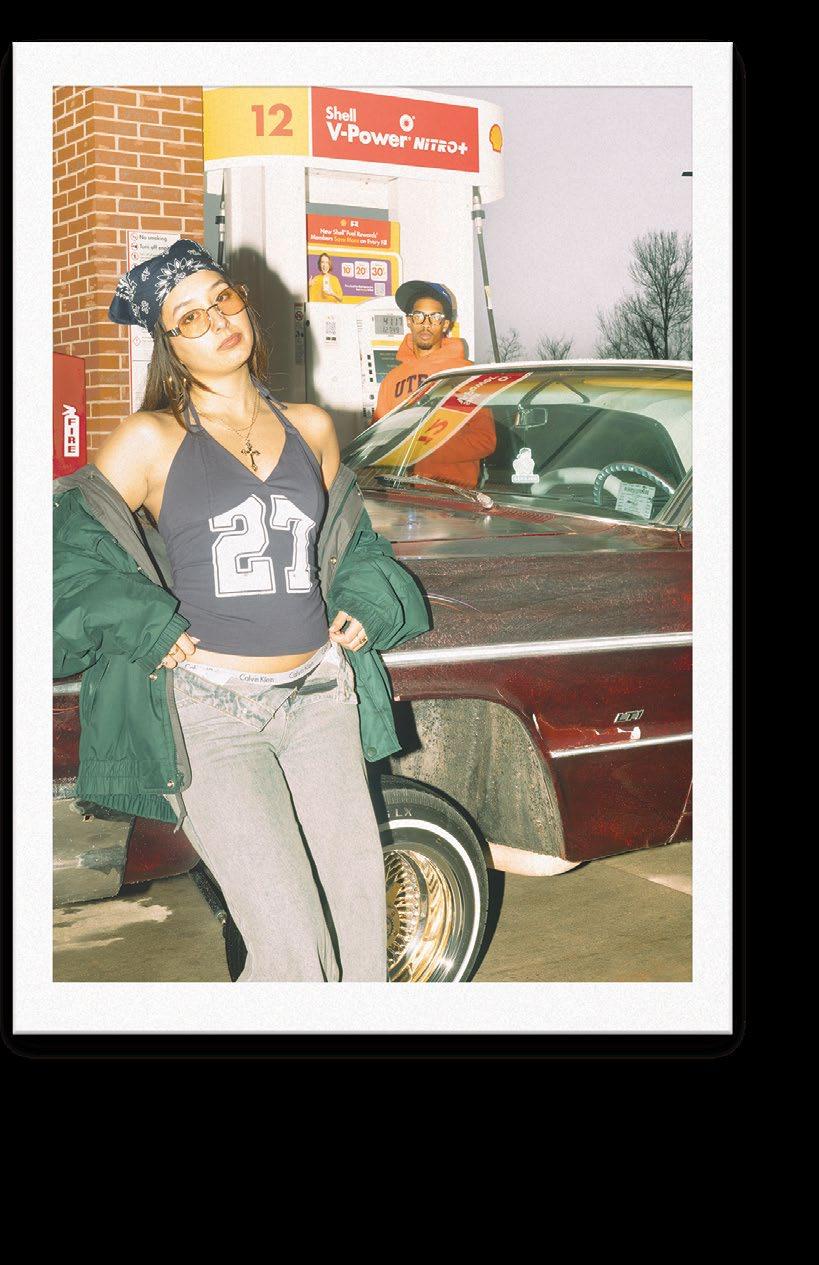
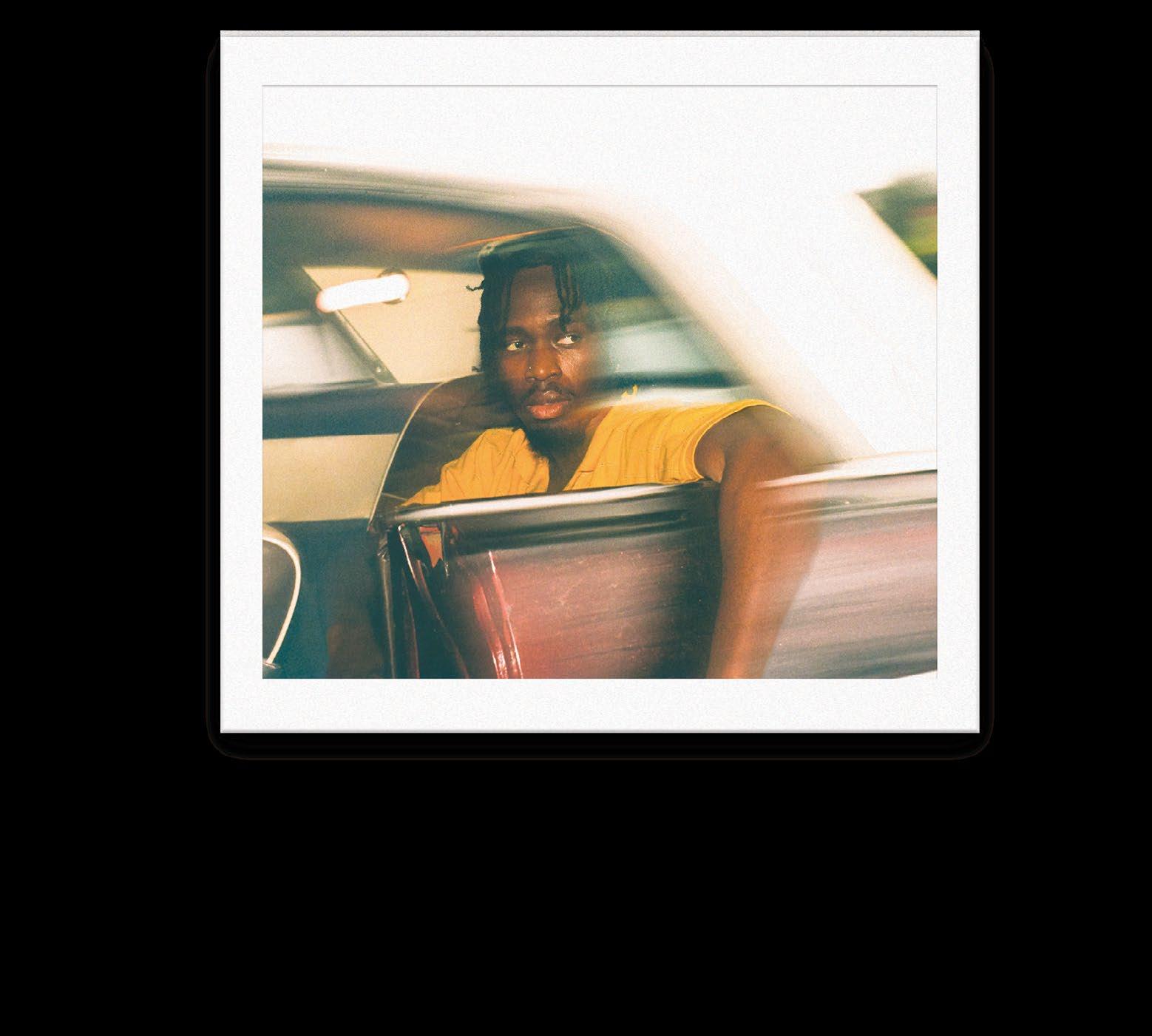
formal, academic, lounge wear we teach our bodies discipline before they are liberated to freedom. School uniforms teach discipline. Corporate teaches formality. Even going somewhere informal, like the grocery store, carries the unspoken rules and expectations of what is acceptable to wear in public. Our clothes control how we behave in space- how to walk, how to stand, how to sit, how much of us is allowed to be seen. Eventually, these external rules become internalized, and we naturally start to regulate our own behaviors. These expectations start to become a part of us. When we are constantly self-regulating ourselves, it starts becoming instinctive. We start questioning ourselves, which is a reflection of society:
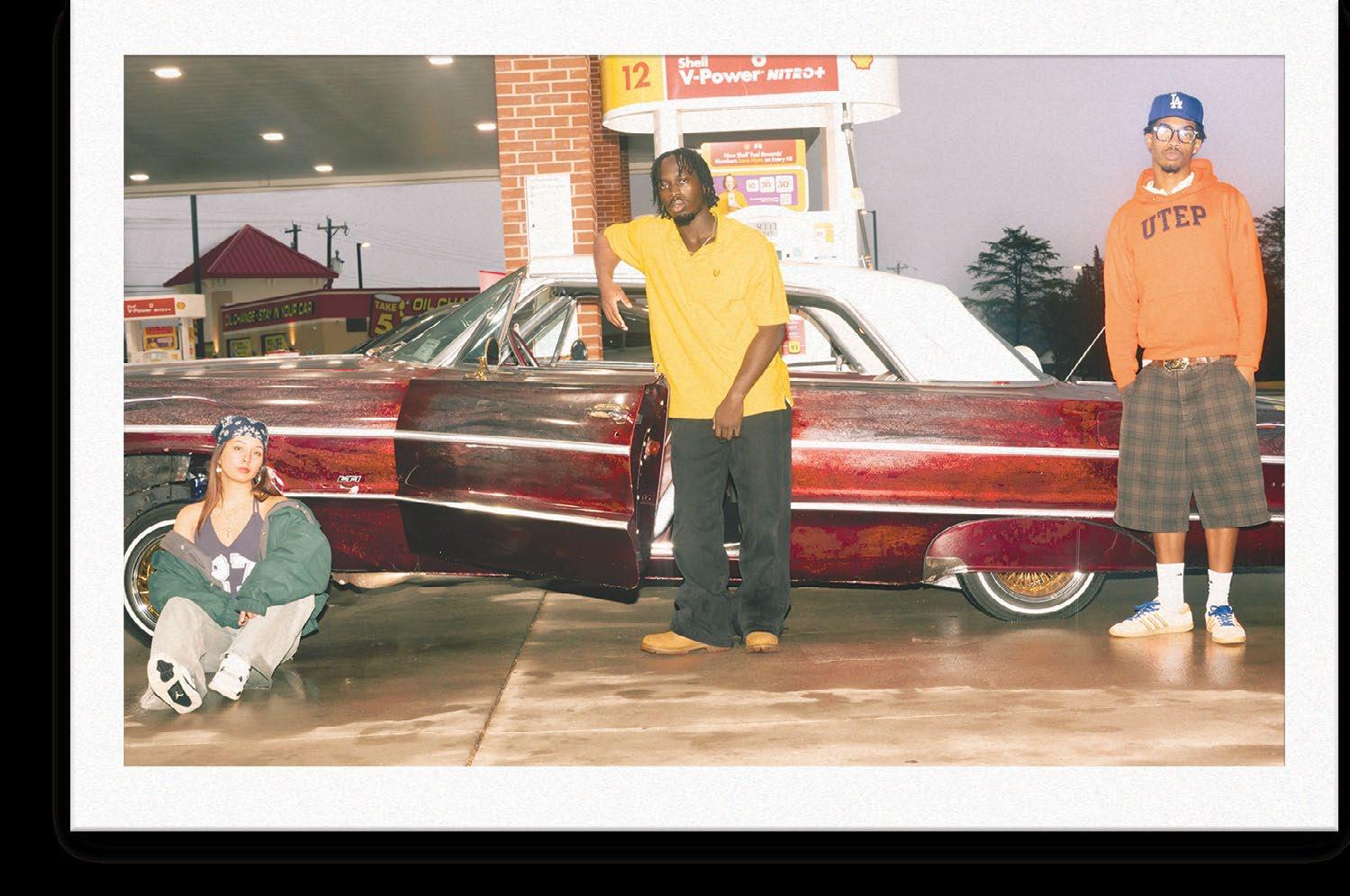
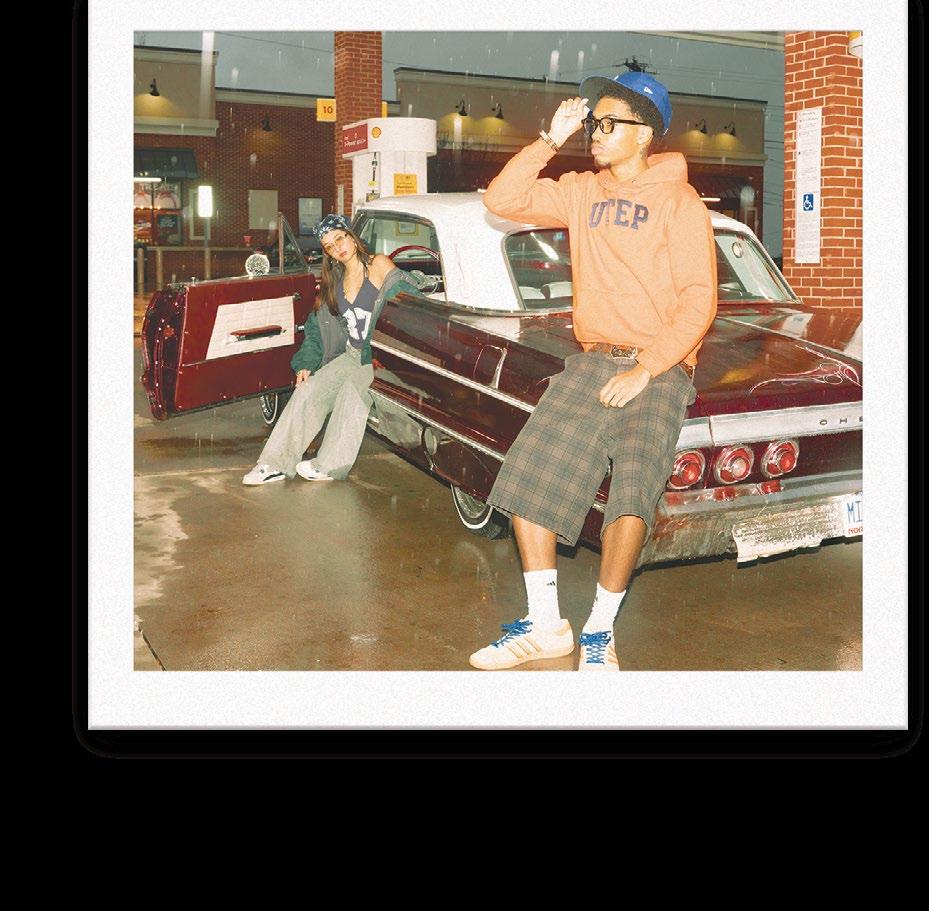

These are not questions about our fashion sense. These are ethical judgments formed from social power, perception and repercussions. In modern society, the word “aesthetics” is a coverup for the choice of being compliant. Being “aesthetic” might feel like a personal choice, but it actually is just another way of conforming. Spending hours scrolling on Pinterest, we try to
into an aesthetic is not authentic; it is alignment. Every aesthetic has a dress code. There are rules that we have to follow- color scheme, style, texture, and more. To effectively embody the aesthetic, you have to understand the rules. Individuals who conform to an aesthetic are rewarded. For those who don’t, they are subtly punished through exclusion, judgment, being perceived and so on. We are constantly going through a trend. Trends are subtle laws- unspoken but enforced through social approval. Professionalism indicates restraint, while streetwear communicates effortlessness and has
cultural influence. With so many categories, each aesthetic reflects style as well as moral understanding. Although the person selecting their style feels like they’re in charge of their expression, there is still order. There is always a “correct” way of participating. Individuality is only permitted when others can recognize your expression based on the social rules.
Clothing might be accessorized and decorate our bodies, but it also disciplines them. Standing taller in tailored pieces, sinking into oversized clothes, keeping our chin up in a suit and carefully moving around in a dress. Our clothes not only reflect our identity but also perform obedience. Our bodies become a canvas where rules are worn, not written; we are not just wearing clothes- we are wearing a rulebook.
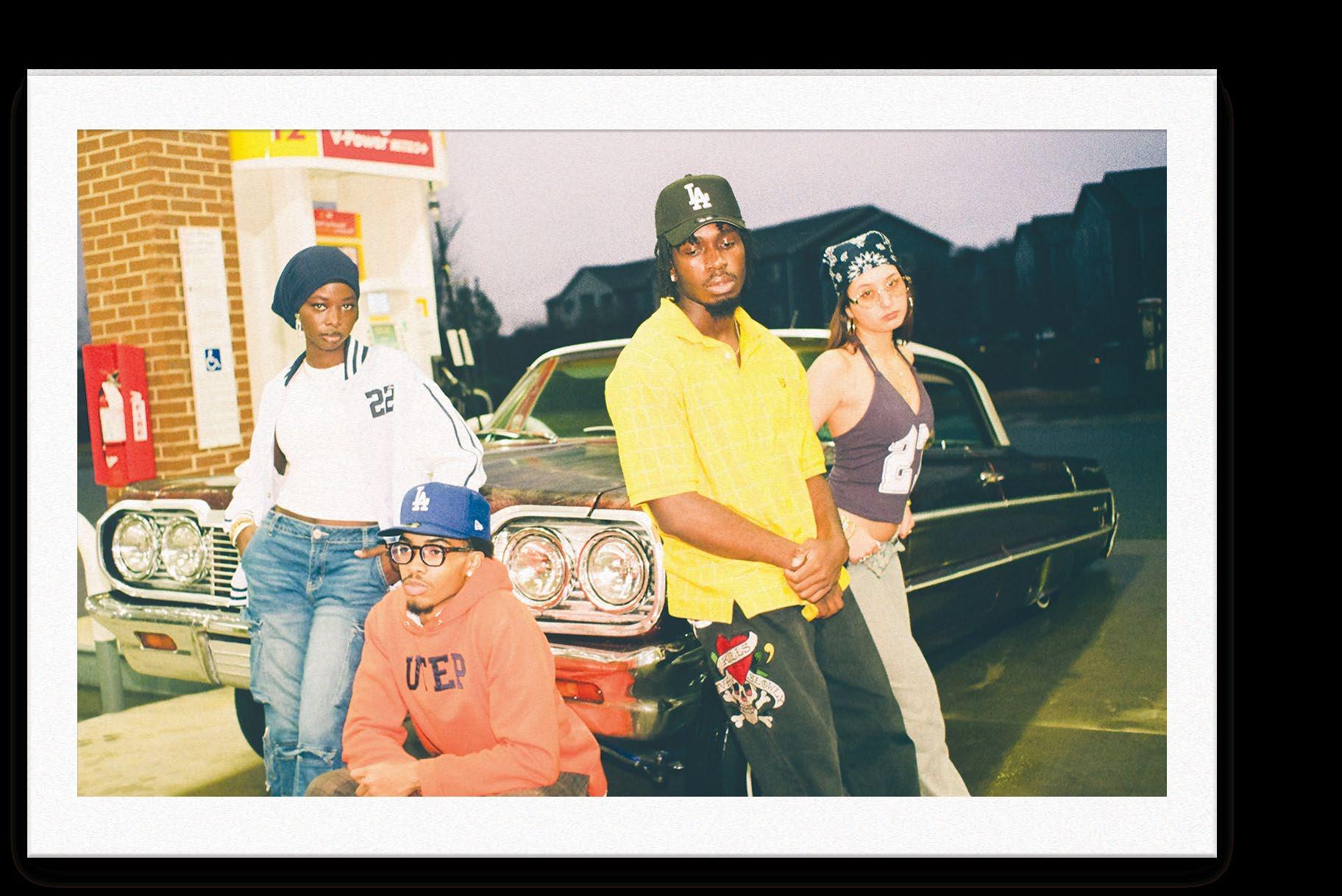
Eventually, these adjustments start to feel natural. When walking into a room, our clothes talk before we can. Clothes communicate who understands the rules, who follows orders and who does not. How we present ourselves externally through clothing determines whether we are conforming to or resisting social norms and expectations, even though we subconsciously do it when we don’t mean to. Our bodies represent these rules daily. We wear modesty, professionalism
and chic based on what is expected from us. Eventually, clothes stop feeling like a choice and become more conventional. Dress codes hold a lot of power through moral code. It never tells us what to wear, but unspoken, it teaches us how to act, represent ourselves and remain viable within social structures.


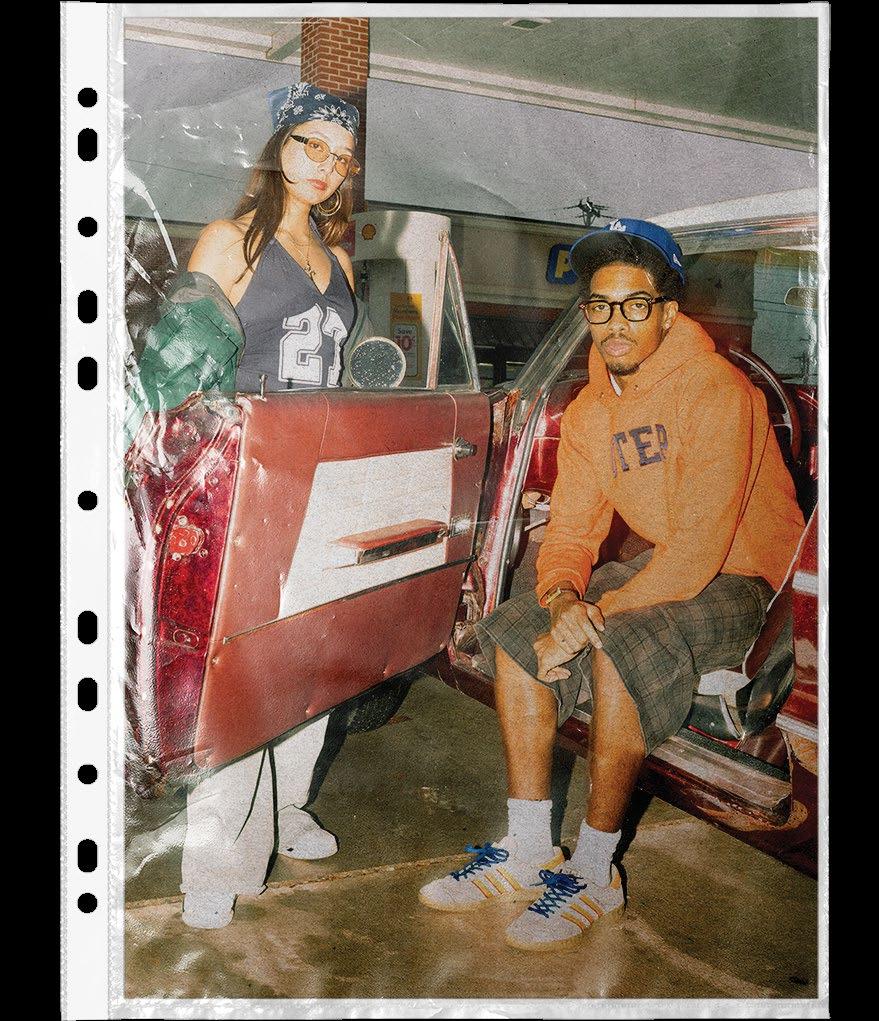

WE ARE NOT JUST WEARINGclothes.
WE ARE WEARING conformity .
WE ARE WEARIN G expectation s.
WE ARE WEARING A rulebook.
arker Miers started his year how he started most on UNC Charlotte’s campus: rolling off his dorm room bunk and throwing on whatever was comfortable. On Jan. 30, Miers wore a grey hoodie with navy blue sweatpants, paired with brown Birkenstock slippers. Miers’ morning ritual usually resulted in an outfit like this, cool tones on comfortable material, and he was happy with that.
“I don’t really care what people think,” Miers said. “I just really wear whatever I want.”
I talked to Miers in a corner of Atkins Library where he sat studying at a table with friends. All wore some variation of Miers’ outfit. While I asked Miers what the process was for putting together his outfit, one of his friends, wearing grey sweatpants and a black hoodie, joked that the lights were off in his dorm and that he had just thrown on whatever was clean.

In response, Miers laughed and told me his friend’s claim wasn’t too inaccurate.
“I just threw on something comfy,” smiled Miers.
Miers isn’t unlike most UNC Charlotte students — tossing on something muted and comfortable to get through the day without drawing too much attention to themselves. For many, dark clothes are easier to pair, more accessible and less of a risk to wear.
Among the many attracted to the comfort that a darker wardrobe offers is first-year student Kobie Ankrah.
When I spoke to Ankrah, he wore a black puffer jacket over a black zip-up hoodie and dark blue jeans.
“I just like to wear calm clothes, dark colors,” Ankrah said. “I want to give the impression that I can dress a little but am still approachable.”
During our conversation, Ankrah showed off a new piece in his wardrobe: a grey walking boot on his left foot. Weeks ago, Ankrah had broken his foot at the University Recreation Center and had been forced to add the boot into his rotation. Fortunately, the grey fit right into his typical color scheme.
“It hasn’t been hard to match it,” Ankrah said. “I just kind of wear whatever and more often than not it works.”
That day, he wore the grey boot with a grey Adidas Yeezy Foam Runner.
Of course, blues, greys and blacks didn’t always dominate our closets.
Until the 18th century, black clothing was seen as a sign of sophistication and power. Black clothing was extremely difficult to produce and expensive, so only the rich could afford it. To dye clothes black, dyers often layered deep shades of blue and red; the process was expensive and long.
The shade first trended among the public in the 14th century, during the Black Death from 1347 to 1353. The plague killed roughly one-third of Europe, so death was common, constant and public. Everyone was mourning, and everyone was in black. Following the end of the plague, some held on to the color scheme.

Black trended again in the 1600s and 1700s as governments expanded across Europe. The color was seen as impartial and allowed authority to appear rational as bureaucracy saw sudden growth. Service workers, police, judges and other public-facing professionals still wear black for this reason. Black also helped mask financial inequality. While the color remained expensive to produce, its muted tone was less conspicuous than bright oranges or reds; much like college students before their 8 a.m. classes, the wealthy leaned on black to blend in.
The color has trended again and again since the 1700s: it made waves during the soot-filled industrial revolution as black didn’t stain as easily as lighter clothes, later during WWI, bright colors felt inappropriate when death was in excess so black was popular, following WWII and during the Cold War punks wore black as a way to show disillusionment from consumer culture and to reject optimism.
Now, in 2026, in a post-COVID world and time of economic uncertainty, black is back. Fashion scholars believe our preference for darker colors and restrained silhouettes signals seriousness and cultural pessimism.
But are we really all just responding to the world around us by slipping into a pair of black sweatpants in the morning? All restraining our color palettes with grey sweatshirts in unity to show that we, too, understand the seriousness of the world around us?
Amid the vast sea of quiet outfits and calm colors across campus walkways, many still choose to dress with a little color.
On the same day that I talked to the darkly dressed Miers and Ankrah, some bucked the trend of inky outfits.
Layering a white t-shirt under a light pink cardigan was second-year student Katty Galvan. She told me pink was her favorite color.
Galvan’s color of choice has trended in times of stability. During the Age of Enlightenment in 1700s France, pink signaled wealth and emotional openness. In the 1950s, when domestic femininity was embraced, pink helped push softness and romantic optimism. Again in the 1980s and early 2000s, pink trended during a time of economic optimism and when femininity was embraced.
Pink was originally a boy’s color, as red was the color of men, and boys had to grow into the color.
Galvan wore pink neither to show her economic optimism nor her intention to grow to be a man, but to fit with an aesthetic.
“I try to give off that soft-girl aesthetic,” Galvan said. “I rarely wear dark colors like black. I have a pink puffer — I just own a lot of pink and white.”
Unlike Miers who had thrown his outfit together last minute, Galvan said she planned her outfits out in advance. Every night Galvan said she took inventory of what was clean and unworn in the week prior, checked the weather and put together what she’d wear the next day before laying it out in her room.
Beyond her outfit, Galvan’s method of deciding what she’d wear differentiated her from those whom I’d talked to previously. While Miers and Ankrah said they’d just thrown their outfits on, Galvan had been intentional.
Was this what caused Galvan to buck the trend of blacks and blues — her conscious effort rather than a half-minded, split-second decision?
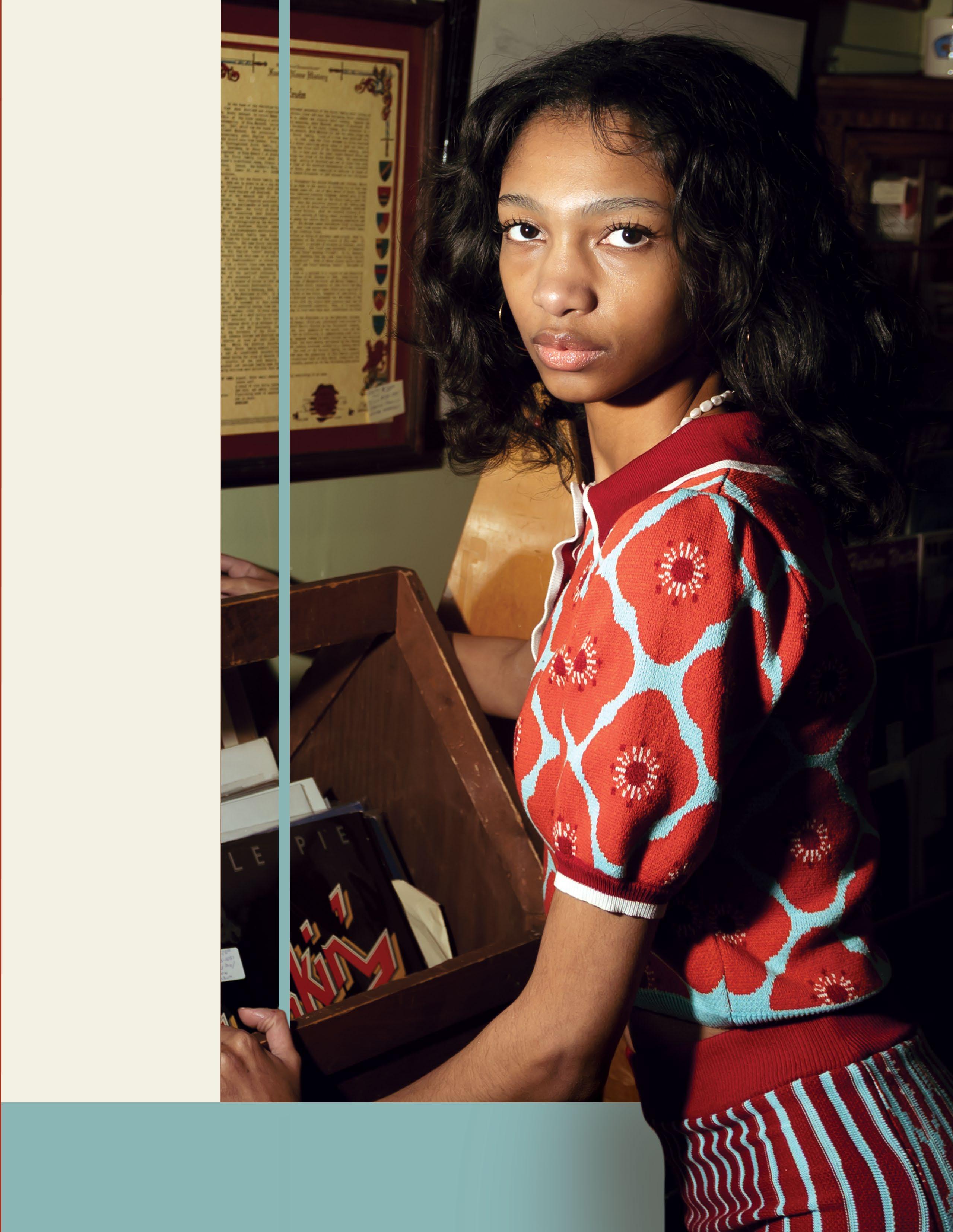
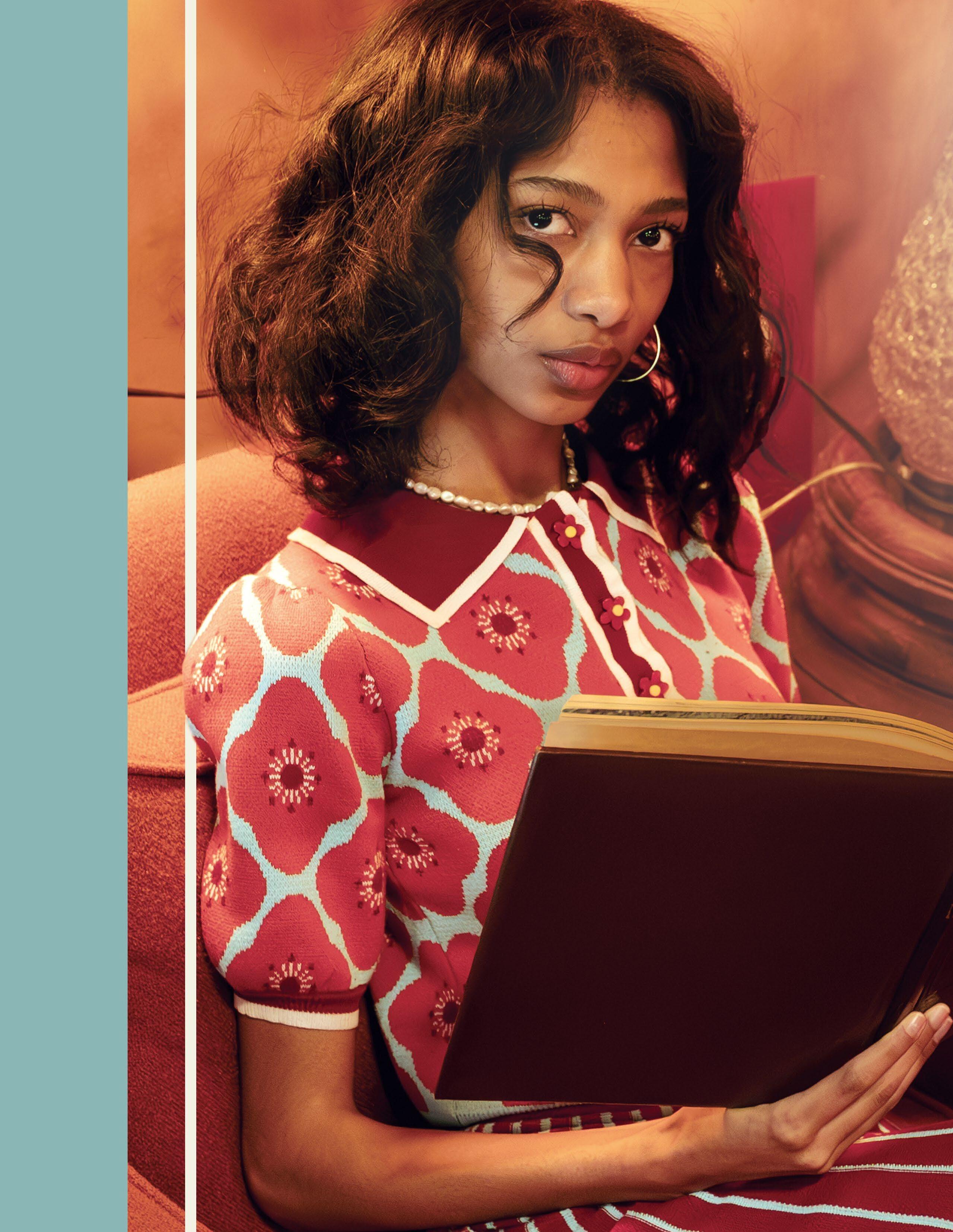
The experts don’t seem to think so.
“There really isn’t such a thing as the unconscious ‘just throwing something on,’” Meredith Magoun said. “There’s always the level of which we decide to wear certain things, and why. That is conscious.”
Magoun is currently an assistant professor of costume design at UNC Charlotte. Magoun, a self-described fashion historian, has designed costumes for opera companies, universities and theater groups across the country.
I believe it is fair to call Ms. Magoun an expert.
At UNC Charlotte, Magoun teaches courses in Costume Technology, Stage Costuming, Costume Design, Costume Crafts, Fashion History, Intro to Theatre (Theatre Experience), Intro to Production Design and Mask Making.
Teaching out of Robinson Hall, where most students came to study performance and fashion, Magoun said she saw more students taking risks rather than wearing what she called the college uniform of sweats and t-shirts. She saw how students dressed — whether they wore yellow or grey — as a battle of “belonging and not belonging.”
“ Individualism versus collectivism is a constant conflict. There’s safety in numbers, there’s safety in the collective, in the group belonging. There’s safety in conforming,” Magoun said. “But at the same time, we don’t always necessarily want to do that.”
During our interview, Magoun wore a black long-sleeve t-shirt and a brightly patterned scarf, which she called her “security blanket scarf.” She considered this outfit — something dark with a pop of color — to be her uniform.
“People tend to gravitate towards these articles of clothing that fit them and offer ease of choice,” Magoun said. “Once you’ve landed on something that represents this version of who you want to present to the world, you kind of go with it.”
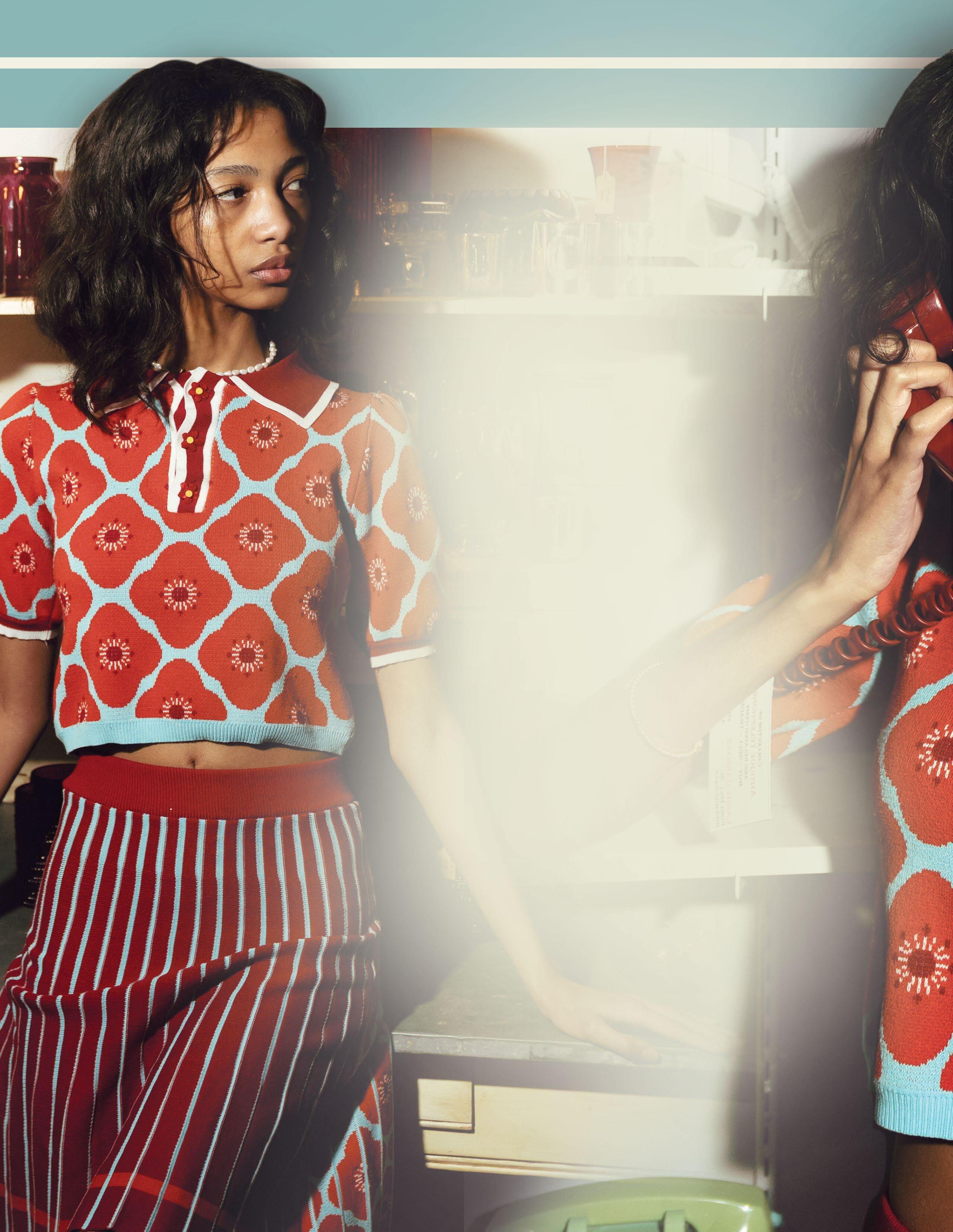
I came to Magoun hoping she’d be the guiding light for my article, the person who could explain why we choose the colors we do. During our conversation, she helped me realize the answer might have been hiding in a rewatch of “The Devil Wears Prada.”
In the 2006 film, Meryl Streep’s character gives a fiery monologue on how every ‘what to wear’ decision is made not by you but by the fashion industry.
“That blue represents millions of dollars and countless jobs. It’s sort of comical how you think that you’ve made a choice that exempts you from the fashion industry when, in fact, you’re wearing the sweater that was selected for you by the people in this room,” lectures Streep’s fashion mogul character in the film.
Magoun pointed to Pantone to exemplify the monologue. Pantone, the global printing company, announces its color of the year at the beginning of each year. The color is decided by teams of trend forecasters and researchers, who spend the year examining global and historical trends to determine which color they believe will define the upcoming year.
Their 2026 color of the year is “Cloud Dancer,” a soft white color. Throughout history, white typically trends during periods of renewal and purity. In ancient Rome, white was a sign of civility; in the early 1900s, white trended during the rise of modern hygiene and demonstrated cleanliness.
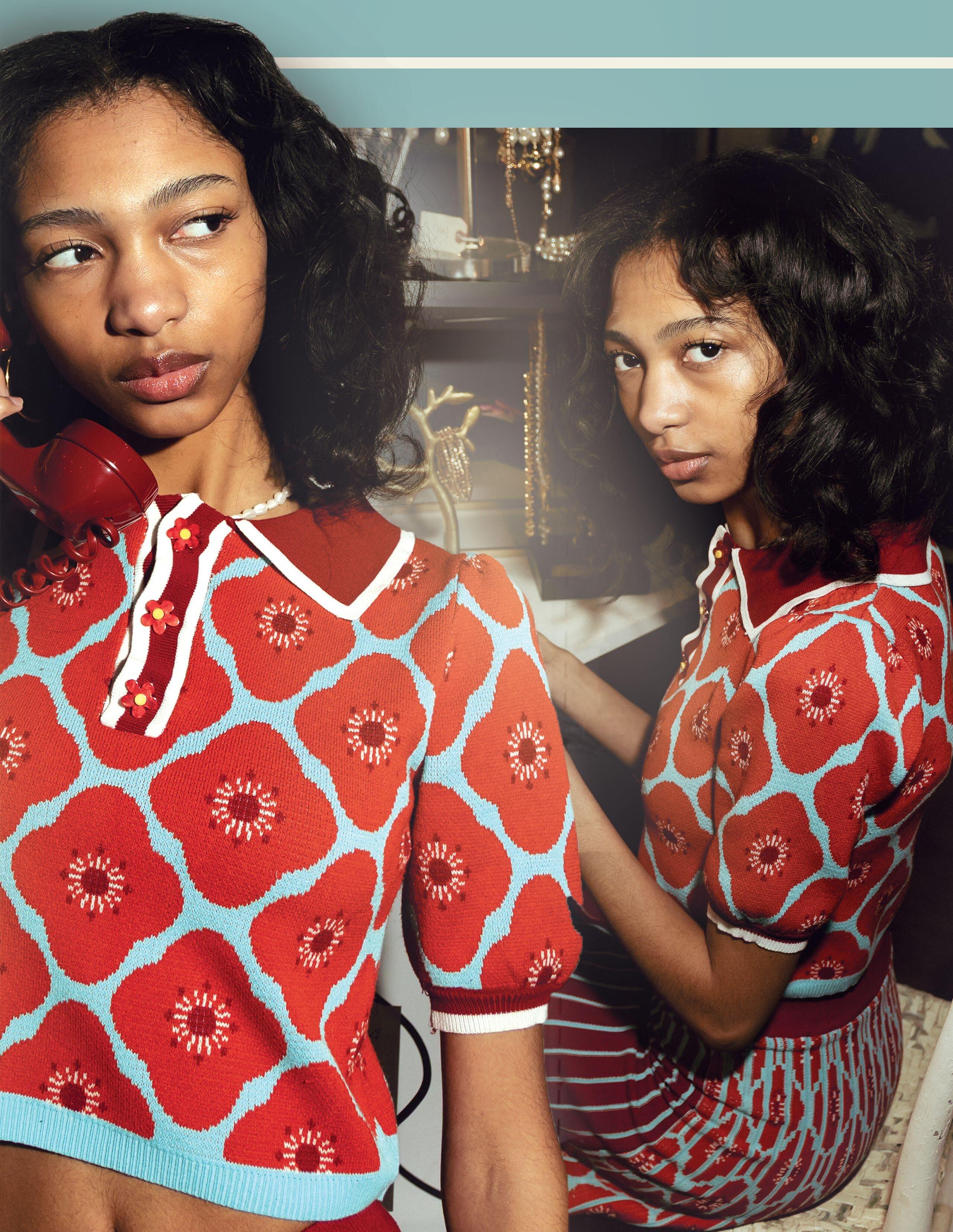
In 2016, Pantone’s color of the year was Rose Quartz. It was later coined “Millennial Pink” after the color started appearing everywhere; on Ariana Grande’s “Thank U, Next” album cover, on iPhone cases and in Galvan’s “clean girl aesthetic.”
Pantone’s 2020 color of the year was the navy blue of Miers’ sweatpants when I spoke with him. 2025’s color of the year was the dark brown of my thrifted carpenter pants that I’d worn when we talked.
“Pantone isn’t just predicting that white is the color of 2026; they’re telling us that white is the color of 2026,” Magoun said. “So now you’re going to go, ‘Oh, maybe I really do want that mug in white instead of millennial pink, because that’s kind of old, but white feels fresh and new.’”
Sure, we all have the option to go out and buy a neon orange sweater to pair with our emerald green pants, but those choices would only come in reaction to the trends; in a way, the industry that “The Devil Wears Prada” and Magoun speak of would still be deciding for us.
And yet, as I walked around searching for someone else to bother about their outfit choices, it became clear that individualism still surfaced — even among those who, in one way or another, followed trends.
In Robinson Hall, where Magoun teaches, one student sat in the building’s lobby studying sheet music, their laptop in their lap. They wore a long-sleeve yellow t-shirt, blue jeans and grey tennis shoes. On a chair beside them lay a grey and green jacket and a blue helmet.
The student, Brandon Stinson, a third-year music major, explained that he had gotten the shirt after he learned he had Celtic heritage years ago. The shirt bore a Celtic clan sign that arched out to form what looked like a tree.
Stinson said he had “thrown on” his outfit this morning in a hurry.
“I don’t really try to portray anything when I get dressed,” Stinson said. “I don’t try to stand out too much, but I like what I like, and that’s what I wear.”
I thought Stinson’s outfit looked nice. It wasn’t anything you might see on a fashion runway and there were no hints of Pantone’s “Cloud Dancer” on any part of his clothes, but I thought the outfit fit him.
He told me he normally wore similar outfits every day, typically jeans and graphic T-shirts. Magoun chose her safety scarf and black long-sleeve for her uniform, Stinson had chosen this.
All of us, of course, have outfits like the one I caught Stinson in during his Friday afternoon study session. I like to wear lighter pants with lots of pockets and dark tops, which is a choice I’m sure someone wearing something trendy for their high-up office job made for me.
Still, I am not under mind-control when I dig a pair of carpenter pants out of my closet every morning. I am the one who decides between a black hoodie and a navy hoodie as the base for my outfit. Pantone does not hit a button that zaps me when I choose to wear black shoes instead of white shoes.
Influence will be there no matter what choice you make; more likely than not, you’ll feel “right” grabbing that pair of blue jeans tomorrow morning because the industry wants you to. But whether you choose to recognize that influence, to pause and consider what’s guiding your hand, is your choice entirely, and maybe it’s the only real choice you have.
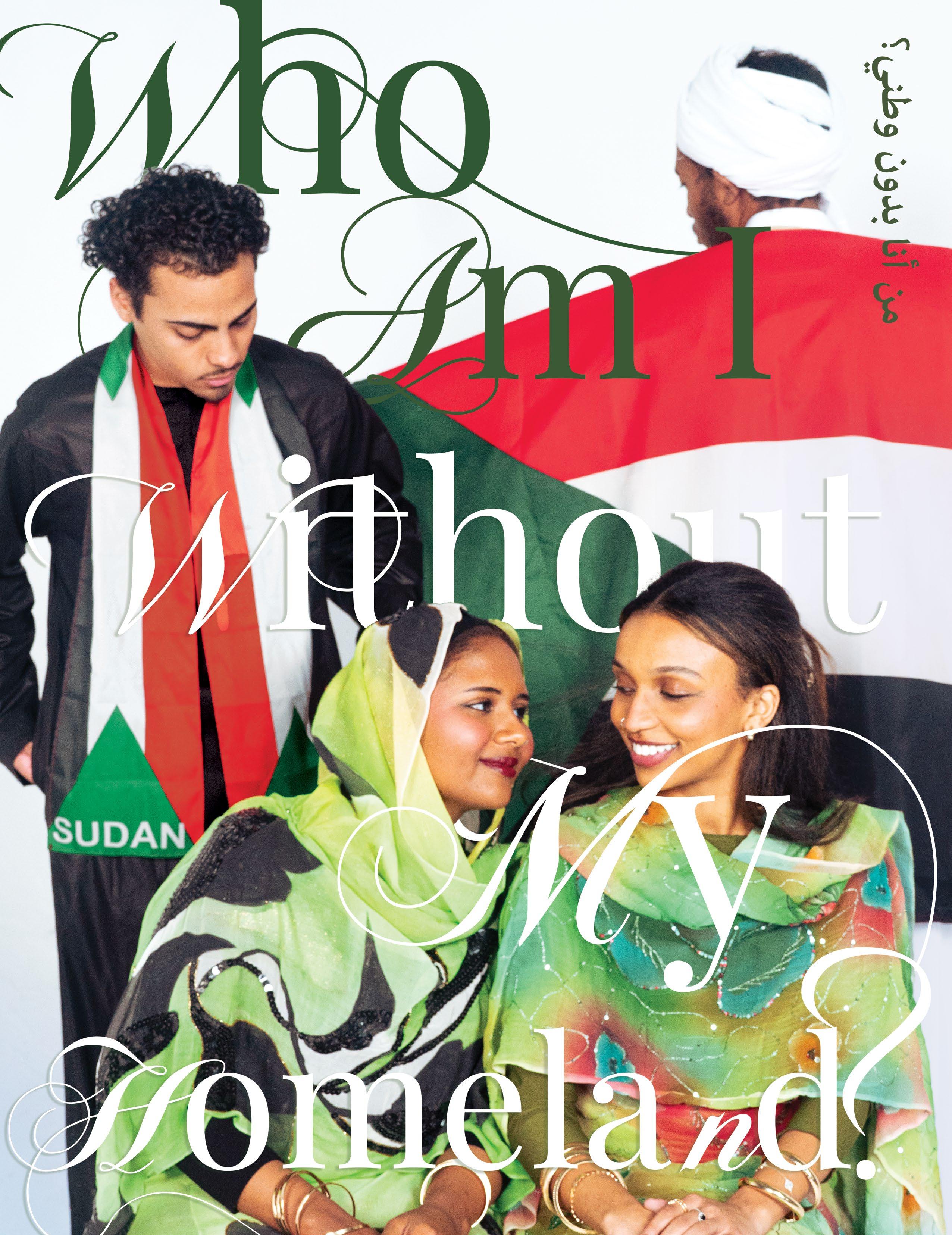
Designed by : Emily Jeton Inga
Photographed by : Rayyan Babiker
“ As a Sudanese student at UNC Charlotte, the genocide in Sudan has deeply affected my family and I in ways that are hard to fully explain. Watching the the violence unfold while being so far away has been painful, especially knowing that Sudan often feels forgotten by the world. At the same time, it has made me even more proud to be Sudanese and more determined to speak up. I see it as my responsibility to raise awareness, educate others, and be the voice for those whose stories are overlooked or unheard. ”
Tasneem Mohammed
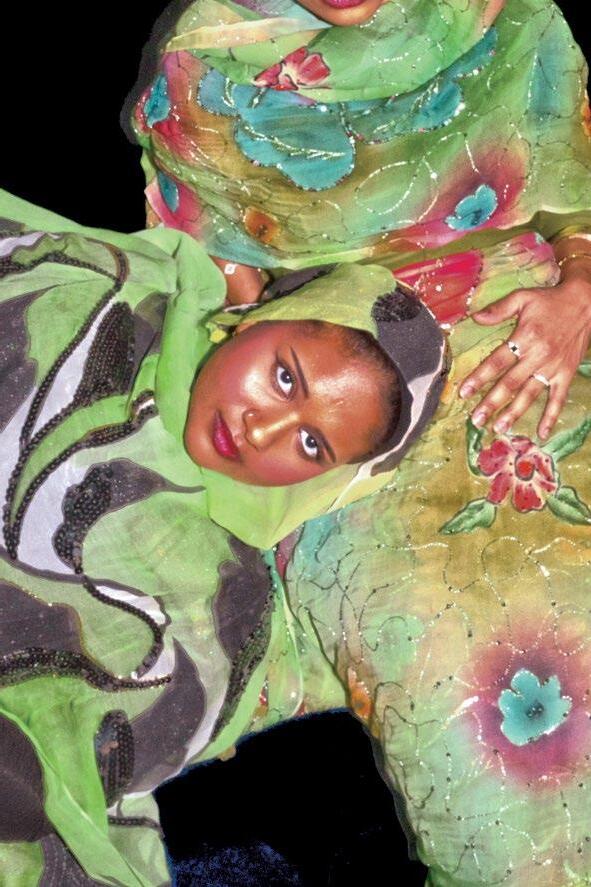
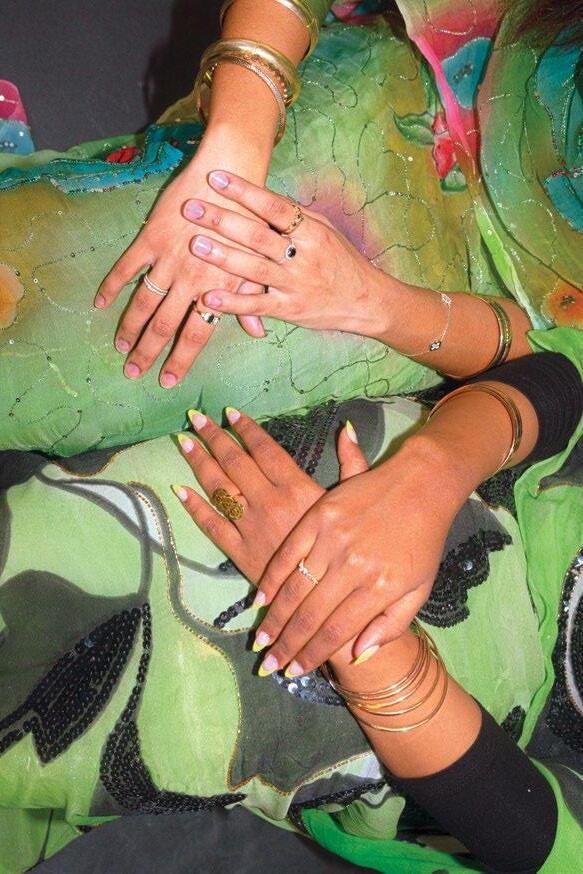
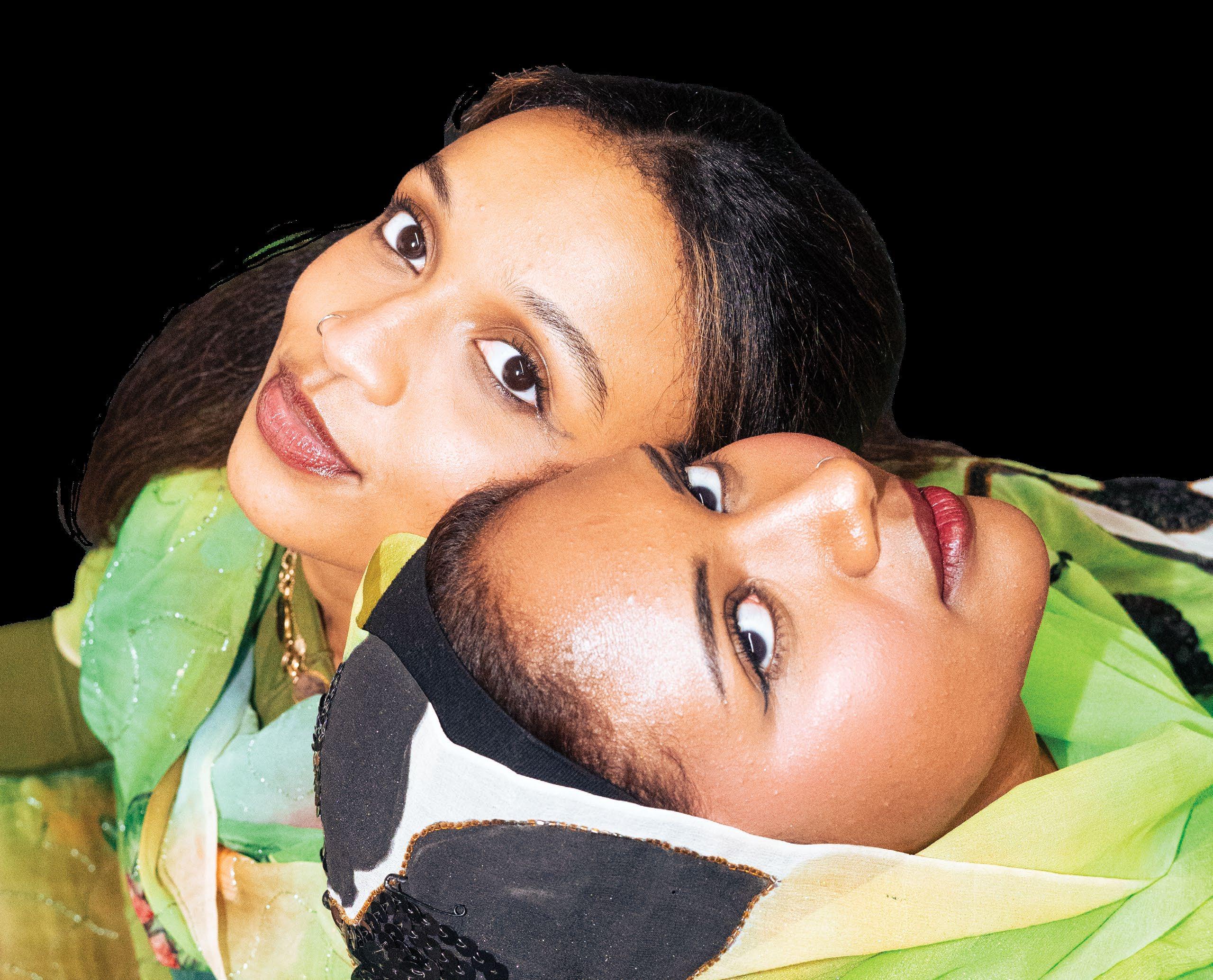


Modeled By: Assmaa Hassan, Tasneem Mohammed, Ali Ezzo, Yousef Elhennawy
“ The genocide in Sudan forced my family into displacement across multiple countries, where some of my family members faced lifethreatening situations while trying to escape the country. This issue going on in Sudan made me want to educate myself more about my country, as well as teaching others about the history and culture of Sudan. Connecting with members of the Sudanese Student Association at UNC Charlotte allows me to learn more about and further appreciate my culture. “ Yousef Elhennawy
WRITTEN BY BAYAN AMMAR PHOTOGRAPHED BY MATTHEW BRADBURY
DESIGNED BY MIA PRIMUS
tepping into the world of corporate America, uniformity is clearly on display: individuals are expected to wear neutral toned clothing, carry muted personalities and maintain a demeanor always under evaluation. To fit in, employees need to protect the “professionalism” standard of personality and appearance. This harmless concept seems to be integrated into the world of business; however, it is anything but harmless when in effect. While this idea of professionalism seems to be the standard to allow success in the workplace, it erodes the concept of self-expression, restricts culture and removes authenticity.

MODELED BY: Elizabeth Kelly, Keon Herring
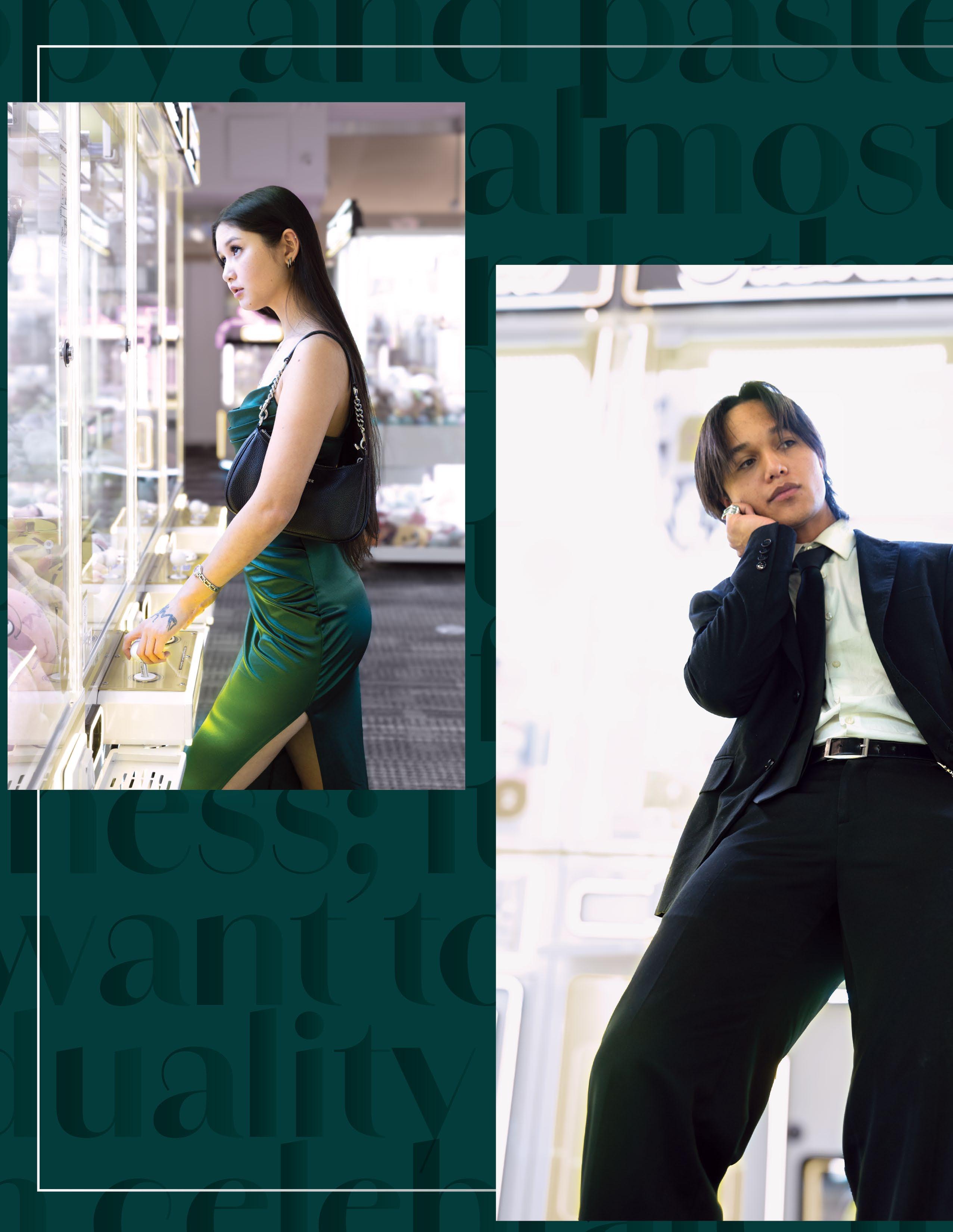
One of those examples of restrictive expressions lies in appearance. Corporate dress codes demand a certain level of “bland” which blocks out any sort of aesthetic expression. The copy and paste attire almost disregards the concept of hiring people that stand out for the business; it’s as if they want to erase individuality rather than celebrate it. The system overvalues real ethics that individuals carry simply because of their looks. Suddenly, a simple tattoo, some bright hair dye and a unique piercing cancels out the knowledge, and competence, of a person. It’s almost as if creative expression is less credible than making sure you wear your khakis to the office.

These restrictions don’t just stop at your appearance but extend to your behavior and speech as well.
Professionalism often demands a certain demeanor performed in the office. Because of that, code-switching is vital for success in the workplace. Changing your tone, slang and mannerisms are all required. And beyond the communication aspect, code-switching is deeply rooted into people of color or people of different cultures. Flatten your strong accent, minimize the volume and control your emotions; don’t make it known that what you’re used to might be unfamiliar. The authenticity of your speech needs to be managed rather than expressed, which is unfair for the minority. There is an unspoken script for employees that needs to be memorized and performed at the highest quality; so if you don’t fit the role, you’re left without a line while the others take the stage.
For upcoming Gen Z employees, these rules can feel suffocating. These future employees grew up with social media and a cultural norm, as well as a more open environment to be self expressive and step out of their comfort zones. Corporate America values conformity over authenticity, while Gen Z values authenticity over conformity. The corporate mold isn’t shaped to fit the new charismatic personalities and creative styles moving into the workforce, and you can clearly see that even when examining who’s mostly affected by these rules– especially in young minority groups.
When you picture the visual representation of “professionalism,” you imagine standard westernized white men who typically dominate most roles in corporate. Their appearances and behavior are almost the blueprint for success in the field, and if you don’t fit the template you don’t belong. This is rather hypocritical considering that in theory, corporate America benefits when they sell their company as diverse and inclusive. “We want bright new faces and identities!” until the tactic works and they’re given, only to be kept quiet and forced to conform to the preexisting norms. So what’s new and revolutionary about that?

The irony of it all is how these big corporations became big due to breaking the system and standing out. Before their uprising, these CEOs built their empire by embracing their uniqueness. Yes, we might have three different kinds of the same company, but what they all have in common is that each did something different to challenge their limits; and that’s what drew them to their success. It really makes you wonder why suddenly it’s discouraged among employees to branch out of their comfort zones once the higher ups receive their power. To them, creativity and innovation poses a risk; individuality is deemed unprofessional, and innovation is refrained as a threat.
For someone to be on top, there has to be someone on the bottom, and that is how professionalism is deemed as a tool of control. Better yet, it’s only reserved for those people at the top while everyone else is deemed into monotony.
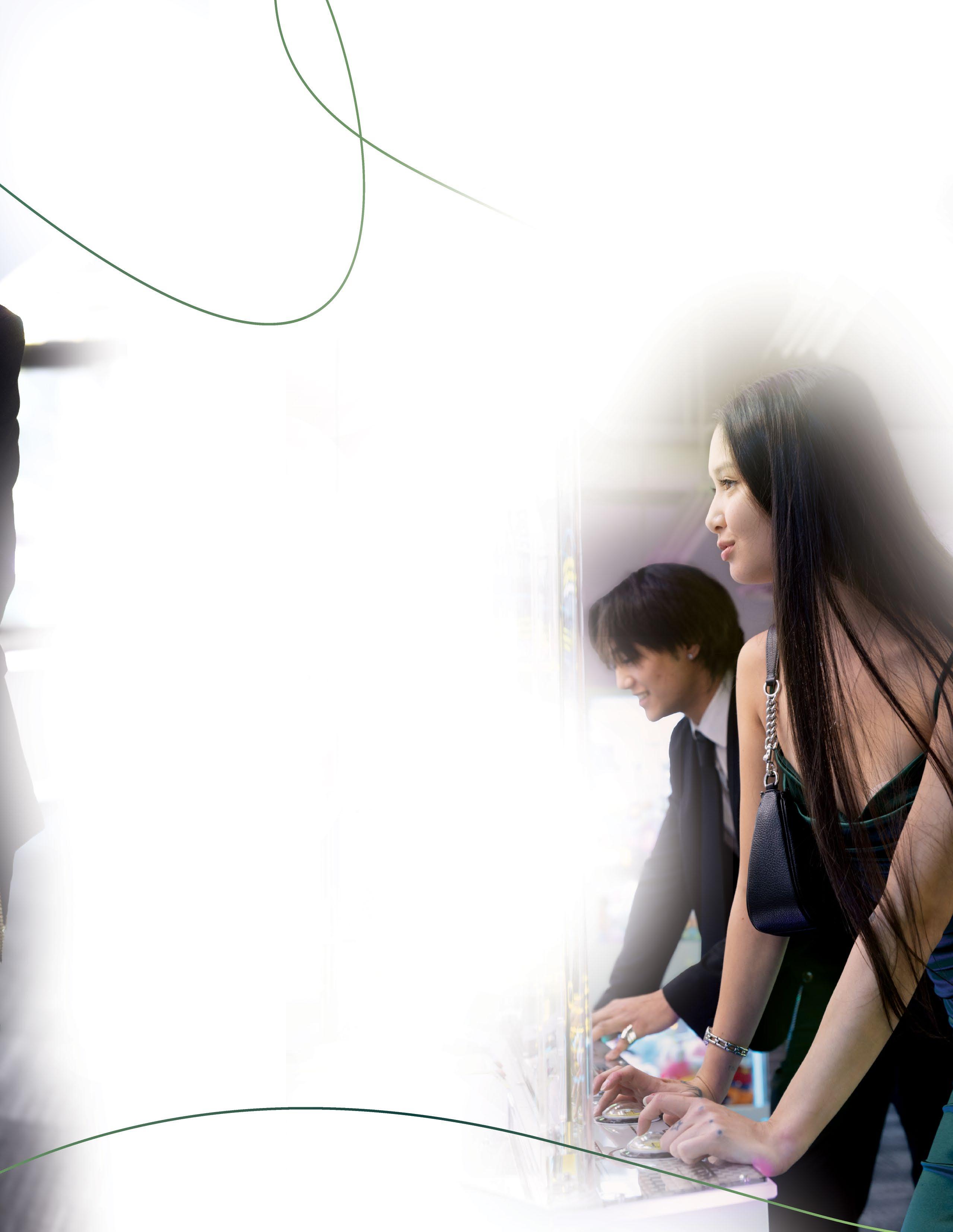
The real issue is that professionalism is still based on an old school definition, one that urgently needs to be redefined. Maybe the real issue isn’t professionalism itself, but the way we allow corporate America to use it. The system prioritizes conformity above all else; creativity, personal expression, authenticity, cultural identity, aesthetic and even performance. These qualities, which you would think would strengthen the workforce, are instead dismissed as distractions as if they undermine an employee’s knowledge, ethics or capability. If these corporations want something new and exciting, they must redefine professionalism as a whole. They need to include these characteristics and start challenging the old routine. Look beyond the dress code, beyond the demeanor, beyond the limitations placed on personal expression.
Perhaps we should stop treating professionalism as a uniform people are required to wear. Yes there is a level to which people must be put together, but there isn’t a need for the “robot” aesthetic of copy and paste attire in the workplace. Or better yet, we should stop rewarding uniformity and the “average,” and start valuing what makes people different. Because being different is authentic, and celebrating those authenticity in people will strive to make the workplace dynamic– and the aesthetic that comes with that person is not less professional, but is more human.

he painter scrutinizes the model in front of them. The pianist practices the notes from the latest piece they’re learning. The photographer adjusts the settings on
Moving from structured study, to navigating alone is challenging—guidance disappears, rubrics vanish. Suddenly, there’s no “right” answer. Trying to figure out what’s in your head and making it real, making it exist, giving it life? It makes you feel like you’re back to square one.

the rights from the wrongs. Teachers correct posture, adjust brushstroke placement and circle mistakes in thick, red marks. This stage is necessary. There is no problem until you are faced with the challenge of creating solo.
However, one of the most difficult challenges for artists isn’t that. Rather, it’s fear of judgment. Oftentimes, there’s a juxtaposition between what others expect them to create and their own idea they want to explore. Judgment is the wall towering in front of them. It forces them into a box they didn’t choose, surrounded with perceived limitations. The goal shifts subtly; art is no longer to communicate, but to avoid criticism. Ironically, feedback—the very tool meant to equip artists—becomes the crutch that hinders them.


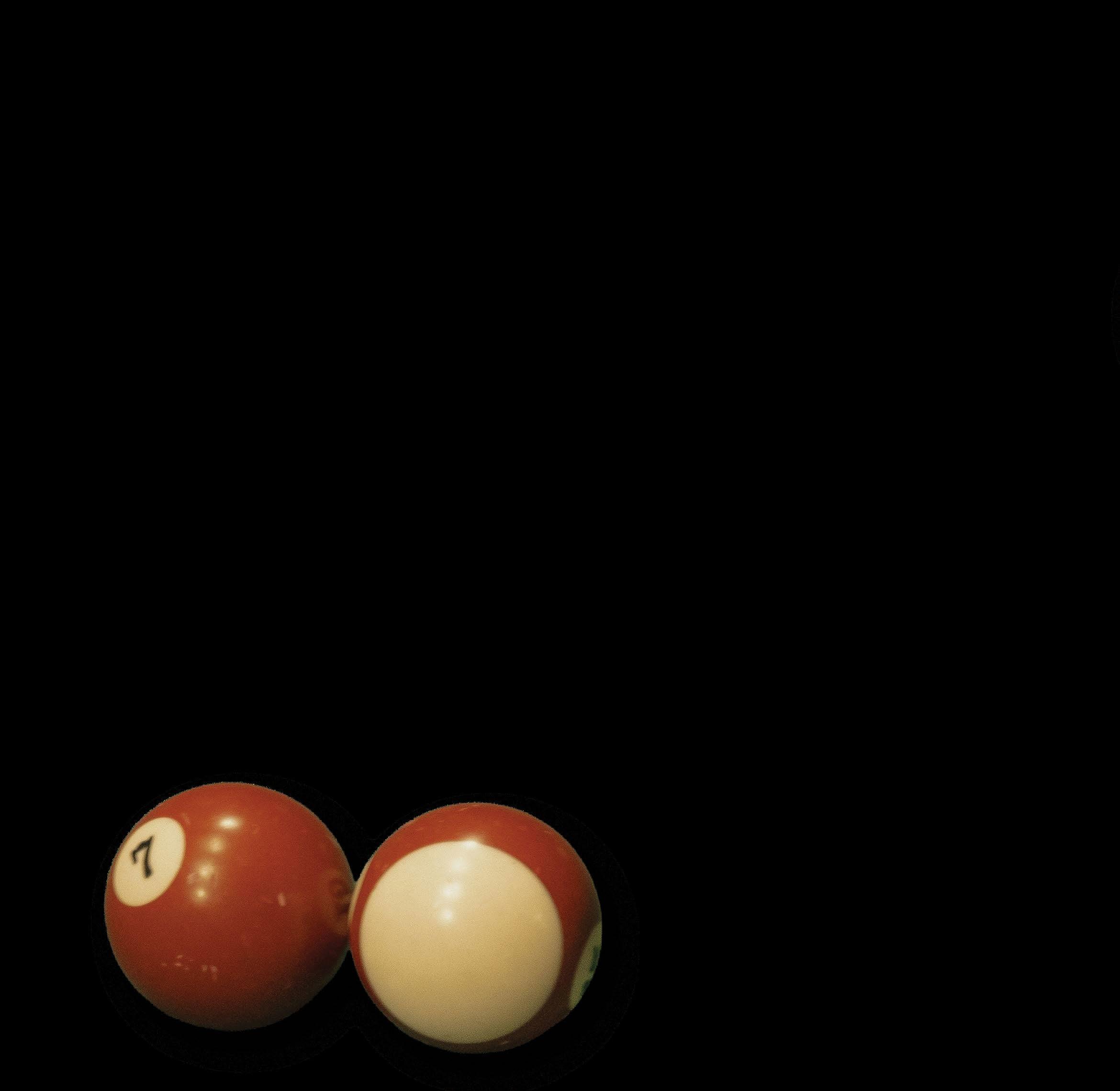


Most artists start creating because they want to say something, to be understood. Yet, through the endless repetition towards mastery, they lose the true reason they started. Art becomes an exercise rather than a voice. Eventually, they reach a tipping point.
This is where graduation happens. Not loudly. Not defiantly. But deliberately. Graduation in art is not the abandonment of rules–instead, it’s the internalization of them. Technique becomes less of a necessity and more of a choice. In this moment, the artist creates not in opposition to perfection, but beyond it. After all, the aim was never to be perfect, but instead, to express.



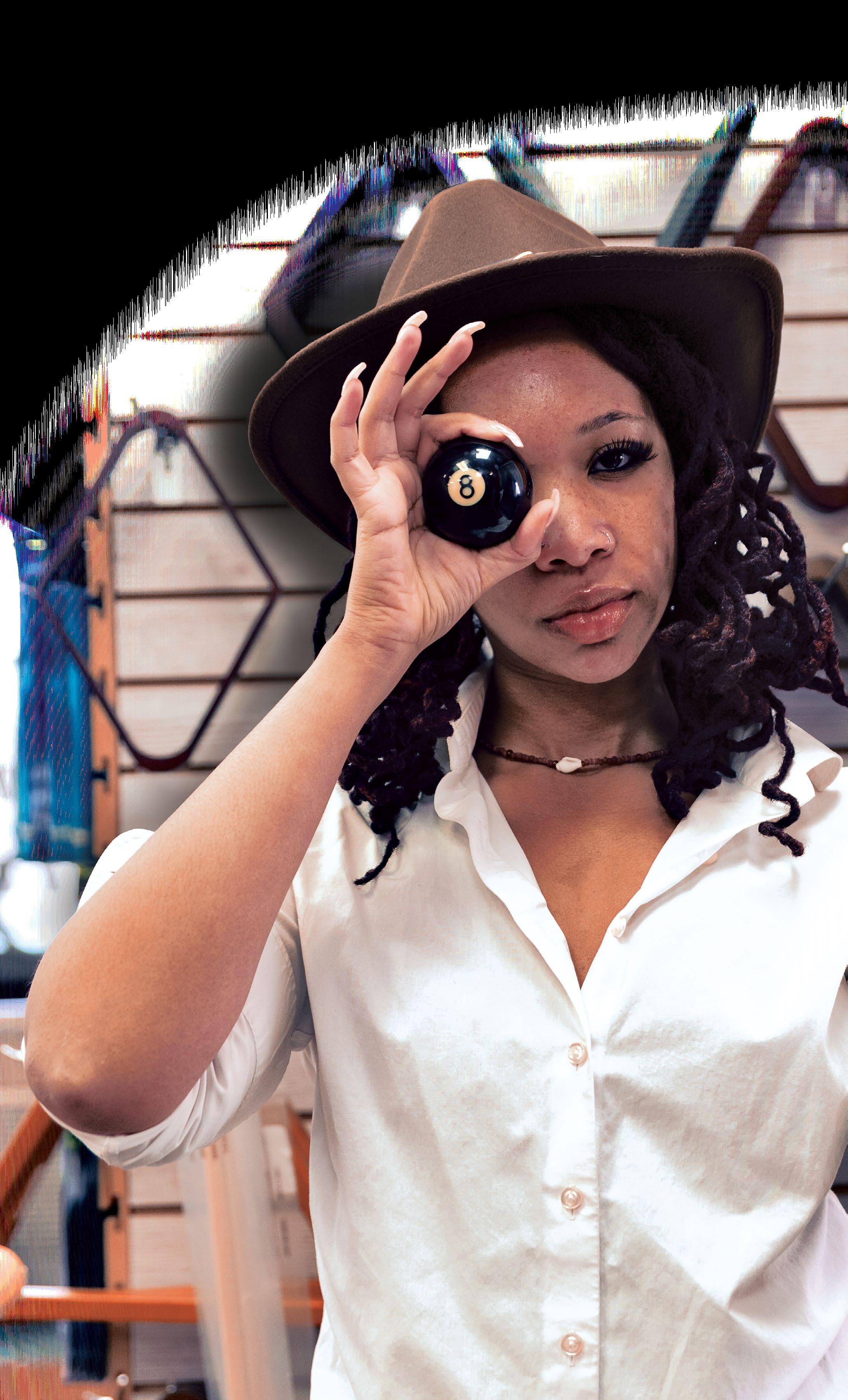
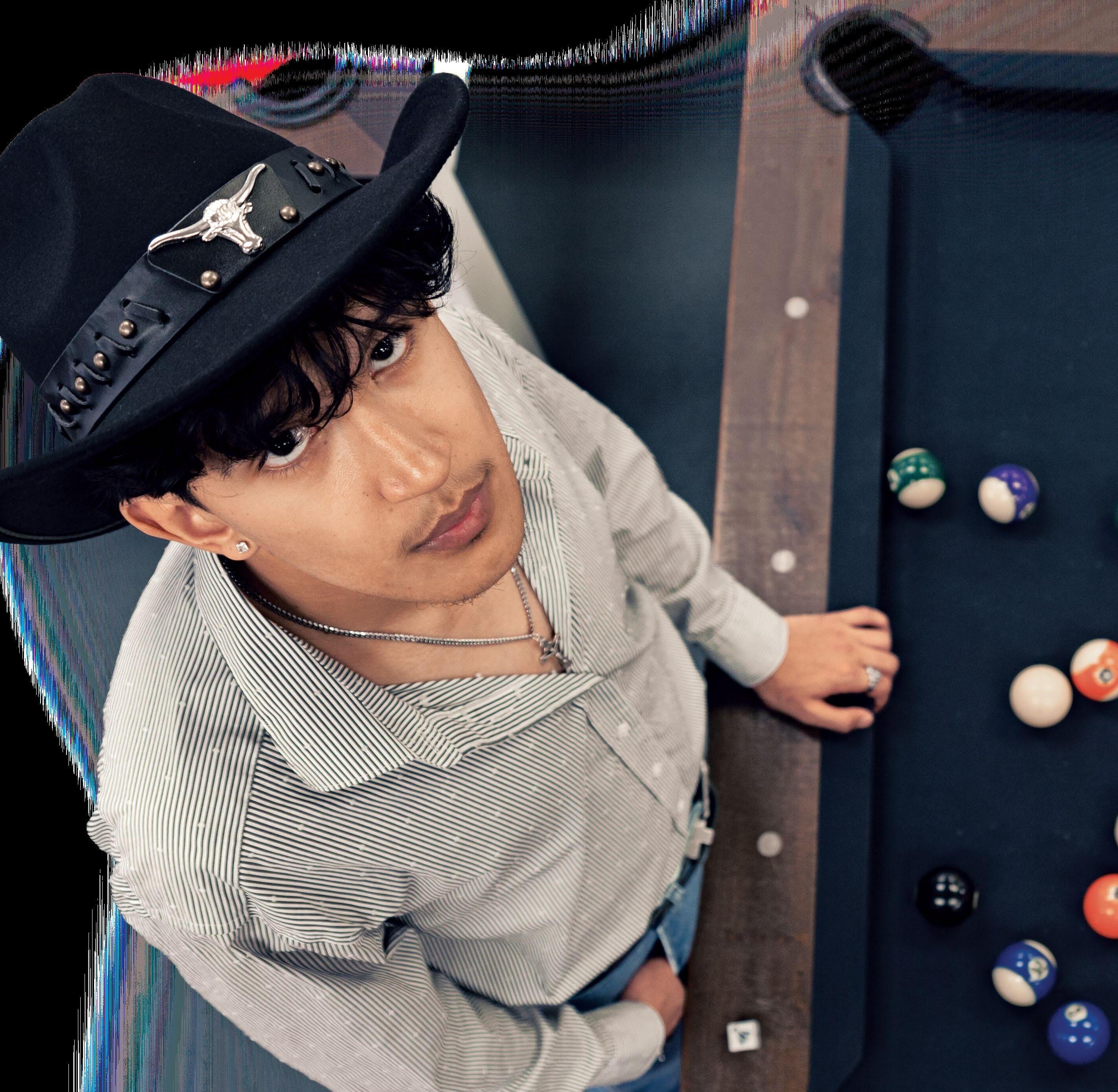
One fears judgment whereas the other ignores it or even embraces it.
This shift is what creates the differences between amateurs and masters. Contrary from amateurs with their clumsy steps and crooked mannerisms, masters create beautifully in a way that is both poised and erratic. Though they may look similar, they are distinctly different. One is tentative while the other is confident and self-assured. One fears judgement whereas the other ignores it or even embraces it. A true master’s work becomes something authentic to themselves, where the only criticism they acknowledge is that which is constructive.
A master no longer seeks universal approval. Their confidence does not come from ignoring standards, but from trusting themselves fully. Structure remains, but it no longer cages. Their work carries their unique voice. They’ve learned enough to speak clearly, enough to choose intentionally, enough to let their work reflect who they are rather than imitate.
Their graduation is quiet. It is not rebellion. It is completion. It is the quiet realization that rules were never meant to silence. Graduation is when their work stops asking, “Is this right?” and begins saying:



Written by: Alli Howard
Photographed by: Finn Isler & Rayyan
Babiker
Designed by: Giselle Carrasquilla

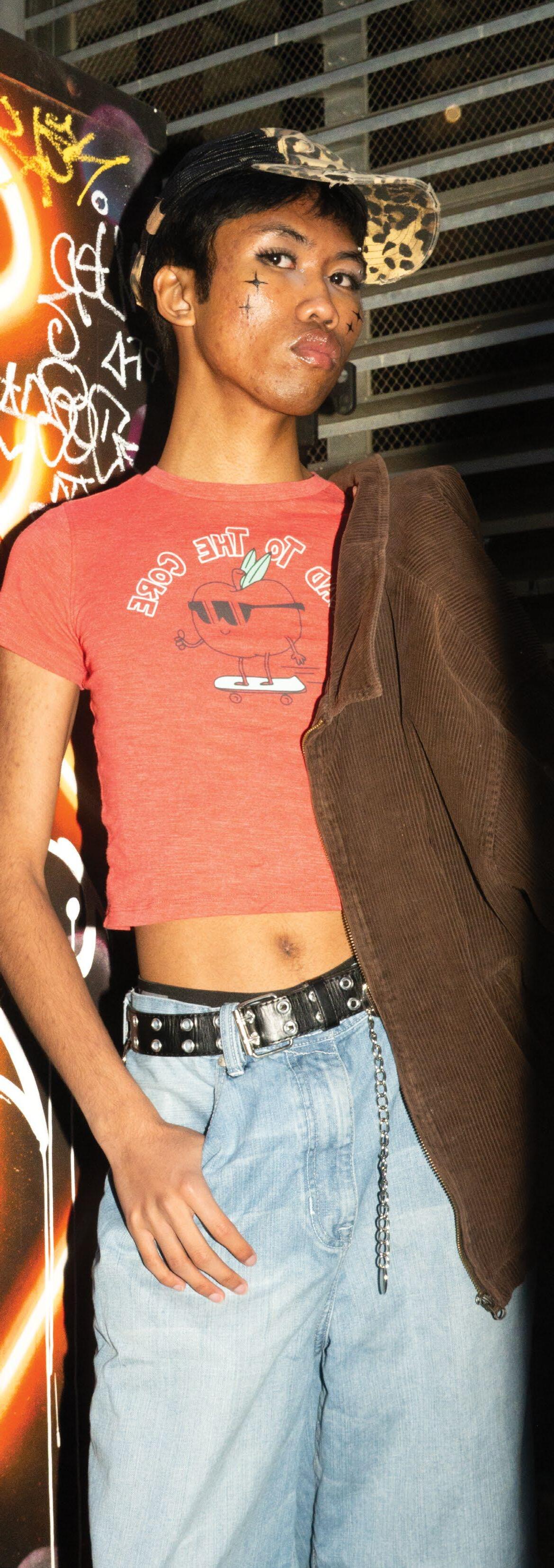
A commentary on Gen Z fashion as a form of self expression shaped and constrained by algorithm-driven conformity
The internet controls virtually all of Gen Z culture, most heavily our fashion. Governed by platforms like TikTok and Pinterest, we remain faithful to the dress code of trends; consciously or subconsciously choosing outfits from the very beaten paths of social media. While falling into any of the predestined fashion categories is standard for Gen Z, this expectation can also materialize–any average Joe and Joanna can earn a full salary as an influencer, or even reach celebrity status, if they are in the algorithm’s book of life. This naturally incentivizes all fashion content, whether we realize it or not. At face value, this phenomenon is just human nature, but it does get questionable when involving art. Many fashion influencers carry a persona of being ordinary, lifelong fashion-lovers who just so happened to gain a following and behave as if their views do not override the importance of sharing their passion. But let’s be real.
It’s kind of hard to post fashion content with zero ulterior motives when the profitable reward of virality is constantly tempting you. “It’s so easy…,” it calls to you in its rich, sultry register. “If you’re consistent, you’ll definitely go viral eventually…,” it mutters as it starts massaging your shoulders. “Once you go viral, you won’t have to work so hard to impress me…ditch the nine to five for a hot nine to nine fifteen…” it whispers as its lips brush your ear, its raspy words making you tingle. These reasons are major motivators for fashion influencers and have been shown to deliver. Wisdom Kaye was a
social media has made fashion less of an art and more of a tool.
run-of-the-mill Nigerian kid from Houston, Texas, who began fashion content in 2020. What began as a leisurely after school hobby exploded into online and industry success, as his viral “Vogue Challenge” outfits got him signed and appearing at runways for bigwigs like Ralph Lauren, Peter Do and Balmain. Mind you, before all of this, he was a college student studying to be an electrician; now he’s bringing in four to five million dollars annually. All because of a 15- second video and some hashtags. Perhaps Wisdom’s content derived from virality whispering its sweet nothings into his ear. Who knows, but either way, he’s set for life. So even with crazy stories like these floating around…it’s still just about fashion? I’m not saying that people who frequently post fashion content are all impostors or opportunists, but it does scream performative when people never leave the house without recording a fit check. But honestly, who can blame them; the algorithm and its little black dress make it nearly impossible not to obsess over views when the clothes you once wore to work can become your full time job, and your closet your new cubicle. Plus, it’s not like it has to be a lifetime
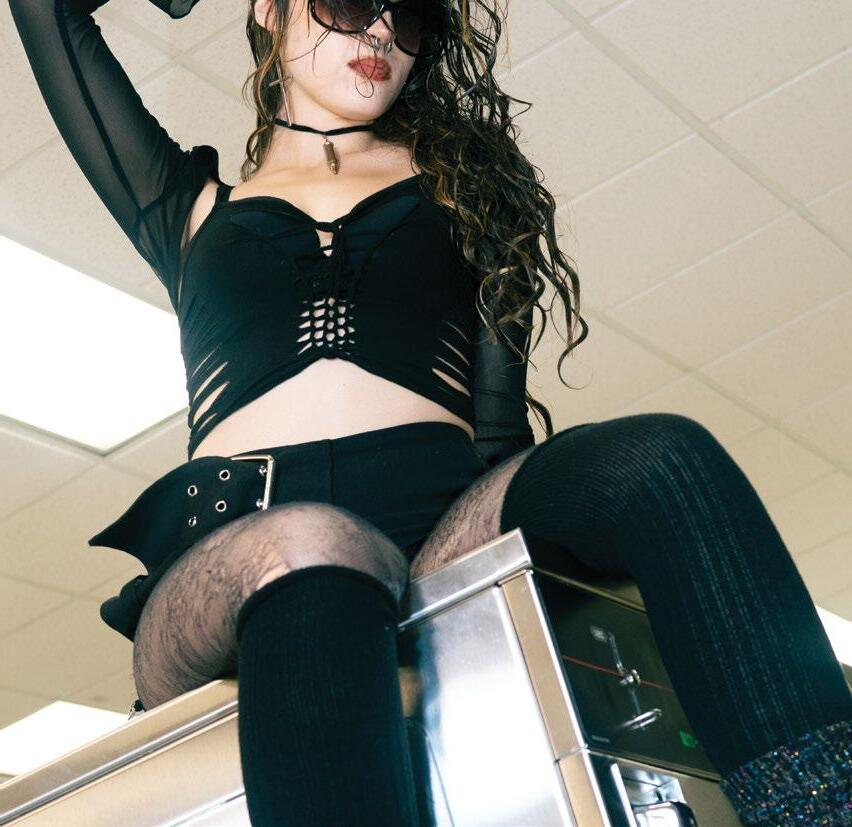

gig either. One viral video can still get you a fat chunk of change; no influencer strings attached. So whether you really love it or not, social media has made fashion less of an art and more of a tool. Don’t get me wrong, Gen Z is very creative; social media has allowed us to bounce ideas off of each other and get inspired every day. However, originality is a rare occurrence because we don’t create–we recycle.
When Gen Z sees UK flags and tartan print, most of us think of PinkPantheress, who popularized that aesthetic for us. But many people also see her style as an ode to English fashion pioneer Vivienne Westwood, who branded busy patterns like tartan and edgy accessorizing in the early 70s. This isn’t to say that Westwood invented tartan or founded the UK, but her and other classic designers’ purposes were different from the celebrities and influencers we look to today. Vivienne Westwood, André Leon Talley and other runway veterans designed based on lived experiences and the world around them. They drew inspiration from their adventures, struggles, discoveries and
visions to create something new. Arguably, they lived more. With no screens distorting their reality or conformist pressure from social media, they were allotted the space and freedom to create things that were unique. For the most part, unlike Gen Z, they weren’t designing for anyone; they weren’t living for anyone. They created garments that spoke for themselves, taking their course upon the fashion community and world alike, no captions, no subtitles, just art. Unfortunately, this liberation is something that Gen Z has yet to experience because while our fashion icons looked around them, we look down. Down at our screens, and then back at them. If we really zoom out, most of Gen Z fashion is just paraphrased retro styles all over again: streetwear is ‘90s fashion with modern accessories and even baggier clothes, Y2K is identically 2000s fashion, Goth is ‘80s goth with Amazon corsets, etcetera, etcetera, we’ve already seen it all. From the ‘10s to ‘00s, every decade looked completely different, and
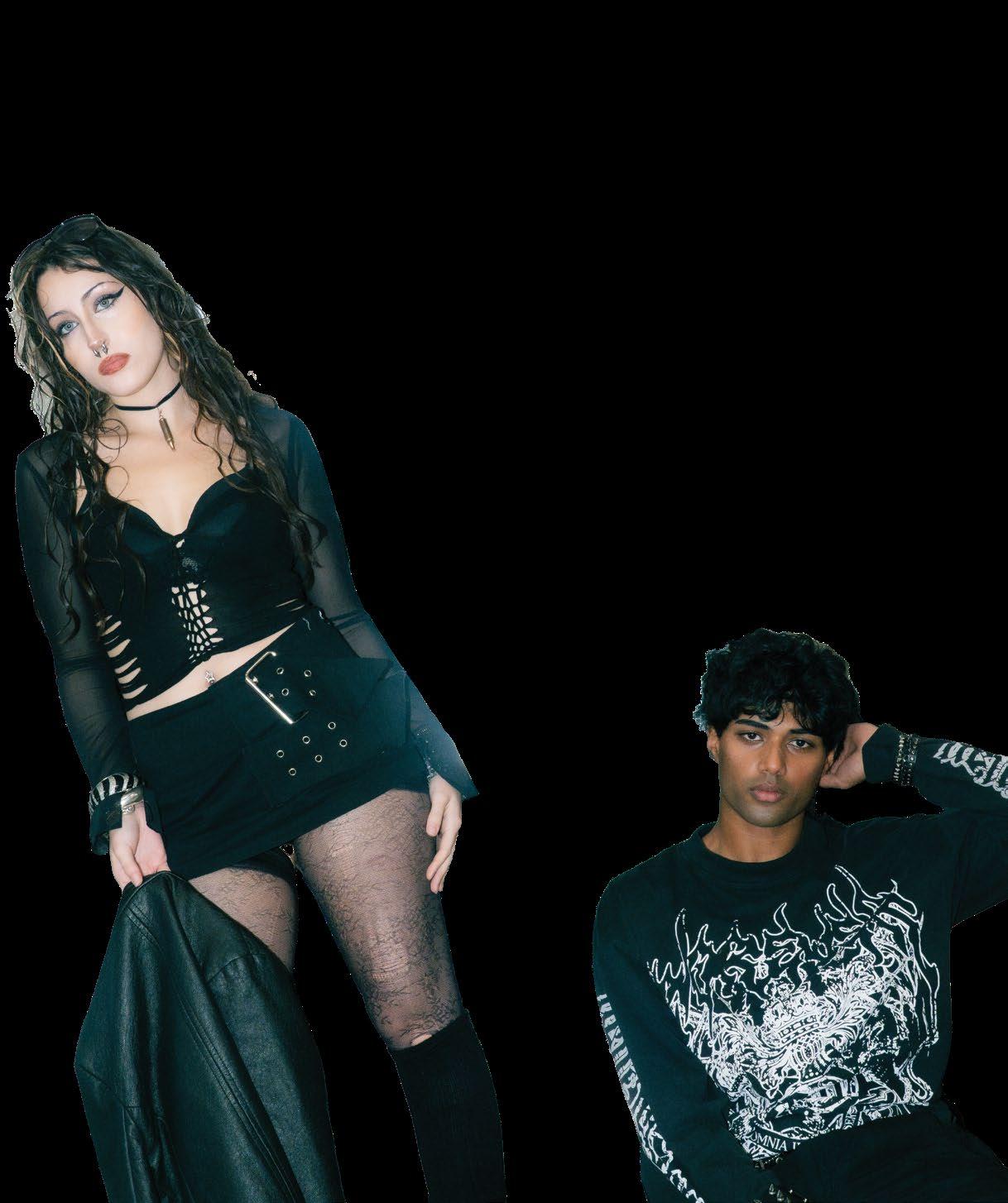
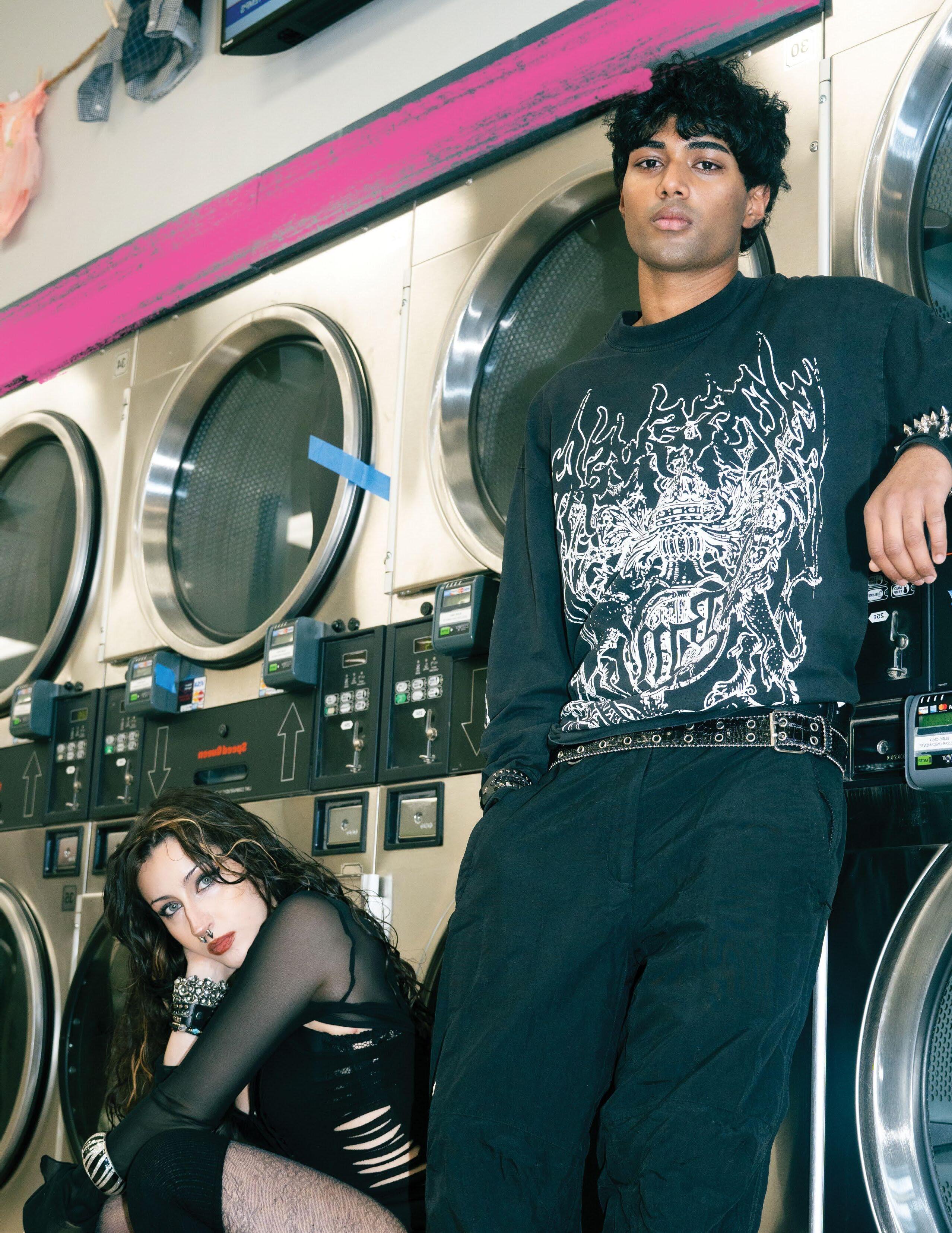
has led us to constantly pander to the masses, putting us at an originality stalemate. In that same digital realm, we also ruin originality for each other for a similar principle but a different reason.
As we know, social media is low risk and yields high reward to those who are lucky. So everybody wants to be seen. Everybody is seeking “originality,” to get the views, to get the brand deals and–let’s face it–the edits. The lottery of becoming an influencer has drastically increased app engagement, but also turned our casual social platforms into war zones. Very often, whenever people
it’s not like originality had an expiration date...
Modeled by: Konstandina Pittman & Dhanush Chidipothu
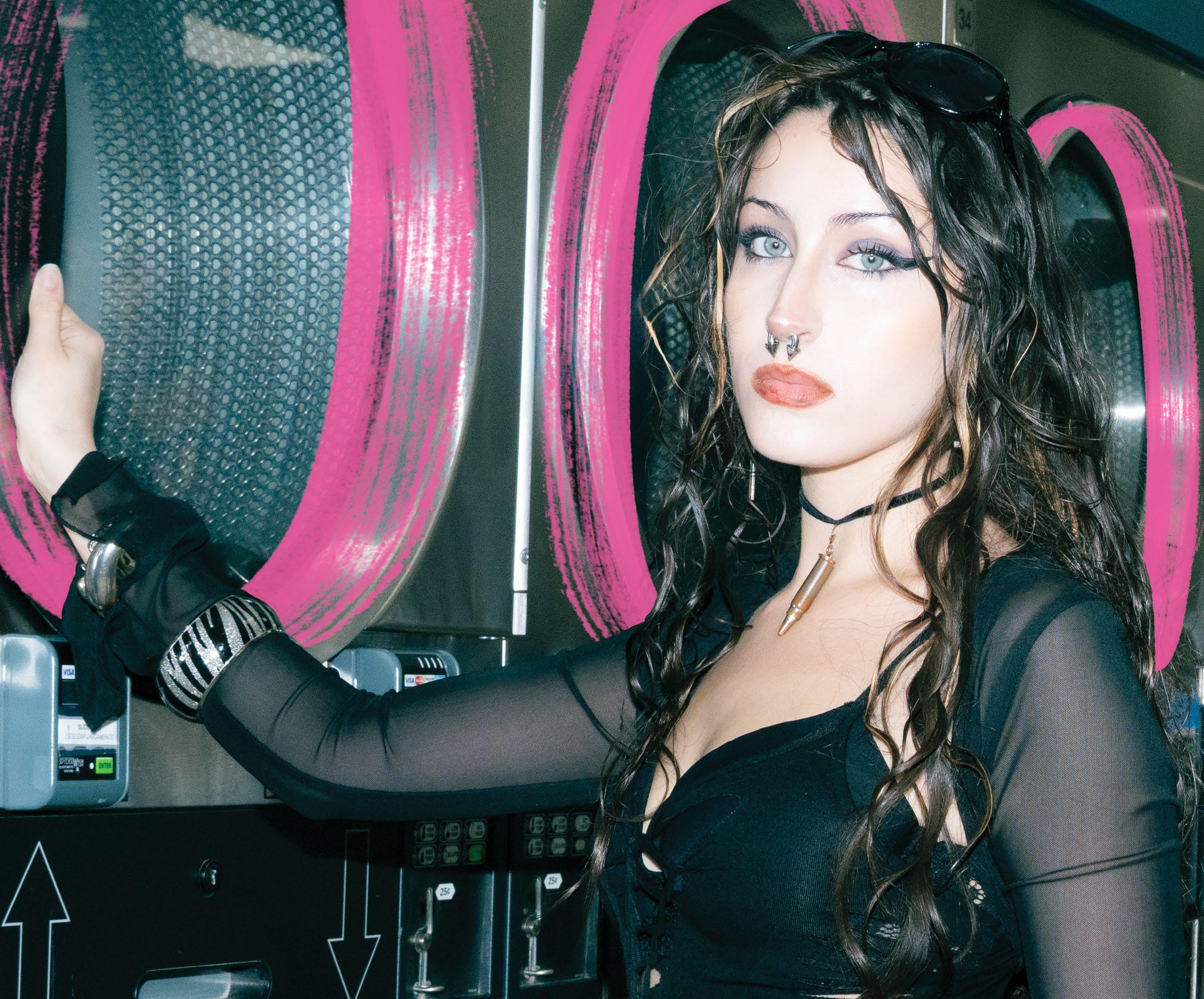
upload fashion content, regardless of intent, any positivity is immediately snuffed out: “I saw somebody else do this,” “They’re just the Walmart version of so-and-so,” and fan favorite, “You just want to be different.” On the surface, the coveted phenomenon of going viral seems to innocently create mass connectivity through innovative fashion. However, it most often turns viewers into crabs in a bucket whenever they feel like someone may be getting closer to the algorithm’s reward than they are. Rather than appreciate someone’s style choices, it’s almost second nature for people to poke holes in them if the content starts getting too much traction. Fashion originality is a rare occurrence for Gen Z, and now if someone finds it, they get dissed? We just can’t win.
...so what’s our excuse?
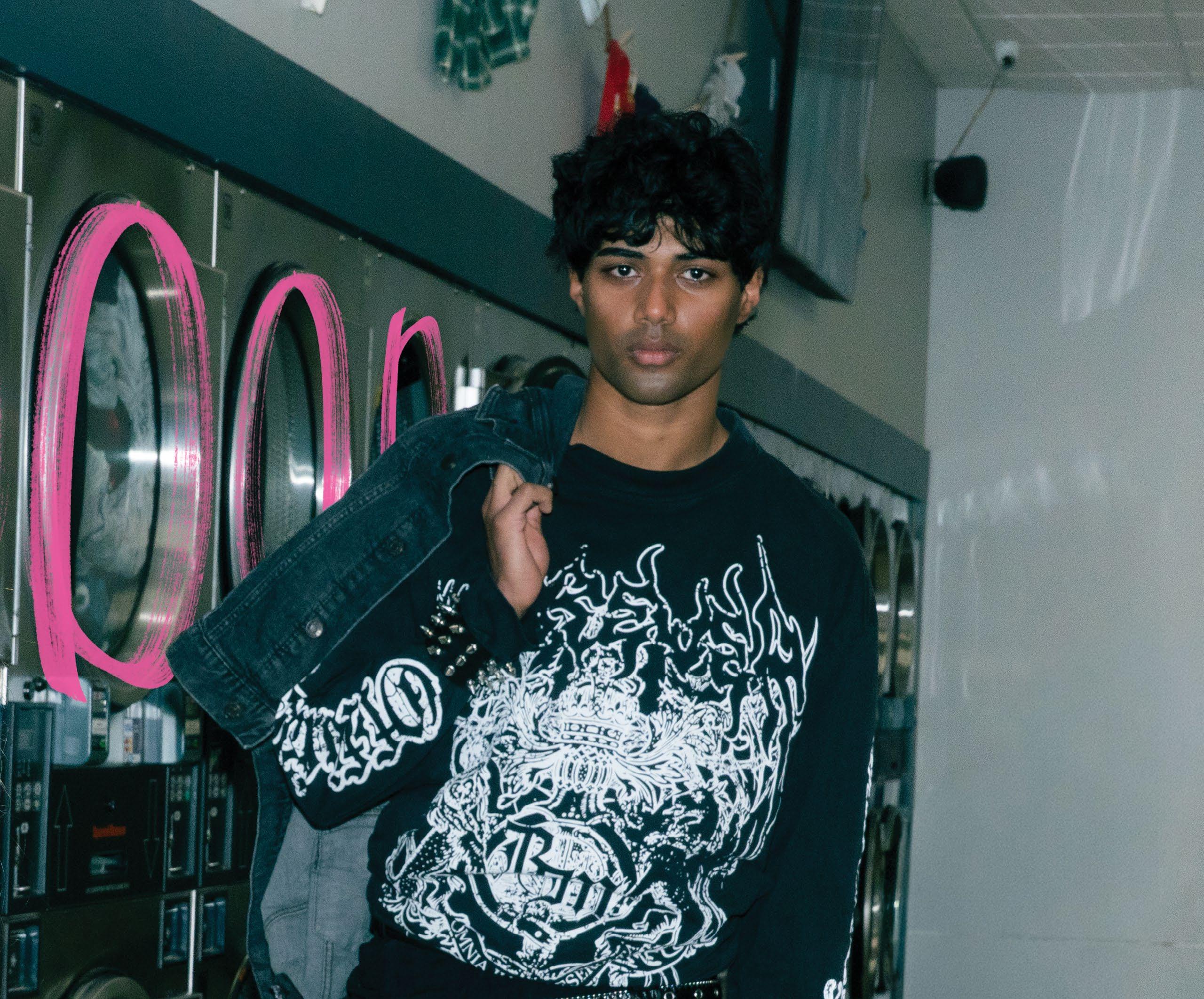
So maybe it’s time we stop playing this game. This game of people-pleasing we all adhere to when getting dressed, whether we admit it or not. Our collective fashion rules and trends only have the meaning that we choose to give them, and at the end of the day, art is subjective. No one is the fashion police. The most authentic self-expression and true originality is when you stop selling and explaining yourself. So the next time you get dressed, wear what you want–and don’t let videos kill your runway.
MIDAS Magazine is a premier arts and culture magazine at the University of North Carolina at Charlotte. Drawing inspiration from the ancient mythos of King Midas and his golden touch, MIDAS seeks to highlight the four pillars of artistry, identity, culture and lifestyle. Our mission is to illuminate the talents of the UNC Charlotte student body population and the burgeoning arts and culture scene in the greater Charlotte area. Since 2020, MIDAS has published 12 issues amplifying the voices of creatives within our community.
MIDAS is a nationally award-winning production that is entirely student-led and developed with the support of Niner Media’s professional staff and funding from the Student Activity Fees Commission. As part of UNC Charlotte’s Niner Media, MIDAS joins other student organizations such as Niner Times and Nova LiteraryArts Magazine. You can visit @STUDENTNINERMEDIA on Instagram to learn more about Niner Media and upcoming events.
You can join our Creative, Design, Writing or Promotions department to get involved with MIDAS. For questions and concerns regarding applications or involvement, please email us at midasmagazine@charlotte.edu.
See you at our next launch party!

MIDAS Magazine
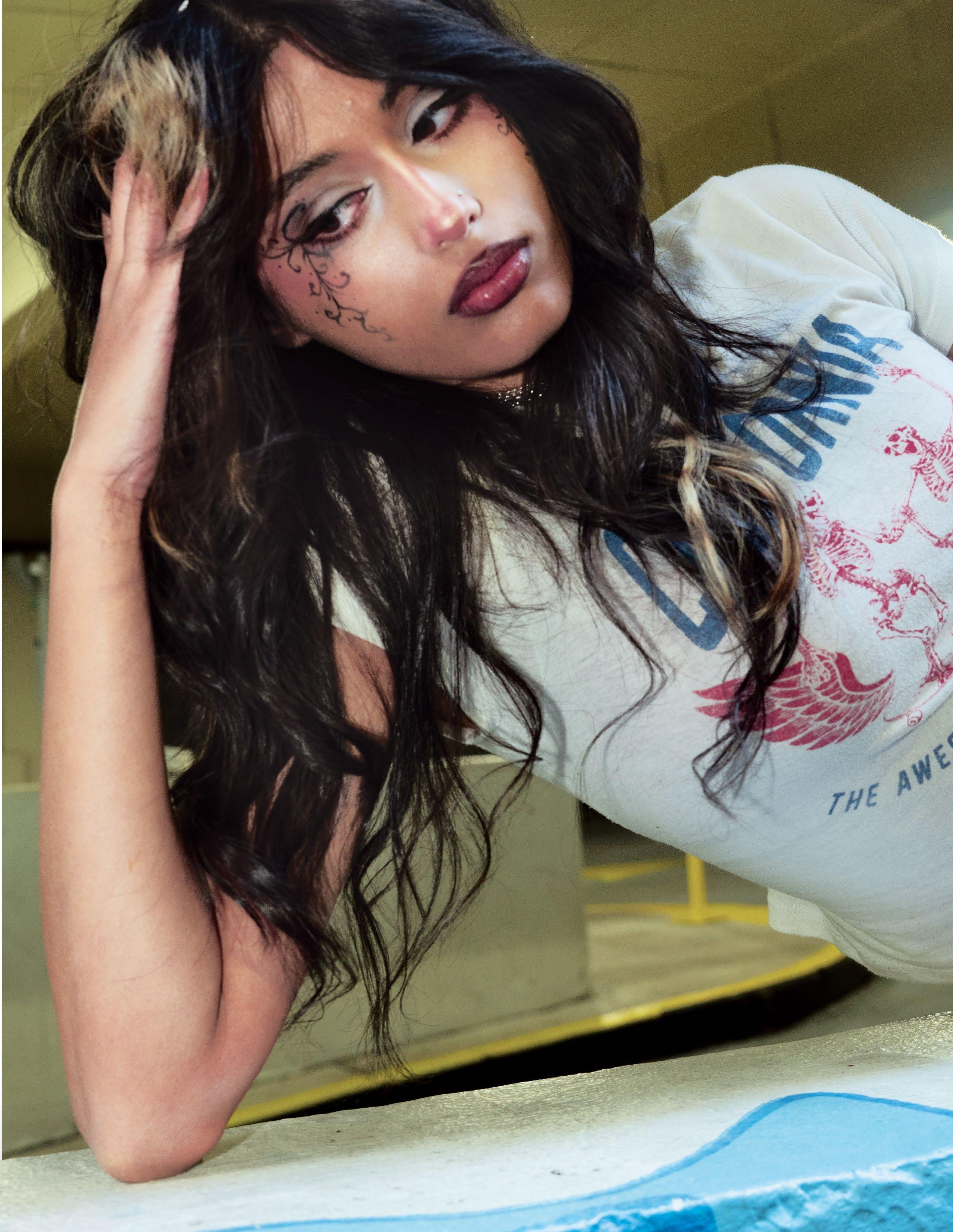
Volume 6, Issue 2: Critique of MIDAS Magazine was printed by iTek Graphics on 8.5” x 11” 80-pound satin cover with gold foil and 80-pound satin text. This issue was created with Adobe InDesign, Illustrator, Photoshop and Lightroom. Front and back cover photos by Zantiria McNeil, modeled by Madison Hayes.