Visualising Reflection: A UDL-Inspired Approach to Practitioner Research
Dr Maria Varvarigou-Lecturer in Postgraduate Studies; Coordinator of the Master in Education in Educational Leadership and Management (MIC)
Integrating Visual Art into STEM education to support student engagement and understanding
Emma Quinn, Mary Immaculate College
Creating a Gaeilge-rich environment using CLIL in an L2 primary school classroom
Aoife Bowler, Mary Immaculate College
How can I develop global citizenship through music education?
Amy Murphy, Mary Immaculate College
Enhancing Irish Language Comprehension: Implementing CLIL and Translanguaging Pedagogies into the teaching of Physical Education
Rebecca Carson, Mary Immaculate College
Promoting communication in the primary school classroom using the Aistear Principles
Ellen Buggy, Mary Immaculate College
Exploring Playful Pedagogy in Mathematics
Vivienne Fitzgerald, Mary Immaculate College
To what extent do student voice pedagogies enhance inclusivity and enjoyment in Physical Education?
Mickela McGrath, Mary Immaculate College
Using Integration to Create a Balance when Teaching Music, Art and Drama
Carrie Dalton, Mary Immaculate College
How can I successfully implement Universal Design for Learning (UDL) principles in my teaching of Religious Education in the Primary classroom?
Catherine Ann Leonard, Mary Immaculate College
How can I teach the strands of composing and performing in the music curriculum more holistically in the classroom?
Aoife Lynch, Mary Immaculate College
INTRODUCTION
Dr Maurice Harmon, Editor
It is with great pleasure that I introduce the fifth volume of CUMHACHT–BRITE: Building Research in Initial Teacher Education. This issue showcases the creativity, criticality, and professional commitment of student teachers at Mary Immaculate College (MIC)on the Professional Masters in Education Programme as they engage deeply with practitioner research. The work gathered here exemplifies the College’s ongoing dedication to nurturing reflective, research-informed educators who view teaching as an evolving, evidence-based practice.
This volume opens with Dr Maria Varvarigou’s insightful article, “Visualising Reflection: A UDL-Inspired Approach to Practitioner Research.” Her contribution explores how reflective practice, when informed by research and grounded in Universal Design for Learning (UDL) principles, empowers student teachers to connect theory, pedagogy, and lived classroom experience. As Dr Varvarigou notes, practitioner research not only strengthens professional learning but also enables teachers to see themselves as active contributors to educational knowledge.
The research projects presented here span a wide and vibrant spectrum of educational inquiry. Collectively, the projects in CUMHACHT–BRITE, Volume 5 remind us that effective teaching is not static but dynamic—responsive to learners, informed by evidence, and enriched by ongoing inquiry. They reflect MIC’s ethos of developing educators who are both reflective practitioners and active researchers, capable of innovating thoughtfully within complex and diverse educational contexts.
I would like to extend sincere thanks to all contributors, their supervisors, and Dr Maria Varvarigou. May the work featured here continue to inspire reflection, dialogue, and professional growth among teachers and educators at every stage of their journey.
VISUALISING REFLECTION: A UDL-INSPIRED APPROACH TO PRACTITIONER RESEARCH
Dr Maria Varvarigou, Lecturer in Postgraduate Studies; Coordinator of the Master in Education in Educational Leadership and Management
According to CEIM: Standards for Initial Teacher Education (Teaching Council, 2020) ‘teachers are always learning so that they can always teach’ (p. 2). In line with this, Irish educational policy places a strong emphasis on the importance of student teachers engaging in ongoing reflection that is appropriate to their stage of professional learning. Such reflection supports the identification of areas where further development, support, or guidance may be needed. For this reflection to be meaningful and developmentally useful, however, it must be research-informed and not simply a description of what occurred during planning and teaching on school placement. Practitioner research enables student teachers to integrate relevant educational theory with curriculum and pedagogy, and to conduct and apply research appropriate to their teaching context. Engaging in research during placement helps students forge deeper connections between higher education and the classroom. It allows them to critically observe and respond to pupils’ needs, while also developing a more nuanced understanding of their own pedagogical and reflective practices. This aligns with CEIM expectations that teachers will critically evaluate and adjust their practice based on gathered data and new professional knowledge.
This year marks the first time that student-teachers on the Professional Master in Education (PME) programme have presented and reflected on their practitioner-based research through a poster format. This shift away from a traditional dissertation reflects a broader move toward making practitioner research more accessible, practiceoriented, and professionally relevant. Each poster was accompanied by appendices that offered further insight into the focus of their research, including samples of lesson plans developed during their school placement, an outline of their data analysis process, and a summary of their key findings. This format encourages student-teachers to synthesise and communicate their learning concisely, while staying grounded in the realities of classroom practice. Student-teachers also reflected on how their project influenced their professional development, and how they plan to apply these insights in their future careers.
In line with MIC’s commitment to inclusive participation, this alternative format also reflects principles aligned with a Universal Design for Learning (UDL) approach (Zhang, et al. 2021), one of several inclusive pedagogies promoted within the College. Supported by expert supervisors, the practitioner-based research project centred on the design and implementation of six lesson plans during the extended school placement. Student-teachers selected a focus area that was personally meaningful, offering them ‘the opportunity to demonstrate skills or competencies that they can apply in their future jobs in different ways’ (Zhang, et al. 2021, p. 14). They collected data through self-reflection, informal conversations with stakeholders, and, at times, images of artefacts co-created with the learners. The goal was to develop insights into their own practice and to draw thoughtful, evidence-based conclusions.
Presenting research in a visual format encouraged creativity, critical thinking, and for some real enthusiasm. Communicating their findings succinctly and effectively helped student-teachers develop a key professional skill that is foundational to fostering collaborative conversations across diverse educational settings. This process was designed to support student-teachers in recognising two dimensions of teaching practice, and we hope it offered a valuable opportunity to do so.
1.That many challenges in teaching and learning, such as classroom management (Wilkinson et al. 2020) and learner resistance (Heron, 1999), are ongoing realities of a teacher’s career. Practitioner research helps foster a mindset that equips student-teachers with the tools and confidence to navigate these enduring challenges.
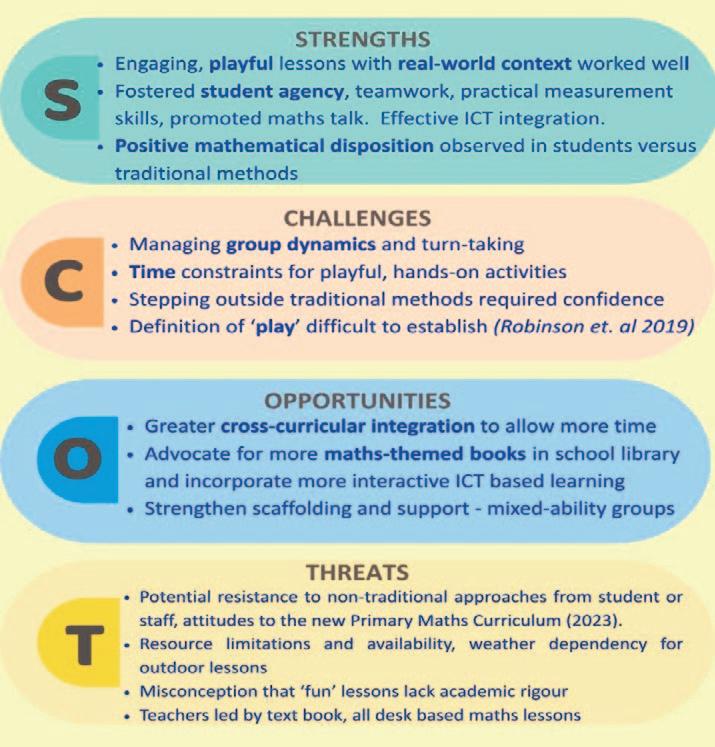
2.That engaging is structured analytical reflection, such as a SCOT analysis, can illuminate both internal strengths and external challenges. This reflective stance extends beyond the individual classroom to whole-school development, encouraging collaborative evaluation and continuous improvement across the school community (DES, 2022).
Critically engaging with their own lesson planning also proved meaningful. Rather than treating lesson plans as fixed roadmaps, student-teachers began to reflect upon them as if they were canvases, flexible frameworks open to change and learner input. The posters featured in this edition of Cumhacht: Building Research in Initial Teacher Education (BRITE) offer a window into the student-teachers’ evolving understanding of their practice and pedagogy. As one student-teacher noted, the format was ‘aesthetically pleasing’, while another reflected that ‘to be brief is to be wise’. It was the general impression among supervisors that student-teachers approached the assessment task with seriousness and care, and many reported enjoying the creative process involved. We hope that these posters
were experienced not only as an exercise in clarity and focus, but also as a worthwhile and engaging way to communicate professional learning (Teaching Council, 2016).
Going forward, exploring alternative ways to communicate reflections on teaching practice is more than just an exercise in accessibility or authentic assessment. It opens up new possibilities for student-teachers to see themselves as research-informed practitioners. Whether engaging in critical reflection on classroom practice, contributing to school self-evaluation, or leading future educational innovation, the ability to research, reflect, and communicate clearly will be central to their ongoing professional lives.
Bibliography
Department of Education and Skills. (2022). Looking at Our Schools 2022: A Quality Framework for Primary Schools and Special Schools. Dublin: Stationary Office.
Heron, J. (1999). The complete facilitator’s handbook. Kogan Page Ltd.
Teaching Council. (2020). Céim: Standards for initial teacher education. https://www.teachingcouncil.ie/en/newsevents/latest-news/ceim-standards-for-initial-teacher-education.pdf [Accessed 3rd July 2025]
Teaching Council (2016). Code of Professional Conduct for Teachers. Dublin: The Teaching Council. code-of-professionalconduct-for-teachers1.pdf [Accessed 20th June 2025]
Wilkinson, S., Freeman, J., Simonsen, B., Sears, S., Byun S.G., Xu, X. and Luh, H.L. (2020). ‘Professional development for classroom management: a review of the literature’, Educational Research and Evaluation, 26: 3-4, pp. 182-212.
Zhang, J., Takacs, S., Truong L., Smulders, D., Lee, H. (2021). Assessment Design: Perspectives and Examples Informed by Universal Design for Learning. Centre for Teaching, Learning, and Innovation. Justice Institute of British Columbia
THE RESEARCH
LITERATURE REVIEW
• STEAM encourages children to be creative in their thinking and problemsolving, which in turn deepens engagement and understanding (Department of Education 2023).
• Three themes emerged from my literature review which informed my pedagogical choices and instructional strategies .
(1)The importance of cross-disciplinary integration in STEAM.
• All my lessons meaningfully integrated Art into STEM disciplines. Leavy et al (2022) found integrating the Arts fosters creativity and inclusive education, particularly for marginalised groups.
(2) The role Visual Art can play in STEM.
• Conradty and Bogner (2019) implied Art enhances motivation and creative problem-solving in STEM lessons. I ensured Art was the focus in each of my lessons.
• Design and make activities were utilised in 5th class, as Uştu et al (2021) implied that tasks that are relevant to the students lives support engagement.
(3) Adapting and inquiry-based approach in instruction and learning.
• Dolan (2020) implied promoting “trial and error” supports engagement. Following this advice, 5th class used “blue-prints” during design and make tasks to support them during problem solving.
• Students took on roles ie architects during design and make activities, as Conradty and Bogner (2019) recommended this enhances motivation and productive disposition.
Integrating Visual Art into STEM education to support student engagement and understanding.
ABSTRACT
• The rationale for my research is grounded in the recognition STEAM education has received for its potential to motivate students by transferring their artistic enthusiasm into STEM areas (Department of Education 2023). As a teacher in training, I’ve noted some students' negative attitude towards Maths and Science compared to their excitement and enthusiasm towards subjects like Art.
• The Primary School Curriculum is being redeveloped, with STEM identified as one of the core curricular areas (NCCA 2023).
• Despite the literature supporting STEAM as a tool to enhance learning through inquiry, creativity, and problem-solving, the new curriculum framework does not explicitly reference STEAM (Conradty & Bogner 2019; Li et al. 2022; NCCA 2023).
• Over my extended placement I taught 6 STEAM lessons to explore if integrating Art into STEM can support students' engagement and understanding of STEM areas.
• Data was collected using a reflective journal and a SCOT analysis was used to analyse data.
• The findings revealed numerous benefits, particularly in supporting language development for EAL learners and younger pupils, as well as fostering students’ motivation and productive disposition towards learning. Challenges with STEAM also arose, one being time constraints specifically in junior classes.
RESEARCH DESIGN
• 6 lessons were taught to 5th and senior infant students.
• 5th class completed two design and make activities (4 lessons) inspired by local contexts (Conradty & Bogner 2019).
• Infant students completed two stand alone lessons.
• All lessons meaningfully integrated Art and followed an inquiry-based approach with students being encouraged to be creative in their thinking and problem solving (Conradty & Bogner 2019; Dolan 2020; Uştu et al 2021; Leavy et al. 2022).
• Data was collected based on engagement, participation, discussions with class teachers and signs of understanding.
Recording and analysing data
• Data was noted using a reflective journal following the Rolfe et al (2001) model.
• A SCOT analysis was used to identify and analyse researchers' observations regarding pupils’ engagement and learning.
Participants:
• All identifiable data was collected anonymously.
IMPLICATIONS OF RESEARCH
For personal practice:
• Make STEAM lessons hands on and creative to allow marginalized groups (EAL students) to access and understand STEM concepts (Leavy et al. 2022).
• Allocate roles during design and make group activities to ensure all students actively participate in lessons, thus supporting pupil engagement (Conradty & Bogner 2019).
• Utilise design and make tasks that are relevant to your students lives to support their engagement (Uştu et al. 2021). Local contexts are powerful in “setting the scene” for STEAM lessons.
• Prioritize students' creativity during STEAM lessons. By following an inquiry-based approach in instruction, students' innovative and creative thinking can be supported (Dolan, 2020).
• Avail of additional support when teaching STEAM in infant classes to ensure students stay on task and for pupils' safety.
• Teaching STEAM lessons can boost teachers' confidence in teaching interdisciplinary areas and complex STEM ideas.
For primary education settings:
• Promote STEAM education in schools to provide equity in education – lessons are inclusive as students can access complicated STEM material in a creative, inclusive and “real life” way.
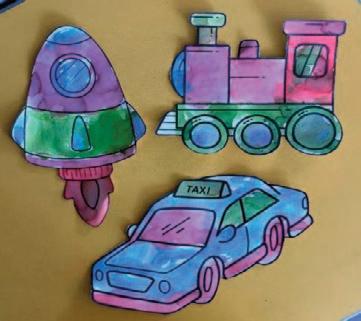
5th class STEAM projects
FINDINGS
Opportunities with STEAM
“Doing science” to “being a scientist” (Conradty & Bogner 2019).
• Language development/ understanding of STEM concepts improved for EAL students due to the visual, hands-on and creative approach in my instruction (Leavy et al. 2022). STEM concepts/ vocabulary being taught to infant after each lesson supported their understanding due to the experiential nature of lessons (Dolan 2020). (Reflection 1, 2 & 3)
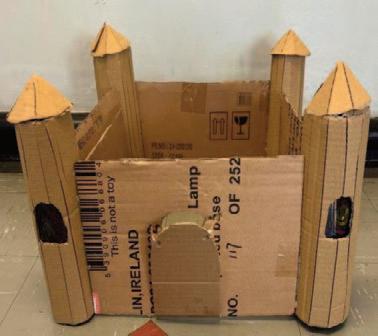
• Design and make tasks inspired by local contexts boosted motivation. 5th class showcased pride and ownership in their projects inspired by Kilkenny castle “do you think Ken Blacks will really make our castles?” (Uştu et al. 2021). (Reflection 3)
• Utilising independent/ collaborative blue-prints during design and make activities supported students during problem solving and reflection (Dolan 2020). Students used their blue prints to guide them during times of challenge (Dolan 2020). (Reflection 3)
• Both students in 5th class and senior infants displayed excitement to learn through hands on activities: “can we work on our castles during lunch?” (Reflection 3). Both class teachers noted students' level of excitement to participate in lessons. (Reflection 1, 2 & 3)
• Productive disposition was developed through students taking on the roles of “engineers” and “scientists”. The 5th class teacher commented on pupils excitement to be “architects” when creating their blue-prints. (Reflection 3)
Challenges with STEAM
• Time constraints with infant’s hindered meaningful STEAM lessons due to high levels of organisation and safety discussions needed ie. preventing food dye consumption during ice cube painting. (Reflection 1)
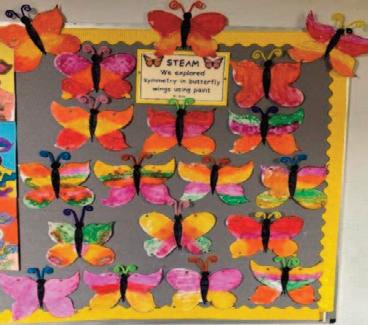
• Risk of STEAM lessons becoming a Visual Art lesson due to student's desire to create the “perfect artwork” ie butterfly symmetry lesson. (Reflection 2)
• Group work imbalance in senior classes: “You can do it; you're better at Art than me.” Role assignment (builder, architect, etc.) helped address this. (Reflection 3)
References
• Conradty, C. and Bogner, F.X. (2019) ‘From STEM to STEAM: Cracking the Code? How Creativity & Motivation Interacts with Inquiry-based Learning’. Creativity Research Journal, 31(3), 284–295. available: doi:https://doi.org/10.1080/10400419.2019.1641678.
• Department of Education. (2023) Recommendations of STEM and the arts in education. available: : https://assets.gov.ie/249003/0e73d94c-00ef-4fab-b9294dc8d32d47df.pdf (accessed: 19 March 2024).
• Leavy, A., Carrol, C., Edward, C., Fitzpatrick, M., Hamilton, M., Hourigan, M., LaCumbre, G., McGann, R., O’Dwyer Anne (2022) Review of Literature to Identify a Set of Effective Intervention for Addressing STEM and the Arts in Early Years, Primary and Post Primary Education Settings. available: https://www.researchgate.net/publication/361663424_Review_of_Literature_to_Identify_a_S et_of_Effective_Interventions_for_Addressing_STEM_and_the_Arts_in_Early_Years_Prima ry_and_Post_Primary_Education_Settings
• Li, J., Luo, H., Zhao, L., Zhu, M., Ma, L., Liiao, X. (2022) ‘Promoting steam education in primary school through cooperative teaching: A design-based research study’, Sustainability, 14(16), 10333. available: doi:10.3390/su141610333.
• National Council for Curriculum and Assessment (2023) ‘STEM Education and the Primary School Curriculum’, Report on a consultation with school communities on the nature of STEM Education in a redeveloped Primary School Curriculum, Dublin, available: https://ncca.ie/media/6037/stem-educationand-the-psc_0223.pdf [accessed 23 March 2024]. •Uştu, H., Saito, T. and Mentiş Taş, A. (2021) ‘Integration of art into STEM education at Primary Schools: An action research study with Primary School Teachers’, Systemic Practice and Action Research, 35(2), 253–274, available: doi:10.1007/s11213-021-09570-z.
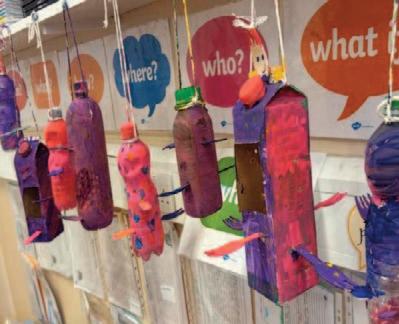
Figure 3. Completed 3D castle project. Figure 4. Completed birdfeeders.
Senior infant STEAM lessons
ABSTRACT
Creating a Gaeilge-rich environment is a key part of fostering second language (L2) acquisition in Irish primary schools. This self-study explores how I, as a first-class teacher on placement, used a CLIL (Content and Language Integrated Learning) approach to enhance the use of Irish during PE lessons.
Over six lessons, I introduced target vocabulary using the Direct Method (DM), songs, rhymes, and movement-based strategies. Initial challenges included limited pupil vocabulary and the perception of PE as a non-academic space. However, with consistent exposure and integrated language use, pupils showed increased confidence, engagement, and willingness to use Irish. Vocabulary themes included colours, numbers, body parts, directions, and counties.
Findings suggest that embedding Irish within movement and routines supports meaningful language acquisition and promotes greater participation. This study highlights the value of context-based strategies in supporting L2 development in the classroom.
Creating a Gaeilge-rich environment using CLIL in an
L2 primary school classroom
Aoife Bowler, Mary Immaculate College
Literature Review
As part of this self-reflective project, the literature review explored effective strategies for promoting Irish in English-medium primary schools. It highlighted the importance of creating a Gaeilge-rich environment where the language is used meaningfully throughout the day. Key methodologies examined include Content and Language Integrated Learning (CLIL), which supports language learning throu gh subject content, and the Direct Method (Berlitz.com, 2024) (Riding & Cheema, 1991) (Robinson, 2001) (Krashen, 2004) (Alsudais, 2017), which encourages learning Irish through listening and speaking rather than translation.
The review also emphasised the need for regular exposure, visual support, and teacher confidence in using Irish consistently. These approaches aim to make Irish more accessible, engaging, and relevant to young learners, particularly in classrooms with early acquisition learners
Inspections determined that Irish is only taught to a good/very good standard in only half of Irish classrooms, Irish was taught through the English language and just over half of students could express themselves at a satisfactory level. This contributed to the need for the 20-Year Strategy 2010-2030 (Government of Ireland, 2023).
Experts in the field of CLIL present convincing arguments that this methodology of teaching not only benefits the student’s learning of the content but also of the target language and contributes to the holistic development of the child (FernándezSanjurjo, et al., 2019) (Harris & Ó Duibhir, 2011) (NCCA, 2016) (Dunne, 2020). It is important to note that there are also arguments against the use of CLIL in early education (FAAPI, 2013).
Research Design
Over six lessons, I implemented strategies to create a Gaeilge-rich environment in PE. The first lesson took place during strand weeks when I had limited contact with the class. I noticed the children struggled with the Irish vocabulary and found it difficult to adapt to learning in the PE space, which they associated with fun rather than structured teaching.
By the second lesson, taught at the end of the first week, the children had acquired the necessary vocabulary. I introduced colours using the Direct Method through activities like Cén Dath é Seo?, I Spy, Deir ó Grádaigh, and movement breaks with commands such as léim, rith ar an spota, and stop. This lesson was more successful as the children could now follow instructions in Irish.
In week two, I focused on numbers and body parts. I used games like Cén Uimhir, counting items, callback chants (A haon, a dó, a trí / Féach ar Miss B), and daily questioning (Cén uimhir é seo?). Songs and rhymes such as Ceann, Gulalainn, Glúin is Cos and Lámh, lámh eile helped reinforce body part vocabulary. This supported PE lessons 3 and 4, allowing for more Gaeilge integration through counting down races, organising teams, and tracking beanbags in buckets.
In the final week, I introduced clé and deas (left and right) and county names like Ciarraí, Luimneach, Corcaigh and Baile Átha Cliath. Using the Direct Method and FCAT, I embedded new vocabulary into games and movement breaks e.g., shaking a hand, turning left/right, or touching the ground. These activities were well received and helped transition between lessons while reinforcing Irish in a fun, active way.
Findings
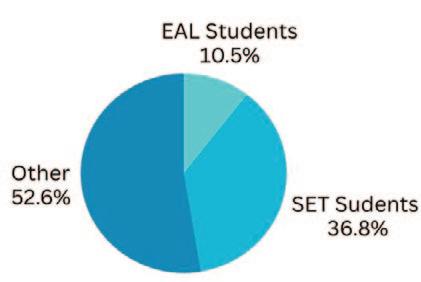
Following Lesson 2, I observed a noticeable shift in student engagement. With basic vocabulary now introduced through songs and interactive games, children were more confident responding to instructions like léim, rith ar an spota, and stop. The use of visual prompts and call-and-response structures allowed all children especially EAL and SET learners to follow along and participate. It became clear that meaningful, contextualised repetition was key to language retention and enjoyment of the language.
By Lesson 4, Gaeilge had become a natural part of our PE sessions. Children confidently used numbers and body parts in games, chants, and team activities. Their enthusiasm grew alongside their comprehension, particularly when songs like Ceann, Gualainn, Glúin is Cos were paired with movement. Peer collaboration and positive competition motivation, and pupils began initiating Irish enhanced phrases independently, deepening acquisition through play.
Lesson 6 showcased the culmination of our CLIL journey students demonstrated increased fluency, participation, and pride in using Gaeilge. Games involving clé, deas, and county names worked really well, and the children enjoyed applying their vocabulary to real movement tasks. Several used Irish beyond the lessons, during yard time and group chats, suggesting the learning had transferred beyond formal teaching moments. The integration of visuals, gestures, and consistent modelling has made Gaeilge both accessible and enjoyable for all. (see appendices)
Where to from here?
I can apply the strategies and insights gained from this research to design more effective Gaeilge-rich lessons across the curriculum. I now understand how to integrate Gaeilge meaningfully rather than superficially, which will shape how I plan future lessons. The positives observed in pupil engagement and language acquisition can guide me in creating more immersive and enjoyable language experiences.
The dissertation has sparked a deeper interest in CLIL and language pedagogy, which I would like to explore further through courses, webinars, or action research. It has also made me more reflective about my own language skills, motivating me to continue developing my own Gaeilge fluency.
Future practitioners engaging in a similar initiative should consider starting small and in a subject that is naturally language rich like Art or PE. They could also plan both the language and content as one rather than separate objectives. A project like this also takes a lot of commitment, using Irish as much as possible even if it is simple.
References
Alsudais, A., 2017. SECOND LANGUAGE LEARNING AND TEACHING: LITERATURE REVIEW. European Journal of English Language and Literature Studies, 5(9), pp. 17.
Berlitz.com, 2024. The Berlitz Method. [Online] Available at: https://www.berlitz.com/about/the-berlitzmethod#:~:text=The%20Berlitz%20Method%20is%20still%20the%20most%20eff ective,a%20focus%20on%20grammar%20and%20vocabulary.%20Goal%20orient ated.
[Accessed 2 April 2024].
Dunne, D. C., 2020. Learning and Teaching Irish in English-Medium Primary Schools Executive Summary for Parts 1 and 2, Dublin: NCCA. FAAPI, 2013. Lessons from research on immersion programmes in Canada. In: L. Renart & D. L. Banegas, eds. Roots and Roots in Language Education: Bi/Multi/Pluriligualism, interculturality and identity. Selected papers from the 38th FAAPI Conference. Título: Capacitación Docente, pp. 1-16. Fernández-Sanjurjo, J., Fernández-Costales, A. & Blanco, J. M. A., 2019. Analysing students' content-learning in science in CLIL vs non-CLIL progrannes: empirical evidence from Spain. International Journal of Bilingual Education and Bilingualism, 22(6), pp. 661-674.
Government of Ireland, 2023. 20-YEAR STRATEGY FOR THE IRISH LANGUAGE 2010 – 2030. [Online]
Available at: https://www.gov.ie/en/policy-information/2ea63-20-year-strategy-forthe-irish-language/ [Accessed 2 April 2025].
Harris, J. & Ó Duibhir, P., 2011. Effective Language Teaching: A Synthesis of Research, Dublin: NCCA. Krashen, S. D., 2004. The Power of Reading. 2nd Edition ed. Porthsmouth: Heinemann.
NCCA, 2016. Primary Language Curriculum, Dublin: Department of Education and Skills.
Riding, R. & Cheema, I., 1991. Cognitive styles: An overview and integration. Educational Psychology, 11(3-4), pp. 193-215.
Robinson, P., 2001. Cognition and second language instruction. 1st Edition ed. New York: Cambridge University Press.
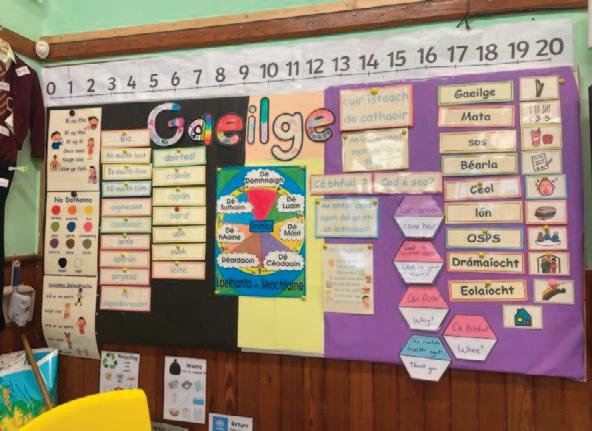
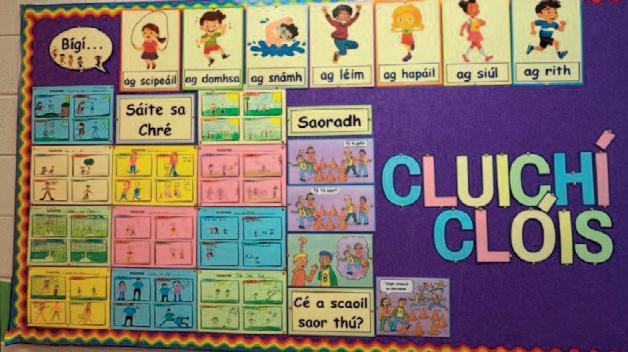
Figure 2 – Photo showing the Gaeilge Board
ABSTRACT
Global citizenship education aims to promote respect, tolerance and peace (Auh et al., 2021). This reflective practitioner-based research explores how I promoted my students’ understanding of global citizenship through music education. Following a review of the literature on this topic, World Music Pedagogy (WMP) was selected as the theoretical foundation for this research (Vita & Campbell, 2021). The research took place during Extended School Placement, in second class, with 26 students between 7 and 9 years of age. Six lessons, of one hour each in duration were conducted. Data collection methods include a selfreflective diary, informal student and peer feedback. A SCOT analysis was undertaken. Rolfe’s Reflective Model was used to reflect on the process. Key insights emerged, such as the power of assumptions and the use of active learning in the classroom.
How can I develop global citizenship through music education?
Amy Murphy, Mary Immaculate College
Literature Review
• Global Citizenship Education (GCE) aims to promote peace, respect, inclusivity, tolerance and secure societies (Auh et al 2021).
• Music is a form of communication, reflecting the values of societies and conveying culture and history (Auh et al 2021).
• World Music Pedagogy (WMP) is a significant pedagogy regarding teaching GCE through music (Vita & Campbell 2021).
• WMP successful in generating world curiosity, respect and making empathetic connections with others (Watts, 2024).
• Empathy, attitudes, world curiosity, preferences and knowledge had improved from engaging with GCE through music (Abril 2006; Watts 2024; Auh et al 2021).
• Difficulties in teaching various cultures due to not understanding it fully (Whiteford et al., 2018).
• There is controversy over how universal music is (Prest et al 2021).
Research Design
• Practitioner-based, including six lesson plans incorporating elements of WMP.
• Each lesson followed a structured format of six steps: (1) Introduction, (2) Attentive listening, (3) Cultural integration, (4) Engaged listening and/ or creating world music, (5) Reflection, and (6) Cool down.
• Two pieces of music were selected per lesson: for warm-up (El pitayero, Lenorije Chaje); as the main song (Mbube, A Ram Sam Sam)
Sample: 26 second-class children aged 7 to 9.
Data collection methods: 6 Lesson plans, 6 Reflective diary entries, 3 Informal conversations which were incorporated into my reflective diary, and children's work.
Data analysis methods: SCOT analysis & Rolfe et al. (2001) Reflective Model.
Ethical considerations: Ensured anonymity for children and class teacher when incorporating their informal feedback in my reflective diary entries.
Limitations: (1) Small sample size (26 children); (2) Time constraints (six hours over two weeks)
Implications for Personal Practice Findings
Findings from SCOT analysis and Rolfe et al. ’s (2001) Reflective Model:
1.WMP effective in promoting global citizenship
• Activities in WMP encompassed active learning and worked well.
• Think-pair-share, group work, singing and reflective activities were effective.
•Children’s curiosity levels about the world increased.
•Children’s willingness to participate developed.
• Effective planning was essential to success.
2.Challenging my assumptions when implementing WMP in promoting global citizenship
• Assumptions that children could work in groups.
• Assumptions that children could perform for one another.
• Assumptions that children would engage in deep reflection about the world.
3.Reflecting using Rolfe et al. (2001) model:
a)Working in pairs and sharing performances need to be taught and developed over time.
b)children were relating to the content in a way that was appropriate and relatable to them.
c)Listening skills improved over the six lessons, so listening activities needs time and structure.
4.A reflective diary as a research method was helpful in identifying strengths and areas to improve on.
Brookfield (2017) highlights the importance of engaging in regular and consistent critical reflections of assumptions, rather than this being a one-time scrutiny. Implications of this learning:
I will
• integrate global citizenship in music education in the future.
• use WMP as a strategy for developing global citizenship in the future.
• implement active learning (group work, pair, work, singing, listening activities) in my teaching.
• create an environment which is open and encouraging to encourage performance and creativity.
• plan thoroughly so that lessons are well thought out with research-based pedagogies.
• critically and systematically engage with my assumptions as a teacher through journaling.
• include children’s interests in my lessons to support engagement, enjoyment and learning.
• ensure to engage in professional development courses and continue to research the best practices to implement into my teaching.
Bibliography
• Abril, C.R., 2006. Learning outcomes of two approaches to multicultural music education. International journal of music education, 24(1),30-42. DOI: 10.1177/0255761406063103
• Auh, Y., Im, M., Kim, C. & Hwang, S. 2021. "Educating Global Citizenship in a Changing World via After-school Music Program in Korea", Pedagogical research, 6(4) em0109. DOI: 10.29333/pr/11302
• Brookfield, S. 2017, Becoming a critically reflective teacher, Second edn, Jossey-Bass, San Francisco.
• Cantarelli Vita, J. & Campbell, P. S. 2021. “World Music Pedagogy: Gateway to Global Citizenship and Children’s Creative Impulses”, Malaysian Journal of Music 10(2), 45–53. DOI: 10.37134/mjm.vol10.2.4.2021
• Freshwater, D. and Rolfe, G., 2001. Critical reflexivity: a politically and ethically engaged research method for nursing. NT Research, 6(1), pp.526537.
• Prest, J. A. Goble, S., Vazquez-Cordoba, H. & Tuinstra, B. 2021. Enacting curriculum ‘in a good way:’ Indigenous knowledge, pedagogy, and worldviews in British Columbia music education classes, Journal of Curriculum Studies, 53:5, 711-728, DOI: 10.1080/00220272.2021.1890836
• Watts, S. H. 2024 World Music Pedagogy and Building Empathy in Early Childhood. Update: Applications of Research in Music Education, 42(2), 5162. DOI: 10.1177/87551233231169703
• Whiteford, K.L., Schloss, K.B., Helwig, N.E. and Palmer, S.E., 2018. Color, music, and emotion: Bach to the blues. Perception, 9(6), DOI: 10.1177/2041669518808535
Enhancing Irish Language Comprehension: Implementing CLIL and Translanguaging Pedagogies into the teaching of Physical Education
Rebecca Carson, Mary Immaculate College
Abstract
This research study explores how pedagogical translanguaging and Content and Language Integrated Learning (CLIL) methodologies can be employed to enhance Irish language comprehension in the curricular area of Physical Education. In the Irish primary context, where many pupils experience limited exposure to Gaeilge outside formal language lessons, there is a growing need for integrated approaches that promote authentic language use in meaningful settings. This study was carried out during the ‘Strand Work’ component of extended school placement in a mainstream, Englishmedium primary school, involving two class groups: First Class and Fourth Class. Six PE lessons were designed and delivered trí Ghaeilge, incorporating multimodal teaching strategies, visual scaffolding, code-switching, and active language use through cluichí clóis (yard games). Data collection methods included lesson plans, reflective diary entries, informal conversations with class teachers, and samples of pupil work. The findings were analysed using SCOT analysis to identify strengths, challenges, opportunities, and threats. Findings indicated that multimodal teaching, targeted scaffolding, and consistent teacher modelling supported pupil engagement and vocabulary retention. The study highlights the value of reflective practice in adapting instruction to meet diverse learner needs.
Literature Review Findings
Based on research by Ní Chróinín, Ní Mhurchú, and Ó Ceallaigh (2016), the Games strand of the Physical Education Curriculum (Government of Ireland, 1999) was selected as a suitable subject area for the successful implementation of CLIL lessons. Games that prioritised teamwork, communication, and collaborative learning strategies (Sáite sa Chré, Saoradh, Mála Pónairí Reoite, An Cat is an Luch) were implemented during PE lessons, with the integration of explicit language learning goals alongside PE objectives. informed by research conducted by Ó Ceallaigh, Ní Mhurchú, and Ní Chróinín (2017).
Guided by Ní Dhiorbháin and Ó Dhuibhir (2022), lessons emphasised the accurate and consistent use of Gaeilge, with a focus on clear grammatical structures and teacher-led modelling to support pupil comprehension and language acquisition. While pre-teaching new vocabulary, some learners initially struggled to grasp meaning from context alone. However, their understanding and overall learning experience improved through the use of both languages. This aligns with literature by Jones (2017), who explores translanguaging as a pedagogical strategy, highlighting the effectiveness of code-switching and translation in supporting content and language learning in bilingual classrooms.
Research Design
The Sample – 50 primary school pupils in total: 23 pupils in First Class (13 boys and 10 girls; aged 7–8 years) and 27 pupils in Fourth Class (16 boys and 11 girls; aged 10–11 years).
Data Collection Methods – 6 lesson plans, 6 reflective diary entries, 2 informal conversations with class teachers, 2 photographs of pupils’ work.
Data Analysis Methods – Reflective diary entries were structured using Gibbs’s Reflective Cycle (1998). SCOT analysis was employed to categorise and interpret the reflective data and identify key strengths, challenges, opportunities, and threats.
Ethical considerations – All data collected respected pupil anonymity and confidentiality. The name of the school and any identifying factors are not disclosed. All children were included in the activities, and no pupil was excluded. Activities were designed to ensure inclusion, safety, and age-appropriate engagement.
Teaching Strategies
The integration of Gaeilge with physical activity, through the use of cluichí clóis (yard games), enabled learners to acquire new vocabulary in an engaging and meaningful context.
Multimodal strategies (teacher modelling, repetition, visual aids, peer demonstrations) increased pupil engagement by making learning interactive and accessible.
Consistent adaptation and progression in lesson planning were evident across lessons, informed by prior experience (e.g., increased pre-teaching, clearer modelling, improved behaviour cues, and reinforcement of rules in outdoor settings).
Teacher confidence and language proficiency supported the consistent use of Gaeilge and the effective delivery of structured lessons.
Through the use of scaffolding, modelling, and visual aids, learners engaged in a purposeful and authentic language learning experiences leading to increased learner understanding.
Challenges
Balancing language instruction with content delivery in PE required ongoing adjustment. It was challenging to ensure that physical activities remained developmentally appropriate and engaging for learners, while maintaining a level of Gaeilge that was accessible and not overwhelming for their language abilities.
During lessons, learners frequently responded in English (as Béarla) despite Irish being modelled and taught, highlighting a gap between receptive and productive language skills.
Managing behaviour in outdoor settings proved challenging, as heightened excitement often led to a loss of focus, highlighting the need for clearer routines. Pronunciation difficulties, linked to limited exposure to written and spoken Irish, created barriers during vocabulary activities. This was particularly evident in Rang a hAon, where learners struggled to read Gaeilge words aloud accurately, often relying on English phonetics.
Implications for Personal Practice
Key Takeaways:
Resources that incorporated visual supports and clear scaffolding proved effective in meeting diverse language needs. Peer collaboration and modelling enhanced lesson clarity and pupil engagement.
Guidance from class teachers and my placement tutor highlighted the value of consistent language use, teacher confidence, and ongoing reflective practice.
Next Steps:
Continue developing visually rich, scaffolded resources that support language use across subjects, particularly in PE.
Strengthen classroom management strategies in outdoor settings to maintain focus while encouraging language production. Build on current practice by engaging in further professional learning in CLIL and translanguaging.
Explore ways to encourage more spontaneous use of Gaeilge among pupils through structured routines, praise, and peer modelling.
Adapting Lessons
Instruction was refined through ongoing reflection, resulting in more structured scaffolding and simplified vocabulary choices. Learner participation and vocabulary retention improved notably with increased scaffolding, particularly among younger pupils in Rang a hAon. Instructional adjustments, including increased use of visual reinforcements (e.g., flashcards and pictorial cues) and additional teacher and peer modelling, enabled pupils to follow game instructions and use key vocabulary more accurately.
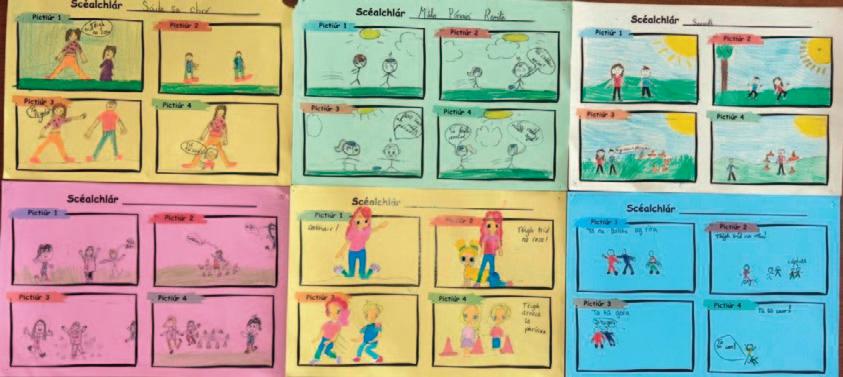
Reflective adaptations to promote learner agency included offering pupil choice during the scéalchlár (storyboard) task, where pupils in Rang a 4 selected their preferred yard game.This encouraged ownership of learning, supported individual interests, and helped develop confidence in using newly acquired vocabulary in a creative, meaningful way, demonstrating confident recall and use of target language.
Ceallaigh, T.J., Ní Mhurchú, M. & Ní Chróinín, D. (2017) ‘Balancing content and language in
The experiences of teachers and learners’, Journal of Immersion and Content-Based Language
mage 1: Cluichí Clóis Display created during extended placement.
Figure 1:Graphic of children playing playground games.
Context:
Undergrad degree in ECCE sparked interest in this topic + opportunity for research during placement.
Grounded in research and a 12-week school placement.
Planned and delivered six play-based lessons.
Data source: 23 Junior Infant pupils in a local co-educational primary school.
Key Findings
Visual, kinaesthetic, and peer-based learning approaches, scaffolded by an adult, enhance communication across all pupils, including those with EAL, SEN, and ADHD.
Multisensory, visual, and movement-based activities are highly effective for engagement and language development.
Interaction improved significantly when kinaesthetic, experiential, and hands-on methods were used.
50% of pupils were EAL learners:
IPlay-based methodologies supported greater learning and communication.
Key Takeaway
Play-based learning enhances learning and communication when it is structured correctly to promote interaction, collaboration, and language use.
Recommendations for Educators
Create rich play contexts linked to children’s real-life experiences and interests. Integrate into all lessons if possible.
Design activities that build specific communication skills (e.g., turn-taking, questioning, negotiating).
Facilitate and scaffold play, by modelling language and using open-ended questions. Encourage meaningful interaction, not just parallel or isolated play.
Adult’s Role: Scaffolding
Scaffolding strategies are essential to support diverse learners.
Aligns with Aistear (NCCA, 2009): Theadult's roleisactive,intentional,andsupportscommunicationand socialdevelopment
Future
Practice
Increase peer-modelling opportunities.
Provide as many hands-on resources as possible to enhance learning and communication.
Use labels, visual prompts, technology, posters, props, dress-up, real-life objects).
Alignment with Aistear
Matches the Aistear Principle of "Learning through Play".
Highlights the importance of adult support and intentional planning to maximise play outcomes.
Promoting communication in the primary school classroom using the Aistear Principles. Ellen Buggy, Mary Immaculate College.
Research Design
Participant Profile: 23 Junior Infants (Boys + Girls, mixed-ability, including EAL, ASD, speech delay, and ADHD) (City Based School - 450 pupils.)
Data Collection Methods:
Six play-based Lesson Plans. Anecdotal notes.
Pictures of pupils playing kept anonymous. Reflective teaching journal on lessons.
Student work samples.
Checklists for engagement and participation.
Informal feedback from students (student voice).
SWOT analysis and reflective model used to analyse data.
Reflections and Data Analysis all kept anonymous.
Lesson Types:
1. Role-Play - Garden Centre.
2. Storytelling with Puppets.
3. Sensory Outdoor Walk.
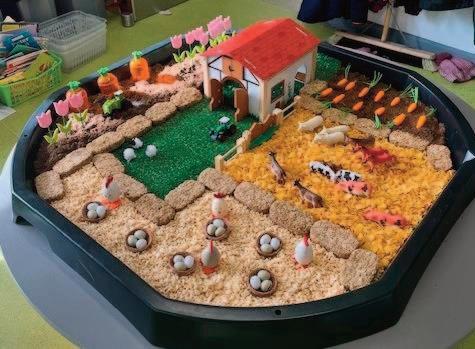
4. Small-World Play (Farm).
5. SPHE Circle Time (Feelings & Emotions).
6. Interactive Songs & Rhymes.
Increased Peer Interaction: Children engaged more in storytelling and role-play when learning was play-based. Turn-taking, imaginative dialogue, and leadership emerged naturally. (Gray & Ryan, 2016; Krichevets, 2014) (App B: Strengths ETS).
EAL Progress: Visual and kinaesthetic strategies (puppets, gestures, songs) supported vocabulary retention. EAL pupils, became more expressive during free play esp. when scaffolded, peer modelled or use of props. (Krashen in Gray & Ryan, 2016).
(App B: Strengths, App C: What?).
SEN Support: Pupils with SEN participated more consistently in structured, smallgroup play and responded positively to puppets for storytelling. (Bruner in Lee & Kinzie, 2012)). (App B: Strengths, App C: So What?). Students with ADHD remained more focused during movement-based activities, which promoted spontaneous speech and peer interaction. (App B: Weaknesses).
Scaffolding Strategies: Techniques like sentence starters, modelling, and peer pairing improved participation among lower-level communicators. One observed example involved a stronger peer modelling sentence structure, leading to greater output from an EAL student. (App B: Scaffolding & Modelling; App C: What?).
Curriculum Language Transfer: Vocabulary introduced in literacy, maths, and SESE was reused during Aistear play and assessment. Thematic consistency and visual scaffolding facilitated this transfer. (NCCA, 2009) (App B: Strengths).
Opportunities: A variety of materials, play types, and sensory props supported inclusive communication. Choice-based learning helped meet diverse needs, in a sensory-rich environment aligning with inclusive practice trends and Aistear principles. Teacher training in play-based methodologies would be useful. (App B: Opportunities, App C: Now What?).
Using purposeful, structured play supports communication better than free play alone.
Always think about inclusion and how the play can support everyone involved.
Challenges: Keeping ADHD students engaged in open-ended play was difficult without structured roles. Implementing defined play roles (e.g., “builder,” “shopkeeper”) helped maintain focus. Balancing structure and choice was essential. (App B: Weaknesses, App C: Now What?).
Differentiation: Visual aids, sensory materials, and flexible groupings supported EAL and SEN learners. However, complex sentence structures remained challenging for some EAL pupils despite scaffolding. (App B: Strengths, Weaknesses – EAL & SEN)
Gray, C. & Ryan, A. (2016). Aistear vis-à-vis the Primary Curriculum. Int. Journal of Early Years Education. Krashen, S. (1982). Principles and Practice in Second Language Acquisition. Lee, Y. & Kinzie, M. (2012). Teacher questions and student response. Instructional Science. Murphy, P. (1999). Learners, Learning and Assessment. Paul Chapman Publishing. NCCA (2009). Aistear: The Early Childhood Curriculum Framework. Whorrall, J. & Cabell, S.Q. (2016). Supporting Oral Language Development. Early Childhood Education Journal. Woods, A., Mannion, A., & Garrity, S. (2022). Implementing Aistear in Irish Contexts. Childcare in Practice.
Vygotsky’s Sociocultural Theory (Gray & Ryan, 2016; Krichevets, 2014) Learning through peer + adult interaction. Through: Role-play + collaborative storytelling with teacher involved.
Piaget’s Constructivist Theory (Murphy, 1999) Hands-on play = cognitive + language development. Through: Small-world play + Sensory exploration.
Woods et al. (2022)
Scaffolding, visuals, and peer support are essential for all, especially EAL and SEN students.
Adult involvement and environment setup are key. Effective questioning, modelling, and structured prompts ensures participation.
Pairing stronger communicators with EAL students supports language development.
Collaborating with peers and mentors helped me develop inclusive resources, adjust lesson pacing, and scaffold activities for diverse needs. Reflecting on your lessons is easier postfeedback.
Creating sensory, visual, and interactive materials helped meet diverse communication needs and reinforced key vocabulary.
Songs, puppets and movement breaks increase participation for all students involved.
Strong oral language = better literacy + social skills. Through: Circle Time + Storytelling.
From studying this literature, I will use play-based learning, visual supports, and teacher scaffolding to enhance communication and develop language skills.
Adult
Structured role-play, peer-modelling, gestures and repetition are extremely useful for all pupils in any subject or lesson.
Some students, especially ASD/EAL learners, require structured roles and additional language scaffolds to achieve learning goals.
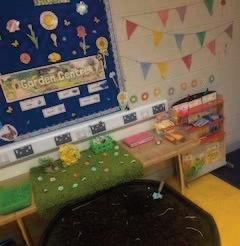
Garden Centre Play Corner
Farm themed sensory play
ABSTRACT
Exploring Playful Pedagogy in Mathematics
Vivienne Fitzgerald, Mary Immaculate College
DESIGN
This research project explores the question: "How can I incorporate a pedagogy of play into my teaching of mathematics on school placement? Six lessons were developed for 5th class from the Measures strand focusing on length, perimeter and area. Lessons were designed using evidence-based approaches to inform my practice including children’s literature, real world contexts, active learning and using ICT. Pupil agency was promoted through playful and engaging lessons as encouraged by the new Primary Maths Curriculum (2023). Systematic self-reflection informed the lesson analysis and supported me in improving my teaching. My findings showed that a playful pedagogical approach enhanced student engagement and fostered more positive attitudes towards maths, despite challenges such as time constraints and group dynamics. This experience has given me the confidence to use playful, meaningful learning approaches in future practice and has supported my development as a teacher.
LITERATURE REVIEW
Findings from my systematic literature review were integrated into my lesson plans and directly informed my teaching practice.
• Whitin (1992) illustrates that children’s literature helps children see maths as part of everyday life, provide meaningful, relatable contexts to introduce mathematical concepts in an engaging way. This influenced the lesson where the topic of length was introduced with a picture book: How big is a Foot’ by Rolf Myller (Figure 3) Prendergast et al. (2019) found that Irish teachers report difficulty finding suitable children’s literature and many are unaware of age-appropriate stories that match curriculum topics. I also experienced this.
• Dickinson & Hough (2012) recommend problem solving through real world contexts to develop conceptual understanding. This literature influenced lesson 2, 3 and 4 (see appendix A ) The lessons used a contextualised, playbased pedagogy, combining physical activities with mathematical concepts to create meaningful, hands-on learning experiences.
• Stephan et al. (2020) argue that a meaningful context can spark interest and show students how maths applies to real life. This was evident in the practical tasks the children undertook in the lessons such as measuring items with a purpose.
• Butler et al. (2022) highlight that digital technologies enhance engagement and accessibility in numeracy assessment. This literature helped to inform my use of ICT to support playful and inclusive assessment practices in mathematics through interactive teacher designed games and use of iPads.
• Primary Maths Curriculum & Framework: "Through appropriately playful and engaging learning experiences, children should be able to …” (NCCA 2023, p.18). Each lesson plan incorporates this curriculum-aligned phrase and is evidenced within my lesson plans.
• As a student teacher, I felt it was important to develop an understanding of some playful pedagogies in order to effectively provide such experiences.
Research informed my teaching approaches in my lesson plans and practice (children’s literature, real world contexts, active learning and integration of ICT) thus promoting playful pedagogy across the six lessons (see appendix A).
The sample consisted of 29 pupils in 5th class aged 10–11.
Data was collected through:
• My reflective journal entries
• My informal conversations with the class teacher
• My observation of the children and their work
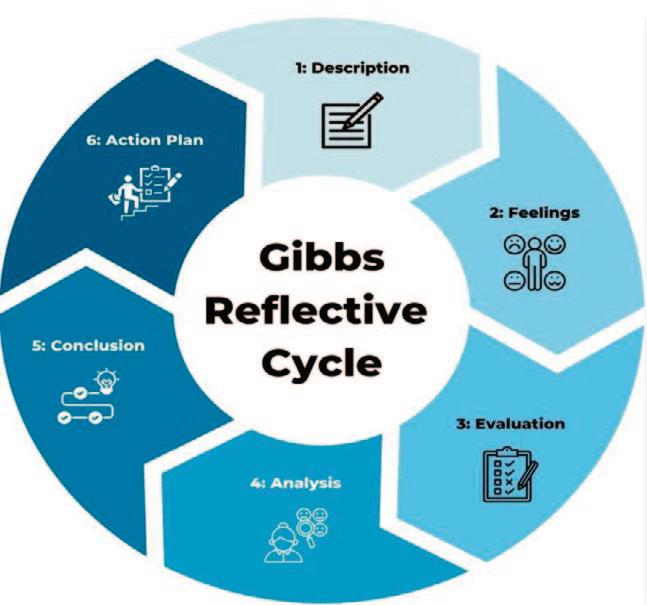
The structure of each journal entry followed Gibbs’ Reflective Cycle (see figure 1 below & appendix B) which supported in depth reflection after each lesson.
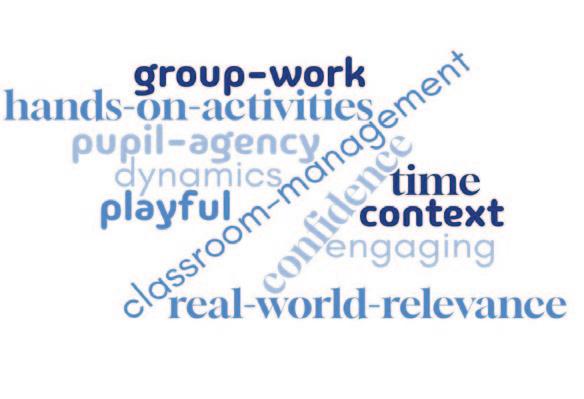
Reflections were treated as qualitative data and analysed using a SCOT framework to identify key themes (see figure 2 below and appendix B) and highlight the strengths, challenges, opportunities and threats.
This study employed a dual-framework methodology, combining Gibbs’ Reflective Cycle for structured reflection with SCOT analysis for thematic interpretation. I remained mindful of ethical considerations, including anonymity, when gathering the data.
A variety of teaching strategies were adopted (children’s literature, real-world contexts, active learning, and ICT).
• The class had no prior experience using children’s literature in maths (see figure 3). One pupil asked, “How is this maths if we are reading a story?” (Reflection Lesson 1 Appendix B). There was strong engagement with meaningful discussion afterwards on the need for standardised units in measurement. Sourcing age-appropriate maths literature was challenging; although the chosen book was intended for younger pupils, it proved effective with 5th class and I would not hesitate in future using children’s literature even if it is aimed at younger children. The children still related to the story and made meaningful connections, noticing things that younger readers might not.
• Using familiar, real-life contexts made maths more relatable and meaningful (Stephan et al. 2020). Maths talk was evident: ‘Now we need the length and multiply to get the area’. One child said, “Now I can measure the blind in the kitchen for my Mom (both from lesson 4) showing a clear real-world connection.
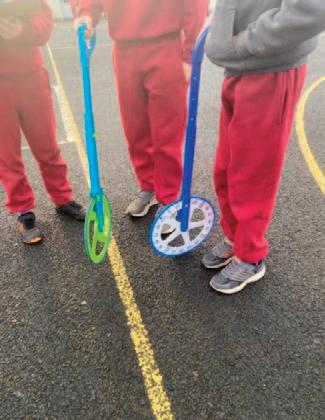
• Classroom management improved through clearer modelling and instructions. This was identified in my analysis of my reflections. Pupils enjoyed outdoor lessons and frequently asked to repeat them (see figure 4). Time was a challenge especially for the ‘Maths Olympics’
• Children were engaged in the lessons. Students with additional needs excelled in outdoor tasks. Tasks were differentiated to support diverse needs. Mixedability groups worked well. Pupil agency was encouraged, offering choices in tasks and roles. Pupils demonstrated a very positive mathematical disposition throughout the lessons.
• Designing an apartment as 'architects' promoted teamwork deeper and understanding of area and perimeter.
• ICT tools were effective for assessment: Games on the smartboard and iPads. This boosted participation. Class teacher noted that weaker students were more engaged than usual.
• Challenging to know if my lessons were ‘playful’ enough. Robinson et al. (2019) notes that play depends on how it feels to the learner.
• I have gained confidence to use playful approaches and evidence based strategies in the teaching of maths.
• I realised the importance of creating original resources that suit the class level and supports their interests.
• I have witnessed the benefit of peer reviewing and mentor support both in my research project and in my teaching.
• From the self reflection analysis process, I have realised the importance of self reflection and the benefits for a teacher.
• I endeavour to keep up to date with current research to inform my practice.
• I will integrate maths with other subjects to give students more time to deepen their understanding and connect learning to real-life situations.
• I believe I provided the class with a positive and engaging maths learning experience on placement, which they embraced with enthusiasm. Their previous experience with maths was very book based. I aim to make maths fun, meaningful, and engaging, moving beyond the textbook to create learning experiences that truly connect with children.
Butler, D., Giblin, C., & Kingston, M. (2022) Use of Digital Technologies as Tools for Numeracy Development. Dublin City University. Dickinson, P. and Hough, S. (2012) Using realistic mathematics education in UK classrooms.
Figure 1: Gibbs Reflective (Cycle 1998)
To
what
extent do student voice pedagogies enhance inclusivity and enjoyment in Physical Education?
Mickela McGrath: Professional Masters of Education 2025
This academic poster reports a study of the impact of choice and student voice pedagogies in the creation and enhancement of meaningful, inclusive Physical Education experiences for primary school children. I chose to research this pedagogy because I have a passion for physical education and its benefits. I can see how many young children are missing out on that benefit as a consequence of a lack of motivation and enjoyment. I completed this study in a 6th class setting, in a rural school with a considerable mix of sporting and physical abilities. It is important to mention the rural school context here, as I believe there would be huge differences in a large city school versus the small country setting. I based my research on the Strand ‘Games’ and strand unit ‘Invasion Games’. I utilized student voice in the development of Olympic handball skills and games over 6 PE lessons
➢ Meaningful PE/ Creating Enjoyment:
• My literature review was focused on meaningful PE, and how to create such meaning in a way the includes the voice and opinion of all children.
• The emphasis on wellbeing in education, both within and outside school, has influenced this shift. The 2023 draft primary curriculum highlights wellbeing as central to children’s physical and emotional health- Literature shows that student voice pedagogies promotes this.
• Physical education (PE) offers children the chance to enjoy physical exertion and experience the satisfaction of achievement, boosting selfesteem (NCCA, 1999).
• Meaningful PE has become crucial in primary education, with a focus on creating joyful, engaging experiences in movement, and my research shows that many of these elements are created through offering choice to children.
➢ Student Voice Pedagogies:
• Article 12 of the Children’s Rights Alliance (2010) states that ‘a child’s view must be considered on all matters affecting them’- This proves the importance of student voice.
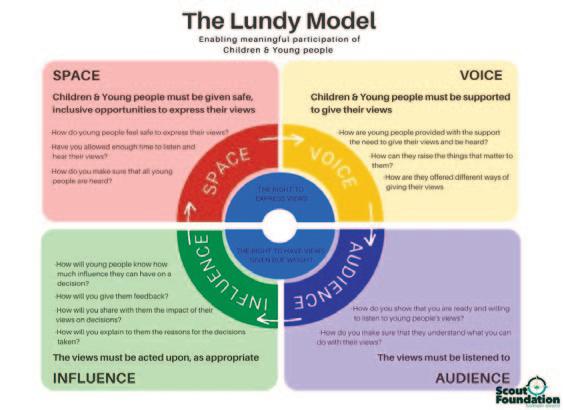
• ‘Children should have the space to express their views, their voice should be enabled, their views must be communicated to an appropriate audience, and their voices must have an influence’ (Lundy 2007, p.927).
• I centered my lesson planning around the Lundy model ensuring the children knew their voice had an influence on my planning of their lessons.
• ‘Student voice is a ‘powerful lever’ for children’s involvement in decision-making and has a transformative impact on the engagement of students in the learning process’ (Cardiff et al 2023, p.659).
➢ Data collection: Observation of lessons and self-reflections thereafter.
➢ The ‘Irish Primary PE Association’s publication ‘Getting Started with Student Voice in PE’: I utilized strategy 3: Identifying and responding to the children’s preferences, and strategy 5: Change one thing.
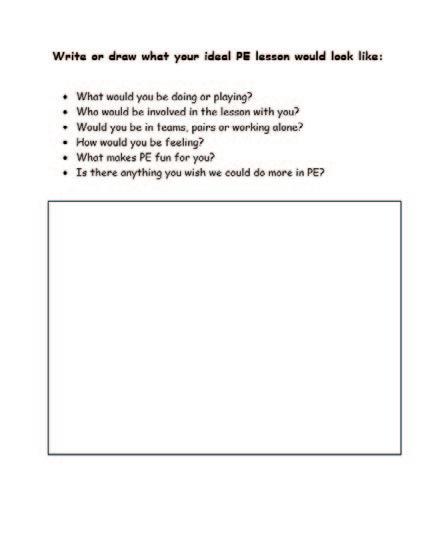
• Children wrote their preferences for PE on a worksheet (Image 1).
• After discussion, I combined their preferences and presented to them the main take aways.
• These preferences were incorporated in my lesson plans.
➢ The Lundy Model’ (2007) (Image 3): I utilized this model to ensure that the children felt safe in expressing their opinions and were not afraid to use their voice and could see how they were having an impact by expressing their opinion.
• I ensured that the children could see me as the teacher, as their audience, and I showed the children the influence that their opinions had on our PE lessons.
• I ensured this by taking five minutes at the start of each PE lesson to explain to the children my choices for the lesson. I also created a PowerPoint slide to show the children the main findings that I took from their worksheets on their ideal PE lesson.
• Analysis of Data: Rolfe et al reflective model at the end of each lesson
FINDINGS
The use of student voice pedagogies undoubtedly enhanced the experience of PE for the children. However, there are two main findings that I took from this research:
Finding 1: Children value autonomy:
The children enjoyed taking the time to think about their ideas, knowing that their voices would be heard and their opinions acted upon.
➢ Implementation:
• To introduce the children to the concept of student voice, I used a resource from the Irish Primary PE association’s Getting Started with student voice, focusing on strategy 3: Identifying and responding to preferences.
• After some discussion, each child had the opportunity to write or draw what their ideal PE lesson entailed. I then gathered the responses of the pupils and created a PowerPoint slide to show them the consensus of their opinions. (Image 1)
➢ Challenges:
• An unforeseen challenge I encountered, was the children becoming overwhelmed with choice, as they were unfamiliar with their opinions being utilized.
• Many of the children became closed off and conscious of what the other pupils were writing or saying.
➢ Adaptation and responsiveness:
• I realized that the children needed further scaffolding on this task, hence, I paused the task and facilitated a circle time discussion to deepen their understanding, assuring all children that their opinion would be valid and acted upon in my lessons.
Finding 2: Student Voice Pedagogies promote inclusivity and equal access:
The levels of engagement wholly increased with the input of the children, in turn meaning every child felt included and involved.
➢ Implementation:
• I utilized the ‘Change one thing’ Strategy from Irish Primary PE association’s Getting Started with student voice.
• In pairs, children played a warm up game passing a ball between them.
• Child A chose one thing they would like to change about the game, playing with this change.
• Child B repeated the above.
• All children had the chance to participate, making the lesson accessible and giving agency to the child without pressure as it was pair based.
➢ Challenges:
• Some children, who had previously expressed their dislike of PE, became overwhelmed and felt marginalized when it came to their turn to change one thing in the game. Giving their age (6th class), they became embarrassed when they could not think of a change.
➢ Adaptation and responsiveness:
• To combat this, I did some conferencing with the children before it came to their turn to change one thing. I offered the children to chance to see what some other people had decided to change in their games.
• I ensured that these children had their idea in their head before I left them to continue the game, to avoid them feeling uncomfortable and marginalized
➢ Using student voice in all areas ofthe curriculum to enhance inclusivity:
• I have come to understand that thevery fundamentals of inclusivity lie within student voice.
• This has hugely impacted my practice not only in PE, but in all curricular and noncurricular areas of the school day.
• My overall vision of PE has changed as I have encountered a vast variety of abilities within the children I have taught.I understand that PE can look and feel different for every child and valuing the opinions and the autonomy of children when it comes to PE, can be the deciding factor in their inclusion and enjoyment of the lessons.
➢ Use of a democratic approach:
• I began this study with the intention of creating enjoyment in PE, but I now understand that using a democratic approach in my teaching, provides inclusivity for all pupils. This is somethingthat I now intend to use not only in PE, but as aforementioned, in all areas of my practice.
➢ New Future approach:
• In the future, I intend to try this with a younger class, and to observe if they are more open and less overwhelmed when it comes to having autonomy in PE, and if this openness would alter my current findings or change the types of challenges I would face.
• It would interest me to see if adding autonomy at young age, would remove the negative perception often associated with PE and allow the children to develop their autonomy as they grow.
➢ Conclusion: Student voice pedagogies epitomise inclusivity and provide a more meaningful, enjoyable experience for the primary school child.
1. Child’s Rights Alliance (CRA), (2010), The United Nations Convention on the Rights of the Child, Dublin: CRA.
2.Cardiff, G., Beni, S., Fletcher, T., Bowles R., and Ní Chróinín, D., (2023), ‘Learning to facilitate student voice in primary physical education’ European Physical education review, [online], available: (accessed: 12/02/2024).
3.Kretchmar R. S., (2006), ‘Ten More Reasons for Quality Physical Education’ in The Journal of Physical Education, Recreation and dance, 77(9), pp.6-9, [online], available: Ten More Reasons for Quality Physical Education: Journal of Physical Education, Recreation & Dance: Vol 77, No 9 (tandfonline.com).
4.National Council for Curriculum and Assessment, (2023), Draft Primary Curriculum Framework: Primary curriculum Review and
5.National
for
Abstract
This reflective practitioner-based research project will explore the Arts Education Curriculum in primary school settings. It is evident from personal experience and from the literature that the arts subjects are often forgotten about or deemed less of a priority compared to other curricular areas. Schools generally place much more emphasis on programmes and initiatives that promote literacy and numeracy. These extra programmes and initiatives often take from time that should be allocated to subjects such as Music, Art and Drama. My research focuses on ways that teachers can prioritise the teaching of arts through integration with other curricular areas, which will in turn create more of a balance between the arts and other curricular areas. It is evident from studies conducted by Johnson et al. (2024) that integration is key to teaching the arts, and that it ‘promotes interdisciplinary connections.’ The Primary Arts Education Specification (NCCA 2024), places much emphasis on connectivity noting that Arts Education can ‘compliment’ children’s learning in other curricular areas. In taking a more integrated and balanced approach to teaching the arts, teachers will create meaningful experiences for their students and feel more confident in their teaching of the arts.
Using Integration to Create a Balance when Teaching Music, Art and Drama
Literature Review
• The literature suggests that many primary teachers internationally find teaching the arts subjects challenging, and lack confidence in teaching Music, Art and Drama.
• The literature also suggests that in countries such as the United States, Ireland, Zimbabwe, Botswana, and Namibia the arts are seen as low priority, which subsequently leads to teachers opting out of teaching these subject areas.
• In research conducted by Fahy (2023), it was found that 68% of teachers surveyed in their study agreed that there was much more emphasis placed on the teaching of literacy and numeracy in their schools, which highlights that literacy and numeracy have priority over the Arts Education Curriculum in primary schools.
• Both Fahy (2023) and Mannathoko & Mamvuto (2018) propose using balance and integration with other subject areas to help combat challenges teachers may face when teaching the arts and make the teaching of the arts more well-rounded and meaningful for the children.
Research Design
• Sample: This research was practitioner-based and conducted during my eleven-week extended placement. Six lesson plans were created and taught to children in an urban city school. Three lessons plans were taught to fifth-class (stage 4), the other three lessons were taught to senior infants (stage 1).
• Data Collection: Six lesson plans with six corresponding teacher reflections included. Two informal chats with the class teachers about the arts and the lessons that were taught. Children’s work was also collected as samples for this research.
• Data Analysis Methods: Data was analysed using the Rolfe et al. (2001) Reflective Model and elements of SCOT analysis.
• Ethical Consideration: Complete anonymity was ensured for all children and for both class teachers during this research. Where names were included on the children’s work, these have been covered to keep the identity of the children anonymous. This is also a practitioner-based research project so all reflections are my own thoughts and how I can improve my personal practice when teaching the arts.
Carrie Dalton – Mary Immaculate College Limerick
Exemplars. – 5th Class – The Bailey’s Farm
Findings
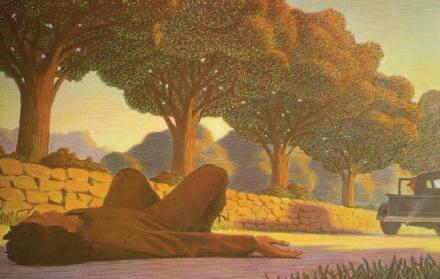
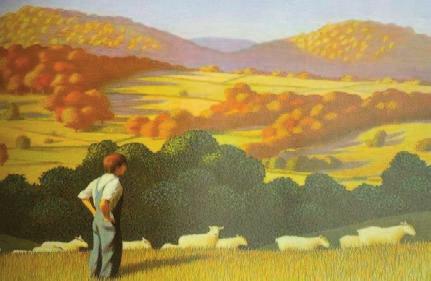
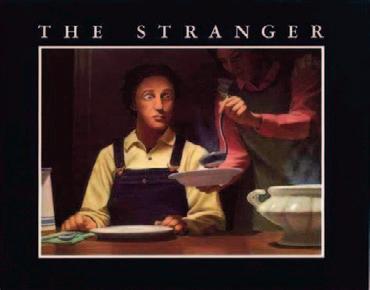
❖ Stage 4: Integration of/with the arts subjects worked well with stage four children. Using a picture book was a really nice way of integrating the arts with literacy. We explored the picture book ‘The Stranger’ and the children looked at the book in detail through reading, writing and oral language lessons. The children further explored the picture book through the arts and focused on settings, sounds and characters.
• Informal Use of New Vocabulary: Children were using and practicing new vocabulary unbeknownst to themselves in Music, Art and Drama lessons.
❖ Stage 1: A more thematic approach worked much better with infants. SESE and the arts integrated well together and using story also worked nicely to explore themes.
• Drama & History: Sequencing and recreating scenes from a storybook for history worked well and gave the children a better understanding of the plot and characters while promoting collaboration with peers and communication skills.
• Thematic Teaching: The children were able to explore many aspects of the farm through the arts such as – setting and sounds. They were encouraged to get creative through hands-on and sensory experiences and the children had many opportunities to use the new learned vocabulary more informally through the arts and through play.
• Integration & Balance: Integration enabled me to feel more confident in my teaching of the arts. Using integration and creating links within the arts subjects and with other subjects made it easier to create a balance. It also made planning much easier, and evidently the children had a better understanding of the content being covered.
Challenges: ❖
• Classroom Management: Challenging at times because of how excited the children were getting about the activities – callbacks worked to bring the children back and get their attention during or after activities and explaining activities at the beginning of lessons worked well also.
• Group Work: Difficult at times when the children wanted to pick their groups especially with stage four – this led to arguments and wasted time during the lessons - pre-assigned groups worked well to prevent arguments.
Implications for Personal Practice
The Arts Education Partnership and National Art Education Association (2019), noted that the arts has much more of an impact on children’s lives than what teachers give it credit for.
• I will ensure that adequate time is given each week to teach the Arts Education Curriculum.
• I will make sure to promote a thinking, doing, feeling mindset when teaching the arts and show interest and passion for the areas to help promote wellbeing for all children (McCabe & Flannery 2022).
• I will continue to use integration to aid in promoting a more ‘multimodal’ and ‘interactive’ approach to teaching the arts as suggested by Fahy (2023) and Johnson et al. (2022).
• I will continue to explore thematic teaching and use the arts to further teach and explore different topics with the children.
• I will continue to use storybooks and picture books to further explore the arts with children of all stages.
• I will continue to use questioning to get the children thinking more critically about the arts.
• I will continue to critically reflect on my teaching using the Rolfe et al (2001) Reflective Practice.
• I will continue to use integration and thematic teaching to aid me in creating a balance in my classroom between literacy and numeracy and the arts.
perspectives on an Arts Initiative in schools: ‘Filling the Pail or
Fire?’’, Social Sciences & Humanities Open, 7, 1-9, 100290.
Johnson, D. C., Harney, K., Languell, A., & Kanzler, C. (2022) ‘Integrated Music Education: perspectives and practices of Middle School Music, English, and Science teachers’, Qualitative Research Music Education, 4(1), 105–145.
Johnson, D.C., Harney, K., Languell, A., Kanzler, C. (2024) ‘Integrated Arts Education: perspectives and practices of teacher-educators and student teachers’, The Teacher Educator, 59(2), 259-277. Mannathoko, M.C, Mamvuto, A. (2018) ‘Teaching the Arts in the Primary School Curriculum: What strategies imbue the integrative arts subjects?’, Studies in Arts Education, 59(2), 145-158, available: https://doi.org/10.1080/00393541.2018.1440149
McCabe, Ú., Flannery, M. (2022) ‘Wellbeing and the arts in Irish primary teacher education: aligned or apart? A policy and self-study perspective’, European Journal of Teacher Education, 1-16, available: 10.1080/02619768.2022.2040478.
National Council for Curriculum and Assessment NCCA (2024) Draft Primary Arts Education Specification, Dublin: Department of Education and Skills.
Rolfe, G., Freshwater, D., Jasper, M. (2001) Critical Reflection for Nursing and the Helping Professionals: A User’s Guide, Palgrave Macmillan.
Van Allsburg, C. (1986) The Stranger, Harper Collins Publishers Inc.
How can I successfully implement Universal Design for Learning (UDL) principles in my teaching of Religious Education in the Primary classroom?
An NCSE pilot project in UDL (CAST 2018) good practice involving 45 schools is underway. (NCSE 2024) The RE programme taught in my placement school is the Grow in Love (GiL) programme devised by the school’s patron body. made my own adjustments to GiL to incorporate the principles of UDL. This formed the basis of six lesson plans taught in 2nd Class. The Irish Episcopal Conference states a “synthesis” between the heart, head and hands is needed in a child’s RE, which contributes to an RE education that is “holistic, experiential and life-enhancing” (IEC 2011, p.140) This aligns with the key principles of UDL. In my literature review, found that there is currently a lack of research into the implementation of UDL in the area of Religious Education in Ireland. This is the motivation for my research in this area incorporating two of my areas of interest: inclusive education practices and RE. A key focus of my lessons was Multiple Means of Engagement, following consultation with my research supervisor. However, elements of Multiple Means of Representation and Multiple Means of Expression formed part of these lessons and are reflected in my findings.
Literature Review
Inclusion
• UDL challenges teachers’ mindset on issues of equity, inclusion and equality in the classroom. (Flood & Banks 2021) It is important to design lesson activities based on the wider needs of the whole class.
UDL enables teachers to include the learning needs of all in the classroom rather than focusing on a core group of learners, allowing teachers to create inclusive lessons. (Capp 2016, p.44) It reduces the need for differentiated activities in lessons, however, as learned, further supports will sometimes be required for certain learners.
• Through UDL’s promotion of a “holistic approach” to learning, learners receive appropriate challenges and supports (Gronneberg & Johnston 2015) as I have found in my teaching of RE.
Engagement Katz (2013) found that students in classrooms implementing UDL interacted more frequently with adults and peers and had higher levels of autonomy. Students in these classrooms also continued to be supported and scaffolded by their teachers during lessons (Katz 2013, p.179). This was evident in my findings as some pupils still required additional supports despite the implementation of UDL.
• Quaglia (2015) argues teachers can, by offering a range of learning method options with “appropriate supports…”, eliminate an overreliance on particular modes of learning (Quaglia 2015, p.6). Using a variety of methodologies across lessons helped the children to further their understanding of the concept of reconciliation.
Findings
Over six RE lessons, adopted a variety of teaching strategies underpinned by UDL to meet the diverse needs of the pupils, taking into account varying learning abilities and backgrounds.
Multiple Means of Expression: “Teacher-in-role” and “Think-pair-share”. Multiple Means of Engagement: “Round-Robin” discussions Circle Time”, “Conscience Alley”, Exploratory Learning Activity
• Multiple Means of Engagement: use of concrete material (Sacred Space, Prayer Cube) visual supports (photographs, pictures, activity sheets), Exploratory Learning Activity.
•“Round-Robin and Think-pair-share are two well-known inclusive discussion methodologies.” (Golden 2023, p.184)
Sample quotes from diary entries on the impact of these strategies: “Through using a different method of Multiple Means of Engagement and Expression was able to encourage the pupils to connect to the main message of yesterday’s “What Sweets?” story.”
“I used mixed ability groups for the discussions surrounding each of the pictures. This offered a further support for pupils who had difficulties in processing written information, for example due to dyslexia, in line with the principle of Multiple Means of Engagement.”
Impact of teaching strategies
Concrete Materials to facilitate expression - Prayer Cube – The pupils made discernible progress in the practice of their prayers and asked to keep it in the classroom. It was necessary to make adaptations e.g. when it landed on the same prayer more than twice, they rolled again.
• Exploratory Learning Activity: Class teacher felt that treasure hunt activity offered pupils an opportunity to engage in exploratory learning. The pupils drew on prior knowledge. The use of think-pair-share’ leading into larger group discussions, helped to develop pupils’ understanding of the task completed during the second lesson. We explored the concept of good and poor choices. This allowed for debate and open discussions.
Implications for Personal Practice
Challenges faced
• Issue with “Roger-On” device for pupil with profound hearing loss. Discussed matter with class teacher. Made modifications to accommodate pupil’s needs for future lessons.
• There is limited knowledge in Irish Primary classrooms about UDL. had to explain concepts to the class teacher.
ABSTRACT
Music performance and composition promotes student participation level in the classroom compared to other subjects, as they involves students constantly understanding of one, results in participating in hands-on activities rather than relying on textbooks or rote learning.
This study explored how student creativity and understanding of music concepts developed when the two strands of in the Music Curriculum were strongly interlinked, with high achievement and a deep the accomplishment of the other. I have chosen this subject of music and these two strand units as they are prominently connected to my personal values of promoting creativity, and meaningful engagement with music.
I created six forty-five-minute lessons with thirty students in fourth and fifth class. The students explored different elements and knowledge musical through performance and composition, through body percussion activities, creating lyrics, and playing musical instruments.
How can I teach the strands of composing and performing in the music curriculum more holistically in the classroom?
Aoife Lynch, Mary Immaculate College
Literature Review
•Gardner’s (1983) multiple intelligences theory reflects results that musical intelligence develops four different and important skills: creative skills, analytical skills, practical skills, and wisdom-based skills. Three of these skills can be developed by performing and composing music, linking how mastering one strand can complement the other.
• Music is composed for performances, and without teaching performance, there is little point in practicing composing (Kimball, 2013).
• Music composition should be implemented as commonly and consistently as writing a short story, creating a new game, or generating a piece of artwork (Hickey, M., 2012).
• Assigning students composition tasks for performance will allow them to consider the practical aspects of performing while composing (Freedman, B., 2013).
• Various skills for composition that are needed for performing: exploring sounds, generating ideas, arranging them into texture and structure, reflecting, determining musical instruments, modifying appropriate dynamics and rhythm, and practicing without restriction (Strand, K., 2006).
• Students who are aware and observe others’ compositions will have the best accomplishment (Wiggins, J., 2007).
• Introducing instruments of the student’s choice leads to increased determination and success (Bayley, J.G., 2004).
• The experience and skills that the teacher can share will allow for this opportunity to accomplish future tasks (Wiggins, J., 2007).
Research Design
• Six lesson plans:
➢ Lessons 1 and 2= body percussion
➢ Lessons 3 and 4= voices/ lyrics composition
➢ Lessons 5 and 6= instruments, body percussion, and/ or voices.
• Each lesson developed and progressed on composition and performance skills, working in groups.
• Groups chose from a list of songs for each music lesson, and a theme for their lyrics’ composition.
• Warm-up and cool-down activities are included in each lesson based on the topics.
Sample: 30 fourth and fifth-class students ages 10 to 12.
Data collection methods: six lesson plans, six reflective journals, and eight children’s lyrics composition samples. Analysis and reflection methods: SCOT analysis and Gibbs Reflection Cycle (1998).
Ethical considerations: students only liking specific musical cultures, fostering for all music cultures.
Limitations: restricted time during each lesson (six 45 minutes lessons), one music lesson a week, small sample size, and some participants lacked musical interest.
Gibbs Reflective Cycle (1998) and SCOT analysis findings:
Positives:
✓ Developing and progressing lessons results in higher engagement and successful composition skills and performances.
✓ Using themes (family, sports, school, friends) and songs known to the students increases engagement and motivation
✓ Giving students the choice within the lessons.
✓ Students’ reflecting and editing their compositions and performances created improved work.
✓ Linking the music with feelings allowed students to understand tempo, pitch, and dynamics better- happy is fast and loud, sad is slow and quiet.
✓ Listening to others perform their compositions at the end of each lesson gives students ideas and motivation to succeed.
Challenges:
✓ Students struggled to compromise and decide on topics and songs for lyrics composition and performance tasks.
✓ Not all students enjoyed musical tasks and activities, especially performing in front of their peers- lacking confidence.
✓ Language barrier for EAL students.
Adaptations:
✓ Grouping students based on song, topic, and theme preferences.
✓ Ensuring each group had high and low engaging students together.
Findings Bibliography
Implications for Personal Practice
• I will encourage students to reflect on their work to edit it appropriately and develop their skills and work (Strand, K., 2006).
• Give students choices in their compositions and performances- songs, movements, tempos, groups, instruments (Bayley, J.G., 2004).
• I will teach performance and composition in unison, designing composition tasks for performance (Freedman, B., 2013).
• I will motivate, encourage, enthuse, and share my knowledge and musical skills with the students to create their compositions and performance skills (Wiggins, J., 2007).
• Using interactive, hands-on, concrete, and engaging materials and activities- videos, instruments, progression tasks to fall in line with Gardner’s (1983) multiple intelligence theory.
• I will frequently incorporate and facilitate composition activities and tasks in the classroom (Hickey, M., 2012).
• I will ask students to listen and observe other groups’ performances to generate ideas when modifying their compositions (Wiggins, J., 2007).
1.Bayley, J.G., (2004). The procedure by which teachers prepare students to choose a musical instrument. Update: Applications of Research in Music Education, 22(2), pp.23-34.
2.Cope, P., (1998). Knowledge, meaning, and ability in musical instrument teaching and learning British Journal of Music Education, 15(3), pp.263-270.
3.Freedman, B., (2013). Teaching music through composition: A curriculum using technology. Oxford University Press, USA.
4.Gibbs, G. (1988) Learning by Doing: A guide to teaching and learning methods. Oxford: Further Education Unit, Oxford Polytechnic.
5.Hickey, M., (2012). Music outside the lines: Ideas for composing in K-12 music classrooms. Oxford University Press.
6.Kimball, C. (2013). Art song: Linking poetry and music. Hal Leonard Corporation.
7.NCCA (2020). The Primary School Music Curriculum. Dublin: NCCA.
8.Strand, K., (2006). Survey of Indiana music teachers on using composition in the classroom. Journal of Research in Music Education 54(2), pp.154-167.
9.Wiggins, J., (2007). Compositional process in music. In International Handbook of research in arts education (pp. 453476). Dordrecht: Springer Netherlands.