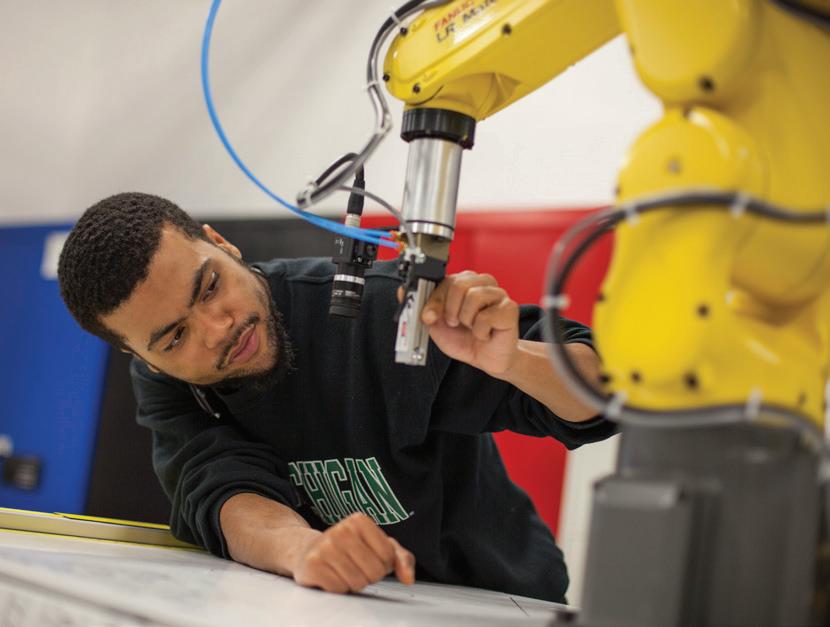
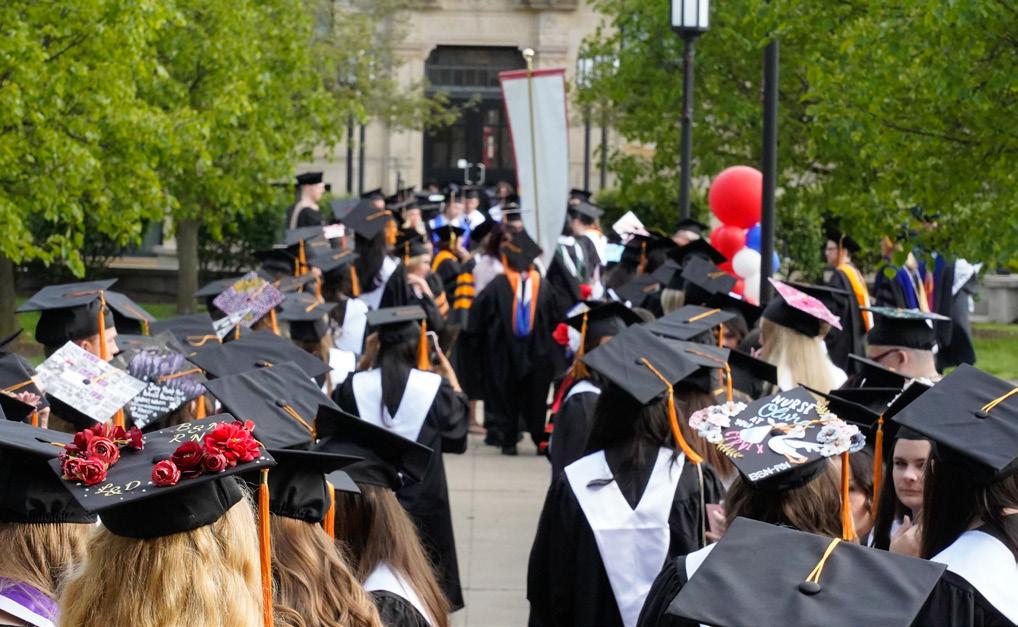
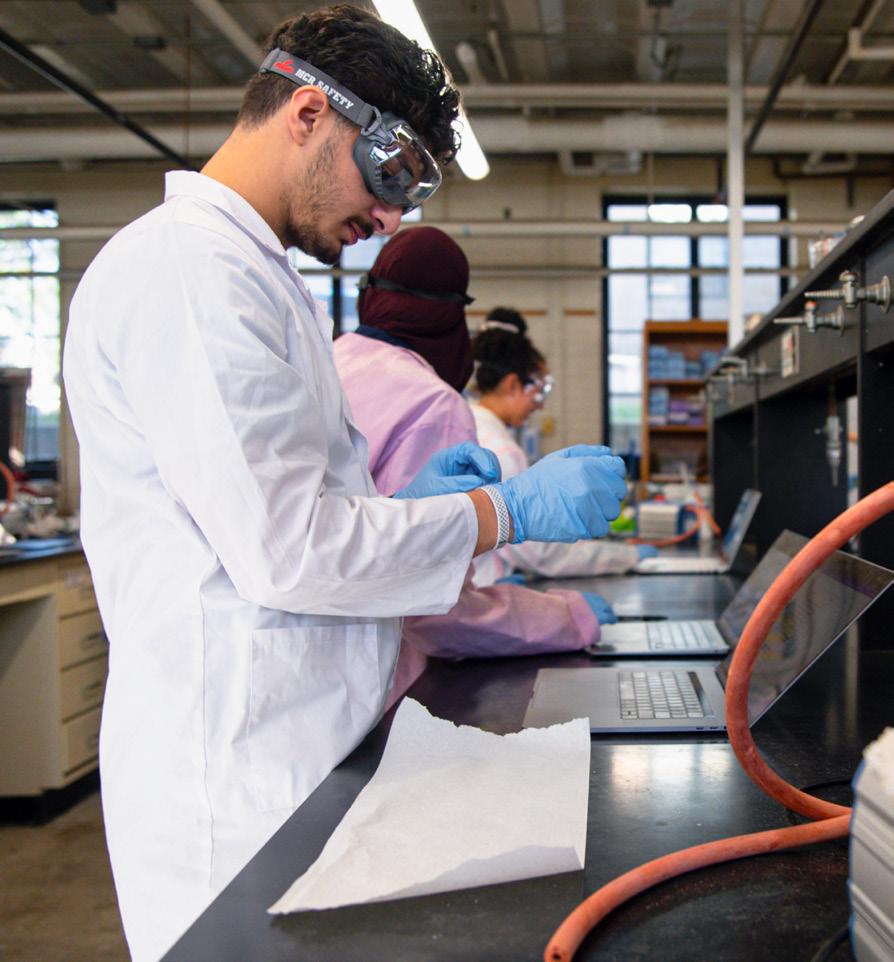
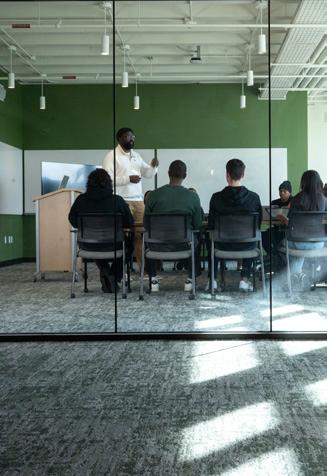
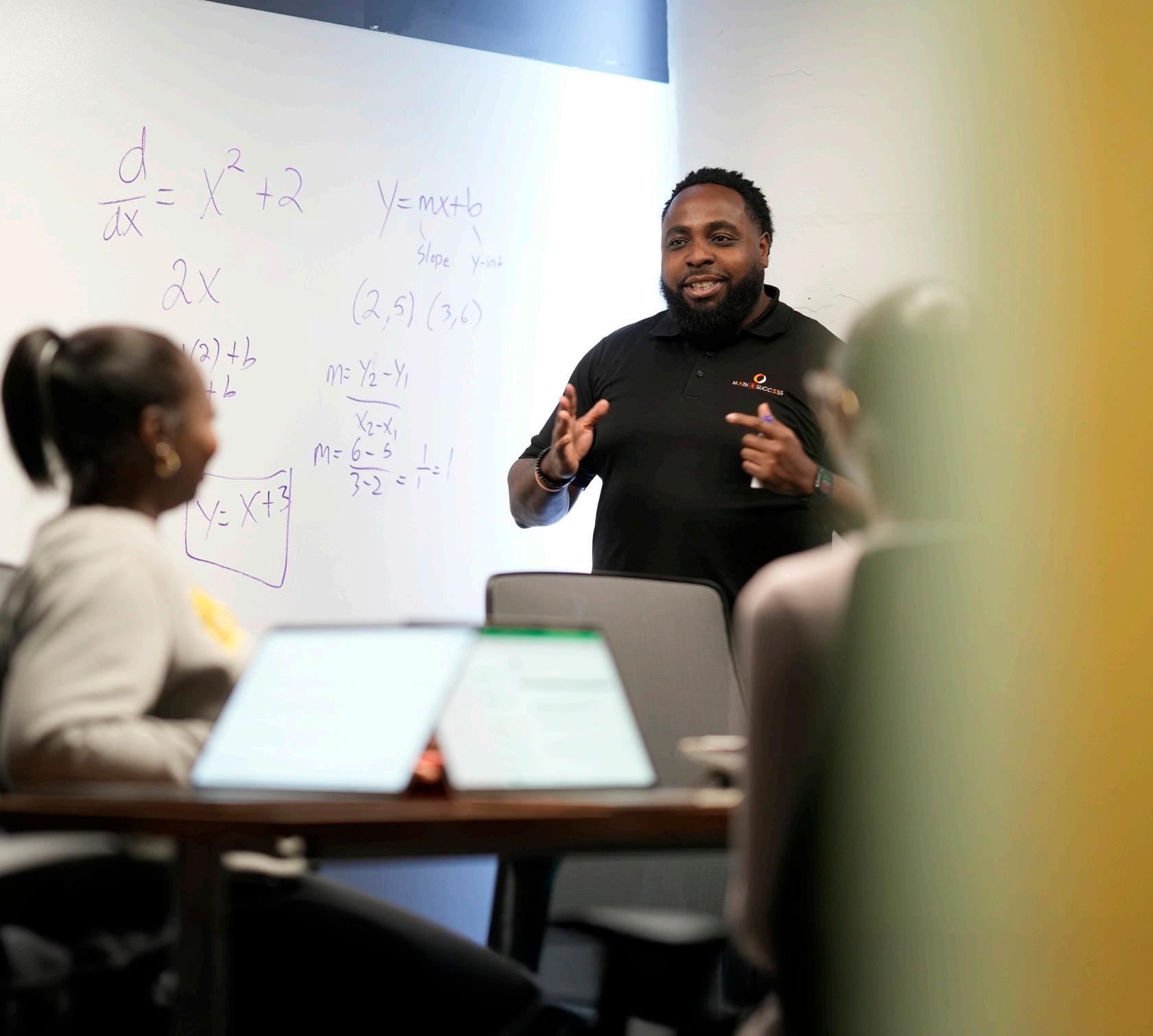
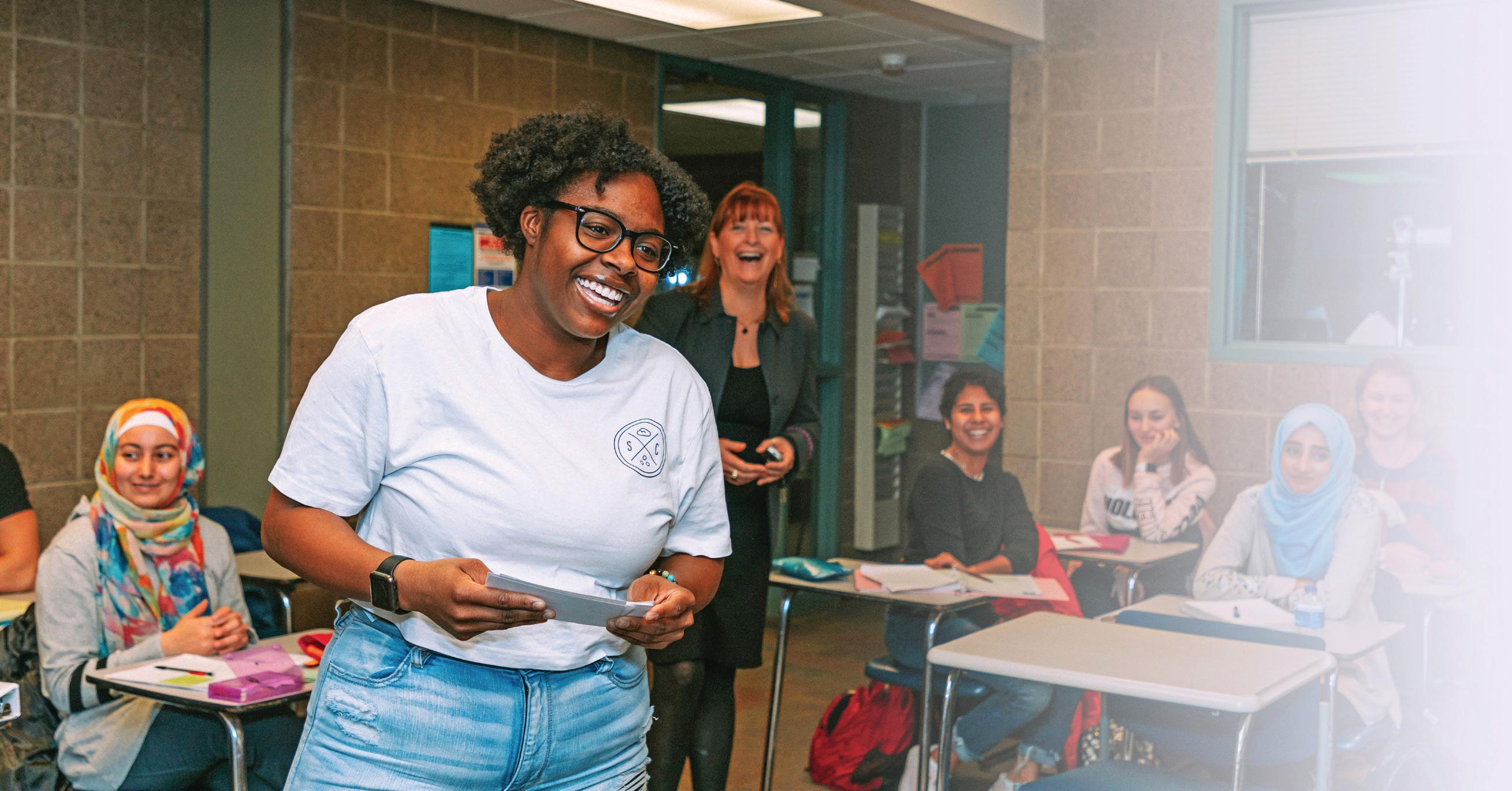
Passionate and personable instructors Career pathways ranging from business to health to skilled trades Over 100 career–oriented degrees and certificates
And your investment goes far at Macomb. Over 80% of our students leave debt free.
Focus:Hope
Detroit at Work
Ready to help your student advance? We are! Learn more at macomb.edu/parents
Michigan Dept. of Labor and Economic Opportunity
Focus:Hope
Oakland Community Health Network
Wayne County Human Resources
Michigan Dept. of Labor and Economic Opportunity
Oakland Community Health Network
Wayne County Human Resources
Students can apply, register and pay later for spring/summer, fall and winter semesters now! 2
Yourstudent’sstartto an ywhereishere
Whether your student sure what to do next
Passionate and personable Career pathways ranging Over 100 career–oriented
Univ. of Michigan goblueguarantee@umich.edu Wayne State Univ.
Univ. of Michigan goblueguarantee@umich.edu
Univ. of Detroit Mercy admissions@udmercy.ed Univ. of Michigan goblueguarantee@umich.edu
And your investment Over 80% of our
Students can apply, spring/summer,
Passionate and personable Career pathways ranging Over 100 career–oriented Ready to Learn more
Ready to help Learn more
And your investment Over 80% of re Students can spring/summer,
• The QUAD • FALL | 2022
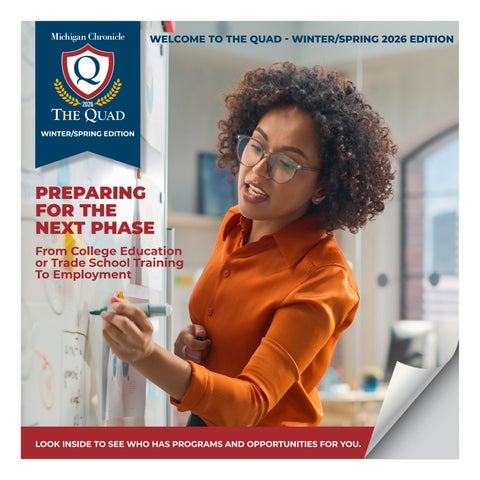
Introduction… Welcome to The Quad
As we journey through life, we move into new chapters – new areas – new arenas. We find new opportunities and new challenges as we progress through life. We may not know where our paths will lead us or what’s in the next chapter of our personal Book of Life, but we can somewhat direct our path by preparing for the next phase as we turn the page. Changing careers is becoming more common and re-training might be required.
PREPARATION CAN MEET OPPORTUNITY
to help you get to the NEXT PHASE.
EDUCATION--------TRAINING--------EMPLOYMENT
We hope you will find this edition of The Quad helpful in your planning for your next chapter. No matter what phase of life you are in, your life has purpose. Your career choice might change. Preparation and planning can lead to progress as you move to your NEXT PHASE.
---Linda Moragne
Eastern Michigan University
Grand Valley State Univ.
Henry Ford College
Lawrence Tech University
Macomb Community College
Oakland Community College
Oakland University
Schoolcraft College
Univ. of Detroit Mercy
Univ. of Michigan
Wayne State Univ.
Western Michigan University
THANKS SO MUCH TO OUR SPONSORS
Editorial
Launch Your Career at Michigan’s Welcoming University — Eastern Michigan University: Built to Get You Hired
Eastern Michigan University offers nationally recognized programs across five colleges, with more than 200 majors, minors, and concentrations designed to prepare students for meaningful careers. Programs are shaped by accreditation standards, employer input, and industry demand.
National recognition underscores that quality:
• Named Among the Nation’s Best Colleges for 2026 by The Princeton Review (top 15% of 2,400 four-year colleges).
• Near 100% job placement in engineering, aviation, cybersecurity, construction management, and interior design.
• College of Business ranked among the nation’s best for two decades, with MBA in Human Resources #6 nationwide.
• Nursing programs in the top 20% nationwide; online Bachelor’s in Dietetics ranked #1 in Michigan.
Faculty are nationally recognized scholars and practitioners who bring expertise into the classroom. Combined with internships, clinical placements, co-ops, student teaching, and research, EMU ensures graduates leave with both academic rigor and real-world experience.
Affordable, Accessible, and Supportive
Eastern Michigan University believes financial barriers should never prevent students from pursuing academic excellence. That’s why EMU offers a wide range of scholarships and financial aid opportunities, with merit scholarships beginning at just a 2.5 GPA.
EMU also takes a unique step to support students after graduation through the EMU Advantage Loan Repayment Assistance Program (LRAP). Available exclusively to students enrolled in select high-demand programs, the EMU Advantage helps graduates manage student loan repayment if their income after graduation falls below a defined threshold, providing added peace of mind as they launch their careers.
A Campus That Supports Success
Home to nearly 13,000 students from 50 states and 83 countries, EMU has invested $200 million in campus renovations, including advanced labs, residence halls, dining and recreation centers, and wellness spaces. Advising, career counseling, and peer tutoring help students thrive.
Connected to Opportunity
Located in Ypsilanti, minutes from Ann Arbor and 35 miles from Detroit, EMU connects students to internships, coops, and careers. Strong partnerships with hospitals, schools, corporations, and nonprofits provide practical experience while earning a degree.
Discover where academic excellence leads to career success. Discover Eastern Michigan University—Built to Get You Hired.
Visit emich.edu/visit to schedule your tour.
At Eastern Michigan University, your future begins the moment you step onto our campus. With over 200 majors—including programs boasting near 100% job placement rates—plus expert advisors and hands-on learning opportunities, EMU ensures you gain the career-ready skills employers seek. Enjoy modern, air-conditioned housing and a campus designed to support your academic and professional growth.
Ready to launch your career? Visit emich.edu to schedule your campus visit today.
Starting College with Confidence
How Students Can Prepare for the Academic, Social, and Emotional Shift Ahead
For many high school graduates, the road that leads to the first year of college feels like a break from the past and an entrance into the future. Many students imagine walking onto a campus full of possibility, ready to begin a new chapter. Yet the reality can be both exhilarating and overwhelming. Preparing for college means preparing for academic expectations, new social environments, and the personal transitions that come with stepping into independence.
For Black students and their families, the excitement of acceptance letters often comes paired with questions about belonging, identity, and readiness. These questions reflect something deeper: a desire to thrive, not just survive, as students move from established support systems into larger, more complex environments.
One of the first steps in preparing for the transition to college is understanding what the first year will require academically. College coursework is generally more demanding than high school work. According to The Princeton Review, students often underestimate the volume and depth of reading that courses require and the level of critical thinking expected in class discussions and written assignments. Students who succeed in college find ways to manage time effectively, prioritize assignments, and seek help early when they struggle. Parents can support this transition by discussing expectations, helping students establish routines, and connecting them with academic resources before classes begin.
Orientation programs, whether virtual or in person, are valuable opportunities for students to acclimate. These programs often introduce students to academic advisers, residence hall staff, peer mentors, and student support services. Taking orientation seriously helps students build confidence and establish a sense of belonging before the first day of class.
Social transitions are just as important as academic ones. For many students, college is the first time they live away from home. Students often describe homesickness, anxiety, and loneliness during their first few weeks on campus. These feelings are normal and usually temporary. Experts recommend that students build routines that include healthy sleep habits, regular meals, exercise, and time for reflection. These routines reduce stress and help students cultivate stability during change. While social events and campus life are important, students benefit from balancing fun with rest and self care.
Campus support systems such as counseling centers, health services, and student organizations are critical for students coping with transition. Many schools offer workshops on stress management, racial identity development, and building resilience. Connecting with these resources early can build a solid support network that students rely on when times get difficult.
Another important aspect of the transition to college is developing financial awareness. College costs often include tuition, fees, housing, meals, books, and personal expenses. Students should understand their financial aid packages and what expenses they will need to manage independently. Parents and students should have honest conversations about budgeting, how to track spending, and where to seek financial guidance on campus. Career planning centers are often overlooked resources in the first year. These offices assist students with major exploration, internship opportunities, and career assessments. Students who engage with career services early have more time to explore interests, build resumes, and connect with mentors. Career counselors can help students align academic choices with future aspirations while encouraging exploration.
In addition to academic preparation and resource awareness, students benefit from developing emotional awareness. Leaving home and entering a new community can evoke a range of emotions. Students who learn to identify what they feel and why they feel it are better equipped to navigate challenges. Journaling, meditation, and scheduled check ins with trusted adults can nurture emotional clarity.
Parents play an important role in facilitating this transition without overshadowing the student’s autonomy. Listening without judgment, offering encouragement, and asking open ended questions help students reflect on their experiences. Parents who model patience and optimism empower students to develop resilience.
For students entering college, the first year is not simply about mastering coursework. It is about understanding how to live responsibly, grow intellectually, and cultivate well being. Students who view the first year as a period of learning and exploration rather than a test of perfection are more likely to adapt, persist, and succeed.
By building routines, connecting with campus resources, engaging with peers, and honoring personal well being, students can enter their first year ready for the challenges and triumphs that lie ahead. This transition is not a single moment but a journey that shapes a student’s confidence, purpose, and sense of belonging long after the first semester ends.
“Education is the passport to the future, for tomorrow belongs to those who prepare for it today.”
Learn, Grow, Serve and Lead Like a Titan
In 2027, University of Detroit Mercy celebrates its 150th anniversary as an institution and its 100th anniversary at its McNichols Campus in Northwest Detroit.
This past December, three University of Detroit Mercy (UDM) students captivated international artists, professional medal casters and mint engravers at an international art medal convention in Munich, Germany. They stood out as the only undergraduate presenters in attendance and drew standing-room-only crowds for research they conducted in an undergraduate Chemistry course that broke new ground in the field.
At UDM, 100% of students participate in experiential learning, engaging in hands-on, real-world projects
before graduation. That commitment pays off: 98% of UDM graduates receive career offers or admission to top graduate programs nationwide.
Detroit Mercy provides the mentors, community, tools and support to learn, grow, serve and lead the way more than 80,000 living alumni do the world over. Ranked 36th nationally by The Wall Street Journal/College Pulse, UDM’s mission is to help you discover a career that fits your talents so you can make a lasting impact in your profession and your community.
Grounded in Jesuit and Mercy values, UDM continues to innovate programs that meet the evolving needs of today’s workforce. Recently, the University welcomed the inaugural class of its new School of Optometry and launched Michigan’s first fully online Juris Doctor program. The University is also launching several programs tailored for in-demand fields. The new Sports & Exercise Sciences program will prepare you for careers related to athletics, health and wellness.
Visit https://healthprofessions.udmercy.edu/academics/ spe/ to learn more. And UDM’s new Health Sciences program emphasizes a holistic approach to understanding human health and wellness, so you can address global health challenges with integrity and empathy. Check it out at https://healthprofessions.udmercy.edu/academics/hls/. New students have an even greater reason to enroll
at Detroit Mercy: UDM graduates rank in the top 9% of 4,476 colleges and universities nationwide for salary earned over a period of 15 to 40 years during their career, according to Georgetown University’s Center on Education and the Workforce (CEW) research report Ranking 4,476 Colleges by ROI (2025). Cutline
Approximately 98% of our graduating classes receive job offers or attend graduate school upon graduation.
And with our Titan Edge program, eligible Michigan students can earn a Titan of an education with zero out-ofpocket tuition costs!
Learn more at https://www.udmercy.edu/admission/ financial-aid/sources/titan-edge.php.
The choice is clear. Choose a university that helps you learn, grow, serve and lead like a Titan. Visit www.udmercy.edu to learn more.
PRODUCING
OUTCOMES
Did you know that The Wall Street Journal/College Pulse ranked Detroit Mercy No. 36 in 2026 for all US universities? And according to U.S. News & World Report, UDM ranked No. 22 in overall value among all universities and colleges this year.
Nearly all UDM bachelor’s degree graduates receive a career position or move on to graduate school within six months of graduation! And according to the Georgetown University Center on Education and the Workforce, UDM grads rank among the top 9% in the country for overall career earnings.
U-M offers free tuition promise: the Go Blue Guarantee, on all campuses
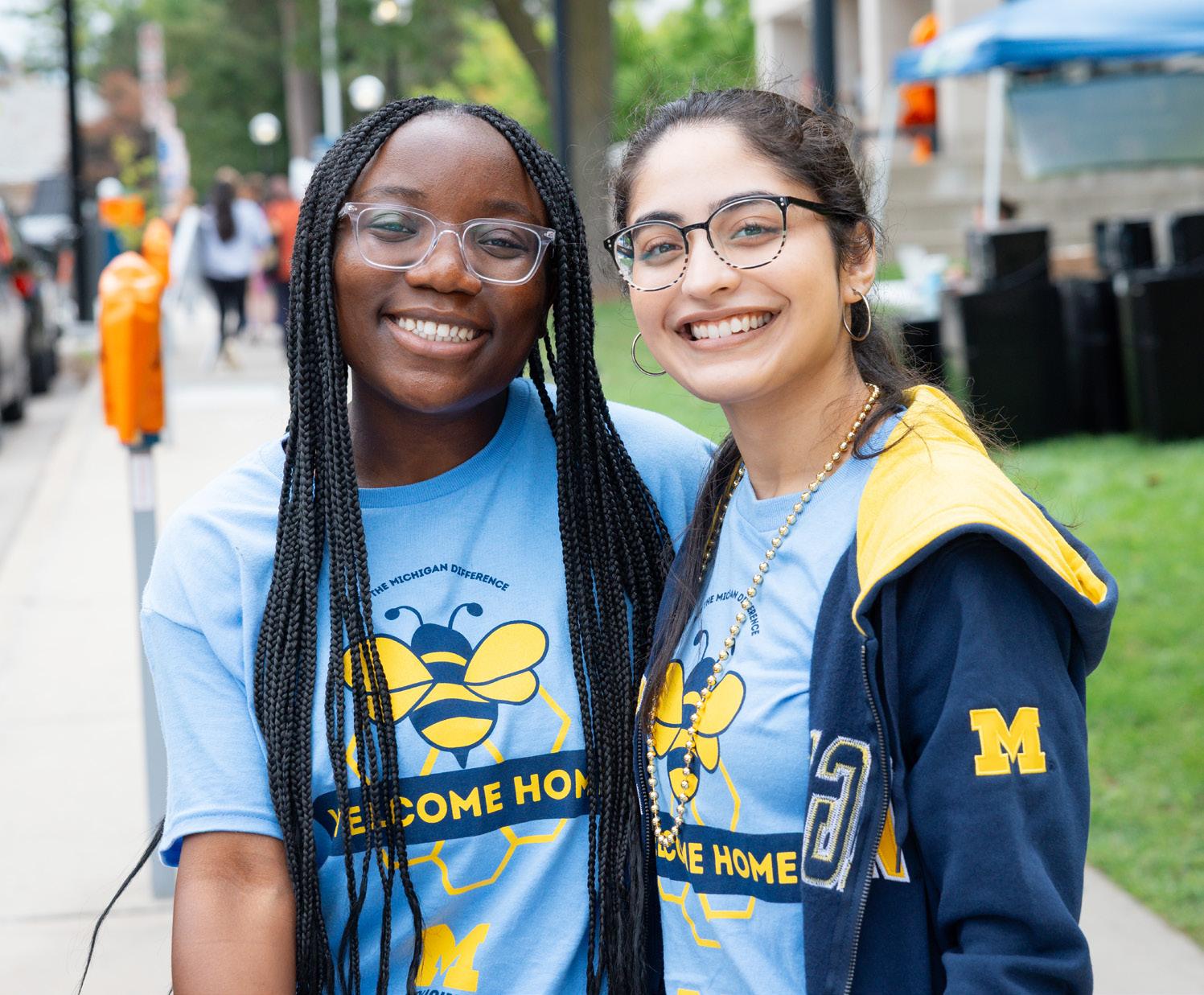
The University of Michigan’s Go Blue Guarantee — a promise of four years of free tuition for qualifying Michigan residents — is available on all three U-M campuses: Ann Arbor, Dearborn, and Flint.
High-achieving in-state undergraduate students who attend U-M full-time will automatically qualify if their family income is $125,000 or less and their assets are below $125,000.
Students do not need to apply separately for the Go Blue Guarantee. Qualified Michigan residents who apply to U-M, are admitted, and apply for financial aid will be considered automatically. (The Dearborn and Flint campuses have additional GPA requirements.)
In addition, all three campuses continue to provide significant financial aid, based on individual need and merit, for students who do not qualify for the Go Blue Guarantee.
Learn more: goblueguarantee.umich.edu
U-M Campus Profiles
Ann Arbor
U-M’s Ann Arbor campus has 19 schools and colleges offering more than 280 degree programs. It is ranked the #3 public university in the U.S. by QS World Rankings and named a “Best College” for quality, affordability, and student outcomes by Money magazine. More than 34,000 undergraduate students are enrolled on this campus.
Dearborn
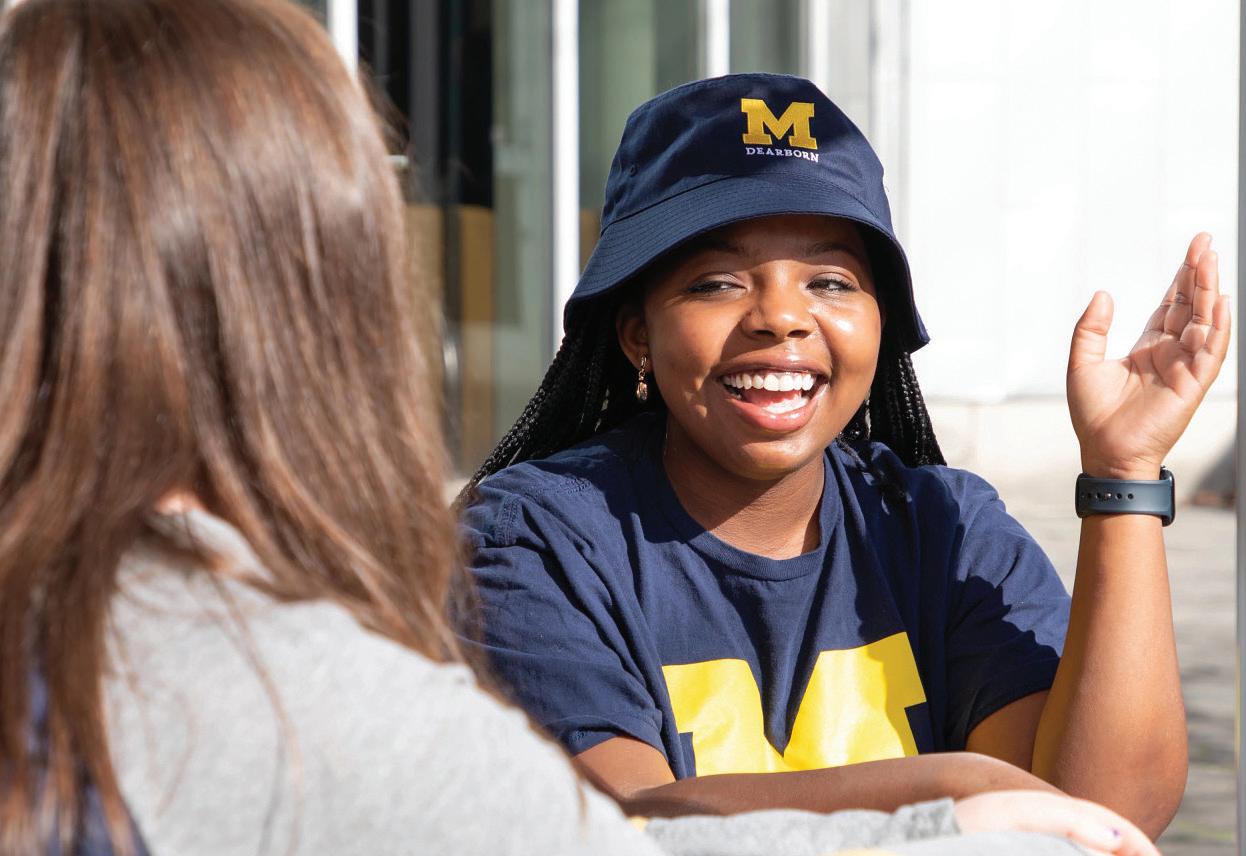
UM-Dearborn is home to four colleges offering over 100 majors. It is consistently named one of the best regional universities in the Midwest and a best college for social mobility and veterans by U.S. News & World Report. More than 6,100 undergraduate students are pursuing degrees at UM-Dearborn.
Flint
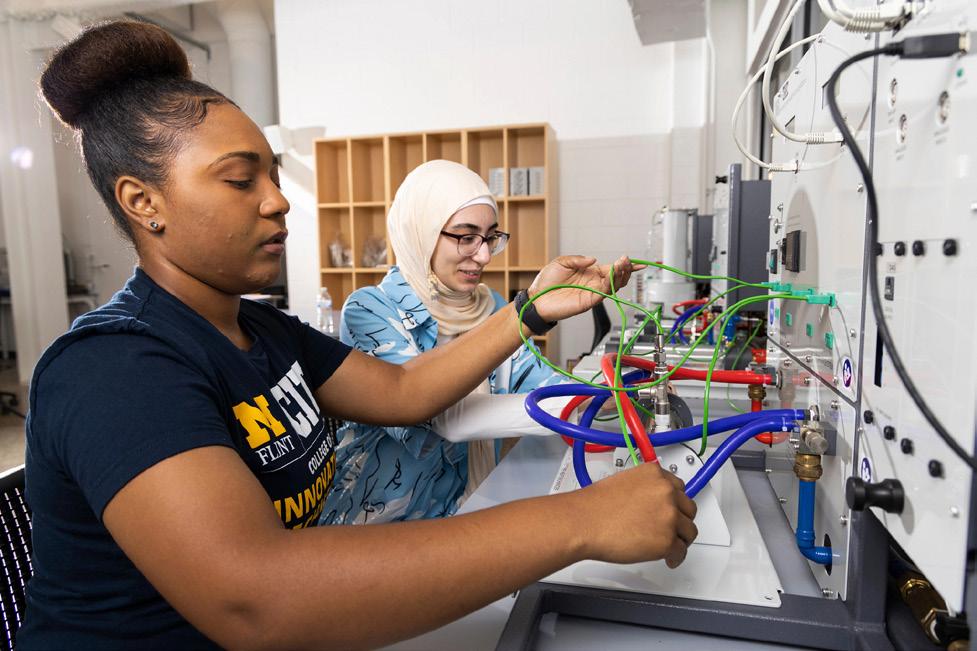
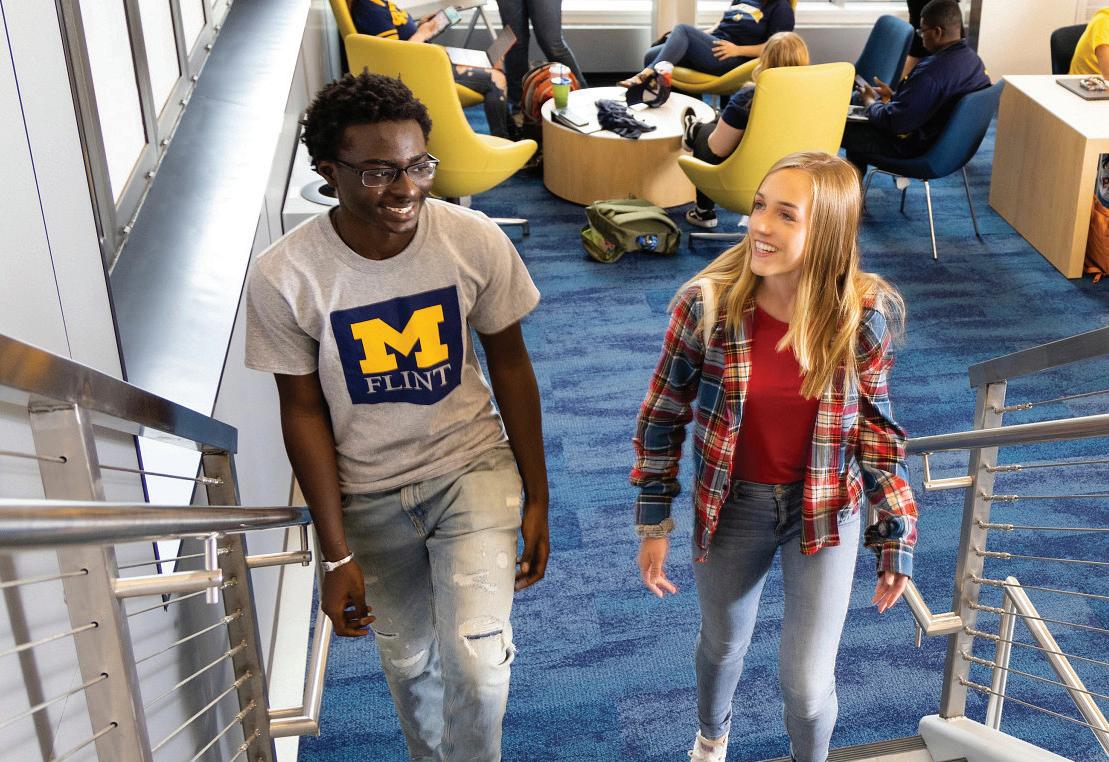
More than 7,000 undergraduate and graduate students attend this U-M campus in the heart of downtown Flint. Its five schools and colleges offer more than 100 degree programs in online, hybrid, and in-person formats. UM-Flint has been recognized as one of The Princeton Review’s Best Colleges (2025) and has received the highest designation from the Michigan Veterans Affairs Agency every year since 2015.
Finding the Right College Environment
A
Candid Look at HBCUs and PWIs for Black Students and Their Families
Choosing a college is one of the most important decisions a student will make. For many Black students, that choice includes considering whether an HBCU, historically Black college or university, or a PWI, a predominantly white institution, will best support academic goals, personal development, and cultural affirmation. Each type of institution offers unique opportunities and challenges, and understanding both can help families make informed decisions.
HBCUs have a long legacy of fostering Black excellence across disciplines. Founded primarily before the Civil Rights Movement to educate Black students when they were excluded from many institutions, HBCUs have cultivated leaders in science, law, business, education, and the arts. Schools such as Howard University, Spelman College, Morehouse College, and Florida A&M University are celebrated for their deep traditions, close knit communities, and emphasis on mentorship. Many Black students describe HBCUs as environments where they feel seen, supported, and challenged to grow academically and personally.
Historically Black colleges frequently emphasize community and cultural affirmation. Research suggests that Black students at HBCUs often report stronger senses of belonging and identity development compared with Black students at PWIs. Black alumni networks from HBCUs also provide career connections, mentorship, and professional support that can persist long after graduation.
Predominantly white institutions, on the other hand, include some of the largest universities and research centers in the nation. PWIs may offer a broader range of majors, facilities, and research opportunities across diverse fields. Schools such as the University of Michigan, University of California campuses, and large state universities provide expansive academic resources, extensive study abroad programs, and large research budgets.
At a PWI, students may be exposed to a wide range of cultures, perspectives, and networks, which can prepare them for diverse workplaces. However, the experience of Black students at PWIs varies widely. Some students report feeling isolated or underrepresented, especially in fields where Black students are few. Many PWIs have made efforts to improve cultural support through multicultural centers, affinity groups, and the recruitment of diverse faculty. These initiatives aim to create more supportive environments, but students considering PWIs should research campus climate, support services, and student organizations that reflect their needs.
Visiting campuses, when possible, is one way students can gain first hand insights. Observing how students interact, how faculty engage in classrooms, and how diverse identities are acknowledged on campus can provide valuable information. Virtual tours and conversations with current students and alumni are also helpful when travel is not feasible.
Admissions offices and academic advisers can provide data on retention rates, graduation outcomes, and support structures. Students should consider how each institution approaches academic advising, tutoring services, and career readiness programs. Some PWIs partner with industry leaders for internships and research opportunities, while HBCUs often incorporate mentoring programs and community engagement into their academic framework.
Cost is another factor families must evaluate. Tuition, scholarships, and financial aid packages vary widely. Some HBCUs have strong institutional scholarships and competitive financial aid, while many large PWIs offer merit and need based aid. Comparing the total cost of attendance and understanding financial aid awards can influence decisions.
For many Black students, the decision between an HBCU and a PWI is deeply personal and tied to identity, goals, and aspirations. Some students prioritize cultural community and legacy, while others seek specific academic programs or large research universities. There is no single correct choice; what matters most is finding an environment that aligns with individual needs and fosters academic confidence, personal growth, and long term success.
Families and students should gather information from multiple sources, including admissions materials, campus visits, academic departments, and student support offices. Talking with alumni and current students provides lived perspectives that can clarify what each campus environment feels like daily.
Ultimately, whether a student chooses an HBCU or a PWI, the goal is the same: to find a place where they can grow, contribute, and prepare for the future with confidence. Students who feel supported academically, socially, and culturally are more likely to persist and thrive throughout their college years.
“Education is the most powerful weapon which you can use to change the world.”
- Nelson Mandela
Embarking on your college journey isn’t just about academics—it’s an opportunity to embrace a full campus life that extends beyond the classroom. Participating in clubs, sports and other extracurriculars not only adds fun to your college experience but also plays a pivotal role in shaping your character and skills. A vibrant campus offers many opportunities to pursue your interests and discover new ones. It’s a chance to break out of your comfort zone, try new things and develop well-rounded experiences.
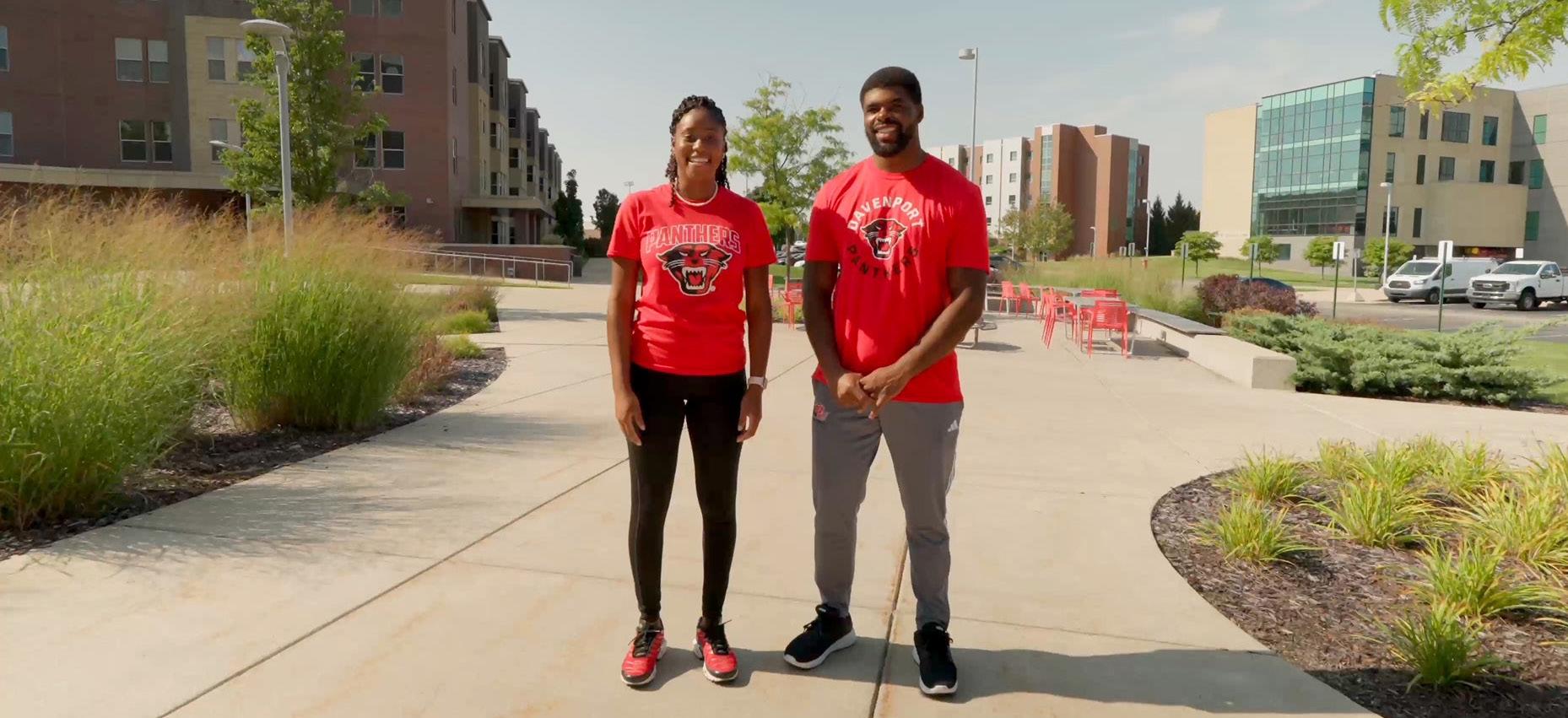
To get a true feel for college life and all it has to offer, visiting a campus in person is the best way to experience it. At Davenport University, you can schedule an in-person tour to explore the university’s state-of-the-art classrooms, dining halls, labs, recreational centers and student housing. Walking the campus and engaging with current students will give you firsthand insight into life at Davenport. If you prefer an introduction before your visit, you can also take a virtual tour led by students Majesty and Julius at davenport.edu/virtual-tour to get a preview of the facilities, student services and campus life.
Davenport places a strong emphasis on fostering a supportive and engaging community. You’ll find that professors know your name and staff work to understand your interests. There are more than 26 registered student organizations, 44 athletic teams and many weekly activities to keep you involved. The university is committed to students’ overall well-being, providing 24/7 mental health services and interactive events to help manage stress and prioritize mental health.
certificates, a scholarship for each incoming freshman student and an average student-to-faculty ratio of 18:1.
You deserve a strong return on investment from your university, and Davenport delivers on that promise. With a focus on career readiness and hands-on learning, students graduate prepared for success in their fields.
Write your own college adventure. Join Davenport University, where every moment of transformation is a page in your book, and where the journey goes beyond academics, making every chapter unforgettable.
You want to attend a university that will help you achieve your academic and professional goals. Davenport offers more than 100 career-ready degrees and
Career-ready degrees and so much more.
Davenport University prepares you for success with experienced faculty, hands-on learning and internships at top employers. Choose from more than 100 career-ready degrees and certificates.
If you’re ready to dive deeper into all Davenport has to offer, check out davenport.edu/newstudent or call 800.686.1600.
Beyond academics, our welcoming campus features apartmentstyle residence halls, 44 athletic teams—including 27 NCAA Division II teams—and a variety of clubs and activities to explore. With 100% of incoming freshmen receiving scholarships and an average student-to-faculty ratio of just 18:1, you’ll have the support and resources to thrive in college and beyond.
Check us out at davenport.edu/newstudent or call us at 800.686.1600.
Choosing a Major Without Losing
Your Mind
Why Your First Decision Doesn’t Have to Be Your Final Destination
Choosing a college major is one of the most common stress points for first year students and parents. Many students feel pressure to declare a major before they really understand their interests, strengths, or the opportunities a college offers. Some arrive on campus knowing exactly what they want to study. Others are uncertain. Both responses are common.
College is intended to be a time of exploration. Most four year colleges allow students to take general education courses in their first year. These courses introduce students to a broad range of academic fields, from humanities to natural sciences to social sciences. This approach gives students time to explore without the pressure of declaring a major immediately.
Advisers typically encourage students to take general education or exploratory courses during their first two semesters. These foundational classes help students become familiar with academic expectations and discovery before choosing a path that aligns with their skills and goals. According to the College Board, many institutions do not require students to declare a major until the end of the sophomore year. This gives students up to two years to make a fully informed choice. (bigfuture. collegeboard.org)
Understanding what a major is can also reduce anxiety. A major is a concentration of courses in a specific academic discipline. It represents the subject area that students choose to study in depth. Majors often align with broad areas of interest, such as biology, English, engineering, sociology, psychology, or business. Majors teach students knowledge and analytical skills that can be applied in many different careers. For example, English majors may pursue careers in publishing, education, law, or communications.
A helpful first step for students is to reflect on personal interests and strengths. What subjects did you enjoy in high school? Which skills come naturally to you? What types of work energize you rather than drain you? These questions can help narrow down areas of academic focus before declaring a major.
Another useful strategy is to seek career advising early. Career centers at colleges offer assessments that match interests and strengths with possible majors and careers. Counselors can also help students understand how specific majors link to job markets and graduate study. Career exploration encourages students to think beyond titles and focus on skills, opportunities, and real life outcomes.
Students also benefit from talking with peers who have changed majors. Changing a major is not uncommon. Many students switch majors one or more times during college. Rather than seeing this as a setback, advisers encourage it as a sign of growth and clarity. Experience in the classroom often reveals what type of work feels right and what does not.
Parents play a supportive role by encouraging exploration and patience. A parent’s desire for a clear plan is understandable, especially when considering the cost and investment of college. Parents can help by listening to their students’ reflections, researching potential career fields together, and attending college advising events on campus. These conversations can help create an environment where decisions are thoughtful rather than rushed.
Some majors require early decision-making. For example, programs in nursing, engineering, or architecture may ask students to apply to the major after completing
specific prerequisite courses. Students interested in these fields should meet with academic advisers early to understand the timeline and requirements. Knowing these expectations helps students plan their coursework without feeling overwhelmed.
It is important to note that a major does not lock a student into a single career path. Majors teach foundational skills that are transferable across industries. Critical thinking, communication, research, and problem solving are skills valued by employers in many fields. Many students find that the work they do outside the classroom, such as internships, part time work, or campus leadership, plays a significant role in shaping their career interests.
Internships, in particular, provide real world experience that can clarify career goals. Students can pursue internships between semesters or during the summer. Internships bridge academic learning and a professional context. They can influence major selection, confirm interest in a specific industry, or reveal new opportunities that had not been considered.
Data from the National Association of Colleges and Employers show that internship experience increases a graduate’s likelihood of receiving job offers after graduation. Engaging with hands on work early gives students clarity and confidence as they refine academic goals.
Choosing a major is a process, not an event. It requires self reflection, exploration, and access to support. Students who take time to understand their interests, seek advising, and engage with real world experiences often make decisions that feel informed and purposeful. Parents and mentors who support exploration help students grow into their academic paths with confidence rather than pressure.
WARRIOR STRONG DRIVES CAREERS FROM
DAY ONE.
At Wayne State University, career preparation doesn’t wait until senior year. It begins at orientation and continues through graduation. By intentionally aligning academic advising, experiential learning, career development and financial support, Wayne State ensures students graduate with direction, confidence and momentum — prepared not just to earn a degree, but to put it to work.
Making college accessible and affordable
That commitment starts before students ever set foot on campus. Through partnerships with local public schools, Wayne State shows students how a college education connects to fulfilling careers. Forty-two percent of Wayne State undergraduates are the first in their families to attend college, and programs like the Wayne State Guarantee and the Heart of Detroit Tuition Pledge remove
financial barriers that can stand in the way. As a result, 6 out of 10 Wayne State undergraduate students pay zero tuition or fees during their first year of studies.
Once on campus, support continues through services tailored to each student’s unique needs. Proactive advising, individualized academic support and coordinated student services help faculty and staff identify challenges and connect students to the right resources at the right time. This personalized experience keeps students engaged, on track and focused on long-term goals as they discover their passions and sharpen their skills.
“Wayne State exists to open doors. From orientation forward, we are intentional about helping students see how their education connects to meaningful, fulfilling careers,” said Interim President Richard A. Bierschbach. “Our responsibility doesn’t end with a diploma; it continues through the success our graduates achieve in the world.”
Career-focused education
That philosophy comes to life through Wayne State’s College to Career initiative, a signature approach to career readiness. From the moment students arrive, coursework is connected to real-world outcomes. Career exploration, employer engagement, internships, research opportunities and professional skill-building are woven into the student experience throughout their academic journey. Whether a student’s goal is graduate school, a first job or launching a venture of their own, Wayne State provides the structure and support to help them get there.
Wayne State’s location amplifies that impact. Partnerships with employers, community organizations, hospitals, startups and cultural institutions across Detroit and Michigan provide access to internships, co-ops, clinical placements and research projects that mirror the realities of today’s workforce. Students graduate not only career-ready, but career-tested, prepared to face the challenges of an ever-evolving job market.
“Career success happens when it’s embedded in the academic experience,” said Interim Provost and Senior Vice President of Academic Affairs Keith Whitfield. “By aligning advising, curriculum and experiential learning, our faculty and staff help students translate what they learn in the classroom into skills employers value, and into lives of purpose after graduation.”
From orientation to commencement — and beyond — Wayne State prepares students to move forward with clarity and confidence. It’s an approach rooted in access, strengthened by innovation and designed to deliver impact long after graduation day.
WARRIOR STRONG
Wayne State University is committed to providing an accessible, affordable education to all Warriors. Programs like the Heart of Detroit Tuition Pledge and the Wayne State Guarantee break down financial barriers that too often prevent people from pursuing a degree. From orientation to graduation, we deliver tailored support that helps students succeed in their studies and thrive in their careers. That’s Warrior Strong — support that meets students where they are and turns potential into progress.
Experience the excitement on campus at our Spring Open House on Saturday, March 7. Learn more at wayne.edu/admissions/openhouse.
Ready to become a Warrior?
Complete your application for spring/summer classes by April 1. Learn more at apply.wayne.edu.
Further Your Future at OU
First generation college student PAIGE BURNS chose a college degree to blaze the trail to a successful future. With an initial draw to Oakland University’s outstanding scholarship and financial aid opportunities, Paige also discovered community, academic excellence and experience-based learning along the way. Campus activities, like serving as a Business Honors Program student, resident assistant and peer mentor, expanded her network and new skills, ensuring the finance major shines at OU and beyond.
Blaze Your Trail
Being the first generation to earn a college degree encompasses a range of emotions – from pride to uncertainty, but walking across the commencement stage will be the highlight of them all. Through the support of her family, Paige took that leap, leading her toward new opportunities, communities and career choices. At Oakland University, it is a priority to connect first-generation college students to a variety of resources and initiatives to ensure a smooth transition and future success. Students will find support in the classroom and campus clubs, confidently creating the next stage of their life.
Go Beyond the Books
At OU, a spark of curiosity goes beyond the books with real-world experiences; understanding and experience balance to create well-rounded and inspired learning. Paige seamlessly weaved her classroom concepts into the Business Scholars Program, and with the guidance of real-world professionals, she identified unique strengths, key to the current industry interests and values. Located in Metro Detroit, Oakland University is at the epicenter of opportunity: Golden Grizzlies get internships and land job placements with major corporations, local school districts, governments and nonprofits because of their connections at the core of OU.
Take Advantage of Scholarships
Oakland University strives to make an exceptional education affordable. Recognized for her academic achievement, Paige received scholarship support from OU’s Honors College, allowing her to fully focus on her studies. The university firmly believes in the
responsibility to create pathways of opportunity for all students. We’re proud to offer free tuition for up to four years to eligible incoming Michigan first-year students. OU’s Golden Guarantee works in combination with the Michigan Achievement Scholarship, OU merit and need-based aid to help cover both tuition and other costs, such as housing and living expenses.
Visit us in Rochester
Get a feel for our college community and learn what Oakland University is all about by visiting our beautiful campus in Rochester. With a variety of in-person events and student-led tours, you can find the experience that best fits your schedule and interests. Visit oakland.edu/visit to get started.
FIND YOUR CAREER CALLING
With more than 120 undergraduate degree programs, the future is golden for students of all academic aspirations. Whether it’s teaching, engineering or anything in between, OU students fulfill their ambition amid a thriving campus community where educational excellence and experiencebased learning comes alive. With a passion for numbers, PAIGE BURNS found her career calling in finance studies. In her classrooms, professors became mentors, making important connections between theory and practice.
MEET PAIGE
• Finance student
• Business Honors Program
• Peer mentor in the Center for Multicultural Initiatives
• First generation college student
Joel Lewis II
OCC is the smart first step in becoming a teacher
OAKLAND COMMUNITY COLLEGE
Someday Starts Today For Joel Lewis II
Someday Starts Today For Joel Lewis II
OCC is the smart first step in becoming a teacher
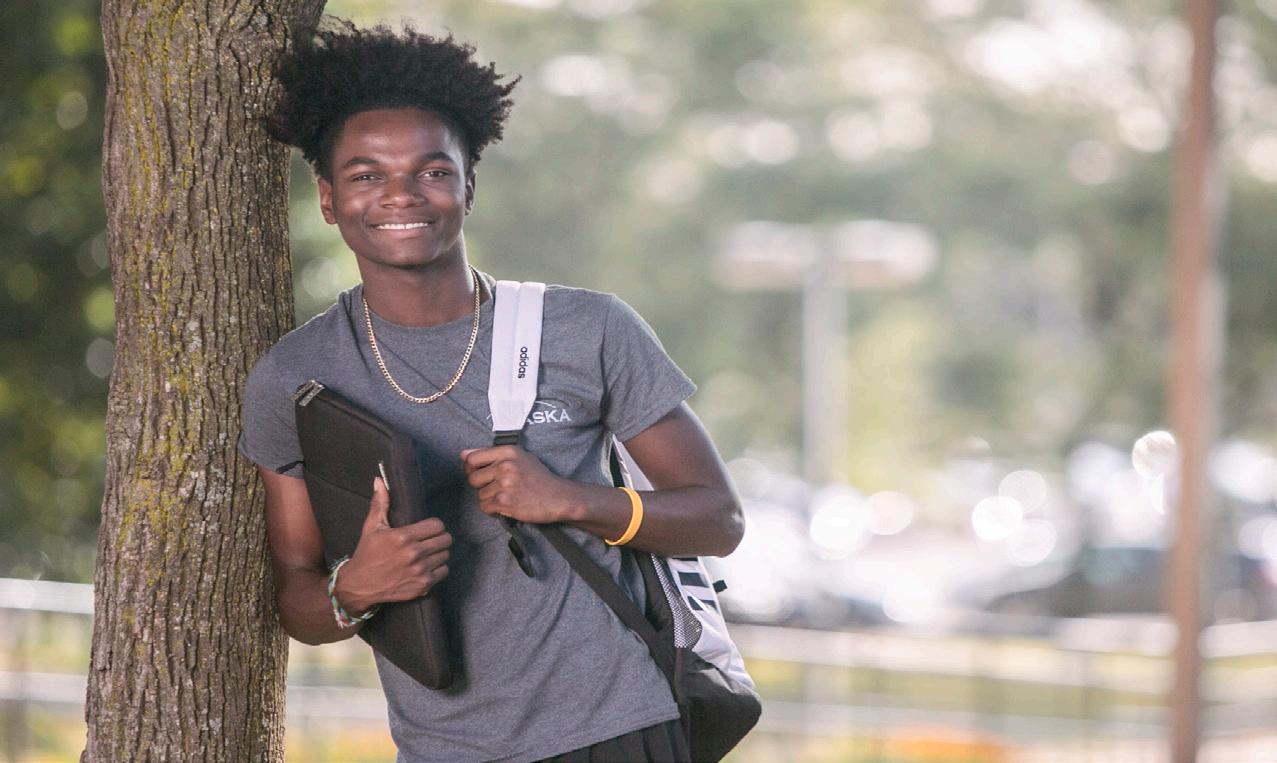
It’s almost as if Joel Lewis II was destined to end up at OCC, and not just because he hails from the southwest Detroit area. Joel’s greatest fan, and mentor — his mom — set the example by earning her associates degree at OCC, as did his sister.
Someday Starts Today For Joel Lewis II
OCC is the smart first step in becoming a teacher
OCC is the smart first step in becoming a teacher
OAKLAND COMMUNITY COLLEGE
It’s almost as if Joel Lewis II was destined to end up at OCC, and not just because he hails from the southwest Detroit area. Joel’s greatest fan, and mentor — his mom — set the example by earning her associates degree at OCC, as did his sister.
It’s almost as if Joel Lewis II was destined to end up at OCC, and not just because he hails from the southwest Detroit area. Joel’s greatest fan, and mentor — his mom — set the example by earning her associates degree at OCC, as did his sister.
like MSU, Oakland University, University of Michigan, or in my case Wayne State.”
like MSU, Oakland University, University of Michigan, or in my case Wayne State.”
like MSU, Oakland University, University of Michigan, or in my case Wayne State.”
Joel took the sage advice from mom and enrolled at OCC. It wasn’t long before he settled into student life.
OAKLAND COMMUNITY COLLEGE
Joel took the sage advice from mom and enrolled at OCC. It wasn’t long before he settled into student life.
Learn why OCC is a great place to startyoursomeday. Join a campus tour or virtual admission event. Visit oaklandcc.edu/getstarted
Joel took his family’s guidance to heart, but his career choice was still in question. A small part of him still wanted to turn his love of English and writing into a career as an advertising copywriter. That is, until he had a lifealtering conversation with an academic advisor at Wayne State University.
Joel took the sage advice from mom and enrolled at OCC. It wasn’t long before he settled into student life.
It’s almost as if Joel Lewis II was destined to end up at OCC, and not just because he hails from the southwest Detroit area. Joel’s greatest fan, and mentor — his mom — set the example by earning her associates degree at OCC, as did his sister.
Joel took his family’s guidance to heart, but his career choice was still in question. A small part of him still wanted to turn his love of English and writing into a career as an advertising copywriter. That is, until he had a life-altering conversation with an academic advisor at Wayne State University.
Joel took his family’s guidance to heart, but his career choice was still in question. A small part of him still wanted to turn his love of English and writing into a career as an advertising copywriter. That is, until he had a lifealtering conversation with an academic advisor at Wayne State University.
Joel took his family’s guidance to heart, but his career choice was still in question. A small part of him still wanted to turn his love of English and writing into a career as an advertising copywriter. That is, until he had a lifealtering conversation with an academic advisor at Wayne State University.
“She sized me up pretty quickly and recommended I check into OCC to begin my undergrad course work. She explained how OCC has a very straight-forward and student-friendly approach to financial aid, scholarships and transfers to other institutions. The Michigan Transfer Agreement facilitates the transfer of credits from OCC to schools
“She sized me up pretty quickly and recommended I check into OCC to begin my undergrad course work. She explained how OCC has a very straight-forward and studentfriendly approach to financial aid, scholarships and transfers to other institutions. The Michigan Transfer Agreement facilitates the transfer of credits from OCC to schools
“She sized me up pretty quickly and recommended I check into OCC to begin my undergrad course work. She explained how OCC has a very straight-forward and studentfriendly approach to financial aid, scholarships and transfers to other institutions. The Michigan Transfer Agreement facilitates the transfer of credits from OCC to schools
“She sized me up pretty quickly and recommended I check into OCC to begin my
“Having the flexibility to take online and in-person classes really fits my situation. I’m able to balance substitute teaching, coaching Special Olympics basketball and taking classes at OCC without the specter of lifecrushing student loan debt hanging over my head.”
Learn why OCC is a great place to startyoursomeday. Join a campus tour or virtual admission event. Visit oaklandcc.edu/getstarted
Learn why OCC is a great place to start your someday. Join a campus tour or virtual admission event. Visit oaklandcc.edu/getstarted
like MSU, Oakland University, University of Michigan, or in my case Wayne State.”
Joel took the sage advice from mom and enrolled at OCC. It wasn’t long before he settled into student life.
“Having the flexibility to take online and in-person classes really fits my situation. I’m able to balance substitute teaching, coaching Special Olympics basketball and taking classes at OCC without the specter of lifecrushing student loan debt hanging over my head.”
“Having the flexibility to take online and in-person classes really fits my situation. I’m able to balance substitute teaching, coaching Special Olympics basketball and taking classes at OCC without the specter of life-crushing student loan debt hanging over my head.”
Fundamentals of Speech professor, Dempsey Harrison III, who really takes the time to make the course material personally relevant to each student and their respective situation.”
Fundamentals of Speech professor, Dempsey Harrison III, who really takes the time to make the course material personally relevant to each student and their respective situation.”
Fundamentals of Speech professor, Dempsey Harrison III, who really takes the time to make the course material personally relevant to each student and their respective situation.”
Another aspect of the OCC experience Joel really appreciates is the deeper connection he enjoys with his professors, and with the course material.
Another aspect of the OCC experience Joel really appreciates is the deeper connection he enjoys with his professors, and with the course material.
Another aspect of the OCC experience Joel really appreciates is the deeper connection he enjoys with his professors, and with the course material.
“The smaller, more intimate class sizes at OCC allows professors to make the class material relevant to each student’s individual journey. And no one personified this approach more than my
Joel is well on his way to achieving his ultimate goal of becoming a middle school English teacher, a role he believes will give him the opportunity to help shape young minds and serve as a role model for children, particularly those of color.
“The smaller, more intimate class sizes at OCC allows professors to make the class material relevant to each student’s individual journey. And no one personified this approach more than my
“Having the flexibility to take online and in-person classes really fits my situation. I’m able to balance substitute teaching, coaching Special Olympics basketball and taking classes at OCC without the specter of lifecrushing student loan debt hanging over my head.”
“The smaller, more intimate class sizes at OCC allows professors to make the class material relevant to each student’s individual journey. And no one personified this approach more than my
Another aspect of the OCC experience Joel really appreciates is the deeper connection he enjoys with his professors, and with
Joel is well on his way to achieving his ultimate goal of becoming a middle school English teacher, a role he believes will give him the opportunity to help shape young minds and serve as a role model for children, particularly those of color.
Joel is well on his way to achieving his ultimate goal of becoming a middle school English teacher, a role he believes will give him the opportunity to help shape young minds and serve as a role model for children, particularly those of color.
how kids see themselves and the opportunities available to them. It wasn’t long into my OCC experience that I felt I was locked into exactly what I’m supposed to be doing…which is to help these impressionable, young kids try to reach a level they don’t even know is possible yet.”
how kids see themselves and the opportunities available to them. It wasn’t long into my OCC experience that I felt I was locked into exactly what I’m supposed to be doing…which is to help these impressionable, young kids try to reach a level they don’t even know is possible yet.”
how kids see themselves and the opportunities available to them. It wasn’t long into my OCC experience that I felt I was locked into exactly what I’m supposed to be doing…which is to help these impressionable, young kids try to reach a level they don’t even know is possible yet.”
Learn why OCC is a great place to startyoursomeday. Join a campus tour or virtual admission event. Visit oaklandcc.edu/getstarted
Joel Lewis II is on schedule to complete his course work and transfer by the fall of ‘24, and thanks to OCC and all of his hard work and dedication, his “Someday” is fast approaching.
Fundamentals of Speech professor, Dempsey Harrison III, who really takes the time to make the course material personally relevant to each student and their respective situation.”
“Seeing an educated black man at the head of the classroom at such a young and impressionable age can have a profound impact on
“Seeing an educated black man at the head of the classroom at such a young and impressionable age can have a profound impact on
“Seeing an educated black man at the head of the classroom at such a young and impressionable age can have a profound impact on
Joel Lewis II is on schedule to complete his course work and transfer by the fall of ‘24, and thanks to OCC and all of his hard work and dedication, his “Someday” is fast approaching.
Joel Lewis II is on schedule to complete his course work and transfer by the fall of ‘24, and thanks to OCC and all of his hard work and dedication, his “Someday” is fast approaching.
OAKLAND COMMUNITY COLLEGE oaklandcc.edu/admissions
Joel is well on his way to achieving his ultimate goal of becoming a middle school English teacher, a role he believes will give him the opportunity to help shape
how kids see themselves and the opportunities available to them. It wasn’t long into my OCC experience that I felt I was locked into exactly what I’m supposed to be doing…which is to help these impressionable, young kids try to reach a level they don’t even know is possible yet.”
OAKLAND COMMUNITY COLLEGE oaklandcc.edu/admissions
Joel Lewis II is on schedule to complete his course work and transfer by the fall of ‘24, and
Top Reasons Why Students Thrive at OCC
Programs designed for both direct entry into hot careers and university transfer
Flexible scheduling and convenient online or inperson classes
Committed to diversity, equity and inclusion
*Based on transferring 60 credits to a public university
Save more than $22,000* when pursuing a 4-year degree
Financial aid and more than $500,000 awarded scholarships each year
Personalized instruction from faculty with real-world experience
Why Starting at Community College Can Be the Best Move
The Case for Transferring and Saving Money While Staying on Track
For many students, the college journey does not follow a linear path. Some students choose to begin at a community college with plans to transfer to a four year institution. This approach can be a smart financial and academic strategy that sets students up for success without increasing debt.
Community colleges provide accessible, lower cost options for students to complete general education requirements and explore academic interests. For students who are unsure about their major, community college offers a supportive environment to build academic confidence, earn transferable credits, and prepare for more rigorous coursework. Transfer students often enter four year colleges in their junior year with a network of support and a sense of readiness.
A key benefit of transferring is cost savings. Tuition at community colleges is typically lower than at four year institutions. Students who complete their first two years at a community college can reduce overall college costs significantly. For families concerned about student loan debt, this route provides financial relief while maintaining a pathway to a bachelor’s degree.
Planning early is essential for transfer success. Students should research the transfer agreements between their community college and the four year schools they hope to attend. Many colleges publish articulation agreements, which list courses that will transfer. These agreements help students avoid taking classes that will not count toward their degree after they transfer.
Academic advisers are critical in this process. Advisers assist students in selecting courses that meet both community college requirements and transfer requirements at four year universities. Students should meet with advisers regularly to track progress and avoid surprises later. Planning coursework with transfer in mind ensures students stay on track academically and maximize the value of their community college credits.
Financial aid also transfers, but students must reapply at their new institution. Completing FAFSA each year remains a priority. Many schools offer scholarships specifically for transfer students. For example, institutional scholarships acknowledge the academic achievements of community college students and support their transition to the four year campus. Students should discuss scholarship opportunities with financial aid offices at both the community college and the transfer institution.
Transfer students also benefit from engaging with support services early. Most colleges offer orientation, advising, tutoring, and transfer student organizations. Participation in these communities helps students connect socially and academically after they begin at the new campus. Transfer student centers often provide tailored resources that address the unique questions and challenges transfers face.
In addition to planning academics and finances, transfer students benefit from networking and internships. Students can start building professional connections while at community college or after beginning at their four year institution. Internships, volunteer experiences, and part time work aligned with academic interests strengthen resumes and expand career prospects.
Parents play an important supportive role by encouraging planning, research, and confidence. The transfer route requires thoughtful decision making and organization, but it also offers flexibility. Some students choose to transfer after two years, while others may transfer later depending on their academic or personal goals.
Many successful professionals began their journeys at community colleges. Their stories remind students that there is no single “correct” path to a degree. What matters is intention, persistence, and access to resources. Students who use the transfer route strategically can graduate with a strong academic foundation, reduced debt, and confidence in their abilities.
Community colleges are known for their flexibility, and finding the right pathway can truly make a difference for each student. That’s why it’s important to understand there are two unique tracks for students when they start out at a two-year school like Schoolcraft College: Transfer and career.
Because a two-year college is likely the first step in higher education for many people, it provides a wide range of opportunities depending on students’ academic goals. For many, their plan includes further education at a four-year school to earn a bachelor’s degree. These students are more likely to follow Schoolcraft College’s transfer pathway. Many students earn an Associate Degree in General Studies or similar credentials when they take this pathway. These students are prepared with a solid foundation in the liberal arts, sciences, languages and more. Classes taken in this pathway can satisfy the requirements for the Michigan Transfer Agreement, which has students complete a minimum of 30 semester hours of college-level credit that fulfills a portion of the lowerdivision general education requirements at participating four-year colleges or universities. Schoolcraft College also has some articulation agreements with some four-year schools that will let students transfer up to three years of classes. That means students only need to take one year of courses at the four-year institution, which can save them even more money. Students will graduate ready to thrive at a four-year institution, such as Wayne State University, Eastern Michigan University and the University of Michigan-Dearborn.
For those students looking to get a jump in the workforce, the occupational program pathway may be more desirable. Designed for students to pursue immediate employment, this pathway
focuses on areas of study such as the skilled trades, health care and public safety.
For students going this route, they may pursue an associate degree, or they may opt to receive either a skills certificate or certificate, a credential that requires fewer – but more specialized – classes.
To better understand the correct pathway for a student’s goals, they are encouraged to meet with an academic advisor before signing up for classes to ensure they are enrolled in the proper pathway. Students may also investigate potential careers by using Career Coach, a free online career assessment and research tool that can be used to explore, prepare for and find the right career.
Offering these two pathways provides students with the opportunity to better prepare for their next steps, said Angela Ackman, Director of Admissions at Schoolcraft College.
“Community college pathways open doors for all students. Whether a student is aiming for a bachelor’s degree or a career-ready credential, we provide the support and resources to ensure they’re on the right path from day one,” she said.
“Our programs are designed to give each student the knowledge, skills and guidance they need to succeed once they move onto their next chapter — whether that’s at a four-year university or in the workforce.”
Making College More Affordable
A How Financial Aid, Scholarships, and Smart Planning Can Ease the Burden
Paying for college is a major part of the decision making process for students and families. Tuition, fees, housing, food, and textbooks add up quickly. Yet financial aid, scholarships, and sound budgeting strategies can make college affordable. Understanding how to navigate the financial landscape is essential for students preparing for the next chapter.
The starting point for college financial planning is the Free Application for Federal Student Aid, commonly known as FAFSA. Almost every student should complete this form annually. FAFSA determines eligibility for federal grants, federal student loans, work study programs, and many forms of state and institutional financial aid. The earlier students submit the form, the better their chances of receiving more aid. FAFSA opens each year on Oct. 1 for the following academic year.
Grants are a form of gift aid. Unlike loans, grants do not need to be repaid. Federal Pell Grants, for example, are awarded based on financial need. Students with the highest levels of financial need receive the greatest award amounts. Work study programs provide part time jobs that help students earn money while gaining work experience. Federal student loans, while often necessary, must be repaid with interest after graduation. Students and parents should carefully consider how much loan debt they are willing to take on.
Scholarships are another essential part of college financing. Scholarships do not have to be repaid. They are offered by colleges, private foundations, corporations, community organizations, and nonprofit groups. Scholarship criteria vary widely. Some are merit based, meaning they reward academic or athletic achievement. Others are based on background, community service, intended field of study, or personal characteristics.
Many organizations focus on scholarships for Black students. The United Negro College Fund and Thurgood Marshall College Fund, for example, offer scholarship support to students attending participating institutions. National scholarship databases such as Fastweb and Scholarships.com allow students to search broadly for awards that match their profile.
Local scholarships can also be valuable. Churches, civic organizations, alumni groups, and businesses in local communities often offer scholarships with fewer applicants than national awards. Students should contact their high school guidance offices for local opportunities and deadlines.
Once students have financial aid packages from the colleges they plan to attend, comparing total costs is an important next step. Colleges may provide different amounts of grants, loans, and work study offers. Families should compare net cost, which is the total cost of
attendance minus gift aid. This comparison helps clarify what the student and family will actually pay out of pocket. Budgeting is an essential skill for college success. Students should create a simple budget that includes tuition, rent, food, books, and personal expenses. Tracking spending helps students understand where their money goes and how to adjust habits. Many financial literacy websites and campus financial wellness centers offer workshops on budgeting, saving, and responsible credit use.
Parents can support students by discussing financial goals, expectations, and boundaries before the first semester begins. Honest conversations about what the family can contribute reduce potential misunderstandings later. Students should know who will pay for tuition, housing, and everyday expenses. Establishing a shared understanding helps students build independence and responsibility.
Another source of financial assistance is employer sponsored tuition programs. Some companies offer tuition reimbursement for employees who attend college while working. For students who plan to work during college or after graduation, knowing which employers provide these benefits can influence career choices.
For students who still face gaps in funding, payment plans offered by colleges may help spread costs across the academic year. Some colleges offer monthly payment plans without interest. Students and families should ask financial aid offices about available options.
Understanding money matters early makes the transition to college smoother. Students who know how to apply for aid, search for scholarships, and manage a budget are better prepared to concentrate on learning, growth, and opportunities. Paying for college is not always simple, but with intentional planning and reliable information, it becomes manageable.
College hfcc.edu/apply
Macomb Community College macomb.edu
Oakland Community College occ.edu
University admissions@ltu.edu
Oakland University oakland.edu
Community College macomb.edu
Schoolcraft College schoolcraft.edu
Community College occ.edu
University oakland.edu
College
Univ. of Detroit Mercy admissions@udmercy.ed Univ. of Michigan goblueguarantee@umich.edu
Wayne State Univ.
your student
Western Michigan University
Detroit at Work
Focus:Hope
Michigan Dept. of Labor and Economic Opportunity
Oakland Community Health Network
Wayne County Human Resources
Yourstudent’sstartto an ywhereishere
Whether your student is new to college or not sure what to do next in life–count on us to help!
Passionate and personable instructors
Career pathways ranging from business to health to skilled trades
Over 100 career–oriented degrees and certificates
And your investment goes far at Macomb. Over 80% of our students leave debt free.
Students can apply, register and pay later for spring/summer, fall and winter semesters now!
Ready to help your student advance? We are!
Learn more at macomb.edu/parents
OCC - OAKLAND COMMUNITY COLLEGE
Health Science Open House 3/12/26 @ Southfield Campus
Arts, Culinary & Humanities Open House 3/19/26 @ Royal Oak Campus
• Upcoming event for the event calendar
WAYNE STATE UNIVERSITY
Educational Institutions Website
Davenport Univ. davenport.edu
Eastern Michigan University
Wayne State University’s 2026 Spring Open House
Saturday, March 7th, from 10 a.m. - 3 p.m.
Grand Valley State Univ. gvsu.edu/next
Henry Ford College hfcc.edu/apply
EASTERN MICHIGAN UNIVERSITY
Lawrence Tech University admissions@ltu.edu
Flying Home Admitted Student VIP Day
March 28, 2026
Macomb Community College macomb.edu
Oakland Community College occ.edu
Registration begins at 9 a.m.
Oakland University oakland.edu
EMU Student Center
Schoolcraft College schoolcraft.edu
Univ. of Detroit Mercy admissions@udmercy.ed
This event is for admitted students.
Whether your student is new to college or not sure what to do next in life–count on us to help!
Univ. of Michigan goblueguarantee@umich.edu
Wayne State Univ.
Western Michigan University
https://www.emich.edu/flying-home/ Explore Eastern Open House April 18, 2026
10 a.m. - 2 p.m.
EMU Student Center
Passionate and personable instructors
Career pathways ranging from business to health to skilled trades
Over 100 career–oriented degrees and certificates
https://www.emich.edu/explore-eastern/index.php
DAVENPORT UNIVERSITY
• 10 a.m. - 2 p.m.
And your investment goes far at Macomb. Over 80% of our students leave debt free.
Students can apply, register and pay later for spring/summer, fall and winter semesters now!
Ready to help your student advance? We are!
Learn more at macomb.edu/parents
Davenport University
6191 Kraft Ave SE
Grand Rapids, MI 49512
Keeping Talent at Home: Michigan’s Push to Retain its Young Professionals
By: Ebony JJ Curry, Senior Reporter
Adegree in hand and a cap tossed in the air should symbolize opportunity, not a one-way ticket out of Michigan. Yet, for years, young Black professionals and recent graduates have found themselves at a crossroads: stay in the state they call home or leave for better job prospects elsewhere. The challenge is not a lack of talent; it’s about whether Michigan can create an environment that makes staying worthwhile.
Governor Gretchen Whitmer has made it clear that Michigan is doubling down on efforts to keep its graduates here. Her administration’s “You Can in Michigan” campaign speaks directly to young professionals, highlighting career opportunities across various industries and the benefits of building a life within the state. The campaign is not just about job listings; it is designed to show real pathways to success, access to housing, and resources that make Michigan competitive with other states. Michigan is a state rooted in industry, but it is evolving in ways that directly impact career opportunities. The automotive sector remains a major employer, but it has expanded into electric vehicle manufacturing and clean energy initiatives. Healthcare is one of the fastest-growing fields, with hospitals and research institutions seeking new graduates in nursing, public health, and biomedical sciences. The technology sector is also making moves as companies invest in software development, cybersecurity, and artificial intelligence, offering competitive salaries to attract and retain skilled professionals.
The renewable energy sector is gaining traction as Michigan prioritizes sustainability. Wind and solar energy projects are growing, creating positions for engineers, environmental specialists, and technical workers. Skilled trades are in demand, too. Union apprenticeships and certification programs provide direct entry into high-paying careers in construction, electrical work, and plumbing— fields often overlooked despite their economic stability and strong job security.
State officials recognize that creating jobs is only half the battle. Michigan is actively working on programs that connect graduates to these opportunities before they even leave school. The Going PRO Talent Fund provides training grants to businesses, ensuring that companies invest in developing local talent rather than recruiting from outside the state. Programs like Michigan Reconnect help adults and non-traditional students gain access to tuition-free community college education, reinforcing the idea that career advancement does not always require leaving home.
Internship programs are also expanding, offering hands-on experience that increases the likelihood of job placement post-graduation. The Michigan STEM Forward program, backed by the Michigan Economic Development Corporation, connects college students with paid internships at leading tech companies. The goal is simple: expose students to Michigan-based careers early, so they see a future here before looking elsewhere.
Financial incentives are playing a role in making Michigan attractive for young professionals. The state has launched initiatives offering student loan repayment assistance for those who commit to working in high-need sectors. There are also housing incentives, particularly in Detroit, Grand Rapids, and Ann Arbor, where first-time homebuyer assistance is helping young professionals establish roots instead of chasing opportunities in states with higher costs of living.
For some, staying in Michigan is a choice that pays off. Chelsea Matthews, a 2022 Michigan State University graduate, was considering relocating to Chicago for a marketing role until she found an opportunity with a Detroit-based tech startup.
“I wanted to be in a place where my work mattered and where I had room to grow,” she said. “Michigan isn’t just a stepping stone— it’s a place where I can build something.”
Similarly, Justin Carter, a mechanical engineering graduate from the University of Michigan, was heavily recruited by firms on the West Coast. He chose to stay in Michigan after landing a position with a leading EV manufacturer in Metro Detroit. “The industry here is changing, and I wanted to be a part of it,” he said. “There’s no reason Michigan can’t be the place for innovation.”
Retention efforts are showing signs of progress, but challenges remain. Wage disparities compared to other major metropolitan areas still concern young professionals, especially those with student loan debt. Some industries have yet to close the racial equity gap in leadership roles, making career advancement a real concern for Black graduates looking for long-term growth in their fields. These realities make it essential for policymakers and em-
ployers to do more than just offer jobs—they must create environments where diverse professionals feel valued and supported.
Detroit, once considered a city people left, is now positioning itself as a city where people stay. Initiatives such as the Gilbert Family Foundation’s commitment to revitalizing downtown and Invest Detroit’s work in developing Black-owned businesses are shifting the narrative. The city’s entrepreneurial ecosystem is also gaining attention, with organizations like TechTown Detroit providing resources and funding to Black tech founders who may otherwise struggle to secure capital in more traditional markets.
Since our inception, we have connected thousands of
to key resources like GED training, skilled trades, employment, literacy, childcare and transportation assistance and more.
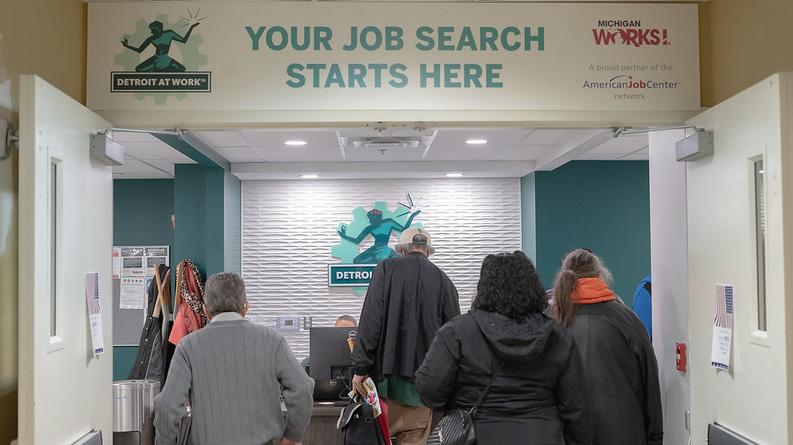
What does Detroit at Work offer?
1. Employment Support: Detroit at Work is a one-stop shop for Detroit job seekers. Each of our Career Centers provides a range of support services, including job placement assistance, resume-building workshops, record expungement, work readiness and much more.
2. Training Programs: Free training programs are developed in collaboration with growing industry leaders and local businesses to ensure you gain in-demand skills. From carpentry and renewable energy to IT training, courses are developed to align with current industry standards and employer expectations.
3. Barrier Removal: Our Career Centers assists Detroiters in obtaining gainful employment, and our programs are structured to help reduce the unemployment rate within the city. We work to help Detroiters achieve a well-rounded quality of life by removing obstacles that would interfere with a job seeker’s path to employment. Many of our programs offer financial assistance while you earn the credentials and skills needed for an elevated career path. We understand that every job seeker’s situation is unique, so our Career Center staff builds meaningful relationships to identify what programs and services are the best fit. We take a job seeker’s personal life as seriously as their career journey, so we offer services such as record expungement, childcare assistance, and much more. The full list of supportive services can be found on our website, visit detroitatwork.com/help.
4. Employer and Small Businesses Support: We collaborate with local employers and small businesses to connect them with local talent that is ready to work. We offer talent recruitment, training programs, and talent strategy services to Detroit’s industry leaders and small businesses.
We want to be sure that every Detroit job seeker receives the appropriate attention to their unique situation. Our Career Center team members are skilled in identifying the areas where a job seeker needs support to become a strong candidate.
Connect with Detroit at Work Today!
Visit any one of our Career Centers, where a staff member will guide you to the best suited opportunities. Call our Detroit at Work Hotline (313) 962-9675 (WORK). Visit us online at DetroitAtWork.com to get the latest job and hiring fairs, Career Center locations, and more. Follow us on social and get the latest updates delivered to the palm of your hand when you search “Detroit At Work” on Facebook, LinkedIn, Instagram and X.
Where The Jobs Will Be: Top Career Paths For The Future
By: Ebony JJ Curry, Senior Reporter
Michigan’s next graduating class is stepping into a labor market that rewards skills, credentials, and the ability to learn fast. The clearest signal comes from the U.S. Department of Labor’s new 2024–2034 projections, released August 28, which show total U.S. employment rising by 5.2 million over the decade, with health care and social assistance driving the largest share of growth. The same projections place clean energy technicians and information security analysts among the fastest-growing roles, an outlook tailor-made for a state that builds things, moves things, and increasingly secures things.
Healthcare support and coordination roles are set to multiply. Nurse practitioners lead national growth tables, alongside medical and health services managers and physical therapist assistants. These jobs scale with an aging population and more chronic conditions, and they create on-ramps for students who complete short-term credentials, associate degrees, or bachelor’s programs while working. The Occupational Outlook Handbook lists growth rates of roughly 40% for nurse practitioners, 23% for medical and health services managers, and 22% for physical therapist assistants, with median pay that supports a middle-class life in Michigan’s metro areas and smaller cities.
engineering, materials science, and energy project management.
Wind turbine service technicians and solar photovoltaic installers sit at the top of the national growth charts this decade. Even as federal and state policy shifts create headlines, the skills behind these jobs transfer across a wide energy toolbox: troubleshooting, electrical safety, controls, fiber and sensor networks, and data-driven maintenance. Those fundamentals travel with a worker from rooftop solar to smart buildings to utility-scale storage. The Labor Department’s outlook keeps both wind and solar technician roles among the fastest risers through 2034.
Logistics and supply-chain careers deserve a hard look from students who like operations, data, and problemsolving. Michigan’s border crossings, interstates, rail yards, and distribution centers form a regional hub for e-commerce and advanced manufacturing. State-level projections show logisticians growing by about 17% between 2022 and 2032, with roughly 800 annual openings that include planners, analysts, and managers who coordinate the flow of parts and finished goods. Nationally, transportation and warehousing remain a large private-sector employer, and the modern warehouse now runs on analytics, automation awareness, and continuous improvement. A certificate in supply-chain tech or data visualization can push a graduate into that next pay band. Cybersecurity and IT continue to expand, and Michigan’s public sector is signaling demand. The state’s annual Cyber Summit in Novi on October 23 anchors a week of programming that brings together government, schools, and industry to recruit, upskill, and solve for the talent gap. The federal projections line up with what employers are saying on the ground: data scientists, information security analysts, and related roles post double-digit growth with median salaries that reward early certifications and real-world projects.
Clean tech is a Michigan story as much as a national one. Recent energy employment tallies place Michigan among the country’s leaders for clean energy jobs, with more than 127,000 positions and momentum that has outpaced broader job growth. That activity spans battery components, energy efficiency, grid upgrades, and the skilled trades needed to install and maintain new systems. State reports and partners highlight Detroit as a top-10 metro for clean energy employment, reflecting a rare blend of engineering depth, advanced manufacturing, and real market demand. Students weighing an apprenticeship or a two-year pathway should see opportunities across electrical, HVAC, energy auditing, and solar installation, while four-year graduates can target industrial
For students in the Class of 2028, that means internships, SOC analyst rotations, and stackable credentials can move the resume faster than a single four-year track ever did.
Training pipelines across Michigan are retooling to meet this moment.
“The Michigan Works! network is proud to be a key partner in the implementation of the Michigan Statewide Workforce Plan, ensuring that job seekers and employers across the state have access to the resources they need to succeed,” said Ryan Hundt, CEO of the Michigan Works! Association, pointing to local boards and “innovative training programs” that break down barriers and strengthen the talent pipeline.
Mentorship is part of that formula. “Mentorship is the foundation of a resilient, adaptable workforce,” Hundt said in separate remarks, underscoring how guidance paired with state-backed programs helps people build skills for an evolving job market. Students benefit when a coach connects them to a pre-apprenticeship or to a short course that stacks toward a degree.
Job centers are making the pitch plain. SEMCA Michigan Works tells seekers, “Searching for jobs is tough. You need someone who knows the ropes. We know the drill, we know the market, we have the tips, the resources,
and the people to help. FOR FREE,” and advertises up to $5,000 for on-the-job training, pre-apprenticeship, and registered apprenticeships, subject to eligibility and funding. That kind of last-mile support helps a student pay for a CompTIA exam, a CDL upgrade, or an OSHA-30 course that changes a starting wage.
Community colleges and job training centers continue to serve as the state’s on-ramp. Lansing Community College’s Job Training Center describes its mission this way: “prepare community members for in-demand entry-level employment by offering short-term training and career-focused programs necessary for future career success and improved quality of life.” Washtenaw Community College invites students into cyber clubs, scholarship pathways, and industry-aligned certifications that translate directly into entry-level analyst roles. These programs matter for first-generation students and returning adults who want a clear path to earnings while they study.
Public service careers merit attention for pay stability, loan-repayment options, and the scale of the problems being solved. The Department of Technology, Management & Budget modernizes state systems, secures networks, and manages complex procurement, which means sustained openings for project managers, analysts, network engineers, and security professionals. Graduates who want mission-driven work with benefits and clear advancement ladders will find that mix in state and local government.
Students also deserve transparency about policy whiplash. Proposed state budget cuts or program eliminations can ripple through training pipelines. The Michigan Works! Association flagged those risks in late August during debate over the FY26 plan, citing potential reductions to the Going PRO Talent Fund and Registered Apprenticeships. The message for students and families is straightforward: keep an eye on funding decisions, line up alternates, and use the network of career coaches to navigate changes.
The Michigan-specific data backs a diversified plan. The state’s Hot 50 list highlights high-demand, high-wage careers through 2032 and pairs each with projected openings, wage ranges, and education levels. Students can use it to compare routes in nursing, engineering, logistics, IT, and skilled trades, and then map which credentials unlock first jobs and which experiences move them to the next rung. The same state portal hosts DIY tools to explore long-term occupational projections and replacement openings that keep jobs churning even when growth slows.
A practical roadmap for the Class of 2028 starts with three moves. First, anchor a choice to data: BLS projections confirm durable demand in health care support, clean energy, logistics, and cybersecurity across the next decade. Second, stack credentials with work: apprenticeships, paid internships, and industry certs inside community college or university programs build experience and reduce debt. Third, use the ecosystem: Michigan Works! career coaches, short-term training dollars, and campus-based job centers shorten the distance to a first offer. Students who follow that playbook enter a market where employers value proof of skill, evidence of learning, and the grit to adapt as technologies shift. The jobs are there. The pathways are here. The choice now is to match Michigan’s talent to the work that needs doing.
Figuring Out Your Career One Step at a Time
A Realistic Guide for Students Still Exploring Their Purpose
Many students enter college with questions about future planning can feel intimidating, especially for students who are the first in their families to attend college or who do not have clear examples of career paths in their communities. Yet career clarity is a process students develop over time, not a decision they make once and forget.
College is designed to help students explore academic and professional interests. Career centers on campuses are dedicated resources that guide students through career assessment, major exploration, and skill development. These centers help students understand how to translate classroom learning into practical career opportunities.
A key concept in career planning is transferable skills. These are skills developed in one context that apply to many others. Writing, critical thinking, collaboration, problem solving, and communication are examples of transferable skills. Students can develop these skills through any major and through involvement in campus activities, internships, or part time jobs. Employers value these abilities regardless of the specific field.
Career assessment tools can help students identify strengths, preferences, and work styles. Assessments such as interest inventories or personality inventories do not tell students exactly what to do, but they provide a framework for self reflection. Many colleges offer these assessments through their career centers and encourage students to complete them early in their academic journey.
Internships and experiential learning are powerful tools for gaining clarity. Experiential learning includes internships, cooperative education, community based research, job shadowing, and service learning. These opportunities allow students to test career interests in real world environments. According to the National Association of Colleges and Employers, students with internship experience are more likely to receive job offers after graduation. Students learn industry expectations, build professional networks, and clarify what they enjoy or do not enjoy in a workplace setting.
Informational interviews are another useful strategy. These conversations occur when students speak with professionals to learn about their careers, daily responsibilities, required skills, and career trajectories.
These interviews are not job interviews. Instead, they provide insight, perspective, and networking opportunities that enhance career clarity.
Students should also refine their resumes and professional materials early. Career centers often offer resume reviews, mock interviews, and LinkedIn support. A professional presence online and on paper helps students present themselves confidently to employers and internship sponsors.
Another important aspect of career planning is networking. Students often misunderstand networking as asking for jobs. Instead, effective networking is about building relationships, learning from others, and staying informed about opportunities. Students can attend career fairs, meet professionals through campus events, and stay connected with alumni networks.
For students who are unsure of their major or career path, career exploration courses offer structured guidance. These courses help students research industries, clarify goals, and identify steps toward career preparation. Taking such courses can reduce anxiety about the future by breaking down big goals into manageable strategies. Parents can support career exploration by encouraging curiosity. Conversations about interests, strengths, and aspirations help students reflect more deeply. Rather than insisting on specific outcomes, parents can help students consider the skills they enjoy using and the environments in which they thrive.
Career clarity evolves as students progress through college. Early exploration, hands on experience, mentorship, and reflection are key. Students who engage actively with career resources and opportunities often graduate with both clearer goals and the confidence to pursue them.
“The power of education lies in its ability to transform lives” – Unknown
A Life Powered by Curiosity, Drive, and Determination
By Sundon Anderson
I didn’t wake up one morning and announce, “I’m going into Information Technology.” There was no movie-style montage or dramatic background music. My journey began much earlier—in 1995, when my mother and grandmother brought home my very first computer. I remember it like it was yesterday: a Hewlett Packard desktop running Windows 95. That startup sound felt magical. That computer didn’t just power it sparked something inside me. From that moment forward, I was
Like many people, my path into IT wasn’t a straight line. Before technology became my career, I worked a variety of jobs trying to figure out where I fit. I’ve been a security guard, worked in manufacturing plants, and done physically demanding work that taught me discipline, responsibility, and resilience. Those jobs paid the bills, but they never kept my interest. I found myself watching the clock. With computers, time disappeared. Hours would pass while I was learning or troubleshooting, and I wouldn’t even notice. That’s when I realized this wasn’t just an interest—it was a passion.
Before entering corporate IT, I took a leap of faith and started my first business repairing computers. I named it Drive and Determination Computer Repair, because that’s exactly what I had—more determination than money and more curiosity than experience. Friends, family, and neighbors trusted me with their broken machines, and every successful repair built my confidence. Running that business taught me troubleshooting, customer service, and how rewarding it is to solve real problems for real people. Those lessons still guide me
One of the biggest reasons I chose IT was the perks. IT offers flexibility, career growth, job security, and the ability to work in nearly any industry. The skills are transferable and always in demand. I also loved the idea of traveling for work—solving problems in different locations and environments. Then Zoom came along, and suddenly “travel” meant walking from the bedroom to the living room. Not exactly what I envisioned, but working in sweatpants has its advantages, too.
My professional IT career officially began with TekSystems, an IT staffing agency that allowed me to work in a variety of roles and environments. This experience was invaluable. I learned quickly, adapted constantly, and
gained real-world skills that can’t be taught in a textbook. That opportunity eventually led me right back to where it all started—Hewlett Packard—where I landed my first fulltime IT role as a Service Desk Analyst. Supporting users, solving technical issues, and learning something new every day felt like a full-circle moment.
In 2013, my journey hit a major obstacle when my position was laid off and sent overseas. It was a difficult time, but Hewlett Packard handled it with professionalism and provided a severance package that gave me the opportunity to reinvest in myself instead of giving up. I chose growth over fear.
That decision led me to New Horizons Learning Center, where I spent two challenging but rewarding years sharpening my skills. The work was demanding— certification exams have a way of humbling you—but the effort paid off. I earned my CompTIA A+, Network+, and Security+ certifications. More importantly, I learned that IT is a field where you never stop learning. Technology evolves constantly and staying relevant means staying curious.
That mindset carried me to MSM NSI, a small company with a lot of responsibility and opportunity. Here, I truly wore many hats, worked hands-on with modern technologies, and grew rapidly both technically and professionally. I owe a sincere thank you to Mark Montgomery and Albert Smith, whose mentorship helped shape me into a valuable professional. They taught me not just technology, but how to think critically, adapt, and succeed in the IT industry.
Today, my journey continues. I am proud to say that I will be graduating in May of 2026 with an Associate Degree in Cybersecurity—a field dedicated to protecting the very systems I fell in love with as a kid.
To high school students, college students, and anyone considering a career change: IT isn’t about knowing everything, it’s about never stopping learning. If a kid with a Windows 95 computer, a small repair business called Drive and Determination, and a whole lot of persistence could build a career in IT, imagine what you can do.
The Quad is published in February and September to share information about career choices, job opportunities and inspirational stories to encourage you and guide
Look for the next edition of The Quad - September 23, 2026