Black Muslim Women
cine and healthcare, may be adversely impacted by the decision to overturn Roe v. Wade.
women been premoment of the final. a law1931 law effect, asked the affirm that constitucontain abortion. Our Planned Advocates of founding coalition ReproducAll, a affirm abortion and freedom in constitution,” Giroux. is that everything in aborMichigan, makes we will we can patients care they
States and couldn’t imagine fasting when the city stays open and the day doesn’t bend.
“He was like, ‘Yeah, but the McDonald’s and all the restaurants are still open,’” she said. “He was like, ‘In Egypt, everything is closed during the day. Everything opens at night because everybody is fasting, but here, everything is still open.’”
Elected officials are also working to keep Roe v. Wade intact thus holding off Michigan’s 1931 trigger ban. Governor Gretchen Whitmer released a statement saying, in part:
friend. That’s where faith shifted from an idea to something she could reach for. She remembers being at her friend’s family home when her friend’s mom asked a question that opened a door.
“What we are really concerned about is the impact on our patients.
ity young, Black Muslim women and we all have different backgrounds, but we all come together and it’s so beautiful to be able to just relate on that level.”
what the Supreme Court will rule in the upcoming days. Despite the decision, advocates on both sides of the argument are willing to continue their pursuits.
what she described as a socially conscious Black environment.
to have representalegislacollection and criminal jusrecomcollection analywith the AttorMichigan Law Standards Association Prosecutors stakeholders collect and strategically. warHouse Operations hearand other would ban of noknock urging the pass reform and Whitmer to the leg-
El-Amin’s answer stayed direct.
“We don’t fast for the city. We don’t fast for society. We’re fasting for ourselves,” she said. “So it doesn’t matter how many restaurants are open. If God said fast now from dawn to sunset, I’m going fast now from dawn to sunset, and that’s just it.”
“The words ‘Roe overturned’ are no longer theoretical. I want every Michigander to know— no matter what happens in D.C., I’m going to fight like hell to protect access to safe, legal abortion in Michigan…”
“We were at her family home and her mom asked me if I’ve prayed,” Wilson said. “Then she said that, ‘God is very powerful and there is nothing that he can’t do. Muslims, we believe God is the most merciful.’”
“I tried to pray and I just asked for clarity,” she said. “I asked for guidance in such a hard moment where it’s like, I don’t see how I personally am ever going to get to a point of stability.”
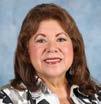
El-Amin’s Ramadan is an inheritance.
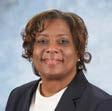
Janae Wilson’s begins somewhere else: sisterhood.
She can still see her first Ramadan — alone in an apartment she was proud to have, watching evening come like it always does, and realizing nobody was coming over.
“I did it alone. I was completely alone when I broke my fast every night,” she said.
More than legal implications, overturning Roe v. Wade would impact several systems across the spectrum. With the potential to drive both foster and adoption numbers upward, a ban on abortions could leave many women to choose a less safe route restoring ‘back alley’ and illegal abortion practices, including self-abortions. Moreover, African American women and women of color, who already have a long-storied history with access and inclusion in medi-
islature adopts it.
She stayed home on purpose, she said. Not because she felt estranged from the Muslim community, but because she was still carrying what came before it — another religious environment that left her guarded. She wanted to be sure of herself. She wanted to know what she believed without borrowing somebody else’s version.
Access to abortion is already out of reach for far too many Michiganders, especially Black people and people of color who face additional barriers to care as a result of systemic inequalities and institutional racism. Losing access to legal abortion will impact those communities most, forcing people to become parents or expand their families against their will. Being able to decide and control if, when and how to become a parent is central to building and living a healthy, happy life,” said Vasquez Giroux.
Even then, she didn’t rush. She studied, read, and tried to learn enough to feel ready. She kept returning to a bookstore in Detroit, picking up more books, circling the decision.
“I would go into this bookshop and I would get new books and keep trying to learn more and more because I’m a bit of a perfectionist,” she said.
Then the bookshop owner said what she needed to hear.
“He’s like, well, tomorrow is never promised, right? So if you really are seriously considering it, you should do it now,” Wilson said.
Increase school funding: Statutory changes to increase the School Aid Fund revenue by at least $3.6 billion and establish a permanent weighted funding formula based on student and community needs and universal preschool (0-3).
“My first Ramadan was during the summer,” Wilson said. “So in the summer, you fast 16 hours and I remember just being in my apartment and feeling like, man, this is hard.”
Her entry into Islam came through instability.
“College was very, very hard for me,” she said. “For a lot of reasons, going through grief, going through financial challenges, going through homelessness at times, it was rough.”
She worked full-time through school because that expectation arrived early.
“I had to work full time through my entire college experience because, you know, with a more traditional Black family, you get put out at 18,” Wilson said.
Before Ramadan this year, she hosted a gathering to bring women into the month together.
“It was about 30 women, diverse, but mostly Black women,” Wilson said. “Just coming together and talking about ‘what do we want?’ ‘What does Ramadan even mean to us?’”
It’s the same question she asked during her first Ramadan, but the place she asks from has changed. Her daily life has changed too, down to the workplace.
Wilson is the deputy director of Dream of Detroit, a Muslim-led nonprofit focused on revitalization on the city’s westside through community organizing, housing, and economic development.
Beyond the scope of pro-choice versus prolife, the fight for reproductive choice is one of freedom. As Michigan officials work to ensure each woman who finds herself in the position to choose has access to care without the threat of legal action, many wonder
“And I did it right there in that bookstore,” she said. “We call it the Shahada, which is a proclamation of faith. I took my Shahada right there. I haven’t looked back since.”
Reject censorship in history instruction: Encouraging Gov. Whitmer to ensure the goal for Michigan schools should be history instruction that is presented by professionals with the subject matter expertise, pedagogical skills, and judgment necessary to present complex information to students that are grounded in provable facts and add to the understanding of modern-day America.
Couch surfing became routine. One of those couches belonged to a Muslim
“I grew up in a very socially conscious Black area of Chicago,” she said. “So I grew up really seeing Black people just in every position in the most beautiful way.”
“Overturning Roe v. Wade would be a terrible break with nearly 50 years of judicial precedent and – more importantly – a blow against individual freedom. It is my hope that the majority of justices will reject the findings of this draft. If that is not the case, we need to stand with Senate Majority Leader Schumer and Gov. Whitmer in support of their efforts to preserve the right to reproductive freedom,” said Chair Alisha Bell, on behalf of the Wayne County Commission.
“This is my first Ramadan where I’m actually working at an organization that is Muslim-led,” she said. “And that has been really, really different for me.”
“This is the first year where I wake up and I feel at peace,” Wilson said. “I don’t feel a sense of rushing. I don’t feel a sense of having to explain myself to anybody. Everyone understands.”
The health committee recommends reviewing state licensure policies to address the barriers that Black psychologists face in obtaining licensure in Michigan.
Conversion didn’t soften everything. With her family, she said, it made things harder before they improved.
“My biggest struggle personally is acceptance for my family,” Wilson said. “There were moments where it’s like, okay, you want to be Muslim, cool but don’t come around the family.”
For Wilson, the shift is simple: she is no longer breaking her fast alone.
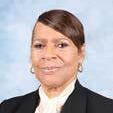
Tasleem Jamila Firdausee arrives at Ramadan from a different doorway.
“I get up at about 4 AM or 4:30 AM,” she said. “And I go into my prayer room and I pray.”
Ensure equitable distribution of state health funds: Ensure all Michigan communities with a significant Black population receive adequate funds to address mental health issues.
Ramadan, for her, is womanhood lived on purpose: tending to the body, checking the spirit, tightening the character, returning to God before returning to everybody else.
Protecting Black voting rights: Urge state officials to remain vigilant in the fight against schemes to disenfranchise Michiganders of color.
She said she isn’t searching anymore. She’s rooted — and Ramadan looks different when you’re held by community.
“The thing that I would say Ramadan brings to me more than anything else is also a sense of community,” she said. “Being able to be so active in our communities, especially the Black community specifically, is so special.”
Increase mental health supports for the Black community: Recommending Michigan set a goal of increasing the number of Black mental health service providers by 20% each year over five years.
“I am a part of a beautiful group,” she added. “We call ourselves ‘The Sister Girls.’ We’re major-
“BLAC members have worked hard to identify the needs of the Black community and we feel these recommendations will provide a solid first step towards breaking down barriers in education, community safety, health and business,” said BLAC Co-Chair Dr. Donna L. Bell.
Congressional Challenge
other foreign countries. It’s a position that is becoming increasingly popular among Democratic and some Republican voters.
embraces. transforleadership as a approach that change the syscircumstancoperating Ivory “Transformationdoesn’t just do certhem view of and exdrive that because what create everyentire because
She said hip-hop introduced her to Islam before any formal introduction could.
“I was introduced to Islam really through music, through hip-hop music,” she said. “Rakim, Poor Righteous Teachers, Public Enemy, they would mention Islam in their lyrics. And so it just really sparked me to say, OK, what is this?”
Now, she holds that early awareness with steadiness. National division does not surprise her.
“As long as I’ve been Black on this earth,” she said, “it’s always been a divide.”
So Ramadan becomes her return — not away from the world, but back into herself. The fasting. The prayer. The early rise. The inward check. A woman keeping her footing through worship and teaching other women to do the same through the life she’s built: discipline that isn’t loud, faith that isn’t fragile, and womanhood that stands tall before dawn.
By the end of the month, the rhythm becomes muscle memory.
That’s where Ramadan sits across these three lives: a mother waking her children early enough to carry the day, a young woman building a sister circle so nobody breaks fast alone, and a prayer room lit before 4:30 a.m., again, because womanhood still has to be held steady before the world starts pulling.
Ebony JJ Curry can be reached at ecurry@michronicle.com.
“It’s the ultimate detox for me as a Muslim,” said Firdausee, an interdisciplinary scholar, multidisciplinary artist, and holistic health coach. “It’s like not only am I cleansing my body, but my spirit, my actions, my character are all elevated to be a reflection of how Allah wants me to be in this life.”
She called it armor.
“To me, it’s a time to put on my spiritual warrior outfit and armor,” she said, “and to go deep within the holy Quran, recalibrate, and renew my intentions.”
Her sense of self traces back to 18, coming of age on Chicago’s South Side in





Black Votes
democracy, and we lose our ability to fight for everything families care about: housing costs, healthcare, utility bills. The ballot is the foundation of every battle for progress. I also know how to make government work. As Detroit’s Director of Innovation, I built the Improve Detroit app so residents could raise their voices and get real results. I will bring that same problem-solving energy to modernize our elections infrastructure, protect Michiganders’ sensitive data, and bring transparency to systems— including campaign finance reporting—that have gone too long without it. And I know how to win statewide. I have traveled to all 83 counties in Michigan, listened to communities from the Upper Peninsula

to the Indiana border, and I am the only candidate who has already been on a winning team statewide— twice—alongside Governor Whitmer.
Supported by the Michigan AFL-CIO, SEIU, United Auto Workers, the Michigan Education Association, Michigan AFT, the Northern Midwest Regional Council of Carpenters, United Steelworkers-District 1, the People’s Coalition and dozens of state and local leaders across our state, I am ready to be the firewall Michigan needs.
The next Secretary of State will either stand between MAGA and the ballot box — or step aside and hand them our democracy. I have spent my life standing tall for Michigan. The assault on our votes is here, and I’m asking you to stand tall with me to protect our democracy and our right to vote.
people believe that they need to for themselves and others to live better lives.”
Michigan has the highest percentage of Arab Americans in the country, and the highest percentage of Muslim Americans among swing states. Michigan’s 12th District covers Dearborn and Dearborn Heights, where thousands of Arab and Muslim Michiganders call home.
BLAC will hold a virtual town hall meeting to discuss its policy recommendations on Thursday, May 12 at 4 p.m. Join BLAC and a virtual audience in discussing the recommendations to support the Black community.
Former Detroit City Council president Brenda Jones took 34% of the vote in the August 2020 primary after receiving 30% of the vote in 2018. Jones has been Tlaib’s most competitive opponent.
A statement on Downer’s campaign website says he was inspired to run because of his disdain for Tlaib’s performance, which Downer says “has failed to deliver for the people of Michigan’s 12th District.”
Nolen said he would not seek the financial support of AIPAC, the pro-Israel lobby that became a political lightning rod for criticism among progressive Democrats and some, usually younger, conservative Republicans.
“I don’t think they’re going to spend on me — I’d return it because it’s become so toxic,” Nolen said, adding that he is anti-war. “It’s a voting issue for many in Dearborn and Dearborn Heights.”
Nolen was reelected as the Mayor of Inkster in 2023 after serving from 2015 to 2019. An attorney and small business owner, Nolen officially launched his candidacy on Wednesday, saying his campaign is focused on protecting civil rights and constitutional freedoms.
“Chancellor Ivery is a true transformational leader and an outstanding CEO, who is more than worthy of the CEO of the Year Award he just received, “ said Prof. James C. Mays, who teaches entrepreneurship and supply chain management at WCCCD’s Corporate College. “In his 27 years at WCCCD, Dr. Ivery has elevated WCCCD to become nationally recognized for excellence and innovation and preparing our students professionally and personally to do great things in the world.”
BLAC is housed in the Michigan Department of Labor and Economic Opportunity. Members represent many professional backgrounds, including economics, law, public safety, health and wellness, arts and culture and media. They leverage their experiences and expertise to make recommendations to the governor on critical issues affecting the Black community.
“She has become more focused on amplifying conflict and alienating allies than on meeting the everyday needs of Michiganders,” Downer said. “From her failure to address broader issues like economic equality and healthcare to prioritizing divisive rhetoric instead of real, practical solutions, she has left many feeling ignored and left out.”
Tlaib’s office last month pointed to the $15 million in Community Project Funding heading to the district as part of the 2026 appropriations bills. That funding will go toward infrastructure upgrades, lead service line replacement, home repair, workforce development, affordable housing, and more.
To learn more about BLAC and this upcoming event, visit www.michigan.gov/BLAC.
“Nolen has spent his career working across the exact issues facing the 12th District - as a mayor who steered a city out of financial crisis, as an employment attorney who fought for workers, and as a small business owner who understands what families are up against every day, Nolen makes sense for the 12th District,” a spokesperson for his campaign said in a statement.
Two other candidates who have filed to run are Allen Downer and Shanelle Jackson. Jackson earned 4,927 (5%) votes when she ran in 2022. That election featured Detroit Clerk Janice Winfrey, who received 21,636 (22%) votes in her runner-up defeat.
Included in the Community Project Funding earmarks is $3.1 million for Southfield home repair; $2 million for Redford’s aging water systems and lead service lines; $1 million to restore Cooley High School through renovations, partial demolition, and new construction to create space for both indoor and outdoor sports fields; and $500,000 for the city of Inkster’s Harvest River Square Project that will be used to construct an outdoor community space and market pavilion.
Tlaib said on social media Thursday that she submitted nominating petitions for her reelection bid. As the lone Palestinian in Congress, she’s raised millions of dollars from donors across the country sympathetic to Palestine during her previous campaigns. You can reach Sam at srobinson@ michronicle.com.
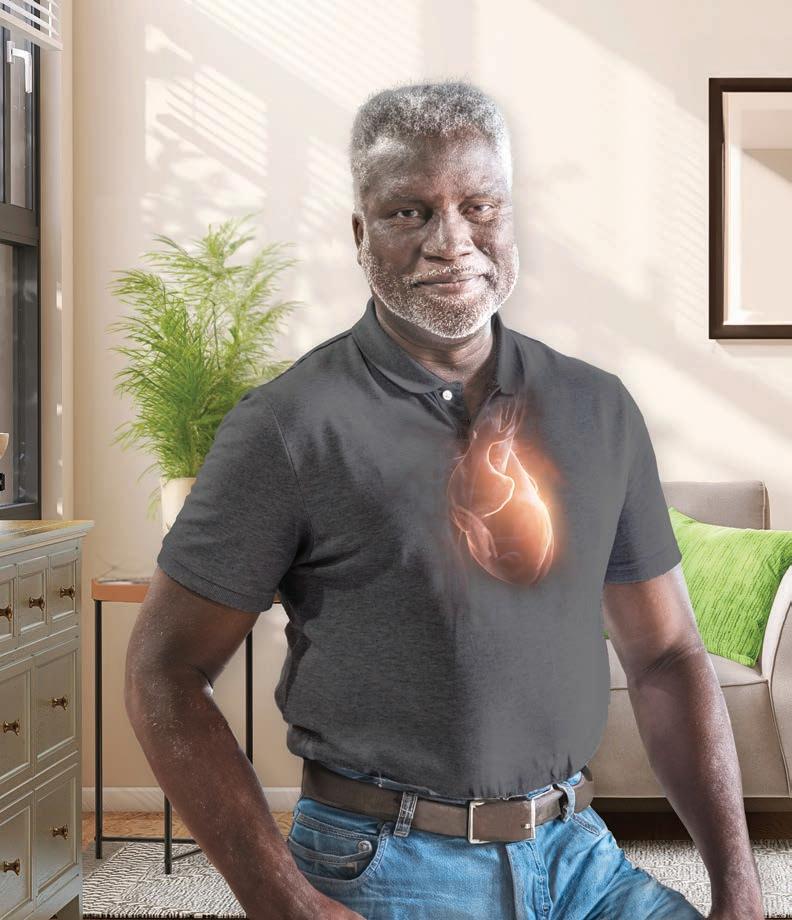
An irregular heartbeat can be unsettling. If Atrial Fibrillation (AFib) is disrupting your rhythm, our experts understand you want to be seen as soon as possible. We’re ready to help you take control today.
From medication management to advanced treatments like ablations, the Convergent procedure and the Watchman device, we personalize care for you. We see the whole person, so you can get back to living fully and confidently. You’re more than your irregular heartbeat and our experts can see you sooner.

Michigan Senate Moves to Cap Medical Debt Interest
By Ebony JJ Curry SENIOR REPORTER
A hospital bill can land like a second diagnosis. You survive the ER visit, the surgery, the specialist, and the test results. Then the envelope shows up, and suddenly recovery turns into a numbers game that has nothing to do with health and everything to do with whether the lights stay on, whether the rent clears, whether groceries stretch, and whether a family can keep its footing.
Michigan lawmakers say that the cycle has gone on too long.
On March 11, 2026, the Michigan Senate passed a bipartisan package of bills meant to protect residents weighed down by medical debt, a burden supporters say affects roughly 700,000 Michiganders. The legislation, led by Sen. Sarah Anthony, D-Lansing, and Sen. Jonathan Lindsey, R-Coldwater, would set clearer standards for hospital financial assistance programs and place new limits on how medical debt can be collected. The bills now move to the Michigan House for further consideration.
Anthony described the stakes in human terms, not legislative ones.
“When medical debt can follow someone around for the rest of their life — hurting their ability to buy a home, forcing them to forgo essential expenses like food and rent, and keeping them from getting back on their feet — we know the system is broken,” Anthony said. “By making sure hospitals clearly offer financial assistance and by putting guardrails around extreme collection practices, we can give families a real chance to get back on their feet. I’m proud to see this legislation move forward and grateful for the bipartisan, bicameral work that made it possible. No one should be punished for getting the care they need and deserve.”
Lindsey echoed that urgency, calling the Senate vote a first step toward real relief.
“The Senate passing these bills marks a significant first step in delivering real relief for our state’s medical debt crisis,” Lindsey said. “Right now, too many Michiganders are burdened by medical debt with limited opportunities to escape it. Senator Anthony has been a leader on this issue, and our partnership on these legislative packages will ensure transparency in charity care and strengthen our state’s laws on medical debt.”
The legislation comes as medical debt remains a defining pressure point for working families across the country. National figures show nearly one-third of working-age adults carry medical or dental debt, while nearly 40% of people who have experienced medical debt say they have had to cut back on essentials such as food, rent, and heat. Supporters argue Michigan’s package would place the state alongside those with the strongest protections, shifting medical debt away from being a lifelong financial punishment tied to a moment of illness.
Two sets of bills make up the package.
Senate Bills 449–451 focus on what hospitals must do up front. Introduced last summer, they aim to standardize the financial assistance programs nonprofit hospitals are required to
See CAP MEDICAL DEBT Page A-4
Roots.
By Ebony JJ Curry SENIOR REPORTER
Highland Park to Install 48 Solar Streetlights Across Residential Blocks
or the politics get shaky.
Porch lights don’t reach the corner.
Plenty of Highland Park families already know that feeling — standing at the window once the sun drops, checking the street before you step out, walking a child from the car to the door a little faster than you want to admit.
City leaders say they’re trying to change that.
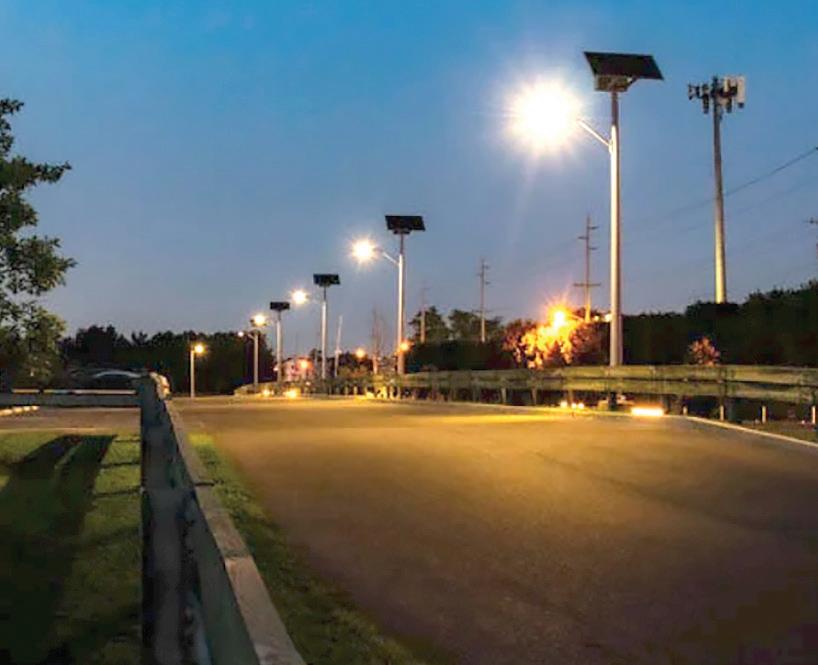
Highland Park announced the installation of 48 new solar-powered streetlights across residential corridors, part of a city-backed effort aimed at restoring basic infrastructure, improving neighborhood safety, and raising day-to-day quality of life. The project is expected to begin this month, in March 2026, and run through July 2026, with crews taking about three days per block to complete the work.
The city is partnering with Solartonic and Soulardarity, using state funding to expand on last year’s installation of 10 solar streetlights along Florence and Louise Streets. City Council voted to approve the project on Oct. 20, 2025, according to the city’s announcement.
During installation, “No Parking” will be enforced on the south side of each block being serviced, with advance signage posted for residents. Soulardarity will also distribute informational flyers to households on streets receiving the lights.
Residents with construction questions can contact the City of Highland Park Engineering Department at 313-865-1876. For background on the solar streetlight initiative, Soulardarity can be reached at max@soulardarity.com.
Why solar streetlights hit different in Black communities
When people talk about solar, the conversation can get wrapped up in buzzwords — “green,” “sustainability,” “innovation.” For Black communities, the need is usually simpler and more immediate: reliability, safety, and not getting priced out of basic living.
Energy costs already hit Black households harder. The U.S. Department of Energy has reported that Black households typically carry a higher “energy burden,” meaning a higher share of income goes toward utilities than white households. That’s the kind of pressure you feel in real time — choosing between a bill and groceries, stretching the thermostat settings, hoping the next shutoff notice doesn’t come when your paycheck is already committed.
Solar isn’t a miracle fix for that, and Highland Park’s streetlights won’t lower everyone’s DTE bill overnight. Yet solar does offer something Black cities have been denied too often:
Solar streetlights generate power during the day and store it in batteries to light streets at night. That means the lights can keep working during outages and don’t depend on the same infrastructure that has failed residents before. In a place like Highland Park — where the memory of thousands of removed streetlights still sits in people’s bones — that independence matters.
Safety that doesn’t come with a badge
Every community wants safety. Black communities also know what it means when “safety” becomes a reason for over-policing.
Streetlights are different. They’re one of the most basic public safety tools a city can provide, and they don’t come with a stop-and-frisk attitude. Lights help elders feel comfortable walking from the car to the porch. They help parents breathe easier when teens come home after practice. They make it easier to see who’s outside and what’s happening, which strengthens the kind of community watchfulness that doesn’t require law enforcement to be everywhere.
This is the part that matters: light is dignity. Light says the city sees you.
The bigger point behind the bulbs
Soulardarity’s work grew out of Highland Park’s streetlight crisis, when more than 1,000 streetlights were removed, leaving blocks dark and residents demanding solutions. The organization has spent years pushing for energy justice — not simply “clean energy,” but the right of a community to control and benefit from the power systems it relies on.
That’s why this project lands as more than an installation schedule.
It’s a statement about what Black cities deserve.
Black communities have been living with infrastructure gaps for generations — aging utility systems, delayed repairs, neglected public spaces, and the kind of “temporary” hardship that somehow becomes permanent. Solar projects, when designed with accountability and community input, are one way to stop waiting for permission to have the basics.
Highland Park’s 48 new solar streetlights won’t solve every challenge the city faces. They won’t erase the years residents spent navigating dark blocks. Yet they will do something concrete: put dependable light back where people live.
And for families who are used to planning around the dark, that’s not a small change.
Ebony JJ Curry can be reached at ecurry@michronicle.com.
Dave Coulter Centers Affordability in Oakland County State of the County
By Ebony JJ Curry SENIOR REPORTER
Bills have a way of telling the truth before politicians do. Rent due. Prescriptions delayed. Student loan balances that keep showing up even after years of payments. Grocery totals are climbing faster than paychecks. Across Southeast Michigan, that pressure is not lost. It is personal, daily, and shaping how families decide where they can live, whether they can seek care, and what kind of future feels possible for their children.
That was the tension at the center of Oakland County Executive Dave Coulter’s State of the County address Thursday night at Oakland University’s Oakland Center, where he laid out an agenda built around one word residents across metro Detroit often seek: affordability.
Coulter used the speech to frame Oakland County’s recent investments not as isolated programs, but as a coordinated effort to help residents withstand the rising costs of health care, housing, and education while also strengthening the county’s longterm economic footing.
“Whether you read it in the daily paper, see it online or on the evening news, or hear it from your neighbors at the local coffee shop, it’s clear that affordability is

the number one anxiety of people across the political spectrum, and particularly of young adults,” Coulter said. “Workers in their 20s, 30s and 40s are especially worried about the rising cost of health care, housing and education.”
“So, we in Oakland County are working to make sure these three vital commodities remain within their reach, and the reach of the generations that follow.”
Coulter said that work is being carried out in partnership with the Oakland County Board of Commissioners through target-
ed investments meant to reduce immediate financial harm while opening more stable paths forward for residents.
One of the clearest examples is medical debt relief.
Oakland County partnered with Undue Medical Debt and invested $2 million into a program that buys uncollected hospital debt for pennies on the dollar, then erases it for qualifying residents. County officials said that using only a portion of those funds, the initiative wiped out $9 million in medical debt for 14,000 families last year. Another 6,300
residents are expected to see more than $6 million in medical bills eliminated soon. That kind of relief reaches beyond balance sheets. Medical debt can push families toward bankruptcy, put housing at risk, and cause people to delay doctor visits or treatment because they are scared of what the next bill might bring. County leaders are betting that removing some of that burden can create room for people to breathe before a crisis becomes generational.
Student debt is another pressure point the county said it is trying to address through its SAVI Student Loan Support Program. According to the county, the program has helped more than 3,200 borrowers reduce their debt by an average of $42,000 each, restoring an average of $143 in monthly purchasing power.
That matters in a region where younger adults are being asked to build careers, pay high housing costs, and often support family members while carrying debt from degrees or credentials that were supposed to create opportunity. Every dollar restored to a monthly budget can affect whether a family catches up on utilities, buys food, saves for a child, or keeps falling behind. Housing remains one of the biggest tests.
Oakland County’s Housing Trust Fund, launched with $20 million in federal funding, has supported the development of more than 1,100 affordable housing units across Pontiac, Hazel Park, Southfield, Rochester Hills, Auburn Hills, Ferndale, and Royal Oak Township. For communities across the county, especially those confronting widening income gaps and housing instability, affordable units represent more than con-
a way to build services that don’t collapse every time the grid, the budget,
Oakland County State of the County
From page A-3
struction totals. They shape who gets to remain rooted in the places they work, worship, raise children, and age.
Coulter’s speech also put a spotlight on Oakland Connects, a newer county initiative aimed at making public services easier to find and use when families hit hard moments.
At the center of Oakland Connects is a team of Community Health Workers who help residents navigate medical care, financial support, and social services through one coordinated entry point. The county’s helpline, once known as the Nurseon-Call Hotline, now functions as a broader navigation hub, connecting residents not only to health resources but also to a network of 14 partner agencies that address issues such as hunger, unemployment, and housing instability.
“The vital services that our county and partners collectively provide are most effective when we make them easy for our residents to navigate,” Coulter said. “We launched our Oakland Connects initiative to do just that.”
“Our growing team of Community Health Workers are the backbone of Oakland Connects. These are highly trained professionals who help residents access the benefits and resources they need in times of crisis and continue to provide support after the crisis has passed.”
For families already overwhelmed by layoffs, illness, eviction threats, or caregiving demands, access often becomes its own barrier. Programs can exist on paper while remaining out of reach in practice. Oakland Connects is designed to close that gap by reducing the maze families often face when trying to find help.
County officials tied that work directly to efforts to reduce homelessness, one of Oakland County’s most urgent challenges. With support from the Board of Commissioners, Oakland Connects added dedicated housing counselors and launched outreach efforts such as Wellness Wednesdays in Pontiac and Friendship Fridays in Royal Oak, where residents can access meals, showers, and laundry services.
According to the U.S. Department of Housing and Urban Development, homelessness in Oakland County has steadily declined from roughly 1,000 individuals in 2008 to about 357 in 2025. County lead-
ers said that represents a 22% drop over the past five years.
The county is also expanding Oakland Connects into schools through a $4.6 million grant from the Ballmer Group, led by Steve and Connie Ballmer. That funding will extend services into Hazel Park and Southfield schools, with the goal of helping students and families overcome barriers that can interfere with academic success while linking households to housing, health, and income support.
That kind of school-based intervention reflects a broader reality many educators and parents already understand: children do not learn in isolation from the conditions at home. Attendance, concentration, behavior, and academic progress are often shaped by whether a family is stable, fed, housed, and able to access care.
Coulter also used his speech to argue that Oakland County’s governing model offers something increasingly rare in public life: bipartisan cooperation tied to measurable outcomes.
“I and my colleagues on both sides of the aisle in Oakland County have chosen a different path: the power of example,” Coulter said. “In a state where even the most innocuous legislative initiatives too often succeed or fail on strict party-line votes, Oakland County’s elected leaders collaborate and compromise, adopting annual budgets by unanimous, bipartisan votes.”
“To skeptics who claim local government can only get in the way of opportunity, we say: See for yourselves what we are doing in Oakland County. We continue to believe that our county government can improve the lives of all our residents – and we’re proving it every day.”
That message arrived alongside a list of broader county achievements, Coulter said, that are part of a longer-term strategy focused on people, infrastructure, and shared prosperity.
Oakland County ranks as Michigan’s most prosperous county, according to the administration, with per capita income in the top 3% nationally and a gross domestic product larger than that of 10 states. The county also says it leads Michigan in engineers, foreign investment, and advanced-degree attainment, while maintaining a AAA bond rating through balanced budgets and stronger reserves since 2019.
More than 800 foreign-owned
firms operate in the county, including Astemo Americas, American Rheinmetall, and Teradyne, which together are expected to create hundreds of jobs. Coulter also pointed to the county’s Workforce Development team helping General Motors recruit skilled trades workers, and to Oakland 80, a county initiative aiming for 80% of adults to hold a post-secondary certificate or degree by 2030. So far, county officials said, Oakland 80 has guided more than 42,000 residents toward college or job training and provided direct support to 1,300 adults facing barriers such as child care and transportation.
On health access, the county highlighted new clinics, integrated care through Oakland 360 backed by the Penske Family Foundation, and matching funds for Rx Kids in Hazel Park, Pontiac, and Royal Oak Township.
Transit also made the list. SMART buses now serve millions of riders annually, with more than 7 million trips taken collectively, and federal funding secured by U.S. Rep. Haley Stevens is expected to support fleet expansion.
Still, the heart of Coulter’s speech stayed with cost, access, and whether local government can deliver something tangible at a time when many residents no longer trust institutions to move with urgency.
“The next time someone tells you that our democratic way of life is doomed – that our communities and political parties are too polarized to collaborate effectively, that our governments agencies are too inefficient, or overwhelmed or indifferent to the voters who elected them, or that we have lost the capacity to overcome our differences in pursuit of our collective well-being – don’t argue with them,” Coulter said.
“Just bring them to Oakland County, where the hard-working and dedicated public servants –whose salaries you pay – get up every morning determined to expand the extraordinary opportunities our county provides and preserve them for generations to come.”
For residents across Oakland County, that case will be measured by whether families can keep their homes, afford the doctor, stay enrolled in school, and see the government show up before hardship turns into collapse.
Ebony JJ Curry can be reached at ecurry@michronicle.com
Cap Medical Debt
From page A-3
provide and establish consistent eligibility metrics so patients can more clearly understand what help they qualify for. The package also seeks to prevent medical debt from being included in consumer credit reports, a change supporters say would protect residents from long-term financial harm that can follow a person long after a hospital visit ends.
Senate Bills 701–702 target the collection side, where medical debt can turn into interest, fees, court action, and threats to basic stability. The bills would cap interest and late fees at 3% annually, beginning after a 90-day grace period. They would prohibit liens and home foreclosures resulting from medical debt. They would prohibit wage garnishment for patients who qualify for financial assistance. They would also prohibit deferring, denying, or requiring payment before providing emergency or urgent services due to outstanding medical debt. The package would update Michigan’s Consumer Protection Act to reflect those changes.
Anthony’s office also connected the current legislative
push to earlier state investment meant to erase debt already sitting on family shoulders. She secured $4.5 million in the 2024 state budget for medical debt relief. Through partnerships and local matching funds, that investment is projected to erase an estimated $450 million in medical debt for more than 180,000 Michiganders, with funds beginning to be released last year.
That’s the point supporters keep circling back to: medical debt is rarely a sign of reckless spending.
It often starts with a sick child, an unexpected diagnosis, a workplace injury, a necessary surgery, an emergency room visit, someone did not plan for and could not avoid. The question becomes what happens after the bill arrives—whether Michigan lets illness become an open door to aggressive collection practices, or whether the state draws a line that says care should not cost someone their home, their paycheck, or their future.
The Senate has voted. The House is up next.
Ebony JJ Curry can be reached at ecurry@michronicle.com



A5 | March 18-24, 2026
Money.
Property is Power! Student Loans and the Ownership Question in the Black Middle Class
By Dr. Anthony O. Kellum COLUMNIST
In America, the promise of higher education has long been framed as the gateway to opportunity. Study hard, earn a degree, and prosperity will follow. For many Black Americans, however, that promise has proven more complicated. The same pathway that was supposed to create upward mobility has, in many cases, become a financial weight that delays one of the most powerful tools of wealth creation in this country, homeownership!
Today, student loan debt stands as one of the most significant financial barriers between Black professionals and property ownership.
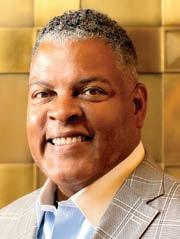
Anthony O. Kellum
According to federal data, Black college graduates borrow more on average than their white counterparts and are more likely to carry that debt longer. The median Black borrower still owes a substantial portion of their student loans twenty years after entering repayment. What should have been a steppingstone toward economic security often becomes a long detour away from it. This is not merely a personal finance issue. It is a structural issue that touches the very foundation of wealth in America.
The Education–Debt Paradox
For Black families, education has historically been viewed as the most reliable path to advancement. It was the strategy encouraged by parents, pastors, teachers, and community leaders a moral and economic investment in the future. Yet the rising cost of college has forced many Black students to finance that dream almost entirely through borrowing.
Unlike many white students who may benefit from family wealth or home equity to help pay tuition, Black students often rely on loans because the wealth gap leaves fewer alternatives. The result is what economists sometimes call the education–debt paradox the very achievement meant to accelerate mobility becomes a liability on the balance sheet. And that liability matters deeply when it comes time to purchase a home.
Mortgage underwriting is built on a series of financial signals credit scores, debt-to-income ratios, savings reserves. Student loan payments directly affect each of these metrics. They reduce disposable income, inflate debt ratios, and limit the ability to save for a down payment. Even for high-earning professionals, the weight of student loans can push the dream of ownership several years further down the road. For a society where homeownership represents the largest driver of middle-class wealth, those lost years carry enormous consequences. Credit as a Gatekeeper
Credit, too, plays an outsized role in this equation. In theory, credit scores are neutral indicators of financial reliability. In practice, they reflect the unequal economic landscape in which individuals operate.
Black borrowers are more likely to have thinner credit files, fewer legacy assets, and less access to intergenerational financial support. These realities can depress credit scores or restrict the type of loans available, even when income and professional credentials are strong.
Thus, two individuals with similar educational achievements may face very different financial pathways. One moves quickly from college to homeownership; the other spends years stabilizing debt, rebuilding credit, and saving in
See STUDENT LOANS Page A-6

Mayor Sheffield Inherited a Property Tax Trap and Faithful Detroiters Must Help Her Fix It
By Herb Strather GUEST COLUMNIST
Mayor Mary Sheffield deserves credit.
One of her first priorities has been property tax fairness. That leadership matters. But while fairness is being addressed going forward, Detroit is still dealing with the impact of a tax structure left behind by the previous administration— one that created a trap for many homeowners and apartment owners.
WHAT HAPPENED:
• Post-COVID assessments surged in many neighborhoods — in some cases tripling or quadrupling
• Interest rates increased.
• Property values in many areas flattened or declined.
• Taxes rose as if values were booming — even where they were not.
WHY THIS MATTERS:
• Taxes once represented 8–10% of rental income.
• In many cases today, they are near 20%.
• When taxes double, property value drops immediately.
• Refinancing becomes impossible.
• Equity disappears.
• Foreclosures follow.
This is not neglect. It is a structural tax problem.
Detroiters deserve stability. The mayor deserves the tools to correct what was left behind.
Nothing changed except the tax burden.
• Rents did not fall.
• Occupancy did not collapse.
• Management did not fail.
When taxes rise from 10% to 20% of income:
• Property value falls
• Loans cannot refinance
• Equity disappears
• Foreclosures increase
The Immediate Valuation Impact of Increased Assessments
While Michigan’s uncapping rule applies upon transfer of property, the financial impact of increased assessments is immediate.
Appraisers and lenders must underwrite using projected tax obligations at assessed levels — not a seller’s capped tax bill. As a result, valuation compression occurs even before a property changes ownership.
Properties financed five years ago at interest rates near 3.5% are now facing refinancing in a 6–7% rate environment. When these higher borrowing costs are combined with assessments that have doubled, tripled, or in some cases quadrupled, many properties no longer support their original debt structures.
When borrowing costs rise 20–30% and projected tax burdens increase simultaneously, net operating income declines materially, reducing appraised value and impairing refinancing capacity.
Solutions
1. Cap Residential Assessment Increases Per Reassessment Cycle
No residential assessment should more than double within a single reassessment cycle. A phased and predictable movement toward True Cash Value protects homeowners and mitigates assessment shock while maintaining statutory compliance.
2. Align Income Property Taxes
Within a Sustainable 10% of Gross Scheduled Market Rent
Explore mechanisms to align the effective tax burden on residential income property within a sustainable range approximating 10% of gross scheduled market rent to preserve refinancing viability and housing stability.
3. Conduct a Transparent Citywide Assessment Review
Request a comprehensive review of citywide assessments under Michigan’s uniform taxation principles, including MCL 211.34, to ensure fairness and consistency across neighborhoods.
To get involved text ‘TAXES’ to 313.444.9691.
Herb Strather is the President & CEO of Strather Associates, LLC, one of the largest Black-owned real estate and investment firms in Detroit.
Money Matters: The Economic Power of Women and Women Entrepreneurs
By Mark S. Lee COLUMNIST
March is Women’s History Month – a time to recognize the extraordinary contributions women have made to our country’s social, cultural, and economic progress. But beyond the celebration of history, this moment also offers an opportunity to examine one of the most powerful forces shaping the modern economy: the growing economic influence of women and women entrepreneurs.
Across the United States, and here in Michigan, women are not just participating in the economy; they are helping drive it.
Women now make up nearly half of the U.S. workforce and control or influence an estimated $10 trillion in consumer spending annually. From household purchasing decisions to major investments in housing, healthcare, education, and financial services, women’s economic choices shape entire industries. Businesses that understand and respond to the priorities of women consumers are often the ones best positioned for growth.
Yet the most exciting shift is not just in spending power. It is in ownership and entrepreneurship.
Women are starting businesses at a
faster rate than ever before.
Over the past decade, women-owned businesses have grown significantly, representing millions of enterprises across the country and employing millions of workers. These businesses span every industry imaginable—from technology and healthcare to retail, consulting, manufacturing, and media.
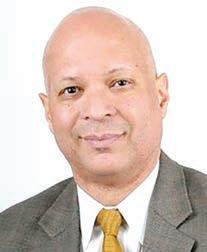
S. Lee
Women entrepreneurs are also proving to be remarkably resilient. Many launched companies during times of economic uncertainty, including the pandemic, when traditional employment structures were disrupted. In many cases, entrepreneurship offered flexibility, autonomy, and the opportunity to build something meaningful while balancing family and community responsibilities.
In Michigan, women-owned businesses are playing a critical role in strengthening local economies. From Detroit to communities across the state, women are launching startups, revitalizing neighborhoods, and leading companies that create jobs and opportunity. Their contributions are especially visible in sectors like healthcare, professional services, hospitality, and education—industries that are central to the
state’s economic vitality.
Women entrepreneurs also bring distinct leadership strengths to the business landscape. Studies consistently show that women-led companies often prioritize collaboration, long-term strategy, and inclusive workplace cultures. These leadership approaches can foster stronger employee engagement, higher retention rates, and more sustainable growth.
Despite this progress, challenges remain. Access to capital continues to be one of the biggest barriers facing women entrepreneurs. Research shows that women-owned businesses receive a significantly smaller share of venture capital and investment funding compared to male-owned companies. In addition, women often encounter challenges related to networking opportunities, mentorship, and scaling businesses into larger enterprises.
However, the landscape is slowly changing. More investors, lenders, and economic development organizations are recognizing the tremendous growth potential of wom-
en-led businesses. Programs that support mentorship, funding access, and leadership development are helping level the playing field and expand opportunities.
There is also a broader economic case for investing in women entrepreneurs.
When women succeed in business, the benefits ripple outward. They hire employees, support local suppliers, mentor other entrepreneurs, and reinvest in their communities. Research shows that women business owners are particularly likely to support community initiatives, education programs, and charitable causes. In short, empowering women in business strengthens not only companies, but entire communities.
For young women entering the workforce today, the possibilities are greater than ever. Whether pursuing careers in corporate leadership, launching startups, or entering skilled trades and technology fields, women are reshaping what leadership and entrepreneurship look like in the 21st century.
Women’s History Month reminds us that the progress we see today is built on decades of determination by women who pushed open doors that were once closed.
Mark
How Detroit’s New Chase Community Manager Can Help Empower Your Financial Journey
Sponsored content from JPMorganChase
If you’ve ever wondered where to start with budgeting, saving, or getting to your next financial milestone, you’re not alone. Across Detroit, more residents are asking questions about credit, debt, and protecting themselves from fraud.
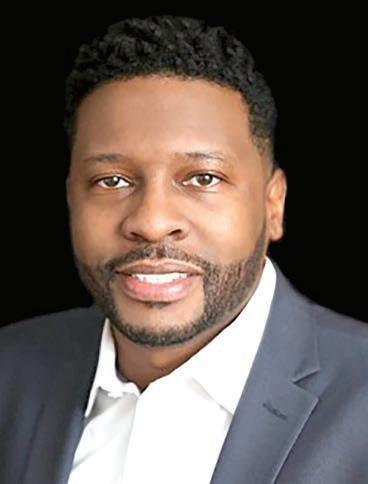
Anthony Miller joins Gail Taylor and Annette Washington as Detroit’s newest Chase Community Manager. This dynamic trio— part of a national network of Community Managers in all lower 48 states—help build stronger financial futures in Detroit by collaborating, delivering financial health education, and helping build money skills through workshops and support from the local Chase team.
We sat down with Anthony to discuss plans to continue helping the Motor City’s communities meet their financial goals.
Q&A with Anthony Miller
Q: To start off – can you explain the Community Manager role?
A: As a Community Manager, I am a connector and partner embedded in the community. After more than a decade as a Branch Manager leading teams and deepening local relationships, I am thrilled to now be a liaison who brings JPMorganChase tools, resources, and specialists to nonprofits, schools, faith organizations, and local leaders. I’m focused on meeting people where they are through listening, partnering, and financial health education.
Q: What attracted you to this role and to Detroit?
A: This work is personal because Detroit’s eastern territory is home for me. I started my JPMorganChase career in 2009 at the Cadieux Harper branch and later spent more than five years as Branch Manager at Gratiot Warren. Public service is in my blood—my grandfather served as mayor of Highland Park and my uncle was a former Wayne County commissioner. Stepping into the role of Community Manager gives me the opportunity to bring resources directly into neighborhoods in an accessible way for families, small businesses, and individuals. That is my why.
Q: What neighborhoods in Detroit do you support, and what is your approach?
A: I’m honored to serve the eastern territory of Southeast Michigan, including Detroit’s East Side and the eastern suburbs of Metro Detroit. My approach starts with listening. I host community conversations and gather feedback to understand our neighbors’ challenges and priorities. From there, I focus
on partnerships, financial health education, and small business support. It’s important to me to show up consistently and in the right ways to meet people where they are. Community building means being present, listening to all voices, understanding needs, and helping meet those needs with the tools and resources Chase has to offer.
Q: How does this build upon JPMorganChase’s continued commitment to Detroit?
A: For more than 90 years, JPMorganChase has remained committed to making a lasting impact in Detroit. Today, our 1,800 employees show up every day to support the needs of our more than 1.3 million consumer banking customers in the Greater Detroit area. Through strategic business, research, policy, and philanthropic efforts, we support skills training and job creation, neighborhood revitalization, small business growth, and expanded access to affordable housing and financial health resources for residents. Since 2014, we’ve invested more than $2B to help accelerate Detroit’s economic recovery.
Q: How can folks get in touch with you or any of the Detroit Community Managers?
A: You can reach me in the heart of Detroit’s East Side at the Gratiot Warren branch—7400 Gratiot Ave, Detroit, MI 48213. We offer community programs, including financial health workshops focused on credit, budgeting, debt management, and fraud prevention. If you want to explore on your own, you can find tools and tips at https://www.chase. com/personal/financial-goals.
Student Loans
From page A-5
an environment where housing prices continue to rise faster than wages. The outcome is predictable. By the time many Black professionals are ready to buy, the market has moved further out of reach.
The Wealth Gap Behind the Numbers
This dynamic cannot be separated from the broader wealth gap in America. Homeownership accounts for the majority of household wealth for middle-class families. When Black households buy homes later or are prevented from buying altogether the opportunity to build equity is reduced.
Equity, after all, compounds over time. A homeowner who purchases at age thirty has decades for appreciation, refinancing, and leverage. A homeowner who enters the market at forty or forty-five has less time for that wealth to grow and transfer to the next generation. This is how disparities quietly reproduce themselves. Not through a single moment of exclusion, but through delayed access to the mechanisms that build wealth.
What This Means for Black Communities
The implications extend beyond individual households. When Black professionals delay homeownership, neighborhoods lose stable ownership, local schools lose engaged stakeholders, and communities lose the economic anchors that property ownership creates.
Ownership changes behavior.
Homeowners vote more often in local elections. They invest more in neighborhood infrastructure. They start businesses, mentor youth, and participate in civic life at higher rates. Property ownership transforms residents into stewards. Without that anchor, communities remain vulnerable to displacement, speculation, and rising rents. This is why the conversation about student loans must extend beyond personal budgeting. It is fundamentally a conversation about community stability and economic sovereignty.
Reframing the Path Forward
None of this means that education is a mistake. Far from it. Education remains one of the most powerful tools for intellectual and economic advancement. But the pathway between education and ownership must be made clearer and more intentional.
For individuals, this means approaching financial life with strategy. Managing debt early, building credit deliberately, and preparing for ownership as part of a long-term wealth plan rather than an afterthought.
For lenders and policymakers, it means acknowledging the structural realities Black borrowers face. Innovative underwriting models, first-generation homebuyer programs, and targeted down-payment assistance can help bridge the gap between education and ownership. And for the community itself, it means renewing the cultural conversation around property.
Ownership as Conscious Awareness
At the heart of the Property is Power philosophy is a simple but profound idea ownership is consciousness in action. It reflects an awareness that property is not just shelter, but a tool for autonomy, stability, and legacy.
For generations, Black Americans were systematically denied access to property ownership. When barriers finally fell, new ones appeared often quieter, more complex, and embedded in financial systems rather than law.
■ The goal is not simply to graduate.
■ The goal is to own.
■ To own homes.
■ To own neighborhoods.
■ To own the economic future of our communities.
That is the deeper promise behind the phrase Property is Power not merely the acquisition of land, but the expansion of freedom.
Property is Power! is a movement to promote home and community ownership. Studies indicate homeownership leads to higher graduation rates, family wealth, and community involvement.
The Economic Power of Women
From page A-5
The next chapter will be written by a new generation of women leaders and entrepreneurs who continue to expand opportunity, drive innovation, and build a more inclusive economy.
The economic power of women is no longer an emerging trend – it is one of the defining forces of the modern marketplace. And as more women step into leadership roles and entrepreneurial ventures, that influence will only continue to grow. And these contributions should not be celebrated for just one month, but 365 days per year.
We invite readers, business owners, and future entrepreneurs to follow along, ask questions, and engage. If you have story ideas or questions, you can email Lee at mark@leegroupinnovation. com or visit leegroupinnovation.com.

Anthony Miller



































C ity . L ife .
B1 | March 18-24, 2026
Where Are the Black Women on Mayor Sheffield’s Reading List?
By Aaron Foley EDITOR-AT-LARGE
People will always be curious about what makes their leaders tick. For those who are in power, be they elected officials, thought leaders, activists, or terrorists, there’s something humanizing about knowing the media they consume – the music they listen to, their favorite films, what’s on their bookshelf.

Until recently, the cultural and consumer tastes of the most influential among us weren’t revealed until near or after the end of their lives. Now, it’s commodity and currency. Long after leaving the White House, former President Obama still releases an annual playlist of his favorite songs and books from that year. Long after all four of their deaths, historians and TikTokers alike are revisiting the aesthetics of an assassinated president, his fashionable book editor wife, their son who once was the Sexiest Man Alive and his equally fashionable wife – that’s JFK, Jackie O, JFK Jr., and “CBK,” all of whom brought back into the zeitgeist by the hit FX show “Love Story.”
On campaign trails, hopefuls and incumbents are frequently asked what they’re reading and who they’re listening to, and they gladly answer because it makes them relatable. For example, native Detroiters know and love Jeezy – this is his adopted hometown outside of Atlanta, after all – so it’s no wonder that the mayoral candidate who featured him in concerts (and accepted complimentary tickets to one of his) was able to flip fans into voters.
It’s this context as to why, when Detroit Mayor Mary Sheffield posted a video to the City of Detroit’s social accounts the other day observing National Reading Month, a closer look at the books she had on display raised an eyebrow. While encouraging Detroiters to read, Sheffield held up a copy of “Hard Stuff,” the autobiography of former Detroit Mayor Coleman Young, alongside “True Gretch,” Gov. Whitmer’s autobiography; “Go Higher: Five Practices for Purposes, Success and Inner Peace” by Big Sean; “The 5 AM Club” by Robin Sharma; “As a Man Thinketh” by James Allen; “The Let-Them Theory” by Mel Robbins; “Wishes Fulfilled: Mastering the Art of Manifesting” by Wayne Dyer; and an eighth volume whose title couldn’t be made out.
Just one question for Detroit’s first Black woman mayor: Where are the Black women from Detroit on your bookshelf? Where are the Black women authors, period?
Now, this isn’t to assume that Sheffield doesn’t read works by Black women. The few books shown in the video may or may not be indicative of what Sheffield might keep in her office on the Coleman A. Young Municipal Center’s 11th floor or at the mayoral residence in the Berry Sub. But for a mayor who’s taken full charge of her optics and visual presentation in a way that her predecessor hasn’t, the lack of Black women authors is glaring.
Since taking office, there’s been an uptick
MAYOR SHEFFIELD’S READING LIST
DIA Opens Call for Wayne County Student Artists as 2026 High School Exhibition Returns
By Ebony JJ Curry SENIOR REPORTER
A sketchbook on a bedroom floor. Clay under fingernails after class. A photograph captured between homework, family responsibilities, and the pressure of figuring out what comes next after graduation. For young artists across Wayne County, those quiet acts of creation now have a chance to meet a much larger audience.
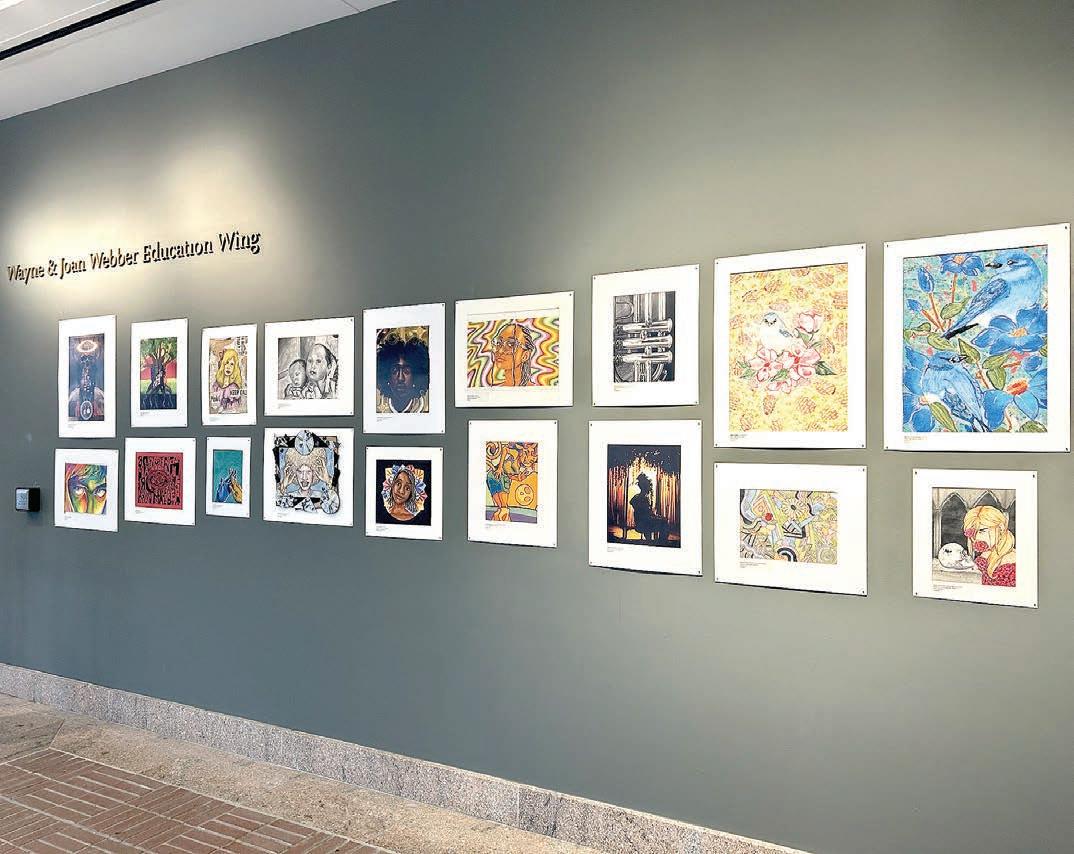
The Detroit Institute of Arts is accepting submissions for its 5th Annual Wayne County High School Art Exhibition, inviting current high school students from across the county to submit original work through March 22 for a summer showcase that will place their creativity inside one of the region’s most visible cultural institutions.
Selected works will be on view at the DIA from June 18 through July 19, with a later extension of the exhibition at the Guardian Building, offering students another opportunity to have their work seen beyond their classrooms and neighborhoods.
That matters in Wayne County, where talent often shows up early and boldly, even when resources, access, and exposure do not always arrive at the same pace. Youth art programs and school-based arts education can shape confidence, identity, and opportunity. A public exhibition at the DIA does something more. It tells young people their voice belongs on the wall, in the conversation, and inside the cultural record of this region.
“Each year, we celebrate the extraordinary creativity of Wayne County’s young artists,” said Detroit Institute of Arts Director Salvador Salort-Pons. “We are proud to provide a platform where students can share their unique perspectives and artistic voices with museum visitors.”

The annual exhibition is open to students in grades 9 through 12 who currently attend high school in Wayne County. Organizers are asking students to submit artwork they believe is creative, meaningful, and impactful, language that speaks to more than technical skill. It opens the door for work that reflects personal experience, community life, heritage, imagination, struggle, and joy.
Previous exhibitions have featured work across a wide range of mediums, including photography, painting, textiles, sculpture, jewelry, ceramics, and more. That breadth reflects the many ways young people choose to tell their stories. Some use color and canvas. Others work through fabric, form, or image-making. Each medium can carry something deeply personal, especially for students whose artistry is shaped by the communities they come from.
Wayne County Executive Warren C. Evans said the exhibition continues to reveal just how much promise exists among local students.
“This exhibition represents more than just artwork on display. It’s a celebration of the incredible potential within our young people,” Evans said. “Each submission tells a story, and I’m always amazed by the talent and passion that our high school artists bring to this exhibition. Your creativity matters, and this is your moment to shine.”
That message lands at a time when students across metro Detroit continue to navigate academic pressures, social uncertainty, and questions about their future while still trying to hold onto the parts of themselves that feel most honest. Art often becomes one of those places. A place to process. A place to imagine. A place to be seen.
For Detroit and Wayne County families, the exhibition also offers a reminder that institutions like the DIA can serve
as more than destination spaces for occasional visits. They can become active partners in uplifting local youth and recognizing the brilliance already present across this county’s schools.
The exhibition is made possible through the Tri-County millage, which continues to support free general admission for residents of Wayne, Oakland, and Macomb counties. That funding structure has helped make the museum more accessible to families across southeast Michigan, including young people who may now get the chance to experience the museum not only as visitors, but as exhibiting artists.
Seeing a museum as a place where your work belongs can shift what feels possible. For students considering futures in design, fine arts, media, architecture, fashion, or creative entrepreneurship, early public recognition can help build momentum. For others, it may simply affirm that what they create carries value, even if they never intend to pursue art professionally.
Applications for the 2026 Wayne County High School Art Exhibition are open now through March 22. Students interested in submitting can find guidelines and additional information through the DIA’s entry portal. For many teenagers, the art starts at a kitchen table, in a school hallway, or during late-night hours after everything else is done. This exhibition offers something powerful in return: space, visibility, and the chance for Wayne County’s next generation of artists to see their work reflected back as worthy of public attention.
Submissions and additional details are available at the DIA’s Wayne County High School Art Exhibition page. Ebony JJ Curry can be reached at ecurry@michronicle.com.

By Miss AJ Williams
here are dinners you enjoy, dinners you remember,


Dreamgirls Returns to Detroit Easter Weekend
By Ebony JJ Curry
SENIOR REPORTER
Dreams have a way of staying with us.
Some live in the songs we grew up on. Some live in the films that helped shape how Black families saw excellence, struggle, beauty, and possibility on screen. Easter weekend in Detroit, one of those cultural touchstones is making its return.
Dreamgirls is coming back to the big screen at Detroit Music Hall for a special Easter weekend celebration on April 4 and 5, giving audiences a chance to revisit the beloved film nearly two decades after it first left its mark on moviegoers. The event will include a feature film screening followed by a live performance from Jennifer Holliday, the original Broadway Effie whose voice helped make Dreamgirls part of Black theater history.
Raven-Symoné will host the celebration. That pairing brings together generations of Black entertainment in one Detroit space. Families who remember the original Broadway run, moviegoers who still know every word to the soundtrack, and younger audiences discovering Dreamgirls for the first time will all have the chance to share the experience together.
Easter weekend already carries meaning for many families centered on resurrection, renewal, reflection, and legacy. That same spirit gives this event a deeper pull. Dreamgirls has long held a place in Black cultural memory because it speaks to ambition, sacrifice, sisterhood, betrayal, talent, and the cost of chasing a dream. Those themes have never left us. They keep returning in new ways through every generation of Black artists and every Black family teaching its children what it means to keep going, even when the road turns.
Detroit is no stranger to that lesson.
This city understands what it means to rebuild, reimagine, and hold tight to cultural memory. A screening like this lands differently here because Black art has always been bigger than entertainment in Detroit. It has served as testimony, instruction, celebration, and survival. Films such as Dreamgirls offered a lens into Black striving and Black brilliance while reminding audiences that talent alone does not shield people from power, exploitation, heartbreak, or reinvention.
When Dreamgirls first reached theaters, audiences were drawn to unforgettable performances from Jamie Foxx, Beyoncé, Eddie Murphy, Anika Noni Rose, Jennifer Hudson, and others who helped cement the film’s place in modern Black cinema. Those performances still carry weight because they tapped into something familiar. Black people know the push and pull between gift and access, between loyalty and ambition, between being seen and being used.
There is value in gathering on purpose around the stories that poured something real into us. Too often, Black films that helped shape our imagination get pushed aside by speed, trend cycles, and digital platforms that decide what stays visible and what disappears. Intentional community viewings push back against that. They remind us that our cultural archive deserves to be revisited together, not just stumbled upon alone.
Jennifer Holliday’s live appearance adds another layer to that experience.
Her connection to Dreamgirls runs deeper than nostalgia. As the original Broadway Effie, Holliday delivered the performance that helped define one of musical theater’s most powerful roles. Her voice gave language to pain, rejection, defiance, and survival in a way that still resonates decades later. For Detroit audiences, hearing that voice live after the screening is likely to turn the evening into something that feels personal, especially for those who have
Guns + Butter Chef’s Table
From page B-1
nod to the classic Greek salad you would grab from your neighborhood Coney Island. But Leickfelt elevates the familiar with precision, balance, and texture, transforming a comfort staple into something unexpectedly elegant.

Then there is the City Cheesy Chicken, a clear homage to Detroit’s beloved Hani sandwich, a late-night classic for many locals. Here, it is reinterpreted with a chef’s finesse that keeps the soul of the original while introducing layers of flavor that make you pause between bites just to appreciate the creativity.
Every course feels intentional. Nothing is gimmicky. Nothing is trying too hard. Instead, the dishes deliver exactly what great food should: comfort, surprise, and a story.
For seasoned diners, especially those who spend a lot of time exploring restaurants, it is easy to become a little jaded. Not in a negative way, but in the sense that you are constantly searching for something inspired, something new, something that wakes up your palate.
Chef Leickfelt delivers exactly that.
The Guns + Butter Chef’s Table does not just feed you. It reminds you why dining can still feel magical.
Perhaps the most impressive part is that there were no weak links. No course that fell short. No moment where the experience dipped.
Just a flawless evening.
Food: 5 of 5 stars
Ambiance: 5 of 5 stars
Price Point: 5 of 5 stars
Recommendation: Book your reservation today. This limited Chef’s Table experience runs during March, and if Detroit pride, inventive cuisine, and an unforgettable evening sound like your vibe, you do not want to miss it. Reserve your seat here: https://detroitfoundationhotel.com/chefs-table/
Mayor Sheffield’s Reading List
of front-facing vertical video on social platforms featuring the mayor; in layman’s terms, that means these interactions with the city’s top-ranking official are designed to feel less like a press conference and more like a FaceTime call, since Detroit residents’ phones are increasingly the first point of contact we have with the mayor’s office. There’s also been an increase in still photography of the mayor around town posted to the City’s official platforms. Neither of these approaches started with the Sheffield administration, but more attention to visuals is confirmation that this administration knows the significance of optics.
Considering Sheffield’s growing influence and stature, there was both a missed opportunity to gesture to one of the many reasons why she was elected in the first place, and now an open invitation to question what message the mayor is trying to send. With five self-help books mostly by white men and the only woman author being a white woman (who, as Chronicle editor Jeremy Allen noted last week, barely mentioned Black Detroiters in her farewell address as governor – just so readers are reminded that all elected officials are fair game when it comes to these critiques), you mean to tell us that nothing from Iyanla Vanzant, Sarah Jakes Roberts or bell hooks would carry the same weight, or that Big Sean is the only (living) local worth reading?
(Speaking of Cass Tech’s Most Eligible Bachelor, didn’t Sean very publicly say that he’s still got a long way to go before wifing the mother of his child that he’s been with for about a decade now? Not sure why any newly married person would be co-signing anyone with this kind of approach to relationships, but that’s neither here nor there.)
carried “And I Am Telling You
Going” with them as more than a song.
That song has long stood as its own kind of declaration for Black women in particular. It carries ache, force, and refusal. It speaks to being dismissed and still standing. It speaks to loving deeply and demanding to be heard. Holliday’s presence onstage offers Detroit not only a performance, but a bridge back to a foundational piece of Black theatrical history.
Raven-Symoné’s role as host also broadens the event’s reach. Her career spans generations, from childhood stardom to television, music, and production, making her a familiar figure for audiences who grew up in different eras of Black entertainment. Her presence helps frame the weekend as both celebration and cultural handoff.
That handoff matters when families come together.
Grandparents may remember the original stage legacy. Parents may remember the film’s debut and the conversations it sparked. Children may be seeing it for the first time. That kind of shared viewing creates its own memory. It gives families room to talk about the stories that raised us, the artists who shaped us, and the importance of preserving Black cultural touchstones in public, not just private, memory.
Detroit has always known how to show up for Black culture when the moment calls for it. Easter weekend at Music Hall offers one more chance to do just that.
Dreamgirls Movie Experience – 20th Anniversary Celebration will take place April 4 and 5 at Detroit Music Hall. The event includes a screening of Dreamgirls followed by a live performance from Jennifer Holliday.
Tickets are available through the Music Hall Box Office, online at Music Hall’s website, and through Ticketmaster.
If the mayor is looking for motivation, an inspiring life story, some more hip-hop, or some combination of the aforementioned, there’s Renaissance High School alumna Robin Givhan’s “Make It Ours,” which follows how Virgil Abloh was able to bypass gatekeepers to establish a groundbreaking Black fashion brand; Mumford High School alumna Jemele Hill’s “Uphill,” another account of a woman from Michigan once targeted by President Trump; or “Decoded” by Jay-Z, the memoir from the Brooklyn rapper inviting readers to take lessons from his lyrics, fleshed out with careful detail from Cass Tech alumna dream hampton.
If it’s Black history or Detroit history Sheffield is looking for, perhaps Tiya Miles’ “The Dawn of Detroit” that lays out the hidden history of slavery in the city is worth checking out; followed by “The Burden” from now-departing Director of Arts, Culture and Entrepreneurship Rochelle Riley, who explores how Black people still live with the effects of slavery; “The World According to Fannie Davis,” a retrospective from Bridgett Davis on how her numbers-runner mother provided her family with a solid, middle-class upbringing in Russell Woods during the Young years; or the fictional “The Turner House” from Angela Flournoy, which traces a Black family’s history that begins around the same real-life timeline as Sheffield’s grandfather integrating the UAW and ends around the same time as Sheffield’s first term on City Council.
One could possibly purchase or order these books from the Black woman-owned Source Booksellers in Midtown, the Black woman-owned Sip ‘n Read in Corktown (just a hop, skip, and a jump down Michigan Avenue from The Godfrey, where Sheffield exchanged vows late last year), or the Black woman-owned gift shop Spectacles.
One could also keep in mind that when putting together a reading list, the last time Detroit city government publicly acknowledged a Black woman’s book was in 2021, when former Mayor Mike Duggan interviewed author and native Detroiter Alice Randall about her then-new novel, “Black Bottom Saints.” Or if you look at it from our point of view, the last mayor to tell us to read a Black woman’s work was the white male one – the inverse of what just happened in Sheffield’s Reading Month video, which can be corrected while there’s still time left in said month.
You can reach Aaron at afoley@michronicle.com.


I’m Not
First Independence Bank Taps Caroline Chambers to Lead New Community Investment Foundation
By Ebony JJ Curry SENIOR REPORTER
A bank with a long history of serving communities that are too often locked out of mainstream financial opportunity is preparing to widen that work through a new foundation, and it is placing that effort in the hands of a leader whose career has centered on philanthropy, inclusion, and community partnership.
First Independence Bank announced the appointment of Caroline Chambers as Director of Community Investments, a new leadership role that puts her at the center of building the bank’s charitable foundation. That foundation, expected to officially launch later this year, is being designed to support community growth and long-term stability while staying aligned with First Independence Bank’s longstanding mission to promote financial wellness in economically distressed communities.
Access to capital, trusted financial tools, and community-based support still shape whether neighborhoods are able to stabilize, grow, and keep wealth circulating close to home. First Independence Bank says Chambers will help guide that work by leading the foundation’s development and strategic direction, while also building partnerships with funders and nonprofit service providers.
Those partnerships are expected to focus on expanding access to capital, financial products, services, and education. Those are resources that can make a difference for families trying to build security, small organizations trying to reach more people, and communities working to create a stronger economic footing for the long term.
“We are pleased to welcome Caroline Chambers to our team,” said Dimitrius Hutcherson, President of First Independence Bank. “She brings extensive experience in foundation management and a proven record of building impactful community partnerships, gained through many years of leadership in financial services across multiple industries.”
Chambers brings more than two decades of experience across philanthropy, culture, inclusion, and corporate social responsibility. Her background includes leading charitable giving strategies and community outreach efforts at major institutions, work that has often sat at the intersection of corporate resources and community need.
Before joining First Independence Bank, Chambers served as President of the Comerica Charitable Foundation, where she directed strategy and managed a multi-million-dollar annual giving portfolio across key markets. Her work there placed her in a position to shape where resources flowed and how institutions could respond to community priorities through grantmaking and partnership.
She also served as National Director of Diversity Initiatives at Comerica, where she led efforts focused on strengthening company culture and expanding business and community partnership outreach. Most recently, Chambers served as Senior Director of Culture & Inclusion at Graham Media Group.
For First Independence Bank, her appointment signals more than a staffing announcement. It points to a broader effort to formalize and deepen the bank’s community investment strategy through a nonprofit structure built to create sustainable opportunities for communities and organizations that need them most.
“Through the creation of a nonprofit foundation, First Independence Bank is committed to enabling community-focused investments and partnerships that create sustainable opportunities and resources for communities and organizations in need,” said Kenneth Kelly, chairman and CEO of First Independence Bank. “And we have full faith in Caroline’s broad-based experience to help this foundation flourish and positively impact communities aligned with our core mission.”
That future foundation could become a meaningful vehicle for translating mission into measurable support. Financial education, resource access, and stronger nonprofit partnerships often carry real consequences for communities navigating disinvestment, limited lending access, and generations of economic instability. First Independence Bank’s move suggests a desire to build something with enough structure to respond to those challenges beyond traditional banking services alone.
Chambers now steps into that responsibility at a moment when financial institutions are being watched closely for how they show up in communities that need more than promises. What gets built next, who gets reached, and how deeply those partnerships take root will matter.
First Independence Bank said the official launch of the foundation will be announced later this year.
Ebony JJ Curry can be reached at ecurry@ michronicle.com.
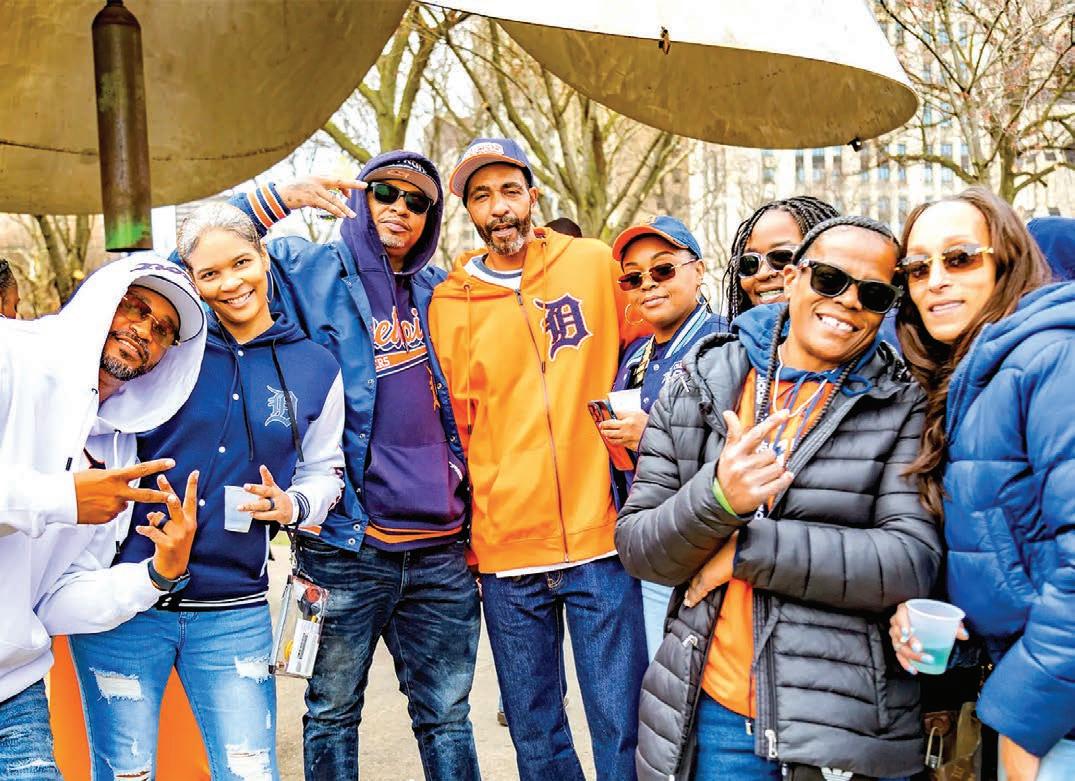
Detroit’s Free Opening Day Tailgate Returns to Grand Circus Park April 3
By Ebony JJ Curry SENIOR REPORTER
Detroit does not need a reminder that Opening Day carries its own kind of electricity. Jerseys come out before breakfast. Bars fill up. Sidewalks start moving with purpose. Baseball has always been part of how this city announces spring to itself, and this year, Grand Circus Park is once again set to hold that energy just steps from Comerica Park.
The Downtown Detroit Partnership is bringing back its free Opening Day Tailgate Party on Friday, April 3, from 9 a.m. to 5 p.m. at Grand Circus Park, located at 101-157 Witherell St. The event is presented by Miller Lite and marks the fourth year the park has hosted the public celebration tied to Detroit’s baseball homecoming.
Opening Day has long been bigger than nine innings. For Detroiters, the day has never belonged only to the people inside the stadium. It belongs to the workers opening up downtown before first pitch. It belongs to the fans who come for fellowship as much as the game. It belongs to the families, friend groups, and longtime Tigers loyalists who treat this moment like a civic ritual. It belongs to the heart of the city, true Detroiters.
This year’s tailgate is built to meet that
spirit with a full day of public programming outside the ballpark. Organizers say attendees can expect music from DJ Mynt and DJ Chachi, food trucks, a Miller Lite beer tent, giveaways, giant video walls to watch the game, branded merchandise from All Things Marketplace, and interactive activations, including the DTE Energy Den. The park’s location, directly beside Comerica Park, keeps the event planted at the center of the city’s gameday foot traffic.
The Tigers are scheduled to face the St. Louis Cardinals at 1:10 p.m. on April 3 at Comerica Park, which means fans without tickets still have a nearby place to gather and stay connected to the gameday atmosphere downtown.
That access is part of what makes a free public tailgate worth paying attention to. Opening Day in Detroit can get expensive quickly, between tickets, parking, food, and drinks. A no-cost event in Grand Circus Park gives more people a chance to be part of the city’s biggest baseball tradition without having to buy their way into it. That includes young fans, workers on lunch breaks, longtime Detroiters who simply want to feel the pulse of downtown, and visitors looking for a central gathering point before and during the game.
Grand Circus Park has increasingly
COMMUNITY VOICES
served as one of downtown’s most visible public commons, and on Opening Day, that role becomes even clearer. Baseball may be the draw, but the real story is what happens when people can gather in the heart of the city without a barrier at the gate. Detroit has always known how to make public space feel personal. On a day like this, the park becomes a front porch for the city.
The tailgate also reflects how downtown partners continue to package major Detroit traditions as shared experiences rather than closed ones. That approach has practical value for local businesses and brands that want visibility during one of the busiest days on Detroit’s spring calendar. The Downtown Detroit Partnership said sponsorship and activation opportunities are still available for companies that want to connect with fans during the event.
On April 3, Grand Circus Park will open early and stay active through the afternoon as the Tigers open against the Cardinals. For fans who want the downtown experience, the sound of the crowd, and the feeling that baseball season has finally landed back in the city, the park will once again be part of where Detroit starts its spring.
Ebony JJ Curry can be reached at ecurry@michronicle.com.
Rethinking High School:
By Dr. Tamika Riley CONTRIBUTING COLUMNIST
Across the state of Michigan, the concept of high school students taking college courses at the same time has become the center of public discussion and policy initiative.
You have probably heard the phrases dual enrollment and early middle college pop up lately as an alternative to the traditional high school route. These programs are not just alternatives; they are among the most effective options we have to prepare Michigan students for the future.
At first glance, they all are similar in the fact that they offer a nontraditional pathway for high school students. However, although they share similar qualities it is important to recognize the differences in nuance and scope.
Dual Enrollment programs offer eligible high school students the opportunity to enroll in college courses at a partnered postsecondary institution. The flexibility dual enrollment offers is one of its best features. Without making a commitment to a degree pathway, eligible students can explore advanced subjects and majors, while earning high school and limited college credits.
Districts often pick up the tab for tuition, although there can be limits on how many courses students can take and which subjects make the approved list. While in dual enrollment courses, students do receive district provided support.
Early Middle College combines high school and college into an integrated experience and curriculum. Partnerships exist with a postsecondary institution and high school students commit to a program of study through a degree or certificate pathway.
High school students have up to five years to complete their high school diploma and either an associate’s degree or a professional or technical certificate. Thus, allowing students the opportunity of obtaining upwards of 60 transferable college credits, with most of the cost being free to students. Additionally, support services are set up for students to be academically successful. There are strong support systems in place that include one-
on-one advising, academic coaching, and a college campus environment that treats high schoolers like blossoming adults.
I’ve spent the past 15 years working with one of the largest and most successful middle colleges in the country -Washtenaw Technical Middle College (WTMC) in Ann Arbor, and I have seen what these programs can do when they’re done well.
WTMC is housed directly on the campus of Washtenaw Community College. When students walk across the stage, they don’t just receive a high school diploma. They also leave with an associate’s degree and/or technical certificate from the community college. The most amazing part is that families do not pay a dime in tuition and students are earning free college credits.
In my role as Director of Student Advising and Engagement, I’ve seen firsthand how transformative these programs can be. Every day, I help students explore academic programs and careers, navigate academic challenges, and develop the skills needed that lead to future success.
Superintendent of WTMC Dr. Karl Covert explains that at WTMC, the more important measure of success is college success rate so that way we know that what we are doing is preparing students to be successful. The results speak for
themselves. Nearly 82 percent of WTMC graduates earn at minimum one associate’s degree alongside a high school diploma.
Roughly 80 percent of graduates continue to study at a four-year university. Taking up to 60 credits with them, they are reducing both time and tuition costs. About 10 percent of graduates head straight into the workforce and earn a livable wage right out of high school.
The discussion about dual enrollment and early middle college is more than just about gaining college credits and pursuing degree and/or certificate programs. It also involves a discussion around student needs and the preparation necessary to be successful after high school no matter the chosen path.
When it’s done right, both early middle college and dual enrollment programs can offer students a headstart and impact the trajectory of their future. Furthermore, the idea of pursuing college becomes real and possible for all students, including those who may have otherwise not taken that path.
“Middle colleges have been one of the only models that consistently help first-generation college students not only get into college, but succeed there and complete a degree,” says Superintendent Dr. Karl Covert. “It’s important work, and the direction most schools should be going.”
Without a doubt these programs are critical for our kids and communities alike. If we are serious about preparing students for life after high school, districts and state leaders must act with urgency to expand these programs, ensure they are accessible, and help families understand the power of these educational options.
Dr. Riley graduated from Michigan State University with a B.A. in Psychology, and an M.A. in School and Community Counseling. She has also earned her PhD in Organizational Psychology. Prior to joining WTMC in 2010, Dr. Riley gained valuable experience as a Case Manager for Michigan Works in Detroit. In addition, she has served as a counselor across school and community agency settings throughout the Metro Detroit area.
Caroline Chambers
Dr. Tamika Riley
Longtime Detroiter Celebrates


M ary Frances Tolliver Rivers was born in Macon, Georgia, on March 18, 1926. The youngest daughter of Lizzie Mae and Reddick Tolliver, Sr., she moved to Detroit with her husband, Robert L. Rivers, Sr., and two daughters in the early 1950s. A Detroit resident for over 60 years, Mrs. Rivers currently lives in Farmington Hills near her family.
Mrs. Rivers maintained order in her home, and she leveraged her organizational skills throughout her long career, retiring in her 70s. Mr. and Mrs. Rivers were married for 59 years and raised three children, two daughters and one son. As the beloved matriarch of her family, she remains an inspiration to her four grandchildren and two greatgrandchildren.
At 100, Mrs. Rivers stays sharp by playing bingo and bid whist. Her independent spirit and strong will are living testaments to her devotion to her family and her desire to live a righteous life.
She attributes her longevity to crossword puzzles, exercise, and quitting smoking. Mrs. Rivers is known for her coordinating fashion, speaking her mind, and her cooking, including her delicious macaroni and cheese, fried chicken, tea cakes, and fried shrimp.
A celebration honoring her 100th birthday will be held on Sunday, March 15, in Southfield. Happy 100th Birthday, Mary Frances Tolliver Rivers!