HONORING OUR PAST, CELEBRATE

B LACK H ISTORY M ONTH
Michigan Chronicle
Michigan Chronicle
All Black Everything:
UAW Triple Strike Against Detroit Automakers
A Night of Elegance and Excellence at the
By Ebony JJ Curry SENIOR REPORTER
By Sam Robinson SENIOR REPORTER
Mounds of snow and a thick layer of jagged ice covered the sidewalk and street on Laing Street near Denby High School.
Crews attended to the water main break Tuesday morning as some residents were stuck in their driveways with ice blocking their vehicles. Some residents who spoke to Michigan Chronicle said they or
By Ebony JJ Curry
It’s
SENIOR REPORTER
Late Thursday night, Sept. 14, a historic moment unfolded in American labor relations as the United Auto Workers (UAW) union initiated a strike against Ford, General Motors (GM), and Stellantis. For the first time, the union took simultaneous action against all three major Detroit-based automakers. The action involves approximately 13,000 UAW members in assembly plants across Michigan, Ohio, and Missouri, who walked off their jobs after existing labor contracts expired at 11:59 p.m.
IA CAT excavator hauled
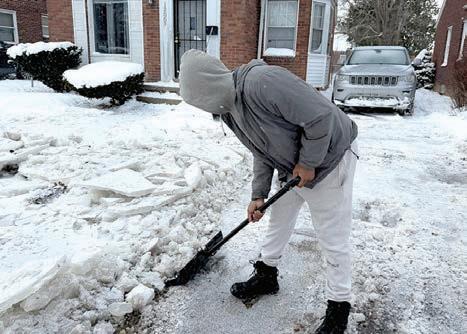
mix off the road on Laing Street between Britain Avenue and Morang Drive as residents like Chris Williams watched on after shoveling his driveway.
Shortly before midnight on Sept. 14, GM released a statement expressing disappointment with the strike action, despite offering what it termed an “unprecedented economic package” that included
n a breathtaking celebration of talent, determination, and the unyielding spirit of Black excellence, the Michigan Chronicle marked its 10th Annual 40 Under 40 event Thursday evening. This year’s soirée, drenched in the theme “All Black Everything with Gold Accents,” transcended expectations and essentially illuminated the golden gems within the true essence of Black excellence. Hosted by the charismatic duo of Andre Ash and Lynzee Mychael from Michigan Chronicle’s Finally Friday, the night was a triumph for the city of Detroit and its vibrant community of young Black pro-

The evening sparkled with a golden promise as we celebrated remarkable individuals from various walks of life. Among the honorees were the brilliant and visionary co-founders of Detroit Hives, Nicole Lindsey and Timothy Paul Jackson. Their work has not only changed the landscape of beekeeping and urban farming in Detroit but also exemplified the transformative impact Black professionals can have on their communities.
a statement, saying the company immediately went into contingency mode to protect its operations.
A $20M Investment from orsa Helps Boost the Music
oring other outstanding individuals, each carving their own path to success. Clement “Fame” Brown, the creative mind behind Three Thirteen Detroit’s Brand Name, received the prestigious Entrepreneur of the Year Award. Brown’s commitment to empowering the city through fashion and entrepreneurship has left an indelible mark.
Can Reparative Investment Finally
By Jeremy Allen EXECUTIVE EDITOR
“Entrepreneur of the year – that’s a big deal,” said Brown. “It’s always an honor to be honored and it’s always a blessing to be in a room full of so many talented, accomplished, and popular people that look like me. I’m geeked. I started making and selling clothes as a kid and I always knew that I would have a business, but I never knew it would be Detroit’s brand name business, so I take a lot of pride in the fact that our business represents our city’s pride.”
By Ebony JJ Curry SENIOR REPORTER
For decades, Paradise Valley has carried Detroit’s cultural memory – sometimes quietly, sometimes defiantly – but always with an eye toward survival.
expansion of the nearly century-old institution.
Taking home the Corporate Excellence Award was Dannis Mitchell, Director of Community Engagement at Barton Malow.
ness district that had been the lifeblood of the community.
Detroit Water and Sewage Department director Gary Brown on Tuesday, Jan. 27.
“Together we have created a social, environmental, and financial impact through bees,” said Jackson. Lindsey followed that sentiment with, “It is through our local partnerships and collaborative efforts that we exist in over 28 plus locations managing the health of 4.5 million honeybees – humbly speaking our movement has inspired others locally, nationally, and even internationally to take on similar missions.”
“They’ve been a phenomenal anchor to the neighborhood. To see them now with a very significant expansion, backed by a corporate partner, reinforces Paradise Valley as a cultural hub, just as it was almost a century ago.”
Williams has lived near Denby High School for a little over a year, but says he’s come to expect floods like what happened Monday evening. He believes the street flooding helped cause the main break.
“I have to unclog that drain in the road over there every time the street floods,” Williams said. “This street floods all the time, they need to come down here and figure it out.”
For many Detroiters, Interstate 375, or I-375, has long been just another stretch of urban highway, a concrete artery connecting different parts of the city. To some, it’s a mere convenience; to others, it’s an unremarkable part of their daily commute. However, there’s a deeper, far more troubling story beneath the surface of this seemingly ordinary freeway—a story of pain, displacement, and the lasting impact on Black Detroiters.
Now, a $20 million, 25-year investment by orsa, formerly Community Financial Credit Union, will help solidify the Music Hall and, by default, Paradise Valley’s future as a living, breathing downtown neighborhood where history, creativity, economic activity, and community ownership move forward together.
With groundbreaking planned for spring 2026, the project is expected to add new performance spaces, classrooms, rehearsal rooms, and community gathering areas, which will bring increased foot traffic, educational opportunities, and sustained investment to one of Detroit’s most historically significant corridors.
It’s a history marred by pain, injustice, and economic devastation. More than 130,000 residents, primarily Black, were forcibly displaced. Families were uprooted, generational wealth was obliterated, and a thriving community was torn asunder. The wounds inflicted by I-375 run deep, transcending the physical barrier of a freeway to penetrate the very soul of Black Detroiters.
towards mending the wounds inflicted on Black Detroiters and restoring a sense of belonging that was so callously torn away in the past.
Archer framed the expansion as a continuation of the neighborhood’s original purpose, particularly for African Americans migrating North who were once barred from many downtown spaces.
Detroit Hives, a pioneering organization founded by Lindsey and Jackson, harnesses the power of urban beekeeping to revitalize neighborhoods in the Motor City. Their initiative not only addresses critical issues like environmental conservation but also provides valuable education and employment opportunities to Black De-
Hazel Conley, 79, has lived in her house for more than 30 years.
She also said Laing Street is no stranger to floods, but there hasn’t been a catastrophic incident in the area since a flood in 2002, Conley said.
The UAW has branded the industrial action as the “Stand-Up Strike,” focusing on specific plants within each automaker. UAW President Shawn Fain stated, “This strategy will keep the companies guessing. It will give our national negotiators maximum leverage and flexibility in bargaining. And if we need to go all out, we will. Everything is on the table.” Union leaders have also indicated that additional plants could be targeted in future waves if negotiations remain stalled.
Detroit Music Hall Center for the Performing Arts and orsa credit union announced the long-term partnership Wednesday, Jan. 28, launching what will become orsa Music Hall, a major
“It is so important to recognize that there are young leaders across the country, many that are born here in Detroit. I represent our city nationally and I tell people, ‘Yea I’m a D-girl I’m from the west-side of Detroit,’” Mitchell expressed. “But more importantly, I’ve been able to have experiences within an industry that not many of us, specifically women of color, have the opportunity to engage in and I’ve been the youngest person in the room, the only Black person in the room, and the only Sistah in the room, and I really had to articulate the importance of showing up, giving chances when others won’t, and being persistent.” As a trailblazing Black woman thriving in a predominantly male-dominated industry, her unwavering commitment to fortifying the connections between businesses and Detroit’s communities is unde-
Dennis Archer Jr. is a longtime Paradise Valley stakeholder, president of the Paradise Valley Conservancy, and President and CEO of Sixteen42 Ventures, located in the neighborhood. For him, the significance of this investment is both symbolic and practical.
This painful legacy can be traced back to the nation’s interstate highway program of 1956—a program that aimed to connect the country but often did so at the expense of marginalized communities. In the case of I-375, it meant carving a path through the
The I-375 Boulevard Project is about more than just correcting historical injustices; it’s about redefining the future. It will connect downtown Detroit to surrounding neighborhoods, bridging the gap that was placed upon the city decades ago.
“One of the true stalwarts in Paradise Valley over the last 20-plus years has been the Music Hall,” Archer said.
All Hands On Deck to Combat Homelessness
A string of shootings in Greektown in mid-April left both visitors and residents of this bustling downtown destination in awe. One of these shootings tragically claimed the life of a popular and beloved security guard following a dispute with a patron. The male suspect allegedly shot the guard before fleeing the scene, while his female companion is accused of concealing the weapon in her bra.
“That history is now being continued and magnified,” he said. “With another theater, classrooms, recording studios –all of it under one roof – it triples down on the legacy of the neighborhood. And the traffic this will generate is going to be great for businesses, property owners, and everyone invested in Paradise Valley’s future.”
“My daughter comes over here but she hasn’t been in two days because of the water and ice,” Conley told a Michigan Chronicle reporter through her screen door.
By Andre Ash
DIGITAL ANCHOR
Conley expressed gratitude for the city workers who worked outside her house all morning and into the afternoon.
The tale begins in what is now Lafayette Park, once known as Black Bottom—a neighborhood rooted in African-American culture and history. Named after its dark, fertile soil, Black Bottom flourished during the mid1900s, nurturing the dreams and aspirations of prominent Detroiters like Coleman Young, Joe Louis, and numerous other Detroit legends. But in the name of urban renewal in the 1950s, this vibrant neighborhood was systematically dismantled, erased from the map, and replaced by a lifeless stretch of asphalt.
A Holistic Approach to Providing Shelter and Support for Detroit’s Unhoused People
Williams and Conley both said their basements were dry despite the massive street flood Monday night that eventually froze and trapped cars parked on the street.
“A couple people decided they wanted to come down the street and then they got stuck too,” Williams said.
Fain clarified the union’s strategy: “I want to give a major shoutout to the thousands of members who are on the picket lines right now fighting for all of us. The Stand-Up Strike is a new approach to striking. Instead of striking all plants at once, select locals will be called on to stand up and walk out on strike. This is our generation’s answer to the movement that built our union – the sit-down strikes of 1937. We told the Big 3 that Sept. 14 was the deadline and we meant it. We gave the companies our economic demands eight weeks ago and it took more than a month to get to the table.”
While the residential areas bore the brunt of this demolition, the heart of Black Bottom, its thriving business center, remained largely untouched. Restaurants, theaters, clubs, and bars—the very places that brought Detroit’s Black community together—were concentrated around Hastings Street, the epicenter of African-American culture in the city.
Francisco Collado, another homeowner on the block, said he’s staying home Tuesday because of the water main break.
“I have one car — no work today because it’s
The union is pushing for a comprehensive list of demands. This
Homelessness continues to plague urban communities, with families and individuals grappling with the challenges of making ends meet in today’s economic climate. Whether it’s struggling to meet monthly mortgage payments or coping with soaring rental costs in a housing market marked by shockingly high prices, a variety of factors contribute to the growing issue of people becoming unhoused.
Historically, shelters have provided a temporary respite for those in need, often serving as the first or second option after exhausting alternatives like staying with friends or family. Shelters offer a place to rest one’s head and a warm meal, albeit sometimes for extended periods. For others, being unhoused means living in cars or makeshift outdoor
Then, in a cruel twist of fate, Hastings Street, too, was obliterated a few years later, making way for the construction of I-375. This marked the final blow, sealing the fate of Black Bottom and signaling the beginning of the end for Paradise Valley, the Black busi-

helpline, making it accessible to all Detroit residents. This initiative simplifies access to the City’s various housing services, ensuring that residents in need can easily find assistance.
By Ebony JJ Curry SENIOR REPORTER
By Lynzee Mychael MULTIMEDIA JOURNALIST
The causes of homelessness are as diverse and complex as the individuals experiencing it. In response, the City of Detroit has adopted a holistic approach to combat this issue.
“Providing services and high-quality housing to persons at risk of or who are experiencing homelessness is a key priority of the City of Detroit, said Julie Schneider, Director of Detroit’s Housing and Revitalization Department.

What a Federal Government Shutdown Could Mean for Detroiters?
“This means focusing on building the pipeline of supportive housing and coordinating with the Continuum of Care on the delivery of critical resources such as emergency shelter, rapid rehousing, and diversion and prevention programs. It also means preserving and expanding affordable housing options for Detroiters of all incomes and improving housing stability though comprehensive service offerings available through the Detroit Housing Resource HelpLine and Detroit Housing Services Division within HRD.”
Former Detroit Mayor Mike Duggan used the Detroit Regional Chamber’s Detroit Policy Conference on Thursday held at the Hudson, to put a marker down on one of Michigan’s fastest-growing local fights: where data centers go, who pays for the infrastructure they require, and what protections communities get before a deal is signed.
In May 2023, the City of Detroit launched the Detroit

“The city and its partners offer a lot of great services to help Detroiters with their housing needs, but they don’t mean much if people don’t know how to access them,” said Mayor Mike Duggan. “Thanks to the efforts of our partners and the generous support of the Gilbert Family Foundation, we now have a simple process to guide residents to the right housing resource and a growing number of programs to help them.”
The Gilbert Family Foundation’s broader commitment involves pledging $500 million to support projects across Detroit over the next ten years, with housing initiatives being a significant part of their contribution.
Sandy K. Baruah, the Chamber’s president and CEO, led a conversation with Duggan during a conference session that also covered Duggan’s record as mayor and his independent run for Michigan governor.
From the days of the Great Migration when thousands of Black families flocked to Detroit in search of jobs and a better life, to the pivotal role they played in the city’s cultural and musical heritage, Black Detroiters have left an indelible mark on the city. However, in recent years, Detroit has experienced significant gentrification, which has raised concerns about the displacement of long-standing Black residents. Similar to a setting sun, there’s a rising spirit, and Black Detroiters are reclaiming their place in the city, despite the challenges posed by gentrification.
Notably, Detroit has witnessed a consistent decrease in recent years, with the number of unhoused residents steadily declining. In 2019, approximately 7,847 people were unhoused and entered the City’s community response system. In 2021, about 5,687 people experienced homelessness.
The Chamber endorsed Duggan in the governor’s race in July 2025.
The conversation moved to the question showing up from Washtenaw County to Wayne County and beyond. Residents keep asking local officials the same things at meetings: how much power and water
These incidents unfolded during an unseasonably warm spring, leading to increased pedestrian traffic and heightened tensions in the densely populated downtown
Today, the resurgence of Paradise Valley stands as a testament to the indomitable spirit of Black Detroiters and the enduring legacy of Black excellence. This historic district, once a vibrant hub for Black businesses and culture, is experiencing a renaissance that harkens back to its glory days. The destruction of Black Bottom may have torn apart a thriving community, but the resolute determination of a new generation of entrepreneurs and visionaries is reclaiming that lost legacy.
At the center of that momentum is Detroit Music Hall, which opened in 1928 and now hosts more than 300 events annually while reaching roughly 5,000 K–12 Detroit students each year through arts education. Over the decades, its stages have welcomed artists ranging from Count Basie and Eartha Kitt to Aretha Franklin, while continuing to evolve with contemporary, local, youth, and family-focused programming.
The surge in crime and the influx of visitors to Detroit’s downtown core garnered the attention of the Detroit Police Department (DPD), catching them somewhat
James White, Chief of Police for the Detroit Police Department, said: “We were caught somewhat flat-footed right out the gate. By design we went into the spring deployment, which is less than the mid-summer deployment, and saw we say an uptick in violence that first warm weekend.”
aims to create jobs, remove barriers to economic growth, and reconnect the neighborhood with the rest of Detroit. It is a step
In the heart of Paradise Valley, Blackowned businesses are not just flourishing but thriving, offering diverse services, products, and experiences that pay homage to the past while paving the way for a prosperous future. From jazz clubs to soul food restaurants, the Black Press, and art galleries to fashion boutiques, this revival is breathing life into the very essence of what once made this neighborhood a vibrant cultural epicenter. It’s a resurgence that extends beyond brick and mortar; it represents the resurgence of a spirit that refuses to be subdued.
Vince Paul, president and artistic director of Music Hall, said the expansion is intentionally designed to deepen that role as an engine for access, learning, and belonging.
Chief White attributes the violence in Greektown to a combination of weather conditions and a surge in pop-
“Music Hall has always been about more than performance,” Paul said.
Detroit City Councilman Fred Durhal III, representing District 7, where Eastern Market resides, told the Michigan Chronicle, “It’s still very early in the process, MDOT is
“It’s about building community, sharing stories, and creating space where
He explained, “ We saw numbers downtown that we have not seen, ever. People are emerging from COVID and there’s a feeling that we’re in a post-COVID era… and with the venues downtown and the reasons to come down with all the activities that are going on, we saw hundreds of more people and, in particularly, young folks, teenagers that we hadn’t seen.”
Responding swiftly to the surge in violence, DPD adjusted its deployment plans. Rather than waiting for mid-summer, they deployed officers in the spring itself to address the situation.

these projects will consume, what that means for bills and infrastructure, what happens when diesel generators run, what 24/7 cooling noise does to neighborhoods, and why the public often finds out late.
Duggan said he believes opposition grows when communities feel blindsided and when the state has not set clear, enforceable rules.
needed to serve the project.
According to the City of Detroit, since the start of the fiscal year 2019 to 2021, Detroit saw a 28% decrease in the
“When I’m governor, I’m going to say, no data center gets considered unless you meet three standards,” Duggan said.
that should not be accepted as the price of doing business. “We are not going to jeopardize the water and lake system for a data center,” he said.
During the Great Migration, thousands of Black families from the South came to Detroit in search of jobs in the booming automobile industry. Despite facing discrimination and segregation, they built vibrant communities on the city’s east and west sides. Over time, these neighborhoods became centers of Black culture and entrepreneurship.
The rise in visitors to the Greektown area is evident in data from Placer.ai, a location analytics company specializing in visit trends and demographic insights through geolocation-enabled mobile devices. From May 1-Aug. 27, 2022, there were 1.3 million visits and 655,000 visitors to Greektown, according to Placer.ai. In the same period this year, these numbers increased to 1.4 million visits and 670,000 visitors.
because of discrimination, but they were also coming because Black people was doing some stuff. When did Black people start doing things in the city? They started doing things in this area in the 1800’s. In the 1800’s the major thing that they were doing in Detroit is they were the leaders in the fight against slavery.
Third: public consent that can be proven, with residents at the table early and local governments equipped to negotiate.
As Detroit’s downtown area continues to attract both residents and visitors, the police department has implemented various enforcement measures to manage the increased population. Notably, metal detectors have been strategically placed throughout Greektown to deter the illegal carrying of firearms.
“One, the data company, the developer has to pay 100 percent of the costs,” Duggan said. He said residents’ concerns about higher electric rates are real and should be addressed upfront, not after a project is already moving.
“The local community has to prove it,” Duggan said, arguing that a project should not be treated as inevitable once the paperwork starts. He said communities should not be left trying to negotiate against global companies with limited legal help.
“We have strategically placed them at key points, “ Chief White explains. It has been a deterrent for some, and some have tested it. If you are legally carrying a weapon and carrying a CPL, have a great day. If you’re
Second: if it threatens our water, it shouldn’t get approved.
First: the developer covers the full cost of the infrastructure
“Secondly, it’s got to be done in an environmentally sensitive way,” Duggan said. He talked about cooling approaches that pull from waterways and return warmed water to the environment. Duggan said
According to Historian Jamon Jordon Black resilience in the city has roots that extend far before the Great Migration and will persist long after our current phase of gentrification. “Black people were coming to Detroit because
“You have some of the wealthiest companies in the world coming in and negotiating and you’ve got somebody’s part-time attorney trying to deal with it,” Duggan said. He said Michigan should set statewide standards and send legal teams to support local communities, then let the local community make the final call.
Duggan leaned on a familiar ex-
DPD Chief James White
Meagan DunnJulie Schneider
Amidst the glitz and glamour, the event also show-
cased the diversity of talent within our community. From Paris T. Prichard, a forensic scientist pushing the boundaries of her field, to math wizards like Donna Laster, who
cine and healthcare, may
what the Supreme Court will rule in the upcoming sion, advocates on both sides of the argument are willing to continue their
“Overturning Roe v. Wade would be a terrible break with nearly 50 years of judicial precedent and – more importantly – a blow against individual freedom. It is my hope ings of this draft. If that is not the case, we need to ity Leader Schumer and Gov. Whitmer in support of their

can access the care they need.” and inclusion in medi-
islature adopts it.
Valley, and it will continue to be just that and much more as this project evolves.”
a major financial institution committing long-term resources to Paradise Valley carries particular weight.





From page A-1
people feel connected. This partnership allows us to do that at a much greater scale, while staying rooted in the values and history of Paradise Valley.”
corporate boards to have more diverse representation and pass the legislation.
Paul emphasized that the project is as much about people as it is about buildings.
Increase school funding: Statutory changes to increase the School Aid Fund revenue by at least $3.6 billion and establish a permanent weighted funding formula based on student and community needs and universal preschool (0-3).
Parrish noted that the project sends a broader message about confidence in the area.
The health committee recommends reviewing state licensure policies to address the barriers that Black psychologists face in obtaining licensure in Michigan.
“It signals that Paradise Valley is a place of present-day investment and future opportunity, where culture, education, and economic activity intersect.”
Better collection and analysis of criminal justice data: BLAC recommends data collection and professional analysis be initiated with the assistance of our Attorney General, Michigan Commission on Law Enforcement Standards (MCOLES), Association of Michigan Prosecutors and other stakeholders to collaborate, collect and analyze data strategically.
“When you see a significant financial institution partnering with a significant cultural venue in this neighborhood, it speaks volumes,” he said. “It tells the corporate community that Paradise Valley is viable, that it’s worth investing in, and that it has momentum.”
“We’re creating pathways,” he said. “From rehearsal rooms to the spotlight. From classrooms to careers. From first exposure to lifelong engagement with the arts. This expansion gives us the resources to meet artists and students where they are and grow with them over time.”
The partnership arrives as Music Hall approaches its 100th anniversary, a milestone Paul views as both a reflection point and a call to action.
Ban no-knock warrants: Urging the House Government Operations Committee to hold hearings on HB 5013 and other legislation that would ban or limit the use of noknock or quick knock warrants, and urging the state legislature to pass meaningful reform and advise Gov. Whitmer to sign the bill after the leg-
Reject censorship in history instruction: Encouraging Gov. Whitmer to ensure the goal for Michigan schools should be history instruction that is presented by professionals with the subject matter expertise, pedagogical skills, and judgment necessary to present complex information to students that are grounded in provable facts and add to the understanding of modern-day America.
“Reaching a century is not about looking backward,” he said. “It’s about asking what responsibility we have to the next 100 years. This investment allows us to widen access, strengthen Detroit’s role as a global music city, and ensure that Paradise Valley remains a place where creativity thrives.”
Alex Parrish, chairman of the Music Hall board, said the development represents a long-term commitment to both institutional sustainability and neighborhood vitality.
That message is amplified by orsa credit union, which announced the partnership as it steps forward under a new name and expanded vision.
Ensure equitable distribution of state health funds: Ensure all Michigan communities with a significant Black population receive adequate funds to address mental health issues.
“As we introduce orsa, this 25year commitment reflects who we’ve always been,” said Tansley Stearns, president and CEO of orsa credit union. “We are a cooperative that shows up for communities and invests in what helps people thrive. The arts do exactly that.”
He pointed to years of intentional redevelopment efforts, including the work of the Paradise Valley Conservancy, as laying the groundwork for investments like this one.
Protecting Black voting rights: Urge state officials to remain vigilant in the fight against schemes to disenfranchise Michiganders of color.
Stearns described the partnership as rooted in shared values rather than branding alone.
“orsa Music Hall is about joy, belonging, and long-term belief in Detroit and in the people who create its future,” she said. “We see music and culture as essential infrastructure, and we’re proud to support a space where creativity can be explored, nurtured, and celebrated across generations.”
Increase mental health supports for the Black community: Recommending Michigan set a goal of increasing the number of Black mental health service providers by 20% each year over five years.
“This expansion ensures that Music Hall can continue serving Detroit for generations,” Parrish said. “But just as importantly, it reinforces our role within Paradise Valley. We are part of an ecosystem here, and when Music Hall grows responsibly, the neighborhood grows with it. I see the orsa Music Hall as the gateway to the
people believe that they need to for themselves and others to live better lives.”
“All of this activity shows that Music Hall is not sitting as an island,” Archer said. “It’s part of a constantly evolving neighborhood – and that matters.”
“BLAC members have worked hard to identify the needs of the Black community and we feel these recommendations will provide a solid first step towards breaking down barriers in education, community safety, health and business,” said BLAC Co-Chair Dr. Donna L. Bell.
Speaking as both a Detroit resident and a father, Archer said the expansion resonates beyond economics.
“For so many years, Paradise Valley and Black Bottom were erased,” he said. “What excites me now is that continued investment – especially with strong Black ownership and stewardship – helps ensure that kind of erasure doesn’t happen again.”
“This is about longevity,” he added. “Creating something that endures across generations.”
Water Main Break
across the entire city.
Nine are being actively worked on by crews, officials said.
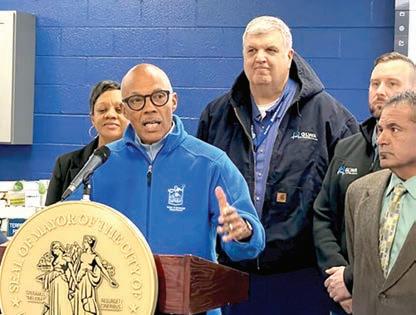
Sheffield held a press conference at the department headquarters building on Huber Street Tuesday afternoon with DSWD director Gary Brown, who thanked the mayor for being reappointed to the position under the new administration.
Brown said there are more than 275 hydrants out of service, 77 being frozen with more than a dozen being reportedly hit by cars. He encouraged residents to report any spouting hydrant to the Improve Detroit app or by calling 313-267-8000.
The partnership builds on orsa’s growing footprint in Detroit, including the opening of a full-service branch on Grand River Avenue in Old Redford and continued investments through the orsa foundation in housing stability, financial well-being, and community resilience. orsa has also maintained longstanding relationships with local artists, bringing creative expression into everyday spaces.
BLAC will hold a virtual town hall meeting to discuss its policy recommendations on Thursday, May 12 at 4 p.m. Join BLAC and a virtual audience in discussing the recommendations to support the Black community.
As plans move toward groundbreaking, Paul says the vision remains clear.
BLAC is housed in the Michigan Department of Labor and Economic Opportunity. Members repthe chancellor embraces.
“I think of transformational leadership as a thoughtful approach that causes people to change but also causes the systems and circumstances they are operating in to change too,” Ivory said. “Transformational change doesn’t just ask people to do certain things; it asks them to change their view of what’s possible and excites them to drive that change together because they believe that what they’re doing will create positive change for everyone. That’s how entire systems change because
Data Centers
From page A-1
ample from his mayoral years to explain what he means by community buy-in: the Amazon distribution facility on the former State Fairgrounds. He described spending time with nearby residents and negotiating changes based on what they asked for. He said neighbors wanted landscaping, so they did not have to stare at a warehouse. He said they pushed for truck routing so traffic would not run through their streets. He said the most consistent ask involved neighborhood parks.
“Chancellor Ivery is a true transformational leader and an outstanding CEO, who is more than worthy of the CEO of the Year Award he just re ceived, “ said Prof. James C. Mays, who teaches entrepreneurship and supply chain manage ment at WCCCD’s Corpo rate College. “In his 27 years at WCCCD, Dr. Ivery has elevated WCCCD to become nationally recog nized for excellence and innovation and preparing our students profession ally and personally to do great things in the world.”
Duggan said he used the land proceeds and project negotiations to deliver parks and address traffic, then said those same neighbors showed up at Detroit City Council and spoke in favor of the project. “So, it got approved,” Duggan said, adding: “2,600 people are working.”
The data center debate is already playing out with that kind of intensity in Southfield, where a major project has been approved and residents spent hours in public comment opposing it.
A 100-megawatt data center is moving forward after the Southfield City Council voted 5–2 in December 2025 to approve a site plan submitted by developer Metrobloks. The plan covers a 109,683-square-foot data center on 12.19 acres of vacant land on Inkster Road between 11 Mile Road and Interstate 696.
The council took nearly six hours of public comment and discussion before voting. Residents who spoke raised concerns about environmental and health impacts, noise, diesel generators, and the strain a 100-megawatt facility places on the region’s power grid. City officials weighed those concerns against the prospect of tax revenue and economic development.
For Archer Jr., the partnership with
“This is about honoring where we’ve been while building what’s next,” he said. “Paradise Valley has always been a place of resilience and creativity. With this partnership, we’re making sure it continues to be a place where Detroit’s future is shaped and not just remembered.”

Duggan said when residents become weary when they believe projects are assembled out of sight.
He said residents feel “a lot of anxiety and anger that they’ve been kept in the dark.” He said deals too often get “packed out of a backroom” without meaningful conversations with neighbors, even though the project can reshape a community.
Data centers are being proposed, vetted, or debated across Southeast Michigan and surrounding counties as demand climbs for AI and cloud infrastructure. Proposals named in recent local conversations include projects tied to Saline Township, Lyon Township, Van Buren Township, Allen Park, Howell Township, Augusta Township, and Ypsilanti Township, plus other locations where local officials have considered new rules or pauses to slow the pace of approvals. The politics of that buildout have sharpened because the costs and impacts are easy for residents to visualize.
These facilities can require massive amounts of electricity, significant cooling systems, and large tracts of land. They tend to bring limited longterm jobs compared with the footprint
residents see on paper. When tax abatements or incentives enter the discussion, residents often describe the projects as “extractive,” built for outside demand while local communities carry the disruption.
Duggan’s set of standards at the 2026 Detroit Policy Conference was that the state should stop letting the rules be written one township at a time, after the developer has already chosen the site.
He framed his three standards as a baseline that would force the conversation into the open before a vote, before an agreement, before residents feel outmatched in a process that moves too fast.
The next steps for most of these projects remain local: zoning, site plans, utility coordination, environmental review, and public hearings.
“I think the State of Michigan needs to take the lead and set clear standards on a state level sending legal teams in to support the local communities,” said Duggan. “Let them make their own decisions. There will be communities that would embrace and communities that would want no part.” You can reach Ebony at ecurry@ michronicle.com.
“Crews have been working around the clock in extreme conditions to repair the water main breaks and make our streets safe for our families and drivers in Detroit,” Sheffield said. “I want to thank all of the departments that stepped up. This has been a collaborative effort with DWSD, GSD, DPW and GLWA — have all come together to ensure we are prioritizing the safety of our residents, but also moving with urgency…”
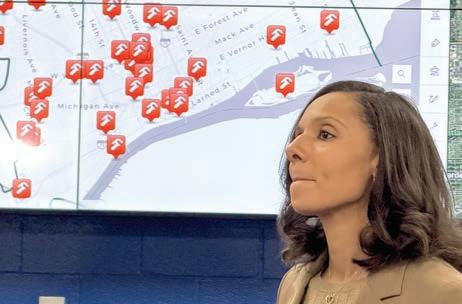
Brown said that the extreme cold is putting added stress on the city’s water mains, increasing the likelihood of a break.
Last year, Southwest Detroit experienced over 200 flooded homes due to a water main break to an aging pipe, which resulted in some residents needing to stay in temporary hotels paid for by the city. Many families were forced to obtain new furnaces or hot water tanks thanks to water damage.
Brown said the difference between that main break and what residents are experiencing all over the city Tuesday is that the break was located in one “very tight” area.
“Crews just had to go to one area,” Brown said. “The map to the back of me that has all the current water main breaks — they’re city wide and the city’s 139 square miles, so we have to mobilize citywide. There’s not going to be the damage to the homes, there won’t be any or very little flooding to homes during this incident. Just the sheer fact that we have these temperatures for the next seven to 10 days, we have to mobilize citywide.”
A map on the screen behind the podium as officials spoke showed all of the water main breaks across the city. Some roads, like Laing Street, are seeing more dangerous conditions due to the type of main break.
Brown said the need to dispatch crews across the city is challenging, and slows efforts down.
Sam Smalley, deputy director of DSWD, told reporters Tuesday that Detroit based contractors had stepped up to provide additional resources to help accelerate repairs.
“This is all hands on deck,” Smalley said. “We currently have nin crews. We’re increasing it to 11 tomorrow, so we’ll have additional water main break crews. We have trucks that are salting locations 24/7, and we’re adding additional ice and snow removal crews to monitor the sites that we have.”
Smalley
difficult to move my car,” Collado said.
Detroit Mayor Mary Sheffield and Detroit Sewage and Water Department leaders said the water main break near Denby is just one of 51 water main breaks
Chris Williams shovels ice out of his driveway on Laing Street near Denby High School after a water main break early Tuesday morning.
Detroit Mayor Mary Sheffield stands in front of a city map of current water main breaks at the DSWD headquarters.
Music Hall
A3 | February 4-10, 2026
Utility Shutoff Scammers Hit Detroit After Winter Storms
By Ebony JJ Curry SENIOR REPORTER
A winter storm can knock out power, slow down city services, and leave households juggling one urgent bill after another. It can also create the perfect opening for scammers.
Detroiters have been reporting calls, texts, and emails that claim to be from a gas, electric, or water company—sometimes even a bank—warning that service will be shut off immediately unless a payment is made on the spot. Consumer advocates say those threats are often a red flag for fraud, especially when the message demands quick action and tries to keep you from verifying anything.
Annette Washington, Detroit Community Manager for Chase Bank, said imposters have been using the city’s recent storms and frigid temperatures to pressure residents into handing over money or personal information.
“We want to let residents know ways they can avoid frauds and scams,” Washington said. “With the storms, the snow, and the frigid cold weather, the impostors are out there, giving people the impression that their utilities may be turned off.”

Washington urged residents not to trust the contact method in the message itself. Instead, she said, residents should disconnect and contact the institution through a number they already know is legitimate, such as the phone number printed on a bill, a bank card, or an official website.
“If you receive this type of email or text message, be diligent,” she said. “Hang up, and call directly to the utility company, or call directly to your bank, whether that’s Chase or whomever and verify that information is accurate to avoid any type of frauds or scams.”
The tactic she described begins with a caller who uses urgency and consequences — heat going out, lights shutting off, water cut off — to push someone into acting without thinking. That pressure can land even harder in winter, when the stakes of losing service feel immediate.
Washington said scammers are also increasingly relying on “spoofing,” which can make a phone number look like it belongs to a legitimate institution.
“These impostors will use spoofing where their phone numbers can look just like Chase Bank or whomever a reputable utility company,” she said. “So, we want you to hang up the phone and call directly to that utility company or that bank to verify if what they’re saying to you is valid or accurate.”
She warned residents not to confuse a familiar-looking caller ID with proof of legitimacy. Even if a number appears official, she said, a resident should take con-
Chronicle Flashback:
30 Years Later, Michigan Bipartisanship Looks Different
By Sam Robinson SENIOR REPORTER
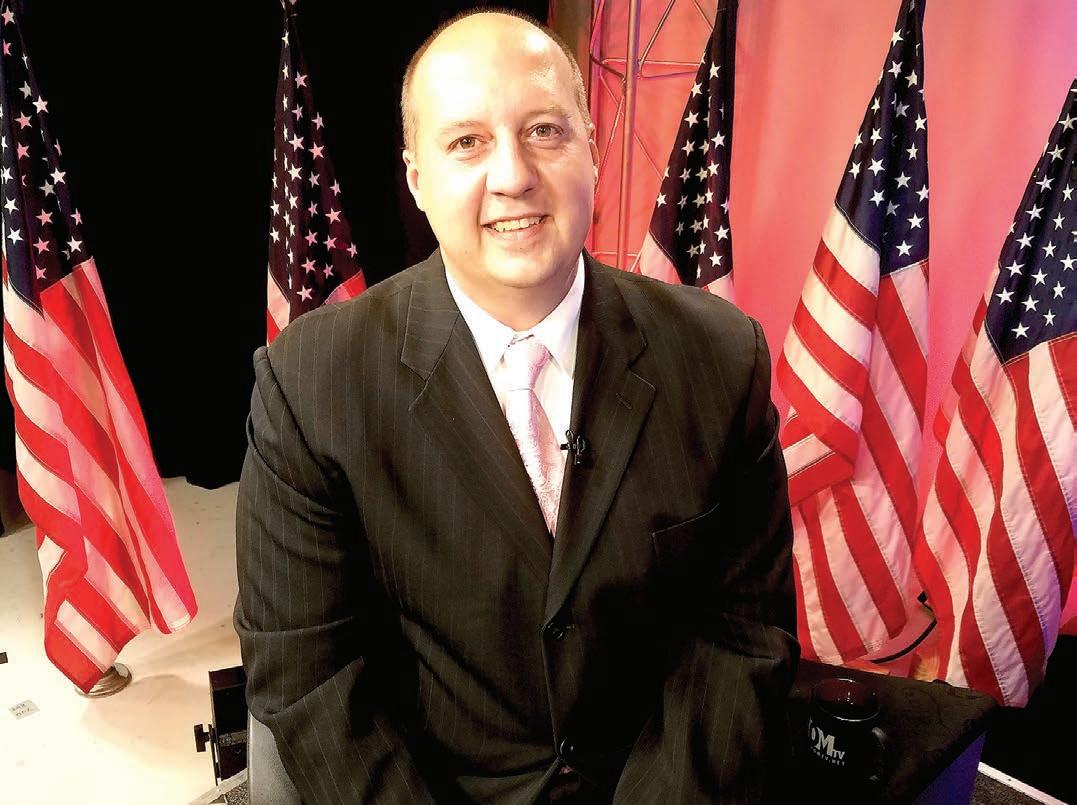
While Michigan Party Chair Curtis Hertel takes aim at Mayor Duggan for his unwillingness to call out President Donald Trump, we’re thinking back to a time when bipartisanship was a staple for the Hertel brand.
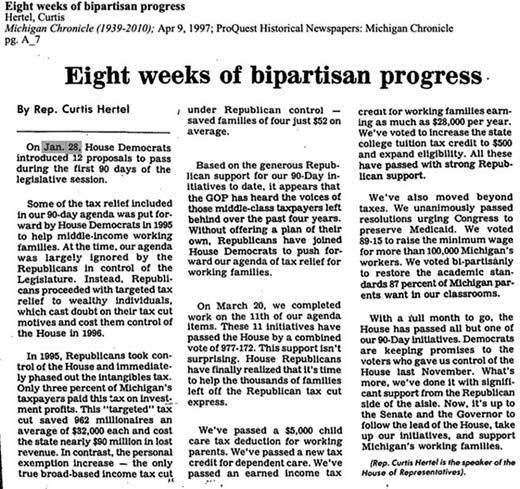
In the above column, Speaker Curtis Hertel Sr., who died in 2016, highlighted legislative wins with bipartisan support, like the restoration of certain academic standards and bipartisan resolutions urging Congress to preserve Medicaid.
In 1997, Hertel won the House speakership after sharing it with the GOP in 1993-94 when the chamber was tied. Republicans it back the years before in 1995.
The Hertel’s are one of Michigan’s most prominent political families.
While the headline of his column championed his party’s work alongside Republicans, Hertel also used the newspaper to criticize them, saying the GOP largely ignored an agenda to help middle class families.
“Instead, Republicans proceeded with targeted tax relief to wealthy individuals, which cast doubt on their tax cut motives and cost them control of the House in 1996,” Hertel wrote.
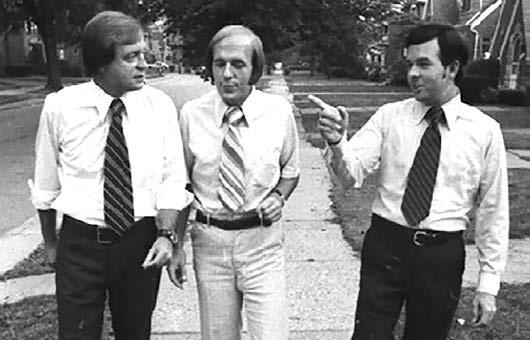
Hertel Jr., his son, has also carried a bipartisan spirit throughout his career, but like his dad, doesn’t shy away from criticizing Republicans. As a candidate for Congress in 2024, Hertel appealed to moderate Republicans in his advertisements dubbing himself, just a “regular guy.”
“I like cutting taxes, working across the aisle, smoking meats, and getting real things done for people here in Mid-Michigan,” Hertel said in a campaign video.
Hertel Jr., who was 19 when his dad led the Michigan House, hasn’t been touting bipartisanship in the last few months as Duggan raises money from high profile Republicans and Democrats.
Some Democratic leaders say they believe Duggan will take more from Democratic voters.
Former House Speaker Joe Tate told reporters with Michigan Chronicle and BridgeDetroit at the Detroit Policy Conference Thursday said “it’s just reality” that Duggan to take more votes from Democrats.
“We’re in the middle of a healthcare crisis, the cuts that have happened, and the high cost of health care because of what President Trump did, giving tax cuts away for billionaires and cutting access to health care around this country,” Hertel said on a radio show earlier this month. “Our democracy is at threat, our own U.S. Senator was threatened with sedition charges for saying something that’s in the Constitution, and Mike [Duggan] has refused to stand up to President Trump over and over again.”
On Michigan’s Big Show with Michael Patrick Shiels Thursday morning, Hertel called out Mike Duggan for the toxic dirt scandal that’s yet to be resolved in Detroit, many that are now filled with harmful contaminants like lead and arsenic.
Public Service Matters Today More Than Ever
By Hon. Scott Benson DETROIT CITY COUNCILMEMBER
Dr. Martin Luther King, Jr. once said “Life’s most persistent and urgent question is what are you doing for others?”
From my time as an officer in the U.S. Coast Guard to my current work as a Detroit city councilmember, public service has been fundamental to my life. Helping others is important to me. Finding solutions to the problems our community faces and working with others on those issues gives me purpose. If you are at a career crossroads or are a young person just starting out, I encourage you to consider a public service career.
Public service matters. A recent study by the Pew Research Center indicates that 80 percent of respondents felt that government should play a major role in responding to terrorism and natural disasters, ensuring food and medicine are safe, and managing the immigration system. Maintaining the country’s roads, bridges, ports and airports, protecting the environment and ensuring access to education also were considered
important government functions. Public service needs men and women who will speak the truth, think creatively and strategically, and take the long-term view on issues. Our democracy depends on public servants who work the front line and also behind the scenes to ensure our government operates efficiently at the municipal, county and federal level to ensure the safety for our citizens and residents. There is a myriad of reasons to enter public service but let me highlight just a few.
For some, saving lives is a priority. Firemen, police officers, paramedics all come to the job with a sense of duty. They want to protect our citizens from harm, save lives, and respond to emergency situations. Think of the brave firefighters and law enforcement officers that responded to the World Trade Center disaster on 9/11. For them, responding to large-scale disasters, accident scenes, or helping someone who has been injured is their calling.
For some public servants, making their communities better is what draws them to the work. Working on infrastructure proj-
ects, designing new parks, creating meaningful programs that help people, ensuring the streetlights come on or you have clean water in your home – these tasks all require talented and committed public workers. These are services that most of our citizens take for granted, but they require dedicated public employees who can deliver effectively.
The opportunity to influence social change or public policy is another draw. While a lot of the work for a city, county or state government is about creating efficient and sustainable services, there is increasing focus on how programs are administered to create more equity. Think about building community support for recycling programs or reducing carbon emissions. Working to influence a community’s acceptance of these programs or policies is important work for today’s public servants.
Personal fulfillment is a major career objective for public servants. Working with a purpose brings you major job satisfaction. Being able to point to a successful infrastructure project, a new program that helps children, or an initiative to clean up vacant lots can result in immense personal and professional pride.
The vital function of public servants was in the spotlight in 2025 as the Trump ad-
ministration cut jobs, terminated federal employees, and eliminated entire agencies. Polls showed that most Americans did not support these cuts. About half of voters polled said the cuts made government operate worse than a year earlier and will make communities and lives worse. Clearly, the public pays attention to public service and how drastic changes to it can impact their communities and lives.
At the heart of public service is supporting communities, serving others, and protecting the rights and interests of the public. It is mission-driven work that often involves bringing together disparate voices and points of view to find common ground for the common good. For those considering a career in public service, it is often because you have a passion for a certain cause, expertise in a particular discipline, curiosity about a social issue or connection with a specific community. The work is challenging, but very rewarding. The public can be a tough customer, but we need public servants who are committed to doing the hard work of keeping our communities safe, our systems operational, and our city moving forward.
Hon. Scott Benson is a Detroit City Councilman who represents the 3rd District on Detroit’s north eastside. Scott also serves his community by sitting on numerous boards, is an avid cyclist, and a proud husband and father.
Curtis Hertel column highlights bipartisan legislative wins in the Michigan Chronicle on Jan. 28, 1997.
State Sen. Curtis Hertel Jr. in 2023.
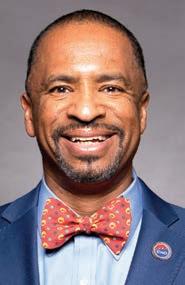
Scott Benson
Detroit Rolls Out $1K Tech Grants for 140 Microbusinesses
ByEbony JJ Curry SENIOR REPORTER
Detroit’s smallest businesses keep the city moving, yet plenty of them are still running without the everyday tools that make modern commerce easier — reliable computers, updated point-of-sale systems, bookkeeping software, and online storefront support.
City officials say a new microgrant program is meant to help owners cover those basics.
The City of Detroit and the Detroit Economic Growth Corporation announced Jan. 22 that they are launching the Detroit Small Business Technology Fund, a grant program backed by Rocket Community Fund that will award $1,000 technology grants to 140 Detroit-based microbusinesses.
Businesses must be located in Detroit, have 10 or fewer employees, and bring in under $500,000 in annual revenue to qualify, according to the city and DEGC. Grants can be used for items and services that help a business operate and sell more effectively, including laptops, point-of-sale systems, accounting and e-commerce software, along with other technology tools listed by the city.
Mayor Mary Sheffield said the point is to help neighborhood businesses modernize in ways that bring in customers and reduce day-to-day friction.
“Small businesses are the heart of Detroit’s economy, and they deserve access to the tools that help them grow and succeed,” Sheffield said in the announcement. “This funding will make it easier for neighborhood small businesses to modernize, reach more customers, and operate more efficiently.”
Justin Onwenu, director of the city’s Office of Small Business Services and Economic Opportunity, said the city views small businesses as neighborhood anchors, not side projects.
“Strong neighborhoods are by thriving small businesses,” Onwenu said. “When we invest in our small businesses, we invest in the families they support, the jobs they provide, the communities they serve, and the future we are building together.”
How the money will be distributed
Instead of a single citywide application portal, the fund will be distributed through nine business services and neighborhood organizations already working with entrepreneurs across Detroit. Each partner will award between 10 and 20 grants, the city said.
Those partners are: East Warren Development Corp, Grandmont Rosedale Development Corporation, Live6 Alliance, Southwest Detroit Business Association, Michigan Black Business Alliance, Arab American Chamber of Commerce, ProsperUS Detroit, TechTown Detroit, and Michigan Women Forward.
Eligibility also requires a business to be affiliated with one of the partner organizations. Those groups will select grantees and collect data the city says it wants to track, including changes in revenue, efficiency, technology use, new customers, and job creation.
DEGC’s Sean Gray framed the fund as a practical step for businesses that have been priced out of upgrades.
“Technology is no longer optional. It is foundational,” Gray said in the city’s release. “By giving Detroit microbusinesses access to modern tools and connecting them with trusted support organizations, we are
strengthening Detroit’s local economy from the ground up.”
Why a $1,000 grant matters in Detroit’s Black small business economy
Detroit has long been a Black business city in the way residents understand, not just in the way tourism brochures describe. Black-owned barbershops and salons, restaurants, boutiques, contractors, caterers, creatives, childcare providers, homebased brands and neighborhood storefronts form an ecosystem that feeds families and keeps commercial corridors alive.
Yet research keeps showing how hard it is for Black-owned firms to reach the same scale as others, even when the talent and demand are there.
A Federal Reserve Bank of Chicago analysis focused on Detroit found steep gaps among employer businesses: average revenue for Black-owned employer firms in the city was about $1.38 million, compared with about $17.78 million for non-Blackowned employer firms. The same analysis reported Black-owned employer businesses averaged 10 jobs per firm, compared with 37 for non-Black-owned employer firms.
A newer Chicago Fed Insights report noted that Detroit’s Black-owned firms, like Black-owned firms nationally, tend to be small in employee count and revenue. It also reported that only about 3% of Black-owned firms in Detroit have employees, reflecting how many owners are operating as nonemployer businesses or very small teams.
That reality is why supporters of the fund describe $1,000 as small money with real impact. When margins are thin, basic technology upgrades often get delayed behind rent, payroll, inventory, and utilities.
Michigan Black Business Alliance President and CEO Charity Dean said the grant is arriving during a tough period for small operators.
“As always the announcement of the tech grant is good news for small business,” Dean said. “It’s been really really hard for small businesses and it’s only gonna get harder and every little bit counts.”
Dean said MBBA and the other partners will help move the dollars into businesses.
“The Michigan black business alliance is a partner, other organizations are partners to get these funds out to small businesses,” she said. “It’s a small amount, but like I said, every little bit counts when it comes to running and operating a small business in Detroit.”
She added that MBBA is “very grateful
Utility Shutoff Scammers
From page A-3 trol of the interaction by ending the call and dialing back using a trusted number.
Washington said seniors can be particularly vulnerable because scams often depend on confusion, panic, and a quick decision. She urged families and neighbors to treat elder fraud prevention like a shared responsibility.
“I like to refer to our seniors as national treasures, and we want to make sure that they’re protected,” Washington said. “We try to encourage our residents, our seniors to actually pause before they act on a phone call.”
She pointed to the “grandparents scam,” where someone pretends a loved one is in trouble and needs money immediately. She said the goal is to get a senior or anyone emotionally flooded and moving before they confirm what’s real.
“So whether that’s a scam that could be coming up in the next week or so, when spring break coming out, if it’s a grandparents scam, we want to make sure you hang up the phone and verify what the family member, if that person is in trouble or if there’s a situation,” she said.
She said the same “verify first” approach applies to utility shutoff threats. Residents should confirm whether work is being done in the area, whether an account is actually past due, and whether any disconnection notice exists beyond a sudden call or text.
“When it comes to things about the utility…we want you to pause, hang up, call directly to that utility company, to find out if there’s work being done in your area,” Washington said.
Washington said what makes these scams persistent is how quickly they adapt. The storyline changes with the season, the news cycle, and whatever is already on people’s minds.
“These impostors…capitalize on events of the day,” she said. “We had the storm here. So again…you might receive these, um, emails or text messages about your utilities. The next couple weeks we could very well be having this conversation about the ro-
mance scams…[or] spring break.”
Her point, she said, is not that residents can memorize every scam. It’s that residents can recognize the pattern: urgency, pressure, and instructions that discourage verification.
Washington also emphasized that victims should not be embarrassed. Shame is one of the quiet tools scammers count on, because it keeps people from reporting what happened and warning others.
“As I mentioned, it’s the person’s hardearned money, and it’s, it’s nothing to be embarrassed about,” she said. “Go to your local police department and report these things.”
Washington said residents can also seek help in-person. She stressed that people do not have to be customers to ask questions or get guidance at a bank branch if they suspect they’ve been targeted.
“You don’t have to be a Chase client to come into the bank and say, hey, I’ve been a victim. What should I do? and we can guide you as to what you need to do,” she said.
She pointed residents toward Detroit Police Department as a reporting option and described community education efforts aimed at prevention. Washington said Chase partners on financial health workshops with Detroit police, bringing residents together to learn what scams look like and what steps to take when something feels off.
“We partner on several financial health workshops, where we invite the community in to learn about the frauds and scams that are preying on our community and be a resource for those and to help them,” she said.
As winter continues, Washington said the best protection is a habit that becomes automatic, especially when a message tries to scare someone into moving fast. If a call, text, or email claims a shutoff is imminent, she said Detroiters should treat it like a prompt to slow down, verify through official channels, and report attempts that cross the line into fraud.
Ebony JJ can be reached at ecurry@ michronicle.com.
to the city of Detroit and community fund” and expects to keep partnering on future opportunities for small business owners.
Johnnie Turnage, co-founder of Black Tech Saturdays, said he has watched Detroit entrepreneurs build while operating with limited capital and little room for error.
“I’m genuinely excited—and honestly grateful—that the City of Detroit and Rocket Community Fund answered this moment with action,” Turnage said. “Through years of building Black Tech Saturdays, I’ve watched Detroit small business owners do incredible things with limited access, limited capital, and limited margin for error.”
Turnage said the fund signals that local business growth is being taken seriously.
“This investment sends a powerful signal that their growth matters and that we’re serious about meeting entrepreneurs where they are,” he said.
He also emphasized that the money will move through organizations business owners already trust, which can matter as much as the dollar amount.
“What makes this initiative so meaningful is that it reflects the best of public-private partnership: aligned leadership, trusted community partners, and direct investment that allows business owners to modernize, work more efficiently, and compete in a digital economy,” Turnage said.
Turnage described technology as something that touches every part of running a business— sales, scheduling, inventory, bookkeeping, customer outreach — and said stronger operations ripple into households and hiring.
“When we invest in small businesses this way, we’re not just helping individual owners—we’re strengthening families, creating jobs, and reinforcing the economic backbone of Detroit,” he said.
What Rocket Community Fund says drove the idea
Autumn Evans, senior program manager for digital equity and inclusion at Rocket Community Fund, said the fund grew out of conversations that highlighted a basic gap: people are being told to adopt new tools while lacking devices and infrastructure to do it.
“The intent of this fund is to create opportunities for Detroit’s micro and small businesses to access tools and resources that leading companies like Rocket are using to create efficiencies and gain a competitive advantage,” Evans said.
“This plan was birthed through community leaders over time lifting up the small business community as a portion of the city that still needs basic access support to digital tools,” she said. “I’ve had the privilege to be able to partner with these industry champions over the years to advocate and deploy resources to fill that need. Town hall spaces, such as Black Tech Saturdays, have been instrumental in being that center of gravity where everyone is focused on solving problems together. This fund is just one solution to this complex opportunity.”
“More specifically, bridging the digital divide is an economic development tool that connects local economies to the global stage,” said Evans. “More businesses online means more prosperity for our region.”
What business owners should do next
Because the grants are being distributed through partner organizations, microbusiness owners who think they qualify should start by contacting the partner group they already work with — or joining one of them — since the city said businesses must be affiliated with a partner organization and those groups will select recipients.
Detroit’s small business landscape has no shortage of vision. The question has always been whether resources show up at the same scale as the need.
Ebony JJ can be reached at ecurry@ michronicle.com.
Michigan Bipartisanship
Duggan has not shied away from shooting back at the criticism, accusing Democrats of focusing too much on what they’re against, instead of what they are for.
“They hate Republicans, they hate Donald Trump, and now I’ve broadened their platform — they hate me too,” Duggan said Thursday at the Detroit Policy Conference.
Duggan says he left the party to run for governor as an independent because of the vitriol he’d receive from Republicans and the left wing of the Democratic party if he was elected as a Democrat.
There’s no consensus on addressing key issues dividing Lansing, where the type of bipartisan proposals being passed currently are bills to crack down on deceptive robocalls and phone scams.
After Republicans won back the House to end the Democratic legislative trifecta from 2022-24, when Democrats controlled all branches of government, Gov. Gretchen Whitmer and Senate Democrats have agreed to side with Republicans on certain issues. However, even with the majority, getting every member on board was chal-
lenging for Democrats, who were unable to include certain legislative provisions or pass bills altogether on issues like abortion access or water affordability. Duggan in a statement Thursday claimed Democrats couldn’t come to agreement on a number of issues: “The Democratic Party won a trifecta in 2022. And instead of working together to achieve longstanding Democratic priorities, they bickered and fought. I witnessed in Lansing first-hand the constant turmoil between the Far Left and moderate Democrats on a range of priorities—on rent control, on affordable housing, and yes, on transgender athletes. Some of those priorities were written into draft bills and some proposed bills were just discussed. But while the Democrats still may not be willing to admit it, the all-or-nothing, my-way-or-the-highway approach that some Far Left legislators took paralyzed the caucus and made it impossible to move forward on issues like education.”
Editor’s note: A previous version of this article incorrectly identified the Hertel’s. Curtis Hertel Sr. was the Michigan House Speaker in 1997. Curtis Hertel Jr. is the chair of the Michigan Democratic Party and a former Michigan state Senator.


From page A-3
A5 | February 4-10, 2026
Money.
Property is Power!
The Quiet Return of Credit Barriers
By Dr. Anthony O. Kellum
CONTRIBUTING WRITER
How Modern Lending Standards Are Recreating Old Inequities and What Black Homebuyers Must Do About It.
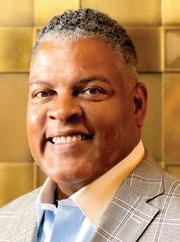
Anthony O. Kellum
There is no headline announcing it. No legislation was formally passed. No explicit policy declaring exclusion. And yet, for many Black homebuyers today the door to homeownership is quietly narrowing again. The return of credit barriers is subtle, technical, and often hidden behind the language of “risk management,” “market uncertainty,” and “investor caution.” But make no mistake the impact is real, measurable, and disproportionately carried by Black Americans. This is not Jim Crow lending. This is something more sophisticated and arguably more dangerous. Historically, Black Americans were denied access to mortgage credit through explicit mechanisms redlining maps, racially restrictive covenants, and federal underwriting guidelines that openly excluded Black neighborhoods. Today, exclusion no longer needs race to function. It operates through higher minimum credit score overlays than agency guidelines require, stricter debt-to-income caps imposed by lenders rather than the GSEs, reduced tolerance for non-traditional income such as bonuses, commissions, or self-employment, heightened scrutiny of reserves and liquidity, and automated underwriting systems trained on historically biased data.

These standards are presented as neutral. But neutrality does not equal fairness when starting positions are unequal. Black borrowers, even those with advanced degrees and strong incomes, are more likely to carry higher student loan debt, have thinner credit files despite responsible payment histories, be self-employed or earn variable income, and support extended family financially through informal obligations that underwriting models do not recognize. In short, the modern credit box penalizes realities common in Black economic life without acknowledging the historical and structural context that produced them.
There is a dangerous myth that education alone insulates Black Americans from systemic barriers. It does not. A Black attorney carrying student loan debt with a 690 FICO can be denied a mortgage, while a borrower with inherited wealth and a 720 score is approved without question revealing how the system favors privilege over potential. A Black entrepreneur with strong cash flow but irregular income may be deemed risky, while salaried W-2 income is rewarded regardless of long-term wealth trajectory. The system favors predictability, not potential. And predictability often correlates with generational advantage.
Credit is not just a financial tool. It is a gatekeeper to wealth creation. When credit tightens, fewer Black households enter homeownership,
See CREDIT BARRIERS Page A-6
By Charity Dean PRESIDENT & CEO OF MICHIGAN BLACK BUSINESS ALLIANCE
There’s a phrase that says, if you’re not at the table, then you’re on the menu. For Black business owners, those words are not a metaphor, they are warning.
In today’s hyper-partisan world, both political parties talk about economic prosperity. But when it comes to real, durable pathways to prosperity for Black businesses, businesses that exist in the shadow of centuries of intentional economic exclusion, no single party, and frankly no single politician, has the full answer. This isn’t new. In America, power has always driven policy. And historically, those who need policy to move in their favor must bring either money or time to the table to be heard. Most small businesses and especially Black small businesses

By Jeremy Allen EXECUTIVE EDITOR
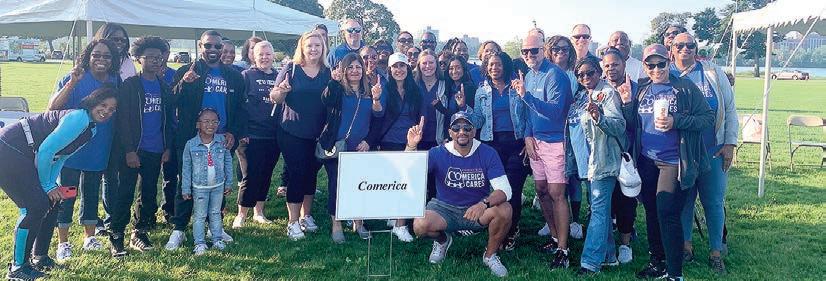
TechTown Detroit is offering upcoming information sessions designed to help entrepreneurs prepare competitive applications for the 14th annual Comerica Hatch Detroit Contest by TechTown, a small business competition that awards $100,000 in startup funding to a local entrepreneur planning to open a brick-and-mortar storefront.
The sessions are aimed at aspiring and early-stage business owners interested in applying to the contest, particularly those who may have strong ideas but need additional guidance navigating the application process or developing a complete business plan. Organizers say the workshops are meant to demystify the contest while also equipping participants with practical tools they can use beyond the competition.
“Having worked with entrepreneurs and applicants since the original launch of the Hatch Detroit Contest in 2011, we know many enter the contest with great inspiration but lack some of the technical skills and knowledge to develop a complete business plan needed for the application,” said Vittoria Katanski, TechTown Detroit small business expert and Hatch alumni coordinator.
“Through the years, applicants have found these information sessions valuable for both entering the contest and learning more about building out plans that guide them in their launch and growing their own businesses.”
The sessions will provide an overview of the Comerica Hatch Detroit Contest by TechTown, walk through the application requirements step by step and highlight key details applicants must address to be considered. Participants will also hear perspectives on building a strong business plan and have opportunities to ask questions directly of TechTown staff.
The Comerica Hatch Detroit Contest by TechTown has become a cornerstone of Detroit’s small business ecosystem.
The competition awards $100,000 in startup funding along with technical assistance and support services to one entrepreneur seeking to open a storefront in Detroit, Hamtramck or Highland Park. Over several months, applicants move through a structured process that includes application review, public voting rounds and a final pitch event known as the Hatch Off, where the winning business in May. Entrepreneurs with retail concepts who are planning their first brick-and-mortar location in the eligible cities are encouraged to apply.
Beyond the competition itself, Hatch Detroit is designed to strengthen neighborhood retail corridors and give residents a voice in the types of businesses that open in their communities.
have neither. That is our reality. But it cannot be our excuse. Every single day, elected officials at every level of government and on every side of the aisle make decisions that shape not only how we live, but how we do business. They decide how much we pay for goods and services, how we hire and compensate workers, and how and even where and when we are allowed to operate.
Some of these decisions feel abstract until they’re not. For example, in Detroit it is a criminal misdemeanor to operate a cashless business, unless you are a business that owns parking lots or stadiums downtown. That’s the law. And it has real consequences for real entrepreneurs. Imagine being a small business owner with a criminal past trying to forge a new way and wanting to build a completely tech-based retail store in Detroit- you can’t. At least, for now,
until this legislation is changed to not just exempt large developers with land downtown but to include small businesses in the neighborhoods.
Turn on the news and the headlines are relentless: our country is in a state of unrest, our democracy is under strain, and Black businesses are struggling more than ever. The surge of creativity, generosity, and corporate commitments to Black businesses we saw from 2020 to 2023 has largely disappeared. Supporting Black entrepreneurship is no longer “the thing to do,” and the dropoff is real. When the support is motivated by popularity and not a deep commitment to economic
Since its founding, the program has helped dozens of entrepreneurs turn ideas into operating storefronts, creating jobs and generating investment across Detroit and surrounding areas. Applications for the 2025 Comerica Hatch Detroit Contest by TechTown are currently open and must be submitted online by 11:59 p.m. on Friday, Feb. 27. TechTown encourages interested entrepreneurs to attend an information session before applying, though attendance is not required to submit an application.
For the second consecutive year, Comerica Bank and the Comerica Charitable Foundation are committing $200,000 to support the program and Detroit’s small business economy. In addition to funding, Comerica works alongside TechTown to provide in-kind technical support for contestants throughout the competition.
Since first supporting Hatch Detroit in 2012, Comerica Bank and the Comerica Charitable Foundation have collectively committed more than $1.5 million to the program.
TechTown Detroit, Wayne State University’s entrepreneurship hub, is a nonprofit business service organization that provides education, programming and resources for early- to growth-stage businesses. Since 2007, TechTown has supported thousands of companies across Detroit and Southeast Michigan, contributing to job creation and capital investment while advancing an inclusive local economy.
Hatch Detroit became part of TechTown’s suite of entrepreneurial programs in 2022. In addition to the annual contest, the program offers funding, mentorship and exposure to its alumni entrepreneurs. To date, Hatch Detroit alumni businesses have collectively employed more than 500 people and invested millions of dollars in local economic development.
Key Dates
Feb. 11: Information sessions at the Southwest Detroit Business Association (11 a.m.) and Next Chapter Books (6 p.m.)
Feb. 27: Applications close at 11:59 p.m.
March 11: Top 25 contestants notified
April 21: Top 10 contestants revealed
April 22–April 29: Top 10 public voting
April 29: Top 4 finalists announced
April 29–May 13: Top 4 public voting
May 13: Winner announced at the Hatch Off
Editor’s Note: On Oct. 6, 2025, Fifth Third Bancorp and Comerica Incorporated announced that they entered into a definitive merger agreement, and the transaction closed on Feb. 1, 2026. The merger will not affect the competition, and it will remain the Comerica Hatch Detroit Contest by TechTown through 2026.
recovery and recompense- it’s easy to move on to the next “hot issue” of the day. And yet, the economic imperative remains. Closing the racial wealth gap is not just a moral issue, it is essential to the longterm health of our economy and workforce. It is literally costing our state billions of dollars. Black businesses are a critical part of that solution.
That is why 2026 matters.
It is an election year, and with it comes an obligation for Black business owners to define and advance a political agenda. An agenda that demands an end to policies that perpetuate inequity. An agenda that calls for expanded and fair access to capital. An agenda that creates real conditions for Black businesses to not just survive, but thrive. At the Michigan Black Business Alliance we are doing that work and we invite others to join us.
This means meeting with candidates. Asking hard questions. Pressing them on their positions. Supporting those who understand the unique realities of small business ownership—not just in theory, but in practice. It means donating when we can, mobilizing our communities, and showing up at the polls. We cannot afford to sit this out.
Opting out of the political process does not protect us, it leaves us extremely vulnerable. Our businesses, our communities, our families, and in many ways our lives are directly impacted by the decisions made in political spaces we too often leave empty.
If we want to stay off the menu, we must claim our seat at the table.
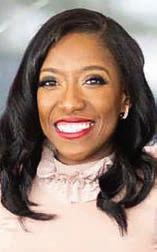
Charity Dean, Esq President/CEO Michigan Black Business Alliance
Charity Dean

Credit Barriers
entry happens later in life reducing equity growth, appreciation. Families and communities lose owner stability and political leverage. This is how inequality compounds quietly, mathematically, and over time.
We are at a dangerous inflection point. Rising interest rates, market volatility, and regulatory pressure have made lenders more conservative. History shows us that
mortgage professionals often understand nuance better than large institutions. Black borrowers must be strategic about where they apply, not just whether they qualify.
We must demand transparency in algorithmic lending. AI and automated underwriting systems must be audited for disparate impact. If the data reflects historical bias, the decision will too. Technology without accountability becomes discrimination by proxy. We must educate early and aggressively. Financial literacy cannot begin at the loan application. Credit strategy education, mortgage readiness planning, and a focus on wealth rather than income must be normalized long before adulthood. And we must reframe homeownership as a collective strategy, not an individual achievement. Buying in our communities, advocating for fair appraisal practices, supporting policies that expand access, and teaching ownership to the next generation are acts of community defense.

when caution replaces inclusion, those who need access the most are always the first to be excluded. When Black homeownership declines, the consequences ripple across generations lower net worth, reduced educational mobility, weaker community institutions, and diminished political influence. This is not accidental. It is structural.
We must expand credit evaluation beyond the “score” by valuing rental payments, utilities and cell phone payments. Creditworthiness is behavior, not just a number. We must support community-based and mission-driven lenders. CDFIs, Black-owned banks, and mission-aligned
The return of credit barriers is quiet, but its consequences will be loud. If we fail to confront this moment, we risk losing decades of hard-won progress. But if we recognize the system for what it is, adapt intelligently, and organize collectively, we can still bend the arc toward ownership, equity, and legacy.
Property is Power! Because Ownership multiplies opportunities. Restricted access multiplies disadvantages.
Property is Power! is a movement to promote home and community ownership. Studies indicate that homeownership leads to higher graduation rates, family wealth, and community involvement.

An irregular heartbeat can be unsettling. If Atrial Fibrillation (AFib) is disrupting your rhythm, our experts understand you want to be seen as soon as possible. We’re ready to help you take control today.
From medication management to advanced treatments like ablations, the Convergent procedure and the Watchman device, we personalize care for you. We see the whole person, so you can get back to living fully and confidently. You’re more than your irregular heartbeat and our experts can see you sooner.




Detroit’s Santiago-Romero Urges Michigan Lawmakers to Adopt Bills Protecting Undocumented Residents
By Sam Robinson SENIOR REPORTER
Detroit City Council member Gabriela Santiago-Romero urged Michigan lawmakers to pass a legislative package that aims to protect undocumented residents from controversial federal immigration enforcement tactics.
Santiago-Romero, a city councilwoman representing Michigan’s largest population of undocumented residents in Southwest Detroit, told lawmakers Thursday afternoon in the civil rights, judiciary and public safety Senate committee that ICE agents are “clearly violating our rights.”
Supporters and opponents of the bills packed the room in Lansing where lawmakers bickered over the amount of time each advocate was given to speak.
During the committee hearing, state Sen. Jim Runestead, R-White Lake, accused Detroit state Senator Stephanie Chang, the committee chair, of attempting to censor him for interrupting his rebuttal questions to move onto the next speaker.
Runestead is also the Michigan GOP chairman.
Senate Bills 508-510 would ban law enforcement officers from wearing masks, would block federal law enforcement from operating at “sensitive locations” and would block the sharing of information between local municipalities and the federal government for the purpose of immigration enforcement without a court-issued warrant.
These locations include an educational institution; a place of worship; a hospital; the site of a funeral, wedding, or other public religious ceremony; a courthouse; or the site of an organization that is assisting children, pregnant women, victims of crime or abuse, or an individual with significant mental of physical disabilities.

SB 509 would enact a new law to prohibit a government entity from providing an individual’s identifying information to a person without a court-issued warrant if the information would be used to enforce federal immigration law.
This information includes anything that identifies an individual, including the individual’s photograph or image, name, address, driver license number, Social Security number, telephone number, digitized signature, or medical and disability information. The term would include any information pertaining to an individual’s criminal history, and any list, dataset, or aggregated data that contained the information described in the definition.
Austin Lowes, the chairman of the Sault St. Marie Tribes of Chippewas Indians. He said he reminded his 50,000 members of their rights as Tribal and U.S. citizens.
Lowes said federal agents are stoking fear on native lands across the country.
“Our tribe has taken a proactive approach on how they can handle immigration enforcement situations that may arise on tribal properties,” Lowes said. “Methods that increase fear do not results in deescalate outcomes, instead, they only result in generational trauma, that further divides us.”
Shari Rendall, the state and local engagement director for FAIR, a right-wing national nonprofit that opposes illegal immigration, said sensitive location legislation “creates a bright line that prohibits immigration enforcement.”
Rendall, who said she flew to the hearing from D.C., argued federal agents entering sensitive locations seek to minimize enforcement impact by ensuring their actions are discreet. She said it’s not true that places like schools and churches are the targets of enforcement.
Santiago-Romero said parents and children are afraid to leave their homes. The aggressive tactics like arresting individuals in court houses as they show up to immigration hearings disincentivizes people from using the system to attain citizenship.
“Local businesses are struggling to stay afloat because people are afraid to patronize their shops, or employees are afraid to show up for work,” Santiago-Romero said.
She reiterated the calls for greater regulations for Immigrants and Customs Enforcement and Border and Customs Patrol agents at the Detroit Policy Conference Thursday afternoon during a roundtable with other council members.
Santiago-Romero, who said earlier this week she was meeting with Mayor Mary Sheffield to speak about ways to protect residents, suggested during the committee hearing she’s working on similar proposals at the city level.
Council member at-large Mary Waters submitted a proposal that would ban law enforcement officers in Detroit from wearing masks. She named the ordinance, “Alex Pretti Detroit No Masks,” in honor of the slain 37-year-old VA nurse who was killed by masked agents in Minneapolis last week.
“We will not have a Detroit where a masked mob are afforded the opportunity to enforce the law with impunity. We want to see the faces of law enforcement in Detroit,” Waters said in a release. You can reach Sam at srobinson@michronicle.com.
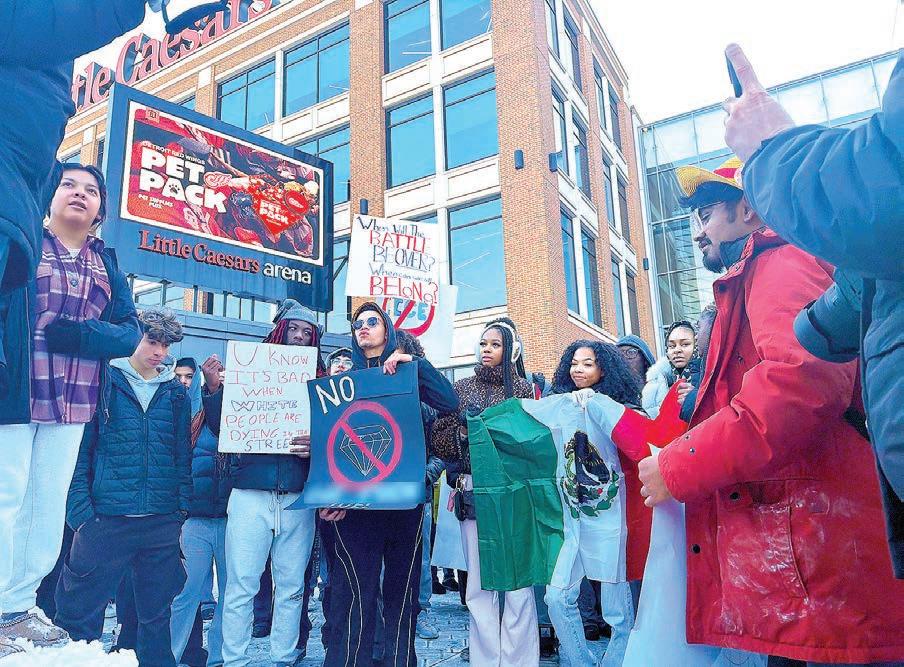
‘National
Shutdown’ in Detroit: Cass Tech High School Students Walk Out to Protest ICE
By Sam Robinson SENIOR REPORTER
More than two hundred students walked out of their last period Friday and marched from the high school on Ledyard Street down Woodward Avenue back to Cass Park to protest Immigration and Customs Enforcement (ICE).
Organizers said the demonstration that included students and teachers from Cass Tech and Detroit School of Arts was intended to send a message to elected leaders that even kids know the aggressive enforcement tactics championed by President Donald Trump are wrong.
“There were high school freshman out here, 14, 13-years-old who are out here in the streets in the freezing for cold marching and chanting because as children, we know it isn’t right, so we know adults know this is wrong,” said Hailee Hallman, one of the leaders of the group of students who organized the demonstration.
While teachers at Cass Tech received instructions from district administrators not to interfere with students who decided to leave class early for the protest, some joined students, walking with them in protest of the recent ICE killings in Minneapolis, MN.
Hallman said student organizers are planning another protest against ICE enforcement next Friday, Feb. 6.
Zach Herman, a Spanish teacher at Detroit School of Arts, joined students in the protest. Herman told Michigan Chronicle that he joined the protest to show solidarity.
“I wanted to stand with our students and show them that their teachers are proud of them and care about them,” Herman said. “It was also a real world lesson about using your voice in a peaceful manner to affect change.”
In a press conference Friday, leaders at the Detroit Branch NAACP called on Michigan’s Congressional delegates to introduce measures to hold ICE and CBP agents accountable and limit Department of Homeland Security funding. Detroit branch NAACP president Wendell Anthony stood beside leaders from the Arab American Civil Rights League and Latino Americans for Social and Economic
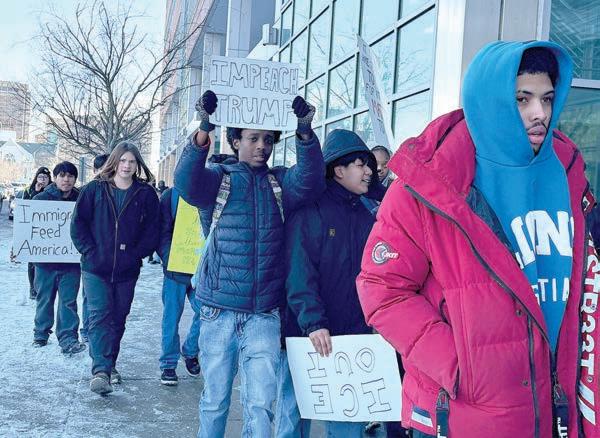


Development in a show of solidarity.
Youth NAACP council president Makayla Headen said she’s hearing horror stories from her peers who are being affected by increased ICE patrols.
“ICE is messing with people’s routines. They can’t go to the stores they usually do. People aren’t going to school,” Headen said. “ICE has been allowed to operate with alarming negligence and little accountability.”
Students gathered outside of Little Caesars Arena on Woodward Avenue, where Cass Tech senior class president Brizait Gonzalez Rivera told her peers they were here for an important purpose.
“This is a movement… We don’t want to skip (class), we’re here for a reason,” Gonzalez Rivera said. “We are here for people who don’t have voices who are suffering in detention camps. As a Mexican American, I feel for them.”
Two of her friends, Ximena Castorena and Analise Diaz, held signs that read, “El pueblo unido jamás será vencido,” which translates to “the people united will never be de-
feated” in English.
Other students held signs reading “Immigrants feed America!!!”; “Impeach Trump”; “It shouldn’t have to happen to you for it to matter to you.”
Sophomore Cameron Higgins told Michigan Chronicle, “nobody’s all that different, we’re all humans.”
“Everybody’s against each other for no reason, we need to be one whole,” Higgins said as he walked back to Cass Tech holding an anti-ICE sign.
Eventually, the march passed by Cass Tech and reached its end point at Cass Park as students not participating in the demonstration were picked up from school.
At the park, 10th grader Kingston Pendergraft took the mic from Hallman to encourage peers of all backgrounds to come together against ICE agents, which he compared to the Nazi Gestapo.
“This is our country, these are our streets,” Pendergraft said. “The greatest tool we have against this oppressor is community.”
You can reach Sam at srobinson@michronicle.com.
Michigan Democrats Say ICE Must Be Held Accountable for Minnesota Shootings
By Sam Robinson SENIOR REPORTER
Michigan Democrats across the state expressed anger and demanded accountability after the latest shooting death of a protestor in Minneapolis by ICE agents.
Registered nurse Alex Pretti was shot multiple times by a federal immigration agent, after he was pepper sprayed, tackled to the ground and disarmed, before being shot several times.
Despite the incident being captured on video by a number of bystanders who said Pretti never engaged ICE agents, Department of Homeland Security statements allege, without evidence, Pretti was trying to harm the agents who eventually killed him.
“We are witnessing unacceptable violations of Americans’ safety, rights, and freedoms,” Gov. Gretchen Whitmer said in a post to social media Saturday. “No one should accept this. The violence must stop. Michiganders stand with Minnesotans as they exercise their First Amendment right to protest and make their voices heard peacefully.”
The killing of Pretti, 37, follows the shooting death of Renee
Good, who was also 37 years old when she was killed by ICE agent Jonathan Ross, who has not faced any criminal charges for killing Good as she drove away from an officer.
The killings amid President Donald Trump’s ramped up deportation efforts are angering Democrats and even some Republicans in Michigan and across the nation.
Secretary of State and Democratic candidate for governor Jocelyn Benson said in a post she watched the video of “masked government agents taking another innocent life again with horror. This is not normal. This is not acceptable.”
Detroit Mayor Mary Sheffield posted a statement through City of Detroit social media channels saying what we are witnessing in Minnesota “raises serious concerns about Americans’ safety, rights, and freedoms.”
While Republicans either stayed quiet or sided with the federal agent, whose identity is yet to be reported, former Detroit Mayor Mike Duggan, an independent candidate in Michigan’s race for governor, joined Democrats in condemning the violence.
“This isn’t about left or right,”

Duggan said. “It’s about right and wrong.”
Detroit Democrat Donavan McKinney, running for Congress in Michigan’s 13th Congressional District, posted a video to social media Monday challenging his Democratic primary opponent for previously supporting ICE.
“Yet again ICE has murdered another American citizen… One thing is crystal clear: Donald Trump’s immigration crackdown is a failed experiment. This is not a political issue, it’s a human one,” McKinney said. “America is a society founded on a belief, that when government becomes an oppressor, we have the right
and a responsibility to respond. IF that same gov responds by killing those speaking out, then the foundation of our country has been broken. That has what has been done to people of color, and especially Black people in this country for centuries. And now, our white allies are under attack.”
McKinney in his video pointed to his opponent, U.S. Rep. Shri Thanedar, who voted for a resolution thanking ICE last summer.
“Now he’s saying we should abolish ICE because he sees the way the political winds are blowing,” McKinney said of Thanedar. “We must not only abolish ICE, but we also must ensure the conditions that gave rise to this cruelty and aggression is gone from our politics.”
Thanedar on Jan. 15 introduced the Abolish ICE Act that would dismantle the agency, saying Americans are being terrorized and racially profiled by the agency. In the upper chamber of Congress, both of Michigan’s Senators say they will vote against any upcoming bill that includes funding for the Department of Homeland Security, which ICE and CBP report to.
“I will be voting no on the DHS funding bill because it lacks necessary reforms to immigration enforcement,” Peters said. “DHS’ current immigration enforcement operations are not protecting our homeland security or making American communities safer. They are causing chaos and fear. They are violating Americans’ constitutional rights. We need stronger guardrails and accountability.” Slotkin didn’t shy away from criticizing the president in her statement: “This is what President Trump meant when he said he wanted to go after ‘the enemy within…’ This is part of a continued, coordinated assault on our Constitutional rights — with specific focus on individuals and groups who disagree with this President. I will be voting against the Dept. of Homeland Security funding bill this week. As all Americans can see with their own eyes, ICE and those under their command are not acting as responsible law enforcement agencies. They are recklessly inciting violence at the whims of the President. And they must be reined in before there is more killing.” You can reach Sam at srobinson@michronicle.com.
Gabriela Santiago-Romero
Gary Peters

C ity . L ife .
B1 | February 4-10, 2026
Greek and Servant of God
By Dr. Kristen Barnes-Holiday, Ph.D.
Several years ago, I posted a video on social media addressing Black Greek (D9) members denouncing their sororities and fraternities in the name of Jesus. I’m not ashamed to admit that I once thought about denouncing my letters—and I too had seen acquaintances denounce theirs— all in the name of the cross.
But I’m not one to abruptly do anything or shy away from tough questions, so following a question to my inbox—with a stranger inquiring about the juxtaposition between Black Greek membership and holiness—I decided to do my own research and pray, too. In fact, part of my journey in divinity school was initially centered, in part, on my thoughts regarding Greeks committing to dualistic crosses.

And if this line of thought holds any weight, can Christians serve two “gods?” That’s ultimately for you to decide, but I will offer my insight in hopes that my rationale might help someone else or at bare minimum help others to see this topic through a new lens—one rooted in a theological and academic perspective.
Alpha Kappa Alpha Sorority Incorporated (AKA) was founded at Howard University in 1908. And shortly after AKA was founded, Delta Sigma Theta, Omega Psi Phi, Phi Beta Sigma, and Zeta Phi Beta were also founded at Howard University, all in the early 1900s. Though each sorority and fraternity was founded by young, talented African American ladies and gentlemen, with unique missions and standards, they all shared one commonality: support and uplift the African American community during a time of communal (re)building following slavery and the Civil War.
Just one generation removed from slavery, the founders of these organizations were young folk, who fit within the confines of the so-called Talented Tenth, and sought to use their voices, means and influence to shift perspectives and cultivate community for generations to come.
They were aware of the power in strength and numbers, and thus, they knew the power in collaboration and a collective mission. They knew that while older generations offered wisdom, and maybe even financial support, movements began with young people.
How powerful and what a privilege.
If I can pause here just for a second, I’d like you all to think about this even further. Why would they even name these organizations, centering the Black Greek alphabet? And funny enough, someone posed a similar question online a few years ago.
In fact, this person ventured to say they were worshipping (and we continue to worship Greek gods). Huh? But, great question.
When these organizations were founded, only the Crème de la crèm could afford to attend college, as college was expensive, financial aid as we know it today was nonexistent and we cannot ignore the literacy challenges or gap that such individuals might’ve experienced.
Also, during this time, to be part of socalled Talented Tenth, meant having a level of intellect, access and exposure that most people did not or could not have.
The founders of these Black Greek letter organizations studied under some of the world’s most brilliant minds, including Alain Locke—an astute and world-renowned philosopher. There-
Where City Meets Life and Life Meets Style

Detroit Mother-Daughter Duo Named Lions Fans of the Year
By Jeremy Allen EXECUTIVE EDITOR
For Ninotchka Jackson-Wright and her daughter Kyla L. Wright, Detroit Lions fandom has never been a phase or a hobby. It has been a family inheritance, a weekly ritual, and a deeply personal connection to the city they love.
That lifelong devotion has now earned the Detroit-area mother and daughter the honor of being named the Detroit Lions’ 2025 Fans of the Year, the first mother-daughter duo ever selected by the franchise to represent the team in the NFL’s national Fan of the Year competition.
The recognition places Jackson-Wright and Wright among a select group of fans from across the league who “exemplify unwavering loyalty, creativity, and community involvement.” As Lions Fans of the Year, they advanced to compete for the title of Ultimate NFL Fan of the Year, which will be announced during Super Bowl weekend at the NFL Honors ceremony.
When asked how it feels to receive the honor, the pair summed it up simply. “Very excited,” Wright said, with her mother echoing the sentiment: “Yeah, really excited.”
That excitement was genuine, and completely unexpected. Jackson-Wright recalls that the moment unfolded under the guise of something far more ordinary. She received an email inviting her and her daughter to what was described as a shopping spree at Ford Field, supposedly part of a contest for loyal Lions members.
“They said there had been a contest and we were ran-
domly selected, and it was totally unbelievable to us,” Jackson-Wright said. “We were like, ‘What? Us?’”
The two were told to come dressed as if they were heading to a game, a request that didn’t raise any suspicions given their reputation for elaborate game-day fashion. Cameras were set up, the marketing team greeted them, and they were allowed to select items from the team store. Then came the surprise.
“They said, ‘We have one more thing for you,’ and presented us with Honolulu blue jackets,” Jackson-Wright said. “They told us to turn them around, and when we did, it said ‘Fan of the Year.’ It took us a minute, and then we looked at each other like, ‘Oh my gosh, we won!’”
Wright said the reaction was immediate and unfiltered. “We literally just took off running,” she said. “It wasn’t planned because we didn’t know. We were just so excited.”
The honor is rooted in a story that stretches back decades, to a time when the Lions still played at the Pontiac Silverdome. Wright was, as she puts it, “born into Lions fandom.”
“There are baby pictures of me in Lions onesies, little pink Lions jerseys,” she said. “I’ve only ever known Lions football.”
That legacy began with Wright’s late grandfather, Jackson-Wright’s father, a devoted season ticket holder and unapologetic believer in the team, even during the darkest years.
The Snowbirds hosted its fifth annual Golf Tournament Weekend, January 29–31, 2026, at the PGA National Resort in Palm Beach Gardens, Fla. Photo by Andrea Stinson Oliver. PALM BEACH GARDENS, Fla., Feb. 2, 2026 – At the prestigious PGA National Resort, The Snowbirds hosted their 5th Annual Golf Tournament Weekend January 29–31, 2026, donating $47,500 to benefit youth golf organizations and programs. With more than 200 participants, funds from the annual philanthropic event will expand access to golf for underprivileged youth, equipping them with vital resources, scholarships, and opportunities. Golfers from around the country teed off for the tournament on two championship courses at the prestigious PGA National Resort, now a part of the Salamander Group, owned by former BET CEO Sheila Johnson. Tournament guests enjoyed stellar resort amenities, ample networking and contest opportunities, live entertainment,

Dr. Kristen Barnes-Holiday, Ph.D.
Ninotchka Jackson-Wright and her daughter Kyla L. Wright
Black Greek membership
From page B-1
fore, they did not worship Greek gods, but instead learned about the most pressing issues of their time through a philosophical lens, rooted in Greek mythology—the socially “it” (and privileged) thing during this time period.
So, what does this have to do with Greek letter membership and God? Well, we should all know that practicing Christianity is not monolithic; there are many ways to practice Christianity and there is not one correct way to engage in this practice. But, the holy folk might then wonder, “What about Matthew 6:24?”
In this Bible verse, Jesus is talking to his disciples during the Sermon on the Mount, expressing that the disciples can’t serve two gods, specifically material possessions like mammon (ie. Money). Which leads me to the next point: Are Black Greeks serving two gods or replacing God with Greek life/membership?
I’d imagine that some people in sororities or fraternities have placed God on the back burner, but this can happen with anything. When is the last time you got so preoccupied that you forgot to pray before a meal or even during the day? When is the last time you missed church physically or removed church from your heart or actions? When is the last time that you sinned?
My intent is not to call you out but to ignite introspective reflection. Listen, I am guilty of these things too. The point that I’m making is that we have all engaged in dualistic “worship,” rather we choose to acknowledge it or not.
I think that it is possible to take up the cross and belong to a sorority or fraternity. God calls us to serve in many capacities, and Black Greek membership is one way to be a disciple. Now, if you’ve committed to denouncing, that is a personal choice, and I will not speak badly about your decision. But I’d also ask that you not criticize mine and so many others.
We can be Christian and possess Greek letter membership.
Dr. Kristen Barnes-Holiday, Ph.D., is a professor of English at Wayne County Community College District, a second-year divinity student at Duke University, and a Christian blogger. In addition, she is a teacher, preacher, and lifelong student of the Word of Jesus Christ.

Snowbirds
From page B-1
opportunities for aspiring golfers, and help our young people become gamechangers both on and off the course.”
Over four years, The Snowbirds have contributed approximately $225,000 to support a variety of organizations and programs. In its first year, The Snowbirds backed Georgia Oboh, a British-born Nigerian professional golfer who, at just 24, competes on the LPGA Tour and inspires young women worldwide to pursue the game. The Snowbirds have also supported the rebuild of Bethune-Cookman University’s golf program after hurricane damage; Cass Technical High
School’s Girls Golf Program—the first Detroit team to qualify for the Michigan High School Athletic Association Division 1 Girls Golf Tournament Championship; First Tee Greater Detroit; College Career & Beyond | Midnight Golf Program; and the national NAACP Golf Program.
This weekend, The Snowbirds awarded $10,000 to the Michigan Women’s Golf Association (MWGA) LPGA Girls Golf Program, which has introduced golf to girls ages 7–17 from underserved communities for more than 18 years. Each year, MWGA equips 63 junior golfers with clubs and provides nine weeks of instruction led by LPGA and PGA teaching professionals.
“I would like to express our deepest gratitude to The Snowbirds for this incredibly generous
Lions Fans of the Year
From page B-1
“He was a diehard fan,” Wright said. “You couldn’t tell him the Lions weren’t the best team even during the 0-16 season.”
After his passing in 2017, the family made a conscious decision to keep that tradition alive. “My mom said, ‘What better way to keep his legacy going than to keep the season tickets in the family?’” Wright said. The four tickets were passed down, preserving a ritual that had become part of the family’s identity.
At his funeral, the connection between family, fandom, and Detroit was unmistakable. “At his funeral and memorial, we all wore Lions gear. Honolulu blue,” Wright said. “There was never another team.”
Today, that generational loyalty is on full display at Ford Field, where Jackson-Wright and Wright are well known for their coordinated, custom-made Lions outfits. Their bold game-day looks have made them recogniz-
able figures in the stands and on social media, blending fashion, creativity, and team pride in a way that feels distinctly Detroit.
The NFL’s Fan of the Year program, however, goes beyond visible fandom. It also recognizes fans who make a positive impact in their communities, something that aligns closely with the values Jackson-Wright and Wright bring to their support of the team. Their selection reflects how Lions culture extends beyond the stadium and into civic pride and service.
Now, as national contenders, the duo is connecting with fellow super fans from across the country. Wright said they’re part of an active Facebook group that includes Fans of the Year dating back to 2020, as well as a WhatsApp group for the current class.
“We talk, joke, root for each other’s teams, and meet up when teams play each other,” she said.
Jackson-Wright added that the experience has included unprece-
donation,” said Francine Pegues, MWGA Junior Director. “Your recognition of our mission—to use golf as a vehicle for instilling discipline, integrity, and perseverance—means a great deal to our organization. This donation will be instrumental in helping us expand our programming and will ensure that more young people will have access to the opportunities that golf provides.”
The Snowbirds also awarded Cass Technical High School with an additional $9,500 donation; gave College Career & Beyond | Midnight Golf Program with an additional $8,083 donation; awarded First Tee Greater Detroit with an additional $8,583 donation; and presented aspiring professional golfer Staci Pla with a $2,500 donation. In February, the nonprofit will present an ad-
dented access to the league itself.
“We’ve also had multiple league calls with behind-the-scenes access,” she said.
Those sessions have included Q&As with NFL Commissioner Roger Goodell, insights into Super Bowl planning, and a closer look at how the league operates. “It’s been an incredible experience,” Wright said.
As part of the honor, the duo will attend the Super Bowl in Santa Clara in February when the Seattle Seahawks face off against the New England Patriots, though that perk has sparked some playful family tension. The family holds four season tickets, while Jackson-Wright’s husband and son hold the other two. The NFL, however, provides only two Super Bowl tickets per team.
“Please don’t get me started,” Jackson-Wright joked. “They thought we’d each get to bring a guest, but since there were two winners, it will just be us going.”
When asked if her father and brother were a bit jealous of their upcoming Super Bowl trip, Wright said: “Yeah… but don’t
ditional $8,834 donation to the National NAACP Golf Program. Including these donations, The Snowbirds will have contributed approximately $272,500 over five years. About The Snowbirds Driven by friendship and a shared passion for golf and philanthropy, The Snowbirds came together to make a difference. Thanks to the generosity of donors and partners, and the expertise of its collective team, The Snowbirds have contributed approximately $272,500 over five years to empower organizations that shape the futures of aspiring youth through golf. To learn more, visit www.thesnowbirds.org. Follow the nonprofit on Facebook and Instagram (@ TheSnowbirdsorg) and LinkedIn (@TheSnowbirds).
say that too loud,” while laughing.
On the field, both mother and daughter share a favorite current Lion. “Oh my God… I’d say AmonRa St. Brown,” Wright said, with Jackson-Wright quickly agreeing. Jackson-Wright also sees echoes of former quarterback Matthew Stafford in the team’s current roster. “They’re young, loyal, and excited to be part of a winning team,” she said. “That loyalty reminds me of Matthew Stafford.” Public voting for the Ultimate NFL Fan of the Year just closed, but regardless of the outcome, Jackson-Wright and Wright are proud of how their story reflects how sports can bind generations, preserve memories, and reinforce a shared sense of place.
From the Pontiac Silverdome to Detroit’s Ford Field, from a grandfather’s unwavering belief to a mother and daughter carrying that torch forward, their journey is a quintessential tale of what it means to be a Detroit Lions fan.



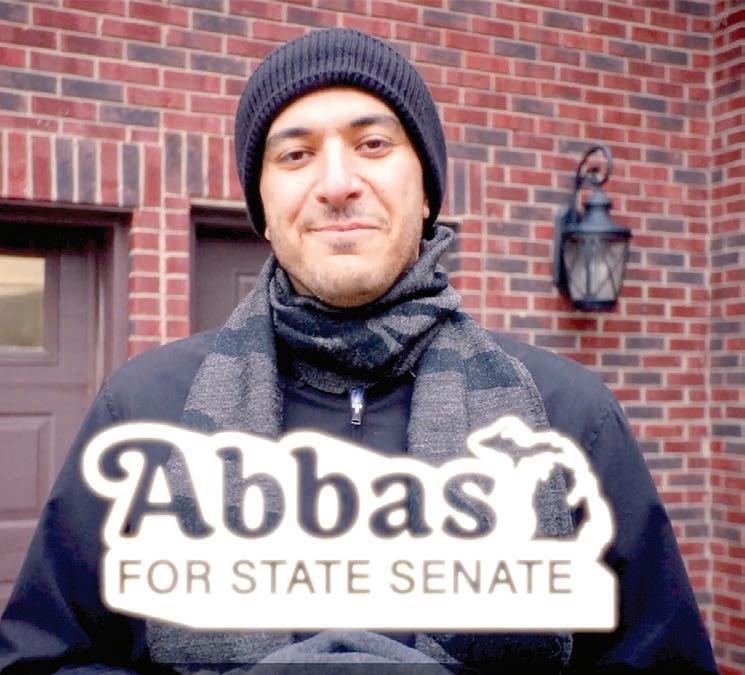
Warren Evans Endorses Uncommitted Leader in Dearborn-Detroit State Senate Primary
By Sam Robinson SENIOR REPORTER
Wayne County executive Warren Evans is putting his chips behind a progressive newcomer who’s running against a current state House member to represent the state’s newly drawn 2nd state Senate district.
Evans is endorsing Abbas Alawieh, a former congressional chief of staff and one of the co-founders of the 2024 Uncommitted movement. The new state Senate seat represents Dearborn, Dearborn Heights, Allen Park, Melvindale, plus parts of Taylor and Detroit.
Also running for the seat are state Reps. Erin Byrnes, D-Dearborn, and Tullio Liberati, D-Allen Park. Both candidates filed campaign committees last summer, while Alawieh filed his campaign committee in December.
“Abbas entered this race with a clear vision for improving our communities, and it’s a vision that is about bringing people together and bringing resources where they’re needed most,” Evans said. “His determination to ensure Wayne County continues to lead the way in quality of life is undeniable.”
Evans will be featured as a special speaker at the Abbas for State Senate community kickoff event on Thursday, Feb. 12 at
When on Capitol Hill, Alawieh worked for U.S. Representatives Andy Levin and Rashida Tlaib, and served as chief of staff to Congresswoman Cori Bush.
“I know what it takes to stand tall when others tell us to sit down,” Alawieh said in his announcement video.
His work on the Uncommitted campaign, which became a national movement after over 100,000 Michigan voters protested President Joe Biden over the war in Gaza during the 2024 February Democratic primary election. Ultimately, leaders of Uncommitted broke with other anti-war groups by encouraging supporters to vote against Donald Trump, instead of supporting the Republican over Harris as many Arab and Muslim voters did in 2024.
“As State Senator, partnering with our County Executive to deliver historic investments across Wayne County will be a top priority,” Alawieh said in a statement.
“To have Executive Evans’s trust and support means the world, not only because he will be a stellar partner in governance, but also because I know I will draw on his leadership and example when serving the residents of District 2.”
You can reach Sam at srobinson@ michronicle.com.

The
Frontline Faces of Transit
By Jacqueline Owens INTERIM VP OF BUS OPERATIONS
Before I became Interim VP of Bus Operations at SMART, I was that child on the bus. Raised by a single parent who never had a driver’s license, I knew firsthand what public transit meant for families who depended on it. When I applied to SMART in 1997, I was looking for a way to serve the community that had carried me.
Twenty-seven years later, I’ve gone from operator to road supervisor to manager to where I am today. None of it would have been possible without SMART’s investment in its people, from the colleagues who picked me up from home when I didn’t have a ride, the buddy system that supported me through challenges, the opportunities that met my ambition when I wanted more. This is what investing in operators looks like, and why it matters for every rider who steps onto our buses.
Why Operators Are More Than Drivers Operators are the frontline faces of public transit, the first person riders see every day. But here’s what passengers don’t always realize: operators are humans too, facing their own battles while still showing up to safely transport hundreds of people. The job demands far more than driving skills. Patience is essential. Empathy for what riders are going through. The ability to enforce policies like fare collection while maintaining safety and dignity for everyone onboard. Operators must balance compassion with responsibility, customer service with security, all while navigating traffic and keeping to schedule.
And how do we find the right person for this type of job?
When I hire operators, I look for their “why.” I want people with genuine passion for serving the public, because that passion
Michigan Supreme Court to Hear Alleged Retaliation Case After Detroit Man Files Civil Forfeiture Lawsuit
By Sam Robinson SENIOR REPORTER
The Michigan Supreme Court last week agreed in an order to hear a man’s claim that he was retaliated against by Wayne County, which he says stole his car.
In February 2020, Detroit resident Robert Reeves partnered with the Institute for Justice to file a class action lawsuit aimed at putting an end to Wayne County’s practice of seizing Detroiters’ cars without charging them with a crime.
The lawsuit names Reeves as the plaintiff and Wayne County prosecutor Dennis Doherty and Wayne County Assistant Corporation Counsel Davidde Stella as defendants.
A Michigan appeals court ruled Doherty is not entitled to immunity and must face the lawsuit for filing baseless felony charges against Reeves after he challenged the county’s civil forfeiture practices.
The state’s high court agreed to hear Reeves’ case against Wayne County over retaliatory criminal charges. Reeves argues that Wayne County officials charged him after he sued the county over the allegedly unconstitutional forfeiture of the vehicle he relied on to get to his job as a construction worker.
deserve to be compensated for violation of their rights.”
In July 2019, the Wayne County Prosecutor’s Office impounded Reeves’ 1991 Chevrolet Camaro after he visited a job site where there were pieces of heavy equipment that had allegedly been stolen from a Home Depot. Reeves was never charged with a crime, but Wayne County seized his car anyway, demanding a $900 fee to get it back.
Robert joined two other Detroiters to file a lawsuit challenging Wayne County’s seizeand-ransom policy.
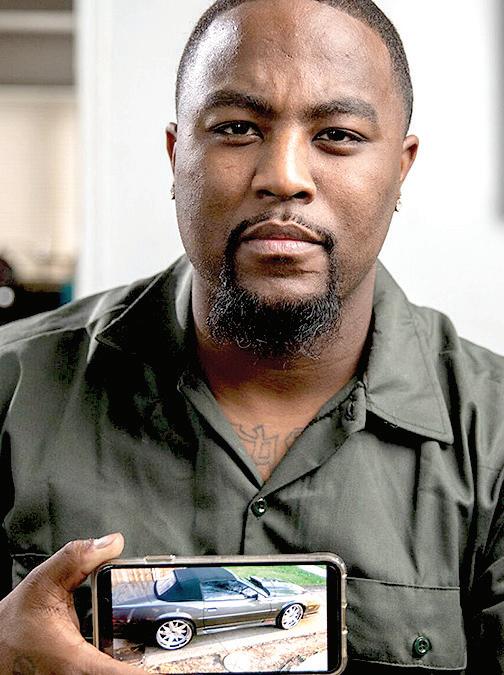
In 2019, Wayne County seized Reeves’s 1991 Camaro using civil forfeiture. They also took two cell phones and cash, all without charging him with a crime.
Reeves is represented by the national nonprofit, Institute for Justice, in both his case challenging the county’s forfeiture mechanism and his case alleging retaliation by county prosecutors.
“When a government official violates a Michigander’s constitutional rights, the harm is the same whether that official works for the state or a local government,” said Institute for Justice Senior Attorney Kirby Thomas West. “We look forward to establishing that, in either case, victims
Within two weeks of filing suit, Reeves’ attorneys say Wayne County filed charges to silence him and force him to drop his case against them.
The day after the lawsuit was announced, prosecutors asked police to release Reeves’ car, attorneys say. He received his seized cash that he had in his pocket when he was stopped by police, and picked up his car about two weeks later, the lawsuit said.
The prosecutor’s office twice filed felony charges against him for receiving and concealing stolen property. Then, the county attorney asked the judge overseeing Reeves’ suit to suspend it, arguing that he could not challenge the county in court while being accused of felonies.
West said in the thirty years of work at the Institute for Justice, he hadn’t seen “such a brazenly unconstitutional litigation tactic.”
The lawsuit being heard by the high court asks to hold that Wayne County’s retaliatory actions violate both the United States and Michigan Constitutions.
It is also part of IJ’s Project on Immunity and Accountability, which is devoted to the idea that if citizens must follow the law, then government officials must follow the Constitution.
You can reach Sam at srobinson@ michronicle.com.

translates directly into rider experience. An operator who cares makes every interaction better by helping someone navigate an unfamiliar route, ensuring an elderly passenger boards safely, creating a welcoming environment for all riders.
Also, our rigorous eight-week training program, led by our Principal Trainers, prepares operators for this complexity, including customer relations, vehicle operation, CDL testing, route knowledge, and regulations. But what can’t be taught is the compassion that becomes embedded in SMART operators: the instinct to notice when something’s wrong, to look out for vulnerable passengers, to genuinely care about the people they serve.
This is a tough job. And with recognizing that operators face significant stress, SMART established the Care Program to provide discreet, anonymous mental health support for stress, anxiety, and depression. We also commit to operators’ safety above all else. When enforcing policies puts them at risk, their safety and the safety of riders comes first. No fare is worth compromising someone’s wellbeing.
Investing in operators is the foundation for improved service. When operators feel supported, valued, and equipped to succeed, riders benefit immediately. Better training means safer, smoother rides. Mental health support means operators can bring their best selves to work. Recognition and advancement opportunities mean we retain experienced professionals who know our routes, our communities, and our riders.
When you board a SMART bus, you’re interacting with a trained professional who chose this career to serve, who receives ongoing support and opportunities to grow, and who shows up every day committed to getting you where you need to go safely throughout Macomb, Wayne, and Oakland counties.

Byblos in Dearborn.
Robert Reeves
Easy Bites for the BIG GAME
hether
Some of the best game day grub is hearty and savory but adding layers of flavor and texture can take recipes to the next level. For example, these
their favorite team.
This season, keep your snacks fresh and healthy while winning prizes like product coupons and gift cards to stock up for the next game through the Dip It to Win It Sweepstakes. Visit dudafresh.com to learn more and find additional game day recipes.

Burger Bowls Recipe
To make burger bowls: Cook French fries according to package directions. In medium skillet over medium-high heat, heat olive oil. Add onion and saute until translucent, 5-7 minutes. Add ground beef to skillet, breaking up meat with spatula. Add Worcestershire sauce, garlic powder, paprika, salt and pepper; brown until cooked through. Drain and discard excess liquid and grease.
To make burger sauce: In jar, mix mayonnaise, ketchup, mustard, pickle juice, Worcestershire sauce, onion powder, garlic powder and paprika well to combine. Assemble bowls with layer of shredded lettuce, 3-4 ounces ground beef, diced tomatoes, pickles, cheddar cheese and 1/2 cup fries.
Drizzle with burger sauce and mix well.
Tip: Burger sauce can be made in advance and stored in refrigerator in jar with airtight lid.
Pulled Pork Sandwiches with Pickled Celery and Jalapenos
Recipe courtesy of The Adventure Bite
Prep time: 10 minutes
Cook time: 10 hours
Servings: 9-10
4
26
1/2
Dandy Celery, cut and pickled jalapenos coleslaw (optional)
(optional)
Place
Shred meat and serve on buns with pickled celery and jalapenos. Top with coleslaw, if desired. Serve with potato salad or baked beans, if desired.




OPEN ENROLLMENT
Grades PK-6
Noor International Academy 37412 Dequindre Rd, Sterling Heights, MI 48310 (586) 365-5000, www.niapsa.org
Accepting Applications:
M-Fri 03/02 - 3/31/2026, 8 AM–3:30 PM Fri 3/06/2026, 9:00 AM–5 PM & Sat 3/07/2026, 1:00 PM–4:00 PM PUBLIC LOTTERY Fri 4/17/2026 @ 3:30 PM
OPEN ENROLLMENT
Grades PK-12 (Ages 4-18 yrs.)
Universal Academy 4833 Ogden St Detroit, MI 48210 (313) 581-5006, www.universalpsa.org
Accepting Applications:
M-Fri 03/02 - 3/31/2026, 9 AM–3:30 PM Fri 3/06/2026, 9 AM–5 PM & Sat 3/07/2026, 1:00 PM–4:00 PM PUBLIC LOTTERY Fri 4/17/2026 @ 1 PM
OPEN ENROLLMENT
Grades PK-12 (Ages 4-18 yrs.)
Universal Learning Academy 28015 Joy Road Westland, MI 48185 (734) 402-5900, www.ulapsa.org
Accepting Applications:
M-Fri 03/02 - 3/31/2026, 9 AM–3:30 PM Fri 3/06/2026, 9 AM–5 PM & Sat 3/07/2026, 1:00 PM–4:00 PM PUBLIC LOTTERY Fri 4/17/2026 @ 11 AM
OPEN ENROLLMENT
Grades PK-12 (Ages 4-18 yrs.)
Star International Academy 24425 Hass & 24480 George St Dearborn Heights, MI 48127 (313) 724-8990 & 45081 Geddes Rd Canton, MI 48188 (734) 331-3081, www.starpsa.org
Accepting Applications:
M-Fri 03/02 - 3/31/2026, 8 AM–3:30 PM Fri 3/06/2026, 9 AM– 5 PM & Sat 3/07/2026, 1:00 PM–4:00 PM PUBLIC LOTTERY Fri 4/17/2026 @ 8:30 AM
U.S. District Court, Eastern District of Michigan
Operations Coordinator and Operations Supervisor
Vacancy Announcements at http://www.mied.uscourts.gov. Located in Detroit, the employees are responsible for a range of administrative, technical, and/ or supervisory duties. EOE
U.S. District Court, Eastern District of Michigan
Administrative Analyst and Case Administrator
Vacancy Announcements at http://www.mied.uscourts.gov. Located in Detroit, the employees are responsible for a range of administrative and technical duties. EOE
3 Ways Families Can Get More Bang for Their Buck in 2026
(StatePoint)
If it’s been awhile since you’ve looked at phone plan
plan doesn’t have to be complicated or
newly unveiled Better Value, a family plan that gives new and long-term customers, including small businesses, such benefits as the largest, fastest, most advanced 5G network, unlimited data abroad, satellite connectivity and built-in extras like streaming services, without the premium price tag. Designed to deliver real savings families can feel right away, the plan starts at $140 a month for three lines with AutoPay, and can amount to savings of over $1,000 compared to similar plans.

Plus, it’s a good choice if you’re looking to map out your long-term budget. The
year price guarantee on talk, text and data, so your family can count on the price you sign up for in the months and years ahead.
Additional benefits include exclusive hotel and rental car perks, exclusive ticket access and premium experiences at thousands of concerts and festivals nationwide, free DashPass by DoorDash, weekly perks through T-Mobile Tuesdays and more.
This limited-time
cross-functional team like ADAS & Vision Applications Any applicant interested should apply to job reference number J10535 at https://visteon-panorama.darwinbox.com/ ms/candidatev2/main/careers/home


Please visit our website for more classified ads.

Hearty Ways to Warm Up Winter
Coming inside from a cold day calls for moments spent under a blanket, around a warm fire and curled up with a hot bowl of delicious, comforting food.
From chili to pasta, your winter menu is sure to feature filling dishes that warm you and your loved ones from the inside out.
For example, you can beat the chill with Pumpkin Chili, which uses Green Giant 100% Pure Pumpkin for a thicker, creamier texture and subtly sweet, earthy flavor. Plus, it comes together in around 30 minutes as an easy solution for busy weeknights or weekend fun.
Switch up pasta night with Pumpkin Mac n’ Cheese for a rich, velvety texture that features
cheddar and gruyere cheeses, but you can substitute other favorites like Monterey Jack, fontina or gouda. The extra creamy texture and flavor from cream cheese means you can save time without making a traditional cream sauce using flour for added convenience.
These hearty, filling recipes feature delicious, nutritious and high-quality Green Giant 100% Pure Pumpkin that adds warmth to the menu all year long mixed into baked goods, morning smoothies and more. With special care and premium quality in mind, the non-GMO pumpkin grown in the USA without preservatives can be your new go-to.
To find more ways to warm up this winter, visit greengiantvegetables.com.


PHOTO SOURCE: (c) Zinkevych / iStock via Getty Images Plus
Pumpkin Mac n’ Cheese