women been premoment of the final. a law1931 law effect, asked the affirm that constitucontain abortion. Our Planned Advocates of founding coalition ReproducAll, a affirm abortion and freedom in constitution,” Giroux. is that everything in aborMichigan, makes we will we can patients care they
to have representalegislacollection and criminal jusrecomcollection analywith the AttorMichigan Law Standards Association Prosecutors stakeholders collect and strategically. warHouse Operations hearand other would ban of noknock urging the pass reform and Whitmer to the leg-
embraces. transforleadership as a approach that change the syscircumstancoperating Ivory “Transformationdoesn’t just do certhem view of and exdrive that because what create everyentire because
Gratiot Life Sciences Building
From page A-1
ty benefits equally. Munkarah touched on that directly.
tion practices, including self-abortions. Moreover, African American women and women of color, who already have a long-storied history with access and inclusion in medi-
“Where you live should never determine the quality of care you receive,” he said.
islature adopts it.
Increase school funding: Statutory changes to increase the School Aid Fund revenue by at least $3.6 billion and establish a permanent weighted funding formula based on student and community needs and universal preschool (0-3).
to the bigger picture. Detroit is building something like a network. Recent research investments tied to Michigan State University, new facilities connected to Wayne State University, and specialized institutes focused on everything from cancer to neurological diseases.
trying to force it into its original purpose, Gilbert and his team chose a conceptual restart. And the restart was less about containment and more about care and filling the hole – and the needs of the people.
a genuine pathway for us to win, we just didn’t think it was viable and we think that’s been proven right today,” Edevbie told Michigan Chronicle following the announcement of the results Sunday night.
Party Black Caucus. Caucus chair Keith Williams told Michigan Chronicle that Sunday was a clean sweep for the caucus, which also supported Savit and labor attorney Richard Mack in his election for Wayne State Board of Governors.
It’s the kind of line that sounds good in a speech, but it hits a little closer to home in a city like Detroit, where roughly 1 in 10 Detroiters lack healthcare, 1 in 3 residents feel like they don’t get the quality of care they deserve, and 3 in 5 live in medically underserved areas.
Mayor Mary Sheffield picked up on that thread and said this facility in this location will help close a gap in quality healthcare for residents and people in surrounding states seeking world-class care.
Piece by piece, it adds up.
The health committee recommends reviewing state licensure policies to address the barriers that Black psychologists face in obtaining licensure in Michigan.
Projects like the Gratiot Life Sciences Building are part of a broader push to make Detroit a real player in health innovation.
When it’s finished in 2027, the building will include a 45,000-squarefoot ground-level facility dedicated to theranostics, along with additional office and lab space above. There’s talk of about 90 new jobs, though people at the event seemed more focused on what those jobs represent than the number itself. Opportunity. Access. A different kind of growth.
Forlini, the Republican Secretary of State candidate, said in a statement after Gilchrist secured the party endorsement said his campaign will stay focused on improving customer service, strengthening confidence in Michigan’s elections and public service systems.
“We are the Democratic Party,” Williams said. “It’s about promoting the interests and concerns of African Americans, that’s what I’m all about. These guys were not only for African Americans, but we can win with them in the fall.”
“For far too long, this site has sat vacant,” she said. “And for years, Detroiters have imagined what it could be.”
Now, she said, that vision is starting to take shape.
She also zoomed out a bit, pointing
Reject censorship in history instruction: Encouraging Gov. Whitmer to ensure the goal for Michigan schools should be history instruction that is presented by professionals with the subject matter expertise, pedagogical skills, and judgment necessary to present complex information to students that are grounded in provable facts and add to the understanding of modern-day America.
From page A-1
igan. The work examined praise and worship in the urban church, changes in Black church dress, gospel stage plays, women gospel announcers, and Christian rap. Her research also appeared in major anthologies, including Black Women and Music: More than the Blues, Rhythms of the Afro-Atlantic World: Rituals and Remembrances, and Christian Congregational Music – Performance, Identity and Experience.
Increase mental health supports for the Black community: Recommending Michigan set a goal of increasing the number of Black mental health service providers by 20% each year over five years.
Even while building that body of work, Pollard remained deeply connected to gospel music as a living community tradition. From the early 1980s through 2005, she served as co-producer of McDonald’s Gospelfest and the Motor City Praisefest in Detroit, helping build festivals that drew thousands of fans each year. In 2006, she was named Gospel Announcer of the Year during the Stellar Awards, a recognition often described as one of gospel music’s highest honors.
people believe that they need to for themselves and others to live better lives.”
The response throughout Facebook to her passing makes clear that Pollard’s impact cannot be measured by titles alone.
Greg Dunmore of Pulsebeat Media wrote in a post, “Dr. Pollard was the rare soul who could bridge the classroom and the airwaves with seamless grace. Whether hosting ‘Rhythm and Praise’ on Mix 92.3 FM or ‘Strong Inspirations’ on WJLB, her scholarly pedigree gave her voice a unique authority. She didn’t just play music; she shared its history as a ministry.
As the author of ‘When the Church Becomes Your Party,’ she taught us that sacred song was meant to both educate the mind and uplift the spirit. Dr. Pollard epitomized intellectual elegance, leaving behind a legacy of excellence that will resonate in the memories of Detroit radio listeners, the rafters of its churches, and the halls of academia forever.”
“Chancellor Ivery is a true transformational leader and an outstanding CEO, who is more than worthy of the CEO of the Year Award he just received, “ said Prof. James C. Mays, who teaches entrepreneurship and supply chain management at WCCCD’s Corporate College. “In his 27 years at WCCCD, Dr. Ivery has elevated WCCCD to become nationally recognized for excellence and innovation and preparing our students professionally and personally to do great things in the world.”
That idea of Pollard as a bridge came up again and again. She could speak to scholars without losing everyday listeners. She could honor tradition without
Ensure equitable distribution of state health funds: Ensure all Michigan communities with a significant Black population receive adequate funds to address mental health issues.
Of course, none of this happens without money. And in this case, a big part of the financial backing comes from Dan Gilbert, founder of Bedrock, who took a special interest in making Detroit a hub for healthcare after facing a near-death experience himself not too long ago.
Fleisher gave him a quiet but pointed nod during his remarks. Because taking down a partially built jail – one that already cost millions – isn’t exactly a routine development decision, but it was necessary.
Protecting Black voting rights: Urge state officials to remain vigilant in the fight against schemes to disenfranchise Michiganders of color.
Instead of letting the site sit or
Deborah Smith Pollard
flattening it. She knew gospel music as both a sacred offering and a serious study.
For Rob S. Brown, that legacy was deeply personal.
“Dr. Deborah Smith Pollard… Where do I even begin? This phenomenal woman was the battery in my back in my college years,” he wrote in a post.
“I remember coming to her asking to be my advisor when I had the idea of starting Voices Of Triumph, the gospel choir on campus. She challenged me to make sure my heart was in the right place because it was something that U of M Dearborn had never seen before. But she believed in me, she believed in our team, and she genuinely wanted to see us succeed, presenting us with opportunities to be seen, heard, and promoted. She kept me in line several times where my immaturity had an opportunity to get the best of me—in class and around campus. She was challenging, but there was this sweetness about her that made you hold your head up a little higher when you received praise from her. It felt good to make her proud, you know? To this day, there are conversations with her and moments that I hold dear to my heart, like her giving me an earful when she introduced me to Rance Allen and I didn’t take advantage of the moment to sing for him. But it was because she saw things in me that I didn’t see within myself at times. Let’s not even begin on how much of a Detroit staple she was, holding down her iconic ‘Rhythm & Praise’ morning show on mainstream Detroit radio. But it wasn’t her writings, teachings, accolades, and reputation that made her a larger than life figure in my eyes… It was her heart, her genius, her intentionality, her discipline, and her wisdom. Thank you for everything, Dr. Pollard. Your presence will forever be felt. Job well done.”
“BLAC members have worked hard to identify the needs of the Black community and we feel these recommendations will provide a solid first step towards breaking down barriers in education, community safety, health and business,” said BLAC Co-Chair Dr. Donna L. Bell.
BLAC will hold a virtual town hall meeting to discuss its policy recommendations on Thursday, May 12 at 4 p.m. Join BLAC and a virtual audience in discussing the recommendations to support the Black community.
BLAC is housed in the Michigan Department of Labor and Economic Opportunity. Members represent many professional backgrounds, including economics, law, public safety, health and wellness, arts and culture and media. They leverage their experiences and expertise to make recommendations to the governor on critical issues affecting the Black community.
To learn more about BLAC and this upcoming event, visit www.michigan.gov/BLAC.
That remembrance speaks to something many Detroiters understood about Pollard. She was accomplished, yes. Decorated, yes. Brilliant, absolutely. She also pushed people. She sharpened
Still, for a lot of folks standing there, the biggest takeaway wasn’t in the renderings or the stats or even in the billion-dollar corporations whose names were tied to it.
The biggest takeaway was that a place that once symbolized a project gone wrong – a project that would have been a symbol of the bad people in society, including people who take lives – is getting another shot, and this time tied to something that could actually change lives. And this will be all about saving lives.
them. She saw gifts in others and demanded they respect those gifts enough to grow into them.
Her family is now carrying that loss in a way the public can only partially understand.
Sandy Asuquo wrote, “It is with deep sadness that I announce the passing of our cousin, Dr. Deborah Smith Pollard.
Many of you may recognize her as the voice you heard on Sunday mornings on 92.3 FM. For over 30 years, she was a source of comfort and inspiration to so many. That beautiful voice has now been silenced… and I had the blessing of calling her my cousin.
She lived a full and meaningful life, with accomplishments too many to name, and a legacy that will continue to live on through all the lives she touched.
We shared so many memories over the years… more than I can even begin to put into words. And I will always be grateful for that.
While our hearts are grieving, we find comfort in knowing she is at peace, resting in God’s presence.
Please keep her husband, Basil, and our entire family in your prayers during this time.
Take your rest, cousin Deborah. I’m going to miss you deeply.”
George McKenney II also reflected on the size of Pollard’s presence in Detroit media and culture.
“I first met her as an intern at WJLB back in 1999, and from that moment on, we stayed connected through the years,” he said in a post. “To know her was to experience excellence, grace, and a deep love for our culture and our city.
Her voice wasn’t just on the radio; it was a staple in Detroit. Sunday mornings, gospel music, community, faith… she helped shape the soundtrack of our lives. She represented the heart of Detroit gospel radio with such class and purpose.
Dr. Pollard was more than a radio personality; she was a scholar, a teacher, and a bridge between the culture and the community. She poured into people, and I’m grateful to be one of the many she inspired.
Detroit lost a legend, but heaven gained one. I will miss her
Gilchrist said Forlini has helped President Donald Trump’s administration lay the groundwork and the pretext for attacking election workers and election administrators by spreading lies and misinformation.
“I’m focused on protecting votes, voting and voters in Michigan from Trump’s assault on our democracy,” Gilchrist said.
Gilchrist was backed by the Michigan Democratic
dearly. Her legacy will live on forever in this city and beyond. Rest well, Queen.”
Others kept it direct because no extra language was needed.
“R.I.P Deborah Smith Pollard, OMG she was a Detroit Radio Icon. This woman put Gospel Music on the the R&B station and in the classrooms. She would host many events at Bailey Cathedral back in the day. She was truly a Detroit treasure. May she Rest in Peace,” Love Donny wrote in a Facebook post.
Taken together, those tributes tell the story clearly. Dr. Deborah Smith Pollard helped Detroit understand gospel music as scholarship, as ministry, as Black cultural record, and as everyday refuge. She made room for sacred music on mainstream radio. She taught students to take Black expressive culture seriously. She documented what too many people experience deeply without ever seeing it fully named.
That kind of work lasts.
So does the sound of a woman who knew how to carry Detroit’s
Michigan hasn’t elected a Black person to a statewide position since Secretary of State Richard Austin became the first in 1970. Democratic Party voters in Michigan have never nominated a Black person as their pick for governor.
Republicans did in 1986, when former Wayne County executive Bill Lucas won the party’s nomination after switching parties. He eventually was defeated by former Gov. James Blanchard.
Sam can be reached at srobinson@michronicle.com.
gospel tradition with intellect, discipline, and love. On Facebook, 92.3 poured out their condolences, “Today, we honor our very own Dr. Deborah Smith-Pollard, who passed away yesterday. Deborah Smith Pollard was a radiant light—an educator, author, speaker, and cultural voice whose impact reached far beyond the classroom. With grace, wisdom, and an unwavering commitment to uplifting others, she dedicated her life to celebrating faith, storytelling, and the richness of African American culture. Deborah Smith Pollard will be remembered not only for what she accomplished, but for how she made people feel—seen, valued, and inspired. Her voice may be quiet now, but her legacy will echo for generations to come. Sending love and support to her amazing husband, family and friends. RIP Dr. Deb, we love you!”
The funeral will be held at 12 p.m. on April 25, 2026, at Tabernacle Missionary Baptist Church, located at 2080 W. Grand Blvd. in Detroit.
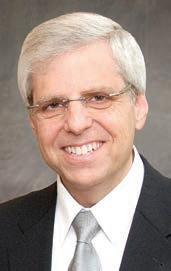
Garlin Gilchrist
Introducing Huntington Homefront
At this gavel-pass moment for the Homefront, I want to express gratitude to the Michigan Chronicle for opening its pages to Huntington Bank, marking a new chapter of partnership and community storytelling.
Our purpose at Huntington has always been clear: to make people’s lives better, help businesses thrive, and strengthen the communities we serve. That commitment guides everything we do and is the inspiration behind this collaboration with the Michigan Chronicle an institution that has championed Detroit stories and perspectives for the past 90 years.
As a longtime partner, we are proud to commemorate a decade of shared impact through our S.W.A.G. Scholarship Awards, a joint effort that has grown into a landmark initiative that expands opportunities for young people across Detroit. I am especially thankful to Hiram Jackson for his steadfast support, friendship, and for embracing this next chapter with such enthusiasm.
Today, we also honor the work of our friends at Comerica, whose 40-year partnership with Homefront has helped inform and empower Detroiters, while looking forward to continued community collaboration with leaders from Fifth Third Bank. Recent efforts—like the Strategic Neighborhood Fund—show what’s possible when we unite around shared priorities and work together toward common goals.
As we adopt the Homefront franchise, we do so with an innate sense of responsibility and commitment. Throughout our 160-year history, Huntington has been guided by a people-first approach to banking and in everything we do. Under the leadership of our CEO, Steve Steinour, we continue to invest in the places we call home. Here in Detroit and across our region, we have deep roots as your hometown bank and exceptional local leadership powered by our Regional President, Mike Land, and more than 2,000 incredible team members who show up every day with purpose and determination to serve our customers and our community.
To the readers who welcome us into this space: thank you for your engagement. Our city’s resilience, innovation, and forward momentum will continue to be at the heart of the stories we uplift—stories of educational advancement, economic empowerment, and collaboration that drive real, lasting impact. Through this initiative, we will also deliver resources and insights that support financial wellbeing, access to capital, pathways to homeownership, and small business growth.
Together we will elevate community voices, celebrate progress, and champion Detroit’s continued rise. It is my honor to introduce the first edition of the Huntington Homefront, and with it, our renewed commitment to what Homefront has always stood for: a shared belief in Detroit and its people.
Gary Torgow Chairman, Huntington National Bank
Purpose in Action:
Huntington Bank’s Commitment to Detroit
Detroit is a place built on legacy, pride, resilience and grit. Its businesses shape the way the world moves, and its neighborhoods reflect a story of heritage, creativity and a vision for a stronger tomorrow. Above all, Detroiters are, and will always be, hardworking, innovative and committed to building a better future.
That same spirit defines Huntington’s commitment to Detroit and communities across Michigan. With the company’s commercial bank headquarters located in downtown Detroit and nearly 300 branches and 4,000 colleagues serving residents across the state, Huntington has deep roots in the places it calls home.
In Detroit, Huntington Tower stands as a recognizable fixture on the city skyline and was the first new office building of its size constructed in the city in 35 years. This multimillion-dollar investment in 2022 brought hundreds of employees downtown, generating jobs and economic activity along Woodward Avenue. It is also a place that frequently opens its doors for civic events, nonprofit convenings, student programs and small business sessions.
“We believe we have a responsibility to Detroit, one that carries an honor and comes to life by strengthening communities, expanding opportunity and investing in the future alongside the people who call this region home,” said Chairman Gary Torgow, Huntington Bank. “Our story here is rooted in consistency and we have remained committed to the city and to standing with residents as Detroit continues to rise.”
A Detroit-Based Presence Built for Impact
Huntington’s presence in downtown Detroit is more than an address. As the primary operating bank of the City of Detroit, Huntington works to advance key initiatives and align financial solutions with Detroit’s evolving priorities. One example includes installment purchase agreements designed to help the City modernize essential vehicle fleets, allowing leaders to plan purchas-
Honoring Legacy, Fueling the Movement:
The NAACP Detroit Branch Sets the Stage for the 71st Fight for Freedom Fund Dinner
“We must stand upon the critical possibilities for our future.” This powerful call to action from Rev. Dr. Wendell Anthony, president of the NAACP Detroit Branch, sets the tone for the organization’s 71st Annual Fight for Freedom Fund Dinner, which will be held on April 26 at Huntington Place.
The annual dinner features renowned keynote speakers, distinguished national guests and a first-class experience celebrating Detroit’s commitment to civil rights and community progress.
“Since 1956, this iconic event has stood as a premier platform for championing justice in our city,” said Kamilia Landrum, executive director of NAACP Detroit Branch. “Over the years, we have welcomed presidents, vice presidents, and national leaders from across corpo -
es strategically, manage timing and maintain critical services relied upon by Detroit families.
“This trust and partnership mean the City’s dollars, dreams and day-to - day operations are entrusted to a bank that’s invested right here in Detroit,” said Torgow. “Our relationship reflects a shared commitment to strengthening neighborhoods, enabling economic mobility and delivering services residents count on every day.”
Huntington, Official Bank of the Detroit Pistons, is also a sponsor and supporter of the city’s most iconic cultural events. From the Detroit Grand Prix and the Thanksgiving Day Parade to Motor City Pride and the Detroit NAACP’s Fight for Freedom Fund Dinner, these events bring families together and drive activity that benefit neighborhoods and small businesses. Additionally, Huntington Place, the city’s premier convention center known historically to residents as Cobo, attracts hundreds of thousands of visitors each year and fuels Detroit’s tourism and hospitality economy.
Investing Where People Live and Build Their Futures
Huntington’s purpose is to make people’s lives better, help businesses thrive and strengthen the communities it serves.
Huntington’s sustained investment in Detroit and Wayne County is grounded in strong partnerships with community leaders, nonprofit organizations and the public sector. Together, these efforts have expanded financial opportunities for consumers, businesses and neighborhoods across the region, with a focus on affordable housing, small business lending and increased access to capital.
Taking Action on Financial Literacy and Hunger with Service Heart Day
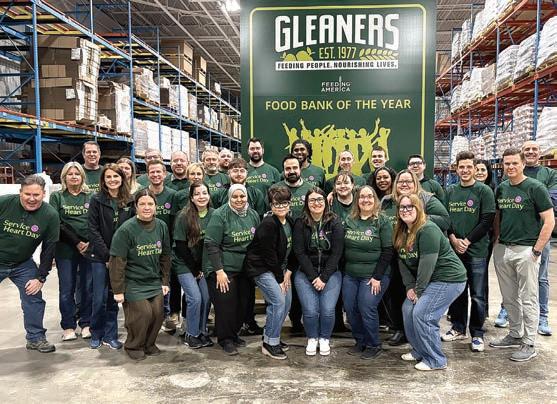
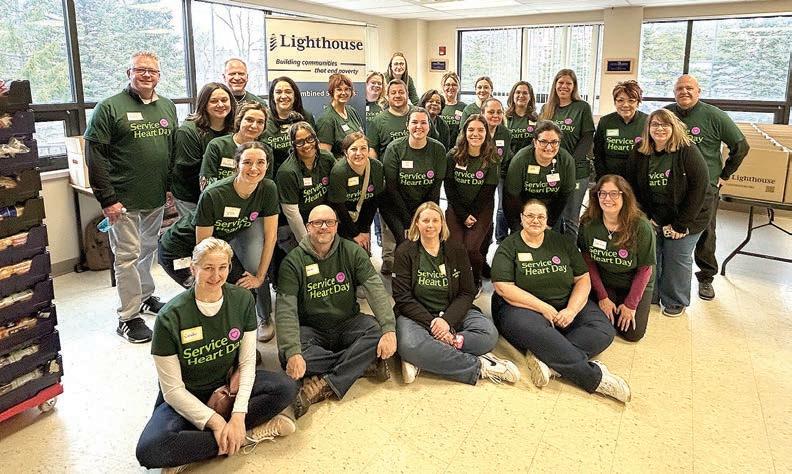
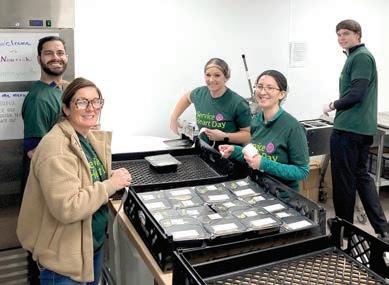
Communities and nonprofits across Metro Detroit and Southeast Michigan felt a surge of support on March 19 as volunteers came together for Huntington Bank’s inaugural Service Heart Day. From food banks to elementary classrooms, each regional service day was intentionally designed around connection, community and putting Huntington’s values into action.
Colleagues lent their hands and hearts to hunger-relief and service organizations including Gleaners Community Food Bank, Forgotten Harvest, CARES in Farmington Hills, JFS of Washtenaw County, Mid-City Nutrition and Lighthouse of Michigan. These organizations rely on volunteers to ensure fresh food reaches families, and assistance is provided to those in communities where it’s needed most.
“Gleaners’ mission to create a hunger-free community begins with the belief that people are worth investing in. Huntington’s Service Heart Day demonstrates a genuine commitment to showing up for our neighbors and driving meaningful change,” said Angela Moloney, president and
to nourish communities, and we’re grateful for Huntington and the hundreds of volunteers they are mobilizing to support families and households across Southeast Michigan.”
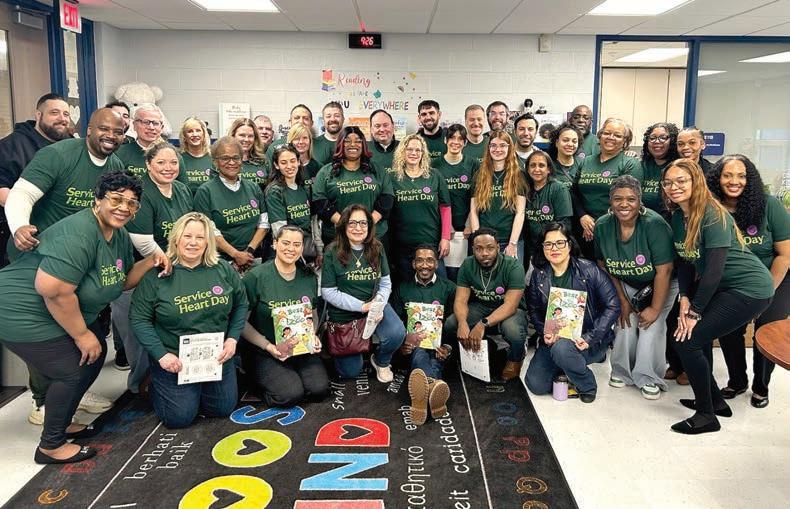
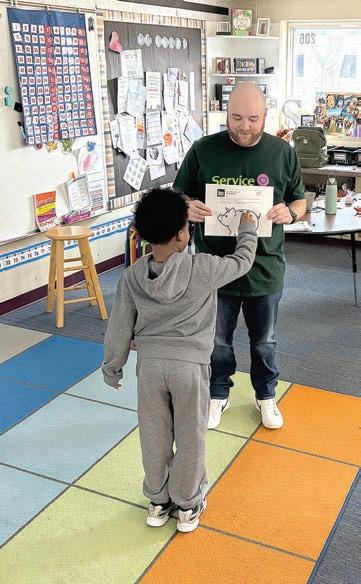
Leaning into their specialized knowledge and daily expertise, Huntington volunteers also brought financial literacy lessons to students in classrooms at Stevenson Elementary in Southfield and Webb Elementary in Ferndale.
Guests celebrate at a past Fight for Freedom Fund Dinner
CEO of Gleaners Community Food Bank. “Volunteers are essential to Gleaners’ ability
Huntington colleagues spend Service Heart Day at Gleaners
Stevenson Elementary student and Huntington volunteers
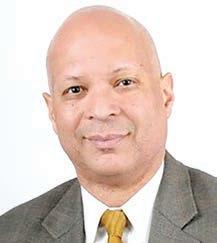
Gary Torgow
Purpose in Action
“Huntington is present, listening, collaborating and supporting the work that strengthens Detroit,” said Southeast Michigan and Northwest Ohio Regional President Mike Land, Huntington. “Economic mobility and growth starts with strong, stable neighborhoods. We are committed to investing where Detroiters live, work and build their futures.”
The Detroit Strategic Neighborhood Fund, where Huntington invested $5 million each in two focus neighborhoods—Cody Rouge and Grandmont Rosedale—has improved parks, greenways, accessibility, walkability and safety, leading to long-term neighborhood revitalization.
Huntington also continues to invest in the potential of housing stability. Its Home for Good program, which first launched in Detroit, broadens access to mortgage opportunities by considering alternative forms of credit, offering flexible underwriting and reducing up -front costs for eligible buyers.
Since 2021, Huntington has supported nearly 22,000 home loans totaling $3.4 billion, expanding and sustaining access to homeownership for under-resourced borrowers and communities across Michigan.
The bank and Torgow helped spearhead and convene other banks to join the City of Detroit’s Down Payment Assistance program that launched in 2023, which provides up to $25,000 for eligible residents looking to purchase a home. Mayor Mary Sheffield announced the reopening of the program last month. Helping Businesses Start, Grow and Succeed
With its commercial headquarters in Detroit and its current 17-year streak as Michigan’s top SBA 7(a) lender by volume, Huntington supports entrepreneurs and businesses of all sizes at every stage of growth. This commitment comes to life through local program partnerships that deliver financial education and capital-access workshops, helping small businesses strengthen readiness, improve financial positioning and expand access to funding.
“We’re at our best when we help people bring their ideas to life,” said Land.
“Whether someone is launching a venture or expanding a family business, our role is to help make growth possible.”
Since June 2021, Huntington has supported more than 21,000 small business loans statewide, delivering over $1.6 billion in capital to small businesses with $1 million or less in gross annual revenue or those located in underresourced communities.
Partnerships That Multiply Impact
Across Detroit, Huntington has invested millions alongside organizations focused on neighborhood revitalization, affordable housing, youth opportunity, workforce development, financial empowerment and essential community services.
Long-standing partnerships include 10 years of the S.W.A.G. (Students Wired for Achievement and Greatness) Scholarship Awards, coordinated with the Michigan Chronicle, which have supported more than 200 Detroit students and invested nearly $2 million in scholarships and education-focused programming. Through the company’s Ignite the Classroom initiative, more than 800 local educators have participated in an immersive year-long professional development experience that included a trip to the internationally renowned Ron Clark Academy in Atlanta. “Supporting young people is one of the most important investments we can make,” said Land. “Our partners are creating powerful opportunities for students to learn, grow and imagine a better future.”
Financial Readiness That Starts Early and Lasts a Lifetime Financial readiness is a major pillar of Huntington’s commitment to Detroit’s future. This work meets residents at every stage of life. Huntington partners with schools and youth-serving organizations like Junior Achievement of Southeastern Michigan to bring engaging money-management lessons into classrooms, helping young people practice budgeting, understand saving and explore real-world money decisions. Huntington’s collaboration with community organizations helps residents access free and confidential financial counseling that includes budgeting support, debt and credit guidance and mortgage-foreclosure assistance. The bank also works with partners like Gesher Human Services to equip older adults with tools to protect their financial security and guard against fraud.
“Financial readiness is one of the most important skills we can help build,” said Land. “When residents of any age are empowered to manage money with confidence, they are gaining tools that create long-term stability and opportunity.”
Standing with Detroit for the Long Term
Detroit’s story is always evolving. It is more than a comeback story. It is a story of community shaped by residents supporting each other, businesses reinvesting locally and partners aligning around shared goals and outcomes.
Huntington remains committed to standing with Detroit for the long term and investing in the people, neighborhoods and institutions that move that story—and Detroit—forward.
Service Heart Day
Team members spent time reading storybooks and leading students through interactive financial education activities. The session introduced students to foundational concepts such as saving, budgeting, generosity and smart money choices.
“Our mission is to design futures, not just teach academics, and that means giving students real experiences,” said Tonya Hickman, principal at Stevenson Elementary. “Saving, spending, budgeting and financial literacy are life skills that we need to start teaching early and are critical to building a foundation for long-term success. Service Heart Day truly reflected our belief in the power of partnerships, family, community and the idea that service comes from the heart.”
“What stood out most was how hands-on and engaging these activities were,” said Corri Nastasi, principal at Webb Elementary. “Each activity brought key life lessons to their level in a way that was fun and grounded in real-world skills. Our staff appreciated the time and partnership that Huntington brought into our classrooms.”
For Huntington, the initiative helped build and strengthen relationships with non-profit and school partners who do this work every day.
“The day was filled with smiles, energy and a can-do attitude to bring service to life and support the great work our partners lead across our communities,” said Mike Land, Southeast Michigan and Northwest Ohio Regional President, Huntington. “Service Heart Day was all about our teams coming together with each other and with community partners to make an impact.”
Webb Elementary student participates in financial education activity Service Heart Day truly reflected our belief in the power of partnerships, family, community and the idea that service comes from the heart.”
Tonya Hickman, principal at Stevenson Elementary
Fight for Freedom Fund Dinner
rate, civic and social justice sectors—each drawn to Detroit to support and celebrate the impactful work made possible through the funds raised at this event.”
These funds help the NAACP deliver its critical work to Detroiters, free of charge. Today, that work includes voter empowerment initiatives, legal consultations and support, civil rights advocacy, educational workshops, and youth engagement and programming.
One of its signature youth programs will be prominently on display at this year’s Fight for Freedom Fund Dinner. The NAACP’s Art and Essay Contest invites young people to artistically and thoughtfully express this year’s theme, “What the Civil Rights Struggle Means to Me.” Contest winners will attend the dinner, see their work showcased at the event, and receive the unforgettable experience of sitting at the head table.
Among the supporting partners is Huntington Bank, represented by Chairman Gary Torgow, who is serving as senior
corporate chair of the dinner for the eighth time. In fact, Torgow is the longest-tenured individual to hold this leadership role for the NAACP Detroit Branch.
“The NAACP’s work to protect rights, expand opportunity and uplift young people align perfectly with the kind of impact we aim to make at Huntington,” said Torgow. “It is an honor to stand alongside an organization that has shaped progress in our city for generations.”
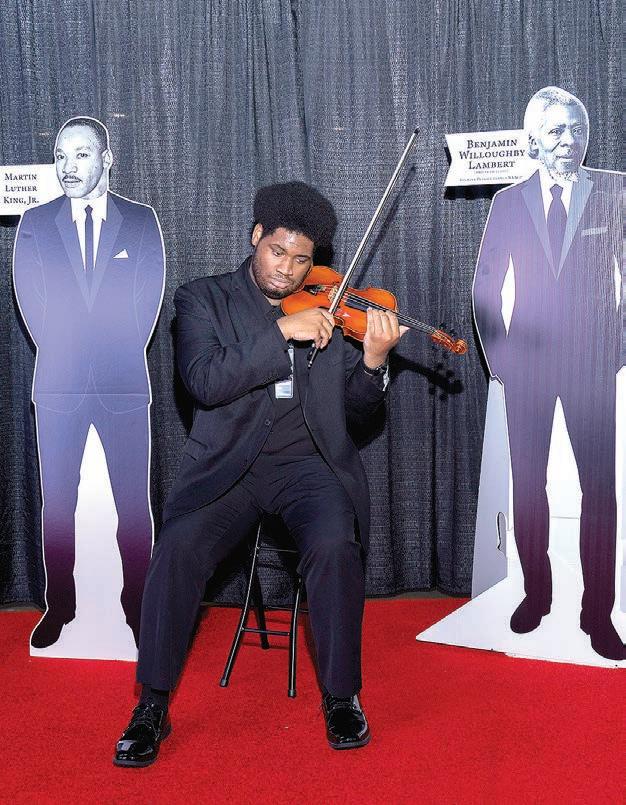
Representing both local and national significance, the annual dinner in Detroit is the largest NAACP dinner in the country. Thousands of guests
enter on a red carpet, take photos with life-size displays of historic civil rights leaders and connect with influential leaders shaping progress across America.
“There is a special kind of spirit at this event,” said Rev. Anthony. “It’s the spirit of hope, of heritage, and of our shared determination to create a better tomorrow. The Fight for Freedom Fund Dinner is not just an event. It is fuel for the movement.”
Look for full coverage, photos, and highlights from the 71st Fight for Freedom Fund Dinner in next week’s edition of the Michigan Chronicle.
Volunteers provide youth financial literacy programming at Stevenson Elementary
A5 | April 22-28, 2026
Money.
Money Matters: The Enduring Economic Impact of Jackie Robinson
By Mark S. Lee
CONTRIBUTING WRITER
When Jackie Robinson broke Major League Baseball’s color barrier in 1947, the moment transcended sports. It wasn’t just a moral victory. It was an economic turning point that reshaped opportunity and access, not just in baseball, but in all facets of life, including business.
That legacy isn’t just historical—it’s actively being carried forward today to younger generations through various opportunities of engagement From Legacy to Local Action
Recently, the Detroit Tigers hosted a Breaking Barriers Roundtable at Comerica Park, in conjunction with Jackie Robinson Day, which brought together Detroit-area high school student-athletes, business, and community leaders for an m engaging conversation on opportunities rooted in Robinson’s legacy.
And the conversation was more than sports.
As Jon Perry, Community Impact Manager, Detroit Tigers, explained, “It’s about helping young people understand what it means to pursue a career, not just in sports, but in community development...”
He also noted it’s important “…to educate young people about what it means...to have courage, determination and persistence in approach to playing baseball, in school and beyond.”
That framing isn’t just motivational—it’s intentional with longer-term ramifications.
When Robinson’s broke the color barrier, it allowed baseball to unlock new opportunities, audiences, revenue, and long-term growth.
This same principle still applies today by creating potential growth and expanding opportunities into new and current markets by connecting communities. As Perry noted, “Connecting communities creating pathways, all in the spirit of breaking barriers (is important).”
Those pathways, whether in education, career development or leadership, translate into higher incomes, stronger consumer spending, and broader economic contribution.
The Power of Access to Opportunity
The Jackie Robinson Foundation continues that mission by developing future leaders through education and mentorship.
Guiding young people toward college, career opportunities, and a commitment to giving back in meaningful ways is impactful.
The dialogue is essential, but the impact is in where it leads and changes are made.
Representation Drives Economic Mobility
The roundtable reinforced a simple but powerful idea. It’s who’s in the room that matters.
Networks drive opportunity. Opportunity drives income. Income drives economic mobility—and ultimately, community wealth.
See ACCESS TO OPPORTUNITY Page A-6
URGE Acquires EBIARA Fund I as Platform Expands Capital Access for Detroit Developers
By Jasmine West
Access to capital has long been one of the hardest doors to open for emerging developers in Detroit.
URGE Group says its acquisition of EBIARA Fund I is about widening that doorway and giving more developers rooted in the city a stronger shot at building projects that shape neighborhood growth.
URGE announced that it has acquired ownership of EBIARA Fund I, formally bringing the investment platform into the URGE family of companies. The move marks a new chapter for a fund created to help emerging development firms secure early-stage capital and strategic support, two resources that have often remained out of reach for smaller firms trying to get projects off the ground.
Launched June 19, 2022, EBIARA Fund I was formed through a partnership between Invest Detroit and URGE with initial funding support from The Kresge Foundation. The platform was built to address a persistent problem in real estate development: talented emerging developers may have the vision and community connection to lead projects, but many do not have the capital stack or institutional backing needed to compete at scale.
“This moment represents the next step in what was always envisioned as
a long-term platform,” said Roderick A. Hardamon, founder and CEO of URGE and co-founder and managing director of the EBIARA Fund. “EBIARA was built on the idea that talented emerging developers already exist within our communities, but what they often lack is access to capital and institutional support. Our goal has always been to build a platform that not only funds projects but helps grow the firms behind them so they can play a sustained role in shaping Detroit’s future.”
That point matters in a city where neighborhood development conversations often focus on major deals, large institutions, and established firms
while smaller developers, many of them developers of color, continue fighting for the financial tools needed to move from concept to construction. EBIARA was designed to help close that gap. Since its launch, projects backed by EBIARA Fund I portfolio companies have helped stimulate more than $240 million in development activity across Detroit neighborhoods, according to the announcement. That figure reflects more than investment volume. It also signals the scale of opportunity that can emerge when early capital and operational support reach firms that have historically had limited access to both.
With the acquisition, URGE said it
See URGE ACQUIRES EBIARA FUND I Page A-6
external it is internal.
By Dr. Anthony O. Kellum CONTRIBUTING COLUMNIST
“And God creates man in his own image... And God blessed them and said, ‘Be fruitful and multiply. Replenish the Earth. Subdue it and have dominion.’” Genesis 1:28
For Black Americans, this passage carries a weight that is both spiritual and historical. To be instructed to “replenish,” to “subdue,” and to “have dominion” is not merely a theological directive it is a declaration of agency, stewardship and rightful authority. Yet for centuries, the ability to exercise that dominion particularly over land was systematically denied. The question before us now is not whether that divine mandate exists, but whether we are prepared to fully step into it. Power in America has never been abstract, it has always been measurable. It is recorded in deeds, enforced through contracts and preserved through ownership. It determines who controls space, who shapes communities and, ultimately, who passes something of value on to the next generation.
For Black Americans, distance from that power has never been accidental. It has been constructed through policy, practice and exclusion. Yet even as those barriers have shifted over time, a deeper
question remains how do we now engage with the very system that once locked us out?
The answer begins with a principle both simple and profound Property is Power!
To understand that principle fully, one must first understand what it feels like to be without it. There is a particular kind of vulnerability that comes with not owning the ground beneath you. It is not just financial, it is psychological. The instability, the lack of control, the quiet awareness that your living situation can be altered by forces beyond your influence, these are not just inconveniences, they are conditions of powerlessness.
Ownership changes that equation it introduces control where there was once uncertainty. It replaces temporary occupancy with permanent stake. It shifts an individual or a family from participant to decision-maker and over time, it transforms not just personal circumstances, but collective outcomes.
This is where the conversation must deepen, particularly for the African American audience. Homeownership is too often framed as a milestone of adulthood or a marker of personal success. In reality, it is something far more consequential. It is an economic position one that converts income
into equity, stability into leverage and presence into permanence.
The Black homeownership gap is not simply a statistic; it is a reflection of unequal participation in one of the most reliable wealth-building systems in American history. While incomes may rise and educational attainment may increase, the absence of ownership limits the ability to translate those gains into lasting wealth. Without property, progress remains fragile subject to disruption, inflation and time.
And yet, opportunity is not scarce in the way many have been conditioned to believe. It is often overlooked. Land exists in abundance particularly within the very communities where disinvestment has occurred. Vacant lots, underutilized buildings, distressed properties these are not just signs of neglect. They are signals of opportunity. They represent entry points into ownership for those willing to see differently, think differently and act decisively.
The challenge, then, is not only
A mindset shaped by exclusion can struggle to recognize opportunity, even when it is present. It can default to caution at the very moment boldness is required. It can view ownership as risk rather than as positioning. This is the quiet barrier that persists even as doors open.
To shift this mindset is not to ignore history, it is to respond to it with intention.
Ownership, particularly in real estate, demands a broader lens. It requires individuals to think beyond immediate comfort and consider long-term impact. A single property, properly understood, is not just a place to live. It is a financial instrument, a stabilizing force and, when multiplied, a mechanism for community transformation.
House by house, block by block, ownership has the capacity to reshape neighborhoods. It increases accountability, strengthens local economies and fosters a level of pride and investment that cannot be replicated through transient occupancy. When residents own, they are more likely to maintain, to improve and to advocate. The physical landscape begins to change but so does the social fabric.
This is where ownership becomes more than personal it becomes communal.
There is also a dimension of purpose embedded in this work that should not be overlooked. To provide housing, to restore
properties, to reinvest in neglected spaces, these are not merely transactions they are contributions They represent a form of stewardship over community and environment, a recognition that ownership carries both privilege and responsibility.
And yet, even at its most sophisticated level, the principle remains accessible. Ownership does not require perfection, it requires preparation, education and the willingness to act.
There is a tendency, particularly among Black people, to wait for optimal conditions. Better rates, lower prices. But markets rarely align with ideal timing what they reward instead is informed participation. The greater risk is not making an imperfect decision it is making no decision at all. If the goal is to close the wealth gap, to strengthen communities and to create something that endures beyond a single lifetime, then ownership cannot remain optional. It must become central. It must be pursued not only as a personal aspiration, but as a collective strategy. There is land in our communities. There are properties waiting to be restored, reimagined and reclaimed. There are real, tangible opportunities within reach. Property is Power! Property is Power! is a movement to promote home and community ownership. Studies indicate homeownership leads to higher graduation rates, family wealth, and community involvement.
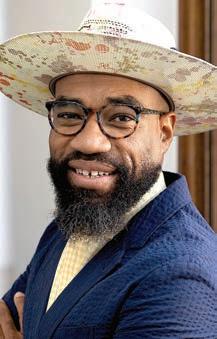
Anthony O. Kellum
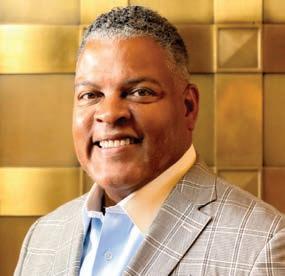
Mark S. Lee
Roderick A. Hardamon Keona Cowan Tosha Tabron
URGE Acquires EBIARA Fund I
From page A-5
will fully integrate the EBIARA platform into its broader advisory, development, and investment ecosystem. The company says that the structure will allow the platform to scale more efficiently and strengthen its long-term impact.
The transition also keeps key institutional partners connected to the work.
“When Invest Detroit, URGE Imprint, and The Kresge Foundation came together to launch EBIARA, we shared a conviction that minority-owned real estate developers had the talent and drive to scale; they simply needed the right capital and infrastructure to do it,” said Keona Cowan, EVP Lending, Invest Detroit. “We’ve watched that conviction become reality, and we are proud to see EBIARA expand its mission to a national stage.”
That expansion matters because the platform is not only being framed as a Detroit success story, but also as a model that could be applied in other markets. For Detroit, that creates a different kind of significance. A city that has spent years debating equitable development now has a homegrown platform that its backers believe can travel beyond city limits.
The Kresge Foundation, one of the institutional supporters that helped launch the fund, is also staying committed to the platform as it enters this next phase.
“Our continued partnership reflects confidence in the EBIARA model and its ability to expand equitable access to development opportunities,” said Tosha Tabron, Director of Originations at The Kresge Foundation. “The platform has demonstrated how capital, expertise and intentional partnership can support the growth of emerging developers while strengthening neighborhoods across Detroit.”
Development has often raised hard questions in this city about who gets financed, who gets taken seriously, and who gets to shape what neighborhoods become. For emerging developers trying to build in communities they know firsthand, access to capital can determine whether a project remains a plan on paper or becomes something residents can actually see, use, and benefit from.
Developers working with EBIARA say the platform has already made that difference visible.
“With the support of EBIARA, we’ve been able to move projects from concept to completion in a way that creates real impact in our communities,” said Sauda Ahmad-Green of S&S Development. “Our recent ribbon cutting of Merril Place II is a clear example of what’s possible when emerging developers have access to the right capital and partnership.”
That testimony speaks to the broader value of the platform. EBIARA was not created only to fund individual deals. It was
created to help grow the firms behind those deals, giving emerging developers a better chance to build track records, expand capac ity, and stay active in a development econ omy that too often rewards existing access over local insight.
URGE said the acquisition comes as it prepares for the next phase of growth for the EBIARA platform, including continued development of the second series of the fund. That next phase will support a grow ing pipeline of development opportunities and expand the model into new markets around the country.
For Detroit, the announcement lands at a time when equitable development remains a pressing issue. Residents continue to watch how money moves, where projects rise, and whether neighborhood investment truly includes the people and firms with roots in the communities being redeveloped. Plat forms like EBIARA are drawing attention because they attempt to shift that equation by pairing capital with strategic support and long-term firm-building.
URGE’s acquisition of EBIARA Fund I puts that platform fully under one roof. The larger test will be whether that structure can continue delivering on the promise that helped launch the fund in the first place: giving emerging developers the backing needed not only to complete projects, but to hold a lasting stake in Detroit’s future.
Access to Opportunity
For cities like Detroit, that ripple effect is critical. When more residents are con nected to opportunity, the entire local econ omy strengthens.
Using Platform as Capital Organizations like the Tigers are lever aging their platform to convene—not just entertain.
“It’s really about connection,” Perry em phasized. “Connecting people to opportuni ty, to resources, and to each other in a way that creates lasting impact.”
The Bottom Line
Jackie Robinson’s legacy proves that when barriers come down, economies grow.
The Tigers’ Breaking Barriers Roundta ble is a reminder that this work continues— not just in history books, but in real time, in real communities—and with real economic consequences.
Because when opportunity expands, so does the economy.
And for today’s business leaders, the takeaway is clear:
Don’t just honor the legacy—invest in it.
We invite readers, business owners, and future entrepreneurs to follow along, ask questions, and engage. If you have story ideas or questions, you can email Lee at mark@leegroupinnovation.com or visit leegroupinnovation.com.
From page A-5
The Workforce Crisis Has an Early Middle College Solution
By Dr. Tamika Riley
CONTRIBUTING COLUMNIST
An approach that is overlooked for addressing the workforce crisis is early middle college programs. Early Middle College offers students access to higher education while producing graduates who hold the credentials employers value, especially in Career and Technical Education (CTE) and trade fields.
This is not about steering students away from the idea of continuing onto a four-year degree. It is about equipping them with the necessary qualifications to have options of either continuing higher education or entering the workforce directly out of high school.
My experience at Washtenaw Technical Middle College (WTMC) spans 15 years and I have witnessed how exposure to a vast selection of degree and certificate programs can expand a student’s sense of possibility.
The exposure opens students’ eyes to career paths beyond the conventional trajectories they have been conditioned to chase since childhood. As they explore these options, they discover careers that require only a certificate or an associate’s degree and can offer stable well-paying work.
For early middle college students who desire to pursue a four-year degree after graduating, these same programs provide credit that reduces time and cost towards a bachelor’s degree. For students who aspire to go into the workforce, the realization they can graduate from high school and have the credentials employers are actively seeking is life changing.
I have supported early middle college students with choosing from over 130 associate degree and certificate programs at Washtenaw Community College (WCC). These programs provide diverse courses across several core career pathways.
Areas of study include transportation technologies, nursing, dental assisting, business and entrepreneurship, welding, information technology, digital and fine arts, law, human services, and more. Each of these programs are designed not only to challenge students academically, but also to equip them with the practical skills that are sought after in today’s job market.
The education, practical training, degrees, and certifications earned make students competitive candidates directly out of high school. Thus, making the early middle college model a smart solution to strengthening the pipeline of skilled workers into roles experiencing a skills gap and labor shortages- particularly in the skilled trades and career and technical education (CTE) occupations.
When asked about students transitioning into the workforce directly after graduating, WTMC Superintendent Dr. Karl Covert highlighted that a sizeable fraction enters the workforce directly, debt free and earning a livable wage. He emphasized that by being at WTMC students are receiving industry standard certification, and he has seen students find skilled roles, such as working for companies as welders, and operating HVAC systems for corporations among other positions.
In conclusion, as we think about the decline in available skilled workers, it is imperative to recognize the significance of early middle college programs. From a workforce perspective, the impact is undeniable.
Early Middle College students are pursuing nontraditional programs, graduating high school with the appropriate credentials, and are ready to work upon graduation. Investing in early middle college programs not only increases accessibility of higher education, but also actively develops skilled workers industries are demanding.
In my opinion, expanding early middle college initiatives is a high impact strategy- one that delivers shared benefits for students, families, and employers alike.
Dr. Riley graduated from Michigan State University with a B.A. in Psychology, and an M.A. in School and Community Counseling. She has also earned her PhD in Organizational Psychology. Prior to joining WTMC in 2010, Dr. Riley gained valuable experience as a Case Manager for Michigan Works in Detroit. In addition, she has served as a counselor across school and community agency settings throughout the Metro Detroit area. Dr. Riley can be contacted at riley.tamika@gmail.com.
Mayor Mary Sheffield Targets Negligent Detroit Landlords in New Apartment Crackdown
By Jasmine West
Mayor Mary Sheffield’s administration is turning up pressure on a group of Detroit apartment owners as the city moves to crack down on landlords accused of allowing unsafe living conditions to persist across hundreds of rental units.
During a Wednesday news conference, Sheffield announced a new multi-department strategy aimed at multifamily properties with repeated health, safety, and code issues. City officials say the effort will start with outreach and opportunities for landlords to bring properties into compliance. When that fails, the city says it is prepared to escalate through legal action, consent agreements, and liens tied to unpaid blight violations and code enforcement penalties.
“For too long, we have seen properties decline with critical health and safety issues going unaddressed,” Sheffield said during the news conference. “Today, we are taking a more aggressive and proactive approach on behalf of our residents.”
City Corporation Counsel Conrad Mallett said the first move will be to seek meetings with property owners and work toward formal improvement plans. When owners do not respond or fail to act, the city plans to take cases to court and pursue consent agreements that would allow what Mallett described as “continuous and meticulous enforcement.”
“This is the approach. We want to do this in a methodical, safe manner,” Mallett said during the Wednesday news conference. “We want to be sure that the tenants are aware that the circumstances that they’re in are going to change, and if they don’t, the city of Detroit is going to continue to push for the kind of change that’s required.”
The initiative brings together multiple city departments, including the law department, the Detroit Health Department, and the Buildings, Safety Engineering, and Environmental Department, known as BSEED. City officials said the goal is to address long-standing maintenance failures and rental compliance issues before conditions deteriorate further.
Mallett pointed to recent struggles
involving rental properties linked to blockchain-based real estate company Real Token Inc. and the bankrupt ownership of the Leland House downtown as signs that the city needs to act earlier and more aggressively when warning signs appear.
Although officials said during the news conference that they were targeting 60 multifamily properties, a list later provided by a Sheffield spokesperson to Crain’s included roughly 25 addresses. Those addresses correspond to four apartment complexes across the city, totaling 504 units.
The administration has not publicly laid out a full explanation for why each property made the list. Sheffield said the targeted buildings are dealing with “ongoing maintenance and compliance issues.”
A review of city records cited by Crain’s found that each of the listed properties had accumulated multiple blight and code violations. Some had as many as 100 violations. Several of the repeated violations involved failure to secure a certificate of compliance, a city requirement for legally operating rental housing.
That issue has remained a major concern for Detroit officials. Increasing rental compliance rates has been a stated priority for roughly two years, dating back to a time when the citywide compliance rate was below 10%. BSEED Director David Bell said Wednesday that the rate has now reached 14%, though the city says more work remains.
Attempts to reach the owners of the targeted properties for comment were unsuccessful.
Among the buildings now under scrutiny is Russell Woods Apartments, a 156-unit complex. City records list the property as owned by Russell Woods Apartments LLC, though title documents show it was sold in November to Garden on Webb LLC for an undisclosed amount. An office location for the new owner could not be identified.
City records show 20 blight violations connected to Russell Woods Apartments. Those violations include failure to obtain a certificate of compliance, failure to register the property as
a rental, and unlawful rental of property without lead clearance.
Imperial Manor Apartments, a 164-unit complex in the Seven MileRouge neighborhood on Detroit’s far northwest side, is also on the city’s list. Public records identify the owner as Imperial Manor House LLC, though it is unclear who is behind the entity.
City records show 11 outstanding blight violations at Imperial Manor. Those include operating without a certificate of compliance and failure to maintain building infrastructure.
Chapel Court and Pierre Manor apartments, both located near Seven Mile and Telegraph on the city’s northwest side, were sold last year to separate entities tied to Saman Abro of Rochester Hills. Together, the two complexes total 184 units and sold for a combined $4.25 million, according to CoStar Group Inc., a Washington, D.C.based real estate information service. Combined, Chapel Court and Pierre Manor have racked up more than 100 blight violations, according to city records. Those violations include conditions described as a “lack of ventilation, illumination, sanitary or heating facilities to render property unfit for human occupancy,” along with defective windows.
For Detroit tenants living inside these buildings, this latest crackdown points to a larger issue that has shaped housing struggles across the city for years. Too many renters continue paying for units where basic safety, maintenance, and legal compliance have not been guaranteed. Sheffield’s administration is now signaling that repeated violations will no longer be treated as routine paperwork problems.
This enforcement push also places fresh attention on whether Detroit can meaningfully raise its rental compliance rate while protecting residents already living in troubled buildings. City officials say they want to avoid abrupt disruption for tenants. At the same time, they say the status quo cannot continue.
That tension is likely to define what happens next. The city says it wants cooperation first. Landlords who refuse to act could soon face a much tougher response.
Detroit Teens Encouraged to Pursue Skilled Trades During Hands-on Expo
By Aaron Foley EDITOR-AT-LARGE
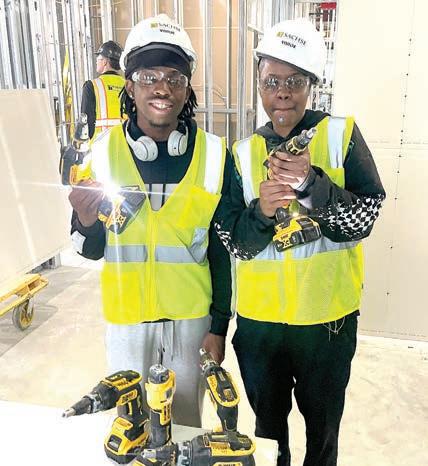
More than 100 Detroit high school students were invited by one of the region’s most prominent construction firms to a live construction site for a hands-on exploration of various skilled trades. It was a demonstration billed to promote “AI-proof careers” and one that lands amid larger conversations around adding to Detroit’s workforce and opportunities for youth in the city.
Sachse Construction, in collaboration with Junior Achievement of Southeastern Michigan, held the event at the future American Indian Health & Family Services (AIHFS) Headquarters, which is under construction in Southwest Detroit. Donning hard hats and fluorescent safety vests, students learned the ins and outs of carpentry, electrical, plumbing, and masonry trades with actual laborers working on the site.
“We believe that if there’s a path somebody’s interested in, we want to show them that opportunity,” said Todd Sachse, CEO of Sachse Construction. “We just really believe that many young men and women don’t even know all the opportunities that they have, and we just want to expose this to them.”
Detroit Mayor Mary Sheffield, who has introduced a number of initiatives centering on the city’s youth during her first month in office, noted the significance of training future skilled tradesmen from Detroit schools early to ensure they can boost the city’s workforce as adults, particularly as some construction mandates require a majority of contractors to reside within the city limits.
“Education is a huge focus of this administration, and one thing that always comes up is access to opportunities for employing our young people, and skilled trades is just one of those areas where there’s always op-
portunity available -- especially right now in Detroit with the amount of development that’s taking place,” Sheffield told reporters.
“Whenever you have the opportunity to have the young people leave the classroom, come on site, and actually have a hands-on experience. I think it really sparks a different type of interest that we need with our young people.”
Sachse said that despite an uptick in new building projects, “We struggle with that today. There’s not enough local Detroiters to fulfill all of the opportunities on our jobs. We need more,” he said. “There’s just not a lot of training, not a lot of people going through the training.”
Making people – at any age, but especially young people – aware of the training is a missing link, Sachse notes, saying that there’s a lack of direct communication to people on how to find work and training in skilled trades, or what skilled trades even are.
“It’s not like you have to go to some university to learn that. That’s what’s so great about it, is that you can learn the skill and get paid while you’re learning,” he says. “You don’t have to go and spend tens or hundreds of thousands of dollars in some education that hope one day to get a job. You’re gonna get that education while you’re working and making money in the long run.”
The Sachse firm’s expo isn’t the first nor the last effort to encourage young people to get into the trades, but every successive generation has been pushed more into white-collar work than the previous one, with more technology advancing along the way. That in mind, getting Gen Alpha, who have been surrounded by iPads their entire lives, into the field isn’t as challenging as it sounds, Sachse says.
Notable during the day’s demonstrations was a 50/50 gender balance among students, something Sachse noted was reflective of how the industry has evolved in the region.
“There’s more women in construction and in the field now than there ever has been…in Detroit and in southeastern Michigan,” Sachse said. “And in many of the trades, women are really, really good in some cases -- even better than men -- because they’re very detailed-oriented; some of the finished trades they’re really, really good at.”
“If you go to our job site, you’ll see more women now than I saw 30 years ago. Which is so cool,” Sachse added.
“From a technology standpoint, technology is heavily used in construction,” Sachse says. “Everything that we do is on iPads, and you’re following all the drawings electronically. You have to learn how to do all that. We use lasers and really cool, hightech equipment that’s used on the job site -- all of which is trainable. It’s all stuff that we can teach, right there on the job.”
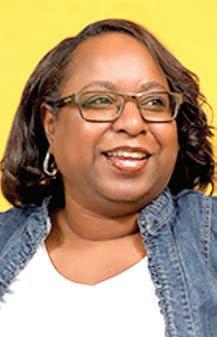
Dr. Tamika Riley
The Inner Architecture: Who Were You Before the World Told You Who You Were
By Miss AJ Williams
There is a self you have been carrying for so long that you stopped questioning whether it belongs to you. It shows up reliably, operates efficiently, and knows exactly what each room requires. It has learned how to make people comfortable, how to be useful, and how to present the version of itself most likely to be well received. This self is not a lie. But it is not entirely yours either. It is a structure, assembled over time in response to what life required of you. And like anything built under sustained pressure, it deserves a closer, more honest examination. Identity work, at its most essential, is the practice of learning to distinguish the structure from the self. Not dismantling what was built but understanding that the builder was a child navigating conditions she did not choose, constructing the most intelligent architecture available to her at the time. The construction was not a mistake. It was survival made visible. What deserves examination is not whether she built well, but for whose requirements she was building.
Most people move through life as occupants of a house they did not design. They arrange the furniture according to preferences they inherited or absorbed. They renovate, redecorate, occasionally tear a room apart in frustration, and call it healing. But they rarely stop to question whether the foundation was laid on their behalf or simply in their name. The deeper inquiry is not aesthetic. It is structural. It asks what this house was built around, and whether that original thing still requires this much protection.
The self that takes shape in childhood is always a response to the environment it inhabits. It learns what earns warmth and what invites distance. It learns which qualities are welcome and which must be quietly edited out. It learns to read a room before it has fully learned its own name. None of this is pathology. It is intelligence. Children are extraordinary architects of survival. The problem is not that they build. The problem is that eventually the blueprints get mistaken for something they were born carrying.
What gets lost in that process does not leave with any announcement. A child does not decide one morning to set aside a part of herself. The exile is incremental, quiet, and always justified by the evidence of the moment. She stops reaching for the things that drew criticism. She softens the parts of herself that made others pull away. She learns to lead with what generates safety, belonging, or, at a minimum, the absence of harm. By the time she is an adult, and someone asks who she is, she has been answering a slightly different question for so long that the substitution no longer registers. She describes what she has done, what she has survived, and what she is capable of. All of it is real. None of it is the full answer.
This distinction forms the foundation of every serious interior practice. It is not a philosophical puzzle or a therapeutic exercise. It is excavation in the most literal sense: careful removal of accumulated layers to recover what lies beneath. What lies beneath is not just a wound, though wounds will be part of what you find. What lies beneath is a coherence. A recognizable self was never destroyed, only covered over. The self that existed before the world began, making its requests, is not gone. It is layered over, waiting, as buried things do, for someone willing to go looking.
What makes this spiritual work, and not psychological work alone, is the nature of the question it carries. Psychology asks how you came to be this
Janice Winfrey’s ‘Dancing with the Dignitaries’ Raises Money for DPSCD
By Jeremy Allen EXECUTIVE EDITOR
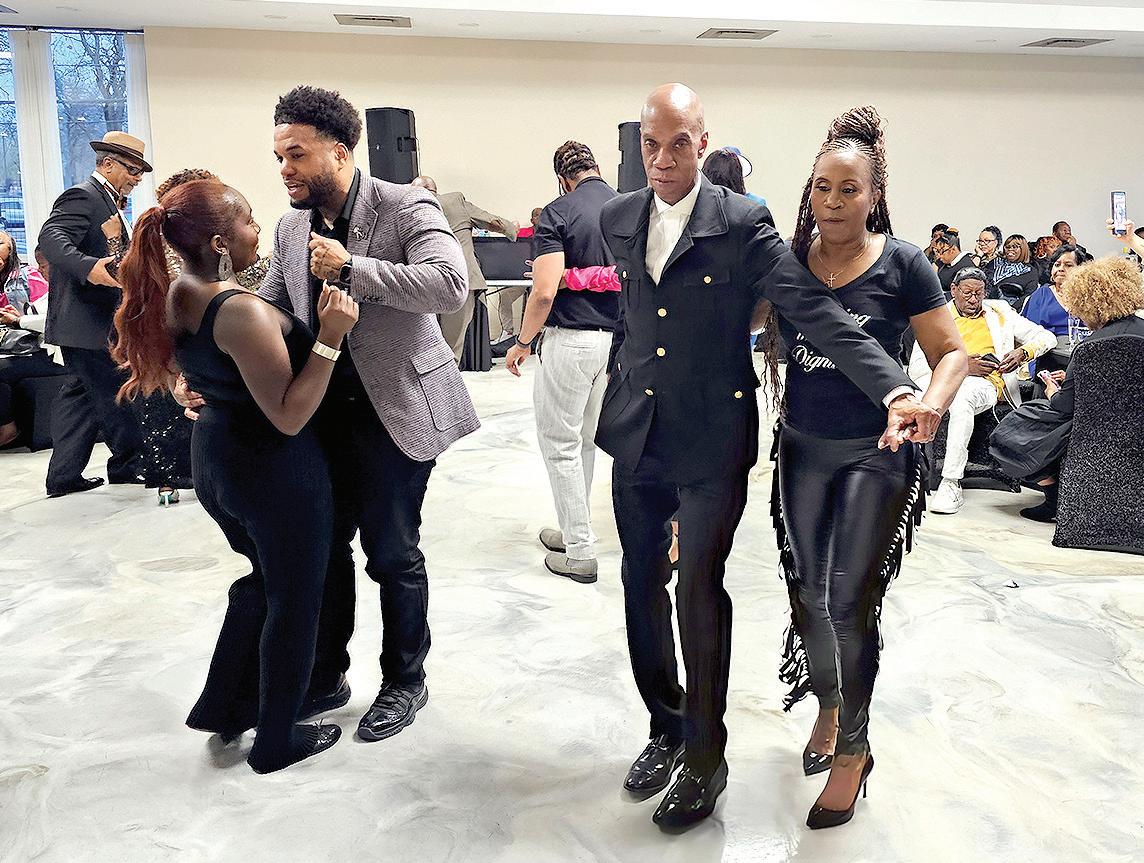
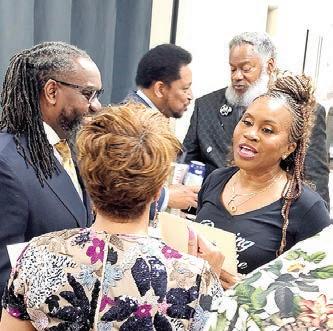
Janice Winfrey and her friends know how to have a good time and put on a show. She did that Friday night, April 17, at the Horatio Williams Foundation in downtown Detroit as more than 300 people gathered as participants and spectators in her annual “Dancing with the Dignitaries” event, which raised money for the Detroit Public Schools Consolidated District.
The event paired local city and county employees, elected officials, and notable Detroiters with professional dance partners, as they performed choreographed dance group and couples’ routines.
Wayne County Commissioner Alicia Bell performed with partner Bobby Green; Detroit City Councilmember Scott Benson performed with partner Tonya Turner; Retired 36th District Court Judge Deborah Geraldine Bledsoe Ford performed with partner H. Demetrius Jones; Money Matters Founder Gail Perry-Mason performed with partner Tyrone Barkley; Wayne County Commissioner Angelique Peterson-Mayberry performed with partner Marcellous Love; City Official Paris Blessman performed with partner Demetrius Mahone; Wayne County Sheriff Raphael Washington performed with partner Cynthia Swoope-Marbury; Detroit Police Commissioner Lavish T. Williams performed with parnter Erica Hill; Detroit Police Commissioner Darryl Woods performed with partner Lisa Southern; and Detroit City Clerk Winfrey performed with partner Darrell Garth.
“Tonight was all about having a good time,” Winfrey said. “We practiced and worked hard at the dances – some clearly more than others,” she added with a laugh.
While dinner was served and champagne flowed, the audience was entertained by each of the couples’ dances, as
Winfrey and Garth opened the routines with a ballroom-style routine that embodied the Detroit flare and charisma that makes it one of the city’s signature dance styles.
Sheriff Washington, who works in a high-stress environment every day as a law enforcement agent, said while the spotlight was on him made him more nervous than he’s been in quite some time.
“This experience, dancing in front of a crowd that’s only watching you, is very different for me. I work in a high-pressure job, so you’d think it’s OK, but I was nervous. My partner, who’s a dancer, said she was nervous. So you know I – a police officer who’s not used to it – was going to be nervous,” he said. “I knew I wasn’t gonna win it, but I was in it to have fun and support a good cause.”
Blessman, on the other hand, did not come to take home second place. She and her partner Mahone performed a high-energy routine to a melody of millennial R&B classics that included some early-2000s Usher and every Detroiter’s favorite hustle – the Tamia Hustle. During their routine, she paid homage to her sorority – the AKAs – on more than one occasion, and the two stole the show and won the grand prize of the evening.
Just before Winfrey announced the winner, Blessman said “I just came to have a good time,” but it was evident by the crowd’s energy during their routine and just before the first-place winner
By Jasmine West
Detroit is officially set to rejoin the WNBA.
The WNBA and NBA Board of Governors have approved expansion teams for Detroit, Cleveland, and Philadelphia. Detroit’s team is scheduled to begin play in 2029, while Cleveland will start in 2028 and Philadelphia in 2030. Detroit, Cleveland, and Philadelphia were initially awarded expansion franchises last summer, and Thursday’s vote by the WNBA and NBA Board of Governors formally cleared the teams to move forward.
During this 2025 Mackinac Policy Conference, WNBA Detroit enthusiasts and investors engaged in a panel discussion moderated by Siebert Williams Shank & Co.’s Suzanne Shank, and included Naismith Basketball Hall of Famer and She’s Got Time Founder Swin Cash-Canal, Managing Director of USA Basketball, Naismith Basketball Hall of Famer, and Detroit WNBA Investor Grant Hill, Corporate Board Executive, CEO Advisor, and Community Strategist Sandy Pierce, and Pistons
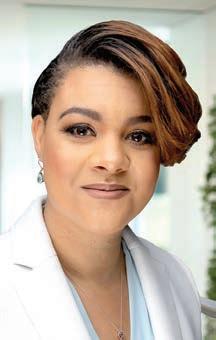
Miss AJ Williams
The Inner Architecture
From page B-1
way. Spirituality asks who you were before you became who you are. Both questions are necessary. But it is the second that holds the more unsettling implication, because it insists that beneath the adapted self, something arrived whole. Something that existed before it learned to be useful, before it learned to perform, before it learned how to make itself acceptable in spaces not designed to receive it fully.
That recognition is not always comfortable. Seeing that the self you have been presenting to the world is largely a construction can, at first, feel like something close to grief. In some ways, it is grief. What you are mourning is not a lie but a strategy. What you are releasing is not your identity but your long identification with an architecture that was always meant to be temporary, always meant to serve as a bridge rather than a final destination.
The work does not begin with reinvention. It begins with recognition. Before anything truer can be built, you must be willing to see what was built in your place and hold the original question long enough for it to work on you. Not as an intellectual exercise. Not as something to be answered and archived. As a sustained, honest inquiry into what remains when the performance is no longer required.
Who were you before the world told you who you were? That question is not rhetorical. It is the architecture of everything that follows.
AJ Williams is a Spiritual Wellness Architect and Educator and the Managing Editor of the Michigan Chronicle. A thought leader at the intersection of astrology, psychology, and identity evolution, she is the founder of Sunday Communion, a quarterly live transformation experience held in Detroit. The Inner Architecture is her editorial column on the work of becoming.
WNBA Return
From page B-1
space for players and staff.
Detroit’s WNBA bid was submitted in January 2025 by a group of investors that includes Arn and Nancy Tellem, Sheila and Steve Hamp, Jared and Christen Goff, Mary and Tony Barra, Chris Webber, Grant Hill and Tamia, and KC and Ashley Crain. Rapper Eminem also expressed interest in joining the effort, though it has not been publicly confirmed whether he formally signed on.
Detroit has a strong history with the league. The Detroit Shock debuted in 1998 as one of the WNBA’s first expansion teams and won championships in 2003, 2006, and 2008. The team played at The Palace of Auburn Hills and remains part of league attendance history. The Shock drew more
than 160,000 fans across 17 home games in 2004, the season after winning their first title. The franchise still holds the WNBA single-game attendance record after 22,076 fans attended Game 3 of the 2003 WNBA Finals.
The Shock left Metro Detroit after the 2009 season and moved to Tulsa under new ownership. The team had been owned by longtime Pistons owner Bill Davidson. After Davidson died in March 2009, his widow, Karen Davidson, sold the franchise. Prior to the sale, the Auburn Hills-based franchise won three WNBA titles (2003, 2006, and 2008). Led by coach Bill Laimbeer and players like Swin Cash and Cheryl Ford, the team was a dynasty, winning their three championships within a six-year span.
The WNBA currently has 14 teams. Toronto Tempo and a Portland franchise are set to begin play this spring.
Dancing with the Dignitaries
was announced that she and Mahone were walking away as winners.
Councilmember Benson and his partner Turner took home the second prize for their routine, which started slowly, had a record-scratching switch-up during the middle, and they got funky with a hip-hop routine to end their performance.
Money Matters Founder Gail Perry-Mason, perhaps, had the most fun of anyone during the night, as she sashayed around the dance floor – ponytail swinging behind her – for another unforgettable performance.
“Tonight was so special because it brought people together. In Detroit, all it’s about is unity and love. It took a lot of hard work to prepare, but it was so much fun and there was so much love and pure fun in here tonight – fun like only Detroit could have,” said Perry-Mason.
The winners were voted on by the spectators in the crowd, and true to Winfrey’s form as a city clerk who oversees the election process, spectators had to fill out official ballots and feed their ballots into a vote tabulation machine to determine the winners.
But the real winners were the people in
From page B-1
Once A Detroit Teacher, A Leading Environmental Justice Activist Returns with
Lessons from the Climate Fight
By Aaron Foley EDITOR-AT-LARGE
The students lucky enough to attend Renaissance High School in the years just before and after the new millennium were witnessing a genius in the making without knowing it. To be sure, it is Renaissance after all, and that sentiment could apply to just about any student at any time in history at Detroit’s leading magnet high school. In this instance, the would-be history maker was one of the school’s history teachers.
Back in 1999, Renaissance teacher Catherine Coleman Flowers – Miss or Mrs. Flowers to those of a certain age –brought forth an idea to the school’s administration: Take a bus of select students on a field trip to Selma, Ala., to recreate the 1965 Voting Rights March to Montgomery.
The goal, Flowers envisioned, was to introduce a civil rights lesson to Detroit youth by bringing them to one of the most important sites of the movement; connect Detroiters with a state many of us have roots in; and emphasize that at the original march, youth at their stage in life were on the front lines.
Detroit students were used to seeing living representations of the struggle for equality on a regular basis; nearly everyone has a story about running into Rosa Parks everywhere from Farmer Jack to the Freedom Fund dinner. Bringing Midwest kids down south was a new concept entirely.
With the school’s blessing and funding boosts from the Detroit NAACP and other donors, Coleman Flowers pulled off an epic field trip still talked about by alumni – whether they went on it or not -- to this day. But for Coleman Flowers, as she reflected during a lecture at the Charles H. Wright Museum of African American History this month, something about the Selma trip didn’t sit right, or smell right, when she came back to Detroit.
She was born and raised in Lowndes County, Alabama, a rural county near Selma and Montgomery, so the landscape wasn’t unfamiliar. While speaking with locals at the time, however, they complained about an issue that was very familiar: Issues with the sanitation infrastructure, which affects everything from clean drinking water, sewage disposal, and garbage pickup.
did it for inspiration, because something had told me, if I lived long enough to know that if we did not win the [2024] election, there were gonna be people that would be trying to take us back.”
Coleman Flowers’ talk lands at a critical juncture for Detroit as it relates to the environment. In the search for climate havens, many Americans are making new migration patterns to Midwest cities like Detroit, believed to be immune from major calamities like earthquakes and hurricanes – though this April, frequent tornadoes have swept through the state during a month that usually never sees tornadoes at all, let alone more than one. At the same time, the effects of climate change have worn on the city’s infrastructure – more recently, the torrential downpours every summer that flood basements. Rain or shine, persistent issues like air pollution and contaminated soil have been pervasive here. All these issues hover over the uncertain future of a rapidly changing city that measures its success with utility turn-ons, but not that long ago was infamous for utility shut-offs.
“Detroit is what it is because of the people that work real hard to make it,” Coleman Flowers says. “And Detroit should be a lesson to all of us, because when Detroit was down, Detroit kept fighting. And now I see a rebirth in Detroit. And a lot of people are coming back to Detroit. But we should not lose our history.”
vor of forced sterilization and was instrumental in raising awareness of the practice as more women in the community came together to speak out.
While in high school, Coleman Flowers described a story of how an elementary-aged Black girl was found dead in the county, and rumor spread that the high school principal, who was Black, was part of an insidious ring of luring Black girls into encounters where they’d be raped by white men –“sort of like what’s going on in the Epstein files,” she says. At 16, she pushed for an investigation that eventually led to the resignation of the principal – and the name of the high school to be changed.
Seeing injustice is one thing, but the courage to stand up for it is what’s needed in any sort of push for reconciliation, especially for future activists, Coleman Flowers says.
“I knew that we needed to have the kind of inspiration that I got from my parents,” she says. “I felt like the things that my mother, my father, and the people that were around me shared about their struggle, helped me to be able to push forward, to do better than I was doing at that time, despite the fact that there were so many obstacles that were against me.”
“I thought that all of that was over. I thought that what I grew up with had changed. And when I went back home [to Detroit], I found out that people were being arrested because they could not afford sanitation,” she says.
Coleman Flowers had been living in Detroit for about 15 years at that point. In 2001, she moved back to Lowndes County and started asking questions: Why are Lowndes residents still living under the unsafe conditions from decades ago, and how did it get to this point in the first place?
Finding the answers to those questions put Coleman Flowers on the path of becoming one of the world’s leading environmental justice scholars, with a focus on rural Black communities like her native Lowndes County. She is now touring her new book, “Holy Ground: On Activism, Environmental Justice, and Finding Hope,” a biographical volume of personal essays tracing her journey from teenage activist in Lowndes to founder of the Center for Rural Enterprise and Environmental Justice, whose investigations and advocacy have reshaped environmental policy on a national scale.
“I wanted to write about faith. And I wanted to write about the things that inspired me,” Coleman Flowers, who was named a MacArthur Genius in 2020, told the Wright crowd. “I wanted to talk about spirituality. I tell a lot of stories about my life that I’ve never shared before. But I
A crux of Coleman Flowers’ storytelling emphasizes the strong connection between Lowndes County and Detroit. Ask any Black person in Michigan where their family hails from, and often the answer will be somewhere in Alabama. Over time, Lowndes County would not only represent a significant portion of Detroit’s new migrants, but a symbiotic relationship between the two regions would also play a role in Black history at large.
“You can’t talk about voting rights without talking about Detroit,” Coleman Flowers says, noting that unionized auto workers in Detroit donated vehicles for Lowndes County residents to canvass in. “Lowndes County is where the original Black Panther Party was founded – not Oakland. And a lot of the people organizing people for the right to vote in Lowndes County were from here in Detroit, because a lot of them had come back.”
Coleman Flowers was born to parents who instilled a spirit of activism – or perhaps resilience – early on. Her father “was a card-carrying member of the NRA” who taught all her brothers how to shoot and defend themselves against attacks on their property and their person – largely because Lowndes County, like several counties in the rural South, was a hotbed for lynchings. Her mother was a survi-
During a question-and-answer discussion with Monica Lewis Patrick, president and CEO of We the People Detroit, Coleman Flowers addressed the crowd on how advocacy for environmental justice today is not that distant from the push for equality she experienced in her formative years.
For one, it’s recognizing that discriminatory practices aren’t limited to voter suppression, segregated schools, and other unjust systems one would typically think of when discussing the movement. “[Joe] Biden said he had gone to Selma several times and didn’t know about the sanitation issue,” Coleman Flowers said, recalling when the former president and Sen. Bernie Sanders appointed her to a top-level environmental advisory post.
Second, it’s recognizing that these poor environmental conditions happen everywhere and link several affected communities, rural or not. Building off the Detroit-Lowndes County connection (“I can’t come here and talk about Lowndes County and not talk about what’s happening in Jefferson Chalmers,” she said in reference to the eastside Detroit neighborhood noting that while many communities experience flooding basements when it rains heavily, both places incidentally have raw sewage backing up into basement drains as a result) Coleman Flowers said that sanitation system failures aren’t anomalies when research proves otherwise.
“We’re the richest country in the world, and there is raw sewage on the ground,” she says. “But I remember when the United States withdrew from the Human Rights Council, and the choice of words for aggravated countries was ‘s-hole countries.’”
Coleman Flowers advised paying closer attention to language in policy, especially with newer environmental hazards growing as a threat. Citing data centers as “something we haven’t even talked about yet,” she discussed how interest in sources of clean water could lead to droughts in some areas and land grabs in others, any of which could be backed by an overlooked clause in a deed or a tweak to an existing law.
Above all, Coleman Flowers says, is recognizing that a long-standing problem in a community is most likely connected to another one unaccounted for.
“I believe that the work starts in rooms like this, where we’re intersecting the work with each other,” she says. “The work we do around water justice isn’t separate from food justice. It isn’t separate from reproductive justice. And energy justice. All of those things are interconnected.”
McGregor Fund President Kate Levin Markel Announces Plan to Begin Leadership Transition
Longtime foundation leader to conclude tenure following more than two decades of service, creating space for the organization’s next chapter
The Detroit-based McGregor Fund this week announced that President Kate Levin Markel will step away from her leadership role at the end of 2026. This deliberate and nontraditional transition process reflects a values-driven approach to leadership that emphasizes intention over urgency as the organization positions for its next chapter.
Levin Markel, who has served at McGregor Fund since 2001 and as president since 2015, will continue to lead the organization’s operations through the transition, ensuring continuity across its work, partnerships, and grantmaking priorities.
“The McGregor Fund is stronger today because of the work we’ve done to evolve, adapt and stay grounded in our mission, and I believe this is the right moment to create space for new leadership to help carry that work forward,” said Levin Markel. “When I stepped into this role, I made a commitment to lead for a defined period of time. Honoring that commitment to both myself and the organization ensures it is positioned for what comes next and for continued evolution.”
In recent years, McGregor has made concerted strides toward centering racial and economic justice in every aspect of their mission and operations, achieving recent milestones that include: establishing grantmaking priorities that follow the lead of those with the most lived experience; approving the Fund’s commitment to anti-racism and integrating a racial equity and justice lens into all efforts; expanding their Miller Fellowship sabbatical program and emphasizing a focus on radical rest; engaging board and staff in continuous learning journeys toward racial justice; and increasing the Fund’s grantmaking budget beyond the five-percent payout rate minimum in response to the current environment.
Levin Markel has chosen to announce this transition at a moment when the Fund is realizing the benefits of its growing staff, strengthened relationships with grant partners and the community, and expanded grants budget. Because the process is not being driven in response to external pressures, the McGregor Fund board and staff will take a measured, transparent, and collaborative approach, reflective of the values that have become keystones under her leadership.
In keeping with this approach, prior to this public announcement, the Fund’s grant partners, who remain central to its mission, were informed directly, reflecting the organization’s commitment to trust, transparency, and relationship stewardship.
“Our relationships with grant partners are at the center of everything we do, and that does not change with this transition,” said Levin Markel. “Our approach has always been rooted in listening, learning and moving in partnership with community. We see our partners as essential to shaping our work, and preserving trust with the communities we serve will continue to guide every step of what comes next.”
With a long runway in place, the proactive transition will allow the organization to move forward with clarity and care while remaining grounded in its mission.
“Kate’s proactive leadership has left an indelible legacy at the McGregor Fund and across the broader philanthropic community,” said Joyce E. Jenereaux, chairperson of the McGregor Fund Board of Trustees. “We are deeply grateful for her vision, integrity and commitment, and we fully support this thoughtful transition. The organization is strongly positioned for its next chapter, and we move forward with great confidence in its continued strength and impact.”
The McGregor Fund will approach its next phase of leadership with the same care and intention that has guided its work, engaging staff, board, and partners in shaping what comes next for the organization.
Under Fire, RFK Jr. Denies Calling for ‘Re-Parenting’ of Black Kids
By Jennifer Porter Gore
This story was originally published on WordInBlack.com.
Confronted with a statement he made on a podcast in
2024 calling for Black children on ADHD medication to be “re-parented,” Health and Human Services Secretary Robert F. Kennedy Jr. told a House committee on Thursday not to believe their lyin’ ears.
During an exchange with Rep. Terri Sewell, an Alabama Democrat, Kennedy said he didn’t recall making the statement and accused Sewell of “just making stuff up.”
The receipts, however, say otherwise.
“Every Black kid is now just standard put on Adderall, SSRIs, benzos, which are known to induce violence,” Kennedy said on the 19Keys online show, when he was running for the Democratic presidential nomination. “And those kids are going to have a chance to go somewhere and get re-parented — to live in a community where there’ll be no cellphones, no screens. You’ll actually have to talk to people.”
Pending Budget Cuts
The exchange with Sewell, who called Kennedy’s remarks “disturbing,” came during the HHS secretary’s at times contentious testimony before the Republican-controlled House Ways and Means Committee. In his first appearance before Congress this year, Kennedy praised the agency’s work to change the nation’s dietary guidelines and decrease waste, fraud, and abuse.
The secretary also claimed the administration’s overhaul has led to improved drug price negotiations that have decreased prices. But a Senate committee report released Thursday finds drug prices have actually continued to skyrocket.
While the committee’s Republicans praised Kennedy as “a breath of fresh air” for emphasizing nutrition and overall health, Democrats slammed him for the Trump administration’s plan to cut roughly 12% from his department’s 2027 budget. The reduction would carve more than $100 billion from the agency that provides healthcare services to all Americans.
Home Energy Assistance Threatened
Along with slashing $5 billion from the National Institutes of Health — the nation’s world-class health and biomedical research organization — the proposed cuts would also eliminate a program that provides home heating and energy assistance to almost 6 million households. And it would slash budgets for federal programs that help feed low-income families and children.
Kennedy also took fire for changes to the vaccine schedule — a move that the courts have sidetracked for now, which has been halted by a legal injunction — and a series of measles outbreaks that spread through South Carolina and Texas earlier this year.
But Kennedy’s remarks about separating Black children who have ADHD and other mental health issues from their parents drew substantial heat.
‘Re-parenting Controversy’
Pressed by Sewell, Kennedy continued to deny he said anything of the sort. But several social media users reposted the original recording of Kennedy touting his plan for “wellness farms.” He also brought up the idea more than once — including during an interview with the “High Level Conversations” podcast.
“Every Black kid is now just standard put on Adderall, SSRIs, benzos, which are known to induce violence,” he said.
At the hearing, Sewell pressed Kennedy: “Have you ever re-parented – or parented, I should say – a Black child?”
Kennedy responded that he did not “even know what that phrase means” and denied he made the remark.
“I’m not going to answer something I didn’t say,” Kennedy said. “You’re just making stuff up.”
But Sewell insisted she was “absolutely not making this up, Mr. Secretary.” Even now, she says, Black children and their parents are separated more often than white families “not because of their greater harm but because of longstanding bias and built-in institutionalism.”
To suggest that Black families “are not capable of raising their own children is deeply offensive, sir, she said.
Kate Levin Markel
can get more bang for your buck on the items and services you use most: Find a Value-Packed Phone Plan
If it’s been awhile since you’ve looked at phone plan options, you may not realize that upgrading your plan doesn’t have to be complicated or mean spending more. Check out enhanced plans like T-Mobile’s newly unveiled Better Value, a family plan that gives new and long-term customers, including small businesses, such benefits as the largest, fastest, most advanced 5G network, unlimited data abroad, satellite connectivity and built-in extras like streaming services, without the premium price tag. Designed to deliver real savings families can feel right away, the plan starts at $140 a month for three lines with AutoPay, and can amount to savings of over $1,000 compared to similar plans.
Plus, it’s a good choice if you’re looking to map out your long-term budget. The plan comes with a five-year price guarantee on talk, text and data, so your family can count on the price you sign up for in the months and years ahead.
Additional benefits include exclusive hotel and rental car perks, exclusive ticket access and premium experiences at thousands of concerts and festivals nationwide, free DashPass by DoorDash, weekly perks through T-Mobile Tuesdays and more.
This limited-time plan is available to new customers with three or more phone lines who are switching at least two of those lines to T-Mobile, as well as existing customers of five or more years who have three phone lines. For more information, visit www.t-mobile.com. Bundle and Save
If you’re working with more than one insurance provider, you may be over-paying – and wasting time. Not only does streamlining coverage under one carrier provide clerical convenience, an analysis by NerdWallet finds that bundling your auto and home insurance can offer savings of up to 40%. Additional discounts are available for all kinds of reasons – from having a good driving record to making specific home updates, so ask your agent what’s available to you. The best part is that you can use the savings on other household necessities, or to expand your coverage and gain additional peace of mind.
Shop Smart
With the cost of two basic essentials – groceries and gas – on the rise, you may be looking for ways to stretch your dollar on the items you can’t live without. One way to do that is by always using a rewards credit card at the supermarket and at the pump for cash back on every purchase. Additionally, apps like GasBuddy can help you locate the lowest gas prices near you, and apps like Ibotta let you submit receipts of your grocery purchases in order to earn cash back. When it comes to monthly bills, a few smart strategies and tweaks to your routine means that your family can live large without your wallet taking a hit.
you’re feeling pain at the pump, you’re not alone. However, it’s not just rising gas prices that can impact your wallet – it might be your own habits on the road that negatively impact fuel efficiency and add extra strain to your vehicle.
With gas prices fluctuating by more than $1 per gallon nationally in recent years, Mercury Insurance is highlighting how driver behavior can significantly influence fuel costs.
According to the U.S. Department of Energy, aggressive driving –rapid acceleration and hard braking – can reduce fuel economy by up to 40% in city driving and 30% on highways, increasing annual fuel expenses by hundreds of dollars.
For the average American driver, that inefficiency adds up quickly. AAA estimates that annual fuel costs can exceed $2,000 depending on vehicle type and region. A 30-40% reduction in fuel economy can translate into hundreds of dollars in additional fuel expenses each year – before factoring in the added wear on key vehicle components.
“Most drivers think of aggressive driving as a safety issue, but it’s also a cost issue,” said John Dicken, director, material damage claims at Mercury Insurance. “From a claims standpoint, we see how habits like hard braking and rapid acceleration accelerate wear on brakes, tires and suspension components. Smoother driving isn’t just more efficient – it helps reduce preventable damage over time.”
The Hidden Cost of Driving Aggressively
Fuel is only part of the equation.
n Brake replacement can range from $300-800 per axle, depending on the vehicle.
n A new set of tires can cost $600-1,200 or more.
n Poorly maintained or underinflated tires can lower gas mileage by roughly 0.2% for every 1 PSI drop in pressure, according to federal transportation data.
Over time, inconsistent maintenance and aggressive driving habits compound these costs.
“Driving behavior directly impacts how often certain parts need to be replaced,” Dicken said. “When drivers anticipate traffic, maintain steady speeds and keep up with routine maintenance, they reduce strain on their vehicle and potentially avoid unnecessary repair expenses.”
Practical Eco-Driving Tips That Make a Measurable Difference
Consider these strategies recommended by Mercury Insurance to improve efficiency and reduce vehicle wear:
Accelerate gradually: Avoid rapid starts and jackrabbit acceleration, which significantly reduce fuel economy.
Brake smoothly and anticipate stops: Looking ahead and easing into stops reduces stress on brake systems.
Maintain consistent speeds: Using cruise control on highways can help improve fuel efficiency.
Keep tires properly inflated: Check tire pressure monthly and before long trips. If you’re unsure what your vehicle’s tires should be inflated to, locate the sticker inside the driver’s side door jamb for the proper PSI inflation or refer to the owner’s manual.
Remove excess weight: Extra cargo and unused roof racks reduce efficiency and increase drag.
Efficiency, Safety and Sustainability
The Environmental Protection Agency reports that transportation accounts for roughly 28% of total U.S. greenhouse gas emissions. While vehicle technology continues to improve, individual driving behavior remains one of the most immediate ways drivers can reduce both fuel consumption and environmental impact.
“Small, consistent changes in how we drive can produce meaningful savings over time,” Dicken said. “It’s one of the simplest ways drivers can protect both their budget and their investment.” For more information about efficient driving and other cost
PHOTO SOURCE: (c) Zinkevych / iStock via Getty Images Plus FEATURE