

By Ebony JJ Curry
involves approximately 13,000 UAW members in assembly plants across Michigan, Ohio, and Missouri, who walked off their jobs after existing labor contracts expired at 11:59 p.m.

SENIOR REPORTER
troiters. The symbolism of Black beekeepers revitalizing their city is a powerful testament to the resilience and ingenuity of our community.
IBy Michigan Chronicle Editorial Board
n a breathtaking celebration of talent, determination, and the unyielding spirit of Black excellence, the Michigan Chronicle marked its 10th Annual 40 Under 40 event Thursday evening. This year’s soirée, drenched in the theme “All Black Everything with Gold Accents,” transcended expectations and essentially illuminated the golden gems within the true essence of Black excellence. Hosted by the charismatic duo of Andre Ash and Lynzee Mychael from Michigan Chronicle’s Finally Friday, the night was a triumph for the city of Detroit and its vibrant community of young Black professionals.
to appointments. They are people whose work allows the rest of society to function.
As the night unfolded, we had the privilege of honoring other outstanding individuals, each carving their own path to success. Clement “Fame” Brown, the creative mind behind Three Thirteen Detroit’s Brand Name, received the prestigious Entrepreneur of the Year Award. Brown’s commitment to empowering the city through fashion and entrepreneurship has left an indelible mark.
By Michigan Chronicle Editorial Board
to collect the operating levy directly if the revenue continues flowing to the district.
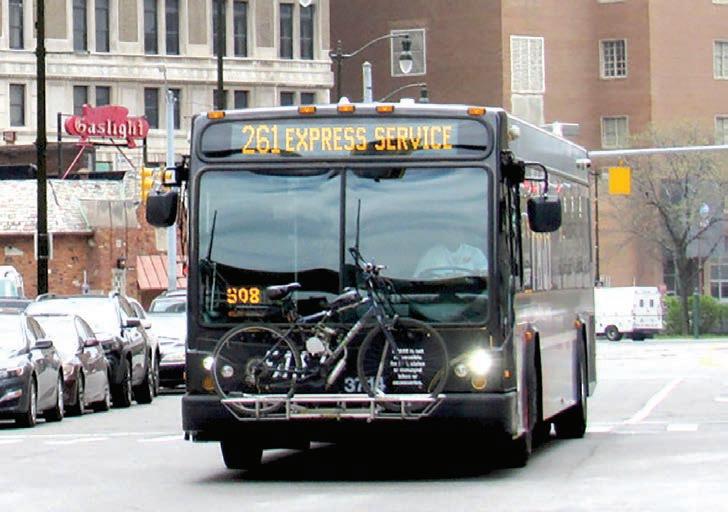
When most people think about public transportation, they picture the people riding the bus. But the upcoming SMART regional transit millage goes beyond just the buses. The millage comes down to the people our communities depend on every day to keep hospitals staffed, restaurants open, stores operating, and neighborhoods functioning.
The evening sparkled with a golden promise as we celebrated remarkable individuals from various walks of life. Among the honorees were the brilliant and visionary co-founders of Detroit Hives, Nicole Lindsey and Timothy Paul Jackson. Their work has not only changed the landscape of beekeeping and urban farming in Detroit but also exemplified the transformative impact Black professionals can have on their communities.
Shortly before midnight on Sept. 14, GM released a statement expressing disappointment with the strike action, despite offering what it termed an “unprecedented economic package” that included historic wage increases. Stellantis also expressed disappointment in a statement, saying the company immediately went into contingency mode to protect its operations.
On the August ballot, Wayne County voters will decide whether to renew and expand funding for public transportation through a countywide transit millage. Rather than deciding on a community-by-community basis whether to participate in the SMART bus system, the initiative on the Wayne County ballot asks whether the county should join Macomb and Oakland with their “all-in” approach, meaning every community becomes part of the system. In the past, each Wayne County municipality had the ability to opt out of paying into the regional transit system.
By Ebony JJ Curry SENIOR REPORTER
Public transit is also increasingly important for residents who own cars but cannot always afford to use them. Michigan families continue to face some of the nation’s highest auto insurance costs, along with rising expenses for fuel, maintenance, and repairs. For households squeezed by those costs, reliable transit provides another way to reach work, medical appointments and essential services without every trip depending on a personal vehicle.
“Entrepreneur of the year – that’s a big deal,” said Brown. “It’s always an honor to be honored and it’s always a blessing to be in a room full of so many talented, accomplished, and popular people that look like me. I’m geeked. I started making and selling clothes as a kid and I always knew that I would have a business, but I never knew it would be Detroit’s brand name business, so I take a lot of pride in the fact that our business represents our city’s pride.”
Taking home the Corporate Excellence Award was Dannis Mitchell, Director of Community Engagement at Barton Malow.
“Together we have created a social, environmental, and financial impact through bees,” said Jackson. Lindsey followed that sentiment with, “It is through our local partnerships and collaborative efforts that we exist in over 28 plus locations managing the health of 4.5 million honeybees – humbly speaking our movement has inspired others locally, nationally, and even internationally to take on similar missions.”
The UAW has branded the industrial action as the “Stand-Up Strike,” focusing on specific plants within each automaker. UAW President Shawn Fain stated, “This strategy will keep the companies guessing. It will give our national negotiators maximum leverage and flexibility in bargaining. And if we need to go all out, we will. Everything is on the table.” Union leaders have also indicated that additional plants could be targeted in future waves if negotiations remain stalled.
The proposed funding is also designed to strengthen the region’s connectivity.
For many Detroiters, Interstate 375, or I-375, has long been just another stretch of urban highway, a concrete artery connecting different parts of the city. To some, it’s a mere convenience; to others, it’s an unremarkable part of their daily commute. However, there’s a deeper, far more troubling story beneath the surface of this seemingly ordinary freeway—a story of pain, displacement, and the lasting impact on Black Detroiters.
Detroit Hives, a pioneering organization founded by Lindsey and Jackson, harnesses the power of urban beekeeping to revitalize neighborhoods in the Motor City. Their initiative not only addresses critical issues like environmental conservation but also provides valuable education and employment opportunities to Black De-
Wayne County’s transit system has long contained service gaps created by communities that previously opted out of SMART. If approved, the countywide millage would support new routes, route extensions, and expanded on-demand service over the next several years, creating more seamless connections between neighborhoods, employment centers, healthcare facilities and educational institutions.
Proposal S is designed to accomplish that transition.
The measure applies only to non-homestead property, which generally includes commercial and industrial property, rental property, and second homes. Owner-occupied primary residences are exempt from the operating millage under Michigan law.
ness district that had been the lifeblood of the community.
When Detroit voters cast their ballots in the August 2026 primary election, one of the most consequential local measures on the ballot will be Proposal S, an operating millage proposal for Detroit Public Schools Community District (DPSCD). While discussions about taxes and school finance can become complicated, the proposal itself addresses a specific question: who is authorized to collect an existing school operating tax that has long been part of Michigan’s public school funding system?
DPD Chief James White Says Increased Police Presence Culled Violence By Andre Ash
Understanding why the operating millage exists requires a look at Michigan’s school funding system.
DIGITAL ANCHOR
Here’s what voters should know.
It’s a history marred by pain, injustice, and economic devastation. More than 130,000 residents, primarily Black, were forcibly displaced. Families were uprooted, generational wealth was obliterated, and a thriving community was torn asunder. The wounds inflicted by I-375 run deep, transcending the physical barrier of a freeway to penetrate the very soul of Black Detroiters.
Proposal S would authorize DPSCD to levy up to 18 mills on non-homestead property for school operating purposes through 2045. District officials estimate the levy would generate approximately $112 million in 2026 to support the day-to-day operation of Detroit’s public schools.
towards mending the wounds inflicted on Black Detroiters and restoring a sense of belonging that was so callously torn away in the past.
Following the passage of Proposal A in 1994, Michigan fundamentally changed how public schools are financed. School districts receive a per-pupil foundation allowance from the state, but districts are also expected to levy an 18-mill operating tax on non-homestead property. That operating levy is part of the funding formula used throughout Michigan.
A string of shootings in Greektown in mid-April left both visitors and residents of this bustling downtown destination in awe. One of these shootings tragically claimed the life of a popular and beloved security guard following a dispute with a patron.
The I-375 Boulevard Project is about more than just correcting historical injustices; it’s about redefining the future. It will connect downtown Detroit to surrounding neighborhoods, bridging the gap that was placed upon the city decades ago.
The proposal would levy 0.9831 mills, which equals 98 cents for every $1,000 of taxable value for 10 years. For a home with a taxable value of approximately $100,000, that works out to about $8 per month. The measure is projected to generate about $57.6 million in its first year, supporting SMART, DDOT and other community transit providers while expanding service throughout Wayne County.
The benefits extend beyond those who regularly ride the bus.
“It is so important to recognize that there are young leaders across the country, many that are born here in Detroit. I represent our city nationally and I tell people, ‘Yea I’m a D-girl I’m from the west-side of Detroit,’” Mitchell expressed. “But more importantly, I’ve been able to have experiences within an industry that not many of us, specifically women of color, have the opportunity to engage in and I’ve been the youngest person in the room, the only Black person in the room, and the only Sistah in the room, and I really had to articulate the importance of showing up, giving chances when others won’t, and being persistent.” As a trailblazing Black woman thriving in a predominantly male-dominated industry, her unwavering commitment to fortifying the connections between businesses and Detroit’s communities is unde-
This painful legacy can be traced back to the nation’s interstate highway program of 1956—a program that aimed to connect the country but often did so at the expense of marginalized communities. In the case of I-375, it meant carving a path through the heart of Black Detroit, reinforcing segregation, and perpetuating inequality.
By Andre Ash
DIGITAL ANCHOR
Fain clarified the union’s strategy: “I want to give a major shoutout to the thousands of members who are on the picket lines right now fighting for all of us. The Stand-Up Strike is a new approach to striking. Instead of striking all plants at once, select locals will be called on to stand up and walk out on strike. This is our generation’s answer to the movement that built our union – the sit-down strikes of 1937. We told the Big 3 that Sept. 14 was the deadline and we meant it. We gave the companies our economic demands eight weeks ago and it took more than a month to get to the table.”
Those numbers matter because they tell an important story. Less than a dollar per $1,000 of taxable value creates a transportation network that thousands of Wayne County residents rely on every single day.
The tale begins in what is now Lafayette Park, once known as Black Bottom—a neighborhood rooted in African-American culture and history. Named after its dark, fertile soil, Black Bottom flourished during the mid1900s, nurturing the dreams and aspirations of prominent Detroiters like Coleman Young, Joe Louis, and numerous other Detroit legends. But in the name of urban renewal in the 1950s, this vibrant neighborhood was systematically dismantled, erased from the map, and replaced by a lifeless stretch of asphalt.
Every employee who can reliably reach work helps an employer maintain staffing. Every patient whose healthcare worker arrives on time benefits from dependable transportation. Every senior or person with a disability who can access appointments independently preserves a measure of dignity and stability. Every student who can reach class has greater opportunity to succeed.
One of the most important aspects of Proposal S is what it does not do. It does not create a new tax, and it does not increase the current tax rate. Instead, it transfers the authority to collect an existing operating millage from the legacy Detroit Public Schools (DPS) entity to Detroit Public Schools Community District, the district that has operated Detroit’s public schools since 2016.
The male suspect allegedly shot the guard before fleeing the scene, while his female companion is accused of concealing the weapon in her bra.
For many districts, including Detroit, the revenue generated locally does not exceed the state’s foundation allowance. In those cases, the state provides additional funding to reach the guaranteed per-pupil amount. Districts with exceptionally high property values may generate more revenue locally than the foundation allowance permits under separate provisions of state law.
These incidents unfolded during an unseasonably warm spring, leading to increased pedestrian traffic and heightened tensions in the densely populated downtown area.
The distinction exists because of Detroit’s unique financial history.
A Holistic Approach to Providing Shelter and Support for Detroit’s Unhoused People
For one to aptly recognize the harm caused by such projects, it is vital to note that some of the planners and politicians behind those projects built them directly through the heart of vibrant, populated communities—oftentimes to reinforce segregation and sometimes as part of a direct effort to replace or eliminate Black neighborhoods.
Today, the resurgence of Paradise Valley stands as a testament to the indomitable spirit of Black Detroiters and the enduring legacy of Black excellence. This historic district, once a vibrant hub for Black businesses and culture, is experiencing a renaissance that harkens back to its glory days. The destruction of Black Bottom may have torn apart a thriving community, but the resolute determination of a new generation of entrepreneurs and visionaries is reclaiming that lost legacy.
The surge in crime and the influx of visitors to Detroit’s downtown core garnered the attention of the Detroit Police Department (DPD), catching them somewhat off guard.
According to DPSCD Superintendent Nikolai Vitti, Proposal S is intended to ensure that Detroit Public Schools Community District functions under the same operating revenue structure used by school districts across Michigan.
While the residential areas bore the brunt of this demolition, the heart of Black Bottom, its thriving business center, remained largely untouched. Restaurants, theaters, clubs, and bars—the very places that brought Detroit’s Black community together—were concentrated around Hastings Street, the epicenter of African-American culture in the city.
Transit is part of the infrastructure that supports daily life. Roads connect drivers. Sidewalks connect pedestrians. Public transportation connects people whose jobs, health and opportunities depend on mobility.
SMART currently serves a regional network spanning approximately 1,742 square miles, reaching 2.8 million residents through dozens of fixed routes and flex service. The proposed countywide
Housing Resource Helpline in response to the challenges that residents face in navigating the complex system of housing services. The helpline provides a single point of contact for people seeking housing assistance and connects them with the resources they need.
But now, after decades of enduring the scars of I-375, there is a glimmer of hope on the horizon. Plans have been unveiled to transform this once-divisive freeway into a vision that seeks to right the wrongs of the past while heralding a new era of inclusivity and community revitalization.
In 2016, Michigan lawmakers restructured the former Detroit Public Schools district after years of financial distress. The restructuring created two separate entities. Detroit Public Schools Community District became responsible for educating students and operating schools. Meanwhile, the original Detroit Public Schools entity remained in existence solely to collect taxes and retire billions of dollars in legacy debt accumulated over many years.
The union is pushing for a comprehensive list of demands. This
Many of those riders are not traveling for recreation. They are heading to early morning hospital shifts, late-night restaurant jobs, retail stores, warehouses, manufacturing plants, and office buildings. They are home health aides caring for seniors. They are seniors heading to and from critical appointments. They are nursing assistants, custodians, childcare workers, and grocery clerks. They are students pursuing education and veterans traveling
Homelessness continues to plague urban communities, with families and individuals grappling with the challenges of making ends meet in today’s economic climate. Whether it’s struggling to meet monthly mortgage payments or coping with soaring rental costs in a housing market marked by shockingly high prices, a variety of factors contribute to the growing issue of people becoming unhoused.
Meagan DunnJulie Schneider
Historically, shelters have provided a temporary respite for those in need, often serving as the first or second option after exhausting alternatives like staying with friends or family. Shelters offer a place to rest one’s head and a warm meal, albeit sometimes for extended periods. For others, being unhoused means living in cars or makeshift outdoor
Then, in a cruel twist of fate, Hastings Street, too, was obliterated a few years later, making way for the construction of I-375. This marked the final blow, sealing the fate of Black Bottom and signaling the beginning of the end for Paradise Valley, the Black busi-
Support for the helpline comes from the Gilbert Family Foundation, which has pledged $10 million over three years to fund the program. Wayne Metro Community Action Agency manages the helpline, making it accessible to all Detroit residents. This initiative simplifies access to the City’s various housing services, ensuring that residents in need can easily find assistance.
By Sam Robinson SENIOR REPORTER
By Lynzee Mychael MULTIMEDIA JOURNALIST
The causes of homelessness are as diverse and complex as the individuals experiencing it. In response, the City of Detroit has adopted a holistic approach to combat this issue.
“Providing services and high-quality housing to persons at risk of or who are experiencing homelessness is a key priority of the City of Detroit, said Julie Schneider, Director of Detroit’s Housing and Revitalization Department.
Government Shutdown Could Mean for Detroiters?
“This means focusing on building the pipeline of supportive housing and coordinating with the Continuum of Care on the delivery of critical resources such as emergency shelter, rapid rehousing, and diversion and prevention programs. It also means preserving and expanding affordable housing options for Detroiters of all incomes and improving housing stability though comprehensive service offerings available through the Detroit Housing Resource HelpLine and Detroit Housing Services Division within HRD.”
In May 2023, the City of Detroit launched the Detroit

From the days of the Great Migration when thousands of Black families flocked to Detroit in search of jobs and a better life, to the pivotal role they played in the city’s cultural and musical heritage, Black Detroiters have left an indelible mark on the city. However, in recent years, Detroit has experienced significant gentrification, which has raised concerns about the displacement of long-standing Black residents. Similar to a setting sun, there’s a rising spirit, and Black Detroiters are reclaiming their place in the city, despite the challenges posed by gentrification.
James White, Chief of Police for the Detroit Police Department, said: “We were caught somewhat flat-footed right out the gate. By design we went into the spring deployment, which is less than the mid-summer deployment, and saw we say an uptick in violence that first warm weekend.”
Chief White attributes the violence in Greektown to a combination of weather conditions and a surge in population.
As those operating debt obligations near completion, state law no longer allows the legacy district to continue collecting the operating millage. Court decisions have reinforced that interpretation, meaning DPSCD must now obtain voter approval
Fueled by more than $100 million from the Infrastructure Investment and Jobs Act and other partners, this ambitious project aims to create jobs, remove barriers to economic growth, and reconnect the neighborhood with the rest of Detroit. It is a step
“The city and its partners offer a lot of great services to help Detroiters with their housing needs, but they don’t mean much if people don’t know how to access them,” said Mayor Mike Duggan. “Thanks to the efforts of our partners and the generous support of the Gilbert Family Foundation, we now have a simple process to guide residents to the right housing resource and a growing number of programs to help them.”
The Gilbert Family Foundation’s broader commitment involves pledging $500 million to support projects across Detroit over the next ten years, with housing initiatives being a significant part of their contribution.
Notably, Detroit has witnessed a consistent decrease in recent years, with the number of unhoused residents steadi ly declining. In 2019, approximately 7,847 people were unhoused and entered the City’s community response system. In 2021, about 5,687 people experienced homelessness.
According to the City of Detroit, since the start of the fiscal year 2019 to 2021, Detroit saw a 28% decrease in the
During the Great Migration, thousands of Black families from the South came to Detroit in search of jobs in the booming automobile industry. Despite facing discrimination and segregation, they built vibrant communities on the city’s east
In the heart of Paradise Valley, Blackowned businesses are not just flourishing but thriving, offering diverse services, products, and experiences that pay homage to the past while paving the way for a prosperous future. From jazz clubs to soul food restaurants, the Black Press, and art galleries to fashion boutiques, this revival is breathing life into the very essence of what once made this neighborhood a vibrant cultural epicenter. It’s a resurgence that extends beyond brick and mortar; it represents the resurgence of a spirit that refuses to be subdued.
District officials estimate the proposal would generate approximately $112 million in its first year. Those dollars support operating expenses rather than debt repayment or capital construction. Operating revenue is generally used for classroom instruction, teacher and staff salaries, transportation, instructional materials, student support services, utilities, and the everyday expenses associated with running a public school district.
Detroit City Councilman Fred Durhal III, representing District 7, where Eastern Market resides, told the Michigan Chronicle, “It’s still very early in the process, MDOT is
He explained, “ We saw numbers downtown that we have not seen, ever. People are emerging from COVID and there’s a feeling that we’re in a post-COVID era… and with the venues downtown and the reasons to come down with all the activities that are going on, we saw hundreds of more people and, in particularly, young folks, teenagers that we hadn’t seen.”
District leaders have also outlined what
Responding swiftly to the surge in violence, DPD adjusted its deployment plans. Rather than waiting for mid-summer, they deployed officers in the spring itself to address the situation.
The rise in visitors to the Greektown area is evident in data from Placer.ai, a location analytics company specializing in visit trends and demographic insights through geolocation-enabled mobile devices. From May 1-Aug. 27, 2022, there were 1.3 million visits and 655,000 visitors to Greektown, according to Placer.ai. In the same period this year, these numbers increased to 1.4 million visits and 670,000 visitors.
strengths and challenges because she lives them,” Sheffield said. “She represents a new generation of leadership. One that’s about building relationships, making smart investments, and ensuring government for the people.”
As Detroit’s downtown area continues to attract both residents and visitors, the police department has implemented various enforcement measures to manage the increased population. Notably, metal detectors have been strategically placed throughout Greektown to deter the illegal carrying of firearms.
because of discrimination, but they were also coming because Black people was doing some stuff. When did Black people start doing things in the city? They started doing things in this area in the 1800’s. In the 1800’s the major thing that they were doing in Detroit is they were the leaders in the fight against slavery. The Underground Railroad is the root in the city of Detroit to all of this Black innovation that you see coming later.”
“We have strategically placed them at key points, “ Chief White explains. It has been a deterrent for some, and some have tested it. If you are legally carrying a weapon and carrying a CPL, have a great day. If you’re
and Royal Oak Township. Calloway is running against Crystal Bailey and Soummer Moore-Crawford.
“Candace is a daughter of Detroit. She understands our city’s
troit because Black churches were here, black schools were here, and its was Black businesses here,” said Jordon. “They were coming of course
District 7 (State House): Incumbent Tonya Meyers Phillips was endorsed by Sheffield. She is running against Seema Ahmad and Oliver Gantt. Phillips has also earned backing the mayor of Hamtramck and from progressive organizations such as the Working Families Party.
District 8 (State House): Sheffield endorsed incumbent state Rep. Helena Scott, D-Detroit. She is running against Deanne Austin and Chris Gilmer-Hill, whose campaign put him on a billboard and has knocked on over 20,000 doors. Gilmer-Hill is a Democratic Socialist backed by Metro Detroit DSA. “HD8 has had enough of DTE Dem-
By Sam Robinson SENIOR REPORTER
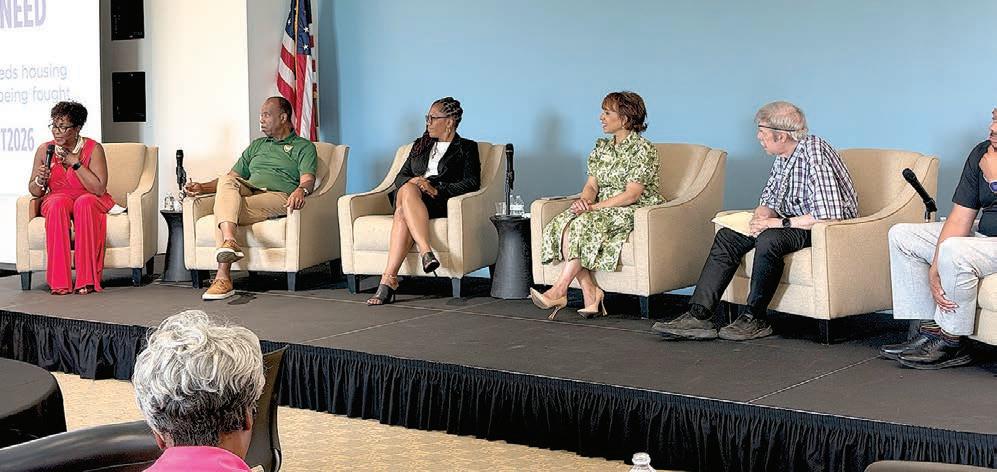
Detroit’s growing affordable housing crisis took center stage on July 1, as elected officials, housing experts, faith leader,s and community advocates gathered to discuss how the city can ensure longtime residents are not left behind as development continues across its neighborhoods.
The Wayne County Community College District and the Neighborhood Service Organization hosted the Hometown Summit: A Vision for Affordable Housing, bringing together regional leaders to address one of Detroit’s most pressing challenges – ensuring access to safe, stable, and affordable housing for residents across the city.
Organizers said the conversation comes at a critical time for Detroit. While the city continues to experience new investment, business development and neighborhood revitalization, many Detroiters continue to face rising housing costs, a limited supply of affordable units, and ongoing barriers to long-term housing stability. Those pressures have made housing one of the defining policy issues shaping Detroit’s future.
Part of the challenge lies in how affordable housing is defined. Most federally subsidized housing relies on the U.S. Department of Housing and Urban Development’s Area Median Income (AMI) guidelines, which are based on the broader Detroit-Warren-Livonia metropolitan area rather than the City of Detroit itself. As a result, many developments considered “affordable” are priced for households earning significantly more than many Detroit residents.
Affordable housing developments are commonly targeted at households earning 30%, 50%, 60% or 80% of AMI, with many newer developments serving households earning up to 80% of AMI. Under current HUD guidelines, 80% of AMI for a single-person household is approximately $58,700 annually. By comparison, the median household income in Detroit is roughly $39,500, which highlights the gap between regional affordability standards and the financial realities facing many city residents. Housing advocates have increasingly argued that expanding deeply affordable housing for households earning 50% of AMI or below remains critical to meeting the needs of longtime Detroiters.
“Affordable housing is
one of the defining issues facing Detroit’s future,” said Adam Hollier, a former state representative who moderated the discussion.
“The challenges are complex, but they are not insurmountable.”
The discussions examined housing instability and the barriers facing vulnerable populations, including youth aging out of foster care, families experiencing domestic violence, seniors living on fixed incomes, and residents navigating eviction and housing insecurity.
Speakers emphasized that addressing homelessness and expanding affordable housing will require continued collaboration among government, nonprofit organizations, developers and neighborhood institutions.
Former U.S. Housing and Urban Development Secretary Marcia Fudge highlighted the role Detroit’s faith community has played in expanding housing opportunities, pointing to churches that have transformed vacant property into affordable housing developments.
Among those efforts is the Church of the Messiah.
Esther Haugabook, who works with the church, said the congregation, under the leadership of Pastor Barry Randolph, has helped create more than 200 affordable housing units while continuing to pursue community-centered development.
Randolph said the city’s greatest housing challenge remains a lack of affordable units.
“We need more. There needs to be an all-out focus on creating truly affordable housing because what’s being offered to people now is just not enough,” Randolph said.
He said Messiah Housing continues acquiring land with the goal of creating holistic neighborhoods that combine housing with services designed to help residents remain stable and thrive.
Bishop Charles Ellis III, senior pastor of Greater Grace Temple, echoed the need for more affordable housing, saying faith-based organizations have an important role to play in addressing the city’s housing needs.
City of Detroit Housing Director Julie Schneider said the city has increased efforts to hold landlords accountable by targeting rental property owners who fail to meet city housing standards. Housing advocates have long argued that stronger code enforcement is essential to protecting





tenants and improving the quality of Detroit’s housing stock.
The summit also comes during a new chapter in Detroit’s municipal leadership. Mayor Mary Sheffield, who took office this year, has identified affordable housing as one of the central priorities of her administration.
Sheffield has pledged to preserve existing affordable housing, increase the construction of mixed-income developments, expand homeownership opportunities, and reduce displacement as neighborhoods continue to attract investment. She has also emphasized strengthening partnerships between the city, nonprofit organizations, philanthropic institutions, and private developers to leverage additional resources for housing development while ensuring longtime Detroiters benefit from the city’s continued growth.
Detroit enters this next phase after years of significant investment in housing initiatives under former Mayor Mike Duggan. During his administration, the city made affordable housing a key component of its neighborhood revitalization strategy, supporting the preservation and development of thousands of affordable housing units through initiatives such as the Detroit Housing for the Future Fund.
The city also expanded home repair assistance, invested in preserving aging affordable housing, directed federal pandemic relief dollars toward rental assistance and eviction prevention, and increased support for homeownership through down payment assistance and rehabilitation programs. Those investments were paired with
efforts to reduce blight and return vacant homes to productive use across Detroit neighborhoods.
Even with those investments, speakers throughout the summit agreed that demand continues to outpace supply. Rising construction costs, increasing property values in some neighborhoods, and limited financing for deeply affordable housing remain significant barriers to meeting the city’s housing needs.
Participants also stressed that affordable housing is about more than constructing new apartments. Preserving existing affordable homes, maintaining quality rental housing, expanding supportive services, and ensuring residents have access to transportation, healthcare, education and employment opportunities are all essential components of long-term housing stability.
“This event creates an opportunity for leaders across sectors to align around solutions that increase housing access, strengthen communities and ensure Detroit’s growth benefits everyone,” Hollier said. “We are honored to welcome Secretary Fudge and a diverse group of stakeholders who are committed to moving this conversation forward.”
Throughout the discussion, speakers doubled down on saying that Detroit’s future depends not only on attracting new investment, but on ensuring that residents who have remained committed to the city through decades of change have access to safe, stable, and truly affordable places to call home.
Executive Editor Jeremy Allen contributed to this report.
You can reach Sam at srobinson@michronicle.com.
they believe would happen if voters reject the proposal.
Because the legacy DPS entity would no longer be authorized to collect the operating millage after its obligations conclude, DPSCD officials have said the district would need voter approval to collect the levy directly by July 1, 2027. They estimate that failing to obtain that authority would create an annual operating deficit of roughly $120 million, and that’s not something our students can afford. If the proposal is unsuccessful in
August, it would return to voters in November. Should it fail again, district officials have said a special election may be necessary before the statutory deadline.
Ultimately, though, Proposal S is not about creating a new funding stream. It’s about determining who collects an existing one. Understanding that distinction and the history behind it is central to understanding why you should vote Yes on S. And understanding that these critical tax dollars will be put to work for the betterment of youth education in Detroit on day one is why the Michigan Chronicle proudly supports Proposal S.
investment would help fill remaining mobility gaps and improve access to major employment corridors, healthcare providers, and educational destinations that thousands of residents travel to every day.
At its core, this vote is about recognizing that transportation is a community asset that extends well beyond individual concern. The workers who prepare our meals, care for our loved ones, stock our shelves, and
keep our economy moving deserve reliable ways to get where they need to be. For many Wayne County residents, the value of this millage will not be measured by whether they personally board a SMART bus. It will be measured by whether the people they depend on every day are able to show up. For those reasons, Michigan Chronicle proudly supports the Wayne County transit millage and encourages you to vote in support of it on the Aug. 4 ballot.
ocrats who care more about special interest groups than their own voters,” Metro Detroit DSA said in response to Sheffield’s endorsement. “(Gilmer-Hill) will take on DTE & fight for the residents of HD8.”
The organization was key to Council Member Denzel McCampbell’s win over state Rep. Karen Whitsett last November. Scott also ran for council, but earned less votes in the primary than Whitfield Calloway and Roy McCalister Jr. District 1 (State Senate): Justin Onwenu earned Shef-
field’s endorsement over former state Rep. Abraham Aiyash. The endorsement came a week after the two debated in a parking lot following a candidate forum hosted by progressive nonprofit Detroit Action, which endorsed Aiyash.
“Justin has a consistent record of delivering for our neighborhoods, workers and families,” Sheffield said in a statement. “I’ve seen Justin’s work up close, and I know he brings the energy, experience, and integrity to deliver for our communities in Lansing.”
You can reach Sam at srobinson@michronicle.com.


The Detroit Department of Elections will conduct a Public Accuracy Test on Monday, July 20, 2026 at 9:30 a.m. via Zoom. The automatic tabulating equipment to be used for the compilation of ballots at the Gubernatorial Primary on August 4, 2026 will be tested.
The Public Accuracy Test is conducted to demonstrate that the computer program used to record and count the votes cast at the election meets the requirements of law.
The Zoom webinar information is as follows:
When: Monday, July 20, 2026, 9:30 AM Eastern Time (US and Canada)
Topic: Department of Elections, Public Accuracy Test, August 4, 2026 Primary
Join from PC, Mac, iPad, or Android: https://cityofdetroit.zoom.us/j/89039598614
Phone one-tap:
+13017158592,,89039598614# US (Washington DC)
+13126266799,,89039598614# US (Chicago)
Join via audio:
+1 301 715 8592 US (Washington DC)
+1 312 626 6799 US (Chicago)
+1 267 831 0333 US (Philadelphia)
+1 253 215 8782 US (Tacoma)
+1 346 248 7799 US (Houston)
+1 213 338 8477 US (Los Angeles)
Webinar ID: 890 3959 8614
International numbers available: https://cityofdetroit.zoom.us/u/kbpAnXJtW8
ad 4 cols x 6.5 inches
A3 | July 8-14, 2026
By Miss AJ Williams
For Monica Anderson, the push to create Black Women’s Health Month started not with a campaign, but with a heartbreaking loss.
After losing her infant son at birth and later suffering a miscarriage, Anderson looked for support but found few resources for grieving Black families. Instead of accepting this, she started Remembering Cherubs to help families find the support they need.
As Anderson continued her work, she realized the problem was even bigger than she first thought.

“I realized pregnancy and infant loss were just one part of a much larger crisis,” Anderson said. “Black women are more than twice as likely to have a stillbirth and three times more likely to die from pregnancy-related complications than white women. But the disparities don’t stop there.”
Now, Anderson is leading an effort she hopes will grow beyond Detroit. She wants Black Women’s Health Month to become an annual movement that raises awareness about health inequities Black women face and builds community-based solutions.
“This work began as more of a wound than a movement,” she said.
Anderson believes the problem isn’t biological, but systemic.
“Black women’s bodies are not the problem,” she said. “These disparities are largely preventable. They’re rooted in systemic racism, historic discrimination, food deserts, medical mistrust, and not being listened to in healthcare settings.”
Anderson says that while awareness months often pass quickly, Black Women’s Health Month gives people a real chance to keep important conversations going all year.
“The data tells a story that goes unheard the other eleven months of the year,” she said. “Black Women’s Health Month is how we say, out loud and together, our health matters.”
The movement starts on Saturday, Aug. 1, with Talk It Out, Walk It Out at the Charles H. Wright Museum of African American History. This free event brings together education, movement, conversation, and wellness activities for Black women.
Hosted by WDIV Local 4’s Tati Amare, this year’s event centers on the theme “Healing for the Culture.”
People who attend can join a community conversation, take part in an awareness walk, try mini-workshops, watch healthy food demos, shop from Black-owned vendors, and enjoy a month of health events across Metro Detroit. Each participant gets a Health Passport to help them connect with presenters and learn about topics like reproductive health, chronic disease prevention, mental wellness, and digital health.
“We’re expanding access points all over the city so a woman can find a way to engage near her all month long,” Anderson said. Anderson believes that community is at the center of this effort, and it’s something modern healthcare can’t replace.
“Community is medicine,” she said. “When we gather, we share information that can save lives. We trade the names of doctors
See BLACK WOMEN’S HEALTH MOVEMENT Page A-4
By Sam Robinson SENIOR REPORTER
Secretary of State Jocelyn Benson is setting out to meet voters across the state as part of her “Costs Down, Wages Up” tour beginning July 1.
Benson is set to speak with voters about her campaign, which has been echoing an affordability message that resonated with Democratic voters in recent election cycles in Virginia and New York City. Benson’s campaign says she will share her plan to lower costs, raise wages and protect the rights and freedoms of residents.
“At every stop, she will draw a clear contrast: the choice between a governor who fights to lower costs, or Republicans who have put politics over Michigan families,” her campaign said in a release.
The state’s top election official is in a two-way race for the party’s nomination for governor.


By Jasmine West
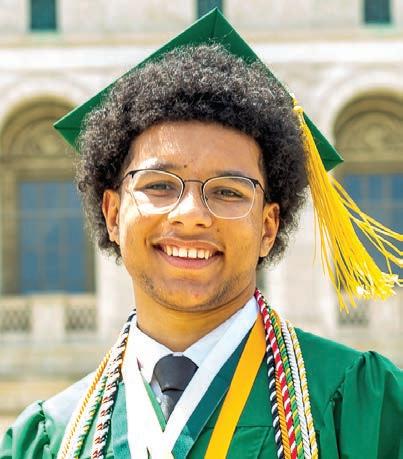
Three Cass Technical High School graduates are preparing to take their talents from Detroit to some of the nation’s most selective universities, carrying with them ambitions that stretch from aerospace engineering to creative writing and Division I athletics.
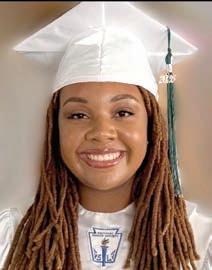
This fall, Sebastian Dorn will study aerospace engineering at the Massachusetts Institute of Technology. Khloe Travis will pursue aerospace and mechanical engineering at Princeton University.
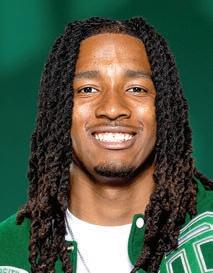
Emory Jones III will attend Dartmouth College, where he plans to study humanities and creative writing while playing football and competing in track and field.
Their paths are different, but each reflects the academic rigor, personal discipline and community support that helped them envision themselves at institutions where Detroit students have not always seen themselves represented.
For Dorn, the path to MIT began with a childhood fascination with space.
He was drawn to the universe, the physics behind space travel and the machines capable of traveling beyond Earth.
That curiosity became a career goal after he joined Cass Tech’s solar car team and helped design and construct a working vehicle.
“My interest in aerospace engineering is really a combination of my fascination with space and the universe and my love for the engineering process,” Dorn said.
The solar car program allowed Dorn to move beyond studying scientific concepts and experience how engineers transform ideas into designs, confront problems and make those designs work.
Chris Swanson, a sheriff from Genesee County, is the other Democrat running after Lt. Gov. Garlin Gilchrist backed out of the race to run for Secretary of State.
The race has become even clearer for Benson’s campaign after former Detroit Mayor Mike Duggan, running as an independent after leaving the Democratic Party after Trump’s victory in 2024, suspended his campaign. The former mayor, who had yet to turn in his signatures to make the ballot before dropping out, said there wasn’t enough infrastructure to fund a competitive independent campaign.
Benson and Duggan traded criticisms of one another taking corporate cash during Duggan’s final candidate forum in front of United Auto Workers in Dearborn. While Benson’s campaign for governor has pledged against taking corporate PAC money, Duggan suggested she had done so previously. Swanson and Benson have re-
“When I became a part of the solar car team during my high school years and worked on building and designing a vehicle, that really made me fall in love with the engineering process,” he said.
MIT had been one of Dorn’s goals for years because of its engineering programs. His interest grew after he participated in an MIT-affiliated summer program between his junior and senior years. The experience introduced him to the institution’s academic culture and convinced him that the university could be a strong fit.
“I really liked the culture of that program,” Dorn said. “So, I thought it would be a good fit for me.”
Dorn credits Cass Tech with giving him access to advanced courses, engineering experiences and students from a range of backgrounds.
“I think I had a very diverse and varied experience at Cass Tech,” he said. “I got to interact with a lot of people from a lot of different backgrounds, and I had access to opportunities that a lot of young people in the city don’t have access to because I went to Cass Tech.”
He also credits calculus teacher Mark Duhame with helping him develop the academic foundation he will need at MIT. Counselor Lisa Gooden guided him through the application process and wrote a recommendation on his behalf.
Dorn said Cass Tech Principal Lisa Phillips showed him that leadership should remain connected to community service. He recalled Phillips supporting an initiative that raised money for Detroit residents experiencing homelessness, reinforcing the idea that achievement also carries responsibility.
mained respectful of one another, although Swanson has knocked Benson for her unwillingness to debate him earlier this month, and pointed to Benson’s husband’s work relationship with the developers of a controversial data center.
“I don’t sit here and say to you ‘I’m not taking DTE money, I’m not taking corporate money’ when I’m pocketing a $1.5 million check from the Babe Ruth of data centers, Ken Duda in California,” Duggan said.
Benson is backed by the establishment class of her party as well as progressive and Democratic Socialist state legislators. Even when Lt. Gov. Garlin Gilchrist ran to her left during his own campaign, the most left-wing members of the Michigan Legislature still supported Benson.
She has promised to go further than her current Democratic governor in establishing greater government transparency laws,
“My achievements are a product of the many people who are behind me,” Dorn said. That support included his family, which provided the time, stability and encouragement he needed to study and pursue opportunities outside the classroom.
“My family has been supporting me from the very start,” he said. “They always made sure there was food on the table, made sure I had the time to study and take advantage of the opportunities that were in front of me, and gave me the resources, ability, love and support to push myself as hard as I could.”
While Dorn prepares for MIT, Travis will head to Princeton after finding a defining sense of community during her final two years at Cass Tech.
Travis transferred to the Detroit Public Schools Community District school as a junior after attending schools in the suburbs, including Cranbrook during middle school. At Cass Tech, she found ambitious Black students who made her feel welcomed, challenged and understood.
“When I transferred to Cass, I was met with such an amazing community, especially people who looked like me,” Travis said. “It was so important that I was able to get that cultural immersion before I graduated and see other young people around me who were so determined and well-rounded.”
Travis plans to study aerospace and mechanical engineering. Like Dorn, she credits Duhame’s Advanced Placement calculus course with strengthening her interest in STEM.
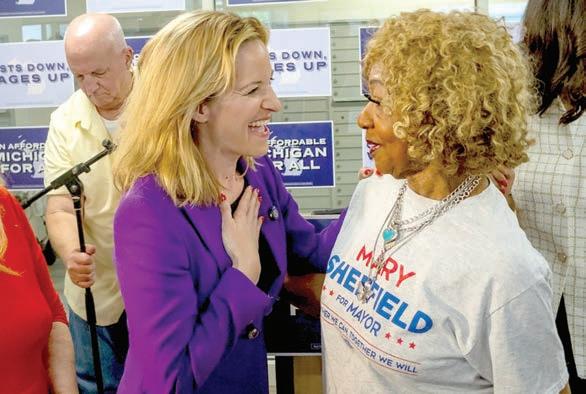
high speed rail to the state and lowering
of my comfort zone and try some new things when I get there,” she said.
Jones will make his own history at Dartmouth as a student-athlete who spent four years refusing to choose between excellence in the classroom and achievement on the field.
who helped her become comfortable at a new school and more confident in her academic abilities.
“They really helped me find confidence in my own intelligence and feel so loved coming to Cass,” Travis said. “It helped me get well acclimated and adjusted, even though I was only there for a short time.”
Her aspirations were also shaped by the women in her family. Her cousin attended Stanford University, her sister graduated from the University of Michigan and her mother consistently encouraged her to perform at a high academic level.
“My mom always had confidence in me,” Travis said. “She was always my rock, inspired me and pushed me.”
Travis also participated in Leadership Enterprise for a Diverse America, a college-access and leadership program for high-achieving students. Through LEDA, she spent five weeks at Princeton and Yale and worked with a college counselor who encouraged her to apply to universities that initially seemed intimidating.
At Princeton, Travis intends to explore research, community service and social justice advocacy alongside her engineering coursework.
“I’ve always been a really big advocate for social justice issues and helping those who might not be as fortunate as me,” she said. “Princeton really emphasizes that, and I cannot wait to do more community service and social justice advocacy.”
She also plans to step outside her comfort zone. After learning about Princeton’s breakdancing club during an admitted-students event, Travis decided college should include opportunities to experiment and discover new interests.
“I definitely want to get out
He received a full scholarship to attend the Ivy League university in Hanover, New Hampshire, where he will play Division I football and compete in track and field.
“I’ve always been big on grades growing up, trying to keep a 4.0 every year of school,” Jones said. “I pride myself on being just as good off the field as I am on the field. It was the best of both worlds.”
That commitment was tested during the first semester of his junior year, when Jones earned a 4.0 grade-point average while helping Cass Tech’s football team win a state championship.
“That’s definitely the hardest school year through high school, and it was the year that we won a state championship,” he said. “Being able to balance the academic and athletic piece and still have all A’s, that was a really big moment for me.”
Jones said his guidance counselor encouraged him to consider the long-term value of an Ivy League education. Cass Tech head football coach Marvin Rushing also helped him navigate recruiting and evaluate which university would support his development as both an athlete and student.
Their guidance pushed Jones to look beyond the excitement of an athletic offer and consider the education, financial support and professional opportunities attached to each school.
Jones said Cass Tech staff members told him he is the school’s first athlete to attend an Ivy League institution. He sees the distinction as an opportunity to establish a path for students coming behind him.
“It means a lot to build that kind of status and put a light on my school so that other kids can come after me and do the same thing,” Jones said.
He is also aware of what it
means to enter an Ivy League campus as a young Black man from Detroit.
“As an African American, I would say applying to an Ivy League may seem challenging or a little too complex,” Jones said. “But I think if you believe in yourself and know what you’re doing, if you are about your grades, pay attention in class and listen to your teachers, it’s not as difficult as you would at first think. Just trust yourself.”
Dorn, Travis and Jones are leaving Cass Tech with different academic interests, but each student emphasized the importance of refusing to place limits on what Detroit students can accomplish.
Travis encouraged students, particularly Black girls, to resist imposter syndrome when considering selective universities.
“When you’re applying to schools like Princeton or other top schools, you can think, ‘Do I really deserve to go somewhere like this?’” she said. “But you do.”
Dorn offered a similar message to students who may believe universities such as MIT are reserved for someone from another city, neighborhood or school.
“There’s nothing that anybody else can do that you can’t as well,” Dorn said. “You always have to remember that you can do anything that you want to do, and there’s nothing stopping you from achieving all that you wish.”
Jones encouraged students to place their education first while remaining confident and grounded.
“Being a DPSCD student means a lot, especially with the kind of city that we’re from,” he said. “I would tell students coming behind me to keep grades first, keep confidence in yourself, trust in God and just have faith.”
When they arrive in Cambridge, Princeton and Hanover, the three graduates will carry the lessons, relationships and expectations that shaped them at Cass Tech. Their achievements also leave Detroit students with three new examples of what is possible when talent is met with opportunity, preparation and a community that reinforces their right to aim high.
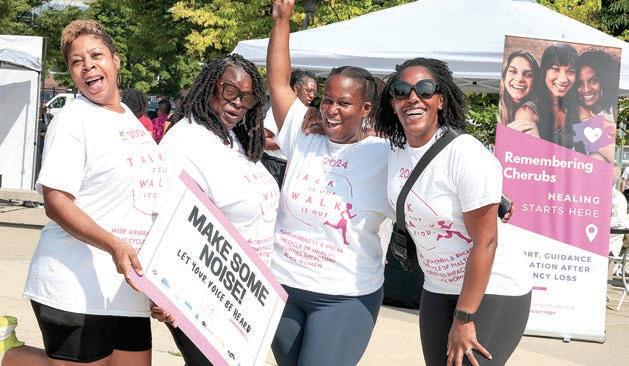
who actually listen. We learn that the symptoms we’ve been quietly enduring are worth taking seriously.”
She thinks healing often starts when you realize you’re not alone in what you’re going through.
“So much of what harms us is isolation,” Anderson said. “Every part of Talk It Out, Walk It Out is designed to turn strangers into a support system.”
This idea goes beyond just the event. Anderson knows many Black women are used to putting others first. She isn’t asking for big changes, but instead encourages small, steady acts of self-care.
“Schedule the appointment you’ve been putting off. Take one walk. Ask one question at your next doctor’s visit,” she said. “Prioritizing your health is not a single grand gesture; it’s a series of small, stubborn acts of self-respect.”
In the end, Anderson wants the
movement to spread well beyond Detroit.
She imagines a future where Black women don’t have to fear going to the hospital to give birth, where chronic illnesses are found early and not ignored, and where preventable health gaps are a thing of the past.
“I started this journey in the most painful way imaginable,” she said. “If that pain can be transformed into a movement that helps other women live longer, healthier, more supported lives, then his memory is doing extraordinary work in this world.”
For Anderson, this work is just getting started.
She hopes Black Women’s Health Month will grow from a Detroit project into a statewide and then national movement. Her goal is for future generations of Black women to have better health than those before them.
“This is just the beginning,” she said. “The disparities Black women face are a national crisis, and they demand a national response.”
Her campaign has made stops in 19 cities from Metro Detroit to Cheboygan to hear from voters. See below for an overview of the tour’s stops, with more details to be announced in the coming weeks.

WEDNESDAY, JULY 1, 2026
Detroit Oakland
THURSDAY, JULY 2, 2026 Flint Saginaw Bay City
FRIDAY, JULY 3, 2026 Eton Rapids Jackson Manchester
SATURDAY, JULY 4, 2026
Northville Royal Oak
SUNDAY, JULY 5, 2026 Muskegon Holland St. Joseph Kalamazoo
MONDAY, JULY 6, 2026 Grand Rapids Manistee
TUESDAY, JULY 7, 2026 Traverse City Petosky
WEDNESDAY, JULY 8, 2026 Cheboygan
You can reach Sam at srobinson@ michronicle.com



A5 | July 8-14, 2026
By Dr. Anthony O. Kellum
CONTRIBUTING COLUMNIST
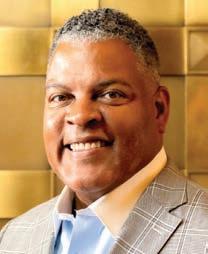
Anthony O. Kellum
For generations, we have been taught that homeownership begins with money. Save enough for a down payment. Improve your credit score. Find the right lender. Close the deal. Those are important steps, but they are not the first step. The first investment every aspiring homeowner should make is in financial literacy. Knowledge is the foundation upon which wealth is built. Without it, income is often consumed instead of invested. Credit is misunderstood instead of managed. Opportunities are missed because they are never recognized. The gap between those who own assets and those who do not is often not simply a gap in income, it is a gap in information.
For too many families, especially within historically underserved communities, the home-buying process remains wrapped in mystery. Mortgages seem intimidating. Credit reports appear confusing. Closing documents feel overwhelming. As a result, many qualified families delay purchasing a home for years or never pursue it at all because they assume they are not ready.
In many cases, they are closer than they realize.
The challenge is not always financial. It is educational.
Education transforms fear into confidence.
When individuals understand how credit scores are calculated, they begin making intentional financial decisions. When they learn the relationship between debt-to-income ratios and mortgage approvals, they become strategic rather than reactive. When they understand budgeting, savings, interest rates, equity, and appreciation, they stop viewing a home solely as a place to live and begin recognizing it as a wealth-building asset.
Financial literacy changes behavior because it changes perspective. This is why homeownership education should never begin when someone is ready to purchase a home. It should begin years earlier in our schools, churches, community organizations, workplaces, and around our own kitchen tables.
Imagine a generation of young adults graduating from high school understanding compound interest before they understand consumer debt imagine college graduates knowing how to read a mortgage estimate with the same confidence they read a job offer. Imagine families discussing equity, investment property, estate planning, and generational wealth as naturally as they discuss careers.
That kind of education changes communities. The wealth gap did not emerge overnight, and it will not disappear overnight. It was shaped over decades through unequal access to opportunity, capital, and financial education. While public policy can and should continue addressing systemic inequities, individuals and families cannot afford to wait for perfect legislation before improving their financial futures.
See FINANCIAL LITERACY Page A-6

By Jeremy Allen EXECUTIVE EDITOR
One of Southeast Michigan’s most influential philanthropic leaders is preparing to lead a new chapter in the region’s efforts to expand opportunity for children and families.
Kylee Mitchell Wells, a longtime champion for equity and community investment in Detroit, has been named the inaugural chief executive officer of MoveUp Southeast Michigan, a newly established independent philanthropy created by Connie and Steve Ballmer to continue and expand more than a decade of investments across the region.
The announcement, made July 1, positions Mitchell Wells at the helm of a permanent, locally led organization dedicated to improving economic mobility for children and families throughout Southeast Michigan. While Connie and Steve Ballmer are also launching independent philanthropies in Los Angeles County and Washington State, the Southeast Michigan organization reflects a significant long-term commitment to Detroit and the surrounding region, where Ballmer Group has invested heavily in education, youth development, and family supports over the past decade.
For Mitchell Wells, the appointment represents both a continuation of her leadership and a recognition of a career dedicated to strengthening communities across Southeast Michigan.
An honoree of both Michigan Chronicle Power 50 and Women of Excellence, Mitchell Wells has built a reputation as one of the region’s most respected philanthropic executives. Throughout her career, she has helped shape strategies that connect philanthropy with measurable community impact, while fostering partnerships among nonprofit organiza-
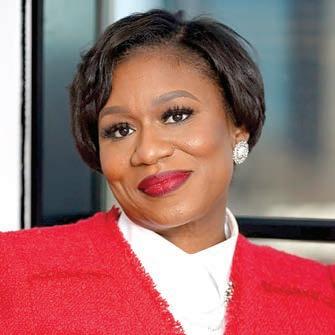
tions, civic leaders, educators and government agencies.
Before leading Ballmer Group’s Southeast Michigan office, Mitchell Wells served in executive leadership positions with two of Detroit’s most influential philanthropic institutions. She previously served as vice president of program and community engagement at the Hudson-Webber Foundation, where she helped guide investments supporting neighborhood revitalization, arts and culture, education and community development throughout Detroit. Earlier in her career, she also held leadership roles at the Skillman Foundation, helping advance initiatives centered on improving outcomes for Detroit children and youth.
Those experiences positioned Mitchell Wells as a trusted voice within Southeast Michigan’s philanthropic community long before joining Ballmer Group, where she has overseen investments designed to create greater opportunity for families across the region.
Under her leadership, Ballmer Group Southeast Michigan has supported initiatives that have provided tens of thousands of young people with summer employment opportunities while helping
expand access to school-based family supports. Those investments have focused on removing barriers that prevent children and families from reaching economic stability and long-term success.
Now, those efforts will continue through MoveUp Southeast Michigan.
“I am honored to help establish Steve and Connie’s permanent philanthropy in Southeast Michigan,” Mitchell Wells said. “Over the past decade, Ballmer Group has driven clear progress across my home city and state, with impactful investments that include supporting tens of thousands of youth with summer employment opportunities and expanding access to school-based family supports. I look forward to leaning further into collective partnerships and collaborations that will lead our region toward a more equitable future.”
Her emphasis on collaboration reflects the approach that has defined much of her career. Mitchell Wells has consistently advocated for partnerships that bring together philanthropy, community organizations, public institutions and business leaders to address systemic challenges facing Detroit families.
That collaborative philosophy also aligns with the vision Connie and Steve Ballmer described as they announced the creation of the three new organizations.
The Ballmers said the decision to establish independent, locally governed philanthropies recognizes the strength of the regional teams that have spent years building trusted relationships within their communities.
“Our stellar teams in these three regions have built deep relationships in their communities and, together with
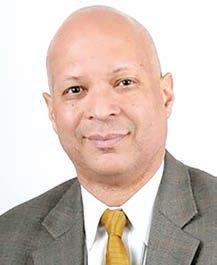
By Mark S. Lee
CONTRIBUTING COLUMNIST
America is celebrating its milestone 250th birthday. And for many corporate professionals, a professional and personal milestone is on the horizon, potential retirement.
For generations, the American Dream followed a familiar script: graduate, build a career in corporate, retire, and spend the next chapter enjoying the “fruits of their labor”.
That script is changing.
Across the country, a growing number of professionals are leaving corporate careers not to slow down—but to start over. Retirement is increasingly becoming the launchpad for entrepreneurship, as experienced professions trade corporate titles for business ownership.
This isn’t simply a lifestyle trend. It’s an economic transformation that reflects changing attitudes about work, wealth, purpose, and longevity.
For many professionals, leaving corporate America is less about escaping work than redefining it.
After traveling the corporate journey, many are asking a different question: “What can I build for myself?”
Several forces are driving this shift. The business landscape has changed dra-
matically over the past decade. Due to a myriad of factors, experienced employees often find themselves navigating organizational changes, while others simply feel they have accomplished everything they set out to achieve resulting in many choosing to leave and venture into entrepreneurship. For many, traditional retirement no longer feels like the destination—it feels like an intermission.
Financial realities are also playing a significant role.
Inflation has increased the cost of nearly everything.Even households with healthy retirement savings recognize that generating additional income can preserve investment portfolios while providing greater financial flexibility.
Entrepreneurship offers exactly that opportunity. Some retirees are launching consulting firms built on decades of industry expertise. Others are purchasing franchises, opening specialty retail stores, creating online businesses or simply transforming lifelong hobbies into profitable enterprises.
Increasingly, retirement is becoming less about stopping work and more about choosing work.
Business ownership allows them to remain engaged while creating something
that reflects their own vision and values. Unlike younger entrepreneurs chasing promotions or climbing corporate ladders, many second-career founders are pursuing something different: autonomy. They want to choose their clients, control their schedules, determine their workloads, and build businesses around the lives they want to live. Ironically, experience has become one of their greatest competitive advantages.
This experience often translates into stronger decision-making because they typically understand customers better, have deeper professional networks, and possess credibility rooted in years of experience. And technology has also dramatically lowered the barriers to entry. Today, a consultant can launch a national practice from a spare bedroom. An accountant can serve clients across multiple states virtually. A retired executive can coach business leaders via video conference. In other words, technology platforms have made it possible to start businesses with far less capital than was required just a decade ago.
However, that doesn’t eliminate the risks.
Entrepreneurship requires careful plan-
ning, adequate capitalization, realistic financial projections, and patience. Experts caution retirees against relying too heavily on retirement accounts to finance a startup without first understanding the impact on taxes, healthcare costs, and long-term financial security.
Still, the broader trend is difficult to ignore.
America is redefining retirement. Instead of viewing retirement as the end of productivity, more experienced professionals are treating it as the beginning of ownership by leveraging decades of accumulated knowledge to solve problems, create jobs, mentor younger generations, and strengthen local economies.
Perhaps the greatest lesson is this: experience remains one of the most valuable forms of capital while wisdom, relationships, resilience, and perspective are proving to be equally valuable business assets. Retirement isn’t always about leaving work behind. Sometimes it’s about finally having the freedom to build the business— and the life—you’ve always imagined.
That’s not retirement.
That’s reinvention.
We invite readers, business owners, and future entrepreneurs to follow along, ask questions, and engage. If you have story ideas or questions, you can email Lee at mark@leegroupinnovation.com or visit leegroupinnovation.com.
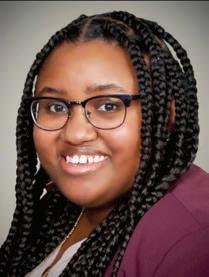
By Brakeyshia Samms SENIOR ANALYST, INSTITUTE ON TAXATION AND ECONOMIC POLICY
(This story was originally published on OtherWords.org.)
The 250th anniversary of the founding of the United States is a moment to celebrate the ideals that gave birth to this country. But the anniversary also presents an opportunity to ask a difficult question: What does it mean to honor a nation founded on equality when its tax code continues to reinforce inequality?
Tax laws are often viewed as a technical collection of rates, deductions, and credits. In reality, they are one of the most powerful tools through which the nation decides who gets economic opportunity. The tax code deserves closer scrutiny — not simply as a mechanism for raising revenue, but as a tool that has helped drive racial wealth disparities for generations.
The connection between tax policy and racial injustice goes back to the nation’s founding. The Constitution linked taxation and political representation through the Three-Fifths Compromise, embedding racial hierarchy into the country’s governing framework. Enslaved Black people generated enormous wealth for white slaveholders, fueling the country’s economic growth while receiving none of the economic benefits.
From the country’s founding to the end of the Civil War, property taxes on Black slaves were the largest source of revenue for some state governments. At the end of the Civil War, lawmakers presented Black people with an opportunity for a more equitable foundation through the passage of the 13th, 14th, and 15th amendments. Yet all too soon the promise of “40 acres and a mule” was abandoned, denying formerly enslaved Black Americans the assets necessary to build generational wealth.
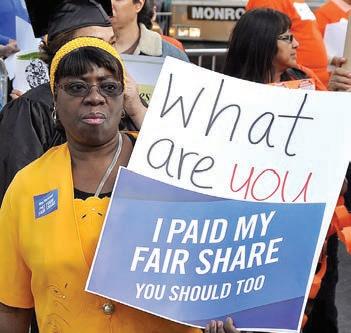
American history shows that celebration and injustice can coexist. The 150th anniversary of our founding, in 1926, occurred during the cultural pinnacle of the Harlem renaissance, even as Jim Crow segregation remained firmly entrenched. Black people in the South, with much less income, kept paying just as much taxes as their white counterparts, sometimes more, and contributed substantially to white-only schools while Black schools declined.
The 20th century brought federal policies that expanded prosperity, but not equally. During the New Deal, landmark programs such as Social Security and federally backed mortgages, which were supported by tax revenue from Black households, expanded economic opportunity for millions. But many Black workers and families were excluded from accessing these programs.
As a result of these and other realities, white households hold more than five times the wealth of Black households today. Taxes generate revenue for public goods that help all communities, including Black communities. Yet the tax code does too little to close the racial wealth gap, and in many ways deepens it.
Two of the most significant federal tax laws in recent decades have moved the country in the wrong direction. The “Tax Cuts and Jobs Act” of 2017 and the “One Big, Beautiful Bill Act” of 2025 delivered disproportionate benefits to wealthy households — 80 percent of TCJA’s benefits went to white households in 2018 alone. Rather than narrowing the racial wealth gap, these laws risk entrenching it further.
The path to a more equitable tax code is neither radical nor unprecedented.
Congress could narrow the gap between tax rates on investment income and wages, as was done during President Reagan’s administration, so that wealth is not systematically taxed at lower rates than work. Lawmakers could revisit inherited wealth provisions — like the stepped-up basis rule — that allow large estates to pass between generations largely untouched. And policymakers could establish a renter credit that extends the tax code’s wealth-building benefits to the disproportionate share of Black households who rent rather than own. These are not sweeping redistributions. They are corrections and modest steps toward a tax code that stops compounding the inequities of the past.
After 250 years, our leaders must show a commitment to completing the unfinished work of American democracy. The American tax code has spent its history widening the racial wealth gap, not closing it. But what was built can be rebuilt — and today, we the people must demand it.
Brakeyshia Samms is a Senior Analyst at the Institute on Taxation and Economic Policy. This op-ed was distributed by OtherWords.org. Brakeyshia’s headshot is available here.
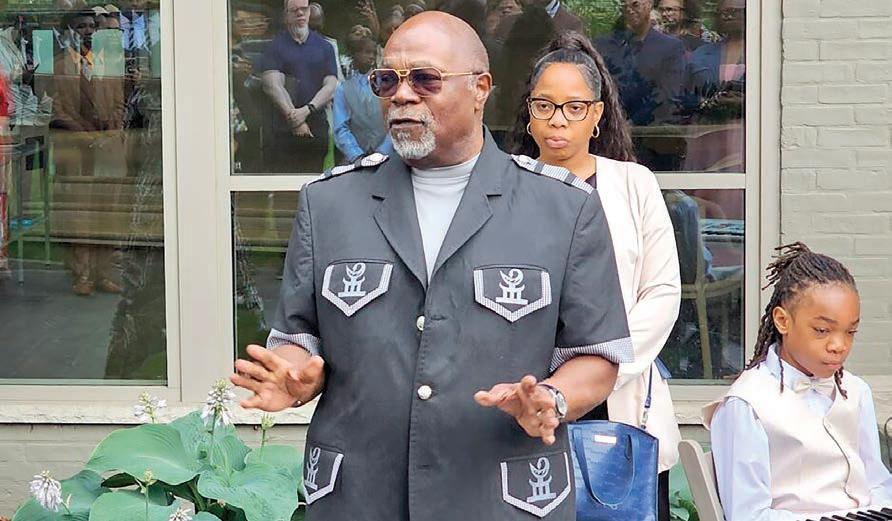
By Rev. Dr. Wendell Anthony NAACP-DETROIT PRESIDENT
The words from the poem the New Colossus, by Emma Lazarus, “Give me your tired, your poor, your huddled masses yearning to breathe free, the wretched refuse of your teeming shore, send these, the homeless, tempest-tost to me, I lift my lamp by the golden door,” seem to have been etched from the bronze plaque of the Statue of Liberty.
It should now read, “Don’t give me your tired, your huddled masses, who don’t deserve to breathe free, they lack the pure blood like you and me, we don’t want you here, if you don’t look like us we don’t want you near.”
The United States Supreme Court has made it very clear that it supports the racist policies and agenda of the Trump Administration to deport millions of Black, brown, and yellow folks who don’t fit the image of President Donald Trump and Stephen Miller. They seem to believe in only the purest, most opaque form of whiteness in skin tone and ideological perspective. The 6-3 ruling gives this regime the right to end the Temporary Protected Status (TPS) of those who have been living in the U.S. for decades, who escaped or migrated to this country from wars, catastrophes, and conditions of violence.
Trump and Miller got what they have always been seeking. Trump has called it, “The greatest deportation program in American history.” Stephen Miller, whose parents and other family members, along with the three wives of Donald Trump and their families, immigrated to this country seeking asylum, while reaching for a green card. This is one of the starkest examples of white supremacist ideology and racial animus for those who are not white Anglo-Saxon and Protestant.
Where are the so-called Christian evangelicals? There is nothing Christlike, loving, caring, or humane about a policy that denigrates a people based on race, color, language or culture. The Word is, “I was a stranger and you took me in,” Matthew 25:35.
More than 350,000 Haitians and 6,000 Syrians stand to be uprooted by this ruling. The holders of Haitian TPS status generate $5.9 billion dollars annually to the U.S economy and contribute $1.5 billion in federal, state and local taxes. Among Haitian TPS workers are 22,000 cooks and servers, 7,000 factory workers, 8,000 landscapers and hospitality staff, 3,000 school assistants, 13,000 nursing assistants, 14,000 retail staff, 12,000 delivery and taxi drivers, 15,000 agricultural workers, 8,000 caregivers, and 58,000 home health aides.
The American Immigration Council also reports that 112,000 health care workers in America are Haitian born. The Center for Economic and Policy Research notes that over 21% of Haitian Americans work in the healthcare industry. Many Haitians, over 520,000, reside in South Florida. In the state of New York, particularly Brooklyn and Queens, there are over 185,000.
In one of the most hypocritical rulings of the court, Justice Samuel Alito, in his major opinion wrote, “The plaintiffs were unlikely to prove that race was a motivating factor in the decision to terminate Haiti’s TPS designation and that the administrations stated policy views could rest on race neutral justifications.”
The President has openly and clearly referred to Haiti as a “s***hole country” and falsely accused the Haitians of Springfield, Ohio of “eating cats and dogs.” He has accused them of, “Poisoning the blood
of our country.” Katie Miller, wife of Stephen Miller, architect of this Policy of Deportation, posted on X a clip of Trump’s September 2024 Presidential debate, “Great news for the dogs and cats of Springfield.”
This same court in an earlier decision in September 2025, Vasquez Perdomo v. Noem, by a 6-3 margin ruled that ICE agents could use race or language in the work they do or where they happen to be demanding their papers in Los Angeles in order to stop and detain suspected immigrants. What a contradiction.
A second part of this ruling rests on the “metering” or turn back policy at the border. Justice Alito indicates an alien standing in line does not arrive in the U.S. simply by attempting and failing to set foot in this country. The others can be turned back. At the same time the U.S. is planning to send legal immigrants back to Haiti, there is a travel advisory for Americans warning them not to visit Haiti. It states, “Do not travel to Haiti due to the risk of crime, terrorism, kidnapping, unrest, and limited health care.”
Haiti has been under a national state of emergency since March 2024, with a level 4 travel advisory. This is the highest level of personal risk when visiting a particular country. Even more mindboggling is that Supreme Court Justice Amy Coney Barrett, who voted to support this anti-immigrant ruling, has adopted two Haitian children. One must wonder what these children of Haitian parents, now living in the United States, feel about the door slammed on others striving for their freedom and opportunity?
Has America not learned the lesson of the M.S. St. Louis of 1939? The ship departed from Hamburg, Germany to escape the violence of the Nazi’s carrying 937 passengers. Most of them were Jewish refugees. They eventually sailed to America arriving near the Florida coastline. They were refused entry to the U.S. by President Franklin D. Roosevelt and were forced back to Europe.
One year later in May 1940, the Nazi’s invaded Europe. Tragically, 254 of the original passengers were murdered in the Holocaust, which they were attempting to escape.
Today, white South African beneficiaries of the white supremacist system of Apartheid are being welcomed in the United States with open arms. Black South Africans cannot come in. The New York Times reports these white refugees will receive a welcome bag containing an android tablet, an American flag, copies of the Constitution, and Declaration of Independence. They will also receive a sanitized package of literature which includes a Trump view of American and South African history with a critique of racial equity and civil rights laws, promoting the discrimination against white people.
On the doorstep of the commemoration of 250 years of American independence, America must never forget.
In 1779 over 500 free Black Haitians, known as Chasseurs-Volontaires de Saint Dominque, fought for American independence alongside French and Continental troops during the siege of Savannah. A monument to the Haitian soldiers still stands in the center of Franklin Square in downtown Savannah, Georgia.
America would not be America without the enumerable contribution of its Black and Brown sons and daughters. Toussaint Louverture, known as the Father of Haiti, cries out from the grave, “We are free today because we are stronger. We will be slaves again when the government becomes the stronger.” Let us as a people remain strong.
BY STAFF WRITER
Michigan motorists will continue to have access to lower-cost gasoline through the remainder of the summer after the Michigan Legislature voted to extend Gov. Gretchen Whitmer’s state of energy emergency, allowing an executive order aimed at easing fuel costs to remain in effect.
The extension preserves Executive Order 2026-4, which temporarily relaxes the state’s summer fuel requirements, enabling gas stations to sell less expensive gasoline during a period when many families are traveling, commuting to work and managing rising household expenses.
The action comes as many Michigan residents continue to feel the financial impact of higher fuel prices, which affect daily transportation costs and household budgets across the state.
“Michiganders have been grappling with high gas prices driven by the war in Iran. They’re paying a dollar more per gallon than they were three months ago,” Whitmer said. Summer fuel blends are typically required in parts of Michigan to help reduce air pollution during warmer months. Those specialized blends often carry a higher production cost than conventional gasoline. By temporarily suspending the seasonal requirement under emergency authority, stations can sell lower-cost fuel that is more readily available.

State officials estimate the policy could save motorists between 10 and 20 cents per gallon while the order remains in effect.
“To give working families relief at the pump, I signed an executive order relaxing Michigan’s summer fuel requirements, saving Michigan motorists 10 to 20 cents per gallon at the pump by giving them access to the same lower-cost fuel already available in the rest of the state,” Whitmer said.
Under Michigan law, the governor’s emergency order required legislative approval to continue beyond July 1. Without action by lawmakers, the temporary
waiver would have expired at the start of the month, ending the fuel flexibility authorized under the emergency declaration.
The Legislature’s vote ensures that the emergency declaration – and the associated fuel waiver – will remain in place through the end of the summer travel season.
“Under Michigan law, this waiver would have expired on July 1 without legislative action. Today, the legislature extended the state of energy emergency for the rest of the summer. This was the right move to lower costs for Michiganders and provide relief at the pump,” Whitmer said. Gasoline prices influence household
spending well beyond transportation. For many working families, reliable access to affordable fuel supports daily commutes, school transportation, medical appointments and summer travel. Lower fuel costs can also ease operating expenses for small businesses, delivery services and workers whose jobs require significant driving.
The extension arrives during one of the busiest travel periods of the year, when many Michigan residents take road trips, attend family gatherings and visit destinations across the state. Fuel costs often become a larger share of household spending during the summer months because of increased travel and seasonal activities.
The governor said the bipartisan vote demonstrates that lawmakers can work together to address issues affecting residents’ everyday lives.
“I’m grateful for partners in both chambers of the legislature who worked across the aisle to get this done. Let’s keep working together to make a difference on the issues that matter and put money back in Michiganders’ pockets,” Whitmer said.
The extension means gas stations covered by the executive order can continue selling the lower-cost gasoline authorized under the emergency declaration throughout the remainder of the summer, providing continued relief for drivers across Michigan as families manage transportation costs during the peak travel season.


B1 | July 8-14, 2026 Where City Meets
By Miss AJ Williams
There was a time when vacation romance was just something you saw in Hollywood romcoms, read about in worn-out beach novels, or heard about from your favorite aunt after the kids had gone to bed.
These days, it’s becoming part of real life.
For more and more Black singles, travel is now more than just a break from daily life. It’s like a new dating app, a fresh way to recharge, and sometimes the start of something special. Instead of pickup lines, people are sharing boarding passes. Solo trips help with self-discovery, and looking for rest often leads to unexpected romance.
Black Americans aren’t just collecting passport stamps; they’re collecting experiences. They book flights to find peace, reconnect with themselves, and if they meet someone interesting at a hotel bar or on a delayed flight, they’re open to seeing what happens.
This openness is about more than just who’s sending DMs on vacation in Jamaica or sharing drinks in Miami. It shows a bigger change in how Black singles think about love and life.

For generations, travel was seen as a luxury, something to enjoy after years of hard work or to mark big milestones. Now, especially for Millennials and Gen Z, it’s part of a bigger focus on wellness. Rest isn’t just something you fit in between tasks anymore. It’s becoming the main goal.
This change shows up in a new Summer Travel Report from BLK, a dating and social app for the Black community. Headlines might highlight that almost eight out of ten Black travelers are open to a vacation romance, but another number stands out: 55 percent say relaxation, not dating, is their main reason for traveling this summer.
That distinction matters.
Because when people prioritize rest, they’re often better positioned to welcome connection.
Leaving your daily environment can feel freeing. Routines fade away. The pressure lifts. You’re not just the employee answering emails, the caregiver for everyone, or the person carrying the quiet burdens that many Black Americans face each day.
You simply become yourself.
Maybe that’s why people smile more when they travel. They spend more time talking, make eye contact, and say yes to invitations they might turn down at home. This openness isn’t forced; it comes naturally when you finally have space to relax.
Amber Cooper, BLK’s Head of Brand, believes that’s exactly what’s happening.
“There’s something about leaving home that opens people up,” she said. “Our community travels ready for connection, whether that’s a spontaneous fling, a summer romance or something that outlasts the flight home.”
Those connections don’t always have to become forever relationships to be meaningful.
Sometimes they’re simply reminders that joy still exists.
The report found that 80 percent of people would even consider a long-distance relationship with someone they met while traveling. At first, that might seem surprising, but maybe it’s not.

By Jeremy Allen EXECUTIVE EDITOR
pride, and creativity that define Light Up Livernois,” said Dickerson.
Light Up Livernois continues to deepen its imprint on Detroit’s cultural landscape with the unveiling of its first-ever official theme song and the announcement of a new partnership that brings a strong focus on wellness, financial literacy, and community empowerment ahead of its 2026 return along the historic Livernois Avenue corridor on the city’s west side.
The annual celebration, presented as Amazon Presents Light Up Livernois, has grown into a signature expression of Detroit creativity and entrepreneurship, drawing residents and visitors into a shared experience that reflects the spirit of a corridor long recognized for its influence in fashion, art, design, food, and music.
The introduction of the original theme song is a nod to the festival’s ongoing evolution, offering a uniquely Detroit sonic identity designed specifically to reflect the energy and pride that animate Livernois during its busiest and most celebratory hours.
The track was produced by Detroit media personality Rod Dickerson, and the track was created as “both an artistic expression and a public invitation,” capturing the rhythm of a community that continues to invest in its creative identity while welcoming new audiences into its cultural ecosystem. Dickerson said he created the song to mirror the vibrancy of the Livernois business district and the broader creative community, blending sound and sentiment into a production that reflects the festival’s commitment to uniting multiple creative disciplines into a single, immersive experience.
Dickerson described the creation of the theme song as “an opportunity to translate the emotional and cultural resonance of the festival” into music that would instantly evoke recognition among those familiar with the corridor and curiosity among those experiencing it for the first time.
His work underscores the festival’s emphasis on storytelling through multiple artistic forms, where music becomes an extension of the visual and experiential elements that define the annual gathering.
“Music has always been a powerful way to bring people together, and I wanted this song to reflect the excitement,
“This event has become one of Detroit’s signature celebrations of culture and entrepreneurship, and creating an anthem was an opportunity to give the festival its own soundtrack – something people can hear and instantly think about Livernois and Detroit.”
As anticipation builds for the 2026 festival scheduled for Saturday, July 11, 2026, the theme song serves as a unifying introduction to a day centered on culture, commerce, and connection.
Festival organizers, including Rufus Bartell, have emphasized that the addition of an official musical identity reflects the festival’s continued growth as a cultural destination that highlights Detroit’s creative economy while strengthening ties between artists, entrepreneurs, and residents.
“Light Up Livernois has always been about showcasing the best of Detroit’s creative class and highlighting the businesses, artists, designers, and innovators who make this corridor special,” said Bartell, organizer of Light Up Livernois and Executive Director of IBA Detroit CDC.
“The addition of an original theme song gives the festival a new identity and another way to connect people to the experience. Rod’s work captures the energy and pride of Livernois, and we’re excited for the community to embrace it as part of this year’s celebration.”
Bartell noted that the festival has consistently functioned as a platform for showcasing the talent and innovation that define the Livernois corridor, where small businesses and creative professionals contribute to a broader narrative of urban revitalization rooted in culture and collaboration.
The festival’s expansion into new cultural territory is further underscored by the addition of programming that centers on health, wellness, and financial education, including a partnership with John Salley, whose presence brings a multidimensional approach to community engagement.
Salley, a four-time NBA champion known for his transition from professional athletics to holistic health advocacy, entrepreneurship, and motivational speaking, will participate in festival programming designed to connect attendees with conversations about financial preparedness, physical
By Jasmine West
A financial lesson that began inside a Black-owned Detroit bank 30 years ago is carrying a new generation of young people across state lines.
Money Matters for Youth marked Juneteenth and its 30th anniversary with a “Legacy in Motion” educational trip to Chicago, connecting Detroit youth and families with two institutions tied to Black leadership and economic progress: First Independence Bank and the newly opened Obama Presidential Center.
The journey reflects the organization’s earliest years. One of its first field trips took young participants to First Independence Bank in Detroit, where they learned how banking, saving and investing could help families build wealth.
Three decades later, participants traveled to the bank’s Chicago location, allowing them to see how a financial institution rooted in Detroit expanded its reach while continuing to serve communities that have historically faced barriers to mainstream banking.
“This trip represents much
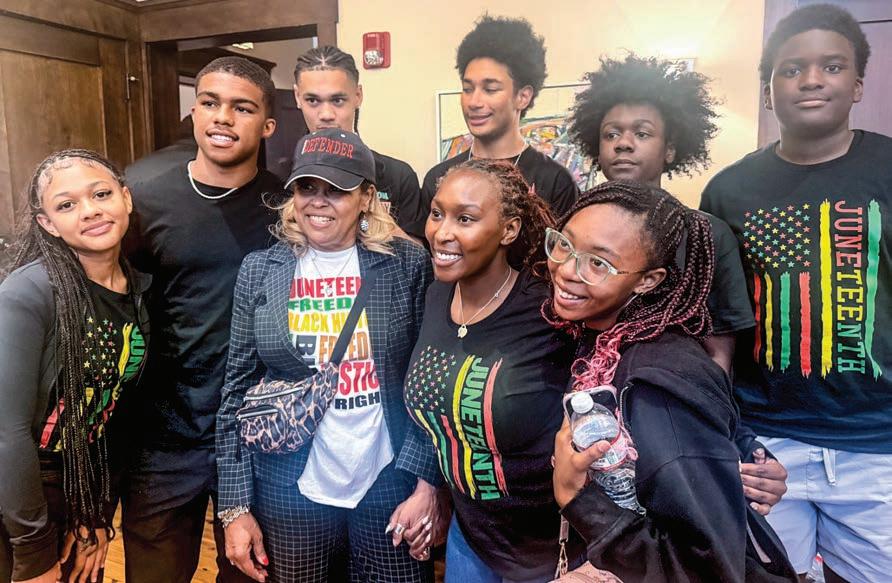
more than a bus ride to Chicago,” said Gail Perry-Mason, founder and chief visionary officer of Money Matters for Youth. “It is a legacy journey. Thirty years ago, our youth learned about financial independence at First Independence Bank in Detroit. Today, they are expanding their vision and seeing how institutions, communities, and leaders can
The trip came as Juneteenth observances across the country re-
work of achieving economic freedom for Black Americans.
For the Detroit families traveling to Chicago, that history was connected to present-day conversations about saving, homeownership, entrepreneurship, public service and community investment.
Participants were expected to discuss financial literacy, wealth building, leadership, the history of Juneteenth and the importance of planning for the next generation.
The group also visited the Obama Presidential Center during its grand-opening weekend. Located on Chicago’s South Side, the center examines the presidency and public service of Barack Obama, the nation’s first Black president, while serving as a community campus.
The visit gave young people an opportunity to consider how leadership can shape neighborhoods, institutions and national policy. It also placed them inside a major cultural institution built on the South Side of Chicago, a predominantly Black community with deep historical and political roots.