

By Monique Baker McCormick WAYNE COUNTY COMMISSIONER
By Ebony JJ Curry SENIOR REPORTER
For decades, Black communities have been the backbone of Democratic victories across this country. We organize. We mobilize. We save elections. We stand in solidarity with others, often even when our own issues are pushed aside.
Late Thursday night, Sept. 14, a historic moment unfolded in American labor relations as the United Auto Workers (UAW) union initiated a strike against Ford, General Motors (GM), and Stellantis. For the first time, the union took simultaneous action against all three major Detroit-based automakers. The action involves approximately 13,000 UAW members in assembly plants across Michigan, Ohio, and Missouri, who walked off their jobs after existing labor contracts ex-
But now, as voting rights and Black political power face growing attacks, many of us are asking: Who truly stands with us when it matters most?
In 2024, many of us sounded the alarm about the dangers of another Trump presidency. We organized rallies, encouraged turnout, and warned communities across Metro Detroit about what was at stake for civil rights, voting rights, diversity initiatives, and marginalized communities.
n a breathtaking celebration of talent, determination, and the unyielding spirit of Black excellence, the Michigan Chronicle marked its 10th Annual 40 Under 40 event Thursday evening. This year’s soirée, drenched in the theme “All Black Everything with Gold Accents,” transcended expectations and essentially illuminated the golden gems within the true essence of Black excellence. Hosted by the charismatic duo of Andre Ash and Lynzee Mychael from Michigan Chronicle’s Finally Friday, the night was a triumph for the city of Detroit and its vibrant community of young Black professionals.
Donald Trump told America exactly what he planned to do, and now we’re watching it unfold.
The United States Supreme Court recently weakened Section 2 of the Voting Rights Act, one of the last major protections Black communities have used for decades to fight voter suppression and discriminatory district maps. Across the country, states are already moving aggressively to weaken Black political representation.
The evening sparkled with a golden promise as we celebrated remarkable individuals from various walks of life. Among the honorees were the brilliant and visionary co-founders of Detroit Hives, Nicole Lindsey and Timothy Paul Jackson. Their work has not only changed the landscape of beekeeping and urban farming in Detroit but also exemplified the transformative impact Black professionals can have on their communities.
own path to success. Clement “Fame” Brown, the creative mind behind Three Thirteen Detroit’s Brand Name, received the prestigious Entrepreneur of the Year Award. Brown’s commitment to empowering the city through fashion and entrepreneurship has left an indelible mark.
Shortly before midnight on Sept. 14, GM released a statement expressing disappointment with the strike action, despite offering what it termed an “unprecedented economic package” that included historic wage increases. Stellantis also expressed disappointment in a statement, saying the company immediately went into contingency mode to protect its operations.
“Entrepreneur of the year – that’s a big deal,” said Brown. “It’s always an honor to be honored and it’s always a blessing to be in a room full of so many talented, accomplished, and popular people that look like me. I’m geeked. I started making and selling clothes as a kid and I always knew that I would have a business, but I never knew it would be Detroit’s brand name business, so I take a lot of pride in the fact that our business represents our city’s pride.”
By Sam Robinson SENIOR REPORTER
For Black communities in Detroit, Wayne County, Flint, Pontiac, Benton Harbor, and across Michigan, this is not theoretical. This is personal.
By Ebony JJ Curry SENIOR REPORTER
Taking home the Corporate Excellence Award was Dannis Mitchell, Director of Community Engagement at Barton Malow.
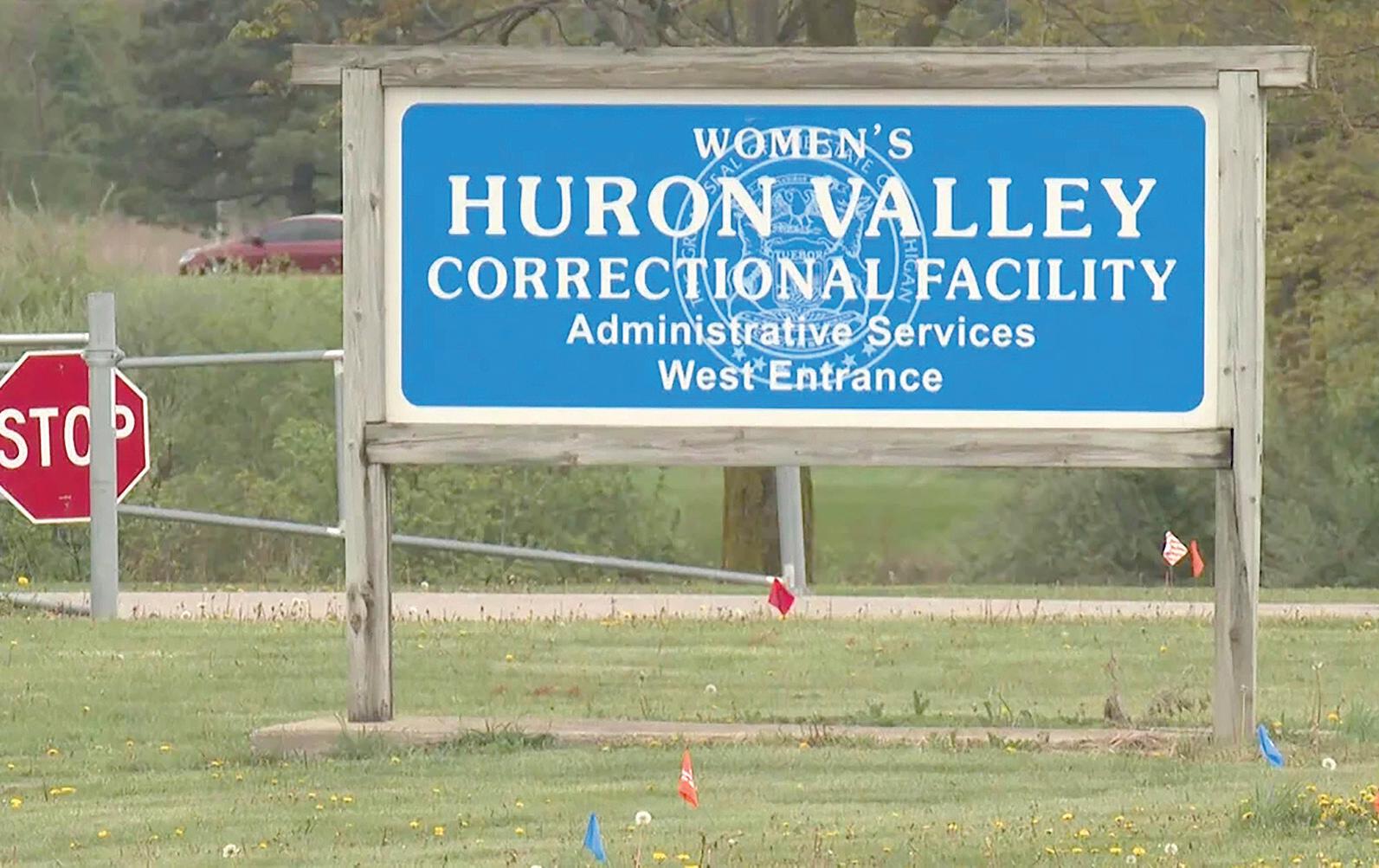
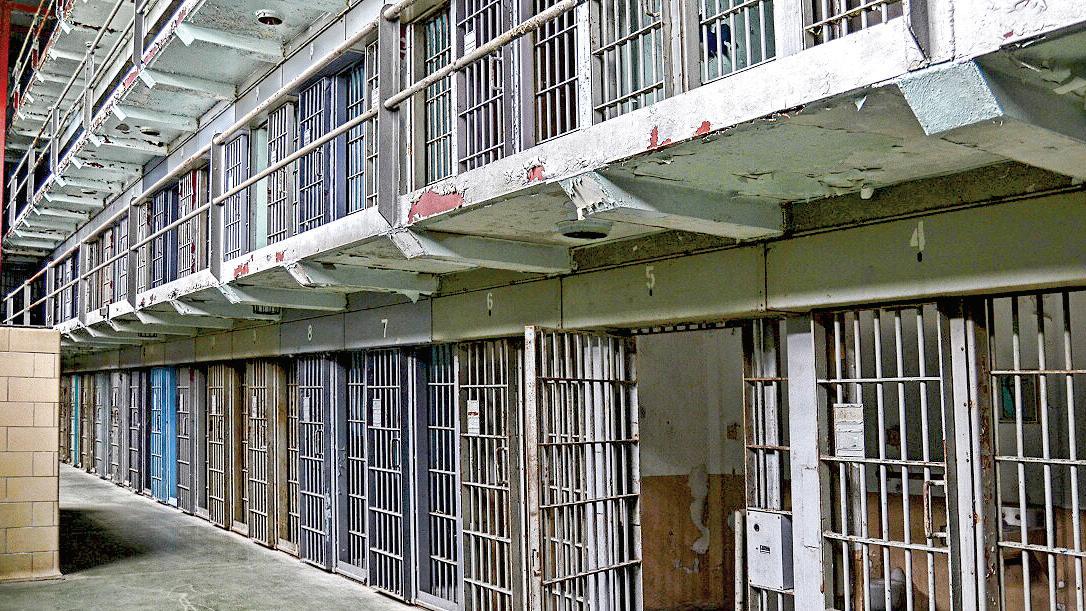
Lawmakers in Michigan want the director of the state corrections department fired after three inmates died within the same month at a women’s prison in Ypsilanti.
support female inmates at the Women’s Huron Valley Correctional Facility, Michigan’s only correctional facility for women.
ness district that had been the lifeblood of the community.
Michigan is one of the most important battleground states in America. And history has already shown us how critical Black turnout is.
“Together we have created a social, environmental, and financial impact through bees,” said Jackson. Lindsey followed that sentiment with, “It is through our local partnerships and collaborative efforts that we exist in over 28 plus locations managing the health of 4.5 million honeybees – humbly speaking our movement has inspired others locally, nationally, and even internationally to take on similar missions.”
In 2016, Trump won Michigan by just over 10,000 votes while Black turnout in Detroit dropped significantly. In 2020, when Black voter engagement rebounded in Detroit and Wayne County, Joe Biden carried Michigan overwhelmingly.
For many Detroiters, Interstate 375, or I-375, has long been just another stretch of urban highway, a concrete artery connecting different parts of the city. To some, it’s a mere convenience; to others, it’s an unremarkable part of their daily commute. However, there’s a deeper, far more troubling story beneath the surface of this seemingly ordinary freeway—a story of pain, displacement, and the lasting impact on Black Detroiters.
Heidi Washington, the department director since 2015, has come under intense scrutiny from Detroit area politicians after sudden deaths and a long history of subpar conditions.
Detroit Hives, a pioneering organization founded by Lindsey and Jackson, harnesses the power of urban beekeeping to revitalize neighborhoods in the Motor City. Their initiative not only addresses critical issues like environmental conservation but also provides valuable education and employment opportunities to Black De-
Black voters are not just part of the Democratic coalition. We are often the deciding factor.
That is why this Senate race deserves scrutiny and honest conversation – especially about who can actually win in November.
The UAW has branded the industrial action as the “Stand-Up Strike,” focusing on specific plants within each automaker. UAW President Shawn Fain stated, “This strategy will keep the companies guessing. It will give our national negotiators maximum leverage and flexibility in bargaining. And if we need to go all out, we will. Everything is on the table.” Union leaders have also indicated that additional plants could be targeted in future waves if negotiations remain stalled.
“It is so important to recognize that there are young leaders across the country, many that are born here in Detroit. I represent our city nationally and I tell people, ‘Yea I’m a D-girl I’m from the west-side of Detroit,’” Mitchell expressed. “But more importantly, I’ve been able to have experiences within an industry that not many of us, specifically women of color, have the opportunity to engage in and I’ve been the youngest person in the room, the only Black person in the room, and the only Sistah in the room, and I really had to articulate the importance of showing up, giving chances when others won’t, and being persistent.” As a trailblazing Black woman thriving in a predominantly male-dominated industry, her unwavering commitment to fortifying the connections between businesses and Detroit’s communities is unde-
Washington has been championed for her work boosting skilled jobs training and lowering the state’s prison population, but recent deaths, including two more at other facilities across the state where one inmate was stabbed and another fell to his death, have soured observers.
It’s a history marred by pain, injustice, and economic devastation. More than 130,000 residents, primarily Black, were forcibly displaced. Families were uprooted, generational wealth was obliterated, and a thriving community was torn asunder. The wounds inflicted by I-375 run deep, transcending the physical barrier of a freeway to penetrate the very soul of Black Detroiters.
A string of shootings in Greektown in mid-April left both visitors and residents of this bustling downtown destination in awe. One of these shootings tragically claimed the life of a popular and beloved security guard following a dispute with a patron.
towards mending the wounds inflicted on Black Detroiters and restoring a sense of belonging that was so callously torn away in the past.
“This cannot and will not be achieved with the departure of just one member of MDOC’s leadership,” Pohutsky said in the letter. “However, it has become abundantly clear to each of us that such change cannot and will not occur under your leadership as director.”
The I-375 Boulevard Project is about more than just correcting historical injustices; it’s about redefining the future. It will connect downtown Detroit to surrounding neighborhoods, bridging the gap that was placed upon the city decades ago.
Washington is the longest serving agency director under Whitmer.
The latest deceased inmate, 36-yearold Ashley Hoath, passed away at an Ann Arbor hospital Saturday, June 6, 2026, after officers reported she was sick and was transported to the hospital. The state says Hoathe was conscious at the time she was taken away in an ambulance.
“For me, one was already too many. Four?” Democratic U.S. Representative Rashida Tlaib said on social media after the latest death.
This painful legacy can be traced back to the nation’s interstate highway program of 1956—a program that aimed to connect the country but often did so at the expense of marginalized communities. In the case of I-375, it meant carving a path through the heart of Black Detroit, reinforcing segregation, and perpetuating inequality.
The male suspect allegedly shot the guard before fleeing the scene, while his female companion is accused of concealing the weapon in her bra.
“The questions that we posed were questions that came from family members, from advocates, others that’ve been concerned about the conditions there,” Tlaib said. “I’m just taken aback by Gov. Whitmer and those in charge of the care of these women not moving with the urgency that is needed. It’s obviously not working. We need to do more.”
I can speak on this personally because I did the work.
By Andre Ash DIGITAL ANCHOR
In 2024, I worked to help bring our Arab brothers and sisters into the fold to support Vice President Kamala Harris, because many of us believed there would be solidarity in the face of another Trump presidency.
The tale begins in what is now Lafayette Park, once known as Black Bottom—a neighborhood rooted in African-American culture and history. Named after its dark, fertile soil, Black Bottom flourished during the mid1900s, nurturing the dreams and aspirations of prominent Detroiters like Coleman Young, Joe Louis, and numerous other Detroit legends. But in the name of urban renewal in the 1950s, this vibrant neighborhood was systematically dismantled, erased from the map, and replaced by a lifeless stretch of asphalt.
“During the early morning hours, an officer noticed that Ms. Hoath was feeling unwell. The officer promptly escorted her to the healthcare area of the facility for assessment and care, where it was determined by medical staff to transfer her to the hospital by ambulance,” MDOC’s Jenni Riehle said in a statement.
Tlaib is part of a growing number of elected officials expressing growing concern about the conditions at Huron Valley Correctional Facility. Tlaib and Rep. Laurie Pohutsky of Livonia are part of a bipartisan group of more than 30 other state lawmakers asking the state for answers.
A Holistic Approach to Providing Shelter and Support for Detroit’s Unhoused People
That absence was noticed.
These incidents unfolded during an unseasonably warm spring, leading to increased pedestrian traffic and heightened tensions in the densely populated downtown area.
For one to aptly recognize the harm caused by such projects, it is vital to note that some of the planners and politicians behind those projects built them directly through the heart of vibrant, populated communities—oftentimes to reinforce segregation and sometimes as part of a direct effort to replace or eliminate Black neighborhoods.
Today, the resurgence of Paradise Valley stands as a testament to the indomitable spirit of Black Detroiters and the enduring legacy of Black excellence. This historic district, once a vibrant hub for Black businesses and culture, is experiencing a renaissance that harkens back to its glory days. The destruction of Black Bottom may have torn apart a thriving community, but the resolute determination of a new generation of entrepreneurs and visionaries is reclaiming that lost legacy.
Women at the institution have made claims of black mold growing throughout the jail, as well as issues of inadequate care, lack of mental health resources, and a general disdain for complaints about their welfare to authorities.
The surge in crime and the influx of visitors to Detroit’s downtown core garnered the attention of the Detroit Police Department (DPD), catching them somewhat off guard.
And while individuals within the Arab community did support Harris, many Black Detroiters did not see the level of public organizing, mobilization, urgency, and visible advocacy that many expected during one of the most consequential elections of our lifetime.
Fain clarified the union’s strategy: “I want to give a major shoutout to the thousands of members who are on the picket lines right now fighting for all of us. The Stand-Up Strike is a new approach to striking. Instead of striking all plants at once, select locals will be called on to stand up and walk out on strike. This is our generation’s answer to the movement that built our union – the sit-down strikes of 1937. We told the Big 3 that Sept. 14 was the deadline and we meant it. We gave the companies our economic demands eight weeks ago and it took more than a month to get to the table.”
While the residential areas bore the brunt of this demolition, the heart of Black Bottom, its thriving business center, remained largely untouched. Restaurants, theaters, clubs, and bars—the very places that brought Detroit’s Black community together—were concentrated around Hastings Street, the epicenter of African-American culture in the city.
Of course, white candidates and other communities are also seeking Black votes every election cycle. That is politics. But many Black
The union is pushing for a comprehensive list of demands. This
Homelessness continues to plague urban communities, with families and individuals grappling with the challenges of making ends meet in today’s economic climate. Whether it’s struggling to meet monthly mortgage payments or coping with soaring rental costs in a housing market marked by shockingly high prices, a variety of factors contribute to the growing issue of people becoming unhoused.
A 28-year-old woman Khaira Howard died at the facility last month, days before her scheduled release. Her family will celebrate her 29th birthday without her later this month.
The death of 57-year-old Rebecca Fackler is also being investigated. Michigan State Police say the results of an autopsy and toxicology report could be revealed more as investigators search for answers into Howard and Fackler’s deaths.
Meagan DunnJulie Schneider
Then, in a cruel twist of fate, Hastings Street, too, was obliterated a few years later, making way for the construction of I-375. This marked the final blow, sealing the fate of Black Bottom and signaling the beginning of the end for Paradise Valley, the Black busi-
Housing Resource Helpline in response to the challenges that residents face in navigating the complex system of housing services. The helpline provides a single point of contact for people seeking housing assistance and connects them with the resources they need.
But now, after decades of enduring the scars of I-375, there is a glimmer of hope on the horizon. Plans have been unveiled to transform this once-divisive freeway into a vision that seeks to right the wrongs of the past while heralding a new era of inclusivity and community revitalization.
The state says it offered mental health counseling onsite over the weekend to
Historically, shelters have provided a temporary respite for those in need, often serving as the first or second option after exhausting alternatives like staying with friends or family. Shelters offer a place to rest one’s head and a warm meal, albeit sometimes for extended periods. For others, being unhoused means living in cars or makeshift outdoor
“Significant policy and culture change must occur within the Michigan Department of Corrections,” lawmakers wrote. “However, it has become abundantly clear to each of us that such change cannot and will not occur under your leadership as Director. In the over a decade that you have served as Director of the Michigan Department of Corrections, concerns raised by inmates, their loved ones, and legislators alike have gone unaddressed.”
Support for the helpline comes from the Gilbert Family Foundation, which has pledged $10 million over three years to fund the program. Wayne Metro Community Action Agency manages the helpline, making it accessible to all Detroit residents. This initiative simplifies access to the City’s various housing services, ensuring that residents in need can easily find assistance.
The governor’s office said in a statement the health and safety of those under MDOC’s supervision must always be the department’s top priority.
James White, Chief of Police for the Detroit Police Department, said: “We were caught somewhat flat-footed right out the gate. By design we went into the spring deployment, which is less than the mid-summer deployment, and saw we say an uptick in violence that first warm weekend.”
Chief White attributes the violence in Greektown to a combination of weather conditions and a surge in population.
A letter signed by 23 Democrats and seven Republicans to MDOC leadership called for a sweeping overhaul of department leadership. U.S. Rep. Shri Thanedar, D-Detroit, also wrote his own statement demanding Washington’s resignation.
Fueled by more than $100 million from the Infrastructure Investment and Jobs Act and other partners, this ambitious project aims to create jobs, remove barriers to economic growth, and reconnect the neighborhood with the rest of Detroit. It is a step
In the heart of Paradise Valley, Blackowned businesses are not just flourishing but thriving, offering diverse services, products, and experiences that pay homage to the past while paving the way for a prosperous future. From jazz clubs to soul food restaurants, the Black Press, and art galleries to fashion boutiques, this revival is breathing life into the very essence of what once made this neighborhood a vibrant cultural epicenter. It’s a resurgence that extends beyond brick and mortar; it represents the resurgence of a spirit that refuses to be subdued.
“The governor has directed MDOC to conduct a swift, thorough, and transparent investigation,” a spokesperson for Whitmer told Michigan Chronicle. “This process will include a careful assessment by an independent medical examiner. When this process is complete, we will release the results of the investigation. Families deserve to have the answers they need during the grieving process.”
Detroit City Councilman Fred Durhal III, representing District 7, where Eastern Market resides, told the Michigan Chronicle, “It’s still very early in the process, MDOT is
He explained, “ We saw numbers downtown that we have not seen, ever. People are emerging from COVID and there’s a feeling that we’re in a post-COVID era… and with the venues downtown and the reasons to come down with all the activities that are going on, we saw hundreds of more people and, in particularly, young folks, teenagers that we hadn’t seen.”
Women incarcerated at the Huron
Sam Robinson SENIOR REPORTER
By Lynzee Mychael MULTIMEDIA JOURNALIST
The causes of homelessness are as diverse and complex as the individuals experiencing it. In response, the City of Detroit has adopted a holistic approach to combat this issue.
What a Federal Government Shutdown Could Mean for Detroiters?
“Providing services and high-quality housing to persons at risk of or who are experiencing homelessness is a key priority of the City of Detroit, said Julie Schneider, Director of Detroit’s Housing and Revitalization Department.
“The city and its partners offer a lot of great services to help Detroiters with their housing needs, but they don’t mean much if people don’t know how to access them,” said Mayor Mike Duggan. “Thanks to the efforts of our partners and the generous support of the Gilbert Family Foundation, we now have a simple process to guide residents to the right housing resource and a growing number of programs to help them.”
Responding swiftly to the surge in violence, DPD adjusted its deployment plans. Rather than waiting for mid-summer, they deployed officers in the spring itself to address the situation.
The rise in visitors to the Greektown area is evident in data from Placer.ai, a location analytics company
Gov. Gretchen Whitmer is putting her name behind District 3 state Senate candidate Korey Hall, a member of her administration, and one of the 10 people running to represent Detroit’s east side in the state Legislature.
“This means focusing on building the pipeline of supportive housing and coordinating with the Continuum of Care on the delivery of critical resources such as emergency shelter, rapid rehousing, and diversion and prevention programs. It also means preserving and expanding affordable housing options for Detroiters of all incomes and improving housing stability though comprehensive service offerings available through the Detroit Housing Resource HelpLine and Detroit Housing Services Division within HRD.”
In a statement, Whitmer
The Gilbert Family Foundation’s broader commitment involves pledging $500 million to support projects across Detroit over the next ten years, with housing initiatives being a significant part of their contribution.
“I’m Big Gretch and I’m standing tall with Korey Hall,” Whitmer said in a video. “Vote for Korey Hall for the state Senate District 3.”
In May 2023, the City of Detroit launched the Detroit

From the days of the Great Migration when thousands of Black families flocked to Detroit in search of jobs and a better life, to the pivotal role they played in the city’s cultural and musical heritage, Black Detroiters have left an indelible mark on the city. However, in recent years, Detroit has experienced significant gentrification, which has raised concerns about the displacement of long-standing Black residents. Similar to a setting sun, there’s a rising spirit, and Black Detroiters are reclaiming their place in the city, despite the challenges posed by gentrification.
Notably, Detroit has witnessed a consistent decrease in recent years, with the number of unhoused residents steadi ly declining. In 2019, approximately 7,847 people were unhoused and entered the City’s community response system. In 2021, about 5,687 people experienced homelessness.
According to the City of Detroit, since the start of the fiscal year 2019 to 2021, Detroit saw a 28% decrease in the
people. address challenges, and advocate for working families.”
During the Great Migration, thousands of Black families from the South came to Detroit in search of jobs in the booming automobile industry. Despite facing discrimination and segregation, they built vibrant communities on the city’s
It’s a notable endorsement for Hall, who is running against someone the governor has also worked closely with, Adam Hollier. Whitmer appointed Hollier to lead the Michigan Veterans Affairs Agency in January 2023.
cine and healthcare, may be adversely impacted by
what the Supreme Court
women been premoment of the final. a law1931 law effect, asked the affirm that constitucontain abortion. Our Planned Advocates of founding coalition Reproduc-
All, a affirm abortion and freedom in constitution,” Giroux. is that everything in aborMichigan, makes we will we can patients care they
representalegislacollection and criminal jusrecomcollection analywith the AttorMichigan Law Standards Association Prosecutors stakeholders collect and strategically. warHouse Operations hearand other would ban of noknock urging the pass reform and Whitmer to the leg-
embraces. transforleadership as a approach that change the syscircumstancoperating Ivory “Transformationdoesn’t just do certhem view of and exdrive that because what create everyentire because
Valley Correctional Facility sent an open letter to state leaders in March demanding solutions to problems inside the facility, like mold and inadequate medical care.
Krystal Clark, a Black woman whose family and advocates have been calling for her release due to lack of medical care, say black mold is killing the inmates inside
v. Wade would impact sev eral systems across the spectrum. With the potential to drive both foster and adoption numbers upward, a ban on abortions could leave many women to choose a less safe route restoring ‘back alley’ and illegal abortion practices, including self-abortions. Moreover, African American women and women of color, who already have a long-storied history with access and inclusion in medi-
of the Ypsilanti prison. She has cited issues of mental and physical decline during her incarceration, even saying that black mold has been growing inside her lungs and out of her ear. She is set to be released within the year, but her family has stated concerns about her dying in prison and not making it to her release date due to her rapidly deteriorating health.
trol if, when and how to become a parent is central to building and living a healthy, happy life,” said Vasquez Giroux.
Beyond the scope of pro-choice versus prolife, the fight for reproductive choice is one of freedom. As Michigan officials work to ensure each woman who finds herself in the position to choose has access to care without the threat of legal action, many wonder
During a committee hearing on the facility in February, Pohutsky shared slides with images and details of Krystal’s health impacts her family says is due to mold exposure.
the right to reproduc tive freedom,” said Chair Alisha Bell, on behalf of the Wayne County Commission.
Advocates say Clark has requested assistance to medical staff, but her concerns go largely ignored.
MDOC rejected the claims in a statement, touting Washington’s role in implementing a “Vocational Village,” which certifies women in skilled trades at the facility.
“The Michigan Department of Corrections has established itself as a national leader in evidence-based corrections under the direction of Director Heidi E. Washington. Over the last decade, the department has safely reduced the prison population, worked to modernize facilities and operations, increased opportunities that support long-term public safety and self-sufficiency, and achieved the lowest recidivism rates in our state’s history.”





From page A-1
program, which matches SNAP/Bridge Card purchases dollar-for-dollar up to $50 per day.

Taylor last month earned the endorsement of Vermont
Taylor is also endorsed by state Sen. Stephanie
who currently represents the east side district that stretches past Hamtramck and Highland Park. Chang is term-limited.
islature adopts it.
Increase school funding: Statutory changes to increase the School Aid Fund revenue by at least $3.6 billion and establish a permanent weighted funding formula based on student and community needs and universal preschool (0-3).
Detroiters believed the relationship between the African American and Arab communities in Metro Detroit was different — built on decades of shared neighborhoods, business relationships, community partnerships, and mutual support.
The health committee recommends reviewing state licensure policies to address the barriers that Black psychologists face in obtaining licensure in Michigan.
Black Detroit helped build up economic opportunities throughout many parts of Metro Detroit. Black consumers support Arab businesses. Black political leadership opened doors and created opportunities for many communities.
how El-Sayed will hold up in a general election. Recent reporting around his professional background and how he has presented his medical experience has created openings for attacks. His shifting positions on key policies like Medicare for All could make him an easier target for Republicans.
Black voters have seen this before — candidates who inspire on paper but struggle to build the broad, durable coalition needed to win when it counts.
The department didn’t address the criticism over the deaths in the statement, but said it will “prioritize the investigations and will provide information on their findings when they conclude.”
He spent several years with the Detroit Branch NAACP building out the organization’s field operation. When he started in 2003, Hall said advocates were fighting to regain local control of Detroit’s school board.
He told the Michigan Chronicle in an interview that he would advocate for the city of Detroit “with no apologies.”
So naturally, many expected visible solidarity in return when Black communities were warning about threats to democracy, voting rights, and representation.
Ensure equitable distribution of state health funds: Ensure all Michigan communities with a significant Black population receive adequate funds to address mental health issues.
If Democrats nominate a candidate who cannot maximize Black turnout or withstand a general election challenge, the consequence is not just losing a seat. The consequence is empowering a Senate majority that will continue to confirm hostile judges, advance voter suppression efforts, and further weaken Black political power nationwide.
“Director Washington has been onsite with healthcare leadership at Women’s Huron Valley Correctional Facility to provide oversight in day-to-day operations while investigations are underway,” the department said in a statement.
“I think that means having to work across the aisle to get things done,” Hall said. “I will do that.”
You can reach Sam at srobinson@michronicle.com.
He faces seven other candidates other than Hollier: Mohammed Alam, John Conyers III, LaTanya Garrett, Gary Hunter, Kimberly
Hollier is the only candidate who has been making his campaign visible to voters through paid billboards. The former state Senator is vying to re-enter the Legislature’s upper chamber after a failed run for Congress in 2024. He ran for the same 13th Congressional District seat this year, but dropped out to run for Secretary of State. Hollier dropped his bid for Secretary of State after Lt. Gov. Garlin Gilchrist entered that race. You can reach Sam at srobinson@michronicle.com
But unfortunately, many did not feel that support at the level they expected.
Protecting Black voting rights: Urge state officials to remain vigilant in the fight against schemes to disenfranchise Michiganders of color.
This is not about attacking any one candidate or community. It is about Black people waking up politically and recognizing the value of our vote and our collective power.
Too often, Black voters are expected to give loyalty automatically without demanding accountability in return. Meanwhile, other communities organize strategically around their interests and political power.
We must do the same
Reject censorship in history instruction: Encouraging Gov. Whitmer to ensure the goal for Michigan schools should be history instruction that is presented by professionals with the subject matter expertise, pedagogical skills, and judgment necessary to present complex information to students that are grounded in provable facts and add to the understanding of modern-day America.
That is a risk Michigan cannot afford to take.
Because part of the reason we no longer have Black representation in Congress from areas historically represented by Black leadership is because we have allowed our political power to become fragmented and taken for granted.
Coalitions must be built on reciprocity, not convenience. Political partnerships cannot only matter during election season.
Abdul El-Sayed speaks to many important issues. But elections are not decided on messaging alone — they are decided on trust and turnout.
Right now, the data raises real concerns. Polling shows that while El-Sayed is competitive overall in the primary, he is trailing other Democratic candidates when it comes to support from Black voters — the very voters who will determine whether Democrats win this seat in November.
Increase mental health supports for the Black community: Recommending Michigan set a goal of increasing the number of Black mental health service providers by 20% each year over five years.
“BLAC members have worked hard to identify the needs of the Black community and we feel these recommendations will provide a solid first step towards breaking down barriers in education, community safety, health and business,” said BLAC Co-Chair Dr. Donna L. Bell.
Black voters have earned the right to ask hard questions: Who is standing with us consistently? Who is visible in our communities before election season?
Who is willing to fight for Black political power when it is inconvenient? Those are not divisive questions. They are necessary questions.
Because people will show you who they are — not just through speeches, but through action, solidarity, and presence when it matters most.
We’ve already seen what happens when Black turnout drops. Michigan will likely decide control of the Senate; Republicans are looking for weaknesses.

And Michigan cannot afford to gamble with Black political power now.
people believe that they need to for themselves and others to live better
There are also growing questions about
BLAC will hold a virtual town hall meeting to discuss its policy recommendations on Thursday, May 12 at 4 p.m. Join BLAC and a virtual audience in discussing the recommendations to support the Black communi
Monique Baker McCormick is Wayne County Commissioner (District 6) representing Redford Township and parts of Detroit.

ally and personally to do great things in the world.”







Nearly four years ago, my husband and I were blessed to become parents to our amazing baby boy.
Like many expectant mothers, I spent months preparing for his arrival – imagining his smile, organizing the nursery and dreaming about a series of milestones. But as a Black woman carrying a high-risk pregnancy in our state, there was another painful reality in this moment of joy. Fear.
I knew the statistics long before I would have the chance to hold him in my arms. I knew Black mothers in Michigan are 2.5 times more likely than white mothers to die from pregnancy-related causes. I knew Detroit continues to face some of the worst infant mortality rates in the country.
Unfortunately, no amount of education, professional success or preparation fully shields Black women from those realities.
Even after a successful delivery, the fear and pressure did not disappear. The fourth trimester – the first three months after childbirth – were filled with endless joy and brought mental and physical exhaustion. The nonstop demands of caring for a newborn –sleep deprivation, numerous doctors’ visits, formula, diapers, doula support and other costs were substantially more than we anticipated.
Yet, in the moments that felt hardest for me, I was never alone. Our village was always there to uplift and support. All new mothers deserve a community of care. New mothers and fathers should not have to endure the added stress of parenthood without the necessary resources or support to care for their young infants.
That is why maternal and infant health programs like Rx Kids matter so deeply. Because motherhood should not come with impossible financial choices. Rx Kids provides a $1,500 cash prescription during pregnancy, followed by $500 per month during infancy for all families in participating Rx Kids communities.
And we know direct cash assistance works. Research continues to show that when families receive direct cash assistance, there are big impacts, including healthier moms, babies and stronger communities.
Rx Kids provides trust and dignity – strengthening the village of support around mothers and babies during one of the most vulnerable seasons of life.
See RX KIDS Page A-4
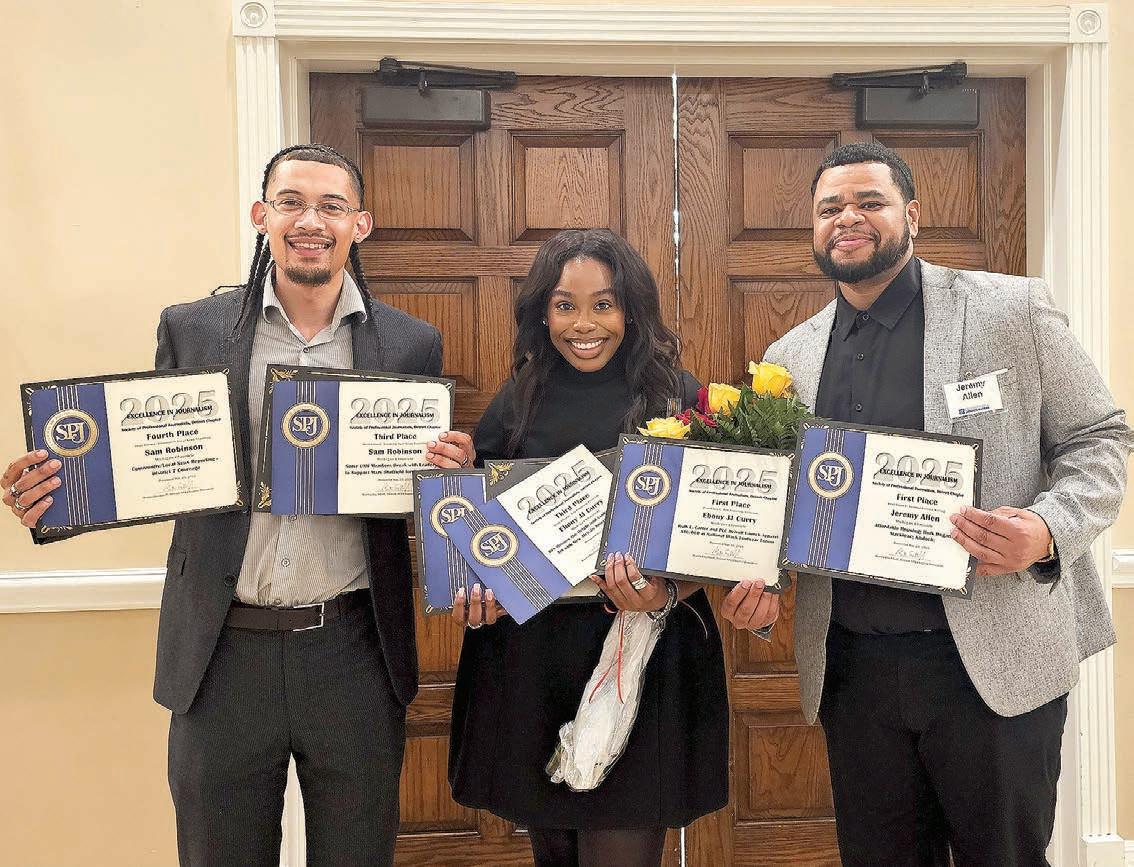
The Michigan Chronicle racked up nearly a dozen local and national media awards for excellence in journalism for their work in 2024, and the editorial staff followed by winning six awards in three categories at the Society of Professional Journalists – Detroit Chapter awards on May 20, 2026, celebrating work done by journalists around the state in 2025.
Executive Editor Jeremy Allen and Senior Reporters Ebony JJ Curry and Sam Robinson each won awards for their writing and reporting.
Allen, who has taken home multiple local and national journalism awards since starting his career 20 years ago, won first place in the Column Writing category for a series of submissions including pieces on Rev. Solomon Kinloch’s after his loss in the Detroit mayoral race; the life and death of Hulk Hogan; Detroit’s affordable housing issues; and what the 2025 Mackinac Policy Conference did right – and wrong – for Black leaders.
Curry, also a 2024 SPJ-Detroit award winner, won three awards for her work in 2025, including first place in the Art Reporting/Criticism category for her story about Ruth E. Carter and Pensole Lewis College and third place in the same category her story about a DIA installation about the origin and evolution of Black art. She also won third place in the Education Reporting
category for her three-part series entitled Black Children, White Curriculums.
Robinson won the first individual journalism award of his young career by taking home the fourth-place award for Community/Local News reporting with his coverage of the district 7 Detroit City Council race. He also won the third-place award for Spot News Reporting for his story on some UAW members who supported Mary Sheffield for mayor, despite the UAW’s endorsement of Rev. Kinloch.
“We don’t do what we do for awards, but it feels good to be recognized by our peers and by an establishment as esteemed as the Society of Professional Journalists for the work we do and for the way we serve our community,” Allen said.
“We’re a small newsroom and we cover a lot of ground. Having Ebony and Sam on this team is like a dream come true for me. The way they are dialed into the community pairs so well with their education and training as professionals, but their lived experiences gives them the unique perspective needed to be great reporters within the Black press.”
Robinson was excited to have won his first individual award as a journalist.
“I feel like I win awards every day, though, when people approach me and say they’ve read my work and say that they re-
spect the journalism I do. But this does feel good. I’ve gotten messages from people congratulating me and it feels good,” he said.
Curry, who currently works as a reporting fellow at The 19th News, said that she’s grateful to the community for entrusting her with the stories that often get overlooked.
“It is an honor that I do not take lightly simply because I’m uniquely positioned to tell the stories of my community – uplifting the voices and experiences of Black Detroiters – by connecting people to important policies that impact their daily lives,” she said.
The May ceremony also will honor three important members of Detroit media with Lifetime Achievement Awards. These are the three journalists recognized for their lifelong contributions to journalism in Metro Detroit and Michigan: Stephen Henderson – Award-winning journalist, author, and broadcaster; Pulitzer Prize for Commentary; co-founder of BridgeDetroit; co-author of The Civility Book Society of Professional Journalists.
Bill McGraw – Over 50 years in Detroit journalism; former Free Press staff member; author of The Detroit Almanac and The Quotations of Mayor Coleman A. Young; documentary producer and consultant Society of Professional Journalists.
Alicia Nails – Director of Wayne State University’s Journalism Institute for
See ‘EXCELLENCE IN JOURNALISM’ AWARDS Page A-4
Frederiek Toney, a retired Ford Motor Company executive whose career spanned more than four decades in the automotive industry, passed away on May 7, 2026, at the age of 70.
Toney was widely respected throughout corporate America for his leadership at Ford, American Honda Motor Company, and Caterpillar, but those closest to him remembered him equally for his dedication to family, mentorship, faith, and community service.
Born on December 8, 1955, in Madison, Alabama, Toney was the third of five children born to James Willie Toney Sr. and Isabella Toney. According to his family, he demonstrated determination and discipline from an early age, excelling academically and athletically while attending Madison Junior High School and Lee High School. Despite being considered undersized for collegiate basketball, he earned All-City, All-Region, and Honorable Mention All-State honors and used those opportunities to pursue higher education.
Toney earned a bachelor’s degree in business administration from the University of Alabama in Huntsville and later completed an MBA at the University of La Verne. Shortly after graduating, he began his professional career with Caterpillar, launching a path that would eventually take him into executive leadership roles at some of the world’s largest automotive and manufacturing companies.
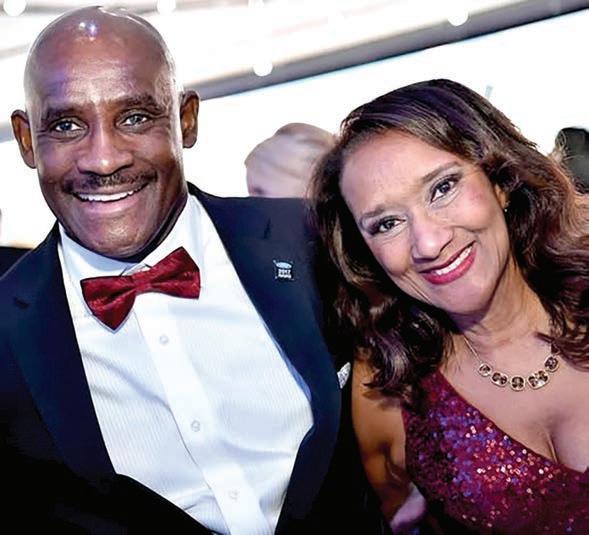
His career included leadership positions at Caterpillar and American Honda Motor Company before joining Ford Motor Company, where he ultimately became President of Ford Customer Service Division and a corporate officer. During his tenure, he oversaw a global operation responsible for parts, service, logistics, warranty administration, customer support, and related business functions. Ford’s Customer Service Division served customers in more than 140 countries and generated billions of dollars in annual revenue. Industry colleagues often recognized Toney for his op-
erational expertise and leadership. Throughout his career, he received numerous honors, including recognition from Black Enterprise, Automotive News, Savoy Magazine, and the Rainbow PUSH Coalition. He was inducted into the Huntsville-Madison County Athletic Hall of Fame in 2014 and received an honorary doctorate from the University of Alabama in Huntsville the following year.
Outside the corporate world, Toney remained actively engaged in civic and philanthropic efforts. He served on numerous boards and advisory councils, including the National Action Council for Minorities in Engineering (NACME), Henry Ford Health, City Year Detroit, Development Centers Detroit, and Friends of the Children Detroit. He also served
as Ford’s executive champion for the United Negro College Fund and supported scholarship initiatives for students pursuing higher education.
According to his family, mentorship was one of Toney’s greatest passions. He believed strongly in helping others recognize their potential and invested time in developing future leaders throughout his career. Colleagues who shared condolences following his passing frequently described him as a mentor who offered guidance, encouragement, and support both professionally and personally.
Faith also remained a central part of his life. His obituary notes that regardless of where his career took him, Toney maintained a strong commitment to church service and faith-based leadership. He was an active member of Living Faith Church and was known among family and friends for living his faith through service, generosity, and encouragement.
While his professional accomplishments earned national recognition, family members noted that one of Toney’s favorite roles was being a husband, father, and grandfather. He and his wife, Cynthia, were married for 44 years, building a family that included four children, grandchildren, and an extended network of relatives and friends. His family described their marriage as one grounded in love, loyalty, faith, and mutual support.
Toney is survived by his wife, Cynthia Toney; his children Frederiek Toney Jr., Camille Toney, Simone Nunoo, and Danielle Toney Stroud; his grandchildren; siblings; and numerous extended family members, friends, colleagues, and mentees. His family said his life was defined by integrity, service, faith, and a commitment to helping others succeed. Those values, they noted, remained consistent throughout his journey from Madison, Alabama, to the executive ranks of the automotive industry and the communities he served along the way.
United Way for Southeastern Michigan is proud to stand alongside community leaders, healthcare partners, local governments and residents in support of the expansion of the Rx Kids program into Detroit and communities across Wayne, Oakland, Macomb and Washtenaw counties.
As the Rx Kids Regional Ambassador, United Way for Southeastern Michigan will amplify outreach, support fund development efforts, mobilize resources, and partner closely with community champions across Macomb, Oakland, Washtenaw and Wayne Counties to help connect families to this life-changing program.
Rx Kids represents the kind of bold and collaborative thinking we need more of across our region. It brings together philanthropy, healthcare, local government, nonprofits and community leaders who understand that supporting families early creates stronger communities for everyone.
The program has already seen overwhelming success – enrolling nearly 2,500 mothers and distributing more than $4 million in just a few months as part of Mayor Sheffield’s overall strategy to reduce childhood poverty in Detroit.
For some families, this added support may mean diapers and access to more nutritional food.
For others, it could mean reliable transportation to appointments, catching up on rent, keeping the lights on or simply having enough breathing room to focus on bonding with their baby instead of constantly doing mental gymnastics around what bill will have to wait another week.
That breathing room matters more than people realize.
At United Way for Southeastern Michigan, we see the pressures families are under every day through our 211 helpline and our partners throughout the region. Many of these families are doing everything right but still struggling to stay afloat. Some are mothers returning to the workforce before they have physically or emotionally healed simply because they cannot afford not to.
Across Detroit, nearly 69% of households are living below the ALICE (Asset Limited, Income Constrained, Employed) budget threshold – meaning they are working but still unable to consistently afford the basics.
In that context, the arrival of a new baby can be both a blessing and a financial crisis. Rx Kids acknowledges that reality honestly and strengthens our safety net.
It reflects something I believe deeply both as a mother and a lifelong educator: if we truly want healthier children and stronger families, we must invest in communities of care.
We must unapologetically wrap our arms and nec-
Media Diversity; Emmy Award-winning broadcast journalist with more than 40 years of experience in television, radio, and print/ electronic media; has also executed citywide public relations campaigns for major special events and organizations, including the African World Festival and the Detroit Alumnae Chapter of Delta Sigma Theta Sorority, Inc. Detroit-based nonprofit newsroom Outlier Media, led by Editor-in-Chief Erin Perry and Executive Director Orlando Bailey, was also a big winner, with reporters Briana Rice winning Young Journalist of the Year and Koby Levin winning Journalist of the Year.




essary resources around expectant mothers and babies earlier.
Programs like Rx Kids are necessary. New mothers often smile publicly and wonder privately how they are going to hold everything together. There are countless mothers across our region navigating far too many challenges with far too few resources.




They deserve support. They deserve dignity. They deserve systems that see them before they reach a breaking point. Detroit is a city defined by our resilience and our grit, but our new moth-
ers should not have to survive on grit alone. Survival is not our benchmark. Thriving families is our goal. Rx Kids gets us one step closer to helping our families thrive with greater stability and hope.






A5 | June 10-16, 2026
By Dr. Anthony O. Kellum CONTRIBUTING COLUMNIST
There was a time when children learned the meaning of ownership long before they became adults. They learned it while cutting grass on a Saturday morning. They learned it while helping their parents paint a fence, rake leaves, repair a porch, or carry garbage cans back from the curb. These seemingly ordinary tasks were never really about yard work. They were lessons in stewardship, responsibility, and community. Today, many of those lessons have disappeared.
As a result, we are witnessing a growing disconnect between younger generations and the concept of homeownership. In many communities, particularly within Black America, children are reaching adulthood without understanding one of the most important wealth-building tools available to them owning and maintaining property. This is not merely a housing issue it is a cultural issue an educational issue and a generational issue.
Most Americans understand that a home provides shelter. What is less understood is that a home can also provide stability, dignity, security, leverage, and wealth. A home is often the largest financial asset a family will ever own. When maintained properly, it appreciates in value. When neglected, it can become a liability not only to the owner but to the entire neighborhood.
Property ownership teaches a fundamental truth our actions affect others.
When one homeowner maintains their property, the entire block benefits. When a family repairs its roof, trims its landscaping, paints its exterior, and protects its investment, neighboring property values are strengthened. Conversely, when a property is neglected, everyone pays a price. The deterioration of one home can contribute to the decline of an entire block. This is why neighborhoods are called neighborhoods the word itself implies interconnectedness. Every property is connected to another. Every homeowner shares a stake in the collective well-being of the community. The health of one property contributes to the health of all properties.
Yet these lessons are rarely discussed in our schools. We teach children mathematics, science, literature, and history, but we often fail to teach them how wealth is actually created and preserved. We rarely explain why property taxes matter, why maintenance matters, why saving for repairs matters, or why equity matters.
We teach them how to earn money. We do not always teach them how to keep it. Nor do we teach them how to make money work on their behalf.
The reality is that wealth accumulation often begins with simple habits. A family that consistently maintains its home protects its value. A homeowner who budgets for repairs prevents larger expenses later. A neighborhood that takes pride in its appearance attracts investment rather than disinvestment.
These actions may seem small in isolation, but over decades they become transformative.
See HOMEOWNERSHIP EDUCATION Page A-6

By Kenneth Scott GUEST COLUMNIST
For generations, homeownership has been one of the most powerful tools for building wealth, stabilizing families, and strengthening communities. Yet today, many Black families in Detroit are finding themselves locked out of opportunities their parents and grandparents fought hard to obtain.
The numbers tell a troubling story.
In 1970, Black homeownership in the City of Detroit reached its peak at nearly 60%. That represented more than just families purchasing homes – it represented stability, legacy, pride, and wealth creation within Black neighborhoods.
Now, 56 years later, Black homeownership in Detroit has fallen to an alarming 40%.
That 20-point decline should concern every resident, elected official, financial institution, church leader, and community organization invested in the future of our city.
If we are serious about revitalizing Detroit neighborhoods, reducing wealth disparities, and creating stronger families, we must make increasing Black homeownership a top priority.
June is National Homeownership Month and was created in 2002 to celebrate the value of owning a home and highlight housing initiatives. That is why on Saturday, June 27, 2026, during National Homeownership Month, we are hosting the Detroit Home Buyers Club
National Homeownership Month Celebration—a powerful event designed to connect aspiring homeowners directly with the financial resources they need to purchase homes affordably.
This event will create a rare and much-needed forum where banks, credit unions, mortgage lenders, and housing organizations can directly engage with potential homebuyers and promote:
■ Mortgage loan programs
■ Down payment assistance grants
■ Down payment assistance loans
■ First-time homebuyer products
■ Credit improvement resources
■ Financial literacy tools
■ Homebuyer counseling services
Attendees will possibly gain access to down payment assistance grants and loans up to $60,000:
• City Of Detroit - $25,000 Grant
• MSHDA’s - $10,000
• Local Financial Institution Grants - Up
To $25,000
Too often, prospective buyers believe homeownership is out of reach because they lack information—not ambition.
Many families don’t realize there are thousands of dollars available in grants, affordable mortgage products, and specialized lending programs designed specifically to help make homeownership possible.
Our mission is simple: remove barriers and replace them with opportunity.
A Career Built on Housing Advocacy
My commitment to housing and community development has been the work of his life.
For more than 45 years, I’ve remained deeply committed to community service and neighborhood engagement.
With over 28 years in real estate sales, I’ve have helped families navigate one of the most important financial decisions of their lives while building strong client relationships and sharpening the negotiation skills needed to create successful outcomes.
For more than 20 years, Ken Scott has led brokerage teams and served in supervisory management roles that helped real estate professionals better serve their communities.
For over 23 years, Ken Scott has worked in housing counseling. education and case management —guiding individuals and families through the complexi-
ties of renting, purchasing, foreclosure prevention, and long-term housing stability.
Ken Scott is proud to have served as:
• Former President of the Detroit Association of Realtors in 2004
• Former President of the Greater Detroit Realtist Association in 2023–2024
• Housing Committee Chairman for the Western Wayne County NAACP
• Former 1st Vice President of the City of Detroit 12th Precinct Police Community Relations Committee
Today, Ken Scott serves as a HUD Certified Housing Counselor and Executive Director of the Detroit Homeownership Center CDC, where his work focuses on helping families access safe, affordable housing and pathways to sustainable homeownership.
Launching the Detroit Home Buyers Club In 2025, Ken Scott launched the Detroit Home Buyers Club as both a lifeline and a leadership pipeline for aspiring homeowners.
Our motto is: “Where Preparation Meets Opportunity” Every third Saturday of the month at the Northwest Campus of Wayne County Community College District General Arts Building, the Detroit Home Buyers Club (Detroit Homeownership Center CDC) hosts a 5 hour HUD Approved Housing Counseling Class that prepares future home buyers for homeownership success. We help participants:
• Gather financial documents
• Open checking accounts
• Create household budgets and savings strategies
• Improve credit scores
• Build financial discipline
• Become mortgage-ready
• Access down payment assistance grants and loans
See BLACK HOMEOWNERSHIP CRISIS Page A-6
By Mark S. Lee
CONTRIBUTING WRITER
For decades, the phrase “breaking the glass ceiling” represented a struggle for women and Black professionals seeking access to leadership roles long dominated by white men. Today, the ceiling is no longer unbreakable, but it still exists.
Across corporate America, government, higher education and entrepreneurship, women and Black leaders are making historic gains. Yet the numbers also reveal a complicated reality: progress is happening, but not evenly, and certainly not fast enough.
According to the 2025 Women in the Workplace report by McKinsey & Company and LeanIn.Org, women now hold 29% of C-suite positions, nearly double the 17% recorded a decade ago. That represents advancement and reflects years of corporate diversity efforts, mentorship initiatives, and changing workplace expectations. However, as some companies scale back or eliminate DEI programs amid political and legal pressures, concerns are growing that the momentum could slow.
Critics of the rollback argue that without intentional recruitment, sponsorship and advancement strategies, longstanding workplace barriers could quietly re-emerge, particularly for women and professionals
of color who have historically faced limited access to executive leadership opportunities. Additionally, the same report found women remain underrepresented at every level of the corporate pipeline, particularly in senior leadership.
One of the biggest barriers continues to be what researchers call the “broken rung” — the first promotion into management. For every 100 men promoted into management positions, only 93 women receive the same opportunity, and for women of color, that number drops to just 74.
The financial gap remains equally concerning.
According to the 2025 Gender Pay Gap Report from Payscale, women overall earn approximately 83 cents for every dollar earned by men. Even when controlling for education, experience and job title, women still earn 99 cents to the dollar.
The disparities become even wider for Black women.
Research from the Economic Policy Institute found Black women earn approximately 68 cents for every dollar earned by white men, representing one of the largest wage gaps in the American workforce. Even
after adjusting for education and other factors, significant inequities remain.
Still, despite those barriers, Black women continue to emerge as one of the fastest-growing groups of entrepreneurs in the United States. Increasingly, many are bypassing traditional gatekeepers and creating their own opportunities through business ownership, consulting, technology ventures, and community-based enterprises.
In Detroit, that entrepreneurial spirit is reshaping neighborhoods and local economies. Minority- and women-owned businesses are helping drive revitalization, innovation and job creation in communities that historically faced economic disinvestment.
Yet access to capital remains a major challenge.
Numerous studies continue to show that Black entrepreneurs and women-owned businesses receive disproportionately smaller shares of venture capital and business lending. The issue is not a lack of talent or ambition, it is often a lack of access, networks, and institutional support.
Another emerging issue is burnout.
A recent report found nearly 60% of women in senior leadership positions report
frequent burnout, with Black women facing particularly high levels of workplace scrutiny and pressure. Many executives describe carrying the burden of being “the only one in the room” while simultaneously mentoring others, managing teams and navigating heightened expectations.
And yet, the economic implications and benefits are clear.
The broader lesson for business is increasingly clear: diversity is not merely a social issue — it is an economic advantage. Organizations with diverse leadership teams often outperform competitors in innovation, talent retention, and market adaptability because they reflect the realities of a changing marketplace.
The glass ceiling may not be fully shattered, but every breakthrough creates momentum for the next generation. Visibility matters. Representation matters. Opportunity matters.
And perhaps most importantly, leadership itself is evolving. Success today is no longer defined solely by who occupies the corner office, but by who creates pathways for others to rise alongside them.
We invite readers, business owners, and future entrepreneurs to follow along, ask questions, and engage. If you have story ideas or questions, you can email Lee at mark@leegroupinnovation.com or visit leegroupinnovation.com.
A repaired roof today protects future equity. A maintained lawn today supports future appreciation. A renovated kitchen today may contribute to greater financial flexibility tomorrow. Over time, these decisions compound. The result is not merely a better-looking house. The result is increased wealth.
For much of our nation’s history, African Americans were systematically denied access to property ownership through slavery, racial covenants, discriminatory lending practices, redlining, and unequal access to credit. Homeownership was not simply discouraged; in many cases, it was intentionally obstructed. Despite these barriers, generations fought relentlessly for the right to own property because they understood something profound “ownership creates freedom” Ownership provides control over one’s environment ownership creates stability for children ownership establishes roots within a community ownership creates assets that can be transferred to future generations ownership transforms consumers into stakeholders.
This is why teaching children about homeownership should begin long before they are ready to purchase a home.
Children should understand why the grass is cut. They should understand why repairs are made. They should understand why bills are paid on time. They should understand why savings accounts exist. They should understand why their parents make sacrifices to protect the family home. A child who learns stewardship often becomes an adult who values responsibility.
A child who learns the importance of maintaining a property often becomes an adult who understands the importance of maintaining a community. A child who understands equity often becomes an adult who understands legacy. The conversation about homeownership must therefore extend beyond mortgages and interest rates. It must become a conversation about culture, values, and identity.
The home is often the first classroom where children learn what it means to belong to something larger than themselves.
It is where they learn pride. It is where they learn accountability. It is where they learn that ownership carries both privileges and responsibilities. Most importantly, it is where they learn that property is not merely a possession.
It is a pathway. A pathway to wealth. A pathway to stability. A pathway to community. A pathway to legacy.
The future of Black homeownership will not be determined solely by lenders, policymakers, or housing markets. It will also be determined around kitchen tables, in front yards, and during everyday conversations between parents and children. If we want to close the homeownership gap, we must first close the knowledge gap.
And above all, Property is Power!
Property is Power! is a movement to promote home and community ownership. Studies indicate homeownership leads to higher graduation rates, family wealth, and community involvement.
homeowners in Detroit annually.
• Because when families own homes, neighborhoods become stronger.
• Children benefit from greater stability.
• Communities experience less displacement.
• And generational wealth becomes possible.
The Black Church Must Be Part of the Solution One of the most exciting initiatives
we’ve launched is the Black Homeownership & The Black Church Initiative (BHBCI). For generations, the Black church has served as the cornerstone of our communities. Today, that same influence can help close the racial homeownership gap.
BHBCI brings together clergy leaders from:
• Baptist congregations
• Church of God in Christ (COGIC) congregations
• African Methodist Episcopal Church congregations
• Non-denominational congregations
These faith leaders are united in promoting homeownership education within their congregations and helping members pursue economic empowerment through real estate ownership.
This is a ministry in action.
For the past two years, Ken Scott has also partnered with Detroit Public Schools Community District through its Parent Academy, where he has conducted numerous homeownership education sessions for parents—who in most cases are generational rentersunderstand that homeownership is not just possible, but achievable.
Because stable housing creates stable students. When parents own homes, children benefit. Families thrive. Communities are stabilized and strengthened.
Why Financial Institutions Must Step Up
Banks and lenders operating in Detroit must become more visible and more intentional.
They are governed by the Community Reinvestment Act (CRA) and the Home Mortgage Disclosure Act (HMDA) to have products that can help minority families become homeowners—but too many residents don’t

know these products exist.
Our June 27 National Homeownership Month Celebration gives financial institutions the opportunity to meet qualified future homeowners face-toface while demonstrating their commitment to Detroit’s economic future.
This is more than marketing. This is community investment. This is neighborhood revitalization. This is racial wealth equity.
Join Detroit Home Buyers Club on June 27, because the future of Black wealth in Detroit depends on ownership. Not just renting. Not just surviving. But owning. Owning homes. Owning neighborhoods. Owning our future.
On Saturday, June 27, we invite aspiring homeowners, community leaders, clergy, mortgage lenders, real estate professionals, and elected officials to join us for the Detroit Home Buyers Club National Homeownership Month Celebration.
Together, we can reverse the decline in Black homeownership and build a stronger Detroit for future generations. The time is now. And the door to homeownership must be opened wider than ever before.
Written by Kenneth Scott, Guest Columnist, who serves as Executive Director of the Detroit Homeownership Center CDC and Founder of the Detroit Home Buyers Club. Scott is a housing advocate and community leader focused on promoting homeownership opportunities in Detroit.



Sam Robinson SENIOR REPORTER
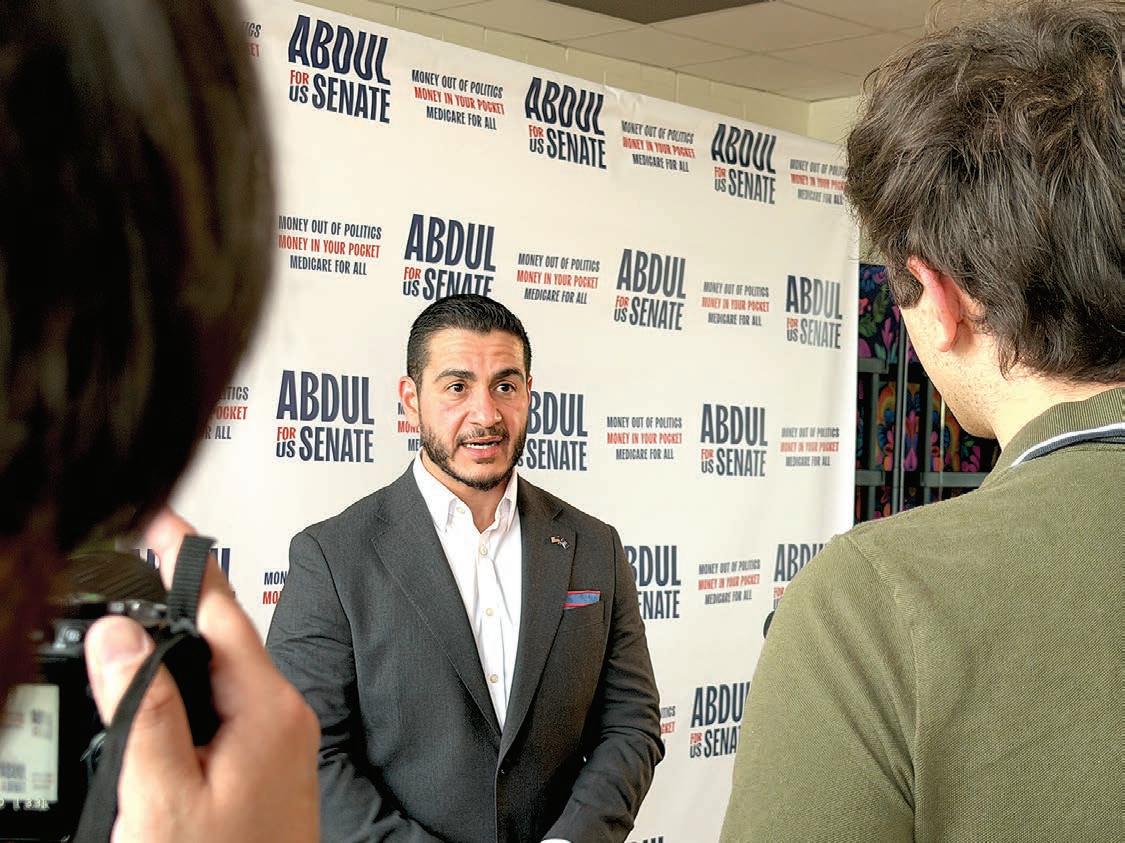
The United Auto Workers announced Friday that their members endorsed U.S. Senate candidate Abdul El-Sayed.
El-Sayed highlighted the fact that he’s the only card-carrying union member of the field of candidates running for the opening Senate seat at the UAW CAP conference forum in February, where members were able to ask questions to each candidate.
State Sen. Mallory McMorrow and U.S. Rep. Haley Stevens are also running for the state’s Senate seat, being left open by retiring Sen. Gary Peters.
The nation is watching Michigan’s Democratic primary because the future of the Democratic Party is up for grabs. Progressives pushing moderate Democrats on city councils and state legislatures across the country are looking for wins to prove their style of politics can win away from the coasts.
Progressives won key races at Michigan’s recent Democratic Party convention, where fractures within the party over corporate influence and the war in Gaza, Lebanon, and Iran were transparent.
El-Sayed, and to a lesser degree, McMorrow, represent the wing of Democratic Party voters looking for change. Stevens’ backers say she’s not only the most experienced out of the candidates, but she’s also the only viable option to defeat former U.S. Rep. Mike Rogers.
The union cited El-Sayed’s support for his universal healthcare plan, Medicare for All, and his support for banning stock buybacks in its endorsement.
“UAW members in Michigan want a fighter in Washington, D.C. who isn’t afraid to push forward a strong working-class agenda with moral clarity,” the international organization said in a statement. “Having never taken a dime from corporate PACs, Dr. Abdul El-Sayed is someone we can trust to have our backs, including when we need it most – like come May Day 2028.”
The UAW represents 300,000 active and retired Michigan members across a wide array of sectors. Though the UAW’s en-
dorsement would’ve been welcomed by any of the three candidates, the organization’s endorsement isn’t as powerful as it used to be.
El-Sayed has appeared at UAW fights throughout the campaign trail since last year. He rallied with laid-off UAW workers at Cleveland Cliffs and marched with UAW Local 600 members. On Friday, El-Sayed will be joining UAW Local 2093 American Axle workers on the picket line in Kalamazoo County to advocate for wage increases.
The union endorsed Gov. Gretchen Whit-
mer over El-Sayed when he ran for governor in 2018.
The group’s endorsement of Triumph Church pastor Rev. Solomon Kinloch in 2025 wasn’t enough to come close to Detroit Mayor Mary Sheffield’s performance in that election.
The union on Friday also announced its endorsement of Secretary of State Jocelyn Benson’s gubernatorial campaign.
Benson is running against Genesee Sheriff Chris Swanson, who has been turning his attention toward independents who
had been supporting former Detroit Mayor Mike Duggan’s unorthodox campaign for governor. Duggan dropped his bid last month, giving Swanson’s campaign a renewed sense of momentum. The primary election is Aug. 4. Absentee ballots will be sent to eligible voters at the end of the month. You can elect to receive ballots by mail as part of the state’s constitutional amendment approved by voters in 2022. You can reach Sam at srobinson@ michronicle.com
Sam Robinson SENIOR REPORTER
Michigan Gov. Gretchen Whitmer faced public opposition to data centers head on Tuesday at a groundbreaking event over a controversial project in Saline.
There’s belief data centers are inevitable in the evolution of technology, where data is stored in cloud software. Still, critics on the left and right are trying to keep them away from their communities over environmental concerns.
Data centers are warehouses where computers servers store data, sort of like a physical backbone of the internet. Google, Oracle and OpenAI’s approximately $16 billion project in Saline, outside of Ann Arbor, is being financed by Related Companies.
“We’re working with anyone to compete with everyone,” Whitmer said at a press conference in Washtenaw County Tuesday where stakeholders held a symbolic groundbreaking event.
The governor mentioned the state’s climb in regional workforce development rankings and a boost in population, saying the state should lead on AI policy as well. Whitmer said other countries shouldn’t be leading the United States on AI tech.
“We’re all fueling the need for projects like this one with the devices we hold in our hand, our purse and our pockets,” Whitmer said. “AI research is driving big breakthroughs whether it’s in science, medicine, technology.”
Whitmer at the press conference with tech leaders including OpenAI’s Sam Altman also acknowledged how data center projects can go wrong.
“We’re committed to leading the way on responsible AI,” Whitmer said. “Human intelligence cannot be replaced… Michiganders must build the center, operate the technology and reap the benefits.”

Altman, the billionaire CEO and co-founder of OpenAI, has become the face of the AI boom since the company released ChatGPT.
Last year, Whitmer sided with the tech industry on the premise that data centers provide jobs that outweigh the environmental costs after they are built. The governor signed off last year on an exemption that eliminated Michigan’s 6% sales and use tax on eligible data center construction and equipment purchases, significantly reducing the tax burden. The legislation also requires companies to source electricity from clean energy.
Leaders touted the Saline project as the largest investment in the history of Michigan.
Whitmer said any company that invests in Michigan communities must create jobs. The Saline project is said by supporters to be the first data center to be built under a labor agreement covering all 14 signatory affiliated skilled trades unions.
Despite the assurance from stakeholders the project would not lead to increases in water and utility rates for nearby residents, Whitmer’s decision to join Atlman in championing the data center groundbreaking, drew opposition from lawmakers and local candidates.
In Saline, township officials had similar concerns.
The township board voted 4-1 against the massive data center project led by Google, Oracle and OpenAI. Lawmakers ended their opposition after the threat of litigation that the township said would financially ruin Saline’s government.
Developers say the project will create 2,500 union construction jobs, 450 onsite jobs and 1,500 jobs across Washtenaw County. The site will bring in millions in new, annual tax revenue to support the township and nearby schools. Plus, developers promise the project will run a closed-loop water system to protect Michigan’s fresh water.

DTE Energy is supplying 100% of the project’s power using existing resources augmented by a new battery storage investment financed entirely by Oracle. Developers believe the project could create $300 million in savings for DTE’s existing customers thanks to the project’s contribution towards the fixed costs of grid maintenance and improvements.
But some Democrats aren’t convinced.
“Disgusting,” U.S. Rep. Rashida Tlaib said on social media in response to Whitmer’s inclusion at the press conference Monday.
“So disappointed in Governor Whitmer’s support of data center expansions in our state especially when so many Michiganders are opposed.”
John Conyers III, a candidate for Michigan State Senate District 3, shared Tlaib’s post and expressed disappointment in his own post.
Westland state Representative Dylan Wegela said the governor abandoned working class voters
for celebrating the data center project.
Wegela hasn’t shied away from criticizing the governor as a member of the state Legislature. The state lawmaker said the governor stopped responding to his calls amid his public criticism during the end of the Democratic trifecta in 2024.
Monday represented the latest what some in Gov. Whitmer’s own party have said are missteps in the final year of her popular tenure as the leader of the state.
Whitmer faced complaints from Democrats when she covered her face with a blue binder inside the White House during what she said was a impromptu press conference put on by President Donald Trump. Whitmer has gone to D.C. to talk to the president about federal assistance for storm recovery, funding for the Selfridge Air National Guard base in Macomb County, environmental protections for the Great Lakes and the automobile industry.
While some have championed New York Mayor Zohran Mamdani’s trips to the White House to support his housing plan and secure the release of students detained by federal authorities, Whitmer’s trips have been criticized.
The governor on Mackinac Island at last month’s Detroit Regional Chamber Policy Conference continued to fend off questions about whether she will run for U.S. president.
She first told Fox 2’s Roop Raj that she wouldn’t be one of the names running for president in 2028, and then on stage told a crowd that she could “never say never.”
Whitmer’s approval rating remains high, 52%, in her final year as Michigan governor, according to a new survey of 600 voters conducted by Glengariff Group between April 28 and May 1.



Walker-Miller Energy Services invites you to check out “Workforce Wednesday” - a new thought leadership series focused on the evolving workforce landscape across industries. Led by Derrick Meeking, Director of Market Development Initiatives, Workforce Wednesday explores the ideas, tensions, and opportunities shaping today’s workforce ecosystem.
The series will take readers beyond surface-level conversations about jobs and training and into the deeper questions facing industries today. As the workforce landscape continues to evolve, Walker-Miller remains committed to advancing solutions that expand opportunity, strengthen industries, and prepare the next generation of talent.
Follow along each month as Workforce Wednesday explores the ideas shaping the future of work at www.wmenergy.com
June 3, 2026
Workforce Wednesday: You Cannot Pursue a Career You Do Not Understand
“Access matters, but people also need context. They need honest explanations of what industries look like today, where opportunities are emerging, and how different pathways connect to long-term growth and stability.”
June 17, 2026


Workforce Wednesday: Workforce Development Cannot Be Built from the Sidelines
“Over time, I have come to believe this work functions as both an economic strategy and a relationship strategy ... But there is also a human infrastructure underneath all of it that often determines whether people stay connected long enough for those investments to matter.”

B1 | June 10-16, 2026
By Miss AJ Williams
Every twenty-nine and a half years, Saturn completes a full orbit of your birth chart and returns to the exact spot it held when you were born. This return is not just symbolic; it is astronomically exact. What follows is not simply a tough season or a rough patch to get through. Instead, it is like a careful inspection, thorough and honest, that exposes anything in your life that was not built on a strong foundation.
Saturn is not a planet of hardship. That idea comes from a misunderstanding, passed down through centuries of astrology that often confused accountability with fear. Saturn stands for integrity. Its wisdom is about structure. It does not punish you for choices you made in your twenties or blame you for situations you inherited. Instead, Saturn cares about coherence, with a precise and neutral approach. When Saturn returns, it puts all the structures you have built under close review and asks, with steady determination, whether they can support the person you are becoming.
Many people experience the Saturn return as a disruption. A relationship that once felt secure may start to fall apart. A career you built over years might suddenly seem meaningless. The version of yourself that once worked well and earned approval can start to feel uncomfortable, like clothes that no longer fit. While popular astrology calls this a crisis, it is really just feedback that matches the situation.
The amount of disruption caused by the Saturn return shows how far your current life is from the life your soul truly wants to build. This idea is not often discussed, but it is important to consider. Someone who spent their first Saturn cycle building a life that matches their real values and desires will find the return to be a deepening, a confirmation, and a call to continue growing. On the other hand, someone who built a life to please others—choosing a career for security instead of passion, staying in a relationship out of duty instead of love, or acting in ways just to fit in—may feel as if everything is falling apart.
This is not Saturn being harsh. It is Saturn being precise.
This is why the patterns that show up during a Saturn return are never new. They are the habits and identities you learned, the ways you survived, the parts of yourself you hid, the boundaries that failed because you lacked inner stability, the need to prove your worth through productivity, and the wounds passed down through generations. Saturn does not create these problems. It simply adds enough pressure that you can no longer ignore what was already there. The universe does not work in symbols; it works in real structures. Saturn is the planet that makes the hidden framework of your life suddenly clear and impossible to ignore.
For people in their late twenties, the first Saturn return is a time to face the choices made in early adulthood, often before truly knowing themselves. For someone who is 52 or 55, the second Saturn return is not far off; it is already starting to put pressure on the foundations of their life. This second return, which occurs around ages 58 to 60, does not review early adulthood but instead examines the middle part of life. It asks what was built for others and what was built for your own soul. It brings up questions about legacy, authority, and the difference between living out of obligation and living from your own truth. With the patience of a planet that has watched for thirty years, it asks if you are finally ready to create something that is truly yours.
That question may be tough, but it is not meant to be unkind.
Saturn does not expect you to have done everything perfectly. It asks that you have been honest. The structures that last through the return are not the ones that look best from the outside. They are the ones built on real alignment—choices made with integrity instead of fear, relationships chosen with awareness instead of habit, and a self that is true rather than performed. The Saturn return does not destroy these strong structures; it makes them stronger. It only takes apart what was never strong enough to last.
It’s a rite of passage in the truest sense. It is not just a symbol or a cultural story about growing up. It is a real moment when the universe asks you to show maturity—to face what you have built, let go of what cannot last, and start again from a place of truth instead of old habits. In the most structural sense, it is the moment when your soul demands that everything fit together honestly.
That insistence will feel like a loss to everything in you that was invested in the old structure. BUT it will feel like an arrival to everything that has been calling within you, to everything that has been waiting.
AJ Williams is a Spiritual Wellness Architect and Educator and the Managing Editor of the Michigan Chronicle. A thought leader at the intersection of astrology, psychology, and identity evolution, she is the founder of Sunday Communion, a quarterly live transformation experience held in Detroit. The Inner Architecture is her editorial column on the work of becoming.

By Aaron Foley
Let’s take a moment to set the record straight on Palmer Park.
Because first off, yes, there is a little bit of a double entendre there. And second, if you didn’t catch it, then you just might be in for a treat – and we’re not talking about the ones at the donut shop across the street. What readers need to know is that the girls, Dutch or otherwise, are outside. And from the looks of things recently, they’re going to stay there.
This editor was riding on Seven Mile on May 16 and had to double-check the calendar app to make sure it wasn’t July after taking in the sight of what appeared to be hundreds of young patrons swarming the park. Was Hotter Than July – arguably Palmer Park’s most well-attended event, the annual celebration of Black LGBT pride, the event this editor knows good and well – rescheduled? No. Did we miss a new event on Detroit’s revitalized social calendar? Perhaps.
A generation after the queen takeover, Palmer is now undergoing a teen makeover. What’s old is new again, and amid Detroit’s ever-persistent question of “what is there for young people to do in this city,” it seems like an answer was in plain sight here in the 133-year-old park with just as many acres.
“There’s something about this younger generation,” a wise-beyond-their-years 31-year-old rideshare driver tells me during a recent ride at the tail-end of May, “that’s just so open. I dropped off two girls over there, and they couldn’t have been more than 18, and I was telling them the whole history associated with Palmer Park and to be careful. And they were just like, ‘ok!’”
A number of TikToks from the weekend of the 16th have been in circulation since then – and before you ask this ‘80s baby how said TikToks ended up on my feed, please familiarize yourself with how GPS-based algorithms work. The abbreviated clips showed a far more inclusive Palmer Park than what this editor is used to back when the gworls were outside. Young people mingling across gender expression and presentation. AllBlack groups with a token white friend – what? A few BGLOs were even strolling in the midst. And while this reluctant unc knew better than to drop by the scene unprompted, it’s safe to say that others in my age range also understood the assignment since not a single person over, say, 25, was spotted at all.
Well, let’s walk that back a bit: Palmer Park abuts Detroit’s 12th Precinct, and some DPD officers were on guard. But amid the (justified) discussion of over-policing and over-curfewing our youth, there were no reported incidents from the weekend.
That’s not to say there wasn’t any handwringing. The People For Palmer Park, the nonprofit conservancy that has been in partnership with the City of
Detroit in maintaining the park, posted to its socials that it would be “working with the 12th Precinct to increase safety plans throughout the park” alongside a screenshot of Detroit Mayor Mary Sheffield’s statement regarding violence at a downtown teen takeover. But Palmer Park is certainly not downtown, and the kids in the park weren’t so much taking over – unless maybe this was a secret D9 plot to get all attendees to pledge next fall – as they were discovering that the park actually exists, prompting one PP-area resident to comment “it’s so disappointing to see such a valuable organization align with criminalization of our children” and another to ask “why is this necessary?”
As an imperfect and uncertain future unfolds, that “whole history” of Palmer Park lingers. Depending on who you ask, history is clearly taught differently across generations.
“They’re saying Palmer Park is DL?” asked Ava Perry, a local TikToker with around 2,700 followers. “I had no clue –I mean, I’m gay so…”
This unc let out an auntie scream after seeing this. Oh, how we have failed our youth! Another far more prolific local TikToker, “Sid,” a 72,000-followed user with braces that was described in other videos by Palmer Park attendees as “that dude with the braces,” was also perplexed: “Aye, why the f*** they talkin’ bout Palmer Park is a DL spot, like what the f***? Bruh, I ain’t never heard no s*** like that. So you telling me I went to Palmer Park and I’m DL now?”
No, young man, you are not DL, but here’s the lowdown on why such a sentiment persists – and why these kids today, just…these kids today, Lord. All history must be revisited to explain the present – and maybe it’ll also help straighten out the more seasoned among us as well.
In the 1800s, well before the automotive industry took root in Detroit, most denizens got around on foot. The wealthiest among us back then, however, had horses and carriages at their disposal. Most of Detroit back then was concentrated around what we know was downtown and Midtown; to “get away from it all,” wealthy folks would go “up north” to their log cabins scattered around what we now see as Eight Mile and Woodward. (Also in this area is a street close to Six Mile and Pontchartrain called Log Cabin. Right?) Among them was Thomas Witherell Palmer, a one-time U.S. Senator representing Michigan who owned 140 acres of land northwest of the growing city center.
Palmer has too long of a history to detail here; he was also one of the founders of the Detroit Institute of Arts and was instrumental in women’s suffrage. In the context of this discussion, his donation of his land holdings to the city of Detroit in 1893 formed the basis of the park that would come to bear his name in 1897. After his death, parts of the land – closer to Six Mile in modern-day – was subdivided into residences beginning in
the 1910s, creating what we now see as the apartment building historic district. Along the way, more subdivisions with single- and multi-family homes of varying sizes – Grixdale, Palmer Woods, Sherwood Forest – would also come to define the area.
It’s worth noting Palmer Park’s role in the Black middle class of Detroit, as documented by Chronicle staffers over the last 90 years. The sport of golf as both a communal and aspirational activity among Black folks in this town was robust enough for frequent, regular coverage beyond outings and tournaments, to the point where “what course do you play” was just as an important question as “what high school did you go to.” A regular column by Chronicle sportswriter Sportie J., “At Palmer Park,” briefly appeared in the paper throughout 1967, supplementing the longtime golf column “The 19th Hole” by Frank Lett. In the latter half of the previous century – and again, far too much to document for this week’s purposes, but a separate piece could be forthcoming – Palmer Park and its surrounding neighborhoods would frequently be in the background of both progress and struggle for Black Detroiters, as demands for better conditions at the Palmer Park golf course were the prelude to a number of historical precedents in town.
Ironically, it’s the ’60s when the aforementioned “whole history” of Palmer Park that most folks’ experiences are colored by starts to take shape, as the Chronicle starts to report on an uptick of “immoral” behavior in the area, like the time when a plainclothes Highland Park policeman was solicited by another man trying to molest him on a park bench (Oct. 30 1965 issue). There were long-running issues with prostitution along Woodward Avenue that seemed to sandwich the insulated Palmer Park area, with an Aug. 16,1969 piece noting specifically that 8 and Woodward at the Ferndale border and 6 and Woodward, and all points south of the Highland Park border, as the hot zones.
But by the 1970s, a headline declared the Palmer Park area as a fullon “combat zone.” See if this from the Aug. 13, 1977, issue sounds familiar: “The two-mile stretch of Woodward, which snakes alongside Palmer Park, continues to be Detroit’s premier home for hustlers, hookers, dope dealers, and homosexual bars. A tour of Woodward is perhaps more graphic than watching one of the X-rated movies shown daily in a former bank building, which squats in the corner of Six Mile. Long-haired male prostitutes slouched suggestively outside one of the many area bars which cater to the ‘gay ghetto’ population.”
What’s missing from the Chronicle archives – and trust, this is no slight to our forebears – is reporting on the changing population of the apartment and condominium buildings in the area that, at one point, housed the highest concentra-

From page B-1
tion of LGBT residents in the city. (In 1982, noting the demographics of the area, the Chronicle reported that organizers would stage the city’s first Gay Pride Day would be held in Palmer Park of that year; it has since evolved into what we now know as Motor City Pride. A decade later in ’95 would be the first Black gay pride at the Park, which is now Hotter Than July.) One can fill in the blanks based on how gayborhoods in general evolve.
First, while the Chronicle noted that some “fashionable” and “swanky” apartments and condos were desired by well-todo Black Detroiters in Palmer Park (as well as any other luxurious apartment building; places like 1300 Lafayette, for example, are described with similar terms), the neighborhood itself still had just as many affordable, efficiency-priced residences. More spacious condos were built in the 1950s and 1960s, but the majority of the apartment buildings were built in the 1920s and 1930s at the height of the Art Deco movement. And while no Detroit neighborhood was immune to crime, one could presume that with growing crime rates in Palmer Park coupled with persistent action to improve conditions at the same-named recreational facilities, rental rates and property values may have been just a bit less than, say, the riverfront apartments on Jefferson that have proximity to Indian Village and the mayor’s residence.
Touring through Chronicle classifieds, you’ll always notice a famous address listed for sale or for rent. That includes bars (and their liquor licenses) everywhere. The most notable of Palmer Park bars in both past and present day remains Menjo’s, which is now a gay bar – but, per Chronicle reporting weighed against present-day timelines, was once the Black-owned Menjo’s Supper Club that featured Black performers, frequently compared to Paradise Valley hangouts because it recaptured the spirit of a bygone era – lost to freeways first, and time later. This iteration was short-lived; like many bars and lounges in the 1970s and 1980s as Detroit’s overall economic fortunes fell, Menjo’s changed hands and clientele.
The Palmer Park area was primed for an influx of a population looking for beauty in the midst of chaos – which, if you talk to any queer person, is probably how they’d describe themselves. Like Paradise Valley, however, Palmer Park is a “could’ve been” district of Detroit – as in “this place could’ve been” something different if other things hadn’t happened. As much as the area’s recreational activities continued throughout the decades – especially golfing at Palmer, a favorite of legendary Chronicle publisher Sam Logan – there was little coalescence between that community and the queer community. Both would suffer under the
crushing weight of Detroit’s financial woes; in the 2010s, the City nearly closed the Park entirely, golf course and all. And while the park now may be on the rebound in 2026, it’s well reported that most of the apartment buildings are either vacant, dilapidated, owned by an out-of-state speculator, or, in some cases, all of the above.
What hasn’t changed in all these years is Palmer Park’s reputation as a destination for anonymous sex. History documents the tragic, rumor perpetuates for the sordid, but there is truth in both those accounts and still more to be found in others.
Anonymous sex in this context is sex between parties with no previous affiliation. Where it gets complicated – and what ultimately defines popular narrative – is what happens prior to initiation, during the act itself and the final outcome, all of which can also change definition at any time. Anonymous sex that comes by way of a monetary or some other proprietary exchange can be classified as sex work or prostitution, the latter of which was and still is a criminal act. Anonymous sex that results from a person seeking sex from another person in a public setting is also criminalized but not often discovered; that’s what we sometimes call cruising.
throw away if you go cruising around Merrill Plaisance in your Grand Cherokee and don’t want anyone to find out – that’s DL, short for “down low,” a term first used in the late 1990s specifically for Black men who publicly identify as straight and do not tell their female sex partners (be they married or dating) that they engage in sexual encounters with other men.
DL men do not identify as gay, do not participate in gay scenes like bars or clubs, are not in a closet because there’s no closet for them to come out of (unless they’re in denial, and that’s only for them – not us – to say), and thus – well, at least back in this unc’s day – are not considered part of the LGBTQIA community at large. DL men in Detroit for years have frequented Palmer Park looking for and engaging in anonymous sex with other men, though, so in a way, yes, Palmer Park is DL, but not just that. DL men have not been the only ones cruising for sex in the Park; gay men, closeted gay men, bisexual men, trans men, trans women, lesbians, nonbinary people and everyone else in between have done so for decades – be it by approaching someone on a park bench and hoping they’re not an officer in disguise, or using a GPS-based app like Sniffies as many folks do today.
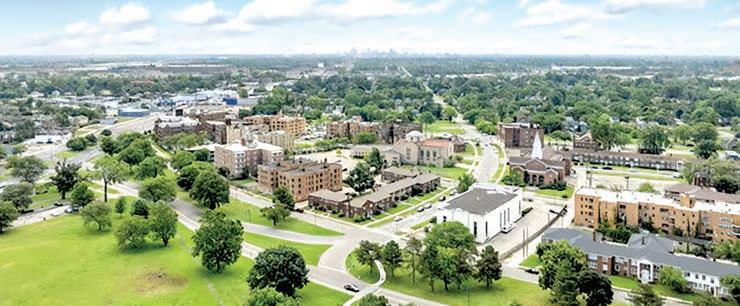
There are nuances, and we’ll try our best to include them all to preempt any unintentional offense. Sex work is work. Sex work can be survival work. Not all sex in exchange for money or goods is prostitution. An anonymous sex encounter that begins with no monetary exchange but results in one isn’t prostitution either, nor does it make the receiving party a sex worker unless they decide to identify as such. Rape can result if one party refuses consent at any point during the encounter. More importantly in this context, we’re broadly speaking of the difference between prostitution and cruising – and in Palmer Park, both practices have been omnipresent.
“Is Palmer Park DL?” Well, that requires even more nuance. As long as there has been human life, there has been same-sex attraction, but same-sex attraction predates things like “monogamy,” “prenuptial agreements” and “expose pages.” So, let’s say you’re an upstanding, married Black man in Sherwood Forest with a wife and two kids, but you’re craving a little something different and know you can get it just a stone’s
measles and other illnesses spread, vaccination remains your child’s best protection

“All my life, Palmer Park been a no-go zone,” says 27,000-followed Detroit_Quack on TikTok, who’s part of the salt-and-pepper-bearded side of the Detroit internet. “That’s just somewhere you just don’t be frolicking around.” He’s right – and likely referring to the more dominant narrative of sex work that defines folks’ initial recollections of Palmer Park. Going back to the blaring “combat zone” headline of the Chronicle’s 1977 piece, a young mother tells reporter Brian Flanigan that she had to purchase a 115-pound dog to ward off strangers “asking me for my price” when she and her son wanted to walk through the park. Prostitution up and down Woodward has largely been defined by johns and women sex workers (and it’s important to note that either party can be the first to initiate an exchange), with the women in the scenarios largely being painted as pariahs, lost causes or hopeless victims. Various efforts, as the Chronicle would report, from government, the religious community, or even dedicated individuals, looking to curb prostitution over the years would drone on
Across Michigan and the country, vaccine-preventable diseases like measles, whooping cough (pertussis) and flu are circulating at concerning levels. Illnesses that were once rare are now reappearing in communities, putting children and families at risk.
Measles is one of the most contagious viruses known. If one person has measles, nine out of 10 people nearby who are not protected can become infected. Complications can be serious, including pneumonia, brain swelling and, in rare cases, death.
to no end.
This editor, who’s old enough to remember regularly observing sex workers in the blocks surrounding the Chronicle’s pre-Midtown 479 Ledyard address, came of age at the confluence of several of Palmer Park’s identities. It was known that Palmer Park was the spot for the girls, gays, and theys to commiserate, be it for the big gathering in July or a low-key weekend ki. Something troubling was simmering beneath the surface that we often talked about amongst ourselves, but would come to larger attention after it couldn’t be ignored: That members of our own community were dropping like flies at 6 and Woodward.
In 2015, with Hotter than July approaching, the Chronicle acknowledged the growing number of trans sex workers – almost always women – in the Palmer Park area in an issue from that month. “The one thing I don’t think people really talk about when it comes to violence against trans women is the simple fact that we have been told by society that we are not qualified to work regular jobs, but then turn around and still get criminalized for the only resource we have which is sex work,” said Bré Campbell, then-executive director of the Trans Sistas of Color Project.
That was a decade ago, a decade that included persistent efforts from local LGBT activists to bring more attention to the violence in the area – be it against trans women or anyone. The 2010s also brought increased police crackdown on sex work, or putting in new things – like a strip mall with a Meijer in it – that would deter it altogether, making 8 and Woodward a little more visually appeasing. We’ve even seen the death and rebirth of Dutch Girl Donuts, and if you hear any saxophones getting louder, it’s because the People for Palmer Park instituted more free musical events in the park in recent events. That’s not to say that everything that made Palmer Park what it is now has completely disappeared. Still, all the while, a new generation has come along discovering the new Palmer Park, one that’s a mile south of no less than three inner-ring suburbs that Detroit families moved to in recent years and accessible by a public bus system managed by a mayor that waived fees for any student riding them. “We just did that Palmer Park s***, and that s*** was low-key f***ing lit – and safe,” posted EJ, a young buck with just over 1,000 followers on TikTok. “If people understand that people are just trying to have fun, and vibe out, and s*** like that.”
Well, if the kids are still saying “lit,” then this editor agrees – let’s keep this s*** f***ing lit. We can acknowledge Palmer Park’s history without dwelling in it and still teach the babies, but we can learn from them as well. They answered their own question when they were looking for something to do. The question now is, how do we make sure they can keep on doing it?
Whooping cough and flu also continue to impact children each year, leading to missed school days, doctor visits and hospitalizations. For some children, especially those with underlying health conditions or weakened immune systems, these illnesses can be especially dangerous. When fewer people are vaccinated, outbreaks are more likely to occur and spread quickly. Vaccination remains the safest and most effective way to protect your child and help prevent the spread of these diseases.
Here’s how to make sure your child is protected:
Step 1: Check if your child is up to date on vaccinations. You can request an immunization record through the Michigan Care

Make an appointment with your family physician, local health
Take a moment to review the vaccination schedule for your child’s age recommended by the American Academy of Pediatrics. You can print it out and bring it to your child’s appointment for a discussion about the vaccines needed at that visit.



Go to the health care provider’s office for your child’s vaccination visit. Sign up for text or email reminders so you won’t forget the appointment.
Ask the health care provider any questions you may have about the vaccines your child is receiving.
Get your child up to date on their vaccines to help protect them and your community from 18 vaccine-preventable diseases. Many vaccines are available at low or no cost through the Vaccines for Children program or through private insurance coverage. Learn more at IVaccinate.org.
On June 18, the Detroit Institute of Arts (DIA) will open the 5th Annual Wayne County High School Art Exhibition. The exhibition features over 80 artworks by high school students from across Wayne County and will be on view in the Wayne and Joan Webber Education Wing at the DIA through Sunday, July 19, 2026.
The annual exhibition celebrates the artistic vision, creativity, and technical skills of high school students who attend public, charter, private, or home schools in Wayne County. This year’s exhibition will feature photography, painting, textiles, sculpture, jewelry, ceramics, and more from students across more than 25 schools.
We are excited to highlight the talents of young creators across Wayne County at our museum,” said Salvador Salort-Pons, Director of the Detroit Institute of Arts. “We hope this exhibition empowers and inspires the next generation of Wayne County artists, while reminding everyone how important it is to support educational opportunities in the arts.”

“This exhibition is proof of what our young people are capable of when given the opportunity to express themselves,” said Wayne County Executive Warren C. Evans. “Each work on display tells a story—of creativity, of resilience, and of the remarkable communities across Wayne County. I’m proud of every student who participated, and I encourage even more schools to join us in celebrating the arts next year.”
A celebration for participating students, their families, and media will take place on June 30, with more information coming soon.
Following the closure of the DIA exhibition on July 19, a selection of student artworks will be moved to the Guardian Building in downtown Detroit for extended public viewing, where they will be on display from Aug. 5-24.
For more information about the 5th Annual Wayne County High School Art Exhibition, visit dia.org/wchsae5.
General admission is always free for museum members and residents of Wayne, Oakland, and Macomb counties.
Museum Hours and Admission
Tuesday–Thursday: 9 a.m.– 4 p.m.
Friday: 9 a.m.– 9 p.m.
Saturday–Sunday: 10 a.m.– 5 p.m.
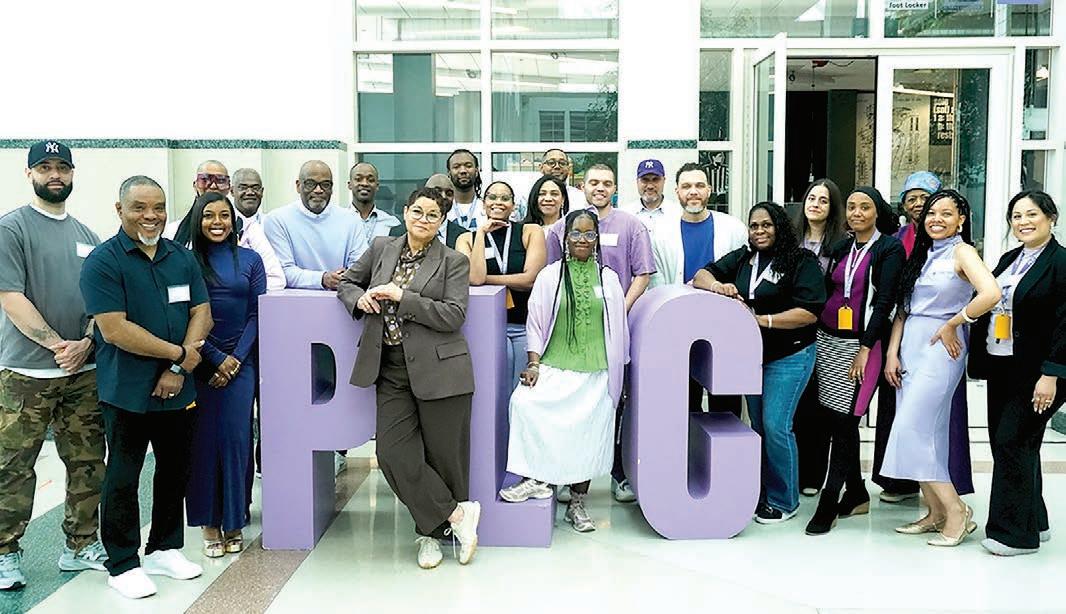
By Jasmine West
Nearly a century after Dr. Violet T. Lewis founded what would become Michigan’s only historically Black college, Detroit has formally placed her name on the city’s calendar.
May 27 is now Violet T. Lewis Day in Detroit.
The city made the declaration Wednesday during a ceremony at Pensole Lewis College of Business & Design, known as PLC Detroit, where a representative from Mayor Mary Sheffield’s office presented the official proclamation to Dr. Violet Ponders, the granddaughter and namesake of Dr. Violet T. Lewis. The recognition honored Lewis as an educator, entrepreneur, and civic leader whose work opened doors for generations of Black students seeking professional training, economic mobility, and a place to belong when opportunity was often denied.
Dr. Violet T. Lewis founded Lewis Business College in 1928, during an era when Black Americans, and Black women especially, faced deep barriers in education, business, and employment. She later moved the school to Detroit in 1939, where it became a vital institution for Black professional advancement. Over the decades, Lewis Business College educated more than 20,000 students and built a legacy rooted in access, discipline, skill, and possibility. That legacy was brought back into
“
public view in 2022, when Dr. D’Wayne Edwards revitalized the institution as Pensole Lewis College of Business & Design. The school was reestablished as the nation’s only design-focused HBCU, while preserving Lewis’ name and the institutional history she built.
“We are honored to celebrate Violet T. Lewis’ legacy and continue the mission she began,” said Dr. Edwards. “This declaration reflects the transformative power of education, opportunity, and institutional impact.”
The ceremony drew about 250 to 300 guests, including civic leaders, educators, students, creatives, entrepreneurs, community members, and partners connected to PLC Detroit’s growing work across education, business, culture, and design. Organizations and companies represented included the Gilbert Family Foundation, Apple, Carhartt, StockX, Nike, and adidas.
Guests arrived wearing shades of violet, turning the celebration into a visual tribute to Lewis’ name and legacy. Inside, the program included storytelling activations and commemorative experiences honoring her life’s work. Fixins Soul Kitchen also curated a violet-hued specialty beverage for the occasion, adding a community-centered touch to the gathering. As guests left, they received violet flower seeds and customized planters, a simple but meaningful gesture tied to the continued growth of Lewis’ vision.
For Dr. Violet Ponders, the recognition was personal and historic.
“My grandmother believed deeply in the power of education to create opportunity,” said Dr. Ponders. “To witness the City of Detroit formally recognize her contributions in the community where her work impacted thousands of lives is deeply meaningful.”
The declaration comes as conversations continue across the country about the importance of preserving Black educational institutions and honoring the people who built them. HBCUs have long served as engines of leadership, culture, professional training, and economic mobility. PLC Detroit now carries that tradition into design, footwear, fashion, business, and creative industries where Black talent has shaped culture for generations, often without equal access to ownership or leadership.
Violet T. Lewis Day will now be observed annually in Detroit as a recognition of Black educational achievement, institutional vision, and the lasting role historically Black institutions play in shaping opportunity.
Detroit has a long Black educational and entrepreneurial history, the declaration is also a reminder that legacy does not preserve itself. It has to be named. It has to be taught. It has to be carried forward.
On May 27, Detroit did that for Dr. Violet T. Lewis.
By Jasmine West
Detroiters will have a public opportunity next week to pause, gather, and recognize the service of U.S. Army soldiers, veterans, and future service members during a daylong ceremony downtown.
The Detroit-Wayne Joint Building Authority will host its 6th Annual U.S. Military National Day of Honor Flag Raising Ceremony for the U.S. Army on Friday, June 12, 2026, from 8 a.m. to 3 p.m. at the Coleman A. Young Municipal Center’s Veterans Memorial Plaza and Spirit Plaza, located at 2 Woodward Avenue.
The ceremony comes just days before the U.S. Army’s National Day of Honor on June 14 and arrives as the country prepares to
Clarinda Barnett-Harrison, CEO of the Detroit-Wayne Joint Building Authority. “As we approach our nation’s 250th birthday, this event serves as an important opportunity to honor the men and women who have dedicated their lives to protecting our freedoms while bringing the community together in reflection, appreciation, and unity.”
The Detroit ceremony is part of a larger statewide initiative recognizing the Army’s National Day of Honor. The observance follows other stops across Michigan and will serve as a culminating community event in Detroit.
For many families, military service is deeply personal. It lives through grandparents who served, parents who sacrificed, veterans who returned home carrying visible and invisible burdens, and young people now considering what service may mean for their own futures. The flag raising offers a public way to acknowledge that history while also connecting residents with current service members and military leadership.

mark its 250th birthday. For Detroit, the observance will bring together students, active-duty military personnel, veterans, city representatives, and residents in a public space that already carries civic and historical weight.
The day will include the raising of the American and U.S. Army flags by Detroit Public Schools Community District Renaissance High School JROTC, remarks from military leadership and community representatives, military vehicle displays, and opportunities for the public to meet active-duty Army personnel and veterans.
A Future Soldier Swearing-In Ceremony is scheduled for 11:30 a.m., placing young people who have chosen military service at the center of the day’s program.
“Detroit has always been a city rooted in resilience, service, and patriotism,” said
1LT Peters, who will deliver program remarks, said the statewide effort is meant to recognize the broad meaning of service and strengthen the relationship between the military and local communities.
“As we travel across Michigan recognizing the Army’s National Day of Honor, we are reminded that service to country extends far beyond the uniform,” said 1LT Peters. “These events are an opportunity to celebrate the dedication of our soldiers, veterans, and future service members while strengthening the connection between the military and the communities we proudly serve. Detroit’s rich history of patriotism and perseverance makes it an especially meaningful stop as we honor the Army and commemorate America’s 250th birthday.”
The program will focus on honoring the legacy and sacrifice of U.S. Army soldiers and veterans, recognizing America’s upcoming 250th birthday, encouraging youth



The Detroit Public Schools Community District is seeking
architectural engineering design services for the sixth series of projects in the Facility Master Plan under RFP 26-0327. There will be a non-mandatory pre-bid meeting for this RFP hosted virtually on June 5, 2026 at 12 p.m. The conference can be viewed using the following link: https://tinyurl.com/mv5pz95f
Call-In #: (313) 462-2305
Conference ID: 489 947 845#
There will be a series of non-mandatory walkthrough opportunities for this solicitation. Please reference Attachment F in the RFP documents for additional details. The dates of the walkthroughs are as follows:
Walkthrough Day 1- June 8, 2026
Walkthrough Day 2- June 9, 2026
Walkthrough Day 3- June 10, 2026
Walkthrough Day 4- June 12, 2026
Walkthrough Day 5- June 15, 2026
Proposals are due electronically via DemandStar by 12 p.m. on June 29, 2026. Late bids will not be accepted.
All bids must be accompanied by a sworn and notarized statement disclosing any familial relationship that exists between the submitting company and any employee of DPSCD. DPSCD shall not accept a bid that does not include this sworn and notarized disclosure statement.
If you have questions, please contact the Procurement Department at (313) 873-6531.
3 cols x 4.75 inches
The Detroit Public Schools Community District is seeking construction management firms for preconstruction and construction management services for the sixth series of projects in the Facility Master Plan under RFP 26-0349. There will be a non-mandatory pre-bid meeting for this RFP hosted virtually on June 5, 2026 at 1 p.m. The conference can be viewed using the following link: https://tinyurl.com/2p2n786u
Call-In: (313) 462-2305
Conference ID: 499 749 613#
There will be a series of non-mandatory walkthrough opportunities for this solicitation. Please reference Attachment C in the RFP documents for additional details. The dates of the walkthroughs are as follows:
Walkthrough Day 1- June 8, 2026
Walkthrough Day 2- June 9, 2026
Walkthrough Day 3- June 10, 2026
Walkthrough Day 4- June 12, 2026
Walkthrough Day 5- June 15, 2026
Proposals are due electronically via DemandStar by 12 p.m. on June 29, 2026. Late bids will not be accepted. All bids must be accompanied by a sworn and notarized statement disclosing any familial relationship that exists between the submitting company and any employee of DPSCD. DPSCD shall not accept a bid that does not include this sworn and notarized disclosure statement.
If you have questions, please contact the Procurement Department at (313) 873-6531.
3 cols x 5 inches

DETROIT PUBLIC SCHOOLS COMMUNITY DISTRICT BOARD OF EDUCATION NOTICE OF APUBLIC HEARING ON THE PROPOSED BUDGET FOR THE 2026-2027 FISCAL YEAR FOR DETROIT PUBLIC SCHOOLS AND THE DETROIT PUBLIC SCHOOLS COMMUNITY DISTRICT (MANDATED BY MCL 141.434)
The Board of Education of Detroit Public Schools Community District will hold a public hearing on the proposed budgets for the Detroit Public Schools and the Detroit Public Schools Community District for the 2026-2027 school year beginning at 5:00 pm on Tuesday, June 16, 2026 at East English Village Preparatory Academy at Finney. The meeting will also be available on-line at the information provided below. Copies of the proposed budgets will be available for public inspection at the Office of Management and Budget located in the Fisher building, 11th Floor, 3011 W. Grand Blvd., Detroit, MI 48202 from 8:00 am until 5:00 pm on Wednesday, June 10th, 2026. The property tax millage rate proposed to be levied to support the proposed budget will be a subject of this hearing. Join on your computer or mobile app https://www.detroitk12.org/boardmeeting
4 cols x 3.5 inches
The Detroit Public Schools Community District is seeking general contracting firms for the demolition, furnishing, delivery, and installation of a gymnasium partition wall & motorized sloped gymnasium curtains under RFP 26-0328. The gymnasium partition wall will be installed at Henderson Academy located at 16101 West Chicago Street, 48228. The Motorized sloped gymnasium curtains will be installed at Renaissance High School located at 6565 West Outer Drive, 48235.
There will be an optional pre-bid conference for this solicitation hosted virtually via Microsoft Teams at 10:00 a.m. on May 29, 2026. The pre-bid conference can be accessed using the following link:
https://tinyurl.com/a75a3zsb
Call In: (313) 462-2305 Conference Id: 720 384 472#
There will be an optional in-person walk-through for this solicitation at 2:00 p.m. on May 29, 2026. The walk-through will be conducted at both Henderson Academy located at 16101 West Chicago Street, 48228, and Renaissance High School located at 6565 West Outer Drive, 48235. The due date for proposals is 12:00 p.m. on June 16, 2026. Late proposals will not be accepted.
A virtual Public Opening will occur at 12:00 p.m. on June 16, 2026, and can be accessed using the below link.
https://tinyurl.com/4udknzh3
Call In: (313) 462-2305 Conference ID: 864 585 385#
This project is subject to Michigan State Prevailing Wage Laws (Michigan Public Act 10 of 2023) and the contractor must pay prevailing wages and fringe benefits to all its contractors, subcontractors, and construction mechanics working on the project in accordance with Michigan Public Act 10 of 2023.
AND SECRET SHOPPER SURVEY DEVELOPMENT, DISTRIBUTION AND ANALYSIS
Notice of Public Hearing Weston Preparatory Academy, a Tuition-Free Public-School Academy, will hold its 2026-2027 Budget Hearing on June 18, 2026 at 4:00 p.m. at 22930 Chippewa Street, Detroit, MI 48219, (313) 387-6038 to review the proposed 2026-2027 operating budget. A copy of the proposed budget is available for public inspection at the above address.
A
Budget Hearing Notice
BUDGET HEARING
The Board of Directors is conducting its annual budget hearing University Yes Academy Time: 6:00 pm
Date: June 22, 2026
Location: University Yes Academy 14669 Curtis Street Detroit, MI 48235
A copy of the budget may be reviewed in the main office 5 days prior to the meeting.
BUDGET HEARING
The Board of Directors is conducting its annual budget hearing New Paradigm Glazer-Loving Academy Time: 6:00 pm
Date: June 18, 2026
Location: New Paradigm Glazer Academy 2001 LaBelle Street Detroit, MI 48238
A copy of the budget may be reviewed in the main office 5 days prior to the meeting. The meeting will be conducted in accordance with the Open Meeting Act. The Academy shall comply with subtitle A of Title II of the Americans with Disability Act of 1990, Public Law 101336, 42 USC 12101 et seq or any successor law. Should you require specific accommodation(s) please contact: School Administrator at: (313) 852-1500.
BUDGET HEARING
The Board of Directors is conducting its annual budget hearing New Paradigm College Prep Time: 6:00 pm
Date: June 23, 2026
All bids must be accompanied by a sworn and notarized statement disclosing any familial relationship that exists between the submitting company and any employee of DPSCD. DPSCD shall not accept a bid that does not include this sworn and notarized disclosure statement. If you have questions, please contact the Procurement Department at (313) 873-6531.
Detroit People Mover/Detroit Transportation Corporation 535 Griswold St
Location: New Paradigm College Prep 4001 29th Street Detroit, MI 48210
Ste # 400 Detroit, MI 48226
A copy of the budget may be reviewed in the main office 5 days prior to the meeting.
3 cols x 6.5 inches
BID # 07-01-2022 REBID
The Detroit Achievement Academy District (MI PSA) shall hold a public budget hearing for its 2025-2026 and 2026-2027 annual operating budgets on June 9th at 6:00pm at 7000 W Outer Dr, Detroit, MI 48235. A copy of the budget is available for public inspection at: www.detroitachievement.org/budget
Detroit Local Initiatives Support Corporation (LISC) is seeking proposals for a qualified consultant to work with Detroit LISC to create, distribute and analyze customer service surveys to gather information about the services of the Detroit at Work One Stop System. The findings from the surveys will be analyzed and put into interim and final reports to be submitted to LISC. Specifically, Detroit LISC is seeking those with proven experience in the following areas:
✓ Evaluation
The meeting will be conducted in accordance with the Open Meeting Act. The Academy shall comply with subtitle A of Title II of the Americans with Disability Act of 1990, Public Law 101-336, 42 USC 12101 et seq or any successor law. Should you require specific accommodation(s) please contact: School Administrator at: (313) 406-7060.
The Detroit Transportation Corporation Office of Contracting and Procurement requests proposals from qualified firms to provide CCTV and network upgrades. This includes modernization efforts for the CCTV system, Public Address (PA) system, Variable Message Signs (VMS), and Wired Backbone Network system, at the MCF, at each DPM station, and at substations described herein.
PUBLIC NOTICE:
✓ Survey Creation, Distribution and Collection
The Suburban Mobility Authority for Regional Transportation (SMART) is soliciting RFQ Control No. 26-4379 - Stand-Alone Security Camera System. RFQ forms may be obtained beginning June 10, 2026, from http://www.mitn.info. Quotes are due by 3:00 PM ET, July 09, 2026.
Budget Hearing
✓ Analysis
Budget Hearing Notice DETROIT EDISON PUBLIC SCHOOL ACADEMY
✓ Report Development
✓ Program Design
Will hold the annual budget hearing on Wednesday, June 17, 2026 at 3:30pm. The hearing will take place at 1903 Wilkins, Detroit, MI 48207. The budget will be available, and the hearing will take place in accordance with the Open Meetings Act.
Visit https://www.lisc.org/detroit/about-us/careers/ to download full RFP. Responses to this RFP are due Friday, October 21 and should be emailed to kgallick@lisc.org. LISC is committed to working with Small Business Enterprises (SBEs), Minority-Owned Business Enterprises (MBEs), and Women-Owned Business Enterprises (WBEs). LISC encourages submissions from SBEs, MBEs, and WBEs.
The Academies of Detroit (PSAD) will hold its annual Budget Hearing and Board Meeting on Wednesday, June 17, 2026, at 12:00 p.m. The meeting will take place in the Auditorium), 2664 Franklin St. Detroit, MI 48207. To review or print a copy of the proposed budget, please go to: www.uprepschools.com/parents/ transparency-reports
Notice of Public Hearing
Academy of Warren will hold a public hearing June 16, 2026 at 5:30 pm at 13943 East 8 Mile Road, Warren, MI 48089, (586) 552-8010 to review the proposed 2026-2027 operating budget. A copy of the proposed budget is available for public inspection at the above address.
REQUEST FOR QUOTES
The Suburban Mobility Authority for



at (313) 873-6531.
All bids must be received by the Detroit Transportation Corporation via Bidnet/MITN on or before 5:00 p.m. (EST) November 7, 2022.
A pre-bid site visit will be determined at a later date, if necessary. Proposals can be accessed on the Bidnet Direct www.bidnetdirect.com//detroit-transportation-corporation
Mike Anderson Procurement Manager mandersonjr@thepeoplemover.com

The Regional has established Enterprises 2025. This neutral participation which reflects contracts and The proposed in accordance regulations 49
The goal and for inspection Friday at RTA’s 1400, Detroit, days following
but a safe one is even better. Did you know that working smoke alarms in the home doubles your chances of safely escaping a house fire? That’s according to the National Fire Protection Association. This spring, Kidde, a pioneer in early smoke detection for over 100 years, is highlighting the importance of keeping your smoke and CO alarms up to date. Here’s what they want you to know:
The RTA will date of this notice.
RTA of Southeast 1001 Woodward Detroit, Michigan Or e-mail to:
• Install devices throughout the house, on every level including the living room, kitchen, bedrooms, hallways, basement and garage. It’s also a good idea to keep fire extinguishers in the kitchen, basement, laundry room and garage.
Detroit People Mover/Detroit Transportation Corporation 535 Griswold St Ste # 400 Detroit, MI 48226
BID # 08-8-2022 REBID

The Detroit Transportation Corporation Office of Contracting and Procurement requests proposals from qualified Contractor/Firm(s) to provide annual geometry measurements of the LIM rail height, power rail tolerances, running rail height and track gauge.
• Smoke and CO devices aren’t just plastic boxes they’re sophisticated mini-computers. Their sensors and circuits constantly analyze air particles, and like any computer, dust and neglect can inhibit their functionality. Clean your alarms this spring, and regularly after that, to help prevent false alarms. Use compressed air or a vacuum cleaner with a soft brush to clean the vents, and then wipe the device with a dry microfiber cloth.
The initial information and subsequent trending information on the rate of change of the measured parameters of the Detroit People Mover (DPM) track will be reviewed and utilized as part of the existing detailed maintenance plan to ensure long term safety and availability to the riding public.

All bids must be received by the Detroit Transportation Corporation via Bidnet/MITN on or before 5:00 p.m. (EST) November 7, 2022. A pre-bid site visit is scheduled for Wednesday, October 25, 2022 at 10:00 a.m. (EST).
• Smoke and CO alarms are electronic devices with sensors and circuits that wear out over time. It’s recommended to replace them every 5 to 10 years depending on the model. You can determine whether it’s time to replace or upgrade your alarms by looking at the manufacturing date. Be sure to opt for self-testing devices that help ensure the alarms are operating as expected, like the Kidde Smoke Alarm, 10-Year Battery Powered or the Combo Smoke CO Alarm, 10-Year Battery Powered, which last a full decade. Kidde’s Detect line of devices offer revolutionary technology that provides fast, precise smoke detection, giving individuals and families more time to react and get to safety. The line also prioritizes enhanced sensing technology, which helps to reduce those nuisance alarms that can lead to consumers disabling their devices. Remember, a self-testing device is not a substitute for a manual push test. No matter what style devices you have in your home, be sure to take time this spring to manually test them, and then monthly after that.
To the qualified Wayne County, that a Public that will be Tuesday, November October 25, room (lower Robert
The Public that the computer cast at

Proposals can be accessed on the Bidnet Direct www.bidnetdirect.com//detroit-transportation-corporation
More information about fire and CO safety can be found by visiting https://www.kidde.com.
“A happy, healthy home starts with safety. Make sure your fire and carbon monoxide detectors are part of your seasonal refresh routine: clean them, test them, and replace any units that have reached their limit,” says Isis Wu, president of Global Residential Fire & Safety at Kidde.
Mike Anderson Procurement Manager mandersonjr@thepeoplemover.com

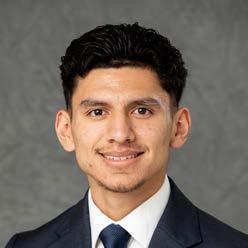
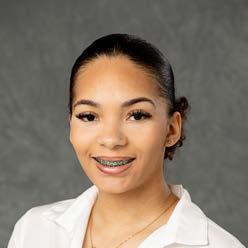
“Success is no accident. It is hard work, perseverance, learning, studying, sacrifice, and most of all, love of what you are doing.”
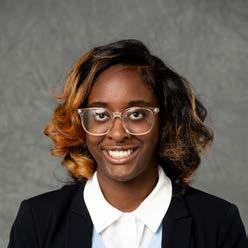
“Be the person who cares, be the person who makes an effort, who loves without hesitation. Be the person who makes people feel seen.”
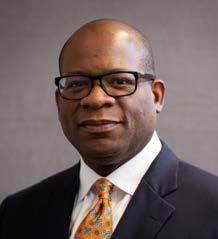
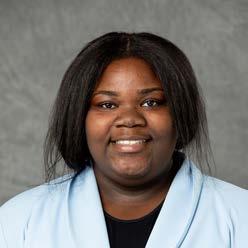
“Success doesn’t come from what you do occasionally, it comes from what you do consistently.”
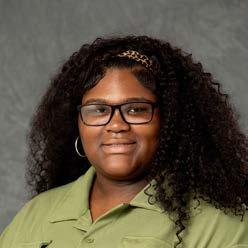

For ten years, the S.W.A.G. Awards have recognized Detroit students who embody achievement, leadership, resilience, and promise. Today, we proudly recognize the 2026 scholars, an exceptional group of young leaders representing schools and communities across our region. As we celebrate the 10th Anniversary of Students Wired for Achievement and Greatness, we honor these students for their commitment to excellence and the bright future they represent for our city.
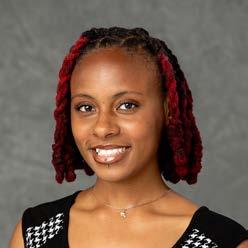
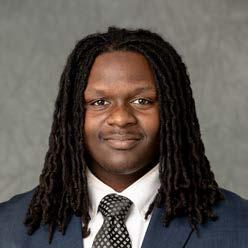
“If

“Life is a journey that must be traveled no matter how bad the roads and accommodations.”
“When you know better you do better.”“People get built different, we don’t need to figure it out we just need to respect it.”
Message from the Publisher
For ten years, it has been my absolute pleasure to meet high school students whose dedication to continuing their education is nothing short of inspirational. It is a privilege to present the 2026 Michigan Chronicle/Huntington Bank Students Wired for Achievement and Greatness (S.W.A.G.) Scholarship recipients. This year’s class perfectly embodies the spirit and legacy of this award, and each scholar is truly remarkable and deserving of recognition. Like so many young people today, these students are navigating challenges that would be difficult for many adults to carry. And yet, they persevere. They show up. They keep pushing. They succeed. That is why we celebrate them. Not simply because of grades or the traditional yardsticks by which success is so often measured, but because they embody resilience, promise, and the kind of strength that tells us our future is still full of possibility. They are winning despite the odds, and in doing so, they remind all of us what potential truly looks like.
To the students, as you prepare to leave school and embark on new adventures, take with you the knowledge that your hard work has not gone unnoticed. We see you! Your achievements prove that you have the drive and determination to continue your academic pursuits and make significant contributions in your chosen fields. We know that you will be the leaders that pave the way for a promising tomorrow. The Michigan Chronicle believes in supporting Detroit students who have a drive, respect, and a passion for higher learning. When we engage in community-based initiatives such as S.W.A.G., it is with the goal of reaching at least one person in whose life we can make an impact. The impact of these actions can last a lifetime, not just for the students, but for the entire community. My life was greatly impacted by people who chose to act, who chose to serve, and who chose to give. I’ve seen and experienced the benefits of the motivation and encouragement of others. I understand firsthand the power of encouragement, opportunity, and community investment. That is why I consider it a responsibility to pay that forward.
Finally, a special thank you to my friend Gary Torgow, and to the Huntington Bank for their continued support of the S.W.A.G. Scholarship Awards and their unwavering commitment to the Detroit community.

Hiram E. Jackson CEO, Real Times Media Publisher, The Michigan Chronicle

a memory.”

University of Detroit Mercy
“The best way to find yourself is to lose yourself in the service of others.”

Dear 2026 S.W.A.G. Winners,
This year marks a remarkable milestone— ten years of the S.W.A.G. Scholarship program and Huntington Bank is proud to mark a decade of celebrating the brilliance, resilience, and the promise of Detroit’s young leaders. From the very first cohort to this year’s newest recipients, each of you has carried forward the spirit of strength, wisdom, and determination that defines Detroit.
Our commitment to this partnership remains rooted in the belief that education is one of the most powerful tools for shaping a brighter future. Each year, your stories remind us that Detroit’s heart beats strongest through its people—through your achievements, your perseverance, and your vision for what comes next.
To this year’s newest S.W.A.G. recipients, congratulations on joining a legacy of excellence. You are now part of a family of people who are committed to supporting you and we could not be prouder of you.
From hundreds of applications, you were chosen for your outstanding leadership, love for community, and courage. May this recognition serve as both encouragement and responsibility; a responsibility to keep learning, leading, and lifting others as you rise.
To the alumni, thank you for continuing to embody the values that make this program so meaningful. You have defined how we measure success at S.W.A.G. and you set the bar for those who follow. Your success is your own and we are grateful to have played a small part in your journey.
We are proud to stand beside each of you as you continue to grow and make a difference in the lives of others.
Kind regards,

Gary Torgow Chairman of the Board, Huntington Bank