Reparations Study
From page A-1
United States also deserve a dedicated office to coordinate resources, conduct research, preserve history, and advise policymakers on issues affecting their communities.”
Ernest Russell is the president of the Freedmen Agenda League of Michigan, a group that advocates for reparations for Black Americans. He said his dream is a Michigan that fully embraces both justice and equality.
“As we pursue this legislative process, we hope Michigan will commit itself to both principles. By confronting history honestly and working together toward meaningful solutions, we can strengthen our communities and move closer to the promise of a more perfect union,” Russel said.
Deed Fraud
From page A-1
A nationwide problem that’s hard to nail down
Page reached out to me for help in March 2025. I’m a housing attorney, assistant professor at Michigan State University College of Law and director of the Housing Justice Clinic. I have represented dozens of victims of deed fraud.
I have also studied how property recording systems respond – or, more accurately, fail to respond – to fraud. My work examines how procedural gaps in title systems disproportionately harm elderly, low-income and minority homeowners.
Nationwide, deed fraud – also called quit claim deed fraud or home title theft – is a growing problem, including in New York, Boston, Miami and Philadelphia.
Exactly how big a problem it is, is hard to know. The FBI does not track deed fraud specifically, instead grouping it into a larger category of real estate crimes.
From 2019 through 2023, 58,141 victims in the U.S. reported $1.3 billion in losses relating to real estate crime, the FBI says. However, that number is likely undercounted because many people don’t know where to report it, are embarrassed they were victims or don’t know yet they have been targeted.
In Detroit, deed fraud may be particularly prevalent because so many housing deals are made in cash and many properties owe back taxes.
The Wayne County Mortgage and Deed Fraud Unit has tracked more than 13,000 inquiries regarding deed fraud and has opened over 2,300 cases throughout Wayne County since 2005. Without oversight, the crime often goes undetected
Committing deed fraud is remarkably simple.
A deed is the legal document that transfers ownership of a home or other real property from one person to another. When a home is bought or sold, a deed is legally drawn up to reflect the transfer of ownership. That deed is then recorded with a county register of deeds, providing public notice of who legally owns the property.
A fraudster can forge the signature of the real owner – sometimes someone who is deceased. They can file a deed that appears valid on its face but isn’t.
They then record that false deed with a county register of deeds, the local government office that keeps public land records and other documents showing ownership, claiming title to property they do not actually own.
Fraudsters often target vulnerable people and properties, including elderly owners, families dealing with inherited homes, and houses that appear vacant or neglected, such as those behind on property taxes.
The incentive is clear: Once a fraudster appears to hold title, they can try to sell the property to an investor or an unsuspecting buyer looking for stable housing. I have seen fraudsters secure as much as $50,000 from one deal when they obtained a mortgage based on a fraudulent deed. One notable case of fraud targeted Elvis Presley’s former estate, Graceland.
In Michigan and most other states, recording offices do not have authority to substantively review a deed to determine whether it is fraudulent. If the document complies with technical formatting requirements, such as margin and font size, it must be recorded. Once stamped and indexed, the deed appears legitimate and can easily trick desperate buyers, investors, financial institutions and even police officers, lawyers and judges.
In other words, the recording process is largely administrative, not investigative. The government office accepts and files the document without first verifying that the person signing it actually had the legal right to transfer the property.
That means a fraudulent deed can enter the public record, look valid to the outside world and remain undis-
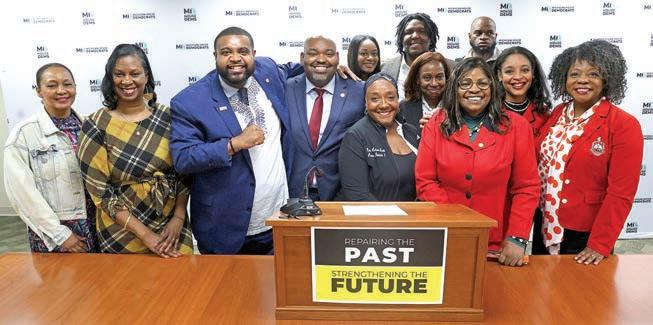
The city of Detroit went through its own reparations study over the last two years, which resulted in recommendations for housing and economic development programs that address historical discrimination against the Black community in Detroit.
Those recommendations have yet
covered for months or even years.
Detroit is vulnerable
The housing market helps explain why Detroiters are more vulnerable to deed fraud.
Homes in Black neighborhoods nationwide are systematically undervalued compared with similar homes in white neighborhoods. Black borrowers are also more likely to be denied conventional mortgage loans. Detroit is about 73% Black, with a median household income of roughly $39,000 and a poverty rate exceeding 30%.
In a market where access to traditional financing is uneven and home prices are relatively low, cash sales accounted for 4 in 10 sales in February 2024.
Lenders, brokers and title companies act as informal gatekeepers when people purchase a home using a mortgage. In cash sales, those actors are absent, and there are fewer opportunities to detect irregularities in the documented history showing how title passed from one owner to the next over time.
Illegal tax practices led to thousands of foreclosed homes
Property tax distress attracts fraudsters. Fraudsters seem to rely on publicly available tax foreclosure lists to identify properties that appear abandoned. They then pay the pastdue taxes to remove the property from foreclosure and attempt to sell or mortgage the property using their fraudulent deed.
The fraudsters may also assume that the owner lacks the resources to wage a prolonged legal fight to recover title if they do uncover their scheme. In many cases, that assumption proves correct.
Michigan’s Constitution caps assessments at 50% of market value, but researchers have found that from 2009 to 2015, a majority of Detroit homes were assessed above that limit.
Once those inflated bills went unpaid, interest, penalties and fees accumulated, often ending in tax foreclosure.
More than 100,000 Detroit residents lost homes in that crisis, and homeowners were overtaxed by at least $600 million between 2010 and 2016.
In a city already destabilized by unlawful tax foreclosure, fraudsters found opportunity in homes burdened by vacancy and broken chains of ownership.
The burdens that deed fraud victims face
My first encounter with deed fraud came in July 2023. I received a request for legal assistance from a man who said he had been evicted from a home he claimed to own. Honestly, I didn’t believe him.
But when I pulled the court records and deeds, I learned he was right.
A fraudulent deed had been filed on his property, stripping him of title.
The fraudsters then filed an eviction case against him.
The owner had no phone and no internet access to attend the virtual hearings. The court entered a judgment to evict him. A bailiff came, broke down his door and threw his belongings into a dumpster.
It took six months and two separate court cases before he was finally able to return to his home. He never recovered his belongings – and we never found the fraudster.
There are many other hardships for a legitimate owner. A fraudulent deed can prevent homeowners from selling their property, refinancing or accessing financial assistance programs.
To clear title, owners must file a quiet title lawsuit – a court action used to resolve disputes over who legally owns a property.
But quiet title cases are complex legal proceedings.
They require multiple filings, hearings and strict compliance with procedural rules. Even when fraud is obvious – for example, when a deed was signed by someone who was already deceased – courts generally require formal litigation to remove the cloud from the title.
Likewise, the legal process of notifying the defendant can be especially burdensome. Fraudsters often use fic-
to be put into a plan for legislation for city council to vote on. Members spent months debating how to address harms caused, such as the destruction of Hastings Street due to the construction of the I-375 freeway. You can reach Sam at srobinson@ michronicle.com.
titious names and addresses, making them difficult or impossible to locate. Even uncontested cases typically take months. If a defendant appears and disputes ownership, litigation can stretch for years.
Filing fees, service costs and other litigation expenses accumulate quickly. Hiring an attorney can cost several thousand dollars, and some victims have reported spending tens of thousands clearing title to their homes.
As for Kim Page, her case is still ongoing. After being locked out of her home, she had to move in with relatives for over a year, putting a strain on their relationship. She was eventually able to return to her home, but the legal dispute over ownership has not been resolved.
On top of that, she is facing a counter-lawsuit from the company that filed the fraudulent deed, requesting $50,000 for repairs the company made to the home while Page was locked out, along with property taxes and utility bills that the company says it paid to the county and utility companies on her behalf. The county opened an investigation, but it remains unresolved. As a result, she still has no idea who orchestrated the scheme.
While there are free legal services organizations to help, they have limited capacity, and income thresholds exclude some homeowners who still cannot afford private counsel. Legal reforms likely won’t resolve systemic issues
Across the country, state legislatures have begun responding. Twenty-one have enacted deed fraud legislation, and 15 more have proposed it.
Another common intervention is fraud alert systems, which notify owners when any documents that impact the title of their property are recorded.
Other reforms increase notarial requirements or enhance criminal penalties. These measures may deter some misconduct, but they do little to reduce the burden on victims once a fraudulent deed has been recorded.
In my assessment, meaningful reforms focus on empowering registers of deeds to substantively review suspicious documents before recording them; simplifying and expediting quiet title proceedings; and expanding civil remedies so victims can recover the costs associated with clearing their title.
Some jurisdictions like Texas and Florida have adopted streamlined procedures that allow victims to initiate quiet title actions using standardized forms with reduced fees. Others permit recorders, prosecutors or judges to act when fraud has already been established.
In Michigan, I am working with lawmakers and stakeholders to develop comprehensive legislation addressing these issues. Bills are expected to be introduced later this year.
At the same time, my clinic has begun exploring how technology can help identify fraudulent deeds already in the record. We are working with computer scientists to evaluate whether artificial intelligence tools could flag suspicious filings and potentially prevent fraudulent documents from being accepted in the future.
No property system can eliminate fraud entirely. Preventive and punitive measures may limit fraud, but they cannot eliminate the incentive to commit it. For fraudsters, the payoff can be substantial.
Conversations about the issue often begin and end with the mechanics of the crime or the procedural burdens victims face afterward. Far less attention is paid to the housing market conditions that make some communities especially vulnerable in the first place.
Page, now 42 and working as a transporter for Sinai-Grace Hospital, has been coping with the stress of legal proceedings for the past two years and living with a heart condition so serious that she got a defibrillator.
The longtime Detroiter is fed up –with the lack of police help to find the fraudster, as well as the court system. All she wants is to be the rightful owner of the home.
“Give me my house back,” Page said.
Progress Is the Challenge
“We cannot subsidize data centers on the backs of our existing customer base,” Harris said. “The law prohibits us from using cross-subsidization.”
She argued that adding major customers can place downward pressure on rates by spreading the fixed costs of the electrical system across a larger customer base, comparing it to splitting a ride-share with friends. She also said contracts with hyperscalers can help finance batteries and increased renewable energy production.
Harris pointed to DTE’s recently announced agreement with LG Energy Solution for 1.6 gigawatts of battery capacity, which she said represents $1.6 billion in investment and approximately 1,800 Michigan jobs.
“We’re using local suppliers and electricians to do these jobs,” Harris said. “This is a once-in-a-lifetime opportunity.”
Coulter said Oakland County government does not have a formal role in approving individual data center developments, but he cautioned industry leaders against dismissing public skepticism.
“I don’t have the luxury of saying, ‘You just don’t understand. Just wait,’” Coulter said. “We have to do a better job of communicating.”
He said developers and service providers should meet with residents well before construction begins, provide clear information and treat concerns about water, energy use, noise, land and community impact as legitimate.
“The developers themselves need to do a better job with transparency,” Coulter said. “The people’s concerns are valid, and they need to be addressed.”
Donofrio said Michigan took a more thoughtful approach to regulating data centers than some other states. He noted that more than 100 data centers already operate in Michigan and argued that the infrastructure could become as important to the next era of economic growth as railroads and interstate highways were to earlier generations.
“If we don’t take advantage of this, we may look back five years from now and say we really missed out,” Donofrio said.
Both Donofrio and Harris rejected the idea that data centers create few jobs. While the completed facilities may not employ as many workers as a traditional automobile plant, they said their construction, maintenance and continued modernization require electricians, pipefitters, HVAC technicians and other skilled tradespeople.
Still, the larger question was whether those opportunities will reach Detroiters, Black-owned businesses and workers who have historically been shut out of major public and private investments.
Kylee Mitchell Well, Executive Director, Ballmer Group Southeast Michigan asked the panel how companies and governments are ensuring that jobs and contracts are accessible to people who have been excluded in the past.
Harris said DTE has invested millions of dollars in local and statewide contractors and is deliberately working to expand access to its projects.
Coulter urged entrepreneurs who were unsuccessful in securing a county contract to continue applying.
“I believe very passionately that the opportunities we create are and should be available to everyone because too many people have been left out,” Coulter said. “So many people are afraid of data centers because they feel as if they’re being left behind. My job is to level the playing field so that everybody can be successful.”
Donofrio said Michigan’s leaders must recognize that ability exists in every community, even when access to capital, education and professional networks does not.
“Talent is equally distributed, but opportunities are not,” Donofrio said.
Education remained central to the panel’s competitiveness argument. Michigan cannot attract companies, expand entrepreneurship or raise household incomes without improving the systems that prepare young people for work and higher education, the panelists said.
Donofrio also warned that Michigan’s aging population will make it increasingly difficult to maintain economic growth and afford public services. Young adults are moving toward cities and states where they see stronger career opportunities, active communities and a better quality of life.
Michigan’s neighboring states and metropolitan areas, including Columbus, have grown faster, he said. Reversing that trend will require communities where young workers can find housing, transportation, entertainment and a clear path toward career advancement.
Harris said DTE recruits students from historically Black colleges and universities and local colleges, bringing them to Michigan for internships and employment opportunities. The company also encourages its suppliers to create similar pathways.
“We are teaching them what it means to be professionals along the way,” Harris said.
She challenged business leaders to replace negative conversations about young people, including public criticism of so-called teen takeovers, with a serious commitment to training, employing and mentoring them.
“How do we leave this room today and say, ‘What are we going to do to commit to our youth?’” Harris asked.
Coulter said internships must be paid and should be paired with apprenticeships that allow students to gain workplace experience without being expected to work for free.
“Once a student sees it and gets paid, their rate of success is substantially higher,” Coulter said.
The final forum of the season did not produce one simple solution for Michigan’s economic challenges.
Instead, the panelists described competitiveness as the result of interconnected decisions: whether children can read, whether entrepreneurs can secure contracts, whether workers can travel across the region, whether companies communicate honestly with residents and whether young people can envision a future for themselves in Michigan.
The state’s natural resources and industrial legacy may give it an advantage. The panel’s message was that potential, by itself, is not progress.
Roots.
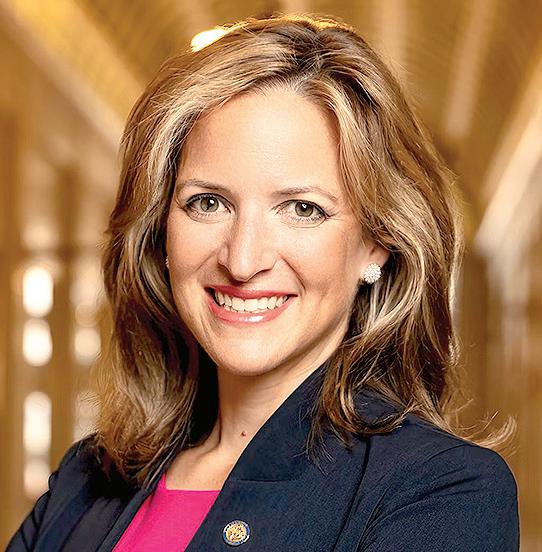
Michigan Chronicle is Endorsing Jocelyn Benson as Michigan’s Next Governor
By Michigan Chronicle Editorial Board
Long before she became Michigan’s chief election officer, Secretary of State Jocelyn Benson built her career fighting for people whose voices were often ignored. Early on, she worked on voting rights and civil rights issues in Alabama, helping communities navigate barriers to democratic participation in a region where the legacy of voter suppression remained a living reality. (You can see it in person at The Henry Ford’ s newest exhibit – The Jackson Home.) Those experiences shaped a public servant who has consistently viewed democracy as a practical right that must be protected and expanded.
That commitment followed her to Michigan.
As Secretary of State, Benson has overseen the implementation of some of the most significant voting-rights expansions in modern Michigan history. Under her leadership, Michigan implemented automatic voter registration and expanded online voter registration, making participation in democracy easier and more accessible for hundreds of thousands of residents.
She helped administer constitutional changes that gave voters access to no-reason absentee voting, strengthened election administration, and expanded opportunities for participation. During one of the most turbulent periods in modern American politics, she oversaw elections that experienced record turnout while surviving extraordinary pressure, threats, and disinformation campaigns from local, state, and federal supporters of the tyrannical Donald Trump-led White House Administration. More than 250 post-election audits affirmed the accuracy of Michigan’s election results.
But the strongest argument for Benson’s candidacy may be one that receives less attention. Michigan’s next governor will inherit a state confronting profound questions about trust in elections, in public institutions, and in government itself.
Benson has spent much of her career operating precisely where trust breaks down.
Whether advocating for stronger ethics and transparency laws, modernizing government services, protecting
Michigan
Endorses
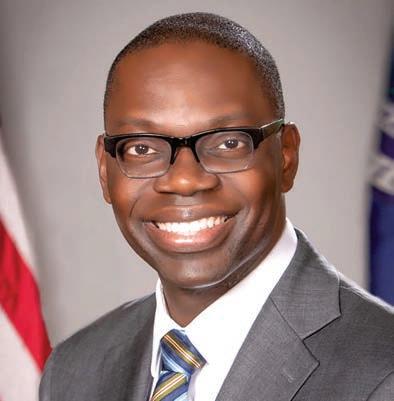
Garlin Gilchrist
for Secretary of State
By Michigan Chronicle Editorial Board
There is an understandable tendency to think of the Michigan Secretary of State as an administrative office – a place of paperwork, licenses, registrations, and elections. But history tells a different story. The people who hold this office often shape how citizens experience democracy itself.
That is why Garlin Gilchrist deserves serious consideration from Michigan voters as the next Secretary of State.
In recent years, public debate about the office has focused almost exclusively on election security and voting access. Those responsibilities remain critically important. But Michigan’s next Secretary of State will face a broader challenge: rebuilding trust in public institutions at a time when faith in government has eroded across political, geographic, and generational lines.
Gilchrist is uniquely suited for that challenge.
Much has been written about his tenure as lieutenant governor, his engineering background, and his role in major policy initiatives under Gov. Gretchen Whitmer. What has received less attention is the way his career has consistently centered on a simple but increasingly rare idea: government should be designed around people, not around bureaucracy.
Before entering public office, Gilchrist learned to think about systems as a software engineer. Most politicians talk about programs, but this engineer talks about outcomes. Engineers ask why systems fail, who gets left behind, and how barriers can be removed. Those questions may sound technical, but they are profoundly democratic. They force leaders to think about citizens not as statistics, but as users of government itself.
That perspective matters for an office that touches nearly every Michigander’s life.
The next frontier for the Secretary of State should be to make government accessible, particularly through technology, with the goal of ensuring that a resident in Detroit, Benton Harbor, Saginaw, Flint, or the Upper Peninsula can interact with state government without
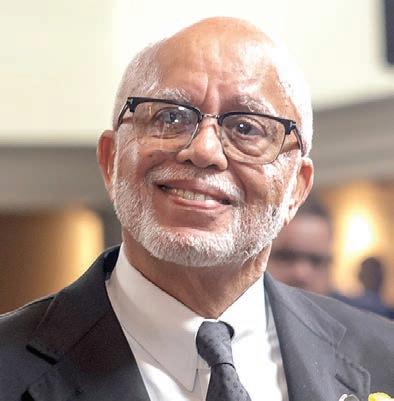
Michigan Chronicle Endorses Warren Evans He Has Earned Another Opportunity to Lead Wayne County
By Michigan Chronicle Editorial Board
Leadership is defined by vision, steady decision-making, and a commitment to serving the public with integrity. Throughout his career in public service, Wayne County Executive Warren Evans has demonstrated those qualities while helping shape a stronger foundation for one of Michigan’s most important counties. His record reflects a focus on fiscal responsibility, economic development, public safety, and improving the quality of life for residents across Wayne County.
Under Evans’ leadership, Wayne County has strengthened its financial position through responsible management and strategic planning. That stability has created opportunities to invest in parks, roads, public health, public safety, and other essential services that directly impact residents and neighborhoods. His administration has emphasized accountability while ensuring the county is positioned to meet both current needs and future challenges.
Economic development has remained a central priority throughout Evans’ tenure. His administration has supported initiatives that encourage business investment, strengthen local communities, and create opportunities for entrepreneurs. Those efforts have contributed to continued growth while reinforcing Wayne County’s role as an economic engine for Southeast Michigan.
Evans has also demonstrated a commitment to improving regional infrastructure and expanding investments that benefit residents throughout the county. His administration has worked collaboratively with municipalities, community organizations, and business leaders to advance projects that enhance mobility, public spaces, and neighborhood development. That collaborative approach has helped move important initiatives from planning to implementation while maintaining a focus on long-term sustainability.
His decades of public service provide a depth of executive experience that continues to benefit Wayne County. Before becoming County Executive, Evans served as
WARREN EVANS Page A-4

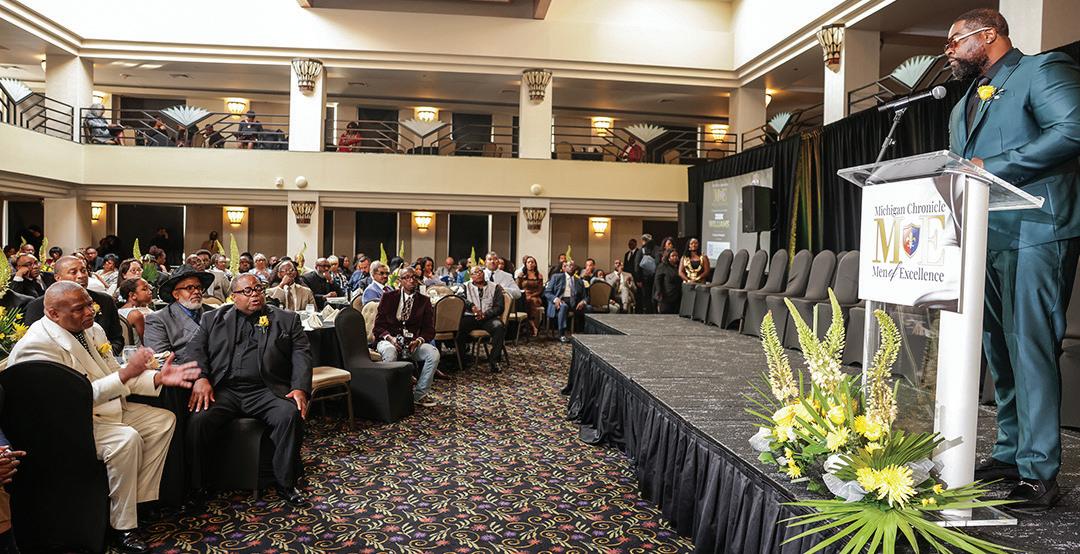
Michigan Chronicle Honors 50 Black Men at 18th Annual Men of Excellence Awards
By Jasmine West
It’s not often that hundreds of people come together on a random weekday evening to glorify the efforts of Black men doing work across the region.
But last week, 50 distinguished Black men (plus three special honorees) from across Southeast Michigan were recognized for their leadership, professional accomplishments, and community service during the Michigan Chronicle’s 18th annual Men of Excellence Awards ceremony on Thursday, June 18.
The honorees entered the celebration surrounded by the people who have witnessed their work up close — family members, friends, colleagues and community partners who filled the room to applaud the impact each man has made throughout the region.
WDIV reporter and anchor Jay Scott Smith served as host, guiding the evening’s program as the Michigan Chronicle celebrated a class representing business, government, education, health care, public safety, media, entrepreneurship, nonprofit leadership and community advocacy.
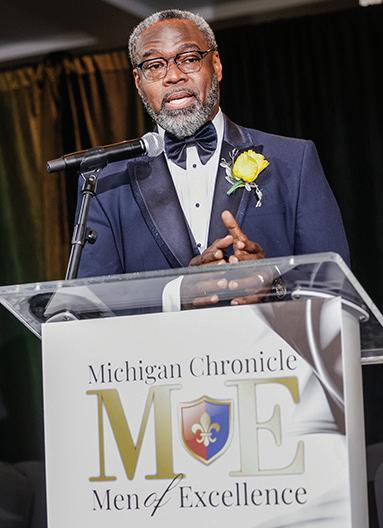
Hiram E. Jackson, chief executive officer of Real Times Media and publisher of the Michigan Chronicle, opened the ceremony with welcoming words before presenting plaques to the 50 honorees and recognizing the recipients of the evening’s special awards.
For 18 years, the Michigan Chronicle’s Men of Excellence program has created a public platform to recognize Black men whose work
is helping shape Southeast Michigan’s civic, professional, cultural and economic landscape. The program honors men who have demonstrated success in their professions, served as positive role models and remained actively involved in strengthening their communities.
The recognition also reflects the Chronicle’s longstanding responsibility as a Black newspaper to document Black achievement and ensure that the people building institutions, mentoring young people, serving neighborhoods and opening doors for others are seen and celebrated.
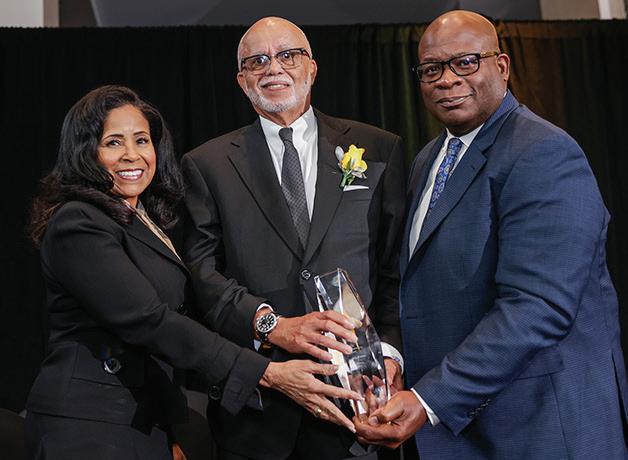
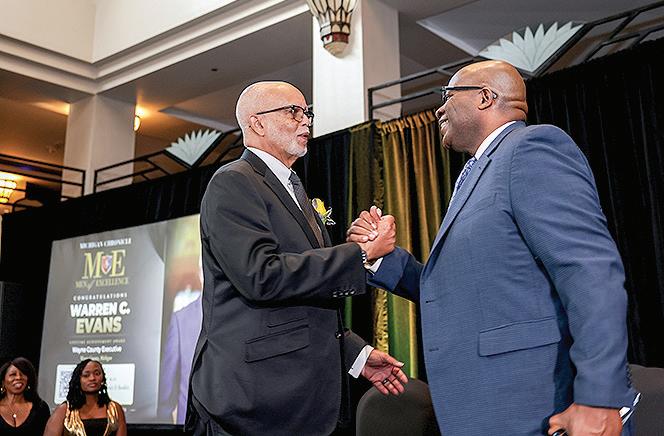
Wayne County Executive Warren C. Evans received the Lifetime Achievement Award, honoring a career of public service and leadership spanning several decades. Evans has held some of the region’s most consequential leadership positions, and the award recognized the lasting influence of his work across Wayne County and Southeast Michigan.
Isiah “Zeke” Williams received the Vanguard Award for his work at the forefront of community-based public safety.
JOCELYN BENSON Page A-4
GARLIN GILCHRIST Page A-4
Chronicle
PHOTOS: MONICA MORGAN
Jocelyn Benson
From page A-3
voter information from improper disclosure, or defending election systems against political attacks, she has repeatedly placed herself in difficult fights that many politicians would rather avoid.
That’s not to say that she’s infallible. And endorsements are only easy when a candidate’s record is uncomplicated. But leaders are rarely that way, and Benson is no exception.
As the Michigan Chronicle considers the race for governor, the reality is that we can’t ignore that Benson is a candidate carrying both significant accomplishments and some questions, too.
Most notably, Benson’s Department of State is currently facing racial discrimination litigation brought by Black current and former employees. Four African American employees of the Michigan Department of State filed a lawsuit in Wayne County Circuit Court accusing the agency and senior officials of a race-based discrimination.
These are allegations we take very seriously at Michigan Chronicle, and they shouldn’t be dismissed as routine politics or be ignored because the defendant is a Democrat. Benson hasn’t dismissed them or ignored them.
She’s said that she knows public institutions have to be accountable to the people they serve and to the people who work within them. The allegations deserve a full and fair airing in court, and if wrongdoing occurred, it must be addressed. If the claims are unfounded, that should be established through the legal process. Either way, Michigan voters should insist on transparency, and Benson hasn’t shied away from transparency. Michigan voters should expect her to answer those concerns directly and substantively.
The fact of the matter is that endorsements are judgments about who is best prepared to lead the state, and Benson has assembled the strongest resume of any candidate in the race.
After looking at her full body of work, we believe Benson remains the candidate best prepared to govern. She’s worked on continuing to push the envelope as it pertains to civil rights both nationally and in Detroit, and that’s been most evident locally in the work she started here with the Hon. Judge Damon Keith. She began working with him in the early 2000s as the clerk to one of the nation’s most iconic civil rights jurists. Judge Keith called her “a crusader for justice” as she helped make decisions that prevented the federal government from infringing on individual liberties and helped to battle systemic racism in corporations, municipalities, and schools.
The office of governor requires executive experience, administrative competence, political courage, and a demonstrated commitment to protecting the rights of all Michiganders. Jocelyn Benson has spent decades building that record from her civil rights work in Alabama to her work as the leader in election administration in Michigan.
The lawsuit deserves scrutiny, but her record deserves recognition. Taken together, they present voters with a candidate who should be examined carefully, but also one whose career has consistently been devoted to expanding opportunity, protecting democracy, and making government more accessible to the people it serves.
For those reasons, the Michigan Chronicle endorses Jocelyn Benson for Governor of Michigan.
Garlin Gilchrist
From page A-3
unnecessary friction. The person in this seat needs to recognize that long waits, confusing processes, and unequal access are barriers to participation and not just minor inconveniences.
Gilchrist understands this challenge because his public career has been rooted in the belief that innovation should expand opportunity rather than merely improve efficiency.
There is also a larger historical significance to his candidacy.
More than half a century ago, Richard H. Austin shattered a barrier that many believed would never fall. Elected in 1970, Austin became Michigan’s first Black Secretary of State and one of the first Black officials elected statewide in Michigan history. His tenure transformed the office. He pioneered innovations in voter registration and modernized services while proving that Black leadership could succeed not only in Detroit, but across the entire state and country.
Since Austin left office in 1995, no Black candidate has been elected to the position or any statewide leadership position. A Gilchrist victory would be another historic moment for Michigan, and it would represent the continuation of a legacy that remains unfinished.
But history alone is never a sufficient reason to support a candidate.
The stronger argument is that Michigan is changing. Our economy is changing. The way residents interact with government is changing. The demands on election administration are changing. At a moment when public service requires both technological fluency and civic imagination, Gilchrist offers a combination of skills rarely found in modern politics.
The best secretaries of state leave behind more than efficient offices. They strengthen democracy by making government more responsive, more accessible, and more worthy of public trust.
Richard Austin understood that. Garlin Gilchrist has the opportunity to build upon that legacy for a new generation.
Michigan voters should vote him in and have full faith in his ability to get that job done.
Warren Evans
From page A-3
Wayne County Sheriff and Detroit Police Chief, building a career rooted in public safety, accountability, and effective leadership. Those experiences have shaped an administration focused on thoughtful governance, strategic planning, and measurable results.
Evans has consistently emphasized the importance of partnerships that strengthen communities and create opportunities for residents. His administration has supported workforce development, economic inclusion, and initiatives that connect people with resources that promote long-term success. That commitment reflects an understanding that government plays an important role in creating environments where families, businesses, and neighborhoods can thrive.
Wayne County continues to face opportunities that require experienced leadership and a steady hand. Managing one of the state’s largest counties requires the ability to balance fiscal responsibility with meaningful investments while maintaining transparency and accountability. Evans has demonstrated that leadership through decisions that prioritize both responsible stewardship and continued progress.
Public service is ultimately about delivering results that improve everyday life. Throughout his tenure, Evans has maintained a focus on strengthening county government while supporting initiatives that benefit residents across diverse communities. His record reflects consistency, experience, and a clear commitment to serving the people of Wayne County.
For these reasons, the Michigan Chronicle proudly endorses Warren Evans for another term as Wayne County Executive. His proven leadership, dedication to public service, and commitment to responsible governance provide a strong foundation for Wayne County’s continued growth and success.

Men of Excellence Awards
Williams leads New Era Detroit, where he heads community violence intervention efforts focused on reaching residents, interrupting conflict and addressing violence before it escalates. His work represents a neighborhood-centered approach to public safety that relies on trusted relationships, direct engagement and the leadership of people who understand the communities they serve.
Detroit City Council President James E. Tate Jr. was named the 2026 Man of the Year.
Tate was recognized for his leadership and public service in Detroit, where he represents District 1 while serving as council president. His award acknowledged his continued role in decisions affecting city residents, neighborhood development and Detroit’s future.
Shawn Smith was selected as class president, placing him in a leadership role among the 2026 Men of Excellence honorees and giving the class a representative as its members carry the recognition beyond the ceremony.
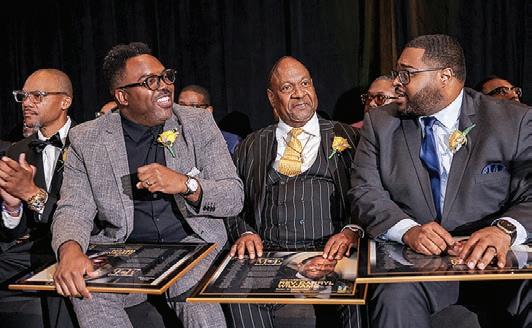
As Jackson presented the honorees with their plaques, applause came from across the room. The reactions reflected the careers, sacrifices and relationships behind each recognition. Every honoree arrived with his own path, but each was connected by a record of achievement and a commitment to serving others.
The Men of Excellence program was created to ensure that those contributions do not go overlooked.
Black men throughout Southeast Michigan are leading companies, directing public agencies, caring for patients, educating students, creating jobs, mentoring boys and developing solutions to challenges facing their neighborhoods. The Chronicle’s annual ceremony gives those men their flowers while their work remains active and their influence continues to grow.

The awards also allow younger generations to see a wide range of Black male leadership. Excellence was represented throughout the room by elected officials and executives, but also by organizers, educators, entrepreneurs, advocates and professionals whose names may not always receive widespread public attention.
Thursday evening placed all of them at the center.

For the 50 men honored, the ceremony marked an individual accomplishment and induction into an 18-year legacy of Black leadership celebrated by the Michigan Chronicle. They left with plaques bearing their names, but the evening’s larger recognition centered on what those names have come to represent throughout Southeast Michigan: service, influence, responsibility and excellence.




From page A-3
A5 | July 1-7, 2026
Money.
Property is Power!
What Happens to Black Families When No One Owns Anything.
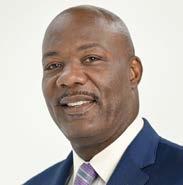
By Dr. Anthony O. Kellum
CONTRIBUTING COLUMNIST
The American conversation about housing is often framed around affordability. We debate interest rates, rising home prices, inventory shortages, and mortgage qualification standards. These issues deserve attention, but they frequently obscure a more consequential question, one that reaches beyond economics and into the realm of culture, identity, and generational progress. What happens to a family when no one owns anything?
What happens when grandparents spend their entire lives renting, parents spend their entire lives renting, and children are raised without ever witnessing the responsibilities, rewards, and possibilities that come with ownership?
What happens when ownership disappears not only from a family’s balance sheet but from its imagination? The answer reveals itself in ways that extend far beyond housing. It influences how families think about the future, how communities define themselves, and how wealth is either built or perpetually deferred.
For much of American history, Black Americans understood the significance of ownership in a way that often gets lost in contemporary discussions about housing policy. Following emancipation, land ownership represented far more than economic advancement. It represented autonomy it represented protection against uncertainty it represented the possibility of creating something durable enough to survive the lifespan of a single individual. This understanding explains why newly freed Black Americans pursued property ownership with such determination despite overwhelming legal, social, and economic barriers. They understood that ownership was not merely about possessing an asset; it was about possessing agency.
That historical reality forces us to confront an uncomfortable truth. While the Black community continues to discuss income inequality, educational attainment, and employment opportunities, we often spend insufficient time examining the cultural consequences of living without assets. Income matters education matters employment matters. But ownership occupies a unique place in the architecture of wealth because ownership fundamentally changes how people relate to the future.
A person who owns property learns to think differently ownership requires planning it requires maintenance it requires delayed gratification. It requires making decisions whose benefits may not become visible for years or even decades. A homeowner repairing a roof is not simply fixing a structure they are protecting future value. A homeowner planting a tree may never personally enjoy its full shade, yet the act itself reflects a belief in continuity ownership that teaches people to think beyond immediate consumption and toward long-term stewardship. These lessons are not confined to the homeowner alone. Children absorb them as well.
Many of us can remember being told to cut the grass, paint a fence, clean the gutters, or help with household repairs. At the time, those tasks felt like chores. Looking back, they were lessons. They taught responsibility, accountability, and pride in ownership. They demonstrated that maintaining value requires effort. They revealed that a home is not simply a place
See HOMEOWNERSHIP Page A-6

‘The
Belle’ Brings Beauty and 42 Apartments to Paradise Valley in Downtown Detroit
By Jeremy Allen EXECUTIVE EDITOR
As restaurants, nightlife destinations, cultural institutions and new housing continue to reshape one of Detroit’s most historic corridors, The Belle is adding 42 new residential units to a neighborhood finding its rhythm once again.
On a stretch of Broadway where Detroiters once gathered to shop, work, eat and experience the city’s cultural life, another set of lights has turned on.
The Belle is Bedrock’s newest restored residential building in downtown Detroit’s Paradise Valley neighborhood, and it officially opened for pre-leasing this week, bringing 42 apartments and future retail space to a corridor that has become one of the city’s most active destinations.
The 100-year-old building arrives as Paradise Valley continues to attract new restaurants, nightlife venues, entertainment destinations, and public space investments, creating the kind of street-level activity that gives neighborhoods their identity.
For Bedrock CEO Jared Fleisher, that’s what makes the opening significant.
“We could not be more excited to see Paradise Valley become the hub in downtown that it once was and is destined to be again,” Fleisher said.
Over the last several years, Paradise Valley has steadily reemerged as a destination where Detroiters gather long after the workday ends. Restaurants have opened their doors. New businesses have established themselves. Public spaces have drawn residents and visitors into the neighborhood. Plans surrounding Music Hall continue to add anticipation for what comes next.
Fleisher sees each addition contributing to a larger ecosystem.
“We’ve got restaurants coming back,” he said. “The Music Hall. We see that incredible development here on Broadway and it’s happening around the corridor.
It’s coming back, baby. It’s coming back.”
That momentum is visible throughout the district.
The Belle sits in a location that naturally connects several of downtown’s most active destinations. Within a short walk are the central business district, Greektown, Comerica Park, Ford Field, and some of the city’s busiest entertainment corridors.
“It’s so strategically located between the core of the CBD and the stadiums and the Greektown district,” Fleisher said.
The building itself has been part of Detroit’s story for a century.
Originally opened in 1926 as the Broadway Exchange Building, the 11story structure was commissioned by Clara Sherr and designed by renowned Detroit architect George D. Mason, who also designed the Grand Hotel at Mackinac Island, Detroit’s Masonic Temple, and other historic landmarks around the state. The building housed commercial businesses, service providers, and creative enterprises during an era when Broadway functioned as one of downtown’s most active commercial corridors.
Like many buildings in the area, it eventually sat largely vacant. Today, restored architectural details tell the story of its earlier life while new residents begin writing the next chapter.
Brian Rebain, principal at Kraemer Design Group, said the project represents years of planning and restoration work that extended far beyond a typical renovation.
“This street, this building feels home to me as much as the place that I live,” Rebain said during the ribbon-cutting ceremony.
For Rebain, one of the most rewarding aspects has been watching not only The Belel come back to life, but also the broader activity surrounding it.
“Seeing it all come alive – not only with the redevelopment of The Belle, but also the surrounding places and perhaps
most exciting, activation of the pedestrian alley behind us connecting them all together – all of this is extremely fulfilling personally and professionally,” he said.
That idea of connection surfaced repeatedly throughout the celebration.
The Belle does not exist in isolation. Residents who move into the building will walk to restaurants. They’ll attend performances. They’ll support nearby businesses. They’ll become part of the daily flow of people moving through Paradise Valley.
Fleisher described the project as one piece of a much larger effort to reconnect a neighborhood with its historic role as a gathering place.
“Sometimes we talk about a beautiful smile with some missing teeth,” he said. “This was one of the missing teeth. We had to complete that smile.”
The metaphor resonates because Paradise Valley has always been more than a collection of buildings.
Historically, the neighborhood served as one of Detroit’s most important cultural and economic centers, home to Blackowned businesses, entertainment venues and entrepreneurs who helped shape the city’s identity.
While today’s Paradise Valley is writing a new chapter, many leaders see preservation as an important part of that work.
Detroit City Council Member Renata Miller reflected on the significance of restoring buildings that longtime Detroiters still remember.
“When our seniors come downtown and see buildings like The Belle that have actually been restored, it reminds them of their heritage and their culture and what Detroit once was,” Miller said. She noted that redevelopment and preservation are often discussed as competing priorities, but projects like The Belle demonstrate that both can happen
Money Matters: Why More Americans Are Starting Businesses in an Uncertain Economy
By Mark S. Lee
CONTRIBUTING COLUMNIST
If you only looked at the headlines, this wouldn’t seem like the ideal time to launch a business.
Consumers remain cautious about spending. Inflation has cooled but prices are still significantly higher than they were just a few years ago. Interest rates remain elevated, making borrowing more expensive. Tariffs and supply chain challenges continue to increase costs for many businesses. In Michigan, the auto industry is navigating another period of transition, creating uncertainty for thousands of workers and suppliers.
Yet, amid these challenges, something remarkable is happening.
Entrepreneurship is surging.
According to the Detroit Regional Chamber, Michigan recorded more than 40,500 new business applications during the first quarter of 2026—a 25% increase compared to the same period a year earlier. That follows another strong year for new business creation in 2025.
At first glance, those numbers seem contradictory. Why would more people choose to start businesses when the economy feels uncertain?
The answer is that today’s entrepreneurs aren’t simply chasing a dream—they’re pursuing financial resilience.
For decades, many Americans viewed corporate employment as the safest path to financial security. A steady paycheck, health insurance, retirement benefits, and longterm employment represented stability.
But the last several years have fundamentally changed that perception.
Layoffs across industries, restructuring, technological disruption, and economic volatility have reminded workers that even successful companies make difficult workforce decisions. Many professionals have concluded that relying on a single employer may no longer provide the security it once did.
Instead of waiting for opportunity, they’re creating it.
That doesn’t necessarily mean people are quitting their jobs overnight. Increasingly, entrepreneurs are launching consulting firms, online businesses, coaching practices, professional service companies, and e-com-
merce ventures while continuing to work full time. For many, entrepreneurship has become a strategy to diversify income rather than replace it immediately.
Technology has made that easier than ever.
Artificial intelligence, cloud computing, digital marketing, online payment systems, and e-commerce platforms have dramatically lowered the cost of starting a business. Tasks that once required employees and significant capital investments can now be accomplished with affordable software and AI-powered tools.
The result is that expertise has become one of today’s most valuable business assets.
We’re seeing growth in professional services, AI consulting, healthcare, financial services, skilled trades, home services, logistics, and specialized retail. Many entrepreneurs are taking years—even decades—of industry experience and transforming that knowledge into businesses that solve specific customer problems.
But starting a business is one thing. Keeping it alive is another.
Statistics consistently show that many new businesses don’t survive beyond their first few years. The difference often has less to do with having a groundbreaking idea than with executing consistently.
Successful entrepreneurs understand their customers. They monitor cash flow relentlessly. They adapt when markets change instead of becoming emotionally attached to one strategy. They seek advice from accountants, attorneys, bankers, coaches, and mentors rather than trying to navigate every challenge alone.
Perhaps most importantly, they remain financially disciplined.
One of today’s biggest obstacles is what many small business owners describe as the “double squeeze.”
Operating costs continue to rise because of tariffs, labor expenses, insurance costs, and supply chain pressures. At the same time, consumers facing higher household expenses are increasingly shopping for bargains, often turning to large online retailers offering lower prices.
Small businesses rarely win by competing solely on price.
Anthony O. Kellum
Mark S. Lee
simultaneously.
“This redevelopment shows that we can have our history preserved and develop our future at the same time,” Miller said.
For longtime Detroiters, the building’s restoration carries meaning beyond architecture.
The Belle joins a growing collection of restored structures helping reestablish the physical character of a district that has always occupied a unique place within Detroit’s story. Original terrazzo flooring, marble finishes, wood trim, historic corridors and restored façade elements remain visible throughout the building, preserving details that connect today’s residents with previous generations who passed through the same spaces.
At the same time, new housing creates opportunities for the neighborhood’s businesses to grow alongside a larger residential population.
That relationship between residents and local businesses remains central to how leaders envision Paradise Valley’s future.
Jonathan Mueller, senior
Uncertain Economy The Belle

vice president of development for Bedrock, noted that Broadway has long functioned as a center of activity filled with businesses, artisans and entrepreneurs.
Now, another generation of residents will have the opportunity to experience the neighborhood from their front doorstep.
As the Music Hall continues planning future additions and nearby developments bring new activity to surrounding blocks, many believe Paradise Valley is entering another period of growth defined not by any single project but by the accumulation of many.
Restaurants, entertainment venues, housing, public spaces, and retail each adds another reason for people to
Instead, they compete through expertise, exceptional customer service, personalized relationships, convenience, trust, and community engagement. Those advantages create value that larger competitors often struggle to replicate.
Having launched my own business during the financial crisis of 2008, I understand that every economic period presents its own challenges. Back then, access to credit was limited, consumer confidence had collapsed, and uncertainty dominated nearly every business decision.
Today’s environment is different, but one lesson remains unchanged: resilience matters more than perfect timing.
Waiting for ideal economic conditions often means waiting forever.
That doesn’t mean entrepreneurs should ignore risk. Quite the opposite.
Before leaving a stable job, validate your business idea. Talk with prospective customers. Determine whether they are willing to pay for your product or service. Build a realistic

spend time in the neighborhood. And each helps restore the sense of place that made Paradise Valley one of Detroit’s most important destinations.
For Fleisher, the significance of that momentum comes back to the neighborhood’s history.
“When you understand the history of Paradise Valley – what it was as a gathering place, as an economic engine – it’s on its way all the way back,” he said.
On Broadway, The Belle’s doors are open, but just outside, the neighborhood continues to grow around it.
For information about living at The Belle’s 42 studio, one-, and two-bedroom apartments, visit thebelledetroit. com/.
financial cushion. Understand your cash flow needs. And whenever possible, begin building your business before depending on it as your primary source of income.
Entrepreneurship has always required courage.
Today, it also requires preparation.
The encouraging news is that Michigan’s increase in new business applications suggests many people believe they can build opportunities despite economic uncertainty. That optimism is important, but optimism alone isn’t enough.
Successful businesses are built on planning, adaptability, financial discipline, and an unwavering commitment to solving real problems for real customers.
In today’s economy, entrepreneurship isn’t simply about becoming your own boss. Increasingly, it’s about taking greater ownership of your financial future.
And that may be one of the most important investments anyone can make.
We invite readers, business owners, and future entrepreneurs to follow along, ask questions, and engage. If you have story ideas or questions, you can email Lee at mark@leegroupinnovation.com or visit leegroupinnovation.com.

Homeownership
to live but an asset to protect and improve. Whether parents explicitly intended it or not, they were teaching their children how ownership works.
When ownership is absent, however, those lessons often disappear with it.
Children raised in households without assets may never see discussions about equity, appreciation, property taxes, maintenance reserves, or longterm financial planning. Housing becomes something consumed rather than something cultivated. The conversation centers on monthly expenses rather than accumulated value. Shelter becomes disconnected from wealth creation. Over time, the absence of ownership can subtly reshape expectations. Children begin to view renting as normal, ownership, as exceptional, and wealth accumulation through assets as something reserved for other people. This shift has consequences that compound across generations.
The most profound effect of ownership is not the property itself. It is the mindset that ownership produces families that own property often pass down more than houses they pass down habits they pass down expectations. They pass down a belief that investments are worth making because the future is worth planning for. Ownership creates a culture in which people learn to think about what they will leave behind rather than merely what they will consume today.
The opposite is also true when ownership is absent for multiple generations, the absence itself can become cultural. Families may unintentionally pass down short-term thinking because long-term asset building was never modeled. The issue is not a lack of intelligence or ambition. It is a lack of exposure. People aspire to what they can see if ownership is never visible, it becomes increasingly difficult to imagine.
This reality has implications that extend beyond individual households and into entire communities. Neighborhoods are ecosystems and the condition of one property affects the value of another. A maintained home contributes to community stability neglected property often undermines it. Homeownership encourages investment not only in a structure but in the broader environment surrounding it. Residents who own property are more likely to see themselves as stakeholders in the future of a neighborhood because they literally possess a stake in its success.
The erosion of ownership therefore affects statistics more than wealth it af-
fects civic engagement, neighborhood cohesion, and collective pride. Communities with strong ownership cultures tend to produce stronger institutions because residents have a long-term interest in preserving and improving the places they call home.
This is why the conversation about Black homeownership cannot be reduced to mortgage rates or down-payment assistance, important as those issues may be. The deeper challenge is culturally; we must restore an understanding of ownership as a foundational pillar of family and community life. We must teach our children not only how to earn money but how to acquire assets we must explain why maintaining property matters, why appreciation matters, why equity matters, and why every generation should strive to leave the next generation further ahead than where it began.
Too often, we speak about homeownership as a personal achievement in reality, homeownership is a communal act. It strengthens families, stabilizes neighborhoods, and creates opportunities that extend beyond a single lifetime. Every home purchased, maintained, and ultimately transferred becomes part of a larger story about progress.
The question, then, is not simply whether more Black families should become homeowners. The more urgent question is what happens if we do not. What happens if another generation grows up without experiencing ownership? What happens if another generation never learns the lessons ownership teaches? What happens if another generation reaches adulthood without believing property ownership is an attainable goal?
The answers should concern all of us because before families lose wealth, they often lose the culture that creates wealth. Before communities lose assets, they often lose the belief that assets matter, ownership disappears from a balance sheet, it usually disappears from the imagination.
The future of Black wealth will not be determined solely by what we earn. It will be determined by what we own, what we preserve, and what we pass forward. Ownership remains one of the most powerful mechanisms through which families transform effort into opportunity and opportunity into legacy. That truth was understood by those who came before us. It is a truth we must reclaim for those who come after us.
Because property is Property is Power!
Property is Power! is a movement to promote home and community ownership. Studies indicate homeownership leads to higher graduation rates, family wealth, and community involvement.


State Senate Candidates Aiyash, Onwenu Clash at Detroit Forum
By Sam Robinson SENIOR REPORTER
Two Democrats campaigning for a new state Senate district in Detroit and Downriver brought the debate to the parking lot on Monday in front of supporters and the press.
Justin Onwenu and Abraham Aiyash are running in the newly created 1st State Senate district, up for grabs on November 4. The winner of the August 4 primary election will face a Republican in the general election. The area is a majority Democratic district.
On Monday night, after the two participated in a candidate forum hosted by Detroit Action, Onwenu interrupted Aiyash’s interview to accuse him of using the war in Gaza in his campaign messaging for political gain.
Aiyash rejected the claim.
“When we met in the parking lot of Kitab (Cafe), he said there was a silver lining in what was going on, because people were not asking him about LGBTQ issues,” Onwenu said. “If we talk about moral clarity, when Hamtramck banned pride flags, unconstitutionally targeted members of his own community, (Aiyash) said nothing. When his own country was fallen into division over whether we would elect a fascist or whether we would elect the first Black woman president, (Aiyash) didn’t endorse her.”
The race between Aiyash and Onwenu features dynamics playing out across the country, where Black candidates are calling out their primary opponents for not openly supporting former Vice President Kamala Harris’ presidential campaign in 2024.
Though Aiyash voted for Harris and says he helped launch a Muslim for Harris group that advocated for the Democratic nominee, he did not publicly endorse her.
Aiyash and his supporters criticized Onwenu for refusing to call the war in Gaza a genocide.
Onwenu has advocated for greater environmental protections as an organizer fighting water shutoffs. His job under former Mayor Mike Duggan and Mayor Mary Sheffield has aimed to improve access to capital for Detroit startups and small businesses through startup capital funds. He’s also taught labor law at Detroit Mercy School of Law.
The former Hamtramck representative was the highest-ranking Arab American official in state history.
The winner of the race will reveal the attitudes of Detroit and Downriver Democratic voters on August 4.
James Ushery, 79, told Michigan Chronicle he’s known Justin for the last eight years.
“I think Justin is a down-to-Earth person, and has been through what the majority of this community is going through right now,” Ushery said. “I think his background speaks for itself.”
Dorian Bollard, a community advisory council member representing Detroit’s District 5, told Michigan Chronicle she’s still undecided and was looking to hear more from Onwenu before making a decision.
“I think they’re both on the same path, I think Abraham is very much more progressive in terms of working with Donavan and other folks who are running,” Bollard said. “I heard Justin speak at the Michigan Democratic Party convention at the Black Caucus. I know he’s got some main issues, but really just want those to be more solid before deciding.”
Sean Rossettano and his wife, Molly Rossettano, who live near Rosa Parks and Claremont, told Michigan Chronicle on Monday that they are supporting Aiyash.
“I’m tired personally of the Duggan machine still rearing inside of Detroit, and I’m seeing a PAC related to him sending mailers on behalf of Justin — for me that’s just a big turn off,” Rossettano said.
Detroit Next, which has paid for mailers on behalf of Onwenu, supported Mary Sheffield’s mayoral campaign. The 501(c)(4) nonprofit, referred to as “dark money” groups, as donors remain secret.
“When you have a candidate who is being funded by Matty Moroun’s family and that is funded by the same billionaire family that paid Donald Trump off to keep the Gordie Howe Birdge closed, what are they actually going to fight for when they’re in power?” Aiyash said. Onwenu, during the forum, accused Aiyash of being a hypocrite, as he’s accepted gifts and flights as a lawmaker.
“In my freshman year as a lawmaker, the State Innovation Exchange, a proggressive organization invited first time lawmakers to Washington D.C. to meet other Democratic state lawmakers,” Aiyash said. “Yes, they paid for the flight, yes they covered the hotel — we were not being lobbied.”
State Rep. Tyrone Carter, who is supporting Onwenu, told Michigan Chronicle he’s been disappointed that he hasn’t heard from Aiyash, who moved into the district ahead of his run for Senate.
“How do you move from Hamtramck, and run in my district?” Carter said. “You could have ran in District 3. Stephanie Chang is District 3 — but they knew that (Aiyash) couldn’t win, and they figured they’d get a black female from the Rashida camp to run in District 3. Let’s call this for what it is — everybody hit Duggan in the mouth for having somebody in every race, but they’re silent on this.”
You can reach Sam at srobinson@michronicle. com.
Denzel McCampbell is Blazing a Trail to Detroit’s Future. Haters Are Getting Left in the Dust
By Aaron Foley EDITOR-AT-LARGE
Denzel McCampbell is not shying away from the greys that have overtaken his beard he’s been wearing at full length for a few years now. Men that grow out their facial hair know how deceptive a salt-and-pepper beard can be; the greys do tend to age people prematurely, with people incorrectly assuming said beard wearers to be older than they are. McCampbell jokes that he can actually use that to his advantage.
“They” – “they,” being constituents, voters, other Detroit residents, whatever applies in the moment – “are probably like, ‘instead of 34, oh, maybe you’re a little bit older,’” the freshman Detroit City Councilman tells the Chronicle over smoothies at a coffee shop in his district. And maybe while trading on those assumptions, McCampbell can maybe help get his messages across easier.
Detroit has always had elected officials in their 30s; a prime example lies in 39-year-old Mary Sheffield, who spent all her 30-something years on City Council before ascending to the mayor’s seat last fall. But at 34, the younger-millennial McCampbell and his peers represent a rising generation of Detroiters that are moving differently than the ones before them, pushing the city in a new direction as they go.
McCampbell’s age group and younger did not grow up realizing the impact of electing Coleman Young as Detroit’s first Black mayor and keeping him in office for 20 years; any tangible changes in the city were felt when Mike Duggan, the first white mayor in more than 50 years, sat for 12. Having not been directly exposed to worst of the crack epidemic that gripped the city throughout much of the 1980s, they missed out on anti-drug campaigns of the following decade but were just in time for relaxed attitudes on marijuana use and legislation. And if you ask this demographic about floods, they’ll likely describe the effects of climate change taking its toll on the city almost every summer lately before they’ll talk about the spot for OGs downtown.
At 34, McCampbell voluntarily represents the OGs and YNs alike. He’s at an age where he can empathize with teenagers since his own teen years aren’t that far back, but is just old enough to be taken seriously by folks double his age. District 7, the western portion of Detroit that borders parts of Dearborn, Dearborn Heights and Redford, is especially populated with the older half. Where McCampbell connects is by meeting in the middle.
returned to Detroit after he graduated in 2013, the year that Detroit filed for bankruptcy and Duggan launched a successful write-in campaign to become mayor. There have been improvements in the 13 years since, he said. “I don’t think anyone would say there has not been improvements in the city.
“What has been a missing factor for me is in those improvements, I have not seen everyone be a part of it,” he adds. The feeling of being “lifted up,” he says – “I felt that was lacking in what I saw.”
If McCampbell seems adamant on shifting more focus to constituents than the representative of it, and not the other way around, it’s with intention. It’s easy to forget that amid all the activity of that year, 2013 was also when former Detroit City Councilman Charles Pugh, then under fire for growing allegations of grooming and sexual assault, resigned as president after having been a no-show for several months, abruptly ending the tenure of Detroit’s first openly Black gay elected official.
Upon his election, McCampbell became the second – and, in real time, moved to the front of the fastest-moving generational shift yet to be seen in this city.
“What I’ll tell you is that it may have been on some folks’ minds,” McCampbell says about being gay, “but when I’m talking to the aunties and grandmas on the block, most of the time they were like, ‘oh, your name’s Denzel? Like Washington?’”
One could say that for once, name recognition isn’t a bad thing with helping a Detroit candidate get elected. The more meaningful takeaway is that the Detroit McCampbell knows, and is now helping to further shape, is one that’s far more accepting, understanding and forgiving than the one before.
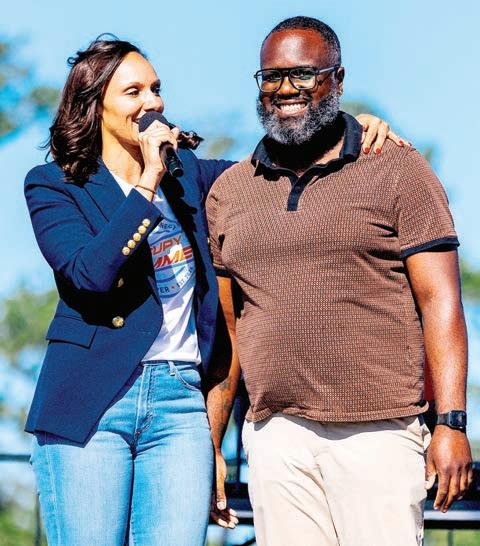
“I’m 34, so when I was younger, you had malls to go to, you had a skating rink to go to, you had places where I can just hang out with my friends and waste time being a teenager or whatever,” McCampbell says. “And what I see with the teen takeover is what I’ve said before: We’ve said that downtown is the destination for adults to go, so why would we not expect for teens to be downtown as well? There is no age limit on any part of the city.”
“We have a lot of seniors who bought their home – they don’t have a mortgage,” he adds. “And while we do have a lot of folks that maybe have been here for 50, 60 years, those folks have grandkids and great-grandkids that they’re taking care of. Having the leaders in position to expand the conversation [across age range]…I think I bring that to the table.”
Look across District 7, and you’ll find a few things in McCampbell’s purview exemplary of the generational divide in Detroit. The councilman isn’t old enough to have seen a Gremlin or a Pacer brand new at an AMC dealership, but must contend with environmental concerns of the site on Plymouth Road that once held the automaker’s headquarters. As summer approaches, there are heightened fears that Rouge River flowing through Rouge Park, which takes up 1,100 acres in McCampbell’s district, could flood – compared to a generation ago when the biggest fear about going to Rouge Park was, well, going to Rouge Park.
It’s why McCampbell campaigned on and continues to emphasize environmental justice policy, which doesn’t get much attention in Detroit on a citywide scale. “I really zoom in on the ‘justice’ part of it – it really is intertwined with everything,” McCampbell says.
District 7 is disproportionately affected by flooding more than some other districts so it may seem like a District 7 problem, but McCampbell cautions that the long-term effects could spread beyond his constituency. “If folks don’t have the resources to clean out their basements from the floods and mold is going into other things, that creates a whole, long-term type of public health aspect. We know that these 100-year floods will now be two-year or one-year floods, and that overall affects the air quality. There’s no wall that dirty air stops – it’s not like, ‘oh, that’s District 7, it’s not gonna go past there.’”
And if it’s not dirty air, it’s dirty dirt – whether from sites festering for decades with chemical runoff like the old AMC headquarters, or an increasingly alarming concern around contaminated dirt from the mass demolition of vacant homes in the city, raising questions about the previous mayoral administration’s handling of the waste.
“We’re thinking about the lack of fresh food in the district, right?” McCampbell says. “And one way that we can help confront that is to grow more local food, right? But also, we need to have clean soil, right? So how do we make sure that we have clean soil to grow fresh, quality food from?”
At his first budget roundtable with his eight Council colleagues at the mayor earlier this year, McCampbell was able to secure funding for additional environmental studies in the district. A more tangible budget win came directly from a chief complaint from D7 residents before and after his election: The absence of a recreational center.
McCampbell was able to land $4.5 million in public funds toward a new recreation center in the district, as well as an additional $20 million from the Detroit Pistons toward recreational efforts. “You cannot go into a meeting in District 7 or hear residents from District 7 at a city council meeting without hearing about the lack of a recreational center,” McCampbell says. The city’s budget was approved just before Mayor Sheffield was on hand to announce Move Detroit, a new coalition of civic and business interests formed to attract new residents to the city and retain existing ones, something McCampbell supports but admittedly has affinity for the latter.
“I’m of the mindset that if we’re taking care for the folks who are already here and providing a well-resourced, thriving city for those folks, then people will come, right? Because they will see, ‘oh, that’s what’s going on in Detroit. That’s what I want to be a part of.’”
The city McCampbell describes sounds close to what he’s heard secondhand from his parents, who grew up in the city when Young was mayor. “And it was not only Coleman Young, but really the Black political structure that was taking place in the city as they were coming of age and raising a family. It was a feeling that everyone was being lifted up by the changes that they saw in the city.”
After attending Michigan State University, McCampbell
An elder gay with more salt than pepper in the beard might scoff at McCampbell’s coming out story. He came out in high school to a supportive family and found even more queer friends hanging out at the Ruth Ellis Center and Affirmations after school. There’s no mention of sleepless nights trying to pray the gay away or threats of being disowned from the family, not even so much as some improperly quoted scripture. His first heartbreak wasn’t because of rejection from a straight crush, but when The Woodward Bar & Grille burned down in 2022 – “that was heartbreaking!” After returning to Detroit from East Lansing and getting into community organizing, McCampbell says he was surrounded by more folks, queer or otherwise, who created an environment of support and safety, and helped him understand intersectionality.
That’s not to say that there weren’t a few potholes in the yellow brick road. McCampbell’s campaign to join the council was dogged with the kind of salacious innuendo all queer people in the public eye face at some point. “One thing that I took to make sure was that people know who I am, which is why we did so much door-knocking,” he said. “Because I’ll tell you, there were whisper campaigns and folks trying to say, ‘oh, you can’t vote for him because he’s X, Y and Z.’ That did happen.”
McCampbell didn’t name the names of those specific detractors in this conversation. Two truths to consider in context, however: One, that McCampbell’s sole opponent to represent District 7 in last year’s race was State Rep. Karen Whitsett, who recently announced she would not seek another term in Lansing. Two, the Democrat-in-name-only Whitsett’s social platforms contain volumes of lengthy, conservative screeds – some of which strongly condemn homosexuality.
He’s seen some of Whitsett’s homophobic posts – none of which, to be clear, call him or anyone out by name -- and has a diplomatic response reflective of a generation who grew up knowing anything they post on the internet could be used against them in the future. “I would just hope if there is someone who is wanting to be in public office and serve the public understands that you are running to represent folks from various backgrounds, sexual orientations, gender identities, income levels, race and religion. We have to ensure that those folks have a government that is ensuring their safety, their prosperity and their well-being – and for me, that is what public service is all about.”
McCampbell’s short term in office has been buoyed by outward support from his colleagues, particularly District 6’s Gabriela Santiago-Romero, who is also queer and marks the first time two out officials have served in Detroit concurrently. A notable moment came when Santiago-Romero introduced a resolution for the City to recognize Trans Day of Visibility, prompting support from D4’s Latisha Johnson and D6’s James Tate, who shared personal stories of trans relatives.
“It shows you don’t have to be homophobic or transphobic to get what we need in this city,” he says.
It’s not necessarily McCampbell’s call to answer, but a frequent request from Detroit’s queer residents is to address the need for more queer spaces. Since the fire that destroyed the Woodward, a true successor – that is, a gay bar that primarily caters to Black patrons but doesn’t exclude anyone who isn’t -- hasn’t risen from the ashes. The Woodward’s clientele has migrated elsewhere to places in town like Menjo’s and in the suburbs like Soho in Ferndale.
McCampbell’s among them – and also senses that need for more as a resident. There are two gay bars, Gigi’s and Halo – the latter formerly known as Hayloft, yet another generational shift – in McCampbell’s district, but while he’s partial to them by default, he prefers Spot Lite on the east side, which is not explicitly a gay bar but has built a queer following. (“A little two-step, a little hustle – I love hustling,” he says.) And then there’s Easy Peasy downtown and Northern Lights in New Center. Those two aren’t gay either.
“[The Woodward and Gigi’s] were very important to me growing up, coming of age and being queer in Detroit in my 20s. I would love to see more of that,” he says. He then gestures back to the Ruth Ellis Center of his youth. “Not only clubs and bars, but restaurants and community centers, because it was impactful for me to have that, and I think it would be more impactful for more folks to have it.”
It wouldn’t be wrong to say that McCampbell is currently the most visible Black gay man in Detroit, and by default one of the most prominent gay men in Michigan politics period, taking residence on a short list that includes Oakland County Executive Dave Coulter and State Reps. Jeremy Moss and Jason Hoskins, among others. Much as McCampbell will continue to make it his mission to center public service, folks inevitably will be curious about his personal life.
He knows this, which is why when he’s out in public there’s a self-guided directive to “demystify and destigmatize being queer.” Yeah, you might see him in the streets, but you’ll never not see him on the block.
“What I’m trying to show folks is that yes, this is a part of my identity, but also a key part of my identity is serving you in public office,” McCampbell says. “Being queer, being in public office, being a young person…it’s, ‘oh, look at the grey in your beard,’ but also – ‘what are you going to do to get these street lights on?’”


For a limited time in July, when the Red Ball is drawn, the Lottery will then draw a second set of Daily 3 numbers, giving you a second chance to win on the same ticket—making lots more winners! Visit your favorite Michigan Lottery retailer and play Daily 3 today.
B1 | July 1-7, 2026
The Inner Architecture: Astrology and Ancestral Timing: Are You Walking in Divine Rhythm?
By Miss AJ Williams

There is a certain frustration that doesn’t come from doing nothing. It comes from following all the advice you were given and still ending up in the same place. You’ve recognized the pattern and traced it back to its source. You’ve done the inner work honestly, even when it was uncomfortable, and yet there are still moments when old habits return. The same pull in relationships. The same barrier you keep reaching but can’t cross. The same hesitation right before something that could truly change your life. You’re not ignoring the work or avoiding it. So why does the pattern keep coming back?
Most healing approaches respond to this question by encouraging more effort: go deeper, stay committed, or try a new method. Sometimes that’s the right answer. But other times, the missing piece isn’t psychological. Sometimes, it’s about understanding timing.
At its heart, astrology is about timing. It’s not about fate or fixed outcomes, but about the rhythm of when certain energies are present and when they fade. Your birth chart isn’t a fixed picture of who you are. It’s a guide to how your inner patterns shift over time — which ones are under pressure in a certain season, what resources you can access, which doors are truly open, and which ones won’t budge no matter how hard you try. A map like this doesn’t tell you what to do. It shows you what kind of moment you’re in.
This difference is more important than many people think.
When change doesn’t stick, we often blame ourselves. Maybe the commitment wasn’t strong enough, or the belief wasn’t deep enough. Maybe something inside us got in the way. While it’s true that inner resistance matters, there’s another possibility we rarely consider — maybe the timing wasn’t right. The astrological transit that could have helped might not have arrived yet, or it may have already passed —something a birth chart could have revealed if someone had looked.
This isn’t an excuse to do nothing. It’s a new way to think about what action means and when it’s most effective.
Every birth chart shows patterns of repeated challenges and support. Saturn transits bring focused pressure to parts of your life that need a closer look. Jupiter transits offer real opportunities for growth, but these chances don’t last forever. The moon’s nodes describe, in detail, the lessons your soul is meant to learn in this life and the habits you fall back on when those lessons feel too hard. These cycles aren’t punishments or rewards. They shape your timing, and they work whether you notice them or not.
When you start paying attention, you can work with the moment instead of against it.
There are times in your chart when letting go of something becomes truly possible—when the planets create an opening that wasn’t there before. For example, a woman who tried to break a pattern of financial self-limitation at 28 but found herself stuck again at 32 didn’t necessarily fail. She may have tried to change during a time when her chart was showing her the shadow side of the limitation versus opening doors. At 35, with a new chart pattern with the previous lesson integrated, she might find that the same
See ASTROLOGY AND ANCESTRAL TIMING Page B-2
FIRST BITE:

By Miss AJ Williams

Claressa Shields is Taking Her Star Power South on Aug. 15 for a High-Stakes Title Fight in Atlanta
By Jeremy Allen EXECUTIVE EDITOR
Claressa Shields has spent her career making history in boxing rings around the world. On Aug. 15, the Flint native will step into another spotlight when she headlines a championship fight at Atlanta’s State Farm Arena, carrying her undefeated record, world titles, and hometown pride into a new chapter of an already remarkable journey.
Shields, 18-0 with three knockouts, will face Australia’s Kaye Scott for the WBC and WBA middleweight championships in a DAZN main event that places two titleholders on one of boxing’s biggest stages. The fight marks Shields’ return to the middleweight division, where she authored some of the most memorable moments of her professional career.
Shields enters the bout as the undisputed heavyweight champion of the world, a two-time Olympic gold medalist, a five-division world champion, and the first boxer of the four-belt era to become undisputed champion in three weight classes. Her résumé has established her among the most decorated athletes in boxing history.
Now, her attention turns toward reclaiming undisputed status at 160 pounds.
Shields isn’t a stranger to the middleweight division, though. In October 2022, she traveled to London and defeated Savannah Marshall before a sold-out crowd at The O2 Arena, capturing the undisputed middleweight championship in one of the sport’s landmark events. The victory expanded her standing as a global star and created another signature moment in a career filled with championship performances.
Three years later, Shields returns to the division with another title pursuit in front of her.
“At this point in my career, every fight is about legacy,” Shields said. “Every fight now is about pushing the boundaries of what’s possible for myself, for women’s boxing, and for the next generation coming behind me through Claressa Shields Promotions.”
The path back to undisputed status begins with Scott, a determined champion who arrives in Atlanta holding two of the division’s most significant titles.
Scott, 5-1-1, earned recognition through a hard-fought rivalry with Olivia Curry. Their first meeting received WBC Women’s Fight of the Year honors, and the rematch in December 2025 ended with Scott leaving the ring as the unified WBC and WBA middleweight champion.
The Australian fighter views the Shields matchup as the defining opportunity of her career.
“I’ve dedicated my life to the sport of boxing, achieving success with the Australian National Team and as a professional,” Scott said in a press release. “I’m extremely proud to defend my WBC and WBA world title belts against Claressa Shields.”
Scott said she enters training camp motivated and prepared for the challenge awaiting her under the bright lights in Atlanta.
“I have the chance to show the world exactly what I’m capable of,” Scott said. “I’m in the best shape of my life and ready to test myself.”
Fighting in Atlanta, Shields has her eyes set on another major American market, ready to experience the atmosphere that has become synonymous with her fight nights.
Over the last several years, Shields helped transform Detroit into a destination for championship boxing. Consecutive sold-out events at Little Caesars Arena demonstrated the drawing power of women’s boxing and reinforced her status as one of the sport’s premier attractions.
Fans packed the arena, celebrities filled the front rows, and championship boxing once again became a centerpiece of Detroit’s sports calendar. Comedian Michael Blackson attended the February 2026 fight Shields headlined in Detroit and called it “the most exciting sporting event” he had ever attended.
Now that energy travels south.
Shields has built a reputation for creating memorable events that blend championship competition with entertainment and cultural engagement. Her entrances have featured major music artists. Her fight nights attract athletes, entertainers, executives, and community leaders. The atmosphere surrounding her bouts often extends throughout the host city long before the opening bell.
Promoters expect a similar scene when boxing arrives at State Farm Arena in August.
The event is being presented by Salita Promotions in partnership with Wynn Records, Claressa Shields Promotions, and Route 30 Promotions, with sponsorship from The Zeus Network. Organizers see the fight as another important milestone for the sport and for Shields’ growing influence across athletics, business, and entertainment.
“Every Claressa Shields event marks a milestone in her career,” said Dmitriy Salita, president of Salita Promotions. “She has another opportunity to further cement
The food has its highlights, but Pine Hall really stands out once you head up to the rooftop.
Rooftop spots are more pop-

Miss AJ Williams

Eastern Market Opens 43k-Square-Foot Shed 7 to Expand Opportunities for Farmers
By Jeremy Allen EXECUTIVE EDITOR
Eastern Market has opened a new shed with a very specific purpose in mind, adding to its stature as one of the world’s largest outdoor marketplaces.
Shed 7 is a new 43,000-square-foot wholesale distribution facility designed to support Michigan farmers, food producers, and wholesale buyers, while strengthening Detroit’s role in the state’s food economy.
Located in Detroit’s historic market district, the new facility brings expanded infrastructure and distribution capacity to one of the city’s most important food hubs. Shed 7 includes RJR Distribution as its major wholesale anchor, five individual cold storage suites for regional farmers, and dedicated cooler and freezer space for Detroit farmers. The facility is expected to improve produce distribution, create stronger connections between growers and buyers, and increase access to fresh food throughout the region.
The opening is a major milestone for Eastern Market and its ongoing efforts to support Michigan’s agricultural sector through investments in modern food infrastructure.
“For more than 130 years, Eastern Market has served as a vital link between farmers and consumers,” Katy Trudeau, CEO and President of Eastern Market, said in a statement. “At a time when farmers are facing increasing economic pressures and market challenges, Shed 7 will help connect them with buyers, distribution channels and new opportunities for growth. That is essential to building a resilient food economy for the future.”
residents, entrepreneurs and visitors from across the region,” said Darnell Adams, Vice President, Detroit Community Initiatives, Gilbert Family Foundation. “Shed 7 builds on that legacy by creating new pathways for small businesses, supporting local jobs and ensuring the Market remains a vibrant economic and community anchor for generations to come.”
Financial partners involved in the redevelopment emphasized the long-term economic impact of the project for Detroit and the broader agricultural community.
“The opening of Shed 7 is a proud moment for Detroit and for the farmers and food entrepreneurs who make Eastern Market a vital part of Michigan’s economy,” said Melissa Pillars, Executive Director, J.P. Morgan Community Development Banking.
“For more than 90 years, J.P. Morgan has helped make a lasting impact in this city.
Our $4.65 million New Markets Tax Credit equity investment helps bring modern infrastructure to regional growers, expanding access and opportunity while preserving a historic space where the next generation of food entrepreneurs can grow and thrive for years to come.”

Michigan Community Capital provided both New Markets Tax Credits and bridge financing for the redevelopment effort. Project supporters say the investment will help maintain critical food distribution infrastructure while supporting businesses that play a key role in feeding communities throughout the region.
Astrology and Ancestral Timing
From page B-1
inner work she did at 28 finally works. Her efforts weren’t wasted. The timing just hadn’t lined up yet.
Knowing this doesn’t make the work easier or mean you don’t have to try. It just makes your efforts smarter. It helps you see your own resistance without blaming yourself or giving up. The pattern isn’t winning because you’re weak. It might be sticking around because you’ve been working against your own timing—pushing when things aren’t ready to move, or resting when it’s actually time to act.
Here’s the new perspective: your birth chart holds the timing of your personal growth. It’s not a fixed schedule or a limit on what you can do, but a rhythm—a set of cycles showing when your inner work will face the least resistance and the most
support. This rhythm has always been part of your life, whether you noticed it or not. Becoming aware of it lets you move with it. So the real question isn’t just what you want to change. It’s whether you understand the season you’re in. Does the current planetary setup support the change you’re trying to make? Maybe the frustration you’ve felt isn’t just personal failure, but a sign about timing—showing that your efforts are real and the right moment for change could be closer than you think.
AJ Williams is a Spiritual Wellness Architect and Educator and the Managing Editor of the Michigan Chronicle. A thought leader at the intersection of spirituality, astrology, psychology, and identity evolution, she is the founder of Sunday Communion, a quarterly live transformation experience held in Detroit. The Inner Architecture is her editorial column on the work of becoming.

Claressa Shields
From page B-1
herself as the greatest female fighter of all time, and she has a chance to prove she’s a major box office attraction in one of the world’s cultural epicenters.”
State Farm Arena officials are also anticipating a memorable championship night.
The $16.6 million project was funded through a combination of public and private investments. Key partners include the Michigan Department of Agriculture and Rural Development (MDARD), Gilbert Family Foundation, Invest Detroit, Michigan Community Capital, and Chase Bank.
Leaders involved in the project say the facility addresses critical needs within the food supply chain by creating additional storage, distribution, and market access opportunities for producers across the state.
Shed 7 was developed with a focus on supporting a broad range of growers and food businesses. The facility includes dedicated space for growers of color and smallscale food entrepreneurs, helping expand access to infrastructure and business opportunities that can support long-term growth.
“Michigan’s food and agriculture industry is a cornerstone of our state’s economy, and investments in infrastructure like Shed 7 help ensure farmers, food producers and distributors have the resources they need to grow and succeed,” said Nate Engle, Director of Community Engagement for MDARD. “This project reinforces our commitment to building a resilient food system that benefits communities across the state.”
Eastern Market serves as a destination for residents, businesses, and visitors while also functioning as a critical distribution center for food products moving throughout Southeast Michigan and beyond. The addition of Shed 7 adds new capacity to support both established operations and emerging food enterprises.
“Eastern Market is one of Detroit’s most important public spaces, bringing together
Pine Hall
From page B-1
feels nostalgic. And even though I don’t usually go for dessert, I’d come back just for this one.
Honestly, an Espresso Martini, Linda’s Toffee Pudding, and a sunset on the rooftop is all I need for a perfect evening.
The food is solid, and the cocktails are outstanding. But it’s the mix of rooftop atmosphere, city views, and a dessert you’ll want to plan your night around that makes Pine Hall a place definitely worth visiting.
First Bite Ratings
Cocktails:
Food:
Price:
Overall Rating
(4/5)
(4/5)
(4/5 Stars)
Pine Hall offers an elevated tavern vibe, great cocktails, creative dishes, and one of the best rooftops in downtown Detroit. Come for the views, stay for the Espresso Martini, and make sure you try Linda’s Toffee Pudding before you leave.
“Michigan Community Capital is proud to support the Shed 7 redevelopment with both New Markets Tax Credits and bridge financing,” said Liz Alexandrian, Vice President of Lending at Michigan Community Capital. “This project not only strengthens Detroit’s historic Eastern Market but also expands opportunities for small growers, urban farmers and food entrepreneurs who are vital to the city’s future. By modernizing this facility, we are helping ensure food safety, preserving critical jobs and investing in a food system that delivers fresh, healthy produce to communities across the region.”
Invest Detroit also contributed a $4.65 million New Markets Tax Credit allocation to help advance the project.
“Invest Detroit is proud to have supported this redevelopment with a $4.65 million New Market Tax Credit allocation in support of Eastern Market’s Shed 7,” said Danielle Graceffa, General Counsel at Invest Detroit. “This type of specialized, patient capital is precisely what makes transformational projects like this possible. Eastern Market is one of Detroit’s most storied institutions, and modernizing Shed 7 is exactly the kind of large-scale evolution our legacy anchors deserve. With this investment, Eastern Market is building the infrastructure for the next generation of growers, entrepreneurs, and communities to thrive.”
As farmers, food producers, and entrepreneurs continue to navigate a changing food landscape, the facility provides additional resources designed to support growth, strengthen distribution networks, and expand access to local food.
Shed 7 is another step in its mission to build a healthier, wealthier, and happier Detroit through food, Eastern Market leaders say, while creating new opportunities for the people and businesses that power Michigan’s food economy.

“We’re proud to welcome Claressa Shields and Kaye Scott to State Farm Arena for one of the most anticipated matches of the year,” said Trey Feazell, executive vice president of programming for the Atlanta Hawks and State Farm Arena. “They are two of the sport’s most respected and decorated fighters.”
Back in Michigan, Shields’ rise continues
to resonate with communities that have followed her journey since her amateur days in Flint. From Olympic glory to world championship success, she has carried the identity of her hometown with her throughout every stage of her career.
Each fight brings another chance for young athletes across Michigan to watch someone from their state perform on the world’s biggest stages. Each title defense adds another chapter to a career defined by discipline, ambition, and achievement.
When Shields walks to the ring on Aug. 15, she will carry championship credentials that have already secured her place in boxing history, and she’ll also carry the expectations that come with being one of Michigan’s most celebrated athletes.

PUBLIC COMMENT PERIOD FOR THE STATE OF MICHIGAN’S HOUSING RECOVERY FUND DATA REPORTING
The Michigan State Housing Development Authority (MSHDA) is responsible for preparing and publishing the Recovery Housing Program’s annual reports and overall data projection comparisons vs. result to date based on the following chart:
Table 1: Recovery Housing Program 10/1/2022 - 9/30/2025 HUD Fiscal Year Total HUD Grant Award Amount Awarded to Agencies
FY2020$899,000.00$872,030.00156 112
FY2021$879,048.00$744,106.00186 103
FY2022$862,307.00$836,438.00 211 79
FY2023$1,016,651.00$841,228.00153 93
Total$3,657,006.00$3,293,802.00706 387
*Remaining balance of HUD Grant Awards and any unspent agency awards will be repurposed by Sept. 2026.
The public comment period will commence on July 2, 2026 and end on July 20, 2026 for solicitation of comments from the public regarding the Recovery Housing Program data reporting and successfully exceeding the anticipated assistance goals on an annual basis.
All interested parties are invited to submit written comments directly related to the RHP information report content published on the MSHDA website at Michigan Consolidated Plan or www.michigan.gov/mshda/neighborhoods/ michigan-consolidated-plan.
Individuals and organizations may submit written comments to MSHDA, Attn: Pierre-Denise Gilliam, 735 East Michigan Avenue, P.O. Box 30044, Lansing, MI 48909. Written comments must be received no later than July 20, 2026. Comments can also be submitted to the MSHDA Consolidated Plan Coordinator via e-mail to mshda-ndd@michigan.gov.
Copies of the Michigan RHP report may be downloaded free of charge from the MSHDA website.
Data Centers on Our Terms: Pushing Back on the Washington Post’s Poorly Informed Editorial
By Hon. Scott Benson DETROIT CITY COUNCILMEMBER
A May 30 editorial in the Washington Post (“Data centers could rev Detroit’s new engine”) suggested that Detroit is missing out on the economic impact of building data centers because of what the Post perceived as the city’s opposition to data centers. As the city councilmember who led the effort to hit pause on data center development until we can have a stronger regulatory framework in place, I took the opportunity to respond by the editorial with a letter to the editor.
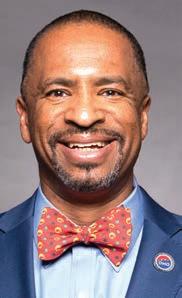
In that letter, I pointed out our city’s long and storied history of being home to creators, innovators, and inventors. We are not opposed to economic development. Our city does need to be competitive when it comes to the artificial intelligence’s (AI) explosive growth, but we also must be smart and informed about the impact of data centers on our city and state.
That is why I asked the city to slow down on siting data centers. The city council approved, on a 6-2 vote, my resolution requesting the mayor implement a moratorium on data centers. I have since gathered a wide spectrum of stakeholders, including organized labor, elected and city officials, business representatives, utility company leaders and sustainability advocates, with the goal of implementing a zoning ordinance that regulates data centers by the end of 2026. I’ve made it clear to the stakeholder group that utility bills cannot increase for our residents. I’ve also made it clear that we must lean into health and sustainability issues, particularly around water usage, and find a way to ensure we aren’t damaging our natural resources or harming our residents.
Of course, I expected the Jeff Bezos-owned Washington Post to try and make the case for supporting data centers. However, I want to strongly emphasize that the work we are doing now with the stakeholder group is centered on local control. Bezos’ main business interests, including Amazon and Blue Origin, are relying on AI to generate revenue. But no one, other than Detroiters, is going to decide what is best for our city.
I do think that data centers in Detroit are inevitable. Every sector of our modern economy relies on data centers. It’s not just “big tech” that benefits from data centers. Banks, mortgage companies, and municipalities all need data centers to process transactions and manage information, and manufacturing plants need them to operate complex, smart production equipment. It is because they are inevitable that we must be smart about regulating them in a way that works for Detroiters.
The economic benefits of data centers are not in doubt. Besides the construction and trades jobs created when a data center is built, the facilities are also a new source of tax revenue. As an example, in Loudoun County, Virginia, data centers generate about 38 percent of the county’s general fund revenue. For every $1 in public services data centers there consume, they pay approximately $26 in taxes.
I am also interested in how data centers can be beneficial beyond job creation and property tax revenue. For instance, could coupling data centers with larger industrial bases create new economic hubs that super-charge American manufacturing? Could data centers actually help improve our aging power grid?
I am not blind to the concerns of data centers. I have emphasized the need to protect our water resources, ensure our residents’ electric bills do not increase, and demand that public health concerns, such as air, noise, and light pollution, be addressed. Our stakeholder group is working to balance the good and the bad to come up with a regulatory framework that makes sense for the public and the data centers.
The stakeholder group I have convened is working diligently, meeting regularly in smaller working groups to study different aspects of data centers, ranging from the economics of them to the environmental impacts. We are working toward a comprehensive, community-centered regulatory framework that invites data center development to Detroit with sensible regulations that will be designed to protect our residents, our businesses, and our natural resources.
Data centers are not the enemy. Due diligence is key to creating a community-driven regulatory framework that is crucial to any economic development’s public acceptance and success. Our stakeholder group strives for a balanced approach to data centers based on local control. Data centers may or may not be welcomed to Detroit. But to be clear, that decision is up to the residents of Detroit and it will be on our terms.
Hon. Scott Benson is a Detroit City Councilman who represents the 3rd District on Detroit’s north eastside. Scott also serves his community by sitting on numerous boards, is an avid cyclist, and a proud husband and father.
Lt. Gov. Garlin Gilchrist II: We Must Stand TALL Against Trump’s Latest Attack on Mail Ballots
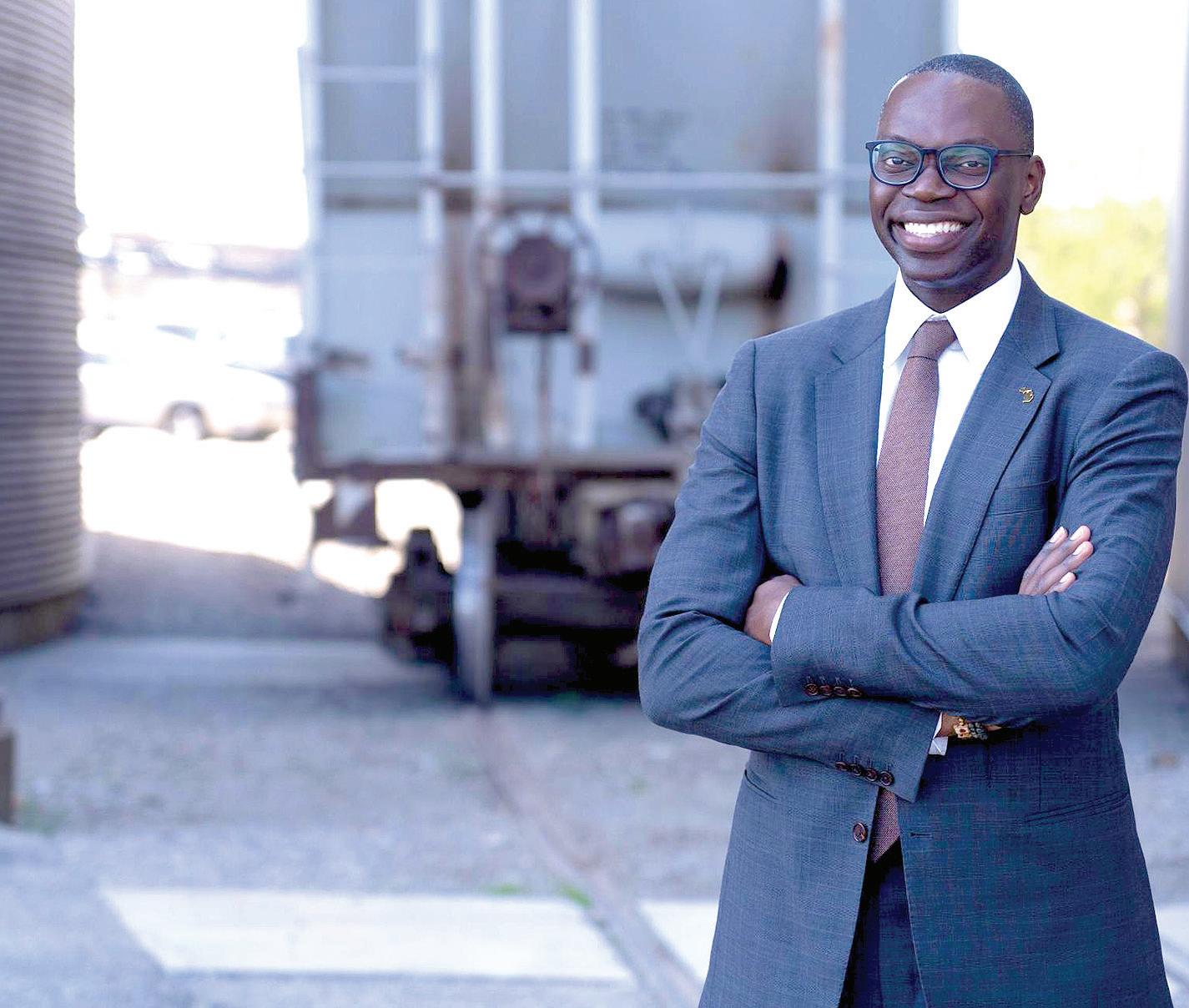
By Lt. Gov. Garlin Gilchrist II
The U.S. Postal Service is supposed to deliver your mail, not decide whether your vote gets counted.
But under a new proposed rule, the Postal Service could refuse to deliver mail ballots unless states turn over detailed information about voters to the federal government. We all know what this is.
Donald Trump is trying to blackmail states into handing over sensitive voting information, and threatening to upend our entire election system if they refuse. It is not election security. It is an illegal power grab. They want your sensitive data like names, addresses, and tracking information tied to ballot envelopes, all so they can come up with new ways to interfere in our elections and make it harder for you to vote.
And for Black voters in Michigan, especially in Detroit, it should sound painfully familiar. Every generation has confronted people who wanted to make voting harder for us. Our parents and grandparents faced poll taxes, literacy tests, intimidation, and violence. Today, the tools have changed, but the goal has not. The strategy is still to limit access
to the ballot, sow doubt about the votes of Black communities, and then use that doubt as an excuse to take power away from the people.
We saw it in 2020, when Trump and his allies tried to throw out votes from Wayne County after Detroit voters helped defeat him. We saw it when Black Detroiters were targeted with racist robocalls trying to scare them away from voting by mail. We saw it when lies about fraud were aimed again and again at majority-Black cities like Detroit, Flint, Philadelphia, Atlanta, and Milwaukee.
This proposed Postal Service rule is part of the same playbook. First, they told people mail voting cannot be trusted. Now, they demand access to voter information. Then, they will try to create new rules that can delay ballots, confuse voters, and give the federal government power it was never meant to have.
That matters in Michigan because voting by mail is not some side issue. It is a right that Michiganders fought for and won. It helps seniors vote safely from home. It helps working parents who cannot stand in line for hours. It helps people with disabilities, caregivers, students, veterans, and shift workers.
Voting by mail is about access. It is about dignity. It is about making sure no politician can make our lives so complicated that our voices disappear.
I’m running to be Michigan’s top elections official, and my promise to you is this: I will Stand TALL against these attacks and I will refuse to bow down to this blackmail. I will protect Michigan voters from illegal federal interference. And I will work with state and local election officials to make sure every eligible voter can receive a ballot, cast that ballot, and have that ballot counted.
And I will continue to tell the truth plainly: the people pushing these schemes are not afraid of voter fraud. They are afraid of voters. They are afraid of Black voters. They are afraid of Detroit voters. They are afraid of what happens when every community has the power to shape our future.
As Secretary of State, I will not let them turn the Postal Service into a political weapon. I will not let Washington politicians bully Michigan into giving up control of our elections. And I will not let anyone use confusion, fear, or intimidation to silence our communities.
Your ballot belongs to you. Your vote belongs to you. And I will Stand TALL to keep it that way.
Beyond the Plate: Detroit’s Hospitality Renaissance
By Nina Love
ALL
BLACK EVERYTHING HOSPITALITY GROUP CEO
Michelin Is Coming to our city.
For years, Detroit’s culinary community has quietly known what the rest of the country is only beginning to discover.
We are one of the country’s exciting metropolitan city food scenes because our food tells a compelling story! The story of a city built by immigrants, innovators, dreamers, makers, and communities whose cultures have shaped one of the most diverse dining landscapes in the country.
Now, with Michelin coming to the city, the world is officially being invited to pay attention.
With Detroit’s inclusion in the new MICHELIN Guide American Great Lakes edition, anonymous inspectors are already evaluating restaurants throughout Southeast Michigan, and the first selections will be announced in 2027. For the first time, Detroit restaurants will have the opportunity to earn the world’s most recognized culinary distinction.
The headlines have understandably focused on stars. But Michelin is not really about stars. It is about standards. And if Detroit is to thrive, not just earn recognition, but sustain it, we must understand what Michelin truly rewards.
The Table: Michelin Is Not Just About Food
One of the greatest misconceptions about Michelin is that it celebrates luxury. It doesn’t. Michelin celebrates excellence. The inspectors evaluate cuisine first and foremost. Then technique, consistency, ingredients, quality, harmony of flavors, and the distinct voice of the chef.
But anyone who has spent time dining in Michelin-starred restaurants around the world understands something deeper: exceptional food rarely exists without exceptional hospitality.
The best restaurants create long-lasting impressions and memories. They anticipate needs before they are expressed. They remove friction. They make guests feel simultaneously cared for and inspired.
Again, this is what we call unreasonable hospitality. Not hospitality that is excessive or performative but, intentional. The kind of hospitality where every member of the team understands they are not simply serving food but they are creating memories.
As Detroit enters this new era, our culinary future will require more than great
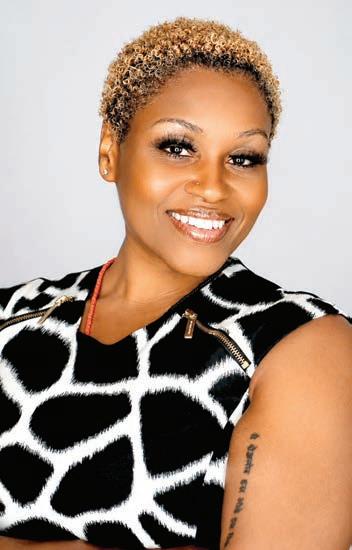
cooking. It will require a cultural commitment to service, consistency, and experience design at a level many of us have not yet fully embraced.
The Story: A Restaurant Already Speaking the Language
When conversations turn to restaurants that could compete on a Michelin level, one name consistently surfaces: Oak & Reel.
Located in Detroit’s Milwaukee Junction neighborhood, the restaurant is led by Chef Jared Gadbaw, a Michigan native whose culinary career includes leading New York’s celebrated Marea, where he helped earn and maintain two Michelin stars for nearly a decade. After years working internationally and in some of the world’s most demanding culinary environments, Gadbaw returned home with a vision for Detroit.
Recently, I revisited Oak & Reel with a different lens. Not as a diner. Not as a chef. But through the lens of what Michelin asks of a restaurant.
What immediately stands out is clarity. The concept is focused. Coastal Italian cuisine and exceptional seafood are not merely themes here; they are convictions.
The pasta is technically precise. The seafood is sublimely pristine. Flavors are layered without becoming complicated. Every dish feels purposeful, which is the ultimate goal.
More importantly, the dining room operates with a confidence that many restaurants spend years trying to achieve. Service is knowledgeable without being rigid. Refined without feeling exclusive. Attentive without becoming intrusive.
You leave with the sense that everyone, from the kitchen to the front door, is unanimously committed to both the mission and the vision. That level of alignment is what this is all about. Because Michelin-level dining is rarely about one spectacular dish. It is about an entire ecosystem of excellence.
And Oak & Reel has built one.
The Standard: How will Michelin impact Detroit?
The arrival of Michelin presents an incredible opportunity. It will attract visitors. Generate national attention. Create economic momentum for our local hospitality industry. But its greatest value may be something else entirely. A mirror. A chance to honestly evaluate who we are and who we want to become. Detroit does not need to become another city known for a laundry list of white tablecloths and tasting menus.
We do not need to abandon our authenticity. In fact, authenticity may become our greatest advantage. What we need is a collective commitment to raising the standard. More intentional service, stronger operational systems, greater consistency, and more culinary courage.
More chefs willing to push flavor, technique, and creativity into new territory while remaining rooted in the stories that make Detroit unique.
The cities that thrive under Michelin recognition are not the ones chasing stars. They are the ones building cultures of excellence. The star becomes a byproduct. The culture becomes the legacy. And that is what excites me most. Because Michelin may be coming to Detroit, but the real opportunity is for Detroit to become the kind of culinary destination that no longer needs outside validation to know its worth.
The stars may follow, but the cultural standard must come first.
Nina Love, aka The Culinary Griot, is a culinary artist, hospitality consultant, and the founder of A.B.E Hospitality Group, The Love Experience, Alchemy of Excellence Consulting, and The Culinary Griot. With over 22 years of experience, she specializes in operational excellence, culinary mastery, elevated guest experience, and building transformative hospitality brands.
Scott Benson
Nina Love
NOTICE OF REGISTRATION FOR THE GUBERNATORIAL PRIMARY TO BE
HELD ON TUESDAY, AUGUST 4, 2026 DETROIT, MICHIGAN
TO THE QUALIFIED ELECTORS OF DETROIT, MICHIGAN:
PLEASE TAKE NOTICE that any qualified elector of Detroit, Michigan who is not already registered, may register to vote at the office of the Detroit Department of Elections, the office of the Detroit City Clerk, any of our Early Vote Centers, the office of the County Clerk, a Secretary of State branch office, or other designated state agency. Registration forms can be obtained at mi.gov/vote and mailed to the Detroit Department of Elections or the Detroit City Clerk’s Office. Voters who are already registered may update their registration at www.expressSOS.com .
The last day to register in any manner other than in-person with the local clerk is Monday, July 20, 2026
After this date, anyone who qualifies as an elector may register to vote in person with proof of residency (MCL 168.492) at the Detroit Department of Elections, the Detroit City Clerk’s office, or any of the following Early Vote Centers:
District 1
WCCCD Northwest Campus
8200 W. Outer Drive Detroit, MI 48219
District 2
Northwest Activities Center 18100 Meyers Rd. Detroit, MI 48235
District 3
Farwell Recreation Center 2711 E. Outer Drive Detroit, MI 48234
HOURS OF OPERATION:
District 4
WCCCD Eastern Campus 5901 Conner St. Detroit, MI 48213
District 5
Department of Elections 2978 W. Grand Blvd. Detroit, MI 48202
District 6
City Clerk’s Office (Coleman A. Young Municipal Ctr.) 2 Woodward Ave., Ste. 106 Detroit, MI 48226
District 6 Clark Park 1130 Clark St. Detroit, MI 48209
District 7
Adams Butzel Recreation Complex 10500 Lyndon Detroit, MI 48238
• Early Vote Centers will open on Saturday, July 25, through August 2, 2026, 9:00 a.m. to 5:00 p.m.
• Monday through Friday from 8:00 a.m. to 5:00 p.m. (Department of Elections)
• Monday through Friday from 9:00 a.m. to 4:00 p.m. (City Clerk’s Office)
• Saturday, August 1st from 8:00 a.m. to 4:00 p.m. and Sunday, August 2nd from 9:00 a.m. to 4:00 p.m. (Department of Elections)
• Monday, August 3rd - Absentee Voting ceases at 4:00 p.m.
• Election Day, Tuesday, August 4th from 7:00 a.m. to 8:00 p.m.
PLEASE TAKE NOTICE that the City of Detroit will be voting in the Primary for the following offices:
• Governor
• United States Senator
• Representative in Congress
• State Senator
• Representative in State Legislature
• County Executive
• County Commissioner (5th District ONLY)
• Delegate to County Convention
PLEASE TAKE NOTICE that the City of Detroit will be voting on the following proposition as presented and listed below: PROPOSAL S
DETROIT PUBLIC SCHOOLS COMMUNITY DISTRICT COUNTY OF WAYNE STATE OF MICHIGAN
OPERATING MILLAGE REPLACEMENT PROPOSAL
If it is determined that the School District of the City of Detroit is no longer authorized to levy an operating millage to retire its legacy debt under State law this proposal would replace that levy by authorizing the Detroit Public Schools Community District to levy the statutory limit of 18 mills on all property, except principal residences (owner occupied homes) and other property exempt by law, for general operating purposes and allow the School District to continue to levy the statutory limit of 18 mills in the event of future Headlee rollbacks of up to 6 mills. This authorization will allow the School District to receive revenues at the full per pupil foundation allowance permitted by the State. Shall the limitation on the total amount of taxes which may be assessed against all property, except principal residences and other property exempted by law, situated within the Detroit Public Schools Community District, County of Wayne, Michigan, be increased in the amount of 24 mills with 18 mills being the maximum allowable annual levy ($18.00 on each $1,000 of taxable valuation), for a period of twenty (20) years, 2026 to 2045, inclusive? This operating millage if approved and levied, would provide estimated revenues to the School District of $112,000,000 during the 2026 calendar year, to be used for general operating purposes.
Persons with disabilities needing accommodations should contact the Department of Elections at 313-876-VOTE (8683).

JANICE M. WINFREY DETROIT CITY CLERK
Classifieds
Mobility Authority for Transportation (SMART) is RFQs for Pre-Employment, Alcohol Screenings Control
The City of Highland Park will be having its July Board of Review on July 21, 2026, from 1:00 p.m. to 4:00 p.m. at the following location: Robert B. Blackwell Municipal Complex 12050 Woodward Avenue. Highland Park, Michigan 48203 City Treasurer’s Conference Room 1st floor
RFQ forms may be beginning October 19, 2022, http://www.mitn.info. RFQs are ET, November 11, 2022
This meeting is for qualified errors, mutual mistakes of facts, clerical errors, or poverty exemptions.



Engineering Manager
Vehicles LLC seeks a BSW Manager in Troy, Michigan. Note, not require travel. Duties team of SW engineers to develop MCAL, service layers, AUTOSAR complex device drivers in new drivetrain systems; Develop requirements specification (SRS) and plans; among other duties.
the employee must live within a reasonable commuting distance from the worksite. Aid delivery of all features on all programs, with quality and efficiency. Domestic and International Travel Required up to 10%. EOE. Apply online: careers.ford.com
Electrical Engineering, Embedded Systems, or Engineering and seven years of offered or related reference number 220000KW at: .jobs.net/search
Digital Sculptor
Motors. Plan &perform advanced &development of Class A surface syss. Interpret &define design collaborating w/ engineering, factors, &tooling teams. Design surfaces of ICE, diesel, BEV car, truck &SUV exterior cmpnts fascias, grills, head/taillamps, doors, skid plates, liftgates, truck cmpnts incl. door handles, &exhaust tips, using Autodesk Autodesk Maya, NX &VRED tools, &emerging markets. Interpret, define, &execute unique solutions to technical creative proposals to capture initial concept thru mass production stages according to GVDP, while engrg, packaging, human factors, assure minimum radii/draft, tooling compliance w/ U.S., European Bachelor, Transportation or mos exp as Digital Sculptor, related, designing or developing full vehicle psgr vehicle fascias, grills, head/taillamps, pillars, &liftgates, using Alias &VRED tools, for U.S., global related. Mail resume to Global Mobility, 300 Renaissance MC:482-C32-C66, Detroit, MI 48265.

The Detroit Public Schools Community District is seeking qualified contractors for roof replacement services at several District locations under RFP 27-0001 Facility Master Plan Series 6 Roof Replacements.
Detroit People Mover/Detroit Transportation Corporation 535 Griswold St Ste # 400 Detroit, MI 48226
BID # 08-8-2022 REBID
There will be a pre-bid meeting for this RFP hosted virtually on July 9, 2026, at 12:00 p.m. The conference can be viewed using the following link: https://tinyurl.com/5dh4by9m Call-In: +1 (313) 462-2305 Conference ID: 999 927 876#
There will be non-mandatory walkthroughs for each location that will take place on July 9, 2026.
• G olightly Educational Center, at 1:30 p.m., located at 5536 St. Antoine St., Detroit, MI 48202.
The Detroit Transportation Corporation Office of Contracting and Procurement requests proposals from qualified Contrac tor/Firm(s) to provide annual geometry measurements of the LIM rail height, power rail tolerances, running rail height and track gauge.
• Davison Elementary, at 2:10 p.m., located at 2800 E. Davison St, Detroit, MI 48212.
• Wayne Elementary, at 3:10 p.m., located at 10633 Courville St., Detroit, MI 48224
• B urton International Academy, at 4:10 p.m., located at 2001 Martin Luther King Jr. Blvd., Detroit, MI 48208

ACCURACY
To the qualified Wayne County, State that a Public Accuracy that will be used Tuesday, November October 25, 2022, room (lower level)
Jennifer Elaine (Lindsey) Summers, age 64, of Detroit, Michigan, went to be with the Lord on June 20, 2026, after a courageous year-long battle with cancer.
DAT In-House Perception Algorithm Engineer Positions offered by Ford Motor Company (Dearborn, Michigan). Note, this is a hybrid position whereby the employee will work both from home and from the aforementioned worksite. Hence, the employee must live within a reasonable commuting distance from the aforementioned worksite. Contribute to a team responsible for the embedded software and algorithms for DAT sensing applications on the current/future DAT ECU. EOE. Apply online: careers.ford.com
Embedded Software Engineer –Product Engineer
Positions offered by Ford Motor Company (Allen Park, Michigan). Note, this is a hybrid position whereby the employee will work both from home and from the aforementioned worksite. Hence, the employee must live within a reasonable commuting distance from the aforementioned worksite. Support the development and maintenance of embedded software build infrastructure for automotive control units. EOE. Apply online: careers.ford.com
Validation Engineer
Motors. Perform &execute BEVs in GVDP for Vehicle Controls (VMEC), Body Safety (AS), telematics, Review, analyze &coordinate the of BEV system &cmpnt level SW of VMEC &AS syss incl. Radars, Rear Vision/360/Driver antennas, Body & Vehicle Modules, &features incl. Adaptive Keep Assist, Autonomous Emergency Braking, Collision &related module &feature validation vehicle prgrms, using PQMS, NX, (Tc), &ECM tools. Perform on time embedded module ECUs, thru iteration validations. Bachelor, Mechatronics, or Mechanical Engineer, testing or verifying &infotainment embedded tools, or related. Mail resume Global Mobility, 300 MC:482-C32-C66, Detroit, MI
The initial information and subsequent trending information on the rate of change of the measured parameters of the Detroit People Mover (DPM) track will be reviewed and utilized as part of the existing detailed maintenance plan to ensure long term safety and availability to the riding public.
• Pasteur Elementary, at 5:40 p.m., located at 19811 Stoepel St., Detroit, MI 48221
Proposals are due electronically by 12:00 p.m. on July 24, 2026.
Late bids will not be accepted.
All bids must be received by the Detroit Transportation Corporation via Bidnet/MITN on or before 5:00 p.m. (EST) November 7, 2022.
A virtual Public Opening will occur at 12:00 p.m. on July 24, 2026, and can be viewed using the below link: https://tinyurl.com/ms8ae3jt Call-In: +1 (313) 462-2305 Conference ID: 877 302 831#
A pre-bid site visit is scheduled for Wednesday, October 25, 2022 at 10:00 a.m. (EST).
This project is subject to Michigan State Prevailing Wage Laws (Michigan Public Act 10 of 2023) and the contractor must pay prevailing wages and fringe benefits to all its contractors, subcontractors, and construction mechanics working on the project in accordance with Michigan Public Act 10 of 2023.
Born March 18, 1962, in Detroit to John and Opal Lindsey, Jennifer was the youngest of five daughters. A gifted artist, she enjoyed tennis, cheerleading, and studied art through Wayne State University’s Saturday Youth Art Classes. She built a diverse career while raising three children, working at Detroit Receiving Hospital, EDS, Ford, and Compuware, completing coursework at Detroit College of Business, and using her artistic talents as a nail designer. For the past 20 years, she and her husband owned and operated a semi-truck, traveling the country while sharing her faith with those she met.
Proposals can be accessed on the Bidnet Direct www.bidnetdirect.com//detroit-transportation-corporation
Mike Anderson Procurement Manager mandersonjr@thepeoplemover.com
All bids must be accompanied by a sworn and notarized statement disclosing any familial relationship that exists between the submitting company and any employee of DPSCD. DPSCD shall not accept a bid that does not include this sworn and notarized disclosure statement.
If you have questions, please contact the Procurement Department at (313) 873-6531.
Staff Design Release Engineer - Wiring Warren, MI, General Motors. Engineer, design, develop, &release conventional ICE, BEV &AV psngr vehicles electrical wire routing &packaging syss, &multi-branch wiring harnesses, incl. wire, terminals, connectors, coverings &attachments, using Tc Vismockup, ECM, ECR, &Auros tools. Design &release electrical wire routing &packaging syss to ensure proper functioning of electrical modules such as OnStar, LRR, cybersecurity syss, &other required vehicle electrical syss for AV. Ensure that electrical harness routings meet U.S. FMVSS. Apply GD&T, CAE, DFM/A, DFMEA, DRBTR, Red X, DFSS processes to design &validate wiring harness branch points for multi-branch harnesses, pin level, cavities, size, &thermal resistance specs &rqrmnts. Bachelor, Electrical or Automotive Engineering, or related. 60 mos exp as Engineer, engineering, releasing for production, &continuously improving conventional psngr vehicle &BEV electrical wire routing &packaging syss, &multi-branch wiring harnesses, using Tc VisMockup tool, or related. Mail resume to Ref#3882, GM Global Mobility, 300 Renaissance Center, MC:482-C32-C66, Detroit, MI 48265.
and clientside business logic. EOE. Apply online: careers.ford.com
Product Manager & Data Science Supervisor
Positions offered by Ford Motor Company (Dearborn, Michigan). Note, this is a hybrid position whereby the employee will work both from home and from the aforementioned worksite. Hence, the employee must live within a reasonable commuting distance from the worksite. Supervise a global cross-functional team composed of data scientists, data analysts, data engineers, product designers, program managers, and software engineers. EOE. Apply online: careers.ford.com
Senior Design Release Engineer –Fuel Systems (FS) & Evaporative Emission Control (EEC) System
Software Engineer
Positions offered by Ford Motor Credit Company LLC (Dearborn, Michigan). Note, this is a hybrid position whereby the employee will work both from home and from the aforementioned worksite. Hence, the employee must live within a reasonable commuting distance from the worksite. Designing, developing, and implementing high-quality user interfaces for web applications using the React JS library. EOE. Apply online: careers.ford.com
Vehicle Thermal Systems CAE Engineer
Positions offered by Ford Motor Company (Dearborn, Michigan). Note, this
Jennifer’s unwavering Christian faith guided every aspect of her life. An ordained minister and devoted student of Scripture, she was known for her favorite affirmation, “All is well,” inspired by 2 Kings, reminding others to trust in God’s plan.
She was preceded in death by her parents and is lovingly remembered by her husband, Darron Summers, three children: Dr. John P. Lindsey, Jessica Hall and Jason Lindsey; four sisters: Paulette Pennington, Maryetter Lindsey, Janice Thornton and Loretta Lindsey; 2 grandchildren: Micah and Jaxon Bryant, extended family, and many dear friends.
6 Savvy Ways to Ensure Grilling Success This

FEATURE IMPACT
TWarren, MI, General Motors. Engineer, design, &develop FS &EEC syss, incl. fuel tanks/lines/ vapor transfer lines, emission control canisters, &filler pipes for psgr vehicles incl. Premium Luxury/Mid-Size Cars &Large psgr &Cargo Vans, &Incomplete truck) prgrms, according to vehicle program timing rqrmnts, from concept to production, &aligned to meet performance, safety (U.S. FMVSS), &strict technical ®ional rqrmnts &standards, using NX, Tc, Tc Vismockup, ETAS INCA, &ECM tools. Conceptualize, design, validate &release engine FS &EEC sys cmpnts to meet SSTS of propulsion system projects. Benchmark critical emission control technologies &recommend fuel injection HW to meet emission EPA &UNECE regs. Master, Mechanical or Automotive Engrg. 36 mos exp as Engineer, developing &releasing evaporative emission canisters for OEM prgrms, from concept to production, &aligned to meet performance, safety (incl. U.S. FMVSS), &strict technical ®ional rqrmnts &standards, using NX, Tc, &Tc Vismockup tools, or related. Mail resume to Ref#201, GM Global Mobility, 300 Renaissance Center, MC:482-C32-C66, Detroit, MI 48265.



Summer
PROCLAMATION
DECLARATION OF NON-CITIZEN NATIONALITY
Section 302 of Public Law 94-241
here’s just something timeless about a summer cookout with friends, family or neighbors. Whether it’s the sound of burgers sizzling on the grill or the smell of your favorite seasonal sides, the event invokes nostalgia and camaraderie. While the spotlight may land on the burgers and barbecued fare, seasoned grill masters know the supporting cast matters, too. Makers of soft, delicious hamburger and hot dog buns fit to be the foundation of summer gatherings for more than 100 years, the bun experts at Wonder suggest a few ways to ensure your entertaining ventures are successful throughout the season.
Do What You Can Ahead of Time
I DeIamond Carpre Henson, being duly affirmed [sworn], hereby declare my intention to be a national but not a citizen of the United States.
Stick to a mix of easy favorites and make-ahead sides to keep prep manageable while offering something for everyone to enjoy. When possible, prep ahead of time so you can keep your focus on the fun and your attention on the hot grill. Chop vegetables, wash lettuce for burgers, make sure you have picked out the perfect buns, form and season beef patties and mix marinades the day before the big bash to avoid last-minute rushes around the kitchen.
Prep the Grill
Help You
1. Brush cut sides of buns with softened butter, mayo or both to help the bun brown evenly.
Notice: all executive and judicial officers both of the United States and of the several States
2. Lightly salt the buttered side before grilling.
Section 1091 of Title 18, United States Code, prohibits genocide whether committed in time of peace or time of war. Genocide is defined in section 1091 and includes violent attacks with the specific intent to destroy, in whole or in part, a national, ethnic, racial, or religious group. There is Federal jurisdiction if the offense is committed within the United States. There is also Federal extraterritorial jurisdiction when the offender is a national of the United States
Patience is key when it comes to grilling, as a properly heated grill is the foundation for good cooking. Give gas grills enough time to come to temperature, around 10-15 minutes, and allow charcoal to ash over completely. When grilling different types of food, it’s especially helpful to set up cooking zones – direct and indirect – so you can cook meat, veggies and buns differently or move finished food to one side, as needed. Additionally, to help prevent sticking, lightly oil the clean grill grates before cooking. Using tongs and a paper towel dipped in oil is often more effective than coating foods with oil.
Use a Meat Thermometer
You may be a seasoned grill master, but guesswork can lead to mistakes, especially when cooking for a crowd. Avoid overcooked (or worse, undercooked) chicken and burgers by using an instant-read thermometer to help ensure meat is cooked safely while retaining its juicy flavor.
Grill Buns Correctly
Burgers and hot dogs are classics for a reason, but avoiding soggy buns and mid-bite fallout requires the right bun for the job. Striking the perfect balance of pillowy softness with the structure to hold their shape through every loaded topping, condiment and bite is key when choosing the right bun for the job. More than just a vehicle for grilled favorites, Wonder Classic Hamburger and Hot Dog Buns are a familiar taste that makes cookouts delicious and have held it together, literally and figuratively, for more than a century. In continuing its longstanding partnership with the USO through the annual Deploy the Joy campaign, you can keep an eye out through Sept. 12 for special packaging on select products with scannable QR codes for a chance to win a $10,000 Birthday Bash. For great grilled buns, follow a few easy steps:
(StatePoint) By population will be creating a situation greater pressure workforce and more also have the potential by this seismic demographic
3. During the last 2 minutes of cooking burgers or dogs, place buns cut-side down over mediumlow heat for 30-60 seconds. Look for a light golden toast, crisp enough to hold up.
Let Food Rest Before Serving
According to chine Learning (ML) of new technologies those who want
After grilling, give meat a few minutes to rest before serving or slicing. This allows juices to redistribute throughout the food for better texture and flavor.
“While AI and adaptation has working to change executive officer manufactures personal (PERS), health communications and activity monitoring ed Care Platform, communication

To help you live the years to come, the newest technology
Layer Burgers, Condiments
• PERS, also known tems, allow you ing a button. sistant wall-mounted keep you protected ing you instantly personnel. Those pattern recognition of security. To
• Automatic pill a dose or take needs, you may visual and audio limited dexterity.
• Motion-sensing