

By Garlin Gilchrist II
By Ebony JJ Curry SENIOR REPORTER
Donald Trump and his allies tried to overturn Michigan’s votes once. Now they are laying the groundwork to try again.
Just this week, they sent election monitors to three cities, including here in Detroit, ahead of our state’s August primary.
Let’s be clear: Donald Trump has not earned the benefit of the doubt on elections.
You cannot spend years spreading lies about Detroit voters and then pretend federal monitors are neutral. You cannot falsely claim our elections are rigged, pressure officials to overturn legitimate results and try to discard the votes of an overwhelmingly Black city, then suddenly present yourself as a defender of election integrity.
By Ebony JJ Curry SENIOR REPORTER
Late Thursday night, Sept. 14, a historic moment unfolded in American labor relations as the United Auto Workers (UAW) union initiated a strike against Ford, General Motors (GM), and Stellantis. For the first time, the union took simultaneous action against all three major Detroit-based automakers. The action involves approximately 13,000 UAW members in assembly plants across Michigan, Ohio, and Missouri, who walked off their jobs after existing labor contracts expired at 11:59 p.m.
IShortly before midnight on Sept. 14, GM released a statement expressing disappointment with the strike action, despite offering what it termed an “unprecedented economic package” that included
Federal election monitors have played a legitimate and important role in protecting voting rights, particularly in communities where voters have faced discrimination or intimidation. When deployed to enforce civil rights laws and ensure every eligible voter can participate, monitoring can strengthen our democracy.
n a breathtaking celebration of talent, determination, and the unyielding spirit of Black excellence, the Michigan Chronicle marked its 10th Annual 40 Under 40 event Thursday evening. This year’s soirée, drenched in the theme “All Black Everything with Gold Accents,” transcended expectations and essentially illuminated the golden gems within the true essence of Black excellence. Hosted by the charismatic duo of Andre Ash and Lynzee Mychael from Michigan Chronicle’s Finally Friday, the night was a triumph for the city of Detroit and its vibrant community of young Black pro-
ative mind behind Three Thirteen Detroit’s Brand Name, received the prestigious Entrepreneur of the Year Award. Brown’s commitment to empowering the city through fashion and entrepreneurship has left an indelible mark.
By Jasmine West
The evening sparkled with a golden promise as we celebrated remarkable individuals from various walks of life. Among the honorees were the brilliant and visionary co-founders of Detroit Hives, Nicole Lindsey and Timothy Paul Jackson. Their work has not only changed the landscape of beekeeping and urban farming in Detroit but also exemplified the transformative impact Black professionals can have on their communities.
cy mode to protect its operations.
But context and purpose matter.
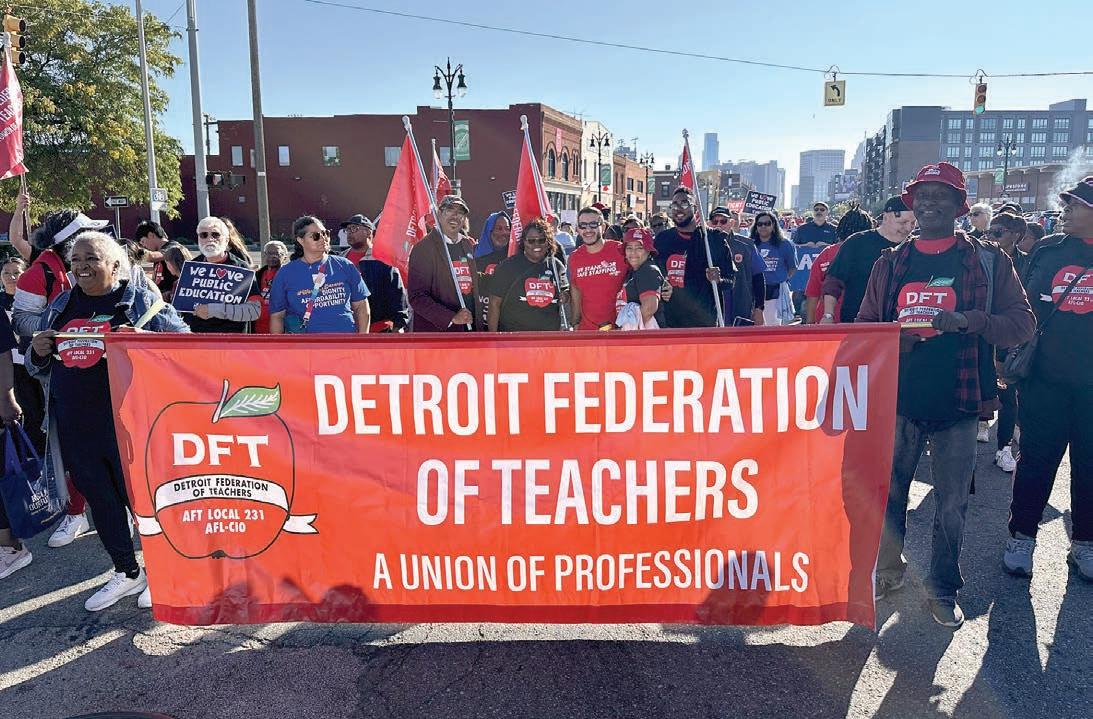
For Detroit Federation of Teachers President Lakia Wilson-Lumpkins, one of the most meaningful victories in the union’s new contract began as something she was unsure educators could win.
By Ebony JJ Curry SENIOR REPORTER
“Together we have created a social, environmental, and financial impact through bees,” said Jackson. Lindsey followed that sentiment with, “It is through our local partnerships and collaborative efforts that we exist in over 28 plus locations managing the health of 4.5 million honeybees – humbly speaking our movement has inspired others locally, nationally, and even internationally to take on similar missions.”
“Entrepreneur of the year – that’s a big deal,” said Brown. “It’s always an honor to be honored and it’s always a blessing to be in a room full of so many talented, accomplished, and popular people that look like me. I’m geeked. I started making and selling clothes as a kid and I always knew that I would have a business, but I never knew it would be Detroit’s brand name business, so I take a lot of pride in the fact that our business represents our city’s pride.”
elected school board and district superintendent. Detroit voters still had an elected board, but its power was severely restricted under state control.
Taking home the Corporate Excellence Award was Dannis Mitchell, Director of Community Engagement at Barton Malow.
DPD Chief James White Says Increased Police Presence Culled Violence By Andre Ash
She said the district’s ability to recruit educators ultimately affects the instruction and stability students experience each day.
DIGITAL ANCHOR
ness district that had been the lifeblood of the community.
This is an administration that has spent years attacking Detroit, spreading election lies and undermining confidence in the people who administer our elections. Its Justice Department has shattered trust with local officials and voters. You cannot repeatedly treat Detroit ballots as suspicious and then expect Detroiters to assume that federal scrutiny is neutral.
For many Detroiters, Interstate 375, or I-375, has long been just another stretch of urban highway, a concrete artery connecting different parts of the city. To some, it’s a mere convenience; to others, it’s an unremarkable part of their daily commute. However, there’s a deeper, far more troubling story beneath the surface of this seemingly ordinary freeway—a story of pain, displacement, and the lasting impact on Black Detroiters.
Teachers who take approved maternity or paternity leave can now have up to 30 used sick days returned to them. Employees will still take time away from work, but they will no longer permanently lose all the accumulated days needed to care for themselves and welcome a child.
“I never imagined that I would accomplish the maternity and paternity leave — 30 days being returned to mothers and fathers if they take the approved leave,” Wilson-Lumpkins said. “That was a dream to me. I didn’t think that I would get that, but we fought hard and we got it.”
Detroit Hives, a pioneering organization founded by Lindsey and Jackson, harnesses the power of urban beekeeping to revitalize neighborhoods in the Motor City. Their initiative not only addresses critical issues like environmental conservation but also provides valuable education and employment opportunities to Black De-
That is why the decision to send monitors here must be viewed as part of a larger playbook, not in isolation.
The UAW has branded the industrial action as the “Stand-Up Strike,” focusing on specific plants within each automaker. UAW President Shawn Fain stated, “This strategy will keep the companies guessing. It will give our national negotiators maximum leverage and flexibility in bargaining. And if we need to go all out, we will. Everything is on the table.” Union leaders have also indicated that additional plants could be targeted in future waves if negotiations remain stalled.
“It is so important to recognize that there are young leaders across the country, many that are born here in Detroit. I represent our city nationally and I tell people, ‘Yea I’m a D-girl I’m from the west-side of Detroit,’” Mitchell expressed. “But more importantly, I’ve been able to have experiences within an industry that not many of us, specifically women of color, have the opportunity to engage in and I’ve been the youngest person in the room, the only Black person in the room, and the only Sistah in the room, and I really had to articulate the importance of showing up, giving chances when others won’t, and being persistent.” As a trailblazing Black woman thriving in a predominantly male-dominated industry, her unwavering commitment to fortifying the connections between businesses and Detroit’s communities is unde-
Emergency management continued until the district was restructured in 2016. The former Detroit Public Schools remained in place to pay off legacy debt, while the newly created Detroit Public Schools Community District began operating the city’s schools. A locally elected school board took office in January 2017, restoring local governance after years of state control.
It’s a history marred by pain, injustice, and economic devastation. More than 130,000 residents, primarily Black, were forcibly displaced. Families were uprooted, generational wealth was obliterated, and a thriving community was torn asunder. The wounds inflicted by I-375 run deep, transcending the physical barrier of a freeway to penetrate the very soul of Black Detroiters.
The contract gains described by Wilson-Lumpkins carry particular weight against that history.
towards mending the wounds inflicted on Black Detroiters and restoring a sense of belonging that was so callously torn away in the past.
“The children and the families of Detroit deserve quality educators,” Wilson-Lumpkins said. “We’re hoping that with the competitive salary and the competitive working conditions that are now contractual, that we will be able to do that moving forward.”
A string of shootings in Greektown in mid-April left both visitors and residents of this bustling downtown destination in awe. One of these shootings tragically claimed the life of a popular and beloved security guard following a dispute with a patron.
The I-375 Boulevard Project is about more than just correcting historical injustices; it’s about redefining the future. It will connect downtown Detroit to surrounding neighborhoods, bridging the gap that was placed upon the city decades ago.
The agreement also addresses health concerns that can disproportionately affect educators working with younger children. Teachers who contract hand, foot and mouth disease will be eligible to have the leave time they used returned to them.
After the 2020 election, they did not simply question Michigan’s results. They targeted Wayne County’s vote, pressured officials not to certify the election and promoted baseless claims that ballots cast by Detroiters should not be trusted.
This painful legacy can be traced back to the nation’s interstate highway program of 1956—a program that aimed to connect the country but often did so at the expense of marginalized communities. In the case of I-375, it meant carving a path through the heart of Black Detroit, reinforcing segregation, and perpetuating inequality.
Educators will receive a 7.5% salary increase over the life of the agreement, bringing the top salary for a teacher with a master’s degree to $100,100. Members who complete the entire school year will be eligible for a $2,000 retention bonus, while employees with at least 15 years of internal service to the district can receive a $4,000 longevity bonus.
By Andre Ash
DIGITAL ANCHOR
They failed because election workers, public officials and ordinary citizens stood up for the truth. But they learned from that failure. This time, they are trying to put more of the machinery in place before the votes are even cast.
The tale begins in what is now Lafayette Park, once known as Black Bottom—a neighborhood rooted in African-American culture and history. Named after its dark, fertile soil, Black Bottom flourished during the mid1900s, nurturing the dreams and aspirations of prominent Detroiters like Coleman Young, Joe Louis, and numerous other Detroit legends. But in the name of urban renewal in the 1950s, this vibrant neighborhood was systematically dismantled, erased from the map, and replaced by a lifeless stretch of asphalt.
The male suspect allegedly shot the guard before fleeing the scene, while his female companion is accused of concealing the weapon in her bra.
The contagious illness frequently spreads in settings where young children are in close contact. Wilson-Lumpkins said the provision grew out of concerns raised by elementary educators who regularly face outbreaks during the fall and winter.
These incidents unfolded during an unseasonably warm spring, leading to increased pedestrian traffic and heightened tensions in the densely populated downtown area.
A Holistic Approach to Providing Shelter and Support for Detroit’s Unhoused People
Fain clarified the union’s strategy: “I want to give a major shoutout to the thousands of members who are on the picket lines right now fighting for all of us. The Stand-Up Strike is a new approach to striking. Instead of striking all plants at once, select locals will be called on to stand up and walk out on strike. This is our generation’s answer to the movement that built our union – the sit-down strikes of 1937. We told the Big 3 that Sept. 14 was the deadline and we meant it. We gave the companies our economic demands eight weeks ago and it took more than a month to get to the table.”
The provision is one of several changes included in a new agreement between Detroit Public Schools Community District and the Detroit Federation of Teachers. The contract raises salaries, adds retention and longevity bonuses, protects educators’ role in decisions involving artificial intelligence and addresses working conditions union members have raised from inside their classrooms.
For one to aptly recognize the harm caused by such projects, it is vital to note that some of the planners and politicians behind those projects built them directly through the heart of vibrant, populated communities—oftentimes to reinforce segregation and sometimes as part of a direct effort to replace or eliminate Black neighborhoods.
Wilson-Lumpkins sees the agreement as part of DPSCD’s continued climb from an era when state-appointed emergency managers controlled the district and Detroit educators lost wages, benefits and bargaining rights.
While the residential areas bore the brunt of this demolition, the heart of Black Bottom, its thriving business center, remained largely untouched. Restaurants, theaters, clubs, and bars—the very places that brought Detroit’s Black community together—were concentrated around Hastings Street, the epicenter of African-American culture in the city.
Earlier this year, Trump’s Justice Department demanded ballots and election records from Wayne County stemming from the 2024 election. Michigan law makes clear that those ballots are held by local clerks, not the county itself, but that misses the point. These demands are part of a broader strategy to keep relitigating settled elec-
The union is pushing for a comprehensive list of demands. This
Homelessness continues to plague urban communities, with families and individuals grappling with the challenges of making ends meet in today’s economic climate. Whether it’s struggling to meet monthly mortgage payments or coping with soaring rental costs in a housing market marked by shockingly high prices, a variety of factors contribute to the growing issue of people becoming unhoused.
“We lost so much during emergency management, and we’re just slowly making our way back,” she said.
Housing Resource Helpline in response to the challenges that residents face in navigating the complex system of housing services. The helpline provides a single point of contact for people seeking housing assistance and connects them with the resources they need.
The agreement also provides additional compensation for career and technical education teachers, bilingual educators and bilingual ancillary employees. Wilson-Lumpkins said those incentives recognize positions that are increasingly important as the district serves students with a wider range of academic, language and career needs.
Today, the resurgence of Paradise Valley stands as a testament to the indomitable spirit of Black Detroiters and the enduring legacy of Black excellence. This historic district, once a vibrant hub for Black businesses and culture, is experiencing a renaissance that harkens back to its glory days. The destruction of Black Bottom may have torn apart a thriving community, but the resolute determination of a new generation of entrepreneurs and visionaries is reclaiming that lost legacy.
The surge in crime and the influx of visitors to Detroit’s downtown core garnered the attention of the Detroit Police Department (DPD), catching them somewhat off guard.
“We just try to respond to our members’ experiences in the classroom to make sure that special considerations and accommodations are made and that they are contractual,” she said. “It’s not on a case-by-case basis. It is applicable to every member.”
But now, after decades of enduring the scars of I-375, there is a glimmer of hope on the horizon. Plans have been unveiled to transform this once-divisive freeway into a vision that seeks to right the wrongs of the past while heralding a new era of inclusivity and community revitalization.
The union hopes the combination of higher salaries and improved working conditions will help DPSCD keep experienced educators while attracting certified teachers to Detroit.
Meagan DunnJulie Schneider
Detroit Public Schools entered emergency management in 2009 after the state declared a financial emergency. A succession of state-appointed managers assumed nearly all financial, operational and governing authority ordinarily held by the
Historically, shelters have provided a temporary respite for those in need, often serving as the first or second option after exhausting alternatives like staying with friends or family. Shelters offer a place to rest one’s head and a warm meal, albeit sometimes for extended periods. For others, being unhoused means living in cars or makeshift outdoor
Then, in a cruel twist of fate, Hastings Street, too, was obliterated a few years later, making way for the construction of I-375. This marked the final blow, sealing the fate of Black Bottom and signaling the beginning of the end for Paradise Valley, the Black busi-
Support for the helpline comes from the Gilbert Family Foundation, which has pledged $10 million over three years to fund the program. Wayne Metro Community Action Agency manages the helpline, making it accessible to all Detroit residents. This initiative simplifies access to the City’s various housing services, ensuring that residents in need can easily find assistance.
James White, Chief of Police for the Detroit Police Department, said: “We were caught somewhat flat-footed right out the gate. By design we went into the spring deployment, which is less than the mid-summer deployment, and saw we say an uptick in violence that first warm weekend.”
That distinction matters to Wilson-Lumpkins. Placing the protections in the contract means educators do not have to depend on individual administrators to decide whether their circumstances warrant consideration.
Chief White attributes the violence in Greektown to a combination of weather conditions and a surge in population.
“We’re not only retaining the members we have,” Wilson-Lumpkins said. “We are attempting to attract new, qualified, certified and dignified professionals to the district, simply because we have to ensure our workforce.”
Fueled by more than $100 million from the Infrastructure Investment and Jobs Act and other partners, this ambitious project aims to create jobs, remove barriers to economic growth, and reconnect the neighborhood with the rest of Detroit. It is a step
In the heart of Paradise Valley, Blackowned businesses are not just flourishing but thriving, offering diverse services, products, and experiences that pay homage to the past while paving the way for a prosperous future. From jazz clubs to soul food restaurants, the Black Press, and art galleries to fashion boutiques, this revival is breathing life into the very essence of what once made this neighborhood a vibrant cultural epicenter. It’s a resurgence that extends beyond brick and mortar; it represents the resurgence of a spirit that refuses to be subdued.
The contract also begins to define how artificial intelligence can be used in district decisions.
Detroit City Councilman Fred Durhal III, representing District 7, where Eastern Market resides, told the Michigan Chronicle, “It’s still very early in the process, MDOT is
He explained, “ We saw numbers downtown that we have not seen, ever. People are emerging from COVID and there’s a feeling that we’re in a post-COVID era… and with the venues downtown and the reasons to come down with all the activities that are going on, we saw hundreds of more people and, in particularly, young folks, teenagers that we hadn’t seen.”
Wilson-Lumpkins said the language preserves educators’ authority and prevents an application or automated pro-
Responding swiftly to the surge in violence, DPD adjusted its deployment plans. Rather than waiting for mid-summer, they deployed officers in the spring itself to address the situation.
The causes of homelessness are as diverse and complex as the individuals experiencing it. In response, the City of Detroit has adopted a holistic approach to combat this issue.
“Providing services and high-quality housing to persons at risk of or who are experiencing homelessness is a key priority of the City of Detroit, said Julie Schneider, Director of Detroit’s Housing and Revitalization Department.
What a Federal Government Shutdown Could Mean for Detroiters?
“This means focusing on building the pipeline of supportive housing and coordinating with the Continuum of Care on the delivery of critical resources such as emergency shelter, rapid rehousing, and diversion and prevention programs. It also means preserving and expanding affordable housing options for Detroiters of all incomes and improving housing stability though comprehensive service offerings available through the Detroit Housing Resource HelpLine and Detroit Housing Services Division within HRD.”

In May 2023, the City of Detroit launched the Detroit

The rise in visitors to the Greektown area is evident in data from Placer.ai, a location analytics company specializing in visit trends and demographic insights through geolocation-enabled mobile devices. From May 1-Aug. 27, 2022, there were 1.3 million visits and 655,000 visitors to Greektown, according to Placer.ai. In the same period this year, these numbers increased to 1.4 million visits and 670,000 visitors.
As Detroit’s downtown area continues to attract both residents and visitors, the police department has implemented various enforcement measures to manage the increased population. Notably, metal detectors have been strategically placed throughout Greektown to deter the illegal carrying of firearms.
Founder of JustAir, a hyper-local, block-by-block air quality monitoring and forecasting platform, says, “It’s hard to give a full ranking while it’s still unfolding, but we can say that the east side of Wayne County was hit first; our monitors there showed the earliest elevated readings around 6 PM yesterday, reaching unhealthy levels before the smoke spread across metro Detroit and the rest of the region throughout the evening.”
“We have strategically placed them at key points, “ Chief White explains. It has been a deterrent for some, and some have tested it. If you are legally carrying a weapon and carrying a CPL, have a great day. If you’re
The Detroit News has noted that according to a Swiss air quality technology company, Detroit the most polluted air in the world among major cities on Thursday, According to a press release from the Southeast Michigan Council of Governments, air quality levels on July 16 have been deemed, “unhealthy.” They also provided additional guidance such as: When possible, avoid strenuous outdoor activities, especially those with heart disease and respiratory diseases like asthma.
cine and healthcare, may be adversely impacted by the decision to overturn Roe v. Wade.
what the Supreme Court
ReproducAll, a affirm abortion and freedom in constitution,” Giroux. is that everything in aborMichigan, makes we will we can patients care they
to have representalegislacollection and criminal jusrecomcollection analywith the AttorMichigan Law Standards Association Prosecutors stakeholders collect and strategically. warHouse Operations hearand other would ban of noknock urging the pass reform and Whitmer to the leg-
From page A-1
“Transformationdoesn’t just do certhem view of and exdrive that because what create everyentire because women been premoment of the final. a law1931 law effect, asked the affirm that constitucontain abortion. Our Planned Advocates of founding coalition
gram from becoming the sole decision-maker in matters that can alter a student’s educational future.
Teachers must continue to play a direct role in decisions involving whether students are promoted or retained and whether they qualify for special education services. The protections also extend to employment decisions affecting teacher placement and potential transfers.
Elected officials are also working to keep Roe v. Wade intact thus holding off Michigan’s 1931 trigger ban. Governor Gretchen Whitmer released a statement saying, in part:
“We preserve the teacher’s ability to be the decision-maker and not allow some app or some computer program to make decisions,” Wilson-Lumpkins said.
The agreement will also affect how some high school students move through the school day. Wilson-Lumpkins said schedules have been redesigned to make it easier for students to attend the district’s career and technical education centers.
“The words ‘Roe overturned’ are no longer theoretical. I want every Michigander to know— no matter what happens in D.C., I’m going to fight like hell to protect access to safe, legal abortion in Michigan…”
Students can pursue programs in manufacturing, plumbing and pipefitting, carpentry, electrical trades, automotive repair, culinary arts and aeronautics. The scheduling changes are intended to prevent students from having to choose between required courses at their home schools and handson career training offered elsewhere in the district.
those renovations yet,” she said.
“We have reimagined our high school schedules to make sure that we allow opportunities for our high school students to participate in career and technical education,” Wilson-Lumpkins said.
While celebrating the contract, Wilson-Lumpkins said the district’s aging buildings remain an area where she wants to see continued improvement.
“What we are really concerned about is the impact on our patients. Access to abortion is al ready out of reach for far too many Michiganders, especially Black people and people of color who face additional barriers to care as a result of sys temic inequalities and in stitutional racism. Losing access to legal abortion will impact those com munities most, forcing people to become parents or expand their families against their will. Being able to decide and control if, when and how to become a parent is central to building and living a healthy, happy life,” said Vasquez Giroux.
She pointed to air-conditioning upgrades and plans for new Pershing and Cody high schools as signs that DPSCD is addressing long-standing facility concerns. Her expectation, however, is that improvements eventually reach every school still waiting for substantial renovations.
“We’re just looking for improved facilities, not just in some of our schools, in all of the schools that have not had
More than legal implications, overturning Roe v. Wade would impact several systems across the spectrum. With the potential to drive both foster and adoption numbers upward, a ban on abortions could leave many women to choose a less safe route restoring ‘back alley’ and illegal abortion practices, including self-abortions. Moreover, African American women and women of color, who already have a long-storied history with access and inclusion in medi-
Monitor for symptoms such as wheezing, coughing, chest tightness, dizziness, or burning in nose, throat, and eyes.
islature adopts it.
Wilson-Lumpkins has spent 29 years in the district. She began as a first-grade teacher, later became a school counselor and served on the DFT executive board before moving into the roles of vice president and executive vice president. She is now in her fourth year as union president.
ity Leader Schumer and Gov. Whitmer in support of their efforts to preserve the right to reproductive freedom,” said Chair Alisha Bell, on behalf of the Wayne County Commission.
After securing a family-leave provision she once considered out of reach, Wilson-Lumpkins said the union must now imagine what the next round of progress could look like.






“I’ve got to push farther,” she said.
For Detroit educators, that push follows years spent rebuilding what was diminished under emergency management. Each restored benefit, salary increase and workplace protection represents another step toward creating a district where teachers can build careers and students can count on experienced professionals remaining in their schools
From page A-1 From page A-1
Beyond the scope of pro-choice versus prolife, the fight for reproductive choice is one of freedom. As Michigan officials work to ensure each woman who finds herself in the position to choose has access to care without the threat of legal action, many wonder
adults, pregnant people, outdoor workers, and residents who can’t easily seal their homes or run a filtration system. The most important thing we can do during an event like this is spread awareness and provide guidance on the best way to avoid exposure.”
The health committee recommends reviewing state licensure policies to address the barriers that Black psychologists face in obtaining licensure in Michigan. Ensure equitable distribution of state health funds: Ensure all Michigan communities with a significant Black population receive adequate funds to address mental embraces. transforleadership as a approach that change the syscircumstancoperating Ivory
tions, place local officials under constant pressure and create a pretext for questioning results before a single vote has been cast.
ernment to challenge election results Donald Trump does not like.
The election monitors are only the latest step.
On X (formerly Twitter), Mayor Mary Sheffield wrote, “Detroit, we are experiencing extreme hazardous air conditions due to the spread of the Canadian wildfires. Please be sure to stay indoors, and wear a mask if you must travel outside.
These conditions can affect anyone, especially those with asthma, COPD, diabetes, and heart or lung disease.
Increase school funding: Statutory changes to increase the School Aid Fund revenue by at least $3.6 billion and establish a permanent weighted funding formula based on student and community needs and universal preschool (0-3).
She advised that “N95 masks are available at the following recreation centers and DDOT transit centers: Patton Recreation Center, Adams Butzel Recreation Center, Farwell Recreation Center, Northwest Activities Center, Rosa Parks Transit Center, and Jason Hargrove Transit Center.
compound physical and socioemotional well-being including pollution and lead poisoning. Darren Riley adds, “And this is the true story of an event like this one. Many communities that already carry long-standing burdens, from industrial corridors, freight routes, and elevated baseline pollution, are often impacted the worst in a regional event like wildfire smoke. It doesn’t land on a blank slate; it lands on top of what’s already there.”
Riley adds, “At the levels we recorded, this is air that affects everyone, not just sensitive groups. The people who feel it first and worst are kids, older
The Michigan Department of Environment, Great Lakes, and Energy has issued as Statewide Air Quality Alert for Thursday (7/16) and Friday (7/17).
Reject censorship in history instruction: Encouraging Gov. Whitmer to ensure the goal for
Detroiters have already faced numerous environmental factors that

He continues, “That’s precisely why our monitoring network exists. Our monitoring network allows us to capture neighborhood-level pollution events that are too local for our regional systems to detect. Our team is working with our partners at Wayne County’s Health, Human & Veterans Services on a deeper analysis of this event and our network at large.”


Trump and his allies spread lies about voter fraud. They use those lies to justify demands for voter rolls, ballots and sensitive election information. They threaten vote by mail, attack local clerks who refuse to do their bidding and push policies that make it harder for eligible citizens to cast a ballot.
Each action may be presented as a routine legal or administrative decision. Taken together, their goal is clearly to manufacture distrust in the process, intimidate officials, burden voters and position the federal gov-
Michigan voters should be able to cast their ballots freely, safely and without federal agents looking over their shoulders. Local election officials should be able to do their jobs without threats, harassment or political interference.
That means we must defend the independence of our local clerks, protecting voters’ personal information and ensuring every eligible Michigander can cast a ballot safely and securely. It means refusing to let Donald Trump use the power of the federal government to target Detroit, undermine confidence in our elections or diminish the voice of any Michigan voter. And that’s my promise to you as your next Secretary of State.

What parents should know about measles, whooping cough and flu before kids head back to school
As parents, we’re always thinking about how to keep our kids safe — what they eat, where they go, who they’re around. As the new school year approaches, there’s something else worth paying attention to: illnesses like measles, whooping cough (pertussis) and flu are showing up more often in communities across Michigan.
These diseases might sound like something from the past, but they’re not. They’re still very real, and they spread easily, especially in places where kids are in close contact every day, like classrooms, buses and child care centers.
Measles is extremely contagious. It can stay in the air for up to two hours after someone leaves a room, and most people who aren’t protected will get sick if they’re exposed. And it’s not just a mild illness. It can lead to serious complications like pneumonia or swelling in the brain.


understandable. But it’s also important to have clear, trustworthy information when it comes to protecting our kids.
Some children are at higher risk, including those with asthma, sickle cell disease or other chronic conditions. They depend on the people around them being protected, too.

Whooping cough and flu also hit families hard every year, often picking up as kids head back to school and spend more time indoors together. For babies and young children, they can be especially tough, sometimes leading to hospital visits or worse. Last flu season, Michigan saw 14 pediatric flu deaths, the highest ever recorded. For many families, health decisions come with real questions — and sometimes hesitation — based on past experiences or conflicting information. That’s
Vaccination is one of the simplest ways to help keep your child safe from these diseases and to protect others in your community. When more families stay up to date, it makes it harder for illnesses to spread.
As you get ready for the first day of school, it’s a good time to check where your child stands. You can look up their immunization record through the Michigan Care Improvement Registry or talk with a health care provider you trust. They can walk you through what your child may need and answer any questions you have.
Many vaccines are available at low or no cost through programs like Vaccines for Children or private insurance.
At the end of the day, it’s about doing what we can to keep our kids healthy, in school and able to just be kids. Staying up to date on vaccinations is one way to help make that happen.
A3 | July 22-28, 2026
Jenny Hutchinson believes one of the best ways to create opportunities for children is to create opportunities for their parents first.
"What we've found is that the parent is often the most influential person in a young person's life," Hutchinson said. "When that parent is pursuing education, exploring a career opportunity or building a business, the child sees that. They're exposed to those possibilities in a way that can influence their own future."
That's the idea behind Sistahs Reachin' Out (SRO), a northwest Detroit nonprofit that helps underserved and under-resourced households access education, workforce training, digital skills and financial resources.
More than 20 years ago, Hutchinson, then a college student, and a childhood friend noticed something missing in their northwest Detroit neighborhood: young people without access to after-school opportunities or structured support. By talking directly with students and families in their community, they began to understand the gaps and started an organization focused on tutoring and academic support.
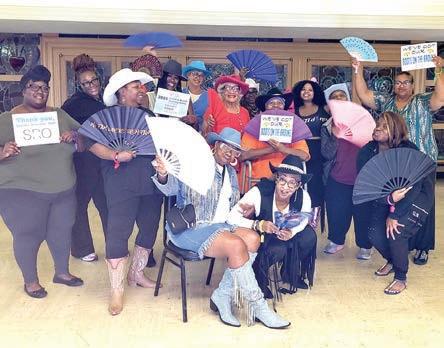
"We've always tried to respond to what the community told us it needed," Hutchinson said.
Following the pandemic, many families faced barriers that went beyond academics, including limited access to technology, broadband internet, digital workforce training and career pathways.
"We have to meet people where they are," Hutchinson said. "A lot of times, we're meeting families who are dealing with immediate financial needs or other barriers. For us, it is often necessary that we work to address those issues first before we can begin to talk about SRO’s digital skilling and workforce development opportunities."
As SRO continued listening to residents and analyzing community data, one population in Detroit consistently emerged as facing significant barriers: low-income single-parent households. To ensure that workforce development programming meets the unique needs of this target group, SRO intentionally added low-income single parents, who were active in the community, to its board.
"The research consistently points to three distinct pathways that can change a family's economic trajectory: post-secondary education, transformative employment opportunities and entrepreneurship," Hutchinson said. "Everything we do is designed to increase access to one or more of those pathways for residents in our served community."
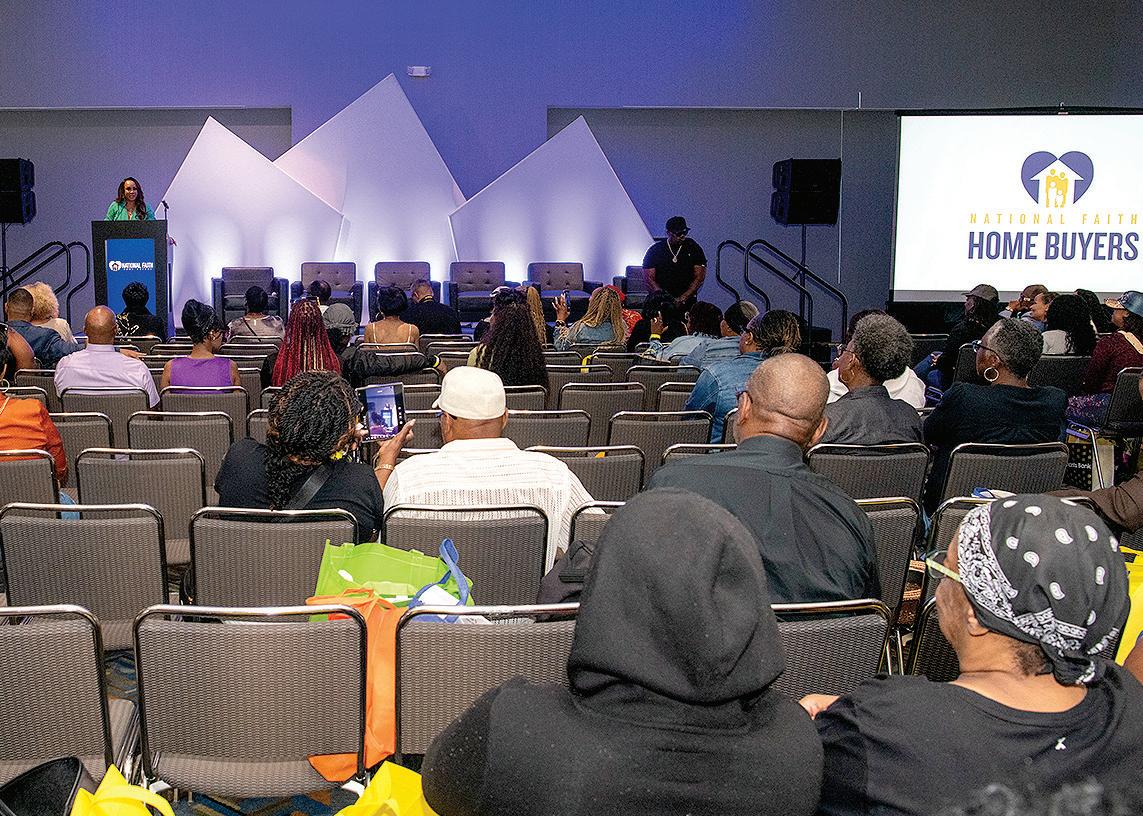

For many families, becoming a homeowner starts with access: access to information, guidance and the resources needed to move forward.
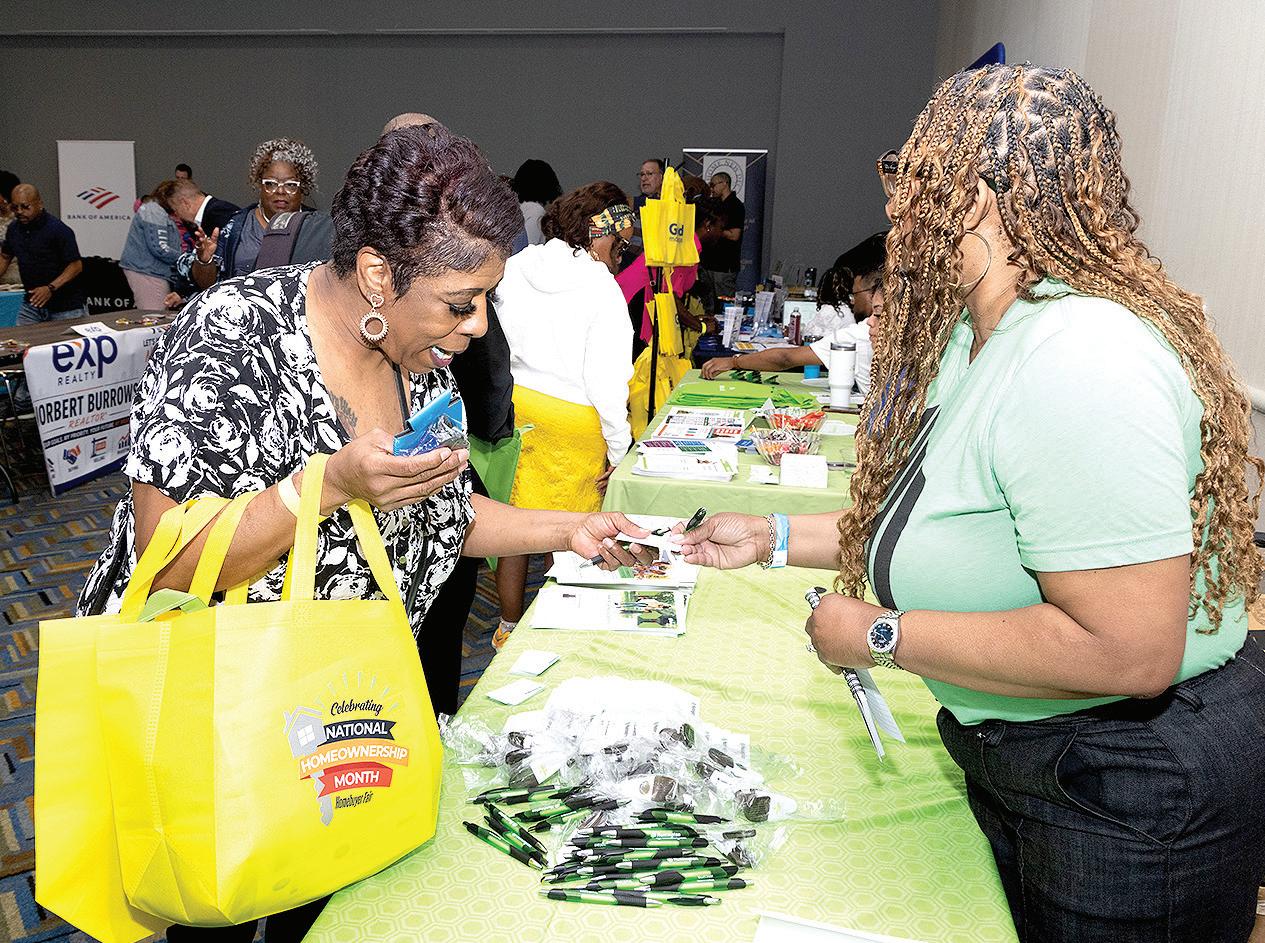
That was the focus of the National Faith Homebuyers Fair, held June 20 at Huntington Place in Detroit, where community organizations, housing advocates, lenders and service providers came together to help make the path to homeownership more visible and attainable. The event was created for first-time and prospective homebuyers looking for homes in Detroit and throughout Wayne, Oakland and Macomb counties.
“The Homebuyers Fair is one of the most important days of the year for us,” said Dina Harris, founder and CEO of National Faith HomeBuyers.
“We see people come in who believe homeownership will never be possible for them — and they leave with a plan, a team of experts in their corner and real hope. That transformation is what we live for.”
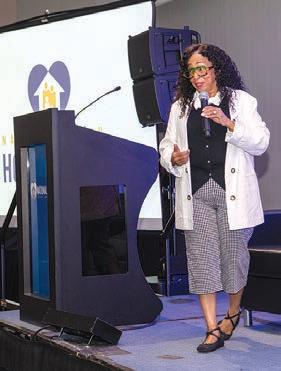
Throughout the day, attendees connected directly with trusted partners offering guidance on everything from credit and mortgage readiness to down payment assistance and neighborhood resources.
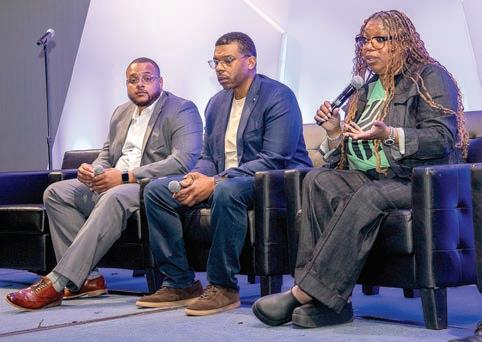
Huntington Mortgage Loan Officer Kim Groves was one of the session panelists and spent the day meeting with prospective buyers, answering questions and helping attendees navigate the early stages of the homebuying process.
“Events like this are about making sure people have access to the right information and support from the start,” said Groves. “When families can talk directly with lenders and housing partners, it helps remove uncertainty and makes the process feel more achievable.”
The National Faith Homebuyers Fair creates space for real conversations that help families better understand what is possible and what comes next.
“Many first-time buyers don’t know where to begin, and that can hold them back,” Groves said. “Conversations about credit, savings and available programs can give someone a clearer starting point and the confidence to move forward.”
For many attendees, those conversations helped break down what can often feel like a complex and overwhelming process into practical, manageable steps. See HOMEBUYERS FAIR page A-4
A new 98-acre nature park in northwest Detroit is giving residents a place to connect with nature, spend time with family and gather as a community. The opening of Rogell Park marks a major milestone for Grandmont Rosedale and the broader Grand River Northwest neighborhood and is another example of long-term investment and commitment coming to life in Detroit communities.
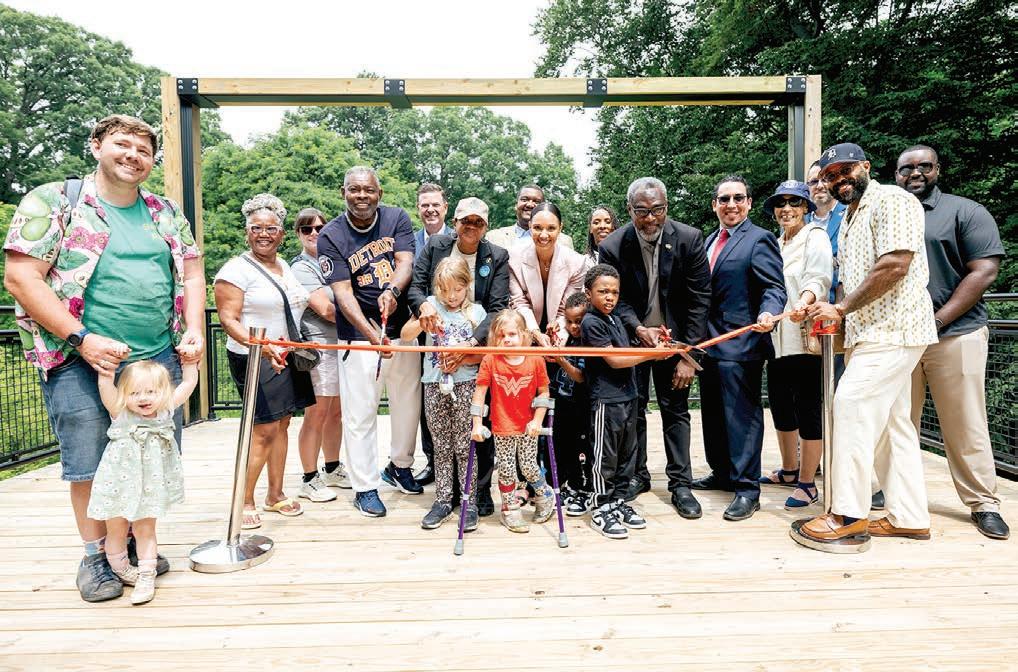
Residents and community leaders gathered to celebrate the reopening of Rogell Park on June 26. The park’s opening is the latest success for the Strategic Neighborhood Fund (SNF), an Invest Detroit-led initiative that brings together the City of Detroit, neighborhood organizations, community leaders and private-sector partners to support neighborhood revitalization.
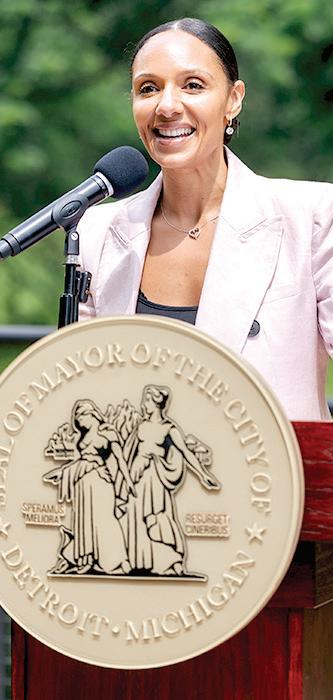
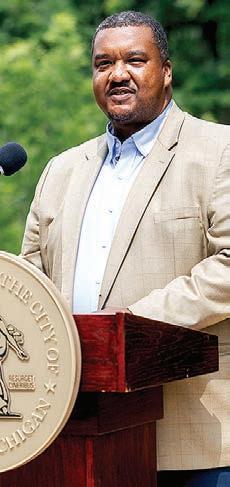
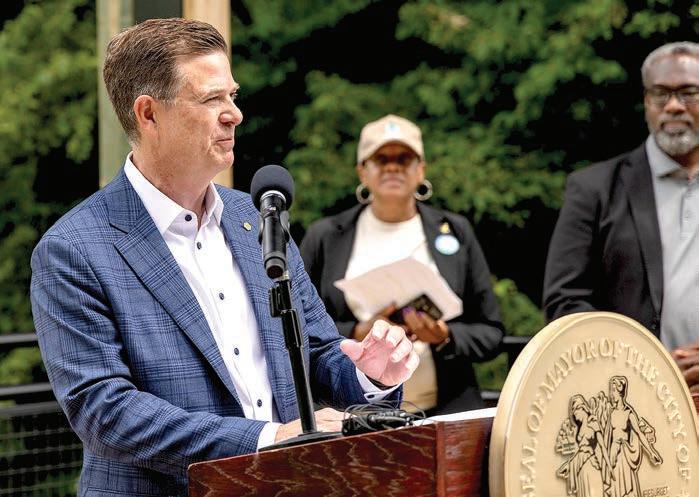
“Events like this are special because they bring together so many people who care deeply about a neighborhood and its future,” said Mike Land, Huntington’s regional president for Southeast Michigan and Northwest Ohio, when speaking at the ribbon cutting. “Spaces like Rogell Park create opportunities for people to connect, for families to spend time together and for neighborhoods to build a sense of pride and belonging.”
For Greater Sandhill Neighborhood Organization President Darryl Edwards, the park’s opening represents the culmination of years of work by residents who care about the space and the community’s future.
From page A-3
“There are a lot of misconceptions about what it takes to buy a home,” Groves added. “People often think they need perfect credit or a large down payment, but that’s not always the case. The more we can help people understand their options, the more empowered they feel to take that next step.”
When meeting with first-time buyers, Groves and the Huntington team focus on a few key tips and considerations that can help make the homebuying journey feel easier to navigate. Start with your financial picture: Understanding your credit, savings and monthly budget can help clarify what is realistic and where to begin. Think beyond the purchase price: Homeownership includes more than a mortgage, with costs like insurance, taxes and maintenance playing an important role in long-term affordability. Explore available support and programs: Many first-time buyers may qualify for assistance and programs that help with down
From page A-3
payments, closing costs or offer more flexible loan options to reduce upfront costs and make homeownership more accessible. Connect early and ask questions: Speaking with a lender early in the process — and understanding steps like pre-approval — can help buyers move forward with greater clarity and confidence.
For people working toward homeownership, the right tools and programs can be what ultimately puts a family in a home. Through Huntington’s Home for Good program, individuals and families can receive support that helps close critical gaps and turn the goal of owning a home into reality.
The impact of these resources is reflected in stories like Shantell Mitchell’s. She purchased her first home in May with support from Huntington’s Home for Good program and the City of Detroit’s Down Payment Assistance (DPA) program. She received $30,000 in assistance, and Huntington also covered
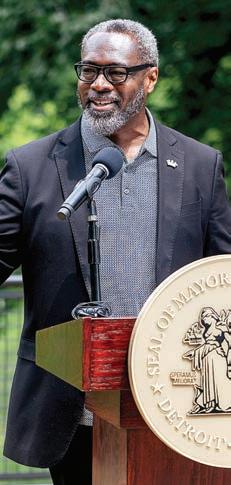
Edwards has lived in the neighborhood since 1970 and remembers the site’s history firsthand. As a teenager, he worked at the former golf course, and after it closed, he joined other residents in advocating for a new future for the property. Throughout the planning process, Edwards encouraged neighbors to come together, share ideas and stay engaged with city leaders. The result is a park shaped not only by investment, but by years of community input and persistence.
Edwards closed his remarks with a promise to future generations and by encouraging attendees to continue building and doing something better for the park each year. His vision is for Rogell Park to be a place where generations of families will make memories for decades to come.
The park’s $4 million transformation represents the type of neighborhood investment SNF was designed to
her closing costs, helping make homeownership possible for her family.
“The Home for Good product and the City of Detroit’s
support. Since launching in 2016, the initiative has expanded to 10 neighborhoods and helped leverage more than $262 million in investment through parks, streetscapes, housing and commercial corridor improvements. Rogell Park joins projects such as Ella Fitzgerald Park, Jayne Field Park, Clark Park, Butzel Park, Zussman Park and Stein Park as part of the fund’s ongoing effort to enhance Detroit neighborhoods.
As a founding partner, Huntington has committed $10 million to the Strategic Neighborhood Fund, including $5 million directed toward the Grandmont Rosedale neighborhood. Land said projects like Rogell Park demonstrate what’s possible when residents, community organizations and partners work together toward a common goal.
“At the end of the day, this is about the future,” Land said. “It’s about leaving things better than we found them, so the next generation has even more opportunity than the one before.”

DPA program helped me in the biggest way,” said Mitchell. “It allowed me the opportunity to afford to purchase my first home, with little to no closing
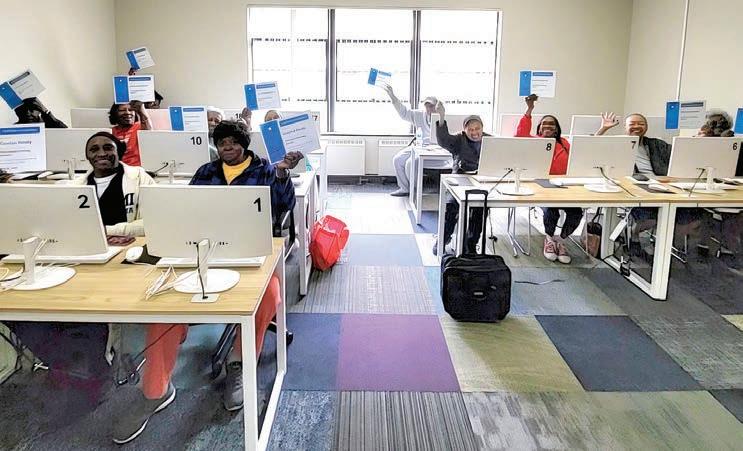
Community input paired with published research continues to shape SRO's focus and its programming. Through initiatives like its Pathfinder program, which provides workforce development for low-income single parents, and its College and Career Access Center, a community technology hub focused on career and college readiness, SRO connects Detroit residents to free, year-round workforce training, industry-recognized certifications, educational workshops and seminars, and digital skilling.
Creating opportunities for economic mobility for Detroit families requires more than one organization; it requires partners and a committed community. Through collaboration with educational institutions, community organizations and corporate partners, SRO brings additional resources directly to Detroit families.
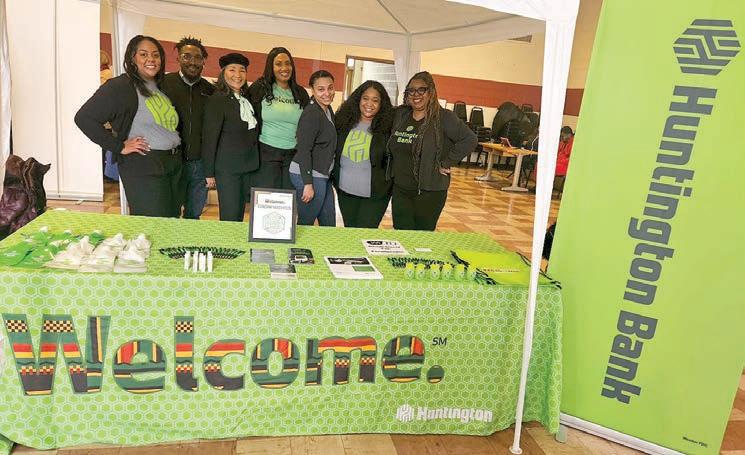
For example, in partnership with Huntington Bank, SRO hosts financial literacy and financial education workshops throughout the year, as well as an annual, citywide effort called Family Financial Fitness Fair (Fin Fair) on MLK day. This event aims to spark better financial outcomes for metro Detroit residents by connecting them to tools and resources that aid in saving for college, investing, real estate planning, credit repair, credit monitoring, buying a home, budgeting and so much more.
"For years, we’ve wanted to launch Fin Fair to increase the footprint and impact of SRO’s financial education programming," Hutchinson said. "We are so grateful that, with Huntington's support, we were finally able to do that in 2026, and we are looking forward to continued community support for Fin Fair 2027."
In addition to serving as sponsor, Huntington volunteers spent the day meeting with residents, answering questions and sharing financial guidance and resources as part of Huntington’s African American Business Resource Group’s Martin Luther King’s Days of Service effort.
“We were proud to be part of an effort that puts our expertise to work for the community,” said Ericka Milton, regional lead, Southeast Michigan & Northwest Ohio, for the bank’s African American
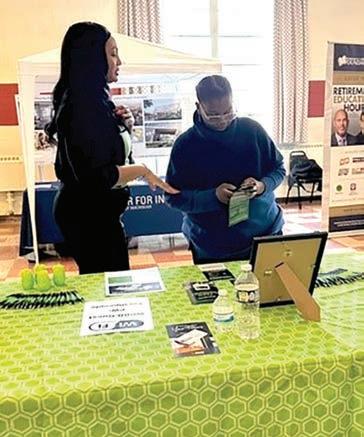
Business Resource Group. “People appreciated seeing that we’re here in the city, actively engaged and committed to helping Detroit families succeed. Whether someone wanted to learn more about budgeting, banking, homeownership or planning for the future, we were able to meet them where they were and have meaningful conversations about their goals."
“I liked the variety of information available,” said Aiseha Brown, a participant at Fin Fair. “I gained knowledge on things I wasn’t even aware of.” Another attendee, DeJaun Taylor, added: “I think this is a great thing SRO is doing for the community.”
Feedback from participants reflects the broader goal of SRO’s work and aligns with the organization's mission: effectuate economic equality for underserved, under-resourced residents and families.
Located on Detroit’s northwest side, SRO’s programming supports as many as 2,000 students within walking distance of its site on any given day. As the organization continues to grow and scale, its focus remains grounded in the same purpose that guided its founding.
“We started by trying to create opportunities for kids in our community, and that is still at the heart of everything we do,” added Hutchinson. “Now, we’re building pathways that support entire families, so those opportunities can grow and last for generations.”
A5 | July 22-28, 2026
By Dr. Anthony O. Kellum
CONTRIBUTING WRITER
Anthony O. Kellum
The national conversation about Black economic progress has long been defined by access. We measure advancement through educational attainment, professional achievement, political representation and civic participation, and rightly so. Each represents a victory over barriers that once seemed permanent. Yet beneath those visible markers of progress lies a quieter question, one that has shaped the American economy since its founding. Who owns the assets that appreciate while everyone else is working? More than a century ago, Booker T. Washington believed he knew the answer his insight was not merely about economics, it was about power, it was about permanence. And it remains strikingly relevant in an era when conversations about racial equity often emphasize representation while giving far less attention to ownership.
In 1905, America was only forty years removed from emancipation, but freedom remained profoundly incomplete for millions of Black Americans across the South, voting rights were being systematically stripped away. Jim Crow laws had become entrenched lynching was used to terrorize Black communities, and economic opportunity was intentionally constrained through law, custom and violence, against that backdrop, Booker T. Washington traveled the country delivering a message that many found controversial not because he rejected political rights, but because he argued that political freedom, standing alone, could not secure lasting independence. Economic ownership, he believed, was the indispensable foundation upon which genuine freedom would rest.
George Washington’s philosophy is often misunderstood as accommodation or political retreat. It was neither. It was an argument about sequence. “It is at the bottom of life we must begin, and not at the top,” he told audiences, insisting that no people could sustain political influence without first establishing an economic foundation. He worried that Black Americans, understandably eager to secure civil and political rights after centuries of oppression, might overlook the enduring power of ownership. In one of his most remarkable observations, he lamented that “... a seat in Congress or the State Legislature was more sought than real estate or industrial skill.” More than 120 years later, that sentence still carries unusual force. America continues to debate representation with great intensity yet often pays comparatively little attention to the question Washington believed would ultimately determine whether that representation translated into lasting prosperity.
Washington was not dismissing politics he understood the importance of the ballot box as well as anyone of his era. His point was subtler political influence without an economic foundation is inherently fragile laws can change administrations come and go courts reverse precedent majorities shift. But families who own productive assets possess something that is less vulnerable to the changing winds of pol-
By Jeremy Allen EXECUTIVE EDITOR
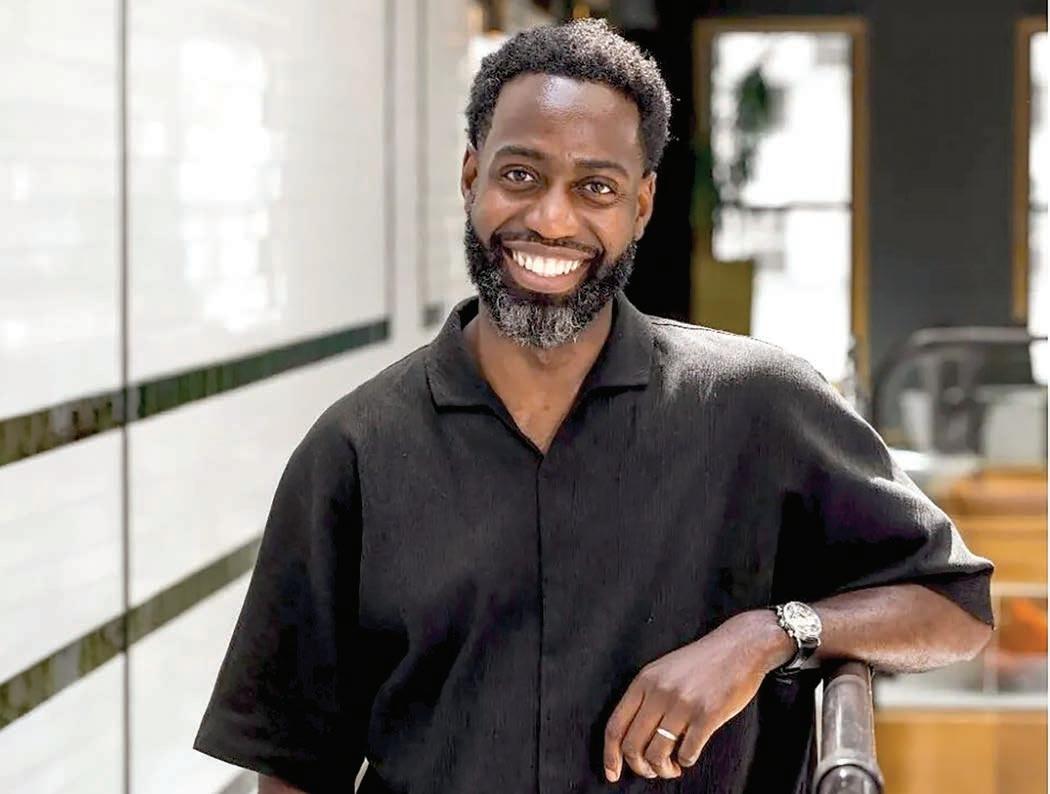
Mayor Mary Sheffield has appointed former Bedrock executive Addofio Addo as Detroit’s first Director of Retail Attraction, filling the new position she announced earlier this year which is designed to expand retail investment across the city’s neighborhoods. As director, Addo will also be charged with helping to strengthen commercial corridors by attracting national brands alongside locally owned businesses.
Addo officially began the role Monday, July 13, taking on the responsibility of leading the city’s retail attraction strategy while working to market Detroit as a destination for retailers seeking opportunities for expansion. His appointment comes as the Sheffield administration continues to prioritize neighborhood economic development, commercial corridor revitalization and increased access to shopping options for Detroit residents.
In his former role as Director of Business Development for Arts, Culture, and Business Attraction at Bedrock, Addo helped woo major retailers to the downtown Woodward corridor, including Gucci, Rihanna’s Savage X Fenty, Timberland, Apple, and others.
He also led Bedrock’s charge to bring the internationally renowned AfroFuture and AfroNation festivals to Detroit – attracting more than 100,000 attendees during the festivals’ three-year run – as well as the Global Citizen NOW summit in 2025.
The new position reflects the administration’s broader effort to encourage businesses to invest throughout Detroit, particularly in neighborhood business districts where residents have long expressed a desire for more retail choices and grocery options.
“Detroiters spend upwards of $3 bil-
lion each year in surrounding communities, where they can find the retail selection and brands they want and deserve,” Sheffield said in announcing the appointment. “Addofio’s job will be to bring quality businesses and brands to our neighborhood commercial corridors, so Detroiters can shop closer to home and spend their money to support Detroit-based businesses. Addofio understands Detroiters and what they want, our neighborhoods, and most important, has a track record of delivering in Detroit.”
As Director of Retail Attraction, Addo will focus on recruiting national and regional retailers while also supporting the growth of homegrown businesses. His responsibilities will include promoting Detroit’s commercial districts to prospective retailers, coordinating retail recruitment efforts, and helping shape a long-term strategy to expand shopping opportunities throughout the city.
City officials said the position was created to help tell Detroit’s story to retailers looking for growth opportunities while highlighting the city’s consumer market, neighborhood His and ongoing development.
His experience in helping showcase Detroit as a destination for arts, culture, and retail, city officials said, demonstrated his ability to connect major brands and organizations with Detroit through community engagement and strategic partnerships.
In his new role, Addo will also work closely with the Detroit Economic Growth Corporation (DEGC), the city’s economic development partner, to strengthen business recruitment efforts and identify solutions that support retail growth across Detroit.
The partnership is expected to combine neighborhood-level data, retailer feedback, and small business engagement to better understand market con-
ditions and address challenges that businesses may encounter when considering Detroit locations.
Sean Gray, senior vice president of Small Business Services at DEGC, said the organization welcomes the opportunity to collaborate with Addo as Detroit works to expand retail investment.
“We look forward to working closely with Addofio to accomplish the mayor’s goal to bring more retail to our neighborhoods,” Gray said. “We see this new capacity at the City to be a perfect complement to our work at DEGC. Vibrant neighborhoods need strong small businesses and diverse retail options. We all benefit when we focus on building strategic partnerships and presenting Detroit as an attractive, high-growth market for expansion.”
In addition to attracting retail brands, Addo will play a role in working with existing businesses and identifying opportunities to support local entrepreneurs alongside incoming retailers.
The administration said those efforts are intended to improve access to shopping options while encouraging additional investment in Detroit neighborhoods. Sheffield emphasized that expanding retail is connected to broader economic goals, including job creation and improving quality of life for residents.
“We know that neighborhood businesses hire a large percentage of their employees from the same neighborhoods they serve, so beyond retail, this is about workforce, quality of life and improving the economic mobility of Detroiters,” the mayor said.
For many Detroit neighborhoods, retail recruitment extends beyond attracting storefronts. City officials say additional shopping options can help increase convenience for residents while supporting local employment and en-
By Mark S. Lee
COLUMNIST
CONTRIBUTING
For decades, retirement represented the American dream: work hard, save consistently, and enjoy the freedom to travel, spend time with family, and pursue passions without worrying about a paycheck. Today, that dream is changing.
For many Americans, retirement is no longer defined by leisure. It’s defined by uncertainty. Survey after survey finds the same troubling conclusion: the biggest fear among retirees and those approaching retirement isn’t death—it’s outliving their money.
That concern is understandable.
Americans are living longer than previous generations. While that’s certainly something to celebrate, it also means retirement savings must last 20, 30, or even 35 years. Retirement funds that once lasted a decade may now span nearly one-third of a person’s life.
The financial math has become much more difficult.
According to multiple national retirement surveys, most Americans worry more about running out of money than dying. It’s a fear fueled by inflation, rising health care costs, market volatility, and questions surrounding the long-term future of Social Security.
Why this fear is growing
Several economic realities are converging at once.
First is inflation.
Although inflation has cooled from its recent peak, prices remain significantly higher than they were just a few years ago. Groceries, housing, utilities, insurance, and everyday necessities all consume a larger share of retirees’ fixed incomes.
Mark S. Lee
Someone who retired in 2020 with a carefully planned budget may now find that budget stretched far beyond what they anticipated.
Health care is another major concern.
Medicare covers many medical expenses, but it doesn’t pay for everything. Premiums, deductibles, prescription drugs, dental care, vision services, hearing aids, and long-term care can quickly become expensive.
A single unexpected illness can dramatically change a retiree’s financial outlook.
Market uncertainty adds another layer of anxiety.
Retirees who depend on investment port-
folios must balance generating income while preserving enough assets to last decades.
Sharp market declines early in retirement— often called “sequence of returns risk”—can
permanently reduce how long savings last.
Then there’s longevity itself.
Many people underestimate how long they’ll live. A healthy couple retiring at age 65 has a significant chance that one spouse will live into their 90s. That’s wonderful news personally—but financially, it requires careful planning.
The retirement paycheck has changed
Previous generations often retired with three reliable income sources:
• A pension
• Social Security
• Personal savings Today, pensions have largely disappeared from the private sector.
Instead, responsibility has shifted to workers through 401(k)s, IRAs, and other defined contribution plans. While these plans provide flexibility, they also require individuals to make investment decisions, determine withdrawal strategies, manage taxes, and estimate how much income they can safely spend.
In essence, many retirees have become the chief financial officers of their own retirement.
That’s a role many never expected to fill. Common mistakes that increase retirement risk
Running out of money rarely results from one bad decision. Instead, it’s often several small mistakes that compound over time.
Among the most common:
■ Claiming Social Security before understanding how timing affects lifetime benefits.
■ Withdrawing too much too early from retirement accounts.
■ Ignoring taxes on IRA and 401(k) distributions.
■ Underestimating health care and longterm care costs.
■ Keeping too much money in cash, allowing inflation to steadily erode purchasing power.
■ Failing to update retirement plans after major life events such as widowhood, divorce, or changes in market conditions. The good news is that many of these risks can be managed with thoughtful planning.
Turning fear into confidence Retirement planning isn’t simply about accumulating wealth.
itics, they possess leverage.
By 1903, speaking before the Brooklyn Institute in New York, Washington expanded this argument even further. Reflecting on the American founding, he observed that one of the nation’s defining aspirations had been to secure “the most complete guarantee of the safety of life and property.” The pairing of those words was deliberate to Washington, liberty and property were inseparable. A society that protected freedom while leaving large segments of its population without meaningful opportunities to own productive assets had fulfilled only part of its democratic promise.
That observation speaks directly to the present moment.
Today’s conversations about racial inequality often focus on disparities in income, educational attainment or employment. Those discussions are essential, but they sometimes obscure a more fundamental distinction the difference between earning and owning. Income provides stability and ownership cre-
ates permanence. Wages finance today’s expenses but appreciating assets finance tomorrow’s opportunities. The American economy has always rewarded ownership more generously than labor because assets compound while wages are spent. That is why the story of wealth in America is, at its core, a story about property.
Washington understood this intuitively long before economists could measure it throughout his speeches across Alabama, Georgia, Mississippi, Virginia, Tennessee, the Carolinas and major Northern cities including New York, Boston, Philadelphia and Chicago, he returned repeatedly to the same themes. He urged Black families to purchase homes rather than remain lifelong tenants. He encouraged Black farmers to own the land they cultivated rather than simply work it he promoted saving capital, mastering trade, building businesses and establishing institutions rooted in ownership rather than dependence. No race, he argued, could achieve lasting independence while remaining economically dependent on others.
Regularly reviewing spending, maintaining an emergency reserve, delaying Social Security when appropriate, managing taxes strategically, and revisiting withdrawal strategies can all improve long-term financial security. The bottom line Fear itself isn’t the problem. Ignoring it is, and consulting with a CPA or financial planner is a recommended financial strategy.
their total account balance and more about sustainable monthly income.
The question isn’t, “How much money do I have?”
It’s, “How will this money support my lifestyle for the rest of my life?”
The concern about running out of money reflects a genuine financial challenge facing millions of Americans. Yet it also serves as a reminder that retirement planning isn’t something you complete at age 65.
To Washington, land was never simply acreage it represented security, leverage, education, citizenship and inheritance. A farm was not valuable merely because it produced crops. It could finance a child’s future, provide collateral for investment, create stability during economic hardships and become an asset passed from one generation to the next. Likewise, a home represented far more than shelter. It symbolized permanence, civic participation and confidence in the future of a community.
Modern research has largely confirmed what Washington understood through observation for most American families, homeownership remains the single largest source of household wealth. Equity accumulated over decades finances higher education, entrepreneurship, retirement and intergenerational transfers of wealth. Property becomes capital, and capital creates choices that wages alone rarely can.
This reality carries particular significance for Black America because the wealth gap has always been, in important respects, an ownership gap. The Black middle class has never been more educated or profes-
It’s an ongoing process that evolves with changing markets, tax laws, health needs, and life expectancy.
Retirement should be about enjoying the years you’ve worked so hard to earn, not constantly wondering whether your savings will last.
The best antidote to America’s biggest retirement fear isn’t guessing.
It’s having a plan that’s built not just to help you retire, but to help ensure your money lasts as long as you do.
We invite readers, business owners, and future entrepreneurs to follow along, ask questions, and engage. If you have story ideas or questions, you can email Lee at mark@leegroupinnovation.com or visit leegroupinnovation.com.
sionally accomplished than it is today. Black Americans lead major corporations, serve in Congress and on federal courts, teach at leading universities and build successful businesses across nearly every sector of the economy. These achievements deserve recognition, they represent extraordinary progress, yet the racial wealth gap remains considerably wider than the income gap, a reminder that educational success and professional advancement, while essential, do not automatically produce wealth.
The explanation is neither mysterious nor accidental wealth accumulates primarily through appreciating assets. Families who own homes, businesses, commercial real estate and investment portfolios generally experience compounding gains across generations. Families excluded from those opportunities often begin each generation from a similar starting point, regardless of improvements in income. Ownership changes the trajectory because ownership allows time to work on behalf of the owner.
This is why the next chapter of Black economic progress should not abandon the pursuit of equal opportunity but rather expand it. Access remains indispensable, strong schools, fair lending, civil rights protections, political participation and equal treatment under the law remain foundational commitments of a democratic society, but access alone has never guaranteed wealth ownership has.
Perhaps that is Booker T. Washington’s most enduring lesson. He challenged a generation emerging from slavery to think beyond immediate survival and toward permanent economic citizenship. More than a century later, the challenge is different, but the principle remains remarkably similar. The question is no longer whether Black Americans can enter institutions that once excluded them. It is whether they are building ownership within the economy.
That is the philosophy behind Property is Power! It is not merely a slogan about real estate. It is a broader ar-
couraging residents to spend more of their dollars within the city.
Addo said he approaches retail attraction through storytelling and community identity, believing that successful business recruitment begins with helping companies understand Detroit’s character and potential.
“Retail decisions don’t start in a spreadsheet,” Addo said. “They start with a feeling. Somebody walks a block, watches who’s out, and decides whether they can see themselves there. My job is to make sure that when the world walks Detroit, it sees what Detroiters have seen all along.”
gument about how durable wealth is created, preserved and transferred. It recognizes that governments change, policies evolve and markets fluctuate, but families who own appreciating assets possess something that extends beyond a single election cycle or economic moment. They possess leverage, stability and the ability to transfer opportunities to the next generation.
Booker T. Washington understood that freedom without ownership remained incomplete more than a century later; his observation still challenges us. If the twentieth century expanded access, perhaps the defining work of the twenty-first century is to expand ownership. Because history suggests that while access may open the door, it is ownership that builds the house and gives future generations the keys.
Property is Power! is a movement to promote home and community ownership. Studies indicate homeownership leads to higher graduation rates, family wealth, and community involvement.
to make sure the businesses deciding where to grow next see what this city has known all along, and that when they arrive, they arrive as good neighbors. If culture is how you build, Detroit belongs on your map. I’m grateful to Mayor Sheffield for the trust, and I intend to earn it.”
The appointment marks one of the first major economic development announcements of Sheffield’s administration and signals an emphasis on expanding retail opportunities across Detroit’s neighborhoods.
A Michigan Chronicle 40 Under 40 honoree, Addo said his previous experience with Capitol Records and DIRECTV helped shape his perspective on connecting brands with communities through authentic storytelling and cultural engagement.
He said that philosophy will continue to guide his work in City Hall as he builds relationships with prospective retailers and business leaders.

Moving forward, Addo will begin outreach to national and regional retailers while working alongside city departments, DEGC, and community stakeholders to identify opportunities for investment in neighborhood commercial corridors. His work will also include engaging businesses to better understand their site selection needs, promoting Detroit’s market opportunities, and developing initiatives designed to encourage long-term retail growth.
“Detroit has never needed to be sold. It deserves to be seen,” Addo said. “My job is
City officials say the measure of what success looks like will be measured beyond just the number of storefronts, but also by creating stronger neighborhood business districts that provide residents with greater access to shopping, services, and employment opportunities while supporting Detroit’s broader economic development goals.



By Sam Robinson SENIOR REPORTER
Supporters of Donavan McKinney rallied Tuesday, July 14, at the LaVonne M. Sheffield Bridge Center Library on Grand River where other progressive candidates for Congress made the case for the Detroit House Rep.
Joining McKinney on the campaign trail was Pennsylvania state Rep. Chris Rabb of Philadelphia and Denver’s Melat Kiros, a 29-year-old first-time candidate who was fired from her job at a law firm after making pro-Palestine posts after the Oct. 7 attacks against Israel by Hamas. Both Rabb and Kiros won their primary elections in districts considered a lock for Democrats in a general election.
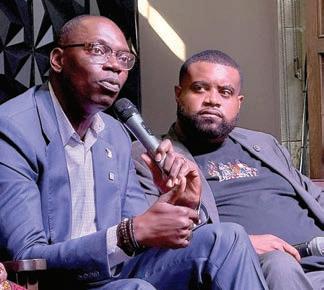
“I’m looking to join these two in the halls of Congress to push our government to have courage to stand up to this big boogie man,” McKinney said.
Supporters of McKinney wore pins that said, “No Shri for me,” a rallying cry repeated by the candidates and supporters on stage during a photo op.
Not only did speakers and members of the crowd asking questions stress the need for Black leadership in Congress, people inside Horace Sheffield’s Bridge Center demanded a new style of Democratic politics.
Michigan Lt. Gov. Garlin Gilchrist, who is running for Secretary of State, emphasized the need to improve campaign finance laws and curb the influence of corporate money in politics.
“You know who’s not represented by that big money? Black folks in Detroit,” Gilchrist said. “You know who’s not represented by big money? Poor people in rural Michigan or anywhere — that money feeds a system that is failing us.”
McKinney’s campaign last week was endorsed by the the Metro Detroit Democratic Socialists of America, which also endorsed the campaigns of Rabb and Kiros.
“We have an opportunity here to elect real people, working people who care,” Rabb said on stage.
The race between Thanedar and McKinney is one Detroit voters have seen before in a state house contest six years ago.
The two faced each other in the 2020 Democratic primary for the 3rd State House District. Thanedar won the primary with 34% of the vote (4,745 votes), while McKinney came second with 20% (2,771 votes).
McKinney has been an active member of the House and Detroit’s legislative delegation since he entered the Legislature in 2022. So has Thanedar during his tenure in Congress, frequently introducing progressive legislation and resolutions like abolishing ICE or impeaching President Trump.
One of the ways McKinney has used his power in the Legislature was single handily killing former Detroit Mayor Mike Duggan’s attempt to pass a Land Value Tax law that aimed to targeted speculating developers, he told the crowd Tuesday.
“The Land Value Tax deal that our former mayor wanted, guess who killed the bill? You want to know why I killed the bill? Because we had a one seat majority in both chambers. And all we needed was that one voice and one vote to make sure you killed it,” McKinney said, adding that block club leaders across the city told him they opposed the proposal.
With less than a month until the Aug. 4 election, supporters of Thanedar and McKinney and their campaigns are spending thousands of dollars airing attack ads against each other on local television stations.
An ad campaign paid for by Thanedar’s campaign accuse McKinney of being “bankrolled by the worst actors in politics.”
McKinney has admitted he accepted money from the controversial Moroun family, which owns the Ambassador Bridge, saying he used the money to sponsor a turkey giveaway during Thanksgiving, and hasn’t taken money from the Moroun’s since.
A TV ad from McKinney’s campaign points to the controversy over Thanedar allegedly abandoning dogs in an animal lab he owned, which he has long denied.
“As our Congressman, he’s left the people of Detroit behind to line his own pockets and the pockets of his wealthiest crypto and Trump donors,” McKinney said in a social media post.
“Shri Thanedar tested drugs on dogs, then left them to die,” a narrator says during the 30-second commercial calling Thanedar, “one sick puppy.”
You can reach Sam at srobinson@michronicle.com.



By Jasmine West
For Detroit residents living on blocks where darkness settles between street corners, poor lighting can shape nearly every part of life after sunset.
It affects whether parents feel comfortable allowing children to play outside, whether seniors can safely walk along the sidewalk and whether residents returning home at night can clearly see who or what is near their doors, cars and driveways.
Detroit is now beginning to address those concerns with the installation of at least 3,000 new mid-block streetlights across residential neighborhoods.
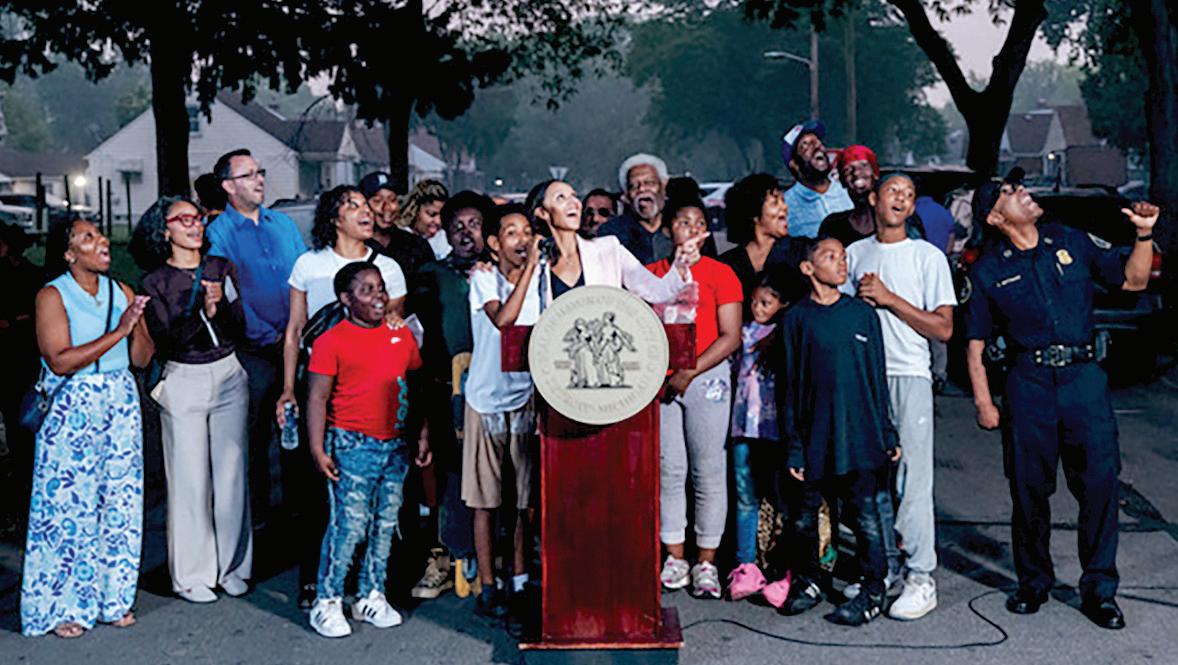
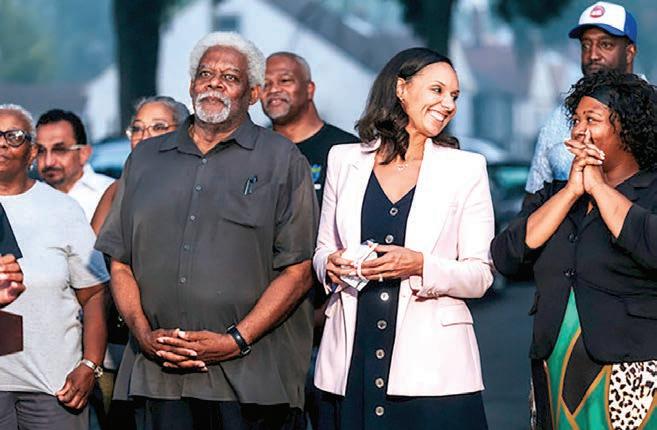
Mayor Mary Sheffield joined residents and Public Lighting Authority leaders on the city’s east side as the first light installed through the Brighten Up the Block initiative was turned on outside Cynthia Loggins’ home on Rossini Street.
The first installations are taking place in the Regent Park neighborhood in District 3, within an area bordered by Hayes Street, Rex Avenue, Carlisle Street and Rossini Street. Sheffield first announced the initiative in the same neighborhood in March.
“This plan was shaped by Detroiters, based on their firsthand experience with lighting concerns on their blocks,” Sheffield said. “When we are done, Detroiters that for years have lived with frustration and concern about dark areas on their block will get their wish for a safer, more well-lit neighborhood.”
The project is designed to close lighting gaps that remained after Detroit’s 2014 streetlight overhaul. That earlier effort restored and upgraded lighting along major streets and intersections, but many residential blocks were still left without sufficient coverage between corner lights.
On longer blocks, that can mean the middle of the street remains dim even when every existing light is functioning. In other neighborhoods, thick tree branches and leaves obstruct fixtures and prevent light from reaching sidewalks, parked vehicles and homes.
The Brighten Up the Block plan will increase the number of lights on residential streets from three per block to four. Some blocks will receive five lights. The city will also install brighter LED bulbs and trim or manage tree canopies that interfere with existing lighting.
City officials said the improvements could double visibility between corner lights in some areas.
The work carries significance beyond appearances. Streetlights cannot eliminate crime, but stronger

visibility can help pedestrians see approaching vehicles, allow drivers to better identify people crossing the street and give residents a clearer view of activity around their homes.
For neighborhoods where residents have repeatedly complained about dark blocks, the investment also raises a broader question of equity. Adequate lighting is one of the most basic services a city provides, yet some Detroiters have lived for years without the same level of visibility available on major roads and in better-lit areas.
Before construction began, the city and the Public Lighting Authority held 14 community meetings throughout April across all seven Detroit City Council districts. Seven meetings were hosted by the authority, while seven others were held with council members during regularly scheduled evening meetings.
The Public Lighting Authority also received nearly 600 responses from residents identifying where additional lights were most needed. City Council members submitted recommendations that were incorporated into the final plan.
The final proposal was then presented to the Public Lighting Authority Board and Detroit City Council for approval. Preliminary construction
began Monday, July 6.
“Mayor Sheffield tasked us with putting residents first and ensuring that voices too often overlooked were heard,” said Beau Taylor, CEO of the Public Lighting Authority of Detroit.
“Her emphasis on transparency, collaboration and competent execution brought residents, City Council, city departments and the PLA together around a practical plan. This is only the first phase, and we will keep listening and adjusting. At a time of division and gridlock, Detroit is showing what trusted leadership and shared purpose can deliver.”
The initiative is supported by a $1 million allocation from Sheffield’s budget, along with additional funding from available Public Lighting Authority capital resources.
The first light on Rossini Street marks the beginning of the work, but the larger test will come as installation expands into neighborhoods across the city.
Residents will be watching where the remaining lights are placed, how quickly the city moves from one district to the next and whether blocks with the poorest visibility receive priority. Long-term maintenance will also matter, particularly in areas where tree growth has repeatedly blocked existing fixtures.
The value of the project will not be determined by the ceremony surrounding the first installation. It will be measured by whether a resident can walk from a car to a front door without stepping into darkness, whether a child can be seen crossing the street and whether Detroiters feel safer standing outside their own homes.
For people who have spent years asking the city to brighten their blocks, those are not small changes. They are part of what it means to feel seen, protected and valued in the neighborhood where they live.
Federal Public Law 98-435 requires that polling places be accessible to disabled voters.
If a polling location is not disabled accessible, this law allows the assignment of an alternate polling place. However, several polling places which were previously inaccessible are now accessible to disabled voters.
Disabled voters are entitled to vote at the polls within the precinct where possible. Pollworkers are obligated to provide whatever assistance is needed to facilitate the voting process.
Disabled voters with an inaccessible polling place are eligible to vote without notice at the:
2978 W. Grand Blvd. Detroit, MI 48202
until the close of voting at 8:00 p.m. on Election Day.
If additional information is needed, or to confirm disabled accessibility, please contact the Department of Elections office at (313) 876-0190.
Janice M. Winfrey City Clerk & Chairperson
Detroit Election Commission


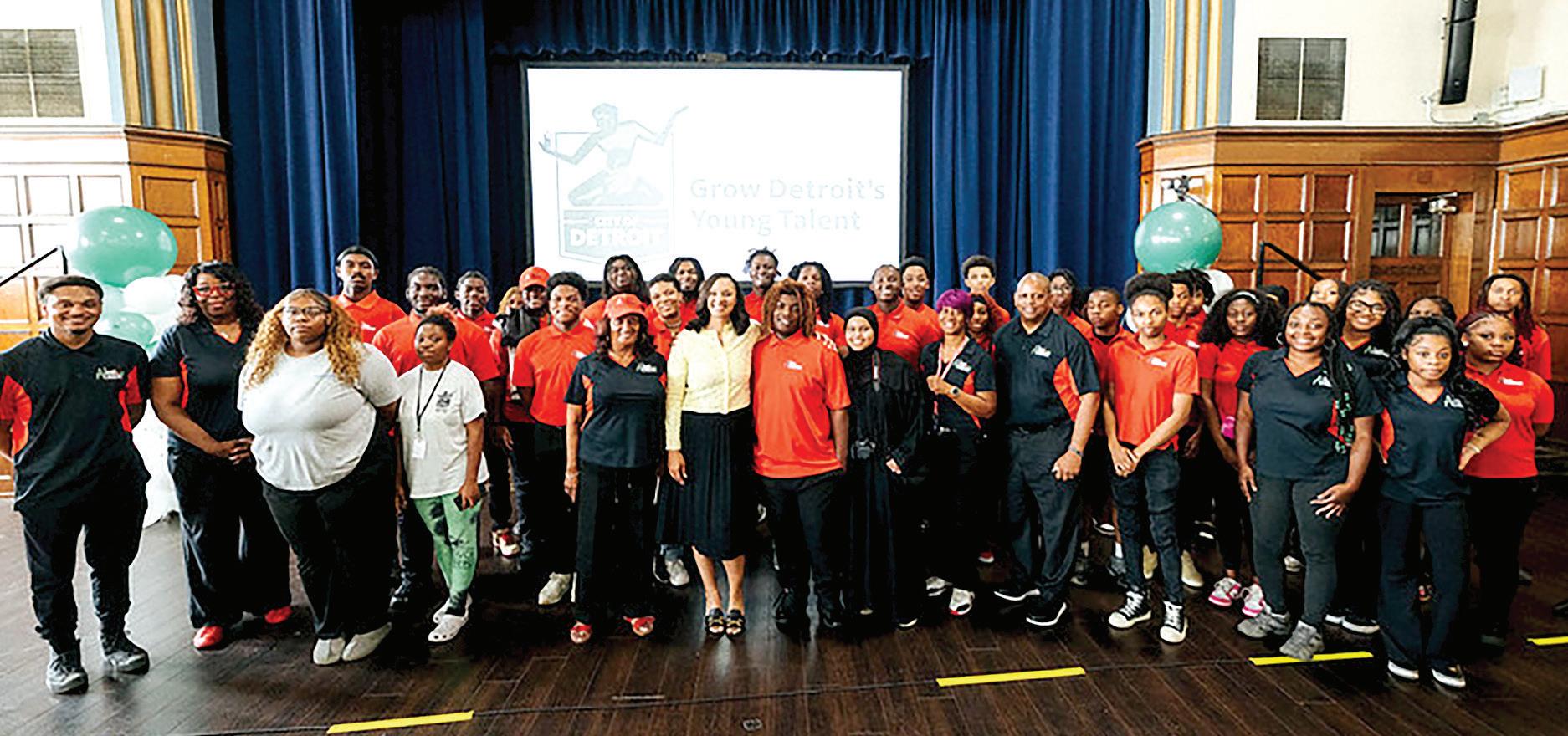
By Miss AJ Williams
Detroit’s next generation of workers is stepping into offices, community organizations, health care facilities and other workplaces across the city as Grow Detroit’s Young Talent begins its 12th year.
Mayor Mary Sheffield joined Detroit City Council members, employers and nearly two dozen young people at the Durfee Innovation Society to launch the 2026 GDYT summer employment program. This year, the initiative will connect 8,000 Detroit residents ages 14 to 24 with summer jobs, expanding from an initial goal of 5,594 positions.
For the first time in the program’s history, participants completed two weeks of work-readiness training before reporting to their job sites. The preparation was designed to help young people strengthen the professional and
interpersonal skills needed to navigate the workplace successfully.
“The GDYT program has helped change lives by providing tens of thousands of summer employment opportunities to local youth for more than a decade,” Sheffield said. “Thanks to citywide collaborations spanning across the nonprofit sector, GDYT staff, employers and sponsors, local youth are once again being connected to invaluable job opportunities to hone their skills.”
Participants will work in industries and programs that include technology, health care, energy, community-based organizations and junior police and fire cadet programs. Beyond earning a paycheck, young people will receive on-the-job training, build professional networks and develop skills that can support their long-term career goals.
Since its launch, GDYT has
By Eric B. Larson CEO of DDP
This month, the DDP will hold its seventh public meeting to share significant updates on one of the city’s major infrastructure projects: Capping I-75. The Downtown Detroit Partnership has been the driving force on the project, along with our partners at the Michigan Department of Transportation and the City of Detroit.
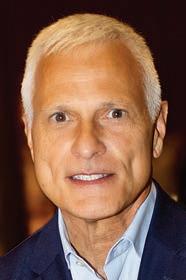
Readers may have heard recently that Detroit residents and businesses received news on the other major project, replacing I-375’s 1.1-mile depressed freeway with a street-level boulevard. For this project, MDOT has received authorization to proceed from the Federal Highway Administration, marking a significant milestone. Both projects have the potential to positively transform the city, reconnect neighborhoods, and attempt to repair and restore communities forever impacted when the freeways were built.
As a trusted advisor and advocate for Downtown, the DDP is committed to advocating that both projects be executed in the best interest of the city’s residents and businesses, and that includes hearing from numerous stakeholders.
Ten months ago, the DDP secured funding to conduct a feasibility study on the I-75 caps, and since then, we have hosted multiple meetings to update and engage the public and to keep businesses and residents informed of our progress.
A critical component has been the surveys and outreach we conducted with Activate Detroit to fully understand the impact the construction of I-75 had on Detroiters and how we can incorporate what we’ve learned into the project planning process.
We are grateful to those who spoke out to share their stories. What is a Cap?
For those not familiar, highway caps are structures built over highways to reconnect communities harmed by this infrastructure. A range of benefits can result from these projects, including enhanced mobility, environmental benefits, and additional public space that serves as an anchor for current and future development. Construction of the Downtown Detroit segment of I-75 began in the late 1950s, and the freeway replaced active urban uses with a barrier between Downtown and surrounding neighborhoods.
Caps can enhance connectivity and improve quality of life for residents while maintaining the regional and national transportation network. What Did We Learn?
Family gatherings, once a matter of walking a few blocks, became difficult, if not impossible as a result of the 1950/1060s Federal Highway Act. Shops closed their doors. The Motown Museum had to be moved. Church bells were silenced.
These are a few of the hardships community members experienced after the I-75 Freeway split Detroit neighborhoods, as shared with our team. Some of these are unique to the areas we are examining for the 75 Cap; some are similar to stories from residents of Black Bottom and Paradise Valley. All are essential to understanding the past and proceeding in thoughtful ways that embrace our shared history, culture, and legacy.
In addition to the past, I-75 Cap public meetings were an opportunity to hear from Detroit residents about what they would like to see in the future, and this input has served us well in the design
provided more than 90,000 employment opportunities to Detroit teens and young adults. Many former participants have continued their education, entered established careers, or found permanent employment through connections made during the program.
For GDYT alum Destiny Sanders, the program became the beginning of a career path she could not yet see at 15 years old.
“Opportunity doesn’t just change a paycheck—it changes a person’s future,” Sanders said. “GDYT believed in me at 15 years old, before I had a resume full of experience. Today, because of that opportunity, I’m standing here employed, workforce ready and capable. I am proof that investing in young people changes lives.”
Sanders entered GDYT 10 years ago and was placed with Destined for Greatness, a local nonprofit that works with at-risk teenage girls and young women. She was later hired by the organization and continues to work there today.
Her experience reflects the program’s broader purpose — creating pathways that extend beyond a single summer. GDYT connects
young people with real-world work environments while introducing employers to Detroit’s emerging workforce.
Rocket Community Fund is among the organizations serving as both an employer partner and program sponsor this year.
“Every young person deserves the opportunity to explore careers they may not have otherwise imagined,” said Marvin Logan, director of education and employment for Rocket Community Fund. “Our investment in Grow Detroit’s Young Talent helps connect Detroit youth to meaningful work experiences including careers in technology, that build skills, expand networks and inspire confidence in what’s possible for their future.”
GDYT participants also receive ongoing support throughout their summer placements to help them become more competitive and prepared for future employment opportunities.
The program has raised more than $13 million for its 2026 session through support from employers and civic and philanthropic organizations.
“When Detroit invests in its youth, it invests in the future of our city,” said Eric Miller, founder of The Lawn Academy. “Grow Detroit’s Young Talent gives young people more than a summer job. It gives them purpose, responsibility and a vision for what’s possible.”
Detroit Employment Solutions Corporation serves as GDYT’s lead agency, while Connect Detroit oversees program implementation in partnership with community organizations, municipal departments and the Junior Police Cadet Program.
“Detroit at Work is grateful for the generosity of our local employers and donors for helping to provide priceless opportunities for thousands of Detroit’s youth,” said Terri Weems, interim president of Detroit Employment Solutions Corporation and special advisor to the mayor for workforce.
Over the next six weeks, participants will work an average of 20 hours per week across more than 400 sites throughout Detroit. The 2026 GDYT summer employment program will conclude in mid-August.
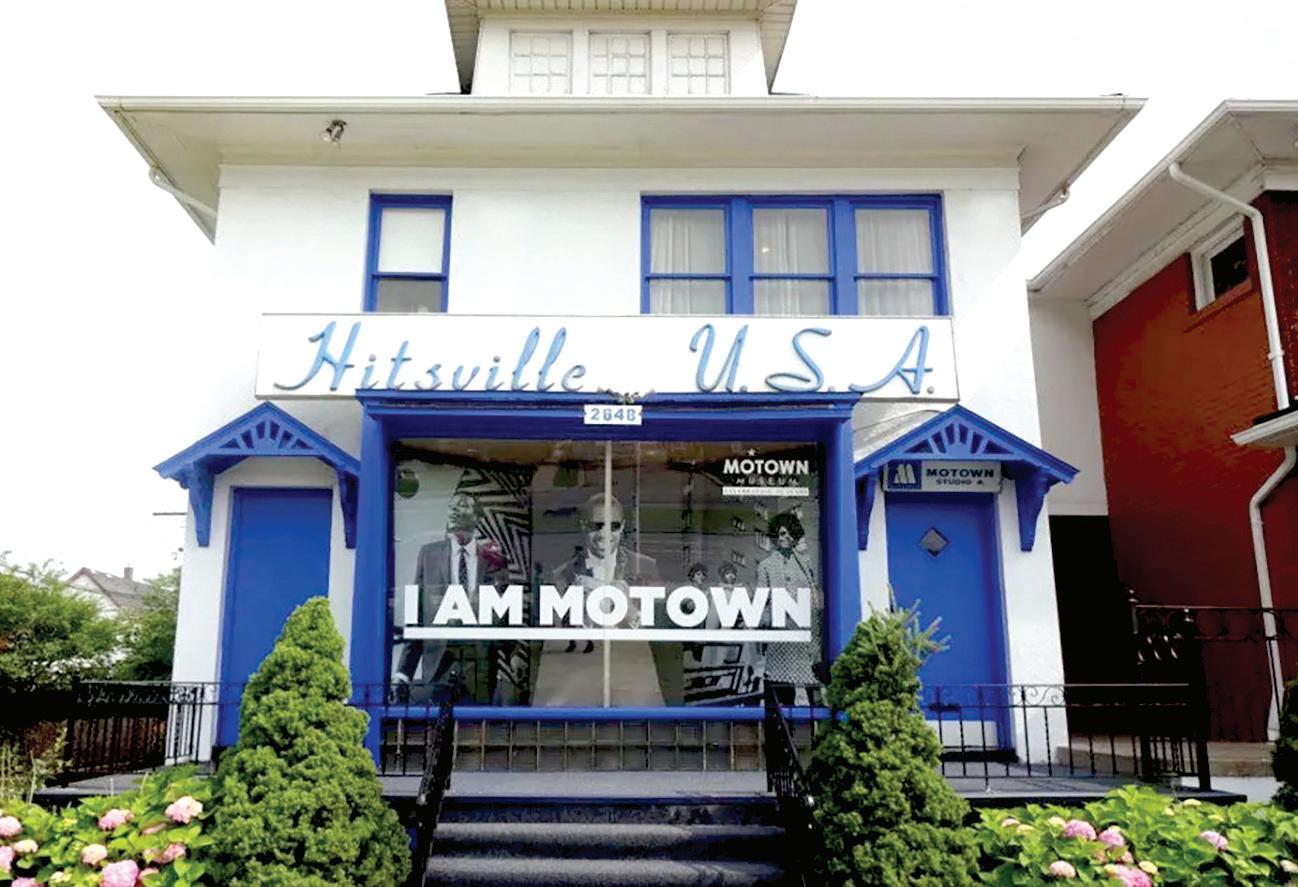
BY STAFF WRITER
Motown Museum has received a $1 million Legacy Grant from The Links Foundation, Incorporated, bringing the institution within $2 million of completing its $75 million capital campaign for its longplanned expansion.
The gift, announced Monday, July 13, increases the museum’s fundraising total to $73 million and supports construction of the expanded campus, which is expected to open in summer 2027. The grant was approved during The Links, Incorporated’s 45th National Assembly, which was held recently in Detroit.
The Links Foundation is the philanthropic arm of The Links, Inc., one of the nation’s oldest and largest volunteer service organizations of professional women of African descent. Through its Legacy Grant program and other initiatives, the foundation has distributed more than $27 million to organizations including the Obama Presidential Center, the Smithsonian National Museum of African American History and Culture, the National Civil Rights Museum, the NAACP Legal Defense and Educational Fund, and the United Negro College Fund.
“We are deeply honored to receive this generous gift from The Links Foundation, Incorporated,” said Robin Terry, chairwoman and CEO of Motown Museum, in a statement. “For generations, The Links
have brought together some of our nation’s most accomplished women in service of education, culture and community. Their support is especially meaningful because it reflects a shared belief in the power of storytelling to preserve history, inspire future generations and strengthen communities.”
Terry also thanked The Links’ 18th National President, Ethel Isaacs Williams, for her leadership and commitment to preserving African American history and culture.
Williams said the grant reflects the organization’s commitment to preserving one of the nation’s most influential cultural institutions.
“We are proud to support the Motown Museum expansion through our Legacy Grant program,” Williams said. “Motown transformed music, elevated generations of Black artists and forever changed American culture. Preserving that legacy ensures future generations understand not only the sound of Motown, but the resilience, creativity and excellence it represents.”
The latest contribution adds to a series of major philanthropic investments that have helped advance the museum’s expansion campaign over the past several years.
In 2023, the Fred A. and Barbara Erb Family Foun-
dation awarded the museum a $1 million grant to support the expansion and educational programming planned for the new campus. At the time, museum officials said the project would create new opportunities for aspiring musicians, entrepreneurs and young people while expanding public access to the Motown story.
The museum has also secured significant public funding, including a $10 million federal appropriation announced in 2023 that accelerated construction plans. Additional support has come from a broad coalition of foundations, corporations and individual donors, including the Hudson-Webber Foundation, The Kresge Foundation, the Ralph C. Wilson Jr. Foundation, Ford Motor Company Fund, Bank of America, JPMorgan Chase, Bloomberg Philanthropies, Amazon, and Sony Music Group, among many others.
Originally announced in 2016, the multiphase expansion will increase the Motown Museum campus to approximately 50,000 square feet. The project centers on preserving the historic Hitsville U.S.A. home while adding new exhibition galleries, interactive experiences, a state-of-the-art performance theater, recording studios, expanded retail space, a café and educational facilities through the museum’s Hitsville NEXT initiative.
Museum leaders have said the completed campus is intended to strengthen Detroit’s North End neighborhood by attracting additional visitors from around the world while expanding year-round educational and cultural programming.
Construction on the project’s final phase began in 2024 after the campaign reached the $70 million fundraising milestone. The museum has since continued to attract philanthropic support as it works toward completing the remaining $2 million needed to fully fund the $75 million project.

and future implementation of the caps. Throughout the phases of engagement, the team collected feedback on potential overbuild options and design elements for each segment – or cap – over I-75. Well-designed caps can restore walkability, support small businesses, create new public spaces, and serve as an anchor for current and future development. Each cap has an opportunity to uniquely serve its residents and businesses. It was essential that planning reflect the needs of those that will use them most.
The project is meant to benefit all who live, work, and visit the areas around the caps. It is also meant to stitch the city back together in a way that reflects the people who are already here. Creating valuable and successful connectivity strengthens economic opportunity and neighborhood vitality. With community input, the project team can evaluate what is technically feasible and socially meaningful simultaneously. Join Us on July 30
Over the past 100-plus years, the DDP has built its reputation as a trusted and strategic advisor, able to convene diverse stakeholders. Our goal is for the I-75 Cap
project to remain community-centered and transparent. We firmly believe Infrastructure should serve people, and planning and engagement work best when they start early and continue through execution to completion.
The I-75 Cap project will celebrate its next milestone at the public meeting scheduled for Thursday, July 30, from 6:00 to 7:30 p.m. at the MSU Detroit Center. At the meeting, DDP and partners will share how community and stakeholder feedback has shaped the project’s programming recommendations and public space vision/design. Attendees will get a first look at the latest renderings of the proposed caps, hear the final results of the feasibility study, and learn about the next steps as the project progresses. We encourage residents and businesses to join us. The greater the engagement, the greater the potential for success. For more on the I-75 Cap Project and frequently asked questions, visit the DDP’s Urban Innovation page at DowntownDetroit.org/I-75Cap.
Eric B. Larson is CEO of the Downtown Detroit Partnership, a nonprofit, memberbased organization dedicated to creating a thriving, safe, inclusive, and welcoming Downtown Detroit and surrounding neighborhoods.


’94 Pontiac
(2G2FV22P1R2212004) ’09 Jaguar XF (SAJWA06B29HR04027) ’13 Volkswagen CC (WVWHU7AN2DE508957) ’12 Jeep Patriot (1C4NJRFB7CD567657) ’01 Chrysler PT (3C8FY4BBX1T318140) ’07 Chevrolet Equinox (2CNDL23F376050828) ’06 Chrysler Town & Country (2A4GP54L46R910738) ’14 Nissan Rogue (JN8AS5MVXEW709948) ’03 Mercedes-Benz SL (WDBSK75F33F046799) ’05
up to 20%. EOE. Apply online: careers.ford.com
Analytics Scientist
Positions offered by Ford Motor Company (Dearborn, Michigan). Note, this is a hybrid position whereby the employee will work both from home and from the aforementioned worksite. Hence, the employee must live within a reasonable commuting distance from the worksite. Take ownership of end-toend development of data products to support analytics consumption within the Ford Customer Service Division. EOE. Apply online: careers.ford.com
Data Scientist
Positions offered by Ford Motor Company (Dearborn, Michigan). Note, this is a hybrid position whereby the employee will work both from home and from the aforementioned worksite. Hence, the employee must live within a reasonable commuting distance from the worksite. Drive improvements in Ford’s supply chain operations through big data analysis and modeling. EOE. Apply online: careers.ford.com
Facilities Engineer
Positions offered by Ford Motor Company (Dearborn, Michigan). Note, this is a purely telecommuting/workfrom-home position whereby the employee may reside anywhere within the U.S. Responsible for Program Facilities Change-Over Plan development and execution of PARs to the Plant for responsible New Model Programs. Domestic Travel Required 80-100%. EOE. Apply online: careers.ford.com



The Detroit Community School is requesting proposals for the removal and replacement of (3) roof top units with appurtenances. Vendors and/or their representatives may submit proposals to: CS Partners 869 S Old 23 Brighton, MI 48114
The Academy School Board reserves the right to accept or reject any or all proposals or to accept the proposal that it finds, in its sole discretion, to be in the best interest of the School District.
A copy of the RFP will be available by email at ssparks@charterschoolpartners.com by July 10, 2026.
A voluntary walk-thru inspection is scheduled for July 15, 2026, at 10:00 am at the school.
All proposals must be submitted no later than 12:00 pm, July 24th, 2026. All proposals should be delivered in a sealed envelope and addressed to the CS Partners and are clearly marked: “HVAC Unit Replacement(s) 2026”.

Interaction Engineer Positions offered by Ford Motor Company (Allen Park, Michigan). Note, this is a hybrid position whereby the employee will work both from home and from the aforementioned worksite. Hence, the employee must live within a reasonable commuting distance from the worksite. Leveraging a deep understanding of user experience principles and user needs to communicate crossfunctionally, translating between UX design, business, technical,
Software Architect Positions offered by Ford Motor Company (Dearborn, Michigan). Note, this is a hybrid position whereby the employee will work both from home and from the Dearborn office. Hence, the employee must live within a reasonable commuting distance from Dearborn, MI.
Define the software architecture for ADAS features and develop high-level designs. EOE. Apply online: careers.ford.com
User Interface Architect Lead Positions offered by Ford Motor Company (Dearborn, Michigan). Work as part of the driver information experience team on instrument clusters to lead the resolution of driver information experience issues identified during design, validation and verification stages. Domestic and International Travel Required up to 10%. EOE. Apply online: careers.ford.com
One way to ensure that more of your money
making strategic contributions to tax-advantaged
By opening and contributing to a Health Savings Account (HSA) and Individual Retirement Account (IRA), you can substantially
Not sure if these accounts are right for you? Consider these insights from Fidelity: HSAs
site visit will be determined at a later date, if necessary. Proposals can be accessed on the Bidnet Direct www.bidnetdirect.com//detroit-transportation-corporation
Mike Anderson Procurement Manager mandersonjr@thepeoplemover.com Detroit People Mover/Detroit

1. Use what you’ve got. If you have health insurance, federal
says most health plans must cover preventive care at no
to you. This includes annual check-ups, vaccines, blood pressure checks, cancer screenings, and other basic care to keep you healthy. These visits matter. Detecting a health problem early can help you avoid a bigger, more expensive problem later.
When you schedule your next doctor’s appointment, ask two simple questions: “Is this preventive care?” and “Will I have to pay anything for this visit?” Researching this ahead of time can help you avoid a surprise bill.
PUBLIC NOTICE: RTA OF SOUTHEAST MICHIGAN PROPOSED DBE GOALS For FY 2023 – FY2025
2. Shop around. Not every doctor, hospital, or pharmacy costs the same. Your insurance plan usually has a list of “in-network” doctors and facilities where care costs less. Before you make an appointment, check whether the doctor or clinic is in your network. If you go out of network, you could pay much more. If you don’t have insurance, many communities support occasional access to free health screenings and care.
The Regional Transit Authority of Southeast Michigan (RTA) has established a goal of 8.20% for its Disadvantaged Business Enterprises (DBE) Program for fiscal years 2023 through FY 2025. This goal will be attained through 5.31% from race neutral participation and 2.89% from race-conscious measures which reflects the relative availability of DBEs to participate in contracts and procurements projected by the RTA.
An HSA is an account that can be used to pay for qualified medical expenses, including copays, prescriptions, dental care, contacts and eyeglasses, bandages, X-rays, and a lot more. It’s “tax-advantaged” because your contributions reduce your taxable income; the money isn’t taxed while it’s in the account, even if it earns interest or investment returns; and as long as you use your HSA funds for qualified medical expenses, you won’t owe taxes when you take money out of the account. This triple-tax advantage is powerful, but it’s not the only reason why HSAs are so popular. Unlike a flexible spending account, an HSA is not “use-it-orlose-it,” meaning it doesn’t need to be spent within a certain timeframe. If you don’t need the money in your HSA for current medical expenses, you can save and invest it until you do, and even take the account with you when you leave an employer. Just keep in mind that to open and contribute to an HSA, you’ll need to be enrolled in an HSA-eligible health plan.
BID # 08-8-2022 REBID
IRAs
Detroit Transportation

of
and Procurement requests proposals from
Contractor/Firm(s) to provide
measurements of the LIM rail height, power rail tolerances, running rail height and track gauge. The initial information and subsequent trending information on the rate of change of the measured parameters of the Detroit People Mover (DPM) track will be reviewed and utilized as part of the existing detailed maintenance plan to ensure long term safety and availability to the riding public.
Also ask where a medical test or procedure will cost the least. Sometimes the same scan, blood test, or treatment costs more at a hospital than at a clinic, imaging center, or outpatient office. A call to your health insurance plan may save you big bucks.
The proposed goal and its methodology have been developed in accordance with the Federal Transit Administration’s regulations 49 CFR Part 26.
The goal and the methodology used to develop it are available for inspection from 8:30 a.m. to 4:30 p.m. Monday through Friday at RTA’s offices located at 1001 Woodward Avenue, Suite 1400, Detroit, Michigan. These materials will be available for 30 days following the date of this notice.
3. Ask for help. Don’t ignore bills you cannot afford. Call the billing office and ask for help. You can ask: “Do you offer financial assistance?” “Do you have charity care?” “Can I get a payment plan?” “Can this bill be lowered?” Many hospitals and clinics have programs that can reduce bills for people who qualify. You can also ask them to check for mistakes. Medical bills are confusing, and errors happen.
The RTA will accept comments on the goal for 45 days from the date of this notice. Inquiries may be directed to the following:
RTA of Southeast Michigan 1001 Woodward Avenue, Suite 1400 Detroit, Michigan 48226 Or e-mail to: info@rtamichigan.org
4. Take care of your health. No one can control everything about their health, and many people face barriers that make it harder to stay healthy. But small steps can help prevent bigger health problems and bigger bills. If you are able, take your medicine as directed. Keep up with care for conditions like diabetes, asthma, high blood pressure, or heart disease. Try to move your body, eat nourishing foods, and get help when something feels wrong.
5. Speak up and take action. One person cannot fix America’s healthcare affordability crisis alone.
An IRA refers to a tax-advantaged account designed to help you save for retirement on your own, independent of an employer. There are several types of IRAs, but when people say “IRA” alone, they often mean a traditional IRA. That’s a type anyone with earned income can open and contribute to. Traditional IRAs allow you to save on income taxes now and pay them later in retirement, when you could be in a lower tax bracket and therefore owe less in taxes. Fidelity estimates that you may need 55% to 80% of your pre-retirement income in retirement. Because an employer-sponsored savings plan might not be enough to accumulate the savings you need due to annual contribution limits, investing through an IRA could help you save more for the future.
To the qualified electors of the City of Highland Park, Wayne County, State of Michigan: Notice is hereby given, that a Public Accuracy Test for the electronic equipment that will be used for the General Election being held on Tuesday, November 8, 2022 is scheduled for Tuesday, October 25, 2022, at 2:00 p.n. in the City Clerk’s training room (lower level) located: Robert B. Blackwell Municipal Complex 12050 Woodward Ave. Highland Park, MI 48203
One Nation, Overcharged is a grassroots movement that is bringing people together to demand better. That means speaking up, sharing your story, and calling for a system that puts people over profits. The grassroots effort is powered by voices like yours. Whether you have thousands of dollars in medical debt, are fed up with high healthcare costs, or simply believe that we all deserve better, you can visit OneNationOvercharged.org to learn more, sign up, and add your voice.
Medical costs are on the rise, but people can take steps to reduce their own bills, as well as join efforts to change the status quo.
The Public Accuracy
Before opening an IRA, check out a few different firms that offer them. Find out whether they offer helpful support and a user-friendly experience, plus whether they charge any fees or minimums. Then, once the account is open, decide how much you want to contribute and how often.
All bids must be received by the Detroit Transportation Corporation via Bidnet/MITN on or before 5:00 p.m. (EST) November 7, 2022. A pre-bid site visit is scheduled for Wednesday, October 25, 2022 at 10:00 a.m. (EST). Proposals can be accessed on the Bidnet Direct www.bidnetdirect.com//detroit-transportation-corporation
“Setting up automated contributions can make saving for retirement into a
that
Mike Anderson Procurement Manager mandersonjr@thepeoplemover.com


TUESDAY, AUGUST 4, 2026 POLLS WILL BE OPEN FROM 7:00 A.M. TO 8:00 P.M. TO THE QUALIFIED ELECTORS OF THE CITY
STATE
MICHIGAN NOTICE IS HEREBY GIVEN THAT A
For the purpose of voting for the following offices:
Senator • County Executive
• Representative in Congress
• State Senator
• County Commissioner – 5th District ONLY
• Delegate to County Convention
PLEASE TAKE NOTICE that the City of Detroit will be voting on the following proposition as presented and listed below:
PROPOSAL S
DETROIT PUBLIC SCHOOLS COMMUNITY DISTRICT COUNTY OF WAYNE STATE OF MICHIGAN
OPERATING MILLAGE REPLACEMENT PROPOSAL
If it is determined that the School District of the City of Detroit is no longer authorized to levy an operating millage to retire its legacy debt under State law this proposal would replace that levy by authorizing the Detroit Public Schools Community District to levy the statutory limit of 18 mills on all property, except principal residences (owner occupied homes) and other property exempt by law, for general operating purposes and allow the School District to continue to levy the statutory limit of 18 mills in the event of future Headlee rollbacks of up to 6 mills. This authorization will allow the School District to receive revenues at the full per pupil foundation allowance permitted by the State. Shall the limitation on the total amount of taxes which may be assessed against all property, except principal residences and other property exempted by law, situated within the Detroit Public Schools Community District, County of Wayne, Michigan, be increased in the amount of 24 mills with 18 mills being the maximum allowable annual levy ($18.00 on each $1,000 of taxable valuation), for a period of twenty (20) years, 2026 to 2045, inclusive? This operating millage if approved and levied, would provide estimated revenues to the School District of $112,000,000 during the 2026 calendar year, to be used for general operating purposes.
Persons with disabilities needing accommodations should contact the Department of Elections at 313-876-VOTE (8683).
If you have any questions regarding your polling location on Election Day, please contact the Detroit Department of Elections at (313) 876-0190. MICHIGAN LAW MANDATES ALL VOTERS TO PRESENT VALID PHOTO ID AT THE POLLS OR COMPLETE AN AFFIDAVIT OF VOTER NOT IN POSSESSION OF PICTURE IDENTIFICATION. Acceptable forms of photo IDs are: Michigan Driver’s License or a Michigan Personal ID; Driver’s License or Personal ID by another state; Federal or State Government photo ID; U.S. Passport; Military ID with photo; current Student ID with photo or Tribal ID with photo.
Absentee ballots are available for all elections. Registered voters may obtain a ballot at the Detroit Department of Elections, the Detroit City Clerk’s Office or at any of our Early Voting Centers listed below.
District 1
WCCCD Northwest Campus 8200 W. Outer Drive Detroit, MI 48219
District 2
Northwest Activities Center 18100 Meyers Rd. Detroit, MI 48235
District 3
Farwell Recreation Center 2711 E. Outer Drive Detroit, MI 48234
HOURS OF OPERATION:
District 4
WCCCD Eastern Campus 5901 Conner St. Detroit, MI 48213
District 5
Department of Elections 2978 W. Grand Blvd. Detroit, MI 48202
District 6 City Clerk’s Office (Coleman A. Young Municipal Ctr.) 2 Woodward Ave., Ste. 106 Detroit, MI 48226
Clark Park 1130 Clark St. Detroit, MI 48209
District 7
Adams Butzel Recreation Complex 10500 Lyndon Detroit, MI 48238
• Early Vote Centers will open on Saturday, July 25, through August 2, 2026, 9:00 a.m. to 5:00 p.m.
• Monday through Friday from 8:00 a.m. to 5:00 p.m. (Department of Elections)
• Monday through Friday from 9:00 a.m. to 4:00 p.m. (City Clerk’s Office)
• Saturday, August 1st from 8:00 a.m. to 4:00 p.m. and Sunday, August 2nd from 9:00 a.m. to 4:00 p.m. (Department of Elections)
• Monday, August 3rd – Absentee voting ceases at 4:00 p.m.
• Election Day, Tuesday, August 4th from 7:00 a.m. to 8:00 p.m.
Voters may also submit their ballots by dropping it into any of our drop boxes (24 hours, 7 days a week) listed below.
Crowell Community Center 16630 Lasher Rd. Detroit, MI 48219
Rouge Park Golf Course 11701 Burt Rd. Detroit, MI 48228
North Rosedale Park Community House 18445 Scarsdale Detroit, MI 48223
Greater Grace Temple 23500 W. Seven Mile Rd. Detroit, MI 48219
WCCCD Northwest Campus 8200 W. Outer Dr. Detroit, MI 48219
Liberty Temple Baptist Church 17188 Greenfield Rd. Detroit, MI 48235
Greater Emmanuel Institutional COGIC 19190 Schaefer Hwy. Detroit, MI 48235
Tindal Recreation Center 10301 W. Seven Mile Rd. Detroit, MI 48221
Northwest Activities Center 18100 Meyers Rd. Detroit, MI 48235
Palmer Park Community Center 1121 Merrill Plaisance St. Detroit, MI 48203
Perfecting Church 7616 E. Nevada Detroit, MI 48234
Faith Temple 19000 Conant Detroit, MI 48234
Greater St. Paul 15325 Gratiot Ave. Detroit, MI 48205
Farwell Recreation Center 2711 E. Outer Dr. Detroit, MI 48234
Heilmann Recreation Center 19601 Crusade Detroit, MI 48205
Balduck Park 5271 Canyon Detroit, MI 48236
Franklin Library 13651 E. McNichols Detroit, MI 48205
Bethany Lutheran Church 11475 E. Outer Drive Detroit, MI 48224
Jesus Tabernacle Church 11001 Chalmers Detroit, MI 48213
WCCCD Eastern Campus 5901 Conner Detroit, MI 48213
Considine Center 8904 Woodward Ave. Detroit, MI 48202
Greater Christ Baptist Church 3544 Iroquois Ave. Detroit, MI 48214
Horatio Williams Foundation 1010 Antietam Ave. Detroit, MI 48207
Renaissance Baptist Church 1045 E. Grand Blvd. Detroit, MI 48207
Butzel Family Center 7737 Kercheval Detroit, MI 48214
Department of Elections 2978 W. Grand Blvd. Detroit, MI 48202
Detroit Pistons Performance Center 690 Amsterdam St. Detroit, MI 48202
WCCCD Downtown Campus 1001 W. Fort St. Detroit, MI 48226

Unity Baptist Church 7500 Tireman Detroit, MI 48204
Clark Park 1130 Clark Detroit, MI 48209
City Clerk’s Office 2 Woodward Ave., Ste. 106 Detroit, MI 48226
Kemeny Recreation Center 2260 S. Fort St. Detroit, MI 48217
Davison Service Yard 8221 W. Davison Detroit, MI 48238
William S. Ford Memorial Church 16400 W. Warren Detroit, MI 48228
Edison Library 18400 Joy Rd. Detroit, MI 48228
Adams Butzel Recreation Complex 10500 Lyndon Detroit, MI 48238
As a soccer legend and business leader, Sir David Beckham’s unexpected moves and game-changing vision have helped inspire the sport’s growth globally. Bank of America brings that same bold thinking and action to help you grow your business.
Explore winning business solutions bofa.com/gamechangers
Sir David Beckham Soccer Club Owner and Businessman