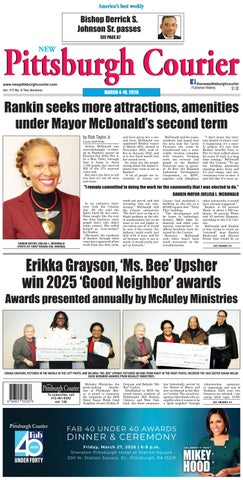
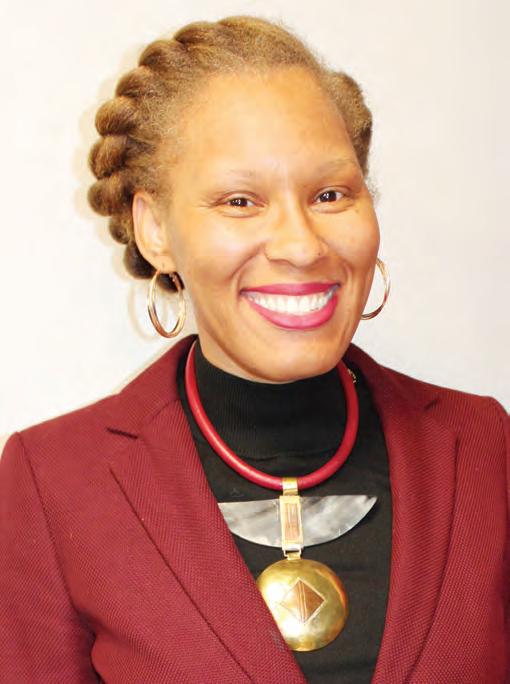
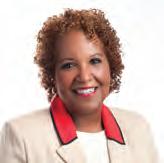
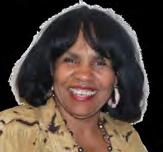
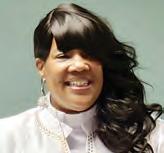
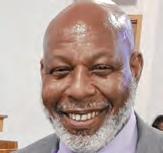
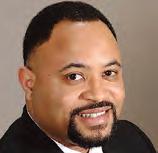
Joelisa McDonald was overwhelmingly re-elected as Rankin's mayor on Election Day 2025, Nov. 4. In a Mon Valley borough that is home to about 1,700 people, she received 263 of the 273 mayoral votes cast. But she's the first to tell you that it's not all wine and roses.
"I
In an exclusive interview with the Courier, Jan. 29, she said she fights hard for her town. Some people like the way she does business, some people don't (she didn't name names). She called herself an "over-worker" for Rankin.
Obviously, the residents of Rankin through their votes have approved of her work from her first term,
and have given her a second term. McDonald was appointed Rankin mayor in March 2021, elected in November 2021, took office in January 2022, and is in her third month into her second term.
So, what are the people saying about the improvements they want to see in Rankin?
"A lot of people are interested in seeing our
roads get paved, and just investing into our community," McDonald told the Courier exclusively. "We don't have as big as a blight problem as the other communities, but we do want to see our blight issue taken care of. It would be nice if the county (Allegheny) could really just deal with it once and for all because ours is not so much, it would really propel us forward."
McDonald said for years, residents had hoped that the area near the Carrie Furnaces site could be transformed into a more usable location complete with tenants, bringing more tax revenue and people to the Rankin/ Swissvale area in general. At first, the Regional Industrial Development Corporation, or RIDC, together with Allegheny
County had marketed a building on the site as a 60,000-square-foot "Tech/ Flex" building. "The development will be home to technology, biotech, R&D, light industrial, and other commercial enterprises," its official brochure read, obtained by the Courier. However, McDonald said, there hasn't been much movement on the transformation.
"I don't know the intricate details of what's really happening, it's a county project; it's just that Rankin benefits from it. But it's been talked about for years. It truly is a long time coming," McDonald told the Courier. "To see the building physically standing down there and it's just empty, and conversations were so slow...I just feel like if it were an-
other community, it would have already happened." Rankin is 64 percent Black, or about 1,100 residents, 20 percent White and 10 percent Hispanic, according to the U.S. Census. McDonald said Rankin is also trying to create an "overlook" near Rankin Boulevard and Harriet Street that would be on McAuley Ministries, the grant-making foundation of Pittsburgh Mercy, is proud to
U.S. casualties mount as D.C. tightens security following Iran strikes
by Stacy M. Brown
NNPA—Heightened patrols swept across the District with the expanding war with Iran—a conflict
President Donald Trump launched without congressional approval and that has already claimed the lives of three U.S. service members and scores of civilians across the Middle East.
“Our hearts are heavy with the news that U.S. service members have been killed by the Iranian response to strikes, and more are wounded,” Max Rose, senior adviser to VoteVets, said in a statement. “Our thoughts are with all of those in harm’s way and their families, who sacrifice so much for America.”
The Pentagon confirmed that three U.S. troops were killed in action at a base in Kuwait and five were seriously wounded.
“As of 9:30 am ET, March 1, three U.S. service members have been killed in action and five are seriously wounded as part of Operation Epic Fury,” U.S. Central Command announced in a post on X. “Several others sustained minor shrapnel injuries and concussions and are in the process of being returned to duty.
Major combat operations continue and our response effort is ongoing.”
The announcement of American casualties comes as many U.S. citizens and politicians alike are processing the president’s decision to enter into war.
Maryland Democratic Sen. Chris Van Hollen asked if anyone remembered all the times that Trump and J.D. Vance looked the American people in the eye and said they would not drag America into a war, especially one in the Middle East.
“They lied,” Van Hollen remarked. “They lied directly to the American people.”
In the District, the Metropolitan Police Department (MPD) and Metro Transit Police increased patrols around federal buildings,
embassies, and transit hubs following the joint U.S.-Israeli strikes.
“The Metropolitan Police Department is closely monitoring the events unfolding in Iran. We are actively coordinating with our local, state, and federal law enforcement partners to safeguard residents, visitors and businesses in the District of Columbia,” MPD wrote in a statement posted to social media. “At this time, there are no known threats to We are prepared to increase our presence as needed.”
Authorities said there are no immediate, credible threats to Washington but urged residents to remain vigilant and report suspicious activity. Demonstrations unfolded near the White House, in Georgetown, and across downtown, with rallies both supporting and opposing the military action.
Overseas, Israeli forces said they were striking “the heart of Tehran,” targeting missile launchers, air defense systems, and command centers.
American stealth bombers struck hardened ballistic missile facilities and the headquarters of the Islamic Revolutionary Guards Corps, according to U.S. military officials. Iranian state media reported that Ayatollah Ali Khamenei was killed in an Israeli missile strike based on U.S. intelligence.
Iranian retaliatory strikes targeted Israel and several Persian Gulf countries. At least nine people were killed in Israel. Additional deaths were reported in the United Arab Emirates, Kuwait, Qatar, Bahrain, and Oman. Iranian state and state-affiliated media reported that at least 85 students were killed and 60 others injured at a girls’ elementary school in Minab. Iranian Foreign Minister Abbas Araghchi posted a photo on X that he said showed the aftermath of the strike.
“It’s surreal,” Azim, 39, who gave only his first name out of fear of reprisals, told The New York Times. “Imagine your country is being attacked, but because of how disconnected people feel from the government, they react like that.”
Leaders Criticize Trump Launching War, Looming Danger for U.S. Soldiers
Overnight and without congressional approval, President Donald Trump initiated major combat operations against Iran.
“The self-proclaimed ‘President of peace’ is once again starting illegal wars without Congressional authorization,” Texas Democratic Rep. Jasmine Crockett wrote on social media.
“This is not what the American people asked for.”
Christopher Anders, director of the ACLU’s Democracy and Technology Division, ripped Trump for not going to Congress before bombing Iran.
“Our founding fathers and the Constitution give war authority power to Congress, and Congress alone. It is what makes us a democracy and ensures that our leaders fully consider the many costs of
This Week In Black History A Courier Staple
• MARCH 4
1877—Inventor and scientist Garrett A. Morgan is born in Paris, Ky. Among his major inventions were the gas mask and the automatic traffic signal. He made history on July 25, 1916 when he used his gas mask to rescue 32 men trapped in a mine explosion beneath Lake Erie. The U.S. Army also used the gas mask to save lives during World War I. Morgan died in 1963.
1922—Comedic great Bert Williams dies of pneumonia in New York City at the age of 46. What Jackie Robinson did for Blacks by breaking the color barrier in major league baseball, Williams did on the American stage. He was a comic, singer, writer and producer who spent 10 of his 25 years in show business performing with the famous Ziegfield Follies. W.C. Fields once referred to him as “the funniest man I ever saw.” Williams was born Egbert Austin Williams in the Bahamas.
at 78 in Pittsburgh, Pa. Eckstine came to fame in the 1940’s and 1950’s as a singer and bandleader who worked with some of the greatest names of the era including Louis Armstrong and Lena Horne. He was one of the greatest influences upon modern Jazz and B-bop. Among his best known ballads were “Everything I Have Is Yours,” “Blue Moon,” “Caravan” and “That Old Black Magic.”
• MARCH 9
war, including the harm to human lives and rights, and any effects on global peace and stability, before sending American troops into danger,” Anders stated.
“If President Trump wants to send American armed forces into conflict, he must make his case to the American people and their representatives in Congress.”
Rose, who said the president’s actions “resulted in the deaths of our troops,” noted the importance of congressional approval due to the serious risks associated with war.
“This needs to be very blunt and very clear,” Rose said. “The risk [to] American service members’ lives in this war was clear from the start. This is precisely why the Constitution says the president must go to Congress before initiating a war.”
National Urban League President Marc Morial also criticized the president’s actions, expressing concern for what the war could mean overall.
“Launching acts of war without congressional authorization violates the Constitution and undermines the democratic checks and balances that exist to prevent exactly this kind of reckless escalation,” Morial said. “History has shown, again and again, that military action in the Middle East without a clear strategy leads to prolonged conflict, civilian suffering, and the loss of American lives.”
Democratic National Committee Chair Ken Martin was particularly worried for U.S. soldiers.
“Trump himself said that this operation is ‘massive and ongoing’ and he expects there may be American casualties,” Martin stated, adding that he’s praying for the safety of all men and women in uniform, of Americans and their families in the region, and of innocent civilians.
Urging Congressional Action
As a member of Congress’ upper chamber, Sen. Raphael Warnock (D-Ga.) said the U.S. is a democracy and no president has the right to declare war or to drag the nation into war.
“Congress should return to session immediately to debate the use of force as is our solemn duty, Warnock asserted. “The American people deserve answers and a voice through their elected representatives.”
Rose stressed the importance of congressional leaders examining next steps.
“It must end,” he urged. “Congress must initiate war powers consideration immediately, to include an in-depth review of this president’s war plan. Not tomorrow, not next week.
Today. Speaker Johnson and Sen. Thune should call everyone back to vote today, before more American troops die in Trump’s war.”
Forcing a vote on a war powers resolution would “force the administration, at a minimum, to have to explain itself in ways that then leave the American public to be able to better judge whether or not this is a good idea,” Sen. Tim Kaine said on a call with reporters.
• MARCH 5
1770—Crispus Attucks is shot and killed by British soldiers becoming the first American to die in the struggle for American Independence from England. Attucks was an escaped slave who became a sailor and rope maker. It is unclear exactly how he became involved in the protest of that day. But a crowd had gathered and began to taunt British troops. Attucks, who was of Black and Indian parentage, was inspired to give a speech in which he spoke of the importance of freedom. Suddenly a volley of shots was fired into the crowd. Four people died that day in an event which became known as the Boston Massacre.
• MARCH 6
1857—Perhaps the most thoroughly racist decision ever rendered by a U.S. Supreme Court is released on this day—the Dred Scott decision. Scott and his wife, Harriet, had sued in St. Louis Circuit Court claiming they were free because their slave master had taken them from a slave state to the free territory of Missouri. However, in a majority opinion written by Chief Justice Roger B. Taney the court ruled: 1) Blacks, be they slave or free, were not and could not be U.S. citizens and thus were not entitled to file suit in U.S. courts, 2) Denied Congress the power to restrict slavery by declaring the 1820 Missouri Compromise unconstitutional, 3) Declared that where the Constitution said, “All men are created equal,” the phrase did not include Blacks, and 4) Told African Americans that they “had no rights the White man was bound to respect.” However, reflecting the law of unintended consequences, the Dred Scott decision was so harsh and so angered anti-slavery forces that it helped pave the way for the Civil War which ended all slavery in America.
• MARCH 7
1539—This is probably the day Estevanico—the first Black conquistador— was killed. Estevanico, a Black Moor from Morocco, was sold as a servant when he was only 10 but became friends with his owner Andres de Dorantes and joined a 1527 expedition of 300 men from Spain looking for riches in what would later become the U.S. state of Florida. All but four members of the expedition were wiped out by the Indians they tried to conquer. Estevanico was among those who survived. He was held captive for five years but became a “medicine man” and learned the languages of various tribes. He eventually escaped and in February of 1539 led an expedition to Culiacan, Mexico looking for one of the fabled lost city of gold—El Dorado. It was doing this expedition that he was killed.
1965—On this day in Black history, the first leg of the Selma-to-Montgomery march is completed as thousands joined Rev. Martin Luther King Jr. in protesting racial injustice in Alabama. An earlier attempt to complete the march had been disrupted by a police attack. The Alabama National Guard was federalized and U.S. Army troops were called in to protect the marchers. It was shortly after this march that a White female supporter of the civil rights struggle, Viola Liuzzo, was shot and killed by Ku Klan Klan-style terrorists opposed to civil rights for Blacks.
1997 Former Jamaican Prime Minister Michael Manley dies. Manley is perhaps best known for his brand of democratic socialism and attempting to organize Caribbean and African nations into a bloc to press for better prices for their raw materials.
• MARCH 8
1977 Henry L. Marsh III is elected the first Black mayor of Richmond, Va. Before becoming mayor of the capital of the old confederacy, Marsh had made a name for himself confronting the city’s White power structure as a civil rights attorney. He also served in the state senate.
1993—Jazz great Billy Eckstine dies
1841—The U.S. Supreme Court rules that Joseph Cinque and his fellow mutineers are free men. Along with several of his Mendi tribesmen, Cinque, son of an African king, had been captured and sold into slavery. But in 1839, he led a revolt on the Spanish slave ship Amistad, killed the captain and seized control of the ship. However, a U.S. military ship seized the Amistad off the coast of Long Island, New York. The seizure led to protracted court battles in which Cinque and his men were charged with murder. But in an unusual ruling for its day, the high court held, in effect, that the men had a human right to try to escape bondage and allowed them to return to Africa. 1871—Noted Black politician Oscar De Priest is born in Florence, Ala. After moving to Chicago, he becomes a major political force in the city serving on the board of commissioners and then on the city council (1915-1917). However, De Priest became a national political figure when he was elected to the U.S. Congress in 1928. Throughout his years of political service he was known as “a persuasive agent for the Black masses.” He died in 1951.
1931—Walter F. White is named executive secretary of the NAACP. The Atlanta, Georgia-born White was arguably the most devoted and determined person ever to head the civil rights organization and was easily one of the top Black leaders of the first half of the 20th century. The light-complexioned and blue-eyed White also became a legend in 1919 when he “passed for white” in order to investigate a race riot in Elaine, Ark., which had left over 100 Blacks dead. He barely escaped with his life when news leaked out as to who he was. A train conductor, thinking he was White, is said to have joked with him saying, “You’re leaving too early. The fun is about to start. The boys are going to lynch a yellow Nigger passing for White.”
1997—Rap artist The Notorious B.I.G. (Christopher Wallace) is shot to death in Los Angeles, Calif., as a result of an alleged east-coast-west-coast dispute in the Rap music industry. The killing has never been solved criminally. But a civil suit in Los Angeles federal court accused two rouge Los Angeles police officers of arranging the drive-by shooting that led to his death.
• MARCH 10
1913—The “greatest conductor of the Underground Railroad” Harriet Tubman dies on this day in Auburn, N.Y. Born in slavery in Dorchester County, Md., in 1819 or 1820. Harriet was a person of strong wild and principle. For example, at age 12 she received a severe blow to the head from a White overseer when she refused to help tie up a slave who had tried to escape. Around age 30, fearing she was about to be sold into the Deep South, Tubman escaped to Canada. But she returned to Maryland on numerous occasions helping family members and over 300 other slaves escape to freedom via the Underground Railroad. She frequently threatened to shoot any slave who became frightened and wanted to turn back.
1969—The man officially convicted of assassinating civil rights leader Dr. Martin Luther King Jr. pleads guilty to the crime on this day. However, James Earl Ray promptly tried to withdraw the plea suggesting that there had actually been a government conspiracy to assassinate King, which involved the Mafia and members of the right-wing Cuban exile community in Florida. Ray admitted buying the rifle and renting the room in the Memphis, Tenn., flophouse from where the deadly shot was fired. But he maintained he gave the rifle to a mysterious man named Raoul. The House Select Committee on Assassinations would later conclude that Ray fired the shot but was probably part of a broader conspiracy.
1972—The first modern National Black Political Convention began on this day in Gary, Ind. It drew over 3,000 delegates and 500 observers as well as participation from just about every major Black political and civil rights organization in the nation. However, some moderate civil rights groups, like the NAACP, withdrew after the convention adopted resolutions critical of busing and Israeli racism against the Palestinians.
par with a "tourist attraction," with some small businesses...maybe an ice cream parlor, pizza shop or so, Mayor McDonald said. There is some talk in Rankin Borough Council meetings, though, that the overlook could be placed in another part of town.
Mayor McDonald told the Courier the borough has asked for $1.5 million in grant funding to make the overlook come to fruition.
Also, Mayor McDonald told the Courier she "put it out there" a thought about having a grocery store
within Rankin. At first it was met with mixed reaction. "Why shouldn't we have one in our community?"
Mayor McDonald asked. "I think it would serve the community well." As of now, the only grocery-style market coming into Rankin is the Giant Eagle Mobile Market, Sundays between 10:30 and 11:30 a.m., at 320 Hawkins Avenue.
Mayor McDonald, 35, together with the interim borough manager, Shane Muzina, and the Rankin Borough Council, includ-
ing its president, William Price III, are tasked with moving Rankin forward. If not, they're sure to hear it from their residents. "I remain committed to doing the work for the community that I was elected to do," Mayor McDonald said. "You have to show up for your residents and listen to them. Be open-minded. Stay grounded in the responsibility and make sure you're putting Rankin first every time, above self."
and one adult (ages 40 and over). Grayson and Upsher were chosen for their outstanding leadership and selfless acts of kindness that continue to transform lives and foster unity in our communities.
About Erikka B. Grayson
Nominated by Ashley Comans and Dr. Margaret Starkes, Erikka Grayson is a lifelong Hill District resident whose leadership spans education, youth development, and family advocacy. She serves as senior director of the Estelle S. Campbell Boys & Girls Club, overseeing programs that support hundreds of young people, and was recently elected Pittsburgh Public Schools board director for District 3. Her community-centered initiatives include founding Bomb Moms, a platform that uplifts and connects mothers, and leading culturally responsive literacy programs through the Margaret Washington Literacy & Inclusion Center.
“Erikka is someone who embodies leadership, compassion, and vision in everything she does,” said Comans. “She approaches every role with integrity and has consistently gone above and beyond to ensure children, families, and the community as a whole are uplifted and supported.”
In response to receiving the award, Grayson stated, “I am deeply honored and humbled to be recognized as a 2025 Sister Susan Welsh Good Neighbor Award recipient. My work has always been rooted in service to children, families, and community—particularly in the Hill District.”
She continued, “Each of these roles has reinforced my belief that lasting change happens when we invest in children early and show up consistently for families. This recognition reflects the collective work of a village committed to equity, opportunity, and compassion, and I am truly grateful.”
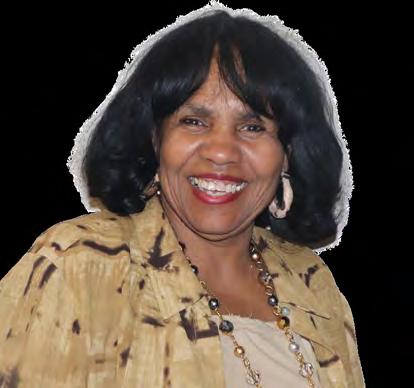
About Belinda “Ms. Bee” Upsher Nominated by Candice Gormley and Nadine Masagara-Taylor, Belinda “Ms. Bee” Upsher has devoted decades of service to the West Oakland community. Formerly a childcare provider, she now serves as the community outreach coordinator at The Corner Community Center. Known for her boundless generosity, Upsher is the founder of the Warming Center and Breakfast Program for children at local bus stops. She also launched a community closet offering free clothing and household items, and regularly volunteers at monthly food distributions. Upsher’s work extends beyond her formal roles, as she is a trusted presence
in the neighborhood, frequently volunteering as a crossing guard and supporting families in need.
“Ms. Bee is the definition of what it means to be a good neighbor,” said Masagara-Taylor. “She rises to the occasion to meet the needs of others without expecting anything in return.”
Reflecting on the honor of receiving the Sister Susan Welsh Good Neighbor Award, Upsher shared, “This award represents more than a moment of recognition—it reflects the power of kindness in action. Being a good neighbor means choosing compassion, showing up without being asked, and creating a space where others feel seen, safe, and supported. True winning is not measured by personal success alone, but by the positive impact we leave on the lives around us. I am deeply honored to be recognized for simply doing what comes from the heart: serving with integrity, leading with empathy, and believing that when one of us rises, we all do.”
Past recipients of the Sister Susan Welsh Good Neighbor Award include Sauntee Turner and Jordan Morris (2024); Sheila S. Petite and Nyabingi Michie (2023); Brenda Tate (2022); Ann Adams Simms (2021); Christopher J. Roach (2020); and Edna Council (2019).
RANKIN FROM A1
RANKIN MAYOR JOELISA L. MCDONALD is sworn-in by Judge Richard D. Olasz Jr. on Jan. 5, 2026. (Photos by Chief Ikhana-Hal-Makina)
RANKIN MAYOR JOELISA L. MCDONALD assisted in the swearing-in ceremony of her friend, newly-elected Homestead Mayor Mary Nesby, far left, on Jan. 5, 2026.
Stop N' Wash Laundromat reopens in Homewood
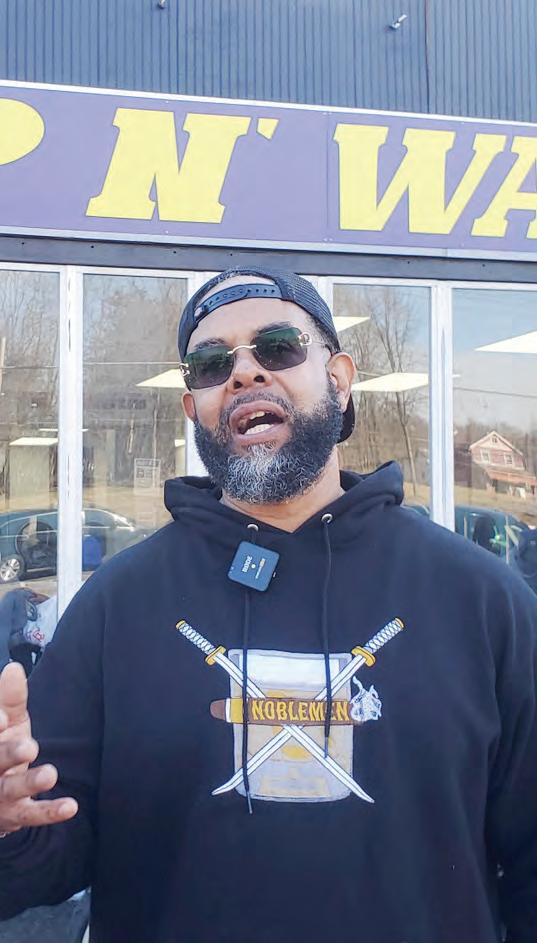
Stop N’ Wash has reopened in Homewood, and the local residents who turned out for the Feb. 28 grand reopening were beyond excited.
The longtime laundromat was formerly owned by Gerald Wilburn, who was a Tuskegee Airman. It’s been closed for the past few years.
Sheldon Oliver, owner of Noblemen Cigar Lounge in Penn Hills, is the new owner of the laundromat, which features 10 new front-load washers, coin-operated machines, TVs, a welllit interior/exterior, on-site security, and wash and fold service
available. The laundromat is located at 7044 Frankstown Ave.
“Now is as good a time as ever to invest in essential services and resources for our community,” said Oliver, in a statement sent to the New Pittsburgh Courier. “People want to see positive development—places that are safe, clean, and built with care. We hear enough about what goes wrong in our neighborhoods. Stop N’ Wash is about showing the good that’s being poured back into Homewood.”
- Rob Taylor Jr.
CUTTING THE RIBBON IS OWNER SHELDON OLIVER. STOP N’ WASH HAS OFFICIALLY REOPENED. (PHOTOS BY J.L. MARTELLO)
SHELDON OLIVER EXPLAINS THE OLD PHOTOS OF HOMEWOOD HE HAS ON THE WALLS SOME
SHELDON OLIVER SPEAKS TO THE CROWD...
Whitney M. Young Jr. Service Awards 2026
The Sheraton Hotel, Station Square, was the site for the 37th Annual Whitney M. Young Jr. Service Awards Dinner, Feb. 25, 2026. The event celebrates leaders who create opportunities for
youth in underserved communities. Through this event, The Boy Scouts of America Laurel Highlands Council honors the legacy of Whitney M. Young Jr., a prominent civil rights leader
The 2026 African American Read-In
The United Black Book Clubs of Pittsburgh held its International African American Read-In event on Saturday, Feb. 7, at the Carnegie Library in
Homewood. Each year, families come out and read portions of their favorite book written by an author of the African diaspora.
VIVIARONA ROBERTS, 11 YEARS OLD, AT THE CARNEGIE LIBRARY IN HOMEWOOD. (PHOTOS BY J.L. MARTELLO)
8-YEAR-OLD JAYSHAWN BROADUS.
TAI’MIRR CREW HARRIS, 9 YEARS OLD.
HEAD OF THE WILSON GROUP, DERRICK WILSON, GETTING AN AWARD FROM EAGLE SCOUT RAFAEL DIAZ.
HONOREES DERRICK WILSON, FAR LEFT, AND CHARLIE BATCH FROM THE BEST OF THE BATCH FOUNDATION, FAR RIGHT, AMONG THE AWARDEES. (PHOTOS BY J.L. MARTELLO)
and former Executive Director of the National Urban League. Young died in 1971.
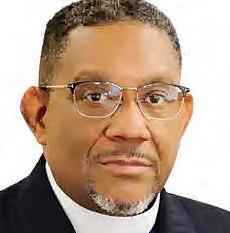
Bishop Derrick S. Johnson Sr. passes
by Jacquelyn McDonald
For New Pittsburgh Courier
After bidding farewell recently to two of the Pittsburgh region’s most influential religious figures, Bishop Thelma J. Mitchell and musician Rodney McBride, Pittsburgh’s Ecumenical community is once again saying, “I’ll see you in the morning,” in response to the unexpected Heavenly departure of Bishop Derrick S. Johnson Sr., pastor and founder of the New Creation Family Worship Center in Greensburg. Bishop Johnson died on Feb. 23, 2026. He was 64. Bishop Johnson, an Asheville, N.C., native, preached his first sermon at age 14 and has been in church ministry for more than 50 years. Through a series of life’s changes, he migrated to Pitts-
burgh and continued on in his commitment to minister the Gospel of Jesus Christ, and was joyfully received in many Pittsburgh pulpits for more than 20 years. While experiencing a brief pastorate at First Church Of God In Christ in the Hill District, Bishop Johnson decided, in faith, to launch a visionary Fellowship church, in the Greensburg community, and called it the New Creation Family Worship Center. At 119 Westmoreland Avenue is where his innovative and visionary ministry ideas that God had planted in his spirit manifested. In August 2016, Apostle Reginald J. White of the Gospel Lighthouse Word Ministries in Sanford, N.C., consecrated Pastor Derrick S. Johnson Sr. to the Office of Bishop. His anointed ministry gifts, mentoring, and intense evangelistic-style
preaching caused the membership to flourish and thrive up to his untimely death. Church officials have stated that his vision and legacy at New Creation Family Worship Center will continue. Bishop Derrick Johnson Sr. leaves to remember his essence, his wife of 17 years, Neila Diane Johnson, 8 children, 17 grandchildren and 11 siblings. The celebration services are as follows: Thursday, March 5, at New Creation Worship Center, 119 Westmoreland Ave., Greensburg; Viewing is from 2 to 7 p.m., Worship Celebration is from 7 to 8 p.m. The Homegoing Celebration will be held at Petra International Ministries, 235 Eastgate Dr., Penn Hills, Friday, March 6, at 10 a.m.
COURIER CHURCH DIRECTORY
BAPTIST TEMPLE CHURCH
Sunday Worship: 8 a.m. and 10:45 a.m.
Pastor—Rev. Dr. Rodney Adam Lyde 7241 Race Street Pittsburgh, Pa., 15208
“Moreover, if thy brother shall trespass against you, go and tell him his fault between you and him alone; if he shall hear you, you have gained your brother. Then came Peter to Him (Jesus) and said Lord, how often shall my brother SIN AGAINST ME, AND I FORGIVE HIM? Jesus said to him (Peter), I say not unto you, Until 7 times but, Until 70 times 7 = 490.” - St. Matthew 18:15, 21-22
REV. WALKER SAYS: FORGIVE, FORGIVE AND FORGIVE!!! LET IT GO — God gives us New Mercies every morning. Let’s start each day fresh with forgiveness, love and praise to God.
The stench of 'ethnic insensitivity' billows through pro sports
My father once said to me: “I don’t care how much perfume that is poured on a cesspool, a blowfly will still find the goodies.”
Take for example, the powers-that-be that run the sports world. Hiring a Black head coach or starting a Black quarterback should have been normalized by now. However, the great composer William “Smokey” Robinson once penned a great song titled, "Here I Go Again." A segment of the original lyrics read: “My heart said to me, don't walk headon into misery. Hey, with your eyes wide open, can't you see? A hurt's in store, just like before, but here I go again. Walking into love, never thinking of, the danger that might exist. Disregarding all of this, just for you. I ignore the detour sign. I won't stop until you're mine. I'm past the point of no return.”
Our instincts have told us for centuries that equal opportunities will never exist for people of
color, especially in a system that was founded and based upon no access and no opportunity. We know what the ultimate outcome is going to be, but yet we continue to hope and pray that we will be given a counterfeit ticket to get on and ride the
‘"hope train." The stench of ethnic insensitivity continues to blow up a lot of nose hairs in the vicinity. Will our sense of smell ever recover? We refuse to realize the real reason that we don’t hear the conductor yell “all aboard,” is that we are tied down on the railroad tracks, with the train bearing down on us. Instead of attempting to free ourselves from certain
doom, we lay patiently on the "tracks of forever," for the "train of opportunity" to run over us, with the sole purpose of decapitating the hopes and dreams that have been dead and buried long ago. However, that is not enough because if we are fortunate enough to be rescued from the tracks enabling us to escape the oncoming train, we continue to march head-on into a speeding train with the high beams of injustice, blinding us from seeing the truth as well as accepting reality. Take for example, celebrating Jackie Robinson Day. Once a year, the heritage of MLB legend Jackie is celebrated throughout Major League Baseball. Now check this out, folks, because I am puzzled. MLB trots their players out to celebrate Robinson annually. The players wear his number 42 and a lot of stadiums bring in guest vocalists to sing the Black national anthem, better known as, "Lift
Every Voice and Sing." By most accounts this is a noble gesture. But ya know what? I have another method of celebrating the legacy of Jackie Robinson. On Jackie Robinson Day, which is April 15, why don’t we honor him by introducing the players of color who have made the big-league rosters of their team for that season? Why don’t we honor them? I know that on the surface, that idea might seem to be a bit lopsided, but that idea is no more lopsided than regurgitating a snippet of baseball history that frankly may have become superficial in the eyes of the general public and does not seem to be as effective as it once was in regard to the continuous hiring of Black players and management. Please allow me to switch gears to the National Football League, specifically the Pittsburgh Steelers. Former head coach Mike Tomlin suddenly resigned after the conclusion of the
2025 season. The team replaced Tomlin with Mike McCarthy. Now hold on, this next part totally confuses me as well as a load of Steelers fans as well as NFL fans in general. McCarthy has a current wonloss record of 185-123-2. Mike Tomlin's won-loss record is 201-126-2. With a plethora of young, bright coaches available, many pundits surmised that the Steelers would hire a younger coach based on the talent available as well as their recent hiring history. After McCarthy was retained as the head coach of the Steelers, after the shock and awe and the smoke cleared, the hiring was aesthetically pleasing, at least from a demographic perspective. It made great sense, at least to the "yinzers" that a reunion between QB Aaron Rodgers and Mike McCarthy makes perfect sense; at least on paper anyway. McCarthy is an offensive guru type and Aaron Rodgers is of course a future
NFL HOF quarterback. However, when the Pittsburgh Steelers were defeated by the Green Bay Packers in Super Bowl XLV, it was the performance of the Packers defense that provided the margin of victory for the team from Green Bay. The Packers won, 31-25. Ben Roethlisberger threw for two interceptions. One was a pick six by Packers DB Nick Collins. If not for the ill-advised decisions of Ben Roethlisberger, neither Aaron Rodgers or Mike McCarthy would have a Super Bowl victory under their belt. How will the Steelers defense react to Mike McCarthy, the resident genius of offense, steering the ship? The jury is still out on whether the Steel Curtain defense will be better or worse in the 2026 season.
We should like the Winter Olympics!
Heck, we built this country, too!
:10—OK, alright, hold on, wait a minute!!! I know, I know you love it, you want it, you need more of it. So I’m “Back in Stride Again” (that’s Frankie Beverly and Maze to you of the old persuasion!). Let’s get down and dirty with some O.T. Hot Stuff. And word to your mama, some of this stuff will burn ya!!!
:09—Can you please shut up about the Steeler quarterback spot. It’s going to be Aaron Rodgers...it’s always been Aaron Rodgers for the past two years. He’s not your problem. The offensive coordinator was your problem, and I mean huge. And guess what, your O-Line was the rest of your problem, period! The man finished the season with 3,897 passing yards (8th in the League, without George Pickens and a quality stable of receivers), 28 touchdowns (tied for 7th) and only 11 interceptions (tied for 15th). Those are not only good numbers, they’re great numbers for a 42-year-old man. Some of you Wanna B’s and never Was-ers couldn’t get those numbers if Doug Williams, Tom Brady, Dan Marino and Jim Thorpe were in your hip pocket. (What...I told you this would burn ya!)
:08—Face it, kids, the Lakers are done, LeBron is done, LeBron’s son never was...and will be gone when his dad sells out to the next team he will try to prop up for a ring. And let’s see if the next team takes Bronny?!?! (C’mon man!)
:07—By the way, and speaking of George Pickens, now that you/we/me are done ripping him, I guess it’s safe to say he was not the only part of the problem and guess what else, apparently he’s a great, great, great wide receiver. Maybe, and this bears repeating, maybe the play-calling for your Pittsburgh Steelers was as bad as advertised. I am just sayin’!
:06—Black People...
Brown People...All People. It’s OK. It really is. You don’t have to be White and in the snow to enjoy and celebrate the Winter Olympics. It’s OK to applaud the USA. After
all, we did help build it, didn’t we??? Heck, for all we know, we may have invented the giant downhill slalom. After all, we invented blood plasma, the traffic light, and have peanuts to our credit, just to name a few. And that, ladies and gentlemen, wraps up my Black history dedication. And you are welcome!
:05—This continuous and non-stop idea the Pittsburgh Pirates continue to force down your “good eye” that 19-yearold Konnor Griffin is not ready for big leagues is nonsense. Plain and simple, he’s better than half the roster right now and should be in the starting lineup when they come north. Pittsburgh Pirates, please stop - the - madness!
:04—RIP Bill Mazeroski. Let’s be honest. It’s the greatest and only World Series walk-off home run in Game 7 all-time in the history of baseball, period. And add to that, eight Gold Gloves... C’mon man!!!
:03—I hope the right people hear this part. L.C. “Hollywood Bags” Greenwood should have been selected to the NFL Hall of Fame 10 years ago. The fact that he’s not in is, as the ole folks say, “It’s a sin and a shame.”
:02—Oh, by the way, the NBA All-Star Game is a joke and this ain’t the old man on the lawn talking. It’s just a weekend party feast surrounded by some bad basketball.
RESIDENT JASMINE JONES won a Bronze medal in the 2025 Olympic Winter Games in the two-person bobsled competition. She was welcomed home with a surprise party, March 1.
:01—For those of you who want to walk the walk and not just talk the talk, please join us at the 5th Annual “What’s Going On?” Community Forum and Talk Session com-
ing up Saturday, March 21, noon to 4 p.m. at the Hampton Inn, Monroeville. This is all about making our community a safer and better place. Open to all, but you must
register in advance. Free registration, parking and refreshments. Call Achieving Greatness Inc., at 412-628-4856 now...do it now...'cause it “Makes ya wanna holler and throw
up both your hands!” GAME OVER.
GREENSBURG
Property is Power!
Property is Power! and access to it is under threat in the digital age.
For most of the 20th century, discrimination in mortgage lending was explicit. Banks drew red lines around Black neighborhoods, labeling them too risky for investment. Federal underwriting manuals reinforced exclusion. The result was predictable generations of Black Americans locked out of the primary engine of wealth creation in the United States, homeownership. Those maps no longer exist. But exclusion has not disappeared. It has evolved. Today, artificial intelligence and algorithmic decision-making play an increasingly central role in mortgage underwriting, pricing, and
marketing. These systems are often described as objective and race-neutral, designed to remove human bias from financial decision-making. In practice, however, they risk reproducing the very inequities they claim to solve.
Discrimination no longer requires intent. It only requires data.
Modern lending algorithms rely on historical information; credit scores, income patterns, employment stability, geographic location, and consumer behavior to assess risk. But history matters. Black Americans were systematically denied access to credit, stable housing, and asset-building opportunities for decades. That exclusion is embedded in the data itself. When algorithms are trained on outcomes shaped by inequality, they learn to normalize those outcomes.
Zip codes become proxies for race. Income volatility becomes a red flag. Gaps in credit histories are interpreted as irresponsibility rather than evidence of historical exclusion. Borrowers can meet every modern standard education, income, financial responsibility and still be penalized because the system doesn’t recognize context.
The result is a system that can generate racially disparate outcomes without ever “seeing” race. For Black borrowers, particularly college-educated professionals and first-time buyers, the consequences are often invisible but consequential. Automated underwriting systems may approve a loan, but at a higher interest rate. They may require more reserves, lower debt ratios, or stricter documentation. They may quietly downgrade applications
BUSINESS
by Laketress Jones
(Dallas Weekly)—Let’s be real— budgeting or talking about money isn’t easy. And in our community, we don’t always talk about our finances as openly as we talk about sports or music. I remember my first real conversation about money: I was 15, my mom had recently divorced, and I asked her for lunch money—the second time that week. She sat me down and said, “We’re going from a two-income household to one. Everyone has to do their part.” That moment
groceries, transportation, utilities, and childcare.
Step 2: Ask Yourself: How Much Do You Really Make?
Pull your recent pay stubs and tax forms to get a clear idea of how much money you’re actually making. In this step, it’s important to consider any life changes that may impact how much you’re making, for example: a new job, marriage, having children or pulling side gigs.
Step 3: Get To Work On Building Your Budget Use a spreadsheet, notebook, or
Laketress Jones, corporate finance manager and founder of Black Woman in Finance, LLC, gives an inside scoop into managing your budget with her Five-Step Essential Financial Health Checkup.
opened my eyes to the importance of managing money, saving, and working hard. In 2025, everything feels like it’s becoming more expensive—from gas and groceries to school supplies. Whether you’re running a business, managing a household, or just trying to keep up, it’s important now more than ever to keep a close eye on your numbers. The question is: how do we set ourselves up for long-term financial success in uncertain times?
I’ve been managing budgets since I got my first job at 15—both for myself and for major corporations. Here are my five quick steps to help you jumpstart your journey for financial freedom: The Five-Step Essential Financial Checkup.
Step 1: Ask Yourself: How Much Do You Need? What are your monthly living costs? Start with the basics: rent/mortgage,
app—whatever works. The key is to track your spending and earnings weekly. Remember, it’s crucial to review your budget often. These numbers won’t lie. They’ll show you what’s working and what’s not. Most importantly: Be consistent! Set a time to make your budget each week, and stick to it! These three steps are just the beginning, of getting a good grip on where your green is going. With weekly budgeting, you can create a physical and mental reminder of exactly how you’re spending your money.
Better yet, budgeting actively works to improve your financial health by teaching us how to best spend the money we do have, rather than the money we wish we had. We can’t prepare for tomorrow if we don’t know we are today. Let’s Talk About Debt Now, let’s have an honest conversa-
tion about debt. It hits our community hard and plays a major role in the racial wealth gap. I didn’t learn that from an article or panel—I learned it at 22, during a conversation at my first corporate job. A colleague, let’s call him Bob, mentioned paying for his daughter’s wedding and another daughter’s tuition. I mentioned I had earned scholarships. He nodded and said, “Yeah, but my daughters’ scholarships were academic.” Bob, in a poor attempt to undermine my academic prowess, was referencing how society thinks most Black college students only earned their spot on campus due to need-based financial aid programs like FAFSA. Not letting him slide, I quickly listed off my accolades to let him know I graduated in the Top 5 percent of my class.
At the same time, the moment was a reality check for me: Not everyone starts their adult life borrowing money.
Debt really is the nail in the coffin when it comes to keeping Black students and their families from financial success. And student loans are only part of our problem. In our twenties, many of us may turn to credit cards for shortterm fixes, but these credit lines tangle us up in long-term problems. Step 4: Rewrite the Rules and
Discipline is the real flex
We live in a world that worships the “quick flip.” Everybody wants the overnight come-up, the viral moment, the lottery ticket, the hookup that magically changes everything. Folks scroll past real game and stop for anything that promises fast money with no sacrifice. But when it comes to saving money and stacking wealth, the quick flip is a fantasy. The real flex is DISCIPLINE! Discipline is doing what needs to be done long after the hype wears off. It is not flashy, it is not sexy, and nobody is throwing a parade because you packed your lunch three days in a row. But that quiet, consistent discipline is what separates people who always feel behind from people who build real security. Let’s be clear. Wealth is not about luck. Luck might drop you a check, but if you lack discipline, you will blow through that money and end up right back where you started—sometimes worse. We have seen it too many times: tax-refund ballers, lawsuit winners, folks who get a little inheritance or a big signing bonus. For a few months, they were shining. New car, new clothes, new toys. A year later, the money is gone, the bills are back, and the stress is heavier than ever. The problem wasn’t the amount of money. The problem was the lack of discipline. Discipline means you have a plan for your money before it hits your account. You tell your money where to go instead
of wondering where it went. That looks like paying yourself first, not last. That looks like deciding “X dollars goes into savings, X dollars goes toward debt, X dollars covers my living expenses,” and then sticking to that plan even when temptations pop up. Discipline is the muscle you build every time you say, “I want it, but I don’t need it—and I’m choosing my future over this moment.”
Anybody can start strong when they’re hyped. New year, new budget. Fresh raise, fresh resolve. You watch a motivational video or hear a sermon about financial freedom and suddenly you’re ready to change your life. That’s cool—but real wealth-builders stay steady when the excitement fades. They keep going when it’s boring, when nobody’s watching, when there’s no applause.
and online.
—Automating your savings so money moves into your emergency fund and investment accounts without you having to think about it.
None of that feels glamorous. It doesn’t look impressive on Instagram. But those are the moves that turn dreamers into doers.
Wealth is built in the daily choices:
—Packing lunch instead of hitting the drive-thru every day.
—Brewing your coffee at home instead of paying five to 10 dollars for sugar and foam in a cup.
—Skipping impulse buys at the mall
Think about it this way: Every dollar you control today is a worker. Undisciplined money calls off, shows up late, and leaves early. It hangs out in restaurants, rides around on rims, and lives inside shoes and outfits you barely wear. Disciplined money, on the other hand, shows up on time and goes to work for you. It sits in savings, grows in investment accounts, knocks down debt, and builds options.
I like to say every dollar is a soldier. When you lack discipline, you let your soldiers wander. They’re out here partying, getting captured by interest, trapped in subscriptions you forgot to cancel, and locked into payments on stuff that’s losing value. But when you practice discipline, you assign your sol-
diers missions. This squad is attacking debt. That squad is defending your emergency fund. Another squad is out on a long-term assignment in investments, growing quietly year after year. Stack enough soldiers, give them clear orders, and you will build an army of wealth.
Here’s the part most people underestimate: Discipline is not about denying yourself forever. It is about deciding what really matters and being intentional about when and how you enjoy your money. There is nothing wrong with treating yourself. The problem is when “treating yourself” is your whole financial strategy. If you are tired of living check to check, discipline is your way out. If you want to stop panicking every time an unexpected bill shows up, discipline is your protection. If you want to retire with dignity instead of dread, discipline is your bridge from where you are to where you want to be. It is not about perfection; it is about direction. You will slip sometimes. You will have days when you spend more than you planned. The key is to reset quickly and get back on track. So what does disciplined money look like in real life?
1. You know your numbers. You have a written budget or spend-
ANTHONY
SAVING AND BUDGETING YOUR MONEY isn’t just a skill, it’s essential to the health of your finances. (Credit: Joslyn Pickens/Pexels)
Property is Power!
The New Redlining
based on factors that have little to do with a borrower’s long-term ability to sustain ownership. Because these decisions are automated, they are difficult to challenge. Unlike a human loan officer, an algorithm does not explain itself. Applicants are rarely told which variables mattered most or how close they were to approval on better terms. This opacity matters. Access delayed is often access denied.
Algorithmic bias also extends beyond underwriting. Marketing systems determine which consumers see mortgage offers, refinancing opportunities, or homeownership education in the first place. Studies have shown that certain demographic groups are less likely to be targeted for prime financial products, even when they are qualified. Opportunity is filtered before it is even presented. The long-term implications are significant. Higher borrowing costs reduce equity accumulation. Slower entry into homeownership shortens the time horizon for wealth-building. Over time, these differences compound, widening racial wealth gaps without any single discriminatory act to point to.
Artificial intelligence is not inherently discriminatory. But neither is it neutral. It reflects the values, assumptions, and data of the systems that create it. Without deliberate safeguards, AI risks becoming a highly efficient mechanism for reinforcing historical inequities under the guise of innovation.
There are steps that can and should be taken.
First, transparency must be strengthened. Lenders using algorithmic systems should be required to audit outcomes for disparate impact and to provide meaningful explanations for adverse decisions. Black-box lending is incompatible with fair-access principles.
Second, the use of alternative data must be expanded responsibly. Rent payment history, utility payments, and long-term cash-flow stability can provide a more accurate picture of creditworthiness than traditional metrics alone particularly for borrowers historically excluded from mainstream credit.
Third, consumer education must evolve. Financial literacy in the 21st century includes understanding how automated systems evaluate risk. Borrowers must be equipped not only to build credit, but to navigate a data-driven lending environment.
Finally, policymakers must modernize fair-lending enforcement. Laws written for an era of human discretion must now address algorithmic systems with the same seriousness once applied to redlining maps and discriminatory underwriting manuals.
Property is Power! And when access to property is limited, power is too. Black families must be prepared, informed, and organized to navigate this new era of lending because ownership is the line between permanence and displacement. If we fail to act, we will see yet another generation locked out of wealth and opportunity. If we act intelligently, strategically, and collectively, we can ensure that ownership remains a tool for equity, agency, and generational strength.
(Dr. Anthony O. Kellum—CEO of Kellum Mortgage, LLC Homeownership Advocate, Speaker, Author NMLS # 1267030 NMLS #1567030
O: 313-263-6388 W: www.KelluMortgage.com.)
Property is Power! is a movement to promote home and community ownership. Studies indicate that homeownership leads to higher graduation rates, family wealth, and community involvement.
How investors are making profits flipping houses in 2026
Flipping houses profitably in 2026 requires understanding current market conditions, maintaining financial discipline, and applying proven investment strategies.
Real estate experts predict a favorable year for house flippers, as slower price growth is making properties more affordable and reduced competition is opening the door to stronger deals.
The ROI of house flipping dropped below 25 percent in the third quarter of 2025, as per ATTOM. While these numbers don’t look promising, real estate experts are predicting that 2026 will be promising for those venturing into the housing market.
Houses are becoming more affordable due to slower price growth. You may also notice lower interest rates. With less competition from other house flippers, you can expect to find deals with good ROI if you have the right strategies.
What Does Flipping Houses Mean?
The process of flipping houses starts with buying and upgrading a property before you sell it for a profit. Here is what you need to do if you want to make a profit from renovations:
Buy a property at a low price
Add value to the property through renovations
Sell your property high
You should look for distressed properties that you can buy below market value. Most of these houses need a lot of renovations if you want to make a profit. What Are the Common Mistakes in Flipping?
As you buy and sell homes through the flipping process, you need to be careful. You can make mistakes that cost you your profits. Here are common mistakes you should avoid in flipping:
Overpaying for Property
Some flippers pay the high price for distressed property. They buy them too high and have to cater for renovation costs as well.
When it comes to selling, they get stuck with their property. As time goes by, they have to sell their house at lower prices. If you don’t pay attention to real estate market trends,
you’re likely to fall into this pitfall.
Making Excess Renovations
As a flipper, you may sometimes make many improvements to the house based on your own preferences. This situation makes you waste a lot of money; you may not recoup unless you overprice the sale. If you make renovations based on your own tastes, you may fail to appeal to a broader number of buyers in the area.
Poor Marketing
Failing to market your property is another mistake flippers make. First, they may underestimate how their house looks on the listing. Bad photography and staging will often chase buyers away.
How Are Investors Making Profits from Flipping Houses in 2026?
With the right real estate investment tips, house flipping can enhance your investment portfolio. Here are house flipping strategies you should implement if you want to make some money.
Accurate Budget Planning
When flipping your house, consider all the costs involved to avoid bad surprises later. Start with the buying price. It is your first biggest upfront expense. Next, plan for renovation costs, including:
Labor Materials
Unexpected expenses for repairs
In addition, don’t forget about holding costs like insurance and loan repayments. Additionally, budget for selling fees, like legal expenses and agent commissions.
Market Research
If you want to be a successful house flipper, do your research. It allows you to stay up-to-date with the real estate market trends. With the right information, you can make offers and counteroffers that reflect the current market conditions.
Evaluate Your Profit Potential
Buyers actively look for renovated, move-in-ready homes. This situation creates high demand for flippers who can deliver. Use the 70 percent rule to ensure your flip is profitable. Calculate the amount you should pay for a house by taking 70 percent of its after-repair val-
ue and deducting the projected renovation costs. If you use this formula, you can protect your profit margin
Get Permits and Approvals
Once you start renovations, pulling permits is necessary. You may need permits for:
Plumbing work
Roof replacements
Electrical upgrades
HVAC system replacement
Window or door replacements
Structural changes like moving walls
You have to get the permits to avoid getting fines. Permits also protect you from risks, such as structural failure.
Pay Attention to Capital Gains Tax
When you sell your assets for more than their cost, you get a capital gain. These gains are taxable. You will pay them depending on how long you hold the asset before selling.
If you hold your house for less than a year before selling, you have to pay for short-term capital gains taxes. Long-term capital gains taxes apply if you hold for more than a year. Don’t hold property if you want to make profits.
Avoid Hidden Costs Hidden costs can eat into your profits if you aren’t careful. Unexpected repairs, such as structural issues, can show up after you start renovations. These surprises can inflate your budget. If you see such issues, consider selling to We Buy Houses Memphis They purchase properties in any condition, offering a fast, as-is sale that can help you recover your investment without ad-
Will 2026 Be a Good Time to Sell?
Real estate markets move in cycles. 2026 may be a good year to sell if there is strong buyer demand and the prices are rising. A favorable sellers’ market makes selling easy.
How Long Does It Take to Flip a House? It takes about 5-6 months to flip a house. However, the house flipping timeline may vary. As a flipper, you have to follow the clear steps of flipping, like acquisition of the property, financing/permits, renovation, inspections/staging, and resale. Your property’s post-renovation condition and local market demand both influence how quickly it sells. While holding the property, costs like loan interest and insurance accumulate monthly.
Is Flipping Houses Stressful?
Flipping houses can be very stressful. You have to meet deadlines, select the right contractors, and do everything within budget. While most house flips are very profitable, you may face a lot of pitfalls that can be overwhelming. When this happens, you need to take a break.
Maximize Your Profits When Flipping Houses
You can enjoy good money after flipping houses, but only if you have proper strategies. You have to put in the time, effort, and resources to ensure you get the renovations right, budget well, and sell for profit.
Your budget isn’t just numbers—it’s a financial checkup
Review Your Budget
What if we rewrote the rules? It’s up to us to build wealth for our families instead of passing down more generations of financial stress.
The Black community faces more predatory lending and higher interest rates. That’s why it’s critical to review your debt and make a plan to get it down, one payment at a time.
Shifting to a more savings-oriented mindset, not only helps actually start
saving money, it can also give us peace of mind. Eventually, this allows us to reduce finance-related stress and improve our mental health.
Step 5: Save It Like You Made It (Because You Did!)
Once you’ve got your debt under control, even a small savings habit can make a big difference in your finances. A High Yield Savings Account is a great place to start— whether you’re saving for car maintenance, medical emergencies, or just building a safety net.
But remember: these accounts truly only offer peace of mind. To actually save money, you need a consistent form of income and good planning skills.
Saving is a privilege, though it shouldn’t be —that’s why many of us work multiple jobs to make ends meet or constantly come up with innovative ways to reduce expenses.
That’s why I started saving by moving in with my cousin last year. I know what you’re thinking: No, it wasn’t glamorous, but it worked. That’s the kind of
honesty we need to have with ourselves and our finances.
We should feel more comfortable discussing our financial goals—think of it as a way of looking out for one another. This way, we can share in our struggles and triumphs navigating today’s economy. Dallas family, you don’t have to do this alone! Now, let’s review the steps we can all take together to keep our financial health in check.
A Quick Recap: We can rewrite our financial history with
weekly budgeting, regular review of our debt, and saving with intention. But it’s up to us we can change the story. We can teach our next generation how to practice smart money habits. That way, they don’t have to learn the hard way like many of us did.
Your 5-Step Financial Health Check: Know your monthly expenses. Know your monthly income. Build and review your budget weekly. Review your current
debt and create a plan.
Start saving—every little bit counts.
(Laketress Jones is a corporate finance manager and founder of Black Woman in Finance, LLC. She specializes in making business finance concepts easy to understand—especially for those people trying to grow their income, manage inflation or turn a side hustle into something sustainable. She believes financial literacy isn’t just about numbers, it’s about having a clear plan for what you want your money to do.)
I afford the monthly payment?” you ask, “What is this really costing me over time?” You pass on some things today so you can have bigger, better options tomorrow. If you see yourself in the undisciplined side of this, this isn’t about
Race is the elephant in the room of U.S. foreign policy
by Andreas Kluth
Muted yet deafening are the many dog whistles suggesting that American foreign policy under President Donald Trump is at least in part based on race, and specifically on White Christian nationalism. Nobody in the administration has said so baldly. In fact, all involved reject the idea with well-rehearsed indignation. “I am, by the way, the least racist president you’ve had in a long time,” Trump recently remarked, as he refused to apologize for posting a video that depicted the Obamas as apes in a jungle. And yet the signs are too ubiquitous to ignore, at the top of the administration as down below. One example from the nether regions is the nomination of Jeremy Carl to become Assistant Secretary of State for International Organizations in the State Department, a role that mainly involves interacting with the United Nations, which the administration holds in contempt.
Carl is a right-wing firebrand who played a minor role in the first Trump administration and has more recently gained, depending on your vantage, kudos or notoriety for his theory that “Anti-White Racism Is Tearing America Apart,” as his book’s subtitle puts it. He believes, for example, that a “White genocide” is underway and endorses the Great Replacement Theory (according to which elites in America and Europe are intentionally encouraging immigration to replace indigenous Whites).
Carl’s confirmation hearing in the Senate Foreign Relations Committee the other day turned into what one senator called a “heartbreaking” spectacle. One by one, the Democrats confronted Carl with his own quotes and views. Carl squirmed away from some of his earlier remarks minimizing the Holocaust but stood by his views on anti-White persecution and the Great Replacement.
In one tense exchange, a senator wanted him to define the White identity that Carl claims is being erased. Carl couldn’t, or perhaps didn’t want to be explicit. Instead he mumbled about worship, food and music, without ever once explaining how their “White” styles are at risk of being erased.
“Sir, you have no decency, you have no honor,” concluded Cory Booker, a Democratic senator of color; “I’ve never seen such a blatantly racist individual.” A Republican colleague, John Curtis, said after the hearing that he will oppose the nomination, mainly for Carl’s “insensitive remarks about the Jewish people.”
Even if Carl doesn’t get confirmed and never comes near the United Nations, it’s remarkable that he could get this far. Some of his code words, moreover, have wider currency in the administration. Its National Security Strategy, for instance, is scathing toward European allies for allegedly abetting their own “civilizational erasure” by allowing non-European immigration.
That document in turn echoes speeches given by Vice President JD Vance in which he makes common cause with far-right European parties such as the Alternative for Germany, parts of which espouse the Great Replacement Theory and related concepts such as “remigration.”
Even members of the administration who used to be considered moderate have adjusted their rhetoric. When Marco Rubio, the national security advisor and secretary of state, recently addressed the Munich Security Conference, the audience at first breathed a sigh of relief because he was less confrontational than Vance had been a year earlier. And yet Rubio too presented a narrative of Western civilization as exclusively European and Christian, even citing two of his own 18th-century ancestors in Italy and Spain and somehow skipping over his parents, who immigrated from Cuba in 1956. At the very top, meanwhile, the president seems quite clear about how he views different parts of the world. In December, he told a crowd about a meeting he was in: “And I say, ‘Why is it we only take people from s---hole countries,’ right? Why can’t we have some people from Norway, Sweden? Just a few? Let’s have a few from Denmark. Do you mind sending us a few people? Send us some nice people. Do you mind? But we always take people from Somalia, places that are a disaster, right? Filthy, dirty, disgusting, ridden with crime.”
This worldview also finds expression in policies. For example, Trump has dramatically lowered the annual cap on refugees the US accepts, from 125,000 to 7,500, and has reserved those spots largely for Afrikaners from South Africa.
That makes a kind of sense once you grasp that the administration has extended the narrative about White genocide espoused by Carl to South Africa. Afrikaners, you see, are descended from Dutch settlers and look a lot more like Danes, Norwegians or Swedes, and lot less like, say, Somalis.
(Andreas Kluth is a Bloomberg Opinion columnist covering U.S. diplomacy, national security and geopolitics. Previously, he was editor-in-chief of Handelsblatt Global and a writer for the Economist.)
(Reprinted from the Philadelphia Tribune)
Rod Doss Editor & Publisher
War! War! War!
(TriceEdneyWire.com)—WAR!
WAR! I know this subject does not tell us about all men—just a few. I know we were told “that all men think about is war! I am a true Dick Gregory disciple, and he taught us more about peace—not war. It’s clear that not all men think about war—just a few who don’t have to fight them! War is such a violent conflict. Of all the things too many of our leaders think about is war of one kind or the other. Of all the studying some of them have an opportunity to do or at least claim to do, of all the staff our tax dollars pay to have smart people around to advise them, don’t they ever figure out how to resolve challenges without war! Doesn’t anybody ever tell them so long as there are poverty, injustice and gross inequality in our nation and around the world, none of us will be truly safe, nor can we rest.
So long as we allow enemies of peace to control us, we’ll never get out of the place they’ve assigned us. If we continue to allow the enemy to feed us, he’s going to control us. Everyday, some of them plant seeds in our communities to divide us. No matter what the war is, the enemy is going to come out okay. He plans it that way, and if we don’t know who we are or which side we should be on, the enemy wins, and we find ourselves fighting another war—
(TriceEdneyWire.com)—Frederick
Douglass did not know the day he was born.
Like many enslaved people, he was denied even the dignity of documentation. Birth dates were approximations. Family lines were severed. Identity existed in property ledgers, not in public record.
His mother, Harriet Bailey, called him her “little Valentine,” and Douglass later chose February 14 as his birthday—an act of self-definition in a country that refused to define him as fully human. That act matters.
Douglass understood something fundamental: identity is not granted by paperwork. It is asserted through presence, voice, and participation. He claimed authorship over his own life in a nation structured to deny it. Today, we are debating whether documentation should determine access to democracy. The SAVE Act would require documentary proof of citizenship to register to vote in federal elections. Passports. Birth certificates. Paper trails. Supporters frame it as administrative protection. But the history of American democracy teaches us that administrative mechanisms are rarely neutral. Paperwork has always been political.
against somebody who has never done a thing to harm us. As my good friend Dick Gregory said before he left us, “Wake Up and Stay Woke.” This is Black History Month when our history should be kept up front and center, but what have we been seeing from too many of our socalled leaders? We’ve seen too many leading the charge to interfere with our right to vote, too many lying about their true relationship with Jeffrey Epstein and Ghislaine Maxwell who robbed so many young girls of their childhood by lustful old White men— many of them who had daughters of their own with no regard for what they did to these girls would impact their lives forever.
Not long ago, President Barack Obama said, and I agree, “If women were put in charge of every country in the world, including ours, for the next 2 years, the result would be more gains on just about everything.” I’d leave a few women off the list!
War is what small-minded men are all too ready to use young men and women who are other people’s innocent children, are called to fight wars while Trump, his Secretary of War, his various insecure people around him, are too afraid to tell him enough is enough!
War is a complex phenomenon with historical roots and contemporary implications, particularly highlighted by ongoing conflicts like what we’re seeing today where there’s no benefit to our country or our people. This new war that Trump is drumming up with Iran is simply to make us forget who he really is and wants us to forget. His children won’t be in the midst of the fighting. They won’t be the ones who die in wars. They’ll just be running around the world collecting more personal assets— while Trump figures out a new way to frighten somebody else into doing what personally benefits his largerthan-life ego, while he figures out how to think up silly new caps for him to wear, and while he can’t explain why he’s trying to start a war with Iran! He has the nerve to set up a phony Peace Board while he’s yearning for a new war to distract from his failures as President!
(Dr. E. Faye Williams is President of The Dick Gregory Society.)
After Reconstruction, when Black political participation expanded, new rules narrowed the electorate. Literacy tests. Poll taxes. Grandfather clauses. Each was presented as procedural. Each functioned as a barrier. The methods change. The objective —control over who counts—does not. Documentation requirements would fall hardest on those least likely to have ready access to formal records: seniors born at home in the Jim Crow South, low-income Americans without passports, married women whose legal names no longer match their birth certificates. Even producing paperwork can become a test of belonging.
Documented cases of noncitizen voting are exceedingly rare. The question is not fraud prevention; it is access. Reconstruction was not only about emancipation. It was about participation. Black men voted. Black officials were elected. Black institutions were built. And when those gains threatened entrenched power, backlash
followed.
In 1898, in Wilmington, North Carolina, a legitimately elected multiracial government was overthrown. Black political power was dismantled. The ballot was replaced by the bullet. It was not disorder; it was organized suppression.
The lesson is sobering. When participation expands, resistance emerges. Today’s debates unfold in legislative chambers rather than in armed mobs. But the question remains: who has the authority to define citizenship?
Douglass claimed his identity in a system that denied him documentation. He did not wait for official recognition to assert his humanity. He understood that democracy depends not on perfect records, but on inclusive participation.
When paperwork becomes a prerequisite for political voice, we should ask whether we are strengthening democracy—or narrowing it. The struggle over the ballot has never been merely procedural. It has always been about power.
Douglass defined himself when the state would not.
The question now is whether we will let the state decide who counts.
(Dr. Julianne Malveaux is a DC based economist and author.)
A giant has returned home. Words cannot fully capture the life, legacy, and complete impact of the Rev. Jesse Jackson. Today, the nation and the world lost a civil rights icon, a champion for justice, and a righteous fighter who was always on the correct side of history.
It’s strange to speak of Rev. Jackson in the past tense; someone who was a fierce force of nature who embodied the qualities of true leadership and was a foot soldier for justice. He kept the dream alive and taught young children from broken homes, like me, that we don’t have broken spirits. He told us we were somebody and made us believe. He first called me into purpose when I was just 12 years old.
My mother introduced me to civil rights leader Rev. William Augustus Jones Jr., who then brought me to Rev. Jackson when he was in his 20s and I was barely a teenager. He instantly became a mentor. I was immediately drawn to him; he was born into a family situation similar to mine, and was not of the elitist crowd that a lot of the ministers were of that day. During those transformative years of my life, his guidance helped steer me toward my own activism and find my voice.
I knew Rev. Jackson before he was a national figure, before he became a household name. He was always hard on me, told me repeatedly that I needed to study and be more disciplined. He was, in short, the taskmaster of my life.
Rev. Jackson appointed me as youth director of the Brooklyn branch of Operation Breadbasket, the economic arm of the Southern Christian Leadership Conference, which was founded by Rev. Martin Luther King Jr. He entrusted me with that great responsibility at such a young age, and saw something in me before I fully saw it myself. That is the true measure of a mentor: They don’t just teach you; they name you. Years later, after I started the National Action Network, it was Rev. Jackson who named our headquarters in Harlem the House of Justice, as a reminder that movements must always be anchored in moral purpose. Throughout his life, Rev. Jackson called for inclusivity—a multiracial alliance that was composed of every group, regardless of their socio-economic, gender, or ethnic background.
He carried Dr. King’s teachings into future generations and spent decades fighting for equality across the board, for the betterment of our communities and our nation as a whole. Through Operation PUSH and the Rainbow Coalition, he expanded the political imagination of the country, and in turn, the world. He twice ran for president, breaking down barriers and allowing us to see that such a goal was possible. He opened doors that many of us, me included, followed through and walked in his footsteps, and ran for president as well. “Keep hope alive!” was his signature line during his second run for president. Despite the open racism he received on the campaign trail and the institutional barriers in place, Rev. Jackson never lost hope and encouraged all of us to keep pushing forward for a better tomorrow.
When Barack Obama was elected as the first Black president of the United States in 2008, Rev. Jackson had literal tears in his eyes—tears of joy and tears for all the sacrifices of our ancestors that led to that historic moment. On the global stage, Rev. Jackson was a respected figure who helped negotiate the release of dozens of American hostages and prisoners in the 1980s and 1990s. In 1984, he secured the release of a captured Navy lieutenant from Syria, as well as the release of 48 Cuban and Cuban-American prisoners in Cuba. In 1990, he helped secure the release of prisoners held by Saddam Hussein, and later that decade helped negotiate the release of U.S. soldiers held in Kosovo. The list of his international and diplomatic work goes on and on. Today, the nation and the world is in mourning. Throughout most of my life, I had the privilege of watching, observing, and learning from Rev. Jackson. He broadened and democratized America, including the corporate world, which then led to
the opening of board rooms and the expansion of business contracts. He continuously fought for the protection of voting rights, and the inclusion and acceptance of all, including members of the LGBTQIA community and marginalized communities. When the Civil Rights Act of ’64 and the Voting Rights Act of ’65 had to be renewed, it was Rev. Jackson who took that fight and kept it going through the Ronald Reagan years and years of backlash. He was a fighter until the very end. I visited and prayed with his family when he was in the hospital, and after learning of the tragic news of his passing, I prayed with his family once again by phone. He was more than a public figure to me—he was a mentor and even godfather to my own children. He prayed over my two daughters when they were just infants; he spoke life into them as young girls. We stood in his home not as a headline, but as family. We now feel the immense loss of a beloved family member who helped push this nation on a progressive trajectory. I will always cherish the fact that he took me under his wing and will forever try to do my part to keep hope alive. Leaders are defined by their character and the mark they leave in this world. Rev. Jackson’s legacy lives on through his children and those of us lucky to have known him personally. It also continues through his activism, political and diplomatic work, and all of his efforts to unite us and create a better society. It is now up to everyone to continue that work and carry the torch forward as he did. In these trying times, let us remember these poignant words from Rev. Jackson’s speech in 1988: “If an issue is morally right, it will eventually be political. It may be political and never be right. Fanny Lou Hamer didn’t have the most votes in Atlantic City, but her principles have outlasted the life of every delegate who voted to lock her out. Rosa Parks did not have the most votes, but she was morally right. Dr. King didn’t have the most votes about the Vietnam War, but he was morally right. If we are principled first, our politics will fall in place.” (Rev. Al Sharpton is president and founder of the National Action Network.)
Julianne Malveaux
Al Sharpton
As we mark another Black History Month, a moment that should honor the resilience and achievements of Black Americans, we instead confront a painful truth: Donald Trump has spent the first year of his second term in office making life harder for Black families, narrowing the pathways to opportunity that earlier generations fought to open, and going to great lengths to strip the nation of an honest accounting of Black history.
This is not abstract. It is not rhetorical. It is real, measurable harm that is being felt in classrooms, workplaces, neighborhoods, and households across the country.
The economic story alone should force us to examine what it means to live under a president who sells prosperity to Black Americans just to rip it away as soon as he is sworn in. Under Trump’s first year, Black unemployment rose to pandemic-era levels, driven by mass federal layoffs that landed hardest on Black workers, who have long relied on public service as a stable path to the middle class when private sector discrimination closed other doors. And in the private sector, Trump’s pressure campaign to force corporate retreat from Diversity, Equity, and Inclusion programs helped push 300,000 Black women out of the workforce. The result has been a collapse of career ladders that supported entire families and communities— losses that ripple through households already
Brandon Weathersby
strained by high housing and food costs.
Trump’s attacks also targeted institutions that support Black entrepreneurs, including the Minority Business Development Agency, which has historically delivered billions in capital and contracts and helped create thousands of jobs. Trump attempted to eliminate the agency through an executive order, and even after the courts blocked that effort, its operations have never fully recovered. The message to Black business owners was unmistakable: their progress was never a priority for this administration. For generations, Black Americans have seen education as a ladder to the middle class and economic stability, but Trump is pulling the bottom rungs out of reach for some Black scholars. The spending bill signed into law last summer by the president caps federal student loan borrowing for graduate, law, and medical students. It also restricts how much parents can borrow to help cover student tuition, reduces the maximum Pell Grant award, and limits aid for part-time students. This leaves Black students facing a system that shuts more doors than it opens and makes higher education more inaccessible than it has been in decades. What makes this moment even more dangerous is that Trump has paired these economic attacks with a determined effort to control how Americans think about race, history, and identity. His signature executive order framed any discussion of equity as a threat and challenged schools to choose between honest teaching and their federal funding. In the months that followed, teachers reported fear and confusion about teaching routine lessons on Martin Luther King Jr., Ruby Bridges, and the Civil Rights Movement. Trump’s whitewashing of history didn’t stop at the classroom door. His administration ordered reviews that led to the removal of exhibits acknowledging the role of slavery in the lives of the founders and the service of Black soldiers in World War II. He has pursued the restoration of Confederate names of military bases with the zeal of a man intent on rewriting the nation’s memory. These choices do not reflect a president who values unity or truth. They reflect a worldview that sees Black history as something that must be neutralized to preserve a false national story that centers on White grievance.
When you step back from each individual decision, a larger truth about this presidency comes into focus. The way he treats Black America is not an exception. It is a window into how he has failed the country as a whole by stifling opportunity, fueling division, and abandoning any real commitment to shared prosperity. It is a warning about what happens when a president replaces opportunity with grievance and chooses culture war fights over real investment in people. When young people are taught incomplete history or denied education opportunities, and when families cannot rely on stable jobs or critical resources like food assistance, health care, or childcare, the entire country loses ground.
One year into a second Trump term, the consequences are visible across the country as growth for working families of every background has stalled, pathways to education and work have narrowed, and public institutions have been bent toward political theater rather than genuine public service. The setbacks facing Black America are not isolated; they expose a broader pattern of neglect and a government more interested in punishing Americans than in lifting them up.
The rights and opportunities secured by earlier generations are not guaranteed. They depend on leadership that sees prosperity as a shared project and understands that communities thrive when the government invests in their success. That is what Black America deserves, and it is what the entire country deserves. We need leaders who view our history as a source of strength and who treat economic stability and opportunity as national priorities, not bargaining chips in partisan fights. Trump and the Republicans who rubber-stamp his agenda have shown they will not provide that leadership. Black History Month is a reminder that we can demand better for Black America and for the country as a whole.
(Brandon Weathersby is the Presidential Communications Director at American Bridge 21st Century.)
African American: a defense of Jesse Jackson’s term
(This piece first appeared in the New Pittsburgh Courier in 2022. A commenter called it timely. Now that Rev. Jesse Jackson has passed away, it’s time for a revised version to circulate.)
In 1988, Rev. Jesse Jackson advised Black Americans to replace the word “Black” with “African.” Jackson contended that the term “Black” no longer accurately defined “our” situation in America. Immediately, “African American” became the politically correct term to describe Black Americans. Once Jesse Jackson’s popularity declined, the appeal of his “invented term” diminished.
Motown legend Smokey Robinson expressed his dislike for the term “African American” in a 2022 interview. Robinson said that the word excluded all of the contributions Black people have made to America.
Black conservatives rejected the term because they felt more American than African. Other Black people stated that they preferred “Black” because they weren’t from Africa. Since the number of African immigrants in the United States has tripled since the 1990s, too many Black Americans believe the term “African American” better characterizes these immigrants rather than themselves. Furthermore, they point out that the term “African” does not mean “Black.”
For example, White billionaire Elon Musk was born in Africa but is also an American.
These reasons ignore two details. 1). Most people from the African continent who have immigrated to the United States believe that the term “African American” should solely apply to Black Americans. These African immigrants explained that the term “African American” omits their distinct cultural heritage. Ghanaians, Liberians, Nigerians, Ethiopians, and others speak different languages, have diverse cultures, and have distinct histories. These immigrants prefer to be identified by their nationality or their specific African ethnic group. No
one refers to individuals from France, Germany, and Italy as Europeans, nor are Canadians and Mexicans grouped together as North Americans.
2). At the start of the African slave trade, Portugal and Spain didn’t know the differences between the tribes on the continent. Therefore, they labeled their captives based on their dark skin color. As a result, all dark Africans became Negroes. The Spanish word for “black” became widely used after American slaves were freed. Subsequently, a Baltimore publisher argued that descendants of slaves had formed their own ethnic group in America and merited recognition as such. In 1892, this publisher founded one of the earliest Black newspapers in the United States, the Afro-American. Jesse Jackson simply expanded on the publisher’s notion. There are two additional issues with the arguments against using the term “African American.”
1). They are superficial.
2). They do not place the “post-slavery identity crisis” in historical perspective. Historically, “Negro” is a White supremacist term. It was always a badge of inferiority. Second-class citizenship became synonymous with “Negro” after the Supreme Court legalized segregation in 1896.
In 1903, W.E.B. Dubois studied the post-slavery identity crisis and defined it as “double consciousness.” Dubois explained that Negroes always feel their two-ness—an American and a Negro, two souls, two thoughts, and two warring ideals in one dark body. The Negro simply wants to be able to be both a Negro and an American, but a segregated society will not allow it.
In 1954, the Supreme Court declared segregation unconstitutional based on the findings of an experiment using Black and White baby dolls, which demonstrated that segregation produced a negative self-image in Negro children. The Negro children preferred the white doll, rejected playing with the black doll, and desired to be white rather than Negro.
Double-consciousness evolved into an inferiority complex.
At this point, the Negro community realized that looking at itself through White America’s eyes was to their detriment. As civil rights victories accumulated in the 1960s, the term “Black” replaced “Negro,” and Black communities began to promote “Black pride.” However, in Black Man’s Burden, a collection of essays, John Oliver Killens stated, “The root of the problem is the Negro invention. So, now here comes the question: who will uninvent the Negro? It is important for us to know our history did not begin with slavery’s scars.”
The transition from the Spanish term “Negro” to the English word “black” did not “uninvent” the Negro. Promoting “Black pride” addressed the inferiority complex but not the problem of double consciousness.
When Jesse Jackson claimed “Black” no longer describes our status in America, he meant that Black people were no longer destined to be at the bottom of the White supremacist hierarchy. More crucially, the phrase “African American” eliminated double consciousness; the warring within the souls of Black folk was over. The former Negro was now a descendant of Africa who could simultaneously identify as an American. This was the deeper meaning behind the term and the higher purpose for transitioning from Black to African American.
However, defending the phrase is futile when celebrities such as hip-hop legend Suge Knight say they’d rather be labeled an N-word than an African-American.
Jesse is gone, so it’s ‘Next Man Up’ J. Pharoah Doss Check
(TriceEdneyWire.com)—There are two sports analogies we can use to exemplify the need for intergenerational unity within the Black community. The “next man up” mentality is a sports-driven philosophy emphasizing preparedness, resilience, and adaptability, where teammates are ready to step in and perform at a high level when a starter is injured or unavailable. It focuses on maintaining team performance without excuses, ensuring no significant drop-off in production. Every player—man or woman—regardless of their position on the depth chart, must prepare as if they are the starter. There is a redundancy in leadership that ensures the team continues to function by building personal responsibility and team loyalty across the roster. Coaches and players are required to quickly adjust strategies and player responsibilities on the fly without prior warning. The second sports phrase that is often used is “passing the baton.” Using the example of a relay race, handing over a particular duty or responsibility is denoted. It is necessary for the intergenerational transfer of leadership. Just as in a relay race, a fumbling or dropping of the baton may trigger the demise of the team. “Passing the baton” means there are periods of shared leadership between the one passing the baton and the one receiving the baton.
Before Dr. Martin Luther King Jr. became the changemaker and preeminent leader of the civil rights movement, there was Martin Luther King Sr., commonly known as Daddy King. Martin Luther King Sr. was a respected Baptist minister, civil rights and NAACP leader, and a change-making advocate for justice in the South in his own right. Eventually, the father and son became co-pastors, signifying the shared vision and leadership that comes with the intergenerational “passing of the baton.”
Daddy King was a social gospel advocate who passed on to his children the teaching of Christ mixed with social advocacy and activism. At home,
David W. Marshall Commentary
Daddy King taught his children to be the model of integrity and Christian character. He prepared them for an increasingly discriminatory society by developing in them a strong sense of moral- and ethical-driven justice. As the next generation, he taught them resilience and to respond with dignity when faced with discrimination. He reinforced in them the principle that one should never feel inferior or accept second-class status. Martin Luther King Jr. took what he learned at home to the community and then inspired a nation. With memorial events scheduled to honor the life and legacy of Jesse Jackson, several states have lowered or will lower their flags to half-staff in honor of the deceased civil rights icon. His death closes another chapter in the civil rights movement of the 1960s. Ralph Abernathy, Andrew Young, Stanley Levison, Clarence Jones, Dr. Dorothy Cotton, Bernard Lafayette, James Lawson, along with Jesse Jackson, made up Dr. Martin Luther King’s inner circle of close and trusted advisors. Dr. King’s team was strategic, organized, and most were ordained ministers. As a result of Dr. King’s sudden death, there was no “passing of the baton”; rather, it created a “next man up” scenario. Some would say Jackson positioned himself as King’s successor, thereby becoming the “next man up.” He went on to launch Operation PUSH (People United to Save/Serve Humanity) in 1971, which was directly rooted in and considered a continuation of Dr. King’s economic work, and the National Rainbow Coalition years later. The two groups merged in 1996. There will never be another Martin Luther King or Jesse Jackson. As thousands gather
to celebrate the life and legacy of Jackson, it’s a perfect opportunity to remember the messages from King’s inner circle as we face this new era of racism and authoritarianism.
As a member of King’s inner circle, Rev. James Lawson helped organize Black sanitation workers who went on strike in Memphis. During the marches in 1968, many workers wore signs that read “I AM A Man.” This showed they were fighting for equity, human dignity, and respect. It was a slogan that directly addressed the systemic racism that denied Black men basic respect. This slogan applies to every Black person today, male or female. When President Trump shared a racist video of Barack and Michelle Obama as apes, Daddy King taught us never to allow anyone, or anything, make us feel inferior or accept second-class status.
The slogan “I AM A Man” is a reminder to every generation that the fight for human dignity continues in 2026. Jesse Jackson, also a member of King’s inner circle, often encouraged people by saying, “I am somebody.” This short, but powerful, self-encouraging message built resilience and self-worth in those whom society deemed as unworthy due to their background and station in life. Jesse also reminded us to “keep hope alive.” This message needs to be embraced today as a means of intergenerational unity, as we witness firsthand the Black progress achieved through the struggles of those before us being systematically taken away. We are no longer in the 1950s and 60s, but in 2026, we find ourselves in the same basic fight for justice, human dignity, and respect. Younger generations must fight for their futures as men and women of color. They cannot afford to be distracted by the digital age they live in. Therefore, in this new era of authoritarianism, each one of us needs to be “next man up” and keep hope alive.
(David W. Marshall is the founder of the faith-based organization TRB: The Reconciled Body and the author of the book God Bless Our Divided America.)
Our Black History crisis
As Black History Month draws to a close, Black Americans, in many ways, are being steered backward towards segregation and inequality similar to what followed reconstruction after the Civil War. The attack on Diversity, Equity and Inclusion is similar to the “Jim Crow” attitudes, but without the laws that were enacted to enforce them. The efforts to wipe out books, monuments, remove us from historical acknowledgements and recognition, while carrying the Trump label, are being met with little or no resistance by those in positions of authority to speak out and fight back. As we enter the 2026 Primary season, now is the time to determine what will be our contribution to the Black History we are making today. Too many of us are still not registered to vote. Too many of
John E. Warren Commentary
us appear detached from the racism the Trump Administration is encouraging. Our silence gives consent. The immigration issue should be of concern to us. It will not be long before ICE will not care whether you are Somalian or just a Black American, without your passport. Now the question is where do we go from here? We need to look very closely at
how we are spending more than 2 trillion dollars a year as our contribution to the American economy and getting nothing back. Well, let’s look at how much we are spending with companies like Target and Pepsico, which owns Pizza Hut, KFC, Taco Bell, and the many soft drinks and power drinks produced by this company. Why are we still spending with McDonalds, Popeyes, and Jack in the Box? Are any of them hiring people that look like us? If you know differently please let us know. And what about the Blacks who have risen to positions of decision making. Why are so many afraid to do anything for their own when others in their positions do so all the time. (Dr. John E. Warren is Publisher San Diego Voice & Viewpoint Newspaper)
LEGAL ADVERTISING Legal Notices
Estate of ATKINSON, MARGARET (deceased), of Pittsburgh, PA, No. 00824 of 2026 Suzanne Atkinson Extr., 1130 East End Avenue, Pittsburgh, PA 15218
Estate of MS. MARGUERITE C. MCCARTHY, deceased, of 227 South Home Avenue, Unit 302, Pittsburgh, PA 15202, Estate No. 0219-03709, Mr. Leo McCarthy, Executor, c/o Feldman Law Group, 1322 5th Avenue, Coraopolis, PA 15108
Estate of JOHN CURTISS RESELAND (deceased), of Wexford, No. 00796 of 2026 Vanessa Kathleen Reseland extr., or to Claire Johnson Saenz, Esq., Strassburger McKenna Gutnick & Gefsky, 444 Liberty Avenue, Ste. 2200, Pittsburgh, PA 15222
Estate of LEONARD JOSEPH SEIBEL, deceased of Pittsburgh (Penn Hills), PA No.26-0956, Lenette Ann Rocco, Executrix, 185 Fieldcrest Drive, Pittsburgh, PA 15221 OR to Jennifer Roller Chontos, Chontos & Chontos, P.C., 561 Beluah Road, Turtle Creek, PA 15145
Estate of DONNA SHIMROCK-MAY (deceased), of West Homestead, No. 00649 of 2026, John F. May extr., or to Devin Hallett Snyder, Esq., Strassburger McKenna Gutnick & Gefsky, 444 Liberty Avenue, Ste. 2200, Pittsburgh, PA 15222
Estate of ROBERT P. STOCKER, Deceased of Pittsburgh, Allegheny County, Pennsylvania, No. 02-24-03181, Marsha L. Stocker, Executor., 756 Scrubgrass Road, Pittsburgh, PA 15243 or to TODD A. FULLER, Atty; BRENLOVE & FULLER, LLC., 401 Washington Avenue, Bridgeville, PA 15017
Estate of SELMA M. UHLIG, Deceased of Pittsburgh, Allegheny County, Pennsylvania, No. 02-26-00848, Stephanie Sobczak, Executor., 620 Chestnut Street, Bridgeville, PA 15017 or to ROBIN L. RARIE, ATTY; BRENLOVE & FULLER, LLC. 401 Washington Avenue, Bridgeville, PA 15017
Estate of RICHARD C. PAVLISKO, Deceased of Pittsburgh, Allegheny County, Pennsylvania, No. 02-26-01083, Stephanie L. Hull, Executor., 1241 Fernridge Drive, Pittsburgh, PA 15241 or to TODD A. FULLER, ATTY; BRENLOVE & FULLER, LLC. 401 Washington Avenue, Bridgeville, PA 15017
ANNOUNCEMENTS Public Notice
HOUSING AUTHORITY OF THE CITY OF PITTSBURGH
Public Notice of the Proposed FY 2026 Housing Authority of the City of Pittsburgh (HACP) is revising the Housing Choice Voucher Program Administrative Plan.
The Housing Authority of the City of Pittsburgh (HACP) has completed its revision and update of the FY 2026 Housing Choice Voucher Program Administrative Plan.
The proposed Fiscal Year (FY) 2026 HCV Utility Allowance Schedules are available for review and comment from Tuesday, February 24, 2026, to Tuesday, March 24, 2026, on the HACP website: www.hacp.org.
Written comments on the FY 2026 Housing Authority of the City of Pittsburgh (HACP) Housing Choice Voucher Program Administrative Plan, must be addressed to “Attention: FY 2026 Housing Authority of the City of Pittsburgh (HACP) The Housing Choice Voucher Program Administrative Plan” at the HACP Housing Choice Voucher (HCV) Department, 412 Boulevard of the Allies, 5th Floor, Pittsburgh, PA 15219, and must be received by the close of business (5:00 pm) on Wednesday, March 4, 2026. Public hearings to receive public comments on the proposed FY 2026 Housing Authority City of Pittsburgh Housing Choice Voucher Program Administrative Plan will be held on Tuesday, March 10, 2026, at 9:30 am and 5:30 pm via Zoom. The Zoom meeting information can be accessed at www.hacp.org. For questions regarding the proposed FY 2026 Housing Authority of the City of Pittsburgh (HACP) and the Housing Choice Voucher Program Administrative Plan, please contact Felicia Williams at 412-456-5000 extension 2260. Persons with disabilities requiring assistance or alternative formats or wishing to submit comments in alternative formats can contact the Disability Compliance Office at 412-456-5282, extension 4; TTY 412-456-5282.
HACP conducts business in accordance with all federal, state, and local civil rights laws, including but not limited to Title VII, the Fair Housing Act, Section 504 of the Rehabilitation Act of 1973, the Americans with Disabilities Act, The PA Human Relations Act, etc. and does not discriminate against any individuals protected by these statute
NOTICE OF FILING AN APPLICATION
Notice is hereby given that on February 25, 2026, WAAM Parent, LLC, with its principal place of business located at 600 University Park Place, Suite 501, Birmingham, Alabama 35209, filed with the Pennsylvania Department of Banking and Securities, pursuant to the provisions of Section 112 of the Banking Code of 1965, as amended, an application for approval to purchase or otherwise acquire voting control of equity that will result in control of 100% of the equity of Smithfield Trust Company of Pittsburgh, Allegheny County, Pennsylvania and thereby indirectly acquire 10% or more of the ownership or voting control of Smithfield Trust Company of Pittsburgh, Allegheny County, Pennsylvania.
All interested persons may file comments regarding this application with the Pennsylvania Department of Banking and Securities, Bureau of Bank Supervision, at ra-bnbnksbmssnsppt@pa.gov.
In order to be considered, comments regarding this application must be received by the Department of Banking and Securities no later than thirty (30) days after the date that notice of the filing of this application is published in the Pennsylvania Bulletin. Publication in the Pennsylvania Bulletin may or may not appear contemporaneously with this notice. Please check the Pennsylvania Bulletin Website at www.pabulletin.com to determine the due date for filing comments.
PUBLIC NOTICE OPENING OF WAITING LISTS
Effective Friday, March 6, 2026, at 8:00 a.m., the Housing Authority of the City of Pittsburgh (HACP) will be accepting pre-applications online ONLY for the following Project Based Voucher Site Based Communities:
• Gladstone Residences - (1-bedroom units only) – 327 Hazelwood Avenue, Pittsburgh, PA 15207
• Lemington Senior Housing - (1-bedroom units only) - 7151 Mary Peck Bond Place, Pittsburgh, PA 15206
*These units require the head of household, spouse, or co-head of household to be at least 62 years of age.
• First and Market - (1-bedroom units only) – 100 First Avenue, Pittsburgh, PA 15222
*These units require the head of household, spouse, or co-head of household to be at least 62 years of age.
Not all households will be eligible for the specific bedroom size units listed for each of the communities, as the age, gender, relationships, and number of household members affect the number of bedrooms for which a household is eligible. Income and eligibility restrictions of the Housing Choice Voucher Program apply. Pre-applications for the above communities will be accepted online ONLY at www.hacp.org and can be submitted from any computer, laptop, or smartphone with internet access. No pre-applications will be accepted before 8:00 a.m., Friday, March 6, 2026. Printed pre-applications will not be available at any of the HACP properties or offices. Position on the waiting list/s will be determined based upon date and time the completed pre-application/s is/are accepted by the on-line system.
As many of the units within the above communities meet the Uniform Federal Accessibility Standards (UFAS), persons/families that require a fully accessible wheelchair unit are highly encouraged to apply. Please be advised that part of HACP’s eligibility determination process includes the provisions of its reasonable accommodation policy, requiring persons/ families to request an accommodation to qualify a person/family for a fully accessible wheelchair unit. For more information on HACP’s reasonable accommodation policy and qualifications for a fully accessible wheelchair unit, please contact the Disability Compliance Office at 412-456-5282. Persons with disabilities requiring accommodations to submit a pre-application can contact HACP’s Disability Compliance Office at 412-456-5282.
Additional information is available by contacting the HACP Occupancy Department at 412-456-5030 or by visiting our website at www.hacp.org
This event is for Project Based Vouchers for the specific communities listed above ONLY and is completely separate from the HACP Housing Choice Voucher and Low-Income Public Housing Programs.
CLOSING OF WAITING LISTS
Effective Tuesday, March 10, 2026, at 2:00 p.m., the HACP will close the following Low Income Public Housing Program waiting lists:
• Allegheny Dwellings
• Homewood North
No pre-applications will be accepted for these waiting lists after the closing date and time. Public Notice will be provided when the HACP determines to re-open these specific waiting lists
BOROUGH OF BELLEVUE
The Town Council of the Borough of Bellevue will be voting on the adoption of the following Ordinance at its Council Meeting on Tuesday, March 24, at 7:00 pm. Ordinance No. 26-02, Changes to Restaurant Sidewalk Use.
A copy of the proposed ordinance may be reviewed at the Borough of Bellevue Administrative Offices from 9:00 am to 4:30 pm, Mondays through Fridays.
The meeting will be held on the 2nd floor of the Council Chambers at the Bellevue Borough Municipal Building, 537 Bayne Avenue, Bellevue, PA 15202.
James E. Kelly Director
of Administrative Services
NOTICE TO PROPOSERS
The Sports & Exhibition Authority will receive proposals for the provision of Audio-Visual Services as identified below for the David L. Lawrence Convention Center. The agreement for this work will be with the Sports & Exhibition Authority of Pittsburgh and Allegheny County. The Request for Proposals may be obtained after the date identified below from Ryan Buries, Asst. General Manager, Email: procurement@pgh-sea.com, Phone: 412.325.6151.
This Advertisement applies to the following Request for Proposal:
Project: Audio-Visual Services
RFP Available: Thursday, February 26, 2026
Pre-Proposal Meeting: 10:00am | Wednesday, March 11, 2026 (Non-Mandatory)
DLCC – East Lobby 1000 Ft Duquesne Blvd. Pittsburgh, PA 15222
Electronic Proposals will be received online at PRT’s Ebusiness website (http://ebusiness.portauthority.org).
Proposals/bid submittals will be due due 1:00 PM on March 30, 2026 and will be read at 1:15 PM, the same day, though your web browser via Microsoft Teams video conferencing, for the following:
No bidder may withdraw a submitted Proposal for a period of 75 days after the scheduled time for opening of the sealed bids.
A Pre-Bid Conference will be held on the above solicitation on March 17, 2026, and can be joined through your web browser via Microsoft Teams video conference. Attendance at this meeting is not mandatory but is strongly encouraged.
Teams meeting information is available within the Bid Documents for this solicitation on rideprt.org and eBusiness.rideprt.org. Potential bidders may also email the contract specialist assigned to the solicitation. Questions regarding any of the above bids will not be entertained by PRT after 12:00 PM (noon) on March 20, 2026.
These contracts may be subject to a financial assistance contract between Port Authority of Allegheny County d.b.a. PRT and the United States Department of Transportation. The Contractor will be required to comply with all applicable Equal Employment Opportunity laws and regulations. Contractor is responsible for expenses related to acquiring a performance bond and insurance where applicable. All items are to be FOB delivered unless otherwise specified. Costs for delivery, bond, and insurance shall be included in bidder’s proposal pricing.
Port Authority of Allegheny County d.b.a. PRT hereby notifies all bidders that it will affirmatively insure that in regard to any contract entered into pursuant to this advertisement, disadvantaged business enterprise will be afforded full opportunity to submit bids in response to this invitation and will not be discriminated against on the grounds of race, color, or national origin in consideration for an award.
The Board of PRT reserves the right to reject any or all bids.
NOTICE TO BIDDERS BEN AVON BOROUGH ALLEGHENY COUNTY, PENNSYLVANIA
Sealed Proposals will be received by Ben Avon Borough at the Municipal Building, 7101 Church Avenue, Ben Avon, Pennsylvania 15202 until 10:00 A.M. prevailing time on March 17, 2026 to be publicly opened and read immediately thereafter for the following project:
BRIGHTON ROAD WALL REPAIRS - REBID
Contract No. 1 – Concrete Construction
This project involves the rehabilitation of an existing concrete and stone retaining wall located along Brighton Road in the Borough of Ben Avon. Construction activities will include, but not limited to, site mobilization and demobilization; site clearing; installing a shotcrete overlay over a concrete wall; concrete curb installation; installation, maintenance and removal of erosion and sediment control devices; all required testing; site cleanup and restoration; traffic control; site photography and all other items incidental to the proposed construction,complete in place.
Contract No. 2 – Masonry Construction
This project involves the rehabilitation of an existing concrete and stone retaining wall located along Brighton Road in the Borough of Ben Avon. Construction activities will include, but not limited to, site mobilization and demobilization; site clearing to complete the contracted work; repointing a stone retaining wall; required testing; site cleanup and restoration; site photography and all other items incidental to the proposed masonry construction scope, complete in place.
All Proposals must be in the hands of Ben Avon Borough, 7101 Church Avenue, Ben Avon, Pennsylvania 15202, by 10:00 A.M. prevailing time, March 17, 2026 and the same will be opened and read publicly immediately thereafter. Proposals shall be delivered in a sealed envelope and clearly marked on the outside with the words “BRIGHTON ROAD WALL REPAIRS – REBID: CONTRACT NO. 1 – CONCRETE CONSTRUCTION” or “BRIGHTON ROAD WALL REPAIRS – REBID: CONTRACT NO. 2 – MASONRY CONSTRUCTION”.
Copies of Drawings, Specifications, Instructions to Bidders, General
Conditions, Forms of Proposals and Agreement are on file and open to public inspection at The Gateway Engineers, Inc., 100 McMorris Road, Pittsburgh, PA 15205 obtained upon payment of one hundred ($100.00) dollars per set. No refund or exchange will be made for the return of any documents. A ten ($10.00) dollar mailing fee will be charged for any documents delivered by U.S. mail. PDF copies of the Contract Documents will be made available to Bidders at no charge upon request.
Pennsylvania Prevailing Wages must be paid on this contract. Proposals to receive consideration must be accompanied by a Certified Check or Bidder’s Bond from a Surety Company authorized to do business in Pennsylvania, made to the order of the Ben Avon Borough in an amount equal to ten percent (10%) of the total amount of the Proposal as a guarantee that, if the Proposal is accepted, the successful Bidder will enter into an Agreement within 15 days after Notice of the Award of the Contract. The Proposals must be made to Ben Avon Borough, Allegheny County, Pennsylvania, and shall remain firm for a period of sixty (60) days. No Bidder may withdraw his Proposal during the sixty (60) day period without forfeiting his Bid guarantee. Performance, Maintenance, and Labor and Material Payment Bonds, along with Public Liability and Property Damage Certificates of Insurance in the amounts specified, as well as Certificates of Workman’s Compensation must be filed with the executed Agreement upon acceptance of the Proposal from the successful Bidder. The Owner reserves the right to reject any or all Bids, or any part thereof, for any reason, and also reserves the right to waive any informality therein.
Terrie Patsch Borough Secretary
To place a
Time/Date/Location for Proposals: 2:00pm | Wednesday, April 8, 2026
Attn: Ryan Buries 1000 Ft. Duquesne Blvd. Pittsburgh, PA 15222 procurement@pgh-sea.com
ARTICLE 1 – ADVERTISEMENT
PORT AUTHORITY OF ALLEGHENY COUNTY ADVERTISEMENT
Separate sealed Bids for the Work as listed hereinafter will be received at the Purchasing and Materials Management Department of Port Authority of Allegheny County (Authority) Heinz 57 Center, 345 Sixth Avenue, Third Floor, Pittsburgh, Pennsylvania, 15222-2527 until 1:30 p.m. on April 7, 2026 and will be publicly opened and read at 2:00 p.m. via Microsoft Teams Meeting (Teams ID: 234 803 288 083 70 Passcode: i5oM7tX6 or call in phone number: 412-927-0245, Phone Conference ID: 572049397#. Each Bidder shall be solely responsible for assuring that its Bid is both received and time stamped by a representative of the Purchasing and Materials Management Department at or before the advertised time for submission of Bids. Bidders submitting bids via FedEx, UPS, USPS or other carrier must immediately provide tracking information to the assigned contract specialist via e-mail. Upon delivery, Bidder will notify the assigned contract specialist with an e-mailed receipt. Bids received or time stamped in the Purchasing and Materials Management Department after the advertised time for the submission of Bids shall be non-responsive and therefore ineligible for Award.
BRIDGE RESTORATION – CENTRE AVENUE CONTRACT NO. SYS-26-01
The Work of this Project includes, but is not limited to, the furnishing of all labor, materials, tools, equipment, and incidental items necessary for the preservation of the following bridge: The Centre Avenue Bridge is a ‘local use only’ bridge which carries Centre Avenue over the Authority’s East Busway in the City of Pittsburgh. Work items generally consist of, but not limited to, concrete repairs, bearing replacement, structural steel repairs, and bridge painting.
BMS No.
1) Centre Avenue Bridge 02 7301 0000 9001
Bid Documents will be available for public inspection and may be obtained on or after March 4, 2026 at Authority’s offices at the following address: Port Authority of Allegheny County Purchasing and Materials Management Department Heinz 57 Center 345 Sixth Avenue, Third Floor Pittsburgh, Pennsylvania 15222-2527
A copy of the bid documents will be available on or after March 4, 2026 and can be obtained by accessing or creating your eBusiness account at PRT’s eBusiness website: http://ebusiness.ridePRT.org. Guides are provided for accessing, updating, or creating an eBusiness account. Please be sure to register for any/all construction categories relevant to your firm. This Project may be funded, in part, by, and subject to certain requirements of, the County of Allegheny and/or the Commonwealth of Pennsylvania. Authority, in compliance with 74 Pa.C.S. § 303, as may be amended, require that certified Diverse Businesses (“DBs”) have the maximum opportunity to participate in the performance of contracts and subcontracts for this Project. In this regard, all Bidders shall make good faith efforts in accordance with 74 Pa.C.S. § 303, to ensure that DBs have the maximum opportunity to compete for and perform contracts. Bidders shall also not discriminate on the basis of race, color, religion, creed, age, disability, national origin, sexual origin, gender identity or status as a parent in the award and performance of contracts for this Project. If aid is required to involve DBs in the Work, Bidders are to contact Authority’s DB Representative, Renelda Colvin at (412) 566-5383.
The Bidder’s attention is directed to the following contacts for Bidder’s questions:
Procedural Questions Regarding Bidding: David Hart - Authority (412) 566-5415
All other questions relating to the Bid Documents must be submitted by mail or email to:
Port Authority of Allegheny County Heinz 57 Center 345 Sixth Avenue, Third Floor Pittsburgh, PA 15222-2527
Attn: David Hart email: DHart@rideprt.org
In addition, the Bidder’s attention is directed to the following schedule of activities for preparation of its Bid:
9:00 a.m.
March 17, 2026
10:00 a.m.
March 18, 2026
1:30 p.m.
April 7, 2026
Pre-Bid Conference
Port Authority of Allegheny County Heinz 57 Center PRT Board Room 345 Sixth Avenue, Third Floor Pittsburgh, PA 15222-2527 And via Microsoft Teams Meeting: Teams ID: 297 044 150 619 32
Passcode: ey3Li7q3 Or call in phone number: 412-927-0245 Phone Conference ID: 62681000#
Pre-Bid Site Tour
Participants will meet at Wilkinsburg Park N Ride. Address: 450 Brushton Ave. Pittsburgh, PA 15208
All participants must provide and wear safety vests and appropriate footwear; Tours will be conducted in limited group sizes and in the order of which bidders sign-in at the site. (Attendance is not mandatory, but strongly recommended.)
Bids Due
Purchasing and Materials Management Department
Bids submitted via Fed Ex, UPS, USPS or other carrier are subject to the notification requirements indicated above
2:00 p.m. Bid Opening
April 7, 2026 Will be conducted via Microsoft Teams meeting or teleconference. To join the bid opening meeting through Microsoft Teams on your computer, mobile app, or room device:
Teams ID: 234 803 288 083 70
Passcode: i5oM7tX6 Or call in (audio only:) 412-927-0245 Conference ID: 572049397#
Authority reserves the right to reject any or all Bids
ARTICLE 2 – PRE-BID CONFERENCE
A Pre-Bid Conference may be held with prospective Bidders to review the Bid Documents and generally discuss the Project. The time and place will be specified in the Advertisement. All Bidders are encouraged to submit their questions in writing to the respective individuals listed in the Advertisement prior to the time specified in the Advertisement for the Pre-Bid Conference. A response may be provided during the Pre-Bid Conference or by Addendum thereafter.
ARTICLE 3 – PRE-BID TOUR
If a site tour is to be conducted covering the area(s) of the Work, it will be held at the date and time indicated in the Advertisement.
ARTICLE 4 – PUBLIC OPENING OF BIDS Bids will be publicly opened and announced at the advertised time and place set for such Bid opening.
LEGAL ADVERTISING
Bids/Proposals
PORT AUTHORITY OF ALLEGHENY
LEGAL ADVERTISING
Bids/Proposals
Electronic Proposals will be received online at PRT’s Ebusiness website (http://ebusiness.portauthority.org).
Proposals/bid submittals will be due 11:00 AM on March 11, 2026, and will be read at 11:15 AM., the same day, through your web browser via Microsoft Teams video conferencing, for the following: Electronic Proposal - Ebusiness website (http://ebusiness.portauthority.org)
To join the bid opening through Microsoft Teams meeting on your computer, mobile app or room device
Meeting ID: 267 916 346 833 20
Passcode: F4km2Hc9
Or call in (audio only)
412-927-0245
Phone Conference ID: 184 235 141#
No bidder may withdraw a submitted Proposal for a period of 75 days after the scheduled time for opening of the sealed bids.
A Pre-Bid Conference will be held on each of the above items at 10:00 AM February 24, 2026, through your web browser via Microsoft Teams video conferencing. Attendance at this meeting is not mandatory, but is strongly encouraged.
Join on your computer, mobile app or room device
Meeting ID: 292 324 294 613 9
Passcode: o87td6iZ
Or call in (audio only)
412-927-0245
Phone Conference ID: 599 823 395#
Questions regarding any of the above bids will not be entertained by the PRT within five (5) business days of the scheduled bid opening. These contracts may be subject to a financial assistance contract between Port Authority of Allegheny County d.b.a. PRT and the United States Department of Transportation. The Contractor will be required to comply with all applicable Equal Employment Opportunity laws and regulations. Contractor is responsible for expenses related to acquiring a performance bond and insurance where applicable. All items are to be FOB delivered unless otherwise specified. Costs for delivery, bond, and insurance shall be included in bidder’s proposal pricing.
Port Authority of Allegheny County d.b.a. PRT hereby notifies all bidders that it will affirmatively insure that in regard to any contract entered into pursuant to this advertisement, disadvantaged business enterprise will be afforded full opportunity to submit bids in response to this invitation and will not be discriminated against on the grounds of race, color, or national origin in consideration for an award.
The Board of PRT reserves the right to reject any or all bids.
PUBLIC NOTICE
WESTMORELAND COUNTY HOUSING AUTHORITY REQUEST FOR QUALIFICATIONS FOR PROFESSIONAL AFFORDABLE HOUSING CONSULTANTS INDEFINITE QUANTITY CONTRACT (2026-2030)
The Westmoreland County Housing Authority (WCHA) is requesting Statement of Qualifications from Professional Affordable Housing Consulting Firms to perform various developmental supportive services associated with the Affordable Housing Preservation and Development. Request for Qualification solicitation documents can be obtained from the WCHA via the www.wchaonline.com website, “Procurement Module – Current Solicitations”. Interested respondents can view the documents at the WCHA –Administration Office located at 167 South Greengate Road, Greensburg, PA 15601. Questions may be directed to Mr. Erik Spiegel, COO/Director of A&E Services at eriks@wchaonline.com and to Mr. Ed Primm, Director of Development Services at eprimm@wchaonline.com, An electronic copy (PDF) can be secured from the WCHA website, www.wchaonline.com, “Procurement Module – Current Solicitations”. The Westmoreland County Housing Authority is an equal employer, and attention is called to all respondents that compliance with all applicable Equal Employment Opportunity requirements shall be adhered to. This includes strict compliance with Executive Order 11246, as amended; MBE NondiscriminationExecutive Order 11625; WBE-Executive Order 12138; Section 3 of the HUD Act of 1968, and the Civil Rights Act of 1964. Interested respondents are required to respond by proposal submission (satisfying the requirements of this RFQ-invitation) on or before Friday, March 27, 2026, at 10:00 A.M. Submission shall be either by certified mail or express carrier (UPS or FEDEX) to the WCHA Administration Office identified above to the attention of Mr. Erik Spiegel, COO/Director of A&E Services. Michael L. Washowich Executive Director
OFFICIAL ADVERTISEMENT THE BOARD OF PUBLIC EDUCATION of the SCHOOL DISTRICT OF PITTSBURGH
Submit sealed proposals to the Operations Department, Pittsburgh Public Schools Service Center, ATTN: Holly Pataski, Project Manager of Operations,1305 Muriel Street, Pittsburgh PA 15203 until 2:00 p.m. EST on 24 March 2026 for:
Request for Qualifications and Proposal (RFQ/P) for Auctioneer Services for Surplus Inventory
RFQ/P is available at the Pittsburgh Public Schools website, https://www.pghschools.org/ community/business-opportunities/ rfps or by email request to hpataski1@pghschools.org, at no charge.
REQUEST FOR PROPOSALS (RFP)
The Southwestern Pennsylvania Corporation, a 501(c)(3) corporation, on behalf of the Southwestern Pennsylvania Commission (SPC), is requesting Technical Proposals and Price Proposals (together, Proposal packages) for Transportation Demand Management (TDM) Media Management Services. The goal of the selected firm or team of firms will be the promotion of TDM, and to continue to increase the number of people choosing to share their rides to work or school in the Southwestern Pennsylvania region, and to promote all modes other than single-occupancy vehicles (SOV’s), for transportation throughout the 10-county SPC region. The Request for Proposals (RFP) was released by SPC on March 4, 2026. Copies may be downloaded from the SPC Website (www.spcregion.org) or may be obtained by e-mail request to Kristin Baum at kbaum@spcregion.org. Electronic submissions will be required via SPC’s SharePoint site. Full submission details are provided in the RFP document. Proposal packages are due on April 8, 2026.
LEGAL ADVERTISING Bids/Proposals
HOUSING AUTHORITY OF THE CITY OF PITTSBURGH REQUEST FOR PROPOSAL (RFP) FOR AUTHORITY WIDE EMERGENCY MITIGATION AND REMEDIATION
RFP #600-10-26
The Housing Authority of the City of Pittsburgh (HACP) hereby request proposals from qualified Firms or Individuals capable of providing the following service(s): RFP #600-10-26 AUTHORITY WIDE EMERGENCY MITIGATION AND REMEDIATION
The documents will be available no later than March 2, 2026, and signed, sealed proposals will be accepted until 11:00 a.m. on April 7, 2026. The Housing Authority of the City of Pittsburgh will only accept physical proposals dropped off in person from 8:00 AM until 11:00 a.m. on April 7, 2026, in the lobby of One Stop Shop at 412 Boulevard of the Allies Pittsburgh, PA 15219. Proposals may be uploaded to the Authority’s online submission site; the link is accessible via the HACP website and within the RFP. Sealed proposals may still be mailed via USPS at which time they will be Time and Date Stamped at 412 Boulevard of the Allies, 6th Floor - Procurement, Pittsburgh, PA 15219. Parties or individuals interested in responding may download a copy of the Solicitation from the Business Opportunities page of www.HACP.org. Questions or inquiries should be directed to: Brandon Havranek Associate Director of Procurement/Contracting Officer 412 Boulevard of the Allies 6th Floor - Procurement Department Pittsburgh, PA 15219 412-643-2890
A pre-submission meeting will be held via Zoom meeting; on March 17, 2026 at 11:00 a.m. Please see the meeting information below:
HOUSING AUTHORITY OF THE CITY OF PITTSBURGH REQUEST FOR PROPOSAL (RFP) FOR TECHNICAL ACCOUNTING SERVICES
RFP #150-15-26
The Housing Authority of the City of Pittsburgh (HACP) hereby request proposals from qualified Firms or Individuals capable of providing the following service(s): EMPLOYMENT VERIFICATION SERVICES
The documents will be available no later than March 2, 2026, and signed, sealed proposals will be accepted until 10:00 a.m. on April 7, 2026. The Housing Authority of the City of Pittsburgh will only accept physical proposals dropped off in person from 8:00 AM until 10:00 a.m. on April 7, 2026, in the lobby of One Stop Shop at 412 Boulevard of the Allies Pittsburgh, PA 15219. Proposals may be uploaded to the Authority’s online submission site; the link is accessible via the HACP website and within the RFP. Sealed proposals may still be mailed via USPS at which time they will be Time and Date Stamped at 412 Boulevard of the Allies, 6th Floor - Procurement, Pittsburgh, PA 15219.
Parties or individuals interested in responding may download a copy of the Solicitation from the Business Opportunities page of www.HACP.org.
Questions or inquiries should be directed to:
Brandon Havranek
Associate Director of Procurement/Contracting Officer 412 Boulevard of the Allies 6th Floor - Procurement Department Pittsburgh, PA 15219 412-643-2890
A pre-submission meeting will be held via Zoom meeting; on March 19, 2026 at 09:00 a.m. Please see the meeting information below: Join Zoom Meeting Meeting ID: 814 5714 3273 Passcode:
The Housing Authority of the City of Pittsburgh strongly encourages certified minority business enterprises and women business enterprises to respond to this solicitation.
protected by these statute
JOB OPPORTUNITIES Help Wanted
ASSISTANT PROFESSOR
Carnegie Mellon University seeks Assistant Professor w/in Dept of Philosophy at Pittsburgh, PA campus for teaching both undergraduate & graduate Philosophy courses, with a specialization in mathematical logic, as well as designing, executing & managing advanced research projects in areas of algorithmic randomness, computability, algorithmic information theory, formal epistemology, and foundations of probability & statistics. Apply at: https://www.cmu.edu/ faculty-office/faculty-recruitment /faculty-careers.html
POSITION ANNOUNCEMENT FOR GENERAL MUSIC TEACHER WITH 4TH- 8TH GRADE CHORAL EMPHASIS
Falk Laboratory School, a coeducational K-8 school in Pittsburgh, Pennsylvania, seeks one full-time K-5 General Music Teacher with 4th-8th Grade Choral Emphasis
beginning August 15, 2026
For full detailed position announcements and consideration for any of these positions, please go to https:// www.join.pitt.edu under faculty positions and upload your materials. The review of applications will begin immediately and continue until the position is filled.
The University of Pittsburgh is an Affirmative Action/Equal Opportunity Employer and values equality of opportunity, human dignity, and diversity.
EEO/AA/M/F/Vets/Disabled.
Ocean Genomics, Inc. seeks a Senior Computational Biologist to develop advanced computational methods for RNA-seq analysis and integrate AI-driven innovations into clinical applications. This is a hybrid office-based/work-from-home position within the United States. The employee can work remotely from within the United States but must be able to work in the Pittsburgh office at least three (3) days per week. Apply at jobs@oceangenomics.com by submitting CV, cover letter, and copies of publications.
COURIER CLASSIFIEDS… THE ONLY WAY TO GO! LEGAL ADVERTISING Bids/Proposals
FLEET VEHICLE SPECIALIST - BUS
Pittsburgh Regional Transit is seeking a Fleet Vehicle Specialist
– Bus to provide support and assistance with bus technical issues for Port Authority of Allegheny County d/b/a Pittsburgh Regional Transit (PRT) including development of bus maintenance standard operating procedures and standard practice bulletins. Coordinating and supervising support level maintenance for fare box and radio/head sign activities completed at the bus divisions and the main shop, and interacting with division managers of maintenance, Manchester, Central Storeroom and Material Control Specialist regarding parts and inventory issues needed for buses to return to revenue vehicle service. Creates and tracks campaign work on coaches, reporting monthly progress on open campaigns. Travels to manufacturing facilities to perform QA inspections on new coaches during build process and coordinates track acceptance work performed by manufacturer’s service representatives.
Essential Functions:
• Works closely with Manager of Bus Maintenance Support and the Fleet Coordinator to develop bus maintenance Standard Operating Procedures (SOP’s) and Standard Practice Bulletins (SPB’s) for implementation at the bus operating locations and the main shop.
• Directly coordinates and supervises support level maintenance for fare box and radio/head sign activities completed at the bus divisions and the main shop.
•Interacts with division managers of maintenance, Manchester, Central Storeroom and Material Control Specialist regarding parts and inventory issues needed for buses to return to revenue vehicle service.
Job requirements include:
• High School diploma or GED.
• Associate degree or 2 years of college in a technical area, electronics or business from an accredited college or university. Related experience may be substituted for the education on a year-for-year basis.
• Minimum of three (3) years’ experience in maintenance experience with bus fleets and/or heavy automotive vehicles.
• Valid Class B Commercial Driver’s License with Passenger Endorsement and Air Brake Restriction removed.
• Demonstrated ability in the use of Windows.
• Effective and professional communication skills.
• Customer-focused, well organized, and results-oriented.
• This is a Safety-Sensitive position subject to all testing provisions under the Drug and Alcohol Policy, including random drug and alcohol testing. The person selected for this position may be required to be tested prior to being awarded the job.
Preferred attributes:
• Bachelor’s degree in business, electronic engineering or related field from an accredited college or university.
• Supervisory experience.
• Experience in managing maintenance of bus fleets or other fleets of heavy automotive vehicles and equipment.
• Vocational training in mechanical/ electrical-electronic equipment and systems.