
Pittsburgh


by Rob Taylor Jr. Courier Staff Writer
by Venuri
Siriwardane and Jamie Wiggan
PublicSource
Alan Scott’s loved ones described the triumphs and tragedies in his life. He earned a “top salesman of the year” award from his employer, one of the largest pet food companies in the country at the time. He was also a sharp dresser who donned tailored suits and hats for outings with his friends. He lived with prostate cancer for a decade, enduring chemotherapy and other treatments that couldn’t keep the cancer from spreading to his bones. And he sought solace during hard times at a church near Braddock, where he grew up during the 1950s, ’60s and ’70s — a period that led to the shuttering of most steel mills across the Monongahela Valley. Scott died in July at age 70. It wasn’t the cancer that took him. Rather, it was a fatal combination

of fentanyl and cocaine, according to the Allegheny County Office of the Medical Examiner. He’s survived by his wife, daughter, two sisters and other family members and friends, some of whom described their grief during interviews with PublicSource.
“I really thought that we were just gonna lose him eventually, but we were gonna lose him to the cancer,” said Scott’s wife, Elaine, who asked to be identified by her middle name. “Not like what happened.”
Scott’s death is representative of one of the county’s starkest health disparities: Black men born between 1951 and 1970 have died of overdose more than any other group of people here. In the Pittsburgh area, only Black men born between 1971 and 1990 are dying from overdoses at a rate nearly as high. The two groups are dying at high rates in the county while overdose

Lawmakers urge President Biden to finalize Equal Rights Amendment
by Stacy M. Brown
NNPA Newswire Senior National Correspondent
As President Joe Biden’s tenure ends, a coalition of more than 100 House Democrats has urged the administration to ratify and publish the Equal Rights Amendment (ERA) as the 28th amendment to the United States Constitution. The lawmakers claim that Biden’s actions will advance gender equality and defend constitutional rights, particularly as the country prepares for a new government that is openly hostile to reproductive freedom and LGBTQIA+ rights.
In a letter led by Representatives Cori Bush, Ayanna Pressley, and Jennifer McClellan, the lawmakers urged Biden to direct the Archivist of the United States to certify the ERA. “Solidifying your legacy on equal rights with a final action on the ERA would be a defining moment for the historic Biden-Harris administration and your presidency,” the letter stated.
The ERA, which guarantees that “equality of rights under the law shall not be denied or abridged by the United States or by any state on account of sex,” was passed by Congress in 1972 with bipartisan support. The House approved it with a 354-24 vote, and the Senate approved it with an 84-8 vote. The amendment met its ratification threshold in 2020 when Virginia became the 38th state to approve it, fulfilling the requirement for three-fourths of state legislatures to ratify it. Despite meeting the requirements outlined in Article V of the Constitution, the ERA still needs to be certified. The National Archives and Records Administration (NARA), tasked with certifying and publishing amendments once ratified, has yet to take action due to a 2020 opinion issued by the Trump administration’s Office of Legal Counsel (OLC). The opinion argued that because the ERA did not meet Congress’s 1982 deadline, it “expired and is no longer pending before the states.” Federal law (1 U.S.C. § 106b) mandates the Archivist to certify an amendment once threefourths of states have ratified it. Lawmakers contend that the Trumpera opinion should not
obstruct the certification process and called on Biden to issue a proclamation recognizing the ERA.
“While there are federal laws that protect against sex discrimination, these protections are not explicitly enshrined in the Constitution,” the letter noted. “Adding the ERA to the Constitution would establish an unambiguous guarantee that sexbased discrimination is unconstitutional.”
Bush added, “We were hoping to be progressing forward on gender
icans believe the amendment should be part of the Constitution. Recent state-level votes further demonstrate this support, with Nevada and New York enshrining state-level ERAs into their constitutions by significant margins.
“With a hostile administration on its way to strip us of our freedoms, we must do everything to address this injustice and enshrine the ERA,” Pressley said.
This Week In Black History A Courier Staple
•
DECEMBER 25
give up her seat to a White man.
• DECEMBER 28

equality and women’s rights, but we are going backward. At this point, we have an avalanche of destruction coming our way.”
The Biden administration has previously expressed support for the ERA. In his August 23, 2024, proclamation on Women’s Equality Day, Biden called Congress to recognize the amendment’s ratification. ERA supporters insist that no further action from Congress is needed, as the amendment has already met the constitutional requirements.
Polling indicates broad public support for the ERA. A 2020 Pew Research Center poll found that 78 percent of Amer-

By certifying the ERA, lawmakers believe that legal safeguards against sex discrimination would strengthen. They said that would help address concerns that include salary discrepancies, employment injustices, and reproductive rights. The legislators believe that the move is essential to preserving advancements in gender equality and shielding weaker rights from political changes and court interpretations.
“By directing the Archivist to publish the ERA, you will leave an indelible mark on the history of this nation, demonstrating once again that your legacy is one of expanding rights, protecting freedoms, and securing a more inclusive future for all Americans,” the letter concluded.

1760—The first poem written by a Black person and published in America is published on Christmas day 1760. It was written by Jupiter Hammon—a slave in Long Island, N.Y., who was allowed to attend school. The poem was entitled “An Evening Thought: Salvation by Christ with Penitential Cries.” Hammon also wrote a poem to Phyllis Wheatley—another early and great African-American poet. Hammon is thought to have lived until he was 95 (1711-1806). He was devoutly religious.
1838—At the Battle of Okeechobee on Christmas Day 1838, a force of Seminole Indians soundly defeated U.S. government troops who were trying to force them off their lands. The Seminoles were led by a Black chief named John Horse. The Seminoles were perhaps the most racially integrated of all the Indian tribes. During the early 1800s, Blacks escaping slavery in Florida and Georgia were frequently granted safe haven by the Seminoles. Significant intermarriage resulted. Their aid for escaped slaves was one of the reasons the government wanted so desperately to relocate the Seminoles from Florida to the Midwest.
1951—Mr. and Mrs. Harry T. Moore are murdered when a bomb explodes under their home in Mims, Fla. Both were teachers and courageous civil rights activists. It is believed the bomb was planted by a White terrorist organization such as the Ku Klux Klan.
2006—James Brown dies. “Soul Brother #1”—one of the most influential figures in Soul or R&B music of the 20th Century dies at 73 while preparing for a performance. Born in Barnwell, S.C., Brown began his amazing career in 1953 and rose to fame to in the late 1950s. He remained highly popular through the 1960s and 1970s. While less popular, he continued to perform until the day of his death. Brown was also known for his soulful dancing style. His full name was James Joseph Brown Jr.
•DECEMBER 26
1848—In one of the most daring escapes from slavery in U.S. history, on this day in 1848, William and Ellen Craft began a 1,000mile journey from a plantation in Macon, Ga., to freedom in Boston, Mass. The light-complexioned Ellen disguised herself as an infirmed White man and the dark-complexioned William pretended to be the faithful slave. The escape, though harrowing, was successful. But in 1850 when Congress passed the Fugitive Slave Act, the Crafts found themselves being hunted down by both slave catchers from Georgia and U.S. Marshals. Then members of Boston’s powerful abolitionist and Underground Railroad communities stepped in. They helped the Crafts flee to Canada and then to Liverpool, England, where the couple stayed until after the Civil War.
1966—The first Kwanzaa holiday celebrations take place. The alternative seven-day holiday period for African-Americans was originated by California Black nationalist Maulana Ron Karenga. Kwanzaa and its principles however, may be more widely respected then actually celebrated among American Blacks.
•DECEMBER 27
1873—William A. Harper, one of the most gifted Black artists of the 20th century, is born in Cayuga, Canada. He was a student at the Henry O. Tanner Art Institute in Chicago. Unfortunately, his brilliance was cut short by tuberculosis. He died in Mexico at the age of 36 in 1910.
1956—Segregation is outlawed on public buses in Tallahassee, Fla. The decision followed a sixmonth long boycott by the city’s African-American population. The boycott was patterned after the Montgomery, Ala., bus boycott sparked by Rosa Parks’ refusal to
1816—The American Colonization Society is organized by Robert Finley with the aim of returning Blacks to Africa. Ironically, it received support from two groups with opposing interests. Some abolitionists and philanthropists who wanted to end slavery supported the ACS with the hope of giving slaves a chance to start new, free lives in Africa. Meanwhile, some slave owners supported the ACS because they saw it as a way of ridding the country of free Blacks who they saw as stirring up trouble among Blacks who were still enslaved. It is estimated that at this time, there were 2 million enslaved Blacks and 200,000 free Blacks in America. In 10 years, the ACS returned nearly 3,000 Blacks to Africa. They helped to form what are today the West African nations of Liberia and Sierra Leone. Indeed, the first president of Liberia was an American Black who had returned to Africa.
1905—Legendary Jazz great and pianist Earl “Fatha” Hines is born on this day in Duquesne, Pa., near Pittsburgh. He was in a class by himself and a major influence not only in Jazz but also upon the Swing and Bebop eras of American popular music. He collaborated with such greats as Louis Armstrong, Charlie Parker, Sarah Vaughn and Dizzy Gillespie. He died in 1983. Among his best known hits were “Stormy Monday Blues” and “Second Balcony Jump.”
1954—Movie star Denzel Washington is born on this day in Mt. Vernon, N.Y.
• DECEMBER 29
1939—One of the most outstanding educators of the 20th century, Kelly Miller, dies in Washington, D.C. He was a champion of education for Blacks and was among that group of more radical Blacks who opposed the accommodating policies of Booker T. Washington. In 1887, Miller became the first African American admitted to Johns Hopkins University. He became a longtime professor and dean at Howard University, while also being a prolific writer, essayist and newspaper columnist.
• DECEMBER 30
1928—R&B music legend Bo Diddley is born Ellas Bates on this day in McComb, Miss. He was inducted into the Rock & Roll Hall of Fame and received Lifetime Achievement Awards from the Rhythm and Blues Foundation and a Grammy Award from the National Academy of Recording Arts and Sciences. He was known in particular for his technical innovations, including his trademark rectangular guitar. 1929—Sigma Gamma Rho Sorority is officially incorporated. The international Black sorority was actually organized Nov. 22, 1922, by seven teachers in Indianapolis, Ind. It is currently headquartered in Cary, N.C., with the theme: “Sisterhood, Scholarship and Service.” 1929—A Black boycott of unfair store hiring practices begins during the Great Depression. The “Don’t Buy Where You Can’t Work” campaign began in Chicago with the picketing of a chain of stores. It soon spread to New York, Los Angeles, Cleveland and several other major cities.
• DECEMBER 31
1862—This day has become known as “Watch Night”—the eve of the Emancipation Proclamation going into effect and nominally freeing slaves in the Confederacy. Thousands of free Blacks gathered in various locations throughout the nation to “watch” for midnight when the Emancipation of slaves became the law of the land. A focal point for celebration was the home of abolitionist Frederick Douglas in Rochester, N.Y.
A generation ‘constructed’ for tragedy:
Older Black men hit hardest by overdose crisis
deaths in the U.S.—fueled by opioids such as fentanyl—are plummeting overall, according to the Centers for Disease Control and Prevention.
The overdose crisis for Black men in American cities began decades ago— along with economic dislocation and abundance of heroin. In recent years, overdoses spiked among new populations—younger, whiter and more rural. But as that massive tide of deaths appears to be ebbing overall, death rates still remain unusually high among the population that has long suffered the most, in cities including Baltimore, Washington, D.C., San Francisco, Philadelphia, Chicago and the Pittsburgh area. Allegheny County Department of Human Services data shows that in 2017, fatal overdoses were occurring at similar rates among Black and White men born between 1951 and 1990. In the years since, though, the rate for White men remained static, while Black men increasingly fell prey to ODs.
About the data
The Baltimore Banner, the New York Times and Stanford University’s Big Local News analyzed CDC Wonder mortality data for 56 counties with 40 or more deaths of this generation.
The big takeaway: The OD crisis is killing Black men born between 1951 and 1970 more than it’s hitting any other demographic cohort. Here are key findings regarding fatal overdoses in Allegheny County:
The number of Black men from this generation who live in Allegheny County is small compared to counties where this cohort effect is the strongest, but it has more severe disparities than most of the 56 counties where the cohort effect was identified.
Black men from this generation make up about 1 percent of the county population, but account for 6.7 percent of all overdoses deaths. Between 2018 and 2022, they died of overdose at rates 11.4 times the national average, the 18th highest rate for that cohort of the 56 counties.
In Allegheny County, Black men of this generation have died of overdose at rates 11.4 times higher than the national overdose rate and 5.3 times the county’s overdose death rate.
Experts and county officials pointed to a number of causes behind the high death rate among older Black men, including:
-Punitive drug war policies such as criminalization and incarceration
-Deindustrialization and lack of economic opportunities
-Unequal access to treatment and harm-reduction services
-A toxic local drug supply and rise in polysubstance use, especially among Black men
-Higher levels of chronic disease among aging Black men, which increases their risk of overdose
Structural racism underpins most of these factors, they said.
This is “a generation that had really been constructed [by policymakers] as the criminal drug user during the 1980s,” said Katherine McLean, associate professor of administration of justice at Penn State Greater Allegheny in McKeesport. “It’s not hard to follow how this group—who have had such negative experiences with drug policy institutions, with the criminal justice system—would be disproportionately at risk now.”
Experts and officials were less sure about why younger Black men here are dying of overdose nearly as often as the older group. Of the 56 counties included in the analysis, fewer than half showed similar death rates between the older and younger groups. The county has rolled out a
number of initiatives to narrow the disparities, including a program launched this year called Connect Protect Recover, aimed at supporting loved ones and caregivers of Black people with substance use disorders.
What county officials know County human services officials told PublicSource they’re aware of the high overdose death rate among older Black men and described its potential causes.
Erin Dalton, director of the Allegheny County Department of Human Services, said there has been a rise in polysubstance use deaths, which involve two or more drugs intentionally or unintentionally taken together, among older Black men between pre-pandemic and post-pandemic years. These deaths were likely fueled by an unpredictable drug supply that’s contaminated by illicit fentanyl and other adulterants, added Stuart Fisk, a nurse practitioner and manager for coordination of opioid settlement funds at the department’s Office of Behavioral Health.
Black men who died from overdose since 2016 were more likely to have multiple substances in their systems than White men, in both the cohort born between 1951 and 1970 and the cohort born between 1971 and 1990, according to Allegheny County Department of Human Services data.
Scott died of “multiple drug intoxication of fentanyl and cocaine,” according to the county medical examiner’s death investigation. It’s unclear if he knew he was taking more than one substance, though his wife said he was found with fentanyl test strips nearby.
“Polysubstance use [has] always pushed people … into a situation where they’re likely to die,” said Fisk.
He added that older Black men who use drugs bear “a higher chronic disease burden,” possibly compounded by complications from COVID-19 infections, which puts them at risk for overdose. In addition to cancer, Scott suffered from seizures and had a heart attack at a young age.
Black people make up 65 percent of the Allegheny County Jail’s population, but just 12 percent of the county’s population overall—a phenomenon seen nationally and, according to experts, a reflection of racism in the criminal justice system. Yet White people in the jail are accessing medications for opioid use disorder [MOUD] at a higher rate than Black people, which Fisk said is likely reflective of disparities in access to treatment in the community. Until recently, the jail only continued medication for those who had a valid prescription when they were booked. It expanded access by inducting people on buprenorphine starting in December 2023, and on methadone starting last month.
White men born between 1971 and 1990 are more likely to receive medications for opioid use disorder [MOUD] in the Allegheny County Jail than are their Black peers, according to Department of Human Services data. The rates for men born in the decades prior are similar. The relatively high overdose rate among the county’s younger Black men “might actually be much more widespread than we think,” said Raagini Jawa, an addiction medicine doctor and assistant professor of medicine at the University of Pittsburgh. She pointed to research predicting a significant increase in overdose deaths nationally among Black men in their 30s and 40s through 2025, and called for more research to understand why.
Born into deindustrialization
The highest levels of overdose fatalities are clustered in distressed parts of the City of Pittsburgh and deindustrialized towns along the
Monongahela River, according to geographic data from OverdoseFreePA.
Scott was born in the Mon Valley town of Braddock, home to the Edgar Thomson Steel Works, one of the few steel mills still operating. His father was a mechanic and his mother was a nurse. They raised him and his sisters in a once-flourishing borough that was on the verge of steep decline. The steel industry collapsed as he was coming of age in the 1970s, leading to the loss of thousands of jobs and an exodus of White residents, leaving behind Black families trapped by redlining. Most Braddock residents today are Black and many are aging, according to census data.
McLean’s research shows how deindustrialization— which hit Black households the hardest—creates a “risk environment” for overdose. Her interviews with people who use drugs in McKeesport, a deindustrialized city near Braddock, revealed that hopelessness, social isolation and lack of opportunity were driving their heroin use. Her findings confirm what local advocates have known for years.
“It’s not hard to find these stories across most Black families in the area,” said Isaac Bunn, 55, the descendant of Black steelworkers and founder of the Braddock Inclusion Project, a nonprofit focused on alleviating poverty. “I’ve actually seen it,” he said, describing how his close friend died of overdose in 2017.
Scott began using marijuana when he was a teenager. He had turned to more dangerous drugs, such as cocaine, by the time he married Elaine in 1984 and started a life with her in her native Chicago. His substance use disorder forced the couple to live separately, though they stayed in close contact.
Scott’s drug use derailed his sales career, causing a devastating job loss and periods of unemployment. He sought treatment, most recently around 2017, but always relapsed after periods of abstinence. He returned to Braddock in 2010, but hoped to eventually rejoin Elaine in Chicago. They discussed the possibility shortly before he died of overdose in Braddock Hills on July 28.
“Alan was a person who had goals and dreams, and he was definitely a wonderful man,” said Elaine, 72, a retired elementary school principal. “And when he loved, he loved hard.”
The long shadow of the drug war
Black people and White people have historically used drugs at similar rates, but policymakers have treated the two groups differently over decades.
When the crack cocaine epidemic during the 1980s was hitting Black communities especially hard, Congress responded by setting mandatory minimum sentences for drug offenses, which further fueled the mass incarceration of Black people. Experts said the response was markedly different when a surge in opioid prescriptions in the late 1990s led to overdose deaths in White areas.
In 2017, President Donald Trump declared a public health emergency and announced efforts to expand access to treatment and recovery services.
“They’re fearful that they’ll be arrested on a probation violation or an outstanding warrant or, God forbid, assault or homicide, if it was determined that they provided the drugs that led to the overdose.”
“Think about a pendulum” that swings between punishment and treatment based on how society frames people who use drugs, said Alex Bennett, research associate professor and director of the opioid overdose prevention program at New York University’s School of Global Public Health. He lived in Pittsburgh from 1997 to 2009 and said White people were “the face of the

opioid overdose epidemic” in local news coverage at the time.
The shift in policy during the opioid crisis led to the introduction of good samaritan laws in Pennsylvania and other states, which offer legal protection to those who call emergency services to report an overdose. But research shows that fear of being criminalized could still keep people from calling 911—especially if an overdose takes place in a highly policed Black neighborhood.
“They’re fearful that they’ll be arrested on a probation violation or an outstanding warrant or, God forbid, assault or homicide, if it was determined that they pro-
vided the drugs that led to the overdose,” said McLean. A police officer told Scott’s wife that he died shortly after 9 a.m. at a residence where others were staying. His death wasn’t reported to emergency services until around 3 p.m. that day.
How officials are responding to disparities McLean and her colleague, Sandra Trappen, proposed a program to McKeesport officials that would divert police away from overdose-related 911 calls.
Instead of police, the “rapid response” program would send a team composed of a social worker, emergency medical services worker
and counselor or certified peer specialist with lived addiction experience. They pitched it during a 2021 meeting with McKeesport Mayor Michael Cherepko, the police chief at the time and other officials. Trappen even applied for a grant to launch a pilot of the program.
“And of course they just ghosted me,” said Trappen, an assistant professor of criminal justice at Penn State Greater Allegheny, describing her unanswered follow-ups after the meeting.
“And I had put a year of effort into it at that point, and I had to cut my losses,”

CHUCK DAVIS, 71, a case manager for Central Outreach Resource and Referral Center, holds a box of Narcan as he stands for a portrait by a bus stop where he regularly reverses overdoses on Dec. 12, in the Hill District. Davis, a former steelworker in longterm recovery from substance use disorder, is now a licensed practical nurse who helps connect people with addiction treatment and services. (Photo by Stephanie Strasburg/ PublicSource)
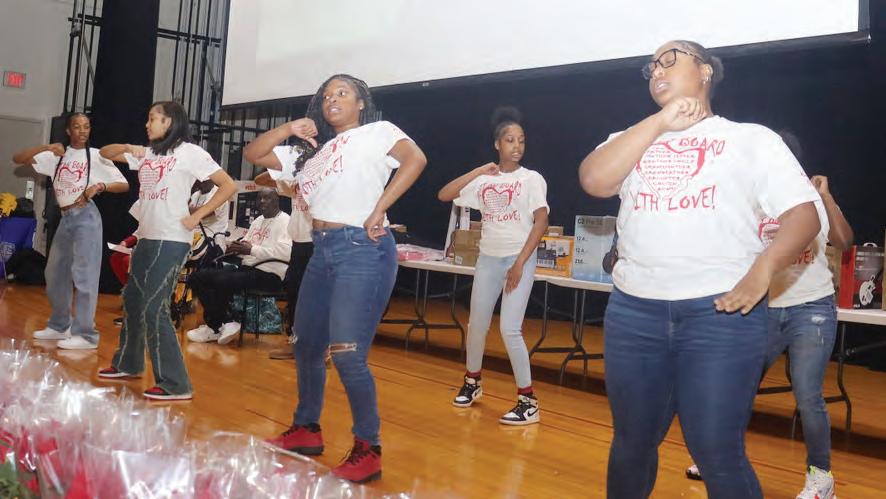
Hank Commodore's gifts extend to students at Westinghouse High School


A generation ‘constructed’ for tragedy: Older Black men hit hardest by overdose crisis
she added, explaining that similar models have been successful elsewhere, and the program could have had “tremendous social benefits” for the people of McKeesport.
A spokesperson for Cherepko wrote in an email that “our talks seemed to dissolve” when his office tried to link the professors with Allegheny County Emergency Services and then-County Executive Rich Fitzgerald’s office. The mayor is open to continuing talks with the professors, but “a complete change in response procedure is not something McKeesport can authorize,” she added. “Social workers would be valued members of a complete response team.”
Since 2008, 241 people —66 of whom were Black —have died of overdose in McKeesport, where Black people died of overdoses at a slightly lower rate than white people. Penn Hills is the only suburban municipality with a higher number of overdose deaths, according to a county dashboard. County human services officials described the programs and initiatives they’ve introduced to address racial disparities in overdose deaths. Connect Protect Recover aims to support loved ones and caregivers because they’re best equipped to help Black people who are battling substance use disorders, and because they’re also suffering. Other measures include a “contingency management” pilot program, backed by brain science and
launched last year, that pays people to receive treatment and services.
Dalton and Fisk expect the jail’s newly expanded medication-assisted treatment program to go a long way toward eliminating disparities. People historically deprived of MOUD in the jail faced a high risk of death upon release. Many overdosed when they were on the outside, due to their decreased tolerance for opioids.
“We don’t want people to go to jail,” Dalton said, “but when people do … they can start that care inside the jail and be connected to peers and support and community.” The program could significantly impact the younger Black men who make up a large portion of the jail’s population, she added.
Earlier this year, PublicSource reported on logistical problems affecting the jail’s distribution of MOUD and after-release connections to care. A jail spokesperson wrote in an email last month that improvements have since been made to the program.
The county Health Department is also working to reach Black people in Braddock, McKeesport and other hard-hit areas, wrote Otis Pitts, the department’s deputy director of food, housing and public policy.
It distributes naloxone, the opioid overdose reversal drug, to those who request it via this form. It does community outreach and overdose prevention education, including at senior living centers to engage older
Black adults. And it set up naloxone vending machines this year in the most affected communities, though the one in McKeesport became the subject of a zoning dispute and was removed from outside a treatment center in August.
These efforts are important because access to naloxone has historically been unequal across neighborhoods, said Alice Bell, director of the overdose prevention project at Prevention Point Pittsburgh, which provides syringe services in the city’s overdose hotspots. Now available over the counter as a nasal spray, the drug’s previous prescription requirement and other regulations created naloxone deserts, often in places where access was most needed.
When Prevention Point could only distribute naloxone in Oakland during the 2000s, about 90 percent of the recipients were White. As regulations loosened over the years, the group sought to expand distribution to Black clients by opening locations in the Hill District, Perry Hilltop, Homewood and East Liberty. The share of Black naloxone recipients climbed to 35 percent over the past few years, while 60 percent of recipients were White.
“We definitely have done our part to shift the access to naloxone in Black communities,” Bell said.
‘He was there for me’
When Paul Turner, 62, left rehab in 2017, he was greeted outside by his
friend, Alan Scott, who took him shopping for essentials and dropped him home in North Braddock. The two had met a few years earlier while both were using crack cocaine, though they only became close friends when they began supporting each other through recovery.
“He was there for me,” Turner said. “That was what brought us together.”
Both men had at one time worked in auto sales, and both men liked to dress well. They also bonded over a shared sense of humor.
“We had jokes that nobody else would understand,” Turner said. “We could look at somebody and just start looking at one another and just start busting out and laughing. He was really just a positive guy. He was loving, he was caring.”
Scott was the first among their small friend circle to enter rehab, and he inspired Turner to begin his own recovery journey in 2017, following a cocaine addiction
“that took my late 20s … my 30s, 40s and half my 50s.”
“I was impressed,” he said of Scott’s effort at recovery.
“And, also because, if he can do it, I can do it.”
Turner grew up in 1960s Homewood, back when the neighborhood had a strong middle class, stable housing stock and a bustling business district.
At 18, he enrolled at Howard University, then transferred to Duquesne University. He left his degree behind to take a fulltime sales job, which led ultimately to director-level
appointments at car dealerships and hotels around Pittsburgh and Ohio.
Later, he would come back to Homewood and pick up cocaine. By then, his home neighborhood had been ravaged by disinvestment and segregationist policies employed by surrounding municipalities amid the region’s economic downturn in the 1980s and 1990s.
The community was also harmed by aggressive policing, according to De’netta Benjamin-Miller, who runs Sojourner House, a grassroots recovery service based in Homewood.
“I grew up on Larimer Avenue. I saw a community that was vibrant, and I also saw a community that fell to pieces when crack cocaine hit the scene,” Benjamin-Miller said.
“We could look at somebody and just start looking at one another and just start busting out and laughing. He was really just a positive guy. He was loving, he was caring.”
“The city could have done a wonderful job in the ’80s and ’90s and saved some of these families early on. But like I said, it was criminalized, so they did not.”
Turner has remained abstinent since leaving rehab, and has since married and begun a new career as a peer support specialist. Group trips he takes with recovering peers to lunch and the bowling alley give him a deep satisfaction he could never regain in the cutthroat sales world.
Though content in his new
field, Turner said a retail theft charge from nearly two decades ago has essentially foreclosed a return to the high-paying sales director positions he once held.
The permanent stain on his record despite the usual leniency shown toward firsttime shoplifting charges is just one example of the systemic bias he’s felt oppressed by as a Black American. Another example is today’s more compassionate attitudes toward those suffering from the opioid crisis compared to the hostility of the War on Drugs era.
“Because more Whites are in it, they have this softer stance,” Turner said. During the crack epidemic, he said, society’s response was: “Put them in jail. Users, sellers, everybody going to jail, right? They’re all criminals. They’re bums, they’re gonna die. And then when [opioids] became really [prevalent] in the White community, it’s like, ‘Oh, poor things. They need help.’”
Now that Black men are the most at risk in the current epidemic, what’s it going to take to bring meaningful restoration and healing?
“You didn’t care in the beginning,” he said, referring to policymakers and politicians under previous administrations. Until you do care, “it’s not going to change.” (
WESTINGHOUSE PRINCIPAL DR. VIRGINA HILL
HANK COMMODORE DISHES OUT THE GIFTS...




Homicides, non-fatal shootings drastically down since Gainey took office
tral Catholic High School clean-cut look, wife Katie by his side, effectively confirming those rumors. Then, on Dec. 10, in front of some supporters at Hazelwood Green along with his wife and two children, Molly and Emmett, he made everything official.
O'Connor is the son of the beloved Pittsburgh Mayor Bob O'Connor, who died less than a year into his term in 2006.
Later on that Dec. 10 afternoon, Mayor Gainey's statement that he released made it clear he wouldn't be backing down without a fight. He discussed that his administration has seen a 45 percent reduction in homicides and non-fatal shootings, activated a $30 million affordable housing bond for 1,000 units of affordable housing in the city, and secured a $600 million commitment to
transform Downtown. No mayor is going to be loved by everyone. Mayor Gainey has ardent supporters as well as detractors. But he is the person who took down incumbent mayor Bill Peduto in the 2021 Mayoral Primary, so he has plenty of supporters and knows how to run a successful mayoral campaign, something that neither O'Connor nor any other future challenger have done.
“My aspiration to serve as mayor of Pittsburgh was birthed out of the desire to bring reform and change the status quo, to make this great city a place where everyone—no matter their race, ethnicity, gender or culture— feels safe, welcomed, and truly has the ability to thrive," Mayor Gainey's statement, sent to the Courier, began. "Winning an election isn’t about sitting behind a desk, it's about governing, driving
change, delivering results, and serving all people.”
Supporters of Mayor Gainey can attest that he doesn't sit behind his desk on the fifth floor of the City-County Building. Mayor Gainey is everywhere—churches, neighborhood watch parties, birthdays, basketball courts, inside portable bathrooms Downtown, atop Mount Washington, waving a Terrible Towel as the NFL Draft was awarded to Pittsburgh, and at a vigil for a young person who may have been killed via gun violence. Supporters of the current mayor have told the Courier in recent years of their affinity for Mayor Gainey's "down-to-earth" attitude, and that he truly understands what the Black community goes through in Pittsburgh. Supporters believe if there's anyone who can lessen the gun violence epidemic in Pittsburgh, it's Mayor Gainey.
And data wise, they may be onto something. Data analyzed by the Courier found that there were 41 homicides within city limits through the first 11 and a half months of 2024, meaning that the entire homicide total for Pittsburgh in 2024 will be far less than the 49 homicides the city said it recorded in 2023...which was far less than the 70 homicides the city said it recorded in Pittsburgh in 2022.
“As mayor, the focus of my administration has always been on doing the work to build a government that works for everyone—whether it’s creating more affordable housing, restoring core constituent services, or making sure all neighborhoods are safe and thriving," Mayor Gainey's Dec. 10 statement continued. "It is my honor to serve the people of Pittsburgh, and I will continue to do so with great passion and pride.
I welcome all those entering the mayoral race, as I am confident that healthy competition brings out the best ideas and will continue to foster progress in our city. This is not about personalities or politics, but instead about who can best serve the people of Pittsburgh and create a brighter future for all, and we will continue to allow this to drive our efforts.”
O'Connor, during his remarks on Dec. 10, took a few verbal swings at Pittsburgh's first Black mayor. He said that "we cannot afford another four years of this administration," and said that the Gainey administration was, in effect, managing decline rather than focusing on growing Pittsburgh.
“I see a mayor and an administration that is allowing people to feel increasingly unsafe. Property crime, retail and car theft, trespass, burglary and shootings are far too frequent," O'Connor quipped.
While most African American residents in the City of Pittsburgh would agree that shootings are "far too frequent," the Courier has learned exclusively that Pittsburgh's non-fatal shootings count has decreased drastically since Mayor Gainey took office. In 2022, the city had 134 non-fatal shootings (and 70 homicides). In 2024, as of Dec. 23, the city's non-fatal shootings stood at 81 (and 41 homicides), making it a nearly 40 percent decrease in non-fatal shootings in Pittsburgh in the past two years. “Our future is bright," Mayor Gainey's statement read, "and I look forward to earning the vote of everyone in our great city."
GAINEY FROM A1
A NEW TV! FOR A WESTINGHOUSE STUDENT...(PHOTOS BY J.L. MARTELLO)
THE WESTINGHOUSE CHEERLEADERS PERFORMING ON STAGE
For

Greater Allen AME Church Holiday Concert


MERRY CHRISTMAS
“And it came to pass, as the Angels were gone away from them into Heaven, the Shepherds said one to another, let us now go even unto Bethlehem, and see this thing, which is come to pass, which the Lord hath made known unto us. And they came with haste, and found Mary, and Joseph, and the Babe lying in a manger. And when they had seen Him, made known abroad the saying which was told them concerning this Child.” - St. Luke 1:15-17
REV. WALKER SAYS: Question...Have you made your way to JESUS?
WILL BOXLEY, DELPHINE KELLY, LOUISE HARRIS, BARBARA PERRY, AND JANETTE EVANS. ALL THE SINGERS AT THE GREATER ALLEN AME CHURCH HOLIDAY CONCERT, DECEMBER 14. (PHOTOS BY J.L. MARTELLO)
BARRY SPENCER
BARBARA PERRY
PASTOR BARRY SPENCER AND ORGANIZER AND MOTHER JOAN WHITELY
JANETTE EVANS
50th Annual Pittsburgh and Allegheny County Tim Stevens Public Service Awards
“The 50th” Annual Pittsburgh and Allegheny County Tim Stevens Public Service Awards did not disappoint a few weeks back on Nov. 16 as Achieving Greatness Inc., honored those very special people who run into the fire, not away from it. The program was re-identified last year under the new namesake of Tim Stevens, the President of B-PEP, the Black Political Empowerment Project. Stevens was also the longtime president of the Pittsburgh NAACP. The program is calling attention to the hard work and sacrifices Mr. Stevens has made for the Pittsburgh and Western Pa. communities for more than “50” years. It’s not overstated when

the lead expression for the event is, “HEROES MAKE THE SUN COME UP IN THE MORNING...AND HEROES MAKE THE MOON SHINE BRIGHT AT NIGHT!!!” Thus, those honored epitomize what it means and what it takes to be a hero...a leader, a teacher, a veteran, a lifesaver and so much more. We proudly recognize you and salute you for not being part of the problem... but part of the solution! When you combine that much greatness with one of Pittsburgh’s all-time greatest athletes, fourtime Pittsburgh Steelers Super Bowl Champion, Randy Grossman, the superior power, grace and support of our guest host, the Plum American Legion Post 980, and of course the all-world sponsorship of Steelers Super Bowl Champion, Judge Dwayne Woodruff, Briggs Transport Company, UPMC, Frank Fuhrer Wholesale Company, Pittsburgh Regional Transit, Goodrich and Geist law firm, Diversified Municipal Services and Goodrich and Associates, it takes a collective effort from all those concerned to shine a light on all of our heroes.


THE EVENT NAMESAKE, TIM STEVENS, PRESENTS THE AWARD TO LONGTIME B-PEP COMMUNITY LEADER LORRAINE COOK ALONG WITH B-PEP’S WILLIAM ANDERSON.
VETERAN
PLUM AMERICAN LEGION POST 980 VETERAN COMMANDER ED GAGE IS SURROUNDED BY AND “SUPER SURPRISED” BY HIS FAMILY. THE POST AND ACHIEVING GREATNESS PARTNERED TO HONOR THE COMMANDER.


Thurmond Amendment negatively impacts Black homeownership
The journey toward homeownership is fraught with challenges for many, but for Black Americans, systemic barriers often make the dream of owning property feel like an unattainable goal. One such barrier, rooted in outdated legislation, continues to impact Black communities disproportionately the 1988 housing amendment introduced by Strom Thurmond as part of the “tough on crime” era, this amendment excludes individuals with a drug distribution conviction from fair housing protections for life, creating an unjust ripple effect that hinders generational wealth building through property ownership.
A Discriminatory Legacy
The amendment allows housing providers to deny rental or homeownership applications based solely on a decades old drug conviction, irrespective of the substance or quantity, time elapsed, evidence of rehabilitation, etcetera. While this policy might seem aimed at reducing crime, its real-world impact has been devastating for communities of color. Take Wisconsin as an example: Black residents

make up only 6 percent of the population but represent a staggering 56 percent of those stripped of their fair housing protections under this law. This disparity reflects how policies framed as neutral often mask deeply rooted racial inequities.
Property is Power: Yusuf Dahl’s Journey from Poverty to Advocacy
At the heart of every movement for justice is a story, a lived experience that fuels the passion for change. Yusuf Dahl, a leader in the fight for equitable housing, brings a unique perspective shaped by his own trials and triumphs. His story is a testament to resilience, transformation, and an unwavering commitment to confronting injustice.
From Poverty to Prison: A Story of Transformation Yusuf’s early life was marked by instability and hardship. Growing up with a mother battling addiction, he often faced the painful reality of evictions. “Like too many young people in difficult circumstances,” Yusuf reflects, “I mistakenly believed drug dealing was my path out of poverty.” That choice led to a 10-year prison sentence when he was just 18. However, Yusuf’s time in prison became a turning point. Upon his release, he embarked on a path of rebuilding not just his life, but his community. He built a successful career as a real estate investor and property manager in Milwaukee, eventually serving as president of the regional apartment association. Through this journey, Yusuf has

Redefining Black success beyond the American dream
by Laura Onyeneho Houston Defender
Growing up as a child of Nigerian immigrants, I was raised with a clear vision of success meant for them. Like many others who came to the United States, my parents had a goal. They arrived in the 80s, determined to go to college, establish themselves, and care for their family back home. They believed in the American Dream—go to school, get a good job, work hard, start a family, buy a house, and eventually retire. This was the blueprint for a successful life, and they expected nothing less for their children. I vividly remember my father reminding my siblings and me how blessed we were to be born and raised in the U.S. “You have opportunities here that we never had,” he’d say, stopping at any chance to remind us that immigrants always have something to prove. They carried the weight of the families they left behind on their shoulders, working three times as hard to make it in this country. They wanted us to appreciate the sacrifices
they made to continue their legacy of hard work and perseverance.
But as my generation grew up, we saw the cracks in that dream. My parents, well into their 60s, are still working as hard as they did when they arrived. The times have changed— technology has advanced, society and culture have evolved, and the economy has shifted. Yet, their approach to success remains rooted in a relentless work ethic, often at the expense of their well-being.
Many millennials, like myself, looked at their struggle and said, “Aht aht, not today, and not ever.” The exhaustion, the overworking in a capitalist system that never seems to reward you enough, the endless bills—what kind of life is that? We want to put ourselves in a better position to avoid the exhaustion that our parents experienced. But in doing so, we face the question of what Black excellence means to us.
There’s an unspoken rule that Black people, especially in America, have to be exceptional to be considered successful. We’ve been conditioned to believe me-
diocrity isn’t an option and that we must always strive to be the best in whatever we do. I was proud to be in spaces nobody expected me to be in because I felt like I was supposed to be, but then what? So, if you miss the mark, what does that make me? Not excellent?
During the devastating global pandemic and after a “racial reckoning” that left more promises of hope and change unfulfilled, more Black folk are realizing that Black Excellence is a setup.
Statistics confirm that Black women, in particular, are leaving traditional 9-to5 jobs at staggering rates. Some are quitting the corporate world to find happiness elsewhere, tired of toxic workplaces where they are underpaid and undervalued. The Great Resignation allows Black women to redefine excellence on their terms, but it’s not always by choice.
Black people are choosing peace of mind over thankless servitude—no matter how excellent the jobs look on paper, a pat on the back these days equates to more work. However, regardless of how hard Black people
work, the workforce’s expectation of perfection without reward still disproportionately negatively impacts us. We remain at the bottom even if we break through hurdles. What’s the point of being a rat on a treadmill? Moving and not going anywhere at the same time?
The pandemic was a hard reset for me, a moment to rethink what success means. Black Excellence has evolved into a show for White validation, even though it began as a reclaiming of our power. During Black History Month, we parade our achievements as proof that we have survived despite the “isms” that still stigmatize us, but we need to do better to talk about how much of who we are we have to give up to be accepted for who we are. True success should be about thriving, not just surviving. It’s about finding joy, peace, and fulfillment in our lives, not just checking boxes on a societal checklist. Our parents dreamed big for us, but it’s time for us to dream even bigger— for a life that values our humanity as much as our accomplishments.
The holidays are upon us. This is the season to be jolly. First comes Thanksgiving, then Christmas, and lastly the celebration of a New Year. Christmas holds a special place as the highlight of the big three holidays. While Christmas is a celebration for Christians, other cultures and religions observe Hanukkah and Kwanzaa during this festive season. Like Christmas, these holidays emphasize spending time with loved ones, reflecting on values, and strengthening bonds. Christmas, for Christians, is a celebration of the birth of one of the noblest beings to walk the earth. A person of Jesus’ stature is certainly worthy of a day of honor and respect. The sad reality, however, is that as we approach His day, we hear less about Jesus and more about Santa Claus, sales, and materialism. From my perspective, this shift wasn’t accidental—it was a strategic move by marketing geniuses to turn a day of celebration into a day of commercialization. Retailers account for 50 percent or more of their profits during this time of the year, and many campaigns are carefully crafted to encourage spending rather than reflection. Yet, despite the commercialization, there’s something magical about this season. Christmas remains one of the few times when families gather under one roof, where loved ones reconnect and create memories. It’s one of the rare times people intentionally extend a hand to those less fortunate, participating in charitable acts and giving from the heart. Places of worship—churches,
synagogues, mosques—are filled to capacity as people reflect on the blessings of life and the hope for a better future. While the external trappings of the holiday may have changed, the essence of Christmas and other winter celebrations still holds profound meaning. It’s up to us to reclaim that spirit and focus on what truly matters.
As a financial writer, I wanted to explore the idea of a gift that keeps on giving. What would this gift look like? I began my search by thinking about gifts in monetary terms, putting my financial expertise to the test. My criteria were simple, yet demanding: this gift had to be affordable for all, simple to give, free of taxes, and capable of delivering a guaranteed return on investment that no other option could match. Financial Options Considered Treasury Bonds: Treasury bonds are among the safest financial investments, backed by the U.S. government, and free from state and local taxes. They offer predictable returns, making them a stable choice. However, they fall short on accessibility—many people cannot afford the initial investment. Additionally, their rate of return is relatively low compared to other investments.

Stocks, Futures, Commodities, and Hedge Funds: While these investments can yield high returns, they also carry significant risks. For a gift to truly “keep on giving,” it must be safe, and these options are anything but guaranteed. The possibility of losing your initial investment rules them out. Mutual Funds and ETFs: Diversified investments like mutual funds and ETFs are more affordable and accessible, requiring smaller initial investments. Over time, they can generate positive returns, making them appealing for long-term financial growth. However, they are not tax-free, and their returns, while promising, are not guaranteed to outperform other options. Real Estate: Real estate is often hailed as one of the most stable investments, with properties generally appreciating over time. It’s less volatile than the stock market, and its long-term potential is undeniable. However, the initial investment is steep, requiring a down payment, closing costs, and ongoing maintenance expenses. Moreover, finding a suitable property takes time—time we don’t have during the holiday season. As I weighed these financial options, it became clear that none met the crite-
ria. Each had its merits, but none could guarantee the kind of universal accessibility, lasting impact, and unmatched return on investment I was seeking. I began to reflect more deeply, shifting my focus away from monetary gifts and toward something more profound. What if the gift we’re searching for isn’t something we buy but something we give of ourselves?
This line of thinking led me to the ultimate realization: the greatest gift that keeps on giving is LOVE. Love transcends barriers of race, education, and social status. It’s a universal language that touches every heart and soul. Unlike monetary gifts, love doesn’t require a budget or a bank account. It’s free, yet its value is immeasurable. It doesn’t just offer a return on investment—it transforms lives. When you give love, you create a ripple effect. A kind gesture, a heartfelt conversation, or simply spending quality time with someone can inspire hope and joy. Love has the power to heal wounds, bridge divides, and strengthen relationships. It’s the glue that holds families and communities together. Love is also the gift that Jesus himself modeled and endorsed. His life was a testament to the power of love—love for God, love for humanity, and love for those in need. When we give love, we honor his legacy and the true spirit of Christmas.
This Christmas, let’s embrace love in
ANTHONY O. KELLUM
REDEFINING BLACK SUCCESS—Cinematic image of a businessman flying on his private jet. Elegant entrepreneur sitting and enjoying the flight.
A holiday tradition: Pittsburgh’s ‘Three Rivers Tree’ lights up the season once again
The holiday season in Pittsburgh continues to shine bright with the Three Rivers Tree, a stunning symbol of celebration at the city’s iconic Point State Park. Presented by Duquesne Light Company (DLC), this dazzling display is an annual holiday tradition, combining vibrant artistry, cutting-edge sustainability, and the warm spirit of community. A Tree Rooted in Innovation and Tradition Standing 60 feet tall and adorned with 22,000 LED pixels, the Three Rivers Tree brings an impressive mix of technology and tradition. This modern marvel not only celebrates the season but also embraces environmental stewardship. With its foundation supported by water ballasts to protect the park’s historic grounds, the tree is a nod to DLC’s commitment to sustainability and clean energy.

The Three Rivers Tree was first introduced to the public in 2023, replacing DLC’s former “Tree of Lights,” which illuminated Point State Park for over three decades before its retirement in 2021. A Show-Stopping Light Experience
The Three Rivers Tree is more than just a visual delight—it’s an immersive experience. Visitors enjoy a stunning display of colors and images [TJ1]in 15-minute cycles, reflecting the beauty and joy of the winter season. Whether you’re a Pittsburgh native or a first-time visitor, this tree is sure to captivate and inspire, making Point State Park a must-visit destination throughout the holidays.
As part of its annual lighting ceremony, DLC proudly invited young

cancer survivor Jimmy Spagnolo to help light the tree this year, making the event even more special. Jimmy formed a bond with DLC crew members who were working in his neighborhood over the summer. In return, they gifted him with DLC gear, including a hard hat and safety vest.
A Celebration for the People DLC employees played a meaningful role in this project, continuing a cherished tradition. When the original “Tree of Lights” was first introduced in
1988, it was dedicated to the company’s workforce.
Keeping this legacy alive, employees were invited to help name the new tree, further cementing its place in the hearts of the Pittsburgh community.
Plan Your Visit
The Three Rivers Tree will be on display through January 7. Whether you’re seeking a perfect spot for family photos, a romantic evening stroll, or simply a moment to soak in the season’s magic, this dazzling display promises something special for everyone.
With
and
your holidays with joy, innovation, and the
spirit of togetherness. See you at the park!
Strom Thurmond Amendment negatively impacts Black homeownership
provided his family with the opportunities he lacked growing up, proving that transformation is possible even in the face of systemic challenges.
A Mission Born from Injustice Yusuf’s passion for housing advocacy stems from a deeply held belief: “Whoever sees an injustice, let them change it with their hand; if not with their hand, then with their tongue; if not with their tongue, then with their heart.” This principle has guided his work, especially in addressing the systemic inequities perpetuated by discriminatory housing policies like the Strom Thurmond Amendment. Why the Fight Against the Thurmond Amendment Matters
The 1988 Strom Thurmond Amendment imposes a lifetime ban on Fair Housing Act protections for anyone with a drug distribution conviction. Unlike other offenses, even violent crimes this law uniquely punishes individuals for life, regardless of their rehabilitation or contributions to society. Yusuf has experienced this injustice firsthand. When recruited to a leadership role in Pennsylvania, he and his family were denied housing because of a 25-year-old conviction. The only available option placed them in a failing school district, a reality millions of families face without resources to mitigate the impact. “This isn’t justice,” Yusuf asserts, “it’s systemic inequity.”
From Princeton to Advocacy
Determined to complement his lived experiences with a world class education, Yusuf attended Princeton University. The institution’s motto, “In the Nation’s Service and the Service of Humanity,” resonated deeply with his commitment to confronting injustice.
Princeton sharpened his advocacy skills and deepened his resolve to dismantle barriers like the Thurmond Amendment, which disproportionately impact communities of color. Building Collaborative Support for Change
Advocating for equitable housing requires collective action. Yusuf emphasizes the importance of partnerships with organizations like the National Association of Real Estate Brokers (NAREB), which has championed the fight to repeal the Thurmond Amendment. “NAREB understands that this law undermines housing access and wealth building for communities of color,” Yusuf explains. The amendment he points out was not about sound policy, it was political theater. “It’s time to close the chapter on Strom Thurmond’s discriminatory housing legacy once and for all.”
Removing Barriers to Build Wealth
Recent changes, like Sallie Mae factoring on-time rental payments into mortgage underwriting, highlight the potential for progress. Yet barriers like the Thurmond Amendment remain, denying individuals opportunities to access equitable housing and build wealth. “The amendment ignores all traditional risk metrics credit score, rental history, income, and allows denials based solely on a past conviction,” Yusuf notes. “It’s an artificial barrier that perpetuates cycles of poverty.”
A Vision for an Equitable Future
Yusuf envisions a future where the Thurmond Amendment is repealed, and the Fair Future Act becomes law. In this future, individuals who’ve paid their debt to society will no longer be defined by their worst mistake. Families will gain access to better schools, safer neighborhoods, and opportunities for generational wealth building. “This change
is about fairness,” Yusuf says. “Two decades of hard work, responsibility, and growth should matter more than a mistake made decades ago.”
What You Can Do
• Educate Yourself and Others: Understand the impacts of housing policies like the Thurmond Amendment and share this knowledge.
• Advocate for Change: Contact your representatives to support the Fair Future Act.
• Join the Movement: Get involved with initiatives like “Property is Power” to amplify voices and advocate for equitable housing opportunities.
The Human Cost of Housing Denial Housing isn’t just shelter, it’s the foundation of stability, security, and opportunity. When individuals are excluded from housing due to a dated conviction, they face more than a denied application; they’re shut out of neighborhoods with better schools, higher paying jobs, and access to wealth building opportunities through homeownership. This exclusion perpetuates cycles of poverty and reinforces structural racism.
A Step Forward, A Step Back
Recent advancements in housing equity, like Fannie Mae’s inclusion of on time rent payments in mortgage underwriting, show that progress is possible. These changes could significantly increase Black homeownership rates by recognizing renters’ financial responsibility. However, gains like these are undermined by policies that still allow housing providers to legally discriminate against those with a past conviction. Until such barriers are dismantled, progress will remain incomplete.
The Fair Future Act: Restoring Justice
Inspired by Yusuf’s personal experience
of being denied housing due to this amendment, I’ve committed to advocating for its repeal through the Fair Future Act. This newly introduced bill Sponsored by Senator Booker (D-NJ) and Congressman Maxwell Frost (D-FL) seeks to eliminate the discriminatory exclusion of individuals with drug-related convictions from fair housing protections. By restoring these rights, we can ensure that millions of Americans predominantly from Black and Brown communities are no longer penalized for a past mistake and are given the chance to build stable futures for themselves and their families.
Why This Matters for “Property is Power”
The “Property is Power” movement is rooted in the belief that homeownership is one of the most powerful tools for economic empowerment and community transformation. Legislative barriers like the Strom Thurmond amendment are not just legal hurdles they’re direct assaults on the ability of Black Americans to access the financial and social benefits of property ownership. By advocating for changes like the Fair Future Act, we are continuing the fight for fairness, equity, and opportunity in housing.
Yusuf Dahl’s journey exemplifies the power of second chances. resilience and the importance of advocacy. By confronting systemic barriers, we can ensure that property ownership becomes a tool for empowerment not exclusion. Together, we can create a future where property truly is power for everyone. By addressing policies like the Strom Thurmond amendment, we take another crucial step toward making property ownership accessible for all and turning the American dream into a reality for everyone.
(Dr. Anthony O. Kellum is CEO of Kellum, LLC O: 313-263-6388)
The gift that keeps on giving
all its forms: Spend Quality Time: In our busy lives, time is often the most precious gift we can give. Be fully present with your loved ones, creating memories that will last a lifetime. Extend a Helping Hand: Love isn’t just for those closest to us. Share it with strangers through acts of kindness, volunteering, or supporting charitable causes.
Give Thoughtful
Gifts: A meaningful gift doesn’t have to be expensive. A handwritten note, a handmade item, or something that reflects the recipient’s passions can be far more impactful than a pricey gadget.
Show Gratitude: Expressing gratitude is a powerful way to share love. Take time to thank those who have made a

difference in your life, whether it’s through words, actions, or small tokens of appreciation.
As we navigate a world that often prioritizes materialism, let’s remember what truly matters. Love is the gift that keeps on giving because it grows as it’s shared. It fills our hearts and inspires others to pass it on. This holiday season, may we all give and receive the gift of love. Let’s make this a time of joy, connection, and inspiration—just as it was meant to be.
Have a Merry Christ-
Gather your loved ones, bundle up, and head to Point State Park to experience the radiant beauty of the Three Rivers Tree.
its dazzling lights
heartfelt connection to the community, it’s sure to be a treasured tradition for years to come. This season, let the Three Rivers Tree light up
timeless
JIMMY SPAGNOLO (LEFT) AND DLC PRESIDENT KEVIN WALKER.
Black to the future
These are changing times, and where we end up will depend upon how we respond to changes. America is on the verge of embarking in new territory that promises to challenge most Americans, and Black Americans fit in this scenario. There is a saying that crisis is accompanied by opportunity. This is usually true; change can have a multitude of impacts, and if there are issues that demand to be addressed, they are brought into the light when major change is on the horizon. This is where we stand today with the election of Donald Trump as the 47th president of the U.S. scheduled to be inaugurated in January, 2025.
A new Trump presidency doesn’t bode well for Black people. Even though at least 20 percent of Blacks gave Trump their vote, there doesn’t appear to be reciprocity coming from him. Of the people selected for his cabinet, only one Black person to date has been singled out to work with Trump.
Actually, this provides an opportunity for real change. Black people have been able to demonstrate success in every field of endeavor. The whole world has been influenced by Black styles in fashion, entertainment, business, and more. And yet, many people, including some Black people, continually place Blacks as bottom feeders.
On a broader note, we can look at the continent of Africa, which is said to have the lion’s share of the world’s natural resources. With Black leaders at the helm of countries, the continent is still far behind the rest of the world in spite of its fabulous resources. Why is this so? It probably has something to do with the same thing that is keeping American Black people behind the eight ball: lack of unity!
When people around the world talk about the future they usually leave Africa out of the picture. Basically, with the great potential that the Black community has people still snidely intone the ideas of “DEI” whenever Black people acquire some type of success. The epitome of this is the fact that Donald Trump, during his recent presidential run against Vice President Kamala Harris, insisted on calling her a “DEI hire!” As brilliant as she is, she was still relegated to the bottom of the heap in the minds of Trumpsters. This situation should make us pause: will there ever be a time when Black people will be respected for the innovators and dynamic people that we are?
Black-on-Black dislike and maltreatment promises very real challenges in our future if we don’t realize that it’s time to change the community’s collective destiny.
Considering this, it is ludicrous for the Black community to anticipate good things from the upcoming Trump administration. There is a saying that insanity is the state of doing the same things over and over and expecting different results. This is what the Black community has to understand; we have to demonstrate our mastery among ourselves. More importantly, Black people must learn to love each other. The lack of not doing this is one of the reasons why other groups take the race for granted. It is why there were no major outcries when Trump called Kamala a DEI hire and said that she was extremely unintelligent.
So, do we want to continue along these lines? Do we want to allow others, especially White supremacists, to keep taking Black people for granted? The future looms large and there is no doubt that things are changing. That means that there are opportunities to enhance the collective welfare of Black people and accept this opportunity to move into the future with new ideas, new goals, and new plans. It is important for a new attitude to arise among Blacks; this will be an opportunity to finally reach our full potential WITH EACH OTHER, and this would really be super if it would include collaborations with our people on the African continent. We need to go Black to the future in order to offset our challenging past! Aluta continua.
(Reprinted from the Chicago Crusader)

Doss
Stephan A. Broadus
John. H. Sengstacke
(1912-1997)
War on women
(TriceEdneyWire.com)—In case you haven’t noticed, there is an uptick in the war on women. The tragedy is the war isn’t just coming from men. The hate is coming from every direction. If you didn’t notice it before, I suggest you take a look at how so many women voted in the November 5, 2024 election. Vice-President Kamala Harris supported women’s rights every time she did a rally. She never failed to carry the concerns of women, but what did women do—except for Black women who always vote in our best interest, yet so many of our sisters with whom we have marched, protested for, stood up for on rights they claimed to be for all women and we thought they were women in the struggle. Well, there was a slap in our faces when you look at how so many voted in this last election.
When there was such a contrast in who joined us and worked in their best interest, along with ours, it is clear that we must reassess where we spend our time, and on which issues we concentrate. Once Donald Trump interfered and had his Supreme Court overturn Roe v. Wade, while Black women in larger numbers, as were made public, were dying. So many of our allies seemed to think that was okay, and decided to vote for the man who was responsible for this tragedy. So many
Dr. E. Faye Williams, Esq.

of our so-called allies turned away their attention to the issue. So, what do they want? Choice of what to do with our bodies for women is not the only issue on which we were deserted. Take a look at what is happening with smart and accomplished Black women around the country. The case of former Baltimore State’s Attorney Marilyn Mosby worked brilliantly for the people under her jurisdiction in Baltimore, Maryland. She worked her heart out for justice for those in her community, and helping her colleagues in other geographical areas. She was applauded by many. She did nothing wrong, but if you read or listen to what is said in the news, you wouldn’t know that she was selectively prosecuted for the great things she did! Trump and his allies, on the other hand, thrive on doing the wrong thing by continuing to threaten a lot of people who do the right thing—something that seems to be a foreign idea to him and his cohorts. I find the vulgar things he says and does and can still be chosen by so many people to be
their leader, using people who have no leadership skills to be insane! Look at some of the things happening or recently happened to brilliant Black women and we see either no or a smidgen of other women coming to their aid. District Attorney Fani Willis of Georgia, has been stripped of her racketeering case against Trump and 18 of his aides and associates. This is a stunning ruling from a Georgia State Appeals Court to please the already convicted 34 times Trump, with more cases on the horizon, but who is punished?
D.A. Fani Willis! Kim Foxx, Kim Gardner, Aramis Ayala all punished for their great work. Monique Worrell has faced her challenges. New York’s Atty. General, Letitia James, is definitely doing her job, but Trump denigrates her because she’s making him pay for his wrongdoing! All of these, and I’m sure there are more, were just doing their job. I’m left wondering where my sisters of another color are in standing up for them? There’s a war on women, but most of them seem to be Black women who are just doing their job. Please do the right thing for one Black woman. Go to www.justiceformarilynmosby.com and sign the petition to have President Biden pardon her now so she can go back to work! (Dr. E. Faye Williams, President of The Dick Gregory Society.)
Saving steel saves Black communities
NNPA NEWSWIRE—For decades, Black Americans have dealt with systemic obstacles when it comes to economic opportunity. Between limited access to good jobs and the gradual decline of manufacturing in our communities, many Black Americans have struggled to provide for their families. Recently, the Congressional Black Caucus (CBC) has made a bold and important stand by supporting the proposed partnership between Nippon Steel and U.S. Steel—a collaboration that will not only keep the U.S. manufacturing industry competitive and strong but also provide stable jobs and economic security for Black Americans and their families.
The CBC’s recent letter to President Biden is a critical recognition of the economic realities facing workers, particularly in majority Black communities. At one point in time, cities like Gary, Indiana; Pittsburgh, Pennsylvania; and Birmingham, Alabama, were the heart of America’s industrial strength. Today, these former industrial hubs are struggling to recover from economic decline and significant job losses. The collapse of the steel industry has left devastating effects—predominantly on the Black communities surrounding our once-thriving industrial cities. However, with the proposed partnership between Nippon Steel and U.S. Steel on the table, we have a chance to reverse that damage and restore the pathway to economic security for those who need it most.
This deal will be a game changer for the communities that rely on the steel industry to survive.

The $300 million allocated to repair blast furnaces at Gary Works and $1 billion for upgrades at Mon Valley Works are investments that will extend the lifespan of essential U.S. Steel facilities and protect thousands of union jobs. For facilities in Gary and Birmingham where more than half of the population is Black, these upgrades could mean the difference between the continued path of economic decline or the revitalization of a community lifeline.
Union jobs have long provided economic stability for Black workers, supplying decent wages and comprehensive benefits in communities where secure job opportunities are often few and far between. This deal will not only protect existing jobs but also promises new opportunities. The steel industry has been a vital source of employment for Black Americans, and by strengthening and expanding the steel industry in the U.S., we are opening the door to new jobs, new investments, and new possibilities for Black Americans across the country.
And the benefits of the Nippon Steel-U.S. Steel partnership are not only limited to steel towns. A thriving steel industry has ripple effects across the economy, from
construction and transportation to renewable energy and national defense. By investing in steel, we are also investing in the broader economic ecosystem that supports millions of American workers. President Biden has often spoken about his commitment to building an inclusive economy that works for all Americans, regardless of race or geography. Approving this partnership would be a meaningful first step toward fulfilling that commitment. It would demonstrate the administration’s dedication to uplifting Black communities through inclusive economic policies. This moment calls for leadership that prioritizes people and progress over politics and partisanship. As a nation, we are at a crossroads. We can choose to embrace this opportunity to strengthen our manufacturing base while uplifting communities that have been left behind for too long, or we can continue to let critical industries slip through our fingers. The CBC’s leadership on this issue shows the path forward: one that prioritizes economic security, environmental sustainability, and racial equity. By investing in steel, we are investing in Black Americans, their families, and their futures. Now is the time to move beyond rhetoric and make a tangible, lasting impact that will benefit all Americans, especially those who have long been left behind.
(Dr. Benjamin F. Chavis Jr. is President and CEO of the National Newspaper Publishers Association (NNPA) and Executive Producer of The Chavis Chronicles on PBS TV Network.)
The future of American education
Education is the cornerstone of success, and this fundamental right must be upheld without compromise.
President-elect Donald Trump has vowed to dismantle the Department of Education, a bold and contentious move that has sparked nationwide debate. His decision addresses frustrations over perceived federal overreach and alleged “woke” indoctrination in schools. Against declining academic performance, Trump envisions a comprehensive restructuring to rectify mismanagement of taxpayer funds and undue influence on the nation’s youth.
During a September rally in Wisconsin, Trump reaffirmed his commitment, stating, “We will ultimately abolish the federal Department of Education.” His pledge resonates with voters eager for educational reform and accountability.
The department primarily focuses on funding programs such as Title I, which aids low-income districts, and special education initiatives rather than direct instructional oversight. Critics question its overall efficacy, proposing to reallocate responsibilities to other agencies. Suggestions include shifting the student loan program to the Treasury Department, delegating Title IX enforcement to the Justice Department, and converting Title I funding into state block grants with reduced federal oversight.
Trump’s initiative reflects a broader conservative critique offederal education policy, advocating for increased local autonomy and reduced

federal intervention. As education reform discussions intensify, the consequences of eliminating the Department of Education will shape future policy debates and electoral outcomes.
The education system faces extraordinary disruptions exacerbated by the pandemic. Despite additional COVID funding, many students experienced alarming setbacks in core subjects, raising concerns about long-term implications.
Recent data highlights troubling trends among nine-year-olds:
• A five-point decline in reading scores in 2022, the largest drop since 1990.
• A seven-point decline in math scores, marking the first decrease in this age group for the subject.
These statistics underscore the pandemic’s impact on learning, emphasizing the urgent need for effective strategies to support student recovery and ensure success.
Immediate action must address both knowledge gaps and disparities worsened by the crisis. Educators and policymakers must focus on innovative solutions that ensure every student has the opportunity to thrive.
The Role of the Department of Education
The U.S. Department of Education primarily handles funding and policy enforcement, leaving curricular oversight to state and local governments. Key functions include:
1. Funding: • Title I Grants: Allocates $18.4 billion annually to support low-income districts, enhancing educational equity.
• Special Education: Provides $15.5 billion yearly to assist schools in serving students with disabilities under the Individuals with Disabilities Education Act (IDEA).
2. Civil Rights Enforcement: • Ensures compliance with Title IX and other civil rights laws, protecting students from discrimination based on sex, race, disability, or other factors.
3. Higher Education Oversight: •Establishes regulations for institutions participating in federal student aid programs, overseeing the $1.6 trillion federal student loan system. Education is a non-negotiable priority. Parents and community leaders must work to safeguard the education system. The future of our children—and the fabric of our society—depends on advocating for policies that give every student the chance to succeed.
(Anthony Tilghman is an Award-Winning Photojournalist, Executive Director of #MakeSmartCool Inc.)
Anthony Tilghman
Benjamin F. Chavis Jr. Commentary
To serve and protect federal workers
(TriceEdneyWire.com)—The phrase “to serve and protect” has been the motto of the Los Angeles Police Department since 1963. The popularity of this phrase has led to its subsequent use by other police departments throughout North America. It means actively assisting and safeguarding others by providing service to the community and ensuring their safety. It signifies a duty to uphold the law and protect citizens from harm. While it is most commonly used in reference to law enforcement, it has a broader application in all fields of government public service. Technically, public or civil servants answer first to the government’s interests, not to political parties, for the continuity of their institutional tenure and knowledge will carry through periods of political leadership transitions and turnover. Whether they work on the local, state, or federal level, they are tasked “to serve and protect” the government and the citizens within their districts and jurisdictions. This would include any elected official and government employee. For the true public servant, there is a balance between maintaining a sincere concern for people and their well-being and carrying out the overall mission of the agency they represent. This balance is often the target of powerful influences from the private sector by way of big campaign donors and the elected officials they control. The recent shooting of the UnitedHealthcare CEO has brought renewed focus and increased scrutiny of the health insurance industry. Before the shooting, many of us were unfamiliar with the phrase “delay, deny, defend” regarding business tactics used by insurance companies. Insurers may delay processing claims to make policyholders give up or accept lower settlements. Insurance companies may deny claims outright or offer settlements significantly lower than what might be considered fair. If the delay and denial schemes do not deter the claimant, insurance companies may aggressively defend against the claim through a lengthy legal battle that can be financially and emotionally taxing for the patient filing the grievance. California government officials fined Anthem

Blue Cross $3.5 million this year for mishandling member complaints over denials and other issues. According to the state’s Department of Managed Health Care (DMHC), the fine is due to the company’s failure to handle more than 10,000 complaints from its members in a timely manner over a two-year period. Patient care advocate Linda Winkler Garvin said such behavior can be medically dangerous for patients and strain their mental health as well. Unknown to the public, the critical behind-the-scenes work by public servants such as those working for California’s DMHC can easily be taken for granted. Businesses typically don’t like regulations, but citizens and consumer advocates know that fair and reasonable regulation enforced by dedicated public servants is needed to protect the public’s interests. Some leaders from the private sector would love to purge the federal government of public servants who are in place to “serve and protect.” Behind the rhetoric of cutting government waste is the true motive of eliminating the public servants who care about people rather than power, control, and billion-dollar profits. Servants who stand in the gap between fairness to citizens and corruption from corporations. Those who are in place to fight for accountability and transparency. They are the whistleblowers. They are the checks and balances on the front line of the government. They are the everyday individuals who keep the nation functioning daily. They represent a major thorn in the side and a threat to billionaire oligarchs like Elon Musk, Vivek Ramaswamy, and Donald Trump, who disdain systems of checks and balances and the true meaning of public service. Federal civilian employees are now the target of the new Department of Government Efficiency (DOGE) led by Musk and Ramaswamy. As private businessmen in non-traditional roles within the executive branch, they are in a high position to shape government policy decisions and cut what they deem to be wasteful government spending. The idea of conflict of interest has no meaning to those with the power to do as they wish without suffering the consequences of their actions. Musk, who leads companies with lucrative government contracts, called for eliminating the Consumer Financial Protection Bureau. While Musk and Ramaswamy may never suffer the full consequences of their actions, federal civilian employees and the American public will. “Millions of Americans should brace for massive cuts to benefits and services they rely on for their survival under plans to target government spending and operations,” American Federation of Government Employees National President Everett Kelley said in a Nov. 13 statement.
Republican Sen. Eric Schmitt blocked a request by Democratic senators to pass legislation to protect federal workers from civil service reforms. Public servants who normally serve and protect others now need others to protect and serve them. Trump’s nominee to head the Office of Management and Budget and a key Project 2025 architect, Russell Vought, has endorsed reclassifying federal workers to “Schedule F” to get around civil service protections that make it difficult to fire them. Work with the federal government has historically been a ladder to the middle class for millions of Americans of all races, but especially for Black citizens. The competitive pay scales of government employment have helped lift generations of Black families into the middle class. Black Americans make up 18.2 percent of the federal government workforce, which is higher than their percentage in the U.S. population (13.2 percent). Republican lawmakers, once they start hearing from their constituents back home, need to reconsider these irresponsible ideas.
(David W. Marshall is the
The Supreme Court,
care, and weighing the risk
Three transgender teenagers and their families have challenged Tennessee’s 2023 restriction on gender-affirming care for minors. The U.S. Supreme Court heard oral arguments in the first week of December.
The World Health Organization defines gender-affirming care as a set of social, psychological, behavioral, and medical interventions that help people affirm their gender identity. Tennessee law specifically prohibits doctors from administering puberty blockers and hormone therapy to minors seeking treatment for gender dysphoria.
According to the American Psychiatric Association, gender dysphoria is the psychological distress caused by an incongruence between one’s assigned sex at birth and one’s gender identity. Gender dysphoria usually develops in childhood; however, some people may not experience it until after puberty or much later.
The families contesting Tennessee’s ban argue that it violates the 14th amendment’s concept of equal protection under the law by treating transgender boys and girls differently from other boys and girls, resulting in discrimination. The families also think that the state violates a parent’s right to make medical decisions for their child and that the state harms children by denying them necessary medical care.
One plaintiff is a 16-year-old girl who received gender-affirming therapy. The teen described her gender dysphoria as a “real-life body horror” and stated that the treatment helped her “feel normal.” Tennessee’s ban forces the teen’s parents to travel out of state for her treatment.
Advocates for transgender rights support the 16-year-old’s “right to be a girl” in Tennessee.
Tennessee maintains that the state’s ban on gender-affirming treatments is not sexbased discrimination, nor does it withhold treatment because a person is transgender. The ban distinguishes between the purposes for giving puberty blockers and hormone therapy. The ban was established because the majority of the state’s repre-
J. Pharoah Doss Check It Out

sentatives believe the state has a “compelling interest in encouraging minors to appreciate their sex” and forbidding procedures “that might encourage minors to become disdainful of their sex.”
Transgender issues will be the Supreme Court’s most high-profile and politically charged cases in the post-Roe/post-affirmative action era. Outside the Supreme Court, there were competing demonstrations. Demonstrators in support of Tennessee’s ban held placards that read “Champion God’s design,” while their opponents chanted “Freedom to be ourselves.” Inside the Supreme Court, the liberal justices had their own legal disagreements with their conservative colleagues, who dominate the bench.
Chief Justice Roberts remained unconvinced that courts, rather than legislatures, should regulate medical procedures, a decision often left to states. Tennessee voters elected their legislators, and the ban on gender-affirming care is the result of that democratic process.
Justice Sonia Sotomayor disagreed with Robert’s premise. She contended that the democratic process is not always the best approach to address complaints to the law, particularly when the law has a negative impact on a minority community that lacks the numbers to influence the democratic process. Sotomayer noted that transgender persons account for fewer than one percent of the population and then reminded the court that African Americans constituted a bigger proportion of the population, and the democratic process failed to protect them from Jim Crow.
The Supreme Court will not rule on this case until several months into 2025, but the oral arguments allowed the public to see past the legal issues and consider the underlying human concern.
Justice Sotomayor was concerned that the suicide rate among minors with gender dysphoria is both high and worrisome. As a result, it is reasonable that parents seek gender-affirming care for their minors in order to prevent suicide. The lawyer representing the families’ informed the court that many studies had shown that gender-affirming care lowered the likelihood of depression, anxiety, and suicidality (thoughts or intent to try suicide). In contrast, Justice Samuel Alito claimed that there was no proof that gender-affirming treatment prevented or reduced suicide. Justice Brett Kavanaugh remarked that the court could not overlook detransitioners—people who regret getting gender-affirming treatment earlier in their lives and wish to detransition. Suppose an individual underwent gender-affirming treatment in adolescence that improved their quality of life but later regretted their decision, fell into serious despair, and committed suicide. The gender-affirming treatment then becomes a long-term risk factor for suicide rather than a preventive intervention.
Justice Kavanaugh described the complexity of the dilemma that the case brought to the court. The justices were being asked to weigh the risks for one group of people—minors who would suffer if Tennessee’s ban on gender-affirming care was upheld because they benefit from the treatment—versus the risks of other people who would be harmed if gender-affirming care for minors was allowed and they received treatment they later regretted.
Justice Kavanaugh presented a question not only for the court but also for all those that treat the case as a culture war battle and already chose their side. He asked, “How do we choose which set of risks is more serious?”
Lawsuit lending disclosure is key to racial justice in New York and across America
NNPA NEWSWIRE—My first brush with the law took place when I was just 12 years old. I walked into the local library in Oxford, N.C., from which Black Americans were expressly forbidden, and tried to check out a book. The librarian responded by calling the police.
A dozen years later, at the age of 24, I and nine other men and women were wrongfully accused of arson during a spate of race-related civil unrest in Wilmington, N.C. We became known as The Wilmington Ten. We were unjustly sentenced to a combined total of 282 years in prison. It took more than 40 years for the state of North Carolina to officially issue a “Pardon of Innocence” to The Wilmington Ten.
After a lifetime as a civil rights advocate fighting against a wide range of discriminatory practices and racial injustices, I know firsthand how the levers of justice can be pulled or manipulated by the powers that be to the detriment of vulnerable individuals and underserved communities.
A glaring example of this exists right now in New York, where a complete lack of regulation of the booming lawsuit lending industry is enabling unscrupulous lenders to take advantage of injured and mistreated borrowers. Also known as “litigation funding” or “car accident loans,” lawsuit lending is the practice by which individuals can borrow against potential legal settlements or judgements to cover day-to-day expenses or medical bills while they await the outcome of their case.
It is time for state lawmakers to protect the vulnerable individuals who too frequently find themselves as the victims of usurious lending practices. They can
(TriceEdneyWire.com)—It is no secret how devastating the COVID-19 pandemic has been for marginalized communities in this country. The National Urban League quantified this impact in the 2020 edition of our annual capstone report, the State of Black America.
As COVID-19 swept across the country, we sprang into action through combined efforts from our affiliate movement and public/private partnerships to save lives across the country. In 2021, we launched All In, a joint effort with the Center for Disease Control (CDC) to close the vaccination gap in communities of color and underserved neighborhoods with the help of our affiliates.
Even though we are past the peak of the pandemic, this is the stark reality of our present situation: COVID-19 remains a severe health threat. Over 43,000 Americans have died from COVID-19 in 2024 alone—and as we enter the colder months, flu season, and holiday season, the risk of severe infections and hospitalizations will continue to rise. We know that those with pre-existing conditions like COPD, high blood pressure, and obesity are at greater
Benjamin F. Chavis Jr. Commentary

do this by passing some commonsense reforms of the lawsuit lending industry that cap the interest lenders can charge and require disclosure of lawsuit loans to ensure transparency in the legal system.
In theory, lawsuit loans can serve as a critical line of support for individuals who find themselves in unenviable positions as the victims of fraud, accidental injury, or even malicious attacks—especially for those who are unbanked or underbanked and lack a financial safety net, which too often is the case for people of color.
In practice, however, the complete lack of regulation of the lawsuit lending industry is too often manipulated by bad actors, some of whom are bankrolled by big hedge funds, or even foreign interests. Due to the lack of an interest rate cap, for example, unscrupulous lenders can charge as much as they want—sometimes as much as 200 percent.
Such was the case for a young mother from The Bronx, who worked hard during her pregnancy to ensure her twins’ needs would be met when they were born. Yet, despite all the preparations and precautions she took, one baby was injured during birth, resulting in severe brain damage. The mother filed a medical malpractice case, and the bills piled up. Her attorney directed her to a lender who
Marc H. Morial
gave her a loan with a 65 percent interest rate, which compounded by 1.5 percent every month.
Adding insult to injury, the mother later discovered that the firm her lawyer recommended was owned by the attorney’s brother. The court ultimately determined that the lack of knowledge of this relationship could be interpreted as a conflict of interest, since the attorney could have influenced his client’s acceptance of a settlement to his brother’s benefit.
Only by mandating the disclosure of lawsuit loans during the legal process can potential ethical lapses like this one be sure to be brought to light, leveling the playing field for all parties. Who knows how many settlements have been delayed, decreased, or improperly influenced to the detriment of borrowers merely to ensure that usurious loans are repaid to their predatory lenders?
A properly regulated lawsuit lending industry could have benefitted that mother in The Bronx. It also could have benefitted the many people like me, who have been wrongfully imprisoned or convicted and, in some cases, are now being aggressively targeted by the lawsuit lending industry.
A reform bill that both reasonably caps interest rates and ensures transparency will ensure that New Yorkers and others across America in need can continue to access lawsuit loans and be projected from the greedy whims of the wealthy and powerful. Those experiencing some of the most difficult periods of their lives deserve support and protection, and surely do not deserve to be victimized repeatedly.
(Benjamin
F. Chavis Jr. is President and CEO, National Newspaper Publishers Association)

risk of falling seriously ill. People of color and marginalized communities are also affected by these conditions at a disproportionate rate. And beyond the risk of an acute COVID-19 infection, we cannot ignore the devastating toll of Long COVID, which has impacted roughly 18 million Americans. Long COVID can affect anyone, regardless of age and health status, and is linked to more than 200 symptoms, including brain fog, debilitating fatigue, and chronic pain.
Staying up to date with vaccinations to prevent and reduce the severity of new strains of the virus is the best way to protect ourselves from falling seriously ill. According to one study, the total COVID hospitalization rate is approximately 11 times higher in unvaccinated adults. At the same time, receiving an updated
COVID-19 vaccine is the best way to fend off longer term symptoms—studies show vaccination reduces an individual’s risk of developing Long COVID by 70 percent. The good news is that updated COVID-19 vaccines are available at pharmacies, doctor’s offices, and health clinics across the country. For most Americans, the COVID-19 vaccine is free because private insurance and other programs like Medicare, Medicaid, and the Children’s Health Insurance Program cover the full cost. Americans who don’t have insurance can typically find no-cost options in their communities through local immunization programs. The Department of Health and Human Services also provides up to four free COVID-19 tests per household. Increasing COVID-19 vaccination rates will require the work of all of us. The same concerted efforts to fight misinformation, direct people to resources, and keep people informed of ways to stay safe are just as important as they were at the beginning of this pandemic. Let’s do our part to keep ourselves safe and protect those who are most vulnerable this holiday season.
David W. Marshall
ANNOUNCEMENTS Public Notice
CONDITIONS OF SALE
Effective with the August 3, 2020, Sheriff Sale of real estate and all such monthly public sales thereafter shall be conducted virtually through video conferencing technology or live streaming. ALL PARTICIPANTS OR BIDDERS MUST BE REGISTERED AT LEAST 7 DAYS BEFORE THE DATE OF THE SALE IN ORDER TO PARTICIPATE (VIRTUALLY OR IN PERSON) AT THE ALLEGHENY COUNTY SHERIFF’S OFFICE SALES OF REAL ESTATE. REGISTRATION WILL BE AVAILABLE ON THE ALLEGHENY COUNTY SHERIFF’S WEBSITE: SHERIFFALLEGHENYCOUNTY.COM. The Successful bidder will pay full amount of bid in CASH, CERTIFIED CHECK OR CASHIERS CHECK at time of sale, otherwise the property will be resold at the next regular Sheriffs Sale; provided, that if the sale is made on MONDAY, JANUARY 6, 2025 the bidder may pay ten percent of purchasing price but not less than 75.00 in CASH, CERTIFIED CHECK, OR CASHIERS CHECK THE DAY IMMEDIATELY FOLLOWING THE SALE, e.g. TUESDAY, JANUARY 7, 2025, BETWEEN THE HOURS OF 8:30AM AND 2:30PM IN THE ALLEGHENY COUNTY SHERIFF’S OFFICE. Failure to pay the 10% deposit will have you banned from future Sheriff Sales. And the balance in CASH, CERTIFIED CHECK, OR CASHIERS CHECK, on or before MONDAY, JANUARY 13, 2025, at 10:00 O’CLOCK A.M. The property will be resold at the next regular Sheriff’s Sale if the balance is not paid, and in such case all money’s paid in at the original sale shall be applied to any deficiency in the price of which property is resold, and provided further that if the successful bidder is the plaintiff in the execution the bidder shall pay full amount of bid ON OR BEFORE THE FIRST MONDAY OF THE FOLLOWING MONTH, OTHERWISE WRIT WILL BE RETURNED AND MARKED “REAL ESTATE UNSOLD” and all monies advanced by plaintiff will be applied as required by COMMON PLEAS COURT RULE 3129.2 (1) (a).
DECEMBER 25-31, 2024
www.newpittsburghcourier.com
ANNOUNCEMENTS Public Notice
ANNOUNCEMENTS Public Notice 7 6 3 4 3 0 7 5
3JAN25
DEFENDANT(S)
LOUISE A. NEGRON AND GABRIEL NEGRON-MEDINA ******************** CASE NO. MG-24-000563 ************* DEBT: $114,037.03
NAME OF ATTORNEY(S):
CHELSEA A. NIXON, ESQUIRE
ADDRESS OF ATTORNEY(S): MCCABE, WEISBERG & CONWAY, LLC 216 HADDON AVENUE, SUITE 201 WESTMONT, NJ 08108
ATTORNEY TELEPHONE NUMBER: (856) 858-7080
SHORT DESCRIPTION: IN THE COMMONWEALTH OF PENNSYLVANIA, COUNTY OF ALLEGHENY, CITY OF DUQUESNE-3RD WARD: HAVING ERECTED THEREON A DWELLING BEING KNOWN AND NUMBERED AS 508 FERN ALY, DUQUESNE, PENNSYLVANIA 15110. DEED BOOK VOLUME 18787, PAGE 248. BLOCK AND LOT NUMBER 0378-N-00037-0000-00.
4JAN25
PLAINTIFF(S) BOROUGH OF MOUNT OLIVER VS DEFENDANT(S) CAROL M. FLANNERY
FORFEITED SALES WILL BE POSTED IN THE SHERIFF’S OFFICE AND LISTED ON THE SHERIFF OF ALLEGHENY COUNTY WEB SITE.
AMENDMENT OF THE CODE SECOND CLASS COUNTY NEW CHAPTER 475 THE ALLEGHENY COUNTY CODE OF ORDINANCES, CHAPTER 475, ENTITLED TAXATION IS HEREBY AMENDED THROUGH THE CREATION ARTICLE XII, ENTITLED, “SHERIFF SALES”, AND COMPRISED AS FOLLOWS: SUBSECTION 475-60: RECORDING OF DEEDS AND NOTIFICATION OF SHERIFFS SALES TO TAXING BODIES.
A. FOR ANY REAL PROPERTY OFFERED AT SHERIFFS SALE DUE TO NONPAYMENT OF REAL ESTATE TAXES AND PURCHASED BY A THIRD PARTY THROUGH SUCH SALE, THE SHERIFF SHALL BE RESPONSIBLE FOR FILING THE DEED AND, WITHIN SEVEN DAYS OF FILING OF THE SHERIFFS DEED, PROVIDE WRITTEN NOTICE OF THE CONVEYANCE TO THE ALLEGHENY COUNTY OFFICE OF PROPERTY ASSESSMENTS. THE WRITTEN NOTICE REQUIRED PURSUANT TO THIS SUBSECTION SHALL INCLUDE THE DATE OF THE SALE, IDENTIFICATION OF THE PROPERTY SOLD BY BOTH ADDRESS AND LOT AND BLOCK NUMBER, AND THE NAME AND ADDRESS OF THE INDIVIDUALS OR OTHER ENTITY THAT PURCHASED THE PROPERTY.
B. AT THE TIME OF THE SALE THE SHERIFF SHALL COLLECT ALL REQUISITE FILING COSTS, REALTY TRANSFER TAXES AND FEES, NECESSARY TO PROPERLY RECORD THE DEED. C. WITHIN SEVEN DAYS OF RECEIPT OF WRITTEN NOTICE FROM THE SHERIFF, THE ALLEGHENY COUNTY OFFICE OF PROPERTY ASSESSMENTS SHALL FORWARD COPIES OF SUCH NOTICE TO ALL TAXING BODIES LEVYING REAL ESTATE TAXES ON THE PROPERTY DESCRIBED, INCLUDING BUT NOT LIMITED TO THE MUNICIPALITY AND SCHOOL DISTRICT WHERE THE PROPERTY IS LOCATED.
AS REQUIRED BY SECTION 14 OF ACT NO. 77 OF 1986, THE COST OF ALL DOCUMENTARY STAMPS FOR REAL ESTATE TRANSFER TAXES (STATE, LOCAL, AND SCHOOL) WILL BE DEDUCTED BY THE SHERIFF FROM THE PROCEEDS OF THE SALE. Purchasers must pay the necessary recording fees. Pursuant to Rule 3136 P.R.C.P. NOTICE is hereby given that a schedule of distribution will be filed by the Sheriff not later than 30 days from date of sale and that distribution will be made in accordance with the schedule unless exceptions are filed thereto within 10 days thereafter. No further notice of the filing of the schedule of distribution will be given.
A Land Bank formed under 68 Pa. C.S.A. 2101 et seq. may exercise its right to bid pursuant to 68 Pa. C.S.A. 2117(d) (2) through Pa. C.S.A. 2117(d) (4) on certain properties listed for sale under the municipal claims and Tax Lien Law, 53 P.S. 7101 et seq. The Sheriff of Allegheny County will honor the terms of payment which the Land Bank has entered with any municipalities having a claim against the property. If the Land Bank tenders a bid under Pa. C.S.A. 2117(d)(3) or 2117(d)(4) the property will not be offered for sale to others and the Property will be considered sold to the Land Bank for the Upset Price as defined in P.S.7279 and no other bids will be accepted.
NOTICE IS GIVEN THAT ALL SHERIFFS DEEDS TENDERED TO PURCHASERS WILL CONTAIN THE FOLLOWING:
NOTICE: The undersigned, as evidenced by the signature(s) to this notice and the acceptance and recording of this deed, (is/are) fully cognizant of the fact that the undersigned may not be obtaining the right of protection against subsidence, as to the property herein conveyed, resulting from coal mining operations and that the purchased property, herein conveyed, may be protected from damage due to mine subsidence by a private contract with the owners of the economic interest in the coal. This notice is inserted herein to comply with the Bituminous Mine Subsidence and Land Conservation Act of 1966. as amended 1980. Oct. 10, P.L 874, No. 156 §1. “This document may not sell, convey, transfer, include, or insure the title to the coal and right of support underneath the surface land described or referred to herein and the owner or owners of such coal may have the complete legal right to remove all of such coal, and in that connection damage may result to the surface of the land, any house, building or other structure on or in such land.” 1JAN25
2JAN25
CHELSEA A. NIXON, ESQUIRE ************* ADDRESS OF ATTORNEY(S): MCCABE, WEISBERG & CONWAY, LLC 216 HADDON AVENUE, SUITE 201 WESTMONT, NJ 08108 ************************** ATTORNEY TELEPHONE NUMBER: (856) 858-7080 ********************************
SHORT DESCRIPTION: ******************** IN THE COMMONWEALTH OF PENNSYLVANIA, COUNTY OF ALLEGHENY, MUNICIPALITY OF PENN HILLS: HAVING ERECTED THEREON A DWELLING BEING KNOWN AND NUMBERED AS 564 IDLEWOOD ROAD, PITTSBURGH, PENNSYLVANIA 15235. DEED BOOK VOLUME 8707, PAGE 552. BLOCK AND LOT NUMBER 0538-K-00127-0000-00.
CASE NO. GD-23-009802 ************* DEBT: $4,337.28 *********
NAME OF ATTORNEY(S): CHRISTOPHER E. VINCENT *************
ADDRESS OF ATTORNEY(S): 546 WENDEL ROAD, IRWIN, PA 15642 **************************
ATTORNEY TELEPHONE NUMBER: 724-978-0333 ******************************** SHORT DESCRIPTION: ******************** IN THE COMMONWEALTH OF PENNSYLVANIA, COUNTY OF ALLEGHENY, BOROUGH OF MOUNT OLIVER: HAVING ERECTED THEREON A DWELLING BEING KNOWN AND NUMBERED AS 212 ORMSBY AVENUE, PITTSBURGH, PA 15210. DEED BOOK 10404, PAGE 555. BLOCK AND LOT NUMBER 32-A-124
6JAN25
DEFENDANT(S) HANDS ON REALTY CO ******************** CASE NO. MG-24-000545 ************* DEBT: $136,858.42
NAME OF ATTORNEY(S): STEPHEN M. HLADIK, ESQUIRE *************
ADDRESS OF ATTORNEY(S): HLADIK, ONORATO AND FEDERMAN, LLP 298 WISSAHICKON AVENUE, NORTH WALES, PA 19454 ************************** ATTORNEY TELEPHONE NUMBER: (215) 855-9521 ******************************** SHORT DESCRIPTION: ******************** IN THE COMMONWEALTH OF PENNSYLVANIA, COUNTY OF ALLEGHENY, FIRST WARD OF THE BOROUGH OF WILKINSBURG: HAVING ERECTED THEREON A SINGLE FAMILY RESIDENTIAL DWELLING BEING KNOWN AND NUMBERED AS 1414 AVON PLACE, PITTSBURGH, PA 15221. DEED BOOK VOLUME 18453, PAGE 125. BLOCK AND LOT NUMBER 297-F-211.
7JAN25
DEFENDANT(S) CHRISTINE TRICH AKA CHRISTINE R. TRICH, EXECUTRIX OF THE ESTATE OF PAULA E. SHAFFER
CASE NO. GD-24-007138
DEBT: $56,367.91
*********
NAME OF ATTORNEY(S): CHELSEA A. NIXON, ESQUIRE
ADDRESS OF ATTORNEY(S): MCCABE, WEISBERG & CONWAY, LLC 216 HADDON AVENUE, SUITE 201 WESTMONT, NJ 08108
**************************
ATTORNEY TELEPHONE NUMBER: (856) 858-7080
SHORT DESCRIPTION: ******************** IN THE COMMONWEALTH OF PENNSYLVANIA, COUNTY OF ALLEGHENY, TOWNSHIP OF WILKINS: HAVING ERECTED THEREON A DWELLING BEING KNOWN AND NUMBERED AS 3953 DOWLING AVENUE, PITTSBURGH, PENNSYLVANIA 15221. DEED BOOK VOLUME 14061, PAGE 132. BLOCK AND LOT NUMBER 0372-P-00276-0000-00.
8JAN25
DEFENDANT(S) GREGG W. DODD, JR., ******************** CASE NO. GD-24-009450 *************
DEBT: $41,180.16 NAME OF ATTORNEY(S): KRISTINE M. ANTHOU, ESQUIRE, ************* ADDRESS OF ATTORNEY(S): GRENEN & BIRSIC, P.C. ONE GATEWAY CENTER, 9TH FLOOR, PITTSBURGH, PA 15222
ATTORNEY TELEPHONE NUMBER: (412) 281-7650 ********************************
SHORT DESCRIPTION: IN THE COMMONWEALTH OF PENNSYLVANIA, COUNTY OF ALLEGHENY, BOROUGH OF CRAFTON: HAVING ERECTED THEREON A TWO STORY FRAME DWELLING HOUSE, NOW KNOWN AND NUMBERED AS 1672 CRAFTON BOULEVARD, PITTSBURGH, PA 15205. DEED BOOK VOLUME 16861, PAGE 535, BLOCK AND LOT NUMBER 39-B-316.
BOY 2

Public Notice
9JAN25
PLAINTIFF(S) BOROUGH OF SWISSVALE VS. DEFENDANT(S) JACK YOUNG ******************** CASE NO.GD-23-013324 ************* DEBT: $ 3,848.27
NAME OF ATTORNEY(S): CHRISTOPHER E. VINCENT
ADDRESS OF ATTORNEY(S): 546 WENDEL ROAD, IRWIN, PA 15642
**************************
ATTORNEY TELEPHONE NUMBER: 724-978-0333 ********************************
SHORT DESCRIPTION: IN THE COMMONWEALTH OF PENNSYLVANIA, COUNTY OF ALLEGHENY, BOROUGH OF SWISSVALE: HAVING ERECTED THEREON A DWELLING BEING KNOWN AND NUMBERED AS 7913 LLOYD AVENUE, PITTSBURGH, PA 15218. DEED BOOK 16162, PAGE 301. BLOCK AND LOT NUMBER 234-P-021.
10JAN25
DEFENDANT(S) DONALD MIENT AKA DONALD J. MIENT, MARY MIENT AKA MARY ANN MIENT ******************** CASE NO.MG-23-001101 ************* DEBT: $142,256.16
NAME OF ATTORNEY(S): KML LAW GROUP, P.C.
ADDRESS OF ATTORNEY(S): SUITE 5000, 701 MARKET STREET PHILADELPHIA, PA 19106
**************************
ATTORNEY TELEPHONE NUMBER: (215) 627-1322 ******************************** SHORT DESCRIPTION: ******************** IN THE COMMONWEALTH OF PENNSYLVANIA, COUNTY OF ALLEGHENY, BOROUGH OF BALDWIN: HAVING ERECTED THEREON A DWELLING BEING KNOWN AND NUMBERED AS 1233 CLOVERFIELD DRIVE, PITTSBURGH, PA 15227. DEED BOOK 8694, PAGE 447. BLOCK AND LOT NUMBER 58-J-148.
11JAN25
DEFENDANT(S) MEG L. BURKARDT AS ADMINISTRATRIX OF THE ESTATE OF MONTE WILLIAMS, DECEASED CASE NO.GD-24-008551
************* DEBT: $38,933.08
********* NAME OF ATTORNEY(S): KML LAW GROUP, P.C.
************* ADDRESS OF ATTORNEY(S): SUITE 5000, 701 MARKET STREET PHILADELPHIA, PA 19106
ATTORNEY TELEPHONE NUMBER: (215) 627-1322
SHORT DESCRIPTION: IN THE COMMONWEALTH OF PENNSYLVANIA, COUNTY OF ALLEGHENY, BOROUGH OF VERONA: HAVING ERECTED THEREON A DWELLING BEING KNOWN AND NUMBERED AS 567 PETER STREET, VERONA, PA 15147. DEED BOOK 9269, PAGE 591. BLOCK AND LOT NUMBER 364-S-56.
12JAN25
DEFENDANT(S) STEPHANIE MERLO SOLELY ON HER CAPACITY AS HEIR OF BOTH MARY ELLEN MERLO AKA MARY ELLEN BURGER AND CHARLES J. MERLO, BOTH DECEASED CASE NO.MG-23-000942
************* DEBT: $44,964.14
********* NAME OF ATTORNEY(S): KML LAW GROUP, P.C.
************* ADDRESS OF ATTORNEY(S): SUITE 5000, 701 MARKET STREET PHILADELPHIA, PA 19106
ATTORNEY TELEPHONE NUMBER: (215) 627-1322
SHORT DESCRIPTION: IN THE COMMONWEALTH OF PENNSYLVANIA, COUNTY OF ALLEGHENY, 18TH WARD CITY OF PITTSBURGH: HAVING ERECTED THEREON A DWELLING BEING KNOWN AND NUMBERED AS 83 RUTH STREET, PITTSBURGH, PA 15211. DEED BOOK 5252, PAGE 85. BLOCK AND LOT NUMBER 4-R-235.
13JAN25
DEFENDANT(S) DIANE M. KUGLER ******************** CASE NO. MG-23-000870 ************* DEBT: $40,703.88
NAME OF ATTORNEY(S): KML LAW GROUP, P.C.
ADDRESS OF ATTORNEY(S): SUITE 5000, 701 MARKET STREET PHILADELPHIA, PA 19106 ************************** ATTORNEY

Public Notice
14JAN25
16JAN25
18JAN25

OF ATTORNEY(S):
COUNTY OF ALLEGHENY VS. DEFENDANT(S)
25JAN25 PLAINTIFF(S): COUNTY OF ALLEGHENY VS. DEFENDANT(S) RANMAR PROPERTY GROUP, LLC ******************** CASE NO.: GD 24-002085
DEBT $6,543.57
NAME OF ATTORNEY(S):
JOSEPH W. GRAMC, ESQUIRE
ADDRESS OF ATTORNEY(S): 525 WILLIAM PENN PLACE, SUITE 3110 PITTSBURGH, PA 15219 **************************
ATTORNEY TELEPHONE NUMBER: (412) 281-0587 ******************************** SHORT DESCRIPTION: ******************** IN THE COMMONWEALTH OF PENNSYL-
VANIA, COUNTY OF ALLEGHENY, TOWNSHIP OF SOUTH PARK:
PARCEL #1:
HAVING ERECTED THEREON A ONE STORY COMMERCIAL BUILDING BEING KNOWN AS 5724 CURRY ROAD, PITTSBURGH, PA 15236. DEED BOOK VOLUME 17544, PAGE 185. BLOCK & LOT NO. 473L-172.
PARCEL #2:
HAVING ERECTED THEREON A TWO STORY INDUSTRIAL WAREHOUSE BEING KNOWN AS 1175 THOMAS AVENUE, PITTSBURGH, PA 15236. DEED BOOK VOLUME 17544, PAGE 185. BLOCK & LOT NO. 473-L-165.
26JAN25 PLAINTIFF(S): COUNTY OF ALLEGHENY VS. DEFENDANT(S) RANMAR PROPERTY GROUP, LLC
CASE NO.: GD 24-002084
DEBT $4,485.61 *********
NAME OF ATTORNEY(S):
JOSEPH W. GRAMC, ESQUIRE *************
ADDRESS OF ATTORNEY(S): 525 WILLIAM PENN PLACE, SUITE 3110 PITTSBURGH, PA 15219 ************************** ATTORNEY TELEPHONE NUMBER: (412) 281-0587 ********************************
SHORT DESCRIPTION:
IN THE COMMONWEALTH OF PENNSYLVANIA, COUNTY OF ALLEGHENY, TOWNSHIP OF SOUTH PARK:
HAVING ERECTED THEREON A TWO STORY COMMERCIAL BUILDING BEING KNOWN AS 5724 CURRY ROAD, PITTSBURGH, PA 15236. DEED BOOK VOLUME 17436, PAGE 16. BLOCK & LOT NO. 473L-175.
27JAN25
PLAINTIFF(S): COUNTY OF ALLEGHENY VS. DEFENDANT(S) RANMAR PROPERTY GROUP, LLC ********************
CASE NO.: GD 24-001844 ************* DEBT $4,705.50
NAME OF ATTORNEY(S):
JOSEPH W. GRAMC, ESQUIRE *************
ADDRESS OF ATTORNEY(S): 525 WILLIAM PENN PLACE, SUITE 3110 PITTSBURGH, PA 15219
ATTORNEY TELEPHONE NUMBER: (412) 281-0587
SHORT DESCRIPTION: ******************** IN THE COMMONWEALTH OF PENNSYLVANIA, COUNTY OF ALLEGHENY, TOWNSHIP OF SOUTH PARK:

30JAN25
PLAINTIFF(S): COUNTY OF ALLEGHENY VS. DEFENDANT(S) DINO E. CONTI & EUGENE A. CONTI
CASE NO.: GD 23-004725 DEBT $4,602.18 *********
NAME OF ATTORNEY(S): JOSEPH W. GRAMC, ESQUIRE *************
ADDRESS OF ATTORNEY(S): 525 WILLIAM PENN PLACE, SUITE 3110 PITTSBURGH, PA 15219
ATTORNEY TELEPHONE NUMBER: (412) 281-0587 ******************************** SHORT DESCRIPTION:
IN THE COMMONWEALTH OF PENNSYLVANIA, COUNTY OF ALLEGHENY, BOROUGH OF BALDWIN:
HAVING ERECTED THEREON A TWO STORY BRICK HOUSE BEING KNOWN AS 725 AGNEW ROAD, PITTSBURGH, PA 15227. DEED BOOK VOLUME 15450, PAGE 585. BLOCK & LOT NO. 59-R-66.
31JAN25
PLAINTIFF(S): WOODLAND HILLS SCHOOL DISTRICT VS. DEFENDANT(S) JAMES E. COLWELL ********************
CASE NO.: GD 23-000640 ************* DEBT $3,167.90
NAME OF ATTORNEY(S): JOSEPH W. GRAMC, ESQUIRE
*************
ADDRESS OF ATTORNEY(S):
525 WILLIAM PENN PLACE, SUITE 3110
PITTSBURGH, PA 15219
**************************
ATTORNEY TELEPHONE NUMBER: (412) 281-0587
SHORT DESCRIPTION: ******************** IN THE COMMONWEALTH OF PENNSYLVANIA, COUNTY OF ALLEGHENY, BOROUGH OF BRADDOCK HILLS:
HAVING ERECTED THEREON A TWO STORY BRICK HOUSE BEING KNOWN AS 698 PARK AVENUE, PITTSBURGH, PA 15221. DEED BOOK VOLUME 18177 PAGE 429. BLOCK & LOT NO. 235-C-252.
33JAN25
22JAN25 PLAINTIFF(S): COLLIER TOWNSHIP MUNICIPAL AUTHORITY VS. DEFENDANT(S) JOHN WEIGNER ******************** CASE NO.: GD 19-003661 ************* DEBT $10,316.44
COUNTY OF ALLEGHENY VS. DEFENDANT(S)
JEAN TRENT, ADMINISTRATRIX OF THE ESTATE OF GLADYS M. TRU-
PA 15219
ATTORNEY TELEPHONE NUMBER: (412) 281-0587 SHORT DESCRIPTION: IN THE COMMONWEALTH OF PENNSYLVANIA, COUNTY OF ALLEGHENY, BOROUGH OF ETNA: HAVING ERECTED THEREON A TWO STORY, TWO FAMILY FRAME HOUSE BEING KNOWN AS 16-18 WEIBLE STREET, PITTSBURGH, PA 15223. DEED BOOK VOLUME 14486, PAGE 229. BLOCK & LOT NO. 222-J-293.
HAVING ERECTED THEREON A ONE STORY COMMERCIAL BUILDING BEING KNOWN AS 5681 HORNING ROAD, PITTSBURGH, PA 15236. DEED BOOK VOLUME 17544, PAGE 185. BLOCK & LOT NO. 473-G-214.
28JAN25
PLAINTIFF(S): COUNTY OF ALLEGHENY VS. DEFENDANT(S) ROBERT M. CRAWFORD & ANITA E. CRAWFORD ******************** CASE NO.: G.D. 23-004664 ************* DEBT $2,648.99
NAME OF ATTORNEY(S):
JOSEPH W. GRAMC, ESQUIRE
ADDRESS OF ATTORNEY(S): 525 WILLIAM PENN PLACE, SUITE 3110 PITTSBURGH, PA 15219 **************************
ATTORNEY TELEPHONE NUMBER: (412) 281-0587
SHORT DESCRIPTION: ******************** IN THE COMMONWEALTH OF PENNSYLVANIA, COUNTY OF ALLEGHENY, BOROUGH OF MUNHALL:
HAVING ERECTED THEREON A TWO STORY BRICK HOUSE BEING KNOWN AS 3649 VALEWOOD DRIVE, HOMESTEAD, PA 15120. BLOCK & LOT NO. 182-E-216.
29JAN25
PLAINTIFF(S): BOROUGH OF CRAFTON VS. DEFENDANT(S) MARY FRANCES OLSON ******************** CASE NO.: GD 22-004477 ************* DEBT $2,821.18
NAME OF ATTORNEY(S):
JOSEPH W. GRAMC, ESQUIRE *************
ADDRESS OF ATTORNEY(S): 525 WILLIAM PENN PLACE, SUITE 3110
PITTSBURGH, PA 15219
ATTORNEY TELEPHONE NUMBER: (412) 281-0587
SHORT DESCRIPTION: ******************** IN THE COMMONWEALTH OF PENNSYLVANIA, COUNTY OF ALLEGHENY, BOROUGH OF CRAFTON:
HAVING ERECTED THEREON A ONE STORY FRAME HOUSE BEING KNOWN AS 555 CHESS STREET, PITTSBURGH, PA 15205. DEED BOOK VOLUME 17050, PAGE 337. BLOCK & LOT NO. 39-B-140.
PLAINTIFF(S): WOODLAND HILLS SCHOOL DISTRICT VS. DEFENDANT(S) CARLA WHITE CASE NO.: GD 23-009337 DEBT $12,551.96 *********
NAME OF ATTORNEY(S): JOSEPH W. GRAMC, ESQUIRE
*************
ADDRESS OF ATTORNEY(S): 525 WILLIAM PENN PLACE, SUITE 3110
PITTSBURGH, PA 15219
ATTORNEY TELEPHONE NUMBER: (412) 281-0587 ******************************** SHORT DESCRIPTION: IN THE COMMONWEALTH OF PENNSYLVANIA, COUNTY OF ALLEGHENY, BOROUGH OF TURTLE CREEK: HAVING ERECTED THEREON A TWO STORY FRAME HOUSE BEING KNOWN AS 604 BODEN STREET, TURTLE CREEK, PA 15145. DEED BOOK VOLUME 17387, PAGE 392. BLOCK & LOT NO. 454-R-285
34JAN25
PLAINTIFF(S): QUAKER VALLEY SCHOOL DISTRICT VS. DEFENDANT(S) ERIN E. TOTH
CASE NO.: GD 23-000566
************* DEBT $4,616.40
*********
NAME OF ATTORNEY(S): JOSEPH W. GRAMC, ESQUIRE
*************
ADDRESS OF ATTORNEY(S): 525 WILLIAM PENN PLACE, SUITE 3110 PITTSBURGH, PA 15219
ATTORNEY TELEPHONE NUMBER: (412) 281-0587
SHORT DESCRIPTION:
IN THE COMMONWEALTH OF PENNSYLVANIA, COUNTY OF ALLEGHENY, BOROUGH OF BELL ACRES:
HAVING ERECTED THEREON A ONE STORY STONE HOUSE BEING KNOWN AS 102 ORRIS ROAD, SEWICKLEY, PA 15143. DEED BOOK VOLUME 18098, PAGE 218. BLOCK & LOT NO. 1198-B226. 35JAN25
DEFENDANT(S) NICHOLE S. KATSADAS CASE NO.: MG-24-000399 ************* DEBT $137,238.92 *********
NAME OF ATTORNEY(S): CAROLYN TREGLIA, ESQUIRE ************* ADDRESS OF ATTORNEY(S): BROCK & SCOTT,
NAME
ADDRESS
ATTORNEY TELEPHONE NUMBER: (844) 856-6646
SHORT DESCRIPTION:
COMMONWEALTH OF PENNSYLVANIA, COUNTY OF ALLEGHENY, MUNICIPALITY OF PENN HILLS HAVING ERECTED THEREON A DWELLING BEING KNOWN AND NUMBERED AS 105 RICHMORE DR, VERONA, PA 15147. DEED BOOK VOLUME 18510, PAGE 403. BLOCK AND LOT NUMBER 0446-N00295-0000-00
37JAN25
DEFENDANT(S) JOSEPH JAMESON ******************** CASE NO.: MG-23-000720 DEBT $103,522.26
NAME OF ATTORNEY(S): CAROLYN TREGLIA, ESQUIRE
ADDRESS OF ATTORNEY(S): BROCK & SCOTT, PLLC 2011 RENAISSANCE BOULEVARD, SUITE 100 KING OF PRUSSIA, PA 19406
ATTORNEY TELEPHONE NUMBER: (844) 856-6646
SHORT DESCRIPTION: ******************** IN THE COMMONWEALTH OF PENNSYLVANIA, COUNTY OF ALLEGHENY, SCOTT TOWNSHIP HAVING ERECTED THEREON A DWELLING BEING KNOWN AND NUMBERED AS 220 FINLEY AVE, CARNEGIE, PA 15106. DEED BOOK VOLUME 17904, PAGE 468. BLOCK AND LOT NUMBER 0102-R00144-0000-00
38JAN25
DEFENDANT(S) MATTHEW C. REYNOLDS
CASE NO.: MG-24-000569 *************
DEBT $82,345.31
*********
NAME OF ATTORNEY(S): CAROLYN TREGLIA, ESQUIRE *************
ADDRESS OF ATTORNEY(S): BROCK & SCOTT, PLLC 2011 RENAISSANCE BOULEVARD, SUITE 100 KING OF PRUSSIA, PA 19406
ATTORNEY TELEPHONE NUMBER: (844) 856-6646 ********************************
SHORT DESCRIPTION: IN THE COMMONWEALTH OF PENNSYLVANIA, COUNTY OF ALLEGHENY, 29TH WARD OF THE CITY OF PITTSBURGH HAVING ERECTED THEREON A DWELLING BEING KNOWN AND NUMBERED AS 2445 BROWNSVILLE ROAD, PITTSBURGH, PA 15210. DEED BOOK VOLUME 15885, PAGE 256. BLOCK AND LOT NUMBER 0094-N00012-0000-00
39JAN25
DEFENDANT(S) JAMES SCHILLINGER ******************** CASE NO.: MG-24-000447
************* DEBT $143,968.60
NAME OF ATTORNEY(S): CAROLYN TREGLIA, ESQUIRE
ADDRESS OF ATTORNEY(S): BROCK & SCOTT, PLLC 2011 RENAISSANCE BOULEVARD, SUITE 100 KING OF PRUSSIA, PA 19406
ATTORNEY TELEPHONE NUMBER: (844) 856-6646
SHORT DESCRIPTION:
IN THE COMMONWEALTH OF PENNSYLVANIA, COUNTY OF ALLEGHENY, ROSS TOWNSHIP HAVING ERECTED THEREON A DWELLING BEING KNOWN AND NUMBERED AS 21 SAINT WILLIAM PL, PITTSBURGH, PA 15237. DEED BOOK VOLUME 11373, PAGE 571. BLOCK AND LOT NUMBER 0517-B00365-0000-00
40JAN25
DEFENDANT(S) DANA MESTER KEARNS, AS HEIRESS OF THE ESTATE OF WILLIAM C. KEARNS; JEREMY KEARNS AS HEIRS OF THE ESTATE OF WILLIAM C. KEARNS, DECEASED; JUSTIN KEARNS AS HEIRS OF THE ESTATE OF WILLIAM C. KEARNS, DECEASED; J.K., A MINOR AND KNOWN HEIR OF WILLIAM C. KEARNS, DECEASED; UNKNOWN HEIRS, SUCCESSORS, ASSIGNS, AND ALL PERSONS, FIRMS, OR ASSOCIATIONS CLAIMING RIGHT, TITLE OR INTEREST FROM OR UNDER WILLIAM C. KEARNS
98JAN25
PA 19406 ************************** ATTORNEY TELEPHONE NUMBER: (844) 856-6646
SHORT DESCRIPTION: IN THE COMMONWEALTH OF PENNSYLVANIA, COUNTY OF ALLEGHENY, BOROUGH OF TURTLE CREEK HAVING ERECTED THEREON A DWELLING BEING KNOWN AND NUMBERED AS 414 GEORGE ST, TURTLE CREEK, PA 15145. DEED BOOK VOLUME 13011, PAGE 549. BLOCK AND LOT NUMBER 0455-M00218-0000-00 99JAN25 DEFENDANT(S): KENNETH E. GRAY, JR., KNOWN HEIR OF THE ESTATE OF KENNETH E. GRAY, DECEASED; UNKNOWN HEIRS, SUCCESSORS, ASSIGNS, AND ALL PERSONS, FIRMS, OR ASSOCIATIONS CLAIMING
OF ATTORNEY(S):
& SCOTT, PLLC
RENAISSANCE BOULEVARD,
DEBT: $171,867.87 ********* NAME OF ATTORNEY(S): PERRY RUSSELL, ESQ.
ADDRESS OF ATTORNEY(S): 1325 FRANKLIN AVENUE, SUITE 160, GARDEN CITY, NY 11530 **************************
ATTORNEY TELEPHONE NUMBER: 212) 471-5100 ********************************
SHORT DESCRIPTION:
IN THE COMMONWEALTH OF PENNSYLVANIA, COUNTY OF ALLEGHENY, AND MUNICIPALITY OF MONROEVILLE:
HAVING ERECTED THEREON A DWELLING BEING KNOWN AND NUMBERED AS 428 LONGVIEW DR, MONROEVILLE, PA 15146. DEED BOOK VOLUME 13361, PAGE 54. BLOCK AND LOT NUMBER: 0543-H00077-0000-00.
101JAN25 PLAINTIFF
MT. LEBANON SCHOOL DISTRICT, VS. DEFENDANT(S): ANDREW T. WALLER AND CAROLYN A. WALLER, HUSBAND AND WIFE CASE NO.:GD 24-006894
DEBT: $$15,912.21
*********
NAME OF ATTORNEY(S): JOHN T. VOGEL, TUCKER ARENSBERG, P.C.
ADDRESS OF ATTORNEY(S): TUCKER ARENSBERG, P.C. 1500 ONE PPG PLACE, PITTSBURGH, PA 15222 ************************** ATTORNEY TELEPHONE NUMBER: 412.594.3902 ******************************** SHORT DESCRIPTION: ******************** IN THE COMMONWEALTH OF PENNSYLVANIA, COUNTY OF ALLEGHENY, MUNICIPALITY OF MT. LEBANON:
HAVING ERECTED THEREON A RESIDENTIAL DWELLING KNOWN AND NUMBERED AS 20 FERNWOOD AVENUE, PITTSBURGH, PENNSYLVANIA 15228, DEED BOOK VOLUME 7498, PAGE 86, BLOCK AND LOT 141-C-257

America’s Best Weekly
315 East Carson Street, Pittsburgh, PA 15219
Classifieds 412-481-8302 Ext. 134
E-mail: ads@newpittsburghcourier.com
Deadline/Closing/Cancellation Schedule for copy, corrections, and cancellations: Friday noon preceding Wednesday publication
NOTICE OF DEFAULT AND FORECLOSURE SALE
WHEREAS, on May 11, 2012, a certain mortgage was executed by DANIEL WASNICK AND AMINA WASNICK, as mortgagor in favor of DOLLAR BANK F.S.B as mortgagee and was recorded in Office of the Recorder of Deeds of Allegheny County in Mortgage Book M VL 40940 Page 233 Instrument # 2012-50893 (“Mortgage”); and WHEREAS, the Mortgage encumbers property located at 343 Jefferson Road Pittsburgh, PA 15235, parcel number 0450-C-00032-0000-00(“Property”); and WHEREAS, Mortgagor/Record Owner DANIEL WASNICK died on 09/17/97. By operation of law title vests solely in AMINA J. WASNICK A/K/A AMINA WASNICK and DANIEL WASNICK is hereby released of liability pursuant to Pa.R.C.P. 1144. AMINA J. WASNICK A/K/A AMINA WASNICK died on 04/04/22 intestate and is survived by her heir(s)-at-law, Daniel Wasnick Jr. ;and WHEREAS, the Property was owned by DANIEL WASNICK by virtue of deed dated and recorded 7/10/1961 in BK:3944 PG:328 Instrument #:35524 ;and WHEREAS, the Mortgage is now owned by the Secretary of the United States Department of Housing and Urban Development (“Secretary”), pursuant to an assignment recorded on 8/15/2017 in Book M VL 48260 Page 529 Instrument # 2017-58250, in the Office of the Recorder of Deeds of Allegheny County, Pennsylvania; and WHEREAS, a default has been made in the covenants and conditions of the Mortgage (paragraph 9 (a)(i)), as AMINA J. WASNICK A/K/A AMINA WASNICK died on 04/04/2022 and that upon the death the entire principal balance becomes due and owing, and that no payment was made, and remains wholly unpaid as of the date of this Notice; and WHEREAS, the entire amount delinquent as of 9/3/2024 is $179,583.31 plus interest, costs and other charges through the sale date; and WHEREAS, by virtue of this default, the Secretary has declared the entire amount of the indebtedness secured by the Mortgage to be immediately due and payable;
NOW THEREFORE, pursuant to powers vested in me by the Single Family Mortgage Foreclosure Act of 1994, l2 U.S.C. 3751 et seq., by 24 CFR Part 29, and by the Secretary’s designation of me as Foreclosure Commissioner, recorded on 06/28/2012 in Misc. BK:DE VL:14933 PG:17, in the Office of the Recorder of Deeds of Allegheny County, Pennsylvania, notice is hereby given that on 01/08/2025; at 10:00 AM at the Main Entrance of the Allegheny County Courthouse located at 436 Grant St, Pittsburgh, PA 15219 all real property and personal property at or used in connection with the following described premises will be sold at public action to the highest bidder:
ALL that certain lot or piece of ground situate in the Township of PENN HILLS, County of Allegheny and Commonwealth of Pennsylvania, bounded and described as follows, to-wit:
BEGINNING at a point in the center line of Jefferson Road at line of property as conveyed by Fred W. Schiffer, et ux., to Dean Smucker McClelland, et ux., by deed dated September 8, 1952 and recorded in Deed Book Volume 3240, page 161; thence from said point of beginning along the property as conveyed to said McClelland, North 42 degrees 19 minutes 30 seconds East a distance of 145.24 feet to a point; thence still along the said McClelland property and along property now or formerly of F. W. Schiffer, South 50 degrees 56 minutes 30 seconds East a distance of 139.73 feet to a point; thence by a line North 39 degrees 03 minutes 30 seconds West a distance of 185.12 feet to a point in the center line of a 40 foot road; thence Northwestwardly along the center line of the said 40 foot road by the arc of a circle deflecting to the right having a radius of 110 feet, a distance of 63.07 feet to a point; thence still along the center line of said 40 foot road, North 21 degrees 08 minutes 30 seconds West a distance of 29.81 feet to a point; thence by a line South 68 degrees 51 minutes 30 seconds West a distance of 360 feet to a point in the center line of Jefferson Road aforesaid; thence along said center line South 21 degrees 08 minutes 30 seconds East a distance of 94.60 feet to an angle in said center line; thence still along said center line South 50 degrees 56 minutes 30 seconds East a distance of 35.30 feet to the line of property of Dean Smucker McClelland, et ux., first aforesaid at the place of beginning.
HAVING erected thereon a one and one-half story frame house with built-in garage known as 343 Jefferson Road, Penn Township, Allegheny County, Pennsylvania.
SUBJECT to coal and mining rights and all rights and privileges incident to mining of coal heretofore, conveyed or reserved as shown by instruments of record.
BEING the same premises granted and conveyed to Amina J. Wasnick by Deed from Pittsburgh National Bank, Guardian of the Estate of Margaret T. Hawkins, an incompetent and Charles E. Hawkins, husband, dated 05/23/1961 and recorded 07/10/1961 in Allegheny County, State of PA in 3944/328.
0450-C-00032-0000-00
The sale will be held 01/08/2025; at 10:00 AM at the Main Entrance of the Allegheny County Courthouse located at 436 Grant St, Pittsburgh, PA 15219. The Secretary of Housing and Urban Development will bid $179,583.31 plus interest, costs and other charges through the sale date. Ten percent (10%) of the highest bid is the deposit required at the sale. The amount that must be paid to HUD by the mortgagors or someone acting on their behalf so that the sale may be stayed is the total delinquent amount of $179,583.31 as of 09/03/2024, plus all other amounts that would be due under the mortgage agreement if payments under the mortgage had not been accelerated, advertising costs and postage expenses incurred in giving notice, mileage by the most reasonable road distance for posting notices and for the Foreclosure Commissioner’s attendance at the sale, reasonable and customary costs incurred for title and lien record searches, the necessary out-of-pocket costs incurred by the Foreclosure Commissioner for recording documents, a commission for the Foreclosure Commissioner, and all other costs incurred in connection with the foreclosure prior to reinstatement.
There will be no proration of taxes, rents or other income or liabilities, except that the purchaser will pay, at or before closing, his prorata share of any real estate taxes that have been paid by the Secretary to the date of the foreclosure sale.
When making their bid, all bidders, except the Secretary, must submit a deposit totaling ten percent 10% of the Secretary’s bid as set forth above in the form of a certified check or cashier’s check made out to the Secretary of HUD. Each oral bid need not be accompanied by a deposit. If the successful bid is oral, a deposit of ten (10%) percent must be presented before the bidding is closed. The deposit is nonrefundable. The remainder of the purchase price must be delivered within thirty (30) days of the sale or at such other time as the Secretary may determine for good cause shown, time being of the essence. This amount, like the bid deposits, must be delivered in the form of a certified or cashier’s check. If the Secretary is the high bidder, he need not pay the bid amount in cash. The successful bidder will pay all conveyance fees, all real estate and other taxes that are due on or after the delivery of the remainder of the payment and all other costs associated with the transfer of title. At the conclusion of the sale, the deposits of the unsuccessful bidders will be returned to them.
The Secretary may grant an extension of time within which to deliver the remainder of the payment. All extensions will be for fifteen (15) days, and a fee will be charged in the amount of $150.00 for each fifteen (15) day extension requested. The extension fee shall be paid in the form of a certified or cashier’s check made payable to the Secretary of Housing and Urban Development. If the high bidder closes the sale prior to the expiration of any extension period, the unused portion of the extension fee shall be applied toward the amount due.
If the high bidder is unable to close the sale within the required period, or within any extensions of time granted by the Secretary, the high bidder’s deposit will be forfeited, and the Commissioner may, at the direction of the HUD Field Office Representative, offer the Property to the second highest bidder for an amount equal to the highest price offered by that bidder. There is no right of redemption, or right of possession based upon a right of redemption, in the mortgagor or others subsequent to a foreclosure completed pursuant to the Act. Therefore, the Foreclosure Commissioner will issue a Deed to the purchaser(s) upon receipt of the entire purchase price in accordance with the terms of the sale as provided herein.
KML LAW GROUP, P.C. Foreclosure Commissioners (215-825-6305)
NOTICE OF DEFAULT AND FORECLOSURE SALE
WHEREAS, on August 25, 2008, a certain mortgage was executed by JANICE LESLIE, as mortgagor in favor of PNC MORTGAGE, LLC as mortgagee and was recorded in Office of the Recorder of Deeds of Allegheny County in Mortgage Book M VL 35868 Page 205 Instrument # 2008-84542 (“Mortgage”); and WHEREAS, the Mortgage encumbers property located at 506 Dehaven Court Glenshaw, PA 15116, parcel number 0520-M-00500-0506-00(“Property”); and WHEREAS, Mortgagor/Record Owner JANICE LESLIE died on 08/05/22 intestate and is survived by no known heirs. ;and WHEREAS, the Property was owned by JANICE LESLIE by virtue of deed dated 7/23/2008 and recorded 9/15/2008 in BK-DE, VL-13733, PG353 ;and WHEREAS, the Mortgage is now owned by the Secretary of the United States Department of Housing and Urban Development (“Secretary”), pursuant to an assignment recorded on 7/12/2022 in BK-M; VL-56561, Page 19, in the Office of the Recorder of Deeds of Allegheny County, Pennsylvania; and WHEREAS, a default has been made in the covenants and conditions of the Mortgage (paragraph 9 (a)(i)), as JANICE LESLIE died on 08/05/2022 and that upon the death the entire principal balance becomes due and owing, and that no payment was made, and remains wholly unpaid as of the date of this Notice; and WHEREAS, the entire amount delinquent as of 9/3/2024 is $157,283.27 plus interest, costs and other charges through the sale date; and WHEREAS, by virtue of this default, the Secretary has declared the entire amount of the indebtedness secured by the Mortgage to be immediately due and payable;
NOW THEREFORE, pursuant to powers vested in me by the Single Family Mortgage Foreclosure Act of 1994, l2 U.S.C. 3751 et seq., by 24 CFR Part 29, and by the Secretary’s designation of me as Foreclosure Commissioner, recorded on 06/28/2012 in Misc. BK:DE, VL:14933,PG:17, in the Office of the Recorder of Deeds of Allegheny County, Pennsylvania, notice is hereby given that on 01/08/2025; at 10:00 AM at the Main Entrance of the Allegheny County Courthouse located at 436 Grant St, Pittsburgh, PA 15219 all real property and personal property at or used in connection with the following described premises will be sold at public action to the highest bidder:
ALL THAT CERTAIN UNIT, designated as UNIT NO. 506 in the DeHaven Court at Elfinwild Condominiums situate on DeHaven Court Drive in the Township of Shaler, County of Allegheny and Commonwealth of Pennsylvania, as designated in the DeHaven Court at Elfinwild Condominiums Amended Declaration (Number 1) dated February 1, 1993, as recorded on February 25, 1993, in the office for the Recorder of Deeds in and for Allegheny County, Pennsylvania, in Deed Book Volume 8913, page 395, and in the Plats and Plans dated February 1, 1993, recorded on February 25, 1993, as Exhibit E to the said Amended Declaration (Number 1) and of record in Plan Book Volume 179, page 143-152 in the same office.
The said February 1, 1993 Amended Declaration (Number 1) is a restatement and amendment of the Declaration of DeHaven Court at Elfinwild Condominiums dated November 20, 1992, and recorded on December 4, 1992, in the office of the Recorder of Deeds in and for Allegheny County, Pennsylvania, in Deed Book Volume 8863, page 154 and of the Plats and Plan dated November, 1992, and recorded on December 4, 1992, as Exhibit E to the said Declaration, in Plan Book Volume 178, pages 156167 in the same office.
TOGETHER WITH all right, title and interest appurtenant to Unit No. 506, being an undivided two and twenty-seven hundredths percent (2.27%) interest in and to the Common Elements as set forth in Article II Section 1 and 2 of the said Declaration and Amended Declaration (Number 1) and on Exhibit D and Exhibit E attached to and made an integral part of the said Declaration and amended Declaration (Number 1); TOGETHER WITH the right to use and enjoy Limited Common Elements as described in the said Declaration and Amended Declaration (Number 1) and in the said plats and plans dated November, 1992 and in the said plats and plans dated February 1, 1993. Pursuant to Article II Section 2, Article VI Section 1 and Exhibit D of the said Declaration and Amended Declaration (Number 1) the said percentage interest may be reallocated, resulting in a decrease of the percentage interest.
Improvements thereon known as: 506 DeHaven Ct, Glenshaw, PA 15116 Tax ID: 0520-M-500-506
The sale will be held 01/08/2025; at 10:00 AM at the Main Entrance of the Allegheny County Courthouse located at 436 Grant St, Pittsburgh, PA 15219. The Secretary of Housing and Urban Development will bid $157,283.27 plus interest, costs and other charges through the sale date. Ten percent (10%) of the highest bid is the deposit required at the sale. The amount that must be paid to HUD by the mortgagors or someone acting on their behalf so that the sale may be stayed is the total delinquent amount of $157,283.27 as of 09/03/2024, plus all other amounts that would be due under the mortgage agreement if payments under the mortgage had not been accelerated, advertising costs and postage expenses incurred in giving notice, mileage by the most reasonable road distance for posting notices and for the Foreclosure Commissioner’s attendance at the sale, reasonable and customary costs incurred for title and lien record searches, the necessary out-of-pocket costs incurred by the Foreclosure Commissioner for recording documents, a commission for the Foreclosure Commissioner, and all other costs incurred in connection with the foreclosure prior to reinstatement.
There will be no proration of taxes, rents or other income or liabilities, except that the purchaser will pay, at or before closing, his prorata share of any real estate taxes that have been paid by the Secretary to the date of the foreclosure sale.
When making their bid, all bidders, except the Secretary, must submit a deposit totaling ten percent 10% of the Secretary’s bid as set forth above in the form of a certified check or cashier’s check made out to the Secretary of HUD. Each oral bid need not be accompanied by a deposit. If the successful bid is oral, a deposit of ten (10%) percent must be presented before the bidding is closed. The deposit is nonrefundable. The remainder of the purchase price must be delivered within thirty (30) days of the sale or at such other time as the Secretary may determine for good cause shown, time being of the essence. This amount, like the bid deposits, must be delivered in the form of a certified or cashier’s check. If the Secretary is the high bidder, he need not pay the bid amount in cash. The successful bidder will pay all conveyance fees, all real estate and other taxes that are due on or after the delivery of the remainder of the payment and all other costs associated with the transfer of title. At the conclusion of the sale, the deposits of the unsuccessful bidders will be returned to them.
The Secretary may grant an extension of time within which to deliver the remainder of the payment. All extensions will be for fifteen (15) days, and a fee will be charged in the amount of $150.00 for each fifteen (15) day extension requested. The extension fee shall be paid in the form of a certified or cashier’s check made payable to the Secretary of Housing and Urban Development. If the high bidder closes the sale prior to the expiration of any extension period, the unused portion of the extension fee shall be applied toward the amount due.
If the high bidder is unable to close the sale within the required period, or within any extensions of time granted by the Secretary, the high bidder’s deposit will be forfeited, and the Commissioner may, at the direction of the HUD Field Office Representative, offer the Property to the second highest bidder for an amount equal to the highest price offered by that bidder. There is no right of redemption, or right of possession based upon a right of redemption, in the mortgagor or others subsequent to a foreclosure completed pursuant to the Act. Therefore, the Foreclosure Commissioner will issue a Deed to the purchaser(s) upon receipt of the entire purchase price in accordance with the terms of the sale as provided herein.
KML LAW GROUP, P.C. (215-825-6305)
NOTICE OF DEFAULT AND FORECLOSURE SALE
WHEREAS, on July 23, 2010, a certain mortgage was executed by ALTON ROWE, as mortgagor in favor of METLIFE HOME LOANS, A DIVISION OF METLIFE BANK, N.A. as mortgagee and was recorded in Office of the Recorder of Deeds of Allegheny County in Mortgage Book M VL-38346 Page 386 Instrument # 2010-62240 (“Mortgage”); and WHEREAS, the Mortgage encumbers property located at 2803 Wylie Avenue Pittsburgh, PA 15219, parcel number 0010-H-00217-0002-00(“Property”); and WHEREAS, Mortgagor/Record Owner ALTON ROWE died on 09/06/22 intestate and is survived by no known heirs. ;and WHEREAS, the Property was owned by ALTON ROWE by virtue of deed dated 1/22/1979 and recorded 1/30/1979 in Book:6062 Page:730 Instrument#:5764 ;and WHEREAS, the Mortgage is now owned by the Secretary of the United States Department of Housing and Urban Development (“Secretary”), pursuant to an assignment recorded on 3/27/2017 in Book M VL- 47695 Page 136 Instrument # 2017-21311, in the Office of the Recorder of Deeds of Allegheny County, Pennsylvania; and WHEREAS, a default has been made in the covenants and conditions of the Mortgage (paragraph 9 (a)(i)), as ALTON ROWE died on 09/06/2022 and that upon the death the entire principal balance becomes due and owing, and that no payment was made, and remains wholly unpaid as of the date of this Notice; and WHEREAS, the entire amount delinquent as of 9/3/2024 is $55,040.51 plus interest, costs and other charges through the sale date; and WHEREAS, by virtue of this default, the Secretary has declared the entire amount of the indebtedness secured by the Mortgage to be immediately due and payable;
NOW THEREFORE, pursuant to powers vested in me by the Single Family Mortgage Foreclosure Act of 1994, l2 U.S.C. 3751 et seq., by 24 CFR Part 29, and by the Secretary’s designation of me as Foreclosure Commissioner, recorded on 06/28/2012 in Misc. BK:DE VL:14933 Page:17, in the Office of the Recorder of Deeds of Allegheny County, Pennsylvania, notice is hereby given that on 01/08/2025; at 10:00 AM at the Main Entrance of the Allegheny County Courthouse located at 436 Grant St, Pittsburgh, PA 15219 all real property and personal property at or used in connection with the following described premises will be sold at public action to the highest bidder: File No. BNY702-5729
All that certain lot or parcel of ground situate in the Fifth (5th) Ward of the City of Pittsburgh, County of Allegheny and Commonwealth of Pennsylvania being Lot No. 2 in the Wylie-Hollace Urban Plan of Lots recorded in the Recorder’s Office of Allegheny County in Plan Book Volume 103, Pages 19 and 20 bounded and described as follows:
Beginning on the northerly line of Wylie Avenue (60 feet wide) at a point North 60 degrees 56 minutes 55 seconds East, 28.95 feet from the easterly line of Morgan Street (50 feet wide); thence northwardly along the line dividing Lot Nos. 1 and 2 in said Plan North 29 degrees 03 minutes 05 seconds West a distance of 118.95 feet to a point; thence eastwardly along the line of property now or formerly Urban Redevelopment Authority of Pittsburgh North 64 degrees 19 minutes 55 seconds East a distance of 41.41 feet to a point; thence southwardly along the line dividing Lot Nos. 2 and 3A in said Plan South 29 degrees 03 minutes 05 seconds East a distance of 116.51 feet to a point on the northerly line of Wylie Avenue; thence westwardly along said northerly line South 60 degrees 56 minutes 55 seconds West a distance of 41.34 feet to a point of intersection with the line dividing Lots Nos. 1 and 2 in said Plan at the place of Beginning. Together with and Subject to a 3 and 6 foot easement for the owners, heirs, assigns, and tenants of 2801 Wylie Avenue for purpose of ingress, egress, regress and maintenance as shown in the Wylie-Hollace Urban Plan of lots recorded in Deed Book Volume 103, Pages 19 and 20.
Being Block 10 H, parts of Lots 211 and 212 as designated in the Deed Registry Office of Allegheny County, Pennsylvania.
Having erected thereon a 3 story brick and frame apartment building with a 2 story, metal addition located at 2803-05 Wylie Avenue. Under and subject to easements, restrictions, rights of way, covenants in deed book volume 6062 page 730.
Parcel # 10-H-217-2
0010-H-00217-0002-00
The sale will be held 01/08/2025; at 10:00 AM at the Main Entrance of the Allegheny County Courthouse located at 436 Grant St, Pittsburgh, PA 15219. The Secretary of Housing and Urban Development will bid $55,040.51 plus interest, costs and other charges through the sale date. Ten percent (10%) of the highest bid is the deposit required at the sale. The amount that must be paid to HUD by the mortgagors or someone acting on their behalf so that the sale may be stayed is the total delinquent amount of $55,040.51 as of 09/03/2024, plus all other amounts that would be due under the mortgage agreement if payments under the mortgage had not been accelerated, advertising costs and postage expenses incurred in giving notice, mileage by the most reasonable road distance for posting notices and for the Foreclosure Commissioner’s attendance at the sale, reasonable and customary costs incurred for title and lien record searches, the necessary out-of-pocket costs incurred by the Foreclosure Commissioner for recording documents, a commission for the Foreclosure Commissioner, and all other costs incurred in connection with the foreclosure prior to reinstatement. There will be no proration of taxes, rents or other income or liabilities, except that the purchaser will pay, at or before closing, his prorata share of any real estate taxes that have been paid by the Secretary to the date of the foreclosure sale.
When making their bid, all bidders, except the Secretary, must submit a deposit totaling ten percent 10% of the Secretary’s bid as set forth above in the form of a certified check or cashier’s check made out to the Secretary of HUD. Each oral bid need not be accompanied by a deposit. If the successful bid is oral, a deposit of ten (10%) percent must be presented before the bidding is closed. The deposit is nonrefundable. The remainder of the purchase price must be delivered within thirty (30) days of the sale or at such other time as the Secretary may determine for good cause shown, time being of the essence. This amount, like the bid deposits, must be delivered in the form of a certified or cashier’s check. If the Secretary is the high bidder, he need not pay the bid amount in cash. The successful bidder will pay all conveyance fees, all real estate and other taxes that are due on or after the delivery of the remainder of the payment and all other costs associated with the transfer of title. At the conclusion of the sale, the deposits of the unsuccessful bidders will be returned to them.
The Secretary may grant an extension of time within which to deliver the remainder of the payment. All extensions will be for fifteen (15) days, and a fee will be charged in the amount of $150.00 for each fifteen (15) day extension requested. The extension fee shall be paid in the form of a certified or cashier’s check made payable to the Secretary of Housing and Urban Development. If the high bidder closes the sale prior to the expiration of any extension period, the unused portion of the extension fee shall be applied toward the amount due.
If the high bidder is unable to close the sale within the required period, or within any extensions of time granted by the Secretary, the high bidder’s deposit will be forfeited, and the Commissioner may, at the direction of the HUD Field Office Representative, offer the Property to the second highest bidder for an amount equal to the highest price offered by that bidder. There is no right of redemption, or right of possession based upon a right of redemption, in the mortgagor or others subsequent to a foreclosure completed pursuant to the Act. Therefore, the Foreclosure Commissioner will issue a Deed to the purchaser(s) upon receipt of the entire purchase price in accordance with the terms of the sale as provided herein.
KML LAW GROUP, P.C. Foreclosure Commissioners (215-825-6305)
NOTICE OF DEFAULT AND FORECLOSURE SALE
WHEREAS, on January 22, 2008, a certain mortgage was executed by MARGARET L. STEVENSON, as mortgagor in favor of FINANCIAL FREEDOM SENIOR FUNDING CORPORATION, A SUBDIVISON OF INDYMAC BANK, F.S.B as mortgagee and was recorded in Office of the Recorder of Deeds of Allegheny County in Mortgage Book M V 34960 Page 477Instrument # 2008-8021 (“Mortgage”); and WHEREAS, the Mortgage encumbers property located at 7321 Schley Street Pittsburgh, PA 15235, parcel number 0230-E-00326-0000-00(“Property”); and WHEREAS, Mortgagor/Record Owner MARGARET L. STEVENSON died on 04/26/21 intestate and is survived by no known heirs ;and WHEREAS, the Property was owned by MARGARET L. STEVENSON by virtue of deed dated and recorded 9/23/2004 in Instrument #: 200433151 ;and WHEREAS, the Mortgage is now owned by the Secretary of the United States Department of Housing and Urban Development (“Secretary”), pursuant to an assignment recorded on 2/5/2021 in Book M VL 53651 Page 435 Instrument # 2021-13688, in the Office of the Recorder of Deeds of Allegheny County, Pennsylvania; and WHEREAS, a default has been made in the covenants and conditions of the Mortgage (paragraph 9 (a)(i)), as MARGARET L. STEVENSON died on 04/26/2021 and that upon the death the entire principal balance becomes due and owing, and that no payment was made, and remains wholly unpaid as of the date of this Notice; and WHEREAS, the entire amount delinquent as of 9/6/2024 is $86,082.44 plus interest, costs and other charges through the sale date; and WHEREAS, by virtue of this default, the Secretary has declared the entire amount of the indebtedness secured by the Mortgage to be immediately due and payable;
NOW THEREFORE, pursuant to powers vested in me by the Single Family Mortgage Foreclosure Act of 1994, l2 U.S.C. 3751 et seq., by 24 CFR Part 29, and by the Secretary’s designation of me as Foreclosure Commissioner, recorded on 06/28/2012 in Misc. BK: DE, VL: 14933, PG: 17, in the Office of the Recorder of Deeds of Allegheny County, Pennsylvania, notice is hereby given that on 01/08/2025; at 10:00 AM at the Main Entrance of the Allegheny County Courthouse located at 436 Grant St, Pittsburgh, PA 15219 all real property and personal property at or used in connection with the following described premises will be sold at public action to the highest bidder:
ALL that certain lot or piece of ground situate in the Township of Penn Hills, County of Allegheny and Commonwealth of Pennsylvania, being Lot No. 8 in the Plan of Modern Acres recorded in Plan Book Volume 32 page 48 bounded and described as follows, to-wit:
BEGINNING at a point on the Northerly side of Schley Street, said point being distant 191.82 feet from Eastern line of George A. Nuesslein Plan (Plan Book Volume 29 Page 133); thence along the Northerly side of Schley Street, Eastwardly 25 feet to a point; said point being the dividing line between Lots Nos. 8 and 9 in said plan; thence Northwardly along the last mentioned dividing line a distance on 101.22 feet to Cherry Alley; thence along Cherry Alley, westwardly a distance of 25 feet to the dividing line of Lots Nos. 7 and 8, and thence Southwardly along last mentioned dividing line a distance of 101.22 feet to the Northerly side of Schley Street aforesaid at the place of beginning.
HAVING erected thereon a two-story brick and shingle dwelling known as 7321 Schley STREET, Penn Hills, Pennsylvania 15235.
BEING designated as Block and Lot No. 230-E-326.
BEING the same property which Michael Eugene Stevenson by deed dated the 14th day of September 2004 and recorded in the Recorder’s Office of Allegheny County, Pennsylvania in Deed Book Volume 12201 page 461 granted and conveyed to Margaret L. Stevenson, mortgagor herein The sale will be held 01/08/2025; at 10:00 AM at the Main Entrance of the Allegheny County Courthouse located at 436 Grant St, Pittsburgh, PA 15219. The Secretary of Housing and Urban Development will bid $86,082.44 plus interest, costs and other charges through the sale date. Ten percent (10%) of the highest bid is the deposit required at the sale. The amount that must be paid to HUD by the mortgagors or someone acting on their behalf so that the sale may be stayed is the total delinquent amount of $86,082.44 as of 09/06/2024, plus all other amounts that would be due under the mortgage agreement if payments under the mortgage had not been accelerated, advertising costs and postage expenses incurred in giving notice, mileage by the most reasonable road distance for posting notices and for the Foreclosure Commissioner’s attendance at the sale, reasonable and customary costs incurred for title and lien record searches, the necessary out-of-pocket costs incurred by the Foreclosure Commissioner for recording documents, a commission for the Foreclosure Commissioner, and all other costs incurred in connection with the foreclosure prior to reinstatement. There will be no proration of taxes, rents or other income or liabilities, except that the purchaser will pay, at or before closing, his prorata share of any real estate taxes that have been paid by the Secretary to the date of the foreclosure sale.
When making their bid, all bidders, except the Secretary, must submit a deposit totaling ten percent 10% of the Secretary’s bid as set forth above in the form of a certified check or cashier’s check made out to the Secretary of HUD. Each oral bid need not be accompanied by a deposit. I f the successful bid is oral, a deposit of ten (10%) percent must be presented before the bidding is closed. The deposit is nonrefundable. The remainder of the purchase price must be delivered within thirty (30) days of the sale or at such other time as the Secretary may determine for good cause shown, time being of the essence. This amount, like the bid deposits, must be delivered in the form of a certified or cashier’s check. If the Secretary is the high bidder, he need not pay the bid amount in cash. The successful bidder will pay all conveyance fees, all real estate and other taxes that are due on or after the delivery of the remainder of the payment and all other costs associated with the transfer of title. At the conclusion of the sale, the deposits of the unsuccessful bidders will be returned to them.
The Secretary may grant an extension of time within which to deliver the remainder of the payment. All extensions will be for fifteen (15) days, and a fee will be charged in the amount of $150.00 for each fifteen (15) day extension requested. The extension fee shall be paid in the form of a certified or cashier’s check made payable to the Secretary of Housing and Urban Development. If the high bidder closes the sale prior to the expiration of any extension period, the unused portion of the extension fee shall be applied toward the amount due.
If the high bidder is unable to close the sale within the required period, or within any extensions of time granted by the Secretary, the high bidder’s deposit will be forfeited, and the Commissioner may, at the direction of the HUD Field Office Representative, offer the Property to the second highest bidder for an amount equal to the highest price offered by that bidder.
There is no right of redemption, or right of possession based upon a right of redemption, in the mortgagor or others subsequent to a foreclosure completed pursuant to the Act. Therefore, the Foreclosure Commissioner will issue a Deed to the purchaser(s) upon receipt of the entire purchase price in accordance with the terms of the sale as provided herein.
KML LAW GROUP, P.C. Foreclosure Commissioners (215-825-6305)

The
ANNOUNCEMENTS Public Notice
BOROUGH OF BEN AVON NOTICE OF INTENT TO ADOPT The Council of the Borough of Ben Avon will take action on the proposed ordinance at their regular Council Meeting to be held on Tuesday, January 21, 2024, at 7:00 p.m., at the Ben Avon Borough Municipal Building, 7101 Church Avenue, Ben Avon, PA 15202, and via Microsoft Teams a summary of which follows:
Ordinance No. 800 AN ORDINANCE OF THE BOROUGH OF BEN AVON, ALLEGHENY COUNTY, COMMONWEALTH OF PENNSYLVANIA, AMENDING VARIOUS PROVISIONS OF CHAPTER 15 (“MOTOR VEHICLES AND TRAFFIC”) OF THE BOROUGH’S CODIFIED ORDINANCES TO PROHIBIT PARKING WITHIN THIRTY (30) FEET OF A YIELD SIGN, TO AUTHORIZE BOROUGH OFFICIALS TO DESIGNATE HANDICAPPED PARKING SPACES, TO REGULATE PARKING IN HANDICAPPED PARKING SPACES, AND TO REVISE THE PROCEDURE FOR PAYMENT OF PARKING VIOLATION FINES
ANNOUNCEMENTS Meetings
MEETING ANNOUNCEMENT COMMUNITY COLLEGE OF ALLEGHENY COUNTY A regular meeting of the Board of Trustees of the College will be held on: January 9, 2025 4:00 PM CCAC Allegheny CampusByers Hall 808 Ridge Avenue, Pittsburgh, PA 15212
LEGAL ADVERTISING Bids/Proposals
OFFICIAL ADVERTISEMENT THE BOARD OF PUBLIC EDUCATION of the SCHOOL DISTRICT OF PITTSBURGH Sealed proposals shall be deposited at the Administration Building, Bellefield Entrance Lobby, 341 South Bellefield Avenue, Pittsburgh, Pa., 15213, on Tuesday, January 21, 2025, until 2:00 P.M., local prevailing time for: Pittsburgh Carmalt PreK-8 Ground Floor Piping Modifications Mechanical Primes
Pittsburgh Various Locations Replace Pool Filtration System Plumbing and Electrical Primes Pittsburgh Brashear High School Chiller Plant Renovations Mechanical, Electrical, and Abatement Primes
Project Manual and Drawings will be available for purchase on Monday, December 09, 2024, at Modern Reproductions (412488-7700), 127 McKean Street, Pittsburgh, Pa., 15219 between 9:00 A.M. and 4:00 P.M. The cost of the Project Manual Documents is non-refundable. Project details and dates are described in each project manual.
OFFICIAL ADVERTISEMENT THE BOARD OF PUBLIC EDUCATION of the SCHOOL DISTRICT OF PITTSBURGH
Sealed proposals shall be deposited at the Administration Building, Bellefield Entrance Lobby, 341 South Bellefield Avenue, Pittsburgh, Pa., 15213, on January 21, 2025, until 2:00 P.M., local prevailing time for:
Pittsburgh Public Schools –Various Locations Door Entry Systems Replacement Electrical Prime
Pittsburgh Brashear High School and Carrick High School Gym and Pool Lighting Replacement Electrical Prime
A full text of this Ordinance may be viewed by contacting the office of the Borough Secretary at 412.766.7704 Monday and Wednesday between the hours of 8:00 a.m. and 4:00 p.m., and Tuesday between 8:00 a.m. and 1:00 p.m. Estate of KENNETH R. GIANELLA , deceased of Pittsburgh, Allegheny, Pennsylvania, No. 02-24-07902, Kenneth Patrick Gianella, Administrator, 713 Iris Gardens Court, San Jose, CA 95125 or to TODD A. FULLER, Atty; BRENLOVE & FULLER, LLC., 401 Washington Avenue, Bridgeville, PA 15017 The Estate of JAMES J. SKINDZIER, deceased of Pittsburgh, PA, No. 04366 of 2023 Melvin Skindzier Extr., 3001 Pioneer Avenue, Pittsburgh, PA 15226 Or To Mary Elizabeth Fischman, Esq. 6000 Brooktree Road, Ste. 301 Wexford, PA 15090
Estate of SABLE, SARAH V, deceased of Pittsburgh, PA, No.07818 of 2024. Jack D. Sable, 116 Pineview RD, Baden, PA 15005 and Jeffrey B. Sable, 307 Overbrook RD, Valencia, PA 16059 and Jay C. Sable, 240 Dogwood CR, W Columbia, SC 29170, Co-Exec, or to MICHAEL J. SALDAMARCO, ESQ. STE. 100, 908 PERRY HWY., PITTSBURGH, PA 15229
The Estate of ROBERTS, GLORIA NOVEDA, AKA GLORIA N. ROBERTS, deceased of Pittsburgh, PA, No.022405654
Project Manual and Drawings will be available for purchase on Friday December 20, 2024, at Modern Reproductions (412488-7700), 127 McKean Street, Pittsburgh, Pa., 15219 between 9:00 A.M. and 4:00 P.M. The cost of the Project Manual Documents is non-refundable. Project details and dates are described in each project manual.
read at 11:15 AM., the same day, through your web browser via Microsoft Teams video conferencing, for the following:
Electronic Proposal - Ebusiness website (http://ebusiness.portauthority.org)
1 B24-12-102 Remanufactured/Exchange Fuel Injectors
2 B24-12-103 Refrigerants
3 B24-12-104 EGR Coolers - Cummins Engines
4 B24-12-105A Meritor Drive Train Parts
5 B24-07-69 Wheel Ale Press Maintenance & Service
To join the bid opening through Microsoft Teams meeting on your computer, mobile app or room device
Meeting ID: 220 707 379 948
Passcode: na3Xy92N
Or call in (audio only)
412-927-0245
Phone Conference ID: 520 279 154#
No bidder may withdraw a submitted Proposal for a period of 75 days after the scheduled time for opening of the sealed bids.
A Pre-Bid Conference will be held on each of the above items at 10:00 AM on December 18, 2024, through your web browser via Microsoft Teams video conferencing.
Join on your computer, mobile app or room device
Meeting ID: 217 633 647 597
Passcode: yq7YZ9QG
Or call in (audio only)
412-927-0245
Phone Conference ID: 106 589 57#
Attendance at this meeting is not mandatory but is strongly encouraged.
Questions regarding any of the above bids will not be entertained by the PRT within five (5) business days of the scheduled bid opening. These contracts may be subject to a financial assistance contract between Port Authority of Allegheny County d.b.a. PRT and the United States Department of Transportation. The Contractor will be required to comply with all applicable Equal Employment Opportunity laws and regulations. Contractor is responsible for expenses related to acquiring a performance bond and insurance where applicable. All items are to be FOB delivered unless otherwise specified. Costs for delivery, bond, and insurance shall be included in bidder’s proposal pricing. Port Authority of Allegheny County d.b.a. PRT hereby notifies all bidders that it will affirmatively insure that in regard to any contract entered into pursuant to this advertisement, disadvantaged business enterprise will be afforded full opportunity to submit bids in response to this invitation and will not be discriminated against on the grounds of race, color, or national origin in consideration for an award.
The Board of PRT reserves the right to reject any or all bids.
BOROUGH OF AVALON NOTICE OF PUBLIC MEETINGS
Avalon Borough 2025 Council Meetings will be held at 6:00 pm, Avalon Borough Council Chambers, 640 California Avenue, Avalon, PA 15202, on the following dates:
January 21, 2025
February 18, 2025
March 18, 2025
April 15, 2025
May 20, 2025
June 17, 2025
July 15, 2025
August 19, 2025
September 16, 2025
October 21, 2025
November 18, 2025
December 16, 2025
Avalon Borough 2025 Engineering/Infrastructure and Borough Development Committee Meetings will be held at 5:00 pm, Avalon Borough Council Chambers, 640 California Avenue, Avalon, PA 15202, on the following dates:
January 9, 2025
February 6, 2025
March 6, 2025
April 3, 2025
May 8, 2025
June 5, 2025
July 3, 2025
August 7, 2025
September 4, 2025
October 9, 2025
November 6, 2025
December 4, 2025
Avalon Borough 2025 Streets and Safety Committee Meetings will be held at 6:00 pm, Avalon Borough Council Chambers, 640 California Avenue, Avalon, PA 15202, on the following dates:
January 14, 2025
February 11, 2025
March 11, 2025
April 8, 2025
May 13, 2025
June 10, 2025
July 8, 2025
August 12, 2025
September 9, 2025
October 14, 2025
November 12, 2025
December 9, 2025
Avalon Borough 2025 Finance Committee Meetings will be held at 6:00 pm, Avalon Borough Council Chambers, 640 California Avenue, Avalon, PA 15202, on the following dates:
January 16, 2025
February 13, 2025
March 13, 2025
April 10, 2025
May 15, 2025
June 12, 2025
July 10, 2025
August 14, 2025
September 11, 2025
October 9, 2025
November 13, 2025
December 11, 2025
Lorraine Makatura Manager, Borough of Avalon
PUBLIC NOTICE
2025 AVALON-BELLEVUE-BEN AVON JOINT PLANNING COMMISSION MEETINGS
The Joint Planning Commission [Planning Commission for the Tri-Borough Communities Avalon, Bellevue, & Ben Avon] has established the time, dates, and locations of their 2025 Meetings. All meetings will be held at 7:00 pm prevailing time.
The Joint Planning Commission will meet at the Avalon Borough Council Chambers, 640 California Avenue, Pittsburgh, PA 15202, on the following
Mondays:
January 27, 2025
February 24, 2025
March 24, 2025
April 28, 2025
May 19, 2025
June 23, 2025
NOTICE TO PROPOSERS
The Sports & Exhibition Authority will receive proposals for Sports Event Funding (SEF) Program Rebranding and Website Creation as identified below for the Sports & Exhibition Authority and Sports Event Funding Program. The agreement for this work will be with the Sports & Exhibition Authority of Pittsburgh and Allegheny County. The Request for Proposals may be obtained after the date identified below from Alicia Matos, Procurement & MWBE Specialist, Email: procurement@pgh-sea.com, Telephone: 412.393.7106.
This Advertisement applies to the following Request for Proposal:
Project: SEF Program Rebranding and Website Creation
RFP Available: Friday, December 20, 2024
Pre-Proposal Meeting: 10:00 AM | Monday, January 6, 2025 (Non-Mandatory) Via Microsoft Teams Meeting ID: 231 145 898 974 Passcode: 4a3hj7Pg
Time/Date/Location for Proposals: 12:00pm | Friday, January 31, 2025 SEA Admin Offices Attn: Alicia Matos 171 10th Street 2nd Floor Pittsburgh, PA 15222 Procurement@pgh-sea.com
THE HOUSING AUTHORITY OF THE CITY OF PITTSBURGH INVITATION FOR BIDS (IFBS) FOR BEDFORD TEMPORARY OFFICE SPACE (TRAILERS) INFRASTRUCTURE CONNECTION, AMP-02
HACP IFB NO. 600-37-24 REBID
THE HOUSING AUTHORITY OF THE CITY OF PITTSBURGH will receive sealed bids for the Bedford Temporary Office Space (Trailers) Infrastructure Connection Project, AMP-02
The construction work is estimated to begin in February of 2025.
Bid Documents will be available on or about Monday, December 23, 2024 and may be obtained from the Housing Authority of the City of Pittsburgh’s webpage, www.hacp.org. Bidders may register on the website and download the bid documents free of charge. Electronic versions of the Bid Documents, including bid forms, project manual, and drawings can be picked up in person (appointment is necessary), Monday through Friday from 8:30 a.m. to 4:30 p.m. at:
Housing Authority of the City of Pittsburgh Procurement Department 412 Boulevard of the Allies, 6 Floor Pittsburgh, PA 15219
Brandon Havranek, Associate Director of Procurement
A Pre-Bid Conference and Site Visit will be held on Tuesday, January 7, 2025, at 10:00 a.m.: Chauncey Drive Parking Lot, Bedford Dwelling Community, 2467 Chauncey Dr, Pittsburgh, PA 15219
A site visit will be conducted thereafter. Bidders shall come prepared to review all aspects of the construction site necessary to prepare a bid.
Bids will be received at: HACP One Stop Shop 412 Boulevard of the Allies, Pittsburgh, PA 15219
Attn; Brandon Havranek, Associate Director of Procurement until 11:00 a.m. January 21, 2025, at which time and place all bids will be publicly opened and read aloud.
THE HOUSING AUTHORITY OF THE CITY OF PITTSBURGH reserves the right to waive any informality in or reject any and all bids. No bid shall be withdrawn for a period of sixty (60) days subsequent to the opening of bids without the consent of the HOUSING AUTHORITY OF THE CITY OF PITTSBURGH.
The Contractor will be required to comply with all applicable Equal Employment Opportunity requirements for Federally Assisted Construction Contracts. The Contractor must ensure that employees and applicants for employment are not discriminated against because of race, color, religion, sexual preference, handicap or national origin. HACP has revised its website. As part of those revisions, vendors must now register and log-in, in order to view and download IFB/ RFP documentation. THE HOUSING AUTHORITY OF THE CITY OF PITTSBURGH STRONGLY ENCOURAGES CERTIFIED MINORITY-OWNED BUSINESS ENTERPRISES AND WOMAN-OWNED BUSINESS ENTERPRISES TO RESPOND TO THE SOLICITATION.
THE HOUSING AUTHORITY OF THE CITY OF PITTSBURGH INVITATION FOR BIDS (IFBS) FOR ARCH ST DUPLEX RENOVATION IFB #600-40-24 REBID
THE HOUSING AUTHORITY OF THE CITY OF PITTSBURGH (“HACP”) will receive sealed bids for the Arch Street Duplex Renovation AMP-39
The construction work is estimated to begin N/A
Bid Documents will be available on or about Monday, December 23, 2024, and may be obtained HACP’s webpage, www.hacp.org.
Bidders may register on the website and download the bid documents free of charge.
A Pre-Bid Conference and Site Visit will be held in-person on Tuesday, January 14, 2025, at 10:00 a.m. 1204/1206 Arch St Pittsburgh, PA 15212
Bidders shall come prepared to review all aspects of the construction site necessary to prepare a bid.
Bids will be received at: HACP Procurement Department 412 Boulevard of the Allies, 6th Floor Pittsburgh, PA 15219
Attn: Brandon Havranek, Associate Director of Procurement/ Contracting Officer until 10:00 a.m. January 21, 2025.
HACP will also accept online submissions for this Invitation for Bid, respondents wishing to submit online please access the instructions provided in the project manual or on HACP’s website to submit the bid digitally. In addition to the electronic submittal above, HACP will only be accepting physical bids dropped off in person from 8:00 a.m. until the closing time of 10:00 am on January 21, 2025, in the lobby of 412 Boulevard of the Allies, Pittsburgh, PA 15219. Sealed bids may still be mailed via USPS at which time they will be Time and Date Stamped at 412 Boulevard of the Allies, 6th Floor, Pittsburgh, PA 15219. All bids must be received at the above address no later than January 21, 2025, at 10:00 a.m., regardless of the selected delivery mechanism. HACP reserves the right to waive any informality in or reject any and all bids. No bid shall be withdrawn for a period of sixty (60) days subsequent to the opening of bids without the consent of HACP.
OFFICIAL BID NOTICE
TOWNSHIP OF UPPER ST. CLAIR
Sealed and separate bids will be received by the Township of Upper St. Clair, 1820 McLaughlin Run Road, Upper St. Clair, PA 15241, Allegheny County, Pennsylvania until 9:00 a.m., Tuesday, February 11, 2025, and the BIDS will be publicly opened and read thereafter in the Township Building at the same address for the following: OLD FARM ROAD TRAIL RENOVATION PHASE 2
Please refer to https://www.twpusc.org/business/ bid_information.php, for details regarding specifications and Bidding requirements.
Matthew R. Serakowski Township Manager
THE BOARD OF PUBLIC EDUCATION OF THE SCHOOL DISTRICT OF PITTSBURGH Sealed bids will be received in the Bellefield Avenue Lobby, Administration Building, 341 South Bellefield Avenue until 11:00 A.M. prevailing time January 7, 2025 and will be opened at the same hour in the administration building cafeteria: Arts Education Supplies & Equipment
General Information regarding bids may be obtained at the Purchasing Office, 341 South Bellefield Avenue, RM 349 Pittsburgh, PA 15213. The bid documents are available on the School District’s Purchasing web site at: www.pghschools.org Click on Our Community; Bid Opportunities; Purchasing - under Quick Links. The Board of Public Education reserves the right to reject any and all bids, or select a single item from any bid.
We are an equal rights and opportunity school district

July 28, 2025
August 25, 2025
September 22, 2025
October 27, 2025
November 17, 2025
December 15, 2025
Additionally, a public working meeting will be held on Wednesday, January 22, 2025, at 7:00 pm prevailing time at the Avalon Borough Council Chambers, 640 California Ave, Pittsburgh, PA 15202.
Respectfully submitted, LORRAINE MAKATURA Borough Secretary
Additional information may be obtained by contacting Brandon Havranek, Associate Director of Procurement at (412) 643-289 Caster D. Binion, Executive Director
HOUSING AUTHORITY OF THE CITY OF PITTSBURGH HACP conducts business in accordance with all federal, state, and local civil rights laws, including but not limited to Title VII, the Fair Housing Act, Section 504 of the Rehabilitation Act of 1973, the Americans with Disabilities Act, The PA Human Relations Act, etc. and does not discriminate against any individuals protected by these statutes.


The Contractor will be required to comply with all applicable Equal Employment Opportunity requirements for Federally Assisted Construction Contracts. The Contractor must ensure that employees and applicants for employment are not discriminated against because of race, color, religion, sexual preference, handicap or national origin. HACP has revised its website. As part of those revisions, vendors must now register and log-in, in order to view and download IFB/RFP documentation. THE HOUSING AUTHORITY OF THE CITY OF PITTSBURGH STRONGLY ENCOURAGES CERTIFIED MINORITY-OWNED BUSINESS ENTERPRISES AND WOMAN-OWNED BUSINESS ENTERPRISES TO RESPOND TO THE SOLICITATION. Additional information may be obtained by contacting Brandon Havranek, Associate Director of Procurement at (412) 456-5890
Caster D. Binion, Executive Director HOUSING AUTHORITY OF THE CITY OF PITTSBURGH HACP conducts business in accordance with all federal, state, and local civil rights laws, including but not limited to Title VII,
LEGAL ADVERTISEMENT
PORT AUTHORITY OF ALLEGHENY COUNTY
D/B/A PITTSBURGH REGIONAL TRANSIT
REQUEST FOR PROPOSAL NO. 24-19
Port Authority of Allegheny County d/b/a Pittsburgh Regional Transit (PRT) is requesting proposals for the performance of the following service (“Contract Services”):
CCTV AND CARD ACCESS SYSTEM MAINTENANCE SERVICES
The work under the proposed Agreement consists of providing preventive maintenance, remedial maintenance, monitoring of equipment, and new installation tasks, for PRT’s IP-based Closed Circuit TeleVision Work (CCTV) equipment, Genetec software and servers, and door card access equipment. This includes but is not limited to, all adjustments, repairs, programming and minor miscellaneous parts replacements necessary to keep the hardware/firmware related to this RFP, or restore it to, maximum system performance. Work shall also include software/firmware programming, software/firmware updates and software/firmware adjustments to the systems.
The Agreement will be for a 3-year period with the option to extend the term of the Agreement up to 2 additional years at the sole discretion of PRT.
A copy of the Request for Proposal (RFP) will be available on or after December 17, 2024 and can be obtained by registering at the PRT’s ebusiness website: http://ebusiness.ridePRT.org and following the directions listed on the website. Please note that Proposers must register under the ebusiness categories of ENGSC – Eng. Systems/Communications, FIRE & SECUR SYST – Fire and Security System Maintenance/ Inspection, EQUIPIT – It Equipment, PSITS – Pro Information Technology, and CONSTE – Cons. Telecommunication. for this RFP. Proposers may also register in other categories for any future RFPs issued by PRT.
If you have specific questions regarding this RFP, please contact Fred Buckner at (412) 566-5467 or via email fbuckner@ridePRT.org.
An Information Meeting for interested parties will be held at 9:30 a.m., prevailing time, January 3, 2025, 2024 via Microsoft Teams video conference and/or conference call to answer any questions regarding this RFP.
To join by Microsoft Team video conference: • https://bit.ly/3ZRAPok
To join by Microsoft Teams call-in number: +1 412-927-0245,102320125# United States, Pittsburgh (Toll) Conference ID: 281 347 076 541
Electronic proposals must be both received, and time stamped by a representative of the Procurement Department through PRT’s Ebusiness website at or before 2:00 p.m., prevailing time, January 21, 2025, at http://ebusiness.ridePRT.org. Proposals received or time stamped by a Procurement Department representative through PRT’s Ebusiness website after the advertised time for the submission of proposals shall be non-responsive and therefore ineligible for award. Each Proposer shall be solely responsible for assuring that its proposal is timely received and time stamped in accordance with the requirements herein.
This Contract Services may be funded, in part, by, and subject to certain requirements of, the County of Allegheny and the Commonwealth of Pennsylvania, and the Federal Transit Administration (FTA) of the U.S. Department of Transportation (DOT). The proposal process and the performance of the requested services will be in accordance with guidelines and regulations of the FTA “Third Party Contracting Guidelines”, FTA Circular 4220.1F, as amended, and all applicable federal, state, and local laws and regulations.
Port Authority of Allegheny County d/b/a Pittsburgh Regional Transit, in compliance with 49 C.F.R., Part 26, as amended, implements positive affirmative action procedures to ensure that all Disadvantaged Business Enterprises (“DBEs”) have the maximum opportunity to participate in the performance of contracts and subcontracts financed, in whole or in part, with federal funds, if any, provided under or for the proposed Agreement. In this regard, all recipients or contractors shall take all necessary and reasonable steps in accordance with 49 C.F.R., Part 26, to ensure that DBEs have the maximum opportunity to compete for, and perform contracts and subcontracts for, the Contract Services.
Port Authority of Allegheny County d/b/a Pittsburgh Regional Transit, in compliance with 74 Pa.C.S. § 303, as may be amended, also requires that certified Diverse Businesses, (“DBs”) have the maximum opportunity to compete for, and perform contracts and subcontract for, the Contract Services. In this regard, all Proposers, and the Contractor, shall make good faith efforts, in accordance with 74 Pa.C.S. § 303, to ensure that DBs have the maximum opportunity to compete for, and perform contracts and subcontracts for, the Contract Services.
Further, proposers and the Contractor shall not discriminate on the basis of race, color, religion, creed, age, disability, national origin, sex, sexual origin, gender identity or status as a parent in the award and performance of contracts or subcontracts for these Contract Services
Port Authority of Allegheny County d/b/a Pittsburgh Regional Transit reserves the right to reject any or all proposals.
EEO INVESTIGATOR
Pittsburgh Regional Transit is seeking a EEO Investigator to investigate and respond to internal and external Equal Employment Opportunity complaints. To provide solutions to EEO issues that are consistent with Port Authority d/b/a/ Pittsburgh Regional Transit policies and procedures. Prepare report of findings and recommendations regarding resolution and appropriate corrective action. Educates employees on equal employment opportunity regulations, applications and initiatives. Performs limited DBE assignments, as needed.
Essential Functions:
• Ensures compliance with Civil Rights programs, laws and regulations including EEO/Affirmative Action, ADA Section 504 of the Rehabilitation Act, Title VI, Title VII as amended, and the Age Discrimination Act.
o Participates in, monitors application of human resources actions, including but not limited to: hiring criteria, selection process, disciplinary actions, promotions, etc., to ensure consistency, conformity, and non-discrimination.
o Receives and investigates either formal or informal complaints of discrimination or civil rights violations from employment applicants, employees, and the community through Customer Service. Gathers all available evidence. Records and reports all complaints of potential violations as required. Recommends appropriate actions or responses to those complaints.
o May negotiate a course of reconciliation with complainant and appropriate management staff to rectify any alleged infraction.
o Consults with General Counsel to prepare responses to complaints being investigated by state or federal agencies.
• Utilizes PeopleSoft HRMS to enter, update and maintain EEO related database(s) of EEO compliance statistics, complaints and reports for submittal to government bodies, as required. Prepares quarterly updates of the utilization analysis, including relevant workforce and availability data to senior management.
Job requirements include:
• BA/BS in Human Resource Management, Business Administration, Humanities or directly related field.
• Minimum of five (5) years of experience in investigative procedures leading to objective review, formulation of recommendations, and the preparation of detailed reports.
• Thorough knowledge of federal and state EEO regulations.
• Professional and effective communication skills.
• Demonstrated ability in the use of Windows and Microsoft Word.
• Valid PA driver’s license.
Preferred attributes: Demonstrated ability in the use of Microsoft Excel.

We offer a comprehensive compensation and benefits package. Interested candidates should forward a cover letter (with salary requirements) and resume to: Holly A. Jenkins Employment Department 345 Sixth Avenue, 3rd Floor Pittsburgh, PA 15222-2527 HJenkins@RidePRT.org EOE NOT JUST A NEWSPAPER. THIS IS BLACK HISTORY.


The Reception— Women of Excellence 2024


HONOREES MARISSA PARK, KEYSHA GOMEZ, QUAILA WILSON-WHITE
HONOREES KIMBERLY HUDDLESTON NEELY, DR. DANIELLE DAVIS
HONOREES RHONDA FISCHER, DETECTIVE ARTIE H. PATTERSON


The Sponsors — Women of Excellence 2024


The Awards Ceremony—Women of Excellence 2024


HONOREES MARGO HINTON AND DR. SHANNAH THARP GILLIAM
HONOREES DR. TAMARA THORNHILL AND YVETTE RENEE ROYAL
THE NEW PITTSBURGH COURIER TABLE
HONOREE ANITA DRUMMOND WITH FAMILY
The Legacy Honoree—Doris Carson Williams


Congratulations,
Marissa Park Pittsburgh Courier Women of Excellence Class of 2024


LEGACY HONOREE DORIS CARSON WILLIAMS, CENTER, WITH HONOREE DORIS A. SMITH, LEFT.
LEGACY HONOREE DORIS CARSON WILLIAMS, WITH COURIER EDITOR AND PUBLISHER ROD DOSS.
The Women of Excellence—The Class of 2024

REVEREND A. MARIE WALKER


HONOREES DR. CRYSTAL ROSE-EDDENS, DR. ALAINE ALLEN, DORIS A. SMITH, DR. SHERLYN HARRISON, AYISHA A. MORGAN-LEE (ALL PHOTOS BY J.L. MARTELLO)
ABOVE: HONOREE DR. LISA FRANKLIN-ROBINSON, WITH FAMILY. BELOW: HONOREE REV. JUSTINE E. JONES, WITH FAMILY.
THE CELEBRITY
HOST—WTAETV’S SHELDON INGRAM
Black women in the spotlight—it’s their day at Courier’s ‘Women of Excellence’ 2024
by Rob Taylor Jr.
Courier Staff Writer
Dhana King has known Dr. Sherlyn Harrison for decades, going back to their days as youngsters in Carrone Baptist Church in Homewood. So when Dr. Harrison's name was announced by celebrity host Sheldon Ingram of WTAE-TV (4) in front of some 500 people at the Wyndham Grand Hotel, Downtown Pittsburgh, King could only feel elation.
"Sherlyn has made great accomplishments, and this is an honor that's well deserved," King told the New Pittsburgh Courier at the Courier "Women of Excellence" awards ceremony at the hotel, Dec. 12. "I've seen her work very hard. Everything that she does, she puts her whole
heart into it, and we are very proud of her."
Dr. Harrison is Chief Program Officer at Pittsburgh Scholar House, which helps single parents provide economic security for their children.
"It's amazing to be included in the ranks of the 'Women of Excellence,'"
Dr. Harrison told the Courier at the event. "I wish my parents were here to be with me today (they've since passed away)."
Dr. Harrison had her moment in the sun. So did other members of this, the "Class of 2024," like Dr. Tamara Thornhill, who deals in the field of mental health and therapy.
"I do a lot of heartfelt work within communities. Sometimes I feel unseen,"
Dr. Thornhill said.
Well, Thursday night, Dec. 12, was a night for
all of the "Women of Excellence" to be seen. And appreciated. Dr. Thornhill, who was halfway to the Wyndham Grand Ballroom stage even before her name was called by Ingram, was greeted onstage by Courier editor and publisher Rod Doss, who handed her the "Women of Excellence" award. Courier photographer Ricco J.L. Martello then took her photo. "It feels good to know that my hard work is noticed," Dr. Thornhill said. Dr. Thornhill was part of the group photo with the other honorees, which totaled 51 including this year's legacy honoree, Doris Carson Williams, founder of the local African American Chamber of Commerce.


WOMEN OF EXCELLENCE
We celebrate women whose professional and personal achievements serve as a model for success in shaping our region.
At Pennsylvania American Water, our female employees are women of distinction. No matter the role, we appreciate all they do to provide our customers with safe, reliable water and wastewater service.

HONOREE JILL A. SMALLWOOD

FROM PAGE 7
"I was able to connect with other individuals that are in different spaces that I can also work with and collaborate with," Dr. Thornhill told the Courier. "Just to see other Black women doing amazing things in our city and our region is very inspiring."
The Courier's "Women of Excellence" has solidified its position as a go-to event in the city during the fall. It brings out political figures, chief executives and the who's who in the education and business realms. Oftentimes, those people are part of the "Women of Excellence" class, like Janine Macklin, associate director of government affairs at Duquesne University; Sabrina Saunders Mosby, president and CEO of Vibrant Pittsburgh; and Keisha Che're Jimmerson, dean of students and diversity officer at Seton Hill University. As per usual during the Courier's events, Rev. A. Marie Walker gave the invocation, before dinner was served. "Brother Marlon" Martin provided the musical soundtrack during the dinner and beyond. Courier sales director Ashley Johnson announced the names of the sponsors of the event, including reception sponsor Duquesne


Light Company, award sponsor NRG Energy, benefactor sponsors Unity Concord Real Estate and Penn American Water, and patron sponsors McAuley Ministries and Pittsburgh Scholar House.
Rod Doss, the aforementioned Courier editor and publisher, congratulated onstage the honorees, asked previous "Women of Excellence" honorees in the audience to stand, and later in the evening,
highlighted Carson Williams' accomplishments. A four-minute video tribute to Carson Williams was then played before she received a standing ovation on her way to the stage.
"Working with the Chamber, it's servant leadership, and that's something I was taught as a child to practice, and I got to put it into action into building the Chamber," Carson Williams said onstage. "...I encourage all you ladies
to get involved if you're not, stand with conviction and do your duty, because I want you to stand up here where I am."
Carson Williams, who started the local Chamber in 1998, said that she felt like this was "her day." It was. However, she added: "Remember, you're only as good as the last person that you got to serve. It's not about you, it's about what you do to help others."
DR. ALAINE M. ALLEN
Associate Dean, Diversity, Equity & Inclusion and Distinguished Service Professor, Engineering and Public Policy College of Engineering at Carnegie Mellon University

THE MCAULEY MINISTRIES TABLE - PATRON SPONSOR
THE PITTSBURGH SCHOLAR HOUSE TABLE - PATRON SPONSOR
HONOREE DEBBIE NORRELL, WITH FAMILY/FRIENDS
W.O.E.
TYNESHIA ‘TY’ ALLEN
Founder & Broker Owner
Unity Concord Real Estate

DANICA S. CATO
Senior Vice President, Business Experience
Planning & Administration Group Manager
PNC Financial Services

ARIELL ANTONIO
Counsel—Privacy, Cybersecurity, and Data Protection Highmark Health

DR. DANIELLE DAVIS
President & CEO Davis Consulting Solutions

DR. JOCELYN V. ARTINGER
Principal, Markham Elementary School
Mt. Lebanon School District

ANITA L. DRUMMOND
Founder & Executive Director Pittsburgh Positive Young People Association


CLASS OF 2024 WOMEN OF EXCELLENCE
RHONDA FISCHER
Chief Operating Officer
Tepper School of Business at Carnegie Mellon University

KEYSHA GOMEZ
Co-Founder & CEO, Kulture Dance Academy; Co-Founder & Executive Director, H.O.P.E. For Tomorrow, Inc.

DR. LISA FRANKLIN-ROBINSON
Executive Director, Mon Metro Chamber of Commerce; President, North Braddock Borough Council

DR. SHERLYN HARRISON
Chief Program Officer Pittsburgh Scholar House

DR. SHANNAH THARP GILLIAM
Director
Allegheny County Department of Human Services, Area Agency on Aging

MARY HESTER Founder LifeVenture Real Estate Solutions

TERINA J. HICKS, MPM
Owner & Chief Baker Officer
CobblerWorld LLC

KEISHA CHE’RE JIMMERSON
Dean of Students and Diversity Officer
Seton Hill University

MARGO HINTON
Educator, North Allegheny School District; Founder, Heads Up Sports Training LLC

MYAH MOORE IRICK
Founder & Senior Vice President
The Irick Group-Merrill Private Wealth Management


REV. JUSTINE E. JONES
Chaplain
Grane Hospice Care and South Pittsburgh Coalition for Peace

JUANITA LOMAX
Founder & CEO
Hit Like A Girl

CHINA NICOLE LEE, ESQ.
Lead Counsel, Commercial Transactions, Federal Express Corporation; Executive Director, Life PREP, Inc.

JANINE MACKLIN
Associate Director of Government Affairs Duquesne University

DINA LEE
Customer Service Representative, Duquesne Light Company; IBEW Local 29 Union Steward

MARGO MARSHALL
Co-Producer, WPA Juneteenth & Pittsburgh
Soul Food Festival Stop the Violence Pittsburgh

YVETTE R. MOORE
Director of Equity & Inclusion of Undergraduate Initiatives
University of Pittsburgh Swanson School of Engineering

KIMBERLY HUDDLESTON NEELY
Senior Vice President, Solution Train Engineer BNY Mellon

AYISHA MORGAN-LEE, Ed.D.
Founder, CEO & Artistic Director Hill Dance Academy Theatre

SABRINA SAUNDERS MOSBY
President & CEO
Vibrant Pittsburgh


DEBBIE NORRELL
Owner A Look Not A Label LLC

PAMELA PARKS
Principal, Pittsburgh Lincoln PreK-5 Pittsburgh Public Schools

BONITA B. PANNELL, MSW, MBA
Director of Community Outreach
UPMC Magee-Womens Hospital

DET. ARTIE H. PATTERSON
Homicide Detective Pittsburgh Bureau of Police

MARISSA PARK
Manager, Client Services Readiness, NRG Energy; Executive Board, Urban Pathways Charter Schools

MONTIA ROBINSON
Owner & Operator, The M Robinson Group; Co-Owner, CKV Suites

DR. CRYSTAL ROSE-EDDENS
Director of Workforce Development and Capacity Building Early Excellence Project

KEESHA A. SHEFFEY
Colleague Relations Manager Pittsburgh Mercy

YVETTE RENEE ROYAL
Owner
Anastasia’s Crown Esthetic Services ALEXIS T. RUSSELL, B.S.
Co-Owner
Russell General Contracting

JILL A. SMALLWOOD
Owner J KoKo Hauling LLC


DORIS A. SMITH
Preload Operations Manager United Parcel Service, Inc. (UPS)

FELICIA E. SNEAD, MD, FASTRO
Clinical Associate Professor, University of Pittsburgh; Medical Director, UPMC Hillman Cancer Center/St. Clair Health Cancer Center

DR. AJA THOMPSON
Supervisor Court Liaison Unit
Fifth Judicial District of Pennsylvania, Allegheny County Adult Probation

DENA STANLEY
Executive Director
Trans YOUniting

DR. TAMARA THORNHILL, LPC, MBA
Clinical Director Melanin Mommies PGH Inc. and The Community Mental Health Collective

nA’ STUBBS
Founder & Artistic Director
uNiqu’ Arts

Senior Program Manager, Healthy Start, Inc.; Administrator, Forbes Road Personal Care

DR. SHANNON K. WATSON, DHA, MA, PCHA
SARAH D. WHITE, M.A.
Executive Director of Diversity, Equity & Inclusion/
Chief Diversity Officer
La Roche University

ADRIENNE
Executive

ALICE WILLIAMS
Executive Director
Women Empowered for Entrepreneurial Excellence QUAILA WILSON-WHITE


