Ric Federau, Stacy Drzewiecki, Kim Kisner, Mike Olmstead, Dominic Santina, Jay Haven, Joyce Wiswell
STAFF PHOTOGRAPHER
Faith Taylor SALES
Scott Drzewiecki, Chris Sutton DESIGNERS
Kelly Kosek, Kaitlyn Schoen
MICHIGAN
Alaskian Adventure | The Iron Dog Challenge BROUGHT TO YOU BY
Beyond the
Finish Line
How Roger Brown found purpose in the Iron Dog community.
BY KIM KISNER CONTRIBUTING WRITER
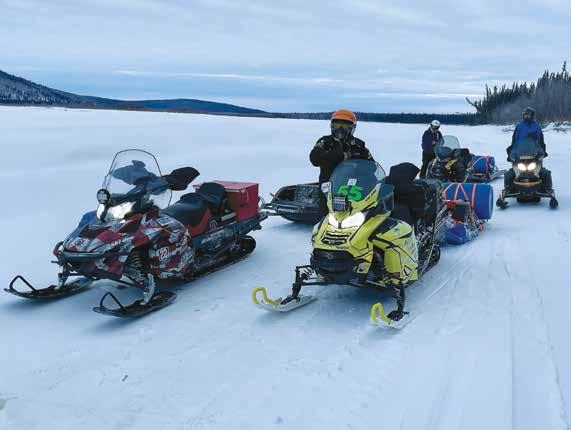
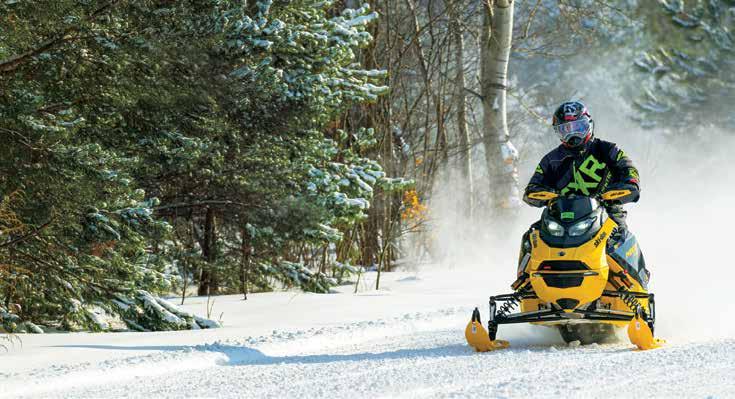
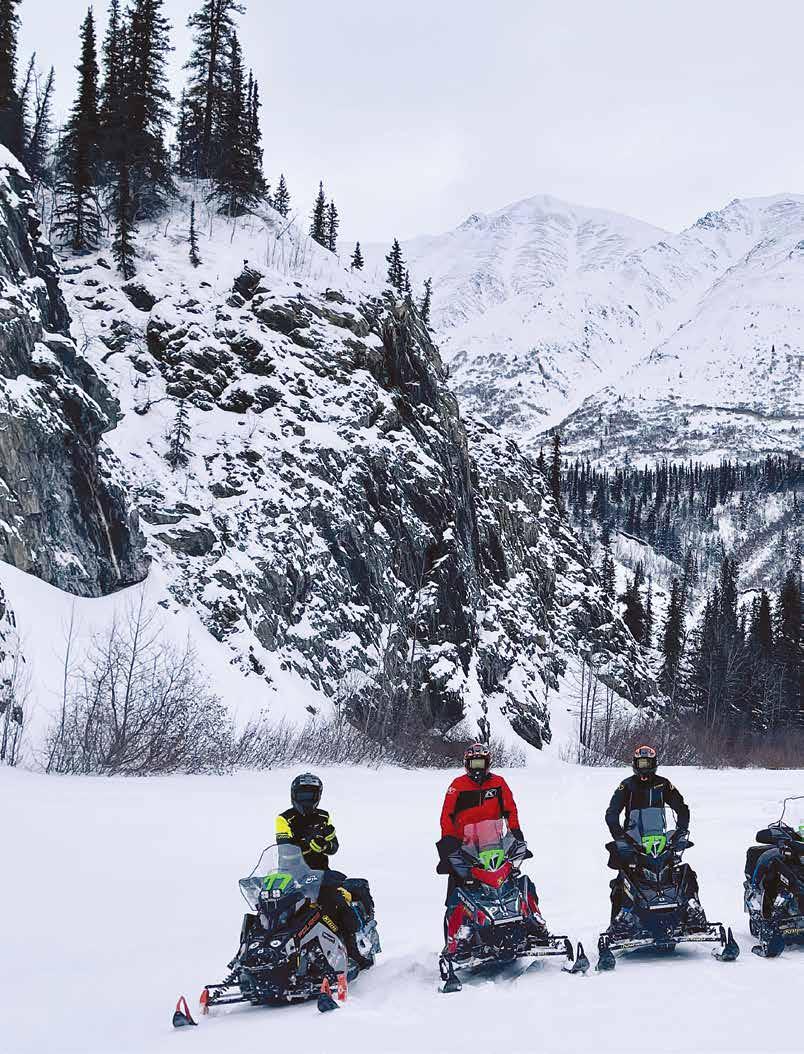
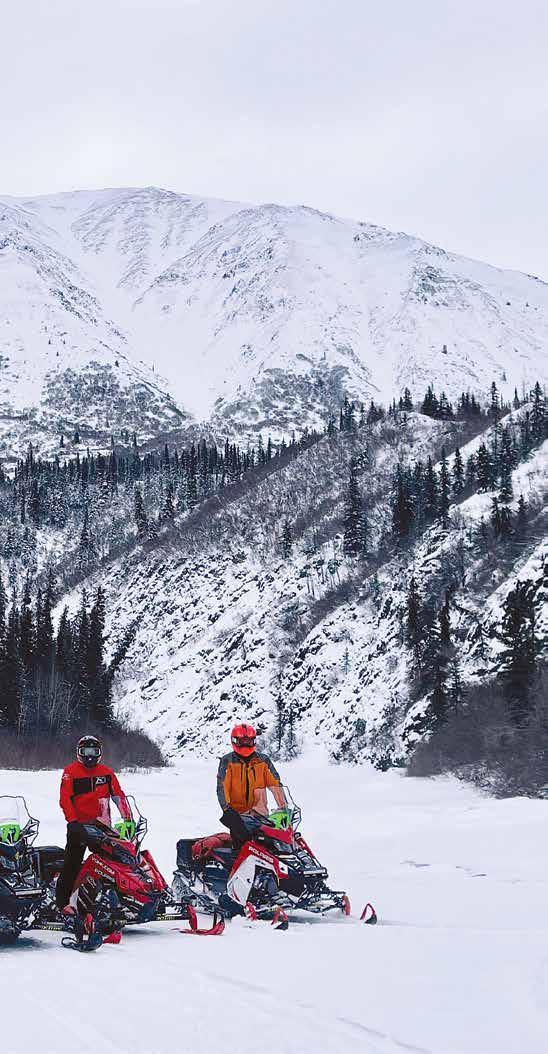
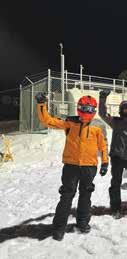
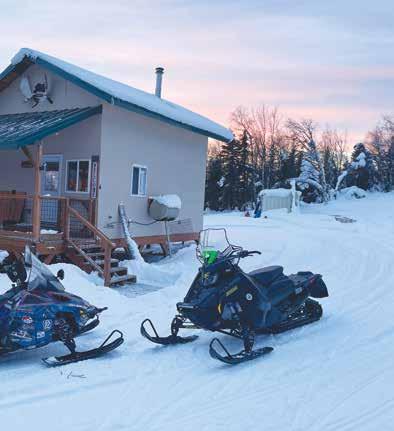
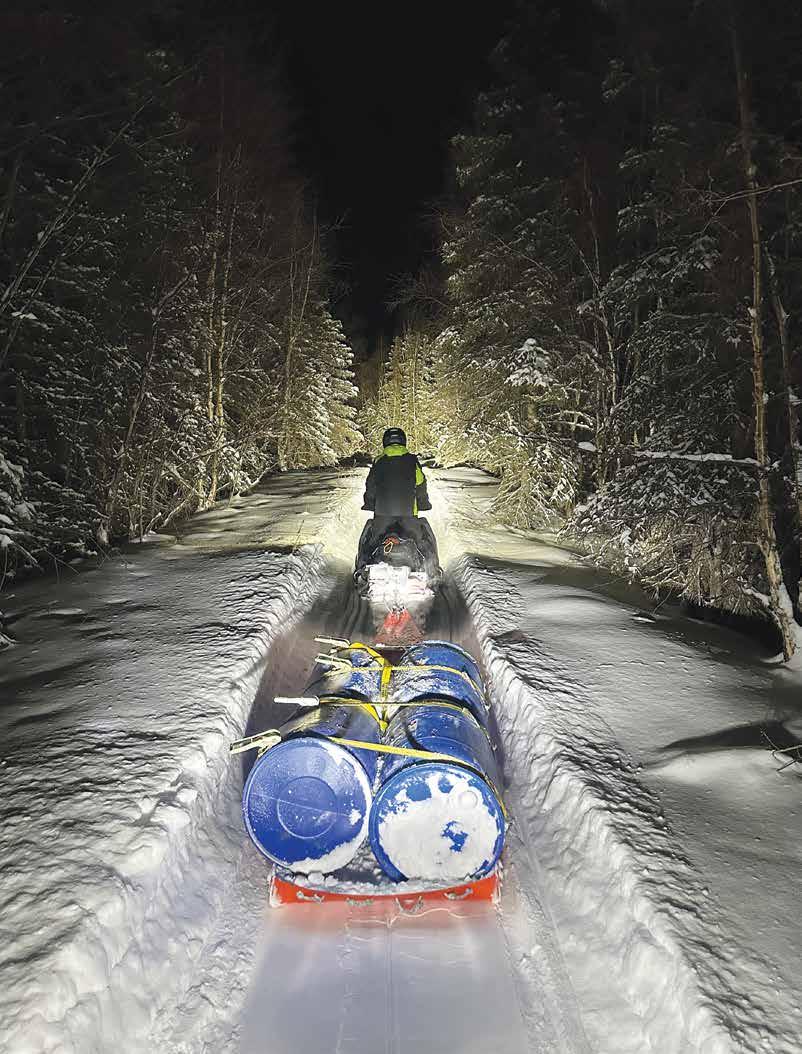
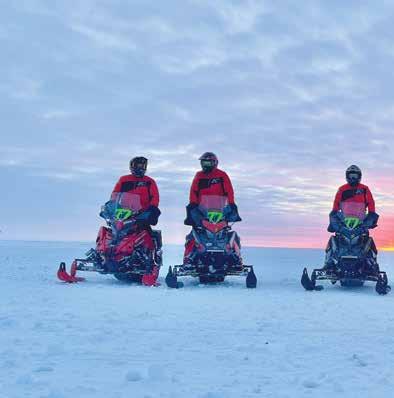
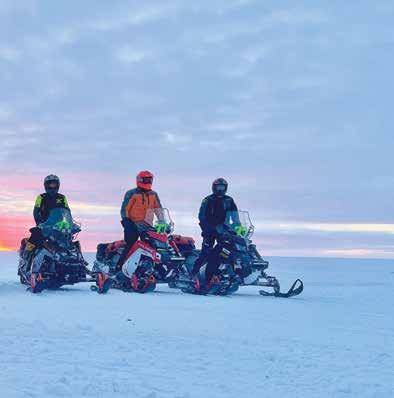
In February deep, in Alaska, Roger Brown can typically be found doing what he’s done for more than a decade—staking trails, hauling fuel, or prepping checkpoints for the Iron Dog. He’s not in it for the spotlight. He’s in it for the race.
“It’s not just a race,” Brown says. “It’s a community. It’s Alaska coming alive in the middle of winter.”
That sentiment has guided Brown through every role he’s taken on with the Iron Dog—the world’s toughest snowmobile race and one of Alaska’s proudest traditions. From competitor to President to his current position as Treasurer, Brown’s story mirrors the very essence of the event itself: perseverance, teamwork, and an unbreakable connection to the people who make it possible.
THE RACER WHO BECAME A BUILDER
Originally from Traverse City, Michigan, Brown moved to Alaska with a love of snow and a curiosity about the state’s signature sport. “I used to do a lot of mountain riding in the Alaska range,” he recalls. “But I’d always followed the Iron Dog. It looked like the ultimate adventure.”
For years, he admired the racers from afar—legends who seemed larger than life. But one year, sitting at the race banquet, something changed. “I realized these were normal guys with jobs and families and everyday issues. I talked to my son about it – at the time he thought I could do anything - and he inspired me. He told me, ‘Dad, you should do that.’”
So he did. Brown teamed up with longtime friend, Andrew Wessels, entered the race,
continued on page 8
The Iron Dog Challenge Beyond the Finish Line
continued from page 7
and - despite nearly every rookie mistake imaginable—finished. “We did pretty much everything wrong,” he laughs, “but we made it. We crossed the finish line.”
They planned to race again the following year. But just a few months later, tragedy struck when his nine-year-old son died in a snowmobile accident. “My whole life revolved around him,” Brown says quietly. “It changed everything.”
What came next revealed the true heart of the Iron Dog community. “People I didn’t even know reached out,” he
says. “They supported us. It was overwhelming—the amount of care from people who had no reason to do it other than kindness.”
When the next race season arrived, Brown couldn’t imagine racing again—but he still wanted to be part of it. So he teamed up with his racing partner Andrew and volunteered. They helped mark trails, sometimes staking 280 miles of snow-covered terrain in brutal weather. “We weren’t racing,” Brown says, “but we could still do our part.”
What began as volunteering quickly grew into something
larger. After a few years of helping wherever he was needed, Brown was asked to join the Iron Dog board of directors. “I knew nothing about the business side of a nonprofit,” he admits. “But I said I’d give it a shot.”
Within months, he was elected Vice President, and not long after, President. The race was in a difficult place—financially strained, short on sponsors, and lacking leadership. “It wasn’t in good shape,” Brown recalls. “We had no money, no executive director, and a lot of unrest.”
So the board went to work.
They strengthened sponsorships, launched a youth helmet safety program, and navigated the unprecedented challenges of the pandemic.
“When COVID hit, a lot of people thought we couldn’t race,” Brown says. “But we decided early that we were going to find a way.” Working with local doctors and state officials, the Iron Dog developed a testing and travel plan that allowed the race to continue safely through rural villages with strict restrictions. “The fact that we had the race that year was huge,” he says. “It was something Alaska really needed. That was the turnaround year.”
THE HEART OF THE IRON DOG
Over the years, Brown’s respect for the race has deepened—not just for the competitors, but for the continued on page 10
Located in Reese, Michigan, Finishline Shocks specializes in high-performance suspension solutions for trail riding enthusiasts . Owned and operated by Dave Hausbeck, a seasoned competitor in Alaska’s renowned Iron Dog Snowmobile Race, the company is driven by expertise and passion for the sport. Dave personally builds and tunes each set of shocks to ensure peak performance, durability, and customer satisfaction. Elevate your trail ride with custom-crafted shocks tailored to take your snowmobile to the next level. We specialize in Walker Evans and Polaris skids, but can build multiple other brands of shocks.
“Dave is the man to see for shocks on your Polaris sleds. I’ve had him do a few sleds for me over the years, and they have turned out great. Anyone who rides my sled with the finish line shocks on it is blown away of how well they ride compared to stock sleds. If you want the full potential out of your sled, go see Dave. You will not regret it.”
W. Vassar rd, Reese MI 48757
www.facebook.com/FinishlineShocks1
The Iron Dog Challenge Beyond the Finish Line
continued from page 9
hundreds of volunteers and residents who make it possible.
“The Iron Dog to these villages and towns is like the Super Bowl, Christmas, and the 4th of July all in one,” he says. “They’ve been cooped up all winter, and when the racers come through, it’s like the first day of spring.”
He remembers arriving at a checkpoint in the middle of the night, exhausted and lost after a storm, only to find locals waiting outside to cheer. “They didn’t know our names,” he says, “but they were there, waving and cheering us on. That’s what this race does—it brings people together.”
That sense of connection goes both ways. Racers often lend parts or repair help to other teams. Residents open their homes, cook meals, and offer their beds to weary competitors. “It’s hard to describe how much people give,” Brown says. “Some volunteers stay continued on page 12
The Iron Dog Challenge Beyond the Finish Line WHITE LAKE
continued from page 10 up all night, others haul supplies, some just make sure everyone’s okay. And none of them do it for recognition—they do it for pride.”
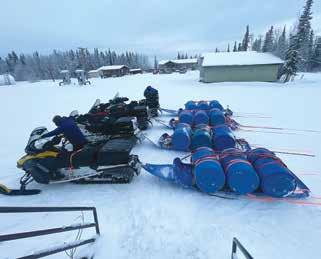
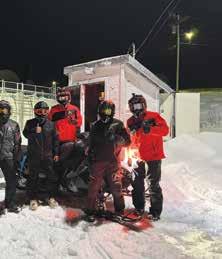
Each year, Brown still volunteers in the field, helping run the remote Poorman checkpoint and ensuring fuel is ready for racers. “We used to fly in drums of gas and pump it by hand,” he explains. “Now we’ve built a system with tanks to make it smoother and faster. It’s the kind of problem you only solve by being there.”
Brown estimates that between 250 and 300 people help keep the Iron Dog running each year—from the 20-some checkpoints along the route to the massive operations at the start in Big Lakes and finish in Fairbanks. “The amount of work it takes is astronomical,” he says. “And the pride people take in being part of it—it’s amazing.”
Over the last 8 years, Iron Dog, Inc. has expanded its community programs, donating helmets to kids, hosting safety workshops, and contributing to disaster relief efforts across Alaska.
“I do it for my own sense of pride, not for recognition,” Brown says. “And I think most of the
volunteers feel the same way. It’s so much bigger than any one person. Being a small part of something that big is pretty awesome.”
FULL CIRCLE
Today, as Treasurer of the Iron Dog board, Brown continues to work behind the scenes, ensuring the race’s financial health while staying closely connected to the people and places that keep it alive.
“Most fans have no idea who I am, and I’m totally fine with that,” he says. “I take pride in helping make it all happen.”
He still sees echoes of that first race—the thrill of the trail, the camaraderie of competitors, and the deep gratitude of the Alaskans who welcome them each year. And though his life took turns he never could have anticipated, his bond with the Iron Dog remains unwavering.
“You show up for this race as a nobody,” Brown says. “And before you know it, you’re part of a family that would do anything for you. That’s the Iron Dog.” •
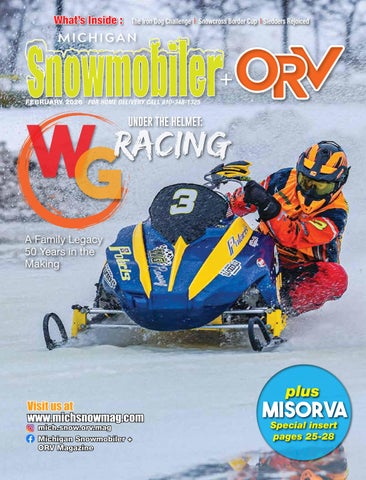
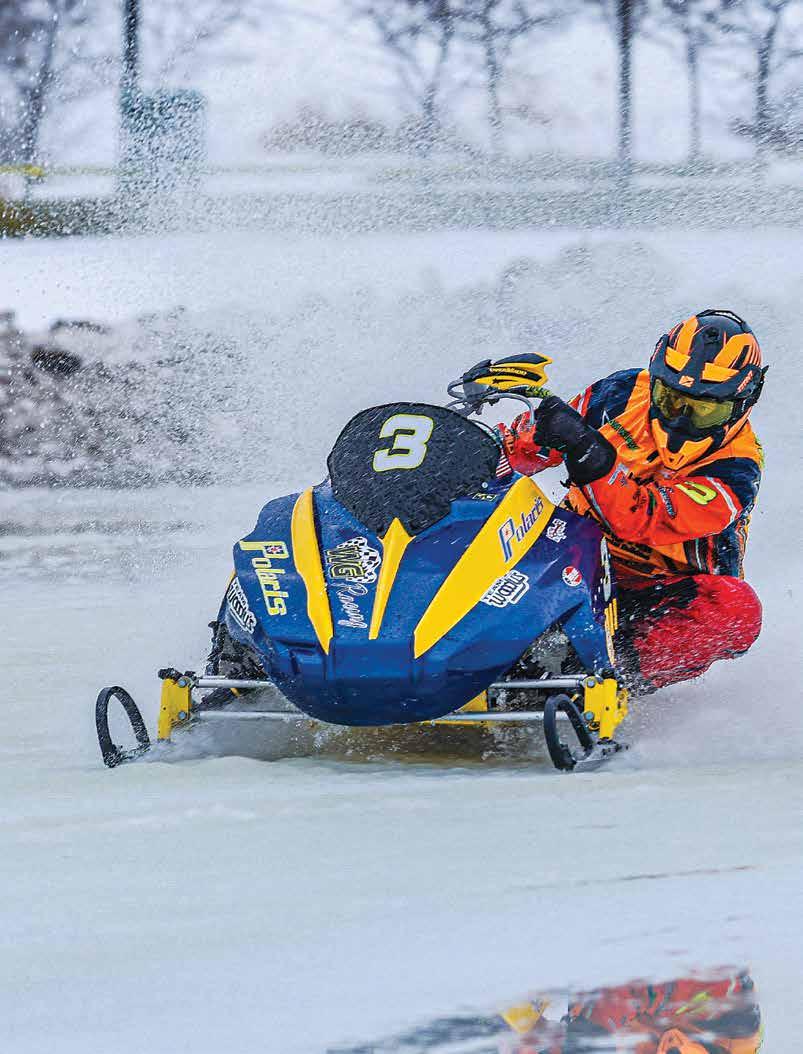
A Family Legacy 50 Years in the Making
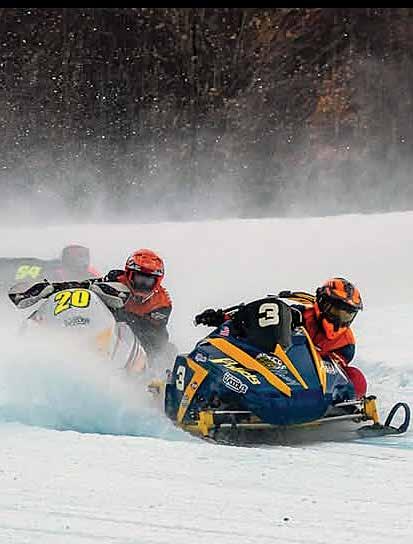
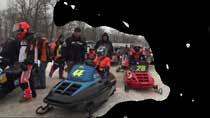
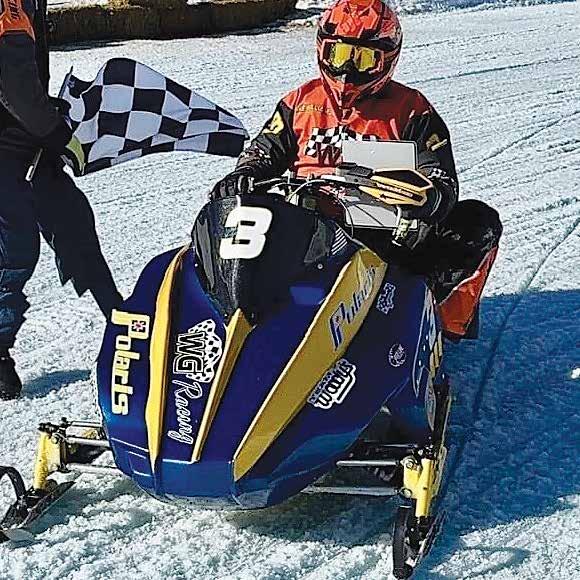
WGRacing is a family race team in every sense of the word. The story began 50 years ago when Larry Williams, along with his dad Herb and brothers Ron and Rick, formed the original Williams Race Team. They spent their early years sprint racing, with Ron and Larry both driving race sleds.
In 1982, the family decided it was time to take on a new challenge: enduro racing. They brought in a young driver, Karl Schwartz, to join Ron on the track, while Larry, Rick, and Herb made up the crew. Their first year in MIRA was unforgettable — the team earned the nickname “The Cinderella Team” after winning the Stroh’s Triple Crown.
Larry later teamed up with Bob Benner, forming WilliamsBenner Racing, a partnership that produced many wins and championships. In 1990, the next generation stepped in as Mike Williams began racing the Armature Formula III for the team. After many successful years, Larry went on to wrench for multiple racing teams, adding even more championships to the family’s legacy.
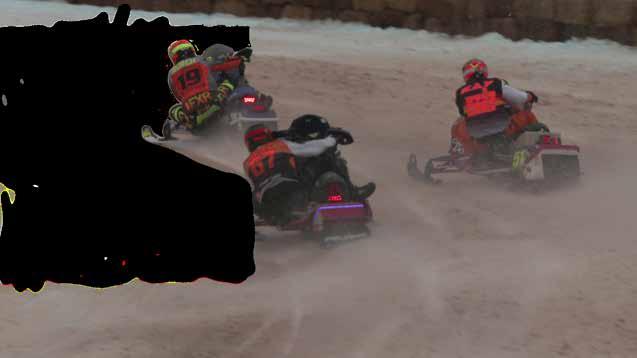
The third generation arrived in 2003–04 when Jake and Derek Gerow along with Jeff Williams began their racing careers with Tadpole Racing, earning multiple Junior Championships. In 2008, the family decided it was time to get back to racing together — this time in vintage — and WG Racing was officially born. Cameron Williams, Mike’s son, joined the team when he was old enough to race and continue the family tradition of winning championship.
THE TEAM MOTTO SAYS IT ALL
“We didn’t know we were making history… we just thought we were having fun.”
The fourth generation soon followed with Easton Gerow making his debut in 2017, Levi Gerow in 2021, and now in 2026, the youngest of Jake’s boys, Colton Gerow, is set to begin his racing journey.
From one generation to the next, WG Racing continues to prove that racing isn’t just a sport — it’s a family tradition, a shared passion, and a legacy that keeps growing.
Age: 80
on page 16
WG Racing
MEET
LARRY WILLIAMS
Hometown: South Branch, MI
Team Owner
Who got you into snowmobiling?
My dad, my brothers, and I just decided it would be fun — and that’s how it all started.
When did you start your racing career?
I began racing in 1975 in Glennie, MI.
What is your proudest achievement on the track?
You’d think it would be a championship, but honestly, nothing compares to watching my boys win races.
What is your career goal?
To keep the family racing and having fun and be around to see my greatgrandsons win races. When it stops being fun, we’ll be done.
How did you become part of this racing team?
We were trying to figure out what to do next, and we thought, “Let’s go vintage racing.” We bought a sled, and Mike, Jake, and Derek were going to be our drivers. We joined G.L.A.S.S., and that’s when WG Racing — WilliamsGerow Racing — was born.
MEET
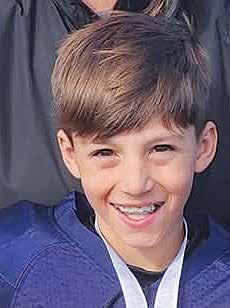
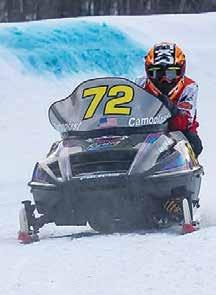
LEVI GEROW
Age: 8 (as of February 2026)
Hometown: Oscoda, Michigan
Class: 120cc
Who got you into snowmobiling? My dad.
How have they influenced your involvement in the sport?
Dad said to have fun, and always keep trying.
When did you start your racing career?
I started racing in 2021 when I was 4 years old.
What is your proudest achievement on the track?
Running out of gas… but still winning the race.
What is your career goal?
Win more races.
How did you become part of this racing team?
I was born into it.
continued from page 17
LARRY WILLIAMS
LEVI GEROW
WG Racing
continued from page 16
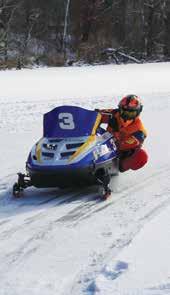
MEET EASTON GEROW
Age: 11 (as of August 2025)
Hometown: Oscoda, MI
Class: 340cc Diesel Freaks Jr
Who got you into snowmobiling?
My dad.
How have they influenced your involvement in the sport?
I’ve grown up racing, watching my dad and family. Being around them has taught me to work hard, stay focused, and love racing.
Being around them [my family] has taught me to work hard, stay focused, and love racing.
– EASTON GEROW
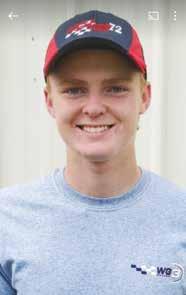
MEET CAMERON WILLIAMS
When did you start your racing career?
I started racing in 2017 when I was 3 years old.
What is your proudest achievement on the track?
Winning races in the 120cc class, and winning my heat on my 340 at Lincoln last year.
What is your career goal?
I want to win the I500.
How did you become part of this racing team? I was born into the team.
Age: 24
Hometown: Fenton, MI
Classes: F500 and 600 Sportsman
Who got you into snowmobiling, and how did they influence you?
Snowmobiling has always been part of my life. My grandpa, Larry Williams, and my dad, Mike Williams, have both been racing for decades. I don’t really remember a time before snowmobiles. Growing up around them taught me how much work goes into racing, how to
respect the equipment, and how important it is to carry yourself the right way at the track.
When did you start your racing career?
I started racing when I was about 3 years old on a 120 and worked my way through different classes as I got older.
What is your proudest achievement on the track?
The championships I’ve won mean a lot, but honestly, nothing compares to racing
CAMERON WILLIAMS
EASTON GEROW
Growing up around them [snowmobiles] taught me how much work goes into racing, how to respect the equipment, and how important it is to carry yourself the right way at the track.
– CAMERON WILLIAMS
alongside my family. Carrying on something that’s been part of our family for generations is hard to beat.
What is your career goal?
My goal is to keep racing competitively and continue improving every season. I want to help WG Racing stay strong and competitive, and I also want to mentor the younger racers coming up behind me. Long term, I just want to stay involved in the sport.
BIG MILER
How did you become part of this racing team?
WG Racing isn’t something I joined — it’s my family. I grew up around the team, the shop, and the race weekends. Now I’m proud to be one of the drivers representing our family name every time we unload at the track.
continued on page 20
Perfectly Groomed Trails
sledalgoma.com
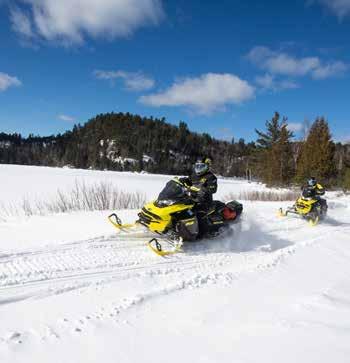
The Algoma trail system consists of over 1,000 miles of groomed trails carved through the rugged Canadian Shield and old growth forests.
WG Racing
MEET JAKE GEROW
Age: 33
Hometown: Oscoda, MI
Classes: 440 Super Stock and Pro Enduro Who got you into snowmobiling?
My grandpa, Larry Williams. He bought me my first snowmobile when I was 3 years old. How did he influence your involvement in the sport?
Grandpa Larry was a toptier team owner who always pushed me to be my best. When I was coming into the Enduro circuit, Karl Schwartz called Grandpa looking for a young driver he could work with. Grandpa told him, “I might be a bit prejudiced, but I think Jake Gerow is one of the best.”
When did you start your racing career?
I started racing at 3
years old in the Kitty Cat Olympics. Later, I raced for Tadpole Racing as a junior from ages 12–16, winning multiple Junior Championships.
What is your proudest achievement on the track?
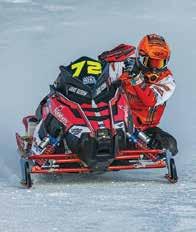
Placing on the podium at the World Championship multiple times in F3, and winning the first MIRA Enduro World Championship in 2020, along with several other podium finishes.
What is your career goal?
To win the MIRA High Points Championship.
How did you become part of this racing team?
I didn’t “become” part of this team — this racing team is my family.
MEET MIKE WILLIAMS
JAKE GEROW
Age: 54
Hometown: Flint, MI
Team Owner and Master F-500
Who got you into snowmobiling?
My dad, Larry Williams. He Painted my Kitty Cat up just like his race sled and I raced it as a kid and won $1 and a candy bar in my very first race — I was hooked from that moment on.
How did he influence your love for the sport?
I grew up watching him win countless races and championships as the owner of Williams Race Team and later Williams‑Benner Racing. His passion, dedication, and success shaped everything I love about racing today.
When did you start your racing career?
I began racing at 19 years old for Williams‑Benner Racing in 1990.
What is your proudest achievement on the track?
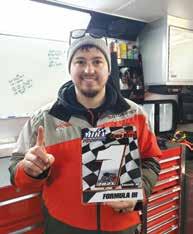
Winning multiple MIRA sprint championships, including Masters F500 titles in 2024, 2022, and 2021. I’m also proud of winning a Pro Enduro Championship as Crew Chief for Bad Frog Racing.
Off the track, nothing beats watching my son, Cameron Williams, race.
What is your career goal as an owner?
To keep winning races while teaching Jake, Cameron, Easton, Levi, and now Colton to be better racers, stronger competitors, and — most importantly — good people. Our goal is simple: have fun, spend time together, and create new stories to share in trailer.
How did you become part of this racing team? Blood.
THE HEART OF WG RACING: The Crew Behind the Drivers
Behind every WG Racing driver is a group of people who keep the team running, the sleds moving, and the boys smiling. These are the ones who make sure everything is ready long before the green flag drops.
Mike Williams Crew Chief and Larry Williams Engine Builder build the sleds, set up the tracks, haul the trailers to the races and even build a test track. Everyone pitches in wherever needed so the team is ready to pull out and go racing on time.
Ken Baker (Grandpa Ken) is part of the backbone of the crew. He works on the grandson’s sleds, provides the shop for the team to wrench in, hauls sleds, and does whatever it takes to keep the boys on the track.
And then there are the ladies — the ones who truly keep WG Racing moving. There is no WG Racing without them. They make the food, book the hotel rooms, order the parts, and keep the boys organized.
Jean Williams has been by Larry’s side for over 50 years of racing. Now known as G.G. (Great Grandma), she once served as a MIRA Secretary in the ’80s and ’90s. If you’ve followed MIRA for any length of time, you’ve probably seen her around the track.
Kim Baker, mom and grandma to the Gerow boys, handles much of the team’s cooking and signs WG Racing up for events. She has also been the MIRA Secretary/Treasurer since 2017 — if you need help with anything MIRA, she’s the one to call.
Jackie Williams, Mike’s wife and Cam’s mom, makes sure the team has a place to stay, keeps the trailer running with coffee and hot food, and then heads off to her MIRA job in the timing trailer.
Brittany Gerow and Tori Klamerus hold down the trailer during the day, making sure the boys have whatever they need as the races unfold.
It truly takes a village to raise a race team — and WG Racing is proof of that. Every person, every role, every helping hand is part of what keeps this family legacy alive and thriving. •
MIKE WILLIAMS
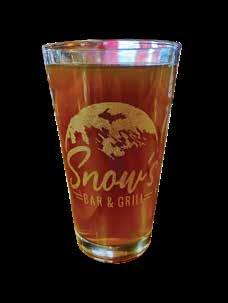
Snow Bar & Grill
Once you cross the Mackinac Bridge and arrive in Michigan’s Upper Peninsula, you’ll hear locals and visitors alike, say “you’ve arrived in God’s Country”. They’re not wrong! From the miles and miles of great lakes’ shorelines, the rugged terrains, forests, waterfalls, islands, wildlife, and undisturbed nature for as far as one can see, the beauty and charm isn’t to be missed. And once you make it over the Mackinac Bridge, just a short half hour drive north on I-75 and east on M-134 will bring you to the beautiful area of the Les Cheneaux Islands; a 36-island archipelago situated in Lake Huron near the towns of Hessel and Cedarville.
The area is known for its four season fun; boating, hiking, biking, kayaking,
continued on page 24
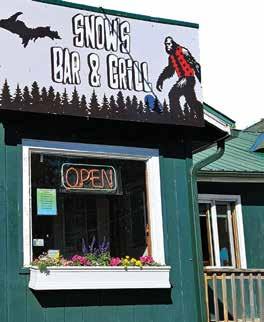
continued from page 22 golfing, trail riding, snowmobiling, cross country skiing, snowshoeing, and ice fishing. And nestled just off the shoreline of Snows Channel in the heart of the Les Cheneaux and Cedarville, is Snow’s Bar & Grill.
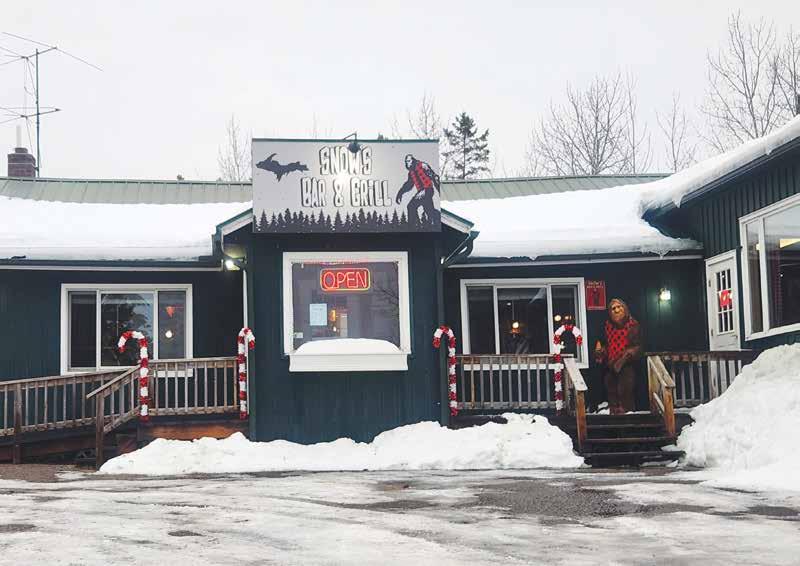
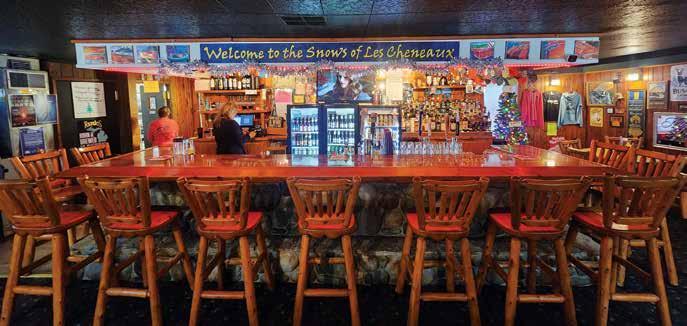
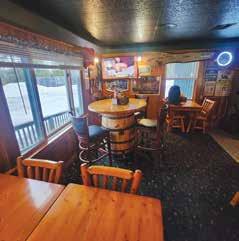
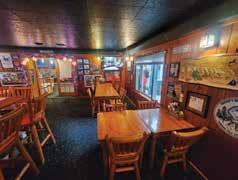
Snow’s Bar & Grill is your quintessential UP bar & grill complete with a beautiful field stone bar you can cozy up to knotty pine walls, handmade log chairs/ barstools and custom one-ofa-kind tables handmade by a local Native American.
Snow’s has quite the history in
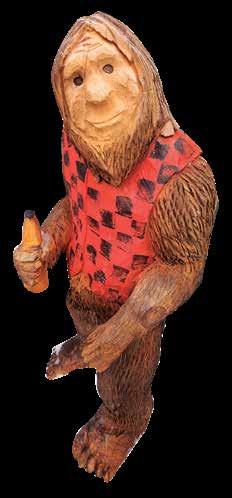
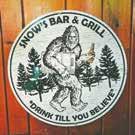
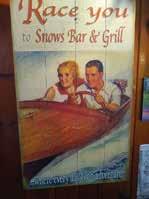
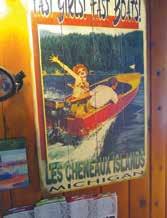
the area, dating back to the early 1940s. It’s walls are dotted with nods to that history with photographs, antiques, and postcards. Intertwined with the history, you’ll find buffalo plaid, humorous signs, taxidermy, and glimpses of one of the rarest wildlife creatures in the UP…the Sasquatch. Their motto around the bar is “Drink till You Believe.” At Snow’s they believe in the possibility of many things, including
Add to the true Upper Peninsula atmosphere the delicious food, cold beer, and fun specialty drinks,
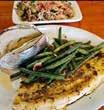
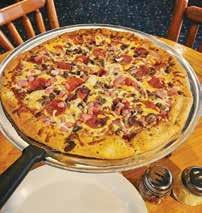
and now you’ve found your new eastern UP hangout. Enjoy the best whitefish around, any number of fantastic burgers, the legendary brisket Mac and Cheese, a freshmade salad or homemade pizza. There is something for everyone, including gluten-free options, and choices for the kiddos too. Whether your next adventure is snowmobiling in the winter, hiking in the spring, boating in the summer, or cruising in your UTV peeping the colors in the fall, make Snow’s Bar & Grill in the beautiful eastern UP a destination on your travels. Cheers! •
MISORVA
Michigan Snowmobile and ORV Association
DDoing More With Less — Until the Math Breaks the Program
NR officials receive raises each year. Snowmobile permits increase every five years based on CPI. The number of employees administering the snow program has increased over the past decade — while trail miles have decreased.
Karen Middendorp Executive Director MISORVA
If you do the math, it’s not hard to see where this leads: the administrative cost of the program will eventually break the program itself.
When this concern is raised with DNR leadership, the proposed solution is often to close trail miles to “save” the program. That should concern every rider. Closing trails does not fix the problem — it simply reduces access while administrative costs continue.
While many of us struggle through life trying to do more with less, administration continues to collect a paycheck to administer the program. Clubs, on the other hand, truly do more with less. They solicit donations to heat their barns, purchase chainsaws and vehicles, and maintain trails with far fewer volunteers than
they had 10 years ago.
In a recent conversation with a longtime volunteer, I asked why volunteers are walking away. Are they fed up? Are they aging out? I also see a growing disconnect with the 30–50-year-old age group. Fortyhour workweeks are far less common today, and with kids at home, free time is limited.
I also believe some people think that if they can’t give daily or weekly time to a club, they aren’t valued. Nothing could be farther from the truth.
If you can give one day during brushing or signing, it makes a meaningful difference to your club. When clubs disband due to a lack of volunteers, we all lose.
Some DNR staff work shoulder-toshoulder with the clubs they represent. Others treat it as simply a job. We see this dynamic in every arena. What makes motorized recreation different is that the work falls almost entirely on a volunteer base, operating under the authority of the DNR. Some relationships are excellent; others, not so much.
At a recent Forest Management Advisory meeting, we discussed ways to reduce trail conflict — not just between motorized users, but also between
motorized and non-motorized users. When trails are used in a dual fashion, we must ensure our use does not negatively impact another user group. Paying to play does not devalue what non-motorized users contribute to tourism in our state. Social media has become a go-to source for information, but I strongly encourage everyone to verify what they read. Some content is factual; much of it is not. Many posts are simply one person’s opinion, formed in a moment, without facts or evidence.
Recently, I was told that someone posted that MISORVA purchased my snowmobile and side-by-side. MISORVA has also been accused of inappropriate spending, and someone even asked the DNR to audit the association.
Let’s be clear:
• I ride a 2014 Ski-Doo, purchased in 2017
• I own a 2020 Kawasaki side-by-side, purchased in 2020 (later traded for a different model the same year)
• MISORVA did not purchase either vehicle
I draw a paycheck, as does the office manager. MISORVA’s Board of Directors
Trails MISORVA
Our Shared Pathways
Whether you’re a hiker, biker, ORV enthusiast, snowmobiler, equestrian, dirt bike rider, SxS driver, or paddler—there’s one thing we all share: trails. These pathways connect us to nature, recreation, and each other, forming the backbone of Michigan’s outdoor experience.
Karyn Robare President Executive Committee
THE HIDDEN WORK BEHIND TRAILS
What many people don’t realize is how much work goes into maintaining these trails. Behind the scenes, it’s club volunteers who make it all possible. These dedicated individuals aren’t paid; they volunteer their time to groom, grade, brush, and sign the trails so everyone can enjoy a safe and fun experience. Without their efforts, trails would quickly become overgrown, eroded, or unsafe.
TRAIL MAINTENANCE: MORE THAN MEETS THE EYE
Trail maintenance is a complex, ongoing process. It includes:
• Routine Inspections: Volunteers and staff regularly walk trails to assess conditions, looking for erosion, overgrown vegetation, water damage, and safety hazards like fallen trees or unstable rocks.
• Erosion Control: Water is a major force that can damage trails. Techniques like water bars, retaining walls, and proper drainage systems help prevent soil loss and trail washouts.
• Vegetation Management: Clearing brush and overgrowth keeps trails passable and safe for all users.
• Signage and Marking: Volunteers install and maintain signs to guide users and promote safety.
• Infrastructure Repairs: Bridges, boardwalks, and other structures require regular upkeep.
THE POWER OF VOLUNTEERS
Volunteers are the backbone of
Michigan’s trail system. They not only maintain trails but also help build new ones, restore habitats, and educate the public about responsible trail use. Many communities have trail adoption programs, where groups or individuals take responsibility for a segment of trail, conducting clean-ups and reporting issues.
Why Volunteer?
• Make a Difference: Volunteers directly impact the quality and accessibility of trails.
• Personal Growth: Gain new skills, meet like-minded people, and enjoy the outdoors.
• Community Building: Volunteering fosters a sense of connection and stewardship.
• Environmental Protection: Maintenance prevents erosion, protects habitats, and minimizes human impact.
EDUCATIONAL PROGRAMS AND YOUTH INVOLVEMENT
Michigan’s trail organizations and the DNR offer free educational
programs at state parks and trails, teaching everything from bike safety and map reading to environmental conservation. Youth programs, like the DNR’s Summer Youth Employment Program, expose young people to outdoor recreation and conservation careers, ensuring the next generation is engaged in preserving our natural resources.
THE ROLE OF ORGANIZATIONS
The Michigan Trail Advisory Council (MTAC) brings together representatives from motorized, non-motorized, equestrian, and waterway groups. Appointed by the Governor, MTAC advises the DNR on trail creation, development, and maintenance. These quarterly meetings foster collaboration and ensure all voices are heard.
Other key organizations include:
• Michigan Trails and Greenways Alliance: Promotes non-motorized trails and organizes educational programs for youth.
• Snowmobile Advisory Workgroup:
Crucial for the success of the Michigan snowmobile program. They work closely with MTAC and DNR.
• Off Road Vehicle Advisory Workgroup: Crucial for the success of the Michigan ORV trail system in the state of Michigan. They also work closely with MTAC and DNR.
• Local Trail Clubs: Handle much of the hands-on maintenance and advocacy.
• Federal Agencies: The National Park Service and USDA Forest Service provide guidelines and support for sustainable trail management.
• American Council of Snowmobile Associations: The National Organization comprised of member state snowmobile associations, individual members, families, and clubs. They represent State, Regional, and club level organizations at the National level.
ECONOMIC AND COMMUNITY IMPACT
Trails are vital community assets. They support local economies through tourism, encourage healthy lifestyles, and connect people to nature. Studies show that 79% of Michiganders participate in some form of outdoor recreation, driving billions in consumer spending and supporting small businesses.
WORKING TOGETHER FOR THE GREATER GOOD
There’s ongoing discussion about whether to keep the Snowmobile and ORV associations together or separate them. From my perspective, we all share these trails and common goals. I’m optimistic that, even when disagreements arise, we can find common ground and compromise. Cooperation is key—by working together, we ensure the trails remain accessible and enjoyable for everyone.
Let’s continue to support one another and collaborate for the greater good of our trails. If you’d like to get involved, consider joining a local club, volunteering for a trail maintenance day, or attending an upcoming meeting. Together, we can keep Michigan’s trails safe, sustainable, and open for everyone to enjoy. ■
continued from page 25
and officers serve entirely on their own dime, giving back to your recreation. They attend meetings, gather input from users, and work collectively toward solutions for the greater good of snow and dirt riders alike.
By joining MISORVA, you have a voice in your recreation. Much like your town or village, you won’t agree with every decision — but if MISORVA disbands, as some hope, DNR administration will be the only remaining oversight.
For those concerned about wheeled vehicles on snowmobile trails and the enormous cost to the snow program, be aware that the DNR already has the authority to implement seasonal restrictions to prevent damage and safety issues. Repeated grooming to repair ruts costs the program and reduces the funds available to purchase new equipment.
Who pays for that? The snow program.
In a recent meeting, I asked a DNR representative why one club had to spend $12,000 on materials to repair a trail damaged by illegal ORV use — and why those costs were paid from snow funds instead of the ORV fund. The response was simple: “The wrong form was used.”
That’s administration?
Make no mistake — without MISORVA bringing facts to legislators, the only oversight of the DNR disappears, and with it, brings trail access and rider privileges.
We recently met with MDOT because some county officials do not understand that snowmobile laws are very different from ORV laws. That education doesn’t happen without advocacy. This is just one snapshot of the big, complex recreation you love — and why it’s worth protecting. ■
My Snowmobiling Essentials — and Why They Matter
Iam an enthusiastic snowmobiler who frequently travels across Michigan, other states, and into Canada. Over the years, I’ve been asked many times what I carry with me on the trail — so here’s my musthave list, along with the “why” behind each item.
Before I even leave home, my first priority is a detailed itinerary that I share with my spouse. Letting someone know your planned route, destination, and expected return time is simple — and lifesaving.
On every ride, I carry a Garmin inReach Communicator. This device gives me peace of mind because it continuously sends my location at an interval I set. If something goes wrong, I can call for help — and no one has to wonder where to start looking.
I never ride without a spare belt and a small assortment of tools, including pliers, a screwdriver, a crescent wrench, and spark plugs. Breakdowns happen, and being prepared can make the difference between a minor inconvenience and a stranded night in the cold.
Safety gear is just as critical. I carry a waterproof first aid kit and a reflective emergency blanket, which can also serve as a protective shelter if needed. A tow rope, small block and tackle, and a shovel are indispensable if you get stuck. I also pack flares, which are an excellent way to signal for help — and can even help start a fire in an emergency.
A hand saw is another handy tool, both for clearing small trail obstacles and for gathering wood if you need warmth. I also keep a pocket knife, flashlight, and lighter or matches within reach at all times.
While all of my snowmobiles have electronic navigation, I always carry a current paper trail map. GPS is great, but it isn’t always up to date — and purchasing a local map directly supports the volunteer clubs that maintain our trails.
That leads to one of the most important parts of riding: being involved. Being a member of your local club and MISORVA helps keep the trails we all love open, safe, and groomed. Your dues make a real difference — but spend just one Saturday helping on the trails, and you’ll gain a whole new appreciation for the volunteers who make riding possible.
So ride right, stay sober, and make it another fun, safe day on your snowmobile, my friends. ■
How Does Politics Affect Your Recreation?
Have you ever stopped to think about how politics—and your elected officials—impact your ability to ride?
Probably not when you bought your sled or ORV.
But here’s the reality: the only oversight of the DNR is your elected officials—and your vote truly matters.
Too often, Senators and Representatives overlook the economic benefits of motorized recreation in Michigan. Riders don’t just ride—we travel. We stop for fuel, eat at restaurants, stay in hotels, shop locally, and support the mom-andpop businesses that keep rural communities alive.
THAT ECONOMIC IMPACT EXISTS
BECAUSE OF YOU. So ask yourself:
• Have you ever talked with your legislator about recreation?
• Do they understand the thousands of dollars you spend each year riding in Michigan?
• Do they support snowmobiling and ORV/OHV access?
• Have you ever written, called, or met with your Representative or Senator?
• Have you attended a fundraiser or supported a
candidate who supports your recreation?
IF WE DON’T SPEAK UP, DECISIONS GET MADE WITHOUT US.
Michigan is a recreational state—fortunate to call home and proud to welcome visitors from across the country to experience everything our state has to offer. But access, funding, and trails don’t protect themselves.
THAT’S WHERE
MISORVA COMES IN. MISORVA is the unified voice and watchdog for motorized recreation in Michigan. We employ a full-time professional lobbyist to maintain relationships with legislators and defend your access. Your membership dues support that work, along with two full-time employees who serve riders and clubs statewide.
All of that—for $40 a year.
That’s peace of mind knowing someone is watching, asking the tough questions, and standing up for your recreation when it matters most.
Because a unified voice carries much farther than the whisper of a few.
Are you being counted? Join. Support. Speak up.
Your recreation depends on it. ■
Mike Keith Region 1 District 2
Sledders Rejoiced
The Keweenaw kick-started the season off with a dramatic blizzard!
BY WRITER’S NAME CONTRIBUTING WRITER
The treacherous roads may have kept many families apart, but sledders rejoiced at the dramatic blizzard that got winter off to a roaring start on Thanksgiving Day in the Keweenaw Peninsula. And it’s barely let up; as of mid-January, snowfall totals are on pace to match or even beat last year’s 300-plus inches.
The impressive snow is matched by lots of action in the Copper Country, with new shops and
restaurants giving sledders more off-trail choices than ever.
Since the Upper Peninsula has so many great snowmobile sites, why venture all the way to the Keweenaw? “It’s always going to be the snow,” says Jesse Wiederhold, managing director of Visit Keweenaw, the local tourism bureau. “With 230-plus miles of trails, beautiful historic downtowns, and trails-to-yourdoor lodging, this place is made for snowmobiles.”
HERE’S A LOOK AT WHAT’S NEW IN THE REGION.
Those traveling in from the west are delighted to see that the Mosquito Inn has reopened. Wiederhold calls the iconic spot on M-26, right off of Trail 3 in Toivola, “the most Yooper place you can eat in the Keweenaw.”
Downtown Houghton continues to offer an array of diversions. Coming north on Highway 41, you’ll notice that the ever-
Sledders Rejoiced
continued from page 30
expanding Michigan Technological University has added a gigantic dormitory right at the city line.
Nearby, the Hampton Inn has been completely redone and now boasts the Observatory Lounge on the seventh floor. Come to this chic spot for the handcrafted cocktails and gourmet food and stay for the sweeping views of the Portage Canal and Mont Ripley Ski Area.
Another elegant downtown spot is Beviamo Vino, a new wine bar with ever-changing selections and tasty charcuterie and flatbreads. Located next to perennially favorite Keweenaw Brewing Company, it opens daily (except Sunday) at 4 p.m.
Also new on Quincy Street is the Prickly Pine Café, which occupies the former Cyberia Coffee Shop. The renovated space has a huge variety of coffee drinks on offer.
Lake Superior’s beaches may be buried in snow, but rock hounds can get their winter fix at the new Main Street Rocks and Crystal Shop, a large store that promises “a world of geological wonders.”
There’s also lots happening over the Portage Lake Lift Bridge, where sledders enjoy their own crossing on the lower level thanks to a lot of elbow grease and 75 truckloads of snow.
When Finlandia University closed its doors in 2023, folks were worried it would hurt downtown Hancock. But the city is thriving, with virtually all of Finlandia’s 20-plus buildings now privately owned. “That’s a big win for us,” says City Manager Mary Babcock. “There are a whole lot of new owners and there’s excitement about what can happen with these properties.”
and lunch and, on Wednesdays
and Thursdays, pasties (there’s even a gluten-free option).
The long-shuttered Kaleva Café, long a local mainstay, has been reincarnated as Uncles’ Local Diner. Owned by the family behind the perennially popular Gino’s Restaurant, it offers breakfast and lunch fare – and free pancakes on your birthday.
Also new on Quincy is the Keweenaw Co-Op, which has opened its brand-new supermarket and small cafe.
Looking to try something different? Finlandia’s former cafeteria on Summit Street is now the site of Shiba Café, which offers steaming-hot bowls of ramen dishes in meat, vegan, vegetarian and halal options.
UP THE KEWEENAW
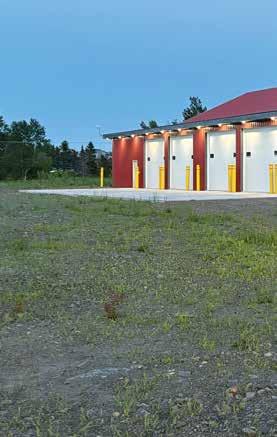
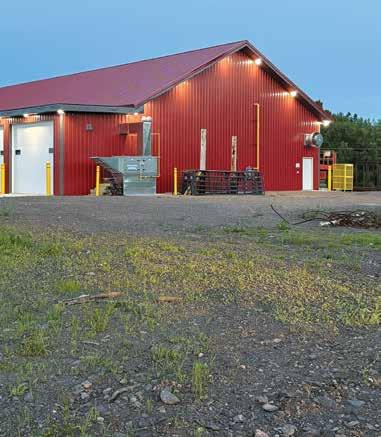
In Calumet, the Keweenaw Snowmobile Club is celebrating its first season with its brand-new maintenance facility, which sits on two acres of donated land adjacent to Trail 17 on Osceola Road.
Mike Borlee, the club’s treasurer, calls completing the ambitious project “a huge monkey off our backs.”
“It took much volunteer time and we all rolled up our sleeves,” he says. “Now we can focus on paying bills and building membership.”
The building measures 108 by 65 feet and includes five bays and enough storage room for
continued on page 34
continued from page 33 the club’s equipment, accessories, tools, and signage. It’s a huge upgrade from the former two-bay garage in Mohawk that lacked plumbing and had only limited heat. “We were just able to keep it upright the last couple of years,” Borlee jokes.
redlion.com/newberry.com
Not only does the new garage have heated flooring, it includes an office, ADA-approved restroom, kitchenette, dark-sky-compliant lighting, and space for social gatherings.
“This gives us the ability to start expanding other sources of income so we’re not just depending on local businesses and our maps,” Borlee says.
For instance, in March the Keweenaw Snowmobile Club will serve as the warming station for the annual Great Bear Chase cross-country ski races in nearby Swedetown.
If you’re in Calumet on February 14, drop by the new building for the club’s Presidents Day Weekend Open House from 8 am-8 pm. You can buy a ticket for the 50/50 raffle, which last year paid out more than $7,500. The drawing’s on April 14.
The all-volunteer club, which has about 200 members, pays groomers to maintain the extensive trail system, and shifts of 10 to 12 hours are not uncommon. “We have five machines and groom nightly, seven days a week,” Borlee says. “We’re so unique, and that’s why people come and play in the Keweenaw. It’s probably the best trail system in the Midwest -- probably in the country.”
As always, the Keweenaw Snowmobile Club encourages sledders to buy a trail pass ($57 on the honor system) and a trail map, which is widely available
in shops and restaurants. And Borlee reminds everyone to follow and honor the trail signage. “We have individual contracts with almost 60 private landowners, and they allow us to have a beautiful trail system. When people violate it, that land owner shuts their property down and it affects the whole system.”
In other Calumet news, the Calumet Eatery is a brand-new spot to hang out and enjoy soups and sandwiches. It’s located on 5th Street in the historic J.W. Isakson Building.
Across Highway 41 in Laurium, Miller’s Recreation has been welcoming bowlers since 1945. It’s a real blast from the past and maintains its classic charm despite a recent upgrade to the bar/café area. The tiny kitchen continues to pump out surprisingly tasty fare – and where else can you play an original Ms. Pac-Man?
Nearby, the new Copper Country Sweets on Hecla Street is a welcoming bakery.
Further up Highway 41, the Cliff View Bar in Phoenix has undergone a bit of a transformation now that it’s owned by the folks behind Fitzgerald’s. There are now fancy cocktails and smoked meat from Fitzgerald’s – but you can still grab a beer on tap and that iconic foot-long hot dog.
Finally, Mount Bohemia continues to offer breathtaking vertical runs (no beginners!) while expanding its Nordic Spa with mineral pools, steam rooms, saunas, a rain cave, and, of course, a Finnish Sauna.
For the latest on weather and trail conditions, visit KeweenawSnowmobileClub.com or VisitKeweenaw.com.
AREA
Snowcross Border Cup
Decided in Pro Final
BY DOMINIC SANTINA CONTRIBUTING WRITER PHOTOGRAPHY BY ASHLEY LIZZY PHOTOGRAPGHY
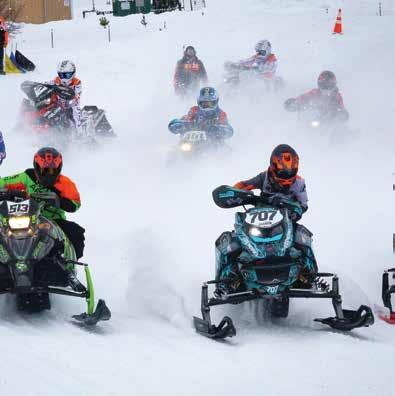
Northern Power Race Park hosted the second annual Snowcross Border Cup battle between Team USA and Team Canada. The teams were primarily represented by the Snocross regional series of Michigan Snocross and Canadian Snowcross Racing Association. The battle began in December of 2024, as series
owners Mark Archambault and Joe Bidinot came together to create an event that had not been seen in a long time. The event originally took place as the first Snocross race of anyone’s calendar, before moving to the first weekend in January for 2026. Canada won the inaugural Snowcross Border Cup convincingly in 2024. However, with a change in the schedule and not as many Canadian’s
Mancelona –
2019 CHOKO SNOWMOBILE SUIT WINNERS
Unsurpassed quality of our fabrics high tech thermal protection and innovative construction techniques assure excellence in performance on the trails while providing a reliable and dependable garment for daily use off the trails.
CH Me Na
The womens Snowmobile Suit winner was Kim Fredenberg of Wayland, MI.
I would like to thank you for the Choko jacket and bibs It looks great! I look forward to using it on the snowmobile rides next season.
My husband and I rode in the Cadillac area and the UP from Newberry to Paradise when our kids were young. My husband pulled a sleigh behind his snowmobile with 2 of the kids in it, while i rode two-up with the other. We had many good ti mes with the kids on the trail. Now that we are empty nesters we still love to ride in the Munising, Grand Marais and Seney areas. We
enjoy taking our time on the trail taking in the sights and visiting waterfalls and lighthouses. Thanks again. Kim Fredenburg
The mens Snowmobile suit Winner was Joel Reeves of Franksville, WI.
Ma Cit
Ph em
To qualify to win just complete the information on t Winners are responsible f shipping or transportation cos cash equivalent will be g Deadline for entries January
NEWBERR AREA
To qualify to win just complete the information on the entry form. Winners are responsible for any shipping or transportation costs and no cash equivalent will be given. Deadline for entries February 27, 2026 MAIL ENTRY FORM TO Michigan Snowmobiler Magazine PO Box 171 • New Lothrop, MI 48460 One Entry Per Person
making the trek across the border, it proved to be the battle Archambault and Bidinot originally planned on.
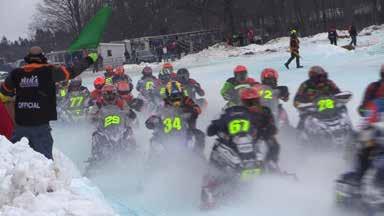
The raceday was split into two different race days. As the morning and early afternoon sessions were comprised of Amateur and young Snocross riders, eventually gave way to more experienced, wise veterans and pro riders.
On the first day of racing, Team Canada saw itself gain a 495-point lead heading into the night portion of racing. A heavy American presence was able to whittle that lead to 111 points heading into day two of racing. Once again on Sunday, the Canadians took advantage of the morning racing to stretch their lead to 420 points. However, once again, the Americans came roaring back in the afternoon to close the battle to just five points heading into the final race.
Canada’s Nathan Mailloux grabbed the race lead earlier and went on his way to winning the Pro
continued on page 40
HOUGHTON LAKE
Snowcross Border Cup
continued from page 38
final. Mailloux grabbed the lead early and helped Team Canada repeat as Snowcross Border Cup champions. Canada’s Taylor McCoy would finish in second place, while Jake Weir would be the third Canadian in the top five with a fifth-place finish. Team Canada would win the Border Cup by 65 total points, 3210 to 3145.
Team USA once again came home short of the championship trophy. It was not due in part to bad riding. On Sunday, Kenny Goike finished on the podium in the Pro class, while Ethan Boon and Lincoln Meyer finished first and second in Pro Lite. Brandon Martinson won the Sport final, with Porter Jacklitch taking home the Junior 14-17 victory.
Kevin Wallenstein would be one of the very few riders to sweep the weekend, taking that Pro Am Plus 30 final both Saturday and Sunday. Danny Dolecki finished in third place on Saturday and second on Sunday. Avery Hemmer made the trip from Minnesota to dominate both rounds of racing in the Pro Am Women’s class. As she and Rilee Nowaczyk claimed the top two spots on the podium on both race days.
Saturday, Ryder Hayes won the Sport class, while Jackson Goike won Junior 14-15, Cole Goike took home the Pro Lite win and Canada’s Taylor McCoy claimed the Pro final.
The biggest event was the Mod Shootout that took place after the Pro Final on Saturday night. The very first mod shootout provided 15 riders going head-to-head in bracket-style racing for a chance to win $3,000. The racing provided many side-by-side photo finishes. Eventually, the racing came down to Weir, McCoy and Dolecki. In the end, McCoy claimed the win, with Dolecki in
continued on page 42
ClydesDrive-in
continued from page 40
second and Weir in third.
After claiming the Border Cup championship, Transition and Junior rider Jake Yarek was named the MI Snocross Media Most Valuable Rider of the Border Cup. Yarek had an outstanding weekend by finishing in first place on Saturday in both the Transition 11-13 and Junior 1013 classes. On Sunday, Yarek finished in third place in Junior 1013 and in second place in Transition 11-13. Yarek, in total, helped Team Canada with over 90 total points.
While the Border Cup trophy will once again return to Canada, Team USA will once again try to regroup and challenge for the Snowcross Border Cup in 2027.
If you are interested in seeing any more Snocross racing during the winter, visit Michigansnocross. com for all the racing action. Also, stay tuned to their social media for information pertaining to the 2027 Snowcross Border Cup.
BUDGET HOST INN
6031 W US Hwy 2
906.341.2552
GRAY WOLF LODGE
6770W US Hwy 2
NORTHSHORE MOTEL
COLONIAL MOTEL 1119 E. Lakeshore Drive
906.341.6656
ECONO LODGE 1101 E. Lakeshore Dr. 906.341.6014
COMFORT INN 617 Lakeshore Drive
906.341.6981
ECONO LODGE 1101 E. Lakeshore Dr.
906.341.6014
906.341.2410
HARBOR MOTEL
311 Cedar St.
906.341.5191
HOLIDAY MOTEL
5939 W US Hwy 2
906.341.2710
QUALITY INN & SUITES 905 E Lakeshore Dr. 906.341.3777
801 E Lakeshore Dr. 906.341.4151
STAR MOTEL 1142 E Lakeshore Dr. 906.341.5363
QUALITY INN & SUITES 905 E Lakeshore Dr. 906.341.3777
Keweenaw King of the Hill
Snowmobile Climb
Returns February 28
BY JAY HAVEN, UPPER MICHIGAN TRAILBLAZER PHOTOGRAPHY COURTESY OF MASTERS RACING CIRCUIT
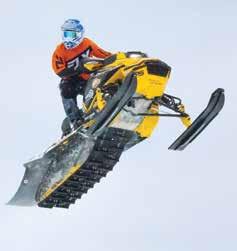
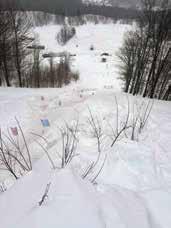
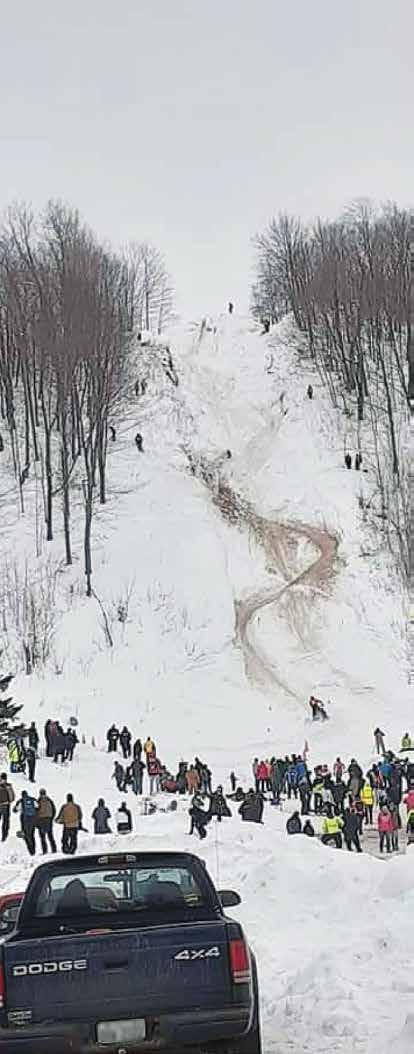
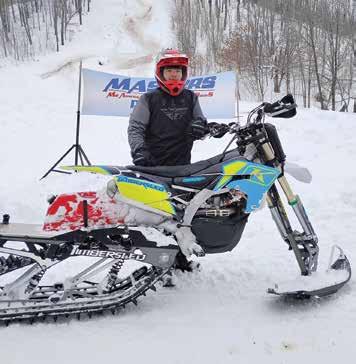
Ashot at the World Championship Snowmobile Hillclimb in Jackson, Wyoming starts in Michigan’s Keweenaw Peninsula. This snowbelt stretch of the Upper Michigan is absolutely hammered in powder this winter, pushing around 200 inches of snowfall by the end of January. On Saturday, Feb. 28, the Whealkate Bluff Snowmobile Hillclimb returns to South Range. Expect big grades, heavy horsepower, and a one-day show of classic, no-nonsense climbing from 9 a.m. to 5 p.m., including qualifiers and finals.
For more than 30 years, Whealkate Bluff has been home to hill climbs, and a variety of uphill snowmachine competitions.
Through the years the hillclimb has always been the heartbeat of it all. Riders don’t just show up for bragging rights. This event is one of the few in the region that serves as an official qualifier for the World Championship Snowmobile Hillclimb, placing South Range on the same competitive map as circuits in Canada, Norway and Sweden.
That “King of the Hill” status is what sets Whealkate Bluff apart from other hillclimbs in the Midwest. Only a limited number of riders worldwide earn a spot to compete in Jackson, and qualifying requires success at select events, like in South Range. Riders line up knowing that every run counts and that one clean climb can make or break a chance to race in the major league.
For competitors and spectators alike, the
continued from page 45
Keweenaw delivers exactly what makes hillclimbing special: steep terrain, all-out snowmobiles and a deep legacy of winter recreation in Michigan’s snowiest corner. It’s tradition, adrenaline and international stakes—packed into one winter Saturday in South Range, Michigan. The town is located about ten minutes south of Houghton and about an hour north of Ontonagon. It’s a trail town, with direct access from a trailer lot off the main drag of M-26.
Professional Hillclimber and Event Promoter Jordan Stank has been participating in racing circuits for 22 years. He lives in the Milwaukee area of Wisconsin after graduating from Michigan Technological University and continues to come back year after year for the hillclimb. Now, he’s helping put it on.
“We send up to 14 spots [each year] to the Jackson Hole World Championship. I was actually the one to [win] the Whealkate Hill Bluff Climb in 2011,” said Stank. “After I graduated from Michigan Tech we had a stint where we didn’t have the hill climb. I helped it come back for the last eight years or so.”
Keeping grassroots motorsports events alive isn’t easy, especially in small communities where everything hinges on volunteers, sponsors and a lot of behindthe-scenes work. Rising costs, shifting marketing landscapes and the challenge of finding people willing to put in long hours have thinned event calendars across the Midwest.
After periods when the Whealkate Bluff Hillclimb disappeared altogether, rebuilding it has taken persistence, coordination and a committed team willing to do the unglamorous work. That includes snow removal, logistics, permits and promotion to keep the tradition alive. With a renewed group of organizers and partners, Stank hopes to bring the hillclimb back to its peak years, when a Walmart-size parking lot was full and spectators lined the hill all day.
WHEN AND WHERE
The Whealkate Bluff Hillclimb takes place on one day only this year: Saturday, Feb. 28 – from 9 a.m.5 p.m. It combines the qualifier and finals which historically took place over two days. For a small town in Michigan’s Upper Peninsula – it’s a great value for riders and participants alike to attend. Being one of the only international-bound competitions in the area, you’ll see incredibly talented snowmobile riders and feats of bravery.
good plan to keep the Trails groomed and open Also, they keep remembering the Number One Rule: When you have a summer picnic, you have to invite the reporter Thanks again guys As always What Martin said, “Good food Good fun Good comradery ”
COPPER HARBOR
continued from page 46
The climb is directly west of M-26 in South Range. Look for 4th Street (turning left if you’re coming from the south, and turning right if you’re coming from Houghton). There will be signs directing toward the venue. It doesn’t have an exact address – but at the end of 4th Street turn right onto Whealkate Avenue and continue to the hill – it’s about a quarter mile.
WHO CAN RIDE
“It’s all ages, we have a kids race at the bottom of the hill at about midday. Then we have juniors, womens, not just snowmobiling but snow bike, vintage class,” said Stank. “It’s a variety of classes and these people come from Minnesota, Wisconsin, Iowa and Michigan are the primary locations.”
All kids go home with a trophy, too. Beyond the competition itself, the Keweenaw’s snow is a major reason riders keep circling this event on their calendars. Consistent lake-effect snowfall, cold temperatures and a long winter season create ideal conditions for hillclimbing and for building courses that hold up all day. For Stank, the combination of reliable snow and the community surrounding the event is what makes South Range a place riders are willing to travel for year after year.
“Great snow, great venue location,” said Stank. “People can sit in their cars to watch in the huge lot. It’s really nice or you can go watch from the fence line. It brings in racers from all over the place. There’s probably about 50 racers. [It’s a] great view because you’re front and center. It can be from stock sleds to modified sleds, I know some people love to come and see the mod sleds how they perform. We do a race that isn’t straight up, it’s an S up the hill. It makes it more challenging. Not everyone makes it over the top and some do so spectators love to see if they can handle that obstacle or not.”
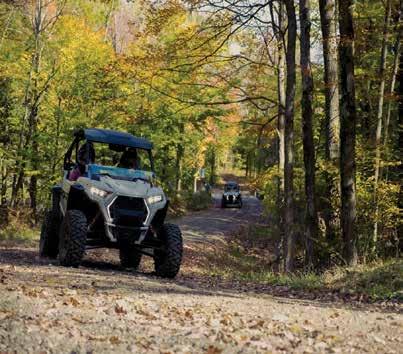
It’s not just about squeezing in another ORV trip. It’s about breathing in the sharp, woodsmoke air. It’s about standing at High Rock Bay, where Michigan’s land simply ends, and realizing you’ve gone as far as Michigan will take you. It’s about that sense of scale—the same Superior winds that can chill you to the bone reminding you just how alive you feel when you’re out here.
So take this moment before winter clamps down. Roll the throttle, feel the crunch of fallen leaves under your tires, and carry home the memory of Michigan’s north country giving its nal bow before sled season. Make sure to download a trail map, as reception is limited to non-existent north of Calumet. But, the disconnect helps you reconnect with nature and yourself. Ride safe, ride right and enjoy Michigan’s untamed northernmost point. •
CALUMET/SILVER CITY
continued from page 48
For spectators, the Whealkate Bluff Hillclimb is designed to be up close, welcoming and easy to follow, even for first-time attendees. “We’ve had people just like football games. They bring those posters to cheer on. They have the option to sit on their lawn chairs, if they get cold just in their vehicle and they can see the whole venue. They can get food from The DogFather food truck there. I know spectators love seeing someone have a challenge where they can’t get over the hill. That’s something we’ve watched the crowd just cheer. This guy can’t get past this point he’s getting stuck. The next racer comes in, gets three feet more, the next racer might get six feet, the next racer might make it through and the crowd goes wild.”
As Stank says “IT CAN LOOK WORSE THAN IT IS” –he’s taken a tumble or two over the years. Sometimes, he says even if folks have a good start you can wonder why they don’t make it. For those who can push through the snow: there are two sets of criteria. Racers are judged based on going the furthest, and fastest. For those who crest the hill – they’re judged on time. The others are judged on how far they make it without gracing the top. The day is filled with many “oohs” and “aahs” as riders take on the same challenge.
At the top level, competition runs deep across every division. In the finals, pro-class riders battle for King of the Hill, while women compete for Queen of the Hill. Juniors join in to earn their own king and queen titles. The field includes four pro stock classes and four pro modified classes, showcasing everything from near stock to heavily modified machines built purely for climbing. For spectators, the action isn’t just vertical. The course features jumps and an S-shaped climb that adds complexity, forcing riders to balance speed, control and commitment on every run.
That challenge is magnified by the hill itself. Rising roughly 300 feet, Whealkate Bluff ranks among the steepest climbs in the sport. While the Rocky Mountains host eight World Championship races, only two are considered steeper—and Whealkate Bluff isn’t far behind. It’s a reminder that elite hillclimbing doesn’t require high elevation, just the right terrain, the right snow and riders willing to push their machines to the edge.
It’s a place where kids earn their first trophies, seasoned racers chase international qualification and spectators experience the full drama of hillclimbing from start to finish. For one winter Saturday in South Range, the Keweenaw once again proves why it remains one of the most formidable proving grounds in the sport. Don’t miss your chance to see it this year.
For the latest updates on the Masters Racing Circuit and The South Range Hillclimb go to www. facebook.com/MastersRacingCircuit/. It’s the most active spot the group will be sharing information leading up to the races.