

William J. Hallan MRA President and CEO
I’ve been on a bit of an audiobook kick lately. Reading has always been one of my favorite pastimes, but as the years go by and schedules get fuller, audiobooks have become a great way to keep that habit alive—whether I’m commuting, traveling, or just squeezing in a few chapters before coaching my son’s basketball practice.
Lately, I’ve gravitated toward biographies and memoirs. The list is wide-ranging: business icons like Elon Musk, Steve Jobs, and Jeff Bezos, alongside cultural figures such as Demi Moore, Jodie Sweetin, David Grohl, and Tom Selleck. On the surface, these people come from very different worlds. But as I listened, clear patterns emerged and all of these successful individuals share a few fundamental traits.
Obstacles: Every story includes setbacks—failed ventures, personal struggles, public criticism, or moments when quitting would have been the easier choice. None of them followed a straight or predictable path.
Hard Work: Talent and vision matter, but persistence shows up on every page. Long hours, constant learning, and an almost stubborn refusal to give up are common themes.
Luck: Being in the right place at the right time. But luck alone is never enough. Each of these individuals were prepared to act when opportunity appeared.
One quote from Tom Selleck stood out to me the most: “risk is the price of opportunity.” Success rarely comes without stepping into uncertainty. The difference is having the courage to seize chances when they arise.
As we look ahead to 2026, this feels especially relevant for Michigan retailers. There will undoubtedly be challenges and risks ahead. But there will also be opportunity—for growth, innovation, and reinvention.

My wish for all our members is a year filled with opportunity, the resilience to overcome obstacles, and the confidence to take smart risks when the moment calls for it.
William J. Hallan
MRA President and Chief Executive Officer
Michigan Retailers Association
Bryan Neiman Chair Neiman’s Family Market, St. Clair
William J. Hallan President & CEO Michigan Retailers Association
Dan Marshall Vice Chair
Marshall Music Company, Lansing
Peter R. Sobelton
Treasurer
Mondial Properties, Birmingham
Bill Golden Past Chair
Golden Shoes, Traverse City
Bo Brines Little Forks Outfitters, Midland
Kim Edsenga Meijer, Inc., Grand Rapids
Antoinette Kramar Orin Jewelers, Northville
Joseph McCurry Credit Card Group
Thomas Ungrodt TDU Consulting, LLC, Ann Arbor
John Leppink Leppink’s Food Centers, Belding
Larry Meyer Board Member Emeritus
D. Larry Sherman Board Member Emeritus
Michigan Retailers Services, Inc.
William J. Hallan President & CEO
Thomas P. Clement Chief Operating Officer and General Counsel
Orin Mazzoni, Jr. O & T Investments LLC
Kendra Patterson
Michigan Barn Wood & Salvage, Mason
Joe Swanson Target, Retired
Michigan Retailer Magazine
William J. Hallan Publisher
Victoria Veda Editor
Rachel Schrauben Copy Editor and Content Director
Josh Delany Design/Layout Manager, Photographer
Shandra Martinez Contributor
With every issue, we reach retail owners, managers, and executives who make spending decisions for 15,000 stores and websites across the state.
To request a media kit, email Rachel Schrauben at rschrauben@retailers.com

6 10 15 18 16 23

Join the Next Class of Retail Ambassadors Ambassadors go above and beyond to strengthen retail in Michigan
Midwest Bridal Brand Plants Roots in Detroit

From the CEO What Memoirs Can Teach Us About Success
Luxe Redux expanded the quicklygrowing business to Michigan in 2023
Protecting Your Eyes, Ears, and Mouth from Workplace Hazards
How to prevent exposure, damage, and even loss
DeVries Jewelers marks 125 years carried by family, experience, and evolution
The fifth-generation family jeweler adapts to industry change
Disability Etiquette for Retailers
FAQs, resources, and misconceptions to help train staff
The Importance of the Michigan Retail Index
Help shape the 2026 Michigan Retail Index
Legally Speaking Meeting Customer Needs in the Face of Adversity
Under the Dome Should Retailers Worry About Dynamic Pricing?
Creative Counsel Enhancing Your Storefront Curb Appeal
Regulatory Rundown
Milestone Members
New Members
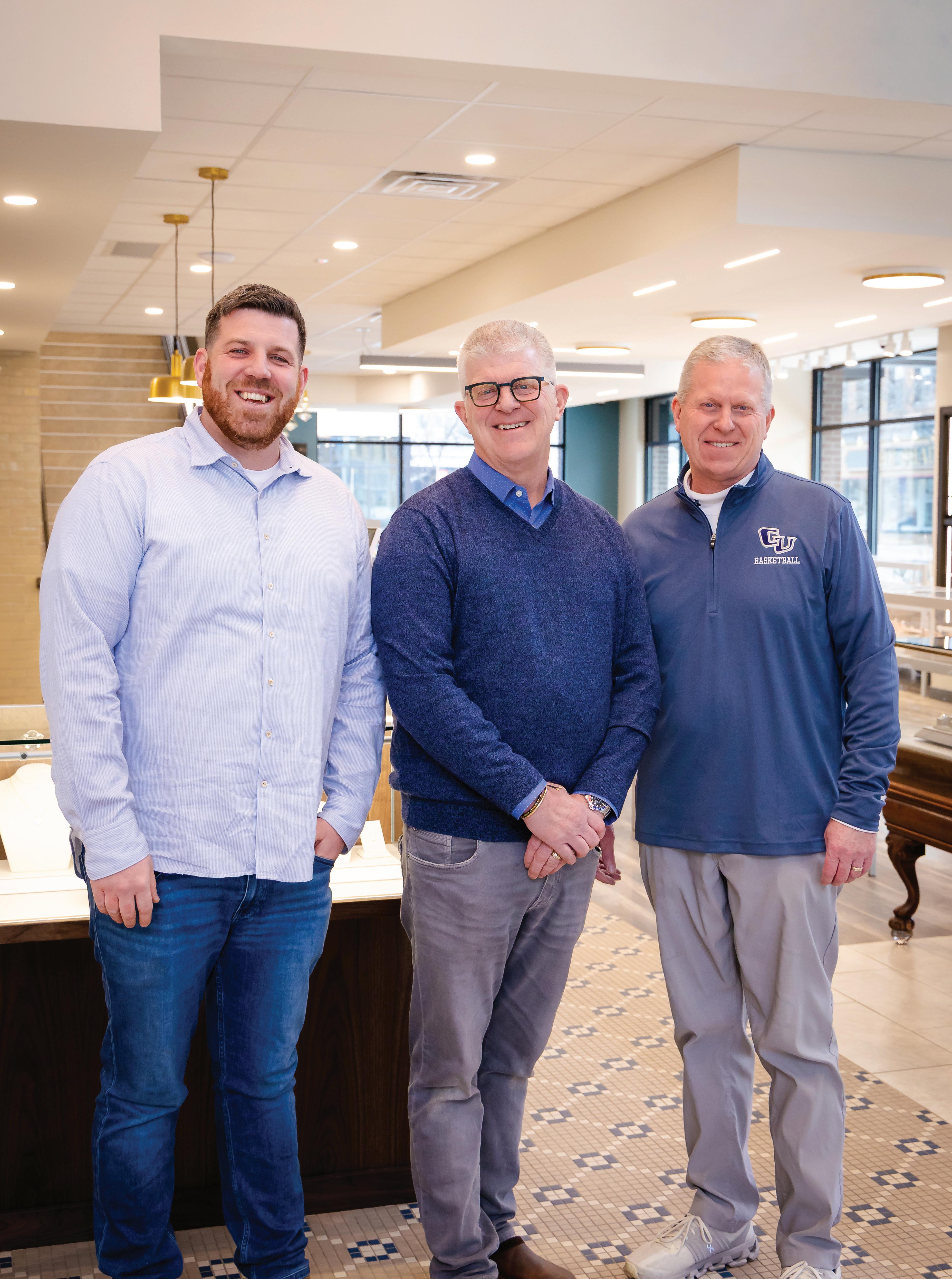
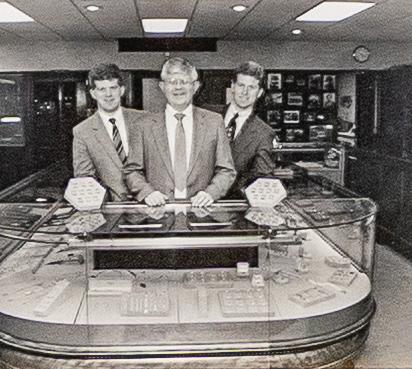
Paul, Dan, and Dave DeVries inside the newely contructed DeVries Jewelers location.

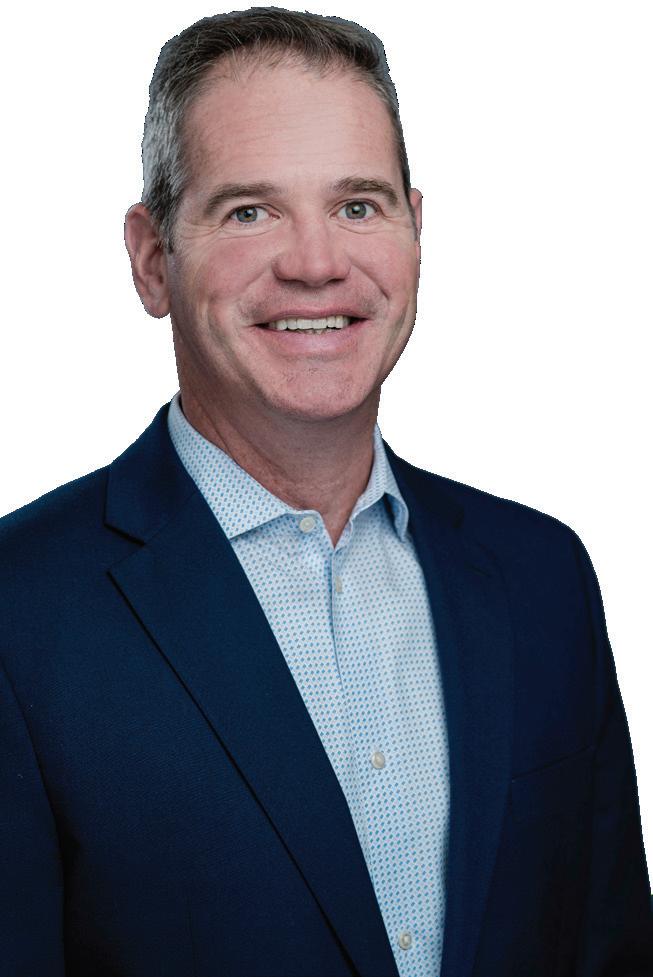
Tom Clement MRA Chief Operating Officer and General Counsel
This Michigan Retailer proudly shines a spotlight on our member bridal stores, jewelers, and others who work hard to make important events special. For all of life’s milestones, customers spend countless hours and hardearned dollars planning. Retailers in these industries have the important task of delivering their goods and services in a timely manner, consistent with what the client has ordered.
It seems like every year some sort of event disaster makes its way into the mainstream. The wedding dress was wrong, the food was cold, the tent was not the size ordered. What happens when, despite their best efforts, retailers do not meet client expectations? While there is no perfect answer from either a legal or client satisfaction perspective, here are some suggestions.
First, be honest with the customer as soon as you realize an error has been made. Hiding behind untruths or misconstrual is only going to make matters worse.
Second, mitigate the damage and save (or at least salvage) the day. You will be best served with an all-hands-on-deck approach to locating a sufficient replacement. An over the top effort will be appreciated, no matter how angry the customer may be.
Third, prepare for the potential legal fall-out. Following steps one and two above is a good start. At a minimum, you will have mitigated your damages. Ideally the customer is appreciative and the final result acceptable.
If not, identify where fault lies. Perhaps an outside vendor is to blame and you can pursue a remedy from them or, if a lawsuit is filed, bring them in as a third party defendant. Look also at the terms of your contract or agreement. Does it contain limitations on liability, a remedy clause that clearly defines and limits damages, and a delivery date limitation clause making it clear that certain guarantees cannot be made? If you do not have these clauses, add them immediately as they can prove to be useful defenses.
This is, of course, not an exhaustive list of the legal issues or what can be done to properly address a difficult situation. It is, however, a good reminder that when faced with adversity, solve the problem as best you can and implement ways to prevent reoccurrence.
Drew Beardslee MRA VP, Government Affairs
On a recent flight, I checked Uber and Lyft as my plane touched down. By the time I’d shuffled off the plane, walked to the baggage claim, and waited for my bag to be disgorged from the carousel, the price had gone up on me. That’s surge pricing, and consumers are used to seeing it with rideshare apps, airfare, hotels, and concert tickets. I may not like it, but in practice it’s fair enough; those are areas with highly fluctuating demand, and at least in the case of Uber and Lyft, the higher prices incentivize more drivers to make themselves available to meet the rise in consumer needs.
But what if the product in question isn’t an Uber or an in-demand hotel room in Acapulco, but an avocado at my local supermarket? The rise of “dynamic pricing” has consumers up in arms, fearful that they’ll be charged different prices for regular items based on the time of day, the weather, or most worryingly, their personal information. This practice of different prices for different consumers isn’t new—Coca-Cola was publicly dragged 26 years ago for trialing a “smart vending machine” that charged more for a Coke when the weather was warmer—but with advances in technology and artificial intelligence, consumers are wary of being disadvantaged.
Not all changes in price are considered price gouging, despite what populist politicians from both parties would have you believe. Prices set by the market contain vast amounts of data about ever-changing variables: the price of that avocado reflects information about rainfall in Mexico, droughts in Peru, fertilizer costs, the price of competing goods, health fads, shipping costs, the value of in-store shelf space, and more. It’s natural for that price to change depending on any of those factors.
Still, cost-conscious consumers are fearful of highlypersonalized dynamic pricing mechanisms, especially those that would use technology to leverage customers’ personal information—their shopping history, their browsing history, even details of their financial health— and set a custom price. With the rise of artificial intelligence, it’s not hard to imagine scenarios that would have sounded like science fiction 10 years ago.
Retailers should pay attention to this trend. Whether or not the underlying economics are sound, skeptical consumers will be on the lookout for anything that feels unfair. Communication and predictability will be key as dynamic pricing emerges.
Vic Veda MRA VP, Communications
The power of a first impression should not be underestimated—especially for retail businesses. Warmer weather is on its way, bringing with it spring clean-ups and seasonal updates to the exterior of your business. As you de-winterize your storefront and prepare for the spring season, take some time to explore ways to improve your building’s curb appeal.
curb
Ninety-five percent of shoppers say the exterior appearance of a store is important in deciding where to shop. Many shoppers decide whether or not they’ll shop at your business before ever stepping foot inside.
A survey conducted by Morpace Omnibus found that more than two-thirds of customers say they’ve avoided a store based on its external appearance, and 70% of first-time sales are influenced by curb appeal.
Refreshing your store’s exterior can be a highlyeffective way to attract new customers. One report by Monash University found that retail sales to new customers increased by nearly 50% when stores remodel and upgrade their appearance. More customers are drawn to the updated store, shoppers spend more time per visit, and ultimately, shop more frequently.
How are you improving your curb appeal this year?

Have a great before-and-after of your storefront to share?
Send it to news@retailers.com for a chance to be featured.

Clean windows, siding/brick, doors, and gutters
Make signage easily visible
Draw attention with a well-lit exterior
• Improve curb appeal and safety by enhancing your exterior lighting. Keep parking lots and walkways illuminated at night to keep your customers safe. Use creative, dynamic lighting in your signage and “lightscaping” to attract shoppers’ attention.
Touch-up chipped paint, damaged siding/ fascia, and other exterior repairs
Edge sidewalks and curbs
Tend to your landscaping and lawn
• Spring clean-up is an important step in maintaining curb appeal. Remove unsightly debris remaining from melted snow piles, and repair any damage to your lawn and landscaping from the winter season.
Move your trash out-of-sight for customers
Engage sidewalk traffic with creative window displays
Perform seasonal updates
• Keep things fresh! Changing your exterior decor, landscaping, and signage for holidays and seasons prevents shoppers from developing marketing fatigue.




Get exclusive opportunities and benefits: Legislative updates and opportunities for input
• Help facilitate store visits with legislators
• Recognition on MRA website and in Michigan Retailer magazine
• Receive “Retail Ambassador” badge and swag items
• Media training and media opportunities
• Opportunities for interviews, earned media, op-ed features, etc.
• Opportunities for member feedback and early access to new services
Exclusive trainings, mentorship, events, and networking
• Attend our Retail Ambassador dinner the night before Capitol Day 2026
• “Bring a friend” non-member guest pass to MRA events
• Upgraded Buy Nearby Weekend Party Pack with extra materials and swag
• Submit your Retail Index survey every month
• Respond to issue-specific member surveys
• Participate in Capitol Day
• Participate in and promote Buy Nearby Weekend
• Refer other business owners and invite them to events
Provide feedback on new services and programs
Register to become a Retail Ambassador today! Register on our website at Retailers.com/retail-ambassador or email communications@retailers.com to get started.


In December, the American Tort Reform Association handed Michigan an unglamorous award, including the state on its annual “Judicial Hellhole” Report for the third consecutive year. The report highlights courts across the country that “apply the law and court procedures in an unfair and unbalanced manner.” That disagreeable legal climate was an impetus for Michigan Retailers Association to join the Michigan Alliance for Legal Reform at the end of 2025. The Alliance is pursuing legislative solutions that align Michigan with national best practices and strengthen economic competitiveness.
Of particular relevance to retailers is the ongoing debate about Michigan’s “open and obvious” doctrine. Under Michigan’s long-standing premises liability protection, property owners used to be protected from lawsuits for hazards deemed “open and obvious” to the average person, like a slippery patch of ice on a sidewalk or a pothole in a parking lot. In 2023, the State Supreme Court overturned that doctrine, opening the doors to frivolous lawsuits, greater uncertainty, and higher costs for Michigan property owners. Without a premises liability protection, Michigan is now a national outlier, one of only nine states without some form of open and obvious protections.
Consider a recent, colorful example: the case of a Michigan man who sued a hospital and its security contractor after being attacked by a wild goose on the hospital’s property. The Michigan Court of Appeals found that the property owners may be liable, because the goose “was a condition of the land whose dangerousness was known” to the defendants.
Taken together, these developments underscore why Michigan’s litigation climate has become a serious competitiveness issue rather than an abstract legal debate. When everyday conditions can give rise to unpredictable liability, businesses are forced to divert resources from growth, hiring, and customer service toward defending against speculative claims. Restoring a balanced, commonsense premises liability standard would not strip injured people of legitimate recourse; it would simply bring Michigan back into alignment with the vast majority of states and reaffirm that fairness and predictability matter in the courtroom as much as they do in the marketplace.
The Michigan Department of Health and Human Services (MDHHS) will be rolling out new, chipenabled bridge cards in 2026 to enhance security and protect benefits for approximately 1.4 million Michigan residents who participate in the Supplemental Nutrition Assistance Program (SNAP). This transition, funded by a $16 million appropriation in the state’s 2026 budget, aims to replace vulnerable magneticstripe technology with the global industry standard for secure payments.
The shift addresses a significant rise in electronic theft, with scammers targeting SNAP benefits. Traditional magnetic-stripe cards are highly susceptible to “skimming”—where criminals use illegal devices on card readers to copy information—and “cloning,” which allows them to create counterfeit cards and drain a recipient’s account. In contrast, the new chip-enabled cards generate unique transaction codes, making them nearly impossible to replicate or use for unauthorized transactions.
To prepare for this transition, Michigan retailers may need to update their infrastructure to support the new secure technology while maintaining access for all SNAP recipients. Look for additional information from MRA and MDHHS as the new cards are introduced this year.
This year, MRA joined the Michigan Unemployment Insurance Agency’s (UIA) Modernization Workgroup, which advises the Agency on potential improvements to its processes and recommends ways to better serve Michigan employers and workers.
The Modernization Workgroup, established in 2023, has four priorities:
• Setting modernization goals. Understanding users’ experiences and needs. Supporting Michigan workers and economy.
• Stabilizing the Trust Fund and continued partnership.
MRA will bring the unique perspective of Michigan’s retail and small business community to the table, advocating for improvements and efficiencies that help the UIA serve both retailers and their employees.
March 2 – Electronic Reporting of MIOSHA Form 300A –Summary of Work-Related Injuries and Illnesses (Establishments with 250 or more employees).
March 30 – Renew food establishment licenses online at MDARD (Current licenses expire April 30).
March 30 – Renew bottled water dispensing machine license at MDARD (Current licenses expire April 30).
April 15 – Renew and print liquor licenses online at MLCC (Current licenses expire April 30).
Sales & Use Tax – Monthly & EFT – On or before the 20th day of the following month.
Withholding Tax – Monthly & EFT – On or before the 20th day of the following month.
Retailer’s Prepaid Wireless 911 Surcharge – within 30 days of the close of each month. Receipt of a complete Form 5012 is required regardless of payment method.
Corporate Income Tax (CIT) Estimated Returns and Payments (Jan. 15, April 15, July 15, Oct. 15)
Sales & Use Tax – Quarterly & EFT – On or before the 20th day of the month following the quarter (Jan. 20, April 20, July 20, Oct. 20)
Withholding Tax – Quarterly – On or before the 20th day of the month following the quarter (Jan. 20, April 20, July 20, Oct. 20)
Unemployment Employer’s Quarterly Wage/Tax Reports (Jan. 25, April 25, July 25, Oct. 25)
By Vic Veda
When Lindsay Fork opened the doors to her first Luxe Redux Bridal boutique in 2011, she wasn’t aiming to build a multi-state bridal brand. She was solving a problem she knew all too well.
Fork, founder and CEO of Luxe Redux Bridal and Luxe Brands, grew up in a retail family in northwest Ohio and worked at a bridal store through college, falling in love with the industry. About three years after purchasing her own traditional, special order bridal boutique and growing the business, she encountered one of bridal retailers’ biggest operational challenges: excess inventory.
Designers require minimum purchases twice a year, leaving bridal boutiques with racks of samples and discontinued gowns that tie up precious space and capital for next season’s order.
Rather than viewing those dresses as a loss, Fork saw an opportunity for growth.

She tried sample sales, but they didn’t stick. Promoting these sales before the days of social media was different, and she’d only have a few customers come to each sale despite advertising locally and in-store.
“I wasn’t moving the samples quickly enough, and that’s where the idea for Luxe Redux came along. Based on how my brides were shopping, I needed a store that’s a sample sale all the time.”
Luxe Redux Bridal opened its first location in a small, 600-square-foot office space above La Jeune Mariee, Fork’s traditional boutique in Columbus,

to sell sample gowns by appointment only. It wasn’t long before other special-order boutique owners started asking if they could send Fork their discontinued inventory to sell on consignment. That’s when the business really took off.
“Of course, I said, ‘Sure, I’ll figure it out. No problem.’ They had different designers than I did, and I thought that was pretty exciting. So I said yes, and they started sending me boxes.”
Fork created an ahead-of-its-time online marketplace for brides to browse their inventory of designer dresses at discounted prices, which helped grow the brand and bring more brides in to shop. Since then, the business has continued to grow and evolve.
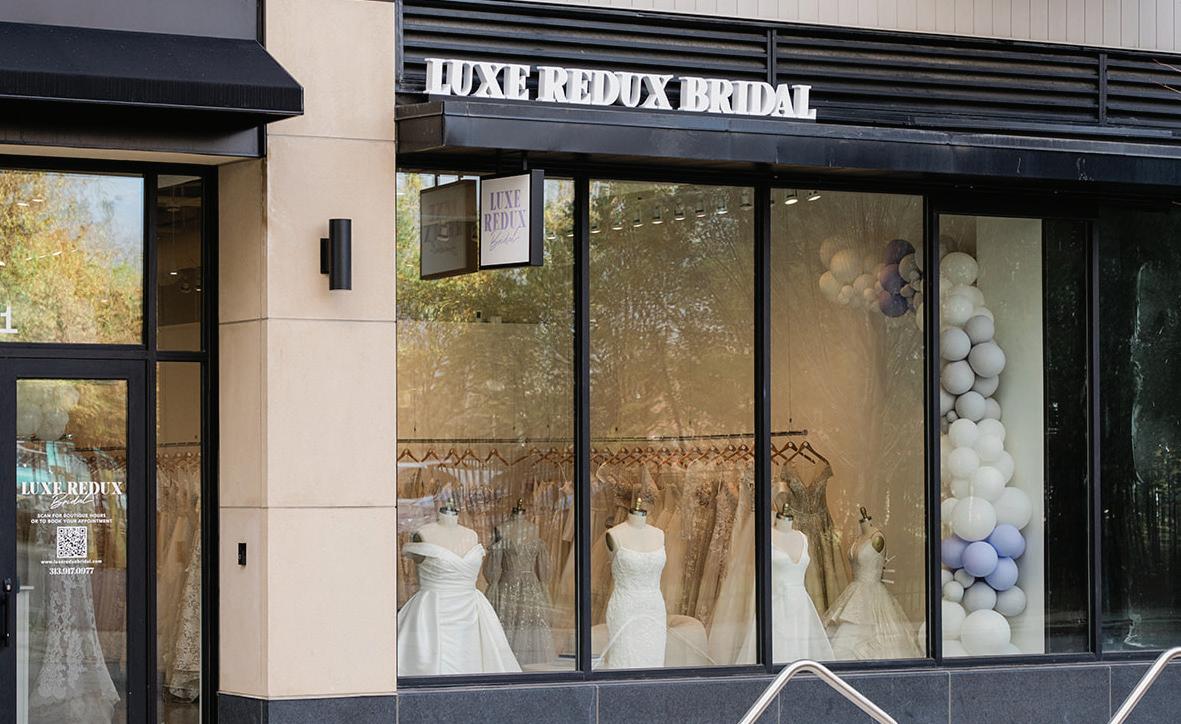
Today, Luxe Redux Bridal operates 12 boutique locations across the Midwest and beyond, with plans to open four more by the end of 2026, Orlando in February and Charlotte in the spring.
The Detroit location opened in 2023, reflecting a strategic growth plan and some personal roots, too. After opening multiple stores in Ohio, expanding into Michigan was the next right move.
“Detroit felt a little bit like home because I grew up in northwest Ohio, not far from Detroit. It felt natural,” said Fork. “I fell in love with the downtown revitalization, the architecture, and the art scene. I could feel that it was someplace we could grow and thrive.”
Detroit marked a milestone for Luxe Redux Bridal as one of its first locations in a Class A, first-generation commercial space, signaling a new level of professionalism and growth. Other locations now operate in a mix of smaller boutique spaces and commercial developments like Woodward West in Detroit.
As Luxe Redux Bridal has grown, so has its business structure. Each store typically employs between four and 10 employees, including a store manager and assistant manager, full-time and part-time bridal stylists.
While the brand continues to add more store locations, the Home Office team has grown, too. Now employing over 100 people, Fork has heavily invested in leadership and management, with three new senior-level roles onboarding this year.


“District management has been critical, especially as an out-of-state operator,” she said. “After the doors open, it’s all about supporting the store managers.”
Anticipating continued growth in the years to come, Luxe Redux recently opened a new distribution center that is three times larger than the previous one to better serve its store locations.
At the heart of Luxe Redux is the bridal experience. “Making sure our brides have the best experience is key. Bridal shopping is emotional,” she said. “There are family dynamics, body insecurities, social media pressure, and differing opinions. Our stylists have to read the room and manage all the guests while working with their bride.”
Fork focuses on training her stylists to listen closely to their brides and hear what they’re saying.
“If a bride tells us she doesn’t like ball gowns, we don’t show her ball gowns,” Fork said. “Our job is easiest when we

stop talking and listen. Of course, we love the occasional wild card. Brides rely on us to be experts in their journey.”
In addition to consignment relationships with bridal boutiques nationwide, Luxe Redux Bridal has become known for handling large-scale buyouts from closing boutiques and even insurance-related situations.
Luxe Brands now also encompasses La Jeune Mariee, Luxe Redux Bridal, the Ohio Bridal Outlet, and the Luxe Privée private label collection, which fills size and trend gaps in their stores.
E-commerce supports, but does not replace, the in-store experience with Luxe. Brides can browse online by location, request dress transfers to their store, and use a “try on at home” shopping option if they can’t visit a store.
“Brick-and-mortar is still what brides want,” Fork said. “But e-commerce gives them flexibility and confidence before they walk in.”
As a multi-state retailer, Luxe Redux joined Michigan Retailers Association for Michiganspecific support. “As chief problem solver, I was looking for better ways to hire in a new state,” Fork said. “It’s always about people and employment, finding better and more creative ways to find the right people, especially for management positions.”


Accept payments wherever you do business: in-store, online, onlocation, and over the phone. With a catalog of customized solutions to fit your business model, and options to integrate with your current systems, MRA’s merchant processing experts will help you find savings worth switching for.



Floyd and Sharon Havemeier opened up their Rockford store, then called The Melting Pot, in 1979. In 1999, The Melting Pot became Herman’s Boy. In 2012 ownership transferred to the second-generation, Floyd and Sharon’s sons, Doug, Jeff, and Bryan.
Herman’s Boy is now under the ownership of Doug’s step-son, Zach Pawlowski, his wife Emily, and Emily’s sister Ali, and husband Jamie. Herman’s Boy has been a member since 1998.
Danny’s Fine Foods’ second location in Monroe, known as Danny’s II, closed in December after 40 years.
The original location, established in the early 1950s, on Elm Street will remain open. Third-generation owner Karen Bellino, her brother Danny Vuich Jr., and her son, Anthony will continue running the business.
Since 1926, Millard’s Furniture and Appliance has served Stanton and the surrounding area with expert service and equipment. The store announced on Facebook that the 100-year milestone will also bring the well-deserved retirement of Greg Millard, who’s worked inside the furniture, appliance, and floor covering store for over 45 years. Congratulations and best wishes!
Millard’s has been an MRA member since 1982.

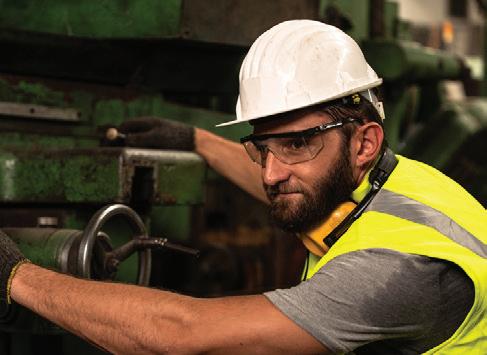
Injuries affecting vision, hearing, or facial structure often lead to some of the most costly workers’ compensation claims, extended recovery times, and could possibly lead to permanent damage. With proper prevention measures, many of these injuries can be avoided and can reduce operational disruptions.
Eye injuries are among the most common workplace incidents. Hazards such as flying debris, dust, chemical splashes, and intense lighting can cause serious damage in seconds. No matter the location where employees work— in warehouses, stockrooms, construction zones, or offices— proper eye protection is essential. Safety glasses, goggles, and face shields should be task-specific and properly fitted. Consistent use is critical. Even brief exposure can result in a serious injury.
Safety Tip: Conduct a quick job-task review to match eye protection to specific duties, and keep spare safety glasses readily available so employees are never tempted to skip protection.
Hearing loss is often gradual and easy to overlook, making it one of the most costly and permanent workplace injuries. Prolonged exposure to loud machinery, tools, alarms, or background noise can damage hearing over time. Once hearing is lost, it cannot be restored. Hearingrelated claims frequently result in long-term disability costs and ongoing medical care.
Safety Tip: Identify high-noise areas and post clear signage indicating when hearing protection is required. Ensure spare sets of earplugs or earmuffs are conveniently accessible.
Mouth and facial injuries can result from falling objects, tools, slips, and chemical exposure. These injuries can involve broken teeth, jaw fractures, or facial trauma that require extensive medical or dental treatment. In certain environments, airborne particles or hazardous substances may also pose respiratory risks, increasing the need for protective equipment.
Safety Tip: Regularly inspect face shields, masks, and respirators for proper fit and wear, and replace damaged equipment immediately to maintain effective protection.
Protective equipment only works when used correctly. Regular safety training, clear expectations, and supervisor reinforcement help build habits that reduce injury risk. Encourage employees to report hazards or ill-fitting equipment to strengthen a culture of safety and accountability.
Investing in eye, ear, and mouth protection pays off. Fewer injuries mean fewer claims, lower insurance costs, reduced downtime, and improved employee morale. By prioritizing sensory protection, businesses protect their workforce while safeguarding their bottom line for the long term.
Claims can be reported 24/7 using any of the following methods:

By Shandra Martinez
For five generations, DeVries Jewelers has been a fixture on its Grand Rapids’ neighborhood business corridor, building a reputation with its craftsmanship, customer relationships, and commitment to the community.
The family-owned business marks its 125th anniversary in 2026, a milestone that reflects the willingness to evolve in a changing retail landscape.
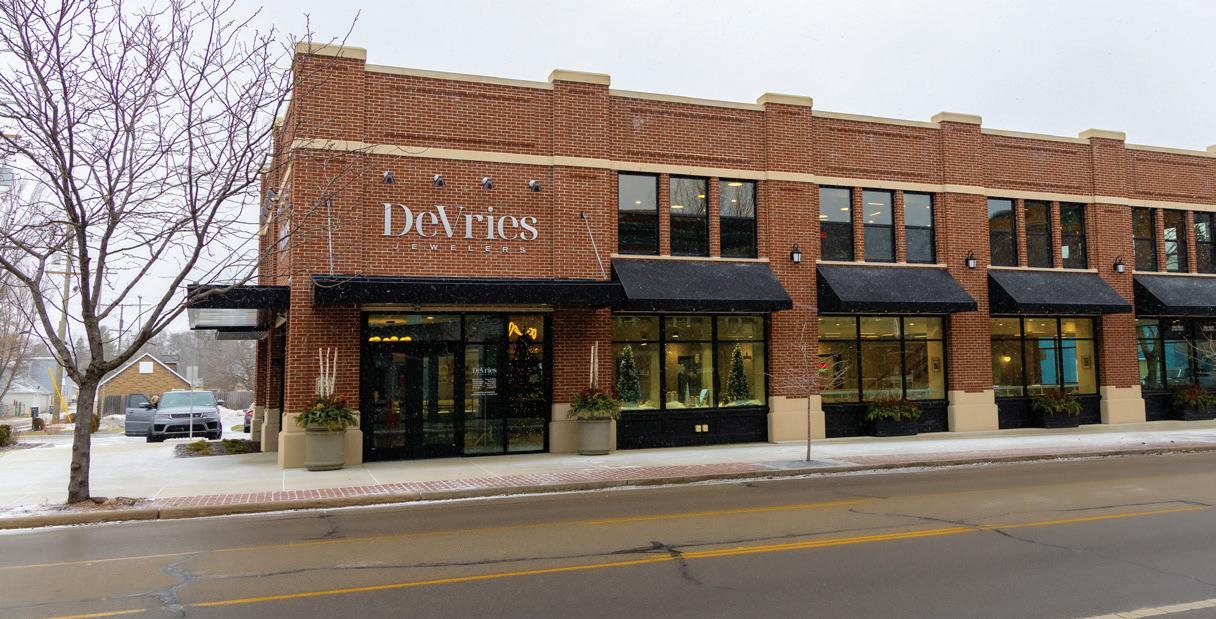
Siebern Gerald DeVries opened the original jewelry store on Leonard Street NW in 1901. Since then, the business has operated continuously through economic downturns, shifts in consumer behavior, and significant changes within the jewelry industry.



“Retail has changed a lot over the years,” said his greatgrandson Daniel DeVries, who has spent more than 40 years in the business. “But at the end of the day, it still comes down to people.”
Daniel DeVries joined the family business shortly after high school. He learned the trade alongside his grandfather and his father, Dennis DeVries. His younger brother, David, joined the business about five years later.
The brothers brought different perspectives to the operation, something Daniel says has benefited the business.
“We see things differently, and that’s honestly good for the business,” DeVries said. “You don’t want everyone approaching decisions the same way.”
Sharing responsibilities allowed the brothers to balance the demands of the business with family life. When one needed flexibility to attend a child’s sporting event or family obligation, the other stepped in.
“Retail takes a lot of time and energy,” DeVries said. “Having someone you trust alongside you makes that manageable.”
The business grew to the fifth generation when Daniel’s son, Paul, joined the operation nearly 15 years ago.
“Now with Paul here, it’s great to watch him connect with customers and really enjoy what he’s doing,” DeVries said. “He’s great with people, and that’s a big part of this business.”
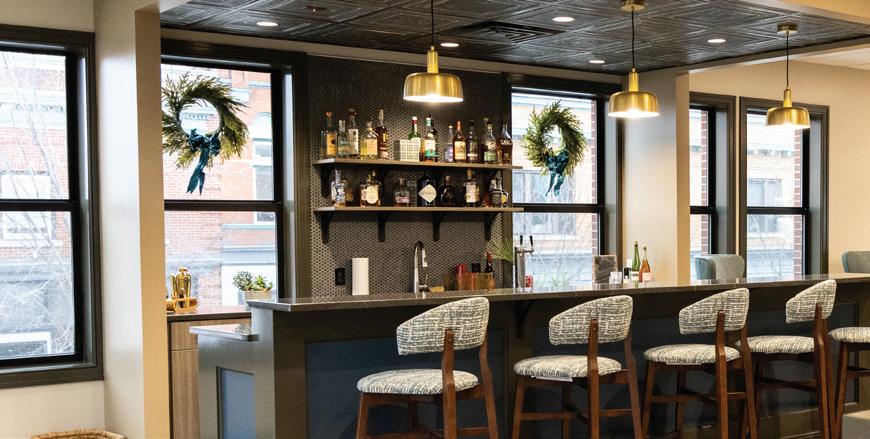
In anticipation of its milestone, the company constructed a new building just down the street and relocated late in 2024. Its 6,000 square feet is nearly three times the size of the previous store. Nearly 2,500 square feet is dedicated to the main showroom, while an upstairs area of 2,000 square feet serves as a private event and gathering space.
“It was a big decision,” DeVries said. “When you’ve been in one area that long, change doesn’t come easily. This move has brought new energy to the business and given customers something different.”
The expanded space, a few blocks west of U.S. 131, allows DeVries Jewelers to host events that were previously held off-site. Bridal trunk shows, wedding band events, watch gatherings, and customer appreciation events can now take place within the store.
“We used to do a lot of those events elsewhere because we didn’t have the room,” DeVries said. “Being able to host them here makes the experience more personal.”
Daniel DeVries believes the personal touch remains central to long-term success.
“We like to have fun,” DeVries said. “If
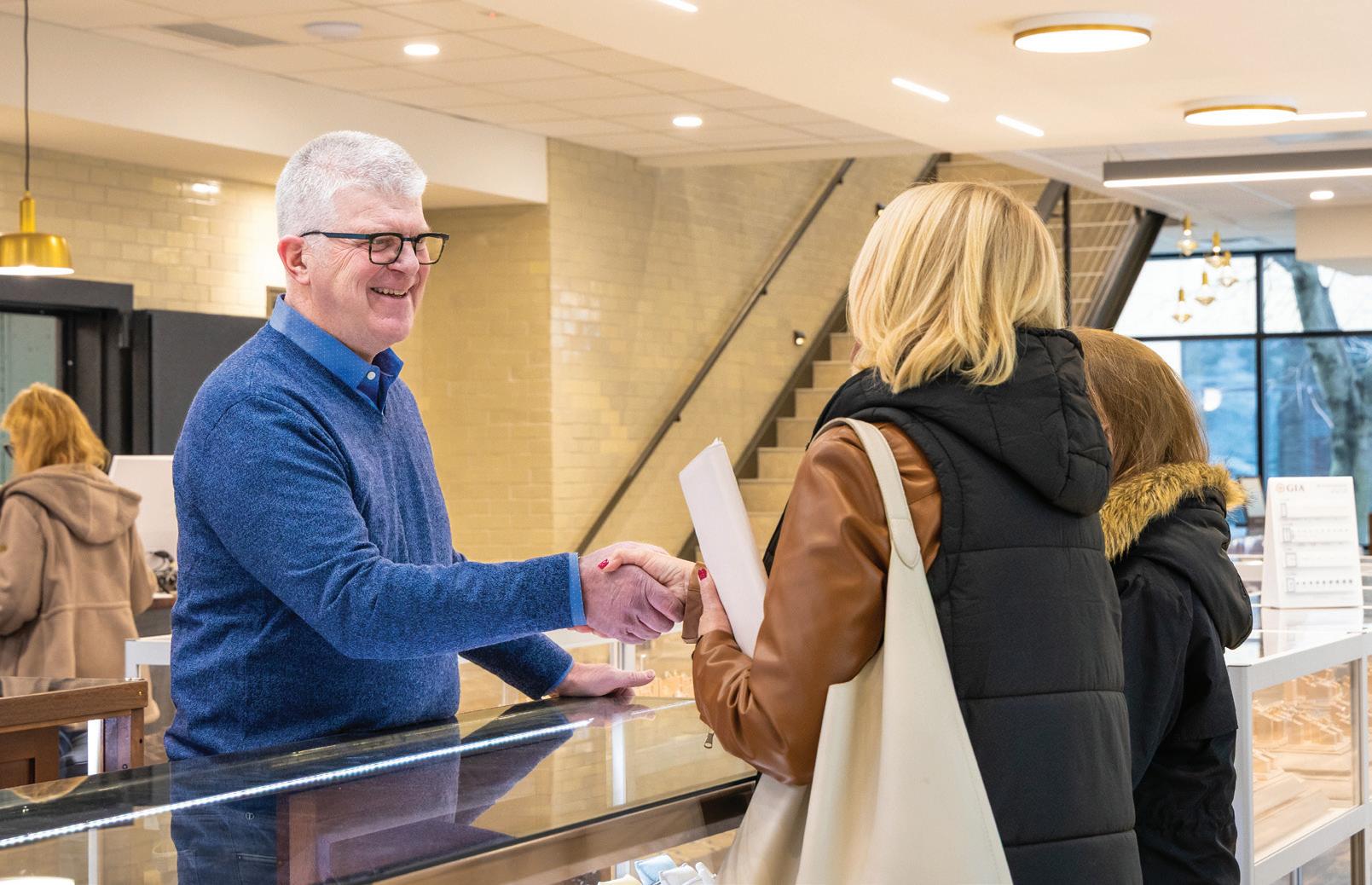
you enjoy connecting with people and celebrating their milestones, that attitude shows in everything you do.”
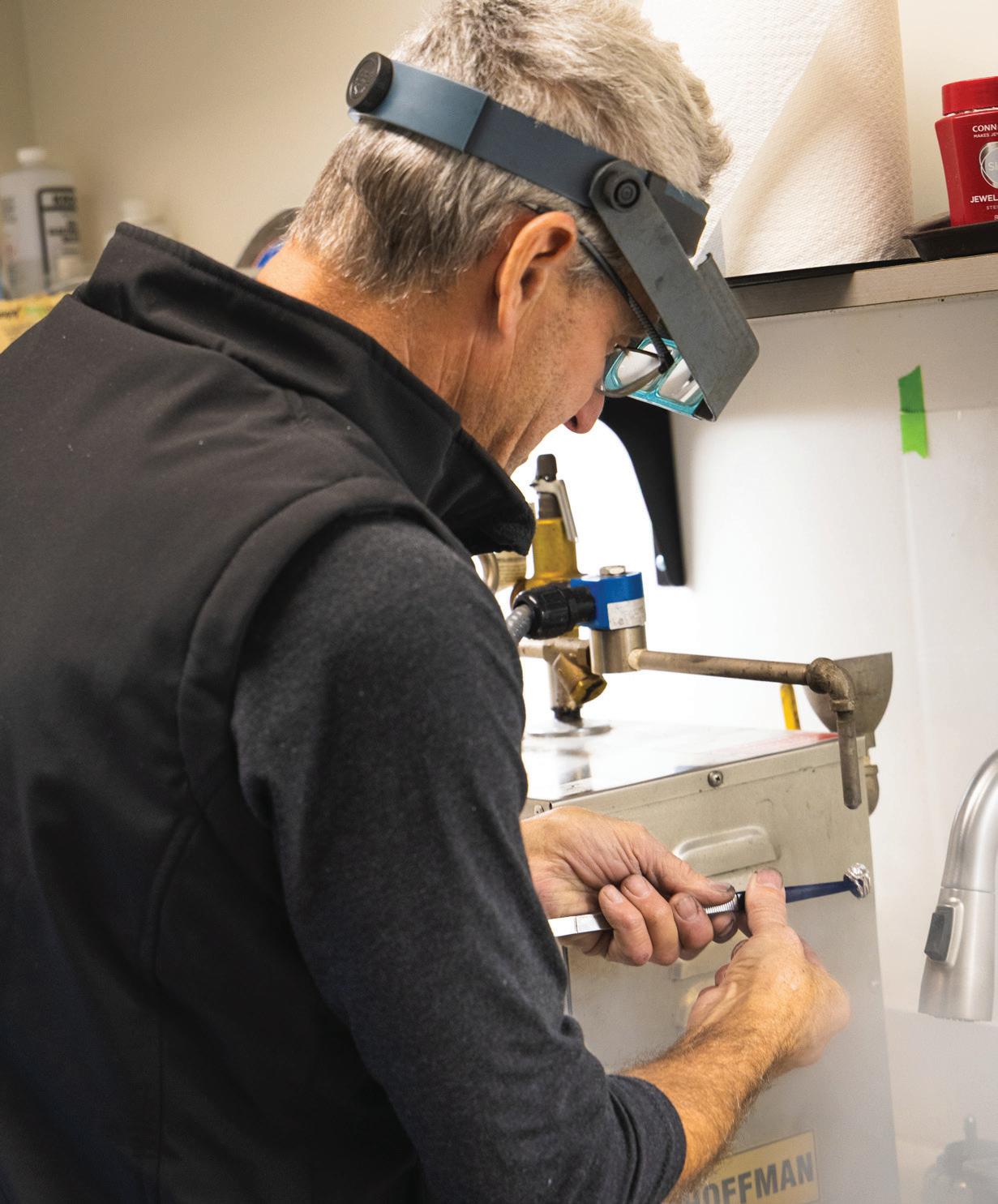
During December alone, the store welcomed more than 350 new customers, with the annual total nearing 4,000. DeVries also attributes steady traffic in part to the store’s repair services, which provide a consistent reason for customers to return.
“We’ve been very fortunate,” he said. “Even when retail conditions are tougher, people continue to come in.”
The jewelry industry has experienced notable change over the past 25 years. Rising gold and silver prices have made pricing more challenging, while lab-grown diamonds have altered consumer expectations and buying patterns.
“Lab-grown diamonds are a big shift in the industry,” DeVries said. “They’ve continued to get cheaper, and I think that will eventually bring renewed interest back to natural stones, especially when it comes to bridal jewelry.”
Despite the growth of online shopping, DeVries believes jewelry remains a category where customers prefer to shop in person.

“People still want to see it, touch it, and try it on,” he said. “That gives independent retailers an advantage.”
The new store design supports that belief by focusing on experience as much as product.
“You can choose an engagement ring here and then go upstairs for a glass of champagne,” DeVries said. “That kind of experience makes a difference.”
Since 1984, DeVries Jewelers has been a member of the Michigan Retailers Association. It uses the Association’s merchant processing and group insurance services.
“They’ve been a good resource over the years,” he said. “From their credit card processing to business guidance, it helps to have someone you can reach out to when questions come up.”
As Leonard Street continues to see new investment and development, DeVries Jewelers is committed to being part of the neighborhood that has defined its history.
Daniel DeVries believes the secret to the company’s longevity is a focus on the customer.
“We’re fortunate that each generation has enjoyed the work and enjoyed working with people.”
Justin Skibin, MA, CBSP, GCDF, CMCS, CCSP, ADAC Michigan Department of Labor and Economic Opportunity
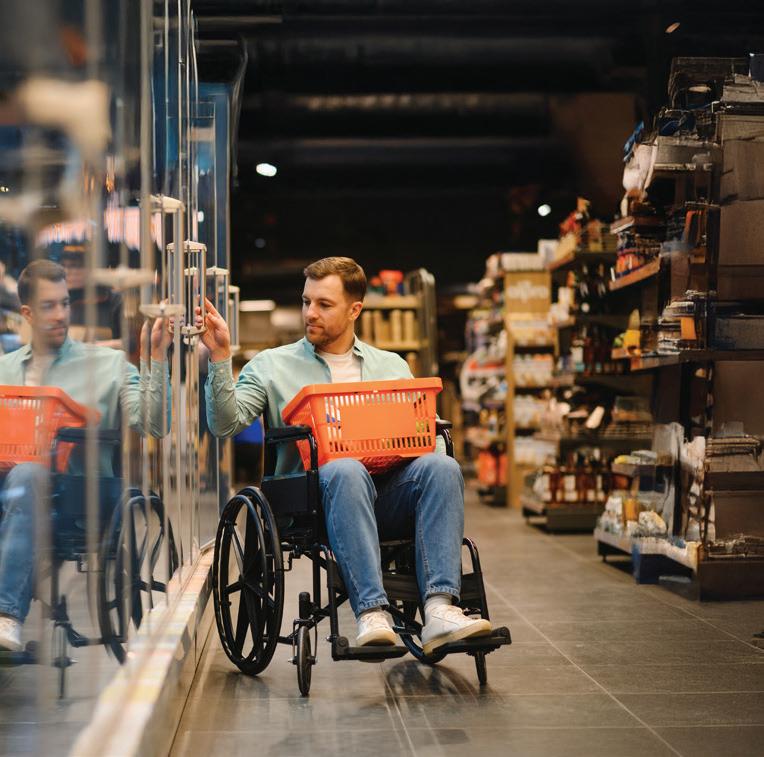
Great retail experiences are built on respect, clarity, and human connection. Disability etiquette, the thoughtful, respectful way we interact with people with disabilities, is not about special treatment. It’s about good customer service and good business. For store owners, managers, and front-line staff, understanding disability etiquette helps avoid awkward moments, builds confidence, and creates a welcoming experience for every shopper and employee.
At its core, disability etiquette starts with seeing the person first, not the disability. Customers and coworkers with disabilities are individuals with unique preferences, abilities, and communication styles—just like everyone else. In a retail setting, this means speaking directly to the individual, asking before offering help, and avoiding assumptions about what someone can or cannot do.
Well-meaning staff sometimes overcompensate: changing their voice, crouching unnecessarily, or assuming understanding without checking. Treat people naturally, follow up to confirm clarity, and don’t avoid conversations about accessibility. Universal design benefits everyone, not just people with disabilities.
People with disabilities represent the largest untapped talent pool and a significant customer base. Retailers that embrace inclusive customer service often see stronger teamwork, better retention, improved compliance, and a positive public image. Just as important, inclusive practices help staff become better communicators and more empathetic leaders, on and off the sales floor.
Disability etiquette isn’t a one-time training; it’s an ongoing commitment. With leadership buy-in, trusted partners, and a willingness to learn, retailers can confidently serve every customer with respect—and that’s always good business.
V - Visual
Ensure staff and applicants have information available in writing.
A - Auditory
Be sure to clearly convey information in a concise and understandable way.
R - Read/Write
Ensure that staff/applicants have the ability to write down key information discussed.
K - Kinesthetic
Incorporate hands-on activities in your everyday work.
• Connect with your local Michigan Rehabilitation Services to conduct a disability awareness presentation for staff.
• Ensure your organization has its own Reasonable Accommodations Coordinator.
• Bureau Services for Blind Persons (BSBP) is a state agency that assists blind individuals.
• Individuals with disabilities may be able to open up a case with their local Michigan Rehabilitation Services, which provides needed reasonable accommodations, support for self-sufficiency and mental health, and more.
• ADA compliance:
Facilities can be evaluated by State of MI Civil Rights and/or Michigan Rehabilitation Services Business Network Division.
• Employment practices can be evaluated by the websites to the right or with the Michigan Rehabilitation Services staff.
Telecommunications can be evaluated by ensuring all written and auditory information is conveyed appropriately by consulting the ADA website above.

Superior Street Mercantile, Albion
Huron Transit Corporation, Bad Axe
Bad Axe District Library, Bad Axe
Emmons AFC Home, Bark River
Barryton Community Free Methodist
Church, Barryton
Drury Holdings Inc., Big Bay
Hire People LLC, Brighton
Aurelia Springs, Canton
Caro Golf Club, Caro
MI Secured Transport LLC, Center Line
Great Lakes Cannabis Management Group LLC, Chase
Ryan J Rinke DDS PLLC, Chesterfield
Victory Clinical Services III LLC, Colon
Onasis Coney Group LLC, Detroit
The Horse Detroit LLC, Detroit
Hunky Monkey LLC, East Lansing
Anchor Bay Scuba, Fair Haven
Duane’s Family Restaurant, Falmouth
Advanced Rapid Detox PC, Farmington
Vollmer’s Hallmark Shop, Fort Gratiot
The Good Roast, Galien
HHAS Target LLC, Grand Blanc
Aldinia LLC, Grand Rapids
Swift Printing Co., Grand Rapids
IT Distributing Company, Grand Rapids
Grand River Motors, Grand Rapids
Dickerson Creek Supply LLC, Greenville
Emerald Canning Partners LLC, Harrison Township
Fremont Township, Hemlock
Big Poppa’s Pizzeria LLC, Holly
Holiday Distributing Company, Jackson
Ladwig Enterprises Inc., Jackson
AACORN Farm Inc., Kalamazoo
Clean Your Plate, Kalamazoo
Quality Auto Body & Frame Inc., Kalamazoo
Home Zone Manistee, Manistee
Harvey Foods LLC, Marquette
Che Brothers Inc., Midland
Midland Plowing LLC, Midland
Adoption Option Inc., Midland
Nomad Mongolian BBQ & Hot Pot Inc., Midland
Nu Way Stove Manufacturing LLC, Millersburg
Mio Pharmacy LLC, Mio
Monroe Ear Nose & Throat Associates PC, Monroe
Frank Investments Group 3 LLC, Morenci
Westshore Endodontics PC, Muskegon
Health Management Care PC, Port Huron
Lamplighter Gifts, Port Huron
Partner Animal Health, Port Huron
Portage Creek Art Gallery, Portage
Christensen Hospitality LLC, Roscommon
State Trunk Line LLC, Saginaw
Riverbank Youth Theatre, Saint Clair
Thee Electric Gift Shop, Scottville
INB Corp, Sterling Heights
All Star Limousine Inc., Troy
Pipeline Services LLC, Troy
Angels Crossing Condominium Association, Vicksburg
Traverse Bay Pizza Co., Walker
Rudders LLC, Warren
Tallow Barn Organics, Waterford
Silverback Moving Inc., Waterford
Greater Ann Arbor Quilt Guild, Ypsilanti


Thank you for your continued loyalty to Michigan Retailers Association!
If you’ve been a member for five days or five decades, our commitment remains the same: supporting your success.
Applied Manufacturing, Orion Centre Ice, Traverse City
Dick’s Super Service Inc., Pinconning
Ball Park Floral & Gifts/Trillium Floral, Grand Rapids
Calvin Lutz Farms LLC, Kaleva
Capital Area Humane Society, Lansing
Cheboygan Area Arts Council Inc., Cheboygan
Crimson Rose Antiques, Birmingham
Foundation for Behavioral Resources, Augusta
Grand Ledge Auto & Truck LLC, Grand Ledge
Jeremy’s Automotive & Performance, Casco
Meadow Brook Medical Care Facility, Bellaire
Tele-Rad Inc., Holland
Two Fellas Grill, Kalamazoo
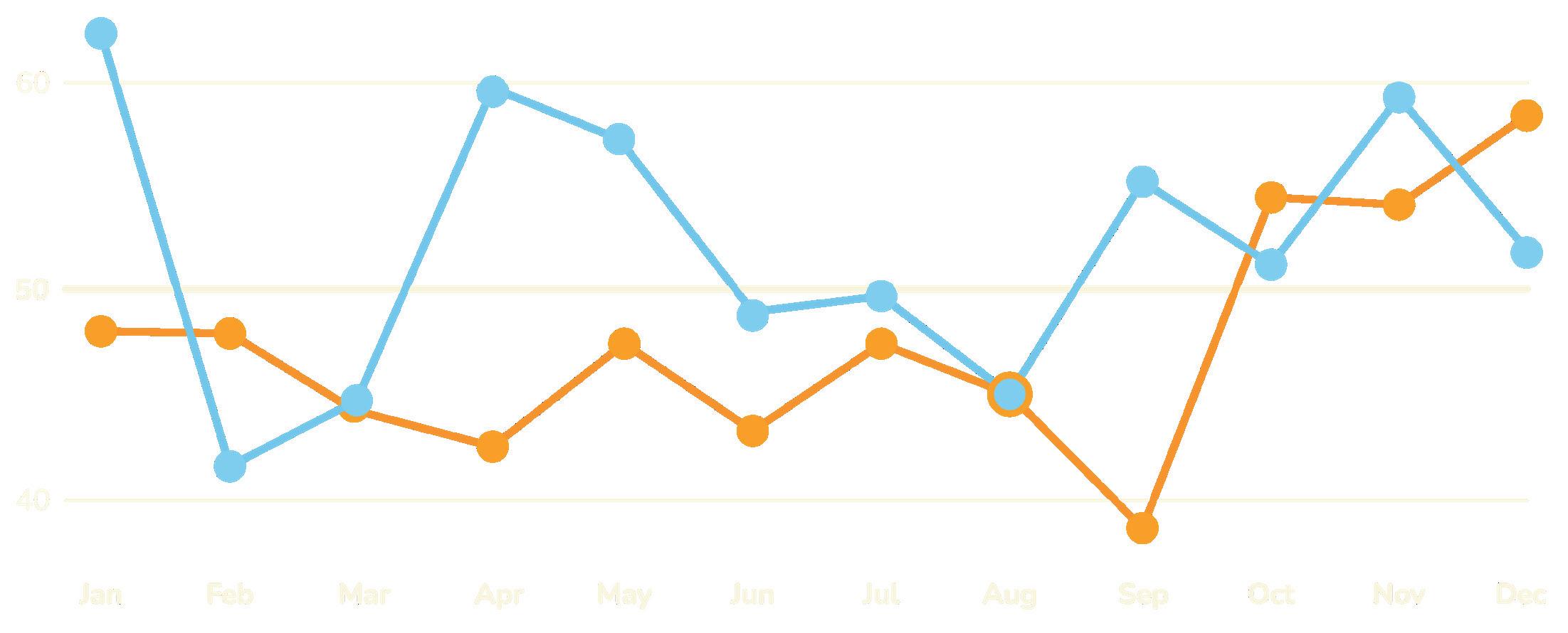
Your sales numbers directly impact how the media and economist see Michigan’s retail climate. The data serves as an incredibly important gauge to measure retail trends and Michigan’s economic outlook. Index values above 50 generally indicate positive sales activity
15
20
17
21
19
23
21